Don’t you dare tell Marianne Howatson that the magazine advertising model is dead. The CEO and Publication Director of the C&G Media Group disagrees completely with you. Her magazines are doing well, very well indeed, thankfully to the advertising driven magazine publishing model. Her mission, “to deliver the finest design media to the residents of America’s most prestigious communities.”
Ms. Howatson, the former publisher of Self and Travel & Leisure magazines, jumped into the fury of magazine ownership when she bought the Collages and Gardens titles in 2009. Yes, you read that correctly 2009: It was a depressing year for magazines and the economy as a whole. But she took a big chance on those titles, and her gamble paid off and it continues to do so.
In fact she added to the three titles, Hamptons Cottages and Gardens, Connecticut Cottages and Gardens, & New York Cottages and Gardens, her newest title Palm Beach Cottages and Gardens that the former owner of the magazines ceased its publication in 2008. The first issue is a beauty to behold and is loaded with what you expect to see similar to the rest of the magazines in the family of Cottages and Gardens.
Ms Howatson is very optimistic about the future of the new title and the rest of the publications that she owns. Her only worry is, “Are we going to keep doing as well as we’re doing?” she told me when I asked her what keeps her up at night these days.
She is a firm believer in magazines and their future, as long you have a niche audience that is not reached by any other medium or platform, a community spirit, and you are involved in all the major events in the area.
So, without any further ado, here is my lightly edited conversation with Marianne Howatson, CEO and publication Director of C&G Media Group.
But first the soundbites:
On the reason she bought the magazines: “I thought to myself, if the day comes in the United States that we don’t have wealthy people building beautiful houses, we probably won’t even have a planet.”
On if her gamble paid off: “Yes, yes.”
On why Palm Beach Cottages and Gardens now: “When I came on in 2009, hasn’t a week gone by without someone saying, when are you going back to Palm Beach? And it’s only taken us 16 years.”
On the future of print in a digital age: “I think that the future of print in the digital age is very niche groups of people.”
On her favorite magazine in her company: “And so each time we launched a new magazine, it’s like children, you just love them all.”
On her advice for someone starting a new magazine: “I would ask them to make sure that they have a niche audience that very few other people have, and be prepared to just live in the marketplace, work with your readers, work with the advertisers.”
On the magazine publishing advertising driven model: “I think that advertising revenue will be here to stay. It’s very difficult for magazines to only make money on their circulation.”
On what she does at home in the evenings: “We publish 30 editions a year, and that’s more than any other group, it’s an enormous amount of editorial. So I’m doing 30 columns a year, editing, it just keeps going on. But I absolutely love it.”
And now for my lightly edited conversation with Marianne Howatson, CEO and publication director of C&G Media Group:
Samir Husni: Thank you for taking the time to chat with me. My first question to you is an easy one. Back in 2009, when everybody was folding magazines and the country was going into a recession, you bought the Cottages and Gardens publications. What were you thinking?
Marianne Howatson: Several things. One is Connecticut Cottages and Gardens was one of my favorite magazines, and I was in New York City all week working in publishing, and I’d come up to Connecticut on the weekend and I would love the magazine. Then I heard it was for sale. At that point that we were in a major recession.
I thought to myself, if the day comes in the United States that we don’t have wealthy people building beautiful houses, we probably won’t even have a planet. I also thought the designers and these people want to look at big, glossy pages so that their work is shown, the photographers love it. So, those were the reasons.
Samir Husni: Did your gamble pay off?
Marianne Howatson: Yes, yes. I closed it in October 2009. And within the next few months, we started going up, because obviously the company had been impacted by the recession at that point until I bought it, and then we started to climb out.
Samir Husni: It seems that you continue this drive to bring luxury publications to the most luxurious communities. I mean, that’s one of your goals.
Marianne Howatson: Yes.
Samir Husni: So, tell me about the recent launch of the Palm Beach Cottages and Gardens.
Marianne Howatson: Actually, Palm Beach Cottages and Gardens was published between 2004 and 2008 with the old company and the old owner. They had folded that because of the recession, and Palm Beach was very badly hit during that recession.
So, they had stopped publishing it. And when I came on in 2009, hasn’t a week gone by without someone saying, when are you going back to Palm Beach? And it’s only taken us 16 years. But for the last few years, a lot of our clients and our advertisers and designers have come down to Florida, and they’re saying, why don’t you come with us? Come with us.
So we eventually decided that last year we were going to do it.
Samir Husni: I know you’re a luxury publications publisher and CEO. Do you think this is the future of print in this digital age, luxury?
Marianne Howatson: I think that the future of print in the digital age is very niche groups of people.
It may not just be wealthy home design. There could be others. And I think that having a really niche audience, which can’t be reached by anyone else, would be very good for the magazine industry.
Samir Husni: Do you think your magazine media journey has been a walk in a rose garden?
Marianne Howatson: No, I think that I’m used to say that my days were filled with a mixture of horror and elation. And I’ve been trying to change that ratio to have less horror and more elation as I’ve moved on.
Samir Husni: That’s good. Can recount for me what was the biggest stumbling block since you acquired the magazines and how did you overcome it?
Marianne Howatson: Not sure that we had a stumbling block. I think that we’ve been really very fortunate. And one of the things that I think we did was that we isolated very early on.
When I first came on, I saw in research that 95% of our readers worked with design professionals, as architects, designers, builders. And our research showed that 40% of our readers were design professionals. When we recognized that and zeroed in on that, I think it made a big difference because we’re one of the few magazines that has a mixture like that, so that we have lots of architects and designers who advertise with us, as well as, of course, wonderful products.
Samir Husni: Do you have a favorite among the four magazines now?
Marianne Howatson: I love them all. Well, I still love Connecticut as well. But, you know, the Hamptons was the first magazine.
I remember when it was launched in 2002, it was really very well received. It was spectacular. It was very different in the Hamptons.
And so each time we launched a new magazine, it’s like children, you just love them all.
Samir Husni: Well, let me ask you, your magazines are still advertising driven. Yes. And we hear a lot about that the advertising driven model is dead.How come you’re surviving?
Marianne Howatson: Well, I don’t think the advertising driven model is dead, because, well, A, it’s a major revenue stream. And we did not fall into the challenges of having subscriptions.
Most magazines are not able to make money on their subscriptions. And that would have been a drag on the company. We have a very select way of reaching our readers.
So I think that advertising revenue will be here to stay. It’s very difficult for magazines to only make money on their circulation.
Samir Husni: If you look like at the new launch, the first issue of the Palm Beach Cottages and Gardens, how do you compare this relaunch experience after the magazine ceased publication in 2008? What was your message?
Marianne Howatson: The message was that we’re coming back. And a lot of people in the market remembered us.
We told everyone we’re following that same pattern we decided for our magazines. They have the same format, the same size, and the same type of photography, etc. We told everyone we’re following that same pattern. And because their knowledge of Hamptons, Connecticut and New York, they responded to it.
Samir Husni: I hear a lot from people that magazines in Florida can flourish, but magazines in California will not. Is that the reason all your magazines are on the East Coast?
Marianne Howatson: I haven’t heard that. Florida, it’s very concentrated. It’s really exciting. I think California has a lot of space.
It’s a different market. Here, we have an exodus of people coming down here. Also the real estate group Related Ross has 24 buildings going up in West Palm Beach, right now over the next few years. So that is an awful lot of units for people to live in.
And they’re going to need to have them decorated. Does they need the magazines? Yes.
Samir Husni: With all the experience under your belt, if somebody comes to you and said, I want to publish a new magazine, what advice do you give them?
Marianne Howatson: I would ask them to make sure that they have a niche audience that very few other people have, and be prepared to just live in the marketplace, work with your readers, work with the advertisers. We have very much of a community spirit, and we are involved in all the major events and the areas that we’re in.
We support the charities, we’ve launched quite a few of them. So I would say that don’t go into it if you’re going to be an absentee manager. You really need to have that passion, and that’s what your community will respond to.
Samir Husni: Good advice. In addition to your magazines, you publish a lot of special publications, can tell me a little bit more about that.
Marianne Howatson: Yes, we have the New York Design Guide, the Connecticut Design Guide, and the Hamptons Design Guide, and because of this relationship between design professionals and our readers, we felt that there was so much information that they wanted, so we created these design guides, and they’re smaller than our big magazines. They’re made of paper that would last all year, and the idea is anyone who lives in these towns, if they want to find an architect, or they want to look for some wallpaper, it should be in that design guide.
So it’s a very different publication.
Samir Husni: Excellent, and before I ask you my typical last two personal questions, is there any question I failed to ask you you’d like me to ask, and or you’d like to add?
Marianne Howatson: No, I think you did terrifically.
Samir Husni: So if I come uninvited one evening to your house, what do I catch Marianne doing? Cooking, watching TV, having a glass of wine?
Marianne Howatson: Sad to say, I would probably be reading the dummy of one of our issues.
We publish 30 editions a year, and that’s more than any other group, it’s an enormous amount of editorial. So I’m doing 30 columns a year, editing, it just keeps going on. But I absolutely love it.
You probably find me doing that or just relaxing in the house. And if I’m outside, I’m looking at shops and looking at antique shops and design shops.
Samir Husni: And what keeps you up at night these days?
Marianne Howatson: Worrying about, are we going to keep doing as well as we’re doing? Exactly the question you asked me.
This is a first for me: Interviewing the same person within six months from the first interview. But, Ray Seebeck’s (28 years) love and dedication to print and magazines is unlike any I have seen among this age group, with regard to passion and zeal for the printed product.
Ray is the founder, publisher, and editor-in-chief of Magazine TM. The first issue of the magazine (to refresh your memory, I am reprinting the first interview at the end of this interview) was amazing both in size, content , and binding. The second issue promises to be a state-of-the-art curation of more than 50 writers and artists plus five in depth interviews.
Magazine TM is a testament of Ray’s desire to create a curated permanent display for artists and writers that makes flipping every page of the 230 pages second issue a walk in museum fresh with ideas and art.
So please join me in this conversation with Ray Seebeck about issue 2 of Magazine TM, but first few soundbites:
On the reason to reduce the size of the magazine: “It was just a little bulky to bring around… to bring it on a train and read on the train, and it was just too big to read.”
On why print?: “What I feel print does, print is not trying to necessarily count your views, it’s more of a read at your own pace, it is a different type of experience.”
On the goal of the second issue: ‘Something I really wanted to make sure that I kept up that excitement with the second issue.”
On the creation of issue 2: “Magazine TM has 50 artists and writers, and it was designed and curated over a two year process.”
And now for the lightly edited conversation with Ray Seebeck, founder, publisher and editor-in-chief, Magazine TM:
Samir Husni: From an oversized magazine to a digest size magazine. Why did you do that?
Ray Seebeck: So the reason for the change of size was mainly because of the feedback of the first issue.
One of the people who got it, who’s an artist, mentioned it was just a little bulky to bring around. She wanted to bring it on a train and read on the train, and it was just too big for her to read. That was the main reason why I made it smaller, for readability and for people to bring it places. It makes more easy to read. Another reason is the cost to print. It costs a lot to print 11 by 17.
Samir Husni: You are 28, the question begs itself, why a person your age is interested in print?
Ray Seebeck: I remember last time you asked me why print? And I don’t feel like I really had a good answer. But related to this question, why is someone my age interested in print? Just reflecting about a little more, I feel in today’s age, we have everything digital, right?
We have social media companies, Instagram, TikTok, Facebook, and publishing companies like The New York Times, they all monitor how long we read, how long we view videos, they try to get us to read, to watch their content for as long as possible. What I feel print does, print is not trying to necessarily count your views, it’s more of a read at your own pace, it is a different type of experience.
That’s something that I’m interested in, if that makes sense.
Samir Husni: It has been a year plus since the first issue came out. What was the reaction?
Ray Seebeck: I received a lot of very positive reactions to the first issue. People were really excited about the accordion bind, about the size of it, and just the design of it. So that was something I really wanted to make sure that I kept up that excitement with the second issue.
Despite a lot of challenges, I wanted to make sure it is as much of a success as the first one. So I’ve been trying to do a lot of things to do that. Another piece of feedback was people wanted to learn more about artists and their process.
And because of that, I did two things: One is I started interviewing artists. I interviewed five artists to provide more of an insight of their process, what they make and why they make that has gone into the magazine.
If you remember the first one, it was mostly just the artwork and poetry. It didn’t have much content from the artist. So that was one thing is interviewing people and putting that into the magazine.
Two: we started asking artists to basically write on note cards about the story behind their art process or the pieces they made, just to make it even more interesting to read. There’s probably like five or six of those note cards in the release.
Samir Husni: Is the second issue going to use accordion binding or it’s going to be perfect bound?
Ray Seebeck: It’s going to be perfect bound.
Samir Husni: Give me the elevator pitch for Magazine TM.
Ray Seebeck: Magazine TM has 50 artists and writers, and it was designed and curated over a two year process. It’s very thoughtfully curated, very thoughtfully designed. Magazine TM is supposed to give you more of an insight into artists and writers process and their work.
Also it tells you the story behind their art (through curator notes) because people care about the story. That’s what matters to people. The story about an art piece, not necessarily just the art piece by itself.
People want to learn more about it. And that’s what I’ve tried to put into the magazine. It is telling you how it was made, telling you the unique techniques that artists use. And hopefully, it’s a place where people can discover artists that they could collect their work.
Samir Husni: If you and I are having this conversation a year from now, what would you tell me about Magazine TM?
Ray Seebeck: I’m going back closer to the first issue format with the next one.
That’s my plan is to do accordion binding again. So I’m going to go backwards in a way, go backwards to go forwards, if that makes sense. And another way I’m looking at the magazine is I’m trying to almost make it more of an art, a document of events and conversations with artists.
Through different video content and different collaborations with artists, the magazine hopefully is going to become more like a document of those experiences. This is how I’m thinking about it now.
Samir Husni: Anything I didn’t ask you about issue two you’d like to add?
Ray Seebeck: Yes. In the last question, I was telling you I want the next one to be almost more like a an archive or a document of different events or different conversations.
I’m trying to keep up that excitement from the first issue because it was like large format, accordion bind, and it was pretty successful. I’m working on an installation with one artist named Chelsea Bighorn, who makes these really big textile pieces inspired by her Native American heritage that are canvas and really colorful. They use traditional dye techniques and have beading in them.
I went to her studio recently, and she’s making six new banners that are dyed with canvas and really beautiful with beading in them. Two really large pieces that are going to be at the release party in March. So we’re going to have her pieces there.
Our goal is selling her work. It’s like a show to sell her work and make it an exciting release party.
The two big pieces are going to be interactive. So basically, when you walk through the elevators, you’ll have her two pieces there.
You’ll actually walk through her artwork, the canvas. Hopefully that will create some excitement. Then a document of that will go into the next release.
Samir Husni: How can people get issue 2 of Magazine TM?
Ray Seebeck: It’s on my website and it’s available for sale through February 28, which is the last day to buy it.. It’s available for $35 until February 28. It has 50 artists and writers, almost 230 pages, and five interviews. To reserve yourself a copy of Magazine TM issue 2 click here.
Samir Husni: Thank you.
And for those who want to know more about Ray Seebeck and Magazine TM, here is an encore of my first interview with Ray:
Ray Seebeck , The Twenty Something Young Person* Behind The Unique Print Magazine “Magazine TM” The Mr. Magazine™ Interview
September 28, 2024
“There’s something different about holding something in your hand and looking at it to actually create that experience that we want to create.” Ray Seebeck, Founder and Editor
They say Gen Z is the digital generation, and print is their parents and grandparents’ medium. However, one twenty something young person from Chicago begs to differ from that adage. They are the founder and editor of the print “Magazine TM” which they launched last year.
The oversized, accordion bound magazine, is a beauty to view and a delight to flip through its pages. Ray wants the magazine to be an experience for artists and the audience. An experience it is. It is a very pleasant experience that ends with a series of pages that looks like a wall mural.
To say Ray is passionate about print, would be an understatement, but they are also very digitally oriented. They use online for their research and searches for anything and everything beautiful. They hope to invest in that passion to create a profitable magazine that will hopefully make a living for them and those who work with them.
So please enjoy my conversation with a print fanatic, Ray Seebeck, founder and editor of “Magazine TM,” but first the soundbites:
On the role of print in a digital age: “For me the end solution is print. Part of what I’m trying to do is make that finished product.”
On the binding method for Magazine TM: “I wanted to do something that was memorable, that was unique for the first issue. We settled at the accordion bound method.”
On the magazine audience: “Right now, it’s mostly people in the art community is who I want to reach.”
On their vision of the magazine: “It’s more an experience of actually viewing art through how it’s designed.”
On their goal for the magazine: “I’m trying to make a model where it’s positive for the artists. It’s building community for the artists.”
On their aim to help artists: “It’s really important for the artists to have their work published. It’s huge. And then just to be doing something that I love is hopefully showing people and inspiring them in a small way.”
On the TM in Magazine: “The answer is no. It’s a play on letters… it’s not actually a trademark, but what it means is TM stands for The Magazine. So it’s basically Magazine, The Magazine is what it stands for. And TM is like abbreviation.”
On what keeps them up at night: “It’s just the idea of the keeping the magazine running. That’s a big one.”
And now for the lightly edited conversation with Ray Seebeck, the founder and editor of Magazine TM:
Samir Husni: My first question to you is, you’re a young man in his 20s, and you launched and produced a print magazine unlike any other print magazine that I’ve seen in a long time. What’s your fascination with print?
Ray Seebeck: It probably started when I was a young kid. I did collect some magazines. I collected National Geographic, and we had Life Magazine running around the house, and Sports Illustrated.
I was a big Sports Illustrated fan, but I really got into print as an art form in college at the School of the Art Institute of Chicago. I had some really great experiences there where I learned from teachers screen printing, lithography, and letterpress as well. So I really just developed. It was a great opportunity where I was able to chart my own education, and so I studied in the print media department at SAIC, where you were able to take the classes you want to take, and I was able to take a lot of classes related to printmaking and try to develop a lot of skills in that field.
Samir Husni: People will tell you we live in a digital age. What makes print so attractive to you? You’re so passionate about print, you produced a magazine called Magazine. What’s in you that makes you feel print is essential today as it was yesterday?
Ray Seebeck: It’s kind of a tough question to answer, but I feel print is just the answer, it’s the solution.
There’s no other solution for me. There’s no other possible route, like the end product. For me the end solution is print. Part of what I’m trying to do is make that finished product. There’s something different about holding something in your hand and looking at it to actually create that experience that we want to create. So printing is sort of a solution for that.
Samir Husni: Why did you choose this format for magazine? It opens up like an accordion and it becomes like a mural.
Ray Seebeck: I worked with, I worked with a few people to make it.
We had five meetings as we were preparing to make the magazine and as I was gathering submissions. And so one friend from New York, one of my classmates from college, and a friend’s friend from college. We had a few Zoom meetings.
My friend Christiaan, who’s a designer, the print designer, who works with me to design print, put together this like Pinterest board with different print and different binding ideas. We talked through what were the design details we wanted to have for the magazine. We discussed different binding formats.
We all kind of came to a decision together. I wanted to do something that was memorable, that was unique for the first issue. We settled at the accordion bound method. That opened up so many possibilities for the actual design of it, which was really exciting.
Then one of the people who I was working with asked what size we wanted to make it and we decided large format would also be very memorable. We went by the 11X17 size. Those are the two key elements as we decided accordion bound and large format.
Christiaan and I had some book binding skills from our college days, so we were able to figure out how to do that.
I definitely want to turn it into a business and hopefully make a living off it and help other people make a living off it.
Samir Husni: Who’s your audience? Who do you want to reach with this magazine?
Ray Seebeck: Right now, it’s mostly people in the art community is who I want to reach.
I would love to reach art collectors. It is an audience I want to grow to. Anyone who’s like interested in art and artists. So I’m hoping to expand the audience. But right now it’s mostly people in our community.
Samir Husni: Give me the elevator pitch the magazine?
Ray Seebeck: I would say there’s a few things that are really important: I’m really trying to create a different kind of publication, something that’s different than what most people have seen before. A magazine that’s more an art experience. It’s a simple magazine. It’s more an experience of actually viewing art through how it’s designed. That’s one huge aspect is trying to do something really creative.
The second aspect is that I’m trying to create a better experience for the artists. So there are a few art magazines they make artists pay them to get involved in their magazine. I’m trying to make a model where it’s positive for the artists. It’s building community for the artists. And it’s something that artists want to be a part of and they can themselves grow through being involved in it. So those are the two key probably aspects, I would say.
Samir Husni: Is the magazine a mirror reflection of you? Are you the magazine?
Ray Seebeck: I would say yes and no. I put so much of myself into it. So in one way, it’s a lot of the artists in the magazine are artists, that I’ve had the pleasure of experiencing at art shows or events. I’m kind of reinterpreting the art that I’ve taken in through the magazine. So in that way, it’s sort of a reflection of me. And then also, I would say, being it’s not meant to be super loud. It’s not meant to be super loud and showy.
It’s meant to be reserved. Once you start looking at it, it’s kind of an amazing experience. In that way, it’s maybe a reflection of my personality maybe kind of a reach. I definitely put a lot of myself into it. But at the same time, I feel like it is something totally different. Just like an end product of a lot of hours of work.
Samir Husni: It sounds like you have a love affair with this publication. Do you ever or would you consider it to be also a business? Is your dream to make money from this or just to do a magazine and say, hey, I have a magazine?
Ray Seebeck: No, I definitely want to turn it into a business and hopefully make a living off it and help other people make a living off it.
That’s the dream. So I’m trying to take small steps every month to achieve that. So in terms of producing the magazine, I have to figure out how much each issue costs and how much I’m selling each issue.
And then packaging and mailing is a huge thing I’m working on trying to reduce the cost of. Then just trying to create more revenue by expanding to new areas such as a podcast I started, which is basically just interviews for the next issue of the magazine.
I’m trying to create new ways to maybe make money off it. I have some like possible goals for the future. But right now it’s a passion project.
So I work on it whenever I can. A lot of times late nights and things like that. But my dream is to definitely turn into business.
Samir Husni: Good luck on that.
Ray Seebeck: Thank you.
Samir Husni: What are you looking for to work in print?
Ray Seebeck: I’m really looking to just to keep the magazine going. That’s the main goal.
So if I can keep it afloat, and not losing money on it. At the end of the day, if I’m what’s most important to me, is to put something out into the world and to have it mean something to people. That’s a big part of it.
It’s really important for the artists to have their work published. It’s huge. And then just to be doing something that I love is hopefully showing people and inspiring them in a small way.
Samir Husni: So Because you have limited distribution, how can people get the magazine?
Ray Seebeck: So I did, with the first issue and also will do with the second issue coming out next March, a presale for them, probably the month of February. I’ll have a presale online and that determines how big the edition is going to be for the next issue. Basically print however many copies we sell for the limited edition.
Samir Husni: And your website is?
Ray Seebeck: It’s rayseebeck.com backslash magazine dash tm.
Samir Husni: Okay. Were you able to register magazine as a trademark?
Ray Seebeck: That’s a good question. The answer is no. It’s a play on letters. So it’s slightly misleading, which I understand because it’s not actually a trademark, but what it means is TM stands for The Magazine. So it’s basically Magazine, The Magazine is what it stands for. And TM is like abbreviation.
Samir Husni: Is there any question that I should ask you that I didn’t ask you? Or anything you would like to add.Ray Seebeck: I would say I have done a lot of market research, not necessarily market research, but read research on different publications and podcasts that has really informed me in the evolution of the magazine, the design evolution for especially for this next issue. So I could talk about that a little bit, if you wanted me to.
So have you ever heard of Esopus magazine? It’s no longer published.
There was a show at the Colby College Museum of Art about Esopus magazine. I learned about it because of that show. I actually found a copy at a bookstore in Chicago. That was really cool to see that magazine because they do a lot of similar things in terms of creatively, making creative layouts, interviewing artists, and having different formats in the magazine. That was pretty cool. It’s something to look up to.
But it’s definitely not the perfect model of what I’m trying to do. But it was cool to see. I’ve gained a lot of research by going to libraries and looking through old magazines, or print design inspirations.
I also have gotten a lot of inspiration from different art books, too. I just wanted to share that I’ve done a lot of research of looking through magazines and also art podcasts. I’ve been listening to a lot of art podcasts in the last year or so.
Samir Husni: Let me ask you my typical last questions. If I come uninvited to visit you one evening at your home or apartment, what do I catch Ray doing? Watching TV, cooking, having a glass of wine?
Ray Seebeck: So to be honest, most nights, what I’m doing is after I’ve done everything I need to do that day, I’m generally pretty busy.
I generally will like take a shower, change into like a comfortable t-shirt and shorts and make dinner. I will turn on the TV basically every night. I watch a lot of different television shows.
Right now I’m watching like the Great British Bake Show. And RuPaul’s Drag Race is a big show that I like. I watch a lot of TV shows. I’m currently watching Only Murders in the Building.
I like to decompress. I know the magazine is very print oriented, but I’m also a very digitally oriented person. So I do a lot of online research and look through a lot of photographs all the time. That’s generally what I’m doing at night.
Sometimes I’ll… If I have something to work on for the magazine, I will work on that at night. That’s kind of my exception is that because I love doing it. If I have like if I have a submission from an artist, I will like organize all the content or work on the design layout at night.
Samir Husni: My typical last question is what keeps you up at night these days?
Ray Seebeck: I’m worried about the magazine falling apart. I would say that keeps me up. It’s just the idea of the keeping the magazine running. That’s a big one. There’s a lot of things that goes into that. Making money for the magazine also sometimes will keep me up. And just like diversifying.
Samir Husni: Thank you and good luck.
Ray is a non-binary and they use they/them pronouns.
“Quantity was down, but quality was up,” Samir “Mr. Magazine™” Husni
The aforementioned statement sums up the status of new magazine launches in 2024. Thirty-nine new launches and nine re-launches arrived on the marketplace together with more than 1,000 bookazines and mini-zines.
Leading the launches was Hiii, For People Who Partake, magazine, the brainchild of Rob Hill and Pam Patterson. Hiii floated to the top of the pack deserving the title the New Magazine Launch of the Year. It is one of the best new magazines to come to the marketplace in a long time. “Simply put, the weed genie will never be put back in the bong,” Rob wrote in the first issue’s introduction. Pam wrote, “This magazine is not just about marijuana. It’s about freedom, creativity, exploration, and supporting those who truly honor cannabis for its power and potential.” Hiii is excellent on all fronts: content, design, and photography.
Another great new magazine is Ori. The brainchild of Kade Krichko is a travel magazine from the source. Slow journalism at its best. Definitely a different, much needed, travel magazine that depends on writers and photographers from the countries it covers. “Travel is a form of connection,” reads the intro to the magazine, “not only with places and experiences, but with friends around the world.” Ori deserves to be the First Runner Up of New Magazine Launches.
The Second Runner Up of New Magazine Launches is RISE from A360 Media. The “Women in Sports” magazine adds a much needed platform for a sports platform dedicated to a large population of female sports players, led by Caitlin Clark, and spectators, both women and men. The magazine’s motto is a quote from Serena Williams, “The success of every woman should be the inspiration to another. We should raise each other up. Make sure you’re very courageous: Be strong, be extremely kind and above all, be humble.”
There are two other magazines worthy of note. New Christian Makers, a museum in a magazine, featuring the work of Christian makers from all fronts of life. “New Christian Makers is an in-print juried exhibition featuring the best in contemporary Christian making.” Highlights for Children continued its belief that children, even the under-two children, still enjoy a print magazine, thus they introduced their newest monthly mini magazine: Highlights CoComelon, “packed with all the CoComelon charm your little one adores, plus a sprinkle of extra learning fun.”
As for those magazines who opted to return to print after halting publication for few years, Field & Stream led the pack and earns the title the Re-Launch Magazine of the Year. Hands down, it is the best relaunch I have seen in my years of following and tracking the magazine industry. The magazine, established in1871 (yes, you read that right, 1871), is back in print through two “Legacy Stewards”: Country music superstars, Eric Church and Morgan Wallen. Editor-in-Chief Colin Kearns writes in the first relaunch issue, “One of the things I’ve missed most about producing a print edition of F&S has been the connection to you, our readers. Back in our print-magazine days, I’d get notes from readers all the time. But during these past few years, when there wasn’t a physical magazine, I never heard from you.”
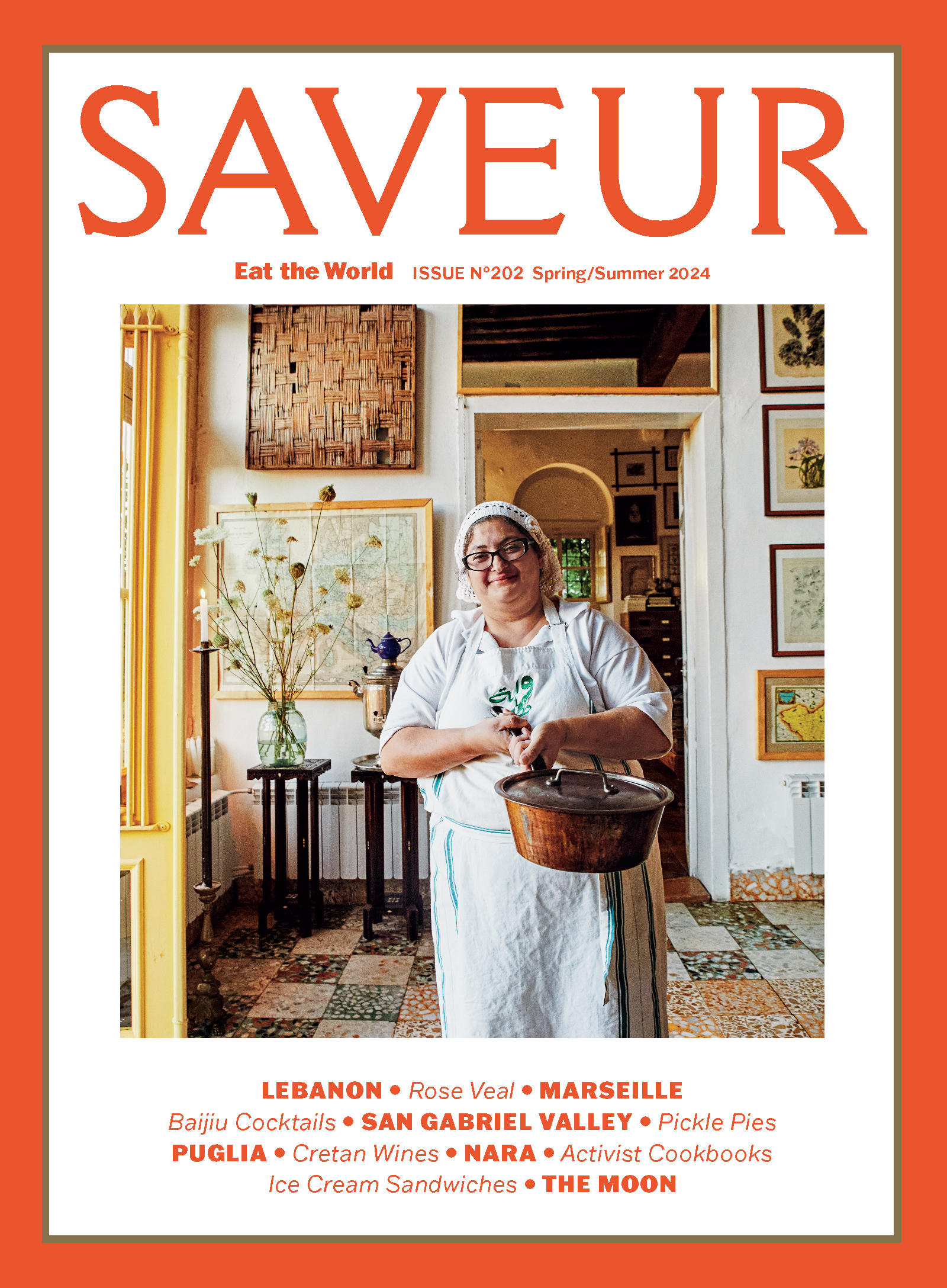
Having said that, there were also two re-launches that were very well done, both in terms of content and design: SAVEUR and Spin. SAVEUR with its tag line, “Eat the World,” is back. “ It’s been four years since, remotely and in masks, we printed our last issue,” wrote EIC and CEO Kat Craddock in the return to print issue. She added, “But while corporate boardrooms posit print is dead,SAVEUR is one of a growing number of publications that have decided to prove them wrong.”
SPIN, “Well, it’s been a while,” writes editor Bob Guccione, Jr. in the relaunch issue, “A while since SPIN last printed an issue (12 years) and it’s then owner – I had no idea who that was, this magazine, like a haunted house, has changed hands a lot…” He added, “Then along came Jimmy Hutcheson and his Next Management Partners and they bought SPIN from its last owner, and set about revitalizing it…” This SPIN, writes Bob, is “the Phoeix-like rise from long cold magazine ashes.”
I started this blog by saying the quality was up and the aforementioned magazines are a testament for this.
Two other re-launches are worthy of note: Flow and Nylon. The Dutch import, Flow “The Magazine That Takes Its Time. Celebrating A Conscious, Slow And Creative Life,” is back on the newsstands. Nylon celebrated its 25th Anniversary by returning to print. “ I like to think of this 25th anniversary issue, our triumphant return to print…” ,” writes editor-in-chief Lauren McCarthy.
As long as there are new magazines launched and relaunched, regardless of the numbers, print is alive and well… Here’s to a healthy and wealthy print 2025. Cheers.
Samir “Mr. Magazine™” Husni, Ph.D.
P.S.: Thinking of launching or relaunching a magazine? Be sure to send me a copy to include the crop of 2025. Samir “Mr. Magazine™” Husni, 776 Shady Oaks Circle, Oxford, MS 38655. Thank you.
The legacy of cannabis and the legacy of magazines collide to introduce The Other magazine: A magazine devoted to cannabis, its dispensaries, and the customers who partake in enjoying the plant that for years has been the forbidden fruit. With more states legalizing cannabis for recreational use, magazines devoted to the once forbidden plant are sprouting across the nation.
The Other is the latest entry into the cannabis consumer magazines serving the audience of the Hudson Valley in New York State and New York City. Peter Shafran, the founder and witty publisher, has high (pun intended) hopes for The Other. His wit is evident in the cover of the first issue. Take a look at the cover and read what he had to see about it:
“So if you look closely at the mountains, you’ll see that they’re not really mountains. It’s all cannabis. And the bridge, the base of each of the bridges are bongs, or at least the big bridge in the back is.
And this is all based on a real photograph. The big bridge is the Bear Mountain Bridge, which goes over the Hudson River, but the two boats floating on there, one is just a pipe, and the other one is a pipe, it is a boat with a puff on it.
The small bridge in the front, which is the bridge that takes you over the Taconic State Parkway, all those little side things, those are all joints. So when I bring this into the dispensary and I tell people, you know, so do you like the mountains? And they’re like, oh yeah, I like the mountains. I was like, do you really like the mountains?”
I had the opportunity to interview Peter, and his strategic communications consultant, magazine veteran, Stu Zakim. But first the soundbites:
On the name of the magazine: “The title of the magazine hearkens back to a newspaper that came out in 1968 called the East Village Other. It was one of the first underground countercultural newspapers in the country.”
More on the name of the magazine: “But the reason we chose that name is because we as cannabis consumers have always felt that we were on the outside, we’re the others.”
On the reasons the magazine is regional: “We felt that the regional way was the way to go, because especially in the cannabis industry, much of the industry is vertically aligned in terms of the growing, the processing, the distributing and the retail is all contained in New York.”
On why The Other is in print: “Well, tactile. It really is. In other words, cannabis has its legacy. So do print magazines. And I think there’s a marriage there.”
On the mission of the magazine: “The conversation has changed so that we’re focusing more on the lifestyle, the alternatives, the education, the normalization and destigmatization.”
On the status of the cannabis industry: “The cannabis industry is so much mainstream now that they’re providing a portion of the revenue to these towns and villages that they never saw before, or at least haven’t seen since manufacturing was here.”
On the future plans of the magazine: “I really have no desire to go into California, Colorado, Massachusetts, or any of those places. What I’m looking for is a place like New Jersey, which has two or three years of growth. There is no magazine in New Jersey that does what we do.”
On the role of The Other: “It’s a wonderful place to be in because we’re past what we used to call the wild, wild West. But now it is a functioning, growing economy, and we’re able to be there at the ground level and helping make it flourish.”
And now for the lightly edited interview with Peter Shafran, founder and publisher of The Other:
Samir Husni: Congratulations on the launch of The Other.
Peter Shafran: Thank you.
Samir Husni: Would you please give me the elevator pitch of The Other and tell me what’s the idea behind the name?
Peter Shafran: Oh, sure. The magazine is a countercultural lifestyle magazine for people in the Hudson Valley, in New York City, for people who enjoy cannabis and other lifestyle things like psychedelics and the whole lifestyle. The magazine is a consumer magazine.
Unlike most of the magazines that are out there in the community, which are B2B magazines, this is a lifestyle consumer magazine. Though there is a little bit of a space here for another business magazine. So we’re going to add some industry focus on there as well.
I live in the Hudson Valley, which is why we started here and I grew up here. The title of the magazine hearkens back to a newspaper that came out in 1968 called the East Village Other. It was one of the first underground countercultural newspapers in the country, which spurred on the development of other countercultural magazines in Berkeley and Chicago and a couple of other places.
That became the beginnings of the underground movement in the 60s. The people who wrote for the East Village Other were all the top minds and writers of the 1960s and the anti-war and revolutionary writers. So we hearken back to that to give them some props.
But the reason we chose that name is because we as cannabis consumers have always felt that we were on the outside, we’re the others. And even in terms of where we are today in the industry, probably not before a year or two ago was cannabis really discussed among real people, among my friends. I’ve been living in this village for 18 years and people did not discuss cannabis openly, definitely because of the stigma attached to it. We are all parents and we don’t want our kids to talk about it and stuff like that.
So it really has only been in the last couple of years where that openness, and of course, the legalization in New York and the opening up of cannabis dispensaries has changed the whole landscape. It has changed the conversation. We felt there was a vacuum here and we’re hoping to fill it.
Samir Husni: Why did you decide to fulfill that vacuum via ink on paper in this digital age?
Peter Shafran: Well, basically, because I’m insane. Nobody in their right mind would do this, but the reality is that the regional magazines and local magazines are actually flourishing. The national magazines, especially in fringe areas, have a hard time in attracting advertisers and attracting money. We felt that the regional way was the way to go, because especially in the cannabis industry, much of the industry is vertically aligned in terms of the growing, the processing, the distributing and the retail is all contained in New York.
The New York focus was really helping us to find that we want to make a regional magazine. But the eventual goal that “if we can make it here, we can make it anywhere,” to quote Frank Sinatra.
Samir Husni: Besides the fact that regional magazines are doing well, what do you think is the power of print in this digital age? What do you offer your readers, your customers?
Peter Shafran: (Holding the magazine in both hands)Well, tactile. It really is.
The response has been unbelievable. I’ve been driving around to dispensaries within a half hour, 45 minute radius. The magazine’s been out a week.
Every place I go, I wear my shirt or I wear my hat (with the magazine name on them). I walk into the dispensary and one of the workers in the dispensary says, I know that logo. Where did I see it before? Is this where you saw it? And every single bud tender, every single person in the dispensary is like, wow, this is really cool.
Why hasn’t somebody done this before? We’re seeing that from across the spectrum, from the readers to everybody we’ve seen. We went to, Stu and I, and a couple of members of the team went to Reveille Buyers Club a couple of weeks ago when we started talking about the magazine. The magazine hadn’t even been out yet, and the buzz around it was huge because nobody else is doing it.
Stu: There’s another cannabis title out here, but it’s newsprint. Unlike Peter’s point of a tactile and the beauty. A slick, glossy, four-color publication in an era where, to your earlier point, things living digitally is amazing, number one.
It’s an emotional attachment, which I think we all have. The newsprint book has never taken off. You know, it’s not well designed.
It looks like a high school project. When people see The Other at the retailers, at the point of sale, where they pay for the products, curiosity will definitely attract them. They’ll see this gorgeous cover, which in itself has a little gimmick built into it.
Peter, I don’t know if you’ve explained that or not. And, you know, the demographics of the cannabis consumer are me and Peter. And, you know, not that we’re old men, but we grew up in the, we grew up with magazines and the role they played in all of our lives was very central.
So it’s, in other words, cannabis has its legacy. So do print magazines. And I think there’s a marriage there. That’s one thing that’s going to work to their advantage.
But the reality is that community with a big C is really what we are looking forward to becoming the community focus for this region.
Samir Husni: How is The Other different than the cannabis magazines of the 70s and 80s, such as High Times, Inside Dope, The Weed Journal and all these titles that were published before it became legal?
Peter Shafran: Very easy answer. Before we didn’t have dispensaries. So the curiosity, ooh, let’s see what cannabis looks like.
And you’ve got these beautiful pictures, now we call it cannabis, but the whole industry has become such that the curiosity to see something in a magazine, first of all, you can see anything you want on the web. So you don’t need to see beautiful pictures of a bud. Now, of course we have, but I have buds in my background of my pictures, more of a joke than anything else.
The realization is that we have evolved from that point where we’re curious about what bud looks like, because you can walk into any dispensary and see exactly what bud looks like. The conversation has changed so that we’re focusing more on the lifestyle, the alternatives, the education, the normalization and destigmatization.
Also one of the things that New York has going for it that some other states don’t have, is a very strong social justice part of the industry where specifically it was designed to let mom and pops come into the dispensaries and to the growers and the processors and not the multi-states which are coming in, but the mom and pops have the stronghold.
They’re already in here. They’ve been nurtured and they’re growing and developing. So it’s a lot different than it was in the seventies.
Samir Husni: You mentioned in your magazine introduction that the Hudson Valley have changed from what used to be a pumpkin growing area to a cannabis growing area.What’s the reaction of the consumers? Has it been accepted now? Is it just a matter of fact?
Peter Shafran: Number one, New York has the highest use of cannabis than any other place in the world, in terms of per capita. Number two, growing up in the Hudson Valley, my father was a home builder. And the three things that they used to say are going to bring this area back is an international airport.
Well, we have that in Newburgh. High-speed rail, we don’t have it. Casino gambling, we don’t really have it. There’s one or two places around here, but all the things that they promised were going to happen to revitalize the economy in New York, never really happened in those terms.
What’s going on now in cannabis in New York is just incredible. Between the processes and the growers and everybody else that’s coming in here, the jobs and the local towns, the villages, the municipalities, the development corporations, they’re seeing real growth.
It’s not just the dispensaries. They’re employing 500 people at a facility when nobody else is putting these shovels in the ground to build processing plants, to build grow houses and things like that. So even the most right-wing conservative politicians and people who follow them are saying, well, wait a second, you’re building construction jobs, permanent jobs, money coming into the community, both in terms of sales and retail, but also in terms of taxes.
The cannabis industry is so much mainstream now that they’re providing a portion of the revenue to these towns and villages that they never saw before, or at least haven’t seen since manufacturing was here. But going back to the pumpkins and apples, there are still plenty of pumpkins and apples, but several of the smart people in agriculture, like the Hepworths, for example, realized that this is coming and had the foresight to say, let’s start growing. So people who were worried about surviving in the agricultural field now have a secondary and sometimes a primary source of income that is not related to pumpkins and apples.
There’s a company called Ayrloom, which started out as an apple grower, one of the most successful apple growers. And still is. They make delicious apple cider. Well, now they make really good apple cider with a little bit of a hint inside. And I’m a fan.
I happen to love their honey crisp apple cider, which is just absolutely delicious. But here’s a company who been growing apples for a hundred years, and all of a sudden grew into one of the major players in the region. So from the economic standpoint, it’s fantastic for the Hudson Valley. It’s fantastic for the state of New York.
Samir Husni: Do you envision seeing more of lifestyle advertisement or are you on purpose sticking to the advertisement from the cannabis industry?
Peter Shafran: No, we’re actually going about 50-50. That’s our focus now.
We’re hoping to do that in the next round of advertising. But we’re looking at our magazine as more of a lifestyle magazine rather than a cannabis magazine. And the difference is that we’re talking to advertisers and saying, we have a base of probably 250,000 readers geographically in this region.
And that’s not to mention New York City, but just 250,000 people who can read the magazine in the area. And guess what? They buy cars. And guess what? They buy cookies, and they buy candy, and they buy all kinds of things that they want to eat after they smoke.
So we’re approaching the snack companies, the insurance agencies. I mean, we are a niche lifestyle brand, but the numbers are just too hard to ignore.
Stu Zakim : If you look at the other categories, Samir, for advertising, one of the biggest growth areas as an ancillary to the cannabis is cannabis tourism, where they’re taking people from the city or wherever.
They pay a lot of money to go on this tour bus. They come up. They check out the farm. They get to see the fields. And there’s hospitality. There’s hotels that are, since it is legal, welcoming this new population for them because it’s a new customer base.
And rather than having a chocolate on your pillow at night, you may have an infused chocolate on your pillow. And they can serve infused beverage. All this stuff is an offshoot of what Peter’s been talking about with the growth in the industry.
And the other categories, to his point, if we just restricted ourselves to dispensaries and farms, there won’t be any revenue. It’s these ancillary categories that are more normal to regular publications that are actually, as the consumer, it’s not cheap to be a cannabis consumer. So you have to have a lot of extra income, which is the same logic when Rolling Stone transitioned from their newsprint and they became a slick glossy, they went after cars and autos and fashion and beauty and other lifestyle categories who felt more comfortable living in a magazine that had that feel to it and also the kind of customer readership that they had.
Samir Husni: Peter, before I ask you my typical personal last questions, is there any question I failed to ask you or anything you would like to add?
Peter Shafran: Good question.
The growth model that we see here is, you know, in answer to one of your previous questions about why we go regional, I think that this model can be replicated in other areas. I’m not looking to become a national magazine. I’m looking to make The Other something that can be duplicated in certain areas, especially in new growth areas.
I really have no desire to go into California, Colorado, Massachusetts, or any of those places. What I’m looking for is a place like New Jersey, which has two or three years of growth. There is no magazine in New Jersey that does what we do.
There are very few places that do this kind of magazine, which is why I go back to the point of being insane. Maybe I shouldn’t be doing this, but the reality is the buzz around the magazine has been huge. And we’re just seeing fantastic replies and the growth in just in our Instagram page in the last couple of days has just been explosive.
Our model was providing free magazines and putting them in every single dispensary in our region. So we distributed 5,600 magazines in one week to dispensaries and ancillary places. And in one week, we’re already getting responses: We need more magazines.
In addition to being a magazine, we have realized that what we can become and what we’re really launching towards is becoming the backbone of a community. There are groups out there that have networking events and they have little things in here, but there is nothing here that is really containing in terms of the lifestyle and the advertising and the culture for this region.
What we’re finding is when we talked to a couple of dispensary owners in the last couple of weeks, and I floated the idea about starting a dispensary owners roundtable. Every single one that I spoke to said, I’m in, tell me when you want to do it. And last week, in bringing the magazine to different places, I said to the bud tenders, what do you think about having a bud tender event of the month? Like, yeah, you want to do it? If you’re going to be providing something free, we’ll all come.
But the reality is that community with a big C is really what we are looking forward to becoming the community focus for this region.
Samir Husni: Excellent. Well, my typical last two questions are if I come to visit you unannounced one evening, what do I catch Peter doing? Smoking a joint, drinking a glass of wine, watching TV, reading a book?
Peter Shafran: Well, so the easy answer is that I have become over the last year or two, more of a, maybe not a connoisseur, but I’m learning how to become a connoisseur.
But what I found is that prior to my involvement in the magazine, and prior to probably two years ago, I used to have a glass of wine with dinner every night. I haven’t opened up a bottle of wine unless company is coming for about six months, maybe more. I’ve had a sip of beer just to taste it in the last couple of months.
So one day I’ll roll a joint and smoke it. And the next day I’ll smoke out of a pipe or a bottle or I’ll do a gummy. The wonderful thing is that we live in a society right now where choice is unbelievable. It was whatever the guy had is what you got for 40 bucks. You got an ounce of whatever he had, whether it was terrible or not, it was what you got.
And now you go in for to any dispensary and you got two, three, 400, a thousand skews of products and it’s dizzying. That’s one of the things that we can provide is that benefit to say, we’ll give you reviews. We’ll show you what’s out there.
It’s a wonderful place to be in because we’re past what we used to call the wild, wild West. But now it is a functioning, growing economy, and we’re able to be there at the ground level and helping make it flourish.
Samir Husni: My typical last question to you is what keeps Peter up at night these days?
Peter Shafran: Well, of course keeping the magazine funded. We wanted to get the business of the magazine up so that that could be our tent pole to be able to use in other areas. We have a newsletter coming out, an online presence, and the live events, which will provide streams of income to be able to fund everything together. But until that happens, it’s hard to go to sleep at night. But I just take a gummy and I’m fine.
Samir Husni: Thank you very much. I really appreciate your time.
StuZakim: But as a hardcore magazine person, you know, the, the role of this format has been diminished over time. And here, I think it takes courage in this rather tough market to break out a new title. To your point about the earlier titles of High Times and all that shit that’s another generation.
We’re in a new world now. And if not only educate people about it to help eradicate the stigma against cannabis, educate people about the beauty of the magazine format and why photography jumps off the page. I mean, look at that cover.
You’ll never see that in a newspaper where it catches your attention as you walk by and bringing this to a whole new group of people who haven’t really grown up with it the way we did. So, you know, whenever you get to it, it’s fine. I would appreciate the, the forum, the platform, and as you know, I’m, I’m just really thrilled that this conversation is taking place.
“Now that digital media is the dominant form out there, I think that books and magazines are showing the strengths they’ve always had, which is they’re a respite.”
“Print is a place where you can get away from the noise that never stops in the digital world and have some sort of actual quiet experience within your own home.”
To say I am a proud professor would be a major understatement. What one of my former students has accomplished brings nothing but pure joy to this retired professor. Dr. Garreth Blackwell, my former student and assistant director of the Magazine Innovation Center during my tenure at The University of Mississippi is now an accomplished assistant professor at Virginia Commonwealth University School of Art and the editor-in-chief and creative director of a new magazine aptly named New Christian Makers.
Garreth, a maker himself, has accomplished so much since he departed from Ole Miss. He worked hard to attain a Ph.D. and a teaching position, in addition to editing and designing many different projects with the helping eyes of his wife Callie, also a former student of mine and an accomplished designer herself.
The father of four still finds the time to edit and design the new magazine that he calls “a labor of love,” that the entire family is involved with.
Flipping through the pages of the first issue of New Christian Makers was like entering through the door of a museum and feasting my eyes on one art piece after the other. A masterful curation of 30 artists and makers and a pure delight for this retired professor. I may not be teaching classes any longer, but as you can see from my blog, I am still tracking and consulting with the magazine creators and makers. Garreth Blackwell is the latest maker whom I had the pleasure of interviewing about the first issue of New Christian Makers. Please enjoy my conversation with the editor-in-chief and creative director of New Christion Makers Dr. Garreth Blackwell. But first the soundbites…
On the genesis of the magazine: “We started to see a lot of folks who had considered themselves makers, artists, designers, whatever it may be, they had time to actually make again.”
More on the genesis of the magazine: “One of the things that we started to see is that even though it seemed like the world was crumbling all around us in 2020, the art we saw coming out was very hopeful.”
On the uniqueness of print: “There’s nothing that beats opening up a box of things fresh off the press and just seeing them, smelling them and seeing that that’s something you’ve put together and done.”
On why New Christion Makers is in print: “The only way to do that would be a tangible product in somebody’s hand. It would have to be a book or a magazine or something of the sort, because we all understood that social media just wasn’t cutting it, that digital platforms, for lack of a better term, were kind of cheap. They didn’t ask a lot of the viewer.”
More on why the magazine is in print: “Having a thing in your hand, touching it, seeing it, actually was much more humanizing.”
On his elevator pitch of the magazine: “The elevator pitch is that for a long time, the historical church was the center of culture. It was where art was preserved. It’s where libraries began. It’s where hospitals started. It was the place where a lot of what we understand as Western culture started.”
On the mission of the magazine: “New Christian Makers seeks to connect artists who have foundational beliefs in Jesus Christ, who make things to the glory of God and the flourishing of a world that we think should be good, true, and beautiful.”
On his reason for the love of paper: “I think there’s more relationship with the paper than there is with the flickering pixels.”
On the future of print: “It would just become a much more niche-based thing. So we see it with people buying vinyl records and things. But as far as print goes, I don’t know that it ever left.”
On the strength of print: “Everything is constantly going, never stopping, and magazines and books give you a rest stop on that busy, busy highway to just take a break.”
More on the strength of print: “More filling than they are depleting, which the research shows that digital media and social media especially can be very, very depleting to people. It takes a lot out of somebody to spend their day engaged just digitally, whereas you don’t have that same experience with print.”
On his role in the magazine: “Moving forward from here on out, the curation is actually going to be something where I would be more of a curation facilitator-in-chief.”
On the magazine as a museum: “One of the things about going into a gallery or a museum is that you’re able to go in and it is a quieting place. It’s a place where you can feel reflective with work. You can look at it, spend time with it. We wanted that to be the same case here.”
On whether the magazine is a mission or a business: “If I were just to give you a blanket answer before going specific, I would say what good business isn’t also a mission. And I think that’s part of it. I think if we focus on mission first, the business can follow. But very often, if the business is the sole focus, the mission will get muddied and get lost.”
On the frequency of the magazine: “So by the time we’re in full swing, we’ll have seven issues a year coming out.”
And now for the lightly edited conversation with Garreth Blackwell, creative director and editor-in-chief of New Christion Makers magazine:
Samir Husni: My first question to you is, and pun is intended, what is the genesis of the New Christian Makers magazine?
Garreth Blackwell: I’ve been trying to think of where it all started. It’s been a hard, hard time to figure out where we started, but the best way to describe the genesis of it is that in 2020, when everything just went sideways during quarantine, there were a lot of things that people didn’t know about.
People, I think, started to re-understand. One of the things is that disconnected communication and disconnected relationships were not actually something that were fulfilling and stabilizing for people’s lives. Something that also came up is that we started to see a lot of folks who had considered themselves makers, artists, designers, whatever it may be, they had time to actually make again.
These two things together, you started to see a lot of really amazing art start to come out of people’s homes. For the last six or seven years, I’ve been involved in the operations side of a local art gallery here in Richmond. One of the things that we started to see is that even though it seemed like the world was crumbling all around us in 2020, the art we saw coming out was very hopeful.
It was beautiful. It was something that really helped people remind themselves of how wonderful the world actually is and how good God is to give us the world we have, even when it’s upside down or sideways. We started talking a lot, and I have a friend who just like me, we love making stuff.
I’ve always enjoyed books and magazines. I’ve always enjoyed making them. There’s nothing that beats opening up a box of things fresh off the press and just seeing them and smelling them and seeing that that’s something you’ve put together and done.
When we started having these conversations, we said, what does it actually look like for people to be connected, for communities to be established and developed? We said, well, we probably need to make some sort of journal. At that time, we were thinking about writing, maybe something that had some long-form content. But the more we thought about it, the more it just made sense that we needed to connect a community of folks who existed in disparate ways.
The only way to do that would be a tangible product in somebody’s hand. It would have to be a book or a magazine or something of the sort, because we all understood that social media just wasn’t cutting it, that digital platforms, for lack of a better term, were kind of cheap. They didn’t ask a lot of the viewer.
In fact, they just kind of took a lot from the viewer. They took your data and they took your interests and they took all of this for a free product. But we knew that having a thing in your hand, touching it, seeing it, actually was much more humanizing.
It was much more about the embodiment of people in real ways together. So here we are, and we’ve got New Christian Makers issue one, and issue two should be out early next year.
Samir Husni: You created a museum in a magazine.Tell me, what’s the elevator pitch for the magazine?
Garreth Blackwell: The elevator pitch is that for a long time, the historical church was the center of culture. It was where art was preserved. It’s where libraries began. It’s where hospitals started. It was the place where a lot of what we understand as Western culture started.
So throughout the Industrial Revolution, throughout modernism and everything else, those cultural centers shifted. But the historical import of the church and Christians as makers and people who helped to define culture, that never changed. We may have just had a few other voices in the room that were pretty loud.
So New Christian Makers seeks to connect artists who have foundational beliefs in Jesus Christ, who make things to the glory of God and the flourishing of a world that we think should be good, true, and beautiful. So New Christian Makers is about making art with and for your friends, and then going out and making more friends.
Samir Husni: Do you think there’s a community of people your age that are rediscovering print or never left print?
Garreth Blackwell: I think it’s hard because I waffle back and forth on whether they’re discovering it, rediscovering it, or if they’ve always kind of been there. You can see behind me, print has never stopped being something that I enjoy.
I love books. I love how they are and how they exist. I love magazines. I still would prefer to sit in the airport waiting for my plane with a magazine rather than my phone just scrolling through. I think there’s more relationship with the paper than there is with the flickering pixels. But I think as far as my generation goes, we are seeing that, and we saw this in early 2000s with Chris Anderson The Long Tail, where he was talking about that generational media of sorts would never really go away.
It would just become a much more niche-based thing. So we see it with people buying vinyl records and things. But as far as print goes, I don’t know that it ever left.
I think that they began to sequester print to a kind of academic space, right? Like, I buy a book to think about a thing or learn about something, but they didn’t see it as an escape. Well, social media was that escape because we were surrounded by so much print media. Now that digital media is the dominant form out there, I think that books and magazines are showing the strengths they’ve always had, which is they’re a respite.
Print is a place where you can get away from the noise that never stops in the digital world and have some sort of actual quiet experience within your own home. So I think there’s a great draw to that. We have a lot of friends who will spend their evenings with books and magazines because it’s just quieter.
Everything is constantly going, never stopping, and magazines and books give you a rest stop on that busy, busy highway to just take a break. So they are more filling than they are depleting, which the research shows that digital media and social media especially can be very, very depleting to people. It takes a lot out of somebody to spend their day engaged just digitally, whereas you don’t have that same experience with print.
Samir Husni: I noticed in your editorial and in the introduction to the magazine that everything in the magazine is curated. Are you the curator-in-chief, or how is that process of curation taking place?
Garreth Blackwell: Well, it’s fantastic because, like I mentioned in the write-up in the magazine, we could have filled several issues with the people who submitted. And with any new venture, you never have any idea.
Is this going to be good, or are we going to get quality content? Will people even care? We had a strong conscience that they would, but you’re never totally sure. So in terms of curation, one of the things that we wanted to do was make sure we just got our first issue out. We got it out there.
People could see the proof of concept. It wasn’t just talking about it. But moving forward from here on out, the curation is actually going to be something where I would be more of a curation facilitator-in-chief.
We’re going to have guest curators who come in from different parts of the art world, whether they are writers, illustrators, graphic designers, painters, professors, researchers. We’re going to have other folks who come in because it will be kind of a curation by committee of sorts. So we take in whoever we’re blessed enough to receive as applicants, and then we pick our 30 that we want to showcase in that issue that we think just show the breadth and beauty of what’s out there.
Then we have a handful of folks that we know will be just on the cusp of that, and we want to make sure we show them off as honorable mentions as well. So it’s technically just the same way that an exhibition would be in a gallery or museum, just in print.
Samir Husni:So as I walk into that museum and flip the pages, which are designed in a nice horizontal space to project exactly like your eyes, tell me more about the decision to have this specific size (9X7), it’s unusual size for a magazine.
Garreth Blackwell: We debated a lot because if you look at the genre of art books in general or art magazines, you’re going to have things that are very large format because you want to have as much real estate for the eye as possible. So it makes sense, but you also have some other constraints that really have to be dealt with when you’re talking about something of this kind. One, we needed to make sure that we kept the per issue price at a point that would be proper expectations for the market.
So from our research, we knew we had to hit somewhere south of $40, but could be above $20. And we wanted to make sure that we could do that well for folks so we could serve them in that way. The other thing is you have to mail stuff.
When you don’t have the larger size group of folks, larger size of constituency or reader base, you have to take a lot of that in consideration because you may not have a thousand pieces that you can go to the post office with to try to negotiate a lower rate. We’re shipping much lower than that. So we wanted to make sure we hit all of the economic marks for ourselves, but also we wanted something that did feel intimate.
One of the things about going into a gallery or a museum is that you’re able to go in and it is a quieting place. It’s a place where you can feel reflective with work. You can look at it, spend time with it.
We wanted that to be the same case here. We also wanted to make sure that it was still portable, that this was something you could pass to your friends, you could show off to others.
Some of the bigger, bulkier art books. I have a few books on my shelf behind me from Taschen that they’ll break your back, right? I mean, they’re not really passable books for the most part to friends. But this is something we wanted to make sure somebody could kind of throw in the seat of their car, take it to their friend’s house, show it to them, have on a bookcase, pull it off, and easily pass around. So we kind of ended up on this size because it did all the things we wanted it to.
Visually, like you said, it moves you left and right across. It feels very much like you’re viewing a gallery or a museum. The size helped us economically, but they also helped us in terms of how we wanted it to be used.
So form, function, economics all had to be considered. And this was the best of all possible worlds.
Samir Husni: You mentioned the economics. So is this venture a business or a mission?
Garreth Blackwell: Oh, gosh, that’s such a tough question. Well, I think if I were just to give you a blanket answer before going specific, I would say what good business isn’t also a mission. And I think that’s part of it.
In a large part, it is mission first, because with what we’re doing, we went into it knowing that this was going to be a labor of love. It was going to be nights and weekends. It was going to be.
My children were helping me pack envelopes, sending them off to people. My wife was, as always, a second set of eyes to make sure that all of my spelling errors or missed things that just became white noise visually as I was designing actually were corrected, that I wasn’t doing the same kind of habitual design mistakes that I tend to that she came in and helped with all that. So it’s been a wonderful way for a lot of us to do work together.
And because we knew that it wasn’t going to be something that just skyrocketed, I would say it’s more of a mission to connect artists who have foundational beliefs about life and the way that the world is supposed to be, that do things with excellence towards God. I think that if we can connect those people and provide a playground for them to showcase what they do in a way that brings joy and promotes them, I don’t think we ever have to really have full time positions to do it.
It can stay working. I think if we focus on mission first, the business can follow. But very often, if the business is the sole focus, the mission will get muddied and get lost.
Samir Husni: Excellent. Is there any question that, before I ask you my personal questions, that I failed to ask you or anything else you would like to add about New Christian Makers?
Garreth Blackwell: I would say one thing, because it’s nothing we talked about in the first issue, but just to give some kind of clarifying questions, we’re at $25 per copy as the cover price for it. The outlook for the magazine is something that we have, I’ve been slowly stepping into.
We wanted to make sure we tested the market and tested it in a real way, not in some sort of fake or less quality than it would eventually be, but actually do the thing. So I had this really great old professor back in the day, and he talked a lot about how your frequencies can change as you understand what’s going on, and as you test the market. So I’m taking his advice to heart, and I’m saying, well, the first year, I’m going to do two of these, because I think two is very reasonable. But by the time we get to full frequency, we’re going to be a quarterly publication with three special editions each year.
The quarterly publication will be exactly like what you’ve seen. And the special editions, one will be geared towards professors within art schools, so that we can showcase the things they’re doing. Because within the current art culture right now people aren’t so excited about you if you’re a Christian. So giving them a platform and a place where they can showcase their work, their research, what they’re doing, we think is a necessary and needed thing.
The second one will be for rising seniors in high school in the arts, because we want to showcase young artists as soon as possible. We know how hard it is to get your work out there, and how most of college, if you’re in an art program or a design program, you’re going to just be going up against a brick wall trying to get your work shown somewhere. So we want to provide a platform for that.
And then each year, we’ll have an annual that would be a kind of a best of show for the year, where we showcase in depth the folks who have really just been the winners, the kind of best of issue for each issue. So by the time we’re in full swing, we’ll have seven issues a year coming out.
Samir Husni: So tell me, Garrett, if I come uninvited one night to your house, what do I catch you doing? Reading a book, watching TV, taking care of the four children?
Garreth Blackwell: Oh, gosh, Doc, I would say most nights, you probably find me accidentally dozing off in my chair. I think that’d be the truest answer. But it’s a smattering of things.
As a family, we do watch a lot of like different makers on YouTube, whether that’s like people who build homes, or make small dioramas, or models, or things like that. So different things the kids have interest in. Dude Perfect is constantly on the TV at the house. But there are, I would say, most nights, we’re around the kitchen table, we’re talking about stuff, we’re hanging out, the kids are drawing and playing, and we’re just trying to stay awake until we can go to bed.
Samir Husni: My typical last question is what keeps you up at night these days?
Garreth Blackwell: I’ve heard you ask this question a million times. And I would say that probably every other time I heard you ask it, I had a quick answer. And I knew because that’s the folly of youth, right? To have extremely quick answers to things that maybe you shouldn’t.
What keeps me up at night? I think a lot of the times, the things that keep me up at night are, what am I building for my kids? I think that’s what it is. I thought a lot the last few years about what it looks like for the things you do to produce a generational impact. I’ve got the things that I like and I desire.
I have the things that I have interest and ability in. And I know that won’t be the exact same things for my kids. But with four kids ranging from almost 11 to just turning one, there’s a whole range of what I want for them.
One of the things I want for them is to build something that they can take and do something with, no matter how small that is. So when I think of things like New Christian Makers or the other stuff I’m a part of, I always like to think of, what could my daughter do with this? How could I grow my son into doing something with this? I think it takes folks a long time to figure out what they like and what they want. And sometimes it might be helpful if a little earlier in their lives we say to our kids, hey, here’s a thing you can do right now.
You don’t have to be in your early 40s to launch a magazine. Why don’t you launch one with dad? Why don’t you learn design not in a classroom one day because you think it’s cool. But what if you learn design as part of the work you’re doing as a family business, as a hopeful family business? So I think that’s probably it, what am I leaving for my kids in terms of things for them to do, stuff for them to have in the world they’re going to inhabit?
“There’s something different about holding something in your hand and looking at it to actually create that experience that we want to create.” Ray Seebeck, Founder and Editor
They say Gen Z is the digital generation, and print is their parents and grandparents’ medium. However, one twenty something young person from Chicago begs to differ from that adage. They are the founder and editor of the print “Magazine TM” which they launched last year.
The oversized, accordion bound magazine, is a beauty to view and a delight to flip through its pages. Ray wants the magazine to be an experience for artists and the audience. An experience it is. It is a very pleasant experience that ends with a series of pages that looks like a wall mural.
To say Ray is passionate about print, would be an understatement, but they are also very digitally oriented. They use online for their research and searches for anything and everything beautiful. They hope to invest in that passion to create a profitable magazine that will hopefully make a living for them and those who work with them.
So please enjoy my conversation with a print fanatic, Ray Seebeck, founder and editor of “Magazine TM,” but first the soundbites:
On the role of print in a digital age: “For me the end solution is print. Part of what I’m trying to do is make that finished product.”
On the binding method for Magazine TM: “I wanted to do something that was memorable, that was unique for the first issue. We settled at the accordion bound method.”
On the magazine audience: “Right now, it’s mostly people in the art community is who I want to reach.”
On their vision of the magazine: “It’s more an experience of actually viewing art through how it’s designed.”
On their goal for the magazine: “I’m trying to make a model where it’s positive for the artists. It’s building community for the artists.”
On their aim to help artists: “It’s really important for the artists to have their work published. It’s huge. And then just to be doing something that I love is hopefully showing people and inspiring them in a small way.”
On the TM in Magazine: “The answer is no. It’s a play on letters… it’s not actually a trademark, but what it means is TM stands for The Magazine. So it’s basically Magazine, The Magazine is what it stands for. And TM is like abbreviation.”
On what keeps them up at night: “It’s just the idea of the keeping the magazine running. That’s a big one.”
And now for the lightly edited conversation with Ray Seebeck, the founder and editor of Magazine TM:
Samir Husni: My first question to you is, you’re a young man in his 20s, and you launched and produced a print magazine unlike any other print magazine that I’ve seen in a long time. What’s your fascination with print?
Ray Seebeck: It probably started when I was a young kid. I did collect some magazines. I collected National Geographic, and we had Life Magazine running around the house, and Sports Illustrated.
I was a big Sports Illustrated fan, but I really got into print as an art form in college at the School of the Art Institute of Chicago. I had some really great experiences there where I learned from teachers screen printing, lithography, and letterpress as well. So I really just developed. It was a great opportunity where I was able to chart my own education, and so I studied in the print media department at SAIC, where you were able to take the classes you want to take, and I was able to take a lot of classes related to printmaking and try to develop a lot of skills in that field.
Samir Husni: People will tell you we live in a digital age.What makes print so attractive to you? You’re so passionate about print, you produced a magazine called Magazine. What’s in you that makes you feel print is essential today as it was yesterday?
Ray Seebeck: It’s kind of a tough question to answer, but I feel print is just the answer, it’s the solution.
There’s no other solution for me. There’s no other possible route, like the end product. For me the end solution is print. Part of what I’m trying to do is make that finished product. There’s something different about holding something in your hand and looking at it to actually create that experience that we want to create. So printing is sort of a solution for that.
Samir Husni: Why did you choose this format for magazine? It opens up like an accordion and it becomes like a mural.
Ray Seebeck: I worked with, I worked with a few people to make it.
We had five meetings as we were preparing to make the magazine and as I was gathering submissions. And so one friend from New York, one of my classmates from college, and a friend’s friend from college. We had a few Zoom meetings.
My friend Christiaan, who’s a designer, the print designer, who works with me to design print, put together this like Pinterest board with different print and different binding ideas. We talked through what were the design details we wanted to have for the magazine. We discussed different binding formats.
We all kind of came to a decision together. I wanted to do something that was memorable, that was unique for the first issue. We settled at the accordion bound method. That opened up so many possibilities for the actual design of it, which was really exciting.
Then one of the people who I was working with asked what size we wanted to make it and we decided large format would also be very memorable. We went by the 11X17 size. Those are the two key elements as we decided accordion bound and large format.
Christiaan and I had some book binding skills from our college days, so we were able to figure out how to do that.
I definitely want to turn it into a business and hopefully make a living off it and help other people make a living off it.
Samir Husni: Who’s your audience? Who do you want to reach with this magazine?
Ray Seebeck: Right now, it’s mostly people in the art community is who I want to reach.
I would love to reach art collectors. It is an audience I want to grow to. Anyone who’s like interested in art and artists. So I’m hoping to expand the audience. But right now it’s mostly people in our community.
Samir Husni: Give me the elevator pitch the magazine?
Ray Seebeck: I would say there’s a few things that are really important: I’m really trying to create a different kind of publication, something that’s different than what most people have seen before. A magazine that’s more an art experience. It’s a simple magazine. It’s more an experience of actually viewing art through how it’s designed. That’s one huge aspect is trying to do something really creative.
The second aspect is that I’m trying to create a better experience for the artists. So there are a few art magazines they make artists pay them to get involved in their magazine. I’m trying to make a model where it’s positive for the artists. It’s building community for the artists. And it’s something that artists want to be a part of and they can themselves grow through being involved in it. So those are the two key probably aspects, I would say.
Samir Husni: Is the magazine a mirror reflection of you? Are you the magazine?
Ray Seebeck: I would say yes and no. I put so much of myself into it. So in one way, it’s a lot of the artists in the magazine are artists, that I’ve had the pleasure of experiencing at art shows or events. I’m kind of reinterpreting the art that I’ve taken in through the magazine. So in that way, it’s sort of a reflection of me. And then also, I would say, being it’s not meant to be super loud. It’s not meant to be super loud and showy.
It’s meant to be reserved. Once you start looking at it, it’s kind of an amazing experience. In that way, it’s maybe a reflection of my personality maybe kind of a reach. I definitely put a lot of myself into it. But at the same time, I feel like it is something totally different. Just like an end product of a lot of hours of work.
Samir Husni: It sounds like you have a love affair with this publication. Do you ever or would you consider it to be also a business? Is your dream to make money from this or just to do a magazine and say, hey, I have a magazine?
Ray Seebeck: No, I definitely want to turn it into a business and hopefully make a living off it and help other people make a living off it.
That’s the dream. So I’m trying to take small steps every month to achieve that. So in terms of producing the magazine, I have to figure out how much each issue costs and how much I’m selling each issue.
And then packaging and mailing is a huge thing I’m working on trying to reduce the cost of. Then just trying to create more revenue by expanding to new areas such as a podcast I started, which is basically just interviews for the next issue of the magazine.
I’m trying to create new ways to maybe make money off it. I have some like possible goals for the future. But right now it’s a passion project.
So I work on it whenever I can. A lot of times late nights and things like that. But my dream is to definitely turn into business.
Samir Husni: Good luck on that.
Ray Seebeck: Thank you.
Samir Husni: What are you looking for to work in print?
Ray Seebeck: I’m really looking to just to keep the magazine going. That’s the main goal.
So if I can keep it afloat, and not losing money on it. At the end of the day, if I’m what’s most important to me, is to put something out into the world and to have it mean something to people. That’s a big part of it.
It’s really important for the artists to have their work published. It’s huge. And then just to be doing something that I love is hopefully showing people and inspiring them in a small way.
Samir Husni: So Because you have limited distribution, how can people get the magazine?
Ray Seebeck: So I did, with the first issue and also will do with the second issue coming out next March, a presale for them, probably the month of February. I’ll have a presale online and that determines how big the edition is going to be for the next issue. Basically print however many copies we sell for the limited edition.
Samir Husni: And your website is?
Ray Seebeck: It’s rayseebeck.com backslash magazine dash tm.
Samir Husni: Okay. Were you able to register magazine as a trademark?
Ray Seebeck: That’s a good question. The answer is no. It’s a play on letters. So it’s slightly misleading, which I understand because it’s not actually a trademark, but what it means is TM stands for The Magazine. So it’s basically Magazine, The Magazine is what it stands for. And TM is like abbreviation.
Samir Husni: Is there any question that I should ask you that I didn’t ask you? Or anything you would like to add.Ray Seebeck: I would say I have done a lot of market research, not necessarily market research, but read research on different publications and podcasts that has really informed me in the evolution of the magazine, the design evolution for especially for this next issue. So I could talk about that a little bit, if you wanted me to.
So have you ever heard of Esopus magazine? It’s no longer published.
There was a show at the Colby College Museum of Art about Esopus magazine. I learned about it because of that show. I actually found a copy at a bookstore in Chicago. That was really cool to see that magazine because they do a lot of similar things in terms of creatively, making creative layouts, interviewing artists, and having different formats in the magazine. That was pretty cool. It’s something to look up to.
But it’s definitely not the perfect model of what I’m trying to do. But it was cool to see. I’ve gained a lot of research by going to libraries and looking through old magazines, or print design inspirations.
I also have gotten a lot of inspiration from different art books, too. I just wanted to share that I’ve done a lot of research of looking through magazines and also art podcasts. I’ve been listening to a lot of art podcasts in the last year or so.
Samir Husni: Let me ask you my typical last questions. If I come uninvited to visit you one evening at your home or apartment, what do I catch Ray doing? Watching TV, cooking, having a glass of wine?
Ray Seebeck: So to be honest, most nights, what I’m doing is after I’ve done everything I need to do that day, I’m generally pretty busy.
I generally will like take a shower, change into like a comfortable t-shirt and shorts and make dinner. I will turn on the TV basically every night. I watch a lot of different television shows.
Right now I’m watching like the Great British Bake Show. And RuPaul’s Drag Race is a big show that I like. I watch a lot of TV shows. I’m currently watching Only Murders in the Building.
I like to decompress. I know the magazine is very print oriented, but I’m also a very digitally oriented person. So I do a lot of online research and look through a lot of photographs all the time. That’s generally what I’m doing at night.
Sometimes I’ll… If I have something to work on for the magazine, I will work on that at night. That’s kind of my exception is that because I love doing it. If I have like if I have a submission from an artist, I will like organize all the content or work on the design layout at night.
Samir Husni: My typical last question is what keeps you up at night these days?
Ray Seebeck: I’m worried about the magazine falling apart. I would say that keeps me up. It’s just the idea of the keeping the magazine running. That’s a big one. There’s a lot of things that goes into that. Making money for the magazine also sometimes will keep me up. And just like diversifying.
Samir Husni: Thank you and good luck.
Ray is a non-binary and they use they/them pronouns.
Joe Berger has been at it since the early 1980s. He understands and knows the single copy and subscription magazine distribution channels inside out. He is too humble to call himself president or founder of Joe Berger Consulting and prefers to be referred to as a “Magazine Marketing Consultant.”
In that capacity, he offers service and advice to magazine publishers both big and small. He is also will to chat with you about your magazine for an hour or two before “going on the clock.”
A realist and a firm believer that in a digital age, the platforms out there don’t meet the definition of a what a real magazine is, but he knows how expensive doing a print today, even if it is only 5,000 copies.
I asked Joe about his job and whether it is a walk in a rose garden, his answer, “Well, Samir, I look at it this way. Roses are pretty, right? They smell nice. They’re nice to look at. It’s great to sit in a rose garden. But if the chair collapses and you fall into the rose bush, you’re going to get stuck with a lot of thorns. Magazines aren’t easy. They’re not an easy thing to love. They’re not an easy thing to get into.”
So without any further delay, please enjoy my conversation with Joe Berger. But first the soundbites:
On the changes in the magazine distribution industry: The first is you had the consolidation of magazine publishers through the leveraged buyouts of the 80s and 90s, carrying through to the private equity purchases in this century.
On another major change: When I got in the business in 82, there were probably about 11 national magazine distributors. Over time they were winnowed down till now, in 2024, we have one.
And one more change: The next set of changes came in subscription marketing. The advent of auto renew is a pretty big deal for both print and digital publishers. It can make life both a blessing and a curse for publishers.
On the cup half full or half empty: I’m generally an optimistic person. It comes down to what are you willing to deal with? Nostalgia is a very powerful emotion, but it doesn’t really do anything other than give you a desire for the way things were.
On his advice for someone launching a magazine: The advice that I give to everybody is, let’s look at your business plan, but just as important, maybe even more so, read your contracts and understand them.
On the biggest stumbling block launching a magazine: Money is a stumbling block, even for somebody who just wants to do something small, 5,000 copies, because press runs at that price are very pricey per copy. And then, how are you going to get them out to your audience?
On digital platforms: At the end of the day, I’m inclined to agree with you that if it’s just a website with a bunch of news articles, that’s not a magazine, that’s a website with news articles. The reality is that all these different things over the years were supposed to save magazines: tablets, pivot to video, pivot to subscriptions. Now, we’re pivoting to AI.
On his job as a walk in a rose garden: Well, Samir, I look at it this way. Roses are pretty, right? They smell nice. They’re nice to look at. It’s great to sit in a rose garden. But if the chair collapses and you fall into the rose bush, you’re going to get stuck with a lot of thorns.
On bookazines: As far as bookazines go, they exist because the newsstand market does not work anymore. It doesn’t work very well for mass merchandise titles and it doesn’t work so great for specialty and niche titles.
On whether the newsstands will continue to exist: So long as Barnes & Noble exists, we will have large-scale magazine racks.
On what he misses most: As far as the newsstand industry goes, the newsstand industry conferences that we used to have, it was nice to see people. The one-on-one meetings were worthwhile.
And now for the lightly edited conversation with Joe Berger, Magazine Marketing Consultant:
Samir Husni: So you have been in this business since, what, the 80s?
Joe Berger: Since June of 1982. I graduated from college. I had a job offer from a small, actually the smallest national distributor at the time, a company called Capital Distributing. Capital was owned by a publishing house called Charlton Press.
They published magazines, comics, and books. Most everything they had were the number two, three or four in their category. And they had offered me a job post-graduation on the terms that I got out to Chicago in early June for training.
And if you recall, back then, there was a pretty bad recession going on. So, I was happy to have a job offer. And that’s when it all kind of began for me.
Samir Husni: That’s great. And in those 40 plus years, I’m sure you’ve seen a few things. Can you name three major things that you think have changed?
Joe Berger: I can come up with nine divided into three different areas, all things that I’m involved in currently. Starting in newsstand distribution, three big things happened there.
The first is you had the consolidation of magazine publishers through the leveraged buyouts of the 80s and 90s, carrying through to the private equity purchases in this century. You also had the consolidation of the wholesaler side of the business. That was due, in many cases, to the owners fear of being charged by the FTC with collusion. Remember, the business came into being because of the FTC breaking up the old American News monopoly in the 1950’s. Many of the businesses were family owned and on their second, third, or fourth generation, and the new generations just didn’t want to have anything to do with all the changes the retailers wanted. And then the last thing that happened was the consolidation and collapse of national distributors.
When I got in the business in 82, there were probably about 11 national magazine distributors. Over time they were winnowed down till now, in 2024, we have one.
The next set of changes came in subscription marketing. The advent of auto renew is a pretty big deal for both print and digital publishers. It can make life both a blessing and a curse for publishers. The advent of email marketing is a big deal as well. And lastly, the fact that the post office has gone from kind of a pain in the neck to a giant pain in the neck, culminating in the difficulties we’ve seen arise even in the past six months.
Finally, in the magazine houses themselves consolidation has also been a really big deal. A number of very large magazine publishers and an even greater number of medium-sized publishers have just gone away. Secondly, the rise of digital publishers, who are is turning back to print to use as a brand extension. And lastly, the consolidation of major printers who will do magazines has affected everybody.
Samir Husni: Are you seeing the cup as half full or half empty?
Joe Berger: I’m generally an optimistic person. It comes down to what are you willing to deal with? Nostalgia is a very powerful emotion, but it doesn’t really do anything other than give you a desire for the way things were. You can’t go back, and in many cases they weren’t that way to begin with. I’d rather look to the future.
Samir Husni: Let me put you on the spot. If somebody today says, Joe, I want to start a new magazine, do you say like, get out of here? Or do you say, oh, come on and let me give you some advice?
Joe Berger: It would depend. I have said, go away. I give anybody who contacts me an hour or two of my time for free. And then after that, if they’re serious, we start the clock.
The advice that I give to everybody is, let’s look at your business plan, but just as important, maybe even more so, read your contracts and understand them. And for the love of God, don’t take them to your cousin Gerald, who does real estate on the side, because he’s not going to be able to understand these things and point you in the right direction.
About two years ago, I had a guy come to me. He had a really cool-looking alternative art magazine. I liked it a lot. And I liked him, but it became readily apparent that this guy didn’t have much money. And the contract that he was under with a very small distributor was not going to do him any good. He was never going to see any money.
There was really nothing that could be done for him unless he was willing to blow his rent money for the next few years. So I told him: here’s a couple things you might try to do and good luck. On the other hand, I’ve had people come to me who have a decent amount of money in the bank ready to invest in this. And if they have a halfway decent business plan I’ll work with them.
Money is a stumbling block, even for somebody who just wants to do something small, 5,000 copies, because press runs at that price are very pricey per copy. And then, how are you going to get them out to your audience?
Samir Husni: You think that’s the reason people go digital?
Joe Berger: I think so, sure, because there’s less cost involved. And theoretically, you can get to your audience quicker.
At the end of the day, I’m inclined to agree with you that if it’s just a website with a bunch of news articles, that’s not a magazine, that’s a website with news articles. The reality is that all these different things over the years were supposed to save magazines: tablets, pivot to video, pivot to subscriptions. Now, we’re pivoting to AI. So far, none of it has actually done very much except for the very largest publishers that still have a bankroll that they can afford to lose.
Samir Husni: You’ve worked with some big publishers, and continue to consult with some major publishers. Has it been a walk in the rose garden through those years? Or have you had to pick a lot of thorns?
Joe Berger: Well, Samir, I look at it this way. Roses are pretty, right? They smell nice. They’re nice to look at. It’s great to sit in a rose garden. But if the chair collapses and you fall into the rose bush, you’re going to get stuck with a lot of thorns. Magazines aren’t easy. They’re not an easy thing to love. They’re not an easy thing to get into.
And honestly, as I’ve discovered, they’re not an easy thing to get out of. I have a really weird skill set. I’ve had many employers, potential employers, kind of look at me and go, I don’t know what to do with you. You’re an interesting guy and you seem nice, but I can’t fit you into that. So that’s at least been my experience.
Samir Husni: No, it’s not. Magazines aren’t easy. That’s for sure.
Joe Berger: On the other hand, to get back to them looking nice and smelling pretty, that’s very true. There’s been a lot of things about being in this business that I’ve really enjoyed. And there’s also things in this business at times that wake me up at two in the morning and keep me up until the sun comes out.
Samir Husni: Tell me, as you look at the field of magazines today, this is one thing you didn’t mention in terms of the changes that are taking place. We’ve seen a huge drop in the number of new magazines coming into the marketplace. I mean, the height of almost 500, 700 magazines back in the 80s and 90s to less than a hundred in the last two or three years.
But the market has exploded with bookazines. What’s your thoughts about this bookazine phenomenon? Are they magazines?
Joe Berger: Funny that you asked that question because in my newsletter on Tuesday, I’ll answer that question. But I’ll premiere it for you and you can tell me what you think about it.
As far as bookazines go, they exist because the newsstand market does not work anymore. It doesn’t work very well for mass merchandise titles and it doesn’t work so great for specialty and niche titles. Bookazines exist because the traditional newsstand market collapsed along with the titles that supported and made the newsstand distribution system exist in the first place. TV Guide, Cosmo, People, the women’s general service titles at checkout, adult publications, which was one of the big legs of a traditional magazine wholesaler’s profit center. All of that’s gone and nothing came that could take its place.
In the 90s and the early aughts, the industry was held up and supported to some degree because there was a decent number of medium-sized publications that still made the market possible. Titles like ones that I worked with, Computer Shopper, Low Rider, those types of publications. And that was a big part of what made it work. When that stopped working, it cleared the path for bookazines.
The only people who can really do bookazines effectively and with enough volume to make it worthwhile though still are very, very large publishers. So are they magazines? Again, if you go to the fact that a magazine is something that’s metered, that has frequency and that sort of thing, no. They’re basically annuals. They’re special interest publications. Back in the day when I worked at Outside, we had an Outside annual, with a different BiPAD and UPC code from Outside magazine.
Bookazines are using what’s left of the newsstand distribution business. There’s nothing wrong with them. They’re something that at the moment is continuing an industry and making it possible for the industry to exist in some form. If you took bookazines away from what’s left of the newsstand marketplace, the market would shrink probably another 50 to 60 percent.
Samir Husni: Do you think we will see the day that there will be no newsstands in this country?
Joe Berger: No. Just like will we see a day when there’s going to be no record stores? There are still record stores. There’s not very many of them, but they’re still here.
Barnes & Noble, so long as Barnes & Noble exists, we will have large-scale magazine racks. Now, we are seeing in their new stores, that are smaller than their old full-service stores, that the rack is about half the size of what it used to be, which means they can carry fewer titles. So we might see something like that happen.
And we obviously see in mainstream stores, Walgreens, Walmart, CVS, that the mainline rack has shrunk. In many cases, some stores I used to haunt on a pretty regular basis, they’ve gone from 12 running feet down to two. Sometimes you see checkouts, sometimes you see the checkouts pulled out.
I don’t think we’ll see the newsstand go away, but I think the newsstand will continue to shrink. And the other side of that equation, though, Samir, and I think this is good, is that we will see a lot of publishers who still want to sell their magazines via retail find other markets and places to sell them, if they’re clever enough.
Samir Husni: Can you give me an example of those other places?
Joe Berger: Sure. Go to a magazine like Kinfolk, for example, and look at their stockist list, and they’re in stores that have nothing to do with traditional newsstand distribution.
Samir Husni: Do you consult with Kinfolk?
Joe Berger: I do not, but there’s a lot of indie magazines that I track. You might find them in clothing stores, they can be in record stores, they can be in all kinds of different alternative outlets, generally not mainstream retail. So long as some of that exists, there’s hope out there.
Samir Husni: Tell me, if you reflect back on those 40 years, what was the most pleasant moment, pleasant surprise, like, wow, I’ve made it.
Joe Berger: I don’t know if I’ve ever actually had that feeling.
Samir Husni: The opposite of that, what was the most challenging moment? You said, why am I doing this?
Joe Berger: That’s an easy one. First, let me answer your first question. In 1995, when the industry started to consolidate, it became very apparent that the industry as I knew it wasn’t going to exist anymore. Things were chaotic for several years, and when the dust began to settle, I realized that if I could survive that I could survive anything. Around 2002 I worked out a deal with the Athlon Sports Company, to bring my consulting practice in house with them and join with a colleague of mine, who I knew quite well and respected highly, and spent a number of years working with him, and with a gentleman who ran their newsstand department, and I really enjoyed that.
Maybe that’s when I thought I had made it?
In 2009, when the whole economy pretty much collapsed, Athlon exited our agreement and I was back on my own. They tried to do it with some dignity and respect, which were the words they used. But honestly, the feeling of betrayal that I felt at that time was very, very intense.
That was a pretty dark moment. Over the next decade we had Source Interlink collapse, we had a couple of other fairly large specialty wholesalers collapse, we had Kable go out of business, Curtis go out of business, all of that. It became apparent to me that I needed to change my focus and add some skill sets, which is what I’ve done since then.
So now, I’d say I feel more like a seasoned veteran. A survivor. And I still work with some very good people. That’s a nice feeling.
Samir Husni: What do you miss most? I mean, do you miss the face-to-face meetings that you used to do visiting the wholesaler? Do you miss the conferences, the conventions that are all gone?
Joe Berger: Yeah. As far as the newsstand industry goes, the newsstand industry conferences that we used to have, it was nice to see people. The one-on-one meetings were worthwhile.
The thing I enjoyed most about the newsstand side of the business were the people. There were a lot of characters in the business, and some really, really good people. Some of them are now doing other things. Many of them have passed away. And that’s a shame. A lot of deep knowledge about how to do things has been lost over the years.
On the other hand, I mean, I still have a lot of face-to-face meetings like this, like you and I are having right now. And again, I’m doing other things as well. And so, I get together with those people and have meetings with them.
And I try to keep as many scheduled meetings with clients as I can.
Samir Husni: Before I ask my typical last two questions, is there anything I failed to ask you that you’d like to ask and answer?
Joe Berger: Good lord, I don’t know. I guess it’s, if I have any real regret or sadness about the magazine industry here in the States, it would be the fact that we don’t really have any good organizations right now. A lot of it, so much of it has sort of gone off into very niche directions.
There is the Niche Conference, there’s CRMA, there’s IRMA, but none of them are really nationally oriented. Companies like Mequoda have some meetings. There’s a subscription e-commerce service bureau company here in Chicago that has meetings for their clients. But there isn’t a really large-scale organization. And I think that’s a shame. I see it as something that’s hurting this business.
You have FIPP and Distripress in Europe. I love what the International Magazine Conference has created. Many good things could come out of that organization. I would love it if there was some way we could get their footprint here, stateside, bigger, so we could start doing IMC meetings here. Maybe at some point that’ll happen.
Samir Husni: If I come to visit you one day unannounced, what do I find you doing? Packing boxes these days?
Joe Berger: In the next two weeks, for sure. And then probably the two weeks after that, you’d see us unpacking boxes. But on a typical night, if Samir dropped in, you’d probably find me walking the foster dog, getting her ready for her evening. Then we’d be cooking some dinner, and then we’d have some dinner. And then we might play some games or read. At some point, we might all wind up on the couch, watching a little bit of TV. And then the dog would get her last walk of the night, and that would be that. Which I think is pretty much what a lot of people do.
Samir Husni: What keeps you up at night? I know you said sometimes you wake up at two in the morning until the sun comes up.
Joe Berger: Right now, the thing that will be waking me up at night and keeping me up for an hour or two would just simply be going through the list of everything we need to do as we prepare for this move to a new home and a new way of living.
But if you press me as far as magazine-related things, I guess it would be the usual list of things that need to be done: Run the gap list, compare e-commerce results, look at a newsstand trial galley, edit the newsletter. Do I have the headspace for all of this?
As far as the rest of it goes, you can’t really worry too much about what’s going to happen in the future because no matter how prepared you are, you never know exactly what’s going to happen.
Thank you, Samir. I appreciate the opportunity. We’ll talk to you soon.
A pioneer in the field of single copy distribution, Linda Ruth, president of PSCS Inc., has been one of a very few women working in the newsstands’ distribution channel of the magazine business. She started in the 1980s when the single copy industry was comprised of at least eight major national distributors and almost 400 wholesalers and too many to count retailers. Things have changed, and they changed a lot, to say the least.
I had the opportunity to chat with Linda about the many changes taking place in an important sector of the magazine industry, a sector that is rarely talked about, and we went down through memory lane, the present, and of course the future. What is going on now, and what to expect in the future. The role of print and bookazines in a digital world and the advice she gives to newcomers to the magazine world.
A very frank and down to earth discussion with a woman who has seen it all and is still at it, with the same spirit and passion she had when she first started. At no loss of words, she tells you the status of the industry as it is without any sugar coating and she is quick to caution you that, “We’re in a situation now where we’re all on the same ship, all the distribution channel partners, and we don’t want it to sink, but we’ve really got to work together to keep that ship afloat. We can’t be fighting over the lifeboats.”
So please enjoy my conversation with Linda Ruth, president, PSCS Inc. But first the soundbites…
On a major change in the single copy distribution business: When I got started, there were plenty of women in publishing, in editorial and even in subscription circulation, but very few in newsstand sales in magazines. That’s one thing that has changed to some extent.
On another major changein the distribution channel: We’re down to a small handful of companies, with one large company, Accelerate 360, dominating national distribution; wholesaling; data; retailer racking; and even have their own not-insubstantial publishing arm.
On a third major change in the distribution business: Publishers used to have a lot more power in the distribution business. They could negotiate discounts; they could pick and choose what retailers got the display allowance. Now they feel powerless.
On the status of single copy sales today: We’re in a situation now where we’re all on the same ship, all the distribution channel partners, and we don’t want it to sink, but we’ve really got to work together to keep that ship afloat. We can’t be fighting over the lifeboats.
On new magazines arriving to the marketplace: Some of the most successful ones have gotten a good online start before they came to print, they started an online community, and they developed a really great level of interest in what they had to say.
On magazine categories that are doing well: The craft space is still doing well, and the mindfulness space. I have a new title in the architecture space, and it’s taking a little bit of a quirky, different angle on it, and I’m really optimistic about it.
On the current bookazine scene: It’s great. You get these publications with fewer issues, higher quality, higher price points. The reader gets something of real value and they’re paying for what they get. The publisher sells at higher efficiencies and is able to monetize circulation.
On young people working in this industry: As long as this business is seen as declining, we’re not going to attract a lot of young people to it. I would like to see that change.
On the power of print in a digital age: I mentioned the print publishers who’ve come to me from digital. And of course you have publishers that start in print and then migrate partially or totally to digital. That’s not always a complete disaster, but sometimes a publisher is not expecting the loss of authority that can come from that change.
And now for the lightly edited conversation with Linda Ruth, president, PSCS Inc:
Samir Husni:Hello, Linda, and thank you for chatting with me. We’ve known each other for years. There’s a lot of talk in the industry about magazines and the future of magazines, but very few talk about magazine distribution, whether on the subscription side or the newsstand. So my question to you, you’ve been in this business on the circulation side for many years.
Linda Ruth: That’s right, I got started in the 1980s working for BYTE, a McGraw Hill magazine, in Peterborough, New Hampshire.
Samir Husni: Over those years, what do you see as the major changes? ‘
Linda Ruth: When I got started, there were plenty of women in publishing, in editorial and even in subscription circulation, but very few in newsstand sales in magazines. That’s one thing that has changed to some extent.
Back then, there were roughly 400 wholesalers. Most of those wholesalers or even most of them were family-owned. Their companies were passed down from generation to generation.
They used to have conventions several times a year. And I remember talking to one of the women at a convention one evening, and she was expressing what it was like to be part of a wholesaler family. “We’re a group,” she told me, “a special group of people who have been involved with magazines as part of a family tradition. And in some ways it feels like we’re royalty.”
Of course that is very much changed. The independent retailers are mostly gone, the chain stores have taken over, and the wholesalers have vanished. We’re down to a small handful of companies, with one large company, Accelerate 360, dominating national distribution; wholesaling; data; retailer racking; and even have their own not-insubstantial publishing arm. This was a road down which we began marching decades ago, and it may have been unavoidable, but it leaves publishers in a place where they have no choices. Distribution costs rise and they don’t have any recourse. A publisher recently said to me, “I trust the people who are working there on our behalf, but as for their owners, the big money interests, it feels like they’re not working with us to keep us all in business. They’re just picking over the carcass of the newsstand industry.”
Samir Husni: So do you think the wholesalers changed from royalty to beggars?
Linda Ruth: Not beggars, because the power resides with them. That’s a third big change: publishers used to have a lot more power in the distribution business. They could negotiate discounts; they could pick and choose what retailers got the display allowance. Now they feel powerless. Every year they are being asked for more in terms of more fees, more discounts, more commissions; even promotions are being set up and billed back to them without their say-so. And while publishers in the past had money to burn (another change we could discuss—the parties alone back then!), many publishers today are running on a very tight margin. There isn’t a lot to play with, and every successive change makes them feel like they are moving closer to the brink of doom.
Samir Husni: What do you think can be done about that?
Linda Ruth: We’re in a situation now where we’re all on the same ship, all the distribution channel partners, and we don’t want it to sink, but we’ve really got to work together to keep that ship afloat. We can’t be fighting over the lifeboats. We’ve got to be doing what’s best for every member in this business. We have a lot of conversations about what the distributors need to stay in business; and from a publisher’s perspective it’s important to keep them in business. But it would be good to also ask the publisher, hey, what can we do to help you stay in business? We know that you’re creating the product, you’re paying your editors, you’re paying your printers, your shippers. How can we help keep you in business? And once those questions are asked, maybe we can find some answers that don’t endanger the entire supply chain.
Samir Husni: I agree, that’s one of the important things that we have to keep in mind. What about somebody who wants to start a new magazine today, and they come to you and said, Linda, I need your help. What would you tell them? Forget about it?
Linda Ruth: Not at all. Every year I have a few publishers who come to me and say, I want to start a print magazine. And some of them survive, and some thrive. I have a couple of really promising ones right now that I’m very excited about. I work with them to minimize the risk at the same time we’re developing a print audience.
Some of the most successful ones have gotten a good online start before they came to print, they started an online community, and they developed a really great level of interest in what they had to say. They’ll have a strong website, a strong list, good social media presence. They know they have a message that people want to hear. The messages tend to be fairly vertical nowadays, and that’s a good thing.
So I help them get a start in the bookstores and any appropriate specialty outlets.
That reduces their risk, because publishers nowadays are coming with very high quality publications, ones that cost a lot to put together in print, and they don’t want to blow out a couple of hundred thousand copies and take the risk that they won’t sell. Years ago you got a nice sales pop just for launching a magazine; the first issue would be higher than the subsequent two or three, and then you could build back to that launch level. That doesn’t happen anymore. You’ve got to get in there, find your space, find your category, and then build more organically. Where there is sufficient interest, there will always be room to grow.
Samir Husni: You mentioned you’re seeing more vertical new magazines, like they have to be in a vertical space. Is there any specific space you are seeing more than the others?
Linda Ruth: The craft space is still doing well, and the mindfulness space. I have a new title in the architecture space, and it’s taking a little bit of a quirky, different angle on it, and I’m really optimistic about it. And I have a couple of thought leader magazines. Historically, opinion hasn’t been the easiest category. But that’s changing a bit. There’s so much noise in the online communication channels, so much misinformation, disinformation, AI, that people are looking for more fact-based, reasoned views and opinions.
Samir Husni: You mentioned crafts, and you’ve represented some of the largest craft publishers, like Stampington, and you also represent the Old Farmer’s Almanac and their publications; so you work across a variety of categories. With all these existing clients, I mean, have your journeys with them been a walk in a rose garden?
Linda Ruth: Not always a walk in the rose garden, but for the most part, it’s been really satisfying. Working on a magazine, I won’t say it’s like raising a kid, because it’s not. But it has this element that you’re really putting something of yourself into it, and you’re creating something and growing something. You’re working with some of the most creative people there are, who want to reach out to like-minded readers, who take great pride in what they’re doing. Who are creating whole worlds for themselves and their readers. Who are, especially in today’s climate, very brave. It’s a privilege.
Samir Husni: You mentioned creating new worlds, and we have a world of bookazines that are out there. What is this doing to the magazine category?
Linda Ruth: It’s great. You get these publications with fewer issues, higher quality, higher price points. The reader gets something of real value and they’re paying for what they get. The publisher sells at higher efficiencies and is able to monetize circulation.
Samir Husni: And what do you think about the power of print in this digital age?
Linda Ruth: I mentioned the print publishers who’ve come to me from digital. And of course you have publishers that start in print and then migrate partially or totally to digital. That’s not always a complete disaster, but sometimes a publisher is not expecting the loss of authority that can come from that change. The loss of advertisers, the greater difficulty in getting samples, interviewees, and various kinds of contributions.
Samir Husni: Can you imagine a print magazine wholly made for advertising (MFA) only like what’s happening with Forbes.com?
Linda Ruth: Actually, yes. Remember Computer Shopper?
Samir Husni: In your career, 40 plus years, can you name a particularly challenging time; and can you name a special moment or a pleasant surprise?
Linda Ruth: I can, and the two go hand in hand. In the 1990s, I was working for a big consultant and we were building a company together and he fired me. It felt like a huge betrayal. I didn’t know what to do, and I had always heard that after you’ve been fired, you were poison in this business and no one would have anything to do with you.
And I started getting calls, from client publishers, from wholesalers and national distributors and even a couple of retailers, and they said, Linda, we don’t know what happened with you, but you can count on us. One of my publishers told someone, “If Linda wants a job, she can come work for us. And if she wants to be a consultant, we’re going to be her first client.” A distributor hired me for a year’s worth of consulting. And a wholesaler group asked me to continue managing their retail program.
It was a wonderful, uplifting experience for me to have such an outpouring of support from all corners of the industry. It made me feel like this industry was home to me. And some of those people are gone now, but a lot of them are still here, and I have so much appreciation for them to this day.
Samir Husni: Is there a question I didn’t ask you and you’re dying to ask yourself and answer it?
Linda Ruth: I think the question would be, where is the next generation in this industry? Where is the next generation of people in magazine distribution, magazine sales and distribution? One of the reasons that I know so many people in this industry is we grew up in the industry together. Now they’re in charge of things. They’re running the national distributor and in high level positions at the wholesaler and at the retail chains. I do have younger people in their thirties who work in my office. But I am not seeing people in their generation for them to work with and talk to and learn side by side with. As long as this business is seen as declining, we’re not going to attract a lot of young people to it. I would like to see that change.
Samir Husni: I don’t want to take a lot of your time, but my typical last two questions is, if I come uninvited one evening to your house without a notice, what would I catch you doing? Reading a book, watching TV, cooking?
Linda Ruth: All of the above, or maybe playing a video game, up until about nine o’clock. I like to front load my days, so although you are always welcome, you don’t want to show up too late, Samir.
Samir Husni: And what keeps Linda up at night these days?
Linda Ruth: Not much–I sleep really well.
Well, I really appreciate you taking the time and. I’m so pleased that I got this opportunity. It’s always great to spend a little time with you, Samir.
“It’s a nice feeling, working together. We’re both very creative, and we bounce ideas off of each other really well. When one of us is stuck on something, the other one can really jump into help that idea form and get it to the right place. It’s been a really nice partnershipin that way.” Gia Miller
“We’re telling real stories and we’re putting in quality-leveljournalism into it. We’re fact checking everything. We’re finding as many experts as we can,so thestory is being told correctly. And I think a big point that’s worth touching on is that wedon’t do pay to play. Obviously, we have advertisers, and we’re happy to have them. But we don’t allow that to affect our editorial, and people really have noticed that.” Justin Negard
Journalism, quality journalism, passion, thoughtful passion, business, solid business, are the major cornerstones of Connect to Northern Westchester. Cornerstones that are rapidly disappearing from the worlds of journalism, passion, and business. Until you meet Gia Miller and Justin Negard, and you see clearly that quality journalism, thoughtful passion, and good solid business thinking are all manifested through the two of them and their magazine that they founded to serve the area of Northern Westchester, New York.
A good read and a better display of visual photography, typography, and illustrations that “connects” you to an area of our country which brings the term local to a national level.
A job so very well done that I thought I should have a chat with Gia and Justin, mainly for selfish reasons, to show me that good quality journalism is not dead and that there are good story tellers who believe in the value of printed magazines and what they have to offer.
My conversation with Gia Miller, the co-founder, co-publisher and editor-in-chief, and Justin Negard, co-founder, co-publisher and creative director was as delightful as the magazine itself. So please enjoy this conversation with two entrepreneurs who still believe in the power of print in a digital age.
But first for the soundbites:
On why print:(Gia Miller) The problem is when you try to connect digitally, your feed is really curated. You’re only getting news and information about people that you’ve chosen to get news and information about.
On the early days:(Gia Miller) We originally started as a website towards the beginning of the pandemic. And it was literally just for our small town of Katonah. So, when we ended up deciding that we were going to print a magazine, we went back and forth with the name, and we chose to keep it as Katonah Connect, even though we were mailing to a larger audience than just Katonah, because that name had name recognition.
On their feeling today about the magazine:(Justin Negard) I think everything we’ve done has been kind of a surprise. The very first edition, we had that beautiful feeling that, hey, we put out our first magazine. And that hasn’t gone away yet. We’ve put out our second, our third, and now we’re over a dozen. And each time it’s special. It’s an amazing thing. But we don’t really notice it as we’re going along. We sort of step back, and we think about the fact that this started with a conversation at a coffee shop. And now we are covering so much of our region.
On the business model:(Gia Miller) From a business model perspective, we pay for the publication with advertising. I actually remember in journalism school learning how much money subscriptions suck from your business. So, we decided that we would do direct mail and just directly mail into homes and businesses in our area and support the publication via advertising.
On the most pleasant moment:(Gia Miller) I always say I’m living the dream I never knew I had.
On teamwork: (Justin Negard) I love calling the shots creatively. I’m very lucky that we work so well together because we each stay in our lane and we’re each very good at what we do…And we both have great taste, so it’s easy.
On keeping it local:(Gia Miller) You can find 25 stories online about how to put on your makeup or the latest fitness craze, but you can’t find 25 stories that are local, that are about the people in your community. I think the positivity is a part of it, and then, honestly, it’s the community piece. Knowing who your neighbors are, who the business owners are and what they’re up to. We take a lot of national stories, and we make them local. We only interview local experts. We bring it back to our community in whatever way we can.
On the status of journalism: (Justin Negard) We are at a point where journalism is a very loose word and it’s become weaponized and co-opted by the wrong people on both sides of the political spectrum or possibly even in other countries. My hope is that the younger generations are smarter to these things, and they know what they are reading and where it’s coming from, whereas maybe older generations don’t pay attention to that as much.
On their mission and vision:(Justin Negard) We’re not trying to influence anybody, but we want to at least establish quality journalism wherever our footprint is.
And now for the lightly edited conversation of Gia Miller & Justin Negard, founders of Connect to Northern Westchester magazine:
Samir Husni:Why did you decide to connect via a print magazine?
Gia Miller: That’s a great question. It kind of just happened, honestly. I think the problem is when you try to connect digitally, your feed is really curated. You’re only getting news and information about people that you’ve chosen to get news and information about. In order to really know who’s in your community, that’s what the media is for; that’s what newspapers and magazines exist for.
Justin Negard: There was a real void in our community. The numbers are showing also that local publications are actually thriving. So even though some magazines are switching to digital, for a lot of reasons, my opinion is that people don’t necessarily care about having an actual paper news feed. They just want to get that hard hitting quick news or whatever it may be, wherever they are. But when it comes down to a local level, people like having an actual, ‘this is our town, this is my business’ publication.
To Gia’s point, there was a void in our community that needed to be filled.
Gia Miller: We previously had a really nice local magazine in our area. I used to write for them occasionally. At the beginning of the pandemic, it was sold to a family who chose to recreate it into what they envisioned. And it lost that local feel. It lost that feeling of community, of knowing who your neighbors are.
Justin Negard: Also, we are fortunate we live not too far from Manhattan. We have a lot of very interesting and talented and artistic people in our neck of the woods. There were tons, and there’s still a ton of stories to tell.
Samir Husni: What drives you to this trust in print, especially on the local level?
Justin Negard: Well, there are two sides of it: Our personal preference, which, I know, you can’t run a business around personal preference, but it does matter. So, I am a designer, and I was a journalism graduate. And Gia is an accomplished journalist herself. In both of our worlds, we appreciate paper. We love paper. When we’re putting this magazine together, one of the fun things was laying out all these magazines in front of us, different samples from our printer, and touching each page and figuring out which paper stock we prefer.
It’s a pleasure now to see it laid out in the way that it is. We’ve designed our spine so there would be a rainbow; these little details matter to us. But even on the business side, if you look at our model right now, the print is skyrocketing. We’re doing great. And that’s been the focus of our income.
Gia Miller: We get a lot of feedback because we’re local. We actually see our readers and talk to them just when we’re shopping or whatever. Everybody tells us how much they like print, regardless of their age–younger than us, older than us. They all want to touch and hold and feel something. Very oddly to me, we get tons of compliments on our paper, on the quality of our paper.
Justin Negard: Another thing we did, that leans into that, is since our very first issue, we decided to put artwork on the back cover. We don’t sell that real estate. This is for local artists, which we are blessed to have so many talented local artists in our community. This is probably our highest profile one, a man named Ed Giobbi. In the beginning, we were wondering if we’re going to have enough stories to fill our pages, and now we’re laughing, because I found out that three blocks down the street from where both of us live is a man named Ed Giobbi, who is a bit of a recluse, but he’s a master painter who’s in the MoMA, the Tate, the Chicago Art Institute, the Whitney, and many other places.
So, we featured his artwork, and we feature a variety of artists in our area. Because it’s a print publication, the artwork extends the shelf life of this magazine. Because when you’re done looking at our covers, you can flip it over and leave this on your table. Now you have some beautiful artwork as well, which people have appreciated.
Gia Miller: Yeah, it works. We hear from people all the time.
Justin Negard: I design all the covers. As such, we keep that very simple as well. We don’t put local celebrities and subheadings and all this to clutter up the page. We keep it very clean for that exact same reason. We want this to look beautiful on people’s tables for some time to come. So even if the issue is a year old, it still holds up.
Samir Husni:Great. Since you started the magazine in 2022, you moved from zero circulation to over 21,000.Tell me about the business model. Tell me about that growth.How does it feel to see this growth going on?
Gia Miller: Honestly, everything has been a pleasant surprise as we’ve gone along. We’ve grown because the demand is there, and we’ve been able to support it financially. Even our name change was a surprise.
We originally started as a website towards the beginning of the pandemic. And it was literally just for our small town of Katonah. So, when we ended up deciding that we were going to print a magazine, we went back and forth with the name, and we chose to keep it as Katonah Connect, even though we were mailing to a larger audience than just Katonah because that name had name recognition.
Our thought was that we’d get a good four or five years out of that name before we had to change it. And it came quickly. It was about a year and a half.
Justin Negard: Yeah, it was much quicker than we thought. So, everything we’ve done has been kind of a surprise.
We had that beautiful feeling when we put out our first issue, and that hasn’t gone away yet. We put out our second, our third, and now we’re over a dozen, and each time it’s special. We’ve been growing and we’ve been so busy, and we haven’t paid attention.
We pay attention to every little detail, but we don’t always necessarily step back and really reflect on where it is. So, to answer your question, it’s an amazing thing, but we don’t really notice it as we’re going along. We sort of step back, and we think this started with a conversation in a coffee shop, and now we are covering so much of our region.
Gia Miller: And from a business model perspective, we pay for the publication with advertising. I actually remember in journalism school learning how much money subscriptions suck from your business. So, we decided that we would do direct mail and just directly mail into homes and businesses in our area and support the publication via advertising. So that’s the business model we’ve chosen.
Samir Husni: How does it feel to actually ownthe magazine?
Gia Miller: I always say I’m living the dream I never knew I had.
Justin Negard: How does it feel for me personally? Most of my career has been as a designer and a photographer, and that, of course, branched out into the worlds of branding, website design, brochures. I mean, you name it. So many different problems you’d have to solve. And for me, this is the epitome of all my skill sets. Everything that I’ve learned to do over the last decade plus of my career as a designer, I do every single day now and a whole lot more.
I love calling the shots creatively. I’m very lucky that we work so well together because we each stay in our lane and we’re each very good at what we do. I’ve said if I can continue making money and paying our bills doing this, it’s the absolute dream, 100 percent. We don’t have to really answer anybody but ourselves. And we both have great taste, so it’s easy.
Gia Miller: I’m trying to think of the best way to answer that question: how does it feel still? We very intentionally did not want investors. We didn’t want to have to report to someone who would tell us, “that’s not a good idea,” or “that’s a little risky.”
It’s a nice feeling that we have; we’re both very creative and we bounce ideas off of each other really well. When one of us is stuck on something, the other one can really jump in and help that idea form and get it to the right place. And it’s been a really nice partnership in that way.
And there have been a number of articles that we’ve published that I’m pretty positive if we had financial backing, we would have been told no. And they were very well received in our community.
Justin Negard: Our very first issue, when it came out, we met with a wonderful person who was an editor at a previous magazine at some point. She gave us some advice on the visual side. She said, this is lovely, but maybe have a local celebrity and have those subheadings and all that sort of thing. I mean, these are opinions that are perfectly well grounded. And there’s a lot of marketing and research behind making some of those decisions or turning down a certain article, whatever it may be. We have been able to avoid that.
And I think our instincts have been good. If you have a local magazine, your inclination is to write about the local soccer game or to write about the local celebrity. We have a little bit of that, but we have leaned into more just interesting stories. They’re going to be interesting wherever you go, locally or nationally. And that’s what we’ve been able to do.
And if I can add one little detail to it, maybe because of the pandemic and various factors in our life, but humbly, Gia and I are probably far enough along in our careers and in our skills that we could work in Manhattan and work for an agency or work for a publication somewhere down there. But for circumstances in our life, we are local. And so, we have what I hope are national skills that we’ve brought to this local level. So that makes us more unique than other publications.
One of the things that I heard a lot is the reason there’s a rise in the city and local and regional magazines is that the need for that positive feeling, that you feel good as opposed to everything you’re bombarded with around you.
Samir Husni: Do you apply that to your magazine?
Justin Negard and Gia Miller (in unison): Yes.
Gia Miller: But also, no, we’re not negative. We don’t feel the need to bash anybody. We come out every other month. We’re not hard news. So that isn’t there. But I also think there’s a need for knowing what’s going on in your community and knowing local stories. On a national scale, magazines like Glamour, Cosmo and Marie Claire, they tell very similar stories. And you can also find 25 stories online about how to put on your makeup or the latest fitness craze or whatever. But you can’t find 25 stories that are local, that are about the people in your community.
I think the positivity is a part of it, too. And, honestly, the community piece, knowing who your neighbors are, who the business owners are and what they’re up to. And we take a lot of national stories, and we make them local. We only interview local experts. We bring it back to our community in whatever way we can.
Justin Negard: I think the quality we bring to it as well. There are so many 24-hour news channels. And now, these days, without putting politics in the conversation, people are getting their medical opinions and their political opinions from, with all due respect to the Joe Rogans of the world, for example, or these 24-hour news channels that don’t always have the most credible journalists on the station.
I think people are also hungry to read quality journalism. It doesn’t have to revolve around who’s running for president right now. There are other stories to tell. So, we certainly do put a positive spin on most of our stories, which is a consequence of the stories we’re telling.
We’re telling real stories and we’re putting quality level journalism into it. We’re fact checking everything. We’re finding as many experts as we can. So, the story is being told correctly. We have very strong opinions on a variety of things in our world today, but we keep that out as well.
And I think a big point that’s worth touching on is that we don’t do pay to play. Obviously, we have advertisers and we’re happy to have them, but we don’t allow that to affect our editorial. We did that in the beginning just for our own passion and our own our standards, our own morals . But we were also surprised that people really have noticed that in our area. And there are other publications in our region, and God bless them, but when you talk to people, they say, “yeah, that’s been paid for, and that’s also been paid for.” And they like the fact that we don’t do any of that.
Samir Husni: Do you think, is it passion that’s going to drive the future of good journalism,the future of good magazines, as opposed to chain ownership or venture capitalists or people who have no idea what journalism is all about?
Gia Miller: I hope so. There are several chain publications in our area and the larger area around us who don’t know a lot about journalism, and it shows. I think it is a skill set that you develop. You can study it in school or not, but you have to learn the skills to develop it. And I think from what we’ve seen, we’ve very quickly achieved respect in the community, and it’s because that’s our background.
Justin Negard: I think I would say yes. There is definitely a difference. I think we are at a point where journalism is a very loose word and it’s become weaponized and co-opted by the wrong people on both sides of the political spectrum, or possibly even in other countries. My hope is that the younger generations are smarter to these things and they know what they are reading and where it’s coming from, whereas maybe older generations don’t pay attention to that as much. I hope, this is all big hope, that the younger generations will be smarter than that and this will eventually level out and they’ll realize what’s BS and what’s actually coming from a credible news source.
All we can do, though, is continue to sort of push back on that. There was another local publication that had been looking to sell and they did face sort of this onslaught of larger companies that were trying to push more of an agenda in the region. They’re trying to influence people on a more local level. We’re not trying to influence anybody, but we want to at least establish quality journalism wherever our footprint is.
Gia Miller: I want to know what you think about that question.
Samir Husni: You can tell that there is some good quality journalism in here. This is not like somebody got an article from a PR agency and then published it. And so, I congratulate you on that, because I’m one of those people who, before I retired, I told my students that journalism is dead. But I’m first-generation Presbyterian, so I believe in life after death. So, folks like you are bringing journalism, good quality journalism back. Because I learned in journalism school years ago that when a journalist gives his or her opinion, he or she is no longer a journalist. And we have nothing but opinion these days, and I wish it was good opinions or opinions based on facts.
Justin Negard: And I would tell anyone seeing this or reading this, whatever, it’s not just passion, I mean it definitely is passion for us. We’re doing this as a labor of love, but there are financial dividends. Neither of us are driving Rolls Royces today, but there’s a hunger for this. So, if there’s anyone on the fence thinking, “journalism is dead, I shouldn’t do it, I should do something else, I should just sell out and work for the big company that’s blah blah blah,”– nope, don’t do that.
There’s a lot of hunger for good quality journalism. People are ready to have a good organic meal.
Samir Husni: A more personalquestion, if I come visiting you one evening, unannounced, what would I catch you doing?Reading a book, watching TV, listening to music?
Gia Miller: Working!
Justin Negard: One hundred percent, working.
Gia Miller: And calling each other on the phone about this page or that story or whatever.
Justin Negard: We have started doing almost like a day in the life of a publisher sort of thing, which is almost laughable because I think our typical day is not standard for most, even most publishers, although we have a lot of respect for the busy schedule of any publisher.
But we’ve branched out now as well. And we haven’t needed to, but we wanted to. So, we branched out into a lot of video work. We have a heavy digital footprint. We are very involved in social media. We even launched an app recently.
I mean, we have a lot of plates spinning at once. The magazine is still probably our main event, but videos have picked up tremendously.
So, every single day, if you look at our calendar, we have a chunk of time where we are reaching out to advertisers, where we are working on layouts, where we are writing stories, where we are going to local events, where we are filming videos. I mean, it’s nonstop, truly, truly nonstop to the extent, and I say this with a lot of humor, that people in our region recognize us now, which is kind of kind of flattering and weird.
Sometimes, we eat in other towns where our magazine doesn’t mail to because people recognize our faces. They know us from social media, from me running around with the camera everywhere we go. It’s a lot.
We also have interns, collaborators. So, we’re juggling a million things, and then we’re talking to someone like yourself.
Samir Husni: So, my typical last question is whatkeeps you up at night these days?
Gia Miller: Trying to get everything done. I’m thankful we’re not a monthly because we would not be functioning humans if we were.
But what keeps us up? You know, on my end, now we have a lot of writers who freelance for us. And so, it’s where is this story and when do I need to get that one in? People missing deadlines, that stuff keeps me up.
And advertising, which is the part of the business I hate the most, selling ads. That’s not my skill set.
Justin Negard: I personally have so many things in front of me. What keeps me up is definitely working. Gia and I are texting each other until sometimes one, two, three in the morning, depending on what we’re working on. So literally, that’s what keeps us up. Working on the magazine itself. But as soon as that’s done, I have videos to work on. We’re working on the app. We’re running. There’s just so much to juggle. But it’s rewarding.
We’re proud of the results. And that’s something that I think is worth mentioning. It definitely feels like work. I’m not someone who says it doesn’t feel like it feels like work, but we’re so proud of it.
We’re building something. We’re not just working.
Samir Husni: Congratulations and a job well done. Keep up the good work.
“I think there’s a lot of red flags when it comes to starting a print publication right now, but I would almost argue that not as many as three or four years ago,” Kade Krichko
Ori “is a word that started out of convenience, but it’s really turned into something very representative of what we’re trying to do with the magazine, which is connecting east, west, north, south, all of it. And it shows. I mean, I glanced through the first issue, and you get that global feeling within the pages, which I can call like a coffee table magazine.” Kade Krichko
Kade Krichko, Founding Editor, Ori magazine
Call it love of print, love for travel, love for storytelling, love for going national and global… or, for short, call it Ori. The new magazine for travel from the source.
Kade Krichko is the man behind Ori. His love for print, travel, storytelling, and going global is manifested in the first issue of a beautiful coffee table type magazine.
I reached out to Kade and chatted about Ori, its origin, its concept, and its roadmap for the future. What follows is the lightly edited interview with Kade, but first the soundbites: On the name Ori: That was our travel from the source idea that we built this magazine on, and then Ori, the name is kind of funny, but Ori is short for origin, also for original, for orient, all these ideas of direction, right?
On role of print in a digital age: For us, it was the idea of, again, this antidote of this digital scrolling world that we live in, where everything moves so fast. And we, even magazines, are moving so fast.
On what else besides the magazine they are doing: But, yeah, we want this to be a community that’s represented. And so, part of that is having some merchandise that people can wear and that will, you know, bring up some questions at the dinner party. Like, oh, what is Ori? That’s interesting.
On the action the magazine will generate: When that curiosity is piqued, people want an action step. So, when they’re excited about traveling and they like the way that we see the world and travel the world, why not travel with us and go have these experiences with us?
On the biggest challenge he is facing: So I think, you know, establishing a path forward, not being afraid to adjust that path, and then explaining and bringing people along that journey with you has been the biggest challenge, but also one of the greatest creative challenges I’ve had in my career.
On the most pleasant moment: I think hearing from creatives and their feedback has been the most rewarding element of my career, maybe even my life.
On his expectations for 2025: I hope that we have launched one to two more trips that are associated with some of our content and that we have a group of curious travelers that are not only reading our magazine but are offering feedback and that are letting us know what parts of the world they want to know more about.
On what keeps him up at night: Besides typos? I go to bed at night full of ideas and anxious to wake up the next day and implement them or explore them.
And now for the lightly edited conversation with Kade Krichko, founding editor, Ori magazine:
Screenshot
Samir Husni: First, congratulations on the new magazine.
Kade Krichko: Thank you so much.
Samir Husni: Are you out of your mind to start a print publication in a digital age?
Kade Krichko: I am the right kind of out of my mind, I think. Yes, I think there’s a lot of red flags when it comes to starting a print publication right now, but I would almost argue that not as many as three or four years ago. So, yes, there were some warning signs, and obviously some of these bigger companies have had a very, very tough time of late. And I think what we’re seeing is a rebirth, or maybe a safety valve that is the independent magazine. So, in that respect, I feel like I have entered a completely different lane than some of these other publications that are struggling right now. But, yeah, obviously a little bit scary to start a print publication in the age of digital, right?
Samir Husni: So, tell me a little bit more about Ori. I mean, it’s a travel from the source and the name, the origin. How did you come up with this idea to have a travel from the source magazine?
Kade Krichko: I think you kind of nailed it a little bit in the question. Because Ori, for me, not only did I never think I’d start a print publication, I never thought I’d start a travel print publication. But what Ori is, is kind of an antidote to what we’ve been seeing in the travel industry, which is this idea of, we are a travel magazine, but I’m almost explaining as we are a magazine for travelers, because the travel magazines of old were going to these places, they were talking about their experiences, and they were coming home and explaining what these places were like, but really from the perspective of parachuting in and then parachuting out.
So, this idea of traveling from the source is actually reaching out to the source, being the people who live in these destinations, the people who live in these countries, the people who live in these towns, that work as journalists, that work as storytellers, that work as teachers, that work in restaurants, and having them explain what makes their home so great, or so interesting, or so dynamic. So, in that sense, it’s not a total shift, but a little bit of a pivot, and the idea of getting stories from the people who are living it.
That was our travel from the source idea that we built this magazine on, and then Ori, the name is kind of funny, but Ori is short for origin, also for original, for orient, all these ideas of direction, right? Originally, I started with Origen, I like speaking Spanish, I’ve spent a bunch of time in Spanish-speaking countries, and all of my friends told me they wouldn’t read my Spanish travel magazine.
I was like, come on guys, humor me a little bit, but ultimately they won out, and I decided, you know what, you’re right, Origen only represents part of the world. If we cut that in half, we have a base word, Ori, which is Latin, which, you know, Origem is Portuguese, I’m not sure what origin is in Italian, so I’m not going to mispronounce it, but it also starts with Ori. And we have all these Latin words that Ori itself means to begin, to rise, to appear.
But then we look at Japanese and we have origami, and Ori there means opportunity. So, that was beautiful and something that I was like, wow, that’s potent, that’s, you know, east to west crossing over. And then I had another friend tell me that, wow, I didn’t know you spoke Hebrew, and I said, well, I don’t. And he’s like, well, Ori means light in Hebrew. I was like, oh, wow, now we’re connecting, you know, this is a word that’s connecting. And I was at an event this weekend in Brooklyn, we had a magazine launch party in Brooklyn, New York, and I had someone come up to me and be like, did you know Ori in Nigeria is actually a very important metaphysical force that is associated with destiny? And this idea that when your Ori is in line that you are living your best life and this whole thing that I had no idea about, you know.
So, it’s a word that started out of convenience, but it’s really turned into something very representative of what we’re trying to do with the magazine, which is connecting east, west, north, south, all of it. And it shows. I mean, I glanced through the first issue, and you get that global feeling within the pages, which I can call like a coffee table magazine.
But at the same time, I mean, it’s like you said, it’s travel from the source.
Samir Husni: So, tell me, when you came up with the idea and finally determined on the name of Ori, and why twice a year?
Kade Krichko: That was another creative risk we took. We have some modeling with other publications that have done this recently, especially in the independent space.
You have, you know, the Mountain Gazette, which is a mountain lifestyle magazine. You have some more niche mountain and sports publications that are doing a victory journal in Brooklyn, New York. There’s Sports Culture Magazine.
For us, it was the idea of, again, this antidote of this digital scrolling world that we live in, where everything moves so fast. And we, even magazines, are moving so fast. You see The New Yorker, which is ultimately the pinnacle of a lot of what we do as journalists.
And they’re publishing so frequently that people don’t have time to finish that magazine before the next one shows up. And for us, we really wanted people to sit with our magazine. We wanted them to read it cover to cover, hopefully because they enjoy it, but if not, because they have the time to do it at the very least.
And maybe they find enjoyment when they actually have to slow down and read it. So, we figured, you know, people are going to get angry either way. And if people get a little frustrated that there’s not another magazine for them to read, we’re creating our own demand in that sense.
We want people to be excited for the next magazine and have it show up and then be ready to consume and to learn and to experience what we’ve been putting together.
Samir Husni: And I’ve noticed not only you launched a magazine, but you launched also like a store with goods that people can order and buy. And tell me about the whole brand.
I mean, what’s the goal in 2024?
Kade Krichko: I think, yeah, in 2024, you need to offer a little bit more than just the publication. And if we’re not, we aren’t releasing anything digitally. We do have a blog that will have, you know, useful travel information and fun stories.
But, yeah, we want this to be a community that’s represented. And so, part of that is having some merchandise that people can wear and that will, you know, bring up some questions at the dinner party. Like, oh, what is Ori? That’s interesting.
And then also, yeah, just that idea of representation. And then also something we’re doing recently is we’ve launched trips that are in association with the magazine. Because we feel like the magazine is about piquing curiosity.
When that curiosity is piqued, people want an action step. So, when they’re excited about traveling and they like the way that we see the world and travel the world, why not travel with us and go have these experiences with us? So, we have kind of tied this into the full circle experience. Read with us, then come see the world with us idea.
So, in the spring, we’re going to Basque Country, Spain, a place that I lived for a number of years, connecting with some friends there. And kind of living this mantra that we’re pushing in the magazine, this idea of going to the source to learn about things. We’re going and interacting with local businesses, with local wineries, with local restaurants, with local guides, and trying to emulate what we do in the pages out in the real world.
And, you know, I think the shop connects with the magazine, connects with the trips. We want to create this ecosystem, this community, rather, that once you’re kind of bought into it, you really can be a part of it. And you can help, you know, you can help us spread the word, but you can also use it to connect with other folks, including the people who put the magazine together.
Myself, I’m an email away. I mean, we’re super small. Our staff is two, maybe three, depending on the day, because sometimes our designer is working with us, but most of the time he has a real job. Good for him. But yeah, we want this to be approachable. And we thought that having, you know, some merchant some connection to the product was part of that.
Samir Husni: So tell me, Kade, what was the most challenging moment you faced from the moment you came up with the idea to the launch of the magazine?
Kade Krichko: Well, that is a great question, because it all kind of molds into one massive mountain that I’ve been climbing. I think the challenge has been turning. The vision is very clear for me of what I would like to do with Ori and what we would like to do as a community.
But it has been hard to translate that in today’s landscape, that I feel like there’s a set of boxes that people are comfortable with, and we rest comfortably outside of that box. So trying to show people that there are multiple ways to consume this information, to enjoy this experience, has been the most difficult. These conversations help. I think you and I getting to talk, you know, helps you understand what we’re doing and hopefully some others to understand what we’re doing. But I don’t, I’m not able to have that conversation with everybody every day. So I think, you know, establishing a path forward, not being afraid to adjust that path, and then explaining and bringing people along that journey with you has been the biggest challenge, but also one of the greatest creative challenges I’ve had in my career.
Something I really enjoy. Get me talking and I won’t stop, because I really do believe in this product, but I also believe in this platform. I think what we’re doing is somewhat innovative in our space, as far as, you know, supporting storytellers and yeah, something I can go on and on about.
That’s been the challenge, is doing something a little bit different, believing in it and then translating it.
Samir Husni: And what was the most pleasant moment you had?
Kade Krichko: I think hearing from creatives and their feedback has been the most rewarding element of my career, maybe even my life. And when I say creatives, I mean writers, I mean photographers, I mean illustrators and artists. I’ve had so many people that I’ve worked with in just the short amount of time reach out and say thank you, and that this was something that they’ve been waiting for, and that they never thought it would come, and that they wish us the best. When somebody wishes you the best, you feel a responsibility to keep going and to make sure that you make them proud. So when the magazine did come out this past November, our first issue, to then get a second round of thank yous and wows and this is better than we imagined, that’s a great feeling. And part of the thank you is this creative grant that we’ve built into our magazine, which again, when I speak of innovation, I didn’t think this was something innovative, and it’s not innovative in the nonprofit space, but perhaps in the publishing space.
Every subscription we get, we take a portion of that subscription revenue and we put it into a safe bank account, and we watch that grow as we gain subscribers. And then once our issue comes out, we go back to our subscribers, folks like you and me, who have read the magazine, and we ask them, what was your favorite piece from this magazine? What really resonated with you? And we basically have a vote, and when that vote is tallied, we award that money that we’ve been saving to a creative team, so a photographer and a writer, to fund their next project.
We don’t ask them what their next project is, we don’t tell them it has to be with us, we give it to them and we say, we believe in you. And to have that belief, I’ve been on the other side as a writer, to have that belief from an editorial staff, you feel like you can move mountains. You feel like you can do anything if somebody’s like, I believe in you. It’s not just me saying that, it’s all of our subscribers saying, we believe in you, your storytelling, and we want to see what you do next, and we’re following along. And so as far as gratification goes, we just awarded our first creative grant, and actually you’re one of the first people to officially know this, but we awarded it to a creative team out of Mexico City, a female writer and a female photographer, Tamara de Anda and Eunice Adorno. And so they will be receiving our first creative grant this week, and we’ll be able to use that for whatever they want moving forward.
And we’re excited to see where they go, and I think a lot of people will be following along now because they want to see where their money goes, right?
Samir Husni: That’s great. So you and I are talking in January of 2025, what would you tell me you’ve accomplished in 2024?
Kade Krichko: I love this. We should hire you on our business side of things to keep us focused. By 2025, I hope we have three magazines out the door. I hope that our creative grant has grown into something that people in the media industry cannot ignore, that this is a new way of doing things in publishing, that at this point, I hope multiple magazines are copying us because I don’t want to be the only one that’s rewarding creatives in our small space. I hope that we have launched one to two more trips that are associated with some of our content and that we have a group of curious travelers that are not only reading our magazine but are offering feedback and that are letting us know what parts of the world they want to know more about.
Hopefully that’s not just in the U.S. and North America, we hope that that is all over the world. Our first issue went to 13 different countries. We’ve only really done marketing in the U.S. and very limited marketing. Marketing being reach out to my friends and say, hey, this is pretty cool. t’s something we’ve been working on. You should check it out.
So, yeah, to be a little more global as a global magazine, I think would be absolutely amazing.
As a pipe dream of mine is to offer this in different languages. But that might be a 2026 conversation.
Samir Husni: If I come unannounced to visit you one evening at home, what would I catch you doing?
Kade Krichko: I would probably be trying to put my laptop down, but I would be doing so while cooking and listening to music. I think those are the two things that help me recenter myself in the evening time and also continue learning while relaxing. I think cooking and music are both really fluid and imperfect, similar to language, similar to some kinds of storytelling.
So yeah, I’d probably be playing some music from some part of the world that I hadn’t heard yet and cooking a dish with what I have in the kitchen, hopefully with more than one person in the apartment, but I’ll do it for myself and for a new friend too.
Samir Husni: Excellent. And what keeps Kade up at night these days?
Kade Krichko: Do we really want the answer to that? Besides typos? I think that Ori has ignited an energy in me that I haven’t felt in a long time.
I go to bed at night full of ideas and anxious to wake up the next day and implement them or explore them. I wish I was getting more sleep because it does keep me up at night, but that is a fire I feel really gifted to have, that every day I wake up very motivated to make this thing better and to see where it can go. And I’m sure you get that a lot from, especially like self-starters and people in the independent space, but I do think it’s true.
I think the people who hang around the longest have that. And I think finding satisfaction in that is often the hard part, but when you do align those two things, it’s intoxicating. It’s an incredible feeling.
Samir Husni: Thank you and good luck on the future of Ori.