Archive for the ‘New Launches’ Category

h1

Simply Gluten Free Magazine: The Story of a Print Launch Rooted in Recipe Making, Blogging, Television and Books. The Simply Gluten Free Passion and Duty of a Wife and Husband Team – Carol and Thom Kicinski – Revealed in The Mr. Magazine™ Interview.

April 8, 2013

simply gluten free 3-12Carol and Thom Kicinski are a married couple who are used to adjusting the menu. Carol was diagnosed gluten sensitive many years ago, so she had to learn to prepare foods that not only she could eat, but that her husband and family could enjoy as well.

So when they decided to expand their media menu by adding a print magazine to the very successful blog, television appearances and cookbooks that Carol writes and maintains, they knew that they would have to shuffle breakfast to accommodate lunch to save room for dinner and dessert. And do it successfully. Much like Carol did all those years ago when she was devising novel and delicious ways to prepare her gluten free meals.

The new addition to their family fare is Simply Gluten Free Magazine; a print entity that the couple created based on Carol’s blog and has the unique feature of being written, for the most part, by some of the top bloggers in the gluten and allergen free fields today. It’s an ink on paper lifestyle creation that promotes the abundant life that a gluten sensitive person can live. From food, recipes and medical tips – straight from gluten sensitive doctors themselves, to travel, beauty and home tips, Simply Gluten Free encompasses the positive and decries any negative vibes from an issue that is very important in today’s society – having to live a gluten free lifestyle.

So sit back, grab a copy of Simply Gluten Free and follow along on Carol and Thom’s journey into the world of gluten free print. And if you’re not gluten sensitive, no worries, you can still enjoy it. The magazine promises to be delicious and very guilt-free…for anyone.

But first the sound-bites.

The Sound-Bites:

On the journey from digital to print: The reason I decided to go from digital to print is first and foremost, no matter how much I love digital, I read magazines. I subscribe to magazines, I buy magazines and I still read my print magazines. And I know a lot of other people who still read magazines.

On the unique content-providers for the print magazine: Carol chose gluten free bloggers to be her writers, not people who were coming to the blog. In other words, these are the top gluten free bloggers that she recruited to be her writers in specific niches within the gluten free community.

On how they handle the pressures of their multimedia business: So what we do and the decisions we make are based on purpose. It was never based on let’s make a whole lot of money and do a magazine. We probably would have never gotten off the ground if that had been the case.

On whether so far it’s been a nightmare or a dream-come-true: It’s been absolutely the fulfillment of a dream for Carol and the fulfillment of a challenge for me. I tend to handle more of the business end and she handles the creative and design end. So it’s turned out to be the magazine she always wanted and it’s given me an interesting and fun business challenge.

Thom and Carol1And now for the lightly edited transcript for the Mr. Magazine™ Interview with Simply Gluten Free magazine’s Carol and Thom Kicinski.


Samir Husni: Do you think it’s crazy to start a print magazine in this day and age? And what’s the story behind Simply Gluten Free?

Thom Kicinski: My wife was diagnosed gluten sensitive 20 years ago. She raised our two sons and me, who are not gluten sensitive, all during that time period and had to adjust her cooking skills to accommodate her diet and still satisfy us because we wouldn’t buy into the fact that we were going to eat food that “tasted healthy” or had any of that healthy texture to it. We wanted regular food. It sort of forced Carol into a cooking habit of making food that tasted and had the texture of regular food, yet was gluten free, so she wouldn’t get sick every time she would eat it.

In November 2007, Carol started a blog called “simplygluten-free.com” and that blog has now grown to be one of the largest blogs in the world on the gluten free topic. If you go to Google and you simply type in gluten free, you will see right under Wikipedia, which we’ll never beat, and under the Mayo Clinic, which we’ll never beat either, they have way too many topics on health, but right under those two typically always comes up Carol Kicinski and simply gluten-free.com next. And that’s all generated naturally. We’ve done no funky things to get that placement. It’s all been a natural generation as a result of the tremendous content that’s on her website.

She’s posting new recipes pretty much every other, if not every third day. It’s extremely popular. The website receives about 775,000 hits per month and that’s over 25,000 hits per day. And that’s from 150,000 absolute unique visitors per month. That’s people who are counted only once per month for having gone to the site, no matter how many times they revisited it. So you have 150,000 different people per month going to this website. Carol receives over 1,000 emails per day from the website, so she has a lot of traffic.

In 2009 the television show “Daytime TV” discovered Carol and they asked her to start doing gluten free recipes on TV and she’s since become their gluten free chef. She’s been on monthly episodes of the show, which is an NBC-based station and is nationally syndicated to about 97 million TV households per month, and she has the gluten free cooking episode every month. She’s now in her 4th season with that.

She then did a couple of cookbooks due to the many requests she’d had for her recipes. The first one was Simply Gluten Free Desserts and then Simply Gluten Free Quick Meals, which teaches people the most difficult areas of gluten free food preparation, and Simply Gluten Free Desserts is about baking and doing breakfast items and dessert items which are some of the biggest challenges for the gluten free person. And of course, Quick Meals is about how to get gluten free meals quickly onto the dinner table for busy moms with families who are challenged with gluten free sensitivities. That’s Carol’s background and then I’ll let her tell you why she decided last March to do a print magazine.

Samir Husni: Carol, you started with a blog, which put you on the digital side of things, then you moved to television, then books and now the print magazine. Take us through that journey.

Carol Kicinski: With the blog, I had people ask me for recipes and I was always a cook who just threw things in a pan. I never measured anything. I’d say, “Oh, just toss in a couple of handfuls of this and a pinch of that.” I didn’t go to culinary school and I’m not a chef. I’m a home cook, a mom who taught herself everything. So people would ask me for recipes and it was a little bit hard if they weren’t a very good cook themselves. So if I just said throw in a couple handfuls of this, pour in some of that, it wasn’t as specific as they needed. I thought that starting a blog would be a good way to force me to be more specific with my recipes. So I really started the blog to gain a bit more discipline in my recipes and really figure out how to make a recipe that’s workable, regardless of your skill-set.

And I’ve always been fascinated with taking pictures of food. We’d go to Europe and most people would come back with pictures of the Eiffel Tower, or the Coliseum and I’d come back with 42 pictures of cappuccinos. I also thought it would be a good way to force me to improve my photography skills and give me some accountability. I didn’t really know if anyone would go to my blog in the beginning. It was quite a surprise when I started getting comments and meeting people. And then I sort of organically grew.

The television show was a bit of a happenstance. I met the producer of the show at the time and she actually had some experience in dealing with people who were gluten sensitive. She told me that people needed to know about this and they needed to have recipes. She was a little ahead of her time because this was four years ago. So she asked me to come on the show and I did a segment and there was a lot of viewer response. She received a lot of emails, the gluten free community tends to be quite vocal, and then they asked me to come back and do a regular segment.

The cookbooks were also an evolution of the blog. I was approached by an editor at St. Martin’s Press who wondered if I would be interested in doing a book proposal for a cookbook. And I said sure. I didn’t really know what a book proposal was so I Googled it, put something together and there you go.

Thom Kicinski: We’re not very pretentious here.

Simply gluten free 2-11Samir Husni: That’s the best way of doing anything these days that succeeds.

Carol Kicinski: The reason I decided to go from digital to print is first and foremost, no matter how much I love digital, I read magazines. I subscribe to magazines, I buy magazines and I still read my print magazines. And I know a lot of other people who still read magazines.

And the other thing was I wanted to be able to go out and buy a gluten free lifestyle magazine, not just one that had recipes in it or that talked about the dietary challenges of being gluten free, but one that was a very pretty magazine that felt good in the hands and had great pictures in it. And I was really honestly hoping someone else would do it. I couldn’t find a magazine like that; no one else did do it, so I decided to create one. I brought the idea up to Thom and off we went.

Samir Husni: It’s my understanding that the way you developed the content of the magazine is also unique. Would you tell us a little bit about that?

Thom Kicinski: I’ll prelude it, and then Carol can tell you more. You know most magazines typically evolve from a producer who identifies the niche, hires some writers to write about that niche, then finds some advertisers and the magazine grows. In Carol’s case, what she did was a bit different from the typical. I’ll let her tell you a bit about bloggers first and then we can go into the evolution of how she organized this.

Carol Kicinski: Having been a blogger myself, I’ve come to realize that people trust bloggers and that’s because for the most part they are the people who are, in our case, living a gluten free lifestyle. We’re not people who are finding out about the gluten free lifestyle from a third party perspective and then writing about it. We’re the ones that are facing the challenges in the grocery store and in the kitchen every day, and people tend to trust that. Because of their no-vested interest and the real-life, on-the-ground experience they have with the subject, readers trust bloggers.

And I’m also very connected in the blogging world. And I happen to know a lot of the top gluten and allergen free bloggers. So I thought people would be interested in reading about the lifestyle and making the recipes if they were written by people who are actually living the gluten free lifestyle, and not people who are just writing about it. I organized about 20-25 of the top allergen free bloggers to write articles for each issue.

And because this is a lifestyle magazine and the medical side of gluten free is so important, I contacted three of the top doctors who specialize in gluten sensitivity. I wasn’t interested in doctors who were just studying it; I wanted doctors who were actually treating patients on a daily basis, because they would know how to communicate with the person who’s new to the gluten free diet. So I got three medical doctors who all happened to not only deal with gluten sensitivities, but also followed a gluten free lifestyle themselves, and also a nutritionist to write for us.

We cover the medical and we cover the recipes, but also things like travel and beauty. A lot of people don’t realize that if there’s gluten in products like your moisturizer or makeup and it’s absorbing into your skin, it may be affecting you. So it’s important to highlight that and do it in a fun way so that readers are learning something like how to do a new look.

We have a cocktail section and as I said, we cover travel. Traveling gluten free is sometimes challenging. We do things such as “Do It Yourself” – make your own vanilla extract, how to do gift wrapping, some things not necessarily particular to gluten free, but as a person who was looking for a lifestyle magazine, I think people are interested in a variety of things. We also cover children. I have a writer who writes every issue and she’s a mom dealing with this in the trenches. She gives her perspective and because sometimes there are bumps in the road, she’s very honest.

For the most part the magazine focuses on the celebration of the abundance of a gluten free lifestyle. We like to point out what you can have, what you can eat and what you can enjoy and not focus on the deprivation. And I believe people are really responding to that as well.

Samir Husni: You mentioned that people trust bloggers; do you mean they trust bloggers in a specific community? For example, if they come to the Simply Gluten Free blog, do they trust those bloggers and that content, or do you mean that people trust all bloggers in general? And do you think that by doing the magazine you have validated the blog, the writers and the stories?

Thom Kicinski: Carol chose gluten free bloggers to be her writers, not people who were coming to the blog. In other words, these are the top gluten free bloggers that she recruited to be her writers in specific niches within the gluten free community. For example, one blogger is very prolific on gluten free for children topics, another on gluten free travel, another on doing the Vegan diet gluten free, and another on the Paleo diet and doing it gluten free. She got the top bloggers in their specialty fields and then made them her writers for the magazine.

Samir Husni: If we actually trust bloggers however, are we giving them a shot in the arm when we then do the print magazine based on the bloggers, or based on their contribution? And does that make them more trustworthy? And is there a link between that vast vapor that is the digital word, with the blog and the print magazine now?

Carol Kicinski: According to some survey data that we had, and it asked various questions, such as whom do you go to with certain queries and whose information do you trust, bloggers came up number one. I believe, and this is my opinion, when somebody reads a blog, the person writing it becomes very real to the reader. They form a relationship. Being a blogger myself, I have been contacted numerous times by various magazines to write articles. Now the fact that I am a blogger is not necessarily played up in the other publications, but I just did a twist on what others are doing. So yes, I am validating the fact that these people are those who are on the ground and living the lifestyle and writing about it, and that they are bloggers.

Thom Kicinski: We did a survey on Carol’s website and the magazine’s website for the months of November and December. And one of the questions we asked was where you get your most reliable gluten free information from. They were allowed to pick from three different sources and 90% came in with the internet and bloggers. That was the item chosen, information from the internet and bloggers. And the next one under that, believe it or not, was an in-store shopping experience, and that was 40% who said they got their information while in the supermarket reading labels and looking at the products. And the third one was magazines, and that was 36%, and in fourth position were friends with 32% and 15% said support groups, while surprisingly only 13% said from a doctor. They were getting their most reliable information; they felt, from the internet and bloggers. It was actually 89.7%. So that tells you who they trust.

Samir Husni: So how is the magazine going to change that? I mean after three issues, what was the reaction to the printed magazine?

Carol Kicinski: I think that it just reinforces this. I don’t think that they are mutually exclusive of each other. I read blogs and I buy magazines. Also in our survey, we figured out who the typical gluten free consumer is. And I am smack-dab in the middle. I am the gluten free consumer. And I’m assuming I’m not alone in that. And I buy magazines.

Thom Kicinski: A blogger is very, very real to people. That’s the bottom line. They read bloggers and it’s just like reading about your neighbor or about themselves. Then when you translate and put all of that in a magazine, now you have a magazine full of content that people feel is very friendly to them. It’s not some writer from a third person position writing it; it’s the person themselves in very simple language, very common language, writing to them. And that is, I think, a very key element of the success of the magazine.

Samir Husni: How does a couple in the 21st century today handle this magazine media world? Carol is everywhere. Your name is everywhere…you’re the national sales advertiser, the publisher…how do you two do it? And what advice do you have for other couples or individuals thinking about launching a magazine? Tell me a little bit about the nightmare behind the dream.

Carol Kicinski: I am passionate about what I’m doing. And I love what I’m doing. We work hard and I think that passion is the basis for that.

Thom Kicinski: And Carol is very right. If you back away and look at it, we didn’t start a magazine to make money. There are two purposes in someone’s mind when they’re doing something like this: there’s the purpose to make money, or there’s the purpose to forward a duty or that purpose. If you just make decisions based on making money, I’ve found in life that those things tend to not do so well, because the decisions made sometimes aren’t the right ones. If you tend to make the decisions based on purpose or duty, it usually works out and makes sense.

Carol’s duty and purpose has always been to communicate to the gluten free, Vegan, vegetarian and Paleo diet world and to the other allergen free world, to communicate good solutions and tips, recipes, tricks and a lifestyle that will help them make healthy choices for themselves and their children. That was always her purpose. So what we do and the decisions we make are based on purpose. It was never based on let’s make a whole lot of money and do a magazine. We probably would have never gotten off the ground if that had been the case. The money end of it was scary and quite challenging, as you can guess when you’re starting something like that. But she’s always wanted to offer solutions to people so they could make good decisions that were healthy for themselves and their family. And I think that you have to look at that as the basis.

simply gluten free 1-10Samir Husni: So taking all that passion and duty, you launched a magazine. How has it been so far, nightmare or dream-like road trip?

Thom Kicinski: It’s been absolutely the fulfillment of a dream for Carol and the fulfillment of a challenge for me. I tend to handle more of the business end and she handles the creative and design end. So it’s turned out to be the magazine she always wanted and it’s given me an interesting and fun business challenge.

Our first magazine, we targeted to print 15,000 copies, which was modest but significant for a premiere issue of a magazine. I had zero intentions of being able to get into any stores with that issue. When I was selling the advertising, I simply told the advertisers that we would be going to doctor’s offices and of course to our subscribers. I had it all figured out how we would distribute that many issues into those areas.

Well as it turned out, the magazine, before the first issue was even printed in concept form only, happened to hit the vice president and the president’s desk at Ingram and they both said, “Hey, we want this. This is something that we can throw our shoulders behind.” And before we knew it, we were in all Barnes & Noble, all Whole Foods across the United States; we were in Sprouts, Wegmans, and many of the health food stores, overnight.

And as the store orders came in, we ended up having to print 18,000 of that first issue just to satisfy the store orders. And then with the second issue we intended to print 20,000 and we ended up having to print 27,000 because of the store orders. And then we thought we’d print 30,000 for the third issue and we were forced to print 40,000. Now with the fourth issue we were going to do 45,000, but wound up doing almost 52,000 just because the stores had been driving our orders.

Carol did a tremendous job with the beautiful, gorgeous photograph of the turkey on the front of the first issue. It turned out to be just a great holiday issue. As you know, you have to pay up front before the printer even schedules your job. Well, about 3 nights after we had put the whole thing to bed with the printer, I remember sitting straight up in the middle of the night in bed and saying, “Oh my goodness! What if nobody buys it?” Literally I remember saying that, because that’s the one thing that we couldn’t control.

But as it turned out, it was a tremendous success, selling a very high percent of sales. The wholesaler compared it to when TV Guide came out. I asked him, “THE TV Guide?” And he said yes, “THE TV Guide.” And I went wow.

And then when the second issue came out, the first week it was in Whole Foods, and Whole Foods is sort of our bellwether, it tells us how well we’re doing. They have 500-600 stores across the United States, and we know how well we’re doing in all the health food stores based on how well we’re doing in Whole Foods. And they’re a terrific marketplace, of course, for people.

So all of a sudden we get the news that we’re selling in the number 7 position, total mag-volume sales, in all Whole Foods across the United States. That’s against magazines like Real Simple, Vanity Fair, and Psychology Today – the big boys. Here we are with our second issue and we’re asking, “Wow, how is that happening?”

And then the next week after that, we’re selling in 5th position, and the week after that in 5th position again, and with really high percentages. And then the third issue came out, which is the March/April issue and we got the news for the week ending March 8th that in Whole Foods market we were selling in 3rd position.

So it seems to be a success and it’s something that the consumer is definitely picking up off the shelf and reading. The magazine was 80 pages, 80 +4, in its first issue, and now with the fourth issue, which is the May/June 2013 issue, Carol has taken it to a 104 + 4 pages. It’s grown in size and circulation.

Samir Husni: Carol, what do you call yourself? Are you writer, editor, inventor, creator, housewife?

Carol Kicinski: For the magazine, I’m the editor –in- chief.

Samir Husni: Yes, but what would you like people to think about when they think about Carol?

Carol Kicinski: I think the truth of the matter is, as a skill-set, I’m a recipe developer. Whether I do it at home, for the magazine, or for the blog, that’s what I do. I make recipes, gluten free recipes.

Thom Kicinski: She’s a creator. She’s very modest. In all the years that we’ve been married, and you can imagine all the meals that she’s put on the dinner table for me and the kids when they were growing up, because we were a family that always ate dinner, every single night, and I could count on one hand the amount of times she ever repeated a recipe in our entire lifetime together. She was and is always doing something new.

Sometimes we would invite other people over and I would ask, “Honey, what are you going to make for dinner tonight?” and she would say, “Well, I’m making this, this and that.” And I would say, “Well, you’ve made that before, right?” And she would say, “No, not really.” And I would return with, “What do you mean, you’re trying a new dish? Tonight’s kind of important, you know?” And she would assure me that it would be fine and that’s the way she’s always been.

So you might ask her what she is and she’ll say a recipe developer. But if you ask me the same question, I’ll say, greater than that, she’s a creator. She’s always creating something new.

Samir Husni: Carol, how would you define Thom?

Carol Kicinski: I tell people, I’m the beauty and he’s the brains. I think I have vision and I can think of how I want something to be. For example, the magazine, I can envision it in my mind’s eye and Thom is the genius who can take that and turn it into fruition. He can figure out anything and he can drive anything through, from concept-stage to completion.

Samir Husni: Now Thom, how would you define yourself?

Thom Kicinski: Well, I think, coming back down to earth off of genius for a second; Carol had a purpose and a goal to do things, and she did. She’s always had her purposes and goals, and that is her driving force. And it became both of our driving force in business. But you have to provide enough of a financial platform so you can accomplish those purposes and goals. In other words, you can say we’re in this for the purpose or the goal of getting out correct information into people’s hands, but you still have to pay some attention to the money end of it. You don’t make your driving decisions based on money, but you’ve got to make correct decisions so that you do have the wherewithal to provide the platform to then be able to forward the purpose. And that’s probably what I am the best at doing.

Samir Husni: What keeps you up at night?

Carol Kicinski: For me it’s always concern. For instance, if I do a cover, like the cover of the magazine that we just put to bed, I really like it and I’m happy with it. But then I ask myself, “OK, but how is the next one going to be better?”

Thom Kicinski: What keeps me up at night is very simple; when she decided to do this project, I was already working a 10-12 hour day with the website and all her other ventures that she had going. So in order to make room for the magazine, I had to start my workday world at 1-2 a.m. So that literally does keep me up. I get about 6 hours of work in before anybody else comes to work and I can then handle the daily traffic of the day, but during that early morning time is when I can accomplish things.

Samir Husni: Thank you.

h1

New Magazine Launches Q1, 2013: Setting the Record Straight — At Least 45 New Magazine Launches and 146 Special Interest Publications.

April 2, 2013

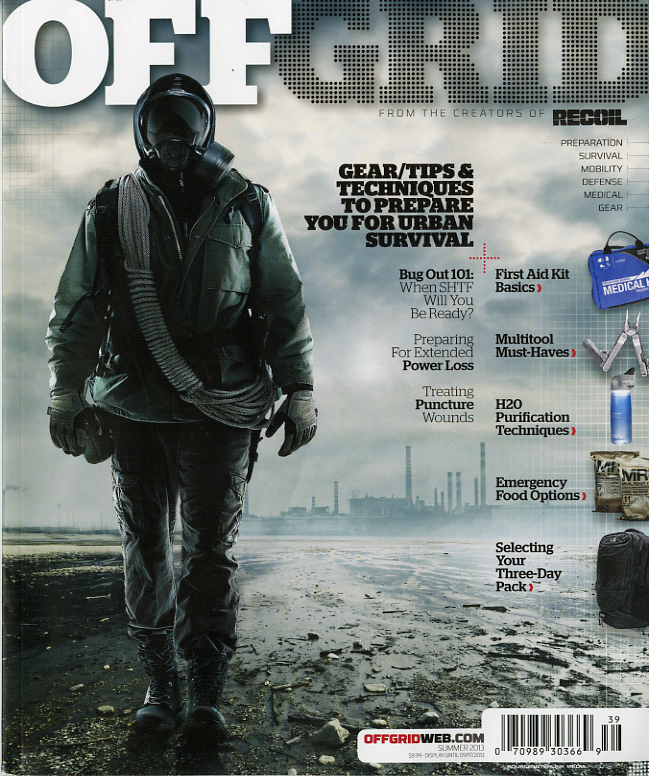
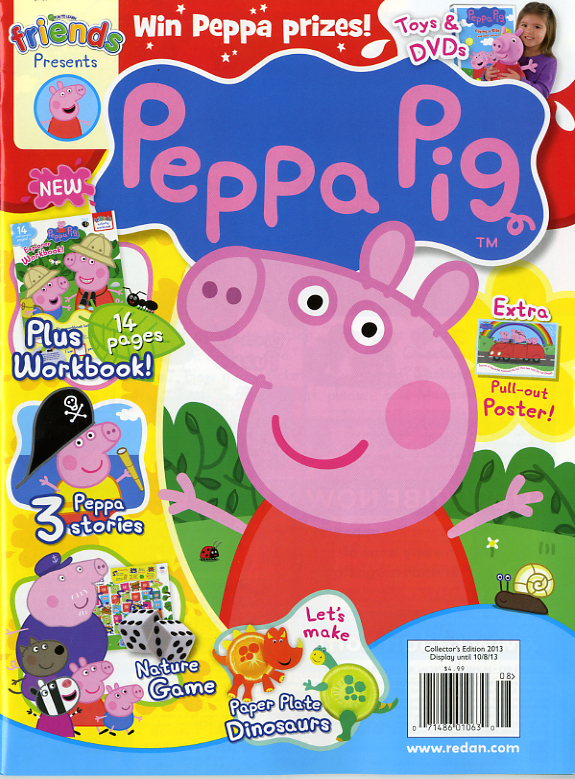
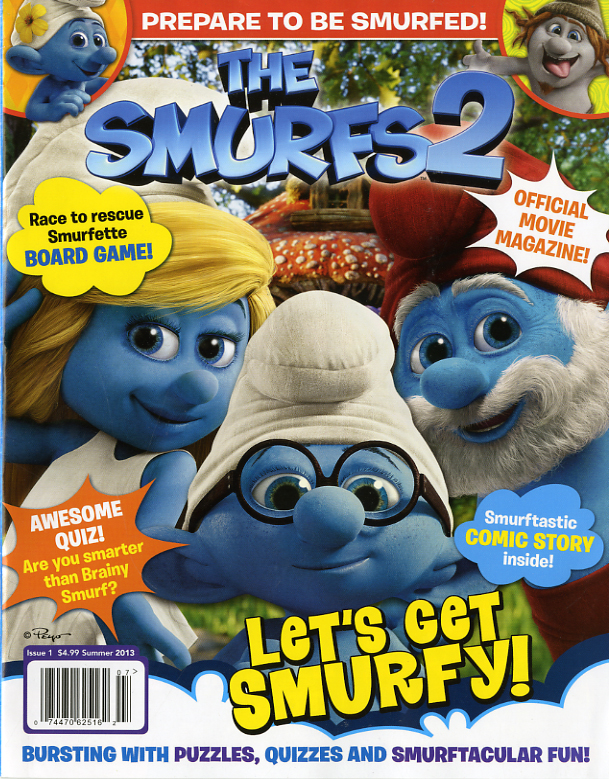
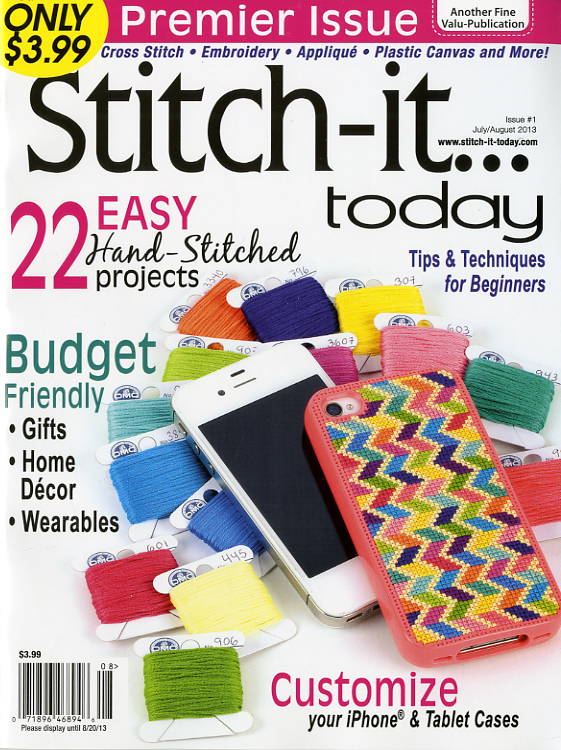
Quarter 1 from 2013 has been a very active quarter in the life of the printed magazine. At least 45 titles were launched in the first three months of 2013 with an additional 146 annuals, specials, and book-a-zines. My numbers are ONLY for PRINTED INK ON PAPER magazines. I do not track any other platform out there.

So those are my numbers of printed magazines. Enough said.

However, you do not have to take my word for it. Just look at the cover images of every new magazine that I was able to find on the nation’s newsstands. I post all of them on the Mr. Magazine™ Launch Monitor. That is why I use the term “at least” because that is all what one person living in one state was able to find. So you can imagine there is more out there.

And, by the way, if I do not have a physical copy of the new magazine, it does not go up on the site. I wait until I have a copy and then post it on the site.

So until the March issues are posted on the Launch Monitor, here are few images from March magazines and be sure to check all the other images of new magazines arriving at the nation’s newsstands for the first time at the Launch Monitor.

Cake & Whiskey Read the rest of this entry ?

h1

In Magazine Publishing, There’s Nothing More Exciting Than the “Launch”. An Excerpt from Our Wisconsin Magazine.

March 30, 2013

photoI love magazines, and I love magazine launches even more. That is no secret. So, when I acquire a new magazine or read a story about a magazine launch, the urge to share my love with the whole wide world is overwhelming. Saturday or no Saturday, I found myself emailing my friend Roy Reiman, Publisher of the new magazine Our Wisconsin, and Mike Beno, the magazine editor, to ask their permission to reprint parts of the introduction to the second issue of the magazine. So without any further ado, here is an excerpt from the February/March issue of Our Wisconsin magazine:

In magazine publishing, there’s nothing more exciting than the “launch.” Not many other things in business come close to this kind of adrenalin rush.
You begin by coming up with an idea or concept for a magazine you feel is “entirely different”. You’re sure potential subscribers have never seen anything like this before.
So you spend months (in our case, we began last spring) planning the format, the design and mostly the content. And then you start gathering that content…which isn’t easy when you don’t have a publication to show anyone. You just have to wave your hands a lot and write lengthy descriptions of what you plan to do.
Then you pull all this together…sort through hundreds of pictures and ideas for articles (some terrific, some not even close)…write and design 68 pages…and finallyput the first issue on the press, printing enough to “test the market”….
And then you wait.
And it drives you crazy. You wait for more than a week for the first response…any response, to see what total strangers think of your “baby”.
“Inventing” a magazine is much more personal than inventing a lawn mower or a toothbrush. It’s more revealing of who you are; it’s an extension of your personality. There’s a lot of you between those pages. So the fear of rejection is greater.
After you put that sample issue in the mail, you’re like a field goal kicker with the game on the line, with its heel or hero element. So you wait as the ball sails…for a long week or more.
If, when the early responses begin trickling in, you learn readers don’t like the first issue, it hurts. To a degree, it’s as though you learned they don’t like you.
But when you learn they like it–and some people even say they love it–wow! That ball is sailing through the middle of the uprights, and every subscription is a pat on the back.

And the people said AMEN!

h1

The Cost of Living with Magazines Has Definitely Gone Up…But Has the Cost of Living Without Them Become an Option for Some?

February 25, 2013

Receipt The receipt you see to the right is the actual amount that I spent at Wal-Mart on 18 different magazines: $145.61. That’s an average of $8 per magazine. For the typical American looking to buy two of their favorites a week, adding an extra $16 to your grocery bill can cause you to sit those two inedible objects right back on the newsstands.

And we wonder why newsstand sales are declining.

Let’s take a look at what I got for my money, why I chose the issues I did and which ones were worth the price. In no particular order:

Oxygen 15 Minute Workouts
1. Oxygen 15 Minute Workouts – a very specialized magazine that focuses on 15 minute workouts and affirms the validity of such abbreviated physical activities by asserting to be ‘Your no-excuses guide to getting fit fast.’ And while I’m sure there is a great deal of truth in that statement…the price to actually find that out is $9.99. A fitness magazine that costs $10? I was expecting to see Richard Simmons leap from between the pages when I opened it, and lead me in a ‘Sweating to the Oldies’ workout.

Men's Fitness
2. Men’s Fitness
– staying with the physical…the newsstand issue I bought at Wal-Mart is different from the subscriber’s issue. Different, in that it has an alternate cover and the paper the magazine is printed on is totally opposite, with the newsstand issue being much thicker and heavier than the subscriber’s copy. Why is that? Why are we not consistent between out subscribers and our single-copy sales as far as the quality of our product? Shouldn’t we be?

Rolling Stone Bob Dylan
3. Rolling Stone – Special Collectors Edition – Bob Dylan – And of course, the title says it all. Legendary Bob Dylan is on the cover holding a harmonica a hair’s breadth away from his mouth, in preparation to play; all the while staring back at you with that brooding, stony glare that he is known for. And for $11.99 you can count yourself among the lucky ones who own this collector’s copy. His top 100 greatest songs are ranked and listed here, with Bono selecting “Like a Rolling Stone” as number one. It’s an up close and personal look at the man and his music as only RollingStone can put together. Worth every penny!

NAIL IT
4. Nail It! – The premier issue of a magazine about nail trends – of the finger variety. A bi-monthly magazine devoted to the latest in nail polishes, decals, and tips. A must have for nail fashionistas everywhere. And for $5.99 you have to decide if it’s worthy or not. But it does prove niche publishing is vogue with the country, and in some cases profitable. It remains to be seen whether this one will be.

Chicken Dinners
5. Chicken Dinners
– from Better Homes and Gardens Special Interest Publications – an entire magazine devoted to chicken. Whether it’s fried, skillet-prepared, baked, or brined with maple, this magazine will give you the recipe for preparing it. And it’ll only cost you $9.99 to read. Of course, I would imagine searching the net for few hours one may find the same chicken content for free. However, as experience makers folks, it seems OK to charge $10 for a magazine that shows us how to cook chicken.

30-Minute Dinners
6. 30-Minute Dinners
– also from Better Homes and Gardens Special Interest Publications. Please refer to #5.Same rules apply.

Family Circle
7. Family Circle – for $1.99 you get the traditional Family Circle fare at a great price. Unlike the $2.79 cover price at Kroger.

Bonus 2 Magazines-one low priceLadies' Home back Bonus 2 Magazines-one low price
8. Family Circle + Ladies’ Home Journal
– a two-magazine baggie deal that is a tremendous opportunity for fans to get both magazines for the low price of $3.29.

HISTORICAL
9. Historical – the collector’s issue celebrating Black History Month – a vast array of information on many black leaders from yesterday and today. But for $7.99 an issue, you could probably get your history lesson a lot cheaper somewhere else.

FLEA MARKET STYLE
10. Flea Market Style
– A magazine that for $9.95 an issue will show you how to take rummage sale and junk sale items and turn them into usable, and in some cases, extraordinary novelties. Another niche publication for just that right audience; whether the price is right for those folks, will be up to them. I bought it because of an article about a home near by in Water Valley, Miss. produced by a former student of mine.

Recycled Style
11. Matthew Mead’s Recycled Style
– Another magazine where throwaways and no-longer used items are, this time, ‘recycled’ and used again. But to read the recycling revelations from the folks over at Oxmoor House, who bring you this magazine, you’re going to have to shell out $12.99.

Taylor Swift
12. Taylor Swift – Special Collector’s Edition – this magazine is just what the title indicates – a magazine devoted to country music sensation, Taylor Swift. And for $6.99 it can be in your collectible magazine stack today. But should it be at that price? Up to you. By the way the real name of the magazine, the smallest type on the cover, is Teen Party magazine.

SELF
13. Self – a whole new look from the inside/out, Self magazine has rejuvenated and redesigned. It’s fresh, crisp and only $3.99

VANITY FAIR
14. Vanity Fair
– Special Collector’s Edition – chock full of stylish information and a foldout cover that not only promotes the issue with content teasers as you unfold, but also shares space with a very imaginative Calvin Klein ad. And the magazine is almost 400 pages…all for only $4.99.

Cosmopolitan
15. Cosmopolitan – the March issue with the matured version of teen sensation Miley Cyrus. The magazine sells for $3.99 and my Wal-Mart issue has a $1 off coupon taped to the cover. Of course, only redeemable at Wal-Mart, but nobody’s perfect. By the way I did not use my coupon. I needed to keep it so I can show it to y’all.

TIME What to Eat NowTIME What to Eat Now
16. What to Eat Now – a niche effort from the good folks’ at TIME that has two different covers. One has a more vertical slant to it (no pun intended), the other a more horizontal. For folks who just can’t decide how they want to see vegetables and fruit displayed on a magazine cover. By the way, it’s 12.99.

Celebrate Weddings
17. Celebrate Weddings – a bridal magazine from Hoffman Media devoted to everything matrimonially trendy. Your impending nuptials can feel the effects of the suggestions between the pages for $9.99.

PreventionPrevention2
18. Prevention – two different covers promoting getting back into shape by walking. The cover lines are exactly the same, other than the colors, but the pictures are totally different, yet, almost the same, other than the poses. Why the need for two different covers? It is a question I will need to address in a future blog. But for now I am happy to spend $3.99 to get cover 2 of the magazine.

Eighteen magazines for $145.61 …I think it’s a good thing for the magazine industry that Mr. Magazine™ and his love for magazines exist.

Next stop Kroger… the ticket, $95.68. Tomorrow is another day! Indeed the cost of “magazine living” is on the rise.

h1

“Recoil” and “Highlights Hello” Top My List of Most Notable Launches of 2012: New Magazines Wrap-Up; Mr. Magazine™ Style

December 29, 2012

photoFrom American Frontiersman to the Zombie Nation (a magazine that was first published in May 2012 and re-issued its premier issue again in Dec. with a different on sale date), 2012 was the year for running the gamut on niche magazines. You could be a Modern Woman while admiring the Beautiful You, all with the flick of a page.

For those naysayers who are crying from the rooftops that print is dead, check out these facts:

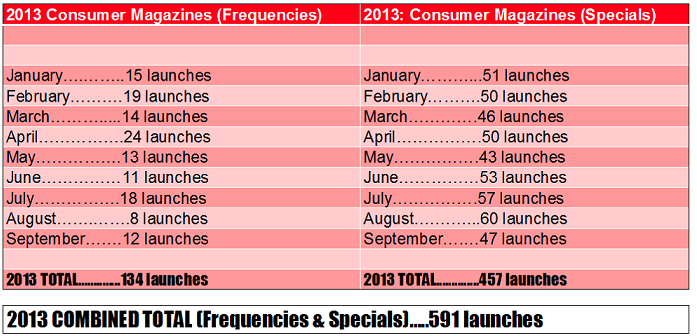
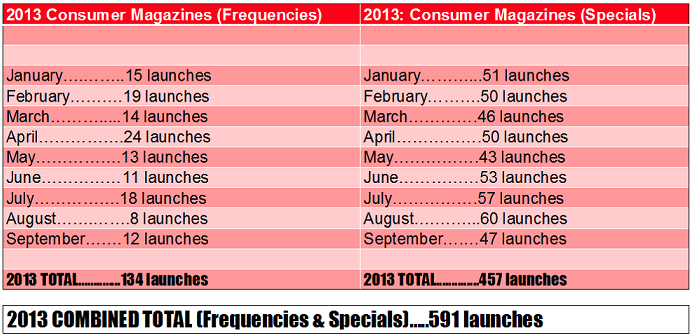
There were a total of 870 new titles on the newsstands in 2012, with 242 of them publishing with a regular frequency. Not since 2007 have we seen numbers that impressive. In that illustrious year (2007) there were 715 total new magazines, with 248 publishing regularly.

The categories reflect the specificity that publishing today demands; from art to women’s interests, being a niche market was the bulls-eye to aim for. Success fairly oozed from the pointed hit almost each and every time. While the epicurean delights still ruled book-a-zine-land and special interests overall, lifestyles came in at a close second. To see new print titles exceed the numbers from 5 years ago only reinforces my mantra: You can’t keep good ink on paper down; at least, not for long.

My top 5 Most Notable Launches for 2012 could be described as eclectic and controversial as the year itself. But the criteria for a notable launch is based on so many different factors that have absolutely nothing to do with tragedy and horrific events from our world today, yet magazines can’t help being the mirror from which society’s reflections are made visual.

Take the year’s Most Notable Launch overall, there was a tie for 2012:
1. Recoil
2. Highlights Hello

These two magazines go from one end of the spectrum to the other. With Recoil, you have an artfully-done, gun-lifestyle magazine that is selling for as much as $125 an issue on e-bay. Unbelievable, you might say, nevertheless, very true. For the gun enthusiast, this magazine is the answer to a prayer and proudly promotes the Second Amendment without apology.

RecoilBlogControversy surrounds this publication today, in more ways than one, as Recoil’s editor, Jerry Tsai, resigned in Sept. 2012 after basically calling Recoil’s support for the Second Amendment rights into question. It was too late after Tsai said that MP7A1’s were unavailable to citizens and for good reason. No amount of retraction, or good intentions could fix it, so Tsai resigned.

Highlights Hello-Then you have the other end of the rainbow where bright colors and children’s laughter live: Highlights Hello magazine.
Highlights Hello received the Magazine Innovation Center’s inaugural award for Excellence at the 2012 ACT 3 Experience. Aimed at children aged 0-2, the magazine is filled with things very young children can grasp and grow with. It displays the hope we have for the future through our children.

3. Dujour
4. Howler
5. Cosmopolitan for Latinas

The last three are unique and engaging in their own right.

Dujour-716Dujour is a magazine that takes no prisoners and asks for no forgiveness. The upscale magazine targets an audience with a net worth of $5 million or more. That in and of itself, speaks volumes (no pun intended) and shows why it made the top five; for bravery alone, yes, but also because it’s a well put-together magazine that is a joy to read and to simply hold in your hand.

HOWLER-17Howler Magazine is a new magazine about soccer, but it’s so much more than that. It’s a completely independent project that promoted itself through social media and word-of-mouth and was publicly and crowd-funded. It’s an amazing endeavor that shows initiative and courage and is a pleasure to read. It’s built on the same principals as this country: if you can dream it and you work hard; you can do it.

COSMOPOLITAN FOR LATINAS-29Cosmopolitan for Latinas is a magazine which shows how important diversity and fragmentation are in our country today. We are a melting pot of ethnicities and this magazine takes one section of that pot and works it to good advantage. It is enlightening and ingenious and a welcomed addition to our industry.

So, as we reflect upon the year 2012, and on all its joys and excitements, let’s remember that magazines exist to provide our readers with an experience they’ll never forget. And I believe we can all agree 2012 has provided that and so much more.

To see every new magazine launched in 2012 please click here.

A copy of this post was published on CommPro.Biz on Dec. 28, 2012

Watch for the Mr. Magazine™ Manifesto 2013 in min: media industry newsletter Jan. 7, 2013 issue and later on this site.

h1

New Magazine Launches Return to 2007 Numbers: 830 Ink on Paper Magazines with 235 Published on a Regular Frequency…

December 16, 2012

Highlights HelloSay Hello to DuJour, but don’t wear a Blindfold while you Sew-It and are Cookin’ and eating Cake & Whiskey, while tending to your Babiekins!

As we approach the end of 2012, with 15 days to go, the number of new magazines appearing on the nation’s newsstands for the first time this year stands at 830, of which 235 of those magazines published with a regular frequency ( the highest number since 2007 when 245 titles appeared with a regular frequency) have also appeared for the first time.

Picture 9Picture 8As I mentioned in min: media industry newsletter in this week’s edition, two noteworthy points of interest:

The increase of the number of print magazines aimed at young children, including Highlights Hello – which is geared toward babies 0 – 3, and which I awarded this year’s inaugural Magazine Innovation Center’s “Innovation in Print” award for its creative use of ink and paper to reach the youngest magazine audience out there, and Ranger Rick Jr. magazine that arrived to the marketplace last month.

The degree of specialization has been on the increase and the use of digital technology to help create the printed product, such as: Howler, DuJour, Modern Cat, and Shoeholic. For more updates and information check minonline.com

What follows is a list of the 31 most notable launches of the past year in random order… and you can click here to see each and every one of the new magazines from Jan. 1 until Nov. 30, 2012. (Dec. launches will be posted Jan. 2, 2013).

Picture 6

h1

The Hobbit: From Print to the Screen and Back to Print…

December 14, 2012

Entertainment Weekly3 Before digital ever took its first breath, in 1937, J.R.R. Tolkien published The Hobbit to critical acclaim. And with the new release today of Director Peter Jackson’s movie version, it’s proof again that print is, even 75-year-old print, the springboard for today’s media. From apps to the web, from television to radio; print has embedded its image into many different forms of media, like fossils into stone. No other medium has had such an impact on communication.

The buzz The Hobbit is generating is palpable. The British magazine, Empire, has 5 different 3-D collectible covers, all $11.99 each. Rolling Stone dedicated an entire collector’s issue to the movie, also priced at $11.99 and so did Topix Media Lab, priced at $7.99. Entertainment Weekly has 4 different collector’s covers at $4.99 each. And Harpercollins has “The Hobbit: An Unexpected Journey,” which showcases art concepts designed by the film’s art directors, priced at $39.99.

While this is not a new phenomenon, it is a simple reminder that print was, is, and will continue to be the trampoline that other media uses to attain their heights of grandeur. Notice I did not say, “delusions of grandeur,” because most certainly there are no delusions that digital and its counterparts are successful in today’s world.

However, print integrated within that success is an important variable.

So as you watch the movie, take a look at what you can bring home, display on your coffee table and relive the adventure time and time again…

The Hobbit BookThe HobbitPicture 4Picture 3Entertainment Weekly3Entertainment Weekly4Entertainment Weekly2Entertainment WeeklyEmpire5Empire4Empire3Empire2Empire

h1

Going Glocally: Jason Binn’s DuJour magazine… The Intricate Ins and Outs of a Truly Upscale Magazine. The Mr. Magazine™ Interview.

December 11, 2012

Jason BinnJason Binn3
Jason Binn4Jason Binn2

At age 23 he launched his first magazine and at age 23 he knew that upscale is the only way to go. He never changed. Every magazine he published targeted an upscale audience via an upscale over-sized publication. From Ocean Drive to Aspen Peak, from Hamptons and Gotham to Los Angeles Confidential, from Michigan Avenue to Capitol File, all of Jason Binn’s magazines were glossy, super glossy ink on paper magazines. Until this year when Mr. Binn ventured into the new world of DuJour magazine, “a new national luxury magazine with targeted local content – seamlessly connecting digital and print media.” A first for Mr. Binn.

DuJour was recently named as one of the hottest launches of the year by yours truly and min: media industry newsletter. After the award presentation, I had the opportunity to visit with Mr. Binn at the Gilt Groupe’s headquarters on the 5th Floor of the 2 Park Ave. building in New York City. Gilt and Hudson News are Mr. Binn’s partners in this venture.

So, how do you successfully operate a magazine that targets an audience who maintains a net worth of $5 million? Well, with very affluent aim, of course. I asked Jason Binn, CEO and Founder of DuJour, about the size of his market, the fact that 97% of his readers don’t practice digital and print simultaneously, and his concept for DuJour’s digital edition. It’s sure to be a bull’s-eye read. So sit back, count your millions later, and enjoy Mr. Magazine’s™ interview with “Mr. Elite,” Jason Binn.

And in typical Mr. Magazine™ Interview’s style, first the sound bites, followed by the video interview and then the very lightly edited transcript with Jason Binn.

The Sound bites:

On the description of DuJour as a “glocal” magazine:
It focuses on national content and keys into the top cities around the country that really moves the luxury goods, luxury products, and luxury services.

On the size of DuJour’s upscale market:
We mail 250,000 magazines to cities like Miami, New York, L.A., and Chicago. We call those tier one markets. In those markets, we find upwards of around 37,000 people that we obtain accessible data for, people who maintain a $5 million net worth.

On the fact that DuJour’s readers are either print readers or digital readers, but not both:
Yes, our data has shown us that a digital reader for a specific magazine either reads that magazine online, or offline. For that individual to integrate and read both, it has to be a very high, enthusiastic reader.

On DuJour’s digital edition:
Basically it’s set in a way that the magazine reads like a web magazine. So you can see the style, the life, and the body. Then when you’re in the different sections, it moves. And you have Twitter feeds at the bottom that are anecdotes that hold like footers.

On what makes Jason click and tick: It’s about being challenged for me. It’s about being around people who are actually motivating me to put out a better product. The media world today is changing constantly.

And now for the video interview:

And last but not least, a lightly edited transcript for both the video and audio interview:

Samir Husni:What is DuJour?

Jason Binn Jason Binn: DuJour Magazine is what we call a “glocal” magazine. It focuses on national content and keys into the top cities around the country that really moves the luxury goods, luxury products, luxury services and integrates print and digital so that they work together as one.

Samir Husni: You’re known as the “Mr. Elite” of elite magazines. How big is the upscale market?

Jason Binn: We mail 250,000 magazines to cities like Miami, New York, L.A., and Chicago. We call those tier one markets. In those markets, we find upwards of around 37,000 people that we obtain accessible data for, people who maintain a $5 million net worth. Then we have tier two markets which we send around 20,000 copies to, and those range from San Francisco to Dallas, to Houston, to New York City’s metro markets, and Orange County. And then we have our sizzle markets, those markets that consist of people in the tier one and tier two categories who have second or third homes in, say, Aspen, the Hamptons, Palm Beach, Telluride, Martha’s Vineyard, or Sun Valley.

Samir Husni: You mentioned that 97% of your print readers don’t go online.

Jason Binn: Yes, our data has shown us that a digital reader for a specific magazine either reads that magazine online, or offline. For that individual to integrate and read both, it has to be a very high, enthusiastic reader. So if there’s somebody who is really passionate, let’s say, about a magazine or a newspaper, roughly only 3% of the time will they have the app or subscribe to the digital version, as well as the print. There are also some magazines out there that if you are a subscriber to the print, they’ll give you the digital for free. And there’s other companies out there that if you buy the print, you have to buy the digital.

Samir Husni: Tell me about the digital edition of DuJour Magazine.

Jason Binn: Basically it’s set in a way that the magazine reads like a web magazine. So you can see the style, the life, and the body. Then when you’re in the different sections, it moves. And you have Twitter feeds at the bottom that are anecdotes that hold like footers. I think that’s a very important feature. And we have a great use of white space. Also mostly 90% of our content is original and our stories exclusive. I believe that content is king, so that’s very important. And also, magazines aren’t as thick as they used to be. So what I did was to create a quarterly magazine in order to have a really great shelf life. I created a book that people would want to hold onto and read; one that could take two to three hours to enjoy, that has investigative reporting and great culture and arts too. But I also created a magazine that, on the digital front, is going out to an amazing audience that’s spends $24 billion a year on offline. And that goes out monthly. And people think it takes less money, but believe it or not, it costs as much editorially to put out a digital product as a print one. People now understand that digital audiences are the same, and therefore as valuable as print audiences. So writers aren’t just going to write for them like they may have four or five years ago. So it costs just as much, but of course, you are saving, obviously, in the paper, in the printing and production, which is probably to most magazines 40 to 50 % of their overhead.


Samir Husni: One final question Jason: what makes you click and tick?

Jason Binn: It’s about being challenged for me. It’s about being around people who are actually motivating me to put out a better product. The media world today is changing constantly. When people say to me, ‘Oh, this is a great model,’ there’s sometimes that I might say, ‘I’m building a model to break a model,’ because in the next 12 to 16 months what I feel I’m doing today might not be what I’m doing tomorrow. The objective today is to be fluid, it’s to be nimble. You couldn’t expect or assume that what we were doing five years ago was going to stay that way. What you can do is stay true to your mission and your message with your business model, and still move into modern times. And as much as we want to control our businesses and control our destinies, which we were able to do at one point, today that is being challenged. And today we typically are affected by what’s taking place around us. As much as we don’t like that, that is just how it is and that’s what makes this exciting to me.

Samir Husni: Thank you.

h1

New Magazines Continue to Arrive at the Marketplace at Record Rates: 78 in November Alone…

December 1, 2012

The Mr. Magazine™ Launch Monitor was able to locate and purchase a total of 78 new titles arriving at the nation’s stands for the first time in the month of November. From the 78 titles, 21 were published with an intended frequency and 57 were annuals, specials or book-a-zine.

The new titles covered every topic under God’s green earth, targeted every age group and every lifestyle. Take a look at six new magazines below and check the entire gallery here.

Capper's FarmerCovey RiseCroche 1•2•3Food FanaticsRanger Rick Jr.Kids Crafts 1•2•3

And the next time someone tells you print is dead, take them to visit a newsstand or check the racks at a grocery store and see if they can stick to their words that print is dead. New magazines are the best indicator that print is and will continue to be well and alive and the nation’s stands are the ONLY place where the “proof is in the pudding…”

h1

A Perfect 100: New Ink on Paper Magazine Launches Continue On the Rise…

November 9, 2012

After a very healthy September, October witnessed the arrival of an even 100 new magazine titles on the nation’s newsstands. One quarter (25 titles) of the new magazines were published with an intended frequency while the remaining three quarters of the October crop (75 titles) were either annual publications or specials and book-a-zines. The October numbers are only one magazine lower than that of September.

Two notable magazines were published as a result of the crowd sourcing fundraising “platform for creative projects” site “Kickstarter:” Howler and Tomorrow. Both are but two examples how technology is used to enhance the power of print. Publishing is believing and believing is the first step to creativity.

Take a look at some of the new magazine launches below and be sure to visit the Mr. Magazine™ Launch Monitor to see each and every one of those magazines.