Archive for the ‘Magazine Power’ Category

h1

Keeping It Authentic With The “Real Woman” – From Cover To Content – The Mr. Magazine™ Interview With Meredith Rollins, Editor-In-Chief, Redbook Magazine.

August 17, 2015

“Could the magazine exist without a print edition? Yes, I guess so. But I know that our readers love the tactile experience of getting a bound magazine in their mailboxes every month. And our subscription sales have been strong. But beyond that, just seeing how our Real Women Style Award winners circled back to our September issue and are on the cover of the magazine is enough to convince you of how much print matters. We unveiled it to one of the winners the other day and she had tears in her eyes and couldn’t believe she was on the cover of a magazine. I think that sums up why print is still an incredibly special medium.” Meredith Rollins

September - Real Women Style Awards Unlike a book, you can judge a magazine by its cover. And by now you’ve seen the cover of the September issue of Redbook magazine on TV, in social media and other outlets. Magazine covers were, are, and will continue to be story generators. This cover is no different in one way and a lot different in many other ways. Real style for real women has been the motto of Redbook magazine for years. In the world of women’s service magazines, Redbook has been around for generations, providing advice, style, recipes and affordable fashion with a down-to-earth mentality that its audience has come to know and love. And to balance all of the useful and helpful hints and tips the magazine offers each month, there are stories that cut right to the heart of the reader, engaging them with an emotional experience they don’t soon forget.

Meredith Rollins has been at the helm of the magazine for just over a year now, but she’s no stranger to Redbook, having been executive editor since 2010. She helped with the magazine’s redesign, which put the focus and the mainline on fun, affordable fashion, beauty and style. Something that Redbook zeros in on brilliantly.

I spoke with Meredith recently about the September issue cover and about her goals and plans for the future of the magazine. With the Real Women Style Awards, which is in its second year, the magazine showcases and honors “real” women everywhere and even featured the winners on the cover of the September issue. It was a fun and lively conversation, much like the personality of the lady herself.

So grab your most comfortable spot, your drink of choice and curl up and enjoy the Mr. Magazine™ interview with Meredith Rollins, Editor-In-Chief, Redbook.

But first, the sound-bites:

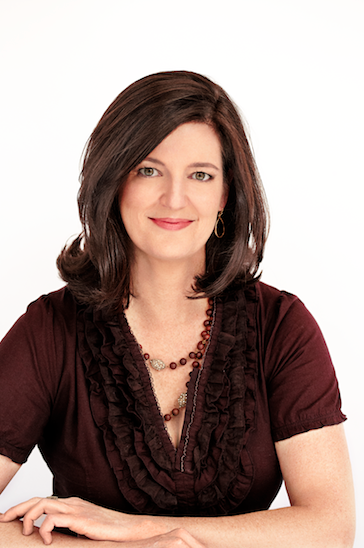
Meredith Rollins Headshot
On the gamble she took by putting a “real” woman on the cover of Redbook’s September issue:
This is our second year of the Real Women Style Awards; we did it for the first time last September and we just featured our winners in the actual pages of the magazine. And we know how much our readers love seeing real women on our pages. It’s so much easier to believe that an outfit or a makeup tip works in real life if you can see it on someone that you can relate to.

On whether she feels she’s taking an actual risk with the September cover or staying true to Redbook’s DNA:
I think I’m staying true to Redbook’s DNA definitely. Whether it’s a risky move or not; I guess time will tell about that, but I feel so passionately about it and I think it’s a perfect moment for this.

On her accomplishments within the last year of being named editor-in-chief:
I feel like I’m just starting, even though I’ve been editor for almost exactly a year. I think I’m really coming into my own as an editor. It takes longer than you might imagine to get up to speed and get to the right creative team in place. I have a new creative team and they’ve totally changed the way the magazine looks, from the covers all the way to the last page. Kirby Rodriguez is our creative director and he joined us last year in early November. And I think he’s a total genius and I’m really proud of the way that we’ve made women’s service look elegant and beautiful, and made affordably-priced fashions look like a million bucks.

On who would appear if she struck the magazine with a magic wand that had the ability to turn it into a living, breathing human being:
That’s a hard question. (Laughs) I don’t think that there’s just one person. I guess that’s what makes answering the question so hard; I know that our readers come in all shapes and sizes, some of them are stay-at-home parents, some of them are working incredibly hard outside and inside the office. They are schoolteachers, executives, parents when they’re not parents, but what they all have in common is they love style and beauty.

On the magazine’s personality and whom it reflects when it arrives at a reader’s home: I think it’s the embodiment of their best friend who has great advice and who knows exactly what she’s going through in her life. And who’s a lot of fun to be around. One of the best quotes that I’ve heard from a reader was that she thought the magazine was someone that she could sit down with and have a glass of wine with at the end of the day. And that’s exactly what I want.

On whether she believes that “best friend” persona of Redbook could be achieved without the print component:
Could the magazine exist without a print edition? Yes, I guess so. But I know that our readers love the tactile experience of getting a bound magazine in their mailboxes every month. And our subscription sales have been strong. But beyond that, just seeing how our Real Women Style Award winners circled back to our September issue and are on the cover of the magazine is enough to convince you of how much print matters. We unveiled it to one of the winners the other day and she had tears in her eyes and couldn’t believe she was on the cover of a magazine.

On the day-to-day process of putting a magazine with such a wide audience as Redbook together:
For me it goes back to this idea of shortcuts and quick information, balanced with stories that will really move you, because our readers still want beautiful writing. They want beautiful journalism and so we balance out all of the tips and advice in the magazine with things that feel meatier. Those are the stories that we get the most letters about honestly.

On what motivates her to get out of bed in the mornings and say it’s going to be a great day:
In terms of the magazine, it’s the excitement of working with an amazing team. I’m biased of course, but I really do think I have the best team in the business. We have 7 million readers and it’s such a privilege to talk to them; they’re smart; they’re fiery and they totally keep me on my toes. And I want to give them something that they’ll fall in love with.
Meredith's Editor's Note
On the biggest challenge she expects to face and how she will overcome it:
Our biggest challenge is that we need to be different. We need to have a point of difference and that’s always been true. And I think that’s true of any magazine. It’s finding a voice and having that voice on the pages of the magazine is incredibly important and always hard. And it’s keeping up with our audience, because they don’t want things to stay static; their interested in things constantly changing.

On whether innovation, as in Redbook’s partnership with Dove, has changed her role as editor from being just the voice of the brand to the brand voice of other brands as well:
No, I think as editor you’re inevitably the voice of the brand; you’re the one who’s out there in front of it. And it’s a job that I take very seriously, of course. And in terms of the Dove partnership, it was a purely editorial project; they weren’t part of the editorial process at all. It was great synergy and I think our messages on some levels are very much aligned. But it was a purely editorial project and one that I’m incredibly proud of. And honestly, it was something that I was going to do even before we started talking to Dove about it.

On what keeps her up at night:
My honest answer would have to be my eight-year-old. (Laughs) Every night there’s a new weird dream or he doesn’t have enough water or he’s too hot. He’s in the waking-up-in-the-middle-of-the-night mode and I love him more than life itself, but I do wish he’d let me sleep because I need the rest.

And now the lightly edited transcript of the Mr. Magazine™ conversation with Meredith Rollins, Editor-In-Chief, Redbook magazine.

Samir Husni: It’s been a little over a year now since you’ve been at the helm of Redbook. Let’s talk a bit about the gamble you’re taking with the September cover. It’s been said that unless it’s them, no one wants to see regular people on the cover of a magazine; they want to fantasize; they want to see a celebrity on the cover. Tell me the reasoning behind your decision to put a regular woman on the cover? Is she an ordinary woman who’s done extraordinary things perhaps?

Meredith Rollins: This is our second year of the Real Women Style Awards; we did it for the first time last September and we just featured our winners in the actual pages of the magazine. And we know how much our readers love seeing real women on our pages. It’s so much easier to believe that an outfit or a makeup tip works in real life if you can see it on someone that you can relate to.

So, it made sense to me that they would love to see them on the cover itself. And the Real Women Style Awards gave us the perfect opportunity to showcase these amazing women right there on the newsstand.

Samir Husni: I saw the piece written in Adweek about Redbook and what they called a “risky move” away from celebrities with this cover; do you feel that you’re taking any risk or just staying true to the nature and the DNA of the magazine?

Meredith Rollins: I think I’m staying true to Redbook’s DNA definitely. Whether it’s a risky move or not; I guess time will tell about that, but I feel so passionately about it and I think it’s a perfect moment for this. Our readers really want to see people who look like them; they want to see diversity and if it’s a risk, it’s one that I’m very willing to take.

Samir Husni: If we go back one year to when you were first named editor-in-chief of Redbook and then look one year ahead from now; what would you have accomplished during that time in either cementing the DNA of the magazine or altering it? Or finding a completely new and different Redbook?

Redbook Cover-2 Meredith Rollins: That’s such a good question. I feel like I’m just starting, even though I’ve been editor for almost exactly a year. I think I’m really coming into my own as an editor. It takes longer than you might imagine to get up to speed and to get the right creative team in place.

I have a new creative team and they’ve totally changed the way the magazine looks, from the covers all the way to the last page. Kirby Rodriguez is our creative director and he joined us last year in early November. And I think he’s a total genius and I’m really proud of the way that we’ve made women’s service look elegant and beautiful, and made affordably-priced fashions look like a million bucks.

I focused on women who are busy. I’m a mom myself and I know how pressed for time that I am. And how much that I’m looking forward to finding shortcuts and ways to make my life easier. So, I focused on that, on the one hand. And I focused on beautiful images, because I think our readers have wonderful tastes and I’m really trying to elevate the look of things, even if we’re photographing a $20 sweater, I want it to look incredible.

And the other thing that I’m really trying to do is focus on confidence and fearlessness and women feeling like they can come into their own. That’s been a true line for me and something that I’m focusing more and more on in the coming months.

Samir Husni: If I gave you a magic wand that had the ability to transform the August or September issue of Redbook into a living, breathing human being and you struck the magazine with it; who would appear?

Meredith Rollins: That’s a hard question. (Laughs) I don’t think that there’s just one person. I guess that’s what makes answering the question so hard; I know that our readers come in all shapes and sizes, some of them are stay-at-home parents, some of them are working incredibly hard outside and inside the office. They are schoolteachers, executives, parents when they’re not parents, but what they all have in common is they love style and beauty. They want the magazine to reflect who they are and to feel like an escape on the one hand, sort of their happy place, which is true for a lot of magazines, but particularly true for us, and they also need the magazine to be a way to make their lives easier.

We’ve certainly had great success with some celebrities on our cover and I think they tend to be women that our readers can really relate to. People like Kelly Clarkson or Alison Sweeney, who’s on the cover of the August issue, which is selling great. Those are the type of women that I think our readers want to see because they have an affinity for them. But by the same token, I’m really celebrating our readers with every issue.

Samir Husni: But when the reader gets her copy of Redbook in the mail; would you say that she feels like Meredith Rollins is coming to her at home and engaging her with a personal conversation, such as offering her advice or would Redbook today reflect more of a younger or older sibling speaking to her? Who would you say the “human” Redbook is when it arrives at the home of one of your readers?

Meredith Rollins: I think it’s the embodiment of their best friend who has great advice and who knows exactly what she’s going through in her life. And who’s a lot of fun to be around.

One of the best quotes that I’ve heard from a reader was that she thought the magazine was someone that she could sit down with and have a glass of wine with at the end of the day. And that’s exactly what I want. I don’t want the magazine to feel judgmental, like she isn’t doing enough or rich enough or she doesn’t have enough time to do an incredibly complicated craft. I want it to feel like a warm, welcoming place. And I think we’ve succeeded in that.

Samir Husni: Do you think that you could accomplish that moment that your reader described; that sit-down-with-a-friend-and-have-a-glass-of-wine appeal without the print component; if it was digital-only?

Meredith Rollins: Could the magazine exist without a print edition? Yes, I guess so. But I know that our readers love the tactile experience of getting a bound magazine in their mailboxes every month. And our subscription sales have been strong.

But beyond that, just seeing how our Real Women Style Award winners circled back to our September issue and are on the cover of the magazine is enough to convince you of how much print matters. We unveiled it to one of the winners the other day and she had tears in her eyes and couldn’t believe she was on the cover of a magazine. I think that sums up why print is still an incredibly special medium.

Samir Husni: You mean you don’t receive calls from celebrities or their people asking to be on Redbook’s website? They’re asking for the magazine cover?

Meredith Rollins: No, we put them on the website too, but for celebrities; I think it’s generally true that a big story in a magazine and also being a cover story still means a lot to them as well.

Samir Husni: Tell me about the day-to-day process of putting a magazine with such a wide audience as Redbook together? What goes through your brain as you perform your daily activities?

Meredith Rollins: As I said, I’m a mom too; I have two little boys who are eight and almost six. So, I think I’m really living the Redbook life. I get up in the morning; my household is crazy; I get them dressed and to school; I get to the office and then I have a moment of calm to think about what a woman like me, whether she works outside of the home or not, or whether her kids are in high school or preschool, might want from a magazine.

And for me it goes back to this idea of shortcuts and quick information, balanced with stories that will really move you, because our readers still want beautiful writing. They want beautiful journalism and so we balance out all of the tips and advice in the magazine with things that feel meatier. Those are the stories that we get the most letters about honestly.

We had a beautiful story in one of our recent issues about a woman who was in her 30s and looking into the future and thinking about her daughter. Her daughter and her sister had a very close bond. It’s a beautiful story and some things about it, of course, were dark and tragic, but at the end it was very hopeful and it was a wonderful musing on family. We received amazing letters about it.

It’s finding that right mix. It’s finding the lipstick she’s going to wear and love; the outfit that’s going to get her out of the door faster and the recipes that are healthy and won’t kill her diet, but are still very delicious, balanced with stories that she can really sink her teeth into.

Samir Husni: What motivates you every morning to get out of bed and say it’s going to be a great day?

Meredith Rollins: My boys get me out of bed far earlier than I might actually want to. (Laughs)

Samir Husni: (Laughs too).

Meredith Rollins: But in terms of the magazine, it’s the excitement of working with an amazing team. I’m biased of course, but I really do think I have the best team in the business. We have 7 million readers and it’s such a privilege to talk to them; they’re smart; they’re fiery and they totally keep me on my toes. And I want to give them something that they’ll fall in love with.

So, I feel that our readers set the bar really high and it’s a constant, exciting challenge to be rethinking the brand, reinventing the brand and in turn, giving them something that I know they’re going to love.

Samir Husni: You were saying that Redbook has 7 million readers; with a magazine of that size what do you think will be your biggest challenge as you move forward and how are you planning to overcome it?

Meredith Rollins: Our biggest challenge is that we need to be different. We need to have a point of difference and that’s always been true. And I think that’s true of any magazine. It’s finding a voice and having that voice on the pages of the magazine is incredibly important and always hard. And it’s keeping up with our audience, because they don’t want things to stay static; their interested in things constantly changing.

It’s easy to say, well, this page works; we’ll just do it every single month from now until eternity. So, I really like to change things up. Of course, we’ve found a formula that works, so we try to stick with it, but we try to change it in different ways. And I don’t think that you would look at the August issue and then look at the September issue and say, oh, they’re exactly the same. We really try to give our readers something new every single month.

Reflecting back on what I said before about our audience keeping me on my toes, I do think that’s the biggest challenge is to not give them the same old women’s service that they’ve already read in other places. To not give them recipes that they’ve already served; we want to give them something fresh and that’s going to make them excited to open the magazine when it arrives in their mailbox or when they pick it up on the newsstand.

Samir Husni: As you watch the magazine come to fruition, as each issue rolls out; you’re finding new ways of doing things, including teaming up with Dove, for example. Did this change your role as editor in any way? Are you now like the voice of the brand and the brand voice of other brands?

inside Redbook Meredith Rollins: No, I think as editor you’re inevitably the voice of the brand; you’re the one who’s out there in front of it. And it’s a job that I take very seriously, of course.

And in terms of the Dove partnership, it was a purely editorial project; they weren’t part of the editorial process at all. They knew that we were going to put the Real Women star award winner from the cover, obviously, that’s why we were able to have a gatefold cover, which is great, and we love that brand and the alignment was just right. But they were really surprised when they saw our winners and had a sneak preview of the cover last week. And it was fun to unveil it to them; they knew we were doing it, but they didn’t have any input on who we chose or the way we photographed them or any of the rest of it.

It was great synergy and I think our messages on some levels are very much aligned. But it was a purely editorial project and one that I’m incredibly proud of. And honestly, it was something that I was going to do even before we started talking to Dove about it.

Samir Husni: Do you think your role as editor, and the role of editor-in-chief in general, has changed over the last five or ten years?

Meredith Rollins: I think so, although it’s a little bit hard to answer the question because I wasn’t an editor-in-chief five years ago, but even as executive editor, you only see certain angles on the job. I can only tell you what it’s been like for the past year, but I do think there’s an emphasis on being different. And I do think that’s one of the great things that Hearst does, is that we’re constantly looking for new and interesting kinds of projects and that’s definitely an emphasis here at this company and at every single media company at this point.

And it’s just figuring out ways to do it that feels right for the brand and the alignment with Dove was exactly right for us. It might not be right for somebody else or a different kind of magazine, but it was perfect for us.

Samir Husni: My typical last question; what keeps you up at night?

Meredith Rollins: My honest answer would have to be my eight-year-old. (Laughs) Every night there’s a new weird dream or he doesn’t have enough water or he’s too hot. He’s in the waking-up-in-the-middle-of-the-night mode and I love him more than life itself, but I do wish he’d let me sleep because I need the rest.

Samir Husni: Thank you.

h1

Super Yachting Anyone? You Only Need A Net Worth Of $680 Million To Join The Fun – But Not To Enjoy The Magazine – The Mr. Magazine™ Interview With Louis Coletti, Associate Publisher Luxury Advertising, ShowBoats International Magazine.

August 14, 2015

“I think print is the most powerful medium. I think it’s an engagement opportunity for consumers to be hands-on (no pun intended) and connected with the content. I’ve been a magazine fan since high school; I believe in print and always will believe in print. It’s something that you can take with you and have an intimate experience with. The photography is bold; the typography is modern and continues to change. It’s something that you can take with you no matter where you are, from the beach to the boardroom, onboard a boat or onboard a plane; it can go with you everywhere. There’s no place that you can’t take a magazine.” Louis Coletti

Showboats 3-14 For most of us the superyacht stratosphere of existence is but a mere fantasy that we dream about after a really large, superb dinner. But for some people, that’s not the case. Spending $10 million a year on maintenance alone for one of these magnificent vessels is just an annual expense that they write a check for unflinchingly. Just thinking about it makes me hyperventilate a bit.

ShowBoats International is a magazine dedicated to those individuals who can sail the seven seas in a style and luxury that many of us have never known, nor ever will. But it’s definitely entertaining to read about.

According to Louis Coletti, associate publisher luxury advertising for the magazine, ShowBoats International has the wealthiest readership of any publication in the United States, with the mean net worth of a superyacht owner estimated at $680 million. The magazine has the highest concentration of ultra-high net worth individuals and billionaire’s listed among its readership and provides the content this echelon of people need to stay up-to-date and abreast of what’s going on in the superyacht and mega yacht communities.

Louis is determined to take this superyacht brand to a whole new level. I spoke with him recently and we talked about the redesign and relaunch of the U.S. edition of the brand beginning with the March 2015 issue of the magazine. Louis said investments were made in editorial content, paper stock and the overall size and binding of the publication, proving that not only do us mere mortals appreciate the power of print, but so do the ultra-mega-rich as well.

Some mindboggling statistics that Louis provided for Mr. Magazine™ only goes to show that a niche audience takes on a whole new meaning when it comes to the superyacht community:


• Many superyacht owners keep their vessels for no more than three years before selling up.

• In 2013, 355 superyachts were sold with a total combined price of $3.4 billion U.S.

• Of the 125 owners’ nationalities identified, 14% were Americans, followed closely by Russians.

• Luxury yachts top the list of the ten most expensive asset purchases ever recorded.

• 10% of the yacht purchase price is usually paid immediately.

So, as you let those statistics sink in, I hope you enjoy the Mr. Magazine™ interview with a man who rubs elbows with the ultra-wealthy quite often, but keeps his feet firmly planted on the ground when it comes to the future of his brand, Louis Coletti, Associate Publisher Luxury Advertising, ShowBoats International Magazine.

But first, the sound-bites:

Louis Coletti
On defining the superyacht community:
It really is a fascinating community. The superyacht world is becoming more known and more aware in the United States now, thanks to social media and all of the entertainment channels. As you know, super yachting has been a very big presence in Europe; it’s been part of their culture for decades and centuries with Sardinia and St. Moritz, Monaco and the French Riviera and all over Italy. Yachts are in the harbors there and can be seen all year long, but it’s just becoming known here in the U.S., which is exciting for us.

On the need for a magazine like ShowBoats Magazine in the scheme of things: We’re globally the number one content provider in the superyacht world, for both the motor boat and sailing. We have the strongest hold on the community, in terms of the inside access to who these people are and the people who create this industry. We’ve been around for over 30 years and it’s the number one trusted media brand in the superyacht world. We host the largest and most high profile private event in the industry; we host over 14 global events, exclusively for superyacht and mega yacht owners, brokers and builders.

On the superyacht owner’s estimated net worth being $680 million and whether advertisers are waiting in line to get inside the magazine’s pages because of that:
Our advertising clients directly get it. Every time that I meet with a client, especially Europeans – Italians or French, they immediately understand exactly who this audience is. They’ve been around it, especially as a luxury marketer, they understand who these people are and how powerful and influential they are, and most importantly how private they are.

On the redesign, rebranding and relaunch of the magazine: We increased the trim size as you saw. We have top-quality paper stock and beautiful binding for the magazine; big, bold photography and to improve the design we cut the issue cover-to-cover, beginning with the March issue. And together with our investors as well as many of our readers that attend our events; they all kept speaking to my CEO and the editors about including luxury lifestyle content in the magazine.

On why he thinks we still need print in this digital age: I think print is the most powerful medium. I think it’s an engagement opportunity for consumers to be hands-on (no pun intended) and connected with the content. I’ve been a magazine fan since high school; I believe in print and always will believe in print. It’s something that you can take with you and have an intimate experience with. The photography is bold; the typography is modern and continues to change. It’s something that you can take with you no matter where you are, from the beach to the boardroom, onboard a boat or onboard a plane; it can go with you everywhere. There’s no place that you can’t take a magazine.

On the biggest stumbling block he’s had to face:
It’s brand development basically. We just opened a New York office in April 2015 and I’m here in charge of building all the luxury non-marine; everything that’s non-marine related. It’s just building the brand; making people aware that ShowBoats International is redesigned and relaunched. We have the most powerful audience, in terms of wealth and influence. It’s just about educating people on what the superyacht and mega yacht world is and what it’s about; the amount of money that it takes to participate in this community and that a superyacht is literally the most expensive consumer item for purchase on earth right now.

On how it makes him feel to be in the company of people with ultra-high net worth’s:
It’s exciting to be part of this development. I wish that it was easily understood, in terms of when I talk about super yachting, I just wish more people would understand exactly what it means. And what this industry is about.

On anything else he’d like to add:
The way I see this media opportunity/partnership with us is more a financial decision than a media decision. If marketers are looking to affect their bottom line in a significant way and move product; move a luxury auto off the lot; move a $150,000 timepiece out of the showcase; move custom, made-to-order pretty much anything that’s in their stable of offerings; this is the audience to do it.

On what keeps him up at night: What keeps me up the most honestly though is the excitement of wanting to get out and see more people and do more and just build this brand and take it to a whole new level. I’m in month four, going on month five, and sometimes it feels like it’s been two years and sometimes it feels like it’s been five weeks. Every day it’s new and exciting.

And now for the lightly edited transcript of the Mr. Magazine™ conversation with Louis Coletti, Associate Publisher Luxury Advertising, ShowBoats International Magazine.

Samir Husni: Tell me a little about the superyacht community.

Showboats 2-13 Louis Coletti: It really is a fascinating community. The superyacht world is becoming more known and more aware in the United States now, thanks to social media and all of the entertainment channels.

As you know, super yachting has been a very big presence in Europe; it’s been part of their culture for decades and centuries with Sardinia and St. Moritz, Monaco and the French Riviera and all over Italy. Yachts are in the harbors there and can be seen all year long, but it’s just becoming known here in the U.S., which is exciting for us.

I’m not sure if you’re aware of this, but Ft. Lauderdale is the third largest shipbuilding, manufacturing and marina setting in North and South America. It’s actually the third largest in the world. It’s the top largest in North and South America.

Most Europeans still have their superyachts here in Ft. Lauderdale during the wintertime when they’re doing the transatlantic trips. They send their boats ahead with the captain and the crew and then they meet up with them in Florida. So, it’s become really big, which is very exciting for us. We’re very happy about all of the attention the community has been getting.

Samir Husni: I’m hearing a lot lately that the reason we exist in print is because of the impact of social media and the Internet and how it’s introducing the world to each other. What is the need for ShowBoats International Magazine in the scheme of these introductions?

Louis Coletti: We’re globally the number one content provider in the superyacht world, for both the motor boat and sailing. We have the strongest hold on the community, in terms of the inside access to who these people are and the people who create this industry. We’ve been around for over 30 years and it’s the number one trusted media brand in the superyacht world. We host the largest and most high profile private event in the industry; we host over 14 global events, exclusively for superyacht and mega yacht owners, brokers and builders.

So, it’s really these great partnerships and we have access in terms of exclusive interviews; we get invited onboard for the new build before they’re launched. We have what’s called the Superyacht Design Symposium, which is an event that we host once a year where all the top superyacht architects and designers gather together. It’s a three-day event that’s an open forum and discussion, plus there are seminars and other types of events there as well. And they’ll all get together once a year to share the new updates and ideas on technology, regulations, design opportunities and new build that are coming out. So, we’re involved on the build side as well as the actual boats themselves being launched on the water.

Samir Husni: In addition to that, you have the Ultra High Net Worth individuals in the world; I’m quoting you from your email. You said the superyacht owner is estimated at $680 million, that’s the mean net worth. How do you utilize that audience in reaching the advertisers? You’re in charge of the luxury advertising for the magazines of the brand; when you go meet with an ad agency, are they just champing at the bit to advertise in the magazines?

Louis Coletti: That’s a very interesting question. When I meet with a client directly, they get it immediately. They understand the amount of money that it takes to be a superyacht owner. And additionally, the amount of money that it takes to support the lifestyle that evolves with this community.

On average, they spend two months out of the year on their superyachts. They have a whole life outside of their boating activities. So, for them to spend hundreds of millions of dollars on something they only spend two months a year on, they have an excessive amount of income to spend supporting their hobby and their luxuries.

So our advertising clients directly get it. Every time that I meet with a client, especially Europeans – Italians or French, they immediately understand exactly who this audience is. They’ve been around it, especially as a luxury marketer, they understand who these people are and how powerful and influential they are, and most importantly how private they are.

The ability to gain access is what we provide. We provide inside access with people who we have very intimate relationships with. And you can just imagine based on the size of these boats and they’re all new build that we feature in the magazine. Every issue when you receive ShowBoats International and you see the content, every boat in there is a new build; every boat that’s in there is one of our readers, and we only feature yachts of a 100 ft. or larger on the cover. So, if you have an 80 ft. yacht and it’s spectacular, it might not make the cover, because our rule is 100 ft. or larger.

Also another statistic is on average they spend 10% of the cost of the yachts annually on maintenance. For example, they’ll spend $100 million on their yacht at purchase and then they’re spending $10 million per year to maintain it. Between fuel, docking fees, insurance; whatever they pay in terms of a captain’s salary, crew salaries and everything else that goes along with it, it’s about 10% a year that they spend. That automatically increases the caliber of wealth behind these people. Steven Spielberg is one of our readers. He’s one of the biggest superyacht owners in the Americas, pretty much in the world, but definitely in the Americas.

This explains the difference between a high net worth individual and a very high net worth individual, (Laughs) or an ultra-high net worth person.

Samir Husni: (Laughs too) Yes, ultra-high indeed.

Louis Coletti: Yes, ultra, as they’re definitely called.

Samir Husni: I was in L.A. with a friend at the marina and he was showing me the yacht of Microsoft’s Paul Allen…

Louis Coletti: Yes, he owns three. He has three superyachts. And up until two years ago, he had the largest yacht on the water. He spent around $200 million building that boat. And one year later billionaire Roman Abramovich built a yacht 10 feet larger just to beat Paul Allen. (Laughs)

Samir Husni: (Laughs too).

Louis Coletti: It’s very competitive. Who wants to have the fastest boat; who wants to have the biggest boat; who wants to have one of the top architects and designers building their boat? It’s a very, very competitive community and it’s a very small community too. It’s just the richest people in the world.

Samir Husni: You said that Spielberg has the biggest now?

Louis Coletti: Well, there are two that are vying for the biggest superyacht on earth; one is a Malaysian businessman and one is a guy with no name from the Middle East. Those two are being discussed as the largest boats on the water. But that could always change.

Samir Husni: In March, the entire magazine was relaunched, redesigned and rebranded; tell me a little about the before and after of ShowBoats International.

Louis Coletti: Before it was a different trim size, a different paper stock, a different type of production quality and not as luxurious as you see it today. And it was strictly cover-to-cover boating. It was a place for the boats’ owners to have a showcase, but also for brokers to market and showcase their clients’ boats that were up for charter. Basically, it was a very specific trade-type of magazine, although it was for anyone who appreciated boating, but really for the superyacht owner.

We have a new group of investors in the company; Tara Getty, for instance, from the Getty family Art Foundation; Tara Getty is one of our investors. H
e’s a superyacht owner and very involved in the community.

And together with our investors as well as many of our readers that attend our events; they all kept speaking to my CEO and the editors about including luxury lifestyle content in the magazine. These are very, very busy people; they’re all over the world and they own several homes; they’re not in one place too often. So, the opportunity to read one publication that they’re most excited about; the number one passion point should be yachting. And to infuse it with other luxury content such as watches; they’re big collectors of luxury timepieces. That’s another thing that they spend so much of their money on is watches. Luxury automobiles, fashion, jewelry, spirits, technology and things like that.

We took the liberty to hire new editors; our editor-in-chief in the U.K. Sacha Bonsor; she comes from Hearst, where she worked at Harper’s Bazaar and she’s editor-in-chief in the U.K. overseeing all of the content. She’s very well connected in the luxury space and she’s bringing really fantastic contributors onboard to build the luxury content in the magazine. And it has been so well-received; readers are just praising the redesign; they love the fact that we’re including this new content in addition to boating. And it’s really brought a new element to the brand.

We increased the trim size as you saw. We have top-quality paper stock and beautiful binding for the magazine; big, bold photography and to improve the design we cut the issue cover-to-cover, beginning with the March issue.

Our sister publication, Boat International, which is for our European market and based in the U.K., they did their redesign first. Their redesign launched in October 2014. And then ShowBoats International for the U.S. was redesigned as of March 2015.

Samir Husni: With the redesign and relaunch of the brand; tell me a little about the power of the print publication. You’ve invested in the quality of the paper; you’ve invested in the branding; you’ve invested in the editorial content; why do you think in this digital age people still need print?

Louis Coletti: I think print is the most powerful medium. I think it’s an engagement opportunity for consumers to be hands-on (no pun intended) and connected with the content. I’ve been a magazine fan since high school; I believe in print and always will believe in print. It’s something that you can take with you and have an intimate experience with. The photography is bold; the typography is modern and continues to change. It’s something that you can take with you no matter where you are, from the beach to the boardroom, onboard a boat or onboard a plane; it can go with you everywhere. There’s no place that you can’t take a magazine.

And it’s a whole different experience, in terms of content. Does print and digital work well together? Absolutely. We have content online that’s not in the magazine. We also have videos online as well.

That’s another thing, our company has its own video production company and we produce videos for all of the major yacht builders. We produce videos for all of our events. We produce and host The Loro Piana Superyacht Regatta twice a year; once in Sardinia and once in the Caribbean and we’ve been doing it for eight years with Loro Piana. And we videotape the entire week’s events, from start to finish. All the races; all the interviews; all the entertainment; all of it is recorded in a beautiful documentary way. And we press those videos online.

We also host what’s called The World Superyacht Awards. It’s similar to The Oscars for the superyacht industry and it’s something that our readers look forward to every single year. It’s with several different, very high-profile luxury partners. Baccarat builds the statue for us that they win, it’s called The Neptune, and it’s a very big deal. It’s a black-tie event that’s hosted in a different country around the world every year. And we videotape that entire event and we press that online too.

So, the content online is much different. We also list now over 7,000 superyachts for sale and for charter; it’s the number one directory for sale and charter in the industry. And we host that on our sites. We also produce what’s called the Superyacht Register, which is an outline of every detail of the top superyachts in the world. And it lists the builder, the year it was built, the owner, the architect, the interior designer, the size and speed of the boat; all the specifics of the boats are registered.

My point with this is it’s a whole different experience and additional content that’s found online.

Showboats 1-12 Samir Husni: With all the glitz and glamour of the superyacht world; what has been the biggest stumbling block that you’ve had to face and how did you overcome it?

Louis Coletti: It’s brand development basically. We just opened a New York office in April 2015 and I’m here in charge of building all the luxury non-marine; everything that’s non-marine related. It’s just building the brand; making people aware that ShowBoats International is redesigned and relaunched.

We have the most powerful audience, in terms of wealth and influence. It’s just about educating people on what the superyacht and mega yacht world is and what it’s about; the amount of money that it takes to participate in this community and that a superyacht is literally the most expensive consumer item for purchase on earth right now. Until you can own private rocket-ships going up into space; there isn’t anything more expensive than superyachts. It costs more than any real estate, any watch, any piece of art, any automobile, and any airplane. The average cost of a plane is $5 million; these people spend more than that just maintaining their boat. (Laughs)

Samir Husni: (Laughs too).

Louis Coletti: It’s just a matter now of really educating the community. The challenge has been, I’d say, the ad agencies; not clients. Clients get it immediately. They’ve been on a superyacht; they know someone who owns a superyacht; they’ve been in St. Tropez, St. Bart’s or Sardinia and they see these superyachts in the harbors or out at sea, so they understand exactly what I’m saying. Several of my clients are part of this community. David Geffen is one of our readers; he owns two superyachts. I think I mentioned that Steven Spielberg is one of our readers; Paul Allen is one of our readers; Mark Zuckerberg is a reader; these people own superyachts and we’re the number one content provider in this community. If they own a boat, it’s registered with us; they get the magazine.

Samir Husni: How does it make you feel to be in such company?

Louis Coletti: It’s exciting to be part of this development. I wish that it was easily understood, in terms of when I talk about super yachting, I just wish more people would understand exactly what it means. And what this industry is about.

But like everything, it takes time and we’re making great progress. We’ve already secured seven new luxury clients that have never worked with us in this yachting space before. We’re getting a lot of interest for 2016 from a lot of the A-list top luxury brands across all categories, not just in the watch category. I wish there were more like me. (Laughs) I wish there were 10 of me; it would make it happen a lot faster.

We’re in building mode right now. We know our strengths. There are other magazines in this space, but they can’t compare to what we’re doing. They don’t have events and if they do, not at the caliber of the events that we have. They definitely don’t have the guest list of attendees that we have. They don’t have the respect and the appreciation for our quality content that we have.

It feels good to be the leader; it’s just being a leader in a space that’s not so widely-known in the U.S. yet.

Samir Husni: Is there anything else that you’d like to add?

Louis Coletti: The way I see this media opportunity/partnership with us is more a financial decision than a media decision. If marketers are looking to affect their bottom line in a significant way and move product; move a luxury auto off the lot; move a $150,000 timepiece out of the showcase; move custom, made-to-order pretty much anything that’s in their stable of offerings; this is the audience to do it.

It’s not about branding; it’s not about running ads in this magazine or that magazine because so-and-so is friends with the editor-in-chief or doing favors for a favor. I understand the importance of all that and that’s definitely a part of how this industry works, but in our case it really is about a financial decision. You invest in us and the rate of return is so much higher than pretty much any other magazine or media available. And it’s because of the amount of wealth and influence that these people have. And it’s a global community. ShowBoats International is for U.S.-based superyacht owners and Boat International is for European superyacht owners; however, combined together it’s a global community. They travel the circuit. They’re all in the Mediterranean at the same time and when the seasons change they go over to the Caribbean and spend time and then they travel to the Americas around the same time, based on the climate and the season. And it’s a circuit. Sometimes you can see five or ten, maybe more, of these superyachts in the same vicinity. We post on our website about whose yacht was spotted where.

Just keep an eye on us. If you’re ever going to follow the America’s Cup, now is an exciting time to do that. We publish America’s Cup updates on our site daily. Right now it’s going on as the World Series and so we’re featuring content on the America’s Cup for the next two years. The World Series just started in June.

The way I see this media opportunity/partnership with us was more a financial decision than a media decision. If marketers are looking to affect their bottom line in a significant way and move product; move a luxury auto off the lot; move a $150,000 timepiece out of the showcase; make custom made-to-order pretty much anything that’s in their stable of offerings; this is the audience to do it.

So, just keep an eye on us and it’ll be exciting to see the growth and the new achievements that we make.

Samir Husni: My typical last question; what keeps you up at night?

Louis Coletti: (Laughs) Thinking of everything that I have to get done the next day; things that I didn’t get to scratch off my to-do list that day, which carries over to tomorrow.

What keeps me up the most honestly though is the excitement of wanting to get out and see more people and do more and just build this brand and take it to a whole new level. I’m in month four, going on month five, and sometimes it feels like it’s been two years and sometimes it feels like it’s been five weeks. Every day it’s new and exciting. Just knowing how much we have yet to do is both exciting and keeps me up at night sometimes.

Samir Husni: Thank you.

h1

When The Word Beautiful Is In Your Title – You Know What You’re Reading & Have Been For Almost 120 Years…The Mr. Magazine™ Interview With Sophie Donelson, Editor-In-Chief, House Beautiful.

August 12, 2015

“We enter our 120th year in 2016. The reason House Beautiful has been successful for that many years is because of the stories. This is what you can still turn to print magazines for; you have the luxury of dealing with experts, in fact-checking articles, in creating a photo shoot whole cloth, something brand new to show the reader. This is indulgent in this day and age. Content moves fast and there’s great demand in the digital space to do more and more and more. And I’m sitting here asking: how do I do less better? I want to create the richest, most indulgent experience. This is a chocolate mousse; this is a special treat. And our readers recognize that. I think a great deal about every inch, every page of that magazine. I want to make sure it’s the best that it can be.” Sophie Donelson

House Beautiful July Aug 15 Cover As the leading authority on American home design and decoration; House Beautiful sets the standard for upscale treatment of homes that are lived in and enjoyed, not just viewed. From color schemes to the tiniest detail such as fringe on a pillow; the mission of the magazine and its new editor, Sophie Donelson, is to take readers to a new, richer level when it comes to the soul of their domain.

Next year the magazine will realize its 120th anniversary and there’s a reason it has withstood the test of time and not only survived, but thrived in this shifting world of digital content: the stories and the tactile nature of the beauty it presents.

Recently, I spoke with Sophie about her vision for House Beautiful’s future and the experience she feels the magazine gives its readers. She was both honest and extremely passionate about the brand and what it represents to its audience. From bringing more urgency to the written words on the magazine’s pages to energizing and brightening the entire book, Sophie has a definite handle on where she believes the magazine should be heading.

So, I hope you enjoy this open and honest conversation with a woman who lives to make your house as beautiful as the one she’s leading into its 120th year; the Mr. Magazine™ interview with Sophie Donelson, Editor-In-Chief, House Beautiful.

But first, the sound-bites:


HBX080115_014 On whether today’s editor has to practice what they preach in order to stay at the top of their game:
Absolutely. It’s not really any fun to have a job unless you do it. There are times during meetings where I’m talking about home and what it means to have a home that reflects your style and really your soul, and I feel like walking out of the meeting and just going home and tinkering on the things that I’ve been working on.

On whether it feels any differently as the editor of a magazine that has mass reach like House Beautiful than when she worked in the same position at the more regional publication, Hamptons Cottages & Gardens:
I think it was actually a very similar audience that we were talking to at Hamptons Cottages & Gardens. It was just in a more specific way, because the joy of a regional magazine is that you know where they live, what they drive, what their supermarket is; I mean you know that consumer intimately.

On her vision for the future of House Beautiful:
I’m lucky to be at a magazine that’s a beloved title, but at the same time we have this incredible passionate and allegiant audience and so no fast moves. I’m making incremental changes and just sort of trying to energize and brighten every single page of the magazine. When you have the word beautiful in your title, you have no business doing anything that’s just pretty.

On her desire to bring more urgency to the magazine and how she plans to achieve that in print: That’s a great question. Part of it just has to do with the tone of the writing. I always think of the phrase: show, don’t tell. And now I’m going to try and tell you how to do it. It’s about having energy in the writing and seeing people get excited when they read it. That’s as simple as I can put it. And showing things, like the ginger jars, which are resonating right now.

On how she envisions herself as an experience maker who provides good content:
For one, I hear firsthand about how people do experience House Beautiful. This is a weekly, if not daily event where somebody says, I got my magazine in the mail and I can’t wait to go to bed early tonight. These are people who set aside time in their lives to enjoy the magazine. And I would say specifically print often.

On whether she believes that she could create experiences for the reader without a print edition: I would say no because I can explain it in a digital platform and I can explain the decorating aspect that we just talked about, but this is a magazine that’s tear-sheeted and dog-eared and no amount of screen shooting or texting an idea makes up for the fact that I have run into women that have crumpled up pieces of paper in their bags that they’re dying to show me that they found a paint swatch. We deal so much in color and in paints and we do color corrections specifically to that; it’s brutal to do that online, I’ll be honest with you.

On how her role as editor-in-chief has changed over the years, specifically from before the digital explosion up until now: You just have to recognize that women have so many options today on where they get their stimulus. The fact that her phone is tethered to her hand; I don’t see that as an obstacle because in fact when she puts the phone down; I feel like what she picks up is a House Beautiful and that’s a happy moment for me. But what it means is I just have to create the best version of print possible.

On the major stumbling block she might face moving forward and how she plans to overcome it:
With help. (Laughs) I have been a writer, reporter, producer, editor, copywriter my whole life. And I love this field. I love doing it. I love being onset; I love line editing; I love writing cover lines and headlines, but the reason they hired me to sit in this chair is not to do that. They hired me to come up with a vision that drives this magazine forward and engages a new crop of readers and knocks the socks off of a reader who thought they already loved House Beautiful.

On anything else she’d like to add: We wouldn’t even be having this conversation if it wasn’t for Newell Turner (Editorial Director, Hearst Design Group), one of your former students and my mentor. Newell hired me out of college from a Mediabistro ad. I came to this city on a sublet off of Craig’s List and I was saying: well, I hope this works. (Laughs) And thank goodness that Newell found something in me and I got to work, not just side-by-side with him, but I think our knees knocked under the desk.

On what keeps her up at night:
I’m usually tired from a big day; I don’t have too much trouble falling asleep. But when I do, it’s basically possibilities. It’s as simple as that. My mind is racing with interesting people I’ve met, things we could do together, story ideas, meetings I should make, places I should go. It’s an overwhelming place to be and it’s the best case scenario.

And now the lightly edited transcript of the Mr. Magazine™ conversation with Sophie Donelson, Editor-In-Chief, House Beautiful.

Samir Husni: Does an editor today have to practice what they preach? I noticed in your prior job you were in charge of the Cricket’s Circle while you were expecting, and then you had your child and renovated your apartment; your own House Beautiful. Does an editor today have to actually practice what they’re preaching to stay at the top of their game?

Sophie Donelson: Absolutely. It’s not really any fun to have a job unless you do it. There are times during meetings where I’m talking about home and what it means to have a home that reflects your style and really your soul, and I feel like walking out of the meeting and just going home and tinkering on the things that I’ve been working on. It’s really funny; we’ll be in these really deep conversations and I’ll stop and say – I really need to finish that thing I’ve been working on or I really need to change that pink color. We talk and talk about ideas here in the office and then we’re all just really eager to get home at night and really live out what we’ve been talking about all day.

So, yes, I do. This morning alone I hung a piece of art and moved a piece of furniture and in my dining room right now I have drop cloths on the floor because my toddler and I spent the weekend painting little pieces of furniture to kind of brighten up spots in the house that look forlorn. I’ve been traveling a lot, so when I’m home, I don’t want to even leave the house.

Samir Husni: How does it feel to now be the editor of the largest mass home magazine in the country? You were at one time the editor-in-chief of Hamptons Cottages & Gardens with its very upscale audience and now you are editor-in-chief of a magazine that reaches more of a mass audience; does it feel any different now than it did then?

Sophie Donelson: I think it was actually a very similar audience that we were talking to at Hamptons Cottages & Gardens. It was just in a more specific way, because the joy of a regional magazine is that you know where they live, what they drive, what their supermarket is; I mean you know that consumer intimately.

But for the most part, the men and women that I talked to at that magazine are very much this reader. It’s a very affluent reader; it’s a reader who is incredibly passionate about her home and it is a larger audience, but that’s just because it’s national. We have a greater reach. House Beautiful has distinction of covering the most of America. As you know, those magazines get coastal readership, strong on the East Coast and the West Coast; we talked about the smile when you get the Sunbelt and the southern states; House Beautiful gets all of it.

I was told in Nebraska there are few newsstands with a few magazines on those newsstands, but House Beautiful is one of those magazines. And I love that we can speak to just a much broader audience. But at the end of the day these are mostly women that care deeply about their homes, so that idea has been the longstanding, defining point of my shelter magazine career. It’s fun when you say this is the biggest home magazine and it’s a thrill. I never pictured myself in this position, because I’m a doer. I love writing and I never really wanted to be the boss in that way, because I love doing the work. And that’s one of the things that has been a great way for me to grow.

Samir Husni: Can you describe your vision for the future of House Beautiful? What do you want to see House Beautiful continue to do or change about itself; what’s your vision as editor-in-chief? I know August was your first complete issue and now your second is coming up with the September issue. Tell me where you hope to see House Beautiful heading in the future.

Sophie Donelson: I’m lucky to be at a magazine that’s a beloved title, but at the same time we have this incredible passionate and allegiant audience and so no fast moves. I’m making incremental changes and just sort of trying to energize and brighten every single page of the magazine. When you have the word beautiful in your title, you have no business doing anything that’s just pretty. You have to blow people away every single page, and so at the end of the day that’s the space line of my job, to wow our reader.

In terms of where I’d like to take the magazine, I truly feel that we have a reader that adores the home and is very passionate about this space, but I want to encourage her to take the next step and make it a reality in her own life.

This magazine is really special because it’s not for the gallery of look-but-don’t-touch houses; they’re not trophy houses; they’re not homes done for celebrities that don’t live in them. These homes are lived in and enjoyed by families and people all across the country. And yet, they’re exquisite.

We have these fine homes and we talk to designers in this conversational way. Truly these interviews and what the Q&A format, which was started several years ago here at the magazine does, is just get down to earth with the designer. This is the sort of access that no other magazine provides. We have a really conversational tone paired with this absolutely aspirational look.

At the same time, there are magazines that are sort of asking you to pick up a paintbrush; we’re not going to do that; that’s not who we are. Our audience is affluent and they don’t have to do that. In fact, I’m always saying please don’t paint your own room, I need you to hire professionals because I want you to have a good experience. We believe in experts. We believe in professionals and we believe that they can help you to take it to the next level.

But I think that I’d like to bring a little bit more urgency to the writing and a little bit more context as to why we show what we show each month. And what I mean by that is just, for example, our June issue was this cover of ginger jars. This was the issue that I started working with Newell on (Newell Turner, editorial director of the Hearst Design Group), so we paired up for that issue together. July/August was my first issue.

HB June 15 Cover But the ginger jars issue, an editor came to our team and said these jars were really hot right now, and it had sort of an historical bent to it. Ginger jars are something that has been used in decorating for really hundreds of years. And we were seeing them everywhere. They were on Etsy and Instagram; they were having this resurgence. We saw it on Kips Bay Show House. From the very peak, top-of-the-market to a more mass appeal; it was a trend that we were seeing everywhere.

We shot a story, ended up doing a cover off of it and then honestly found that it just went viral online. Our web team did the five things you don’t know about ginger jars; that was their approach to it, which was perfect for their platform.

We did an historical timeline, because in the magazine we get to geek out on decorating a little bit because our audience loves that and they’re bright and they get it. And then what was funny, on Instagram I just all of a sudden saw people tagging House Beautiful; they would take a picture of a tableau in their own home of ginger jars. They would take out the House Beautiful and put it on their coffee table and style something around it and tag House Beautiful. One girl had like a ginger jar skirt on and tagged House Beautiful in it.

It all of a sudden picked up in all of these corners and we realized that this was such a generational hit; I mean, my mother had ginger jars in her home; I know that my grandmother did as well; I have them, and it just became a classic. And I love when we can find a story that hits women of all tastes and at all angles. And I just thought it was a great idea.

Samir Husni: You mentioned the word urgency; that you want to bring more urgency into the magazine. How can you do that in a digital age, but show that urgency in print?

Sophie Donelson: That’s a great question. Part of it just has to do with the tone of the writing. I always think of the phrase: show, don’t tell. And now I’m going to try and tell you how to do it. It’s about having energy in the writing and seeing people get excited when they read it. That’s as simple as I can put it. And showing things, like the ginger jars, which are resonating right now. That’s the job of our editors, to have their ears to the ground and find decorating that feels right for right now.

Samir Husni: One of my mantras that I keep telling whomever is willing to listen is that we are much more than content providers; we are experience makers, magazine editors and magazine publishers. How do you envision yourself as an experience maker who’s providing good content?

Sophie Donelson: For one, I hear firsthand about how people do experience House Beautiful. This is a weekly, if not daily event where somebody says, I got my magazine in the mail and I can’t wait to go to bed early tonight. These are people who set aside time in their lives to enjoy the magazine. And I would say specifically print often. These are magazines, especially in the shelter category I would say, that are down time for our readers. She really does dedicate minutes of her day, especially before bed, I hear that a lot, or I didn’t open it yet; I put it in my bag and I can’t wait to read it on vacation. That in itself is an experience.

Another way that I want to talk about experience is that we are an incredibly visually-driven culture. I think about Instagram constantly, it’s just sort of image after image and it’s beautiful.

And we are creating something brand new. When you pick up House Beautiful, you have never seen this before and that’s on every single page. It’s brand new and created just for you. Nothing old, nothing duplicated, nothing repurposed. It’s all brand new for you. That in itself is another experience.

In terms of decorating, I want to bring that experience to a richer level for our reader. In November we’re exploring; it’s actually our first bath and beauty issue. This is an idea that we’re doing because this book will be about exploring home through the senses. It’s the idea of how do you create rooms that engage all senses, not just sight? What I mean by that is how do you use scent, and not just a scented candle, to enjoy your space more? And how do you use textiles, not just sheets that feel beautiful or a velvet cushion, but how does something like fringe or trim on a pillow heighten your experience in a room? The best designers in the world think of all the senses when they’re designing and I’d love to show our reader how to bring a couple of those things into their own home.

Samir Husni: Do you think that you could accomplish those experiences, such as in the upcoming November five senses issue, if there wasn’t a print edition of the magazine?

Sophie Donelson: I would say no because I can explain it in a digital platform and I can explain the decorating aspect that we just talked about, but this is a magazine that’s tear-sheeted and dog-eared and no amount of screen shooting or texting an idea makes up for the fact that I have run into women that have crumpled up pieces of paper in their bags that they’re dying to show me that they found a paint swatch. We deal so much in color and in paints and we do color corrections specifically to that; it’s brutal to do that online, I’ll be honest with you. It’s an amazing thing to have that tear sheet and actually bring it to your designer or if you’re being really ambitious to the hardware store and ask: can you match this? Or what is this or I want to buy this.

A-one on our minds is making sure that the paints and the colors that we talk about are reflected in a way that when women bring it home they can share that experience they feel in print.

Samir Husni: You’ve been an editor now for over a decade; how have your experiences as editor-in-chief changed from before the digital age, 2007, and after the digital explosion up until today in 2015? How has your role as editor-in-chief changed?

Sophie Donelson: You just have to recognize that women have so many options today on where they get their stimulus. The fact that her phone is tethered to her hand; I don’t see that as an obstacle because in fact when she puts the phone down; I feel like what she picks up is a House Beautiful and that’s a happy moment for me. But what it means is I just have to create the best version of print possible. And I have to earn her attention every single page.

It’s not enough to just create a great decorating magazine, I need to create a magazine that changes her relationship with her home and makes her feel a certain way. That makes her do that tear-sheeting and dog-earing and makes her want to take a picture and text it to a friend. I need to be the best version of print possible. It’s not enough to just be a great magazine anymore because she has so many other places to go for inspiration.

We enter our 120th year in 2016. The reason House Beautiful has been successful for that many years is because of the stories. This is what you can still turn to print magazines for; you have the luxury of dealing with experts, in fact-checking articles, in creating a photo shoot whole cloth, something brand new to show the reader. This is indulgent in this day and age. Content moves fast and there’s great demand in the digital space to do more and more and more. And I’m sitting here asking: how do I do less better? I want to create the richest, most indulgent experience. This is a chocolate mousse; this is a special treat. And our readers recognize that. I think a great deal about every inch, every page of that magazine. I want to make sure it’s the best that it can be.

Samir Husni: As you move forward with House Beautiful; what do you think will be the major stumbling block that you’ll have to face and how will you overcome it?

Sophie Donelson: With help. (Laughs) I have been a writer, reporter, producer, editor, copywriter my whole life. And I love this field. I love doing it. I love being onset; I love line editing; I love writing cover lines and headlines, but the reason they hired me to sit in this chair is not to do that. They hired me to come up with a vision that drives this magazine forward and engages a new crop of readers and knocks the socks off of a reader who thought they already loved House Beautiful.

So, learning to be, not just a manager because I have great managers, thank God, but a leader and somebody that rallies not just our team, but the world at large; that’s the next big step for me. This is an evolution in my career and just because you can write the article doesn’t mean you should.

I’ve been really blessed to inherit a terrific team who are incredibly knowledgeable and skilled. Christine Pittel and Vicky Lowry sat down last month and edited my editor’s letter and it’s such a gift to have two experienced women give me a couple of pointers. And I love that. And I love that my market editors are the best out there; they’re just a team of people who are sweeping the market to find the most important stories to tell today.

So, I have to recognize that talent and just let them do their job and I can focus on my job, and likewise in digital. I’ve got a terrific digital team and they’re the best at what they do. And we come together and we talk ideas, but at the end of the day, I have a certain role to play and they do too.

Samir Husni: What motivates you to get out of bed in the mornings and makes you say it’s going to be a great day?

Sophie Donelson: My three-year-old son and it’s so much easier to go to the office than parent. (Laughs)

Samir Husni: (Laughs too). Is there anything else you’d like to add?

Sophie Donelson: We wouldn’t even be having this conversation if it wasn’t for Newell Turner (Editorial Director, Hearst Design Group), one of your former students and my mentor. Newell hired me out of college from a Mediabistro ad. I came to this city on a sublet off of Craig’s List and I was saying: well, I hope this works. (Laughs)

And thank goodness that Newell found something in me and I got to work, not just side-by-side with him, but I think our knees knocked under the desk. We worked incredibly closely in a tiny office on Hamptons Cottages & Gardens and on launching a couple of other magazines together and his Rolodex became my Rolodex.

And then to enter this incredibly warm and gracious design world and publishing world by Newell’s side was the greatest gift. But he entered me without knowing, which was such a blessing. And it has been a blast and it’s just wild to come home again. Home is the shelter world and home is Newell being my neighbor down in the other office and it’s been a great gift to me.

Samir Husni: My typical last question; what keeps you up at night?

Sophie Donelson: I’m usually tired from a big day; I don’t have too much trouble falling asleep. But when I do, it’s basically possibilities. It’s as simple as that. My mind is racing with interesting people I’ve met, things we could do together, story ideas, meetings I should make, places I should go. It’s an overwhelming place to be and it’s the best case scenario. How do you funnel that energy and all that opportunity into something tangible for the reader?

Samir Husni: Thank you.

h1

The Dark Side Of Social Media And Why We Will Always NEED Magazines… A Mr. Magazine™ Musing.

August 11, 2015

Samir "Mr. Magazine™" Husni. Photo by Jared Senseman.

Samir “Mr. Magazine™” Husni. Photo by Jared Senseman.

Why do we still need magazines in this day of unlimited digital access? What role do they play in communicating and connecting the world despite the open portal of the Internet?

These are some of the questions that I have been contemplating recently in light of certain events that have taken place on the world’s stage, and in my personal experience, over the course of the past few months. From the transitioning of Caitlyn Jenner, to gay marriage, and last but not least to the public display on social media of the killings and beheadings of people whose only guilt is that they happen to be from a different faith or lifestyle, media coverage differs greatly. This happens when you have checks and balances to figure into the equation.

Before you say anything; yes, I know that I’m biased, but at least I base my bias on reality and things that I see. This is not a sentimental or emotional rant, but rather something that is based on facts that I can back up and actually show you, for those of you who are interested in seeing the evidence.

Having said that, let’s start with the news and how social media seems to not have a single civil responsibility to present a fair and just reporting of the stories that make our headlines today. It’s as if the world belongs to them and they can say and show whatever they want and bring their message very easily to an audience; whether it’s invited information or not. It comes to you through your email, phone and search engines that provide you with so much unwanted junk, you forget why and what you were originally seeking in the first place.

When visiting some of the social media apps that are out there, it amazed me how much people can get away with, without anybody calling them out on their lack of responsibility. Yet, I see more rather than less of the unfiltered content. Yes, we live in this globally-free world where if someone wants to display an inappropriate picture of his or herself or someone else, the option is there without any apparent reproach from the site who governs the content.

Now it’s not as though social media first introduced pornography or lewd pictures to the masses; there have been porn magazines and photos of naked individuals for generations. It’s not a new concept, by any means. But the difference is you – the buyer – the consumer, made the conscious decision to go out and buy those types of publications and the content provided in them, while ultimately the same premise as what the web sends out (most times without audience provocation), the content within these magazines was edited and curated and the photos professionally taken. Even if it was pornography – there was still a sense of responsibility with what was being published, as there is today in adult magazines.

And it wasn’t like someone didn’t know what they would be getting when they intentionally went out and purchased any given adult magazine; using the word “adult” pretty much told them all they needed to know without skimming the contents.

Today, you can go to a site simply to connect with a friend or post your own comment about something important and within a matter of seconds you’re viewing porn videos, ribald images or language that would make a sailor blush. (No offense meant to any of my sailor friends out there; but you get my point).

The magazine industry has never been as invasive or presumptuous as to pummel your senses with any type of content that you didn’t ask for. From the ISIS beheadings to a college-aged individual decapitating a hamster with his mouth, which happened here at the University of Mississippi where I teach, social media sites have bombarded us with vile and unasked for content almost incessantly. Short of deleting one’s account, there’s no way to avoid the debacle of debasement that awaits you on media that has been wrongly termed “social.”

It seems to me that there is a dark, dark side of social media that cloaks itself in the light-hearted and convenient banter that we are able to join with just the touch of our fingertips. Yet, a lot of the time, the easy accessibility and casual connections cause people to find a mirror image of that darkness within their own psyches, especially when there are no repercussions to speak of.

Furthermore, although not on the same level as the social responsibility that’s missing from social media, we also have to deal with all of the unwanted ads and popups that continuously browbeat us while we are on the web trying to read or do research or simply catch up with family and friends.

These irritating little cyber snits are there to tell us that they’re following us stealthily and uninvited as we go about our online business, in order to shove ads for things we do not want or need down our throats simply because we clicked or read something inadvertently online. It’s that intrusiveness of the advertising; that intrusiveness of the selling model in general that can be so annoying.

And I know the critics are going to say it’s like the old days with television; you don’t like what you’re watching, you can turn it off. You don’t like what you’re reading or seeing on social media, turn it off or better yet, stay off of those sites and delete those apps. Yes, you can do that, but that just allows the “anything goes” mentality to continue without any liability or obligation from the sites themselves to justify their shocking content. They’re free and clear to debase, demoralize and demean people and places all they want.

And that just ups the selling points for magazines as far as I’m concerned, especially with this global movement of positive publications that are coming into the marketplace such as “Remarkable” from the Netherlands that just arrived in the United States. It’s a magazine about people doing more remarkable things and less harmful things during their lifespan. Or magazines like “Executive Life” from Lebanon, which is more of a cause and more about the good things in life, or “The Escapist” that comes from Monocle magazine, which is devoted to enjoying life, traveling and seeing the bright side of things.

Another name for that type of curation could easily be social responsibility. When you have those editors, those people curating all that information; it makes a difference in the quality of the content. The same cannot be said for the dark portals of the Internet and the digital apps; oftentimes the word quality doesn’t even exist.

Take one social media smartphone app, for example, that allows people to read and compose content anonymously within a 5-mile-radius, in the attempt to make the connection more relevant and personal. Well, it’s a given, the things one can read on this app are definitely personal all right, but I’m not sure how relevant they are when it comes to informative content.

The dark side of social media is something we are all responsible for in one way or another, either by adding to or subtracting from the black vortex. And while I am not opposed to using online access or from enjoying the convenience and wide-opened expanse of knowledge that’s available; I do think there should be a light showing the way as we all consume what’s out there. Being socially responsible isn’t limiting our advantages at all; in fact, it’s quite the opposite. Weeding out the things that are taking over the garden is the only way to keep it healthy and growing so we get the best of the crop.

That’s why we will always have magazines and why we will always have that documented, curated, edited permanent print that we will continue to proudly display on our desks, coffee tables, night stands and/or take to the beach without ever being surprised by anything less than the great content and the great experience that flows from the content.

And, that in short, my friends, is why we will always have and need magazines and other printed material today, tomorrow and forever more…

Until the next Mr. Magazine™ Musing…

h1

The Unparalleled Success Of People Magazine – Trust & Ethical Reporting – It’s Not True Until People Says It – The Mr. Magazine™ Interview With Jess Cagle, Editorial Director, People Magazine.

August 10, 2015

“Looking at the realities of the business now, I can’t imagine the print product going away in the next 10 years, because frankly too many people want it and it makes too much money. It’s such a gigantic part of our business and just based on consumer demand; I don’t think it’s going to go away.” Jess Cagle

07_27_15_NO_UPC Henry Luce may have said it best: “I suggest that what we want to do is not to leave to posterity a great institution, but to leave behind a great tradition of journalism ably practiced in our time.” A noble sentiment that can be observed when one considers that the number one moneymaking magazine today is in the Time Inc. family and definitely practices that great tradition of journalism that Luce was referring to.

People magazine reaches 75 million human beings at any given moment in time and according to its editorial director, Jess Cagle, in his editor’s letter from the August 3rd issue, they’re working hard to get it right. An example of that “getting it right” was offered up in Jess Cagle’s letter and substantiates Henry Luce’s hopes for the future of his company when it came to the ethics and morals of good journalism.

When Caitlyn Jenner was still Bruce and made the announcement that she was transitioning once and for all from male to female, People made the confirmation that it was indeed happening and then posted it on People.com. And while People certainly wasn’t the first to report on the Jenner transition, millions of users clicked on the story for one defining reason: If People said it was true, you knew it was true.

And that is the power behind the People brand: the careful, meticulous and respectful coverage of stories such as Caitlyn Jenner’s. Or the thoughtful way the magazine reported on the story of Brittany Maynard and her struggles with terminal brain cancer and the right-to-die issue.

I spoke with Jess recently and we talked about the foundation of People and the ethical treatment of both its audience and its subject matter. Jess described People’s focus as a magazine that reports on ordinary people doing extraordinary things and extraordinary people doing ordinary things. And I think he hit the nail on the head with that characterization.

People continues to maintain and gain its audience’s trust and also the trust of the people it covers by never forgetting that while they may cover Hollywood, celebrities and other “people” who entertain us and baffle us and inspire us; the powers-that-be that bring us the stories, photographs and videos are journalists first and mindblowers second. They want to wow us and cause those jaw-dropping moments, but only if they’re done with taste, truth and respectful reporting.

And the man that leads that auspicious team and oversees the equally popular Entertainment Weekly group is as passionate about journalistic ethics as he is a good story.

So, grab your favorite piece of furniture and relax for 15 minutes or so and enjoy the Mr. Magazine™ conversation with Jess Cagle, Editorial Director, People magazine. It will definitely be worth your while.

But first, the sound-bites:


jess cagle On why People magazine is still the number one moneymaking magazine today and a highly respected source for accuracy and truth when it comes to celebrity coverage:
People magazine was launched 41 years ago covering celebrities and I think that it was the first magazine that was largely focused on celebrities that took a journalistic approach to it. In other words, it adhered to all of the ethical, journalistic rules and regulations like any good journalist would follow and applied it to celebrities. And I think that we’ve never gotten away from that and that is essentially the reason why the notion among our audience and the public in general is that it’s not true until People magazine says it. So, it starts with journalism and that’s how the magazine was founded; that was in its DNA.

On the fact that Time Inc.’s Henry Luce started the company with brands like Time, Life and Sports Illustrated, but ironically it’s the celebrity-focused People magazine that after 41 years of being published remains the number one moneymaker out of the much esteemed Time Inc. roster:
Henry Luce was very good at giving the audience what they wanted and then giving the audience more of what they wanted. And I think what we saw was that there was an appetite for celebrity coverage, and not just celebrity coverage. A lot of media outlets over the years had covered celebrities and Hollywood, but People magazine certainly brought a journalistic rigor to that coverage that was new.

On how it makes him feel when he thinks about the fact that People magazine reaches 75 million people at any given moment: If you really thought about the 75 million that we reach, it would be paralyzing because there’s no way to make them all happy all of the time. And you have many different age groups, from retirees to millennials, within your readership.

On whether he can ever imagine a day when People magazine doesn’t have a print component:
Sure, I can imagine it. Media has changed so much in the past 10 years that to say that you can’t ever imagine a certain scenario is crazy, because anything is possible. And the way people consume media now is so different than it was 10 years ago and ten years from now it’ll be so different than it is today. But looking at the realities of the business now, I can’t imagine the print product going away in the next 10 years, because frankly too many people want it and it makes too much money.

On why the People logo was recently upsized and now has the largest logo on the newsstands:
Well, because People is the Coca-Cola and the Superman of media brands. So, to make it bigger and more noticeable seemed to make sense to me. It’s so recognizable and people have such an emotional connection to that logo that I just thought let’s make it as big as we can.

On what he thinks it will take to keep media reporters from lumping People magazine into the same category as the tabloids: Well again, I’m a realist, so I realize that many of the topics we cover are going to be the same topics that the trashy tabloids are covering. I’m aware that the same top stories on People.com are sometimes going to be the same top stories on trashy websites. So, I understand why sometimes we get lumped together, but our audience knows the difference in People and the rest. They know it’s a very differentiated product and Hollywood and Washington and everywhere that we draw our subjects from; they also know that People is a differentiated product.

On combining People.com and Entertainment Weekly.com and whether or not the People brand is trying to be “the” entertainment news website:
The websites remain distinct; we have combined them into a network, called the People/Entertainment Weekly Network, in order to create the number one digital news, entertainment news site. And that really helps us with advertisers. If we can sell those two sites together and maximize advertising opportunities and maximize the reach of both of those brands, because they’re both enormous, that really helps us. From the consumer standpoint, they remain very, very different brands. They offer very, very different things.

On whether celebrities covet being on the cover of People or they’re scared of being featured on the cover:
If we call a celebrity and say congratulations, you’re going to be on the cover of “The World’s Most Beautiful” issue or congratulations, you’re “The Sexiest Man Alive,” or you know what, you have a new movie coming out and we’d love to do a cover story on you; they get very excited by that.

On how his role as an editorial director has changed since the days before the digital/mobile explosion: I would say the biggest challenge has been, just when we thought we had figured out how to maintain a print product and a website, suddenly everybody started moving to mobile. Now we have to really think about how our product looks on mobile and how we serve our audience on those little devices.

On the hefty subscription price People’s readers are willing to pay and what that says about the audience: I run two brands, one is Entertainment Weekly and one is People; a subscription to People is much more expensive than EW or Time or any other magazine in the world, not just Time Inc. It’s the reason that I made the logo bigger. People’s audience, which is very big, has an emotional connection to that brand that they don’t have with a lot of other brands. You don’t have that many people with as deep an emotional connection as we have with People magazine. And I don’t say that because I’m trying to sell you People; I say that because it’s just the truth. It’s why people are willing to pay that kind of money for it.

On what makes him click and tick and motivates him to get out of bed in the mornings: What do I look forward to? Honestly, what gets me out of bed is the fact that this job is not going to do itself. And also – how many people are lucky enough to have this job? It sounds a bit Pollyannaish, but I never want to stop being excited, because how many people get to choose the cover of People magazine and work on Entertainment Weekly? I grew up with both of these brands, so I personally have a deep, emotional connection to both of them.

On what keeps him up at night:
When it comes down to what keeps me up at night, I think it’d have to be; am I a good enough leader for this organization or how could I lead it better? That’s a better way to articulate it. How can I get all of these different people doing all of these different things and creating all of this content in all of its different forms to work together and create an environment where people are working at the top of their game and able to work at the top of their game? That’s the toughest part of the job.

And now the lightly edited transcription of the Mr. Magazine™ conversation with Jess Cagle, Editorial Director, People magazine.

Samir Husni: People is the number one moneymaking magazine, from circulation and from advertising; it’s by far the most successful magazine in the world. But by the same token, you edit the magazine in a completely different way. In your roadmap editorial in the August 3rd issue, you talk about compassion for the people, respect for the audience and compassion for the people you cover. Tell me a little about how you do that; what makes you and People magazine different than anything else out there?

People 3-1 Jess Cagle: People magazine was launched 41 years ago covering celebrities and I think that it was the first magazine that was largely focused on celebrities that took a journalistic approach to it. In other words, it adhered to all of the ethical, journalistic rules and regulations like any good journalist would follow and applied it to celebrities.

And I think that we’ve never gotten away from that and that is essentially the reason why the notion among our audience and the public in general is that it’s not true until People magazine says it. So, it starts with journalism and that’s how the magazine was founded; that was in its DNA.

Over the years we have set ourselves apart from the tabloids by being fair primarily; I can tell you that not every story we do about a celebrity makes them happy. I feel quite certain that Blake Shelton and Miranda Lambert would rather us not do a cover on their divorce; however, I think they also know and the audience too, that we’re going to cover it fairly. We’re not going to tell you things that aren’t true; we’re not going to take cheap shots. So, I think it’s the idea of being fair.

The other component of all this is People has unparalleled access to Hollywood. And so by adhering to journalistic rules and by being fair, they trust us. And that’s really important to us. We want to tell our readers the truth, as much truth as we know at any given time. That trust is very important. The trust of the Hollywood community is also very important to us.

Trust from our audience and trust from the people we cover are keys to our success. It’s not that we just want to do the right thing, which is great and we do, but it’s also that maintaining trust among the audience and the subjects we cover is also really good business for us as well.

Samir Husni: It’s ironic; when I was going to school in the late 70s and People was just a five-year-old magazine, one of my professors quoted someone saying that when People was first launched Henry Luce was probably turning in his grave. These are the same people who bring you TIME and Life and Sports Illustrated and now they’re doing this? But now 41 years later, People magazine probably saved Time Inc.

Jess Cagle: Yes, it is funny, but I don’t know that Henry Luce would have been turning in his grave. Henry Luce was very good at giving the audience what they wanted and then giving the audience more of what they wanted. And I think what we saw was that there was an appetite for celebrity coverage, and not just celebrity coverage. A lot of media outlets over the years had covered celebrities and Hollywood, but People magazine certainly brought a journalistic rigor to that coverage that was new.

But what People really did and its real impact on the world was that we were a news magazine that focused on the personalities behind the news. A news magazine that focused on the newsmakers; so whether we’re covering Hollywood, sports or politics; we’re showing our subjects in a way that enables the reader to have a personal connection with them.

If we do a story on a politician, we’re going to show the politician at home with the kids and we’re going to talk about their hobbies and very often you can learn a lot more about a public figure, whether they’re a sports star, politician or a Hollywood actor, by knowing some of those personal details rather than hearing them talk about policy and things like that.

Samir Husni: People has an audience of 75 million, between print and digital and social media; when you wake up in the morning and you think about the fact that you’re reaching 75 million people at any given moment, how does that make you feel?

Jess Cagle: Well, first, I think about what I’m going to have for lunch that day. (Laughs)

Samir Husni: (Laughs too).

Jess Cagle: If you really thought about the 75 million that we reach, it would be paralyzing because there’s no way to make them all happy all of the time. And you have many different age groups, from retirees to millennials, within your readership.

What informs what we do are really three things. And the first thing is the founding editor of People, Dick Stolley, said that People is about ordinary people doing extraordinary things, and extraordinary people doing ordinary things. And that still informs all of our content.

What I’ve worked on a lot since I’ve been here is to think hard about what exactly is the job of our content and the job of our content is to entertain, inspire and empower our audience. Now, you can’t do all three of those things with every single story, but you can do at least one of those things with every story, whether it’s a Tweet or it’s a post on the site or whether it’s a cover story.

And then you think we want to cover ordinary people doing extraordinary things and extraordinary people doing ordinary things; that’s the mission, but the job is to entertain, inspire and empower. And the greatest asset, our most valuable and precious asset, is the trust that we’ve gained with our audience. And the trust that you’ve gained with your audience translates into trust from your subjects and trust from advertisers.

Samir Husni: You mentioned in your roadmap editorial all the hard work that goes into preparing the 52 issues of the print edition and the breaking news stories on People.com; can you ever imagine a day when People magazine doesn’t have a print component, when everything is digital-only and the new half-hour news program maybe becoming a 24 hour channel?

Jess Cagle: Sure, I can imagine it. Media has changed so much in the past 10 years that to say that you can’t ever imagine a certain scenario is crazy, because anything is possible. And the way people consume media now is so different than it was 10 years ago and ten years from now it’ll be so different than it is today. The site won’t look the same, our video won’t look the same and our print product won’t look the same. It’s all changing and we just have to keep our ear to the ground and evolve with it.

But looking at the realities of the business now, I can’t imagine the print product going away in the next 10 years, because frankly too many people want it and it makes too much money. It’s such a gigantic part of our business and just based on consumer demand; I don’t think it’s going to go away.

Now, I’m also a realist and I know that the digital space, that’s where we’re looking to maintain and stabilize print as much as we can. But we know that digital, particularly video, is the most exciting area of growth for us. So, we’re doing all we can to grow those parts of the business. We think a lot about that as a huge part of what we do every day.

Samir Husni: Can you tell me why you recently changed the logo of People, not really changed it, but upsized the name “People” and now it’s the biggest logo of any magazine on the newsstands?

People 4-2 Jess Cagle: Well, because People is the Coca-Cola and the Superman of media brands. So, to make it bigger and more noticeable seemed to make sense to me. It’s so recognizable and people have such an emotional connection to that logo that I just thought let’s make it as big as we can. People love it and it for some reason it makes them feel good. I think that Americans are born knowing what People magazine is.

Samir Husni: One of the biggest struggles that I’m sure you face is with media reporters. They always try to put People magazine in the same genre as celebrity magazines.

Jess Cagle: Right – as the tabloids.

Samir Husni: What can you do to show or to educate media people, more than your audience, more than the Hollywood personalities; what is needed for those media-type people to see that People magazine is not just a celebrity magazine?

Jess Cagle: Well again, I’m a realist, so I realize that many of the topics we cover are going to be the same topics that the trashy tabloids are covering. I’m aware that the same top stories on People.com are sometimes going to be the same top stories on trashy websites.

So, I understand why sometimes we get lumped together, but our audience knows the difference in People and the rest. They know it’s a very differentiated product and Hollywood and Washington and everywhere that we draw our subjects from; they also know that People is a differentiated product. The president of the United States does an interview with People magazine every year, so they understand that it’s different.

Advertisers really understand that it’s different. So, when people in the media lump us into those groups or I hear my mom’s friends lump us into those categories, I sort of get it and I tell myself that where it counts, people know that we’re differentiated.

And it doesn’t bother me if I hear someone say that People magazine is their guilty pleasure. I actually take it as a compliment because you know what; it’s light-hearted and fun. We do take on some very serious stories and that is part of the appeal, but we get people into the tent with these very great, light-hearted stories. People love us so much for that.

We were able to put Brittany Maynard on the cover and really go head-on with the right-to-die issue. And I don’t know if you remember, but Brittany Maynard was a 29-year-old woman who was terminally ill and was moving with her husband and her family to Oregon, which is a right-to-die state. We did a cover on Brittany Maynard last year when she made the decision to die; People did that as a cover. And then we did a cover on her husband after her death. And people expect those stories from People; it wasn’t a crazy thing that we did. They love us; we make them feel good and that kind of story is empowering to them. And it’s inspiring to them.

Samir Husni: Recently you combined People.com and Entertainment Weekly.com (EW.com). Is People the brand, trying to be “the” digital entertainment news website?

Jess Cagle: EW.com and People.com; it’s important to me to make sure that those two websites and those two brands in general remain very, very distinct brands. And they are. People is very personality-focused; EW is very product-focused. On People we might do a cover story on Channing Tatum and his marriage and talk about all of that; whereas at EW they would do a cover story on Magic Mike and the whole cast and talk about the production of the film and the phenomenon. So, the two will go at the same area of subjects very, very differently.

The websites remain distinct; we have combined them into a network, called the People/Entertainment Weekly Network, in order to create the number one digital news, entertainment news site. And that really helps us with advertisers. If we can sell those two sites together and maximize advertising opportunities and maximize the reach of both of those brands, because they’re both enormous, that really helps us. From the consumer standpoint, they remain very, very different brands. They offer very, very different things.

Samir Husni: Back to the magazine; this year we’ve had so many different stories about the power of a magazine cover. We’ve seen one magazine cover after another gain so much publicity and generate so much social media. Matt Bean, whom you know, spoke on a panel with me in Cannes last year in France and he mentioned that when he was editor of Entertainment Weekly nobody ever called him to be on the website, but everybody called wanting to be on the cover of the magazine. Do you have a similar experience? Do people covet being on the cover of People or are they scared of being featured on the cover?

Jess Cagle: (Laughs) I think it depends. If you’ve done something wrong and People calls, well… the guy that killed the lion last week would probably be scared to be on the cover of People.

If we call a celebrity and say congratulations, you’re going to be on the cover of “The World’s Most Beautiful” issue or congratulations, you’re “The Sexiest Man Alive,” or you know what, you have a new movie coming out and we’d love to do a cover story on you; they get very excited by that. With EW, the studios and the networks are very excited to get their TV shows and their films on the cover of EW.

The interesting thing is that while cover sales have certainly gone down and there’s been a lot of migration to the Internet in media consumption as we all know, to the people that we cover, the cover of People magazine and the cover of Entertainment Weekly are incredibly important and they are as important as they ever were, particularly in the case of People. You still have hundreds of thousands of people, sometimes a million people, buying the cover every week.

WMBCvr_noUPC But the reason Hollywood likes the cover of People and EW is, besides the fact that a lot of people do buy the cover; a lot of people get it in their homes. And a lot of people see that cover in the doctor’s office and everywhere else. So, the cover is important to them for exposure and affirmation, if it’s a positive cover. It’s very important real estate, in the same reason that it’s still very important real estate to me. I would say the two things that I spend the biggest chunk of my time on are the People cover, as well as ramping up video production on our websites. Those are the two most important things to me.

But the reason that I’m so focused on the cover, and I’m focused as well on the Entertainment Weekly cover, although Henry Goldblatt does a fantastic job and he’s the editor of EW, that’s your billboard every single week, that’s what people are seeing. And they’re seeing that cover and forming an opinion of the brand. The cover is very important.

Samir Husni: And you being the guardian of the brand; how did things change for you from the days before 2007 and after 2007, before the mobile/digital explosion and after it? As an editorial director now; is your job still the same?

Jess Cagle: I would say the biggest challenge has been, just when we thought we had figured out how to maintain a print product and a website, suddenly everybody started moving to mobile. Now we have to really think about how our product looks on mobile and how we serve our audience on those little devices.

More importantly, and this we haven’t quite figured out, but we will; how do you monetize the content? You know monetizing your content in a magazine is easy, you print out the magazine and people subscribe to it; people buy newsstand copies and you sell advertising.

In the digital space it’s a lot different. People are used to getting that for free. So, how do we monetize the website; how do we monetize mobile and how do we monetize video? And I would say that has been the biggest shift for me in the last couple of years is – OK, I know how to run a brand with two platforms, digital and print; the next thing is how do we translate that to mobile? And then also; how do we tell stories in video? The trick to video, where a lot of audiences are going and advertisers are going, that’s a very different skillset from doing a magazine or a website. We’re not TV producers, we write words and show pictures; that’s what we know how to do.

But it’s exciting though to first of all think about that, but we’re also onboarding the right kind of talent to create video for us. And it’s exciting to work with those kinds of people as well.

Samir Husni: The subscription to People magazine is a hefty price; it’s around $99 for the introductory subscription for a year and then another $139 to renew, while the introductory subscription for your sister publication, TIME magazine is around $20. What does that say about the audience; we’re willing to pay $100 for People, but we’re not willing to pay more than $20 for TIME. Does that say something about the audience out there?

Jess Cagle: I run two brands, one is Entertainment Weekly and one is People; a subscription to People is much more expensive than EW or TIME or any other magazine in the world, not just Time Inc. It’s the reason that I made the logo bigger. People’s audience, which is very big, has an emotional connection to that brand that they don’t have with a lot of other brands. You don’t have that many people with as deep an emotional connection as we have with People magazine. And I don’t say that because I’m trying to sell you People; I say that because it’s just the truth. It’s why people are willing to pay that kind of money for it.

They really treasure their time with People. For a lot of the audience, getting that People magazine in their mailbox signifies the end of the week. It is their break. It is their time and their escape.

I had the same connection to People when I was growing up as a little kid in Texas; it was my window to the world. I read about how these other people lived their lives and realized that anything was possible. And then there’s always some juicy crime stories and things like that. (Laughs)

Samir Husni: (Laughs too).

Jess Cagle: It’s interesting; you compare TIME and People as if maybe it means the world is silly and doesn’t care about important issues; I don’t think that’s true. I think there’s just a deep resonate, emotional connection to People that other media brands don’t have. That is the big strength of People, I would say. As I map out the future of People, I think about the emotional connection people have to the brand.

As I map out the future of Entertainment Weekly, I look at EW’s singular power to curate content for its audience. And its audience is smaller, but its audience is very passionate about what EW covers. And very passionate about what EW says about something. There’s a constant dialogue and debate that the EW audience has with it. And probably EW’s advantage is that it has the greatest access to Hollywood that any brand in the world has, because EW covers people’s product and if you’re an actor or a musician or a movie producer, you want to be in that brand and you want that brand on your side; you want to support that brand because it covers what’s important to you also.

I look at both brands and their different strengths, but it is interesting; I think that the price of People reflects the emotional connection that people have to it.

Samir Husni: What makes you click and tick and motivates you to get out of bed in the mornings and say it’s going to be a great day?

Jess Cagle: What do I look forward to? Honestly, what gets me out of bed is the fact that this job is not going to do itself. And also – how many people are lucky enough to have this job? It sounds a bit Pollyannaish, but I never want to stop being excited, because how many people get to choose the cover of People magazine and work on Entertainment Weekly? I grew up with both of these brands, so I personally have a deep, emotional connection to both of them. And the idea that I get to work on them every day is incredible. Also, there are always new challenges and things to solve.

Samir Husni: My typical last question; what keeps you up at night?

Jess Cagle: Actually, I will tell you that nothing keeps me up at night, I sleep really well. But on those nights I do have a little trouble getting to sleep; it always varies as to why. Usually the things that worry you most are how are you going to get all of these different people to work together to do all of these things? We work in an incredibly matrixed organization and how do you make sure that you’re being clear enough for everyone?

When it comes down to what keeps me up at night, I think it’d have to be; am I a good enough leader for this organization or how could I lead it better? That’s a better way to articulate it. How can I get all of these different people doing all of these different things and creating all of this content in all of its different forms to work together and create an environment where people are working at the top of their game and able to work at the top of their game? That’s the toughest part of the job.

Samir Husni: Thank you.

h1

Ebony Magazine: Keeping The Unique Black Experience Alive. The Mr. Magazine™ Interview With Kierna Mayo, Editor-In-Chief.

August 6, 2015

“I believe that magazines will never die. I really do believe that. I think that they will transform and continue to evolve, as they have forever. I believe that black magazines will continue. I think that we will continue to have unique challenges, but also unique successes. Again, as long as the black experience remains a distinctly unique one from the “American” experience, per se, there will be a market for a particular lens. There will be a market for a particular perspective. And I think when you understand that; you understand that black magazines will always have a certain impact. And as you said, the reason there was such a reaction (to the August cover of Ebony) may very well be in part due to the fact that this statement was made on paper.” Kierna Mayo

0815_Cover.indd Founded by John H. Johnson, Ebony has been an active voice for the African-American community for 70 years. The cover has featured prominent African-American celebrities and politicians, ranging from Diana Ross to President Obama, and the magazine itself has always sought to present a positive and life-affirming view for its readers.

Never has that inspiring outlook and voice of positivity been more needed than today. Ebony has been a beacon of faith in the African-American community.

The cover of the recent issue of Ebony is one that is both powerful, and in some cases, controversial. “America Loves Black People Culture,” with the word “Culture” superimposed over the word “People.” I spoke with Ebony’s new Editor-In-Chief, Kierna Mayo, recently about the statement the cover made and also about the magazine in general. In her editor’s letter of the same issue, Kierna talks about the fact that many white people are fascinated and in love with the black way of life, its culture and uniqueness, but not necessarily black people. It’s a thought-provoking and dynamic observation. One that is both timely and provocative, considering the horrendous tragedies that have occurred recently in the United States involving black Americans.

Kierna Mayo is a woman who is very familiar with Ebony, having grown up with the magazine long before she ever started working for it. She is proud of John Johnson’s vision and determined to always “do what feels right” to her, in order to carry it on into Ebony’s future. She holds herself accountable as editor-in-chief for that responsibility and is not a woman who takes her duties lightly. Her strong and positive voice is in tune with the magazine and reflects its mission succinctly.

I hope you enjoy this extremely timely and riveting Mr. Magazine™ interview with a woman who believes that Ebony is one reason America still needs black magazines. The unique black experience is something that Ebony reflects naturally, always has and always will.

But first, the sound-bites:


Kierna Mayo On the reaction of readers to the powerful cover image gracing the current issue of Ebony:
The reaction has been pretty universal, I would say; particularly from black people. They feel very understood, because there are many sentiments that we share as African-Americans, some of them quite frankly are just unspoken because they’re so commonplace. And I think this might be one of them. There’s just universality in the statement in terms of the black experience. I think most people understand it to be explicitly true.

On having two different covers for the current issue, one on the inside of the magazine and that made a slightly different statement from the cover actually used: There was quite a bit of conversation about which way to go from the onset. Initially, we wanted to do an illustration for this cover, a literal illustration of a white family depicting what we meant by the appreciation of black culture but maybe not so much black people. We went around and around about it; we had lots of debates. The cover you saw on the inside was actually one of the versions. I don’t think I saw it as choosing one that was softer at the time; the language was exactly the same.

On whether she feels there’s still a need for a black magazine in today’s marketplace:
Yes, I would have to say so. To the extent that there’s always going to be something very specific and unique about the black experience in America. I think black people deserve, and quite frankly, need a place that is exclusive to them. We have this dual identity and as Americans that built this country, many Americans have a hyphen; many Americans have a dual identity, but not many other groups have literally built this country from the ground up in the way African-Americans have.

On how she foresees John Johnson’s vision, which began 70 years before, moving into the future: When I think about my role or more importantly my responsibility now as an editor as it relates to Mr. Johnson’s brave vision, I think the most important thing that I can do is remain authentic. If I can do what I believe or lead the team and lead the magazine in the direction that I truly believe is healthy, progressive and timely for black people, then I’m doing the right thing.

On the major stumbling block that she faces:
One major stumbling block, and I don’t know that it’s unique to Ebony; it’s a stumbling block that many magazines have today, and that is newsstand. Newsstand numbers dwindle across the board and folks have their fingers crossed every time they put out a book. I don’t think that we are any different. We hope that we resonate; we hope that we are worth your time and money in a world that begins with www.

On whether she believes there’s a future for print, especially when it comes to magazines specifically for black people:
I do; I do. I believe that magazines will never die. I really do believe that. I think that they will transform and continue to evolve, as they have forever. I believe that black magazines will continue. I think that we will continue to have unique challenges, but also unique successes. Again, as long as the black experience remains a distinctly unique one from the “American” experience, per se, there will be a market for a particular lens. There will be a market for a particular perspective.

On the difference for specifically-black magazines when it comes to the targeted content they once had, compared to the broad coverage black people get today throughout all magazines:
It’s not just the change in the content for black magazines; it’s the fact that what has historically been content for black magazines is now content for so many other magazines. That’s really the game changer and what is markedly different from when I was editor-in-chief of Honey magazine. We understood black celebrities, in some sense, to be “ours,” simply because there was so much neglect when it came to the coverage of black stars. The field was wide opened and the stars were ours for the picking.

On the possibility that Jet magazine’s demise in print could have been due to black celebrities being covered by all genres’ of magazines today:
I’m not sure that I agree that a black celebrity publication couldn’t survive. I still believe that perspective is a very important thing. And the way you do things; the language you use and the images you use; it’s all a pie. There are many, many elements that go into making a pie work, rise, be delicious, or fall flat.

On what makes her tick and click and motivates her to get out of bed in the mornings:
Aside from my children; I have three sons and one daughter; a lot of my friends will remark about how my career is just aligned with my true path, because people who have known me for a very long time know that I have had a magazine obsession since my teenaged years. And I’ve always hoarded magazines and collected them.

On whether she felt any competition when First Lady Michelle Obama recently guest edited More Magazine:
No, I didn’t think that at all. Again, the First Lady is covered everywhere. And it’s just a very unique time, because the First Lady just happens to be a black person. It doesn’t shock me at all at this point, and I don’t see coverage of the First Lady or the president in any way competitive with us. It’s a matter of fact that the country would have to cover the leadership of the country. But I think Michelle Obama herself happens to be a brilliant woman, so kudos to More for scoring that one. It was great.

On anything else that she’d like to add:
Yes; you’d asked before about what some of our challenges were and I really need to say to my audience that subscriptions are critical. Supporting Ebony magazine is really an important thing. No, that information is traded online and you can see the cover; I’ve gotten tens of thousands of likes and clicks and all of that’s lovely, but if you don’t go out and support the magazine, it’ll be very hard for us to continue.

On what keeps her up at night:
Again, I think it’s similar to what wakes me up in the morning. I try to have a life that’s lived in relative balance, relative with a capital “R.” I am up at night when I’m concerned about an idea or I am concerned about a human related to an idea. (Laughs)

And now the lightly edited transcript of the Mr. Magazine™ conversation with Kierna Mayo, Editor-In-Chief, Ebony magazine.

Samir Husni: What has been the reaction so far to this change from a celebrity cover to the powerful cover image used for the current issue of Ebony?

Kierna Mayo: The reaction has been pretty universal, I would say; particularly from black people. They feel very understood, because there are many sentiments that we share as African-Americans, some of them quite frankly are just unspoken because they’re so commonplace. And I think this might be one of them. There’s just universality in the statement in terms of the black experience. I think most people understand it to be explicitly true.

There was a reaction that was quite favorable because people felt heard, seen and very much like, that is so cool Ebony. People think it’s something new, but actually for us at Ebony this is something that the magazine has done over the course of 70 years. There have been several covers that have been very explicit, very direct, without relying on a celebrity in any way, and they have been statement-making as well.

ebony2-2 Samir Husni: You put another version of the cover inside the magazine alongside your letter from the editor, with a slightly different statement. What made you decide to soften the cover you used a little bit from that one?

Kierna Mayo: You saw it as softening it? I tried to capture a little bit about this in the editor’s letter. There was quite a bit of conversation about which way to go from the onset. Initially, we wanted to do an illustration for this cover, a literal illustration of a white family depicting what we meant by the appreciation of black culture but maybe not so much black people.

We went around and around about it; we had lots of debates. The cover you saw on the inside was actually one of the versions. I don’t think I saw it as choosing one that was softer at the time; the language was exactly the same. But there are different impulses that are created with a big red heart that we wanted to move away from, so six or half dozen; maybe that one would have been equally as received, maybe not. You never know when you’re creating magazines. It’s one part science and the other part gut.

Samir Husni: Is there still a need for a black magazine in today’s marketplace, today’s society; in today’s United States?

Kierna Mayo: Yes, I would have to say so. To the extent that there’s always going to be something very specific and unique about the black experience in America. I think black people deserve, and quite frankly, need a place that is exclusive to them. We have this dual identity and as Americans that built this country, many Americans have a hyphen; many Americans have a dual identity, but not many other groups have literally built this country from the ground up in the way African-Americans have.

So, our American-ness is very real, and yes; it is a shared thing, and yes; there are many other places that we indulge and grab information from in ways that other Americans do, but that said, we have such a unique history here. And our lens is something that is special. And there are many times in many spaces in our lives as black people in this country that we don’t feel safe enough or clear enough to express the world through our lens, but when there’s a conversation with black people for black people by black people, there’s a paradigm shift that most African-Americans can appreciate and I think it’s why Ebony has been around for 70 years.

Samir Husni: As you assume your new role as editor-in-chief and continue to be in charge of the digital side; how do you foresee that vision that John Johnson began 70 years ago moving into the future?

Kierna Mayo: Just a quick clarification; I don’t run digital day-to-day anymore. There is a new person on the digital side, although I do still play a digital role. But John Johnson’s vision is something that impacted me quite frankly, long before I got to Ebony magazine. Like most black people in this country, especially if you’re over a certain age, the black experience is very tied to the Ebony experience. It’s been around literally my entire life.

When I think about my role or more importantly my responsibility now as an editor as it relates to Mr. Johnson’s brave vision, I think the most important thing that I can do is remain authentic. If I can do what I believe or lead the team and lead the magazine in the direction that I truly believe is healthy, progressive and timely for black people, then I’m doing the right thing.

And that, I believe, is what the Ebony magic has always been. And there have been times when we’ve nailed it and there have been times when we’ve missed. But show me a magazine that doesn’t have that story to its history.

In terms of being a maverick and true to what black people need, when black people need it; that is what Ebony does. And I’m here for it.

Samir Husni: What do you think will be the major stumbling block facing you and how are you going to overcome it?

Kierna Mayo: One major stumbling block, and I don’t know that it’s unique to Ebony; it’s a stumbling block that many magazines have today, and that is newsstand. Newsstand numbers dwindle across the board and folks have their fingers crossed every time they put out a book. I don’t think that we are any different. We hope that we resonate; we hope that we are worth your time and money in a world that begins with “www.”

But I’m very faithful that what we do is something that black people understand to be specifically for them. And I’m trying not to live by fear, but to really take a deep breath and have some faith and do what we all think collectively is the right thing to do.

Samir Husni: And do you think if you had used the current powerful cover of Ebony on the web instead of in print it would have had the same impact? Do you think that we have a future for print, specifically for black magazines?

Kierna Mayo: I do; I do. I believe that magazines will never die. I really do believe that. I think that they will transform and continue to evolve, as they have forever. I believe that black magazines will continue. I think that we will continue to have unique challenges, but also unique successes. Again, as long as the black experience remains a distinctly unique one from the “American” experience, per se, there will be a market for a particular lens. There will be a market for a particular perspective. And I think when you understand that; you understand that black magazines will always have a certain impact. And as you said, the reason there was such a reaction may very well be in part due to the fact that this statement was made on paper.

Now there are people who have seen it first online, meaning that they’ve seen the image online, but they understand that it is actually on paper.

Samir Husni: You were the founding editor of Honey magazine and now you’re the editor-in-chief of Ebony and you and I have talked about the fact that many types of magazines are featuring black people on their covers these days. How do you feel that the change in the nature of the content, since your days at Honey and up until now at Ebony, is going to impact the future of black magazines?

Kierna Mayo: It’s not just the change in the content for black magazines; it’s the fact that what has historically been content for black magazines is now content for so many other magazines. That’s really the game changer and what is markedly different from when I was editor-in-chief of Honey magazine.

We understood black celebrities, in some sense, to be “ours,” simply because there was so much neglect when it came to the coverage of black stars. The field was wide opened and the stars were ours for the picking.

Now, you fight in many respects to get black stars to even commit to black publications simply because they believe they no longer “have to.”

Samir Husni: And that may be one of the reasons for the demise of the print edition of Jet, because of the fact that it was strictly celebrity-based content.

Kierna Mayo: I’m not sure that I agree that a black celebrity publication couldn’t survive. I still believe that perspective is a very important thing. And the way you do things; the language you use and the images you use; it’s all a pie. There are many, many elements that go into making a pie work, rise, be delicious, or fall flat. I’m not sure that I believe that there’s no need for it. But yes, absolutely; there’s greater competition for the celebrities themselves and there are more people covering the same stars. It’s still a very different way that I am going to cover Tina Knowles than InStyle would, quite frankly.

Samir Husni: So, are you going to lead the fight to bring Jet back?

Kierna Mayo: (Laughs).

Samir Husni: (Laughs too).

Kierna Mayo: Jet mag.com is alive and well, by the way. And there’s a lot going on with the Jet brand, so it’s not as though it has died. But it has transformed. But I do understand what you’re asking with Jet “print.” Subjectively speaking, of course, there’s a yearning to hold onto things that once were. But there have been many print magazine losses, as you know, Mr. Magazine™. (Laughs)

Samir Husni: (Laughs too).

Kierna Mayo: Some things are just part of a changing market. And we are an independent company and it made sense for us at a certain point to shift our focus in the way that we did; to move to digital in the way that we did and are continuing with Jet. It’s just a sign of the times. What can I say? Some people think it happened just because it was a celebrity magazine, but Jet was lifestyle for many years. For black people who read Jet, I don’t think they just saw it as celebrity; I think they saw it as news and information, perspective and weddings; it was the Internet, quite frankly, before there was one.

Samir Husni: What makes you tick and click and motivates you to get out of bed in the mornings and say, hey, it’s going to be a great day?

Kierna Mayo: Aside from my children; I have three sons and one daughter; a lot of my friends will remark about how my career is just aligned with my true path, because people who have known me for a very long time know that I have had a magazine obsession since my teenaged years. And I’ve always hoarded magazines and collected them. And I’ve always been able to discern where such and such magazine is in my room or wherever it might be.

To be cliché, but meaning to be, this is the air that I breathe. I’m a magazine person. So, to be invited to come back to print after many, many years in digital, is very titillating for me and it’s exciting in a pure way.

As a magazine maker I understand content. And I think that’s what gave me success on the digital side and that’s what I think will continue to give me a certain amount of success in any form of media. It really is about appreciation for the audience and understanding the medium. And magazines are truly special and I’ve spent the majority of my career crafting them in one way or another. It’s an honor. My getting up every day will never be solely about a job in terms of just a place where one goes to get a paycheck; it’s my whole life that’s in consideration when I wake up every morning and I do what feels right as long as it does feel right.

Samir Husni: When the First Lady edited More Magazine last month; it was the first time a sitting First Lady in the history of magazines, and among all of the first ladies, had edited a magazine; what was your feeling about that? Did you feel as though she was competing with you or did you say, wow, that’s great? Can you describe how you felt about More’s coup?

Kierna Mayo: No, I didn’t think that at all. Again, the First Lady is covered everywhere. And it’s just a very unique time, because the First Lady just happens to be a black person. It doesn’t shock me at all at this point, and I don’t see coverage of the First Lady or the president in any way competitive with us. It’s a matter of fact that the country would have to cover the readership of the country. But I think Michelle Obama herself happens to be a brilliant woman, so kudos to More for scoring that one. It was great.

And that’s not to say that we wouldn’t do something similar and haven’t done so in the past. We’ve had guest editors; we’ve experimented too. I think what’s exciting about what More Magazine did was the experimentation and that’s something that we definitely do at Ebony.

Samir Husni: Is there anything else that you’d like to add?

Kierna Mayo: Yes; you’d asked before about what some of our challenges were and I really need to say to my audience that subscriptions are critical. Supporting Ebony magazine is really an important thing. Now that information is traded online and you can see the cover there; I’ve gotten tens of thousands of likes and clicks and all of that’s lovely, but if you don’t go out and support the magazine, it’ll be very hard for us to continue.

So, that’s the message that I have to continue to speak to, because I understand the business of publishing and from that perspective, it is just critical that no one takes us for granted.

Samir Husni: My typical last question; what keeps you up at night?

Kierna Mayo: Again, I think it’s similar to what wakes me up in the morning. I try to have a life that’s lived in relative balance, relative with a capital “R.” I am up at night when I’m concerned about an idea or I am concerned about a human related to an idea. (Laughs)

There are different things that can keep me up at night, but more importantly I try to sleep. (Laughs) I try to sleep. It’s going to get done, as the guys in my office say: the cake is going to get baked.

Samir Husni: Thank you.

h1

Celebrating Ten Years of Luxe Magazine With Style And Stately Grace – The Mr. Magazine™ Interview With Pamela Jaccarino, Editor-In-Chief, Luxe Magazine

August 5, 2015

“In the day and age of “print is dead” we really feel that there’s still a place for print. I work with a group of very young editors who still love print and who still value print. We still believe that if you create something that is well done and artfully put together and you produce it with good, high-quality, there is still a place for print. Print is not dead exclamation point.” Pamela Jaccarino

luxe-1 Imagine starting a luxury design magazine from scratch when you’re surrounded by some of the greats that have been around for decades. It’s a daunting task. But not so much when you have someone with a fiery passion and that will-to-succeed nature that drives them forward and propels the brand toward the future.

Luxe Interiors + Design is the name of the magazine and Pamela Jaccarino is its Editor-In-Chief. Pam has been with Luxe since the very beginning and is as passionate today as she was ten years ago when the brand was born. Celebrating 10 years of publishing, Luxe and Pam are certainly not resting on their laurels; not at all. The brand and its leader are pushing forward, with an eye on tomorrow and always looking for what could be new and improved about the already highly successful brand.

I spoke with Pam recently and it was a lively, energetic conversation, much like the woman herself. We discussed the regional start of Luxe and how doing things a bit differently from some of the other, more established brands, really paid off for the newer, lesser-known magazine. And we talked about the beauty of launching a new magazine in a very crowded field and the reasons it survived where others did not.

So, I hope you enjoy this Mr. Magazine™ conversation with a woman who has tapped into her own creativity to help establish a brand of luxury design that can hold its own with the big boys. Mr. Magazine™ talks to Pamela Jaccarino, Editor-In-Chief, Luxe magazine.

But first, the sound-bites:

LXCOMM2_EditorLetter_Pam-Jaccarino-by-SRevell-IMG_8318 On what Luxe is doing right when it comes to its numbers; up 25% in advertising and almost 4% in circulation: We started this magazine 10 years ago as a quarterly magazine and over those last 10 years we’ve really built the brand. Ten years ago, we were an unknown entity within the design world; since then we have grown the business by creating magazines regionally that spoke to the regional market, in terms of architecture and design. We always had this intention of growing this brand to be a national magazine brand and we’ve achieved that 10 years later.

On why Luxe is unique from the rest of the shelter market:
We are a very unique brand within the shelter market. And the reason for that is we’ve approached the design world a little bit differently. And typically with design magazines, you have national shelter magazines and you have a few regional shelter magazines. We made the decision to cover both local and national design. Our whole premise and philosophy is to really speak to the engaged design aficionado in the market where they live and we also cover what’s happening with national design trends.

On why she thinks there’s a deep interest in print, from both designers and readers, that still exists in today’s digital age: I believe that when you’re covering luxury, which is what we do; we absolutely cover luxury; you can call us elitist… (Laughs) but we’re covering luxury design; we go to a high-end leader who is engaged in luxury design. And when you’re engaged in luxury, I think that you want things that are tactile. Are people engaged in design digitally? Absolutely – 100%. But we firmly believe that when you’re putting out a luxury magazine, these designers really feel valued having their work in print. It means a lot to them.

On how the national book is different from the regional books:
That’s a great question. What is our national edition? Obviously, we have grown this brand region by region. The national edition serves any market that we don’t serve regionally. So, for example, if I’m living in the Bay area and I want to subscribe to Luxe Interiors + Design because I love the magazine and there’s not a Luxe San Francisco; what issue am I going to get? So, we created what we call the National Book. And the National Book serves any region in the country where we do not have a dedicated book.

On how her role as editor-in-chief has changed over the last 10 years:
I think an editor-in-chief has to do much more than simply work on the magazine. You do need to be consumed with the brand as a whole and in making sure that everything is holistic from A to Z, and that includes events that are done; your digital entity and all of your social media. So, I think the editor-in-chief’s role has gone from a somewhat narrower focus to having to oversee a much broader operation.

On why the magazine began in Colorado:
The company was started in South Florida, not exactly the publishing capital of the world, (Laughs) although I am a New Yorker. And we started the magazine in Colorado, because a lot of the homes that we were covering were these incredible second-homes; it’s a great second-home market.

On what motivates her to get out of bed each morning:
One thing that absolutely does it for me is the team that I get to work with each and every day. I have huge respect for the editors that work on the team. We don’t really have any divas; I’m not a diva. (Laughs)

On whether any of her paintings have been featured in the magazine:
I was an art major when I was younger and gave it up for journalism. And I’ve just started repainting again this year, really and truly because I’m completely inspired by all of these creative people that I’m surrounded by; all of the designers and architects.

On the major stumbling block that she’s had to face and how she overcame it:
We had a lot of the regional markets up and doing very well and then it was time to look at the national trends and as I said, I love to fly under the radar, but we were sort of an unknown entity. We would go into market and, for example, we launched in New York about three or four years ago, and nobody knew who we were. I think it’s very easy for an editor-in-chief to step in for a magazine that’s established and has been around for 20 or so years, but it’s very difficult to launch a magazine and have it be this successful in such a short period of time.

On anything else she’d like to add: In the day and age of “print is dead” we really feel that there’s still a place for print. I work with a group of very young editors who still love print and who still value print.

On what keeps her up at night:
You know something; nothing keeps me up at night. I sleep like a baby at night. And honestly, I have to work so hard during the daytime and be so focused, that for me, it’s like when you plug your phone in at night to recharge your battery; I go to bed and fall right asleep and it’s like I’m recharging my battery.

And now the lightly edited transcript of the Mr. Magazine™ conversation with Pamela Jaccarino, Editor-In-Chief, Luxe magazine.

Samir Husni: You’re celebrating the 10th anniversary of Luxe and while a lot of other magazines are cutting their frequency or their circulation, your magazine is up 25% in terms of advertising and up almost 4% in circulation over last year. What are you doing so right that some are doing so wrong?

Picture 11 Pamela Jaccarino: We started this magazine 10 years ago as a quarterly magazine and over those last 10 years we’ve really built the brand. Ten years ago, we were an unknown entity within the design world; since then we have grown the business by creating magazines regionally that spoke to the regional market, in terms of architecture and design. We always had this intention of growing this brand to be a national magazine brand and we’ve achieved that 10 years later.

When we approached our 10 year anniversary we still wanted to grow the business on the business side. And our reader is very engaged and quite frankly, it was sort of difficult to report on what’s happening in the world of luxury design when you’re moving quarterly. It’s much slower in terms of the pacing and how you can tell stories.

So, we wanted to service our reader and give them more. They love the magazine and have really responded to the brand. We’re a consumer magazine and we also have a tremendous amount of design trade that follows our book and we wanted to give them more Luxe to love, if you will. (Laughs)

Samir Husni: (Laughs too) Why do you think you’re bucking the trends? As I mentioned earlier, other magazines are cutting their frequency; other magazines are down in terms of advertising and circulation. Why do you think you’re different from the rest of the shelter market?

Pamela Jaccarino: Why are we different – that’s a great question. We are a very unique brand within the shelter market. And the reason for that is we’ve approached the design world a little bit differently. And typically with design magazines, you have national shelter magazines and you have a few regional shelter magazines. We made the decision to cover both local and national design. Our whole premise and philosophy is to really speak to the engaged design aficionado in the market where they live and we also cover what’s happening with national design trends.

We get very hyperlocal and what we report on; let’s say in our Miami book or in our New York or Chicago book, is pertinent to the area. The consumer wants to be inspired and they also want to know who the best designers and architects are right there in their region. It’s interesting when you look at design; there are a lot of elements that translate across the board nationally.

But when you’re designing or building a home in say, San Francisco versus one in Colorado, there are so many different elements that go into it. The topography is different, the landscape is different; what you’re doing in those homes also might be different, one might be a vacation home. So, you really want to hire someone, for the most part, who is a local architect, a local builder and a local designer.

And that’s our point of differentiation. We believe that home is your greatest luxury and we want to inspire our readers and direct them to incredible national design resources and brands, furniture and everything to fill their home. But when it comes time to design a room or to add something on or build a home, they’re probably going to be using a local design professional. And that’s sort of our differential. In the editorial well, for example, we’re only talking about local projects; that’s what we feature. In Chicago, we’re going to be featuring the best work done by local designers, architects and builders. And that changes from region to region.

In the front of the book, of course, we’re covering everything that’s happening on the national design trends. And the biggest difference is that if you pick up Elle Décor or say, House Beautiful; they’re really focused on national design as a whole. And we take a little bit of a different philosophy. Yes, you can get your inspiration anywhere, and we certainly provide a lot of inspiration to our readers, of course, but we really want to give voice to all of the great talent out there. There are so many incredible architects and designers working in this industry who really don’t have a way to get their work published in print. And we value that, and they value that. That’s something that Luxe provides. We really dig deeply and are very entrenched in the design industry in these markets.

I have editors across the country that work with the best architectural photographers and some of the best design editors in the country. And the fact is we publish more work than any other national design magazine out there. And, as I said; we’re very entrenched in the industry that we love.

Samir Husni: Why do you think an interest in print, both from the designers and the readers, still exists in our digital age?

Picture 10 Pamela Jaccarino: I believe that when you’re covering luxury, which is what we do; we absolutely cover luxury; you can call us elitist… (Laughs) but we’re covering luxury design; we go to a high-end leader who is engaged in luxury design. And when you’re engaged in luxury, I think that you want things that are tactile. I believe firmly that when you’re engaged in things that relate to design: fabric, furniture, wallpaper and architecture; you want to touch these things; you want to sit on these things.

Are people engaged in design digitally? Absolutely – 100%. But we firmly believe that when you’re putting out a luxury magazine, these designers really feel valued having their work in print. It means a lot to them.

We spend a tremendous amount of money on production values and I think that’s also what sets us apart, by the way. We’re very fortunate to work for a private company run by Adam Sandow; he believes in investing back into his product. That’s what we’re tasked with creating. So, we spend a lot of money in hiring stylists and in architectural photographers and quite frankly my responsibility is really to the design professional who is entrusting us to tell the story about this home that they have created and that they have put a lot of love, time and energy into, when putting together their wonderful creative design team that we’re writing about. Usually it’s the architect, the interior designer and the builder.

And I really take that responsibility very seriously in terms of ensuring that the presentation of their creative work to our reader is executed at a very high level. So, we obsess over things like paper stock or the angle of a home, a landscape, and how is everything going to look in our pages. My team and I put a lot of love, time and energy into those features.

Samir Husni: How is the national edition going to be different than the regionals?

Pamela Jaccarino: That’s a great question. What is our national edition? Obviously, we have grown this brand region by region. The national edition serves any market that we don’t serve regionally. So, for example, if I’m living in the Bay area and I want to subscribe to Luxe Interiors + Design because I love the magazine and there’s not a Luxe San Francisco; what issue am I going to get? So, we created what we call the National Book. And the National Book serves any region in the country where we do not have a dedicated book.

Incidentally, we had such great demand from San Francisco for our book; they fell in love with our book that we did decide to create a Luxe San Francisco. We have an editor there that oversees making sure that we get great projects in it and superb photographs and that they’re well-written. We also have a team that works on the national trends, which is shared content that runs across the board for every book that we produce.


Samir Husni: You’ve been with Luxe since its very beginning; you’re the founding editor of the magazine. How has your job as an editor changed over the last decade? The editor before digital and now the editor after digital; how has your role changed with the innovations?

Pamela Jaccarino: I have a very deep belief in terms of the editor-in-chief’s role and obviously I have quite a large team; I have 20 people. I think an editor-in-chief has to do much more than simply work on the magazine. You do need to be consumed with the brand as a whole and in making sure that everything is holistic from A to Z, and that includes events that are done; your digital entity and all of your social media. So, I think the editor-in-chief’s role has gone from a somewhat narrower focus to having to oversee a much broader operation.

And I think that it’s great. I’m a very overly-ambitious person. I always have been. And I’m someone who is sort of humble and quiet and I like to fly under the radar. But I also like to take over the world. (Laughs)

So, in terms of me personally; we started as a very small start-up and we didn’t have a big team; I had to work on every single facet that an editor-in-chief would have to do. And as the company and the brand have grown, a lot of my job is to make sure that we have the very best team that we can. I have the most amazing creative team in the industry. We very much collaborate and my job is to inspire and motivate them and make sure that everything, from the magazine to the site to social media and everything that we do in terms of our big signature events, really speaks to what the brand is about, which is luxury, home and design.

Picture 9 We also have a responsibility to serve our very tight community of designers. And even though we’re absolutely a consumer magazine, the design community is very important to us. It’s what we’re reporting on. And that has been something that has grown every time we open into another market. It’s very important that we get to know the designers; that’s a very important part of what I do.

As editor-in-chief, I’m sort of a maestro leader; I’m ensuring that all the pages look great and that we put out a brand that people are very engaged with and that we continue to do that.

We recently did a big redesign of the magazine and I really enjoyed doing it, but it was something that took a lot of time, but it was a labor of love. Again, what was on my mind was: how is the reader going to respond to this? And then taking what we’d done over the last few years and ensuring that the quality was even greater. I think that’s what print magazines have to do these days; you have to provide a publication that people are going to want to hold onto. We’ve always taken the philosophy that the book should be evergreen.

We do report on national trends and that’s something that’s been a bit tricky as we’ve gone from being a quarterly book to a book that comes out six times per year. How do you maintain covering what’s happening in design, while also putting out a publication that people are going to want to hold onto and dog-ear the pages? I think people do still dog-ear pages.

Samir Husni: You mentioned being evergreen; why start in Colorado? If you can recall; why was Colorado chosen as the beginning point for the magazine?

Pamela Jaccarino: The company was started in South Florida, not exactly the publishing capital of the world, (Laughs) although I am a New Yorker. And we started the magazine in Colorado, because a lot of the homes that we were covering were these incredible second-homes; it’s a great second-home market.

The topography and the landscape are beautiful. It’s inspiring and honestly; when we started, we found the magic team. We found a publisher out there who really had a passion for this and that was something that really fueled us as we were a very small group working on tight deadlines, with limited resources. We needed to find what we call a “Sandow” person. There are people that have been working for the company for a very long period of time; I’m one of them, and there’s a bit of a magic formula, but you have to have someone who is really passionate about what they’re doing and is ready to work hard and really cares about the quality of what we’re doing. I look for that in everyone I hire. It’s someone who thinks about the reader and the industry that we’re serving.

So, Colorado just sort of clicked, even though I know it’s sort of an uncharacteristic place to launch a magazine. But I love the fact that we run a little bit counter to what the industry is doing. I think that’s also something that’s embedded in the culture here and it’s embedded into our amazing visionary CEO, Adam Sandow. It’s not always the best thing to be looking at what everyone else is doing. Why don’t you do things a little bit differently and maybe put a different spin on things? And that’s the way that we’ve always operated and quite frankly, I like that. I like to do things the breakthrough way, rather than following along with the trends.

Samir Husni: What makes you click and tick and motivates you to get out of bed each morning and say it’s going to be a great day?

Pamela Jaccarino: One thing that absolutely does it for me is the team that I get to work with each and every day. I have huge respect for the editors that work on the team. We don’t really have any divas; I’m not a diva. (Laughs)

That wakes me up and gets me out of bed. Plus, I love to tackle a project and I love to try and solve problems. I also absolutely love to go on photo shoots. I have an amazing job and I’m very grateful for what I get to do every day. I’m a creative person; I’m an artist; I paint and draw. I find an incredible amount of inspiration from going out to the Hamptons and scouting a beautiful house with a designer and having them tell me the story of the homeowner and why they bought this or that piece of art and how they came up with the color scheme for a certain room, and then working with our photography editor or our photography director to map out a photo shoot.

I have a job where no day is the same; it never gets boring. I’ve been with this company for 13 years and with this brand for 10 and there’s always something to solve and I always feel as though I have to keep proving myself and getting better. I’m not much of a rest-on-my-laurels type of person; I never have been and I never will be. I also never want to be. (Laughs)

I think that editors-in chiefs also need to be businesspeople; I love business. I always have loved business. There are just so many facets in what I get to do every day. There’s the creative part; the collaborative part, and there’s the business part. And I love the company that I work for. I have a tremendous amount of respect for Adam Sandow and for the leadership that he’s put together in this company. I’m happy every day that I wake up.

Exclusive to Mr. Magazine™: A painting by Pamela Jaccarino

Exclusive to Mr. Magazine™: A painting by Pamela Jaccarino

Samir Husni: Have any of your paintings been featured in the magazine?

Pamela Jaccarino: I was an art major when I was younger and gave it up for journalism. And I’ve just started repainting again this year, really and truly because I’m completely inspired by all of these creative people that I’m surrounded by; all of the designers and architects. I’ve very quiet about my painting; I do post a few things on Instagram and people have told me recently that they would like to buy some of my work, but it’s just really a hobby for me right now. I’ll never quit my day job. (Laughs)

Samir Husni: You mentioned that you love tackling problems and trying to creatively solve them; what has been a major stumbling block in your career that you’ve had to face and how did you overcome it?

Pamela Jaccarino: I think it’s been about five years ago. It’s so funny, you lose track of time sometimes as an editor-in-chief, by the way. Your brain has to be working two months out and then you have to go in reverse. (Laughs)

But I would say probably about five years ago. We had a lot of the regional markets up and doing very well and then it was time to look at the national trends and as I said, I love to fly under the radar, but we were sort of an unknown entity. We would go into market and, for example, we launched in New York about three or four years ago, and nobody knew who we were. I think it’s very easy for an editor-in-chief to step in for a magazine that’s established and has been around for 20 or so years, but it’s very difficult to launch a magazine and have it be this successful in such a short period of time.

So, that was a big challenge and stumbling block and something that I had to overcome. I didn’t come from the design industry; I worked in the luxury goods industry. And that was tough for us as a brand and tough for me as an editor-in-chief to establish this unknown entity in New York and among many of the national brands that were already established. House Beautiful is 100-and-something-years-old; Arch Digest has been around for a long time. These other competitive-set magazines have been around for a very long time and are household names. That was something that was a big challenge for us.

Samir Husni: How were you able to overcome that challenge?

Pamela Jaccarino: I immersed myself in the industry. You have to take an interest; you really have to take an interest in what you’re reporting on. And I did. I got to know a lot of designers and they became friends and I had dinners and cocktail parties. I just got out there and asked questions and I hired smart people. We just got on with it.

And I’m a very curious person by nature; I love to tell stories; I love to hear what people are doing. And then it just became my job to interpret what people were doing and I had a great team who could also interpret it. I understood quality and I asked a lot of questions. I would show people what we were doing and I would say: please don’t tell me that you like what we’re doing; tell me what we could be doing better. Tell me how we can improve. And I think that that was something that helped me learn a lot. I never liked it when people would say: I love what you’re doing. I’d say, really? Tell me something that we could do a little differently.

It’s just little things like that you do and having a great team always helps. And I continue to do that every day, by the way. I don’t believe in any editor-in-chief thinking that things could be easy. It’s just not my philosophy. I like to think that there’s always something we can focus on and improve.

Samir Husni: Anything else that you’d like to add?

Pamela Jaccarino: In the day and age of “print is dead” we really feel that there’s still a place for print. I work with a group of very young editors who still love print and who still value print. We still believe that if you create something that is well done and artfully put together and you produce it with good, high-quality, there is still a place for print. Print is not dead exclamation point.

Samir Husni: My typical last question; what keeps you up at night?

Pamela Jaccarino: You know something; nothing keeps me up at night. I sleep like a baby at night. And honestly, I have to work so hard during the daytime and be so focused, that for me, it’s like when you plug your phone in at night to recharge your battery; I go to bed and fall right asleep and it’s like I’m recharging my battery. I always say, this is the best part of my day; I get to recharge my battery and start fresh in the morning. I just really don’t have any trouble sleeping at night.

Samir Husni: Thank you.

h1

The ‘Take’ On New England’s New Culture – Brought To You By A Magazine That Defines It – The Mr. Magazine™ Interview With Michael Kusek, Publisher & Lauren Clark, Editor – Take Magazine. A Mr. Magazine™ Launch Story.

August 3, 2015

A Mr. Magazine™ Interview.  Photo by Jared Senseman.

A Mr. Magazine™ Interview. Photo by Jared Senseman.

“The biggest challenge has been, with certain people, to counter this belief that print is on its way out, rather than saying that print is evolving. In our Kickstarter video and with people who have these mindsets, we sort of describe ourselves as being the modern magazine. And that what’s going to be interesting is not whether it’s print or digital. We have a print edition and an online edition that work together. You can get certain information from our online source that doesn’t translate into print, like video and audio, and you can get information through our print edition, such as really beautiful photography, stories that demand to be on the printed page, that doesn’t translate digitally. And that’s where this industry is going; print is not going away.” Michael Kusek

“It’s exciting to see your work in both formats, (print & digital) but in different ways. Having said that; I’m not sure how to describe to you how it’s different. I guess the web is more immediate and it generates that immediate, sort of social media response. But seeing your byline in print, on the printed page, it’s like your work is going into a permanent record. And I would think a lot of writers would say the same thing. It’s thrilling in both places for those different reasons.” Lauren Clark

take_001_cover_FINAL Bringing New England’s new culture to a passionate and diverse audience is the mission of Take magazine. From dance to art to theatre to food; Michael Kusek, publisher and Lauren Clark, editor of the magazine, due to debut its first issue in September 2015, are both very determined to make this the ink on paper place to be for people who want to be in the know about New England culture and each state’s distinctive “take” on that enlightenment.

Recently, I spoke with both Michael and Lauren about the upcoming September launch and the conception of the actual idea for Take. Michael took me on an eight year journey of how the magazine was born. From the initial thought way back when (2008) before publishing as we once knew it plummeted into the depths of despair, to a few years later when things once again began to pump up a lung and breathe again.

This is a story of passion and belief in a dream’s concept, so much so that the individual almost wills it into being. Michael is a man filled with that passion and the belief that a magazine that covers the entire New England area, not just one particular section, has a place on the marketplace reserved just for its uniqueness.

And Lauren is a woman with as much passion about the magazine as its publisher and the right person to complement the publication’s leader.

It’s a win/win situation and a total team effort, from designers to photographers, writers to salespeople. It’s a magazine conjoined with its digital counterpart, yet celebrated for its very different “take” on content that just doesn’t seem to be right for the web. It’s a great read and a visual extravaganza. And of course, there are so many twists you can create with the word “Take” that one can’t help but be fascinated by it.

So, sit down and “take” 15 minutes or so to read this new magazine’s contemporary “take” on New England culture; it’s sure to enlighten and entertain you. And “take” my word for it; you won’t be disappointed. Enjoy the Mr. Magazine™ interview with Michael Kusek, Publisher and Lauren Clark, Editor-In-Chief, Take magazine.

But first, the sound-bites:

Michael Kusek and Lauren Clark. Photo by Dominic Perry.

Michael Kusek and Lauren Clark. Photo by Dominic Perry.

On why it took Michael eight years to actually launch Take magazine:
That’s a good question. When I started I was working at an alternative newsweekly here in western Massachusetts. I had made plans then to leave and start Take magazine, but I decided to go on a vacation first and was traveling overseas when the entire U.S. market went into the toilet. I came back and that’s when so many magazines were folding and it didn’t seem like a great time to go out and seek investors, so I put it on the backburner for a little while, until it looked like the industry was changing and getting a bit healthier.

On whether Lauren thought he was out of his mind when he asked her to be the editor of a print magazine in today’s digital world:
At first I said, wow, that’s really exciting. Yes, I’d love to be involved. And then as we started really talking about it and it became more serious, I thought to myself, is this idea crazy? (Laughs again) But the more I looked at a lot of the things that Michael just told you, and the more we talked together; he really helped to enlighten me, because like a lot of people nowadays, I do read a lot of things online. But I also still read print.

On the concept of Take and what Michael is trying to accomplish with the magazine:
Take magazine is a publication about culture-makers who live in the New England area. So, unlike your standard “arts” magazine that would just cover, say, fine art or maybe just theatre; we’re taking a really broad look at culture in the region. And that includes things like fine art and theatre, but it also includes design, food, literature and dance; just many areas of cultural interest.

On how Michael came up with the name “Take” for the magazine:
It’s simply our “take” on things. It’s our lens on the creative community here in New England.

On whether Michael’s decision to cover the entire New England area was a business or editorial one:
It was a little of both. We can really talk about how we’re tackling it from the editorial side. Having worked for a very regional, localized newspaper that covered three counties and had a small arts magazine that covered western Massachusetts; I saw the limitations in audience, in terms of the business side. But the other part of that was the last sort of all-New England-magazine to launch was in the late 80s, early 90s, at least from my research; I haven’t been able to find anything any later than that time frame and it was New England Monthly.

On the process Lauren used to put together the first issue of Take which will launch in September:
Some of the content will be updated material from the prototype, but the first issue is a much bigger one that that. The first things we do are try to get stories from a diversity of disciplines and from every state in the region. So, we want content that has geographic diversity and disciplinary diversity. We need a designer from Rhode Island; we need a writer from New Hampshire, so that’s how I’m planning every issue, sort of making this grid of how do we cover the entire region so that everybody in New England feels like this is their magazine.

On how Lauren decided what the cover of the premier issue should be:
Well, we were actually thinking about having six covers at first, to represent each state. (Laughs) But that was just a little too ambitious for the first issue. So, we decided on three different covers instead. We had some terrific feature stories that had fantastic imagery.

On the biggest stumbling block Michael faced after starting the magazine and how he overcame it:
I think one of the biggest challenges has been that people have bought into this idea that print is dead or print is on its way out. And these are things I’ve heard from potential advertisers and certainly from some potential investors. They’re skeptical about the future of print. And that has been the biggest challenge because for somebody who’s in it, you can look at all of the great independent magazines that are coming out and you can see that there are a lot of dynamic things happening from all of the legacy publishers of magazines as well, and you wonder where that mindset comes from.

On where Lauren feels more accomplished in her work, online or in print, or is it the same experience for her in either format: I think it’s the same. It’s exciting to see your work in both formats, but in different ways. Having said that; I’m not sure how to describe to you how it’s different. I guess the web is more immediate and it generates that immediate, sort of social media response. But seeing your byline in print, on the printed page, it’s like your work is going into a permanent record.

On what makes Lauren tick and click and motivates her to get out of bed in the mornings: The amount of work I need to get done. (Laughs again) The amount of tasks that I have to do and the people I need to get in touch with; articles I have to assign. That’s the nuts and bolts, but I’m attached to this project because I think Michael is the guy to do it, frankly. And I’m not the only one who thinks that either. He has a really good intellect about these sorts of things and he has a super professional and personal network and he’s very persuasive. (Laughs)

On what makes Michael click and tick and motivates him to get out of bed in the mornings:
I’m an incredibly lucky guy and I work with an amazing group of people every day. And I’m so lucky that when I was putting things together, I had this dream team in my head, and when Lauren and I met and became friends, there was that epiphany one time where I just turned to her at a party and said you have to be my editor. And I’m so happy that she agreed.

On who Michael thinks the magazine’s audience is and how he defines Take’s team when it comes to delivering the best of New England’s culture to that targeted group:
I think that’s really our audience; our audience is really a New Englander first and our audience is somebody who works in the creative economy and secondarily are people who are cultural consumers and I think that if you add those groups together, you have a sizably potential audience for this as a magazine. And who are we, the people who are going to bring it to you? I think at the core it’s really our amazing staff of people who work on Take.

On anything else Michael would like to add:
Viva print!

On anything else Lauren would like to add:
We want to get the people in New England to think of themselves as New Englanders, not just “I’m from Providence,” but “I’m from New England” and there’s a lot of great contemporary culture in the region to explore and they don’t have to take the train to New York to see great culture.

On what keeps Michael up at night:
It’s making sure that my staff is taken care of and that we have the resources to keep moving forward.

On what keeps Lauren up at night:
What keeps me up at night is the haunting feeling that I need to have more information coming out of New Hampshire. (Laughs)

And now the lightly edited transcription of the Mr. Magazine™ conversation with Michael Kusek, Publisher and Lauren Clark, Editor-In-Chief, Take magazine.

Samir Husni: Why did it take you eight years to launch Take magazine?

Michael Kusek: (Laughs) That’s a good question. When I started I was working at an alternative newsweekly here in western Massachusetts. We had started a small regional magazine and I saw what we had done there and I was getting ready to end my time with them and that was at the very end of 2008.

I had made plans then to leave and start Take magazine, but I decided to go on a vacation first and was traveling overseas when the entire U.S. market went into the toilet. I came back and that’s when so many magazines were folding and it didn’t seem like a great time to go out and seek investors, so I put it on the backburner for a little while, until it looked like the industry was changing and getting a bit healthier.

In that period of time, the iPad was born. And everyone was going to buy millions of magazines on their iPad. (Laughs) And it was that mindset that got me to look at the magazine again. I had gone back into doing public relations and communications, which had been my professional background for a very long time. But I began to look at the magazine again and at a different source of revenue for it, and while that hasn’t necessarily worn itself out, it definitely got me back into the swing of trying to start Take magazine. So, this was sort of my little side project for a number of years.

At the beginning of 2014, I was sitting with a business consultant friend of mine having a beer and he asked me when on earth are you ever going to start the magazine that you’ve been talking about trying to start for a very long time, and I said to him that I would love to start it except I’m having a horrible time trying to write the business plan. So, he pulled together a group of people and helped me write the business plan over the course of last spring and summer.

In that period of time, I had been talking with Lauren about being my editor-in-chief when we started to get some seed money to make things happen. And then in the fall of 2014, we created our prototype and soft-launched it in January 2015.

So, to make a long story longer, there have been lots of years of research and watching the market and deciding that now was exactly the right time to start it.

Samir Husni: Lauren, when Michael approached you about becoming the editor of a print magazine, did you ask him was he out of his mind?

Lauren Clark: (Laughs) No, not at first.

Samir Husni: (Laughs too).

Lauren Clark: At first I said, wow, that’s really exciting. Yes, I’d love to be involved. And then as we started really talking about it and it became more serious, I asked myself, is this idea crazy? (Laughs again)

But the more I looked at a lot of the things that Michael just told you, and the more we talked together; he really helped to enlighten me, because like a lot of people nowadays, I do read a lot of things online. But I also still read print. And what we’re doing with Take magazine is pretty specific for a pretty targeted audience and a specific topic, which I think lends itself pretty well to print, so I’m onboard with that.

Samir Husni: Michael, tell me the concept of Take; what are you trying to do with the magazine?

Michael Kusek: Take magazine is a publication about culture-makers who live in the New England area. So, unlike your standard “arts” magazine that would just cover, say, fine art or maybe just theatre; we’re taking a really broad look at culture in the region. And that includes things like fine art and theatre, but it also includes design, food, literature and dance; just many areas of cultural interest.

This is a region rich with people making things and there wasn’t one cohesive publication that covered this entire region. And our goal is to be that magazine that ties everything that is happening here altogether.

Samir Husni: And what is the background on the name “Take?” One of the hardest things for people who are starting a new magazine to come up with is the title. How was the name “Take” conceived?

Michael Kusek: It’s simply our “take” on things. It’s our lens on the creative community here in New England. And the other part of the reason I chose Take is as a marketer, as a person who comes out of marketing and communications, there are about a million different ways that you can use the word “take” to generate a hook and to generate interest.

Samir Husni: You mention in the intro of the prototype issue, the pilot issue from January, that it’s the entire area of New England. And while I know that regional magazines are doing much better than the general interest magazines, was that a business decision or a reflection of the editorial content and you felt that the rest of us all over the country didn’t have a need to read about the culture of New England? (Laughs)

Michael Kusek: (Laughs too) It was a little of both. We can really talk about how we’re tackling it from the editorial side. Having worked for a very regional, localized newspaper that covered three counties and had a small arts magazine that covered western Massachusetts; I saw the limitations in audience, in terms of the business side. To develop a critical mass of readership, I needed to think bigger when we were looking at the business plan.

But the other part of that was the last sort of all-New England-magazine to launch was in the late 80s, early 90s, at least from my research; I haven’t been able to find anything any later than that time frame and it was New England Monthly. New England Monthly was late 80s, early 90s and was very successful. It was kind of a Harper’s/Atlantic, but for the whole region. And that was also based here in Northampton where I am.

New England Monthly’s footprints here in western Massachusetts, even though it hasn’t been around for a long time; it’s footprints still has some influence here today, and I think that also got me to look, from a business sense, at the entire region.

Samir Husni: Are you still on target to launch the first issue in September?

Lauren Clark: Yes, our first issue is at the printer now.

Samir Husni: Lauren, tell me about the process; how did you put together that first issue? Did you sit down with your team, alone, or with Michael; what was the conception mode of the content of the first issue?

take_001_cover_FINAL2 Lauren Clark: Some of the content will be updated material from the prototype, but the first issue is a much bigger one that that. The first things we do are try to get stories from a diversity of disciplines and from every state in the region. So, we want content that has geographic diversity and disciplinary diversity. We need a designer from Rhode Island; we need a writer from New Hampshire, so that’s how I’m planning every issue, sort of making this grid of how do we cover the entire region so that everybody in New England feels like this is their magazine; so that the creative people in New England feel like we really are covering the entire region and all the cool stuff that’s going on throughout all the New England states.

So, that was the starting point. Then it was just a matter of tapping into a lot of the really talented contributors that are in this region. We have a photo editor who helps us out from the Boston area and he knows people all over the region. So, we had some great photography, fantastic writers, which a lot of them started out writing for us on the website.

And we have writers from all over the region. We have some great ones in Rhode Island, in Maine and Vermont, some people out of Boston; we’re trying to get the contributors of our content to be all over the region as well. It’s really important to us to not just be Northampton-centric or Boston-centric, but to really spread ourselves out content and contributor-wise.

Samir Husni: And how did you make the decision about what went onto the cover of the premier issue?

Lauren Clark: Well, we were actually thinking about having six covers at first, to represent each state. (Laughs) But that was just a little too ambitious for the first issue. So, we decided on three different covers instead. We had some terrific feature stories that had fantastic imagery. And we featured some original artwork from one of our feature subjects, the artist Eben Kling, who lives in Connecticut, so that’s one of our covers, original artwork by him and it’s just fantastic.

And the other two are photographs from our photo editor, Izzy Berdan. So, it’s going to be exciting when these covers come out, because people are just going to kind of randomly get whatever cover they get and they’ll be able to compare their issue with somebody who received a different cover.

Samir Husni: Michael, what has been the biggest stumbling block that you’ve had to face since actually starting the magazine and how did you overcome it?

Michael Kusek: I think one of the biggest challenges has been that people have bought into this idea that print is dead or print is on its way out. And these are things I’ve heard from potential advertisers and certainly from some potential investors. They’re skeptical about the future of print. And that has been the biggest challenge because for somebody who’s in it, you can look at all of the great independent magazines that are coming out and you can see that there are a lot of dynamic things happening from all of the legacy publishers of magazines as well, and you wonder where that mindset comes from.

Some of the people we connect with a lot, such as some of our younger contributors, even people on our staff here at the magazine are all very much into analog. They buy vinyl, they like photographing with film cameras, and they also buy books. And we see that.

The biggest challenge has been, with certain people, to counter this belief that print is on its way out, rather than saying that print is evolving. In our Kickstarter video and with people who have these mindsets, we sort of describe ourselves as being the modern magazine. And that what’s going to be interesting is not whether it’s print or digital. We have a print edition and an online edition that work together. You can get certain information from our online source that doesn’t translate into print, like video and audio, and you can get information through our print edition, such as really beautiful photography, stories that demand to be on the printed page, that doesn’t translate digitally. And that’s where this industry is going; print is not going away.

That’s always been the biggest challenge, particularly when it comes to us accessing resources to grow as a business.

Samir Husni: Lauren, where do you value your work more? Do you feel that you’ve accomplished more when you see your work in print or when it’s in a digital format or is it the same thing for you?

take_001_cover_FINAL3 Lauren Clark: I think it’s the same. It’s exciting to see your work in both formats, but in different ways. Having said that; I’m not sure how to describe to you how it’s different. I guess the web is more immediate and it generates that immediate, sort of social media response. But seeing your byline in print, on the printed page, it’s like your work is going into a permanent record. And I would think a lot of writers would say the same thing. It’s thrilling in both places for those different reasons.

Samir Husni: Lauren, what makes you tick and click and motivates you to get out of bed in the mornings?

Lauren Clark: (Laughs) The amount of work I need to get done. (Laughs again) The amount of tasks that I have to do and the people I need to get in touch with; articles I have to assign. That’s the nuts and bolts, but I’m attached to this project because I think Michael is the guy to do it, frankly. And I’m not the only one who thinks that either. He has a really good intellect about these sorts of things and he has a super professional and personal network and he’s very persuasive. (Laughs)

And the rest of the people on our team feel the same way and they’re all talented in their backgrounds. And some of their backgrounds are not necessarily conventional when it comes to working on a magazine, but that kind of puts them in a better position to react and be flexible to anything that’s thrown their way in this start-up.

Samir Husni: And Michael, what makes you tick and click and motivates you to get out of bed in the mornings?

Michael Kusek: I’m an incredibly lucky guy and I work with an amazing group of people every day. And I’m so lucky that when I was putting things together, I had this dream team in my head, and when Lauren and I met and became friends, there was that epiphany one time where I just turned to her at a party and said you have to be my editor. And I’m so happy that she agreed.

It’s the people that I work with. And it’s an incredible amount of work; it’s an always-on type of proposition; you always have to be on and working. We soft-launched in January and received 200 pitches, and 400 people went to our website within a month and said that they wanted to freelance for us.

We just sent our first press release out at the beginning of July. We really went public with this whole idea and we’ve been able to sell close to 600 subscriptions, just in terms of people coming to our website or responding to what we’ve been putting out on social media. With every event we do, people are genuinely excited and this is a project. I get very little negatives, such as this is never going to work. People are just overwhelmingly positive and what to see this happen and that gets me out of bed in the mornings. I know we’re on the right path.

Samir Husni: That’s great. One of my new books coming out in the middle of August is called “Audience First” and I’m reading your last paragraph in the prototype’s publisher’s letter and you say: I believe that there’s an audience out there for a new, well-written and beautifully designed magazine on paper about New England. I think we’re just the people to bring it to you. Tell me who is that audience and who are you?

TAKE cover-1 Michael Kusek: That audience is culturally adventurous people and that audience member is a person who is not only interested in what’s happening in their hometown here in New England, but they have a willingness to hop in their car and drive around to see who else is in the rest of the neighborhood.

I think that’s really our audience; our audience is really a New Englander first and our audience is somebody who works in the creative economy and secondarily are people who are cultural consumers and I think that if you add those groups together, you have a sizably potential audience for this as a magazine.

And who are we, the people who are going to bring it to you? I think at the core it’s really our amazing staff of people who work on Take: my editor, my photo editor and our art director and our web guy; we just have an amazing team. It’s our circulation people who are helping us out; it’s our sales folks. So far this year, we’ve probably worked with almost 50 different freelancers from all over the region and we’re finding them to be as equally committed to us and very excited about this idea of bringing a new look to New England culture. And I think that team may look small on the masthead now, but that team is actually just going to grow larger over time.

Samir Husni: Are you still planning on 10 issues per year?

Michael Kusek: Yes, we are.

Samir Husni: Any final “take” you’d like to add about anything we’ve discussed or haven’t discussed? Pun intended. (Laughs)

Michael Kusek: (Laughs too) Viva print! That’s my final thought on magazines.

Samir Husni: Indeed.

Lauren Clark: My final Take would be it’s just something about New England. As I said at the beginning of my editor’s letter, yes, New England’s new culture is a “thing.” We want to get the people in New England to think of themselves as New Englanders, not just “I’m from Providence,” but “I’m from New England” and there’s a lot of great contemporary culture in the region to explore and they don’t have to take the train to New York to see great culture.

Samir Husni: My typical last question; what keeps you up at night? Michael?

Michael Kusek: (Laughs) What keeps me up at night? When I do stay up at night it’s usually because I’m exhausted. (Laughs again) No, it’s making sure that my staff is taken care of and that we have the resources to keep moving forward.

Samir Husni: And Lauren?

Lauren Clark: What keeps me up at night is the haunting feeling that I need to have more information coming out of New Hampshire. (Laughs)

Samir Husni: Thank you.

h1

Between The Age Of Possibilities & The Age Of Impossibilities. A Mr. Magazine™ Musing…

July 30, 2015

From Lebanon With Love.

From Lebanon With Love.


Having just returned from 19 days in my native Lebanon, via the City of Lights (Paris), and meeting with an array of journalists and editors; perusing as many newsstands as possible (a Mr. Magazine™ fait accompli when he travels) and enjoying a multitude of new titles that both captivated and fascinated me; it is my opinion that print is alive and well and living abroad.

samir in lebanon Despite war and the revilement’s of the ravaging that has gone on in Lebanon and the entire Middle East region, hope is strong and the pleasant approach to media downright refreshing. With all of the problems that conflict can bring to a country and its people, Lebanon has had a renewed spirit and strength when it comes to magazine media and media in general.

While in Lebanon I did an interview with Ibrahim Nehme, founder and editor-in-chief of The Outpost magazine, which I published earlier this week this blog. The interview was nothing short of amazing due to this young man’s passion and drive when it comes to the possibilities that are out there for young Arabs. He is beyond adamant about the potential of the Arab nation, starting with the youth and continuing on through Arab adults who need his publication’s vision of hope and promise in a world sometimes gone mad with brutality and harshness.

International Blog 14-14 Ibrahim’s magazine media approach and the mission of his magazine, which seeks to promote the positive and facilitate real change within the Arab world, reminded me of a very famous adage that I use quite often in my teachings and in my own publishing philosophy, and which I also have on a plaque in my office: there is always hope. And that dictum carries so much weight not only in the Arab world, but also in our own American media: he who knows the word hope doesn’t recognize the word impossible.

That statement hit me right between the eyes when I returned to the States a few days ago. I have interviewed some of the most influential and knowledgeable men and women of the publishing industry over the years and no one has basically told me anything that even remotely goes against the statement of there is always hope.

Upon my return, I saw articles ranging in negativity from the one on Time Inc.’s CEO, Joe Ripp’s clock is ticking to the statements that have been made recently by some media critics that TIME magazine is no longer relevant, and Self and Details maybe shutting down. It was then that I said to myself, when are media critics going to stop being the bearers of “predicted” bad news? It’s not even factual, on-paper bad news; yet somehow critics always manage to spin negativity on the stories they foretell about the future of magazines and magazine media. They paint a picture so dark and sinister, that it’s totally incongruous to the hundreds of new launches that I personally record on Mr. Magazine’s™ Launch Monitor each and every month. So, who exactly is correct? The Wizards of Woe who thrive on somber speculations or the bright, exciting covers that are scanned and published each month from the Magazine Innovation Center at Ole Miss? I challenge you to be the judge.

To all of these people who respond to my opinion with: but look what’s happening at Hearst or Condè Nast or Meredith; I ask them now; what exactly is happening? As I said; I’ve interviewed all of these CEO’s and I’ve talked extensively with them; they’re not telling media anything as apocalyptic as some are reporting. It’s how the media and some of the media reporters are taking the information and running with it as if they’re being paid to basically dig their own media graves. Instead of promoting positivity the way Ibrahim Nehme from Lebanon’s The Outpost magazine does, they’re biting the very hand that feeds them, and then repeating the obscene gesture over and over again. Isn’t that a bit nonsensical or is it just me?

And have those naysayers seen what folks in Japan are paying for the Financial Times newspaper? When all of the media reporting only reflects one side of a supposed picture, we become cocooned. I guess I’ll have to challenge people to hop on a plane and visit newsstands abroad. The news isn’t nearly as bleak as sometimes reported.

I wrote about The Outpost, of course, since I interviewed its founder and editor-in-chief, but while in Lebanon I also picked up many other magazines, such as Executive Life Magazine, a new title that just came out in English, and by the way it’s amazing how the English language has spilled over into the world, not just in Lebanon, but all over; everywhere English is not necessarily the native language, we are seeing a lot of English-language magazines being born.

From the editorial of the first issue of Executive Life magazine:

International Blog 8-8

Ceci n’est pas un magazine. (This is not a magazine) If you don’t believe me, just read further. Tired of focusing on everything that goes wrong in Lebanon – and there’s a lot – the team at Executive Magazine decided to explore what’s going right in the country; those creating beauty, exploring new frontiers, engendering hope. We found a whole new world of Lebanese artist, connoisseurs and visionaries producing a rich bounty of new ideas, designs and concepts – and now we’re on a mission to promote these people and the beauty they create…This is not a magazine, but a cause – and we want you to join it. Become a believer.

If we substitute the word Lebanon for the words magazines and magazine media and focus on the positive things that are happening in today’s magazine media world; all the new publications that are coming into the marketplace; all the established magazines that are still doing extremely well and making billions of dollars in revenue; if we focus our energies on all these creative ideas that are out there; there’s no impossibilities that can’t be met with possibilities.

International Blog 7-7 Since my ancestors, the Phoenicians, created the alphabet; what if there were never any alphabet, the ABC’s you learned in school? You wouldn’t have been able to read this book today! This is the story of the birth of the alphabet, the story of a magical link between a sound and a sign. (From the Little Book of the Phoenician Alphabet)

That magical link that we also create in magazines; those magical ideas that keep coming time after time, whether someone is creating a new magazine or a whole series of new coloring magazines, such as the ones I picked up abroad – Jeux èvasion and Flèchès èvasion, which are not for children, but for adults; one title after another of coloring magazines for adults are coming to the marketplace worldwide.

International Blog 5-5

International Blog 4-4

International Blog 3-3

International Blog 2-2

International Blog 1-1

All of these new titles are hitting the newsstands, from coloring to puzzles, just look at the number of titles out there; it’s amazing. I found magazines celebrating the nightlife of Beirut (RagMag – the Beirut Nights issue), magazines celebrating the marketing and advertising resources and all the changes that are taking place (Communicate), stories of pride everywhere, magazines celebrating the international face of Lebanon, such as Taste & Flavors with Salma Hayek and the movie The Prophet.

International Blog 12-12International Blog 11-11International Blog 10-10

I just received the first issue of a new magazine called Out Living It. It’s the First Descents Magazine coming from Colorado in which the founder of First Descents, Brad Ludden, writes:

International Blog 9-9 This magazine serves to inspire and document the people, places, organizations, companies, and lifestyle choices that represent our collective desire to meet life head-on with undeniable passion. I hope its pages further inspire you to be Out Living It.

After those 19 days overseas, I returned with the conclusion that through all the gloom and doom, through all of these predictions of this or that CEO fading out, or this or that magazine dying; at the end of the day magazines and magazine media are going to be Out Living It and most probably Out Living Us and digital, mobile, or anything yet to be invented, if we continue to be strong and focus on the positive.

People, from both east and west, are exhausted from the negativism that is all over politics and the media… they never see or hear anything good. It’s time for a new wind of thinking to blow through the minds of media reporting. It’s long overdue.

Take it from me; as long as I have that plaque hanging in my office, there is hope, I’ll never give up on magazines or magazine media. They have found their own place in the marketplace since conception and they aren’t going anywhere. Except maybe new frontiers they have yet to explore. A newsstand on the moon perhaps…

Until the next Mr. Magazine™ Musing…

h1

A Magazine Of Possibilities That Was Born From The Womb Of The Arab Spring – Seeking Change & Inspiration – The Mr. Magazine™ Interview With Ibrahim Nehme, Editor-In-Chief, Founder, The Outpost Magazine.

July 28, 2015

Reporting from Lebanon.

Reporting from Lebanon.

From Lebanon With Love. A Mr. Magazine™ Interview From Lebanon.

“Growing up, I always had a knack for physical things and I was never that great when it came to technology, so for me the printed product was a natural choice when I chose to make the magazine. For a magazine that’s mission is to ignite the renaissance of this area of the world; I don’t think digital-only can achieve that; people need to feel the tangible aspect of things.” Ibrahim Nehme

scan-20150725194142-1 The possibility of possibility was the idea-embryo for The Outpost magazine, a Beirut-based publication that seeks to promote the positive and facilitate real change within the Arab world. Ibrahim Nehme is the founder and editor-in-chief of the magazine and a young man who is adamant about his creation and about the mission he is dedicated to. An excerpt from his editor’s letter in the very first issue showcases the magazine’s reason for existence quite eloquently:

There are moments in history when humanity, with grit, passion and erudition, saliently moves forward. In moments like these, all the fears that have previously held us back, the ideas that sounded impossible, and the assumptions that defined our limits disintegrate as a breed of individuals reaffirm the notion of the possibility of possibility.

I met with Ibrahim on a recent trip to Lebanon. We spoke at Paul’s, a coffee shop on the main highway leading to North Lebanon and close to the Casino Du Liban. It was as inspiring a conversation as The Outpost’s mission statement is. Positivity and idealism and real passion are three words that can be used liberally when describing the young man who sat before me and talked about young people in the Arab nation who are ready for change and growth and a clear and concise direction for a successful future.

From the first-issue editor’s letter:

Our first issue is being published at a time when a renewed sense of possibility enshrines the Middle East. The current social, cultural and political transformations are reweaving the fabric of the societies we inherited. A new generation is emerging that is, for the most part, eager to dust off thick layer of tyranny, narrow-mindedness and impotence to embark on a cathartic journey of reform.

scan-20150725194535-2 As you can read for yourself from the inspiring editorial; the magazine is intelligent, poignant and excellently written and gives a most personal look at life in the Arab world. I spoke with Ibrahim about the magazine’s frequency change (from quarterly to bi-annual), the sustainability of the publication through the World Makers concept (allowing readers to pay for a spot in the magazine to feature their own work), and about the future of the magazine. It was a premier interview with a young man who is a premier human being, using his passion to change his world for the better.

So, I hope you enjoy this stirring interview with Ibrahim Nehme, Founder & Editor, The Outpost magazine; it certainly made Mr. magazine™ see the “possibility of possibility,” and I’m sure it will you too.

But first, the sound-bites:

Ibrahim Nehme On the background of The Outpost magazine: Basically, in 2011 I was contemplating whether or not I should leave Lebanon and go somewhere abroad and continue my studies. At the time I was working for ArabAd, which is a local magazine, and the experience with ArabAd kind of opened my eyes to the world and the situation of the country, which at that time, and in a way still is, really bad. It came down to staying in Lebanon and doing something about it, like trying to create a magazine that actually ups the standards of the local print industry, or just leaving.

On why he chose English instead of Arabic for the language of the magazine: We wanted to publish in English because we wanted to reach out to this particular target group, but for a magazine that has a mission really larger-than-life, with a mission that seeks to ignite change in this part of the world, we’re aware of the limitations of the English language and we do have plans to publish in Arabic, possibly a newspaper that will be distributed for free.

On whether he felt it was crazy to start a print magazine in a digital world: For a magazine that’s mission is to ignite the renaissance of this area of the world; I don’t think digital-only can achieve that; people need to feel the tangible aspect of things.

On the biggest stumbling block that he’s had to face: The biggest stumbling block was the fact that before starting I had a very clear plan as to how to gear this magazine forward. I had a plan for after the first year and what would happen; how we would secure revenue, but as it turned out, how things worked in my head were completely at odds with how the commercial world works.

On why he thinks the magazine is selling out at bookstores, even with the hefty cover price of $12: When we first launched Issue # 0 everyone said that it was too expensive. It’s a quarterly magazine, so it comes out every three months and you’re paying $5 technically for three months, whereas there are monthly magazines that are $7.00 here on the stands. I think because it’s all new and the market is completely immature, people aren’t familiar with the concept that you actually have to pay for quality products.

On why he changed the frequency from quarterly to bi-annual: Primarily for financial reasons because to produce this kind of magazine it takes so many resources, also time being one of those resources.

On what motivates him to get out of bed each morning: The magazine is what motivates me, because the prospect is so exciting. We haven’t even scratched the surface of what we can achieve with this magazine. And just the prospect of really seeing the long-term vision of where this could go and trying to work toward that is really exciting.

On where he expects to see the magazine one year from now: So, in a year’s time, if this works out, we will have three main pillars for the operation, which is the printed edition, the project that we are conceiving, as well as our digital platform, which is not going to be as much a hub for content as much as a platform for World Makers. So that will encourage people to connect with each other, because I think that it can become a facilitator for change.

On the definition of a World Maker: A World Maker is a person, in this case, really an Arab person, living in the region and who is trying to do something independently to facilitate positive change in the Arab world.

On anything else he’d like to add: I think that we’re meeting at an interesting point because for the longest of time we’ve been trying to figure out who we are and what the magazine stands for and the point of view resonates with the type of people we are trying to reach out to. I think now we have matured somewhat and really know what we stand for and we know what we’re trying to do and that dictates our editorial and our conceptual strategies. We’re really doing very well; we’re in 50 cities around the world.

On what keeps him up at night: Lately, as I said, I’ve been sleeping like a baby. Nothing is keeping me up.

And now the lightly edited transcript of the Mr. Magazine™ conversation with Ibrahim Nehme, Founder and Editor-In-Chief, The Outpost magazine…

From Lebanon With Love

From Lebanon With Love

Samir Husni: Tell me about the background of The Outpost – why Lebanon and how did it get started?

Ibrahim Nehme: Basically, in 2011 I was contemplating whether or not I should leave Lebanon and go somewhere abroad and continue my studies. At the time I was working for ArabAd, which is a local magazine, and the experience with ArabAd kind of opened my eyes to the world and the situation of the country, which at that time, and in a way still is, really bad.

It came down to staying in Lebanon and doing something about it, like trying to create a magazine that actually ups the standards of the local print industry, or just leaving. And at the time the Arab spring was happening and there was this inspiring energy going throughout the region and I felt that it was a good time to stay and do something with print.

And that’s how the magazine of possibilities was born, because at the time the region was open to all inspiring possibilities. In a way it was born from the womb of the Arab spring as a magazine of possibilities that aims to capitalize some kind of change in this ongoing revolution. It’s a political magazine; it’s a socially-conscious magazine, and it reaches out primarily to young Arabs who are the activators of change.

So, that was the initial idea. We launched our very first issue, number zero, and it was intentionally numbered zero because we were a bunch of young people with no significant experience in making a magazine or in publishing. We just wanted to put our ideas out there.

It kind of picked up though soon after the issue was out; we were nominated for awards and the feedback was really good. It just took off from there. There have been so many changes to our strategy in how we’re approaching print.

Samir Husni: Why did you choose English and not Arabic as the language of the magazine?

Ibrahim Nehme: English was the striking point because the creative director at the time and myself, were like most Lebanese, American-schooled, and we consume our media primarily in English. And like us, there are legions of other young Arabs in Lebanon and in other parts of the region who also consume media in English and not in Arabic, which may be a shame I know, but that’s the reality of things.

We wanted to publish in English because we wanted to reach out to this particular target group, but for a magazine that has a mission really larger-than-life, with a mission that seeks to ignite change in this part of the world, we’re aware of the limitations of the English language and we do have plans to publish in Arabic, possibly a newspaper that will be distributed for free.

And also, because now we’re reaching out to Europe and America; we’ve been getting a lot of requests that are from non-Arabs. And I think publishing in English is helping to break these stereotypes associated with the Arab world. I always get messages from surprised readers, such as: we didn’t expect Beirut to be as you show it, so I think that it’s helping in that sense.

Samir Husni: We live in a digital age and you’re a young man, under 30, fully aware of the digital tendencies of your generation; are you crazy to start a print magazine today and to also try and defend the future of print in this digital age?

Ibrahim Nehme: Growing up, I always had a knack for physical things and I was never that great when it came to technology, so for me the printed product was a natural choice when I chose to make the magazine.

It was never really a matter of print or digital; I think that somehow the conversation has been skewed and framed in such a way that it’s wrong. Every media has its different pros and cons and its different features.

We started out in print and we knew that digital would come at some point down the line, so we have to start working on our digital platform, which we are now doing. And we’re thinking that we will conceive it the way that we did the print edition.

Again, for a magazine that’s mission is to ignite the renaissance of this area of the world; I don’t think digital-only can achieve that; people need to feel the tangible aspect of things.

Samir Husni: What has been the biggest stumbling block that you’ve had to face and how did you overcome it?

Ibrahim Nehme: The biggest stumbling block was the fact that before starting I had a very clear plan as to how to gear this magazine forward. I had a plan for after the first year and what would happen; how we would secure revenue, but as it turned out, how things worked in my head were completely at odds with how the commercial world works.

And it took me almost a year to grasp that we, the publishers of the magazine, and the media industry were on a completely different page. We speak a completely different language and for the longest time we were trying to change our language to make them understand who we are and what we’re trying to do, up until we finally realized that wasn’t going to happen. Now we’re at the point of realizing what we stand for and how we’ve been doing in the market and we’re trying to turn that into revenue that will help us sustain this enterprise.

What we’re doing is scrapping advertising; starting with the next issue we will no longer publish any form of advertising; I’ll tell you more about this. We thought that moving forward and in order to keep this magazine sustainable, we could enlist the people who really believe in the value of the magazine, not advertising agencies or media companies; but the people who are really seeing the value of the magazine, the readers. And in many ways these readers are the change agents who are implementing positive change in the region, which in this issue we call them “World Makers.” A “World Maker” is anyone who lives and is trying to do something positive for nothing in return.

scan-20150725194724-3 With the next issue we have something called the World-Making Factorium, which is a poster inside the magazine. We talked about 50 World Makers and we tried to find connections between them. The idea is, for example, one woman is trying to make one place better and then collectively the whole place is going to become better because it’s inhabited by all of these caring people. These World Makers were numbered, indexed and rearranged, then connected to each other based on what they are working on. The result is a network showing the world that is constructed due to each of them making change in different clusters.

We have to take money, of course, to sustain it, but the gift that we’re giving is important involving the World Makers, who are the revenue generators of the magazine. But it’s an upfront framework for supporting the magazine.

Samir Husni: I tried to find Issue 5 when I first arrived in Lebanon recently and in every bookstore that I visited they told me it was sold out. So, even with the $12 cover price, which is a hefty price for a magazine in Lebanon, it’s still sold out. Why do you think that’s happening?

Ibrahim Nehme: Yes, it’s $12 and when we first launched Issue # 0 everyone said that it was too expensive. It’s a quarterly magazine, so it comes out every three months and you’re paying $5 technically for three months, whereas there are monthly magazines that are $7.00 here on the stands. I think because it’s all new and the market is completely immature, people aren’t familiar with the concept that you actually have to pay for quality products.

But we went bi-annual and people are buying it anyway and the price is still the same – $12 for every six months. What happened is we went bi-annual and we forgot to account for the fact that there are three more months that the magazine is on the shelves, so it was set up very fast.

Samir Husni: Why did you change the frequency?

Ibrahim Nehme: Primarily for financial reasons because to produce this kind of magazine it takes so many resources, also time being one of those resources. It’s a conceptual magazine, so we spend a lot of time developing the concept that binds everything together. And the quarterly frequency made it very short.

Samir Husni: Is The Outpost your night job or your day job? (Laughs)

Ibrahim Nehme: (Laughs too) My night and day job. It’s my life right now. And this is another source of revenue; we’ve been partnering with organizations that have been approaching us to produce some printed material for them and these types of jobs are really paying for the printing of the magazine and other costs. So, even when I’m working on that, it’s under The Outpost’s umbrella.

Samir Husni: What motivates you to get out of bed each morning and say it’s going to be a great day?

Ibrahim Nehme: Recently, I haven’t been able to wake up easily because I’ve been working so hard; I’ve been really exhausted.

Aside from that because it’s just a phase, the magazine is what motivates me, because the prospect is so exciting. We haven’t even scratched the surface of what we can achieve with this magazine. And just the prospect of really seeing the long-term vision of where this could go and trying to work toward that is really exciting.

Samir Husni: Do you envision seeing yourself one day being the Tyler Brûlé of the Middle East and The Outpost as having the same success as Monocle?

Ibrahim Nehme: No, because we’re not a commercial magazine such as that; we’re more like an activist magazine than a lifestyle magazine, which is what Tyler has in Monocle. I love hearing his stories, they’re very inspiring and a lot of what he’s trying to do now, in terms of a business model, could inspire us in many ways, but to say that we may someday be as Monocle – no.

Samir Husni: You’ve created a very well done magazine, in terms of content, readability, design, photography, charts and infographics; you name it, it’s very well done. And all of this is rare for an activist-type magazine. If I’m sitting here with you in Beirut next year; how far has The Outpost come in one year? Where do you expect to see the magazine a year from now?

Ibrahim Nehme: Actually, we are currently working on a project that’s due a year from now. We’re trying to test different things and see how they would fit into each other. One of the things that we’re doing is developing a project, it’s an offline and online project, whereby we get the readers, as well as artists that we select from the region, to engage in a debate concerning a particular topic and then all the outcomes from the interactions and interventions that happen will be channeled into that issue.

I think that a lot of the things that happen in the process of creating the magazine remain in our heads and ideas from our closed brainstorming sessions and I think that these things are important and we need to open up the discussion and let other people in who are outside the magazine.

So, in a year’s time, if this works out, we will have three main pillars for the operation, which is the printed edition, the project that we are conceiving, as well as our digital platform, which is not going to be as much a hub for content as much as a platform for World Makers. So that will encourage people to connect with each other, because I think that it can become a facilitator for change.

Samir Husni: Give me your definition of a World Maker.

Ibrahim Nehme: A World Maker is a person, in this case, really an Arab person, living in the region and who is trying to do something independently to facilitate positive change in the Arab world. They could be an entrepreneur, an artist, an environmentalist, a lawyer, an activist or a feminist, you name it. Any person across different levels of activity who are trying to advance the region against all odds and creating worlds from scratch, because they’re living in a place where the entire infrastructure for living, for working, for production, for creation, is non-existent. That’s a World Maker.

Samir Husni: Do you feel like you’re the oddball, like you’re swimming against the current in this part of the world?

Ibrahim Nehme: For sure.

Samir Husni: Does that frustrate you or encourage you?

Ibrahim Nehme: It used to frustrate me a lot; now, I’ve made peace with it.

Samir Husni: Is there anything else you’d like to add?

Ibrahim Nehme: I think that we’re meeting at an interesting point because for the longest of time we’ve been trying to figure out who we are and what the magazine stands for and the point of view resonates with the type of people we are trying to reach out to. I think now we have matured somewhat and really know what we stand for and we know what we’re trying to do and that dictates our editorial and our conceptual strategies. We’re really doing very well; we’re in 50 cities around the world.

Also I think that it’s helping. When you say that it’s mission is to help ignite a renaissance by basically inspiring people to do positive things, like inspiring this person to start up a business, or that person to work on fixing something else, just so many different things. We had a message from a lady in Cairo who said she had seen our magazine and she was really inspired, so she decided to buy the magazine in Egypt. If we could have that woman times 2,000 in five years, , it would be awesome. As I said, we’re just scratching the surface.

Samir Husni: My typical last question; what keeps you up at night?

Ibrahim Nehme: Lately, as I said, I’ve been sleeping like a baby. Nothing is keeping me up.

Samir Husni: Thank you.