Archive for the ‘Innovation in print’ Category

h1

Adventure Journal Quarterly: A New Title Born From The Outdoor Dreams Of One Man & From The Labyrinth Of The Web…To At Last Breathe In Print – The Mr. Magazine™ Interview With Steve Casimiro, Founder, Adventure Journal Quarterly

December 18, 2015

“And how not to burn out at it, if you’re small, just one or two people, how do you keep it fresh? I think that is one of the big challenges with digital media. It reminds me of going to a sushi place, where they have these little rivers and they do their California rolls and put them on floating plates and you sort of grab the little bites as they go by; to me digital media often feels like that. It’s just not sustaining from a reader’s standpoint. And that was a lot of the impetus for wanting to do print, because the relationship between the reader and the words is different. It feels like it sates you and fills you up better.” Steve Casimiro

aj1001-comp What do you do when you have 30 years of experience in outdoor magazines and you’ve been creating a successful online publication for six years, but you feel the need to allow that experience to develop in a more tactile and tangible way than the web? Why, you create a magazine of course.

In the spring of 2016, the online publication Adventure Journal will have a print component, Adventure Journal Quarterly. And in the words of founder, publisher and editor, Steve Casimiro, it’s something that was planned from the beginning, even before the first pixel was put into place. Steve added in a newsletter to his web audience that it needs no batteries and no internet connection. It won’t bug you to check your email or ask you to like it. It’s print, baby.

I spoke with Steve recently and we talked about the upcoming magazine that will bring Adventure Journal onto newsstands. Having worked extensively in print for most of his career, from Powder magazine to National Geographic Adventure, Steve knows and believes in the power and celebration of print. And with his business model of pre-selling issues until the actual magazine comes out, he can see the potential success already, having a robust subscription base almost immediately. And as an avid outdoor enthusiast himself, he’s certainly the man to bring adventure to a journal on a quarterly basis.

So, I hope you enjoy this entrepreneurial approach to magazine making from a man who has as much faith in and passion for the printed word as he does for the great outdoors he eloquently creates about. And now the Mr. Magazine™ interview with Steve Casimiro, Founder, Adventure Journal Quarterly.

But first, the sound-bites:

casimiro portrait On why he had always intended for Adventure Journal to be in print and not just online: The idea for the magazine, Adventure Journal Quarterly, goes back a couple of decades. Like so many editors, I have a vision of what I want XYZ magazine to look like. I was the editor at Powder magazine and it was my job to bring my vision to that magazine, so terrific, I did that, and I also did it when we launched Bike magazine. My teams have always been passionate about the outdoors and adventure. And it’s something that my whole life has really revolved around since then. And my roots are in print. I started in newspapers, and I’ve been in print one way or another for about 30 years. So, it’s what I know. But the financial barriers to doing print, way back when I was originally thinking about this, were obviously too high.

On whether the future of magazine launching is being digital-only first and then discovering or coming to print later: I think the model is fantastic. This idea of building an audience and proving the concept through your lowest cost barrier; it’s just pragmatic, right? It makes sense. I was looking at print back in 2009; I’ve been looking at it all along. I had done all sorts of business plans before the Internet and during the early days, but the costs were just exorbitant. Even if you were to launch with a website and print at the same time, just trying to build your audience and sell; how were you going to do that?

On that “aha” moment that convinced him he could actually do the magazine: There wasn’t so much just a single “aha” moment because these are ideas that have been evolving for my entire career. I love being outside; I love having adventures; I love doing long, mountain bike rides and long trail runs and going Backcountry skiing; I love it for the pure physicality of it. Just the feeling that you get from these experiences, like Powder Skiing; on a deep powder day that physical sensation, there’s just nothing else like it.

On the biggest challenge or stumbling block that he’s had to face: The biggest challenge by far is getting enough appropriately well-written stories a day to get the traffic, to get the readers, to be able to get enough advertising to make a living. My guess is that most publishers are dealing with that in one form or another. All of the people that I know who are with relatively small shops like mine are struggling with it and the bigger ones are too, because how much is enough? And what’s the right amount and the right stories, especially if you have a relatively narrow focus, such as you’re just covering surfing or mountain biking?

On whether there’s a difference in seeing one’s name in print compared to seeing one’s name credited in digital: Well, anybody can post anything these days, right? What is the value of that? To see your name in a Tweet; well, everybody is a publisher now and everyone is a photographer. By virtue of that, it inevitably diminishes the value. If anybody can do it with one click; what is the value of that? In print though, magazines cost money to make; they cost a lot of money and once they’re done that’s it. It’s finite; it’s never going to be changed. So, that’s a luxury and a leery, right? But there is a specialness built into it.

On whether a high cover price and curated content only available in the printed magazine and not on its website is the only way for print magazines to survive into the future: I think it’s one way. It really depends on your scale. I think before it closed National Geographic Adventure had 675,000 in circulation. So that’s huge. If AJ Quarterly has 20 to 30,000, I think that’s very realistic, based on other similar quarterlies like Surfer’s Journal, which is now a bimonthly. I believe the publishing model for large circulation magazines is just going to be very tricky going forward. I think staying focused and well-connected to the reader and giving and asking the readers to take a stake in it; I think that’s the future of publishing.

On anything else he’d like to add: One thing that I’d like to say is what I keep trying to tell myself basically, and encouraging myself with is, one of the mistakes that I think magazines make and businesses in general is trying to be everything to everybody and chase after every possible dollar and not be willing to say, this is what we are; we’re going to be great for some people and we won’t be the thing for others, and being comfortable with that.

On what motivates him to get out of bed in the mornings: Taking my daughter to school. (Laughs) But seriously, I hate to say this because it really does sound pretentious, but I feel like I have a mission with Adventure Journal. Adventure Journal though to me feels like the most important and the best thing that I’ve ever done.

On what keeps him up at night: Just that there are too many things that I need to do myself around Adventure Journal. Aside from the occasional stabs of anxiety, where I just go, oh my, what have I done? (Laughs) Generally I don’t worry about anything. I have faith. What’s the worst that’s going to happen? The way that I’ve built it, it’s not going to lose life. If I didn’t sell a single copy, I wouldn’t lose money with the first issue. I could not be successful, but I’m not going to lose my shirt with it either. And I do have faith that it’s going to be successful. Already it is, based on two weeks of pre-selling.

And now the lightly edited transcript of the Mr. Magazine™ conversation with Steve Casimiro, Founder, Adventure Journal Quarterly.

Samir Husni: You started Adventure Journal online in 2009, but you’ve said that it was always your intention to be in print. Why?

15149_1290432424914_1353335816_30839647_5825042_n Steve Casimiro: The idea for the magazine, Adventure Journal Quarterly, goes back a couple of decades. Like so many editors, I have a vision of what I want XYZ magazine to look like. I was the editor at Powder magazine and it was my job to bring my vision to that magazine, so terrific, I did that, and I also did it when we launched Bike magazine. My teams have always been passionate about the outdoors and adventure. And it’s something that my whole life has really revolved around since then.

So, I’ve really been a multi-sport, multi-adventure oriented person and so even as I was working at Ski magazine and Bike magazine, I’ve always wanted to share what I found out there and explore what I found out there through a broader outdoor magazine. So, I’ve wanted to do this for a long time. And of course, as a typical editor, I thought I could do it better and I had a different take on it. So, the seeds have always been there.

And my roots are in print. I started in newspapers, and I’ve been in print one way or another for about 30 years. So, it’s what I know. But the financial barriers to doing print, way back when I was originally thinking about this, were obviously too high.

In 2008, the folks that I was working with at National Geographic Adventure asked me to do some blogging, and I was kind of cynical about blogging. My thoughts were, really? But I said OK and then I found out right away that I loved it. I loved the direct interaction with readers. And of course with a magazine, if you really ticked somebody off, you mostly never heard from them. I mean you might sometimes get a few letters to the editor, but before the Internet, you never really heard from anybody. So, that loop back and forth, and I sort of mocked this idea in conversations with readers, but then I realized that was really what was going on there.

But I always felt like, and this was even before the boon in social media and Smartphones; I always felt that there was something radically different about the headspace of reading on a screen. It’s just different. It’s more distracting; I think the nature of electronics on its own changes how you view the words; forget about how your body actually reads something on paper versus an electronic device. I think the fact that somehow it’s kind of alive and dynamic changes how you feel about it.

And I always felt with any story, but especially the more thoughtful pieces, the more profuse and emotional pieces, you want to strip away the distractions and be able to immerse yourself, like when you get lost in a really good book, a page-turner.

And even in 2009, I felt like that experience was better delivered and better expressed in print. And of course, as time has gone on, and we’re all carrying around phones and we’re consuming more media online, I think those words of magnitude have never been truer.

Samir Husni: One of the things that you’ve said is that you used the web; you used online to build both the readership and the advertising. Did that work as well as you expected it to? You’ve now been offering subscriptions to the print edition, Adventure Journal Quarterly, for two weeks and you’re limiting the ads to 12 pages out of 124. Is this the future trend of launching magazines, because we’ve seen others doing it; Tablet magazine came about the same way and just a lot of digital-only entities lately are either discovering print or coming to print; is this the future of magazine launching?

Steve Casimiro: I think the model is fantastic. This idea of building an audience and proving the concept through your lowest cost barrier; it’s just pragmatic, right? It makes sense. I was looking at print back in 2009; I’ve been looking at it all along. I had done all sorts of business plans before the Internet and during the early days, but the costs were just exorbitant. Even if you were to launch with a website and print at the same time, just trying to build your audience and sell; how were you going to do that?

A magazine, especially one that is about exploring a culture or a subculture, really relies on the emotional and conceptual connection with the reader. They have to get it, especially when it’s a culture made up of enthusiasts, which one of the things that’s interesting about Adventure Journal is that in the outdoor space, traditionally you had a pretty hardcore focus.

Enthusiast magazines, like the ones that I was at, Powder and Bike, were truly enthusiast. And then you had more general interest ones like National Geographic Adventure and Outside magazine. The enthusiast folks tend to have a lot of credibility with the hardest core outdoor people and the broader ones, because of the broader audience, tended not to.

And what I tried to do with Adventure Journal and why I think it’s been successful is that we’re able to cover a lot of different topics and a lot of different sports, from environmental stuff to personal experiences and endurance sports like Ultra Running.

And the audience, according to a reader’s survey, is tremendously active and they’re not just armchair adventurers; they’re people who are actually doing it. And the reason is that there’s this curiosity about the world and this open-heartedness about it to see where adventure might take you is at the heart of what Adventure Journal is all about.

So, for any kind of publication that resonates with the reader around something that’s very defiant, that’s something that’s critically important, and digital lets you test that. It lets you test it with just some elbow grease. And when you can have a website up in 10 minutes for about $8; it doesn’t really take that much to test it. In 2009 if someone had handed me one or two million dollars, or whatever it would take to start this magazine from scratch, I would have done it exactly the same way. It reduces your risk and if you do well it builds a reader loyalty and a reader comfort.

You asked me about expectations; it’s been really difficult for me to know what essentially I have with this. On the one hand, Adventure Journal has around 300,000 uniques per month and that’s a lot of people. And the social media reach is around 200,000, so for any given blast that I put out there, that’s a lot of people.

On the other hand, Adventure Journal has never really had any kind of commerce platform; we’ve sold a few prints here and there, but people aren’t used to spending money with it. People are also, despite the rise of crowdfunding, just not used to subscribing to a publication that doesn’t technically exist yet, that hasn’t been produced.

There are a lot of variables there and a lot of uncertainty. I put it out there and I thought are we going to get everybody I know and that’s it? (Laughs) But the response was actually ahead of my expectations. When it actually comes out in late March or early April, I think things should accelerate fairly dramatically, hopefully exponentially, but at this point I’m really excited. There seems to be a tremendous amount of good will in the relationships with Adventure Journal and people are eager to see something like this because the idea is different from anything that’s out there.

Samir Husni: When you came up with the idea for Adventure Journal; at that moment of conception, what was the precise “aha” moment that convinced you it could be done?

Steve Casimiro: There wasn’t so much just a single “aha” moment because these are ideas that have been evolving for my entire career. I love being outside; I love having adventures; I love doing long, mountain bike rides and long trail runs and going Backcountry skiing; I love it for the pure physicality of it. Just the feeling that you get from these experiences, like Powder Skiing; on a deep powder day that physical sensation, there’s just nothing else like it.

But what I’ve tried to do through my whole career is explore the emotional and intellectual angle of that, such as what does it feel like, not just physically, but what does it do to your spirit and your heart and your head as you go through these experiences and you have doubts and fears and you overcome them?

So, these are all of the things that I have wrestled with and shared. And my commitment to wanting to do this has really come through my work with National Geographic Adventure, which is a fantastic magazine that still lives online, but the print version was shut down in 2009. NGA was a terrific book; John Rasmus was the editor and he’s a brilliant guy and has guided a number of magazines, Outside, Men’s Journal and then launching NGA, but it was always by the numbers. And because it was a part of a big organization and was expected to produce, it needed to have a very large circulation and so it relied on traditional ideas about package stories, etc. And it did a lot of great reporting, but I’m more interested in the emotional and intellectual and what these experiences mean.

Part of my excitement about blogging in 2008 and before Adventure Journal became what it is today was having a place where I could test those ideas and see if people really wanted to read that kind of stuff. Do people really want to hear about it?

For example, I wrote this piece about cleaning out my garage. I was doing a year purge and getting rid of things that we no longer needed, stuff that we’d had when my kids were little and I wrote this piece about finding all of these things. I found things we’d bought my daughter when we used to take her surfing when she was very little, maybe three or four years old. And so what are those feelings that come out when you come across things that reflect your life and your children growing up; how do you deal with those feelings?

Most commercial outdoor magazines don’t want those kinds of stories. They’re not interested in that because they’re not easily pleated or they don’t really work as a newsstand blurb or a cover graphic.

In 2009, NGA was struggling and everything was getting bad with the economy and advertising was going away; it was a really tough time. So, you could really see the writing on the wall in 2009. I could see National Geographic pulling the plug on NGA and of course, I asked myself what was I going to do next?

At that point, I was maybe doing one post a day on Adventure Journal and I started thinking that maybe that was the next step. People seemed to like it. I didn’t know how everything was going to work, but I knew the editorial and I was getting resonance and traction from the editorial.

Samir Husni: Since you started the blog in 2009; what has been your biggest challenge or stumbling block and how have you been able to overcome it?

IMG_7976 Steve Casimiro: The biggest challenge by far is getting enough appropriately well-written stories a day to get the traffic, to get the readers, to be able to get enough advertising to make a living. My guess is that most publishers are dealing with that in one form or another. All of the people that I know who are with relatively small shops like mine are struggling with it and the bigger ones are too, because how much is enough? And what’s the right amount and the right stories, especially if you have a relatively narrow focus, such as you’re just covering surfing or mountain biking? At what point are you doing so many stories that your editorial has been sliced so thin that it doesn’t have the kind of impact it once did?

If you’re model is based on six or seven stories a day and you cover one sport; at what point do people say, you know what, that’s just not that interesting? So, I think that’s a challenge.

And also how not to burn out at it, if you’re small, just one or two people, how do you keep it fresh? I think that is one of the big challenges with digital media. It reminds me of going to a sushi place, where they have these little rivers and they do their California rolls and put them on floating plates and you sort of grab the little bites as they go by; to me digital media often feels like that. It’s just not sustaining from a reader’s standpoint.

And that was a lot of the impetus for wanting to do print, because the relationship between the reader and the words is different. It feels like it sates you and fills you up better. And what I’ve found is that the really ambitious pieces that I’ve done; the longer pieces; the deeper and more nuanced pieces, they just don’t get the number of readers that they deserve. To be blunt, they don’t pay for themselves financially.

And they also don’t pay for themselves emotionally and creatively, because the people that I’m working with, the writers and the photographers; nobody is getting rich in our world. People are doing this because they’re super passionate about it. They love it and so they’re really invested in the stories that they’re writing and the photograph projects that they’re doing. And they want people to see them and sometimes the more ambitious stuff just doesn’t work online. So, I think that’s a big challenge as well.

You know when The New York Times won the Pulitzer for “Snow Fall,” for a lot of people that was an incentive for them to do something similar, the potential seemed to be there, but when you’re a small publisher trying to do that; man…(Laughs), you’re going to lose your shirt. It just doesn’t make sense financially.

Samir Husni: You’re offering so many incentives with the first issue, including for people who subscribe now, getting their names printed in the first issue of the magazine. Does that ego trip of seeing your name in print differ from seeing your name in digital?

Steve Casimiro: For me personally? Or speaking in general?

Samir Husni: For you as a magazine editor and in general for the general public.

Steve Casimiro: Well, anybody can post anything these days, right? What is the value of that? To see your name in a Tweet; well, everybody is a publisher now and everyone is a photographer. By virtue of that, it inevitably diminishes the value. If anybody can do it with one click; what is the value of that?

In print though, magazines cost money to make; they cost a lot of money and once they’re done that’s it. It’s finite; it’s never going to be changed. So, that’s a luxury and a leery, right? But there is a specialness built into it.

You may have a 5,000-plus run or a million-plus run, but still you’re not going to make any more of those. I think that brings, by its very nature, more value to the process. Nothing is forever, but there’s permanence to that. I think it’s cool to see it. To me, when I see a story in print, whether it has my byline on it or not, I know how much effort goes into that because you get one shot to do it right. You make a mistake and get a typo in a blog post, it’s easy to change. I’m always adding to it, or changing something here and there, just whatever, it’s dynamic and you can do those sorts of things.

But with print, it’s luxurious and impressive by the fact that you have to get it right the first time. And like any publisher I’m sure of the value of the magazine that I’m making. (Laughs)

I think it’s really cool that I can devote a page to and recognize the people who are helping it get off the ground. The outdoor culture is big in some ways and small in many others, especially now through social media. It feels very connected and I have readers who have been commenting about AJ for years and people who have won things from contests keep in touch with us, people who regularly share things on social media. It’s a cliché, but it feels tribal. It feels like we’ve known each other for a long time.

And the people who are subscribing; over and over again I’m seeing names that I recognize from the comments or social media or whatever. The personal connection really warms my heart; it’s a tremendous vote of confidence. And it’s absolutely true that I could not be doing this without them, so to be able to have them in some small way be recognized; I just wish that we could do more. I would like to be able to do every subscriber, but we just don’t have the space for that.

I want to recognize these folks and I want to show my appreciation, our appreciation, for them because it really means a lot. And so far I’ve reached out to every subscriber and sent them an email personally and with a lot of these guys, we end up having conversations back and forth and it really does warm you. It’s not a financial thing; this is really about wanting to share the cool stuff that we find outdoors and exploring what it means to be that person. The page with the readers names; there’s a lot behind it actually.

Samir Husni: You promised the readers in your promotional piece that the stories in the AJQ magazine will only be available in print; they will never appear online. None of the pieces will run on the dot com site. And there won‘t be a Kindle, E-Book or digital version of any kind; it’s print, baby. (Laughs)

Steve Casimiro: (Laughs too). Yes.

Samir Husni: So you’re really committing all that great content and photography and editorial that you’re creating to the magazine. If you want it, you have to buy it on the newsstand; you have to subscribe to it; you have to spend your $15 to get it. Having said that, do you think that high quarterly cover price package or curated content that’s only going to be available in print is the only way for the future of print to survive?

Steve Casimiro: I think it’s one way. It really depends on your scale. I think before it closed National Geographic Adventure had 675,000 in circulation. So that’s huge. If AJ Quarterly has 20 to 30,000, I think that’s very realistic, based on other similar quarterlies like Surfer’s Journal, which is now a bimonthly.

I believe the publishing model for large circulation magazines is just going to be very tricky going forward. I think staying focused and well-connected to the reader and giving and asking the readers to take a stake in it; I think that’s the future of publishing.

I don’t know how familiar you are with Surfer’s Journal?

Samir Husni: I am very familiar with it.

Steve Casimiro: Oh OK, well that’s really the model. I worked with Steve from Surfer’s Journal on several publications before he left to do the Journal and I learned a lot from Steve because he and Debbie both are just so generous with sharing their experience on how things have worked and not worked. Right from the get-go Steve was saying this is reader-supported publishing. And that’s my model and the model for most of these quarterlies.

And I think that is the key difference with large-scale publishing, which is one of the reasons why they’re so vulnerable to swings in the economy and to changes in taste. And the reason is because, as you know being a magazine expert, large circulation magazines are built based on selling huge advertisements and have very high ad rates because they have large circulations. And the magazine is essentially given away and is subsidized by the advertising and you do lose money at the newsstands. And the reader gets a year’s worth of the book for $12 or $15 in a tote bag or little trinkets that come with the subscription. So they don’t have the same kind of investment.

One of the things that I’ve always tried to do, in terms of writing a story or building a magazine, is build it in a way that it is irreplaceable. What difference are you making in your reader’s life? Like if you went away, would they even notice? Or would it be like, oh well, whatever? What are you doing that your competition can’t do? I think about that all of the time. What makes Adventure Journal uniquely Adventure Journal?

And along with that comes, I was about to say responsibility on the part of the reader, but the reader has no responsibility. But of you make something that is really solving a problem for them, or filling a need in their lives, they’re going to feel that connection and be willing to pay for it.

I do want to touch on one thing which is not doing crowdfunding on this. I know a number of people do through Kickstarter. And the reason I didn’t use it is that I really believe you have to give people something that they want and are willing to pay for. And that you really shouldn’t be asking for favors, if that makes sense? Crowdfunding is sort of a favor. Crowdfunding is also so many of these amazing Kickstarter ideas that never seem to come to fruition.

I would much rather have something that I just diddled and handed to somebody, rather than ask them to support me with a donation. I even feel a bit awkward pre-selling subscriptions, but there’s just no way that this model would work if we didn’t do that. I’d rather say here’s the magazine, what do you think? I think it’s better to just do things, rather than talk about what you’re going to do.

Samir Husni: Is there anything else you’d like to add?

Steve Casimiro: One thing that I’d like to say is what I keep trying to tell myself basically, and encouraging myself with is, one of the mistakes that I think magazines make and businesses in general is trying to be everything to everybody and chase after every possible dollar and not be willing to say, this is what we are; we’re going to be great for some people and we won’t be the thing for others, and being comfortable with that.

The decision to do print-only rests on that. It’s having the commitment to say, you know what, this is the product that we’re making and this is how it’s designed. It’s designed to be read in print; it’s designed to be consumed in a certain way. And yes, we could get more readers and put it behind a paywall, we could build more synergy, but why? This isn’t about the money, it’s about the experience. So, let’s have the faith that the experience on its own is good enough and luxurious enough and rewarding enough that people aren’t going to feel the need to do anything different like crowdfunding.

Samir Husni: What motivates you to get out of bed in the mornings?

Steve Casimiro: Taking my daughter to school. (Laughs) But seriously, I hate to say this because it really does sound pretentious, but I feel like I have a mission with Adventure Journal.

I have been so incredibly blessed in my career. I discovered skiing and it changed my life and within a couple of years I was working at the best ski magazine in the world and I was editing it. And that is a gift. And I got to start a mountain biking magazine and I got to have a hand in starting a snowboarding magazine and they’re all doing really well still today.

And I got to work with National Geographic and still do some work with those guys. I’ve been working with them since 1998. For a photographer and a writer and an editor, that’s a dream. I’ve been so fortunate.

Adventure Journal though to me feels like the most important and the best thing that I’ve ever done. And even though it’s been around for seven years, I feel like it’s just about to take off and the reason is because I am very, very idealistic about the power and potential for magazines to change people’s lives. They changed my life. And to move people, whether it’s about environmental issues or learning what adventure means to their lives; just whatever it is, magazines have so much power to do that, to communicate with people.

And at the end of the day with my own magazine; I’ve worked without compromising any of my own values. If you work for other people no matter how aligned you are, ultimately you’re going to be compromising your values at some point because you have your own perspective about things. So, AJ has given me the ability to share whatever it is I think is important. And to do stories that I know are not going to get as many viewers online, but they’re important stories. And to make decisions that are not just about commercial reasons. And I think that’s rare outside of small indie publications.

What I’m trying to do with AJ is have it not be a terribly small independent publication, but still take chances like one. And see where that takes us.

Samir Husni: My typical last question; what keeps you up at night?

Steve Casimiro: Just that there are too many things that I need to do myself around Adventure Journal. Aside from the occasional stabs of anxiety, where I just go, oh my, what have I done? (Laughs) Generally I don’t worry about anything. I have faith. What’s the worst that’s going to happen? The way that I’ve built it, it’s not going to lose life. If I didn’t sell a single copy, I wouldn’t lose money with the first issue. I could not be successful, but I’m not going to lose my shirt with it either. And I do have faith that it’s going to be successful. Already it is, based on two weeks of pre-selling.

The challenge is just trying to keep the direction straight. There are just so many directions you can go, right? Whether it’s a website or a magazine, you can go one way or another or both. There are so many challenges. So, how do you keep it as close as possible to that center line while still be willing to take chances? That doesn’t necessarily keep me up at night, but I think that’s something that I think a lot about, especially with this first issue. How do I balance the pieces that I find most interesting with what I think the readers are going to find interesting? And they’re not necessarily the same things because I’m kind of a nerd about stuff. I like to do really deep dives into things and I don’t mind reading a 15,000 word piece in The New Yorker. I love that. A 15,000 word piece in Adventure Journal is probably not going to work. (Laughs) You have to have a really firm hand on the tiller and not be afraid to say this is how it’s going to be.

But you also always have to be thinking about your ideal reader and what’s going to resonate with them.

Samir Husni: Thank you.

h1

Pallet Magazine: One Beer – One Story – The Global Launch Story Of A Magazine With Dual Citizenship – From Australia To The United States.

December 16, 2015

Pallet Is A New Title That Satisfies The Craft Beer Lovers “Palate” Exquisitely – The Mr. Magazine™ Interview With The Pallet Team…Rick Bannister & Nadia Saccardo, Founders, Pallet Magazine & Sam Calagione, Founder & President Dogfish Head Brewery & Pallet Executive Editor.

From Australia and The United States With Love and a Glass of Craft Beer…

“I am a big believer that there is this turning point now or in the very near future where people are being reminded of the luxury of reading offline. I know that myself, because when I’m online I have this low level of anxiety that comes with reading online because I feel like I can never get to the end of what’s ahead. There’s just endless information and I’m forever bookmarking things and saying I’ll come back to that later. And I do think there is this return to print and what that brings is you’ve invested some money, say $15, it’s not cheap, you’ve invested the money so you’re going to stop and make some time.” Rick Bannister

“We’re also not interested in objects that are just throwaways. We’ve spent so much time in this content and so much of ourselves; the idea of putting that in a magazine that people would toss and not keep around for a long time as something that they cherished just didn’t sit right.” Nadia Saccardo (on why they wanted the magazine’s production values of the highest quality)

“We see the website as just growing into a community for the people who believe in the magazine and in craft beer and who want to find each other. And that’s why I love the fact that the website isn’t just regurgitated content that we expect people to be holding in their hands; it’s something complementary to that content.” Sam Calagione (on the magazine’s content and the website’s content being totally different)

Pallet A new magazine for people who are “only interested in everything;” Pallet was born from the minds of Nadia Saccardo and Rick Bannister from Australia, joined by the craft beer expertise of Sam Calagione who is founder and president of Dogfish Head Brewery in Milton, Delaware. Coming from a background of magazines and publishing, Nadia and Rick knew a thing or two about the art of creative magazine making and joined forces with Sam to produce a title that weaves the craft beer culture into just about every topic you could possibly think of, and does it in a most upscale and visually creative way.

I spoke with Sam, Nadia and Rick recently about each one’s respective talent and ability to produce such a thoroughly enjoyable magazine as Pallet. With Nadia and Rick in Australia and Sam and myself in the States, we talked about what it took to collaborate the efforts of the indie beer lover’s magazine to be the catalyst for global knowledge and all-around fun about the world of craft beer.

When you consider the name Pallet was derived from a story that Nadia and Rick had done in a former magazine, Smith Journal, where they both worked at the time, you can see the type of creativeness and talent that the duo has. The pallet being the wooden element that changed the face of global shipping and transportation, but remains an insignificantly understated object, as inconspicuously important as a lock is to a key, yet as Nadia explained, something you wouldn’t look twice at if you walked past it. And if you couple Rick and Nadia’s magazine experience with Sam’s vision and global connections as a craft brewer, one can see why the three came together to produce this superbly understated magazine.

The four of us talked about that subtlety and the visual beauty of the magazine itself, with its high production values and brilliantly-done content. It was an entertaining and exceptionally redolent conversation, robust with humor, information and hope for the magazine’s future.

So, I hope you enjoy this launch story that showcases three very different individuals who came together, each with their own talent, to put together a remarkable magazine that shows sometimes great things begin simply – with one beer and one story; the Mr. Magazine™ interview with the Pallet team, Sam, Nadia and Rick.

But first, the sound-bites:

Rick Sharp On how three people, two from Australia and one from the Unites States got together to create Pallet Magazine (Rick Bannister): Nadia (Saccardo) and I have both been in magazines our entire careers or in media and publishing in one form or another. I personally had worked in magazines for about 12 years and then decided that I wanted to try something different, so I went traveling for 12 months, to the States actually. And that’s where a good friend of mine over there introduced me to craft beer, which I hadn’t really come across in Australia much. My friend was going to do a brewing course in Chicago and I decided to join him. However, it ended up my friend couldn’t make it, but I went. So, I took a detour from making magazines for nearly five years and worked in the craft beer industry in Australia. During that time I started thinking about the fact that there wasn’t a magazine for all of the people who really loved the craft beer culture.

(Nadia Saccardo): Rick had had these great ideas and we decided to investigate it and that turned into, after his road trip to the United States, meeting a lot of people last year in publishing and in the craft brewing industry, and that developed into talking about the potential of this magazine, and it was also when we came down to Delaware and met Sam (Calagione).

On Pallet being more of an upscale magazine and very different from the beer magazines already on the marketplace (Sam Calagione): When I saw the work that Nadia and Rick were doing at Smith Journal and with a couple of my own thoughts about if a person is going to pay premium to have this sort of affordable luxury that they’re sipping on, then it means they’re taking the time to appreciate the finer things in life and they’re obviously enjoying a peaceful, reflective moment when they’re having a beer. And to me the things that complement that thoughtful, peaceful moment of enjoying a beautifully designed beer are two-fold: an awesome album or an awesome magazine. I don’t enjoy reading Kafka or War and Peace when I’m having a beer I want something that I can consume in about the same amount of time that it takes to consume my craft beer.

NADIA_Sharp On how they came up with the name Pallet (Nadia Saccardo):
Rick and I were throwing names back and forth for a while and then we had a story that we published in Smith Journal about the wooden pallet and about how this one very ubiquitous object had transformed the whole nature of global shipping and transportation. And we loved that story because it took a simple object, something that you’d walk past every day and not look at twice, and gave it this depth and history and relevance that was so vital.

On whether anyone ever told them they’d had one craft beer too many when it came to starting a print magazine in today’s world (Rick Bannister):
It is definitely something that a lot of people ask us. And in a lot of ways, it is kind of insane to start a print magazine at this time, but also there is some element of the fact that it’s a great opportunity as well, because as you said Pallet stands out and in a time when there’s less of that stuff, I think you can look at it the other way and see the opportunity.

On how decisions are made for the magazine, such as the cover, design and content (Nadia Saccardo):
We work in a partnership across the entire thing; the design; the production; the ideas; pretty much everything. We have a designer who we work with, Marta Roca, who is brilliant and helps across, obviously, designing the layout and with creative direction, but Rick and I really read the content in partnership. Rick is incredible. Most of the ideas come from his brain and then they roll out and get stuck into the words and the structural editing of the publication.

On any plans to incorporate the magazine into the Dogfish Head brewery business (Sam Calagione):
That’s actually not far from the truth. I go to Australia in a few weeks to do some Pallet events and while the magazine launch is in the U.S., I think we all are hopeful, because the craft beer phenomenon isn’t just happening in the U.S.; adventurous, independent, small artful breweries are exploding globally, hot pockets of gold, including Australia, New Zealand, Scandinavia, Italy and Canada. We’re hopeful that there’s a global appetite for Pallet and that sort of second phase as you alluded to for us is that while we’re down in Australia we’re doing a collaborative beer between Dogfish and Nomad Brewing in the Sydney area. And Pallet will be a sort of a business card in liquid form for the philosophy and the global stance of the magazine.

SamCalagione2 On whether Sam sees himself now as the ambassador of craft beer and Pallet Magazine as the nation that will unite that corner of the world (Sam Calagione):
I do see it like that and beer is not equal to armament; it’s fun. And the content and design and our intentions should come from a place that’s thought-provoking, but also there’s real whimsy in it; we’re beer geeks, we’re not beer snobs. We’re not trying to show our beer prowess to lord over other people.

On whether the magazine is available in Australia or just the United States for now (Nadia Saccardo):
At the moment this edition on shelves is just available in North America, but we’re looking to expand internationally fairly quickly. We’ve had a lot of demand for Pallet in Australia, but also in the U.K. and Japan.

On the production values of the magazine and how the feel of the paper is important (Rick Bannister):
I think when you’re paying premium for anything; it’s good to have perceptions of value that go beyond the normal. A change in stock is a subtle thing in a lot of ways, but if you’re a person who’s into this kind of stuff, you’ll get a little kick out of that. And it’s the same with the dust jacket on the cover; it’s a visual cue that maybe this is something more like a book, there’s an element to this that’s more than a magazine.

On the fact that the website and the print magazine will have entirely different content (Rick Bannister):
Yes, that’s right. What we’ve noticed with other magazines and their websites is that quite often the website is just reflective of the magazine. And to us, that seemed to diminish the idea that what you have in print is special.

On what motivates Sam to get out of bed in the mornings (Sam Calagione):
For me, honestly, when I travel to Australia and have to put on my customs form what I do; I’m always so proud to write that my vocation is a brewer first and a businessman second. Really, to me, the word brewer is just a more specific term for an artist and I don’t say that I’m a world-class artist; I’m just a person who loves brewing whatever my creativity brings me and I know that I’m very lucky that I can make my livelihood around my creative drive. And for me, those most creative moments come from collaborating with other creative people.

On whether Sam, as a brewer, thinks the first issue of Pallet is the perfect brew (Sam Calagione):
(Laughs) The other form of Pallet is in our mouths and we’re all individuals and we all have different palates and that’s why there’s not one beer that appeals to everyone and that’s why there won’t be just one issue of Pallet that is perfect. I love the first issue, but I can’t wait to see where our creative journey takes us with each future issue.

On what motivates Nadia to get out of bed in the mornings (Nadia Saccardo):
In creating something like Pallet, the thing that does get me out of bed in the mornings is working with the team that I get to work with and also the opportunity that the magazine provides to connect with anyone and anything that I’m interested in basically.

On whether the future of magazine making is doing so from varied parts of the world and not confined to one office (Nadia Saccardo):
Rick and I laugh about it a lot. Pallet and none of the magazines that we have created, which have been beautiful, tangible printed things, could have existed without Skype. We’re on Skype together every day and we were when we were making Smith as well. Without technology, there would be no way we could create these old-world type printed things, which is very cool.

On what motivates Rick to get out of bed in the mornings (Rick Bannister): Mostly my kids jumping on me. (Laughs) Similar stuff to what these guys have said. As well as working in magazines, I’ve also taken breaks from working in magazines, because I’ve had these crazy ideas that I wanted to do other jobs. From time to time I’d say to myself, no, I just want to do a 9-5 job, so I’d go and become a baggage handler at the airport. One of the things that I think is a reminder for me when you get to work in those type jobs is you remember to get up, and even on the worst day ever of making a magazine, it’s still a far greater day than if you’re throwing bags on a plane, I can tell you that. What’s that old cliché? The worst day fishing is better than the best day working?

On what keeps Nadia up at night (Nadia Saccardo):
The thing about making a magazine, it’s very different from reading a magazine. It’s not a glamourous profession at all. The business is all-consuming and we’re doing everything ourselves, from distribution to managing the printing to organizing sales and creating content and working on design, just everything. And running the business and making sure that we’re invoicing on time and all of that. So really, there’s a whirlpool of different things that keep me up at night. But it’s definitely worth it because so far it’s been such a cool journey.

On what keeps Rick up at night (Rick Bannister): I’m in the same boat as Nadia. It’s usually just silly things or small things like worrying about whether a photo shoot is going to come off the way you want it to or worrying about getting enough ad sales; I guess it’s just all of that normal startup business concerns, whether it’s magazines or anything else.

On what keeps Sam up at night (Sam Calagione): My reasons are a little bit different because Nadia and Rick are the ones that have to set the economic component of running Pallet and I get the pleasure of thinking about the creative and editorial content and obviously, they think a lot about that too, but that distinguishes me with the luxury of not having as much of an economic and business and operational component of running the publication. So, in the context of Pallet what keeps me up at night is an occasional idea for a new story and jotting that down or thinking about a story idea that maybe Rick or Nadia brought to me. It’s all the fun stuff that keeps me up, in terms of Pallet.

And now the lightly edited transcript of the Mr. Magazine™ interview with the Pallet team, Sam Calagione, Nadia Saccardo & Rick Bannister.

Samir Husni: I’m someone who’s “only interested in everything,” as your tagline states, so tell me how three people, two from Australia and one from the United States got together to create Pallet Magazine; where did the idea come from?

Pallet Rick Bannister: Nadia (Saccardo) and I have both been in magazines our entire careers or in media and publishing in one form or another. I personally had worked in magazines for about 12 years and then decided that I wanted to try something different, so I went traveling for 12 months, to the States actually. And that’s where a good friend of mine over there introduced me to craft beer, which I hadn’t really come across in Australia much. My friend was going to do a brewing course in Chicago and I decided to join him. However, it ended up my friend couldn’t make it, but I went.

So, I took a detour from making magazines for nearly five years and worked in the craft beer industry in Australia. During that time I started thinking about the fact that there wasn’t a magazine for all of the people who really loved the craft beer culture.

Well, at the end of those five years I had the opportunity to go back and work in magazines and that’s where I ended up working with Nadia. We worked together for about a year maybe and then the company that we were working for was sold.

So Nadia and I were at loose ends and that’s when we started kicking around some ideas. I asked her about the beer mag idea and it was Nadia who really encouraged it from there and said it was worth chasing.

Nadia Saccardo: We had a bunch of ideas and all of them seem to have a craft beer thread running through them. And so we pinpointed that we’d like to do something with craft beer. My background is in publishing; I worked online in digital for a while and I’ve been in magazines at Smith Journal and Frankie Press.

Rick had had these great ideas and we decided to investigate it and that turned into, after his road trip to the United States, meeting a lot of people last year in publishing and in the craft brewing industry, and that developed into talking about the potential of this magazine, and it was also when we came down to Delaware and met Sam (Calagione).

Rick Bannister: I should backtrack a little bit because it was Nadia who had the idea of reaching out to Sam. We were kind of inspired by Lucky Peach and David Chang is, I guess you’d call him a bit of a champion of the magazine. And so Nadia had the idea of finding out whom the person was in beer that was kind of like Lucky Peach’s David Chang. And straightaway we thought of Sam and with the whole ethos of what we were trying to do, this “only interested in everything” mentality; Sam was just the obvious guy who seemed to embody that spirit and philosophy.

A true connection in craft beer land; we just cold-called him, or cold-emailed him anyway, and being the generous guy he is, he said the idea sounded interesting and he asked to talk some more about it. We ended up landing on his doorstep and having a beer and chatting about it. And here we are.

Samir Husni: Sam, whose idea was it to do the magazine very differently from the other craft and beer magazines on the marketplace? Pallet is more upscale literarily, visually, typographically, and in an all-appealing way that by far stands apart from the competition.

Sam Calagione: Thank you, Samir. In a getting to know each other phase, Nadia and Rick sent me a box with copies of Smith Journal in it. And as a global magazine expert; I’m sure you’d be as equally impressed with that as I was, both from a design standpoint and a content standpoint.

Compared to you I’m a neophyte, but I’ve been kind of obsessed with magazines from an early age, and growing up my parents subscribed to Forbes and Sports Illustrated and I had an older sister who also subscribed to Sassy Magazine, which was kind of ahead of its time in having a very irreverent and DIY voice and fairly design-forward for a mass media magazine. And then in college Art Forum and The New Yorker. So, I’ve been obsessed with magazines as an English major and a bit of a writer myself for a long time.

So, when I saw the work that Nadia and Rick were doing at Smith Journal and with a couple of my own thoughts about if a person is going to pay premium to have this sort of affordable luxury that they’re sipping on, then it means they’re taking the time to appreciate the finer things in life and they’re obviously enjoying a peaceful, reflective moment when they’re having a beer. And to me the things that complement that thoughtful, peaceful moment of enjoying a beautifully designed beer are two-fold: an awesome album or an awesome magazine. I don’t enjoy reading Kafka or War and Peace when I’m having a beer I want something that I can consume in about the same amount of time that it takes to consume my craft beer.

And with the magazines that are out there; some of them are great and some of them are just OK, but they literally have long-format stories that can be a 20 or 30 minute experience, which to me is about the right amount of time to sip on a beer and read something thought-provoking and provocative.

Samir Husni: Can all of you recall that moment of conception when all the planets aligned and the light bulb went off and everyone said let’s call it Pallet? How did the name come about?

Nadia Saccardo: Rick and I were throwing names back and forth for a while and then we had a story that we published in Smith Journal about the wooden pallet and about how this one very ubiquitous object had transformed the whole nature of global shipping and transportation. And we loved that story because it took a simple object, something that you’d walk past every day and not look at twice, and gave it this depth and history and relevance that was so vital.

So, when we were thinking about this magazine and throwing around names, I remembered that story and asked Rick what about Pallet? And the more that we thought about it, the more we thought OK, that works. It goes back to something that we love that’s very simple and that still had the connection with beer. It’s a play on words in many ways, which also worked for us too. After a time, we sort of realized that we were stuck with it.

Samir Husni: Did anyone tell you guys that you’d had one too many craft beers when you decided to launch a print magazine in a digital age?

(Everyone laughs).

Sam Calagione: I’ve been asked that, Samir, and as someone who has studied the industry for as long as you have, what are your thoughts about the long-term viability of print, and particularly magazines like Pallet, or Pitchfork Review? They’re going after a younger reader with what’s considered a format that some people would say is a format of past generations; what are your thoughts on that?

Samir Husni: If you saw my recent quotes in the Columbia Journalism Review; I resigned my position as Chairman of the Journalism Department here at the University of Mississippi in 2009 to start the Magazine Innovation Center with the tagline “Amplifying the Future of Print in a Digital Age.” And to me as long as we have human beings, we’re going to have print. We love that collectability factor, that ownership factor, that membership factor and the showmanship of it all. If I’m reading something on my iPad, no one sitting next to me on the plane will know what I’m reading. How can I show off and say, hey look, I’m reading a $14.95 Pallet Magazine, this is not a cheap, disposable item? (Laughs)

(Everyone laughs too).

Rick Bannister: That’s a good point. It is definitely something that a lot of people ask us. And in a lot of ways, it is kind of insane to start a print magazine at this time, but also there is some element of the fact that it’s a great opportunity as well, because as you said Pallet stands out and in a time when there’s less of that stuff, I think you can look at it the other way and see the opportunity.

And I am a big believer that there is this turning point now or in the very near future where people are being reminded of the luxury of reading offline. I know that myself, because when I’m online I have this low level of anxiety that comes with reading online because I feel like I can never get to the end of what’s ahead. There’s just endless information and I’m forever bookmarking things and saying I’ll come back to that later. And I do think there is this return to print and what that brings is you’ve invested some money, say $15, it’s not cheap, you’ve invested the money so you’re going to stop and make some time. So, I think all of these things coming to light; it’s good timing for it in some ways.

Samir Husni: Nadia, are you more of the editor; the designer; or the creative person? For example, who decided on the cover of the first issue to introduce Pallet to the marketplace, or even the tagline: only interested in everything? And then inside you read the editorial and it states that this is a magazine for people who like to think and drink.

Nadia Saccardo: We work in a partnership across the entire thing; the design; the production; the ideas; pretty much everything. We have a designer who we work with, Marta Roca, who is brilliant and helps across, obviously, designing the layout and with creative direction, but Rick and I really read the content in partnership. Rick is incredible. Most of the ideas come from his brain and then they roll out and get stuck into the words and the structural editing of the publication.

So, it’s really a partnership between the two of us and also Sam, in terms of the flow and the ideas of the publication and contributing his pace as well to each issue.

Samir Husni: Sam, what are your plans when it comes to taking this magazine even one step further; are we going to start seeing on the craft beer that your company produces an offer to subscribe to Pallet?

Sam Calagione: That’s actually not far from the truth. I go to Australia in a few weeks to do some Pallet events and while the magazine launch is in the U.S., I think we all are hopeful, because the craft beer phenomenon isn’t just happening in the U.S.; adventurous, independent, small artful breweries are exploding globally, hot pockets of gold, including Australia, New Zealand, Scandinavia, Italy and Canada.

We’re hopeful that there’s a global appetite for Pallet and that sort of second phase as you alluded to for us is that while we’re down in Australia we’re doing a collaborative beer between Dogfish and Nomad Brewing in the Sydney area. And Pallet will be a sort of a business card in liquid form for the philosophy and the global stance of the magazine.

My contribution, besides creative input to the content when we have meetings before every issue to talk about that, and I’m glad to have a voice in that process, but also my contribution is a global outreach because I’ve done a Discovery channel show that aired in around 40 countries and because I’ve brewed collaborative beers with my friends in 11 different countries. And I’m lucky to have forged these global relationships with other brewers so that when Nadia and Rick suggest doing an article on beers that have been inspired by Breaking Bad, and they ask who I know in Canada, I can put out my bat signal to my friends around the globe and do that outreach for almost any creative story that we want to consider.

I have both the role of executive editor and writer, not always, but I intend to contribute short pieces, but also I have the role of that sort of global steward that keeps the magazine connected to the brewing community globally.

Samir Husni: So Sam, you see yourself now as the ambassador for craft beer, where Pallet is going to be the nation that unites all of these countries?

Sam Calagione: I do see it like that and beer is not equal to armament; it’s fun. And the content and design and our intentions should come from a place that’s thought-provoking, but also there’s real whimsy in it; we’re beer geeks, we’re not beer snobs. We’re not trying to show our beer prowess to lord over other people.

There’s going to be some content in this magazine that’s very specific to what’s exciting and creative about the world of beer and it’s not going to be influenced by the juggernauts that dominate the beer world with the advertising messages that sometimes run into editorial. This magazine is for indie beer lovers and the content isn’t always going to be about beer, but it’s content that has been curated through the lens of what beer lover’s want to read about in addition to wanting to read about beer.

Samir Husni: Are you going to launch Pallet in Australia or is it already available there? Or is it only available here in the United States for now?

Nadia Saccardo: At the moment this edition on shelves is just available in North America, but we’re looking to expand internationally fairly quickly. We’ve had a lot of demand for Pallet in Australia, but also in the U.K. and Japan.

Samir Husni: The choice for the paper reminded me somehow of Monocle; you’re using the matte paper and you’re using the glossy paper. How is the feel of the magazine important?

Rick Bannister: I think when you’re paying premium for anything; it’s good to have perceptions of value that go beyond the normal. A change in stock is a subtle thing in a lot of ways, but if you’re a person who’s into this kind of stuff, you’ll get a little kick out of that. And it’s the same with the dust jacket on the cover; it’s a visual cue that maybe this is something more like a book, there’s an element to this that’s more than a magazine.

Our printers tried to talk us out of making it such high quality many times. They told us it would be expensive and make the magazine heavy and they said that we didn’t need to have it like this. And that’s the printer. I thought that they would want us to spend more money with them.

But we wanted something that felt special to us and that’s where it all comes from really. And we hope that other people will appreciate the same thing.

Nadia Saccardo: We’re also not interested in objects that are just throwaways. We’ve spent so much time in this content and so much of ourselves; the idea of putting that in a magazine that people would toss and not keep around for a long time as something that they cherished just didn’t sit right.

Also, the waste, as you probably know, in the print and magazine industry is pretty dire and not something that we’re interested in contributing to, so if we can help by creating an object, as well as a great read, in hopes that people will hang onto it and keep it on their shelves for a long time and that’s a good thing.

Samir Husni: One thing that I keep telling anyone who is willing to listen is that we are much more than information; if ink on paper is just about content, we would have been dead a long time ago. We are about that lasting impression.

Nadia Saccardo: Yes, make it a nice thing with beautiful paper. It makes perfect sense.

Samir Husni: Is there anything else either of you would like to add? I read somewhere that none of the magazine’s content will be available on the website, is that right?

Rick Bannister: Yes, that’s right. What we’ve noticed with other magazines and their websites is that quite often the website is just reflective of the magazine. And to us, that seemed to diminish the idea that what you have in print is special.

We also saw the web as an opportunity. Websites work in such different ways and people consume information in such different ways that we took some time to think about that and came up with the idea that our content is that be-one-is-one story and is much more visually-driven and about small bits of information, but also builds this kind of global tapestry of this culture. You can see them and the website is complementary to the mag. We didn’t want to just roll out the same stuff.

Sam Calagione: Also we see the website as just growing into a community for the people who believe in the magazine and in craft beer and who want to find each other. And that’s why I love the fact that the website isn’t just regurgitated content that we expect people to be holding in their hands; it’s something complementary to that content.

Samir Husni: Sam, what motivates you to get out of bed in the mornings?

Sam Calagione: For me, honestly, when I travel to Australia and have to put on my customs form what I do; I’m always so proud to write that my vocation is a brewer first and a businessman second. Really, to me, the word brewer is just a more specific term for an artist and I don’t say that I’m a world-class artist; I’m just a person who loves brewing whatever my creativity brings me and I know that I’m very lucky that I can make my livelihood around my creative drive. And for me, those most creative moments come from collaborating with other creative people. Making that connection with people is why we’re here.

So, I see Pallet as another important layer of the awesome opportunity that I have to make my career and my vocation and my avocation, all the same thing, and to create and it be my livelihood.

Samir Husni: Do you think as a brewer, the first issue of Pallet is the perfect brew?

Sam Calagione: (Laughs) The other form of Pallet is in our mouths and we’re all individuals and we all have different palates and that’s why there’s not one beer that appeals to everyone and that’s why there won’t be just one issue of Pallet that is perfect. I love the first issue, but I can’t wait to see where our creative journey takes us with each future issue.

Samir Husni: Nadia, what motivates you to get out of bed in the mornings?

Nadia Saccardo: Well, some mornings it’s coffee. (Laughs) I started out in online publishing in city guides because I loved my city and I was really curious about finding interesting spaces and then I moved into print. It’s interesting when people showcase their spaces and also create objects that communicate their stories and resonate with other people.

And now in creating something like Pallet, the thing that does get me out of bed in the mornings is working with the team that I get to work with and also the opportunity that the magazine provides to connect with anyone and anything that I’m interested in basically.

It’s just an amazing thing to be able to sit down and speak to people and find out what makes them tick and also to highlight people who have done some incredible things and maybe would never get any recognition from other media sources, but will get to extract and connect with our audience. And that gives me a natural buzz. It’s an amazing responsibility in many ways, but it’s definitely what drives me.

Samir Husni: And are you based in Sydney or Melbourne?

Nadia Saccardo: I’m in Melbourne at the moment. I’m kind of drifting between Melbourne and the States.

Samir Husni: Rick, are you also in Melbourne?

Rick Bannister: No, I’m up near a place called Byron Bay, so it’s Northern New South Wales. It’s way out in the country.

Samir Husni: Technically, the three of you are in three different corners of the world, is this the future of magazine editing? Is this the future; you know, where we don’t need to have a central office on Madison Avenue in New York City, we can create a beautiful and lovely magazine from anywhere?

Nadia Saccardo: Rick and I laugh about it a lot. Pallet and none of the magazines that we have created, which have been beautiful, tangible printed things, could have existed without Skype. We’re on Skype together every day and we were when we were making Smith as well. Without technology, there would be no way we could create these old-world type printed things, which is very cool.

Samir Husni: It’s amazing. Putting today’s technology to use to create an old technology. Rick, what motivates you to get out of bed in the mornings?

Rick Bannister: Mostly my kids jumping on me. (Laughs) Similar stuff to what these guys have said. As well as working in magazines, I’ve also taken breaks from working in magazines, because I’ve had these crazy ideas that I wanted to do other jobs. From time to time I’d say to myself, no, I just want to do a 9-5 job, so I’d go and become a baggage handler at the airport. Or I’d go and become a laborer on a building site. And I’d always only last about 2 or 3 months.

I did this even last year when I went and worked in a food factory. One of the things that I think is a reminder for me when you get to work in those type jobs is you remember to get up, and even on the worst day ever of making a magazine, it’s still a far greater day than if you’re throwing bags on a plane, I can tell you that. What’s that old cliché? The worst day fishing is better than the best day working? It’s kind of that ethos. It’s not hard to get out of bed when all you’re going to do is talk to people you like and use your brain and be able to go and have coffee whenever you want.

Samir Husni: My typical last question and we’ll start with you, Nadia; what keeps you up at night?

Nadia Saccardo: Where do I start? The thing about making a magazine, it’s very different from reading a magazine. It’s not a glamourous profession at all. The business is all-consuming and we’re doing everything ourselves, from distribution to managing the printing to organizing sales and creating content and working on design, just everything. And running the business and making sure that we’re invoicing on time and all of that. So really, there’s a whirlpool of different things that keep me up at night. But it’s definitely worth it because so far it’s been such a cool journey. Also being on this side of the world, the interview times are terrible so they often keep me up at night.

Samir Husni: Rick, what keeps you up at night?

Rick Bannister: I’m in the same boat as Nadia. It’s usually just silly things or small things like worrying about whether a photo shoot is going to come off the way you want it to or worrying about getting enough ad sales; I guess it’s just all of that normal startup business concerns, whether it’s magazines or anything else.

We officially started in August, so we’re just in that stage where we’re still fighting for survival. There are just a lot of things to worry about.

Samir Husni: And Sam, what about you?

Sam Calagione: My reasons are a little bit different because Nadia and Rick are the ones that have to set the economic component of running Pallet and I get the pleasure of thinking about the creative and editorial content and obviously, they think a lot about that too, but that distinguishes me with the luxury of not having as much of an economic and business and operational component of running the publication.

So, in the context of Pallet what keeps me up at night is an occasional idea for a new story and jotting that down or thinking about a story idea that maybe Rick or Nadia brought to me. It’s all the fun stuff that keeps me up, in terms of Pallet.

Then of course, the business stuff that has to do with my own brewery and the 230 co-workers that I have at Dogfish Head and that’s where I have to worry about the economic and financial operational stuff. That’s really not what keeps me up; that’s what wakes me up about halfway through the night. (Laughs)

Samir Husni: Thank you all.

h1

David Griffin: Visual Storytelling At Its Best From A Multi-Faceted Photographer, Editor, Creative Director, Graphic Designer & All-Around Nice Guy – The Mr. Magazine™ Interview With David Griffin

December 14, 2015

“There’s an advantage with print in that it is wholly an intimate and static environment by which you can consume the content, so as your reading it’s quiet and it’s intimate. And the looking at photographs and the movement of photographs in print also has an intimacy and quietness to it. Whereas on the web, it’s unfortunate that you consume the web generally on a device that also is being used for a lot of other things like email and text messaging, phone calls and everything else that’s coming in to that device and hence that quietness I was talking about is broken. And it becomes a more disruptive environment and because of that, words and static pictures have a tendency to feel lacking, particularly when you’ve got everything else buzzing and speaking and making noise and moving all around it.” David Griffin

(Photo by Marvin Joseph/The Washington Post)

(Photo by Marvin Joseph/The Washington Post)

From photography to editing and design, David Griffin is a multi-talented man, whose career wingspan reaches across many creative miles, including art director of The Hartford Courant; art director of the Sunday magazine of The Philadelphia Inquirer; design director of NG Books; and creative director of US News & World Report. He was also director of photography of National Geographic magazine, before going on to become executive editor for e-publishing at the National Geographic Society, and visuals editor of The Washington Post where he oversaw the visual journalism created by the design, photography, video, graphics and digital teams.

Today David is the principle owner of DGriffinStudio, which specializes in publication design, branding strategy, and visual media consulting. To say that he knows a thing or two about more than one facet of media publishing would be a numerical truth that no one could deny.

His concept of visual storytelling is one that incorporates the power of the image into the actual text of the story; a marriage of sorts that produces stunning visuals that only enhance and augment the words to a brilliant consummation of the duo’s individual beauty and effect.

I spoke with David recently about his career journey (no pun intended) as he’s currently working with Smithsonian’s latest magazine, Journeys, within the framework of his own self-imposed freelance-dom where he his king of his own time and interests. His joy at being able to actually create again, rather than manage, was very evident as we talked about the many hats he’d worn and the ultimate full-circle his creative life had taken.

It was a deeply interesting and knowledgeable trek inside the mind of a creative master who knows what it takes to connect with a reader and reach human emotions on every level.

I hope you enjoy this in depth discussion on the art of visual storytelling as only a person who has lived it and created it can tell. And now the Mr. Magazine™ interview with David Griffin.

But first, the sound-bites:

David Griffin_Casual On whether he thinks we’re doing a better job today using visuals in the art of storytelling than we did 10 years ago: In general, I think there’s recognition at even the highest levels at most publications that visual storytelling is an important component of how you connect with an audience. That said, I do think that there’s something troubling underneath of it that shouldn’t be ignored, in that the profession of creating images for that kind of interaction has become exceedingly tough as budgets have been cut and the general sense that images are worth less, not worthless in their use, but that you don’t have to pay as much for images, partly because of the perceived idea that there are so many more images now available because of social media.

On whether he believes that editors and publishers today only pay lip service to the value of visuals when it comes to content: That’s hard to say, because I’d need to know the individuals who are saying it, because I think that there are some editors who do believe it and also dedicate resources to that belief. But when it comes to budgets and allocations of money to not only photographers, but also professional photo editors or quality printing, all things that are very important to the visuals; do they allocate those resources when they’re under stress? I’m not so sure that always happens.

On whether visual storytelling can be done in both digital and print platforms or is one better than the other in delivery: In terms of delivery; I don’t think there’s any difference. There’s a difference in the experience, but they both have their own attributes. I don’t particularly think one is better than the other. One of the beauties of digital of course is that it’s infinitely expandable, so you’re not restricted by the finite needs of print. But that can also lead to sloppy editing, so there’s a bit of a downside to that; you might think that you could just publish everything. There’s an advantage with print in that it is wholly an intimate and static environment by which you can consume the content, so as your reading it’s quiet and it’s intimate. And the looking at photographs and the movement of photographs in print also has an intimacy and quietness to it.

On his concept of visual storytelling and how he implements it into his work: Generally I start out by sitting down with whatever the content or the story is, which the most preferable place is at the beginning before the content or the story has actually been written. You want to sit down with someone and talk about what they’re hoping to go do because if you’re working at any publication, it’s important to first determine how important the story is to the publication because that can make a big difference.

On whether he considers himself a photographer first, a designer second and an editor third: No, I’m a designer first; it’s just that I have a very strong love of photography. I didn’t work as a professional photographer long enough; I was a newspaper photographer for the first five years of my career. So, I don’t feel like I earned those chops anymore. But my love for it is there. And because of my involvement at National Geographic, which is so heavily focused on photography; it became an area that I fell into.

On which he loves working on more, newspapers or magazines and some of the differences between the two: The difference is just pace. And I would absolutely say that I’m much more of a magazine person. I love the information of newspapers and I love the medium of it, but in terms of what I do in working with visuals and doing more long-range projects, magazines are just basically more oriented toward that.

On the information speed age we’re living in and who’s trying to catch up to whom; us or the audience: They’re different candles that you’re feeding; the day-to-day, now down to minute-by-minute of the world. And you even see newspapers which are on a 24-hr. cycle, struggling with the fact that they’ve almost lost control of the daily feed because of Twitter. When something breaks now it’s no longer about going to pick up a newspaper and see what they did with it, it’s more usual to see what happened on their phones right in their hands.

On if someone showed up at his house unexpectedly, what they would find him doing, reading a magazine, looking at his iPad or watching TV: Probably reading a magazine. I’m an avid magazine reader. I love magazines. I also read a lot online with an iPad. I definitely do that too. And I read print books and online books as well. It just depends on my mood. I don’t like to carry something with me when I’m traveling. But I consume it all.

On what motivates him to get out of bed in the mornings: Whatever the projects are; I’m on. It’s terrible, but I get up sometimes as early as 3:00 a.m. I’m not a night person. So, I tend to go to bed at 9:00 or 10:00 in the evenings. And honestly I’m a horrible morning person, just ask my wife. I set my day at full-speed and then it’s just one long slide to bed. I don’t have peaks and valleys; I peak the moment I get up. I get up often eager to get started on projects, so I work for two or three hours in the mornings before my wife gets up. Then I help her get off to work and then go back to work myself.

On what keeps him up at night: Flooding details; that’s mostly it. The downside of anything is that you have many clients and they’re all not in coordination with each other and you’re never allowed to tell one that you’re working for the other. So, it’s the balancing of it.

And now the lightly edited transcript of the Mr. Magazine™ interview with David Griffin.

Samir Husni: I know your love for storytelling and using visuals within that art form; what do you think is the status today when it comes to using visuals in the art of storytelling, whether it’s in newspapers or magazines? Do you think that we’re doing a better job today than we did 10 years ago?

David Griffin: In general, I think there’s recognition at even the highest levels at most publications that visual storytelling is an important component of how you connect with an audience.

That said, I do think that there’s something troubling underneath of it that shouldn’t be ignored, in that the profession of creating images for that kind of interaction has become exceedingly tough as budgets have been cut and the general sense that images are worth less, not worthless in their use, but that you don’t have to pay as much for images, partly because of the perceived idea that there are so many more images now available because of social media. It has an unfortunate echo into the profession; basically people thinking that anybody can take any given picture. It’s like looking at a Picasso and saying, I could have done that, but you didn’t.

Since I’m involved in the photographic community and such a lover of visual storytelling, it’s been troubling and hard to watch individuals that I’ve known for years struggling, to be honest, to make a living or trying to get the resources and commitment to the time being given to people in the field. And of course what it comes down to is money, because most people are paid by day rates. So, there’s a great part to it and a bad part to it. It’s not an easy answer because of those two parts.

Samir Husni: Every editor and publisher that I speak with keeps reminding me that we live in a visual age; we live in a digital age. And they highlight the importance of digital so much, but do you think it’s just lip service?

Screen shot 2015-12-14 at 10.58.31 AM David Griffin: That’s hard to say, because I’d need to know the individuals who are saying it, because I think that there are some editors who do believe it and also dedicate resources to that belief. And I also believe that there are editors out there who say it because they know to be an editor in today’s world means that you’re not going to get up and say that you can do a publication only with words, because they know the publisher higher up would probably get rid of them.

But when it comes to budgets and allocations of money to not only photographers, but also professional photo editors or quality printing, all things that are very important to the visuals; do they allocate those resources when they’re under stress? I’m not so sure that always happens.

Most editors started as reporters and writers, so when decisions have to be made regarding budget cuts, they tend to cut the visuals first because it’s not their home. Even though they know the importance of it, they also believe, and probably partly rightly, strong reporting and strong writing is also something that has to be protected. I’m not saying that there’s any kind of conspiracy; I’m just saying that it’s human nature for people who are in charge and come from a certain background to assume the importance of their original roots over one that they have grown to learn the importance of because of changes in readers’ habits.

Samir Husni: David, I know that your background is in photography, graphic design, art directing and editing. And when you and I were in South Africa at the Media 24 Summit, your presentation was on that visual storytelling that is so important to you. Can you expand a little on what that whole concept of visual storytelling is and can it be done on both the digital platform and on ink on paper, or one is better than the other in that delivery?

David Griffin: In terms of delivery; I don’t think there’s any difference. There’s a difference in the experience, but they both have their own attributes. I don’t particularly think one is better than the other.

One of the beauties of digital of course is that it’s infinitely expandable, so you’re not restricted by the finite needs of print. But that can also lead to sloppy editing, so there’s a bit of a downside to that; you might think that you could just publish everything. Well, you could, but that doesn’t necessarily mean you should.

There’s an advantage with print in that it is wholly an intimate and static environment by which you can consume the content, so as your reading it’s quiet and it’s intimate. And the looking at photographs and the movement of photographs in print also has an intimacy and quietness to it. Whereas on the web, it’s unfortunate that you consume the web generally on a device that also is being used for a lot of other things like email and text messaging, phone calls and everything else that’s coming in to that device and hence that quietness I was talking about is broken. And it becomes a more disruptive environment and because of that, words and static pictures have a tendency to feel lacking, particularly when you’ve got everything else buzzing and speaking and making noise and moving all around it.

I do think it takes a level of discipline by someone who is dedicated to the love of and the intimacy of reading and consuming that way to want to ignore all of the noise and still consume on a digital device. It comes down to, if you ignore the entire periphery, all the potential distractions, I don’t think that there’s a significant difference between print and digital when it comes to the actual I’m-focusing-on-this-story-right-at-this-moment-and-everything-else-is-out-of-my-periphery. It’s like the difference between trying to read a novel on a subway versus sitting in your home in a reading room. It would be a similar kind of environment. You have to willfully decide you’re going to ignore the noise to be able to consume it.

Samir Husni: Tell me a little about your concept of visual storytelling and how you actually implement it into your work.

Screen shot 2015-12-14 at 10.59.51 AM David Griffin: Generally I start out by sitting down with whatever the content or the story is, which the most preferable place is at the beginning before the content or the story has actually been written. You want to sit down with someone and talk about what they’re hoping to go do because if you’re working at any publication, it’s important to first determine how important the story is to the publication because that can make a big difference. If an editor says I love this story; it’s fantastic and I want it to be the cover that tells you certain things about what you’re going to want to do.

Whereas if the editor says I kind of like this story, but I’m not so sure about it; then you’re going to scale your effort to that initial expectation. Obviously, as a journalist if you fall into a great story, even if an editor didn’t believe it was going to be a great story, you still can scale up of course, and hopefully the editor will realize it’s better than what was originally expected and they’ll flex to give it more space or more play.

So it starts with that conversation about what the expectations are for the story and then off people go into the field to produce the work. And then when you come back; in general, I’d like an environment that’s, assuming that it’s a classic writer/photographer situation, it’s sitting down with both and if the writer has created a manuscript or generally a rough draft, you want to sit down and read that and look at it. Then it’s time to start selecting the photographs, not with the idea, and this is the important part; the selection of the photographs should move with the text; they certainly should try to come to the same conclusion, Generally, a writer and a photographer in the field together are communicating, the pictures should be perceiving what the story is on similar lines.

But photographs are different in that they bring atmosphere and emotion and different elements than sometimes the words do; they can all do similar things, but they do them in different ways. And so you don’t want to just select photographs because the writer wrote about something and you feel you need to include a picture of it. I think that’s a very dangerous way to go about selecting photographs, particularly if that forces you into selecting subpar images merely to reinforce something that the writer has written about.

And vice-versa, if the photographer falls into a great situation that the writer did not get to see, it’s OK to let the photographs carry that situation and show it. That’s what good captions are for.

So, there’s a dance there that you do. I tend to like to read the manuscript, get a sense of where it’s going, and then edit the photographs based purely on the photographs and talking to the photographer about what they experienced and then when you’re sitting down with the core selection of images, then we sit there and say OK, we have certain images that marry up with the text; let’s try to make sure that we pace along with that, because a reader’s experience should be that the pacing of the images matches to some degree, but not an absolute this-picture-must-appear-on-this-page kind of thing, because I think that’s crazy. No one is perceiving things in that way. Generally folks, from my experience, want to look through the photographs first and then they go back and read the text. So, they are experienced at different times and in different ways.

Then the issue of design comes in. I’m very big on making sure that you select the images without thinking about design. One of the mistakes that I try to avoid myself is coming up with some design that I feel like I want to do for the story and then trying to find pictures that fit into that design. I look at it the other way around; I tend to try and find the images, get them in the right order, into something that makes sense, just like organizing a story, and then I step back and ask what are the common design elements with this set of photographs that will help them to show off their best?

There are some images that you choose because of the text, and maybe those are not the greatest images, but those are pictures that you look at and say I really want to be able to see this person that they talked to for 27 paragraphs, but it’s not a good picture of them. You don’t reject the picture, you just say that’s a picture that’s not going to run big, but I will try to run it if it’s important to the experience.

And you make those kinds of decisions as you go along, whereas the photographer hits some incredible situation that’s full of emotion and texture and really makes someone feel like they’re there and it also matches the text; well that becomes a big picture. It becomes something that’s a cornerstone for the coverage. So you let those two elements, the manuscript and the images almost weigh themselves out.

Samir Husni: Do you consider yourself a photographer first, a designer second, an editor third?

Screen shot 2015-12-14 at 11.01.18 AM David Griffin: No, I’m a designer first; it’s just that I have a very strong love of photography. I didn’t work as a professional photographer long enough; I was a newspaper photographer for the first five years of my career. So, I don’t feel like I earned those chops anymore. But my love for it is there. And because of my involvement at National Geographic, which is so heavily focused on photography; it became an area that I fell into.

I don’t consider myself a brilliant designer. I consider myself someone who understands photography and how to make those photographs stand out. My feeling is that as a designer, my best job is when you don’t notice the design. I’m always trying to think about how I can simplify whatever it is that I’m designing so that it’s not about me showing off the latest typeface that I’ve figured out or some graphic technique that I really want to impress somebody with. I worry about trying to get everything to step back so that the images step forward, because ultimately photography is the part that touches people. It’s one of the most powerful mediums for connecting to humans on that emotional, gut level. And you want to play that up as much as possible.

And talking about covers; a great line from Roger Black was, and I may not have this exactly right: 90% of making a great cover is choosing the right photograph, which I think is absolutely true. You can sit there and talk all about design and typography, logos and colors and all the cell lines that you’d want to put on there and titles and everything else, but if you have a bad photograph, you’re sunk.

For me as a designer, and this goes back to what I was talking about before, getting into the story ahead of time; I feel like where you want to put your effort is in the creation of the images that you’re going to end up working with, because if you have great material, then the job of being a designer is just that much easier. So, I guess I do that for the sake of making up for the fact that I don’t think I’m that great of a designer. (Laughs)

Samir Husni: (Laughs too).

David Griffin: I want to make sure that I have really good work, and then I can sneak by as a designer.

Samir Husni: David, you’ve worked in newspapers and at magazines. Which did you enjoy the most and was it easier to work at a newspaper or harder than working on a magazine? And what are some of the differences?

David Griffin: The difference is just pace. And I would absolutely say that I’m much more of a magazine person. I love the information of newspapers and I love the medium of it, but in terms of what I do in working with visuals and doing more long-range projects, magazines are just basically more oriented toward that.

I always did feel that at some point for newspapers to compete, they were going to have to become more like magazines and you suddenly see that happening. Design at newspapers has gotten better over the years and that’s a direct influence of more magazine type thinking. You see that in how they’re organized and in the mere fact that newspapers have started hiring creative directors and design directors over the last 20 years. And that shows that they too recognize that they’ve got to be upping their game visually.

But in terms of me personally, I like working on magazines more than anything because they don’t have to be done that same day. I’m notorious for waking up the next morning and coming up with a much better idea than the original one. (Laughs) I might favor a weekly news magazine, but unfortunately that’s a genre that has very little purpose anymore. When I worked at U.S. News that was absolutely my favorite time because it was still high-paced; it still fed off of the news, but we had two or three days to kind of change and adjust things and tweak them and give them a little more craft.

And as I’ve gotten older too, I’m much more into the craft of making different media forms. I also like digital, I find it interesting. It’s a little hard on the craft level because it’s so fluent, but I do like it for those attributes it brings to itself. Anything where I can up that game, I’m interested in. Newspapers tend to be, when you’re definitely in the middle of them; they move so quickly it’s just so hard to stop and refine things on them on a day-to-day basis; you can do it on a longer term.

When I was at a newspaper I always felt that I was behind; I was never on top of anything, whereas at a magazine I really enjoy the pace much more.

Screen shot 2015-12-14 at 11.03.32 AM Samir Husni: And you’re latest project is working with the Smithsonian Journeys Magazine. It’s a quarterly for now. And it’s a wonderful combination of photography and typography and illustrations.

David Griffin: Thank you.

Samir Husni: Do you feel that good design and good photography still needs that time to process, to create, in this speed age that we live in? We’ve moved from a coal-powered train to a nuclear-powered one. Do you think the audience can catch up or are we the ones trying to keep up with the audience? Who’s moving faster, us or our audience?

David Griffin: They’re different candles that you’re feeding; the day-to-day, now down to minute-by-minute of the world. And you even see newspapers which are on a 24-hr. cycle, struggling with the fact that they’ve almost lost control of the daily feed because of Twitter. When something breaks now it’s no longer about going to pick up a newspaper and see what they did with it, it’s more usual to see what happened on their phones right in their hands.

So the images that go along with those stories are whatever happened to the catcher. That’s one of the changes of being a professional photographer because it used to be that one of the definitions of being a professional photographer was that you were there. It used to be the old adage “f/8 and be there” but the be there part is no longer an advantage because the public is there and so are all of those phones that are quite capable of taking good enough images of what that news is at that moment. So, there is that aspect of it.

But in terms of the time that can be dedicated to the creation of the images, it doesn’t matter what cycle you’re publishing on, if you learn to dedicate time you can. I worked at the Post where we sent photographers into the field for a month-long project. It would publish in one day, but the fact that it was being worked on for a month, or sometimes two or three months, the reader didn’t see that part of it and that was just a matter of scheduling and making sure that you backed up far enough. National Geographic started doing stories three or four years before they were published, but again, the public doesn’t see that, all they see is the published piece.

National Geographic was a monthly; Journeys is a quarterly; a newspaper is a daily, but the material that feeds into that publishing cycle can start at any time. So the idea that somehow because you’re a daily you have less time; I don’t know if that’s actually true in terms of bigger projects. Not day-to-day reporting of fires and accidents, things like that. That’s spot news and you chase that material, but in terms of material that is real visual storytelling, there’s no real effect by the publication cycle on how long you decide to dedicate to that. It’s really a matter of your budget and whether you have the money to support any of those kinds of projects.

Samir Husni: If I showed up at your house unexpectedly and you were relaxing with a glass of wine in your hand; would I find you reading a magazine or looking at your iPad or watching TV?

David Griffin: Probably reading a magazine. I’m an avid magazine reader. I love magazines. I also read a lot online with an iPad. I definitely do that too. And I read print books and online books as well. It just depends on my mood. I don’t like to carry something with me when I’m traveling. But I consume it all.

I don’t watch much television anymore though. If I’ve had an exhausting day and I don’t want to do anything else, television has that numbing effect. I can’t say that I watch much television news; I’m mostly an NPR person and then I read a lot. I get both print newspapers, the Times and the Post every day. And I read them religiously. And even though I know that’s all available online, I do like the ritual of print. Plus I’m a crossword puzzle nut and so I’ve never found an online version of The New York Times crossword puzzle that was as satisfying as the print one. (Laughs) Even though I know I could subscribe and print it out, it’s not the same. I like newspapers in print. It’s very tactile. I’m old-school that way. But I consume across a lot of different platforms.

Samir Husni: What motivates you to get out of bed in the mornings?

David Griffin: Whatever the projects are; I’m on. It’s terrible, but I get up sometimes as early as 3:00 a.m. I’m not a night person. So, I tend to go to bed at 9:00 or 10:00 in the evenings.

And honestly I’m a horrible morning person, just ask my wife. I set my day at full-speed and then it’s just one long slide to bed. I don’t have peaks and valleys; I peak the moment I get up. I get up often eager to get started on projects, so I work for two or three hours in the mornings before my wife gets up. Then I help her get off to work and then go back to work myself.

But usually by the early afternoon I tend to slow down. It’s interesting when you’re no longer tied to the structure of an office, which I have been for my entire career. I had worked at media companies, but now I have the freedom to allow myself to fall into my own natural rhythm. Sometimes when I get up in the mornings I’m just so excited to be putting together something.

And what I really enjoy about making this change in my life is that I’m actually making things again, because really for the last 15 years I’ve been managing really large, visual teams. I would sneak InDesign in when I could, but it was always sneaking it in; it was something that I did on a weekend or when I did a book project once a year or something like that. It wasn’t a primary thing.

But now being able to create things with my own hands again is just so wonderful and plus the tools today are so fantastic. I struggled through going from analog to digital and was a big proponent of desktop publishing when it first came in; I actually helped usher it into National Geographic when they were doing things by hand paste there. And so I’ve always been an eager lover and somewhat hater of technology, because it was never as fluid as I would have liked it to be, but it’s become so much more fluid.

Plus you can learn anything online now too. Someone asked me to do a motion graphic for them, like a motion title sequence, and when you’re doing branding work you have to start determining how a logo works. And I didn’t really know how to do a motion graphic. (Laughs) But I sat down and it didn’t take me more than a day with Lynda.com to learn it. And Adobe has all of these fantastic tutorials online and I learn aftereffects; I’m not a whiz at it, but I can certainly wedge my way through something and actually do it.

And that kind of thing you used to have to farm out; there were so many other people that you had to be involved with to create a publication, but so much of that has come back full-circle to a craftsperson’s environment. It’s exciting. I’m having a great time. (Laughs)

Samir Husni: My typical last question; what keeps you up at night?

David Griffin: Flooding details; that’s mostly it. The downside of anything is that you have many clients and they’re all not in coordination with each other and you’re never allowed to tell one that you’re working for the other. So, it’s the balancing of it.

I’ve been very lucky. This is my anniversary right now of my first year doing freelance. The Journeys project was certainly a Godsend to me, in terms of being a solid contractual base with them. So, it gives me something to take away the worry of finances.

And I’ve just had a nice string of wonderful different and diverse projects, from branding to several book projects that I have going. None of them are public yet because they’re still struggling to get publishers. And I’ve helped photographers put together bodies of their work in a rough form so that they can sell them to publishers. I’m also working on a couple of website designs.

It’s a whole varied range of material, which to me has been the nicest thing; it’s not just one thing. My goal is, I don’t ever want to stop doing the design, so I am definitely watching my time. It can be very dangerous because you don’t want to ever say no to anything in the freelance world, but I also don’t want to get myself overloaded to where I’m short shifting any one of my clients. I just don’t want to pass off things. At this point in my career I want to do the work myself. I’m selfish, but I’m also very picky about things. And when I give work to other people, I spend more time trying to get them to do it the way I want it done, than if I’d just done it myself.

And that does come back to the beauty of these new tools. Literally, if I have a laptop and a Wi-Fi connection, I can work from almost anywhere. And that’s also really terrific. But I try not to let too many things keep me up at night. Things are always going to get resolved. Things that used to keep me up at night were personnel issues. Now I manage three cats; that’s my staff. (Laughs)

Samir Husni: Thank you.

h1

Sabor Magazine: One Young Man’s Curiosity Puts A New Twist On A Food Magazine & Begins His Magazine Journey – The Mr. Magazine™ Interview With Sabor Founder, Fermin Albert

December 11, 2015

“I think they both (print and digital) have their own advantages, but with print you feel more relaxed and I have to tell you the truth; I only read news digitally, but I really don’t have the time to read long stories onscreen. It’s nice, but I don’t have the time; it’s tiresome. But in print, I love to read the longer stories. And I think that’s the advantage of print; you just relax. I know that sounds cliché, but it’s true. I’m more relaxed when I have a hard copy; it’s so tactile.” Fermin Albert


A Mr. Magazine™ Launch Story from the Netherlands…

Sabor 1-1 (2) This is a launch story about a young man with a twinkle in his eye and a dream in his heart. It’s about one of those rogue believers who actually thinks passion for magazines and a strong work ethic can make that dream come true. It’s a story about a genuine magazine maker; one that really sums up what magazines and the art of storytelling and design are all about: the fervor of one’s dream.

Fermin Albert grew up on a small Dutch island called Curacao. He loved magazines from the time he was a very young boy (sounded very familiar to Mr. Magazine™). He tried his hand at his dream several years ago with a Dutch version of the superb magazine that he’s publishing today called Sabor. Unfortunately, several years ago didn’t seem to be the right time for him and as odd as it sounds, since Dutch is his native language, maybe not the right audience for what his dream produced.

Today, Sabor is an amazing contribution to the food category that is uniquely different from everything else, a plump, juicy, ripe tomato growing in a field of corn. Not that the corn isn’t equally as delicious as the tomato; it’s just that the tomato is such a pleasant surprise to happen upon when one is out harvesting corn.

I spoke with Fermin recently about his latest print endeavor and I must say, I haven’t laughed so much in a very long time. Fermin paralleled my own reasons for loving magazines, in so many ways. His sense of humor was contagious and his passion familiar. It was indeed a joyful conversation.

We talked about those early days, when his hope was that a magazine could flourish just on one’s tenacious belief in it alone. Then we moved into the realities of finance and distribution and all of the other stars that must be aligned in order to get one’s dream out of one’s head and onto newsstands.

So, I hope that you enjoy this most delightful interview with a young man who will definitely bring a smile to your lips, but maybe also a resurgence of a dream that you once had. And now the Mr. Magazine™ interview with Fermin Albert, Founder, Sabor Magazine.

But first, the sound-bites:

Fermin Portrait_cropped On whether the Dutch edition of Sabor that he began in 2012 is still being published: No, I stopped the Dutch issue. The reason I started the Dutch issue is that I wanted to publish it just like the big houses do it. I started with 35,000 copies and the distribution was a mess. (Laughs) I discovered a lot of things along the way like you have to pay to stay in the shops. (Laughs again) And that was a big disappointment to find that out and I just couldn’t maintain the magazine, so I had to trim down and I decided to go with a digital issue just as a test to see how it would work out.

On the early reaction he’s received on the relaunch of Sabor in print:
It’s been very positive. Every reaction that I have received has been extremely positive, which is great, but I want to be challenged. Positive reactions are nice, but some days you just need some hard feedback.

On his background and how he became interested in the magazine business:
My passion for magazines started when I was really young. I remember that I had friends whose parents traveled every week to Miami and they used to bring a lot of magazines back with them: People, Vanity Fair and many others. And I really liked those magazines and I would sit and read them for hours. I grew up in a family of printers; we were in the printing business, but we weren’t doing anything with magazines or anything like that. We didn’t really have the resources to publish a magazine because I’m originally from a small island that’s part of the Dutch kingdom. Resources are limited there and the market is also very limited for publishing a nice magazine.

On the concept of the magazine:
Sabor was intended to be a service magazine, service-driven, just like your typical Bon Appetit Magazine. That was the idea when my partner asked me, why we didn’t do a magazine together, because initially I had wanted to do travel and business magazines. But my life-partner suggested we do a culinary magazine together, a service magazine. I wasn’t really interested because I’m not a foodie. And that’s why Sabor is also different, because it’s all about my own take on the food world, what I’ve seen and discovered.

On the concept of the logo – the letter “O” in the title with two bites taken out of it: The new logo is a combination of imageries that I had in mind for the cover, and doing something that I didn’t set out to do. I had been working on several logo concepts before, but they were too delicate or to serious to appeal to a younger audience. In my mind the new logo needed to be fresh. Dissatisfied with previous concepts, I decided to start playing with bolder typefaces. I found a perfect one that looked kind of doughy — and looked very inviting to take a bite into it.

On what drives him, being a creative director, a journalist, writer, or all of them: It’s a combination of all. Every story you see in the magazine, I come up with the ideas for, and then I find the writers to write those stories. And usually they’re experts in that particular field, which is something that I’m adamant about.

On what motivates him to believe that he’ll be making magazines for the rest if his life: I think it’s trying to stay informed with the right information. That’s something that I’m truly passionate about. My big dream is to diversify in the media. My dream would be to have a new site, something news-driven, with information that’s clear. I think news can be terribly biased and that’s what really drives me.

On whether print has an advantage over digital or vice versa:
I think they both have their own advantages, but with print you feel more relaxed and I have to tell you the truth; I only read news digitally, but I really don’t have the time to read long stories onscreen. It’s nice, but I don’t have the time; it’s tiresome. But in print, I love to read the longer stories.

On his life-partner’s reaction when the first issue came out:
Excited, definitely. I was disappointed. (Laughs) I was disappointed.

On why he was disappointed:
I think it was a long, upheld journey, especially when you’re independent. We were supposed to come out in the summer, but my main feature dropped out, so I had to restructure the whole magazine, from March to July. And I think in the restructuring it lost a lot of energy.

On what advice he would give a young entrepreneur about starting their own magazine:
That’s a tough one, because I’ve been discouraged a lot and I wouldn’t want to discourage them. If they have what it takes, I would say just follow the journey and do it. Just do it. And experience it for themselves and if they have the tenacity that will be good, because I didn’t have anyone to help me; I worked hard and my life-partner worked hard. But if they really want it; go for it.

On what keeps him up at night:
Everything. (Laughs) I can’t lie about that. That’s a bad habit of mine; I tend to worry a lot, even about little things. But concerning Sabor, I would say, are people loving it? With the first issue you don’t have any idea about the distribution and sales; it’s crazy how the distribution is. You have to wait months to get any idea how the magazine is doing.

And now the lightly edited transcript of the Mr. Magazine™ interview with Fermin Albert, Founder, Sabor Magazine.

Samir Husni: Back in 2012, you published two issues of Sabor.


Fermin Albert: Yes, I did, in Dutch.

Samir Husni: Is the Dutch edition still going?

SABOR 2 Fermin Albert: No, I stopped the Dutch issue. The reason I started the Dutch issue is that I wanted to publish it just like the big houses do it. I started with 35,000 copies and the distribution was a mess. (Laughs) I discovered a lot of things along the way like you have to pay to stay in the shops. (Laughs again) And that was a big disappointment to find that out and I just couldn’t maintain the magazine, so I had to trim down and I decided to go with a digital issue just as a test to see how it would work out. After that, I received some positive reactions and so I decided to relaunch it again as a hard copy.

Samir Husni: You’ve done a great job. The first issue is very well done. What has been the early reaction since the magazine hit the market again?

Fermin Albert: It’s been very positive. Every reaction that I have received has been extremely positive, which is great, but I want to be challenged. Positive reactions are nice, but some days you just need some hard feedback. I don’t think it’s perfect; there’s no way the first issue can be that perfect, but I haven’t gotten any harsh feedback yet.

Samir Husni: Tell me a little bit about Fermin Albert. What got you into the magazine business?

sabor 2-2 (2) Fermin Albert: My passion for magazines started when I was really young. I remember that I had friends whose parents traveled every week to Miami and they used to bring a lot of magazines back with them: People, Vanity Fair and many others. And I really liked those magazines and I would sit and read them for hours. So, I guess that was the real beginning of my passion for magazines.

I grew up in a family of printers; we were in the printing business, but we weren’t doing anything with magazines or anything like that. We didn’t really have the resources to publish a magazine because I’m originally from a small island that’s part of the Dutch kingdom. Resources are limited there and the market is also very limited for publishing a nice magazine.

Samir Husni: What’s the name of the island that you’re from?

Fermin Albert: It’s Curacao. So, when I started studying in the Netherlands in 2000; I started researching the magazine industry and I think it was around that time that I discovered your blog as well. I’ve been following you since then.

And I tried very hard to publish a magazine, but getting the capital was hard. It’s very expensive. I couldn’t manage to find any fools to publish my endeavor. (Laughs)

Samir Husni: (Laughs too).

Fermin Albert: After saving a lot, I manage to publish the first issues of Sabor. And before that I tried a lot of other publications, but they never really took off.

Samir Husni: With this hefty first issue, technically you didn’t leave anything out; if you can eat it, touch it or smell it; it’s in the magazine. Tell me about the concept of Sabor and the logo, with two bites taken out of the letter “O”.

Fermin Albert: Sabor was intended to be a service magazine, service-driven, just like your typical Bon Appetit Magazine. That was the idea when my partner asked me, why we didn’t do a magazine together, because initially I had wanted to do travel and business magazines. But my life-partner suggested we do a culinary magazine together, a service magazine. I wasn’t really interested because I’m not a foodie. And that’s why Sabor is also different, because it’s all about my own take on the food world and my curiosity, what I’ve seen and discovered.

sabor 3-4 (2) Sabor is a learning process; what I learn along the way, I publish this as well. So, the concept grew from a service-driven magazine to a more literary magazine. And the literary came about with Darra Goldstein from Gastronomica. I sent her an email asking her would she like to contribute a content-driven memoir to Sabor and the way that I explained it to her she said that she liked my idea for a journal. (Laughs) Of course, it wasn’t intended to be a journal.

Samir Husni: (Laughs too). That was a polite way of telling you that she didn’t want competition.

Fermin Albert: (Continues laughing). But she did it anyway. So, I thought if people are taking me that seriously, why not go all the way with it. So, I transformed Sabor. As I said, it’s my own curiosity and I love doing it.

Samir Husni: And the concept of the logo?

Fermin Albert: The new logo is a combination of imageries that I had in mind for the cover, and doing something that I didn’t set out to do. I had been working on several logo concepts before, but they were too delicate or to serious to appeal to a younger audience. In my mind the new logo needed to be fresh. Dissatisfied with previous concepts, I decided to start playing with bolder typefaces. I found a perfect one that looked kind of doughy — and looked very inviting to take a bite into it. Combined with cover concepts that I had mocking-up, of which all had teeth and sultry lips…well, eventually everything came together, just naturally, you might say.

Samir Husni: What drives you, Fermin? Are you more of the creative art director, or are you the journalist, the writer, or is it a combination of all of the above?

Fermin Albert: It’s a combination of all. Every story you see in the magazine, I come up with the ideas for, and then I find the writers to write those stories. And usually they’re experts in that particular field, which is something that I’m adamant about. I really try to go to historians and professors, at least to the source. I wouldn’t hire a blogger to write a historical piece; instead I would go right to the source.

Samir Husni: Do you consider yourself now an independent publisher in the Netherlands?

Fermin Albert: (Laughs) Independent I am, yes, but I’m not established yet.

Samir Husni: What makes you tick and click and motivates you to believe that you’re going to spend your life doing this; making magazines?

Fermin Albert: I think it’s trying to stay informed with the right information. That’s something that I’m truly passionate about. My big dream is to diversify in the media. My dream would be to have a new site, something news-driven, with information that’s clear. I think news can be terribly biased and that’s what really drives me.

And with the magazine, I may drive some of my writer’s crazy, but the facts have to right. They have to be correct and that really drives me.

Samir Husni: Do you think that’s an advantage of print over digital? That in print, we can’t afford mistakes, but with digital we see a lot of mistakes?

Fermin Albert: Of course. I think they both have their own advantages, but with print you feel more relaxed and I have to tell you the truth; I only read news digitally, but I really don’t have the time to read long stories onscreen. It’s nice, but I don’t have the time; it’s tiresome. But in print, I love to read the longer stories. And I think that’s the advantage of print; you just relax. I know that sounds cliché, but it’s true. I’m more relaxed when I have a hard copy; it’s so tactile.

Samir Husni: When the first issue of the magazine came out, what was your life-partner’s reaction?

Fermin Albert: Excited, definitely. I was disappointed. (Laughs) I was disappointed.

Samir Husni: Why?

Fermin Albert: I think it was a long, upheld journey, especially when you’re independent. We were supposed to come out in the summer, but my main feature dropped out, so I had to restructure the whole magazine, from March to July. And I think in the restructuring it lost a lot of energy. I think it’s only natural though after a long process to be tired.

Samir Husni: And what’s next?

Fermin Albert: The second issue, of course. (Laughs)

Samir Husni: When is the second issue coming out?

Fermin Albert: It’s due June 2016. It’s biannual.

Samir Husni: What advice would you give a young entrepreneur, such as yourself; if they had an idea they’re passionate about and wanted to start their own magazine? And I don’t want to guestimate your age, but you’re young.

Fermin Albert: I’m in my mid-30s.

Samir Husni: So, if someone in their 20s came to you for advice about starting their own magazine, what would you tell them?

Fermin Albert: That’s a tough one, because I’ve been discouraged a lot and I wouldn’t want to discourage them. If they have what it takes, I would say just follow the journey and do it. Just do it. And experience it for themselves and if they have the tenacity that will be good, because I didn’t have anyone to help me; I worked hard and my life-partner worked hard. But if they really want it; go for it. Some people think I’m crazy, but Sabor is my stepping-stone to hopefully bigger projects.

Samir Husni: My typical last question is; what keeps you up at night?

Fermin Albert: Everything. (Laughs) I can’t lie about that. That’s a bad habit of mine; I tend to worry a lot, even about little things. But concerning Sabor, I would say, are people loving it? With the first issue you don’t have any idea about the distribution and sales; it’s crazy how the distribution is. You have to wait months to get any idea how the magazine is doing. And I worry a lot about that.

Samir Husni: Thank you.

h1

The Clever Root: A Magazine That Brings The Cannabis Plant Back To Its Roots With Fruits, Flowers & Farms For A “Clever” Audience – The Mr. Magazine™ Interview With Publisher/Editorial Director, Meridith May

December 9, 2015

“People want something beautiful in their hands, I see it over and over. And again, the requests we were getting, even before the first issue came out with all the buzz we received, but after the second issue, and no pun intended on the buzz (Laughs), after that issue did come out the requests have been in the thousands every week.” Meridith May

Clever Root-3 A farm-to-table food magazine with a unique twist; The Clever Root combines everything that grows, including the cannabis plant, to create a singular reading experience that is showcased in a beautifully done print magazine. It focuses on ingredients, chefs, ranchers and growers and brings the farm-to-table movement to life in new ways that both enlighten and entertain.

Meridith May is the captain at the helm of this new endeavor. As both publisher and editorial director, Meridith has a strong and steady hand on the wheel of her new ship as she not only guides The Clever Root, but also her other two vessels, Somm Journal, which summarizes consumer, restaurant, and wine trends and news for wine professionals, and The Tasting Panel, a widely circulated trade publication for the beverage industry.

I spoke with Meridith recently and we talked about The Clever Root and how it brings an industry-insider’s look at food, the trends and tools of the trade, and the different ingredients that are used, and how the magazine takes a “clever” twist to include an intelligent look at the booming cannabis industry.

All in all, The Clever Root is an astute and savvy magazine that is smartly-done and highly informative and entertaining. Just like the woman who guides it.

So, sit back, pour yourself a glass of wine and get ready to embark on a journey back to your “Clever Roots,” the ones that connect you to Mother Earth and all things that grow. And now the Mr. Magazine™ interview with Meridith May, Editorial Director and Publisher, The Clever Root.

But first, the sound-bites:


Meridith May On the genesis of The Clever Root and the “leaf” aspect of the magazine:
It all started when I received a call from the Department of Agriculture and the State Board of Equalization in California. The first thought I had when I got the call from the State Board was: uh-oh, do I owe back taxes? (Laughs) But apparently, they were getting the other magazines that we do, The Somm Journal and the Tasting Panel. And they liked the magazines and they asked me would I ever be interested in producing a magazine about marijuana and the cannabis industry. And this was the government calling. (Laughs) And I said no; I don’t really have any ties to that side of it, but I’m flattered.

On the name The Clever Root:
First, we were going to call it Grow and I called my trademark attorney and she said no. Please don’t do that. We thought of Something with a Leaf, no not that either. What I learned was you really have to have a name that no one else has and something clever. OK – The Clever Root. The name was that simple.

On why she felt the magazine needed to be a print publication:
That’s a great question. The Tasting Panel keeps growing and growing and after seven years we really feel like it reaches all of the important people in the industry throughout the U.S. And they want that print publication; those requests keep coming in every single day. So I thought, people want something beautiful in their hands, I see it over and over. And again, the requests we were getting, even before the first issue came out with all the buzz we received, but after the second issue, and no pun intended on the buzz (Laughs), after that issue did come out the requests have been in the thousands every week.

On the uniqueness of The Clever Root:
Again, it’s not food, it’s everything that grows: fruit, flower, farm and leaf. Whether it’s animal, vegetable or mineral, in the case of salt; it’s really everything that’s consumed and grown and raised and about how it relates to the working, professional chef.

On any stumbling blocks she had to face with the magazine:
We really didn’t face any stumbling blocks and yes, the stars were aligned; the right people were in the right place to pull me up and mentor me on the cannabis side, so I would have enough seed money, again no pun intended, to get this off the ground.

On her major source of revenue besides advertising:
My major income for all of the magazines is sponsorships and events. There are so many different things that we’re involved in with our clients, which is the wine industry for Somm Journal and the spirits side for The Tasting Panel.

On how she started in the publishing industry:
I started in media in 1977 when I began working at KISS FM radio in Los Angeles and I was VP of marketing after a few years in my 20s and I saw that I was quite ambitious, but I loved being in the media. So I stayed in radio for a while; started a little radio show about food and wine; started writing about food and wine for the Santa Barbara News Press and then was hired as editor for Patterson’s Beverage Journal, which was similar to the bible 20 years ago. Eventually, I was contracted to run Patterson’s and later on I bought the name from the owner and killed it and turned it into The Tasting Panel.

On whether everything in the magazine is sampled and taste-tested:
On no, it’s not a recipe magazine. Each individual writer who goes out and meets with the chefs; they might taste the food and sip, but I personally don’t. We also have a section called the Clever Marketplace where people send in samples of everything from pickles to coffee to ice cream and that’s sampled by our Clever Pantry editor. Everybody has their own experience and that’s pretty much the same way with our other magazines.

On what she might be doing at any given moment when she’s at home:
I’m probably spending time with my dog, my Border collie; either walking her or just being with her. But at home when I’m relaxing; yes, I’m on my iPad, watching some great new Netflix series with my husband.

On what motivates her to get out of bed in the mornings:
The stress of the new day; an exciting stress, but again coming to the office, overseeing the three magazines and having a great, wonderful team who are responsible for so much.
.
On her favorite magazine out of the three she captains:
I think Somm Journal is my pride and joy because it’s 100% mine and Clever Root is also mine, but I do have a partnership with several people, but I’m proud of it, very proud of it.

On what advice she would give to someone who had an idea for a new magazine:
I would tell them that they better have some backup money to get it, not only off the ground, but to even know who your audience is. To make sure you continue to get that support, because having a niche publication is one thing, but having a consumer magazine where you’re depending on anything from watches to car money; I mean, good luck.

On whether there are any other magazine ideas in the hopper: No, but if somebody called and really could support it and wanted to do a shoe magazine (Laughs), I could give free samples. No seriously, I’m done. I’m pretty sure I’m done. We also create catalogs for Southern Wine & Spirits, which is a major distributor in the U.S. for California and soon Illinois.

On anything else she’d like to add:
No, I just appreciate in advance that you use your magic for magazines, because I do get your emails and I do enjoy reading them and everything that you write about. I hope that you do your magic with The Clever Root and get the word out.


On what keeps her up at night:
Worrying about feeding my employees and making payroll, of course. It’s always about being responsible to the people around me and never letting anyone down. That would hurt me the most; letting my team down.

And now the lightly edited transcript of the Mr. Magazine™ interview with Editorial Director, Publisher, Meridith May, The Clever Root.

Samir Husni: I’ve read a lot about The Clever Root even before it was first published and everyone was billing it as a “farm-to-table” type publication. Yet, when I looked at the cover and I saw the tagline “fruit, flower, farm, leaf,” I knew there was more there than just “farm-to-table.” Tell me a little bit about the name; the combination of the three F’s and the L. What is the genesis of the magazine and the “leaf” aspect of The Clever Root?

Picture 15 Meridith May: It all started when I received a call from the Department of Agriculture and the State Board of Equalization in California. The first thought I had when I got the call from the State Board was: uh-oh, do I owe back taxes? (Laughs) But apparently, they were getting the other magazines that we do, The Somm Journal and the Tasting Panel. I’ve owned the Tasting Panel with Anthony Dias Blue since 2007 and I bought and relaunched The Somm Journal two years ago, which was the Sommelier Journal, and has been rebranded as The Somm Journal.

And they liked the magazines and they asked me would I ever be interested in producing a magazine about marijuana and the cannabis industry. And this was the government calling. (Laughs) And I said no; I don’t really have any ties to that side of it, but I’m flattered.

A couple of weeks later a colleague of mine who had left the wine and spirits industry and went into the cannabis industry as a distributor asked me: hey, have you ever thought of doing a cannabis magazine?

Well, the coincidences were just too much and I put the government together with my friend and I said the magazine would have to be food-focused. We have a wine and spirits publication, the Tasting Panel, which has a broad market, we have a geeky wine trade publication, The Somm Journal; I need to have a trade publication for chefs, and for people who are supplying chefs with ingredients. So, why don’t I have a magazine about everything that grows, including cannabis? And that’s how The Clever Root was born.

I really didn’t have that much on the cannabis side, so using the contacts from the government; we created The Ganjier and the stories about terroir and the selection for cannabis because the government really does want this to pass in California, but we’re a national magazine, so I reached out to the Colorado Cannabis Chamber and I reached out to Washington State and several other regions.

Meanwhile, back to the chefs; Food Arts magazine went out of business, as you know, about a year ago, and there were a couple of other publications for chefs that didn’t quite make it, so I thought there was a need for it, to bring them back into the spotlight. And to tie in everything that grows, unique ingredients, wild Alaskan salmon fishing; stories on salt, pigs, chickens, whatever, everything that grows and how it fits into the restaurant industry.

Samir Husni: How did you come up with the name, The Clever Root?

Meridith May: First, we were going to call it Grow and I called my trademark attorney and she said no. Please don’t do that. We thought of Something with a Leaf, no not that either. What I learned was you really have to have a name that no one else has and something clever. OK – The Clever Root. The name was that simple. My managing editor and I tossed a bunch of names together on the board and we just liked that one.

Samir Husni: I noticed from the magazine that you have an editor and then you have a cannabis editor.

Meridith May: Yes. The cannabis editor is specialized. I was pleased that we had a great team for both sides.

Samir Husni: We live in a digital age certainly; why did you feel that you needed The Clever Root to be a printed magazine?

Picture 16 Meridith May: That’s a great question. The Tasting Panel keeps growing and growing and after seven years we really feel like it reaches all of the important people in the industry throughout the U.S. And they want that print publication; those requests keep coming in every single day. With the Somm Journal we’ve quadrupled our circulation again, through these requests from the most important people in the wine industry; people who wouldn’t even think about subscribing to The Tasting Panel are subscribing to the Somm Journal because they think it’s important and that makes me feel so good.

So I thought, people want something beautiful in their hands, I see it over and over. And again, the requests we were getting, even before the first issue came out with all the buzz we received, but after the second issue, and no pun intended on the buzz (Laughs), after that issue did come out the requests have been in the thousands every week.

Samir Husni: I think in this year alone, this is the fourth cannabis magazine to come out, but I like the unique identity of The Clever Root. There’s MG (Marijuana Grower), also from California, and there’s Marijuana Venture…

Meridith May: Yes, those are business magazines.

Samir Husni: Yes, those are business magazines and that’s what I love about The Clever Root; its uniqueness. You’re more of a food magazine that happens to also delve into the world of cannabis cooking and cannabis in general.

Meridith May: Again, it’s not food, it’s everything that grows: fruit, flower, farm and leaf. Whether it’s animal, vegetable or mineral, in the case of salt; it’s really everything that’s consumed and grown and raised and about how it relates to the working, professional chef.

Samir Husni: So, were the stars aligned perfectly during this endeavor and it was smooth sailing all the way, or were there some stumbling blocks you had to face and overcome?

Meridith May: We really didn’t face any stumbling blocks and yes, the stars were aligned; the right people were in the right place to pull me up and mentor me on the cannabis side, so I would have enough seed money, again no pun intended, to get this off the ground. Now, there’s no more seed money left and it’s my job with my team to raise enough money to keep this magazine alive through advertising because it’s free to the trade, it’s $36 per year for subscription for the non-hospitality trade consumer and we’re getting a lot of the subscription cards back for paid subscriptions as well. The only stumbling block now is making enough money to keep the printer happy.

Samir Husni: Now that you have three magazines under your belt; besides advertising, what is your major revenue source?

Meridith May: My major income for all of the magazines is sponsorships and events. For the Somm Journal we put on Somm camps all over the world, where we bring in Sommeliers; we just brought a group to Champaign; we brought a group to Napa and then on to Washington State. We’re going to be doing Oregon next year and British Columbia. So that brings in money.

We sponsor events such as SommCon, which is a big Somm conference, and also at the Culinary Institute; we work with them on events. We also produce the International Chardonnay Symposium. There are so many different things that we’re involved in with our clients, which is the wine industry for Somm Journal and the spirits side for The Tasting Panel. We put on spirits competitions and we create unique experiences for mixologists and that brings in our extra money.

Samir Husni: You wear both hats of publisher and editorial director; how did you end up in this industry?

Meridith May: I started in media in 1977 when I began working at KISS FM radio in Los Angeles and I was VP of marketing after a few years in my 20s and I saw that I was quite ambitious, but I loved being in the media. So I stayed in radio for a while; started a little radio show about food and wine; started writing about food and wine for the Santa Barbara News Press and then was hired as editor for Patterson’s Beverage Journal, which was similar to the bible 20 years ago. Eventually, I was contracted to run Patterson’s and later on I bought the name from the owner and killed it and turned it into The Tasting Panel.

So I was always writing about things and that was my editor’s side and then when I realized how much fun it was to actually run a business, to bring the money in as publisher; now I kind of oversee the editorial team as well as the entire business. I’m not writing as much anymore.

Samir Husni: I noticed that there wasn’t an introduction letter in the magazine, but rather there was a letter about both the Clever audience that you’re trying to reach…

Meridith May: And a letter from our Managing Editor, Karen Moneymaker and she is the soul behind the magazine. She is my teammate when it comes to making the pages come alive and working with the designer. She helps me assign stories and come up with articles, so I prefer that she be the voice and the face of the magazine at this point. I’m sort of the executive producer.

Samir Husni: (Laughs) I was going to say that you’re the cornerstone.

Meridith May: (Laughs too)

Samir Husni: Do you test everything, all the articles and the recipes?

Meridith May: On no, it’s not a recipe magazine. Each individual writer who goes out and meets with the chefs; they might taste the food and sip, but I personally don’t. We also have a section called the Clever Marketplace where people send in samples of everything from pickles to coffee to ice cream and that’s sampled by our Clever Pantry editor. Everybody has their own experience and that’s pretty much the same way with our other magazines. Whoever is meeting with the winemaker or the master distiller is having that experience in tasting.

Samir Husni: Does that include trying the cannabis samples?

Meridith May: Well, you can’t help but say when in Rome…

Samir Husni: (Laughs)

Meridith May: It’s Humboldt County, you can’t help but sample when you’re sniffing and smelling.

Samir Husni: If I showed up unexpectedly at your house; what would I find you doing? Reading your iPad; reading a magazine; watching television with a glass of wine in your hand?

Meridith May: I’m probably spending time with my dog, my Border collie; either walking her or just being with her. But at home when I’m relaxing; yes, I’m on my iPad, watching some great new Netflix series with my husband.

Samir Husni: What motivates you to get out of bed every morning?

Meridith May: The stress of the new day; an exciting stress, but again coming to the office, overseeing the three magazines and having a great, wonderful team who are responsible for so much. I don’t get to see the little details anymore, which is sad. I guess, just making sure that the engine is running.

Samir Husni: Out of the three magazines, do you have a favorite? Is the baby the favorite now because it’s still in its infancy?

Meridith May: No, I think Somm Journal is my pride and joy because it’s 100% mine and Clever Root is also mine, but I do have a partnership with several people, but I’m proud of it, very proud of it.

But Somm Journal is just gaining ground and growing so fast; I’ve never seen anything like it with Tasting Panel. And I hope Clever Root grows that way, the support is there so I’m going to keep nurturing it.

Samir Husni: And what advice would you give to someone who came to you and said: Meridith, you do three magazines; you’ve been an advocate for print in this digital age; you do a lot of events; I have an idea for a magazine? What would you say to them?

Meridith May: I would tell them that they better have some backup money to get it, not only off the ground, but to even know who your audience is. To make sure you continue to get that support, because having a niche publication is one thing, but having a consumer magazine where you’re depending on anything from watches to car money; I mean, good luck. The competition is fierce out there, so you really need to have somebody in place that can get money for you.

Samir Husni: Are there any other magazine ideas in the hopper?

Meridith May: No, but if somebody called and really could support it and wanted to do a shoe magazine (Laughs), I could give free samples. No seriously, I’m done. I’m pretty sure I’m done. We also create catalogs for Southern Wine & Spirits, which is a major distributor in the U.S. for California and soon Illinois. So, these catalogs are my coffee table books. That’s really our other company is the custom publishing.

Samir Husni: Is there anything else that you’d like to add?

Meridith May: No, I just appreciate in advance that you use your magic for magazines, because I do get your emails and I do enjoy reading them and everything that you write about. I hope that you do your magic with The Clever Root and get the word out.

Samir Husni: My typical last question; what keeps you up at night?

Meridith May: Worrying about feeding my employees and making payroll, of course. It’s always about being responsible to the people around me and never letting anyone down. That would hurt me the most; letting my team down.

Samir Husni: Thank you.

h1

Glamour: A Legacy Brand That Celebrates The Beauty & Power of Print And The Innovation Of Digital With A Captain-At-The-Helm Who Knows How To Navigate From Its Past To Its Future – The Mr. Magazine™ Interview With Editor-In-Chief, Cindi Leive

December 7, 2015

“I think that print has the ability to commemorate a moment. I think it was a top executive at ESPN Magazine years ago who was talking about being at Tiger Woods’ house and he went down into his basement and there alongside all of his major trophies, he had framed his first cover of ESPN Magazine. And his first cover of Sports Illustrated. And that’s something that magazines can do; they can commemorate a moment in time and they do convey, when done right, a sort of importance.” Cindi Leive

January 2016 cover of Glamour. Photo by Steven Pan.

January 2016 cover of Glamour. Photo by Steven Pan.

From the “Glamour Woman of the Year Awards” to the latest in fashion, style, beauty and trends; Glamour has been one of the leading authorities in women’s general interest magazines for over 70 years. Legacy and longevity, with no signs of slowing down; the magazine is just as relevant and important today to the social and personal highlights of women’s lives as it was all those years ago when it was first introduced to readers.

Cindi Leive has been editor-in-chief of Glamour for the last 15 years and knows the intricacies of her brand better than most. She is a confident and stalwart believer in the magazine’s content-driven purpose and its readership. From her very first beginnings with Glamour to her stay at Self Magazine and then her ultimate return to Glamour as its editor-in-chief, Cindi revels in the magazine’s broad view of women’s lives, giving her the opportunity to connect with her readers on many levels of interest.

I spoke with Cindi recently and we talked about the magazine’s balance when it comes to age demographics and her ability to maintain that even keel with established readers and the new set that’s coming onboard every day. And how her role as editor-in-chief has changed over the years and what that means to the overall environment of the magazine and its team.

And I must confess, I also had to find out what keeps her up at night, since I interviewed her colleague and dear friend, Jill Herzig, (Editor-in-Chief, Dr. Oz The Good Life) the previous week and Jill answered the question: what kept her up at night with the answer – Cindi Leive. Well, of course, curiosity had to be satisfied. I’ll let you read Cindi’s response for yourself.

But despite my own ulterior motives, it was a most interesting and dynamic discussion with a woman who owns both of those adjectives herself completely. And one that I think defines the celebration of the printed word and its attributes with a beautifully-done magazine that has stood the test of time and is still going strong today.

I invite you to take a moment, sit down and enjoy the Mr. Magazine™ interview with Cindi Leive, Editor-In-Chief, Glamour Magazine.

But first, the sound-bites:

Cindi Leive  (Photo by Larry Busacca/Getty Images for Glamour)

Cindi Leive (Photo by Larry Busacca/Getty Images for Glamour)


On how her role as editor-in-chief has changed over the last 15 years with Glamour:
I think the most interesting thing is that constant change is the new norm. When digital first became a part of all of our lives, as former print editors, I think there was this idea that we were going from print to digital and all you had to do was build a bridge to the other side and then you’d be over there and everything would be fine.

On whether she believes in today’s magazine media world someone could graduate with an English degree and still work at a magazine: No, I think someone could do that. Honestly, I loved my Liberal Arts education, but I definitely felt like the most hands-on training I got was with working at magazines during the summers. And obviously, the skills are different now. I just hired a new assistant and I looked at not just her writing skills, but also her digital skills, her social skills and her deftness with video. Those are new things, but you’ve always had to get practical work experience alongside your college education.

On leaving Glamour and going to Self and then coming back to glamour as editor-in-chief: In some ways it was like coming home, but it was so much of a bigger job than the one I had had before that nothing felt comfortable or easy about it. I do remember that when I was editing Self, the focus was very much on getting down to brass tacks; this is a magazine about fitness, health, nutrition and the body. But people were constantly pitching us stories about other aspects of women’s lives: relationships, politics and their family lives. And they were very interesting stories, but I’d have to say we’re definitely not going to publish that, and I’d have to tell them to pitch it to Glamour. So, it was fun after that to be able to move to Glamour and have a much broader view of a woman’s life: fashion and beauty, in addition to their social and personal lives.

On how she manages that audience balance of college-aged women and an older demographic with Glamour: If you think about that college reader and then think about a woman who might be twenty years older than her; first of all, women share a lot of things now. For example, fashion tastes are not, if you look at what a college student is wearing, very different. It’s often quite similar to what a woman 20 years her senior might wear. A woman who’s 40 no longer has the same kind of ridiculously old-fashioned parameters around what she should or shouldn’t wear or do beauty-wise or anything else, as she might have had 10 or 20 years ago. And I do think that many more things are shared now than they used to be.

On how she’s managed to guide a ship the size of Glamour through the transitions of today without upsetting established readers, while simultaneously adhering to new trends to attract new readers as well: Some of it you do by trial and error; some of it is I think that I genuinely like our broad readership. I grew up in Virginia and while I love New York and love living here, I do make it a point to get out of the New York bubble whenever I can. We’re very careful to make sure that our editors come from a variety of different backgrounds and really mirror our readership.

On whether her job today is easier or tougher than it used to be: I wouldn’t say that my job has gotten easier. I think anyone in the magazine industry who has told you that might be indulging in mind-altering substances. (Laughs again) I definitely think it’s a tougher business than it was five or ten years ago. You’d have to have your brain turned off not to say that. But it is a lot more fun. I learn something new every single day. I certainly don’t feel like I’ve been in the industry for two decades; I feel like I started a year ago and I’m kind of the new girl because that’s how all of this change makes you feel.

On how she deals with controversy, such as the backlash about Caitlyn Jenner being chosen as one of Glamour’s Women of the Year, in this digital age where responses can be immediate: First of all, there’s a controversy every day, so you can’t get too rattled by it. Whatever the epic thunderstorm is that’s happening around you right now, tomorrow it’ll be around somebody else, so I don’t think that you can edit well if you’re constantly paying attention to that. Obviously, you need to know what people are talking about, especially if they’re in your audience and then you can decide whether to respond. But you can’t get rattled to your core. The news cycle now is so incredibly and sometimes, horrifically short. For better or worse, everybody will be onto something else in a matter of minutes.

On any words of wisdom, as a former ASME president, she would offer her colleagues about magazines and the magazine industry: I do think the magazines that will survive will be the ones with strong points of view, whether it’s stated political points of view or points of view meaning particular journalistic values that they endorse. Or you’re a magazine that really cares about and celebrates incredible photography, one that really champions and gives great real estate to beautiful writing or do you have a really strong point of view.

On what role she thinks print plays in this digital age: I think that print has the ability to commemorate a moment. I think it was a top executive at ESPN Magazine years ago who was talking about being at Tiger Woods’ house and he went down into his basement and there alongside all of his major trophies, he had framed his first cover of ESPN Magazine. And his first cover of Sports Illustrated. And that’s something that magazines can do; they can commemorate a moment in time and they do convey, when done right, a sort of importance. I just think that no magazine editor can rest on their laurels about that.

On what someone would find her doing if they showed up unexpectedly at her house: It depends. It definitely could be a magazine. Usually for me it’s not my iPad, unless I’m reading a book or watching a movie. It is quite often though my phone. My phone is the thing that I am most frequently not without and that’s true for our readers as well. We’ve had incredible audience growth on Glamour.com and in all of our social platforms the bulk of that now is on mobile.

On anything else that she’d like to add: With our digital platforms, video has been growing nicely for us. We have 18 million video views per month now. I’m proud that it’s been a really strong year for us. We’ve taken from franchises that have been around for a while at Glamour, and about which we are very proud, and we reinvented them for what our audience wants now. We grew the social media footprint of Glamour Women of the Year in a really remarkable way so that we have a 30% increase in media impressions this year over last year.

On what motivates her to get out of bed in the morning: There’s that moment when you get to see something go out into the world; something that your team has created and worked on and then you get the audience feedback, which I still get a rush from. In the old days, as my staff could tell you as they roll their eyes, I used to delight in reading reader’s letters and emails aloud to the team because that’s why we’re all doing this, to connect with that reader, whether she’s in L.A. or Des Moines or wherever she’s reading the magazine.

On what keeps her up at night: Everything. I am a total insomniac. (Laughs) One of the things that keep me up a lot at night is talent. I think we’re constantly redefining what talent is and so I’m constantly thinking about how we can make sure that we’re making Glamour the place to work for the best and brightest people across all of these different platforms.

And now the lightly edited transcript of the Mr. Magazine™ interview with Cindi Leive, Editor-In-Chief, Glamour Magazine.

Samir Husni: You are approaching your 15th year as editor-in-chief at Glamour and a lot has changed when it comes to the role of an editor-in-chief, and with the industry as a whole. Can you briefly describe those changes that you’ve experienced as editor-in-chief of a major magazine over the years?

Cindi Leive: I think the most interesting thing is that constant change is the new norm. When digital first became a part of all of our lives, as former print editors, I think there was this idea that we were going from print to digital and all you had to do was build a bridge to the other side and then you’d be over there and everything would be fine.

But what’s happened is it’s a much more fundamental shift than that. It’s a shift that’s not from print to digital, but from status quo to constant change. At first it was about how do we get our websites up to par and how do we grow our audiences there, but wait a second, we shouldn’t just be doing that, we should also be developing great content on all of these social platforms and we should be doing video.

We should also be doing apps; I just saw a presentation this morning about how people now largely ignore most of the apps they have and the new way that you’re really going to reach them is through notifications on their notification screens, so you should think about the content that you’re actually delivering through those notifications. (Laughs)

Samir Husni: (Laughs too).

Cindi Leive: The old way of thinking, it wasn’t that it was just print; it was that this was an industry that had kind of existed one way for a really long time, maybe too long. And now we’re in a period where it’s not that you just needed to learn one new set of skills and then you could put your feet up on your desk and everything would be fine. It’s now that you’re constantly learning new skills and the second you master whatever the platform du jour is, a new one comes along.

And that means not only do you need the people on your team, who have the right skills to get you onto those platforms, thinking this new way, it also means that you need a totally different way of thinking about what you do too. So, whatever you’re doing right now, you’re going to be doing it fairly differently in a year or two.

Samir Husni: Do you think somebody today could actually major in English and minor in Religion and after graduation work as an assistant editor at a magazine, or has that level of skills changed as well?

Cindi Leive: No, I think someone could do that. Honestly, I loved my Liberal Arts education, but I definitely felt like the most hands-on training I got was with working at magazines during the summers. And obviously, the skills are different now. I just hired a new assistant and I looked at not just her writing skills, but also her digital skills, her social skills and her deftness with video. Those are new things, but you’ve always had to get practical work experience alongside your college education.

I do think that the great original thought and terrific writing are, if anything, more important, contrary to popular wisdom, which is that we’re turning into a bunch of knuckle-dragging droolers who don’t read. Actually, people read quite a bit. And it may be that some of the things they’re reading are very short, from a headline to a Tweet; long-form has its own aficionados and some people say it’s also growing online, but whatever it is, writing skills are crucially important.

And that’s true, by the way, in all parts of business. A lot of business used to get conducted by people talking on the phone, now most everything is written and if you can’t nail your point in good, clear, crisp, concise writing with a voice, you’re in trouble. And that’s true whether you want to go into media or medicine.

Samir Husni: I tell my students constantly, and I took it from an editor in the U.K. where she wrote: typing is the new talking. It’s exactly as you’re saying.

Cindi Leive: Yes.

Samir Husni: You started at Glamour and then you left and went to Self and then you came back to Glamour as editor-in-chief. Can you go back to 2001 when you were offered the job of editor-in-chief and tell me, was it like coming home? Or what was your feeling moving from Self back to Glamour since Glamour was your first paying job?

Cindi Leive: In some ways it was like coming home, but it was so much of a bigger job than the one I had had before that nothing felt comfortable or easy about it. I do remember that when I was editing Self, the focus was very much on getting down to brass tacks; this is a magazine about fitness, health, nutrition and the body. If I’m a woman buying this magazine, I want to know that it’s going to make my abs better, and didn’t mean to be a general interest magazine.

But people were constantly pitching us stories about other aspects of women’s lives: relationships, politics and their family lives. And they were very interesting stories, but I’d have to say we’re definitely not going to publish that, and I’d have to tell them to pitch it to Glamour. So, it was fun after that to be able to move to Glamour and have a much broader view of a woman’s life: fashion and beauty, in addition to their social and personal lives. It was really a 360 degree view, so that was definitely gratifying.

I did feel like I knew on a gut-level what the brand needed to be and should be and I had an appreciation of who the readers were, so that made parts of the job easier. I don’t think I was stressed about what the content should be, but at the same time I was running a much bigger team than I had before and with a much bigger budget. And my boss liked to tell me every time I ran into him in the hall: as Glamour goes, so goes the company. (Laughs)

Samir Husni: (Laughs too).

Cindi Leive: So, that was new. In some ways, it was like coming home, but it certainly wasn’t cushy.

Samir Husni: Glamour has managed to keep its connectivity to college-aged women and at the same time grow up with that college-aged woman. It’s not like once you graduate from college you leave Glamour. How did you manage that balance and have Glamour graduate with your reader, yet remain with the university-aged female as well?

Cindi Leive: I think it’s a couple of things. If you think about that college reader and then think about a woman who might be twenty years older than her; first of all, women share a lot of things now. For example, fashion tastes are not, if you look at what a college student is wearing, very different. It’s often quite similar to what a woman 20 years her senior might wear. A woman who’s 40 no longer has the same kind of ridiculously old-fashioned parameters around what she should or shouldn’t wear or do beauty-wise or anything else, as she might have had 10 or 20 years ago. And I do think that many more things are shared now than they used to be.

And other than that, I think that Glamour has benefited from a lot of big social phenomenon like this whole phenomenon we’re seeing now with college-aged women; women in their twenties, being incredibly close to their mothers. They share everything and they’re much more likely to talk on the phone every day, rather than the way a woman in her 40s might have grown up, separating herself from her mother. Her mother wasn’t as likely to have worked or had a career; even if you loved your mother dearly, you didn’t necessarily want to model your life after hers.

And I think a lot of what we are seeing now is that a lot of young women feel that they’re mothers are their role models. So, there is this generational closeness that exists psychologically that allows a magazine to talk to women of a lot of different ages.

And on a very practical level, we’re very careful, if you look at the print magazine or the website or our video content, to make sure that there are things that speak to women at a lot of different life stages. The thing that is the absolute favorite video series or favorite column of a 21-year-old might not be the same as a 40-year-old. But I do think we’ve sort of benefited from this social phenomenon of compression between ages.

A lot of women in their late 30s are addicted to Snapchat and they got on it because their 13-year-old daughters were on it and so you see this phenomenon of pop culture obsessions, media habits, fashion trends and beauty practices being spread and shared among women of different ages.

Samir Husni: And how easy was that phenomenon transition for you? You’re not an editor of a magazine with a hundred thousand in circulation or a half million; it’s a big, mass general interest magazine, with over two million plus. How were you able to maneuver that ship without scaring the established readers as you set a course to attract a new readership as well?

Cindi Leive: Some of it you do by trial and error; some of it is I think that I genuinely like our broad readership. I grew up in Virginia and while I love New York and love living here, I do make it a point to get out of the New York bubble whenever I can. We’re very careful to make sure that our editors come from a variety of different backgrounds and really mirror our readership.

And if you’re going to be a great editor at Glamour, you’re not just interested in talking to the chattering classes; you’re really interested in talking to American women of all different types, all political parties, and all viewpoints in cities and in small towns.

The good news is that so much of our culture is shared now that I think there’s a real sophistication among all women. There aren’t really any small towns anymore.

Samir Husni: Has your job today become easier or tougher?

Cindi Leive: (Laughs) I wouldn’t say that my job has gotten easier. I think anyone in the magazine industry who has told you that might be indulging in mind-altering substances. (Laughs again) I definitely think it’s a tougher business than it was five or ten years ago. You’d have to have your brain turned off not to say that.

But it is a lot more fun. I learn something new every single day. I certainly don’t feel like I’ve been in the industry for two decades; I feel like I started a year ago and I’m kind of the new girl because that’s how all of this change makes you feel. I do think it’s incredibly exciting to be someplace where some dilemma or challenge or interesting problem or phenomenon is landing on your desk every day that you could not have imagined a year ago. And I think that’s the fun of it.

Some things do get easier, like it is an incredible pleasure now that you don’t have to wonder how your readership or your audience feels about different issues. You have the ability to post something or try something and get immediate feedback. The ramp-up to trying anything new in print was so glacially slow and epically long; you’d have to do templates, prototypes for print magazines and then any mistake you made was going to be preserved forever and now it’s just much easier to try things. Like if you want to have someone do a column for the magazine, you can try it online and see what people think.

It doesn’t mean that we aren’t incredibly careful and that we don’t preserve quality, but it is just so much easier to experiment and so much easier to talk to your readership all of the time.

One of the things that’s allowed us to build a strong social presence is that Glamour has always been very much by definition an inclusive brand; it was never the magazine that just existed behind glass to celebrate somebody else’s perfect way. It was always a magazine that intended to reach a hand out to the reader and say that we’re in this together and your voice is important too.

And now we can do that in a very real way all of the time via social media. We can write about how we made certain decisions and if somebody has a question about why we made a certain decision, they can write me a letter or post on my Instagram and I’ll respond to them and explain our thinking and I think that keeps us honest and it also helps us know what readers really think and believe and who they really are.

Samir Husni: Recently, during the 25th anniversary of Glamour’s Women of the Year, you had the controversy concerning Caitlyn Jenner being chosen as one of the Women of the Year and some people not approving. But you stuck to your guns and said that she was one of your choices and would remain so. In this day and age how does an editor deal with a controversial issue such as that, where you will definitely hear from people, positively or negatively, immediately?

Glamour December Cover. Photo Credit: Tom Munro.

Glamour December Cover. Photo by Tom Munro.

Cindi Leive: First of all, there’s a controversy every day, so you can’t get too rattled by it. Whatever the epic thunderstorm is that’s happening around you right now, tomorrow it’ll be around somebody else, so I don’t think that you can edit well if you’re constantly paying attention to that.

Obviously, you need to know what people are talking about, especially if they’re in your audience and then you can decide whether to respond. But you can’t get rattled to your core. The news cycle now is so incredibly and sometimes, horrifically short. For better or worse, everybody will be onto something else in a matter of minutes.

And I think it’s important in moments like that to think about how you really do feel about your decision. I’ve been in positions before where the magazine has received criticism over things that I thought were valid and I tried to be forthright and respond the other way, by telling them they had a point and I’d listened to the criticisms and here’s what I planned on doing about it.

In this particular case, I didn’t consider there to be anything especially controversial about naming Caitlyn Jenner a Woman of the Year. We’ve had 397 Women of the Year over the last 25 years and two of them have been transgender and that was a choice that I felt confident the majority of our readers, most of whom are women in their 20s, 30s and 40s, would support the rights of transgender people. I understand that these changes don’t happen overnight, some people are going to feel rattled by it, and most of them were not in our readership and were encouraged by special interest groups. You just can’t let yourself get rattled by it. To quote Tony Kushner, who I had quoted in a blog post I read about this: “The world only spins forward.” And our ideas about how people live and who is afforded the right of basic dignity change over time. And that’s a good thing.

I did not feel the least bit fundamentally concerned about it. I felt this was a decision that we believed in and we supported the rights of transgender Americans to be themselves and live their lives and that was that.

Samir Husni: You’re a former ASME president; what words of wisdom or encouragement do you give to your colleagues nationwide in terms of sticking to their guns, continuing to be creators and curators with credibility, as reflectors of our society, because I’m one of those people who believe that magazines are the best reflectors of our society?

Cindi Leive: I do think the magazines that will survive will be the ones with strong points of view, whether it’s stated political points of view or points of view meaning particular journalistic values that they endorse. Or you’re a magazine that really cares about and celebrates incredible photography, one that really champions and gives great real estate to beautiful writing or do you have a really strong point of view.

We’re very strongly pro-woman and I think that’s not accidental; it’s how we are. You have to stand for something these days because information itself is ubiquitous. I used to race home from junior high school on the days that I thought my Seventeen Magazine was going to be in my mailbox because it was my only window growing up in Virginia. It was my only window on what girls were thinking and doing and to me, most importantly, where around the country and in fact the world, they were doing it.

That’s not true anymore. Our readers have a million options, a million different ways she can get any information on the planet at any time and I think what’s going to make her loyal to a particular magazine is its lens on the world. What is the point of view? Is it energetic? Is it personal? Does it speak to her with a voice that’s different from what she’s getting everywhere else?

So, I do think that point of view is important and there are lots of different ways that you can have a point of view. But having some point of view is more important than it used to be.

Samir Husni: With all of the talk about the Vanity Fair cover with Caitlyn Jenner; nobody remembers that she appeared on ABC with Andrea Mitchell; the pixels on the screen disappeared in a few hours or a few days later. But with those magazine issues, people are still talking about the Vanity Fair covers; people are still talking about the Woman of the Year. In this digital age, what role do you think print still plays?

Cindi Leive: I don’t particularly consider myself a print editor anymore. If you looked at my calendar, I easily spend as much time every day on digital and video and online experiences; all of that. And in all of those areas, we try to think what we can do there that we can’t do anywhere else.

But I think that print has the ability to commemorate a moment. I think it was a top executive at ESPN Magazine years ago who was talking about being at Tiger Woods’ house and he went down into his basement and there alongside all of his major trophies, he had framed his first cover of ESPN Magazine. And his first cover of Sports Illustrated.

And that’s something that magazines can do; they can commemorate a moment in time and they do convey, when done right, a sort of importance. I just think that no magazine editor can rest on their laurels about that. Anybody who believes that just because they’re doing something in print, it’s more important, that’s an outdated way of thinking.

Samir Husni: If I show up at your house unexpectedly; what would I find you doing? Reading an iPad? Reading a magazine? Watching television?

Cindi Leive: It depends. It definitely could be a magazine. Usually for me it’s not my iPad, unless I’m reading a book or watching a movie. It is quite often though my phone. My phone is the thing that I am most frequently not without and that’s true for our readers as well. We’ve had incredible audience growth on Glamour.com and in all of our social platforms the bulk of that now is on mobile.

Our readers are most likely looking at our site and our content on their phone and I live my life the same way. Much to the chagrin of my husband; I can be sitting there during family time reading something on my phone. (Laughs)

Samir Husni: Is there anything else that you’d like to add?

Cindi Leive: With our digital platforms, video has been growing nicely for us. We have 18 million video views per month now. I’m proud that it’s been a really strong year for us. We’ve taken from franchises that have been around for a while at Glamour, and about which we are very proud, and we reinvented them for what our audience wants now. We grew the social media footprint of Glamour Women of the Year in a really remarkable way so that we have a 30% increase in media impressions this year over last year.

We’ve been the trending topic on Twitter on multiple occasions over the course of the year with things that we’ve done. And I know it sort of easy to roll your eyes at these things and say that’s so superficial or shallow, but I’m as proud of those moments, which show that we’re connecting with our readers in new places, as I am of our National Magazine Awards. So, I think you need both. It’s and, not either/or, now.

Samir Husni: What motivates you to get out of bed in the morning?

Cindi Leive: There’s that moment when you get to see something go out into the world; something that your team has created and worked on and then you get the audience feedback, which I still get a rush from. In the old days, as my staff could tell you as they roll their eyes, I used to delight in reading reader’s letters and emails aloud to the team because that’s why we’re all doing this, to connect with that reader, whether she’s in L.A. or Des Moines or wherever she’s reading the magazine.

And now we get that to the nth degree. We released our January issue recently and I’ve always wanted to do a cover of Tina Fey and Amy Poehler together and so we finally engineered it and being able to see it go out there and see our audience tagging one another over and over again in the comments, which you know is shorthand for how great they thought it was. That’s exactly what you want and that’s incredibly satisfying. Being able to see a story that one of our editors has worked on go out there and connect with readers is also exciting.

Samir Husni: My typical last question; what keeps you up at night?

Cindi Leive: Everything. I am a total insomniac. (Laughs) One of the things that keep me up a lot at night is talent. I think we’re constantly redefining what talent is and so I’m constantly thinking about how we can make sure that we’re making Glamour the place to work for the best and brightest people across all of these different platforms. And how we can continue to attract editors and designers and developers here who can push us, because I think, in answer to your earlier question about how I take this huge brand, this kind of cruise ship in its own right, and do something disruptive with it. The places where we’ve been able to do that successfully have come from bringing editors and other staffers in who are going to push themselves. So, I think about that.

Samir Husni: I don’t know if you realize this or not, but you keep one of your colleagues up at night.

Cindi Leive: Uh-oh.

Samir Husni: Yes, because she’s thinking all of the time about running with you. She runs with you in the mornings. Jill Herzig?

Cindi Leive: Oh, yes.

Samir Husni: I interviewed Jill last week and I asked her what kept her up at night and she said thinking about running in the mornings with you.

Cindi Leive: (Laughs) Yes, and when we run, we end up talking about things like this. We never talk about our love lives or what happened the night before; it’s always something like: what’s your Snapchat strategy. (Laughs again) She’s a really dear friend.

Samir Husni: (Laughs too) Thank you.

h1

Dr. Oz The Good Life: A Magazine That Lives Up To Its Namesakes’ Robust Reputation & The Woman Who Makes Sure That It Does – The Mr. Magazine™ Interview With Editor-In-Chief Jill Herzig

December 4, 2015

“Print is never going to go away. We already have a very, very healthy newsstand base and subscriber base. We’re over delivering on our audience, our advertisers, and we’ve broken into the Top 10 bestselling magazines on American newsstands. So, it’s clear that there’s a strong desire to see Dr. Oz’s brand represented in print. And that people like the version that we’re doing right now.” Jill Herzig

Picture 14 Wellness, recipes, fitness and beauty; Dr. Oz The Good Life is a magazine that was and is inspired by Dr. Mehmet Oz, the cardiothoracic surgeon, author and television personality who really needs no introduction anywhere in the country. He is a dynamic and charismatic individual who has become a mainstay favorite among audiences everywhere and in every medium, from television to magazines, by genuinely living and promoting his take on wellness and good health.

Jill Herzig is editor-in-chief of the magazine and brings her own style of zest and energy to the brand, complementing the living, breathing magazine progeny perfectly. Former editor-in-chief of Redbook since 2010, Jill joined Dr. Oz on his quest for nationwide good health and wellness in 2014, and hasn’t regretted it for a moment as she feels connected to his mission as she has no other throughout her magazine media career.

I spoke with Jill recently and we talked about her kindred spirit with the Oz’s, both Dr. and Mrs. and we discussed the future of the brand and the seemingly meant-to-be presence of the magazine among Dr. Oz’s many brand extensions.

It was an entertaining and informative conversation with a woman who truly believes in her brand’s calling and feels a passionate commission to further the cause.

So, I hope that you enjoy this meaningful look at a brand and a magazine that offers a wellness lifestyle experience that Mr. Magazine™ finds unique and extremely relevant to our health-conscious world of today. And now the Mr. Magazine™ interview with Jill Herzig, Editor-In-Chief, Dr. Oz The Good Life.

But first, the sound-bites:


RBK080113_010 On the difference between editing a magazine with a celebrity affiliation versus one that doesn’t have that attachment:
The day-to-day is not terribly different, but Dr. Oz isn’t an ordinary celebrity. He’s a cardiothoracic surgeon and he’s been doing that for decades, long before anyone knew his name. He’s a mission-driven guy and it seems as though he works 24 hours a day trying to educate the public about their health and that’s what inspires all parts of this brand.

On the fact that the magazine cover at Dr. Oz The Good Life is not something she has to ponder over:
Well, I guess that is another obvious difference; I do know who is going to be on my cover every issue. (Laughs) But he’s not alone in December’s issue; we have him on with another celebrity, Giada de Laurentiis and we’ll be doing that again going forward.

On what her first reaction was when she was offered the job of editor-in-chief of Dr. Oz The Good Life:
I have to say, it was an instinctual yes for me. I knew basically the second the words came out of David Carey’s mouth; I knew that I wanted to take this job, which doesn’t do much for one’s negotiating powers. (Laughs) No, I was really excited and I loved the idea of the launch and I loved the idea of working with Dr. Oz.

On her relationship with Dr. Oz and his wife, Lisa:
Well, the relationship is a very easy one. In fact, it’s possible that the single easiest thing about this job is handling my relationship with the Oz’s. Lisa Oz is a great conduit to Dr. Oz and their family life, which is very important to him and to her as well. She’s a fantastic cook and very knowledgeable in her own right. And I just really like her as a person. We get along fantastically well.

On a major stumbling block that she’s had to face:
I can’t say that there has been a major stumbling block, other than simply having come onboard at the launch phase and putting together a staff from hardly anyone. I’m sure that our publisher Kristine Welker would tell you the same thing. It can be difficult to take over a legacy brand like Redbook, but you come in and the groundwork has already been laid, there’s a rich, deep history. When I came in here it was a pack of fabulous freelancers and some were arriving, some were leaving; it was a very tiny team and a high-pressure moment. But I wouldn’t call it a stumbling block. It was a big challenge.

On whether she feels a higher responsibility to the brand since there is a living, breathing progeny:
Oh, yes. I feel that responsibility and I think about it all the time. I’ve joked to Kristine that there’s no Dr. Marie Claire or no Dr. Harper’s Bazaar, but there is a Dr. Mehmet Oz. And he has dedicated his life to improving public health. It’s of the utmost importance to me that we protect his reputation, that we live up to his standards and that our reporting is deep and always quadruple-checked.

On how she plans the magazine issue to issue:
Honestly, the problem is that my mind is so crowded with ideas and my team brings a whole bucketful to every meeting. It’s about figuring out what’s the latest thing, yet it has to be based on completely solid science, and winding it down to the perfect match. The ideas come from everywhere. They come from all of our real lives and many of them come from Dr. Oz himself. Many of them come from Lisa and her experiences with her life. Even her mother-in-law, who apparently is a wizard at home remedies. We’re doing a piece right now on favorite family home remedies that are used in the Oz household all of the time.

Picture 13 On what’s next for the magazine and the brand as a whole and print’s place in that equation:
Digital and social have been growing at a really fast pace and we’re only two months into them. The numbers are still small, but the rate of growth is very impressive. I know that’s going to continue and will be more and more important to Dr. Oz The Good Life. The print is never going to go away. We already have a very, very healthy newsstand base and subscriber base. We’re over delivering on our audience, our advertisers, and we’ve broken into the Top 10 bestselling magazines on American newsstands. So, it’s clear that there’s a strong desire to see Dr. Oz’s brand represented in print. And that people like the version that we’re doing right now.

On what it is about Dr. Oz that makes him so successful for magazine covers:
I think that you can go back to his early appearances on The Oprah Show because that’s where it all began for him. He was uniquely able to explain to people how their bodies work. It’s a very rare doctor who has that communication skill. Sure, he’s charismatic and dynamic, but he’s an unbelievably gifted communicator and I think that’s really what differentiates him and makes him a star.

On whether she thinks specialty magazines are the future of print or there’s still room for mass appeal titles like Dr. Oz The Good Life:
I believe there’s lots of room for different kinds of print magazines, but certainly this concept brand of a healthy lifestyle has really hit home with the audience. They’ve been waiting for this and they love it.

On anything else she’d like to add:
I’m just feeling very optimistic when I look at our numbers and when I read the emails we get from the audience. They are so excited about this magazine. They are so smart and so engaged; I’ve really never worked for readers who display this level of intelligence and know-how. We have a whole page devoted to their smart ideas. I have the utmost respect for our audience and I’m so excited that they’re engaging on the level that they are.

On what keeps her up at night:
This is a personal thing, but I barely slept last night because Cindi Leive (editor-in-chief, Glamour) and I still go running just about every week and I was meeting her at 5:40 in the morning. (Laughs) Sometimes meeting Cindi for a jog will keep me up part of the night. And it certainly gets me out of bed in the mornings.

And now the lightly edited transcript of the Mr. Magazine™ interview with Jill Herzig, Editor-In-Chief, Dr. Oz The Good Life.

Samir Husni: What’s the difference between editing a magazine like Redbook and editing a magazine that has a celebrity’s name in the title, such as Dr. Oz The Good Life? Is your job now the same as it was at Redbook?

Picture 12 Jill Herzig: Yes, it’s very much the same job. The day-to-day is not terribly different, but Dr. Oz isn’t an ordinary celebrity. He’s a cardiothoracic surgeon and he’s been doing that for decades, long before anyone knew his name. He’s a mission-driven guy and it seems as though he works 24 hours a day trying to educate the public about their health and that’s what inspires all parts of this brand. And it’s certainly what inspires the magazine.

Sure, the magazine that I worked at before had many reasons for being and it had a great and vibrant relationship with its readers, but the mission feels quite different. It’s personified by Dr. Oz, but now the whole staff has really absorbed the mission; we’re all dedicated to this concept that we’re creating a fun magazine, an inviting magazine, but above all, a life-saving magazine potentially.

Samir Husni: With Redbook, you had the hard job of selecting the cover subject every issue. But with Dr. Oz The Good Life, that’s pretty much done for you.

Jill Herzig: Well, I guess that is another obvious difference; I do know who is going to be on my cover every issue. (Laughs) But he’s not alone in December’s issue; we have him on with another celebrity, Giada de Laurentiis and we’ll be doing that again going forward, so you won’t always see Dr. Oz all by himself. But he’s a no-brainer for us as a cover star.

Samir Husni: Do you miss writing your “Letter from the Editor?”

Jill Herzig: A little; I do. But I think probably as our digital side grows, and it’s growing very quickly, there will be more opportunities for me to reach out and have a more direct contact with the reader.

Samir Husni: When you were first offered this job; can you recall the emotional reaction that you had? Did you take time and think it over or did you immediately say yes? What was your reaction?

Jill Herzig: I have to say, it was an instinctual yes for me. I knew basically the second the words came out of David Carey’s mouth; I knew that I wanted to take this job, which doesn’t do much for one’s negotiating powers. (Laughs) No, I was really excited and I loved the idea of the launch and I loved the idea of working with Dr. Oz. I immediately had thoughts about what we could do with the magazine. I was just totally onboard.

Samir Husni: Can you describe the relationship that you have with Dr. Oz and his wife?

Jill Herzig: Well, the relationship is a very easy one. In fact, it’s possible that the single easiest thing about this job is handling my relationship with the Oz’s. Lisa Oz is a great conduit to Dr. Oz and their family life, which is very important to him and to her as well. She’s a fantastic cook and very knowledgeable in her own right. And I just really like her as a person. We get along fantastically well.

And Dr. Oz, you’ve already heard me say, is a super-inspiring guy. You definitely feel his dedication and his intensity every minute that you’re with him. He pushes himself incredibly hard, but I will say that he pushes other people solely by inspiring them. You just want to live up to his example.

Both of them are such appreciative people. They really love the magazine and they work very hard when we need them to. And yet, they’re happy to give us independence so that we can do what we know how to do. So, I really can’t say enough about them for how joyful this collaboration has been.

Samir Husni: What has been the major stumbling block for you since becoming editor-in-chief of the magazine?

Jill Herzig: I can’t say that there has been a major stumbling block, other than simply having come onboard at the launch phase and putting together a staff from hardly anyone. I’m sure that our publisher Kristine Welker would tell you the same thing. It can be difficult to take over a legacy brand like Redbook, but you come in and the groundwork has already been laid, there’s a rich, deep history. You can push away from that history or you can incorporate it; you have a lot of different choices. The history is there like a foundation. And at Redbook, there was also a staff when I came in.

When I came in here it was a pack of fabulous freelancers and some were arriving, some were leaving; it was a very tiny team and a high-pressure moment. But I wouldn’t call it a stumbling block. It was a big challenge. It made for a less restful than usual summer. (Laughs) But we got through it and I love the team now. I love the group that we have. They’re different from any team I’ve ever worked with. They are people who are called to this magazine.

Samir Husni: Kristine told me that she had sold over 60 pages of ads for the first issue without even knowing the name of the magazine; just because it was a Dr. Oz magazine. Do you feel that responsibility? That you’re not only handling an ink on paper and pixels on a screen brand, but an actual living, breathing brand?

Jill Herzig: Oh, yes. I feel that responsibility and I think about it all the time. I’ve joked to Kristine that there’s no Dr. Marie Claire or no Dr. Harper’s Bazaar, but there is a Dr. Mehmet Oz. And he has dedicated his life to improving public health. It’s of the utmost importance to me that we protect his reputation, that we live up to his standards and that our reporting is deep and always quadruple-checked. And that we further his goals.

Samir Husni: I asked the editor of Rachael Ray Everyday what her biggest fear was and she said that she always wants Rachael to look both ways before she crosses the street. (Laughs)

Jill Herzig: (Laughs too). That’s funny.

Samir Husni: (Laughs again) Do you have similar feelings?

Picture 11 Jill Herzig: I’m very happy that our figurehead is possibly the healthiest human on the planet. It gives me some peace of mind every time I get together with him to see how fit and healthy he is.

Samir Husni: How often do your meetings with Dr. Oz take place? How often is Dr. Oz at the Hearst Tower and involved in those meetings?

Jill Herzig: He drops by really frequently. And I would say that sometimes I see him three times a week and then sometimes I’ll go a couple of weeks without seeing him, but hardly a day goes by that we don’t email.

Samir Husni: If I wanted to go inside your mind as a magazine maker; how do you plan the magazine issue to issue and how do you select what topics you’re going to cover this month or next month or the month after?

Jill Herzig: Honestly, the problem is that my mind is so crowded with ideas and my team brings a whole bucketful to every meeting. It’s about figuring out what’s the latest thing, yet it has to be based on completely solid science, and winding it down to the perfect match.

The ideas come from everywhere. They come from all of our real lives and many of them come from Dr. Oz himself. Many of them come from Lisa and her experiences with her life. Even her mother-in-law, who apparently is a wizard at home remedies. We’re doing a piece right now on favorite family home remedies that are used in the Oz household all of the time.

When I first took over the job I have to say that I had a wicked case of insomnia because I could not go to sleep for all of the ideas that were milling about in my head. I kept a little booklet next to my bed and I’d wake up and turn on the light or just pick up my phone and use that light so I wouldn’t wake up my husband, and I’d scribble something in the booklet. And then I’d go back to sleep and something else would pop into my head. Initially, I’d actually pick up the notebook at a certain point and put it downstairs in my bag in order to go to sleep, because I was just filled with ideas all of the time.

And now we’re in a flow. We have our columns pretty set and we have our features and the pasting of the book is pretty set, so it’s a little more orderly. And I do sleep a whole lot better.

But we’re constantly changing it as well. I’m really over the concept of doing a redesign every few years. As every issue evolves there are changes. We drop columns, we don’t worry about dropping those columns; we add columns and we don’t worry if we only keep them for a short while. We just go with it a little more loosely than I have before. And I think part of that comes from having grown this baby from a launch and knowing it from the beginning and that energy is so exciting that you don’t want to lose it. And we’re still doing that.

Samir Husni: As you continue to do that and evolve the magazine; I’ve heard some reports that Dr. Oz is also a firm believer in print and that print is part of the equation of his brand. So, as you move forward and add to the digital and grow your pixels on the screen; what role do you think that print will continue to play in this brand? He’s on TV; he’s everywhere, even in competitor’s magazines, he’s on the covers. What’s next for the magazine and for the brand as a whole?

Jill Herzig: Digital and social have been growing at a really fast pace and we’re only two months into them. The numbers are still small, but the rate of growth is very impressive. I know that’s going to continue and will be more and more important to Dr. Oz The Good Life.

The print is never going to go away. We already have a very, very healthy newsstand base and subscriber base. We’re over delivering on our audience, our advertisers, and we’ve broken into the Top 10 bestselling magazines on American newsstands. So, it’s clear that there’s a strong desire to see Dr. Oz’s brand represented in print. And that people like the version that we’re doing right now.

I do think that our creative content, a healthy lifestyle magazine, really lends itself to print. And because of that our print edition has a robust, nice, long lifespan to it. This is really important information and we make it luscious and beautiful and we make it fun and acceptable and we make it very, very clear. But we’re also presenting information that is not uncomplicated. It’s important stuff that people need to understand. And in certain cases, it has life-saving implications for our readers.

We’re giving them information that they’re going to take time to absorb and they do take time to absorb it. They’re going to want to keep these issues around because they know that it could help them or a loved one at some point down the road. They’re going to want to make these recipes for years to come. When you’re talking about a healthy lifestyle magazine it’s really meaningful for people to have this information. We’re not talking about celebrities; we’re not talking about fashion and beauty trends, those are delightful when they arrive in your mailbox or you pick them up at the newsstand, but they have a built-in expiration date, so you’re going to recycle that magazine when those trends have faded or that celebrity has been forgotten for a moment. Our magazine is a keeper.

Samir Husni: I have struggled for a comparison to the magazine’s namesake and all I can come up with is something one of my professors once said: if you put Robert Redford on the cover of any women’s magazine, it will sell. Today it’s Dr. Oz. What do you think made him the celebrity he is on magazine covers? Why does he sell so well?

Jill Herzig: I think that you can go back to his early appearances on The Oprah Show because that’s where it all began for him. He was uniquely able to explain to people how their bodies work. It’s a very rare doctor who has that communication skill. Sure, he’s charismatic and dynamic, but he’s an unbelievably gifted communicator and I think that’s really what differentiates him and makes him a star.

When he did the initial Oprah shows, he actually did an autopsy, harvested organs and put them in a cooler, got on a plane, flew to the Oprah show and used actual human organs to explain to that audience and to millions of viewers how their bodies work and why it was so important to keep those inner workings healthy. And the viewers went crazy for that. No one had ever taken the time or chosen that very visual way to communicate with them about their bodies. And he’s still doing that in the magazine. We’re still doing that.

Samir Husni: As an editor who’s very well-versed with the industry as a whole; do you see that degree of specialization (wellness and food in a magazine), do you think this is our future in print? Or do you think there’s still room for a mass appeal magazine, such as The Good Life, which is not a specialty, tiny magazine?

Jill Herzig: The wellness and healthy lifestyle area has been very niche for a long time. But I think what we’re bringing to the table has really grown up in the category. And we’re doing something very different with it.

And I believe there’s lots of room for different kinds of print magazines, but certainly this concept brand of a healthy lifestyle has really hit home with the audience. They’ve been waiting for this and they love it.

I’ve never seen a time when people are more concerned with health and wellness than they are right now. It is top of mind for every age category, every demographic, every socio-economic group. And I’m so grateful that shift has happened because in our country we’re seeing some serious health issues. Diabetes is raging out of control; obesity is a huge problem and we haven’t managed to make an appreciative dent in it, the average American woman now weighs what the average American man weighed in 1960. So, we’ve got issues. And I’m really happy to see such broad interest in health and wellness.

Samir Husni: Is there anything else that you’d like to add?

Picture 10 Jill Herzig: I’m just feeling very optimistic when I look at our numbers and when I read the emails we get from the audience. They are so excited about this magazine. They are so smart and so engaged; I’ve really never worked for readers who display this level of intelligence and know-how. We have a whole page devoted to their smart ideas. I have the utmost respect for our audience and I’m so excited that they’re engaging on the level that they are.

In our most recent reader feedback survey, the scores were off the chart for this magazine, but the top-rated piece of content in the entire magazine was a six-page report that we did on inflammation in the body. It is not an uncomplicated topic. We made it as clear as we could; we reported the heck out of it. But this is a topic that readers really had to pull up a chair and sharpen a pencil and concentrate on it to understand. And 75% of them said that it was extremely interesting to them.

So, the notion that people don’t have the attention span and don’t have the intelligence and can’t stick with a long piece in print; I am not seeing that. I’m seeing readers who are thrilled to get deep interest, as long as we’re bringing them vital information about their health. So, we’re doing that in our magazine.

Samir Husni: That’s one thing that I told Ellen Levine; if we’re just content providers, then we would have been dead a long time ago. We’re experience makers. Today, if a magazine is not an experience, it’s going to be in trouble. And that’s why today you’re seeing a higher level when it comes to the attention span of the average American adult, which is now eight seconds, according to the latest research, one second more than a goldfish. (Laughs)

Jill Herzig: (Laughs too) I have to say that our readers do not have that ADD.

Samir Husni: That’s because you are creating a very good experience for them.

Jill Herzig: Well, thank you.

Samir Husni: My typical last question; what keeps you up at night?

Jill Herzig: This is a personal thing, but I barely slept last night because Cindi Leive (editor-in-chief, Glamour) and I still go running just about every week and I was meeting her at 5:40 in the morning. (Laughs) Sometimes meeting Cindi for a jog will keep me up part of the night. And it certainly gets me out of bed in the mornings.

Samir Husni: Thank you.
h1

Wallpaper* Magazine: Refining The World One Issue At A Time… The Mr. Magazine™ Interview With Tony Chambers, Editor-in-Chief, Wallpaper* Magazine

November 30, 2015

From London with Love

Wallpaper* Magazine and The Stuff That Refines Us – Coming to America With Gracious Elegance, Superb Content, Beautiful Imagery & Creative Design – Discovering What Refines The Magazine’s “Refiner-in-Chief” Tony Chambers.


“In terms of revenue from luxury advertisers, we’ve seen growth in print. Obviously, we’ve seen it in digital too; that’s a growing area, everyone knows that. But it’s rewarding to know that for a product like Wallpaper* in print, there is a market for it. It’s something that people treat as a moment to absorb media in a luxury way, as opposed to on your mobile phone, which is much more about news and immediacy and for solving immediate problems. I think print still has that place where you sort of lose yourself and relax.” Tony Chambers

Wallpaper* Visual journalism that captures the imagination with that ethereal spirit of art, beauty and the finer things in life; Wallpaper* Magazine has been around for 20 years and has proven over and over again that high quality, beautiful aesthetics and a commitment to its readers is something that still holds much value in the world we live in today, even though that world is fast-paced and bombarded with more information and venues to receive that data from than we can handle.

In a move to amplify the magazine’s discerning message, Time Inc. is bringing a bespoke edition of the magazine to the United States, in addition to keeping the mother ship magazine on the American stands as it has been since its inception, for an entire new audience of believers, people who are longing for the brush of beauty and elegance the magazine offers its readers.

Tony Chambers joined Wallpaper* as Creative Director in January 2003, and was appointed Editor-In-Chief, make that Refiner-in-Chief, in March 2007. Under Tony’s editorship, Wallpaper* magazine has been transformed into a highly-regarded global brand. He introduced a series of over 100 pocket City Guides, a hugely successful website and an iPad edition, an in-house creative agency, as well as an interior design service. He is also the creator of Wallpaper*Handmade, an annual exhibition at Salone del Mobile which brings together the finest designers, craftsmen and manufacturers to collaborate on one-of-a-kind pieces.

I spoke with Tony recently and we talked about the brand he knows and loves so well. We talked about what it means to him to strive for that refinement that flows from every page of the magazine and how he incorporates that beauty into his own philosophies on life. And about how excited he and his team at Wallpaper* are at the prospect of expanding their readership even more globally and allowing another audience the opportunity to cultivate the magazine’s easy elegance into their lives as well.

So, I hope you enjoy the Mr. Magazine™ interview with a man whose idea of refinement makes him one very nice human being who truly cares about his brand, his colleagues and his readers…Tony Chambers, Editor-In-Chief, Wallpaper* Magazine.

But first, the sound-bites:


Tony_Chambers_0618 On the reversal transplant of Wallpaper* from the U.K. to the United States:
Wallpaper* from its beginning has been available globally on newsstands, but this is a brilliant idea by Time Inc. and one of those that sometimes make you ask: why we didn’t have it before? (Laughs) I think I know why; one reason is that I think Wallpaper* is more relevant now than it has ever been before. It’s at a moment where I think the audience is now more receptive; it’s a larger audience, because we’re quite a progressive title, avant-garde in many respects.

On the growth of Wallpaper* in print:
In terms of revenue from luxury advertisers, we’ve seen growth in print. Obviously, we’ve seen it in digital too; that’s a growing area, everyone knows that. But it’s rewarding to know that for a product like Wallpaper* in print, there is a market for it. It’s something that people treat as a moment to absorb media in a luxury way, as opposed to on your mobile phone, which is much more about news and immediacy and for solving immediate problems. I think print still has that place where you sort of lose yourself and relax.

On the co-existence of print and digital:
Ink on paper is a very clever, simple piece of technology. It’s been around for over 500 years now and it’s not going anywhere. Digital just challenges us all with the excitement of what you can accomplish and it makes you more thoughtful about what you do with print and what is more appropriate for ink on paper and what is more appropriate for pixels on a screen.

On his design philosophy:
As a designer and then an art director, to me content was king. We always used to say content is the most important thing and your job is to bring these great photographers, whether they’re fashion photographers or war photographers in the case of the Sunday Times, and these great writers and editors, as a designer you have this incredible job of being the person in the middle who puts them all together. And you can either make something average brilliant or make something brilliant average. It’s a big responsibility. So, from a very young age I knew that I was in a privileged and very important position.

On whether his background in design and art direction has helped him with the innovation behind Wallpaper* and his role as editor-in-chief: Oh, absolutely. Again, going back to art school and my early days printing, that was a real fascination because as a designer the more you know about the technology, particularly printing, the more you really understand it and the more you learn about it and investigate it, then you know what the boundaries are; you know what is possible and what isn’t possible.

On why he believes it took the magazine industry five or six years to realize that print and digital could co-exist: It’s a brilliant question and I wish I knew the exact answer to it. (Laughs) When you’re in the storm, the fog of war; when you’re right in the middle of it, it’s very hard to be objective and step back. Hindsight is a great thing; you can always look back and say: now it seems obvious that the two can survive, if they’re done well.

On the death of the tablet: I think novelty is the big thing; the tablet was such a novelty. But I don’t think it’s the death of the tablet at all. You see what’s happening with the Pro and the fact that you can do so many things with it. Again, the tablet will just find its place. It will be another element within this rich variety; this rich palette of ways that we consume media. And still, the important thing is the content and of course, it was a novelty in the beginning. It did add a new way of looking at content and new ways of designing content and presenting it.

On how to get your audience addicted to ink on paper:
If you’re in the luxury magazine business, which we are, it clearly has to be about the seduction of the quality of the imagery and the quality of its printing, because the still image, again going back to the difference between when TV came out versus radio, the death of magazines was predicted then, in the 1950s or 1960s. News imagery on TV, with the still image, added so much more to the moving image. It has to do with the frozen moment. It’s just different. The still image has certain powerful qualities that you’ll never get from the moving image. Moving images have their own qualities.

On the “common sense” approach to the coexistence of print and digital:
Unfortunately, during great technological change, you lose common sense. You see it all the time. One gets so excited about what is possible, you don’t have the common sense to step back and say, it’s possible to do that, but it’s not needed.

On the importance of typography in the design process:
It requires a certain amount of mathematical knowledge and rigor, with aesthetics. But if you don’t have the rigor, the aesthetics are meaningless really. But people know more about it now and that helps because more people are typing their own stuff. When I graduated nobody even knew what a typeface was, so it should be better. Again, people just need to step back and appreciate the experts because it’s such a subtle and a refined skill when it’s done properly, where it’s elegant and relevant to its time. But the main job is, as a reader you don’t notice it, and that’s the skill of good typography; you shouldn’t notice it. You should just read the text and have a pleasant experience.

On what refines him:
That’s a very good question. I think fine arts are the thing. I believe being inspired and continually fed by high art, and not just as in a painting, but art that’s from the past and the present and that strives to reach perfection. Having artists, people like that as your mentors and as inspiration is something that makes you refined yourself.

On anything else he’d like to add:
We’re all so excited that this new project that we’ve produced is now being amplified in the most sensible and practical way, both in print and in digital, to get that message across more. It’s a really thrilling and exciting time for the brand.

On what he could be found doing if someone showed up unexpectedly at his home: A combination of all of them really. I’m finding less time to actually engage with television, even though I think it’s still a very super-relevant medium. But just because of time and also because I have a young daughter, which absorbs a lot of my time (Laughs), I don’t have a lot of time for television. But definitely reading a magazine or a book, and yes, I love a good glass of wine. I love nice surroundings with good furniture; it doesn’t have to be expensive furniture, just well-made and well-designed.

On what keeps him up at night:
The emails that I haven’t replied to. (Laughs) I know that sounds awful, but I do wake up and think about them. Not that it keeps me up at night; I do go to sleep, but then I wake up, more so lately, with the thought that: oh no, I haven’t replied lately. And I’m a stickler for replying to emails and I do have a brilliant assistant; he’s a genius who helps me. I remember when I was just starting out; if I wrote an email and sent it to somebody I admired or a magazine or a designer, that feeling of not getting a reply stayed with me. But the thrill of actually getting a reply; I’ve always remembered that.

And now the lightly edited transcript of the Mr. Magazine™ conversation with Tony Chambers, Editor-In-Chief, Wallpaper* Magazine.

Samir Husni: Congratulations on the first Time Inc. reversal transplant of a magazine with Wallpaper*. This is the first time that Time Inc. has brought a magazine from the U.K. and published it in the United States.

Wallpaper 1-1 Tony Chambers: Yes, but remember we are a global title. So, we’ve always been available on newsstands in the U.S. from day one and have had a very healthy presence there. But this is a very targeted edition.

As I said, Wallpaper* from its beginning has been available globally on newsstands, but this is a brilliant idea by Time Inc. and one of those that sometimes make you ask: why we didn’t have it before? (Laughs) I think I know why; one reason is that I think Wallpaper* is more relevant now than it has ever been before. It’s at a moment where I think the audience is now more receptive; it’s a larger audience, because we’re quite a progressive title, avant-garde in many respects.

I think maybe 10 years ago we were a little too avant-garde for a broader audience, whereas now I believe the audience is educated and understands design and the lifestyle, and they travel more and are more visually literate. Therefore, I think the timing was right now.

Also, the way distribution in magazines is changing and this incredible data that Time Inc. possesses, which enables you now to really target more specifically who your audience is, so that you can deliver your product to the right people.

And those combinations of things is just music to our ears because we have this wonderful product that’s been around almost 20 years now, but you know traditional distribution methods for a global title are extremely challenging financially, very expensive with shipping costs, but this enables us to reach so many more people in a very targeted, simple and practical way.

Samir Husni: I have followed Wallpaper* since its inception. In fact, I have a subscription and I also buy the newsstand edition so that I can have both covers.

Tony Chambers: Thank you. That’s great to hear. And I have followed you for many years as well. And it’s lovely to know that there are people like you out there who are as passionate about magazines as we are. Long may it last.

And I think more and more people are getting more passionate. The top-end, particularly, is the area that’s thriving and I think that’s the other reason that Time Inc. wisely thought that Wallpaper* was the right type of title because I think in the luxury end, the high-end of magazine journalism, the markets are still there for print as well as digital. For quality, it’s growing actually. We’ve seen growth, in terms of our revenue sales and it’s been very steady over the years. And I think sales are going to catapult now with this new edition.

In terms of revenue from luxury advertisers, we’ve seen growth in print. Obviously, we’ve seen it in digital too; that’s a growing area, everyone knows that. But it’s rewarding to know that for a product like Wallpaper* in print, there is a market for it. It’s something that people treat as a moment to absorb media in a luxury way, as opposed to on your mobile phone, which is much more about news and immediacy and for solving immediate problems. I think print still has that place where you sort of lose yourself and relax.

So, it’s wonderful and that’s what I had always hoped and what we’d felt would be the case if we were good enough. That the two would exist side-by-side and it seems to be true.

Samir Husni: Yes, no matter how many times you try to push your finger through the cover of the magazine onscreen, it will never work as it does on the printed edition. (Laughs)

Tony Chambers: No, it won’t. Ink on paper is a very clever, simple piece of technology. It’s been around for over 500 years now and it’s not going anywhere. Digital just challenges us all with the excitement of what you can accomplish and it makes you more thoughtful about what you do with print and what is more appropriate for ink on paper and what is more appropriate for pixels on a screen.

We always look back when we’re caught in the whirlwind of new technology and it is hard to focus when you look back 10 or 20 years later and say: wow that was such a common sense approach to what would work and what wouldn’t and what exists and what doesn’t.

I always use the analogy of TV and radio. Radio should surely be dead since TV was invented because TV is radio plus pictures, therefore how can radio exist? But of course, radio just finds its own way to make itself relevant. And I think radio has never been stronger. You use it when appropriate and you use TV when appropriate and it’s the same with print and digital.

As time passes, the past always survives and the best gets stronger because you cut your costs accordingly and you apply certain rules to certain things. Ink on paper is a very clever and a very functional technology.

Samir Husni: I’ve always said the problem is not the ink on paper, but what we’re putting on the ink on paper.

Tony Chambers: Exactly.

Samir Husni: You’re the second person who I’ve interviewed recently that started as an art director and moved to the role of editor-in-chief.

Tony Chambers: Really? Who was the other one?

Samir Husni: Stefano Tonchi from W Magazine.

Tony Chambers: Yes, he’s brilliant. Well you know, we live in a visual communication world and it’s always been important. Cave-painting is graphic design basically, isn’t it? It’s the most immediate way of communicating, but I was always an art director that loved the word and was trained very well at my art school to be very respectful of the written word. And I studied typography, which is of course about making the word visible and being very respectful to text. And the Sunday Times Magazine taught me a very journalistic approach to being a designer and not to be self-indulgent, that the content was the most important thing.

So as a designer and then an art director, to me content was king. We always used to say content is the most important thing and your job is to bring these great photographers, whether they’re fashion photographers or war photographers in the case of the Sunday Times, and these great writers and editors; as a designer you have this incredible job of being the person in the middle who puts them all together. And you can either make something average brilliant or make something brilliant average. It’s a big responsibility. So, from a very young age I knew that I was in a privileged and very important position.

Moving to Wallpaper* as creative director and being offered the job many years ago, it was a surprise because it wasn’t something that I ever thought I would do, but the people who made that decision at Time Inc. they could obviously see that it was relevant, that the magazine was in a good moment, because it’s such a visual magazine; it made sense. It’s probably the ultimate in visual communication, where it’s all luscious photography and illustration and layout and design, it’s something that people buy into. Now I look back at it and I can see that it wasn’t a surprise at all and not as much of a gamble as I thought at the time. And I had that experience; I felt confident that I had always been on the content side as a designer, more interested in telling stories visually in a sensible way, rather than in a self-indulgent way. So, I felt confident that I could do it. And I also had a brilliant team that could plug any gaps that I may have had and it seems to have worked. It’s been a wonderful experience.

Samir Husni: Do you think your background as an art director and a designer helped with those innovative ideas that you used in print?

Tony Chambers; Oh, absolutely. Again, going back to art school and my early days printing, that was a real fascination because as a designer the more you know about the technology, particularly printing, the more you really understand it and the more you learn about it and investigate it, then you know what the boundaries are; you know what is possible and what isn’t possible.

And when I was doing freelance graphics when I was younger; if you knew what print was you couldn’t be blinded with science. And that’s the way it is today with digital technology. If they think you’re a little bit ignorant of some things, then they can pull the wool over your eyes and tell you that’s not possible. But if you know, if you’re armed with knowledge, then you’ll always know what’s possible. And I realized early on that that was such an important skill and knowledge to have; to know what is possible. So, if somebody said you couldn’t print green ink on a red background hypothetically; if you knew that you could and that it is possible to do it, and it wouldn’t be economically prohibitive, if it’s done in a particular way, then knowledge is the best tool you have really.

Knowledge of print and a fascination and a love for it too; those things are great assets to have. There are certain things that you can do that may help to give you impact visually and enable you to reach more people and sell more copies and excite advertisers as well, so there are two-for-two goals that we have. And if you know how to do it and you know how to do it economically and you know where to push and where to pull back and what is possible, that makes for a huge advantage.

When I became editor, of course just pushing my design team and the success that’s followed has really propelled us forward. So, if you’re going to do print, you may as well make the most of it. And make the most of digital for what its properties are. But even more so, let’s push the qualities of print and I’m glad that you’ve noticed the things that we did, because they really have helped to keep the brand fresh and talked about and made it relevant in this age where we’re juggling two very distinct parts of publication: digital and print. You have to just push and make both relevant and it seems to have worked; we’ve had great responses from the readers and advertisers. So, we’re going to be pushing it even more.

Samir Husni: Why do you think it took the magazine industry five or six years before they discovered that digital is not the enemy of print and print is not the enemy of digital?

Wallpaper 2-2 Tony Chambers: It’s a brilliant question and I wish I knew the exact answer to it. (Laughs) When you’re in the storm, the fog of war; when you’re right in the middle of it, it’s very hard to be objective and step back. Hindsight is a great thing; you can always look back and say: now it seems obvious that the two can survive, if they’re done well.

But at the time people panicked and worried, and with publishers, they’re looking at the bottom line, looking at cost. And of course, some publishers think that digital doesn’t cost much, the outgoing seems to be so low. But of course, people don’t understand that initially the outgoing was so low because the editorial content was being produced by the whole family, by the print. And the cake was being cut open and it would end up some in digital and some in print. By and large the costs were put onto the print side.

Obviously, they were thinking it would be more economic to just go digital, but of course, it’s not, you still have to use great photographers and editors; great writers and designers to produce the content. It doesn’t matter whether it’s on a computer screen or ink on paper, it’s the content that’s the most important thing.

And I think five or six years ago people loved to strike at that, particularly in newspapers. They just thought it was cheaper and wouldn’t be as expensive, without realizing of course; the costs were just on a different column. (Laughs) And then when that penny dropped, everyone realized that print and digital must work together because when the costs are shared, it’s a happier ship.

But you need both; the consumer wants both. And they’ll use them in two different ways. We’re just at the beginning of the renaissance in publishing now, I think, where you’re seeing print and digital sitting so comfortably together. And both sides understanding the properties of both and thankfully intelligent people at the top understanding what is possible with both and finding the different platforms exciting editorially and rewarding financially.

Samir Husni: I was at a conference in New York recently and I heard people talking about the death of the tablet; the death of the homepage and I said, it’s only been seven years since the tablet was touted as our salvation, what went wrong?

Tony Chambers: Again, I think novelty is the big thing; the tablet was such a novelty. But I don’t think it’s the death of the tablet at all. You see what’s happening with the Pro and the fact that you can do so many things with it. Again, the tablet will just find its place. It will be another element within this rich variety; this rich palette of ways that we consume media. And still, the important thing is the content and of course, it was a novelty in the beginning. It did add a new way of looking at content and new ways of designing content and presenting it. I think therefore it was the savior if anything.

Of course, it wasn’t a complete savior, but neither is it the death of the tablet. All these things just take time to find their places. Novelty is the thing that we all have to be careful of. We get seduced by new things and we always will; we’re human beings. That’s what fashion is about, isn’t it? The whole fashion industry is based on the seduction of the new and the novelties. The fashion industry has found its way to survive in that, but with things like this we have to just be a little more objective and step back a bit and say, OK – this is interesting; we’ll give this a try. We can’t just continually keep throwing the baby out with the bathwater.

It just adds to the rich palette of what’s possible with the great things we do with content, whether it’s ink on paper or on a digital screen or poetry or radio; it’s the ideas that count and knowing what is the appropriate medium for that message.

Samir Husni: What do you think is the important cornerstone that should be used to seduce people to print, or as I like to call it that “art of addiction” that hooks people? How can I get my audience addicted to ink on paper?

Tony Chambers: If you’re in the luxury magazine business, which we are, it clearly has to be about the seduction of the quality of the imagery and the quality of its printing, because the still image, again going back to the difference between when TV came out versus radio, the death of magazines was predicted then, in the 1950s or 1960s. News imagery on TV, with the still image, added so much more to the moving image. It has to do with the frozen moment. It’s just different. The still image has certain powerful qualities that you’ll never get from the moving image. Moving images have their own qualities.

Similarly, I think we’re talking about the power of the frozen moment; the quality of that frozen moment, both in terms of its relevance of content and its beauty. Also editing is another facet that I think we lost our way in when everyone was crying the death of print. Having a printed product is about the edit, because it’s a limited number of pages. You might have 100 pages, a story can be 10 pages sensibly because you have a limited imagery space, and therefore you have to try a lot harder, think a lot harder and make tougher decisions and ultimately I think, you have to make a better result.

And the reader or the consumer will thank you for that because you’ve done a lot of work for them, instead of presenting a thousand pictures on the Internet, every thousand images that you choose, you have to become an expert, saying these are the best 10 pictures. And I think that’s the thing that we lost a little bit, seven or eight years ago when people thought the web would destroy print because we could all make our own decisions about what we wanted to consume in information. But we don’t want that. We want to trust and be inspired by a publication, an editor, a photographer that is saying these are the best five or ten pictures of the lot.

So, I think those are the key things; the power of editing, which is so relevant in a print product. And as we get busier and we work harder and have less leisure time, which we all seem to be busy, busy; that’s something that we lost our way in, in terms of its relevance and its power and value. You trust an editor and if you don’t trust them, you don’t buy the product. If you think that you trust Wallpaper* or you trust The New Yorker or TIME Magazine, because you’re busy, but you want to buy a news magazine that’s going to give you the best news stories, edited properly, photography and words, and you want a weekly magazine, so you decide that’s TIME Magazine, Fortune Magazine for financial issues.

It’s so obvious now, but with the excitement and the novelty of the Internet, where everything is available, the whole world is on the screen; we immediately think it’s amazing and it’s everything, but we don’t really want everything. I want to be told by a trusted travel expert that if I go to Beirut, these are the best 10 things I should do in my two days there. I don’t want a thousand things and to make my own choice. I think we forgot how important that was. It’s so obvious now. And it has great value.

And in print, I think it’s germane to what print is all about. You have to edit. It’s a limited space you have and often in our world having restrictions makes your product better because you have to think a bit harder and make tougher decisions and therefore you choose the best things, rather than having no limitations and no restrictions, because sometimes you can get a bit lost.

Samir Husni: And as you said earlier; it’s just common sense.

Tony Chambers; Yes, it is. And unfortunately, during great technological change, you lose common sense. You see it all the time. One gets so excited about what is possible, you don’t have the common sense to step back and say, it’s possible to do that, but it’s not needed.

Typography is interesting and has always been a big passion of mine. If you look through the history of technological developments in printing techniques and ways of the industry levels, you could do things with cutting type; you could cut the most extremely fine and thin letters because the technology was there.

Then the typography became the most extremely big, fat-shaped letters, which was extraordinary technologically, but you couldn’t read them. And what is the point of typography? It’s to make the text legible to the reader. And of course, the actual function of the thing was lost because everyone was so excited.

And the same thing happened when computers first came out and you could stretch letters. Everyone was saying, wow; we can stretch letters or put huge or tiny letter-spacing. So you had this rash of typography that was more about expressing how brilliant it was that a computer could stretch these letters than anything else. And then looking back five years later, you realized how horrible the whole idea was.

And this happens time and again with technology. You get so impressed by what is possible, that you don’t step back and see that it’s really not something that you want to do in the first place.

It’ll happen again, I’m sure. And we’ll go through these troughs and then, as I said, I think that we’re in a moment now where we’re out of the fog and we’re seeing it with clearer eyesight and thinking about everything that’s possible, but also deciding on whether we want to do it or not. And we’re going to have a really good period where people are respecting experts again and I think we’re coming into some really good moments.

Samir Husni: I wish that typography was more in the forefront of our design courses these days the way it used to be. It has taken a backseat to other things and I think it is so very important.

Tony Chambers: Yes and you know why; it’s very hard. It requires a certain amount of mathematical knowledge and rigor, with aesthetics. But if you don’t have the rigor, the aesthetics are meaningless really.

But people know more about it now and that helps because more people are typing their own stuff. When I graduated nobody even knew what a typeface was, so it should be better. Again, people just need to step back and appreciate the experts because it’s such a subtle and a refined skill when it’s done properly, where it’s elegant and relevant to its time. But the main job is, as a reader you don’t notice it, and that’s the skill of good typography; you shouldn’t notice it. You should just read the text and have a pleasant experience.

Samir Husni: Tony, what refines you? To steal a tagline from Wallpaper*. (Laughs)

Tony Chambers: That’s a very good question. I think fine arts are the thing. I believe being inspired and continually fed by high art, and not just as in a painting, but art that’s from the past and the present and that strives to reach perfection. Having artists, people like that as your mentors and as inspiration is something that makes you refined yourself.

I read something really lovely that Murray Moss, the former owner of Moss Gallery in New York, once said. He talked about the Austrian glassmaker Lobmeyr. They make the finest, most delicate glassware ever. And Murray Moss stocked that in his store at one time, it was one of his favorites, and it’s one of mine as well. It’s an old Austrian family company. They make the most exquisite glassware, whether it’s drinking glasses or decanters or anything else.

Moss said he had a guy to wander into his store once and ask him what made the Lobmeyr glassware so special. It seemed stupid to him. The man said it was so delicate that if he knocked it or dropped it, the glass would smash, therefore it was bad designing. He didn’t want a glass that he would have to worry about smashing every time he used it.

And going back to the word refinement, Murray Moss told the man this; what better thing could there be for a human being than something that could actually make you take more care as you lift that glass of wine or water to your lips? Something that forces you to take extra care and be a little more refined; to hold it in a more thoughtful way and as you put it to your lips and sipping its contents, you’re really thinking about it a little more and being cautious.

And I thought that was such a beautiful way of describing a function of something. Something that could make us all as human beings more refined. It may not be answering your question exactly, but I agree totally with what Murray Moss is saying. And maybe it does go back to what we’re trying to produce at Wallpaper* or at any other quality publication, that yes, it’s about information and it’s about informing people in our fast and busy world, but if you hold this magazine and its content, its design and printing, just its general production value, and it makes you feel a bit more refined, then that’s amazing.

And as you look through it and you see a beautiful piece of architecture or some gorgeous travel photography or beautiful fashion; if it just lifts you a little bit and makes you think about the finer things in life; the great achievements of these designers, architects and chefs, I think that’s a great thing. I think sometimes holding a magazine like Wallpaper* makes you feel a little bit better and that’s the kind of job we’re trying to do. Inform and entertain and feel a bit more refined about what is possible out there. These are such troubled times, barbaric times. So let’s focus a little more on the beautiful and wonderfully great things that humanity is capable of creating. And maybe take our minds off of the destructive side of humanity for a moment.

Samir Husni: Marvelous answer. And it’s music to my ears.

Tony Chambers: Well, thank you. I think we need to spend more time on the refined things in life, that’s what makes us more civilized, rather than these barbaric, medieval things that are happening at the moment. We need to focus on the great achievements of mankind and the things that we champion.

Another thing that makes me more refined is looking at and feeling enlightened by the great achievements in art, design, food and all of the beautiful things we cover in the magazine. And being exposed to that is healthy; it’s like medicine. It makes you feel better. And it makes you hopeful about the future.

Samir Husni: Is there anything else that you’d like to add?

Tony Chambers: We’re all so excited that this new project that we’ve produced is now being amplified in the most sensible and practical way, both in print and in digital, to get that message across more.

It’s a really thrilling and exciting time for the brand. For 20 years we’ve been producing this title to a modest audience, because highly-produced things are expensive, therefore high-quality things tend to have a more modest circulation. But now suddenly because of the things that we’ve talked about with Time Inc.’s access to this extraordinary data and with the website’s growth, with them being able to produce this high-end product to actually reach more people and we’re confident that there are more people out there who will be receptive to it, more so now than there was 20 years ago. They’re more educated and they’re receptive and hungry for these fine things in life and that’s great for all of us because the more we talk about these things, the more people engage with these finer things in life. And the better everyone will be because of it.

Samir Husni: If I showed up unexpectedly at your home, what would I find you doing? Maybe reading a magazine with a glass of wine; reading a book; watching TV; reading your iPad?

Tony Chambers: A combination of all of them really. I’m finding less time to actually engage with television, even though I think it’s still a very super-relevant medium. But just because of time and also because I have a young daughter, which absorbs a lot of my time (Laughs), I don’t have a lot of time for television. But definitely reading a magazine or a book, and yes, I love a good glass of wine. I love nice surroundings with good furniture; it doesn’t have to be expensive furniture, just well-made and well-designed.

And you might find me pouring over some beautiful typography from my vast archives; it’s all there, because I’ve collected things for 25 or 30 years. Nothing gives me more pleasure than a beautifully designed book or a perfectly produced bit of typography, whether that’s in book form or poster or even digitally. I have less and less time suddenly to really indulge in typography, but any time I do get I’ll be refreshing myself with trying to remember obscure typefaces and what country they were designed in.

Samir Husni: My typical last question; what keeps you up at night?

Tony Chambers: The emails that I haven’t replied to. (Laughs) I know that sounds awful, but I do wake up and think about them. Not that it keeps me up at night; I do go to sleep, but then I wake up, more so lately, with the thought that: oh no, I haven’t replied lately. And I’m a stickler for replying to emails and I do have a brilliant assistant; he’s a genius who helps me. I remember when I was just starting out; if I wrote an email and sent it to somebody I admired or a magazine or a designer, that feeling of not getting a reply stayed with me. But the thrill of actually getting a reply; I’ve always remembered that.

Now, I get so many emails, but you just have to do your best to respond. So sometimes at night I’ll wake up and remember that I haven’t replied to someone. And I think it is important to reply. The brand, Wallpaper* is so important that if someone tries to contact us, especially if it’s an artist, photographer, writer or designer, because by the grace of God go I. I always try to give an appropriate reply. Either it’s good for us or it isn’t good for us. Or if it is very good, get back to them, because if you ignore them, you might miss the next great designer or photographer.

So that does sometimes keep me awake at night because to me it’s a reflection of the brand and I would hate for anybody, whether it’s a student in Beirut or a credible designer or architect, thinking that Wallpaper* doesn’t get back to you. I just don’t think that’s right, because we are very much about supporting the industry and all of the things that we talk about. It’s a very important part of our role. We report on the best of what’s out there, but we have to support and encourage the next generation to keep that wheel moving. It’s an obsession of mine to respond and get back to people and I also stress that to my team. We do respond to people who reach out to us and we do support and encourage as well.

Samir Husni: Thank you.

h1

GX – A Magazine Designed For The National Guard Experience & Mr. Magazine’s™ Interview With The Man Who Watches Over That Design Proudly – Dustin McNeal, Senior Art Director at iostudio*

November 24, 2015

“I like being able to hold our product. All of the design is done on a computer in the digital space, but we even have a wall that we put up and place the printouts of the design on so that we can take a look. Even then these flat spreads are just single sheets of paper. It’s just a completely different experience when we get our advances in from the printer and we can actually flip through it and it’s a bound piece of work. It really comes together then in a way that, for me at least, is hard to replicate in a digital space.” Dustin McNeal

GX_11-5_Cover Taking care of the dignity and the reverence that is The National Guard is a job that iostudio takes very seriously. As part of the reserve components of the United States Armed Forces, The Guard has units from each state in the country and its stories of heroism and courage come from its service members on a regular basis. GX magazine, a product created by iostudio and the official magazine of the United States Army National Guard, brings the conviction of the Guard’s mission to the forefront with this publication.

Dustin McNeal is senior art director at iostudio and leads the marketing agency’s design staff. Dustin’s leadership and creativity has led to more than 30 industry awards for publication, advertising and book design, including the prestigious 2015 Folio Award for Design Team of the Year. Dustin leads the editorial design of GX magazine with a creative and loving hand.

I spoke with Dustin recently and quickly discovered that he combines his passion for the military with his passion for design, producing an excellence in contemporary editorial design which resulted in a best-in-class print magazine. He is a man who believes in every facet of the editorial design process and has a love for his work that won’t be denied. Not that he’d ever want to.

So, sit back, relax and enjoy this very fascinating discussion with a man who led his design team to win the 2015 Folio Award for Design Team of the Year, an achievement that isn’t easy to do. And now the Mr. Magazine™ interview with Dustin McNeal, Senior Art Director, iostudio.

But first, the sound-bites:


dustin_mcneal_7225 On winning the 2015 Folio Award for Design Team of the Year:
We normally send all of our entries into the custom publication categories and to be recognized as the best design team overall, for everyone, was quite a humbling experience. But it let us know that our work is definitely paying off and getting noticed.

On the day-to-day interaction of his design team with the editorial staff:
For something that editorial would maybe like to see in the design; they never hesitate at all to say – could we try this or try that. Similarly, with the design team, if we have something that just doesn’t seem to be working or if we have a great idea that would need the editorial team to maybe look at the copy a bit differently; it’s an easy request and most times both teams are really eager to work with each other to make something that could really stand out.

On a day in the professional life of Dustin McNeal:
Pretty much first thing in the morning our small teams get together for a review of what’s taken place since our last meeting the day before. And we talk about different stories and how they’re coming along; our different sources and our different writers; things that people are getting hung up on. We deal with an editorial slate and we kind of break that down into a tier calendar. We work on basically about a quarter of the magazine per week.

On the way the design team incorporates the photography with the typography:
We’re inspired by a lot of different things and a lot of different publications. Sometimes we push the envelope as to what we think our readership might be comfortable with, but we don’t push it far enough where it starts to have a disassociation with the content, especially on some of those articles where we’re dealing with a unit, a training event or an historical article.

On one design he and his team created that he’s most proud of:
Oh wow. We had an article that was a blowout kind of feature of a small article series called “Survival Skills” and in it the story would teach soldiers how to catch fish without a fishing line or a pole; how to start a fire in damp conditions, and things like that. So, we decided that we were going to have this feature where instead of one tip list; we’d have 15 or 20. All the different pieces; photography, illustrations, hands-on type, and all of the copy and the different blurbs; everything was at different lengths. It just came out beyond my expectations. And it was one of the pieces that we submitted for the Design Team of the Year nomination and I can’t say that it won it for us, but I would like to think personally that it was one among the collection that stuck with the judges.

On when he realized that design was in his future:
I’ve always been a doodler and liked to draw, starting around age five. We’ll be at my parents’ house and my mother will pull out some drawing I did with a red Magic Marker on a cardboard box top and I’ll ask her why she’s keeping such stuff. (Laughs) But the fact is I’ve always been interested in art. And it baffles my mom, because she doesn’t have a creative bone in her body. Around high school I got into my first art classes. I guess I was drawing in a particular way, it wasn’t exactly great at that time; I hadn’t had formal education, but something in that made the instructor say to me that I might want to look into graphic design and that I saw things in dynamic shapes and colors.

On whether he thinks all of iostudio’s success with GX magazine would have been possible without a printed edition, if they were only working within the digital space:
No, I’m really old school. I like being able to hold our product. All of the design is done on a computer in the digital space, but we even have a wall that we put up and place the printouts of the design on so that we can take a look. Even then these flat spreads are just single sheets of paper. It’s just a completely different experience when we get our advances in from the printer and we can actually flip through it and it’s a bound piece of work. It really comes together then in a way that, for me at least, is hard to replicate in a digital space.

On the one facet of design that excites him the most:
I’m a big color guy. A very close though would be contrast. It’s a very interesting thing; the type, you really have to focus on it to understand it. And images, they’re kind of an evolution of color, but for a purely basic mental stimulation, I think that color and contrast is really what grabs people.

On what motivates him to get out of bed in the morning: Our client, The National Guard, is one that is in no short supply of inspiring stories or individuals. And there’s a common insulation, just among the team, to know that our work on GX is possibly influencing the current and future generations of service members. The Guard soldier who can see their service celebrated in GX might consider extending that service.

On what keeps him up at night:
The client. As a custom publication there’s no one in our office making the final call on anything, so we can put together the absolute best product that you could imagine, but at the end of the day we send it up to The National Guard Bureau in D.C. for someone to review and they have to approve it. And our content has to be reflective of the Guard’s integrity.

And now the lightly edited transcript of the Mr. Magazine™ interview with Dustin McNeal, Senior Art Director, iostudio.


GX_12-3_Cover Samir Husni: Congratulations on your big win at this year’s Folio Awards; as senior art director of the iostudio team; well-deserved to all of you.

Dustin McNeal: Thank you.

Samir Husni: Tell me, when you heard the news that you’d won the overall design award over everyone else out there from all the other publications; what was your first reaction? I mean, it’s a very tough competition.

Dustin McNeal: A little bit of disbelief, I guess. I’m not always the most boastful person, so part of me was thinking why in the world, because as you may know that particular category was open to all entrants. It wasn’t exactly commercial, consumer, association or anything like that. We normally send all of our entries into the custom publication categories and to be recognized as the best design team overall, for everyone, was quite a humbling experience. But it let us know that our work is definitely paying off and getting noticed.

Samir Husni: As the lead designer; what value do you put on the design of the magazine and the day-to-day interaction with the editorial team?

Dustin McNeal: Our day-to-day interaction with the editorial team is quite close. We have a very small team; there are three people on the editorial side, including our editor-in-chief, Mark Shimabukuro, and then there are three on the design team. Many times we can do a quick turnaround on things just because of the close proximity, we sit back-to-back of each other, and the camaraderie that our team has with one another.

For something that editorial would maybe like to see in the design; they never hesitate at all to say – could we try this or try that. Similarly, with the design team, if we have something that just doesn’t seem to be working or if we have a great idea that would need the editorial team to maybe look at the copy a bit differently; it’s an easy request and most times both teams are really eager to work with each other to make something that could really stand out.

Samir Husni: Tell me a little bit more about your role as senior art director at iostudio. Describe a day in the professional life of Dustin McNeal.

Dustin McNeal: Pretty much first thing in the morning our small teams get together for a review of what’s taken place since our last meeting the day before. And we talk about different stories and how they’re coming along; our different sources and our different writers; things that people are getting hung up on. We deal with an editorial slate and we kind of break that down into a tier calendar. We work on basically about a quarter of the magazine per week. At least that’s how it’s supposed to work. (Laughs) And that takes into account all of the time prior to that four-week schedule of writing assignments and that sort of thing.

We also kind of scatter it so that the editorial team will work on a set of stories and then they’ll have a two-design deadline and that usually takes place on a Friday. What that means is on Monday morning we should have everything that editorial worked on the week prior ready to go. And then we work on designing that quarter of the magazine during that week as well as working on the next quarter during that same time.

So, in those morning meetings, we’ll talk about which stories are ready for design; which stories may need a little more of a sit-down just to talk things out, whether it’s a story that has maybe veered away from our initial ideas or if there’s a change needed. We have an entire section of the magazine up toward the front of the book that deals with a lot of the more current news type things going on in the National Guard world. And you wouldn’t believe how often news changes, especially toward the end of the process when we have to constantly swap stories in and out of that section.

GX_11-6_WorkoutFeatureSpread After the morning meetings, designers will have their stories that are ready to go. And I’m a big proponent of you have to read the copy before you start any kind of design, before you try to fit any copy into a particular mold. They might come across something very inspiring that they want to try and match. They need to make sure the content will fit that mold and that they’re just not trying to fit a square peg into a round hole, so to speak.

A lot of times if they’re just simple one-page articles, the editorial staff has found a way to format those in a way that’s pretty straightforward, quick hitting and are really easy reads. We might support that with one piece of art versus the stories that are multiple pages and more in depth. For those type stories we might send a photographer or hire an illustrator to represent the art for us.

The biggest amount of research on our part is for our legacy features and the legacy section is once in every issue and it deals with the historical aspect of Guard service and that could mean a past conflict or battle, or a unit’s past achievements, or even the National Guard as a whole for an entire state. It’s quite fact-based and we have to typically pull a lot of historical images. We can usually find those either online through the U.S. National Archives or from different states’ historical associations. And then we also have a wonderful collection of contacts through state public affairs officers that we kind of partner with.

But just going through those and finding these images that correlate with the particular story that we’re telling; say we have a story on the 29th Infantry divisions of their role in the D-Day invasion of France; there are a lot of different D-Day images, but we have to make sure that the ones that we’re featuring are actually featuring the soldiers from the unit that we’re depicting in the editorial copy. And sometimes that can take a bit of legwork to make sure that you have the right images.

Samir Husni: You’re type of design, the role that you play at GX; the way that you incorporate the photography with the typography, has to also be historically relevant and accurate?

GX_11-4_SurvivalSkillsFeature5 Dustin McNeal: Correct. We’re inspired by a lot of different things and a lot of different publications. Sometimes we push the envelope as to what we think our readership might be comfortable with, but we don’t push it far enough where it starts to have a disassociation with the content, especially on some of those articles where we’re dealing with a unit, a training event or an historical article. You don’t want to have something that look like it just came out of Wired or something, and represented with those particular pieces of copy.

We just have to walk that line and go with things that are going to keep the readers engaged, but also choose something in reverence to the subject matter that we’re in charge of.

Samir Husni: If you were to pick one design; one story that you’ve done, and tell me that was the design that you take the most pride in that you and your team have created, and quite possibly is the one that resulted in your winning the 2015 Folio Award for Design Team of the Year; which would that be?

Dustin McNeal: Oh wow. We had an article that was a blowout kind of feature of a small article series called “Survival Skills” and in it the story would teach soldiers how to catch fish without a fishing line or a pole; how to start a fire in damp conditions, and things like that. So, we decided that we were going to have this feature where instead of one tip list; we’d have 15 or 20.

And for it I had an idea that we would try and combine equal weights of photography and illustration and sometimes that might not work out, but it was one that I was directly in talks with the illustrator, giving very detailed instructions on the type of style that I was wanting, thinking back on the old Boy Scout handbook illustrations, where they were more instructional looking.

And then I partnered up with a photographer here in our area. One of the great things about working at iostudio is that there’s no shortage of National Guard members on staff. So, we got a nice-looking guy and went out to the state park and shot the images to correlate with four of the tips that were going to be spread out through the feature.

GX_11-4_SurvivalSkillsFeature We had these rangers, one per spread, who talked about the things in the story, like traversing a river and catching wild game, topics like that. And we had all of these different kinds of tips around it and a lot of different things that were illustrated. And then I had the illustrator letter out the opening art and everything just sort of fell into place.

All the different pieces; photography, illustrations, hands-on type, and all of the copy and the different blurbs; everything was at different lengths. It just came out beyond my expectations. And it was one of the pieces that we submitted for the Design Team of the Year nomination and I can’t say that it won it for us, but I would like to think personally that it was one among the collection that stuck with the judges.

Samir Husni: When did you realize that design was in your future and it was what you wanted to do with your career?

Dustin McNeal: I’ve always been a doodler and liked to draw, starting around age five. We’ll be at my parents’ house and my mother will pull out some drawing I did with a red Magic Marker on a cardboard box top and I’ll ask her why she’s keeping such stuff. (Laughs) But the fact is I’ve always been interested in art. And it baffles my mom, because she doesn’t have a creative bone in her body.

Around high school I got into my first art classes. I guess I was drawing in a particular way, it wasn’t exactly great at that time; I hadn’t had formal education, but something in that made the instructor say to me that I might want to look into graphic design and that I saw things in dynamic shapes and colors. Before that, I was completely oblivious to what design was. Obviously, I saw it around me all of the time, but I didn’t really identify with it, such as this is a type of commercial art that I could do, and not commissioned-based art, where you’re doing things your own way and on your own time and trying to sell those, but this could be a job that I could do day in and day out.

You could pair that with my lifelong infatuation with publications. I’ve always been somewhat of a collector as well and I can remember probably back in middle school I had every issue of “Electronic Gaming Monthly,” I was big into video games as a kid. And this confused my mother, she couldn’t understand why I was keeping all of those magazines; she read them and then threw them out. But they meant so much more to me than that; it was almost like they were little collector items and I could go back and reference things that I had read in the past.

So, in college, fast-forwarding to that point, I went to school at kind of an odd time. It was right around 2000, the web was obviously gaining in importance, but as far as the curriculum at the school that I went to, it wasn’t quite moving at the pace that it needed to, so a lot of my art instruction was in the old style where you have your T-square and you’re doing hand-lettering and mock-ups with paper, exactos and all sorts of things. The desktop publishing course, which of course is basically what I do day in and day out, was actually taught through the Computer Science program and they had all sorts of prerequisites that I was never going to get through because of my bachelor of fine arts curriculum. But I had an instructor come to me and ask if I wanted to do the layout for an art and literary type zine and of course, I agreed because I wasn’t doing anything at the time. But that was my first experience with Adobe InDesign and that was still back in the day when the majority of folks were using Quark, but because I had the equivalent of the Creative Suite back then and I had to supply my own software to do the layout, I really got introduced to the program that I couldn’t live without today.

So, getting into the page layout and putting that little zine together, it just hearkened to something in the back of my mind that reminded me of all of those magazines that I was collecting as a child and I started getting interested in editorial design and publication design, things that I had been drawn to, but never dreamt that I would be able to do for myself. I knew that I was going into graphic design, but I guess that I didn’t put much thought into what it might become after school.

GX_11-1_Cover I got my first job in Nashville and it was at a book publisher-on-demand type company where out-of-print books and other items were sent and would basically get torn apart, the covers photographed, all the pages scanned and then put back together again. And I was on the quality assurance team that would go in and look at the image of the covers and compare the originals to the ones the designers would basically create with Photoshop. We had these crazy large libraries filled with hundreds of thousands of colors and I would take color samples and try to match them; it was very monotonous work. I don’t want to say that it wasn’t fulfilling, but my creative drive was beyond that.

It just so happened as I was being considered for a permanent hire, I get a call that there was a company looking for someone to help with magazine design. I didn’t hesitate; I was saying yes, I’ll be in and we’ll talk, this has got to work out. And I had to let the other company know that I was going to go off and do something else.

And of course the company needing magazine design help was iostudio and this was eight or nine years ago. And then we started working with GX magazine. Even from the point that I came in at as a beginning designer, the magazine has changed so much. We used to get copy from public affairs officers, plus we had a couple of staff writers and other projects in the company as we were trying to get the ad agency going. But it was people trying to do a bunch of different jobs as we were starting up. We had to rely heavily on outside sources to put the magazine together.

Fast-forwarding through the years, we hired an art director named Laurel Petty and I really attribute her as being one of my best mentors, especially when coming up through editorial design and through GX. GX was the only magazine that I had ever known, but she’d come from a background where she had worked in D.C. and New York and all sorts of places. She showed me what true art direction was through editorial design. I learned so much from her and I received a promotion to senior designer and then when Laurel decided that she was going to go back to school in Chicago, that was when the opportunity came up for me to move into the art director position.

By that time, I had already established all kinds of creative goals and aesthetics that I wanted to shift the magazine toward and it was quite a change. Laure ended up moving on at a really good point, because it was at the very end of one volume and we were ramping up for the new volume.

I don’t particularly like to make major changes in the middle of the year; I try to make any significant changes between December and January. So it was me and another designer and we put our heads together, worked hard and came up with this new visual language for GX that really kicked things off for us to see the success that we have over the last couple of years.

Samir Husni: Do you think all of that success would have been possible without a printed edition of GX, if you were only working with digital?

Dustin McNeal: For myself? No, I’m really old school. I like being able to hold our product. All of the design is done on a computer in the digital space, but we even have a wall that we put up and place the printouts of the design on so that we can take a look. Even then these flat spreads are just single sheets of paper. It’s just a completely different experience when we get our advances in from the printer and we can actually flip through it and it’s a bound piece of work. It really comes together then in a way that, for me at least, is hard to replicate in a digital space.

I think just having pages with copy and art on them takes me back to those relationships that I had with magazines in my youth, where you can hold onto them and reference back to an article if you need or want to. For me, it’s a lot easier to go to our layout room where we have shelves and shelves of old GX’s, but we also have shelves and shelves of reference materials from other magazines that we use and subscribe to so that we can look at for inspiration or something like that. And for me, I just can’t get that in a purely digital space.

Samir Husni: People may think I’m speaking with an older person with your media philosophy; how old are you, Dustin?

Dustin McNeal: I’m 33.

Samir Husni: And you’re referencing the good old days. (Laughs)

Dustin McNeal: (Laughs too).

Samir Husni: What excites you more in design: color, pictures, typography, white space; if you could name only one thing about the art of design that really gets your creative juices flowing, what would it be?

Dustin McNeal: I’m a big color guy. A very close though would be contrast. It’s a very interesting thing; the type, you really have to focus on it to understand it. And images, they’re kind of an evolution of color, but for a purely basic mental stimulation, I think that color and contrast is really what grabs people.

Samir Husni: What motivates you to get out of bed in the morning?

GX_12-5_IntelOpener Dustin McNeal: Our client, The National Guard, is one that is in no short supply of inspiring stories or individuals. And there’s a common insulation, just among the team, to know that our work on GX is possibly influencing the current and future generations of service members. The Guard soldier who can see their service celebrated in GX might consider extending that service. And because of that choice they may be the ones contributing aid after a natural disaster in our hometown or fighting a wildfire that’s endangering a relative’s home on another coast.

And we’re also creative professionals who just love and enjoy the process of seeing an issue come to life on our production wall. We love to be inspired by work from others, whether that’s from other publications, web designs, or photography and we think about how we can implement those things that we find ourselves enamored with into the magazine in a way that pays off for the readership.

You have to love what you do and it might be a little easier to do that when you’re working in a creative job. And with our editorial team, we have such a strong relationship that we can usually power through anything that comes up. It’s a very rewarding job.

Samir Husni: My typical last question; what keeps you up at night?

Dustin McNeal: The client. As a custom publication there’s no one in our office making the final call on anything, so we can put together the absolute best product that you could imagine, but at the end of the day we send it up to The National Guard Bureau in D.C. for someone to review and they have to approve it. And our content has to be reflective of the Guard’s integrity.

That’s really the only thing that keeps me up at night is making sure that our client is going to be happy with our work and is pleased.

Samir Husni: Thank you.
*Truth in reporting: I am a publishing consultant with iostudio but was not involved with this design award for the magazine.

h1

BurdaInternational: Bringing The World Of Magazines and Magazine Media To A Global Audience – The Mr. Magazine™ Interview With Frances Evans, Director of International Licensing & Advertising, Burda Media

November 20, 2015

From Germany with love…

“I really like magazine media. I’ve loved it forever. And I really want our brands to succeed and I believe that magazine media is an excellent platform to reach consumers because it’s trusted quality brands that they love and I like to be in that value chain.” Frances Evans

IMG_9545 Burda Media is a German magazine publishing company that started back in 1898 and BurdaInternational, one of its subsidiaries, currently publishes different magazines in 20 markets internationally. They are the licensures for brands such as Cosmopolitan, Marie Claire, Elle and many others throughout the world.

Frances Evans is the Director of International Licensing & Advertising with Burda and also a woman who is passionate about innovation and all of the brands that she handles and works with. From Asia to the U.K., Frances has her finger on the pulse of what’s going on around the globe with each of her titles, providing support, encouragement, innovation education and a strong team spirit that reverberates back to each and every member of Burda’s wide-reaching family and the audiences that love their magazines deeply.

I spoke with Frances during the FIPP Congress last month in Toronto, Canada, and we talked about Burda and the many titles they have. About the support and open communication she gets from the powers-that-be at the top of the company chain and how much she loves magazines and her job. It was a truly delightful conversation.

So, sit back, relax and enjoy the Mr. Magazine™ interview with a woman who knows her way around the globe and also around the world of magazine media, Frances Evans, Director of International Licensing & Advertising, Burda Media.

But first, the sound-bites:


IMG_9543 On an introduction to BurdaInternational:
BurdaInternational is a subsidiary of Burda Media, which is the holding company and the main company. Burda has four main platforms and one is the publishing business in Germany, so we have many brands in Germany, such as Harper’s Bazaar, InStyle, Out, Playboy, but also digital brands like Huffington Post and we also have a lot of digital properties attached to the magazine brands. The second part of the company which is the printing business is the legacy part of the business, so we have printers in Germany, France and a very big printing company in India. Then we have the digital business with brands such as the German version of LinkedIn, which is XING.com; a German version of something like TripAdvisor, it’s called HolidayCheck.com; we have brands that are related to computer sales, such as Computer Universe and Cyberport. And then we have a lot of VC capital invested in digital and technology properties.

On how easy or difficult it was to move from that legacy business of printing to where Burda is today:
I would say that the start was very difficult. Not many people really like change. You can’t always affect change with people who have been there for a long time, so yes, there was some changeover with the managers, but also in the way the managers were then briefed. So, a lot of change had to come from the top.

On that “aha” moment when she realized it wasn’t either/or, print or digital, but both:
The last two or three years have been a huge learning curve for all of us. The more we’ve done; the more we’ve seen what used to be those ancillary revenues grow and in some cases the magazine is the ancillary revenue and the other business is the revenue model and I think with some titles that’s happened.

On why it took so long for media professionals, described by some as some of the “smartest people on earth,” so long to realize the truth about print and digital, that they must both be utilized in this day and age:
It’s very simple actually. Media owners were used to making money with their eyes closed. And when you have your eyes closed, you don’t see change coming. You don’t see it because you’re not looking.

On the most pleasant moment she’s faced over the last three to five years:
There have been a couple of very pleasant moments. And they’ve all been emails. I had two emails this year from one particular editor of a brand and I’ve known her for a very long time. I spent a lot of time training her 10 years ago and she went off and went to work for another company, but now we’re back together again in way. I spent a long evening explaining to her pretty much what I’ve just explained to you, and if she wanted to not be obsolete that she would need to learn Google Analytics because it would help her to create better content for her title. We had this discussion in Paris on a Wednesday night. She got back to her country on Friday and on Friday one week later, I got a message from her saying that she had just completed a Google Analytics, Google Trends and Facebook training and she’d also had her team to do it and how amazed she was by this data. And what it could do for her, so that was probably one of the best things that has ever happened to me. Having these conversations and being able to explain to people that they can do things differently and then affecting change.

On the biggest stumbling block she’s had to face:
People. (Laughs) People don’t like change, in general. Most people find change difficult. It’s normal and it’s human nature. You have to create an environment where change is a part of the fabric of the society you’re working in and as I said earlier; people were used to making money with their eyes closed. So, it’s not always that easy to persuade people to do something that they don’t know how to do. You need to review short-term conflicts and medium-term conflicts that might arise during an innovation process. In an innovation process there will always be conflicts; there will always be areas where people are uncomfortable.

On whether she has a favorite country or magazine to work with out of all the international brands Burda owns:
No, not really. I like working with most of them actually. I have maybe a few brands that I work on more than others. We have four editions of Marie Claire and I like working with those guys, because Marie Claire is quite a difficult magazine. It’s not as easy to do as something like Cosmopolitan or maybe even Elle, because they’re very well-established brands. Marie Claire is also very well-established, but it has a much more journalistic approach to it. And it’s not always the number one brand on the market, so I like to work with those teams because they try really hard to innovate.

IMG_9544 On anything else she’d like to add:
We’re not really a top of mind licensure; we’re not somebody you’d come running to for content, because it’s German. But what we’ve seen in the last couple of years is that people will come to us for many other things. What we’ve done in the past few years is get people to want to partner with us or collaborate with us and that’s something that’s very special about the company, because I think we’re seen as a very collaborative and good partner.

On what motivates her to get out of bed in the morning:
I’m stubborn. (Laughs) I’m stubborn and I don’t give up. I really like magazine media. I’ve loved it forever. And I really want our brands to succeed and I believe that magazine media is an excellent platform to reach consumers because it’s trusted quality brands that they love and I like to be in that value chain.

On what keeps her up at night:
Planning my next diving holiday. (Laughs) I’m an avid diver and I spend hours researching dive sites and livable dive boats and where I’m going to find some hammerhead sharks. You have to have a nice balance and a couple of years ago I did my first professional qualification in diving, so if it all goes wrong with magazines I can always go and work as a dive master.

And now the lightly edited transcription of the Mr. Magazine™ interview with Frances Evans, Director of International Licensing & Advertising, Burda Media.

Samir Husni: Introduce me to BurdaInternational and tell me about your tagline, “Burda Magazine Media and Beyond.”

Frances Evans: BurdaInternational is a subsidiary of Burda Media, which is the holding company and the main company. Burda has four main platforms and one is the publishing business in Germany, so we have many brands in Germany, such as Harper’s Bazaar, InStyle, Out, Playboy, but also digital brands like Huffington Post and we also have a lot of digital properties attached to the magazine brands.

The second part of the company which is the printing business is the legacy part of the business, so we have printers in Germany, France and a very big printing company in India.

Then we have the digital business with brands such as the German version of LinkedIn, which is XING.com; a German version of something like TripAdvisor, it’s called HolidayCheck.com; we have brands that are related to computer sales, such as Computer Universe and Cyberport. And then we have a lot of VC capital invested in digital and technology properties. And I think I mentioned that we do Huffington Post Germany; we also have one of the biggest news sites in Germany called Focus Online. And so we have a very large digital section of the business.

And the fourth part of the business is BurdaInternational, which is all of the publishing activities outside of Germany. BurdaInternational is in 20 markets, ranging from Central and Eastern Europe, so Russia, Ukraine and Kyrgyzstan, Poland, Czech and Romania, to Brazil, Spain, Portugal, France, the U.K., India, five other markets in Asia, Turkey and some small startups in China as well.

So, we have all different types of businesses. Some of our businesses are crafting-related businesses, or food-related; so very small and very focused on verticals. And then a couple of our markets are big companies with a wide range of service magazines; also luxury and fashion titles. Just a wide portfolio like we have in Germany.

Our Asian business is based on high net worth individuals. They’re data-based driven products that are aimed at multimillionaires and their individual experiences and individual products aimed and geared at that very high society.

So, because we try to be a media and tech company, we’re trying all of the time to move beyond magazines and we’ve moved beyond magazines into magazine media quite successfully. A lot of our brands are really working in a 360° way. We have a very strong event business; in some cases, some very strong digital platforms and apps and all kinds of different things.

Now we’re trying to move into the next phase where we’re having really strong digital platforms with transactional capabilities. We want to be the electrical current between the advertisers on the one hand and the consumers on the other hand. So, we want to be in that value chain and be the connecting wire, but taking money out of the value chain as we go along.

Samir Husni: How easy was the transformation from the legacy business, which was printing, to where you are today, the 360° way of conducting business?

IMG_9542 Frances Evans: I would say that the start was very difficult. Not many people really like change. You can’t always affect change with people who have been there for a long time, so yes, there was some changeover with the managers, but also in the way the managers were then briefed. So, a lot of change had to come from the top.

And there was a lot of training involved and discussion and communication involved. And best-practice changes involved as well. Not only was it quite hard-going, but it was also quite expensive to train everyone and to communicate on a regular basis how to do things; to get people together to see what other people were doing.

Eventually, we managed that quite successfully, especially with some of our vertical brands. With those titles like BurdaStyle magazine, a magazine that is our legacy brand and was launched by the mother of our company’s owner, Hubert Burda; the magazine is very close to his heart, so we have to take great care to do any changes in a very good way. And for him the most important thing with the brand is to make sure that it transitions into the future. Now, if we don’t do anything with the title, it won’t transition, so it’s clear that we have to do certain things and it’s also clear that not everything we do will work immediately. So, there’s a lot of tweaking and testing that goes on.

With a lot of the digital products that we’ve tried, or certain platforms that we’ve tried, they might work for a while, or maybe that don’t work and they need a bit of tweaking and testing and rearranging. And then you learn because you have new partnerships, so you bring new things to the table and that helps you to improve.

I think to answer the question; what we’ve done is a lot of collaboration and training; a lot of communication and there’s been quite a few exchanges of people in certain roles. That doesn’t mean they’ve left the company, but they’ve been moved out of maybe that innovation role and other people who have been more innovative have taken over naturally as well.

For some people and in some countries it was harder, but then in other countries, they’ve had no choice. In the Ukraine, where 90% of your advertising revenue disappears in months, weeks or days, then you’ve got no choice but to innovate really fast and try to find revenue streams wherever you can and that’s not necessarily going to be a classical advertising revenue and it’s also most probably not going to be in distribution revenue, so it’s events or it could be all kinds of different things, trunk sales for fashion clients or doing innovation days for clients and helping them to innovate, doing shopping events or entertainment events; just a host of different things.

Samir Husni: Can you recall that pivotal moment or that “aha” moment where you said it isn’t either/or, print or digital, but rather we have to be involved in all of it?

Frances Evans: The last two or three years have been a huge learning curve for all of us. The more we’ve done; the more we’ve seen what used to be those ancillary revenues grow and in some cases the magazine is the ancillary revenue and the other business is the revenue model and I think with some titles that’s happened.

I’d say the last two or three years we’ve been working very hard. We knew that it had to be done and there have been quite a few changes within our company and in how our company has been set up in those last few years. So, that’s what we’ve been pushing significantly and no we have a lot of proof cases so there’s no way out for people who aren’t doing it any longer. There are proof cases for everything in all of the verticals and in all of the segments and now it’s the case of just getting stuff done.

I’d say the last three years have been instrumental, but I’d also say for the last 18 months of that we’ve known exactly what to do. And then going forward, there will be other things that we’ll need to do because the speed of change isn’t going to slow down according to Moore’s Law. It’s only going to get faster and faster.

Actually, one of the things that we try to preach to everybody is the way that they work today is going to change, more than what they’re doing, but the way that they do their work. In 2010, 100% of someone’s time was print-focused. And we have a paragraph now when we’re training someone that reads they need to be spending 40% of their time on print, which means they’re going to have to let stuff go, so we talk about decluttering quite a bit. Letting go of old projects that might not be as important and not focusing on that high quality project that isn’t as beneficial to them as spending another 20% of their week on Instagram and social media would be, and developing ideas for online.

I also think a significant part of the time that we spend nowadays has to be on education and on how to develop you. If you don’t learn what’s going on in the market and you don’t learn about technology, data, analytics and conversions, you will become obsolete. So, an essential part of what we do today is educating ourselves.
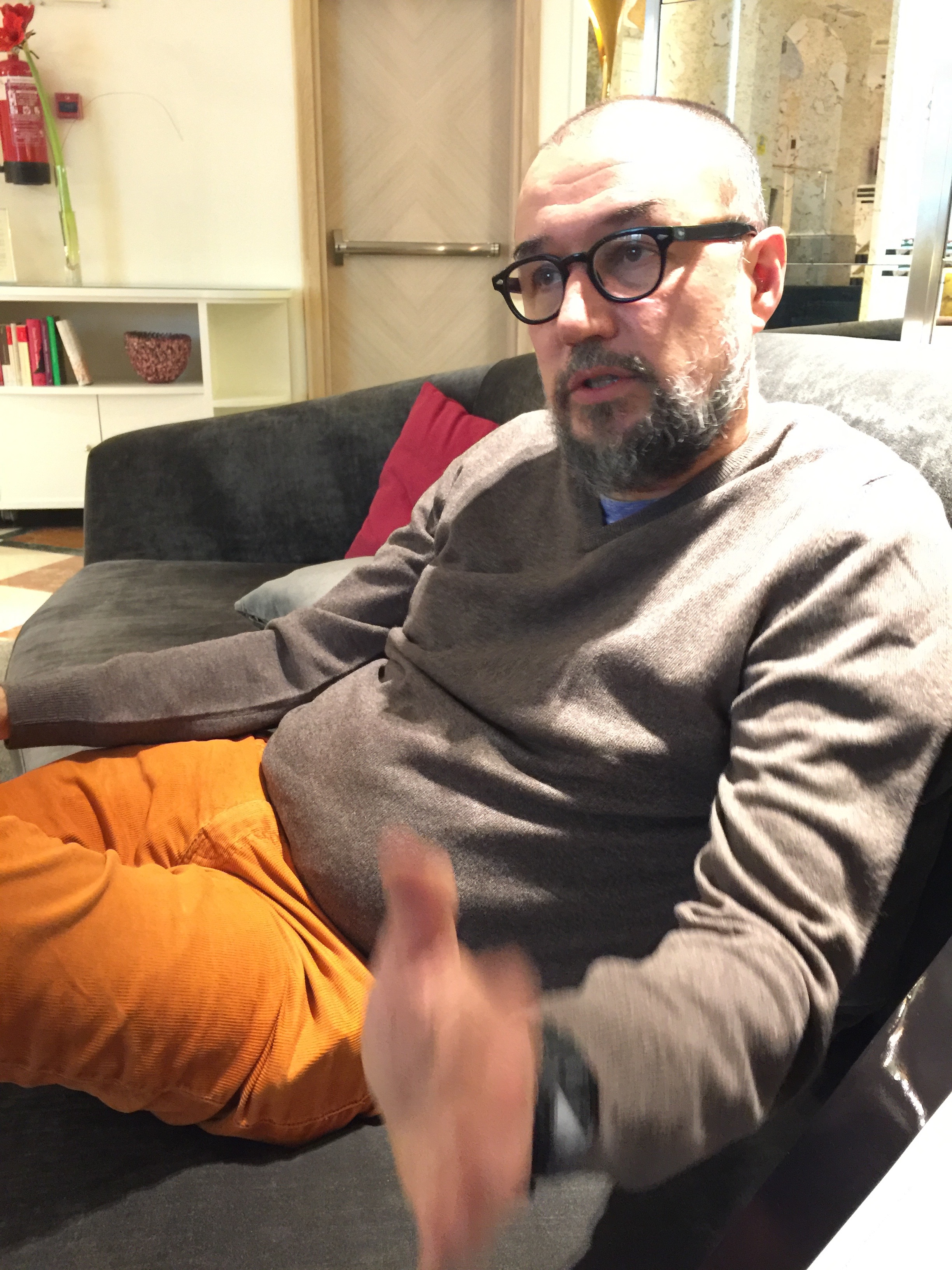
Samir Husni: Why do you think the “smartest people on the face of the earth,” as journalists and media professionals have been described, took so long to realize this stage where we are now, that print and digital must both be utilized and work together in this day and age?

Frances Evans: It’s very simple actually. Media owners were used to making money with their eyes closed. And when you have your eyes closed, you don’t see change coming. You don’t see it because you’re not looking.

Samir Husni: That’s a great answer.

Frances Evans: I think that’s actually it.

Samir Husni: In that three to five year journey, what was the most pleasant moment that you experienced and what was the biggest stumbling block you had to face and how did you overcome it?

Frances Evans: There have been a couple of very pleasant moments. And they’ve all been emails. I had two emails this year from one particular editor of a brand and I’ve known her for a very long time. I spent a lot of time training her 10 years ago and she went off and went to work for another company, but now we’re back together again in way. I spent a long evening explaining to her pretty much what I’ve just explained to you, and if she wanted to not be obsolete that she would need to learn Google Analytics because it would help her to create better content for her title. It would help her to create better content for her online products too. And she needed to learn how to use Facebook marketing and how to use Google Trends; to use data to create content and to understand her readership better. And it would help her to know if what she was doing was working or not and she could tweak and test accordingly.

We had this discussion in Paris on a Wednesday night. She got back to her country on Friday and on Friday one week later, I got a message from her saying that she had just completed a Google Analytics, Google Trends and Facebook training and she’d also had her team to do it and how amazed she was by this data. And what it could do for her, so that was probably one of the best things that has ever happened to me. Having these conversations and being able to explain to people that they can do things differently and then affecting change.

Then I received a follow-up email from her two weeks ago where she told me that she had increased her Facebook likes and shares over 10 times. The change was enormous. They’ve managed to increase the traffic on their website by spectacular amounts with no money. They’ve spent no money; they’ve just done what they have done very well. And they’ve been watching and learning and then applied it. And it worked. That I think probably is one of the best things that has happened to me.

Another one was I recently did a bunch of trainings for our team in Thailand and they liked it so much. They don’t all speak very good English, but the CEO thought it was so useful that she translated the entire training program into Thai and redid it herself a week later. And they sent me all of these photos, which was quite awesome because it was very unexpected that they would feel so grateful to have had that training.

Also, I was asked to set up some kind of content repository for those practices and I spoke to a trainee in the company about it and he said that I should use “Slack.” I told him that I had never heard of it, but he encouraged me to try it. He did a five minute presentation for me and I said OK, let’s use this; it’s free, so let’s give it a go.

Within two months I had 450 people from a 2,500-peopled company, of which I would guess a significant proportion do not speak English, but they’re on there and the number of messages is growing every week and the knowledge transfer is growing enormously and they now write to each other. I’m watching, so I can see it. They’re asking each other things like: has anyone tested this tool; has anybody tested that software and so they now have a platform, it’s significantly used by the digital team, but the publishers and the marketers and the salespeople exchange best practices or if they crack a new client with a certain, really cool idea, they share it. And the others pick it up and ask.

So, trying to change the company from a push mentality to a pull mentality has been incredibly difficult. But that tool has been quite successful in a very short period of time to do that. I personally find that quite successful. But I think it’s working because we can see best practices being put into place in sales, distribution, product and digital. And when you start seeing the speed of change then there has to be some money behind it. So, maybe this innovation will turn into money; we’ll see.

Samir Husni: And what has been the biggest stumbling block you’ve faced?

Frances Evans: People. (Laughs) People don’t like change, in general. Most people find change difficult. It’s normal and it’s human nature. You have to create an environment where change is a part of the fabric of the society you’re working in and as I said earlier; people were used to making money with their eyes closed. So, it’s not always that easy to persuade people to do something that they don’t know how to do. You need to review short-term conflicts and medium-term conflicts that might arise during an innovation process. In an innovation process there will always be conflicts; there will always be areas where people are uncomfortable.

Even dealing with that can create other conflicts, so it’s difficult. And it’s very challenging because it’s very stressful for a lot of people. Where there’s that much of a stress level ongoing, it can create a difficult environment, which can always be solved, but it just means that there’s a high level of pressure and you can feel it.

In the last three years, especially for us because we have a lot of business in Russia and Ukraine, which have been very difficult markets, we have business in Thailand which continuously every year something happens. When you just get back up on your feet, it happens again. Turkey is very similar as well. This year Malaysia has been a nightmare with the exchange rates. The exchange rates in Brazil have been a nightmare too. So, you can be doing everything right and the world can be against you. The exchange rates just are terrible and so whatever you’re doing, it’s working in local currency, but when you have to bring the money home, it doesn’t make for a pleasant story.
Samir Husni: From all of the countries that you work with; is there one that’s a favorite or a dear to your heart country or a favorite brand?

Frances Evans: No, not really. I like working with most of them actually. I have maybe a few brands that I work on more than others. We have four editions of Marie Claire and I like working with those guys, because Marie Claire is quite a difficult magazine. It’s not as easy to do as something like Cosmopolitan or maybe even Elle, because they’re very well-established brands. Marie Claire is also very well-established, but it has a much more journalistic approach to it. And it’s not always the number one brand on the market, so I like to work with those teams because they try really hard to innovate.

Recently, I’ve been doing a little bit more in Asia than I’ve done previously and that’s been quite a nice experience because they’re very grateful for the knowledge-sharing, so that’s been great. But I also have very high quality team of peer colleagues, so working in that team with a lot of incredibly intelligent people who are very dedicated and who are all fighting for the company. That’s actually a real honor to work with a group of people who are really dedicated and very good at what they do across the board.

I think the headquarter team that we have, the regional director and everyone else, is really a strong team and that’s really nice to have. Having colleagues that you can exchange with and who bring so much to the table that you can learn from them is terrific. And no one is very proprietary about information; everybody is open and we have a lot of discussions, and a lot of arguments as well, obviously, as you would, but everyone pushes together to propel the company forward whether it’s from exchanging their best practices or whether it’s giving people content for free because someone else’s country is having real problems and they need content. And that kind of thing is very unusual and I think that it defines the way that we work at BurdaInternational; it’s trial and error and collaboration.

We know what we need to do; we just don’t know how to get there, but nobody does. I don’t think anybody really knows the route, but we do know where we need to go and so we work together to get there. And we have a vision of what we want to achieve and we have the commitment from a shareholder and a group CEO to support us to do that.

Samir Husni: Is there anything else that you’d like to add?

Frances Evans: I think that a lot of the big international publishers have really great, amazing brands. And at Burda we actually license most of those brands. So we have a lot of inbound licensing as well. And we learn a lot from our partners. We’re very lucky because we do a lot of cool things, but we also learn from a lot of cool people too. And what we’ve done is built a really solid base in vertical and food publishing and garden publishing, those kinds of areas; crafting and things like that.

So, we’re not really a top of mind licensure; we’re not somebody you’d come running to for content, because it’s German. But what we’ve seen in the last couple of years is that people will come to us for many other things. What we’ve done in the past few years is get people to want to partner with us or collaborate with us and that’s something that’s very special about the company, because I think we’re seen as a very collaborative and good partner.

Samir Husni: What motivates you to get out of bed in the morning?

Frances Evans: I’m stubborn. (Laughs) I’m stubborn and I don’t give up. I really like magazine media. I’ve loved it forever. And I really want our brands to succeed and I believe that magazine media is an excellent platform to reach consumers because it’s trusted quality brands that they love and I like to be in that value chain. I used to work for an advertising agency. And I’d do projects; the client would like it; the client wouldn’t like it, and I liked that working with media. And working with magazines; people love what you’re giving to them. From a work perspective, I love the brands and I think that there’s a real reason for us to be there.

Now, we have to be there in many different ways than we were before. And that challenge and helping people to develop those platforms, I find incredibly challenging and very gratifying when it works.

Samir Husni: My typical last question; what keeps you up at night?

Frances Evans: Planning my next diving holiday. (Laughs) I’m an avid diver and I spend hours researching dive sites and livable dive boats and where I’m going to find some hammerhead sharks. You have to have a nice balance and a couple of years ago I did my first professional qualification in diving, so if it all goes wrong with magazines I can always go and work as a dive master.

Samir Husni: Thank you.