 “We mentioned that the industry is changing, but readers are changing as well. Recently, it occurred to me that there is basically content everywhere these days, and I think that’s actually made good storytelling all the more valuable. These days, people want to know the story behind that beautiful painted fabric, for example, who makes it, what’s her story and what’s the process like. And people want to know not only where their oysters came from, but who harvested them; not only where their shrimp was caught, but by whom. So, I think that’s made us all the more relevant, in a way. It’s required us to adapt, for sure, but it’s also made our jobs as storytellers more relevant and important, and in a way, more fun, in terms of how we cover travel. With all things local mattering more than ever before, our audience really relies on us to discover the unique, off-the-radar coffee shops or seafood shacks or artists’ studios; or even photo op spots that of course would never have a Facebook page. But we’re able to do that for them.” Steele Marcoux…
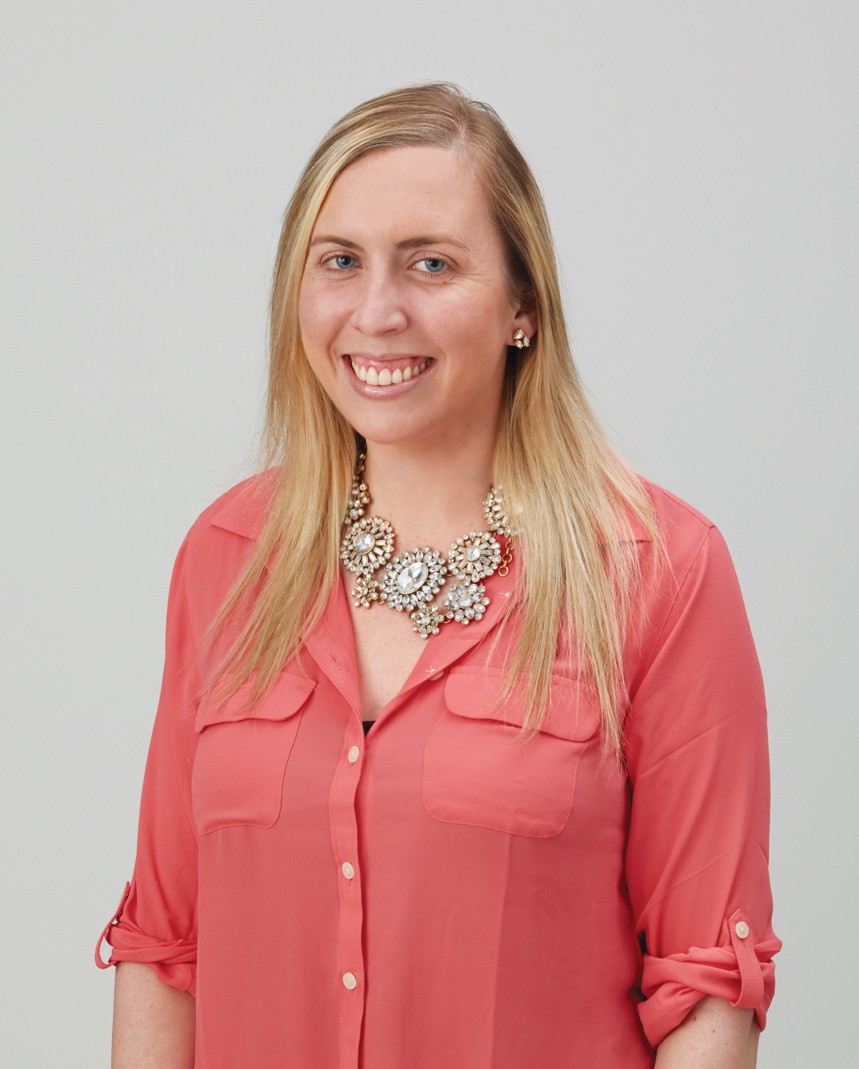
Coastal Living magazine celebrates its 20th anniversary this month, and editor in chief, Steele Marcoux, believes this milestone triumph belongs to the magazine’s most important family members, its audience. Giving credit to her incredibly talented staff and team of editors, designers, contributors and just everyone who makes the magazine possible each and every issue, Steele said that celebrate, she and the magazine definitely plan to do.
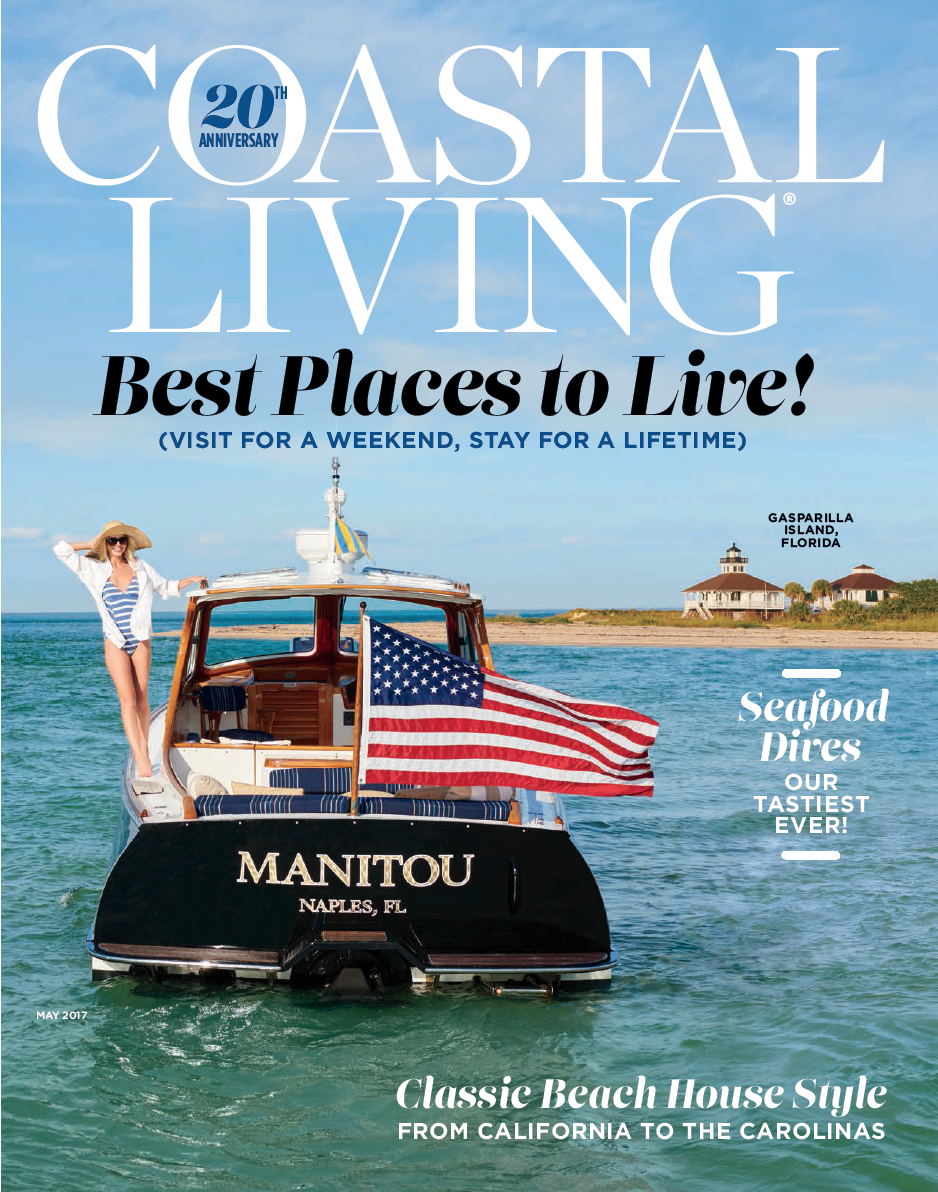
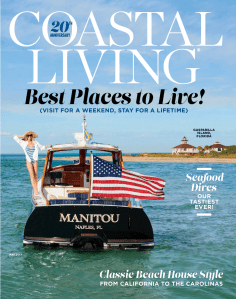
I spoke with Steele recently and we talked about the upcoming anniversary issue and its bonus pages of tent-pulled franchises in each of the magazine’s core content areas. The anniversary publication will go on sale April 14, and Steele is excited about the audience’s reaction to this very special edition that is chock full of the “Best Places to Live – (Visit for a Weekend, Stay for a Lifetime), the Best Seafood Dives around, and many other informational and entertaining features.
In addition to the anniversary Coastal Living issue, upcoming events for this landmark occasion include some very special features along the way; a dinner series in partnership with an Orange Beach, Ala. exquisite seafood restaurant, and the first-ever Coastal Living cruise, which will host instructional classes from photographer, author and filmmaker, Jad Davenport. The cruise will be a two-week excursion from Portugal to Rome and promises to fulfill many high seas and “Coastal Living” dreams along the way for its seafarers.
So, I hope that you enjoy celebrating this wonderful milestone anniversary with the Coastal Living family as the magazine’s captain at the helm unfolds this delightful tale by the sea, the Mr. Magazine™ interview with Steele Marcoux, editor in chief, Coastal Living magazine.
But first the sound-bites:
 On whether when she was offered the opportunity to come back to Coastal Living as the editor in chief she immediately accepted and thought it was her dream job or took some time to think about it: Pretty much the first way you described it; yes, this is my dream job. There’s so much about working at Coastal Living that feels like a dream. It’s so much fun to put together and to think about that it almost doesn’t feel like work at all. Putting together the issues and brainstorming content for our site and our social platforms; we’re almost living the dream that we create for our audience.
On whether the last two years have been a walk on the beach for her (no pun intended): (Laughs) Yes, for the most part, I would say so. The industry is changing, of course, as you well know, but I work with an incredibly talented team and we have, I think, the most beautiful content, and potentially one of the most emotionally engaged and loyal audiences out there.
On how the decision is made regarding what content goes in print and what goes online: That’s a great question, and it’s definitely something that consumes our process and our thinking quite a bit, for much of the day really. I would say that we think about audience first; for whom are we making this content and how is he/she going to engage with it? When it comes to print; when it comes to the space confines of print, we value storytelling and voice, and really the experience of an entire issue.
On the fact that a magazine about coastal living is published in Birmingham, Ala.: Who knows; we may make it down to the Cahaba River; no, I’m just kidding. (Laughs) We try to get out and about as much as possible. Maybe there was a time when being in Birmingham would have made a difference, because we weren’t sitting right there on the beach, but in this day and age, when travel is easier to do and research is certainly easier to do, I don’t think where we are matters as much. But we do try to get out and about as much as possible.
On something she’s done over the last two years at the magazine that she’s most proud of: Over the past two years, we’ve worked hard to add more personality, more soul, and more meaning to the content. I think with so much content out there, you really have to give your audience a reason to engage with your brand. So, I’ve started with adding warmth and personality and heart to the content, not only in terms of the types of homes, or the types of travel or food, or the type of person who will cover the story, but also in terms of the voice and the packaging.
 On the biggest challenge she’s had to face in the last two years and how she overcame it: I’m a first-time editor, so it certainly felt like I was drinking from the firehose when I first came back. But I’m fortunate to work with an extremely talented staff, and I’ve learned so much from them every, single day. Probably, one of the other greatest challenges for all of us is that our passion and our creativity far exceeds the number of hours in a day, which sometimes means that we feel like we’re not actually able to accomplish all that we want to, so it just comes down to prioritizing.
On how she thinks the role of editor has changed since she became an editor: It’s changed greatly. It’s evolved from pure content creation to, I think, more of a strategic role for the business. And you have to think beyond just the pages of a printed magazine, such as licensing products, events, branded content, native content; all of those things. I think this is probably true of the entire industry, but obviously I can speak best to Time Inc. over the past two years. A lot of the silos within the industry have come down; the silos between editorial and sales and marketing, or even kind of between brands, these silos have come down and it has changed how we work.
On what’s on the horizon for Coastal Living as the magazine celebrates its 20th anniversary: The closest event on the horizon is our Special Anniversary issue, which is our May issue, and that goes on sale April 14th. We’re really proud of it, there’s bonus pages, and we have such a loyal and passionate audience, such an engaged audience, that we really wanted to do something special for them in print, with a special issue that has kind of tent-pulled franchises in each of our core content areas.
On anything she’d like to add: We mentioned that the industry is changing, but readers are changing as well. Recently, it occurred to me that there is basically content everywhere these days, and I think that’s actually made good storytelling all the more valuable. These days, people want to know the story behind that beautiful painted fabric, for example, who makes it, what’s her story and what’s the process like. And people want to know not only where their oysters came from, but who harvested them; not only where their shrimp was caught, but by whom.
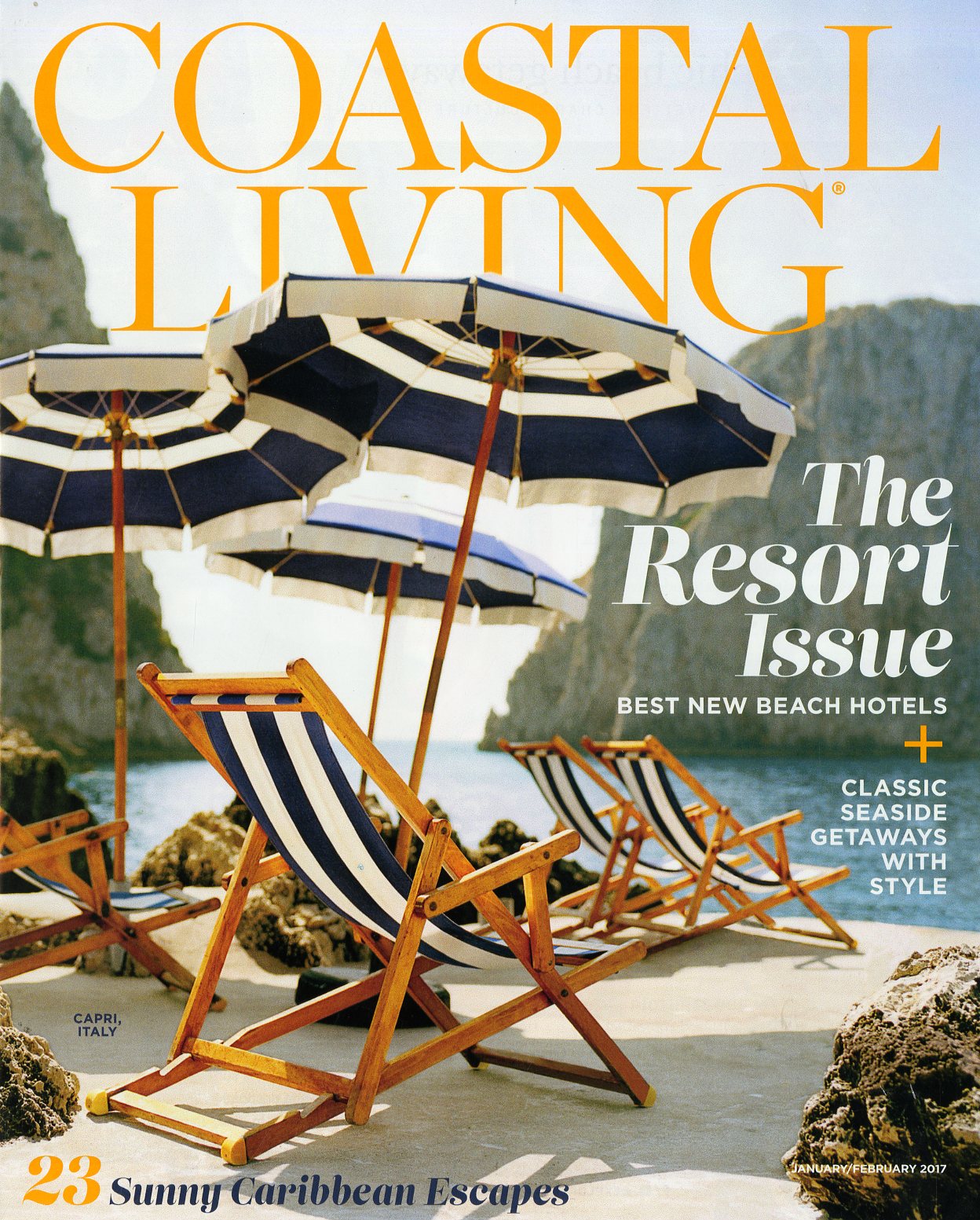
On whether the “no people” factor on the January/February and April covers was intentional: You haven’t seen May yet, have you? (Laughs) We have “a” person. That is something I would love to do more of, because as I said at the outset, one of the things that I wanted to do in coming back was add the soul, add the personality, add the warmth. Traditionally, our audience has not always been super-receptive to celebrity personalities, but I think there is an opening for us to put, what I would call, real people on the cover. And bring more real people into the pages. We are such a lifestyle brand and there’s such a strong, emotional connection there. And you can’t have lifestyle and emotion without people, so I’m glad you asked that.
On what someone would find her doing if they showed up unexpectedly at her home one evening: Somehow, my husband and I have managed to make family dinner a bit of a ritual. It’s often later than I would prefer it, but the four of us do sit down together almost every night. That was a struggle when I first started this job, because I wasn’t getting home in time for dinner, or I wasn’t able to cook meals the way I would have liked to, but now we’ve made it a priority and it’s just something we do every night.
On what keeps her up at night: The six and the four year old; they are truly masters of the delay bedtime game. You should see the song-and-dance we have to do in order to get them to go to sleep. In April, sometimes it is the threat of bad weather in Alabama. (Laughs again) But basically, I would turn it back to family; it probably takes us over an hour to get them to go to bed at night.
And now the lightly edited transcript of the Mr. Magazine™ interview with Steele Marcoux, editor in chief, Coastal Living magazine.
Samir Husni: You came back as editor in chief two years ago; you were there before as a design editor and then you went to Southern Living and Country Living, and then back to Coastal Living. When you were offered the opportunity to work again at Coastal Living as editor in chief, did you immediately think that it was your dream job and accept? Or did you have to consider it some and give it more thought? What was your reaction two years ago?
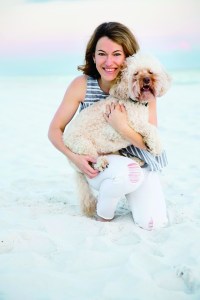
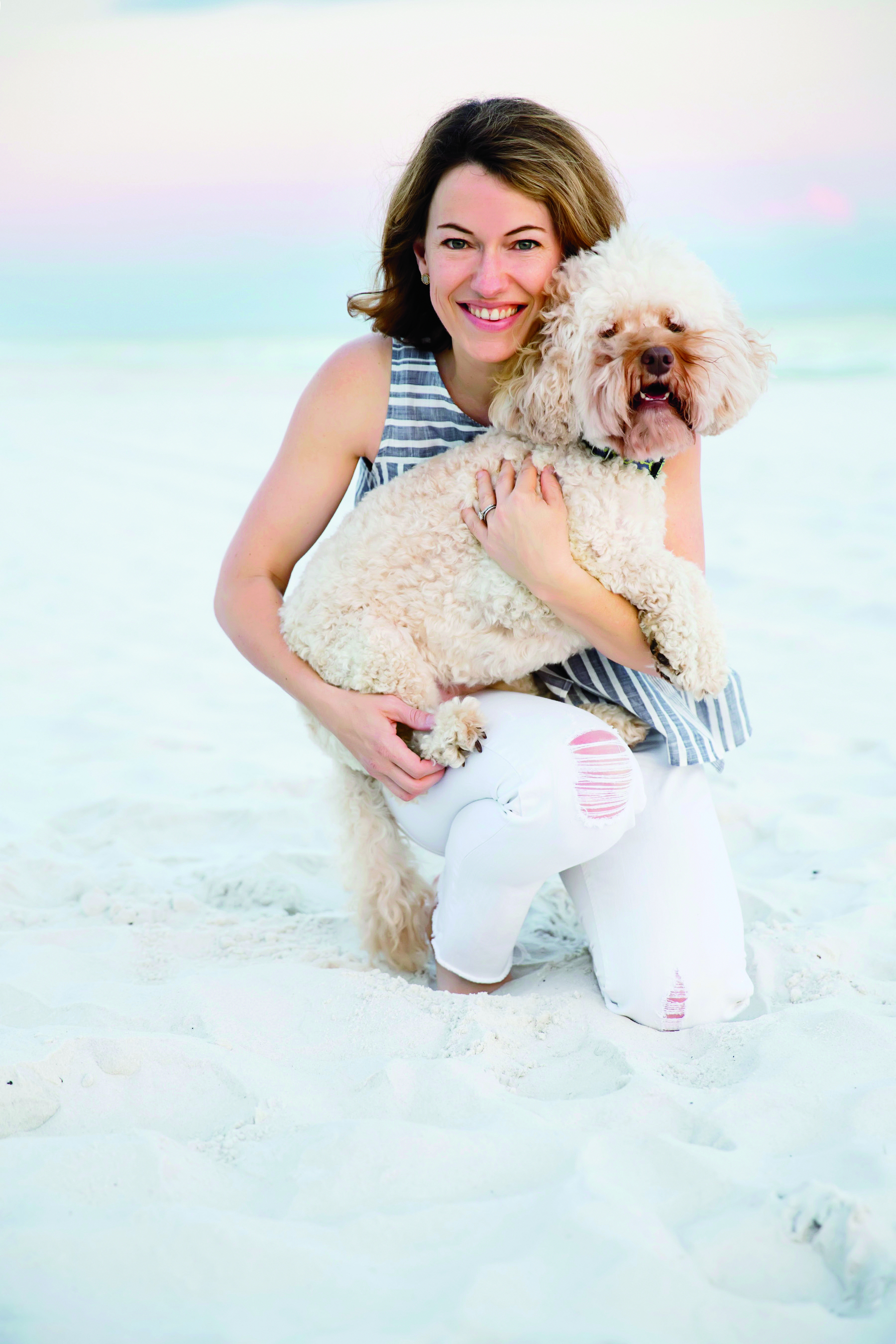
Steele with Sawyer, her cockapoo on Rosemary Beach in April 2015
Steele Marcoux: Pretty much the first way you described it; yes, this is my dream job. There’s so much about working at Coastal Living that feels like a dream. It’s so much fun to put together and to think about that it almost doesn’t feel like work at all. Putting together the issues and brainstorming content for our site and our social platforms; we’re almost living the dream that we create for our audience.
So, yes, I jumped at the chance. I have been very fortunate over the past few years to have some great opportunities, and I’ve also never really shied away from taking a risk. Not that this was a risk, but it was a kind of stretch job for me. And I felt very fortunate to be offered it, so yes, I jumped at the chance with enthusiasm.
Samir Husni: So, have the last two years been, and no pun intended, a walk on the beach for you?
Steele Marcoux: (Laughs) Yes, for the most part, I would say so. The industry is changing, of course, as you well know, but I work with an incredibly talented team and we have, I think, the most beautiful content, and potentially one of the most emotionally engaged and loyal audiences out there. So, in a lot of ways yes, it is a walk on the beach, virtually speaking.
Samir Husni: You mentioned that the industry is changing and it has changed, certainly. How do you balance between the offline and the online; between the printed magazine and your digital presence? When I look at the “Havens” pictures, for example, and all of the colors are combined in one spread and more than 50 images; how do you decide that one thing belongs to print and the other belongs to digital?
 Steele Marcoux: That’s a great question, and it’s definitely something that consumes our process and our thinking quite a bit, for much of the day really. I would say that we think about audience first; for whom are we making this content and how is he/she going to engage with it? When it comes to print; when it comes to the space confines of print, we value storytelling and voice, and really the experience of an entire issue.
And that’s one of the most fun and fulfilling parts of the job for me. So for print, we consider the entire issue; it’s a moment or a season or it’s a mood. Sometimes it’s a theme, but we really think through that experience of sitting down with the entire issue for an hour or so and reading it from cover to cover. And we even like to set the mood with our cocktail of the month, which runs on our masthead page. The thinking behind that was, who knows, maybe someone will actually make themselves a drink and sit down and read the whole issue.
Whereas, I think with digital content the sky is really the limit. There’s more we can and more we should do, really. There’s the straightforward service content like “The Seven Best Things to do on Amelia Island.” Then there’s the newsy piece like “When Scientists Discover the Real Reason Whales Beach” or when Trulia publishes a study about the “Hottest Real Estate Markets,” and three of them turn out to be in Florida, which is our number one market. Then there’s what we call the quick, happy fix, like our “Moment of Sin” franchise that we do on our social platforms.
And on social and digital, we also relish the opportunity to do what we call engaging in kind of community-driven events almost, like our “Happiest Seaside Town” voting contest. And there’s really still a place on digital for even the long-form article, what we call a “Sunday Read” in our newsletter that goes out on Sunday.
With digital, I think our brand’s identity is a bit broader; we cover the environment more; we cover weddings; we cover crafts; we cover real estate. Whereas, with print, we try and stick to our core content pillars of home, travel and food. And I think expanding for digital sometimes presents a challenge in terms of resources, but at the same time we relish the opportunity to flex our muscle a bit as reporters and storytellers and create content beyond just the parameters of what we’re able to do for print.
Samir Husni: When you tell people that you publish this magazine from Birmingham, Ala., the Heart of Dixie, where’s the coastal connection? (Laughs)
Steele Marcoux: (Laughs too) I know. Who knows; we may make it down to the Cahaba River; no, I’m just kidding. (Laughs again) We try to get out and about as much as possible. Maybe there was a time when being in Birmingham would have made a difference, because we weren’t sitting right there on the beach, but in this day and age, when travel is easier to do and research is certainly easier to do, I don’t think where we are matters as much. But we do try to get out and about as much as possible.
And anytime we are able to send an editor out to the coast, he/she is capturing content in a variety of ways. They may be doing reporting for a print article, but they’re also going to do a Facebook Live of the sunset on the beach for our Facebook platform. We try to be as smart and as efficient about it as we can, but yes, there are many days where we dream about relocating to California, Florida or the Bahamas. (Laughs)
Samir Husni: In reality, do you feel that the magazine is more bicoastal living, such as Florida and California, both the east and west coast? You’re not limiting yourself just to Florida.
Steele Marcoux: No, we’re not. We cover the west coast and international coasts as well.
Samir Husni: You’ve been at the helm now for two years; can you tell me about something that you’ve done that you’re most proud of within these last two years?
Steele Marcoux: Over the past two years, we’ve worked hard to add more personality, more soul, and more meaning to the content. I think with so much content out there, you really have to give your audience a reason to engage with your brand. So, I’ve started with adding warmth and personality and heart to the content, not only in terms of the types of homes, or the types of travel or food, or the type of person who will cover the story, but also in terms of the voice and the packaging.
We wanted to do this without sacrificing service, so we’ve been really intentional about how we package each and every page of the magazine, and of course, our digital posts as well. So, that’s one thing that I am particularly proud of. I’m proud of the whole team, frankly.
I also think that we’ve simplified, elevated and modernized our design; we launched our redesigned print product in December 2016, with more sophisticated fonts and treatments that allow our gorgeous photography to really shine. And we’ve added a few more new, engaging columns, such as our “Weekend Getaway” column, which opens our travel section, and it has a working tagline; I don’t think it appears anywhere, but “Visit for a Weekend, Stay for a Lifetime.” And that’s because we know that our audience, when they go and visit a new coastal place, they’re the kind of people that spend the weekend there and then on the third day, their last day in that town, they’ll drop by the real estate office and kind of poke around; at least imagine what it might be like to move there someday. So, that’s another thing I’m proud of.
The other big change that we’ve done over the past two years is we’ve truly become a multimedia brand. We have a staff of just 17 people, and with that staff we produce 10 issues per year and at least two special editions. And then we also produce content for coastalliving.com, which these days is averaging around 1.1 million unique visitors, which is up from an average of about 800,000 visitors in 2015. Then we have a social following over 2.2 million, which is up from one million two years ago.
I think that social following, not only is it something that we’re really proud of, it’s also where we see even greater opportunity. We sort of feel like we punch above our weight on social, because our audience has such a strong emotional connection to this brand, which again, kind of goes back to what we really wanted to play up in print when I came back two years ago.
Samir Husni: What has been the biggest challenge that you’ve had to face in the last two years and how did you overcome it?
Steele Marcoux: I’m a first-time editor, so it certainly felt like I was drinking from the firehose when I first came back. But I’m fortunate to work with an extremely talented staff, and I’ve learned so much from them every, single day. Probably, one of the other greatest challenges for all of us is that our passion and our creativity far exceeds the number of hours in a day, which sometimes means that we feel like we’re not actually able to accomplish all that we want to, so it just comes down to prioritizing. We aim for what we believe will be the biggest win for our audience and just kind of go from there.
Samir Husni: You’ve worked with other editors in chief before; how do you feel the role of editor at a magazine has changed since you became an editor?
Steele Marcoux: It’s changed greatly. It’s evolved from pure content creation to, I think, more of a strategic role for the business. And you have to think beyond just the pages of a printed magazine, such as licensing products, events, branded content, native content; all of those things. I think this is probably true of the entire industry, but obviously I can speak best to Time Inc. over the past two years. A lot of the silos within the industry have come down; the silos between editorial and sales and marketing, or even kind of between brands, these silos have come down and it has changed how we work.
Most of the time that feels really exciting to me, because I like to picture the whole business and strategize for the entire business, but again, it comes back to how many hours there are in a day. (Laughs)
Samir Husni: (Laughs too) No new technology has yet to affect change in that area.
Steele Marcoux: No, that’s true. We have not added to the hours in the day yet.
Samir Husni: Are you having a big bash for the anniversary; what’s in store for Coastal Living this coming year?
Steele Marcoux: Yes, I’m glad you asked. The closest event on the horizon is our Special Anniversary issue, which is our May issue, and that goes on sale April 14th. We’re really proud of it, there’s bonus pages, and we have such a loyal and passionate audience, such an engaged audience, that we really wanted to do something special for them in print, with a special issue that has kind of tent-pulled franchises in each of our core content areas.
First and foremost, and for the first time ever, we named our 20 Best Places to Live on the Coast, and we worked with a team of lifestyle experts to do this, including some friends at Money magazine and Travel + Leisure magazine, to identify the best small towns; the best cities, communities, islands and international coasts with the highest quality of life. We really are seeing that more people are moving to the coast than ever before, and we feel like our coastal lifestyle has never had greater appeal than it does now, so this felt like the moment to really celebrate that with this larger franchise. So, we’re really proud and excited about that.
And then, we also worked with our 2017 Trendsetter, this is a franchise that we’ve had for a few years now, but we worked with them to name the 20 Best Beach House Design trends that we believe have real staying power, along with our 20 Best Buys for a Beach House, so we had a lot of fun with our “20” number.
One of the other pieces of content that we’re most proud of in celebration of our anniversary is our 20 Best Seafood Dives of All Time. We worked with a seafood dive expert, which, that is not a joke it’s a real job, a freelance position, but real nonetheless. He’s been reporting on seafood dives for us for two decades and I think he’s covered more than 350. And for the first time ever, he ranked the 20 best that he’s visited, and I kid you not, you could base an entire years’ worth of travel around visiting these places. So, we’re really excited about that as well.
We’re also hosting a dinner series with a man named Johnny Fisher in Orange Beach, Ala. at his restaurant, Fisher’s. The event is called “The Southern Grace Supper” series and we’re very excited about this. I believe the first dinner is sometime in mid-May, but the dinners run through August, and this is right at the core of our mission. He brings in renowned chefs from all over the country to the Gulf and has them create a menu at his beautiful restaurant right on the water that really celebrates gulf seafood. These dinners typically feed around 150 people and he usually sells them out right away, and we’re really excited to be a part of that and to celebrate and elevate gulf seafood.
And in October, our first-ever cruise, our anniversary cruise, will happen. And we are very excited. We’re working with photographer and writer, Jad Davenport, who is a frequent contributor to Coastal Living. The cruise goes from Portugal all the way to Rome, which is really exciting. It’s a two week cruise and he’s (Jad) going to be teaching seminars and giving instruction on how to take better vacation photographs during our expeditions off the cruise, which I’m really excited about. So, Jad will be there, along with myself and our travel editor, Tracey Minkin.
We also have another really fun print franchise that actually doesn’t appear in our anniversary issue, but appears in every other issue this year called “Top Down, Sails Up.” It’s two epic coastal trips, one by car, and one by sea. So, a road trip from Seattle to San Diego and a boat trip from Key West to North Virginia, each of which unfolds in a serial fashion month by month. And we’re really proud of this. We wanted to do something ambitious and on a bigger scale, and something that you could really only do in print, but at the same time, we wanted to get local and get to these smaller towns and markets that we don’t always have a chance to get to, and this has given us an opportunity to do that. So, we’re proud of that as well.
Samir Husni: Is there anything else you’d like to add?
Steele Marcoux: We mentioned that the industry is changing, but readers are changing as well. Recently, it occurred to me that there is basically content everywhere these days, and I think that’s actually made good storytelling all the more valuable. These days, people want to know the story behind that beautiful painted fabric, for example, who makes it, what’s her story and what’s the process like. And people want to know not only where their oysters came from, but who harvested them; not only where their shrimp was caught, but by whom.
So, I think that’s made us all the more relevant, in a way. It’s required us to adapt, for sure, but it’s also made our jobs as storytellers more relevant and important, and in a way, more fun, in terms of how we cover travel. With all things local mattering more than ever before, our audience really relies on us to discover the unique, off-the-radar coffee shops or seafood shacks or artists’ studios; or even photo op spots that of course would never have a Facebook page. But we’re able to do that for them.
And a lot has changed with home design and development as well. When Coastal Living launched 20 years ago, traditional new developments and new urbanism developments were ramping up in popularity, but now nearly every new development incorporates some sort of TND (Traditional Neighborhood Development) principle, whether it’s walkable streets or mixed-used construction or public green spaces. And building and design has gotten smarter and more energy-efficient and less wasteful. And nowhere is that more relevant than on the coast, where our audience is just incredibly passionate about their environment.
So, I think there has been a lot of change over the last two decades, but I also think that makes us more relevant now than ever before, which is exciting for us.
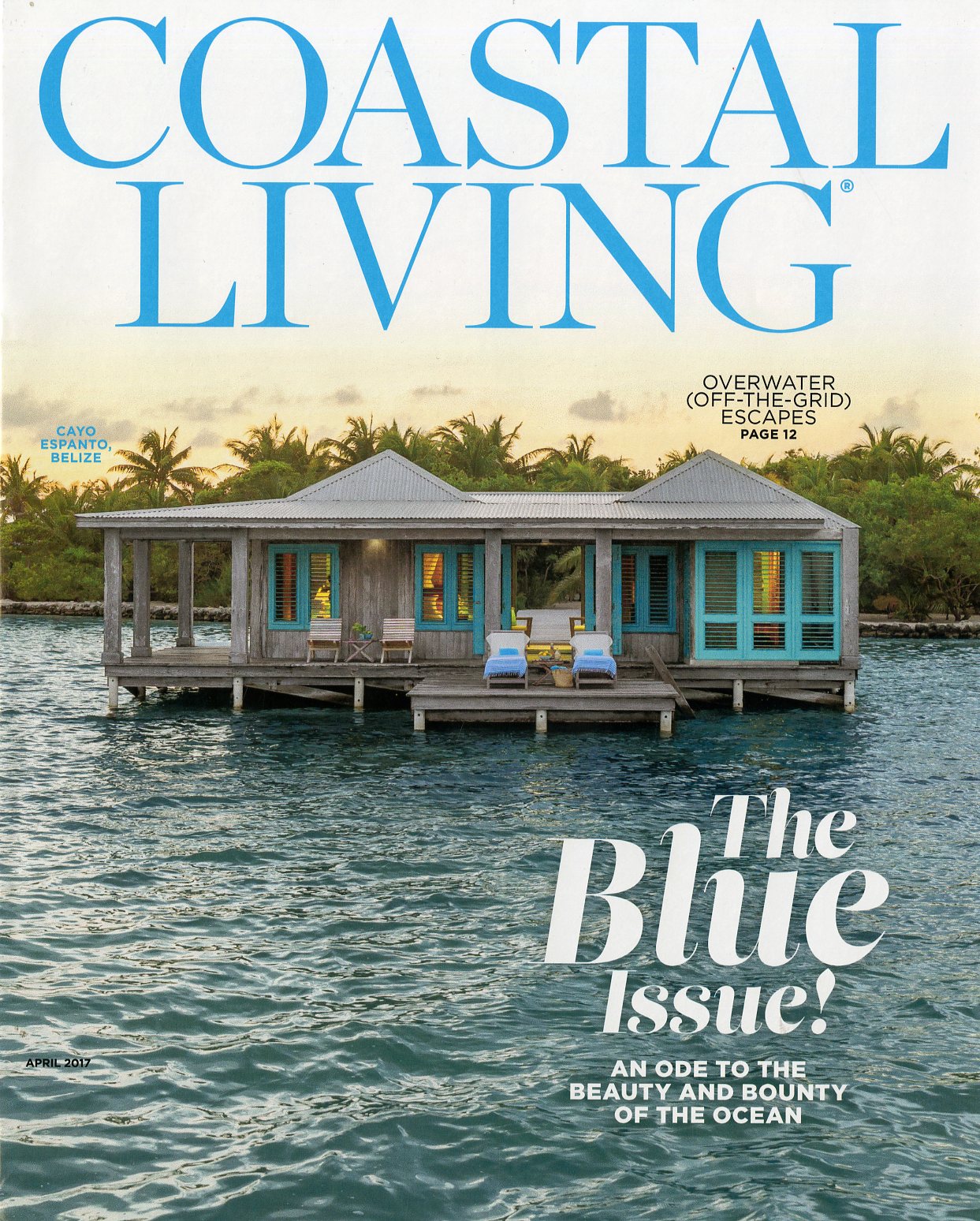
Samir Husni: Looking at the covers of January/February and April; beautiful settings, no people. Was that intentional?
Steele Marcoux: You haven’t seen May yet, have you? (Laughs)
Samir Husni: (Laughs too) Not yet.
Steele Marcoux: Well, get ready for May.
Samir Husni: We have people?
Steele Marcoux: We have “a” person. That is something I would love to do more of, because as I said at the outset, one of the things that I wanted to do in coming back was add the soul, add the personality, add the warmth. Traditionally, our audience has not always been super-receptive to celebrity personalities, but I think there is an opening for us to put, what I would call, real people on the cover. And bring more real people into the pages. We are such a lifestyle brand and there’s such a strong, emotional connection there. And you can’t have lifestyle and emotion without people, so I’m glad you asked that.
Samir Husni: If I showed up unexpectedly to your home one evening after work, what would I find you doing; are you sitting and relaxing with that “cocktail of the month” from the masthead; or you’re having a glass of wine; or you’re spending quality time with your sons and husband; or something else?
Steele Marcoux: Somehow, my husband and I have managed to make family dinner a bit of a ritual. It’s often later than I would prefer it, but the four of us do sit down together almost every night. I have two little boys, one is six and one is four. And that was a struggle when I first started this job, because I wasn’t getting home in time for dinner, or I wasn’t able to cook meals the way I would have liked to, but now we’ve made it a priority and it’s just something we do every night. It’s not always pretty, there are usually dessert bites in exchange for vegetable bites, or meltdowns over who gets to say the blessing, but it is a regular occurrence now and that’s really important to me.
Samir Husni: My typical last question; what keeps you up at night?
Steele Marcoux: (Laughs) The six and the four year old; they are truly masters of the delay bedtime game. You should see the song-and-dance we have to do in order to get them to go to sleep. In April, sometimes it is the threat of bad weather in Alabama. (Laughs again) But basically, I would turn it back to family; it probably takes us over an hour to get them to go to bed at night.
Samir Husni: Thank you.

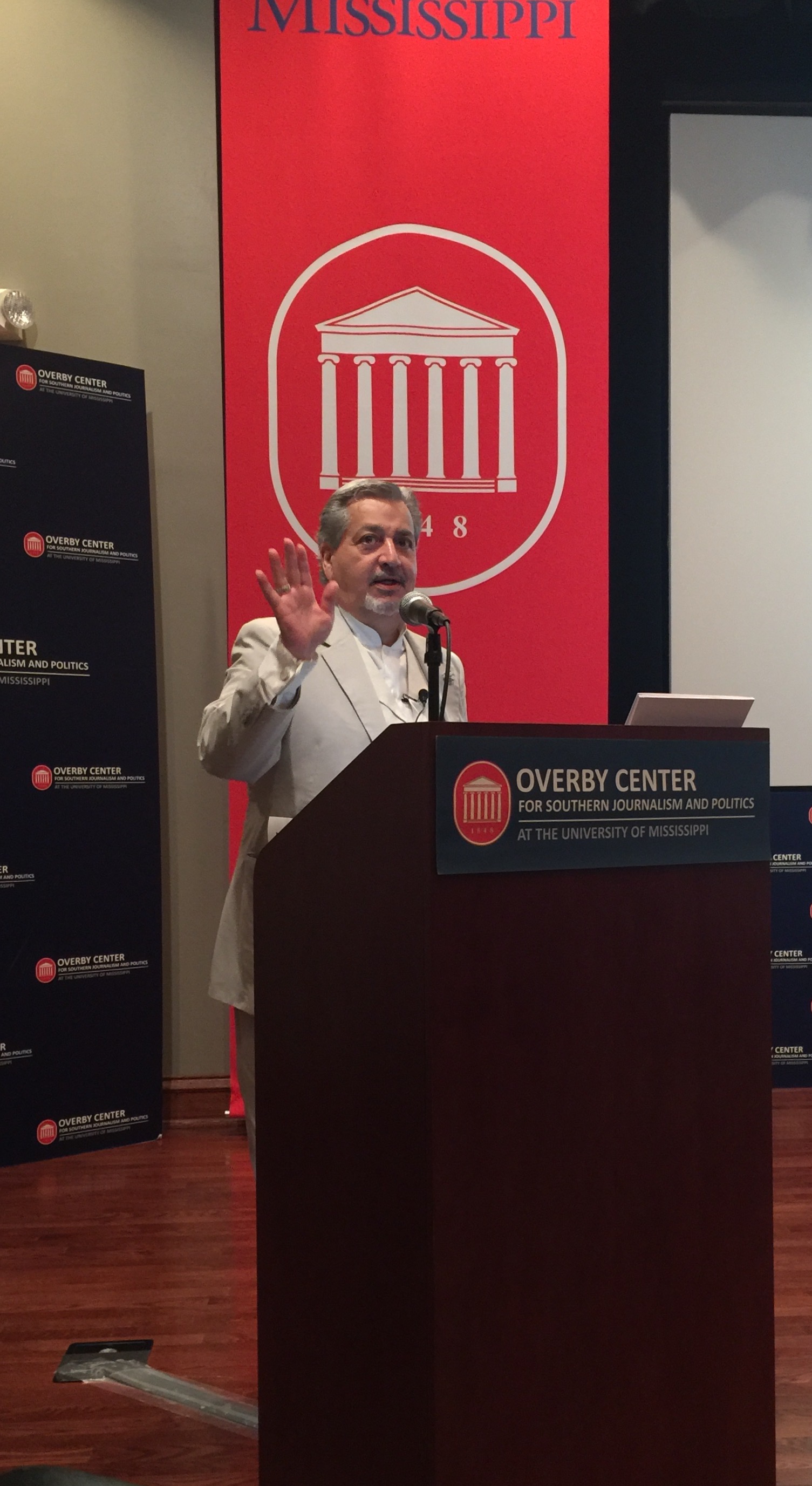 It’s Wednesday, the first morning of ACT 7, the Magazine Innovation Center’s annual opportunity for magazine supply channel partners to come together and learn and share and create. Dr. Samir Husni, the MIC’s founder, kicks off the program by sharing a question that he asked his nine-year-old grandson: which do you like better—the iPad or books? And the response from the child: why do I have to choose?