Archive for the ‘From the Vault’ Category

h1

Magazines Done Well… Lessons From Harold Ross, Founder and Editor Of The New Yorker. From the Mr. Magazine™ Vault.

February 12, 2022

Digital has become an easy scapegoat to killing print.  No one will think twice to look at the real reasons for killing a print product because there is a suspect in the wings waiting to be accused: Digital.  

There is nothing new in the world of magazines and their lifecycle.  There has been always a time to be born, a time to die, and a time to be reborn.  It is the cycle of life.  Almost with every invention of a new medium, the new is blamed for the death of the old.  Remember television, the scapegoat of the 1960s?

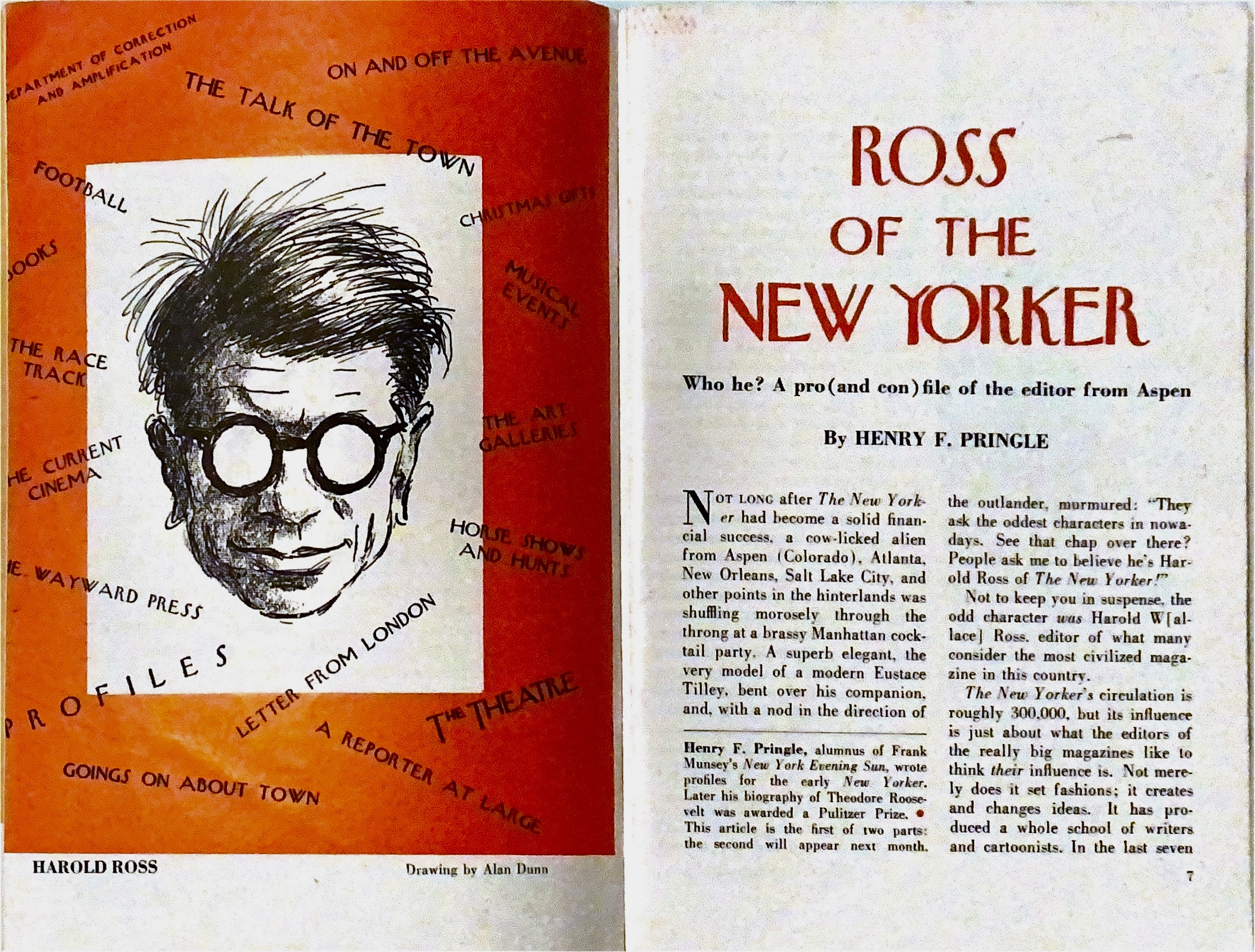
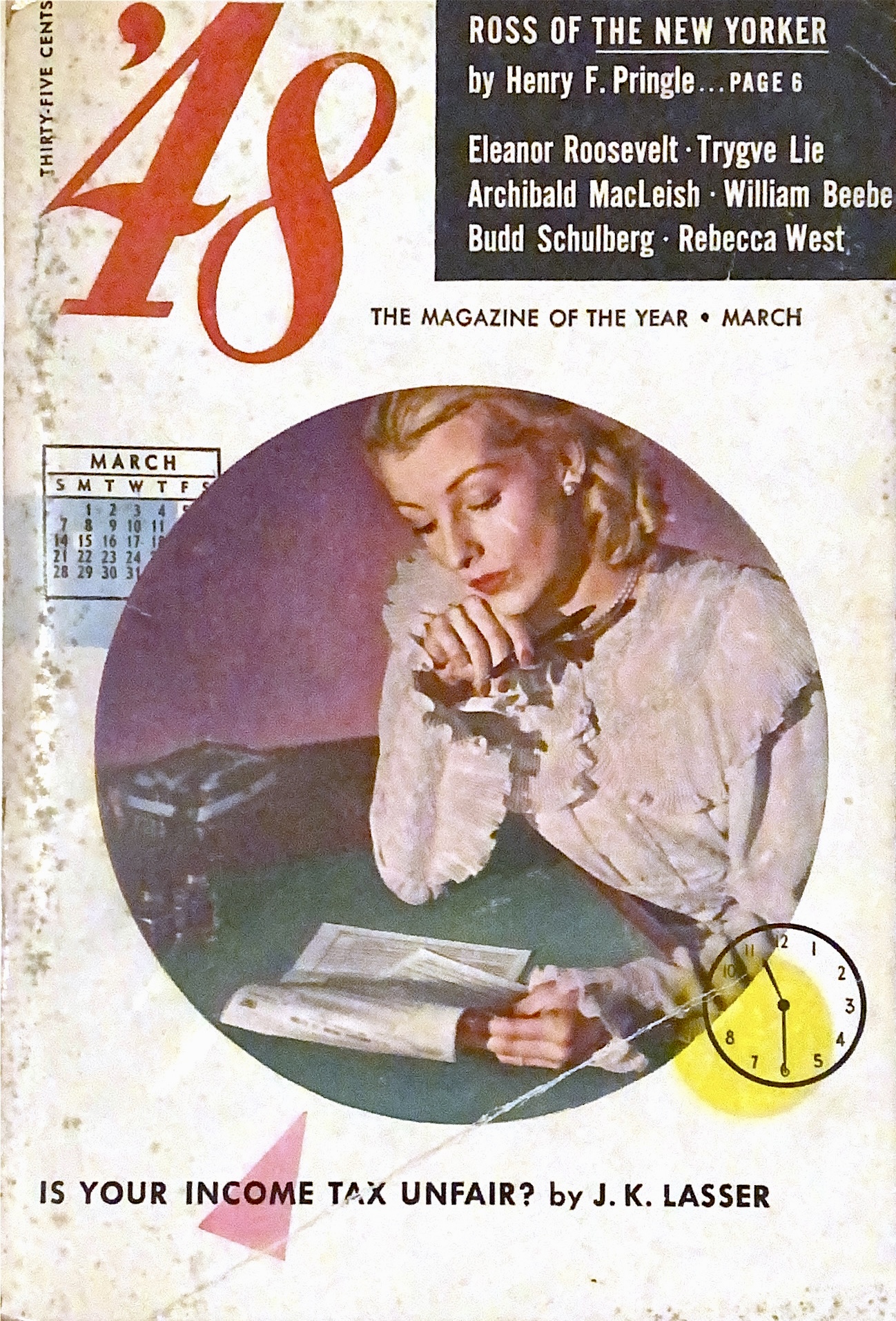
Well, digging into my magazine collection, I came upon a two parts article about Harold Ross, the founder of The New Yorker, in 48 The Magazine of the Year from (you guessed it) March and April of 1948.  This magazine was published from March 1947 until June 1948 and was owned by a group of writers, artists, and photographers.

The Harold Ross article “Ross of The New Yorker” was written by Henry F. Pringle, a Pulitzer Prize winner.  “Ross, editor of what many consider the most civilized magazine in this country,” writes Pringle.

He goes on to write, “The New Yorker’s circulation is roughly 300,000 (remember this is 1948), but its influence is just about the editors of the really big magazines like to think their influence is. Not merely does it set fashions; it creates and changes ideas.  It has produced a whole school of writers and cartoonists…”

Ross has shaped The New Yorker “into a legend of taste, wit, and comely prose, a hornbook of the intelligentsia, begetter of literary fashions, and source of profits.”

Here are some of the facts that I have learned about Harold Ross, founder and editor of The New Yorker :

Ross “not only read every line of copy that goes into the magazine but wrangles over practically every one of the 50,000 words that make up the average issue.”

“Three editors, including Ross, read separate galley proofs and make detailed suggestions and queries… Before the article goes to press a fourth editor, a fresh mind, attacks the story and turns in final suggestions.  Altogether there are eighteen working copies of each set of proofs of every article…

This may sound overmeticulous, but out of it comes the extraordinarily high standards of style and reporting in the nonfiction pieces. But it also accounts for a certain singleness of tone, which has caused a former employee to remark, testily, that The New Yorker is written by one first-rate writer with a hundred names.”

48 The Magazine of the Year. From the collection of Samir “Mr. Magazine™” Husni.

“Ross actually admires creative people – this is also is rare among “important” editors – and that is why he has gathered so many of them about him… Perhaps it is inexact to say that Ross admires creative people. Really it is their output, not themselves, he cares about. The make up of the magazine is the clue to his approach to writers:  the lack of anything more than a skeleton table of contents, the unpretentious heading, the overly modest byline at the end of each article.”

Ross and his business department speak to one another about as often as Macy’s does to Gimbel’s. Although in the same building, the editorial and advertising offices are separated by two stories… The editor will brook no editorial interference from the business management; and The New Yorker’s advertisers have sometimes come in for pretty severe handling in its columns.”

48 The Magazine of the Year. From the collection of Samir “Mr. Magazine™” Husni.

“Personally a conservative, Ross has never allowed his social and political convictions to influence the editorial policy of the magazine.  He complained that all the good writers these days are liberals or radicals; but, if they’re good, he prints their stuff.”

And last but not least, “Ross has never allowed his name to appear on the masthead, declines to read anything written about himself, and protested vigorously, though not unamiably, when told that the present article was in prospect.”

Magazines done right.  That’s my only comment.  What say you?

Feel free to comment or email me at samir.husni@gmail.com

h1

“This Magazine Idea Will Never Work… And Other Myths…” Reader’s Digest At 100. A Mr. Magazine™ Musing.

January 28, 2022

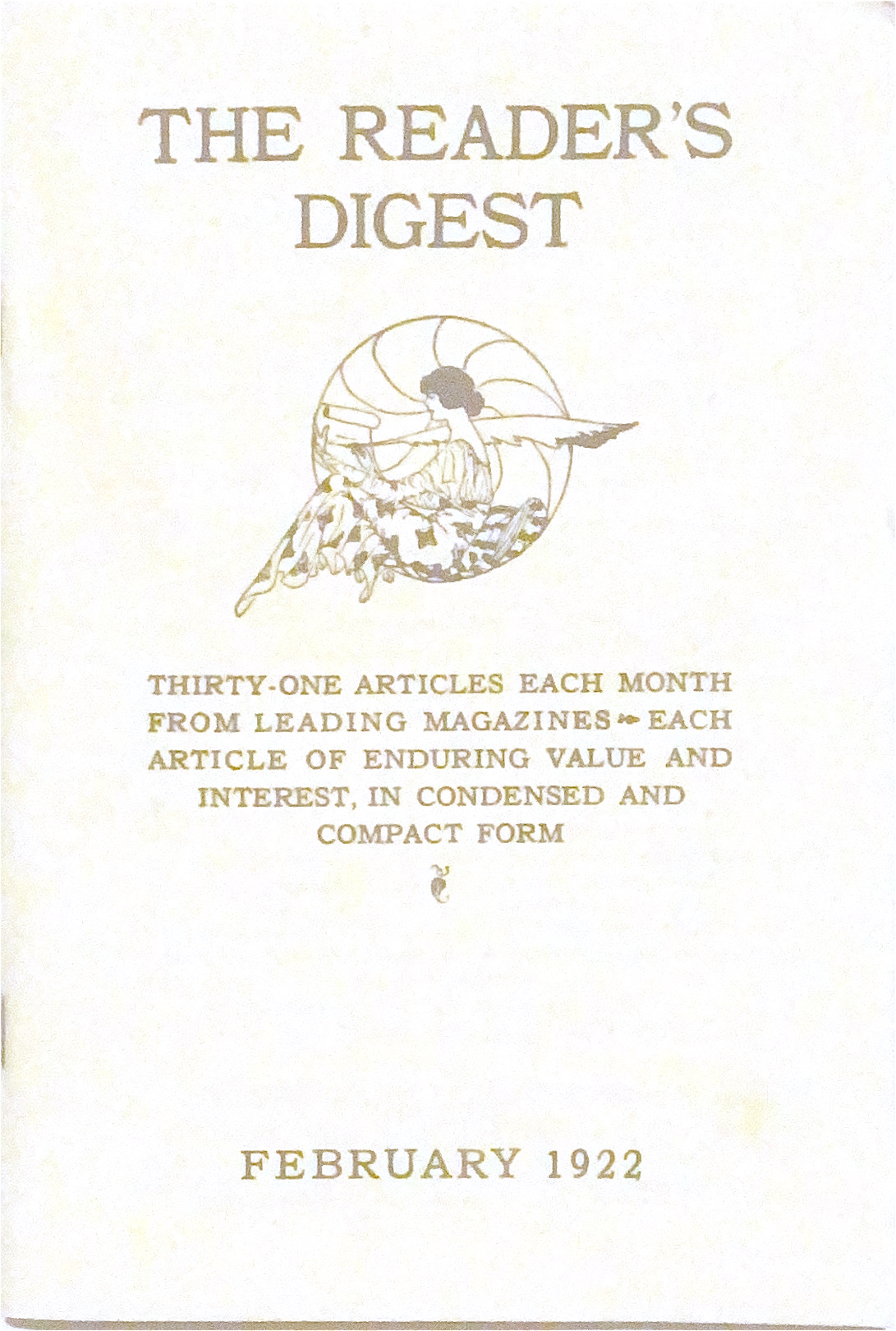
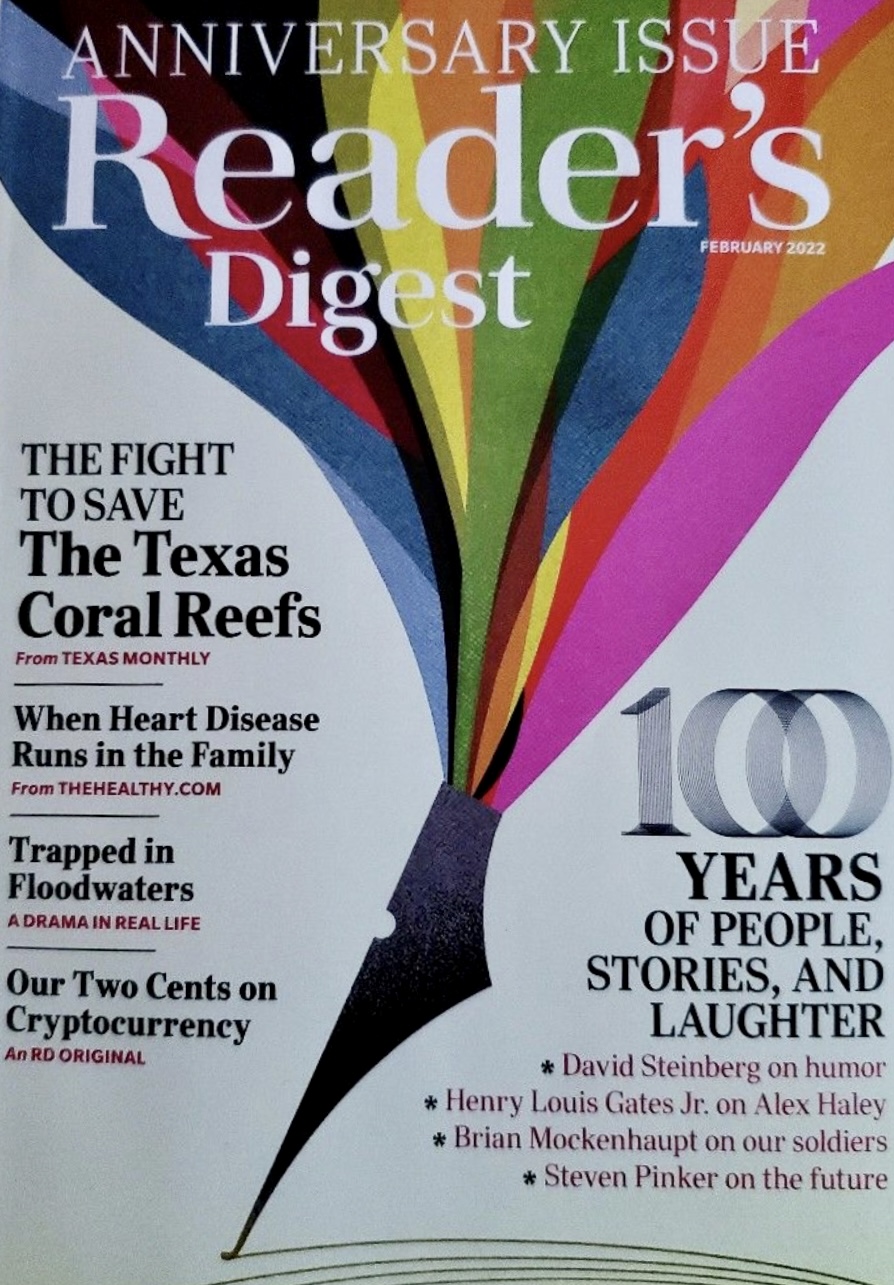
After more than two years of hearing that his magazine idea The Reader’s Digest will never work, DeWitt Wallace, with the help of his wife Lila Bell Acheson, launched the magazine in February 1922. Today the magazine is celebrating its centennial year with the February 2022 issue… and as Paul Harvey used to say, “and now you know the rest of the story.” Enjoy

A replica of the February 1922 issue of Reader’s Digest that was produced in 1972 to celebrate the magazine’s 50th anniversary. From the Samir “Mr. Magazine™” Husni magazine collection.

Reader’s Digest is 100, or should I say The Reader’s Digest is 100.  In reality, The Reader’s Digest is 102 years old.  The founder, DeWitt Wallace produced his first issue in January of 1920 and shopped it around with all the major magazine publishers in New York City.  The response was, with no exception, this magazine will never work.  

The mission of The Reader’s Digest, as he called it back then, was summed up on the cover of the magazine and in his very first editorial.  On the cover of the January 1920 issue the concept of the magazine was stated clearly:  

“31 articles each month from leading magazines.  Each article of enduring value and interest. In condensed and permanent form.”

A replica of the January 1920 issue of Reader’s Digest that was produced in 1972 to celebrate the magazine’s 50th anniversary. From the Samir “Mr. Magazine™” Husni magazine collection.

The manifesto of the magazine was published on the very first page of the magazine.  It read:

The Reader’s Digest:

  1. The easiest way in which to learn something really worth while every day.
  2. Because of its “boiled down” interest and pocket size – the most practical and pleasant means of utilizing old moments.
  3. The one magazine containing articles only of such permanent and popular interest that each issue will be of a great value a year or two hence, as on the date of its publication.
  4. The Magazine of 100% Educational Interest – no fiction, no advertisements, no articles on purely transient topics and no articles of limited or specialized appeal.
  5. The Reader’s Digest in condensing its articles, eliminates the unessential and less interesting “filler” which is found in many magazine articles—often simply that reading matter may accompany the advertisements.
  6. The one magazine that is preeminently worth keeping—and binding—for future reference and enjoyment. If it is desired to remove any article, this is an easy matter, there being but one article on a page.
  7. The biggest magazine value – regardless of price – on the market. You find one or two articles, perhaps, of enduring interest in the ordinary magazine.  The Reader’s Digest contains 31 such articles in each issue – “one a day” – each one a “feature” article digested from some periodical.
  8. The Reader’s Digest believes that a thing really worth reading is worth remembering – which is possible in most cases only if the article is kept for occasional reference in the future.  For this purpose, the numbered sub-heads at the beginning of the articles will be found helpful.  Many of the “popular” magazines are too bulky to preserve – and not worth it for the little good matter which they contain.

Needless to say, all the aforementioned reasons to why The Reader’s Digest is a good proposed magazine, did not convince the major publishing houses in New York City to give it the green light.  Disappointed, DeWitt Wallace decided to give up his idea and shelved the January 1920 issue of the magazine.

In 1921 he married Lila Bell Acheson, a sister of one of his college classmates, and she happened, as the story goes, to see the copy of The Reader’s Digest DeWitt produced.  She loved the idea and convinced her newly married husband to publish the magazine on their own with some financial help from her brother.  The first regularly published issue of The Reader’s Digest came out in February 1922.  A new tag line was added to the magazine, “The Little Magazine.” 

Instead of DeWitt Wallace as Editor alone, the masthead carried four names as editors in the following order:  Lila Bell Acheson, DeWitt Wallace, Louise M. Patterson, and Hazel J. Cubberley.  The issue carried an editorial signed by Lila Bell Acheson in which she showed her skills of condensing the eight points DeWitt Wallace wrote in that preview issue to only four points.  She wrote under the heading A Word of Thanks:

“The Reader’s Digest has been made possible by you, and by other charter subscribers who have responded during the past four months to a letter telling of our proposed plan.

            In behalf, not only of ourselves, but of all those who have felt that the fulfillment of our plan would fill a very general need, we thank you.  Without your advance support – and that of other charter subscribers – this magazine could not have materialized.

            We believe you will find The Reader’s Digest of even greater value and interest than you had anticipated. These features will no doubt appeal particularly:

  1. Thirty-one articles each month – “one a day” – condensed from leading periodicals.
  2. Each article of enduring value and interest – today, next month, or a year hence; such articles as one talks about and wishes to remember.
  3. Compact form; easy to carry in the pocket and to keep for permanent reference.
  4. A most convenient means of “keeping one’s information account open” – of reading stimulating articles on a wide variety of subject.

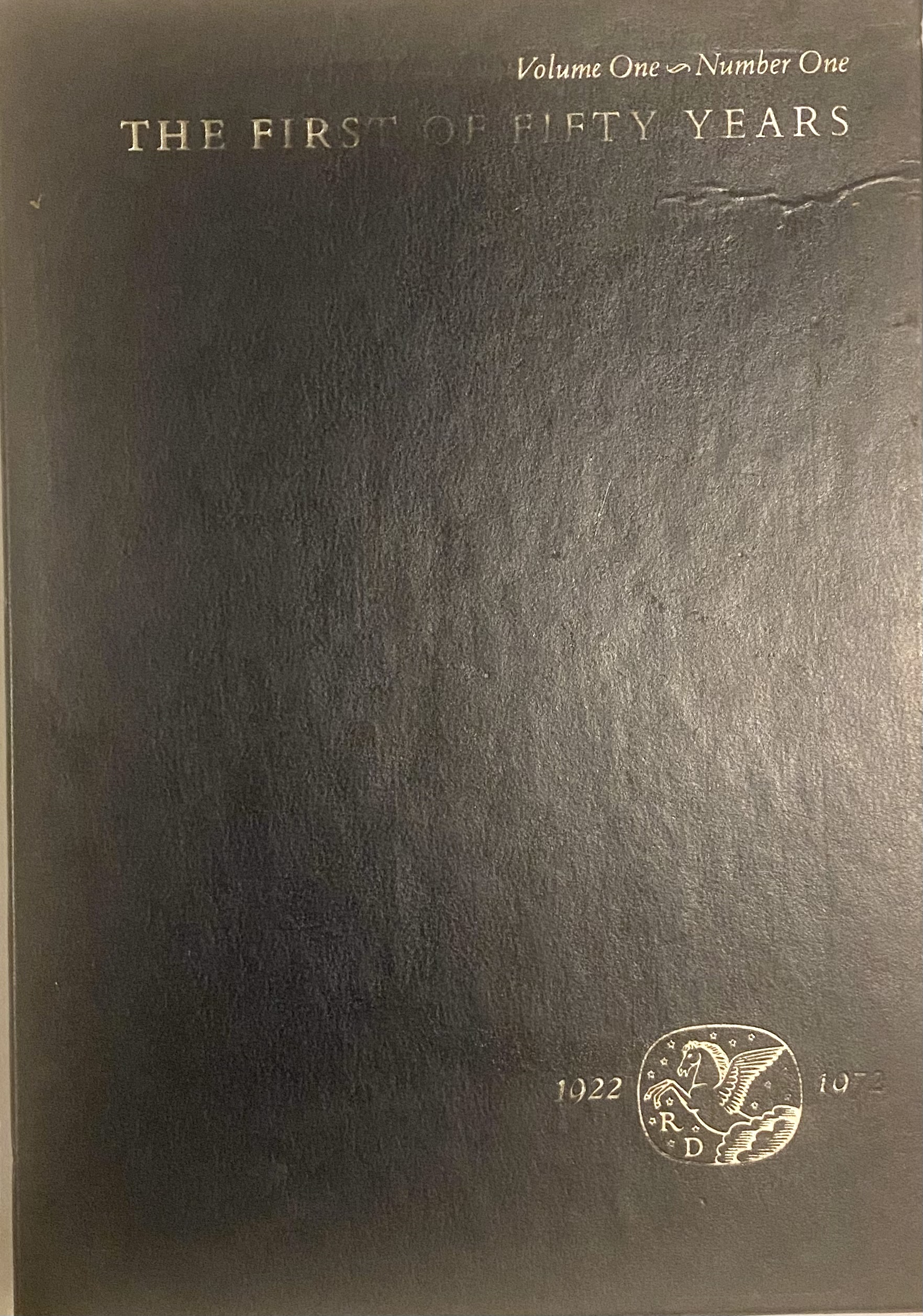
In 1972, The Reader’s Digest, in celebration of its 50th anniversary reprinted both first issues of the magazine and housed them in a nice blue box with gold ink touting The First Of Fifty Years.   Today Reader’s Digest celebrates its Centennial Issue celebrating the “first of 100 years” with many more to come.

I guess the moto of this story is when someone tells you this idea will never work, take that as a good sign that this idea will not only work, but it work very well indeed.

The Centennial issue of Reader’s Digest Feb. 1922

Congratulations Reader’s Digest and here’s to the next 100 years.

h1

“Cover Testing” Is Nothing New In The Magazine Media World… A Mr. Magazine™ Musing

January 24, 2022

In the 1990s I wrote a column for Folio: magazine entitled Double Vision: The Split Covers Trend. Little I knew then, that the split cover trend was anything but new at that time. I was reminded of my column when I saw Woman’s Day utilizing a split cover with its most recent issue.

For its Jan/Feb issue the magazine utilized a split cover. One with the traditional nameplate and the other with a very small Woman’s Day and a big Celebrate nameplate. In addition, a skyline cover line is missing from one of the two covers. Take a look:

But, as I mentioned earlier, cover testing I found out, is nothing new. Digging through my magazine collection I found two examples dating as far back as 1955 and 1963 respectively. Good Times, the Samuel Roth magazine, tested two different cover pictures with the same cover line, while Sexology magazine tested a new name Personal with the exact same cover lines. Take a look:

In short, there is nothing new under the sun when it comes to magazines and magazine media. What’s new is the ability to dig through the treasure of those printed magazines and show case them to help preserve the past, present and future of the magazine media (more on that at a later date).

As always, I welcome any comments, corrections, additions to this blog entry or any other blog entires on the Mr. Magazine’s™ blog or website. Until the next entry, go buy a magazine or two and enjoy the experience that only magazines can provide. All the best,

Samir “Mr. Magazine™” Husni, Ph.D.

samir.husni@gmail.com

h1

A Magazine Is Worth 1,000 Websites: A Mr. Magazine™ Celebration Of Martin Luther King Jr.’s Memorial Day. From The Samir “Mr. Magazine™” Husni Magazine Collection.

January 16, 2022
Jet magazine. Issues from 1953 to 1969. From the collection of Samir “Mr. Magazine™” Husni

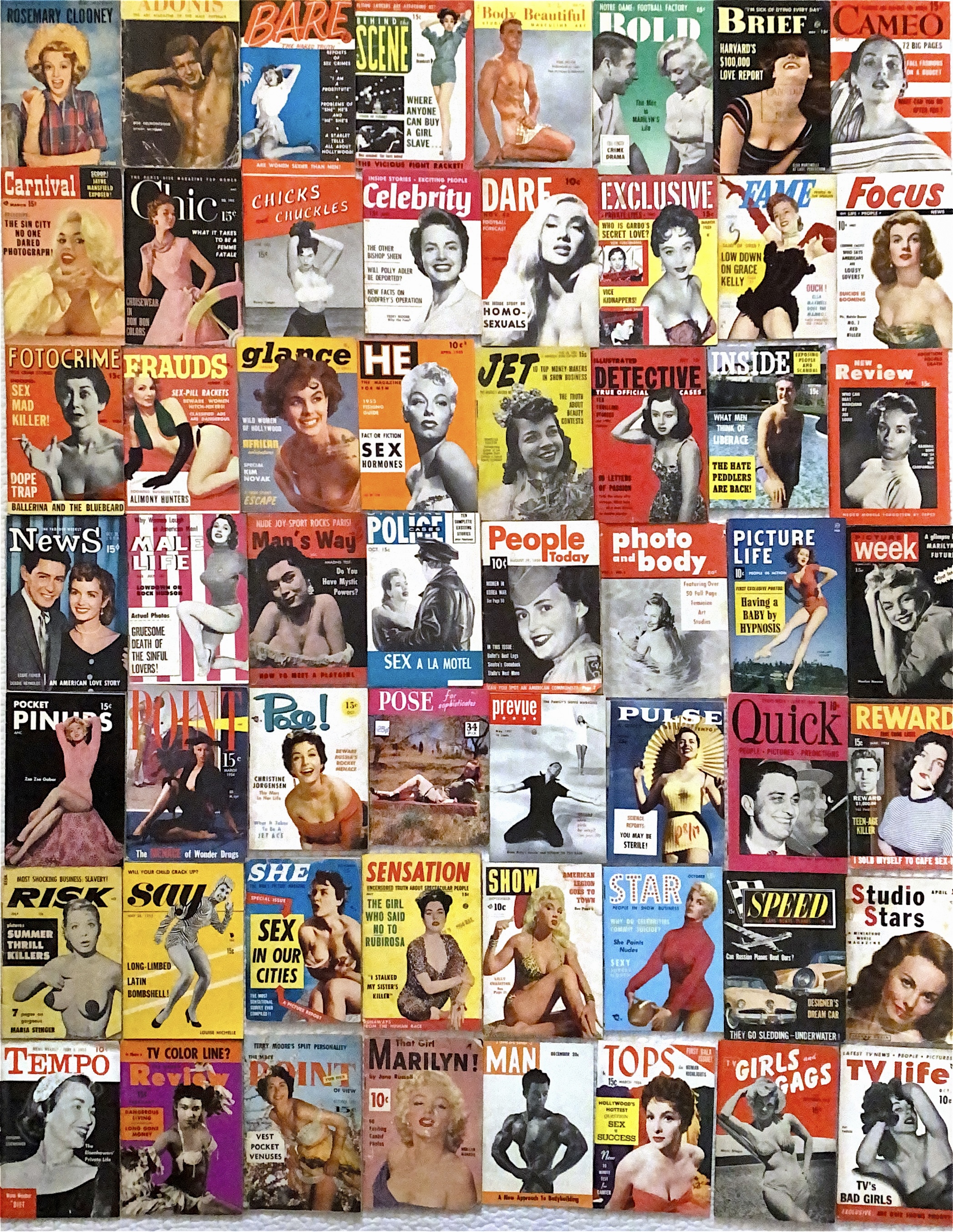
Martin Luther King Jr. Day 2022 will be observed on Monday, Jan. 17. As a magazine person, the only way I know how to celebrate any event, holiday, birthday, is through going into my boxes of magazines and finding reasons to celebrate. MLK’s birthday is no exception. I am working on my collection of pocket magazines of the 40s, 50s, and 60s of the last century. Pocket magazines are the little tiny magazines (4×6) that were inspired by the mini devotional magazines like Daily Word and The Upper Room and were made popular by Fleur Cowles who helped launch Quick magazine in 1949. More than 70 other titles followed Quick, including but not limited to Jet, Tempo, Focus, Picture Week, and many others.

For this blog I searched my collection of pocket magazines and decided to showcase my collection of African American pocket magazines and the magazines that carried African Americans on their covers back in the 40s, 50s, and 60s of the last century. It should be noted that Quick magazine (1949 – 1953) carried 10 covers from its 200+ covers with African American on their front page.

Quick magazine (1949 -1953). The African American Covers. From the collection of Samir “Mr. Magazine™” Husni.

Join me on a pictorial journey in time as we look at those covers and keep in mind if it is not ink on paper, it is not a magazine.

The Negro Review, then the New Review 1954. From the collection of Samir “Mr. Magazine™” Husni
The variety of African American magazines that were published in the 50s. From the collection of Samir “Mr. Magazine™” Husni.
A Pocket Celebrity Scrapbook magazine celebrating Nat King Cole and Lena Horne. From the collection of Samir “Mr. Magazine™” Husni.
Tempo magazine’s solo African American cover in my collection. Tempo was launched June 8, 1953 that was launched right after Quick stopped publishing on June 1, 1953. From the collection of Samir “Mr. Magazine™” Husni.

Until the next blog, be sure to head to a newsstand near you and pick up a magazine or two. You will be living and holding history in your hands, one magazine at a time. All the best…

Samir “Mr. Magazine™” Husni, Ph.D.

samir.husni@gmail.com

h1

A Century Of Treasures And A Call For Action: The American Legion Weekly Jan. 6, 1922. From The Mr. Magazine™ Vault…

January 5, 2022

On this day, Jan. 6, 1922, The American Legion Weekly magazine, then starting its fourth year in publishing, carried an amazing call for action on its cover with the word YOU centered and bold. In it was an urgent call to the ex-service men and women. It stated: “You are the strength of The American Legion. It will be just as strong as you build it… To keep America the way you fought for it to be — America.”

From the collection of Samir “Mr. Magazine™” Husni collection. The American Legion Weekly, Vol. 4, No. 1, January 6, 1922.

The call for action continues, “No man can doubt our right to speak; for if any man has earned his citizenship, if any man has a first lien upon his country, it is the man who has offered it his life; no man can be more interested in its welfare or more jealous for its future integrity and prosperity.”

Treasures only found in ink on paper magazines… enjoy, reflect, and ponder.

Until my next blog, all the best…

Samir “Mr. Magazine™” Husni

samir.husni@gmail.com

h1

Quick: The Innovative Magazine That Fleur Cowles, Of Flair’s Fame, Left Behind. From The Mr. Magazine™ Vault… Part 1.

December 9, 2021
Quick magazine Vol. 1, No. 6, June 27, 1949. From Samir “Mr. Magazine™” Husni’s collection.

If you mention Fleur Cowles’ name, Flair magazine will immediately come to mind.  The artsy, short lived (Feb. 1950 to Jan. 1951), and probably ahead of its time magazine, that Ms. Cowles edited and became famous for, is still the talk of the town when people refer to her journalistic history. In an interview in Vanity Fair magazine, she refers to a hardbound set of the original Flair magazine as her obit. She is quoted saying, “people ask me, if you could read your obit, what would it say? My answer is that I would like it to be about Flair.”

However, there was no mention in the entire in-depth interview with Ms. Cowles about another magazine she launched before Flair.  The magazine that she left behind (although some believed she was the brainchild behind it) was a newsweekly that was modeled in size after the mini devotional magazines published in that era like Daily Word (since 1924), The Upper Room (since 1934) and Our Daily Bread (since 1938), and set the stage for what so to be called “pocket” mass distributed magazines.  

Flair magazine Vol. 1, No. 1, Feb. 1950. From Samir “Mr. Magazine™” Husni’s collection.

She and her third husband Gardner (Mike) Cowles launched Quick magazine in 1949. It was a weekly that dealt with people, pictures, and predictions. The magazine was 4 X 6 in size, small enough to fit in a man’s shirt pocket or a woman’s purse.  Ms. Cowles was the associate editor of the magazine and her husband was the editor, the same roles they had at the more famous Cowles publication LookQuick’s concept was to give its readers “all the news and inside information you need to be well informed; its predictions will tell you of events to come. Carry it in your pocket or your purse – and read it wherever you are.”

The first few issues of the magazine, starting with the May 23, 1949 issue, were tested locally in New York City. The gradual national launch started with Vol. 1, Number 6 in June of 1949. It continued to grow until it reached national circulation with its July 18, 1949 issue. This is why the magazine celebrated its first anniversary with the the July 17, 1950 issue.

Quick magazine Vol. 1, No.9 , July 18, 1949. From Samir “Mr. Magazine™” Husni’s collection.

The editors of Quick wrote in the first anniversary issue, “Just one year ago this week we launched Quick across the nation. At the time, we didn’t know how you would accept it.  But the growth has been strong, rapid and continuous – greater than anybody had dared to hope for.  We started that week, a year ago, with about 290,000 copies.  Now, Quick is selling nearly 900,000 every week.”

Quick magazine Vol. 3, No. 3, July 17, 1950. From Samir “Mr. Magazine™” Husni’s collection.

They go on to describe the content of Quick, “Each issue of Quick contains 11,000 words, giving the most significant aspects of the biggest and latest news in 27 fields of current interest.  There are about 100 photographs in each issue – the best news and feature photographs available in the world.”

As for the idea behind the launch of Quick, the editors go on to say, “Quick gives you a short, clear, easy-to-read summary of the week’s news – just what you need to keep you informed.  We want to make Quick your most useful magazine by so editing it that you will absorb the news you need in the shortest possible time.  We know your time is valuable.”  Sounds like the Mr. Magazine’s™ tagline, “more information in less time and less space.”

But alas, like the famous song says, “only the good die young,” Quick died shortly before it celebrated its fourth anniversary.  The last issue of Quick under Cowles was published on June 1, 1953.  Editor Gardner Cowles wrote addressing the readers of Quick, “This is the last issue of Quick.  Despite the fact that 1,300,000 people have been buying and enjoying this unique news magazine, publishing costs continued to exceed revenues.”

Quick magazine Vol. 8, No. 22, June 1, 1953. From Samir “Mr. Magazine™” Husni’s collection.

He added, “A good many advertisers found that Quick, used ingeniously, produced good results.  Too many other advertisers felt that the small page-size was too much of a handicap.  Without a substantial volume of advertising Quick could not continue as a quality news magazine. So we decided to merge Quick with Look, and thus preserve many of the news weekly ‘s most popular features.  These will be in Look, beginning with June 30 issue – on sale June 16.”

Look magazine Vol. 17, No. 13, June 30, 1953. (To give you an idea of the difference in size between Quick and Look magazines, I shot a picture of Quick on top of Look for illustration purposes). From Samir “Mr. Magazine™” Husni’s collection.

However, in its four years span, Quick magazine was innovative on many fronts in content, advertising, marketing and sponsorships. In future blogs I will address those innovations one at a time, and later will write about the return of Quick under another famous publishing figure from that era.

So stay tuned, there is much more to be written about Quick magazine… 

h1

A Very Happy Thanksgiving From The Mighty Magazine World…

November 23, 2021

In the November 1921 issue of Good Housekeeping, Thanksgiving was celebrated with style:  a poem by Martha Haskell Clark and decoration by Franklin Booth.  What Good Housekeeping published a century ago, is as valid today as it was then…

Below are a few verses from the poem and feel free to click on the picture below to read the entire poem.

God be thanked for acred yield, and mile-wide harvest bending

Heavy for the reaping-blades, waist and shoulder-high,

Reach on reach of golden seas, shoreless, and unending,

Where the furrow-clods lay dark ‘neath an April sky.

Lord, amid our lifted prayers, let us not forget

Little, tended garden-plots in humble dooryards set.

Simple hearts and humble hands, toiling day by day,

Dreamer-souls that keep the faith on sordid paths unknown,

Those who sow, but seldom reap, bless them, Lord, we pray,

Send full store of golden grain for every threshing-stone.

Wishing you and yours a very happy Thanksgiving.

Samir “Mr. Magazine™” Husni, Ph.D.

h1

When GQ Was, According to Esquire, As “Beluga Is To Caviar…” A Blast From The Past. A Mr. Magazine™ Nugget.

November 15, 2021

Here’s a blast from the past, the 1958 past.  An ad for GQ magazine in its sister publication Esquire.  GQ was published by Esquire Inc. in the late 1950s and the ad (as you can see in the pictures) touts GQ as the best magazine since sliced bread… Here is a snippet of the ad:

GQ is to magazines as…Rolls-Royce is to cars… Churchill is to shotguns… Payne is to rods… Hardy is to reels… Dunhill is to pipes… Sobranie is to tobaccos… Steinway is to pianos… Steuben is to glass… Dior is to dresses… Chinchilla is to furs… Beluga is to caviar… Dom  Perignon is to champagnes… Joy is to perfumes… Picasso is to pictures… Bardot is… but you get the idea. In every field there’s something that’s so fine and rare that people who’ve had their fill of the ordinary, and know enough to want and appreciate the best, are drawn to it like cats to catnip…

Do you know of a magazine today that the aforementioned similes can describe?  Would love to hear your views…

Until another Mr. Magazine™ Nugget, all the best…

h1

Music And Entertainment 1953 Style… The Magazines And I, Chapter 12, Part 2.

November 3, 2021

Music and Entertainment Magazines … is the 12th chapter from the serialized book I am writing on the magazines of 1953, specifically March 1953, the month I was born.  This is chapter 12 part two.  Feel free to back track for chapters one, two, three, four, five, six, seven, eight, nine, ten and eleven in previous blogs.  Enjoy.

In March 1953 magazines that covered music and entertainment offered a great service to fans by providing current gossip of their favorite actors, singers, heartthrobs, many song lyrics and melodies, plus other pertinent information for people clamoring to be in-the-know. 

We have to remember that at this time, television was still in its infancy, basically still a “talking piece of furniture” that many were trying to adjust to and get to know. And while TV Guide was published in April 1953, and was a very big title, it did have regional predecessors that covered the infant television scene before the launch of the national edition on April 3, 1953. 

Music and entertainment magazines were the eyes and ears for fans, doing what the Internet and television does today for many people. In March 1953 there was a “channel” for every aspect of a fan’s interest, from honing their own musicality by learning lyrics to their favorite songs to enhancing their knowledge of popular movies and their stars. Magazines were the Internet of the times once again…and March 1953 had some of the best.

Let’s take a look, shall we?

MODERN SCREEN

For over 50 years, Modern Screen was an American fan magazine that featured articles, images and personal interviews with movie stars, and later on many television personalities. The magazine debuted in the fall of 1930 and was founded by Dell Publications. Soon it became the direct competition for Photoplay and was one of the most popular “screen” magazines around, boasting the tagline America’s Greatest Movie Magazine. 

The March 1953 issue was certainly eye-catching with the lovely Rita Hayworth on the cover. The Talk of Hollywood was older wives with younger husbands, so there was an article on that and a romantic love story about actress Ann Blyth and her one true love. It was a time of Hollywood magic and this issue glittered that starlit path splendidly. 

MOTION PICTURE AND TELEVISION MAGAZINE

This title was a Fawcett Publication, which had a bevy of magazines, comic books and “Gold Medal” books, a line of paperback originals, which became a defining turning point in paperback publishing. Motion Picture And Television Magazine was an original movie fanzine full of gossip and romance for Hollywood fans of the ’50s. The magazine promised to incorporate screen life, Hollywood and movie story magazines, which was actually its tagline.

The March 1953 issue had Janet Leigh on the cover (a very young Janet Leigh) and declared that there were things us fans didn’t know about her personal life. Hmm… well of course, we just had to know. There were surprising true confessions of the stars – a very popular feature, I’m convinced. All in all, the magazine was another addition to satiate the cravings people had about Hollywood and all she entailed. It was a terrific read.

MOVIES

Movies magazine came from Ideal Publishing Corporation and Publisher William Cotton, who was known for his pulp magazines. Cotton was about building circulation and serving his demographic. He courted advertisers from a general perspective. He didn’t expect Chanel or Cadillac to advertise with him, but the more down-market products were right there with him. And in turn, publishing pulp made Cotton a very wealthy man. From Hollywood to personal romances, William Cotton ran the gamut of titles.

The February/March issue of Movies featured the usual talk-of-the-town. Marilyn Monroe’s Doctrine, an article by actor Robert Wagner and Debbie Reynolds, along with other scrapbook items for fans. The cover showcased the lovely Marilyn Monroe and offered her Secret Code for Life. You couldn’t get more Hollywood than Marilyn. 

MOVIELAND

Hillman Publications created this Hollywood monthly, competing directly with Bernarr Macfadden and Fawcett Publications. The magazine was another leg on the stool of celebrity entertainment, offering exclusive interviews, images and features.

The March 1953 edition had a magical picture of Doris Day on the cover in a pink chiffon dress that billowed out from her body as though in flight. One cover line beckoned for you to meet the new and sexy June Allyson and absorb five pages of Marilyn Monroe pin-ups. 

MOVIE LIFE

Movie Life was published by Ideal and William Cotton, another Hollywood title so popular in those days. Celebrity magazines have always been big sellers and eye-catchers, so no wonder Cotton kept adding to his stable of titles. Movie Life was a magazine filled with great images of movie stars, such as Esther Williams and Tony Curtis. The life the stars lived was something we all wanted and what better way to get it than from the pages of a vivid magazine.

March 1953 saw Lana Turner on the cover with picture scoops of Esther Williams, Howard Keel, Debra Paget and Dale Robertson. Actress and singer Gail Davis showed us the make-up styles of the day and how to apply them properly and we could read all about life with Lana in the cover story. It was a nice addition to the genre.

MOVIE PIN-UPS

Here comes another Ideal Publishing title from Mr. Cotton. This one was filled with sexy Hollywood sirens, both male and female, in various modes of poses. All in perfect form to clip the pictures from the magazine and hang on your wall. This title was just another in a long list of pulp-type magazines that made a small fortune for William Cotton.

The March/April 1953 issue had a beautiful image of Arlen Dahl that fans were sure to love, along with pictures of Debra Paget, Virginia Mayo and many others. The images and the poses were very tastefully done and just beckoned to be clipped out and hung up. Great photography. 

To be continued…

h1

Mr. Magazine™ & BoSacks: So What Is A Magazine, Really? Point & Counterpoint From The Vault….

October 7, 2021

The following point & counterpoint, between my friend BoSacks and I, on attempting to define a magazine was first published on my blog and in the ACT Experience magazine of 2010. I believe it is still as valid today as it was in 2010. Enjoy.

Point: So What Is A Magazine, Really?

By Samir “Mr. Magazine™” Husni, Ph.D.

President & CEO, Magazine Consulting & Research, Inc.

Being in the content business and being in the magazine business are two completely different worlds. While the magazine business deals with content, content is only but a fraction of what makes a magazine. The myth that is now sweeping our industry that we are content providers and it does not matter how our customers get their information may be the Trojan horse that will aid some publishers continue on their print suicide path.

Content is good and content will continue to be king and queen of our profession, but magazines are not going to live and survive by content alone. It never stops to amaze me how the majority of people jumped on the bandwagon of equating magazines to music and wanted to sell magazines like the iTune store sells music. I said that before and I will say again, the only similarity between magazines and music is the letter m. Everything else is different. As a child I listened to music on the little transistor radio. Later I listened to records, tapes and even listened to music on television. I listened to my favorite songs over and over. I used earphones, loud speakers, any and all the things created to help me listen to the music. The goal was always to listen to my favorite song over and over again. I did not care how the song was broadcasted or delivered. I was not holding to that radio or television set, because the medium did not matter in that case. It was the message that mattered. It was so easy to separate the message from the medium, and it did not matter what medium delivered that message to me, because my addiction was to the message that I kept listening to, time after time. It was not a message meant for a one-time use. The physical medium was just the vehicle to deliver the message and it was never part of the message.

That brings me back to the printed magazine. Like music, each and every magazine can be used as a medium to deliver a message, but if that was all what magazines do, than we would have been out of business long time ago and we would have one format, maybe an iMagazine that delivers all the content you need to select and choose from for your daily needs, wants and desires. 

Magazines are much more than content. Magazines are much more than information, words, pictures and colors all combined in a platform that serves nothing but as a delivery vehicle. Magazines, each and every one and each and every issue of every one, are a total experience that engages the customers five senses. Nothing is left to chance. It is a total package. Without the ink, the paper, the touch, the smell, the look, the taste, it will not be called a magazine. Every issue is a complete new experience with a sense of ownership, showmanship and membership and is renewed with the arrival of the next issue. The total experience of flipping through the pages of a magazine, looking at the different dimensions, shapes, and other physical properties (including the colors we use on every issue whether it is the famous TIME red border or National Geographic yellow border) create a unique relationship with the customer issue after issue. 

So before we close the book on this great technology we call ink on paper and start moving with the tide of this new digital world, stop and think for a moment on what makes a magazine a magazine and why in this digital age millions of magazines worldwide are still thriving in ink on paper creating daily experiences, one issue at a time. Magazines are much more than content and they are even much more than ink on paper. The total physical aspect of each “storehouse” to use the original meaning of what a magazine is include all of its properties, from the size of the store to the content of the store, seen and felt together.

Take time and think about it. The digital age is helping us create new platforms and new media, but do not fool yourself and think you can recreate a similar experience to that we have in ink on paper magazines. It is one of a kind and I if we only devote five percent of our time, money and energy in this digital age focusing on how to enhance this existing ink on paper technology and what it is delivering, our business will be in a much better shape. Magazines are not just content providers, they are experience makers, one printed issue at a time. And, if it is not ink on paper, please try to find another name to define that new medium, because in my book if it is not printed it is not a magazine. I am living the digital age (you name the gadget I have it, including the iPad) but I am not living in a dream world. I have yet to see anything comes close to what an ink on paper magazine can deliver and do for its customers at such a great feel, not to mention a great price too. Go grab a magazine, any magazine and then let’s start talking about experience making! 

Counterpoint: So What Is A Magazine, Really?

By Bo Sacks

Founder & President, Precision Media Group

 As most of you know I have been debating my friend Samir Husni across the country for almost a decade. He is an admitted tree hugger and I lean mightily towards a digital future for our industry. Our debates are great fun not only for the audience but for the two of us as well. We enjoy taking opposite sides of important magazine issues. 

As you might expect when I saw the headline of his recent posting “So, What is a Magazine, Really?” I started reading with great interest. That is when I read the following lines by Samir 

“Without the ink, the paper, the touch, the smell, the look, the taste, it will not be called a magazine.” … And, if it is not ink on paper, please try to find another name to define that new medium, because in my book if it is not printed it is not a magazine.”

From my perspective these words and thoughts couldn’t be more wrong. I firmly believe that ink is not one of the major components necessary for a magazine. 

In working with my partners at mediaIdeas five years ago we developed a set of criteria for the definition of a magazine. We believe that a magazine must be paginated, edited, designed, date stamped, permanent, and periodic. But it does not have to use either ink or paper to be an ‘official’ magazine. Ink and paper are an unnecessary restriction in the 21st century. Of course, a magazine can be printed with ink on paper, but to demand that it be so is unrealistic and would doom an otherwise vibrant industry to the monasteries of time long past. 

The best-selling book of all times was originally written on a scroll. Then eventually printed on paper by our friend Guttenberg. The Bible is now available digitally. Does the digital delivery mean it’s not a book? I think rather that the words and thinking that are important and not the substrate. 

Of course, it may not be fair but I can’t help pointing out that Samir delivered his article “So What is a Magazine Really?” in a digital blog and not in a printed magazine.