Archive for the ‘A Launch Story…’ Category

h1

Summit Journal: For The Love Of Climbing And Print.  The Mr. Magazine™ Interview With Michael Levy, Editor-in-Chief

August 12, 2025

“Print Only,” says the ad promoting subscriptions to Summit Journal magazine. There is no waste in its business model: “We only print the exact number of copies as our subscribers.” There are no newsstand sales, and every issue is printed with two different covers—one of which is sent randomly to each subscriber. If you want both covers, you’ll need two subscriptions. And for how much? Two subscriptions will cost you a hefty $120. Print-only is expensive, but it is permanent and lasting. It is yours, and you can prove it by holding the oversized magazine in your hands.

The person behind the resurrection of Summit magazine—now Summit Journal—after a 27-year dormancy is Michael Levy, a journalist, photographer, writer, and editor who is both a climber and a lover of ink on paper. I reached out to Michael to ask him about Summit Journal—why a young man would bring a magazine back to print, and not just print, but print only in 2025—and about the role he most enjoys in creating this beautiful publication, in which every issue is a collector’s item for today, tomorrow, and forever.

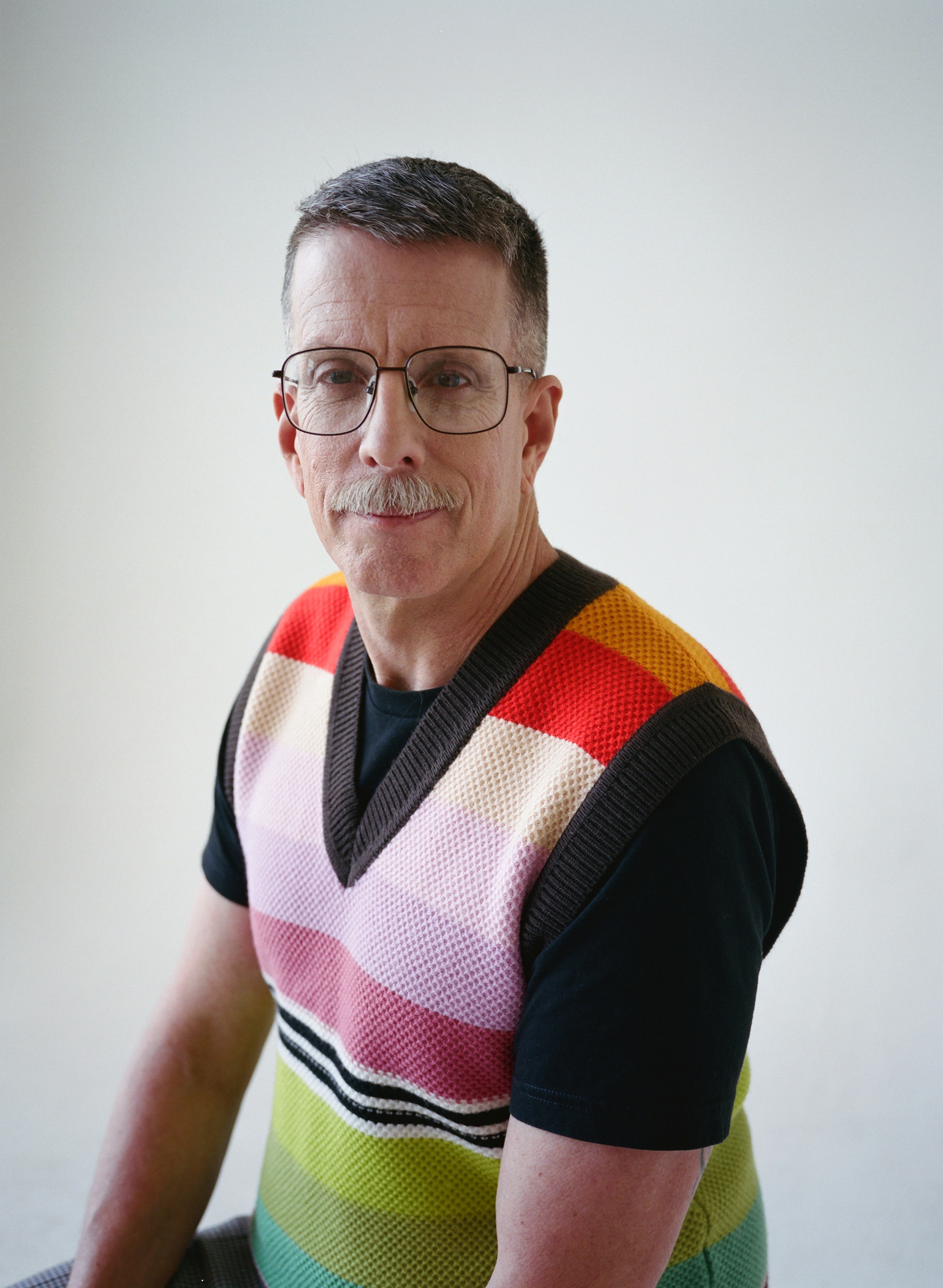
Michael Levy by Kiran Kallur

Surrounded by framed covers of both the old and new editions, Michael and I had a fascinating conversation about the magazine, print, art, digital, and climbing. I hope you enjoy reading it as much as I enjoyed having it. So, without further ado, here’s my lightly edited conversation with Michael Levy, founder and editor-in-chief of Summit Journal.

But first the soundbites:

On why print only: “With online it’s just like drinking from a fire hose. There’s too much stuff, a lot of good stuff but you get lost in the noise.”

More on why print only: “There’s an audience who really appreciates a boutique well-made and well-designed product and something you can hold in your hands and put on your shelf and come back to.”

Even more on why print only: “I love print.  I used to work at a couple other climbing magazines, so my dream was to start a print magazine and that’s how it goes.”

On picture curation: “Then the curated photos, I see so much good photography these days, being able to choose exactly what we want to put in a magazine, there’s a lot of intentionality to it.”  

On more reasons why print only: “Big part of that is to protect the value proposition of the printed magazine. If you can read it online it undermines the value of someone subscribing to print.”

On the reason for two covers with each issue: “It’s treating it as a novelty item, it’s closer to a coffee table book than a magazine.”

On his love of climbing: “I have been a climber for 15 years.  I’m obsessive rock climber and mountain climber.  For people who know climbers we tend to be very obsessive about it.”

On his biggest competitor: “The closest competitor I have is a magazine called Alpinist which is focused on highly technical mountaineering and alpinism and icy snowy peaks.”

On the magazine model:Mountain Gazette for sure was the model I based it off.  Summit, same as, Mountain Gazette is an old property that’s resurrected and just like Mountain Gazette you hold in your hands a beautiful magazine.”

On what keeping him up at night: “Basically, how the magazine, which is a climbing magazine, can be a vehicle with an interesting mode to tell human stories, interesting characters, and consider things in the world through different lenses.”

And now for the lightly edited interview with Michael Levy, founder and editor-in-chief, Summit Journal:

Samir Husni: My first question to you is 27 years after Summit magazine folded you decided to bring it back in 2023 as a print only publication. I guess you did not notice all the changes that took place in the digital world since 1996. Why print only?

Michael Levy: There are a few reasons:

One, with online it’s just like drinking from a fire hose. There’s too much stuff, a lot of good stuff but you get lost in the noise.

It’s the curation that is an important thing has gotten lost with the ability to have everything at your fingertips at once. So, in a print magazine you only get so many pages that you can only put so much in it, so, it forces, by design, to curate and let the cream rise to the top unless you want to put out a bad product. So that’s one.

And then another reason I would say like vinyl. There’s an audience who really appreciates a boutique well-made and well-designed product and something you can hold in your hands and put on your shelf and come back to. It’s this kind of an effect, kind of cool, a little bit counter cultural to what you know the general mainstream is doing, same as vinyl.

Number three, the reading experience is just different.  When I find myself reading a book or The New Yorker or whatever, you’re forced to sit down, and you don’t have the distractions of online. You can’t go check your social media and you can’t go see what the headlines are on the other site. You’re making an intentional decision to spend time with this piece of writing and print forces you to do that.

I love print.  I used to work at a couple other climbing magazines, so my dream was to start a print magazine and that’s how it goes.

Samir Husni: On your website www.summitjournal.com you say the magazine carries crafted stories and curated pictures. Explain.

Michael Levy: Yes, like what we’re just talking about with online, there’s a need, a compulsion to feed the beast.  You always got to churn out the next thing, even for longer things when you hit publish these editors and publishers they must fill the quota for the next day. You can only spend so much time.  I’ve published two magazines a year, which is not a lot, but I’m looking for the stories that I want to tell or that people send to me, and then we’re really drilling down on them and going through many rounds of edits, many rounds of reporting and research, and completely turning them inside out changing structure. These aren’t spit out onto a page; they’re really labored over, crafted like that.

Then the curated photos, I see so much good photography these days, being able to choose exactly what we want to put in a magazine, there’s a lot of intentionality to it.  Some of the pictures are not necessarily the flashiest photos but they’re saying something and they’re in conversation with the other articles and the issue, so yes, just obsessing over it and figuring out what photos will bring the issue alive.

Samir Husni: Why did you decide on print only? No online magazine?

Michael Levy: Big part of that is to protect the value proposition of the printed magazine. If you can read it online it undermines the value of someone subscribing to print. They’re like well, why do I need it. It’s simple; I like print; I wanted to do print and so by not having it online it forces people, if they want to read it, you got to subscribe. It’s simple.

Samir Husni: You publish two covers every issue and if you want to get both covers you must have two subscriptions: instead of paying 60 bucks you must pay 120 bucks.

Michael Levy:  Yes, it’s not cheap, but there’s not a lot of people who do that.  There are a few. It’s treating it as a novelty item, it’s closer to a coffee table book than a magazine.  Unlike magazines with thin paper that’s not perfect bound, the ones you might see on the magazine rack at the airport, there’s lots of great writing and photography, but they’re not as much tactile items that you’ll savor, so you read it, put on the back of the toilet, throw it out, whatever, Summit Journal is meant to be displayed or put on a shelf and really savored. For the collectors they might want both covers. Some people might say why don’t you let people choose which cover they want, the simple answer is it becomes much more complicated logistically and from a forecasting and business perspective.  I print the two covers in a50/50 split and the shipping is random, that way one cover is not more or less equally popular.

Samir Husni: You appreciate your covers so much that you sell limited prints of the cover art.

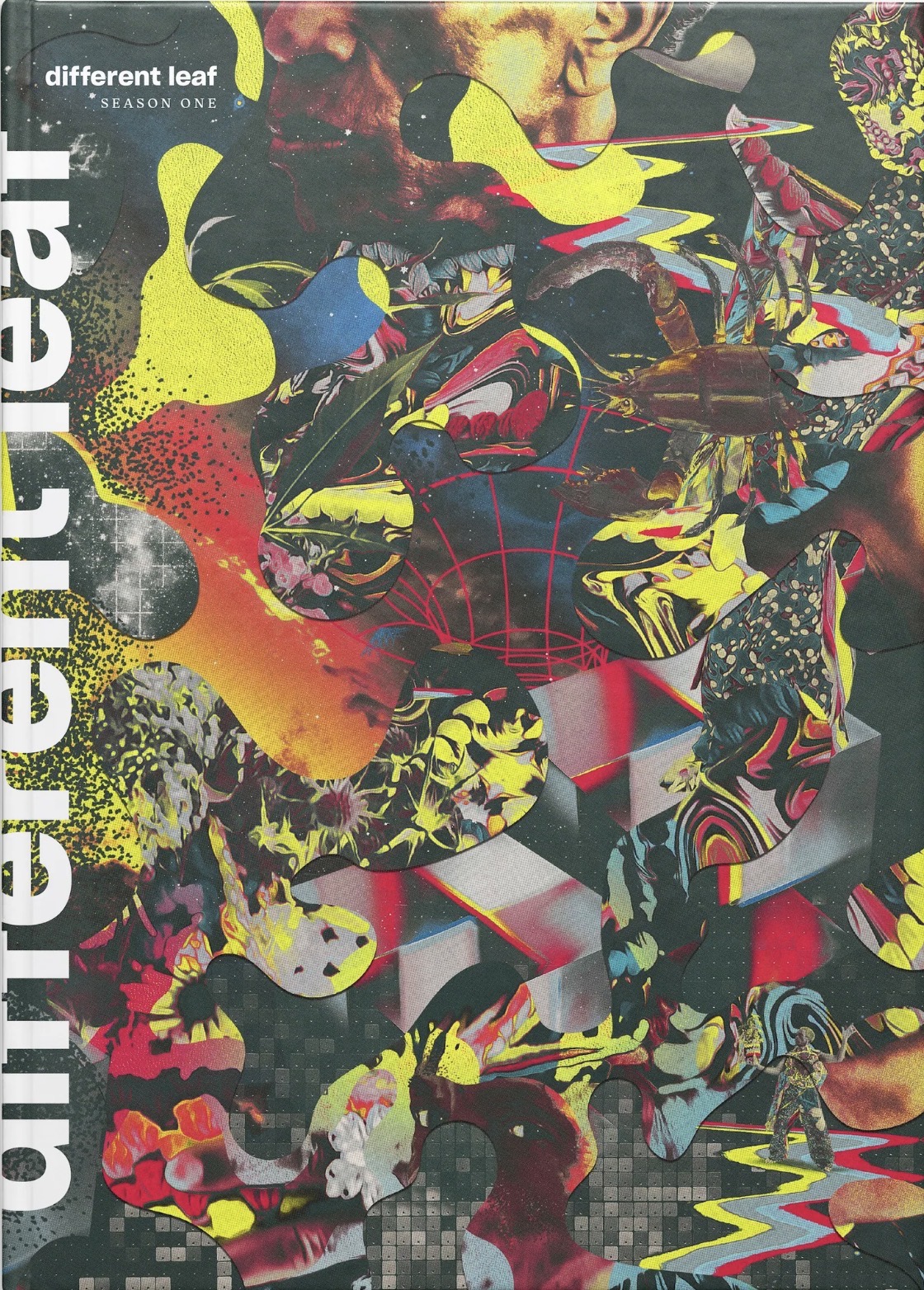
Michael Levy: I do.  One of the great things about the old Summit magazine, which was started in 1955 by two women Jean Crenshaw and Helen Kilness, is that they had incredible aesthetic artistic sensibility, so, there’s avant-garde art deco bright colored covers that mix illustration and photos and people climbing and beautiful mountains. With the new covers we’re both trying to capture a bunch of that spirit and honor the original magazine from the 50s 60s 70s. We are also pushing into new territory, so the covers are minimal and the goal with each cover to be iconic. We want people to look at the covers and go whoa I haven’t seen that before, as a climber or as a not a climber, and so with that in mind the covers make great cover they make great wall art as you can see; I have a few of them behind me the old ones in the middle and these are two of the new ones and they’re very graphic and very geometric.

Samir Husni: You are a writer, photographer, climber and now publisher and editor.  Are you putting all your eggs in one basket Summit Journal?

Micheal Levy: I have been a climber for 15 years.  I’m obsessive rock climber and mountain climber.  For people who know climbers we tend to be very obsessive about it. It’s one of those things it gets in your blood, and you can’t stop thinking about it and what are you going to climb next.  It’s a wonderful lifestyle sport.

Then about 10 years ago, I started writing about climbing. I worked for two other climbing magazines Rock and Ice magazine and Climbing magazine, which were the two largest print climbing magazines in America, probably the world.  Neither of which is in print any longer which is sad.  They were great magazines.

So, as I’ve gotten older, I still love climbing, but it’s not quite enough to sustain me as my creative outlet. The storytelling has given me a new connection to the sport and arguably more important to me than actual climbing right.  I was an English major in college and I’m a big fan of novels and narrative non-fiction. I tear up The New Yorker every time I get it.  With that in mind, and the media landscape for other climbing publications is shrinking and trying to think about what I wanted to do with my time, energy and effort I decided it seemed like there was an appetite for this kind of magazine or I hoped that there was. I might as well take a crack at it and this, in in my perfect world, is how I was going to be spending my time and luckily, it’s working out enough that I can do it.

Samir Husni: Who is your main competitor today?

Michael Levy: The closest competitor I have is a magazine called Alpinist which is focused on highly technical mountaineering and alpinism and icy snowy peaks. They do some great stuff, but Summit Journal has a bit of a wider mandate. I cover all kinds of climbing from bouldering which is climbing on small rocks, to climbing on El Capitan, to climbing the snowy mountains. We’re just doing things a little bit differently.

 Beyond that the magazine I used to work for Climbing magazine no longer exists in print, but it exists online so they’re technically a competitor. They have a much bigger audience, but they are doing more of what I was talking about before, news coverage and quicker things, which is all great and useful. There’s nothing wrong with that but what we’re offering is carefully crafted stories and long form journalism. This takes more time and is a different beast. So, even though we’re all kind of competing with Climbing, Alpinist, and Summit Journal I think there’s room for all of us.

Samir Husni: I know you wrote for Mountain Gazette. Did it give you the inspiration to be that unique in terms of print only?

Michael Levy: I’m not sure if you’ve ever talked with Mike Rogge at Mountain Gazette. Mike Rogge is certainly a mentor to me for sure. I met him when I wrote something for Mountain Gazette and then when I was thinking about relaunching Summit as Summit Journal, I sent him an email. I was like I would love to pick your brain, and he was very kind with his time. I think he has too many people reaching out to him these days asking about that. But Mountain Gazette for sure was the model I based it off.  Summit, same as, Mountain Gazette is an old property that’s resurrected and just like Mountain Gazette you hold in your hands a beautiful magazine. I was like this is what I want to do.

Samir Husni: Tell me what makes Michael tick and click every morning? What makes you get out of bed?

Michael Levy: I get excited when I come up with a cool story idea that I want to have someone write that I know will make a great story, but I don’t know exactly where it’s going to go.  I know that I don’t want to write it myself because it’s going to be too stressful. I much prefer finding those writers who I think are brilliant and good at what they do and letting them loose on this idea. Trying to come up with these ideas that are going to be great is both a painful process, because I only have so many ideas, but then hitting on them and getting really excited about them and having a writer and photographer go and execute it. Seeing the finished product come back is exciting. I would say I’m a better editor than I am businessman. I overspend my budgets for the issues because I have so much fun putting them together.

Samir Husni: You mentioned pain, has your journey with three issues under your belt, and the fourth issue comes out next week, has it been a walk in a rose garden or you had some challenges that you had to overcome?

Michael Levy: No, it’s not. I’m an editor by training, the idea of launching a magazine a print magazine two years ago in 2023 and learning how to be a publisher, was a steep learning curve for me. There are all sorts of things I didn’t know.  Basically, at every turn I had to figure out distribution, profits and losses, and how to print it. That was a process for me, and are things are going well? It’s a viable business and I have so much fun working on it.  It’s not like I’m getting rich. No one who wants to get rich starts a print magazine in 2025. It’s just figuring out ways to keep the business healthy enough so that I can keep making the magazine. That’s not it’s a super existential crisis at every moment, but it takes a little bit of elbow grease to make things and find new ways to keep people subscribing and other revenue streams and stuff that kind of thing.

Samir Husni: Before I ask you my final two personal questions, is there any question I need to ask you I did not ask?

Michael Levy: Why I resurrected a title versus starting a new one? I knew I wanted to start a magazine and Summit magazine had been on my radar for a good while. I had read some things about it in the past and seen some of these cool covers and like Mountain Gazette I started thinking about the benefits of potentially resurrecting an old property versus starting a new one. I bought the rights to the magazine for very little money because it wasn’t worth much. It hasn’t been printed since 1996. The hardest part was tracking down the guy who owned it.  

I bought the name and the old covers. I didn’t the subscriber list or whatever. At the same time being able to tap into that history, the legacy of, and have the imagery of this old magazine that Gene and Helen built. Basically, this magazine that for 35 years told the story of North American climbing seemed invaluable to me. You can lean on that history and use it as you want while building a new brand. Not everyone is going to be able to resurrect new an old type of title.  There are only so many you could probably buy. In the case of Summit, it did not feel cheating, but rather a head-start which is cool.

Samir Husni: My typical last questions, if I come to visit you one evening unannounced what do I catch Michael doing to rewind? Cooking, having a glass of wine, watching tv, or reading a book?

Michael Levy: I’m having a beer and hanging out in the backyard with my 11-month-old son.  My wife is the cook.  I’m not a great cook and then he goes to bed we might watch a tv show. Then I go and read whatever book I’m reading and try to avoid the doom scrolling of the state of the US.  During the day, if I can sneak away, I go for a climb.

Samir Husni: So, you do still go climbing?

Michael Levy:  Oh yes, every week.

Samir Husni:  What keeps Michael up at night these days?

Michael Levy: The state of the world. The rise of fascism in the US and the genocide in Gaza and all this stuff.

Climbing is a nice escape. Basically, how the magazine, which is a climbing magazine, can be a vehicle with an interesting mode to tell human stories, interesting characters, and consider things in the world through different lenses.

Samir Husni:  Thank you.

h1

A Trio of Youngsters Launch A New Craft Magazine: “Craftwerk.” The Mr. Magazine™ Interview with Chloe Harthan, Eli Clayton, and Ayla Hayes

June 14, 2025

Nothing brings more joy to the heart of Mr. Magazine™ than seeing three young people publishing a print magazine.  When I heard about Craftwerk magazine, I thought it is, yet another magazine aimed at old folks who enjoy arts and crafts at their later years.  And wrong I was.  Craftwerk is not for old folks and nor it is published by old folks.  It is the brainchild of two young graduates from the School of the Art Institute of Chicago assisted with a third graduate from the same school.  Even combining all their ages will not give you one old person’s age.

Smart, driven and determined those three young people are adamant on making a difference in the art and crafts word.  In their issue one, that they labeled “The Manifesto,” they write: “We believe that there is a new American craft movement in hyper-contemporary art.”

The manifesto continues, “The distinction between what has occurred previously versus now is the combination of late-stage capitalism, abundant internet usage, complete globalization, and digital archive accessibility. Culturally, there is an emphasis on individuality in conflicting tandem with mass-production and the search for “one of a kind” objects while impersonal plasticity rules over the maker.  We are divided from our things while being collectors of masses.”

It was my pleasure to sit down for a zoom interview with all three of them and we talked about Craftwerk, print in this digital age, and whether they are out of their minds doing this.

What follows is the Mr. Magazine™ interview with Chloe Harthan, Eli Clayton, and Ayla Hayes, founders and creators of Craftwerk.  But first the soundbites:

Chloe Harthan, Eli Clayton, and Ayla Hayes

On starting a new print magazine: Yeah, probably so. We, since we’re all artists, do a lot of things that are difficult to start, and we see it through anyways. I think that’s kind of in all our natures.

On why Craftwerk with an E and not an A: “In switching the E instead of an O, it’s pop-cultural and very in tune with queer culture to change “work” to being that. It’s also the German ending to change to “werk.

On trying to create a new manifesto on crafts: “It would be cool if people read it and identified with it. But it isn’t really a specific agenda, I would say, for future generations. I think it’s responding to the people that we’re around and the community that we’re in in Chicago.”

On why Chicago and why crafts magazine: “We talked about Chicago in the manifesto being in the center geographically. And then craft is also in a center of an arts practice. There’s craft as in little, tiny projects like knitting, or there’s craft on the total other end, like Renaissance craft. So contemporary craft is in the middle.”

On the Craftwerk team: “Eli and I are the creators; Ayla is the editor. And so, Eli and I first had the idea for a project with jeans, and that was our passion. But before doing that, we wanted to decide what we were doing entirely. That’s why we did the manifesto.”

 On Craftwerk audience: “A lot of artists, creatives, people in our network or in people we know network. Since it is such a small starting project, it’s really all about connecting and getting people to learn about it through other people.”

And now for the lightly edited interview with Chloe Harthan, Eli Clayton, and Ayla Hayes, founders and creators of Craftwerk. 

Samir Husni: For a group of young folks like you, are you out of your mind starting a new print magazine?

Chloe: Yeah, probably so. We, since we’re all artists, do a lot of things that are difficult to start, and we see it through anyways. I think that’s kind of in all our natures.

But it’s been a learning process, and we’re continually learning as we’re doing it. It’s been very fun thus far.

Samir Husni: Why did you decide on craft and Craftwerk spelled with an E instead of an O?

Chloe: All of us being in art school, we saw a trend happening of people returning to craft and the importance of craft in their work. A lot of different things, like fibers work or really anything that is displayed in the manifesto, we saw becoming more popular. And so, we wanted to investigate that and highlight younger artists that were also investigating it.

In switching the E instead of an O, it’s pop-cultural and very in tune with queer culture to change “work” to being that. It’s also the German ending to change to “werk.” But it’s not just about changing the word but contextualizing where we’re thinking of. So, if we changed it and it was just Kraftwerk as in the German spelling, that wouldn’t be accurate to what we’re doing.

Craft” and then “werk” puts in all the different parts of coming from queer culture, coming from an internet culture, being younger. That’s why we changed that.

Samir Husni: As you look at the first two issues, you had the manifesto in the first issue, then you had the jeans issue. What’s behind the theme? Are you like trying to put a new manifesto on crafts for the future generation?

Eli: It would be cool if people read it and identified with it. But it isn’t really a specific agenda, I would say, for future generations. I think it’s responding to the people that we’re around and the community that we’re in in Chicago. I think being in Chicago is a unique place.

Chloe: We talked about Chicago in the manifesto being in the center geographically. And then craft is also in a center of an arts practice. There’s craft as in little, tiny projects like knitting, or there’s craft on the total other end, like Renaissance craft. So contemporary craft is in the middle.

In the manifesto, we were really trying to get our bearings. In the first one, we were working hard to figure out what we wanted to do. It’s more of a guideline for us, because we started with jeans. Eli and I are the creators, Ayla is the editor. And so, Eli and I first had the idea for a project with jeans, and that was our passion. But before doing that, we wanted to decide what we were doing entirely. That’s why we did the manifesto.

Samir Husni: And why print in this digital age? Why ink on paper?

Ayla:  I’ve always been really drawn to analog ways of making.

I like analog in terms of music, and when I’m looking for reading. And there’s such a power to being able to print things yourself. There’s a whole culture of zines, and magazines, and artists making that.

It’s a very countercultural medium, to be able to do it as an individual, to take on something that seems so daunting, like making a magazine. Yeah, I think that’s why we print. And there’s something so great about having a physical object, too.

I think as makers, it really lends to craft, using physical medium. If it was digital, I just don’t think it would feel as tangible as us as artists and makers.

Samir Husni: And how easy has it been? Is it a walk in the rose garden, or have there been some obstacles?

Chloe:  Not easy at all.

We’re getting better. Eli and I started with the Manifesto, and Ayla informally edited that one by just looking for grammatical errors and small formatting errors. The second one, we brought Ayla on fully to do editing for the whole process. And we figured out, being such a tiny team, how long it takes us to do it, what our goals are visually and physically. Of course, you can see we changed our binding, going from the first one to the second one.

We changed where we got them printed at. We might even change where we get them printed again. Being able to go from one to the other and have the physical version has really been helpful for making it better. And if we didn’t print it, going back to your previous question, I don’t even know how our formatting would look because it’s so different. But it’s a challenge.

Even though it’s more work, there is so much fun stuff to get to change with printing. Even just what type of paper you use is another aspect of it to have fun with. It lends to the theme.

Samir Husni: And who’s the audience?

Ayla: Going back to it not being a walk in the rose garden, we’re all so busy with other things. This is for all of us a side project that is more out of a passion and less from a business or financial standpoint.

It’s a break-even project. That both puts pressure on it but also relieves some pressure in a sense.

But it was a lot of learning, and it was not easy. Still isn’t easy. Still a lot like learning a lot, but for me, it’s worth it at least.

Samir Husni: And who’s your audience?

Eli: I don’t know. I’ll be frank. Anyone that sees it and is interested in picking it up. Mainly right now it’s Chicago based.

A lot of artists, creatives, people in our network or in people we know network. Since it is such a small starting project, it’s really all about connecting and getting people to learn about it through other people.

Chloe: I don’t think it’s a specific group of people. Part of why we’re able to have flexibility within our audience is because we get all the artwork through an open call. We release it online and ask artists to respond to the theme.

For the denim theme, it was much more specific, but through open calls we get lots of eyes on it. People have a free ability to participate in something that will be printed, which is something that many artists are interested in. And then it blooms from that because each person has people that they want to share it with.

That also changes the way that it looks. It’s unpredictable when we put out the open call, but it makes all the work accessible. Everything is different in the denim issue even though it’s based on one thing. All of the pieces have something unique about them that caters to people’s individual interests. So, if you enjoy looking at art, you know, there’s something for everybody, which I like.

Samir Husni: Looking forward, what will be the theme of issue three?

Chloe: We haven’t decided. We have some ideas that we’ve kind of thrown around. We haven’t landed on one specifically.

We all have such different tastes. So, it makes it hard to pick a theme too. But that tension between the things that we all like, whenever it coalesces into something, it’s something that’s able to be responded to by many people, which is great.

Samir Husni: So, you and I are having this conversation a year from now. What would you tell me you’ve accomplished in 2025? Do you want to do another edition by the end of this year?

Chloe: By a year from now, we’ll have another edition, I think.

Eli: Since the second one was put out in 2025, the third might not be put out by the end of 2025. No, it’ll be 2026.

I think it’d be cool to investigate local printing, and being able to be more involved in that process would be cool.

Chloe: Doing something with inserts, just a little texture in the magazine would be something I’m interested in. We’ve talked about having takeaways on the inside, things that are practical, like instructions to make something. We were talking about having instructions on how to mend jeans but didn’t end up having time to do that in this one. Having something that you can use instead of just going through it and reading, something that can impact day-to-day life would be interesting. We’d like to be selling it at local shops and magazine stands, or even non-local places.

Ayla: I’d like to do something that’s more involved and less of us-specific but revolving around the theme instead of just releasing the magazine. That could be much more involved within the community as well.

Samir Husni: So, tell me, how far are you in school?

Chloe: Ayla and I graduated. We both recently graduated this past fall.

Eli: I have two weeks left, and then I’m also graduating from The School of the Art Institute.

Samir Husni: My typical last two questions are, one, what do you do to unwind at the end of the day?

Chloe:  That’s a good question. I don’t know if I do unwind. Right now, I can’t afford to unwind.

While we were working on the magazine, I was doing a lot of the editing in very, very late hours of the night because that was when I had the time to work. When I was unwinding at that time, I was shutting my laptop computer when I was done, opening my window because it was the winter, so super cold air would come in.

Things that weren’t screens was good for me, like doing my laundry. Random things that weren’t related to looking at or typing on something. I recently have done lots of gardening on my patio, and that has been nice. Yeah, I think when working on digital projects like this, once you’re doing such small changes, you must just change environment.

Ayla: I tend to just go outside or read.

But reading is hard because your kind of reading when you’re doing this. So, it’s like, what reading is fun reading and what reading is like, working. Painting helps. I’m a painter.

Chloe: I am also a painter.

With that, I can shut my brain off in a different way and activate different parts. So, I think the painting really helps me too. While I was working on this, I wasn’t painting much. And then I was able to dive back into that, which was like an explosion of reward at the end to just be able to paint again.

Eli: I would say for me, that would be sewing. I do a lot of hand sewing and machine sewing.

And it can be such a tedious, monotonous task that I’m able to just kind of let go. I unwind by doing something physical, which I think kind of circles back to the importance of craft that we were exploring.

Ayla: I listen to music a lot at home. My roommate and I have a turntable. We like to sit and do that a lot.

Samir Husni: My last question is what keeps you up at night?

Chloe: Well, here we’re in an art space. Ayla and I run this space. It’s a small art gallery and we do a handful of events also. This place keeps me up at night and is another huge thing that we’ve bitten off together. But planning for shows and thinking about the future, thinking about our space and where we want to go and what our goals are. That keeps the gears turning for sure.

Eli: The future. The unknown of the future.

Samir Husni: Well, is there any question that I should have asked you? I didn’t ask you…

Samir Husni: What are your magazine inspirations?

Ayla: Recently, over the past summer, I took a class on artist books. And taking that was really, really inspiring to get involved in making books in some way. The school has a great resource, a library of artist books. They bend and twist the medium of a book so much.

It’s so inspiring. That made me want to get into it. And I’ve always liked magazines – like fashion and skateboarding magazines, all that kind of stuff. I think they are so fun.

Eli: Also took that artist books class. And so that was interesting to me. It is the main reason why I have an interest in print and publishing. Books, magazines, stuff like that. My grandma was a librarian, so I would always learn from the things that she got from being a librarian. I feel that also made me interested in print and publishing.

Chloe: I’m very unfamiliar with print media, so I learn from these two all the time. Especially in digital design, I learn from Ayla. She spits out so many examples of magazines to look at because she’s so in touch with it.

And then Eli, he is a printmaker. Eli knows how to do the different types of binding. When we were physically making the first edition, we were going over the most cost-effective options. We were looking at paperweights. We were looking at the finishes. Eli knows so much more about that than I do. So, I think my answer is them because I’m less familiar.

Samir Husni: Thank you and best of luck on your venture.

h1

Michael Simon And The Magazine Coalition Are Working On Changing AI Companies From Content Shoplifters to Content Shoppers… The Mr. Magazine™ Interview

April 26, 2025

Michael Simon, of Publishers Press fame, is on a new mission in life:  make AI companies pay for the content that their LLMs (large language models) scrape from the digital sphere and breach the copyrights of the original magazine content creators.  He refers to those creations as “ink-worthy” content and he hopes to “amalgamate hundreds of magazines, small magazines, in order to address the breach of copyright that the AI companies have done.”

The Magazine Coalition is the name of the new adventure he co-founded with Gavin Gillis, the former CEO of Michael’s earlier adventure, The Magazine Channel. While Michael assumes the role of chairman, Gavin assumes the role of CEO of the new venture.  The two of them have assembled a great team devoted to this mission and are more than prepared to launch this new venture.

Michael presented The Magazine Coalition to the audience of the Niche Media Conference in Las Vegas (more than 375 magazine publishers and editors) where I was in attendance to deliver a keynote speech about the future of print in a digital age.  I was so impressed by the idea, the mission, and the vision of The Magazine Coalition that I added a slide to my presentation to give them an additional plug. 

And I was able to sit with Michael for a Mr. Magazine™ interview for the blog.  So please sit back, relax and enjoy this wonderful new venture that aims to help magazine publishers enhance and increase their revenues from their “ink-worthy” content.

And now for the lightly edited conversation with Michael Simon, Chairman and Co-Founder of The Magazine Coalition:

But first the soundbites:

On the mission of The Magazine Coalition:  “We are going to amalgamate hundreds of magazines, small magazines, in order to address the breach of copyright that the AI companies have done, as well as license content moving into the future.”
On the significance of ink on paper magazines: “The great thing about magazines, especially niche publications and special interest publications, business to business publications, scientific medical publications, is that before you can put ink on paper, because that’s permanent, you can’t backspace that away.”

On the morphing of The Magazine Channel into The Magazine Coalition: “If we had The Magazine Channel today with a thousand magazines underneath that umbrella, the AI companies would be very interested in talking to us about licensing that content to them so that their LLMs, (large language models), could learn from that ink-worthy content that was printable.”
On whether AI is a friend or foe of the publishing industry: “I don’t know if it’s an either or, I do think the AI companies are responsible for copyright breach. And I do think that they owe the publishing industry and the content creators compensation for what they’ve learned.”
On his fears from AI companies: “I don’t have any fears of the AI companies. I think we solve a problem for the AI companies. I don’t think that they like being viewed as thieves.”
On where he sees The Magazine Coalition a year from now: “I think we’ll have a thousand magazines in the coalition by the end of this year. And that represents a significant volume of content that the AI companies will be forced to pay attention to as we represent that thousand titles.”

On what he does to unwind at the end of the day: “I like reading. I like reading books, and I like reading older books.”

On what keeps him up at night: “Michael sleeps very well. I do read at night. My last reading is The Good Book, and in the evening, right before I go to sleep, I’ll get 15 to 20 minutes of the Bible in. I sleep very soundly.”

And now for the lightly edited conversation with Michael Simon, Chairman and Co-Founder of The Magazine Coalition:

Samir Husni: What’s your elevator pitch about The Magazine Coalition?

Michael Simon: We are going to amalgamate hundreds of magazines, small magazines, in order to address the breach of copyright that the AI companies have done, as well as license content moving into the future.

Samir Husni: What gave you the idea?

Michael Simon: So about 15 years ago, I was looking at a workflow on a whiteboard.  I just put a spigot on the workflow and said, we want it. We can exhaust all of this content. We were printing a thousand magazines a month.

And I said, what if we exhausted out the digital content besides going to a printing plate to print? What if we just exhausted it into a format which we could put on phones and iPads and computers? And we developed some flip technology. We had text mining. We did a lot of tagging.

We were indexing magazine articles with tags for the purpose of search. And the idea was to have a grand umbrella of special interest publications, very vertical, vertically deep content across a broad spectrum of topics. So that one could perform a search and come up with very specific content that had been written and edited by humans.

And it had been fact checked. We I’ve always discovered that what’s on Google, not everything is factual. It’s not been edited. It’s not been fact checked. The great thing about magazines, especially niche publications and special interest publications, business to business publications, scientific medical publications, is that before you can put ink on paper, because that’s permanent, you can’t backspace that away.

So the benefit to the general population, I thought, would have been to have a subset, really not necessarily a competitor of Google, but to have a separate, The Magazine Channel is what we called it. And it was all edited. It was ink worthy.

It was everything that you searched for and discovered out of The Magazine Channel was ink worthy, meaning it had been edited. It had been fact checked. And there was no question as to whether or not what you were reading was true.

15 years ago, you go on Google and find a lot of things that weren’t true. Hopefully, that maybe less now, but it’s still. I thought it was going to be a nice companion to other search tools was to have The Magazine Channel available to the general population. And then I was going to sell advertising to that and share that revenue back with the publishers.

Samir Husni: And how did the idea of The Magazine Channel morphed into The Magazine Coalition?

Michael Simon: My son, Jackson, was working at The Magazine Channel. I’m a fifth generation printer. Both of my sons were in at Publishers Press when we unfortunately had to sell in 2017.

My older son, Michael, was working much closer to the press room. And Jackson was very interested in the digital side of things. And he went to work for The Magazine Channel.

When I separated that out of Publishers Press, I hired a different CEO. We had it down in Austin. We had a group of programmers in Austin that were developing the programs around The Magazine Channel.

Jackson was down in Austin working with Gavin Gillis, the new CEO of The Magazine Coalition, who is the former CEO of The Magazine Channel. Late last year, my son Jackson started reminding me that if we had The Magazine Channel today with a thousand magazines underneath that umbrella, the AI companies would be very interested in talking to us about licensing that content to them so that their LLMs, (large language models), could learn from that ink-worthy content that was printable. It was not just information that someone puts out with their opinion, but it had gone through an editor.

It’s gone through a thought checker. And it’s finally ink on paper, which is very permanent.

Samir Husni: So do you think AI is a friend or a foe?

Michael Simon: I think I can hold both thoughts in my head at the same time.

It’s very obvious and evident that the magazine publishing industry can and is using artificial intelligence tools to aid and assist them in producing good content. At the same time, artificial intelligence LLMs, maybe because there wasn’t a mechanism by which they could amalgamate magazine publishing into one funnel, which is what we hope to provide, and nobody told them they couldn’t search the web for everything that they’ve done until recently. And people started saying, you’re using my content without attribution, you’re using my content without compensation.

So I look at it as really, I don’t know if it’s an either or, I do think the AI companies are responsible for copyright breach. And I do think that they owe the publishing industry and the content creators compensation for what they’ve learned. And I do think it would be appropriate that we license our content from publishing industry to AI companies for them to continue to learn and learn correctly and to give proper citation and proper attribution and proper remuneration for that content.

Samir Husni: So if I am a magazine publisher, how do I join the magazine coalition?

Michael Simon: Actually, you just go to magazinecoalition.com, you sign up, and we will get you the information. We will enter into a licensing agreement that is non-exclusive, and it’s voidable. It’s exclusive only in terms of my right to use that content . It is only for the purpose of dealing with the AI companies.

So I need the archives in order to do research on what, how much, how often, with what frequency that the LLMs have touched that content. Every time they touched it, there needs to be some compensation afforded that. Also, I want to license that content moving forward with the AI companies.

So if you just visit magazinecoalition.com, all the information is available for you to sign up and for us to get back in touch with you.

Samir Husni: And what’s in it for me as a magazine publisher?

Michael Simon: Oh, as a magazine publisher, it really provides a very nice opportunity to bring in additional revenue, obviously. There’s cases and settlements and deals that have already been created and settled.

Several big companies, large publishing companies have settled with AI companies to the tune of significant money on an annual ongoing basis to license that content. We feel like if we can bring hundreds, maybe a thousand or more magazines to the table, that we can settle on copyright breach for a pretty significant sum. And we can also entice them to pay a reasonable fee moving forward with licensing arrangements.

51% of all the net revenue that comes into The Magazine Coalition will be redistributed back to our licensors. We guarantee the majority of the money will go back to the publishing community.

Samir Husni: Are you going to accept or get into deals with only ink on paper magazines or also the so-called digital publications?

Michael Simon: We would certainly be open arms with publications which are only just in digital format.

We feel like they’re presenting content. Their content has been scrapped. They’ve been touched by the LLMs and they’re still producing good original content moving forward, which could be licensed to the AI companies.

Samir Husni: And Michael, what’s your biggest fear from AI companies?

Michael Simon: I don’t have any fears of the AI companies. I think we solve a problem for the AI companies. I don’t think that they like being viewed as thieves.

We can provide them with a single portal for magazines by which they can legally, and following copyright laws, have access to a wealth of archives and guaranteed fresh content moving forward. Our premise is win-win-win all the way around. We think the AI companies will embrace rather than resist our overtures at settlement and having a deal moving forward.

The AI companies, I think, are anxious to put this. They have the resources by which they can pay for having searched the archives and they have the resources to pay for the licensing moving forward. I personally hope that this will be a collaborative effort.

Although we have hired a substantial, significant law firm, Goodwin Proctor, and we’ve also got a company called Sim IP that has assured us of $10 to $20 million in funds to litigate, if necessary. This case, we hope to have one grand case that we’re going to bring to the AI companies, of which there’s 8 or 10, so we’ll have to sit down with each of them individually and work out an arrangement that’s amenable to our publishers and to the AI companies.

Samir Husni: So you and I are having the same conversation a year from now. What would you tell me The Magazine Coalition accomplished in 2025?

Michael Simon: I think we’ll have a thousand magazines in the coalition by the end of this year. And that represents a significant volume of content that the AI companies will be forced to pay attention to as we represent that thousand titles. I don’t know that we’ll have settlements within 12 months.

I think that could occur over 15, 24, maybe even 36 months. I’m not sure. I’m hoping it’s sooner. I hope it doesn’t take years and years. I hope it doesn’t get to litigation. I’d much rather it not be litigated, but if that’s what it comes to, we’re prepared for that battle.

We have the right attorneys. We have the right funds to move forward aggressively, if need be. But in a year’s time, this time next year, I hope we’ve got some deals already settled with one or two AI companies.

There may be one or two cases of litigation filed by that time as well.

Samir Husni: Before I ask you my typical last two questions, is there anything I should have asked you I did not ask you?

Michael Simon: I’ve got a really good team that I’ve put together. We’ve got the background of asking for licenses for the purpose of data distribution.

It used to be in a consumer-facing product. Now it’s in a data brokerage arrangement with fighting AI companies for copyright breach and licensing. No, I think we’ve covered the waterfront pretty well.

Samir Husni: Excellent. If I come uninvited one evening to your house, what do I catch Michael doing? Reading a book, watching TV, having a glass of wine? What do you do to unwind at the end of the day?

Michael Simon:  I like reading. I like reading books, and I like reading older books.

I prefer to read first editions from 1800s, early 1900s. Right now I’m reading a first edition T.S. Lawrence, 7 Pillars of Wisdom, and it’s a first edition, leather-bound. I love the beauty of a book, especially a sample that’s 100 years old, that’s been very, very well taken care of.

I like actually reading that, and I like to pass those on to my children.

Samir Husni: What keeps Michael up at night this year?

Michael Simon: Michael sleeps very well. I do read at night.

My last reading is The Good Book, and in the evening, right before I go to sleep, I’ll get 15 to 20 minutes of the Bible in. I sleep very soundly. I have had an extremely, exceedingly blessed life, and so every day I’ll look at it as a blessing, and it’s a bonus.

I’m very, very blessed in so many ways that I try not to have any worries or concerns. To me, life’s too short to have that, so I don’t allow anything. Maybe a little concern for one kid or another at some time or another, but for the most part, even that, that’s life, letting it have its due, and nothing’s perfect, so I sleep very soundly.

Samir Husni: Thank you very much, and I wish you all the best in your new venture.

Michael Simon: Thank you. I appreciate it.

h1

Envoy: A New Magazine Shedding A Positive Light On The United Nations And Its Organizations. The Mr. Magazine™ Interview With Razi Canikligil, Managing Editor, Envoy Magazine.

April 21, 2025

They say you can’t judge a book by its cover, but in the case of Envoy magazine, you easily can.  One of the smartest covers that I have seen in a long time, Envoy magazine’s first issue cover tells it all.  “What we don’t know is blurry for all of us…” says the major cover line that is accompanied by a blurry picture of a dove.  Once you open the cover a stunning and clear picture of the dove welcomes you to the inside of the magazine and the back of the cover declares, “…everything becomes clearer as we learn.”

The brainchild of Razi Canikligil and a group of United Nations based journalists, Envoy magazine was launched in the Spring of 2024. In the first issue Mr. Canikligil writes, “Enovy is more than just a publication; it is a platform for dialogue, engagement, and advocacy.  Through our pages, we seek to illuminate the vital work of the United Nations and its agencies, shedding light on the efforts to address climate change, promote peace and security, and advance sustainable development goals.”

Envoy is published by UNEMAG,  a non-profit 501 (C)  (3) organization and is headquartered in the United Nations in New York City. Razi Canikligil is the founder and president of the organization and is the managing editor of Envoy magazine.

I had the pleasure to interview Mr. Canikligil and to talk about the birth of a new magazine celebrating its first anniversary this Spring.  The conversation was as lovely and intriguing as the magazine itself.  So without any further ado, please enjoy this lively conversation with Razi Canikligil, managing editor, Envoy magazine:

But first the soundbites…

On why Envoy magazine:  “To give opportunity to NGOs to be seen. Give opportunity to UN reports to be published in detail in a magazine. And not just UN, also international affairs, but mostly related to UN issues.”

On the mission of the magazine: “We are creating a new style of current affairs magazine. I might say it’s like a mix of current Foreign Affairs and National Geographic magazines.”

On the magazine’s drive: “We are trying to put the good things happening, positive things, like when we cover the oceans or climate change. We are focusing on the things and process, things that are trying to be done, focus on this, in a positive mode.”

On the current status of the magazine: “We are selling good now. And the ads started to come in. We are happy, very excited.”

On what if Envoy became a huge success: “If we are really doing good, then we will sponsor and support the journalist. We will help, we will give fellowships, we will send reporters to cover all the international issues around the world.”

On what keeps him up at night: “When we start preparing the pages, I’m nervous. I focus on every detail. And sometimes we can’t decide how to cover one issue or what to put on the cover.”

And now for the lightly edited conversation with Razi Canikligil, managing editor, Envoy magazine:

Samir Husni:  Why Envoy?

Razi Canikligil: Let me tell you briefly, we are a group of journalists at the United Nations headquarters in New York. And we thought that we should create a non-profit organization and publish a magazine.

The reason behind this is we used to have almost 600 journalists covering the United Nations, UN correspondents. Now they are down to 200. The reason behind this is big media corporations, they can’t support correspondents anymore, they can’t pay in full.

They rather like to work on a freelance basis. CNN just retired its correspondent and CBS did the same. The New York Times shut down its office at the UN.

Voice of America recently shut down its operations. And big newspapers, from the British, The Times, and The Guardian, to Turkey’s Hürriyet newspaper or the French Le Monde, they don’t have full-time reporters at the UN anymore. Most of our colleagues are laid off and they are having trouble finding a job.

They are freelancers now and their income is low. The UN is now mostly one person wire news agencies, most of the time. They can’t cover the UN fully. UN is not just Security Council. UN has a lot of other stuff. There is a lot of stuff happening at the UN. There are many agencies. There are 11,000 NGOs, registered NGOs to the UN. They come and do some events at the UN. But nobody is covering them. They want the coverage. But the few remaining journalists don’t have time.

We don’t have manpower. As individual journalists, most of us, cover the Security Council meetings. But the UN has provided a lot of content. They release reports every day on every agenda.

So we thought, why don’t we create this foundation and publish a magazine and a website so we can create a new platform for the resident journalists. They can have new income, and they can cover the UN in detail.

Most issues we cover only up to 300 words or 500 words, like a short article. We thought that we should go in-depth. We should cover deep interviews, deep analysis of these reports. And NGOs.

So that’s what we do now.

Samir Husni: And is that the reason you decided on an ink on paper magazine? To provide that in-depth coverage? In-depth coverage of the UN…

Razi Canikligil: … And give opportunity to NGOs to be seen. Give opportunity to UN reports to be published in detail in a magazine. And not just UN, also international affairs, but mostly related to UN issues.

From climate change, sustainable development goals, diplomacy, human rights, the oceans, AI, immigration, those things. And we also give a new platform to the young journalists. Because when I go to the bookstores to see the magazines, to check the magazines and Barnes & Noble or Hudson News, I see beautiful interior decoration magazines, beautiful women’s magazines, health or car, the garden magazines.

But when I look at the current affairs section, they are almost the same we’ve seen past 50 years. Same magazines. They are afraid to change their style, their coverage, because they have existing readers.

They don’t want to lose them, so they want to do something new, but they are afraid that they don’t want to lose their current readers. But we said, okay, we are beginning, we are new, so we can start new. But most of our colleagues are well-experienced journalists.

We thought that we should mix it with the young journalists. We give chance to all the young journalists coming in from Columbia University, from journalism schools, or international affairs schools, from around the country and the world, not necessarily from New York city only. They contribute, they write for us, and we will give fellowships to these people.

We’re going to mix the real professional journalists and the young journalists. We are creating a new style of current affairs magazine. I might say it’s like a mix of current Foreign Affairs and National Geographic magazines.

There’s a lot of pictures, data, graphics, and maps, along with long articles. It’s very well done.

Samir Husni: Tell me, you just published Issue 4.  Has your journey with Envoy, since you were the founding publisher and the one that came up with this idea, has your journey with Envoy been a trip in a rose garden, or you had quite a few stumbling blocks, and how did you overcome them?

Razi Canikligil: It was difficult. The reason is that: most people were asking, who’s behind this? Who’s paying for this?  The permanent missions of countries and the UN agencies, wanted to see what you publish, and see what you do.

At the beginning, they were shy to give us interviews. We told them, look, we are not politicized, we are focused on the positive things, good things happening. We are not looking to expose things.

We are trying to put the good things happening, positive things, like when we cover the oceans or climate change. We are focusing on the things and process, things that are trying to be done, focus on this, in a positive mode. We needed to get, of course, donations from NGOs and foundations, and they were shy at the beginning.

But now, the donations are coming in. Ads are coming in. We didn’t have any database, any profile or a media kit.  We created the first issue, and we thought that we should just give it away for free. We gave the first issue of the magazine to the UN missions, the NGOs, and the delegates at the United Nations. We printed 5,000 copies and the people loved the magazine so much.

They said, why don’t you just sell this magazine, try to distribute. And we said, okay, let’s try. Many people turned us down.

But one big national distributor, Disticor, said they loved the magazine, they want to distribute it, and they talked with Barnes & Noble. Barnes & Noble loved the magazine, and they started selling it all across the country, and Canadians loved it. So we started distributing in Chapters and in Nego in Canada.

They loved it. And then the third issue came, and Hudson News started distributing it. Hudson News is a big one, because Hudson News, has the train stations and airports.

They are a big seller, and they love the magazine. They distributed the third and fourth issues of our magazine. They placed it as a hot read among all the other magazines.

We are selling good now. And the ads started to come in. We are happy, very excited.

Last night we celebrated our first anniversary, with the fourth issue release. It was good.

More journalists will contribute to us, not just from the UN. We are open to all the freelance journalists around the world, also young journalists who are passionate about our issues. They give us ideas, they send us some pictures, they think they can write about this, and we talk with them. And we give them a chance.

So far, we are happy with the results.

Samir Husni: Excellent. If you and I are having this conversation a year from now, as you celebrate your second anniversary, what can you tell me you’ve accomplished in 2025?

Razi Canikligil: We started subscription now, we started taking subscriptions.

We want to reach out to a high number of subscribers. It’s a challenge for us because we don’t know how to publish, we don’t know how to market. We are all journalists.

We never published a magazine before, but we are getting a lot of help. We are all investigators, we understand, we talk, we learn.

Another issue is half of our journalists corresponds at UN are TV reporters, broadcasters. We should have a YouTube channel on the web for webcasts, Podcasts, etc. I think we’re going to start this because many of our journalists are having difficulty because they don’t write, they just do TV stuff. More TV, the webcasts will be available, I think, next year when we talk.

Also, next year, the next summer issue will be distributed in Europe.

We have a great distributor in London. They will put us in London, Geneva, Brussels, and Vienna. And then hopefully by fall, we’ll go to other capitals in Europe, Paris, and Istanbul and other places.

Then maybe next year we’ll be in Asia. Envoy is not an American magazine; it’s an international global magazine.

Samir Husni: So, Razi, tell me, is there any question I should ask you I did not ask you?

Razi Canikligil: Well, what happens if this magazine becomes big and you guys make enough money?

If we are really doing good, then we will sponsor and support the journalist. We will help, we will give fellowships, we will send reporters to cover all the international issues around the world. We will have a powerful group to support journalists around the world to have really excellent coverage. Expert journalists, experts diplomats, and UN people.

We don’t go into the country’s political issues. We are just going into how it affects all the other countries.

If something is happening in America or other countries, how it affects, side effects.

Samir Husni: My typical last two questions that I ask always in my interviews. If I come to your home unannounced one evening, what do I catch Razi doing to unwind from a busy day? Reading a book, watching TV?

Razi Canikligil: Trying to sleep. I go to bed early and get up like 5 a.m. in the morning because the time difference. I don’t have much of an evening. I go to bed 9 p.m. and get up like 5 or 4:30 a.m. in the morning. Do a lot of reading about publishing, marketing, it’s a new field for us. We are learning about AI. How can we use AI to help us or how can we teach AI to our colleagues? Because everything is expensive in the publishing. And we are trying to find out ways. This magazine really doesn’t cost that much.

Samir Husni: And what keeps you up at night these days?

Razi Canikligil: When we start preparing the pages, I’m nervous. I focus on every detail. And sometimes we can’t decide how to cover one issue or what to put on the cover.

Of the magazine, I get stressed out. They prepare a lot of graphics for us, a lot of alternatives. It’s hard. And I think the cover, it’s hard to choose the cover. We have a lot of ideas, and we get conflict among us which cover should be best for the magazine. At the end, I make the final decision.

That’s very difficult for me. But I think this fourth cover, this new cover, I think we all like it. We were on the same page with this cover.

We had confusion with other covers in the past. But this cover, everybody loved it. Nobody had any other idea, had other options, everyone loved this cover.

So that’s a first. Because the cover tells the reader who we are.

We are a new magazine.

It’s important, especially in the first couple of years. It was a little bit political cover also. It gave us some stress, but so far everybody loved it.

Samir Husni: Thank you very much and congratulations on your first anniversary.

h1

The Very Successful The Week Junior, Celebrates Five Years Of Publishing & Enjoys Being The Fastest Growing Magazine In The United States.  The Mr. Magazine™ Interview With Andrea Barbalich, Editorial Director, The Week Junior Magazine

April 6, 2025

If you would have told Andrea Barbalich, editorial director of The Week Junior, when the magazine was launched in 2020, that the magazine will become the fastest growing magazine in the United States, she probably would have responded, “you are out of your mind.”

Launched on the outset of a pandemic that shut down the country and most of the world, followed by social unrest, worldwide demonstrations, two very contentious general elections, a war in Ukraine, and a war in the Middle East, most observers will have given the magazine no chance of surviving.  Under normal circumstances the average survival rate for new magazines is less than 20% after four years of publishing.

What are the odds of swimming against the trends, celebrating five years of publishing, and being named the fastest growing magazine in the United States.  Notice how I did not say fastest growing children’s magazine, I said, fastest growing magazine followed by The Atlantic and New York magazines in the second and third places respectively.

So, what is the secret for the success of The Week Junior and why is it one of two newsweeklies (the other being The Week) still published weekly year-round?  To answer this question and others about the secret sauce used to make The Week Junior successful, I reached out to Andrea Barbalich, the editorial director of The Week Junior, looking for answers.

The enthusiast and passionate editorial director answered my questions and more cheerfully.  Without any further ado, here is the lightly edited conversation with Andrea Barbalich, editorial director of The Week Junior magazine. 

But first the soundbites:

On The Week Junior’s success: “The quality is outstanding in terms of the editorial and the visuals and its appeal to children and the trust it’s generated among adults.”

On what makes the magazine special: “To have a news magazine coming into the home every week that is timely and topical and based on the news that happened that week, engaging and age-appropriate and fun, is something special.”

On the children as her audience: “So they’re really a dream audience and they really respond to the fact that it’s print.”

On the content of the magazine: “The most important thing of all is that we create something that’s interesting and it’s exciting to read.”

More on the content of the magazine: “The kids want to read it and there’s a really special editorial mix and really magical quality to this magazine that kids respond to.”

On the importance of the trust factor: “We’ve worked very hard over the years to build that trust with parents and show them that we can be a non-partisan, unbiased resource for their kids that helps break stories down into a format that children can understand and that helps them form their own opinion about it.”

On why they survived as a new weekly where others didn’t: “It’s because of the way we present the news and the fact that our business model is based on subscriptions.”

On why the magazine resonates with its audience: “The Week Junior is created in such a careful, thoughtful, exciting, and fun way that really is engaging.”

On being the number one fastest growing magazine in the U.S.A.: “The number two and number three magazines in terms of growth are The Atlantic and New York. So we’re delighted to be in such excellent company.”

On the usage of AI: “We have not used AI very much at all. We don’t use it at all in our editing or our writing or even our research. It’s all done by the talented staff that we have.”

On the creation of the weekly magazine: “It’s created by human beings who really care to create the best quality product that they can every single week. And it’s read by an audience of children who really care. So it’s an absolutely wonderful proposition.”

On being a community: “Because in addition to publishing a magazine, we really see ourselves as building a community. We’ve built something very powerful with this brand that I hope will continue to evolve.

On children spending more time on the screen and less on magazines: “Maybe we’ve proven that theory wrong. Children who read this magazine really do feel that they’re part of a community of like-minded children. We went into this launch believing in the power of Generation Alpha and believing that this was a really incredible generation of kids who care about the world and are curious and knowledgeable and want to make a difference and want to have their voices heard.

On her hope for the future: “It’s vital for children to have this sense of hope and strength and I hope the Week Junior can continue to help with that.”

And now for the lightly edited conversation with Andrea Barbalich, editorial director of The Week Junior magazine. 

Samir Husni: Congratulations on surviving five years. Less than 20 percent of new magazines survive four years, let alone five. Tell me, what’s your secret?

Andrea Barbalich: Well, first I’d like to say thank you for inviting me to talk to you.

I looked back on our interview from four years ago and remembered that great conversation that we had. So you’re checking in with us really at an exciting moment for The Week Junior.  As you said, we just passed our fifth anniversary. We’re also currently the fastest growing magazine in America.

We have a devoted readership of amazing children across the country who absolutely love this magazine. We’ve launched some very successful brand franchises and had some amazing PR successes since we last spoke. I think we’ve really changed the whole concept of creating news for children in this country.

So we’re really thrilled with where we are. As to our secret, I think there are so many reasons why this magazine is resonating. One is that the quality is outstanding in terms of the editorial and the visuals and its appeal to children and the trust it’s generated among adults.

In our business model, the core product really comes first always above everything else. It’s a business model primarily based on subscriptions. We charge a decent price and the purchasers repeatedly tell us in surveys that we’ve conducted, that they feel it’s a fair price and a good value.

So the magazine has to deliver on this value proposition every single week and it does. Our renewal rates are very high and our mailbox is overflowing with letters from kids and parents telling us how much they love it. Another factor is the magazine is doing something no one has ever done in the United States and parents and children have recognized how positive that is not only for the children reading it but for the whole family.

To have a news magazine coming into the home every week that is timely and topical and based on the news that happened that week, engaging and age-appropriate and fun, is something special. Children are truly engaged in reading it and what parent doesn’t want that? They don’t just read it, they love reading it, they can’t wait to read it. Then it sparks conversations around the dinner table and in the car and so it’s a benefit for the whole family.

My team is so brilliant and they make my job a joy. But also to have the opportunity of a lifetime to speak to this incredible generation of children every week.

Also to have the opportunity of a lifetime to speak to this incredible generation of children every week. They love The Week Junior, it helps them feel informed and confident and happy. It’s incredibly rewarding work for me and they are such amazing people and they give me hope for the future.

Samir Husni: So when people tell you that the screen agers, i.e. the children, spend  eight or nine hours on an average on a screen while they spend few minutes on a magazine. Why are you the exception?

Andrea Barbalich: Before we launched the magazine (in 2020) we were told exactly what you just said, that children are not interested in the news for one thing and also that children only care about screens and they don’t want to read on paper.  We believe that that was wrong and it turned out that we were right. When we launched this magazine, if you think back to that time and our launch date was in March 17, 2020, precisely when the world was shutting down from the pandemic, children’s entire world was on a screen.

They were going to school on a screen, they were meeting with their friends and their family on a screen and so the magazine came in as a nice alternative to that and that’s still the case. There is really something special about having a product that you can hold in your hand that comes into the home, it has the child’s name on it, it feels special, it feels like a gift, it’s not homework.

Kids read it, they take it into their treehouse, they read it upside down on the monkey bars, they read it to their pet chicken and their baby brother and they take it on vacation. They have their favorite covers and they save their copies and refer back to them. So they’re really a dream audience and they really respond to the fact that it’s print.

We do have a subscription option where people can purchase both a print and a digital edition as a bundle and some people do take advantage of that, mainly the digital subscription is read by someone outside the home, such as a grandparent who wants to read along with the child, but overwhelmingly the subscriptions are print and I think that the medium is important for the reasons I just cited, that the children love having it. I also think that the most important thing of all is that we create something that’s interesting and it’s exciting to read.  The kids want to read it and there’s a really special editorial mix and really magical quality to this magazine that kids respond to.

Samir Husni: You launched back in March of 2020, the world shut down that month, so my question to you, after that major obstacle, has your journey been a walk in a rose garden in those five years or you had other major obstacles and how did you overcome them?

Andrea Barbalich: Well, as you said, there really were some obstacles in the beginning.

We couldn’t have some of the in-person events that we wanted and we had to completely rethink our school strategy because school wasn’t taking place. But as of the year after that, kids were back in school and we could resume some of those plans. Producing a news magazine every week is its own challenge.

It’s a demanding schedule and a demanding pace and the news itself poses a challenge every week. The news environment itself is both a great challenge as well as a great opportunity. It’s very challenging for all of us right now, including adults, and it has been that way since our launch in 2020.

So much of the news is worrisome, frightening, it changes at a rapid pace. The biggest news story in the first thing in the morning is not always the biggest news story at the end of the day. Many parents are struggling to address current events with their kids.

Children are seeing the news, they’re hearing about the news, they’re exposed to it in school and from their friends and from social media. The Week Junior provides a real service in explaining the news in a calm, factual way that kids can understand and is age-appropriate. We’ve worked very hard over the years to build that trust with parents and show them that we can be a non-partisan, unbiased resource for their kids that helps break stories down into a format that children can understand and that helps them form their own opinion about it.

And in terms of the greatest challenges, I would say some of the biggest challenges have been some of the actual news stories themselves. If you think back on the past five years, we’ve had a pandemic. We had the murder of George Floyd in the summer of 2020, two months after we launched, and worldwide demonstrations after that, two very contentious general elections, a war in Ukraine, a war in the Middle East.

Those are difficult events to explain and to understand. But it actually turns out for us that they wind up being our greatest opportunities because we’re able to, because of the way that we address the news, gain the trust of children and their parents. And we really become an incredible resource.

And we’ve also established our authority within the media beyond The Week Junior as an authority on this generation of children. And we’ve been interviewed many times on the topics of how to explain difficult news events to children. That has also helped with our growth.

Samir Husni: The Week Junior and The Week are the only two news magazines published weekly in the United States on a year round basis? All the other news weeklies have become 17 times a year, 20 times a year, but nothing left as a news weekly. Why do you think that’s the case?

Andrea Barbalich: It’s because of the way we present the news and the fact that our business model is based on subscriptions.

We do, of course, accept advertising and we’re grateful for our advertisers, but the business model is based on creating a quality product and delivering on the promise. We found with The Week Junior, and the same with The Week before us, people want to read what we’re publishing. The Week Junior is created in such a careful, thoughtful, exciting, and fun way that really is engaging.

And that resonates. We’re very fortunate with The Week Junior that it’s a gift title. So it’s always a gift because it’s not the child who’s paying for it, so it’s either a gift from the parent or from someone outside the home, a grandparent or an aunt or an uncle or a friend.

We found that as time has gone on, The Week Junior has become a very in-demand gift. We see sometimes that a grandparent will subscribe for all of their grandchildren or an aunt or uncle will subscribe for all of their nieces and nephews or the parent will give The Week Junior subscription as a gift for all of the birthday parties that the child attends during that year. That’s another way that we’ve grown and that the magazine has been able to develop quite a strong word of mouth following.

Samir Husni: Can you give me a percentage why you said The Week, Junior is the fastest growing magazine in America?

Andrea Barbalich: We had a 23% increase in circulation for the second half of 2024, as measured by the Alliance for Audited Media. But then if you measure the growth year over year, instead of just for that six-month period, the percentage is even higher. We just had our highest ever subscription month just this past January, just a few months ago.

The number two and number three magazines in terms of growth are The Atlantic and New York. So we’re delighted to be in such excellent company.

Samir Husni: Everybody is talking these days about AI. Is AI a friend or a foe to The Week Junior?

Andrea Barbalich: We have not used AI very much at all. We don’t use it at all in our editing or our writing or even our research. It’s all done by the talented staff that we have.

We have used it in a limited way in our art department. There are some capabilities in terms of Photoshop, for example, that have enhanced their work. But for right now, we’re being very cautious and judicious and we’re taking a wait-and-see approach.

Samir Husni: So in an age of AI and digital, print has no backspace, has no delete. It’s permanent. Right?

Andrea Barbalich: And it’s created by human beings who really care to create the best quality product that they can every single week. And it’s read by an audience of children who really care. So it’s an absolutely wonderful proposition.

Samir Husni: In the midst of all this digital land, if you and I are having the same conversation a year from now, what would you tell me The Week Junior accomplished in 2025?

Andrea Barbalich: I would hope is that our ambition, our editorial excellence, our subscriptions, and revenue growth have continued to climb. I want as many children as possible to have the opportunity to read this magazine and be part of our community. We have some creative ideas for growth that I hope we can make happen.

And they really center on finding new ways to connect with our audience and having them connect with one another. Because in addition to publishing a magazine, we really see ourselves as building a community. We’ve built something very powerful with this brand that I hope will continue to evolve.

Samir Husni: Why do you think we’ve allowed digital to steal the word community from magazines? You said The Week Junior is building a community. We don’t hear that much in the magazine world anymore. It’s like all the communities are on the digital sphere?

Andrea Barbalich: Maybe we’ve proven that theory wrong. Children who read this magazine really do feel that they’re part of a community of like-minded children. We went into this launch believing in the power of Generation Alpha and believing that this was a really incredible generation of kids who care about the world and are curious and knowledgeable and want to make a difference and want to have their voices heard.

We believe in those kids. Those kids believe in themselves, and we believe in them. That’s what creates the community.

We have also created a brand extension called Junior Council, which is 12 children who are chosen every year to be part of the council. They spend four months with us learning from our editors and guest speakers that we bring in. Then they choose a cause that they’re interested in, and they research and write stories that are then published in the magazine.

When they graduate from Junior Council, they become what we call junior journalists. They have opportunities to cover stories for us and have their work published. They’ve done everything from attending red carpet premieres to interviewing prominent people such as Michelle Obama and the head of the FDA.

They’ve been featured on NBC Nightly News Kids Edition with Lester Holt. They’ve done all that, but then they’ve also done things in their own individual schools and communities. That spark was ignited in them during their time on the Junior Council.

We’ve heard from so many children and parents about how this program has changed their life. I think there’s a sense of that community and strength and hope and optimism running through the whole magazine every week, not on Junior Council, but also on the magazine itself.

Samir Husni: Before I ask you my typical last two questions, is there any question I should have asked you and I did not, or anything you would like to add?

Andrea Barbalich: I would be remiss if I didn’t mention some of the amazing PR successes that we’ve had over the past five years.

Just in the past 12 months, we’ve had significant partnerships with the Today Show and the Drew Barrymore Show and NBC Nightly News Kids Edition with Lester Holt that have really helped raise awareness of the brand and elevate our authority and our excellence. So that’s a big part of our growth also, that’s a significant part of our growth.

In terms of anything else I’d like to add, really just how grateful I feel to be leading this magazine at this moment in time.

First, to have such an incredible team working beside me at a company that values our work. Every person who ever dreams of becoming an editor-in-chief has a dream team list in the back of their head of who they would want to assemble if they ever got the chance, and I was lucky enough to have that opportunity. There’s something very special about launching a magazine as opposed to relaunching or refreshing or reinventing.

When you go through that experience together, it’s very powerful for everyone. My team is so brilliant and they make my job a joy.

Also to have the opportunity of a lifetime to speak to this incredible generation of children every week. They love The Week Junior, it helps them feel informed and confident and happy. It’s incredibly rewarding work for me and they are such amazing people and they give me hope for the future.

Samir Husni: Excellent.  So if I come to visit you one evening unannounced, what do I catch you reading a book, having a glass of wine, watching TV?

Andrea Barbalich: First of all, Samir, you’re welcome to stop by anytime. I love to cook and I would certainly make something special for you. I also have a wonderful family and a close-knit group of friends and so maybe you would walk in on an interesting conversation or some healthy and respectful debate and a lot of laughter.

Samir Husni: And what’s keeping Andrea up at night these days?

Andrea Barbalich: Many things actually. But at the top of the list for me would be that our nation is extremely divided right now and amid all the challenges that we face, I want children to be able to hold on to their optimism and their hope, to maintain their desire to be engaged with the world no matter what happens, to learn to be critical thinkers and form their own opinion, to continue to care as they do very much right now, to realize their view and their voice matters.

It’s very easy for all of this to get drowned out, but it’s vital for children to have this sense of hope and strength and I hope the Week Junior can continue to help with that.

Samir Husni: Thank you very much.

h1

Teneshia Carr: The Queen Rides On A “BLANC” Horse Into The World Of Magazines… The Mr. Magazine™ Interview With The Founder, Owner, & EIC of Blanc Magazine

March 30, 2025

Teneshia Carr was not born with a silver spoon in her mouth.  A daughter of a father who owned and operated two delis and a mother who was a roving nurse.  Her parents were her inspiration to be an entrepreneur and not seek a job with a paycheck at the end of the month.  She wanted to own the space she occupies. Ms. Carr learned that, “there is nothing else but working for yourself.”

And work for herself she did.  She launched Blanc magazine in 2011. Born from a sense of frustration when she started, “it was the typical angry story, just out of frustration.”  Blanc, which means white in the French language, was in her words, “The irony of a black woman from Philadelphia owning a magazine called Blanc is on purpose.”

To say that Teneshia has succeeded with Blanc as the magazine that, “is a creative platform that presents a diverse and underrepresented perspective of the fashion, art and music world,” will be a major understatement.

A talented editor, photographer and now co-founder of a content agency, Teneshia still have time to rewind at home journaling “mindless writings.”  The passionate magazine founder and I had a very pleasant, fun, and educational conversation via Zoom.

So without any further ado, here is my the lightly edited interview with Teneshia Carr, owner and editor in chief of Blanc magazine:

But first the soundbites:

On the reason she named the magazine Blanc: “I thought if I could figure out how to make a Trojan horse for people who look like me to  sneak into the side door of fashion that just wasn’t letting us in, was something that I wanted to do.”

On the secret of a good publishing model: “You need to figure out how to do something that’s relevant, do something that matters to your readers and to advertisers to allow them to keep supporting you.”

On why Blanc survived and thrived where others failed: “I think Blanc has stuck around because we work with a wide array of creatives, and those creatives go on to work with some of the biggest stars, the biggest talents, and the biggest magazines in the world.”

On sticking to print: “They say, do that digital, girl, but they are adamant at the legacy that comes with the advertising that they create lasting forever in a print publication.”

On Surviving as an independent magazine: “In order to survive as an independent or a niche magazine, you have to understand that circulation isn’t going to save you. Nothing is going to save you. You need to figure out how to do something that’s relevant, do something that matters to your readers and to advertisers to allow them to keep supporting you.”

Screenshot

On the creation of BabyRobot agency: “There’s other ways that while for the past 15 years, I’ve built this community, I have to really figure out how to create experiences that, connect to them as individuals and connect to them as my audience. So that’s how you rule the world, diversifying. But leave your lighthouse untouched.”

On Blanc and its influence: “It’s not built to be necessarily the influence. It is the lighthouse to shine on the influencers themselves.”

On being an entrepreneur:  “I grew up with the entire idea of being an entrepreneur… I was taught that there is nothing else but working for yourself.”

On her journey those past 15 years: “The entire journey for me has been Rose Garden because it’s full of the beauty and full of the thorns.”

On Artificial Intelligence and its role: “It’s amazing. You didn’t think about a tool as something to fear. You thought about it as a tool to enhance the thing that you’re doing.”

On the impact of AI and other digital platforms: “We’re heading to the land of the falseness. That’s going to make Blanc and other niche magazines who are doing really cool things still interesting.”

On how she rewinds at the end of her day: “I do a lot of journaling, just mindless writing in the evening. And that really helps me relax from the day.”

And now for the lightly edited interview with Teneshia Carr, owner and editor in chief of Blanc magazine:

Samir Husni: My first question to you is, 15 years ago, you embarked on a mission that manifested itself with Blanc magazine. Can you tell me what that mission is, and why did you choose an ink on paper magazine to manifest that mission?

Teneshia Carr: First of all, the irony of a black woman from Philadelphia owning a magazine called Blanc is on purpose. I thought if I could figure out how to make a Trojan horse for people who look like me to  sneak into the side door of fashion that just wasn’t letting us in, was something that I wanted to do.

I wanted to figure out how to tell stories with people that look like me, with creatives from around the world to share that one perspective, to share their different perspectives on what luxury is, what beauty is, what fashion is, what culture is. So, when I started, it was the typical angry story, just out of frustration. I wanted to be the next Anna Wintour.

I wanted to be the next, not just fashion editor, but the next great fashion storyteller. And I knew from the constant rejections that it just wasn’t going to happen until I figured out how to build my own space. And that’s what I did.

Samir Husni: And then 2020 happened.

Teneshia Carr: And then 2020 happened. There were quite a few Black-owned magazines that were popping up around that time.

They didn’t really have a luxury advertising, but they still had a really strong point of view. There was Fashion Fair, Crown Magazine, and New Knew was another one. It was just like a renaissance that was happening around publications, Black editors, Black designers, and Black magazine owners.

It started bubbling up around 2018, 2019, when all these little cool magazines started popping up. When I first started Blanc (2011), years before, there weren’t any Black-owned, Black female-owned, the advertisers just didn’t publish with us. Essence didn’t have luxury, fashion advertising.

When 2020 happened, the whole thing stopped a little. You would think that because of what was happening with the streets and the social revolution and all the Black calls on Instagram, that all of this money would start pouring our way, and that just wasn’t the case.

I think Blanc has stuck around because we work with a wide array of creatives, and those creatives go on to work with some of the biggest stars, the biggest talents, and the biggest magazines in the world.

We are, quite frankly, to pat my own back, just consistently good. We are consistently telling really good stories. So, 2020, to imagine,  I couldn’t get my issue from London.

I print in the UK. I couldn’t get my issue anywhere. So, I lost the print run. I couldn’t distribute it, and I had to fulfill my obligations to the advertisers. I had to fulfill what I needed to do for my advertisers. But everything just stopped.

The world stopped. It was really hard to pivot to something else, because we’re so old-school print. Digital’s fine and digital’s cool, but I don’t really care about that.  No advertisers, I care about it. But, like, print is the thing. It’s the thing.

It’s smelling the copy and and knowing the difference between a digital print and a real print and, feeling the paper and the weight and all of that. It still means something, and it still meant something, but I couldn’t, it was impossible for six months or eight months to do anything. I think the only reason why I survived is because of my advertising partners.

I don’t have very many, but the ones I have are really dedicated to the way I tell stories. They really are wanting to see us grow, but it’s hard because there are only so many partners that are willing, unfortunately, to support in a real way.

The pandemic stopped things, but then it restarted. We got a boost, and that boost quickly died out. We got a boost of advertising, and that quickly died out and we went back to our regular partners. I think we’ll keep going because every time I meet a client, they go on and on about how valuable what I do is, how valuable the magazine is still for them and their business, how important it is.

They always get on me about getting more digital now. They say, do that digital, girl, but they are adamant at the legacy that comes with the advertising that they create lasting forever in a print publication.

Samir Husni: Back in 2011 everybody was into digital and social media. Did somebody say, Ms. Carr, are you out of your mind? You’re doing an ink on paper magazine?

Teneshia Carr: Well, people still say that, and they keep saying it to me.

People were saying it, but the thing is because I don’t know how many other people could have started the thing that I did in a way that I did it without any investment, without having any contacts or any connections. I focused on having the creative network first, and then I figured out everything else. Like, I knew that I wanted to make a magazine.

I had no idea how the business of magazine was run. I don’t need to know that stuff. That stuff is fine.

I just need to know how to make a magazine. So, imagine me focusing on creating the work and then figuring out how to build a magazine business. I had to do those two things.

I could not figure out then how to build the concept of Blanc digitally. That just wasn’t my focus. I just wanted something eternal.

I wanted to create a perfect coffee table magazine that you can put on your coffee table, and whether it’s from 10 years ago or four years ago or from last season, it’s still relevant and still feels relevant. And that’s what I wanted to make. I didn’t want to make a beautiful website that no one cares about.

I wanted to make something that was forever.

Samir Husni: Excellent. So, tell me, as you are climbing every mountain, so to say, do you really want to rule the world as your issue 28?

Teneshia Carr: Yes.

Yes. So, my theme of the Rule The World issue, and the other issue themes are based on song titles.

“Rule The World” is a nod to Beyonce or “Pieces Of You,” which is one of my favorite issues. That’s a Jewel song. So the themes are always rooted in music, mainly sad British music.

In order to survive as an independent or a niche magazine, you have to understand that circulation isn’t going to save you. Nothing is going to save you. You need to figure out how to do something that’s relevant, do something that matters to your readers and to advertisers to allow them to keep supporting you.

And you have to diversify. I can’t just print Blanc because that’s just not enough space for the stories I want to tell and the things that I want to make. I had to do what everybody else is doing.

That is the reason why I felt like I had to build an agency. I built an agency called BabyRobot Studios, with my partner, Scott Omelianuk (former editor in chief of Inc. and This Old House magazines). I built it because that’s only one piece of a touchpoint to the community. How else can I connect? How else can I engage? How else can I, with my partners, with my advertising partners, how can we engage and connect authentically in other ways? But the magazine, that’s the lighthouse, baby.

You don’t touch that. It’s perfect.

But there’s other ways that while for the past 15 years, I’ve built this community, I have to really figure out how to create experiences that, connect to them as individuals and connect to them as my audience. So that’s how you rule the world, diversifying. But leave your lighthouse untouched.

Leave it pure, leave it beautiful. It’s going to last forever and the advertisers will love you. But figure out other ways to build a brand, touch your community, and engage in your community.

And that can be digital for you. I’m working on it. I’m going to build it. It’s going to be amazing. It could be social, but for me, it’s going to be real life experiences when I partner with my advertisers and connect with my audience. So that’s how I’m going to rule the world.

Samir Husni:  It has been said magazines were the original influencers. What has been the influence of Blanc?

Teneshia Carr: I think we’re influenced by the idea of finding the people who are creating culture genuinely.

Magazines were the original influencers. That’s absolutely correct. And then fashion designers and fashion editors were the other first influencers.

But for us, it’s the community. It’s the people who we research and find, those next big artists, and those next big musicians. Like, Blanc is the other part of it, which is, it’s a clean slate.

It has nothing to do with the editors. It has nothing to do with my team. It’s about the contributors page, which changes every single issue.

We work with hundreds of new teams, every single issue on purpose, because that is who matters, the contributors, not necessarily the masthead. It’s about figuring out how to find those people who are on the precipice of becoming, and allowing their light to shine as influencers of culture. That’s what Blanc is built on.

It’s not built to be necessarily the influence. It is the lighthouse to shine on the influencers themselves.

Samir Husni: You’re so passionate about the magazine. Does this mean that your last 15 years have been a trip in a rose garden?

Teneshia Carr:  I grew up with the entire idea of being an entrepreneur. My mother was a nurse, and she was essentially a freelance nurse who went around, she had certain clients, and she moved from client to client.

My father, without a high school diploma, he started two cheesesteak stores in Philadelphia. One was called Carr’s Deli, and one was called Sandwich Masters. The point is that I was taught that there is nothing else but working for yourself.

There is no such thing as going to some job and getting some paycheck, and living life. That was never a part of my DNA. Whatever I was going to do in this world, I was going to sit inside whatever that thing is.

I was going to own the thing that I sit inside. There have been years of struggle and years of drinking champagne, and that’s the journey of being an entrepreneur. Every successful entrepreneur can tell you a dozen moments that they have been unsuccessful and they have failed.

For me, the entire journey has been worth it because I can’t do anything else. Now, at this point, can I maybe go and work for someone else? Maybe, but I could never do that before. It just wasn’t even in my DNA to think that way.

The entire journey for me has been Rose Garden because it’s full of the beauty and full of the thorns.

Samir Husni: Dealing with all the creative world, from music, to art, to fashion, do you have any fear from AI?

Teneshia Carr: No. I think I’m aging myself, I remember when Photoshop didn’t exist and you didn’t fear Photoshop. You were like, oh my God, I can get rid of all these pimples off this girl’s face.

It’s amazing. You didn’t think about a tool as something to fear. You thought about it as a tool to enhance the thing that you’re doing.

Now, if you aren’t talented and you use this tool in this way, I think that’s no different than people who used to over-process their photos in the eighties and nineties. And you used to say, oh my God,  look that’s so heavily Photoshopped.

In Blanc, most of our photos are shot in film still, by the way.

Most people don’t know that, but we encourage so many of our photographers to shoot on film. They don’t charge us the same rates. We tell them this is the theme, go explore.

It’s like testing ground to be experimental, to be different. And most of them say oh wow, a lot of people don’t let us use film. And I’m like, dude, go use film, go do it.

It’s a bit more expensive, but the print quality like this is (holding in her hands issue 28 of Blanc), this is shot in film. The difference you can tell in the whole story, you could tell them the stories that we shoot on film.

So I understand that people are afraid, but there are a lot of AI artists doing a lot of really cool things, there are a lot of photographers, a lot of creatives that don’t use anything that are doing some real cool things too. I mean, it’s okay.

All of it’s okay.

Samir Husni: I’m seeing so much like fake art, fake pictures…

Teneshia Carr: When they pass it as a real art, that’s the thing that’s scary, but I just think there isn’t anything we can do about that.

Like the moment that we started accepting images that were, literally wastes were reduced by seven inches, that people look completely different from retouching. When we were starting to accept that in advertising and in print as facts, we were already coming here anyway. We were already coming to the land of the fakeness anyway.

As if it just got here and now everybody’s scared, but we’ve been moving here. If you look at some images again from the nineties and the early two thousands that were so over processed that the people were unrecognizable. That’s where we were heading.

We’re heading to the land of the falseness. That’s going to make Blanc and other niche magazines who are doing really cool things still interesting. It’s going to make us interesting in a couple of years because people get exhausted with not knowing if something that they’re seeing is real or not.

And they know that when they pick up Blanc, they see the film edges. They know that that was shot on film and that was just printed and that’s it. There’s nothing else.

So I think it’s going to be more important to have those kind of bastions of purity, like print, like people who still shoot film, people who still accept film for print, because I know how rare that is.

It’s going to be all the more important to keep figuring out how to publish this stuff, these creatives, they need this platform, they need publications that are still going to be accepting this kind of work.

Samir Husni: If somebody comes to you and says, Ms. Carr, I want to publish a magazine today, ink on paper magazine, do you tell them you’re out of your mind or you give them a different advice?

Teneshia Carr:  I would say you are 50 years too late. If you’re still hearing that and crazy enough to keep going, then you just might have the juice to come out with a couple issues.

I would say it takes a certain type of person to look down the barrel in the face of this impossible thing and say, yeah, I still want to do that. That person can’t be persuaded to do anything else because I’m one of those people. You couldn’t tell me 15 years ago to not do a magazine.

You couldn’t tell me today to not do a magazine. I would do it.

Samir Husni: Before I ask you my personal question, is there anything you would like to add, a question you would like me to ask I didn’t ask you?

Teneshia Carr: No, I think that was pretty good. I think it was pretty fun.

Samir Husni: So my first personal question, I could not but notice the spider tattoo on your hand. What’s the significance of the spider tattoo?

Teneshia Carr: So this is Anansi, Anansi the spider. He’s a trickster spider.

He has seven sons. My husband has a deep affinity for spiders. And so instead of a wedding band, I got this Anansi.

And this is me, who is Djibouti the turtle. Also a trickster turtle. This is the trickster turtle and this trickster spider.

They’re based on folklore. This is the African folklore.

They’re little tricksters who trick the other animals in the forest into doing what they want.

Samir Husni: If I come to visit you one evening unannounced, what do I catch Teneshia doing to rewind from day reading a book, watching TV, cooking?

Teneshia Carr: I do a lot of journaling in the evening. For a long time, I didn’t unwind at all. I didn’t know how to relax, or I was always thinking about work or always checking emails, the worst thing in the world that has happened to us is the fact that we have constant access to our phones and people have constant access to us.

I turn off all the notifications on my phone so it doesn’t even light up because I would be checking it all the time. I do a lot of journaling, just mindless writing in the evening. And that really helps me relax from the day.

Samir Husni: and my typical last question, what keeps you up at night these days?

Teneshia Carr: I think trying to juggle between two businesses, building the agency, BabyRobot Studios and the magazine together. They’re separate, right? They’re sisters, but they have their separate purposes. They’re totally different: one is an agency and one is media.

It keeps me up at night. Realizing that I have to put a lot of all the things that I’ve learned over the past 15 years into my business.  I’m having to learn all over again about a new business that I didn’t anticipate. So it just means that I have to get in a frame of mind. It’s a new challenge that I didn’t expect to run.

It’s just content, right? I make this content for print. I can make this content for white label and give it to the same client and charge an agency rate. It’s this totally different business, totally different self. It’s a totally different set of clients.

It’s totally different. And you just don’t anticipate it until you actually are going to set up an agency. It’s going to be totally fine.

So that’s what keeps me up at night.

Samir Husni: Thank you.

h1

Marianne Howatson: Swimming Against The Current And Doing Very Well… The Mr. Magazine™ Interview With The CEO & Publication Director Of C&G Media Group.

March 15, 2025

Don’t you dare tell Marianne Howatson that the magazine advertising model is dead.  The CEO and Publication Director of the C&G Media Group disagrees completely with you. Her magazines are doing well, very well indeed, thankfully to the advertising driven magazine publishing model. Her mission, “to deliver the finest design media to the residents of America’s most prestigious communities.”

Ms. Howatson, the former publisher of Self and Travel & Leisure magazines, jumped into the fury of magazine ownership when she bought the Collages and Gardens titles in 2009.  Yes, you read that correctly 2009:  It was a depressing year for magazines and the economy as a whole.  But she took a big chance on those titles, and her gamble paid off and it continues to do so.

In fact she added to the three titles, Hamptons Cottages and Gardens, Connecticut Cottages and Gardens, & New York Cottages and Gardens, her newest title Palm Beach Cottages and Gardens that the former owner of the magazines ceased its publication in 2008.  The first issue is a beauty to behold and is loaded with what you expect to see similar to the rest of the magazines in the family of Cottages and Gardens.

Ms Howatson is very optimistic about the future of the new title and the rest of the publications that she owns. Her only worry is, “Are we going to keep doing as well as we’re doing?” she told me when I asked her what keeps her up at night these days.

She is a firm believer in magazines and their future, as long you have a niche audience that is not reached by any other medium or platform, a community spirit, and you are involved in all the major events in the area.

So, without any further ado, here is my lightly edited conversation with Marianne Howatson, CEO and publication Director of C&G Media Group. 

But first the soundbites:

On the reason she bought the magazines: “I thought to myself, if the day comes in the United States that we don’t have wealthy people building beautiful houses, we probably won’t even have a planet.”

On if her gamble paid off: “Yes, yes.”

On why Palm Beach Cottages and Gardens now: “When I came on in 2009, hasn’t a week gone by without someone saying, when are you going back to Palm Beach? And it’s only taken us 16 years.”

On the future of print in a digital age: “I think that the future of print in the digital age is very niche groups of people.”

On her favorite magazine in her company: “And so each time we launched a new magazine, it’s like children, you just love them all.”

On her advice for someone starting a new magazine: “I would ask them to make sure that they have a niche audience that very few other people have, and be prepared to just live in the marketplace, work with your readers, work with the advertisers.”

On the magazine publishing advertising driven model: “I think that advertising revenue will be here to stay. It’s very difficult for magazines to only make money on their circulation.”

On what she does at home in the evenings: “We publish 30 editions a year, and that’s more than any other group, it’s an enormous amount of editorial. So I’m doing 30 columns a year, editing, it just keeps going on. But I absolutely love it.”

And now for my lightly edited conversation with Marianne Howatson, CEO and publication director of C&G Media Group:

Samir Husni: Thank you for taking the time to chat with me. My first question to you is an easy one. Back in 2009, when everybody was folding magazines and the country was going into a recession, you bought the Cottages and Gardens publications. What were you thinking?

Marianne Howatson: Several things. One is Connecticut Cottages and Gardens was one of my favorite magazines, and I was in New York City all week working in publishing, and I’d come up to Connecticut on the weekend and I would love the magazine. Then I heard it was for sale. At that point that we were in a major recession.

I thought to myself, if the day comes in the United States that we don’t have wealthy people building beautiful houses, we probably won’t even have a planet. I also thought the designers and these people want to look at big, glossy pages so that their work is shown, the photographers love it. So, those were the reasons.

Samir Husni: Did your gamble pay off?

Marianne Howatson: Yes, yes. I closed it in October 2009. And within the next few months, we started going up, because obviously the company had been impacted by the recession at that point until I bought it, and then we started to climb out.

Samir Husni: It seems that you continue this drive to bring luxury publications to the most luxurious communities. I mean, that’s one of your goals.

Marianne Howatson: Yes.

Samir Husni: So, tell me about the recent launch of the Palm Beach Cottages and Gardens.

Marianne Howatson: Actually, Palm Beach Cottages and Gardens was published between 2004 and 2008 with the old company and the old owner. They had folded that because of the recession, and Palm Beach was very badly hit during that recession.

So, they had stopped publishing it. And when I came on in 2009, hasn’t a week gone by without someone saying, when are you going back to Palm Beach? And it’s only taken us 16 years. But for the last few years, a lot of our clients and our advertisers and designers have come down to Florida, and they’re saying, why don’t you come with us? Come with us.

So we eventually decided that last year we were going to do it.

Samir Husni: I know you’re a luxury publications publisher and CEO. Do you think this is the future of print in this digital age, luxury?

Marianne Howatson: I think that the future of print in the digital age is very niche groups of people.

It may not just be wealthy home design. There could be others. And I think that having a really niche audience, which can’t be reached by anyone else, would be very good for the magazine industry.

Samir Husni: Do you think your magazine media journey has been a walk in a rose garden?

Marianne Howatson: No, I think that I’m used to say that my days were filled with a mixture of horror and elation. And I’ve been trying to change that ratio to have less horror and more elation as I’ve moved on.

Samir Husni: That’s good. Can recount for me what was the biggest stumbling block since you acquired the magazines and how did you overcome it?

Marianne Howatson: Not sure that we had a stumbling block. I think that we’ve been really very fortunate. And one of the things that I think we did was that we isolated very early on.

When I first came on, I saw in research that 95% of our readers worked with design professionals, as architects, designers, builders. And our research showed that 40% of our readers were design professionals. When we recognized that and zeroed in on that, I think it made a big difference because we’re one of the few magazines that has a mixture like that, so that we have lots of architects and designers who advertise with us, as well as, of course, wonderful products.

Samir Husni: Do you have a favorite among the four magazines now?

Marianne Howatson: I love them all. Well, I still love Connecticut as well. But, you know, the Hamptons was the first magazine.

I remember when it was launched in 2002, it was really very well received. It was spectacular. It was very different in the Hamptons.

And so each time we launched a new magazine, it’s like children, you just love them all.

Samir Husni: Well, let me ask you,  your magazines are still advertising driven. Yes. And we hear a lot about that the advertising driven model is dead. How come you’re surviving?

Marianne Howatson: Well, I don’t think the advertising driven model is dead, because, well, A, it’s a major revenue stream. And we did not fall into the challenges of having subscriptions.

Most magazines are not able to make money on their subscriptions. And that would have been a drag on the company. We have a very select way of reaching our readers.

So I think that advertising revenue will be here to stay. It’s very difficult for magazines to only make money on their circulation.

Samir Husni: If you look like at the new launch, the first issue of the Palm Beach Cottages and Gardens, how do you compare this relaunch experience after the magazine ceased publication in 2008? What was your message?

Marianne Howatson: The message was that we’re coming back. And a lot of people in the market remembered us.

We told everyone we’re following that same pattern we decided for our magazines. They have the same format, the same size, and the same type of photography, etc. We told everyone we’re following that same pattern. And because their knowledge of Hamptons, Connecticut and New York, they responded to it.

Samir Husni: I hear a lot from people that magazines in Florida can flourish, but magazines in California will not. Is that the reason all your magazines are on the East Coast?

Marianne Howatson: I haven’t heard that. Florida, it’s very concentrated. It’s really exciting. I think California has a lot of space.

It’s a different market. Here, we have an exodus of people coming down here.  Also the real estate group Related Ross has 24 buildings going up in West Palm Beach, right now over the next few years. So that is an awful lot of units for people to live in.

And they’re going to need to have them decorated. Does they need the magazines? Yes.

Samir Husni: With all the experience under your belt, if somebody comes to you and said, I want to publish a new magazine, what advice do you give them?

Marianne Howatson: I would ask them to make sure that they have a niche audience that very few other people have, and be prepared to just live in the marketplace, work with your readers, work with the advertisers. We have very much of a community spirit, and we are involved in all the major events and the areas that we’re in.

We support the charities, we’ve launched quite a few of them. So I would say that don’t go into it if you’re going to be an absentee manager. You really need to have that passion, and that’s what your community will respond to.

Samir Husni: Good advice. In addition to your magazines, you publish a lot of special publications, can tell me a little bit more about that.

Marianne Howatson: Yes, we have the New York Design Guide, the Connecticut Design Guide, and the Hamptons Design Guide, and because of this relationship between design professionals and our readers, we felt that there was so much information that they wanted, so we created these design guides, and they’re smaller than our big magazines. They’re made of paper that would last all year, and the idea is anyone who lives in these towns, if they want to find an architect, or they want to look for some wallpaper, it should be in that design guide.

So it’s a very different publication.

Samir Husni: Excellent, and before I ask you my typical last two personal questions, is there any question I failed to ask you you’d like me to ask, and or you’d like to add?

Marianne Howatson: No, I think you did terrifically.

Samir Husni: So if I come uninvited one evening to your house, what do I catch Marianne doing? Cooking, watching TV, having a glass of wine?

Marianne Howatson: Sad to say, I would probably be reading the dummy of one of our issues.

We publish 30 editions a year, and that’s more than any other group, it’s an enormous amount of editorial. So I’m doing 30 columns a year, editing, it just keeps going on. But I absolutely love it.

You probably find me doing that or just relaxing in the house. And if I’m outside, I’m looking at shops and looking at antique shops and design shops.

Samir Husni: And what keeps you up at night these days?

Marianne Howatson: Worrying about, are we going to keep doing as well as we’re doing? Exactly the question you asked me.

Samir Husni: Thank you.

h1

Mountain Gazette: Magazine Making At Its Best.  The Mr. Magazine™ Interview With Mike Rogge, Owner & Editor

March 8, 2025

I have a confession to make.  When my mailman delivered issue 201 of Mountain  Gazette to me at 3:00 pm, I did not put it down until 9:00 pm that evening.  Six hours of magazine heaven.  Total bliss and experience unlike any other.

I was determined to interview the experience maker behind Mountain Gazette: Mike Rogge.  He is the owner and editor of the magazine and his wife Meghan Forbes Rogge is the vice president of Mountain Gazette. 

The year was 2020 when Mike bought Mountain Gazette and decided to relaunch it after an eight year hiatus.  As his wife likes to say, “when others were learning how to make sourdough starters and bread during the pandemic, we were learning how to make a magazine again.”  And making a magazine they did with a tagline for the ages, “When in Doubt, Go Higher.”

Mike and Meghan Rogge
Mike Rogge, owner and editor, with his wife Meghan Forbes Rogge, vice president, Mountain Gazette

An oversized magazine measuring a little bit less than 11 X 17 gives you the feeling that you, the reader, is a giant holding a billboard between your hands.  Marvelous stories, beautiful pictures, and a great design sets Mountain Gazette apart from the competition, if there is any to be found.

I had the pleasure of interviewing Mike Rogge, the owner and editor of Mountain Gazette, and found him to be the perfect imperfect experience maker.  So please feel free to be mesmerized with this Mr. Magazine™ interview, but first the soundbites:

On the drive behind the relaunch of Mountain Gazette: “I just thought if we made something that was big and beautiful, it would work.”

On the reason he bought the magazine: “I’m a pretty community-oriented person and I really care about what we put out into the world. So I felt like outdoor culture, the outdoor community deserved a print title like this.”

On his business model: “Our business model is simple, we have subscribers, we make the magazine for our readers and nobody else.”

On his advertisers: “We always put ads in the front and in the back of the magazine. Never in the middle, ever. We’ll never do that.”

On Mountain Gazette’s audience: “We have a highly engaged, sophisticated audience that’s becoming rarer and rarer to reach on the Internet. So that’s the way we work with our partners.”

On the team producing the magazine: “Our journalists are vetted. They’re award winning. They’re what I would call exceptional people and creators.”

On the role AI plays in magazine making:  “Our magazine is made by people. And I think that as good as AI is, AI has never been hurt. AI has never been in love. It can fake that. AI has never been given a cancer diagnosis. AI has never been told that they’re cancer free. AI has never watched their child be born. And above all,  I believe in the human experience because it’s not clean. It’s messy. And messy looks good in our pages.”

On his journey with Mountain Gazette: “My wife describes me as a duck. I’m cool on the surface and underneath I’m paddling like crazy.”

On which role he enjoys most from all his roles: “So far, being editor has felt the most natural position for me to have.”

On the mission of the magazine: “We look at the world through an outdoor lens. We have this strong belief at the magazine that going outdoors anywhere in the world…  has the ability to change your life.”

On what keeps him up at night: “That is such a timely question to me. I’m concerned about our ability to print in Canada, totally dependent on these tariffs.”

And now for the lightly edited interview with Mike Rogge, owner and editor, Mountain Gazette magazine:

Samir Husni:  Mike, while others were killing magazines in 2020, you bought Mountain Gazette and you were  the forerunner of relaunching magazines as we are seeing this year and last year. What gives?

What gave you the idea to buy a magazine that has been dead for almost eight years and to bring it back to life in print and all the surroundings of the print that you’ve done?

Mike Rogge: Well, I have worked for magazines for a long time.

I worked for a newspaper when I was 19 and I’ve worked for blogs. I think one of the things you learn when you work for a lot of media companies is know what to do and what not to do. There’s good practices and bad practices and I thought what if we started a media company and we tried to do things the right way, knowing we would make mistakes along the way and learn from them and we’ve been pretty adamant about learning from our mistakes. I just thought if we made something that was big and beautiful, it would work.

Samir Husni: Besides being a journalist, a filmmaker, now you are also an owner and editor, what’s the drive that makes you create such a beautiful, upscale, large publication in ink on paper in this digital age?

Mike Rogge: I’m a pretty community-oriented person and I really care about what we put out into the world. So I felt like outdoor culture, the outdoor community deserved a print title like this. And I think one thing is respecting creators, respecting writers, photographers, artists, having respect for them, having respect for our readers was paramount to us being able to create something special.

So my drive is, I try to make the next issue better than the last one. This is our 10th issue that we’re putting out and it’s getting harder to do that, but we are having a good time trying to warm up ourselves up here.

Samir Husni: You wrote that the old magazine business model is dead and you are introducing a new business model. Can you expand a little bit on that?

Mike Rogge: I think the model of going out and saying to advertisers, this is how many readers we have and printing an exorbitant amount of magazines just to say that you did print an exorbitant amount of magazines and not sell them at all. Our business model is simple, we have subscribers, we make the magazine for our readers and nobody else. You can’t buy it on the newsstand.

We rarely sell single copy issues. We are doing our best just to keep this like a closed ecosystem where our readers pay us a fee per year to get two issues. In return, we protect that content from the magazine and make sure that it’s exclusive to them.

They only get it. We don’t republish online or anything like that. And that’s that.

Samir Husni: But you’re still accepting advertising? And how do you treat the advertisers in this community of Mountain Gazette?

Mike Rogge: The first thing that our subscribers and our ad partners know is that we don’t do advertorials. And I think that’s a benefit to both. Our readers are never questioning, is this an ad or is this a story? If it’s in the magazine and it’s not clearly an ad, it’s a story.

We always put ads in the front and in the back of the magazine. Never in the middle, ever. We’ll never do that.

What I think is interesting is we have a highly engaged, sophisticated audience that’s becoming rarer and rarer to reach on the Internet. So that’s the way we work with our partners. We tell them we don’t write about gear. We don’t write about jackets. We don’t rank ski resorts. So you have an opportunity to be in our magazine and tell our readers what’s great about your ski area or your jackets or your ski boots or whatnot.

They’ve found it to be really beneficial to date. We hear a lot from our ad partners. It’s the only place that they ever get compliments on their ads. They get people on the street that I saw the Solomon ad or the Fly Low ad in the last issue of Mountain Gazette. It looks really great. I think that’s because of our large format. The magazine really lends itself to great photography.

Samir Husni: You mentioned that most of what’s on the Internet and social media is trash, quote, unquote. How do you define the role of print in this digital age?

Mike Rogge: I think we have to understand that we’ve got a copy editor, a managing editor, myself, we have fact checkers. Our journalists are vetted. They’re award winning. They’re what I would call exceptional people and creators. So I think if anything, like our content, it’s curated and it’s vetted and you can’t say that about most things on the Internet.

We’re not in this to look for a fight. It’s not to say that we’re just going to let people steamroll us. But like, we do some reporting. We do some trip stuff. We do some first descent, cool stuff. We do aspirational stuff. We do inspirational stuff. We have humor. And I think that’s more reflective of how the real world actually is.

If you go on the Internet, you would think the world is falling apart every single day, every single minute. And certainly the world is not in a great place right now. But I think we can all agree that the world’s also not on fire right now, either.

The print magazine is based in reality, and that’s where we want to keep it.

Screenshot

Samir Husni: Mike, especially when it comes to photography,  and you have gorgeous photography in the magazine. But now with AI, we are seeing so much fake pictures on the Internet. I can create even fake pictures saying, Samir is on Mount Everest and I’m here in Oxford, Mississippi. Do you have any fear from AI or is it a friend or foe?

Mike Rogge: I love it. I love AI.

I think it’s great.  I went to college for English literature and writing. So when I have business questions, you know, I can ask AI, I want you to pretend you’re an MBA, and this is a business problem I have.

It’s just kind of bouncing ideas off it. I think it’s great for that. There’s a lot of promise for medical use.

But our magazine is made by people. And I think that as good as AI is, AI has never been hurt. AI has never been in love. It can fake that. AI has never been given a cancer diagnosis. AI has never been told that they’re cancer free. AI has never watched their child be born. And above all,  I believe in the human experience because it’s not clean. It’s messy.

And messy looks good in our pages. Here’s what I know. Samir on top of Everest, that would be really, really cool. I know people that have climbed Everest. And I can tell you that what makes their Everest journey important is not getting to the top, but how they got to the top, the challenges they face in their lives. And that, to me, is part of the human experience.

I don’t know that a robot will ever be, certainly can try to fake it, right? I do say this often, though. It makes me think of the scene in the movie Good Will Hunting, where Matt Damon and the late Robin Williams, are sitting on a bench. And he goes, sure, you can tell me everything about the Sistine Chapel, when it was built,  when it was painted, everything.

But you can’t tell me what it feels like to be there. You can’t tell me what it smells like to be there with the woman you love. And it’s like this trip you dreamed of.

I do think that nuance is often overlooked. And on a final note on AI, don’t you think it’s so interesting that the first thing they asked AI to do, these creators, quote unquote, these people that have no artistic ability, was to try to mimic being an artist. That makes me kind of sad.

I don’t know how to tell Sam Altman this, but like, your painting is good enough, buddy. If it came from your heart, it’s good enough.

Samir Husni: Good. Tell me, has your journey with Mountain Gazette been a walk in a rose garden?

Mike Rogge: No. No. No. My wife describes me as a duck. I’m cool on the surface and underneath I’m paddling like crazy.

One thing that has been challenging is the notion that I might have all the answers because of our success. And the truth is, I have the answers for our title when we face problems or challenges because I’m deeply involved. This is what I do. This is my work. This is my life. In some senses, for better or worse, it’s part of my identity as being the editor of Mountain Gazette.

Obviously, there’s been way more good times than bad. Currently we’re printing our magazine in Canada and we’re dealing with a tariff issue and that’s a challenge. But I’m inspired by some of the athletes who do climb Everest and fail. They don’t make it to the top. And what they do the next year is they return. That’s kind of our thing, we may get punched, but we’re going to get back up.

The last five years have offered me some opportunities that I could have never dreamed of. And mostly that’s working with contributors.

Samir Husni: You wear too many hats with Mountain Gazette. Which one do you prefer? Is it the owner, the editor, the publisher?

Mike Rogge: I like a little bit of all of them. So far, being editor has felt the most natural position for me to have.

I don’t necessarily prefer being the trash guy who takes out the trash at our office, but that’s one of my hats too. But I like being the editor of Mountain Gazette. That’s by far my favorite.

I guess my favorite part of the publishing side has been trying to get to know some of the men and women and people who actually physically make our magazine. They’re craftspeople. They essentially work in a factory and they take a lot of pride in their work.

And I’m inspired by that.

Samir Husni: Is there anything you would like to add before I ask my final two personal questions?

Mike Rogge: We relaunched Mountain Gazette in 2020, in the midst of a pandemic, and my wife likes to say that when others were learning how to make sourdough starters and bread during the pandemic, we were learning how to make a magazine again. So that what we did. When I bought the magazine, my original ambition for it was to try to get to a thousand subscribers.

I felt like that would be a good four or five year goal. We hit that in six months. We say this that this magazine is not for everyone, but obviously anyone can subscribe to it.

We don’t limit anyone in wanting to look at it. But we’ve certainly found people that accuse us of being too liberal or too conservative. And we don’t see it as a political act.

We see it as an artistic expression. I suppose you could view the entire world through a political lens. It’s not how we look at it.

We look at the world through an outdoor lens. We have this strong belief at the magazine that going outdoors anywhere in the world, whether it’s Missouri or Manhattan or Mount Everest or wherever, it could change your life. It has the ability to change your life.

Those are the stories that we seek. In our next issue, we have first descent of a mountain in Pakistan that no one’s ever heard of. But truly, like I think maybe 300 people in the history of the world have ever even been in its presence.

Well, and the following story is about fly fishing in the 1980s on the New Jersey coastline. I find that those stories equally tell the story of the outdoor experience. And these experiences are  our mission, they allow us to have a lot of different voices in our magazine, a lot of different perspectives.

I don’t expect everyone to like every single article at the Mountain Gazette, but I can tell people that every single piece at the Mountain Gazette comes from somebody’s heart. No one is weighing up their Mountain Gazette story. They’re putting everything they have into it.

Samir Husni: So tell me Mike, if I come unannounced visiting you one evening at home, what do I catch you doing? Having a glass of wine, cooking, eating dinner?

Mike Rogge: Depending on what time, you will find me playing with our two sons that are six and two. We’ve got two dogs. We live a pretty quiet life here in Tahoe.

My wife and I tend to go out and see some outdoor films. North Lake Tahoe is sort of like Avengers Tower. If you’re into outdoor recreation, we have several first descent, first to do this in the outdoor recreational world.

We run into them in the grocery store. I’ve always joked, it’s like being a non-superhero and living in Avengers Tower and Iron Man to pass the cream, the coffee. We live a pretty quiet life.

We’re a family of four with two dogs, and we’re just really enjoying our kids being young. We go to a few fundraisers here and there, catch a movie. But we spend a lot of time outdoors.

Samir Husni: My typical last question, what keeps you up at night these days?

Mike Rogge: That is such a timely question to me. I’m concerned about our ability to print in Canada, totally dependent on these tariffs. And what upsets me is that our printing partner, Hemlock, has nothing to do with it.

The fact is a 25% tax on our print bill. We’re a sheet-fed magazine, a large format, sheet-fed. It’s 160 pages, but we’re probably using, on a standard magazine size, close to 300 pages of paper per issue.

We chose to do it that way because we wanted to offer our readers a high-quality product, and we felt like magazine stories deserved to be put in a high-quality format. I worry about it in part because, again, this is a non-political statement. It’s just fact.

The idea around these tariffs changes sometimes hourly, daily, weekly. News happens on the weekends. So I’m a little concerned about that.

I want to make sure that we can keep printing, high-quality products, whether it’s in Canada or we have to move to the U.S.

And what keeps me up at night? I worry about AI infringing on our creators’ rights, only because, we have a standard licensing agreement, and it really puts the creator front and center. And, we have this reputation. There’s a reason why we’re able to work with creators like, Harry Bliss and the comedian Steve Martin in every issue for the last two years, because we have a reputation.

I just worry about people taking advantage of that or taking advantage of our creators in an effort to try to earn a quick payday. We keep our head above water. We’re profitable, but I feel like in the magazine industry, you have to constantly be preparing for, not just rainy days, but snowy days and typhoons and everything.

It’s a medium that a lot of people have forgotten about. We obviously haven’t. And my hope is through these tariffs and everything, that some of the magazines that have arrived alongside us or after us, can also survive, because, saving for a rainy day is expensive.

Samir Husni: Thank you Mike and all the best.

h1

“All in One Insights”: From Data Collectors To Data Connectors.  The Mr. Magazine™ Interview with Paul Sammon, President, and Allison Duncan, Chief Operating Officer.

March 2, 2025

To say Paul Sammon and Allison Duncan know research will be a major understatement.  They live research and love it.  Paul and Allison bring more than 50 years of working for major magazine research companies and magazine media, the likes of DJG Marketing, MRI, and Advanstar.

The two of them are as passionate as the clients they are working for:  passionate publishers in the small to midsize magazines.  Paul and Allison refer to themselves as “Data Connectors.”  They are not only data collectors; they know how to analyze customers’ answers and they know how to connect those answers to the relevant and necessary needs of their clients.

All in One Insights is not afraid of AI and what it can do.  The two of them are not worried about dipping their toes in AI because they know for sure that “The one thing it doesn’t seem to do is define compelling points of difference.”  And delivering those points of difference is one major asset that they can provide their clients.

If you are in need for help in your magazine media research, on all the fronts of magazine making, you need to read this interview with the president and chief operating officer of the new firm All in One Insights.

And now for the lightly edited interview with Paul Sammon, president, and Allison Duncan, Chief Operating Officer, All in One Insights, but first the soundbites:

On the mission of All in One Insights: “Delivering (research) with high quality and with all the pieces of the puzzle … research, sales, marketing, editorial, consumer marketing, and making sure that it’s something they can feel good about across the whole brand footprint.”

On the clients of All in One Insights: “Passion-based publishers, where we used to call them simply vertical interests, but they can be very small.”

On what All in One Insights deliver its clients: “Making sure we give them ways to understand themselves better, whether that be editorial differences, newer readers preferring different content than longstanding readers.”

On their promise to clients: “Making sure that they understand the role we’re looking to play, again, to that data connector, not just collector, is making sure they come away with an insight across all their platforms.”

On the goal of forming All in One Insights: “Our goal in forming All in One Insights is to be the external resource, but to give them a very internal feel.”

On whether AI plays a role in All in One Insights:  “I think right now that’s not quite a part of our story yet. For All in One, it’s also a matter of we’re just still connecting with our clients on a very intimate level.”

On what AI can’t deliver: “The key element there is the one thing we’re not seeing AI really very capable of doing is developing the texture and the personality side.”

More on what AI can’t deliver: “The one thing it doesn’t seem to do is define compelling points of difference.”

On their belief in print: “People are just so caught up in the reading the big headline of print is dead and it’s not. There’s a story that’s happening with it. It’s just a matter of, it’s a new print.”

On whether the research is done for the sake of marketing or journalism: . One of the things that’s changed a great deal in the past five for sure, is 90% of our survey work now incorporates the editorial team in the conversation where virtually everyone we did years ago was extremely driven by an advertising outcome.”

On what they consider their number one job: “Our first and foremost job is to listen to somebody, listen to their struggles.”

On what keeps Paul up at night: “Trying to find the unique question we can pose to clients that closes the gap for them.”

On what keeps Allison up at night: “I’ll make the joke of it. It’s plane fares. You keep seeing planes tossing and turning and I have no fear of flying. And I’m like, ooh, really?”

And now for the lightly edited interview with Paul Sammon, president, and Allison Duncan, Chief Operating Officer, All in One Insights:

Samir Husni: Give me the elevator pitch for All-in-One Insights.

Paul Sammon:  I think the key thing that when we started crafting this, it was a matter of really being there for our clients, for what they needed, not about us, not about what we could do per se in terms of our capabilities, but just fulfilling the needs they had.

The big benefit we see that we’re presenting ourselves as “Data Connectors”, not just simply data collectors. Realistically, they can all have research from many options, and we want to be the one that’s delivering it with high quality and with all the pieces of the puzzle … research, sales, marketing, editorial, consumer marketing, and making sure that it’s something they can feel good about across the whole brand footprint.

Samir Husni:  When you talk about clients, who are your clients? Define client for me.

Paul Sammon: Sure. Most of their backbone meshes well with our experience as well, is many of them are, in the vein of small, medium, independent publishers, predominantly. I would say, for lack of a better category, passion-based publishers, where we used to call them simply vertical interests, but they can be very small.

Something so full of passion, really makes our hearts sing to get the chance to work with it. I think the one other area that’s become very plain to us is the membership association publishing sector. It’s such a different model, but there is so much engagement inherent in those broader relationships that they’re needing that assistance for the insights they can get for a lot of different reasons, membership retention, acquisition, editorial.

In traditional terms, they actually rely less on the advertising side that would be more the traditional reason you do a media research study.

Samir Husni: So, if I come to you as a small publisher that have, let’s say, a city magazine, let’s say The Boca Raton Observer or Memphis, what can you tell me you can provide me to help me sustain and increase my reach?

Paul Sammon: I think the key elements are making sure we give them ways to understand themselves better, whether that be editorial differences, newer readers preferring different content than longstanding readers.

It’s particularly germane in the city regional space where you’ll have the always desperate desire to bring on new readers, but they may actually come to you for very different reasons. We’ve seen that very clearly in work we’ve done. The other side of it is making sure that they understand the role we’re looking to play, again, to that data connector, not just collector, is making sure they come away with an insight across all their platforms.

There are such graphic differences in the way that those, when we measure them, ask the same question, we will see different answers across those platforms. A newsletter reader who engages with other elements, so that’s one, it’s providing them with a lens across the full brand platform. It goes back to something I think you’ve interviewed her a number of times, you’ve been dear friends with her for a long, long time, is Bonnie Kintzer at the Digest.

Obviously, I’m an alum of it. I spent nine years there. She and I became friends, but one of the things she really put forth was making sure what you did was to deliver content wherever the reader wanted to consume it – not simply where the publisher did.

She used the word agnostic to just say success wasn’t measured by a digital platform driving someone to a print subscription, that the essence of what you were doing was just providing them the means to consume you, however they felt most comfortable. The good news for us is on a research site, we see that when there are more than one channel engaged, it absolutely makes an enormous difference. There’s more love of the brand, there’s more engagement with the brand, simple strong things like travelers traveling more, fishermen fishing more.

Allison Duncan: It’s a way to amplify the magazine media platform they start with. I think part of what we set out to do this is so many of these, as you were describing, the small to medium-sized publishers, are not able to go to the big research companies. They won’t look at them at this point simply because unless you have mid to high five figures, they’re not interested in those projects.

We saw the struggle, especially being where Paul came from. We saw that inability to connect with them, but they still need data and solutions. Our goal in forming All in One Insights is to be the external resource, but to give them a very internal feel. We want to be their external internal resource is how we sometimes put it to them. We want them to be able to feel like they can reach out to us if they have a particular question. If they have a potential advertiser and they just need something quick in the field, that’s going to be five questions just to get an RFP out the door.

We want to build that relationship with them. Of course, we want to do their bigger study for them, but we also want that feeling that they can come to us on a smaller ad hoc basis too. We had that discussion just yesterday where a seasonal circumstance, clients looking to do the full reader study, all important elements for the ad sales team, for the editorial team, membership as well, but one of the things they noted that they have a particular high point in the very early part of the year where the activity around this particular point of interest is very high, but they didn’t want to wait that long to do the research work.

It was very comfortable for us to volunteer to be there to be able to execute something that’s considerably smaller, tighter, but right within that window of time that would matter most for them. Again, that kind of flexibility is baked into the way we want to do what we’re doing.

Samir Husni: Do you see AI as the data collector and you as the data connector?

Allison Duncan: It’s interesting. Certainly something that we’ve been dipping our toes into in the sense of reaching out, understanding what some of this AI looks like in the sense of you now have panels that are basically built upon it. I think eventually it’s going to take over more. Most of our clients at this point have their own built-in respondents.

So for an affordability standpoint at this point, we’re not having clients having to reach out yet to learn about who can be their potential new target audience. We haven’t had to really do that in a little while. We’ve done that previously with other clients.

We haven’t seen that come up lately. So right now we haven’t really had to go that route, but we’ve definitely been through a couple of pitches from some of the panel companies with the AI predictability panels. And I think eventually we’re going to end up looking towards it and using it.

Paul Sammon: I think right now that’s not quite a part of our story yet. For All in One, it’s also a matter of we’re just still connecting with our clients on a very intimate level. It’s a circumstance where the conversation, what they’ll divulge to us about a challenge for example a city & regional entity told us about a conversation they’re having with a celebration that’s happening and the nature of such event.

His charge to us, as much as we’re still talking about doing a full reader study, was how can I take advantage of the fact this celebration’s occurring? It is very logical we should be a part of it. How might we become a part of it? And I think that there’s opportunity in some of the bigger learning to understand. There’s 47 different events that’ll happen around it. Maybe query AI to see which ones fit best.

Allison touched on a neat point, one of the blessings of working with indie magazine media platforms is that they do own their own sample base. Their subscriber file is something remarkably unique in the world of market research. Traditionally, you’re having to reach out to some external entity to learn.

Similarly, though, we’ve got clients who are looking to grow. And I think we’ll be looking at AI to kind of help us expand. What’s the best definition of that? If we’re looking at concentric circles and the core being as tight and good as it is, the next one they understand.

But what are those other rings? Where might we be able to expand reasonably? These tend to be clients with modest budgets to do these things. So it’s really having someone like ourselves help guide their hand and understand what’s reasonable and what’s not.

Samir Husni: If I can use AI, do I need research?

Paul Sammon:  The key element there is the one thing we’re not seeing AI really very capable of doing is developing the texture and the personality side. I think it will always be useful in the realm of a hard data points. Do you do this? What are the demography elements in that? I think the key thing is that when an ad sales conversation is going well and there’s research underneath it, it helped inform better storytelling.

That’s yet the place we’re seeing AI contribute much because it’s not the emotional side of the conversation. There’s not a lot of texture to that. AI will reach to that common denominator and it can be done in an accurate manner.

The one thing it doesn’t seem to do is define compelling points of difference. An element there that really stands out, I had the experience back prior to be working with five golf magazines at the same time. They are generally the same gender, age, income, and education.

There’s very little difference. I formally worked at an automotive enthusiast title, very much the same thing. The advertiser would always ask you, well, why should I be with you instead of them? And it was really helping bring out a texture, a story, some compelling point of difference that was about an attitude.

That’s not quite yet what we’re seeing coming out of an AI conversation. It doesn’t mean it won’t be down the road. If you ask those provocative questions to a wine enthusiast magazine as to when did you first fall in love with wine? We’re really not going to get any kind of good answer out of an AI circumstance with that. I think AI will come into our lives potentially down the road when we start the idea of possibly building products to possibly bring to clients eventually.

Allison Duncan: But we’re still at the building stage. We’re still trying to, we’re getting our feet wet. And right now our main focus and goal is to really just get in the trenches with our clients and to really get an understanding because it’s such a changing landscape and it’s an exciting landscape.

People are just so caught up in the reading the big headline of print is dead and it’s not. There’s a story that’s happening with it. It’s just a matter of, it’s a new print.

It’s an evolving print, but it’s truly strong. And there’s a youthfulness happening with it too that needs to be celebrated.

Samir Husni: So Allison, with this new print is marketing more important than journalism or journalism more important than marketing? How do you balance between the two? Are we seeing more marketing than journalism taking place?

Allison Duncan:  I think you have them intertwined.

In a certain way, I think you have marketing that’s looking like journalism and journalism that’s looking like marketing. That’s half of influencing is the pseudo, both of them at times, there’s a pseudo intellectualism at times that happens. And sometimes it’s a little bit of both.

There’s a provocativeness to it that makes you think, and isn’t that essentially journalism at times? And yet it drives you to look at something, buy something, do something, and that’s marketing. So I think it’s an interesting time for that. And there’s an evolution.

The younger consumers, who takes in this stuff, definitely needs something different than per se, the three of us sitting on this call.

Paul Sammon: Having grown up where I did work at Reader’s Digest, there was a literal separation of church and state. And the nature of that was never violated.

But as time passed, you could see the beginnings of a cooperative relationship and an understanding where if you valued the quality of the journalism coming into the process, you would find things like native advertising occurring with some quality attached to it, as opposed to just shilling for something. I think also too that is marketing, Alison really nailed it, was the inextricably interwoven nature is that if marketing programs are generally going to be better when they’re more well-informed, and that’s largely our role with the research, but most important is you’re going to express that outbound. And that just leads to more buyer confidence.

They see relevance in the discussion. They trust what you’re saying. I think in it all, no matter what you do, if you violate that trust, you’ve lost.

So as they’re all respectfully understanding what each other are contributing to the process, I think it’s a healthy thing. If it goes too far off in any one direction, probably not so much.

Samir Husni: So if I hire you as a client, do you help me with your research to enhance my journalism and my marketing?

Paul Sammon: Absolutely. One of the things that’s changed a great deal in the past eight years, or past five for sure, is 90% of our survey work now incorporates the editorial team in the conversation where virtually everyone we did years ago was extremely driven by an advertising outcome. Typically back then, we were looking, let’s say[PS1] , if you were fishing, we wanted to know how often, what you spent and what type you do. Functionally though now, it’s helping Editorial teams as well, delivering insights on content preferences by their various channels.  Ad sales teams still get what they need – and we’re able to deliver more insights across more of the organization.

It absolutely is part of virtually every piece of work we do now. And little techniques that we’re learning along the way, which seem like simple questions about just how long have you been a reader of this magazine? That drives an amazing level of understanding that if you just didn’t ask that question, you would never know, but simply a newer reader, we were dealing with a city regional magazine that came to suddenly understand it wasn’t about “age”. It was more about “term” … have you been a reader for less than five years, simply had them looking for more entertainment, similar to kind of the elements online that would give you guidance to where to go eat, where to stay, where to visit, where to have fun.

Whereas that well, long-term reader looked for completely different things. So it was interesting to do that. Odd part for us was you’re having this discussion with the publisher, the advertising, the editorial, and all of a sudden the consumer marketing people became involved because how long have you been a reader, inform their discussions about recruitment of new readers, retentions of existing ones.

They’re trying to make more out of the investment they’re making with us. So, you respond by trying to do more for the element that they’re looking for the most.

Samir Husni: Excellent.  Before I ask you my typical last questions, is there any question I failed to ask you,  anything you would like me to ask, or anything you’d like to add?

Paul Sammon: I think we touched on the most important parts. The key piece for us is that Allison touched on it earlier is that we have a genuine passion for the space we occupy.

It is literally fun working with publishers. We’ve joined on with ACP, the Association of Community Publishers, the CRMA, and are sponsors of Niche Media. All of their stories are incredibly unique and different and that excites us.

Obviously, having spent elements of my career at some of the largest media brands there are, love them dearly, learned a lot, but we both really have a lot of passion for small/medium sized publishers. Those people also don’t tend to have the staffs that we represent. We’re the help they can hire to be all these years of experience, having seen all these various discussions.

Watch them wrestle with things as simple as, I’m looking at digital subscriptions, but nobody seems to be terribly excited about it. What’s the difference? Are they different people? What do I need to do to simply mechanically boost open rates so that more people take it on? I think we get the chance to be enmeshed in so much more, very broadly, very deeply though. That’s a big part of it.

Allison Duncan:  One of the greatest things we get to do is, one of the things is just getting to sit, listen. That’s our first job. Our first and foremost job is to listen to somebody, listen to their struggles.

They’re struggling and that’s okay. There’s nothing wrong with that and listening to what they’re looking for, what they’re needing. The best thing that we can do, given the years of experience we have, which is quite a few rotations around the sun, a few more than we like to admit sometimes, but to then bring in what we know.

That doesn’t mean that you force your nature upon the client, but our goal is to become that trusted advisor to them and to bring that experience and to give them even more than they even expected. Our job is to give us the Christmas list and they’re not always going to get everything on that Christmas list because we only have a certain amount of time with a respondent. Our goal is to get the most out of that respondent in the best way because that’s such a special interaction and we never take it for granted.

A respondent is a truly special thing to us and we never want to alienate anybody. We’re always very mindful of that relationship that that person has with the entity and we never want to cross a boundary. But one of the things I love is learning more from them than anybody ever expected to see, getting more data than certainly the client thought was possible, and answering more questions than they even had.

And that was kind of one of the exciting things. I know it’s something that Paul missed for his years when he stepped away from DJG was he wasn’t then able to take that data and do things with it. He’s such a storyteller and now he gets to go back to storytelling.

Samir Husni: Well, let me ask you now my two personal questions that if you read my blog, you will know what they are. Allison, if I come to visit you one evening unannounced, what do I catch you doing? Reading a book, having a glass of wine, cooking, watching TV?

Allison Duncan: Cooking dinner, because I love to cook. And generally there’s a ball game on. Right now it’s kind of spending time working on building a business.

Paul Sammon: I would probably also say there’s probably a ball game on. Today is a happy day in my life. The Yankees begin to play their first spring training game.  So this is my official first day of spring. And given that I also umpire baseball, basically the orbit of my life is pretty much 1st of March till around Halloween. It’s a lot of fun!

Allison and I find ourself in our day kind of doing all the work of the day. And then we find the last hour or so of it kind of reflecting on what are we going to look at tomorrow about the business. But we’re having fun with it.

Samir Husni: And what keeps you up at night for these days?

Paul Sammon: Trying to find the unique question we can pose to clients that closes the gap for them. We’re having a lot of great conversations. It’s about how do I help them understand that now’s the time to act? And what can we be doing right now to help you? There’s a lot. One thing we do sense in the market right now is there’s a little hesitation in things and just trying to help. Their needs are real. Those are urgent. And we just want to try and help that conversation along to good outcomes for them.

Allison Duncan: I’ll make the joke of it. It’s plane fares. You keep seeing planes tossing and turning and I have no fear of flying. And I’m like, ooh, really? Keeps me up at night. You know what? Honestly, the day is done. I’m kind of tired and I sleep. Good. And I don’t, I’m happy with that. That and occasionally your dog who decides he’s needing to occupy your side of the bed.

Samir Husni:  Thank you both.


h1

Magazine TM 2: Ray Seebeck’s Encore Introduction To The Ink On Paper World.  The Mr. Magazine™ Interview

February 13, 2025

This is a first for me: Interviewing the same person within six months from the first interview.  But, Ray Seebeck’s (28 years) love and dedication to print and magazines is unlike any I have seen among this age group, with regard to passion and zeal for the printed product.

Ray is the founder, publisher, and editor-in-chief of Magazine TM.  The first issue of the magazine (to refresh your memory, I am reprinting the first interview at the end of this interview) was amazing both in size, content , and binding.  The second issue promises to be a state-of-the-art curation of more than 50 writers and artists plus five in depth interviews.

Magazine TM is a testament of Ray’s desire to create a curated permanent display for artists and writers that makes flipping every page of the 230 pages second issue a walk in museum fresh with ideas and art.

So please join me in this conversation with Ray Seebeck about issue 2 of Magazine TM, but first few soundbites:

On the reason to reduce the size of the magazine: “It was just a little bulky to bring around… to bring it on a train and read on the train, and it was just too big to read.”

On why print?: “What I feel print does, print is not trying to necessarily count your views, it’s more of a read at your own pace, it is a different type of experience.”

On the goal of the second issue: ‘Something I really wanted to make sure that I kept up that excitement with the second issue.”

On the creation of issue 2: “Magazine TM has 50 artists and writers, and it was designed and curated over a two year process.”

And now for the lightly edited conversation with Ray Seebeck, founder, publisher and editor-in-chief, Magazine TM:

Samir Husni: From an oversized magazine to a digest size magazine. Why did you do that?

Ray Seebeck: So the reason for the change of size was mainly because of the feedback of the first issue.

One of the people who got it, who’s an artist, mentioned it was just a little bulky to bring around. She wanted to bring it on a train and read on the train, and it was just too big for her to read. That was the main reason why I made it smaller, for readability and for people to bring it places. It makes more easy to read. Another reason is the cost to print. It costs a lot to print 11 by 17.

Samir Husni: You are 28, the question begs itself, why a person your age is interested in print?

 Ray Seebeck: I remember last time you asked me why print? And I don’t feel like I really had a good answer. But related to this question, why is someone my age interested in print? Just reflecting about a little more, I feel in today’s age, we have everything digital, right?

We have social media companies, Instagram, TikTok, Facebook, and publishing companies like The New York Times, they all monitor how long we read, how long we view videos, they try to get us to read, to watch their content for as long as possible. What I feel print does, print is not trying to necessarily count your views, it’s more of a read at your own pace, it is a different type of experience.

That’s something that I’m interested in, if that makes sense.

Samir Husni: It has been a year plus since the first issue came out. What was the reaction?

Ray Seebeck: I received a lot of very positive reactions to the first issue. People were really excited about the accordion bind, about the size of it, and just the design of it. So that was something I really wanted to make sure that I kept up that excitement with the second issue.

Despite a lot of challenges, I wanted to make sure it is as much of a success as the first one. So I’ve been trying to do a lot of things to do that. Another piece of feedback was people wanted to learn more about artists and their process.

And because of that, I did two things: One is I started interviewing artists. I interviewed five artists to provide more of an insight of their process, what they make and why they make that has gone into the magazine.

If you remember the first one, it was mostly just the artwork and poetry. It didn’t have much content from the artist. So that was one thing is interviewing people and putting that into the magazine.

Two: we started asking artists to basically write on note cards about the story behind their art process or the pieces they made, just to make it even more interesting to read. There’s probably like five or six of those note cards in the release.

Samir Husni: Is the second issue going to use accordion binding or it’s going to be perfect bound?

Ray Seebeck: It’s going to be perfect bound.

Samir Husni: Give me the elevator pitch for Magazine TM.

Ray Seebeck: Magazine TM has 50 artists and writers, and it was designed and curated over a two year process. It’s very thoughtfully curated, very thoughtfully designed. Magazine TM is supposed to give you more of an insight into artists and writers process and their work.

Also it tells you the story behind their art (through curator notes) because people care about the story. That’s what matters to people. The story about an art piece, not necessarily just the art piece by itself.

People want to learn more about it. And that’s what I’ve tried to put into the magazine. It is telling you how it was made, telling you the unique techniques that artists use. And hopefully, it’s a place where people can discover artists that they could collect their work.

Samir Husni: If you and I are having this conversation a year from now, what would you tell me about Magazine TM?

Ray Seebeck: I’m going back closer to the first issue format with the next one.

That’s my plan is to do accordion binding again. So I’m going to go backwards in a way, go backwards to go forwards, if that makes sense. And another way I’m looking at the magazine is I’m trying to almost make it more of an art, a document of events and conversations with artists.

Through different video content and different collaborations with artists, the magazine hopefully is going to become more like a document of those experiences. This is how I’m thinking about it now.

Samir Husni: Anything I didn’t ask you about issue two you’d like to add?

Ray Seebeck: Yes. In the last question, I was telling you I want the next one to be almost more like a an archive or a document of different events or different conversations.

I’m trying to keep up that excitement from the first issue because it was like large format, accordion bind, and it was pretty successful. I’m working on an installation with one artist named Chelsea Bighorn, who  makes these really big textile pieces inspired by her Native American heritage that are canvas and really colorful. They use traditional dye techniques and have beading in them.

I went to her studio recently, and she’s making six new banners that are dyed with canvas and really beautiful with beading in them. Two really large pieces that are going to be at the release party in March. So we’re going to have her pieces there.

Our goal is selling her work. It’s like a show to sell her work and make it an exciting release party.

The two big pieces are going to be interactive. So basically, when you walk through the elevators, you’ll have her two pieces there.

You’ll actually walk through her artwork, the canvas. Hopefully that will create some excitement. Then a document of that will go into the next release.

Samir Husni: How can people get issue 2 of Magazine TM?

Ray Seebeck: It’s on my website and it’s available for sale through February 28, which is the last day to buy it.. It’s available for $35  until February 28. It has 50 artists and writers, almost 230 pages, and five interviews.  To reserve yourself a copy of Magazine TM issue 2 click here.

Samir Husni: Thank you.

And for those who want to know more about Ray Seebeck and Magazine TM, here is an encore of my first interview with Ray:

Ray Seebeck , The Twenty Something Young Person* Behind The Unique Print Magazine “Magazine TM” The Mr. Magazine™ Interview

September 28, 2024

“There’s something different about holding something in your hand and looking at it to actually create that experience that we want to create.” Ray Seebeck, Founder and Editor

They say Gen Z is the digital generation, and print is their parents and grandparents’ medium.  However, one twenty something young person from Chicago begs to differ from that adage. They are the founder and editor of  the print “Magazine TM” which they launched last year. 

The oversized, accordion bound magazine, is a beauty to view and a delight to flip through its pages. Ray wants the magazine to be an experience for artists and the audience. An experience it is. It is a very pleasant experience that ends with a series of pages that looks like a wall mural.

To say Ray is passionate about print, would be an understatement, but they are also very digitally oriented.  They use online for their research and searches for anything and everything beautiful. They hope to invest in that passion to create a profitable magazine that will hopefully make a living for them and those who work with them.

So please enjoy my conversation with a print fanatic, Ray Seebeck, founder and editor of “Magazine TM,” but first the soundbites:

On the role of print in a digital age: “For me the end solution is print. Part of what I’m trying to do is make that finished product.”

On the binding method for Magazine TM: “I wanted to do something that was memorable, that was unique for the first issue. We settled at the accordion bound method.”

On the magazine audience: “Right now, it’s mostly people in the art community is who I want to reach.”

On their vision of the magazine: “It’s more an experience of actually viewing art through how it’s designed.”

On their goal for the magazine: “I’m trying to make a model where it’s positive for the artists. It’s building community for the artists.”

On their aim to help artists: “It’s really important for the artists to have their work published. It’s huge. And then just to be doing something that I love is hopefully showing people and inspiring them in a small way.”

On the TM in Magazine: “The answer is no. It’s a play on letters… it’s not actually a trademark, but what it means is TM stands for The Magazine. So it’s basically Magazine, The Magazine is what it stands for.  And TM is like abbreviation.”

On what keeps them up at night: “It’s just the idea of the keeping the magazine running. That’s a big one.”

And now for the lightly edited conversation with Ray Seebeck, the founder and editor of Magazine TM:

Samir Husni: My first question to you is, you’re a young man in his 20s, and you launched and produced a print magazine unlike any other print magazine that I’ve seen in a long time. What’s your fascination with print?

Ray Seebeck: It probably started when I was a young kid. I did collect some magazines. I collected National Geographic, and we had Life Magazine running around the house, and Sports Illustrated.

I was a big Sports Illustrated fan, but I really got into print as an art form in college at the School of the Art Institute of Chicago. I had some really great experiences there where I learned from teachers screen printing, lithography, and letterpress as well. So I really just developed. It was a great opportunity where I was able to chart my own education, and so I studied in the print media department at SAIC, where you were able to take the classes you want to take, and I was able to take a lot of classes related to printmaking and try to develop a lot of skills in that field.

Samir Husni: People will tell you we live in a digital age. What makes print so attractive to you? You’re so passionate about print, you produced a magazine called Magazine. What’s in you that makes you feel print is essential today as it was yesterday?

Ray Seebeck: It’s kind of a tough question to answer, but I feel print is just the answer, it’s the solution.

There’s no other solution for me. There’s no other possible route, like the end product. For me the end solution is print. Part of what I’m trying to do is make that finished product. There’s something different about holding something in your hand and looking at it to actually create that experience that we want to create. So printing is sort of a solution for that.

Samir Husni: Why did you choose this format for magazine? It opens up like an accordion and it becomes like a mural.

Ray Seebeck: I worked with, I worked with a few people to make it.

We had five meetings as we were preparing to make the magazine and as I was gathering submissions. And so one friend from New York, one of my classmates from college, and a friend’s friend from college. We had a few Zoom meetings.

My friend Christiaan, who’s a designer, the print designer, who works with me to design print, put together this like Pinterest board with different print and different binding ideas. We talked through what were the design details we wanted to have for the magazine. We discussed different binding formats.

We all kind of came to a decision together. I wanted to do something that was memorable, that was unique for the first issue. We settled at the accordion bound method. That opened up so many possibilities for the actual design of it, which was really exciting.

Then one of the people who I was working with asked what size we wanted to make it and we decided large format would also be very memorable. We went by the 11X17 size. Those are the two key elements as we decided accordion bound and large format.

Christiaan and I  had some book binding skills from our college days, so we were able to figure out how to do that.

I definitely want to turn it into a business and hopefully make a living off it and help other people make a living off it.

Samir Husni: Who’s your audience? Who do you want to reach with this magazine?

Ray Seebeck: Right now, it’s mostly people in the art community is who I want to reach.

I would love to reach art collectors. It is an audience I want to grow to. Anyone who’s like interested in art and artists. So I’m hoping to expand the audience. But right now it’s mostly people in our community.

Samir Husni: Give me the elevator pitch the magazine?

Ray Seebeck: I would say there’s a few things that are really important: I’m really trying to create a different kind of publication, something that’s different than what most people have seen before. A magazine that’s more an art experience. It’s a simple magazine. It’s more an experience of actually viewing art through how it’s designed. That’s one huge aspect is trying to do something really creative.

The second aspect is that I’m trying to create a better experience for the artists. So there are a few art magazines they make artists pay them to get involved in their magazine. I’m trying to make a model where it’s positive for the artists. It’s building community for the artists. And it’s something that artists want to be a part of and they can themselves grow through being involved in it. So those are the two key probably aspects, I would say.

Samir Husni: Is the magazine a mirror reflection of you? Are you the magazine?

Ray Seebeck: I would say yes and no. I put so much of myself into it. So in one way, it’s a lot of the artists in the magazine are artists, that I’ve had the pleasure of experiencing at art shows or events. I’m kind of reinterpreting the art that I’ve taken in through the magazine. So in that way, it’s sort of a reflection of me. And then also, I would say, being it’s not meant to be super loud. It’s not meant to be super loud and showy.

It’s meant to be reserved. Once you start looking at it, it’s kind of an amazing experience. In that way, it’s maybe a reflection of my personality maybe kind of a reach. I definitely put a lot of myself into it. But at the same time, I feel like it is something totally different. Just like an end product of a lot of hours of work.

Samir Husni: It sounds like you have a love affair with this publication. Do you ever or would you consider it to be also a business? Is your dream to make money from this or just to do a magazine and say, hey, I have a magazine?

Ray Seebeck: No, I definitely want to turn it into a business and hopefully make a living off it and help other people make a living off it.

That’s the dream. So I’m trying to take small steps every month to achieve that. So in terms of  producing the magazine, I have to figure out how much each issue costs and how much I’m selling each issue.

And then packaging and mailing is a huge thing I’m working on trying to reduce the cost of. Then just trying to create more revenue by expanding to new areas such as a podcast I started, which is basically just interviews for the next issue of the magazine.

I’m trying to create new ways to maybe make money off it. I have some like possible goals for the future. But right now it’s a passion project.

So I work on it whenever I can. A lot of times late nights and things like that. But my dream is to definitely turn into business.

Samir Husni: Good luck on that.

Ray Seebeck: Thank you.

Samir Husni: What are you looking for to work in print?

Ray Seebeck: I’m really looking to just to keep the magazine going. That’s the main goal.

So if I can keep it afloat, and not losing money on it. At the end of the day, if I’m what’s most important to me, is to put something out into the world and to have it mean something to people. That’s a big part of it.

It’s really important for the artists to have their work published. It’s huge. And then just to be doing something that I love is hopefully showing people and inspiring them in a small way.

Samir Husni: So Because you have limited distribution, how can people get the magazine?

Ray Seebeck: So I did, with the first issue and also will do with the second issue coming out next March, a presale for them, probably the month of February. I’ll have a presale online and that determines how big the edition is going to be for the next issue. Basically print however many copies we sell for the limited edition.

Samir Husni: And your website is?

Ray Seebeck: It’s rayseebeck.com backslash magazine dash tm.

Samir Husni: Okay. Were you able to register magazine as a trademark?

Ray Seebeck: That’s a good question. The answer is no. It’s a play on letters.  So it’s slightly misleading, which I understand because it’s not actually a trademark, but what it means is TM stands for The Magazine. So it’s basically Magazine, The Magazine is what it stands for.  And TM is like abbreviation.

Samir Husni: Is there any question that I should ask you that I didn’t ask you? Or anything you would like to add.Ray Seebeck: I would say I have done a lot of market research, not necessarily market research, but read research on different publications and podcasts that has really informed me in the evolution of the magazine, the design evolution for especially for this next issue. So I could talk about that a little bit, if you wanted me to.

So have you ever heard of Esopus magazine? It’s no longer published.

There was a show at the Colby College Museum of Art about Esopus magazine. I learned about it because of that show. I actually found a copy at a bookstore in Chicago. That was really cool to see that magazine because they do a lot of similar things in terms of creatively, making creative layouts, interviewing artists, and having different formats in the magazine. That was pretty cool. It’s something to look up to.

But it’s definitely not the perfect model of what I’m trying to do. But it was cool to see. I’ve gained a lot of research by going to libraries and looking through old magazines, or print design inspirations.

I also have gotten a lot of inspiration from different art books, too. I just wanted to share that I’ve done a lot of research of looking through magazines and also art podcasts. I’ve been listening to a lot of art podcasts in the last year or so.

Samir Husni:  Let me ask you my typical last questions. If I come uninvited to visit you one evening at your home or apartment, what do I catch Ray doing? Watching TV, cooking, having a glass of wine?

Ray Seebeck: So to be honest, most nights, what I’m doing is after I’ve done everything I need to do that day, I’m generally pretty busy.

I generally will like take a shower, change into like a comfortable t-shirt and shorts and make dinner. I will turn on the TV basically every night. I watch a lot of different television shows.

Right now I’m watching like the Great British Bake Show. And RuPaul’s Drag Race is a big show that I like.  I watch a lot of TV shows. I’m currently watching Only Murders in the Building.

I like to decompress. I know the  magazine is very print oriented, but I’m also a very digitally oriented person. So I do a lot of online research and look through a lot of photographs all the time. That’s generally what I’m doing at night.

Sometimes I’ll… If I have something to work on for the magazine, I will work on that at night. That’s kind of my exception is that because I love doing it. If I have like if I have a submission from an artist, I will like organize all the content or work on the design layout at night.

Samir Husni: My typical last question is what keeps you up at night these days?

Ray Seebeck: I’m worried about the magazine falling apart. I would say that keeps me up. It’s just the idea of the keeping the magazine running. That’s a big one. There’s a lot of things that goes into that. Making money for the magazine also sometimes will keep me up. And just like diversifying.

Samir Husni:  Thank you and good luck.

  • Ray is a non-binary and they use they/them pronouns.