Archive for the ‘News and Views’ Category

h1

The Unparalleled Success Of People Magazine – Trust & Ethical Reporting – It’s Not True Until People Says It – The Mr. Magazine™ Interview With Jess Cagle, Editorial Director, People Magazine.

August 10, 2015

“Looking at the realities of the business now, I can’t imagine the print product going away in the next 10 years, because frankly too many people want it and it makes too much money. It’s such a gigantic part of our business and just based on consumer demand; I don’t think it’s going to go away.” Jess Cagle
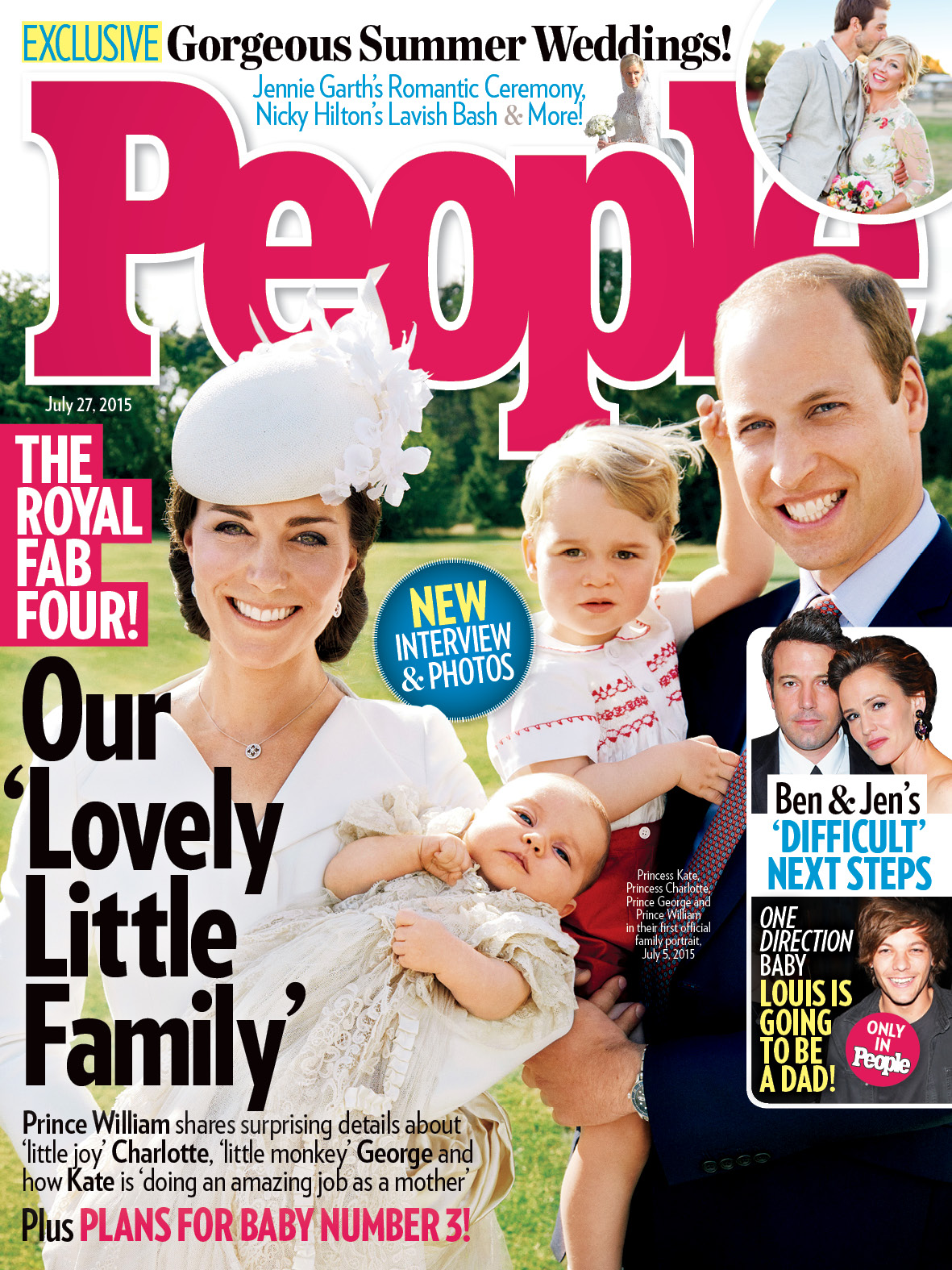
07_27_15_NO_UPC Henry Luce may have said it best: “I suggest that what we want to do is not to leave to posterity a great institution, but to leave behind a great tradition of journalism ably practiced in our time.” A noble sentiment that can be observed when one considers that the number one moneymaking magazine today is in the Time Inc. family and definitely practices that great tradition of journalism that Luce was referring to.

People magazine reaches 75 million human beings at any given moment in time and according to its editorial director, Jess Cagle, in his editor’s letter from the August 3rd issue, they’re working hard to get it right. An example of that “getting it right” was offered up in Jess Cagle’s letter and substantiates Henry Luce’s hopes for the future of his company when it came to the ethics and morals of good journalism.

When Caitlyn Jenner was still Bruce and made the announcement that she was transitioning once and for all from male to female, People made the confirmation that it was indeed happening and then posted it on People.com. And while People certainly wasn’t the first to report on the Jenner transition, millions of users clicked on the story for one defining reason: If People said it was true, you knew it was true.

And that is the power behind the People brand: the careful, meticulous and respectful coverage of stories such as Caitlyn Jenner’s. Or the thoughtful way the magazine reported on the story of Brittany Maynard and her struggles with terminal brain cancer and the right-to-die issue.

I spoke with Jess recently and we talked about the foundation of People and the ethical treatment of both its audience and its subject matter. Jess described People’s focus as a magazine that reports on ordinary people doing extraordinary things and extraordinary people doing ordinary things. And I think he hit the nail on the head with that characterization.

People continues to maintain and gain its audience’s trust and also the trust of the people it covers by never forgetting that while they may cover Hollywood, celebrities and other “people” who entertain us and baffle us and inspire us; the powers-that-be that bring us the stories, photographs and videos are journalists first and mindblowers second. They want to wow us and cause those jaw-dropping moments, but only if they’re done with taste, truth and respectful reporting.

And the man that leads that auspicious team and oversees the equally popular Entertainment Weekly group is as passionate about journalistic ethics as he is a good story.

So, grab your favorite piece of furniture and relax for 15 minutes or so and enjoy the Mr. Magazine™ conversation with Jess Cagle, Editorial Director, People magazine. It will definitely be worth your while.

But first, the sound-bites:


jess cagle On why People magazine is still the number one moneymaking magazine today and a highly respected source for accuracy and truth when it comes to celebrity coverage:
People magazine was launched 41 years ago covering celebrities and I think that it was the first magazine that was largely focused on celebrities that took a journalistic approach to it. In other words, it adhered to all of the ethical, journalistic rules and regulations like any good journalist would follow and applied it to celebrities. And I think that we’ve never gotten away from that and that is essentially the reason why the notion among our audience and the public in general is that it’s not true until People magazine says it. So, it starts with journalism and that’s how the magazine was founded; that was in its DNA.

On the fact that Time Inc.’s Henry Luce started the company with brands like Time, Life and Sports Illustrated, but ironically it’s the celebrity-focused People magazine that after 41 years of being published remains the number one moneymaker out of the much esteemed Time Inc. roster:
Henry Luce was very good at giving the audience what they wanted and then giving the audience more of what they wanted. And I think what we saw was that there was an appetite for celebrity coverage, and not just celebrity coverage. A lot of media outlets over the years had covered celebrities and Hollywood, but People magazine certainly brought a journalistic rigor to that coverage that was new.

On how it makes him feel when he thinks about the fact that People magazine reaches 75 million people at any given moment: If you really thought about the 75 million that we reach, it would be paralyzing because there’s no way to make them all happy all of the time. And you have many different age groups, from retirees to millennials, within your readership.

On whether he can ever imagine a day when People magazine doesn’t have a print component:
Sure, I can imagine it. Media has changed so much in the past 10 years that to say that you can’t ever imagine a certain scenario is crazy, because anything is possible. And the way people consume media now is so different than it was 10 years ago and ten years from now it’ll be so different than it is today. But looking at the realities of the business now, I can’t imagine the print product going away in the next 10 years, because frankly too many people want it and it makes too much money.

On why the People logo was recently upsized and now has the largest logo on the newsstands:
Well, because People is the Coca-Cola and the Superman of media brands. So, to make it bigger and more noticeable seemed to make sense to me. It’s so recognizable and people have such an emotional connection to that logo that I just thought let’s make it as big as we can.

On what he thinks it will take to keep media reporters from lumping People magazine into the same category as the tabloids: Well again, I’m a realist, so I realize that many of the topics we cover are going to be the same topics that the trashy tabloids are covering. I’m aware that the same top stories on People.com are sometimes going to be the same top stories on trashy websites. So, I understand why sometimes we get lumped together, but our audience knows the difference in People and the rest. They know it’s a very differentiated product and Hollywood and Washington and everywhere that we draw our subjects from; they also know that People is a differentiated product.

On combining People.com and Entertainment Weekly.com and whether or not the People brand is trying to be “the” entertainment news website:
The websites remain distinct; we have combined them into a network, called the People/Entertainment Weekly Network, in order to create the number one digital news, entertainment news site. And that really helps us with advertisers. If we can sell those two sites together and maximize advertising opportunities and maximize the reach of both of those brands, because they’re both enormous, that really helps us. From the consumer standpoint, they remain very, very different brands. They offer very, very different things.

On whether celebrities covet being on the cover of People or they’re scared of being featured on the cover:
If we call a celebrity and say congratulations, you’re going to be on the cover of “The World’s Most Beautiful” issue or congratulations, you’re “The Sexiest Man Alive,” or you know what, you have a new movie coming out and we’d love to do a cover story on you; they get very excited by that.

On how his role as an editorial director has changed since the days before the digital/mobile explosion: I would say the biggest challenge has been, just when we thought we had figured out how to maintain a print product and a website, suddenly everybody started moving to mobile. Now we have to really think about how our product looks on mobile and how we serve our audience on those little devices.

On the hefty subscription price People’s readers are willing to pay and what that says about the audience: I run two brands, one is Entertainment Weekly and one is People; a subscription to People is much more expensive than EW or Time or any other magazine in the world, not just Time Inc. It’s the reason that I made the logo bigger. People’s audience, which is very big, has an emotional connection to that brand that they don’t have with a lot of other brands. You don’t have that many people with as deep an emotional connection as we have with People magazine. And I don’t say that because I’m trying to sell you People; I say that because it’s just the truth. It’s why people are willing to pay that kind of money for it.

On what makes him click and tick and motivates him to get out of bed in the mornings: What do I look forward to? Honestly, what gets me out of bed is the fact that this job is not going to do itself. And also – how many people are lucky enough to have this job? It sounds a bit Pollyannaish, but I never want to stop being excited, because how many people get to choose the cover of People magazine and work on Entertainment Weekly? I grew up with both of these brands, so I personally have a deep, emotional connection to both of them.

On what keeps him up at night:
When it comes down to what keeps me up at night, I think it’d have to be; am I a good enough leader for this organization or how could I lead it better? That’s a better way to articulate it. How can I get all of these different people doing all of these different things and creating all of this content in all of its different forms to work together and create an environment where people are working at the top of their game and able to work at the top of their game? That’s the toughest part of the job.
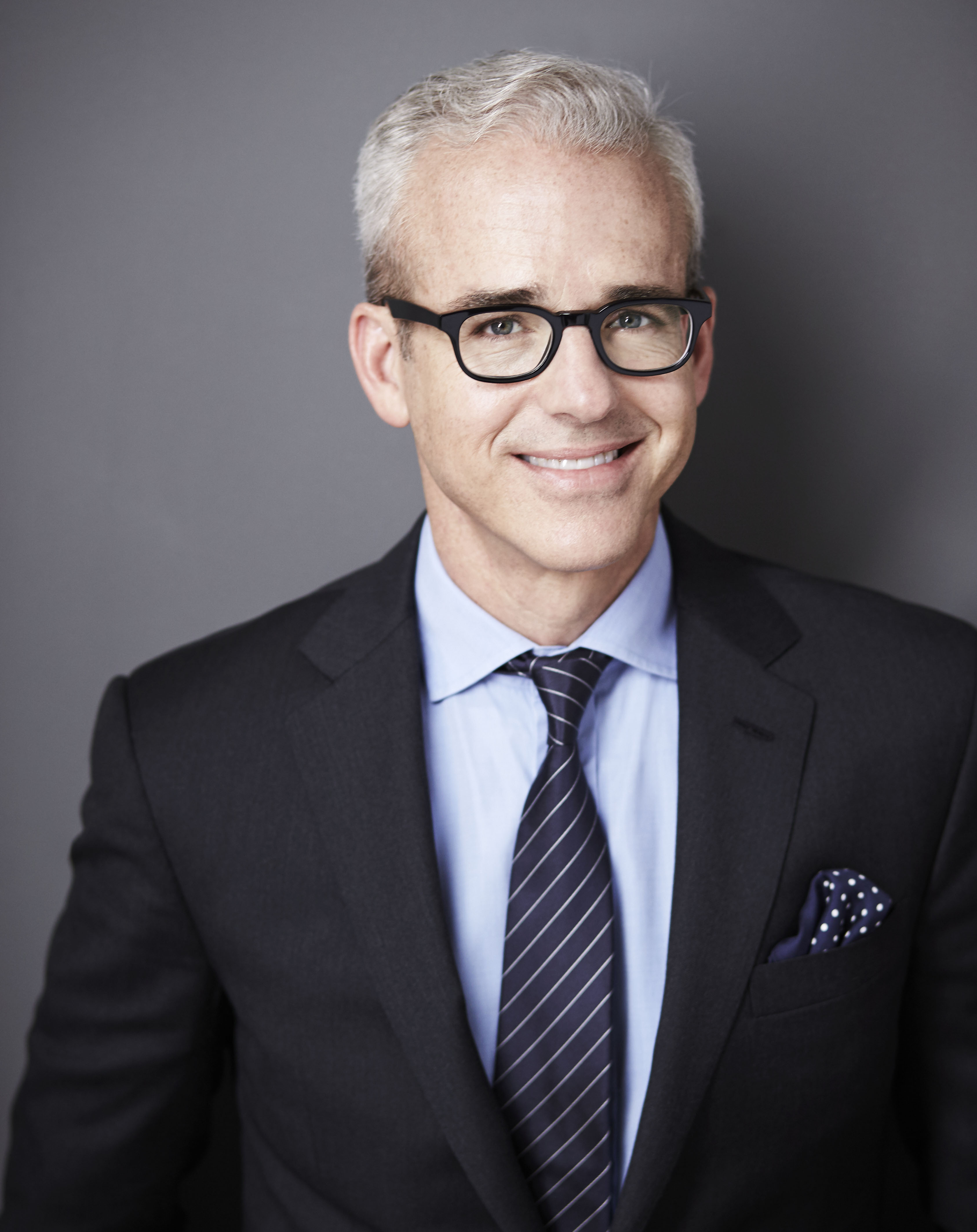
And now the lightly edited transcription of the Mr. Magazine™ conversation with Jess Cagle, Editorial Director, People magazine.

Samir Husni: People is the number one moneymaking magazine, from circulation and from advertising; it’s by far the most successful magazine in the world. But by the same token, you edit the magazine in a completely different way. In your roadmap editorial in the August 3rd issue, you talk about compassion for the people, respect for the audience and compassion for the people you cover. Tell me a little about how you do that; what makes you and People magazine different than anything else out there?
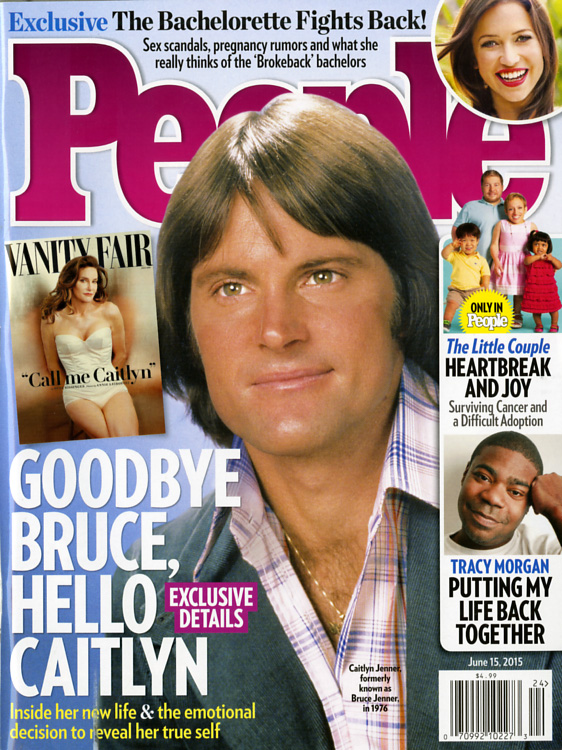
People 3-1 Jess Cagle: People magazine was launched 41 years ago covering celebrities and I think that it was the first magazine that was largely focused on celebrities that took a journalistic approach to it. In other words, it adhered to all of the ethical, journalistic rules and regulations like any good journalist would follow and applied it to celebrities.

And I think that we’ve never gotten away from that and that is essentially the reason why the notion among our audience and the public in general is that it’s not true until People magazine says it. So, it starts with journalism and that’s how the magazine was founded; that was in its DNA.

Over the years we have set ourselves apart from the tabloids by being fair primarily; I can tell you that not every story we do about a celebrity makes them happy. I feel quite certain that Blake Shelton and Miranda Lambert would rather us not do a cover on their divorce; however, I think they also know and the audience too, that we’re going to cover it fairly. We’re not going to tell you things that aren’t true; we’re not going to take cheap shots. So, I think it’s the idea of being fair.

The other component of all this is People has unparalleled access to Hollywood. And so by adhering to journalistic rules and by being fair, they trust us. And that’s really important to us. We want to tell our readers the truth, as much truth as we know at any given time. That trust is very important. The trust of the Hollywood community is also very important to us.

Trust from our audience and trust from the people we cover are keys to our success. It’s not that we just want to do the right thing, which is great and we do, but it’s also that maintaining trust among the audience and the subjects we cover is also really good business for us as well.

Samir Husni: It’s ironic; when I was going to school in the late 70s and People was just a five-year-old magazine, one of my professors quoted someone saying that when People was first launched Henry Luce was probably turning in his grave. These are the same people who bring you TIME and Life and Sports Illustrated and now they’re doing this? But now 41 years later, People magazine probably saved Time Inc.

Jess Cagle: Yes, it is funny, but I don’t know that Henry Luce would have been turning in his grave. Henry Luce was very good at giving the audience what they wanted and then giving the audience more of what they wanted. And I think what we saw was that there was an appetite for celebrity coverage, and not just celebrity coverage. A lot of media outlets over the years had covered celebrities and Hollywood, but People magazine certainly brought a journalistic rigor to that coverage that was new.

But what People really did and its real impact on the world was that we were a news magazine that focused on the personalities behind the news. A news magazine that focused on the newsmakers; so whether we’re covering Hollywood, sports or politics; we’re showing our subjects in a way that enables the reader to have a personal connection with them.

If we do a story on a politician, we’re going to show the politician at home with the kids and we’re going to talk about their hobbies and very often you can learn a lot more about a public figure, whether they’re a sports star, politician or a Hollywood actor, by knowing some of those personal details rather than hearing them talk about policy and things like that.

Samir Husni: People has an audience of 75 million, between print and digital and social media; when you wake up in the morning and you think about the fact that you’re reaching 75 million people at any given moment, how does that make you feel?

Jess Cagle: Well, first, I think about what I’m going to have for lunch that day. (Laughs)

Samir Husni: (Laughs too).

Jess Cagle: If you really thought about the 75 million that we reach, it would be paralyzing because there’s no way to make them all happy all of the time. And you have many different age groups, from retirees to millennials, within your readership.

What informs what we do are really three things. And the first thing is the founding editor of People, Dick Stolley, said that People is about ordinary people doing extraordinary things, and extraordinary people doing ordinary things. And that still informs all of our content.

What I’ve worked on a lot since I’ve been here is to think hard about what exactly is the job of our content and the job of our content is to entertain, inspire and empower our audience. Now, you can’t do all three of those things with every single story, but you can do at least one of those things with every story, whether it’s a Tweet or it’s a post on the site or whether it’s a cover story.

And then you think we want to cover ordinary people doing extraordinary things and extraordinary people doing ordinary things; that’s the mission, but the job is to entertain, inspire and empower. And the greatest asset, our most valuable and precious asset, is the trust that we’ve gained with our audience. And the trust that you’ve gained with your audience translates into trust from your subjects and trust from advertisers.

Samir Husni: You mentioned in your roadmap editorial all the hard work that goes into preparing the 52 issues of the print edition and the breaking news stories on People.com; can you ever imagine a day when People magazine doesn’t have a print component, when everything is digital-only and the new half-hour news program maybe becoming a 24 hour channel?

Jess Cagle: Sure, I can imagine it. Media has changed so much in the past 10 years that to say that you can’t ever imagine a certain scenario is crazy, because anything is possible. And the way people consume media now is so different than it was 10 years ago and ten years from now it’ll be so different than it is today. The site won’t look the same, our video won’t look the same and our print product won’t look the same. It’s all changing and we just have to keep our ear to the ground and evolve with it.

But looking at the realities of the business now, I can’t imagine the print product going away in the next 10 years, because frankly too many people want it and it makes too much money. It’s such a gigantic part of our business and just based on consumer demand; I don’t think it’s going to go away.

Now, I’m also a realist and I know that the digital space, that’s where we’re looking to maintain and stabilize print as much as we can. But we know that digital, particularly video, is the most exciting area of growth for us. So, we’re doing all we can to grow those parts of the business. We think a lot about that as a huge part of what we do every day.

Samir Husni: Can you tell me why you recently changed the logo of People, not really changed it, but upsized the name “People” and now it’s the biggest logo of any magazine on the newsstands?
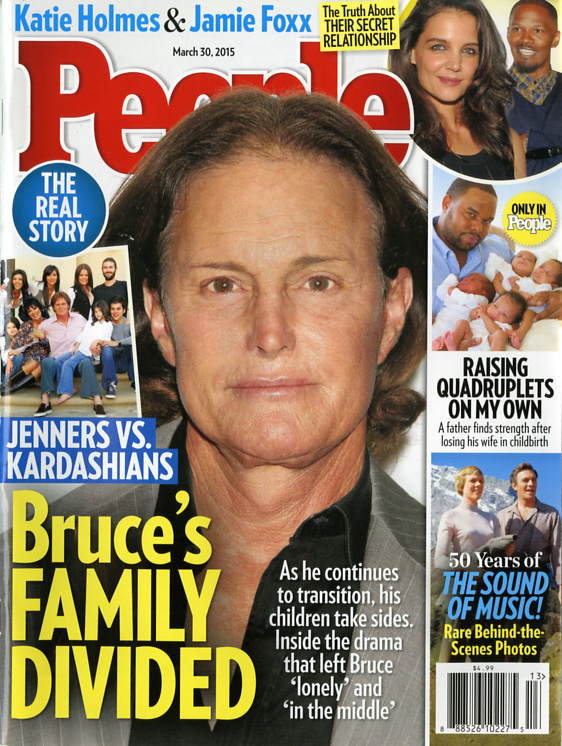
People 4-2 Jess Cagle: Well, because People is the Coca-Cola and the Superman of media brands. So, to make it bigger and more noticeable seemed to make sense to me. It’s so recognizable and people have such an emotional connection to that logo that I just thought let’s make it as big as we can. People love it and it for some reason it makes them feel good. I think that Americans are born knowing what People magazine is.

Samir Husni: One of the biggest struggles that I’m sure you face is with media reporters. They always try to put People magazine in the same genre as celebrity magazines.

Jess Cagle: Right – as the tabloids.

Samir Husni: What can you do to show or to educate media people, more than your audience, more than the Hollywood personalities; what is needed for those media-type people to see that People magazine is not just a celebrity magazine?

Jess Cagle: Well again, I’m a realist, so I realize that many of the topics we cover are going to be the same topics that the trashy tabloids are covering. I’m aware that the same top stories on People.com are sometimes going to be the same top stories on trashy websites.

So, I understand why sometimes we get lumped together, but our audience knows the difference in People and the rest. They know it’s a very differentiated product and Hollywood and Washington and everywhere that we draw our subjects from; they also know that People is a differentiated product. The president of the United States does an interview with People magazine every year, so they understand that it’s different.

Advertisers really understand that it’s different. So, when people in the media lump us into those groups or I hear my mom’s friends lump us into those categories, I sort of get it and I tell myself that where it counts, people know that we’re differentiated.

And it doesn’t bother me if I hear someone say that People magazine is their guilty pleasure. I actually take it as a compliment because you know what; it’s light-hearted and fun. We do take on some very serious stories and that is part of the appeal, but we get people into the tent with these very great, light-hearted stories. People love us so much for that.

We were able to put Brittany Maynard on the cover and really go head-on with the right-to-die issue. And I don’t know if you remember, but Brittany Maynard was a 29-year-old woman who was terminally ill and was moving with her husband and her family to Oregon, which is a right-to-die state. We did a cover on Brittany Maynard last year when she made the decision to die; People did that as a cover. And then we did a cover on her husband after her death. And people expect those stories from People; it wasn’t a crazy thing that we did. They love us; we make them feel good and that kind of story is empowering to them. And it’s inspiring to them.

Samir Husni: Recently you combined People.com and Entertainment Weekly.com (EW.com). Is People the brand, trying to be “the” digital entertainment news website?

Jess Cagle: EW.com and People.com; it’s important to me to make sure that those two websites and those two brands in general remain very, very distinct brands. And they are. People is very personality-focused; EW is very product-focused. On People we might do a cover story on Channing Tatum and his marriage and talk about all of that; whereas at EW they would do a cover story on Magic Mike and the whole cast and talk about the production of the film and the phenomenon. So, the two will go at the same area of subjects very, very differently.

The websites remain distinct; we have combined them into a network, called the People/Entertainment Weekly Network, in order to create the number one digital news, entertainment news site. And that really helps us with advertisers. If we can sell those two sites together and maximize advertising opportunities and maximize the reach of both of those brands, because they’re both enormous, that really helps us. From the consumer standpoint, they remain very, very different brands. They offer very, very different things.

Samir Husni: Back to the magazine; this year we’ve had so many different stories about the power of a magazine cover. We’ve seen one magazine cover after another gain so much publicity and generate so much social media. Matt Bean, whom you know, spoke on a panel with me in Cannes last year in France and he mentioned that when he was editor of Entertainment Weekly nobody ever called him to be on the website, but everybody called wanting to be on the cover of the magazine. Do you have a similar experience? Do people covet being on the cover of People or are they scared of being featured on the cover?

Jess Cagle: (Laughs) I think it depends. If you’ve done something wrong and People calls, well… the guy that killed the lion last week would probably be scared to be on the cover of People.

If we call a celebrity and say congratulations, you’re going to be on the cover of “The World’s Most Beautiful” issue or congratulations, you’re “The Sexiest Man Alive,” or you know what, you have a new movie coming out and we’d love to do a cover story on you; they get very excited by that. With EW, the studios and the networks are very excited to get their TV shows and their films on the cover of EW.

The interesting thing is that while cover sales have certainly gone down and there’s been a lot of migration to the Internet in media consumption as we all know, to the people that we cover, the cover of People magazine and the cover of Entertainment Weekly are incredibly important and they are as important as they ever were, particularly in the case of People. You still have hundreds of thousands of people, sometimes a million people, buying the cover every week.
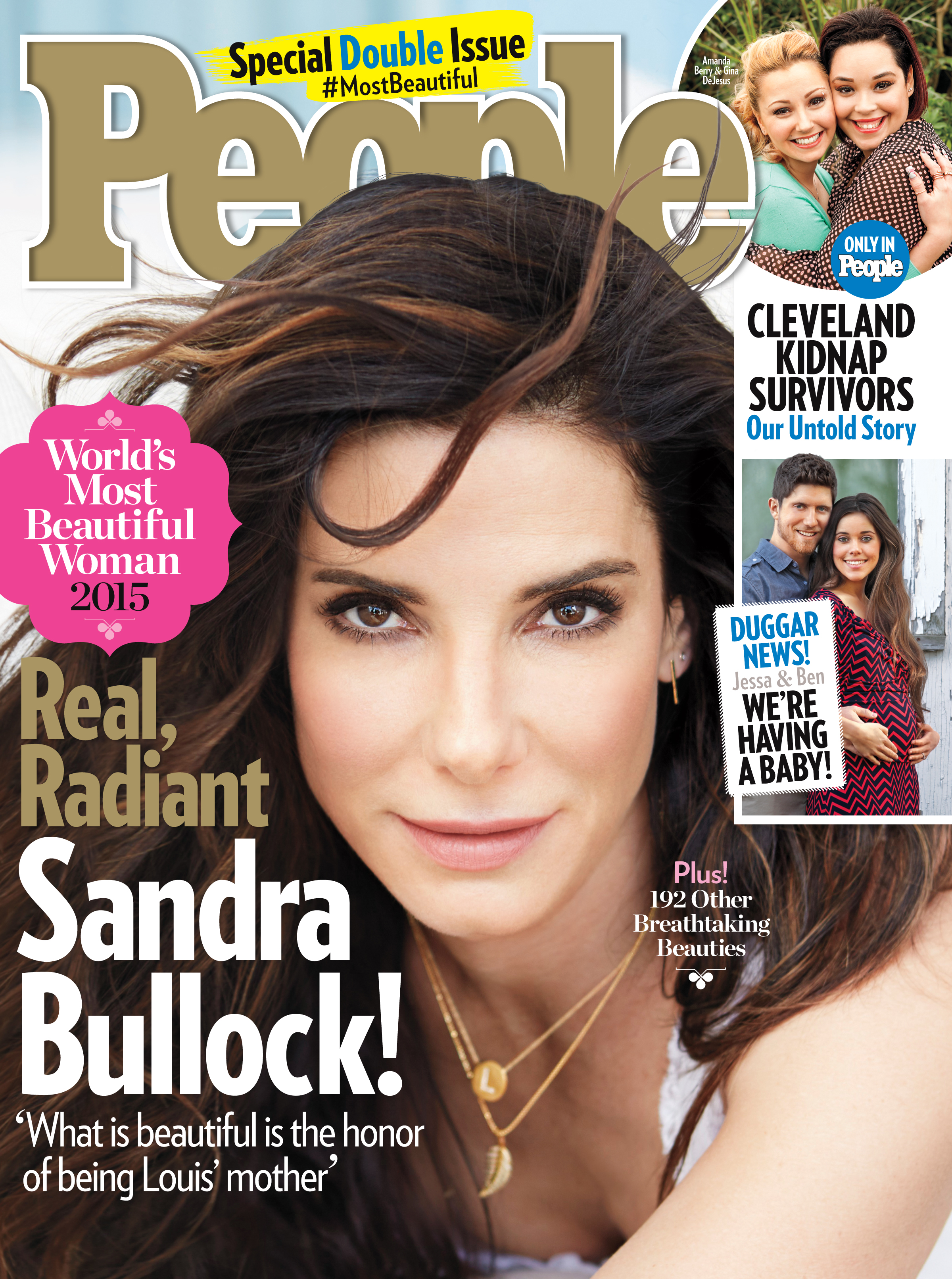
WMBCvr_noUPC But the reason Hollywood likes the cover of People and EW is, besides the fact that a lot of people do buy the cover; a lot of people get it in their homes. And a lot of people see that cover in the doctor’s office and everywhere else. So, the cover is important to them for exposure and affirmation, if it’s a positive cover. It’s very important real estate, in the same reason that it’s still very important real estate to me. I would say the two things that I spend the biggest chunk of my time on are the People cover, as well as ramping up video production on our websites. Those are the two most important things to me.

But the reason that I’m so focused on the cover, and I’m focused as well on the Entertainment Weekly cover, although Henry Goldblatt does a fantastic job and he’s the editor of EW, that’s your billboard every single week, that’s what people are seeing. And they’re seeing that cover and forming an opinion of the brand. The cover is very important.

Samir Husni: And you being the guardian of the brand; how did things change for you from the days before 2007 and after 2007, before the mobile/digital explosion and after it? As an editorial director now; is your job still the same?

Jess Cagle: I would say the biggest challenge has been, just when we thought we had figured out how to maintain a print product and a website, suddenly everybody started moving to mobile. Now we have to really think about how our product looks on mobile and how we serve our audience on those little devices.

More importantly, and this we haven’t quite figured out, but we will; how do you monetize the content? You know monetizing your content in a magazine is easy, you print out the magazine and people subscribe to it; people buy newsstand copies and you sell advertising.

In the digital space it’s a lot different. People are used to getting that for free. So, how do we monetize the website; how do we monetize mobile and how do we monetize video? And I would say that has been the biggest shift for me in the last couple of years is – OK, I know how to run a brand with two platforms, digital and print; the next thing is how do we translate that to mobile? And then also; how do we tell stories in video? The trick to video, where a lot of audiences are going and advertisers are going, that’s a very different skillset from doing a magazine or a website. We’re not TV producers, we write words and show pictures; that’s what we know how to do.

But it’s exciting though to first of all think about that, but we’re also onboarding the right kind of talent to create video for us. And it’s exciting to work with those kinds of people as well.

Samir Husni: The subscription to People magazine is a hefty price; it’s around $99 for the introductory subscription for a year and then another $139 to renew, while the introductory subscription for your sister publication, TIME magazine is around $20. What does that say about the audience; we’re willing to pay $100 for People, but we’re not willing to pay more than $20 for TIME. Does that say something about the audience out there?

Jess Cagle: I run two brands, one is Entertainment Weekly and one is People; a subscription to People is much more expensive than EW or TIME or any other magazine in the world, not just Time Inc. It’s the reason that I made the logo bigger. People’s audience, which is very big, has an emotional connection to that brand that they don’t have with a lot of other brands. You don’t have that many people with as deep an emotional connection as we have with People magazine. And I don’t say that because I’m trying to sell you People; I say that because it’s just the truth. It’s why people are willing to pay that kind of money for it.

They really treasure their time with People. For a lot of the audience, getting that People magazine in their mailbox signifies the end of the week. It is their break. It is their time and their escape.

I had the same connection to People when I was growing up as a little kid in Texas; it was my window to the world. I read about how these other people lived their lives and realized that anything was possible. And then there’s always some juicy crime stories and things like that. (Laughs)

Samir Husni: (Laughs too).

Jess Cagle: It’s interesting; you compare TIME and People as if maybe it means the world is silly and doesn’t care about important issues; I don’t think that’s true. I think there’s just a deep resonate, emotional connection to People that other media brands don’t have. That is the big strength of People, I would say. As I map out the future of People, I think about the emotional connection people have to the brand.

As I map out the future of Entertainment Weekly, I look at EW’s singular power to curate content for its audience. And its audience is smaller, but its audience is very passionate about what EW covers. And very passionate about what EW says about something. There’s a constant dialogue and debate that the EW audience has with it. And probably EW’s advantage is that it has the greatest access to Hollywood that any brand in the world has, because EW covers people’s product and if you’re an actor or a musician or a movie producer, you want to be in that brand and you want that brand on your side; you want to support that brand because it covers what’s important to you also.

I look at both brands and their different strengths, but it is interesting; I think that the price of People reflects the emotional connection that people have to it.

Samir Husni: What makes you click and tick and motivates you to get out of bed in the mornings and say it’s going to be a great day?

Jess Cagle: What do I look forward to? Honestly, what gets me out of bed is the fact that this job is not going to do itself. And also – how many people are lucky enough to have this job? It sounds a bit Pollyannaish, but I never want to stop being excited, because how many people get to choose the cover of People magazine and work on Entertainment Weekly? I grew up with both of these brands, so I personally have a deep, emotional connection to both of them. And the idea that I get to work on them every day is incredible. Also, there are always new challenges and things to solve.

Samir Husni: My typical last question; what keeps you up at night?

Jess Cagle: Actually, I will tell you that nothing keeps me up at night, I sleep really well. But on those nights I do have a little trouble getting to sleep; it always varies as to why. Usually the things that worry you most are how are you going to get all of these different people to work together to do all of these things? We work in an incredibly matrixed organization and how do you make sure that you’re being clear enough for everyone?

When it comes down to what keeps me up at night, I think it’d have to be; am I a good enough leader for this organization or how could I lead it better? That’s a better way to articulate it. How can I get all of these different people doing all of these different things and creating all of this content in all of its different forms to work together and create an environment where people are working at the top of their game and able to work at the top of their game? That’s the toughest part of the job.

Samir Husni: Thank you.

h1

Ebony Magazine: Keeping The Unique Black Experience Alive. The Mr. Magazine™ Interview With Kierna Mayo, Editor-In-Chief.

August 6, 2015

“I believe that magazines will never die. I really do believe that. I think that they will transform and continue to evolve, as they have forever. I believe that black magazines will continue. I think that we will continue to have unique challenges, but also unique successes. Again, as long as the black experience remains a distinctly unique one from the “American” experience, per se, there will be a market for a particular lens. There will be a market for a particular perspective. And I think when you understand that; you understand that black magazines will always have a certain impact. And as you said, the reason there was such a reaction (to the August cover of Ebony) may very well be in part due to the fact that this statement was made on paper.” Kierna Mayo

0815_Cover.indd Founded by John H. Johnson, Ebony has been an active voice for the African-American community for 70 years. The cover has featured prominent African-American celebrities and politicians, ranging from Diana Ross to President Obama, and the magazine itself has always sought to present a positive and life-affirming view for its readers.

Never has that inspiring outlook and voice of positivity been more needed than today. Ebony has been a beacon of faith in the African-American community.

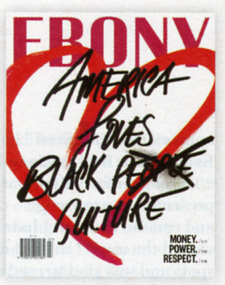
The cover of the recent issue of Ebony is one that is both powerful, and in some cases, controversial. “America Loves Black People Culture,” with the word “Culture” superimposed over the word “People.” I spoke with Ebony’s new Editor-In-Chief, Kierna Mayo, recently about the statement the cover made and also about the magazine in general. In her editor’s letter of the same issue, Kierna talks about the fact that many white people are fascinated and in love with the black way of life, its culture and uniqueness, but not necessarily black people. It’s a thought-provoking and dynamic observation. One that is both timely and provocative, considering the horrendous tragedies that have occurred recently in the United States involving black Americans.

Kierna Mayo is a woman who is very familiar with Ebony, having grown up with the magazine long before she ever started working for it. She is proud of John Johnson’s vision and determined to always “do what feels right” to her, in order to carry it on into Ebony’s future. She holds herself accountable as editor-in-chief for that responsibility and is not a woman who takes her duties lightly. Her strong and positive voice is in tune with the magazine and reflects its mission succinctly.

I hope you enjoy this extremely timely and riveting Mr. Magazine™ interview with a woman who believes that Ebony is one reason America still needs black magazines. The unique black experience is something that Ebony reflects naturally, always has and always will.

But first, the sound-bites:


Kierna Mayo On the reaction of readers to the powerful cover image gracing the current issue of Ebony:
The reaction has been pretty universal, I would say; particularly from black people. They feel very understood, because there are many sentiments that we share as African-Americans, some of them quite frankly are just unspoken because they’re so commonplace. And I think this might be one of them. There’s just universality in the statement in terms of the black experience. I think most people understand it to be explicitly true.

On having two different covers for the current issue, one on the inside of the magazine and that made a slightly different statement from the cover actually used: There was quite a bit of conversation about which way to go from the onset. Initially, we wanted to do an illustration for this cover, a literal illustration of a white family depicting what we meant by the appreciation of black culture but maybe not so much black people. We went around and around about it; we had lots of debates. The cover you saw on the inside was actually one of the versions. I don’t think I saw it as choosing one that was softer at the time; the language was exactly the same.

On whether she feels there’s still a need for a black magazine in today’s marketplace:
Yes, I would have to say so. To the extent that there’s always going to be something very specific and unique about the black experience in America. I think black people deserve, and quite frankly, need a place that is exclusive to them. We have this dual identity and as Americans that built this country, many Americans have a hyphen; many Americans have a dual identity, but not many other groups have literally built this country from the ground up in the way African-Americans have.

On how she foresees John Johnson’s vision, which began 70 years before, moving into the future: When I think about my role or more importantly my responsibility now as an editor as it relates to Mr. Johnson’s brave vision, I think the most important thing that I can do is remain authentic. If I can do what I believe or lead the team and lead the magazine in the direction that I truly believe is healthy, progressive and timely for black people, then I’m doing the right thing.

On the major stumbling block that she faces:
One major stumbling block, and I don’t know that it’s unique to Ebony; it’s a stumbling block that many magazines have today, and that is newsstand. Newsstand numbers dwindle across the board and folks have their fingers crossed every time they put out a book. I don’t think that we are any different. We hope that we resonate; we hope that we are worth your time and money in a world that begins with www.

On whether she believes there’s a future for print, especially when it comes to magazines specifically for black people:
I do; I do. I believe that magazines will never die. I really do believe that. I think that they will transform and continue to evolve, as they have forever. I believe that black magazines will continue. I think that we will continue to have unique challenges, but also unique successes. Again, as long as the black experience remains a distinctly unique one from the “American” experience, per se, there will be a market for a particular lens. There will be a market for a particular perspective.

On the difference for specifically-black magazines when it comes to the targeted content they once had, compared to the broad coverage black people get today throughout all magazines:
It’s not just the change in the content for black magazines; it’s the fact that what has historically been content for black magazines is now content for so many other magazines. That’s really the game changer and what is markedly different from when I was editor-in-chief of Honey magazine. We understood black celebrities, in some sense, to be “ours,” simply because there was so much neglect when it came to the coverage of black stars. The field was wide opened and the stars were ours for the picking.

On the possibility that Jet magazine’s demise in print could have been due to black celebrities being covered by all genres’ of magazines today:
I’m not sure that I agree that a black celebrity publication couldn’t survive. I still believe that perspective is a very important thing. And the way you do things; the language you use and the images you use; it’s all a pie. There are many, many elements that go into making a pie work, rise, be delicious, or fall flat.

On what makes her tick and click and motivates her to get out of bed in the mornings:
Aside from my children; I have three sons and one daughter; a lot of my friends will remark about how my career is just aligned with my true path, because people who have known me for a very long time know that I have had a magazine obsession since my teenaged years. And I’ve always hoarded magazines and collected them.

On whether she felt any competition when First Lady Michelle Obama recently guest edited More Magazine:
No, I didn’t think that at all. Again, the First Lady is covered everywhere. And it’s just a very unique time, because the First Lady just happens to be a black person. It doesn’t shock me at all at this point, and I don’t see coverage of the First Lady or the president in any way competitive with us. It’s a matter of fact that the country would have to cover the leadership of the country. But I think Michelle Obama herself happens to be a brilliant woman, so kudos to More for scoring that one. It was great.

On anything else that she’d like to add:
Yes; you’d asked before about what some of our challenges were and I really need to say to my audience that subscriptions are critical. Supporting Ebony magazine is really an important thing. No, that information is traded online and you can see the cover; I’ve gotten tens of thousands of likes and clicks and all of that’s lovely, but if you don’t go out and support the magazine, it’ll be very hard for us to continue.

On what keeps her up at night:
Again, I think it’s similar to what wakes me up in the morning. I try to have a life that’s lived in relative balance, relative with a capital “R.” I am up at night when I’m concerned about an idea or I am concerned about a human related to an idea. (Laughs)

And now the lightly edited transcript of the Mr. Magazine™ conversation with Kierna Mayo, Editor-In-Chief, Ebony magazine.

Samir Husni: What has been the reaction so far to this change from a celebrity cover to the powerful cover image used for the current issue of Ebony?

Kierna Mayo: The reaction has been pretty universal, I would say; particularly from black people. They feel very understood, because there are many sentiments that we share as African-Americans, some of them quite frankly are just unspoken because they’re so commonplace. And I think this might be one of them. There’s just universality in the statement in terms of the black experience. I think most people understand it to be explicitly true.

There was a reaction that was quite favorable because people felt heard, seen and very much like, that is so cool Ebony. People think it’s something new, but actually for us at Ebony this is something that the magazine has done over the course of 70 years. There have been several covers that have been very explicit, very direct, without relying on a celebrity in any way, and they have been statement-making as well.

ebony2-2 Samir Husni: You put another version of the cover inside the magazine alongside your letter from the editor, with a slightly different statement. What made you decide to soften the cover you used a little bit from that one?

Kierna Mayo: You saw it as softening it? I tried to capture a little bit about this in the editor’s letter. There was quite a bit of conversation about which way to go from the onset. Initially, we wanted to do an illustration for this cover, a literal illustration of a white family depicting what we meant by the appreciation of black culture but maybe not so much black people.

We went around and around about it; we had lots of debates. The cover you saw on the inside was actually one of the versions. I don’t think I saw it as choosing one that was softer at the time; the language was exactly the same. But there are different impulses that are created with a big red heart that we wanted to move away from, so six or half dozen; maybe that one would have been equally as received, maybe not. You never know when you’re creating magazines. It’s one part science and the other part gut.

Samir Husni: Is there still a need for a black magazine in today’s marketplace, today’s society; in today’s United States?

Kierna Mayo: Yes, I would have to say so. To the extent that there’s always going to be something very specific and unique about the black experience in America. I think black people deserve, and quite frankly, need a place that is exclusive to them. We have this dual identity and as Americans that built this country, many Americans have a hyphen; many Americans have a dual identity, but not many other groups have literally built this country from the ground up in the way African-Americans have.

So, our American-ness is very real, and yes; it is a shared thing, and yes; there are many other places that we indulge and grab information from in ways that other Americans do, but that said, we have such a unique history here. And our lens is something that is special. And there are many times in many spaces in our lives as black people in this country that we don’t feel safe enough or clear enough to express the world through our lens, but when there’s a conversation with black people for black people by black people, there’s a paradigm shift that most African-Americans can appreciate and I think it’s why Ebony has been around for 70 years.

Samir Husni: As you assume your new role as editor-in-chief and continue to be in charge of the digital side; how do you foresee that vision that John Johnson began 70 years ago moving into the future?

Kierna Mayo: Just a quick clarification; I don’t run digital day-to-day anymore. There is a new person on the digital side, although I do still play a digital role. But John Johnson’s vision is something that impacted me quite frankly, long before I got to Ebony magazine. Like most black people in this country, especially if you’re over a certain age, the black experience is very tied to the Ebony experience. It’s been around literally my entire life.

When I think about my role or more importantly my responsibility now as an editor as it relates to Mr. Johnson’s brave vision, I think the most important thing that I can do is remain authentic. If I can do what I believe or lead the team and lead the magazine in the direction that I truly believe is healthy, progressive and timely for black people, then I’m doing the right thing.

And that, I believe, is what the Ebony magic has always been. And there have been times when we’ve nailed it and there have been times when we’ve missed. But show me a magazine that doesn’t have that story to its history.

In terms of being a maverick and true to what black people need, when black people need it; that is what Ebony does. And I’m here for it.

Samir Husni: What do you think will be the major stumbling block facing you and how are you going to overcome it?

Kierna Mayo: One major stumbling block, and I don’t know that it’s unique to Ebony; it’s a stumbling block that many magazines have today, and that is newsstand. Newsstand numbers dwindle across the board and folks have their fingers crossed every time they put out a book. I don’t think that we are any different. We hope that we resonate; we hope that we are worth your time and money in a world that begins with “www.”

But I’m very faithful that what we do is something that black people understand to be specifically for them. And I’m trying not to live by fear, but to really take a deep breath and have some faith and do what we all think collectively is the right thing to do.

Samir Husni: And do you think if you had used the current powerful cover of Ebony on the web instead of in print it would have had the same impact? Do you think that we have a future for print, specifically for black magazines?

Kierna Mayo: I do; I do. I believe that magazines will never die. I really do believe that. I think that they will transform and continue to evolve, as they have forever. I believe that black magazines will continue. I think that we will continue to have unique challenges, but also unique successes. Again, as long as the black experience remains a distinctly unique one from the “American” experience, per se, there will be a market for a particular lens. There will be a market for a particular perspective. And I think when you understand that; you understand that black magazines will always have a certain impact. And as you said, the reason there was such a reaction may very well be in part due to the fact that this statement was made on paper.

Now there are people who have seen it first online, meaning that they’ve seen the image online, but they understand that it is actually on paper.

Samir Husni: You were the founding editor of Honey magazine and now you’re the editor-in-chief of Ebony and you and I have talked about the fact that many types of magazines are featuring black people on their covers these days. How do you feel that the change in the nature of the content, since your days at Honey and up until now at Ebony, is going to impact the future of black magazines?

Kierna Mayo: It’s not just the change in the content for black magazines; it’s the fact that what has historically been content for black magazines is now content for so many other magazines. That’s really the game changer and what is markedly different from when I was editor-in-chief of Honey magazine.

We understood black celebrities, in some sense, to be “ours,” simply because there was so much neglect when it came to the coverage of black stars. The field was wide opened and the stars were ours for the picking.

Now, you fight in many respects to get black stars to even commit to black publications simply because they believe they no longer “have to.”

Samir Husni: And that may be one of the reasons for the demise of the print edition of Jet, because of the fact that it was strictly celebrity-based content.

Kierna Mayo: I’m not sure that I agree that a black celebrity publication couldn’t survive. I still believe that perspective is a very important thing. And the way you do things; the language you use and the images you use; it’s all a pie. There are many, many elements that go into making a pie work, rise, be delicious, or fall flat. I’m not sure that I believe that there’s no need for it. But yes, absolutely; there’s greater competition for the celebrities themselves and there are more people covering the same stars. It’s still a very different way that I am going to cover Tina Knowles than InStyle would, quite frankly.

Samir Husni: So, are you going to lead the fight to bring Jet back?

Kierna Mayo: (Laughs).

Samir Husni: (Laughs too).

Kierna Mayo: Jet mag.com is alive and well, by the way. And there’s a lot going on with the Jet brand, so it’s not as though it has died. But it has transformed. But I do understand what you’re asking with Jet “print.” Subjectively speaking, of course, there’s a yearning to hold onto things that once were. But there have been many print magazine losses, as you know, Mr. Magazine™. (Laughs)

Samir Husni: (Laughs too).

Kierna Mayo: Some things are just part of a changing market. And we are an independent company and it made sense for us at a certain point to shift our focus in the way that we did; to move to digital in the way that we did and are continuing with Jet. It’s just a sign of the times. What can I say? Some people think it happened just because it was a celebrity magazine, but Jet was lifestyle for many years. For black people who read Jet, I don’t think they just saw it as celebrity; I think they saw it as news and information, perspective and weddings; it was the Internet, quite frankly, before there was one.

Samir Husni: What makes you tick and click and motivates you to get out of bed in the mornings and say, hey, it’s going to be a great day?

Kierna Mayo: Aside from my children; I have three sons and one daughter; a lot of my friends will remark about how my career is just aligned with my true path, because people who have known me for a very long time know that I have had a magazine obsession since my teenaged years. And I’ve always hoarded magazines and collected them. And I’ve always been able to discern where such and such magazine is in my room or wherever it might be.

To be cliché, but meaning to be, this is the air that I breathe. I’m a magazine person. So, to be invited to come back to print after many, many years in digital, is very titillating for me and it’s exciting in a pure way.

As a magazine maker I understand content. And I think that’s what gave me success on the digital side and that’s what I think will continue to give me a certain amount of success in any form of media. It really is about appreciation for the audience and understanding the medium. And magazines are truly special and I’ve spent the majority of my career crafting them in one way or another. It’s an honor. My getting up every day will never be solely about a job in terms of just a place where one goes to get a paycheck; it’s my whole life that’s in consideration when I wake up every morning and I do what feels right as long as it does feel right.

Samir Husni: When the First Lady edited More Magazine last month; it was the first time a sitting First Lady in the history of magazines, and among all of the first ladies, had edited a magazine; what was your feeling about that? Did you feel as though she was competing with you or did you say, wow, that’s great? Can you describe how you felt about More’s coup?

Kierna Mayo: No, I didn’t think that at all. Again, the First Lady is covered everywhere. And it’s just a very unique time, because the First Lady just happens to be a black person. It doesn’t shock me at all at this point, and I don’t see coverage of the First Lady or the president in any way competitive with us. It’s a matter of fact that the country would have to cover the readership of the country. But I think Michelle Obama herself happens to be a brilliant woman, so kudos to More for scoring that one. It was great.

And that’s not to say that we wouldn’t do something similar and haven’t done so in the past. We’ve had guest editors; we’ve experimented too. I think what’s exciting about what More Magazine did was the experimentation and that’s something that we definitely do at Ebony.

Samir Husni: Is there anything else that you’d like to add?

Kierna Mayo: Yes; you’d asked before about what some of our challenges were and I really need to say to my audience that subscriptions are critical. Supporting Ebony magazine is really an important thing. Now that information is traded online and you can see the cover there; I’ve gotten tens of thousands of likes and clicks and all of that’s lovely, but if you don’t go out and support the magazine, it’ll be very hard for us to continue.

So, that’s the message that I have to continue to speak to, because I understand the business of publishing and from that perspective, it is just critical that no one takes us for granted.

Samir Husni: My typical last question; what keeps you up at night?

Kierna Mayo: Again, I think it’s similar to what wakes me up in the morning. I try to have a life that’s lived in relative balance, relative with a capital “R.” I am up at night when I’m concerned about an idea or I am concerned about a human related to an idea. (Laughs)

There are different things that can keep me up at night, but more importantly I try to sleep. (Laughs) I try to sleep. It’s going to get done, as the guys in my office say: the cake is going to get baked.

Samir Husni: Thank you.
h1

July’s Magazine Launches Big, Very Big On Book-a-zines…

August 6, 2015

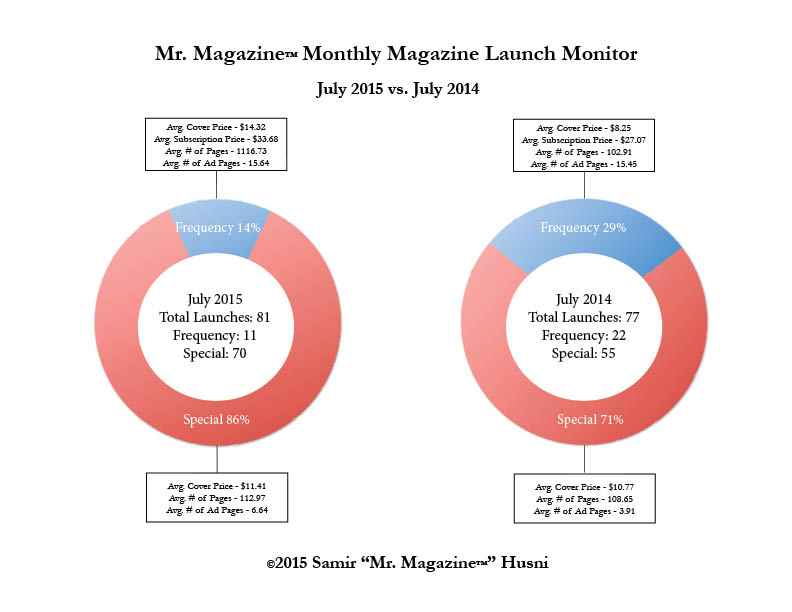
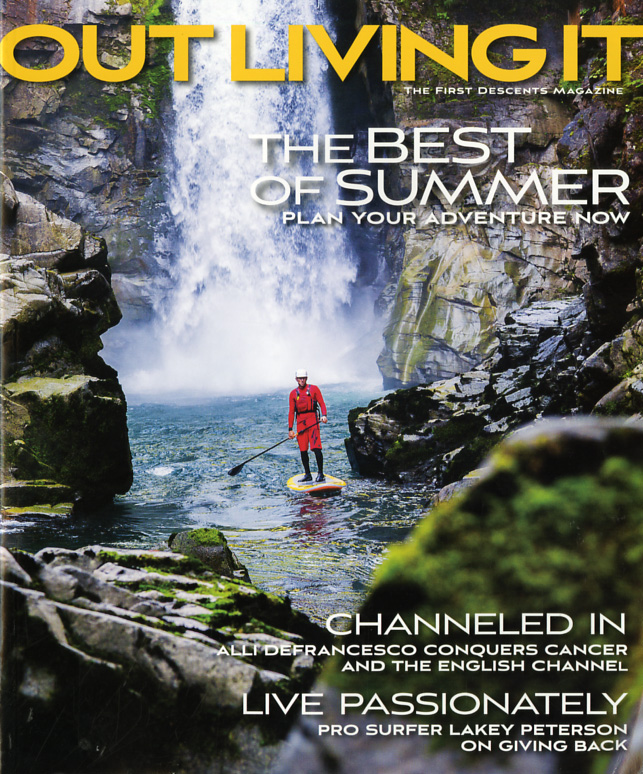
July 2015 showed strong numbers for new launches, mainly book-a-zines, with 81 titles hitting newsstands; 11 with frequency and 70 specials targeted just for our reading pleasure. Many of the new magazines are promoting the positive and trying to eliminate the negative, which in Mr. Magazine’s™ opinion, has been long overdue.

From The Netherlands’ “Remarkable” and “happinez” to First Descents’ “Out Living It,” people all over the world are putting their best foot forward and looking to the future as something bright and welcomed, rather than an unknown entity out to swallow us up in its unmitigated darkness.

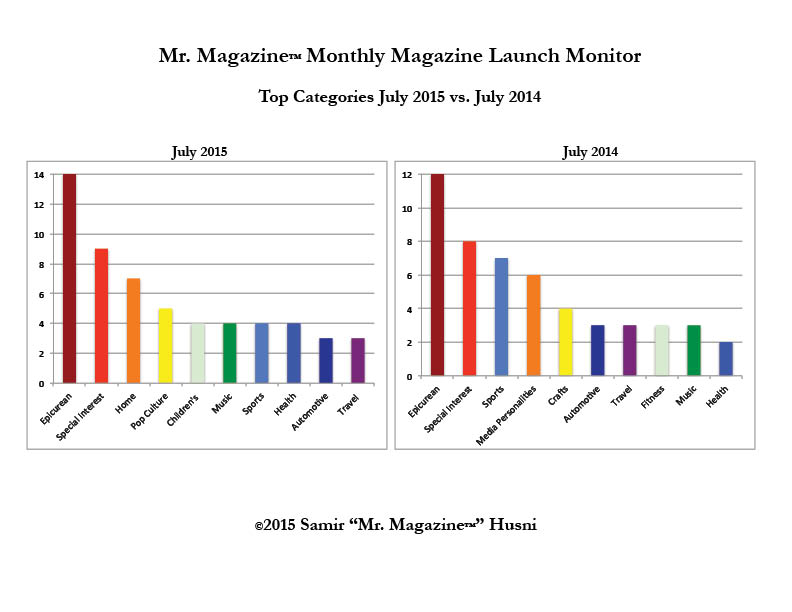
Feel free to check each and every new magazine and book-a-zine arriving on the marketplace last month. Click here to see them all. And see below the latest charts comparing July 2015 to July 2014.

Chart One: Magazine Launches July 2015 vs. July 2014
July 2015 v 2014 pie graph

Chart Two: New Magazine by Category: July 2015 vs. July 2014
July 2015 v 2014 top categories bar graph

Until next month, pick up a magazine or two and enjoy.

h1

Celebrating Ten Years of Luxe Magazine With Style And Stately Grace – The Mr. Magazine™ Interview With Pamela Jaccarino, Editor-In-Chief, Luxe Magazine

August 5, 2015

“In the day and age of “print is dead” we really feel that there’s still a place for print. I work with a group of very young editors who still love print and who still value print. We still believe that if you create something that is well done and artfully put together and you produce it with good, high-quality, there is still a place for print. Print is not dead exclamation point.” Pamela Jaccarino

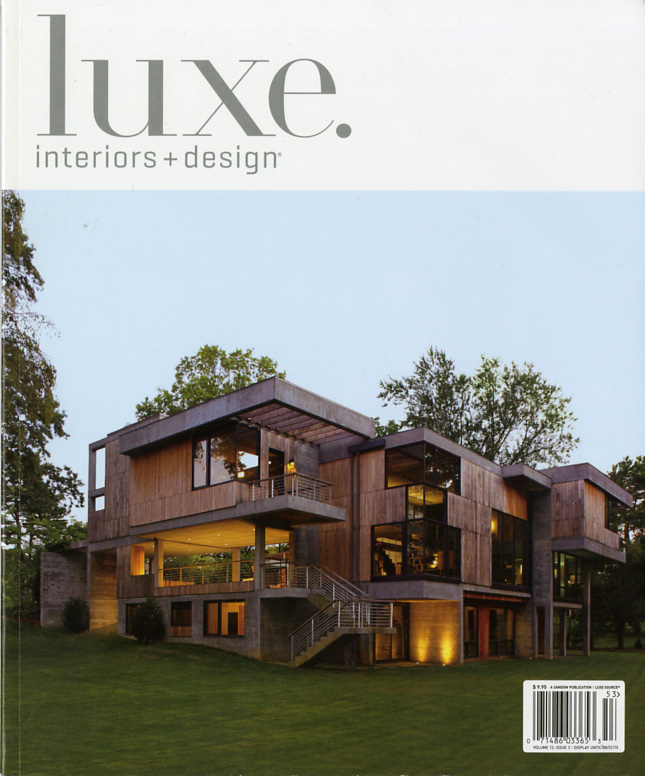
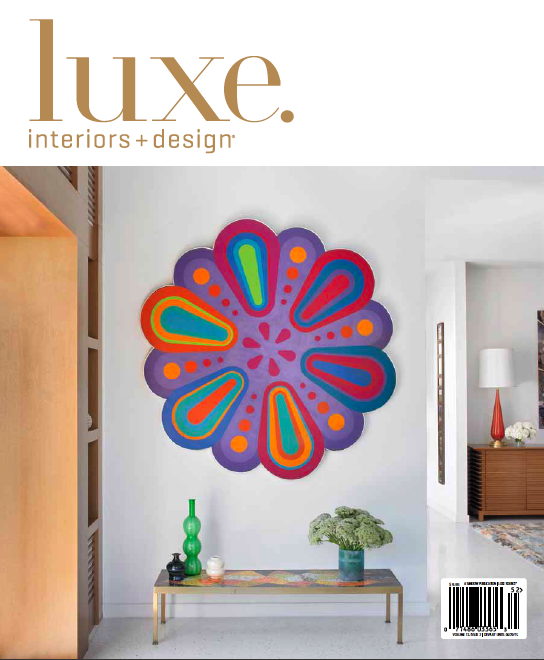
luxe-1 Imagine starting a luxury design magazine from scratch when you’re surrounded by some of the greats that have been around for decades. It’s a daunting task. But not so much when you have someone with a fiery passion and that will-to-succeed nature that drives them forward and propels the brand toward the future.

Luxe Interiors + Design is the name of the magazine and Pamela Jaccarino is its Editor-In-Chief. Pam has been with Luxe since the very beginning and is as passionate today as she was ten years ago when the brand was born. Celebrating 10 years of publishing, Luxe and Pam are certainly not resting on their laurels; not at all. The brand and its leader are pushing forward, with an eye on tomorrow and always looking for what could be new and improved about the already highly successful brand.

I spoke with Pam recently and it was a lively, energetic conversation, much like the woman herself. We discussed the regional start of Luxe and how doing things a bit differently from some of the other, more established brands, really paid off for the newer, lesser-known magazine. And we talked about the beauty of launching a new magazine in a very crowded field and the reasons it survived where others did not.

So, I hope you enjoy this Mr. Magazine™ conversation with a woman who has tapped into her own creativity to help establish a brand of luxury design that can hold its own with the big boys. Mr. Magazine™ talks to Pamela Jaccarino, Editor-In-Chief, Luxe magazine.

But first, the sound-bites:

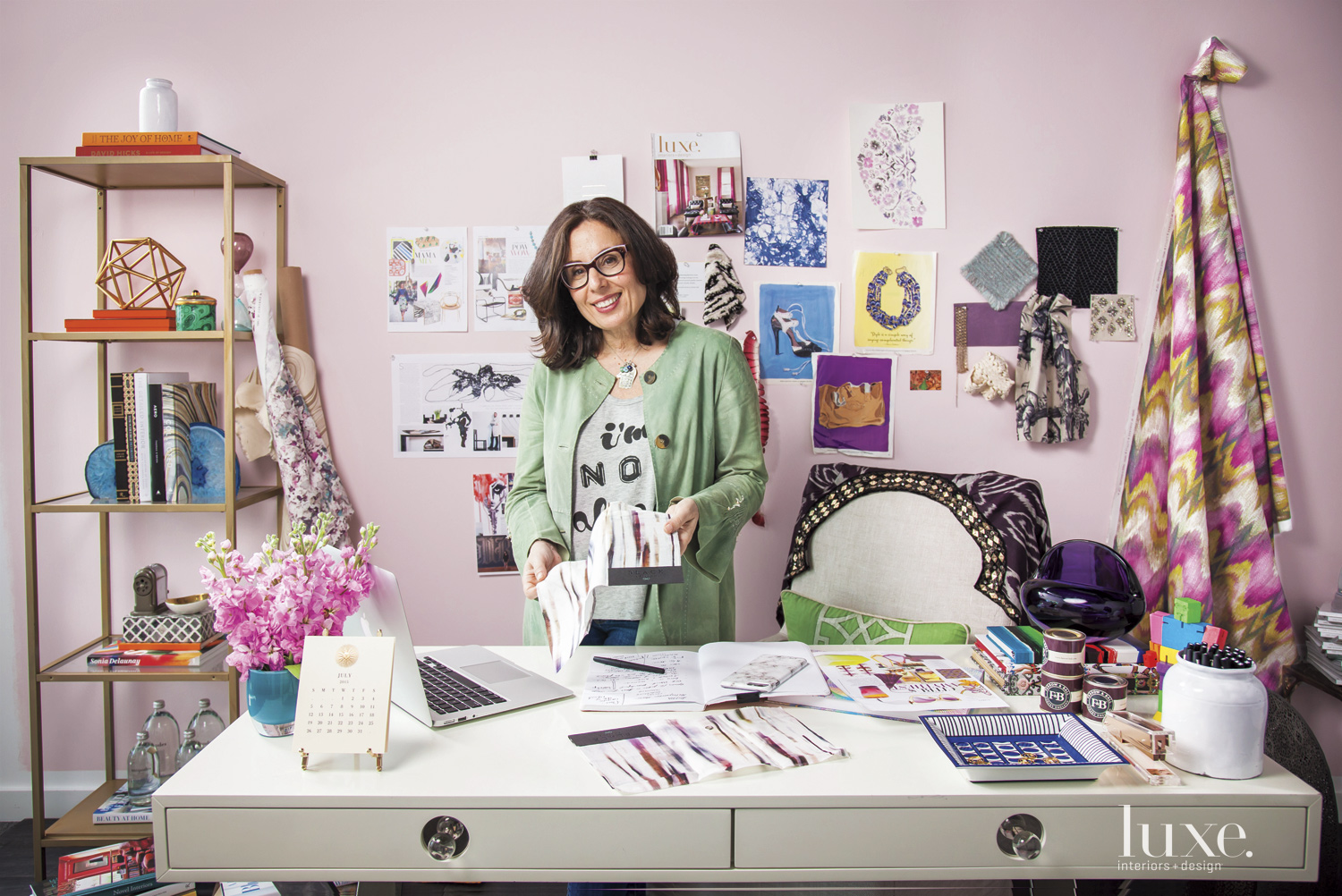
LXCOMM2_EditorLetter_Pam-Jaccarino-by-SRevell-IMG_8318 On what Luxe is doing right when it comes to its numbers; up 25% in advertising and almost 4% in circulation: We started this magazine 10 years ago as a quarterly magazine and over those last 10 years we’ve really built the brand. Ten years ago, we were an unknown entity within the design world; since then we have grown the business by creating magazines regionally that spoke to the regional market, in terms of architecture and design. We always had this intention of growing this brand to be a national magazine brand and we’ve achieved that 10 years later.

On why Luxe is unique from the rest of the shelter market:
We are a very unique brand within the shelter market. And the reason for that is we’ve approached the design world a little bit differently. And typically with design magazines, you have national shelter magazines and you have a few regional shelter magazines. We made the decision to cover both local and national design. Our whole premise and philosophy is to really speak to the engaged design aficionado in the market where they live and we also cover what’s happening with national design trends.

On why she thinks there’s a deep interest in print, from both designers and readers, that still exists in today’s digital age: I believe that when you’re covering luxury, which is what we do; we absolutely cover luxury; you can call us elitist… (Laughs) but we’re covering luxury design; we go to a high-end leader who is engaged in luxury design. And when you’re engaged in luxury, I think that you want things that are tactile. Are people engaged in design digitally? Absolutely – 100%. But we firmly believe that when you’re putting out a luxury magazine, these designers really feel valued having their work in print. It means a lot to them.

On how the national book is different from the regional books:
That’s a great question. What is our national edition? Obviously, we have grown this brand region by region. The national edition serves any market that we don’t serve regionally. So, for example, if I’m living in the Bay area and I want to subscribe to Luxe Interiors + Design because I love the magazine and there’s not a Luxe San Francisco; what issue am I going to get? So, we created what we call the National Book. And the National Book serves any region in the country where we do not have a dedicated book.

On how her role as editor-in-chief has changed over the last 10 years:
I think an editor-in-chief has to do much more than simply work on the magazine. You do need to be consumed with the brand as a whole and in making sure that everything is holistic from A to Z, and that includes events that are done; your digital entity and all of your social media. So, I think the editor-in-chief’s role has gone from a somewhat narrower focus to having to oversee a much broader operation.

On why the magazine began in Colorado:
The company was started in South Florida, not exactly the publishing capital of the world, (Laughs) although I am a New Yorker. And we started the magazine in Colorado, because a lot of the homes that we were covering were these incredible second-homes; it’s a great second-home market.

On what motivates her to get out of bed each morning:
One thing that absolutely does it for me is the team that I get to work with each and every day. I have huge respect for the editors that work on the team. We don’t really have any divas; I’m not a diva. (Laughs)

On whether any of her paintings have been featured in the magazine:
I was an art major when I was younger and gave it up for journalism. And I’ve just started repainting again this year, really and truly because I’m completely inspired by all of these creative people that I’m surrounded by; all of the designers and architects.

On the major stumbling block that she’s had to face and how she overcame it:
We had a lot of the regional markets up and doing very well and then it was time to look at the national trends and as I said, I love to fly under the radar, but we were sort of an unknown entity. We would go into market and, for example, we launched in New York about three or four years ago, and nobody knew who we were. I think it’s very easy for an editor-in-chief to step in for a magazine that’s established and has been around for 20 or so years, but it’s very difficult to launch a magazine and have it be this successful in such a short period of time.

On anything else she’d like to add: In the day and age of “print is dead” we really feel that there’s still a place for print. I work with a group of very young editors who still love print and who still value print.

On what keeps her up at night:
You know something; nothing keeps me up at night. I sleep like a baby at night. And honestly, I have to work so hard during the daytime and be so focused, that for me, it’s like when you plug your phone in at night to recharge your battery; I go to bed and fall right asleep and it’s like I’m recharging my battery.

And now the lightly edited transcript of the Mr. Magazine™ conversation with Pamela Jaccarino, Editor-In-Chief, Luxe magazine.

Samir Husni: You’re celebrating the 10th anniversary of Luxe and while a lot of other magazines are cutting their frequency or their circulation, your magazine is up 25% in terms of advertising and up almost 4% in circulation over last year. What are you doing so right that some are doing so wrong?

Picture 11 Pamela Jaccarino: We started this magazine 10 years ago as a quarterly magazine and over those last 10 years we’ve really built the brand. Ten years ago, we were an unknown entity within the design world; since then we have grown the business by creating magazines regionally that spoke to the regional market, in terms of architecture and design. We always had this intention of growing this brand to be a national magazine brand and we’ve achieved that 10 years later.

When we approached our 10 year anniversary we still wanted to grow the business on the business side. And our reader is very engaged and quite frankly, it was sort of difficult to report on what’s happening in the world of luxury design when you’re moving quarterly. It’s much slower in terms of the pacing and how you can tell stories.

So, we wanted to service our reader and give them more. They love the magazine and have really responded to the brand. We’re a consumer magazine and we also have a tremendous amount of design trade that follows our book and we wanted to give them more Luxe to love, if you will. (Laughs)

Samir Husni: (Laughs too) Why do you think you’re bucking the trends? As I mentioned earlier, other magazines are cutting their frequency; other magazines are down in terms of advertising and circulation. Why do you think you’re different from the rest of the shelter market?

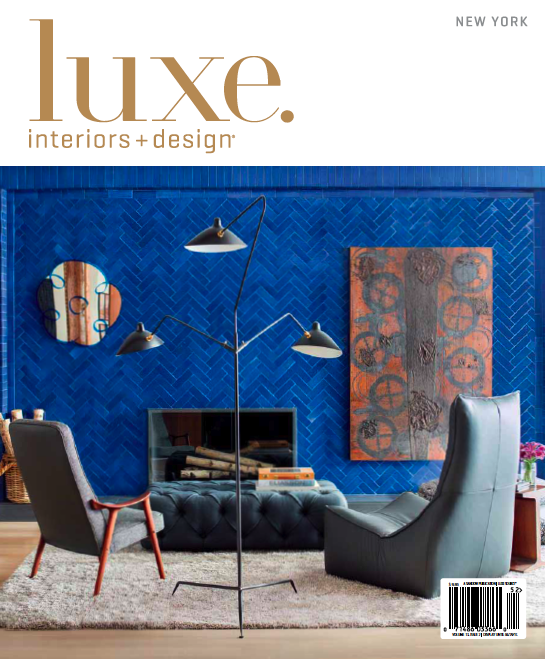
Pamela Jaccarino: Why are we different – that’s a great question. We are a very unique brand within the shelter market. And the reason for that is we’ve approached the design world a little bit differently. And typically with design magazines, you have national shelter magazines and you have a few regional shelter magazines. We made the decision to cover both local and national design. Our whole premise and philosophy is to really speak to the engaged design aficionado in the market where they live and we also cover what’s happening with national design trends.

We get very hyperlocal and what we report on; let’s say in our Miami book or in our New York or Chicago book, is pertinent to the area. The consumer wants to be inspired and they also want to know who the best designers and architects are right there in their region. It’s interesting when you look at design; there are a lot of elements that translate across the board nationally.

But when you’re designing or building a home in say, San Francisco versus one in Colorado, there are so many different elements that go into it. The topography is different, the landscape is different; what you’re doing in those homes also might be different, one might be a vacation home. So, you really want to hire someone, for the most part, who is a local architect, a local builder and a local designer.

And that’s our point of differentiation. We believe that home is your greatest luxury and we want to inspire our readers and direct them to incredible national design resources and brands, furniture and everything to fill their home. But when it comes time to design a room or to add something on or build a home, they’re probably going to be using a local design professional. And that’s sort of our differential. In the editorial well, for example, we’re only talking about local projects; that’s what we feature. In Chicago, we’re going to be featuring the best work done by local designers, architects and builders. And that changes from region to region.

In the front of the book, of course, we’re covering everything that’s happening on the national design trends. And the biggest difference is that if you pick up Elle Décor or say, House Beautiful; they’re really focused on national design as a whole. And we take a little bit of a different philosophy. Yes, you can get your inspiration anywhere, and we certainly provide a lot of inspiration to our readers, of course, but we really want to give voice to all of the great talent out there. There are so many incredible architects and designers working in this industry who really don’t have a way to get their work published in print. And we value that, and they value that. That’s something that Luxe provides. We really dig deeply and are very entrenched in the design industry in these markets.

I have editors across the country that work with the best architectural photographers and some of the best design editors in the country. And the fact is we publish more work than any other national design magazine out there. And, as I said; we’re very entrenched in the industry that we love.

Samir Husni: Why do you think an interest in print, both from the designers and the readers, still exists in our digital age?

Picture 10 Pamela Jaccarino: I believe that when you’re covering luxury, which is what we do; we absolutely cover luxury; you can call us elitist… (Laughs) but we’re covering luxury design; we go to a high-end leader who is engaged in luxury design. And when you’re engaged in luxury, I think that you want things that are tactile. I believe firmly that when you’re engaged in things that relate to design: fabric, furniture, wallpaper and architecture; you want to touch these things; you want to sit on these things.

Are people engaged in design digitally? Absolutely – 100%. But we firmly believe that when you’re putting out a luxury magazine, these designers really feel valued having their work in print. It means a lot to them.

We spend a tremendous amount of money on production values and I think that’s also what sets us apart, by the way. We’re very fortunate to work for a private company run by Adam Sandow; he believes in investing back into his product. That’s what we’re tasked with creating. So, we spend a lot of money in hiring stylists and in architectural photographers and quite frankly my responsibility is really to the design professional who is entrusting us to tell the story about this home that they have created and that they have put a lot of love, time and energy into, when putting together their wonderful creative design team that we’re writing about. Usually it’s the architect, the interior designer and the builder.

And I really take that responsibility very seriously in terms of ensuring that the presentation of their creative work to our reader is executed at a very high level. So, we obsess over things like paper stock or the angle of a home, a landscape, and how is everything going to look in our pages. My team and I put a lot of love, time and energy into those features.

Samir Husni: How is the national edition going to be different than the regionals?

Pamela Jaccarino: That’s a great question. What is our national edition? Obviously, we have grown this brand region by region. The national edition serves any market that we don’t serve regionally. So, for example, if I’m living in the Bay area and I want to subscribe to Luxe Interiors + Design because I love the magazine and there’s not a Luxe San Francisco; what issue am I going to get? So, we created what we call the National Book. And the National Book serves any region in the country where we do not have a dedicated book.

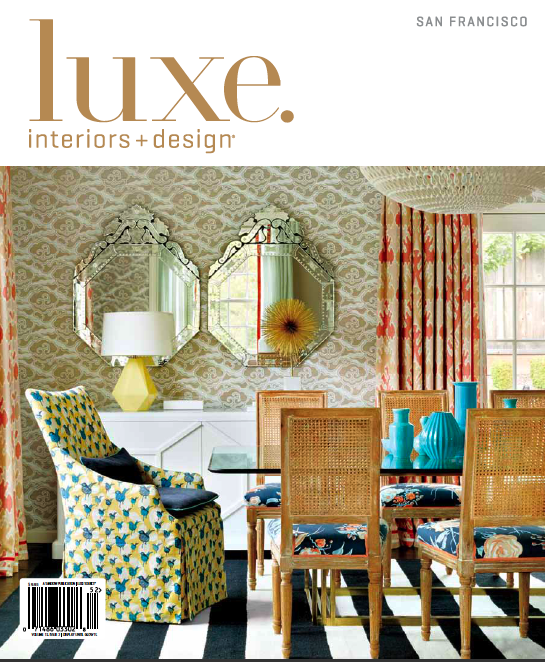
Incidentally, we had such great demand from San Francisco for our book; they fell in love with our book that we did decide to create a Luxe San Francisco. We have an editor there that oversees making sure that we get great projects in it and superb photographs and that they’re well-written. We also have a team that works on the national trends, which is shared content that runs across the board for every book that we produce.


Samir Husni: You’ve been with Luxe since its very beginning; you’re the founding editor of the magazine. How has your job as an editor changed over the last decade? The editor before digital and now the editor after digital; how has your role changed with the innovations?

Pamela Jaccarino: I have a very deep belief in terms of the editor-in-chief’s role and obviously I have quite a large team; I have 20 people. I think an editor-in-chief has to do much more than simply work on the magazine. You do need to be consumed with the brand as a whole and in making sure that everything is holistic from A to Z, and that includes events that are done; your digital entity and all of your social media. So, I think the editor-in-chief’s role has gone from a somewhat narrower focus to having to oversee a much broader operation.

And I think that it’s great. I’m a very overly-ambitious person. I always have been. And I’m someone who is sort of humble and quiet and I like to fly under the radar. But I also like to take over the world. (Laughs)

So, in terms of me personally; we started as a very small start-up and we didn’t have a big team; I had to work on every single facet that an editor-in-chief would have to do. And as the company and the brand have grown, a lot of my job is to make sure that we have the very best team that we can. I have the most amazing creative team in the industry. We very much collaborate and my job is to inspire and motivate them and make sure that everything, from the magazine to the site to social media and everything that we do in terms of our big signature events, really speaks to what the brand is about, which is luxury, home and design.

Picture 9 We also have a responsibility to serve our very tight community of designers. And even though we’re absolutely a consumer magazine, the design community is very important to us. It’s what we’re reporting on. And that has been something that has grown every time we open into another market. It’s very important that we get to know the designers; that’s a very important part of what I do.

As editor-in-chief, I’m sort of a maestro leader; I’m ensuring that all the pages look great and that we put out a brand that people are very engaged with and that we continue to do that.

We recently did a big redesign of the magazine and I really enjoyed doing it, but it was something that took a lot of time, but it was a labor of love. Again, what was on my mind was: how is the reader going to respond to this? And then taking what we’d done over the last few years and ensuring that the quality was even greater. I think that’s what print magazines have to do these days; you have to provide a publication that people are going to want to hold onto. We’ve always taken the philosophy that the book should be evergreen.

We do report on national trends and that’s something that’s been a bit tricky as we’ve gone from being a quarterly book to a book that comes out six times per year. How do you maintain covering what’s happening in design, while also putting out a publication that people are going to want to hold onto and dog-ear the pages? I think people do still dog-ear pages.

Samir Husni: You mentioned being evergreen; why start in Colorado? If you can recall; why was Colorado chosen as the beginning point for the magazine?

Pamela Jaccarino: The company was started in South Florida, not exactly the publishing capital of the world, (Laughs) although I am a New Yorker. And we started the magazine in Colorado, because a lot of the homes that we were covering were these incredible second-homes; it’s a great second-home market.

The topography and the landscape are beautiful. It’s inspiring and honestly; when we started, we found the magic team. We found a publisher out there who really had a passion for this and that was something that really fueled us as we were a very small group working on tight deadlines, with limited resources. We needed to find what we call a “Sandow” person. There are people that have been working for the company for a very long period of time; I’m one of them, and there’s a bit of a magic formula, but you have to have someone who is really passionate about what they’re doing and is ready to work hard and really cares about the quality of what we’re doing. I look for that in everyone I hire. It’s someone who thinks about the reader and the industry that we’re serving.

So, Colorado just sort of clicked, even though I know it’s sort of an uncharacteristic place to launch a magazine. But I love the fact that we run a little bit counter to what the industry is doing. I think that’s also something that’s embedded in the culture here and it’s embedded into our amazing visionary CEO, Adam Sandow. It’s not always the best thing to be looking at what everyone else is doing. Why don’t you do things a little bit differently and maybe put a different spin on things? And that’s the way that we’ve always operated and quite frankly, I like that. I like to do things the breakthrough way, rather than following along with the trends.

Samir Husni: What makes you click and tick and motivates you to get out of bed each morning and say it’s going to be a great day?

Pamela Jaccarino: One thing that absolutely does it for me is the team that I get to work with each and every day. I have huge respect for the editors that work on the team. We don’t really have any divas; I’m not a diva. (Laughs)

That wakes me up and gets me out of bed. Plus, I love to tackle a project and I love to try and solve problems. I also absolutely love to go on photo shoots. I have an amazing job and I’m very grateful for what I get to do every day. I’m a creative person; I’m an artist; I paint and draw. I find an incredible amount of inspiration from going out to the Hamptons and scouting a beautiful house with a designer and having them tell me the story of the homeowner and why they bought this or that piece of art and how they came up with the color scheme for a certain room, and then working with our photography editor or our photography director to map out a photo shoot.

I have a job where no day is the same; it never gets boring. I’ve been with this company for 13 years and with this brand for 10 and there’s always something to solve and I always feel as though I have to keep proving myself and getting better. I’m not much of a rest-on-my-laurels type of person; I never have been and I never will be. I also never want to be. (Laughs)

I think that editors-in chiefs also need to be businesspeople; I love business. I always have loved business. There are just so many facets in what I get to do every day. There’s the creative part; the collaborative part, and there’s the business part. And I love the company that I work for. I have a tremendous amount of respect for Adam Sandow and for the leadership that he’s put together in this company. I’m happy every day that I wake up.

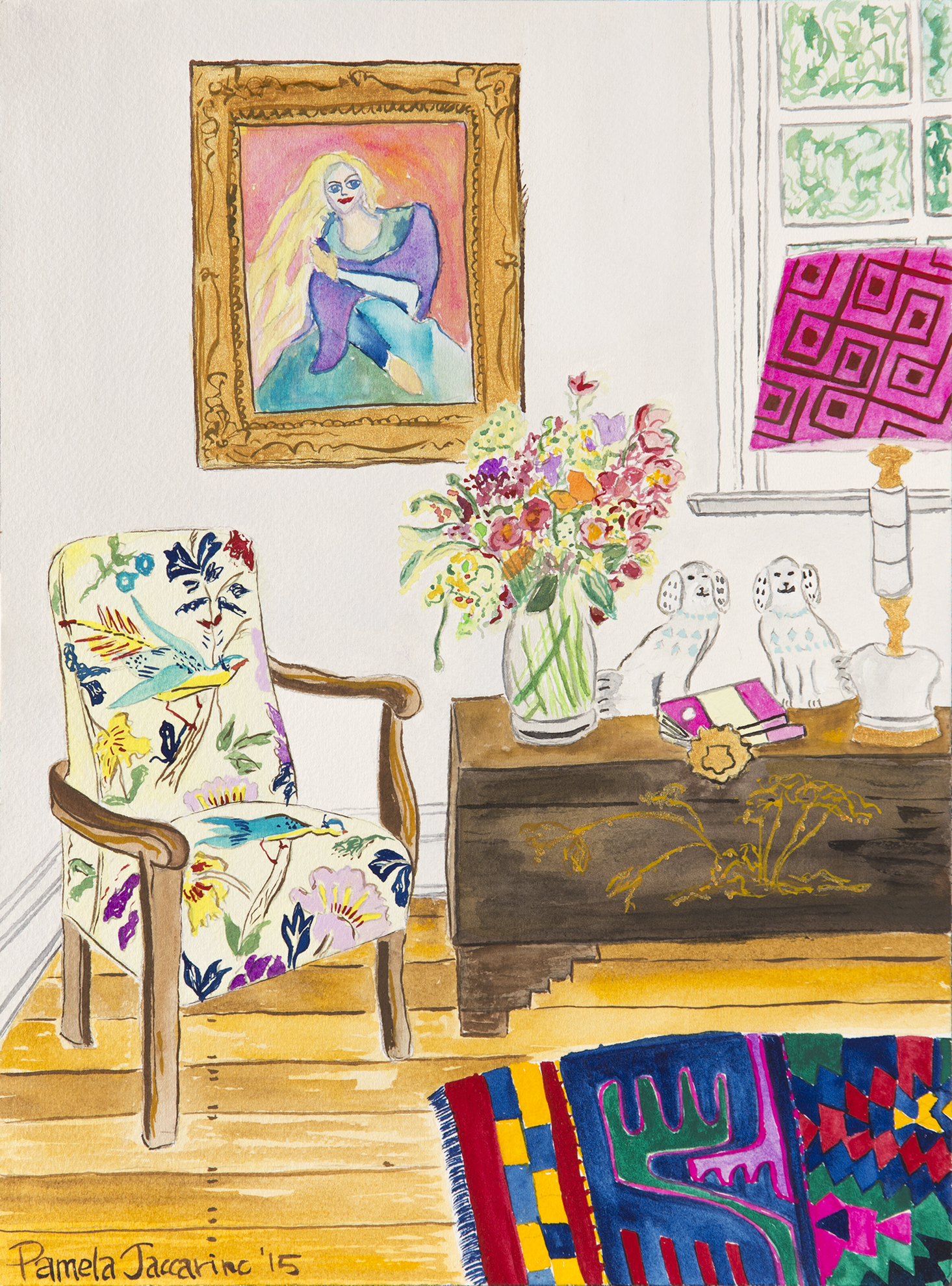
Exclusive to Mr. Magazine™: A painting by Pamela Jaccarino

Exclusive to Mr. Magazine™: A painting by Pamela Jaccarino

Samir Husni: Have any of your paintings been featured in the magazine?

Pamela Jaccarino: I was an art major when I was younger and gave it up for journalism. And I’ve just started repainting again this year, really and truly because I’m completely inspired by all of these creative people that I’m surrounded by; all of the designers and architects. I’ve very quiet about my painting; I do post a few things on Instagram and people have told me recently that they would like to buy some of my work, but it’s just really a hobby for me right now. I’ll never quit my day job. (Laughs)

Samir Husni: You mentioned that you love tackling problems and trying to creatively solve them; what has been a major stumbling block in your career that you’ve had to face and how did you overcome it?

Pamela Jaccarino: I think it’s been about five years ago. It’s so funny, you lose track of time sometimes as an editor-in-chief, by the way. Your brain has to be working two months out and then you have to go in reverse. (Laughs)

But I would say probably about five years ago. We had a lot of the regional markets up and doing very well and then it was time to look at the national trends and as I said, I love to fly under the radar, but we were sort of an unknown entity. We would go into market and, for example, we launched in New York about three or four years ago, and nobody knew who we were. I think it’s very easy for an editor-in-chief to step in for a magazine that’s established and has been around for 20 or so years, but it’s very difficult to launch a magazine and have it be this successful in such a short period of time.

So, that was a big challenge and stumbling block and something that I had to overcome. I didn’t come from the design industry; I worked in the luxury goods industry. And that was tough for us as a brand and tough for me as an editor-in-chief to establish this unknown entity in New York and among many of the national brands that were already established. House Beautiful is 100-and-something-years-old; Arch Digest has been around for a long time. These other competitive-set magazines have been around for a very long time and are household names. That was something that was a big challenge for us.

Samir Husni: How were you able to overcome that challenge?

Pamela Jaccarino: I immersed myself in the industry. You have to take an interest; you really have to take an interest in what you’re reporting on. And I did. I got to know a lot of designers and they became friends and I had dinners and cocktail parties. I just got out there and asked questions and I hired smart people. We just got on with it.

And I’m a very curious person by nature; I love to tell stories; I love to hear what people are doing. And then it just became my job to interpret what people were doing and I had a great team who could also interpret it. I understood quality and I asked a lot of questions. I would show people what we were doing and I would say: please don’t tell me that you like what we’re doing; tell me what we could be doing better. Tell me how we can improve. And I think that that was something that helped me learn a lot. I never liked it when people would say: I love what you’re doing. I’d say, really? Tell me something that we could do a little differently.

It’s just little things like that you do and having a great team always helps. And I continue to do that every day, by the way. I don’t believe in any editor-in-chief thinking that things could be easy. It’s just not my philosophy. I like to think that there’s always something we can focus on and improve.

Samir Husni: Anything else that you’d like to add?

Pamela Jaccarino: In the day and age of “print is dead” we really feel that there’s still a place for print. I work with a group of very young editors who still love print and who still value print. We still believe that if you create something that is well done and artfully put together and you produce it with good, high-quality, there is still a place for print. Print is not dead exclamation point.

Samir Husni: My typical last question; what keeps you up at night?

Pamela Jaccarino: You know something; nothing keeps me up at night. I sleep like a baby at night. And honestly, I have to work so hard during the daytime and be so focused, that for me, it’s like when you plug your phone in at night to recharge your battery; I go to bed and fall right asleep and it’s like I’m recharging my battery. I always say, this is the best part of my day; I get to recharge my battery and start fresh in the morning. I just really don’t have any trouble sleeping at night.

Samir Husni: Thank you.

h1

Between The Age Of Possibilities & The Age Of Impossibilities. A Mr. Magazine™ Musing…

July 30, 2015

From Lebanon With Love.

From Lebanon With Love.


Having just returned from 19 days in my native Lebanon, via the City of Lights (Paris), and meeting with an array of journalists and editors; perusing as many newsstands as possible (a Mr. Magazine™ fait accompli when he travels) and enjoying a multitude of new titles that both captivated and fascinated me; it is my opinion that print is alive and well and living abroad.

samir in lebanon Despite war and the revilement’s of the ravaging that has gone on in Lebanon and the entire Middle East region, hope is strong and the pleasant approach to media downright refreshing. With all of the problems that conflict can bring to a country and its people, Lebanon has had a renewed spirit and strength when it comes to magazine media and media in general.

While in Lebanon I did an interview with Ibrahim Nehme, founder and editor-in-chief of The Outpost magazine, which I published earlier this week this blog. The interview was nothing short of amazing due to this young man’s passion and drive when it comes to the possibilities that are out there for young Arabs. He is beyond adamant about the potential of the Arab nation, starting with the youth and continuing on through Arab adults who need his publication’s vision of hope and promise in a world sometimes gone mad with brutality and harshness.

International Blog 14-14 Ibrahim’s magazine media approach and the mission of his magazine, which seeks to promote the positive and facilitate real change within the Arab world, reminded me of a very famous adage that I use quite often in my teachings and in my own publishing philosophy, and which I also have on a plaque in my office: there is always hope. And that dictum carries so much weight not only in the Arab world, but also in our own American media: he who knows the word hope doesn’t recognize the word impossible.

That statement hit me right between the eyes when I returned to the States a few days ago. I have interviewed some of the most influential and knowledgeable men and women of the publishing industry over the years and no one has basically told me anything that even remotely goes against the statement of there is always hope.

Upon my return, I saw articles ranging in negativity from the one on Time Inc.’s CEO, Joe Ripp’s clock is ticking to the statements that have been made recently by some media critics that TIME magazine is no longer relevant, and Self and Details maybe shutting down. It was then that I said to myself, when are media critics going to stop being the bearers of “predicted” bad news? It’s not even factual, on-paper bad news; yet somehow critics always manage to spin negativity on the stories they foretell about the future of magazines and magazine media. They paint a picture so dark and sinister, that it’s totally incongruous to the hundreds of new launches that I personally record on Mr. Magazine’s™ Launch Monitor each and every month. So, who exactly is correct? The Wizards of Woe who thrive on somber speculations or the bright, exciting covers that are scanned and published each month from the Magazine Innovation Center at Ole Miss? I challenge you to be the judge.

To all of these people who respond to my opinion with: but look what’s happening at Hearst or Condè Nast or Meredith; I ask them now; what exactly is happening? As I said; I’ve interviewed all of these CEO’s and I’ve talked extensively with them; they’re not telling media anything as apocalyptic as some are reporting. It’s how the media and some of the media reporters are taking the information and running with it as if they’re being paid to basically dig their own media graves. Instead of promoting positivity the way Ibrahim Nehme from Lebanon’s The Outpost magazine does, they’re biting the very hand that feeds them, and then repeating the obscene gesture over and over again. Isn’t that a bit nonsensical or is it just me?

And have those naysayers seen what folks in Japan are paying for the Financial Times newspaper? When all of the media reporting only reflects one side of a supposed picture, we become cocooned. I guess I’ll have to challenge people to hop on a plane and visit newsstands abroad. The news isn’t nearly as bleak as sometimes reported.

I wrote about The Outpost, of course, since I interviewed its founder and editor-in-chief, but while in Lebanon I also picked up many other magazines, such as Executive Life Magazine, a new title that just came out in English, and by the way it’s amazing how the English language has spilled over into the world, not just in Lebanon, but all over; everywhere English is not necessarily the native language, we are seeing a lot of English-language magazines being born.

From the editorial of the first issue of Executive Life magazine:

International Blog 8-8

Ceci n’est pas un magazine. (This is not a magazine) If you don’t believe me, just read further. Tired of focusing on everything that goes wrong in Lebanon – and there’s a lot – the team at Executive Magazine decided to explore what’s going right in the country; those creating beauty, exploring new frontiers, engendering hope. We found a whole new world of Lebanese artist, connoisseurs and visionaries producing a rich bounty of new ideas, designs and concepts – and now we’re on a mission to promote these people and the beauty they create…This is not a magazine, but a cause – and we want you to join it. Become a believer.

If we substitute the word Lebanon for the words magazines and magazine media and focus on the positive things that are happening in today’s magazine media world; all the new publications that are coming into the marketplace; all the established magazines that are still doing extremely well and making billions of dollars in revenue; if we focus our energies on all these creative ideas that are out there; there’s no impossibilities that can’t be met with possibilities.

International Blog 7-7 Since my ancestors, the Phoenicians, created the alphabet; what if there were never any alphabet, the ABC’s you learned in school? You wouldn’t have been able to read this book today! This is the story of the birth of the alphabet, the story of a magical link between a sound and a sign. (From the Little Book of the Phoenician Alphabet)

That magical link that we also create in magazines; those magical ideas that keep coming time after time, whether someone is creating a new magazine or a whole series of new coloring magazines, such as the ones I picked up abroad – Jeux èvasion and Flèchès èvasion, which are not for children, but for adults; one title after another of coloring magazines for adults are coming to the marketplace worldwide.

International Blog 5-5

International Blog 4-4

International Blog 3-3

International Blog 2-2

International Blog 1-1

All of these new titles are hitting the newsstands, from coloring to puzzles, just look at the number of titles out there; it’s amazing. I found magazines celebrating the nightlife of Beirut (RagMag – the Beirut Nights issue), magazines celebrating the marketing and advertising resources and all the changes that are taking place (Communicate), stories of pride everywhere, magazines celebrating the international face of Lebanon, such as Taste & Flavors with Salma Hayek and the movie The Prophet.

International Blog 12-12International Blog 11-11International Blog 10-10

I just received the first issue of a new magazine called Out Living It. It’s the First Descents Magazine coming from Colorado in which the founder of First Descents, Brad Ludden, writes:

International Blog 9-9 This magazine serves to inspire and document the people, places, organizations, companies, and lifestyle choices that represent our collective desire to meet life head-on with undeniable passion. I hope its pages further inspire you to be Out Living It.

After those 19 days overseas, I returned with the conclusion that through all the gloom and doom, through all of these predictions of this or that CEO fading out, or this or that magazine dying; at the end of the day magazines and magazine media are going to be Out Living It and most probably Out Living Us and digital, mobile, or anything yet to be invented, if we continue to be strong and focus on the positive.

People, from both east and west, are exhausted from the negativism that is all over politics and the media… they never see or hear anything good. It’s time for a new wind of thinking to blow through the minds of media reporting. It’s long overdue.

Take it from me; as long as I have that plaque hanging in my office, there is hope, I’ll never give up on magazines or magazine media. They have found their own place in the marketplace since conception and they aren’t going anywhere. Except maybe new frontiers they have yet to explore. A newsstand on the moon perhaps…

Until the next Mr. Magazine™ Musing…

h1

Mr. Magazine™ Monday Morning: The Story of O. A Double Issue.

July 20, 2015

6f3ca72f-2050-4b1e-8583-3d829f31d820 The new issue of Mr. Magazine™ Monday Morning is out. It is a double issue for the weeks of July 20 and July 27.

Click here to read the latest issue of the Mr. Magazine™ Monday Morning and here to receive a free subscription in your in-box each and every Monday Morning.

The Mr. Magazine™ blog is going to take a very needed and deserved break and will be back next week. Here’s to a great summer and all the best.

In the meantime, go a newsstand near you, pick up a magazine or two. Reading a magazine will help you cool off the summer heat… reading a magazine is more fun under the sun!

See you next week.

All my best.

Samir “Mr. Magazine™” Husni, Ph.D.

h1

Inside The Great Minds Of Magazine Makers: “The Mr. Magazine™ Interviews” In A Book.

July 17, 2015

Screen Shot 2015-07-07 at 8.04.21 AMPutting my money where my mouth is, I am publishing a host of Mr. Magazine™ Interviews in a book this coming mid August. The book, Inside The Great Minds Of Magazine Makers, contains interviews with 30 “Magazine Makers” that first appeared on this blog. Believing that the only way for great works to be permanent is to be in print, I am taking 27 of those interviews and publishing them in a 240-page-book. The book is published by the Magazine Innovation Center at The University of Mississippi and printed by Trend Offset.

Mary G. Berner, President and CEO of MPA: The Association of Magazine Media, wrote the introduction to the book. In her intro she writes, “In Inside the Great Minds of Magazine Makers, Samir invites you to join him in his conversations with some of the most powerful and creative people in magazine media today. As these strategists and story tellers navigate the exciting frontier of digital content distribution, measurement, and monetization of magazine media brands, we get a unique fly- on-the-wall perspective on how they continue to deliver engaging, curated and valued content to a rapidly expanding audience.”

In my preface I write, “This is NOT a book about magazines and magazine media. It IS a book about the people who create magazines and magazine media. It is a journey inside their brains to find out what makes them tick and click. A journey that will help readers of this book understand where the creative, the editing, the storytelling, the business, and the marketing skills of today’s magazine and magazine media CEOs, presidents,editors, and publishers come from.”

The 27 chapters in the book (published in random order but keeping interviewees from the same magazine and magazine media company together) include interviews with:

Joe Ripp – CEO & Chairman, Time Inc.
Norman Pearlstine – Executive Vice President & Chief Content Officer, Time Inc.
David Carey – President, Hearst Magazines
Michael Clinton – President, Marketing & Publishing Director, Hearst Magazines
Ellen Levine – Editorial Director, Hearst Magazines
Maria Rodale – Chairman & CEO, Rodale, Inc.
James Oseland & Ellen Carucci – Editor-in-chief & Publisher of Organic Life, Rodale, Inc.
Chris Mitchell – Publisher, Vanity Fair, Condé Nast
Lewis DVorkin – Chief Product Officer, Forbes Magazine
Randall Lane – Editor, Forbes Magazine
Mark Howard – Chief Revenue Officer, Forbes Magazine
Bob Cohn – President & Chief Operating Officer, The Atlantic
Andrew Clurman – Chief Executive Officer & President, Active Interest Media
Carol Brooks & Ian Scott – Editor-in-chief of Simple Grace, & President and Publisher, Bauer Media U.S.
John Temple – President & CEO, Guideposts
Scott Dickey – CEO, TEN: The Enthusiast Network
Liz Vaccariello – Editor-in-chief, Reader’s Digest
Tony Romando – CEO & Co-founder, Topix Media Lab
Tinu – Publisher, Shoeholics Magazine
Todd Paul – President, Open Sky Media, Inc.
Adi Ignatius – Editor-in-chief, Harvard Business Review
Steve Giannetti & Victoria Pope – Publisher & Editor-in-chief, Smithsonian Journeys
Diane Anderson-Minshall – Editor-in-chief, Plus Magazine, Here Media
Mariette DiChristina – Editor-in-chief & Senior Vice President, Scientific American Magazine
Dana Points – Editor-in-chief & Content Director, Parents Latina, Meredith
Daren Mazzucca – Publisher, Martha Stewart Living, Meredith
Lesley Jane Seymour – Editor-in-chief, More Magazine, Meredith

The book is available for a $100 donation to the Magazine Innovation Center at The University of Mississippi. All the proceeds from the sale of Inside The Great Minds Of Magazine Makers will be used to create a magazine student scholarship to help with the costs of students’ internships and such. Please send your checks to Magazine Innovation Center, 114 Farley Hall, The University of Mississippi, University, MS 38677, U.S.A.

h1

15 Years And Counting – O, The Oprah Magazine Celebrates The Major Milestone With A ‘Circle Of Friends’ That Continues To Grow Every Day – The Mr. Magazine™ Interview With Lucy Kaylin, Editor-In-Chief.

July 14, 2015

“I know that magazines have always been and continue to be a really rare and wonderful thing. I think, especially with a magazine like ours, it is a uniquely, immersive experience. It’s such a pleasure to have this beautifully curated collection of stories, ideas, sometimes quizzes, exercises; things that have been put together to challenge readers and to lift them up and get them to see their own life in a new way.” Lucy Kaylin

“I suppose it could, simply because there are so many other ways to express one’s ideas. There are obviously so many formats and platforms out there today. But I wouldn’t love that; I wouldn’t think that would be a positive thing. O, as a print publication is incredibly special and it’s lush and beautiful and it’s tactile and something that is very well-enjoyed in bed, in a hammock, on the couch or in the tub. The physical nature of it is one of the very special things about it.” (on whether the magazine could exist without the print component) Lucy Kaylin

O Mag August Cover Fifteen years is a major milestone for anything these days; sometimes our fast-paced lives, inundated with notifications and distractions coming from all directions make everything seem fleeting and surreal. That’s when Mr. Magazine™ grabs his drink of choice (usually coffee), reclines in his chair and reads a great magazine.

O, The Oprah Magazine is one such relaxing and immersive escape. Celebrating 15 years of publishing success with beautifully curated content and amazing photographs; the magazine is as welcoming and compelling as its namesake.

From the launch one year ago of the engaging ‘Circle of Friends’ subscription model to the new cover treatments, inside changes and more; O, The Oprah Magazine is pushing the boundaries on creative innovation and proving once again that there is power in the printed word and allure in good content.

Lucy Kaylin became editor-in-chief of O, The Oprah Magazine in May 2013, having been deputy editor since 2009. I spoke with Lucy recently about the magazine’s 15th anniversary and the ‘Circle of Friends’ subscription model and Oprah herself and the magnetic connection Oprah has with her audience, both the woman and the magazine.

It was a very enlightening conversation and one that proved fame and fortune doesn’t always change the core of a person’s true nature or the ink on paper that bears her moniker. Genuineness and quality always shine through.

So, I hope you enjoy the Mr. Magazine™ interview with Lucy Kaylin, Editor-In-Chief, O, The Oprah Magazine; it was a true joy for me.

But first, the sound-bites:

OPR
On the secret to O, The Oprah Magazine’s longevity:
The magazine is the same; it’s never just about celebrities. It’s always had, arguably, the world’s most famous celebrity on the cover every month anyway. It’s been about big, resonant, rich, important ideas for real women. So, there have always been lots and lots in the magazine for women who have great ambitions for themselves, in terms of living a realized life. And that’s for all time, that’s not something that goes in and out of fashion; it’s something that I think we all want.

On the process of putting together an issue of the monthly magazine: We have what we call ‘Big Idea Meetings’ and that’s where we get the entire staff together and talk about themes, such as what would be worthwhile themes for each of our issues. And we’re in constant communication with Oprah, she’s very interested, obviously, in what we’re doing and she often has great ideas for us, but she’s absolutely wonderful in trusting us and letting us be the magazine-makers, but she’s there for us whenever we need her.

On whether she feels she channels Oprah with each and every issue: To an extent. We really do like to have a multiplicity of voices, of course, so there will be people who have had all different kinds of experiences, sharing what they know and what they’ve been through, within our pages, so in that sense it’s not a strict first-page-to-last channeling of Oprah. But we do have a very, those of us who work here, have a very clear sense of what matters to her.

On how she continuously engages the audience whether Oprah is in the forefront of media or not at any given time: We are blessed with a really wide readership and the readers that we have and our subscribers are quite passionate and quite loyal, so I don’t have the sense of fighting to find readers or fighting to keep them. I think the real secret is that what we’re putting out there is of such sustaining quality; it’s sustenance and it’s the stuff of life. Again, it’s not superficial; it’s not fleeting; it’s something that I feel certain millions upon millions of women and men are looking for.

On why she believes Oprah and the magazine is inimitable to other publications: I really think that Oprah is 100% unique. She’s just a very powerful person and I mean that in the nicest way. She’s very impactful, the way that she’s able to connect with an audience, for instance. The way that she’s able to open up a person who’s sitting across from her that she’s interviewing. These are just incredibly rare gifts and skills that she has. She’s extremely tuned in to the human experience. She’s so not distracted by the trappings of fame and success.

On Oprah’s down-to-earth nature: I know exactly what you mean. I’ve been around her many times when people are encountering her for the first time and it’s really quite something to see the impact that she makes. I can’t imagine that there are too many people you could compare her to in that respect. She peers right into your soul; she’s very much an authentic person with everyone she meets. That’s part of her magic; all that is completely real.

On the most pleasant moment in her career: There have been so many. I can certainly say that one of them was getting this job, which is being the editor of Oprah’s magazine. It really touched me in a very profound way, the responsibility that I was being given.

On the major stumbling block she’s had to face: For me, I think probably it’s just like with most people when you’re starting out. I was a writer at GQ magazine when I was quite young, in my 20s, and I do remember trying to figure out what I wanted to say. I was always good at putting words together and making pretty sentences, but I remember being challenged by my editors at GQ who were great mentors and very talented people, who made it clear, especially at a magazine as great as GQ, that it wasn’t enough to just write well, you had to have a point of view and something to say.

On what she knows for sure as editor of O, The Oprah Magazine: I know that magazines have always been and continue to be a really rare and wonderful thing. I think, especially with a magazine like ours, it is a uniquely, immersive experience. It’s such a pleasure to have this beautifully curated collection of stories, ideas, sometimes quizzes, exercises; things that have been put together to challenge readers and to lift them up and get them to see their own life in a new way.

On whether O, The Oprah Magazine could exist without the print component: I suppose it could, simply because there are so many other ways to express one’s ideas. There are obviously so many formats and platforms out there today. But I wouldn’t love that; I wouldn’t think that would be a positive thing. O, as a print publication is incredibly special and it’s lush and beautiful and it’s tactile and something that is very well-enjoyed in bed, in a hammock, on the couch or in the tub. The physical nature of it is one of the very special things about it.

On what makes her click and tick and motivates her to get out of bed in the mornings: I really love the work itself. As social as I can be, which is what makes me take such pleasure in my colleagues; I love the solitary work of magazines; I love working on copy and I love wrestling with ideas. I love the process of taking the wet clay of a concept and molding it, figuring it out and turning it into something wonderful that you can share with literally millions of people. It’s very pleasurable work.

On anything else she’d like to add: Just that it’s a very exciting time. As you know we’re celebrating our 15th anniversary and I’m really thrilled with the momentum that I’m feeling, creative and commercial, in terms of just the excitement that surrounded our May issue, which was officially our anniversary. And the great sense of a new chapter beginning that we all have.

On what keeps her up at night: I would say that even though this is a volatile time in the magazine business, happily, I don’t feel like anyone is dying from it or suffering deeply or terribly from it. In that sense, I reserve my sleeplessness for what’s happening with my kids. But the magazine business is there and I think it will survive and be there for me, no matter how much sleep I get or don’t get.

And now the lightly edited transcript of the Mr. Magazine™ interview with Lucy Kaylin, Editor-In-Chief, O, The Oprah Magazine.

O Mag May Cover Samir Husni: When O, The Oprah Magazine was launched, there was a lot of talk about how long a celebrity magazine could last; we had Martha Stewart and Rosie, yet, 15 years later, the magazine is still going strong. What do you think is the magazine’s secret to longevity?

Lucy Kaylin: I think it’s a couple of things. The first thing really is Oprah herself. She’s so much more than just a celebrity. She’s a person who is admired the world over for her completely unique and inspiring journey and her approach to life, for her endless curiosity and creativity and her love of challenge and innovation.

I think people realize that they’re not just looking at a really famous face when they see Oprah; they’re seeing a very authentic person who lives in a very big way the life that they see for themselves, which is one of creativity, passion and self-realization, all of those things that are quite genuine and not all just about fame.

And for the other part of my answer; the magazine is the same; it’s never just about celebrities. It’s always had, arguably, the world’s most famous celebrity on the cover every month anyway. It’s been about big, resonant, rich, important ideas for real women. So, there have always been lots and lots in the magazine for women who have great ambitions for themselves, in terms of living a realized life. And that’s for all time, that’s not something that goes in and out of fashion; it’s something that I think we all want.

We’re the very best DNA in the business, I think, and we’re really about something. It’s not about fads or gossip; it’s about what really matters most to the human experience.

Samir Husni: As you channel this human experience with every issue of Oprah; can you describe for me the dynamics of how you put each issue together? How involved Oprah is with the actual magazine? There’s a lot of talk that Oprah reads or looks at everything. Just describe for us the process of putting an issue of O, The Oprah Magazine together every month.

Lucy Kaylin: We have what we call ‘Big Idea Meetings’ and that’s where we get the entire staff together and talk about themes, such as what would be worthwhile themes for each of our issues. Ideas of themes that we’ve had in the past are: ‘Who’re you meant to be,’ ‘The 20 most important questions a woman should ask herself,’ or ‘Aging brilliantly,’ How to love the skin you’re in;’ those kinds of ideas that, again, are really about helping women to live a fuller and better life.

So, when we settle on a theme, we kick around how that would play out in the pages, such as who would be some of the writers that we’d like to contribute stories and who knows someone who has a cool story to tell about the topic at hand.

And we’re in constant communication with Oprah, she’s very interested, obviously, in what we’re doing and she often has great ideas for us, but she’s absolutely wonderful in trusting us and letting us be the magazine-makers, but she’s there for us whenever we need her. She’s certainly not interested in micro-managing and she loves to see what we come up with.

Not long ago my senior staff and I were at a retreat at her house on the West Coast and that was just an incredible opportunity over the course of a couple of days to really pick her brain and to share with her some thoughts that we had for the magazine and her feedback was valuable. We treat her instincts like the gold that they are and listen very carefully to that feedback.

Samir Husni: Do you feel as though you channel Oprah with every issue? Do you transform Oprah the person into Oprah the ink on paper?

Lucy Kaylin: To an extent. We really do like to have a multiplicity of voices, of course, so there will be people who have had all different kinds of experiences, sharing what they know and what they’ve been through, within our pages, so in that sense it’s not a strict first-page-to-last channeling of Oprah.

But we do have a very, those of us who work here, have a very clear sense of what matters to her. And the kinds of things that she likes to see in the magazine and the kinds of positions that she takes on things. We’re all pretty likeminded here. We came here to her magazine for a reason, so it’s not a struggle to figure out or to understand what’s important to her. It’s top of mind, for sure, all the time, what would Oprah think or what would she do and would this please her; whatever the story at hand might be.

Samir Husni: The title of one of my new books that’s coming out in August is called “Audience First” and when I look at the Oprah magazine and hear some critics, such as when Oprah stopped her television program, people were saying that’s the end of Oprah. Or whenever Oprah does anything remotely different, people cry that’s the end of her; how do you continue to capture that audience who are either enthralled with Oprah the magazine or even with what Oprah represents, not necessarily with the human being, Oprah, but her teachings, messages, her lifestyle, or they’re convinced she’s a thing of the past? How do you retain that steadfast audience, regardless of whether Oprah has a television show or not, and keep that magazine relationship flourishing?

Lucy Kaylin: We are blessed with a really wide readership and the readers that we have and our subscribers are quite passionate and quite loyal, so I don’t have the sense of fighting to find readers or fighting to keep them. I think the real secret is that what we’re putting out there is of such sustaining quality; it’s sustenance and it’s the stuff of life. Again, it’s not superficial; it’s not fleeting; it’s something that I feel certain millions upon millions of women and men are looking for.

If you’re putting out high quality content and you also have the benefit of an extremely high profile, extremely well-known face for the entire enterprise, such as Oprah and of course Gayle too, that’s a wonderful double-whammy for us. We have the great content, but we also have the extremely appealing and well-known face of what we do being the billboard for us, in a sense, as we look to attract new readers.

Samir Husni: To me, Oprah is one of the first magazines in the United States that broke the race barrier; it’s more of a melting pot for any woman or man who can relate to that lifestyle or approach. Why do you think that no one else has been able to imitate Oprah?

Lucy Kaylin: I really think that Oprah is 100% unique. She’s just a very powerful person and I mean that in the nicest way. She’s very impactful, the way that she’s able to connect with an audience, for instance. The way that she’s able to open up a person who’s sitting across from her that she’s interviewing. These are just incredibly rare gifts and skills that she has. She’s extremely tuned in to the human experience. She’s so not distracted by the trappings of fame and success.

It’s so interesting to me that there are lots and lots of actors and actresses today who have achieved tremendous fame and wealth and have, as a result, lived very strange lives sometimes and have been sort of walled-off from their public because it’s all become just too stressful and paparazzi-driven. It becomes, again, a kind of strange life.

And that’s just never happened to Oprah, even though she’s the most famous of them all, because she’s really tuned in to the human condition. And what made her famous was, of course, her TV show where she was very much surrounded by and interested in real people and real people’s issues and what was happening with their families and their pasts and childhoods, jobs and marriages.

She’s always been an authentic person in our world. And that doesn’t go away; she’s as real as they come and she’s been fabulously rewarded for it, but that doesn’t change her.

Samir Husni: I met her once when the magazine was launched at the launch party. And with all of the celebrities that I have ever met, I’ve never met anyone so down-to-earth. I felt like when she was shaking my hand and talking to me that we’d known each other forever.

Lucy Kaylin: I know exactly what you mean. I’ve been around her many times when people are encountering her for the first time and it’s really quite something to see the impact that she makes. I can’t imagine that there are too many people you could compare her to in that respect. She peers right into your soul; she’s very much an authentic person with everyone she meets. That’s part of her magic; all that is completely real.

And I think that’s why it’s such an advantage for us at the magazine. The heart of what we do is so real; it’s so authentic and it all stems from her.

Samir Husni: Speaking of real, for everything in this life, including life itself, there is a lifecycle. There’s a time to be born and a time to die, Heaven forbid. That being said; is the life of the magazine attached to the life of Oprah?

Lucy Kaylin: I don’t think I could comment on that. I hate to even think of such a thing, if what we’re implying is what happens when she’s gone. I don’t know.

I think we are just as grateful as we could possibly be for what she’s put into the world and what she continues to bring into the world and that we get to be a part of it. Who could possibly speak about the future?

Samir Husni: Reflect a little on your experience as a magazine editor and working in magazines. Can you recall the most pleasant moment in your career; one where you said, “Wow!”

Lucy Kaylin: There have been so many. I can certainly say that one of them was getting this job, which is being the editor of Oprah’s magazine. It really touched me in a very profound way, the responsibility that I was being given; the trust that the people around me had in my abilities; just the privilege, the privilege of being the chief custodian for something as wonderful as O, The Oprah Magazine.

Samir Husni: And what has been one of the major stumbling blocks that you’ve had to face in your career and how did you overcome it?

Lucy Kaylin: For me, I think probably it’s just like with most people when you’re starting out. I was a writer at GQ magazine when I was quite young, in my 20s, and I do remember trying to figure out what I wanted to say. I was always good at putting words together and making pretty sentences, but I remember being challenged by my editors at GQ who were great mentors and very talented people, who made it clear, especially at a magazine as great as GQ, that it wasn’t enough to just write well, you had to have a point of view and something to say.

And I remember struggling with that and trying to get my arms around the idea that my opinion on things and my point of view on things was worth broadcasting to the reading public. I got over that, but it took me some time.

Samir Husni: If someone asked you today then; Lucy, you’re the editor of O, The Oprah Magazine, what do you know for sure?

Lucy Kaylin: What do I know for sure? I know that’s a very good question. (Laughs)

Samir Husni: (Laughs too).

Lucy Kaylin: I know that magazines have always been and continue to be a really rare and wonderful thing. I think, especially with a magazine like ours, it is a uniquely, immersive experience. It’s such a pleasure to have this beautifully curated collection of stories, ideas, sometimes quizzes, exercises; things that have been put together to challenge readers and to lift them up and get them to see their own life in a new way.

I feel like that there is something that’s just so fun and unique about a magazine. And of course it can be incredibly beautiful; the photography; the illustrations; it’s an art form for all time, even though we are constantly these days finding ways and brainstorming ideas to extend our brands and to do clever things off the page. But a magazine is the wellspring of all of that and it’s just a joyful thing. And I feel very lucky that I found my way into this business.

Samir Husni: Do you think O, The Oprah Magazine could exist without the print component?

Lucy Kaylin: I suppose it could, simply because there are so many other ways to express one’s ideas. There are obviously so many formats and platforms out there today. But I wouldn’t love that; I wouldn’t think that would be a positive thing.

O, as a print publication is incredibly special and it’s lush and beautiful and it’s tactile and something that is very well-enjoyed in bed, in a hammock, on the couch or in the tub. The physical nature of it is one of the very special things about it.

That said; we made a very beautiful app for the E-reader and we’ve made beautiful books out of our content and we have a wonderful website and of course, there’s O, The Network that we sometimes do things with. So, again, there are all kinds of ways to be O, but I’m partial to print and I’m hoping it’s going to be around for a long time.

Samir Husni: What makes you click and tick and motivates you to get out of the bed each morning and say, wow, this is going to be a great day?

Lucy Kaylin: I love the work. I absolutely love the work. One of the things that I discovered when I got into this business a few decades ago, where I started as a fact-checker at Vogue; one of the first things I noticed was the incredible caliber of people that are attracted to the magazine business. They’re all just so smart, funny and well-informed, so that’s always been a huge draw for me. I’ve worked with really fantastic people over the years and it’s just great to spend your day with people you like. That’s always been something that’s quickened my step on the way to work.

But I really love the work itself. As social as I can be, which is what makes me take such pleasure in my colleagues; I love the solitary work of magazines; I love working on copy and I love wrestling with ideas. I love the process of taking the wet clay of a concept and molding it, figuring it out and turning it into something wonderful that you can share with literally millions of people. It’s very pleasurable work.

Samir Husni: Are you a serial comma person?

Lucy Kaylin: I am a serial comma person, for the most part. I’m open to the conversation for those who aren’t, but my instincts say yes; the serial comma is the way to go. (Laughs)

Samir Husni: Anything else you’d like to add?

O's Circle of Friends premium subscription model.

O’s Circle of Friends premium subscription model.

Lucy Kaylin: Just that it’s a very exciting time. As you know we’re celebrating our 15th anniversary and I’m really thrilled with the momentum that I’m feeling, creative and commercial, in terms of just the excitement that surrounded our May issue, which was officially our anniversary. And the great sense of a new chapter beginning that we all have. So, I suppose that’s what I would add.

Samir Husni: My typical last question; what keeps you up at night?

Lucy Kaylin: I would say that even though this is a volatile time in the magazine business, happily, I don’t feel like anyone is dying from it or suffering deeply or terribly from it. In that sense, I reserve my sleeplessness for what’s happening with my kids; how am I going to get my daughter ready to go off to college in a month; concerns for my loved ones that I can’t escape from, for the most part.

But the magazine business is there and I think it will survive and be there for me, no matter how much sleep I get or don’t get.

Samir Husni: Thank you.

h1

Managing Today’s News Media: Audience First… Introducing The 4Cs Strategy For Survival And Success. The Must-Have New Book.

July 9, 2015

Audience First Allow me, for a change, to indulge in a little self promotion for my new book that I have authored with two of my colleagues. Managing Today’s News Media: Audience First, puts in practice what I have been preaching for years. Teaming up with my colleagues from the broadcast and online media world, gives the book a holistic approach to success in a news media world that now recognizes and respects the power of audience. The book will be published on August 18. To order the book click here.

Here’s what the book’s publisher CQ Press an imprint of Sage wrote on their website about the book:

The business of journalism is in the midst of massive change. Managing Today’s News Media: Audience First offers practical solutions on how to cope with and adapt to the evolving media landscape. News media experts Samir Husni, Debora Halpern Wenger, and Hank Price introduce a forward-looking framework for understanding why change is occurring and what it means to the business of journalism. Central to this new paradigm is a focus on the audience. The authors introduce “The 4Cs Strategy” to describe how customers, control, choice, and change are all part of a strategy for successful media organizations. Every chapter in the book relates to one or more of these four key principles:

Customer – Each platform must offer a unique experience to the customer.
Choice – The audience has more options than ever, and news organizations must work harder to be the preferred choice.
Control – Sharing power and control with the audience is now a necessary part of running a successful news operation.
Change – Companies can manage change through adaptation.

Real-world case studies, important theoretical grounding, and a focus on understanding rather than resisting the customer’s desire for choice and control make this an unbeatable resource for students and managers alike who want to succeed in this changed media business landscape.

KEY FEATURES:

Leadership Reports offer insight into what the job of a media manager entails by providing in-depth interviews with major news media managers representing some of the top news outlets in the country, including The Wall Street Journal, Hearst, Forbes.com, CNN, and Bleacher Report.

Think and Do Segments
simulate real-world management decisions through exercises and case studies that test the reader’s ability to apply the techniques discussed in each chapter to good decision making.

Basic Business Principles
that drive the success or failure of the organizations are explained to help students understand the business of media and prepare these future managers for jobs in today’s media organizations.

To order the book click here.

h1

The Perfect Canvas: A Gardener, A Painter, And A Magazine: The Story of Acrylic Artist Magazine.

July 8, 2015

Artistic Inspiration Along With Navigational Instruction Join Hands To Bring Yet Another Creative Masterpiece To Life – The Mr. Magazine™ Interview With Patty Craft, Community Leader & Content Creator/Editor, and Jamie Markle, Group Publisher, Acrylic Artist Magazine.

“I still feel like the magazines are a core part of people being in that community and we know from our own data that our magazine subscribers are the most loyal buyers when it comes to art e-commerce store. Those people are very committed to following the pursuit of their art and they look to us to provide instruction in a lot of different formats. I would say the magazines are still a core part of the communities, whether they are Watercolor Artist or Acrylic Artist or somebody who likes to draw.” Jamie Markle

“Despite the fact that some people may be saying, oh, print is dead or it’s challenged, it’s encouraging to me that as a corporation, we understand our customers’ needs, this magazine is something they want, they want a print product. Our results are double what we expected.” Patty Craft

AAsm15_500 For the artist, F+W Media have been producing quality magazines of inspiration and instruction for generations. From Watercolor Artist to Pastel Journal, the niche titles serve the specific audience they’re intended for perfectly, with a new launch joining the stable to fill a need in the acrylic market.

Acrylic Artist joins its brothers and sisters proudly and the parents that are nurturing this new baby are Patty Craft, community leader & content creator/editor, and Jamie Markle, group publisher. Patty reached out to me recently to talk about the new launch and joined by Jamie, we had a lively discussion about niche markets and the future of the targeted title. It was a past, present and future conversation about the long-lived F+W Media and its many reinventions and a glimpse into the personal hopes of both Patty and Jamie for their newborn.

So, get out your easel and brushes and sit down with the three of us for a brief moment in time and be prepared to receive creative inspiration from a painter and wordsmith who both love what they do and believe strongly in their brand. The Mr. Magazine™ interview with Patty Craft, Community Leader & Content Creator/Editor, and Jamie Markle, Group Publisher, Acrylic Artist magazine.

But first, the sound-bites:

J.Markle_April_2011_073 On whether or not he (Jamie Markle) believes the future for print is more and more specialized titles: I would agree with that statement. As the world changes I think that print will continue on, but I think that we’ll see more and more niche publications like Acrylic Artist.

On the higher end cover price of Acrylic Artist magazine and what kind of message the price sends to its audience (Jamie Markle): Acrylic Artist is the only magazine of its kind, the only magazine that is for the acrylic artist and only the acrylic artist and what we’re saying is that we want to provide quality content, but in order for us to provide content in the form that they want with beautiful paper and a nice trim size, we need to charge a little bit more in order to make it work.

On his (Jamie Markle) dual duty as group publisher and vice president of fine art for F+W: I’m the vice president and group publisher for the fine art community here at F+W and we do things a little bit differently. I oversee all the editorial teams and they report directly to me as does the sales teams. I really have a 360° view of the content that we produce whether it’s content from the editorial side that we put in the magazine, but also working with the salespeople as we work with our partners.

On Editor Patty Craft’s feelings about coming back to the creative content side of F+W’s Artist’s magazine collection:
I’ve also been with the company for 15 years and in my early years I started out on Watercolor and Pastel, so many of the teammates that I have now were here then. I moved around a little bit in the business and did some different things. I was also a community leader for our garden community and horticulture magazine. But coming back as the editor to actually work with content creation has been really great. Like Jamie said; it’s the balance between the business side and the creative content side.

On what sort of experience she’s (Patty Craft) looking to engage her audience with in the execution of Acrylic Artist: That’s a great question. We put together each issue; you know it’s quarterly and when it comes out, it feels more like a catalog to me. It has a dual purpose: to inspire and to instruct. You can almost look at the issue as part art gallery and part classroom or workshop experience.


On today’s high cover price trend and whether he (Jamie Markle) sees a point where the consumer will say that’s too high a price for a magazine:
I think that bookazines have really opened the door to higher prices for SIP’s on the newsstands. So, I think that we’re able to get to that $15 range, but I believe going much higher than that, unless it’s a larger product, I think that might be a little bit challenging. But I do believe that people will pay for quality, but we’re still very cognizant to prices according to the skill level and what the production values are.

On Patty’s most pleasant moment during her career at F+W:
The most rewarding and pleasant experience I have is when we do find an artist that we know has great art or a beautiful garden or a really great story to tell and we are then able to work with them to encapsulate their story in such a way that we can share it with thousands of other people. It’s the beauty of community; it really is what community is about.

On why Jamie thinks we surrendered the term “community” to the digital world when communities have long been a part of the magazine domain from almost the beginning: I still feel like the magazines are a core part of people being in that community and we know from our own data that our magazine subscribers are the most loyal buyers when it comes to art e-commerce store. Those people are very committed to following the pursuit of their art and they look to us to provide instruction in a lot of different formats. I would say the magazines are still a core part of the communities, whether they are Watercolor Artist or Acrylic Artist or somebody who likes to draw.

On whether Jamie can ever envision F+W as a digital-only community with no print component:
Gosh, I hope not. Our print subscribers are really loyal. I suppose that it could happen, but I don’t foresee it happening in the next five years. People still like their subscriptions to their favorite magazines and I feel like we’ve helped, along with every other print producer out there.


PattyCraft_headshot On Patty’s thoughts about how quickly people are talking about the death of the tablet and homepage, whereas it took 500 years for people to coin the phrase print is dead:
Despite the fact that some people may be saying, oh, print is dead or it’s challenged, it’s encouraging to me that as a corporation, we understand our customers’ needs, this magazine is something they want, they want a print product. Our results are double what we expected.

On what motivates Jamie to get out of bed each day and go to work: I would say getting to know the members of the community, whether it’s our contributing writers, the artists we interview, the people who write books for us or make videos for us, my staff; I see the passion that people have for the art that they make and the things that they teach and those connections and that view of what they do and how important it is to our consumers, that’s really what brings me to the office every day.

On what motivates Patty to get out of bed each day and go to work:
As I said in one of my Letters from the Editor: your wings as readers are made of paintings. When they get up in the mornings, what makes them soar is to be able to paint. My wings are made of words. And I’ve always dreamed of a career in writing. And so, it’s an opportunity for me as the editor of this magazine to be able to take these people’s stories, which are very visual, and translate them into the written word for people to read.

On anything else either would like to add (Jamie Markle):
I guess the only thing I would say is one of the other reasons that we launched Acrylic Artist is when we looked at our art business as a whole, we saw that we were serving the acrylic artist with books, video and education, but there really wasn’t a hole in the magazine area. So, it really is our hope that we can build up that community of acrylic artists with our subscription plan.

On what keeps Patty up at night:
Right now, when you are launching, even though as a company we produce a vast number of print publications, this is still a new baby. It’s in its first year of subscription service. Horticulture Magazine, for example, it’s been in print for 110 years. I know what the themes are; I know who the writers are; I know who the gardeners are; I am so immersed in the magazine. With Acrylic Artist, acrylic painting has only been around for 75 years. And I’m new to this. So, the thing that keeps me up at night is making sure that not only am I getting this fall issue that we’re going to send to the printer buttoned up tightly and in good shape, but that I have a deep enough view of 2016 and 2017 to make sure that I can keep the momentum going.

On what keeps Jamie up at night:
I think because I’m a pretty chill person and I sleep really well (Laughs), but if anything concerns me it’s that I’m in charge of making sure that we provide a lot of different types of content to a lot of different people, whether it’s our magazines or books. Not only am I responsible for my consumers, but also my staff, so I always want to make sure I’m doing my best to make sure the business is on track and the content is on track.

And now the lightly edited transcript of the Mr. Magazine™ conversation with Patty Craft, Community Leader & Content Creator/Editor, and Jamie Markle, Group Publisher, Acrylic Artist magazine.

Acrylic artists1-1 Samir Husni: F+W Media started The Artist first. Now you have a stable of artist’s magazines, from Watercolor to Acrylic and many others. Are we seeing that the future for print is going to be more and more specialized titles?

Jamie Markle: I would agree with that statement. As the world changes I think that print will continue on, but I think that we’ll see more and more niche publications like Acrylic Artist, which is one of the reasons we decided to branch off into that specific area, because the magazines that we have like Watercolor and Pastel Journal and Drawing; they have very dedicated subscriber bases and we thought that we would be able to replicate that with the Acrylic market.

Samir Husni: The cover price is almost $15; what message are you sending to your audience, to your “cult readership” with that price?

Jamie Markle: Acrylic Artist is the only magazine of its kind, the only magazine that is for the acrylic artist and only the acrylic artist and what we’re saying is that we want to provide quality content, but in order for us to provide content in the form that they want with beautiful paper and a nice trim size, we need to charge a little bit more in order to make it work.

Samir Husni: In one of the ads I saw that you had edited the book Acrylicworks 2: Radical Breakthroughs?

Jamie Markle: Correct.

Samir Husni: So, are you on both the publishing and editorial side?

Jamie Markle: I’m the vice president and group publisher for the fine art community here at F+W and we do things a little bit differently. I oversee all the editorial teams and they report directly to me as does the sales teams.

I really have a 360° view of the content that we produce whether it’s content from the editorial side that we put in the magazine, but also working with the salespeople as we work with our partners.

Sales opportunities in the fine arts area are limited to a certain group of manufacturers and retailers, so those relationships are longstanding and very important. I’ve been with the company for 15 years and having that 360° perspective has helped me to come up with new ideas and to look for crossover opportunities between editorial and our advertisers.

Samir Husni: Patty, I saw that you came onboard with issue three and from reading your editorial, you were very excited to come back to the art community.

Acrylic Artists 2-2 Patty Craft: That’s true. Social media can be sort of a challenge at some points, but I love the opportunity it affords us to reach out to one another. I’ve also been with the company for 15 years and in my early years I started out on Watercolor and Pastel, so many of the teammates that I have now were here then. I moved around a little bit in the business and did some different things. I was also a community leader for our garden community and horticulture magazine.

But coming back as the editor to actually work with content creation has been really great. Like Jamie said; it’s the balance between the business side and the creative content side.

Samir Husni: One of my premises that I try to teach my students is that we’re no longer just content providers; if we’re just in the business of content providing, we’re dead. We are more of the experience makers. Can you explain to me that as you’re putting the magazine together, what sort of experience are you looking to engage your audience with?

Patty Craft: That’s a great question. We put together each issue; you know it’s quarterly and when it comes out, it feels more like a catalog to me. It has a dual purpose: to inspire and to instruct. You can almost look at the issue as part art gallery and part classroom or workshop experience.

We feel that people who are reading Acrylic Artist have a variety of levels of experiences of painting, but across the board, and I’m not making this up for the interview, we have gotten nothing but positive feedback from artists of all levels. They love the format; they love the glossy paper; they love that it’s 116 pages and they feel like that’s something tangible and meaty that they can go back to over and over. And they’re pleased with the variety of artists that we’re showing, so we feel like we’re doing a nice job based on our readership’s response.

Samir Husni: And did anybody get upset with you when you told them in your Letter from the Editor that you would love for them to subscribe and by doing so they could save almost 42% off the cover price? Did they feel a bit taken aback because they had just paid $15 for one issue and the company is telling them after the fact that they could save quite a bit of money by subscribing?

Patty Craft: (Laughs) I have to tell you no, I have not gotten any bad feedback from that at all.

Jamie Markle: I actually think consumers are pretty used to that now. I’ve never had anyone come to me and say anything about that on any of our magazines. I’ve had people say there’s a better offer over here on this title; why didn’t you give me that one? But there are always different offers for different magazines all the time based on who you’re selling it through.

Samir Husni: Where do you see the specialty magazines and the bookazines that are coming to the marketplace and actually flooding the newsstands going? In June alone, the average cover price for new magazines was over $10. Do you see a point where the consumer will say that’s too much money for a magazine? Or the sky is the limit?

Jamie Markle: I think that bookazines have really opened the door to higher prices for SIP’s on the newsstands. So, I think that we’re able to get to that $15 range, but I believe going much higher than that, unless it’s a larger product, I think that might be a little bit challenging.

But I do believe that people will pay for quality, but we’re still very cognizant to prices according to the skill level and what the production values are. We’ve had a couple other magazines come out this year that we’ve really fit $9.99 on, that were still just around 100 pages, but because the skill level was a little bit lower and more entry level, we thought the consumer was a little bit of a general person and not a specific artist, but someone who was a generalist and might just pick up something on drawing. We chose to get that entry level market instead. I would be cautious to go much higher than $15 or $20 at this point, but bookazines sort of open up that market.

The other thing that’s interesting with us is we’re a book publisher as well, so if we’re going to put a lot of energy into something that is larger and book-sized, we’re probably more likely to put it into bookstore shelves, rather than on newsstand, that way it would have a longer life and it could live on all the outlets, like our own directed consumer stores, Amazon and any of the other bookstores, so if we were to go much higher than $15, for us that enters into a different type of product.

Samir Husni: Patty, what has been the most pleasant moment in your career working at F+W and with all of these communities?

Patty Craft: The most rewarding and pleasant experience I have is when we do find an artist that we know has great art or a beautiful garden or a really great story to tell and we are then able to work with them to encapsulate their story in such a way that we can share it with thousands of other people. It’s the beauty of community; it really is what community is about. I love the opportunity to look for these people who are doing something amazing that inspires that niche, whether it’s painting or gardening. Back when I was on Living Ready even, people who were looking at a preparedness way of life.

Being able to connect those people who are truly doing it as a way of life with people who may be aspiring to do it or are looking for a way to improve how they’re already doing it, that’s my greatest joy.

Samir Husni: And why do you think we have surrendered the term “community” to the digital world when in years past magazines were known for being communities and customers who came to our magazines were meant to be a part of that community they identified with?

Jamie Markle: It’s interesting because I think that what you said is true, a lot of communities were focused around “I am a subscriber to X Magazine” and I actually still see that’s true. We have a couple of different direct consumer websites, whether it is selling books and magazines or we have a streaming video service or online education. And when we have the chance to talk to some of those people, and sometimes it’ll be to tell us they have an issue with a product or about their membership, when I get a chance to talk to those people often I still hear, I’ve been a subscriber of The Pastel Journal for 10 years and I now have access to your streaming video site, and they tell me about how much they love the magazine and how they want to try one of our new services.

So, I still feel like the magazines are a core part of people being in that community and we know from our own data that our magazine subscribers are the most loyal buyers when it comes to art e-commerce store. Those people are very committed to following the pursuit of their art and they look to us to provide instruction in a lot of different formats. I would say the magazines are still a core part of the communities, whether they are Watercolor Artist or Acrylic Artist or somebody who likes to draw.

Samir Husni: Jamie, having said that, do you ever envision F+W as a digital-only community with no print?

Jamie Markle: Gosh, I hope not. Our print subscribers are really loyal. I suppose that it could happen, but I don’t foresee it happening in the next five years. People still like their subscriptions to their favorite magazines and I feel like we’ve helped, along with every other print producer out there. We saw some decline in the newsstand and some subscriber decline, but it’s really leveled off in the past couple of years where we’ve been seeing some nice steady numbers again. I think it’s been really good.

Samir Husni: I was at a conference in New York and people were talking about the death of the iPad and the death of the homepage, so I had to Tweet that it took us more than 500 years to talk about the death of print; now in less than seven years we’re talking about the death of the tablet and the death of the homepage.

Jamie Markle: We’ve actually seen some resurgence when it comes to people interested in print advertising again too. They used to scream: give me digital, give me digital and now we’re hearing what, can you do for print or what can we do for both.

Patty Craft: I’m pretty proud of the fact that our customers’ needs are important to us and when we look at the demographic of people who are acrylic painters who have already been consuming online video or online workshops or DVDs, that group is still attracted to a tangible print product. So, despite the fact that some people may be saying, oh, print is dead or its’s challenged, it’s encouraging to me that as a corporation, we understand our customers’ needs, this magazine is something they want, they want a print product. Our results are double what we expected.

Jamie Markle: I agree with Patty. I would add that I wouldn’t expect to see a lot of other magazine launches anytime soon, other than some SIPs. It was really an exception to take this to subscription, but I was really proud and happy that the executive management team saw the opportunity. And I do feel like it’s because there is such an opening in that marketplace that we were able to come in and sell it.

Samir Husni: What motivates either or both of you to get out of bed in the mornings and say I’m heading to F+W and it’s going to be a great day?

Jamie Markle: We can’t speak for the whole of F+W, of course, but we can speak for the fine art community. For me, I’m in a category that I love. My degree is in painting. I came into publishing a little bit after college. I’d always been involved in other ways, like the Yearbook or the newspaper, but I really didn’t leave college with a degree in journalism, I have one in painting, so for me to be able to work with art every day is just a wonderful gift.

And I would say getting to know the members of the community, whether it’s our contributing writers, the artists we interview, the people who write books for us or make videos for us, my staff; I see the passion that people have for the art that they make and the things that they teach and those connections and that view of what they do and how important it is to our consumers, that’s really what brings me to the office every day. It’s a chance to get to work with really great content creators and to serve the needs of our consumers who are so grateful and vocal about what they love and what they don’t love. It’s just very rewarding.

Samir Husni: Before Patty answers, have you Jamie ever seen any of your own paintings make it to the cover of a magazine?

Jamie Markle: (Laughs) No, I always tell people whenever they ask me that question about myself, I leave all of the decisions like that up to the editors of the magazine.

Samir Husni: What type of paintings do you do; oil or watercolor or acrylic?

Jamie Markle: I have done oil and acrylic. I haven’t done a lot of watercolor.

Samir Husni: Patty, what motivates you to go to work each day?

Patty Craft: I am very transparent. As I said in one of my Letters from the Editor: your wings as readers are made of paintings. When they get up in the mornings, what makes them soar is to be able to paint. My wings are made of words. And I’ve always dreamed of a career in writing. And so, it’s an opportunity for me as the editor of this magazine to be able to take these people’s stories, which are very visual, and translate them into the written word for people to read.

Our readers are obviously very visual, but they also love to read the stories. For me, it’s the fact that I get to come to work and I get to write about things that people are very passionate about.

And separate from that, in the horticulture community, I too am a gardener and as Jamie is a painter, I’ve been the community leader for horticulture for five or six years now. It’s the same with me for that community.

Samir Husni: Is there anything else either of you would like to add?

Jamie Markle: I guess the only thing I would say is one of the other reasons that we launched Acrylic Artist is when we looked at our art business as a whole, we saw that we were serving the acrylic artist with books, video and education, but there really wasn’t a hole in the magazine area. So, it really is our hope that we can build up that community of acrylic artists with our subscription plan.

Looking at the entire scope of what we were able to do for people in the watercolor area and the pastel area, we wanted to emulate that for the acrylic person, because what we do here at F+W is to try and provide content in the format for people when and how they want it.

Samir Husni: And I noticed also that your email address is F+W community.com.

Jamie Markle: Yes, because we really wanted to make that statement. We really are focused on the communities. Our titles change a little bit. Internally, we are called community leaders and externally we use the term publisher, because it makes more sense for people who aren’t within F+W.

Samir Husni: My typical last question; what keeps you both up at night?

Patty Craft: Right now, when you are launching, even though as a company we produce a vast number of print publications, this is still a new baby. It’s in its first year of subscription service. Horticulture Magazine, for example, it’s been in print for 110 years. I know what the themes are; I know who the writers are; I know who the gardeners are; I am so immersed in the magazine.

With Acrylic Artist, acrylic painting has only been around for 75 years. And I’m new to this. So, the thing that keeps me up at night is making sure that not only am I getting this fall issue that we’re going to send to the printer buttoned up tightly and in good shape, but that I have a deep enough view of 2016 and 2017 to make sure that I can keep the momentum going. Keep providing what people are accustomed to getting with this launch. Those are the things that give me a little pause once in a while.

Acrylic Artists 3-3 Jamie Markle: I think because I’m a pretty chill person and I sleep really well (Laughs), but if anything concerns me it’s that I’m in charge of making sure that we provide a lot of different types of content to a lot of different people, whether it’s our magazines or books. Not only am I responsible for my consumers, but also my staff, so I always want to make sure I’m doing my best to make sure the business is on track and the content is on track.

The great thing is that I have a super, awesome, amazing team and they really make my job easy because they know the communities and they provide that content portion without a lot of steps, so I consider myself very fortunate.

But if anything keeps me up, it’s making sure that we’re growing the overall business and the tricky part of that is that things are changing still pretty rapidly in the scope of things. And we just want to make sure that we’re covering all the bases and making sure we’re growing the print portion of the business as well as the online portion, because we feel like we need to have all of those in our wheelhouse at this point so that we can make sure that we keep up with the times.

Samir Husni: Thank you.