Archive for the ‘News and Views’ Category

h1

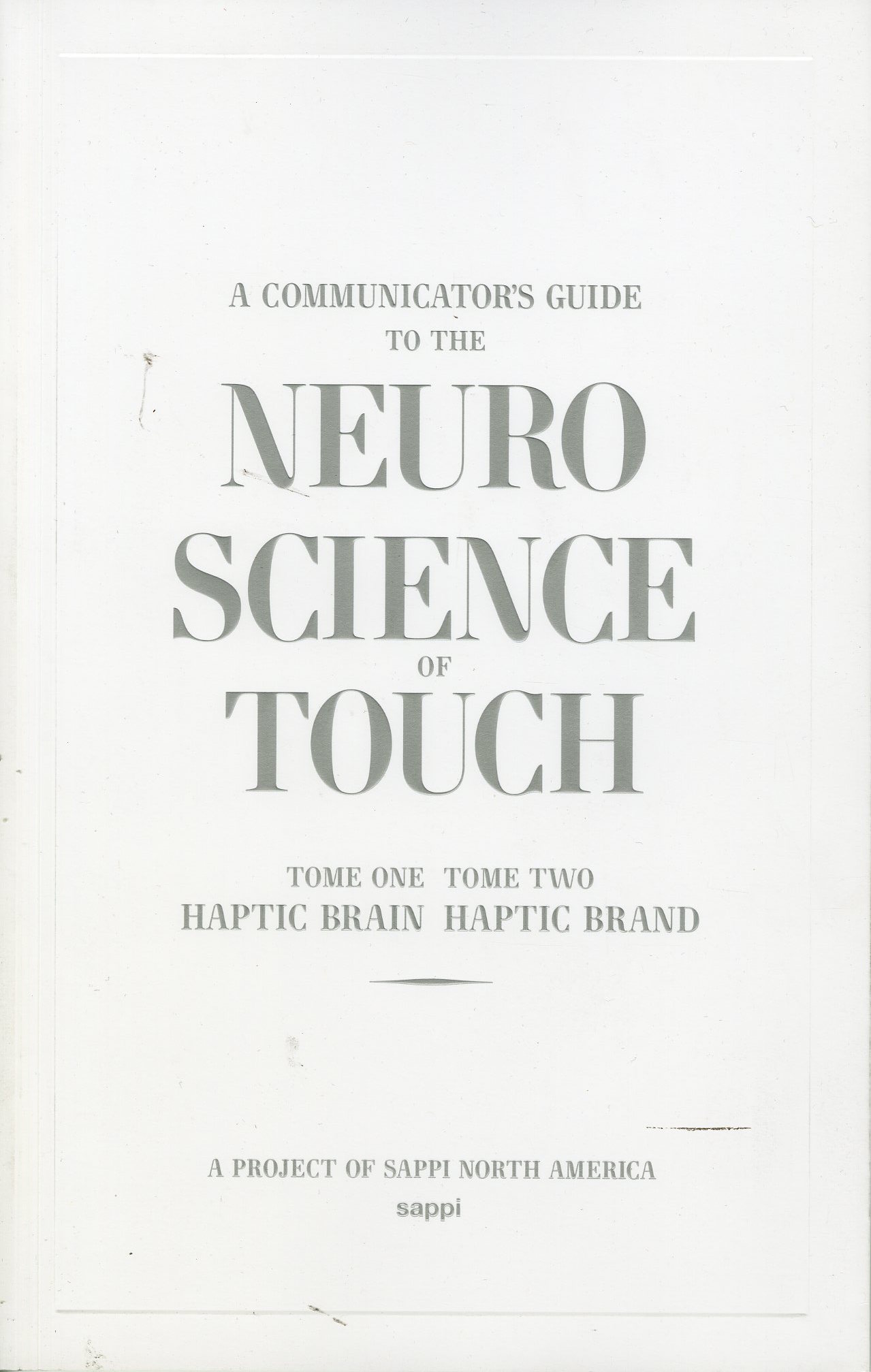
ACT 7 Experience Wednesday April 26 Keynote Speaker Daniel Dejan: The Neuroscience of Touch: Haptic Brain/Haptic Brand

January 26, 2017

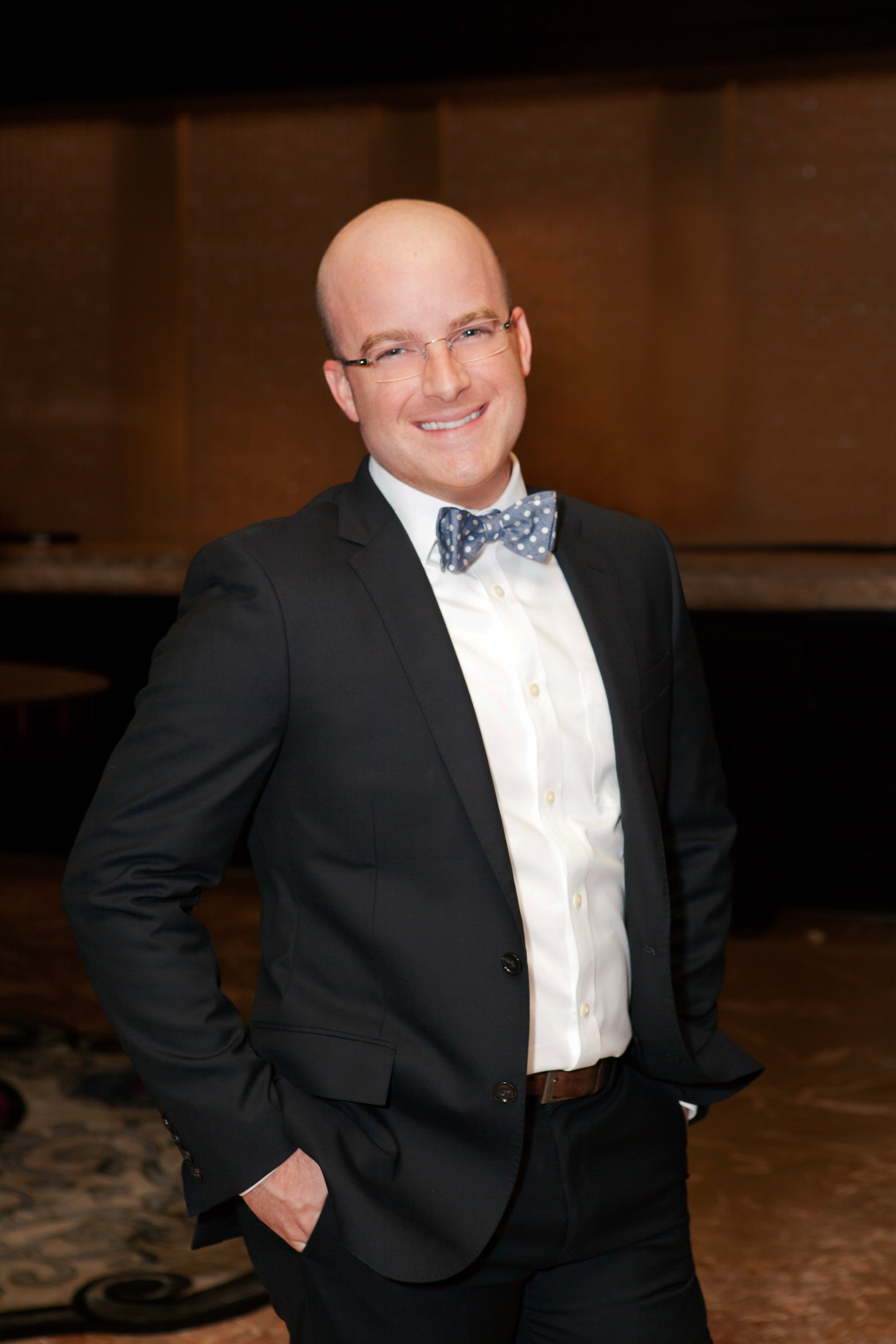
Daniel Dejan

Daniel Dejan

ACT 7 Experience will resume on Wednesday morning, April 26, with keynote speaker, Daniel Dejan, who will open up the ACT 7 Experience with a presentation on The Neuroscience of Touch: Haptic Brain/Haptic Brand, which unites neuroscience and branding to explore the many ways touch impacts how people perceive brands.

An award-winning graphic designer, art/creative director, production manager and print buyer, Daniel Dejan is widely respected in the print communications industry as a graphic arts educator, author and consultant. As North American ETC, (Education, Consulting and Training), Print & Creative Manager for Sappi Fine Paper, Mr. Dejan provides value-added marketing, sales and technical consultation as well as in-house and end-user training and education for the print, paper and creative communities.

Over the past 30 years, Daniel has written for various graphic arts publications. He served as technical consultant and a contributing writer for “The Designer’s Guide to Print Production.” Daniel is a Certified G7 Expert with a proficiency in Color and Color Management. He has shared his expertise, presenting keynote addresses, seminars and workshops for AIGA chapters, the Printing Industries of America, Canadian Printing Industries, IDEAlliance, the IPA, the Spectrum Conference, Print Production Clubs and Art Directors Clubs throughout the US and Canada, National and International print, design and marketing events, conferences and symposiums, as well as in numerous presentations hosted by paper merchants, printers and corporations, all of which keep him on the road in excess of 200 days per year much to the chagrin of his family and pets.

neuro-science-of-touchThe Neuroscience of Touch is Sappi’s groundbreaking book, written in collaboration with renowned neuroscientist Dr. David Eagleman, and dives deeper into haptics, the science of touch. It explores why touch is such a crucial part of the sensory experience and how it influences emotion and decision making, establishing this sense as critical to any brand experience.

More than half the human brain is devoted to processing sensory experiences. How things feel drives our thoughts and behaviors, influences comprehension, retention of information, and profoundly shapes our emotional connections.

Daniel will explore haptics—the study of how our sense of touch shapes what we think in his Wednesday morning presentation and discussion. He’ll talk about companies that have built deep emotional connections by integrating touchable media into branded communications and shares guiding principles for all to use as touch points.

It will be a great opening morning for ACT 7 – so plan on joining us there! Space is limited, so be sure to register here. We will bill you later.

Stay tuned, more speakers, more programs at the ACT 7 Experience will follow.

h1

Hoffman Media Executives To Deliver Opening Keynote At The ACT 7 Experience April 25.

January 25, 2017

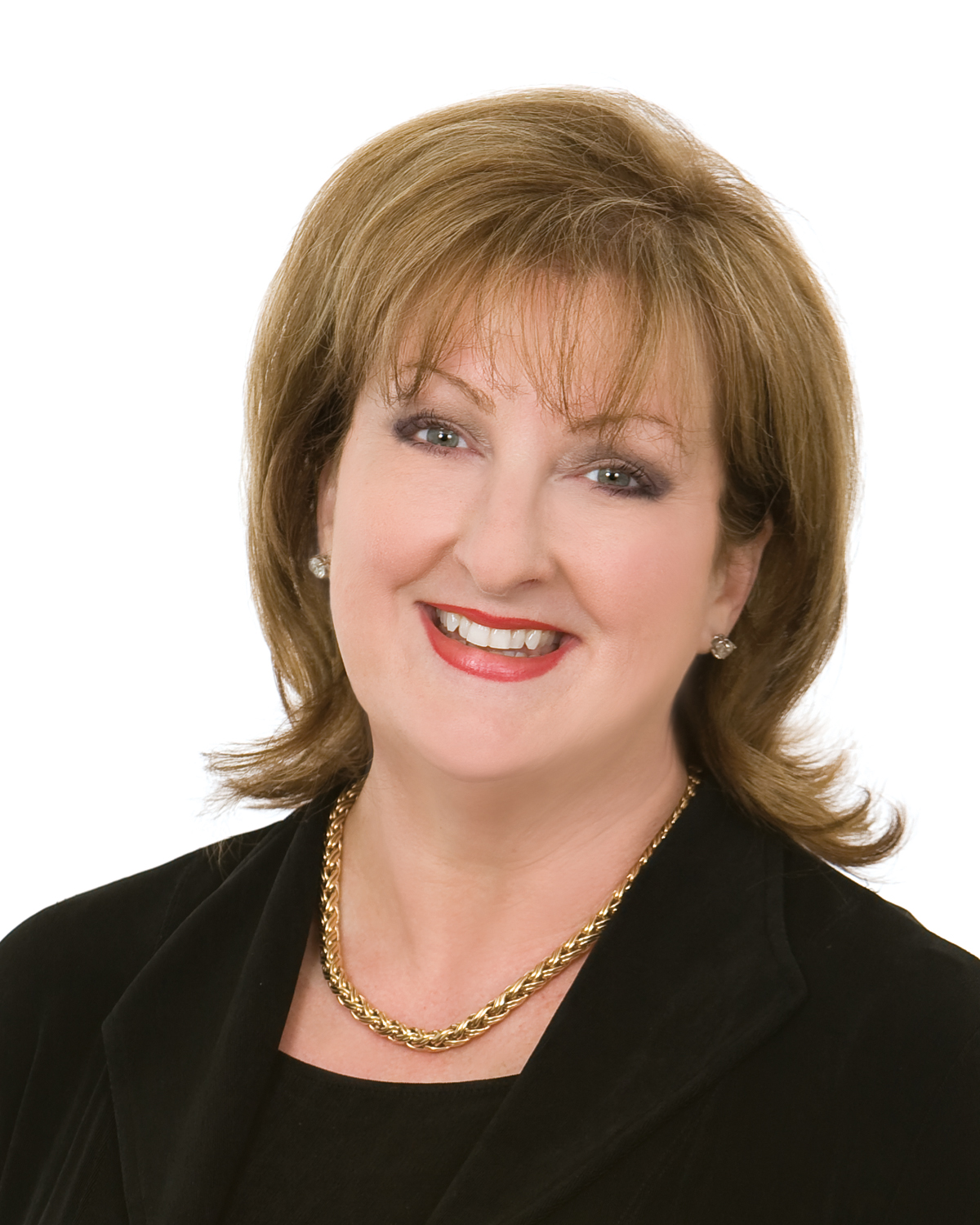
Phyllis shot holding magazinesAs ACT 7 gears up to begin its seventh year of Amplifying, Clarifying, and Testifying the power of print in a digital age, the esteemed and prestigious leaders in the world of all-things-magazine are also preparing to head to Oxford, Miss. for the event. This year’s opening ceremony will take place at the Inn at Ole Miss on the evening of April 25, and will bring a success story that only happens between the pages of magazines; or at least, because of them.

Phyllis Hoffman DePiano, CEO of Hoffman Media and the recently named hottest magazine publisher of the year by Media Industry Newsletter and Mr. Magazine™, and her two twin sons, Brian Hart Hoffman, Chief Creative Officer, and Eric Hoffman, Chief Operating Officer, who are both the central reason she started all of this over 30 years ago with her sister and two close friends, will all three deliver the ACT 7 Experience keynote opening remarks at the gala dinner event. Suffice it to say, that what began as a Crafting & Needlework Village has become an epic women’s interest empire.

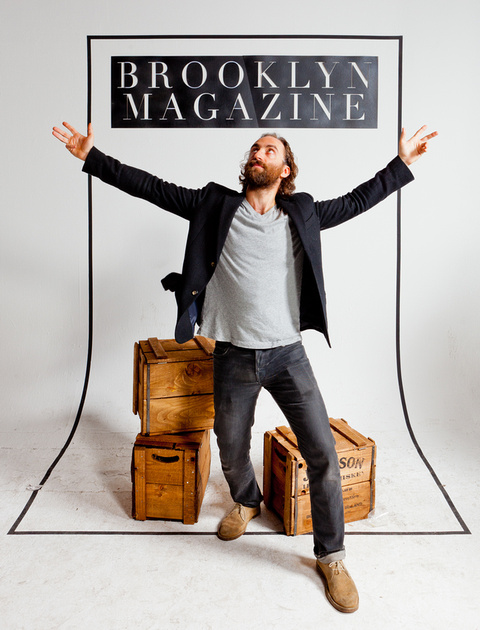
Brian Hart Hoffman

Brian Hart Hoffman

The theme for the ACT 7 Experience is Magazines Matter, Print Matters, and the Hoffman’s can certainly attest and address that fact. Phyllis will be mapping the history and passion of Hoffman Media; Eric will speak about the business side of the company and the streams of revenue; and Brian will discuss the creative side and the many titles that manifest the core of Hoffman Media. It will be a rich and robust testament to the power of print, and the passion, creativity and vision of the Hoffman family.

Eric Hoffman

Eric Hoffman

Hoffman Media is a company that is built on the foundation of family and creativity. Since 1983 when Phyllis Hoffman DePiano founded the company as Symbol of Excellence Publishers, Inc., and later renamed it Hoffman Media in 1998, the company, which publishes a plethora of women’s titles, has experienced steady and often remarkable growth since its founding.

“My career began as my church’s pianist/organist when I was in high school and college,” Phyllis said on her own self-published site: the ribbon in my journal. “When I finished college, I worked for a national CPA firm where I received my CPA certificate and practiced accounting until my twins were born. While I loved the professional world of accounting, I wanted to stay home with my babies. When my sons were very young, I got an idea for a magazine about counted-cross stitch. I talked it over with friends and family and we decided that it was worth a try. I had no experience in publishing, but after sharing this idea, four of us started the magazine Just CrossStitch. Janice (my sister), Barbara (my friend and experienced journalist), and Juanita (a friend) pioneered our way through a hobby industry of women who loved to stitch—creative women, if you will. Our company was launched and running with the premiere of the magazine. And we could work from our homes or while our children were in school.”

Today, Phyllis is CEO of Hoffman Media, which is the No. 70 largest private firm in Birmingham, Ala. and is No. 4 of the top women-owned businesses, based on total revenue in 2012, according to the Birmingham Business Journal’s List.

So, join us for ACT 7, April 25-27, 2017 at the Magazine Innovation Center, located at the Meek School of Journalism and New Media on the campus of the University of Mississippi. It’s sure to be an exciting time in the world of magazines and magazine media that you won’t want to miss. And keep an eye out for more exciting name-dropping about the who’s-who speaker list here on Mr. Magazine’s™ blog in upcoming weeks as we get closer to ACT 7.

Space is limited to 100 attendees, so the sooner you register the better the chances are that you will be able to attend this once-in-a-lifetime event. Click here to register.

h1

Dealernews Is Reborn: The Vision Of A Man Who Believes In Balance When It Comes To His Family, Business & Life – The Mr. Magazine™ Interview With Harley-Davidson Dealership Owner & Proud Keeper Of The Dealernews Flame, Bob Althoff

January 23, 2017

“Initially, we have to focus on the digital because; number one, it’s the immediacy of it. The dealers need that first and foremost. We would love to be back in print and I suspect that in due course we will be. Certainly, hopefully, with our Dealernews Top 100; this is our industry’s most prestigious competition, and highlights those 100 best retailers in North America. Also with buyer’s guides, annuals and that sort of thing, but to go back to a monthly print; I think that will take us a while. We’ve got some work to do to get relaunched and reengaged.” Bob Althoff

screen-shot-2017-01-22-at-5-28-51-pmBob Althoff is a self-proclaimed enthusiastic evangelist. He is an evangelist for Powersports, for the dealers of those products that fall beneath that umbrella, motorcycles, especially Harley-Davidson’s, and he’s an evangelist for the people who buy them. He is a man who owns the oldest Harley-Davidson dealership on the planet, and now he is the proud steward of the 50-year-old Dealernews magazine that folded in December, 2015. The only difference is Bob is presently concentrating on the immediacy of digital in order to keep the community of dealers informed and connected throughout the industry.

I can honestly say that I have never spoken with a more genuine and sincere human being in my life. I talked with Bob recently and we discussed his plans for dealernews.com and his hope that someday he will once again have an ink on paper component in the marketplace to help uplift the industry. Bob’s plan is to make dealernews.com the resource that he feels every dealer and retailer, customer and Powersport enthusiast, needs and he’s already seeing positivity from peers and colleagues in the industry.

Bob, along with his wife, Valerie, acquired A.D. Farrow in 2003. Under Bob’s leadership, A.D. Farrow expanded from its single, historic downtown store to three thriving dealerships in the greater Columbus, Ohio area, and won Top 100 Dealer honors for 11 of the last 12 years. Bob has been riding motorcycles for more than 50 years. An avid industry historian, he acquired the Heroes of Harley-Davidson exhibit from the American Motorcyclist Association, and maintains the valuable Motor Co. archive on the A.D. Farrow website. Bob is also the 2013 recipient of the Don J. Brown Lifetime Achievement Award, recognizing his lifelong dedication to the business, lifestyle, community and sport.

So, I hope that you enjoy this Mr. Magazine™ interview with a man who believes in balance throughout his entire life, and strives to implement it evenly, Bob Althoff.

But first the sound-bites:

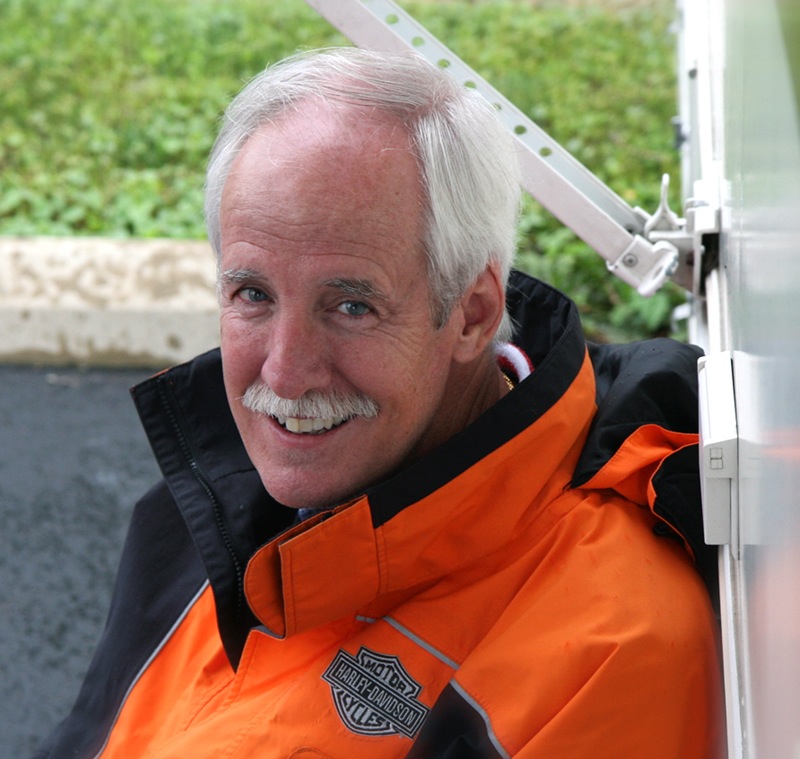
bob-a-hd-jacketOn how he got into the magazine publishing side of the Harley-Davidson business: To be honest with you, when Dealernews was shut down by its British parent, UBM, it was done on the publication of our 50th anniversary issue. That occurred in December, 2015. And as a dealer, I will just tell you that Dealernews is where I learned from other dealers; where I was inspired by their good works; it was where we competed with one another for honors. And when this void was created it was a moment that I just said to myself how can a $24 billion industry that is not represented by an industry association; we do not have an analog to the NADA (National Automobile Dealers Association) in Powersports, and there are 9,500 dealers, large and small, all over North America that are left without service. And that’s just not acceptable. So, I acted on that.

On whether he thinks Dealernews’ parent company, UBM, shut the magazine down due to an overreaction about the death of print: In this case, Advanstar, which was the owner of Dealernews, sold itself in December, 2014 to UBM, which is out of the British Isles, for almost $1 billion. Their primary business is expositions. Advanstar was the owner of Magic, which is the largest fashion exposition in the United States and one of the largest in the world. So, clearly there were assets there that were worth a lot of money. It’s just that UBM decided that expositions were the be all and end all, and that the publication of Dealernews in our industry was not going to be a part of their future.

On what he has been doing since he acquired Dealernews: Since our acquisition in May, we’ve been very busy taking those assets, which amounted to lists of our industry players and all of the contact information that was all cleaned up at a great deal of time and expense; we have certainly the best records now that exist anywhere. We’ve gotten our website, which was extremely expensive. We brought it over to new webhosting and we’ve updated it dramatically. But it’s quite an archival treasure trove, with, as you might imagine, print records that go back 50 years. There are literally 10,000 how-to articles in there. So, we’ve been busy reengaging and relaunching the Dealernews brand.

On the early reaction he’s received from his colleagues in the industry: It’s been nothing short of phenomenal. We very quickly tried to reach out to some gray beards in the industry, which have great credibility and said look, we need your advice and guidance. And we have a stellar advisory board that has been empaneled. Virtually, no one turned us down on that.

On whether he has plans to bring back the printed magazine to the marketplace: Initially, we have to focus on the digital because; number one, it’s the immediacy of it. The dealers need that first and foremost. We would love to be back in print and I suspect that in due course we will be. Certainly, hopefully, with our Dealernews Top 100; this is our industry’s most prestigious competition, and highlights those 100 best retailers in North America. Also with buyer’s guides, annuals and that sort of thing, but to go back to a monthly print; I think that will take us a while. We’ve got some work to do to get relaunched and reengaged.

On the most challenging moment he’s facing and how he plans to overcome it: The most challenging really is the macro environment. Our customers have to have jobs and they have to have discretionary income, and they have to have enough confidence to make that discretionary purchase. The great thing about our final market is that everyone wants a motorcycle. It’s just that they don’t want it now. My job as a retailer is to uncover what exactly that reluctance is and try to address it.

On the lack of community among dealers: People think we sell motorcycles, but we are really cultural institutions. As dealers in a local market, large or small, we’re the glue that holds those bikers together in that firm fraternity or sorority or kinship. We’re seven-days-per-week; we’re busy being available to our customers in their leisure time, and so I will tell you this, for the last 15 years I’ve worked seven days per week to try and serve those customers of mine.

On anything else he’d like to add: You can see the vacuum into which we are really stepping here. And I think you can understand how passionate we all are about the work that we do and the impact that it has on our communities and the impact that our writers have on the larger community. We have a great story to tell, and what we have to do is find a way to be able to tell that story so that it ignites not only the dealers, but our customers around the brick and mortar and the gatherings and the social. Customers are looking for some release, recreation, identities and opportunities to pursue their charitable inclinations, and so you can see how important this work is and you can see why Dealernews is so important.

On what someone would find him doing if they showed up unexpectedly to his home one evening: I am a voracious reader. I do lecture at Ohio State University at three or four levels: MBA, Executive MBA and Undergraduate Honors. I am consumed by this great industry and I’m very blessed to do the work that I do. But all of this is at risk, and so that’s what I do. I get up very early and I’m 67-years-old now; I go to the gym and I come in here and I try to keep this business healthy. And obviously now I have a new hat that I wear, but as difficult as things are and as big a challenge as this is, I’m driven like most of the people who work for me and most of the people in our industry, and that is that we have a great passion for this. And we know it’s important, so we do what we do.

On how he balances his passion with business: I am an enthusiastic evangelist for all of the good things that motorcycling has brought to me in my life. I’ve ridden motorcycles all over the world; I have made great friends; I’ve had great adventures, and I’ve had great misadventures. My marriage is stronger because my wife and I ride together. I don’t go to the golf course and she doesn’t go to the tennis club. We ride together. I believe God put me on earth to do the work that I’m doing and I’m just blessed.

On what keeps him up at night: If I died tomorrow, and I could write my own epitaph, it would say on my tombstone: He led a balanced life. I don’t want to be the best husband, because if I were I would be at home right now feeding my wife bonbons and attending to her luncheon menu. I don’t want to be the best spiritual person, or the best businessman, or the best father, or the best citizen, but I’d like to think that I’m a little bit good at all of those things. And that’s why I worry sometimes the demands of my business are keeping me from being as balanced as I would prefer to be.

And now the lightly edited transcript of the Mr. magazine™ interview with Bob Althoff.

Samir Husni: I know you’re an avid motorcyclist, and you have the dealership, but what got you interested in the publishing side of this business?

Bob Althoff: I’m blessed to be the steward of a 105-year-old dealership; the oldest Harley-Davidson dealership on the face of the planet. I represent a storied, American brand. I’ve been a motorcyclist since the morning I turned 16-years-old, so now that’s been 50 years. I was fortunate enough to turn my avocation into my vocation some 15 years ago when I bought this business.

And to be honest with you, when Dealernews was shut down by its British parent, UBM, it was done on the publication of our 50th anniversary issue. That occurred in December, 2015. And as a dealer, I will just tell you that Dealernews is where I learned from other dealers; where I was inspired by their good works; it was where we competed with one another for honors. And when this void was created it was a moment that I just said to myself how can a $24 billion industry that is not represented by an industry association; we do not have an analog to the NADA (National Automobile Dealers Association) in Powersports, and there are 9,500 dealers, large and small, all over North America that are left without service. And that’s just not acceptable. So, I acted on that.

It’s not any grand design; it is simply that there is an important thing here. It’s important to me and it’s important to these other men and women, and it’s important to our customers, some nine million active American motorcyclists. So, here we are.

Samir Husni: In the marketplace, there are a lot of motorcycle magazines that serve the customer, rather than the retailer. The newest that came is one for people who are both in the army and motorcyclists. So, there is a market there for these types of magazines. Do you think the publishing industry overreacted to the death of print and became more fascinated with all things digital?

Bob Althoff: In this case, Advanstar, which was the owner of Dealernews, sold itself in December, 2014 to UBM, which is out of the British Isles, for almost $1 billion. Their primary business is expositions. Advanstar was the owner of Magic, which is the largest fashion exposition in the United States and one of the largest in the world.

So, clearly there were assets there that were worth a lot of money. It’s just that UBM decided that expositions were the be all and end all, and that the publication of Dealernews in our industry was not going to be a part of their future. So, they walked away from it, lock, stock and barrel.

I’m not sure exactly what the motivations were; you would know better than anyone the problems that have beset the print industry, and the disruption of the microcosm that this has caused. As a consumer of this very important information resource, I just couldn’t sit by and say OK – game over; we now no longer have that nexus where we can speak to one another, where we can learn from one another, and where we can be an industry. This is a pure B to B effort; obviously, this is of, by and for dealers. We now no longer have a corporate master in the sense that there will be no lack of clarity about what we’re doing or who we’re serving.

And we’re going to try and lift our industry. It’s an industry that has been under some assault. We sell highly discretionary products, they are big ticket and they require a bank loan many times. Our industry, therefore, is deeply cyclical. But as I said, it’s a 105-year-old business that I am charged with and I felt like this was an important thing to do, so we’re off and running.

Samir Husni: What have you been doing since you acquired the brand?

Bob Althoff: Since our acquisition in May, we’ve been very busy taking those assets, which amounted to lists of our industry players and all of the contact information that was all cleaned up at a great deal of time and expense; we have certainly the best records now that exist anywhere. We’ve gotten our website, which was extremely expensive. We brought it over to new webhosting and we’ve updated it dramatically. But it’s quite an archival treasure trove, with, as you might imagine, print records that go back 50 years. There are literally 10,000 how-to articles in there.

We have put some embellishments in that website. We have a paywall behind a paywall, so we’re going to be providing some interesting new engagement tools to our almost 10,000 dealers. We just went back into action with the website in the last month, and we’ll be relaunching our Dealernews Alerts, which is a blast email that goes out to the trade twice a week. And we’ll be doing that within the next week. So, we’ve been busy reengaging and relaunching the Dealernews brand.

Samir Husni: What has been the early reaction from your colleagues in the industry?

Bob Althoff: It’s been nothing short of phenomenal. We very quickly tried to reach out to some gray beards in the industry, which have great credibility and said look, we need your advice and guidance. And we have a stellar advisory board that has been empaneled. Virtually, no one turned us down on that.

We have announced ourselves not only to the dealers who we serve, but also to the manufacturers who produce this product for us to sell to the public. And we are getting some traction there. I will say that it’s been a little slower on the uptake, but there is obviously some concerns that they have about how exactly this tool will be used in the hands of dealers. We’re assuring them that we’re going to lift this industry and we’re going to help tear down some of the silos that have been created and be of service, ultimately, to the retail customer because retail excellence is what drives final demand and ultimately that’s what drives $24 billion worth of commerce. So, we can’t lose sight of the customer and the best ways to serve that customer.

As that message has went out, I think it’s been really terrific. Now I won’t tell you that it’s not a chore to get hold of and be able to explain all of this to all of the players in our industry. Obviously, we have a pipeline to the dealers, but the rest of the industry has to hear about this with phone calls and personal contacts and so forth. It’s a little more time-consuming.

Samir Husni: Do you think that you can accomplish that with just the website; with the virtual? Or do you have plans to bring back the printed magazine into the marketplace?

Bob Althoff: Initially, we have to focus on the digital because; number one, it’s the immediacy of it. The dealers need that first and foremost. We would love to be back in print and I suspect that in due course we will be. Certainly, hopefully, with our Dealernews Top 100; this is our industry’s most prestigious competition, and highlights those 100 best retailers in North America. Also with buyer’s guides, annuals and that sort of thing, but to go back to a monthly print; I think that will take us a while. We’ve got some work to do to get relaunched and reengaged.

So, right now for us, I think that the focus is to give the dealers what they need and quick bursts of information; explain to them the engagement tools, which will allow them to go into our website and go back behind these various paywalls to places where they can identify one another by geography, brand, problem or opportunity, and communicate with one another in confidence. They will have a public presence in that website, which will be out there and available to the general public, where we will extol the virtues of the good work being done by these men and women and their charitable endeavors in their communities. Generally, we’ll be doing community building, so that’s the first focus.

There are also some fun things that we can be thinking about that might provide some economic sustenance and would support us getting back into print, and those things are going to be along the lines of some other information services. Perhaps, on-demand online training for our staff, and there are a few other ideas that we have up our sleeve.

To be honest with you, as I look at the landscape, I look at it from two standpoints. One, as an advertiser I’m at sea because I don’t know whether the world is really changing and I should place all of my bets on the electronic delivery, or whether it should be balanced with print, or whether I should even be in print. And as a result, I look at the Washington Post and I say they might not even be in print if Jeff Bezos hadn’t made a little money with Amazon. So, I’m going to just learn and watch people like you, and hopefully we’ll rebuild this iconic masthead that is Dealernews.

Samir Husni: As you bring that trust of the brand back to life, what do you think is going to be your most challenging hurdle, and how do you plan on overcoming it?

Bob Althoff: The most challenging really is the macro environment. Our customers have to have jobs and they have to have discretionary income, and they have to have enough confidence to make that discretionary purchase. The great thing about our final market is that everyone wants a motorcycle. It’s just that they don’t want it now. My job as a retailer is to uncover what exactly that reluctance is and try to address it. This is the biggest challenge confronting our industry; it’s the biggest challenge confronting dealers, and it’s put us all under a great deal of economic pressure. So, clearly that is the biggest challenge.

Now secondarily, it is dealers have never really had the opportunity to be an industry; it’s a lonely place being a Powersports dealer in North America. You are serviced by your OEM (original equipment manufacturer) with information, but the OEM has a certain, very pointed opinion about things, and your ability to interact with fellow retailers around some of the subjects that we’ve just discussed has been extremely limited, if not zero.

Think about the 14,000 discreet industry associations that are out there; they’re all serving their audiences in great ways. Some better than others, but at least those associations exist and they exist as information exchanges and share best practices, what have you. We’ve never had that. So, dealers are going to have to understand that a) we’re here, b) we are of them, by them and for them, and the rest of the industry is going to have to understand that we’re going to be a positive force to try and lift all boats onto a rising tide.

Samir Husni: When I think of motorcycles, I think of clubs, groups and communities, so I am surprised to hear that there isn’t that community among dealers.

Bob Althoff: Well, you’re right; you hit the nail on the head. People think we sell motorcycles, but we are really cultural institutions. As dealers in a local market, large or small, we’re the glue that holds those bikers together in that firm fraternity or sorority or kinship. We’re seven-days-per-week; we’re busy being available to our customers in their leisure time, and so I will tell you this, for the last 15 years I’ve worked seven days per week to try and serve those customers of mine.

So, part of it is just that dealers are busy, and they’re busy leading and sometimes following those communities, but those communities are very, very solid. It’s just that for whatever reason, an accident of history, we are a vastly underserved industry from that standpoint. I hope that Dealernews can begin to provide some of that glue that will make us all better at serving those great customers.

Samir Husni: Is there anything else that you’d like to add?

Bob Althoff: You can see the vacuum into which we are really stepping here. And I think you can understand how passionate we all are about the work that we do and the impact that it has on our communities and the impact that our writers have on the larger community. We have a great story to tell, and what we have to do is find a way to be able to tell that story so that it ignites not only the dealers, but our customers around the brick and mortar and the gatherings and the social. Customers are looking for some release, recreation, identities and opportunities to pursue their charitable inclinations, and so you can see how important this work is and you can see why Dealernews is so important. Wish us luck, say a prayer for us and we’ll be watching you and your website to see what we can learn there.

Samir Husni: If I showed up unexpectedly one evening to your home, what would I find you doing; reading a magazine; riding your motorcycle; having a glass of wine; or something else?

Bob Althoff: It’s certainly not the latter; my wife and I are now 11 years without a drink. But I certainly do love my motorcycle, and I will tell you that there is a little bit of tyranny involved in what I do and that is that the Cobbler’s kids have no shoes. All of my waking hours are really involved with all of the things that we just talked about.

I am a voracious reader. I do lecture at Ohio State University at three or four levels: MBA, Executive MBA and Undergraduate Honors. I am consumed by this great industry and I’m very blessed to do the work that I do. But all of this is at risk, and so that’s what I do. I get up very early and I’m 67-years-old now; I go to the gym and I come in here and I try to keep this business healthy. And obviously now I have a new hat that I wear, but as difficult as things are and as big a challenge as this is, I’m driven like most of the people who work for me and most of the people in our industry, and that is that we have a great passion for this. And we know it’s important, so we do what we do.

Samir Husni: How do you balance your passion with your business? How do you balance the relationship between your heart and your brain?

Bob Althoff: That’s a great question and I’ll just tell you this, 100+ years ago when the founders of our company, Harley-Davidson, got together and formed this company, they had a company, House Morgan, it was called The Enthusiast. It was not called The Realist; it was not called The Pessimist; it wasn’t called The Pragmatist; it was called The Enthusiast.

I am an enthusiastic evangelist for all of the good things that motorcycling has brought to me in my life. I’ve ridden motorcycles all over the world; I have made great friends; I’ve had great adventures, and I’ve had great misadventures. My marriage is stronger because my wife and I ride together. I don’t go to the golf course and she doesn’t go to the tennis club. We ride together. I believe God put me on earth to do the work that I’m doing and I’m just blessed.

Every morning when I walk up to one of my buildings, I take a moment and I just stop and look at the building. I try to see it with new eyes and I try to remember that we can change people’s lives. We do it all of the time, in small ways and in large. It’s a unique business that allows passion to be unbridled and to show the way, because ultimately people have their reluctances; our riders and breadwinners, they’re supporting multigenerational families; they’re hard workers; their police and firemen and military. And now increasingly, it’s a clubhouse that everyone is invited into. We have women who are buying motorcycles for themselves and we’re proud of that. My only problem is that there isn’t 72 hours in every day.

Samir Husni: My typical last question; what keeps you up at night?

Bob Althoff: If I died tomorrow, and I could write my own epitaph, it would say on my tombstone: He led a balanced life. I don’t want to be the best husband, because if I were I would be at home right now feeding my wife bonbons and attending to her luncheon menu. I don’t want to be the best spiritual person, or the best businessman, or the best father, or the best citizen, but I’d like to think that I’m a little bit good at all of those things. And that’s why I worry sometimes the demands of my business are keeping me from being as balanced as I would prefer to be.

That’s my honest truth. When I said that I wished that I had more hours in a day, it’s for that very reason. When I was driving to work today, I was thinking that I have two daughters, one in California and one in Ohio, and my wife, all of whom would love to get some flowers from me today. And here it is halfway through the day and I haven’t had time to do that. Like a lot of people who are similarly situated, to whom much is given, much is expected. There’s a lot to do every day, that’s for sure. That would be what keeps me up at night.

Samir Husni: Thank you.

h1

Gearing Up For An Amazing ACT 7 Experience… “Magazines Matter, Print Matters”

January 19, 2017

Mr. Magazine™ says save the date: April 25-27, 2017

act7_loresAs we await spring and the month of April, we at the Magazine Innovation Center also await the exciting ACT 7 Experience, and 2017’s promises to be the most dynamic one yet. We’ve streamlined the number of speakers to enhance the actual experience in terms of the discussions that are going to take place. Our goal is to come up with solutions as the ACT Experiences are think-and-dos, not merely conferences where one comes to idly listen. ACT lives up to its acronym – Amplify – Clarify – Testify the power of print, and that’s just what we do as problems are met head-on and solutions are sought by brainstorming among some of the finest minds in publishing, printing and distribution.

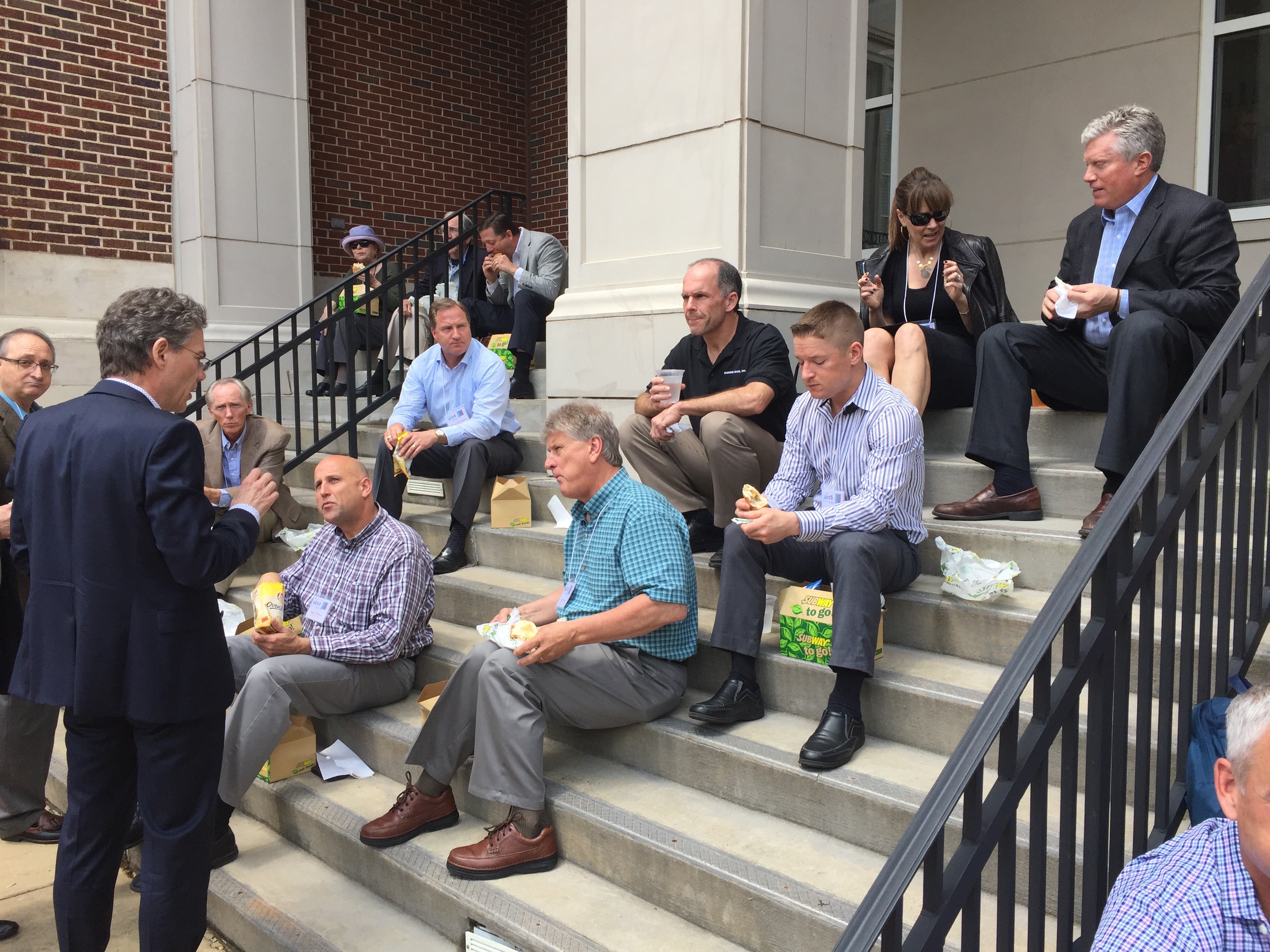
Magazine and Magazine Media CEOs, Editors, Publishers, Distributors, and Marketers enjoy a cozy lunch during a break at the ACT 6 Experience. April 2016.

Magazine and Magazine Media CEOs, Editors, Publishers, Distributors, and Marketers enjoy a cozy lunch during a break at the ACT 6 Experience. April 2016.

The speakers, attendees and students alike are free to speak their minds and bounce ideas off of each other; it’s a thrilling time for everyone as boundaries are crossed when present leaders and future leaders of publishing meet at the Overby Center at the Meek School of Journalism and New Media on the campus of the University of Mississippi, where the Magazine Innovation Center resides. The Experience is divided into three main mini themes this year:

Celebration of Magazine Launches (everything you need to know to launch a magazine)

Magazine Reach and Power (the changing and evolving role of advertising and marketing in the magazine and magazine media world)

Magazine Distribution 2020 (the future of the newsstands, direct mail, subscriptions, free distribution, public placement, and every other thing that has to do with distribution)

mic_amplifyAnyone interested in learning about magazine launches should make it a point to be here. We will have panels with panelists and speakers who are going to celebrate their new magazine launches by telling us the story of the launch; the positives and the negatives and the impact of the publication. And we will also have a section for people who want to start a magazine. We will have panels on printing, production, paper; anything related to the print process. During this segment I will take the audience through a memory lane trip showing some amazing magazine launches throughout history. It will be an exhilarating

What follows are testimonials from three speakers from last year’s ACT 6 Experience:

Joe Berger of Joseph Berger Associates of Chicago, Newsstand Sales, Digital and Print Circulation had this to say about the ACT 6 Experience: During the ACT conference, we heard from several publishers who are doing well on the newsstand precisely because they are paying attention to their business. It’s my hope that the discussions that were started at this year’s ACT conference continue. The alternative is a continued drift. At a certain point, we need to stop the drift and chart a new course. That point really is now.

John Harrington partner in Harrington Associates, LLC, which published The New Single Copy and the annual Magazine Retail Sales Experience; he had this to say about ACT 6: In late April, I attended the ACT 6 Conference, sponsored by the Magazine Innovation Center at the journalism school of the University of Mississippi. Samir Husni is the director of MIC. I have attended and spoke at each of these programs and as I have stated often have found them among the most significant and valuable publishing gatherings I have ever participated in, and believe me over nearly 40 years there have been a bunch of them. The unique quality of the ACT conferences is the participation of the students, undergraduate and graduate. Samir has turned the school into a pipeline of talented people into the magazine media world.

Tony Silber, Vice President, Folio: had this to say about ACT 6: The ACT conference is a different kind of event. It’s small. Only perhaps 100-130 people attend, give or take. Since it’s held at a university, the students also attend. Sometimes Samir pairs them with industry figures, mentee to mentor. It’s way off the beaten path for the media industry. That’s part of its charm. It’s a different perspective for sometimes-jaded media people. Because of his (Samir Husni) advocacy, plus his unrelenting determination to make his case and push his cause, plus his 30-year run of cataloging all the print-magazine launches of the year—and selecting the most important 30 of them—Samir is as well-known and respected as anyone in the business. Now, for the last several years, he’s added a worthwhile media conference to his portfolio—one with a decided point of view.

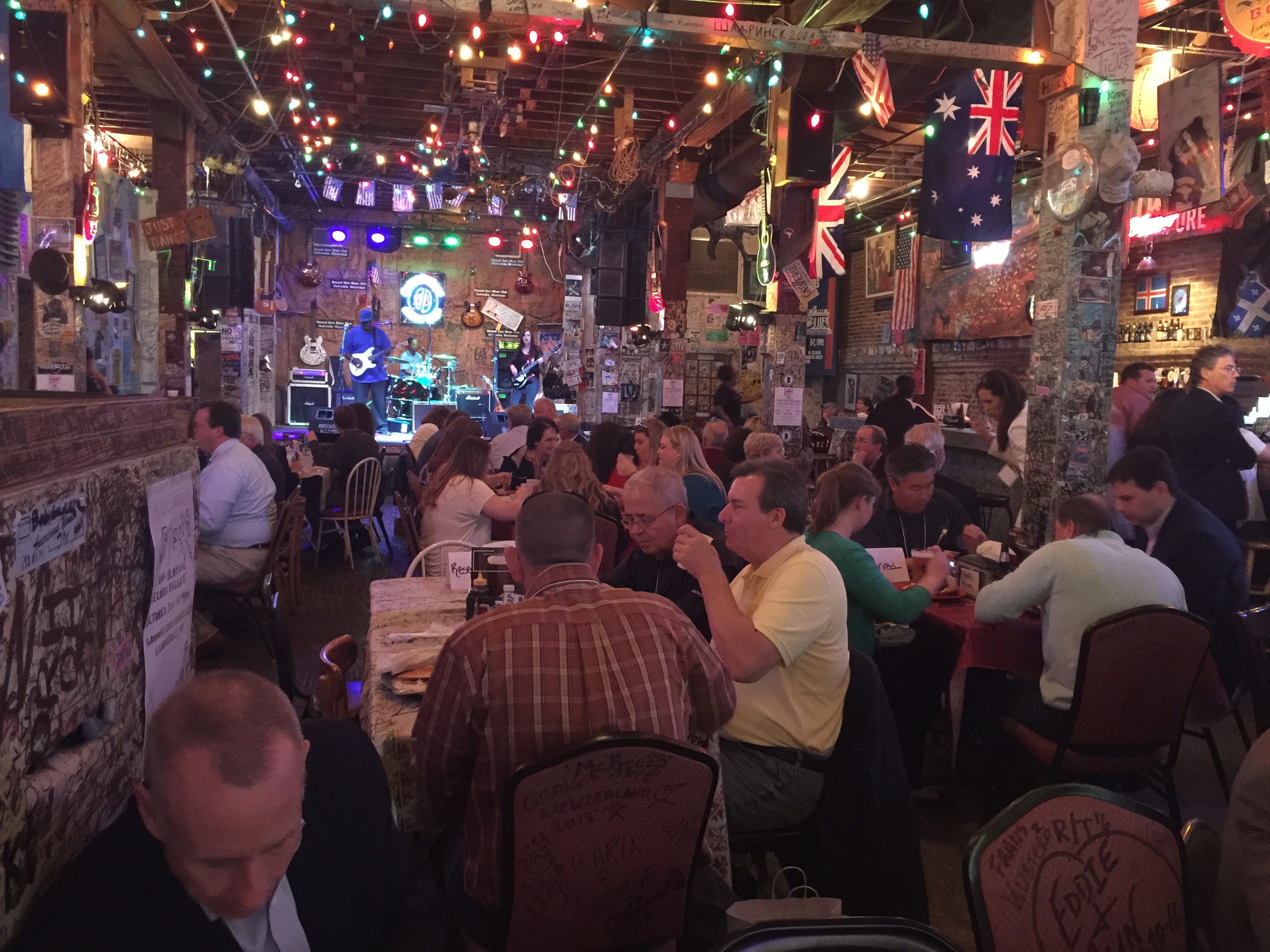
Part of the ACT Experience is a trip to the  Mississippi Delta that ends with food and music at Ground Zero in Clarksdale, MS.

Part of the ACT Experience is a trip to the Mississippi Delta that ends with food and music at Ground Zero in Clarksdale, MS.

An added bonus is one evening of the Experience will be spent in the inimitable Mississippi Delta, where we will sample the rich musical and palate-pleasing heritage that is the magical Mississippi Delta. And of course, have a lot of fun in the process.

To all of my fellow magazine enthusiasts; to all the magazine makers; to all the lovers of the printed word and those passionate about this art form called magazine making; we at the Magazine Innovation Center invite you to join us April 25-27, 2017 for an “Experience” into the world of magazines and magazine making unlike anything you’ve ever seen before.

So, if you suddenly feel an urge to head south – “ACT” on it!! The cost to register this year is only $395 that covers the registration to all the events of ACT 7 including the opening gala Tuesday dinner, breakfast, lunch, the trip to the Mississippi Delta and dinner on Wednesday, and breakfast and closing gala lunch on Thursday.

To register for the ACT 7 Experience click here. Note that space is limited to 100 registrants.

h1

There Is Nothing New Under The “Creative Innovation” Sun…

January 11, 2017

First of a Series of Mr. Magazine™ Musings About Classic Creative Innovation…

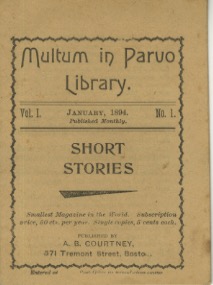
multum-in-parvoJust when you thought the 21st century was the ultimate time for creative innovation in the world of magazines and magazine media, up rears the head of the 20th century again (and even part of the 19th) to prove you wrong. What’s the phrase adapted from the Book of Ecclesiastes in the Bible: There’s nothing new under the sun? That would be absolutely true, especially when it comes to creative innovation in magazines. And leave it to Mr. Magazine™ to be the one to inform you of this, seeing as how recently I have been dipping deeply into my Classic Magazine Vault.

For example, when it comes to small and convenient, there was a magazine that was published in 1894 called “Multum in Parvo,” which of course in Latin means a great deal of something in a very small space. And in this case it would be a great deal of entertaining short stories in what was self-described at the time as “the smallest magazine in the world.” It was sold by subscription and single copy. And it is very, very small, (Mr. Magazine™ of course has it on hand), and for 1894, very innovative. Today, you might call it the flash drive of the 19th century. It is exquisite.

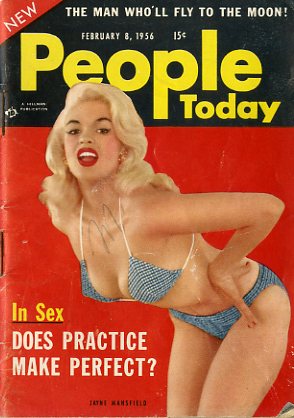
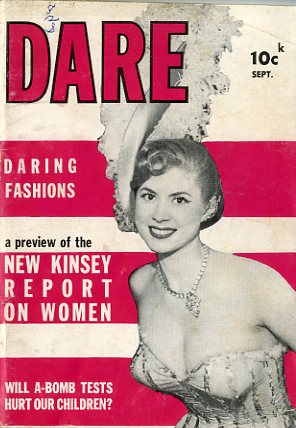
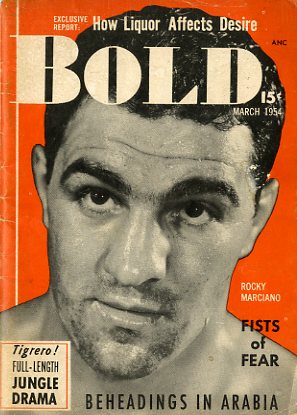
people-today220dare215bold217Then there are the men’s magazines that were a prominent and key part of the 1940s and 1950s, such as “Bold,” “People Today,” and “Dare.” These were the magazines that slid conveniently into a man’s shirt pocket for his viewing and reading pleasure when he was out and about, either at work or other activities away from his home or desk. And while by today’s standards, what with the Internet and mobile, this bit of carrying around your passion might sound tame and mediocre, for the ‘40s and ‘50s this idea was quite creative and demonstrative of the type of innovations that could come from productively inventive minds.

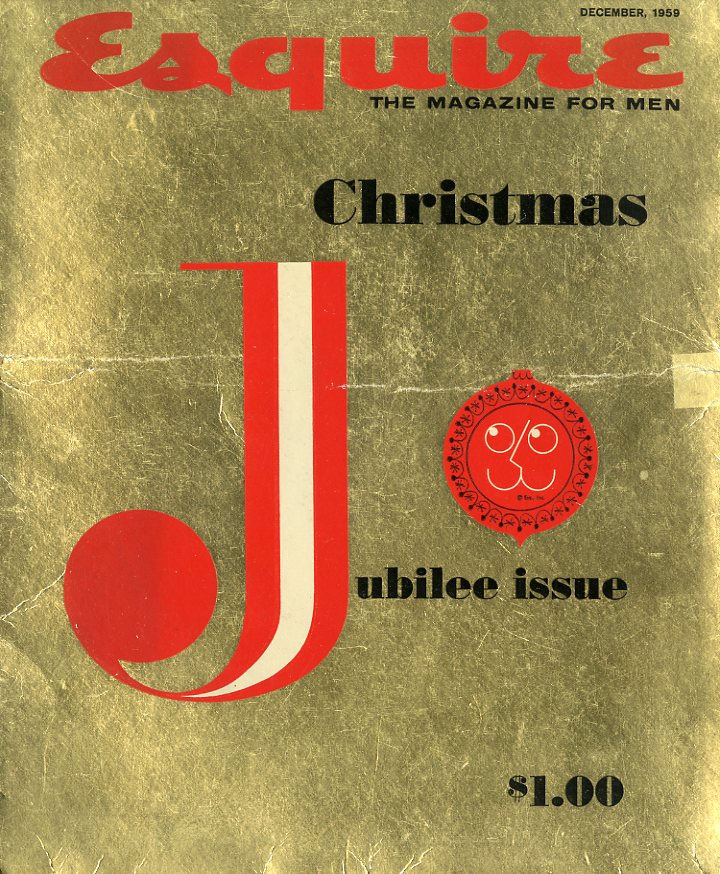
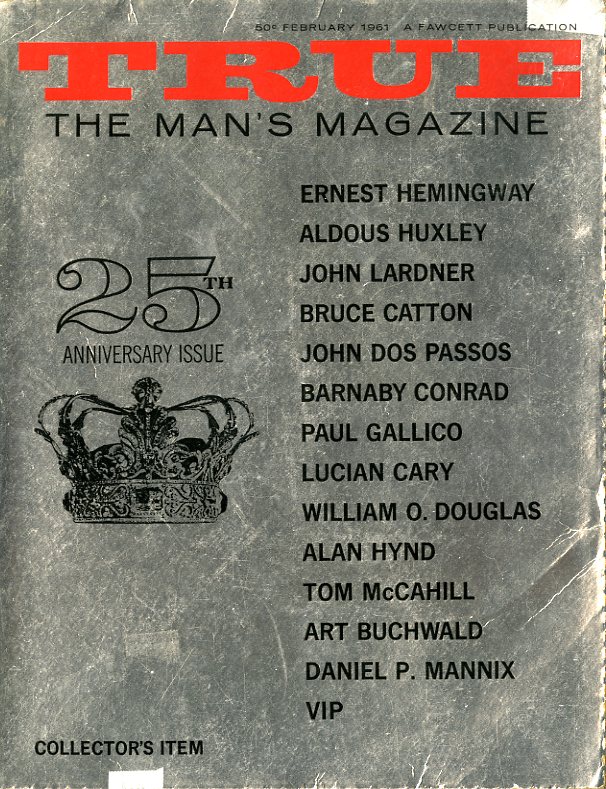
esquire201true198And aside from those examples of modification and mutation, there were the oversized coffee table magazines (sound familiar?) such as “Ken” from 1938 and “Flair” from 1950, and the boxed publications, such as “Esquire’s” 1959 Christmas Jubilee issue and “True The Man’s Magazine’s” 1961 Silver Anniversary issue. As Esquire began in 1933 and True The Men’s Magazine in 1937, the latter had a tendency to follow in the footsteps of its senior compatriot. But imitation is the sincerest form of flattery, I suppose.

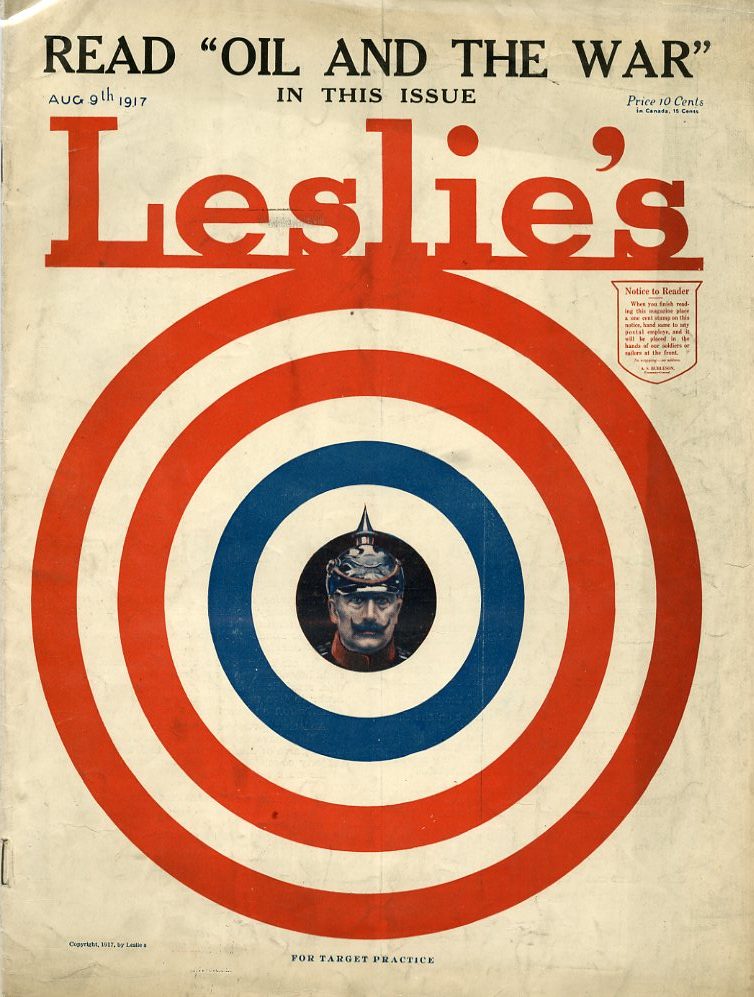
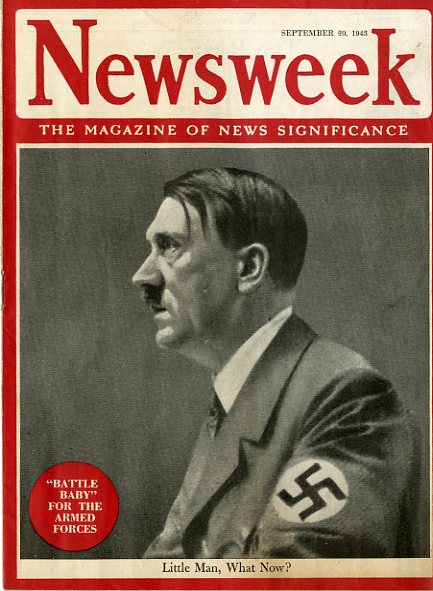
leslies200newsweek202And when it came to service journalism and patriotism for our men and women of the armed forces, magazine weeklies in the 1940s such as Newsweek and TIME provided such a significant and important boost to our military personnel’s morale by providing issues with timely and interesting stories for absolutely free. And during the First World War, Leslie’s and many other titles provided a “notice to reader” stamp on their covers that allowed readers to place a one cent postal stamp onto the designated notice when they were finished reading the magazine and it would be sent to military personnel overseas for them to also enjoy. What an unbelievably innovative idea! Brilliant!

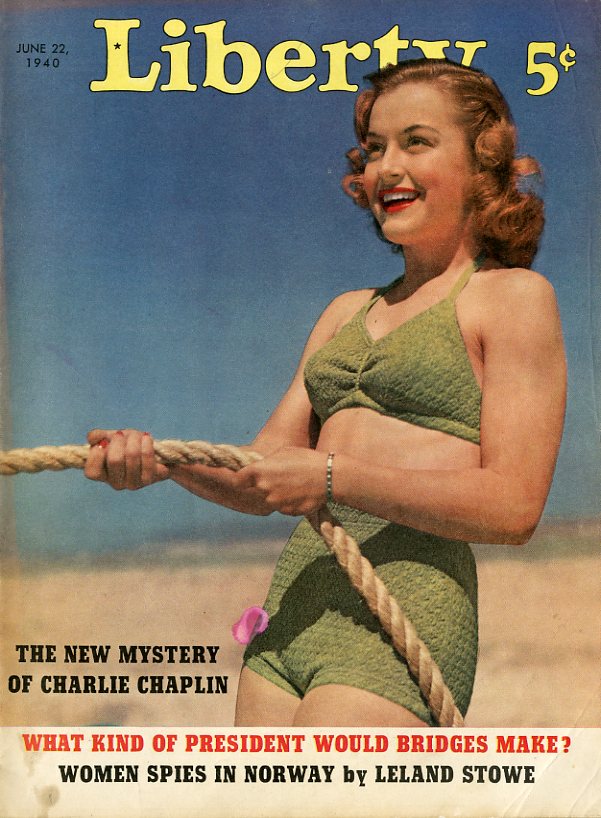
liberty204And another service feature that by today’s standards would probably seem ludicrous to most, but in fact, was quite the bomb in days gone by was the 1920s “Liberty” magazine, which offered readers exact minutes and seconds when it came to how long it took to read individual articles. Saving time didn’t just start with the digital natives, you see.

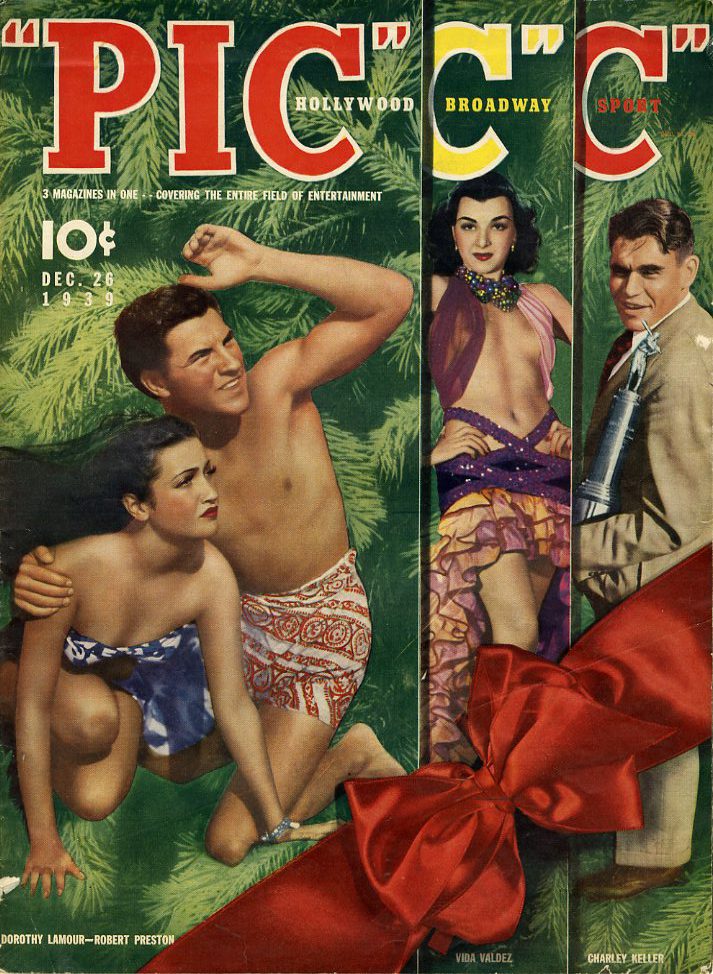
pic199Arguing with the quality, creativity, and yes, innovation of the titles from yesteryear would be a complete waste of time. The pioneers of magazines were not only some of the most creative people who ever lived, but also visionaries in their own right. And I would be terribly remiss if I didn’t mention one of the most beautiful and innovative covers that I have ever seen in my many, many years of tracking and loving magazines. It’s a magazine from 1939 that was published every other Tuesday by Street & Smith. The magazine was called “PIC” and was actually three magazines in one that covered different areas of the entertainment world, Hollywood, Broadway and Sports. So, for example, one section was “Hollywood Pic;” one section was “Broadway Pic;” and one section was “Sport Pic,” just simply a well-done, original magazine that showed creativity at its best.

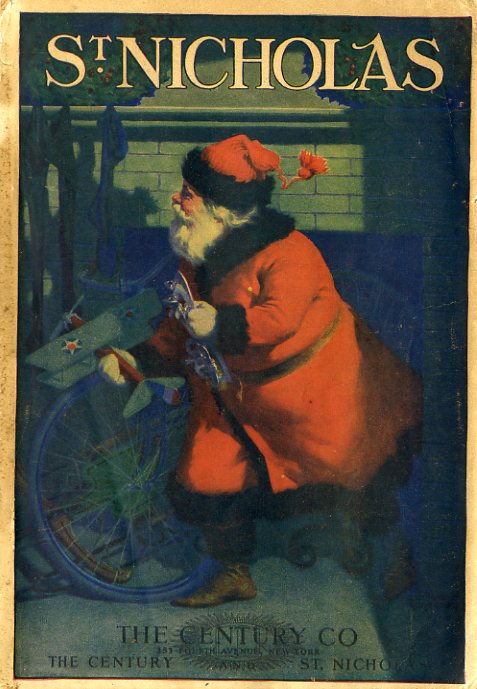
st-nicholas203Another lovely magazine for children that encouraged curious minds to flip through its pages and enjoy magical stories and actual illustrations that were not produced digitally was St. Nicholas magazine that was founded by Scribner’s in 1873 and ceased publication in 1940. Mr. Magazine™ has the beautiful December 1920 issue and it’s writing is superb. Over the years everyone from Louisa May Alcott to Mark Twain enjoyed being published in this amazing title. The magazine is proof positive that children do in fact love to read and always have, it’s just today they have more options than ever before, which isn’t a bad thing at all. However, it is a fact that the innovations of technology are not the entire reason children are inspired to read; it’s much more about the craft of good storytelling.

The point I’m making is that while those of us today who live and breathe as if we were the only creative, innovative, cutting-edge, and ingenious people to have ever touched ink on paper or (in our case in the 21st century), stared at pixels on a screen, are a bit narcissistic when you look back through the years that magazines have been around. Creative innovation didn’t happen simply because the world of digital came into being. Creative innovation hit the scene when the first magazine drew its infant breath. Digital may have motivated print to recheck and reinvent itself, but it never, ever coined the phrase “creative innovation.” That credit, my friends, goes to the human being…

And from almost the very beginning there have been human beings and their original ideas – that’s nothing new…

Until the next Mr. Magazine™ Musing…

h1

AARP The Magazine: Relevant, Vibrant & Still The Largest Circulation Magazine In The Country With Over 37 Million Readers – The Mr. Magazine™ Interview With Shelagh Daly Miller, Vice President, Group Publisher, AARP Media

January 9, 2017

“I believe that magazines have devalued themselves tremendously. I think that they’ve been in panic mode for years. I’m a big print person; my dad was in the magazine business; I had a sister in the magazine business and I love magazines. I still read books; I don’t have a Kindle. I love print. And I think that it’s sad that the industry has moved toward devaluing publications by offering them for $2 and $3 in some cases, I can’t believe the offers that have come my way over the last several years.” Shelagh Daly Miller

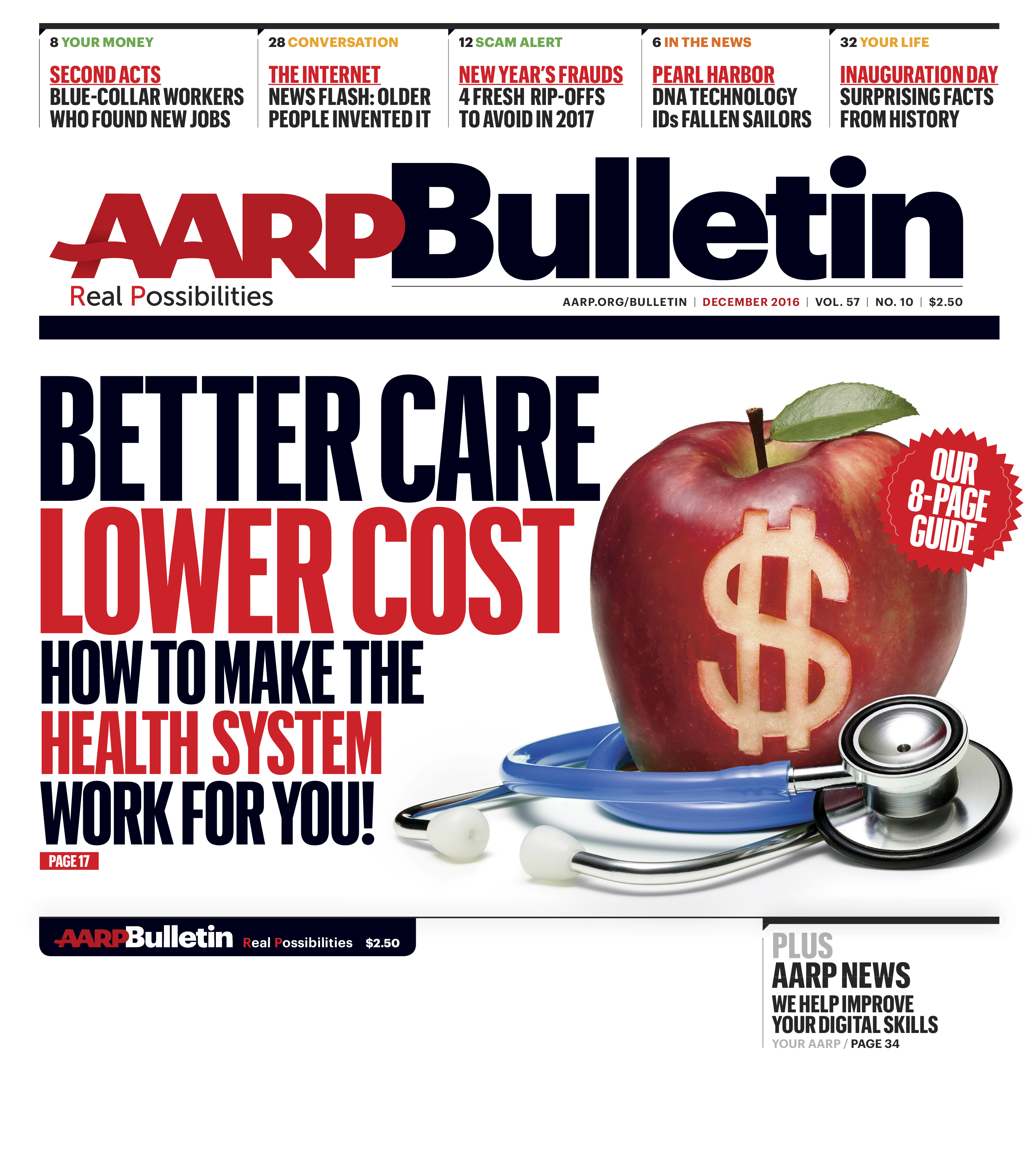
TM51617DJ_C1_MEDIA.pdfAARP The Magazine is a mass-circulated publication that makes no apologies for its print prowess and passionate nature regarding ink on paper. The magazine is the largest-circulation publication in the United States with over 37 million readers and its AARP Bulletin reigns supreme with 29.7 in readership. Combine the two together and the numbers are a staggering testament to the power of print and its relevant audience, while never ignoring the reach and information the brand’s digital extensions offer.

So why not start the new year right from the top? Shelagh Daly Miller is Vice President, Group Publisher, AARP Media Sales and has been with the brand for 16 years. Coming from a background rich in advertising and publishing, she is a woman very much at home in the world of magazines and magazine media.

I spoke with Shelagh right before the Christmas holidays and we talked about the world of magazines and the extremely bright path that AARP The Magazine was on and has been on for several years, as the brand has seen exponential growth under her leadership. As Shelagh stated, while AARP The Magazine is a mass-circulated magazine, it’s also a niche title that dominates relevance when it comes to its audience.

With storytelling and vibrant, buoyant features about people and things that interest its very active and affluent audience, AARP proves that the 50-plus readers should not, will not and will never be, defined by a mere number. With consumers over 50 in the prime position of not only being able to afford their lifestyles, they can actually revel in them; the magazine is geared toward a group of people who today dominate our country’s wealth, and that is a very good group to gear to. Relevant audience, relevant content; it never fails and it never will.

So, I hope that you enjoy this very inspiring and print-positive Mr. Magazine™ interview with a woman and her brand that make no apologies for their faith and commitment to print, Shelagh Daly Miller, Vice President, Group Publisher, AARP Media.

But first the sound-bites:

shelagh-millerOn some in the industry who believe that there isn’t room for a mass-circulated magazine anymore, yet AARP publishes its magazine and tabloid at 23 million plus: I would say that while our publications are obviously mass, considering the circulation, 22.5 is the rate base for 2017 for each of the publications, but we’re really serving somewhat of a niche audience at the same time. It’s specifically 50-plus, but not only that, it’s 50-plus people who have raised their hands and said that they were going to join the organization that’s advocating for them as people over 50-years-old. So, I think that gives us a bit of a niche focus.

On why it seems the magazine industry focuses more on the audience that it doesn’t fully have (the millennials) instead of the one it does have (the baby boomers): I honestly think that part of it is the people who are working in the industry are millennials themselves. And I believe there is a bit of self-reflection going on there; that’s one part of it in my opinion. As you can probably imagine, we’re often out talking to agency folks that are, I’d say, in their late 20s or early 30s, and we’re trying to communicate to them about how valuable the 50-plus market is. In particular, we may be talking about Boomers if it’s a pharma or a packaged goods company.

On the most pleasant moment she’s experienced professionally during 2016: Actually, that moment happened very recently. The fact that Ad Age finally recognized us is super exciting. In my opinion, we’ve been doing great things for many years and have been overlooked by the trades for a long time. So, there’s a big smile on my face. There have been lots of personal Facebook posts and many professional congratulations. I think that’s probably been my sweetest moment during the past year.

On the most challenging moment of 2016: The most challenging moment of the year was a bit of a theme, which is AARP takes the brand very seriously and as a result we have a fairly stringent ad policy team. All of our advertisers have to be approved by that team and I would say that advertising rejections from our ad policy team are the biggest frustrations because we literally have people who are out there with their dollars; their wallets opened, ready to spend money and we can’t take their advertising or their money. That’s the biggest frustration.

On the trend of basically giving magazine subscriptions away for nothing: On the topic in a more global sense, at least on your question, I believe that magazines have devalued themselves tremendously. I think that they’ve been in panic mode for years. I’m a big print person; my dad was in the magazine business; I had a sister in the magazine business and I love magazines. I still read books; I don’t have a Kindle. I love print. And I think that it’s sad that the move toward devaluing publications by offering them for $2 and $3 in some cases, I can’t believe the offers that have come my way over the last several years.

On what she believes that she can do to make the magazine business model work again: That’s a hard question to answer. I can tell you that I know what I can do, and what I can do is wake up every morning with a great attitude about going out into the marketplace and representing two amazing print brands that deliver on their promises to both advertisers and readers. I don’t know that every magazine can say that they do that. I don’t know that every magazine is attracting the kind of talent that is passionate about magazines the way that I know our staff is.

BUDEC16_001A.pdfOn breaking the stereotype that AARP The Magazine is more of a membership read than a great storytelling vehicle: I think that’s more of an editorial challenge or opportunity than it is an ad sales opportunity. Of course, the better the editorial product, the easier it is for us to attract advertisers, so obviously they all work together. And our MRI numbers are a testament to the fact that our publications are vibrant and have evolved. And hopefully we’ll continue to evolve. We got a tremendous amount of MRI growth over the last few years. I’m sure you saw the latest release where our total readership is up almost one million from spring 2016. And it’s the highest readership we’ve had in the magazine’s history, so clearly the editorial is on point.

On anything else she’d like to add: I think the only thing that I’d like to add is that I’ve been in the advertising business now for 31-plus years, with a few years on the agency side, but most of my career has been on the print side. Of course, we took on digital about seven years ago, but I grew up in this business for 31 years, and I’m happy to say that I still wake up every morning with a smile on my face knowing that I’m coming to work. Not necessarily when it’s 13 degrees and I have to get in my car in the mornings. (Laughs)

On what someone would find her doing if they showed up unexpectedly at her home one evening: You would definitely catch me cooking; cooking is a passion. You may catch me having a glass of wine while cooking. I have long work days and I travel a lot, so when I am home, I love to cook. And oftentimes you’ll find that you’re not the only guest; my husband and I entertain quite a bit. We love having people over and I love cooking for people.

On what keeps her up at night: On a business note, I would say that what keeps me up at night is being able to keep up this momentum. We’ve had year after year after year of bucking industry trends; am I going to wake up at some point and it’s all going to come crashing down? That’s something that weighs on me, I’d say. I don’t think that’s going to happen, but it’s something that sticks in the back of my head.

And now the lightly edited transcript of the Mr. Magazine™ interview with Shelagh Daly Miller, Vice President, Group Publisher, AARP Media.

Samir Husni: You hear a lot in different industry circles about the changes in magazines, and how there’s no room anymore for a mass-circulated publication, yet you publish a magazine with over 37 million readers and the Bulletin at 29.7 million readers. What gives?

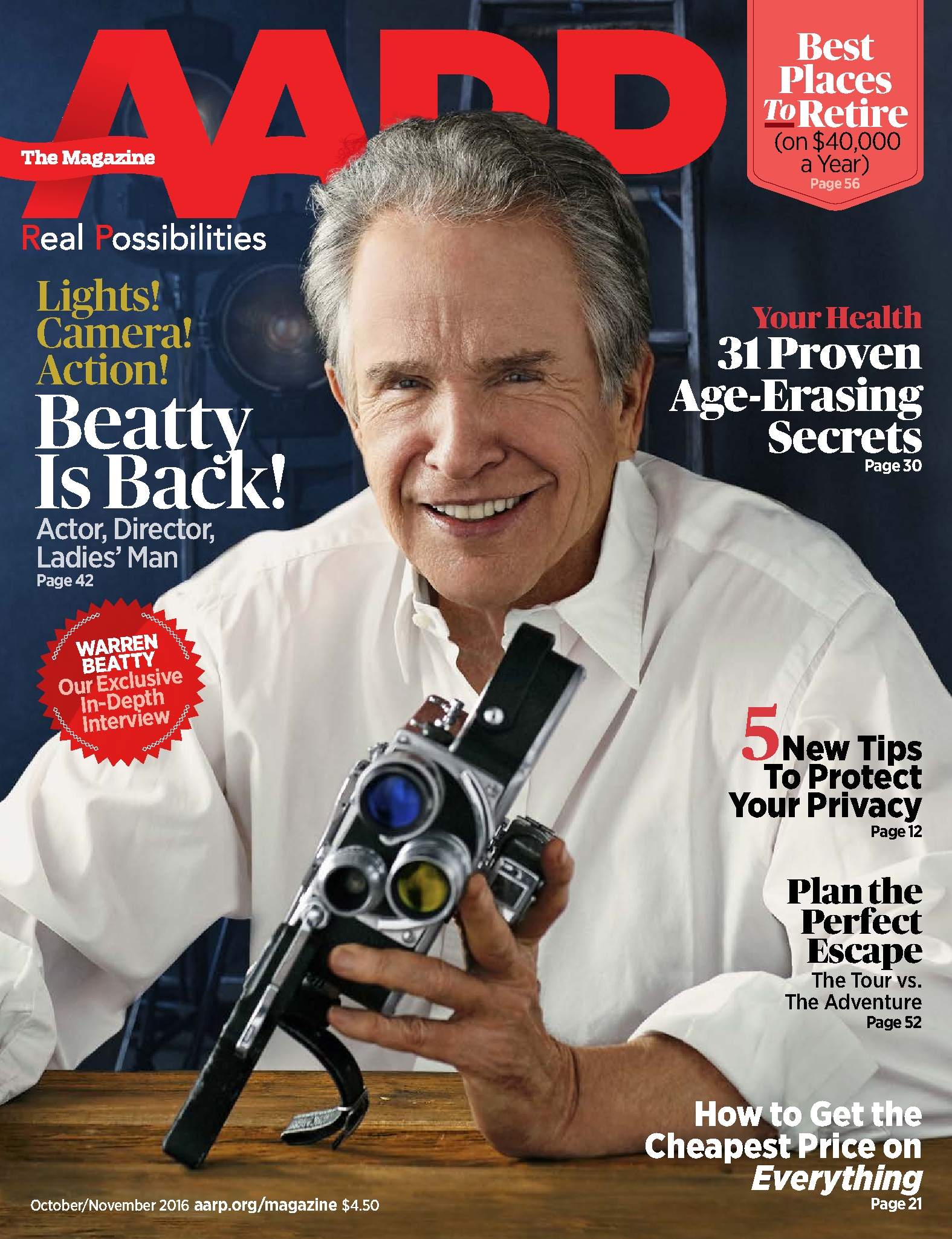
octnov-2016-warren-beatty-70Shelagh Daly Miller: I would say that while our publications are obviously mass, considering the circulation, 22.5 is the rate base for 2017 for each of the publications, but we’re really serving somewhat of a niche audience at the same time. It’s specifically 50-plus, but not only that, it’s 50-plus people who have raised their hands and said that they were going to join the organization that’s advocating for them as people over 50-years-old. So, I think that gives us a bit of a niche focus.

When you look at, for example, a women’s service book that’s really trying to be everything to everyone in that women’s group, you might have an editorial piece on dealing with “terrible two’s,” and as we know the age of those publications has gone up significantly over the last 10 years, so you may also be talking to someone who is my age, 53, who’s well beyond the point where the “terrible two’s” are relevant. Therefore I think that’s a harder mass appeal to address. Whereas we’re talking to this group who are not only age-wise for the most part over 50, but again they’re sort of the cream of the crop of the 50-year-old’s. We know that they’re more educated than non-members; they’re more affluent than non-members, but most importantly, they’ve raised their hands and paid their money and have said that they want to be a part of this.

Samir Husni: You make a very good point about having a niche audience or a specialized audience, although there are plenty of them. In this country we have almost 72 million millennials and 72 million baby boomers; why do you think that the magazine industry focuses so much of its attention on the audience that it doesn’t fully have, such as the millennials, and ignores the audience that it does have?

Shelagh Daly Miller: I honestly think that part of it is the people who are working in the industry are millennials themselves. And I believe there is a bit of self-reflection going on there; that’s one part of it in my opinion. As you can probably imagine, we’re often out talking to agency folks that are, I’d say, in their late 20s or early 30s, and we’re trying to communicate to them about how valuable the 50-plus market is. In particular, we may be talking about Boomers if it’s a pharma or a packaged goods company.

And I don’t remember this myself, Samir; I don’t remember thinking 50 was old, because I’m 53 now and I’m so young, hip and cool (Laughs); it’s hard to believe that at 28, fifty years old seems so far away, but the truth is, it really does seem so far away to them. They can’t even imagine it. And they don’t necessarily think of their parents when they consider who we’re trying to reach. When we ask them how old their parents are and they might answer 55; and we ask, well, what are they doing? My parents both just retired and they took a biking trip around the world, which we can then say, this is the kind of vibrancy that we’re talking about.

So, again, I think a lot of it has to do with that it’s almost like an ethnocentric focus. You have largely brand managers and agency folks who are in their mid-twenties to late thirties, and that’s who they think about when they want to sell their brand. So, I feel that’s one of the challenges.

And then the other reason that I think the focus is younger is the fact that the target many years ago when you wanted to reach households and get consumption and volume, was moms 18 to 34 or 18 to 49 with kids. And I think that has just stuck, as opposed to moving with those 18 to 34 or 18 to 49 year olds who are now Boomers and beyond; the industry has stayed in that age group and I think it’s almost habit.

Samir Husni: As you reflect on 2016 at AARP The Magazine and the Bulletin, what has been the most pleasurable moment for you during the past year?

Shelagh Daly Miller: Actually, that moment happened very recently. The fact that Ad Age finally recognized us is super exciting. In my opinion, we’ve been doing great things for many years and have been overlooked by the trades for a long time. So, there’s a big smile on my face. There have been lots of personal Facebook posts and many professional congratulations. I think that’s probably been my sweetest moment during the past year.

Samir Husni: And what was the most challenging moment of the year?

Shelagh Daly Miller: The most challenging moment of the year was a bit of a theme, which is AARP takes the brand very seriously and as a result we have a fairly stringent ad policy team. All of our advertisers have to be approved by that team and I would say that advertising rejections from our ad policy team are the biggest frustrations because we literally have people who are out there with their dollars; their wallets opened, ready to spend money and we can’t take their advertising or their money. That’s the biggest frustration.

But on the other hand, that’s a good thing because it really does speak to the integrity of the brand and the fact that advertisers in our publication benefit from the halo effect of a brand that is so stringent. So, it’s kind of a challenge, but it’s a positive at the same time.

Samir Husni: I’ve been known to say that we don’t have a magazine problem; we have an industry problem, because we technically give our magazines away. In your case, it’s part of the membership, but in the case of the major publishers; with some you can pay $5 and get an entire year of magazines. Do you think it makes a difference if you charge me $20 or $10 per year for a membership? Will that stop me from getting the magazine and the bulletin?

Shelagh Daly Miller: If we were to increase our membership dues; I think naturally you would lose a certain number of members who just don’t want to afford an increase like that. But ultimately what you’re left with is likely the members who are most committed to AARP and all of the good work that we do.

I believe that people feel when they join AARP; one of the benefits of their membership is receiving these two publications in their homes, six times per year for the magazine and 10 times per year for the bulletin. I think that if we took that away we would have a great deal of vocal dissent from our members.

On the topic in a more global sense, at least on your question, I believe that magazines have devalued themselves tremendously. I think that they’ve been in panic mode for years. I’m a big print person; my dad was in the magazine business; I had a sister in the magazine business and I love magazines. I still read books; I don’t have a Kindle. I love print. And I think that it’s sad that the industry has moved toward devaluing publications by offering them for $2 and $3 in some cases, I can’t believe the offers that have come my way over the last several years.

In the same way, when I was a media planner at William Esty back in 1986 and magazines started to negotiate off rate card, I think it’s bad that we did that too, because a rate card means very little. And I believe that started devaluing the benefit of being an advertiser in a particular brand, and that’s sort of a B to B erosion and a B to C erosion when you chop your subscription prices. I think it’s a shame that it’s moved in that direction. I don’t know how you shift it back, but I do think that there’s a human nature aspect of, and my parents used to refer to it as something being “dear,” being expensive and important. If we could move the needle back the other way with brands like AARP that are going to stay in the print business, and make them a little bit more costly because of their value, I think that would be terrific. But it’s very hard to swing the pendulum back the other way.

Samir Husni: Recently, I did an interview with Linda Thomas Brooks from the MPA, and I told her that I was going to use a line from a button that she found in a bookstore, and incorporate it into a new mantra following along the path of our recent presidential election, “Making Magazines Great Again.”

Shelagh Daly Miller: I love that! That’s awesome.

Samir Husni: Linda doesn’t allow anyone to say either “print is dead” or “print is not dead,” she banned both statements because she believes that even if we say that print is not dead, we’re making it appear that at one time it was.

Shelagh Daly Miller: Yes, we’re acknowledging that some people think it is dead, even if we tell them it’s not.

Samir Husni: Yes, so she banned that phrase from the MPA, which as I told her, is a breath of fresh air. With everything you’re doing and everything that you see happening around the magazine industry, what can you do to, not necessarily move the needle back, but to help change our business model? From somebody who was on the ad side and who is now on the publishing side; what will it take to change things? We’ve really been our own worst enemies; we haven’t changed yet; what do you think it will take?

Shelagh Daly Miller: That’s a hard question to answer. I can tell you that I know what I can do, and what I can do is wake up every morning with a great attitude about going out into the marketplace and representing two amazing print brands that deliver on their promises to both advertisers and readers. I don’t know that every magazine can say that they do that. I don’t know that every magazine is attracting the kind of talent that is passionate about magazines the way that I know our staff is.

We may not have the 27-year-old media planner who just got into sales, because frankly, we’re not really a cool, sexy brand to those people, but if you want a great print operation to be a part of, come on over here, because we’ve got people who are passionate about print; we’ve got marketers who are passionate about print, and not to sell our digital properties short, which are also an amazing growth medium for us, but if you walk around these offices, you’ll see that most of the people here have a rich print background. And are, to this day, still excited about being out in the marketplace talking about our print properties and what we can do for their brands.

That’s my own little corner of the world and I do believe that if there were more operations embracing who they are and being true to themselves, maybe that’s part of the answer, instead of trying to become something that they’re not, or instead of walking away from their original DNA and what the brand means. Make the brand relevant again to the people who are reading it; don’t try and be relevant to a group of people who aren’t. I guess that’s my thinking.

Samir Husni: I’ve been following AARP The Magazine since before it was called AARP and you have a great editorial team. The magazine today is not the same magazine that if my father had been in this country he would have read. And granted, the recognition from Ad Age is a big step forward, but how can you combat that stereotype that the magazine is just a membership read and not a great editorial storytelling package?

Shelagh Daly Miller: I think that’s more of an editorial challenge or opportunity than it is an ad sales opportunity. Of course, the better the editorial product, the easier it is for us to attract advertisers, so obviously they all work together. And our MRI numbers are a testament to the fact that our publications are vibrant and have evolved. And hopefully we’ll continue to evolve. We got a tremendous amount of MRI growth over the last few years. I’m sure you saw the latest release where our total readership is up almost one million from spring 2016. And it’s the highest readership we’ve had in the magazine’s history, so clearly the editorial is on point.

I too have been following AARP in one form or another for a long time. When I was at William Esty, I worked on Vaseline dermatology formula and we advertised in Modern Maturity, and I remember it being frustrating because AARP had lowered their age from 55 to 50, so their rate base was changing every couple of months. And I remember it being a little bit frustrating to work on that publication from a planning standpoint.

But then when I joined AARP, we still had a publication called Modern Maturity and we had just launched a separate publication called My Generation. And I think this goes back to a question that you asked before about being relevant to your audience; we wanted to have My Generation focused on the Boomers, and what we realized after a year or so was that AARP members referred to their magazine as AARP Magazine, so why were we trying to create a new brand when AARP was already such a strong brand, and that was when AARP, Modern Maturity and My Generation became one age-versioned magazine, which is what we have today; AARP The Magazine.

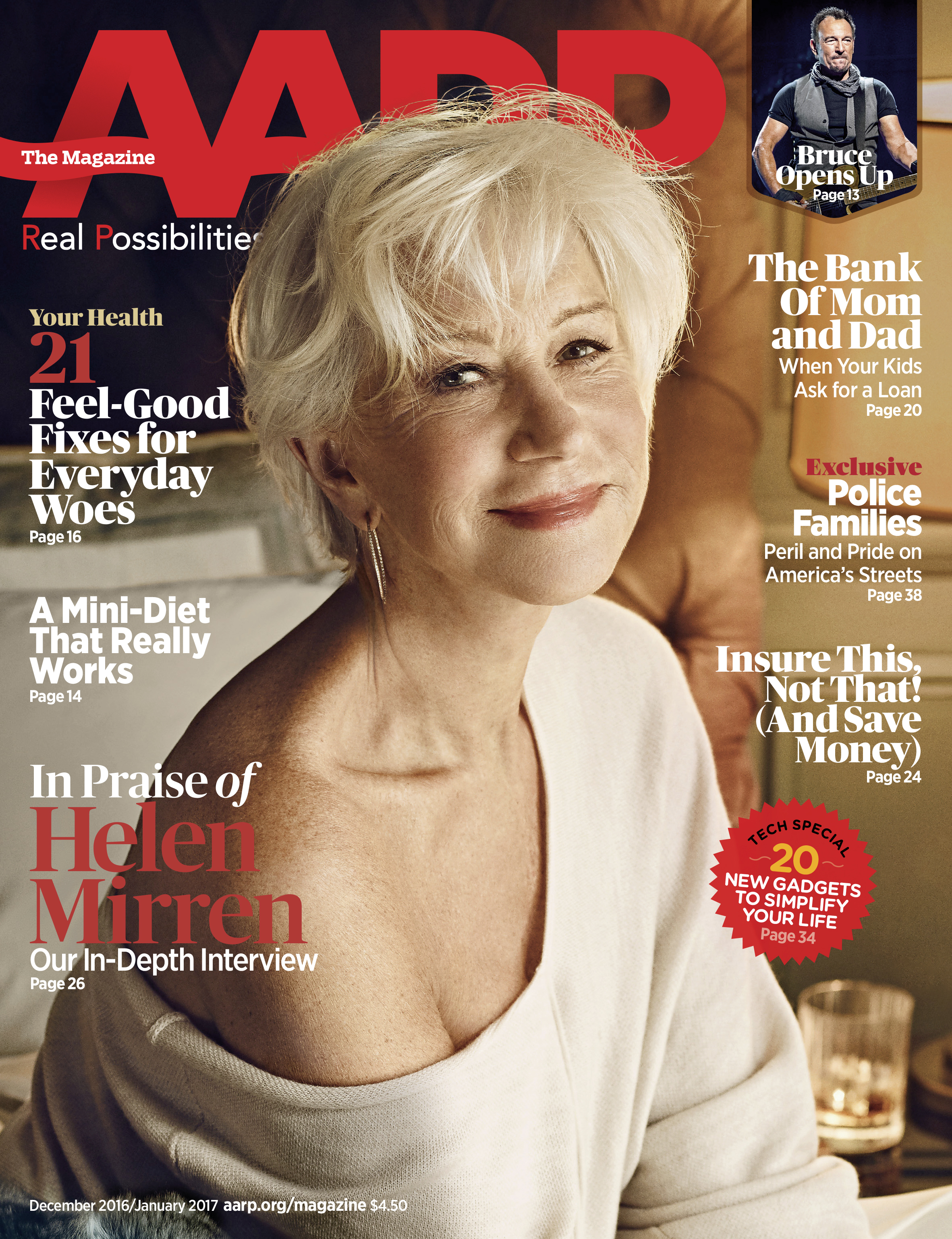
So again, I think that was an example of understanding your audience and not trying to be something that you’re not. And from an editorial standpoint, we started to take a very different direction back then and it’s just continued, and I would say it has become even more accelerated since Myrna (Blyth – editorial director) came onboard, and Myrna brought Bob onboard; the types of people we’re getting on the covers; the types of editorial: Bob Dylan, Bruce Springsteen’s new book; Helen Mirren and Sally Field, somewhat iconic, but still very relevant today, even to younger folks.

Again, I think it comes down to making sure that you’re relevant and I believe our editorial product has done a great job of evolving into a more and more relevant publication. The fact that we do, for the magazine, the age-version, is another USP that enables us to be particularly relevant within the mass number, but the niche audience.

Samir Husni: Is there anything else you’d like to add?

Shelagh Daly Miller: I think the only thing that I’d like to add is that I’ve been in the advertising business now for 31-plus years, with a few years on the agency side, but most of my career has been on the print side. Of course, we took on digital about seven years ago, but I grew up in this business for 31 years, and I’m happy to say that I still wake up every morning with a smile on my face knowing that I’m coming to work. Not necessarily when it’s 13 degrees and I have to get in my car in the mornings. (Laughs)

But I really love what I do and I love this business. And I love the evolution that I’ve had; I’ve been at AARP for 16 years, and I never expected that. Up until that point I had the pretty typical career where every three or so years I moved from title to title, but I really found a home here for a lot of reasons. It’s an amazing brand and it’s an amazing organization that does really great things. We have really terrific high engagement media properties and we have an amazing team of people, which is definitely part of the reason we finally were recognized by Ad Age. This is my family away from home and I do wake up every morning excited to go to work. I know my own peers, my friends, are often envious of me that I still love what I do. It’s just been really fun and I hope to be doing for a while longer.

Samir Husni: If I showed up at your house unexpectedly one evening, what would I find you doing; reading a magazine; reading your iPad; having a glass of wine; cooking: watching television; or something else?

Shelagh Daly Miller: You would definitely catch me cooking; cooking is a passion. You may catch me having a glass of wine while cooking. I have long work days and I travel a lot, so when I am home, I love to cook. And oftentimes you’ll find that you’re not the only guest; my husband and I entertain quite a bit. We love having people over and I love cooking for people.

Samir Husni: My typical last question; what keeps you up at night?

Shelagh Daly Miller: I think this will be a little bit reflective of my personality because I like to think that I’m kind of funny, but frankly, my dog hogging the bed and my husband snoring is really what keeps me up at night. I have a 67 lb. dog and he thinks that he owns the entire bed.

On a business note, I would say that what keeps me up at night is being able to keep up this momentum. We’ve had year after year after year of bucking industry trends; am I going to wake up at some point and it’s all going to come crashing down? That’s something that weighs on me, I’d say. I don’t think that’s going to happen, but it’s something that sticks in the back of my head.

Samir Husni: Thank you.

h1

The Mr. Magazine™ 2017 Manifesto: Make Magazines Great Again…*

January 4, 2017

20172016 RIP. The year that fake news challenged, and in some cases, overcame real news. 2016 showed me, a professor of journalism, how biased media can be in this digital age we live in. However, as a firm believer in the necessity and importance of journalism, the type of journalism that goes beyond just providing content, but rather the kind that creates experiences with its dual audience: readers and advertisers.

Magazines, my area of study and love, are here to remind us that they and, the ones who create them, are much more than content providers; they are journalists first, marketers second and they create and curate in order to engage that dual audience. The only way to create a great magazine for the advertisers is to create a great magazine for the readers.

And that is why Mr. Magazine’s 2017 mantra is “Make Magazines Great Again.”

But how do we do that when they’re already a wonderful platform for reputable information and great entertainment? We amplify and affirm the great characteristics magazines have. Magazine makers need to toot their own horns, announce to the masses at large that magazines and their many brand extensions are here to stay.

In short, we need to make magazines great again in the minds of our audiences first and then advertisers and retailers will follow suit. The Mr. Magazine™ 2017 Manifesto is my honest look at what magazine makers and those in and around the industry can do to achieve that edict.

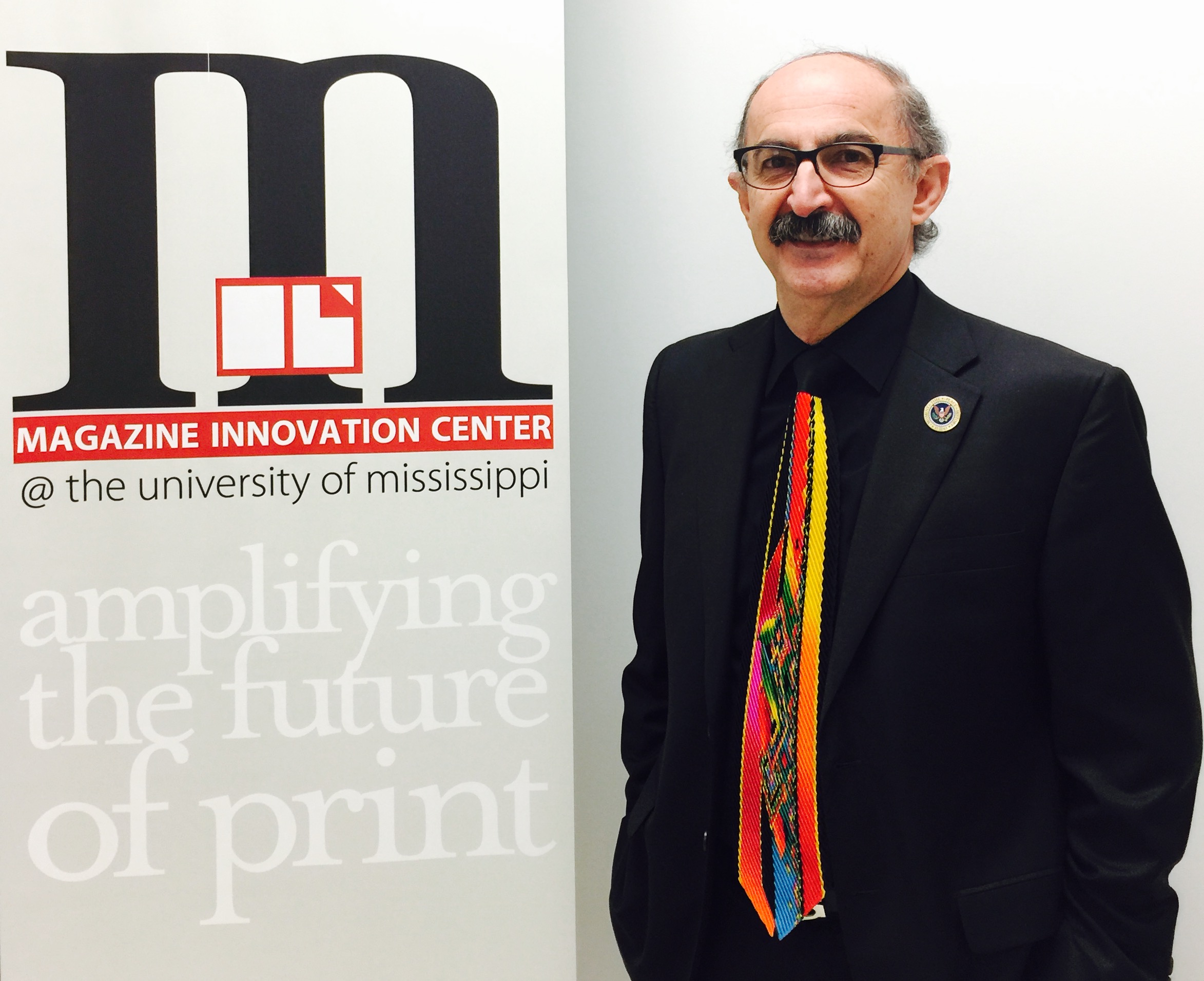
Samir "Mr. Magazine™" Husni, Ph.D., Photo by Austin Dean.

Samir “Mr. Magazine™” Husni, Ph.D., Photo by Austin Dean.

So, join me if you will, celebrating this year’s Mr. Magazine Manifesto:

Make magazines great again: Magazines are much more than content. Magazines are created and curated journalism. They are integrated and collaborative experiences among editor, publisher, advertiser, printer, distributor and reader. To make magazines great again, make the magazine experience great again.

Digital is NOT heaven for print: A magazine that says it is folding its print edition and moving to pure digital is no longer a magazine and chances are it will not only be gone from sight but also from mind. If a magazine can’t survive in print, none of its magazine media will survive. It’s easier to let the magazine go rest in peace than placing it on digital-life support.

Value your magazine: Guess what, if you do not value (and truly show that value) your magazine on your own, do not expect others, including media pundits, to do that for you. They thrive on bad news, you don’t.

Invest in print, in paper and above all in distribution: As you know, in my book, if it is not ink on paper, it is not a magazine. However, today’s magazines must look and feel like collectible items. When pulp magazines reigned, there was no competition. Now, there is no room for cheap paper in today’s marketplace. Print is permanent. But, without a good solid distribution system, magazines will not make it into the hands of readers. Let us in 2017 make retail great again.

Magazines have a life cycle: Like any other created entity, there is a time to be born and a time to die. Smart publishers know when to launch them and they know when to fold them. The cycle of life changes with different titles that come and go, but the magazine as an industry goes on.

No apologies needed: Stop the unnecessary apologies for working in print in a digital age. Ink is a technology and paper is a technology. In fact, ink on paper is a technology everyone continues to imitate, while they produce entities that look and feel like ink on paper. Why invent something that’s already been serving the industry for hundreds of years? Acknowledge that we live in a digital age, but be proud of what print, and only print, can offer.

Challenge the myths: There’s almost the same number of Millennials as there are Baby Boomers in the U.S. (approx. 72 million). Why can’t you treat both the way my 9-year-old grandson Mr. Magazine Jr. suggested when asked which he preferred, his ink on paper book that he was reading or his iPad that he was playing his football game on? “Why do I have to choose?” he asked.

Preach your story: There is a saying in my home state of Mississippi, “If it’s true, it ain’t bragging.” Raise your voice and preach your success story. Every year I name and honor the 30 hottest magazine launches. The industry must do the same. Celebrating the industry’s newborns is as much fun as celebrating the anniversaries of lives well lived.

And last but not least, don’t ignore the bad news… but also don’t let the bad news consume you. For every death announcement there is at least four birth notices. Since I started tracking magazines some 39 years ago, there are at least four times more titles in the marketplace than there was in 1978. So, pick up a magazine, any magazine, and let’s make America read again.

____________________________________________________________________________________
screen-shot-2017-01-04-at-1-55-07-pm* The Mr. Magazine Manifesto has appeared first in minonline: media industry newsletter as it has been the tradition since I started writing the Mr. Magazine™ annual manifestos in 2009.

h1

Linda Thomas Brooks: Making Magazines & Magazine Media Great Again – The Mr. Magazine™ Interview With The President & CEO Of The Association Of Magazine Media (MPA)…

December 21, 2016

Inside The Great Minds Of Magazine Makers…

linda-thomas-brooks-960x960

“I understand the phrase and the sentiment behind “print is not dead,” but what happened is every time somebody, and not only my own team, but our publishers, and I’ve tried to make them aware and we’ve provided a lot of information to them as well, because every time that somebody from the industry said, “print is not dead,” what I think it did is it reinforced the idea that the person they were talking to either did think that print was dead or maybe they should have thought that print was dead. So, all it does is take you backward and reinforces that negative stereotype that actually has no basis in reality.” Linda Thomas Brooks

“I didn’t come here because I’m anti-digital. Digital does some things really, really well. But digital media doesn’t do everything really well. And as advertisers, and again what we’ve seen in conversations last month, consumers have realized that too, and there has to be a mix. So, I’m not here because I’m anti-digital; I’m not here because I’m a Luddite. Many of our magazine brands have fantastic digital properties. But those properties, and that’s why I mentioned the research that we’re looking at right now, resonate more in the marketplace because they’re tied to a magazine brand. That brand, whatever format that it’s on, print, digital, mobile, social; whatever, that brand name is a sure cut to quality to consumers. They know that they can trust it wherever it appears. And so what I want to do is validate the business model that perpetuates those brands, because the quality in those brands is really what this whole thing is about.” Linda Thomas Brooks

mpa-logo-2016The Association of Magazine Media (MPA) has been an advocate for the magazine media industry since its inception in 1919. And for the last year, the helm of the organization has been steered by a woman who believes in media to the fullest, all media, print included. Linda Thomas Brooks has let it be known that the phrase “print is not dead” is one that, while she understands the sentiment behind the term, does not benefit magazine media in any way. By referring to that statement it communicates that at one time print was dead, and in Linda’s own words, that simply has no basis in reality.

I spoke with Linda recently, once while I was in New York City, and just the other day on the phone for this interview. It was without a doubt one of the most productive and inspiring conversations that I’ve had and left me with such an infusion of hope and enthusiasm about the industry that I love and study, I was fairly reeling with excitement. It’s no wonder that the MPA chose her as its leader; her passion for the business and for magazines is totally contagious and magnetic.

Linda has already, in less than one year, made a huge impact on magazine media by amplifying the strengths of magazines with the implementation of the “Magazine Media Tells and Sells” presentations, which has her MPA team members spending time with many member companies and ensuring that their teams are armed with powerful and compelling facts and insights, among many other facets of open communication and research.

Linda believes in promoting and supporting the value of brands and the quality and trust that consumers have for those brands, and elevating the business models that are their foundations. It’s a large responsibility, and not one that she takes lightly, but it is one she welcomes and thrives on.

So, I hope that you enjoy this Mr. Magazine™ interview with a woman who is determined to be an influential and effective voice for the magazine media industry by promoting innovation in all forms of media, but who also believes wholly that the foundation of print is a powerful one, Linda Thomas Brooks, president and CEO, MPA.

But first the sound-bites:

On an accomplishment she’s most proud of in her first year as president and CEO of the MPA: Well, there are two things that come to mind that are similarly related. One is that I’m really excited that we pulled together all of this information from outside leading industry research that points to the way that magazine media works for both advertisers and consumers, and having that broad and deep perspective all in one place and being able to present that both as the MPA and the industry is something that I’m really proud of. And I think it’s something that has started to make a difference for us.

On the biggest challenge that she had to face and how she overcame it: I think the most challenging thing, and this is really funny to say because you know the people involved in this business and they are not generally-speaking a shy group of people, but I think as an industry we got shy for a few years when it came to talking about the benefits of magazine media. And that was something that we had to overcome.

On what she considers to be the top business drivers in magazine media: We have a lot of research that talks about lower funnel and sales; the sales driving ability of magazine media. That’s a business driver; moving to sales. And we have Millward Brown who looks at a lot of different lower funnel metrics, the things that are sort of immediate antecedents to sales, because Millward Brown doesn’t track sales in the same way. We have Nielsen Catalina that does track sales and has over 1,400 case studies that point to print moving packages off of the shelves. And then we have all of the sales guarantee results, where specific campaigns were measured and every, single one of them delivered positive ROI’s for the clients. Back in my days on that side of the desk, being able to tell your client or your boss that you actually sold stuff was a key business metric.

mpa-logo-2016On whether she feels her idea of the magazine media sells and tells presentations are a natural storytelling byproduct of her years involved with the industry: Yes, absolutely. It’s a little bit of both. It’s a hybrid of all of the great storytelling and information that I can pull from my members and really amazing people. When I first came onboard, I just went out and talked to all of them. How did they talk about it? What words did they use? What information did they have? So, absolutely; I begged, borrowed and stole all of their good ideas from all of our member companies.

On removing both phrases “print is not dead” and “print is dead” from her team’s vocabulary: What we wanted to do was to give our members the language to talk about what does work and what are the compelling properties of print. Luckily for us, not only did we develop some language and awareness around that, but in the last month and a half, the whole world has come to where we are. All of those messages that we were saying about quality information, professionally-edited, written and researched, produced and curated content and the value of that media ecosystem? That’s all anybody is talking about right now. So, it’s like the whole world came to where we are.

On what’s next for her and the MPA: I think part of what’s next will be based in where we’ve been and we’ve had to be very careful about how we think about that information. In my past I’ve written, I don’t know how many hundreds, probably thousands, of strategic communication plans and we’ve really been thinking about tells-and-sells and the research and all of the information that we’ve been sharing sort of as a strategic communications plan, because we’ve been doing it for a year and the danger is that we start to get tired of it, but the fact of the matter is, there’s a lot of people who are still hearing it. And sometimes, because the information is a little bit different than what they expect, they need to hear it more than once before it totally sinks in.

On if and why she thinks the magazine medium isn’t promoted as it should be: I think there are a whole bunch of different reasons; I used shy because you know the executives of all of our companies, and I don’t think they’re a group of people that are generally scared about much. (Laughs) I think in part because the value of the medium had been so long established that sometimes you forget to talk about how good you are because you assume everybody already knows it. So, I think that it was a whole mix of reasons. I’m not that worried about looking backward and asking did publisher “A” send the wrong message, or did they do something wrong? It doesn’t matter; they did what they did and we’re here now and we have to figure out how to talk about the value of it going forward.

On whether she thinks the major success of some magazine titles should be a good base for promoting future storytelling: Absolutely. The both good and bad thing for me is that there are so many stories to tell. You mentioned The Magnolia Journal and the launches that have come from Hearst and there is great news at The Economist, their subscriptions were going up sort of crazily post-election; it’s like everywhere you turn there are interesting and really good stories to tell. So, there is no shortage of ways that we see consumers reacting to what is happening in the marketplace.

On when she was offered the job at the MPA she knew immediately it was the job for her or she had to ask herself if she really wanted to do it: (Laughs) Well, it’s funny because to be honest when I first got the phone call on this job, I thought that some of our board members, who I’ve known over the years, were calling me to help make some connections or get some names, so it didn’t actually occur to me that they were calling me for this job, because I’ve never been a publisher; I’ve never run a trade association, and I had been either mostly or fully digital in my jobs for the last ten or twelve years. And so it was a lovely and very fantastic surprise, but it definitely was a surprise when I found out that they did actually want me to come and talk to them about this job.

On whether she feels that her digital background may be just what the world of print needed when it comes to leading the MPA: I didn’t come here because I’m anti-digital. Digital does some things really, really well. But digital media doesn’t do everything really well. And as advertisers, and again what we’ve seen in conversations last month, consumers have realized that too, and there has to be a mix. So, I’m not here because I’m anti-digital; I’m not here because I’m a Luddite.

On what someone would find her doing if they showed up unexpectedly to her home one evening: In my dream life you’d find me cooking a wonderful dinner and enjoying a glass of wine and relaxing. The reality is I have two kids at home, so usually I’m running around to their activities or helping them with just the logistics of their lives. They’re both old enough that I’m not really helping them with homework, but just logistics.

On what keeps her up at night: I found a button recently at a bookstore and it said, “Make America read again.” And everything that’s happened in the last couple of months has really made me reflect on how people get information, how people assimilate information and how they value information. And I guess what keeps me up is, wanting to make sure that people continue to value the learning, understanding and the perspectives that we can have on our place in the world by getting that kind of information.

And now the lightly edited transcript of the Mr. Magazine™ conversation with Linda Thomas Brooks, president and CEO, MPA.

Samir Husni: You’re nearing your first anniversary as president and CEO of the MPA (The Association of Magazine Media).

Linda Thomas Brooks: Yes, it’s coming up at the end of January.

Samir Husni: If you reflect on your first year at the MPA and select one thing that you’d like for people to know that you’ve accomplished, what would you share with them?

Linda Thomas Brooks: Can I have two?

Samir Husni: (Laughs) Yes, it’s Christmas; you can have two.

linda-thomas-brooks-960x960Linda Thomas Brooks: (Laughs too). We just started and I’m already breaking all the rules. Well, there are two things that come to mind that are similarly related. One is that I’m really excited that we pulled together all of this information from outside leading industry research that points to the way that magazine media works for both advertisers and consumers, and having that broad and deep perspective all in one place and being able to present that both as the MPA and the industry is something that I’m really proud of. And I think it’s something that has started to make a difference for us.

And the other thing that’s sort of related and that I’m proud of is all of our members who have recently been doing a very good job of working together and pulling together have been very unified in talking about this and presenting this and incorporating it into their information, so it’s not just me doing my thing, or the MPA staff out there; it’s the entire industry being unified and proud of what they stand for. And that makes me really excited.

Samir Husni: So, not wanting people to think that your first year was just simply a walk in a rose garden, what was the most challenging thing that you had to face and how did you overcome it?

Linda Thomas Brooks: It was totally a walk in a rose garden for the entire year. (Laughs)

Samir Husni: (Laughs too).

Linda Thomas Brooks: No, I think the most challenging thing, and this is really funny to say because you know the people involved in this business and they are not generally-speaking a shy group of people, but I think as an industry we got shy for a few years when it came to talking about the benefits of magazine media. And that was something that we had to overcome.

The other hard part, which will be a continuing effort for the coming year, is getting advertisers and agencies focused on the right metrics; focused on a measurement that really drives to sales effectiveness and driving business results for them. And that’s what all of our research points to. But you know there are a lot of different conversations happening every day in the industry about view ability and an incredibly high number of impressions and what that means, and people get derailed a little bit. Frankly, it’s been harder than I thought sometimes to get people focused on the real business drivers.

Samir Husni: In your opinion, what do you consider the top business drivers?

Linda Thomas Brooks: We have a lot of research that talks about lower funnel and sales; the sales driving ability of magazine media. That’s a business driver; moving to sales. And we have Millward Brown who looks at a lot of different lower funnel metrics, the things that are sort of immediate antecedents to sales, because Millward Brown doesn’t track sales in the same way. We have Nielsen Catalina that does track sales and has over 1,400 case studies that point to print moving packages off of the shelves. And then we have all of the sales guarantee results, where specific campaigns were measured and every, single one of them delivered positive ROI’s for the clients. Back in my days on that side of the desk, being able to tell your client or your boss that you actually sold stuff was a key business metric.

And then on top of that if you go back up the funnel, what print is also good at is essentially filling the top of the funnel; awareness and consideration. And I think what a lot of clients have seen, and that you’ve seen in these recent announcements from P&G and others, that they sort of overspecialized or over targeted and they basically focused too much on in market buyers and forgot to put anybody back in the top of the funnel. And we know from the research that print is good at both. Therefore, print can help you move your in market people to sales, but it can also establish that awareness and consideration in those upper funnel metrics, so it helps you in both the short and the long-term.

Samir Husni: I’ve talked to some people in the industry within the last year and I’ve heard a lot of compliments to you regarding the show-and-tell or the magazine media tells and sells presentation; you’ve done more than 100 of those presentations, to clients, agencies, leaders in the industry and decision-makers. Do you think this idea came to you as a natural storyteller? Magazine people are storytellers, so do you feel as though you’re taking a page from your own involvement with the magazine industry when you do those presentations?

Linda Thomas Brooks: Yes, absolutely. It’s a little bit of both. It’s a hybrid of all of the great storytelling and information that I can pull from my members and really amazing people. When I first came onboard, I just went out and talked to all of them. How did they talk about it? What words did they use? What information did they have? So, absolutely; I begged, borrowed and stole all of their good ideas from all of our member companies.

Then in addition, prior to coming to the MPA, I spent my entire life on the other side of that desk, so I knew what kind of information resonated. I knew that you needed outside voices and industry-leading research; it’s not enough for me to go to a client and say that I believe this. Or even that my members believed it. What they needed was that research credibility and those data points that they could look at and say, wow, this is real. So, it’s a combination of everything that my members offered and my own background knowing how skeptical I was when I was on the buy side, of information that came in and what information did I need to share with people.

Samir Husni: When I was visiting your office recently while I was in New York, you mentioned something that really stuck with me; you said that you don’t even allow your team to use the phrase “print is not dead,” let alone “print is dead.” You took both phrases from the vocabulary. Can you expand a bit more on that?

Linda Thomas Brooks: I understand the phrase and the sentiment behind “print is not dead,” but what happened is every time somebody, and not only my own team, but our publishers, and I’ve tried to make them aware and we’ve provided a lot of information to them as well, because every time that somebody from the industry said, “print is not dead,” what I think it did is it reinforced the idea that the person they were talking to either did think that print was dead or maybe they should have thought that print was dead. So, all it does is take you backward and reinforces that negative stereotype that actually has no basis in reality.

So, what we wanted to do was to give our members the language to talk about what does work and what are the compelling properties of print. Luckily for us, not only did we develop some language and awareness around that, but in the last month and a half, the whole world has come to where we are. All of those messages that we were saying about quality information, professionally-edited, written and researched, produced and curated content and the value of that media ecosystem? That’s all anybody is talking about right now. So, it’s like the whole world came to where we are.

Samir Husni: It’s refreshing to hear that coming from the head of the leading magazine media group in the country. Now, as you look forward, you have a good list of accomplishments that you’ve worked with your team and the membership to achieve, as you outlined very well in your letter to the members. What’s next for Linda and the MPA? What’s going to be your big headline for 2017?

Linda Thomas Brooks: I think part of what’s next will be based in where we’ve been and we’ve had to be very careful about how we think about that information. In my past I’ve written, I don’t know how many hundreds, probably thousands, of strategic communication plans and we’ve really been thinking about tells-and-sells and the research and all of the information that we’ve been sharing sort of as a strategic communications plan, because we’ve been doing it for a year and the danger is that we start to get tired of it, but the fact of the matter is, there’s a lot of people who are still hearing it. And sometimes, because the information is a little bit different than what they expect, they need to hear it more than once before it totally sinks in.

So, we’re not going to walk away from what we’ve been saying and what we’ve been talking about, I’m starting to hear it back in the marketplace, but I don’t think we’ve worn it out yet.

That being said, we will also have a lot of new information that gets added. We’re in the midst of reviewing some research that comes from comScore that talks about premium digital display and anything that our publishers are producing and selling to their premium bucket. And you’re looking at the ad effectiveness of that over everything else out there and the differential is enormous.

We’re finishing a review of that, so that information will get added. And we have some other research partners who are talking to us about some other ideas they have or information that they have, so it’ll sort of be rooted in things you’ve seen and then we will continue to evolve as we have new credible information that points to more ways that magazine media works.

Samir Husni: Part of the magazine media mix, other than focusing on the audience and the reach, is to me the livelihood of the magazines; the ever-changing nature of the actual, printed magazine and its titles. When I did the interview with the folks from Hearst, they have magazines that have been published continuously for 170 years.

Linda Thomas Brooks: I know; isn’t that incredible?

Samir Husni: So, why do you think the industry as a whole failed, and excuse me if I use the word fail, but failed in promoting this idea of not only longevity, but of the entire industry, not necessarily specific titles? I’m reading a letter from the editor of Coronet magazine from when it was relaunched in 1961, talking about the dynamics of a magazine. “It passes through many heads and hands: writers, artists, editors, engravers, printers, distributors, dealers.” And then at the end of the day when I have this magazine I can say that this is my magazine. That sense of ownership. You used the word “shy,” but was it really shyness or we were scared? Why do you think we don’t promote the medium as it deserves to be?

Linda Thomas Brooks: I think there are a whole bunch of different reasons; I used shy because you know the executives of all of our companies, and I don’t think they’re a group of people that are generally scared about much. (Laughs) I think in part because the value of the medium had been so long established that sometimes you forget to talk about how good you are because you assume everybody already knows it.

And I think they’ve all been trying to evolve and figure out what the right mix is. Nobody is just relying on their printed properties anymore; they’re trying to reflect what the consumers of their specific title wants, and what formats they are going to go to.

So, I think that it was a whole mix of reasons. I’m not that worried about looking backward and asking did publisher “A” send the wrong message, or did they do something wrong? It doesn’t matter; they did what they did and we’re here now and we have to figure out how to talk about the value of it going forward.

Samir Husni: And going forward, when you hear stories from Meredith, with The Magnolia Journal or Hearst with the Food Network magazine, and how much success those titles have garnered, and I don’t know if their own expectations were as high as the market delivered, but do you think we are going to start selling those success stories? You’re a storyteller; do you think that should be a good base for some great storytelling?

Linda Thomas Brooks: Absolutely. The both good and bad thing for me is that there are so many stories to tell. You mentioned The Magnolia Journal and the launches that have come from Hearst and there is great news at The Economist, their subscriptions were going up sort of crazily post-election; it’s like everywhere you turn there are interesting and really good stories to tell. So, there is no shortage of ways that we see consumers reacting to what is happening in the marketplace.

And that’s both good news and bad news for me because there’s all of this input and we have to figure out how to help our members get all of that out into the world.

Samir Husni: When you were first offered this job; what did you think? Was it, wow, that’s definitely the job for me, or did you ask yourself if you really wanted to do this?

Linda Thomas Brooks: (Laughs) Well, it’s funny because to be honest when I first got the phone call on this job, I thought that some of our board members, who I’ve known over the years, were calling me to help make some connections or get some names, so it didn’t actually occur to me that they were calling me for this job, because I’ve never been a publisher; I’ve never run a trade association, and I had been either mostly or fully digital in my jobs for the last ten or twelve years.

And so it was a lovely and very fantastic surprise, but it definitely was a surprise when I found out that they did actually want me to come and talk to them about this job. (Laughs again) At the same time, and I’ll give you a story, Samir, that some of my team knows, but one that I haven’t talked about very broadly. At the same time that the MPA board members were talking to me about this job, somebody else had approached me about something else that was very interesting to me. And I took some time over the holidays; it was about this same time last year, and tried to clear my head, and I was spending time with my family, and a lot of people who know me know that I’m a runner and that’s when I get a lot of my ideas. So, what I was doing sort of unfiltered was I’d go for a run and then I’d come home and I’d write down all of the ideas that I’d had while I was running. And I’d do this for both jobs that I’d been offered.

At the end of a week of holiday time and being with my parents, everybody in my family is a runner, so we usually get a lot of miles in; the number of ideas and thoughts and potential initiatives that I had on this MPA job versus the other job was, the ratio was about eight to one.

There were just so many things that excited me and so many ideas that I’d had about ways that we could bring the story of this industry to life, and I think when you were here that I mentioned I had studied journalism as an undergrad and I was a newspaper journalist very early in my career. And I had such an inherent respect for the work that all of our members represent. And at the end of that week I looked at two yellow pads of what I could do at the MPA and what I could do at the other job, and I said I have to do this. And that’s what did it. A lot of running on the trail with my parents and my family and I came out of that week saying that I’ve got to go to the MPA.

Samir Husni: The magazine industry is lucky to have somebody like you, and I’m really, I don’t want to say that I’m taken aback, but it’s so funny because after your ten years in digital; it seems that you appreciate print more than some of the people who have been in print for decades. Maybe it needed somebody with a digital background to see what print has to offer.

Lina Thomas Brooks: And I didn’t come here because I’m anti-digital. Digital does some things really, really well. But digital media doesn’t do everything really well. And as advertisers, and again what we’ve seen in conversations last month, consumers have realized that too, and there has to be a mix. So, I’m not here because I’m anti-digital; I’m not here because I’m a Luddite.

Many of our magazine brands have fantastic digital properties. But those properties, and that’s why I mentioned the research that we’re looking at right now, resonate more in the marketplace because they’re tied to a magazine brand. That brand, whatever format that it’s on, print, digital, mobile, social; whatever, that brand name is a sure cut to quality to consumers. They know that they can trust it wherever it appears. And so what I want to do is validate the business model that perpetuates those brands, because the quality in those brands is really what this whole thing is about.

Samir Husni: And no one can deny that we live in a digital age.

Linda Thomas Brooks: Of course, but you know what? I’ve become an enormously popular person on planes, but other places too, because I always have magazines with me. And I look at them because I want to see what our members are doing. And if I’m on a plane, I often give them to my seatmates or the flight attendant. And to be honest, you’re not giving them a really high-ticket gift, it’s not like when I was at General Motors; I’m not giving out cars. (Laughs)

Samir Husni: (Laughs too).

Linda Thomas Brooks: I’m giving somebody something that costs a few dollars, but people get so excited and they either say they’ve never seen that particular title before, or they haven’t seen it in a while, but they get really excited about the content and what’s there. I get to be Santa Claus every time I go out, which is really, really fun. And you can see how much people value that content, so hopefully I’m doing my part when it comes to reintroducing them to magazines that they haven’t seen in a while. And again, I think the world is coming to us because they’ve figured out as the media ecosystem has gotten more and more populated and fuller, people are finding out that not every voice out there is delivering quality content. If you’re looking for a credible source and you only have a short time to find that; you’re probably not going to susan.com because you don’t know if she’s reputable source or not, no matter how much you love the site. Magazines are curated content that people trust.

Samir Husni: If I showed up unexpectedly at your house one evening, what would I find you doing; reading a magazine; having a glass of wine; reading your iPad; cooking; or something else?

Linda Thomas Brooks: In my dream life you’d find me cooking a wonderful dinner and enjoying a glass of wine and relaxing. The reality is I have two kids at home, so usually I’m running around to their activities or helping them with just the logistics of their lives. They’re both old enough that I’m not really helping them with homework, but just logistics.

I usually do wind down in the evening with reading. That’s my time. And oftentimes my boys will be sitting on the couch with me and we all read. They usually read books, but they do like the magazines that I bring home. I read a fair number of real books every year and try to set some goals for myself, but I also love reading the magazines. It kind of depends on how much time I have. And one thing you’ll find all over my house is bookcases and baskets; we have a lot of reading material at our house.

Samir Husni: My typical last question; what keeps you up at night?

Linda Thomas Brooks: I found a button recently at a bookstore and it said, “Make America read again.” And everything that’s happened in the last couple of months has really made me reflect on how people get information, how people assimilate information and how they value information.

I learned very early on from my grandfather, who was not really a man of financial means by any stretch, but he was always reading. He read books. Most of which he bought at a used bookstore in Chicago, because again, he wasn’t a man of means and books were very dear to him. And because of his own limitations and his family, he didn’t get to have the education that he wanted, but he always talked about how much he could keep learning. He could take responsibility for his own education by reading. And he shared those books with us and he shared ideas with us. And I’ll never forget he used to point to his forehead and say, “Whatever you put in here, nobody can ever take away from you.”

And I guess what keeps me up is wanting to make sure that people continue to value the learning, understanding and the perspectives that we can have on our place in the world by getting that kind of information.

Samir Husni: Thank you.

h1

Brooklyn Magazine: Born From The Womb Of Its Mother, The L Magazine, This Artistically-Focused Magazine With A Regional Title Is Much More Than A Dart On A Map As It Showcases The Creative Movement That’s Alive & Well And Living In Brooklyn – The Mr. Magazine™ Interview With Daniel Stedman, Co-Founder and Publisher, Brooklyn Magazine

December 20, 2016

p1328273718-4

“In 2015 we decided that even though The L Magazine was still successful, and it was a difficult decision to make, but the decision was just really based on where we put the time and attention of the people in our office. And we thought that we should increase the circulation of Brooklyn magazine from four times a year to ten times per year, and end the print run of The L Magazine. And so we just did it. So that’s really the story of the birth of The L Magazine and the genesis of Brooklyn magazine and their eventual merger into a now 10-times-per-year, full sized, glossy Brooklyn magazine.” Daniel Stedman

Brothers Daniel and Scott Stedman are two very busy young men. As publishers of The L and Brooklyn magazines; organizers of the annual Northside Festival and Taste Talks, which showcases the culinary cutting edge food movement emerging in Brooklyn; publishers of the BAMbill in partnership with BAM (Brooklyn Academy of Music) which is a program guide distributed to all attendees of theater, dance and music performances at the Brooklyn Academy of Music and its three performing arts venues, it’s very easy to see that the Brothers’ Stedman have their fingers on the pulse of culture that is blossoming and growing in Brooklyn.

Recently, I spoke with co-founder and publisher of Brooklyn magazine, Daniel Stedman. Daniel and I talked about the challenges and triumphs of producing a print publication in this digital age. And while sometimes the challenges seem insurmountable, the magazine has basically thrived since its launch, and is a showcase of the rich, artistic lifestyle that encompasses all of the artisans, from writers to painters to musicians, that live in the cultural hub of Brooklyn, New York. And while the magazine is regionally directed and titled, its lifestyle touch is strong and exceptionally far-reaching to any and all that are fascinated by the Brooklyn artistic community movement.

So, I hope that you enjoy this Mr. Magazine™ interview with a man who is constantly thinking and planning the next big thing that can move his brand and his company forward, from events to new publications, Daniel Stedman, co-founder and publisher, Brooklyn magazine.

But first the sound-bites:

brooklyn

On how The L Magazine became Brooklyn: We both (Daniel and his brother Scott) moved to Brooklyn and felt like there were no media in all of New York City for us and the people like us; young creatives who were living in Brooklyn. We got this idea to launch a print publication that would service the creative communities of Brooklyn and Manhattan downtown, and it was probably one of the worst times in the history of the world to launch a print publication, but it happens to be the best time in our country to capture a really nascent, creative community and to be kind of the first media outlet for what was developing as one of the new creative epicenters of the world. And in 2015 we decided that even though The L Magazine was still successful, and it was a difficult decision to make, but the decision was just really based on where we put the time and attention of the people in our office. And we thought that we should increase the circulation of Brooklyn magazine from four times a year to ten times per year, and end the print run of The L Magazine. And so we just did it. So that’s really the story of the birth of The L Magazine and the genesis of Brooklyn magazine and their eventual merger into a now 10-times-per-year, full sized, glossy Brooklyn magazine.

On whether the fact that Brooklyn is more of a lifestyle magazine than a regional was intentional: Brooklyn magazine is really a lifestyle publication for the Brooklyn enthusiast or the Brooklyn lover, or anybody nationally or worldwide who’s inspired by the creative culture that comes from Brooklyn, and also coverage of the national and global communities that also inspire Brooklyn.

On whether he enjoys the role of editor or publisher more: My brother was initially our editor and then became our publisher. And in the early years of our launch I was 100 percent focused on sales. I can say that for myself personally, my creative passion lies in creating things. I love to make things. I have a lot of ideas, mostly bad. Sometimes I joke that my job is to come up with bad ideas, and as many bad ideas that I can possible come up with, the better that I’m doing my job. And then it’s the responsibility of some of the people around me who I trust to pick the good ones out of the bad.

On the biggest stumbling block he’s had to face and how he overcame it: Certainly, the one that I might point out would be from 2008/2009 when the financial crisis hit us really hard and we were able to create a strategic partnership with one of our biggest vendors. We had a conversation with a vendor that we relied most upon as a company and were able to say that if they helped us through that terrible period they would be able to keep us as a client for a long time, but if they couldn’t help us they would unfortunately lose our business because we may be going out of business ourselves.

On the most pleasant moment that he’s had: That’s a great question. I can say that over these 14 years all of my best friends have been people that I work alongside. And work for me has always been a pleasant place to go because of the people who are there and the culture that I think we’ve worked very hard to foster.

daniel-stedman-home-1On what someone would find him doing if they showed up unexpectedly to his home one evening: I’m starting a family, so I’m playing with my young child, and I have one on the way. Me personally; a little bit of very low-volume fingerpicking is my favorite meditation; I love playing guitar. I always hope that no one can hear it; I don’t have any aspirations to do that publicly, it’s just a hobby. I’m also a chess player; I love to play chess. I’m a bit of a stargazer too. I love to look at the sky and I love spirituality or non-spirituality of life and physics that inspires; or I’m grinding away at some personal or professional creative idea.

On what keeps him up at night: The state of our country has currently and truly been keeping me up at night, but I’m sure that I’m not alone in that fact. The challenges of being a small business owner and meeting payroll, and making my office a really employee-first and pleasant place to work, and probably a lot of distractions about things that I want to happen with my company that are probably a healthy mix of realistic and unrealistic plans. I want something to happen, but I don’t acknowledge or see that it’s unrealistic, or I’m kept up at night by something totally realistic that just isn’t happening for one reason or another.

And now the lightly edited transcript of the Mr. Magazine™ interview with Daniel Stedman, co-founder and publisher, Brooklyn magazine.

Samir Husni: You and your brother Scott began The L Magazine and then later the publication morphed into Brooklyn Magazine; tell me about this transition from one magazine into another and how the two became one.

brooklyn-3Daniel Stedman: I was making short films at the time and my brother, Scott, was a freelance writer for MIT Technology Review, and we both moved to Brooklyn at the same time. Many of the creative people of our generation were moving to New York City and I always loved this John Lennon quote, which is: “If I’d lived in Roman times, I’d have lived in Rome.” And New York City is the “Rome” of today.

And so I think that 10 or 15 years ago, even 20 years ago, New York City was this magnet for all of these young creatives, musicians, filmmakers, poets, artists and writers. And later on, the technologists were seen as part of the creative class; developers are now part of that creative class, but New York City was what drew us in. And Brooklyn just happened to be the place where everybody could find an affordable place to live, people were moving to Greensburg, Red Hook or Carroll Gardens, so we both moved to Brooklyn at the same time.

And I think my brother had the dream of starting a magazine and I had the dream of being a filmmaker. We had both I guess you might say developed our sense of independence by doing the Study Abroad program. We had lived in Paris at the same time and he had lived in Berlin, and we found that there were these digest-sized event guides in Paris; there were Pariscope and l’Officiel des spectacles.

We both moved to Brooklyn and felt like there were no media in all of New York City for us and the people like us; young creatives who were living in Brooklyn. There was the Village Voice, which was at the time our source for leftwing news, but it was kind of unwieldy in its size, and of course the back page ads that we did early on associate with. And then there was Time Out New York, which felt like something at the time that would be on your uncle’s coffee table in the Upper East or West side, but no media whatsoever across the board was doing any regular coverage of the cultural moment happening in Brooklyn.

Scott and I got this idea for The L Magazine, which admittedly has been a difficult brand name over time; people thought it was a lesbian magazine, or people have confused it with Elle, the fashion magazine, but the significance of the name I think was always appropriate in the subway that connected Greensburg with the East Village, or you could say more broadly, one of the trains connecting Brooklyn and downtown.

So, we got this idea to launch a print publication that would service the creative communities of Brooklyn and Manhattan downtown, and it was probably one of the worst times in the history of the world to launch a print publication, but it happens to be the best time in our country to capture a really nascent, creative community and to be kind of the first media outlet for what was developing as one of the new creative epicenters of the world. The same way that Austin had its creative moment and Haight-Ashbury in San Francisco had its creative moment, The L Magazine really was the first media that was capturing this creative moment of Brooklyn. But it was a terrible time to launch a print publication.

When we launched we thought that we would break even or be profitable like on local, classified advertising alone, and of course this was the year, 2003, that classified advertising potentially disappeared from print because of Craigslist and other things like it.

brooklyn-1So, we did launch the magazine, 26 times per year, with a pretty significant circulation, and year after year we hit our singles; we hit our doubles; we had our triples and our homeruns, and managed to keep our print operation going, and at the same time we started doing large scale events. We first did the outdoor movies in Williamsburg in the abandoned, graffiti-covered McCarren Park pool, which that year Rolling Stone I believe called the “coolest venue in the country.” And then we launched our Northside Festival and we eventually launched Taste Talks, our food content, and we had always struggled with the brand name of The L Magazine and the confusion of it and the web URL. The name was just always a struggle.

Our magazine was always something that when we would tell people the name, The L Magazine, and they would always react the same; they didn’t recognize the magazine. Then we’d show them a copy of it and they’d remember it and know it. It had pretty wide recognition, but it still had these significant name struggles.

So, one day we had this idea. Brooklyn was really becoming a thing and advertisers didn’t just want our downtown Manhattan circulation, they wanted our Brooklyn circulation too and people wanted Brooklyn; people liked Brooklyn and even though the artists and writers had been in Brooklyn for decades, we were starting to find that advertisers, and companies that really surprised us were starting to be excited by our Brooklyn readership. And that was when we decided to launch Brooklyn magazine; no one else was doing it.

Around the time that we launched The L Magazine, there were a handful of other full-sized, glossy Brooklyn magazines. There was Brooklyn’s Bridge magazine and there was BKLYN magazine, and there has been some history of other people doing Brooklyn magazines, but both Brooklyn’s Bridge and BKLYN, the two other Brooklyn, full-sized glossies, had both gone out of business, but we thought that we could do it. We thought that we could just do Brooklyn magazine; no one was doing it; the trademark was available.

We decided to launch Brooklyn magazine as a quarterly. It launched successfully and profitably. At a certain point we as a company were getting so deep into our events business, and we are also doing custom publishing; we publish the program guides for BAM (Brooklyn Academy of Music) and The Joyce Theater and Playwrights Horizons, and we began to look at our publishing calendar and realize that between The L Magazine, Brooklyn magazine and our custom publishing, we had something between 50 and 60 print deadlines per year.

And in 2015 we decided that even though The L Magazine was still successful, and it was a difficult decision to make, but the decision was just really based on where we put the time and attention of the people in our office. And we thought that we should increase the circulation of Brooklyn magazine from four times a year to ten times per year, and end the print run of The L Magazine. And so we just did it. So that’s really the story of the birth of The L Magazine and the genesis of Brooklyn magazine and their eventual merger into a now 10-times-per-year, full sized, glossy Brooklyn magazine.

Samir Husni: When you look at Brooklyn magazine, it doesn’t really have the feel or appearance of a city magazine; it’s more about capturing that artistic movement in Brooklyn. Was that the intention? Although the name is one of a regional title, the magazine is much more than that; are you intentionally keeping it more of an artistic publication just for Brooklyn, or do you have plans to make the magazine nationwide or even global?

daniel-stedman-2Daniel Stedman: Brooklyn magazine is really a lifestyle publication for the Brooklyn enthusiast or the Brooklyn lover, or anybody nationally or worldwide who’s inspired by the creative culture that comes from Brooklyn, and also coverage of the national and global communities that also inspire Brooklyn.

I will say that as a family-run company, national and international distribution is a tricky and expensive game. We do have a national and an international audience, but relationships with national and international distributors is something of a club that has a certain barrier to entry.

Samir Husni: You’re the editor and you’re the publisher; you and your brother do almost everything. Both The L Magazine and Brooklyn were based on passion, rather than a structured business plan.

Daniel Stedman: (Laughs) Yes, existentially and much to our surprise, but yes. In many ways, you’re right.

Samir Husni: (Laughs too) Which do you enjoy more, being the chief creator/editor or being the publisher?

Daniel Stedman: My brother was initially our editor and then became our publisher. And in the early years of our launch I was 100 percent focused on sales. I can say that for myself personally, my creative passion lies in creating things. I love to make things. I have a lot of ideas, mostly bad. Sometimes I joke that my job is to come up with bad ideas, and as many bad ideas that I can possible come up with, the better that I’m doing my job. And then it’s the responsibility of some of the people around me who I trust to pick the good ones out of the bad.

I’ve never been an editor, but I do have a passion for taking ideas and bringing them to life and hopefully, knock on wood, they’re successful from a creative perspective and obviously from a business perspective we didn’t launch a print publication because we thought that it would make us rich, but to a certain degree if your ideas don’t generate revenue then they cease to exist.

Samir Husni: What has been the biggest stumbling block for you throughout this magazine journey and how did you overcome it?

brooklyn-2Daniel Stedman: Certainly, the one that I might point out would be from 2008/2009 when the financial crisis hit us really hard and we were able to create a strategic partnership with one of our biggest vendors. We had a conversation with a vendor that we relied most upon as a company and were able to say that if they helped us through that terrible period they would be able to keep us as a client for a long time, but if they couldn’t help us they would unfortunately lose our business because we may be going out of business ourselves.

One of the biggest challenges that we had was that moment. That moment when we were really facing the question of what were we going to do; we may have to go out of business. But we were able to form a strategic partnership with our biggest vendor to get us through that period.

Samir Husni: And you resolved that challenge by going with the vendor?

Daniel Stedman: We basically resolved it in the form of an investment. We actually got our vendor to be an investor so that we could get through that period. And it ended up being a great experience for us because you always want your investor to offer more to your company than just their money; you want their knowledge, support and skills. Ideally, any investor is more of a strategic partner and has skills that the company needs, than just providing money to your company. And that turned out to be the case. A vendor is a great place to go; your biggest vendors are probably going to have a very strong skillset in your field.

So, we had our vendor come on as an investor and they helped us financially, but also with their business acumen. And even to this day that’s a very important relationship and somebody that I can say helped to save our company.

Samir Husni: And what has been the most pleasant moment since you began this journey?

brooklyn-4Daniel Stedman: That’s a great question. I can say that over these 14 years all of my best friends have been people that I work alongside. And work for me has always been a pleasant place to go because of the people who are there and the culture that I think we’ve worked very hard to foster.

And there are times that it’s not easy to foster a great culture, because culture can mean so many different things. Things like our 10th anniversary; I just remember that as a great moment because it was a celebration of a great milestone with all of my best friends who were obviously there because they weren’t my best friends who I invited to the party, they were my colleagues.

And another thing that I might add is that sometimes I wish that we were a company with one product and one mission that did it better than anybody, but we’re not. We’re a company that does a few different things; we have a couple different large scale festivals and we have a few different media brands. We’re always starting something new. This past year we launched a large scale food award show at BAM (Brooklyn Academy of Music) in the opera house, and we also expanded our Taste Talks festival to a new city, to L.A. The actual genesis of new programs is always exciting and a little bit hard to believe. I remember when the press release came out that announced we were doing it; I literally couldn’t believe it. I knew it was happening; I helped write the press release, but when I saw it go out I had a moment of actual disbelief. So, I have those moments of disbelief and joy at the birth of and the realization of every new idea.

Samir Husni: If I show up one evening unexpectedly to your home, what do I find you doing; reading a magazine; reading your iPad; having a glass of wine; watching television; or something else?

Daniel Stedman: I’m starting a family, so I’m playing with my young child, and I have one on the way. Me personally; a little bit of very low-volume fingerpicking is my favorite meditation; I love playing guitar. I always hope that no one can hear it; I don’t have any aspirations to do that publicly, it’s just a hobby. I’m also a chess player; I love to play chess. I’m a bit of a stargazer too. I love to look at the sky and I love spirituality or non-spirituality of life and physics that inspires; or I’m grinding away at some personal or professional creative idea.

Samir Husni: My typical last question; what keeps you up at night?

Daniel Stedman: The state of our country has currently and truly been keeping me up at night, but I’m sure that I’m not alone in that fact. The challenges of being a small business owner and meeting payroll, and making my office a really employee-first and pleasant place to work, and probably a lot of distractions about things that I want to happen with my company that are probably a healthy mix of realistic and unrealistic plans. I want something to happen, but I don’t acknowledge or see that it’s unrealistic, or I’m kept up at night by something totally realistic that just isn’t happening for one reason or another.

Samir Husni: Thank you.

h1

Hearst’s David Carey & Michael Clinton: 2016’s Magazine Executive Team Of The Year Prove That Success Comes From Teamwork & Well-Executed Ideas As They Move The Company Forward Into A Very Profitable Future – The Mr. Magazine™ Interview With David Carey, President, And Michael Clinton, President, Marketing And Publishing Director, Hearst Magazines…

December 15, 2016
David Carey, right, and Michael Clinton.

David Carey, right, and Michael Clinton.

“We believe that if you don’t grow; it’s not a question of just standing still, you actually fall behind. And so we are happy to keep pushing ahead with the growth agenda, and this is not just print, but digital, and all that we do. So, I feel fortunate that the company understands the very important need of new products to our future. We often talk about the famous strategy from the 3M Corporation. They wanted 25 percent of their profits each year to come from businesses that did not exist five years prior to show that their company would be much smaller if you did not force innovation. And we think about that a great deal, but I’m proud to say that more than 25 percent of our profits in 2016 came from businesses that either did not exist or were in a loss position five years ago.” David Carey…

“We’ve always been a print-proud company. We look at the consumer numbers. What’s been interesting about the print magazine world is, before, during and after the Recession, which was all right in the middle of the digital revolution, magazine circulations and magazine audiences have actually been very stable. And in fact, slightly growing in a world where a lot of other traditional mediums’ audiences have declined significantly.” Michael Clinton…

Inside The Great Minds Of Magazine Makers
tc-oct-cover-cakeIn a world where many believe that print is a declining medium, David Carey and Michael Clinton preach the opposite gospel. Their firm belief in and love for the printed product knows no boundaries, or to borrow their own phrase, is unbound. And as Hearst Magazines moves into the New Year, we see two more titles being launched through meticulously strategic opportunities and carefully-laid plans, and an innovative mindset that can’t be shaken. The two were named by Adweek as Magazine Executive Team of the year in its annual Hot List, and it’s a very well-deserved shout-out. While some are closing print magazines, or at the very least, scaling them back, Hearst is proving that the power of partnerships in print may very well be the future of the medium, as they innovate and create one new title after the other with strong brands that have footprints in the sands of many different markets. If you think 2016 was a good year for Hearst, wait and see what they have in store for 2017 and 2018.

I spoke with David recently on the phone and with Michael when I was in New York last week. As I asked them both most of the same questions, I found that the two men are very in sync with each other professionally and have a vision for the company that is creatively consistent. As they move toward the New Year, their thoughts and strategies are already focused on 2018, as 2017 is locked in with two new partnership launches with Airbnb and The Pioneer Woman. And as David prepares his annual New Year’s letter to Hearst employees, his mindset is as it always is; crediting and praising his teams of creative talent and thanking them for another banner year of Hearst success. In a preview to that annual letter, David send a preview letter to the Hearst Magazines employees in which he said:

While a crystal ball would have come in handy, it wasn’t hard to predict that 2016 would be a real roller coaster ride, full of change and disruption, across every sector of the media business. But as I like to say (often!) I believe that change leads to opportunities, and our teams have worked hard to make the most of each one this year. Once again, our year-end performance significantly outpaced the industry. Six of our print brands delivered record-setting results. Hearst Magazines Digital Media increased audience by 31 percent and revenue by more than 30 percent… We have evolved our structures, carefully monitored our expenses, and set aside long-held orthodoxies that at times held us back.

So, I hope that you enjoy this Mr. Magazine™ interview with two men who have their fingers on the pulse of what their audiences want continuously, which is a fantastically, well-executed print magazine. And now, the Mr. Magazine™ interview with David Carey and Michael Clinton.

But first the sound-bites:

On why they think Hearst, one of the major publishing companies around, has never stopped launching print magazines, even during the dawn of the digital age:
david_carey_portraitDavid Carey: As you’ve heard us talk about our sort of corporate tagline, which is “unbound,” this is a company that believes in the future, believes in partnerships and is comfortable with risks. We don’t do crazy risks, but our format is we greenlight a handful of test issues and we read the results and we proceed from there. We believe that if you don’t grow; it’s not a question of just standing still, you actually fall behind. And so we are happy to keep pushing ahead with the growth agenda, and this is not just print, but digital, and all that we do.

Michael Clinton: Well, first of all, we’ve always been a print-proud company. We look at the consumer numbers. What’s been interesting about the print magazine world is, before, during and after the Recession, which was all right in the middle of the digital revolution, magazine circulations and magazine audiences have actually been very stable. And in fact, slightly growing in a world where a lot of other traditional mediums’ audiences have declined significantly.

On why they think not many publishing companies have imitated Hearst’s successful strategy for launching new magazines:

David Carey: I’d say that Meredith is doing a pretty good job with what they’ve done with their partnerships and products. They rolled out The Magnolia Journal. I just wanted to point out that there is another company out there that we respect that is also committed to innovation. But to answer your question; it takes something special to have a partnership culture. These are complex, long-term relationships.

Michael Clinton: The way I would answer that is, after the Recession we had a major assessment of the world around us, our world, and we came up with a word called “unbound,” which is our sort of mantra. And unbound means “be contradictory.” It’s contradictory to think that you could launch new print products and be successful; it was contradictory when we decided to create our own digital strategy. It was different than how publishing companies did their own digital strategy. We were very counterintuitive, in terms of how we built our digital strategy, very successful.

On the secret of longevity with magazines like Town & Country, House Beautiful and Harper’s Bazaar:

David Carey: First of all, nothing succeeds like success, right? I spent time last week with the CEO of Scripps and our two ventures, as you heard from the teams, had a terrific 2016, so that makes everyone happy. But the secret is obviously just like the partnerships in your personal life, a shared vision about the future, a way to process, on occasion, unfavorable news. But a commitment, I think, adds core, which the fundamental belief here, Samir, as you know, is that we would rather own half of a really successful business than all of an unsuccessful one.
Michael ClintonMichael Clinton: We like to say that we’ve been through every media revolution possible. When the telephone was born it was going to displace magazines. When the radio was born it was going to displace magazines. When the television was born it was going to displace magazines. (Laughs) So, we’ve been through every media revolution imaginable; in fact, Town & Country has been through the Civil War, so… (Laughs again)

On the biggest challenges they’ve faced in 2016 and how they overcame them:

David Carey: The industry has been up and down. Our retail/advertising faced a lot of challenges the second half of the year, so that was new for us. The broader retail climate is very difficult, so that did throw some curve balls. I think the business challenge for 2016 was the same challenge in 2015 and will be the same challenge in 2017, and that is on the one part to lead a team that is inspired to try new things, raising workflows to set aside long-held orthodoxies, so that’s our eternal challenge; to create a scale organization of entrepreneurs in their thinking.

Michael Clinton: I think the biggest challenge continues to be that the marketing community and the advertising community; I always like to say don’t confuse me with the facts, because the medium is strong and healthy with the consumer. Newsstand has its challenges; the channel has its challenges, in terms of people in stores. And as you know that only represents four or five percent of the distribution of magazines. The challenge is that the marketing community that doesn’t acknowledge the power of the medium with the consumer is something that’s, how do I put it, well, it’s certainly a challenge in getting that message out there. So, how have we addressed that? We’ve done an enormous amount of innovation with paper and how you can work with paper, so all of our various cover configurations are native units in print and are co-branded executions in print and have stimulated the market a lot. We’ve had huge growth in revenue in these new ways that an advertiser can work with paper.

On the fact that magazines have always been marketers of content; why the hoopla over all of these new buzz phrases like content marketing and native advertising:

David Carey: I think it’s also true when you think about the television business; it used to have its sponsored television programs, such as when GE sponsored a certain program, and there were many others that did that too. The tradition of integrated advertisers is as old as the hills.

Michael Clinton: Everything old is new again. That’s a great question and I think that what happened is that over time the magazine industry had boxed itself in. And I would argue in many ways that it became too precious. It’s like you were talking about earlier with the cycle of the kinds of magazines that were born and came into play, and then left the market. What happened is these isms started making plays and the world around us completely evolved and changed and the magazine industry didn’t. And with what we do in print, we all had to move into what the digital world was doing and the Teleton world was doing and the radio world was doing, and that was tied into sponsorship and co-created content. All of that is very much the norm when it comes to how those mediums operate, and the magazine industry had lagged behind.

On what’s next for Hearst Magazines:

David Carey: I think you’ve seen our game plan now for the next couple of years. I’m very proud of our digital strategy that we’ve executed; I’m really proud of our product development, in terms of our core thinking about expanding the operation.

Michael Clinton: Well, what’s next will be our two big launches. We have a new chief content officer, Joanna (Coles) next door. She and I have been working on the Airbnb project for over a year now and we did a sampler edition that I’ll show you. It was distributed at the Airbnb Open, which is a big festival that they do once a year. They had 13,000 people in Los Angeles a few weeks ago. Joanna was on the stage with Brian Chesky, the founder of Airbnb, and I was in the audience and we taped the sampler magazine under the seats, so when she was talking, and I wish that I had had a video of it, when she was talking and they said take the magazine out from under the seats, and people were waving it in the air and asking how they could subscribe to it. So, the response was phenomenal. And people were excited that they now had a magazine.

On what keeps them up at night:

David Carey: My typical answer is always the same; I’m very fortunate that I sleep pretty well, my friend. I never really get thrown off the path or unnerved by the state of the business. We start the year with the same hope that we did this year.

Michael Clinton: I’ll go back to what I said earlier, what keeps me up is that there is a lack of appreciation and understanding of the vitality of the printed magazine, with regards to consumers. The metrics are there, when it comes to overall circulation units, which are pretty good. There are ups and downs, you know, but overall pretty good. And the audiences are quite good. And there is a lack of appreciation for that and for the role that magazines can play in the media mix. It’s a media mix. And that’s what keeps me up at night; the lack of appreciation for the strength of the medium to the consumer.

And now the lightly edited transcript of the Mr. Magazine™ interview with David Carey, president, and Michael Clinton, president of marketing and publishing director, Hearst Magazines. Up first; David Carey:
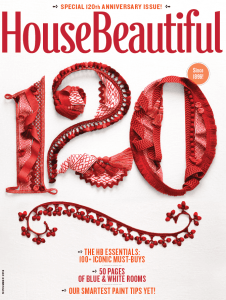
screen-shot-2016-12-15-at-9-36-54-amSamir Husni: Recently, you announced that you’re launching yet another print magazine in sponsorship; why do you think that Hearst is one of the few major companies that actually never stopped launching magazines since the dawn of the digital revolution in 2007?

David Carey: As you’ve heard us talk about our sort of corporate tagline, which is “unbound,” this is a company that believes in the future, believes in partnerships and is comfortable with risks. We don’t do crazy risks, but our format is we greenlight a handful of test issues and we read the results and we proceed from there.

We believe that if you don’t grow; it’s not a question of just standing still, you actually fall behind. And so we are happy to keep pushing ahead with the growth agenda, and this is not just print, but digital, and all that we do. So, I feel fortunate that the company understands the very important need of new products to our future. We often talk about the famous strategy from the 3M Corporation. They wanted 25 percent of their profits each year to come from businesses that did not exist five years prior to show that their company would be much smaller if you did not force innovation. And we think about that a great deal, but I’m proud to say that more than 25 percent of our profits in 2016 came from businesses that either did not exist or were in a loss position five years ago.

Samir Husni: We’re such a creative industry, and yet there are a lot of imitations that take place. Why do you think that not many publishing companies used the same approach that you’ve done when it comes to launching new magazines? You’re launching another print product, The Pioneer Woman; you’re doing two issues in 2017, and you’ll probably move forward like you did with the Food Network and all of the other past new launches, and then wait and see. Why do you think no other publisher has imitated you?

David Carey: I’d say that Meredith is doing a pretty good job with what they’ve done with their partnerships and products. They rolled out The Magnolia Journal. I just wanted to point out that there is another company out there that we respect that is also committed to innovation.

But to answer your question; it takes something special to have a partnership culture. These are complex, long-term relationships. We drive a great deal of our profit building through partnerships and those require us to have a somewhat different stance because we have to make decisions with others, and some of these businesses have great days and some have challenging days, so the credit for that really goes to Frank Bennack; it was Frank who established the partnership DNA that is part of Hearst. Frank did it scores of times and so we continue to run with the plays that Frank created when he formed the initial partnership with Capital Cities, and initially created A+E, which lost money for a number of years before it became a huge business. It’s in the water here. We’re fortunate to be the proud, not so much custodians, but keepers of that partnership flame.

Samir Husni: Once you and I were talking about the way you grow these partnerships; you actually spend a lot of time analyzing the entire process. It’s like going on so many dates before you can decide if this is someone you want to develop a relationship with. Can you explain that process you go through before deciding if a particular partnership is a good mix for all involved?

David Carey: Like anything in life; it’s about chemistry. And it’s not only about the chemistry that each partner contributes, but also how everyone works together. So there is a courtship process and I think it goes in all directions because we are committing capital; we’re committing to a business that we will want to operate for many, many years.

In fact, I can tell you that there were two meetings last week and one meeting yesterday that was the first stages of the potential new projects for 2018. We have a long-term horizon on this stuff. Our 2017 projects are in place and now we’re starting to think about what comes next. So, they take a while to get done, there’s no question about it. That gives you a sense of how this is just a part of what we do every day. We’re very focused on the test issues of these two different franchises, but then what comes after that? And we can’t start to answer that in September; we have to begin getting to know these other organizations early. So, I had the meeting last week, and there was a conversation yesterday that I was not part of, and that’s some of what we do.
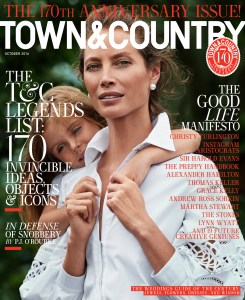
tc-oct-cover-childSamir Husni: Within a span of one year you had a magazine celebrating its 170th anniversary, Town & Country; one celebrating its 150th anniversary, Harper’s Bazaar; one with its 120th anniversary, House Beautiful; what’s the secret of longevity with those magazines?

David Carey: First of all, nothing succeeds like success, right? I spent time last week with the CEO of Scripps and our two ventures, as you heard from the teams, had a terrific 2016, so that makes everyone happy. But the secret is obviously just like the partnerships in your personal life, a shared vision about the future, a way to process, on occasion, unfavorable news. But a commitment, I think, adds core, which the fundamental belief here, Samir, as you know, is that we would rather own half of a really successful business than all of an unsuccessful one. That’s something that we say often, and both companies need to really believe that they are better off together than they are apart.

Samir Husni: What has been your biggest challenge in 2016 and how did you overcome it?

David Carey: The industry has been up and down. Our retail/advertising faced a lot of challenges the second half of the year, so that was new for us. The broader retail climate is very difficult, so that did throw some curve balls. I think the business challenge for 2016 was the same challenge in 2015 and will be the same challenge in 2017, and that is on the one part to lead a team that is inspired to try new things, raising workflows to set aside long-held orthodoxies, so that’s our eternal challenge; to create a scale organization of entrepreneurs in their thinking.

And then the second is, our clients, our advertisers, they have as complex a time as ever navigating through so many different media options, and we have to make sure that our brand, ideas, and our people are front and center. I’m happy our team solved it; we’re very proud of their accomplishments, but the media business, and maybe I’ve given you this standard line, so I apologize if I’m repeating myself, but if you like an industry that’s dynamic, fast-changing, sure to reinvent itself, then the media business overall, not just magazines, is a great place to be. If you want your job and what you do to be exactly the same a year or two years from now, you should probably become a schoolteacher, and so we have to have people who feel very comfortable with change.

Samir Husni: And during that constant change, is there a point where you can sit down, draw a deep breath, and say, we’ve done it? Or is it a continuous process?

David Carey: You can go back to the founders of Dow Jones: we’re proud of what we’ve done, and next year we want to do better.

Samir Husni: Why do you think there’s such a lack of institutional history in the magazine business in this country? I was looking at some old magazines in my collection and I saw native advertising in Esquire back in the ‘30s; I saw native advertising in National Geographic, an article presented to you about the environment by the Mobil Oil Company. We’ve always been marketers of content, why is it now all about content marketing and all of these new buzz phrases?

David Carey: I think it’s also true when you think about the television business; it used to have its sponsored television programs, such as when GE sponsored a certain program, and there were many others that did that too. The tradition of integrated advertisers is as old as the hills.

One of my fondest memories, you mentioned Esquire, I worked for Esquire as my first job out of college, and the owners of Esquire before Chris Whittle and Phillip Moffit acquired it, donated the Esquire archive to the University of Kansas, into the museum there, the physical items, all of the drawings, illustrations and sketches. It was kind of a complex relationship, because Esquire owned the copyright, but the museum owned the actual, physical artwork.

I went out there and I remember going and pouring through an attic of the physical archives, and we struck a deal in the end where we would share, they would provide the original artwork so that we could create new things, and we would share in the royalties, so we worked that out. But you can imagine the owners of Esquire, which may have been Clay Felker, but I’m not 100% sure if he was the person who donated it. There wasn’t really a national institution that was a depository for magazine media.

Samir Husni: What’s next for Hearst Magazines?

David Carey: I think you’ve seen our game plan now for the next couple of years. I’m very proud of our digital strategy that we’ve executed; I’m really proud of our product development, in terms of our core thinking about expanding the operation.

The media business today; we talk all the time about battleships and speedboats, and we want to be a speedboat. We want to be able to be a company that is both nimble and robust. At times though there are opposing forces, but we work very hard at it, and I am proud of how our team solves in 2016. We have had the best performance in the U.S. But it all starts over again next year.

Samir Husni: You’ve been at Hearst now for almost seven years.

David Carey: It will be seven years in May.

Samir Husni: If someone asked you to pinpoint one major accomplishment, and I know how humble you are, David; you always give credit to the entire team, but what would somebody write for the history books about the seven years of David Carey at Hearst?

David Carey: That’s a deep thought. Luckily they’d write, which is true, that regardless of headline news, and regardless of anything, hopefully each and every day we have fun. Some people I meet will find out that I work in the magazine business and ask me if it’s hard. And I tell them how much fun it is. We always believe that there is a path to growth, sometimes it isn’t brightly lit with signs pointing at it; you have to find it. But I believe we have fun.

In our company we’re blessed with more than 10,000 team members around the world and by no means is the success we’ve achieved attributed to David Carey or Michael Clinton, who by the way is brilliant, but the success goes to the entire, huge organization that if we do our jobs well as readers, feel energized and confident to go out and take risks with products; take risks with business strategies, and know all the while that the company supports them. And that’s our goal. That’s what we would measure ourselves against.

Samir Husni: At the end of the year you always write a letter to your employees that goes public about the accomplishments, the forecast, the future; what would be three highlights from that letter?

David Carey: We’re working on it now. Three highlights; I guess there will be a knock-knock joke; though we’ve haven’t figured it out yet. (Laughs) But there is a thread that connects all of these messages and notes, to talk about what certain brands accomplished; a number of our businesses did have record performances in 2016, both properties in the U.S. as well as markets around the world, the absolute best ever. And it’s always inspiring to take the lessons from those people who led their businesses to new highs, but then to set the path forward. And it comes back to that it’s a period of great change and opportunities, the media business is filled with plenty of both. We have both complexity and opportunity to greet us every single day.

And our team members again, when we’re successful, will solve for the complexity and cease the opportunity. I feel that’s our mission as leaders of the company and as colleagues of thousands of employees. And you’ll find a similar message in my letter, and one of great appreciation. By hook or by crook, we had a terrific 2016 and now we’re, as you know, setting the stage for next year.

Samir Husni: Is there anything that you’d like to add?

David Carey: Again, I’m appreciative of your close coverage of the industry and our company. You get it; you see the opportunities as well. It’s a broader, journalistic world. We share your belief that there’s room for new product; there’s room for innovation in a business, despite market share or the stock market being up or down.

I think the political environment this year suggested that there’s always surprise out there; and we hope to surprise people again in the New Year.

Samir Husni: My typical last question; what keeps you up at night these days?

David Carey: My typical answer is always the same; I’m very fortunate that I sleep pretty well, my friend. I never really get thrown off the path or unnerved by the state of the business. We start the year with the same hope that we did this year.

Michael Clinton is by far the most brilliant kind of revenue, relationship-focused executive in our industry. And he’s a very big part of what we’ve accomplished. We’re happy that Joanna Coles has now joined the leadership team of the division and helps us drive to the future. It’s wonderful to have Ellen Levine still very present in the organization, after a spectacular career at the company. And Ellen, as you know, is leading the development of The Pioneer Woman, with Maile Carpenter.

We have a fantastic leader of our digital business in Troy Young that brings the very best lessons of the digital pure plays to us, a company of scale and stature. And then we have a great CFO, who is quick to point out to me if I spend too much money on my own T&E, so I can cut back. Debi (Chirichella) was very proud of me; I was recently on a business trip and I commented that I was so excited because I got an upgrade, because I was in seat 32D, and that’s what it takes to make sure that in a company you spend your money where it counts, which is on the product and on the team.

Samir Husni: Thank you.

And now the Mr. Magazine™ interview with Michael Clinton:
harpersbazaar_decjan-cover_subSamir Husni: Recently, you announced that you’re launching yet another print magazine in sponsorship; why do you think that Hearst is one of the few major companies that actually never stopped launching magazines since the dawn of the digital revolution in 2007?

Michael Clinton: Well, first of all, we’ve always been a print-proud company. We look at the consumer numbers. What’s been interesting about the print magazine world is, before, during and after the Recession, which was all right in the middle of the digital revolution, magazine circulations and magazine audiences have actually been very stable. And in fact, slightly growing in a world where a lot of other traditional mediums’ audiences have declined significantly.

So, the core number of the interest in the consumer in a printed product is there. The trick is finding the right kind of product and the right kind of editorial interpretation of that product. And if you build it right, they will come. So, in 2009, the worst year since the Great Depression, we announced that we were launching a food magazine of which there were several hundred food magazines that existed already, and everyone thought that we were crazy. But it was with a great partner, Food Network, and now it’s one of our most profitable magazines. It is the number three selling magazine on newsstands in the U.S. It has one of the best set of metrics, from the consumer’s standpoint, in our company, and so the consumer votes.

When we followed that up with HGTV and then Dr. Oz; what we know is that the consumer still has an interest in the medium if you get the concept right. Dr. O, HGTV and Food Network, all three of them are within the top ten monthly sellers on newsstand.

Samir Husni: We’re such a creative industry, and yet there are a lot of imitations that take place. Why do you think that not many publishing companies used the same approach that you’ve done when it comes to launching new magazines? You’re launching another print product, The Pioneer Woman; you’re doing two issues in 2017, and you’ll probably move forward like you did with the Food Network and all of the other past new launches, and then wait and see. Why do you think no other publisher has imitated you?

Michael Clinton: No guts, no glory. (Laughs)

Samir Husni: (Laughs too).

Michael Clinton: The way I would answer that is, after the Recession we had a major assessment of the world around us, our world, and we came up with a word called “unbound,” which is our sort of mantra. And unbound means “be contradictory.” It’s contradictory to think that you could launch new print products and be successful; it was contradictory when we decided to create our own digital strategy. It was different than how publishing companies did their own digital strategy. We were very counterintuitive, in terms of how we built our digital strategy, very successful.

So, what we do is we step back and we look for an opportunity. With our new launches; we actually, as you know, have two new projects coming in 2017; one with The Pioneer Woman and one with Airbnb, one of the great disruptors in the world that is redefining the travel ethos in the world. And so if you capture a new sensibility and a new community and a new market, you can build a great print product.

Samir Husni: And yet, few have imitated you.
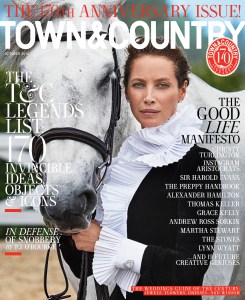
tc-oct-cover-horseMichael Clinton: That’s true. I can’t answer why. I guess it’s just how we’re wired as a company. I think it starts first with having a deep belief that printed magazines will be here for a very, very long time. Will all magazines be there, of course not, the strong will survive and those that have the best point of view will survive.

We’re in the lifestyle magazine business; so we have the great photography, the great visuals, and the great content. And so I think it starts first with the deep belief in our core business. It’s interesting, we call it our bricks and mortar business and there are some retailers who are doubling-down and being very innovative with their core business; Nordstrom is being extremely innovative with what they’re doing with their bricks and mortar, while other physical retailers are shrinking and/or cutting back the number of stores. Nordstrom’s is a chain that’s actually growing and opening new stores and doing new kinds of innovation.

I think it depends on how core your core belief is in your product and so we’ll continue to expand and launch; we’ll acquire the right things, and it’s that core belief. So, I’d say it starts with your core DNA.

Samir Husni: Within a span of one year you had a magazine celebrating its 170th anniversary, Town & Country; one celebrating its 150th anniversary, Harper’s Bazaar; one with its 120th anniversary, House Beautiful; what’s the secret of longevity with those magazines?

Michael Clinton: We like to say that we’ve been through every media revolution possible. When the telephone was born it was going to displace magazines. When the radio was born it was going to displace magazines. When the television was born it was going to displace magazines. (Laughs) So, we’ve been through every media revolution imaginable; in fact, Town & Country has been through the Civil War, so… (Laughs again)

Samir Husni: (Laughs too).

Michael Clinton: It survived literal war; the Civil War and kept on going. And I think what’s really exciting about a magazine is that it’s a living, breathing organism, and if you evolve and change, and if what the editor’s actually put on the paper evolves and changes, then you’ll evolve along with the culture.

And if you think about the recent evolution of Town & Country, which is a great example of how that’s happened under Jay Fielden and now Stellene (Volandes), but the other part of that is that the magazine brands have such a deep texture in the American culture that generations know certain brands of magazines. Whether it’s Good Housekeeping or Harper’s Bazaar or Esquire; your father, your father’s father and so on; it’s part of the American culture. There’s a trust factor and an authoritative factor that is deeply rooted into the culture and I think if you keep that story contemporary it continues to carry on through generations.

And I think magazines have an outsized influence in the culture. If you hear somebody say I read it in Esquire; you hear the evening news talk about a recent report in – pick a magazine – it is referenced in other media and that has a lot of credibility as well, in terms of authority. In a world of fake news and suspect news and lack of credibility, these are brands that have the great credibility to their subject matter. I think as long as you keep it fresh, they keep evolving.

Samir Husni: What has been your biggest challenge in 2016 and how did you overcome it?

Michael Clinton: I think the biggest challenge continues to be that the marketing community and the advertising community; I always like to say don’t confuse me with the facts, because the medium is strong and healthy with the consumer. Newsstand has its challenges; the channel has its challenges, in terms of people in stores. And as you know that only represents four or five percent of the distribution of magazines. The challenge is that the marketing community that doesn’t acknowledge the power of the medium with the consumer is something that’s, how do I put it, well, it’s certainly a challenge in getting that message out there.

So, how have we addressed that? We’ve done an enormous amount of innovation with paper and how you can work with paper, so all of our various cover configurations are native units in print and are co-branded executions in print and have stimulated the market a lot. We’ve had huge growth in revenue in these new ways that an advertiser can work with paper.

Samir Husni: Why do you think there’s such a lack of institutional history in the magazine business in this country? I was looking at some old magazines in my collection and I saw native advertising in Esquire back in the ‘30s; I saw native advertising in National Geographic, an article presented to you about the environment by the Mobil Oil Company. We’ve always been marketers of content, why is it now all about content marketing and all of these new buzz phrases?

december-2016Michael Clinton: Everything old is new again. That’s a great question and I think that what happened is that over time the magazine industry had boxed itself in. And I would argue in many ways that it became too precious. It’s like you were talking about earlier with the cycle of the kinds of magazines that were born and came into play, and then left the market.

What happened is these isms started making plays and the world around us completely evolved and changed and the magazine industry didn’t. And with what we do in print, we all had to move into what the digital world was doing and the Teleton world was doing and the radio world was doing, and that was tied into sponsorship and co-created content. All of that is very much the norm when it comes to how those mediums operate, and the magazine industry had lagged behind. And now we’re kind of rediscovering our past in a way, because yes, you’re right, those things may have happened 20 or 30 years ago and we’re now bringing it forward into a modern interpretation.

Everybody says to me the people have been around for a long time, native advertising, isn’t that like advertorial? And I say, yes, it’s all semantics. It’s the next generation’s version of what advertorial is, so it’s just a contemporary version with a tweak.

Samir Husni: What’s next for Hearst Magazines?

Michael Clinton: Well, what’s next will be our two big launches. We have a new chief content officer, Joanna (Coles) next door. She and I have been working on the Airbnb project for over a year now and we did a sampler edition that I’ll show you. It was distributed at the Airbnb Open, which is a big festival that they do once a year. They had 13,000 people in Los Angeles a few weeks ago. Joanna was on the stage with Brian Chesky, the founder of Airbnb, and I was in the audience and we taped the sampler magazine under the seats, so when she was talking, and I wish that I had had a video of it, when she was talking and they said take the magazine out from under the seats, and people were waving it in the air and asking how they could subscribe to it. So, the response was phenomenal. And people were excited that they now had a magazine.

So, what we did with the sampler was produced it just for Los Angeles, because they were all going to be in Los Angeles. What you see in the sampler is a letter from Brian, an opener to sort of give them a taste of what’s coming. And then it goes into an Airbnb sensitivity, which as you know, their tagline is “Live like a Local.” So it’s very local tips and content about Los Angeles and the tricks of the trade when it comes to navigating around L.A. Then it covers three neighborhoods; Venice, and there was an Airbnb host in Venice and some of their favorite spots. And then there was another neighborhood, Echo Park, and things going on in that emerging area. There was also a host there and his tips. Then downtown L.A., which there is the entire renaissance going on there.

And then you may have read the piece in The New York Times recently where they introduced something called “Trips,” so when you go to a destination for Airbnb, you’re now able to sign up for experiences that you buy directly through Airbnb. So, if you want to have a surfing lesson over the weekend, you can hire this guy to give you surfing lessons, and you do that right through your Airbnb app. Or you can have a farm-to-table, urban dining experience, or you can have a disco night in Hollywood. These trips are going to be in 12 cities for launch. And then in the sampler magazine, there is a little closing essay.

But the difference is when we did all of our research, and we spent about a year doing research with consumers, the Airbnb’er has such an incredibly different sensibility about their travel experience. They are a very different kind of traveler. Airbnb had its largest night ever about two months ago; they had 1.8 million Airbnb properties rented around the world. That’s 1.8 million; this ship has sailed big time.

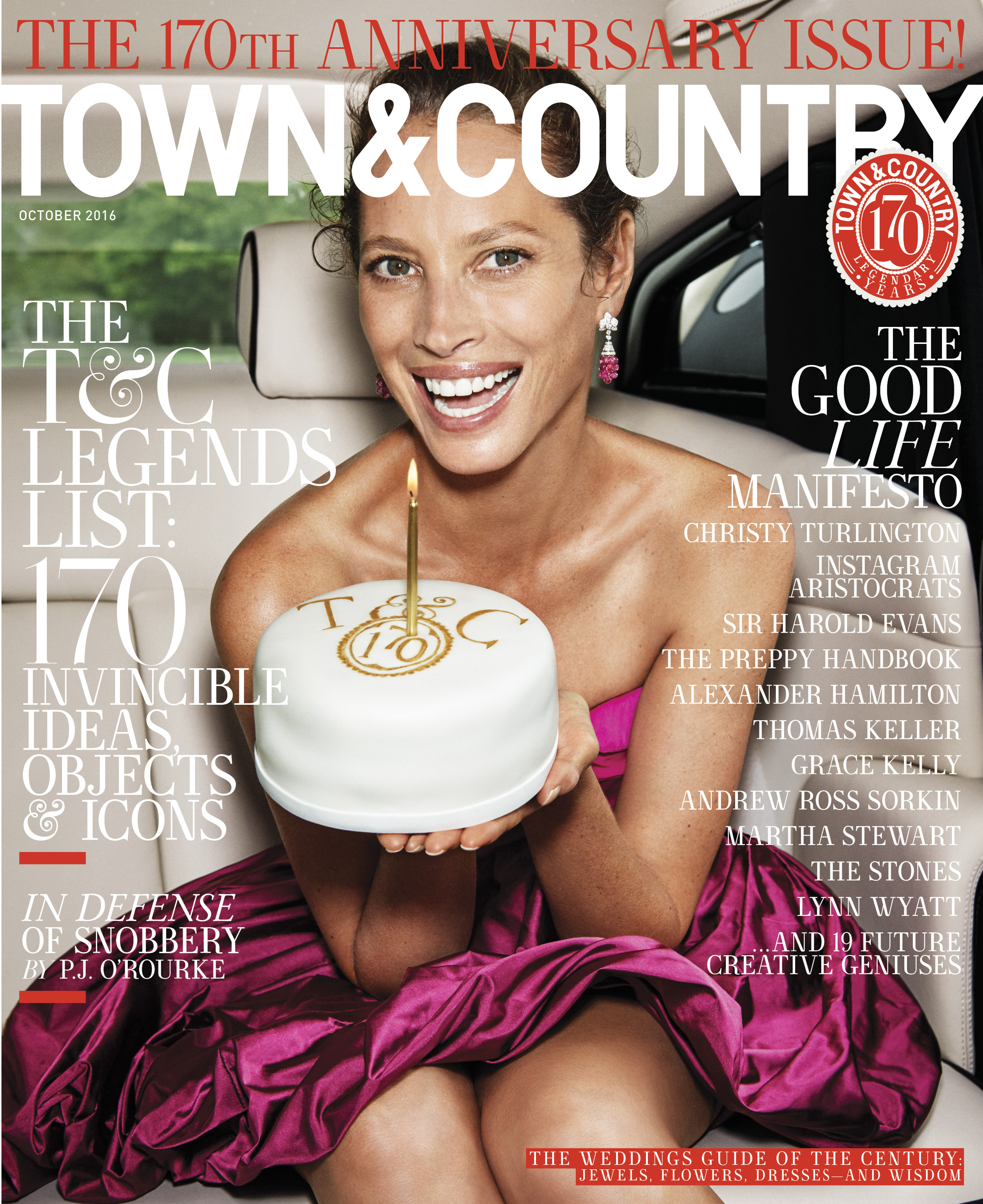
And when we did the research with the consumer, they don’t like any of the existing travel media; they think it’s too five-star, and there’s a market for that, it’s just not that market. And they also don’t have the belief and the trust in a lot of the content that’s on sites like TripAdvisor or some of the other rating sites. And so, we saw a real interesting white space through our research that was validated. And that’s when we together decided to move forward. So, that and Pioneer will be the two big projects for us in 2017.
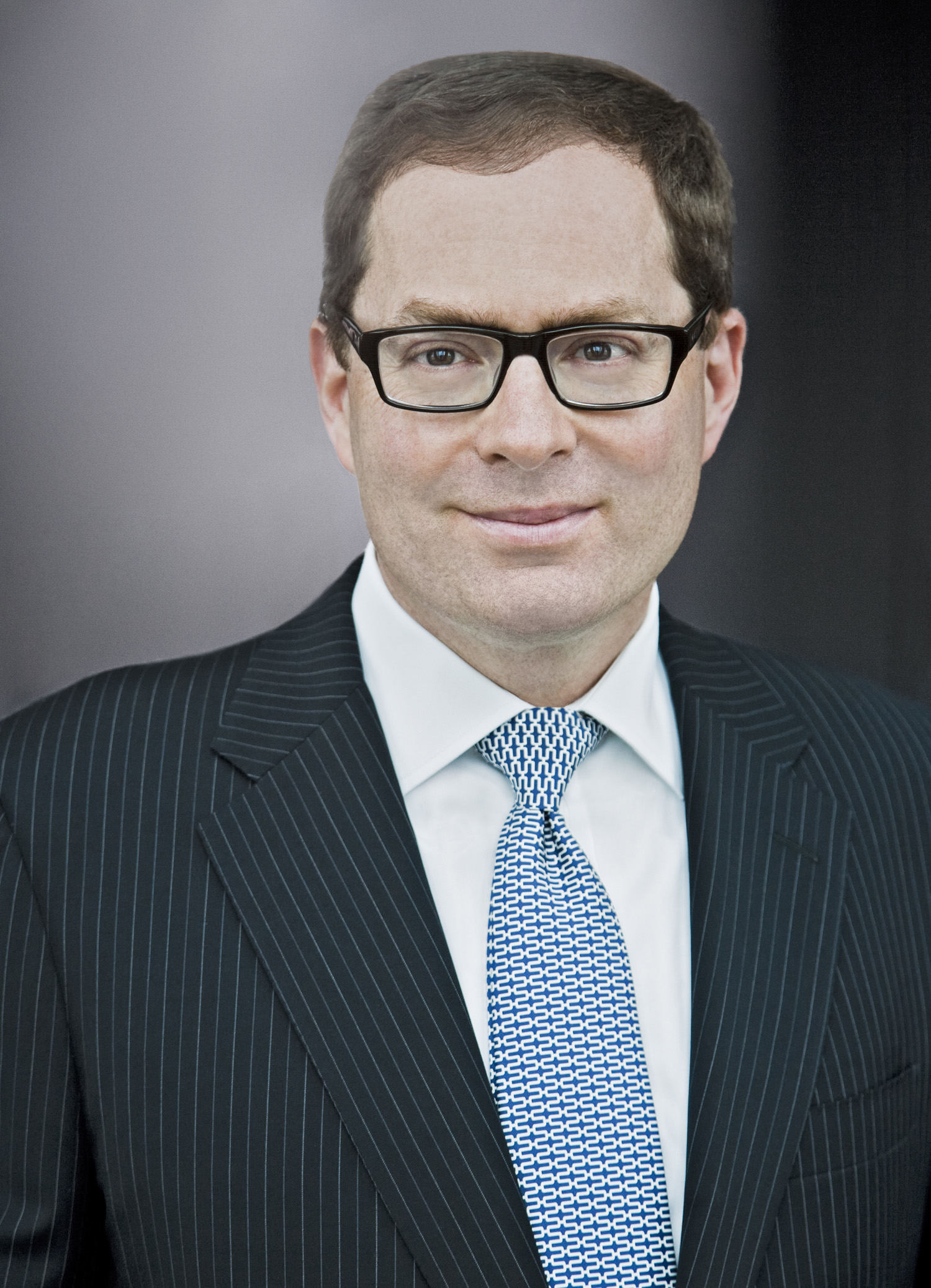
Samir Husni: When is the first issue of Airbnb?

Michael Clinton: June, 2017.

Samir Husni: So, you have two magazines coming out in June?

Michael Clinton: Yes, different markets and different consumer base, primarily. I think you know that Pioneer Woman is only going to be in Wal-Mart. And how that started was, it sort of came together in two ways. Ree Drummond, the Pioneer Woman, reached out to us because she was interested in this platform. And she knew that we did the Food Network magazine.

Then there was a group of us that was having a meeting with Christy Jenkins, who runs the Wal-Mart books and magazines buying, and we were just talking and she mentioned the wild success of Pioneer Woman products in Wal-Mart. So we put the two things together and then we went back to Christy and said if we did this, would Wal-Mart really get behind it. So, they’re going to merchandise it around the product and so forth. There is no intent to keep it Wal-Mart only necessarily beyond the test, but we figured let’s test it where she has another built-in constituency.

Samir Husni: My typical last question; what keeps you up at night these days?

Michael Clinton: I’ll go back to what I said earlier, what keeps me up is that there is a lack of appreciation and understanding of the vitality of the printed magazine, with regards to consumers. The metrics are there, when it comes to overall circulation units, which are pretty good. There are ups and downs, you know, but overall pretty good. And the audiences are quite good. And there is a lack of appreciation for that and for the role that magazines can play in the media mix. It’s a media mix. And that’s what keeps me up at night; the lack of appreciation for the strength of the medium to the consumer

Samir Husni: Thank you.