Archive for the ‘News and Views’ Category

h1

Road Grays Magazine: A New Print-Only Title About Baseball That Digs Deeper Into The Stories Of The Sport For The “Curious” Fan – The Mr. Magazine™ Interview With Aaron Stahl, Cofounder, Editor & Creative Director…

September 19, 2019

“A lot of it was wanting to provide something that allowed people to slow down a little bit, especially with sports media, there’s so much on the Internet that’s about “what happened in the game last night,” “what’s going to happen coming up this weekend.” It’s all about “right now.” And there’s a place for that and it’s really important if you’re following a team or you’re following a sport. But we wanted to do the opposite of that. We felt like there was a niche for the exact opposite, where you’re slowing down, you’re not worrying about what’s happening right now, you’re worrying about things that are a bit more timeless. And that’s something that print can do really well.” … Austin Stahl

A Mr. Magazine™ Launch Story…

Available in print-only and dedicated to the “curious” baseball fan, Road Grays is a new magazine from Austin Stahl and his wife Megan Deyo Stahl that is beautifully done and tells original nonfiction stories from the world of baseball. Austin is an art director and designer by trade, working often for professional associations and educational institutions.

I spoke with Austin recently and we talked about this creative project that has become a twice-yearly published magazine that he is thrilled to say belongs entirely to his vision, from start to finish. Something he can’t say when he is designing work for others. And of course, Mr. Magazine™ is thrilled to see print the number one (and only) way to receive this great new title.

As with many others who have come to realize; in the world we live in today, slowing down and moving away from our screens on occasion is becoming a necessity for our psyches, and that’s one of the reasons Austin decided on a print-only format. The website will give you a preview of the magazine and give you a place to order it, but to enjoy it, you have to hold it in your hands, feel it, touch it, and experience it.

Austin adds that he and his wife’s goal is to tell great nonfiction stories, from all eras and levels of the game, that use baseball as a lens through which to see the world. And these stories are deeper and richer than most you find on the Internet or in other sports magazines on newsstands already. The storytelling doesn’t concentrate on the “right now” as the Internet does, but instead takes you down many times unknown paths and to baseball diamonds you may not have heard too much about until Road Grays.

So, I hope that you enjoy this delightful interview with a man who has been in love with the sport of baseball since he was a child and has found a way to express that love through the pages of a magazine, (if you print it, they will come), the Mr. Magazine™ interview with Austin Stahl, cofounder, editor & creative director, Road Grays magazine.

But first the sound-bites:

On why he decided to publish a print magazine in this digital age and why one about baseball: I’ve been an art director and designer for quite a while and specifically in the publication world. And I really love print; I always have, but most of my work has been for clients, serving their visions and their missions. So, a couple of years ago I got the itch to create something that was entirely my own. We weren’t sure at first what we wanted it to be; my wife, Megan, is my partner in this project and we spent a lot of time talking about what the magazine could be if we did our own thing. Ultimately, we hit on this idea of a different kind of baseball magazine. It seemed like there weren’t really any other magazines quite like this idea already out there. There are some really interesting ones about other sports that do a similar thing to what we’re trying to do: digging a little bit deeper and going into stories that aren’t being told anywhere else.

On what makes Road Grays different from other sports magazines: The idea is that we’re using baseball as a lens to see the world. These are stories about real people, whether it’s people who play the game, watch the game, or the people who make it happen behind the scenes. We’re not really focusing on big stars or stats, or what’s happening on the field day-to-day. Really we’re focusing on the stories that maybe you haven’t heard before, about the real people who are involved.

On why the magazine is available in a print-only format: For us, I think a lot of it was wanting to provide something that allowed people to slow down a little bit, especially with sports media, there’s so much on the Internet that’s about “what happened in the game last night,” “what’s going to happen coming up this weekend.” It’s all about “right now.” And there’s a place for that and it’s really important if you’re following a team or you’re following a sport. But we wanted to do the opposite of that. We felt like there was a niche for the exact opposite, where you’re slowing down, you’re not worrying about what’s happening right now, you’re worrying about things that are a bit more timeless. And that’s something that print can do really well.

On any stumbling blocks he’s had to face since launching the first issue in February 2019: I think my main challenge has been getting enough people to know about it. I’ve always been on the making of the magazine side, not so much about selling or promoting it. So, that’s been a bit of a learning curve, determining how best to do that and how best to get the word out. And that’s something that we’re still figuring out. Through a lot of trial and error; what are the best strategies on social media, or what other ways can you get the word out about what you’re doing. So, I think our biggest struggle right now is just growing enough to make this sustainable.

On what he’s learned since the execution of the first issue that has helped him with the second issue: Different strategies on social media and advertising, it’s been a lot of trial and error. I think slowly, as we continue to do each issue, we learn which things get a little more traction and which things don’t, in terms of actually making the magazine itself. I learned a whole lot about being an editor (Laughs), which is a new thing for me. And I found that I actually really enjoy it more than I even thought that I might. Just little things about how far in advance you need to talk to people and how long certain parts of the process takes on the editorial side. In my career, I’ve been used to just getting the content when it’s done and taking it from there as a designer. So, learning how to do it all from step-one has involved a bit of just jumping in and doing it.

On what type of experience he envisions his audience having with Road Grays: As I said before, I think it’s a slower experience, certainly, than what you get as a sports fan on the Internet, where everything is pretty much about right now. We wanted to emphasize that in the way that the stories are laid out and the way that the entire package is put together. It’s something that you want to sit down and spend some time with and just slow yourself down a little bit as you read. So, we wanted to design it in that way.

On what he would like to tell someone he had accomplished one year from now with the magazine: Hopefully, to have grown enough or reached enough people to make it a more sustainable project. We’re not making any money yet (Laughs), so I would like to get to a point where it’s at least paying for itself well enough that we can imagine doing it for quite a while. And I think that’s just a matter of reaching a little bit more people every single time.

On how he felt when he received that first issue of the magazine from the printer: It was exciting. I remember opening the box up and seeing all of them stacked up. Our first issue’s cover is a larger-than-life baseball (Laughs), so it was kind of cool to just open the box for the first time and see that cover staring back at me. The smell of ink is always exciting to me. As I’m sure you know as a magazine maker, there’s always something nice about that sensory thing that happens when you smell the ink for the first time. So, I remember that well. It’s always exciting when you get something back from the printer and it’s real, something that you’ve only seen on the screen until that moment, suddenly you can hold it in your hand. It was even more exciting because this time it was entirely mine, from start to finish.

On where he came up with the name Road Grays: I think it was one of those things where it just popped into my head and felt right, but the idea behind it is, traditionally in baseball the home team wears white and the visiting team wears gray. So, I kind of liked the implication that we were going out on a road trip, visiting all of these different people and stories kind of metaphorically. And bringing what we found back to you, the reader. Maybe there’s a little bit of a subliminal message in there about that idea of going out into the world and seeing what’s out there.

On why it’s available in print only: The print-only aspect is really about time; we’re doing this in our spare time, we have day jobs. So, it felt like a little bit too much to bite off if we were also running a website, a website that was more than just a place to purchase the magazine, but was an entity in and of itself. So, part of it was that and part of it was I just liked the idea of something more permanent, something that people might want to keep on their shelves, and maybe even refer back to it years later. I wanted to be sure that it felt quality enough that people wanted to keep it.

On the fact there is no advertising in the magazine and if that was a conscious decision based on the business model: We do have what we call sponsorships. Brands can sponsor us and we’ll thank them on a page in the magazine, but not having any display advertising was definitely a conscious decision, because I didn’t want it to take away from what we were doing, content-wise and design-wise. I guess I kind of wanted a little bit more control of everything that was on the pages.

On the magazine’s tagline: The Magazine For Curious Baseball Fans, and how he would define “curious” baseball fans: I think it’s people who want to dig a little bit deeper into some of the stories, instead of just the day-to-day of a long season or what’s happening on the field. People who are more curious about what goes on behind the scenes or who are interested in some of the stories beyond what you see at game time.

On anything he’d like to add: Just that my wife’s role is business and marketing advisor and she has been invaluable in helping with the business side of the magazine.

On what someone would find him doing if they showed up unexpectedly one evening at his home: Honestly, probably working on Road Grays. (Laughs) As I said, it’s more of an evenings and weekends thing for us, because we have day jobs. I would probably be getting something done on the magazine, or, I’m also a musician, so maybe playing some music or just hanging out with our dogs.

On the biggest misconception he thinks people have about him: One thing that I’ve had a few people who have gotten in touch with us suggest is, it seems like they think that we’re a much larger organization than we really are. I think people don’t realize that it’s just a couple of people in a spare bedroom making this magazine. (Laughs) And they kind of assume that we’re some big publishing company, which I guess is rather flattering. (Laughs again) Maybe it means that we’re doing something right.

On what keeps him up at night: I spend a lot of time worrying about the state of our country right now, the state of the world. Sometimes it kind of feels frivolous to be spending a lot of time thinking about a game, given what’s going on in the world right now, but maybe putting a little bit more empathy into the world by telling people stories is something positive, so that’s something I hold onto.

And now the lightly edited transcript of the Mr. Magazine™ interview with Austin Stahl, cofounder, editor & creative director.

Samir Husni: You launched your new print magazine, Road Grays, earlier this year and it’s about baseball and the human stories behind the game. Why did you decide in this day and age to publish a print magazine and why one about baseball?

Austin Stahl: I’ve been an art director and designer for quite a while and specifically in the publication world. And I really love print; I always have, but most of my work has been for clients, serving their visions and their missions. So, a couple of years ago I got the itch to create something that was entirely my own. We weren’t sure at first what we wanted it to be; my wife, Megan, is my partner in this project and we spent a lot of time talking about what the magazine could be if we did our own thing.

Ultimately, we hit on this idea of a different kind of baseball magazine. It seemed like there weren’t really any other magazines quite like this idea already out there. There are some really interesting ones about other sports that do a similar thing to what we’re trying to do: digging a little bit deeper and going into stories that aren’t being told anywhere else. There are a lot of great ones about soccer, and of course, Racquet, which is about tennis, and a number of others, but there wasn’t anything about baseball. Once we hit on that idea, we started to get pretty excited about it and it came together pretty quickly after that.

Samir Husni: What makes Road Grays different? Give me your elevator pitch for the magazine if someone asks you to define the concept.

Austin Stahl: The idea is that we’re using baseball as a lens to see the world. These are stories about real people, whether it’s people who play the game, watch the game, or the people who make it happen behind the scenes. We’re not really focusing on big stars or stats, or what’s happening on the field day-to-day. Really we’re focusing on the stories that maybe you haven’t heard before, about the real people who are involved.

Samir Husni: What do you think the role of print plays today in magazine publishing and how do you think it plays into Road Grays specifically, because even on your website you explain that it’s a “print-only” magazine. You can see a preview to order the magazine, but you can only receive it in print.

Austin Stahl: For us, I think a lot of it was wanting to provide something that allowed people to slow down a little bit, especially with sports media, there’s so much on the Internet that’s about “what happened in the game last night,” “what’s going to happen coming up this weekend.” It’s all about “right now.” And there’s a place for that and it’s really important if you’re following a team or you’re following a sport.

But we wanted to do the opposite of that. We felt like there was a niche for the exact opposite, where you’re slowing down, you’re not worrying about what’s happening right now, you’re worrying about things that are a bit more timeless. And that’s something that print can do really well. Hopefully, if you make it well, if you make an object that people like and want to keep around for a little while, they can come back to it a year from now if it’s still on their shelf and the stories are still just as relevant as they were then. That was our thinking on that. The Internet has its place, but print also has its place. They each do their own thing well.

Samir Husni: Since the first issue came out in February 2019, has this journey been a walk in a rose garden for you? Or have you had some stumbling blocks along the way?

Austin Stahl: I think my main challenge has been getting enough people to know about it. I’ve always been on the making of the magazine side, not so much about selling or promoting it. So, that’s been a bit of a learning curve, determining how best to do that and how best to get the word out. And that’s something that we’re still figuring out. Through a lot of trial and error; what are the best strategies on social media, or what other ways can you get the word out about what you’re doing. So, I think our biggest struggle right now is just growing enough to make this sustainable.

Samir Husni: What have you learned since the execution of the first issue that has helped you to enhance or change or do with the second issue?

Austin Stahl: Different strategies on social media and advertising, it’s been a lot of trial and error. I think slowly, as we continue to do each issue, we learn which things get a little more traction and which things don’t, in terms of actually making the magazine itself. I learned a whole lot about being an editor (Laughs), which is a new thing for me. And I found that I actually really enjoy it more than I even thought that I might. Just little things about how far in advance you need to talk to people and how long certain parts of the process takes on the editorial side. In my career, I’ve been used to just getting the content when it’s done and taking it from there as a designer. So, learning how to do it all from step-one has involved a bit of just jumping in and doing it.


Samir Husni: One thing I tell my students and my clients is that in this day and age you have to be more than just content providers, you have to be an experience maker. What type of experience do you envision your audience having with Road Grays?

Austin Stahl: As I said before, I think it’s a slower experience, certainly, than what you get as a sports fan on the Internet, where everything is pretty much about right now. We wanted to emphasize that in the way that the stories are laid out and the way that the entire package is put together. It’s something that you want to sit down and spend some time with and just slow yourself down a little bit as you read. So, we wanted to design it in that way.

We also wanted to make sure that there was enough fun involved too. The way that I have approached the art direction is making sure there’s enough color and plenty of smart editorial illustrations. We wanted the readers to feel like they’re being taken care of.

Samir Husni: Now that you have issue two under your belt, if you and I are talking again one year from now, what would you hope to tell me you had accomplished with the magazine?

Austin Stahl: Hopefully, to have grown enough or reached enough people to make it a more sustainable project. We’re not making any money yet (Laughs), so I would like to get to a point where it’s at least paying for itself well enough that we can imagine doing it for quite a while. And I think that’s just a matter of reaching a little bit more people every single time.

Samir Husni: If we could go back in time just a bit; can you describe the emotions it stirred within you when you received that first issue from the printer?

Austin Stahl: It was exciting. I remember opening the box up and seeing all of them stacked up. Our first issue’s cover is a larger-than-life baseball (Laughs), so it was kind of cool to just open the box for the first time and see that cover staring back at me. The smell of ink is always exciting to me. As I’m sure you know as a magazine maker, there’s always something nice about that sensory thing that happens when you smell the ink for the first time. So, I remember that well. It’s always exciting when you get something back from the printer and it’s real, something that you’ve only seen on the screen until that moment, suddenly you can hold it in your hand. It was even more exciting because this time it was entirely mine, from start to finish.

Samir Husni: How did you come up with the name? From all of the names you could have called a baseball magazine, why did you choose Road Grays?

Austin Stahl: I think it was one of those things where it just popped into my head and felt right, but the idea behind it is, traditionally in baseball the home team wears white and the visiting team wears gray. So, I kind of liked the implication that we were going out on a road trip, visiting all of these different people and stories kind of metaphorically. And bringing what we found back to you, the reader. Maybe there’s a little bit of a subliminal message in there about that idea of going out into the world and seeing what’s out there.

Samir Husni: Was it a conscious business model decision that you’re ad free, with a $12 cover price, on premium paper and only available in print?

Austin Stahl: The print-only aspect is really about time; we’re doing this in our spare time, we have day jobs. So, it felt like a little bit too much to bite off if we were also running a website, a website that was more than just a place to purchase the magazine, but was an entity in and of itself. So, part of it was that and part of it was I just liked the idea of something more permanent, something that people might want to keep on their shelves, and maybe even refer back to it years later. I wanted to be sure that it felt quality enough that people wanted to keep it.

Samir Husni: And the decision not to have any advertising?

Austin Stahl: We do have what we call sponsorships. Brands can sponsor us and we’ll thank them on a page in the magazine, but not having any display advertising was definitely a conscious decision, because I didn’t want it to take away from what we were doing, content-wise and design-wise. I guess I kind of wanted a little bit more control of everything that was on the pages.

Samir Husni: Define your audience for me. Your tagline is: The Magazine For Curious Baseball Fans, define the “curious” baseball fans.

Austin Stahl: I think it’s people who want to dig a little bit deeper into some of the stories, instead of just the day-to-day of a long season or what’s happening on the field. People who are more curious about what goes on behind the scenes or who are interested in some of the stories beyond what you see at game time.

Samir Husni: Is there anything you’d like to add?

Austin Stahl: Just that my wife’s role is business and marketing advisor and she has been invaluable in helping with the business side of the magazine.

Samir Husni: If I showed up unexpectedly at your home one evening after work, what would I find you doing? Having a glass of wine; reading a magazine; cooking; gardening; watching TV; or something else? How do you unwind?

Austin Stahl: Honestly, probably working on Road Grays. (Laughs) As I said, it’s more of an evenings and weekends thing for us, because we have day jobs. I would probably be getting something done on the magazine, or, I’m also a musician, so maybe playing some music or just hanging out with our dogs.

Samir Husni: What do you think is the biggest misconception people have about you?

Austin Stahl: One thing that I’ve had a few people who have gotten in touch with us suggest is, it seems like they think that we’re a much larger organization than we really are. I think people don’t realize that it’s just a couple of people in a spare bedroom making this magazine. (Laughs) And they kind of assume that we’re some big publishing company, which I guess is rather flattering. (Laughs again) Maybe it means that we’re doing something right.

Samir Husni: My typical last question; what keeps you up at night?

Austin Stahl: I spend a lot of time worrying about the state of our country right now, the state of the world. Sometimes it kind of feels frivolous to be spending a lot of time thinking about a game, given what’s going on in the world right now, but maybe putting a little bit more empathy into the world by telling people stories is something positive, so that’s something I hold onto.

Samir Husni: Thank you.

h1

NatuRx Magazine: A New Title For Better Living Through Cannabis – The Mr.™ Magazine Interview With Peter Moore, Editor In Chief…

September 15, 2019

A Mr. Magazine™ Launch Story…

“… We need to sort out the good from the bad; we need to follow the best science that’s going down now, and there have been tremendous impediments to studying cannabis that are only now just falling away, so we feel like we’re in a position to emphasize the usefulness of cannabis. So, that’s why we went with NatuRx, because we wanted to put the focus, not on the “stoner” excesses that cannabis has been a part of in the past, but instead look at it as a tool for better living, and that’s where the subline came from: Better Living Through Cannabis.” Peter Moore…

Active Interest Media’s (AIM) newest entry into the marketplace is NatuRx (pronounced Nature Rx), a multimedia platform whose mission is to educate health-conscious consumers about cannabis. Peter Moore, former editor at Men’s Health, is the editor in chief of this new title that’s tagline is “Better Living Through Cannabis.” And as Peter told me in a recent conversation, what differentiates this cannabis title from all of the others out there is its stand on being a guide for people when it comes to the best and worst cannabis scenarios, sorting the good from the bad, and helping people better understand cannabis. NatuRx is determined be a critical and watchful eye on this new world of green and to explain the healing powers and usefulness of the plant. And of course, it is the first big national service magazine focusing on cannabis.

Talking with Peter, I hear his passion for service journalism and in serving his readers. Helping people to better understand what cannabis can be used for when it comes to better health and fighting the detriments of certain conditions, such as PTSD, is so apparent in his words and in his vision for the magazine.

And as President & CEO Andrew Clurman said in a recent AIM press release, “As the publisher of wellness magazines such as Yoga Journal, Clean Eating, and Better Nutrition, we’ve been inundated with questions from our readers about the safe, legal use of CBD and THC as part of an active lifestyle. Our editors have been reporting on this emerging category for years, so it was a natural choice for us to create a new type of cannabis magazine, one that approaches cannabis from a health and fitness perspective and will appeal to affluent, educated adults.”

Peter would definitely agree as he told me how important his mission as an editor and the mission of advertisers for this magazine about cannabis is and will continue to be: “Our mission as editors will be to discover the very best uses for it, and that will also be the mission of the advertisers who will show up in NatuRx. What can we responsibly offer to people that will really improve their lives? I feel like with this magazine, as with Men’s Health, edit and advertising will be in lockstep, expressing different aspects of the same mission.”

It’s a beautifully done title and one Peter is very passionate about. And he believes in the people who are contributing and working on the magazine, describing them as some of the best in the business. A man whose professional life is filled with words and conversation, Peter enjoys painting in his spare time, clearing his thoughts with acrylics and watercolors to better prepare him for the next day of magazine passion. So, please enjoy this Mr. Magazine™ interview with a man who believes service journalism should be just that: a service to the readers and plans on delivering that with NatuRx, Editor in Chief, Peter Moore.

But first the sound-bites:

On when he moved to Colorado: I was laid off from Men’s Health in December 2015 and my wife and I had been looking around for what the next big thing was going to be for us. I had been coming out here to ski, backpack and backcountry ski for 20 years from Men’s Health, because I love to do all that stuff. And we thought, you know what, now’s our chance, let’s move to Fort Collins. So, we arrived here in May 2017.

On the interest in starting NatuRx magazine: The conversation had turned from “let’s get high” to “what use can we put cannabis to” and “what’s it good for?” And as a guy who had been trained for 20 years at Men’s Health and in service journalism, it was occurring to me that there’s a big need out there to understand the drug, to explain it, to see what it’s good for and what it’s not good for, up sides and down sides, it’s all a service magazine mission. And ironically enough, four months later, there was Jonathan Dorn inviting me down to Boulder, an hour away from Fort Collins where I lived, saying we really should do a magazine on cannabis. And the more we talked the more excited we got. Then the next thing you know, he was saying that we had a commitment from Meredith to partner on this, they’re our partner in the first issue, and we have newsstand commitments for a circulation of about 250,000. And people just kept signing on.

On the magazine’s title and not having the word “cannabis” in it: What we wanted to do was focus on the healing powers in particular. And its usefulness. I come out of the tradition of tons of useful stuff at Men’s Health. And part of what came out of the conversation I told you about was that people were looking for ways to improve their lives. One of the things that I’m proud of is while the magazine is called NatuRx, the subline is “Better Living Through Cannabis.” And I think that’s the focus that people have, this is a tool for living or it can be if you employ it in the right way. And people may not understand how it can be a positive in their lives, rather than a negative.

On empowering a brand on multichannel platforms: I think what we start with is an idea and a need. We live in a world where people select the version of it that’s going to fit best with their lives. So, for some people taking an online course is the way to go. And AIM has shown tremendous skill at putting that out there. Some people live on their phones and their tablets, for them NatuRx.com may be where they want to consume the content. Others want to hold a magazine in their hands. And for people of a certain generation, the magazine is still the best way to get their information. And it’s certainly an extraordinary design vehicle, especially because AIM puts its money where its mouth is, as far as paper stock and the great creative director, Bryan Nanista, who has a long history himself in this industry.

On how as an editor he balances between the art of creation and the art of curation: That’s where my experience at Men’s Health comes in very handy. I was trained for a couple of decades in how to sort out good information from bad, good studies from bad studies, reputable sources from non-reputable sources. And thank you very much Men’s Health magazine for giving me those skills. Even more important, how to apply those skills in the Wild West of cannabis, because some of the sources are… well, people have rushed into this area because there’s this so-called Green Rush toward cannabis, people trying to make their fortunes right now, and that means they’re putting out a lot of garbage. And there are also reputable, good companies that are putting out great stuff too.

On whether the Internet is a blessing or a curse to him as an editor: It’s widely known that “Dr. Google” can be a quack. And there are a lot of people who take at face value the first thing that shows up in their feed when they do a search. Overall, I would say that the Internet has been a blessing, if you have the tools to use it in the right way, but in the wrong hands those tools can do damage. Frankly, as a health editor, it’s a great thing for me that people do need help to be pointed in the right direction and I feel like I have the skills to help them judge what’s good, bad, and dangerous. And that they need that help means they’re going to be turning to NatuRx, and we certainly hope so.

On how he copes with all of the changes taking place in the magazine industry and the merger between church and state: I’m no stranger to that merger and I lived through it at Men’s Health, absolutely, with fairly intense partnerships between Men’s Health, advertisers and the editorial side. There is an old school part of me that says, gosh, it’s too bad that world went away, but it did go away. So, now what I need to do is use my brain and my instincts and my research to note that there are places we can’t go and shouldn’t go, and there’s not even any advertisers’ interests that we go there because it’s going to scuttle our credibility with readers. It’s all about a relationship with the reader.

On whether he expects a long-lasting relationship with his audience or a one-night stand after the first issue: My role when I was sitting in that room with that group of people after the Memorial service a couple of years ago, was as somebody who could answer questions from a base of knowledge and understanding, and take a sober look at an intoxicating drug, and at intoxicating possibilities, and people really need that. I feel like it’s a shoulder-to-shoulder relationship, where we’re going through this revolution along with people, but maybe we are a slightly more prepared, better-researched, discerning group who can guide the conversation with what we know and be honest about what we don’t know.

On what differentiates NatuRx from all the other cannabis magazines already on the market today: I feel like we are the first big national service magazine concentrating on cannabis. And given the background of all the people who are contributing to it, I think we have a track record on the staff of being among the very best to do this kind of reporting. So many of the magazines that I see out there are enthusiast magazines, meaning supporters, drunk with the possibilities, whereas I think that NatuRx is going to take a step backward to assess the progress of the revolution and to guide people to the parts of it that are going to serve them best. We’re going to be a critical eye on cannabis and we’re going to support the best advances and the most promising treatments and uses for cannabis. So, I feel that is going to be a good niche for us and it’s something that people really need right now.

On the biggest misconception he feels people have about him: I’ve always felt that some people look down their noses at service journalism and maybe I did too before I landed at Men’s Health. But the mission of somebody who is out to use all the tools that are available to journalists now to improve lives has been transformative for me as a journalist. My education at Men’s Health showed me that you really can help people if you provide timely information in the right format and with the right tone. And that’s an expertise that I have now and I’m grateful to Men’s Health and Rodale for providing that to me. And I’m just thrilled that this revolution swept along in cannabis and that I arrived in Colorado at just the right moment to find a new way to help people. And that’s my mission.

‘The Morning Commute, by Peter Moore

On what someone would find him doing if they showed up unexpectedly one evening at his home: What you will find me doing often is being upstairs in my renovated barn in my backyard in Fort Collins where my day-to-day office is, and the half of it facing east is my editorial office and the other half facing west is my art studio. I’m an acrylics painter and watercolorist and if I turn around it’s looking pretty nice over there with all my paintings leaning against the wall. I’m not Picasso, but I’m working hard at it and it’s something that I love to do, in particular because it does not have anything to do with words. And I need that, something that’s going to take me off the hook from talking and writing all the time. So, at night I just shut up and paint.

On what keeps him up at night: The thing that scares me and scares a lot of editors that I’ve seen on your blog is the attack on the press, which is one of those pillars of our democracy. Having a free and active, aggressive press. And the assault on that is unprecedented and unhealthy. It requires great care on our part to answer it in the right way. And the way to answer it is by using all of our skills to find out what’s wrong, what’s evil, and what’s great about what’s going on right now. And to justify people’s faith in that pillar of democracy.

And now the lightly edited transcript of the Mr. Magazine™ interview with Peter Moore, editor in chief, NatuRx magazine.

Samir Husni: When did you move to Colorado?  

Peter Moore: I was laid off from Men’s Health in December 2015 and my wife and I had been looking around for what the next big thing was going to be for us. I had been coming out here to ski, backpack and backcountry ski for 20 years from Men’s Health, because I love to do all that stuff. And we thought, you know what, now’s our chance, let’s move to Fort Collins. So, we arrived here in May 2017.

Given my background as a health writer and editor, all my old pals from the New York magazine industry were suddenly crowding around and giving me assignments to write about cannabis. It’s not like I had any particular expertise or even much experience with cannabis before we came out here, but at the urging of my old magazine buddies I began investigating it carefully and personally, yes, Samir…

Samir Husni: (Laughs)

Peter Moore: (Laughs too) …and when you develop an expertise, people notice it. And Jon Dorn did. So, there you go.

Samir Husni: I tell everyone I interview with magazines about cannabis, you do it for educational and medicinal purposes, of course.

Peter Moore: But it’s so interesting and I mentioned it in my editor’s note in the first issue; we were at a Memorial service a couple of years ago, and at about 8:00 p.m. after the Memorial service the adults in the room were sitting around and of course, now that I live in Colorado, the conversation turned to Colorado cannabis legalization.

And all of these people were gathered from all across the country, each started recounting their own use of cannabis; a lot of it for medicinal purposes, but recreational as well. We’re of the generation that went through that in college dorm rooms decades ago. But the conversation had turned from “let’s get high” to “what use can we put cannabis to” and “what’s it good for?” And as a guy who had been trained for 20 years at Men’s Health and in service journalism, it was occurring to me that there’s a big need out there to understand the drug, to explain it, to see what it’s good for and what it’s not good for, up sides and down sides, it’s all a service magazine mission.

And ironically enough, four months later, there was Jonathan Dorn inviting me down to Boulder, an hour away from Fort Collins where I lived, saying we really should do a magazine on cannabis. And the more we talked the more excited we got. Then the next thing you know, he was saying that we had a commitment from Meredith to partner on this, they’re our partner in the first issue, and we have newsstand commitments for a circulation of about 250,000. And people just kept signing on.

Albertsons chain of grocery stores; the magazine is going to be in more than 800 of those and their affiliates across the country by the end of September. Plus Meredith’s circulation is right behind it. And we’ve also got a really good team from Active Interest Media, who saw this in their participant media empire, as a very natural adjunct to the other stuff they have going.

I was thrilled to be asked by Jon, who was a pal of mine when Backpacker was owned by Rodale, to collaborate on this as well. So, here we go. A big magazine launch and I’m thrilled to be a part of it.

Samir Husni: Tell me about the name NatuRx. This is one of the few cannabis magazines that does not have the word cannabis in the title.

Peter Moore: Well, what we wanted to do was focus on the healing powers in particular. And its usefulness. I come out of the tradition of tons of useful stuff at Men’s Health. And part of what came out of the conversation I told you about was that people were looking for ways to improve their lives. One of the things that I’m proud of is while the magazine is called NatuRx, the subline is “Better Living Through Cannabis.” And I think that’s the focus that people have, this is a tool for living or it can be if you employ it in the right way. And people may not understand how it can be a positive in their lives, rather than a negative.

The recent difficulties with Vape pens shows you there is a downside to juvenile use among teenagers and young people. So, we need to sort out the good from the bad; we need to follow the best science that’s going down now, and there have been tremendous impediments to studying cannabis that are only now just falling away, so we feel like we’re in a position to emphasize the usefulness of cannabis. So, that’s why we went with NatuRx, because we wanted to put the focus, not on the “stoner” excesses that cannabis has been a part of in the past, but instead look at it as a tool for better living, and that’s where the subline came from: Better Living Through Cannabis.

Samir Husni: Peter, you’ve been involved with service journalism, as you said, for over 20 years. You’ve done it through multiple channels; do you feel that today you can’t practice service journalism in only one channel? AIM is launching NatuRx in print, tablet, mobile, education, social, events, email; do you create the brand and then have its products, or is it that you start with the product and create the brand as you grow?

Peter Moore: I think what we start with is an idea and a need. We live in a world where people select the version of it that’s going to fit best with their lives. So, for some people taking an online course is the way to go. And AIM has shown tremendous skill at putting that out there. Some people live on their phones and their tablets, for them NatuRx.com may be where they want to consume the content. Others want to hold a magazine in their hands. And for people of a certain generation, the magazine is still the best way to get their information. And it’s certainly an extraordinary design vehicle, especially because AIM puts its money where its mouth is, as far as paper stock and the great creative director, Bryan Nanista, who has a long history himself in this industry.

It all comes down to where people want to be when they’re receptive to the information they need to improve their lives. And I think that’s where AIM hangs its hat, in being there for readers in all the places they want to be.

And it’s a time for great opportunity as well, because when I was beginning my journalism career, there were 78 total magazines. And now, through your work I’ve learned that there are 800 launches per year and 5,000 titles that are out there now, and that isn’t even taking into account all of the various formats that can exist out there.

Samir Husni: As you put your editor’s hat on and look at the wealth of information out there, the good, the bad and the ugly, how do you balance between the art of creation as an editor and the art of curation as an editor?

Peter Moore: That’s where my experience at Men’s Health comes in very handy. I was trained for a couple of decades in how to sort out good information from bad, good studies from bad studies, reputable sources from non-reputable sources. And thank you very much Men’s Health magazine for giving me those skills. Even more important, how to apply those skills in the Wild West of cannabis, because some of the sources are… well, people have rushed into this area because there’s this so-called Green Rush toward cannabis, people trying to make their fortunes right now, and that means they’re putting out a lot of garbage. And there are also reputable, good companies that are putting out great stuff too.

And that’s what we need to do, sort out between the bad, crazy stuff that you see on the Internet and in your emails all the time, and the people who are doing it the right way and putting out quality products based on solid research , and that’s our mission as editors is to be an advocate for readers saying head this way, not that way, that way being danger-wise. If we can do a good job of sorting between danger and advantage, we’re doing an amazing service for people, especially right now.

Samir Husni: You mentioned especially right now, how in your 20-year career, and you started before the Internet was widely available, to today where almost anyone has access; how has your job or your thinking changed since then? Is the Internet a blessing or a curse?

Peter Moore: It’s widely known that “Dr. Google” can be a quack. And there are a lot of people who take at face value the first thing that shows up in their feed when they do a search. Overall, I would say that the Internet has been a blessing, if you have the tools to use it in the right way, but in the wrong hands those tools can do damage.

Frankly, as a health editor, it’s a great thing for me that people do need help to be pointed in the right direction and I feel like I have the skills to help them judge what’s good, bad, and dangerous. And that they need that help means they’re going to be turning to NatuRx, and we certainly hope so.

Samir Husni: As I look at the media kit for NatuRx, I see a combination of the traditional and the non-traditional, like ad rates from the basic inside-front cover to the advertorial spread to the guest-expert interview spread. As an editor, how do you cope with all of these changes taking place in the industry and the merger of church and state?

Peter Moore: I’m no stranger to that merger and I lived through it at Men’s Health, absolutely, with fairly intense partnerships between Men’s Health, advertisers and the editorial side. There is an old school part of me that says, gosh, it’s too bad that world went away, but it did go away. So, now what I need to do is use my brain and my instincts and my research to note that there are places we can’t go and shouldn’t go, and there’s not even any advertisers’ interests that we go there because it’s going to scuttle our credibility with readers. It’s all about a relationship with the reader.

At Men’s Health, and I believe at NatuRx, that relationship with the reader is important on the ad pages just as its important on the editorial pages. And I felt like, at Men’s Health certainly for 20 years, the advertisers were in it for the same reasons that we were, which was to provide information that was going to help people live better lives.

In a burgeoning industry, a soon-to-be, and is now, and will increasingly become, a multibillion dollar industry in the U.S., especially as legalization, that wildfire, spreads across the land, this is going to be a very big industry with its hands in all sorts of things. There will be competition for liquor intoxicants, in the fashion realm for fabric, sleep remedies, pain remedies; there isn’t a part of U.S. commerce that will not be impacted by cannabis. It’s going to be everywhere.

Our mission as editors will be to discover the very best uses for it, and that will also be the mission of the advertisers who will show up in NatuRx. What can we responsibly offer to people that will really improve their lives. I feel like with this magazine, as with Men’s Health, edit and advertising will be in lockstep, expressing different aspects of the same mission.

Samir Husni: As you move toward that relationship with your audience, your customers, whether they’re readers or advertisers; what do you expect the first issue to be like between you and them: a first date, a one-night stand, a love affair, or a long-lasting relationship?

Peter Moore: My role when I was sitting in that room with that group of people after the Memorial service a couple of years ago, was as somebody who could answer questions from a base of knowledge and understanding, and take a sober look at an intoxicating drug, and at intoxicating possibilities, and people really need that. I feel like it’s a shoulder-to-shoulder relationship, where we’re going through this revolution along with people, but maybe we are a slightly more prepared, better-researched, discerning group who can guide the conversation with what we know and be honest about what we don’t know.

There is so much that will be coming to light about this in the next few years, especially as the government monopoly on the source of research-grade cannabis breaks down. Recently, there was a big lawsuit from Dr. Sue Sisley in Arizona to end that government monopoly. She’s doing a double-blind study on the impact of cannabis on PTSD. There are going to be a thousand sources blooming on research and information on cannabis. Some of it is going to be cautionary, some very exciting and positive, and we’re going to help sort that out for readers. I think we’re sorting it out for ourselves, each of us on the editorial staff at the same time; we’re sorting it out for a potentially gigantic audience of people who need that information.

Samir Husni: If someone came to you and said, okay, you’re launching another cannabis magazine, where would you put it among the 20-plus titles already out there? Whether it’s MJ Lifestyle for women, Marijuana Ventures, Kitchen Toke – cooking with cannabis, or Ember; is it a competitor to those, a complementary, a corrective magazine? How would you define your unique selling proposition in the midst of all of these other titles on the market today?

Peter Moore:  I feel like we are the first big national service magazine concentrating on cannabis. And given the background of all the people who are contributing to it, I think we have a track record on the staff of being among the very best to do this kind of reporting. So many of the magazines that I see out there are enthusiast magazines, meaning supporters, drunk with the possibilities, whereas I think that NatuRx is going to take a step backward to assess the progress of the revolution and to guide people to the parts of it that are going to serve them best. We’re going to be a critical eye on cannabis and we’re going to support the best advances and the most promising treatments and uses for cannabis. So, I feel that is going to be a good niche for us and it’s something that people really need right now.

Samir Husni: What do you think is the biggest misconception that people have about you?

Peter Moore: I’ve always felt that some people look down their noses at service journalism and maybe I did too before I landed at Men’s Health. But the mission of somebody who is out to use all the tools that are available to journalists now to improve lives has been transformative for me as a journalist. My education at Men’s Health showed me that you really can help people if you provide timely information in the right format and with the right tone. And that’s an expertise that I have now and I’m grateful to Men’s Health and Rodale for providing that to me. And I’m just thrilled that this revolution swept along in cannabis and that I arrived in Colorado at just the right moment to find a new way to help people. And that’s my mission.

Samir Husni: If I showed up unexpectedly at your home one evening after work, what would I find you doing? Having a glass of wine; smoking some cannabis; reading a magazine; cooking; gardening; watching TV; or something else? How do you unwind?

Peter Moore: (Laughs) What you will find me doing often is being upstairs in my renovated barn in my backyard in Fort Collins where my day-to-day office is, and the half of it facing east is my editorial office and the other half facing west is my art studio. I’m an acrylics painter and watercolorist and if I turn around it’s looking pretty nice over there with all my paintings leaning against the wall. I’m not Picasso, but I’m working hard at it and it’s something that I love to do, in particular because it does not have anything to do with words. And I need that, something that’s going to take me off the hook from talking and writing all the time. So, at night I just shut up and paint.

Samir Husni: My typical last question; what keeps you up at night?

Peter Moore: The thing that scares me and scares a lot of editors that I’ve seen on your blog is the attack on the press, which is one of those pillars of our democracy. Having a free and active, aggressive press. And the assault on that is unprecedented and unhealthy. It requires great care on our part to answer it in the right way. And the way to answer it is by using all of our skills to find out what’s wrong, what’s evil, and what’s great about what’s going on right now. And to justify people’s faith in that pillar of democracy.

Samir Husni: Thank you.

h1

The Wonderful World Of New International Magazines… A Mr. Magazine™ Musing

September 12, 2019

In today’s digital world, many people think print magazines, both new and established, are barely hanging on by the hair of their inky chin chins. I assure you, that is not the case. From the west coast to the east coast, north to south, new magazines in the United States are being loaded onto newsstands daily, and the ink of legacy print, for the most part, still smells as strongly today as it did years ago; albeit, often in a totally different way.

But what about international titles, what is the health status of magazines in other countries? Well, Mr. Magazine™ is happy to report life in the wonderful world of magazines would appear to be flourishing around the globe.

Here are 12 new titles from all over the world, proving that ink on paper is alive and well everywhere. And please take note of the abundance of “me time” titles: Declutter Your Life, Dream Journal, and Wellness, to name a few. People everywhere are beginning to realize the importance of stepping away from those screens every once in awhile.

In alphabetical order):

Aww is a new magazine from Hong Kong that’s first issue is the “Meow & Woof” issue and has more than 200 illustrations from many different artists, along with great content on the topic of pets. The illustrations are wonderful and the content is diverse and has everything from recipes to travel, with animal elements. The Zen is amazing.

Bellissimo is from two London-based photographers, Paolo Zerbini and Ivan Ruberto, and according to its creators: it is dedicated to glorify the understated. The first issue takes us on a hidden tour of the beach of Rome, Ostia, and showcases photographs of places not commonly known, but amazingly unique. It’s a great new title.

Cacao Magazine is the first international print magazine fully dedicated to craft chocolate. And much like the chocolate making process itself, the layout of the magazine follows the “bean-to-bar” sequence. This new title was born in Berlin and its first issue is dedicated to the craft chocolate enthusiasts of Germany. Mr. Magazine™ is looking forward to issue two. Yummy.

Citizen is a new quarterly magazine for everybody engaged in the challenge of creating the future city. Published by the London School of Architecture, the magazine’s mission is to allow people living in cities to have more fulfilled and more sustainable lives. It’s beautifully well done and very well received here in Mr. Magazine’s™ world.

Creative Journeys is a new title from the creators of Project Calm magazine, our friends over in the U.K., and is filled with creative ideas and craft projects inspired by travel. It’s packed with artistic inspiration from around the world and you can read about art, music, mindfulness, maps, photography and prints.

Dream Journal is another new magazine from Future pic, a global multi-platform media company based in the U.K., but with offices in Australia in the U.S. The magazine was born to guide you on a path to reflection, self-evaluation and being more mindful. Learn more about what dreaming is and use the dream diary to record and reflect on your dreams.

Learn How to Declutter Your Life is from the same folks who brought you the Dream Journal and is an interactive decluttering guide created to help one organize and simplify their life. And don’t we all need that?!

Recharge magazine is the third new title from Future pic and teaches us that it’s all too easy to get caught up in the busyness of our everyday lives and the demands placed upon us, whether by family members, friends, colleagues or clients. We have to Recharge, else we burn out.

Simply Lettering is another British title for anyone interested in modern calligraphy, from complete beginners to seasoned experts. The first issue comes complete with a brush lettering starting kit and practice sheets and templates. Some more me-time is waiting.

Take Care magazine is a collection of creative responses to the U.K. housing crisis, ranging from art and literature to journalism. Five friends who were between London and Glasgow created the magazine: Sarah Bethan Jones, Charlotte Fountaine, Frances Gordon, Lewis Gordon and Romany Rowell. It came to life through Kickstarter and the niche title is only shipping to the United Kingdom for now.

Tortoise Quarterly is a new magazine from Tortoise Media in England. Tortoise Media was another Kickstarter success story and was started to slow down the news. They do no breaking news; just what drives today’s news stories. The launch issue of its magazine is called “Journeys,” and is very proud of its slow news ways – translation – Tortoise Quarterly loves its print format.

(A Journal for) Wellness is one more new title from the same folks across the pond that gave us Creative Journeys and Project Calm. This beautiful journal covers some key areas in your day-to-day living – Eat, Sleep, Move, Relax, Think, Grow and Create – to help you improve, develop or just explore your wellbeing.

And there you have it! Magazines are sprouting everywhere, from one corner of this big beautiful world to another. Mr. Magazine™ is very happy to bring you this glimpse of international beauty when it comes to new print titles.

Keep an eye out for more from Mr. Magazine’s™ Wonderful World of Magazines. You never know what I may find out there, or where I’ll find it!

Until the next time…

I’ll see you at the newsstands, here and across the pond…

h1

The Collectability Factor of the Magazine Cover – Try & Claim That With Digital…

September 9, 2019

Want to see my picture on the cover

(Stone)Wanna’ buy five copies for my mother (yes)

(Stone)Wanna’ see my smilin’ face

On the cover of the Rollin’ Stone

…Dr. Hook and the Medicine Show

 A Mr. Magazine™ Musing…

Attention getting, brand making, sometimes controversial, but above all – inspiring; magazine covers are the gateway into a publication’s inner sanctum: its contents. And as the good Dr. Hook sang in Cover of the Rolling Stone, seeing one’s face on the front of a magazine can be Utopia for a celebrity’s career, even if it’s a controversial cover. After all, if it ignites a firestorm of conversation about the person or the object on that front door, what could be better? Actual ink on paper legitimizes in a way that digital just can’t. With the open-door policy of digital, you can find just about anyone or anything online, but I can promise you that my third cousin, twice-removed, will not be on the cover of People magazine…unless of course, he sweeps Miley Cyrus away from her latest “till death do us part.” And that ain’t happening.

And the second line of the song’s chorus: Wanna’ buy five copies for my mother – well, that’s something else to consider. There is nothing more intoxicating than the collectability factor of an ink on paper magazine and its cover. Granted, you can find just about any and all magazine covers and their contents online, but Mr. Magazine™ is positive that a generation from now, you won’t find them still waiting on you to revisit. Collectability is a leg-up for print that cyberspace just can’t compete with.

Take the current issue of Women’s Health, for example. Julianne Hough is the cover star of the Women’s Health Naked Strength issue and appears on five different covers of the magazine’s September issue. The actress, singer, and America’s Got Talent judge, saw this as a transformational year for her and decided to commemorate it with the magazine photo shoot. It’s monumental for her and her fans, and monumental for Women’s Health, since there are five different covers for those fans and fans of the magazine to collect. It’s a win-win situation for all.

Men’s Health decided its Fall 2019 Guide to Style needed to showcase Tom Brady in two different covers, front and back, with different cover lines for subscribers and for the newsstands. The quarterback for the New England Patriots has never had more collectability value than on these great covers.


Publishers have realized that there’s more to the front door of the book these days than merely creating a dynamic one-only magazine cover. Just like the collectability of the posters of yesteryear within titles like Tiger Beat and Teen Beat; magazine covers can become that addictive to collect, because people love to attain all of an item, especially if they know there’s more than one out there to get.


The September issue of Good Housekeeping is celebrating the 110th anniversary of its Seal of Approval, with four different covers. And for GH fans, this will be epic, collecting and sharing each of these covers among its communities.

The Source, the original hip hop website and magazine, published a two-cover Special Edition recently called “The Future” issue, and in The Source’s case, both covers are numbered with either 1 of 2 or 2 of 2, so there’s no mistaking for fans how many collectables are out there.

Magazine covers have always been the selling point of a publication to its audience, but today with digital able to provide fingertip content, the covers are even more valuable. They give your ink on paper publication something digital can’t: they give it in-your-face, tactile collectability. And that’s very valuable.

Until next time…see you at the newsstands

Mr. Magazine™ will be there collecting covers…

h1

Charles Lindbergh – No Fan Of The American Press – Sound Familiar? A Mr. Magazine™ Blast From The Past, Circa May, 1954

September 5, 2019

Mr. Magazine™ stepped into his vintage vault recently and found a most interesting article in the May, 1954 issue of Focus magazine. This pocket-sized treasure could occasionally pack a powerful punch. In this issue there is a story very reflective of a present-day leader whose opinion of American journalists and news media may only be surpassed by the charismatic gentleman who’s the subject of this article.

The Title of the article: The Men Who Hate Lindbergh tells the story of Charles A. Lindbergh’s immersive hatred of the American press. From the subterfuge by a Chicago Tribune reporter in 1925 that ultimately began the very rocky relationship between the famous aviator and the world of news journalism, to the media coverage of the kidnapping-murder of the Lindbergh’s baby boy, the press and Charles Lindbergh did not share a mutual bond of respect or admiration; quite the opposite, in fact.

And Mr. Magazine™ found it quite ironic that in today’s media world, the animosity between journalists and our current leader of the free world is very reminiscent of the days of Mr. Lindbergh and his opinion of the press. Although, most journalists today would tell you they have never known a more twisted view  toward news content than the one President Trump has, but Mr. Magazine™ would beg to differ. While media people working today might say Trump is the orneriest of public figures in history when it comes to his relationship with the press, I would ask them to read this article about another legacy public figure who might put the president to shame.

One more note of comparison, both men, also share another similarity:  They were both named by TIME magazine as the Man of the Year, changed in 1999 to Person of the Year. Charles Lindbergh was the first person to be named by TIME magazine for such an honor in 1927,  and President Donald Trump was named for such an honor in 2016, 89 years after Lindbergh.

It just goes to show you that magazines have never been afraid to touch controversy, whether it’s a famous pilot who was the first man to cross the Atlantic, or the first president who doesn’t seem to have any verbal filters at all. Both men are controversial, and both men have seen their fair share of magazine articles written about them. And whether you like them or loathe them, you can definitely find them between the pages of a magazine somewhere, either a magazine from yesterday or one on newsstands today.

So, take a look and have a read and let me know who you think disliked the American press more, Lindbergh or the president. Mr. Magazine™ looks forward to hearing from you.

Until the next time…

The Men Who Hate Lindbergh

Flier Wages Bitter War With Men Who Claim They “Made” Him

Known as one of the world’s most laconic men, a balding, greying, 52-year-old hero recently broke silence, told all. In a long (562 pages), painstakingly-written (it took him 14 years) best-seller (The Spirit of St. Louis), Brig. Gen. Charles Augustus Lindbergh tells for the first time the complete story of what went on in his mind when he became the first man ever to pilot a plane across the Atlantic Ocean. Startling current which runs throughout his narration: the inside story of the savage, no-holds-barred skirmishes carried on between Lindbergh and the working press.

It’s an old feud. One veteran newspaperman, Robert J. Casey, recalls a wet day in February, 1925, as the time Charles A. Lindbergh declared war on the American press. Floyd Collins had been trapped in a Kentucky cave under 6 tons of stone, and the struggle to save his life had become an international drama. To cater to the demand for up-to-the-minute pictures of the dying Collins, the Chicago Herald-Examiner arranged to have its photos flown to Chicago from the scene of the accident. Their special pilot: a slender, blond, mail-run flier named “Slim” Lindbergh.

When Lindbergh arrived at the cave to pick up the photographic plates, he was spotted by a reporter on the Herald-Examiner’s arch-rival, the Chicago Tribune. Seeing a chance to sabotage the opposition, the Trib reporter thrust a box of unexposed plates into the young flier’s hands. “Get this stuff back to Chicago as quick as you can,” he snapped. Lindbergh sped away on his fool’s errand, flying blank photographic plates all the way back to Chicago.

But years before he spun his first prop, Charlie Lindbergh had been taught that journalists were “liars.” When his socialist father (Congressman Charles A. Lindbergh, Sr., who ran for Governor of Minnesota in 1918) was stoned in the streets by “patriots” who objected to his assertion that WWI was a vast “Wall Street scheme,” the father told his son not to blame the public. “The people do not know the facts,” the older man had said. “They are blinded by propaganda and the mouthings of the kept press.”

 Young Lindbergh never quite overcame the idea that all newspapers tinkered with the truth. In his book, Lindbergh tells of the part played by the press in his historic flight across the Atlantic: “I wanted publicity on this flight… Newspapers are important. I wanted their help. I wanted headlines. And I knew that headlines bring crowds… The excesses are what bother me – the silly stories, the constant photographing, the composite pictures, the cheap values that such things bring. Why can’t newspapers accept facts as they are? Why smother the flavor of life in a spice of fiction?”

Actions of a Hearst newspaper photographer in December, 1935, turned Lindbergh’s dislike of the U.S. press into hatred. Tortured by the personal tragedy of the kidnap-murder of his small son, Charles, Jr. – for which Bruno Richard Hauptmann was electrocuted – Lindbergh was horrified when the photographer forced his car to the side of the road in an attempt to “steal” a picture of his other son, Jon, then 2 years old. Cold with fury, Lindbergh moved his family out of the U.S.

In the years that followed, the “Lone Eagle” bolstered his unpopularity by throwing the weight of his famous name on the side of isolationist “America-Firsters,” many of whom believed in Adolf Hitler’s preachings. Lindbergh traveled to Germany, accepted the Service Cross of the Order of the German Eagle “in the name of the Fuhrer” from Hermann Goering. When, on his return to the U.S., he began to expound Nazi doctrine (“There are 3 groups trying to get America into war – the British, the Jews and the Administration”), even the most reserved newspapers attacked him. Editorialized the New York Herald Tribune: “Lindbergh has departed from the American way.”

Lindy: “Accuracy, I’ve Learned, Is Second to Circulation”

That Lindbergh’s feelings have not changed was demonstrated only a few months ago. When the Institute of Aeronautical Sciences honored him at N.Y.’s Hotel Astor for his “pioneering achievements in flight and air navigation,” Lindbergh agreed to appear only on the condition that no pictures be taken, no interviews given out. Half a dozen “waiters” at the banquet were in reality detectives assigned to keep the press out. Outside the hotel, half-frozen reporters and photographers turned the air blue with their views on the 20th century’s most famous airman.

“Did you hear,” he asked a photographer, “about the time Lindy knocked down an NKVD man in Russia? When he learned who the guy was, he looked him up and apologized. He had the perfect excuse – he had mistaken the Commie for a newspaper reporter.”

h1

The Tecknoskeptic and 14 Other New Magazines Arrived At The Newsstands In July/August 2019

September 3, 2019

It’s been a long, hot summer, sizzling with sunshine and great new magazines! So, if you were looking for dynamic reading material for your days beside the pool, July and August were definitely the months for it!
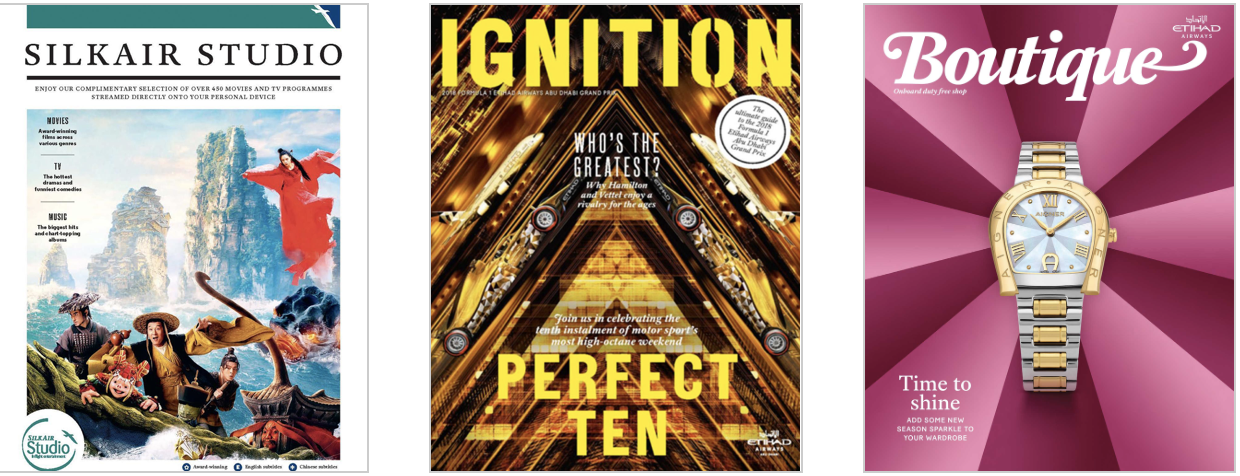
In the fall of 2018, a brand new print magazine was created called The Technoskeptic. At that point founder and publisher, Mo Lotman, said the magazine was not sold through Barnes and Noble or any national distributor. Mr. Magazine™ found Issue #3 (the first he’d seen on newsstands) and was certainly glad he did. The magazine’s mission statement is: The mission of The Technoskeptic is to promote awareness, critical thinking, and social change around the use and impact of technology on society and the environment. The magazine is savvy, very well-done, and totally absorbing. Welcome to The Technoskeptic!

A fashion and pop-culture magazine, Cool America strives to offer diverse and beautiful content that will bring people from all walks of life together. Editor in chief, Vaughn Eric Stewart, writes in his first editor’s letter: an inclusive America is a cool America. And the premiere edition of the magazine is certainly cool! Thank you for your beauty in both photography and content, Cool America; we welcome you to the fold!

As a way to refresh its ‘Worklife’ brand, Staples has launched a quarterly ink on paper magazine, along with a digital version, podcasts, live events, and a entire digital community, hoping to continue the conversation with its customers long after the ‘staples’ have been replenished. The premiere issue of Worklife includes an interview with author, Daniel Pink, talking about motivational mistakes and how to correct them; there is advice for the workplace and all that entails, from stress to keeping the peace;  and The Decider, which is a flowchart tool that, in the premiere issue, helps readers decide whether a particular meeting is a must-attend. It’s a great addition to the brand and Mr. Magazine™ is keeping this one in the office with him!

Well, autumn is right around the corner and Mr. Magazine™ is looking forward to meeting you again right here to discuss the great new titles for fall!

So, until then…

See you at the newsstands…

******And please remember, if Mr. Magazine™ can’t physically hold, touch and purchase the magazine, it does not enter the monthly counts. And counts now include only the titles with a regular frequency that are either new, first-seen on Mr. Magazine’s™ radar, or arriving to the national newsstands for the first time.


h1

Guns DIY & DIY Guns: What’s In A Name In The Wonderful World Of Magazines?

August 30, 2019

A Mr. Magazine™ Musing…

Growing up, I always believed that magazines were magical, from the contents inside the pages to the “secret” locations where they were created. To my childlike wonder, these sweet spots where all things magically magazine were maintained, was like the Land of Oz. It had its heroes; it had its villains; and it had its spies (what did you think those Flying Monkeys were doing for the Wicked Witch anyway?).

That being said, when two magazines from two entirely different “Wizards” comes around with very similar covers, contents, or names, my thoughts are always traveling down that path of least resistance: my childhood imaginations of how magazines worked.

Take, for example, when back in the last century, Family Circle shows up on the newsstands with a beautiful cover showcasing a delicious-looking pasta dish and then days later, Woman’s Day is sitting there next to it with basically the same cover. Or there is no major news story or catastrophe going on in the free world and TIME magazine and Newsweek are sporting the same cover story.

Well, bearing that in mind, Mr. Magazine™ would like to present to you two premiere issues of two new titles that will definitely cause you to do two double takes(regardless of the subject matter of both magazines): FMG Publications’ DIY Guns  and F+W’s Guns DIY. And no, those are not typos.

DIY Guns is for the gun enthusiast who likes to tinker with their own firearms. From the American Handgunner brand, this title covers handguns heavily, but also touches on some long-gun endeavors that will surely keep the rifle, shotgun-lover busy as well.

Guns DIY stresses in its first editor’s letter: America’s DIY Firearm Heritage Lives! Customization and modification are the two mainstays of this new title and offers readers the opportunity to make these firearm transformations at home.
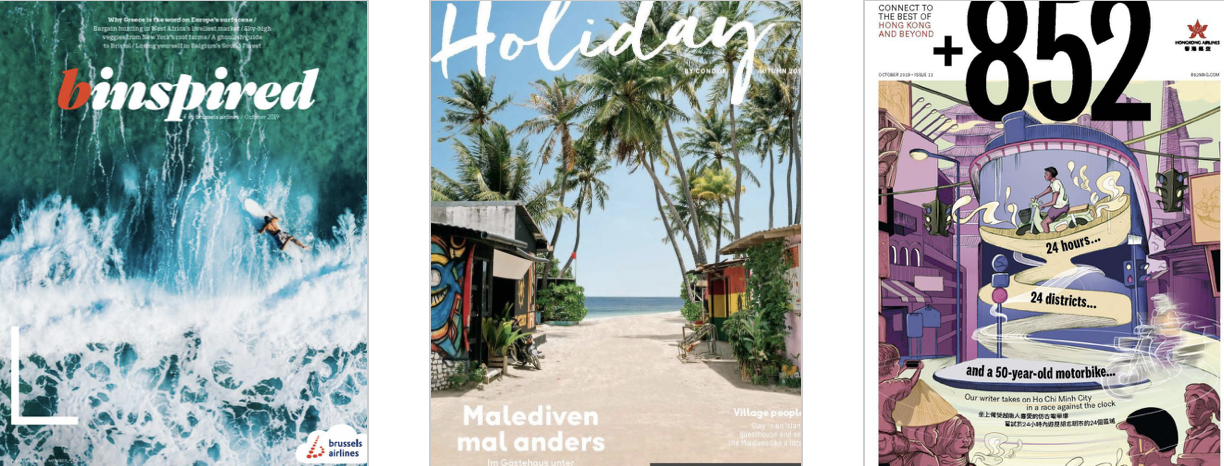
So, basically, two different “Wizards” have created two different magazines with titles that are hauntingly similar and content that, in some ways, could be considered very familiar to each other.

This caused Mr. Magazine™ to ask himself what’s in a name in the world of magazines anyway? As long as there is room on newsstands for both of these titles (or any others out there already or coming up) new magazines are the life’s blood of this industry. And these two new titles from long-time publishing companies may or may not have known about each other, but obviously, it’s a given; great minds think alike… that, or one of them left the windows open and the Flying Monkeys had a field day.

Until the next time…

See you at the newsstands….

h1

Beau: The Man’s Magazine Of The 1920s… Defining Upscale Audiences While Fighting Censorship… A Mr. Magazine™ Blast From The Past

August 28, 2019

Beau addresses itself to those who live well, dine well, dress well, play well, read well, work well, sleep well and die well. It is distinctly a magazine for moderns, for epicureans, for sophisticates. It is written with masculine vigor and strength; for, though Beau professes itself the friend of the ladies, it regrets the almost exclusive attention paid by magazine editors to the feminine taste. So Beau declares itself a magazine dedicated to the male point of view, though willing, even anxious to welcome the ladies as readers. (Beau, Volume One, Number One, October 1926)

The more I dig into the old magazines, the more I discover personalities and magazine makers that somehow during my studies of publishing history, and my professors’ teachings, were either marginalized or were not mentioned enough, in terms of the role they played in the American magazine industry.

One such person I’m discovering is Samuel Roth, who published at least five different magazines during his tenure from the 1920s all the way to the 1950s, including Two Worlds Monthly and one that really caught my attention, which he referred to as the man’s magazine, Beau. (See Mr. Roth’s concept for the magazine above). Beau was a magazine that, almost like all of his other titles, was very high-priced, almost 50 cents per issue. His reason for that was because he didn’t want his magazines to be bought by common folks. In fact, he would have preferred his magazines to be sold only to doctors, lawyers, and other upper-echelon professionals.

As he mentioned in one of his editorials, after his February 1927 issue was banned from distribution in New York City, his man’s magazine was devoted to the comforts and luxuries of living.  His argument for that line of thinking was that he didn’t want common people to get “cheap thrills” from his magazine; it was for the sophisticated only. That he wasn’t appealing to the baser natures of mankind, but rather the more educated and elite of society.

What follows are some quotes that he wrote in an editorial from March 1927 after the February issue of Beau from that same year was banned from distribution in New York City, and the fascinating description of what the magazine was all about:

“Two Worlds Monthly and Beau are written and published for the sophisticated only, that neither by lewd pictures or lewd contents do we make appeal to the baser passions of mankind.”

 “Two Worlds Monthly was quite alright, he said (he being, John Sumner, secretary of the New York Society for the Suppression of Vice), and we could go ahead distributing it immediately, but Beau, ah, that was a different story. It was absolutely unthinkable to let Beau go out on the harmless newsstands dripping with nudes, which any little boy may purchase for fifteen cents. No, said Mr. Sumner, he did not approve Beau and if I dared to issue it of my own accord he would unfailingly prosecute me.”

 Here is a small excerpt from that March 1927 editorial:

Here, cried my friends, is your opportunity for plenty of publicity – publicity that will create a vast demand for your magazines. But strange as it may seem, I did not follow their advice, I did not take the matter into court with Mr. Sumner. Such publicity, I felt, would bring many readers to Two Worlds Monthly and Beau, but not the sort of readers I want. Such publicity would bring me readers who look to magazines for filth whereas all we have to offer is wit, beauty, and gaiety. It would be taking an unfair advantage of the poor dubs.

But I want the readers of Beau to judge between myself and Mr. Sumner. Mr. Sumner characterizes as filth the famous suppressed Franklin letter To The Academy of Brussels,and the Paul Morand story Finding Your Woman in Paris, whereas I regard them as exquisite satirical compositions calculated to enrich the life of every man or woman capable of reading them.

What is more, I think the suppressed number of Beau probably the most beautiful copy of any magazine ever printed in America.

Samuel Roth

I physically own the particular copy of Beauthat caused this bit of controversy. Ironically, there is no nudity, such as Sumner speaks of with the description: “dripping with nudes.”  But Samuel Roth is definitely a gentleman from that past that made his mark known in the word of magazines, and nudity in his other titles was prevalent.

We’ll discover more about Mr. Roth in the future as I delve more into his past and the magazines he published.

Until the next time…

h1

The First Presidential Televised Press Conference… A Mr. Magazine™ Blast From The Past…

August 22, 2019

Are you looking for someone to blame or thank for the origination of the presidential televised press conferences? Well, search no more.  It was President Dwight Eisenhower who was the first president to experiment with televised press conferences and he liked what he saw.

A news item in Tempo magazine from Feb. 7, 1955 under the heading: First of a Series (and boy, were they right)… read:

I hope it doesn’t prove to be a disturbing influence,”said Pres. Eisenhower, glancing at the batteries of lights and cameras. But when the experiment was over he was so pleased with it that he decided to make the televised press conference part of the regular schedule.

Now, you know the rest of the story, as Paul Harvey would have said.

h1

The Joyful Life: A New Magazine That Provides “Heart & Home Inspiration For Christian Women” – The Mr. Magazine™ Interview With Sandi Sutton, Founder, Editor, & Creative Director…

August 21, 2019

“I think there is so much. One of the criteria for things that we use and put into the magazine is whether or not it’s timeless. And I really believe that our readers are intentionally looking for more deliberate, inspiring, and engaging content. I have at different times compared it to a fast food meal versus a feast. A fast food meal will nourish your body and you can take it in small bites and it will give you the fuel that you need momentarily, but when you sit down to a feast it’s an experience and it’s something you share with people. It’s relational. I see our publication as something that’s truly feeding women’s hearts and souls and it will have a measureable impact on, not just their lives, but their families’ lives too.” Sandi Sutton (On what print provides that digital can’t)…

A Mr. Magazine™ Launch Story…

In today’s world of chaos and mayhem, The Joyful Life is a new publication that seeks to inspire Christian women to rekindle their relationship with God and find the pure joy and peace that reconnection can bring in their everyday lives. Sandi Sutton is the founder, editor and creative director of the magazine and cherishes the mission of the ink on paper title, while understanding the sometimes-overwhelming job creating a new magazine can be.

I spoke with Sandi recently and we talked about The Joyful Life and the God-inspired path she believes her magazine is on. Sandi describes having an ink on paper magazine versus just a digital entity as comparing a feast to a fast food meal, and Mr. Magazine™ would have to agree. Sitting down to The Joyful Life in its print form is an experience that looking at a website just can’t compete with. The magazine is beautifully done and a “joy” to hold and read.

So, I hope that you enjoy this Mr. Magazine™ interview with a woman who has answered her own calling in life and strives to give all Christian women that same “Joyful” experience. And now Mr. Magazine™ talks to Sandi Sutton, founder, editor & creative director, The Joyful Life magazine.

But first the sound-bites:

On the story behind The Joyful Life: It was about two years in the making, as far as research and considering whether or not it was something I was actually going to do. I had been a photographer for 12 years prior to that and I had always had a dream of starting a magazine. I had initially planned to start a photography magazine, because I was so immersed in that industry. So my initial research and planning was leaning in that direction, but then about a year into that process…and I hadn’t pulled anything together, it was more just the research phase, but about a year into that I just felt this really strong calling from God that it needed to be a Christian magazine. It was about two years in the making, as far as research and considering whether or not it was something I was actually going to do. I had been a photographer for 12 years prior to that and I had always had a dream of starting a magazine. I had initially planned to start a photography magazine, because I was so immersed in that industry. So my initial research and planning was leaning in that direction, but then about a year into that process…and I hadn’t pulled anything together, it was more just the research phase, but about a year into that I just felt this really strong calling from God that it needed to be a Christian magazine.

On where the name “The Joyful Life” came from: Once I decided that it was going to be a Christian magazine, which took about a year, it was going to be called Joy in the Daily. So, for that first year of planning it was going to be called Joy in the Daily. And I had done all of the branding for it and I had acquired all of the social media. It was not until less than a week before I launched on social media that I changed the name to The Joyful Life. And I was literally sitting in my bathroom and getting ready, putting my makeup on, when I had this total epiphany that the magazine needed to be called The Joyful Life. I would say that it came from God because that wasn’t even on my radar.

On the elevator pitch for the magazine: Overall, the magazine is to remind women of their worth in Christ; to remind women of the joy that is found only in Him. We have so many magazines that we can turn to for just inspiration for our homes or our lives. There seemed to be this very missing piece, a void in magazines. One that brought really solid content that was going to be convicting and encouraging at the same time, but also mixed with something that was really beautiful and inspiring for their everyday lives. I think part of what women need to be reminded of is that a relationship with God affects every area of our lives. It’s not just this compartmentalized thing.

 On what she hopes to accomplish a year from now: I decided early on that we needed to build a really strong community around the magazine and I think being a faith-based publication, that has been something women have been longing for in their lives. So, we have built a really amazing community and our plans, not necessarily for 2020, but sometime in the next few years, we plan to extend to having an annual conference where we’ll bring in speakers. The conference will be heart and home inspiration as well. We’ll have speakers and workshops. So, we do plan on going in that direction, but as far as just the magazine itself, for 2020 we are going to make just a few changes to the magazine, more in design than anything.

On what she can do in print that digital can’t provide: I think there is so much. One of the criteria for things that we use and put into the magazine is whether or not it’s timeless. And I really believe that our readers are intentionally looking for more deliberate, inspiring, and engaging content. I have at different times compared it to a fast food meal versus a feast. A fast food meal will nourish your body and you can take it in small bites and it will give you the fuel that you need momentarily, but when you sit down to a feast it’s an experience and it’s something you share with people. It’s relational. I see our publication as something that’s truly feeding women’s hearts and souls and it will have a measureable impact on, not just their lives, but their families’ lives too.

On what someone would find her doing if they showed up unexpectedly one evening at her home: Definitely cooking. (Laughs) I love to cook and it’s something that relaxes me. It’s just life-giving to me. So, cooking for my family is something that I try to be really intentional about. I have five kids and three of them are grown and out of the house, but cooking is something that I do often. And for me, I love my work so much, and obviously I’m blessed to be able to work from home, my office is at home. So, a lot of times in the evening I’m still just pouring into the business in one way or another, but the relaxation side of the work is more just engaging with our community in the evenings. I don’t see that side as work; it’s just a joy to me.

On the biggest misconception she thinks people have about her: Probably that I am very organized and have it all together. (Laughs) I think there’s probably some truth to that. You have to be somewhat organized and kind of have things together a bit to be able to run a business that is this busy and deadline-focused, but at the same time it’s not something that comes naturally to me at all. And so I have to be very intentional about it.

On what keeps her up at night: Nothing keeps me up at night these days. (Laughs) And that is the honest truth. I spent many years just really experiencing anxiety at night and stress, particularly when I was doing my photography business. And I feel like I probably hung onto that longer than I should have. It was a very busy business and I was blessed and thankful for it, but it was stressful. The first year of the magazine was certainly a lot of work that I always felt was left undone, like I had way too much to do, but I hired three new employees in January 2019 and I have told them many times, to me they represent, one of them is the project manager and I feel like she represents my brain; the managing editor, she is my writer and editor heart; and then my community manager is such a representation of my heart toward our community.

And now the lightly edited transcript of the Mr. Magazine™ interview with Sandi Sutton, founder, editor & creative director, The Joyful Life.

Samir Husni: Tell me the story behind The Joyful Life. Why did you decide to come up with this beautiful print product in this digital age?

Sandi Sutton: It was about two years in the making, as far as research and considering whether or not it was something I was actually going to do. I had been a photographer for 12 years prior to that and I had always had a dream of starting a magazine. I had initially planned to start a photography magazine, because I was so immersed in that industry. So my initial research and planning was leaning in that direction, but then about a year into that process…and I hadn’t pulled anything together, it was more just the research phase, but about a year into that I just felt this really strong calling from God that it needed to be a Christian magazine.

.So, I spent several months just wrestling with that, and whether or not I felt there was going to be a market for it, but stepping away from my photography business and moving into this, I knew that was the direction that I needed to go.

I’ve always been a writer and I’ve always loved photography, so I knew that I wanted to create something that was going to be very visually appealing. Initially I had thought it would be something that I would do on my own, I really wasn’t prepared from the beginning to have teams of people working on it. And it just became something from really early on that made me realize if I was going to do this well and if I was going to do it with the standards that I wanted it to be done with, I was going to need help from a lot of people. And it just kind of came together in what I feel were miraculous ways.

Samir Husni: I was going to add, you probably needed help from above plus all those people.

Sandi Sutton: Oh yes, it’s been a huge faith walk. Had I known in the early stages even a fraction of the work involved, I may have been far too fearful, but it was something that I felt God was leading me to do. We have about 50 volunteers that work with us in addition to my staff. It has really become an amazing community effort.

Samir Husni: As you solidified your plans and put that first issue together, where did the name come from “The Joyful Life?” And the tagline: Heart & Home, inspiration for Christian women? How did all of the pieces of the puzzle come together?

Sandi Sutton: Once I decided that it was going to be a Christian magazine, which took about a year, it was going to be called Joy in the Daily. So, for that first year of planning it was going to be called Joy in the Daily. And I had done all of the branding for it and I had acquired all of the social media. It was not until less than a week before I launched on social media that I changed the name to The Joyful Life. And I was literally sitting in my bathroom and getting ready, putting my makeup on, when I had this total epiphany that the magazine needed to be called The Joyful Life. I would say that it came from God because that wasn’t even on my radar.

I was a little bit overwhelmed at the prospect of having to change everything, I knew I would need a different logo – all of it was going to have to change. The launch was already planned. But I did it, I just knew that The Joyful Life was what it needed to be. And in hindsight I feel like that was such a good decision because the name really does encompass everything that we are trying to promote through our publication. So, it was a good move.

The tagline kind of evolved over time as well. Initially, we had a longer tagline that was more descriptive of the overall premise of the magazine. And it was probably about four or five months in that I decided to condense it when we were in the process of designing the cover for the first issue. We initially launched our social media several months in advance of the first issue coming out. So, that first issue was a little bit more raw. (Laughs) It was put together a little differently than what we do now. There were a lot of things in that first issue that we were just trying out. And our tagline was a last minute decision, but again I just felt at peace about it and that it encompassed everything we were trying to promote and the mission behind what we’re doing.

Samir Husni: So, the magazine is out and the Summer issue is the first one on the newsstands; if someone came up to you somewhere and asked you to give them the elevator pitch for The Joyful Life, what would you tell them? What is the magazine?

Sandi Sutton: For me, the whole purpose of starting this magazine is because I feel like within Christianity, in the last couple of decades, there has been a slow disconnect from God with Christian women. When I look back on the trajectory of my life and the friends I’ve had for years, I think that we’ve just become so inundated with destructions. And in all the ways that we’re more connected as a society, we’re disconnected in our relationships. And that extends to our relationship with God as well.

Being in my forties with older kids as well as younger kids, their ages run the gamut, I just felt like women needed a reminder of their worth in Christ. And that we needed to just make that relationship with him a priority again.

Overall, the magazine is to remind women of their worth in Christ; to remind women of the joy that is found only in Him. We have so many magazines that we can turn to for inspiration for our homes and lives. There just seemed to be this very missing piece, a void in magazines. One that brought really solid content that was going to be convicting and encouraging at the same time, but also mixed with something that was really beautiful and inspiring for their everyday lives. I think part of what women need to be reminded of is that a relationship with God affects every area of our lives. It’s not just this compartmentalized thing.

I just felt there was a real void in the market for that and some of the other Christian magazines are either focused on lighter content or go much deeper theologically. I felt really strongly that it needed to be a beautiful combination of the two. That’s not my elevator pitch, that’s a really long response. (Laughs) The tagline is representative of that. We want their hearts to be inspired to rekindle their relationship with Christ and we want them to take that relationship with Him and allow it to permeate every area of their lives, including their homes. It really is heart and home inspiration.

Samir Husni: Two years after the planning, a year after you have four issues under your belt, if you and I are talking about The Joyful Life one year from now, what would you hope to tell me you had accomplished?

Sandi Sutton: My team is flying out here next month so that we can do some planning for 2020. One of the things that we’ve done with the magazine is we decided not to do traditional distribution in the way that most magazines do. Our magazine is too high-end of a publication cost-wise to make it reasonable ($24 cover price). It just wasn’t going to work to do traditional distribution. We do have one distributor and that is probably where you picked it up. We have it in a few retail places, and we have relationships with some wholesalers, so we have it out there a bit, but it’s not a magazine that I felt like people were going to just see on a shelf and pick up, especially when it’s considerably higher priced than other magazines.

I decided early on that we needed to build a really strong community around the magazine and I think being a faith-based publication, that has been something women have been longing for in their lives. So, we have built a really amazing community and our plans, not necessarily for 2020, but sometime in the next few years, we plan to extend to having an annual conference where we’ll bring in speakers. The conference will be heart and home inspiration as well. We’ll have speakers and workshops. So, we do plan on going in that direction, but as far as just the magazine itself, for 2020 we are going to make just a few changes to the magazine, more in design than anything.

And we’re promoting it through somewhat untraditional ways and we just hope to continue to see it grow. Our communities are growing and they’re thriving, and we do quarterly Bible studies as well. We have just a really great community of women that are investing in this; on the reader side and with our volunteers. It’s just a beautiful thing that God is doing with all of it.

Samir Husni: Being a writer, photographer and now a magazine publisher, what do you think that you can do in print that you cannot do in digital or social media?

Sandi Sutton: I think there is so much. One of the criteria for things that we use and put into the magazine is whether or not it’s timeless. And I really believe that our readers are intentionally looking for more deliberate, inspiring, and engaging content. I have at different times compared it to a fast food meal versus a feast. A fast food meal will nourish your body and you can take it in small bites and it will give you the fuel that you need momentarily, but when you sit down to a feast it’s an experience and it’s something you share with people. It’s relational. I see our publication as something that’s truly feeding women’s hearts and souls and it will have a measureable impact on, not just their lives, but their families’ lives too.

The content that we put into the publication is really timeless, even from quarter to quarter. There is certainly content in the magazine that is seasonally focused, but you could pick up any one of our issues at any time of the year and you will find things that apply to you. And I believe that will be true 10 years from now.

We also publish on our blog once a week, sometimes twice a week. And we post devotions every day on Instagram. A lot of our blog content has a timeless feel to it as well, but any time something is more currently relevant we would put it on the blog.

But I just believe that if women aren’t seeking it out right now, they still feel the pull of getting away from screens and seeing the value in just stepping away from their computer, stepping away from their phones; it’s like we’re bouncing back. We went the direction of everything being digital and everything being on our screens, but now we’re breaking the consequences of doing that. We’re seeing the repercussions of that being such a major factor in our lives, and now I feel that women are wanting to step back. I remember what life felt like when I used to make the time for just sitting down and reading. To just sit and be.

We are very intentional about making sure our publication is something that women will be able to spend time reading and walk away feeling like they’re full and nourished, and like they just had a reprieve and a chance to pause from the busyness of life going on around them.

Samir Husni: If I showed up unexpectedly at your home one evening after work, what would I find you doing? Reading a magazine; cooking; watching TV; or something else? How do you unwind?

Sandi Sutton: Definitely cooking. (Laughs) I love to cook and it’s something that relaxes me. It’s just life-giving to me. So, cooking for my family is something that I try to be really intentional about. I have five kids and three of them are grown and out of the house, but cooking is something that I do often. And for me, I love my work so much, and obviously I’m blessed to be able to work from home, my office is at home. So, a lot of times in the evening I’m still just pouring into the business in one way or another, but the relaxation side of the work is more just engaging with our community in the evenings. I don’t see that side as work; it’s just a joy to me.

Samir Husni: What do you think is the biggest misconception people have about you?

Sandi Sutton: Probably that I am very organized and have it all together. (Laughs) I think there’s probably some truth to that. You have to be somewhat organized and kind of have things together a bit to be able to run a business that is this busy and deadline-focused, but at the same time it’s not something that comes naturally to me at all. And so I have to be very intentional about it.

Samir Husni: My typical last question; what keeps you up at night?

Sandi Sutton: Nothing keeps me up at night these days. (Laughs) And that is the honest truth. I spent many years just really experiencing anxiety at night and stress, particularly when I was doing my photography business. And I feel like I probably hung onto that longer than I should have. It was a very busy business and I was blessed and thankful for it, but it was stressful. The first year of the magazine was certainly a lot of work that I always felt was left undone, like I had way too much to do, but I hired three new employees in January 2019 and I have told them many times, to me they represent, one of them is the project manager and I feel like she represents my brain; the managing editor, she is my writer and editor heart; and then my community manager is such a representation of my heart toward our community.

I feel like all of these women have come into my life and have invested so much in the business alongside me that I just don’t have that same kind of feeling of things not being done. And I just feel like we’re at a place right now that is so peaceful. I am so in awe of everything God has done with this publication in such a short time. I am experiencing, at this point right now, the peace and the joy that comes from so many months and years of hard work. It’s just a blessing.

Samir Husni: Thank you.