Black Magazines… is the sixth chapter from the serialized book I am writing on the magazines of 1953, specifically March 1953, the month I was born. This is chapter six, part two. Feel free to back track for chapters one, two, three, four and five in previous blogs. Enjoy.
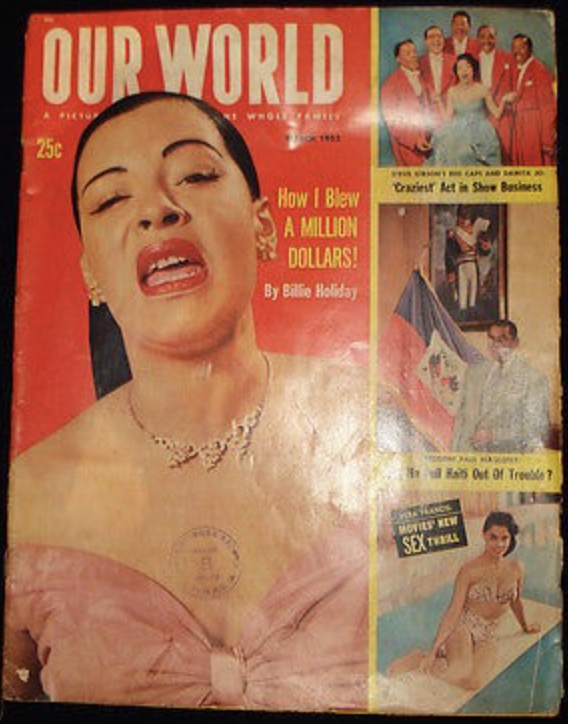
OUR WORLD
Our World magazine was a publication founded by John P. Davis for African Americans and was published from 1946 to 1957. Davis co-founded the National Negro Congress, an organization dedicated to the advancement of African Americans during the Great Depression. Along with Our World magazine, he also published the American Negro Reference Book, covering many aspects of African American life, present and past.
Our World was another title that promoted the excellence of African Americans, their achievements and the successful lives that many led. It covered contemporary topics from Black history to sports and entertainment, with regular articles on health, fashion, politics and social awareness. Its covers featured entertainers such as Lena Horne, Marian Anderson, and Harry Belafonte.
The February 1953 issue featured Isabelle Cooley, the beautiful actress, known for Cleopatra (1963), Real Genius (1985) and Parenthood (1989). Along with Ms. Cooley, there was an article on Joey Adams, L.A.’s top platter-spinner, and Solly Walker, St. John University’s first black basketball player. The magazine was large in size and the cover was splashed with bright colors and vivid images. It was another title that proved how important and notable people of color were and the deeply woven threads of pride and promise they made in the nation’s overall tapestry.
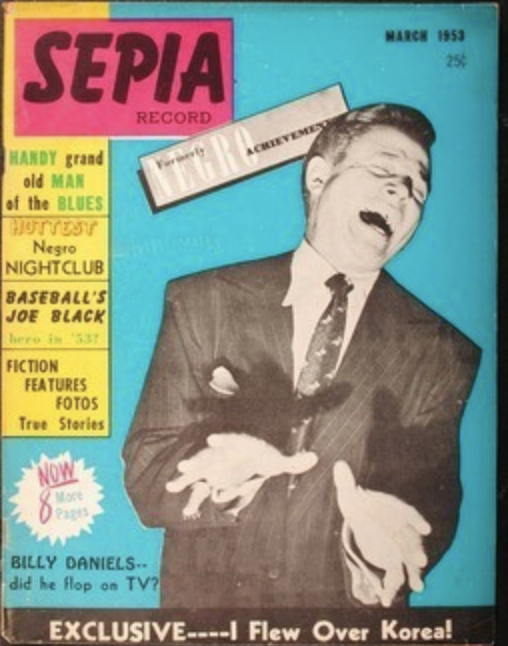
SEPIA
Sepia was a magazine that featured fantastic photojournalism. It was styled a lot like Look, but often compared to Ebony. It focused primarily on achievements of African Americans and was founded in 1946 as Negro Achievements by Horace J. Blackwell, an African American clothing merchant from Fort Worth. Blackwell had already founded The World’s Messenger in 1942, which featured romance-true confession type stories of working-class Blacks.
In 1950, George Levitan, a Jewish-American man born in Michigan, bought the magazines and Good Publishing Company (aka Sepia Publishing). Levitan is the one who changed the name of the magazine to Sepia from Negro Achievements, and The World’s Messenger became Bronze Thrills. He also published Heb and Jive for Black audiences as well.
According to the magazine’s history, after Levitan’s death in October 1976, Beatrice Pringle, one of the original publisher/editor team with Blackwell, bought Sepia and continued operations through 1982. The magazine still had a strong circulation of around 160,000 in 1983 when Ms. Pringle closed up shop. Many scholars have supposedly had a difficult time researching the magazine, as its records and building were mostly destroyed after it closed.
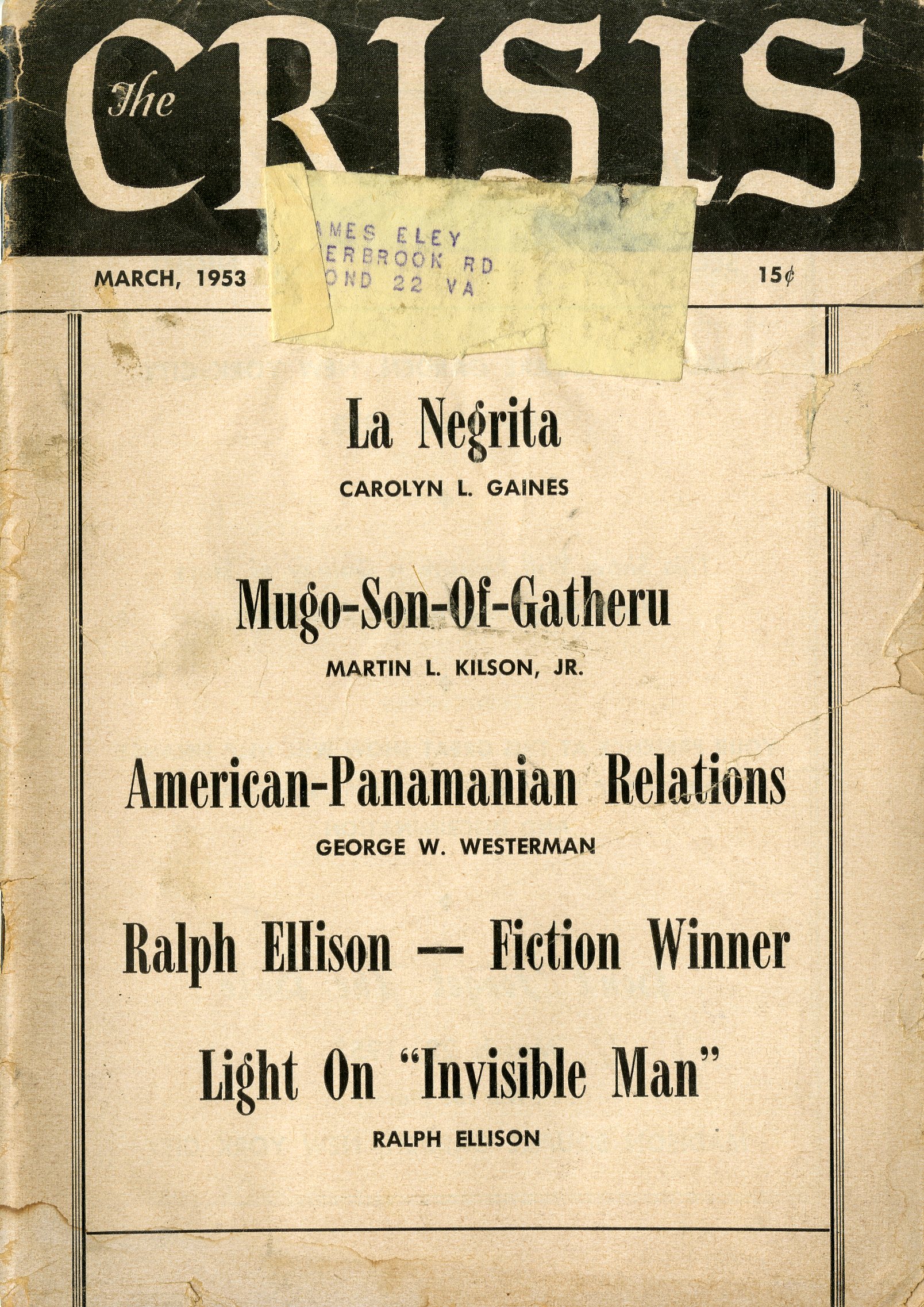
THE CRISIS
As mentioned earlier, The Crisis was and still is the official magazine of the National Association for the Advancement of Colored People. Founded in 1910 by W. E. B. Du Bois, who was also a founding member of the NAACP, along with Oswald Garrison Villard, J. Max Barber, Charles Edward Russell, Kelly Miller, William Stanley Braithwaite, and Mary Dunlop Maclean created the magazine to show the injustices and danger that racial prejudice generated. The Crisis has been in continuous print since 1910, and is the oldest Black-oriented magazine in the world. But today, The Crisis mostly operates online via social media outlets such as Facebook, Instagram, and through their website.
With a smaller format, The Crisis relied more on content than aesthetics. The March 1953 issue, while not distinctly eye-catching, definitely makes up for its lack of outer resplendence with the articles within its covers. From “Mugo-Son-Of-Gatheru,” a story about the Kenyan writer who left his home on the Kikuyu Reserve when he was a teenager, to “American-Panamanian Relations,” the articles are on point for the times and substantive. It’s a magazine that shed much light on the plight of people everywhere.
Looking at these great ethnic magazines of March 1953, we see a definite foundation for all of the mainstream titles we have today in the genre. And while many have gone and some have been reborn in different formats, the fact remains that ethnic magazines played a major role in the early history of magazines, especially in March 1953.
Up next, we take a look at the Children magazines of that era. Stay tuned.
Black Magazines… is the sixth chapter from the serialized book I am writing on the magazines of 1953, specifically March 1953, the month I was born. This is chapter six, part one. Feel free to back track for chapters one, two, three, four and five in previous blogs. Enjoy.
Changing the narrative. That’s what Black magazines did in March 1953. From Ebony to Jet, the African American community began to see themselves in the pages of magazines devoted to their culture and their lifestyle. It was an eye-opening time for Black publishing. And the major leader of the movement was the man who started Ebony and Jet, John H. Johnson. Johnson was a man born to a suppressive demographic, but rose above it to become a force to be reckoned with in the world of publishing.
Along with Johnson, a Jewish-American man born in Michigan, who was a plumbing merchant in Fort Worth, came onto the scene in 1950, George Levitan. Levitan bought the magazines Sepia and The World’s Messenger from an African-American clothing merchant from Fort Worth, Horace J. Blackwell. The difference between Levitan and Blackwell? Levitan was white. But could a white man tell the black man’s story during a time of segregation in America? And truth be told, while Blackwell’s mother had been Black, his father was white. So two men on the same journey, but with very different perspectives on the subject matter.
The National Association for the Advancement of Colored People (NAACP) was founded long before March 1953; February 12, 1909 to be exact, but the organization contributed greatly to the world of magazines. W. E. B. Du Bois’s The Crisis was the official magazine of the NAACP, still is as a matter of fact. The magazine has been in continuous print since its inception in 1910.
The publications highlighted display the importance and solidarity of Black magazines in the 1950s, March 1953 specifically. The magazines’ common interest was apparent, no matter what conversation they chose to engage in. From the positivity of a magazine like Ebony, to the call for action, social justice and an end to violence against Blacks as The Crisis often presented, Black magazines brought attention to the lives of African Americans.
Let’s delve into a few of the Black magazines that were in existence in 1953:
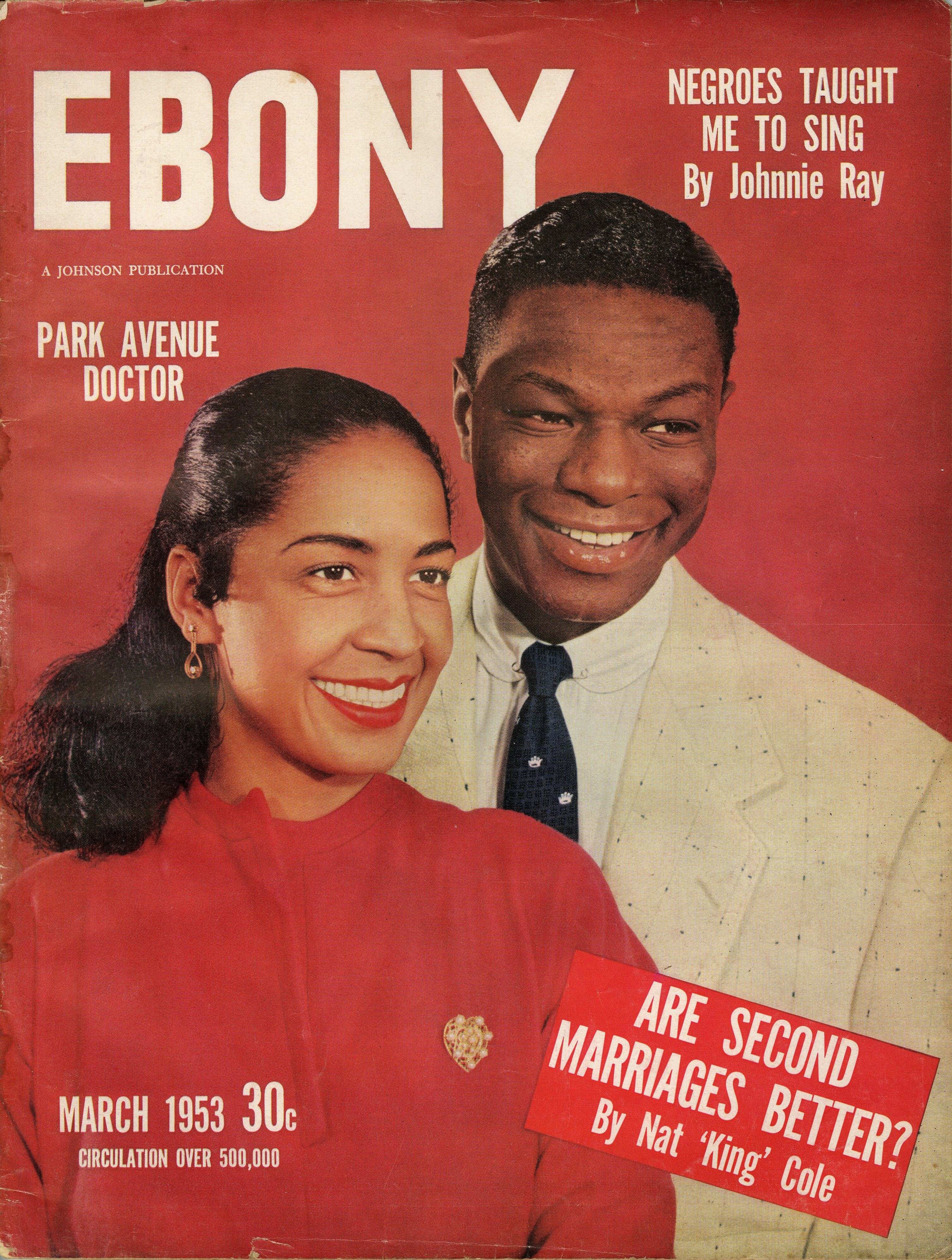
EBONY
John H. Johnson’s premier magazine that focused on news, culture, and entertainment for African Americans, Ebony was founded in 1945 in Chicago. The magazine showcased positive stories in a life-affirming manner. From celebrities to politicians to sports figures, the magazine’s format was patterned after Life and sought to show the accomplishments of African Americans more than anything negative going on in their lives at the time.
The magazine flourished for many years, changing its direction during the 1960s to cover more and more of the Civil Rights Movement, even garnering Ebony photographer Moneta Sleet Jr. a Pulitzer with his photograph of Coretta Scott King and their daughter Bernice attending Martin Luther King Jr.’s funeral.
The magazine reached unprecedented levels of popularity, reaching over 40% of the African American adults in the United States during the 1980s. Unfortunately, the publication went bankrupt in July 2020, but was purchased for $14 million by Junior Bridgeman in December 2020. It was reborn digitally on March 1, 2021 with no plans to return in print.
The March 1953 issue featured Nat King Cole and his second wife Maria on the cover asking the question: “Are Second Marriages Better?” The piece was written by Cole himself and had many personal at-home photographs that the singer provided for the story, enriching the piece tremendously for fans.
Along with Cole on the cover, the stories ranged from “Negroes Taught Me To Sing” by Caucasian singer Johnnie Ray to an article about a Park Avenue doctor who was an African American psychoanalyst with some very swanky New York clientele.
The March 1953 issue was epic in size and content and is definitely a collector’s dream. Showcasing these amazing Black achievers was something that Ebony reveled in and did extremely well throughout its long lifespan. It was a magazine that paved the way for many ethnic publications after it, including its sister publication Jet.
JET
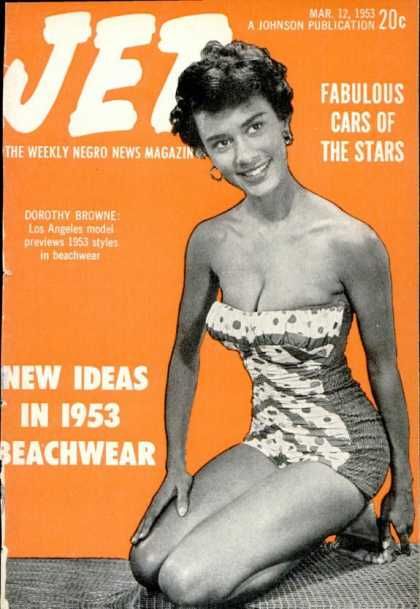
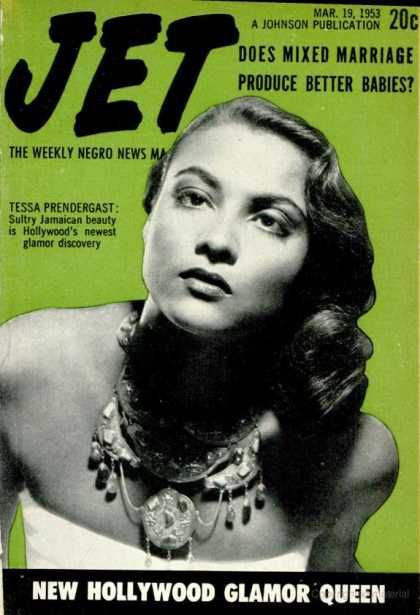
Jet was a weekly magazine that was another John H. Johnson publication. It too focused on news, culture, and entertainment related to the African American community, just as Ebony did. The magazine was founded in November 1951 and was originally titled “The Weekly Negro News Magazine.”
The differences between Jet and Ebony, other than the frequency, was their size. While Ebony was a large, coffee table-sized magazine, Jet’s format was smaller and digest-sized and it was printed almost entirely in black and white except for its cover’s background. According to the magazine’s early history, John. H. Johnson called his magazine “Jet” because he wanted the name to symbolize “Black and speed.” Jet covered the Civil Rights movement extensively and gained national attention when it published photographs of Emmett Till’s body after his death in 1955.
Two March 1953 issues, March 5 and March 26 respectively, had singer Jean Parks and singer Dinah Washington on each of its covers. With cover lines such as “Does Liquor Stimulate Sex” and “Has Sugar Hill Gone To The Dogs?” the magazine showed a diversity in subject matter that always intrigued.
In May 2014, the publication announced the print edition would be discontinued and transitioned into a digital format. But Jet and Ebony were sold in 2016, only to be bought again in the $14 million Junior Bridgeman deal with Ebony, with a promise to return digitally in June 2021.
OUR SPORTS
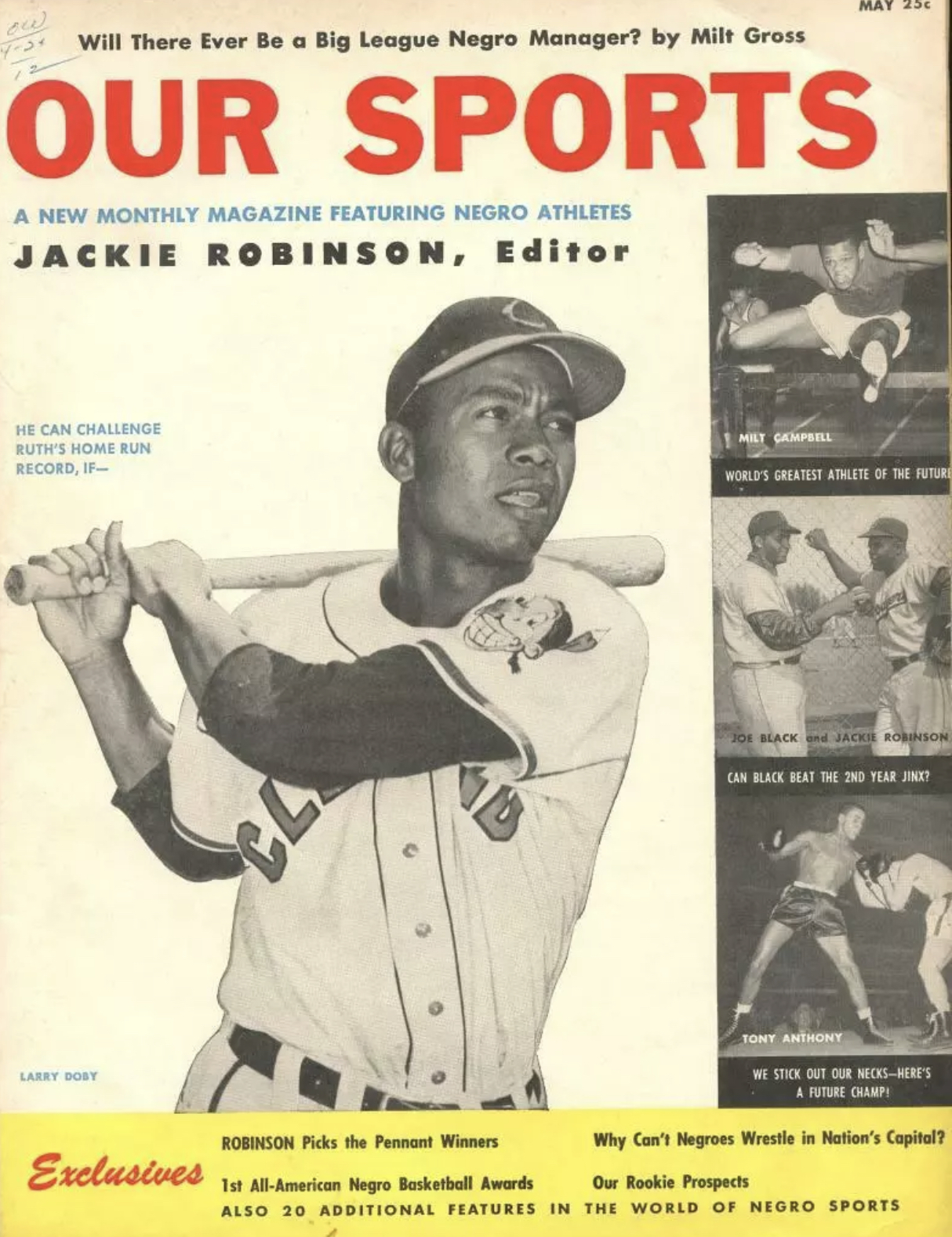
Edited by the great Jackie Robinson, Our Sports magazine was touted as “The Great New Negro Sports Magazine,” and was published in 1953. It ran for a total of five issues. It featured top African American sports stars on the cover, such as Larry Doby, Monte Irvin, Minnie Minoso, Satchel Paige, and George Taliaferro, who was the first black football player drafted into the NFL. Jackie Robinson was proudly credited in large letters on the cover as the editor of the magazine. It was a publication totally devoted to the Black athletes of the time, who were becoming more crucially involved in all major sports.
With stories such as “Will The Yankees Hire A Negro Player?” and “Why Are Negro Stars Still Buried in The Minors?” the magazine offered a different take on sports and athletes and just who made up these important teams.
To be continued…
*Please note that some of the background historical data about the magazines were taken from Wikipedia…
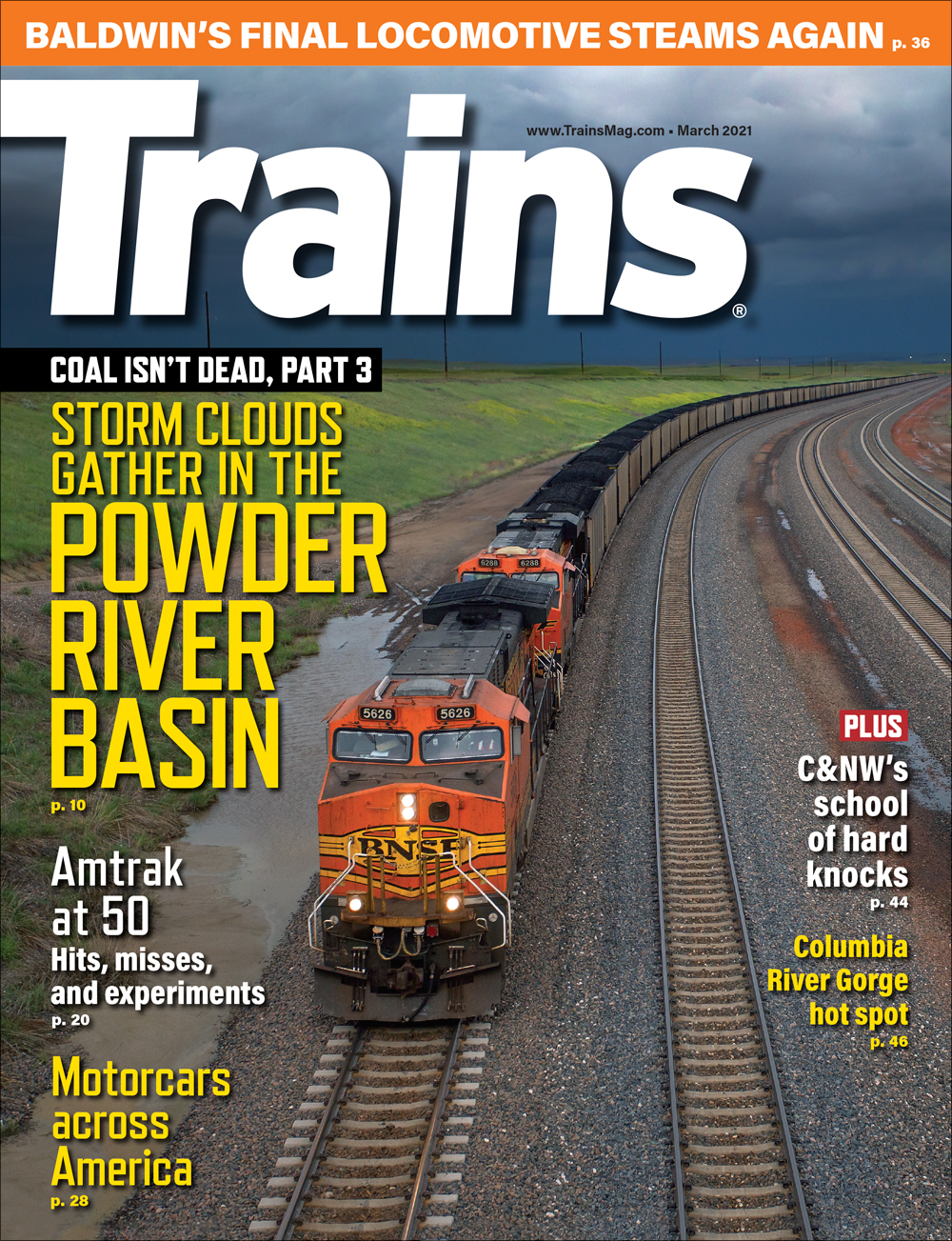
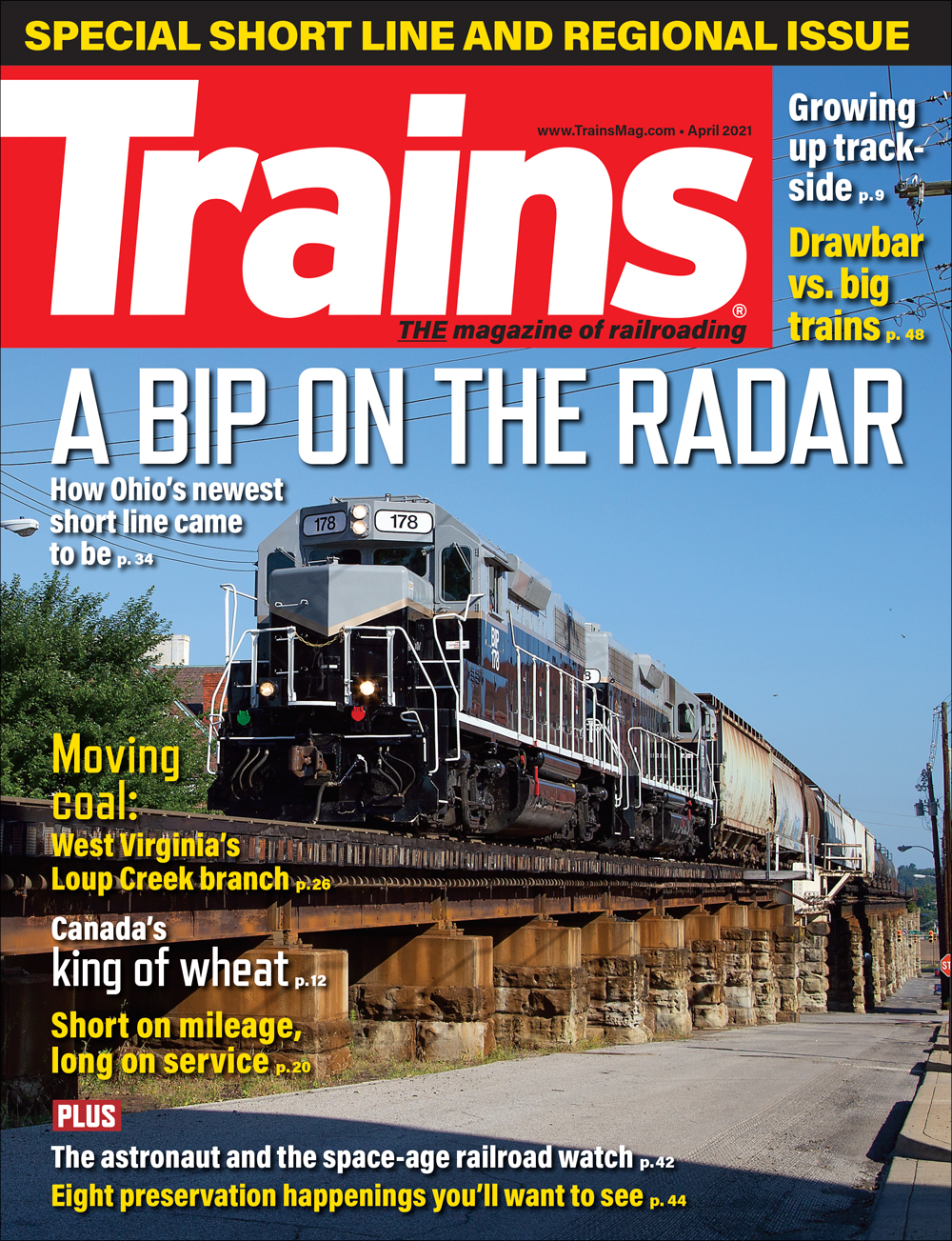
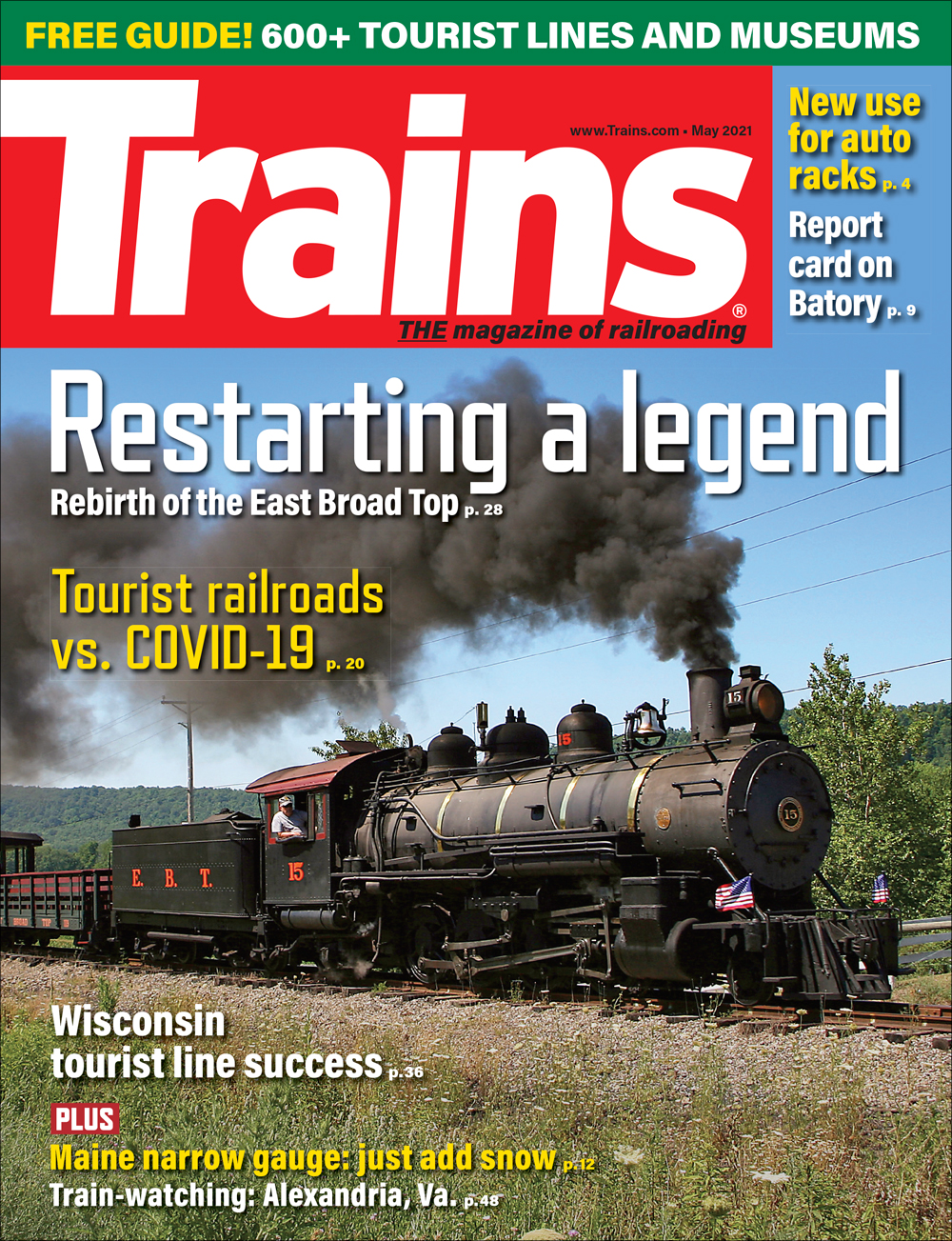
“In the case of Kalmbach, we’ve spent time over the last few years consolidating our brand portfolio. And now we feel we have a strong core business in trains and science. And across our brands in those categories, many of our customers still want the experience of a print magazine. And we’re going to continue to provide high-quality print experiences for those customers.” Dan Hickey…
Print and digital at their best, working together to serve the audience across all platforms. That’s the plan at Kalmbach Media. Kalmbach was founded in 1934 and continues today to delight and inform enthusiasts across many interests, from trains to science to beads and buttons. Through a diverse portfolio of brands that encompasses magazines, digital content, books and related products, Kalmbach has brought its legacy brands into the 21st century with a robustness that is far from shy.
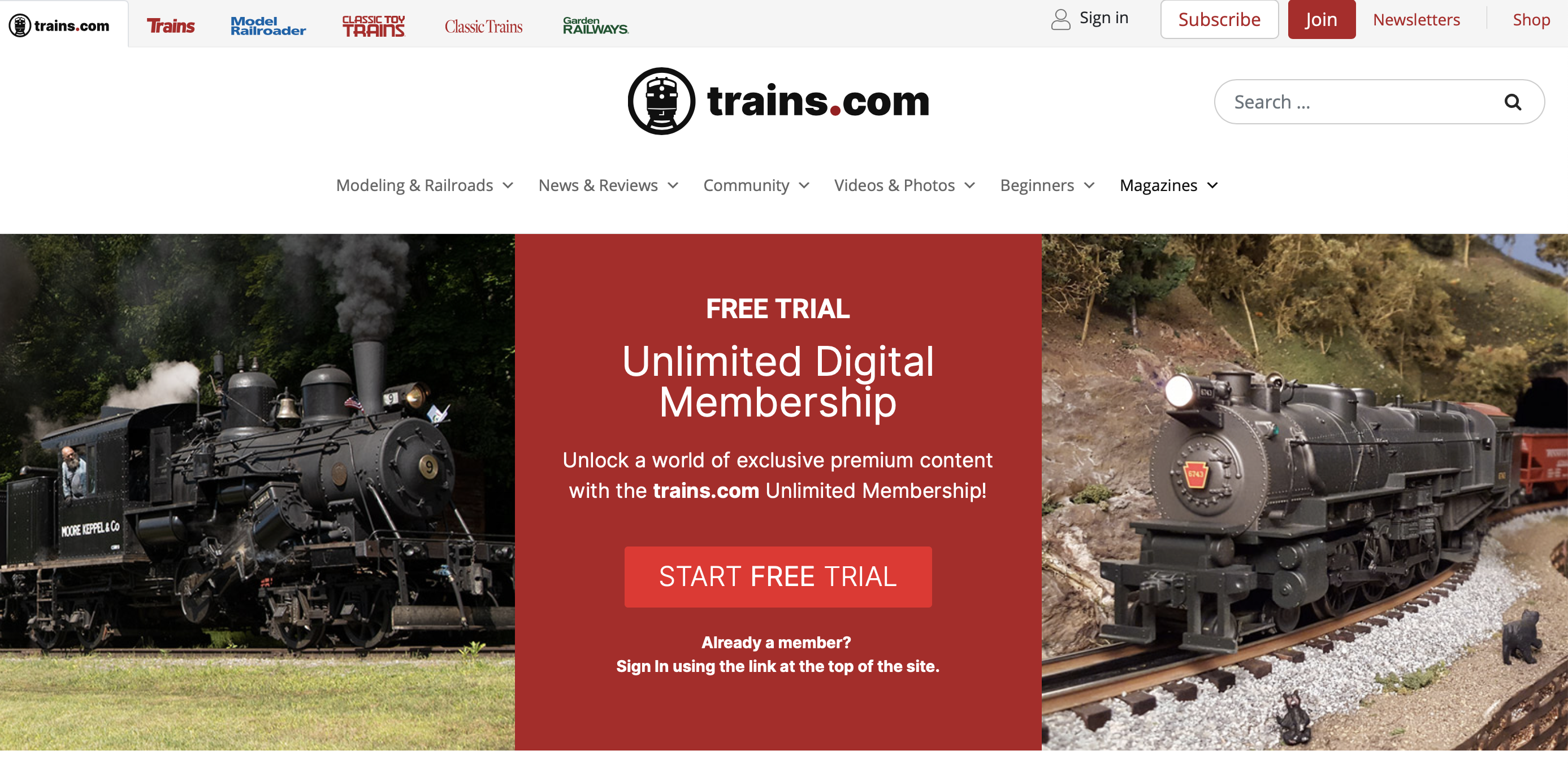
Dan Hickey is CEO of the company and believes in the Kalmbach mission of always putting the customer front and center wholeheartedly. I spoke with Dan recently and we talked about these brands that are very near and dear to many readers’ hearts, and to Dan’s too. Model Railroader, Classic Trains, Garden Railways, just to name a few. And about the new Trains.com website that was launched recently. For train and railroad lovers, it’s a portal to heaven with more than 20,000 pieces of content from all of their train enthusiast brands all in one spot, a massive endeavor that offers an unlimited access membership that Dan feels will excite his audience as much as it does him. With premium content created solely for the website and live video, plus access to 85 years of archives, it’s sure to cause train enthusiasts nationwide to sign up.
In fact, they launched recently and signed up thousands of memberships. Dan said that their expectations for Trains.com is that it will become the number one trains website in the world. “And it’s going to be a recurring revenue model for Kalmbach, it’s a subscription model, it’s premium content, and we expect and plan on it to be very successful.”
Indeed. It’s print and digital at their best. A successful partnership between the ink on paper and the pixels on the screen. And now the Mr. Magazine™ interview with Dan Hickey, CEO, Kalmbach Media.
But first the sound-bites:
On how things have been operating during the pandemic: It has certainly been a challenging time for everyone, but our business is doing very well. We’re having a very good year. Most areas of our business are actually doing better than last year. There has been a bit of a lift, I would say, since the onset of COVID. Some of our customers are people who have return to the hobbies, whether it’s the train category or astronomy or science. Business has done very well.
On whether he subscribes to the theory that the pandemic has been a sort of blessing to the magazine media and publishing industry: I’ve spoken to many CEOs in our peer set and all of them have told me that their businesses have actually improved during COVID, and that has been true of our business as well. I wouldn’t go so far as to call it a blessing, just because of the context of it all, but our businesses have improved.
On the membership business model he is starting for Trains: A lot of publishers are turning to what I would call a new business model for digital, for websites, and for Internet businesses. At Kalmbach, our revenue is probably 90 percent from the customer today and has been for a long time. So the shift for us is just making sure that we are building digital membership products as part of our future strategy. And that’s what Trains.com really is, it reflects in our business the multiyear strategy to serve our audiences through compelling digital subscription products. So, it’s not so much of a new business model, it’s the same business model, but it’s just happening in the digital arena.
On the role of print in this digital migration: In the case of Kalmbach, we’ve spent time over the last few years consolidating our brand portfolio. And now we feel we have a strong core business in trains and science. And across our brands in those categories, many of our customers still want the experience of a print magazine. And we’re going to continue to provide high-quality print experiences for those customers.
On the plans for Trains moving forward: We’ve owned the Trains.com domain for a long time without putting it to good use, so to speak. We wanted to unlock the value of the domain because it’s powerful, for sure. And we knew by looking at our data that there was crossover between brands and we came to the conclusion that optimal value would be building one big site with multiple brands, versus five separate, distinct websites. And that’s what we did.
On what someone can get from Trains.com that they can’t get from the ink on paper publications: They’re going to find exclusive, premium content from all of our Trains brands. That’s Model Railroader, Classic Toy Trains, Garden Railways, then Trains and Classic Trains which serve the enthusiast audience that are interested in big trains. This is exclusive content, created just for them. They’re going to get expert Q&A’s, track databases. The one unique thing that they’ll be able to get is 85 years of archives of all five of our brands. And we know from our experience in data that the archives are very much valued by our customers.
On what he hopes to accomplish with Trains.com within a year: I think a year from now we’re going to tell a very compelling story, in terms of our success building a new digital subscription product and really paving the way for train enthusiasts to interact with digital content in the future.
On Kalmbach’s selling content to the audience mentality instead of selling the audience to advertisers and whether that still fits no matter the platform: Yes it does. We do advertising, but it’s a minor part of our business. It’s not a huge part, but we do it because it’s a service really to our customers, because they’re looking for products and they’re buying products on a continual basis, so they need to be connected to manufacturers and retailers, that’s just a fact of the business.
On whether the membership for Trains.com is digital only or print plus digital: The membership is an unlimited membership for digital, but we have some other products. We know the archives are valuable, so if somebody just wants access to the archives, they can purchase that for $2.99. So we’re allowing subsets of content and we’ll experiment too.
On how important the legacy brand was to this digital membership model: If you’re asking how important are our brands in establishing Trains.com, if you visit the site you’ll see that we took a lot of care, this was a massive effort as you might imagine, bringing more than 20,000 pieces of content from different websites all onto one.
On the role of the print product at Kalmbach: Again, we have a customer base that very much wants a print product. I can tell you that it’s not declining fast by any means, but it’s not growing necessarily either. For us it’s harder to find a print subscriber than it is to find a digital subscriber. The digital universe, as you know, is quite large and provides opportunities for publishers like Kalmbach to find new customers more efficiently than we can through traditional means for print products.
On anything he’d like to add: It was a massive project for our cross functional teams; we had editorial involved; we had our marketing team; our technology team; our design team; third party vendor, and our digital team. It was a year-long project or more and we’re very excited and proud about the product and the results so far. We’re proud of the team that really came together and put Trains.com on the map for us. We’re just very excited at this point.
On being a CEO and handling the social changes that are taking place in the workplace and in the country today:As a CEO, I didn’t shy away from engaging employees in issues of race and social injustice; we had discussions. I actually got involved with employees in focus groups and I didn’t shy away from vulnerable questions about working from home; how is it working with their families, to really try and understand and have empathy for these employees who are facing very challenging times, especially if you’re a parent, with the schools shutting down and opening up.
On what makes him tick and click: Every day I have new questions and I’m a curious person. I always try to explore what might provide answers to those questions.
On how he unwinds in the evenings: I live in Wisconsin on a lake and I like to get a fishing rod in hand and get out on the dock. It’s something that relaxes me the most.
On what keeps him up at night: Thinking about our future, and not just as an industry, but as a company. And about how we’re going to be successful. We’ve been spending a lot of time thinking about acquisitions and what types of companies would make sense for Kalmbach to acquire. It’s a process that requires patience and a great deal of thought.
And now the lightly edited Mr. Magazine™ interview with Dan Hickey, CEO, Kalmback Media.
Samir Husni: How have things been operating during the pandemic?
Dan Hickey: It has certainly been a challenging time for everyone, but our business is doing very well. We’re having a very good year. Most areas of our business are actually doing better than last year. There has been a bit of a lift, I would say, since the onset of COVID. Some of our customers are people who have return to the hobbies, whether it’s the train category or astronomy or science. Business has done very well.
Our employees have moved from pretty much 100 percent in the office to about 90 percent remote work. Our collaboration and communication has been excellent. And surprisingly, our productivity has actually increased, so we’re feeling pretty good about things right now.
Samir Husni: So when people say that the pandemic was a, and I hate to use the word blessing, to the publishing and magazine media industry, do you subscribe to that theory?
Dan Hickey: I’ve spoken to many CEOs in our peer set and all of them have told me that their businesses have actually improved during COVID, and that has been true of our business as well. I wouldn’t go so far as to call it a blessing, just because of the context of it all, but our businesses have improved.
Samir Husni: Can you tell me a little bit more about the membership business model that you’re starting for Trains?
Dan Hickey: A lot of publishers are turning to what I would call a new business model for digital, for websites, and for Internet businesses. At Kalmbach, our revenue is probably 90 percent from the customer today and has been for a long time. So the shift for us is just making sure that we are building digital membership products as part of our future strategy. And that’s what Trains.com really is, it reflects in our business the multiyear strategy to serve our audiences through compelling digital subscription products. So, it’s not so much of a new business model, it’s the same business model, but it’s just happening in the digital arena.
Trains.com is the answer to the question of how Kalmbach is going to serve our customers in the future. In that respect, it really represents our future path. This has been our model, but what I think is new for us is really migrating that business model to digital.
Samir Husni: What is the role of print in this migration? Will we continue to see Trains in print; continue to see the Kalmbach magazines in print as you migrate the business model to digital?
Dan Hickey: I think that will vary publisher by publisher. Larger publishers are going to have an easier time staffing both print products and digital products. Smaller media companies, smaller publishers are going to have to really balance between print and digital.
In the case of Kalmbach, we’ve spent time over the last few years consolidating our brand portfolio. And now we feel we have a strong core business in trains and science. And across our brands in those categories, many of our customers still want the experience of a print magazine. And we’re going to continue to provide high-quality print experiences for those customers.
However, access to new premium digital products will not necessarily be included in those subscriptions. I do see publishers, the small and medium-sized publishers, looking at frequencies. Even the bigger publishers over the last five years have consolidated their portfolios, maybe have sunset some brands. But there are other levers that publishers can use to fund the investment in new digital subscription products, such as circulation and the size of the magazine, how much paper they’re using. Those are the things that Kalmbach looks at as well.
Samir Husni: What are the plans for Trains as you move forward?
Dan Hickey: We’ve owned the Trains.com domain for a long time without putting it to good use, so to speak. We wanted to unlock the value of the domain because it’s powerful, for sure. And we knew by looking at our data that there was crossover between brands and we came to the conclusion that optimal value would be building one big site with multiple brands, versus five separate, distinct websites. And that’s what we did.
Over 86 years, we’ve developed leading brands and we’ve been serving our customers predominantly in print. Our expectations for Trains.com is that it will become the number one trains website in the world. And it’s going to be a recurring revenue model for Kalmbach, it’s a subscription model, it’s premium content, and we expect and plan on it to be very successful.
Samir Husni: What can someone get from Trains.com that they can’t get from the ink on paper publications?
Dan Hickey: They’re going to find exclusive, premium content from all of our Trains brands. That’s Model Railroader, Classic Toy Trains, Garden Railways, then Trains and Classic Trains which serve the enthusiast audience that are interested in big trains. This is exclusive content, created just for them. They’re going to get expert Q&A’s, track databases. The one unique thing that they’ll be able to get is 85 years of archives of all five of our brands. And we know from our experience in data that the archives are very much valued by our customers.
They’ll also get livestreaming video as well. And again, we’re going to be creating premium, new content daily that can only be found on Trains.com. Trains.com was our first digital subscription product that was all video and we had great success with that, in terms of Model Railroader fans. About 20 percent of our audience also chose to purchase the video product, so Trains.com is a continuation of that strategy, but it’s just bigger and better than what we did for Model Railroader Video Plus.
Samir Husni: What would you hope to tell me you had accomplished a year from now with Trains.com?
Dan Hickey: We have a large ingrowing audience on a subscriber base on Trains.com, membership base. We’re creating a lot of video content and we’re reaching new customers through digital channels that we weren’t necessarily invested in previously. And that the Trains.com domain is absolutely powerful.
Just to give you a sense of how powerful, with the launch a few weeks ago, we signed up thousands of members. It was pretty much a rolling launch, with Model Railroader Video Plus being the last to shift and redirect its customers. Our conversion from a 30-day trial membership to a full unlimited membership is around 80 percent. We consider that a very healthy conversion rate.
So, I think a year from now we’re going to tell a very compelling story, in terms of our success building a new digital subscription product and really paving the way for train enthusiasts to interact with digital content in the future.
Samir Husni: You have rarely been in the business of selling the audience to the advertiser, but rather selling content to the audience. As you move more into digital, are you finding that “audience first” mentality still fits, no matter the platform?
Dan Hickey: Yes it does. We do advertising, but it’s a minor part of our business. It’s not a huge part, but we do it because it’s a service really to our customers, because they’re looking for products and they’re buying products on a continual basis, so they need to be connected to manufacturers and retailers, that’s just a fact of the business.
But in terms of Kalmbach, we’re always going to put the customer at the center. It’s been our history to provide expert premium content to those customers, they’re willing to pay a premium per subscription in many cases. The difference for us is great content allows us to charge a premium for that content and we feel that’s going to migrate over easily, based on the conversion rate that I just shared with you, so we feel that will be true for Trains.com as well. And will we provide advertising on Trains.com? Yes, we think we can provide advertising that’s suitable and effective in the digital realm.
Samir Husni: Did I understand you correctly when you said the membership is for digital only? No print plus digital?
Dan Hickey: The membership is an unlimited membership for digital, but we have some other products. We know the archives are valuable, so if somebody just wants access to the archives, they can purchase that for $2.99. So we’re allowing subsets of content and we’ll experiment too.
We’ll experiment with areas where there might be a subset of products that aren’t as expensive as the unlimited membership, but the plan for right now is that a subscriber to the magazine will get all that content, but all the new content that is created on Trains.com, they will have to buy the unlimited membership unless they want just the archives.
Samir Husni: But for the price you can get it all, the print and the digital?
Dan Hickey: Yes, but it’s not a combined membership at this time. You’re just going to buy a subscription for the magazine and then you go online to buy the digital product. So you would buy both products. In the future we’ll look at creating a combined membership, but today with this new product it’s separate. There is a subscription or a digital membership or you can buy both.
Samir Husni: How important is the legacy brand to the success of this membership model?
Dan Hickey: If you’re asking how important are our brands in establishing Trains.com, if you visit the site you’ll see that we took a lot of care, this was a massive effort as you might imagine, bringing more than 20,000 pieces of content from different websites all onto one.
One of our principles was that we wanted to still create and allow for experiences that are brand experiences within Trains.com. So we have technology, but we kept the brands alive on Trains.com. If you go to Trains.com you’ll see a section that’s Model Railroader, one that’s Classic Toy Trains, and so forth with all of our brands.
And as you experience Trains.com, if you were only interested in Model Railroader or Live Trains, Big Trains, we have the technology really to deliver that type of brand experience. That was very important to us in building Trains.com, to make sure we didn’t diminish the brands at all. So if you want to experience three or four different brands, we have the technology and will allow for that as well. And we’ll learn how the audience is interacting with the content.
Samir Husni: And the role for the print product at Kalmbach?
Dan Hickey: Again, we have a customer base that very much wants a print product. I can tell you that it’s not declining fast by any means, but it’s not growing necessarily either. For us it’s harder to find a print subscriber than it is to find a digital subscriber. The digital universe, as you know, is quite large and provides opportunities for publishers like Kalmbach to find new customers more efficiently than we can through traditional means for print products.
We’re going to continue to serve our customers who want print experiences for as long as they want those products and it’s economically feasible for us to do so. And because we are niche publications in these enthusiast categories, we have options that other publishers may not have. People are very accustomed to paying premium prices for our products.
Samir Husni: Is there anything you’d like to add?
Dan Hickey: It was a massive project for our cross functional teams; we had editorial involved; we had our marketing team; our technology team; our design team; third party vendor, and our digital team. It was a year-long project or more and we’re very excited and proud about the product and the results so far. We’re proud of the team that really came together and put Trains.com on the map for us. We’re just very excited at this point.
Samir Husni: As a CEO, what initiatives have you taken or how have you handled all of the social changes that are taking place today in the workplace and in the country?
Dan Hickey: As a CEO, I didn’t shy away from engaging employees in issues of race and social injustice; we had discussions. I actually got involved with employees in focus groups and I didn’t shy away from vulnerable questions about working from home; how is it working with their families, to really try and understand and have empathy for these employees who are facing very challenging times, especially if you’re a parent, with the schools shutting down and opening up.
As a senior leadership team member, I really encouraged patience and empathy and really tried to listen more to our employees. And that has worked for us. We over-communicated and we were constantly surveying our employees, in terms of how things were going and did they have the tools and the resources to do their jobs. What were their views on returning to the office? What were their views on vaccinations? This was all done as a way of listening to what was happening. And we feel pretty proud of the way that we’ve engaged with our employees and that we’ve supported them and it seems to have influenced the results for the company.
Samir Husni: What makes you tick and click and motivates you to get out of bed in the mornings?
Dan Hickey: Every day I have new questions and I’m a curious person. I always try to explore what might provide answers to those questions.
Samir Husni: How do you unwind in the evenings?
Dan Hickey: I live in Wisconsin on a lake and I like to get a fishing rod in hand and get out on the dock. It’s something that relaxes me the most.
Samir Husni: My typical last question; what keeps you up at night?
Dan Hickey: Thinking about our future, and not just as an industry, but as a company. And about how we’re going to be successful. We’ve been spending a lot of time thinking about acquisitions and what types of companies would make sense for Kalmbach to acquire. It’s a process that requires patience and a great deal of thought. During the pandemic, it’s been even more challenging to evaluate businesses — it is a time of uncertainty and there are question about what the future, or new normal, will look like post-pandemic. It’s challenging, but we’ll continue looking.
“For our readers, the print magazine is going to continue to be relevant and important. It’s a totally different experience than how they get the brand on digital. I think for print it’s all about that serendipitous sit-back, relax and enjoy having content brought to you that you might not have expected. Our readers open the magazine and they know they’re going to get recipes, but it’s all that stuff around the recipes that surprises and delights them.” Jessie Price…
“Most of our successful integrations are rooted with the print content, where we can bring it to life across EatingWell.com and our social channels, which are performing tremendously right now. Advertisers are looking for those connections across all of our channels and so far they have been proven successful.” Tiffany Ehasz…
Launched in 1990, EatingWell is a brand that is stretching its food wings into far more than just delicious recipes. Although, there are plenty of those as well. With an avid focus on health and wellness, covering everything from food to kitchens to appliances, EatingWell has proven what its capable of, even during a pandemic.
I spoke with Jessie Price, editor in chief and Tiffany Ehasz, publisher, and we talked about the brand’s track record during 2020. Jessie said that the brand’s digital audience has grown year over year, 49 percent in January and in February, 48 percent, year over year, with direct-to-publisher subscriptions up 15 percent from 2019 to 2020. And with this happening during a pandemic, Jessie said it’s a testament to how relevant the brand’s content is across all its platforms.
Tiffany agreed whole-heartedly and said that while there were some challenges, especially in the beginning of the pandemic, they overcame those by digging deep into other categories and utilizing what Jessie had created for them in the book, which was more categories to go outside their food advertisers.
It was an informative and delightful interview with two women who are passionate about what they do and have the same end goal, to win against any challenges and make sure that their readers and advertisers are winning as well. So please enjoy the Mr. Magazine™ interview with Jessie Price, editor in chief and Tiffany Ehasz, publisher, EatingWell.
But first the sound-bites:
On how they adjusted to operating during a pandemic (Tiffany Ehasz): Prior to the pandemic, it was a lot of client-facing meetings, a lot of dining out as you probably know. But right now it’s really about lots of Zoom calls with partners trying to use their time wisely with impactful, smart and meaningful conversations and ideas as we know their time is limited. So making that impact has been a bit of a difference-maker for us, but we have been successful in doing that and in bringing EatingWell to the forefront.
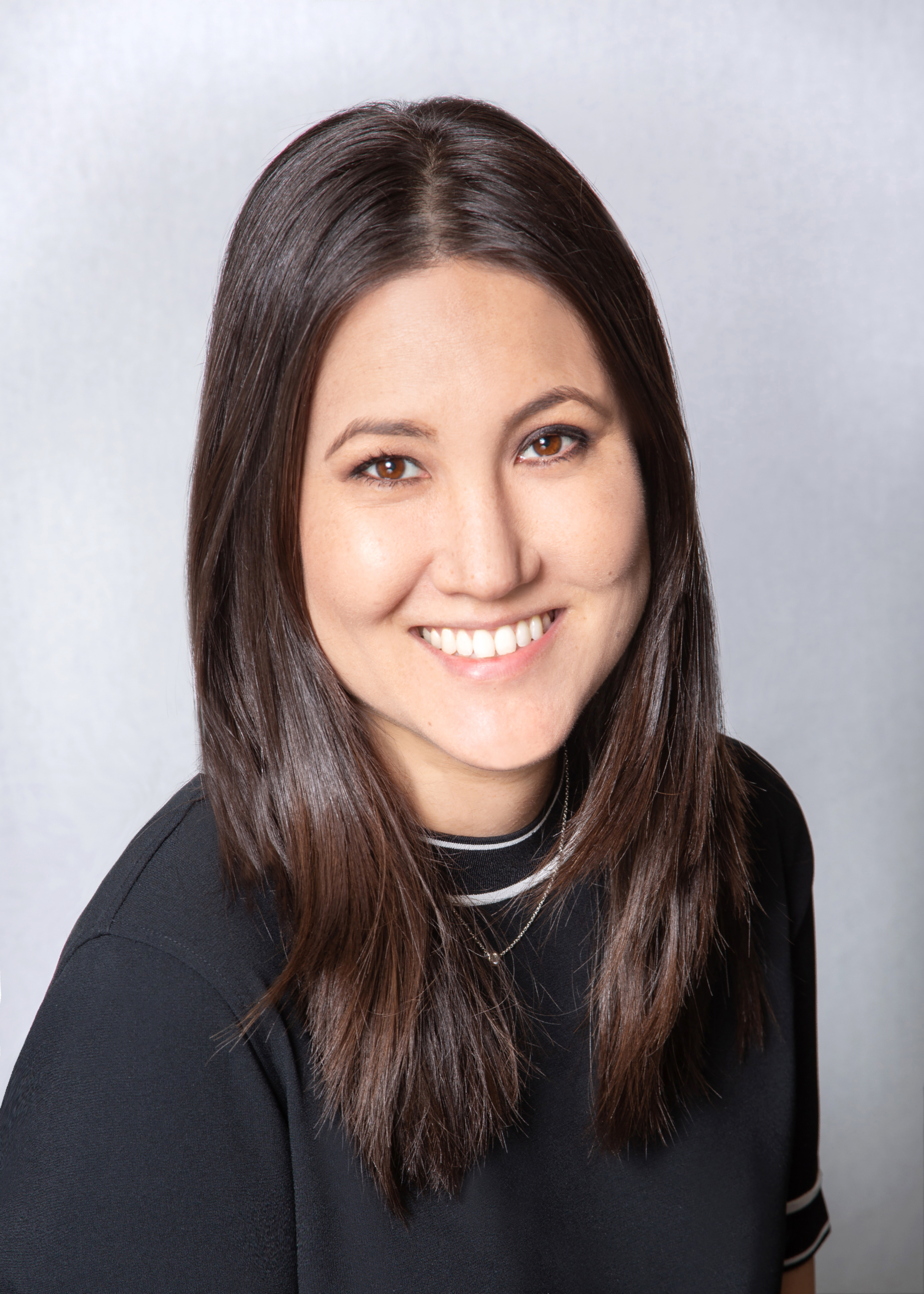
Tiffany Ehasz, publisher, Eating Well magazine. Photo credit: Jeff Hornstein
On how the brand EatingWell can help advertisers and readers navigate out of the pandemic (Jessie Price): From the editorial side, I would say we’re at that perfect intersection between health and wellness and sustainability. We were relevant before the pandemic; we’ve become even more relevant and we plan to stay focused on that same area. We’re all about helping people and we’re going to remain focused on that.
Jessie Price, editor in chief, Eating Well magazine. Photo credit Oliver Parini
On the role the printed magazine plays in the cross-channel communication with the readers and the advertisers (Jessie Price): For our readers, the print magazine is going to continue to be relevant and important. It’s a totally different experience than how they get the brand on digital. I think for print it’s all about that serendipitous sit-back, relax and enjoy having content brought to you that you might not have expected. Our readers open the magazine and they know they’re going to get recipes, but it’s all that stuff around the recipes that surprises and delights them.
On the sales pitch for the printed product to advertisers (Tiffany Ehasz): Honestly, my sales pitch is the fact that not only has our content grown tremendously beyond food, but our readers are very much engrossed in that content from cover to cover. And when we’re thinking about these amazing ideas, we know that it’s working because the numbers are up and all of our advertiser executions are performing very well from a research perspective.
On whether there have been any challenges during the pandemic (Jessie Price): For our business, on the consumer side, it’s been amazing. Our digital audience has grown year over year, 49 percent in January, year over year. In February, 48 percent, year over year. It is enormous. Our direct-to-publisher subscriptions from 2019 to 2020 are up 15 percent. And they are staying at that increased 15 percent up level and we think that’s just the new normal. So, it’s been great.
On any challenges on the business/publisher side (Tiffany Ehasz): There were some challenges, especially in the beginning of the pandemic. A lot of our food advertisers had their own challenges, supply issues or holding back some money just in case. We didn’t know what the future would hold. How we overcame that was by digging deep into other categories and utilizing what Jessie has created for us in the book, which is really more categories to go outside those food advertisers.
On how they see the magazine among the competitive set that’s out there, as an epicurean magazine or as a lifestyle magazine (Tiffany Ehasz): We are absolutely rooted in food, but we do have a focus on wellness and sustainability. And they’ve always been key to this brand and it truly sets us apart. The brand is currently so relevant and the continued evolution and expansion of the content to address our audience’s complete lifestyle, which is really at the intersection of health, well-being and food, is a really sweet spot to be in and we are completely capitalizing on it.
On the power and education of the EatingWell brand when it comes to health and wellness (Jessie Price): The brand EatingWell, in terms of education about health and wellness has always been about having a balanced and sensible approach that’s based in science. We have never been about crazy diets. We have never been about restriction or deprivation. It’s really about eating balanced in a way that you can sustain for your whole life.
On what they hope to have accomplished in one year with the brand (Tiffany Ehasz): We have come so far and as Jessie mentioned, our growth has been astronomical this year consumer-wise. More people now know about EatingWell and we anticipate the momentum and the growth to continue.
On anything either of them would like to add (Jessie Price): We did a story on income and equality and its connection to health outcomes. It was an 8-page feature and a heavy read, but it was basically looking at all the data that shows that there’s a real connection between the less income you make, then the less healthy you are. And I got a number of letters from readers about that story. No surprise there. One of the letters included a personal check for $50 and a note saying, Dear Jessie, thank you so much for this story. It’s so important and I’m so glad you’re covering this topic, please give this $50 check to the subject who was the lead in the story.
On what makes them tick and click (Jessie Price): We knew this was one of your regular questions and Tiff and I were thinking about what makes us tick and click as a team together. We both love food and love to eat; we both love to laugh and have great senses of humor; and we’re both super-competitive. So I would say for both of us it’s that we love the subject and we just want to win and we want to do better all the time.
On how they unwind at the end of the day (Tiffany Ehasz): I sit back with an issue of EatingWell and I have my glass of wine.
On what keeps them up at night (Jessie Price): For me it’s always about how can I make a story better or how can something be more creative. It’s just always about making the magazine better. When I’m up at 3:00 a.m., that’s what I’m thinking about. Or if I get a new idea.
On what keeps them up at night (Tiffany Ehasz): For me it’s really about on the business side, how can we become smarter and create these partnerships to almost establish more tent poles. I see the future with bigger partnerships as it relates to EatingWell and certain big companies out there. And my goal is to marry those partnerships to create something beyond the print publication, social and digital. To really take ourselves to the next level. And I think we’re ready to do that sooner than later.
And now the lightly edited Mr. Magazine™ interview with Jessie Price, editor in chief, and Tiffany Ehasz, publisher, EatingWell magazine.
Samir Husni: How did you adjust to operating during a pandemic?
Tiffany Ehasz: Prior to the pandemic, it was a lot of client-facing meetings, a lot of dining out as you probably know. But right now it’s really about lots of Zoom calls with partners trying to use their time wisely with impactful, smart and meaningful conversations and ideas as we know their time is limited. So making that impact has been a bit of a difference-maker for us, but we have been successful in doing that and in bringing EatingWell to the forefront.
Jessie Price: From an editorial perspective, there were a lot of technical changes in how we produce the magazine, because making a magazine is such a collaborative process. And we’re so used to being together as a team, talking all day long. So, at the very basic level it was finding new ways of communication for the team.
The second part of it is we had to adjust our content. And for a food magazine, that was things like changing the number of servings a recipe would make for the holidays, for example. Maybe people wouldn’t be needing 12 servings of a recipe, six servings made more sense. We also took into account people’s reasonable concerns about being safe when they were eating together. So that meant things like individual portion recipes or we had page where instead of making dips that served a whole lot of people where everyone would be dipping into the bowl, each person got a little individual dip with their own dippers to go into it.
And the other thing that was huge because of the pandemic was immunity-related content. We saw that skyrocket in popularity near the beginning of the pandemic and continues to stay important and relevant now.
For us, we were really in the right place, in terms of being interesting and providing content for our readers for what was going on with them during this whole thing, because they were at home. They needed to cook for themselves and they were worried about their health, so we were providing both the food and the wellness content that was what they needed during this time.
Samir Husni: As we hopefully move into a post-pandemic time, how can EatingWell as a brand help both your partners, the advertisers, and your audience, the readers, navigate out of this pandemic?
Jessie Price, From the editorial side, I would say we’re at that perfect intersection between health and wellness and sustainability. We were relevant before the pandemic; we’ve become even more relevant and we plan to stay focused on that same area. We’re all about helping people and we’re going to remain focused on that.
The other thing is we have found that there is so much more than just recipes that is important to our audience. We’ve been able to expand our content beyond just food to cover all sorts of different aspects of that wellness lifestyle, such as kitchens, appliances, fitness; we’ve been interviewing celebrities because so many of them are interested in food and wellness. So it’s really broadening what we’ve been able to cover, but still have that focus of wellness and sustainability.
Tiffany Ehasz: From a business perspective, we are just so proud of what’s been going on with our advertisers this past year. It’s super encouraging that we are close to flat versus last year. We’re holding our own with the competitive set; we did suffer some attrition, but we’ve had amazing category wins with categories such as telecom, hospitality, beauty and retail.
And clients are really asking for bigger ways and custom ideas to get in front of our readers with an increased investment. Partners like Green Giant, National Honey Board and Kraft Mac and Cheese captured our readers’ attention this year with impactful executions that we can prove worked. So we’re very proud of that.
Samir Husni: What role do you see the printed edition of EatingWell playing in the cross-channel communication with the readers and the advertisers?
Jessie Price: For our readers, the print magazine is going to continue to be relevant and important. It’s a totally different experience than how they get the brand on digital. I think for print it’s all about that serendipitous sit-back, relax and enjoy having content brought to you that you might not have expected. Our readers open the magazine and they know they’re going to get recipes, but it’s all that stuff around the recipes that surprises and delights them.
For my team, it’s really all about remembering that we have to constantly be layering in all sorts of different content that will surprise and delight them, because that’s what the print experience is about.
In terms of the other platforms, we’re going to continue to push out on all fronts because the brand is resonating with audiences across platforms, just in different ways. But print is not going away.
Tiffany Ehasz: And same for me, tacking onto what Jessie just said. Most of our successful integrations are rooted with the print content, where we can bring it to life across EatingWell.com and our social channels, which are performing tremendously right now. Advertisers are looking for those connections across all of our channels and so far they have been proven successful.
Samir Husni: What’s your sales pitch to advertisers about the necessity of the printed product?
Tiffany Ehasz: Honestly, my sales pitch is the fact that not only has our content grown tremendously beyond food, but our readers are very much engrossed in that content from cover to cover. And when we’re thinking about these amazing ideas, we know that it’s working because the numbers are up and all of our advertiser executions are performing very well from a research perspective.
So, my sales pitch really is print subs are up, social is up, digital traffic has skyrocketed in the past year. And together it’s very meaningful. And the numbers are there to prove if we can execute something like this for you cross-channel, rooted in some really relevant content that our readers are interested in, we do that and they get very excited.
Samir Husni: So, have there been any challenges for you along the way or has it been a walk in a rose garden for you during the pandemic?
Jessie Price: For our business, on the consumer side, it’s been amazing. Our digital audience has grown year over year, 49 percent in January, year over year. In February, 48 percent, year over year. It is enormous. Our direct-to-publisher subscriptions from 2019 to 2020 are up 15 percent. And they are staying at that increased 15 percent up level and we think that’s just the new normal. So, it’s been great.
Samir Husni: On the business/publisher side, what were some of the challenges that you’ve had to face?
Tiffany Ehasz: There were some challenges, especially in the beginning of the pandemic. A lot of our food advertisers had their own challenges, supply issues or holding back some money just in case. We didn’t know what the future would hold. How we overcame that was by digging deep into other categories and utilizing what Jessie has created for us in the book, which is really more categories to go outside those food advertisers.
As I mentioned before, the investments that some of the partners we have who want to invest more, who are doing well and can keep up with the demand, has been incredibly successful for us. So essentially, digging deep into other areas and bringing smart ideas has helped us. We did suffer some attrition, but we were able to make it up and hold our own versus the competitive set.
Samir Husni: When you’re selling the magazine to the advertiser or to the readers, how do you see yourself among the competitive set that’s out there? As an epicurean magazine or as a lifestyle magazine?
Tiffany Ehasz: We are absolutely rooted in food, but we do have a focus on wellness and sustainability. And they’ve always been key to this brand and it truly sets us apart. The brand is currently so relevant and the continued evolution and expansion of the content to address our audience’s complete lifestyle, which is really at the intersection of health, well-being and food, is a really sweet spot to be in and we are completely capitalizing on it.
Samir Husni: And from an editorial point of view, how do you see the magazine among the competitive set that’s out there?
Jessie Price: At our core, we are absolutely a food magazine. But especially because wellness and sustainability are so integral to this brand, it has allowed us to expand our content and integrate a lot more of that lifestyle content into the pages of the magazine. And we have been delighted to see how our readers are reacting to it. They are loving the interviews with celebrities; they’ve even enjoyed our beauty pages, which was actually very surprising to me. I was happy to see it. It has been a really nice growth and evolution for the brand.
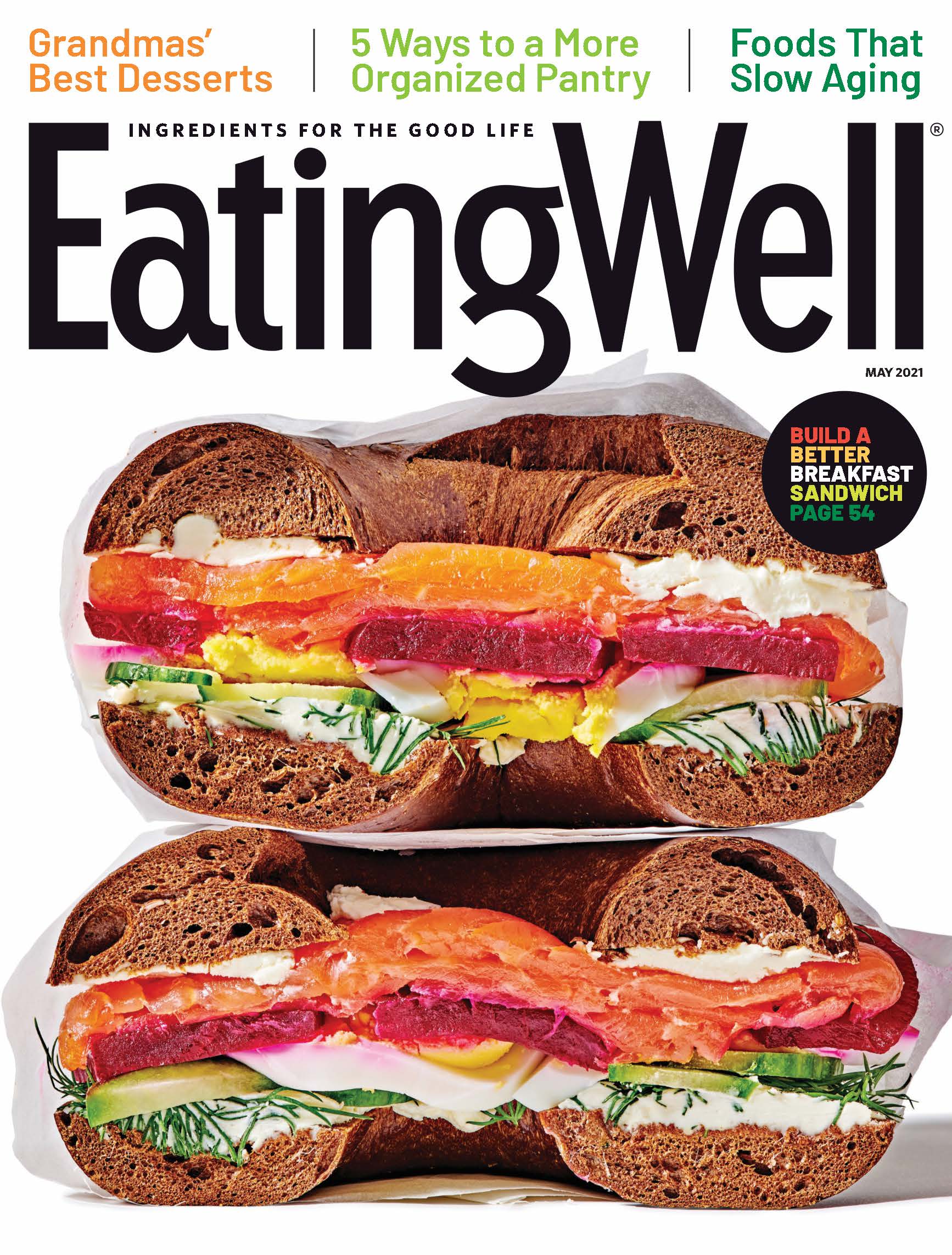
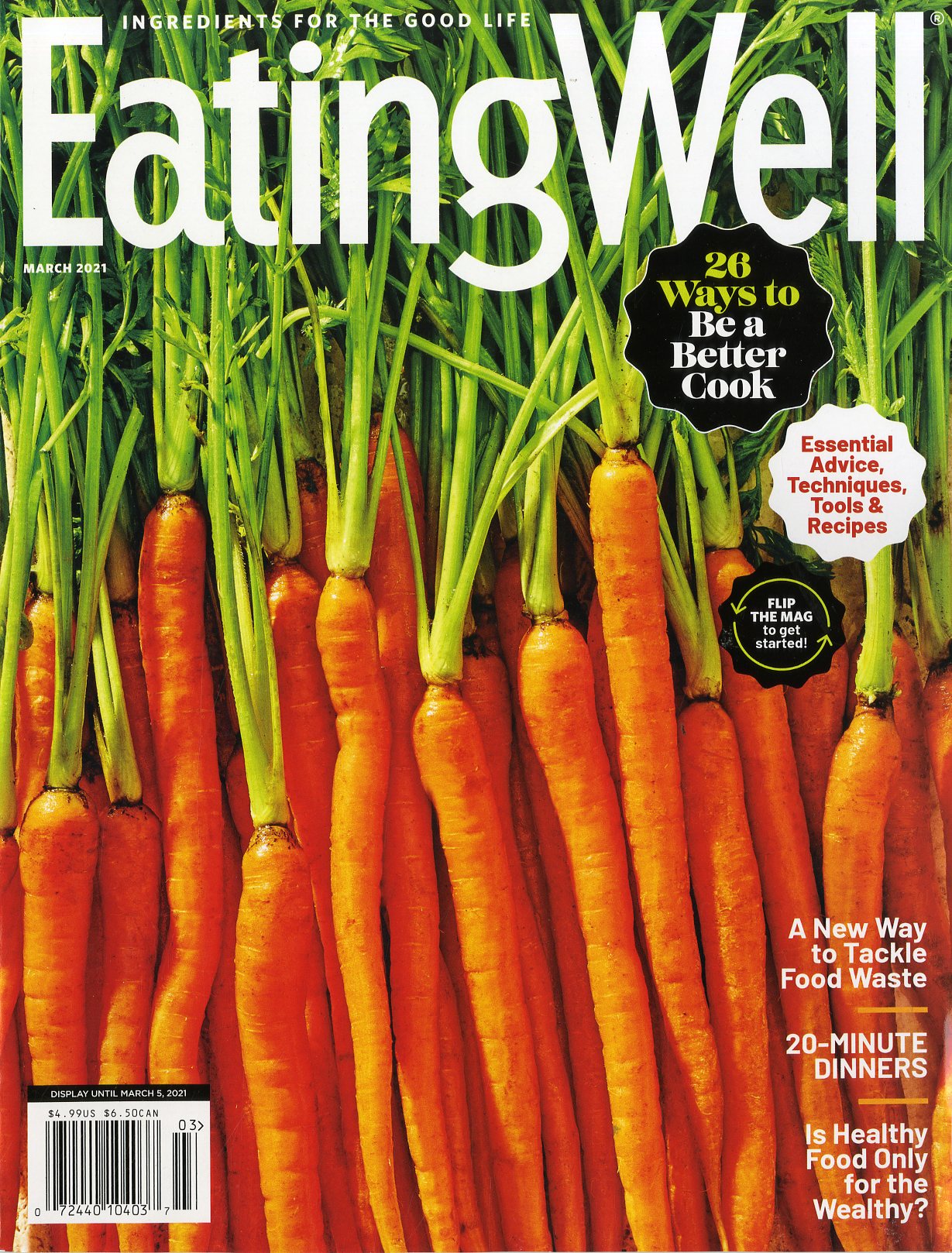
Samir Husni: Yet, with all this evolution you have a bagel on the cover. (Laughs)
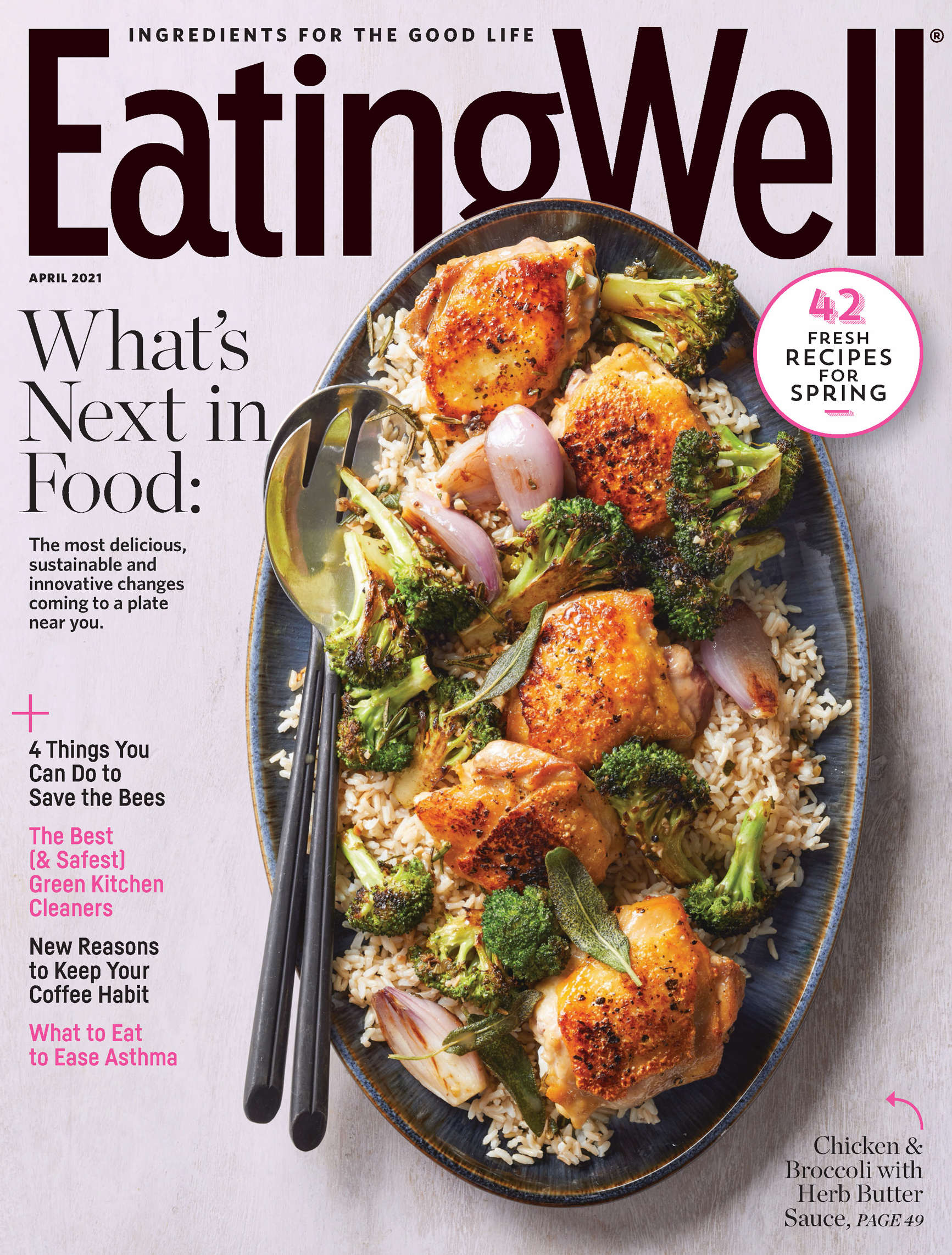
Jessie Price: What do you think? (Laughs too) It’s actually called a flagel, which is a flat bagel and a little lower calorie than a regular bagel. But it’s also packed with lots of healthy stuff. It has Omega 3; it has beets and cucumbers; it has an egg; yes, it has cream cheese also. It’s healthy and it tastes great too. That is eating well; that is that perfect marriage.
Samir Husni: Tell me about the power and the education of the brand EatingWell when it comes to health and wellness.
Jessie Price: The brand EatingWell, in terms of education about health and wellness has always been about having a balanced and sensible approach that’s based in science. We have never been about crazy diets. We have never been about restriction or deprivation. It’s really about eating balanced in a way that you can sustain for your whole life.
And we know our readers love to cook and eat and so it has to be delicious. To me delicious actually comes before health within the whole equation, because if it’s not delicious it’s not going to be sustainable for someone’s entire life. And that’s the thing that a lot of people don’t think of when they think of healthy food, is being delicious. But it really is the first part of getting anyone to a healthy and sustainable life’s diet.
Samir Husni: And from a business point of view, when it comes to the power and education of the brand on health and wellness.
Tiffany Ehasz: What we love are our new partners that are coming here from this and how being rooted in food 30 years ago, we’ve just completely changed the game content-wise, which our advertisers are absolutely loving.
They understand that and they understand how far this trend has come, that EatingWell potentially started that conversation 30 years ago and that it has completely transformed into something different and delicious and sustainable. And they want to partner with that message. They’re embracing this lifestyle personally and so are their clients and advertisers who are surrounding themselves with that messaging.
Plus the fact that we are trending with consumers. It doesn’t matter for some of our partners, be it certain indulgent categories, they want to be part of the conversation and they know where readers are coming to get their content and information. And it’s at EatingWell.
Samir Husni: If we’re having this conversation a year from now and the pandemic is behind us, what would you hope to tell me you had accomplished with EatingWell during that year?
Jessie Price: With our growth we’ve reached new audiences and I think that’s really exciting. Whether they wanted to or not, a lot of people have become cooks and will hopefully become lifelong EatingWell fans.
Tiffany Ehasz: I agree with, Jessie. We have come so far and as Jessie mentioned, our growth has been astronomical this year consumer-wise. More people now know about EatingWell and we anticipate the momentum and the growth to continue.
Samir Husni: Is there anything either of you would like to add?
Jessie Price: I wanted to tell you one little anecdote, because I think you’ll like this. A lot of the feature stories that we do are about sustainability or heavier issues. We did a story on income and equality and its connection to health outcomes. It was an 8-page feature and a heavy read, but it was basically looking at all the data that shows that there’s a real connection between the less income you make, then the less healthy you are.
And I got a number of letters from readers about that story. No surprise there. One of the letters included a personal check for $50 and a note saying, Dear Jessie, thank you so much for this story. It’s so important and I’m so glad you’re covering this topic, please give this $50 check to the subject who was the lead in the story. Please forward it to her.
I thought that was pretty amazing. It was the first check I ever got with a letter to the editor and it really demonstrated to me the power of print, the power of magazines, and the importance of telling those kinds of stories about how food impacts the world around you.
And I’d like to say we are very rooted in Vermont and feel extremely thankful that Meredith chose to keep us here because this is such a great place to be producing a magazine that is very interested and focused on food origins and where your food comes from and producing it responsibly. It’s a part of our DNA and I’m glad we’re here.
Samir Husni: What makes you tick and click and motivates you to get out of bed in the morning?
Jessie Price: We knew this was one of your regular questions and Tiff and I were thinking about what makes us tick and click as a team together. We both love food and love to eat; we both love to laugh and have great senses of humor; and we’re both super-competitive. So I would say for both of us it’s that we love the subject and we just want to win and we want to do better all the time.
Tiffany Ehasz: 100 percent. That’s exactly it. We both want to win and make sure that our readers and our advertisers are winning a well.
Samir Husni: How do you unwind at the end of the day?
Tiffany Ehasz: I sit back with an issue of EatingWell and I have my glass of wine.
Jessie Price: I cook; I love to cook and I drink wine while I cook. (Laughs)
Samir Husni: My typical last question; what keeps you up at night these days?
Jessie Price: For me it’s always about how can I make a story better or how can something be more creative. It’s just always about making the magazine better. When I’m up at 3:00 a.m., that’s what I’m thinking about. Or if I get a new idea.
Tiffany Ehasz: For me it’s really about on the business side, how can we become smarter and create these partnerships to almost establish more tent poles. I see the future with bigger partnerships as it relates to EatingWell and certain big companies out there. And my goal is to marry those partnerships to create something beyond the print publication, social and digital. To really take ourselves to the next level. And I think we’re ready to do that sooner than later.
“Print is very welcoming. For a while, people were reading magazines online, but I have since heard a lot of people have gotten bored with that. A lot of people are working from home now and they’re on their computers all day. When they want to relax they don’t want to sit in front of a screen again and read. They want to go sit in their backyard in their favorite chair with a print copy, their favorite beverage alongside them, and enjoy a magazine, To have something tangible in their hands.” Richard Lentinello…
A Mr. Magazine™ Launch Story…
With his 22-year history at Hemmings Motor News, Richard Lentinello has been living and working in the automotive media world robustly and then some. After leaving Hemmings, Richard decided he wasn’t exactly pleased with the way American car magazines were handling their content and missing some of the most engaging car stories out there by not writing about them, so he decided to launch his own high quality automotive print magazine.
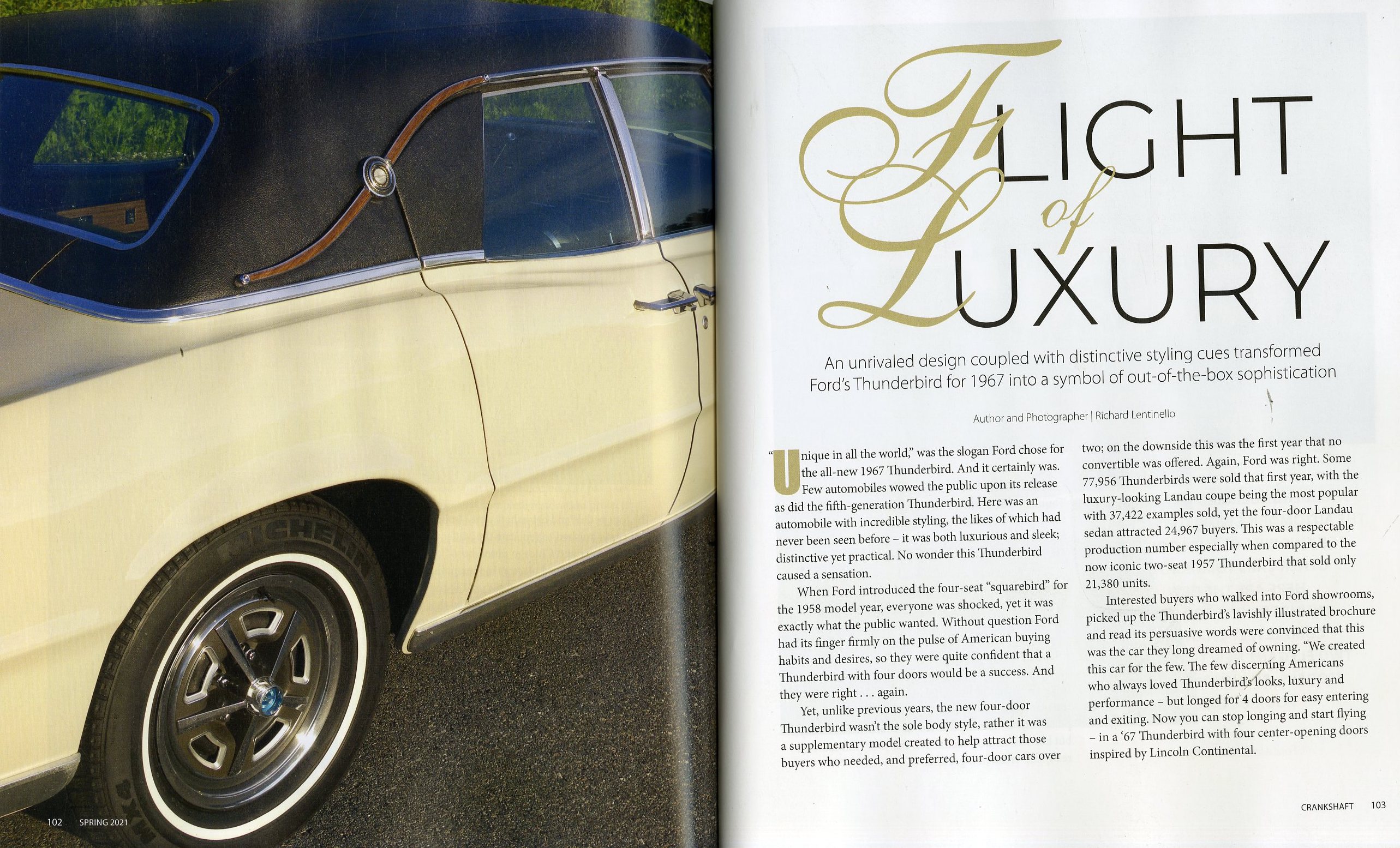
And Crankshaft was born. Crankshaft is a quarterly with 144 pages of non-stop automotive collector-car history. It’s well-designed, well-written, and a really refreshing addition to the automotive club of magazines.
I spoke with Richard recently and we talked about this new venture of his and his goal for the magazine. According to Richard, Crankshaft offers engaging content, thoughtfully crafted by established writers and photographers, along with his own artful input. The magazine will inform, entertain and captivate readers in a way that he believes no other magazine has done before.
So I hope that you enjoy this delightful Mr. Magazine™ interview with a man who is a true car connoisseur, Richard Lentinello, owner, publisher, editor in chief, Crankshaft.
But first the sound-bites:
On why he chose to do an automotive magazine at this moment in time: I was at Hemmings Motor News for 22 years and I left there July 31. I was sitting in my backyard thinking about what I was going to do after that. I thought the time was right for me to try something new. I knew people were stuck at home with the pandemic and people want to read when they can’t go out, so I thought it could be a good time or it could be a bad time; let’s give it a shot. (Laughs) People were telling me, it’s a pandemic, what are you doing? And I said, well, they’re stuck at home, people want to read.
On how he came up with the name Crankshaft: The magazine is about classic cars and I didn’t want to go down the same road as classic, vintage, antique, all those names, because I figured, how are we going to attract a younger audience with those old-fashioned type names? So, I wanted to come up with something different, something that had a ring to it. I sent some of the guys that I used to work with an email and asked them to put their thinking caps on and some of them came up with Crankshaft. And I thought it was a great name.
On whether any of his friends or colleagues thought he was out of his mind for starting a print magazine during this digital age: No, no one said that to my face. (Laughs) Only one person online, when I posted it on Facebook, said that I was crazy. But you can’t listen to people like that. When I explained what I wanted to do and the focus of the magazine to everyone, they all said yes, we need this.
On the business model he’s implementing: The business model is gut instinct. (Laughs) It may not be the best business model, that remains to be seen. I spend a lot of time at newsstands, Barnes & Noble and such, and I see so many magazines that are $14, $15, up to $20, these limited-type magazines. But a lot of them are only 112 pages or 128 pages, so we went 144 pages of good quality stock, $12.95. If you look at some of the regular car magazines out there, they’re $7 or $8, 72 pages and half of it is advertising. So how much editorial are you really getting, 30 pages?
On his favorite role: author, editor, car owner: I think it’s a little bit of all of that. I didn’t go to school to write, I went to school for interior design, interior architecture. But that’s how I look at creating magazines. You start with a foundation, then you put the interior walls in, you decorate it with photographs; so I use that same concept that I learned to create a car magazine.
On what he thinks the role of the printed magazine is today: Print is very welcoming. For a while, people were reading magazines online, but I have since heard a lot of people have gotten bored with that. A lot of people are working from home now and they’re on their computers all day. When they want to relax they don’t want to sit in front of a screen again and read. They want to go sit in their backyard in their favorite chair with a print copy, their favorite beverage alongside them, and enjoy a magazine, To have something tangible in their hands.
On whether he thinks the type of quality content of Crankshaft will be the wave of the future for American car magazines: I think it is, I really do. And it’s true about the British magazines, the quality throughout is excellent. I’ve been reading British car magazines since 1975 when I used to go to the newsstand at the Pan Am building in Manhattan.
On his reaction when the first issue of Crankshaft rolled off the presses: It is nerve-wracking. When the truck pulled up to my house with three pallets of magazines that I stuck in my garage, for a while I didn’t want to open them. (Laughs) I told myself, okay, I’m going to find all the mistakes; I’m going to find something that I don’t like. So I stood there and I opened them and it was just like when I did one of my coffee table books, you want to look at it, but you also don’t, because you don’t want to see all the mistakes. (Laughs again) But once you go through it, it’s very satisfying and rewarding. But the best part is hearing other people tell you how much they love it.
On what he hopes to accomplish with Crankshaft in one year: I hope I’m still around a year from now and can keep this magazine going, because it is an expensive proposition. Hopefully by then we’ll have some advertisers onboard to help support and fund it. And by next year I hope to have a good amount of subscribers that will help us keep it going.
On anything he’d like to add: The magazine is a very serious type of publication. We don’t use any slang; we don’t go into politics or anything like that. We focus on automotive history. That’s what it’s all about. And we try and stay focused on quality photography. Some of the writers who write for Crankshaft are some of the best in the industry.
On what makes him tick and click: Besides my three rescue dogs? (Laughs) I’ve been creating magazines since 1987 and it’s what I love. To me, it’s not a job. I’m one of the fortunate people who turned his hobby into a career. I just love the whole process of going out there and interviewing people, photographing cars, writing stories, and putting it all together in a really interesting and engaging, well-designed package. And then hearing the reader say, wow, that’s a great magazine, I love it. That’s what makes me get out of bed in the morning.
On how he unwinds in the evening: What I do sometimes is I go into my garage and work on my cars; I’m restoring some old cars. I read other magazines, mostly the British car magazines. And sometimes I write at 8:00 or 9:00 p.m. in the evening. But I really unwind by sitting down with a paper and pen and planning out the next two or three issues. I think of all the cars I’ve seen at the different shows and how I want to include them in the next issue or the issue after that.
On what keeps him up at night: All the things that float around in my head, such as is the magazine going to take off? Am I really going to be able to get advertisers to help pay the print bill? Can I keep it going? Those things keep me up at night.
And now the lightly edited Mr. Magazine™ interview with Richard Lentinello, owner, publisher, editor in chief, Crankshaft magazine.
Samir Husni: Give me the genesis of Crankshaft and on what made you decide at this moment in time to be the owner, publisher, editor in chief of a new automotive magazine.
Richard Lentinello: I was at Hemmings Motor News for 22 years and I left there July 31. I was sitting in my backyard thinking about what I was going to do after that. I looked at all the magazines that we were doing under the new leadership, how the quality was going down and how they’re pandering to advertisers. Not just Hemmings, but a lot of publishers do that. They create content for the advertisers. And I feel that’s wrong. You should create content for the readers. Those are the ones who are buying the magazine.
Between that and the lack of quality content in the automotive industry for American-made magazines, I thought the time was right for me to try something new. I knew people were stuck at home with the pandemic and people want to read when they can’t go out, so I thought it could be a good time or it could be a bad time; let’s give it a shot. (Laughs) People were telling me, it’s a pandemic, what are you doing? And I said, well, they’re stuck at home, people want to read.
A lot of car magazines have gone out of business in the last 10 years. I think a lot of them went out of business not because of the lack of interest from the readers, but from poor quality content. Again, pandering to advertisers, creating content that is fluffy, not hardcore, not serious. And I just felt, being a hardcore car guy… I was looking around and thinking there was no magazine that I really wanted to read. There were British car magazines, and I get them all. And they’re so well done. The British put a lot of effort in their car magazines. Quality writing, quality photography.
And I just asked myself why doesn’t someone here in America do a quality car magazine without treating the reader like an idiot? Because all too often people think if he’s a car guy there isn’t much intelligence there, he just likes cars. And that’s not true. Car guys run the whole gamut, from plumbers to doctors, a brain surgeon in Philadelphia, anybody and everybody can be a car guy, it doesn’t matter who they are.
We treat the readers with respect. We give them hardcore information. And that’s why I decided to launch my own magazine.
Samir Husni: How did you come up with the name Crankshaft?
Richard Lentinello: The magazine is about classic cars and I didn’t want to go down the same road as classic, vintage, antique, all those names, because I figured, how are we going to attract a younger audience with those old-fashioned type names? So, I wanted to come up with something different, something that had a ring to it. I sent some of the guys that I used to work with an email and asked them to put their thinking caps on and some of them came up with Crankshaft. And I thought it was a great name.
The more I sat at my desk and thought about it, the more I liked it. And Joe Pep, who did the illustration for the first cover, worked in Manhattan for 22 years for DC Comics and he was a font expert. I told him that we were going to call it Crankshaft and asked him what he thought. And within one day he came up with the logo. And I think it’s attractive. A lot of young people that I showed it to love it. So we think it has legs.
Samir Husni: Besides starting a new magazine during a pandemic, did any of your friends or colleagues think you were out of your mind for launching a print publication in this digital age?
Richard Lentinello: No, no one said that to my face. (Laughs) Only one person online, when I posted it on Facebook, said that I was crazy. But you can’t listen to people like that. When I explained what I wanted to do and the focus of the magazine to everyone, they all said yes, we need this.
Once the first issue came out and everybody started getting it, the reviews from all the readers were 100 percent positive. I didn’t receive one negative email or Facebook post at all. Everyone just absolutely loved the magazine.
Samir Husni: You’re publishing the magazine as a quarterly with a very high cover price, $12.95, and a very high subscription price of almost $60. Since you’re targeting the magazine more toward the readers and the audience rather than the advertisers, what is the business model that you’re implementing?
Richard Lentinello: The business model is gut instinct. (Laughs) It may not be the best business model, that remains to be seen. I spend a lot of time at newsstands, Barnes & Noble and such, and I see so many magazines that are $14, $15, up to $20, these limited-type magazines. But a lot of them are only 112 pages or 128 pages, so we went 144 pages of good quality stock, $12.95. If you look at some of the regular car magazines out there, they’re $7 or $8, 72 pages and half of it is advertising. So how much editorial are you really getting, 30 pages?
In Crankshaft, you’re getting 144 pages of editorial. Once people saw the value and got the magazine in their hands, they felt it was worth the price and started subscribing or bought a single copy if they didn’t want to spend the $59.95 to subscribe. But I really think we’re on to something.
Samir Husni: You’re an author, an editor and a car lover, all combined; which role is your favorite?
Richard Lentinello: I think it’s a little bit of all of that. I didn’t go to school to write, I went to school for interior design, interior architecture. But that’s how I look at creating magazines. You start with a foundation, then you put the interior walls in, you decorate it with photographs; so I use that same concept that I learned to create a car magazine.
But what I like best is creating content that people love to read. I go to a lot of car shows every year and I meet all these wonderful people and car owners and there are so many great stories out there that are so interesting and engaging. But they’re being lost because no one is writing about them. And I know if I find it interesting about this car owner whose 1914 Buick was bought by his great-grandfather brand new, how could you not want to read about that? How did the family keep for over 100 years? So that’s what I enjoy most, finding content, creating it, and watching readers enjoy it.
Samir Husni: What do you think is the role of the printed magazine today?
Richard Lentinello: Print is very welcoming. For a while, people were reading magazines online, but I have since heard a lot of people have gotten bored with that. A lot of people are working from home now and they’re on their computers all day. When they want to relax they don’t want to sit in front of a screen again and read. They want to go sit in their backyard in their favorite chair with a print copy, their favorite beverage alongside them, and enjoy a magazine, To have something tangible in their hands.
I think print may make a resurgence. I think a lot of younger readers are starting to come around to the benefits of having a tangible product in their hands as opposed to just reading it from a screen. Where that will go, no one really knows, but until then we want to keep publishing and see what happens.
Samir Husni: Do you think that Crankshaft is the way of the future for automotive magazines here in America? You mentioned earlier the quality of the British car magazines and how you see Crankshaft as along those lines and geared more toward the reader and quality content; is this a glimpse into the future?
Richard Lentinello: I think it is, I really do. And it’s true about the British magazines, the quality throughout is excellent. I’ve been reading British car magazines since 1975 when I used to go to the newsstand at the Pan Am building in Manhattan.
I saw this British magazine called “Thoroughbred & Classic Cars” and I took it home on the subway back to Brooklyn and I couldn’t believe the quality. I wondered why American magazines weren’t like that. And they’ve just been getting better and better while the American magazines have been going downhill for a long time.
I think it’s the way they treat people, but I do think that more magazines will come out. I hear of others in the process of being created now, along the same lines as Crankshaft. Bimonthly or quarterly, higher quality, higher-priced; it remains to be seen where that goes.
Samir Husni: What was your reaction when that first issue of Crankshaft rolled off the presses?
Richard Lentinello: It is nerve-wracking. When the truck pulled up to my house with three pallets of magazines that I stuck in my garage, for a while I didn’t want to open them. (Laughs) I told myself, okay, I’m going to find all the mistakes; I’m going to find something that I don’t like. So I stood there and I opened them and it was just like when I did one of my coffee table books, you want to look at it, but you also don’t, because you don’t want to see all the mistakes. (Laughs again)
But once you go through it, it’s very satisfying and rewarding. But the best part is hearing other people tell you how much they love it. That’s what I really like about it. Every time I open it, I see something I don’t like or I should have changed, maybe a font here or there should have been a little larger, this picture should have been a little bigger, little things that no one else would notice. It’s like the artist who sees a mistake in his painting. Only he or she sees it. But the satisfaction I get is from readers enjoying it. That’s what it’s all about for me.
Samir Husni: If you and I are having this conversation one year from now, what would you hope to tell me you’ve accomplished with Crankshaft?
Richard Lentinello: I hope I’m still around a year from now and can keep this magazine going, because it is an expensive proposition. Hopefully by then we’ll have some advertisers onboard to help support and fund it. And by next year I hope to have a good amount of subscribers that will help us keep it going.
There is interest from some other people who want to invest in it. I’m holding off for now; I want them to see two or three issues to show them what we can do. I’m not interested in taking money from investors unless I know I have an honest, viable product that has the beginnings of a solid foundation. We’ll see what happens next year, but that’s what my goal is. To make sure that we’re still in business and subscriptions are still coming in and advertising dollars are starting to come in.
Samir Husni: Is there anything you’d like to add?
Richard Lentinello: The magazine is a very serious type of publication. We don’t use any slang; we don’t go into politics or anything like that. We focus on automotive history. That’s what it’s all about. And we try and stay focused on quality photography. Some of the writers who write for Crankshaft are some of the best in the industry. And we’re very careful about what words are chosen; we never write down to the readers or over their heads or anything like that. We try and write as though it were a friendly conversation we’re having with the reader. And that’s where we want to stay. A magazine that everybody likes.
Whether you like American or foreign cars, pre-war or post-war, whatever you like, you’ll find something in every issue of Crankshaft that you will enjoy.
Samir Husni: What makes you tick and click and motivates you to get out of bed in the morning?
Richard Lentinello: Besides my three rescue dogs? (Laughs) I’ve been creating magazines since 1987 and it’s what I love. To me, it’s not a job. I’m one of the fortunate people who turned his hobby into a career. I just love the whole process of going out there and interviewing people, photographing cars, writing stories, and putting it all together in a really interesting and engaging, well-designed package. And then hearing the reader say, wow, that’s a great magazine, I love it. That’s what makes me get out of bed in the morning.
Samir Husni: How do you unwind in the evening?
Richard Lentinello: What I do sometimes is I go into my garage and work on my cars; I’m restoring some old cars. I read other magazines, mostly the British car magazines. And sometimes I write at 8:00 or 9:00 p.m. in the evening. But I really unwind by sitting down with a paper and pen and planning out the next two or three issues. I think of all the cars I’ve seen at the different shows and how I want to include them in the next issue or the issue after that.
Samir Husni: My typical last question; what keeps you up at night?
Richard Lentinello: All the things that float around in my head, such as is the magazine going to take off? Am I really going to be able to get advertisers to help pay the print bill? Can I keep it going? Those things keep me up at night.
“I believe in the power of communication and I believe that print is an essential part of that communication chain. Print is not just limited to ink on a piece of paper; it’s anywhere you see a message that isn’t electronic, most likely passed through some sort of printing process. And I just believe that communication evolves. There was a time when people used to communicate with drums, and they communicated with a telegraph, then a telephone and now a cell phone; it’s the same thing with Printed communication. I don’t think that when we start introducing electronic tools that print goes away. I think print is valuable as the bridge.” Deborah Corn…
Deborah Corn is the Intergalactic Ambassador to The Printerverse at Print Media Centr. She is a woman with a mission, empowered and a believer that print and digital, and all the tools that go with it, can work together to benefit the printing and marketing industries.
From her “Podcasts from The Printerverse” to her “Print Production Professionals,” the #1 print group on LinkedIn, Deborah has utilized her 25+ years of experience working in advertising as a Print Producer to glean and share the most pertinent and up-to-date information out there to assist printers and marketers worldwide. She currently provides print-spiration and resources to print and marketing professionals through Print Media Centr, and works behind-the-scenes with printers, suppliers and industry organizations helping them create meaningful relationships with customers, and achieve success with their social media and content marketing endeavors.
I spoke with Deborah recently and we talked about Print Media Centr and what the company does for the printing industry, and in how Deborah herself became the self-proclaimed Intergalactic Ambassador to The Printerverse. Hers is an intriguing journey of a woman who had the mindset of ‘if I can dream it, I can achieve it.’ And even during a pandemic, she is achieving it.
So please enjoy the Mr. Magazine™ interview with Deborah Corn, Intergalactic Ambassador to The Printerverse, Print Media Centr.
But first the sound-bites:
On women in the printing business: There are definitely a lot of women in print and printing, they’re just not as visible and that is exactly the problem, they are too behind-the-scenes. But I actually did start in advertising, so it was a bit of a shock to me to start being around less women. When I started going to trade shows and things like that, I started noticing that I was actually treated differently.
On switching to print from advertising: I actually lost my job and started a LinkedIn group called “Print Production Professionals” because I had run out of people I knew to network with. LinkedIn had just opened up groups and I thought, ‘Hmm, here’s an idea. Why don’t I bring all the people who might know about jobs to me instead of me looking for them?’
On why she believes in print in this digital age: I believe in the power of communication and I believe that print is an essential part of that communication chain. Print is not just limited to ink on a piece of paper; it’s anywhere you see a message that isn’t electronic, most likely passed through some sort of printing process. And I just believe that communication evolves.
On any challenges she’s had to face in the printing industry: The biggest problem that I had was establishing some sort of credibility with people. It was very difficult for me. And people didn’t really want to talk to me. There was the established trade media and they knew who all those people were, but who was I and why was I sticking a camera in their faces? (Laughs) So it was very difficult for me, but I started with the events and with all the exhibitors, because if I was working with the event, I must have passed some sort of credibility test. And from there I started developing my own relationships.
On whether she ever thinks she’s crazy for continuing to promote print when the world is so digital: It would be naive of me not to think that other people think like you do, that this digital thing disrupted everything so much, but I am truly a believer in evolution, that only the strong should survive.
On what role she thinks print should play in today’s media world to survive: There is a unique moment in time right now where the world is about to reset and there’s a lot of information that has to be communicated in that. And I think print still has a big role to play in the world reopening, resetting itself, and reestablishing itself. Everybody needs to recommunicate with everybody, even if it’s just “these are our new hours,” “this is our procedure if you want to come to the vet or the doctor’s office,” whatever it might be. You can take your chances on an email, but that’s a pretty big risk.
On anything she’d like to add: Print Media Centr provides print-spiration and resources to print marketing professionals. We do that through podcasts from the Printerverse, through initiatives like “Girls Who Print,” “Project Peacock,” which is coming back this year and we’re excited for that.
On what makes her tick and click and get out of bed in the mornings: Perseverance gets me out of bed. I’m not going to let a pandemic take me down. I’ve had to reinvent what I do; I’ve had to reinvent my products and services. I’ve learned some really big lessons along the way. The biggest one, and I hope everyone listens to this one if you ever have customers, make sure you have what they refer to as a diversified customer base, because I did not.
On how she unwinds in the evenings: What I do to relax might seem crazy, but I watch RuPaul’s Drag Race. It takes me out of the harsh reality of the world and it gives me an insight into acceptance in a way that’s different and it makes me feel good. There is creativity and it’s funny as hell.
On what keeps her up at night: What keeps me up at night is that I’m afraid that sometimes I’m like Fred Flintstone with my feet pushing the car. Being a solo preneur and a solo entrepreneur is very difficult now. Even though I’m trying to streamline how I’m running my business, what keeps me up at night is that I’m farther back getting to that point that I was almost at of being able to actually afford someone else working with me. Someone who has a stake in the company as opposed to a freelancer.
And now the lightly edited Mr. Magazine™ interview with Deborah Corn, Intergalactic Ambassador to The Printerverse, Print Media Centr.
Samir Husni: As we have just concluded the International Women’s Month of March, you’re one of the few women in the field of print and printing. What was your beginning into this business and how did it happen?
Deborah Corn: There are definitely a lot of women in print and printing, they’re just not as visible and that is exactly the problem, they are too behind-the-scenes. But I actually did start in advertising, so it was a bit of a shock to me to start being around less women. When I started going to trade shows and things like that, I started noticing that I was actually treated differently.
And that was a new experience for me because my importance dropped. There was an assumption that I wasn’t the owner of the company; I wasn’t the one who was going to make the final decision on writing the check; or I wouldn’t understand the technology. I know that’s very stereotypical, but it’s really how I felt and it is the experience I hear from other women out there.
I didn’t really start in the printing industry and it makes me sad that I might have the visibility, but I wish that more women would really step out and up.
Samir Husni: You came from advertising; so why did you make the switch?
Deborah Corn: I actually lost my job and started a LinkedIn group called “Print Production Professionals” because I had run out of people I knew to network with. LinkedIn had just opened up groups and I thought, ‘Hmm, here’s an idea. Why don’t I bring all the people who might know about jobs to me instead of me looking for them?’
So I opened the group for print customers, people who worked at advertising agencies, headhunters, and printers. And because humans have free will, they started using the group for their own purposes, which was things along the lines of does anyone know what this is called? Does anyone know where I can find a resource for this? Or my printer won’t give me a refund and I think I deserve one; what do you think about that?
An executive creative director wrote me an email thanking me for the group and told me it was like having 500 colleagues down the hall because there was 500 people in the group. Now there are over 110,000 people and it’s the number one print group in the world, but at that time that was a very significant email to get, especially since I had worked in advertising agencies for so long. An executive creative director wrote a complimentary email and sent it off to somebody. They stopped their entire day to do that.
I actually stared at that email for a long time. And I thought if that person found the value in it, then there’s a bigger value that I’m not understanding and I’m going to stick with it. And as the group started growing and I realized that I had this unique vantage point and I could see that printers were having questions that manufacturers could answer and manufacturers were trying to introduce technology that printers didn’t know about.
That’s when I declared myself the Intergalactic Ambassador to The Printerverse because I felt that through this group I made myself a giant connection hub for the printing industry. And I have just kind of gone from that for the last 11 years and it worked out because I didn’t come from the mindset that I didn’t have the power to do what I wanted, and that I couldn’t step up and stand up and speak and blog and attend events and even speak at events. I thought I had every right to do that like everybody else.
Unfortunately, it became like a trailblazing thing, but it wasn’t something that I thought I couldn’t do because I hadn’t had that experience in the advertising agency.
Samir Husni: Your tagline is “Print Long and Prosper.” Why do you believe in the power of print in this digital age?
Deborah Corn: I believe in the power of communication and I believe that print is an essential part of that communication chain. Print is not just limited to ink on a piece of paper; it’s anywhere you see a message that isn’t electronic, most likely passed through some sort of printing process. And I just believe that communication evolves. There was a time when people used to communicate with drums, and they communicated with a telegraph, then a telephone and now a cell phone; it’s the same thing with Printed communication. I don’t think that when we start introducing electronic tools that print goes away. I think print is valuable as the bridge.
For example, there is only so much real estate on a postcard. But you can capture my attention, give me enough targeted messaging that it interests me, and then I can scan a QR code, or go the website, do whatever I need to do there, and continue on the rest of my journey electronically if I choose to, but that’s the communication that put me into an action.
I do not do the same thing with emails. Most of the time I’m deleting them; I do not opt in for text messaging. To me, that is my last privacy boundary. But I also feel there’s a lot more going on about privacy in general on the planet and print is a privacy tool.
Samir Husni: What have been some of the challenges that you’ve had to face in the printing industry? And how did you overcome them?
Deborah Corn: The biggest problem that I had was establishing some sort of credibility with people. It was very difficult for me. When I first started, social media had also just started and I thought, okay, I’ll learn this thing called Twitter. And I started going to events and I was trying to get pictures or information so I could report back to the group. That’s what I was doing because I was the ambassador. I was out in the world and I was reporting back to everybody on what was out there because everyone didn’t get to the shows.
And people didn’t really want to talk to me. There was the established trade media and they knew who all those people were, but who was I and why was I sticking a camera in their faces? (Laughs) So it was very difficult for me, but I started with the events and with all the exhibitors, because if I was working with the event, I must have passed some sort of credibility test. And from there I started developing my own relationships.
So, it was very difficult in the beginning to get into the lane of a media person, but then I learned very quickly that’s not the lane that I wanted to be in. That as a lone entrepreneur, I couldn’t possibly do the same thing that a NAPCO Media could do, that would be impossible. So what could I do that was different?
Because I had these community relationships, that’s what I was able to do. I was able to directly find out information that I knew the audience wanted to know and report that back in. And be able to tell them things that they didn’t know because I was able to attend the shows. People didn’t have relationships like that with the audience, they treated the audience like subscribers or members or users. And to me, the audience is the person I hung out with at the trade show or the person I emailed last week or someone I talked to on the phone.
So it was a different relationship that I had with them and also because I don’t sell into them, I have a different credibility level. People realize that I don’t say things unless I want to. I have no motivation for it. As we see publications move more toward these advertorial models, I hear it all the time from the printers in particular, that they look at these newsletters or these magazines and it’s just sponsored articles. I’m not saying there’s anything wrong with that, but is it 100 percent accurate to what’s really happening or is it something someone wants you to know?
So, in a way I’m kind of the anti that, but not in a “gotcha’” kind of way, but more of a “let’s talk about the things that nobody wants to talk about.” Such as if your software is all that, then why aren’t more people using it? Let’s get to the heart of the matter here. I always say that I represent the people because I am the people. That helps a lot now, but it was very difficult to get to that point.
Samir Husni: You’re preaching “Print Long and Prosper,” yet all these digital devices and digital platforms are hounding at you. Do you ever look at your reflection in the mirror and think “I’m crazy?”
Deborah Corn: Yes, I think I experienced that the most in 2008 during the recession. People would ask me what I did for a living and I didn’t really have an answer. I would tell them that I was a professional networker. (Laughs) And they would ask what that meant and I would answer I don’t really know but something is happening all around me and I’m just going to stick with it.
It would be naive of me not to think that other people think like you do, that this digital thing disrupted everything so much, but I am truly a believer in evolution, that only the strong should survive. Often at an event I show a picture of the yellow pages, which of course used to be the phone book, and I’m saying that because not everybody knows what the yellow pages are anymore and I have to explain that this is where you used to find everything. And I would ask guess who was upset when that went away? Printers and paper companies. Guess who wasn’t upset? The rest of Earth because that is now the Internet.
So I don’t see it the same way. I see it as, if there is a technology that can amplify or support a communication or work together with another communication, then that’s amazing. If you can’t produce something that works in that system, that’s the problem, not the evolution of communication. You cannot stop evolution.
Samir Husni: What role do you think print should play today to survive?
Deborah Corn: There is a unique moment in time right now where the world is about to reset and there’s a lot of information that has to be communicated in that. And I think print still has a big role to play in the world reopening, resetting itself, and reestablishing itself. Everybody needs to recommunicate with everybody, even if it’s just “these are our new hours,” “this is our procedure if you want to come to the vet or the doctor’s office,” whatever it might be. You can take your chances on an email, but that’s a pretty big risk.
I really believe that if you are part of the world that we live in, there are certain things that are right for print and the things that aren’t, you should have the partners in place to execute those jobs. There are other ways to keep money coming in. For example, digital asset management. There are other ways that printers could expand, so I just don’t think it’s all about a piece of paper, or a piece of print, or the printed thing. It’s about how the whole system works now or how it should work. Or what’s the most effective and efficient way for it to work for that particular customer.
And a printer has to have a solution for all of that, whether it’s under their roof or through partners. That is how we come out of this as only the strong survive.
Samir Husni: Is there anything you’d like to add?
Deborah Corn: Print Media Centr provides print-spiration and resources to print marketing professionals. We do that through podcasts from the Printerverse, through initiatives like “Girls Who Print,” “Project Peacock,” which is coming back this year and we’re excited for that.
I also present at events and personally help companies with training salespeople, although I don’t think of it as sales training, I think of it as relationship coaching. Being a print customer for all of those years, I certainly have been on the end of a million pitches from people and I understand what works and what doesn’t.
I like to think that we’re a free and friendly resource for the printing industry and the marketing industry. I have a very close connection with the print customers and the students, it’s one of my distinct honors every year, except for last year, of course, to come to the University of Mississippi for the ACT Experience and I’m really glad it’s back later this year.
I can tell you that the students really do like Print Media Centr because all of our writers are regular people. No one’s preaching or selling anything. We’re just trying to give people ideas on how to think differently, do business differently, and think about print differently.
Samir Husni: What makes you tick and click and motivates you to get out of bed in the mornings?
Deborah Corn: Perseverance gets me out of bed. I’m not going to let a pandemic take me down. I’ve had to reinvent what I do; I’ve had to reinvent my products and services. I’ve learned some really big lessons along the way. The biggest one, and I hope everyone listens to this one if you ever have customers, make sure you have what they refer to as a diversified customer base, because I did not.
All of the people that I work with I don’t call them customers, I call them partners because they have to help me give information to people. But I realized that a big portion of that was related to events and when that rug was pulled out from under everybody, I kind of just stared at a wall and thought okay, that’s what they meant by a diversified customer base.
I don’t want to say that I clawed my way out of a hole, because it wasn’t that bad. I actually lived most of my existence online. We came out a few years ago and primarily was out, so it wasn’t that hard to make the transition back, but the information that people needed was different, so I had to really look for that. So, that makes me proud every day that I wake up, go to my desk and still have the business, and in some ways it’s a better business because I was able to “kill all my darlings,” which is a literary expression, and stop doing the things that I was just doing to do them because I got into a pattern and it was comfortable.
And push myself out and be willing to say no, this is what this costs and I’m not willing to negotiate on my time anymore. And it made me a little tougher, actually, when it came to that. If I’m going to put my time into it now, it has to be worth it for me too, not just the audience. There are always things I’ll do just for the audience, but I realized that I was too heavy on that side. Unfortunately, a lot of people are getting like, ‘I’d love to help you, here’s how I can help you’ with a little proposal attached, as opposed to ‘Sure, I’ll help you, no problem.’ But I just don’t have time for that anymore.
Samir Husni: How do you unwind in the evenings?
Deborah Corn: What I do to relax might seem crazy, but I watch RuPaul’s Drag Race. It takes me out of the harsh reality of the world and it gives me an insight into acceptance in a way that’s different and it makes me feel good. There is creativity and it’s funny as hell.
But ultimately, when the drag queens tell their stories, these are not great stories about how they were treated by their families or hardships that they had along the way because they were gay or they were drag queens, but just to hear how they overcame all of that and had the balls literally and figuratively to put on a frock and go and be themselves no matter what, and the freedom that gave them, is so inspirational to me. I highly recommend it.
I binge watched it twice in 2020 and there were days when I needed it just to smile. It’s so creative and so amazing, it really helped me a lot.
Samir Husni: My typical last question; what keeps you up at night?
Deborah Corn: What keeps me up at night is that I’m afraid that sometimes I’m like Fred Flintstone with my feet pushing the car. Being a solo preneur and a solo entrepreneur is very difficult now. Even though I’m trying to streamline how I’m running my business, what keeps me up at night is that I’m farther back getting to that point that I was almost at of being able to actually afford someone else working with me. Someone who has a stake in the company as opposed to a freelancer.
So, that keeps me up at night. I feel that the pandemic really was a slap in the face with the events and everything that went away. I’m trying to get back to the point where I’m doing things, where I can surround myself with people who are also invested in that and hopefully I can get to the point where I can take Print Media Centr to the next level. The podcasts help because I can speak things, but I wish my site could do more. But that keeps me up at night; I don’t want to become obsolete because I can’t keep up with the electronic mediums.
Whether you want to take a RoyalsRue or you want to Justsmile and be Seen, or take a Men’s Adventure or be an Adventure Rider with or without a Crankshaft, there is always room for Delish and there is a new magazine with all the aforementioned names that appeared on the nation’s newsstands in the first quarter of 2021. Indeed there were 34 new titles that were launched or relaunched in those first three months, and this number is more than half of the total number of 60 magazines that launched in 2020.
Boys’ Life; published since 1911, changed its name to Scout Life to pave the way for a gender-free community of scouts. And it’s a new name and a new look for AAA members as the print edition of its member publication is now known as AAA Explorer, giving the title a fresh look and a fresh new moniker.
And if you remember the men’s adventure magazines of the 1950s, you’ll definitely want to order the first issue of Men’s Adventure Quarterly, a new print-on-demand magazine (when you order it, they send it) that features many of the exciting adventure stories born in the 1950s and 1960s. It’s a retro feeling old fans will love and new fans will quickly cultivate.
A successful digital-first brand from Hearst that has seen immeasurable growth with not only its website, but its printed bookazines and cookbooks, Delish.com is launching a quarterly print magazine. Delish in print will be sold at the newsstands, but will also be an integral part of the subscription model the brand has in place for its online footprint. Issue 1 features some delectable ideas for breakfast + brunch.
And with the world infatuated with the Royal family more so today than ever before, PEOPLE brings us a new quarterly magazine simply called Royals. It’s sure to satisfy the most enthusiastic of Royal lovers.
And there are a lot of global magazines that are reaching newsstands in America. Magazines created and appreciated in our neighboring countries across the pond that are now showing up here for us to enjoy, such as Konfekt. A sharp, elegant and well-turned-out new magazine from the creators of Monocle. It’s a quarterly publication covering fashion, travel, design, drinking, dining and culture in both English and German. And so is Orlando, not the city, but an international Italian magazine with Queen Elizabeth II gracing the cover of its first edition, and Simply Scandi setting the stage for a welcoming spring.
On the home front, Justsmile magazine is an independent cultural publication at the cross-section of fine art, fashion, ideas, self-expression, and inclusivity, according to its website. Mr. Magazine™ thinks it’s a sharp-looking new title that can be used as a tool for expressing ideas and dialogues. Created for everyone, Justsmile aims to shine a light on honest examples of inclusivity and diversity, providing a collaborative platform for Black and people of color voices to explore their work.
So, without any further delay, here are the covers of the 34 new titles launched in the first three months of 2021.
***And please remember, if Mr. Magazine™ can’t physically hold, touch and purchase the magazine, it does not enter the monthly counts. And counts now include only the titles with a regular frequency that are either new, first-seen on Mr. Magazine’s™ radar, or arriving to the national newsstands for the first time.
“In general, we have an interesting audience in that they still value the print product. I mentioned Daymond John before. When I first started the job he called me and said he had a book coming out and asked if we would cover it. He’s been on our cover before; he’s spoken at our events. So I said certainly, we’ll look at it, but your publication date is March and our next issue that we could get it into wouldn’t be until May, so we’ll do something online. And he said no, he didn’t want that. It needed to be in print. And to me, I was like really? (Laughs) Why? And he said that anyone can stand up a website, not anyone can own a printing press. There’s value in that.” Scott Omelianuk…
“Unfortunately, as wonderful as the Internet is, in some respects it has cheapened and demeaned some things. And made us take them less seriously. That is still not the case for print.”Scott Omelianuk…
Scott Omelianuk spent almost a dozen years as editor of This Old House magazine and enjoyed a long history with the brand and its many platforms, developing his natural talent for multiplatform strategies and content. Today Scott continues his multiplatform expertise with the entrepreneurial business magazine and brand Inc.
I spoke with Scott recently and we talked about the mission of Inc. and the different roles of its many platforms. Supporting small business and growing companies, especially during a pandemic, is the number one goal for Inc., which has been the premiere voice of America’s entrepreneurs, owners and business builders via Inc.com, Inc. Magazine, the Inc. 5000, the Inc. Uncensored podcast and much more, since its founding in 1979.
And talking to him about operating during a pandemic, which happened basically two weeks after he’d been hired as editor in chief, Scott said the first thing that needs to be realized is that all businesses are different and that he has absolutely no regrets. The pandemic has made it tough, but the brand has made it exciting and a remarkable opportunity for many reasons.
So please enjoy the Mr. Magazine™ interview with Scott Omelianuk, editor in chief, Inc.
But first the sound-bites:
On whether he has any regrets about accepting his position as editor in chief of Inc. just two weeks before the pandemic hit: I have no regrets. It has been a remarkable opportunity, but it has been really difficult. One of the things that I was asked to do was to come in and energize the brand a little bit, which the brand had been described as a little rudderless and a little sleepy. I quickly learned, unlike my prior media jobs, how much harder that is to do when you haven’t had time to establish a rapport with people.
On how he has taken his expertise for rebuilding and refurbishing homes from This Old House to his current business brand Inc.: I was always entrepreneurial, even in media traditionally. My success at This Old House in particular relied on a lot of first-to-market things that media brands didn’t do at the time and now are fairly common and I think the same is true for us here at Inc. At Inc. our brand purpose is supporting the American entrepreneur. And at one point that was a print magazine that just did stories, but the idea of supporting the American entrepreneur today can be so much broader than that.
On the role of each of Inc.’s platforms: First of all, you’re a father and grandfather, right? I would presume you love all of your children and grandchildren equally; so that’s the way I think about all of my platforms. I love them all equally. Sometimes some of them disappoint me more than other times; sometimes they surprise me and that’s wonderful.
On any future challenges he may face: I actually think a lot of our challenges are internal, not external. We’re hopeful that there’s a lot of pent-up demand that’s going to come and help us financially. We think that people are going to want to get back together face-to-face. We know this because we have conversations over Zoom with our audience all of the time. So we know they’re anxious to get back together.
On the advice he would give small businesses when it comes to a balance between the pandemic, screen fatigue and returning in person: I think the first thing we have to realize is that all businesses are different. And that there are some businesses that remote work can make perfect sense for, and others it doesn’t. And I think that’s true of individuals as well. Some people perform better on their own and some need the office environment. I know I’ve been back to our office a handful of times to take some things or just to get out of the house and away from my family for a bit, who I love dearly, but enough is enough. (Laughs) And I find myself much more productive sitting at my desk in the office than I do sitting at my desk at home.
On how Inc. deals with diversity and equality: For us, we had always done quite a good job of covering a very diverse group of entrepreneurs. The traditional trope of an entrepreneur is a white guy who went to Stanford and launched a business with their college roommate. We try to be much broader than that and far more inclusive. One thing we realized during the social protests this past summer was that as a staff we were not integrated at all. It was almost an entirely white staff. A gender split, fine, but largely white. And so we’ve made a significant effort since then to change that.
On what he thinks the role of print is in this digital age: The print business is a lot like the vinyl record business to some extent in that it had a moment and it was an incredibly powerful one, but the consumers’ tastes and advertisers’ interests have shifted somewhat. And like vinyl records, that doesn’t mean it has to go away, but it has a more particular audience now.
On what makes him tick and click: This morning I got up and I was excited about the emails I didn’t get to send yesterday because they represented opportunity. And for me the opportunity was I’m connecting with a man who owned a company called Big Ass Fans, which was an industrial fan company that he has sold, hundreds of millions of dollars, and now he’s an accelerator. And he’s a wonderful storyteller. I was excited about engaging him on the potential of hosting a podcast called Office Hours, where he would help entrepreneurs.
On how he unwinds in the evenings: I used to go to the gym every day, but I stopped doing that with the pandemic. So I actually installed one in my basement and I use that. And when I’m done with that, I do have a glass of wine or a cocktail and I’m right now embedded in the NCAA tournament. When that goes away, baseball season is around the corner. My son and I like to watch a lot of sports together. I also have to sit around and watch him play Fortnite because that’s a thing too in this house. (Laughs)
On what keeps him up at night: I worry about things that as an individual I have little control over, but as a society we could change. I do worry about the social inequality that we have; I worry about climate change. I actually worry about all of those geo-political things that I can’t do. I worry less about business, because I know we have an absolutely terrific mission and a very strong brand purpose and people who care about that. And as long as we deliver on that mission, we’ll be successful.
And now the lightly edited Mr. Magazine™ interview with Scott Omelianuk, editor in chief, Inc.
Samir Husni: After you took an oath that you wouldn’t come back to the media world after more than a decade at This Old House, you just celebrated your first anniversary at Inc. And two weeks after you took the job the pandemic happened. Any regrets?
Scott Omelianuk: First, I don’t think those two things were related; they were coincidental. I have no regrets. It has been a remarkable opportunity, but it has been really difficult. One of the things that I was asked to do was to come in and energize the brand a little bit, which the brand had been described as a little rudderless and a little sleepy.
I quickly learned, unlike my prior media jobs, how much harder that is to do when you haven’t had time to establish a rapport with people. A physical rapport that’s in the same place, so they know that once you have a difficult conversation on Zoom, you don’t turn off the machine and grow horns. (Laughs) In the office they see you and you can have a difficult conversation, interact later in the day, and understand that you’re both two people who ultimately want the same thing, but just have different ideas about how to get there.
That has been, I wouldn’t say a regret at all, but a remarkable challenge. And I think that we’ve worked through a lot of it, but it wasn’t easy.
Samir Husni: With This Old House, you were an expert in rebuilding and refurbishing homes. Now with Inc., which is a magazine for growing companies, how do you apply your talents for rebuilding something toward one of the worst economic crises we’ve ever had, the pandemic, in terms of small businesses closing and vanishing?
Scott Omelianuk: It hasn’t been easy for our audience. There are some interesting things for me, parallels actually between these two brands. One is that when I ran This Old House we had this audience that maybe grew up watching the television show with their parents and then they were watching it with their children. There was this enormous reservoir of trust and goodwill for the brand that made the audience part of the brand, made them our marketers, not just consumers.
And I found that the same thing is true of Inc. We have people like Daymond John, Mark Cuban, Keith Ferrazzi, and Seth Godin, who are all famous marketers, and who believe that Inc. was responsible for their own success as entrepreneurs or marketers and educators. They feel the same way about Inc. as This Old House’s audience felt about it, and they’re willing to do anything for the brand. So having that as a secret weapon is really useful.
And it’s one of the reasons I was interested in the job because as you know as a professor, having a passionate audience to connect with is incredibly rewarding and really useful.
I was always entrepreneurial, even in media traditionally. My success at This Old House in particular relied on a lot of first-to-market things that media brands didn’t do at the time and now are fairly common and I think the same is true for us here at Inc. At This Old House we realized that our brand purpose wasn’t about remodeling, it was actually about making a safe home for your family. And when you recognize that, suddenly a whole other world of opportunity opens up to you.
At Inc. our brand purpose is supporting the American entrepreneur. And at one point that was a print magazine that just did stories, but the idea of supporting the American entrepreneur today can be so much broader than that. So I feel like, in this pandemic in particular, we have the opportunity certainly to bring attention to people who were struggling. We were able to give away free advertising to businesses, because we didn’t have any of our own, by the way, it had dried up. (Laughs)
So we were able to give it to small businesses and we were able to help educate them in ways of the PPP by doing partnerships with the Chamber of Commerce and things like that. But as far as I’m concerned, that’s just the start of it. We have a lot more work to do in that, which might include things that aren’t traditionally considered journalistic at all, like data products that come from our intimate knowledge of the businesses that we speak to. Or advocacy on behalf of small businesses.
I interviewed Senator Amy Klobuchar recently who is on the Senate Commerce Committee and the Antitrust Sub-Committee. And Big Tech puts a big squeeze on small business. I can see us engaged in conversation on an ongoing basis because of that. So you look for your opportunities.
And we learned a lot from our consumer too; really smart entrepreneurs. They have an idea and then they know how to get things done. They know how to find a way forward even when people tell them no. And they know how to pivot when they hit an obstruction. So we have lots of people in our audience who have actually had successful years because they found a different way of connecting with their own audience and that’s what we’ve tried to do as well.
Samir Husni: You’ve been using multiplatform way before anyone else thought about using it. With This Old House, there was the television show and the magazine, so you know about working within a multiplatform brand. Now with Inc. as you mentioned, there are a lot of big-named marketers who credit Inc. with their success. How are you implementing this platform agnostic Inc. brand? Because even during the pandemic, last year you redesigned the print product; you expanded the events segment of the brand. Tell me more about the role of each of the platforms.
Scott Omelianuk: Sure. First of all, you’re a father and grandfather, right? I would presume you love all of your children and grandchildren equally; so that’s the way I think about all of my platforms. I love them all equally. Sometimes some of them disappoint me more than other times; sometimes they surprise me and that’s wonderful.
I think about it in a very agnostic way. And that is how do we reach the consumer where they are now? Not in a way that’s going to cripple our business, I’m not going to move Inc. entirely onto the Clubhouse platform, which is a very popular and hot place to be and has no monetization. We’ve been down that road before and lost with Facebook and lots of other places. But I do think it’s incumbent upon us to take advantage of those opportunities and help use that to drive people back to us.
So in general, we have an interesting audience in that they still value the print product. I mentioned Daymond John before. When I first started the job he called me and said he had a book coming out and asked if we would cover it. He’s been on our cover before; he’s spoken at our events. So I said certainly, we’ll look at it, but your publication date is March and our next issue that we could get it into wouldn’t be until May, so we’ll do something online. And he said no, he didn’t want that. It needed to be in print. And to me, I was like really? (Laughs) Why? And he said that anyone can stand up a website, not anyone can own a printing press. There’s value in that.
So we have this audience that still sees value in print; still sees value in being on the cover. We have advertisers who aren’t as enthusiastic about that, but we have other homes for them. We see the magazine still as a bit of a loss-leading luxury object, not that it’s a loss-leader per se, but it’s not a gross business. And yet it still has tremendous value.
And we think that way about each platform. What is the opportunity; who do we reach; what is the ultimate ROI when we get passed an initial growth stage? And that’s true of the website; true for the communities we’re building out, that are paid to enter communities for entrepreneurs where they can interact with each other; true for podcasts and video. We’re building a marketplace right now and we’ll see if it’s successful or not.
I know one of the things that would help support American entrepreneurs is having some sort of rating system and access to the right kind of sass products, the right kind of tools that they need to be successful. So if we were to wade into that world and help them in that way, that’s an opportunity for us.
So I think it’s journalistic and still caring about who you’re talking to and still trying to deliver them value. It’s just not always in a story. There are other ways to do it. Or that story may take many different forms.
Samir Husni: As we are hopefully coming out from this pandemic, what do you think will be the biggest challenge you’ll face and what are your plans to overcome that challenge?
Scott Omelianuk: I actually think a lot of our challenges are internal, not external. We’re hopeful that there’s a lot of pent-up demand that’s going to come and help us financially. We think that people are going to want to get back together face-to-face. We know this because we have conversations over Zoom with our audience all of the time. So we know they’re anxious to get back together.
I think internally the challenge might be a little more difficult. People have been running; we’ve turned it up to 11 to survive this last year. Not even to survive, but to thrive. And also take care of our consumer; to serve them. I have a staff in which I find it absolutely critical for some people to be in the office, who might not want to return to the office and what do we do about that.
I spoke to a class of EMBA’s recently, largely from Pfizer, so I think they might be doing well enough with their vaccine sales to have sent everybody back to school. But I said, I’m not sure why you’re getting your MBA, you should be getting your social worker’s degree right now because that is part of the challenge of leaders in media and also leaders in any business where the human resources’ component has changed from less resource to more human.
And we have to pay much more attention to what folks are going through outside of the office and outside of our traditional interactions. It has changed the dynamic because people have questioned a lot of the old ways of doing things. And the value of spending time at work even.
Samir Husni: What advice would you give small businesses that have been operating virtually when it comes to a balance between the pandemic, screen fatigue, and coming back in person?
Scott Omelianuk: I think the first thing we have to realize is that all businesses are different. And that there are some businesses that remote work can make perfect sense for, and others it doesn’t. And I think that’s true of individuals as well. Some people perform better on their own and some need the office environment. I know I’ve been back to our office a handful of times to take some things or just to get out of the house and away from my family for a bit, who I love dearly, but enough is enough. (Laughs) And I find myself much more productive sitting at my desk in the office than I do sitting at my desk at home.
Anyone who makes a blanket prediction about how work will change; about how the workforce will change; about what people expect and what managers have to deliver, they’re snake oil salesmen basically. This is a thing that we are going to have to figure out overtime.
I do know that one thing that seems clear is that having the understanding as a small business owner that there are going to be people, at least in the short term, who feel safer at home than they do in the office. For whatever reason, it doesn’t matter. The fact that they do is important. Or who may have childcare issues that they haven’t resolved yet because school might be interrupted or their daycare person might not be available anymore.
All of these things require an enormous amount of flexibility on the part of business owners. And also being flexible will help them enormously with their workforce. Being non-transactional with their consumer and treating their consumer just as I’m suggesting they treat their workforce as humans not just cash registers will go a long way as well. We’ve seen that time and again.
There’s someone who made the Inc. 5,000 this year, which is the list of the 5,000 fastest growing private companies, and he made the list by giving away entirely his services for the first handful of months during the pandemic, because no one could afford what he did. As people started to recalibrate their business models and could afford it, they gave the gratitude and the payback was manifold what it cost him to begin with. So I think that’s a really important thing, understanding us as non-transactional in all sorts of respects. In every engagement we have with each other, I think it’s important.
Samir Husni: As we move into 2021 and reflect upon 2020, we had more issues than just the pandemic. We had social unrest, social injustices, equality and diversity; how are you dealing with that at Inc.?
Scott Omelianuk: For us, we had always done quite a good job of covering a very diverse group of entrepreneurs. The traditional trope of an entrepreneur is a white guy who went to Stanford and launched a business with their college roommate. We try to be much broader than that and far more inclusive.
One thing we realized during the social protests this past summer was that as a staff we were not integrated at all. It was almost an entirely white staff. A gender split, fine, but largely white. And so we’ve made a significant effort since then to change that. I’ve learned this from prior roles and prior bosses, a diverse workforce is able to more authentically create a diverse product and form of communication. And that ultimately leads to a better business result. So not only is there a social obligation I feel to do that, there’s the bonus of a good business obligation. And that’s an important thing.
We and the management team at our sister company Fast Company made a vow that we would not lay anyone off during the pandemic, that it would be a cruel thing to do, particularly here in the United States where your healthcare relies on your employment.
Samir Husni: In your opinion, what’s the role of print in this digital age?
Scott Omelianuk: The print business is a lot like the vinyl record business to some extent in that it had a moment and it was an incredibly powerful one, but the consumers’ tastes and advertisers’ interests have shifted somewhat. And like vinyl records, that doesn’t mean it has to go away, but it has a more particular audience now.
It can also have a lot more power in that particular audience. We can think about how a print product is structured and used differently than it traditionally has been. We can think about new business models for a print product. And we can think about the reduced number of print products, not only with our own world and fewer copies of Inc., but fewer magazines altogether and harder to get to because the newsstands don’t really exist in the way they did.
We can see value in that scarcity. Not that magazines are Bitcoin, but Bitcoin has its speculative value because of scarcity. The print product has value because of scarcity too. In the case of Inc. anyway, there is still a recognition factor for the people who are part of our consumer base. It’s important to them to be seen in print.
We also have a set of recognition programs like Inc. 5,000, Best in Business, which recognizes not growth in finances, but what social impact you’ve had. Those programs are much more successful with a print component to them because people value them more.
Unfortunately, as wonderful as the Internet is, in some respects it has cheapened and demeaned some things. And made us take them less seriously. That is still not the case for print.
Samir Husni: What makes you tick and click and motivates you to get out of bed in the morning?
Scott Omelianuk: This morning I got up and I was excited about the emails I didn’t get to send yesterday because they represented opportunity. And for me the opportunity was I’m connecting with a man who owned a company called Big Ass Fans, which was an industrial fan company that he has sold, hundreds of millions of dollars, and now he’s an accelerator. And he’s a wonderful storyteller. I was excited about engaging him on the potential of hosting a podcast called Office Hours, where he would help entrepreneurs.
I interviewed Amy Klobuchar recently as I mentioned, and I’m excited to pick up the dialogue with her policy people again. There’s something interesting about the idea of when we’re in a moment like this where everything seems so fragile and things are actually destroyed, there’s also a moment where there’s infinite possibilities. Anything is possible right now because so many things that we’ve done before haven’t worked. And so it’s thinking about what those are and my excitement in talking to my staff about what else can we do.
On the list of things that I posted on LinkedIn that we’ve done in the last year, what are the next 12 things that we’re going to do that are going to be just as interesting and just as useful?
Samir Husni: How do you unwind in the evenings?
Scott Omelianuk: I used to go to the gym every day, but I stopped doing that with the pandemic. So I actually installed one in my basement and I use that. And when I’m done with that, I do have a glass of wine or a cocktail and I’m right now embedded in the NCAA tournament. When that goes away, baseball season is around the corner. My son and I like to watch a lot of sports together. I also have to sit around and watch him play Fortnite because that’s a thing too in this house. (Laughs)
That’s basically my life. I look forward to going back to the office and going out and meeting people after work and continuing these fascinating conversations that sometimes we’re able to have via Zoom, but are far too rare in the appointment era that we live in right now. So I’m looking forward to just randomly meeting for a cocktail somewhere with someone.
Samir Husni: My typical last question; what keeps you up at night?
Scott Omelianuk: I worry about things that as an individual I have little control over, but as a society we could change. I do worry about the social inequality that we have; I worry about climate change. I actually worry about all of those geo-political things that I can’t do. I worry less about business, because I know we have an absolutely terrific mission and a very strong brand purpose and people who care about that. And as long as we deliver on that mission, we’ll be successful.
I love thee with a love I seemed to lose With my lost saints. I love thee with the breath, Smiles, tears, of all my life; and, if God choose, I shall but love thee better after death. Elizabeth Barrett Browning
While Sonnet 43 by the inimitable Elizabeth Barrett Browning was written for her then husband-to-be, Robert Browning, I feel justified in borrowing it for this love poem to print. You see, I have had a life-long devotion to print. Well, life-long from the time I bought the first copy of Superman magazine at the age of 10 to the age I find myself now – with hopefully many more years to cherish her. Her being print.
If you ask me, Mr. Magazine™, how do I love thee – thee being print – I would say I love thee faithfully and loyally even though digital is a part of my life. But in this day and age, digital is a part of most everyone’s life, whether we necessarily like it or not.
Superman was the first magazine I bought in Tripoli, Lebanon in 1964 and I was hooked. Painting by Eric Summers
But print is a choice, an escape from the screens we live with so constantly today.But why do I love print? I have been asked this question many times over the years and the answer is simple, yet extremely consequential.
I would truly and publicly like to thank Peter Houston from Media Voices for referring to me as the “evangelist” of print. I think it is a fitting description for my relationship with ink on paper over these many years.
Print is unique in so many different ways than other platforms that have existed, will exist, or currently do exist. All the content in print is unique; what you see on page two isn’t the same as what’s on page three, as opposed to if you’re watching something on social media or on broadcast or hear on radio. You hear the same clip over and over. You can’t be repetitive in print; every story, every picture must be and is unique.
As a host of editors have told me over the years, the difference between putting something in print versus something online, print takes more thought, more editing, even if it’s something inane and stupid that one might read on a social media post, it takes more time and consideration to put it into print. There is always that moment of hesitation where you stop and realise once printed, the words are permanent. No delete button on the printed page. Carefully considered, checked and curated…only print can be the medium that has that claim to fame.
And speaking of permanent, print is forever. There is a collectability and legacy to the printed page. Something that can last from the days of the Bible all the way to the 21st century and beyond. Permanence and collectability. Only print. Greek philosopher Parmenides believed that if you couldn’t hold it, touch it, feel it, it wasn’t real. The permanence of print then is very real.
Print legitimises. I have had innumerable artists and writers tell me that their work wasn’t legitimate until they saw it in print. And one editor after another who has told me that the celebrity on the cover of their magazine would only agree to that picture if it was on the cover of the print product. They never asked would they be featured on their webpage, only the magazine’s printed page. Doesn’t that speak volumes about the validity of print?
Print is finite and has purpose. Just like human beings, it has a lifecycle. There is a time to be born and a time to die. It’s not the never-ending story or the 24/7 story. It has a first page and a last page. Knowing that it won’t go on forever on this plane of existence gives it an earthly purpose, whether that is to inform, educate or entertain, print has a reason for being around.
And print is like a good friend, it doesn’t interrupt you while you’re reading it. There are no notifications, no bells and whistles going off, no dings or pings telling you something is trying to tear your attention from what you’re trying to do. It helps you focus on that horizontal projection of your eyes and you retain what you read. Your attention is zeroed in on that article, that piece of content that you are reading and you actually comprehend the words on the page. Print is focus.
And you have typography and photography displayed before you at the same time. It’s a winning combination that allows your mind to absorb that content. And along with the absorption, there is immense satisfaction and pleasure. Screen fatigue cannot offer you that. Only print.
Another important element of print is that sense of ownership. You own the print product, it’s in your hands. No one can take it away from you. You can throw it away, you can keep it, you can cherish it; no matter what type of relationship you want, you can have it, it’s yours. Try to get mad at something on the digital platform and see what happens. If you throw your phone across the room, you’ll have to buy another phone.
Print is a timesaver. You might scoff at that, but it’s true. If it’s well-done, well-curated, well-vetted, you’re getting the content that you want and need and you can trust it. It’s tried-and-true. You don’t have to trigger Google to go in search of it yourself. Experts have done it for you and put it between the pages of the magazine or the book that’s in your hands.
And print provides a real relationship and connection that you can enjoy time and time again. Print has become a necessary partner in these days and times. You can only have so many digital one-night-stands before you yearn for the real thing. That trusted and safe partner that gives you what you need when you need it.
With print there is an audio/visual power that can’t be denied. When the story is good, you can see the love in her eyes. When the apple pie is fresh out of the oven and baked just right, you can smell it and long to taste it. And with a good piece of print apple pie, you are satiated and feel complete. There is no digital piece that gives you that same sense of realism of being there. When the words come alive you can actually feel the movement of the people on the page and it no longer is just content, it becomes an experience. And it becomes your uninterrupted me-time.
If I’ve made you want to read a printed product, then I’ve achieved my mission with this love story to print. There is nothing like it, nor will there ever be. You can create a million websites with a billion pixels on the screen, but it will never replace the thrill, satisfaction and love you can feel for your favorite print magazine or book.
Print: How Do I Love Thee? I love thee deeply and eternally.
Samir “Mr. Magazine™” Husni, Ph.D.
*I wrote this column for FIPP Connecting Global Media and it was published on March 16 as part of their series on Print is the New Black.
As we move into what we all hope are the post-pandemic days, Mr. Magazine™ and his team are thrilled to announce that the ACT 10 Experience has been rescheduled for October 26-28, 2021. With the theme staying “Change Is The Only Constant,” I think we can all agree, it is a most fitting tribute to the year 2020 for everyone in general, and the magazine media world more specifically.
We learned about our own resilience in 2020 and about the buoyancy of magazines and their creators and publishers and printers. We are lining our speakers back up and confirming them each and everyday. We should have a new agenda posted very soon, and we are looking forward to seeing everyone in October!!
The movers & shakers of the magazine and magazine media world, which includes 46 experts that are either CEOs, publishers, editors, printing authorities, digital professionals, distribution and marketing virtuoso’s and many others are descending upon Oxford, Miss. at the Magazine Innovation Center’s ACT 10 Experience between October 26-28, 2021 and it’s going to be explosive!
Samir “Mr. Magazine™” Husni, the Magazine Innovation Center’s founder and director, is calling in all the national and international magazine giants available to a summit in Oxford. Miss. This call to arms will address the topical theme: Change Is The Only Constant, in typical magazine fashion: head-on and straight up, the only way to face any elephant in the room.