Archive for the ‘New Launches’ Category

h1

The 30 Hottest Magazine Launches Of The Past 30 Years Event: Hubert Boehle, Ellen Levine and Priest + Grace Named Hottest Publisher, Editor and Designer, Respectively, Of The Past 30 Years + InStyle, The Hottest Magazine Launch Of The Past 30 Years. As Selected By Mr. Magazine™

April 14, 2016

27513_mins_30_Event_logo You can’t have the 30 Hottest Magazine Launches of the Past 30 Years without calling out the current Hottest Publisher, Editor and Designer(s) who have put their respective magazine(s) through its paces to land it in this most elite of groups. Announcements of the winners were made at the min 30 Event on April 14 at the Grand Hyatt in New York.

On any given day, Mr. Magazine™ can be seen flipping through individual copies of new magazine launches, but I can also be found thumbing happily among those legacy brands that have led the way for all those new titles that have followed, such as in the case of the 30 Hottest Launches of the Past 30 Years.

And in doing so, I have observed the trails that have been blazed in both the editorial and designer forests, and with the advertising revenue streams that run perpendicular to those creative trails, only to connect somewhere a little farther down the path to become the communal force of nature that they are when joined.

The result was the Hottest Publisher, Editor, and Designer of the past 30 years. After all, you can’t have hot magazines without equally smoking people. So, as difficult as it was to choose among the stellar talent out there, I somehow managed to do it, and during the same epiphany came up with five questions to ask each of them.

Without further ado, we begin with our Hottest Publisher of the Last 30 Years:
Hubert Boehle, President, CEO, Bauer Media Group USA, LLC.

HUBERT_BOEHLE_CEO[2]

Samir Husni: What do you think has been the biggest challenge in your career and how did you overcome that challenge?

Hubert Boehle: I faced the biggest challenge of my career right after I joined Bauer Media in the U.S. in 1989. The company had just launched First for Women and even though we spent millions on TV ads the magazine just didn’t hit its target numbers. The problem was that we had badly underestimated the readers’ attachment to the Seven Sisters. The launch plan was to offer a magazine similar in content but younger than the established magazines, but – contrary to our experience in Europe – focus group attendants kept telling us: “I trust this old brand; my mother used to read it and so will I.” My boss at the time, Konnie Wiederholz, charged me with getting the magazine to profitability. I wanted that challenge, but at the same time I was scared to death because I was inexperienced and had almost no familiarity with the American marketplace. As you know, First is still around and has been a healthy magazine for close to 30 years, so obviously it all worked out. Our first goal was to stem the losses. We used all the tricks you learn in Publishing 101: cutting costs, firing up the ad sales team, raising the cover price, changing frequency, fine-tuning the editorial product. I took some of these actions with bated breath. Not all of them worked, but all in all the changes were successful, and I felt like an Olympic finalist when we finally crossed the break-even point.

Samir Husni: What has been the most pleasant moment in your career so far?

Hubert Boehle: Probably that too happened during the relaunch of First for Women, and it taught me the power of reader-focused editorial. In its initial years, First suffered from terrible price elasticity. We raised the cover price twice, from $1.00 to $1.25 and from $1.25 to $1.50. Both increases were a waste of time, because we lost so much circulation that the net effect was close to zero. So the market was sending us a clear message: your original launch idea – an eighth sister for younger readers – stinks!

The decisive turnaround happened when we noticed that the magazine sold better with topics that addressed the reader not in her roles as mother, cook and housewife, but as a young woman with personal needs and interests. We did well when we covered topics like hairstyles and diets on the cover and we lost to the competition when we offered Seven Sisters staples like household tips, recipes and crafts.

So we finally changed the editorial positioning of the magazine to what we still use as our tagline: We put you first! Looking at women’s magazines today, it’s hard to believe that would make such a big difference, but back then, the focus on fashion, beauty, health, nutrition and diet was a real USP. After this repositioning, we went through with a hefty price increase, from $1.50 to $1.99 and this time we didn’t lose a single copy in sales.

Samir Husni: Looking at the industry as a whole, do you think we are better off today than the “good ol’ days?”

Hubert Boehle: This would be the moment for me to say, “There’s never been a better time for quality journalism,” but, let’s face it, the “good ol’ days” weren’t just good, they were mind-blowing. Magazine publishing was like a license to print money and you had to spend a lot of time golfing not to achieve double-digit margins.

From that perspective, it’s difficult to be nostalgia-proof. Revenues and margins are under pressure and nobody expects that magazine publishing as an industry can return to the old way of doing business. For the last few years, every publishing house has had to adapt to this new reality of shrinking returns, and we will need to keep on finding new ways of managing our business and, most of all, new business. I wish I knew what exactly that new business will be; my guess is there will not be one solution that will fit all, and instead, a number of different paths depending on each publisher’s particular know-how.

Samir Husni: From a publisher’s point of view how do you view the future or the “publishing” profession?

Hubert Boehle: There’s no doubt that we will go through a period of intense changes. My hope is that the change will be a transformation, rather than a disruption, of the current situation. I hope we publishers will be able to use the capital, the talent and the know-how we have gathered to, on the one hand, keep our magazines attractive enough so they continue to find readers, and, on the other hand, to successfully invest in new activities. Platform agnostic is the sexy new phrase, and I am more optimistic than I was a few years ago that we will be successful in developing significant new revenue streams.

Samir Husni: What is your reaction to being named the hottest publisher of the past 30 years?

Hubert Boehle: Samir, we were fortunate enough to win your “Launch of the Year” award a few times and I always felt honored because you choose your top launch based on how you gauge a new title’s appeal to the reader, and you’ve never been afraid of going against the grain; for example, your vote for Simple Grace this year. And the same can be said for In Touch in 2002 because the title was nothing but a little rebel at the time. So to receive this award – not to mention the million-dollar prize that comes with it – is a special moment in my professional life.
HCI
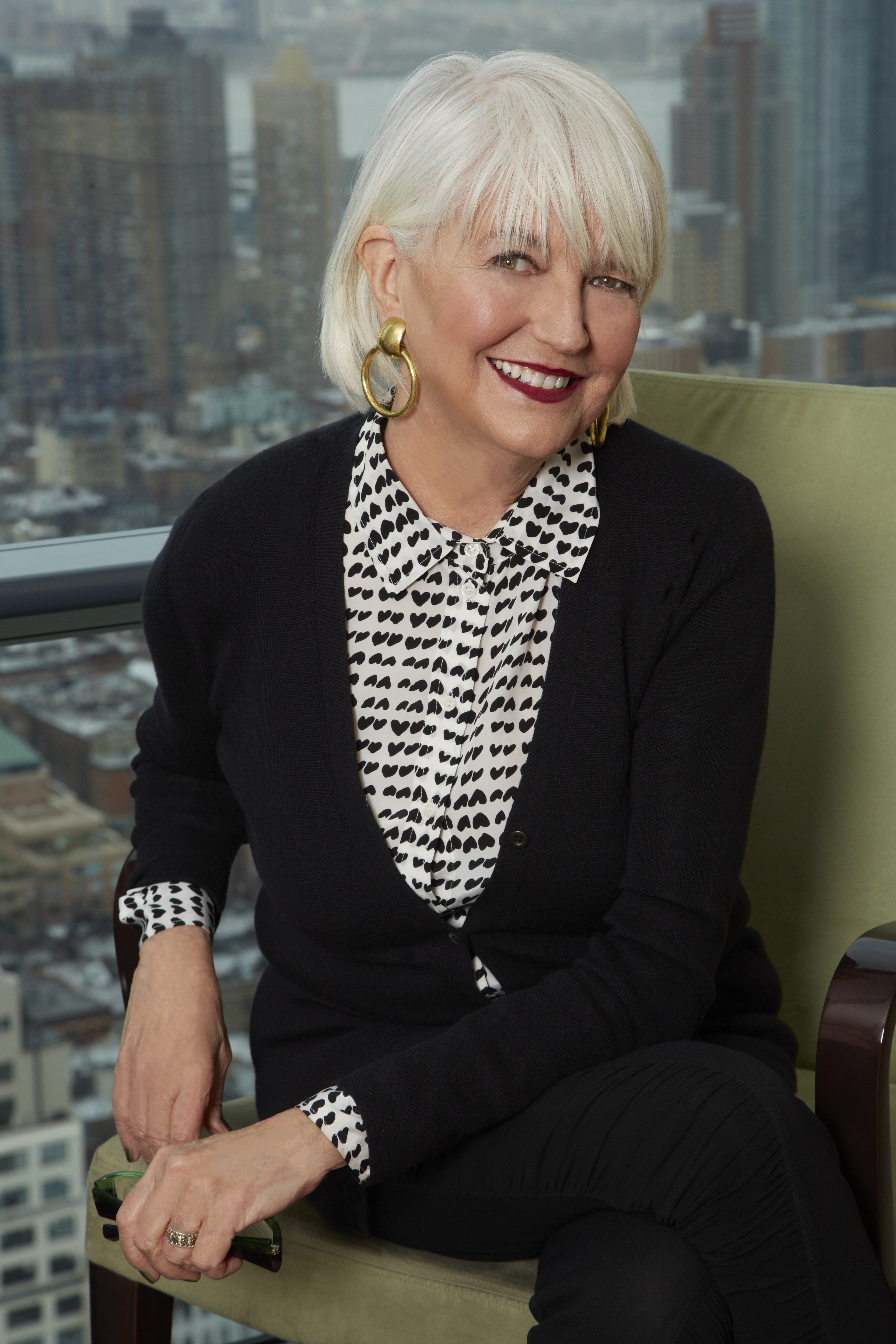
Hottest Editor of the Past 30 Years:
Ellen Levine, Editorial Director, Hearst Magazines

Samir Husni: What do you think has been the biggest challenge in your career and how did you overcome that challenge?

Ellen Levine: I actually love challenges – I find them engaging. Starting new magazines is a creative opportunity that some might see as a challenge, because you need to find true uniqueness and originality, but ultimately it is really a wonderful way to put creativity to work, and I love it.

Samir Husni: What has been the most pleasant moment in your career so far?

Ellen Levine: There have been so many, but one that stands out is launching Food Network Magazine, which we did in the depths of a recession. In fact, the first issue’s on-sale date was the day the market tanked. We didn’t know what would happen, and when the results started coming in, we could see that it was an immediate, huge hit. People really embraced it, it was just what they needed at that moment, which is always what you are trying to achieve.

Another very pleasant moment was when we learned that the first issue of O, The Oprah Magazine had sold out in a little over week and we went back to press to print thousands of additional copies – proof that women truly value Oprah’s advice and wisdom. In both cases, I felt like we had tapped into something special with our content that really resonated with consumers.

Samir Husni: Looking at the industry as a whole, do you think we are better off today than the “good ol’ days?”

Ellen Levine: To me, every yesterday is a good ol’ day, but tomorrow is the future.

Samir Husni: From an editor’s point of view how do you view the future or the “editing” profession?

Ellen Levine: There’s more creativity, more room for experimentation than ever before. The original definition of editing was putting pencil to paper, and we all continue to do that too – editing is and will always be essential in the media business.

Samir Husni: What is your reaction to being named the hottest editor of the past 30 years?

Ellen Levine: It is a huge honor, and in so many ways I have Hearst to thank for it. Our leadership, the editors and publishers that I work with every day – we’re like a family. There’s no other place where I could stretch myself creatively and see things come to fruition the way I have at Hearst, from launching new brands to reshaping and evolving existing ones.

The Hottest Designer(s) of the Past 30 Years:
Robert Priest and Grace Lee of Priest + Grace Design Firm

pg_photo

Samir Husni: What do you think has been the biggest challenge in your career and how did you overcome that challenge?

Priest + Grace: Remaining relevant as a person and as a designer. Being somebody who constantly believes in reinvention and looking forward.

Samir Husni: What has been the most pleasant moment in your career so far?

Priest + Grace: There have been several things really. Moving to New York, from London via Toronto is certainly one. Teaming up with Grace Lee and the effect our collaboration has had on my creatively has been a revelation to me.

Samir Husni: Looking at the industry as a whole, do you think we are better off today than the “good ol’ days?”

Yes! But of course there are many definite challenges right now. I feel everyone is looking for a new way of communicating, and the jury is out as to which path to follow.

Samir Husni: From a designer’s point of view how do you view the future or the “design” profession?

Priest + Grace: It’s about taste and value to me. If you have good taste and can be flexible there’s a place for you in the future of design. If you have great taste, you’re articulate and you don’t compromise, you are the future of the design.

Samir Husni: What is your reaction to being named the hottest designer of the past 30 years?

Priest + Grace: Incredulous!

The Hottest Magazine Launch Of The Past 30 Years:
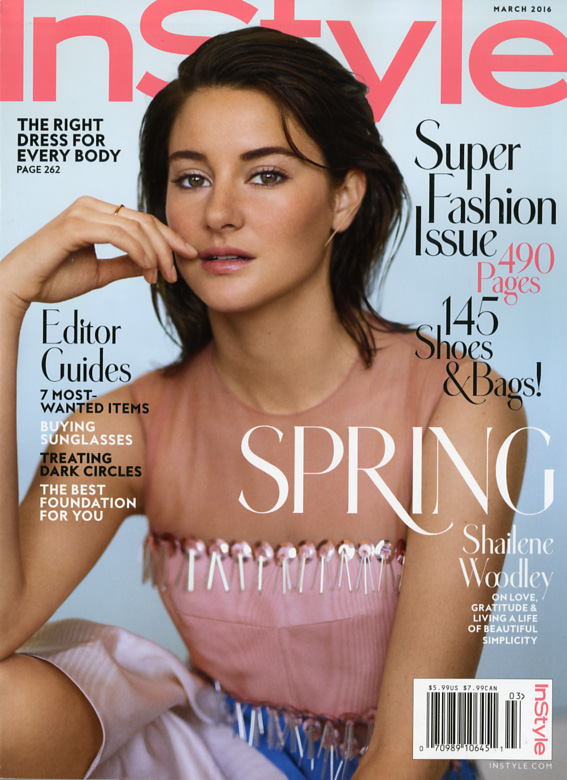
In Style
InStyle-1

In 1974 when Time Inc. launched People magazine, many people said that Henry Luce was probably turning over in his grave at how an institution like Time Inc., with titles such as TIME, Fortune and LIFE, were marching through the celebrity neighborhoods with a magazine called People.

However, little did they know that People would change the course of the history of magazines when it came to celebrities and human interest, and needless to say, People also became a major cornerstone in the world of magazine business.

Move forward to 1994; literally ripping a page from the success of People, Time Inc. launched a brand-new baby, born from the womb of the master mother: a baby they named InStyle. The same remarks were made about the infant as there had been about its famous mom two decades before. ‘Why would a company that deals with news and weeklies go into the fashion market? Why would they publish a women’s magazine that was heavily focused on style and beauty?’ The same doubts, with basically the same naysayers as there had been with People, spouting the same disparagements.

When People was launched there was very little competition in its category, but when InStyle hit newsstands, the fashion field was robust and ripe with some heavy-hitters such as Vogue, Harper’s Bazaar and Elle. InStyle had to swallow its nervousness and compete with three giants.

But not only did the magazine compete; it carved a niche for itself and did something the others didn’t do, it humanized celebrities. Suddenly people were seeing celebrities in a more personal and relaxed environment, proving that the magazine had a different access to their favorite stars than the others did, making InStyle unique.

The magazine made celebrities, style and fashion accessible to the masses without degrading the subjects they were covering and humanized the personality behind the famous name.

And of course, InStyle is not just limited to the United States. Currently the magazine is being distributed as international editions in 17 other countries including: Australia, United Kingdom, Germany, Brazil, Greece, South Korea, Spain, Russia, Turkey and South America. Its digital footprint is strong as well, with a website and app that keeps the brand in your face, right where it should be.

InStyle fits the criterion excellently that was required and needed to wear the title: The Hottest Launch of the Past 30 Years.

The Hottest 30 Magazine Launches of the Past 30 Years

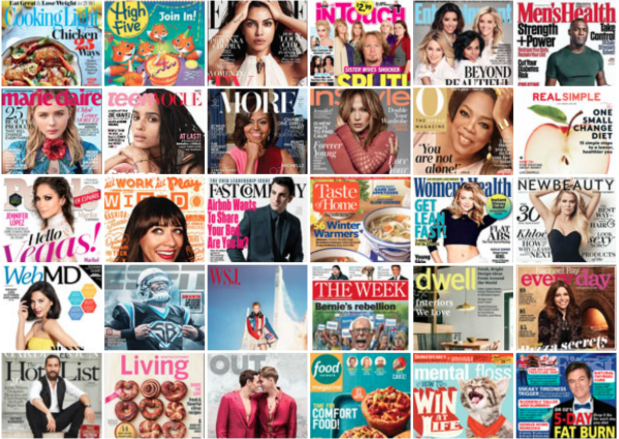
What can you say about 30 magazines that have left a streak of fire in their wake as they impacted three generations? Well, you can definitely call them the 30 Hottest Launches of the Last 30 Years for sure. And you can say they are all inimitably unique and dynamic. Take a look at each one and see if you agree with my thoughts about them:
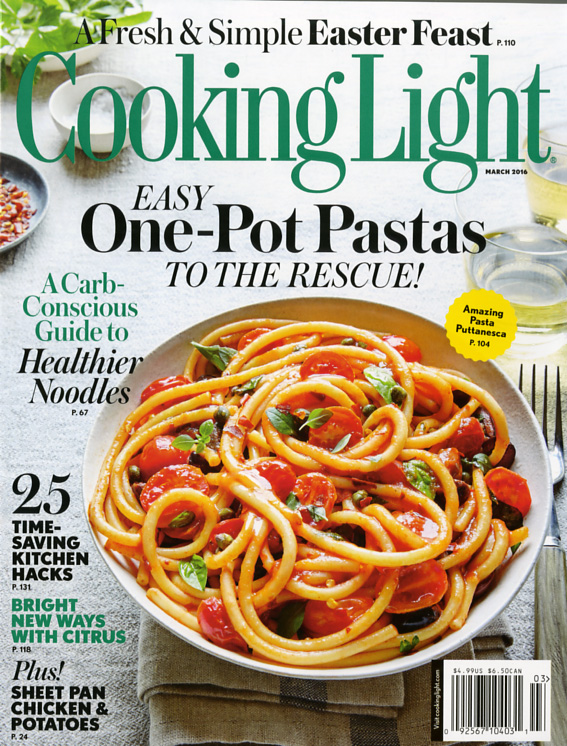
Cooking Light-2Cooking Light: Combining the love of food and the health of its audience, the magazine was able to beautifully showcase scrumptious and delicious food, that while healthy, was so stunningly decadent-looking, you would never know you were eating in good health. It took the guilt out of eating.
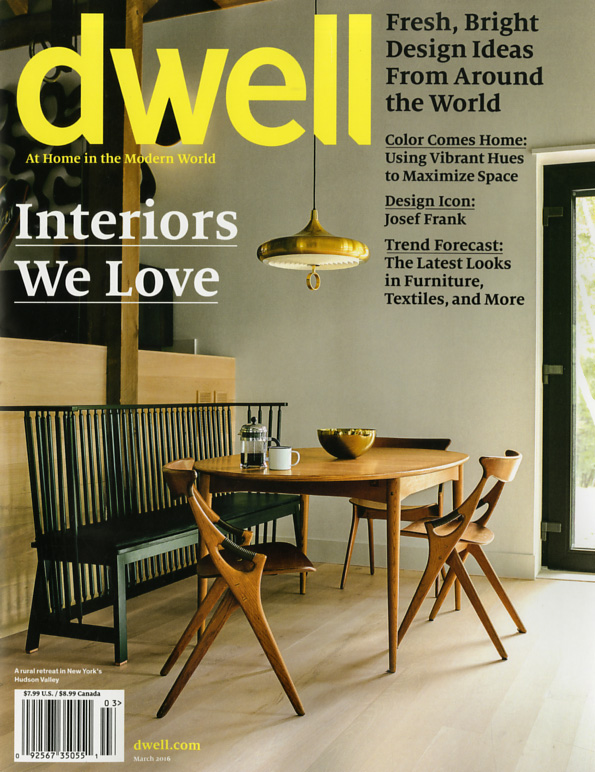
Dwell-4Dwell: The little engine that could. Dwell was one magazine that if you were a gambler would have been a long shot at best. Yet, with the diligence of its staff and creators, Dwell has become a leader in the interior design and shelter categories, in print, in events and of course, digital.
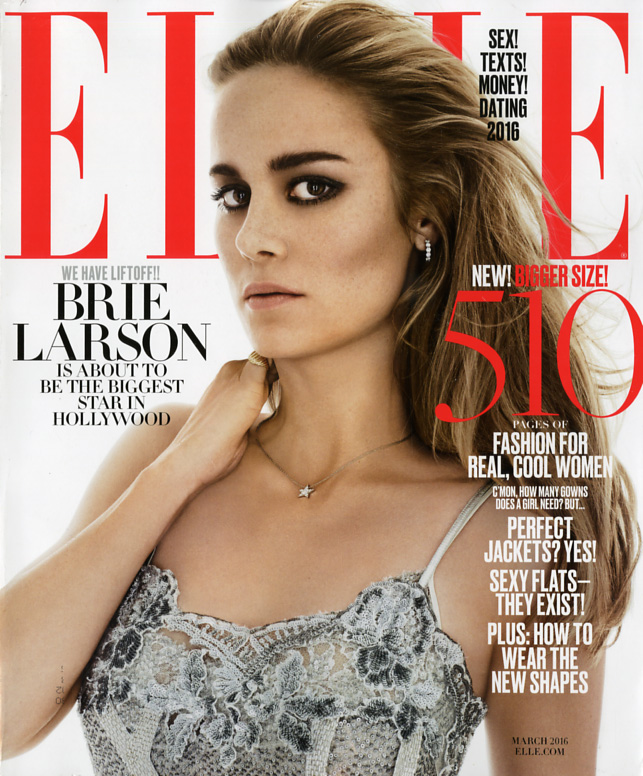
ELLE-2ELLE: One of the first magazines to succeed in bringing that Euro-trend to the United States. And not only did ELLE succeed; it excelled and became a dominant player in the world of fashion magazines.
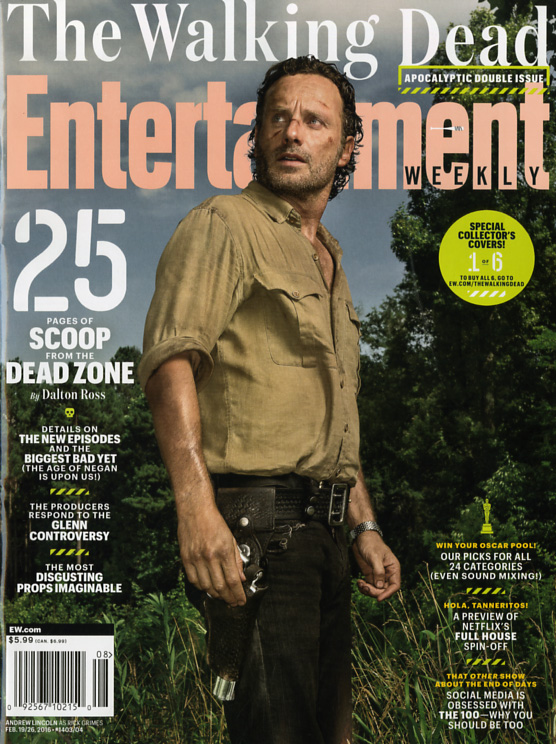
Entertainment Weekly-8Entertainment Weekly: The first major weekly magazine to be published in the last 30 years that curated all the entertainment landscape before the word curation was en vogue and provided everything its audience (and DJs) needed to know about popular culture.
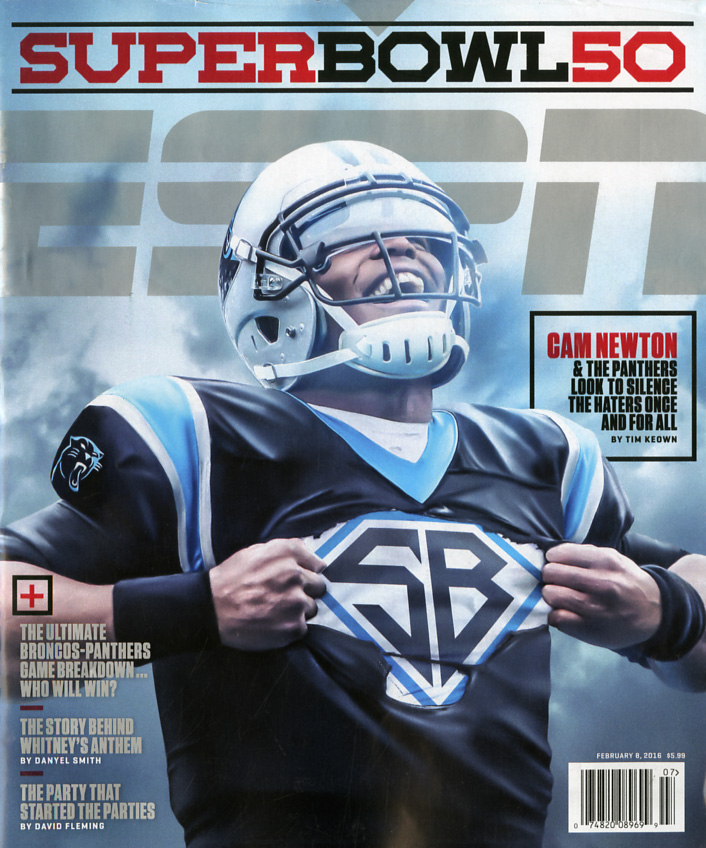
ESPN-1ESPN The Magazine: ESPN The Magazine was built from the television network and the brand. The creation of a lifestyle magazine that complemented everything sports and vice versa was one more piece of the puzzle that the brand needed to dominate the sports enthusiasts’ attention.
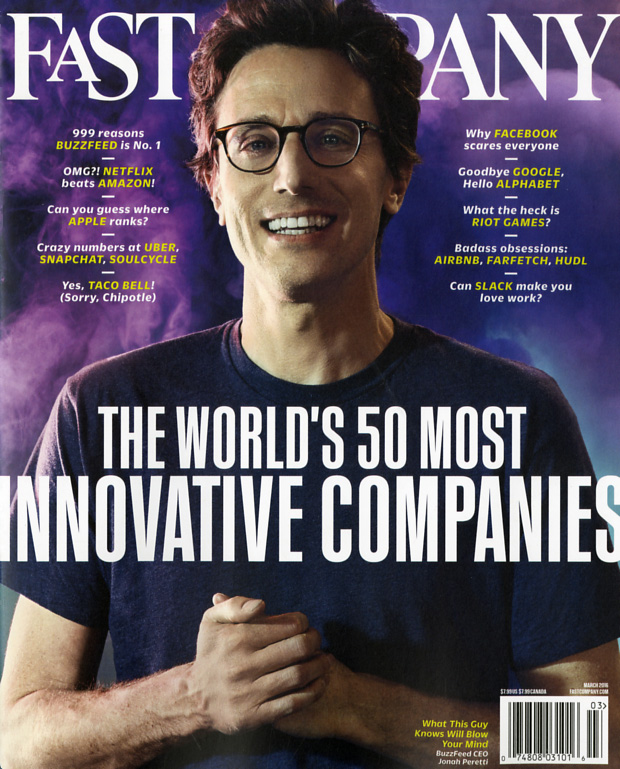
Fast Company-3Fast Company: The new business magazine, but with a twist. The magazine kept pace with the ever-changing facets of business and industry, from the technological aspects to the business aspects, so no business or technology was left behind if they were reading Fast Company.
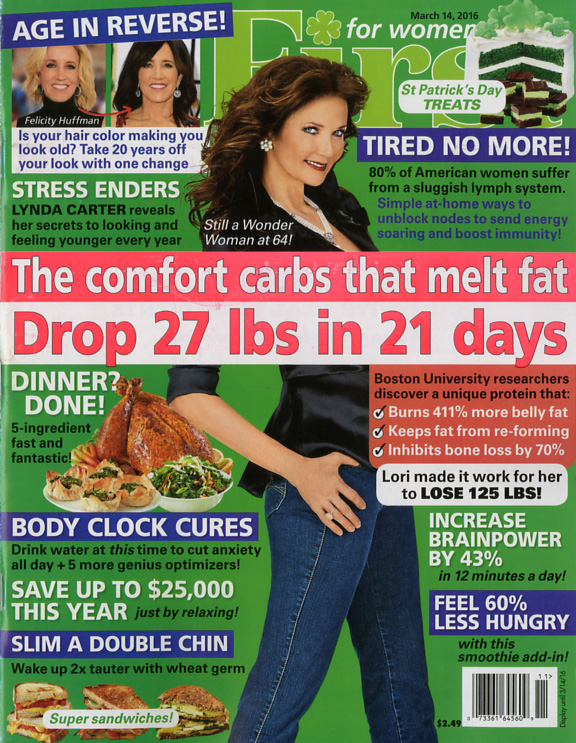
First for Women-2First For Women: When First For Women was born the market was flooded with women’s magazines, but First For Women proved it was a force to be reckoned with. And today, it reigns supreme as one of the leading women’s magazines on the newsstands in a still very crowded marketplace.
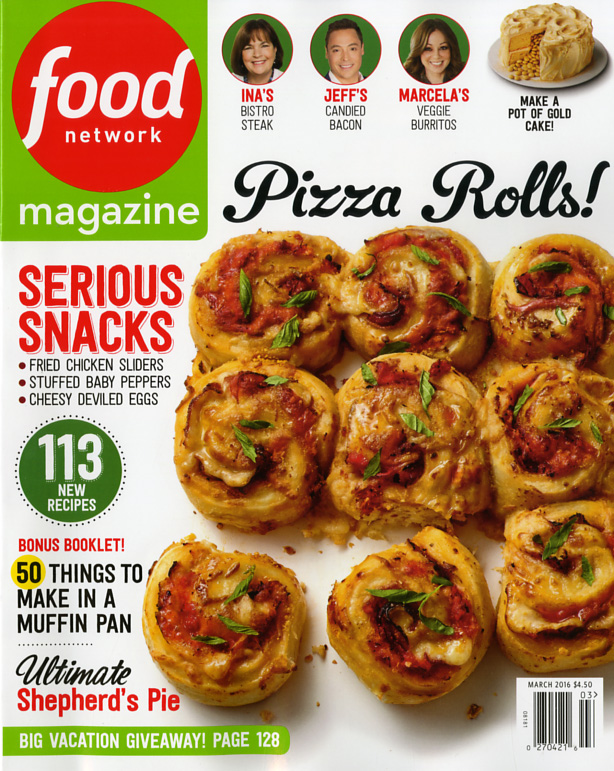
Food Network-5Food Network Magazine: Born in the midst of the economic meltdown, Food Network Magazine carried the torch for print, proving that print wasn’t dead and that food was the new sex of the 21st century. It showed that print well done could not just succeed, but could also flourish.
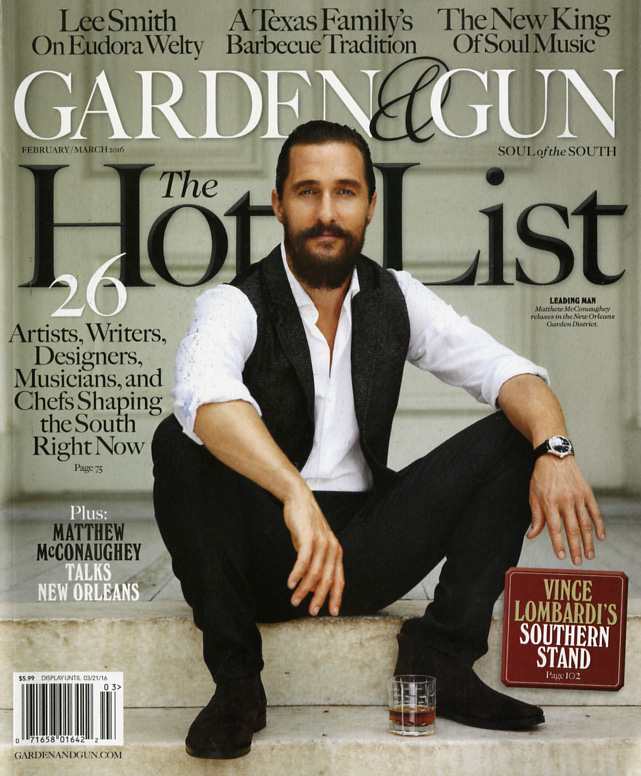
Garden & Gun-12Garden & Gun: Garden & Gun is the southern magazine with the national appeal that succeeded in creating a distinct voice that readers from every corner of the country can relate to. The magazine combines great literary content with beautiful photography and an upscale look and feel.
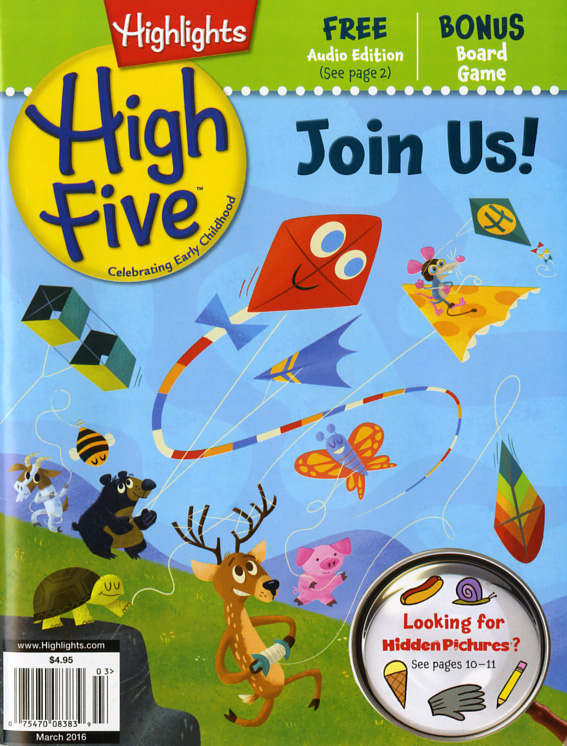
Highlights High Five-1Highlights High Five: As the digital tsunami was approaching Highlights recognized not only the digital changes taking place, but also the physiological and psychological changes in children and created a magazine for younger children to help prepare them for the future.

InStyle-1InStyle: If someone told me years ago that Time Inc. would be a major player in the fashion category, I would have probably laughed, but with its unique approach to celebrities and fashion, InStyle carved a niche for itself in a big way, so much so that that niche has become part of the norm.
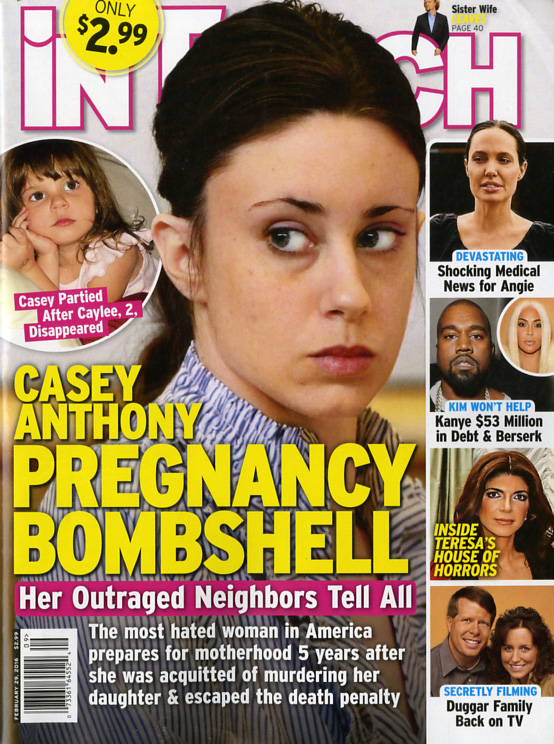
InTouch-9InTouch Weekly: Born at the height of the celebrity craze and aimed and targeted at a mass newsstand audience, In Touch Weekly was the first major new weekly to be published in the United States since Entertainment Weekly and set the stage for two more weeklies: Life & Style and Closer.
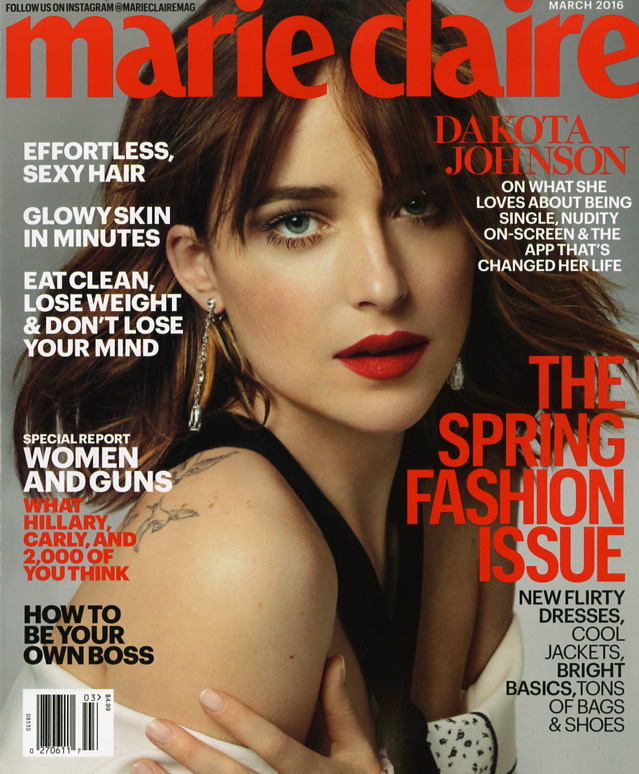
Marie Claire-6Marie Claire: The fashion magazine with a conscience. No other fashion magazine can come close to all of the appetizers and desserts that Marie Claire offers. Fashion is still the stronghold of the publication, but there are a host of human, social and world interests in the magazine.
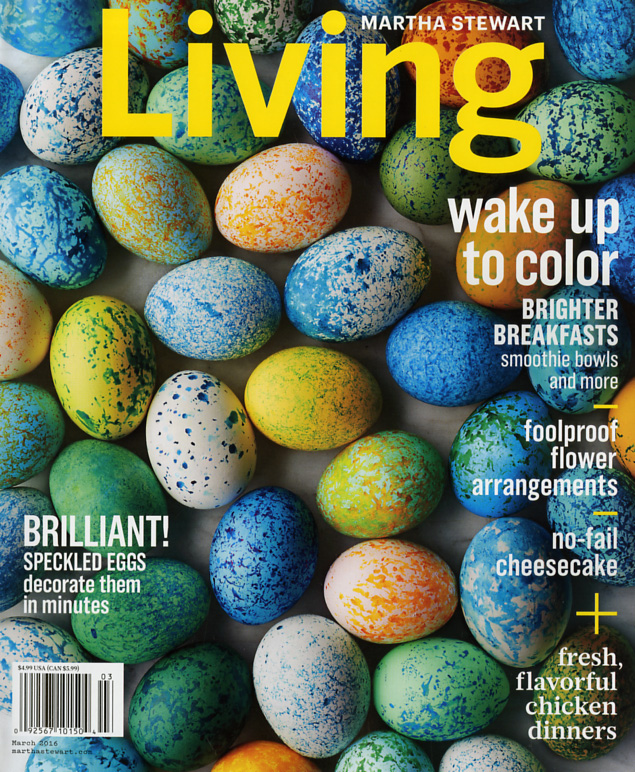
Living-5Martha Stewart Living: It began the trend of making brand extensions based on the persona of the magazine’s namesake, rather than what they do professionally. The first magazine in a long, time that lent itself to its namesake, and became the journal of the everyday life of Martha Stewart.
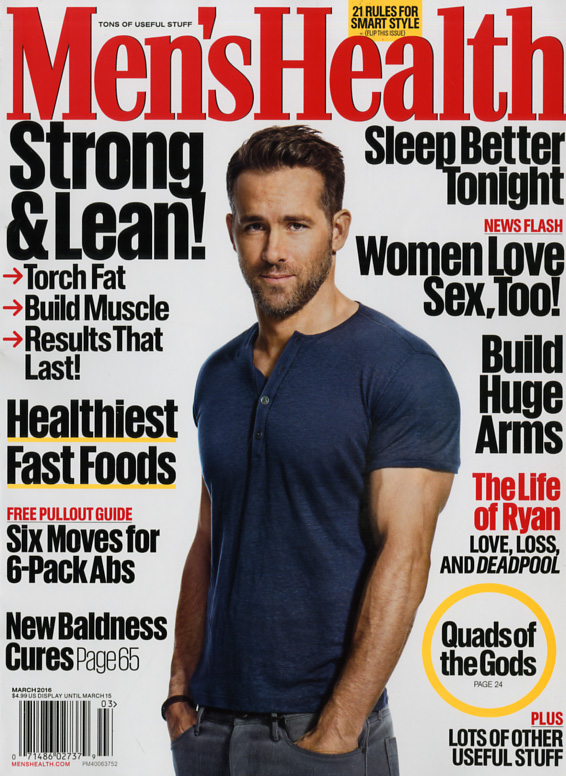
Men's Health-11Men’s Health: Men’s Health shattered the myth that the male of the species didn’t take advice or care about their bodies. And not only was that myth shattered in the United States, the brand exploded and expanded globally and proved men were just as health-conscious as women.
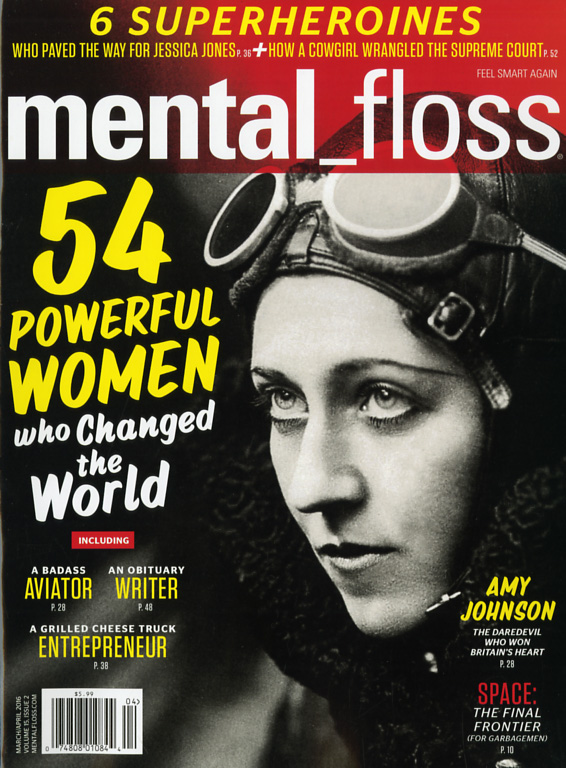
Mental Flos-4Mental Floss: What can you say about a magazine that wants you to feel smart again? Born from the seeds of a classroom, Mental Floss became a brand that can be found in print, in books, online and on television. It’s rooted in the idea that information and knowledge should be fun and entertaining.
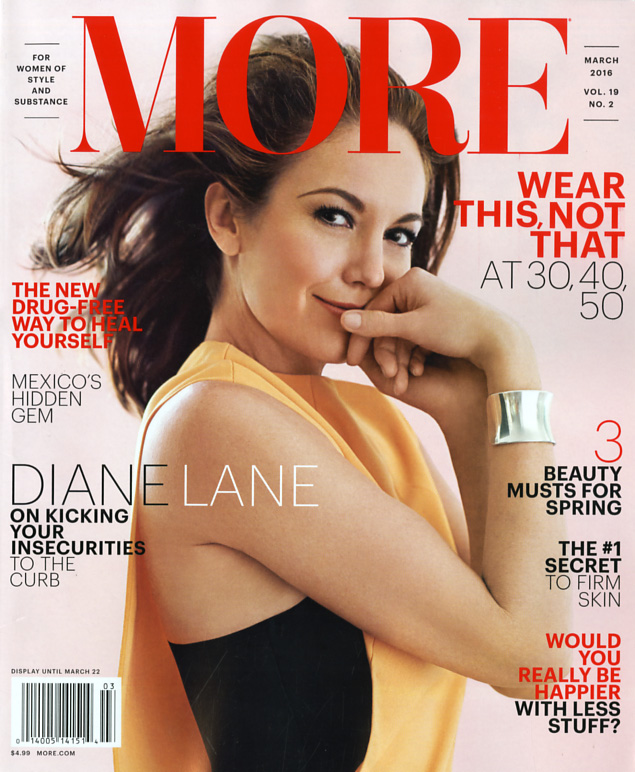
MORE-3MORE: The magazine for substance and style that made a breakthrough in women’s magazines when they stood firm on the foundation that age was just a number. With MORE, women suddenly felt ageless and the magazine documented that in both words and photos.
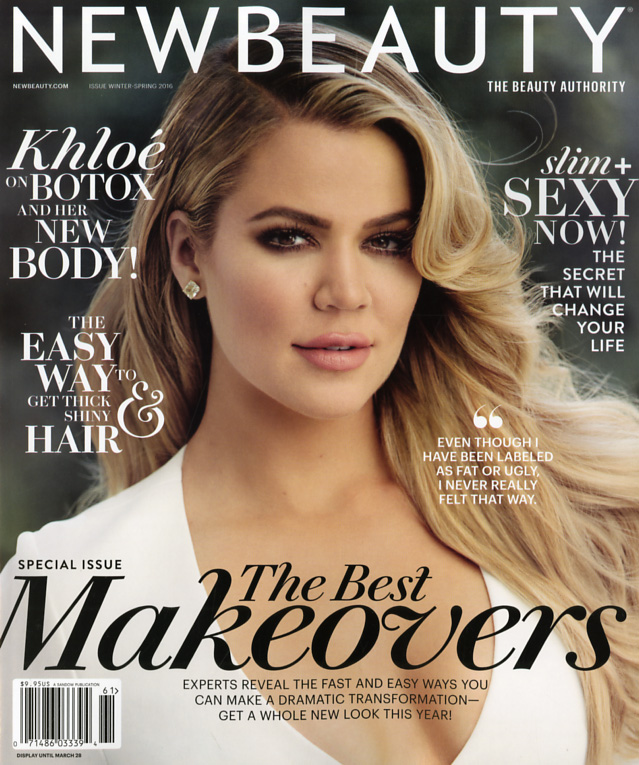
New Beauty-2NewBeauty: Captivating and reflective, NewBeauty set the trend for the beauty space by coupling education powered by innovation to become the go-to source for readers looking for an outlet to get the truth on many beauty trends, people, and products in the world then and today.
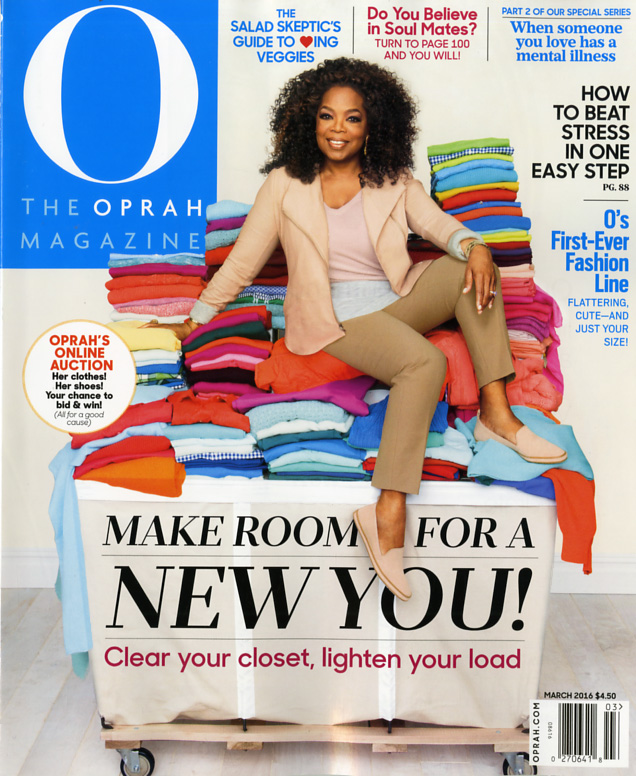
O The Oprah-13O The Oprah Magazine: O The Oprah Magazine has been able to extend the brand from the television screen to the world of newsstands, and make it larger than life. So even if you don’t see her on TV, you can still see her everywhere. She’s always on your mind and never out of sight.
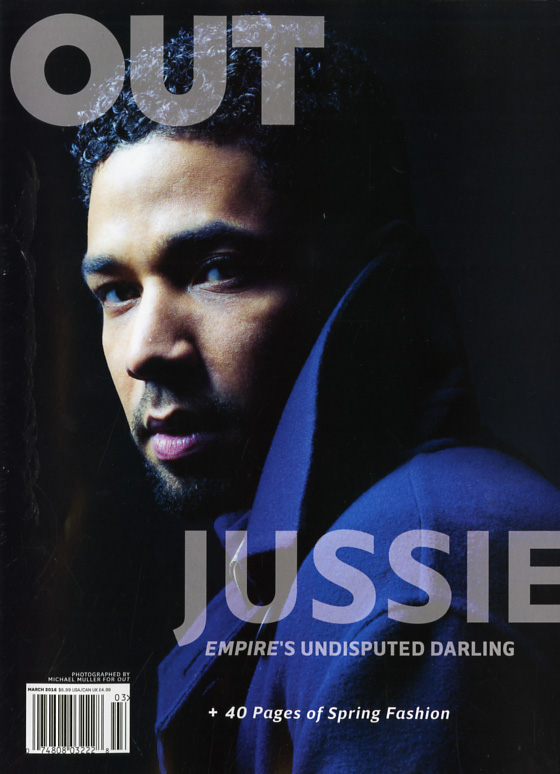
OUT-7OUT: OUT was the first lifestyle magazine for a gay audience that removed the stigma from being gay and allowed readers to remove the wrappings and showcase the magazine in every possible venue, including their coffee tables. It changed the look and feel of gay magazines.
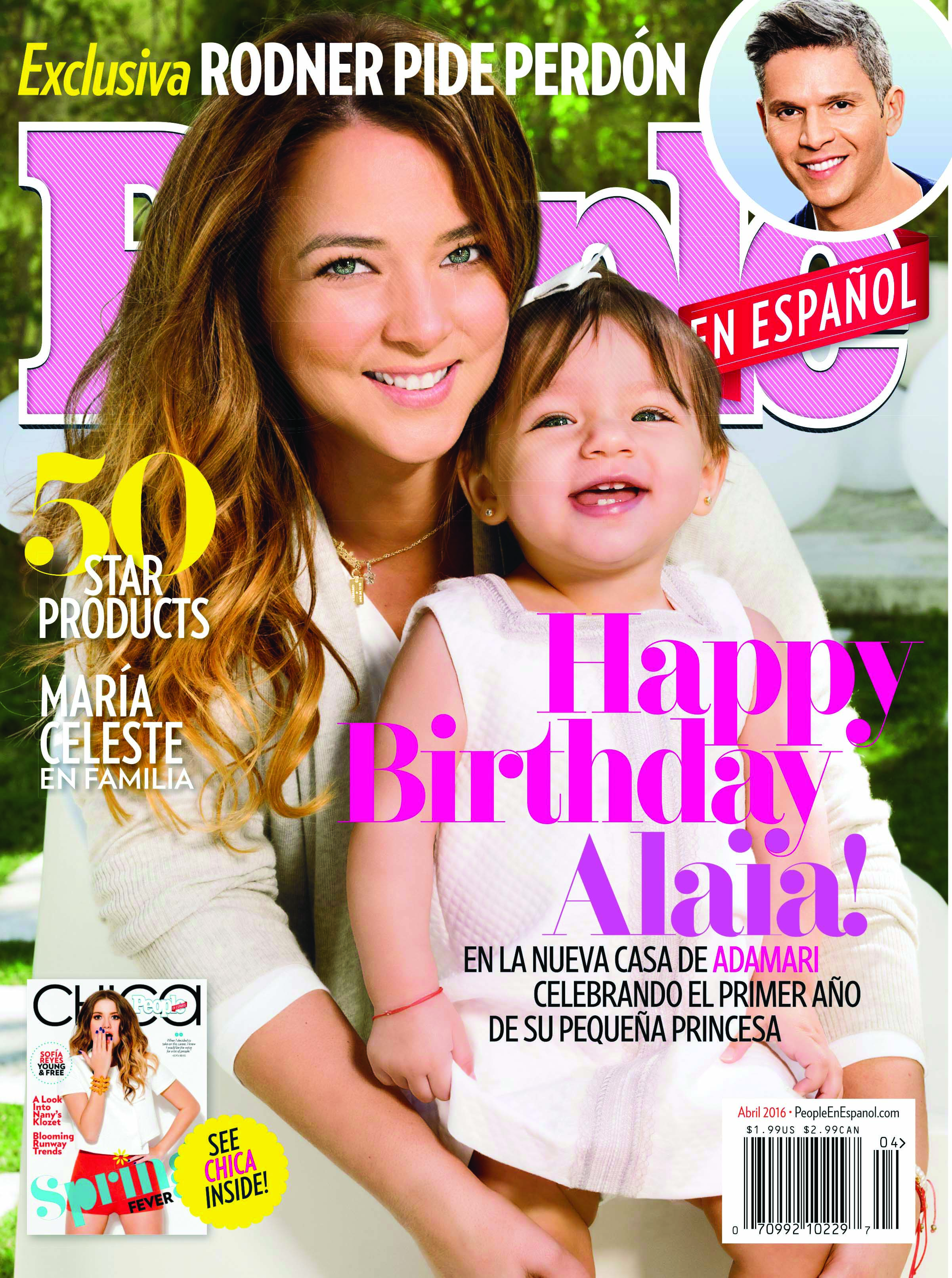
ESCVR04_EAST_1_print.pdfPeople En Espanol: A breakthrough in the marketplace. People En Espanol tapped a growing source in the market that had been ignored for a long time. The magazine established itself as the leader in the Hispanic marketplace for the coverage of celebrities and human-interest stories.
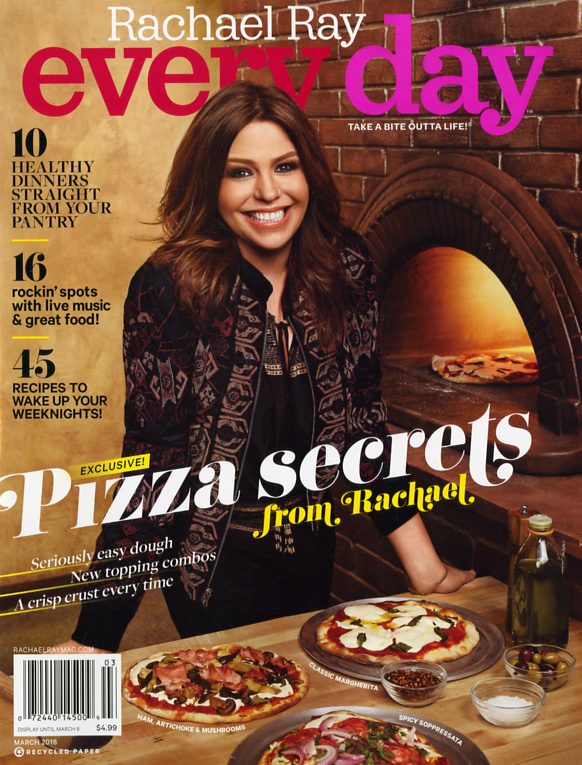
Rachael Ray-3Rachael Ray Every Day: Humanizing a brand based on an actual, living, breathing human being is evident in Rachael Ray Every Day. The closeness that you feel with her television program is replicated in the experience you get when you’re flipping through its pages.
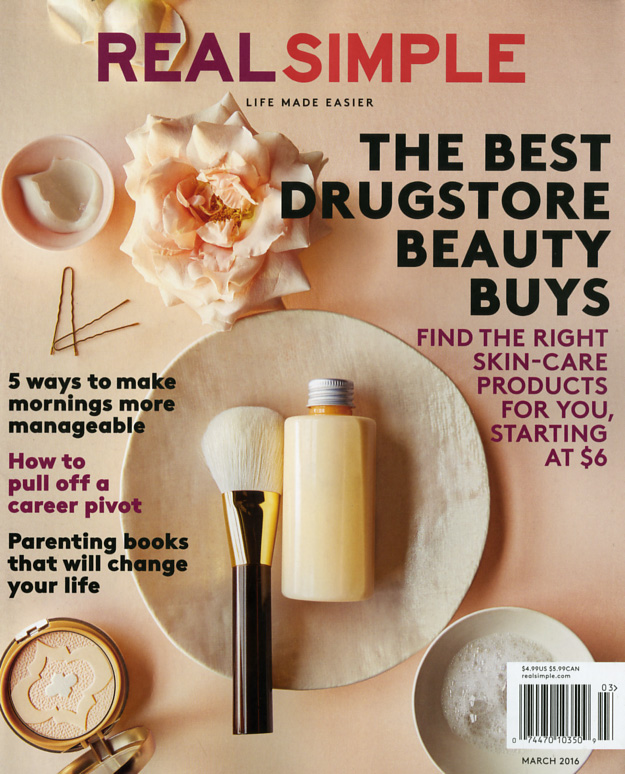
Real Simple-8Real Simple: I don’t think that you can go wrong with a magazine that aims to make life “easier,” especially when it comes to one that actually broke the mold of what a woman’s magazine is or should be and presented a “Real Simple” concept of living into our complex way of life.
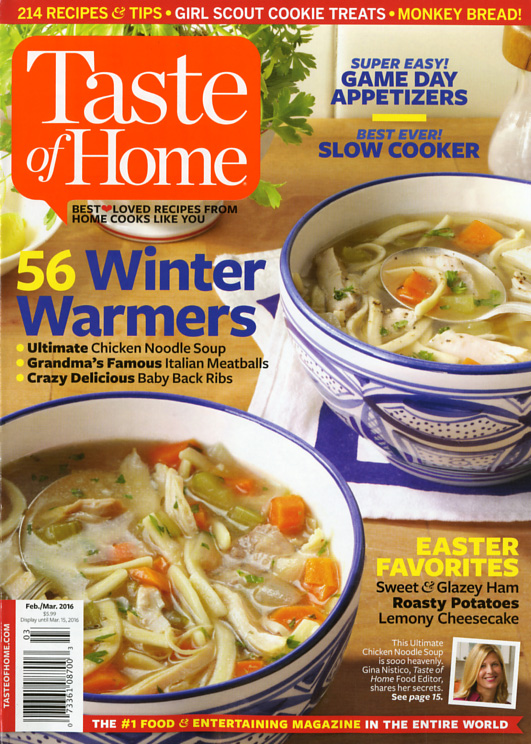
A Taste of Home-1Taste of Home: Way before the phrase “reader-generated content” was coined; Taste of Home was participating in this 21st century concept. It was the trend-leader in this idea before anyone even knew this was an idea, proving the magazine has always been ahead of its time.
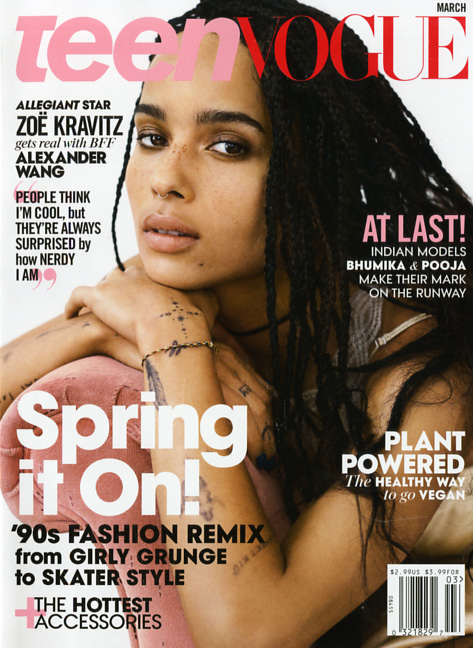
Teen Vogue-6Teen Vogue: Needless to say, plenty of magazine mothers have given birth to teen magazines in the past, but Teen Vogue is the only surviving offspring of those proud and strong mothers. Teen Vogue proved that it was as buoyant and immovable as its famous mom, and continues to be.
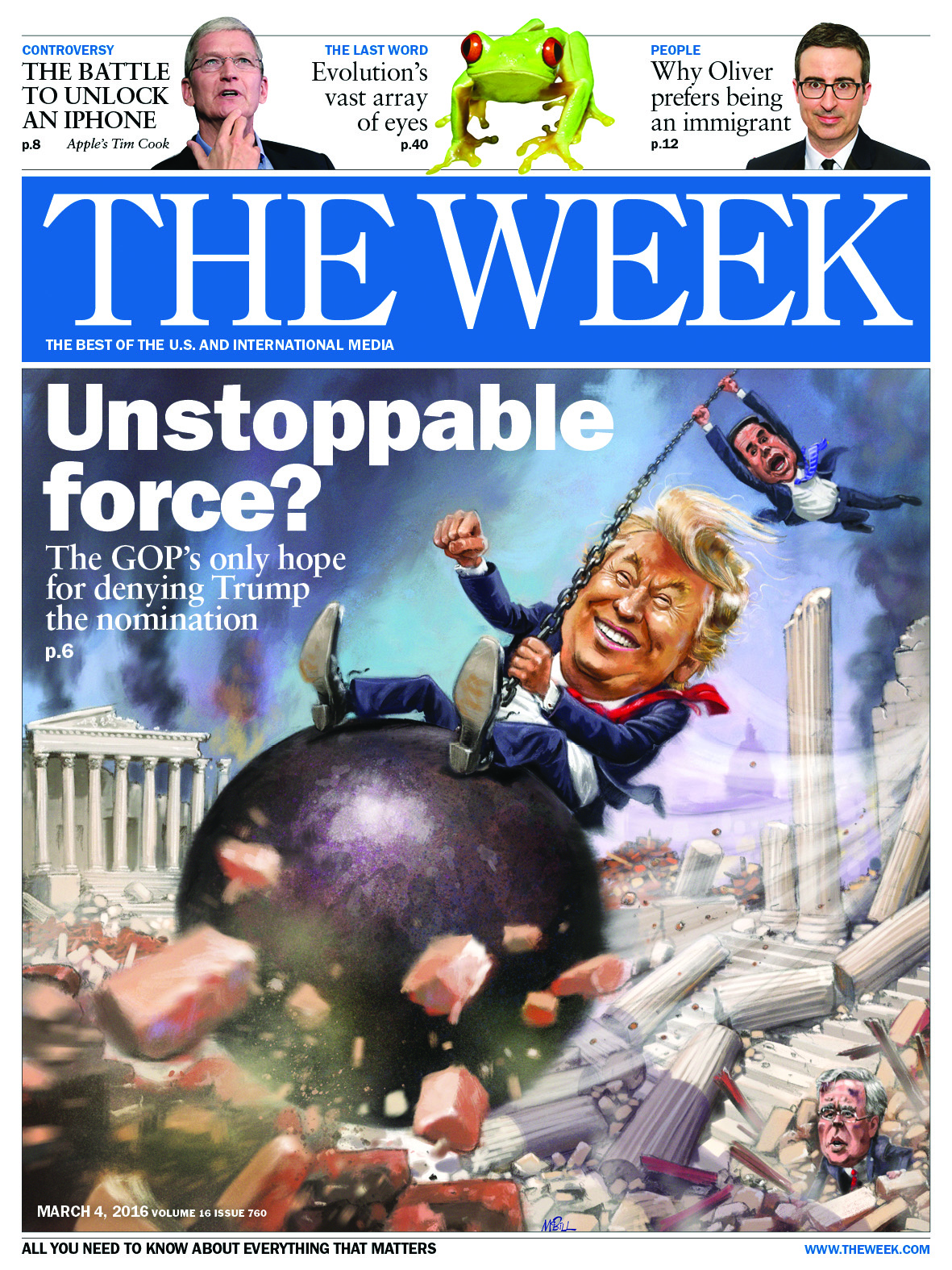
THE WEEKCMKYThe Week: The magazine’s tagline says it all; The Week is literally and figuratively all you need to know about everything that matters. The Week actually delivers on that statement. In a very short time The Week has become a must read and the Rolls Royce of the newsweeklies.
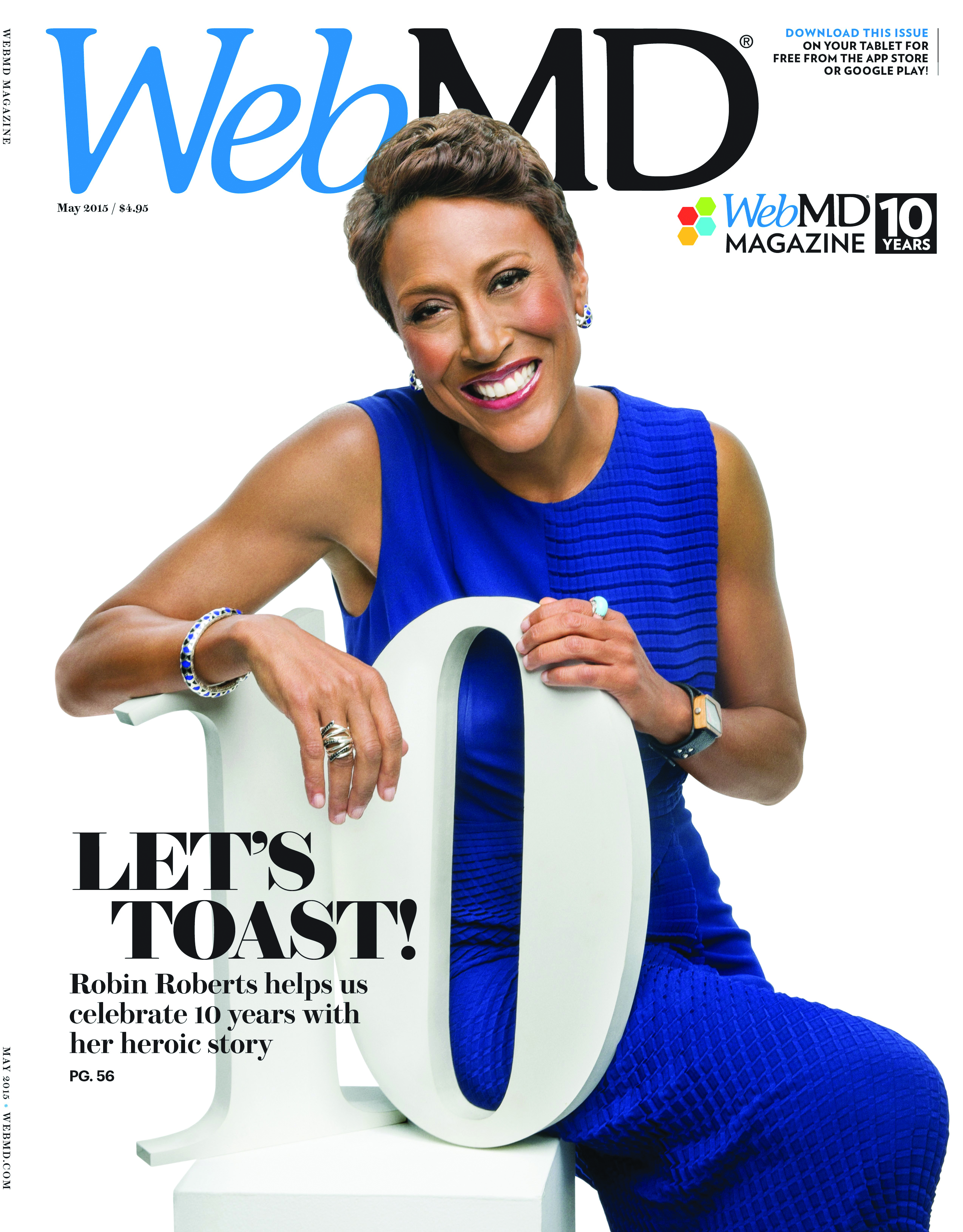
WebMDCYMKWebMD: While it’s no longer a unique idea that digital websites are discovering print, WebMD was one of the first successful players in the field. The brand believed strongly that it’s not either/or when it comes to engaging its audience, but both print and digital are the only option.
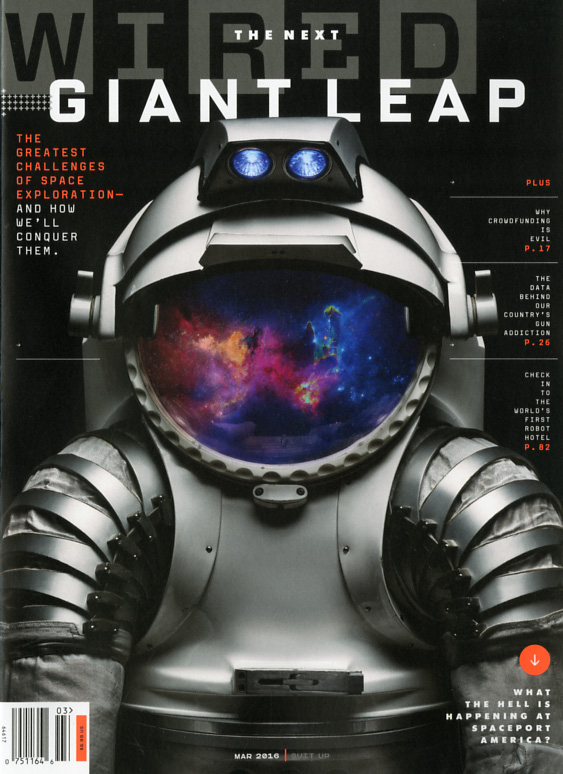
Wired-7Wired: From a creation based on passion and a love for everything that’s techie, Wired grew to become the techies’ bible in an industry where there’s no shortage of technology-based publications. It grew up from the passion of its creators to become the techies’ lifestyle magazine.
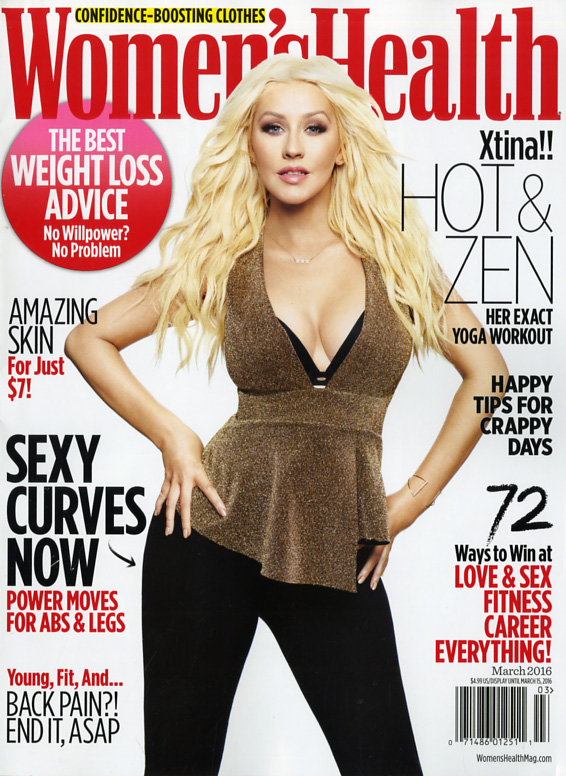
Women's Health-10Women’s Health: Unlike Men’s Health, Women’s Health came into a crowded market and changed the precedent of how women think about and dealt with health issues. Suddenly, a magazine was born that dominated the women’s health category.
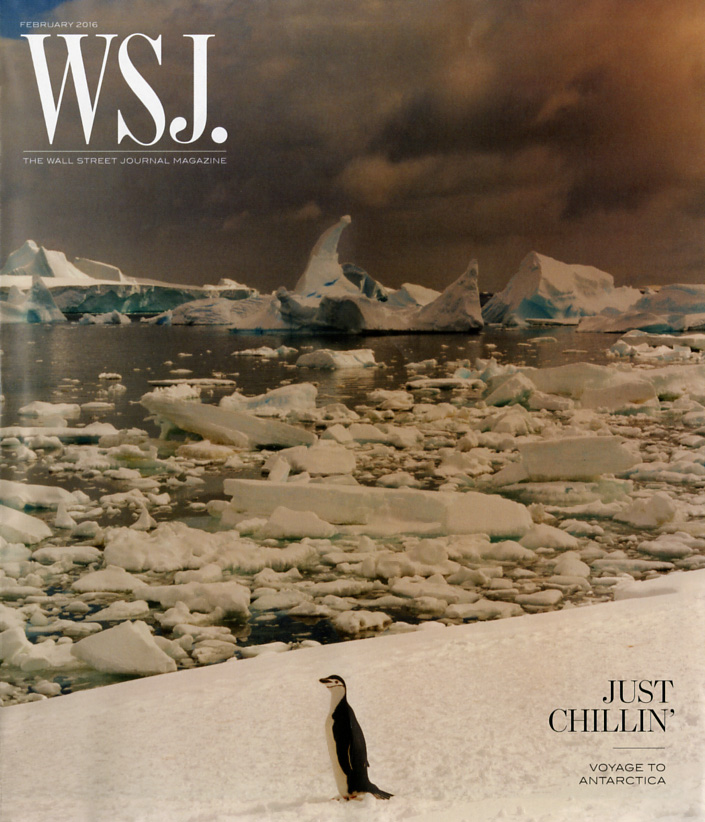
WSJ 72-2 (2)WSJ. Magazine: Setting new standards in newspaper supplements, WSJ Magazine captivated an expanded audience and paved the way for something potentially disposable to become a collectible and valuable print product while creating a whole new source of revenue for the mothership.

Until the next 30 years…
Enjoy magazines!

h1

Food, Art, And Sports Dominate Quarter One 2016 In New Magazine Launches…

April 6, 2016

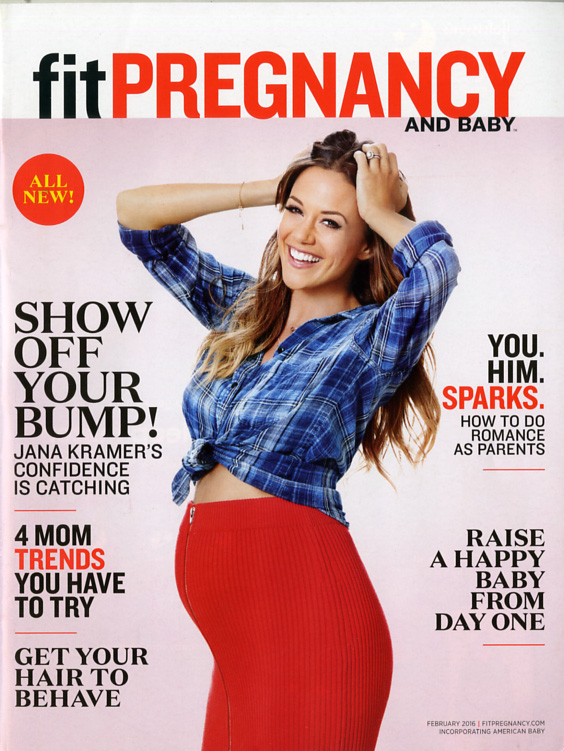
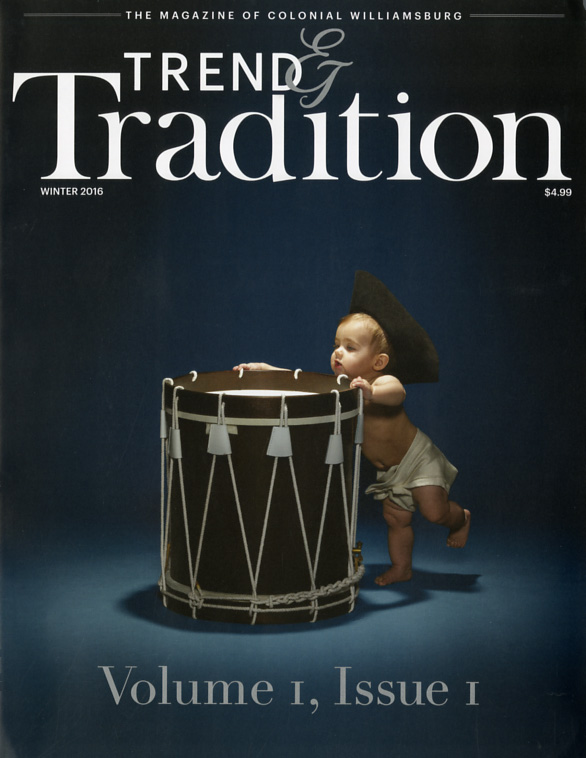
The first quarter of 2016 witnessed the launch of 199 new titles compared to 191 in the same period of 2015. While we saw an increase of eight titles, there were a decrease of five titles in the number of magazines launched with four times frequency or more.

Galerie-21843-6Fit pregnancy & baby-4JARRYTrend & tradition-2Cartoons-3

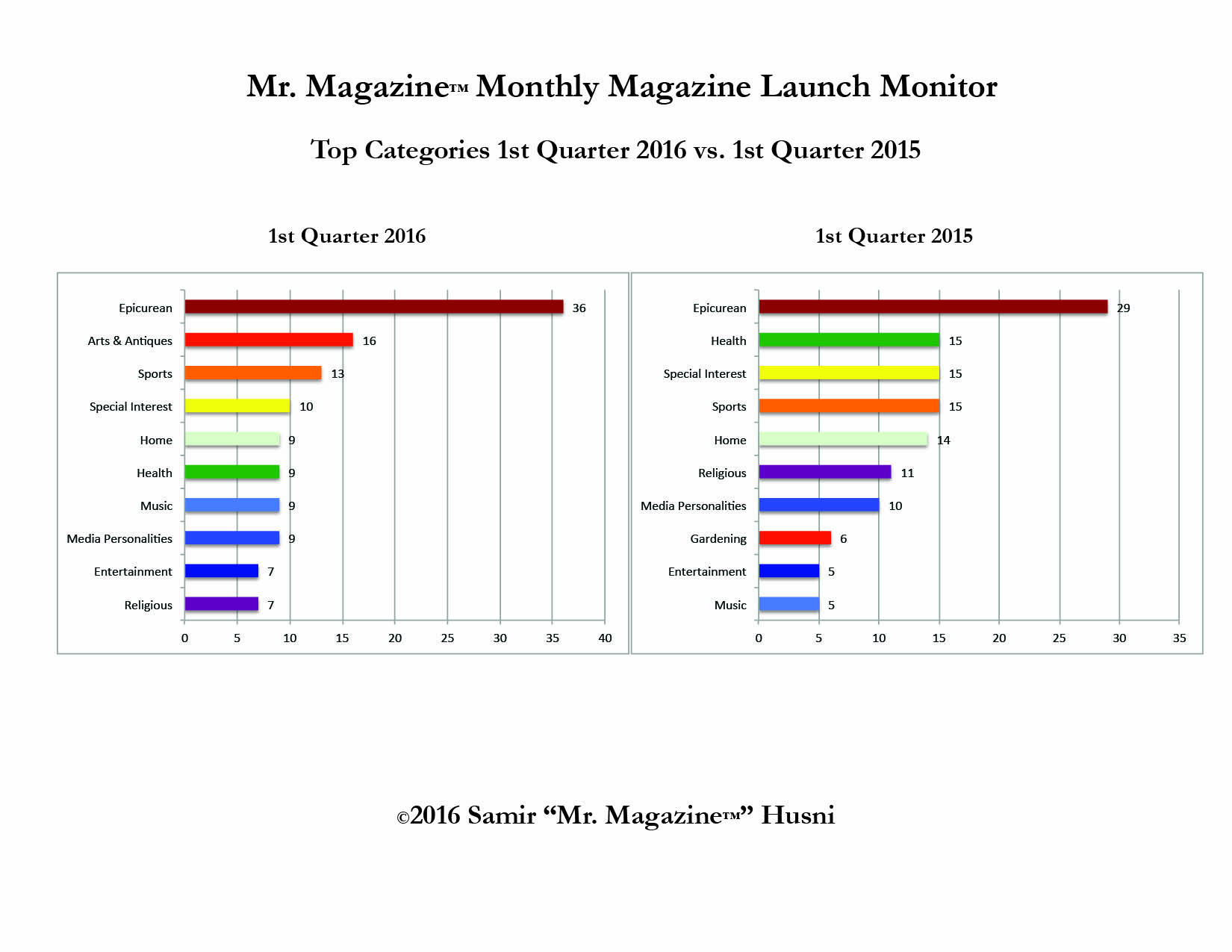
The new magazine launches, which you can see and access each and everyone of them on the Mr. Magazine™ Launch Monitor, continue to cover a variety of timely, yet timeless, topics ranging from the ever-popular food titles to the rising stars of art and antiques.

Below are two charts comparing the first Quarter of 2016 to that of 2015.

1st Quarter 2016 vs 2015 pie graphs

1st quarter 2016 v 2015 top categories bar graph

h1

min: How Does Mr. Magazine™ Narrow Down 10,000 Magazines To 30? My Interview With The Staff Of Media Industry Newsletter*

March 17, 2016

Screen Shot 2016-03-16 at 3.59.20 PM A lot has changed in media over the past 30 years. That is especially true for magazines, as digital media continues to disrupt the century-old business model. Nevertheless, new magazines are opening all the time—and at a much faster rate than closures.

Over the past 30 years, Dr. Samir “Mr. Magazine” Husni, professor at the University of Mississippi, has been tracking all of these launches. In that time, Husni has looked at thousands of new magazines and then determined which amongst them are best in class.

To mark his 30 year endeavor, Husni is teaming up with min to honor the 30 Hottest Launches of the Past 30 years. Each of which will be honored at “The 30 Event” on April 14 at the Grand Hyatt in New York City. Additionally, Husni will reveal which brand was the hottest of the hot, as well as honor three individuals (hottest editor, hottest publisher and hottest art/creative director) who have been influential in moving the needle forward for magazine media.

Here, min catches up with Husni to discuss what goes into determining his annual “hot” list and how he was able to narrow it down to just 30 magazines over the past 30 years.

min: Tell us about the process you go through every year to select your hottest 30 launches, and likewise how you were able to narrow it down over a 30-year period.

Mr. Magazine's™ Photo by Allie Haake.

Mr. Magazine’s™ Photo by Allie Haake.

Samir Husni: One of the easiest and most enjoyable parts of my job is finding all of the new magazines that arrive on the newsstands. I am a student of the newsstands and have been since I was a very young boy. It was my beloved hobby then and has continued with me. So much so, that my hobby turned into my education; my education became my profession; and today people pay me for my hobby.

It started from the sheer pleasure I received from searching, finding and locating those first editions. And by the way, new titles were always there, before the economic crisis, after the economic crisis, before and after digital, before and after the Internet. And today, new magazines continue to arrive to the marketplace at almost the same level they were in 1978. The new magazine titles are averaging between 200-300 magazines published on a regular frequency; plus another 400-500 published as bookazines, specials, or annuals.

The process I use for selecting the hottest launches is very simple actually; yet at the same time, very tough because it’s always hard to choose among your children, so there has to be some carved-in-stone criteria for the process.

The very first criterion is, no matter how good the magazine is, if it’s not continuously published, it’s not a “hot” title. Once you’re dead, you’re cold. And since we’re dealing with the 30 “Hottest Launches” you definitely need to be among the living to be considered.

The second important criterion is that the magazine must be launched and published in the United States. There are some who might say, for example, you didn’t include Vice on your list. Vice was started in Canada. This list is strictly for magazines that were born and launched in the United States, and have continuously been in business since the end of 2011, because that 4-year marker is a very important milestone in the success or failure of a new magazine. Based on my research and my studies, most magazines that make it to the 4-year mark, unless some unforeseen disaster takes place, they are going to continue publishing.

min: What’s the biggest challenge in making your final selections?

Husni: Could you imagine a father having to select publicly which one of his children he preferred? This is something that is deeply personal to me. That’s why most of the titles of the books that I have written and published are: Samir Husni’s Guide to New Magazines; Samir Husni’s Guide to the Hottest Launch List, because there is a lot of subjectivity. I am an outsider looking in, not an insider that has access to all of the data and all of the numbers.

So from my helicopter view, when I look at the industry and at what’s happening; I look at how much a new title is gaining in traction, media attention and expansion, such as going overseas, publishing spin-offs, being all over the Web and mobile. All of these criteria have to be looked at. It’s very difficult. I do not base my selections on ad pages or circulation or distribution of a magazine. It is more of an observer’s wholesome approach.

Just to give you an example; in the past 30 years we had 23,318 new magazines, from which there were 9,828 titles published on a regular frequency. I had to look at all of those 9,828 magazines, which by the way, I do have each and every one of them, to reach my 30 Hottest. And it’s not easy. Having all those titles makes access easy, but not the decision process.

min: When it comes to magazines (ink and paper product not brands), what changes have you seen since you started tracking these hottest launches 30 years ago?

Husni: Of course, my definition of a magazine is “if it’s not ink on paper, it’s not a magazine.” So, that did not change. I still track magazines the same way I have always tracked them.

The major change is the degree of specialization. We are seeing more and more niche titles coming to the marketplace and we’re seeing more and more expensive cover prices. When I first began tracking magazines in 1978, the average cover price was around $2. Today the average cover price is around $10. That’s a big difference.

The number of new magazines that are coming to the marketplace with the intention of validating the customers who count, rather than counting customers is another very welcomed change. And this is new because of two reasons: The new printing processes make it easier for magazines to launch with a very low circulation. It can have a circulation as low as 1,000, but then you look at the cover price and it’s $35 or $50 per issue.

Secondly, because of digital and technology, we can dissect and personalize those magazines. Your copy can be different than my copy. We are seeing more intimacy with the customer, making it more of an experience, therefore we aren’t counting customers; we’re getting customers who count.

min: What hasn’t changed?

Husni: The role that magazines play in today’s society is, was and will continue to be the same. If you spend any time at all watching television or surfing the Web, or engaging with an app, you’ll understand readily why we still need ink on paper and that content. It’s amazing how much repetition and junk is out there.

Magazines have always been and will continue to be that relaxing “me” time that we all need, that sitting down with a nice glass of wine or tea and enjoying a special shared experience between you and the magazine. That will absolutely never change.

min: Obviously you can’t reveal who the hottest launch is overall, but can you tell us a little bit about that selection and how you finally arrived on the winner? Likewise, how many magazines made the short list, and what put the big winner over the top?

Husni: Every one of the 30 magazines that made the final cut deserves it. Out of almost 10,000 titles, these 30 were chosen. However, there can only be one winner and that’s where the struggle comes in. How do you scale down such an illustrious list of titles to one? And I’ll admit, it was an agonizingly, lengthy process. Each one of those titles could easily be THE hottest launch of the past 30 years.

But I had to start somewhere to narrow it down; so I started with the magazines that excelled and were wonderful, but didn’t have the extras that we were looking for. Such as, did the magazine really grow so much bigger over the past 30 years from its infancy, that today it is a mega force to be reckoned with in its category? How many international editions do they have? How have they expanded? How much has the brand expanded?

We went from 30, down to 20, down to 10 and finally on the shortlist, we were down to two magazines. So after that, I just flipped a coin… Just kidding.

The final decision was made thoughtfully and carefully and it was very close between the two titles.

And you’ll find out at the min 30 Event on April 14, 2016…

Looking forward to seeing you there!

For more information on the event, and to get one of the few remaining tickets, click here.
________________________________________________________________________________________
* From minonline March 16, 2016

h1

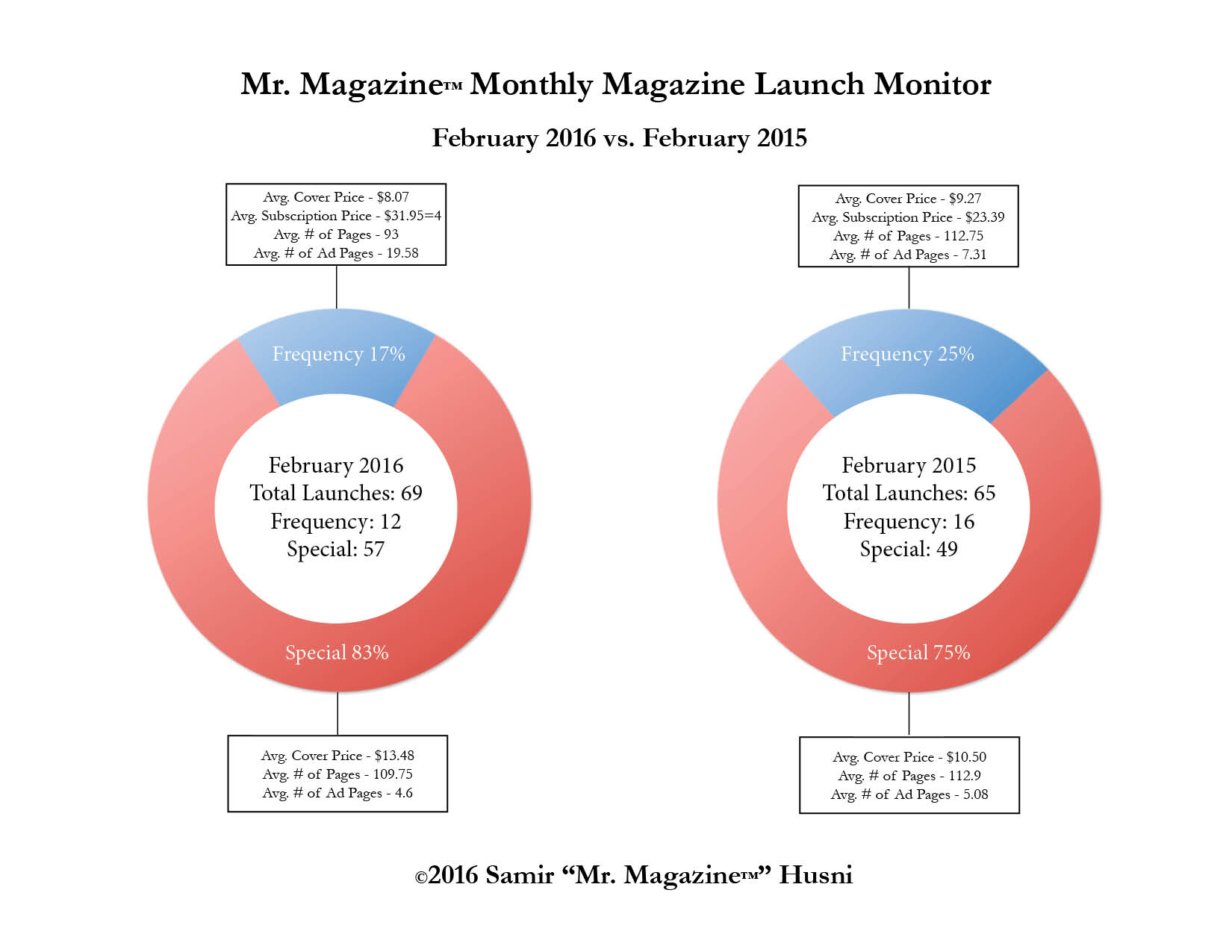
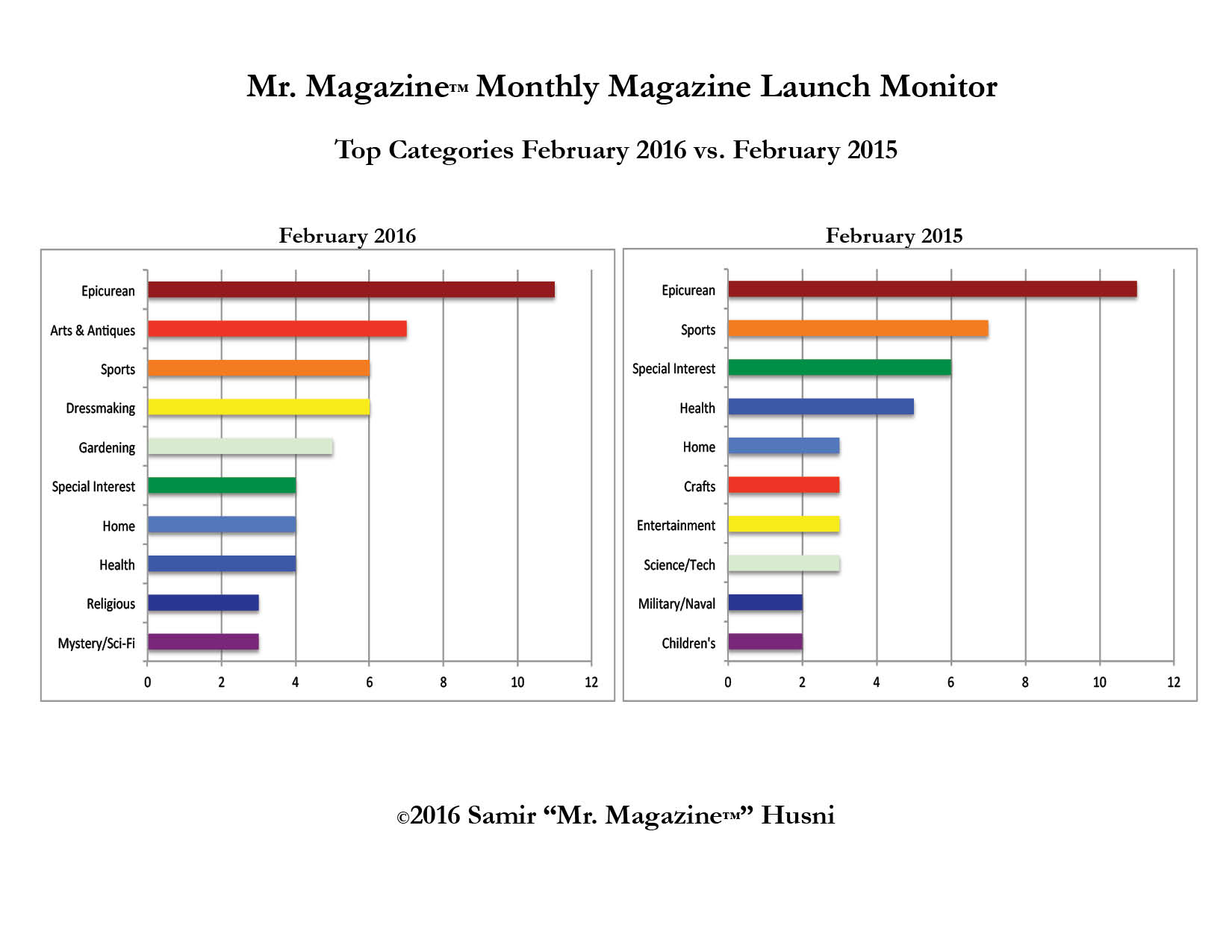
February Proved That It Was Truly The Month For Lovers – Of Magazines That Is…With 69 New Titles Hitting The Market – 12 With Promised Frequency.

February 29, 2016

Chilly temps may have kept you inside with that special someone during the month of February, and if it did there was certainly no shortage of interesting and entertaining new magazines out there to read and enjoy. From gardening to adult coloring to what to bring to that church potluck supper; February delivered a heart-shaped basket full of super magazines.

Take a look at all of the covers and notice the diversity and beauty that each bring to the reader and to the world of magazines…

See you next month for a monumental March…

But first here are the stats:
Feb 2016 vs 2015 pie graphs

Feb 2016 v 2015 top categories bar graph

Up first our frequency covers:

Cartoons-3 Chess Life Kids-4 First American Art-6 HOT BREATH MAGAZINE JARRY Kitesurfing-7 LION'S ROAR Mustang Driver-2 ORIGIN._COVER 1 ORIGIN._COVER 2 Think Realty-5 WESTERN HORSE & GUN WORLD OF COLOR


And now our specials:

100 GREATEST MYSTERIES REVEALED Bama Time-28 Best Recipe Makeovers-16 Best Southern Gardens-17 CELEBRATING THE WHITE HOUSE Church Potluck-30 COLOR ME DELICIOUS COMFORT FOOD COTTAGES OF WHITE CREATIVE CROCHET IN A DAY Crochet-9 CROCHET DAVID BOWIE DEER HUNTER'S FIELD GUIDE Easiest Quilts Ever-19 Easy Weekend Projects-14 Eat for Health-25 Edible Gardening-13 Elvis-11 Gluten free Best Recipes ever-26 GOURMET COMFORT GOURMET MEXICAN COOKBOOK GRATEFUL GARDENS HEART SMART RECIPES Home Tours-27 How to Clean Anything-18 Indoor Gardening-20 JESUS Just Mixed Media-8 KITCHENS & BATHS LAND & GROOVES Mini Gardens-10 MODERN DAY CONSPIRACY THEORIES National Champions-24 PLAY LIKE YOUR HEROES - BLUES PLAY LIKE YOUR HEROES - ROCK PORCHES & GARDENS SECRETS TO A HEALTHY HEART Spirtual Living-21 Spring Greetings-29 STRANGE BUT TRUE SUPER BOWL 50 CHAMPION BRONCOS SUPER BOWL 50 SUPER EASY SOUPS & STEWS TECHNIQUE WORKSHOP Texas Football Rising-23 THE BACHELOR THE COMPLETE BRUNCH COOKBOOK THE GARDEN OF EDEN THE METABOLISM MIRACLE THE SECRET LAGOON THE WHO Time Friendly Quilting-12 Ultimate Guide to Health-22 WALKING WITH JESUS WWII - VICTORY IN EUROPE YOUR COMPLETE HEALTHY EATING GUIDE

h1

SpainMedia: The Name That Personifies The Man Who Is Media In Spain – The Mr. Magazine™ Interview With Andrés Rodríguez, President & Editor-In-Chief, SpainMedia

January 26, 2016

“As humans, we have five senses and print touches each of those. With the iPad, the electrification touches eyes and ears, but not the nose. Smell is important, the smell of food; the smell of a woman or of a man. The hands are also important. The hands experience touch, touch of the skin; touch of many things. And paper has this quality, especially if you invest in it. Before you read any single word, you touch the paper and the impression is made immediately; either you like it or you don’t.” Andrés Rodríguez

“The magazine business will never die; it will never die because a magazine is the voice of a community. And you need that community to be so big that it gives you advertising to make the magazine. And you need to identify new communities. Magazines will never die.” Andrés Rodríguez

From Spain with love…

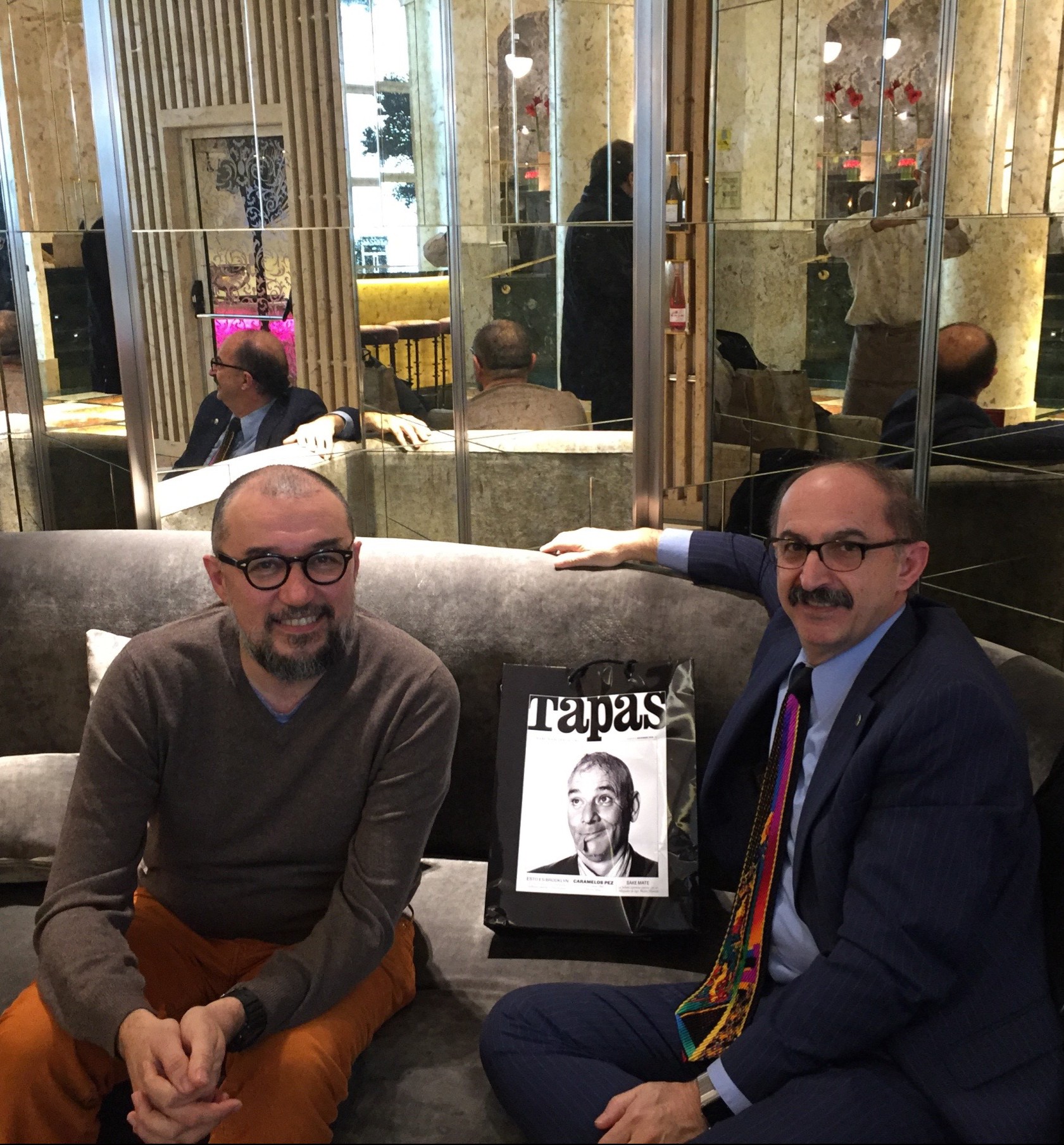
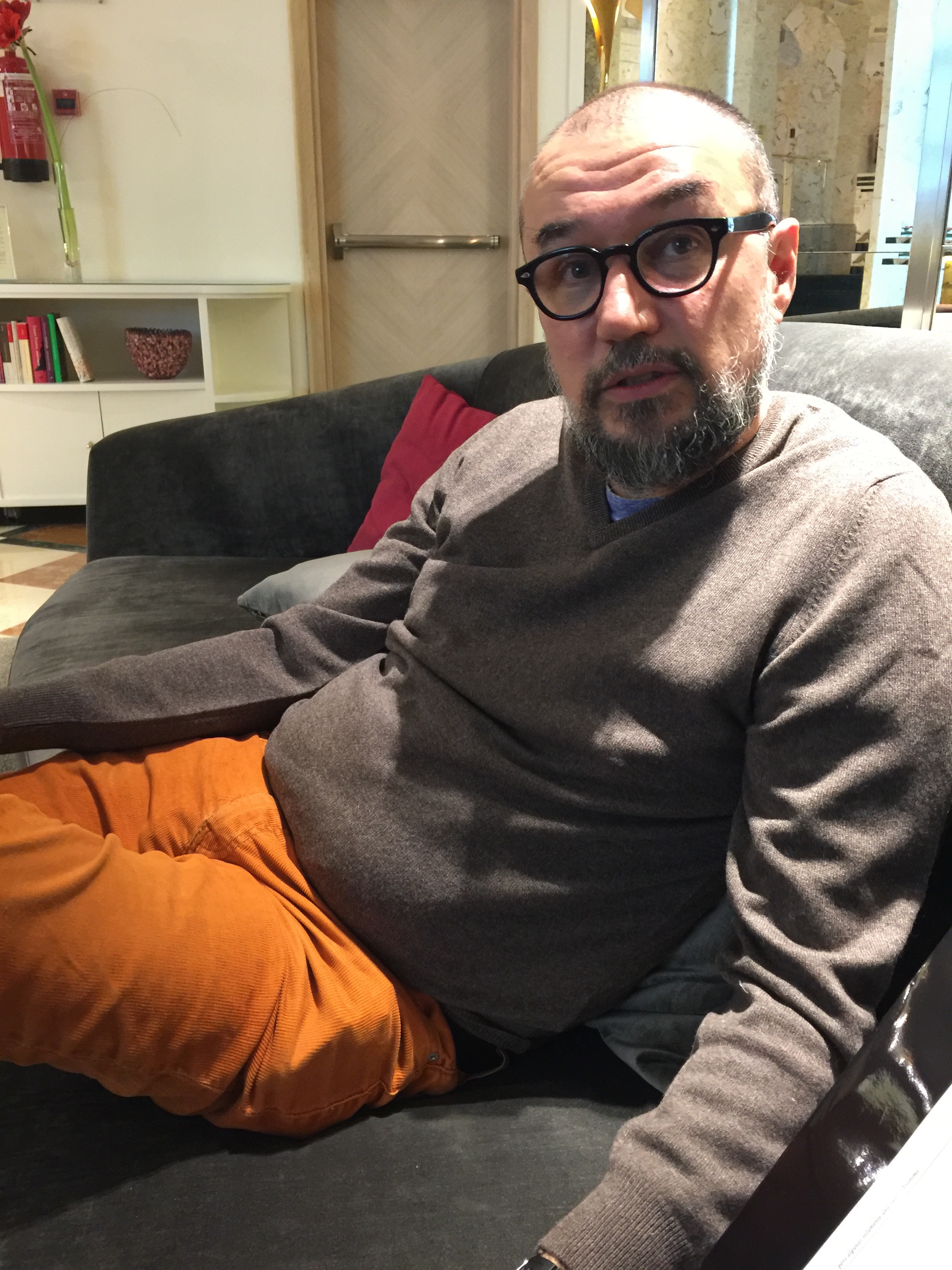
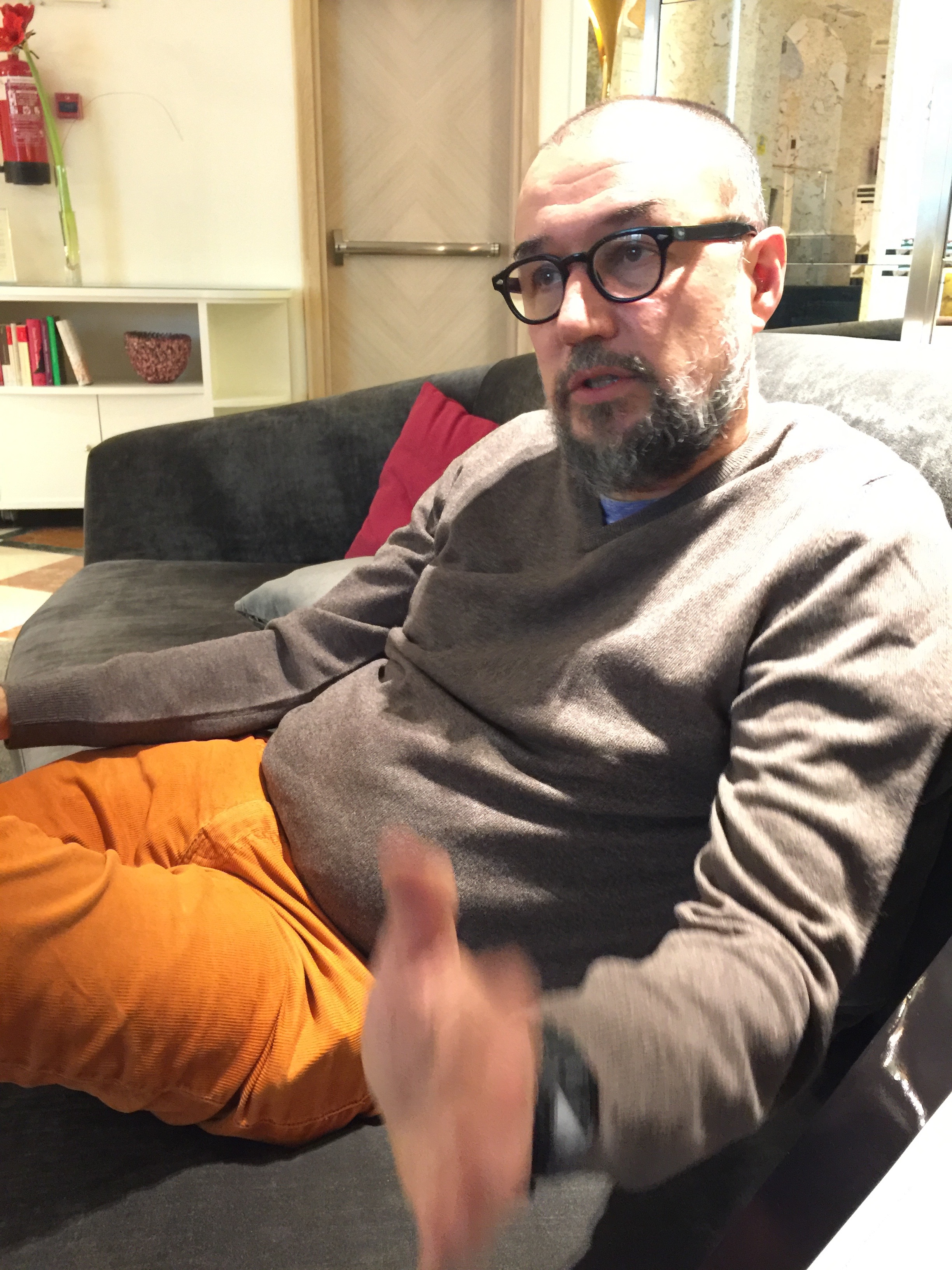
Andrés Rodríguez and Samir Husni at the lobby of the NH Collection, Prado Plaza, Madrid, Spain

Andrés Rodríguez and Samir Husni at the lobby of the NH Collection, Prado Plaza, Madrid, Spain


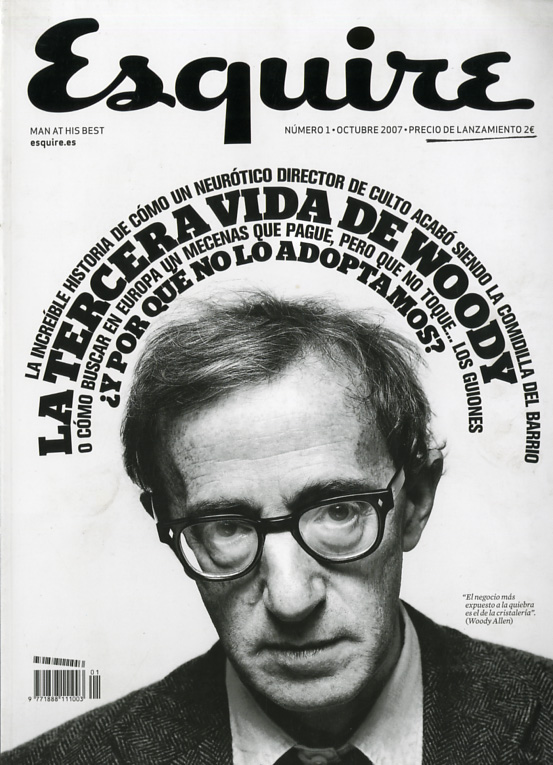
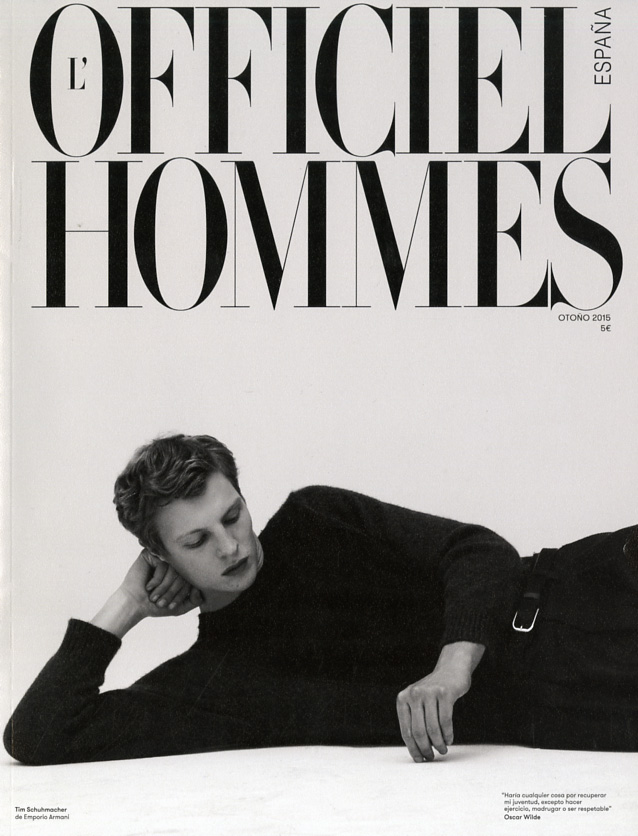
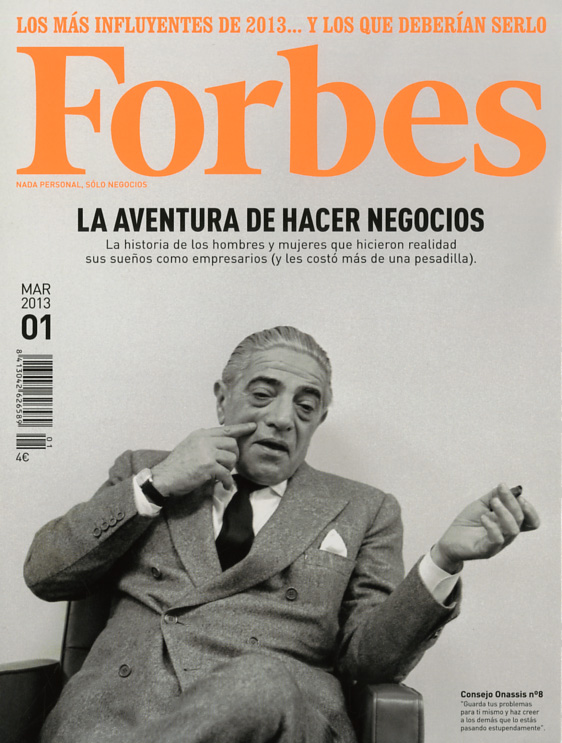
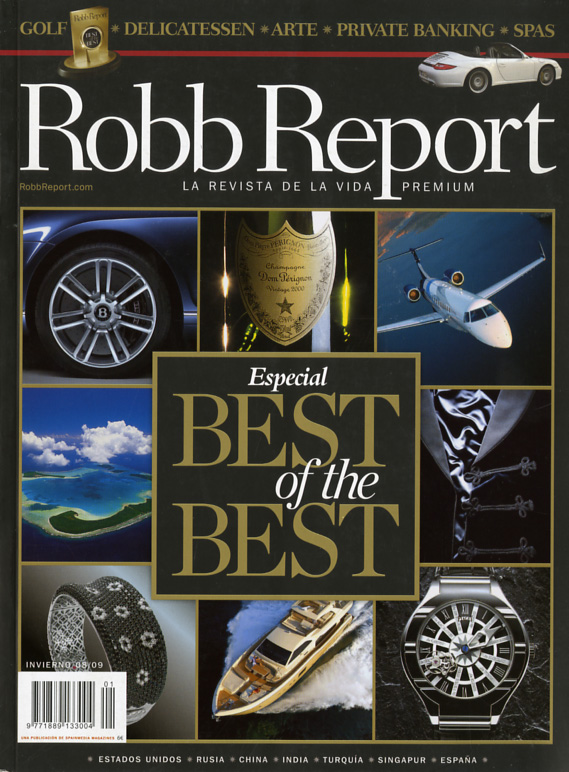
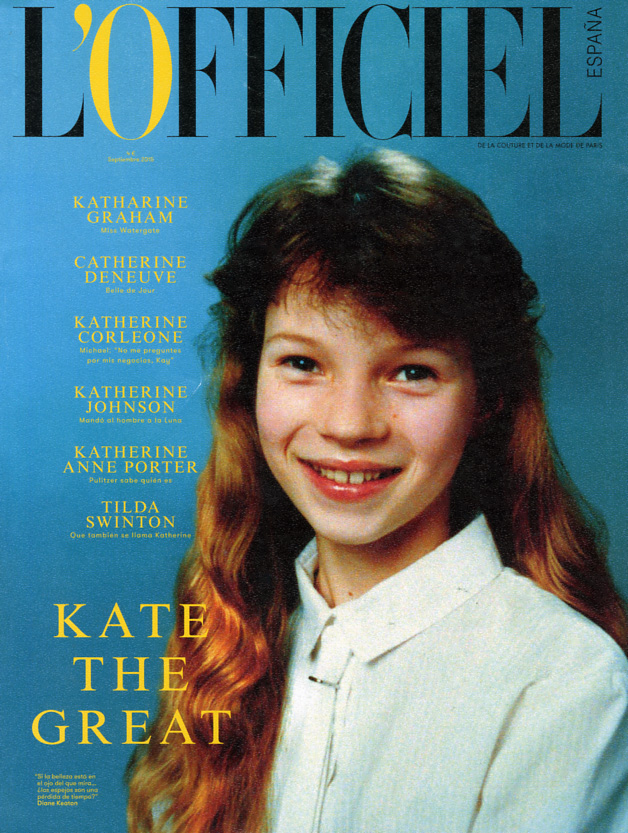
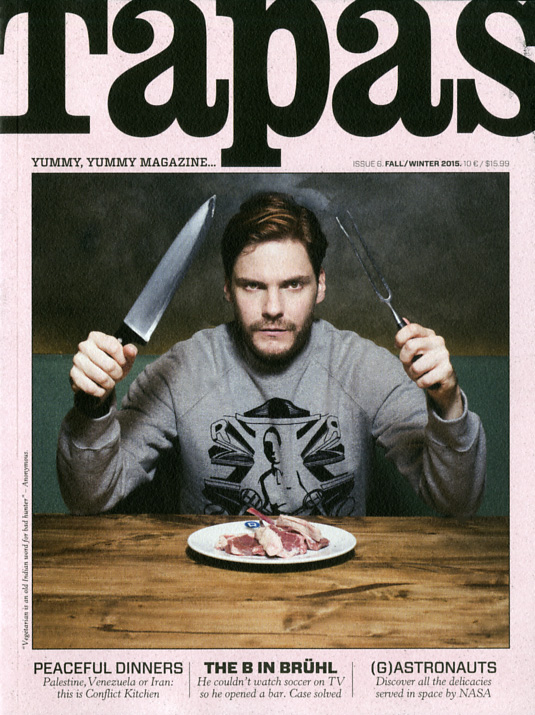
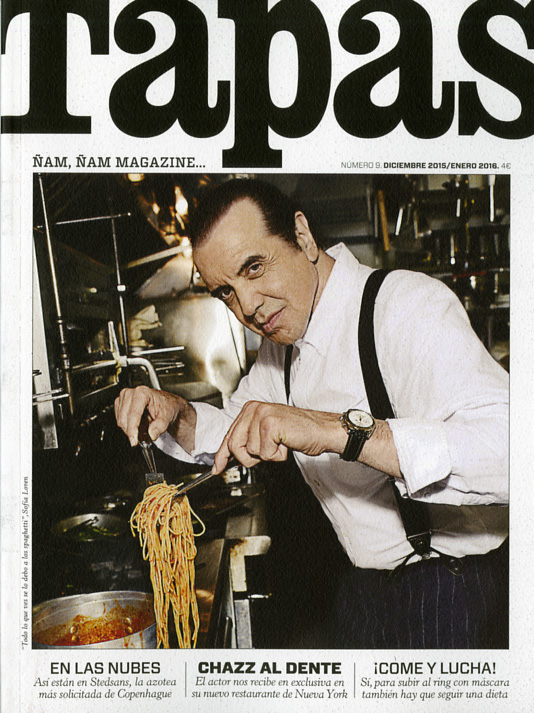
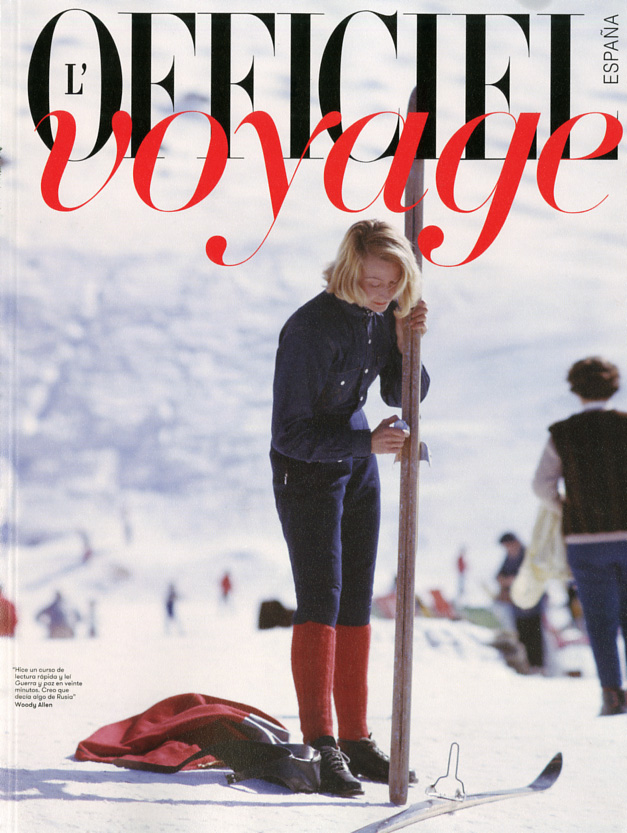
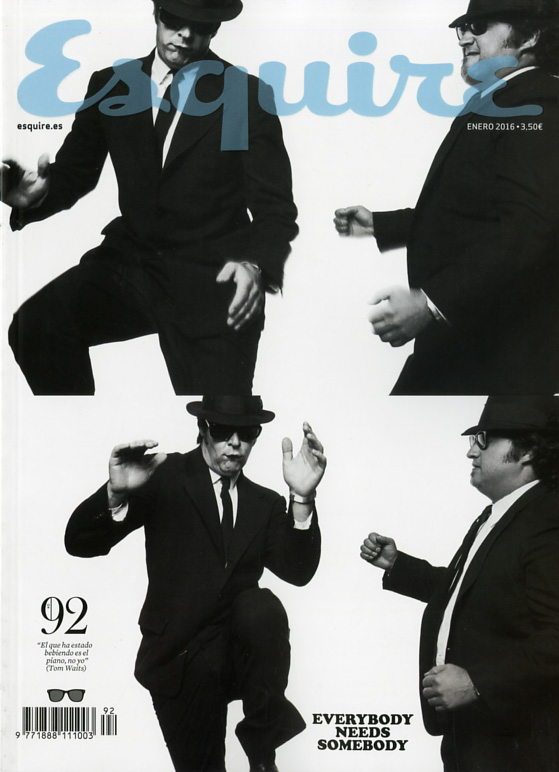
SpainMedia is a company built by a man with a vision, a vision to produce high quality magazines that touch every sense with their tactile and exquisite natures. It’s a forum for the anthem of print from a man who is a very firm believer in the medium and a major contender in the world of publishing in Spain. Andrés Rodríguez is the man who had the vision nine years ago to bring the biggest titles out there to his country. He is president and editor-in-chief of SpainMedia, which publishes Esquire, Forbes, The Robb Report, Tapas, and L’Officiel in Spain.

Andrés is a one-man machine who loves the feeling of falling asleep with a magazine in his hands. He has gone where few have dared, double- mortgaging his home twice, once to launch Esquire and the other to launch Harper’s Bazaar, which he did for five years before Hearst acquired Lagardère and wanted to bring HB in with Elle.

Andrés is every magazine maker’s dream. He was the editor-in-chief of Rolling Stone in Spain when he saw the opportunity to launch Esquire and he jumped on it and now he has created a company that’s the personification of magazines in Spain. Acquiring the licenses to some of the biggest titles around, he used his passion for magazines to attain his dream and bring the beauty and the entertainment quality of magazines to his country.

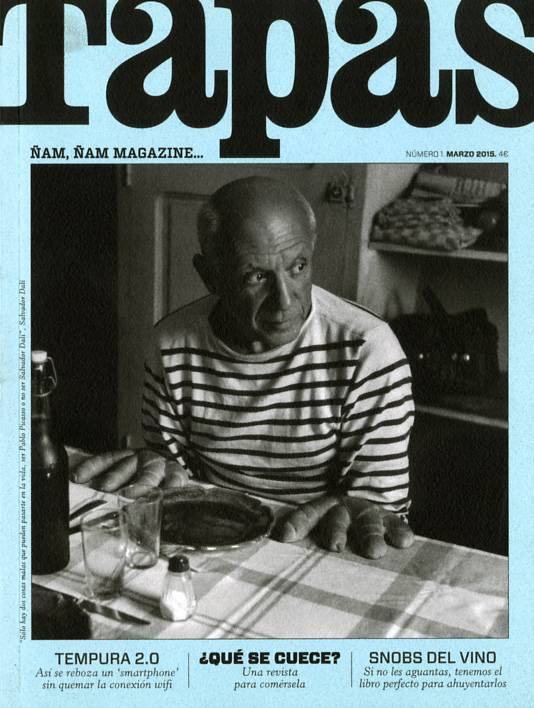
I spoke with Andrés recently on my recent trip to Spain and we talked about his endeavors with SpainMedia and the success he has seen with the company and the print product. And we talked about his own first-born creation, Tapas magazine, which brings lifestyle and food together in a way that is both unique and satisfying. Andrés is optimistic about his newest baby’s future; after all, he’s known uncertainty with many of his ventures, only to taste the sweet sustenance of success in the end.

So, I hope that you enjoy the Mr. Magazine™ interview with a very nice man who knows how to publish the best if the best in magazine media; Andrés Rodríguez, President & Editor-In-Chief, SpainMedia.

But first the sound-bites:

Esquire-5On the genesis of SpainMedia: I founded the company nine years ago. I started as a journalist 30 years ago. I am 50-years-old now and made my first salary at 19. But just nine years ago I became a publisher. I discussed the instincts I had about the business and my point of view with investors and when I talked with them about how I thought the magazine should be and the new trends that were out there and how we should proceed with the advertising; I wasn’t sure if they would agree. Sometimes investors have their own ideas about how things like this should go. So, I founded the company nine years ago with my own money. I put a lot at risk; I double-mortgaged my house with the bank. And I asked Hearst to give me the license to Esquire because I felt with an international magazine more people would trust me.

On whether anyone ever asked if he was he out of his mind to invest in print in this digital age: Everybody said that to me. Everybody said it, because the big difference is I prefer to polish and edit high quality magazines, with long stories to read, like the classic magazines from the 1960s or 1970s. I’m really not too interested in circulation. And you might ask why? It’s because I feel in the 21st century, the quality of the product is more important than its circulation. Of course, circulation is important. I prefer to print one million copies of one of my magazines, but I don’t want to print one million copies of a magazine that I know when I go to sleep is not a good magazine. I need to try and sleep well. When I push the print button on that printing machine, I try to do the best magazine that I can.

Tapas4-18 On whether Tapas (his first self-created venture) feels like his first born or all of the magazines feel like his own children: Parents say all of the kids are the same, but I know all of the fathers are lying, in my opinion. Fathers do have preferences. I needed to launch my own magazine because I know that I’m a good journalist and a good businessman because I’m making money with this. I’m one of the best at trying to interpret big titles into my country, because Esquire is one of the big titles of the world; Forbes is a big, big title and I changed things with Forbes in Spain; I know this, but I needed to change things in the opposite way, which was to create my own brand.

On why he decided to launch Tapas in Spanish and in English: It’s worldwide with a multi-circulation. I did both editions because when I thought about the magazine that would be my very first creation, I knew it would be a lifestyle and cooking title. And I looked and found some other titles that were interesting, but having both languages was more for me. Two was more. I thought two was more in line with the big mainstream magazines.

On whether he ever doubted the future of print: No. I trusted my instincts. I always follow my heart. I used to explain it like this; of course, I have my iPad and my iPhone and I’m absolutely connected to the world just like everybody else. But when I’m reading a magazine it’s usually in particular places: on a plane, on my sofa, or in my bed. And in these kinds of places I’m relaxed; with a magazine I’m relaxed. My body is in the relaxed position.

On why it took magazine media five or six years to discover the fact that print is not dead: Very simple. Audience and circulation are the two things that all of the companies are fighting for. And in my opinion, this is the second step. The first step is product. The companies need to be more invested in product than circulation because they cannot invest in circulation if they don’t have the money. But the bigger companies are more worried about audience because they identify audience as people and money. They think that if they lose one point in audience, they lose a lot.

L'Officiel 3-11 On anything else that he’d like to add: It’s not true that we live in a very mature market; and it’s also not true that nothing is possible in our market; anything is possible in our Spanish market. The audience is smarter than we are; the readers are smarter than us; they’re faster than we are and they definitely know more than us. And the clients need us, the clients, our advertisers, need good magazines. But we need to be able to explain to them how we can be useful to them, because when clients launch a new product, they hire the best people in the world to launch their product; they hire the best design teams to showcase their products, and they need good magazines to put these products inside of.

On what someone would find him doing if they showed up unexpectedly at his house one evening: You would find just music playing; you would see a mountain of international magazines sitting around that I don’t have time to read, including magazines that I’m really not interested in, but I check them anyway, and a glass of wine, of course. And I do cut pages out of other magazines. And you would also see pages of the latest issues of my magazines around too, printed and edited with my pen, because I correct all of the pages.

On what keeps him up at night: The budget of the magazines. I’m always thinking about how I’m going to find more money to make these magazines stronger and also to find more free time to come up with new ideas.

And now the lightly edited transcript of the Mr. Magazine interview with Andrés Rodríguez, President & Editor-In-Chief, SpainMedia.

Samir Husni: You’re a different breed publisher/editor-in-chief.

IMG_1302 Andrés Rodríguez: Yes.

Samir Husni: You started your own company; you followed both of your passions, being a journalist and being a businessman. Tell me the story of Spain Media.

Andrés Rodríguez: I founded the company nine years ago. I started as a journalist 30 years ago. I am 50-years-old now and made my first salary at 19. But just nine years ago I became a publisher. I discussed the instincts I had about the business and my point of view with investors and when I talked with them about how I thought the magazine should be and the new trends that were out there and how we should proceed with the advertising; I wasn’t sure if they would agree. Sometimes investors have their own ideas about how things like this should go.

For example, sometimes a financial person might try to reduce the quality of the paper to make a better P&L, hence a better bonus. Me, I prefer to spend more money on the quality of the paper because I’m convinced that I’ll find a new audience if my magazine has good quality.

Forbes-3 So, I founded the company nine years ago with my own money. I put a lot at risk; I double-mortgaged my house with the bank. And I asked Hearst to give me the license to Esquire because I felt with an international magazine more people would trust me. I had a few doubts about my businessman’s side; I had never founded a company before and I was afraid that I wouldn’t know where to manage the cash flow or how to talk to the banks about the magazine, or how to make the discounts for the advertisers or the annual discounts for the central media. So, I was nervous about this.

I thought that Hearst, or George Green (former Executive Vice President and Chairman of Hearst Magazines International) would say to me, no, you don’t have the assets to buy the Esquire license and you have no prior experience. But I was the editor-in-chief of Rolling Stone in Spain; I convinced Jann Wenner to give me the license for Rolling Stone for Grupo Prisa, the company that I worked for then.

But I think that this idea helped me with George because Rolling Stone was a big brand and nine years later, I talked with George Green about it and said thank you many times, but I think he gave me the magazine because he knew that he wouldn’t lose anything, because no one wanted to publish Esquire in Spain. He had already talked with all the major companies in Spain about Esquire and everyone had told him no, because they were looking at the numbers and thought that they would need to invest three or four million Euros to launch Esquire, and that’s something they don’t believe in doing. I think George said OK to me so that he could give it a try. It wasn’t Harper’s Bazaar or a big magazine where if he lost Spain it would cost him more.

I remember always the advice that he gave me in one of the meetings I had with him. I said, hey George, I’ll give you issue # 0, the mockup of what my Esquire will look like. And he said to me, no, I don’t want to look at the mockup; do you have a very nice party planned for the launching? And I said, yes, absolutely George. And he asked who paid for the party? You don’t pay for the party; don’t spend a single Euro on the party. I said, OK; don’t worry about that, just have a look at my magazine. He said, no, I’m not interested in your magazine; just don’t spend money on a party. And I thought, wow, this guy isn’t very interested in journalism.

Robb Report-8 Nine years later, he’s trying to tell me your weakness is the money; try to protect the money and I trust you on the magazine side. And in just two years with Esquire we broke even and the second step we took was more on the business side because I didn’t want to put all of the expenses; all of the overhead, the rental of the office, my salary, the secretary’s salary and all the other expenses, in front of just one magazine; I thought that if I shared the overhead with more magazines I would be doing things better; like a family who has more than one child.

And I told George that I wasn’t losing money with Esquire and asked him would he please give me Bazaar, because if I could break even with a men’s magazine, it might be even easier with a women’s title because the market is bigger. And he said to me, no, it’s too soon. I don’t want to give you Bazaar, try to consolidate Esquire, because your country will be destroyed by the International Economy Crisis. And I said, but George, we are a big country and growing, in fact, we grow more than Italy. Then he said to me, be prepared; this crisis will destroy the Spanish economy. So, I didn’t do the other magazines, just Esquire.

I have my own point of view and I offer to CurtCo Media to do Robb Report and they were in love with the idea because it was their first Spanish edition worldwide. I launched the Robb Report quarterly. Year number five with Esquire, we’re making money, and the Robb Report is also making money, and George Green retired and Duncan Edwards took over. Duncan is a great guy and I asked him to give me Bazaar and he gave it to me. It was the first license that he gave in America from the International. And he said to me, all the figures; the entire International picture and all of the information that I have for your country is negative. This is a crazy idea, but I’m going to give you Bazaar.

He gave me Bazaar and I launched six years ago, and I managed the magazine for five years. In the meantime, during those five years, Forbes called me. And Forbes called me because they were looking to be in Spain. They had asked all the major companies and no one wanted to invest in Forbes, due to our country’s economy. The Forbes people asked the Hearst people who was crazy in Spain, and Hearst told them about me. (Laughs) They told Forbes that I paid royalties and I paid every year and that I do good magazines.

When Forbes first called me, I said no, because there was no money. The entire country was being careful due to the economic situation. And all of the economic magazines and newspapers were losing money. And this was in 2011. Forbes responded to me with this answer, when a country has economic problems like Spain; the people are more interested in the economy than ever. And I told them they were absolutely right. And that was a good argument. And they added that my country in the future would recover; we may not know when or how, but of course, Spain would recover. And I knew they were right.

So, I started publishing Forbes three years ago and we’re making money. In the meantime, Hearst bought Lagardère and I thought that was an incredible idea, but not for me. But one day Duncan invited me for lunch and he told me that Hearst had bought Lagardère and said that he believed Bazaar being close to Elle would make more money, because they were going to sell the advertising through the big companies with both, and I agreed he was right. He would make more money than I was making. He asked me to give back Bazaar to Hearst Spain and I quickly received the proposal to launch L’Officiel from the Jalou family. I accepted, because I had been working in the women’s market for five years and I didn’t want to lose the women’s sector. And that’s the big picture.

Samir Husni: Did anybody come to you and ask you if you were out of your mind to put all of this money into print? And not only are you publishing print magazines, but you’re using high quality paper, gorgeous design and basically just investing in print, while the entire media industry is saying the future is in digital. Did any of the advertisers or anyone come to you and ask you were you out of your mind to do this?

L'Officiel-4 Andrés Rodríguez: Everybody said that to me. Everybody said it, because the big difference is I prefer to polish and edit high quality magazines, with long stories to read, like the classic magazines from the 1960s or 1970s. I’m really not too interested in circulation. And you might ask why? It’s because I feel in the 21st century, the quality of the product is more important than its circulation. Of course, circulation is important. I prefer to print one million copies of one of my magazines, but I don’t want to print one million copies of a magazine that I know when I go to sleep is not a good magazine. I need to try and sleep well. When I push the print button on that printing machine, I try to do the best magazine that I can.

And the second thing that I try to do then is get the biggest circulation that I can, so I can offer it to the advertisers as a good platform for their products. But in my opinion, it’s not the most important thing.

I used to say that influence is more important to me than audience, because when you have a big audience you have such a wide variety of people, so many different people. Audience is like when Hollywood launches a big blockbuster and you’re going to see it with family. And when the movie ends, nobody is 100% happy. It was good, but not everyone was happy. And I think this is how audience works.

And with influence, you try to make the magazine more influential for the target and it makes the target bigger. Tapas is a good example. It is my own first-owned title; I identified that lifestyle and food globally is a trend. I haven’t found any international lifestyle and food title; I find recipe titles, but not lifestyle and food. And I created the magazine. And now, I need to convince the advertiser, because the clients are more conservative than the readers; I need to convince the advertisers that this is a good platform to invest in, like Monocle, for example.
I am a great fan of Tyler (Tyler Brûlé – Monocle founder) and I think he has the nose to identify new trends and he convinced the clients that it was a new trend; it’s a global, international, traveler citizen.

Samir Husni: Tapas is your first venture as your own. Do you feel like Tapas is your first born and all of the others are more like adopted children? Or do you treat all of them the same now?

TapasII-14 Andrés Rodríguez: Parents say all of the kids are the same, but I know all of the fathers are lying, in my opinion. Fathers do have preferences. I needed to launch my own magazine because I know that I’m a good journalist and a good businessman because I’m making money with this. I’m one of the best at trying to interpret big titles into my country, because Esquire is one of the big titles of the world; Forbes is a big, big title and I changed things with Forbes in Spain; I know this, but I needed to change things in the opposite way, which was to create my own brand.

And this is what I’m enjoying with Tapas. And I don’t want to license Tapas because it has just begun; we’ve been publishing for nine months now. And I think we’ll be a great business. We’re already breaking even in this short time, but I’m not interested in licensing the magazine for some fee here or some fee there. I’m interested in furthering the brand.

Samir Husni: Why did you decide to not only launch Tapas in Spanish, but also in an English edition? I saw it in the United States and it’s probably in the U.K. as well.

Andrés Rodríguez: Yes, it’s worldwide with a multi-circulation. I did both editions because when I thought about the magazine that would be my very first creation, I knew it would be a lifestyle and cooking title. And I looked and found some other titles that were interesting, but having both languages was more for me. Two was more. I thought two was more in line with the big mainstream magazines.

Tapas 3-17 I knew lifestyle and food was what I wanted, because chefs are the new rock and roll stars. Michelin stars are like the new Oscars. And I asked myself, what other magazine is talking about those things; none. There are magazines out there talking about a cheesecake recipe and that’s great. But with the big chefs, we don’t talk about the recipes; we talk about their tattoos or their hair. And we talk about the experience; let’s go to this country and drive to this chef’s incredible, marvelous restaurant and have an adventure.

After the idea, I knew I needed to find a word; a brand, for the magazine. I happened to be in New York working once and I was riding in a taxi and the word Tapas came to me and I thought this is an incredible brand name and it’s a Spanish word which means basically that we share the food with others, because it’s more important to talk than actually to eat the food.

So, I knew I had the word. Next, I knew we had to publish in English, because if not, if I just published in Spanish…I thought to myself, what would Tyler do with this? (Laughs) I said, OK, Spanish is great because Spanish is the second language in the world, but I also think in English, so we need English too, so that’s why it happened.

Samir Husni: Have you ever doubted yourself with any of the titles; did you ever think that maybe some people were right and print had no future? Yet, here you’re telling me that you’re making money; you’re breaking even on Tapas already; and all of the other titles are doing great. Did you ever doubt print’s future?

L'Officiel Voyage-6 Andrés Rodríguez: No. I trusted my instincts. I always follow my heart. I used to explain it like this; of course, I have my iPad and my iPhone and I’m absolutely connected to the world just like everybody else. But when I’m reading a magazine it’s usually in particular places: on a plane, on my sofa, or in my bed. And in these kinds of places I’m relaxed; with a magazine I’m relaxed. My body is in the relaxed position. When I’m connected with the iPad; I’m electrified by the constant connection with everything. And that’s great; being electrified isn’t worse than being relaxed, but it’s different. It’s like apples and oranges.

Somedays I want to be electrified, but somedays I need to relax and print personifies relaxing. And when you put something in print; it’s like a golden letter. And when you put the same thing on digital, it’s like nothing. I used to use this example: if your wife came to you and asked if you read something on the iPad about the neighbors talking badly about us, and then the same situation, only she asks did you read it in the newspaper; it becomes much more serious when it’s in the print platform. We don’t think about how many copies of the printed version are out there, versus maybe millions of digital readers who just saw those terrible words said about the family, but the printed edition is something that we would shop for. This is what’s marvelous about print.

The other thing is, as humans, we have five senses and print touches each of those. With the iPad, the electrification touches eyes and ears, but not the nose. Smell is important, the smell of food; the smell of a woman or of a man. The hands are also important. The hands experience touch, touch of the skin; touch of many things. And paper has this quality, especially if you invest in it. Before you read any single word, you touch the paper and the impression is made immediately; either you like it or you don’t.

But I need to convince advertisers of this fact, for me it’s obvious, and I know it’s the same for you, but when you talk to the advertisers, sometimes they follow trends rather than sensory feelings.

Samir Husni: If we are to accept the fact that people who work in magazine media are more of the smart and creative types; why did it take us five or six years to discover that print is not dead?

Andrés Rodríguez: Very simple. Audience and circulation are the two things that all of the companies are fighting for. And in my opinion, this is the second step. The first step is product. The companies need to be more invested in product than circulation because they cannot invest in circulation if they don’t have the money. But the bigger companies are more worried about audience because they identify audience as people and money. They think that if they lose one point in audience, they lose a lot.

Esquire II-16 We, all of the people who love magazines the way they were done in the 1960s or 1970s and the life of the magazines then; we realize that type of magazine either has good or bad circulation. When we put all of the covers of Esquire on the wall and look at them; there isn’t a single word spoken about the circulation. There isn’t a single word spoken about how much money one particular cover is going to make. Will it be profitable or a big disaster? Of course, I need to make money in order to continue my magazines, but the first question is product, not circulation.

During the last five years, digital has offered us more audience than we know what to do with; audience and more audience, and those audiences scrambling for more free content. If you have the brand, digital will give you the followers. But many of the followers who clamor after the digital brands aren’t interested in the magazine experience. The experience is what it’s all about with the magazine.

And newspapers have the same problem. They lose the experience when they focus on the exclusivity of the news. The exclusivity of news is not for the newspapers any longer. The newspaper cannot give us news; it must give us the experience.

Samir Husni: That’s one of the things that I tell other journalists and all my clients; the day we end up being just content providers is the day that we’re dead. We have to be experience makers.

Andrés Rodríguez: Content providers are easily available; why not, big companies have the money. They will hire 100 journalists and say give me content; I’ll put it on TV, and it could be journalists on TV, why not? But the experience is the thing.

The magazine business will never die; it will never die because a magazine is the voice of a community. And you need that community to be so big that it gives you advertising to make the magazine. And you need to identify new communities. Magazines will never die.

I think in the present and in the future, we will need to publish the best magazines that we can. I used to say that I liked to publish magazines that made people feel sad when they tossed them in the rubbish. And that’s the magazines that I want to publish, and of course, I need to make money every month too. If not, I will be out of business. (Laughs)

Samir Husni: Is there anything else that you’d like to add?

IMG_1300 Andrés Rodríguez: It’s not true that we live in a very mature market; and it’s also not true that nothing is possible in our market; anything is possible in our Spanish market. The audience is smarter than we are; the readers are smarter than us; they’re faster than we are and they definitely know more than us. And the clients need us, the clients, our advertisers, need good magazines. But we need to be able to explain to them how we can be useful to them, because when clients launch a new product, they hire the best people in the world to launch their product; they hire the best design teams to showcase their products, and they need good magazines to put these products inside of.

We don’t need to be worried about audience; we need to be worried about talent. And I’m absolutely optimistic, even though I suffer every month and every year with my budgets. I want my company to increase and grow and I am very optimistic.

Samir Husni: If I showed up at your house one evening unexpectedly, what would I find you doing? Would you be reading your iPad, or reading a magazine; watching TV?

Andrés Rodríguez: You would find just music playing; you would see a mountain of international magazines sitting around that I don’t have time to read, including magazines that I’m really not interested in, but I check them anyway, and a glass of wine, of course. And I do cut pages out of other magazines. And you would also see pages of the latest issues of my magazines around too, printed and edited with my pen, because I correct all of the pages. Then with my phone I send the corrected pages to my people.

Samir Husni: My typical last question; what keeps you up at night?

Andrés Rodríguez: The budget of the magazines. I’m always thinking about how I’m going to find more money to make these magazines stronger and also to find more free time to come up with new ideas.

Samir Husni: Thank you.

h1

At Least 236 Magazines Launched in 2015, 4 More Than 2014… All Other Published Numbers And Reports Are Dead Wrong!

January 4, 2016

The news of the decline of magazine launches has been greatly exaggerated…

This is a post that I did not want to publish, but the professor of journalism in me is what forced me to publish it… This is not a Mr. Magazine™ blog post, but rather a Dr. Samir A. Husni, Ph.D. blog post. Even in a digital age, the truth must always be told and reporting should continue to be held to the same rigor regardless what some may call Speed First, Truth Second. So, here it goes:

When it comes to MediaFinder’s number of new magazine launches the numbers reported are dead wrong. Media reporters who publish the numbers based on the MediaFinder numbers are also dead wrong. Both MediaFinder and the reporters who promote their numbers are doing nothing but a disfavor to truth first and the media industry second. Without any research and questioning of such numbers (which I have called reporters and researchers to pose questions to) I have seen more articles written about the sad status of new magazines. Media Post, Quartz, Folio.com, Crain’s New York Business… all reported the 35% decline in new magazine launches according to the press release from MediaFinder. No questions or fact-checking whatsoever…

Here is one such article:

Books and newspapers will do just fine in 2016. Magazines? Not so much By Amy X. Wang
http://qz.com/584744/books-and-newspapers-will-do-just-fine-in-2016-magazines-not-so-much/

The fact is I have collected and recorded 236 new magazines this past year compared to 232 from the previous year. MediaFinder numbers says 96 (some reported 113) titles were launched compared to 148 (some reported 190) in 2014. My numbers show an increase of 4 magazines. MediaFinder numbers show a decrease of 35% (depends on which numbers reporters opted to use). I have each and every one of those magazines. If I do not have a physical copy of the magazine, I do not include it in my numbers. The reason I say at least, because I know I may have missed some regional and city magazines that I could not reach or visit. My numbers are based on my field research on the newsstands first, media research second, and requesting first editions if I miss one here or there.

I publish monthly on the Mr. Magazine™ Launch Monitor the numbers of new magazines, bookazines, and specials and annuals. All you have to do is look and count the titles.

And so you will have a feel of what magazines launched in Dec. 2015, here is the post from my Mr. Magazine™ Launch Monitor (which by the way is open and free to anyone who bothers to check the facts and record the numbers…

The reason for this post is obvious – numbers – true reported and researched numbers – don’t lie…

And now the Launch Monitor:

It was a very Merry Christmas indeed with a total of 68 new titles, 32 with promised frequency. From the Neue Journal with a stellar cost of $35 to  more coloring and activity magazines for adults; the month of December was filled with gifts for everyone. From the array of beautiful covers below, one can tell that diversity was relevant as several digital entities such as Tablet, SwimSwam, Gear Patrol, and Pure Times stepped out to join the ranks of print as 2016 has been declared, by Mr. Magazine™ at least, as the year to Celebrate Print!

Welcome to the New Year of print as we revel in our new December launches…and stay tuned for a magnificent January!

Up first our frequency titles:

Ambrosia-5 American Christian Voice-20 Art Dependence-29 ArtBlend-18

Baldwyn-28 Cannabis Business Times-22 Cigar Times-30 Classic Sewing-4 Clever Root-1 CR Men's Book-13 Designing Colors-6 Fathers-15 Gear Patrol-32 Habitual-19 Haute Residence-21 Life & Thyme-10 Living Colors-3 Neue Journal-9 Professional Photography-11 PureTimes-26 Satellite-2 Swim Swam-25 Tablet-16 The Coloring Studio-8 The Unleashed Voice-27 The Window-12 Thoughtfully-14Waiting for the Light-23 Toast-17 Tread-24 Upstater-7 UVape-31


And now our specials:

100 Big Ideas-8100 New Health Discoveries-92016 The Year Ahead-21Birds & Blooms-2

Cafe Racer-4Color Create Relax-5Coloring Book-5Coloring Crystals-3


Declassified-13Epicurious-18Extreme-4Gourmet Comfort-8

rtGun Show-14Life on Earth-2Organizing-11Peaceful Patterns-3

How theBible was Written -17PEOPLE Star Wars-1PEOPLE Yearbook-7Physics at the Limits-20

Pro Football Champions-4SEC Champions-7Slow Cooker Soups & Stews-3Star Trek 50 years-19


Star Wars Collectibles-15Star Wars The Force Awakens-1Star Wars The Force is Back-22The Best of Farm Collector-16

Superbowl 50-5The 70s-6The Private Marilyn-10The Ultimate Guide to Star Wars-2

The Future of Everything-9TIME Alexander Hamilton-12Vintage Collector-1Vanity Fair Confidential-6

h1

Simple Grace Is Mr. Magazine’s™ Launch Of The Year. Organic Life Is Mr. Magazine’s™ Re-Launch Of The Year.

December 3, 2015

Simple Grace: Launch of the Year 2015

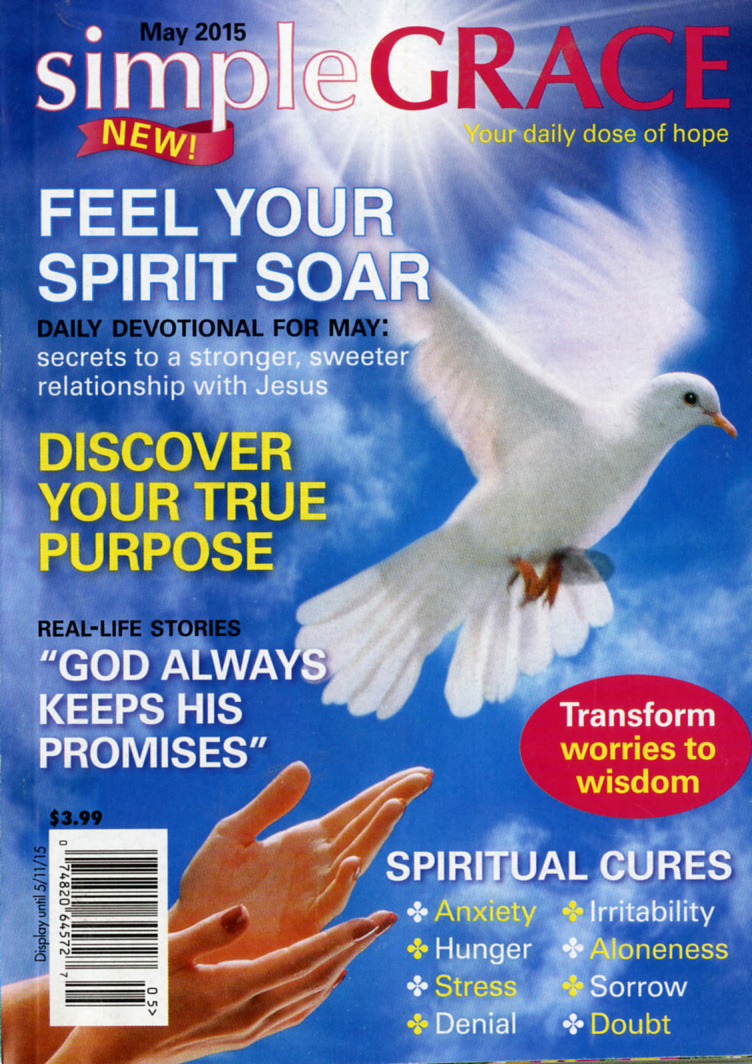
Simple Grace-3 (2) In my office hangs a sign that reads: there’s always hope, a simple phrase that holds a wealth of meaning. And in 2015 Bauer Media Group U.S. launched its own message of hope in the form of Simple Grace magazine.

Simple Grace magazine is a groundbreaker—a faith-based magazine from a secular publisher who saw an opportunity in the marketplace. It’s an “Audience First” approach to publishing, an approach that Bauer has mastered with all their publications. However, this time, with a completely new concept.

Simple Grace was the brainchild of Editor-in-Chief Carol Brooks and in a Mr. Magazine™ interview earlier in the year she defined it as “your daily dose of hope,” which I think we can all agree is something that is extremely needed in the world that we live in today.

But Bauer didn’t just use emotional facts for their reasoning behind the introduction of a daily devotional magazine into their repertoire of titles. Between readers’ response from First for Women (a magazine that Carol has directed as editor-in-chief for the last 13 years), and the intense research on the market of what was and was not out there, Simple Grace was born from their reader’s desires to include God more as a part of their daily lives. Audience first is not only a Mr. Magazine™ mantra, but Bauer’s as well.

The magazine is a monthly devotional with daily inspirational Bible quotes and content that is geared toward the love, kindness and support of God and stands out as the first digest-sized, devotional magazine, targeting a mass audience on newsstands in the US.

Being first and going somewhere no one else dares to go, is something Bauer firmly believes in when they believe in the product. And Simple Grace is something that is near and dear to their heart and has the company’s full support.

And it is Mr. Magazine’s™ choice for the Hottest Launch of 2015.

Organic Life: Relaunch of the Year 2015

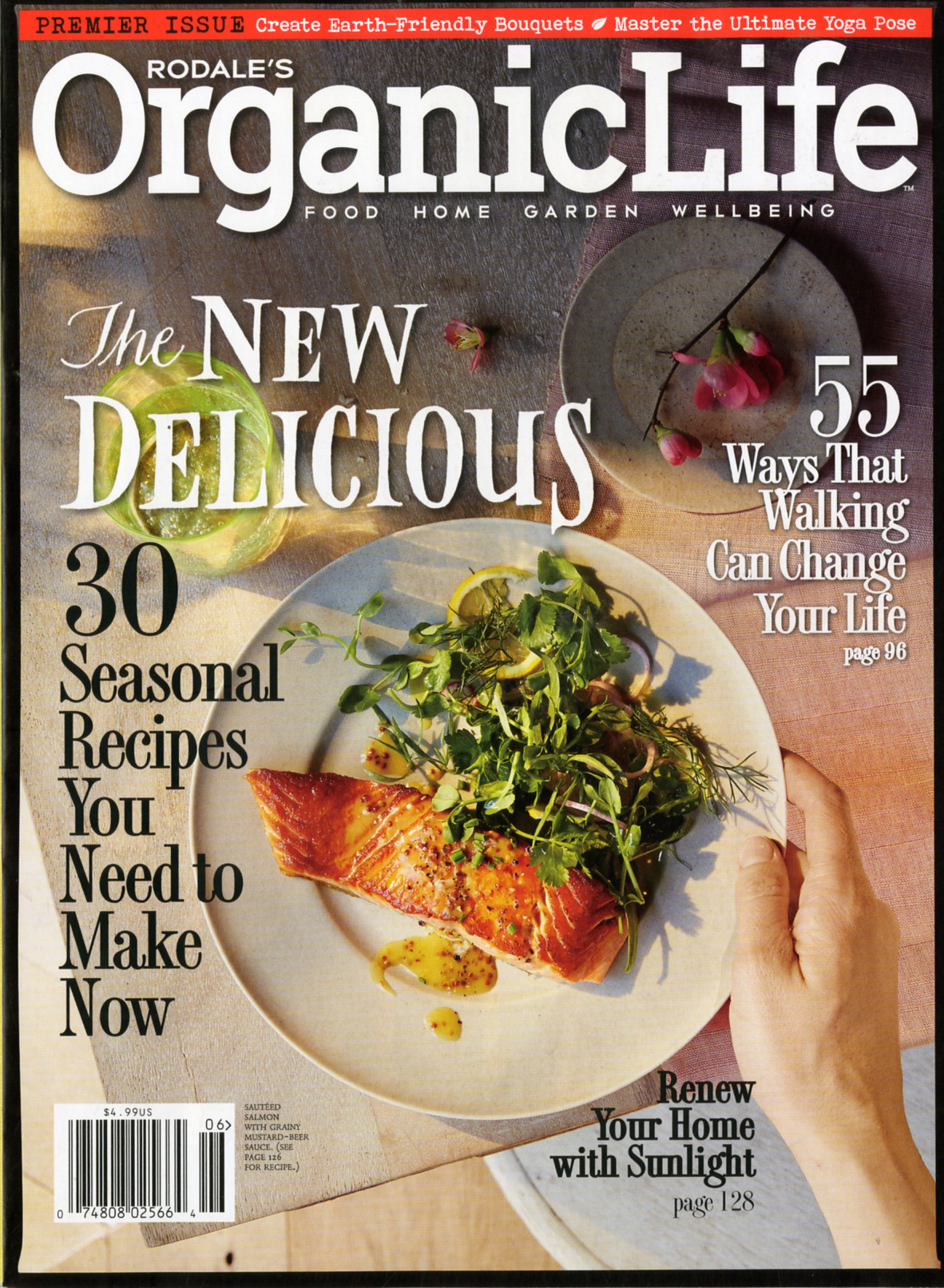
Organic Life-18 (2) Rodale’s Organic Life is a magazine that celebrates the idea of living healthier by empowering its readers, whether they are die-hard, fully immersed people in the world of organic, or just discovering it for the first time. It welcomes everybody to the table with a beautiful, immersive print magazine that responds to the reader’s desire to live a healthier life by offering a whole new approach to how we look at food and our bodies. It’s recipes and stories and tips that can show you the organic way might be the best way for you to live your life.

Organic Life is a relaunch of the company’s flagship brand Organic Gardening and a stylish guide to living naturally in the modern world. By rebranding Organic Gardening into Organic Life, Rodale has taken a concept that its founder, J.I. Rodale, believed in so strongly when he started the company all those years ago, and brought it up-to-date for the 21st century, making it a tremendous tool for the organic movement that is sweeping our country today.

Under the watchful eye of Editor-in-chief James (Jim) Oseland, the first issue of the magazine delivered 158 hefty pages, from which 54 pages were advertising. From the moment of conception, to the hour of delivery, this is the story of a perfect magazine relaunch in 2015. It’s a relaunch, but it’s so much more than that. J.I. Rodale founded Rodale in 1930. His granddaughter, Maria Rodale, delivered on the dream that her grandfather envisioned 85 years ago. That vision is encapsulated between the covers of Rodale’s Organic Life magazine.

It’s the culmination of a dream and the continuation of a legacy and it’s Mr. Magazine’s™ Relaunch of 2015.

h1

November Brought Us A Bounty Of New Titles To Be Thankful For…79 Total & 23 With Promised Frequency…

December 2, 2015

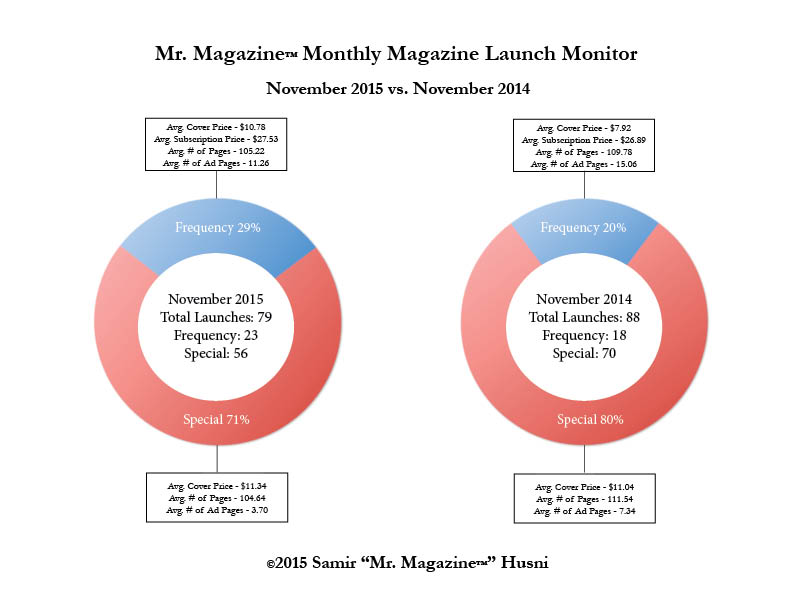
The month of November saw a cornucopia of new titles hit the marketplace, 23 of them promising frequency, including two arriving at the newsstands for the first time, and 56 specials and bookazines; all getting us ready to settle down for a long winter’s read. Our specials ran the gamut from holiday recipes to trains, planes and Frank Sinatra. And our frequencies were chock full of the artful and beautiful coloring books for adults that offer relaxation and a meditative spirit for those busy Christmas shopping days ahead. There was something for everyone in the month set aside for giving thanks for our many blessings. And Mr. Magazine™ is certainly thankful for magazines and all the joy they bring to everyone…

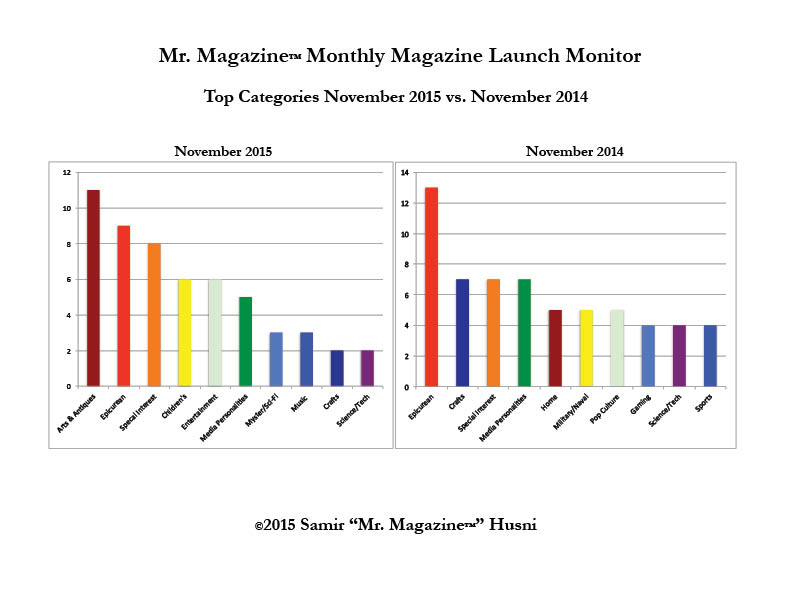
And here are the charts comparing Nov. 2015 to Nov. 2014.
Nov 2015 vs 2014 pie graphs

Nov 2015 v 2014 top categories bar graph

Until next month…

Up first our Frequency titles:

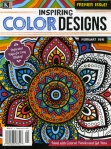
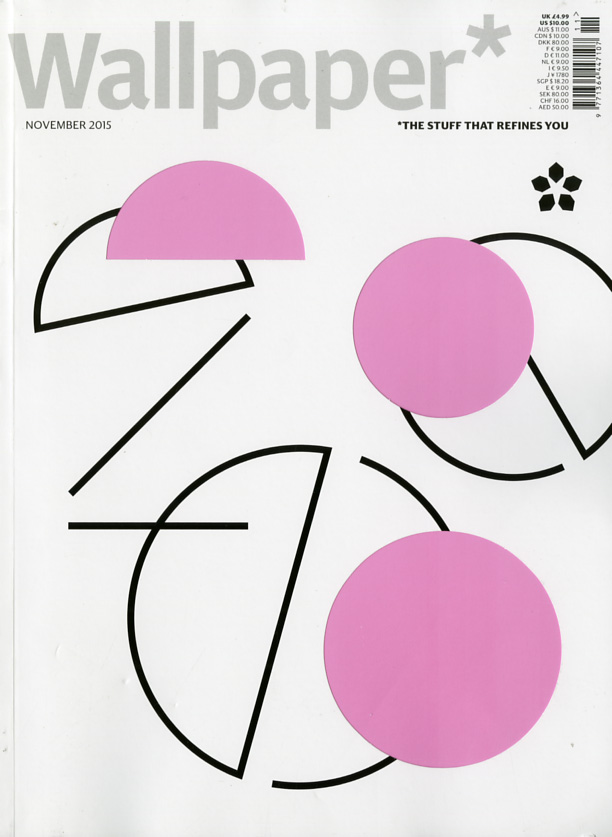
A Green Beauty-15 Art Therapy for Seniors-11 Baseball History & Art-13 Casual Game Insider-7 Color Magazine-14 Distiller-16 Ever After High-10 Flying Colors-20 Inspiring Color Designs-22 Jacobin-1 Just Go-5 Mind Body Zen Coloring-19 Pallet-4 Sabor-3 Splash of Color-21 Star Wars-6 The Art of Mandala-17 The Creeps-18 The Crown-9 The Sewing Box-12 Uncrate-2 Wallpaper-23 Women's Golf-8

And now our Specials:

Albert Einstein-18 American Inventors-3 Are we alone-19 Best of amazing animals-7 Best-Ever Recipes-21 Better Homes & Gardens Our Holiday Recipes-14 Big Foot-3 Bob Marley-4 Bon Apetite Holiday-24 Cakes & Pies-36 Color Me Delicious-12 Color Me-20 Coloring Book Creations-20 Cosmo Best Advice Ever-14 Design Life-5 Disney Frozen More Magical Moments-35 Food Network Easy Baking-23 Frozen-9 Gluten Free & Easy-11 Gone With the Wind-1 Holiday Home-10 How To Solder Jewelry-31 Indivisible-29 LIFE Bond-8 Mad Spoofs Sci Fi-16 Men's Health EAT-22 Miracles of Faith-13 More Trains of the 1950s-7 Mother Earth News A Guide to Saving-1 National Geographic Your Brain-9 Newsweek The Year in Review-25 People Celebrates Days of Our Lives-4 People Style Watch-22 People The Hunger Games-15 Rock & Gem Gold-30 Rolling Stone Bob Dylan-17 Serial Killers-16 Sinatra at 100-15 Smithsonian 100 Greatest Adventures-6 Springsteen-32 Star Wars 100 Defining Moments-34 Star Wars Heroes and Villains-33 Star Wars-6 Suippressor-5 Taylor Swift-17 The 100 greatest vinyl of all time-12 The Best of Grit-10 The Best of Vanity Fair-21 The Story of Santa-2 Thomas & Friends-11 Tiger Beat-18 Ultimate Book of space-2 Ultimate Finisher Guide-13 USA Today Thanksgiving in America-19 Watch Time Design-8Who is Jesus-28


h1

Wallpaper* Magazine: Refining The World One Issue At A Time… The Mr. Magazine™ Interview With Tony Chambers, Editor-in-Chief, Wallpaper* Magazine

November 30, 2015

From London with Love

Wallpaper* Magazine and The Stuff That Refines Us – Coming to America With Gracious Elegance, Superb Content, Beautiful Imagery & Creative Design – Discovering What Refines The Magazine’s “Refiner-in-Chief” Tony Chambers.


“In terms of revenue from luxury advertisers, we’ve seen growth in print. Obviously, we’ve seen it in digital too; that’s a growing area, everyone knows that. But it’s rewarding to know that for a product like Wallpaper* in print, there is a market for it. It’s something that people treat as a moment to absorb media in a luxury way, as opposed to on your mobile phone, which is much more about news and immediacy and for solving immediate problems. I think print still has that place where you sort of lose yourself and relax.” Tony Chambers

Wallpaper* Visual journalism that captures the imagination with that ethereal spirit of art, beauty and the finer things in life; Wallpaper* Magazine has been around for 20 years and has proven over and over again that high quality, beautiful aesthetics and a commitment to its readers is something that still holds much value in the world we live in today, even though that world is fast-paced and bombarded with more information and venues to receive that data from than we can handle.

In a move to amplify the magazine’s discerning message, Time Inc. is bringing a bespoke edition of the magazine to the United States, in addition to keeping the mother ship magazine on the American stands as it has been since its inception, for an entire new audience of believers, people who are longing for the brush of beauty and elegance the magazine offers its readers.

Tony Chambers joined Wallpaper* as Creative Director in January 2003, and was appointed Editor-In-Chief, make that Refiner-in-Chief, in March 2007. Under Tony’s editorship, Wallpaper* magazine has been transformed into a highly-regarded global brand. He introduced a series of over 100 pocket City Guides, a hugely successful website and an iPad edition, an in-house creative agency, as well as an interior design service. He is also the creator of Wallpaper*Handmade, an annual exhibition at Salone del Mobile which brings together the finest designers, craftsmen and manufacturers to collaborate on one-of-a-kind pieces.

I spoke with Tony recently and we talked about the brand he knows and loves so well. We talked about what it means to him to strive for that refinement that flows from every page of the magazine and how he incorporates that beauty into his own philosophies on life. And about how excited he and his team at Wallpaper* are at the prospect of expanding their readership even more globally and allowing another audience the opportunity to cultivate the magazine’s easy elegance into their lives as well.

So, I hope you enjoy the Mr. Magazine™ interview with a man whose idea of refinement makes him one very nice human being who truly cares about his brand, his colleagues and his readers…Tony Chambers, Editor-In-Chief, Wallpaper* Magazine.

But first, the sound-bites:


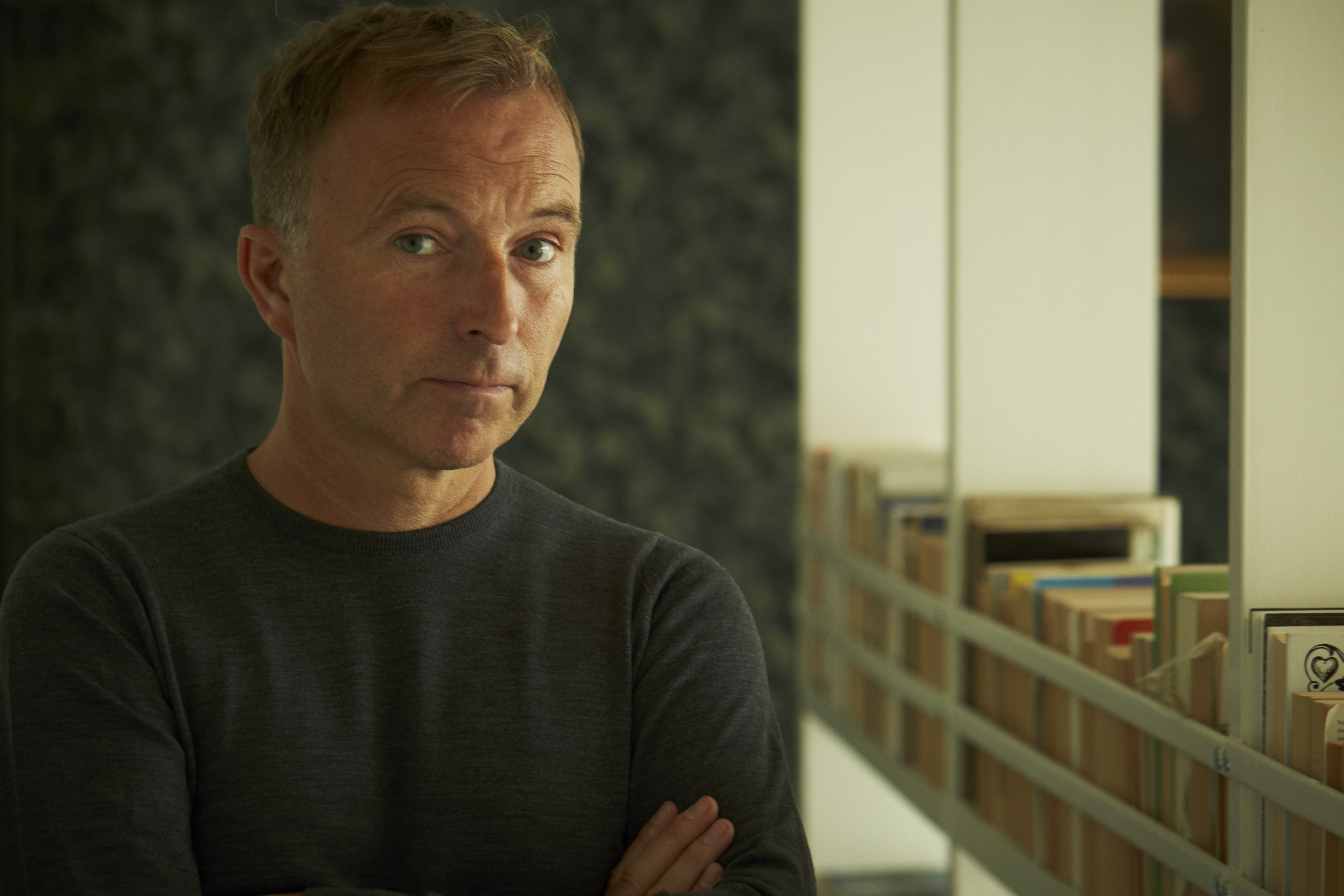
Tony_Chambers_0618 On the reversal transplant of Wallpaper* from the U.K. to the United States:
Wallpaper* from its beginning has been available globally on newsstands, but this is a brilliant idea by Time Inc. and one of those that sometimes make you ask: why we didn’t have it before? (Laughs) I think I know why; one reason is that I think Wallpaper* is more relevant now than it has ever been before. It’s at a moment where I think the audience is now more receptive; it’s a larger audience, because we’re quite a progressive title, avant-garde in many respects.

On the growth of Wallpaper* in print:
In terms of revenue from luxury advertisers, we’ve seen growth in print. Obviously, we’ve seen it in digital too; that’s a growing area, everyone knows that. But it’s rewarding to know that for a product like Wallpaper* in print, there is a market for it. It’s something that people treat as a moment to absorb media in a luxury way, as opposed to on your mobile phone, which is much more about news and immediacy and for solving immediate problems. I think print still has that place where you sort of lose yourself and relax.

On the co-existence of print and digital:
Ink on paper is a very clever, simple piece of technology. It’s been around for over 500 years now and it’s not going anywhere. Digital just challenges us all with the excitement of what you can accomplish and it makes you more thoughtful about what you do with print and what is more appropriate for ink on paper and what is more appropriate for pixels on a screen.

On his design philosophy:
As a designer and then an art director, to me content was king. We always used to say content is the most important thing and your job is to bring these great photographers, whether they’re fashion photographers or war photographers in the case of the Sunday Times, and these great writers and editors, as a designer you have this incredible job of being the person in the middle who puts them all together. And you can either make something average brilliant or make something brilliant average. It’s a big responsibility. So, from a very young age I knew that I was in a privileged and very important position.

On whether his background in design and art direction has helped him with the innovation behind Wallpaper* and his role as editor-in-chief: Oh, absolutely. Again, going back to art school and my early days printing, that was a real fascination because as a designer the more you know about the technology, particularly printing, the more you really understand it and the more you learn about it and investigate it, then you know what the boundaries are; you know what is possible and what isn’t possible.

On why he believes it took the magazine industry five or six years to realize that print and digital could co-exist: It’s a brilliant question and I wish I knew the exact answer to it. (Laughs) When you’re in the storm, the fog of war; when you’re right in the middle of it, it’s very hard to be objective and step back. Hindsight is a great thing; you can always look back and say: now it seems obvious that the two can survive, if they’re done well.

On the death of the tablet: I think novelty is the big thing; the tablet was such a novelty. But I don’t think it’s the death of the tablet at all. You see what’s happening with the Pro and the fact that you can do so many things with it. Again, the tablet will just find its place. It will be another element within this rich variety; this rich palette of ways that we consume media. And still, the important thing is the content and of course, it was a novelty in the beginning. It did add a new way of looking at content and new ways of designing content and presenting it.

On how to get your audience addicted to ink on paper:
If you’re in the luxury magazine business, which we are, it clearly has to be about the seduction of the quality of the imagery and the quality of its printing, because the still image, again going back to the difference between when TV came out versus radio, the death of magazines was predicted then, in the 1950s or 1960s. News imagery on TV, with the still image, added so much more to the moving image. It has to do with the frozen moment. It’s just different. The still image has certain powerful qualities that you’ll never get from the moving image. Moving images have their own qualities.

On the “common sense” approach to the coexistence of print and digital:
Unfortunately, during great technological change, you lose common sense. You see it all the time. One gets so excited about what is possible, you don’t have the common sense to step back and say, it’s possible to do that, but it’s not needed.

On the importance of typography in the design process:
It requires a certain amount of mathematical knowledge and rigor, with aesthetics. But if you don’t have the rigor, the aesthetics are meaningless really. But people know more about it now and that helps because more people are typing their own stuff. When I graduated nobody even knew what a typeface was, so it should be better. Again, people just need to step back and appreciate the experts because it’s such a subtle and a refined skill when it’s done properly, where it’s elegant and relevant to its time. But the main job is, as a reader you don’t notice it, and that’s the skill of good typography; you shouldn’t notice it. You should just read the text and have a pleasant experience.

On what refines him:
That’s a very good question. I think fine arts are the thing. I believe being inspired and continually fed by high art, and not just as in a painting, but art that’s from the past and the present and that strives to reach perfection. Having artists, people like that as your mentors and as inspiration is something that makes you refined yourself.

On anything else he’d like to add:
We’re all so excited that this new project that we’ve produced is now being amplified in the most sensible and practical way, both in print and in digital, to get that message across more. It’s a really thrilling and exciting time for the brand.

On what he could be found doing if someone showed up unexpectedly at his home: A combination of all of them really. I’m finding less time to actually engage with television, even though I think it’s still a very super-relevant medium. But just because of time and also because I have a young daughter, which absorbs a lot of my time (Laughs), I don’t have a lot of time for television. But definitely reading a magazine or a book, and yes, I love a good glass of wine. I love nice surroundings with good furniture; it doesn’t have to be expensive furniture, just well-made and well-designed.

On what keeps him up at night:
The emails that I haven’t replied to. (Laughs) I know that sounds awful, but I do wake up and think about them. Not that it keeps me up at night; I do go to sleep, but then I wake up, more so lately, with the thought that: oh no, I haven’t replied lately. And I’m a stickler for replying to emails and I do have a brilliant assistant; he’s a genius who helps me. I remember when I was just starting out; if I wrote an email and sent it to somebody I admired or a magazine or a designer, that feeling of not getting a reply stayed with me. But the thrill of actually getting a reply; I’ve always remembered that.

And now the lightly edited transcript of the Mr. Magazine™ conversation with Tony Chambers, Editor-In-Chief, Wallpaper* Magazine.

Samir Husni: Congratulations on the first Time Inc. reversal transplant of a magazine with Wallpaper*. This is the first time that Time Inc. has brought a magazine from the U.K. and published it in the United States.

Wallpaper 1-1 Tony Chambers: Yes, but remember we are a global title. So, we’ve always been available on newsstands in the U.S. from day one and have had a very healthy presence there. But this is a very targeted edition.

As I said, Wallpaper* from its beginning has been available globally on newsstands, but this is a brilliant idea by Time Inc. and one of those that sometimes make you ask: why we didn’t have it before? (Laughs) I think I know why; one reason is that I think Wallpaper* is more relevant now than it has ever been before. It’s at a moment where I think the audience is now more receptive; it’s a larger audience, because we’re quite a progressive title, avant-garde in many respects.

I think maybe 10 years ago we were a little too avant-garde for a broader audience, whereas now I believe the audience is educated and understands design and the lifestyle, and they travel more and are more visually literate. Therefore, I think the timing was right now.

Also, the way distribution in magazines is changing and this incredible data that Time Inc. possesses, which enables you now to really target more specifically who your audience is, so that you can deliver your product to the right people.

And those combinations of things is just music to our ears because we have this wonderful product that’s been around almost 20 years now, but you know traditional distribution methods for a global title are extremely challenging financially, very expensive with shipping costs, but this enables us to reach so many more people in a very targeted, simple and practical way.

Samir Husni: I have followed Wallpaper* since its inception. In fact, I have a subscription and I also buy the newsstand edition so that I can have both covers.

Tony Chambers: Thank you. That’s great to hear. And I have followed you for many years as well. And it’s lovely to know that there are people like you out there who are as passionate about magazines as we are. Long may it last.

And I think more and more people are getting more passionate. The top-end, particularly, is the area that’s thriving and I think that’s the other reason that Time Inc. wisely thought that Wallpaper* was the right type of title because I think in the luxury end, the high-end of magazine journalism, the markets are still there for print as well as digital. For quality, it’s growing actually. We’ve seen growth, in terms of our revenue sales and it’s been very steady over the years. And I think sales are going to catapult now with this new edition.

In terms of revenue from luxury advertisers, we’ve seen growth in print. Obviously, we’ve seen it in digital too; that’s a growing area, everyone knows that. But it’s rewarding to know that for a product like Wallpaper* in print, there is a market for it. It’s something that people treat as a moment to absorb media in a luxury way, as opposed to on your mobile phone, which is much more about news and immediacy and for solving immediate problems. I think print still has that place where you sort of lose yourself and relax.

So, it’s wonderful and that’s what I had always hoped and what we’d felt would be the case if we were good enough. That the two would exist side-by-side and it seems to be true.

Samir Husni: Yes, no matter how many times you try to push your finger through the cover of the magazine onscreen, it will never work as it does on the printed edition. (Laughs)

Tony Chambers: No, it won’t. Ink on paper is a very clever, simple piece of technology. It’s been around for over 500 years now and it’s not going anywhere. Digital just challenges us all with the excitement of what you can accomplish and it makes you more thoughtful about what you do with print and what is more appropriate for ink on paper and what is more appropriate for pixels on a screen.

We always look back when we’re caught in the whirlwind of new technology and it is hard to focus when you look back 10 or 20 years later and say: wow that was such a common sense approach to what would work and what wouldn’t and what exists and what doesn’t.

I always use the analogy of TV and radio. Radio should surely be dead since TV was invented because TV is radio plus pictures, therefore how can radio exist? But of course, radio just finds its own way to make itself relevant. And I think radio has never been stronger. You use it when appropriate and you use TV when appropriate and it’s the same with print and digital.

As time passes, the past always survives and the best gets stronger because you cut your costs accordingly and you apply certain rules to certain things. Ink on paper is a very clever and a very functional technology.

Samir Husni: I’ve always said the problem is not the ink on paper, but what we’re putting on the ink on paper.

Tony Chambers: Exactly.

Samir Husni: You’re the second person who I’ve interviewed recently that started as an art director and moved to the role of editor-in-chief.

Tony Chambers: Really? Who was the other one?

Samir Husni: Stefano Tonchi from W Magazine.

Tony Chambers: Yes, he’s brilliant. Well you know, we live in a visual communication world and it’s always been important. Cave-painting is graphic design basically, isn’t it? It’s the most immediate way of communicating, but I was always an art director that loved the word and was trained very well at my art school to be very respectful of the written word. And I studied typography, which is of course about making the word visible and being very respectful to text. And the Sunday Times Magazine taught me a very journalistic approach to being a designer and not to be self-indulgent, that the content was the most important thing.

So as a designer and then an art director, to me content was king. We always used to say content is the most important thing and your job is to bring these great photographers, whether they’re fashion photographers or war photographers in the case of the Sunday Times, and these great writers and editors; as a designer you have this incredible job of being the person in the middle who puts them all together. And you can either make something average brilliant or make something brilliant average. It’s a big responsibility. So, from a very young age I knew that I was in a privileged and very important position.

Moving to Wallpaper* as creative director and being offered the job many years ago, it was a surprise because it wasn’t something that I ever thought I would do, but the people who made that decision at Time Inc. they could obviously see that it was relevant, that the magazine was in a good moment, because it’s such a visual magazine; it made sense. It’s probably the ultimate in visual communication, where it’s all luscious photography and illustration and layout and design, it’s something that people buy into. Now I look back at it and I can see that it wasn’t a surprise at all and not as much of a gamble as I thought at the time. And I had that experience; I felt confident that I had always been on the content side as a designer, more interested in telling stories visually in a sensible way, rather than in a self-indulgent way. So, I felt confident that I could do it. And I also had a brilliant team that could plug any gaps that I may have had and it seems to have worked. It’s been a wonderful experience.

Samir Husni: Do you think your background as an art director and a designer helped with those innovative ideas that you used in print?

Tony Chambers; Oh, absolutely. Again, going back to art school and my early days printing, that was a real fascination because as a designer the more you know about the technology, particularly printing, the more you really understand it and the more you learn about it and investigate it, then you know what the boundaries are; you know what is possible and what isn’t possible.

And when I was doing freelance graphics when I was younger; if you knew what print was you couldn’t be blinded with science. And that’s the way it is today with digital technology. If they think you’re a little bit ignorant of some things, then they can pull the wool over your eyes and tell you that’s not possible. But if you know, if you’re armed with knowledge, then you’ll always know what’s possible. And I realized early on that that was such an important skill and knowledge to have; to know what is possible. So, if somebody said you couldn’t print green ink on a red background hypothetically; if you knew that you could and that it is possible to do it, and it wouldn’t be economically prohibitive, if it’s done in a particular way, then knowledge is the best tool you have really.

Knowledge of print and a fascination and a love for it too; those things are great assets to have. There are certain things that you can do that may help to give you impact visually and enable you to reach more people and sell more copies and excite advertisers as well, so there are two-for-two goals that we have. And if you know how to do it and you know how to do it economically and you know where to push and where to pull back and what is possible, that makes for a huge advantage.

When I became editor, of course just pushing my design team and the success that’s followed has really propelled us forward. So, if you’re going to do print, you may as well make the most of it. And make the most of digital for what its properties are. But even more so, let’s push the qualities of print and I’m glad that you’ve noticed the things that we did, because they really have helped to keep the brand fresh and talked about and made it relevant in this age where we’re juggling two very distinct parts of publication: digital and print. You have to just push and make both relevant and it seems to have worked; we’ve had great responses from the readers and advertisers. So, we’re going to be pushing it even more.

Samir Husni: Why do you think it took the magazine industry five or six years before they discovered that digital is not the enemy of print and print is not the enemy of digital?

Wallpaper 2-2 Tony Chambers: It’s a brilliant question and I wish I knew the exact answer to it. (Laughs) When you’re in the storm, the fog of war; when you’re right in the middle of it, it’s very hard to be objective and step back. Hindsight is a great thing; you can always look back and say: now it seems obvious that the two can survive, if they’re done well.

But at the time people panicked and worried, and with publishers, they’re looking at the bottom line, looking at cost. And of course, some publishers think that digital doesn’t cost much, the outgoing seems to be so low. But of course, people don’t understand that initially the outgoing was so low because the editorial content was being produced by the whole family, by the print. And the cake was being cut open and it would end up some in digital and some in print. By and large the costs were put onto the print side.

Obviously, they were thinking it would be more economic to just go digital, but of course, it’s not, you still have to use great photographers and editors; great writers and designers to produce the content. It doesn’t matter whether it’s on a computer screen or ink on paper, it’s the content that’s the most important thing.

And I think five or six years ago people loved to strike at that, particularly in newspapers. They just thought it was cheaper and wouldn’t be as expensive, without realizing of course; the costs were just on a different column. (Laughs) And then when that penny dropped, everyone realized that print and digital must work together because when the costs are shared, it’s a happier ship.

But you need both; the consumer wants both. And they’ll use them in two different ways. We’re just at the beginning of the renaissance in publishing now, I think, where you’re seeing print and digital sitting so comfortably together. And both sides understanding the properties of both and thankfully intelligent people at the top understanding what is possible with both and finding the different platforms exciting editorially and rewarding financially.

Samir Husni: I was at a conference in New York recently and I heard people talking about the death of the tablet; the death of the homepage and I said, it’s only been seven years since the tablet was touted as our salvation, what went wrong?

Tony Chambers: Again, I think novelty is the big thing; the tablet was such a novelty. But I don’t think it’s the death of the tablet at all. You see what’s happening with the Pro and the fact that you can do so many things with it. Again, the tablet will just find its place. It will be another element within this rich variety; this rich palette of ways that we consume media. And still, the important thing is the content and of course, it was a novelty in the beginning. It did add a new way of looking at content and new ways of designing content and presenting it. I think therefore it was the savior if anything.

Of course, it wasn’t a complete savior, but neither is it the death of the tablet. All these things just take time to find their places. Novelty is the thing that we all have to be careful of. We get seduced by new things and we always will; we’re human beings. That’s what fashion is about, isn’t it? The whole fashion industry is based on the seduction of the new and the novelties. The fashion industry has found its way to survive in that, but with things like this we have to just be a little more objective and step back a bit and say, OK – this is interesting; we’ll give this a try. We can’t just continually keep throwing the baby out with the bathwater.

It just adds to the rich palette of what’s possible with the great things we do with content, whether it’s ink on paper or on a digital screen or poetry or radio; it’s the ideas that count and knowing what is the appropriate medium for that message.

Samir Husni: What do you think is the important cornerstone that should be used to seduce people to print, or as I like to call it that “art of addiction” that hooks people? How can I get my audience addicted to ink on paper?

Tony Chambers: If you’re in the luxury magazine business, which we are, it clearly has to be about the seduction of the quality of the imagery and the quality of its printing, because the still image, again going back to the difference between when TV came out versus radio, the death of magazines was predicted then, in the 1950s or 1960s. News imagery on TV, with the still image, added so much more to the moving image. It has to do with the frozen moment. It’s just different. The still image has certain powerful qualities that you’ll never get from the moving image. Moving images have their own qualities.

Similarly, I think we’re talking about the power of the frozen moment; the quality of that frozen moment, both in terms of its relevance of content and its beauty. Also editing is another facet that I think we lost our way in when everyone was crying the death of print. Having a printed product is about the edit, because it’s a limited number of pages. You might have 100 pages, a story can be 10 pages sensibly because you have a limited imagery space, and therefore you have to try a lot harder, think a lot harder and make tougher decisions and ultimately I think, you have to make a better result.

And the reader or the consumer will thank you for that because you’ve done a lot of work for them, instead of presenting a thousand pictures on the Internet, every thousand images that you choose, you have to become an expert, saying these are the best 10 pictures. And I think that’s the thing that we lost a little bit, seven or eight years ago when people thought the web would destroy print because we could all make our own decisions about what we wanted to consume in information. But we don’t want that. We want to trust and be inspired by a publication, an editor, a photographer that is saying these are the best five or ten pictures of the lot.

So, I think those are the key things; the power of editing, which is so relevant in a print product. And as we get busier and we work harder and have less leisure time, which we all seem to be busy, busy; that’s something that we lost our way in, in terms of its relevance and its power and value. You trust an editor and if you don’t trust them, you don’t buy the product. If you think that you trust Wallpaper* or you trust The New Yorker or TIME Magazine, because you’re busy, but you want to buy a news magazine that’s going to give you the best news stories, edited properly, photography and words, and you want a weekly magazine, so you decide that’s TIME Magazine, Fortune Magazine for financial issues.

It’s so obvious now, but with the excitement and the novelty of the Internet, where everything is available, the whole world is on the screen; we immediately think it’s amazing and it’s everything, but we don’t really want everything. I want to be told by a trusted travel expert that if I go to Beirut, these are the best 10 things I should do in my two days there. I don’t want a thousand things and to make my own choice. I think we forgot how important that was. It’s so obvious now. And it has great value.

And in print, I think it’s germane to what print is all about. You have to edit. It’s a limited space you have and often in our world having restrictions makes your product better because you have to think a bit harder and make tougher decisions and therefore you choose the best things, rather than having no limitations and no restrictions, because sometimes you can get a bit lost.

Samir Husni: And as you said earlier; it’s just common sense.

Tony Chambers; Yes, it is. And unfortunately, during great technological change, you lose common sense. You see it all the time. One gets so excited about what is possible, you don’t have the common sense to step back and say, it’s possible to do that, but it’s not needed.

Typography is interesting and has always been a big passion of mine. If you look through the history of technological developments in printing techniques and ways of the industry levels, you could do things with cutting type; you could cut the most extremely fine and thin letters because the technology was there.

Then the typography became the most extremely big, fat-shaped letters, which was extraordinary technologically, but you couldn’t read them. And what is the point of typography? It’s to make the text legible to the reader. And of course, the actual function of the thing was lost because everyone was so excited.

And the same thing happened when computers first came out and you could stretch letters. Everyone was saying, wow; we can stretch letters or put huge or tiny letter-spacing. So you had this rash of typography that was more about expressing how brilliant it was that a computer could stretch these letters than anything else. And then looking back five years later, you realized how horrible the whole idea was.

And this happens time and again with technology. You get so impressed by what is possible, that you don’t step back and see that it’s really not something that you want to do in the first place.

It’ll happen again, I’m sure. And we’ll go through these troughs and then, as I said, I think that we’re in a moment now where we’re out of the fog and we’re seeing it with clearer eyesight and thinking about everything that’s possible, but also deciding on whether we want to do it or not. And we’re going to have a really good period where people are respecting experts again and I think we’re coming into some really good moments.

Samir Husni: I wish that typography was more in the forefront of our design courses these days the way it used to be. It has taken a backseat to other things and I think it is so very important.

Tony Chambers: Yes and you know why; it’s very hard. It requires a certain amount of mathematical knowledge and rigor, with aesthetics. But if you don’t have the rigor, the aesthetics are meaningless really.

But people know more about it now and that helps because more people are typing their own stuff. When I graduated nobody even knew what a typeface was, so it should be better. Again, people just need to step back and appreciate the experts because it’s such a subtle and a refined skill when it’s done properly, where it’s elegant and relevant to its time. But the main job is, as a reader you don’t notice it, and that’s the skill of good typography; you shouldn’t notice it. You should just read the text and have a pleasant experience.

Samir Husni: Tony, what refines you? To steal a tagline from Wallpaper*. (Laughs)

Tony Chambers: That’s a very good question. I think fine arts are the thing. I believe being inspired and continually fed by high art, and not just as in a painting, but art that’s from the past and the present and that strives to reach perfection. Having artists, people like that as your mentors and as inspiration is something that makes you refined yourself.

I read something really lovely that Murray Moss, the former owner of Moss Gallery in New York, once said. He talked about the Austrian glassmaker Lobmeyr. They make the finest, most delicate glassware ever. And Murray Moss stocked that in his store at one time, it was one of his favorites, and it’s one of mine as well. It’s an old Austrian family company. They make the most exquisite glassware, whether it’s drinking glasses or decanters or anything else.

Moss said he had a guy to wander into his store once and ask him what made the Lobmeyr glassware so special. It seemed stupid to him. The man said it was so delicate that if he knocked it or dropped it, the glass would smash, therefore it was bad designing. He didn’t want a glass that he would have to worry about smashing every time he used it.

And going back to the word refinement, Murray Moss told the man this; what better thing could there be for a human being than something that could actually make you take more care as you lift that glass of wine or water to your lips? Something that forces you to take extra care and be a little more refined; to hold it in a more thoughtful way and as you put it to your lips and sipping its contents, you’re really thinking about it a little more and being cautious.

And I thought that was such a beautiful way of describing a function of something. Something that could make us all as human beings more refined. It may not be answering your question exactly, but I agree totally with what Murray Moss is saying. And maybe it does go back to what we’re trying to produce at Wallpaper* or at any other quality publication, that yes, it’s about information and it’s about informing people in our fast and busy world, but if you hold this magazine and its content, its design and printing, just its general production value, and it makes you feel a bit more refined, then that’s amazing.

And as you look through it and you see a beautiful piece of architecture or some gorgeous travel photography or beautiful fashion; if it just lifts you a little bit and makes you think about the finer things in life; the great achievements of these designers, architects and chefs, I think that’s a great thing. I think sometimes holding a magazine like Wallpaper* makes you feel a little bit better and that’s the kind of job we’re trying to do. Inform and entertain and feel a bit more refined about what is possible out there. These are such troubled times, barbaric times. So let’s focus a little more on the beautiful and wonderfully great things that humanity is capable of creating. And maybe take our minds off of the destructive side of humanity for a moment.

Samir Husni: Marvelous answer. And it’s music to my ears.

Tony Chambers: Well, thank you. I think we need to spend more time on the refined things in life, that’s what makes us more civilized, rather than these barbaric, medieval things that are happening at the moment. We need to focus on the great achievements of mankind and the things that we champion.

Another thing that makes me more refined is looking at and feeling enlightened by the great achievements in art, design, food and all of the beautiful things we cover in the magazine. And being exposed to that is healthy; it’s like medicine. It makes you feel better. And it makes you hopeful about the future.

Samir Husni: Is there anything else that you’d like to add?

Tony Chambers: We’re all so excited that this new project that we’ve produced is now being amplified in the most sensible and practical way, both in print and in digital, to get that message across more.

It’s a really thrilling and exciting time for the brand. For 20 years we’ve been producing this title to a modest audience, because highly-produced things are expensive, therefore high-quality things tend to have a more modest circulation. But now suddenly because of the things that we’ve talked about with Time Inc.’s access to this extraordinary data and with the website’s growth, with them being able to produce this high-end product to actually reach more people and we’re confident that there are more people out there who will be receptive to it, more so now than there was 20 years ago. They’re more educated and they’re receptive and hungry for these fine things in life and that’s great for all of us because the more we talk about these things, the more people engage with these finer things in life. And the better everyone will be because of it.

Samir Husni: If I showed up unexpectedly at your home, what would I find you doing? Maybe reading a magazine with a glass of wine; reading a book; watching TV; reading your iPad?

Tony Chambers: A combination of all of them really. I’m finding less time to actually engage with television, even though I think it’s still a very super-relevant medium. But just because of time and also because I have a young daughter, which absorbs a lot of my time (Laughs), I don’t have a lot of time for television. But definitely reading a magazine or a book, and yes, I love a good glass of wine. I love nice surroundings with good furniture; it doesn’t have to be expensive furniture, just well-made and well-designed.

And you might find me pouring over some beautiful typography from my vast archives; it’s all there, because I’ve collected things for 25 or 30 years. Nothing gives me more pleasure than a beautifully designed book or a perfectly produced bit of typography, whether that’s in book form or poster or even digitally. I have less and less time suddenly to really indulge in typography, but any time I do get I’ll be refreshing myself with trying to remember obscure typefaces and what country they were designed in.

Samir Husni: My typical last question; what keeps you up at night?

Tony Chambers: The emails that I haven’t replied to. (Laughs) I know that sounds awful, but I do wake up and think about them. Not that it keeps me up at night; I do go to sleep, but then I wake up, more so lately, with the thought that: oh no, I haven’t replied lately. And I’m a stickler for replying to emails and I do have a brilliant assistant; he’s a genius who helps me. I remember when I was just starting out; if I wrote an email and sent it to somebody I admired or a magazine or a designer, that feeling of not getting a reply stayed with me. But the thrill of actually getting a reply; I’ve always remembered that.

Now, I get so many emails, but you just have to do your best to respond. So sometimes at night I’ll wake up and remember that I haven’t replied to someone. And I think it is important to reply. The brand, Wallpaper* is so important that if someone tries to contact us, especially if it’s an artist, photographer, writer or designer, because by the grace of God go I. I always try to give an appropriate reply. Either it’s good for us or it isn’t good for us. Or if it is very good, get back to them, because if you ignore them, you might miss the next great designer or photographer.

So that does sometimes keep me awake at night because to me it’s a reflection of the brand and I would hate for anybody, whether it’s a student in Beirut or a credible designer or architect, thinking that Wallpaper* doesn’t get back to you. I just don’t think that’s right, because we are very much about supporting the industry and all of the things that we talk about. It’s a very important part of our role. We report on the best of what’s out there, but we have to support and encourage the next generation to keep that wheel moving. It’s an obsession of mine to respond and get back to people and I also stress that to my team. We do respond to people who reach out to us and we do support and encourage as well.

Samir Husni: Thank you.

h1

Flow Magazine: For Life’s Little Pleasures And Paper Lovers Here, There And Everywhere – The Mr. Magazine™ Interview With Joyce Nieuwenhuijs, Brand Director & Irene Smit, Creative Director.

November 16, 2015

From The Netherlands With Love…

“I think it’s good to say that we are an example of the fact that print is not dead. And I think that we show the power of print, but I also believe in digital. The goal must not be about the medium, but the consumer’s needs. We started off in print and it’s more a luxury and a passion for women, but we can’t exist and grow fast internationally without digital and social media. So, certainly, we also need digital and not just print.” Joyce Nieuwenhuijs

“As for the digital part, we were never opposed to digital; it was just that we love paper so much that we put all of that emotion for paper into the magazine. And when we started Facebook and other social media, it helped us to grow very much.” Irene Smit

Flow3-2 Flow is a magazine that takes its time; it promotes celebrating creativity, imperfection, and life’s little pleasures. And it does so beautifully. The magazine and all of its special extensions and creative products are a print-lover’s dream. The different papers that are used with each issue are heavenly to the touch and mesmerizing to eye. It has become an international sensation with its many editions across the globe, having started out as a small Dutch magazine at the height of the economic crisis in 2008. It has since proven that if you follow your heart and your passion, anything is possible.

I still have vivid memories of holding that first issue of Flow magazine in my hands, together with its media kit, as the co-founders, flowing with joy (pun intended) presented me that first copy of the magazine. I was visiting the offices of Sanoma in The Netherlands where Joyce Nieuwenhuijs and Irene Smit work. Joyce is the brand director of Flow and Irene is the creative director. Both women have a firm grip on their seven-year-old’s hand and know how to lead it down the long and sometimes very winding road that is today’s magazine media world.

I spoke with Joyce and Irene recently and we talked about the concept of mindfulness and about how the magazine educates and encourages its readers to slow down and be conscious of every minute that they can. It was a look into a lifestyle that is both sought-after and needed in the busy world that we live in today.

So, I hope that you enjoy this respite with Joyce, Irene and Mr. Magazine™ as we take you into a world that will teach you how to go with the “Flow.”

But first, the sound-bites:

Joyce_Nieuwenhuijs On the birth of Flow Magazine (Joyce): Seven years ago we started Flow Magazine. It was 2008 and we got the go-ahead from the Board in July of that year. In September, the crisis began, so it was really a tough time to launch a new magazine. But actually, I think the crisis was a good point for us because everybody, especially Irene, the creative director, found a plan for the new concept, and a new magazine was born that didn’t exist until then.

On Irene’s recollection of the beginning of Flow (Irene):
I was with my Co-Editor-in-Chief, Astrid van der Hulst, and we were sitting with papers all around us, talking about what kind of magazine we would like to read. And we had both brought everything that inspired us with us, wrapping paper, little cards and all of these paper things. That was the time when we found out that we wanted to make a magazine that focused on living mindfully and being inspired.

On Flow presenting itself as the “anti-digital” and its DNA (Joyce): First, I think it’s good to say that we are an example of the fact that print is not dead. And I think that we show the power of print, but I also believe in digital. The goal must not be about the medium, but the consumer’s needs. We started off in print and it’s more a luxury and a passion for women, but we can’t exist and grow fast internationally without digital and social media. So, certainly, we also need digital and not just print.

flow2-1 On the biggest stumbling block she’s faced since the launch of the magazine (Joyce):
I only thought in opportunities in the beginning. But the challenge was Flow is an experience and you can’t just say that you have a new magazine, you have to see Flow before you can believe it’s a good idea. So, from the beginning really, that was a challenge. People get that Flow-feeling, and if they have a Flow Magazine in their hands; they’re in love. And for sure, if you have a brand that people love, you also have some people who don’t like it, but that’s OK, because you have to focus on the people who do love it. And if you’re mainstream; everybody likes you, but you’re not special. And I think that’s why Flow is good; it’s a love brand, but some people, mostly men, don’t understand what the magazine is. And from the beginning, we have to tell the story and that’s why I created the marketing strategy in ambassadors.

Irene Smit On how Irene coped with the economic crisis and the digital explosion in 2008 when the magazine was launched (Irene):
Well, the economic crisis was more of a natural thing that happened, because when we started the magazine it was something that we already felt. Everything was getting bigger, people were not getting happier, and the shift was to more expensive and purer products. So, I think the crisis helped us because the feeling that we wanted to put in the magazine was reflected in the people at that time. A lot of them recognized themselves in our magazine. And that was OK for us, certainly. I mean, the crisis wasn’t good for the sales market, of course, but I do think it helped to grow the magazine. A lot of people felt like there was no more welfare and were looking for new ways of living. And that’s what Flow is all about.

On the ambassador program that she strategized to get the magazine into the hands of people (Joyce):
Physically giving them their magazine to show them Flow, because before we did that, they couldn’t understand the magazine without it being in their hands; you couldn’t tell them the story. I think that’s another secret of Flow; it’s a true experience. It’s not just reading a magazine; it’s much more. And that’s why we’re able to grow the brand quickly.

On any cultural issues the magazine has faced crossing borders (Joyce):
That’s a good point. We thought when we launched Flow that we’d focus on the Dutch market because we didn’t really consider the international market eight years ago. But we received so much feedback from abroad, people who had seen it in airport shelves that we knew that we had to do something internationally, but we had to figure out how. We wondered if we’d need to change our content for something more local or culturally different. But that’s why the prices for us and the changes in the world are so good, because in the world we have the oppressions; everybody is under the same pressures with their jobs or working very hard to balance their daily lives. It’s a worldwide challenge. And digital really helped us because the world is nearby now. Eight years ago it wasn’t so nearby.

flow5-4 On defining Flow Magazine (Joyce): What is Flow? The essence of Flow is that we are a magazine that takes its time. And we help people to learn to do the same. And it helps people look for the imperfections, because we are living in a world of perfections. Flow shows you that life doesn’t have to be perfect.

On the success of Flow (Irene): The success is that we really make the magazine ourselves; it comes from us. And every Wednesday, we still sit together and drink coffee and come up with new ideas and new products. And we have to find time for that. We are creative directors, but we’re magazine makers as well.

On the most pleasant moment for her during the last seven years (Joyce):
When you’ve worked with Flow from the beginning; I think working with such a creative team every day and growing from a small magazine into a big, strong international brand makes each day so very pleasant. Also, the moment that we broke even and the return on our investment became really big was great.

On Irene’s most pleasant moment (Irene):
The best moment for me is that Astrid and I sit together every Wednesday morning in a very nice coffee shop and we drink coffee together and talk about everything that’s going on. New products we want to make; problems we have to deal with, just everything that’s going on.

On anything else she’d like to add (Joyce):
I think we have always had, and I will always have, a big ambition to grow the brand. But I believe it’s good to start small; think big, act small. That’s the secret of how we made Flow such a big brand. Nowadays, you have to learn by doing and you have to be an entrepreneur. More and more in the big challenge that we have as publishers you have to stay innovative with your product. And content is key for sure.

On what motivates her to get out of bed in the morning (Joyce):
Life is good, for sure. You have to claim the energy and look forward to doing things with your family. I love my job and love growing the brand. And being a part of today’s transformation gives me energy.

On what motivates Irene to get out of bed in the morning (Irene):
Truthfully, my children. (Laughs) My family life is still the most important thing to me. And my work life is important as well, and I love what I do. It’s so nice that I can invent new products and think about new products. I get a lot of letters from people worldwide who tell me that the magazine helps them so much. I even received a letter from someone in London who told me that her husband had just died and she read the magazine and it helped her tremendously. And I love these readers; they’re so special to us. Their letters mean so much.

On what keeps her up at night (Joyce):
I learned that if you get up very early and you work very hard, you have to sleep. (Laughs) We can work 20 hours, for sure, there is enough to do. But sometimes you have to take off and I learned that from Flow.

On what keeps Irene up at night (Irene): I never stay up at night. (Laughs) I sleep a lot. I go to bed very early and I’m so tired, I fall right to sleep.

And now the lightly edited transcript of the Mr. Magazine™ interview with Joyce Nieuwenhuijs, Brand Director and Irene Smit, Creative Director, Flow Magazine.

Samir Husni: Joyce, Flow Magazine is your baby.

Joyce Nieuwenhuijs: Yes, it is.

Samir Husni: Recreate that birth moment for me.

Joyce Nieuwenhuijs: Seven years ago we started Flow Magazine. It was 2008 and we got the go-ahead from the Board in July of that year. In September, the crisis began, so it was really a tough time to launch a new magazine. But actually, I think the crisis was a good point for us because everybody, especially Irene, the creative director, found a plan for the new concept, and a new magazine was born that didn’t exist until then.

We actually started Flow Magazine in November, 2008 and now seven years later, it’s growing very fast into a really beautiful, strong brand. The process we used was learning by doing and not starting with big budgets and huge print runs, but as entrepreneurs, with at first, a frequency of just six issues, so that we could grow the brand and surprise the readers.

From the beginning there was a lot of demand from readers in the Netherlands, but also from abroad. They couldn’t read it, but they thought it was amazing. It has grown very fast and now we have eight issues per year and six specials for the Netherlands, but we also have two licenses in Germany, France and the international edition in 20 countries.

So, in seven years and through entrepreneurship, we have 39 products now and we’re really proud of the baby we gave birth to in such chaotic times as it was for media then. Flow is a magazine that will give you rest in your hectic life.

Samir Husni: As the creative director, Irene, can you recall that moment of conception for you?

Irene Smit: Yes, very much. I was with my Co-Editor-in-Chief, Astrid van der Hulst, and we were sitting with papers all around us, talking about what kind of magazine we would like to read. And we had both brought everything that inspired us with us, wrapping paper, little cards and all of these paper things. That was the time when we found out that we wanted to make a magazine that focused on living mindfully and being inspired. We wanted to use four lines to describe the magazine.

So, we came up with those four lines that first day. I can remember vividly we were saying how nice this was or that was, and let’s do this or that. (Laughs) And we both did a mindfulness course, and mindfulness wasn’t as big then as it is now. But we really felt like it brought us so much.

We both finished the mindfulness course together and we learned so much. The idea of life and just accepting it as it is more, and to try and not to struggle so much. And this concept gave so much relief that we decided to use the idea for a magazine.

And I think that’s part of Flow’s success now; the message that you shouldn’t work too hard or try to be happy all of the time, just accept life with its ups and downs and be as happy as you can.

Samir Husni: We live in a digital age, and I don’t think anyone would argue with that statement. However, Flow presents itself as the “anti-digital.” So, what’s the DNA? What’s the philosophy behind Flow and can you describe the magazine a little bit, Joyce?

Joyce Nieuwenhuijs: First, I think it’s good to say that we are an example of the fact that print is not dead. And I think that we show the power of print, but I also believe in digital. The goal must not be about the medium, but the consumer’s needs. We started off in print and it’s more a luxury and a passion for women, but we can’t exist and grow fast internationally without digital and social media. So, certainly, we also need digital and not just print.

But the secret of Flow is we are a perfect fit for women, men too of course, but women lead very busy lives and it’s not only in the Netherlands, it’s worldwide. And I think that’s the secret behind how we have grown so fast. Also from abroad too, because times are changing; everybody has digital products and we all need a break from our hectic lives and Flow gives you the present of staying in the present, and Flow is a tool that they can use as me-time for themselves.

Samir Husni: Irene, when you brought the idea for the magazine to the powers-that-be, what was the initial reaction? Was everyone jumping up and down and telling you what a great idea it was?

Irene Smit: (Laughs) No, no one said what a great idea it was.

Samir Husni: (Laughs too).

Irene Smit: We tried to put it in a magazine format and it was a little bit difficult. And there were a lot of people who had ideas about it; some said we should go this way and some said that way. But we said just believe in us and let us do it how we think we should do it. If not, it will be just another magazine like all of the others out there. If you want to do things differently, you need to skip all of the other people and let us do it. So it was a struggle to get everyone to agree, for sure.

Samir Husni: What about you, Joyce; I remember when I first met you and the magazine was just coming out. A lot of people were happy and excited about the magazine, but some were skeptical and wondered could it really work; there were so many different types of paper; so many different sizes inside the magazine and pullouts. It was and continues to be a very interactive magazine with the readers. What was the biggest stumbling block or challenge that you faced since the launch and how did you overcome it?

Joyce Nieuwenhuijs: I only thought in opportunities in the beginning. But the challenge was Flow is an experience and you can’t just say that you have a new magazine, you have to see Flow before you can believe it’s a good idea. So, from the beginning really, that was a challenge. People get that Flow-feeling, and if they have a Flow Magazine in their hands; they’re in love. And for sure, if you have a brand that people love, you also have some people who don’t like it, but that’s OK, because you have to focus on the people who do love it. And if you’re mainstream; everybody likes you, but you’re not special.

And I think that’s why Flow is good; it’s a love brand, but some people, mostly men, don’t understand what the magazine is. And from the beginning, we have to tell the story and that’s why I created the marketing strategy in ambassadors. So, we started with a small ambassador group and then it grew to a wider reach. I invested a lot, not in big marketing budgets, but just in giving people that Flow-feeling, a sample of Flow.

We didn’t have social media until 2008; can you imagine? (Laughs)

Samir Husni: (Laughs too).

Joyce Nieuwenhuijs: We invest very much in marketing personally to give Flow to people, and now, when we launched in Germany and France, I said we have a very big marketing tool that doesn’t cost anything; we can use social media to spread the word. And we definitely spread the word with social media. So, that’s why social media is so important to us. It helps spread the word of Flow internationally.

Samir Husni: So, the ambassador program is actually having people physically taking the magazine?

Joyce Nieuwenhuijs: Physically giving them their magazine to show them Flow, because before we did that, they couldn’t understand the magazine without it being in their hands; you couldn’t tell them the story. I think that’s another secret of Flow; it’s a true experience. It’s not just reading a magazine; it’s much more. And that’s why we’re able to grow the brand quickly.

From the beginning, the strategy has been to expand the brand and form brand awareness in order to entrepreneur with other products in the magazine, especially products such as stationery. To build the brand and bring awareness is important because the engagement was so strong from the beginning. People love the brand and they want to have more of it. That’s why we now have 39 products, to build the brand. And I think it’s good because with Flow, your readers are really investors, so that’s why we invested a lot in the marketing plan. But that’s also why my strategy is to expand the brand in a healthy way, not too strong as a concept, but give surprises to the reader and encourage them to buy new products.

Samir Husni: Irene, as you were ready to do that first issue, something major was about to take place on the world’s stage.

Irene Smit: Yes, the economic crisis.

Samir Husni: The economic crisis and digital. We had both exploding at that time. So, how did you cope with both of those dramatic happenings during the launch of a brand new magazine that uses – how many types of paper?

Irene Smit: I don’t even know. I think maybe eight or nine every edition. Well, the economic crisis was more of a natural thing that happened, because when we started the magazine it was something that we already felt. Everything was getting bigger, people were not getting happier, and the shift was to more expensive and purer products.

So, I think the crisis helped us because the feeling that we wanted to put in the magazine was reflected in the people at that time. A lot of them recognized themselves in our magazine. And that was OK for us, certainly. I mean, the crisis wasn’t good for the sales market, of course, but I do think it helped to grow the magazine. A lot of people felt like there was no more welfare and were looking for new ways of living. And that’s what Flow is all about.

As for the digital part, we were never opposed to digital; it was just that we love paper so much that we put all of that emotion for paper into the magazine. And when we started Facebook and other social media, it helped us to grow very much. We have so many followers on Instagram and we have illustrators and crafters worldwide that we connect with on Instagram and Flow readers too. Digital helps us a lot to make connections so that we can be in contact with fans and readers all over the world. Also stay in touch with creative people who can help spread the word about Flow.

When we connect with someone like an illustrator from another part of the world, such as Australia, it’s a really great feeling to know they’re reading your magazine and you have that brand awareness.
flow 1-1

Joyce Nieuwenhuijs: That’s a good point. We thought when we launched Flow that we’d focus on the Dutch market because we didn’t really consider the international market eight years ago. But we received so much feedback from abroad, people who had seen it in airport shelves that we knew that we had to do something internationally, but we had to figure out how. We wondered if we’d need to change our content for something more local or culturally different.

But that’s why the prices for us and the changes in the world are so good, because in the world we have the oppressions; everybody is under the same pressures with their jobs or working very hard to balance their daily lives. It’s a worldwide challenge. And digital really helped us because the world is nearby now. Eight years ago it wasn’t so nearby.

We also have a lot of freelancers working internationally with us, we have a really international team, and we work many people from abroad, so that’s also a really nice thing. Also, with our digital and social media, everyone is looking on their emails or mobile devices for us and our videos.

Flow allows you to relax and step out of the busy world and that means that we are for everybody, that concept is universal.

Samir Husni: How does it feel, Irene, seven years later, and Flow being your creation, to see all of the imitations like Flow in the marketplace today? When you came there was nothing like it on the market. But today, almost everywhere I travel, people tell me how much they would love to do a magazine like Flow. Does that fact change anything about the present creation of the magazine; the fact that so many others, either have imitated it or want to? Your feet may be still on the ground, but is your head in the clouds with all of the admiration for the magazine?

Irene Smit: No, our heads are the same as they were in the beginning. (Laughs) We just want to create the most beautiful magazine that we would want to read ourselves. We still put everything from our lives into the magazine. It still feels very much like our baby and all the competitors aren’t real, because to me, some of them don’t come from the heart. And I think a reader can feel that. People may use a different kind of paper and try to do a remake of Flow, but it’s not the same. And that’s why I don’t think they’ll ever be as successful as our magazine.

It feels strange that it’s grown so big, because in daily life we’re still doing the same work. The success is that we really make the magazine ourselves; it comes from us. And every Wednesday, we still sit together and drink coffee and come up with new ideas and new products. And we have to find time for that. We are creative directors, but we’re magazine makers as well.

Samir Husni: What about you, Joyce; if somebody asked you to define Flow today, seven years later, what would you tell them?

Joyce Nieuwenhuijs: What is Flow? The essence of Flow is that we are a magazine that takes its time. And we help people to learn to do the same. And it helps people look for the imperfections, because we are living in a world of perfections. Flow shows you that life doesn’t have to be perfect.

Samir Husni: What has been the most pleasant moment for you during the last seven years?

Joyce Nieuwenhuijs: When you’ve worked with Flow from the beginning; I think working with such a creative team every day and growing from a small magazine into a big, strong international brand makes each day so very pleasant. Also, the moment that we broke even and the return on our investment became really big was great.

But for me, working with a good creative team is what makes every day pleasant and we also love being entrepreneurs. When we are here at FIPP and have become one the growing brands, I will be even more proud of the magazine.

Samir Husni: And Irene, what has been the most pleasant moment for you during the seven years?

Irene Smit: The best moment for me is that Astrid and I sit together every Wednesday morning in a very nice coffee shop and we drink coffee together and talk about everything that’s going on. New products we want to make; problems we have to deal with, just everything that’s going on.

We drink coffee for two hours and then everything feels OK and we come up with a lot of new ideas and those are the best moments of the week. And I think those two hours are some of the most successful hours of Flow. And we have to fight for the time to keep those Wednesday morning coffee sessions.

Samir Husni: Irene, what has been the biggest challenge that’s faced you over the seven years and how did you overcome it?

Irene Smit: The growth is still the most difficult challenge for us. To find a way to grow, but still keep this feeling that you’re a small team with quick decisions. There are more meetings now and more people that we have to inform and who are involved in the magazine.

Also the international teams; it’s difficult for us to tell them how to make the magazine because it’s just something that we do on our intuition. Now, we have to write down or tell them how we do it. (Laughs) How do you tell them when it’s just a feeling that we have? So, it’s a challenge to explain it, to let it grow, and to let it go a bit. Letting go is the most difficult for me.

Samir Husni: We have the Dutch, French and German editions and the English one in 20 different countries. Irene, can anyone actually claim that this is a Dutch thing – that Flow comes from the Dutch mentality?

Irene Smit: I think one of the strengths of Flow is that it’s not your typical Dutch magazine, because the Dutch magazine is now already so international because we work with a lot of illustrators. All our ideas about life and mindfulness, we put them into articles from our daily lives and we get letters from all over the world: Australia, Brazil and Canada. They tell us that we feel like their friends because we all have the same life and the same ideas.

I think this feeling and the things that we write about are so worldwide and that’s why the magazine is such a success. People recognize themselves in the magazine. There is an international vibe throughout the magazine that no matter where you’re from you can relate to it.

Samir Husni: Do you and your Co-Editor-in-Chief, Astrid, live the relaxed Flow-lifestyle and are you very close friends?

Irene Smit: No, we don’t live the relaxed Flow-lifestyle, because if we did we wouldn’t have the inspiration for the magazine anymore. (Laughs) We always say that our lives aren’t perfect and that’s what we write about, the things that come up in our lives. We are very good colleagues, but try not to be real friends. We are in a working relationship and we try not to do anything too personal together. We already spend a lot of time together at the office. And we live in the same town.

We think alike very much; we feel the same vibes when we enter a room. We get along so well together that it makes it very nice to work on the magazine.

Samir Husni: Joyce, is there anything else you’d like to add?

Flow4-3 Joyce Nieuwenhuijs: I think we have always had, and I will always have, a big ambition to grow the brand. But I believe it’s good to start small; think big, act small. That’s the secret of how we made Flow such a big brand. Nowadays, you have to learn by doing and you have to be an entrepreneur. More and more in the big challenge that we have as publishers you have to stay innovative with your product. And content is key for sure. The medium isn’t the goal, but it’s the consumer’s needs that we have to focus on, and growing our brands.

Samir Husni: Irene, is there any message you’d like to give your readers worldwide?

Irene Smit: It’s good to be more conscious of your time. I think that’s one of the biggest problems in the world at the moment. I just received some wonderful articles recently about mindfulness and all the pressures people have on their time. We’re always putting new stuff in our head. We should try to be more conscious of time off and empty our heads. Just be idle for a while. It’s very important to rest your mind.

Samir Husni: Joyce, what motivates you to get out of bed in the morning?

Joyce Nieuwenhuijs: Life is good, for sure. You have to claim the energy and look forward to doing things with your family. I love my job and love growing the brand. And being a part of today’s transformation gives me energy.

Samir Husni: And Irene, what about you?

Irene Smit: Truthfully, my children. (Laughs) My family life is still the most important thing to me. And my work life is important as well, and I love what I do. It’s so nice that I can invent new products and think about new products. I get a lot of letters from people worldwide who tell me that the magazine helps them so much. I even received a letter from someone in London who told me that her husband had just died and she read the magazine and it helped her tremendously. And I love these readers; they’re so special to us. Their letters mean so much.

With Joyce at the FIPP Congress in Toronto, Canada.

With Joyce at the FIPP Congress in Toronto, Canada.

Samir Husni: Joyce, my typical last question; what keeps you up at night?

Joyce Nieuwenhuijs: I learned that if you get up very early and you work very hard, you have to sleep. (Laughs) We can work 20 hours, for sure, there is enough to do. But sometimes you have to take off and I learned that from Flow. Sometimes you have to take off and be in the present. A good sleep will help you to grow.

Samir Husni: And Irene; what keeps you up at night?

Irene Smit: I never stay up at night. (Laughs) I sleep a lot. I go to bed very early and I’m so tired, I fall right to sleep.

Samir Husni: Thank you both.