Archive for the ‘Magazine Power’ Category

h1

Dan Peres & Details Magazine: The 15-Year-Hand-In-Hand Journey — It Is All In The Details – The Mr. Magazine™ Interview with Details’ Editor-in-Chief.

September 24, 2015

“Surely it’s (digital) enhancing the quality of journalism with the speed in which we get our news It’s enhancing it in ways that I spoke about earlier, where in addition to text, you’re also seeing videos and gifs; you’re able to be there behind the scenes; you’re able to be there the instant something is happening and I think that’s a tremendous enhancement and increases the value of storytelling exponentially. At the same time, I think it’s incredibly important to get the story right and have multiple sources. It’s incredibly important to check your facts and I think we’re all racing, and in some cases rushing to get that story out there and that at times can risk quality to some degree.” Dan Peres
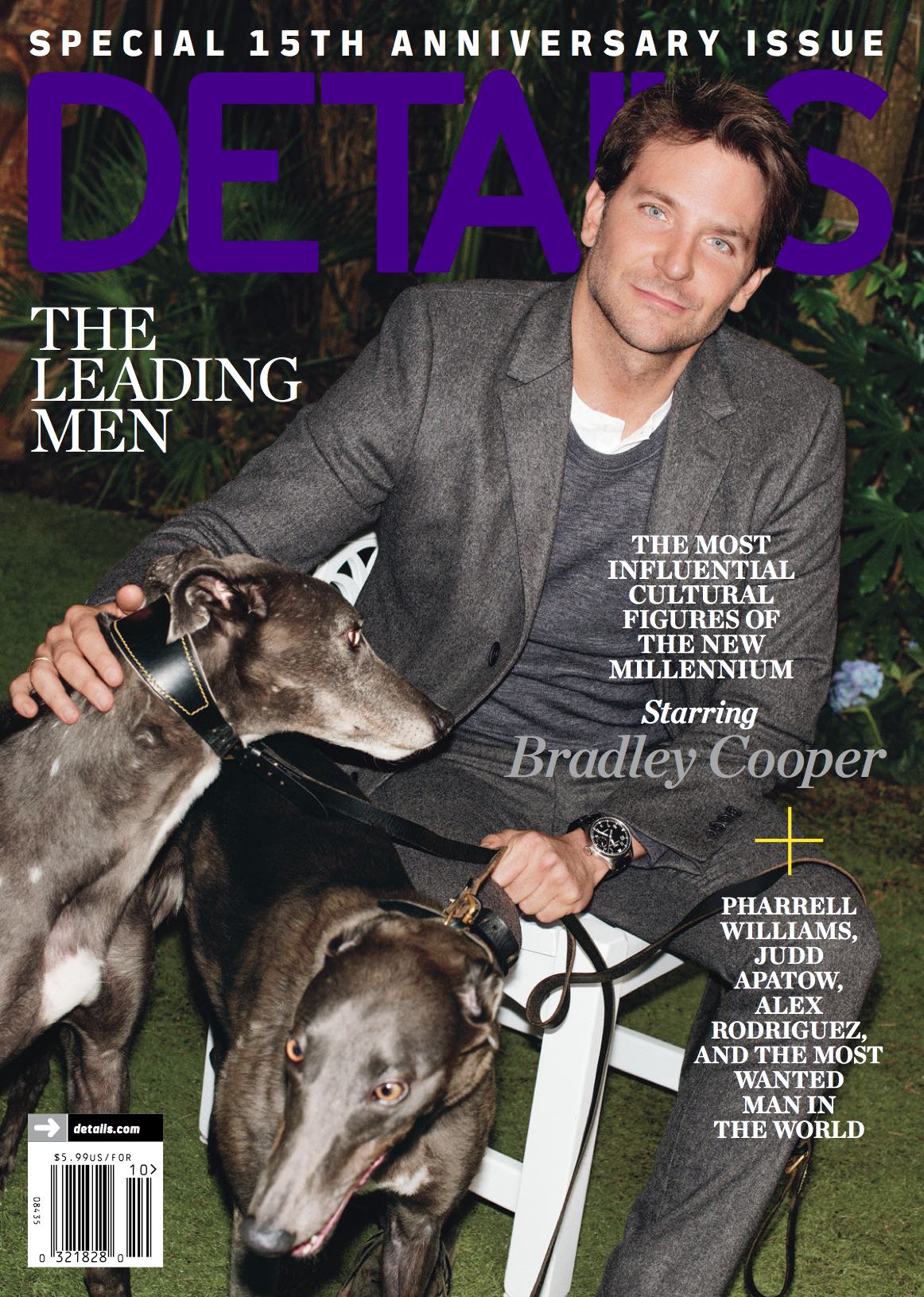
The 15th Anniversary issue of Details.

The 15th Anniversary issue of Details.

Men’s fashion and style, interspersed with social and political topics that are important to today’s men; Details is a magazine that pays attention to just that: the details of its niche audience and their desires when it comes to the content they want from the magazine. It’s beautifully crafted and exceptionally well-written and navigated by a captain-at-the-helm who knows the brand better than anyone else, having been around since its inception 15 years ago.

Daniel (Dan) Peres, the editor in chief who relaunched and reinvigorated the brand in 2000, is a man who is more passionate and excited about the Details brand today than he was all those years ago when he first started, especially when it comes to the 2015 anniversary issue. For this milestone, Dan worked with the editorial team to curate the who’s who of groundbreaking icons, naming 15 of today’s most notable men who have changed our world culturally and positively. It is an amazing list.

I spoke with Dan recently and we talked about the magazine’s past, present and future, emphasizing the evolvement the publication has seen over the years. The true dedication and vision he has for the brand was evident in his voice as we discussed the process of putting an issue together, from choosing the cover to the right photographer to document a story. It was an intriguing and informative interview that I thoroughly enjoyed.

So, relax and let the “details” of your day melt away as you enjoy the more entertaining “Details” of a man who knows his brand and how to keep it necessary and relevant in today’s fast-paced world – the Mr. Magazine™ interview with Dan Peres, Editor-In-Chief, Details Magazine.

But first, the sound-bites:


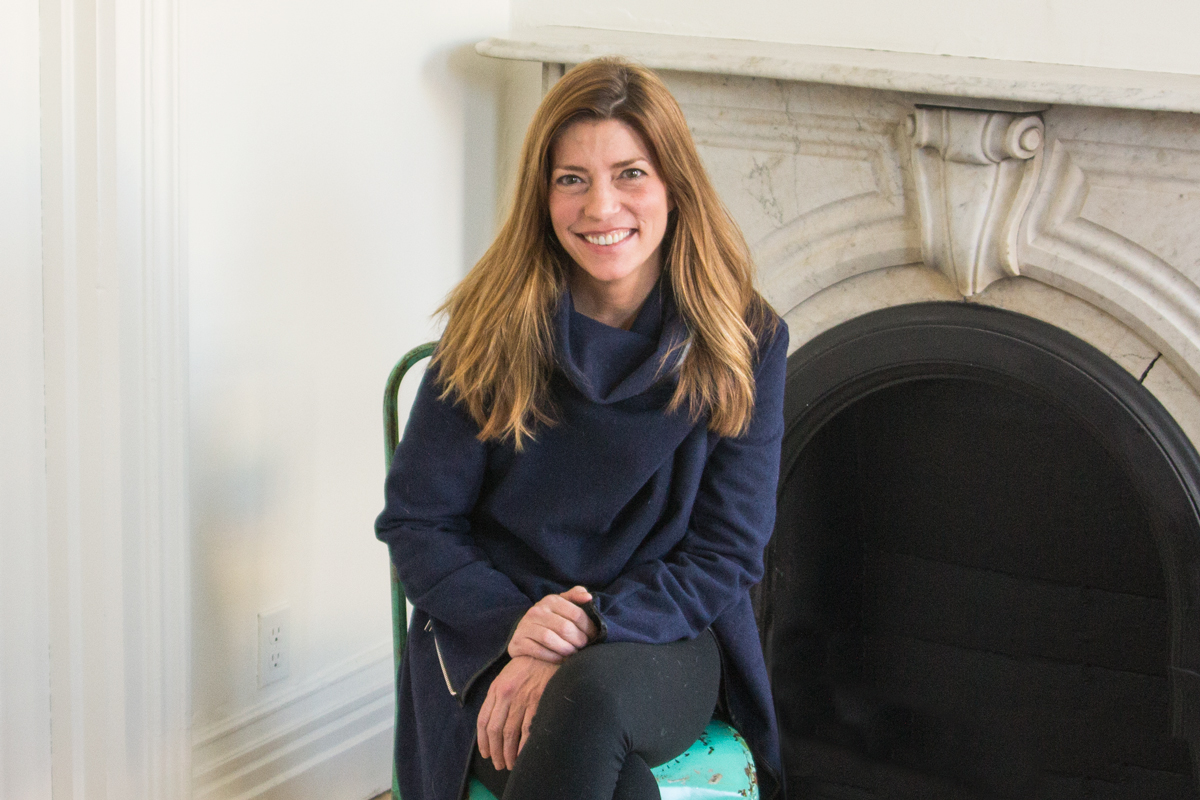
Dan Peres, Details' editor in chief, circ. 2015.

Dan Peres, Details’ editor in chief, circ. 2015.

On how his job as editor has changed over the last 15 years: An excellent question. I would say that the job has changed radically, and in many ways, for the better, of course, and in some ways, not. Fifteen years ago, we were really focused only on print and in building great features and great fashion stories and putting out great covers for our magazine. Obviously today, we are looking across a variety of platforms, most notably of course, is the rise of digital, which has, if I’m being honest, more than 50% of my attention now. So, I would say that’s a fairly dramatic shift.

On whether today he sees his audience wanting to play a bigger part in the creation and engagement process of the magazine through its digital components:
Our audience does want to have a say and in fact, in the letter from the editor that I wrote for our 15th anniversary issue, I acknowledged the fact that our audience deserves to have a say. We’re still here after these 15 years because of our audience and our interaction with our audience has changed so dramatically that it’s important to hear what they have to say. We’re interacting with our audience extremely directly on social media. We’re looking at their comments on Instagram, Facebook and Twitter and engaging in conversations with them in ways that we never have before, or have never been able to before.

On why the cover of a magazine is still so vitally important in today’s digital world:
I think the cover of a magazine is extremely important because it’s your calling card. It’s something that you use to draw someone in with a just a glance. So, if someone passing through a train station or an airport or a bookstore saw it, they’d take notice. You’re competing with an extremely cluttered magazine landscape and it’s important to note that magazines are alive and well and print is alive and well because if you go to a Barnes & Noble or to a Hudson News or your local bookstore and newsstands, you’re going to see tons and tons of magazines. And I’m grateful for that, but at the same time, you have to cut through all of that noise. So, you have to choose a cover that represents your brand and that is hopefully going to connect with the people you are trying to attract.

On whether today’s Details is a more mature, more evolved read than it was 15 years ago or it’s basically stayed the same: It’s definitely not the same Details as it was 15 years ago and that’s true for a number of reasons. First of all, I think it’s really important for a magazine to evolve and for a magazine to grow with its readership. And I think that’s what we’ve done. I also think a lot has changed in the last 15 years. We’ve had a stronger point of view when it’s been necessary. We’ve done more service when it became obvious that readers were responding well to that. We had a little bit of a snarky attitude before “snark” was all over the Internet. So, we’ve certainly evolved and we’ve pushed our contributors and our photographers and writers to grow with us and they have.

On the process of putting the magazine together each time:
First of all, when it works well and when everyone is firing on all cylinders and at the top of their game, it’s the most exciting process and it can be absolutely electric. And that’s what we strive for. So, when we’re sitting around and discussing content and there’s great ideas whizzing around the room, there’s no experience, at least at the office, that is as energetic, exciting and electric and as inspiring.

On the fact that he personally wrote one of the 15 leading men features in the anniversary issue and where he finds the time to write considering how busy editors are these days:
First of all, thank you for paying close attention; I appreciate that. Second of all, let’s be honest; I was never the world’s greatest writer, but I love writing and it is something that I’m trying to do more often. The realities though, as you point out, are that there’s very little time during the workday to get any writing done. In the case of the Dries Van Noten piece, the write-up for this anniversary issue, I did that over the weekend. I sat down on a Saturday and was able to do that. I had interviewed him while I was in Paris at the men’s fashion shows over the summer. And I think that’s probably how I would have to work, if I were going to write, on the weekends because there is very little time.

On what makes him tick and click and motivates him to get up in the mornings:
We need to continue to make a beautiful magazine that gets published ten times a year that goes out to a growing number of subscribers and newsstand readers. The challenge in maintaining that and continuing from one issue to the next; I always say you’re only as good as your last issue and I believe that’s true. So, we try to raise the bar every month. It’s an amazing challenge to continue to do that while developing and creating content for a digital audience. And that’s really what motivates me now. It’s a fresh challenge and I’m surrounded by an extraordinary team who push me and educate me and who stand shoulder-to-shoulder with me as we look to grow our digital audience, which we’re doing by leaps and bounds. I’m probably more excited to come to work today than I was 15 years ago.

On what he does for relaxation at the end of a long day:
(Laughs) OK – brace yourself. You would most likely find me sitting on the floor surrounded by a pile of LEGOS and toy soldiers and coloring books with my three sons, because they are everything to me, so at the end of the day I really do everything that I can, I don’t always succeed, but I do everything that I can to leave work at the office and engage with my kids.

On anything else he’d like to add:
Journalists today are living and working in really interesting times. This is the era of the citizen journalist, right? And I really appreciate that anyone can report on what they’re seeing, can post something on the Internet about anything from their vacation to their thoughts about a sitting Pope to comments about a presidential debate. Anyone can do that and anyone has the right to do that and I appreciate reading those things and seeing them. I value them tremendously. But I would also point out that journalism as a trade is a profession. It’s something that’s so valued and so important to me in my life; I have such a deep admiration for people that can write beautifully and that’s something that really gets me through the day sometimes. Reading a beautifully written magazine article or an incredibly well-reported, well-crafted newspaper article or feature is still unbelievably motivating and inspiring to me.

On whether he believes the quality of journalism is enhanced by digital or there’s a darker side to the Internet that could have a detrimental effect: I’m sure it’s both. Surely it’s enhancing the quality of journalism with the speed in which we get our news It’s enhancing it in ways that I spoke about earlier, where in addition to text, you’re also seeing videos and gifs; you’re able to be there behind the scenes; you’re able to be there the instant something is happening and I think that’s a tremendous enhancement and increases the value of storytelling exponentially. At the same time, I think it’s incredibly important to get the story right and have multiple sources. It’s incredibly important to check your facts and I think we’re all racing, and in some cases rushing to get that story out there and that at times can risk quality to some degree.

On what keeps him up at night:
It’s just are we doing it right because more than anything else, we’re all running at a very fast pace here and there are a lot of people on this team doing a lot of different things, which again, is both exciting and terrifying. When I’m in a quiet room alone at night, it’s are we getting it right, because we have people coming to us every month in the magazine and every day, sometimes multiple times a day, on the website and we have a responsibility to them to get it right. And that’s what keeps me up at night more than anything else.
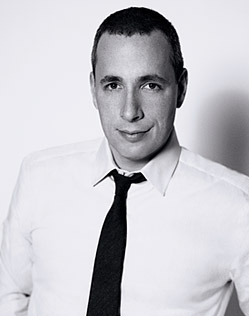

And now the lightly edited transcript of the Mr. Magazine™ conversation with Dan Peres, Editor-In-Chief, Details Magazine.

Samir Husni: Details magazine, as we know it now, has 15 years under its belt. And a lot of things have happened over those years. How has your job changed as editor? Is your role the same as it was 15 years ago when you began this journey?

Dan Peres, Details' editor in chief, circ. 2000.

Dan Peres, Details’ editor in chief, circ. 2000.

Dan Peres: An excellent question. I would say that the job has changed radically, and in many ways, for the better, of course, and in some ways, not.

Fifteen years ago, we were really focused only on print and in building great features and great fashion stories and putting out great covers for our magazine. Obviously today, we are looking across a variety of platforms, most notably of course, is the rise of digital, which has, if I’m being honest, more than 50% of my attention now. So, I would say that’s a fairly dramatic shift.

The most incredible thing about the digital space, as you well know, or as anyone who operates on that space knows, is that it’s immediately quantifiable. We are looking at data and analytics every day that tells us what people are reading and not reading; how they’re coming to us and what they’re sharing with other people.

So, 15 years ago, we built a magazine that we were extremely proud of and excited to publish and we put it out there and occasionally people would write a letter to the editor, taking issue with one thing or another or congratulating us on something, but we really didn’t have a sense of what they were paying attention to; it was all instincts. And that was a wonderful thing, instinct, and remains a wonderful thing. I think the editor’s instincts are priceless, and I don’t speak of mine, but of all editors’. And still remains a valued asset with print magazines.

With digital space, instincts also factor in of course, but you’re really able to look at the outcome and see what people are paying attention to. So, it has transformed to some degree the editing process.

Also, 15 years ago we were less brand managers than we are today. We weren’t doing, to the degree we are today, events and bigger marketing programs, native advertising and licensing agreements. The focus was really just on making the product. And that hasn’t changed. And as I said at the outset, most of these changes have been for the better, there’s no question about it.

Samir Husni: My most recent book that I wrote with two of my colleagues is called “Audience First” and in it we talked about how the audience wants a seat at the editorial table in today’s world; they’re not just content with writing a letter to the editor anymore, they really want to be engaged in the creation of the product. Do you see that happening with the rise of digital and its impact? As you said, you’re almost on a daily basis or an hourly basis even, monitoring the reaction, the clicks and the data from your readers.

Dan Peres: First of all, I will say that you can get incredibly obsessed with the data as it comes in, so I make a point of not looking at it until the following day. However, every now and then during the day I’ll go over to some people on our digital team and I’ll ask them where we are at that moment in time and they’ll pull up a screen that allows me to see exactly where we are then and what’s doing well for us and what isn’t working.

So, it can really become an obsession and I’m doing my best to not be plugged into it every minute of the day. Although, I have to say I would imagine by fall, I’ll be glued to it on an hourly basis.

That said, I think that’s a good question. Our audience does want to have a say and in fact, in the letter from the editor that I wrote for our 15th anniversary issue, I acknowledged the fact that our audience deserves to have a say. We’re still here after these 15 years because of our audience and our interaction with our audience has changed so dramatically that it’s important to hear what they have to say.

So, to some degree it’s direct and to some degree it’s indirect. Indirectly they have a say by just what they’re paying attention to, because that in essence motivates us to generate more content in that specific category. Paying attention to a story about a crime or a story about fall fashion trends; we take that into our story meetings and it informs some decision-making. Not all decision-making, and I want to be clear about that, but it certainly informs some of the decision-making process. And that in many ways is extraordinary audience impact on the editorial process.

In a more direct kind of way, we’re interacting with our audience extremely directly on social media. We’re looking at their comments on Instagram, Facebook and Twitter and engaging in conversations with them in ways that we never have before, or have never been able to before. So, it’s pretty extraordinary.
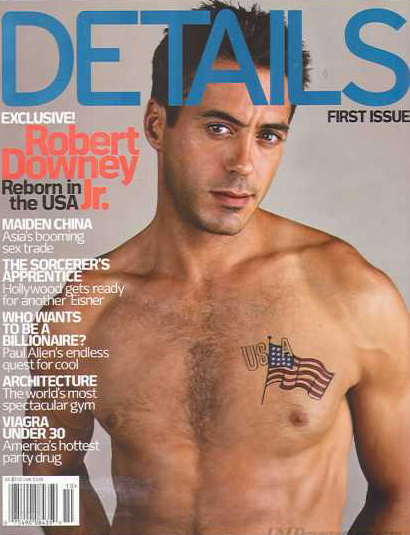
Details first issue, Oct. 2000.

Details first issue, Oct. 2000.

Samir Husni: Let’s shift gears a bit and talk about the 15th anniversary issue of the magazine. I recall the first issue with Robert Downey, Jr. where he was completely bare from the waist up compared to this 15th anniversary issue with the fully-clothed Bradley Cooper with his dogs on the cover. You had 15 great men of the world who could have been on this particular cover, but you wrote in your editorial letter that Bradley Cooper was a no-brainer. How do you reach such a decision when you have 15 choices and why is the cover of a magazine, as is evident from your next-door neighbor, Vanity Fair, when Caitlyn Jenner was on the cover; why is the cover of a magazine still so important in today’s digital age?

Dan Peres: I’ll answer that backwards. I’ll answer the last part first. I think the cover of a magazine is extremely important because it’s your calling card. It’s something that you use to draw someone in with a just a glance. So, if someone passing through a train station or an airport or a bookstore saw it, they’d take notice. You’re competing with an extremely cluttered magazine landscape and it’s important to note that magazines are alive and well and print is alive and well because if you go to a Barnes & Noble or to a Hudson News or your local bookstore and newsstands, you’re going to see tons and tons of magazines. And I’m grateful for that, but at the same time, you have to cut through all of that noise. So, you have to choose a cover that represents your brand and that is hopefully going to connect with the people you are trying to attract.

In our case, Bradley Cooper, as I acknowledged in my letter from the editor, really represents the ideal of the Details reader. He is successful, but not an overnight success, he’s worked extremely hard. He is a stylish, attractive guy who plays roles that are both humorous and serious and he has great range as an actor. If you read or watch an interview with him, he’s very articulate and knowledgeable about a wide range of subjects. And this is the type of person that the Details reader inspires to be.

When we sat down to look at celebrating this milestone and filling this issue, Bradley really did seem to be the obvious choice. This is his 4th time on our cover; no one has been on the cover of Details more, so it really felt right. He’s at the top of his game and we believe that we’re at the top of our game and so it just made perfect sense.

But you’re right; we had this amazing group of people. We chose to look at 15 cultural influencers who have impacted our lives in any number of ways over the course of the last 15 years. And certainly any number of them could have appeared on the cover, but Bradley made the most sense.

And again, let’s not forget as we all race to embrace this digital age, the print product and the importance of the cover on that print product cannot be forgotten. And we believe that this image of Bradley works extremely well and to go back to your point about Robert Downey, Jr., that shirtless cover of him we did on our first relaunch issue 15 years ago; it was an incredibly impactful image of an actor whom we had known and loved, but who had gone through some struggles.

In fact, about two weeks before we had took that photograph he had been in prison and now Robert Downey, Jr. is really one of the most successful movie actors and producers in the world. So, it was a transformation for Robert Downey, Jr. at the time, coming out of prison and working through some extremely difficult times and starting over. And it really made perfect sense at the time as we were going through a transformation and starting over ourselves. So, it made a whole lot of sense for us to do it then. And it remains frankly one of my favorite covers from the last 15 years.

Samir Husni: As you’ve grown with Details over these last 15 years; are we seeing now a more mature, more serious, more evolved Details that we did at the beginning? Or is it the same Details that you created 15 years ago?

Dan Peres: It’s definitely not the same Details as it was 15 years ago and that’s true for a number of reasons. First of all, I think it’s really important for a magazine to evolve and for a magazine to grow with its readership. And I think that’s what we’ve done.

I also think a lot has changed in the last 15 years. We’ve had a stronger point of view when it’s been necessary. We’ve done more service when it became obvious that readers were responding well to that. We had a little bit of a snarky attitude before “snark” was all over the Internet. So, we’ve certainly evolved and we’ve pushed our contributors and our photographers and writers to grow with us and they have.

If I’m going to be honest here, I’ve matured over the last 15 years. I was a 28-year-old man when I was given this job, maybe entirely too young, but nonetheless; I’m now a 43-year-old man and so my perspective on just about everything is different than it was 15 years ago. And to some degree, and certainly you know that I don’t build this magazine on my own, there is an extraordinary team of contributors, both on-staff and off, that do it with me, but from this office the view has changed. And I think that has also impacted our content.

Samir Husni: Even this 62-year-old man still enjoys the magazine. In fact, I enjoy it better now than I did when I was younger. (Laughs)

Dan Peres: I appreciate you saying that.

Samir Husni: If I can get into your mind for a moment, into that process where you and your team sit down and start discussing, let’s say the December issue in this case. How does that process work and do you realize those “aha” moments at the end of the day where you just know you made the right decision, such as the one you made with the Bradley Cooper cover?

Dan Peres: First of all, when it works well and when everyone is firing on all cylinders and at the top of their game, it’s the most exciting process and it can be absolutely electric. And that’s what we strive for.

So, when we’re sitting around and discussing content and there’s great ideas whizzing around the room, there’s no experience, at least at the office, that is as energetic, exciting and electric and as inspiring.

What happens now, and this is really one of the most exciting things, is that we’re able to ask with any idea that gets thrown out onto the table; we’re able to ask what’s the best way to tell this story. It used to be that there was only one way to tell that story, which was by having a writer put something together for the magazine and publishing it on a monthly basis. Now, we can sit around and discuss the best platform to showcase a particular idea for our audience. And maybe it’s a video, or a list that we put out on social media or a series that we do on the website, or a straightforward magazine story or some sort of combination of those things.

And that’s where we get excited. We’re able to look at things holistically and say that would make a great photograph in the magazine, let’s find the perfect photographer to document it. But at the same time maybe we’ll have our social media manager go and do a Snapchat of that process or maybe we’ll get the subject to come in and we can do a video conversation with them. And that is incredibly exciting and incredibly rewarding.

But to look at the original question, I have to say when the editors and our contributors sit around in either this office or a conference room, anywhere really, and talk about ideas and what should be in the magazine and debate ideas and decide on the best way to execute them, it’s an incredible energy that I wish I could bottle and share with people because, while this isn’t rocket science and we know that, but figuring out the right way to tell a story and figuring out the right stories to show our audience is a really gratifying experience.

And let’s not forget, there are a lot of magazines out there and there are a lot of content platforms out there and not every story is right for our audience. There are a lot of times when people come into this office to pitch an idea and I’ll tell them that while it’s an amazing idea and would make a really terrific story, it’s just not something that I see myself reading in Details. It’s the type of story that I’m probably going to see in The New York Times Magazine or The New Yorker or Vanity Fair, just whatever the case may be.

So, it’s also making sure that we have a really strong filter and that we’re, and this is an awfully overused word, but that we’re really properly curating our content for our audience. We aren’t a magazine that has something for everyone and we have to remember that when we develop content. We really have a specific reader in mind when we’re looking at magazine building. That factors into this incredibly exciting process as well.

Samir Husni: And I think you’ve mastered that art of curation with your selection of the 15 men and the presentation. You could feel the balance, each of the leading men were given equal treatment. But what surprised me more than anything else is with all your busyness, you still find time to write, because I noticed that one of the featured men, the Dries Van Noten piece; you wrote it. When do you have time to write? I hear from editors all of the time that they’re busier than busy these days, between handling the brand, digital, social media – you name it. I was really surprised to see your byline as a writer in the magazine.

Dan Peres: First of all, thank you for paying close attention; I appreciate that. Second of all, let’s be honest; I was never the world’s greatest writer, but I love writing and it is something that I’m trying to do more often.

The realities though, as you point out, are that there’s very little time during the workday to get any writing done. In the case of the Dries Van Noten piece, the write-up for this anniversary issue, I did that over the weekend. I sat down on a Saturday and was able to do that. I had interviewed him while I was in Paris at the men’s fashion shows over the summer. And I think that’s probably how I would have to work, if I were going to write, on the weekends because there is very little time.

But I will say this, I don’t think that I’m going to be doing a ton of writing for the magazine, maybe once or twice a year I’ll grab something that interests me that I think I can pull off. The great thing about these features is this 15th anniversary portfolio was their brevity. They’re no more than 800 words, which is a fairly manageable length for someone like me.

Samir Husni: What makes you tick and click and motivates you to get out of bed in the mornings?

Dan Peres: I’ll be honest with you; I’ve gone through peaks and valleys in this role with respect to the energy that I bring. I think that I’m more energized today about this brand than I’ve ever been. And that’s because we have extraordinary challenges in front of us right now. And they are unbelievably exciting challenges.

We need to continue to make a beautiful magazine that gets published ten times a year that goes out to a growing number of subscribers and newsstand readers. The challenge in maintaining that and continuing from one issue to the next; I always say you’re only as good as your last issue and I believe that’s true. So, we try to raise the bar every month. It’s an amazing challenge to continue to do that while developing and creating content for a digital audience.

And that’s really what motivates me now. It’s a fresh challenge and I’m surrounded by an extraordinary team who push me and educate me and who stand shoulder-to-shoulder with me as we look to grow our digital audience, which we’re doing by leaps and bounds. I’m probably more excited to come to work today than I was 15 years ago.

That said I’m sure that I have other things that make me tick; I’m an editor. At the end of the day, typos drive me nuts, simple, avoidable errors really make me crazy. You’re moving at the speed of digital on a website; it’s designed for you to put things up and if they don’t work, take them down or change them or edit them throughout the course of the day. And I’m getting used to working at that pace, because I’m still the type of editor that if I look at something and it doesn’t seem quite right, I want to fix or change it.

And that’s what magazine editors have the luxury of doing over a month-long production cycle. In the digital space obviously you don’t have that luxury and that’s both exciting and terrifying for someone like me. Just sort of adapting to having to move at that kind of a clip is something that I’m excited by, but it also challenges me. And I have this team of people around me that are anxious to get it up there, but ready to change something if the story develops or add to it if we have to. It’s exciting stuff, no doubt.

Samir Husni: If I happened to surprise you and drop by your house, what would I catch you doing? If you’re reading, what magazine would it be and on which platform: iPad, print or what? At the end of a long day, what do you do for relaxation?

Dan Peres: (Laughs) OK – brace yourself. You would most likely find me sitting on the floor surrounded by a pile of LEGOS and toy soldiers and coloring books with my three sons, because they are everything to me, so at the end of the day I really do everything that I can, I don’t always succeed, but I do everything that I can to leave work at the office and engage with my kids.

I will tell you though that you will find books everywhere; you will find iPads and newspapers, but I tend to not bring magazines home. I absolutely don’t think you would find a magazine in my house. I love magazines and enjoy reading them, but all subscriptions come to the office and I look at them in my down-time or over my commute, but I tend to not bring them into the house.

As I said, I can be obsessive and I want to read a great story just like any other magazine reader and I find plenty of them today and I’m grateful for that. But also as an editor you’re constantly looking at other magazines to see what they’re doing and how they’re designing things and packaging them; how stories are written and headlined, so I tend to not want to do that at home.

Samir Husni: Anything else that you’d like to add?

Dan Peres: Journalists today are living and working in really interesting times. This is the era of the citizen journalist, right? And I really appreciate that anyone can report on what they’re seeing, can post something on the Internet about anything from their vacation to their thoughts about a sitting Pope to comments about a presidential debate. Anyone can do that and anyone has the right to do that and I appreciate reading those things and seeing them. I value them tremendously.

But I would also point out that journalism as a trade is a profession. It’s something that’s so valued and so important to me in my life; I have such a deep admiration for people that can write beautifully and that’s something that really gets me through the day sometimes. Reading a beautifully written magazine article or an incredibly well-reported, well-crafted newspaper article or feature is still unbelievably motivating and inspiring to me. And I think that as a journalist it’s important for me to acknowledge the extraordinary work of the writers and editors that’s going on around me, both inside this building and around the world. It’s really amazing and I am a fan of journalism. When I read a great piece of writing, it still manages to impact me in surprising ways and I feel it’s important for me to say that.

Samir Husni: Do you have any fears about the future of journalism in this digital age? Do you think that the digital environment is enhancing the quality of journalism or there’s a darker side that will impact that quality?

Dan Peres: I’m sure it’s both. Surely it’s enhancing the quality of journalism with the speed in which we get our news It’s enhancing it in ways that I spoke about earlier, where in addition to text, you’re also seeing videos and gifs; you’re able to be there behind the scenes; you’re able to be there the instant something is happening and I think that’s a tremendous enhancement and increases the value of storytelling exponentially.

At the same time, I think it’s incredibly important to get the story right and have multiple sources. It’s incredibly important to check your facts and I think we’re all racing, and in some cases rushing to get that story out there and that at times can risk quality to some degree.

And the rise of the citizen journalist is a pretty exciting thing, but you want to trust what you’re reading. You have to understand the source of what you’re reading. I would be a fool to say that the digital age has not completely transformed this business and it has for the better, there’s no question about that. I just think we all need to be careful with what we’re putting out there with the understanding that it’s out there and it’s accessible.

I believe it’s both; there’s an upside and a downside, but I can’t really think of anything in life that doesn’t have an upside and a downside and we just need to be responsible.

Samir Husni: My typical last question; what keeps you up at night?

Dan Peres: It varies and from one night to the next, at least with respect to work, it’s any number of subjects, but it always has the general theme of are we doing it right? Are we telling the story the right way? Have we chosen the right person to be putting the spotlight on? Should we have done this differently? Are we approaching the development of our social media audience in the right way?

It’s just are we doing it right because more than anything else, we’re all running at a very fast pace here and there are a lot of people on this team doing a lot of different things, which again, is both exciting and terrifying. When I’m in a quiet room alone at night, it’s are we getting it right, because we have people coming to us every month in the magazine and every day, sometimes multiple times a day, on the website and we have a responsibility to them to get it right. And that’s what keeps me up at night more than anything else.

Samir Husni: Thank you.
h1

Larry Genkin: The Man Who Wants To Reinvent The Digital Content Reading Experience – The Mr. Magazine™ Interview With Founder & CEO, Of Eleven Media.

September 21, 2015

“Print is not going away. Print is the necessary part of this business because that’s where the lion’s share of revenues comes from, but the big guys who are the innovators in the printing industry; they understand that the publishers want to make money and they need to make money. And I think that we have a model that’s flexible enough for them to really test and figure out what will work in their market.”Larry Genkin

Picture 31 A publishing company that’s determined to set digital content on its ear with its innovative business model software and a plethora of partnered online platforms that are as diverse as the celebrities and people who are joined at the hip with them.

It’s an intriguing concept that Larry Genkin, founder and CEO of the company Of Eleven Media, is exceptionally excited about. The reinvention of the digital realms of magazine media is something that has had publishers thwarted from the beginning. How do you make money from your digital content? The answer so far hasn’t been banner ads or native advertising, but Larry believes strongly that he and his team at Of Eleven Media have found the solution to this profoundly ongoing problem with the software they’ve invented called Ad Einstein. The program is for the advertising dilemma publisher’s face when it comes to making money on their digital ads.

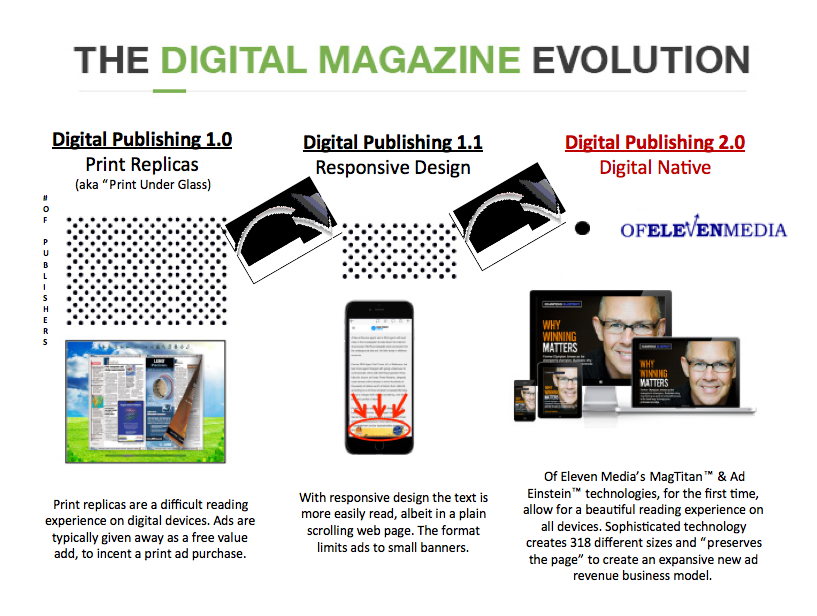
And from a publishing standpoint with the 19 different digital platforms they’ve launched so far with some partners, the company’s other originally designed program called MagTitan, gives digital readers an amazingly astute innovation that is more readable and enjoyable than anything out there today.

I spoke with Larry recently and he demonstrated the software for Mr. Magazine™ through an interactive portal where I could visually see and experience the magnitude of MagTitan’s reader capabilities. It was truly an undeniably pleasant and entertaining foray into the world of digital content. I was suitably impressed and informed.

The interview with Larry was thorough; the demonstration interesting, and the concept totally innovative and creative, but for the record, Larry uses the tagline Reinventing Magazines but I do not. To me, he is reinventing digital and reinventing content on different digital platforms. Remember, a magazine in Mr. Magazine’s™ book must be ink on paper, pure and simple.

So, I hope you will enjoy this lengthy conversation about MagTitan and Ad Einstein with Larry Genkin, Founder & CEO, Of Eleven Media.

But first, the sound-bites:

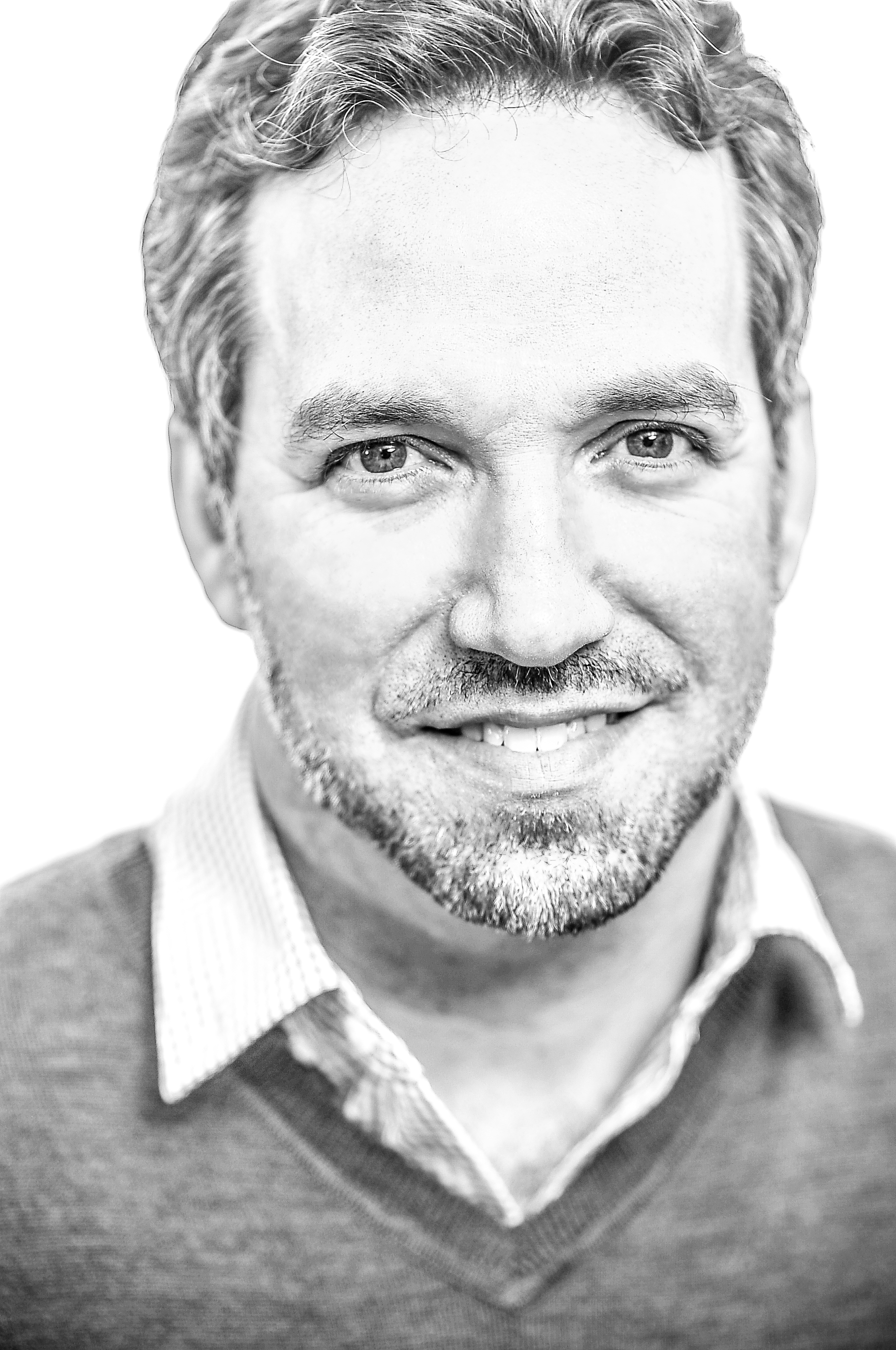
Larry Genkin - Of Eleven Media (Headshot) On the genesis of his company Of Eleven Media: We’ve been in the publishing business for a while. We love print because it’s readable, it’s portable and it’s a wonderful technology, but the digital stuff in this time period was doing none of that. So, we said OK, there wasn’t a lot of money and we were very limited in what we could do. How could we play in the digital world? Our vision at that point was to be the leading digital magazine publisher in the world and we wanted to launch 100 magazines in all these different niches in three years. We asked ourselves then were there any software programs out there that we could purchase to launch our magazines that would do what we wanted it to do, what we envisioned the technology could do? And when we looked, there was nothing out there. We were publishers, but we needed to be able to build the technology because it didn’t exist in nature.

On how Of Eleven Media’s software, Ad Einstein, makes money for his company and other publishers:
With Ad Einstein what we’ve done is we say to the advertisers, you’re only going to pay when we can verify that somebody has actually read your ad, because that’s our job as publishers; to get a prospect who is interested in your product or service, to look at your ad. The rest is really up to you.

On how he is achieving that scale that other, more established media companies have not:
Here’s what I can tell you from the hundreds of thousands of visitors that we’ve had for our magazines in aggregate so far over these few months. Readers spend good time with our publications. Our content is really good, but I don’t think it’s because of anything more than it’s very readable, even on the smallest devices. From a circulation standpoint; what we do is start by partnering with someone who has a data base. We come to these people and they become our equity partners in a publication and they can distribute the magazines through their email lists and their social media followings.

On how they’re making money if the subscriptions are free and readers are using the ad block apps:
I think you know this as well as I do, there is a lot of experimentation going on with ad block. What I can tell you, and I don’t want to stir up a hornet’s nest here; we’ve figured out a way to have our ads displayed. And what I suspect will happen over time is it’s going to be this cat and mouse game where publishers figure out how to beat the ad blockers; the ad blockers will come back and it’ll be this back and forth gaming.

On his business model, which is still based on free content to the reader, with the advertisers singularly footing the bill: I think the business model that’s going to win and be successful in today’s world is going to be a hybrid model? Money is made off of print; we all know that publishers aren’t abandoning print, because they all know the lion’s share of their revenues and profits are coming from print. I think in this new model you keep all of that; you don’t change it. To abandon that as a publisher would be a silly mistake. What you have to do is then generate add-on revenue from digital. I think what you see publishers doing today are going through all of these gyrations to try and generate needed revenue and that comes from getting into events or doing things that are far-removed from their core content in creating what should be an experience that a reader must read every time that issue is put out. And they’re doing it out of necessity to pay the electric bill.

On why he thinks the titans of the magazine media world haven’t already figured out how to do what he believes his business-model software can do, make money from digital: Well, I think it comes down to a pure question of economics. If you look at economics and you look at the big Titans of this industry, all of the companies that you mentioned, they realize that they have all sorts of financials showing that their print revenues are declining, their print readership is declining; it’s not entirely going away, I don’t think that will ever happen, but it is in decline. The amount that they can get from a per-page basis is declining and digital is increasing. So, they say, Holy Crap, what do we do?

On how he plans to compete with companies like Google, Facebook and Twitter that are basically already using the business model he is proposing for magazines:
If we as publishers give away all of our content to these players, we’re in trouble. I think a publisher needs to be self-sufficient. You can be lured by the traffic numbers. People are using Facebook, so if I put it out there I can get traffic. Well, you know what, they might read your stuff, and that’s OK, but if you can’t monetize that how are you going to pay your staff; how’re you going to pay your printer or your electric bill? I’m very, very concerned about it. So what I come back to as a publisher is this model; you leverage Facebook. And this is a model that I think is a way to leverage what social media can do for us instead of giving them your content.

On what happens if Facebook ever becomes self-contained and providing a link to an online magazine will not open up to the article onsite: I think every publisher has to look at it this way, let’s start with making our business successful with what we’ve got. And what we’ve got is some sort of database and we’ve got some sort of content-creation expertise. And we also hope we have some sort of ad constituency that wants to reach our readers. We’ve got to make money off of that core proposition through print and digital. Now, if we can test and do things with these other platform providers and it proves to be a smart business move, then by all means do it. But I think to sit on your hands and wait for the day that they’re going to come to your rescue…you know, hope is not a business plan.

On whether his business model beliefs have fallen on deaf ears or does magazines and magazine media see him as the knight in shining armor who can save the digital content world: I don’t call myself a knight in shining armor; if you look at this realistically, we have a ragtag group of people; we’re a virtual company; I have people working literally all over the globe who are banded together by the Internet and we’re all working for a cause. And the reality of it is, I wouldn’t be here doing what I’m doing if we hadn’t lost everything once before. But what I think happens when you come out of a place of desperation and you’re forced to think in a different way, is that’s how innovation comes about. It’s cliché, but innovation happens in garages. You’re freer to think in different ways if you don’t have to make payroll; if you have to answer to shareholders, you’re not necessarily in a position to think. So, I think that we, just by accident, stumbled across some things that work and what I can tell you is that you can’t get a client like USA Today by accident. They’ve looked at what we’ve produced and they see the wisdom in it. And for us, that’s a great validation. We have a lot of work left to do, there’s no doubt about that.

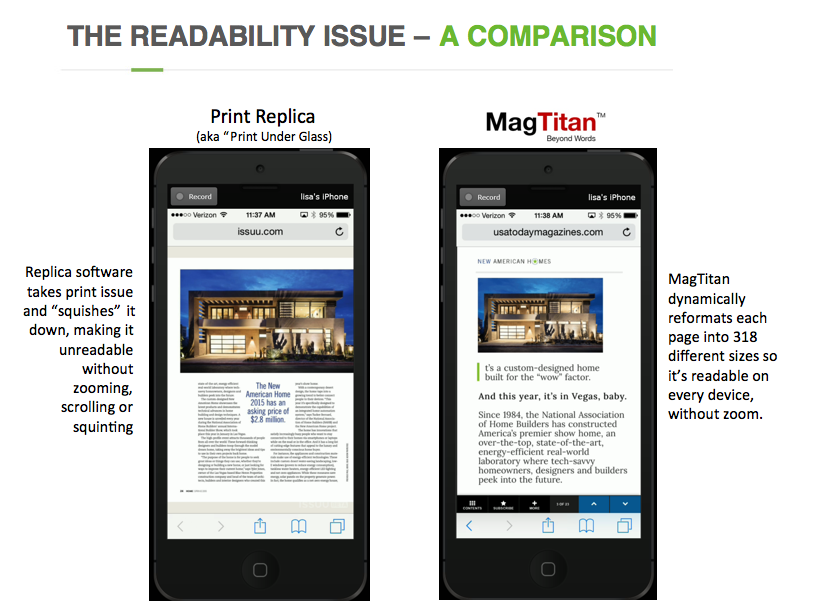
On anything else he’d like to add: What we did with the first issue of USA Today with our technology is put it in one-page design as opposed to a two-page spread, because a two-page spread is great for print, but it doesn’t exist in digital. So, why do that? We also reimagined the cover for them using animations and storytelling. The way that the software works is you go left and right between stories and up and down to read them. That way we don’t force you to flip 15 pages past stories you’re not interested in. Most importantly, the content is very readable without zooming, pinching or squinting.

On what keeps him up at night: What keeps me up at night is I don’t want to be Xerox PARC. I think that we’ve developed a number of technologies: MagTitan, Ad Einstein, Infinite Pages; all of these things in and of themselves, any one of them would be great, but if you learn the lesson of Xerox PARC, they had all of these brilliant minds creating transformative technologies and it wasn’t them that ended up being able to bring it to market.

And now the lightly edited transcript of the Mr. Magazine™ interview with Larry Genkin, Founder & CEO, Of Eleven Media.

Samir Husni: Tell me a little about Of Eleven Media.

Picture 33 Larry Genkin: We’ve been in the publishing business for a while. I started back in trade publishing, working as an ad sale rep at a company called Phillips Business Information and I ended up starting my own publishing business and doing everything that publishers do, not exclusively with magazines, but everything from trade shows to books.

Eventually, having a couple of different businesses, we started a company called GSG Media and there were a handful of us that launched magazines for this big up and coming thing called social media. And we had magazines on “Facebook in Business,” “Twitter in Business,” LinkedIn in Business” and one on “Google in Business” and it was exciting because it was at a time when social media was really picking up steam and we had the publications and some marketing partners on it.

Long story short, and this was back in 2008/2009, I lost my shirt. I lost everything. You look back in hindsight and you understand that the global economy was going through a horrible time. But when you come out of an experience where you lose everything, and I myself ended up having to go through personal bankruptcy, it’s a very difficult time.

When you go through something like that, at least for me; I started to reflect with the team, a core group of us who were all involved in GSG Media and those social media publications, reflected and thought: what did we do wrong? What could we have done different? We were trying to take something positive from the experience.

And it wasn’t until a little bit later when I worked for a guy from Oklahoma who was formerly the 25th wealthiest person in the U.S. named Bill Bartmann, who is really a brilliant businessman, that I learned a valuable lesson, which I think he sort of meant as a joke, but the team and I really took it to heart. He said in business he believed that it was imperative that you become the market leader. That’s the real path to success. And he said it’s not as hard to be the market leader as people think; all you need to do is figure out where the herds are running to and then just go get out in front of them.

So, I started to really think about what he said and the wisdom of it. I looked at the publishing business through a different lens after that. And one thing that I saw at that time was, and you know all the statistics better than I do, readership was migrating to online media. And advertising was also going through a reflection point where advertising in online media was really taking off. So, we said OK – if this is where readership is going; if this is where advertising dollars are being spent, how do we go get out in front of them? Also, part of it was how do we do it with no money?

All of us at that point in time were working other jobs and yet reinventing magazines became our mantra. Our tagline was sort of: what would magazines be like if they were invented today? If we could forget everything that we’ve learned in the publishing business and we knew about the power, for example, of these digital devices and what they can do; what would we do; and it became obvious.

You talk a lot about innovation and I love that about your work. To us, we thought that what was being done with digital editions of magazines was the equivalent of the early days of television. If you go back to the early days of television, the first shows were the popular radio shows. It wasn’t a digital medium. You had people who would stand on a stage and do vaudeville kinds of things or comedy; really just very static. It wasn’t until a little while later when people like Ernie Kovacs came in and really took advantage of what this new medium of television could offer.

And we kind of looked at magazines and digital in the same way. We said you know what; the only innovation that’s happening with digital publications is Page-Flipper. They’re taking a replica of a magazine that was designed to be beautiful in print and they’re squishing it down for a computer screen and it’s very difficult to read. Then when you get to the tablet, they’re squishing it down even further and now it’s next to impossible to read without zooming or pinching, scrolling or squinting. And then to make it worse, the biggest readership growth is on the Smartphones or mobile devices and you’re taking something that was 8½x11 and squishing it down to fit an iPhone. I mean, forget about it. It’s a terrible, terrible reading experience and it’s static.

We love print because it’s readable, it’s portable and it’s a wonderful technology, but the digital stuff in this time period was doing none of that. So, we said OK, there wasn’t a lot of money and we were very limited in what we could do. How could we play in the digital world? Our vision at that point was to be the leading digital magazine publisher in the world and we wanted to launch 100 magazines in all these different niches in three years.

We asked ourselves then were there any software programs out there that we could purchase to launch our magazines that would do what we wanted it to do, what we envisioned the technology could do? And when we looked, there was nothing out there. We were publishers, but we needed to be able to build the technology because it didn’t exist in nature. So, me being naïve like I was, I figured it would take us maybe three or four months to build our version of the technology.

Well, two years later (Laughs) I finally finished Version 1 of; it was this hard, hard process and what we figured out was a number of really important things. As publishers, what we figured out was how to make digital magazines come alive and be a really great reader experience. We figured out how to make them readable on the biggest devices, such as a 27-inch monitor, to the smallest Smartphones. And we also figured out how to give publishers a business model where they can not only make money in print, but they can actually turn digital into a profit center as well, because what we know today is that most publishers are giving away digital. They’re making all their money on print because all that they can do is replicate issues today, saying to the advertisers, oh yes, Mr. Advertiser, we have a digital edition and if you buy the print, then you get the digital for free.

Publishers are dying the death of a thousand cuts and you see all of these layoffs happening; you can’t give away a product and not expect a day of reckoning later on. So, what we figured out was how to make the technology actually have a viable business model where publishers can now make money from digital as well as print. The technologies are called MagTitan and Ad Einstein.

And one last part of the story just to bring you up to the current day; while we were building the technology, something again that we thought would only take three or four months, I had a small editorial team and we decided to go ahead and launch a magazine so that it would be ready when the software was.

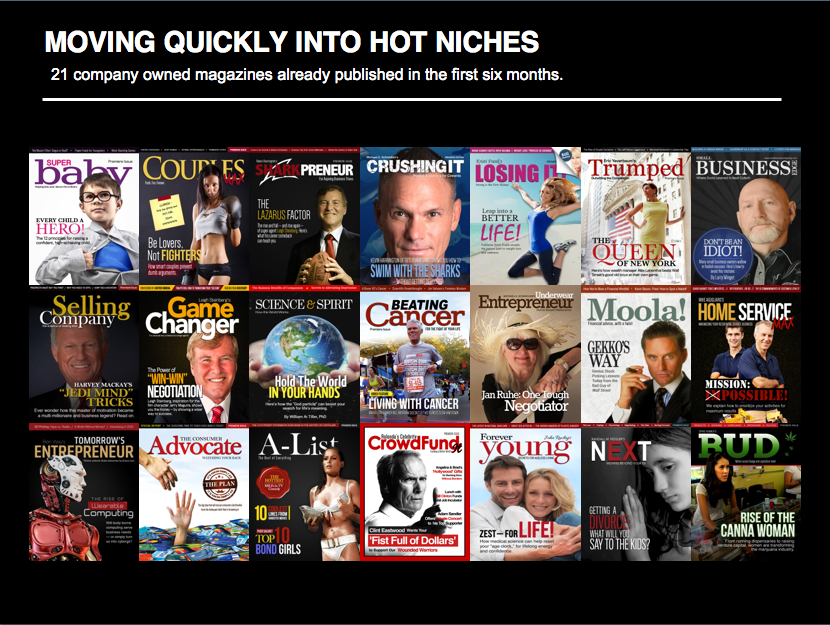
But what happened was we finished the magazine, but the software wasn’t ready. So, we said let’s build another magazine until it’s ready. When we finally finished the software about five or six months ago, we realized that we have 19 magazines that we rolled out on all sorts of different topics; some of them are in partnership with readers and celebrities, for example, we have one called Sharkpreneur Magazine and it’s done with Kevin Harrington of Shark Tank; the famous sports agent, Lee Steinberg, who was the real-life Jerry Maguire; he’s our partner on Game Changer Magazine.

So, we had all of these publications and as we started to release these out to the world; I would get calls on average every other week, and a publisher would say, I just saw your magazine, Small Business Edge, and your technology is really interesting; how much would it cost for me to use it with my magazine? I would have to tell them at that point in time that we were publishers, just like them, and the software was intended for use with our publications only.

Now, I may be slow, but I’m not dumb. You get a number of those types of calls and suddenly you wake up and realize that other publishers see the value in your product and we might have a good business for ourselves in being a software provider to the publishing industry as well as a publisher.

About three months ago we made a major pivot as a company and decided to allow our software to be licensed. But being in that business is a completely different one than publishing and our technology on the backend wasn’t designed for other people to use. It wasn’t user-friendly; it was really designed only for us because we knew how to use it.

So, we had to rebuild some modules of the software to allow for licensing of other people and all of that. We just recently, within the last few weeks, got our first marquee client, USA Today, the magazine group. And we’ve gotten two other publishers who have signed on and now we’re in talks with lots and lots of people, showing and doing what you do out in the world, being an evangelist for magazines and in particular this technology in the business model.

Samir Husni: A lot of the major publishers have moved away from the replicas and they’re doing other things with their apps and still they can’t find a way to make money. If a magazine is making money from digital, it’s doing so maybe from native advertising. And now with the coming of ad block technologies or IOS 9, which will have ad block built in and all of these other ways to avoid ads; are you making money from anyone who is just looking at your digital platforms?

Larry Genkin: Well, there are a couple of different things. Let’s first talk about the business model. We developed this technology called Ad Einstein and the reason we call it Ad Einstein is because it’s brilliant. I say that tongue-in-cheek, but it really is absolutely brilliant for publishers.

To describe the business model, think about it this way, if you’re an advertiser and to make money in advertising right now, if you’re an ad sale rep selling media, it is a very, very hard time. There is lots of competition; the price is being pushed downward toward zero, especially in digital.

We looked at the biggest advertising successes of our lifetimes and figured out how we could bring that to the magazine business, because frankly, we wanted to make it easy for us to sell ads and now easy for our publishers to sell ads. So, what we did was look at Google. I found different research, but with Google approximately one out of every 12 ad dollars on the planet are spent with Google. And part of the reason that they’ve been such a runaway success in my estimation is for two reasons; they pioneered and made popular pay-per-performance advertising and you cannot argue with the fact that advertisers love that they only pay when their little text ad gets clicked on with Google. That’s something that has proven to be successful.

The other thing that Google has done that was a game changer is to allow advertisers to set their own budgets. One of the challenges that every magazine on the planet has and I don’t care if it’s a circulation of 5,000 or a million-five is that we always price people out because we have thresholds of what our fractional ads are or full-page ads and some people can’t afford it. They don’t have the budget. Well in Google, if you can afford $1 you can run $1 worth of ads and when that is used up, they’ll pull you out and put someone else in.

So, with Ad Einstein what we’ve done is we say to the advertisers, you’re only going to pay when we can verify that somebody has actually read your ad, because that’s our job as publishers; to get a prospect who is interested in your product or service, to look at your ad. The rest is really up to you.

It’s up to your ad, your company’s reputation and all of those kinds of things. What we say is if somebody flips past your ad and doesn’t spend much time on it, you shouldn’t have to pay. And we don’t charge those clients. But conversely, if they do one of two things which are: either clicking on the ad, and that could be a link or a video or to buy a product; we actually have technology that allows people to securely buy products with a credit card right within the advertiser’s ad without ever leaving the magazine, then we charge them. Or if the customer spends ten seconds or more on that ad, since we only display full-page ads and since we only display one page at a time, if they spend ten seconds or more on that ad, then they’re either reading it or they’ve fallen asleep. It has to be one of the two.

For our magazines we call it the “verified view” and we’ve set the price at $1. An advertiser can come into our Ad Einstein platform, create or upload their ad, set their budget between $1 and whatever their credit limit is and start or stop whenever they want and only be charged when somebody clicks or views their ad.

So, when you start to look at that model, it’s something that’s easy to sell to an advertiser, and to a publisher the business model is profound. Let’s say you have 25,000 readers for the July issue of your magazine and that reader goes through your digital issue and maybe they flip past 10 ads while they’re reading, but they trigger one. By our metrics, 10 seconds for viewing for clicking.

Well then, that publisher would make $25,000 if they were charging $1 per view, with our software they can set the price, so if they want $5 per view or .20 cents per view, they can do whatever they want. The difference for publishers is that they can actually make real money. Maybe the reader will trigger four ads or ten ads; you can make real money from this and your goal as a publisher becomes creating great content and displaying it in a way that can really be read, not squinting, so that readers will spend time with your publication and they’ll trigger ads as they go through.

The other part of this is as a publisher your job is to keep bringing in more readers to your publication and producing great content so that they’ll stay with you. With our publications we let anybody in who wants to see it, so we don’t put up any barriers. I could go into why I think apps are a foolish mistake for publishers for so many reasons; I’m not surprised in the least that they haven’t been successful, because you’re putting barriers in front of the content. All of our software which is designed to have the performance and look great like an app does, but it’s completely browser-based. So if someone sees a magazine or an article on social media, they can click right from Facebook or Twitter and open up that magazine. Then they’re in and they’re triggering ads and the publishers are immediately making money.

Samir Husni: From all of the titles that you already have on MagTitan now; what’s the largest circulation or viewership that you’ve achieved? How are you getting that scale that established magazine brands have achieved over the years?

Picture 32 Larry Genkin: There are a couple of ways, but keep in mind that right now we are pivoting as a company. We never planned on becoming a software company too, so all the data and things that I have for this are early.

But here’s what I can tell you from the hundreds of thousands of visitors that we’ve had for our magazines in aggregate so far over these few months. Readers spend good time with our publications. Our content is really good, but I don’t think it’s because of anything more than it’s very readable, even on the smallest devices.

From a circulation standpoint; what we do is start by partnering with someone who has a data base. We come to these people and they become our equity partners in a publication and they can distribute the magazines through their email lists and their social media followings.

We actually just formed a joint venture company that’s going to be a big part of our circulation strategy and our client’s; it’s called Digital Direct. Digital Direct is a partnership with a data firm that has a data base of 110 million records. And we can sort those records by over 300 different demographic, psychographic and geographic criteria.

Let’s say we have a publication or a client of ours has a publication; they can come in and they can specify who their target reader is and that could be everything from title to SIC (Standard Industrial Classification) codes, to household income; all the things that are publicly available through the Experian databases and things like that. And then we’ll go out and we’ll offer those targeted people subscriptions to our publications, in our case, for free. When they opt in they get immediate access to the publications.

Samir Husni: But if they get the subscription for free and at the same time they get ad block; how are you making money? That’s the problem that most of the media industry are facing; every time we figure out a new way to make money on digital, our audience is finding a way to get the information for free.

Larry Genkin: Well, and I think you know this as well as I do, there is a lot of experimentation going on with ad block. What I can tell you, and I don’t want to stir up a hornet’s nest here; we’ve figured out a way to have our ads displayed. And what I suspect will happen over time is it’s going to be this cat and mouse game where publishers figure out how to beat the ad blockers; the ad blockers will come back and it’ll be this back and forth gaming.

Just like what The Washington Post is doing; it’s very easy if someone is using ad block, you can have the approach where you say, we’re not going to let you see the content until you turn off ad block or at least consider it because of this. And I think there will be all sorts of experimentation on this.

I kind of look at it this way; Nordstrom’s, unlike many department stores, doesn’t have a limit as to how many clothing items you can bring into your dressing room. I read a book called “The Nordstrom Way” and I was fascinated by this and one of the Nordstrom family members said in response to the question, don’t you know that you’re going to make it a lot easier for people to steal from you? And he said, of course we know that and that’s factored into our business model, but we don’t believe in punishing the 99.9% of the people and inconveniencing them for the small fraction of people who are going to take advantage of us.

I know that the economics of ad blocks are going to take away business from publishers; it’s going to happen. But the real question becomes can you get enough people in to make the model still work? And you have to just deal with that reality.

Samir Husni: What amazes me is every time that we try to come up with a business model that will compete with the print business model; we are finding all of these challenges dealing with making our customers pay for digital content. And it’s been that way from the beginning. For years I’ve been preaching that we’re in the business of selling content and changing content to become an experience. Do you really think on the future run that we’ll be able to survive in an environment I like to call “The Welfare Information Society,” that all content is free and we have to depend on someone else to foot the bill? That’s what your model is based on; I will get you the eyes; I will get you the content, but you have to pay $1 to me per click or pay for a 10 second view of the ad?


Larry Genkin: From the advertiser; the reader doesn’t pay anything.

Samir Husni: Yes, that’s what I’m saying; it’s still free content to the reader. We’re still creating a business model that’s exactly like the business model of the magazine industry. For years we’ve been in the business of counting customers, rather than in customers who count.

Larry Genkin: I think the business model that’s going to win and be successful in today’s world is going to be a hybrid model. Money is made off of print; we all know that publishers aren’t abandoning print, because they all know the lion’s share of their revenues and profits are coming from print.

Let’s say you have a circulation of 3,000, an ad rate of $5,000 and the publisher is lucky enough to have 30 print ads, which gives them $150,000 per issue, approximately a profit margin of 20. They have $30,000 net profit per issue, with $360,000 per year.

I think in this new model you keep all of that; you don’t change it. To abandon that as a publisher would be a silly mistake. What you have to do is then generate add-on revenue from digital. I think what you see publishers doing today are going through all of these gyrations to try and generate needed revenue and that comes from getting into events or doing things that are far-removed from their core content in creating what should be an experience that a reader must read every time that issue is put out. And they’re doing it out of necessity to pay the electric bill. But if you could take your core product and then generate incremental dollars from it in digital, then you have a winning model.

So, if you look at this model; you keep all of the print revenue and then we know that you can generate more readers than whatever the controlled circulation would be, say if you had 90,000 readers and two ads were triggered, that gives digital revenue $180,000 per issue, physical profit margins are higher, they would be at least 40% and in that particular scenario, they would have a profit of $72,000. So, the publisher basically had a 250% increase in their profits by having the hybrid model. It’s really just a factor of bringing in readers and being able to charge for digital.

And when you see the technology behind it, you can see how it’s compelling for advertisers and how we’ve really created an experience. When you look at the USA Today issue, you’ll see that even in the early stages, this is something that’s, to your point, an experience for readers, much more so than these static, boring replicas.

Samir Husni: And I agree with that, and please forgive the Doubting Thomas in me, but if the possibility of making all of that increase and profit from digital advertising is there; why do you think, and no pun intended, the titans of the magazine media world haven’t already figured it out?

Larry Genkin: Well, I think it comes down to a pure question of economics. If you look at economics and you look at the big Titans of this industry, all of the companies that you mentioned, they realize that they have all sorts of financials showing that their print revenues are declining, their print readership is declining; it’s not entirely going away, I don’t think that will ever happen, but it is in decline. The amount that they can get from a per-page basis is declining and digital is increasing. So, they say, Holy Crap, what do we do?

Imagine if they said instead; let’s just create a superior digital edition. We’re going to make just the most amazing digital software out there. And let’s say that they did it, that they created something that was far better than print. Well, look at the prices that you can get for digital. I’m talking dollars here for this kind of stuff; if you wanted to advertise in any of the Titans’ publications, you better be able to write a check for a $100,000 or you can’t play.

So, what happens if they create that experience and then suddenly their advertisers say I’d much rather spend $10,000 and get into your digital product than $100,000 to be in your print product? If they did that and made a switch, they’re out of business in a nanosecond because of their overhead. They have office buildings, multi-million dollar lease payments due, all of these middle managers getting $200,000 per year, including the top guys who don’t want to jeopardize their salaries. What happens is instead they’re not motivated to innovate like they should. They test around the edges and while this happens they start to die a death of 1,000 cuts.

I don’t think it’s any great secret in my mind why Meredith decided to sell. Meredith has some of the most respected publications in the world. If they truly believed in that, why would they do it? They’re taking the money and they understand that this is going to be a big problem and there is going to be a day of reckoning. You can’t just stay in a state of decline. You have to innovate and I think that’s the main reason that they haven’t experimented as aggressively as they could have because they’re holding onto what they have and they have shareholders to report to and they want to slow the decline as much as they can.

Samir Husni: But on the other side of the coin; Meredith being sold for $2.4 billion is nothing to sneeze at. Media General must have seen there was a value for all of these products, all of the brands that Meredith had, to pay that amount of money.

Larry Genkin: I wouldn’t sneeze at that either. If someone wanted to write me a check for that amount of money, I’d take it. But from what I’ve read about this particular acquisition, from what I understand the premium that they got over the current valuation was a very modest sum, somewhere around 10% is what I heard. And also Media General is going to sell off all the print publications; what they were interested in were the TV assets. But whether that’s true or not, who knows, the rumor mill keeps going.

But be that as it may, what we know is that we have to innovate and I think that you look at digital advertising; you look at how well Facebook and Google are doing and you understand that you can make a business off of digital advertising, with ad blocks and all of those kinds of things.

The key thing is I believe that there are two big mistakes that publishers make today and that’s apps and banner ads.

Let’s take apps first; apps are a replica. You put all of these barriers in front of your content. Somebody has to go to the app store where there are millions and millions of apps. Unless you’re The New Yorker, The New York Times or Time magazine, nobody is going to find your trade publication by accident in the app store. The only way that they’re going to find you is if you are directing them there. You have to do all the marketing to get them there.

Then once you get them there, they have to go in the app store and find your app. They have to download it, typing in a password. And all of us have limited storage on our phones and we’re maxing out all of the time; so now I have to be willing to download hundreds of megabytes or gigabytes onto my phone and take up that storage and I have to download the edition itself once I get the extra storage.

And let’s say I go and do all of that stuff, I’ve given away all of the customer data to the platform providers, so I don’t even know who my customers are anymore, I can’t market to them. And even if they went through and went into the publication; how am I going to get them back to the next issue? I don’t have any mechanisms, other than hoping that they remember me, to do it.

By the way, it’s still a replica. No publishers are inserting new ads and getting new ad dollars from their tablets. And you have to make money off of this stuff; you can’t give it away and expect success. So to me that’s a loser model.

The other big loser model is banner advertising. You think about what publishers are doing; I hear this all of the time, we’re not getting great readership from our digital editions. Well, the reason for that isn’t necessarily because readers don’t like digital editions; they spend hours on Facebook or Flipboard and all of these things. It’s not that they don’t like digital content; it’s that you’re displaying it in a way that’s boring and impossible to read without zooming all in.

And then publishers hope they’ll pull up their websites. And then they use programmatic. I can’t imagine how publishers are not seeing the disaster that’s coming with this, because they’ve commoditized their ad space. If you look at most ads that publishers are running through programmatic, where they’re not selling it themselves, they’re getting less than a $1 per thousands. And it’s because banner ads don’t work; it’s because there is a massive amount of inventory, so that the pressure on banner advertising is not going to change.

If you look at the money that you can make in print, and you’ve now given your audience away and said, well, you can actually get my audience, but that was only through our print product, now you can also get it online for .98 cents per thousands.

If you don’t have Huffington Post, Time Inc. kind of traffic, and you’re a pay publication and you get 100,000 people to your website each month, even if it’s filled to the brim with ads, you can’t make enough to buy dinner for your staff with that. It baffles me. So, I think that’s a loser model.

What publishers have to do is take all of the barriers off of print and they have to turn digital into a premium profit setter and I think that’s where the technology side of what we’re doing with USA Today, for example, and what we’ve developed really gives publishers the opportunity to do that.

Samir Husni: Let me bring a quote from Bob Garfield into this discussion, whom I recently interviewed. “The new media companies in our world today are Google, Facebook and Twitter that are out there.” How are you going to compete with this set of new media companies that are technically doing exactly what you propose to do with magazines, but with a very specific content?

Larry Genkin: I think publishers need to go into working with these platform providers with their eyes wide-opened. We’re going to experience what the newspaper industry experienced with Craig’s List taking away their classifieds and these niche sites taking away car ads and things like that. These guys, in my estimation, are wolves in sheep clothing, because what their motivation is to keep eyeballs on their platforms. And they understand clearly that they need to have great content to get the eyeballs on their content, so that they serve up ads and make all of this money.

If we as publishers give away all of our content to these players, we’re in trouble. I think a publisher needs to be self-sufficient. You can be lured by the traffic numbers. People are using Facebook, so if I put it out there I can get traffic. Well, you know what, they might read your stuff, and that’s OK, but if you can’t monetize that how are you going to pay your staff; how’re you going to pay your printer or your electric bill? I’m very, very concerned about it. So what I come back to as a publisher is this model; you leverage Facebook. And this is a model that I think is a way to leverage what social media can do for us instead of giving them your content.

From our magazine Crushing It, we shared a story on our Facebook page. When a reader, somebody who is getting that feed, clicks on it, they’re not staying on Facebook anymore. The link opens up the magazine and because I shared a specific story, it opens up to that particular page and now I’m in the magazine and I can go and read the story. What happens then is the readers sees ads while they’re in there and we’ve made money from that reader. So instead of giving your content to Facebook, you use Facebook to drive people to your content as a way of making money.

What you don’t want to do is use banner ads because banner ads aren’t going to yield you the revenue. You have to have a better model where you can make more money than that.

Samir Husni: Before I call you the knight in shining armor that has come to save the magazine industry… (Laughs)

Larry Genkin: (Laughs too).

Samir Husni: What will happen if Facebook carries out its threat to have everything on Facebook become self-contained within the site and then you wouldn’t be able to go from a link to an article?

Larry Genkin: As a publisher who makes a living being able to sell to my advertiser base and my client base, I have to control my own destiny. If you are a CEO of a publishing company, to give up your control to Facebook or any other entity, hoping that they’re going to be altruistic and worry about your interests; I wouldn’t trust that. Maybe it’ll be great and they’ll give you a large amount of money, I don’t know; when that happens then I’ll migrate there.

I think every publisher has to look at it this way, let’s start with making our business successful with what we’ve got. And what we’ve got is some sort of database and we’ve got some sort of content-creation expertise. And we also hope we have some sort of ad constituency that wants to reach our readers. We’ve got to make money off of that core proposition through print and digital.

Now, if we can test and do things with these other platform providers and it proves to be a smart business move, then by all means do it. But I think to sit on your hands and wait for the day that they’re going to come to your rescue…you know, hope is not a business plan.

Samir Husni: So, let me ask you the million dollar question; is Larry’s preaching, the knight in shining armor that’s hoping to reinvent digital within the magazine industry; is his preaching falling on deaf ears or does he see victory at the end of the tournament field?

Larry Genkin: I don’t call myself a knight in shining armor; if you look at this realistically, we have a ragtag group of people; we’re a virtual company; I have people working literally all over the globe who are banded together by the Internet and we’re all working for a cause. And the reality of it is, I wouldn’t be here doing what I’m doing if we hadn’t lost everything once before. I felt the pain; I’ve lost my house and had to move. Our staff has taken reduced pay or simply gone without a paycheck; we’ve financed this all ourselves, between my father and me and a couple of angels, with literally just hundreds of thousands of dollars. We haven’t even gotten over a million.

But what I think happens when you come out of a place of desperation and you’re forced to think in a different way, is that’s how innovation comes about. It’s cliché, but innovation happens in garages. You’re freer to think in different ways if you don’t have to make payroll; if you have to answer to shareholders, you’re not necessarily in a position to think.

So, I think that we, just by accident, stumbled across some things that work and what I can tell you is that you can’t get a client like USA Today by accident. They’ve looked at what we’ve produced and they see the wisdom in it. And for us, that’s a great validation. We have a lot of work left to do, there’s no doubt about that.

But the other thing that I can tell you is we are negotiating with a couple of very large printing firms and printing firms are in the position where their revenues and profits are decreasing because the folio sizes are going down, so they need to find a way to serve their client and continue to enhance their bottom line. And the reaction has been very positive from these people. So there’s a distinct possibility in the not too distant future that we can talk again and we’ll have an announcement where some printers are going to bring this technology to their publishers.

Print is not going away. Print is the necessary part of this business because that’s where the lion’s share of revenues comes from, but the big guys who are the innovators in the printing industry; they understand that the publishers want to make money and they need to make money. And I think that we have a model that’s flexible enough for them to really test and figure out what will work in their market.

Samir Husni: Anything else that you’d like to add?

Larry Genkin: What we did with the first issue of USA Today (special edition magazine) with our technology is put it in one-page design as opposed to a two-page spread, because a two-page spread is great for print, but it doesn’t exist in digital. So, why do that? We also reimagined the cover for them using animations and storytelling. The way that the software works is you go left and right between stories and up and down to read them. That way we don’t force you to flip 15 pages past stories you’re not interested in.

Most importantly, the content is very readable without zooming, pinching or squinting. What’s happening behind the scenes is our software is figuring out what device someone is on and serving up one of 318 sizes that are ideal for that particular device. It’s readable and that’s the key takeaway here. The technology is great and it’s getting better every day.

Samir Husni: My typical last question; what keeps you up at night?

Larry Genkin: What keeps me up at night is I don’t want to be Xerox PARC. I think that we’ve developed a number of technologies: MagTitan, Ad Einstein, Infinite Pages; all of these things in and of themselves, any one of them would be great, but if you learn the lesson of Xerox PARC, they had all of these brilliant minds creating transformative technologies and it wasn’t them that ended up being able to bring it to market.

What I and my dedicated team have to do is execute and that means we have to be out there and we have to educate and when publishers say I want an app, we have to explain why that’s not the right way to go. When publishers say they’re really bumping up their websites and they’re basing their model off of banner ads, pennies on the dollar; we have to explain why that’s not a wise approach.

There’s a statement that I love and I’m sure I’m about to butcher it, but it goes something like: all great truths pass through three stages. At first they’re ignored, second, they’re violently opposed and third, they’re regarded as self-evident.

It doesn’t happen automatically. And we have to go out there and tell our story and that’s what keeps me up at night, not being Xerox PARC.

Samir Husni: Thank you.

h1

Falling In Love With Your Audience: Husni On South African e-NCA’s “Maggs on Media”

September 15, 2015

From South Africa With Love

On the set of Maggs on Media, eNCA television, South Africa.

On the set of Maggs on Media, eNCA television, South Africa.

Media24/Lifestyle invited me to visit South Africa and speak at two events: “Media24/Lifestyle presents Mr. Magazine™ in SA” that took place in Johannesburg and “Media24/Lifestyle Summit” that took place in Cape Town, so last week I did just that. After my presentation at Johannesburg, which was aimed at an audience of advertisers and advertising agencies, I was interviewed by Jeremy Maggs, host of “Maggs on Media” on e-NCA television station.

According to e-NCA website, “Maggs on Media is a powerful digest of media issues and topical advertising. This weekly programme features the good, the bad – and the newsworthy of the media world. Presenter Jeremy Maggs’ extensive experience in the media industry makes him an informed facilitator of discussions on issues facing the media. Regular insights from leading local and global thinkers mean viewers are exposed to trends affecting brand communications and the new technologies driving them – and its not a one-way broadcast. An active social media community share their thoughts on programme content and often influence what is covered on the show.”

Click here to watch the opening segment from the program that I appeared on.

h1

From South Africa With Love: Magazines Are Not Dead…

September 15, 2015

Magazines are not dead!
Posted By: Michael Bratton: September 09, 2015In: Magazines

IMG_8354 Samir Husni, better known in the world of media as Mr Magazine, is in South Africa as part of a Media24 conference to train and assist its magazine staff. Michael Bratt attended an event where Husni gave a talk about how he sees the current magazine landscape and what could happen in future.

Husni came into his presentation with a strong, clear message: Magazines are not dead! In fact, he says print is making a comeback and “It is time to bury our Print is Dead buddy”. Husni says the print industry has no one else to blame for falling circulation numbers other than itself as it keeps writing and publishing articles about its own demise and how digital is the future.

There are certain things that magazines need to do in order to stay relevant and successful, however. “There needs to be a shift from counting customers to customers who count. Every publication is worried about large readership but they should be focused on becoming experience makers whose innovations and creations must grab, keep and ensure a repeat,” Husni says.

Magazines can do this by ensuring the audience is always placed first and that there is a focus on consumers who count. He says a large portion of magazine audiences can be considered as trash audiences, people who won’t bother spending money with you, but will read or look at your content online.

Husni believes the biggest threat to media are those companies who do not brand themselves as media companies but are in the process of generating content. He cites Facebook, Google and Amazon as some examples. “They do not worry about journalistic standards or social responsibility, all they care about is reach and money.” He says this is not just a bad thing as this is what will keep magazines in business, “social responsibility and curation of news”.

Samir "Mr. Magazine™" Husni with South Africa's The Media On Line reporter Michael Bratt

Samir “Mr. Magazine™” Husni with South Africa’s The Media On Line reporter Michael Bratt

Husni also touched on what impact digital is having on magazines. He compared the entrance of digital as a mistress who looked so attractive to media organisations that they just had to have an affair with her, cheating on their faithful wife, print. There is a belief that digital is the future and that magazines and other print mediums will soon become obsolete. Husni says that we must not kid ourselves into thinking that we do not live in a digital world. In fact he describes the situation as “isolated connectivity” as people interact with each other now from afar.

“Digital is not killing analog, and analog is not going to kill digital. They are living hand in hand and will continue to do so,” Husni believes. He says that this is another way magazines can continue to thrive, by leveraging their content through the use of digital. “Social media can be the friend of print.” However he does admit that digital is a real threat saying, “It’s really hard to retrain people to pay for what they are using.”

Husni gave some tips in order to help magazines succeed. He says that magazines and newspapers need to do more than simply report news, they need to add value and analysis, things which cannot be easily found online. He also believes that, “We need to be in the business of innovation and creation, not renovation.” He also pointed out that in today’s world advertisers are doing business with brands seen as trusted, who are normally first or second placed in their market. He also says journalism has gone beyond simply the five Ws (Who, What, Where, When, Why) and the H (How) to WIIIFM, what is in it for me, to match the attitude of consumers.

Husni also explained that more and more new magazine titles are being created everyday as digital has had the effect of specialising society. He compares the landscape to a cafeteria, saying there is more choice for consumers depending on their interests, rather than a melting pot as it used to be. “We are going to see more magazines, the more specialised our society becomes. Who better to curate and represent that segmentation than magazines?”

Husni’s success tips

Give the consumer immediate answers, look what is in here from me to you

A good magazine is the one that gives predictive answers to the consumer’s questions
Humanise the magazine by putting the consumer first

Identify and work on 4 or 5 unique experiences that your magazine will offer

Make your magazine cover like a soap opera with a cliff hanger ending previewing the next issue

A magazine must create value rather than simply repeating news which consumers have already seen online

Bring young, new blood into the industry

h1

August Ushers 59 New Titles… The Mr. Magazine™ Launch Monitor.

September 3, 2015

From the latest trend in stress relief for adults: coloring books, to the controversial world of marijuana commercial growing and selling; the month of August was filled with titles that continue to reflect the face of our society more than any other medium in the industry.

Arts & Crafts were big this time around and eating well remained important as the kaleidoscope of covers below will show as you give them a look – 59 new titles in all – 20 with promised frequency…it was truly another healthy month for magazines…

Chart 1 below compares the numbers of August 2015 to those of August 2014 and Chart 2 compares the categories of new magazines of August 2015 to those of August 2014.

Chart 1: New Magazines August 2015 vs. August 2014
August 2015 v 2014 pie graph

Chart 2: New Magazine Categories August 2015 vs. August 2014
August 2015 v 2014 top categories

And now for the covers of each and every new launch from August 2015.

**You will notice two Time Specials that are both “Marijuana Goes Main Street,” both covers were included for your viewing, but only count as one magazine…

Up first our frequency covers:

Artenol-21 Biz Peake-5 Cabin Living-19 Calming Art-1 Color Calm-4 Coloring Heaven-2 Coloring Meditation-3 Craft Girl-17 Drones-6 Eating Naturally-10 Faces-14 Gunslingers-18 MG-11 Natural Modern-8 Pain-Free Living-7 Relax with Art-16 Shutter-1 Simply Moderne-9 Take-13 The History of Rock-12

And now our August Specials:

21-Day Yoga Challenge-1 2015 Baseball Hall of Fame-12 All Time Best Make Ahead Recipes-29 All-time Best Recipes-30 American Girl Everyday Fun-9 Attitude Era-10 Coloring is a form of happiness-5 Cottage Counrty-9 Cottage Kitchens-8 Diabetic Desserts-16 Electric Car Insider-10 Elle Style Essentials-2 Felted-17 Forbes The Smarter College Guide-3 From Scraps to Sensational-3 Guide to the Night Sky-26 Haunted Mysteries and Legends-4 Health-20 History's Greatest Conspiracy Theories-28 Kool Kars & Hot Honeys-6 Led Zeppelin-15 Mixed Media Jewelry-19 Movie Reunions-7 Organize your Stuff-13 Pope Francis 2-23 Pope Francis in America-22 Pope Francis-5 Roddy Piper-7 Small Homes-27 The Bible Why It Matters Today-6 The Caitlyn Jenner Story-24 The New Story of the Holy Land-21 The Queen-18 TIME Marijuana Goes Main Street Cover 2-14 TIME Marijuana Goes Main Street-2 Trends-25 Ultimate Book of Bugs-4 Vanished-8 Vanity Fair Special Edition-2 Weapons of WWII-11

h1

Keith Bellows: A Traveler Arrives At His Final Destination…

September 1, 2015

Listening to Keith Bellows’ presentation as he spoke at the ACT 5 Experience last year on October 8, one could hear in his speech that Keith was talking about his journey, his future, his final travel trip and his final destination. I have known and worked with Keith since he was an editor at Whittle Communications in Knoxville, TN. We became good friends and we continued that relationship while he was at the helm of National Geographic Traveler.

Keith and I spoke few weeks ago. He was still looking forward to the future, to new ventures. He was upbeat and determined to beat the illness that took a toll on him. Little did he, or I, know that he was going to take his final journey way too soon. This is the first journey that Keith is not going to report on or even write an article about. Rest in peace Keith Bellows and thanks for the memories and works that you’ve left behind. They will help all those who knew you to continue the journey and remember you one memory at a time.

Watch Keith Bellow’s presentation at the ACT 5 Experience at the Magazine Innovation Center @ The University of Mississippi, Oct. 8, 2014. Click below to watch his presentation.

h1

Modern Farmer: A Movement In A Magazine. Live The Experience Of What We Eat & How We Live – The Mr. Magazine™ Interview With Editor-in-Chief, Sarah Gray Miller.

August 31, 2015

“I’m such a firm believer in print. I think one big mistake magazines make is they start looking to cut corners and they denigrate the actual physical print product and in this case Modern Farmer is a luxury item with a high cover price and the actual object looks and feels luxurious. And at the end of the day, the print is the legitimizer of everything that flows from it. Yes, we have a great website; we have a fantastic digital director running it and we’re all over social media, but the print is the true legitimizer and the hub from which everything else flows. And there’s just no substitute for sitting down with a magazine and a glass of wine or a cup of coffee, whatever your poison is, and flipping through it.” Sarah Gray Miller

modern farmer news Modern Farmer magazine celebrates mother earth and all of her mysteries. From what we eat, how it’s grown and what repercussions we might expect from the way we interact with our planet, to the subtlety of earth’s mission to sustain and keep us healthy. The magazine is a plethora of information that is both timely and valuable to the human species.

The magazine relaunched with the summer issue and while most things haven’t changed, the quality and aesthetic value of the magazine to name two; some things did, such as providing more service to the reader and a heavier, more substantial well of content.

The new editor in chief, Sarah Gray Miller, is a woman who knows quite a bit about the earth beneath her feet in her own right, having spent most of her career working for publications that revere it. Since January 2015, she has been at the helm of Modern Farmer and is passionately thrilled with the magazine’s interestingly hybrid nature.

I spoke with Sarah Gray recently and we talked about that fact, and how the magazine appeals to not only the most experienced of farmers and gardeners, but the backyard enthusiast as well. It was a fun and entertaining conversation and one I think you will highly enjoy.

So, sit back and get ready to do some “Modern” farming, without getting your hands dirty at all…

But first, the sound-bites:

sarahgraymiller
On the fact the magazine first-launched with much fanfare, then was relaunched recently under her leadership:
It’s hard for me to tell you much about what happened before I got here because I wasn’t around. So, I don’t know exactly what went down. What I can tell you is that I’m very lucky in that I came onboard at a really strong brand that caught an amazing wave in the culture and that was right on time, maybe even slightly ahead of its time because I feel like we’re getting even more traction now.

On the magnetic attraction she seems to have for magazines that deal with food, gardening and the country living-type experience: I’ve long been interested in food and the growing of food and lifestyles, so Modern Farmer is the perfect fit for me. Also, I love the fact that it is located in the Hudson Valley in Athens, New York. I’ve had a house up here for nine years now and for the longest time I was relegated to being just a weekender, and sort of dreaded going back to the city on Sunday nights.

On her goals for Modern Farmer and what direction she envisions for the magazine: I might start with the things that I’ve decided not to change. One is the look of the magazine. The production values are amazing. We have incredibly good paper and that we’re keeping. The design is gorgeous; the cover identity remains the same. I do think though that throughout the magazine there is a little more service; a little more in depth reporting. Every time we cover something we ask ourselves the really hard questions such as: why does this belong in Modern Farmer and nowhere else? And these questions are just something that the reader asks too.

On what she thinks the major determinate is for Modern Farmer to survive:
I do think it’s catching this wave in the culture where people care very much about that their food; I think that’s key. Even before advertising, keeping your readers happy and satisfying your consumers and your audience is vital. And I’ve long- edited from the reader’s point-of-view, with a pretty sharp BS meter for whether or not I as the reader understand it and I’m spurred to action, have the tools I need to take that action, etc. And then of course, advertising is part of the equation.

On whether she thinks a magazine called “Modern” Farmer can be successful in print:
I’m such a firm believer in print. I think one big mistake magazines make is they start looking to cut corners and they denigrate the actual physical print product and in this case Modern Farmer is a luxury item with a high cover price and the actual object looks and feels luxurious. And at the end of the day, the print is the legitimizer of everything that flows from it.

On whether her past career experience at places such as Garden Design and Country Living helped to prepare her for her job at Modern Farmer: Immeasurably. I owe the biggest debt to Dorothy Kalins at Garden Design who taught me pretty much everything I know and also the connections I made there and at Organic Style and Country Living were incredibly helpful.

On the challenges of doing cover photo shoots with animals versus people:
Oh, the things that I’ve learned about ducks that you wouldn’t believe. One thing and we laugh here, animals look like what animals look like, so there’s not a whole lot of photoshopping you can do in the same way as you can with celebrities and real people, so that’s different. They bring their own set of challenges however.

On what motivates her to get out of bed in the mornings:
I am so energized by this product that I just can’t tell you how much. There are two different things; one, I love a startup; I love a turnaround and I love indie journalism more than anything, so the fact that this is young and scrappy and a tiny team reminds me of what it was like at Garden Design, Budget Living and Saveur. I do not spend my days in corporate meetings; I’m actually back doing the work again. I’m getting to report things and write things and line edit content, which is thrilling and fun and exciting. It’s a bit of a rollercoaster.

On how her role as editor has changed from before the digital age and after:
I think all editors are busier now than they used to be for sure, because you’re looking at multiple channels, but at the end of the day it’s all about communicating information to your audience, whether you’re doing that on Instagram, Twitter, Facebook, or your website or in print. I really welcome the technology. I also love that it allows for more immediacy and more of a conversation and an exchange with the reader.

On how she decides on the animal that will grace the cover of the magazine each time: For one, we’re not covering animals that have already been covered, that’s a big part of it. And then it’s also looking at, this may sound silly, but with animals, just like fashion or food, there are definite trends. There is a ton of interest in duck eggs and duck meat; they’re the new chickens, if you will.

On whom she sees as Modern Farmer’s number one competitor: I don’t really see one out there. I know every editor likes to say that, but I don’t. It would have been easier for me, at say, Country Living, to name magazines that seemed like they were in a competitive set, but here the magazine is such an interesting hybrid; it’s covering food, gardening, farming and just the whole back-to-the-land lifestyle and it also contains the kind of articles that put it in more of a thought leader category, or a hard journalism category.

On anything else she’d like to add:
One question that I get a lot is: are we for farmers? And are farmers reading the magazine? And the answer is yes, we do have farmers reading us. And we do want to speak to those farmers and cover tools that will help them and cover plants that relate to farming, but we also have a lot of people who read the magazine who are merely backyard gardeners; who are want-to-be farmer-gardeners and dreamers and concerned, responsible consumers. So, we are talking to all of those constituents at the same time, which is challenging but incredibly rewarding.

On what keeps her up at night:
Everything keeps me up at night. (Laughs) Everything from the state of the plants, the pictures; did I put the wrong directional on that caption, just everything. You would think right after we go to press that I would have the calmest, most relaxed time, especially with a quarterly; that I would get a few really calm weeks. But that’s when I wake up in the middle of the night the most wondering did I catch everything; did I get everything right.

And now the lightly edited transcript of the Mr. Magazine™ conversation with Sarah Gray Miller, Editor-In-Chief, Modern Farmer magazine.

Samir Husni: Modern Farmer was born with a big bang and it was the darling of the media and then something happened and now you’re in charge. Tell me about that journey.

Sarah Gray Miller: It’s hard for me to tell you much about what happened before I got here because I wasn’t around. So, I don’t know exactly what went down. What I can tell you is that I’m very lucky in that I came onboard at a really strong brand that caught an amazing wave in the culture and that was right on time, maybe even slightly ahead of its time because I feel like we’re getting even more traction now.

All of that said, everything can be improved, so the first thing that I did when I got here was to really try and elicit criticism; I wanted to hear from readers and people in the business about what they didn’t love; what they wanted to see changed, as well as what they did love and what the sacred cows were. The last thing I wanted to do was to throw the baby out with the bath water.

Samir Husni: This genre of magazines seems to attract you like a magnet; you’ve been with Country Living, Organic Style and Garden Design…

Sarah Gray Miller: I’ve long been interested in food and the growing of food and lifestyles, so Modern Farmer is the perfect fit for me. Also, I love the fact that it is located in the Hudson Valley in Athens, New York. I’ve had a house up here for nine years now and for the longest time I was relegated to being just a weekender, and sort of dreaded going back to the city on Sunday nights. So, to be able to live here full time and be in the media business is amazingly fortunate.

Samir Husni: Tell me about your plans and goals for Modern Farmer and where you expect to take the magazine now that it’s under your tenure.

modern farmer sub Sarah Gray Miller: I might start with the things that I’ve decided not to change. One is the look of the magazine. The production values are amazing. We have incredibly good paper and that we’re keeping. The design is gorgeous; the cover identity remains the same.

I do think though that throughout the magazine there is a little more service; a little more in depth reporting. Every time we cover something we ask ourselves the really hard questions such as: why does this belong in Modern Farmer and nowhere else? And these questions are just something that the reader asks too.

The cover animal; they wanted to know more and see more in depth coverage on that particular animal. So, instead of just a rundown of eight cute breeds, we’re actually telling people about how to go about raising ducks.

The magazine is ultimately for people who care greatly about their food and where it comes from and in the past you never saw a lot of food. And you may have noticed in the fall issue there is food and recipes connected to chefs and the causes that they’re advocating for. But I think it’s important to actually see food.

Samir Husni: You’ve been doing this for some time and you’ve seen a lot of magazines come and go; what do you think is the major determinate for Modern Farmer to survive?

Sarah Gray Miller: I do think it’s catching this wave in the culture where people care very much about that their food; I think that’s key. Even before advertising, keeping your readers happy and satisfying your consumers and your audience is vital. And I’ve long- edited from the reader’s point-of-view, with a pretty sharp BS meter for whether or not I as the reader understand it and I’m spurred to action, have the tools I need to take that action, etc. And then of course, advertising is part of the equation.

So, shortly after I came onboard, which was the very end of January 2015; we brought in a publisher and there’s an ad sales staff, that way I get to focus on making the magazine, which is great, and speaking to the readers. But there’s now a dedicated team out selling it to advertisers.

Samir Husni: What do you say to those people who might ask you; the name of the magazine is Modern Farmer, yet you’re publishing a print magazine, an ink on paper magazine, in these modern digital days; what would you say to them?

Sarah Gray Miller: I’m such a firm believer in print. I think one big mistake magazines make is they start looking to cut corners and they denigrate the actual physical print product and in this case Modern Farmer is a luxury item with a high cover price and the actual object looks and feels luxurious. And at the end of the day, the print is the legitimizer of everything that flows from it.

Yes, we have a great website; we have a fantastic digital director running it and we’re all over social media, but the print is the true legitimizer and the hub from which everything else flows. And there’s just no substitute for sitting down with a magazine and a glass of wine or a cup of coffee, whatever your poison is, and flipping through it.

Samir Husni: Needless to say, I agree with you 100%. (Laughs)

Sarah Gray Miller: (Laughs too). For obvious reasons, Mr. Magazine™.

Samir Husni: With your background; you’re from Mississippi, so you grew up in a farming state and you’ve worked with all of these magazines that have to do with food, farming as a way of life, and getting back to Mother Earth. How do you think all of that has helped and prepared you for the job you’re doing now?

Sarah Gray Miller: Immeasurably. I owe the biggest debt to Dorothy Kalins at Garden Design who taught me pretty much everything I know and also the connections I made there and at Organic Style and Country Living were incredibly helpful.

Another thing that I learned, probably at Garden Design, where you’re dealing with sort of technical, horticultural information is the ability to speak to the expert, the pro, the experienced person who’s been doing it forever and at the very same time talk to the enthusiast who might be new to the subject matter. And there’s a real trick for not talking down to people who already know what they’re doing, but giving the enthusiast context clues to understand the material.

Samir Husni: When you’re shooting your covers of all of the different animals, such as the duck on the summer issue; how difficult is it working with animals as opposed to working with celebrities and other people that you can actually talk to?

Sarah Gray Miller: (Laughs) Oh, the things that I’ve learned about ducks that you wouldn’t believe. One thing and we laugh here, animals look like what animals look like, so there’s not a whole lot of photoshopping you can do in the same way as you can with celebrities and real people, so that’s different. They bring their own set of challenges however.

Luckily with the duck they’re flightless, but they also have notoriously filthy bathroom habits. I tried to say that in the most polite way possible, but I’ll just put it this way; we went through a lot of white seamless paper onset during that shoot.

Samir Husni: What makes you tick and click and motivates you to get out of bed in the mornings and say it’s going to be a great day?

Sarah Gray Miller: I am so energized by this product that I just can’t tell you how much. There are two different things; one, I love a startup; I love a turnaround and I love Indie journalism more than anything, so the fact that this is young and scrappy and a tiny team reminds me of what it was like at Garden Design, Budget Living and Saveur. I do not spend my days in corporate meetings; I’m actually back doing the work again. I’m getting to report things and write things and line edit content, which is thrilling and fun and exciting. It’s a bit of a rollercoaster.

I also think this magazine has the potential to, and this may sound hyperbolic, change the world. This magazine is a force for good, which makes me proud to be a part of it and I get very excited and passionate about the stories that we do.

And we get to do long-form journalism, which is so rare. We’re assigning pieces that are 2,000 words long and very few magazine editors get to do that. And we get to cover important political issues. It’s smarter than your average lifestyle magazine.

Samir Husni: You were editing magazines before the dawn of the digital age…

Sarah Gray Miller: Yes, I think we were on AOL way back 20 years ago when email was brand new. (Laughs)

Samir Husni: You were editing before we became fully digitized and after; how has your role of editor changed during those years?

Sarah Gray Miller: I think all editors are busier now than they used to be for sure, because you’re looking at multiple channels, but at the end of the day it’s all about communicating information to your audience, whether you’re doing that on Instagram, Twitter, Facebook, or your website or in print. I really welcome the technology. I also love that it allows for more immediacy and more of a conversation and an exchange with the reader.

I always said that I’ve never been nor ever will be one of those editors who sit above the reader. I always like to get down on the floor and roll around with them. I’m in it with them. And I think social media, especially, allows us to have such a conversation with our audience. And get instantaneous feedback about what interests them or doesn’t interest them.

And then what the print product lets us do is take our time and sink our teeth into a subject, report it from every angle, lovingly line edit, making sure every single word is right, and create a gloriously deep, physical, luxurious product. But I also like the fast interaction that digital media provides. I consume information on all channels.

Samir Husni: When you’re considering your next cover subject; how do you decide which animal is up next?

Sarah Gray Miller: For one, we’re not covering animals that have already been covered, that’s a big part of it. And then it’s also looking at, this may sound silly, but with animals, just like fashion or food, there are definite trends. There is a ton of interest in duck eggs and duck meat; they’re the new chickens, if you will.

That same thinking went into our fall issue, where we’ve got a cover contest up online still, so I can’t tell you what it is yet, but it’s an animal that has sort of went through a boom-bust economy. And it’s back and people are farming it again.

There’s also a now-ness; we’re not just covering X because it’s summer and that’s the time to cover this particular animal or that one. We’re also thinking about what people are interested in right then.

Samir Husni: Who do you consider your number one competitor?

Sarah Gray Miller: I don’t really see one out there. I know every editor likes to say that, but I don’t. It would have been easier for me, at say, Country Living, to name magazines that seemed like they were in a competitive set, but here the magazine is such an interesting hybrid; it’s covering food, gardening, farming and just the whole back-to-the-land lifestyle and it also contains the kind of articles that put it in more of a thought leader category, or a hard journalism category. So, I don’t see a direct competitor.

Samir Husni: Is there anything else that you’d like to add?

Sarah Gray Miller: One question that I get a lot is: are we for farmers? And are farmers reading the magazine? And the answer is yes, we do have farmers reading us. And we do want to speak to those farmers and cover tools that will help them and cover plants that relate to farming, but we also have a lot of people who read the magazine who are merely backyard gardeners; who are want-to-be farmer-gardeners and dreamers and concerned, responsible consumers. So, we are talking to all of those constituents at the same time, which is challenging but incredibly rewarding.

And I don’t know why it throws people, because Rolling Stone has people who are not rock stars who read the magazine. Farmers are the rock stars for this audience.

Samir Husni: My typical last question; what keeps you up at night?

Sarah Gray Miller: Everything keeps me up at night. (Laughs) Everything from the state of the plants, the pictures; did I put the wrong directional on that caption, just everything. You would think right after we go to press that I would have the calmest, most relaxed time, especially with a quarterly; that I would get a few really calm weeks. But that’s when I wake up in the middle of the night the most wondering did I catch everything; did I get everything right. I take this job really seriously and I feel very responsible to the people who pay for the magazine and read it. It matters to me greatly that we get everything not just right, but great.

Samir Husni: Thank you.

h1

When It Comes To Content It’s All About “The Reader” – Innovation Through Environmentally-Responsible & Moral Journalism – The Mr. Magazine™ Interview With Chris Theodore, Co-Founder, Editor, The Reader Magazine.

August 28, 2015

“The Reader is a publication that’s education-focused, free, and really revolutionizes standard direct mail by focusing on good content and the power of what paper and print can do. And what we find quite interesting and fascinating is that the direct mail industry has really been missing the opportunity that print and stories present. And what we do in The Reader magazine is we revive those values that are inherent in an IT (Information Technology), and we call print an IT that is underappreciated, but also extremely widely-used and understood.” Chris Theodore

PastCoverofReaderMagazine3 The power of print has never been more evident than with The Reader Magazine. Co-founder and editor, Chris Theodore is a soft-spoken man who has the heart of a lion when it comes to the mission of his magazine.

The Reader is a free news publication founded in 2001 and its mission is to help advertisers influence local audiences through positive environmental, social and economic impact in communities. Through moral integrity, social responsibility and a genuine desire to change people’s lives, The Reader is a journalistic endeavor that has definitely made its mark in the world of magazines and magazine media.

I spoke with Chris recently and we talked about the magazine’s noble foundation and purpose and about the goal of expansion which will happen in three phases over the next five years. The goal – to become the first single media entity with a journalistic connection with every American, to create a Reader Nation.

A lofty goal, some might say, but nevertheless, their ultimate dream of providing print and Internet advertising to all U.S. advertisers, would change the face of advertising immeasurably.

The environmentally-responsible business model that it implements is done with the primary goal of saving each advertiser an average of 4 tons of wood per year by driving advertiser ROI through journalistic content rather than high frequency, which in turn is a monetary amount of over $3,500 per year.

It’s a remarkable magazine with a remarkable man behind the wheel. The passion and enthusiasm that Chris feels for both the brand and the cause is palpable.

So, I hope you enjoy being “The Reader” of this interview with Chris Theodore, Co-founder and Editor, The Reader Magazine… I know I thoroughly did.

But first, the sound-bites:

NobleMediaCEOChrisTheodore
On a description of what The Reader is:
It’s a publication that’s education-focused, free, and really revolutionizes standard direct mail by focusing on good content and the power of what paper and print can do.

On why he believes some magazine publishers have missed the boat on the power of print:
Certainly some people have not missed the boat. Let’s talk about The Economist, which I heard was just up for sale. I read that they were doing something like $500 million in sales and $95 million in profit. I don’t know that company well enough to tell you what part of that revenue is print-driven, but I bet a big part of it is. (Laughs) Probably 80% of it is. So, clearly there are companies who understand that power and are just going right after it, or aren’t trying to hide what they do.

On The Reader’s approach with advertisers when it comes to its environmentally-responsible business model concerning the magazine versus direct mail:
It was research that we undertook about two or three years ago that we’re really glad that we focused on. It came about through relationships with third-party, non-profit organizations that were more than glad to help us determine that. It was really super-cool to be able to give people this sensible, accurate and scientific peer review in a type of analysis, which was awesome. Does it matter to our advertisers? I think to some, yes. I haven’t done research as to the impact our environmentally-responsible model has on our advertisers, but I can tell you that it’s clear when we’re discussing advertising that it is increasingly a positive thing when we’re talking to potential advertisers.

On whether he thinks The Reader is more of an advocate magazine or a journalistic magazine:
One of the most powerful things that we do, and I can feel the goose bumps forming on my arm as I’m telling you, is the fact that we use our magazine in a moral way. We try to find information that can communicate in a moral way. Does that mean advocacy? I wouldn’t use the word advocacy; you might call it solution-focused journalism. Some people call it explanatory journalism.

On whether he believes the magazine could have accomplished its goal and vision without the print component, if it were digital-only: That’s an interesting question. I don’t know the answer to that. We certainly could never do what we’re intending to do, nor would we have the impact in a local community if we were just digital, because there are just too many choices out there. What’s interesting about print is that – well, there are many things interesting about print as you well know, but I would say that one of them is the power to be in someone’s home and to have something tangible. That’s very important.

On the fact that he and The Reader hit the spotlight when he asked the Governor of California for $26 million to hire 439 laid-off PennySaver employees and whether he received the money: No, we haven’t gotten the money yet. (Laughs too) It remains to be seen where that money will come from. It’s important to be patient and our company’s strategy is sure-footed; we’ve always been sure-footed. Things are still in a positive state in terms of potentially working and getting this money from the state of California.

On the expansion plans for The Reader:
When I thought about doing what we’re doing in this area, Southern California, at the very beginning my dream was to just do this area. Then that dream and my desire grew. Even in 2006, believe it or not, we were dreaming about expanding into greater areas, but we really hadn’t put together the plan. We’d done a lot of hard work, but we hadn’t done what can be the excruciatingly hard work of doing all of the financial analysis and all of the operational and strategical analyses and all of the research, that we have now done. So, that has resulted in what is about an 87-page business planning process paper that shows specifically every state, including Mississippi, and when we will create a zone in that area.

On the major stumbling block he might face and how he would overcome it:
The key will be talent; attracting and hiring, managing, inspiring and retaining talent. Our plan for addressing that will be what I eluded to earlier, which is we will keep our focus on the noble purpose of what we’re doing. And we will make sure that those who come aboard understand that this is not just about profitability, it’s about bringing something needed and that can transform hearts and individual’s lives into their homes that they wouldn’t have otherwise.

On anything else he’d like to add:
Blowing the lid off just a little more about the myth of advertising expenditures is something I find interesting and one of my favorites is, according to Ad Age magazine as well as BIA/Kelsey, a local advertising research company, of the $140 billion spent on local advertising last year, 50% was spent on some form of print advertising, 27% of the $140 billion was spent on direct mail. But the most fascinating, I think, is how that shows people what’s happening with print and local advertising. It is $70 billion that is spent on print and that’s not talking about national advertising. That’s local advertising.

On what keeps him up at night:
There’s really not one thing in particular. There’s not one thing that really keeps me up at night, because right now to be honest with you, my feeling is that it’s time to move. There are various times in life that we do things and that we want things, but right now it’s time to simply put it altogether and to move forward.

And now for the lightly edited transcript of the Mr. Magazine™ conversation with Chris Theodore, Co-Founder, Editor, The Reader Magazine.

Samir Husni: Could you tell me a little about The Reader?

Chris Theodore: It’s a publication that’s education-focused, free, and really revolutionizes standard direct mail by focusing on good content and the power of what paper and print can do.

And what we find quite interesting and fascinating is that the direct mail industry has really been missing the opportunity that print and stories present. And what we do in The Reader magazine is we revive those values that are inherent in an IT (Information Technology), and we call print an IT that is underappreciated, but also extremely widely-used and understood.

And why its understanding is important and why its familiarity is actually important is because that’s the door that opens when you start talking about print to actual lay people or businesspeople. And when you’re describing the power of print to businesspeople, it’s not a story that you have to try very hard to get people to understand, which is very important because that way you can sell advertising. So, there is a huge door opening there, which paves the way for a relationship with a businessperson. And that would be one way to describe The Reader magazine.

Samir Husni: Why do you think a lot of other publishers and magazine publishers have missed or ignored that story and now people are calling it content marketing or native advertising, rather than using the power of print to deliver stories plus advertising? Why have they missed the boat on this?

Chris Theodore: Certainly some people have not missed the boat. There’s a great website that I found recently called “The Power of Print,” I’m not really quite sure what they’re doing, but they are people who obviously love print.

But let me try and hit your question straight-on. I would say actually that there are plenty of publishers out there who understand it and that they’re doing well and their business model is doing well.

Let’s talk about The Economist, which I heard was just up for sale. I read that they were doing something like $500 million in sales and $95 million in profit. I don’t know that company well enough to tell you what part of that revenue is print-driven, but I bet a big part of it is. (Laughs) Probably 80% of it is. So, clearly there are companies who understand that power and are just going right after it, or aren’t trying to hide what they do.

Interestingly on the other hand, there are companies here in California that are calling their companies digital first rather than what they are which is a media channel, which I find really quite interesting. They’re supposed to be a local media channel. And I think some of is bad information.

Samir Husni: I refer to that as falling in love with the first gorgeous mistress who walks the hallways of those companies, tempting them with the revenues of digital, while our faithful partner called print has been and still is providing us with our daily bread.

Chris Theodore: You’re right and has been for a long, long time.

Samir Husni: Let me ask you specifically about The Reader because I was fascinated in the way that you said: you use The Reader to advertise instead of high-frequency junk mail or direct mail. And the amount of savings in terms of trees and water; tell me more about that concept and as you go and approach your clients, your advertisers, and you compare direct mail to The Reader as the vehicle of delivery for their advertisements; tell me about that conversation.

Chris Theodore: Yes, of course. It was research that we undertook about two or three years ago that we’re really glad that we focused on. It came about through relationships with third-party, non-profit organizations that were more than glad to help us determine that. It was really super-cool to be able to give people this sensible, accurate and scientific peer review in a type of analysis, which was awesome.

Does it matter to our advertisers? I think to some, yes. I haven’t done research as to the impact our environmentally-responsible model has on our advertisers, but I can tell you that it’s clear when we’re discussing advertising that it is increasingly a positive thing when we’re talking to potential advertisers.

I think that also corresponds to the amount of people in the United States who increasingly care about lowering fossil-fuel burning, which is interesting because our next issue is on the environmental politics in California. And one of the things I’m learning is there are some things that, not just Californians, but all Americans think about in terms of the environment, or let me say not all, but a high majority, and one of them is lowering fossil-fuel use. So, it’s really been a timely thing.

I think one of the things we’re good at is timing, in terms of our publication. In business it’s always helpful to be that. The environmental impact is something that’s important, particularly in California where we’re having a drought, for our advertisers to know and for our audiences to know. And that each of our advertisers is saving a community 40,000 gallons of water a year. From an advertisement standpoint, that’s about the size of two business cards, if I’m not mistaken. And that’s something that matters to them. Then we can figure it all out, there’s all kinds of cool calculators online; we can figure out what 40,000 gallons equals for a community, let’s say with 120,000 households. So, it’s a cool time.

I love being in the magazine business right now for many reasons. One of them is having access to great information that we can provide people simultaneously and generally in my opinion; it’s a quality level of educationally-focused information that is presented in ways that do not alienate or do not pander. There’s a need for that, despite the incredible amount of information everywhere. There is still a need for good content.

Samir Husni: Is The Reader more of an advocate magazine or more of a journalistic magazine?

PastCoverofReaderMagazine2 Chris Theodore: That’s a great question. I’ll answer it this way; my colleague and the co-founder of The Reader magazine, sent me a wonderful article yesterday that was in Forbes. And it was about how some companies, and they were using Monster.com as an example, tail spun and fell apart because they lost their sense of noble purpose. They were talking about how originally Monster.com was saying that they wanted people to have a job that they cared about and something that they could feel good about. The whole focus was on making sure that the users used that medium in order to do something very important in their lives, which was to find something with meaning. And they lost that. When it was all profit-driven and the CEO, who was subsequently fired, was all about the quarterly and focusing on it, they lost that sense of noble purpose.

I bring that up because one of the most powerful things that we do, and I can feel the goose bumps forming on my arm as I’m telling you, is the fact that we use our magazine in a moral way. We try to find information that can communicate in a moral way. Does that mean advocacy? I wouldn’t use the word advocacy; you might call it solution-focused journalism. Some people call it explanatory journalism.

I would say that one of the things missing today is a certain moral quality when it comes to journalism and the information being shared with people. And you might be able to sense why this would be so important; if you have a free publication and you can actually master a certain moral tone without being over-the-top or coming across as: this is the only way, but rather basing your information on a basis of truth, something like what The Center for Public Integrity does, where you can tell after a while, if you’ve been following their journalistic brand, after some years, but it doesn’t really take years. You can actually pick it up the first time you ever see it. There’s a certain truthfulness and a certain avoidance of the same kind of language that gets people into problems.

George Orwell once said that when he wrote an article, he used to be a journalist; he tried to not use words or expressions that were simply the repetition of what others had said. So, if you just try hard enough you can create a certain moral brand, if you will, that actually is legitimate and relevant.

Samir Husni: And do you think you could have accomplished what you have with The Reader without the print component, if you were digital-only?

Chris Theodore: That’s an interesting question. I don’t know the answer to that. We certainly could never do what we’re intending to do, nor would we have the impact in a local community if we were just digital, because there are just too many choices out there.

What’s interesting about print is that – well, there are many things interesting about print as you well know, but I would say that one of them is the power to be in someone’s home and to have something tangible. That’s very important.

So, I guess one of the answers to your question is that I don’t envision that. We wouldn’t have been able to achieve what we’re achieving and what we wanted to achieve any other way than through print.

Samir Husni: Back in May you and The Reader came into the spotlight when you asked Governor Brown to give you a grant or a loan of $26 million to hire 439 Californians who were laid off when PennySaver closed its doors, a media company which had been operating for 50 years. Any reaction from anyone? Did you get the money? (Laughs)

Chris Theodore: No, we haven’t gotten the money yet. (Laughs too) It remains to be seen where that money will come from. It’s important to be patient and our company’s strategy is sure-footed; we’ve always been sure-footed. Things are still in a positive state in terms of potentially working and getting this money from the state of California.

But also it very well might not come from the state, but instead come from the Money Markets and the private sector, commercial sources, basically.

Samir Husni: The Reader is doing well in the local market; it’s my understanding that advertising revenue was something like 46% higher this year than last. Is that the encouraging sign that is pushing you to go nationwide, to expand? Or is it the mission that you want to share with the rest of the country after sharing it with California for 15 years?

Chris Theodore: It’s both. That’s the short answer and I’ve given so few short answers that’ll I’ll keep it at that.

Samir Husni: Tell me about the expansion plans; when could I expect to see, for example, The Reader delivered to my home in Mississippi?

Environmental Impact of Reader Vs. PennySaver copy Chris Theodore: The expansion plan really grew out of a long, simmering desire to have a bigger impact than we had and to be able to bring the kind of information that I’ve described to more people. It came from a desire to share with people who might not have had the same kind of background that I did, which was a father who was an educator and a mother who was involved in non-profit work, so I was given a lot in my very fortunate upbringing. So that changed my trajectory.

When I thought about doing what we’re doing in this area, Southern California, at the very beginning my dream was to just do this area. Then that dream and my desire grew. Even in 2006, believe it or not, we were dreaming about expanding into greater areas, but we really hadn’t put together the plan. We’d done a lot of hard work, but we hadn’t done what can be the excruciatingly hard work of doing all of the financial analysis and all of the operational and strategical analyses and all of the research, that we have now done.

So, that has resulted in what is about an 87-page business planning process paper that shows specifically every state, including Mississippi, and when we will create a zone in that area.

The short story is that the expansion will occur in three phases. The planning is somewhat flexible and I’m proud of our planning for that reason. In California, for example, when PennySaver closed, our plan was flexible enough and we knew the numbers enough that we could very quickly figure out what we would need in terms of upfront capital as well as anything else to change it somewhat so that we could accelerate the expansion and go into California, for example, on a faster way than we had.

But the short story is it will occur in three phases over five years and everything has been laid out, not that things won’t come up, things will come up and problems will occur, but I have a very good understanding of this business; I have a very good understanding of this market and we feel that if we do what we have done up to now, which is being careful and making good decisions and having good people, eventually we will be nationwide in about five years.

Samir Husni: What do you anticipate during those five years as being your major stumbling block and what is your contingency plan to overcome it?

Chris Theodore: The key will be talent; attracting and hiring, managing, inspiring and retaining talent. Our plan for addressing that will be what I eluded to earlier, which is we will keep our focus on the noble purpose of what we’re doing. And we will make sure that those who come aboard understand that this is not just about profitability, it’s about bringing something needed and that can transform hearts and individual’s lives into their homes that they wouldn’t have otherwise.

And I think that if we do a good job of not just communicating that, but actually living that and actually in our company, continue what we’re doing now, which is endeavoring to stay focused on the noble element and the purpose of what we’re doing, then that will continually enfranchise people who are working with us. But we’ll also be dealing with them in a way that they see congruency here and see that it’s real. And I want to be in an honest and real company. And that’s how I would answer that question and I’m not saying it’s going to be easy, but I’ll tell you this, it isn’t new to me. We will be able to apply a decade and a half of trial and error to the application of a very well thought-out plan in a market which is poised to accept what we’re doing.

Samir Husni: Is there anything that you’d like to add?

Chris Theodore: Blowing the lid off just a little more about the myth of advertising expenditures is something I find interesting and one of my favorites is, according to Ad Age magazine as well as BIA/Kelsey, a local advertising research company, of the $140 billion spent on local advertising last year, 50% was spent on some form of print advertising, 27% of the $140 billion was spent on direct mail. Interestingly, the projection for 2018 and by the way direct mail is the number one category of expenditures for local advertising in the United States; interestingly, it will remain so according to BIA/Kelsey in 2018. It will only go down by three percentage points.

But the most fascinating, I think, is how that shows people what’s happening with print and local advertising. It is $70 billion that is spent on print and that’s not talking about national advertising. That’s local advertising.

Samir Husni: My typical last question; what keeps you up at night?

Chris Theodore: There’s really not one thing in particular. There’s not one thing that really keeps me up at night, because right now to be honest with you, my feeling is that it’s time to move. There are various times in life that we do things and that we want things, but right now it’s time to simply put it altogether and to move forward. It’s time to do this and time to expand. So, I’m not really taking a lot of time or worried about it.

Samir Husni: Thank you.

h1

The Global Reach Of Hearst Magazines International – And The Woman Who Guides & Supports With A Passionate Flair Of Communication – The Mr. Magazine™ Interview With Kim St. Clair Bodden, Senior Vice President/Editorial Director, Hearst Magazines International

August 26, 2015

“I think the brands are strong. As a long-time editor, I am very much attached to print. But I would say that my title over the past couple of years hasn’t been editorial director; it’s really been brand manager. I’m a brand steward and it’s about the brand. And I can see that in certain areas maybe print would provide better and in other areas maybe a digital-only aspect of that brand would exist.” Kim St. Clair Bodden (on whether the many brands could exist without a print component)

cosmo australia Being a global entity takes on a whole new meaning when it comes to Hearst Magazines International and its overseas editions. As the largest U.S. publisher of magazines worldwide, Hearst Magazines International is composed of nearly 300 print editions and 200 websites in 34 languages and 81 countries. Its brands, including, Cosmopolitan, Harper’s BAZAAR, Esquire, Town & Country, Good Housekeeping and ELLE. The company has launched new print products in countries from Chile to Vietnam, and in the last five years alone, HMI has launched over 20 new editions in markets around the world.

Those achievements are both extraordinary and competently maintained by a team of professionals that listen to their expert editors around the globe and apply what they learn from them and more importantly, their audience, to the content they create, both in print and in digital.

Kim St. Clair Bodden is the matriarch of all of that international editorial content. As senior vice president/editorial director at Hearst Magazines International, Kim, who has been at Hearst since the early 1980s, believes in a support system with her global partners that far exceeds annual meetings or occasional conversations. Keeping her finger constantly on the pulse of the international editions by promoting and utilizing open dialogues and almost 24/7 access and communication, Kim is a leader that is there for her world editors and admits she learns as much from them at times as they do from her.

I spoke with Kim recently about the many facets of the Hearst Magazines International operation. From the print product to the digital and digital-only entities that are popping up in remote and not-so remote regions of the world. Suffice it to say that the Hearst magazines have definitely gone international and are continuing to explore new opportunities just about everywhere.

I hope you enjoy the Mr. Magazine™ conversation with Kim St. Clair Bodden and get a sense of the scope and “cosmopolitan” (pun intended) flavor of the international arm of Hearst Magazines. I know you’ll appreciate the passion and dedication Kim has for the magazine brands. So, sit back, relax and get ready to globetrot with one very busy lady.

But first, the sound-bites:

KimStClairBodden1
On the impact the Internet, digital and mobile has had on her role as an editor:
That’s a very good question and it’s something that I’ve thought about often. As you know, we have magazines all over the world, but the Internet impact is really affecting everyone at different stages and at different volumes, but at the end of the day, it still is making that impact. But it has turned around quickly. Our editors at our magazines have embraced it; they understand that it is the new world order and it’s something that they go into feet-first, with mind, body and soul following, and they do so with excitement.

On how her mind switches gears from a monthly magazine to the second-by-second dynamics of digital:
We really go from month to moment, because that’s exactly what we need to do. I think the secret to our success is that we rely on our partners around the world to be experts in their markets. And they rely on us to be experts on the brand. And I think the real success comes from the communication and the dialogue that we have, so we are constantly sharing best practices; Melinda Lee (Content & Audience Development – Digital), she and I work very closely together because again, we have to be very nimble and we need to be very practical on how to get that content out there.

On how the Internet is helping print to remove borders and spread the message worldwide:
I think the Internet has helped with the obvious; I mean, it’s quick and easy, it’s rapid-fire. But that said, I’ve been in this industry for a very long time, decades, and we have always been proud to say that our international editions, before the Internet became the Internet, were successful. We were the forefathers of that no-borders mentality. We were able to produce covers worldwide before it became, let’s say, the mode du jour, because our international editions have been based on being able to share content globally.

On the burning question her global editors ask when she speaks with them:
That’s a very good question and I’ll have to say that it differs, but I think there’s a resounding: what next? How do we sustain the business? The good news is that we have these venerable brands that are strong, that have survived the test of time. But they’re looking for a way to keep the motors going, because it’s very – I won’t say uncertain – but the playing field has change. So they’re looking to other countries, to the U.S., the U.K., to the let’s say, more resourced countries, to figure out how they’re surviving and sustaining the business, because they want to sustain themselves and be able to adapt to what they’ve learned and to be able to apply it in their markets, because each market is a nuanced business around the world; each market is very different.

On how much she immerses herself in those markets:
Every single day. And that’s the great pleasure of my job. I have the best job in the whole world, because I am able to…let’s put it this way; I am able to show up in Estonia, lose my passport and wallet, and be able to call somebody, if I have the right tokens in my pocket, who can pick me up at the airport because they’re our friends and family, and I have that all over the world. And that’s a wonderful story for me to tell, because we really are more than just partners; we’re family.

On whether she has a favorite country out of all the different places she visits:
I would be lying to you if I said; no, every place is the same. I will tell you, and I might be dating myself a little bit, but there was this beautiful movie called “The Prime of Miss Jean Brodie” and she was this wonderful schoolteacher and she had all of her children and everybody was the same, and that’s how I feel about all the magazines around the world, but truth be told, do I have a special place in my heart for a country? I would say that two come to mind.

On whether Hearst acquiring some of their franchising and expanding in Europe has changed anything about her job:
It does change, of course it does, but I would say for me personally I go back to the movie “The Prime of Miss Jean Brodie.” I am not going to make a “Sophie’s Choice;” I’m not going to make a distinction between someone who is my own child or an adopted child or my step-child; they’re all ours and at the end of the day it’s really not about them, it’s about the brand. And the brand is the thing that’s up there signing and we need to uphold that.

On whether Hearst has folded some of its international titles:
Yes, of course it happens from time to time. But I have to say that we are, and I hate to say this because it sounds snotty, but we’re almost the biggest and the bestest around. We have the largest selling young women’s magazine in the world called Cosmo; Elle, even though it’s partnered with Lagardere; we have our own huge share, Bazaar is around the world; so yes, there has been some fallout, but I think it was because of economic challenges in certain parts of the world.
seventeen Argentina
On whether the different titles could exist without the print component:
I think the brands are strong. As a long-time editor, I am very much attached to print. But I would say that my title over the past couple of years hasn’t been editorial director; it’s really been brand manager. I’m a brand steward and it’s about the brand. And I can see that in certain areas maybe print would provide better and in other areas maybe a digital-only aspect of that brand would exist.

On one of the most exciting “wow” moments she’s had during her career: But one of the “wow” moments that I’ve had was getting off the plane in Moscow in 1994 when we launched Cosmo in Russia. And that was wow for me because I had never been to Russia; it was a very different market, where there are only a few titles. There were no international titles and we launched Cosmo. So, we really changed the way that women were reading media and consuming content. That was an extremely exciting time for me and that definitely stands out in my mind.

On the biggest stumbling block that she’s had to face:
This may sound cheesy, but difficult times for me I’ve always taken as an opportunity to figure out how we can navigate through the problem. Editors have left; we have had to close magazines. We’ve dealt with horrible tsunamis and natural disasters where our companies have lost people. All of those times have been very difficult for us as a company, but we are partners and we value our partnerships and we will do whatever we need to in order to make that partnership grow.

On whether she looks at and approves every cover of every magazine:
No, and I have to say that I don’t even have the word approve in my international dictionary. We’re partners and I would say that I’m a mentor and guidance counselor. I’m here as the expert of our brands that we publish internationally. I don’t micromanage or micro edit anyone, because the truth is, even if that were my job, I don’t really have the bandwidth here, we have so many titles. Also the truth is that we’re often teaching some of the less experienced countries and editors how to fly on their own. So, we’re here as a support system. I have a whole team of people, editors who are here as support.

On what motivates her to get out of bed every morning:
My personality and my DNA has always been someone who sees the world as the glass half-full. And even though there’s stuff that goes on in the world, I feel that it is my duty and I have been given the right of life to be able to get up and go forward. And I have a very dear friend who left this world a few years ago whom you knew, Helen Gurley Brown, who told me very early on in our relationship: you need darling to hit the deck running. And that’s what I do every day.

On what keeps her up at night: Ideas. Ideas keep me up at night. I have to say night is when I get my best ideas and the silly part of that is, and I think other people have probably said this; I am so tired at night that I get these ideas and I just need to write them down. By the time I get to the office in the mornings; I only remember maybe half of one.

And now the lightly edited transcript of the Mr. Magazine™ conversation with Kim St. Clair Bodden, Senior Vice President/Editorial Director, Hearst Magazines International.

Samir Husni: Hearst has been in the international magazine business and licensing, franchising and owning, for years and years, and you’ve been there for some time as well. From an editor’s viewpoint, could you briefly describe the impact that the Internet, digital and mobile has had on your role as a magazine editor?

Harper's Bazaar China Kim St. Clair Bodden: That’s a very good question and it’s something that I’ve thought about often. As you know, we have magazines all over the world, but the Internet impact is really affecting everyone at different stages and at different volumes, but at the end of the day, it still is making that impact.

What I feel is that if I look at my heart, I think in the beginning, it was frightening, because editors begin with a pencil in their hands, and they’re thinking about addressing an audience from a very different platform. But today I believe that nervousness or scared reaction quickly turns to opportunity and excitement, because at the end of the day an editor wants to reach and resonate with an audience. And on whatever platform that opportunity may be; it’s still the content that’s being provided to that audience.

But it has turned around quickly. Our editors at our magazines have embraced it; they understand that it is the new world order and it’s something that they go into feet-first, with mind, body and soul following, and they do so with excitement.

Samir Husni: In that short period of time, and we’re not talking decades here, we’re talking less than ten years; how do you change your mode of thinking from creating a monthly or bimonthly magazine to something that changes by the second? How do you go from the coal-powered train to the nuclear-powered train with your mindset?

Kim St. Clair Bodden: We really go from month to moment, because that’s exactly what we need to do. I think the secret to our success is that we rely on our partners around the world to be experts in their markets. And they rely on us to be experts on the brand. And I think the real success comes from the communication and the dialogue that we have, so we are constantly sharing best practices; Melinda Lee (Content & Audience Development – Digital), she and I work very closely together because again, we have to be very nimble and we need to be very practical on how to get that content out there.

So, we are taking the best of the best; our U.S. team has an amazing success story related to digital and we’re tapping into that. And we’re providing that knowledge through all of our partners, so they have become quite nimble themselves. They have smaller teams; some of the digital teams are embedded on the editorial print side, some are separated out; we feel whatever works, because our partners are the experts in their markets.

Samir Husni: Do you think the Internet and this global, no-borders kind of world that we live in today has helped with your success? For example, last year you had Katie Perry on the cover of Cosmo worldwide; do you think that would have happened if the Internet wasn’t around to break down borders? How is the Internet helping print to spread the message?

Town & Country Thailand Kim St. Clair Bodden: I think the Internet has helped with the obvious; I mean, it’s quick and easy, it’s rapid-fire. But that said, I’ve been in this industry for a very long time, decades, and we have always been proud to say that our international editions, before the Internet became the Internet, were successful. We were the forefathers of that no-borders mentality. We were able to produce covers worldwide before it became, let’s say, the mode du jour, because our international editions have been based on being able to share content globally. So, if there was a cover in the U.S., our international editions have always been able to use it.

These days it’s easier to do things much more up front, because back in the day, you had the slides and you had to send them around; people had to look at them and they’d have to be retouched in different ways, so the time frame to be able to see something that appeared in the U.S. and the U.K. and then see it internationally was a longer time period. That global takeover was more difficult.

Today it’s easier because of the Internet. And because of how celebrities and publicists want their stories to be told globally; we have the best venue for that because we have 60-some-odd editions of Cosmo; we have 30-some-odd editions of Bazaar and 27 editions of Esquire. So, we’re able to get that message out. Today is easier, but we’ve always been able to do it. If you look back 10 or 15 years ago; you can see on any given month, various editions of Cosmo using the same covers. It’s just easier today, much easier.

Samir Husni: When you meet with your global editors or whether it’s your annual meeting with all the editors of Cosmo or with Esquire or Harper’s Bazaar; when you meet with those editors what is the burning question they all have for you? When the editor of Cosmo from Finland or Spain comes to you and asks: Kim, here’s my question for you…what do they ask?

Esquire Singapore Kim St. Clair Bodden: That’s a very good question and I’ll have to say that it differs, but I think there’s a resounding: what next? How do we sustain the business? The good news is that we have these venerable brands that are strong, that have survived the test of time.

But they’re looking for a way to keep the motors going, because it’s very – I won’t say uncertain – but the playing field has change. So they’re looking to other countries, to the U.S., the U.K., to the let’s say, more resourced countries, to figure out how they’re surviving and sustaining the business, because they want to sustain themselves and be able to adapt to what they’ve learned and to be able to apply it in their markets, because each market is a nuanced business around the world; each market is very different. So they’re trying to glean as much as they can from these opportunities that we make together, so that they can apply it.

And we’re very conscious and sensitive not to give a one-size-fits-all; we know that each operation is different and as I said, nuanced and special. We need to give them information so that they can apply it adequately to their market.

Samir Husni: How much do you immerse yourself in the knowledge of those markets?

Kim St. Clair Bodden: Every single day. And that’s the great pleasure of my job. I have the best job in the whole world, because I am able to…let’s put it this way; I am able to show up in Estonia, lose my passport and wallet, and be able to call somebody, if I have the right tokens in my pocket, who can pick me up at the airport because they’re our friends and family, and I have that all over the world. And that’s a wonderful story for me to tell, because we really are more than just partners; we’re family.

I’m not kidding when I say that we’re on the phone, emailing and texting every single day to see what’s happening with our editors around the world, because we’re constantly feeding them information. We have our yearly or biannual meetings with our magazine editors, but I travel a lot; I’m on the phone a lot; I have my colleagues here whom I work with who are constantly interfacing with our partners, so there’s not enough days in the year actually, I would say, because we do have a lot of titles that we work with.

Samir Husni: And considering all the different time zones, do you work 24/7? (Laughs)

Kim St. Clair Bodden: (Laughs too) I do sleep. But I will say that it is a 24/7 job. And I think when you are in this international arena; you have to be OK with that. You need to be OK with someone texting you at 2:00 a.m. and saying: there’s an emergency.

Of course, you need to be able to have a dialogue with your colleagues and be able to say: I’m not a martyr; yes, call me anytime and I’ll just hop on a plane. (Laughs) But people understand the parameters. It’s definitely not a 9 to 5 job, however.

Samir Husni: When people ask me about my favorite magazine, I always tell them they’re all my favorites; I don’t differentiate among my children. With all of the different places you visit, do you have a favorite country? Is there one place that’s special and dear to your heart?

GHK India Kim St. Clair Bodden: I would be lying to you if I said; no, every place is the same. I will tell you, and I might be dating myself a little bit, but there was this beautiful movie called “The Prime of Miss Jean Brodie” and she was this wonderful schoolteacher and she had all of her children and everybody was the same, and that’s how I feel about all the magazines around the world, but truth be told, do I have a special place in my heart for a country? I would say that two come to mind.

One is because my partner, we’re not married, but he’s my partner, he’s from Argentina and the first time that I stepped off of the plane in Buenos Aires; I fell in love with the country, and this was before I met him. We had magazines there.

And the other place that’s very dear to my heart is Paris. I lived there for a short time and I loved it. Paris is high on my list. But every place in the world has its special charm and I’m fortunate enough to have been to many, many places.

Samir Husni: Do you think now with Hearst acquiring some of their franchising and expanding in Europe and other countries; when you look at say, the Netherlands and Cosmo, which used to be franchised by Sanoma and is now with Hearst; did that change anything about your job?

Kim St. Clair Bodden: It does change, of course it does, but I would say for me personally I go back to the movie “The Prime of Miss Jean Brodie.” I am not going to make a “Sophie’s Choice;” I’m not going to make a distinction between someone who is my own child or an adopted child or my step-child; they’re all ours and at the end of the day it’s really not about them, it’s about the brand. And the brand is the thing that’s up there signing and we need to uphold that.

I don’t want to make a distinction; clearly, wholly-owned has a different relationship with our company than licensees do, but for me I try to remain non-biased and equal. It really doesn’t matter to me.

Samir Husni: Did Hearst lose any of its international titles? Did Cosmo and Esquire fold in some place internationally?

Kim St. Clair Bodden: Yes, of course it happens from time to time. But I have to say that we are, and I hate to say this because it sounds snotty, but we’re almost the biggest and the bestest around. We have the largest selling young women’s magazine in the world called Cosmo; Elle, even though it’s partnered with Lagardere; we have our own huge share, Bazaar is around the world; so yes, there has been some fallout, but I think it was because of economic challenges in certain parts of the world.

Samir Husni: Do you think those brands could continue to exist without the print component?

EsquireBWB Hong Kong Kim St. Clair Bodden: I think the brands are strong. As a long-time editor, I am very much attached to print. But I would say that my title over the past couple of years hasn’t been editorial director; it’s really been brand manager. I’m a brand steward and it’s about the brand. And I can see that in certain areas maybe print would provide better and in other areas maybe a digital-only aspect of that brand would exist.

And who knows what’s going to happen five years from now, because I don’t think anyone is an oracle and can figure out what’s going to happen five or ten years down the line.

But what I do think will happen is our brands will survive. They have survived for many, many years and there have been different iterations of them and we are continuing to explore new opportunities in print and digital. We have a digital-only in Nigeria at Cosmo Nigeria.com, it’s a Greenfield property that we have. We have digital-only in Scandinavia and in the Nordic countries. And we’re exploring other opportunities.

That said, we’re also exploring other opportunities in print and in other things as well. So we’re super excited about how our brands are doing.

Samir Husni: If you could choose a “wow” moment up until today, and I’m sure you’ve had many over the years, but if you had to pick only one that you could honestly say brought more excitement to yourself and to the brand; what would it be?

Kim St. Clair Bodden: That’s a tough one. You’re absolutely right: I have had a lot of “wow” moments through the years. To be honest, I have a “wow” moment every day. And sometimes that’s not a good thing. (Laughs)

But one of the “wow” moments that I’ve had was getting off the plane in Moscow in 1994 when we launched Cosmo in Russia. And that was wow for me because I had never been to Russia; it was a very different market, where there are only a few titles. There were no international titles and we launched Cosmo. So, we really changed the way that women were reading media and consuming content. That was an extremely exciting time for me and that definitely stands out in my mind.

Samir Husni: What has been a major stumbling block that you’ve had to face and how did you overcome it?

Kim St. Clair Bodden: This may sound cheesy, but difficult times for me I’ve always taken as an opportunity to figure out how we can navigate through the problem. Editors have left; we have had to close magazines. We’ve dealt with horrible tsunamis and natural disasters where our companies have lost people. All of those times have been very difficult for us as a company, but we are partners and we value our partnerships and we will do whatever we need to in order to make that partnership grow.

I think any of those things that I just talked about have been on my mind, but I can’t think of any day that I’ve thought I just couldn’t go on. Editors have called me to talk. Part of my job is I’m sort of a psychologist, I guess. I’m a really good listener. Many of our editors will call me and say, “Kim, you know we only have 3.2 people on my team, what do we do? We can’t get the advertising that we need for this month, what do we do about that?” I sit and I listen. And then I try to pull from the thousands of stories that I have in my head, because the truth is, I’ve heard it all. We’re in so many places and there have been so many situations that thankfully, still today, I’m able to pull from the recesses of my mind and come up with something that is going to apply to one of the challenges that our partners or our editors have. And thankfully it helps them; I hope it has anyway.

Samir Husni: Do you look at every cover of all the magazines that you oversee and approve them?

Kim St. Clair Bodden: No, and I have to say that I don’t even have the word approve in my international dictionary. We’re partners and I would say that I’m a mentor and guidance counselor. I’m here as the expert of our brands that we publish internationally. I don’t micromanage or micro edit anyone, because the truth is, even if that were my job, I don’t really have the bandwidth here, we have so many titles.

Also the truth is that we’re often teaching some of the less experienced countries and editors how to fly on their own. So, we’re here as a support system. I have a whole team of people, editors who are here as support.

Yes, we get thousands and thousands of pages of content per week. I see thousands of covers, but I wouldn’t say that I approve them. I might say that one looks really great or this one looks great or what about this? How did this one do and we can think about how we can apply that to future issues? So, we have a very open dialogue with our editors and I think in the end it’s making them feel very comfortable to share their content, because one could say that everyone in the individual countries has not –here theory. How would you know, Kim, you’re not from Serbia or Bulgaria. But we are advocates of the brand and we share content and ideas. And I have to say that it’s reciprocal because we’re learning every day from our partners.

The short answer is no; I do not approve all of the covers. I see content and I help them with their content. My executive creative director works with all of the creative directors around the world; my fashion and entertainment director works with all the fashion and entertainment people around the world. We have brand managers for brand-specific magazines that are constantly looking at the covers and the editor’s pages. We have them translated so we can see what’s going on. Many of the people in my department speak many different languages, so we’re able to read and understand what the content is.

But as I said earlier; we’re in constant dialogue, so there’s never a feeling of “I’m approving them” because I don’t think that would work very well for the model that we have.

Samir Husni: What motivates you and gets you out of bed in the mornings?

Kim St. Clair Bodden: This interview for one. (Laughs)

Samir Husni: (Laughs too).

HBB India Kim St. Clair Bodden: No, my personality and my DNA has always been someone who sees the world as the glass half-full. And even though there’s stuff that goes on in the world, I feel that it is my duty and I have been given the right of life to be able to get up and go forward. And I have a very dear friend who left this world a few years ago whom you knew, Helen Gurley Brown, who told me very early on in our relationship: you need darling to hit the deck running. And that’s what I do every day.

Samir Husni: My typical last question; what keeps you up at night?

Kim St. Clair Bodden: Ideas. Ideas keep me up at night. I have to say night is when I get my best ideas and the silly part of that is, and I think other people have probably said this; I am so tired at night that I get these ideas and I just need to write them down. By the time I get to the office in the mornings; I only remember maybe half of one.

But ideas keep me up at night and I also think the day keeps me up at night. I’m thinking about what happened that day and my kids. I have one son and my partner has three children, so all of our children together are young adults and I’m wondering what they’re doing; are they OK? You know, I’m a parent at work and I’m a parent at home. So, that keeps me up too.

Samir Husni: Thank you.

h1

Via Corsa Magazine: Get Ready For Travel And Adventure From A New Car Enthusiasts Magazine. The Mr. Magazine™ Interview With Ron Adams, Founder And Publisher.

August 24, 2015

A Mr. Magazine™ Launch Story…

“I recently returned from England where I had the opportunity to interview the owner of the best manufacturer of large scale model automobiles on the planet. Their models are highly detailed works of art that are custom made for automobile enthusiasts, car manufacturers and race teams. It was during my interview when I asked him what else he had done, to which he replied he had also built industrial scale models of everything from drilling platforms to office buildings for one of the largest commercial architectural firms in the U.K. He then paused and flippantly said that in the design phase, the firm’s customers really preferred his scale models over the 3D digital renderings. He went on to explain that these models were something tangible that the client could touch and feel and see and therefore felt they could trust. I laughed and told him it sounds a lot like the magazine business.” Ron Adams

via corsa From guidebooks that take you on scenic routes to interesting places all over the globe, to a magazine that defines travel and adventure in some of the most beautiful and exotic cars a person can drive; Ron Adams is a man whose enthusiasm and passion for the trip far exceeds his overwhelming love for the potential vehicle.

Via Corsa magazine is the latest endeavor for Ron and his publishing business, Via Corsa, Ltd. The magazine is a totally collectible publication that’s different from other car mags by promoting travel and the adventure of the trip more than the actual car itself.

I spoke with Ron recently about the launch, which happened this month, and since I am also consulting with him on the magazine, we covered quite a bit of information regarding the genesis, process and ultimate birth and delivery of Via Corsa.

Ron is a man very passionate about adventure when it comes to travel. His love for the trip and the experiences he encounters along the way is infinite. We talked about what it took to go from publishing guidebooks and straight informative content, to a magazine that weaves stories and enchants the reader with a much different type of editorial.

It was a conversation that unlocked many doors to Ron’s belief that the tangibility of print and the power of the written word to tell those stories are priceless.

So, I hope you enjoy the Mr. Magazine™ interview with Ron Adams, Editor-In-Chief, Publisher of Via Corsa magazine – rev up your engines and get ready to read!

But first, the sound-bites:

ron adams On the genesis of the magazine and why he wanted to start a print magazine in this digital age: The passion started many years ago; in fact, as a youngster. But the passion isn’t just for the cars; it’s for the travel and the adventure as well. I recently returned from England where I had the opportunity to interview the owner of the best manufacturer of large scale model automobiles on the planet. It was during my interview when I asked him what else he had done, to which he replied he had also built industrial scale models of everything from drilling platforms to office buildings for one of the largest commercial architectural firms in the U.K. He then paused and flippantly said that in the design phase, the firm’s customers really preferred his scale models over the 3D digital renderings. He went on to explain that these models were something tangible that the client could touch and feel and see and therefore felt they could trust. I laughed and told him it sounds a lot like the magazine business.

On what his expectations are for the magazine:
The whole idea begins with the car, but not as something you might think. The car is just a tool; the car is, perhaps the object of your passion, but the car is just a tool to begin living the adventure. And that’s where the true passion is. And that’s where my passion is.

On the launch story of Via Corsa:
Smooth sailing, it was not. Coming from guidebooks and as a guidebook publisher, we were really looking at only content and information and to transition into a magazine is to become a storyteller. When we looked at what we had in the guidebooks, and the people, places, events and drives that we were covering; we had to take what was really just a listing of information for users who traveled and turn it into stories of adventure. To have the reader experience our adventure as Via Corsa experienced them.

On his emotional journey during the process of bringing the magazine to fruition:
It seemed fairly straightforward and easy to do the guidebooks by comparison. In fact, as a major stumbling block; it was a much harder journey to move to the magazine because everything was so much more complicated, though it was in a good way. There were several times however when I just wanted to throw in the towel and say this is beyond me as a publisher. But we pushed forward and as we did a couple of interesting things happened.

On whether the cover story on Cuba was planned with travel restrictions from the United States being lifted: That was pure luck. It just so happened that Brenda Priddy was going to Cuba and just after she’d finished that trip, announcements were made about travel restrictions to Cuba being lifted. So, it was pure luck.

On what he hopes to say and accomplish concerning the first year of the magazine:
Wow, what a ride! We’ve gone on a great adventure with this magazine. We’re not really talking about the business side of the model; we’re talking about the editorial and the content. And that’s really what drives me as a publisher. The business is what it is. Print is what it is. But really what I’m trying to dive deep into is all of the stories out there to be told.

On how much the magazine launch consumed him and whether his wife and children ever gave him the ultimatum, us or the magazine:
No, that didn’t really happen. Again, coming from several years of publishing the guidebooks, we were able to pace everything pretty well. So, that didn’t happen and as we move forward through priming out the future issues, everything seems to be fitting into a nice schedule.

On the most pleasant surprise he’s had during his publishing experience:
What I call Easter Eggs. And if you know what Easter Eggs are in DVD’s; it’s those weird little icons that you can push with your remote and something strange happens. Easter Eggs in my world are strange little happenings and I’ll tell you a story of one. Several years ago I was at the BMW factory in Germany; they actually have a couple, this was in a place called Dingolfing. And I’d made an appointment to see the media liaison for BMW to photograph the factory. And when I showed up he had no idea who I was, his demeanor said I don’t really care about this; I don’t like this and who are you. So, I handed him a guidebook and he looked at it. After about 30 seconds he put the guidebook down and said, “Moment.” He picked up the phone and spoke in German to someone, hung up the phone and said, “I’ve got a surprise for you.” So, on his own time, after we photographed the BMW factory, he took us to a brand new museum in Dingolfing, Germany that we then covered. And he got it. He saw what we were trying to accomplish.
On where he is going to position Via Corsa in the marketplace with so many titles out there:
A lot of the car magazines today cater to the new purchase experience; in other words, they’re looking to sell a car and that’s a good thing, a lot of people need help when buying their cars. But once you buy your car and it’s sitting in your garage, then what? There are virtually no publications out there, online or in print, that really cater to the enthusiast once he or she owns the car. And that’s where we pick up.

On what his dream car is and where his dream location would be if he were driving that car:
That is the proverbial question isn’t it? Is it the journey or the destination? For me personally, I love the journey. The journey is where the adventure lies and the destination is simply the end. But what would be the dream car? That’s tough. I guess the car manufacturers are far too good at building better and better sports cars for me to want to stick with any one car. But if I had to narrow it down, it has to be Italian.

On what motivates him to get out of bed every morning: Looking for the next story. The joy in getting up and going to the computer, going on the trips, doing the work on the editorial side, is what gets me up in the morning.

On anything else he’d like to add:
When someone looks at my magazine, I don’t want them to say, “Oh, this is great,” and then toss it aside when they’re done. I’m trying to create a magazine that’s enjoyable, informative and tells good stories, but is also collectible. And I would love to hear from people a year from now, five years from now, who would contact us and say, “I so remember that first issue; I still have it. It’s still relevant and interesting. It’s still something that I would read today.”

On what keeps him up at night:
I sleep pretty well, but the one thing that keeps me up at night is I’m always thinking about that next trip.

And now the lightly edited transcript of the Mr. Magazine™ conversation with Ron Adams, Editor-In-Chief, Publisher, Via Corsa magazine.

via corsa 2 Samir Husni: After looking at the first issue of Via Corsa, I can feel that this is a labor of love and passion for you. Tell me a little about the genesis of the magazine; what made you decide that you wanted to start a print magazine in this digital age?

Ron Adams: The passion started many years ago; in fact, as a youngster. But the passion isn’t just for the cars; it’s for the travel and the adventure as well. And the two for me have always gone hand-in-hand, both the travel and the passion for the cars.

I recently returned from England where I had the opportunity to interview the owner of the best manufacturer of large scale model automobiles on the planet. Their models are highly detailed works of art that are custom made for automobile enthusiasts, car manufacturers and race teams. It was during my interview when I asked him what else he had done, to which he replied he had also built industrial scale models of everything from drilling platforms to office buildings for one of the largest commercial architectural firms in the U.K. He then paused and flippantly said that in the design phase, the firm’s customers really preferred his scale models over the 3D digital renderings.

He went on to explain that these models were something tangible that the client could touch and feel and see and therefore felt they could trust. I laughed and told him it sounds a lot like the magazine business.

Samir Husni: What do you expect to showcase to the world from this magazine; to the rest of the hobbyists and to people like you? What are your expectations for Via Corsa?

Ron Adams: The whole idea begins with the car, but not as something you might think. The car is just a tool; the car is, perhaps the object of your passion, but the car is just a tool to begin living the adventure. And that’s where the true passion is. And that’s where my passion is.

The car sitting in the garage doesn’t do very much for anyone, maybe some people, but not for me. The car is there to go on the racetrack; the car is there to go on a drive and it doesn’t matter if you go on a drive down the road to the store or a 1,000 mile rally cross-country. It’s the adventure that the car can take you on; the adventure that you can live and that’s what it’s really all about.

Samir Husni: How did you take that adventure and passion, that car, and create the first issue of the magazine? Tell me the story of the launch. Was it all smooth sailing?

Ron Adams: Smooth sailing, it was not. Coming from guidebooks and as a guidebook publisher, we were really looking at only content and information and to transition into a magazine is to become a storyteller.

When we looked at what we had in the guidebooks, and the people, places, events and drives that we were covering; we had to take what was really just a listing of information for users who traveled and turn it into stories of adventure. To have the reader experience our adventure as Via Corsa experienced them. We had to be able to turn a relatively bland guidebook story about a museum into something far more interesting or a drive that we may have only listed the route for into an adventure along the coast of Oahu, which is one of our feature stories in the first issue.

And that’s a good thing. I think people really want to see more than just a listing of hotel prices or routes along a drive; they really want to feel the passion of the person behind the wheel going on that drive through the countryside or that lap of that racetrack.

Samir Husni: I received a press release for the first issue announcing that the magazine would go on sale in mid-August and it is indeed out now. And for truth in reporting, I am consulting with you on this magazine launch. That being said, from the time you conceived the idea to the day you received your copy of the first issue and held it in your hands, can you describe your emotional journey during that time frame? Was there ever a moment when you said to yourself, this is too hard; why am I doing this?

Ron Adams: There are several times that I said that. It seemed fairly straightforward and easy to do the guidebooks by comparison. In fact, as a major stumbling block; it was a much harder journey to move to the magazine because everything was so much more complicated, though it was in a good way.

There were several times however when I just wanted to throw in the towel and say this is beyond me as a publisher. But we pushed forward and as we did a couple of interesting things happened.

The turning point really came during the ACT 5 Conference, something I want to thank you for, and that was a conversation that I had with Keith Bellows (former editor-in-chief, National Geographic Traveler). Up until that point, everything was headed in one direction and he singlehandedly, in one sentence, changed everything into a different direction.

In talking with him, and at the time he was the editor-in-chief of National Geographic Traveler; I asked him how he approached travel destinations that he knew beyond a shadow of a doubt that most people couldn’t go to. And he said very simply: just tell a good story. And that’s what we’re trying to do.

We’re trying to leave all of that information on our digital side; the information that tells you the routes and the airport times or any of that type of content, but in print we want to bring you the story. We want to bring you into the world that we’re experiencing. And when Keith Bellows said what he did, that really changed the entire direction of the magazine. And from that point on it’s been fairly easy to create the content that you see today.

Samir Husni: Your cover story for the first issue is on Cuba; was that luck or planned, considering what is happening with the United States’ relationship with Cuba?

Ron Adams: That was pure luck. It just so happened that Brenda Priddy was going to Cuba and just after she’d finished that trip, announcements were made about travel restrictions to Cuba being lifted. So, it was pure luck.

The initial cover was supposed to be on Hawaii, but as it turned out, Brenda provided a much better story.

Samir Husni: If you and I talk again a year from now and I ask you how the first year with Via Corsa went, what would you like to think your answer would be?

Ron Adams: Wow, what a ride! We’ve gone on a great adventure with this magazine. We’re not really talking about the business side of the model; we’re talking about the editorial and the content. And that’s really what drives me as a publisher. The business is what it is. Print is what it is. But really what I’m trying to dive deep into is all of the stories out there to be told. And that’s where my passion and my love are. And that’s where I want to see myself one year from now, to look back and reflect on all of those stories that I was able to put into print.

Samir Husni: I hear a lot of fun stories and a lot of horror stories too about people who fall in love with the launch of their magazine and get so busy with that first issue that they lose the rest of their lives; how much did the launch of Via Corsa consume you? Did your wife and kids ever say it’s the magazine or us?

ron adams car Ron Adams: No, that didn’t really happen. Again, coming from several years of publishing the guidebooks, we were able to pace everything pretty well. So, that didn’t happen and as we move forward through priming out the future issues, everything seems to be fitting into a nice schedule, with production, the editorial side, the business side and with family too.

Samir Husni: What has been the most pleasant surprise with the launch of the magazine?

Ron Adams: What I call Easter Eggs. And if you know what Easter Eggs are in DVD’s; it’s those weird little icons that you can push with your remote and something strange happens. Easter Eggs in my world are strange little happenings and I’ll tell you a story of one.

Several years ago I was at the BMW factory in Germany; they actually have a couple, this was in a place called Dingolfing. And I’d made an appointment to see the media liaison for BMW to photograph the factory. And when I showed up he had no idea who I was, his demeanor said I don’t really care about this; I don’t like this and who are you. So, I handed him a guidebook and he looked at it. You could see his expression begin to change from one of confusion and perhaps a little bit of disdain for me, to complete enlightenment and joy.

After about 30 seconds he put the guidebook down and said, “Moment.” He picked up the phone and spoke in German to someone, hung up the phone and said, “I’ve got a surprise for you.” I said great; what is it? He told me that there was a new museum about 300 yards from where we were and he was going to take me to it over lunch.

So, on his own time, after we photographed the BMW factory, he took us to a brand new museum in Dingolfing, Germany that we then covered. And he got it. He saw what we were trying to accomplish. It was something that we could not describe via emails or PDF’s; it was something that couldn’t be described over the phone, but once he held that guidebook in his hands, he saw what we wanted to do and he showed us more. And those little surprises happen all the time and I love those.

Samir Husni: We hear it a lot; in fact, every time a new magazine is launched: there are so many car titles out there, so many travel titles, so many this and so many that. How are you going to position Via Corsa in the marketplace?

Ron Adams: A lot of the car magazines today cater to the new purchase experience; in other words, they’re looking to sell a car and that’s a good thing, a lot of people need help when buying their cars. But once you buy your car and it’s sitting in your garage, then what?

There are virtually no publications out there, online or in print, that really cater to the enthusiast once he or she owns the car. And that’s where we pick up. We’re filling a need that’s there because people have a desire to experience their car, to drive their car once they’ve bought it.

Is this magazine a car magazine; well, maybe, but I think of it as more of a travel and adventure magazine. It just so happens to be geared for car enthusiasts. And I believe that’s an untapped market.

Samir Husni: I’m going to put you in the driver’s seat for a moment, no pun intended. Tell me the dream car that you’d like to be driving to the dream destination that you’d like to be arriving. What would those be?

Ron Adams: That is the proverbial question isn’t it? Is it the journey or the destination? For me personally, I love the journey. The journey is where the adventure lies and the destination is simply the end. I try to live my life as much as an adventure as much as possible and I am far too restless to settle down at any one destination. But what would be the dream car? That’s tough. I guess the car manufacturers are far too good at building better and better sports cars for me to want to stick with any one car. But if I had to narrow it down, it has to be Italian. After all Italian automobiles are passion.

Samir Husni: What motivates you to get out of bed every morning and say it’s going to be a great day? What drives you?

ron adams car2 Ron Adams: Looking for the next story. The joy in getting up and going to the computer, going on the trips, doing the work on the editorial side, is what gets me up in the morning. The business side; that’s important; I’m living and dealing with that, it’s something that’s been a part of my life ever since the guidebooks began. But that’s really not what drives me or gets me up in the morning. It’s the ability to look at the world and try to funnel it through this magazine and bring it to the readers in an exciting way.

Samir Husni: Is there anything else you’d like to add?

Ron Adams: When someone looks at my magazine, I don’t want them to say, “Oh, this is great,” and then toss it aside when they’re done. I’m trying to create a magazine that’s enjoyable, informative and tells good stories, but is also collectible.

And I would love to hear from people a year from now, five years from now, who would contact us and say, “I so remember that first issue; I still have it. It’s still relevant and interesting. It’s still something that I would read today.”

So, as we move through this magazine business, what I hope to see is with this magazine that we’ve created is something that’s really enduring.

Samir Husni: My typical last question; what keeps you up at night?

Ron Adams: I sleep pretty well, but the one thing that keeps me up at night is I’m always thinking about that next trip.

Samir Husni: Thank you.