Archive for the ‘Innovation in print’ Category

h1

The Roaring Weeklies. The Magazines And I. Chapter Three, Part Two

August 9, 2020

Chapter Three, Part Two

The Roaring Weeklies… is the third chapter from the book I am writing on the magazines of 1953, specifically March 1953, the month I was born.  This is chapter three, part two.  Feel free to back track for chapters one and two in previous blogs.  Enjoy.

The Heavy-Duty Political Weeklies

The biggies when it came to news and political coverage in 1953 were: Time, Life, Newsweek, and U.S. News & World Report. Time and Life were published by the same company, Time Inc, and were the two dominant titles in that era. The focus of those weeklies was a mix of politics, society, religion and news, with many similarities between the two.

The particular conversations in news and politics that could be overheard on the world’s stage in March 1953 centered around the death of Joseph Stalin and the changes that were taking place in the Soviet Union and what was happening with the Red Army and the Cold War. The evil that even Stalin’s name conjured up and what his death meant to the Soviet people came alive on the pages of weeklies such as Life.

The importance of these weeklies was known from Buckingham Palace to the White House. The editorial pages of these magazines held more than the words of the editors, often publishing or republishing announcements from presidents, such as in the March 2, 1953 issue of Life when former President Harry S. Truman’s memoirs were about to be written. Life believed in the makers of history, as they called the former president. And as a believer and publisher of history in the making, the magazine reprinted the Associated Press bulletin where Truman had written that he had selected Life to “handle all rights in the memoirs.” The magazine’s importance was established.

And Truman wasn’t the only notable leader that Life had published. There was Winston Churchill, Omar Bradley, the Duke of Windsor, and the list goes on. Between the excellent writing and the inimitable photography, Life magazine was one of the most esteemed publications in the country at that time.

In fact, Life was known for its excellent, and often poignant photography. For example, if you look at the March 16, 1953 issue of the magazine, right after Stalin died, the coverage of this world event was incredible. Joseph Stalin and Georgy Malenkov graced the cover of that issue and the entire story was put together from 50,000 photos that the staff had collected. The result was a picture-rich article that amazed.

Time, Newsweek, and U.S. News & World Report also had coverage of world events, such as Stalin’s death, but it was a softer, less epic visual experience. While in March 1953, Time focused on Korea, Stalin and Russia throughout that month, Newsweek focused on classical musicians, Edward R. Murrow and Speaker of the House Joe Martin, so it had more of a lighter approach when it came to coverage of the information. In fact, Newsweek featured Edward R. Murrow on one of its covers, talking about how presenting the news on television is very different from radio. Television was becoming big news in 1953.

Also in that era, Look magazine and Cowles Media decided to publish a newsweekly too, a pocket-sized magazine that covered everything. If newsweeklies were the Internet of 1953, Quick magazine, was the iPhone of 1953. From 1949 to 1953, the pocket-sized publication was jam-packed with information from one end of the spectrum to another. There was art, sex, business, crime, education and entertainment. People were encouraged to carry it in their pockets or their purses so they could access the information on-the-go. The magazine provided what would be called today the “Tweets” of the news, tidbits of information about everything. The name itself reflected the tone of the magazine: Quick.

Quick enabled pop culture to fit easily into purses and pockets. The covers were spot-on for the times. From the real-life Rocky Marciano and a story on why some boxers don’t box anymore, to actress Piper Laurie and a collection of Easter Bonnet portraits, Quick magazine was the social media of 1953. The  posts – snippets of information, comments and pictures were all there on their own little platform. Just whip the magazine out of your pocket and you had Facebook, Twitter and Instagram in one convenient package.

 The High-Brow Literary Weeklies

Saturday Review and The New Yorker fit into this category, with The New Yorker magazine’s founding editor Harold Ross once famously describing his publication (founded in 1925) as being, “not for the little old lady in Dubuque.” Distinguished by their obvious literary prominence, both magazines were reviews of many things. From movies to books, the theatre to museums, these two magazines had their fingers on the pulse of American culture in 1953 from a literary point of view.

The New Yorker had its own iconic covers, becoming an entity unto themselves, with their smart and timely illustrations depicting political satire, the images of the city itself, and many other environmental and social issues of the times.

At that time in the magazine’s history, the front of the magazine was devoted to “The Goings On About Town,” which as you can imagine, was filled with all the fun and exciting things New York City had to offer, from Broadway to art sales offering everything from lithographs and etchings by Pissarro to the showing of paintings and drawings at the Whitney Museum.

As you moved farther inward through the magazine, The New Yorker presented “The Talk Of The Town,” of course, not without first passing some of the most savvy and smart advertisements ever created. “Talk Of The Town” was a place where announcements of varying topics could be discussed, often ones that were on the edge of being dubious, such as the March 21, 1953 issue where a bus company in Yonkers was making plans to install radios in its buses. The problem with that was many thought it was a way for the bus company to raise revenue by selling the attention of all the passengers with only the consent of some, according to The New Yorker’s “The Talk Of The Town.”  Of course, The New Yorker couldn’t stand behind that and let it be known, yet again proving the importance and influence of these weekly magazines.

Saturday Review was very widely read by music and theatre critics and others who thrived on literary journals. The magazine shared the “Good News” in the front of the book, by utilizing that space to talk about many things such as in the March 7, 1953 issue where they wrote about “proof that Americans spend their time in places other than sport stadiums,” as apparently the Metropolitan Museum of Art in New York City had exceeded the two million mark in visitors for the previous year.

The literary weeklies were more than hoity-toity titles that carried themselves around town with an upturned nose. They were important magazines that people in 1953 relied on to give them honest and factual information about the topics they covered.

News, Television & Weekly Magazines

Not only was 1953 a time when audiences could not get enough information about what was going on in the world they lived in, but it was also a time when weekly magazines actually provided the best coverage of those stories.

While television networks such as CBS and NBC were airing 15 minute newscasts and many stations only did five minutes total of local news right before 5:00 p.m. (TV Guide, Washington-Baltimore area, March 27-April 2), the weekly magazines were filling their pages with informative and relevant information.

But the television magazines were gaining steam, there were TV Guides, TV Forecasts, TV Digests and TV Guides & Forecasts for every part of the country, showcasing this new medium. And the television magazines began predicting things that interested readers, such as who would win that year’s Academy Award.

While Time, Newsweek, U.S. News & World Report, and Life dealt with foreign affairs and political topics, TV Guide became the escape vehicle for readers who wanted to travel away from facts and the actual news of the day, to the fun and frolic the celebrities were having. And the TV weeklies began reflecting that.

 TV Guide and other television titles of March 1953 took note of people’s fascination with the prominent actors and other celebrities on the screen of the new medium known as television. In fact, so much so, that the magazines’ covers were suddenly flooded with their images.

From the March 13-19, 1953 issue of TV Guide, which featured Janette Davis from Arthur Godfrey and His Friends, a highly popular variety show from that era, to “TV’s Lady-Killers” TV Guide cover from March 27-April 2, 1953, featuring Charlton Heston, John Newland, John Forsythe and John Baragrey, celebrities were the content of choice when it came to the covers of these magazines. Jackie Gleason, Lucille Ball, Desi Arnaz, George Burns and his wife Gracie, were just a few of the other famous folk who appeared on covers of the TV weeklies.

Needless to say, when the Academy Awards were first televised on March 19, 1953, the television magazines were thrilled to feature all the stars and their stories.

Your Weekly Magazine Inside A Newspaper

Supplements in newspapers had a rich history by the time 1953 came along. From inserts inside Joseph Pulitzer’s New York World in the late 1800s, to Women’s Home Journal and Sunday American Magazine, which later became The American Weekly, inside William Randolph Hearst’s New York Journal,  these magazine-formatted publications became another resource for information.

The American Weekly was a successor to the Sunday magazine and the artwork was created by some of the best artists of that time, such as Lee Conrey and Howard Chandler Christy. There were great stories and, as in the February 22, 1953 issue of the magazine, which had the magazine’s first annual Auto Section, some of the most colorful and inviting illustrations and ads that you could find anywhere.

Parade was another insert that really became an entity all on its own. The Sunday newspaper magazine was founded in 1941 and was originally a supplement for its creator’s own newspaper, the Chicago Sun. But over the years the insert with the humble beginnings is now nationwide and still retains a circulation of 18 million. Renowned authors such as Ernest Hemingway (who sent in reports from the Far East), Ben Hecht (author of “the Front Page”), Dr. Carl Sagan (who provided his first report on Nuclear Winter), James Thurber, Herman Wouk, Norman Mailer, John Cheever and Alex Haley, among many others, have been published between its covers.

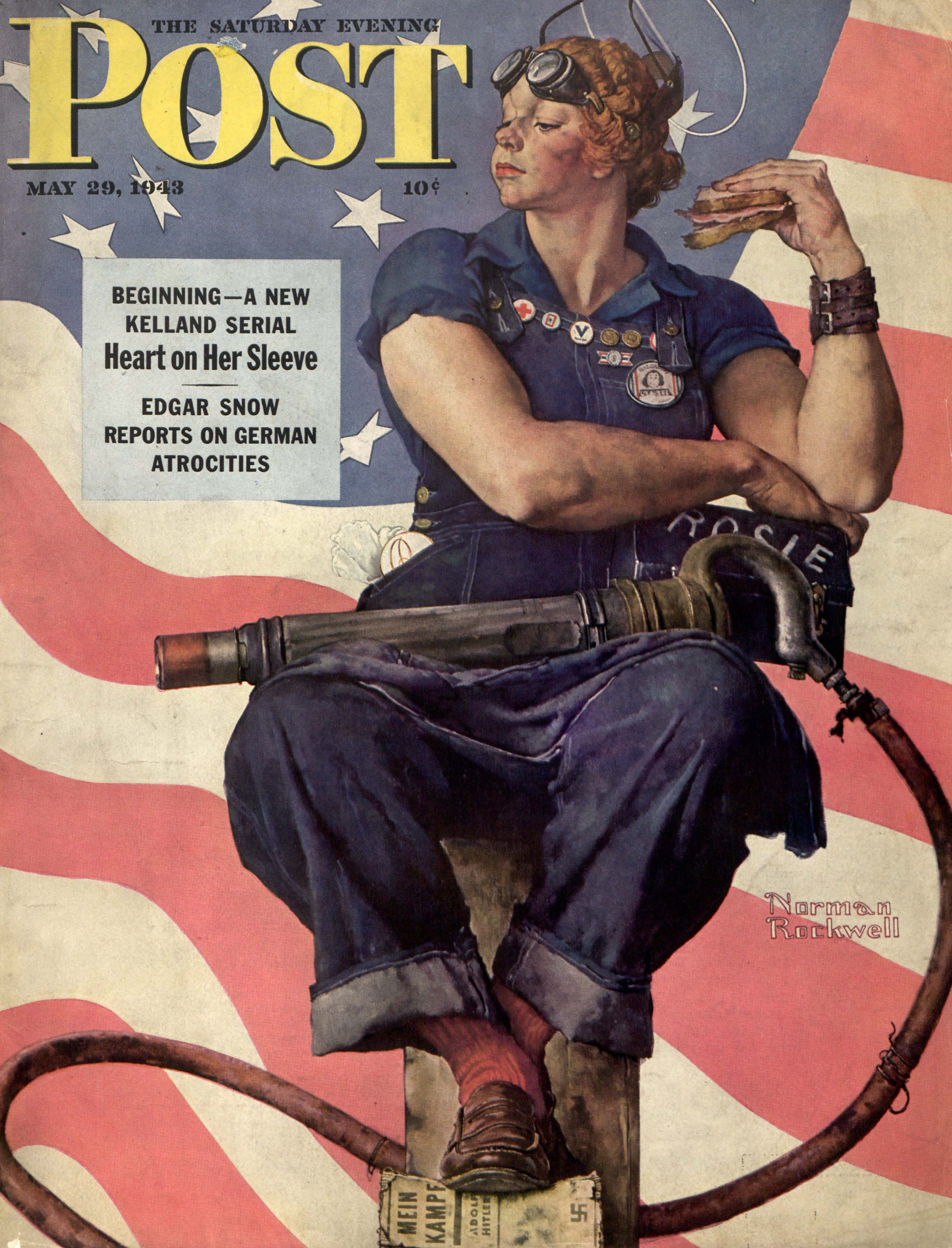
In the March 15, 1953 issue, Parade (this particular copy from The Wichita Sunday Eagle) the Norman Rockwell ads, combined with helpful tips and delicious-looking recipes, show just why this entertaining, yet informative magazine is still around.

Grafic Magazine, an insert in the Chicago Sunday Tribune, was much like its Parade counterpart, published on Sunday and highlighting home tips and entertainment features.These great additions to Sunday newspapers is a tradition that carries on even in the 21st century.

Getting News & Entertainment In “Weekly Time”

Today we experience real time. A family faces down a giant black bear and we watch the fingernail-biting moments while they unfold. But in 1953 that wasn’t an option. Instead, the people got their news a little less instantaneously. With TV newscasts so brief, they may as well not have happened, the American public relied strictly on print. Ink on paper was the internet of the 1950s and a technology that couldn’t be beaten.

So when those daily newspapers and weekly magazines came calling, people couldn’t wait to answer their front doors. Craving information and missing the bells and whistles and notifications of today, they relished these weekly visits from the magazine friends that they loved and trusted.

The Roaring Weeklies

When we look at the roaring weeklies of 1953, we see why they could be called the Internet of 1953, because each magazine gave you a little bit of everything. If you subscribed to Life, not only did someone get 144 pages of great photography, great writing, great stories, but also great advertising with very skillful marketing. People discovered the latest automobile, the latest fashion, the latest everything. It was all there between the pages. People could read about religion, sports, modern living, fashion, science… just a composite of topics. So, the magazines were the Google of the 1953 Internet, with any topic one could imagine available.

Weeklies To The Right, Please…And The Left

Mr. Magazine™  explored his vault extensively to bring you this chapter on the great weeklies of 1953. Looking to the right and to the left, he walked the halls and rooms and searched out the precise magazines talked about here. The experience was most satisfying. While there were lesser-known weeklies alive in 1953, the ones elaborated about in Chapter Three were the major players of that year.

And Next…

The Vault is endless and the doors many. Let us check out the next room… look, it’s the Women’s Magazine sanctuary. Come in and Mr. Magazine™ will introduce you to the Seven Sisters and many of their friends, cousins, and relatives…

To be continued…


h1

The Year Was 1953. The Magazines And I. Chapter Two, Part Three.

July 30, 2020

The Political Front

In the March 16, 1953 issue of Life magazine the cover had Joseph Stalin and Georgy Malenkov, who briefly succeeded Stalin after his death, super-imposed side-by-side in a very striking image. The writer of the cover story was the British author Edward Crankshaw, who was and is known for his writings about Soviet affairs.

Stalin had recently died and Malenkov was preparing to step into the powerful shoes of the deceased leader. Crankshaw had a flair for the dark and conspiratorial atmosphere that surrounded the Kremlin. From the “poisoning doctors” he writes about to the violence and suspicion that encompassed Stalin’s shadow, the author could set the tone and mood of the actual state of affairs in Russia at that time perfectly.

This beautifully done article that mysteriously weaves the historical story of Stalin’s death and life behind the fearful walls of the Kremlin, is a masterpiece typical of the type of authors and stories that Life gave its readers. Stories of substance, images that could take your breath away. As we delve into this fascinating year 1953, we begin to see the importance of magazines throughout that time. There was no Internet and television was just beginning to find its footing to become what it is today, but magazines could take readers on a journey to Russia to get up close and personal with the body of the prone Stalin. Magazines could transport a secretary in Gary, Indiana smackdab into the middle of the Kremlin. It was a magical time for ink on paper.

When Advertising Was King         

Chapter Two, Part Three

During that momentous time, it wasn’t just the content that could be called an influencer, the ads in the magazines were just as important and amazing. With the end of the Korean war and a new president and first lady in the White House, people in 1953 were ready to start spending money and what better way to grab those dollars than advertising in magazines. The time was right and the possibilities unlimited and magazines were the best way to get a product before the eyes of the country.

Lucky Strike cigarettes, where nothing beat better taste, could fill the back cover of a major magazine, tempting people to find out why they had better taste. A full-page ad for Pabst Blue Ribbon beer made people realize how thirsty for yeast and hops they were, and because busy people paused for Coke, Coca-Cola became everyone’s drink of choice, busy or not.

It was an advertiser’s dream come true. The ads worked because there were no taboos, cigarettes and beer were the norm for that era. Health and consequences hadn’t even been thought of yet when it came to smoking and drinking.

But it wasn’t just beer and tobacco products that reigned supreme. There were airline ads, hotel ads, automobile ads, tire ads; you name it. Soon, people were driving new cars, flying everywhere and staying in the best hotels. Advertisements in magazines were raking in money, making publications thrive and educating people about the latest and greatest products and trends.

The Dissemination of Information

Getting magazines in the hand of subscribers has always been vitally important to publishers, and in 1953 that statement was no less true.

Congress legislated postage rates until 1970, keeping magazines and newspapers extremely low, allowing them to travel where they were going very reasonably. In 1953, a first-class postage stamp cost $0.03, but it was only $0.02 to send out a magazine, so getting informational content out to a mass audience was not only cost-efficient, it was necessary.

Magazines For The Readers

Even the United Nations had its own magazine United Nations World that was founded in 1947, redesigned in 1950, and once again went through another revamping in March 1953. The publisher introduced those changes by stating:

United Nations World appears in your home and on your newsstand this month wearing a new dress. As you notice, we have completely redesigned our cover in order to make it modern, distinctive and – we hope – strikingly attractive.

 It is fitting that our “cover girl” for this issue should be Elizabeth II. However, the new design was not created by our artists solely as a setting for beauty and queenly dignity. The format you see will be a permanent one.

 The editors have been experimenting for a long time to find a cover which would reflect the spirit and the contents of UN World. On this page, you will find reproduced a few of the previous covers we have used. We feel that the new design is superior to the others but, of course, we are not unprejudiced. So, since this magazine is published for its readers, we are eager to hear what you think. Will you write and tell us?

 Roger S. Phillips

Publisher

 Reflecting – it appears everyone knows what magazines are excellent at, especially the weeklies of that era… They reflected and ruled the space as the Internet of the 1950s, as we’ll see in chapter three.

Coming soon: Chapter Three


h1

The Year Was 1953… The Magazines And I. Chapter Two, Part Two.

July 28, 2020

Chapter Two, Part Two

The 3-D Movement In Magazines

Magazines have always captured trends and movements as though they had a golden net of what would be important and significant to readers. The 3-D movement was something that became very prominent in the movie industry in the 1950s, so, of course, magazines seized their own part of this lucrative medium, with content such as 3-D movie titles, 3-D comics, and just a variety of 3-D entertainment.

Many 3-D buffs consider the 1950s the “Golden Era” of 3-D, simply because some form of the medium has been around for generations. But in the ‘50s, the art took on a different, more vibrant role with the release of the first color stereoscopic feature. It was an amazing process that the public latched onto and loved. And of course, magazines didn’t waste any time in seeing the unique value of this latest trend. Even today that famous picture from Life magazine, the iconic image of a crowded theater with everyone watching a movie wearing 3-D eyeglasses, is a creative piece that is still shown and of interest to people.

Suddenly, the marketplace was consumed with 3-D magazines: 3-D Movie Magazine, 3-D Dimension, 3-D Pinups and 3-D Screen, even Superman himself appeared in his own 3-D magazine in 1953. Magazine publishers knew a great wave when they saw one, and they could ride it better than anything out there.

In December 1953, Harvey Famous Name Comics put out the first issue of True 3D . On the inside page of the front cover of the magazine, the editors announced their excitement in bringing “the most startling magazine produced in three dimensional illustration by our own exclusive process.” Harvey Comics even had a written statement from two optometrists about the visual benefits of reading the 3-D magazine, which came with its own “magic specs.”

Magazines have truly always been ahead of their time in the way they approach the world around us. And in 1953 in particular, 3-D was a vibrant and lucrative way to entertain readers and moviegoers alike, and magazines embraced this old (movies), but new (3-D) technology.

Magazines: The Internet of The 1950s

From Time to Newsweek, the newsweeklies were flourishing; the general interest titles, such as Life and Look were inimitable in their classy style. All of these magazines from 1953 were so dominant and their content so mesmerizing and the designs so stylish, that one couldn’t help but believe the world of magazines was omnipotent in what it did.

And while television (still referred to as the talking piece of furniture in some ads and articles)  was still in its infancy, magazines were really the Internet of 1953, of the 1950s in general. Magazines connected the entire United States and the world. No matter what your interests were, from fiction to science fiction, true crime to celebrity gossip, magazines covered it, no Google necessary.

The Taboo & The Forbidden

At a time when being gay was not something talked about openly, magazines were still exploring their parameters. Disguised as men’s health or fitness magazines, titles such as Muscle Power and Muscle Man, were, for the most part, gay magazines. The readers were primarily gay men who enjoyed looking at the physiques of other men, but because of the times, publishers gave consumers what they wanted in the form of bodybuilding.

And then in January 1953, the first widely distributed publication for homosexuals in the United States published its first issue. One magazine was born during a time when being openly gay was unheard of. A group from Los Angeles, the Mattachine Society, formed by Communist and labor activist Harry Hay and a group of his friends, was determined to protect and improve the rights of gay men. So, in November 1952 they formed ONE Inc. and began publishing the magazine in the new year.

Being a nonprofit organization, ONE Inc. depended on volunteers for its magazine and asked for different variants, such as circulation and advertising representatives, from each city to which the magazine found its way. The magazine paved the way for the OUTs and The Advocates of today.

One ceased publication in 1967 but lives on today thanks to the University of Southern California, where the ONE Archives Foundation—an institution that researches, curates and collects items of importance to the LGBT world resides just off campus.

The magazine reached many landmarks during its existence, including a United States Supreme Court decision for LGBT rights in the United States with One, Inc. v. Olesen in 1958, which was the first time the Court had ever dealt with a homosexual ruling. The Court reversed a lower court decision that declared One magazine had violated obscenity laws. So, for the first time ever there was constitutional protection for pro-homosexual writing. Magazines have never played around when it comes to standing up for themselves.

And when it came to men’s magazines for the heterosexual male, a woman’s naked body was usually described as art or exposed for health reasons. Magazines such as Health and Efficiency, which was touted as the world’s leading naturist journal, and Sunshine & Health were purported to be totally created for health and wellness reasons, but would have naked women on the cover. That is until Playboy came along in December 1953. Hefner pulled no punches, transforming the idea of looking at naked women as artistic into something erotic.

Of course, times were different in 1953, people had different interests and the world, in general, from politics to the politically correct, was totally distinctive from today. But magazines were there to keep the public informed and entertained, just as they are today.

To be continued…

h1

The Year Was 1953. The Magazines And I. Chapter Two. Part One

July 13, 2020

Chapter Two, Part One

The Year Was 1953…

Change Was the Only Constant

The year was 1953 and it was indeed a pivotal year in history. And while it was certainly a pivotal time for Mr. Magazine™, after all it was the year of his birth – as far as the world goes, the importance of 1953 had more to do with all of the changes that were taking place around the globe, rather than Mr. Magazine’s™ first breath.

In the United States, Dwight D. Eisenhower became the 34th president and in the United Kingdom, Queen Elizabeth II assumed her crown on June 2 following the death of her father, King George VI the previous year, making her one of the youngest queens in history. In the Soviet Union, after over 30 years of ruling with an iron fist, Joseph Stalin died, initiating major changes for that country as well. The Korean War would end that year, and everyone from the East to the West, would witness constant change.

The Societal Mirror Image of Magazines & Their Impact

In the midst of all of these transitions, magazines were reflecting the times perfectly and succinctly. The emergence of a much more dominant type of magazine hit the market in 1953. Two titles that were very important and became a large part of the American magazine scene were TV Guide (April 1953) and Playboy (December 1953). The impact of those magazines was apparent: TV Guide reached a circulation of 18 million, and Playboy 7.4 million.

Niche Has Always Been the Name of The Game                 

However, while those two titles were game changers in the marketplace, taking a look at the many different categories and niche titles that were out there in 1953 is very important and essential, because contrary to popular belief, specialization in magazines started decades before most think it did. With the birth of cable TV in the 1980s, many think niche magazines didn’t actually become prevalent until that decade, due to the many options that cable gave audiences. To combat that choice power the customer suddenly had, publishers realized they could offer the same type of power for readers, so magazines of every genre and subject began to hit newsstands. But that had already happened at least three decades before, maybe even from their inception.

But looking at the magazines of 1953, and specifically from March of that year (the month that Mr. Magazine™ was born) you can see magazines ranging in content from the pure men’s adventure  magazines to the women’s service magazines, to the more specialized titles for gun enthusiasts, motorcyclists, or woodsmen. If there was a topic of interest that people had, there was a magazine on the market for it, even in 1953.

Categories Galore                            

On today’s newsstands, there seems to be a surplus of niche or special interest magazines. Everything from raising chickens in urban settings to the psychological wellbeing of your dog. But special interest titles are far from a new idea. In 1953, there were as many, if not more, special interest magazines in the marketplace as there are today, in the 21stcentury. Titles such as American Woodsman, Modern Airplane News, American Cinematographer, and the list goes on and on. The significant point about this is magazines have known no boundaries when it comes to topics of interest for decades, whatever the reader wants is what you’ll find staring back at you from newsstands, be that a niche genre of information or your more traditional categories of knowledge.

Speaking of traditional categories in 1953, there were women’s service magazines, men’s service magazines, political titles… categories that included science, music, entertainment, both movies and television, children’s magazines, sports magazines, pets, regional titles, every imaginable category that we have today was represented then, along with all of the special interest topics. In fact there were magazines from A (Action) to Z (Zane Grey’s Western) and every thing in between.

Yesterday’s content is as relevant now as it was then simply because it’s still being created today in its current form. The style and the actual information may be different, but the umbrella it sits under is exactly the same. Serving the audience, be it male or female; entertaining children, either through vintage cartoon characters or the latest video games; magazines that bring you the information and fun that you want, whether in yesteryear or the present, cannot be replicated. The words from 1953 are still attainable due to the forever technology of print, and that will be something that people generations from now will be very grateful for, because print will never go away as long as there are human beings around to create it.

Today’s magazine and magazine media industry would be served well if a priority for them consisted of learning from the past. How can you know where you’re going if you don’t understand where you’ve been? This is a question I have long posed.

The Power of a Magazine Introduction

Magazines continued to play that reflective role in society, mirroring all of the changes that were taking place. Whether it was by introducing special issues or covers for notables like President Eisenhower, Queen Elizabeth II, or introducing celebrities and their families, such as the up and coming Marilyn Monroe and Lucille Ball and her husband, Desi Arnaz, nothing could or can compare to the effect magazines had and still have on our perception of the world. Magazines interpret, inform and entertain.

To be continued…


h1

Woman’s Day Magazine’s Content Director, Meaghan Murphy, To Samir “Mr. Magazine™” Husni: “Our Job Is To Be A Beacon Of Positivity.” The Mr. Magazine™ Interview…

July 8, 2020

Publishing During A Pandemic (37)

“I wanted to make the magazine a destination celebration, a place where no holiday is left behind, from Taco Tuesday to Christmas, where we celebrate and find the joy in every single day of our lives. I know the magazine is called “Woman’s Day,” but I want us to think of it as “Woman’s Yay.” Everybody got very excited about that vision for the magazine. I mean, Woman’s Day was doing a ton of things right, but I really wanted to surface the joy and the happiness. What I said to the team was let’s just put everything through a fun filter, anything we’re doing let’s put it through that fun filter and make sure there’s joy, discovery and excitement and energy on every page.” … Meaghan Murphy

“We’re definitely finding the “Yay” across all platforms, but the print edition – when you see this first issue, it’s the kind of thing you’re going to want to put on your coffee table and by your bed. The images are beautiful and happy and it feels like a big sunshiny hug. It is a really bright, colorful, happy magazine. And I think people are really going to be excited about it. I’m very excited about it and I can’t wait to share it.” … Meaghan Murphy

High energy and upbeat. Two descriptions that fit the content director of Woman’s Day magazine to a perfect T. Meaghan Murphy has been at the helm of the brand since right before the pandemic hit, but she was executive editor at Good Housekeeping for years and has a very long and successful career in service journalism, such as her time as the deputy editor and fitness director of Self at Condé Nast.

I spoke with Meaghan recently and we talked about the infusion of joy and happiness that she and her team are bringing to the magazine. Woman’s Day is a legacy brand that has undergone a bit of a change and revitalization, all during a pandemic. But  Meaghan’s energetic and upbeat nature didn’t let a global pandemic stop her, she looked at it as a challenge that would hone the magazine and bring out all the talents her creative team and she had to make Woman’s Day even better.

And now the 37th Mr. Magazine™ interview in the series of Publishing During A Pandemic with Meaghan Murphy, content director, Woman’s Day.

But first the sound-bites:

On reinventing a magazine with the legacy of Woman’s Day during a pandemic: Maybe it’s the okayest of times. (Laughs) I’m going to take the middle road. It was incredibly challenging, but also incredibly fun.

On whether the reinvention started before or during the pandemic: It’s pretty surreal. I got the job right before quarantine, so I was just in the midst of wrapping my head around what Woman’s Day was and what I wanted it to be. I was putting together a team, and the next thing I knew I had my new art director and my new team. I hired someone virtually, from my kitchen table, as my deputy.

On how she approached her new team in that first Zoom meeting with her new ideas for the magazine: I think I just explained that I wanted to make the magazine a destination celebration, a place where no holiday is left behind, from Taco Tuesday to Christmas, where we celebrate and find the joy in every single day of our lives. Everybody got very excited about that vision for the magazine.

On the new message from the reinvented Woman’s Day to its readers and advertisers: I think the message is that there is joy and goodness in every day. And we want the good to be louder, especially in tough times. We want to give you tiny moments of celebration on a daily basis. We have a section of the magazine called the “Smile File” and it’s really based on national days. So, if it’s “National S’mores Day” we’re going to give you an epic new S’mores recipe.

 On what role she thinks print plays in helping people find escape and happiness: We’re definitely finding the “Yay” across all platforms, but the print edition – when you see this first issue, it’s the kind of thing you’re going to want to put on your coffee table and by your bed. The images are beautiful and happy and it feels like a big sunshiny hug. It is a really bright, colorful, happy magazine. And I think people are really going to be excited about it. I’m very excited about it and I can’t wait to share it.

On what role spirituality will play in the new vision for the magazine: It’s very interesting because one of the first things people asked me when I took on this position was if the Bible verse was going away? And I said why would it? It’s something that people love. We have a faith-based readership and it’s something they really care about. So, instead of putting a little Bible verse on the table of contents or by the masthead, I wanted us to really stand for it. Now is a time people really need to have faith more than ever.

On whether the last four months as she planned for this new issue during a pandemic was a walk in a rose garden or there were some challenges along the way: Yes, there were challenges. First of all, I have three kids, a nine, eight and six-year-old. My husband works full-time and I work full-time. We had no help for the first three months, our babysitter wasn’t able to come into the house, so trying to homeschool, build a new team, finish a book, I have a book coming out in February, doing my podcast; I was juggling three jobs and three homeschool educations.

On whether she thinks the changes the pandemic brought about will remain in place even when it’s behind us: It’s the new “new.” I love the scrappiness of it. I get such a jolt at how scrappy we’ve had to be. Our new cover with our fruit rainbow was created in a garage in the Poconos with fruit from a grocery delivery. And it’s epic.

On how Woman’s Day can bring that message of hope and joy to its readers during these troubling and uncertain times: I think we all have this natural negativity bias and you could watch the news all day and feel like crap all day. And I don’t think that’s healthy. We have to have time for that reality every day and then we need to have more time for the opposite of that for our mental health and our sanity. And I don’t think we need to feel guilty about also finding the joy and having fun, just looking at the flip side of all that stuff.

On anything she’s like to add: I’m super excited about the magazine. We have a small and amazing team. I also have a book coming out in February, which I’m really passionate about. It’s called “The Fully Charged Life” and it’s a radically simple guide to having endless energy and filling every day with Yay. And it’s based in positive psychology. It looks at the signs of  positive psychology within different charges of your life and it gives action-packed tips based on my 25 years as a service journalist in magazines.

On what keeps her up at night: One of my superpowers is a shut-off button. I have an ability to power down at the end of the day and just zone out. It might be because I move at a 150 MPH and just wear myself out, but I do think one of my superpowers is an ability to let it go; just to shut off. And then to pick back up the next morning. So, I don’t lose a lot of sleep.

And now the lightly edited transcript of the Mr. Magazine™ interview with Meaghan Murphy, editor in chief, Woman’s Day.

Samir Husni: We’re in the middle of a pandemic. Is this the best of times or the worst of times to reinvent a magazine, especially a magazine with a legacy such as Woman’s Day?

Meaghan Murphy: Maybe it’s the okayest of times. (Laughs) I’m going to take the middle road. It was incredibly challenging, but also incredibly fun.

Samir Husni: Did the reinvention start before or during the pandemic? Did you say, what the heck, I have a new job so let’s the start the magazine over from scratch?

Meaghan Murphy: It’s pretty surreal. I got the job right before quarantine, so I was just in the midst of wrapping my head around what Woman’s Day was and what I wanted it to be. I was putting together a team, and the next thing I knew I had my new art director and my new team. I hired someone virtually, from my kitchen table, as my deputy. So, it was a very crazy process. As magazine editors we’re used to throwing up inspiring visuals on the wall, but this was more Zoom calls. And we had the built-in excuse that if it failed, it was the pandemic. (Laughs)

I made this magazine from my kitchen table. I went into it pretty fearless, realizing that it was the most insane circumstances under which to take on a new job and to reinvent a legacy brand. So, I said what the heck, I have absolutely nothing to lose, it’s a crazy scenario.

Samir Husni: How did you approach your new team during that first Zoom meeting? New leader, new ideas – how did that go?

Meaghan Murphy: I think I just explained that I wanted to make the magazine a destination celebration, a place where no holiday is left behind, from Taco Tuesday to Christmas, where we celebrate and find the joy in every single day of our lives. I know the magazine is called “Woman’s Day,” but I want us to think of it as “Woman’s Yay.” Everybody got very excited about that vision for the magazine. I mean, Woman’s Day was doing a ton of things right, but I really wanted to surface the joy and the happiness. What I said to the team was let’s just put everything through a fun filter, anything we’re doing let’s put it through that fun filter and make sure there’s joy, discovery and excitement and energy on every page.

My team had already seen me dancing around the hallways as the executive editor of Good Housekeeping, so they knew my energy. And knew that I wanted to bring that energy to the magazine. Woman’s Day was doing a great job, but I wanted to give it a little lightning bolt zap and fully recharge it. That’s kind of what I’m known for.

Yay is my favorite word. I do something called the “Yay List” which is like a virtual gratitude item, asking people to find the good in everything. So, I wanted to bring that Yay to “Woman’s Yay.”

Samir Husni:  What is the new message from the reinvented Woman’s Day to your readers and advertisers?

Meaghan Murphy: I think the message is that there is joy and goodness in every day. And we want the good to be louder, especially in tough times. We want to give you tiny moments of celebration on a daily basis. We have a section of the magazine called the “Smile File” and it’s really based on national days. So, if it’s “National S’mores Day” we’re going to give you an epic new S’mores recipe. If it’s “National Swimming Pool Day” and we know you can’t get to a swimming pool, we’re going to give you the coolest sprinkler for your backyard to make that more fun.

On “National Junk Food Day” we’re going to ask you to match the celebrity to their favorite junk food. On “National Book Lover’s Day” we’re going to give you the ultimate beach reading list. It’s really about realizing that every day, every second, you have a choice to find the good and to celebrate life. We lead with love and we look at the world through that fun filter. And I really want Woman’s Day to be an escape for people. A place where you can go to feel happy and excited; to forget for a second everything that’s going on in the world and everything that could be bringing you down. To escape the news cycle.

Samir Husni: What role do you think print plays in helping people to escape and find that happiness and joy?

Meaghan Murphy: We’re definitely finding the “Yay” across all platforms, but the print edition – when you see this first issue, it’s the kind of thing you’re going to want to put on your coffee table and by your bed. The images are beautiful and happy and it feels like a big sunshiny hug. It is a really bright, colorful, happy magazine. And I think people are really going to be excited about it. I’m very excited about it and I can’t wait to share it.

Samir Husni: I’ve heard that you’re also adding a chief spiritual editor; there’s been a Bible verse by the masthead in every issue since the magazine started. What role will spirituality play in the new vision of the magazine?

Meaghan Murphy: It’s very interesting because one of the first things people asked me when I took on this position was if the Bible verse was going away? And I said why would it? It’s something that people love. We have a faith-based readership and it’s something they really care about. So, instead of putting a little Bible verse on the table of contents or by the masthead, I wanted us to really stand for it. Now is a time people really need to have faith more than ever.

So, I tapped my friend  Candace Cameron Bure, who is someone I’ve always admired for her strong faith and her commitment to her family. I told her that I would love to give her an opportunity every month to share a Bible passage that was meaningful to her and to talk about how it shaped her life, then invite other people into that conversation.

Some of the things that do incredibly well for us digitally are our Bible verses. Bible verses for hope in trying times; Bible verses for love. So, it was something that I felt was very important to stand for and to shine a light on. And to bring it further into the conversation versus a small Bible verse kind of buried in the front of the book. If this matters to our readers, I want to make it louder. Candace was honored and incredibly thrilled to be able to have this platform to speak about her faith because it is so important to her.

Samir Husni: Have the last four months, as you planned for this first new issue during a pandemic, been a walk in a rose garden for you or were there some challenges along the way?

Meaghan Murphy: Yes, there were challenges. First of all, I have three kids, a nine, eight and six-year-old. My husband works full-time and I work full-time. We had no help for the first three months, our babysitter wasn’t able to come into the house, so trying to homeschool, build a new team, finish a book, I have a book coming out in February, doing my podcast; I was juggling three jobs and three homeschool educations. My husband is amazing, he cooks dinner and that’s our secret sauce because I don’t do any cooking, but I will share great recipes in Woman’s Day for my husband to make.

So, there were endless challenges. It’s almost laughable. I’d think how did I do that? That was nuts! It’s really been a surreal trajectory, but I’m also really grateful for the new perspective. I realize that I don’t need to commute to the city five days a week to make a killer magazine. I think it will forever change the way that I work, even when we’re back in the Tower. I don’t see myself commuting five days a week. We’ve done an incredible job remotely. We’ve been a very nimble, small, but mighty team.

And I’m really grateful for the time I’ve gained with my family. Family dinners weren’t something that we were able to have every night before this, because I was commuting from the city, my husband was commuting home from Princeton. But now Taco Tuesday is a national holiday at Team Murphy house. Every Taco Tuesday since the beginning of the pandemic, we’ve added a decoration, just other elements, to it. I have many sombreros for the night. We have taco napkins and plates; my daughter made garland. We made our own placemats. My kids are always saying when the pandemic is over, we can never walk away from Taco Tuesday again. And I say don’t worry we won’t.

It’s also sort of informal the way I’m making the magazines. In our recipe section “What’s For Dinner Tonight?” we still have the amazing 20-minute meals that you can put on the table, but we added an element that became incredibly important to me, with the eye-opening experience of the pandemic and the return to family. We have “Table Talk.” You’re eating with people and you’re engaging and communicating. It’s these moments of family and connection and engagement that are really going to get us all over these tough times.

Samir Husni: What are your expectations for the future? Do you think that the changes that the pandemic has brought about will remain in place even when it’s behind us?

Meaghan Murphy: So, it’s the new “new.” I love the scrappiness of it. I get such a jolt at how scrappy we’ve had to be. Our new cover with our fruit rainbow was created in a garage in the Poconos with fruit from a grocery delivery. And it’s epic.

I’m so proud of this magazine. We did it and we wouldn’t have gotten that same sense of accomplishment if it had been easy. When things are hard, it just makes it that much more awesome when you succeed. And we even changed the logo. It’s just so exciting. I can’t wait to frame it in my office. We looked back at the 1950s and some old iterations of Woman’s Day and did some of that.

And my favorite thing about the magazine is there are little moments of discovery on every page. You’ll notice a little flag that reads “Yay” on a watermelon. There are these little moments of joy throughout. My other favorite section is called “Hello, That’s Adorable.” It’s the wreath of the month on a front door. And because it’s a front door, every month it says “Knock, knock, we’ve got a joke for you.” And there’s a joke on the door. The wreath is a flamingo and we made it in quarantine and shot it somehow. And we asked what’s the opposite of a flamingo? A fla-ming-stop. (Laughs)

Samir Husni: How can Woman’s Day bring that message of hope and joy to your readers during these troubling and uncertain times?

Meaghan Murphy: I think we all have this natural negativity bias and you could watch the news all day and feel like crap all day. And I don’t think that’s healthy. We have to have time for that reality every day and then we need to have more time for the opposite of that for our mental health and our sanity. And I don’t think we need to feel guilty about also finding the joy and having fun, just looking at the flip side of all that stuff. There is a lot that sucks right now; there’s a lot that’s tough and hard. And if that’s all you dwell on and you just live in that place, you’re going to be miserable. And miserable people don’t change the world.

It’s okay to be positive and it’s okay to find moments of joy and to celebrate. Celebrations are good for our mental and physical health. We cannot allow ourselves to only be sucked into that negative vortex. It’s so easy to find the bad right now because the bad is so very loud. Our job is to be a beacon of positivity and to give people moments of reprieve from that.

Samir Husni: Is there anything you’d like to add?

Meaghan Murphy: I’m super excited about the magazine. We have a small and amazing team. I also have a book coming out in February, which I’m really passionate about. It’s called “The Fully Charged Life” and it’s a radically simple guide to having endless energy and filling every day with Yay. And it’s based in positive psychology. It looks at the signs of  positive psychology within different charges of your life and it gives action-packed tips based on my 25 years as a service journalist in magazines.

It all spring boarded from an article I wrote for Cosmo called “The Seven Secrets of Happiness” many years ago that finally flipped a switch for me that happiness is a choice and there are exercises and things that we can do to move toward happiness. That book and the tips and strategies in there have 100 percent informed everything that I’m doing with my team. When I’m coaching them through tough days and when we’re weathering some tough storms. It’s not easy to work remotely with everyone having different challenges. I’m using all those tips and strategies to do this. And it really does inform where Woman’s Day has come.

Samir Husni: My typical last question; what keeps you up at night?

Meaghan Murphy: One of my superpowers is a shut-off button. I have an ability to power down at the end of the day and just zone out. It might be because I move at a 150 MPH and just wear myself out, but I do think one of my superpowers is an ability to let it go; just to shut off. And then to pick back up the next morning. So, I don’t lose a lot of sleep.

That’s not to say I don’t have worries during the day and I’m not fully aware of the challenges that life is bombarding us with right now, but I have found an ability to say it’s time to let go and recharge and pick it back up in the morning.  I sleep like a baby.

Samir Husni: Thank you.

h1

During A Pandemic, The Land Report Magazine Publishes Its Largest Issue Ever. The Mr. Magazine™ Interview With Eric O’Keefe, Founder & Editor, And Eddie Lee Rider, Founder & Publisher…

June 11, 2020

Publishing During A Pandemic (36)

“Our goal is to educate individuals on the attractiveness of land as a long-term investment. That’s really what we’re about. What we focus on is finding those stories that show how people have pursued and developed a strategy with their land and what kind of returns they’ve enjoyed with their land.” … Eric O’Keefe

“We have targeted those private jet terminals in highly-trafficked areas that meet our demographic: Rocky Mountain states, Southeast, Northeast Corridor, and Texas, that’s where you can find our publication, especially now when the commercial air traffic has been so reduced, private air traffic is still moderately healthy. I believe the print product is extremely relevant for us and our audience.” … Eddie Lee Rider

Even during a pandemic, people are investing in, buying and maintaining land. And The Land Report is the magazine that profiles passionate landowners, identifies investment opportunities, explains ways to improve and conserve land, provides legislation updates, and highlights outdoor gear and equipment. I spoke recently with Eric O’Keefe, editor and founder and Eddie Lee Rider, publisher and founder of the brand and we discussed the operating of a brand during the pandemic.

For the most part, both the powers-that-be at The Land Report told me that business as usual has been the norm for them, except for the event space, which of course isn’t happening right now. But the hopes are that the events will be back up and going very soon and The Land Report can get back to 100 percent, because after all it is the magazine of the American Landowner.  In fact, The Land Report just uploaded their latest issue with 160 pages plus covers, “the largest ever for us,” says Eddie.

And now the 36th Mr. Magazine™ interview in the series of Publishing During A Pandemic with Eric O’Keefe, editor and founder, & Eddie Lee Rider, publisher and founder, The Land Report.

Eddie Lee Rider, Jr. and Eric O’Keefe

But first the sound-bites:

On how The Land Report has been operating during the pandemic (Eric O’Keefe): I don’t mean to sound unrealistic, but it’s been better than ever. From the editorial side, everything can be done from layout assignments, proofing, production, all of those elements can be done from home. Eddie, I’ll invite you to talk about our sales numbers.

On how The Land Report has been operating during the pandemic (Eddie Lee Rider): From last spring to this spring, we saw an increase in our ad revenue of a little over 75 percent, closer to 80 percent actually. It’s been remarkable. We have two full-time employees, everybody else connected with the business is a contract employee, freelancer or independent rep. Our business has not changed at all during this situation.

On why The Land Report in a printed format is relevant during these uncertain times (Eddie Lee Rider): Our demographics skew toward an older reader, our average reader the last time we did some surveys was 62-years-old. They like a print product. And our distribution lends itself to print in that we have teamed up with Sandow Media to distribute our publication through Signature FBOs (Fixed Based Operation) across the country. I believe the print product is extremely relevant for us and our audience.

Eddie Lee Rider

On any challenges they’ve had to face during the pandemic (Eddie Lee Rider): The first for me as publisher and head marketer of the publication was how do you get your editorial product, your advertisers’ marketing, into the hands of the most qualified potential investors and buyers? We tried the newsstand and that wasn’t a fit; you’re not going to generally find someone in a typical Barnes & Noble who is looking for a $3 million ranch.

On any challenges they’ve had to face during the pandemic (Eric O’Keefe): I’d just like to follow-up on your point, Eddie. We have a major client, a very well-known player in the industry, whose point is his company spends millions every year on marketing. And they know that two-thirds of their closed transactions will come from their own Rolodex. And his point to me and Eddie is how do I find that last 10 percent, and that’s where we come in. We are the ones who have created a distribution model that has effectively provided a portion of that 10 percent to get the client the right eyeballs on that property. And at the end of the day that’s what it’s all about, getting our magazine into the right people’s hands.

On whether there are any changes in store for them beyond the pandemic (Eric O’Keefe): I think it’s business as usual for us. When I look at all of the elements, whether it’s the marketing side – we never took up your brilliant suggestion. You had said that this magazine was made for a trade show. And something that included a lot of land-related vendors. And we never went that route. I think what you will see more of from our standpoint is, we’ve had some exceptional success with Land Report broker events by invitation only.

On whether there are any changes in store for them beyond the pandemic (Eddie Lee Rider): We have an event scheduled for the middle of July. These events are paid for by a single broker or brokerage and they hire us to do an event where we develop an invitation list of other brokers that have their own deep Rolodexes. We fly everybody into a location that’s normally a 24 to 48 hour event. We cover all of the accommodations and transportation. We have photographers on the ground, videographers. We get content for the magazine. By touring the property it creates a networking event, nobody else in our space is doing it. We’re averaging maybe one event per quarter.

Eric O’Keefe

On what keeps them up at night (Eric O’Keefe): On my part it’s always accuracy. The magazine has to be 100 percent spot-on and because it’s land, a lot of the minutiae is buried in public records. Fortunately, more of them are coming online and you can access them, but we’re the authority and we need to be 100 percent accurate. So that’s what keeps me awake at night.

On what keeps them up at night (Eddie Lee Rider): For me, I’m always worried about how do I get my advertisers’ marketing into the right hands. I mentioned that we have these relationships with these event companies, and obviously they’re not having events right now. They can’t meet in person. So, they’re meeting virtually. I’m reaching out and asking if we can get a mailing list of the people who will be attending the virtual conference and can we get a magazine into their hands?

And now the lightly edited transcript of the Mr. Magazine™ interview with Eric O’Keefe, editor and founder, The Land Report & Eddie Lee Rider, founder and publisher.

Samir Husni: How has it been publishing The Land Report during the pandemic?

Eric O’Keefe: I don’t mean to sound unrealistic, but it’s been better than ever. From the editorial side, everything can be done from layout assignments, proofing, production, all of those elements can be done from home. Eddie, I’ll invite you to talk about our sales numbers.

Eddie Lee Rider: From last spring to this spring, we saw an increase in our ad revenue of a little over 75 percent, closer to 80 percent actually. It’s been remarkable. We have two full-time employees, everybody else connected with the business is a contract employee, freelancer or independent rep. Our business has not changed at all during this situation.

The land business has been extremely resilient. It is the ultimate social distancing, to have a piece of land, to have a cabin, to have a ranch, somewhere you can grab the kids and the family dog, grab some groceries and get out of Dodge for a few days or weeks if you can. Our clients are having a lot of success in this environment and it’s proving itself in our advertising numbers.

Eric O’Keefe: One thing to keep in mind is that we’ve been through the Great Recession of 2008-2009, we saw the dotcom bubble burst in the late 1990s, we’ve seen a whole wave of magazines come and go, we’ve seen a lot, and so much of it in my opinion is the fickle finger of fate. Are we in the right niche at the right time? And that will determine quite often whether one succeeds or fails. Right now when people are looking to shelter in place and they want to do it in a manner that gives their families an opportunity to enjoy the outdoors and be healthy, that falls right into our laps.

We have an article on social distancing in Montana. Some of our biggest advertisers, our best sources of anecdotal data are in Montana and they have certain markets where there’s no inventory available anymore. They have completely sold out. So I say that to compare to the Great Recession 10-12 years ago when you were actually seeing brokerages take it on the chin and brokerages and land-related advertisers are base, and they took it on the chin in 2008 and now they are seeing an acceleration of business. There are all sorts of numbers to support it, leads, web traffic, as well as sales. So, I really feel that we’re fortunate in that regard.

Samir Husni: You deal with something tangible; you deal with land. Why do you think The Land Report as an ink on paper platform is relevant, since everyone can do everything virtually these days? Going out and actually experiencing the land in person isn’t the same as a virtual tour of that same land, is it the same for the printed magazine experience?

Eddie Lee Rider: Our demographics skew toward an older reader, our average reader the last time we did some surveys was 62-years-old. They like a print product. And our distribution lends itself to print in that we have teamed up with Sandow Media to distribute our publication through Signature FBOs (Fixed Based Operation) across the country. We have targeted those private jet terminals in highly-trafficked areas that meet our demographic: Rocky Mountain states, Southeast, Northeast Corridor, and Texas, that’s where you can find our publication, especially now when the commercial air traffic has been so reduced, private air traffic is still moderately healthy. I believe the print product is extremely relevant for us and our audience.

Eric O’Keefe: With the addition of drones, you can take a virtual tour, it offers a real opportunity from a seasonal standpoint, if you’re looking at beautiful meadows in the middle of winter when it’s a snow filled Colorado ranch…so now you have to actually see what the ranch is about. So, I think it’s been a tool for that. Also one of the things that we do is we profile individuals who have a passion for a certain piece of property. That could be something historic in Mississippi, someone could be multigenerational on a plantation, someone could be multigenerational in a New England small town.

One of the things that we do, which is unlike anyone else in our space, is we have strong editorial content. There are a lot of magalogs out there that produce ad after ad after ad, and quite honestly, we know them all. And some have told us that they don’t want editorial. They want a picture book for then people to go to the website and do exactly what you’re talking about.

I’ll share another profile; it’s a $70 million piece of property that has just come to market in Virginia. It’s 7,000 acres between Charlottesville and D.C. And it’s gorgeous. It was assembled by a very passionate land steward. It is immediately adjacent to the first city of Washington and the nation, that George Washington himself actually surveyed in the 1740s. That can’t be so effectively communicated in a normal page view.

Forgive me for going off base here, but in the 1950s TV really accelerated. And the movie industry saw it as a threat. Suddenly, movies were trying to distinguish themselves. You had two and three hour movies, things like that. And you had all those multi-surround sounds and other items. I don’t see the online as a threat in that fashion. I see it as an enhancement. If you’re building a case for yourself to buy a piece of property, you’re going to look at the broker’s webpage, you’re going to read more about it in The Land Report, and then you might go to USDA figures online or take a look at what sort of values have been developed over the years by Mississippi State.

That’s one of the things that we really have in our favor is that land as an asset has been tracked, it’s values have been tracked by all of these state colleges, so we don’t have to replicate that information. We don’t have to say “according to a Land Report study,” it’s all out there. And these are top-tiered schools, so we can then use that to make our case about land’s resilience. When you’re looking at land for the most part, you want as many inputs as possible. And we’ve established ourselves as a key input.

Eddie Lee Rider

Samir Husni: What are some challenges you’ve had to face during this pandemic and how did you overcome them?

Eddie Lee Rider: The first for me as publisher and head marketer of the publication was how do you get your editorial product, your advertisers’ marketing, into the hands of the most qualified potential investors and buyers? We tried the newsstand and that wasn’t a fit; you’re not going to generally find someone in a typical Barnes & Noble who is looking for a $3 million ranch.

We’ve gone through different phases. After 11 or 12 years, we’ve found a really great formula of these private jet terminals, a data base that has evolved over those years, rural land professionals that can refer each other back and forth. The Wall Street Journal and other papers that can do home delivery of our magazine in key markets  from time to time, depending on what issues we’re doing. For  instance, the Texas issue that just came out, that was home delivered via The New York Times weekend newspapers in Houston and Dallas to select high net worth zip codes.

We’ve also developed a relationship with companies that put on conferences for family offices. Wealth management companies; we distribute our publication at those events. So, it’s really evolved into this mix of where can we get our publication into the most prequalified hands? And I think that our advertisers see that effort from us and they see the results from their phones ringing.

Eric O’Keefe: And I’d just like to follow-up on your point, Eddie. We have a major client, a very well-known player in the industry, whose point is his company spends millions every year on marketing. And they know that two-thirds of their closed transactions will come from their own Rolodex. And his point to me and Eddie is how do I find that last 10 percent, and that’s where we come in. We are the ones who have created a distribution model that has effectively provided a portion of that 10 percent to get the client the right eyeballs on that property. And at the end of the day that’s what it’s all about, getting our magazine into the right people’s hands.

Our goal is to educate individuals on the attractiveness of land as a long-term investment. That’s really what we’re about. What we focus on is finding those stories that show how people have pursued and developed a strategy with their land and what kind of returns they’ve enjoyed with their land. And there are all sorts of effective strategies for preserving wealth via land that may not be available to you via your house there. It may not be available to you via your financial assets, but land on the other hand can be managed very effectively, in terms of minimizing  estate taxes and lowering value.

Eddie Lee Rider, Jr. and Eric O’Keefe

I’ll give you an example, conservation easements, which could benefit a family that has income through another source; a 1031 exchange, which is basically when you sell a piece of income-producing property like land, you’re not taxed if you buy another larger parcel. These are not available to people who normally invest in markets.

And yes, you have a downside to land. Probably the most obvious one is ill equity, you can’t buy and sell tens of thousands or even 10 acres quickly. Land is typically established as an anchor for a portfolio. It’s not meant to day trade. This market and what’s been going on with the pandemic, one of the reasons why it’s fascinating to me from a transaction standpoint is some people are actually trying to liquidate some of their more valuable property so that they can go into the equities markets because the opportunities were so great there. And they can get back into the land, but the stock market was down at 17,000 after being close to 30, and you just knew it was going to come back.

From my standpoint, Eddie elaborated on getting it into the right hands and yes, we made all sorts of direct mail pitches that were complete belly flops, just negative responses. But from the editorial side, it is such a rich, uniquely American asset. I was talking with someone recently and before women got the right to vote they could own land. What’s the first asset that a freed slave could own? They could go west and they could own land by the Homestead Act.

There are just so many elements, older elements and newer ones. Eddie and I are constantly getting stories of who’s buying what great pieces of property. When we launched you may have seen our stories on Ted Turner and then John Malone became the nation’s largest landowner.

Now you have people like Jeff Bezos who is launching his rockets from his 400,000 acre ranch. Another land story. So, what are you going to do on your piece of land, that’s my approach. Are you going to launch rockets or raise elk or are you going to fly fish or track migrating birds? And the fact that Eddie and I have, what we call “permission givers” in terms of a Jeff Bezos or a Ted Turner, some of these very large operators that get us eyeballs, makes it very easy from the editorial side.

Samir Husni: As we look beyond the pandemic, any changes in store or will everything move forward in the same way?

Eric O’Keefe: I think it’s business as usual for us. When I look at all of the elements, whether it’s the marketing side – we never took up your brilliant suggestion. You had said that this magazine was made for a trade show. And something that included a lot of land-related vendors. And we never went that route. I think what you will see more of from our standpoint is, we’ve had some exceptional success with Land Report broker events by invitation only. So, we’re going to do more of our events, where we actually go and preview a property with brokers. And we show them what’s coming to market or what’s on market.

Those will obviously take place more frequently, but other than that, I think it will be business as usual.

Eddie Lee Rider: I totally agree. We have an event scheduled for the middle of July. These events are paid for by a single broker or brokerage and they hire us to do an event where we develop an invitation list of other brokers that have their own deep Rolodexes. We fly everybody into a location that’s normally a 24 to 48 hour event. We cover all of the accommodations and transportation. We have photographers on the ground, videographers. We get content for the magazine. By touring the property it creates a networking event, nobody else in our space is doing it. We’re averaging maybe one event per quarter.

These events us with content and help us to create working events for our brokers who many times know about each other, but they’ve never really met. We bring them in from all over the country. It’s a very successful model for us.

Samir Husni: My typical last question, what keeps you both up at night these days?

Eric O’Keefe: On my part it’s always accuracy. The magazine has to be 100 percent spot-on and because it’s land, a lot of the minutiae is buried in public records. Fortunately, more of them are coming online and you can access them, but we’re the authority and we need to be 100 percent accurate. So that’s what keeps me awake at night.

Eddie Lee Rider: For me, I’m always worried about how do I get my advertisers’ marketing into the right hands. I mentioned that we have these relationships with these event companies, and obviously they’re not having events right now. They can’t meet in person. So, they’re meeting virtually. I’m reaching out and asking if we can get a mailing list of the people who will be attending the virtual conference and can we get a magazine into their hands? Can we partner more with papers to do the home delivery?

I’m constantly obsessed with how I get my marketing partners’ messages into the right hands. And that’s what keeps me up at night, but I think we’re doing a job of overcoming that.

Samir Husni: Thank you both.


h1

Stephen Bohlinger, Senior Vice President Group Publisher, Better Homes & Gardens To Samir “Mr. Magazine™” Husni: “We’re Staying The Course As A Monthly, Staying At 7.6 Million Rate Base.” The Mr. Magazine™ Interview…

June 5, 2020

Publishing During A Pandemic (35)

“I believe there will be a resurgence for print and that this will be a great time for the industry, a great time for iconic, 100-year-old, heritage brands like Better Homes & Gardens, which is 100 percent relevant today. We reach 8.2 million millennials, and the leading millennial is turning 40. People always say that millennials aren’t going to buy homes  but guess what? They’re not only buying homes. They’re buying their second homes. There are 40-year-olds who are buying their second home right now.” … Stephen Bohlinger

“What we are seeing is some great things with our consumers. The renewals are pacing in the double digits; the direct mail efforts are up 11 percent, proving the power of print. They’re voting with their wallets, the magazine store has recorded nine straight weeks of growth, up 47 percent and the Amazon sub orders have seen eight straight weeks of growth, up 76 percent. So, that’s a good sign. We’re going to have to weather the storm on the ad revenue, but we are getting more from the consumer. That’s why we’re staying the course as a monthly, staying at 7.6 million rate base.”… Stephen Bohlinger

Content drives Meredith Corporation, quality, relevant content. And never has that been more evident than with Better Homes & Gardens, Southern Living and Traditional Home, three Meredith brands that are weathering the pandemic storm quite admirably. Stephen Bohlinger is Senior Vice President Group Publisher for the trio of titles and is happy to report that things are moving along very well during these uncertain times.

“This is a wonderful time for our brands – Better Homes & Gardens, Southern Living and Traditional Home. Why is it a wonderful time? Because not only are we going home, but most of our readers and advertisers are doing the same.”

I spoke with Stephen recently and he shared that comment and many more with me during our conversation. As always, it was a pleasure to hear from the powers-that-be at Meredith, especially to find out the pandemic may have presented its challenges, but it hadn’t stopped the company from doing what they do best: putting out quality content without disruption.

And now the 35th Mr. Magazine™ interview in the series of Publishing During A Pandemic with Stephen Bohlinger,  Senior Vice President Group Publisher, Better Homes & Gardens, Southern Living and Traditional Home.

But first the sound-bites:

On how the business has been operating during the pandemic: First and foremost, I’ve been commuting, working and living out of the mecca New York City since 1985, so I lived through recessions, 9/11 and the banking crisis, but this is unprecedented. I’ve never seen anything like this. We went from 100 percent seated across the country – all of our offices – to 100 percent home in the snap of a finger within 24 hours. The first thing that we needed to do was adjust quickly. There was no script, no game plan that we could refer to because this had never been seen before; we’d never done this before. Certainly, I hadn’t seen it.

On whether they have had to change any magazine frequencies because of the pandemic: We talked to our CEO, Tom Harty, and my boss, Doug Olson, and we looked at every single element: frequency, rate base, print, bind and mail. We realized that this is a wonderful time for our brands – Better Homes & Gardens, Southern Living and Traditional Home. Why is it a wonderful time? Because not only are we going home, but most of our readers and advertisers are doing the same. They’re sitting at home and as they look at their four walls, they’re realizing that they might need a paint job. Or they need to redo their kitchen. And they can achieve these goals by spending time with our powerful and relevant brands which are now UP with readers spending 33 minutes per issue with Better Homes & Gardens.

On whether he thinks people will rediscover print once the pandemic is behind us: Yes, I really do believe so. I believe there will be a resurgence for print and that this will be a great time for the industry, a great time for iconic, 100-year-old, heritage brands like Better Homes & Gardens, which is 100 percent relevant today.

On if he feels running the company during a pandemic has been a walk in a rose garden or very challenging: It hasn’t been a walk in a rose garden, no. It’s been a challenge since day one, but I’m the son of a coach. My dad was an educator like you, a gym teacher and coach, and he always taught me to stick to your heart and stomach and call it guts. And, that’s what we did. The best thing for us – and what allowed us to avoid that “this is too much” moment – has been the communication and the relationships we have at the Meredith Corporation.

On whether he thinks working from home will become the new “normal” indefinitely: I’m all about the high-five, the hug and the pat on the back, and there’s nothing ever that will replace a face-to-face meeting with a client, breaking bread with them over lunch, or going to a ballgame with them or playing golf with them. This is a relationship business and it has been since day one. I always tell my team that you’re only as good as your reputation and you’re only as good as the relationships you can build and keep.

On the budget for this fiscal year: When the pandemic hit there were certainly advertisers out of the game, and that put a pause on spending. So, we’re not going to reach budget where we were year over year. We’re always compared by what we did the year before, and the June issue was the first issue where we saw advertisers taking a pause.

On anything he’d like to add: We’re an omni-channel experience, so this is a brand that has many touchpoints. We have a huge content licensing business with Walmart. We have BH&G Real Estate, which is doing extremely well. What’s also performing at its highest level and is showing amazing growth is digital, with BH&G’s highest traffic since 2015, at more than 17.7 million visits.

On what keeps him up at night: It’s the health and wellness of my team across the board. Most of my team members, as I said earlier, are hardworking mothers, and the majority of those in New York commute, so that in and of itself is a challenge. I just worry about them and their families. Some are also caring for their parents. Some staff members lost their grandparents here in the New York metropolitan area, which was very sad. I worry about them and the disruption they may face in their lives.

And now the lightly edited transcript of the Mr. Magazine™ interview with Stephen Bohlinger, Senior Vice President Group Publisher, Better Homes & Gardens, Southern Living and Traditional Home.

Samir Husni: How are you adjusting as group publisher of Better Homes & Gardens, Southern Living and Traditional Home during this pandemic?

Stephen Bohlinger: First and foremost, I’ve been commuting, working and living out of the mecca New York City since 1985, so I lived through recessions, 9/11 and the banking crisis, but this is unprecedented. I’ve never seen anything like this. We went from 100 percent seated across the country – all of our offices – to 100 percent home in the snap of a finger within 24 hours. The first thing that we needed to do was adjust quickly. There was no script, no game plan that we could refer to because this had never been seen before; we’d never done this before. Certainly, I hadn’t seen it.

We needed to be really nimble and to adjust rapidly because we knew we had to continue doing business. And I am amazed at how our team has responded. Most of the people on my team are working mothers, so they were not only disrupted in their own work environment, but they were disrupted at home. They were disrupted with their kids, who were no longer going to school and were now at home, so they were taking care of their children and, in some cases, their parents as well. So, I’ve just been amazed at how nimble and quick they’ve been able to adjust to the new world of working from home while still serving our clients’ needs.

The good news is that we have phenomenal relationships with our clients and our agency partners and that translated very well. We were able to do calls on Zoom/Webex and see one another, so we were practicing social distancing and didn’t have to wear masks. We were able to get business done productively and efficiently. It happened overnight, and the team responded seamlessly.

Samir Husni: Have you had to change any frequencies with your magazines due to the pandemic or make any tough decisions?

Stephen Bohlinger: Great questions and ones we took to the highest level. We talked to our CEO, Tom Harty, and my boss, Doug Olson, and we looked at every single element: frequency, rate base, print, bind and mail. We realized that this is a wonderful time for our brands – Better Homes & Gardens, Southern Living and Traditional Home. Why is it a wonderful time? Because not only are we going home, but most of our readers and advertisers are doing the same. They’re sitting at home and as they look at their four walls, they’re realizing that they might need a paint job. Or they need to redo their kitchen. And they can achieve these goals by spending time with our powerful and relevant brands which are now UP with readers spending 33 minutes per issue with Better Homes & Gardens.

Better Homes & Gardens is a 100-year-old brand and has historic archives to reflect on. Our editor in chief, Stephen Orr, is an amazing leader. We’ve been together for five years, and I just love him as a person, a friend and certainly as the leader of the largest monthly magazine in the world. We’re 12 times per year; the readers want and need our brand and so it makes perfect sense to continue with this monthly frequency. The brand is more relevant today than ever before so let’s stay the course and deliver a great product they demand. When we looked at the rate base, which we do every year – it’s 7.6 million – it made sense financially. This is a juggernaut for the Meredith Corporation; it’s such a big brand reaching 43 million fans and followers. So it made perfect sense to continue delivering the rate base of 7.6 million and sending that to the homes of our consumers 12 times per year.

Yes, it made sense financially, but even more important is that the content is more relevant today than it has ever been. Given this time and this pandemic, people looking inward, people are returning to their homes and doing things they may never have done, I feel this is a resurgence for print. I see this as a great time for our industry because people are sick of looking at a screen every day, sick of leaning in, seated looking at a screen. And at night, they’ve seen every Netflix show. I’ve seen it with my own children. They’re millennials and would rather curl up and read a book after a long day than looking at a screen, They want to close the computer, put the phone away. That’s wonderful to see and it’s great for our brands.

Samir Husni: As you move forward and this pandemic is behind us, do you think this resurgence will continue and people will rediscover print after spending so much time with screens? After the virtual for so long, will they be looking for reality?

Stephen Bohlinger: Yes, I really do believe so. I believe there will be a resurgence for print and that this will be a great time for the industry, a great time for iconic, 100-year-old, heritage brands like Better Homes & Gardens, which is 100 percent relevant today. We reach 8.2 million millennials, and the leading millennial is turning 40. People always say that millennials aren’t going to buy homes  but guess what? They’re not only buying homes. They’re buying their second homes. There are 40-year-olds who are buying their second home right now.

I see the millennial audience disengaging with what they were brought up on, which was screen time. They’re throwing their phones down for a while and reading books or magazines, whether it’s BH&G, Southern Living or Traditional Home. I think it’s a wonderful time for the Meredith Corporation and the industry.

As for our clients and advertisers, it’s been rough, right? Initially, when the pandemic hit, there was lots of  uncertainty. We didn’t know what the future looked like, so there were a lot of advertisers, clients that said they were going to take a pause in categories like automotive or beauty. However, we saw an uptick for some advertisers like packaged goods – certainly in cleaning products and convenient food brands. In some of our categories there was opportunity for them to reach out and show the American public that they were there for them, that we’re in it together. And there are no better brands to do that than the ones that they’re getting at home. And, the ones they trust.

Samir Husni: Was there a moment in the last few months where you said that’s it, I can’t take it anymore? Or has it been a walk in a rose garden throughout this pandemic?

Stephen Bohlinger: It hasn’t been a walk in a rose garden, no. It’s been a challenge since day one, but I’m the son of a coach. My dad was an educator like you, a gym teacher and coach, and he always taught me to stick to your heart and stomach and call it guts. And, that’s what we did. The best thing for us – and what allowed us to avoid that “this is too much” moment – has been the communication and the relationships we have at the Meredith Corporation. I talk to my boss, Doug Olson, every day. We have a business continuity meeting with all of his direct reports every day. And even if it’s just to get everybody on the phone and communicating, it helps everyone to relax and take a breath, to feel that we really are in this together. So that communication from the highest level has been extremely helpful.

My team is the same. We meet daily and talk regularly about what their fears and concerns are. I really feel that communication and those relationships and trust within our team have helped everyone. Whether it’s relationships within our own team or our relationship with the highest level at Meredith, the communication is there and its constant.

 Samir Husni: Once the pandemic is behind us, do you think working from home will be the new normal or you’ll go back to the face-to-face environment of the office?

Stephen Bohlinger: I’m all about the high-five, the hug and the pat on the back, and there’s nothing ever that will replace a face-to-face meeting with a client, breaking bread with them over lunch, or going to a ballgame with them or playing golf with them. This is a relationship business and it has been since day one. I always tell my team that you’re only as good as your reputation and you’re only as good as the relationships you can build and keep.

I’d love to see us return to that at some point, but I’ve been amazed at how efficient we’ve been in running our business with our clients thanks to those relationships. I’ll give you a perfect example. As we pivot the content – working with Stephen and his amazing, talented edit team  – we were able to do what we’re calling “Project Joy,” editorial meetings with our clients.

We bring in Stephen, who is not only the editor of BH&G but is the content leader for more than half of the Meredith brands. We reached out to all of our key agency partners and clients, and we’ve done over a dozen of these meetings, which are usually an hour long, and I’m amazed at how many people attend these meetings. The screen is full, with 20 to 25 people seated at the highest level, interested and leaning in. I always used to say that if you feed them they will come, so we’d do lunch and learns, but we’re not feeding them. We’re just giving them solutions for their clients and they’re showing up in droves.

This has opened our eyes to a new way of doing business. It has totally changed overnight, but we haven’t lost any momentum. Communication has probably been better than before because we’re leaning in and being more nimble. We always ask our clients if we’re serving them the way they need to be served in these “Project Joy” meetings. And they all answer “Absolutely and thank you.”

Samir Husni: What’s your forecast for meeting the budget this fiscal year?

Stephen Bohlinger: When the pandemic hit there were certainly advertisers out of the game, and that put a pause on spending. So, we’re not going to reach budget where we were year over year. We’re always compared by what we did the year before, and the June issue was the first issue where we saw advertisers taking a pause.

The leaders at Meredith are realists, and it starts at the top with our CEO Tom Harty. He knows what’s going on with the economy; he’s extremely close to it; and he said let’s do the best we possibly can and let’s be very understanding of what our clients are going through. We’re in this together, and let’s be there for them. Let’s listen to what their challenges are and try to figure out the solutions for them. Try and convince them why we feel they need to be here at this given time.

Issue to issue, being realists, we knew we would not match where we were year over year, but as we look at August, the issue that we’re closing right now, the panic seems to have subsided. I haven’t seen anyone pulling out at the 11th hour. Are we where we were a year ago? Not yet. This isn’t going to be a V snapback. This is going to be a U. It’s going to take a little longer, and we’re going to be patient.

But what we are seeing is some great things with our consumers. The renewals are pacing in the double digits; the direct mail efforts are up 11 percent, proving the power of print. They’re voting with their wallets, the magazine store has recorded nine straight weeks of growth, up 47 percent and the Amazon sub orders have seen eight straight weeks of growth, up 76 percent. So, that’s a good sign. We’re going to have to weather the storm on the ad revenue, but we are getting more from the consumer. That’s why we’re staying the course as a monthly, staying at 7.6 million rate base.

Newsstands, particularly for the brands that I oversee, aren’t that big. There has been some disruption on newsstand, but that doesn’t really affect ours because the majority of our brands are delivered to the home. By the way, the average time spent with BH&G is now 33 minutes, up from 30 minutes. Readers are spending more time with us, which is phenomenal.

Samir Husni: Is there anything you’d like to add?

Stephen Bohlinger: We’re an omni-channel experience, so this is a brand that has many touchpoints. We have a huge content licensing business with Walmart. We have BH&G Real Estate, which is doing extremely well. What’s also performing at its highest level and is showing amazing growth is digital, with BH&G’s highest traffic since 2015, at more than 17.7 million visits. I recently went to a big box retailer to buy some things. I waited 45 minutes, mask on, six feet apart from other shoppers. The store was packed with long lines of people buying home products. They’re going to BHG.com prior for gardening, home or whatever project it might be as we are there for all of their home needs. In addition, Pinterest traffic is the highest it’s been since 2014, email is also up, and we had 45 million in video views, the highest since 2019. All very positive signs.

We’re a multi-platform experience. Print is a big part of what we do, but our digital business has been tremendous throughout these times. We have over 43 million fans and followers right now. It’s enormous. That’s an enormous monthly reach for BH&G. We’re definitely proud of that.

On the readership side, print-only has a total readership of 33 million. Our total brand audience, per Magazine Media 360, is 43 million. Those are galactic numbers. Other brands within the industry are reducing rate bases and frequencies, but we’re staying the course for all the right reasons. We’re creating a gap as the leader – more so than ever before.

From an editorial standpoint, it’s wonderful to go through this time with a partner like Stephen, who is just tremendous. We had our Style Maker issue in September, a big tentpole event, and it drives from print. We have an event in New York City in September, and we invite over 100 style makers from throughout the country – be it food, home, gardening, décor, beauty, whatever it may be – and they show up for a full day. Early on we had to make a decision. Stephen said we’re not going to be able to pull this off in September. We don’t know where the world will be.

This was just a week in at being at home and he knew what was needed to be done: It’s going to be a better idea to move it. By the way, it’s our 10th anniversary for the Style Maker event, so we had a lot of fanfare behind it, and advertisers had already signed up. So, we pivoted. We moved it to spring 2021, and we changed the editorial theme in September to the power of home. Brilliant.

And in these “Project Joy,” editorial roadshows, Stephen ensures them that we’re getting the brand out into the consumers’ hands without disruption. The “Power of Home” will be the theme of our September issue. It’s about getting joy out of life, whether it’s cooking a recipe at home or organizing your drawers – all of the great content that BH&G brings to our audience through all of our channels.

Samir Husni:  My typical last question; what keeps you up at night?

Stephen Bohlinger: It’s the health and wellness of my team across the board. Most of my team members, as I said earlier, are hardworking mothers, and the majority of those in New York commute, so that in and of itself is a challenge. I just worry about them and their families. Some are also caring for their parents. Some staff members lost their grandparents here in the New York metropolitan area, which was very sad. I worry about them and the disruption they may face in their lives.

Again, it’s a relationship business. We’re a team and we’ve been together for a long time. I care about them, and they care about their fellow team members. Thankfully we’ve been pretty healthy, but I do worry about that.

We have been talking about phasing back in. We’re on track to open the Des Moines office in phases first. In New York, which is home to most of our team, we’ll also look at when it is safe to phase in, and I feel extremely confident about how Meredith leadership is putting together a careful and thoughtful plan as to how we bring our employees back to work in an environment that is safe. The health and wellness of the team is what keeps me up. I always worry, but it makes me feel good when we talk each morning as a team and I get to see everyone’s face.

 Samir Husni: Thank you.

h1

Sid Evans, Editor In Chief, Southern Living, To Samir “Mr. Magazine™” Husni: “This Pandemic Has Made People Value The Simple Things In Life More Than Ever.” The Mr. Magazine™ Interview…

May 19, 2020

Publishing During A Pandemic (34)

“This pandemic has made people value the simple things in life more than ever. People have an appreciation for cooking, family time and gardening. These things have become much more meaningful, more than ever before. And we’ve certainly heard that from our readers. They also value Southern Living more than they have ever valued it. We’re hearing that through letters and emails, that when their magazine shows up in their mailbox it’s an exciting and happy moment. It connects them to the world in a way that has become very important.” … Sid Evans

“We still have a very popular, very profitable print magazine that is valued by both readers and advertisers. I just don’t see that just-digital day yet. For Southern Living, for our audience, having that print magazine show up right now is absolutely golden. They are so grateful to get that magazine and there’s so much value to them in that print magazine. It has a lot of meaning to them and a lot of value.” … Sid Evans

The little things in life have become the most important things in life for many of us during this pandemic. Staying at home has become the norm and making home the best place to stay has become vital. Enter the comfort of Southern Living magazine and brand. Southern Living has been making us feel happy and secure for decades. The magazine offers up delicious recipes, amazing home ideas and inspiration to make each day better than the last.

Sid Evans is editor in chief at Southern Living and knows a thing or two about what the brand gives to its readers. Joy, happiness and a sense of home are just three of the attributes the magazine provides to its loyal audience. I spoke with Sid recently and we talked about publishing this tried and true brand that people trust and depend on. And while Sid admitted things were definitely different now than before the pandemic hit, Southern Living is still publishing the same quality content and joyful ideas and inspiration that it always has.

And now the 34th Mr. Magazine™ interview in the series of Publishing During A Pandemic with Sid Evans, editor in chief, Southern Living..

But first the sound-bites:

On looking for the little things in life during a pandemic: This pandemic has made people value the simple things in life more than ever. People have an appreciation for cooking, family time and gardening. These things have become much more meaningful, more than ever before. And we’ve certainly heard that from our readers.

On how easy, hard, or disruptive was the move to working from home: It has been a challenge, that’s for sure. There are aspects of it that we adapted to very quickly. We have a very digitally-savvy staff and most of our communications and systems are built on digital platforms. In some ways we were able to adapt quickly and well and keep the production cycle moving.

On whether there will be a different type of content in the summer issues: Fortunately, much of the content that we have produced already is very timely and very relevant to what’s going on right now. For example, in June we have stories about what to do with all of those tomatoes you may have. And great summer cocktail recipes. Things that I think people will appreciate. How to brighten your porch and make it a prettier place to spend time. All of those things are very relevant.

On whether he thinks Southern Living’s content is more relevant today than ever: It’s more relevant than ever because if you think about what people are doing right now, they’re cooking every day, three meals a day. They can’t go to restaurants right now, they are cooking at home. They need ideas and inspiration. They need something to break them out of their rut and that’s something that we do every month in the magazine and every day on the website.

On whether he ever imagined that he would be working during a pandemic: No, I never imagined that I’d be living through a situation like this. I never imagined it for my family, my friends or my colleagues at the office. If you’d said to me two months ago that we would be putting out Southern Living from home without going into an office, I couldn’t even have conceived of that. But I will say that this team has surprised and amazed me with what they’ve been able to do.

On what message he is communicating with his staff and readers during these uncertain times: I tell my staff to stay focused on the reader, think about what they’re going through, think about what they need from us and what we can provide. And think about how Southern Living can improve their lives and give them something hopeful every month. I think that really motivates this team.

On how the pandemic is impacting the relationship with the advertisers: We stay in close touch with our advertisers. We’re listening to them, particularly in the travel space where we’re talking to them, rooting for them, hoping that they’re going to get back online in a safe and responsible way. And that they can start to see some of their businesses come back.

On what he thinks justifies the continued printing of the ink on paper Southern Living: We still have a very popular, very profitable print magazine that is valued by both readers and advertisers. I just don’t see that just-digital day yet. For Southern Living, for our audience, having that print magazine show up right now is absolutely golden. They are so grateful to get that magazine and there’s so much value to them in that print magazine. It has a lot of meaning to them and a lot of value.

On anything he’d like to add: On the innovation front, we have a lot going on. We’re launching a new podcast series called “Biscuits & Jam,” where I’ve been interviewing musicians who are holed up at home and who are going through a lot of the same things that our readers are. I’ve been talking to them about food and family, and that’s been really interesting and a great use of this new platform. It will launch on June 2.

On what keeps him up at night: First and foremost, the health and safety of my team. That’s the thing that is top of mind and that I’m most concerned about. Also, what is creating content going to look like going forward? Creating content is a social endeavor. We get together in teams and create and shoot recipes and we decorate porches and we also brainstorm ideas together. So much of what we do is social in nature.

And now the lightly edited transcript of the Mr. Magazine™ interview with Sid Evans, editor in chief, Southern Living.

Samir Husni: You wrote in the June issue about the little things in life. Do you think publishing during a pandemic is forcing magazine publishers and editors to look more into those simple things? Did it take a pandemic for us to search for a simpler philosophy?

Sid Evans: This pandemic has made people value the simple things in life more than ever. People have an appreciation for cooking, family time and gardening. These things have become much more meaningful, more than ever before. And we’ve certainly heard that from our readers. They also value Southern Living more than they have ever valued it. We’re hearing that through letters and emails, that when their magazine shows up in their mailbox it’s an exciting and happy moment. It connects them to the world in a way that has become very important.

Samir Husni: How easy, hard, or disruptive was the move to working from home?

Sid Evans: It has been a challenge, that’s for sure. There are aspects of it that we adapted to very quickly. We have a very digitally-savvy staff and most of our communications and systems are built on digital platforms. In some ways we were able to adapt quickly and well and keep the production cycle moving.

In other ways it has been much harder because we can’t produce content the way we used to. We can’t photograph food in the food studios; we can’t go into people’s homes and do home shoots; we don’t have any restaurants to take pictures of. So, all of that has really changed the kinds of stories that we can do and the way that we produce them.

Samir Husni: If we look forward to the summer issues, are we going to see a different type of content than usual? Or are you readjusting your publishing schedule because of the pandemic?

Sid Evans: Yes. Fortunately, much of the content that we have produced already is very timely and very relevant to what’s going on right now. For example, in June we have stories about what to do with all of those tomatoes you may have. And great summer cocktail recipes. Things that I think people will appreciate. How to brighten your porch and make it a prettier place to spend time. All of those things are very relevant.

We shoot a lot of stuff a year in advance, because seasonality is so important to Southern Living. I would say that more than 50 percent of our content we plan and shoot one year in advance so that we can capture the absolute peak of the season. All of that is going to make for very strong June and July issues that will be really relevant right now. Looking ahead to next summer, that’s a little harder.

Samir Husni: Why do you think Southern Living’s content today is more relevant than ever? Or do you think it is?

Sid Evans: It’s more relevant than ever because if you think about what people are doing right now, they’re cooking every day, three meals a day. They can’t go to restaurants right now, they are cooking at home. They need ideas and inspiration. They need something to break them out of their rut and that’s something that we do every month in the magazine and every day on the website. They need ideas for how to make their home more livable, more enjoyable, and more of a sanctuary. That’s something that we do. People really appreciate that content right now; it’s just so important. It’s part of what’s helping them get through this whole ordeal.

Samir Husni: Did you ever imagine that you would be working during a pandemic and what was your first reaction when it hit?

Sid Evans: No, I never imagined that I’d be living through a situation like this. I never imagined it for my family, my friends or my colleagues at the office. If you’d said to me two months ago that we would be putting out Southern Living from home without going into an office, I couldn’t even have conceived of that. But I will say that this team has surprised and amazed me with what they’ve been able to do. And the creativity that they have brought to this whole enterprise and their devotion to the brand and to the readers. We’ve been figuring it out one day at a time, and somehow we’re making it work. We’re all motivated by the response we’re getting from our audience.

Samir Husni: What message are you communicating with your staff and readers during these uncertain times?

Sid Evans: I tell my staff to stay focused on the reader, think about what they’re going through, think about what they need from us and what we can provide. And think about how Southern Living can improve their lives and give them something hopeful every month. I think that really motivates this team.

I will tell you that one area that is a challenge, especially right now, is travel. That’s a really important part of Southern Living. We are a guide to the South. We’ve covered the cities, small towns, the beaches and the mountains. We recommend the best places to go and we have a lot of stories lined up that spoke to that. All of that is on hold right now. Until places start to open up, we’ve really had to put a lot of great travel coverage on hold. I’m looking forward to bringing that back and I know that our readers are looking forward to getting back out there, back on the road to start visiting places again.

Samir Husni: How is this impacting the relationship with the advertisers?

Sid Evans: We stay in close touch with our advertisers. We’re listening to them, particularly in the travel space where we’re talking to them, rooting for them, hoping that they’re going to get back online in a safe and responsible way. And that they can start to see some of their businesses come back.

One of the things that we’ve been doing is to share a lot of research with our advertisers about what our audience is going through. We have access to phenomenal research. We have panels that we can tap into; we have audiences that we can reach out to in real time and very quickly take their temperature and get a sense of what they’re worried about, what they’re looking forward to, and how they’re dealing with this pandemic.

We’ve been sharing that research on calls with some of our advertising partners and they’ve been really grateful and appreciative to hear this information, because these are their consumers. That’s something that has been a real advantage for Southern Living right now.

Samir Husni: What do you think justifies the continued printing of the ink on paper Southern Living?

Sid Evans: We still have a very popular, very profitable print magazine that is valued by both readers and advertisers. I just don’t see that just-digital day yet. For Southern Living, for our audience, having that print magazine show up right now is absolutely golden. They are so grateful to get that magazine and there’s so much value to them in that print magazine. It has a lot of meaning to them and a lot of value.

That being said, we’re also seeing incredible traffic to our digital platforms. The online traffic has been remarkable. There is a ton of engagement on our social platforms and we’re doing a lot of innovating on that front as well. So, I think you have to do both at the same time. You have to keep reaching those new audiences and you also have to take care of your print audience.

Samir Husni: Is there anything you’d like to add?

Sid Evans: On the innovation front, we have a lot going on. We’re launching a new podcast series called “Biscuits & Jam,” where I’ve been interviewing musicians who are holed up at home and who are going through a lot of the same things that our readers are. I’ve been talking to them about food and family, and that’s been really interesting and a great use of this new platform. It will launch on June 2.

We have a television show that just launched in April called “The Southern Living Show” that’s on a lot of the Meredith Television networks. It’s in 12 markets. That’s seeing a lot of audience growth week over week.

We have a Facebook group devoted to cooking where it’s become a really important community and a way for people to share Southern Living recipes and talk about them. And show each other what they’re making and what they’re baking. These are all important things to the brand, in terms of reaching out to new audiences and continuing to innovate. This is a time for innovation. Now more than ever.

Samir Husni: My typical last question; what keeps you up at night?

Sid Evans: First and foremost, the health and safety of my team. That’s the thing that is top of mind and that I’m most concerned about. Also, what is creating content going to look like going forward? Creating content is a social endeavor. We get together in teams and create and shoot recipes and we decorate porches and we also brainstorm ideas together. So much of what we do is social in nature.

We photograph restaurants and towns and so I worry about what that is going to look like and how we’re going to do it. At the moment, I don’t see that breaking for a while. I do worry about that.

I do think that even though we’re living under this dark cloud of the virus, there are things to really value and appreciate right now. And there’s an opportunity to reconnect with family and to reset priorities. That only comes along once in a lifetime. So we have to take advantage of that.

Samir Husni: Thank you.

h1

GLC: A Content & Marketing Agency Creating Vital Content Strategies During A Pandemic – The Mr. Magazine™ Interview With John Cimba, President & CEO, Joe Stella, Vice President, Associations & Shannon Cummins, Vice President, Healthcare…

May 15, 2020

Publishing During A Pandemic (33)

“We can even go so far as to use a term we’ve used for years, which is that print is the Trojan Horse. It enters the home; it stays on the table; it’s there and around; it’s not a digital view – click, on to the next thing. So, there is an opportunity to stay in front of them.” … John Cimba

“For the association side, in the absence of in-person meetings, print is even more important and more essential. As more of our interactions shift online, people are spending more time on a screen with meetings they would normally have in the office. I have personally participated in more webinars than I ever have. Print is a real breakthrough product right now. As more things shift online, there’s more space to reach people and grab mindshare through a printed product, something that’s tangible.” … Joe Stella

“The fact that our approach to working with our clients is so customized. In the healthcare space, we work with small, independent individual hospitals to the largest healthcare system in New Jersey, and everything in between. Their demands and needs in the consumer market and how they want to communicate, whether it’s digital or print, what their budget will allow; I think the fact that we are so customized in the way we work with our clients, we don’t have a one-size-fits-all approach, is going to benefit us even more going forward.” … Shannon Cummins

GLC based in Chicago, delivers award-winning marketing strategies and programs for more than 50 companies, healthcare organizations, and professional associations across the country. Whether the content is delivered via print, digital, video, or social channels, GLC believes a good program starts with a sound strategy and improves through measurable results.

Recently, I spoke with the president and CEO of the company, John Cimba, the vice president over Associations, Joe Stella, and the vice president over Healthcare, Shannon Cummins. The three of them sat down with me via Zoom to talk about how their company was moving forward during a pandemic. It was a very interesting and informative conversation with three people who are involved in creating strategies for companies who need content to assist them in getting their message out to the public.

And now the 33rd Mr. Magazine™ interview in the series of Publishing During A Pandemic with the leadership team at GLC in Chicago.

But first the sound-bites:

On how they are operating during a pandemic (John Cimba): Right now, one of the things that we were very fortunate to have happen for us was that before all of this happened we as a company had gone into two days a week of working remotely. So the transition from going two days a week to five days a week wasn’t actually that tough. We were already set up for it. So, that was one thing that was an easy transition.

On the decision to work two days per week from home even before the pandemic (John Cimba): Where our office is located is a suburb of Chicago, in Skokie, but there are a lot of great talents that are in the city itself. We’re locked into a lease, so we can’t just pack up and move into the city, so we knew that a draw for some of that talent in the city was to allow them to work remotely a couple of days a week.

On the company’s clients and how they’re overcoming any client-relationship difficulties (Shannon Cummins): The direct impact on them has been significant. Many of our client contacts are still in the hospital and not necessarily at home because of the fact that they are frontline workers in a different way. I’ve been in the healthcare communications space since 1986. In this time more than ever, it has been really interesting in terms of the immediate response in communications about COVID.

On why they believe print is more essential than ever (Joe Stella): For the association side, in the absence of in-person meetings, print is even more important and more essential. As more of our interactions shift online, people are spending more time on a screen with meetings they would normally have in the office. I have personally participated in more webinars than I ever have. Print is a real breakthrough product right now.

On whether anyone ever thought healthcare would be the world’s topic of conversation (Shannon Cummins): It was interesting because there was a video recording that I sent around about a gentleman in the healthcare space who is pretty well-known from an agency communications perspective. One of the things that he said is it’s his least favorite thing when he opens up a magazine and somebody is talking about their doctor, it’s all about the doctors. He said now more than ever frontline workers are heroes everywhere.

On any changes he envisions for GLC after the pandemic (John Cimba): I think we actually laid the foundation to put us in a very good place going forward. As a content agency, we’re delivery agnostic. So, whether it’s video, print, digital; it’s about the content for us first. We’ve positioned ourselves where we’re not dependent on one form of delivery over another.

On any lessons learned during this pandemic (John Cimba): From a business standpoint, the lesson learned is something I already knew, which is our company has an unbelievable staff. To be able to see the staff that we have, the team that we have, jump onto the transition of being full-time remote, juggling family and everything, it’s a reminder that the people around us are what makes this great and us successful.

On what keeps them up at night (John Cimba): My number one job; my number one goal going through this, I don’t want to lose one person through this. So, doing whatever we can do as a company for our clients and at the same time keeping every single person we have engaged, in the best place they can be, and I know it’s hard for some, and most importantly not losing any employees. That’s the biggest thing for me.

On what keeps them up at night (Joe Stella): The economy keeps me up at night. We need to bring buyers and sellers together again and when I look at the outlook on travel and large group gatherings and the fact that Chicago isn’t going to open its conventions until there’s a vaccine, which will have a huge impact on the city, it’s tough.

On what keeps them up at night (Shannon Cummins): Personally, what keeps me up at night is my family and them remaining safe with elderly parents and my 26-year-old son who is an EMT transporting COVID patients every weekend, so I don’t get to see him in person. And that’s hard.

And now the lightly edited transcript of the Mr. Magazine™ interview with John Cimba, president and CEO, Joe Stella, VP/Associations, and Shannon Cummins, VP/Healthcare, GLC.

John Cimba

Samir Husni: How are you operating during this pandemic?

John Cimba: Right now, one of the things that we were very fortunate to have happen for us was that before all of this happened we as a company had gone into two days a week of working remotely. So the transition from going two days a week to five days a week wasn’t actually that tough. We were already set up for it. So, that was one thing that was an easy transition.

The tough part has been working with our clients who are not used to working remotely and trying to help them through it all. There are a lot of hiccups along the way: technical, financial, all sorts of things that are impacted with that. But as a company, on our end, we’re functioning business as usual.

Samir Husni; Why was the decision made even before the pandemic to work remotely two days a week?

John Cimba: Where our office is located is a suburb of Chicago, in Skokie, but there are a lot of great talents that are in the city itself. We’re locked into a lease, so we can’t just pack up and move into the city, so we knew that a draw for some of that talent in the city was to allow them to work remotely a couple of days a week. Then when we saw that was going well, we unveiled it for the whole company and it’s actually been very successful for us.

Samir Husni: You mentioned that your clients were having more difficulty with working remotely, how are you overcoming that challenge?

John Cimba: A big change has been suddenly people who were 30 days current are now 60-70 days because they’re still trying to figure out a CFO is no longer in the office, they’re at home. They have to figure out how do I get checks cut, etc. From that standpoint, it has gotten a lot better, it’s moving back to normal. But in working with clients directly, I’ll let Joe and Shannon tackle that one.

Shannon Cummins: My clients are all in the healthcare space, so they’re definitely feeling the impact directly. Many of our clients over the last several weeks have been involved in managing the communication and literally in the command center on a daily basis reporting on information. In some instances, for larger clients, it’s part of what they’re doing for some of our smaller clients where maybe there’s one person managing all communications in marketing. They’ve been taken out of their regular job to manage communication around the COVID.

So, we’ve had a lot of shifting of schedules and calls that had to get rescheduled, work that may have had to be pushed a little bit, but at the same time the challenge of needing to communicate with their community, almost now more than ever, in terms of what they’re doing and what’s going on, is vital. I have received so many emails and communications in the healthcare space. There has been webinar after webinar about communication. Communication about coming back, that it’s safe to go into an ER. Hospitals are laying off emergency room workers because people are not going to ERs because they don’t feel it’s safe.

The direct impact on them has been significant. Many of our client contacts are still in the hospital and not necessarily at home because of the fact that they are frontline workers in a different way. I’ve been in the healthcare communications space since 1986. In this time more than ever, it has been really interesting in terms of the immediate response in communications about COVID.

The loss of revenue they have experienced over the last few months and how to get people back in the hospital and using their services and to know it’s safe, is going to be a real opportunity and challenge for them.

Joe Stella

Joe Stella: My clients are trade and professional associations. The project management processes that we implement when we engage with a client has actually helped our clients through this. We use online project management tools to manage our projects anyway, so there’s clear visibility through every phase of the project online. And we have standing status calls with our customers.

Where we in our industry have been impacted is the revenue side, which is largely generated by in-person meetings with the association industry. A lot of those resources have been taken away, from managing our program and to unraveling the in-person meetings and conferences that had been planned for this year, shifting those to digital or postponing them to later in the year. The resulting fallout from that has been plans getting postponed, initiatives that we had intended to launch this year are being postponed.

We haven’t seen a real impact on our programs just yet. I think it’s a little soon to tell how it’s going to be impacted for the remainder of the year. The most common thing that we’ve seen is our clients are cutting back on printing and postage. They’re just doing digital issues because folks just aren’t in the office, the offices are closed so they don’t want to mail magazine copies to an empty office. A couple of savvy clients have sent emails out asking their constituents if they would like to receive their publications at home and offering guidance on how to login to their profile and change their mailing address temporarily.

But some of our clients don’t have that capability within their AMS for their constituents to login and change that information, so there isn’t an efficient way to do that. That’s how we’ve been impacted so far. Our clients have been taken aback a little in trying to future plan during this uncertain time. It’s difficult for everybody.

Samir Husni: On your website you say print is more essential than ever, why do you believe that?

Joe Stella: For the association side, in the absence of in-person meetings, print is even more important and more essential. As more of our interactions shift online, people are spending more time on a screen with meetings they would normally have in the office. I have personally participated in more webinars than I ever have. Print is a real breakthrough product right now. As more things shift online, there’s more space to reach people and grab mindshare through a printed product, something that’s tangible.

For me in the association space, it’s a member benefit. That physical, tangible product that arrives in the mailbox is a reminder that as a member I belong to this exclusive community of industry leaders. That’s important because in the absence of these meetings, where you’re networking with your peers and gaining best practice knowledge, the publication is a way to break through all the digital clutter and still maintain that connection and engagement.

John Cimba: We can even go so far as to use a term we’ve used for years, which is that print is the Trojan Horse. It enters the home; it stays on the table; it’s there and around; it’s not a digital view – click, on to the next thing. So, there is an opportunity to stay in front of them. There’s an online clothing company called UNTUCKit and I get a kick out of it because every month I get their printed piece, and this is an online company where you buy online. And what does it do? It sits on our counter at home and I find myself looking through it, and ultimately, like today, I’m wearing one. Now more than ever, with so much digital noise everywhere, print is very valuable.

Samir Husni: Did you ever imagine that everything we talk about in the world would be health-related? And does that help or hurt your healthcare clients?

Shannon Cummins

Shannon Cummins: It was interesting because there was a video recording that I sent around about a gentleman in the healthcare space who is pretty well-known from an agency communications perspective. One of the things that he said is it’s his least favorite thing when he opens up a magazine and somebody is talking about their doctor, it’s all about the doctors. He said now more than ever frontline workers are heroes everywhere.

Our clients who have been publishing and who continue to publish print are moving away from their traditional type of communication around service line and all of that, and are really highlighting what they’ve done and the progress they’re making, really featuring COVID stories from a provider and patient perspective. Healthcare, now more than ever, has a great story to tell. And they are telling that story.

Our client in New Jersey said they had over one million hits to their website, specifically their content hub where they’re offering up communications over the past two months as COVID occurred. Over one million hits to their website, which is the number they saw for the entirety of 2019. Our clients are proactively using print and emails, social media, to communicate their message, and quickly pivoting to getting people back in the door with elective procedures, things that have been put off.

The challenge of communicating around COVID was very real and important. And now they’ve gotten people back. They have now almost a more important story to tell. People are concerned about going back to healthcare and they need to let them it’s safe.

The evolution of Telehealth is also very interesting. In the same way that we’re going to see changes in the way schools and businesses are handled, healthcare too will be handled a bit differently. My husband struggles with sleep apnea and he was able to get a Tele-visit with a neurologist who ordered a sleep study that he can do at home. And the fact that he can do that without ever going in for healthcare organization, they bill our insurance as if we met personally with the doctor, it’s pretty interesting and amazing and very comforting to us.

Samir Husni: Do you envision any changes at GLC after the pandemic is behind us?

John Cimba: I think we actually laid the foundation to put us in a very good place going forward. As a content agency, we’re delivery agnostic. So, whether it’s video, print, digital; it’s about the content for us first. We’ve positioned ourselves where we’re not dependent on one form of delivery over another. Change is how we live and I think we’re in a very good place as a company, whichever way this goes. Whether it’s print, video or digital, we’re positioned for it. And I’m thankful for that because it would be tough to just jump in and try and transition our company while going through all of this.

Samir Husni: Any lessons you have learned from this pandemic? Any words of wisdom or advice?

John Cimba: From a business standpoint, the lesson learned is something I already knew, which is our company has an unbelievable staff. To be able to see the staff that we have, the team that we have, jump onto the transition of being full-time remote, juggling family and everything, it’s a reminder that the people around us are what makes this great and us successful.

Shannon Cummins: The fact that our approach to working with our clients is so customized. In the healthcare space, we work with small, independent individual hospitals to the largest healthcare system in New Jersey, and everything in between. Their demands and needs in the consumer market and how they want to communicate, whether it’s digital or print, what their budget will allow; I think the fact that we are so customized in the way we work with our clients, we don’t have a one-size-fits-all approach, is going to benefit us even more going forward.

The demand in healthcare communication isn’t going away and how they need to deliver content is going to continue to vary. We’re very well-positioned to continue to do well, and hopefully even better, as a company because our work is important. The biggest challenge is how we, in that custom approach, make sure the message is differentiated. The message has to stand out and not just be what everyone else is sharing. The need to communicate creatively and differently is vital today.

Joe Stella: Stay focused on your mission. In this time, you have all of this downward pressure in organization because you’re dealing with something that’s unprecedented and is impacting some of your main revenue channels. So, don’t take your eye off of your mission. And for our clients that means quality of content. It’s easy to say we’re not going to have our event, but if we produce 25 webinars, we can replace half of that revenue, but can you produce 25 webinars and do it well? Is it going to provide information to your constituents, your members, in the way that they need that information? Or is just filling a revenue gap?

The pressure that a lot of people are feeling might lead them down a wrong path and to make some decisions that may impact the overall perception of the organization if it’s not executed well. So focus on what you do well, double-down on those channels, don’t try to do too much, everyone is scattering and trying to master everything digitally, don’t be all over the place. Stay focused on what your mission is, own a channel, produce quality content, and your audience will stick with you through this because they need you and they’ll need you afterward because of the new lessons there will be to learn. Everybody is going to need to learn from each other during the “new normal.”

Samir Husni: My typical last question; what keeps you up at night?

John Cimba: My number one job; my number one goal going through this, I don’t want to lose one person through this. So, doing whatever we can do as a company for our clients and at the same time keeping every single person we have engaged, in the best place they can be, and I know it’s hard for some, and most importantly not losing any employees. That’s the biggest thing for me.

Joe Stella: The economy keeps me up at night. We need to bring buyers and sellers together again and when I look at the outlook on travel and large group gatherings and the fact that Chicago isn’t going to open its conventions until there’s a vaccine, which will have a huge impact on the city, it’s tough. You realize how much impact all of that has and how it reverberates through this area’s economy to the people who need it the most, those essential workers and the folks who run the restaurants, the drivers who are getting us to and from places.

That worries me and the faster we can get back to that normal, where everyone feels comfortable, the better. We need to really focus on getting back to normal. We need the meetings to start up again. We need these buyers and sellers to come together again.

Shannon Cummins: I like both John and Joe’s answers, they were both good ones. GLC has an amazing group of people that we’re lucky to work with. John and Ed’s commitment to making sure everyone stays employed and has a job is a testament. I’m lucky in that my children are grown and so many of the people that I work with who are taking care of our clients are at home managing, being now teachers and parents and working at the same time. And I know that has been a struggle for them, but they don’t bring that to the table every day. They’re doing such great and amazing work and I’m so appreciative of that.

Personally, what keeps me up at night is my family and them remaining safe with elderly parents and my 26-year-old son who is an EMT transporting COVID patients every weekend, so I don’t get to see him in person. And that’s hard. The issue around education, what’s happening with schools and the plan for schools going forward, my sister is a principal and my other sister is an education consultant, and figuring how that moves forward. In the same way that the economy is impacting so many people, education is as well.

From a work perspective, I feel very lucky to be part of this organization and the work that we’re doing and the people who we get to work with.

Samir Husni: Thank you all.

h1

Entertainment Weekly’s Editor In Chief, JD Heyman, To Samir “Mr. Magazine™” Husni: “The Wonderful Thing About Moments Of Crises Is That It Brings Out The Best In Most People.” The Mr. Magazine™ Interview…

May 13, 2020

Publishing During A Pandemic (32)

“The biggest challenge is the economic challenge that we’re all in as a country, as a world. But the content challenge has not been that difficult for us at all. There are plenty of stories to tell. What we discovered very early in the pandemic, really by late February, early March, was that we were going to need to address how to cater to people who were going to be spending a lot more time at home.” … JD Heyman

 “The words matter; the design matters. If you look at our May issue—we just closed our June issue, and I think we’re one of the few brands in today’s economy that broke new business in June from an advertising perspective, because we really believe in collaborating on the advertising side—but we really believe in giving readers a high-touched, deluxe experience in print as well as serving them digital news.” … JD Heyman

In June 2019, JD Heyman was named Editor in Chief of Entertainment Weekly, the world’s leading media brand covering entertainment and the business of popular culture. As EIC, he has repositioned EW as the voice of the new golden age of show business across all platforms, with a deluxe monthly magazine, a news driven website and growing extensions in social media, audio, television and events. But as we all know, the world has changed inexplicably with the onset and  continuation of the pandemic.

I spoke with JD recently and we talked about how EW has been operating during this pandemic and how a magazine that relies on up close and personal interviews and photographs of celebrities and others who entertain and inform us is handling the situation. JD was upbeat and optimistic about the present and the future, while remaining realistic when it came to how that future may look beyond the pandemic.

As he said, “The words matter; the design matters.” And he believes that tripling-down on the quality and relevance of the product they offer readers is vital. And with EW, quality is a given.

And now the 32nd Mr. Magazine™ interview in the series of Publishing During A Pandemic with JD Heyman, editor in chief, Entertainment Weekly.

But first the sound-bites:

On how Entertainment Weekly is operating during the pandemic: It has actually been an amazing experience as a magazine-maker, as an editor, as a journalist, a marketer and as a business-development person. It has been a challenging, but really exciting time. There were a lot of things that we were already in the process of really thinking deeply about and reinventing at Entertainment Weekly when this all happened.

On how he sees the magazine moving forward beyond the pandemic: That’s an interesting question and I think I have to use my very narrow experience of history as a guide. Earlier in my career, I went through the 2008 recession. And what we learned out of that experience as editors was that consumer habits do change and there are some permanent changes that happen in a big adjustment such as this.

On any challenges he has faced during the pandemic that he’s still dealing with: Oh sure, there were things that we really had to rethink, such as photography. A lot of what we do is experiential. In addition to doing our magazine, EW is really good at leading panels and talks, creating experiences at film festivals and television festivals where we go and interview celebrities and engage with fans. We have a big thing every year at  Comic-Con in San Diego, obviously that’s not happening, so we have to come up with alternatives for people. Looking at the medium-term, we have to create a robust array of experiences for people that replaces going out to be part of a conversation.

On anything he’d like to add: The main job of an editor anywhere, but certainly at EW, is to create great storytelling. Magazines are an interesting array of ideas, packaged in a dynamic and exciting way for an audience. And that idea is as relevant and as exciting as it ever was.

On what keeps him up at night: My son is deciding where he’s going to college, so that keeps me up at night. What keeps me up at night? Everything. No, I think as a culture and as a world we are in a very fragmented state. And sometimes our media increases that sense of fragmentation —actually quite often. And what keeps me up at night is whether the next several generations will rediscover shared experience. The best part of our media is in its opportunity to bring people together.

And now the lightly edited transcript of the Mr. Magazine™ interview with JD Heyman, editor in chief, Entertainment Weekly.

Samir Husni: You’re now based in L.A., the magazine moved several years ago, then the pandemic happened. How are you operating during this pandemic since you have a publication that depends a lot on photography, celebrities and entertainment?

JD Heyman: It has actually been an amazing experience as a magazine-maker, as an editor, as a journalist, a marketer and as a business-development person. It has been a challenging, but really exciting time. There were a lot of things that we were already in the process of really thinking deeply about and reinventing at Entertainment Weekly when this all happened. I’ve been at EW for seven months and before the pandemic I was at PEOPLE running the entertainment coverage there before that, so I’ve been a long-time fan and collaborator with EW, because we’re sister brands.

The biggest challenge is the economic challenge that we’re all in as a country, as a world. But the content challenge has not been that difficult for us at all. There are plenty of stories to tell. What we discovered very early in the pandemic, really by late February, early March, was that we were going to need to address how to cater to people who were going to be spending a lot more time at home.

In the first week or so of March, we came up with something called “Quaranstream,” which was our content recommendations for people who were sheltering-in-place. We started that very early and then by March 15, we decided that it would be better for us to work from home, so just right before there was mandated sheltering-in-place in California and New York. Our systems were in place, in terms of production and communication; none of that was difficult to adopt. We were very quick to move into a work-from-home environment.

As far as the entertainment community and Hollywood are concerned, the wonderful thing about moments of crises is that it brings out the best in most people. And certainly in the world of entertainment, not to be totally glib, because there are very important things going on in the world and people doing the real work of making this situation better, but entertainers have a role to play. I was sitting at home working, watching a lot of old screwball comedies of the 1930s, and I asked myself what was it about these old movies that so appeals to me? Why do I like comedies from that period?

If you know pop culture at all, you realize very quickly those films were made during very dark times in world history. There was a Great Depression; there was a fascist empire on the rise; there was genocide, and yet, you would never know that from most of the popular culture of the time. And that’s true in the late 1960s, and it’s true during other tumultuous times in our culture. People turned to entertainment as a kind of balm. I call it the healing balm of fun. That’s what we’re here to provide for our audience. We decided very quickly that we’re going to reorient a lot of our content toward that proposition, bringing Hollywood home with humor and with heart. That’s what we believe.

All of our writers and reporters, and actually all of the entertainers that we deal with, were very excited to do that. We have sort of a dual mission at Entertainment Weekly; we reach a broad audience of more than 24 million people. We also reach a lot of people who work in entertainment, who are influencers within the industry. We thought it was important to both support the industry and to give people distraction.

And the results have been huge. We’ve had a significant increase in our digital traffic, more than 20 percent, and our May issue was our bestselling monthly issue ever. So, that goes to show you that there’s some truth in this idea of being the place where people go to be lifted up, enlightened, entertained; putting on a show for people in times of trial is extremely important. The craft of magazine-making is something that I believe to be as contemporary as ever, and I think when we look at the products that we make in any platform, we have to really create a quality experience for the audience, a deeper quality experience than perhaps we have in the recent past.

The words matter; the design matters. If you look at our May issue—we just closed our June issue, and I think we’re one of the few brands in today’s economy that broke new business in June from an advertising perspective, because we really believe in collaborating on the advertising side—but we really believe in giving readers a high-touched, deluxe experience in print as well as serving them digital news. If you look at our May issue, we have a high degree of humor; we have a high degree of content that promotes engagement, interactive puzzles and games, recommendations, a whole feature full of recommended content for them; a lot of comedy and deep dives into stuff people love.

So, I wouldn’t say we’re the place to come if you’re looking for hard news about a vaccine, that’s not our job. Our place is to create some lightness, some counterprogramming for people who are in their homes and really kind of desperate for recommendations about how to make the load a little lighter, from board games to trivia to great look-backs at Hollywood moments to really fun interviews and access.

As far as your question about access goes, it’s challenging and different, but we had an unprecedented number of celebrity contributors in the last two issues. And we’ve also figured out how we may photograph people. In our June issue, we had something which was very rare for us, an illustrated cover because we thought it was important to support artists at this time. So, sort of our own WPA kind of effect. But I believe we’ll be photographing people sooner rather than later. We were also lucky in that we had shot a lot of stuff for our magazine previously. It hasn’t thus far been a problem.

Samir Husni: How do you see the direction of the magazine moving forward beyond the pandemic? Do you think it will be a new day or life will go back to the way it was for EW?

JD Heyman: That’s an interesting question and I think I have to use my very narrow experience of history as a guide. Earlier in my career, I went through the 2008 recession. And what we learned out of that experience as editors was that consumer habits do change and there are some permanent changes that happen in a big adjustment such as this.

The big lesson for us from 2008 was that you have to be as close to the audience as possible. You have to listen to them and be engaged in a dialogue with them, because their habits do shift. They shift because they have less disposable income or they get their information in different ways, so what that taught me was that while the experience of a magazine is as relevant as ever the quality of that experience has to go ever-deeper. Our job is to build an affinity with our audience in every way we can —constantly. Our job is to be really as close to them as possible. When I took over this job, I’ve been in constant conversation with readers about what they like and don’t like and I have tried to be responsive to that.

On the other hand, the lesson is not to be led by larger trends. If you’re using your brain correctly in this business, you take the data, the information you have, and you lead. You create a place that feels distinctive. I believe that in our business it’s not a search for every single eyeball, but the right eyeballs for your brand. And to build that as a distinctive and unique home forpeople. The best magazines in history are the ones that feel like a trusted friend with a particular point of view and are in dialogue with their audience.

I kind of boil it down to making unique, memorable, shareable content. Is what I’m telling you something you’ll share? Does it feel like value added to your life? If I’m asking you to buy something that costs money to make, is it a good value proposition for you? Looking at this particular crisis I would say our job is to triple-down on making a quality product that feels enhancing to the lives of its audience; to do that in print, which is a vivid, beautiful medium and really a billboard in every town in America for what you do; to do that digitally in terms of having a sense of relevance and urgency in storytelling, and to do that in new platforms as they evolve.

I think of this content as a cloud that I take and seed different plots of earth with. I rarely think about the platform first —except for what best serves that technology. A magazine after all is just a form of technology. And it should be delightful and a deluxe experience. And for the people who get it, it should feel like a magazine for a special club. Anyone who reads EW should feel part of a club. We share a certain language; we have certain things we like; we enjoy reading and culture and art and we’re funny. The EW reader has a wiseacre kind of view, a sort of wry view of life. And while they are diverse, they share a sensibility. My old publisher used to say they are a psychographic not a demographic. They’re the cool kids in the cafeteria who always know what’s going on. We want to deepen that culture for them.

Samir Husni: Have you faced any challenges during this pandemic that you failed to overcome or are still dealing with?

JD Heyman: Oh sure, there were things that we really had to rethink, such as photography. A lot of what we do is experiential. In addition to doing our magazine, EW is really good at leading panels and talks, creating experiences at film festivals and television festivals where we go and interview celebrities and engage with fans. We have a big thing every year at  Comic-Con in San Diego, obviously that’s not happening, so we have to come up with alternatives for people. Looking at the medium-term, we have to create a robust array of experiences for people that replaces going out to be part of a conversation.

If you would have asked me a year ago where I believed a lot of growth in our industry would be, it would be in these experiences of bringing people together. Obviously, I still believe that, but the ways that we bring people together will naturally have to change. And we’re in dynamic conversation with  people all the time about how to do that.

The good thing is that the best metric of all is conversational. If you’re having a good conversation with someone, as I am with you, then that is interesting to other people. And conversation, if you look at the growth of podcasting and everything that you see in today’s culture, it’s really less about here’s a big movie star, we have five minutes of her time, we’ll do a great piece on her and spend a lot of money on photography. The audience is far more sophisticated now. They know what TV writers do; they want to know how to make movies. They know far more about the process than the public of a generation ago.

They’re much more interested in how everything works. And in feeling like they’re peers and equals in that conversation rather than the magazine editor coming up with an idea and dispensing that idea to the public. That’s an old idea of doing things.

 Samir Husni: Is there anything you’d like to add?

JD Heyman: The main job of an editor anywhere, but certainly at EW, is to create great storytelling. Magazines are an interesting array of ideas, packaged in a dynamic and exciting way for an audience. And that idea is as relevant and as exciting as it ever was. I never think on any day that I go to work, whether it’s in my house or at my office, that I don’t have an incredibly interesting, creative job, but it really does start from the audience. All innovation really comes from the audience. And the best magazine-makers get as close to that audience as possible.

 Samir Husni: My typical last question; what keeps you up at night?

JD Heyman: My son is deciding where he’s going to college, so that keeps me up at night. What keeps me up at night? Everything. No, I think as a culture and as a world we are in a very fragmented state. And sometimes our media increases that sense of fragmentation —actually quite often. And what keeps me up at night is whether the next several generations will rediscover shared experience. The best part of our media is in its opportunity to bring people together. To inform, engage and enlighten people, not just to agitate and alienate people. There should be another kind of algorithm in our media that isn’t based on outrage.

What I hope for is that people who are in the media business, and the consumers who buy their products, are engaged in this higher conversation—beyond what we’re able to monetize. I think we should always remember that this is an extremely important role and we should all be thinking about how to bring community together, particularly as the world comes out of this crisis. I worry a lot about what community will look like. People being together is important. All media has a role to play in that.

Samir Husni: Thank you.