Archive for the ‘Across the Pond’ Category

h1

Between The Age Of Possibilities & The Age Of Impossibilities. A Mr. Magazine™ Musing…

July 30, 2015

From Lebanon With Love.

From Lebanon With Love.


Having just returned from 19 days in my native Lebanon, via the City of Lights (Paris), and meeting with an array of journalists and editors; perusing as many newsstands as possible (a Mr. Magazine™ fait accompli when he travels) and enjoying a multitude of new titles that both captivated and fascinated me; it is my opinion that print is alive and well and living abroad.

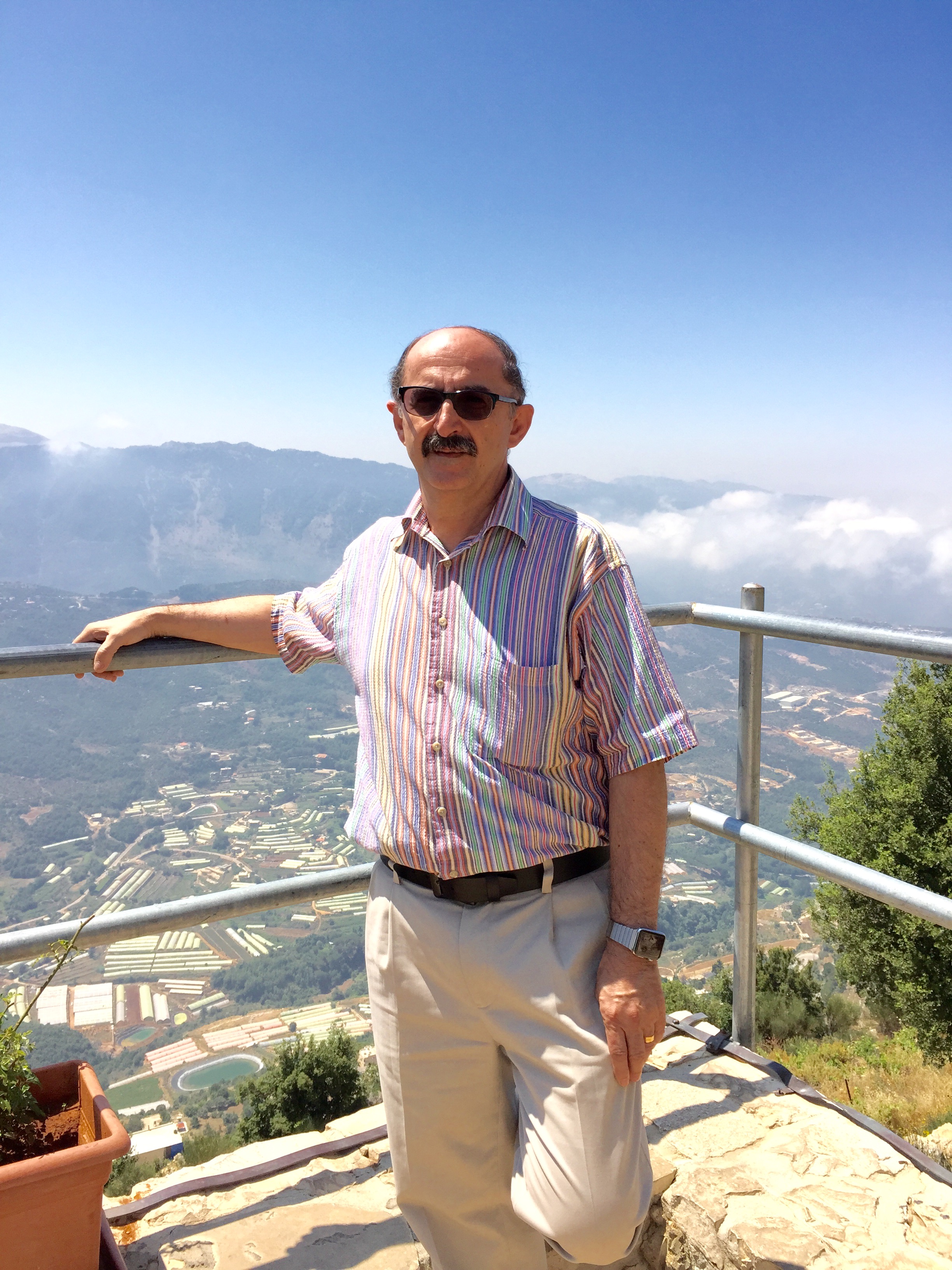
samir in lebanon Despite war and the revilement’s of the ravaging that has gone on in Lebanon and the entire Middle East region, hope is strong and the pleasant approach to media downright refreshing. With all of the problems that conflict can bring to a country and its people, Lebanon has had a renewed spirit and strength when it comes to magazine media and media in general.

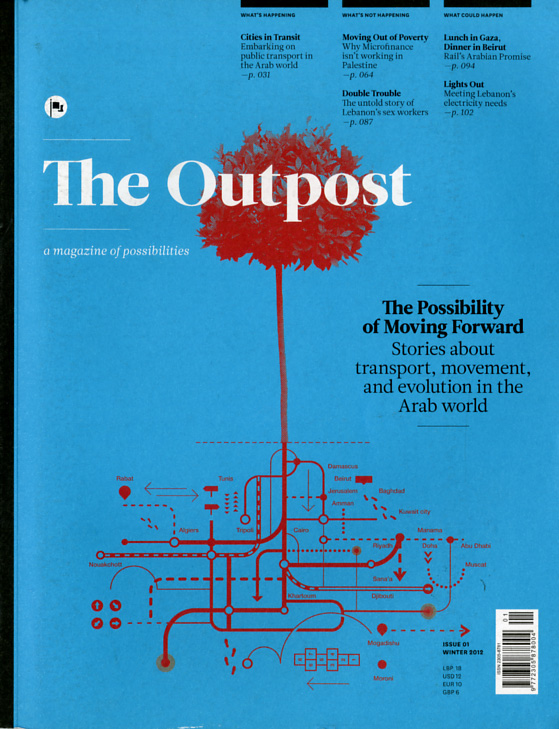
While in Lebanon I did an interview with Ibrahim Nehme, founder and editor-in-chief of The Outpost magazine, which I published earlier this week this blog. The interview was nothing short of amazing due to this young man’s passion and drive when it comes to the possibilities that are out there for young Arabs. He is beyond adamant about the potential of the Arab nation, starting with the youth and continuing on through Arab adults who need his publication’s vision of hope and promise in a world sometimes gone mad with brutality and harshness.

International Blog 14-14 Ibrahim’s magazine media approach and the mission of his magazine, which seeks to promote the positive and facilitate real change within the Arab world, reminded me of a very famous adage that I use quite often in my teachings and in my own publishing philosophy, and which I also have on a plaque in my office: there is always hope. And that dictum carries so much weight not only in the Arab world, but also in our own American media: he who knows the word hope doesn’t recognize the word impossible.

That statement hit me right between the eyes when I returned to the States a few days ago. I have interviewed some of the most influential and knowledgeable men and women of the publishing industry over the years and no one has basically told me anything that even remotely goes against the statement of there is always hope.

Upon my return, I saw articles ranging in negativity from the one on Time Inc.’s CEO, Joe Ripp’s clock is ticking to the statements that have been made recently by some media critics that TIME magazine is no longer relevant, and Self and Details maybe shutting down. It was then that I said to myself, when are media critics going to stop being the bearers of “predicted” bad news? It’s not even factual, on-paper bad news; yet somehow critics always manage to spin negativity on the stories they foretell about the future of magazines and magazine media. They paint a picture so dark and sinister, that it’s totally incongruous to the hundreds of new launches that I personally record on Mr. Magazine’s™ Launch Monitor each and every month. So, who exactly is correct? The Wizards of Woe who thrive on somber speculations or the bright, exciting covers that are scanned and published each month from the Magazine Innovation Center at Ole Miss? I challenge you to be the judge.

To all of these people who respond to my opinion with: but look what’s happening at Hearst or Condè Nast or Meredith; I ask them now; what exactly is happening? As I said; I’ve interviewed all of these CEO’s and I’ve talked extensively with them; they’re not telling media anything as apocalyptic as some are reporting. It’s how the media and some of the media reporters are taking the information and running with it as if they’re being paid to basically dig their own media graves. Instead of promoting positivity the way Ibrahim Nehme from Lebanon’s The Outpost magazine does, they’re biting the very hand that feeds them, and then repeating the obscene gesture over and over again. Isn’t that a bit nonsensical or is it just me?

And have those naysayers seen what folks in Japan are paying for the Financial Times newspaper? When all of the media reporting only reflects one side of a supposed picture, we become cocooned. I guess I’ll have to challenge people to hop on a plane and visit newsstands abroad. The news isn’t nearly as bleak as sometimes reported.

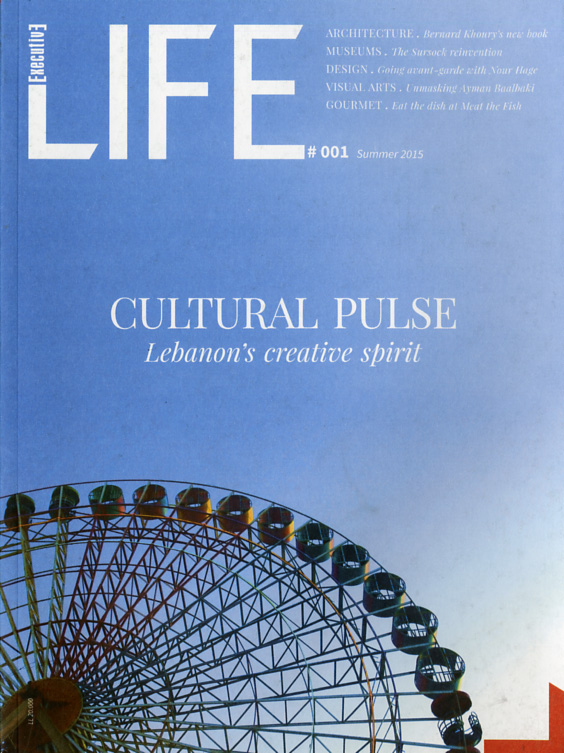
I wrote about The Outpost, of course, since I interviewed its founder and editor-in-chief, but while in Lebanon I also picked up many other magazines, such as Executive Life Magazine, a new title that just came out in English, and by the way it’s amazing how the English language has spilled over into the world, not just in Lebanon, but all over; everywhere English is not necessarily the native language, we are seeing a lot of English-language magazines being born.

From the editorial of the first issue of Executive Life magazine:

International Blog 8-8

Ceci n’est pas un magazine. (This is not a magazine) If you don’t believe me, just read further. Tired of focusing on everything that goes wrong in Lebanon – and there’s a lot – the team at Executive Magazine decided to explore what’s going right in the country; those creating beauty, exploring new frontiers, engendering hope. We found a whole new world of Lebanese artist, connoisseurs and visionaries producing a rich bounty of new ideas, designs and concepts – and now we’re on a mission to promote these people and the beauty they create…This is not a magazine, but a cause – and we want you to join it. Become a believer.

If we substitute the word Lebanon for the words magazines and magazine media and focus on the positive things that are happening in today’s magazine media world; all the new publications that are coming into the marketplace; all the established magazines that are still doing extremely well and making billions of dollars in revenue; if we focus our energies on all these creative ideas that are out there; there’s no impossibilities that can’t be met with possibilities.

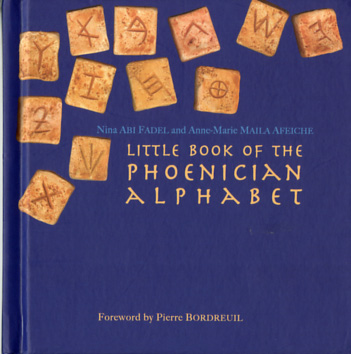
International Blog 7-7 Since my ancestors, the Phoenicians, created the alphabet; what if there were never any alphabet, the ABC’s you learned in school? You wouldn’t have been able to read this book today! This is the story of the birth of the alphabet, the story of a magical link between a sound and a sign. (From the Little Book of the Phoenician Alphabet)

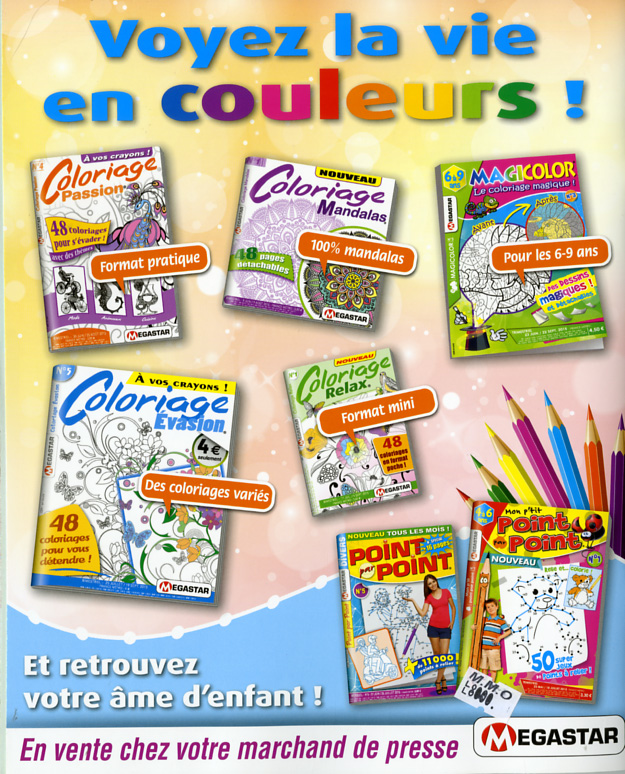
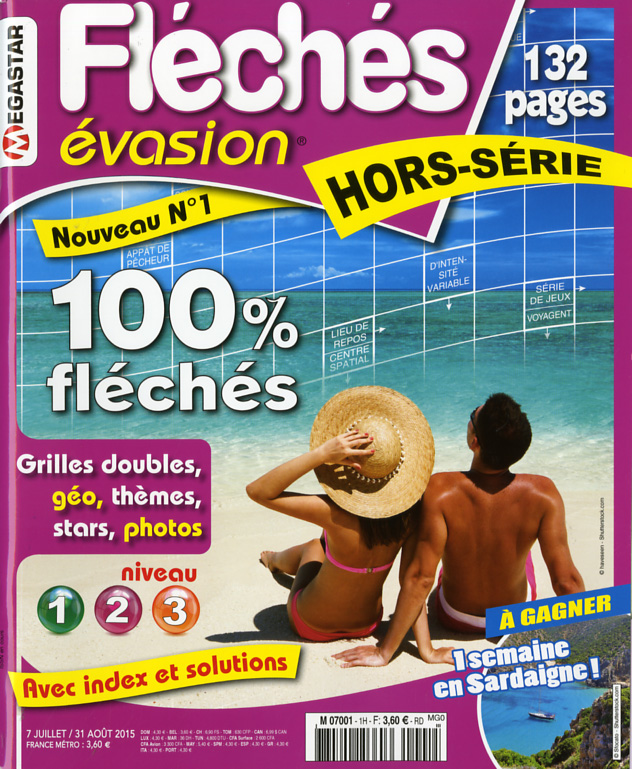
That magical link that we also create in magazines; those magical ideas that keep coming time after time, whether someone is creating a new magazine or a whole series of new coloring magazines, such as the ones I picked up abroad – Jeux èvasion and Flèchès èvasion, which are not for children, but for adults; one title after another of coloring magazines for adults are coming to the marketplace worldwide.

International Blog 5-5

International Blog 4-4

International Blog 3-3

International Blog 2-2

International Blog 1-1

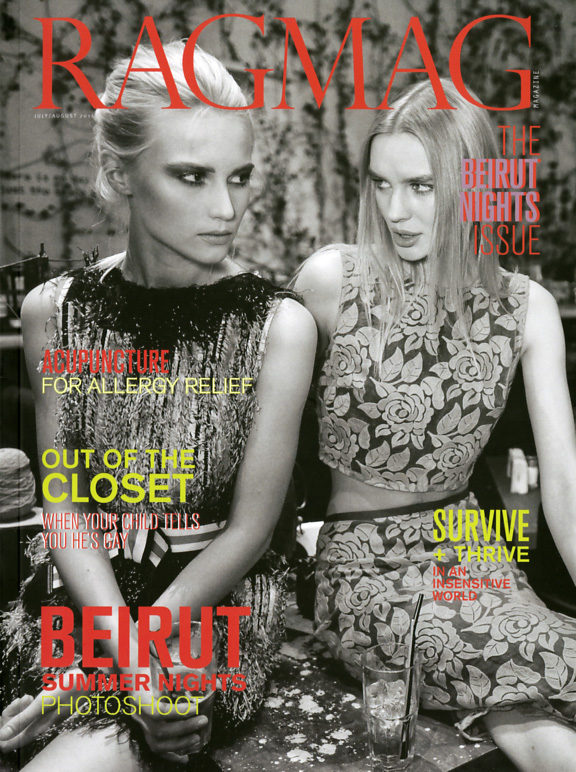
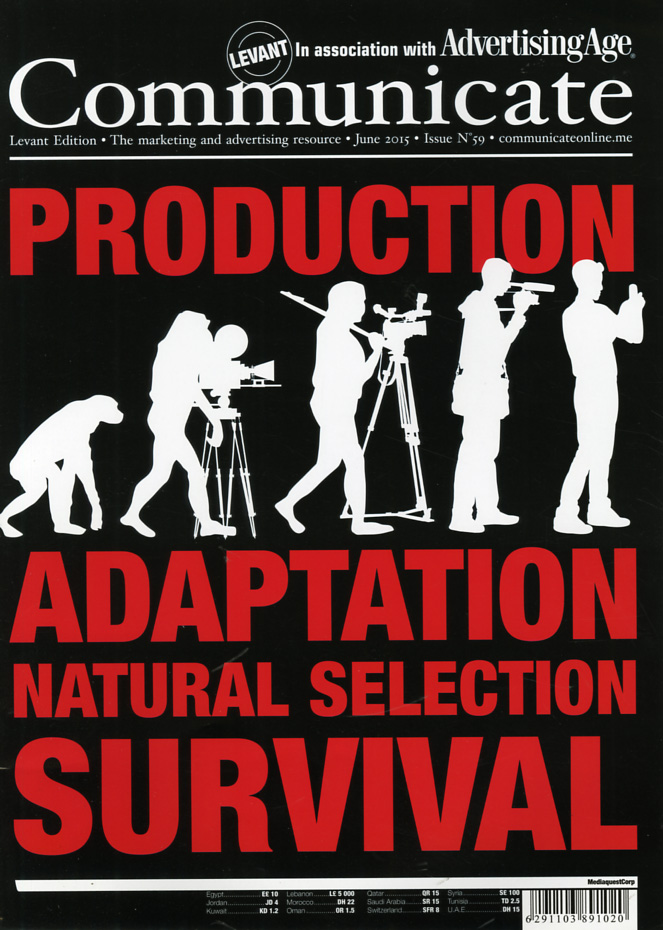
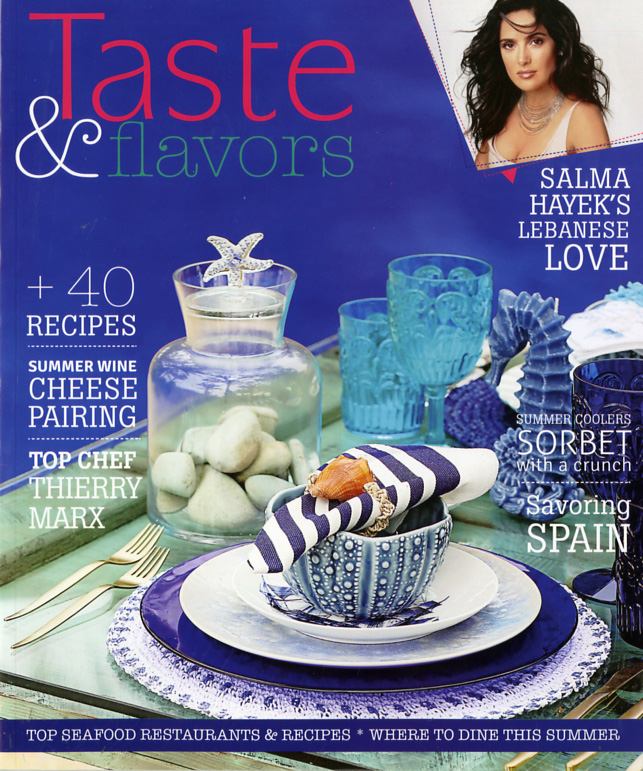
All of these new titles are hitting the newsstands, from coloring to puzzles, just look at the number of titles out there; it’s amazing. I found magazines celebrating the nightlife of Beirut (RagMag – the Beirut Nights issue), magazines celebrating the marketing and advertising resources and all the changes that are taking place (Communicate), stories of pride everywhere, magazines celebrating the international face of Lebanon, such as Taste & Flavors with Salma Hayek and the movie The Prophet.

International Blog 12-12International Blog 11-11International Blog 10-10

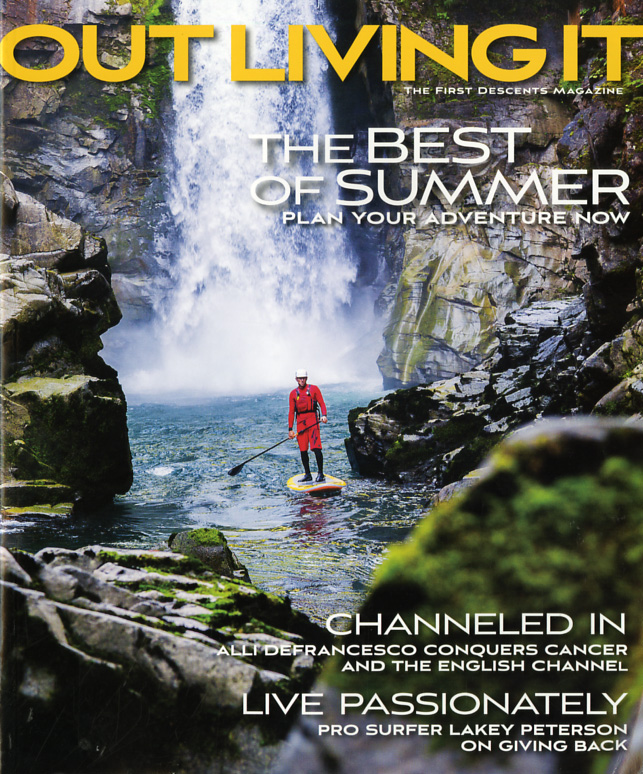
I just received the first issue of a new magazine called Out Living It. It’s the First Descents Magazine coming from Colorado in which the founder of First Descents, Brad Ludden, writes:

International Blog 9-9 This magazine serves to inspire and document the people, places, organizations, companies, and lifestyle choices that represent our collective desire to meet life head-on with undeniable passion. I hope its pages further inspire you to be Out Living It.

After those 19 days overseas, I returned with the conclusion that through all the gloom and doom, through all of these predictions of this or that CEO fading out, or this or that magazine dying; at the end of the day magazines and magazine media are going to be Out Living It and most probably Out Living Us and digital, mobile, or anything yet to be invented, if we continue to be strong and focus on the positive.

People, from both east and west, are exhausted from the negativism that is all over politics and the media… they never see or hear anything good. It’s time for a new wind of thinking to blow through the minds of media reporting. It’s long overdue.

Take it from me; as long as I have that plaque hanging in my office, there is hope, I’ll never give up on magazines or magazine media. They have found their own place in the marketplace since conception and they aren’t going anywhere. Except maybe new frontiers they have yet to explore. A newsstand on the moon perhaps…

Until the next Mr. Magazine™ Musing…

h1

A Magazine Of Possibilities That Was Born From The Womb Of The Arab Spring – Seeking Change & Inspiration – The Mr. Magazine™ Interview With Ibrahim Nehme, Editor-In-Chief, Founder, The Outpost Magazine.

July 28, 2015

Reporting from Lebanon.

Reporting from Lebanon.

From Lebanon With Love. A Mr. Magazine™ Interview From Lebanon.

“Growing up, I always had a knack for physical things and I was never that great when it came to technology, so for me the printed product was a natural choice when I chose to make the magazine. For a magazine that’s mission is to ignite the renaissance of this area of the world; I don’t think digital-only can achieve that; people need to feel the tangible aspect of things.” Ibrahim Nehme
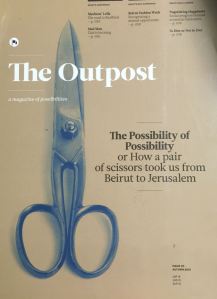
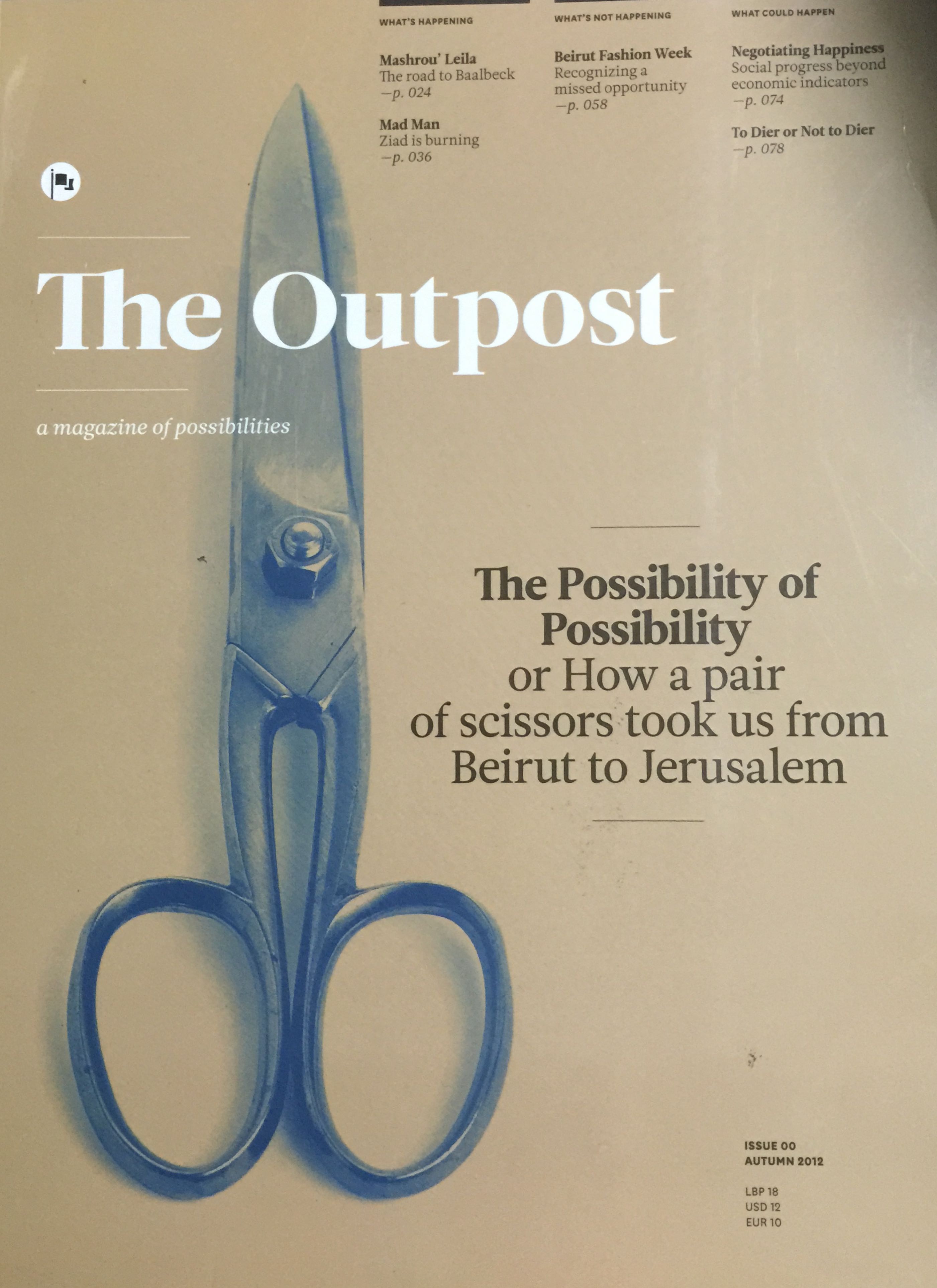
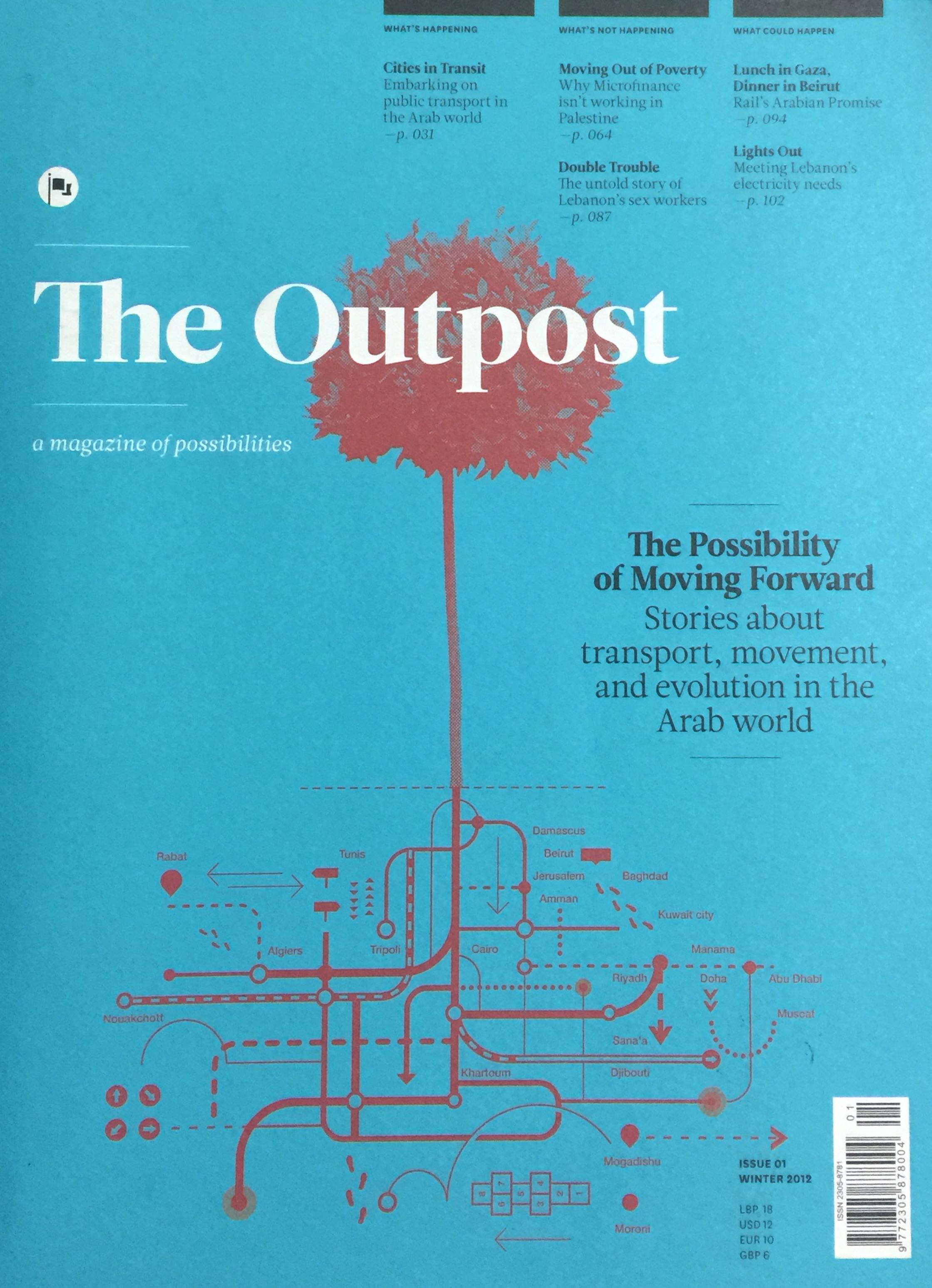
scan-20150725194142-1 The possibility of possibility was the idea-embryo for The Outpost magazine, a Beirut-based publication that seeks to promote the positive and facilitate real change within the Arab world. Ibrahim Nehme is the founder and editor-in-chief of the magazine and a young man who is adamant about his creation and about the mission he is dedicated to. An excerpt from his editor’s letter in the very first issue showcases the magazine’s reason for existence quite eloquently:

There are moments in history when humanity, with grit, passion and erudition, saliently moves forward. In moments like these, all the fears that have previously held us back, the ideas that sounded impossible, and the assumptions that defined our limits disintegrate as a breed of individuals reaffirm the notion of the possibility of possibility.

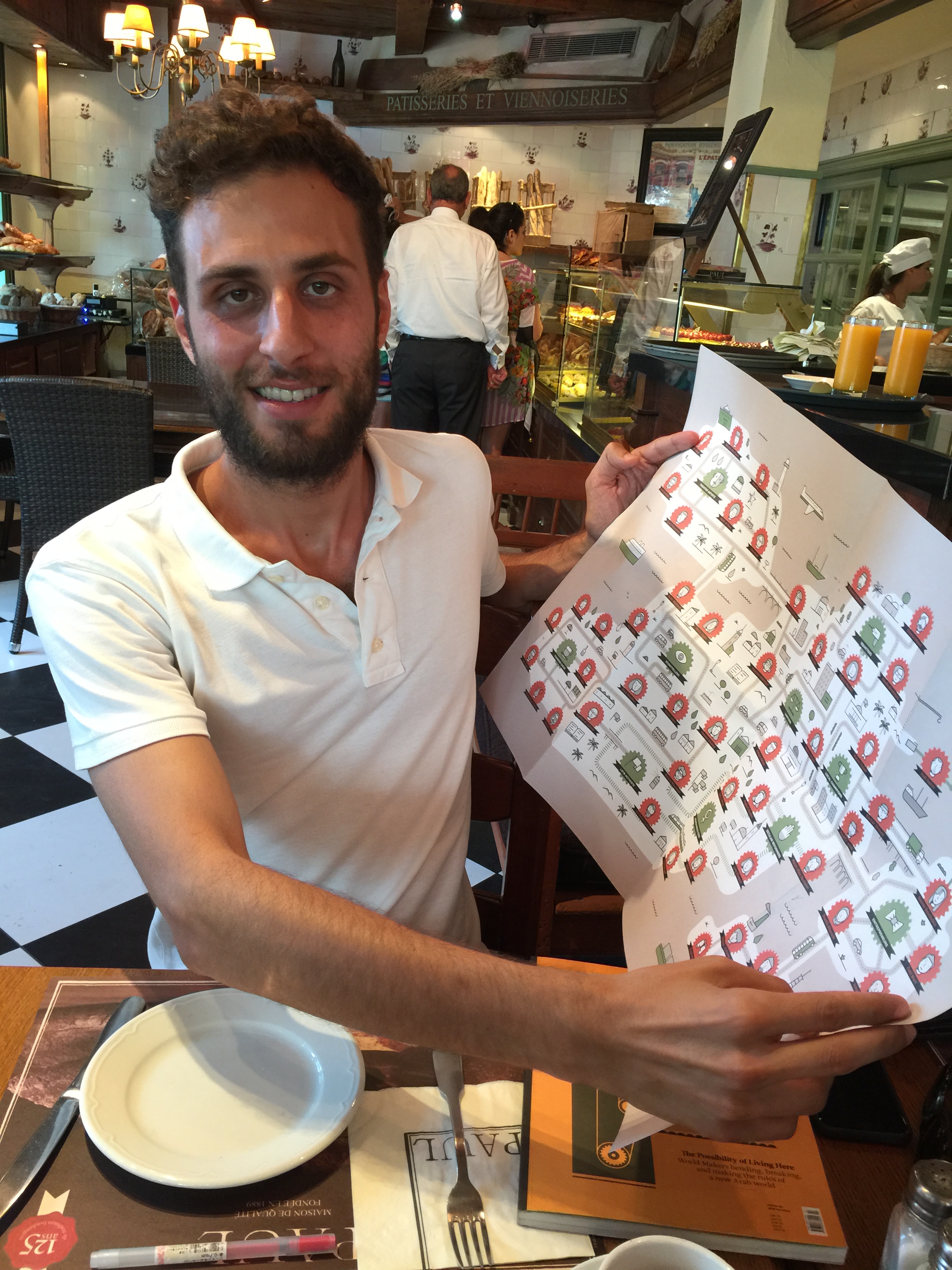
I met with Ibrahim on a recent trip to Lebanon. We spoke at Paul’s, a coffee shop on the main highway leading to North Lebanon and close to the Casino Du Liban. It was as inspiring a conversation as The Outpost’s mission statement is. Positivity and idealism and real passion are three words that can be used liberally when describing the young man who sat before me and talked about young people in the Arab nation who are ready for change and growth and a clear and concise direction for a successful future.

From the first-issue editor’s letter:

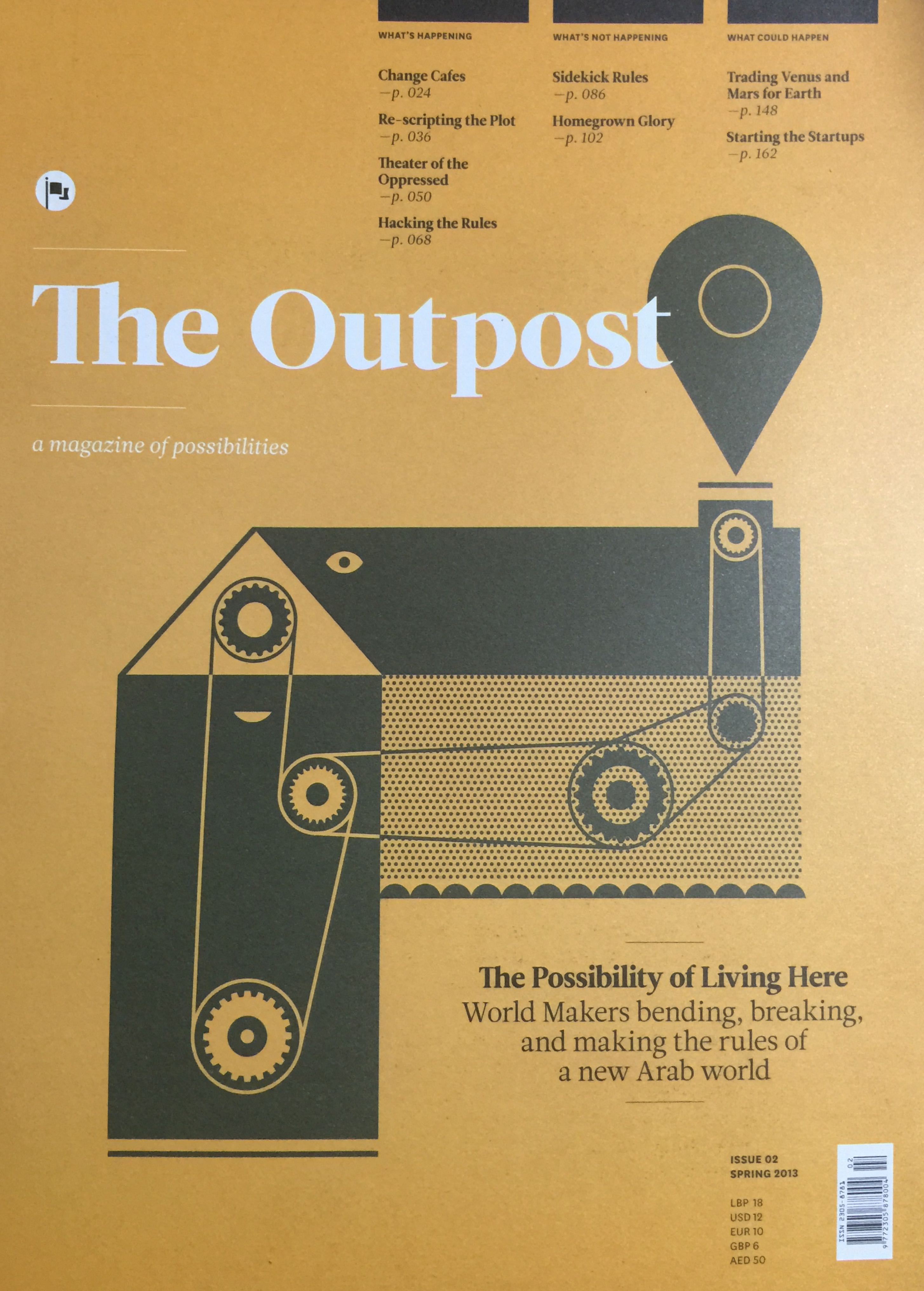
Our first issue is being published at a time when a renewed sense of possibility enshrines the Middle East. The current social, cultural and political transformations are reweaving the fabric of the societies we inherited. A new generation is emerging that is, for the most part, eager to dust off thick layer of tyranny, narrow-mindedness and impotence to embark on a cathartic journey of reform.
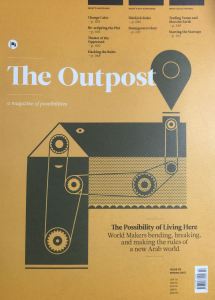
scan-20150725194535-2 As you can read for yourself from the inspiring editorial; the magazine is intelligent, poignant and excellently written and gives a most personal look at life in the Arab world. I spoke with Ibrahim about the magazine’s frequency change (from quarterly to bi-annual), the sustainability of the publication through the World Makers concept (allowing readers to pay for a spot in the magazine to feature their own work), and about the future of the magazine. It was a premier interview with a young man who is a premier human being, using his passion to change his world for the better.

So, I hope you enjoy this stirring interview with Ibrahim Nehme, Founder & Editor, The Outpost magazine; it certainly made Mr. magazine™ see the “possibility of possibility,” and I’m sure it will you too.

But first, the sound-bites:
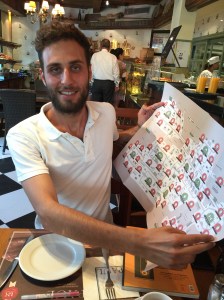
Ibrahim Nehme On the background of The Outpost magazine: Basically, in 2011 I was contemplating whether or not I should leave Lebanon and go somewhere abroad and continue my studies. At the time I was working for ArabAd, which is a local magazine, and the experience with ArabAd kind of opened my eyes to the world and the situation of the country, which at that time, and in a way still is, really bad. It came down to staying in Lebanon and doing something about it, like trying to create a magazine that actually ups the standards of the local print industry, or just leaving.

On why he chose English instead of Arabic for the language of the magazine: We wanted to publish in English because we wanted to reach out to this particular target group, but for a magazine that has a mission really larger-than-life, with a mission that seeks to ignite change in this part of the world, we’re aware of the limitations of the English language and we do have plans to publish in Arabic, possibly a newspaper that will be distributed for free.

On whether he felt it was crazy to start a print magazine in a digital world: For a magazine that’s mission is to ignite the renaissance of this area of the world; I don’t think digital-only can achieve that; people need to feel the tangible aspect of things.

On the biggest stumbling block that he’s had to face: The biggest stumbling block was the fact that before starting I had a very clear plan as to how to gear this magazine forward. I had a plan for after the first year and what would happen; how we would secure revenue, but as it turned out, how things worked in my head were completely at odds with how the commercial world works.

On why he thinks the magazine is selling out at bookstores, even with the hefty cover price of $12: When we first launched Issue # 0 everyone said that it was too expensive. It’s a quarterly magazine, so it comes out every three months and you’re paying $5 technically for three months, whereas there are monthly magazines that are $7.00 here on the stands. I think because it’s all new and the market is completely immature, people aren’t familiar with the concept that you actually have to pay for quality products.

On why he changed the frequency from quarterly to bi-annual: Primarily for financial reasons because to produce this kind of magazine it takes so many resources, also time being one of those resources.

On what motivates him to get out of bed each morning: The magazine is what motivates me, because the prospect is so exciting. We haven’t even scratched the surface of what we can achieve with this magazine. And just the prospect of really seeing the long-term vision of where this could go and trying to work toward that is really exciting.

On where he expects to see the magazine one year from now: So, in a year’s time, if this works out, we will have three main pillars for the operation, which is the printed edition, the project that we are conceiving, as well as our digital platform, which is not going to be as much a hub for content as much as a platform for World Makers. So that will encourage people to connect with each other, because I think that it can become a facilitator for change.

On the definition of a World Maker: A World Maker is a person, in this case, really an Arab person, living in the region and who is trying to do something independently to facilitate positive change in the Arab world.

On anything else he’d like to add: I think that we’re meeting at an interesting point because for the longest of time we’ve been trying to figure out who we are and what the magazine stands for and the point of view resonates with the type of people we are trying to reach out to. I think now we have matured somewhat and really know what we stand for and we know what we’re trying to do and that dictates our editorial and our conceptual strategies. We’re really doing very well; we’re in 50 cities around the world.

On what keeps him up at night: Lately, as I said, I’ve been sleeping like a baby. Nothing is keeping me up.

And now the lightly edited transcript of the Mr. Magazine™ conversation with Ibrahim Nehme, Founder and Editor-In-Chief, The Outpost magazine…

From Lebanon With Love

From Lebanon With Love

Samir Husni: Tell me about the background of The Outpost – why Lebanon and how did it get started?

Ibrahim Nehme: Basically, in 2011 I was contemplating whether or not I should leave Lebanon and go somewhere abroad and continue my studies. At the time I was working for ArabAd, which is a local magazine, and the experience with ArabAd kind of opened my eyes to the world and the situation of the country, which at that time, and in a way still is, really bad.

It came down to staying in Lebanon and doing something about it, like trying to create a magazine that actually ups the standards of the local print industry, or just leaving. And at the time the Arab spring was happening and there was this inspiring energy going throughout the region and I felt that it was a good time to stay and do something with print.

And that’s how the magazine of possibilities was born, because at the time the region was open to all inspiring possibilities. In a way it was born from the womb of the Arab spring as a magazine of possibilities that aims to capitalize some kind of change in this ongoing revolution. It’s a political magazine; it’s a socially-conscious magazine, and it reaches out primarily to young Arabs who are the activators of change.

So, that was the initial idea. We launched our very first issue, number zero, and it was intentionally numbered zero because we were a bunch of young people with no significant experience in making a magazine or in publishing. We just wanted to put our ideas out there.

It kind of picked up though soon after the issue was out; we were nominated for awards and the feedback was really good. It just took off from there. There have been so many changes to our strategy in how we’re approaching print.

Samir Husni: Why did you choose English and not Arabic as the language of the magazine?

Ibrahim Nehme: English was the striking point because the creative director at the time and myself, were like most Lebanese, American-schooled, and we consume our media primarily in English. And like us, there are legions of other young Arabs in Lebanon and in other parts of the region who also consume media in English and not in Arabic, which may be a shame I know, but that’s the reality of things.

We wanted to publish in English because we wanted to reach out to this particular target group, but for a magazine that has a mission really larger-than-life, with a mission that seeks to ignite change in this part of the world, we’re aware of the limitations of the English language and we do have plans to publish in Arabic, possibly a newspaper that will be distributed for free.

And also, because now we’re reaching out to Europe and America; we’ve been getting a lot of requests that are from non-Arabs. And I think publishing in English is helping to break these stereotypes associated with the Arab world. I always get messages from surprised readers, such as: we didn’t expect Beirut to be as you show it, so I think that it’s helping in that sense.

Samir Husni: We live in a digital age and you’re a young man, under 30, fully aware of the digital tendencies of your generation; are you crazy to start a print magazine today and to also try and defend the future of print in this digital age?

Ibrahim Nehme: Growing up, I always had a knack for physical things and I was never that great when it came to technology, so for me the printed product was a natural choice when I chose to make the magazine.

It was never really a matter of print or digital; I think that somehow the conversation has been skewed and framed in such a way that it’s wrong. Every media has its different pros and cons and its different features.

We started out in print and we knew that digital would come at some point down the line, so we have to start working on our digital platform, which we are now doing. And we’re thinking that we will conceive it the way that we did the print edition.

Again, for a magazine that’s mission is to ignite the renaissance of this area of the world; I don’t think digital-only can achieve that; people need to feel the tangible aspect of things.

Samir Husni: What has been the biggest stumbling block that you’ve had to face and how did you overcome it?

Ibrahim Nehme: The biggest stumbling block was the fact that before starting I had a very clear plan as to how to gear this magazine forward. I had a plan for after the first year and what would happen; how we would secure revenue, but as it turned out, how things worked in my head were completely at odds with how the commercial world works.

And it took me almost a year to grasp that we, the publishers of the magazine, and the media industry were on a completely different page. We speak a completely different language and for the longest time we were trying to change our language to make them understand who we are and what we’re trying to do, up until we finally realized that wasn’t going to happen. Now we’re at the point of realizing what we stand for and how we’ve been doing in the market and we’re trying to turn that into revenue that will help us sustain this enterprise.

What we’re doing is scrapping advertising; starting with the next issue we will no longer publish any form of advertising; I’ll tell you more about this. We thought that moving forward and in order to keep this magazine sustainable, we could enlist the people who really believe in the value of the magazine, not advertising agencies or media companies; but the people who are really seeing the value of the magazine, the readers. And in many ways these readers are the change agents who are implementing positive change in the region, which in this issue we call them “World Makers.” A “World Maker” is anyone who lives and is trying to do something positive for nothing in return.
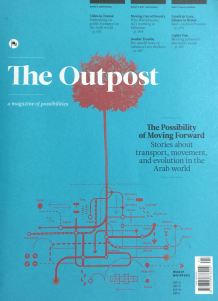
scan-20150725194724-3 With the next issue we have something called the World-Making Factorium, which is a poster inside the magazine. We talked about 50 World Makers and we tried to find connections between them. The idea is, for example, one woman is trying to make one place better and then collectively the whole place is going to become better because it’s inhabited by all of these caring people. These World Makers were numbered, indexed and rearranged, then connected to each other based on what they are working on. The result is a network showing the world that is constructed due to each of them making change in different clusters.

We have to take money, of course, to sustain it, but the gift that we’re giving is important involving the World Makers, who are the revenue generators of the magazine. But it’s an upfront framework for supporting the magazine.

Samir Husni: I tried to find Issue 5 when I first arrived in Lebanon recently and in every bookstore that I visited they told me it was sold out. So, even with the $12 cover price, which is a hefty price for a magazine in Lebanon, it’s still sold out. Why do you think that’s happening?

Ibrahim Nehme: Yes, it’s $12 and when we first launched Issue # 0 everyone said that it was too expensive. It’s a quarterly magazine, so it comes out every three months and you’re paying $5 technically for three months, whereas there are monthly magazines that are $7.00 here on the stands. I think because it’s all new and the market is completely immature, people aren’t familiar with the concept that you actually have to pay for quality products.

But we went bi-annual and people are buying it anyway and the price is still the same – $12 for every six months. What happened is we went bi-annual and we forgot to account for the fact that there are three more months that the magazine is on the shelves, so it was set up very fast.

Samir Husni: Why did you change the frequency?

Ibrahim Nehme: Primarily for financial reasons because to produce this kind of magazine it takes so many resources, also time being one of those resources. It’s a conceptual magazine, so we spend a lot of time developing the concept that binds everything together. And the quarterly frequency made it very short.

Samir Husni: Is The Outpost your night job or your day job? (Laughs)

Ibrahim Nehme: (Laughs too) My night and day job. It’s my life right now. And this is another source of revenue; we’ve been partnering with organizations that have been approaching us to produce some printed material for them and these types of jobs are really paying for the printing of the magazine and other costs. So, even when I’m working on that, it’s under The Outpost’s umbrella.

Samir Husni: What motivates you to get out of bed each morning and say it’s going to be a great day?

Ibrahim Nehme: Recently, I haven’t been able to wake up easily because I’ve been working so hard; I’ve been really exhausted.

Aside from that because it’s just a phase, the magazine is what motivates me, because the prospect is so exciting. We haven’t even scratched the surface of what we can achieve with this magazine. And just the prospect of really seeing the long-term vision of where this could go and trying to work toward that is really exciting.

Samir Husni: Do you envision seeing yourself one day being the Tyler Brûlé of the Middle East and The Outpost as having the same success as Monocle?

Ibrahim Nehme: No, because we’re not a commercial magazine such as that; we’re more like an activist magazine than a lifestyle magazine, which is what Tyler has in Monocle. I love hearing his stories, they’re very inspiring and a lot of what he’s trying to do now, in terms of a business model, could inspire us in many ways, but to say that we may someday be as Monocle – no.

Samir Husni: You’ve created a very well done magazine, in terms of content, readability, design, photography, charts and infographics; you name it, it’s very well done. And all of this is rare for an activist-type magazine. If I’m sitting here with you in Beirut next year; how far has The Outpost come in one year? Where do you expect to see the magazine a year from now?

Ibrahim Nehme: Actually, we are currently working on a project that’s due a year from now. We’re trying to test different things and see how they would fit into each other. One of the things that we’re doing is developing a project, it’s an offline and online project, whereby we get the readers, as well as artists that we select from the region, to engage in a debate concerning a particular topic and then all the outcomes from the interactions and interventions that happen will be channeled into that issue.

I think that a lot of the things that happen in the process of creating the magazine remain in our heads and ideas from our closed brainstorming sessions and I think that these things are important and we need to open up the discussion and let other people in who are outside the magazine.

So, in a year’s time, if this works out, we will have three main pillars for the operation, which is the printed edition, the project that we are conceiving, as well as our digital platform, which is not going to be as much a hub for content as much as a platform for World Makers. So that will encourage people to connect with each other, because I think that it can become a facilitator for change.

Samir Husni: Give me your definition of a World Maker.

Ibrahim Nehme: A World Maker is a person, in this case, really an Arab person, living in the region and who is trying to do something independently to facilitate positive change in the Arab world. They could be an entrepreneur, an artist, an environmentalist, a lawyer, an activist or a feminist, you name it. Any person across different levels of activity who are trying to advance the region against all odds and creating worlds from scratch, because they’re living in a place where the entire infrastructure for living, for working, for production, for creation, is non-existent. That’s a World Maker.

Samir Husni: Do you feel like you’re the oddball, like you’re swimming against the current in this part of the world?

Ibrahim Nehme: For sure.

Samir Husni: Does that frustrate you or encourage you?

Ibrahim Nehme: It used to frustrate me a lot; now, I’ve made peace with it.

Samir Husni: Is there anything else you’d like to add?

Ibrahim Nehme: I think that we’re meeting at an interesting point because for the longest of time we’ve been trying to figure out who we are and what the magazine stands for and the point of view resonates with the type of people we are trying to reach out to. I think now we have matured somewhat and really know what we stand for and we know what we’re trying to do and that dictates our editorial and our conceptual strategies. We’re really doing very well; we’re in 50 cities around the world.

Also I think that it’s helping. When you say that it’s mission is to help ignite a renaissance by basically inspiring people to do positive things, like inspiring this person to start up a business, or that person to work on fixing something else, just so many different things. We had a message from a lady in Cairo who said she had seen our magazine and she was really inspired, so she decided to buy the magazine in Egypt. If we could have that woman times 2,000 in five years, , it would be awesome. As I said, we’re just scratching the surface.

Samir Husni: My typical last question; what keeps you up at night?

Ibrahim Nehme: Lately, as I said, I’ve been sleeping like a baby. Nothing is keeping me up.

Samir Husni: Thank you.

h1

“Plugin” To The World Of Electric Cars & The Lifestyles Of Their Owners – The Mr. Magazine™ Interview With Dusan Lukic, Editor-in-Chief, Plugin Magazine

June 25, 2015

“We decided that we had to go with print because if you’re talking about lifestyle and life stories; if you’re talking about photography; you just have to showcase all of that in print. And there are still a lot of people who are willing to pay for that in a print format.” Dusan Lukic (on why he chose ink on paper for Plugin)

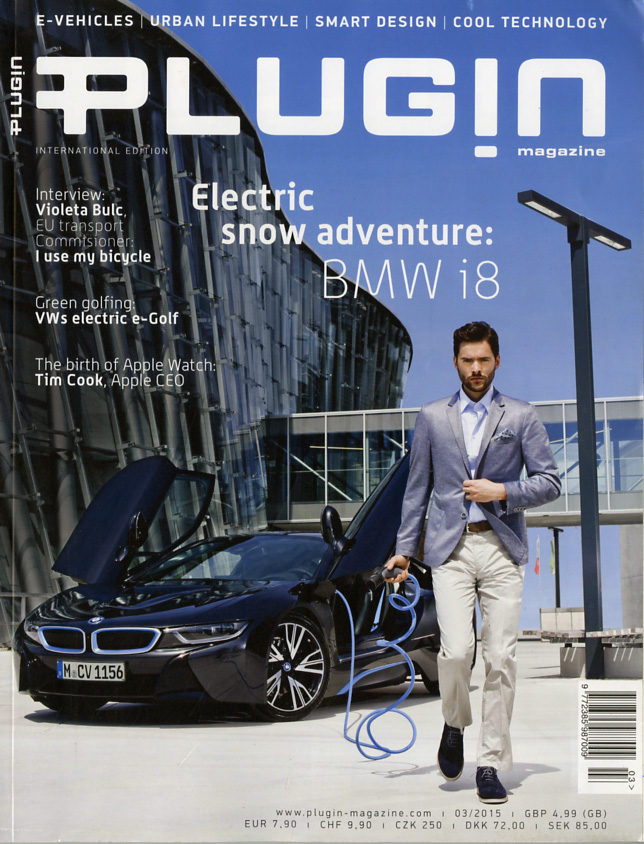
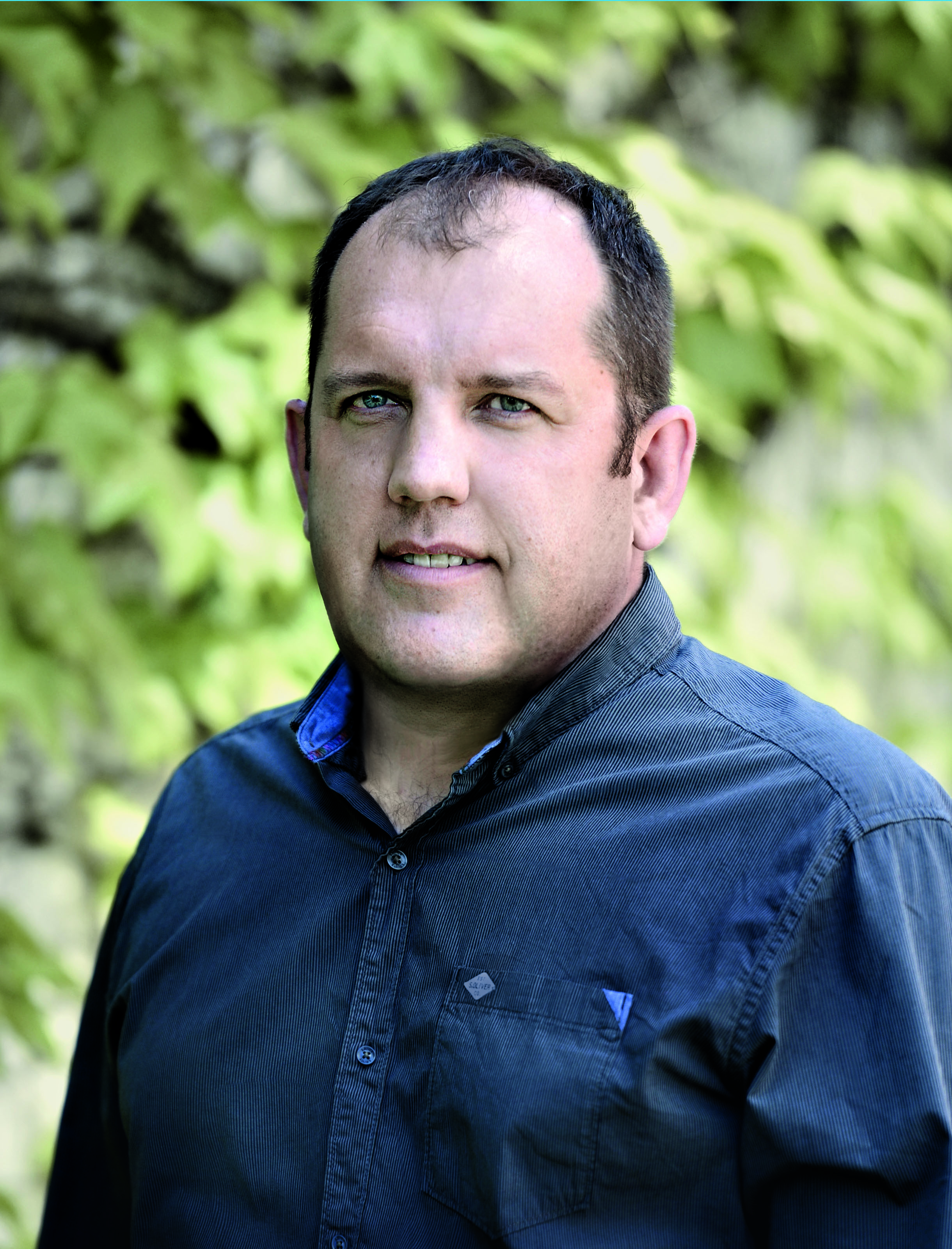
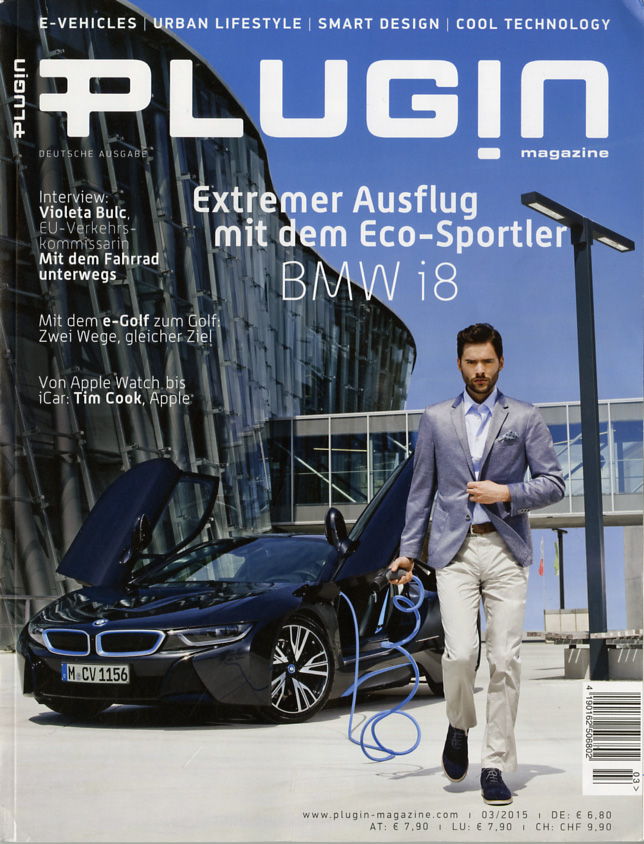
Plugin English-6 Welcome to another installment of the Mr. Magazine™ International Interviews where I had the extreme pleasure of speaking with Dusan Lukic, editor-in-chief, Plugin Magazine, from his office in the beautiful city of Ljubljana, Slovenia.

Dusan is a veteran of magazine publishing and knows his way around the small market, having worked at Adria Media in Ljubljana from the very beginning. Publishing licensed powerhouse titles such as Elle and Cosmo, Dusan and his team are now proudly publishing their first international offering with the new Plugin Magazine. With an English version and a German and Slovenian version as well, the beautifully-done, sleek coffee table collectable is an amazing journey into the eco-friendliness of electric cars and the lifestyles of their owners. It’s certainly what you need to “Plugin” to the world of alternative automotive experiences.

I hope you enjoy the Mr. Magazine™ interview with Dusan Lukic, Editor-in-Chief, Plugin Magazine, as you get a glimpse into the world of magazine publishing from the beautiful country of Slovenia.

But first, the sound-bites:


On the genesis of Plugin Magazine and why it was done in both an English version and a German version:
We came up with the idea of adding a lifestyle element to it and thought about maybe doing it for a chain of hotels, so it would have a controlled distribution. Then we decided to just go national with it and do an English version and a German version because we discussed it with the distributor and they agreed that we should do both because that would be the easiest thing to do with the first issue.

On how the lifestyle element of the magazine is presented:
We’re going to be highlighting the people who are buyers or are thinking about buying electric cars. They’re people who aren’t prepared to give up their freedom of riding around, yet they want to be more environmentally friendly, so they’re considering or have already bought an electric car. On that same note, they also do not want to give up their comfortable home, but they want it to be more eco-friendly. So basically, our target audience is people like that, which usually mean more men than women.

On why the company chose a print component when the magazine deals with the eco-friendly subject of electric cars:
We chose a paper that is quite environmentally friendly. We also have a website; of course, we really started with the website before the magazine. We also have a social media presence too, but we decided that we had to go with print because if you’re talking about lifestyle and life stories; if you’re talking about photography; you just have to showcase all of that in print.

Dusan_Lukic On whether he feels the pendulum is swinging back toward print in Europe the way it is in the United States:
Basically, there is no simple answer to your question. We know what we think; we think that in some markets, print is far from dead and in other markets we have our digital to split the difference.

On the history of Adria Media:
Adria Media is quite an old company; we started with our first magazine in 1996 and I’ve been with the company since the beginning. We started with a car magazine that no longer exists and then we started adding other magazines, either our own or through licensing. We now have 13 magazines and 10 websites, but it’s still a small company, about 120 people.

On the major stumbling block Europe and his company in particular is facing in today’s magazine media market:
In Slovenia, we’ve always been a small market, but we know how to operate in a small market. Of all the countries in this part of Europe, Slovenia was hit hardest by recession. And of course, consumer confidence sank to floor-level and one of the first things that people stopped buying was magazines.

On the hefty cover price and whether that was due to the first issue being ad-free:
It’s like this; we did the first issue without advertising and that was on purpose. What we didn’t want to do was to contact the car industry and the fashion industry without a product on the market. Now we are discussing different ad strategies since we’ve published the first issue.

On what keeps him up at night:
Currently worrying about the future and the stories that we have to do. If you’re a publisher for a small market and you go international, one of the things that you have to do is learn to think like the big international publishers do. I know what I’m doing thanks to my education, but still it’s hard. We know our market here and we know our reader, but we don’t exactly know what would be interesting to our readers outside of this country.

And now the lightly edited Mr. Magazine™ interview with Dusan Lukic, Editor-In-Chief, Plugin Magazine…

Samir Husni: Can you tell me a little about the genesis of Plugin Magazine? Why both an English and German version and why it’s ad-free? And also what’s the mission with this magazine? You say you want people to live smart, drive green and Plugin.

Dusan Lukic: Well, you know that Slovenia is a really small country and of course in Europe, generally print media doesn’t do that well, and that fact is even more obvious here. For example, we have a much distorted advertising market; almost 80% of advertising money goes to television.

We’ve done what we can basically; we have quite a big publishing company; we do a lot of licensed titles; we do Elle, Playboy, Cosmo and others, but we started thinking there’s 2 million in the country and if we only think locally from the beginning, then we’re doomed from the beginning. So we switched and started thinking instead, what else can we do? What is out there that hasn’t been done yet?

We do a car magazine here also, so we’ve sort of found a niche with electric cars and so we started thinking about an electric cars magazine and plugging highways and things like that into it.

But then again, anyone can do a car magazine, so we needed to do something better and different. We came up with the idea of adding a lifestyle element to it and thought about maybe doing it for a chain of hotels, so it would have a controlled distribution. Then we decided to just go national with it and do an English version and a German version because we discussed it with the distributor and they agreed that we should do both because that would be the easiest thing to do with the first issue.

We also have a really good knowledge of the languages here, because Slovenia is close to Austria, so a lot of people speak German and English is a language that is spoken quite a lot here and it wasn’t hard to find people who could write in English or translate.

Samir Husni: Tell me about the concept of Plugin, because the magazine is technically divided into two sections: driving and living. How is the concept of the lifestyle element done? Is it the lifestyle of the electric car owner or driver or the car itself?

Plugin German-5 Dusan Lukic: We’re adjusting a little bit now with the magazine. All the stories that are in it about electric cars, there are two really big ones in the first issue and there is going to be more, but they’re going to be done in more of a lifestyle-type way. We’re going to be highlighting the people who are buyers or are thinking about buying electric cars.

They’re people who aren’t prepared to give up their freedom of riding around, yet they want to be more environmentally friendly, so they’re considering or have already bought an electric car. On that same note, they also do not want to give up their comfortable home, but they want it to be more eco-friendly. So basically, our target audience is people like that, which usually mean more men than women.

What we want to do is make a very interesting lifestyle magazine and also use it to showcase to those people the electric cars and the Plugin hybrid. This target generation, let’s call it 35-50 years old, affluent enough; they know how to live nicely, yet they’re very environmentally conscious and friendly. They don’t want to read a specialized car magazine; they don’t want to read a specialized architectural magazine, but they do like to read nice stories about all of the areas in Plugin.

Samir Husni: Since one of the focuses of Plugin is environmentally friendly electric cars; why did you decide to go with print when some people say print is not environmentally friendly because it involves the killing of trees?

Dusan Lukic: That’s not true, basically. We chose a paper that is quite environmentally friendly. We have a website; of course, we really started with the website before the magazine. We also have a social media presence too, but we decided that we had to go with print because if you’re talking about lifestyle and life stories; if you’re talking about photography; you just have to showcase all of that in print. And there are still a lot of people who are willing to pay for that in a print format.

Samir Husni: In the United States we’re starting to see the pendulum swinging back toward print. Five years ago everyone was talking about the fact that print was dead; now they’re talking about print’s changing nature or the decline of print. Do you see that happening now in Europe, even though you’re having trouble with advertising, newsstands and single-copy sales? Not the same print that we had before the digital age, but a different print business model that’s on the horizon?

Dusan Lukic: There’s no simple answer to that in Europe. I certainly hope that’s the case. But if you look at our biggest market for our German issue, which is Germany, you’ll find the country still has a really strong print base. If you look at their car magazines, there are about 300,000 different car magazines for a country of 80 million.

And then on the other side we have the U.K. and they don’t really sell a lot of digital issues, percentage-wise, but on the other side of the U.K., the biggest car magazines sell only 50,000, but you’ll find online subscribers at around 15 or 20,000.

Basically, there is no simple answer to your question. We know what we think; we think that in some markets, print is far from dead and in other markets we have our digital to split the difference.

Samir Husni: Tell me a little about Adria Media.

Dusan Lukic: Adria Media is quite an old company; we started with our first magazine in 1996 and I’ve been with the company since the beginning. We started with a car magazine that no longer exists and then we started adding other magazines, either our own or through licensing. We now have 13 magazines and 10 websites, but it’s still a small company, about 120 people.

We started with some really niche products. The first magazine was about Formula One, then a car magazine, one about sports climbing, and then we shifted our focus more toward the women’s side. We have three glossy weeklies; we have Elle, Cosmo; we have a magazine called Sensa, which is about inner well-being. And we’re the first magazine company here in Slovenia to really embrace digital. In 2009, we had about 16 or 18% share of our advertising revenue from digital, which was, even for European standards, quite high then.

We were the first to start doing digital versions of the magazines. But in the last few years we’ve had to really consolidate the company because our revenues went down 30% more. The advertising market shrank, the copies-sold went down and television became all-conquering.

But we’re still alive and we’re the only magazine publisher here. There is another company that went bankrupt and their titles got picked up by another publishing company, but they’re selling it again, so we are basically the only stable magazine publisher here.

Samir Husni: What do you think is the major stumbling block facing your company specifically and magazine companies in general in Europe?

Dusan Lukic: In Slovenia, we’ve always been a small market, but we know how to operate in a small market. Of all the countries in this part of Europe, Slovenia was hit hardest by recession. And of course, consumer confidence sank to floor-level and one of the first things that people stopped buying was magazines.

The other thing was this big shift of advertising money to TV. The problem is we basically have one national TV station. We have two commercial channels, but they’re owned by the same company. We also have the largest Internet portal in Slovenia and they have done deals that are still being investigated by the anti-competition authority. But basically they really lowered prices, they were almost dumping prices and then they gained 75 or 80% of the advertising market.

So there is very little left for everybody else and that includes magazines. In Europe, the normal share for television is 40%, maybe 50%, but not 70 or 80%.

The third thing is a lot people bought magazines in grocery stores before the recession. Now there are chains here that do not sell magazines at all. They have food items cheaper than some of the larger chains that do still sell magazines, so as the consumers started shopping with those for the cheaper food prices, all of the impulse buyers that used to buy magazines on the way out aren’t doing that anymore. We’ve lost a lot of business to the stores that no longer sell magazines.

So, there are three of four factors that figure into it and while each by themselves might not present a big problem; altogether they do.

Samir Husni: What’s the solution?

Dusan Lukic: We didn’t go for the big advertising because once you lower your prices you can never get them back up. We managed to get into contact with some of these retailers and put together special magazine packages for them that they could sell at the cash price. We got some sales there.

We also optimized our own internal structure to cope with the loss of revenue. And we’re trying to get some licensed titles to start publishing and do some smaller titles.

And of course the biggest thing we’ve done is Plugin and going international. International markets are big and they’re different; we have to learn a lot about them, but the opportunities are much bigger than if you just stay close and within your own country’s borders.

Samir Husni: I noticed that you not only went international, but you also went with a hefty cover price, because if there’s no advertising, the magazine needs to sell for almost 8 Euros?

Dusan Lukic: It’s like this; we did the first issue without advertising and that was on purpose. What we didn’t want to do was to contact the car industry and the fashion industry without a product on the market. Now we are discussing different ad strategies since we’ve published the first issue.

It seems to have been a good decision, because in Slovenia we’re not really used to big companies telling us about advertising. And that’s what’s happening to us now. I think it was the right decision to do the first issue ad-free and now we can go all-out.

In fact, in our first Slovenian issue, we had about 25 ad pages. And we’re thinking that the next international issues will be similar.

Samir Husni: So, you’re actually publishing three editions? German, English and Slovenian?

Dusan Lukic: Yes and I’ll say this, financially speaking, the Slovenian edition doesn’t really make much sense, but we are a Slovenian company and we are working in Slovenia and it is a topic important to the Slovenian people, so we felt we had to do it regardless of the amount of money we would make.

Samir Husni: My typical last question; what keeps you up at night?

Dusan Lukic: (Laughs) Currently worrying about the future and the stories that we have to do. If you’re a publisher for a small market and you go international, one of the things that you have to do is learn to think like the big international publishers do. I know what I’m doing thanks to my education, but still it’s hard. We know our market here and we know our reader, but we don’t exactly know what would be interesting to our readers outside of this country.

And just thinking about the next story, who to get for the next interview and how to promote the magazine. Those are some of things that keep me up at night.

Plus, I like to read, so I read magazines long into the night because I don’t have time during the day. And I read about 50/50 print and digital. Some magazines have to be read in print, architecture magazines or car magazines with great photography. I still prefer to read them in print if possible. Some magazines are really good in digital, so it’s different.

Samir Husni: Thank You.

h1

From Lebanon With Love: Preserving A Cultural History & Capturing The Joys Of Arabic Childhood Through Comic Books – The Mr. Magazine™ Interview With Henry Matthews, Collector & Comic Book Historian…

December 30, 2014

“I want to publish books and histories, which is really most important to me. And I do hope eventually, if I get funding, to start a center to preserve all children’s books and comic books in the Arab world.” Henry Matthews

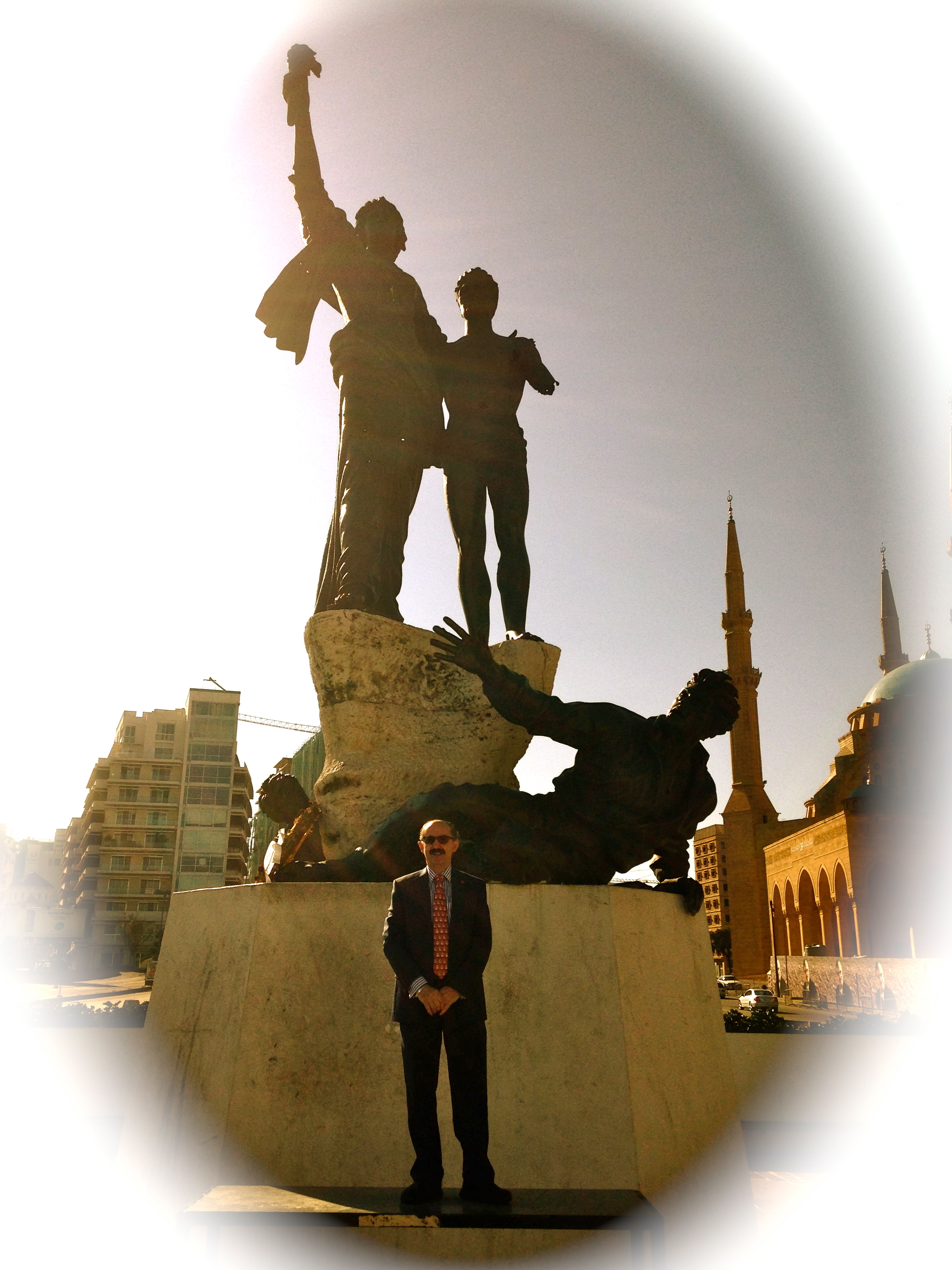
At Martyrs' Square in Downtown Beirut... Mr. Magazine™ Reporting...

At Martyrs’ Square in Downtown Beirut… Mr. Magazine™ Reporting…

Imagine a man who collects tens of thousands of comic books – can you envision such a person? And then can you imagine that person NOT being related to me? No, I couldn’t either.

Henry Matthews is a historian and collector of a multitude of Arab, French and American comic titles and also my cousin. A few years younger than Mr. Magazine™, Henry is the first person in my family that I’ve had the pleasure of “magazine-infecting.” His passion is palpable when he talks about preserving the Arab world’s culture through comic books.

On a recent trip back home to Lebanon, I visited with Henry and we talked about his ardor for comics and children’s books in general. The zeal for anything in magazine or book form certainly runs in the blood. Henry’s vision is to document each one of the comics and books in his collection and ultimately see the day when documentation centers for other countries and their cultures are erected so that children’s publications can be preserved for future generations. It’s a noble cause and certainly within the realm of possibility.

Our discussion was tightly focused around that possibility and the history of comics in the Arab world. I hope you enjoy our family conversation.

And now the Mr. Magazine™ interview with Henry Matthews, Collector & Comic Book Historian…

But first the sound-bites:


Henry Matthews

Henry Matthews

On how he began collecting comic books: My mother got me issue no. 7 of an Arabic comic book called Bissat El-Reeh, which is flying carpet in English. This magazine turned my life upside down. It was so beautiful that it was painfully beautiful.

On the progression his comic passion took him from day one until now: Eventually, with the comics, I decided that I wanted to keep them and ultimately preserve every single book for children, written books too that weren’t necessarily comic books. I think this was really a natural progression for me.

On the comic market in Lebanon and whether it is mainly a children’s genre there: It’s changing, but of course, it’s not as quick as in the Western world. But nowadays here, adults are reading comic books. But it is still, generally speaking, a genre for children.

On the most influential type of comic book in Lebanon:
If you want to look at what the reader wants, the young reader of comic books in the Arab world wants to be thrilled, to enjoy what they’re reading. This is what made Superman and Little Lulu in Arabic such great successes.

On Lebanon and whether it’s the center of comic publishing in the Arab world: Lebanon and Egypt were always neck-in-neck in the comics publishing competition. The beginning was with Egypt in the early 50s, well, even before that.

On how large his collection is: I have around 20,000 or 30,000 American comics and a similar number of Lebanese comics and I also have French comics and a limited number of other languages, like German and Japanese.

On what his plans are for his collection after he documents them:
I want to publish books and histories, which is really most important to me. And I do hope eventually, if I get funding, to start a center to preserve all children’s books and comic books in the Arab world, because there are no other kinds like we have.

On his thoughts for the future of comics and children’s publications in the Arab world:
I’m more optimistic than I was last year or the year before about comics. Of course, it will not be a widespread phenomenon like in the past, say the 60s or 70s, but we will have at least a small but solid contingent of comics’ readership and publications in the Arab world.

And now the lightly edited transcript of the Mr. Magazine™ interview with Henry Matthews, Collector & Comic Book Historian…

Samir Husni: Tell me a little bit about your beginnings. How did you start in the business of collecting comics?

Henry Matthews: My mother got me issue no. 7 of an Arabic comic book called Bissat El-Reeh, which is flying carpet in English. This magazine turned my life upside down. It was so beautiful that it was painfully beautiful. On the cover it had Aladdin riding high in the sky on a flying horse. I still remember the blue sky in the background and the stars; it was a beautiful cover. And it made me love comics in a passionate way. I started collecting then.

Samir Husni: The similarities between you and I are incredible. I fell in love with Superman at an early age, but I fell more in love with ink on paper than with the actual comics. You took the comic route and became an historian of Arabic comics in Lebanon and the rest of the Arab world. Describe that progression from day one when you fell in love with comics until today.

Henry Matthews: When I was a kid, I was always hearing about you. This very, for lack of a better word, eccentric guy who was my cousin, and collected all sorts of papers and magazines. (Laughs) I was becoming like you and everyone was telling me that I was the new Samir of the family. And of course, I loved it.

Indeed, I started only with comics, but I always wanted to collect other magazines, but it wasn’t possible because they were always getting thrown away. I had to just concentrate on comics because the other magazines were for grownups that my family received every week. My father was a good reader and loved his magazines. I always wanted to keep them, but they never let me. So, I was not very different from you.

Eventually, with the comics, I decided that I wanted to keep them and ultimately preserve every single book for children, written books too that weren’t necessarily comic books. I think this was really a natural progression for me.

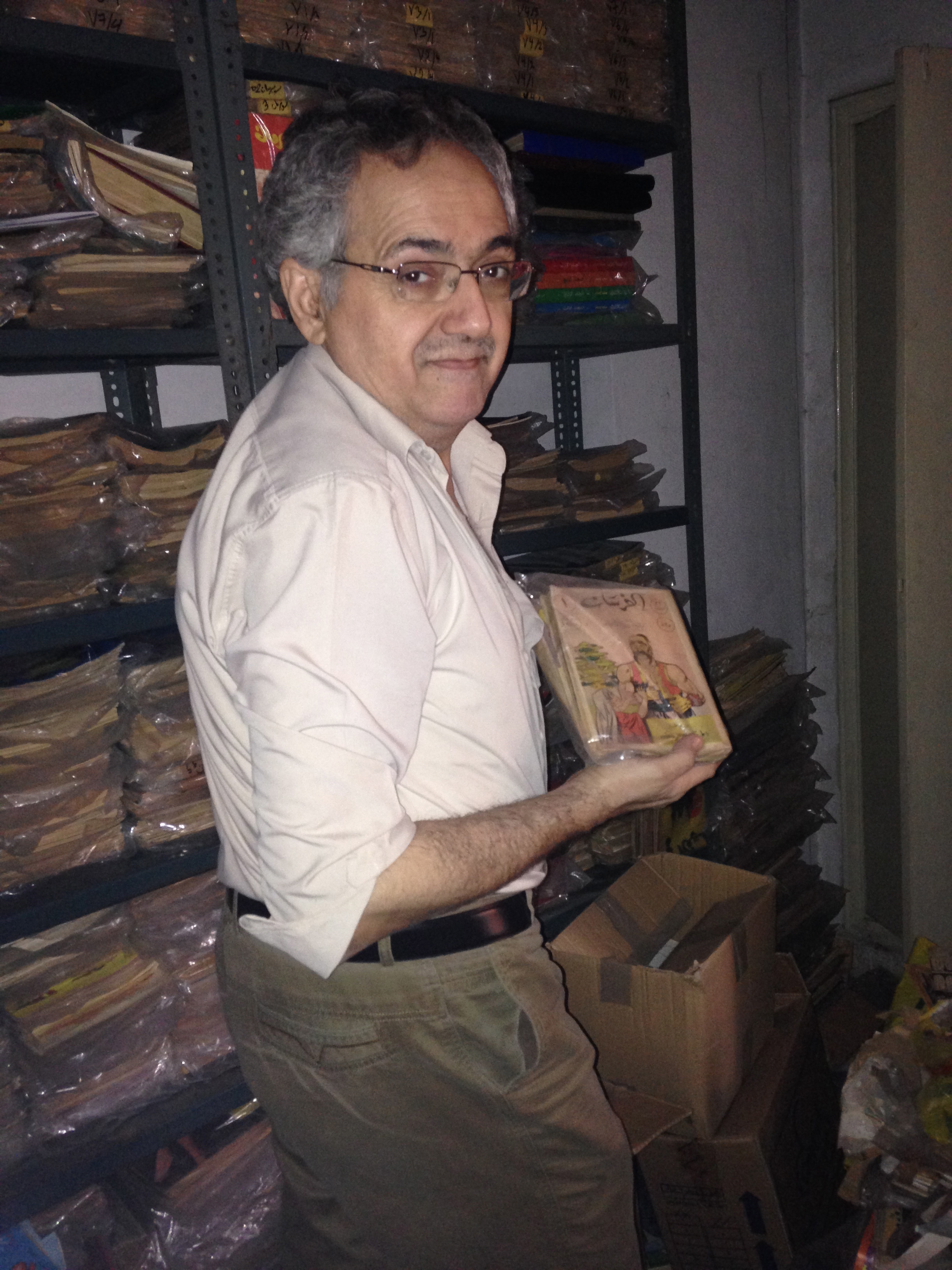
With Henry Matthews and his collection of comics.

With Henry Matthews and his collection of comics.

Samir Husni: You’ve published a few books and histories of specific magazines; how and what impact do you think preserving the comics in Lebanese and in the Arabic world, how does it reflect the culture and the changing atmosphere for children’s magazines since as far back as your collections go, which is the 1940s? How do you see this progression going and in the United States and Europe, a lot of the comics are read by adults; in Lebanon is the genre still mainly a children’s market or do you see a change in that market?

Henry Matthews: It’s changing, but of course, it’s not as quick as in the Western world. But nowadays here, adults are reading comic books. But it is still, generally speaking, a genre for children.

But you see new experiments, new publications of comic books that are just for adults. These are being published all around. But it is still a very limited change; it’s going to take some time to establish itself.

Samir Husni: What do you think, throughout history, say, the last century; what do you think has been the most influential comic books started? Because we have two types of comic books in the Middle East: we have those that were translated from the West, from France, Belgium or the States, and we have those that were founded in this region.

Henry Matthews: This has really been a continuing dilemma for every publisher because in the beginning, especially in the 50s and 60s, they always wanted to boast that their comics were homegrown. But the homegrown comics were not always of good quality or very well drawn.

If you want to look at what the reader wants, the young reader of comic books in the Arab world wants to be thrilled, to enjoy what they’re reading. This is what made Superman and Little Lulu in Arabic such great successes.

So it depends. If you’re trying to sell your comic books and you’re not funded by any party or government, you’ll have to find a way to interest young readers in your magazine. And the most interesting have always been the ones translated from the West, made in the U.S., Superman, Batman etc. the Superheroes.

Samir Husni: As you know, the magazine that ignited my passion and love for all magazines was Superman. But in your case, you concentrated more on the homegrown magazines…

Henry Matthews: Well, not really. When my passion started it was a mixture of homegrown comics and the translated comics from Belgium.

All through the history of comics in the Arab world, the homegrown comics were not really the issue. Typically, you had a lot of competition between translated comics that were started in the U.S. and French comics. Basically, this is where the real competition lay, because readers wanted something really enjoyable to read. And at the time the locally-made comics were not really made to the standards. So it was really a duel between the American comics on one side and the French and European comics on the other side. And the Americans won. (Laughs)

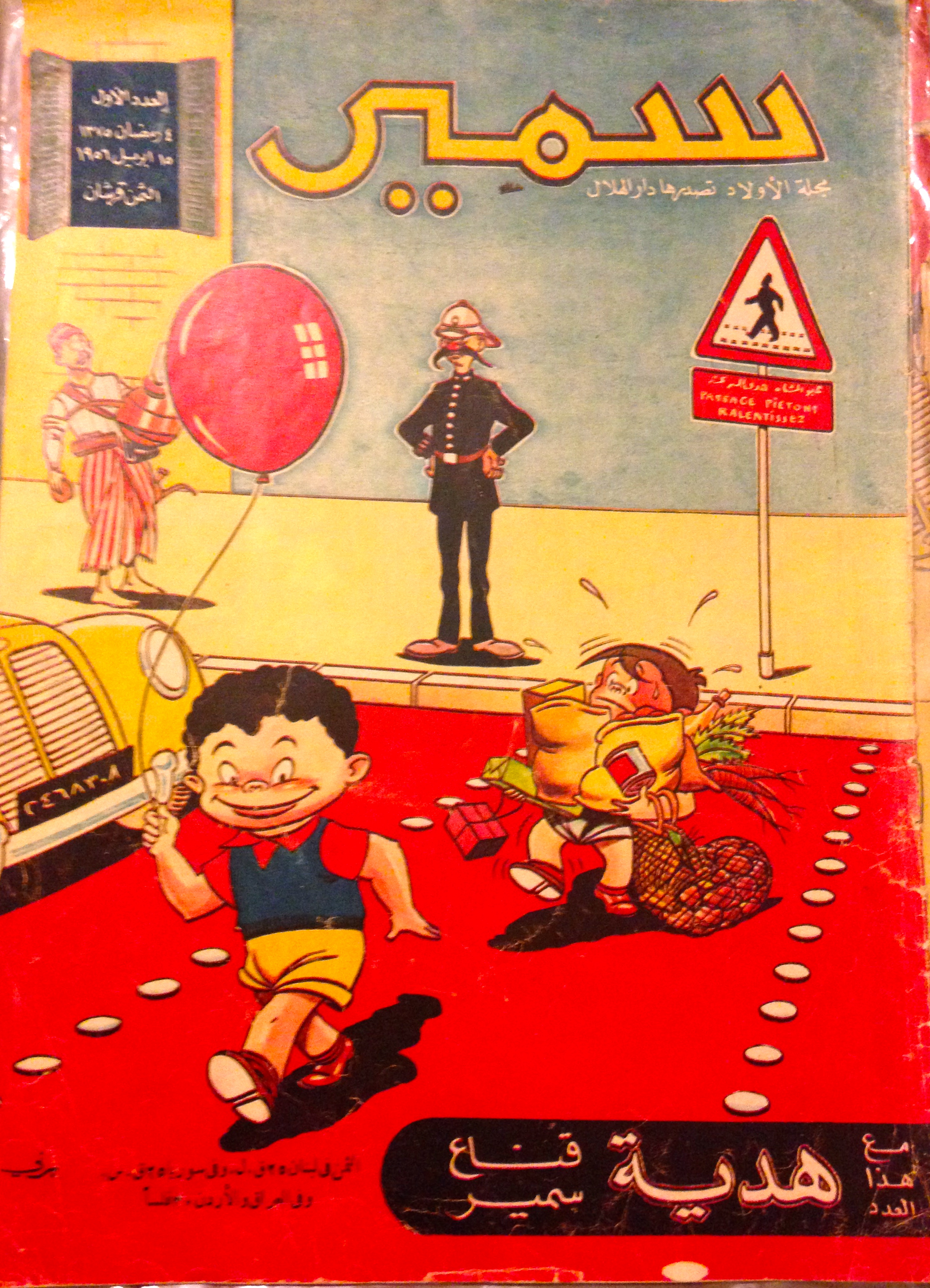
The first issue of Samir, the Egyptian comic magazine...

The first issue of Samir, the Egyptian comic magazine…

Samir Husni: What about the homegrown Egyptian comics? When I was growing up there was one called “Samir,” definitely named after me. (Laughs) And one called “Mickey” which was a Disney licensee. What was the first comic book that you can recall being published in the Arab world?

Henry Matthews: There was “Sinbad” which started even before “Samir.” And there were other experiments that didn’t last long. For example, there was “Ali Baba” and even comics which tried, in Egypt, to use stories from the movies. They would take a cowboy movie, run a summary of it and put pictures of the movie along with the comics they were including. These comics could have been “The Phantom” or war comics, for example. So this happened even before “Samir” started publishing. I’m talking about around the 1940s or early 1950s.

When I saw the first comic book in the Arab world, “Samir” was the first one to have great success and that was a great advantage for it. And it continues to this day.

“Samir” and the period we’re talking about included a mixture of locally-made comics and translated American comics. “Flash Gordon” for example. And there was one guy who drew comics in “Samir” that were superbly beautiful “Flash Gordon” comic strips and you would have thought they came straight from the States. But he was a local artist who did them. And in “Samir” you had guys drawing comic strips from Western and American heroes, but they were locally-made. This is one of the interesting points of history.

Samir Husni: “Samir” was published in Egypt. Did Lebanon ever become the center for comic publishing?

Henry Matthews: Lebanon and Egypt were always neck-in-neck in the comics publishing competition. The beginning was with Egypt in the early 50s, well, even before that. They started “Sinbad” magazine in Egypt in 1952 and it was quite a successful experiment. It lasted for 9 years.

It was “Sinbad” I think that affected publishers in Lebanon. In 1955, you had publisher, Laurine Rihani in Lebanon, who started doing Dunia Al-Ahdath. It was the first Lebanese comic book and it was the same format as “Sinbad,” and a little bit like it.

Just like with “Sinbad”, it took a few issues to get things started with comic strips in Lebanon. Their main problem was, in Egypt and in Lebanon, they wanted to convince schools that these publications were good for the children, so they had to include something like grammar, dictation and curriculum material with the comic books to make them palatable for the schools’ administrations. And this is what happened with Al-Ahdath.

So, in the beginning you only had a few pages of actual comics and many pages of text.

Samir Husni: Tell me about your collection. I see boxes and boxes and boxes. (Laughs) It’s a scary reminder of my own office.

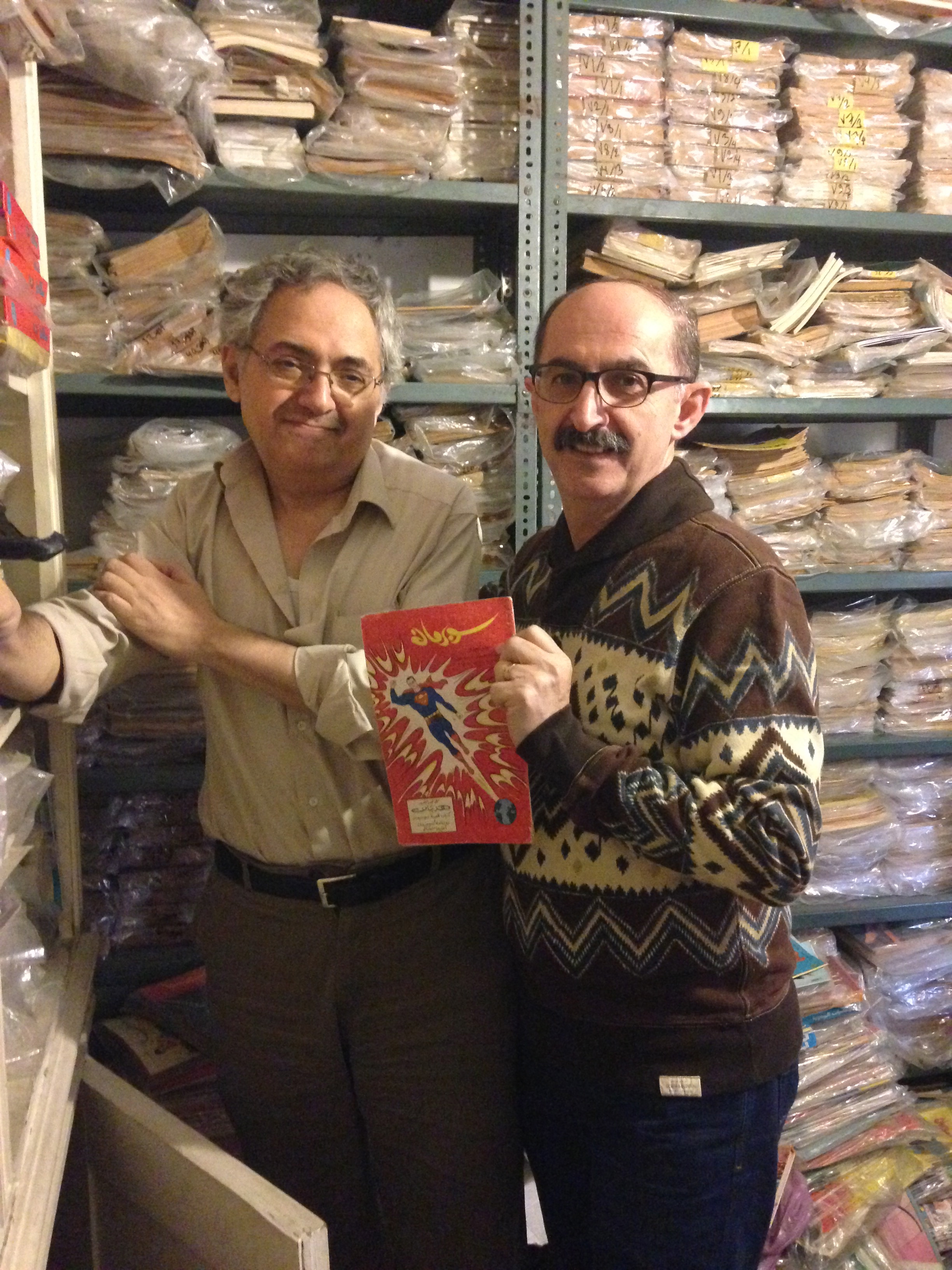
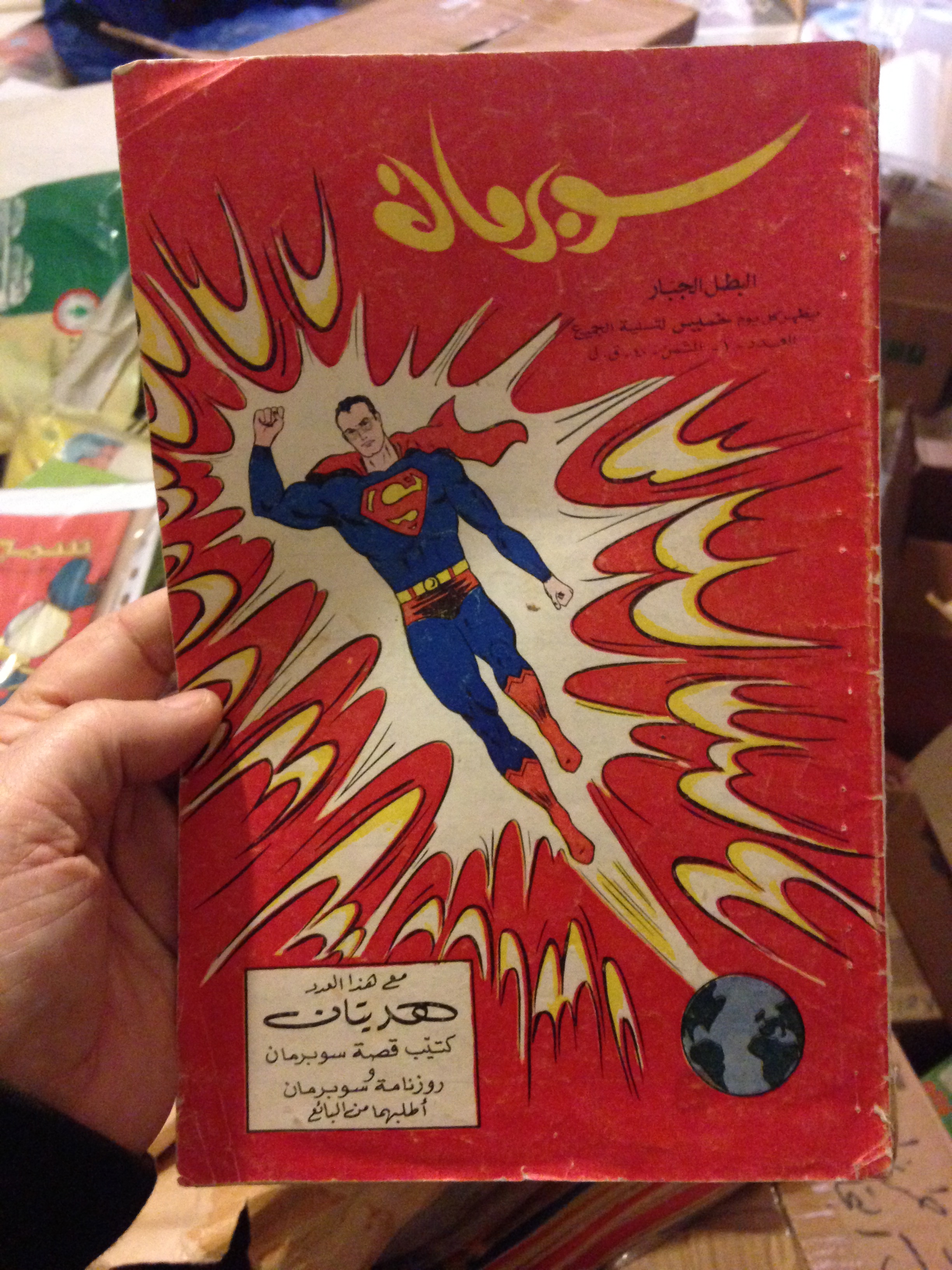
The first issue of Superman in Arabic, one of Henry Matthews prized possessions...

The first issue of Superman in Arabic, one of Henry Matthews prized possessions…

Henry Matthews: Let me put it this way, I’m determined and passionate and I’m also stubborn and this effort of classifying my collection has been going on for 7 or 8 years. I’ve been collecting for 50 years and no matter what I do, I have to do the classification myself. So, it takes a lot of time and effort. But it has to be done.

Basically, I concentrate on comics and children’s books, but I also have other collections of stories. For example, you know Arsène Lupin, a very famous French gentleman thief, was such a popular character in the Arabic publications that you have thousands and thousands of titles about Arsène Lupin in Arabic, much more than what was published about him in France.

In Egypt and then later in the Arabic world, every single publisher had to start a line for Arsène Lupin if they wanted to have some kind of success. And sometimes I think they even got stories that were not originally starring Arsène Lupin and they made him the hero anyway.

So, although we did not have Arsène Lupin in Arabic comic books, every week, even during WWII, we had Egyptian publishers producing at least 10 or 12 issues for Arsène Lupin. So, this is the history that I’m trying to preserve. Not just the comics, but also those imaginary heroes of stories which really were attractive to the Arab masses in the mid-twentieth century.

Samir Husni: How large is your collection?

Henry Matthews: It’s not as large as I want it to be. (Laughs) I want it to be as large as possible. I have around 20,000 or 30,000 American comics and a similar number of Lebanese comics and I also have French comics and a limited number of other languages, like German and Japanese.

Samir Husni: What’s your most prized possession among all of your comics?

Henry Matthews: I’m not thinking of monetary value. I don’t have any very rare American comic, that’s not what I’m thinking of, but what I am thinking of is how easy it is to find a comic. For example, if you have the right amount of money you can always find the American comics that you want to buy. You have to pay a lot, but you can get them.

The first issues of Superman and these are really my prized possessions, if you lose an issue of colors, you cannot find it anymore, because no one really bothered to preserve them. This is the main difference between the Arab world and the Western one, especially in the U.S. There they preserve the comics and have an industry based on buying old comics and collecting them. Here it’s a fairly new trend. So, a lot has been lost and I’m trying to document all this.

Samir Husni: And what’s your plan after you finish documenting all of them? What do you want to do with them then?

Henry Matthews: Well, I want to publish books and histories, which is really most important to me. And I do hope eventually, if I get funding, to start a center to preserve all children’s books and comic books in the Arab world, because there are no other kinds like we have. And what I really hope, of course this is fantasizing, I really think what should be done is every country and every culture should preserve its publications for children. And this should be adopted by UNESCO (United Nations Educational, Scientific and Cultural Organization) so that in every country there will be a UNESCO documentation for children’s publications, from past to present.

You would end up around the world with many UNESCO centers for documenting children’s publications in their native languages.

Samir Husni: We live in a digital age; do you think the digital revolution is going to help that preservation or hurt it?

Henry Matthews: Let me put it this way, in Lebanon there was a time when we felt that there was nobody reading anymore, but recently they had an Arab book fair in Beirut, it ended a few days ago, and I was amazed when I discovered that people were flocking to it and buying books, even more than before. I think now the trend is changing, people are buying books again.

Last year was different, the year before that it was absolutely zero almost. But now people are buying books and magazines and also buying a lot of comics. You would be amazed at how people sort of compete to buy what they want. This was unheard of in the past. Now people just want to buy beautiful magazines and books, especially children’s books. Everybody is printing in the best, most colorful way, with very attractive covers and artwork. I think it’s a booming business in Lebanon now.

Samir Husni: What do you think the future holds for children’s magazines and books?

Henry Matthews: I’m more optimistic than I was last year or the year before about comics. Of course, it will not be a widespread phenomenon like in the past, say the 60s or 70s, but we will have at least a small but solid contingent of comics’ readership and publications in the Arab world.

And my hope, for example, is to establish a comic’s documentation center. It will not just be to preserve the comic books, but to digitize them and that way someone could be sitting in their home, for example, and could go to the website of the center and access the old magazines, maybe 70 years old, that you want to look at and see it all on the website. This is what I hope to achieve.

Samir Husni: As they told me in Russia, the problem with digitizing material now is that every few years you have to update the whole computerized system. While you have books and magazines from hundreds of years ago that still exist and do not need to be updated.

Henry Matthews: Of course, it was much simpler then. If you think of the possibilities, a virus attack for example, you could end up losing all of your material. Even if you back everything up, it’s still a scary thought.

Samir Husni: What’s your current position; what’s your real job? (Laughs)

Henry Matthews: (Laughs too) I’m editor in the information office of the American University of Beirut (A.U.B.) and I’ve been there since 1985. And I love it. Even during the war, I’d risk my life to go there and I remember the shells falling and I’d still want to stay. I’d document all as a journalist and publish it in the University newsletter. And I’m still working there as an editor. It’s always been one of my passions.

I tried to convince them to start a history office, an office of A.U.B history, much like NASA History Office, for example. I wanted A.U.B to have a history office documenting just A.U.B.

My other passions are space exploration and aviation and I also paint. I’m a painter. And if I have anything left during the day, I use it to organize my collections.

Samir Husni: Thank you.

h1

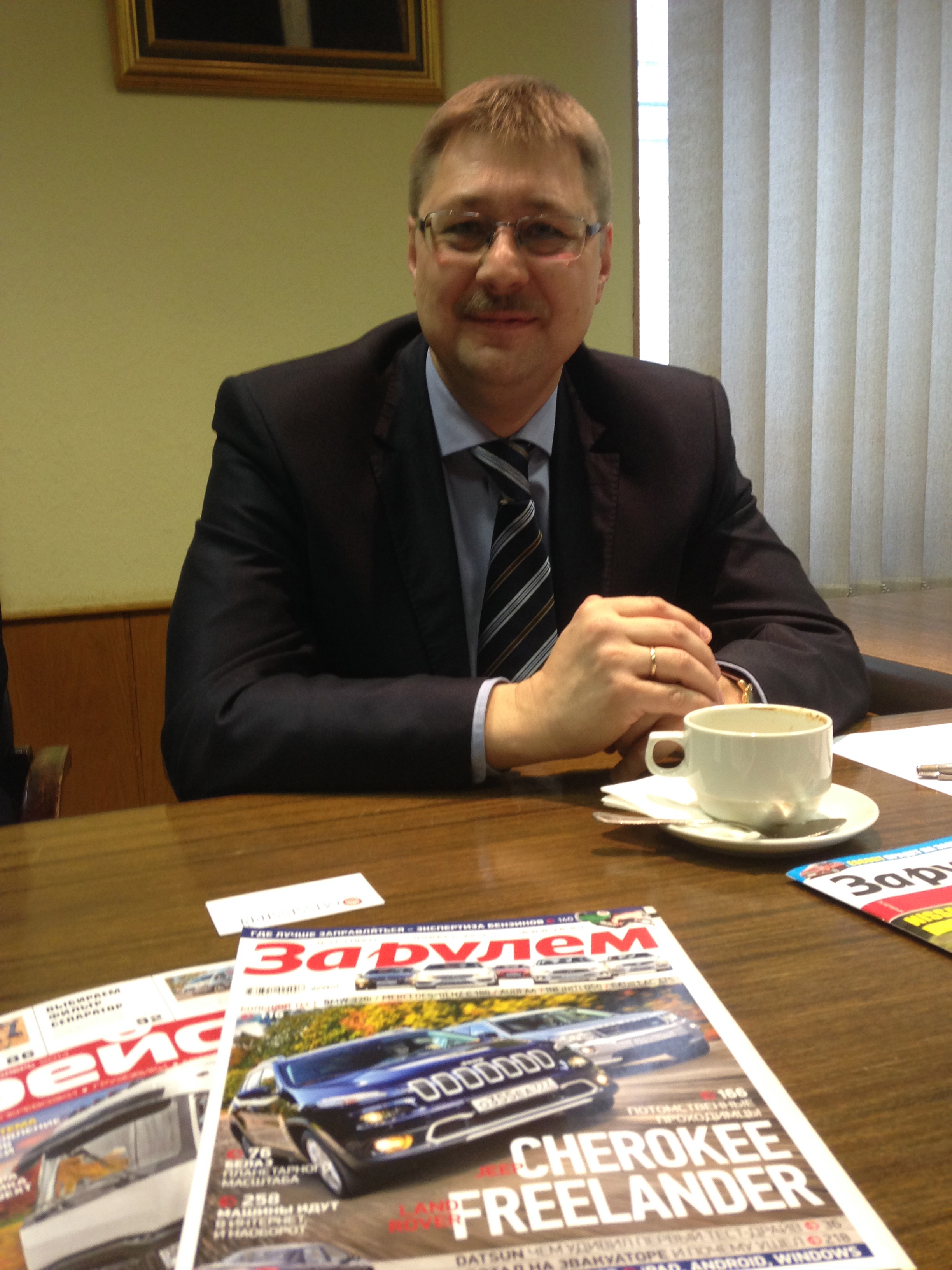
From Russia With Love 4: Specialization Is The Name of the Game. The Mr. Magazine™ Interview With Alexey Vasin, Za Rulem

December 4, 2014

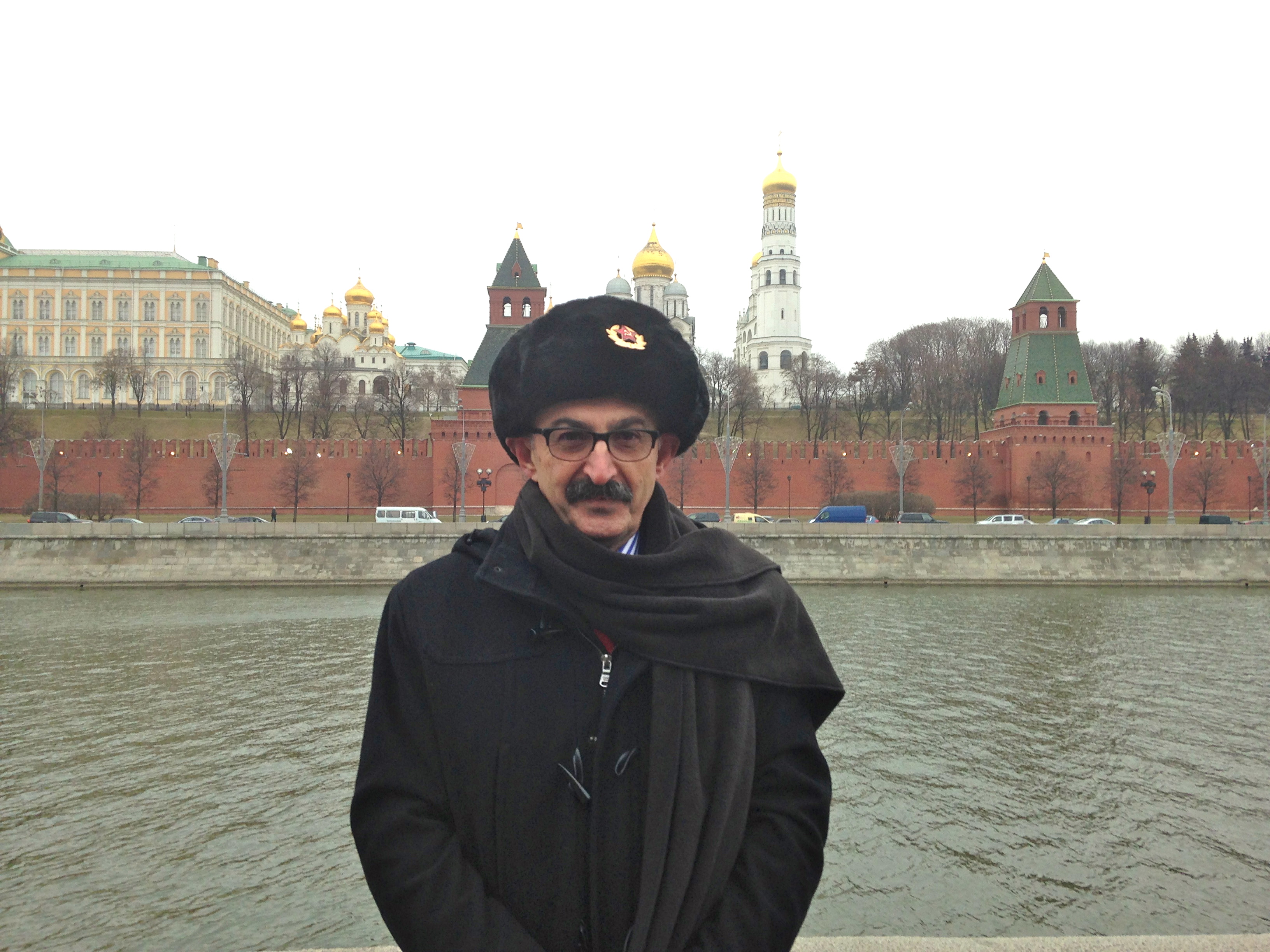
On the banks of Moscow River and Kremlin Propelling a publishing company that was founded in 1928 into the uncertain magazine media future of today might seem like a daunting task, especially when at one time the magazine they published had a circulation of 5 million. Of course, in those years Za Rulem had the only auto magazine in the entire country (the former Soviet Union).

Today, Alexey Vasin, General Director of Za Rulem, has plans to bring the contemporary worlds of print and digital together and continue the success of his predecessors before him, if not surpassing them.

On my recent trip to Moscow, Alexey took time out of his busy schedule to speak with me about the many different extensions of the Za Rulem brand and the platforms being designed and offered to the audience. It was a very entertaining and enlightening discussion.

So sit back and enjoy the last installment of my first trip to Russia as you read the Mr. Magazine™ interview with Alexey Vasin, General Director, Za Rulem.

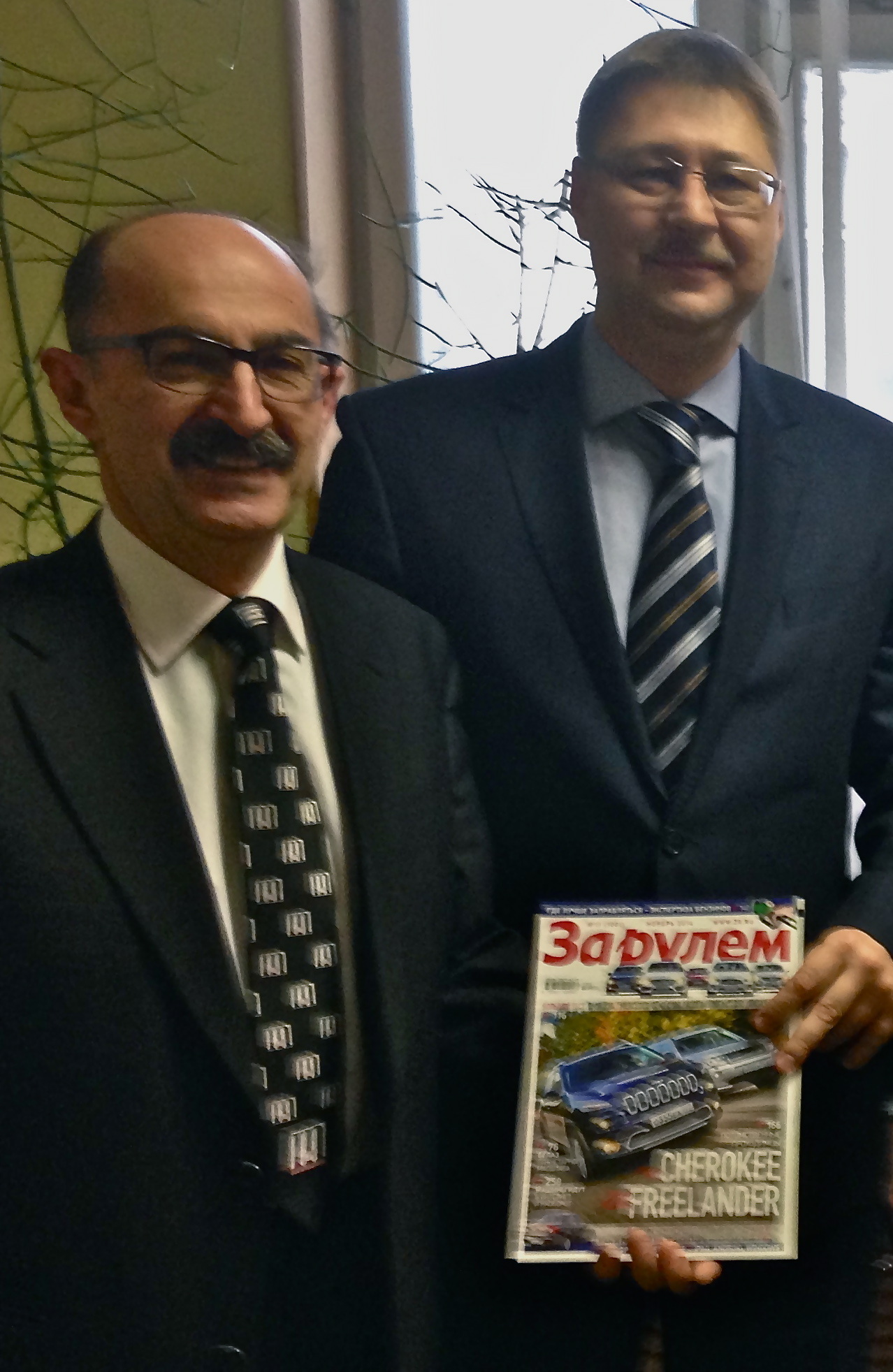
Alexey Vasin
Husni with Alexey Vasin, General Manager, Za Rulem

But first the sound-bites…

On Za Rulem, past and present: The publishing house of Za Rulem was founded in 1928 and published the magazine. It was the only auto magazine in Russia and the circulation of the magazine was 5 million. Now, it is still the leader of men’s auto magazines in Russia, with probably the largest audience among all the monthly men’s magazines.

On the future of print and digital within Za Rulem’s market: Right now, we are not very profitable in digital either. But it is still important and necessary, because the concept people have of getting information is changing.

On the biggest challenge they face going into the future: Other problems are moving from a printed press to other media. We also have some specialized challenges. For several years we’ve suffered from distribution problems, especially with the kiosks.

On whether he is enjoying his job more now or five years ago: Good question. It was always work, but now it has more tension. It is definitely more challenging than before, especially before the crisis.

On what keeps him up at night: (Laughs) Too many things to mention.

And now for the lightly edited conversation with Alexey Vasin, General Director of Za Rulem:

Samir Husni: Tell me a little about Za Rulem, past and present.

A. Vasin Alexey Vasin: The publishing house of Za Rulem was founded in 1928 and published the magazine. It was the only auto magazine in Russia and the circulation of the magazine was 5 million. Now, it is still the leader of men’s auto magazines in Russia, with probably the largest audience among all the monthly men’s magazines. There are about seven million readers of Za Rulem magazine and the circulation of the magazine is 114,000 monthly.

Za Rulem has four supplements: Moto magazine, the first motorcycle magazine in Russia, and one about logistics and trucks. And two supplements which will be issued in two weeks. We also have our regional newspaper, Za Rulem-Region, which is published in several regions with separate circulations, there are 22 regions in Latvia, but due to the economy, circulation has been reduced to five regions. Also, we publish books and catalogs on the auto topic. And they have many editions.

Za Rulem is actively developing digital. We have a website, which was launched in 1998, one of the first about automobiles in Russia. The audience of the website is about 2 million a month. In 2012, we created a mobile app for tablets and we also have an app suitable for Androids and iPads. We have also estimated that we are the best application for iPads in Russia.

Samir Husni: You mentioned that you started with a circulation of 5 million and now you’re at 114,000…

Alexey Vasin: (Laughs) Our parents started with 5 million. It was the only one at that time (during the Soviet Union era). The market was very different, an innocent time.

Samir Husni: As we are propelling into digital, where do you see the future of print fitting in? In the United States very few magazine companies are making any money from digital.

Alexey Vasin: Right now, we are not very profitable in digital either. But it is still important and necessary, because the concept people have of getting information is changing. And we have to provide our readers with information in the best and most suitable of ways. And concerning the commercial success of digital, we are not lonely in this movement.

Recently we attended a conference in London, where many interesting things about digital content was presented. And we hope that if we unite we will be successful. Unfortunately, it’s not that easy in the beginning.

Samir Husni: Five years ago, most publishers in the United States put their bets on the tablet, this is the future and this is where we’re going to get the money. And that did not happen. Now they’re saying it’s mobile.

Alexey Vasin: (Laughs) Well we haven’t invested all of our money in those things. But when it comes to content, we created a series of things.

Samir Husni: All of the predictions now are on specialized magazines; they will have the most prominent spot in the future.

Alexey Vasin: Such specialization has been here for many years. And talking about our market, we already have only auto magazines and there are even ones for particular models.

Samir Husni: Even with the motor magazines in the States we have specialized ones for baggers, the motorcycles that have bags on the sides.

Alexey Vasin: We are moving in that specialized direction. And, as I said, we are specialized already as we are all about vehicles of some type. And while many other magazines have their auto departments, we are concentrated only on autos.

Samir Husni: What do you think is the biggest challenge you’re facing as you move toward the future?

Alexey Vasin: (Laughs) We have many obstacles. Some just in general with our market and some that are very particular. Speaking about the general ones, it is of course, the reduction of interest in print and switching audience attention to other channels of communication, such as digital.

But from the other side we have the potential for further development. We have the audience and we have the advertising budget.

Other problems are moving from a printed press to other media. We also have some specialized challenges. For several years we’ve suffered from distribution problems, especially with the kiosks.

Samir Husni: Yes, it seems like every publisher I’m meeting with, it’s the same: distribution and distribution.

Alexey Vasin: Yes, but when we are active on every channel of distribution, we have almost a 90% presence in Russia, which is one of the highest. So we can’t avoid the general market woes.

Samir Husni: If someone asked you: are you enjoying your job more or less than five years ago, what would you tell them? If you look at 2008; are you having more fun now or does it feel more like work?

Alexey Vasin: (Laughs) Good question. It was always work, but now it has more tension. It is definitely more challenging than before, especially before the crisis. But we are actively moving forward and managing to have a lot of fun and celebrations. (Laughs) It is interesting challenges though.

Samir Husni: Do you live the lifestyle of the magazine? Are you an avid car person or no?

Alexey Vasin: (Laughs) It is easy to be a motorist in Moscow, everyone has a car. There are some researchers from Europe and they found that only 12% of motorists are really into cars and this topic, so that is our target audience.

Samir Husni: My typical last question; what keeps you up at night?

Alexey Vasin: (Laughs) Too many things to mention.

Samir Husni: Thank you.

And with this, From Russia With Love 4, I conclude my news, views and interviews regarding the Russian media. Until my next trip around the world and its many many magazine and magazine media outlets, here’s to a great magazine day.

h1

From Russia With Love 3: The State and Challenges of Newspapers. The Mr. Magazine™ Interview with Pavel Filenkov, CEO, Kommersant

December 3, 2014

On the banks of Moscow River and Kremlin As in the United States, newspaper markets in Russia are facing many challenges, both in mastering the digital realms and in increasing revenue. I spoke with Pavel Filenkov, CEO at Kommersant Publishing House on my recent trip to Moscow and we talked about the future of newspapers in Russia and whether the level of journalism all publishers globally are experiencing, with digital figured into the equation, is as elevated as it has been in the past.

His answers are seemingly unique, yet extremely familiar as, once again, I realized that while many miles and customs may separate us, in the end we all face similar challenges.

I hope you find the Russian viewpoint of newspaper publishing as intriguing as I did as you read my interview with Pavel Filenkov, CEO, Kommersant Publishing House.

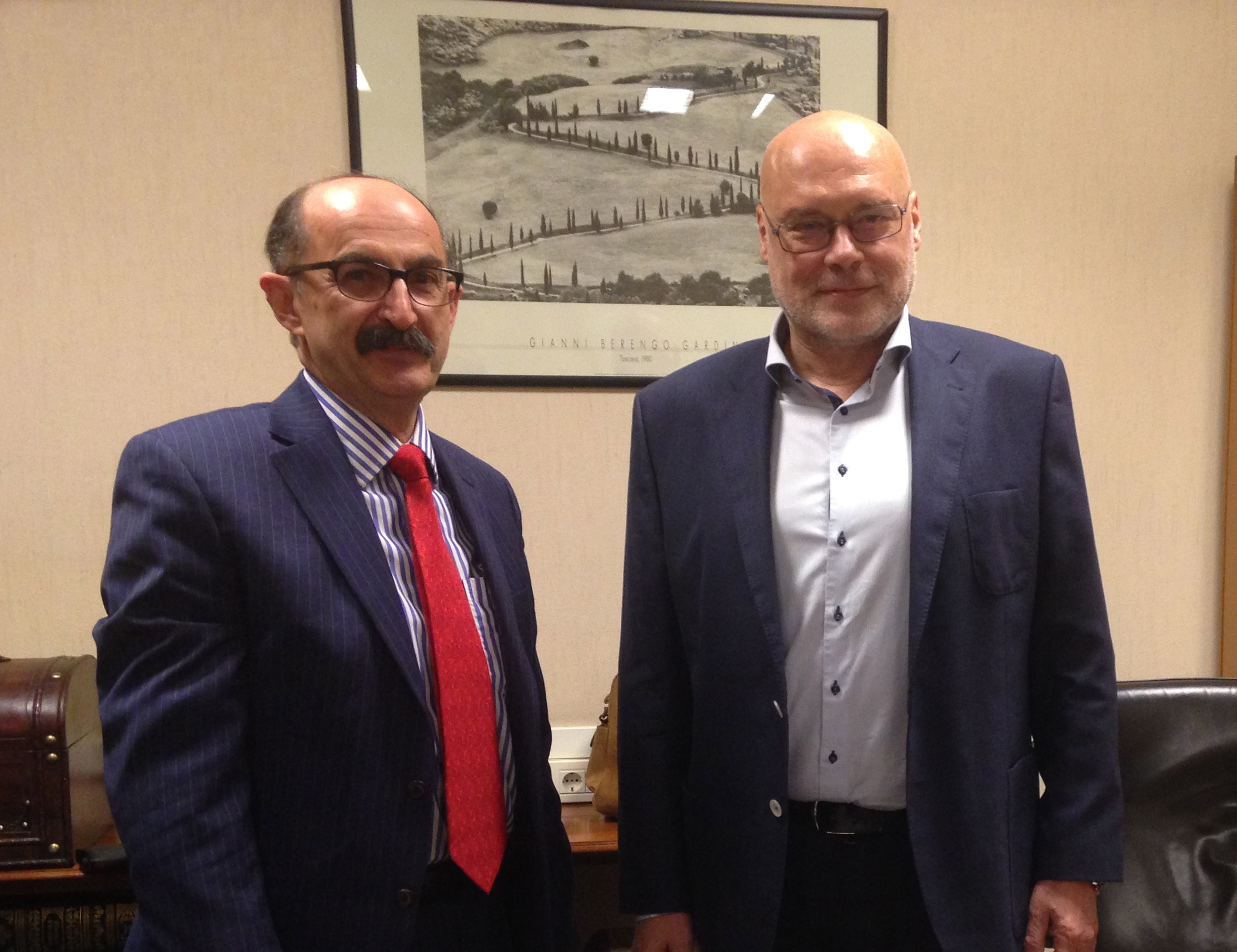
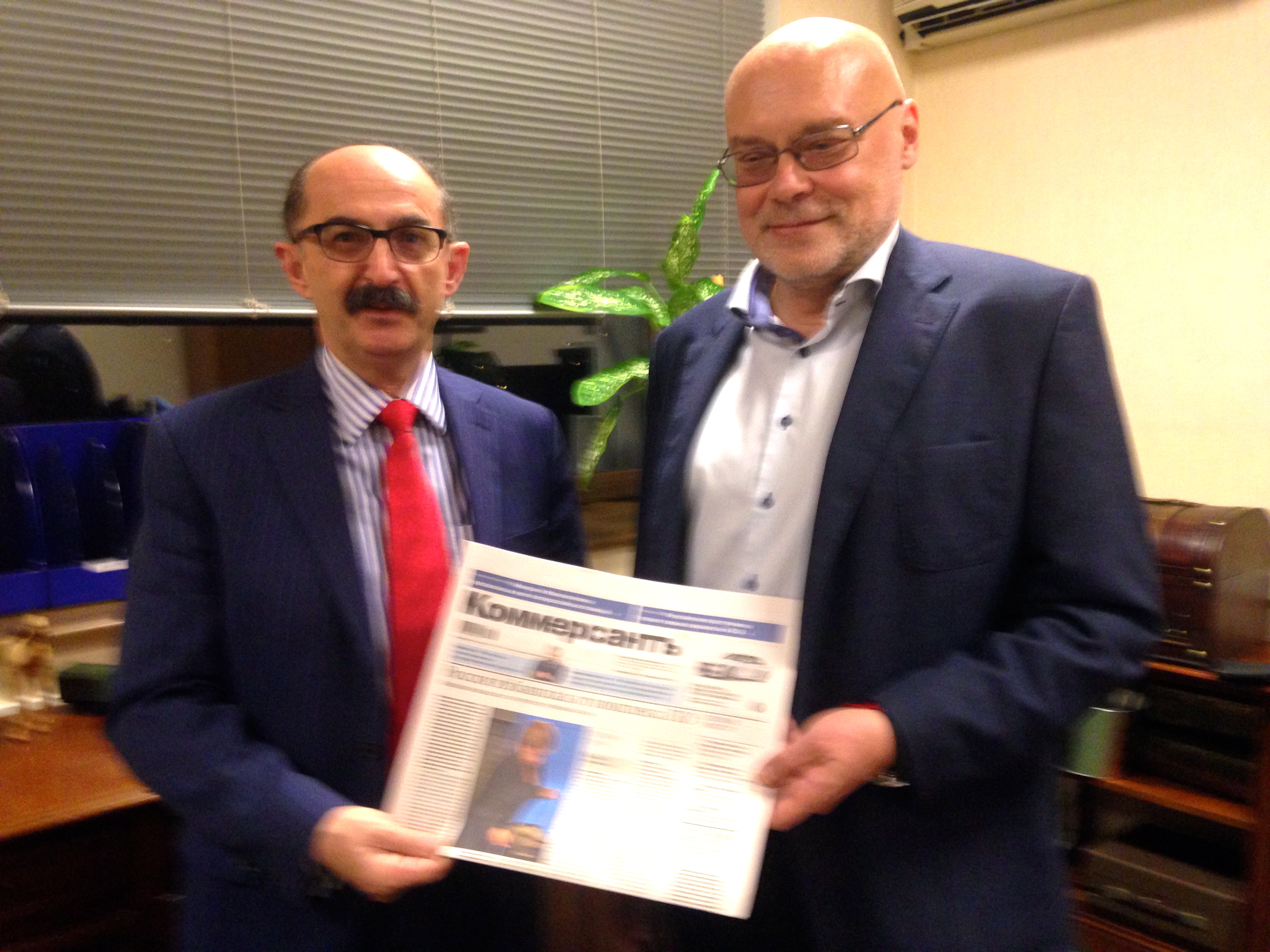
Husni and Filenkov
Husni with Pavel Filenkov, CEO, Kommersant Publishing House

But first, the sound-bites:

On whether he sees the cup half empty or half full when it comes to newspapers in Russia, especially his own: Our newspaper market is of course overheated. I think we have three times more newspapers than we really need. We have, at this moment, approximately 6,000 to 8,000 newspapers.

On whether he believes journalism has improved or declined over the last 5 to 10 years: In Russia and in every country, there is government which this country needs. And every country has journalists, which I can also say this country needs, but I am not sure that our country needs the same level of journalism that we have now, or as we had two years ago.

On the impact of digital on print newspapers in Russia: We have to move in the direction of digital media. We do not see a model way, but the quantity of advertising money, which is in the digital field and the printed field, is approximately the same.

On whether the content of newspapers overall is a reflection of the general audience: I agree to some extent with that statement, but here in Russia we have a much more important problem, which limits the future development of our newspapers. And it’s the problem of distribution.

On the distribution problems of his newspaper, Kommersant: Our subscription base is collapsing because we have only one partner in distribution, the Russian post office. And the price of delivering newspapers is growing from month to month and year to year. In fact, our distribution through the Russian post office is absolutely inefficient.

On what he sees as the light of the future for his newspaper: We hope that we will have the capability to get money from the digital outlets in publishing. That’s why we are trying to develop a digital print system from Adobe.

On what keeps him up at night: Too many things. (Laughs) I go to bed very late and I wake up quite early.

And now for the lightly edited conversation with Pavel Filenkov, CEO, Kommersant Publishing House:

Husni and FilenkovSamir Husni: Tell me a little about the state of newspapers, specifically yours, but also in general, in Russia. Do you see the cup as half full or half empty and specifically about your paper first?

Pavel Filenkov: I think all are an advertising market, especially our newspapers. It’s just 100% part of unstolen money from oil. The lesser the price of oil, the less money we have, (Laughs) as the price of oil has fallen. So, of course, our income has fallen approximately the same percentage.

The estimation of how much our advertising market has fallen this year is about 12% among newspapers. The advertising in magazines has fallen even a bit more and a little less in business newspapers. As we are a business newspaper, of course, our percentage has fallen a bit less, around 4% for this year.

Of course, we understand that we have no reason to hope that the price will go high, so we think that next year will be worse than this one. The decrease in advertising incomes will of course continue and we think that decrease next year will be approximately 15%. But, this is certain, we have fun news also.

Our newspaper market is of course overheated. I think we have three times more newspapers than we really need. We have, at this moment, approximately 6,000 to 8,000 newspapers. Of course, not all of them are really working, but maybe around 5,000 are. It’s too many for our country.

And as a result of this, there is a lapse in the advertising market, and maybe a big part of these newspapers will die. And the main newspapers will divide their money, their heritage, and their piece of this pie.

So, I think that the newspapers that will survive during the next year will not have the poor health that we have at this moment. Of course, the quantity of newspapers will reduce, but the ones that survive will be status quo or maybe even in a better state economically.

But I do understand that this logic is, to some extent, crocodile logic, complete with crocodile tears, but we have to see things realistically. (Laughs)

Samir Husni: You have this vast number of newspapers; do you think in the last 5 or 10 years journalism has improved or declined? Are we better overall journalist’s today or are good journalists becoming few and far between?

Pavel Filenkov: We can see our country as a country with constant political and economic sedation. Of course, we will not see a reason why our journalism should become more worthy.

But our country changes and the newspapers should change as well. And of course, we are trying to satisfy external conditions and we try to go together with our country. And when we try to perform under these new conditions, I’m not sure that we become better,

If we can see our level of journalism from that point of view, I think in the future we will have journalism of more worth. But if we can also see journalism as a need of our society, then I think the level of this profession may become higher or at least stay the same.

In Russia and in every country, there is government which this country needs. And every country has journalists, which I can also say this country needs, but I am not sure that our country needs the same level of journalism that we have now, or as we had two years ago.

Samir Husni: What about the impact of digital? Has the advancement of digital impacted the printed newspaper at all?

Pavel Filenkov Pavel Filenkov: We have to move in the direction of digital media. We do not see a model way, but the quantity of advertising money, which is in the digital field and the printed field, is approximately the same. But when we consider money in the digital field, 90% of this money belongs to context advertising. And only 10% belongs to real media advertising. And in print areas, the average is absolutely different, about 100% of the money is real advertising money, maybe a small percentage is context advertising money.

That’s why we can set only media advertising money, not context, so we can get from the Internet, from digital, only 10% of the market. So we cannot get from the digital area more than 10% of our income. But we are ready to go into this area.

For example, our auditorium in digital and our auditorium in print are approximately the same. Even on the internet we have more loyal readers. Only 10% of our money from the print area, do we get from the Internet.

We don’t have a model yet for how to get more money from that market. That’s why our development in the Internet area is very limited. We have finished the period of time when we invested in digital with all of our allotted money for that area. We finished that strategy because we aren’t getting a very high response from the investment.

So, at this moment, my strategy for Kommersant is to invest enough money to support our development level in the Internet; however we don’t consider the Internet our salvation.

Samir Husni: Have you noticed that with the printed newspapers, some people are saying the problem isn’t with ink on paper, it’s with what’s being put inside the paper: the content.

Pavel Filenkov: I agree to some extent with that statement, but here in Russia we have a much more important problem, which limits the future development of our newspapers. And it’s the problem of distribution, because at this time we have a lapse in both channels of distribution. Our subscription base is collapsing because we have only one partner in distribution, the Russian post office. And the price of delivering newspapers is growing from month to month and year to year. In fact, our distribution through the Russian post office is absolutely inefficient.

Samir Husni: It’s costing more than you’re bringing in.

Pavel Filenkov: Yes, exactly. And we have a very big problem with our retail, because the standard way of distribution is retailing by means of kiosks and outlets, and the quantity of these street kiosks is reducing from year to year. I don’t know why, but this is politic of our power, to reduce the number of street kiosks.

So, at this time we have more than a 50% return from our retail. Of course, this is an absolutely inefficient way of distribution. That’s why the problem of distribution is much more important for the survival of newspapers. It’s much more important than all our other problems, levels of journalism or technology or development; for us, all these problems are much less important than distribution.

Samir Husni: Very true. If you can’t get the paper into the hands of the readers…

Pavel Filenkov: Yes, but we are trying to use different ways of delivering and distributing newspapers. For example, for us a very important channel of distribution is on board distribution. The other problem is just printing our newspaper, but we still have enough of a printing press to print it.

We print our newspaper and it’s necessary to understand, the circulation of our newspaper isn’t big for Russia. We print about 100,000 to 120,000 copies and this is a low circulation because we are a business newspaper and our readership isn’t as big as other papers that print1 million to 2 million copies.

Our circulation is so low we have to print out the newspaper in 14 or 15 different places in order to deliver the paper on time to the different regions of the country.

Samir Husni: In the midst of all this gloom and doom that we face as journalists in the industry, where is the bright side? What do you see as the light as you move toward the future?

Pavel Filenkov: We hope that we will have the capability to get money from the digital outlets in publishing. That’s why we are trying to develop a digital print system from Adobe. We have our application in all electronic magazines and the Apple Store in Google Marketplace. Our application is produced for all platforms: tablets, PC’s IOS and Androids. And we believe that this will be another revenue stream for us in the future. So, that’s one channel.

The next channel, which we hope will give us another possibility to survive, is a way to deliver some services to our readers. For example, information services, databases, approaches to some loyal services, registration services and others as well. So we have created a special company which provides these services. And these services can be accessed by means of our site. For us, this is a way to attract additional readers and get more revenue, not just by advertising, but by the means of giving our readership much more value. Almost all of these services are payable services; they aren’t free of charge, so for us this is another important way of income.

At this time we get approximately the same money that we get from the Internet, about 10% of our advertising income we get from these services. And of course, we have a very good partnership between our newspaper and these services. The newspaper, in this case, serves as advertising for our company and our information facilities. We see these two ways as things we are going to develop.

Samir Husni: And this venture into e-commerce…

Pavel Filenkov: Yes, we tried to launch an e-commerce in its simplest form, as an eShort, but we stopped the project because we realized that we are not good sellers when it comes to jewelry or books and songs; we are not professionals. But we are professionals in the area of information, so we’ll produce our kind of goods.

Samir Husni: My typical last question; what keeps you up at night?

Pavel Filenkov: Too many things. (Laughs) I go to bed very late and I wake up quite early. I’m trying to do as much every day as I can and for me that is the result of my sleeplessness. Also, I wish to spend as much time with my work and my family as I can.

Samir Husni: Thank you.

h1

From Russia With Love 2: The Burda Russia Story. The Mr. Magazine™ Interview with Jürgen Ulrich, CEO, Burda Russia

December 2, 2014

IMG_7502 While miles and oceans may separate the USA and Russia, when it comes to magazine publishing and the media industry in general, the defining line is vague. Their troubles and triumphs are very similar to our own. On a recent trip I made to Moscow to give a keynote speech at the annual conference of the Press Distributors Association (PDA), that congruent fact was driven home to me clearly. From distribution, advertising challenges to the future of print; the USA and Russia amazingly are facing the same problems. See my first entry From Russia with Love.

In my interview with Jürgen Ulrich, we talked about the love between an audience and a brand, the enormity of the Burda brand itself in Russia, the very young distribution system in the country and the power of print. It was very familiar territory for me.

So, I hope you enjoy the Russian perspective from the magazine world as much as I did as you read my interview with Jürgen Ulrich, CEO, Burda Russia…

But first the sound-bites:

On whether Burda is the number one publisher in Russia:
From a print run standpoint, I would say yes.

On whether he’s worried about the demise of print and the rise of digital:
I would say no; I’m not even afraid of it from any other perspective, in fact, it’s good because technology is one thing that drives our portfolio.

On the biggest stumbling block facing magazine media in Russia:
In Russia, I think we’re facing some different issues, in general. First of all, I would say it’s not an old industry in the country, from a magazine perspective. Of course, this means it’s a very young distribution system as well.

On his most pleasant surprise since coming to Burda Russia in 2011:
The most pleasant surprise, I would say, is how much people really love our brands. It shows definitely that the industry is very much alive.

On the biggest stumbling block he’s already overcame:
Probably the political situation, where we are fighting on the one side with a struggling economy and on the other side, having to change the business model more toward the future, so adding additional revenue streams to our business and in this case, it might mean digital or whatever it covers, an eco-mass.

On why magazines in Russia are so cheaply-priced:
I think it’s a combination of everything. First of all, yes, it’s about income. If you see Moscow, Moscow is not average Russia.

On what keeps him up at night:
(Laughs) What keeps me up at night? Everything that isn’t solved in the daytime. So you can imagine at the moment it’s a lot.

Husni and Ulrich
Samir “Mr. Magazine™” Husni with Jürgen Ulrich, CEO, Burda Russia at the company’s headquarters in Moscow.

And now for the lightly edited Mr. Magazine™ conversation with Jürgen Ulrich, CEO of Burda Russia publishing company.

Samir Husni: You have 80 different titles. Burda Style – the magazine – is the largest women’s magazine around, but is Burda the number one publisher here?

Jürgen Ulrich: From a print run standpoint, I would say yes. Of course, you do have Cosmopolitan, which is in a totally different segment. We still have in the food segment a title which is, from a monthly print run, bigger than even Burda Style. It’s a user-generated content title which at that stage, I’d say we founded a new segment about six or seven years ago, so we’re still getting a lot of letters from the regions, so it’s not even email driven or digital; it’s really letters from the regions. It has an editorial team of two people and they create a monthly food title of about 100 to 150 pages.

So the segment is quite different, we’re covering a lot of communities, starting from food which is one of our core competencies and going to crafting, where we cover sewing, knitting and from an eco-system point of view, having a digital layout of our brand into new technologies.

In the home interior and design segment; we just acquired one of the famous Russian publishers, so we’re now with the brand Salon, and your home ideas are more or less present in the segment and upscale. So this is something that is totally new to Burda, because we’re a mass market and very successful here and I would say the biggest one in terms of covering that kind of audience.

I think the success stories, we understood from the beginning and we know distribution very well, which is basically the key for us to the point-of-sale and to the final consumer. And with that we’re adding a lot of additional new products and going already more niche, so we’re seeing this development of cost coming up.

Samir Husni: From 1987, were you the first international licensees?

Jürgen Ulrich: It was the first international brand. We started with new brands in 1995. You can see a lot of brands that really came into the market on concepts that were adapted from locals to the Russian market starting in 1995.

Samir Husni: As a CEO of a major publishing company; are you worried about the demise of print and the rise of digital instead?

IMG_7499 Jürgen Ulrich: I would say no; I’m not even afraid of it from any other perspective, in fact, it’s good because technology is one thing that drives our portfolio. And the printing business itself, it’s also technology-driven. Burda, as a company in Germany, ran their own printing house, and there is now one in India as well, so there is still a huge demand for print and it’s technology-driven.

If you do it in the right way, I think this will help to further publish additional new products, going more into niche and offering different solutions as well to all kinds of clients or advertisers. I think it’s a good thing, if you handle it right.

Samir Husni: I’m one of those people who believe that print will be with us as long as there are humans. (Laughs)

Jürgen Ulrich: (Laughs)

Samir Husni: What do you think is the major stumbling block facing the magazine industry here in Russia?

Jürgen Ulrich: In Russia, I think we’re facing some different issues, in general. First of all, I would say it’s not an old industry in the country, from a magazine perspective. Of course, this means it’s a very young distribution system as well, which for the size of the country runs totally different from the States and from Germany. So we have quite some issues getting the magazines to the consumer.

The other thing is the general development of the media industry; the speed is quite different from other countries. Granted, the industry is very young, but the speed of new technology is as fast-growing as everywhere, so we’re facing this in a combination. We need to hurry here as well and of course; it’s an emerging market, which has its ups and downs, more regular than in other well-known countries.


Samir Husni: In those last three years as Burda Russia CEO; what has been your most pleasant surprise?

Jürgen Ulrich: The most pleasant surprise, I would say, is how much people really love our brands. It shows definitely that the industry is very much alive. If we can handle distribution and get the product in the hands of people, they really do love our brands. It’s nothing like print is dying at all.

Samir Husni: And the biggest stumbling block you’ve already overcame?

Jürgen Ulrich: Probably the political situation, where we are fighting on the one side with a struggling economy and on the other side, having to change the business model more toward the future, so adding additional revenue streams to our business and in this case, it might mean digital or whatever it covers, an eco-mass. Is it an event business as well?

And more or less analyzing the opportunities of each brand and this in combination with our need to speed up is very important. We just started this year implementing a new asset management system; call it a media or digital asset management system. With fewer resources we can increase our output to be more efficient, to publish our content to different kinds of channels at the same time.

So, it’s a lot of things as well as the staff is struggling a bit, because they have new things to learn, but they catch on very quickly. It’s not so easy for everyone, but I think we’re doing quite well.

We’re switching to Censhare, a German system, which is, from our perspective, a very good platform toward developing new revenue streams. So not focusing on only print, but going much further into retail. Our staff considered it to be much more toward retail. So connecting consumers as the reasoning behind every single thing we do. Looking into the audience and understanding their needs.

If you look at our portfolio we have advisory, education, different kinds of emotional products. So understanding the needs and driving consumers to buy the products of our advertisers.

Samir Husni: I was walking and looking at the newsstands here in Moscow and discovered that magazines are cheap. Is it the economy or the marketplace, or just standard prices?

Jürgen Ulrich: I think it’s a combination of everything. First of all, yes, it’s about income. If you see Moscow, Moscow is not average Russia. You have the regions where the pocket money for items of lifestyle is definitely less than Moscow. From that perspective, it’s a different thing.

And of course, from a mass market perspective, if you look at the kiosk, you find more mass market titles than really high-end titles.

Samir Husni: And what’s the split between subscription and newsstand? Is it mainly newsstand?

Jürgen Ulrich: For us, if you look at our portfolio, it’s mainly newsstand-driven. Adding now some segments like the interior segment of course, we go further into news segments, where it’s more advertising-driven. Everything depends on the audience ultimately. Where the money is being spent and where are the needs? Those are questions that we’re looking into.

Samir Husni: And the split between revenue from advertising and revenue from circulation?

Jürgen Ulrich: In this case, you could say close to 50/50. It depends on which segment you’re looking at.

Samir Husni: My typical last question; what keeps you up at night?

Jürgen Ulrich: (Laughs) What keeps me up at night? Everything that isn’t solved in the daytime. So you can imagine at the moment it’s a lot.

We have to hurry with a lot of things in order to switch our business model and get it organized. But on the other hand, I trust in my team. I have a very good team.

Samir Husni: Thank you.

h1

So, What Is A Magazine? A Good Answer From Down Under…

November 19, 2014

GQ-1GQ letter from the editor-2 Ceri David, editor of GQ Australia, offers one of the best definitions of what a magazine is. He writes in the September/October issue of the magazine:

Is it too early for an existential question? No? Excellent. So: this thing you’re reading right now — what is it? You might think it it’s a magazine — and in many ways you’d be right. But it’s so much more. For us, the people who create this, checking, editing, surviving paper cuts and self-medicating with lots and lots of gin. And it’s worth it, because, well, look at it. It’s a bloody good issue. Though, I would say that. (But it really is.)

That’s how we, the GQ team, view it. As for you lot, I’m hoping it’s still not just a magazine. Rather an experience — a roller-coaster ride that’ll whisk you through the full gamut of human emotions. And I’m not being over-dramatic. Take a look at what’s in store over the next 200-odd pages. Hands inside the vehicle, folks.

David goes on to list seven different emotions that can be found inside the printed issue: Surprise, Sorrow, Envy, Curiosity, Inspiration, Despair and Relief.

As for Mr. David, and in typical Down Under manner, I am proud to say, you sir are not a journalist, you are an experience maker.

Thank you.

h1

59 Collected Bits Of Wisdom From The 59th Distripress Congress in Cannes, France. A Mr. Magazine™ Musing

October 3, 2014

Distripress_Logo_Slogan_Cannes_RGB IMG_6389 Editor’s Note: Last week I was speaking, interviewing and moderating at different types of conferences and seminars across three European countries. I started with the Czech Republic where I spoke at a Toray’s meeting, then Slovakia where I visited the Student Media Center of the Pan European University in Bratislava, a daily newspaper, a major magazine media house and last but not least, traveled to Cannes, France to speak and moderate the Forum day at the 59th Distripress Congress. In the next few blogs, I will be reporting from all three countries with interviews, views and observations from the global media world.

Today’s report is from Cannes, France and it is an attempt to summarize the collective wisdom of all who spoke or participated in the Forum Day of the 59th Distripress Congress.

The following is a list of everyone who spoke at the Forum Day (sans Mr. Magazine™) and all of the tidbits of combined wisdom brought together in one sitting:

• David Owen: Managing Director of Distripress
• Anne-Marie Couderc: Keynote Speaker, President of Presstalis, France
• Diane Kenwood, Woman’s Weekly, UK
• Franska Stuy, Libelle Magazine, The Netherlands
• Morten Wickstrom, VG, Norway
• Matt Bean, Editor Entertainment Weekly, USA
• Jim Bilton, Wessenden Marketing, UK
• Peter Preston, Guardian/Observer, UK
• Tom Fender, Independent retailing consultant, UK
• Christina Lucas, Marketforce, UK
• Jean-Christoph Fare, Naville, Switzerland
• Arlene Shepard, Vice President of Gateway Newsstands, Canada


And here we go, in no particular order:

1. There was a consensus that there is a need to rethink the entire press sector, which includes changing the publisher’s economic model, rethinking the publishing landscape, whether it’s newsstand sales, home delivery or subscriptions and redefine the roles of the distributors, wholesalers and retailers
2. Sales of newspapers and magazines are set to continue to fall
3. Publishers are capitalizing on core brands by investing in digital solutions
4. The economic model for digital publishing has yet to be defined, although there are already some online-only titles out there
5. Print and digital media must complement each other
6. As we grow in the digital era, we must use digital media solutions to boost print media sales on the newsstands and we must introduce cross-media research into the equation
7. Some of the challenges for the distributors include:
• digital publishing
• in the business of selling content, there must be a way to put a value on content
• print and digital are working together and publishers’ strategies should include making digital media a part of editorial content, grow the brand in both print and digital versions and promote across all networks
8. Digital is no longer a threat; it’s a key to success
9. People change as they grow older
10. Fewer retailers, less retail space
11. We have three options: actively accelerate the decline of print, passively accept it or re-engineer for a different business model
12. We must have a sense of ownership and friendship with the reader
13. Print titles are still very profitable; print does work
14. The biggest challenge that we face in our industry today is making sure our readers know what they’re seeing, whether it’s editorial or advertising
15. You have to love what you do; otherwise your content will not be passionate and filled with variety
16. Keep it simple and make it fun
17. You need to create passion points for your magazine, so your product can have better reach, better engagement and better distribution
18. We have to turn our thinking from a digital newsstand type of mentality to a broadcast mentality
19. The print magazine is still the flagship of the brand
20. No one wants to be on the cover of a website
21. The future of our industry is going to be more fragmented and fractured than ever before
22. Western Europe is the homeland of the magazine business: 41% of all magazine volume.
23. Overseas, the majority of the business is 73% retail, 20% subscription and 7% digital
24. We will see a lot of consolidation and instability in the wholesale magazine press distribution network
25. We have to invest in short-run digital printing to save on the shipping rates on magazines across borders
26. We are witnessing the beginning of the end of the “death of print” diatribe and we are starting to talk about the decline of print instead
27. Nobody knows the future, including Peter Preston
28. Movies did not kill the theater; if you need proof, just travel to London and Piccadilly Circus and see if you can a ticket
29. I will never read War and Peace on my iPhone
30. You cannot take content across platforms; each must have its own
31. Most of our ills are self-inflicted and self-generated
32. Here is a formula for disaster: cut the content, cut the paper, cut the weight, increase the price and then wonder why sales are in decline; less for more is not a winning formula
33. Even The New York Times is talking about the “majesty” of print
34. The print version of most brands is still much more important than the digital component
35. Youngsters will never read the words or have to decide between: print or digital
36. 80% of stores in Germany say it’s important to sell press products in their store, 72% in France and 72% in the U.K.
37. People still want magazines and magazine destinations
38. Magazines in a lot of stores are still the number one sales and revenue generator
39. Retailers love new launches, such as Ricardo in Canada and Dr. Oz The Good Life in the United States
40. A mature magazine can benefit from a good promotion
41. Signposts in stores increase sales by 4.3%
42. We need to bring an entire category of magazines to life because we have smarter shoppers and we need to give them relevant offers
43. Offers that accompany magazines, such as a free bottle of water, will have a 20% positive swing
44. We have to have personalized marketing, tailored and targeted to a specific group of people
45. As we witness a one-third decline of the press volume, we have to find answers for how we counteract that declination
46. We are and we want to remain press retailers and we want to make money
47. We have to optimize the press and accelerate the diversification
48. We have to adapt to new market rules
49. There are more new magazines introduced worldwide
50. Magazines and newspapers are becoming parts of the brand, rather than the entire sum
51. The printed product is the cornerstone of the brand
52. With so many other extensions, such as events, digital, stores, shopping; the survival rate of new magazines is increasing
53. Humanizing the brand is essential for surviving
54. Retail stores must change with the times
55. We must promote print the same way we promote digital
56. Digital is no longer a seductive mistress; it’s a younger sister or brother to print
57. It’s no longer print versus digital, but print plus digital, plus events, plus stores, plus commerce
58. On all fronts, we have to be experience makers
59. We must have promotions; it’s the key to our survival. If we do not promote our products, no one will.

*****
If those of us who are passionate about the industry take these 59 points to heart and really try to implement and learn from them, the future of the media industry can start to reverberate with the hope it deserves for the masses it serves, because as Mr. Magazine™ eternally proclaims, “There is always hope.”
I hope to see you all again next year in Brussels for the 60th Annual Distripress Congress…and until then: go to a retail store, buy a newspaper and a magazine or two and enjoy!

h1

Woman’s Weekly (UK) Magazine: 103 Years & Still Going Strong. The Mr. Magazine™ Interview With Editor Diane Kenwood

October 1, 2014

husnionredcarpet Editor’s Note: Last week I was speaking, interviewing and moderating at different types of conferences and seminars across three European countries. I started with the Czech Republic where I spoke at a Toray’s meeting, then Slovakia where I visited the Student Media Center of the Pan European University in Bratislava, a daily newspaper, a major magazine media house and last but not least, traveled to Cannes, France to speak and moderate the Forum day at the 59th Distripress Congress. In the next few blogs, I will be reporting from all three countries with interviews, views and observations from the global media world.

While many women’s magazines are being reported by some as hearing a death knell when they roll off the presses; the U.K.’s 103-year-old Woman’s Weekly continues to press forward with confidence, inspiration and an eye on the next 103 years.

In the second report from across the pond, I spoke with Diane Kenwood, editor in chief of Woman’s Weekly magazine. Ms. Kenwood had just finished her presentation at the Forum Day at the 59th Distripress Congress in Cannes, France. Her passion and confidence when she spoke about the magazine is evident in the Mr. Magazine™ video above…

So read along as you enjoy the brief, but inspiring, Mr. Magazine™ interview with Diane Kenwood, Editor-in-Chief, Woman’s Weekly, U.K…


But first the sound-bites…

On whether she feels Woman’s Weekly is on the endangered list: It’s so not true. It’s absolutely not true; we’re incredibly fortunate.

On whether or not she’s afraid of the future: No, I’m not scared of the future. I’m really excited about the future. I think it has its challenges; it’s hard, but I think challenging and hard makes you more creative.

On whether she ever envisions a time when Woman’s Weekly will not be in print:
Never! And certainly not during my time as editor, no. I genuinely can’t see a time when the magazine won’t be an absolutely critical part of the whole brand offering of Woman’s Weekly.

And now the lightly edited transcript of the Mr. Magazine™ interview with Diane Kenwood, Editor-in-Chief, Woman’s Weekly, U.K.

Samir Husni: A lot of folks in the United States and other countries say that general interest women’s magazines are dying; how about Woman’s Weekly?

Diane Kenwood: It’s so not true. It’s absolutely not true; we’re incredibly fortunate. And the thing about lifestyle magazines is the breadth of their content means you can constantly inspire, entertain and surprise people across any number of different content areas.

I think the magazines that are in real trouble in the U.K. are the celebrity magazines, because they’re all too similar and there isn’t enough celebrity news to go around. Also, TV titles because there are so many of them and they have to conglomerate their magazine titles.

But in the lifestyle market, I think the opportunities are enormous. And Women’s Weekly remains today as it has been from the day it was first published, the bestselling magazine in the lifestyle market.

Samir Husni; Is there anything that makes you afraid of the future?

Diane Kenwood: No, I’m not scared of the future. I’m really excited about the future. I think it has its challenges; it’s hard, but I think challenging and hard makes you more creative, more inventive and because we’re all in the same boat, everybody is being more creative, so there’s more opportunities for kinds of partnerships and joining together of ideas and making them happen and delivering them, that never really existed before. I’m tremendously invigorated by the future.

Samir Husni: My last question; do you ever see Woman’s Weekly not in print?

Diane Kenwood: Never! And certainly not during my time as editor, no. I genuinely can’t see a time when the magazine won’t be an absolutely critical part of the whole brand offering of Woman’s Weekly. We’ve been around for 103 years; we’re definitely going to be around for another 103.

Samir Husni: Thank you.