Archive for the ‘A Launch Story…’ Category

h1

The New Barker Magazine: At Last Florida Dogs Have Their Own New Yorker – The Mr. Magazine™ Interview With Founder, Editor & Creative Director, Anna Cooke, The New Barker Magazine.

March 2, 2016

The New Barker 2-2 “I’m heartened every time we attend an event that’s a dog-related event. People of all ages come up to me and tell me that when they get their (print) copy of the magazine they read it cover to cover. I know there’s a need for digital and we’re working on improving that experience every single day. I have to go back to time, the time and effort it takes to continually evolve digitally so that we stay connected to the readers. I understand that because we’re a quarterly publication a lot of things happen between quarters and if you don’t stay in front of your audience they’re going to forget you and go somewhere else to get the information.” Anna Cooke
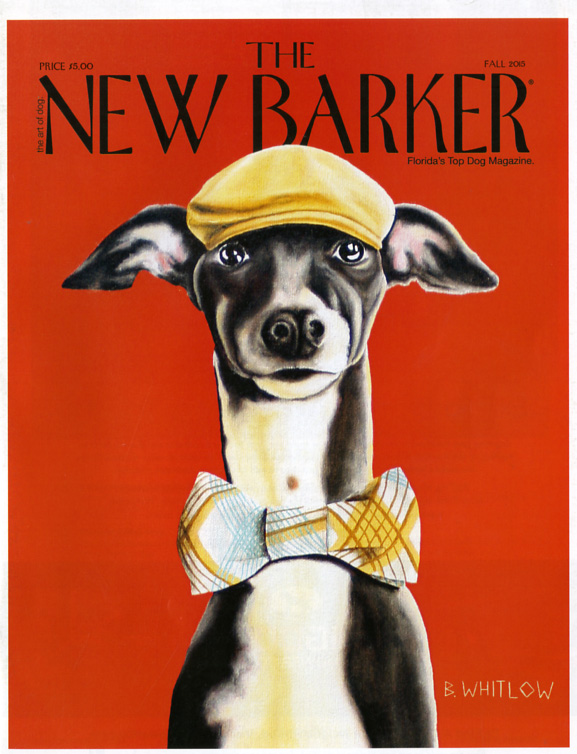
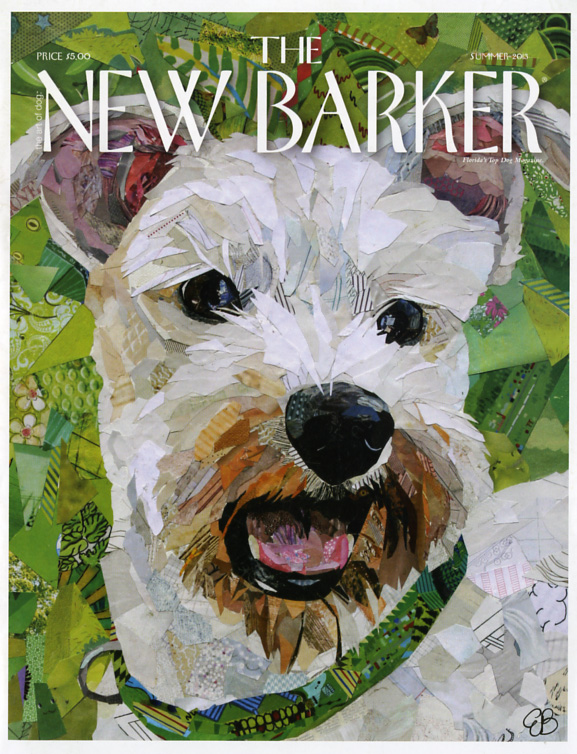
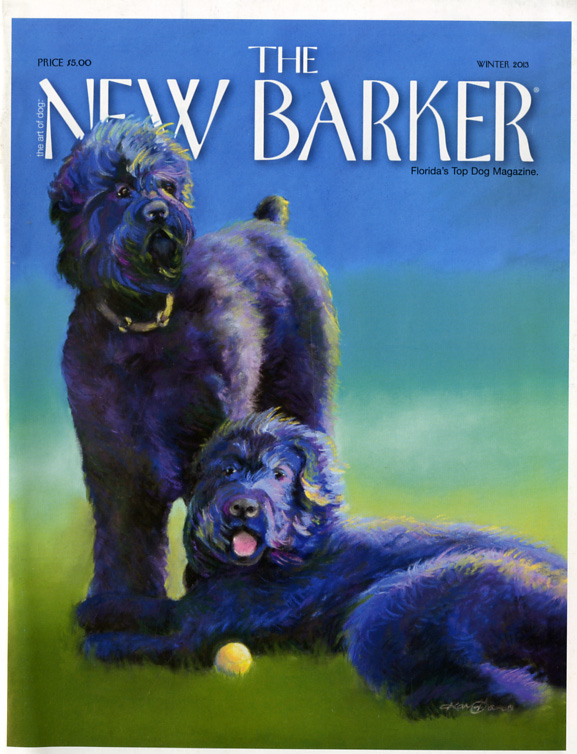
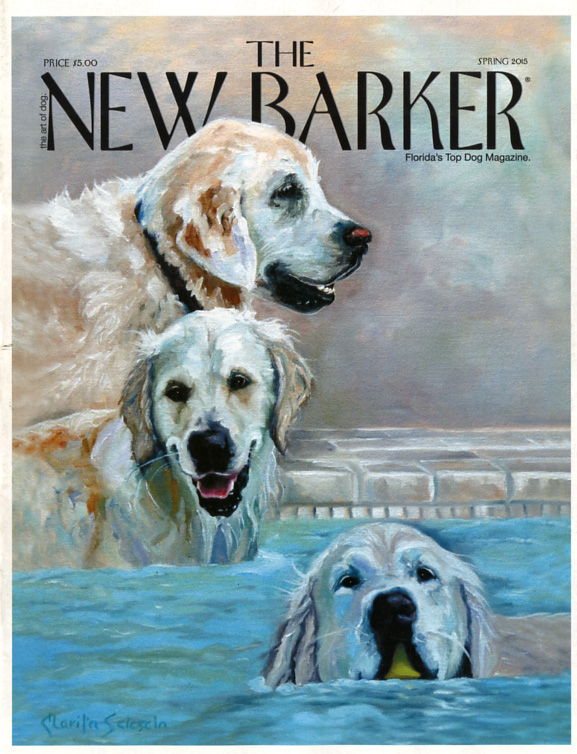
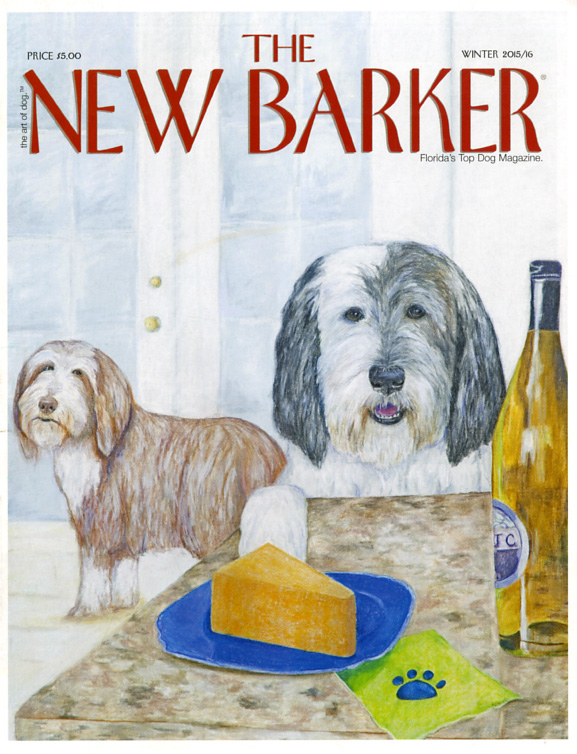
With every stylish cover, The New Barker proves that it’s not just another dog magazine. From founder, editor and creative director Anna Cooke’s own love for The New Yorker magazine, she pays homage to her paragon with beautiful and uncanny covers that imitate the veteran publication’s own creativity. Imitation is the sincerest form of flattery and Anna is genuinely sincere when it comes to her love for The New Yorker and magazines in general.

In fact, her love for magazines and design is what led her down the path of creating one of her own for Florida dog-lovers. Her mission to stay true to good content and artful design has never wavered as the magazine celebrates 10 years in publishing.

I spoke with Anna recently about her love for magazines and her specific fondness for The New Yorker and we also chatted about her goals for The New Barker and the way that she and her husband have committed themselves to the mission of bringing Florida dog-lovers the best regional content that’s both compelling and entertaining. The covers of each issue bring a style and charm to the magazine that sets the tone for the entire experience very definitively. It’s a unique concept and a refreshing read, much like the lady producing the magazine, proving that entrepreneurship can certainly pay off with hard work and dedication.
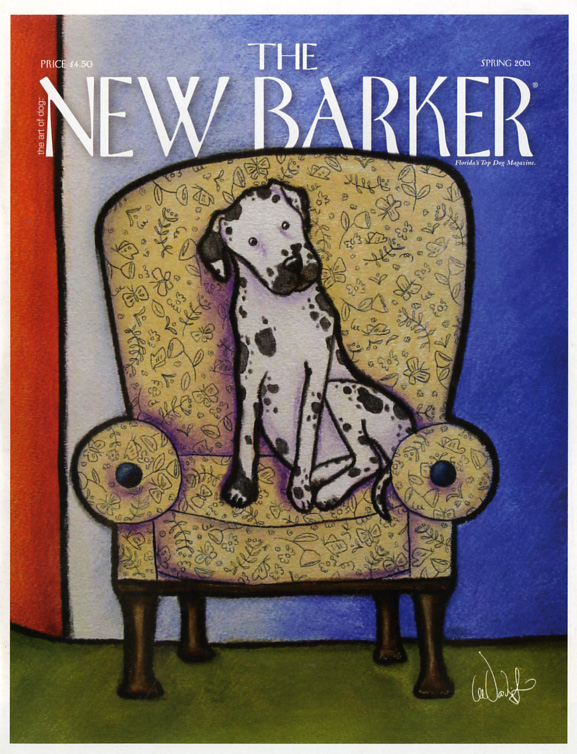
The New Barker 7-7 We talked about Anna’s love for animals and the fact that she donates the artful covers to local shelters to be auctioned at their fundraisers at least twice a year. We also hit upon her desire to expand The New Barker to more states. It was a delightful and inspiring conversation that I know you’ll love reading. So without further ado, I hope you enjoy the Mr. Magazine™ interview with Anna Cooke, Founder, Editor and Creative Director, The New Barker magazine.

But first, the sound-bites:

On the background of The New Barker: My husband and I have an advertising and design studio and we’ve been running it around 30 years or so. About 11 years ago we had a client who had a dog boutique and we developed an ad campaign and put a media plan together for her. The client ran it for a while and then said that she couldn’t afford it. One of the things that we selected for the media plan was lifestyle magazines, they had a great reach and demographic, but they reached across the demographics. It wasn’t a magazine specifically targeted to dogs, so we were getting demographics, but not as targeted as we wanted. So, we realized that maybe there was a need for a lifestyle magazine that was much more targeted to the lifestyle of dog owners.

anna cooke On the biggest stumbling block she’s had to face: With a stumbling block, I keep going back to time; the lack of enough time to get everything done that we want to get done. We don’t have a lack of content or stories. We certainly don’t have a lack in advertisers and advertising potential, we always just run out of time in producing the next issue to go after those advertisers and to go after those stories. So, it’s time management.

On the thinking behind the creative design of the magazine and its resemblance to The New Yorker with its covers: Well, I’m a fan of The New Yorker and I’m a huge fan of magazines. I love to look at the design, the page layout, and the typesetting and rich content like is in The New Yorker. You pick up a magazine like The New Yorker and you’re not going to just thumb through it; you’re going to become involved with it and spend time with it. We did trademark the name, The New Barker; we do have a national trademark and we actually paid homage to The New Yorker and we included that in the paperwork for our trademark.

On whether she ever heard from The New Yorker: No, but about seven years ago I received a phone call from a woman in New York and she wanted to purchase a subscription, but she thought that it was The New Yorker’s version of a dog magazine in New York. (Laughs) And then when I pointed out to her that it was a Florida lifestyle magazine, which is OK because our stories will resonate with everyone, but at the time I wanted her to understand that it was based in Florida, and she looked at the masthead then and realized that it wasn’t The New Yorker.

On whether she believes there’s a need for print in this digital age: Yes, I’m heartened every time we attend an event that’s a dog-related event. People of all ages come up to me and tell me that when they get their copy of the magazine they read it cover to cover. I know there’s a need for digital and we’re working on improving that experience every single day.

On whether she has any time left over for her ad agency or she’s now a full-time magazine maker: I would say that 95% of my time is devoted to the magazine and then through time management we are able to work with clients that have stayed with us over the years. I’m not actively seeking new business for the ad agency side because what’s running the business is the advertising side of the magazine. Again, it’s a balance and a desire to want to stay connected to our clients with the ad agency business.

The New Barker 6-6 On whether she works with the artists who illustrate the covers or leaves the decisions to them when it comes to style and type of dog featured: We work with the artists; in the last few issues we have donated the cover as a live auction item to animal shelters in Florida for their fundraising events. What that does is give somebody an opportunity to bid on the cover. We select the artist and what I do is provide half a dozen, five or six different artists and styles, and they pick the style, then we do a photo shoot, and then the artist, in their own particular style, will paint the portrait for the person who had the highest bid for that particular cover.

On whether she has any plans to expand the magazine nationally: I would like to expand it. We have expansion plans, but not necessarily to make it a national publication, instead, taking it into another state and doing another publication for The New Barker, for example, Pennsylvania’s top dog. That kind of thing, because I believe the success of the magazine is its regionalism.

On what differentiates the magazine from other dog-specific publications: First of all, I think the cover is very unique. It stands out from other magazines. I think the cover immediately sets the tone, in terms of the tongue-in-cheek humor. You look at that and you smile. You have to pick it up and flip through it.

On anything she’d like to add about The New Barker: I think when people put magazines out they’re so beautiful and people don’t realize the extent of the work that goes on behind the scenes. It is the most fulfilling and all-consuming work that we have ever done. We’ve been in the ad business, as I said, for 30-something years and we’re accustomed to deadlines and the gut-wrenching, from start to finish, to get it done. It’s a difficult process. It’s like a Jackson Browne song where he travels the country with his band. And his roadies put the stage together; they’re the first ones to arrive and the last ones to leave. Then they have to do it all over again the next night and you just have to be constantly up and on-the-go. That’s the essence of what we do: constantly up and on-the-go.

On what motivates her to get out of bed in the morning: I have to say the dogs do. (Laughs) The needs of our dogs are a priority. They get up and they have to go out; they have to drink water; they have to eat, and then I have my coffee and it’s off to work. I enjoy coming to work. I enjoy the prospect of what the new day has to offer.

On what someone would find her doing if they showed up one evening unexpectedly at her home: Cooking. It’s funny, in the throes of production, when we’re nearing the deadline and we’ve got to go to press, I suddenly find myself cooking. I’ll go to the grocery store, buy the ingredients for a recipe I haven’t tried. And it’s not something that I consciously do. I just realized when I looked back on those last couple of years that I was doing this; looking for another creative outlet that was completely different from print production.

On what keeps her up at night: The deadlines. We’ve been doing this for 10 years and I still worry about the deadlines. Are we going to make it? We’re so committed to our advertisers; you want to get the publication out there because the advertisers are counting on it.
And now the lightly edited transcript of the Mr. Magazine™ interview with Anna Cooke, Editor and Creative Director, The New Barker.

Samir Husni: Give me some background about The New Barker. It feels and looks like The New Yorker, but it’s all about dogs.
The New Barker 5-5 Anna Cooke: Correct. (Laughs) My husband and I have an advertising and design studio and we’ve been running it around 30 years or so. About 11 years ago we had a client who had a dog boutique and we developed an ad campaign and put a media plan together for her. The client ran it for a while and then said that she couldn’t afford it. One of the things that we selected for the media plan was lifestyle magazines, they had a great reach and demographic, but they reached across the demographics. It wasn’t a magazine specifically targeted to dogs, so we were getting demographics, but not as targeted as we wanted.

So, we realized that maybe there was a need for a lifestyle magazine that was much more targeted to the lifestyle of dog owners. And we did some research; we actually did some focus groups, invited professionals in the industry; we invited consumers, potential subscribers to the magazine and all things pointed to a need for that type of magazine. We felt we would get advertising support and we would have readership, so we started developing the first issue.

I went out and sold advertising myself with just a kind of a mom-and-pop media kit and I would receive checks and I wouldn’t deposit them. I would just post them on my bulletin board next to my desk. (Laughs) I thought that if the magazine didn’t come together, I could just tear up the checks or hand them back to people. I guess to be truthful I didn’t have a strong belief in myself and in what we were doing.

Then about two weeks before going to press, my husband and partner said, “I think it’s time to deposit those checks. We have enough money to pay for the printing and the mail, with a few bucks left over.”

The first issue came out in 2006 and the response was overwhelming. My husband came into my office and said this thing is bigger than we thought it would be. Then we headed into the production of the second issue and we just haven’t had time to look back since.

Samir Husni: As you approach your 10th anniversary, what has been the biggest stumbling block that you’ve had to face and how did you overcome it?
The New Barker 4-4 Anna Cooke: With a stumbling block, I keep going back to time; the lack of enough time to get everything done that we want to get done. We don’t have a lack of content or stories. We certainly don’t have a lack in advertisers and advertising potential, we always just run out of time in producing the next issue to go after those advertisers and to go after those stories. So, it’s time management.

I’ve gotten to a point where we’re now able to, and actually this happened several years ago, we’re able to forecast stories for two, three or four issues down the road. As I said, we’ve never had a problem with content, but now it’s prioritizing them. OK, we’re working on this story; this story is immediate, we’ll put it in the upcoming issue; these stories we’ll use for the summer issue or that will be a great story for the winter issue.

Samir Husni: I have to ask this question. When I saw the magazine I had to take a double-look. Is this The New Yorker or is this The New Barker? As the creative person, what was the thinking behind creating “the art of dog” and looks like “the art of The New Yorker?”

Anna Cooke: (Laughs) Well, I’m a fan of The New Yorker and I’m a huge fan of magazines. I love to look at the design, the page layout, and the typesetting and rich content like is in The New Yorker. You pick up a magazine like The New Yorker and you’re not going to just thumb through it; you’re going to become involved with it and spend time with it.

And the idea of The New Barker, the name; it just came to me like one of those epiphanies. One evening a light bulb went off and with that came the idea that every cover would be a piece of art, an original work of art in support of local artists based on the Florida market. So, we’re supporting the art world as well as focusing on the art of dog and the stories of dogs.

We did trademark the name, The New Barker; we do have a national trademark and we actually paid homage to The New Yorker and we included that in the paperwork for our trademark.

Samir Husni: And did you ever hear from The New Yorker?
The New Barker 1-1 Anna Cooke: No, but about seven years ago I received a phone call from a woman in New York and she wanted to purchase a subscription, but she thought that it was The New Yorker’s version of a dog magazine in New York. (Laughs) And then when I pointed out to her that it was a Florida lifestyle magazine, which is OK because our stories will resonate with everyone, but at the time I wanted her to understand that it was based in Florida, and she looked at the masthead then and realized that it wasn’t The New Yorker.

I’ve had people who recognize, especially people who love The New Yorker, who recognize the humor.

Samir Husni: As you developed this magazine over the last 10 years, how do you think the marketplace has changed? You started publishing just slightly before the dawn of digital devices and Smartphones and iPads. How did the digital world impact your print magazine, and do you think you still need a print magazine to show the art of dog?

Anna Cooke: Yes, I’m heartened every time we attend an event that’s a dog-related event. People of all ages come up to me and tell me that when they get their (print) copy of the magazine they read it cover to cover. I know there’s a need for digital and we’re working on improving that experience every single day. I have to go back to time, the time and effort it takes to continually evolve digitally so that we stay connected to the readers. I understand that because we’re a quarterly publication a lot of things happen between quarters and if you don’t stay in front of your audience they’re going to forget you and go somewhere else to get the information.

When we first came up it was easier to stay connected to them. It was new, so people were looking forward to it. But 10 years later there’s so much information everywhere, all over these electronic devices; all over these applications and many of them are dog specific so people have so many more ways to stay connected. I believe in the power of print that connects passively with people, but I also understand the power of digital.

Samir Husni: I see from the magazine that you’re not only the editor, creative director and a photographer, but you also actually write quite a bit of the content. Do you have any time left to give to your other creative business, the ad agency, or are you now a full-time magazine maker?

Anna Cooke: I would say that 95% of my time is devoted to the magazine and then through time management we are able to work with clients that have stayed with us over the years. I’m not actively seeking new business for the ad agency side because what’s running the business is the advertising side of the magazine. Again, it’s a balance and a desire to want to stay connected to our clients with the ad agency business. So, we try and plan the production schedules and we treat The New Barker as a client, a client that takes up 95% of our time. (Laughs)

Samir Husni: I am fascinated with the covers, with that old stylish feel; each cover you can tear off and frame. And I noticed that all of the covers are based on real dogs; inside the magazine you put a picture of the real dog. Do you work with the artists on the ideas of what type of dog is going to be on this cover or that cover, or it is completely the artist’s own freedom and decision?
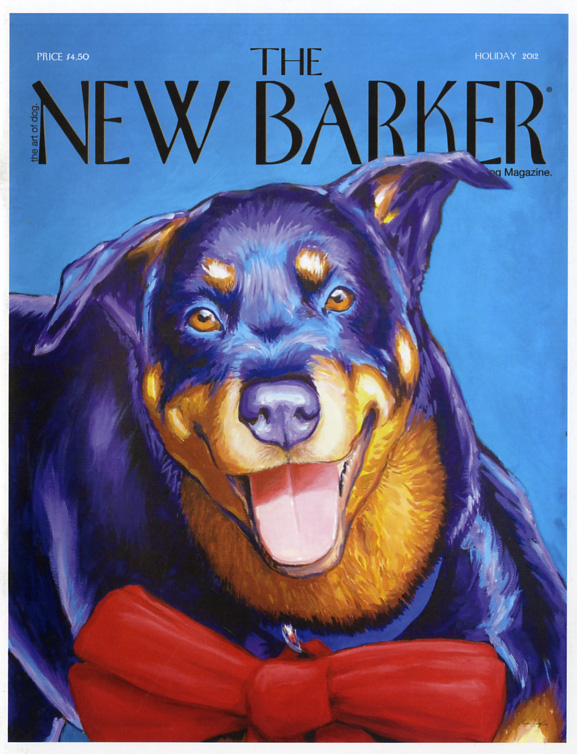
The New Barker 3-3 Anna Cooke: We work with the artists; in the last few issues we have donated the cover as a live auction item to animal shelters in Florida for their fundraising events. What that does is give somebody an opportunity to bid on the cover. We select the artist and what I do is provide half a dozen, five or six different artists and styles, and they pick the style, then we do a photo shoot, and then the artist, in their own particular style, will paint the portrait for the person who had the highest bid for that particular cover.

We’re actually working on a cover right now, someone bid $12,000, and the money was donated to the Humane Society of Tampa Bay.

Samir Husni: So the artist will take those people’s dog and paint it for the cover?

Anna Cooke: Correct. And that happens probably once or twice a year, then the other times we’ll work with an artist and utilize something within that artist’s portfolio, something that just resonates with me personally. What I’m looking for is something that hasn’t been published. We have a treasure trove of artists’ portfolios. I get emails probably once or twice a week from Florida artists wanting to know how they can have their artwork on the cover of the magazine.

Samir Husni: Are Florida dogs so special that they deserve their own magazine or do you have plans to expand the magazine nationally?

Anna Cooke: I would like to expand it. We have expansion plans, but not necessarily to make it a national publication, instead, taking it into another state and doing another publication for The New Barker, for example, Pennsylvania’s top dog. That kind of thing, because I believe the success of the magazine is its regionalism. People enjoy flipping through it and seeing places that they have visited or are going to visit, or restaurants that they’re aware of, or their own dog in the magazine.

Samir Husni: If you were to meet someone on the street and they asked you what you did professionally and you said I’m the editor and creative director of The New Barker, how would you define the magazine to them? What differentiates it from the rest of the dog magazines, both locally and nationally?

Anna Cooke: First of all, I think the cover is very unique. It stands out from other magazines. I think the cover immediately sets the tone, in terms of the tongue-in-cheek humor. You look at that and you smile. You have to pick it up and flip through it.

In terms of the content, I feel we spend a lot of time researching the stories and developing the stories. Not as long as The New Yorker articles are, but I try, and I hope that we’re accomplishing this; to have a beginning, middle and an end to the story, where the reader is satisfied. They’ve been satiated after they’ve read the article. Our society today is such a grab-and-go; we get a news article or a piece and we read the headline and we read the subhead. We scan it for whatever reason; we don’t have time to really read it. But a magazine like The New Barker resonates to the reader to slow down and curl up with a good magazine.

Samir Husni: Is there anything else you’d like to add about The New Barker?

Anna Cooke: I think when people put magazines out they’re so beautiful and people don’t realize the extent of the work that goes on behind the scenes. It is the most fulfilling and all-consuming work that we have ever done. We’ve been in the ad business, as I said, for 30-something years and we’re accustomed to deadlines and the gut-wrenching, from start to finish, to get it done. It’s a difficult process.

It’s like a Jackson Browne song where he travels the country with his band. And his roadies put the stage together; they’re the first ones to arrive and the last ones to leave. Then they have to do it all over again the next night and you just have to be constantly up and on-the-go. That’s the essence of what we do: constantly up and on-the-go. We’re a lifestyle magazine about dogs, so we have to be happy and positive to make sure that the message we’re conveying is a happy and positive one.

Samir Husni: What motivates you to get out of bed in the morning?

Anna Cooke: I have to say the dogs do. (Laughs) The needs of our dogs are a priority. They get up and they have to go out; they have to drink water; they have to eat, and then I have my coffee and it’s off to work. I enjoy coming to work. I enjoy the prospect of what the new day has to offer. It doesn’t matter what you’ve done the night before, in terms of OK, here’s what I’m going to do tomorrow. You get up and you get in front of the computer and you look at your calendar and everything just changes. (Laughs again)

Samir Husni: If I showed up unexpectedly at your home one evening, what would I find you doing; reading a magazine, reading on your iPad, watching television, or what?

Anna Cooke: Cooking. It’s funny, in the throes of production, when we’re nearing the deadline and we’ve got to go to press, I suddenly find myself cooking. I’ll go to the grocery store, buy the ingredients for a recipe I haven’t tried. And it’s not something that I consciously do. I just realized when I looked back on those last couple of years that I was doing this; looking for another creative outlet that was completely different from print production. So, I’ll cook and serve up a nice meal for us, a glass of wine. While I’m waiting on dinner to get ready, I love the Hollywood Reporter, Vanity Fair and of course, The New Yorker. I have subscriptions to all of those. I love their content and the way they present it.

Samir Husni: My typical last question; what keeps you up at night?

Anna Cooke: The deadlines. We’ve been doing this for 10 years and I still worry about the deadlines. Are we going to make it? We’re so committed to our advertisers; you want to get the publication out there because the advertisers are counting on it. So, that keeps me up at night.

Samir Husni: Thank you.
h1

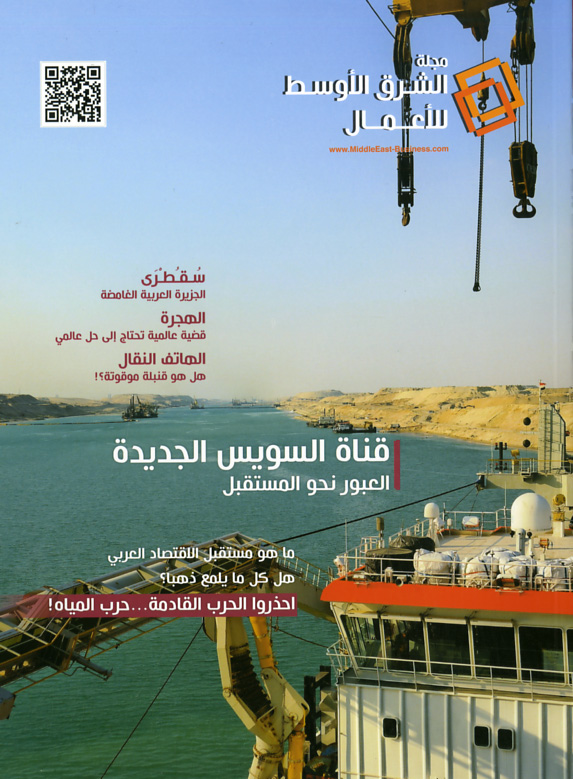
Middle East Business Magazine & News: The First Media Publication From Palestine To Serve The Middle East & Arab Countries – The Mr. Magazine™ Interview With Amal Daraghmeh Masri, CEO at Ougarit Group, Editor-In-Chief and CEO Middle East Business News and Magazine.

February 18, 2016

Middle East 3-3 “Before I did print I knew everybody was going to tell me that I was going against the current and that everyone else was going digital and I shouldn’t do it on paper. I didn’t believe them, though many, many people told me this, including one of our advertisers. And I see our advertisers as our partners. When I asked most of our advertisers about print they told me if I insisted, then go for it, do print and digital. So I went strongly with the website, mobile application and paper and our individual channel, which is all very expensive, but I assure you that people like to see paper because they trust in it more.” Amal Daraghmeh Masri

From Dubai with love…

Reporting from the  FIPP Middle East & Africa conference in Dubai Feb. 10 and 11.

Reporting from the FIPP Middle East & Africa conference in Dubai Feb. 10 and 11.

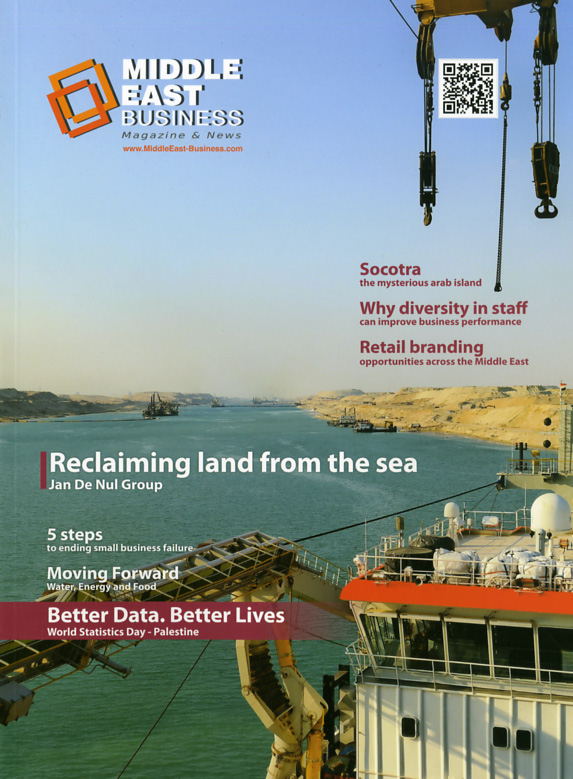
Bringing a magazine to fruition is hard work even in the best of circumstances, but bringing one or more to the newsstand when you’re the first in your country to do it, other than locally, is a true feat indeed. Amal Daraghmeh Masri has achieved that feat. Amal is CEO at Ougarit Group, editor-in-chief and CEO Middle East Business Magazine & News and the magazine’s founder. She is a woman who has held many positions in local business organizations that work for the advancement of women in Palestine, which is her home country, and across the Arab world, including being a member of Palestinian Working Women’s Society for Development and a founding member, former President of Business Women Forum of Palestine. Regionally and internationally, she is founder and a former board member of Middle East Business Women’s Network.

And Amal is also an avid reader and extreme lover of ink on paper. Her magazine is her passion and her work ethic and print mission is simple and direct: audience first. Give them what they want when it comes to content and presentation and the magazine will grow from that engaged connection.

I spoke with Amal recently at the FIPP Middle East and Africa conference held in Dubai. We spoke of that passion that she has for print and the mission she feels her magazine accepted from issue one. The audience is her main concern and while she believes in the many benefits of digital, she also knows that for a more lasting and trusting relationship with her customers, print is the deciding factor that brings it all together, despite many who tried to convince her otherwise. Amal is a businesswoman, an entrepreneur and more importantly to her print product, a magazine maker who knows what it’s all about: her audience.

So, I hope you enjoy this motivational and inspiring story from a woman who knows what it means to work against adversity when passion is your driving force; the Mr. Magazine™ interview with Amal Daraghmeh Masri, CEO at Ougarit Group, editor-in-chief and CEO Middle East Business Magazine & News.

But first, the sound-bites:

FullSizeRender-2 On the history of her business magazine: This is my second magazine; my first one I sold. The second one covers Arab countries and Middle Eastern countries, which is why it’s in Arabic and English, with 100 pages of different content in two different languages; this is the base. And I love paper; I wanted to produce something that has a face and that you can touch and almost speak with. That’s why we made an individual channel online and the website, but without paper it’s not the same.

On the fact that she started first with an English-only edition: Yes, we started first with only an English version that was published four times a year. And then we thought that we were missing the Arab readers, though there are many in English. Many people had asked us to do another edition in Arabic with the same quality, because it’s a nice-looking magazine with good content. So one day I said OK, I’m going to be crazy and do an Arabic part and do a different one.

On what inspired her to do a totally different issue in Arabic: Most Middle Eastern and Arab readers who are interested in business and economy articles, 98% of them read both languages, so out of respect for their intelligence I gave them different content, because they are all smart and they can choose for themselves. And amazingly, one of the presidents of the chamber of commerce told me that he loved it because when he was tired he reads the Arabic part. He added that when he woke up in the morning and went to his office; with his coffee he would read the English part. These words for me were like a big prize because this was exactly what I wanted.

On whether the magazine will ever have a flip side in French: I thought of it. But it would be too heavy to ship out of Ramallah. (Laughs) I’ve actually had a proposal from one of the Arab countries to make it monthly even. I didn’t want to make it monthly because online it’s ongoing. I think it would be too much because it’s for people who work a lot and every three months gives them enough time to read what’s inside it.

On how big the magazine business is in her country of Palestine: Actually there is none. There are no real magazines in business. There is only a small one about culture, but it’s very local. This is the first magazine that has really come out of Palestine to the Middle East and Arab countries. Usually, the magazines come from Dubai or Lebanon, sometimes from Egypt, but never from Palestine. And I think since my first name is Amal, and it starts with an “A,” I was always called to speak first at school. So, I said that I’d like to be the first to do something like this, though it’s very difficult, but you know, with challenges you create new things to help you overcome obstacles.

On where she came up with the idea to publish a business magazine from Ramallah: I established my business 18 years ago, which is an advertising agency, with marketing and PR. It was called Ougarit Company at that time. A few months earlier we established a printing company with my husband and that was around 1998 or 1999. So now we have two companies, one for printing and one for advertising. And with time you have more ideas and we started doing conferences and then we started training for media. We have a training center for media and anything related to communications and media. Then five years ago we started making magazines.

On whether her belief in print is just from passion or good business sense, or both: In general, businesses are driven by sales and profits. But it’s even better if it’s driven by passion. It’s like a bird with two fabulous wings. When it became English and Arabic, it became like a bird with two super wings. It flew much faster.

On the biggest challenge she’s had to face: I am a stubborn person by nature. So, all challenges for me are fun to deal with. For example, transporting the magazine outside Palestine, because I print and send out to almost 10 countries and it’s very expensive and challenging. And it takes a lot of time. It’s also a lot of follow-up. Sometimes it arrives on time and sometimes it doesn’t. But I spend a lot of energy every single day on the magazine. That is just one challenge.

On anything else she’d like to add: When you do a magazine, don’t make it just paper. It is a paper, but don’t make it just paper. That’s what I tell many of my clients; our magazine is not just paper. And there is a phrase that I use a lot: it’s a mission; it’s a passion; it’s a business, and it’s a partnership.

On what motivates her to get out of bed in the morning: I have a great partner who has been with me since we started our life together 21 years ago. And we establish all businesses together. So, an inspiring husband and a great helper and a cup of coffee in the morning; there’s nothing better.

On what keeps her up at night: It’s how to create great content. I want people to love what we write and I don’t want to write it in the traditional way. What we like to do is sometimes combine curation; people don’t want to read from zero, because people are busy. So we accommodate information together and decide how to present it.

And now the lightly edited transcript of the Mr. Magazine™ interview with Amal Daraghmeh Masri, CEO at Ougarit Group, Editor in Chief and CEO Middle East Business Magazine & News.

Samir Husni: Tell me a little about the history of your business magazine.

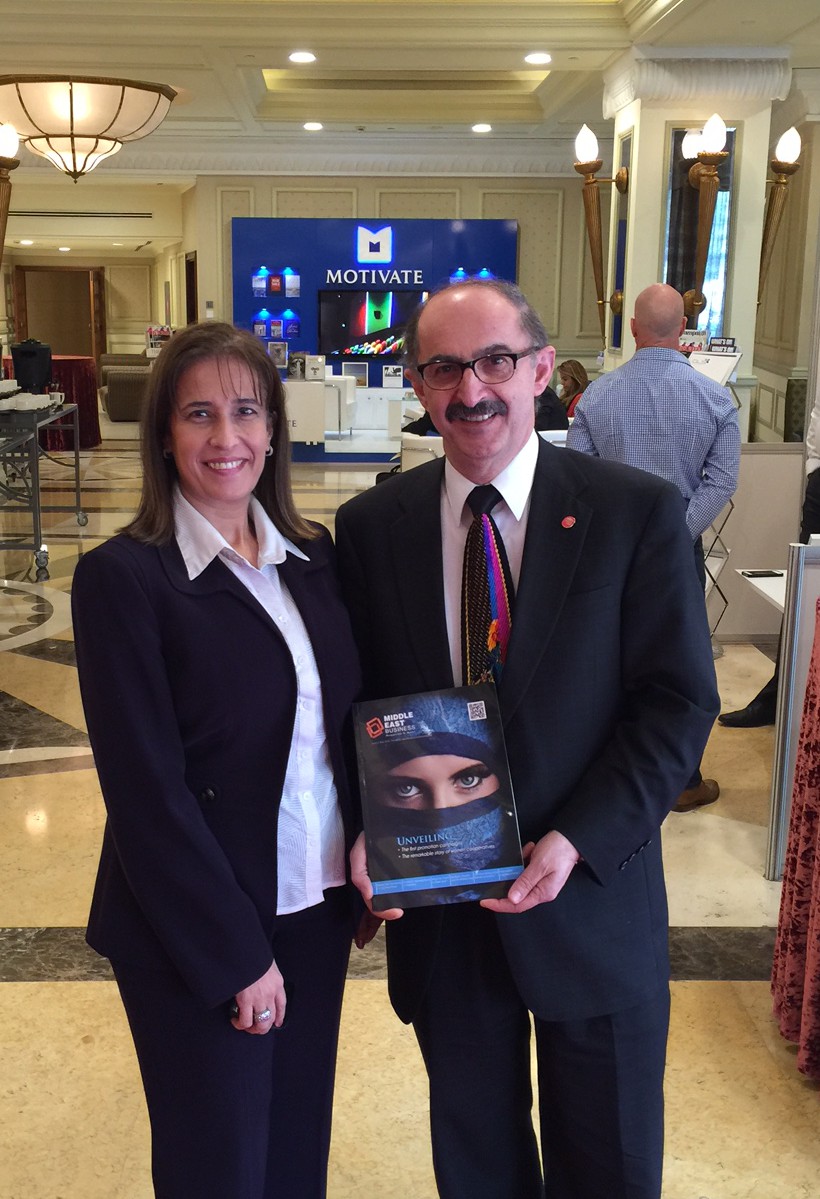
With Amal Daraghmeh Masri at the FIPP Middle East & Africa conference in Dubai, UAE.

With Amal Daraghmeh Masri at the FIPP Middle East & Africa conference in Dubai, UAE.

Amal Daraghmeh Masri: This is my second magazine; my first one I sold. The second one covers Arab countries and Middle Eastern countries, which is why it’s in Arabic and English, with 100 pages of different content in two different languages; this is the base. And I love paper; I wanted to produce something that has a face and that you can touch and almost speak with. That’s why we made an individual channel online and the website, but without paper it’s not the same.

Samir Husni: It’s my understanding that the magazine started in English and then you had the inspiration one day to add an Arabic section, but not translated from the English.

Amal Daraghmeh Masri: Yes, we started first with only an English version that was published four times a year. And then we thought that we were missing the Arab readers, though there are many in English. Many people had asked us to do another edition in Arabic with the same quality, because it’s a nice-looking magazine with good content. So one day I said OK, I’m going to be crazy and do an Arabic part and do a different one.

We designed it as a totally different brand, but the day before printing I woke up at midnight, well, it was probably after, because I don’t sleep before midnight. But I woke up and said, no, I have to put them together in one volume. It was a quite challenging experience and I didn’t think it would work at that time because it was a crazy idea, but it turned out to be very popular. People liked it.

Samir Husni: Most of the magazines that have flip covers or flip sections that I’ve seen in the Middle East are usually translated. What inspired you to do one in Arabic that was different? Did you think that most people could speak both languages, so why give them the same thing? Or were you trying to solicit a new audience?

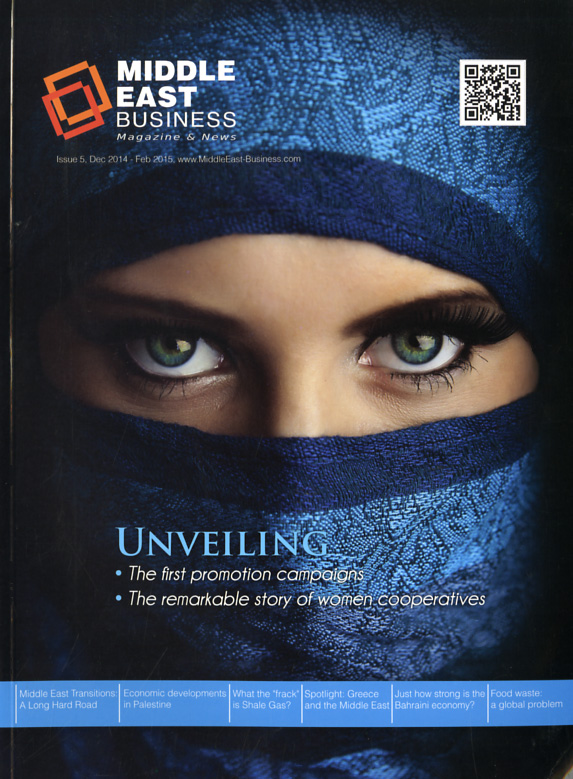
Middle East 1-1 Amal Daraghmeh Masri: Most Middle Eastern and Arab readers who are interested in business and economy articles, 98% of them read both languages, so out of respect for their intelligence I gave them different content, because they are all smart and they can choose for themselves. And amazingly, one of the presidents of the chamber of commerce told me that he loved it because when he was tired he reads the Arabic part. He added that when he woke up in the morning and went to his office; with his coffee he would read the English part. These words for me were like a big prize because this was exactly what I wanted.

Another thing is the translation can become boring and it’s less work actually. Different content is much better; it’s like two magazines in one. The only thing they have in common is the cover, but with different aspects and different content to make it both concise and completely unique to one another.

Samir Husni: Are we ever going to see another flip side to the magazine in French?

Amal Daraghmeh Masri: I thought of it. But it would be too heavy to ship out of Ramallah. (Laughs) I’ve actually had a proposal from one of the Arab countries to make it monthly even. I didn’t want to make it monthly because online it’s ongoing. I think it would be too much because it’s for people who work a lot and every three months gives them enough time to read what’s inside it. And generally, people do not throw away nice magazines that are quarterly. They tend to throw away more monthly magazines that move fast. I think they feel the quarterly magazine is more precious and has more inside, with nicer covers. So they keep it.

Samir Husni: Please excuse me for not knowing this, but how big is the magazine business in the Palestinian territories?

Amal Daraghmeh Masri: Actually there is none. There are no real magazines in business. There is only a small one about culture, but it’s very local. This is the first magazine that has really come out of Palestine to the Middle East and Arab countries. Usually, the magazines come from Dubai or Lebanon, sometimes from Egypt, but never from Palestine. And I think since my first name is Amal, and it starts with an “A,” I was always called to speak first at school. So, I said that I’d like to be the first to do something like this, though it’s very difficult, but you know, with challenges you create new things to help you overcome obstacles.

So you become adamant to be different and that’s why we’re not local, we’re Middle Eastern and we have an office in Jordan and in Dubai. And we are registered even in Cypress. We have customers from Greece, Cypress, even some of the islands, also from Dubai, Belgium, from many countries and I have quite a lot in Jordan and Palestine. But we don’t spread our magazines according to where our advertisers come from. We make the content for everybody.

Samir Husni: How did you get the, as you called it, “crazy idea” to publish a business magazine from Ramallah?

Amal Daraghmeh Masri: I established my business 18 years ago, which is an advertising agency, with marketing and PR. It was called Ougarit Company at that time. A few months earlier we established a printing company with my husband and that was around 1998 or 1999. So now we have two companies, one for printing and one for advertising.

And with time you have more ideas and we started doing conferences and then we started training for media. We have a training center for media and anything related to communications and media. Then five years ago we started making magazines. We did the first one and we sold it. Three years ago I started this magazine and I also collect news for the website. And I’ve done a French one, because I graduated from a French school, so I speak French. And we do another one called EcoMag, but it is local. It’s only for Palestine, so it doesn’t go out.

Samir Husni: So, technically you did a reverse, in terms of first you started with the ad agency and then the printing and then the magazines. Most stories that I’ve heard, they start a magazine, then buy an ad agency and then they buy a printer.

Amal Daraghmeh Masri: It’s very difficult. It’s like trying to get an old person to make a baby.

Samir Husni: (Laughs).

Amal Daraghmeh Masri: In this case, I’m a woman and I finally had my baby. (Laughs too) Though it took me more than nine months to do it. The whole thing is about the experience. Graphic design is about thinking and creativity and it’s not about lines and colors. Marketing and communications are about spirit, love to others and love to what you do.

When you go to media, it’s another thing, but needs these bridges to reach the other part, which is the media part of the magazine. Though I don’t consider ourselves a journalistic magazine because what we write about is from people’s experiences. And to their peers actually, to other people who want to know what this particular person has to say. So we depend more on expert opinion so that we pass this passion and love to what we do to other people.

Samir Husni: I saw the article that your husband wrote about the future of print and knowing now that you own a printing plant; an ad agency and another print magazine; is it passion that makes you feel there’s a future for print or is it still a good business and you’re making money from it?

Amal Daraghmeh Masri: In general, businesses are driven by sales and profits. But it’s even better if it’s driven by passion. It’s like a bird with two fabulous wings. When it became English and Arabic, it became like a bird with two super wings. It flew much faster. And the same thing comes to the magazine and maybe because I am a good reader, ever since I was six-years-old I have been an avid reader; I have loved the smell of old papers. My grandfather used to be a teacher and he used to bring books with him when he would visit when I was a child. And I would smell them and I thought they smelled beautiful. Until today, I am addicted to the smell of old papers.

I believe that human beings need to touch and see and hear, that’s how we were created. So paper is an important element. We can use online and listen to it and see it, but we cannot say or pretend or publicize that print will disappear. It has been around forever and it will be around as long as there are trees.

Middle East 2-2 I met a lady who had one of the biggest printing companies in South France. She came to see how we print in a difficult situation like Ramallah and she told us that many of her clients used to print magazines with her company and they stopped because people were telling them digital, digital and more digital. So they freaked out and moved into digital and she told me that one year later they were losing so much money that they came back to print again. And this lady is alive and she told me this.

Before I did print I knew everybody was going to tell me that I was going against the current and that everyone else was going digital and I shouldn’t do it on paper. I didn’t believe them, though many, many people told me this, including one of our advertisers. And I see our advertisers as our partners. When I asked most of our advertisers about print they told me if I insisted, then go for it, do print and digital. So I went strongly with the website, mobile application and paper and our individual channel, which is all very expensive, but I assure you that people like to see paper because they trust in it more.

As soon as you show them the magazine, it’s different than showing them the tablet or the website or the mobile application. It’s a totally different thing. So we have to be aware of human beings’ roots, origins and feelings. It’s like fear, when you see something that scares you it’s a natural response. It’s like marrying a virtual woman; would you do that? Human beings still need real people.

Samir Husni: I totally agree with you. You said it very well, as long as we have trees; we’re going to have paper. I always say that as long as we have human beings we’re going to have paper, because of that sense of touch and all of the five senses. But specifically in your case, has it been smooth sailing for you during this journey, or have you encountered some choppy seas along the way? What was the biggest challenge that you’ve faced and how did you overcome it?

Amal Daraghmeh Masri: I am a stubborn person by nature. So, all challenges for me are fun to deal with. For example, transporting the magazine outside Palestine, because I print and send out to almost 10 countries and it’s very expensive and challenging. And it takes a lot of time. It’s also a lot of follow-up. Sometimes it arrives on time and sometimes it doesn’t. But I spend a lot of energy every single day on the magazine. That is just one challenge.

I’ve been in the Middle East for quite some time; I’m a founding member of Middle East Business Women’s Network and I’ve been in many organizations on the Arab level. I go to many conferences, so I have the network and the confidence. I know that I can create content and supervise content. But the main challenge was being in another occupation actually.

And creating great covers is very important and we always try to predict what people want. This is another challenge because people want an article so much, but before publishing it I ask myself this question a hundred times and sometimes I ask people I know: would this article be of interest? And if people tell me yes, I think more about publishing it. The human feelings are so important.

Samir Husni: Is there anything else that you’d like to add?

Amal Daraghmeh Masri: When you do a magazine, don’t make it just paper. It is a paper, but don’t make it just paper. That’s what I tell many of my clients; our magazine is not just paper; it’s much more than paper. And there is a phrase that I use a lot: it’s a mission; it’s a passion; it’s a business, and it’s a partnership.

Samir Husni: I love that; it’s more than ink on paper.

Amal Daraghmeh Masri: Absolutely.

Samir Husni: What motivates you to get out of bed in the morning; what drives you to look forward to another day at the office?

Amal Daraghmeh Masri: Actually, I usually go to sleep at 3:00 a.m. I read so much. But I wake up at 6:30 a.m. because my husband gets me up for coffee. (Laughs) I’m sure that’s not your typical answer. But I have a great partner who has been with me since we started our life together 21 years ago. And we establish all businesses together. So, an inspiring husband and a great helper and a cup of coffee in the morning; there’s nothing better.

Samir Husni: My typical last question; what keeps you up at night?

Amal Daraghmeh Masri: It’s how to create great content. I want people to love what we write and I don’t want to write it in the traditional way. What we like to do is sometimes combine curation; people don’t want to read from zero, because people are busy. So we accommodate information together and decide how to present it. When you ask an editor to write, it can get technical and we don’t want that. So, I keep changing the beginnings to make it more attractive and the rest follows.

Samir Husni: Thank you.

h1

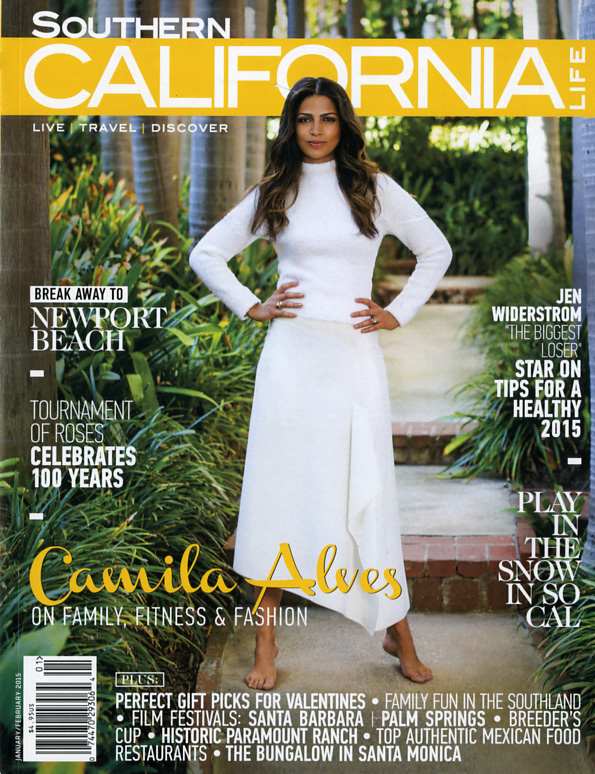
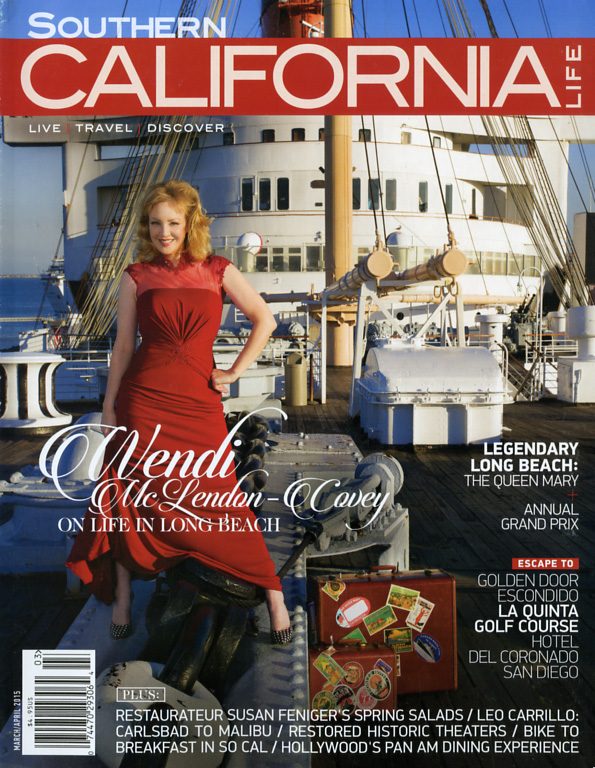
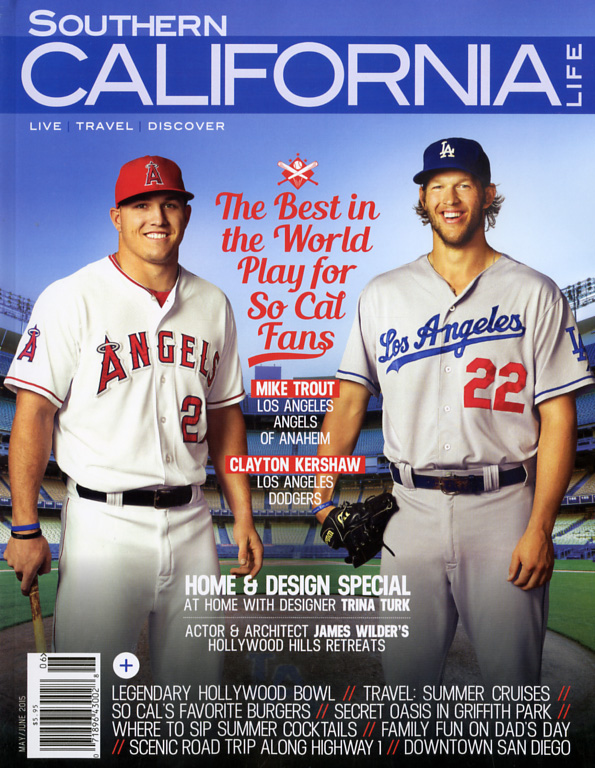
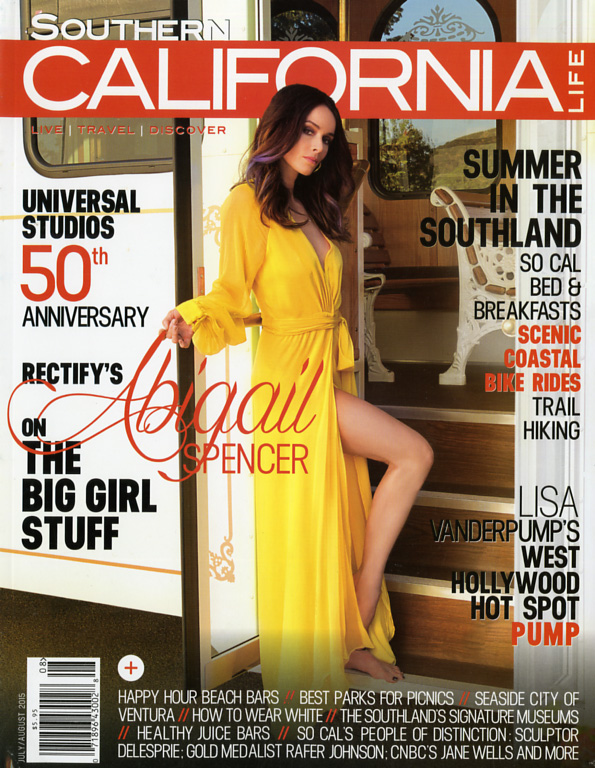
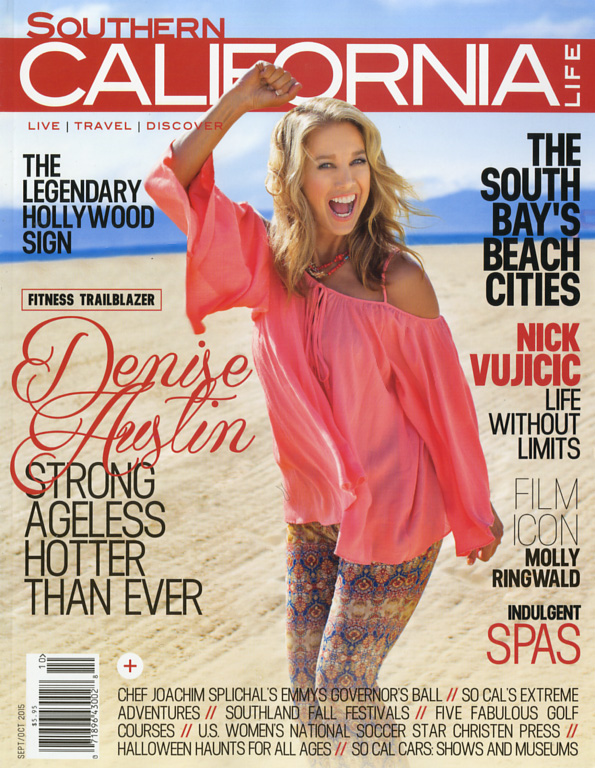
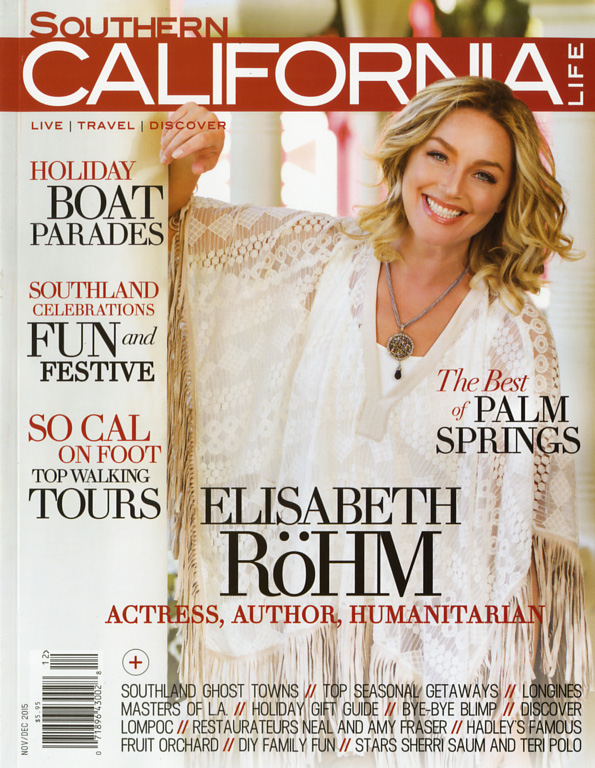
Southern California Life Magazine: Celebrating, In Ink On Paper, The Lifestyle, Culture, People, Destinations and Diversities That Characterize The Southern Region Of The Golden State – The Mr. Magazine™ Interview With Monique Reidy, Founder, Publisher & Editor-In-Chief, Southern California Life Magazine

February 12, 2016

“When I was working on my thesis, I did quite a few interviews with other publishers and editors to find out, basically, what drove their businesses and why they chose print as opposed to digital, and most of them said don’t do print. Print is very expensive; it’s evolving and it’ll probably phase out. I found that that is not the case because there’s a lot of novelty in digital and people like to read their e-books and things, but after a while I think people realize that they want paper in their hands; they like to be able to highlight and make notes in the margins; you can’t really do that on an e-book. I mean you can to a certain degree, but it’s not as easy to refer to your notes when you need them in an instant.” Monique Reidy

“You can lose things when you’ve stored them online. I don’t care what kind of cloud system you’re using; I’ve had instances where very important notes just evaporated. And you just can’t refer to them anymore, so paper is very important.” Monique Reidy

SCL1-44 Creating something from your heart, from the passion that overflows from deep in your soul and spills out onto the printed page that your own vision generates is something that few people realize, that culmination of their dreams. But Monique Reidy is fortunate enough to be one of those “few” people. One of those select visionaries who didn’t let human doubt and financial fear deter her from launching her own magazine, Southern California Life. And she has never been more proud or consumed in her life.

Southern California Life Magazine is more than a regional magazine, as Monique explained to me during a recent conversation I had with her about the magazine. SCL spotlights and highlights the entire southern region of the Golden state, while singling out specific entertainment and travel spots that are “must-see” attractions and activities that are “must-do” adventures. She strives to keep the content authentic and compelling and believes strongly in the principals of good journalism, while offering readers a chance to celebrate the very best of Southern California life.

It’s a beautiful magazine with an addictive personality much like its charming founder, publisher and editor-in-chief. Monique and I enjoyed an inspirational conversation that was open and totally sincere about her love of the printed word and her deep-seated passion for magazines. We also talked about those doubts and fears that she pushed away as she started down this dream woven path of creating a print magazine that some thought showed a misplaced trust in her own vision.

It was a delightful and motivational discussion that I share with you in the hope that you never abandon your dream, no matter how impossible it may seem. And now the Mr. Magazine™ interview with Monique Reidy, Founder, Publisher & Editor-In-Chief, Southern California Life Magazine.

But first, the sound-bites:

Reidy On why she decided to launch Southern California Life: I’ve been a magazine person my entire life. Academically, that was my focus. And I’ve helped people launch magazines before and helped some friends with their startups and I’ve been in publishing for about 30 years now. About three years ago I thought, I’ve helped other people do their magazines basically just because they were friends and I worked like a dog doing so, I might as well do my own. I have a master’s degree in the subject and it’s been my passion for a long time.

On whether any of her colleagues called her crazy for launching a print magazine in this digital age: Yes, that is absolutely true. In fact, when I was working on my thesis, I did quite a few interviews with other publishers and editors to find out, basically, what drove their businesses and why they chose print as opposed to digital, and most of them said don’t do print. Print is very expensive; it’s evolving and it’ll probably phase out. I found that that is not the case because there’s a lot of novelty in digital and people like to read their e-books and things, but after a while I think people realize that they want paper in their hands; they like to be able to highlight and make notes in the margins; you can’t really do that on an e-book. I mean you can to a certain degree, but it’s not as easy to refer to your notes when you need them in an instant.

On whether it’s all been smooth sailing or there have been some choppy seas since she started the magazine: Oh no, there were choppy seas, for sure. Startups are not for the faint of heart. There’s a lot of work that has to be done on the front end and if that’s not in place before you launch your first issue, you might as well forget it. We conducted focus groups to determine how people like to read magazines; what they like to read; what they don’t like to read. We put a very strong advisory board together, people who are Ph.D.’s, professors from universities, people who have marketing companies, people who will tell us the truth; we didn’t want someone to say that our magazine was so pretty. We wanted someone who would say, as was the case, I wouldn’t put a single client in your magazine until you change this or that. So, it helped us to really hone in on being an excellent product as opposed to just a pretty magazine.

On what advice she would give someone who wants to start a magazine: I would say first of all, is it a passion or is it just an idea to generate money? I know that a lot of magazines exist because their main interests are to generate advertising so they can make money, but they have absolutely no journalism experience whatsoever. And that’s reflective in the content. So, my first question to them would be: do you have a passion for magazines; are you educated in, for example, AP style, advertising and just all of the components that make a good print magazine.

SCL2-45 On the many hats she wears at the magazine: publisher, founder, editor-in-chief, and which is her favorite role: The ads are my least favorite part, which is why there is an ad team in place and an ad director. I’m not a salesperson by nature, but I love the creative aspect and that’s the nice thing about being an editor; you get to compose assignments and work with the photographer and the art director. There’s a lot of creativity there.

On anything that she’d like to add: I’ve had so much schooling on magazines and journalism; AP Style and how to write and how to compose and all of that, but no one teaches you how to launch a magazine. Well, you do, because that’s what you do. But typically that’s one area that’s weak in our academic culture and I don’t know why. I know a lot of great journalism professors who are teaching students writing styles, composition and interview styles, but I think a great education in launching a magazine, if someone actually wants to do that, would be valuable.

On if she had the chance to rewind the clock she would do anything differently: Yes, I might have gotten some investors. This whole thing is self-funded and I’m fortunate enough to have a wonderful husband who has been incredibly supportive. But here’s one reason that I didn’t pursue investors, and that is the one thing that I go back and forth with, but I always come back to this. When you have investors they’re going to tell you how to run your magazine.

On what motivates her to get out of bed in the morning: Surprisingly, it’s not my work, it’s my family. I have three great daughters and a couple of incredibly wonderful grandkids. And my husband is incredibly supportive and I have great friends. You just can’t wake up in a bad mood. There is so much happening in the world that can be quite depressing and you just have to make a list of what you have to live for. I have this gratitude journal, I know it sounds dorky, but every morning I write down what I’m grateful for and every night I put down what amazing things happened that day and how could I have made that day better.

On what keeps her up at night: My work. (Laughs) My husband is a physician and he has to be at the hospital by 6:30 a.m., so he goes to bed early, but I never get to the bottom of my list. I could stay up 24/7 and still not be caught up. And again, when it’s a brand new startup you don’t have a big staff, so you wear many hats and there’s a lot that must be done. It’s a very deadline-driven business, as you know.

And now the lightly edited transcript of the Mr. Magazine™ interview with Monique Reidy, Founder, Publisher & Editor-In-Chief, Southern California Life Magazine.

Samir Husni: Why did you decide to launch Southern California Life magazine and what led you to that decision?

SCL3-46 Monique Reidy: I’ve always been a paper magazine person; print magazines. Even from the time I was a young child I collected magazines, all the teenaged magazines, and as an adult I subscribed to 31 magazines up until recently and it’s just something that I’ve always had a passion for. I love magazines more so than books.

I studied communication/journalism in college, both on the undergrad and graduate programs. And even as a returning student in the master’s program, I went to the director of the program and said that I was an older student and knew exactly what I wanted to do. I asked was it possible to devise a program where I could learn more about magazines, do research in magazines and avoid some of the basic classes and fortunately Pepperdine University allowed me to create a program where I could focus on magazines specifically.

I’ve been a magazine person my entire life. Academically, that was my focus. And I’ve helped people launch magazines before and helped some friends with their startups and I’ve been in publishing for about 30 years now. About three years ago I thought, I’ve helped other people do their magazines basically just because they were friends and I worked like a dog doing so, I might as well do my own. I have a master’s degree in the subject and it’s been my passion for a long time.

So, I went ahead and launched the business. It was quite scary, but I did have some friends who were very supportive and some people that I hired who were bright and had experience in publishing and that’s key. But I tell you, if you don’t have the passion for it, you might as well forget it, because there are going to be challenges and moments of sheer terror and if you don’t have that passion that drives you forward, you’re going to give up.

Two things sort of propelled me into this business; first was my passion for Southern California and the second was my passion for magazines. And there are a ton of regionals in our area; the market is basically saturated with regional magazines. We have Malibu Magazine, Los Angeles Magazine; there’s Westlake Magazine, but there wasn’t a magazine that basically covered the entire territory of Southern California. And we felt that visitors to this area liked to visit the entire territory of Southern California, not just Malibu or Beverly Hills; not just Los Angeles, they come and they want to go to San Diego, Rodeo Drive; they like to drive up the coast, so we wanted to offer something for those people who wanted to learn more about the community and wanted to take it in as an entire region, as opposed to these segregated little areas. So, that was the thinking behind the concept.

Samir Husni: Why did you choose print? I’m sure a lot of your colleagues asked you were you out of your mind to start a print magazine in this digital age that we live in.

Monique Reidy: Yes, that is absolutely true. In fact, when I was working on my thesis, I did quite a few interviews with other publishers and editors to find out, basically, what drove their businesses and why they chose print as opposed to digital, and most of them said don’t do print. Print is very expensive; it’s evolving and it’ll probably phase out. I found that that is not the case because there’s a lot of novelty in digital and people like to read their e-books and things, but after a while I think people realize that they want paper in their hands; they like to be able to highlight and make notes in the margins; you can’t really do that on an e-book. I mean you can to a certain degree, but it’s not as easy to refer to your notes when you need them in an instant.

Also, you can lose things when you’ve stored them online. I don’t care what kind of cloud system you’re using; I’ve had instances where very important notes just evaporated. And you just can’t refer to them anymore, so paper is very important. And even in terms of digital calendars, things drop off of the calendars on occasion. It’s not typical, but it does happen. And we’ve found that even with that, people are returning to their paper calendars and schedules and planners. All of that is what made us decide that print is probably more reliable.

SCL4-47 One of the editors that I had interviewed with Robb Report had said that he did his research when he was launching a different magazine and realized that it cost $47 million to actually launch a magazine product, which made him decide to go digital and that particular business phased out. Well, that made us think quite long and hard about our decision to launch a print product. But it wasn’t $47 million when all was said and done; we just picked a regional magazine as opposed to a national magazine. So, you basically count the cost on the frontend and do your research correctly. We had focus groups who said that they preferred paper magazines to digital magazines and print was more engaging. God help a person who goes to a hair salon and can’t find a magazine to read or someone who is waiting in a doctor’s office who can’t find a magazine.

So, I think that people love magazines and that was what made us decide to move forward with a print product as opposed to just digital. Now we have a website, but it’s entirely different content than our magazine. Nowadays you have to have a digital product because people ask: what is your website and it’s a whole do-or-die business when it comes to digital platforms. I think if you love a paper magazine and you want print, that’s what you should go for.

Samir Husni: Have you had to cross some choppy seas since you started, or has it all been smooth sailing?

Monique Reidy: Oh no, there were choppy seas, for sure. Startups are not for the faint of heart. There’s a lot of work that has to be done on the frontend and if that’s not in place before you launch your first issue, you might as well forget it. We conducted focus groups to determine how people like to read magazines; what they like to read; what they don’t like to read. We put a very strong advisory board together, people who are Ph.D.’s, professors from universities, people who have marketing companies, people who will tell us the truth; we didn’t want someone to say that our magazine was so pretty. We wanted someone who would say, as was the case, I wouldn’t put a single client in your magazine until you change this or that. So, it helped us to really hone in on being an excellent product as opposed to just a pretty magazine.

And we wanted to deliver content that was appropriate and that’s hard to do. It’s a lot of mornings where you wake up and go, oh my goodness; I’m not going to make it through this day because there’s just so much to do.

And the funding is terrifying. It is quite expensive to manage a magazine; it’s expensive to print; it’s expensive to mail; it’s expensive to market. And as a startup, you’re not going to get advertisers right away because nobody is going to sink money into a magazine they’ve never heard of. So, there is quite a bit of challenges, but if you count the costs on the frontend, you’re ready for the challenge.

Samir Husni: I am a student and I’m putting myself in your shoes when you were a student and I come to you and say: Monique, I have an idea for a magazine. What do you tell them? Run away; forget about it? What advice would you give that person?

Monique Reidy: I would say first of all, is it a passion or is it just an idea to generate money? I know that a lot of magazines exist because their main interests are to generate advertising so they can make money, but they have absolutely no journalism experience whatsoever. And that’s reflective in the content. So, my first question to them would be: do you have a passion for magazines; are you educated in, for example, AP style, advertising and just all of the components that make a good print magazine. Is this something that you’re going to be committed to, because it’s a lot of work and a lot of time and effort?

And most importantly, do your research. I would never deter someone from launching a magazine as long as they do it correctly. I think that there’s an awful lot of research that has to be done to determine what the competition is; what the climate is, just many factors. I think one of the more important things is to look at the competition. Who are you going to be racing against? And what’s going to make your product better than theirs and why would someone want to devote their time and money and services to your print magazine as opposed to someone else’s?
If you believe that your answers will rate higher on all of those questions, then I think you should definitely move forward.

One of the really significant things that happened in one of our focus groups was one woman said, you know, I’m tired of buying men’s magazines to learn what the men know. I’d like for a woman’s magazine to be able to teach me something besides getting a flat stomach and shiny hair, which if you read the cover lines on many of the women’s magazines it’s all about improving your physique and things like that. She said I want to learn how to travel smart; I want to learn to invest; do all of the things that a guy is taught in his magazine.

So, I think that maybe conducting focus groups or doing some sort of research in determining what your readership is looking for; what their needs are is very important. And where they’ll spend money to get what you’re offering.

Samir Husni: You wear many hats with the magazine. You’re the publisher, founder and editor-in-chief. Which one of those personalities do you enjoy the most? Selling the ads, writing your editorial, coming up with the ideas; what’s your favorite part?

SCL5-48 Monique Reidy: The ads are my least favorite part, which is why there is an ad team in place and an ad director. I’m not a salesperson by nature, but I love the creative aspect and that’s the nice thing about being an editor; you get to compose assignments and work with the photographer and the art director. There’s a lot of creativity there.

But magazines are a mental business and also an emotional business. There are a lot of aspects to putting together a magazine as opposed to, for example, having an accounting firm that’s entirely intellectual. I prefer the creative part, the more linear sort of work, rather than the sales and the money and all of that. That’s not my strongpoint. You hire the best people in those categories and you trust them to make that part happen for you. So, my favorite part is the editorial and the creative angles.

Samir Husni: Is there anything else that you’d like to add?

Monique Reidy: I’ve had so much schooling on magazines and journalism; AP Style and how to write and how to compose and all of that, but no one teaches you how to launch a magazine. Well, you do, because that’s what you do. But typically that’s one area that’s weak in our academic culture and I don’t know why. I know a lot of great journalism professors who are teaching students writing styles, composition and interview styles, but I think a great education in launching a magazine, if someone actually wants to do that, would be valuable. And I’m not really sure that is widely available. And perhaps that’s why so many fail, is that they don’t really do their homework on the frontend.

Samir Husni: Were you stunned and surprised when you launched Southern California Life and it did not cost you $47 million?

Monique Reidy: No, but we’re getting there. (Laughs)

Samir Husni: (Laughs too).

Monique Reidy: You know I was surprised completely, because you get into a business because of the passion, but then when you make your passion a business, the business becomes the most challenging part because most creatives want to do their magazine for the love of it, and then they discover about 10 minutes into it; I’ve got the IRS thing, and don’t forget your taxes and so there’s a lot of that part, which is necessary, that you don’t really think about.

Had I considered all of the things that I think are huge challenges and obstacles, I don’t know that I would have moved forward, but I did move forward because of my love for the entire system. I love the production and I love the result. And that’s what really opened it up for me. There are quite a number of days where you just realize that there were many angles about it all that you never considered.

But again, as I said in the beginning, if you have the passion for it, that’s what propels you forward, because there are certainly an awful lot of details that might cause you to rethink it. Just being undeterred, committed and devoted, and having a team alongside that have the same vision is important.

Samir Husni: If you had the chance to rewind the clock, would you do anything differently?

Monique Reidy: Yes, I might have gotten some investors. This whole thing is self-funded and I’m fortunate enough to have a wonderful husband who has been incredibly supportive.

But here’s one reason that I didn’t pursue investors, and that is the one thing that I go back and forth with, but I always come back to this. When you have investors they’re going to tell you how to run your magazine. They’re going to say, oh, you know, we’d like more stories about our friend being a finance guy or whatever topic they want. And we’ve had a very clear vision from the beginning. If you’re going to have people telling you to sway your content this way or that, you can basically veer off of your vision quickly. We’re pure journalists; we love the craft and we want to do it right.

We even struggle with native advertising and we feel like if we’re ever hiding some sort of paid editorial, it’s not right and it’s deceiving. But if we ever do such a thing, and we have found that most of our advertisers do prefer editorial, we will list it as sponsored content.

Samir Husni: What motivates you to get out of bed in the morning?

SCL6-50 Monique Reidy: Surprisingly, it’s not my work, it’s my family. I have three great daughters and a couple of incredibly wonderful grandkids. And my husband is incredibly supportive and I have great friends. You just can’t wake up in a bad mood. There is so much happening in the world that can be quite depressing and you just have to make a list of what you have to live for. I have this gratitude journal, I know it sounds dorky, but every morning I write down what I’m grateful for and every night I put down what amazing things happened that day and how could I have made that day better.

So, it’s a lot of self-reflection, but it’s what drives me out of bed. As I said before, there have been days where I’ve put my feet down on the floor and thought, oh my goodness, this day is going to be a challenge, but you can’t look at the negatives because those will always keep you in bed. You have to pop out of bed remembering how blessed you are.

Samir Husni: My typical last question; what keeps you up at night?

Monique Reidy: My work. (Laughs) My husband is a physician and he has to be at the hospital by 6:30 a.m., so he goes to bed early, but I never get to the bottom of my list. I could stay up 24/7 and still not be caught up. And again, when it’s a brand new startup you don’t have a big staff, so you wear many hats and there’s a lot that must be done. It’s a very deadline-driven business, as you know. So, that keeps me up at night. I stay up until I feel like I can’t work any longer.

Samir Husni: Thank you.

h1

MG Magazine: Connecting Cannabis Professionals With Buyers & Brand Leaders – The B To B Magazine That’s Doing It Consumer-Style – The Mr. Magazine™ Interview With Tom Hymes, Editor-In-Chief

January 22, 2016

“I’ve answered the question is print dead for so many years now; it’s just become ludicrous. Print is not dead; it’s not going to die. People love magazines; they love the tactile nature of them, just like I do and I always have. It’s like books, picking up a book and having it in your hand. And I think that will survive, even through millennials and whatever generations follow.” Tom Hymes

MG Cover-2 The cannabis industry and the publications that cover it, from growing to marketing, are finding their niche on the nation’s newsstands. No longer just B to B trade publications, some of them are moving into the book stores and retailer shops where controversy and compliance go hand-in-hand. MG magazine is one such B to B that could now be described more accurately as a B to C publication with its debut in Barnes & Noble this January.

Tom Hymes is the editor-in-chief of MG and is no stranger to controversy himself. Before he jumped onboard the cannabis express, for many, many years Tom was a driving team member of Adult Video News (AVN) and knows a thing or two about topics of interest that are prone to cause dissention among the ranks.

I spoke with Tom recently about his new endeavor at MG and about his long affiliation with AVN, and how he seemed to thrive in polemic environments, of which he happily agreed with. It was a most entertaining and informative discussion and brought the public’s interest and the magazine industry’s pursuit of the cannabis movement many miles forward.

With Tom’s experience and proclivity for activism in controversial matters and his true concern for human rights across all topics, he would appear to be the man for the job when it comes to leading MG into its proper spot in the marketplace.

So, I hope you enjoy the Mr. Magazine™ interview with Tom Hymes, Editor-In-Chief, MG magazine.

But first the sound-bites:

20160109_205254 On that moment of conception for the magazine and the driving factors behind its creation: In point of fact, I was brought into this project by my former employer, a man by the name of Darren Roberts, who is the publisher and the CEO of CANN Media Group, and previously was the CEO of AVN, which is Adult Video News. He approached me and said he was going to start an integrated media company with a focus on the cannabis industry, which was something that I had been looking at for a couple of years and was thinking about maybe starting for my own magazine. The original conception of what this company was going to be, specifically the publication; was very interesting to me.

On whether there’s a difference when it comes to editing for online versus editing for print and are they the same audience or entirely different: Increasingly, you’re servicing the same people. I feel that I have an advantage in that I’ve thought about this a lot over the years. I’m an older person. I was raised reading books; I was a full-on adult before there was ever an Internet and I was around at the advent of it and I took to it right away. But I’m equally comfortable in both spheres and very able to write long articles. But for many years now I’ve been working in a digital environment and in the same way that I’m bicoastal, I’m steeped in both digital and print. I appreciate both.

On whether working on controversial magazines is what makes him tick and click: Yes, in fact, it does. It does turn me on. I’m an activist type anyway; in between my editorial duties, I was the communications director for the Free Speech Coalition, which is the Trade Association for the adult entertainment industry and I loved that job because I have a true activist bent. And I was on their board of directors, but after a while, unfortunately it interfered with my writing, because I couldn’t write about anything that was happening in those meetings and I’m a writer and a journalist first. It all depends, because the activist part of me believes in our constitution and I don’t believe in running away from things and if it’s something I really believe in, I’ll stand and fight within the parameters of the law. That’s just me. And maybe it’s a similar sort of bent in proclivity that leads me to be interested in these types of industries.

On what keeps him up at night: What keeps me up at night is probably what keeps any other editor up. Even though I don’t panic, being constantly at deadline makes me wary or perhaps it’s the unknown.

And now the lightly edited transcript of the Mr. Magazine™ interview with Tom Hymes, Editor-In-Chief, MG magazine.

Samir Husni: We’re seeing this entire new genre of magazines aimed at cannabis growers and they’re beautifully done, but they’re not what you think of when it comes to a B to B magazine. And you’re also now moving into the B to C area by having the magazine at Barnes & Noble and other locations. So tell me about that moment of conception and the driving factors behind the creation of the magazine.

Tom Hymes: In point of fact, I was brought into this project by my former employer, a man by the name of Darren Roberts, who is the publisher and the CEO of CANN Media Group, and previously served as the CEO of AVN for 17 years, which is Adult Video News. He and his partner Paul Fishbein ran the company and all of its associated properties for several years. Paul founded the company in the 1980s and remained a part of the business until it was sold in 2010.

My wife and I are theatre people and one of the actresses in my theatre company was also working at AVN and she offered me a job writing and that’s how I made my way into the adult entertainment sphere, which I really knew nothing about. And I wound up writing and then becoming the editor-in-chief of a magazine called AVN Online, which covered the adult online industry and I was absolutely fascinated, so I did that for many years.

While AVN was a huge company and due to some unforeseen circumstances both Paul and Darren ended up selling AVN in 2010. Paul went on to forming Plausible Films and Darren took a break from publishing for a few years and then one day last April he called me and wanted to have lunch to talk about this new project he was beginning.

I started at AVN as a writer in 1999 and then I left and worked for the trade association and I also worked for a competitor and then I went back to AVN in 2009, where I was writing just really online, doing daily news from 2009 to 2015. For six years I was writing some features for the magazine, but the staff at that time was really minimal, so I was really covering the entire adult online industry for them. I was writing lots of stories, they were just flowing through me, but I wasn’t very happy.

So, he approached me and said he was going to start a similar type of enterprise, beginning with a print publication, for the cannabis industry, which was something that I had been looking at for a couple of years. I jumped at the opportunity.

20160109_205142 For the original conception of what this publication was; the idea was brought to me. And it’s a tried and true business model. And really the B to C component, in Darren’s mind, is very, very minor. And even though I had argued for many years that even AVN magazine was a consumer magazine masquerading as a business magazine, in the sense that there were very few Bona fide business articles in it, there was a lot of content that was geared for the consumer, like with Hollywood Reporter and other so-called trades, and was read by and almost written for people who are interested in entertainment. And the adult entertainment industry is an entertainment industry just like the other Hollywood across the hill.
And also most of the traffic that went to AVN.com was consumer traffic. That was my take on it. But the business model is purely B to B. It is written for, in this case, mainly medical marijuana dispensaries around the country and then also we’ve expanded that to hydroponic shops and other professionals in the industry. It’s a traditional controlled requested circulation publication. Having overseen controlled circ products before we took all precautions to insure that the right people were receiving MG.

However, that model depends on a mature marketplace. And if there’s anything that’s not mature yet, it is the cannabis marketplace. The relationship between vendors and retailers is still extremely wild, wild west. Much of it is still gray market, some of it is in black market and obviously there are many obstacles to that. One is the fact that it’s still a Schedule I draw and if there is anything that touches the plant, you can’t sell or market across state lines. You often cannot advertise; you can’t do banking, even your professional services are problematic; people are still going to jail, so it’s a big problem.

So, the establishment of those really solid vendor and retailer relationships on a level that supports a very sophisticated B to B magazine is happening as we speak in stops and starts. We recognize that this is an emerging market and that the business model needs to be changes constantly along the way.
Now, Barnes & Noble came to us; they approached us and wanted to carry the magazine, which is, to my understanding, extremely rare, if not unheard of. And even though I was not in on those conversations, my assumption is that they did that because other similar interest publications were selling. This is a lifestyle business and MG needs to serve many needs.

We’re a business magazine and all of our articles need to be tied back to business, but there are elements in it that are very consumer-friendly. And Rob (Rob Hill) and I are very well aware of that. I’m more of a B to B guy; I come out of that world. Rob Hill, the executive editor, as you know, is a B to C guy. I’ve helped him with his conversion to B to B and he’s taken to it very well. We’ve found that balance and we’re really comfortable with it.

Barnes & Noble is only the beginning of our newsstand roll-out and you can expect to see us taper up as the market continues to grow.

Samir Husni: Tom, you’ve had both experiences. You’ve worked online and in print; is there a difference as an editor in the actual job of editing something online versus editing something in print? And are you serving the same readers or are you dealing with two different audiences when it comes to online and print?

Tom Hymes: Increasingly, you’re servicing the same people. I feel that I have an advantage in that I’ve thought about this a lot over the years. I’m an older person. I was raised reading books; I was a full-on adult before there was ever an Internet and I was around at the advent of it and I took to it right away.

But I’m equally comfortable in both spheres and very able to write long articles. I’m a New Yorker-type-magazine guy; Rob and I talk about this all of the time. We cannot conceive of writing a feature article that’s really less than 3,000 words. And our word count has been cut down below that now, which is like cutting off limbs for us. But for many years now I’ve been working in a digital environment and in the same way that I’m bicoastal, I’m steeped in both digital and print. I appreciate both.

And as far as editing something, in the same way that I don’t ever write down to an audience or a reader; I don’t edit for anything really but length. Now online I don’t even think about it. If I’m editing something and it’s going online; it’s simply for clarity. There’s a proper length it should be and I’m in to editing; if it’s not necessary I cut it out. I’m not married to anything, so I’m constantly going back to things online and revising them so they’re what I think of as perfect.

I want everything to be a little gem, so for me it’s like chasing a story or idea and shaving it until it’s perfect. And that could go in any direction, depending on the day. And I’ve become facile over the years, especially writing at AVN, at posting five or six stories every day and now when I go back and remember; I remember looking at them and seeing original material and government reports, Wall Street reports, legal documents and I’d read them all really quickly, turning them around fast. The world of digital media demands that type of speed and you have to be really fast. Likewise, I’m able, like Rob, to sit down and craft a very long piece and have it flow that way.

Handling a 100-page magazine is far different that was I was doing at AVN, at one point AVN was over 400 pages monthly and AVN Online averaged 250 pages and just had a wealth of content in them every month, when I sit down and interview someone I really take my time with them and then I go and transcribe it and often I’ll have 10,000 words and then I sit and relive it and I carve that into a story. And the question is always; what do I leave out? And I’m always leaving gold on the floor.

At AVN I would take all of those long interviews and put them online. The people who were interested in reading all of the other wonderful stuff that didn’t make it into the publication would go online and read that. And those got a lot of traffic and were greatly appreciated and to me it’s the best of both worlds.

I’ve answered the question is print dead for so many years now; it’s just become ludicrous. Print is not dead; it’s not going to die. People love magazines; they love the tactile nature of them, just like I do and I always have. It’s like books, picking up a book and having it in your hand. And I think that will survive, even through millennials and whatever generations follow.

But digital media is so absolutely necessary; it’s an absolute requirement now. For every aspect of this project that we’re doing, there isn’t a person who doesn’t come to us and ask where the article is online. Or can they get the photos online. People need that immediacy and I agree with it. Also, I’m a breaking news guy. I want to cover this industry, so if I get something, I want to break it right away. You can’t do that in a magazine. A magazine is about taking issues and topics and finding larger stories and rendering them with care, but it’s not for breaking stories.

So, I love it all and I think that there’s a place for all of it and I believe that print and online are two masters that serve similar but different needs and work together in harmony. I absolutely believe that and I think both of them are wonderful. A lot of the online stuff will never go away, but I’m not just a fast food person. I do think that people get tired of fast food and they crave sustenance. And sustenance can be found online too.

That’s the irony of all of this, that often you’re going to find more sustenance online, because you can put more of everything online, longer pieces. And you can go off on digressions and longer sidebars and more pieces of information. This is what I appreciate about The New York Times’ digital environment. It’s so rich. I think they set a standard by whatever they’re covering, they expand it and it becomes almost like an encyclopedia of current life.

We are closely following our roll-out strategy and I very much look forward to launching our digital products later this year. This industry is rich with stories and people and just everything. It’s absolutely astonishing. And every day I’m learning new things.

And with the cannabis industry, everything is happening so quickly and the stakes are so high, and then add into that the people and the passions, and not just in one particular state, it’s throughout the country. It’s really a goldmine for journalists.

Samir Husni: As a journalist, and based on your work at AVN and at MG, do you thrive on working on controversial issues; controversial magazines? On the hand, you’ve been worked in the adult video industry and now it’s the marijuana industry; is that what makes you tick and click?

Tom Hymes: Yes, in fact, it does. It does turn me on. I’m an activist type anyway; in between my editorial duties, I was the communications director for the Free Speech Coalition, which is the Trade Association for the adult entertainment industry and I loved that job because I have a true activist bent. And I was on their board of directors, but after a while, unfortunately it interfered with my writing, because I couldn’t write about anything that was happening in those meetings and I’m a writer and a journalist first.

It all depends, because the activist part of me believes in our constitution and I don’t believe in running away from things and if it’s something I really believe in, I’ll stand and fight within the parameters of the law. That’s just me.

And maybe it’s a similar sort of bent in proclivity that leads me to be interested in these types of industries. Obviously, I’ve thought about that a lot too. I’m very comfortable about it. I go perhaps where others fear to tread and take on issues that I think are extremely important. And I have to say when it comes to adult entertainment; yes, there’s just the porn business, but there’s also civil rights issues.

And there are clearly very important, not just civil rights issues, but human issues that run throughout the cannabis industry. It’s not just stoners and people getting high. The issues are extremely serious and go to the core of a lot of what’s going on in this country and has for many years.

And I’m drawn to those and I want to do things that are really important. Of course, there are many other issues out there that I could deal with editorially or I could involve myself with an institution or an organization. But it’s true, there is something about these industries that are more controversial and also highly regulated, where the law comes into play and people are going to jail. It’s very serious stuff. But very few people are going to jail for obscenity prosecutions anymore, they used to. I was very involved with all the legal and political stuff then and it still really speaks to me. All the lawyers know me, just as they will in this industry as well.

I could have become a lawyer myself, but I didn’t want to be a lawyer; I don’t want to be constrained by that. Someone has to get in there and write about the issues in an unbiased way. And sort of a side thing is these are trade magazines, they aren’t really consumer magazines.

The other thing that’s really difficult is to keep your nose clean, because there’s always someone who wants to buy you. There are very few real journalists that are writing the real truthful stories. People used to say that I was the last journalist in adult entertainment. And I would laugh because I’m gone. There is no one at AVN that’s writing the types of stories that I did.

And there were constraints from above about places that I could go and certain stories would get killed, and I was always fighting against that because the fact of the matter is that the mainstream is often unable to really write about industries with a real deep understanding of what’s going on. They’re kind of on the outside looking in. And it’s really up to trade publications to help their industries by writing about the stories that need to be told. And that’s extremely difficult to do sometimes, because there are just a myriad number of forces that are working against you doing that. Sometimes it’s just economics, but often they’re very political.

I’ve never really had a mentor and I didn’t go to journalism school, I just sort of took this on and made my way through it over the years. But I would find myself coming to forks in the road and places where my professional and personal integrity was at stake. Did I go this way or that way? And these things were real; I was confronted by those types of decisions all of the time.

Those things are going to happen, and are happening, in this industry as well. And one thing that I know about myself is that no one could buy me and no one ever will now. But all of these challenges, which are sometimes purely editorial, but sometimes they go for morality and ethics, they’re all of interest to me. And they’re all extremely exciting to me. And they happen in these particular industries. And I think I’m drawn to it. It’s very exciting and challenging and I’m not sure why that is when it comes to me. Nevertheless, it’s true.

Cannabis is a highly regulated industry and it’s full of individuals who are not your typical type of business people. Sometimes they don’t want to be told what to do; they’re not Wall Street types, though there are more of those coming in. In fact, that is where a lot of the tension in this industry resides, there are a lot more mainstream types of people who are now coming into this industry and there are fisher points between them and the old guard.

Adult entertainment was not anything that I was a real consumer of, there was really no reason for me to have stayed there for 15 years. But it was the issues and the subject matter and the people that was an endless source of really interesting possibilities for stories. Just tons and tons of interesting and important, I believed, stories that were impacting, not just the people in the industry, but regular people as well.

And that’s true here as well and will increasingly be so.

Samir Husni: Is there anything else that you’d like to add?

Tom Hymes: There’s a certain satisfaction of seeing all of the hard work we do come together in this magazine, and the fact that it resonates with people; I’m not sure how to describe that feeling. It’s not financial; it’s a level of satisfaction that goes beyond any of that.

Samir Husni: My typical last question; what keeps you up at night?

Tom Hymes: What keeps me up at night is probably what keeps any other editor up. Even though I don’t panic, being constantly at deadline makes me wary or perhaps it’s the unknown.

I’ll get up at 3:00 a.m. because there will be a train of thought in my brain; maybe something was left unresolved or some work still needs to be done. Maybe I forgot to send an email; it’s just never-ending.
Another thing that keeps me up is doing justice to the people and the things that I’m writing about. And that’s what really drives me. My responsibility is not only to provide value to our readers, but also to do justice to the subjects that we write about and to tell their stories as fully as we can. And it’s powerful.

Samir Husni: Thank you.

h1

Thoughtfully Magazine: Living Passionately, Beautifully & Thoughtfully Every Day – The Mr. Magazine™ Interview With Brandie Gilliam, Founding Editor & Creative Director, Thoughtfully Magazine

January 13, 2016

“When I look at print and digital; for me, digital is something that you go to when you need something fast. You’re looking up information, which is typically how most people are engaging with digital. It’s very much something on the go. When you look at digital, the underbelly is much different; it’s not for this kind of meaningful, thoughtful connection and I think that’s what print brings. They’re different mediums and I think it all comes to life. That’s what I’ll say print does; print brings a project to life.” Brandie Gilliam

“They’re hungry and I think with print it’s not so much that print is dead; I think the way we’ve been doing print is dead. And it’s very important for those who are doing print to understand that. Readers, especially in this digital age, are much more informed than ever. They are much savvier than they’ve ever been and the power is really in their hands, not in our hands. No longer can we just feed this level of information and expect people to just accept it.” Brandie Gilliam

A Mr. Magazine™ Launch Story

image1 Creative curators and inspiration enthusiasts, this is how the magazine Thoughtfully describes itself. It is a passionate statement made through the pages of an exceptionally stunning magazine that encourages its readers to live passionately, beautifully and thoughtfully every day of their lives. And the driving force behind this creatively-done publication is a woman who personifies those elements of the “Thoughtfully” lifestyle herself.

Brandie Gilliam comes from the corporate world and knows how to wield understanding and marketing strategies to really comprehend what the customer wants and needs when it comes to a product. According to Brandie, Thoughtfully was born from a consumer need to understand what print was and could be in this digital age, and a desire that women had to see themselves in a more definitively positive way.

I spoke with Brandie recently about the genesis of Thoughtfully and the fact that she felt this consumer need was better served in print and digital, rather than a pixels-only publication that couldn’t be physically held and touched.

We talked about the fact that Thoughtfully is not only an engaging magazine, but also a community and a movement; a lifestyle that the brand is encouraging their readers to delve into. Living passionately, beautifully and thoughtfully is not only the magazine’s tagline, but also its underlying reason for existing. And through every word printed, Brandie strives to convey that message.

So, I hope you enjoy this most “thoughtful” interview with a woman who knows how to help us all live a better life in a very creative way.

And now, the Mr. Magazine™ interview with Brandie Gilliam, Founding Editor & Creative Director, Thoughtfully Magazine.

But first the sound-bites:

image1 On whether “Thoughtfully” began first on the web and then moved into print: No, we actually started in print. It’s available in a digital version that you can download to your iPad or digital reader. We wanted to give that option to readers, even though we do ship internationally.

On that moment of conception with the magazine and why she decided to go with print in this digital age: I think there’s always been this recognition that there was something needed on the newsstands; we would hear it over and over in different conversations, whether it was in forums or on social or Vine, but women were really longing for a better connection with what’s happening in print today. They wanted something that was more representative of them, something they could read and feel good about doing so. They wanted to read something that assured them that they were good enough.

On her own personal background: My background is in corporate. I have a Bachelor’s of Science from Liberty University in Management Information Systems, with a dual minor in Psychology and French. So, marketing and branding has been my labor of love over the years in both the print and digital space. And I’ve also been in a couple of Fortune 500 companies. That’s really what I’ve been doing over the years.

On the fact that she’s not just founding editor and creative director of the magazine, she also writes quite a bit herself: Yes, there’s a lot that I touch at Thoughtfully, so it’s really a labor of love for me. The entire process, from laying out what our content is to the different contributors; it’s all very much hand-selected through a thought process. Everything is intentional. Everybody who touches the pages of Thoughtfully is carefully selected. Even the content that I may get involved with; obviously, I’m not going to set out to write an entire magazine, nor do I think anyone wants to read a complete magazine with one, solo writer. Plus, I think it makes it great when you hear different perspectives, different stories from different viewpoints.

On whether friends and colleagues asked her if she was out of her mind to launch a print magazine today: (Laughs) I don’t think anyone asked me that because it happened so fast. Maybe if I had done the typical planning, which usually I would do. I come from years of being in a corporate environment where there’s a lot of market research and product development goes into it and it’s one or two years in the making before you even hit to market. This was not the story for Thoughtfully.

On what she thinks print can deliver today that digital cannot: You hear so many people say all of the time; when I just want to lie on the beach and read a good book or have a good magazine with me or the times when I just want to cozy up on my couch and feel something between my fingertips and have an experience, I want print. It’s a bit different and much more connective since it’s tangible and something you can actually feel when you touch the pages between your fingertips. You’re able to see print come to life and it’s a much different experience.

On what she has learned between issue one and issue four: (Laughs) Oh, I have learned a lot. Some of the big differences obviously, coming from a corporate background; you’re used to a big, big budget. And Thoughtfully, of course, doesn’t have that luxury. When you’re starting new, you don’t always have it, especially when you’re doing it and it’s not backed by some type of corporation. So doing more with less has been a big lesson that I’ve learned.

On the major stumbling block that she’s had to face: We are based out of Destin, Fla. and literally most of our team members are spread throughout the United States and I even have some contributors internationally based. My background in corporate has served me well up to this point, in terms of being used to working with great talent. Sometimes you find that working with great talent means that they may not be sitting in your backyard and so you have to get really good at communicating over the phone and via emails.

On whether a year later she is more determined than ever to continue on this journey: Yes, more than ever I’m encouraged by our readers and the feedback we’ve been getting when people discover us. They call us a breath of fresh air and say that we’re exactly the magazine that they’ve been waiting their entire lives for. And to see it really resonate with people, that for me really is exciting because it’s much more than a magazine. We call ourselves a community and a movement, but I really look at Thoughtfully as being this kind of aide with helping people live their best lives.

On whom her reader actually is: Our reader is primarily female, between the ages of 25-40. She has a hunger and a desire for more. She eats relatively healthy or wants to eat healthy; she enjoys traveling and exploring; she enjoys wanting to be the best version of herself, and she may be vegan or she may want to go organic. Or maybe she’s just more thoughtful in her approach to her eating habits. And she loves the outdoors and being connected to nature as well as those around her.

On why she wants to slow her very active reader down and make her think: That is what we’re literally doing. So, how do you, with all you’re encountering and doing, get this kind of moment where you can stop and really be thoughtful and intentional in how you’re living day to day? We’re all in this kind of rat race, this journey where we’re chasing life. We just did an article about that in issue four. And so, how do you provide these types of pauses and touchpoints to get this woman to dig a little deeper? And it’s up to her as to how deep she wants to dig, but what we want to do is be able to provide that.

On anything else she’d like to add: For us, just adding what Thoughtfully is really doing to this space and why I think people are gravitating toward it. They’re hungry and I think with print it’s not so much that print is dead; I think the way we’ve been doing print is dead. And it’s very important for those who are doing print to understand that.

On what she would be doing if someone showed up unexpectedly to her home: It would be a combination. You’d definitely find me curled up with my husband and our dog. We have a small dog; she’s a Lhasa Apso named Angel. So you would see me curled up with them and I will probably have a magazine by my side. I will have an iPad in hand and I’ll probably have my iPhone next to me. And a book of some sort as well.

On what motivates her to get out of bed in the morning: The desire to create at a high level. That’s what gets me out of bed, the desire to do it better than I did it the day before.

On what keeps her up at night: How to do it better. And when I say do it better; with Thoughtfully I’m constantly thinking what are the conversations that are happening? What do our readers need to know right now? What is top of mind in their lives and how do I get to know that and how can I do that better? How do I tell the story better visually and in our writing?

And now the lightly edited transcript of the Mr. Magazine™ interview with Brandie Gilliam, Founding Editor & Creative Director, Thoughtfully Magazine.

Samir Husni: My first question to you is, did “Thoughtfully” start out on the web and then move to print?

image2 Brandie Gilliam: No, we actually started in print. It’s available in a digital version that you can download to your iPad or digital reader. We wanted to give that option to readers, even though we do ship internationally. There is just an element of our readers and customers that do want that ease of a digital format. And we made sure to provide that.

Samir Husni: Tell me about that moment of conception for the magazine, when you had the idea to live “Passionately, Beautifully and Thoughtfully” every day. How did you come up with the idea and why did you decide to go with print in this digital age?

Brandie Gilliam: That’s a great question. I’ll start by saying that our story is a bit different than most. It was really one of those things where you see a need that’s been there for a while and then one day you decide to fill it. And I think anytime an idea forms, there’s usually this buildup, these conversations in our lives and then everything just sort of escalates to this moment in time where suddenly you say: I need to do this. Or it comes to mind that now is the time.

But I think there’s always been this recognition that there was something needed on the newsstands; we would hear it over and over in different conversations, whether it was in forums or on social or Vine, but women were really longing for a better connection with what’s happening in print today. They wanted something that was more representative of them, something they could read and feel good about doing so. They wanted to read something that assured them that they were good enough.

Also the sort of green beauty or that organic space; really finding something that from a beauty perspective had products in there that did not contain toxic chemicals or fashion that was actually ethical as far as where it was produced. When you see the main pockets of thoughtful living, you usually see it in health and fitness and some gardening things. But really food and fitness are what dominate it.

So literally, it was this idea that happened; we saw the need and in a matter of three months, from the idea to the content, Thoughtfully was born. And within a month of our first issue being born we were on newsstands nationwide starting with Whole Foods Markets.

Samir Husni: Tell me a little about yourself, Brandie.

Brandie Gilliam: My background is in corporate. I have a Bachelor’s of Science from Liberty University in Management Information Systems, with a dual minor in Psychology and French. So, marketing and branding has been my labor of love over the years in both the print and digital space. And I’ve also been in a couple of Fortune 500 companies. That’s really what I’ve been doing over the years.

I do not come from the world of journalism or magazines. I attended Fashion Institute of Technology for my graduate level work in New York City and had the opportunity to intern for Essence magazine, and that’s about as close to the magazine world as I’ve been. But I’m an avid reader. And being a marketer and a brander, a good one, you learn the skill of listening. What I believe a good marketer does is not just solely push a message or a product on someone; you really understand how that end-user would be relating with your product or service and you’re getting to know what they want.

With Thoughtfully, it was really listening to the conversation and saying, you know what, there’s a big need for this, let’s produce something with the expertise that I bring to the table. Knowing how to bring creators and different creatives together and being able to spearhead and execute a project from start to finish, knowing the level of detail and project management, resource management; all the things that are involved with it. And I had to transfer that skillset into this world of constant producing.

I kept it at a quarterly because I knew that was something that would be doable and I certainly wasn’t going to bite off more than I could chew. And it’s really been a great story since we’ve launched our first issue.

Samir Husni: I noticed after reading through Thoughtfully that you’ve written a lot yourself in the magazine, so you’re not just acting as a founding editor and creative director, you’re also a writer for the magazine.

Brandie Gilliam: Yes, there’s a lot that I touch at Thoughtfully, so it’s really a labor of love for me. The entire process, from laying out what our content is to the different contributors; it’s all very much hand-selected through a thought process. Everything is intentional. Everybody who touches the pages of Thoughtfully is carefully selected. Even the content that I may get involved with; obviously, I’m not going to set out to write an entire magazine, nor do I think anyone wants to read a complete magazine with one, solo writer. Plus, I think it makes it great when you hear different perspectives, different stories from different viewpoints.

But yes, I do play a role in everything from start to finish; I’m not just the publisher. We try to make sure at Thoughtfully that we have a nice group of different creatives, from photographers, other writers, illustrators, artists that get to play a part, because that’s important. To me there are so many talented people out there and how do we provide this platform for them and do it in a way where we get to really share those gifts with the rest of the world.

Samir Husni: When you discussed the idea with friends and colleagues at work; did people ask you if you were out of your mind to launch a print magazine today?

Brandie Gilliam: (Laughs) I don’t think anyone asked me that because it happened so fast. Maybe if I had done the typical planning, which usually I would do. I come from years of being in a corporate environment where there’s a lot of market research and product development goes into it and it’s one or two years in the making before you even hit to market. This was not the story for Thoughtfully.

That being said, because it all happened so quickly, no I didn’t. I didn’t really have time to stop and think and ask that. It was one of those things that happened fast, but we did it in a way that was worth the risk. I’m very conservative in my thought processes and approach, but obviously starting a print publication you can definitely tell I’m a risk-taker. But I take risks that whatever the outcome, I’m willing to live with.

With Thoughtfully we said let’s produce an issue that we’re literally willing to live with and if it doesn’t work, great; if it does, great. So either way for me it was a win/win outcome, even if it turned out to be solely something that just allowed me to create a really meaningful product like I had done for so many other people over the years that would be fine too. But only this time I was doing it for myself, which was a completely different ballgame. If that was only going to be it, then so be it.

So because of that and the moving so fast, again, there wasn’t a whole lot of time for other input, just simply getting people to buy into the idea, in terms of if they wanted to be a part of it. And through that process and through the formulation of issue one, we did not encounter a single person who didn’t want to be part of it or who wasn’t excited about it. And that for me was a confirmation that we were really headed in the right direction.

I’m a big believer that print is not dead. And I think that because I have that underlying ideal within me, this endeavor was worth doing. And again, we did it in such a way where it was well thought-out, because that’s where I see a lot of publications going wrong. They sometimes bite off more than they can chew and they don’t think about all of the aspects that are involved with going to print and making sure that you’re doing something again, that’s really well thought-out.

Samir Husni: What do you think that print can deliver today that digital cannot?

Brandie Gilliam: When I look at print and digital; for me, digital is something that you go to when you need something fast. You’re looking up information, which is typically how most people are engaging with digital. It’s very much something on the go. When you look at digital, the underbelly is much different; it’s not for this kind of meaningful, thoughtful connection and I think that’s what print brings.

You hear so many people say all of the time; when I just want to lie on the beach and read a good book or have a good magazine with me or the times when I just want to cozy up on my couch and feel something between my fingertips and have an experience, I want print. It’s a bit different and much more connective since it’s tangible and something you can actually feel when you touch the pages between your fingertips. You’re able to see print come to life and it’s a much different experience.

Even with Thoughtfully; from reading our digital to seeing it on print, and we hear this over and over again; it’s a completely different experience. And that to me really sums up the experience between digital and print. They’re different mediums and I think it all comes to life. That’s what I’ll say print does; print brings a project to life. That’s really what it does.

Samir Husni: What have you learned between issue one and issue four, over this one year span?

Brandie Gilliam: (Laughs) Oh, I have learned a lot. Some of the big differences obviously, coming from a corporate background; you’re used to a big, big budget. And Thoughtfully, of course, doesn’t have that luxury. When you’re starting new, you don’t always have it, especially when you’re doing it and it’s not backed by some type of corporation. So doing more with less has been a big lesson that I’ve learned.

Another lesson has really been to pace myself. If you’ll notice the differences between issue one and issue four, you can see a clear evolution and a clear transformation visually, as well as our content and that was very intentional. When you’re doing something with a smaller budget on a smaller scale, you have to give yourself room, meaning, I know what we’re capable of doing if we had a much larger budget, but unfortunately that’s not the case. You really have to start where you are, use what you have, to do what you can. And that’s really been the motto. And that’s really some of the things that I’ve learned to a greater level with Thoughtfully.

I’ve always been well-researched with everything and of course you become even more so when you’re running a ship of this scale from start to finish. Previous roles; yes, you play a part when you’re working for an organization or for someone, but I think when you’re actually doing it for yourself and doing it of this magnitude and people are depending on you, you go to an even greater level of personal ownership and accountability.

Samir Husni: What has been the major stumbling block you’ve had to face and how did you overcome it?

image3 Brandie Gilliam: We are based out of Destin, Fla. and literally most of our team members are spread throughout the United States and I even have some contributors internationally based. My background in corporate has served me well up to this point, in terms of being used to working with great talent. Sometimes you find that working with great talent means that they may not be sitting in your backyard and so you have to get really good at communicating over the phone and via emails. When you don’t have access to them readily by phone, you have to constantly be able to convey your message through email, because with Thoughtfully it’s very hands-on; it’s not simply passing it off to some third party and letting them create the magazine and then it just shows up on our doorstep.

It’s really working with everyone and making sure that vision comes to life and really reading the stories through and through. There may be a certain point or idea that we want to expound on, so we push it back to the writer and pull that out of them. Or working with one of our artists or photographers who are starting to scratch the surface, but it’s not quite there; how do you keep pushing back to get to that depth product?

That’s our motto at Thoughtfully; we don’t go for good or average, the whole goal is that everything we’re doing has to be great. We don’t have time to waste or energy to expend for just the sake of expending energy. We want to output our best at that time and place. And that has been something to really learn and get good at; how to communicate with people who aren’t sitting beside you every day. And to bring out the best in everyone that you’re working with.

Samir Husni: And a year later, are you more determined than ever to continue on this journey?

Brandie Gilliam: Yes, I am. We’ve gotten really great feedback thus far in our first year and we’ll continue on with all of our same outlets that we’re currently being sold at. And of course direct to customer through our website.

So yes, more than ever I’m encouraged by our readers and the feedback we’ve been getting when people discover us. They call us a breath of fresh air and say that we’re exactly the magazine that they’ve been waiting their entire lives for. And to see it really resonate with people, that for me really is exciting because it’s much more than a magazine. We call ourselves a community and a movement, but I really look at Thoughtfully as being this kind of aide with helping people live their best lives.

And how we do that in a really creative and innovative way is in how we approach design and content. It’s in everything that we’re doing and I believe our readers feel that authenticity when they touch our pages and get a chance to read us from start to finish.

Samir Husni: Who’s your reader?

Brandie Gilliam: Our reader is primarily female, between the ages of 25-40. She has a hunger and a desire for more. She eats relatively healthy or wants to eat healthy; she enjoys traveling and exploring; she enjoys wanting to be the best version of herself, and she may be vegan or she may want to go organic. Or maybe she’s just more thoughtful in her approach to her eating habits. And she loves the outdoors and being connected to nature as well as those around her.

Samir Husni: Technically speaking then, this woman is very active, living in the speed lane; why do you want to slow her down and make her think?

Brandie Gilliam: Yes, that is what we’re literally doing. So, how do you, with all you’re encountering and doing, get this kind of moment where you can stop and really be thoughtful and intentional in how you’re living day to day? We’re all in this kind of rat race, this journey where we’re chasing life. We just did an article about that in issue four.

And so, how do you provide these types of pauses and touchpoints to get this woman to dig a little deeper? And it’s up to her as to how deep she wants to dig, but what we want to do is be able to provide that. It’s not up to us to tell someone how thoughtful they should be living. You’ll have a number of readers, as I mentioned before; some of them are Vegans; some are not. It’s not up to us to tell them how to eat.

I will say that, obviously, we are huge components of being cruelty-free; we are completely against animal cruelty. We want to get them to understand where their food comes from and if that causes them to be Vegan or to choose a different action, then so be it.

We want them to really understand. Do you know where your clothes are being made and produced? Do you understand the affects, when you continue to support that fashion; what that’s doing to those people on the other end and their livelihoods in different parts of the world? And not just that, but how it’s affecting the environment where those factories are.

It’s not this idea that it’s overwhelming or a worry or a fear about things, but really getting people to give a little bit more thought. And if that starts with just five minutes a day, and then through your journey maybe it increases to 15 minutes, an hour, and then before you know it; it’s infiltrated your entire life.

But again, it’s that idea of starting where you are, with what you have. And then how do you become thoughtful starting with just a few minutes each day?

Samir Husni: Is there anything else you’d like to add?

Brandie Gilliam: For us, just adding what Thoughtfully is really doing to this space and why I think people are gravitating toward it. They’re hungry and I think with print it’s not so much that print is dead; I think the way we’ve been doing print is dead. And it’s very important for those who are doing print to understand that.

Readers, especially in this digital age, are much more informed than ever. They are much savvier than they’ve ever been and the power is really in their hands, not in our hands. No longer can we just feed this level of information and expect people to just accept it. Now they question it. They know; they can tell things that are authentic versus what isn’t. They can tell when you’re just trying to sell them something.

Even in print, folks are longing for ad-free; they don’t want to be bombarded with a whole bunch of ads. And their digital experiences are being customized. Now we see digital wanting to go over to the print perspective.

So I think it’s really important for those of us who are in print to learn that. I know that’s one of the things that we do here at Thoughtfully, and again, really producing something that lasts. Each issue is meant to keep and to have. Each issue is something that’s timeless, but still belongs to the now-season. But it’s also something that you can go back to and reference. And that’s very important with us.

We want to empower and inspire those who touch our pages, who live passionately, beautifully and thoughtfully every day.

Samir Husni: If I showed up unexpectedly to your home, what would I find you doing? Would you be reading a magazine, or your iPad; watching television or what?

Brandie Gilliam: It would be a combination. You’d definitely find me curled up with my husband and our dog. We have a small dog; she’s a Lhasa Apso named Angel. So you would see me curled up with them and I will probably have a magazine by my side. I will have an iPad in hand and I’ll probably have my iPhone next to me. And a book of some sort as well.

My husband and I will be chatting and discussing the day’s events or a certain topic that’s caught our interest, while maybe we’re preparing to watch a show on Netflix or pull it from an app.

It would definitely be a combination. That’s typically what you’ll find me doing on any given evening.

Samir Husni: What motivates you to get out of bed in the morning?

Brandie Gilliam: The desire to create at a high level. That’s what gets me out of bed, the desire to do it better than I did it the day before. And to be better than I was the day before and in turn, to make others better than they were the day before.

Samir Husni: My typical last question; what keeps you up at night?

Brandie Gilliam: How to do it better. And when I say do it better; with Thoughtfully I’m constantly thinking what are the conversations that are happening? What do our readers need to know right now? What is top of mind in their lives and how do I get to know that and how can I do that better? How do I tell the story better visually and in our writing?

But it ultimately leads back to the readers and how can I provide a better experience for them with Thoughtfully each issue?

Samir Husni: Thank you.

h1

Tablet Magazine: Successfully Born Online & Now Available In Inimitable Print – Take Two “Tablets” For A More Robust Effect – The Mr. Magazine Interview With Jack Kliger, Publisher, & Alana Newhouse, Editor-In-Chief, Tablet Magazine.

December 21, 2015

“I think magazines are different; there’s a different creative concept; a different mix of text and graphics. Something that makes one plus one equal more than two and that’s something that maybe magazines can’t do as fast as electronic media can do, but there are things that magazines can do that aren’t just replicated online. And then there’s the more basic answer; you get better writing.” Jack Kliger


“I think that print has been wildly underestimated. The Internet came along and people imagined that it was a tool to be used for every single thing in their lives. But it’s not a tool for everything in their lives; it’s a tool for some very important things in our lives like news or information, information that we need for our daily lives, but I don’t necessarily know that the Internet is the right medium for deeper reads.” Alana Newhouse

TABLETcover When God gave his people the Ten Commandments they were etched onto stone tablets to read and follow, maybe it was no accident that you could conceivably consider that the original “printed” word.

And in 2009, when Tablet’s editor-in-chief, Alana Newhouse, originated the online entity that has since become a highly successful informational site, she’d had just that thought running through her mind, along with the idea that eventually she would love to expand the online experience into a more tangible and lasting conversation with its audience, and of course, follow God’s lead by doing that through a printed magazine.

Tablet Magazine was born from that idea and the passion that Alana has for its subject matter. And along with veteran media executive, Jack Kliger, who joined Alana as publisher and brought over 35 years of his own expertise to the magazine, they have set out to prove that when you really believe in the product you’re creating and the message being sent to your target audience, the printed word can be a Godsend.

I spoke with both Alana and Jack recently and we talked about what each of them hopes to accomplish with the new magazine. And about the community spirit that lives within its ink on paper pages and how they achieved that goal and many more.

It was an enlightening and inspiring conversation and one I know you will enjoy as much as Mr. Magazine™ did. And so without further hesitation, the Mr. Magazine™ interview with Jack Kliger, Publisher & Alana Newhouse, Editor-In-Chief, Tablet Magazine.

But first, the sound-bites:


AN-credit-MichelleIshay On the idea that print suddenly seems to be the new media for everyone (Alana Newhouse):
I think that print has been wildly underestimated. The Internet came along and people imagined that it was a tool to be used for every single thing in their lives. But it’s not a tool for everything in their lives; it’s a tool for some very important things in our lives like news or information, information that we need for our daily lives, but I don’t necessarily know that the Internet is the right medium for deeper reads. The example that I’d like to give you is the invention of the phone, or a fork. The fork is a great utensil, but it’s not the only utensil that you need for everything in your life. And it’s the same thing when it comes to the Internet.

On the idea that suddenly print seems to be the new media for everyone (Jack Kliger):
Personally, I don’t think people stopped reading magazines. Maybe some people never started in this new generation; maybe some people did start, but to me printed magazines are as bad as the theatre is. I went to the theatre the other day and I said isn’t it amazing that this is a form of performance that William Shakespeare was writing for years ago, but I remember reading articles that said when movies came along and television came along, who would need theatre? I’ve gone to the theatre lately and there are things that happen there, in terms of seeing live performances, and three-dimensional experiences, that aren’t different. And I think magazines are different; there’s a different creative concept; a different mix of text and graphics.

On the Tablet reader (Alana Newhouse):
Increasingly for us, paper and the web is the way to go because for Tablet’s audience; we have a very big readership on the web and then we have a smaller audience of, I would say, hardcore Tablet readers, people who are our most engaged, most excited and most committed reader. And for them, they really want to take Tablet more fully into their lives. And the only way for them to really be able to bring Tablet completely into their lives is through print.

On the name Tablet (Alana Newhouse):
When we started we tried to think about a name for the magazine and one thing we thought about was what the very first platform was, at least in our tradition, right? The idea behind it was we wanted to imagine a new medium that could send a message that could be lasting.

On the conversational cover of the printed magazine (Alana Newhouse):
In terms of the armchair cover; the cover is a little bit of an inside joke for American Jews who were raised in the post-war years, but not only American Jews, also people who were raised around Jews; all of those people are who the magazine is for. Many of us were raised by immigrants or by children of immigrants. One of the funny phenomena of those homes was that they all had this plastic-covered furniture. And the reason why they had plastic-covered furniture was because the furniture was the only thing they had of value, or frequently one of the only things of value. And it was permanent. And they wanted to protect it, so many of us grew up in these homes with those particular chairs and couches.

On whether Alana was surprised that the name Tablet was available (Alana Newhouse):
I don’t think we were that surprised; we learned later that there are other Tablets. There are Tablet Hotels and many other things with that name. And of course, the digital device started being called tablet.

On how Jack became publisher of Tablet (Alana Newhouse): The truth is meeting Jack was our real good fortune. I’m sure there’s a biblical metaphor here of why he came onboard. (Everyone laughs). But that was a real stroke of luck for us. I had wanted to do a print magazine, but I could not figure out how to do it. And not only could I not figure out how to do it; I couldn’t find people in New York who thought I was anything other than a lunatic for wanting to do it. I couldn’t even find anyone who believed in it with me. So, Jack and I were introduced and one of the strokes of luck for me was actually having someone who was such a brilliant publisher who looked at me and never said I was crazy, first of all, and believed that there was a value proposition here.

jack kliger MPA photo On what made Jack want to be a part of Tablet Magazine (Jack Kliger): First of all, I’ve been fortunate in working with editors who are real visionaries and not functionaries. I mean, I work with functionaries too, but one of the things that obviously impressed me in the beginning with Alana is she had a really clear and strong perspective on what she wanted to create, but she also knew very well who she wanted to create it for.

On how it feels for him to create his first not-for-profit venture (Jack Kliger):
It feels great because this is one of the proudest efforts I’ve made, not only for my own personal reasons about wanting to create an informational platform that would help what I call millennial and 21st century American Jews understand their identity better, but it’s also a very talented and enthusiastic group of people led by Alana who are genuinely passionate and committed to what they’re doing.

On how Tablet, the magazine, creates the community spirit that is felt between its pages (Alana Newhouse):
The first thing that has to happen is that we have to start by mirroring the community. One of the problems with both certain Jewish organizations and also with certain magazines is that they forget the actual people they’re supposed to be speaking to. So suddenly they determine that this person is a Jew, that person is not a Jew; this person is inside the community, that person is not.

On anything either of them would like to add (Jack Kliger):
I would just like to say that the response from people that I have talked to since they started getting the magazine has been just wonderful. They just started getting the magazine in the past couple of weeks. As you know, it’s not easy to find on the newsstands. The fact of the matter is this magazine is going to be built with a core of subscribers that we think will be not only strongly committed and heavily renewing, but will also be part of a community and we think they will use Tablet as a proud bag.

On what motivates him to get out of the bed (Jack Kliger):
What gets me up in the morning is finding out how many subscriptions we’ve sold to date. (Laughs) I want to know on a daily basis. Energy comes from engagement. And there are a lot of things that can engage you.

On what keeps him up at night (Jack Kliger):
The problem is people all over the world now feel threatened because they don’t know who’s going to do what. Society has some very big challenges. We have people who want to go back to the Wild West. What keeps me up at night is what kind of world my grandchildren are going to live in.

On what keeps Alana up at night (Alana Newhouse):
I think that watching how fast the world changes and sharing that it’s incumbent upon me and my staff to try our best to cover it as smartly and as clearly and as non-hysterically as possible, but then also feeling at the end of the day that there’s more to be done. And that’s what keeps me up at night as well. And what happens next.

And now the lightly edited transcript of the Mr. Magazine™ interview with Jack Kliger, Publisher, & Alana Newhouse, Editor-In-Chief, Tablet Magazine.

Samir Husni: The Columbia Journalism Review recently ran an article talking about print as the new media; what gives? What do you think has happened that suddenly many people are talking about print as the new media?

Jack Kliger: That’s a very good question. Alana, would you like to tackle that first?

Alana Newhouse: Sure. I think that print has been wildly underestimated. The Internet came along and people imagined that it was a tool to be used for every single thing in their lives. But it’s not a tool for everything in their lives; it’s a tool for some very important things in our lives like news or information, information that we need for our daily lives, but I don’t necessarily know that the Internet is the right medium for deeper reads.

In fact, I think the last 10 years have seen print be discarded by many people who assumed that they could get the same benefits that they always got from print, on the web. And I don’t think you can.

The example that I’d like to give you is the invention of the phone, or a fork. The fork is a great utensil, but it’s not the only utensil that you need for everything in your life. And it’s the same thing when it comes to the Internet. The Internet is a very valuable and a very important, and in some cases for many of us, one of the most important tools in our lives, but it’s not the only one.

So, I think that it’s understanding that print has always had a value that just needed to be rediscovered and I think that’s what the articles and the talk mean by that.

Jack Kliger: I would say Alana’s answer is a pretty good delineation. I would also say this, Samir; I’d rather talk about magazines as new media; it’s relatively broad and I can sit here and also talk about newspapers, but more specifically what we consider an art form called magazines. I’m one of those old horses that never thought magazines went away, they just have to morph in terms of a very differently dissected economic pie.

Personally, I don’t think people stopped reading magazines. Maybe some people never started in this new generation; maybe some people did start, but to me printed magazines are as bad as the theatre is. I went to the theatre the other day and I said isn’t it amazing that this is a form of performance that William Shakespeare was writing for years ago, but I remember reading articles that said when movies came along and television came along, who would need theatre? I’ve gone to the theatre lately and there are things that happen there, in terms of seeing live performances, and three-dimensional experiences, that aren’t different.

And I think magazines are different; there’s a different creative concept; a different mix of text and graphics. Something that makes one plus one equal more than two and that’s something that maybe magazines can’t do as fast as electronic media can do, but there are things that magazines can do that aren’t just replicated online. And then there’s the more basic answer; you get better writing. (Laughs)

Samir Husni: (Laughs too). And I agree with you. I’m the one that trademarked the phrase if it’s not ink on paper, it’s not a magazine.

TABLETtoc Jack Kliger: Exactly. That’s a great phrase. And mind you, we’re not thinking that digital or a website is a place to jump off of. Tablet started and is still doing very well as a website, but that’s a different thing from the magazine. We just think digital and print is better than digital or print.

Alana Newhouse: I would say that I don’t necessarily disagree with you as much as I definitely believe that we are running a magazine also on the web, because my original definition of a magazine was a publication that had a perspective. And it had a particular personality. And again, I’m not talking about general interest magazines; I’m talking about magazines that offered you a way of looking at the world.

And we try to do that online and I think that we do a very good job of it. I realized that you simply cannot transmit that perspective in the same way if it’s not on paper. And I think that right now Jack is right; increasingly for us, paper and the web is the way to go because for Tablet’s audience; we have a very big readership on the web and then we have a smaller audience of, I would say, hardcore Tablet readers, people who are our most engaged, most excited and most committed reader. And for them, they really want to take Tablet more fully into their lives. And the only way for them to really be able to bring Tablet completely into their lives is through print.

Samir Husni: You mentioned on the web that the experience of tuning the world out and losing yourself between the covers of a magazine is what you pushed you to actually bring the print edition to life. So, you’re talking about the experience; we’re not just about information; we’re experience makers. And the digital experience is completely different from the print experience.

Jack Kliger: I think what you’re saying is very true. Experience maker is a very interesting phrase.

TABLETcover Samir Husni: So tell me about the name Tablet and also about the cover; you have an armchair with text all over it that goes from, God never forgets Zion to ET, phone home. As you wrote in your Letter from the Editor, there’s seems to be a mix of fun, storytelling, along with the seriousness. Tell me about the name Tablet first and then about the DNA of the brand, from the web launch in 2009 to the print component that just came out.

Alana Newhouse: When we started we tried to think about a name for the magazine and one thing we thought about was what the very first platform was, at least in our tradition, right?

Jack Kliger: (Laughs). The first Jewish platform.

Alana Newhouse: In the Jewish story the very first media were the tablets. We came out before the tablets were known as iPads. It was earlier than that. But the idea behind it was we wanted to imagine a new medium that could send a message that could be lasting. And that’s where we came up with the name.

In terms of the armchair cover; the cover is a little bit of an inside joke for American Jews who were raised in the post-war years, but not only American Jews, also people who were raised around Jews; all of those people are who the magazine is for. Many of us were raised by immigrants or by children of immigrants.

One of the funny phenomena of those homes was that they all had this plastic-covered furniture. And the reason why they had plastic-covered furniture was because the furniture was the only thing they had of value, or frequently one of the only things of value. And it was permanent. And they wanted to protect it, so many of us grew up in these homes with those particular chairs and couches.

Jack Kliger: I didn’t know until I was 18 that chairs came without plastic. (Laughs)

TABLETmanga Alana Newhouse: Exactly. What we wanted to do was take the chair that was this sort of icon of the homes that we grew up in, and of the American Jewish experience in the post-war decades, and we wanted to use it as the basis for something. But then we also wanted to show what we were putting on it was our own. And we were going to sort of graffiti it with some of the elements of the Jewish inheritance that we feel is now ours to play with and also to save and to be stewards of.

There’s scripture, religion, faith, observance, literature, music and movies; it sort of runs the gamut of what we see as the wider American Jewish inheritance. But the idea was that it was being put on top of this chair as a way of expressing that we know what we’re sitting on. And we know our history and we know the foundation that we are on top of. And we also know that it’s important for us to respect it, and for us to use it as a basis for moving into the future.

Samir Husni: Were you surprised that the name Tablet wasn’t already taken?

Alana Newhouse: I don’t think we were that surprised; we learned later that there are other Tablets. There are Tablet Hotels and many other things with that name. And of course, the digital device started being called tablet.

Jack Kliger: I am surprised that seven years ago when Alana started it, it hadn’t yet been used. Every word in the vocabulary seems to have been used as a name for a magazine at one time or another. It was a pleasant surprise.

Alana Newhouse: Our blog is called The Scroll, and that’s the one I’m really surprised about. (Laughs) Think about it, right? That’s the one that has the great double meaning for now.

Samir Husni: This is one thing that I keep telling anyone who is willing to listen; the law of rejected simplicity. When we think something is so simple that there’s no way it will work, or someone has already done it, but yet everybody who heard that I was interviewing you both; when they heard the name Tablet, they knew exactly what I was talking about.

Jack Kliger: That’s great.

Samir Husni: As you said, it was the original form of communication.

Jack Kliger: The first platform.

Samir Husni: Take me through the journey of bringing Jack in, because Alana you were there from the beginning with the website. Then Jack came onboard to be the publisher.

Alana Newhouse: The truth is meeting Jack was our real good fortune. I’m sure there’s a biblical metaphor here of why he came onboard. (Everyone laughs). But that was a real stroke of luck for us. I had wanted to do a print magazine, but I could not figure out how to do it. And not only could I not figure out how to do it; I couldn’t find people in New York who thought I was anything other than a lunatic for wanting to do it. I couldn’t even find anyone who believed in it with me.

So, Jack and I were introduced and one of the strokes of luck for me was actually having someone who was such a brilliant publisher who looked at me and never said I was crazy, first of all, and believed that there was a value proposition here. And also on top of that to come in and say I’ll help you was a dream.

Jack Kliger: That’s very nice to hear.

Samir Husni: Jack, this isn’t the first time that you’ve worked with lunatics, right? (Laughs)

Jack Kliger: (Laughs too). No, I’ve made a career of working with lunatics. (Laughs)

Alana Newhouse: Thanks so much. (Laughs too)

Jack Kliger: First of all, I’ve been fortunate in working with editors who are real visionaries and not functionaries. I mean, I work with functionaries too, but one of the things that obviously impressed me in the beginning with Alana is she had a really clear and strong perspective on what she wanted to create, but she also knew very well who she wanted to create it for. And she had a seven year record of building an audience that was definable. But what struck me was when she described the reasons for creating a print magazine; it was really about what she felt could be produced in terms of the product, which was different from what was already being produced. But also what she wanted for the reader.

What I added to the mix was most people were advising her that it could be built on both a subscription and ad-driven model and I said it was going to be a predominately consumer-driven revenue product. It was going to have to be good enough to command a reasonable price and it was going to have to be good-looking enough to be something everybody is proud of. But it’ll never be large enough or broad enough to be substantially based on advertising revenue, nor should it be. That was another part of my recommendations for how to look at it.

Samir Husni: Jack, if I’m not mistaken this is your first not-for-profit publishing venture. How does that feel?

Jack Kliger: Yes. Well, it’s the first one that’s intentionally not-for-profit. (Laughs)

Samir Husni: (Laughs too).

TABLETratner Jack Kliger: It feels great because this is one of the proudest efforts I’ve made, not only for my own personal reasons about wanting to create an informational platform that would help what I call millennial and 21st century American Jews understand their identity better, but it’s also a very talented and enthusiastic group of people led by Alana who are genuinely passionate and committed to what they’re doing.

I have to tell you; one of the things that concerns me about the established media business, in particular I see this in magazines, is that many people who are working at magazines are just trying to hold on to their jobs and benefits and make it to retirement. Many times you go into places and you talk about change and people don’t want things to change

Here, it was an adverse change; here, after we went around a couple of times of coming up with what seemed like a reasonable way to execute, it was talking to a staff that you would assume didn’t believe in print because they were all young, digital hotshot kind of people. But it really wasn’t that hard because they believed in journalism and they believed in their audience. And they do know their audience.

I have come a long way in this business and I think frankly even though it’s a not-for-profit, I believe this product will be operationally profitable and I think that’s an important thing to target for in any case. Operationally, it’s a very important thing that we get enough revenue from our consumers to pay for the high quality of the product that we’re going to put out. That’s sometimes a radical notion in American magazine publishing, but it’s a basic notion for us.

Samir Husni: Alana, keeping that notion in mind, as I was reading the magazine and flipping through the pages; I felt that sense of community. From within the pages it felt like I was getting a letter from a friend just updating me on everything, those good old days when people used to write five, six, seven or eight page letters to friends. Tell me about that tribal sense that you talk about and that community sense and how Tablet, the magazine, actually creates that community spirit?

Alana Newhouse: The first thing that has to happen is that we have to start by mirroring the community. One of the problems with both certain Jewish organizations and also with certain magazines is that they forget the actual people they’re supposed to be speaking to. So suddenly they determine that this person is a Jew, that person is not a Jew; this person is inside the community, that person is not.

One of the things that I want to do to start with is to ask who wants to be a part of this community; raise your hand. I’m not asking any questions about who you are just yet. I just want to know who wants in. And if you want in and you’ve bought a subscription because you, for whatever reason, want to be a part of an American Jewish conversation, then the first step is I need to welcome you. And I need to invite you in and ask you to have a seat. Then my real job starts.

At that point, I need to say here’s the conversation. And if you pick up on the metaphor, sort of the cocktail party from my introduction, it’s essentially that. You open your doors, you say whoever wants to come in to my party, come in. I’m going to have a great meal; I’m going to serve you something fun. We’re going to have some nice wine and then we’re going to talk. I’m going to give you great stuff to talk about. I’m going to introduce you to some really interesting people and I’m also going to challenge some things. Maybe we’ll disagree and have some fights. As long as you don’t offend someone else in a way that I find inappropriate, then you’re in. So, let’s talk.

In some sense, my job with the magazine is to show people how interesting and fascinating I find the conversation about Jewish identity, both historically and in contemporary society as well. I want them to see that they can be a part of it. Those are the two legs of my job.

Jack Kliger: One thing that is very important in my mind is that with the American Jewish community in the 21st century is that it’s not a ghetto. It’s a community. And that’s a very important thing. One of the reasons that I’m very interested in that is that my parents were in ghettos and my kid is not. The American Jewish experience in this 21st century deserves a magazine and that’s what we’ve created, a 21st century media. So, I think print is certainly a part of the 21st century media. And we’re going to prove that.

Samir Husni: Is there anything that either of you would like to add?

Jack Kliger: I would just like to say that the response from people that I have talked to since they started getting the magazine has been just wonderful. They just started getting the magazine in the past couple of weeks. As you know, it’s not easy to find on the newsstands.

Samir Husni: And thank you for saving me my $10, although, I did try to find it. I went to every Barnes & Noble. (Laughs)

Jack Kliger: Oh, I know. We’re getting more of that. Who else but a Jewish group would launch a magazine at the time that you have the newsstand distributors blowing up? The fact of the matter is this magazine is going to be built with a core of subscribers that we think will be not only strongly committed and heavily renewing, but will also be part of a community and we think they will use Tablet as a proud bag. So, we think we have achievable, reasonable goals to get to a subscription level that will make us self-sustainable. And then I think you’re going to see a great new product on the American magazine scene, which I think is pretty cool.

Samir Husni: Jack, what motivates you to get out of bed in the mornings?

Jack Kliger: My dog. (Laughs)

Alana Newhouse: And I was basically going to make the same joke and say my one and a half year old. (Everyone laughs).

Jack Kliger: What gets me up in the morning is finding out how many subscriptions we’ve sold to date. (Laughs) I want to know on a daily basis. Energy comes from engagement. And there are a lot of things that can engage you.

Samir Husni: Jack, my typical last question; what keeps you up at night?

Jack Kliger: (Laughs) Frankly, what keeps me up at night is not a business question; it’s trying to figure out the crazy world we live in. What’s funny about this Tablet thing is one of the things that really motivated me was a book I read a year ago that talked about the challenge for Jews is we now live in an open society. We’re members of an open society. For generations we haven’t been, we’ve lived in ghettos and we’ve been threatened. There’s a generation of people now who aren’t threatened on a daily basis, afraid they’re going to be attacked just because of who they are.

The problem is people all over the world now feel threatened because they don’t know who’s going to do what. Society has some very big challenges. We have people who want to go back to the Wild West. What keeps me up at night is what kind of world my grandchildren are going to live in.

Samir Husni: Alana, what keeps you up at night?

Alana Newhouse: Well, what gets me out of bed in the mornings besides my child is the news. The truth is that the same thing that wakes me up puts me to bed. I believe that Jews have an obligation to themselves and also to others to try their best to understand the world and to try their best to understand how to organize the world to bring more safety and more justice and more potential for as many people as possible.

I think that watching how fast the world changes and sharing that it’s incumbent upon me and my staff to try our best to cover it as smartly and as clearly and as non-hysterically as possible, but then also feeling at the end of the day that there’s more to be done. And that’s what keeps me up at night as well. And what happens next.

Samir Husni: Thank you.
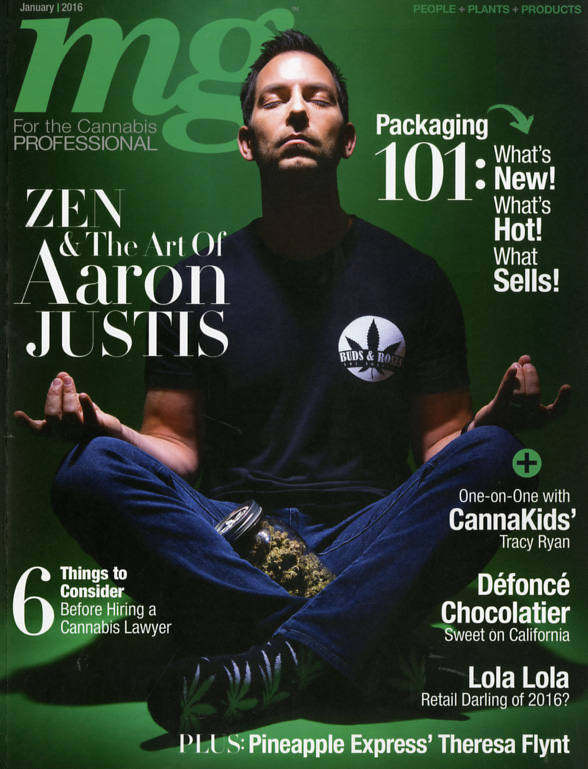
h1

Adventure Journal Quarterly: A New Title Born From The Outdoor Dreams Of One Man & From The Labyrinth Of The Web…To At Last Breathe In Print – The Mr. Magazine™ Interview With Steve Casimiro, Founder, Adventure Journal Quarterly

December 18, 2015

“And how not to burn out at it, if you’re small, just one or two people, how do you keep it fresh? I think that is one of the big challenges with digital media. It reminds me of going to a sushi place, where they have these little rivers and they do their California rolls and put them on floating plates and you sort of grab the little bites as they go by; to me digital media often feels like that. It’s just not sustaining from a reader’s standpoint. And that was a lot of the impetus for wanting to do print, because the relationship between the reader and the words is different. It feels like it sates you and fills you up better.” Steve Casimiro

aj1001-comp What do you do when you have 30 years of experience in outdoor magazines and you’ve been creating a successful online publication for six years, but you feel the need to allow that experience to develop in a more tactile and tangible way than the web? Why, you create a magazine of course.

In the spring of 2016, the online publication Adventure Journal will have a print component, Adventure Journal Quarterly. And in the words of founder, publisher and editor, Steve Casimiro, it’s something that was planned from the beginning, even before the first pixel was put into place. Steve added in a newsletter to his web audience that it needs no batteries and no internet connection. It won’t bug you to check your email or ask you to like it. It’s print, baby.

I spoke with Steve recently and we talked about the upcoming magazine that will bring Adventure Journal onto newsstands. Having worked extensively in print for most of his career, from Powder magazine to National Geographic Adventure, Steve knows and believes in the power and celebration of print. And with his business model of pre-selling issues until the actual magazine comes out, he can see the potential success already, having a robust subscription base almost immediately. And as an avid outdoor enthusiast himself, he’s certainly the man to bring adventure to a journal on a quarterly basis.

So, I hope you enjoy this entrepreneurial approach to magazine making from a man who has as much faith in and passion for the printed word as he does for the great outdoors he eloquently creates about. And now the Mr. Magazine™ interview with Steve Casimiro, Founder, Adventure Journal Quarterly.

But first, the sound-bites:

casimiro portrait On why he had always intended for Adventure Journal to be in print and not just online: The idea for the magazine, Adventure Journal Quarterly, goes back a couple of decades. Like so many editors, I have a vision of what I want XYZ magazine to look like. I was the editor at Powder magazine and it was my job to bring my vision to that magazine, so terrific, I did that, and I also did it when we launched Bike magazine. My teams have always been passionate about the outdoors and adventure. And it’s something that my whole life has really revolved around since then. And my roots are in print. I started in newspapers, and I’ve been in print one way or another for about 30 years. So, it’s what I know. But the financial barriers to doing print, way back when I was originally thinking about this, were obviously too high.

On whether the future of magazine launching is being digital-only first and then discovering or coming to print later: I think the model is fantastic. This idea of building an audience and proving the concept through your lowest cost barrier; it’s just pragmatic, right? It makes sense. I was looking at print back in 2009; I’ve been looking at it all along. I had done all sorts of business plans before the Internet and during the early days, but the costs were just exorbitant. Even if you were to launch with a website and print at the same time, just trying to build your audience and sell; how were you going to do that?

On that “aha” moment that convinced him he could actually do the magazine: There wasn’t so much just a single “aha” moment because these are ideas that have been evolving for my entire career. I love being outside; I love having adventures; I love doing long, mountain bike rides and long trail runs and going Backcountry skiing; I love it for the pure physicality of it. Just the feeling that you get from these experiences, like Powder Skiing; on a deep powder day that physical sensation, there’s just nothing else like it.

On the biggest challenge or stumbling block that he’s had to face: The biggest challenge by far is getting enough appropriately well-written stories a day to get the traffic, to get the readers, to be able to get enough advertising to make a living. My guess is that most publishers are dealing with that in one form or another. All of the people that I know who are with relatively small shops like mine are struggling with it and the bigger ones are too, because how much is enough? And what’s the right amount and the right stories, especially if you have a relatively narrow focus, such as you’re just covering surfing or mountain biking?

On whether there’s a difference in seeing one’s name in print compared to seeing one’s name credited in digital: Well, anybody can post anything these days, right? What is the value of that? To see your name in a Tweet; well, everybody is a publisher now and everyone is a photographer. By virtue of that, it inevitably diminishes the value. If anybody can do it with one click; what is the value of that? In print though, magazines cost money to make; they cost a lot of money and once they’re done that’s it. It’s finite; it’s never going to be changed. So, that’s a luxury and a leery, right? But there is a specialness built into it.

On whether a high cover price and curated content only available in the printed magazine and not on its website is the only way for print magazines to survive into the future: I think it’s one way. It really depends on your scale. I think before it closed National Geographic Adventure had 675,000 in circulation. So that’s huge. If AJ Quarterly has 20 to 30,000, I think that’s very realistic, based on other similar quarterlies like Surfer’s Journal, which is now a bimonthly. I believe the publishing model for large circulation magazines is just going to be very tricky going forward. I think staying focused and well-connected to the reader and giving and asking the readers to take a stake in it; I think that’s the future of publishing.

On anything else he’d like to add: One thing that I’d like to say is what I keep trying to tell myself basically, and encouraging myself with is, one of the mistakes that I think magazines make and businesses in general is trying to be everything to everybody and chase after every possible dollar and not be willing to say, this is what we are; we’re going to be great for some people and we won’t be the thing for others, and being comfortable with that.

On what motivates him to get out of bed in the mornings: Taking my daughter to school. (Laughs) But seriously, I hate to say this because it really does sound pretentious, but I feel like I have a mission with Adventure Journal. Adventure Journal though to me feels like the most important and the best thing that I’ve ever done.

On what keeps him up at night: Just that there are too many things that I need to do myself around Adventure Journal. Aside from the occasional stabs of anxiety, where I just go, oh my, what have I done? (Laughs) Generally I don’t worry about anything. I have faith. What’s the worst that’s going to happen? The way that I’ve built it, it’s not going to lose life. If I didn’t sell a single copy, I wouldn’t lose money with the first issue. I could not be successful, but I’m not going to lose my shirt with it either. And I do have faith that it’s going to be successful. Already it is, based on two weeks of pre-selling.

And now the lightly edited transcript of the Mr. Magazine™ conversation with Steve Casimiro, Founder, Adventure Journal Quarterly.

Samir Husni: You started Adventure Journal online in 2009, but you’ve said that it was always your intention to be in print. Why?

15149_1290432424914_1353335816_30839647_5825042_n Steve Casimiro: The idea for the magazine, Adventure Journal Quarterly, goes back a couple of decades. Like so many editors, I have a vision of what I want XYZ magazine to look like. I was the editor at Powder magazine and it was my job to bring my vision to that magazine, so terrific, I did that, and I also did it when we launched Bike magazine. My teams have always been passionate about the outdoors and adventure. And it’s something that my whole life has really revolved around since then.

So, I’ve really been a multi-sport, multi-adventure oriented person and so even as I was working at Ski magazine and Bike magazine, I’ve always wanted to share what I found out there and explore what I found out there through a broader outdoor magazine. So, I’ve wanted to do this for a long time. And of course, as a typical editor, I thought I could do it better and I had a different take on it. So, the seeds have always been there.

And my roots are in print. I started in newspapers, and I’ve been in print one way or another for about 30 years. So, it’s what I know. But the financial barriers to doing print, way back when I was originally thinking about this, were obviously too high.

In 2008, the folks that I was working with at National Geographic Adventure asked me to do some blogging, and I was kind of cynical about blogging. My thoughts were, really? But I said OK and then I found out right away that I loved it. I loved the direct interaction with readers. And of course with a magazine, if you really ticked somebody off, you mostly never heard from them. I mean you might sometimes get a few letters to the editor, but before the Internet, you never really heard from anybody. So, that loop back and forth, and I sort of mocked this idea in conversations with readers, but then I realized that was really what was going on there.

But I always felt like, and this was even before the boon in social media and Smartphones; I always felt that there was something radically different about the headspace of reading on a screen. It’s just different. It’s more distracting; I think the nature of electronics on its own changes how you view the words; forget about how your body actually reads something on paper versus an electronic device. I think the fact that somehow it’s kind of alive and dynamic changes how you feel about it.

And I always felt with any story, but especially the more thoughtful pieces, the more profuse and emotional pieces, you want to strip away the distractions and be able to immerse yourself, like when you get lost in a really good book, a page-turner.

And even in 2009, I felt like that experience was better delivered and better expressed in print. And of course, as time has gone on, and we’re all carrying around phones and we’re consuming more media online, I think those words of magnitude have never been truer.

Samir Husni: One of the things that you’ve said is that you used the web; you used online to build both the readership and the advertising. Did that work as well as you expected it to? You’ve now been offering subscriptions to the print edition, Adventure Journal Quarterly, for two weeks and you’re limiting the ads to 12 pages out of 124. Is this the future trend of launching magazines, because we’ve seen others doing it; Tablet magazine came about the same way and just a lot of digital-only entities lately are either discovering print or coming to print; is this the future of magazine launching?

Steve Casimiro: I think the model is fantastic. This idea of building an audience and proving the concept through your lowest cost barrier; it’s just pragmatic, right? It makes sense. I was looking at print back in 2009; I’ve been looking at it all along. I had done all sorts of business plans before the Internet and during the early days, but the costs were just exorbitant. Even if you were to launch with a website and print at the same time, just trying to build your audience and sell; how were you going to do that?

A magazine, especially one that is about exploring a culture or a subculture, really relies on the emotional and conceptual connection with the reader. They have to get it, especially when it’s a culture made up of enthusiasts, which one of the things that’s interesting about Adventure Journal is that in the outdoor space, traditionally you had a pretty hardcore focus.

Enthusiast magazines, like the ones that I was at, Powder and Bike, were truly enthusiast. And then you had more general interest ones like National Geographic Adventure and Outside magazine. The enthusiast folks tend to have a lot of credibility with the hardest core outdoor people and the broader ones, because of the broader audience, tended not to.

And what I tried to do with Adventure Journal and why I think it’s been successful is that we’re able to cover a lot of different topics and a lot of different sports, from environmental stuff to personal experiences and endurance sports like Ultra Running.

And the audience, according to a reader’s survey, is tremendously active and they’re not just armchair adventurers; they’re people who are actually doing it. And the reason is that there’s this curiosity about the world and this open-heartedness about it to see where adventure might take you is at the heart of what Adventure Journal is all about.

So, for any kind of publication that resonates with the reader around something that’s very defiant, that’s something that’s critically important, and digital lets you test that. It lets you test it with just some elbow grease. And when you can have a website up in 10 minutes for about $8; it doesn’t really take that much to test it. In 2009 if someone had handed me one or two million dollars, or whatever it would take to start this magazine from scratch, I would have done it exactly the same way. It reduces your risk and if you do well it builds a reader loyalty and a reader comfort.

You asked me about expectations; it’s been really difficult for me to know what essentially I have with this. On the one hand, Adventure Journal has around 300,000 uniques per month and that’s a lot of people. And the social media reach is around 200,000, so for any given blast that I put out there, that’s a lot of people.

On the other hand, Adventure Journal has never really had any kind of commerce platform; we’ve sold a few prints here and there, but people aren’t used to spending money with it. People are also, despite the rise of crowdfunding, just not used to subscribing to a publication that doesn’t technically exist yet, that hasn’t been produced.

There are a lot of variables there and a lot of uncertainty. I put it out there and I thought are we going to get everybody I know and that’s it? (Laughs) But the response was actually ahead of my expectations. When it actually comes out in late March or early April, I think things should accelerate fairly dramatically, hopefully exponentially, but at this point I’m really excited. There seems to be a tremendous amount of good will in the relationships with Adventure Journal and people are eager to see something like this because the idea is different from anything that’s out there.

Samir Husni: When you came up with the idea for Adventure Journal; at that moment of conception, what was the precise “aha” moment that convinced you it could be done?

Steve Casimiro: There wasn’t so much just a single “aha” moment because these are ideas that have been evolving for my entire career. I love being outside; I love having adventures; I love doing long, mountain bike rides and long trail runs and going Backcountry skiing; I love it for the pure physicality of it. Just the feeling that you get from these experiences, like Powder Skiing; on a deep powder day that physical sensation, there’s just nothing else like it.

But what I’ve tried to do through my whole career is explore the emotional and intellectual angle of that, such as what does it feel like, not just physically, but what does it do to your spirit and your heart and your head as you go through these experiences and you have doubts and fears and you overcome them?

So, these are all of the things that I have wrestled with and shared. And my commitment to wanting to do this has really come through my work with National Geographic Adventure, which is a fantastic magazine that still lives online, but the print version was shut down in 2009. NGA was a terrific book; John Rasmus was the editor and he’s a brilliant guy and has guided a number of magazines, Outside, Men’s Journal and then launching NGA, but it was always by the numbers. And because it was a part of a big organization and was expected to produce, it needed to have a very large circulation and so it relied on traditional ideas about package stories, etc. And it did a lot of great reporting, but I’m more interested in the emotional and intellectual and what these experiences mean.

Part of my excitement about blogging in 2008 and before Adventure Journal became what it is today was having a place where I could test those ideas and see if people really wanted to read that kind of stuff. Do people really want to hear about it?

For example, I wrote this piece about cleaning out my garage. I was doing a year purge and getting rid of things that we no longer needed, stuff that we’d had when my kids were little and I wrote this piece about finding all of these things. I found things we’d bought my daughter when we used to take her surfing when she was very little, maybe three or four years old. And so what are those feelings that come out when you come across things that reflect your life and your children growing up; how do you deal with those feelings?

Most commercial outdoor magazines don’t want those kinds of stories. They’re not interested in that because they’re not easily pleated or they don’t really work as a newsstand blurb or a cover graphic.

In 2009, NGA was struggling and everything was getting bad with the economy and advertising was going away; it was a really tough time. So, you could really see the writing on the wall in 2009. I could see National Geographic pulling the plug on NGA and of course, I asked myself what was I going to do next?

At that point, I was maybe doing one post a day on Adventure Journal and I started thinking that maybe that was the next step. People seemed to like it. I didn’t know how everything was going to work, but I knew the editorial and I was getting resonance and traction from the editorial.

Samir Husni: Since you started the blog in 2009; what has been your biggest challenge or stumbling block and how have you been able to overcome it?

IMG_7976 Steve Casimiro: The biggest challenge by far is getting enough appropriately well-written stories a day to get the traffic, to get the readers, to be able to get enough advertising to make a living. My guess is that most publishers are dealing with that in one form or another. All of the people that I know who are with relatively small shops like mine are struggling with it and the bigger ones are too, because how much is enough? And what’s the right amount and the right stories, especially if you have a relatively narrow focus, such as you’re just covering surfing or mountain biking? At what point are you doing so many stories that your editorial has been sliced so thin that it doesn’t have the kind of impact it once did?

If you’re model is based on six or seven stories a day and you cover one sport; at what point do people say, you know what, that’s just not that interesting? So, I think that’s a challenge.

And also how not to burn out at it, if you’re small, just one or two people, how do you keep it fresh? I think that is one of the big challenges with digital media. It reminds me of going to a sushi place, where they have these little rivers and they do their California rolls and put them on floating plates and you sort of grab the little bites as they go by; to me digital media often feels like that. It’s just not sustaining from a reader’s standpoint.

And that was a lot of the impetus for wanting to do print, because the relationship between the reader and the words is different. It feels like it sates you and fills you up better. And what I’ve found is that the really ambitious pieces that I’ve done; the longer pieces; the deeper and more nuanced pieces, they just don’t get the number of readers that they deserve. To be blunt, they don’t pay for themselves financially.

And they also don’t pay for themselves emotionally and creatively, because the people that I’m working with, the writers and the photographers; nobody is getting rich in our world. People are doing this because they’re super passionate about it. They love it and so they’re really invested in the stories that they’re writing and the photograph projects that they’re doing. And they want people to see them and sometimes the more ambitious stuff just doesn’t work online. So, I think that’s a big challenge as well.

You know when The New York Times won the Pulitzer for “Snow Fall,” for a lot of people that was an incentive for them to do something similar, the potential seemed to be there, but when you’re a small publisher trying to do that; man…(Laughs), you’re going to lose your shirt. It just doesn’t make sense financially.

Samir Husni: You’re offering so many incentives with the first issue, including for people who subscribe now, getting their names printed in the first issue of the magazine. Does that ego trip of seeing your name in print differ from seeing your name in digital?

Steve Casimiro: For me personally? Or speaking in general?

Samir Husni: For you as a magazine editor and in general for the general public.

Steve Casimiro: Well, anybody can post anything these days, right? What is the value of that? To see your name in a Tweet; well, everybody is a publisher now and everyone is a photographer. By virtue of that, it inevitably diminishes the value. If anybody can do it with one click; what is the value of that?

In print though, magazines cost money to make; they cost a lot of money and once they’re done that’s it. It’s finite; it’s never going to be changed. So, that’s a luxury and a leery, right? But there is a specialness built into it.

You may have a 5,000-plus run or a million-plus run, but still you’re not going to make any more of those. I think that brings, by its very nature, more value to the process. Nothing is forever, but there’s permanence to that. I think it’s cool to see it. To me, when I see a story in print, whether it has my byline on it or not, I know how much effort goes into that because you get one shot to do it right. You make a mistake and get a typo in a blog post, it’s easy to change. I’m always adding to it, or changing something here and there, just whatever, it’s dynamic and you can do those sorts of things.

But with print, it’s luxurious and impressive by the fact that you have to get it right the first time. And like any publisher I’m sure of the value of the magazine that I’m making. (Laughs)

I think it’s really cool that I can devote a page to and recognize the people who are helping it get off the ground. The outdoor culture is big in some ways and small in many others, especially now through social media. It feels very connected and I have readers who have been commenting about AJ for years and people who have won things from contests keep in touch with us, people who regularly share things on social media. It’s a cliché, but it feels tribal. It feels like we’ve known each other for a long time.

And the people who are subscribing; over and over again I’m seeing names that I recognize from the comments or social media or whatever. The personal connection really warms my heart; it’s a tremendous vote of confidence. And it’s absolutely true that I could not be doing this without them, so to be able to have them in some small way be recognized; I just wish that we could do more. I would like to be able to do every subscriber, but we just don’t have the space for that.

I want to recognize these folks and I want to show my appreciation, our appreciation, for them because it really means a lot. And so far I’ve reached out to every subscriber and sent them an email personally and with a lot of these guys, we end up having conversations back and forth and it really does warm you. It’s not a financial thing; this is really about wanting to share the cool stuff that we find outdoors and exploring what it means to be that person. The page with the readers names; there’s a lot behind it actually.

Samir Husni: You promised the readers in your promotional piece that the stories in the AJQ magazine will only be available in print; they will never appear online. None of the pieces will run on the dot com site. And there won‘t be a Kindle, E-Book or digital version of any kind; it’s print, baby. (Laughs)

Steve Casimiro: (Laughs too). Yes.

Samir Husni: So you’re really committing all that great content and photography and editorial that you’re creating to the magazine. If you want it, you have to buy it on the newsstand; you have to subscribe to it; you have to spend your $15 to get it. Having said that, do you think that high quarterly cover price package or curated content that’s only going to be available in print is the only way for the future of print to survive?

Steve Casimiro: I think it’s one way. It really depends on your scale. I think before it closed National Geographic Adventure had 675,000 in circulation. So that’s huge. If AJ Quarterly has 20 to 30,000, I think that’s very realistic, based on other similar quarterlies like Surfer’s Journal, which is now a bimonthly.

I believe the publishing model for large circulation magazines is just going to be very tricky going forward. I think staying focused and well-connected to the reader and giving and asking the readers to take a stake in it; I think that’s the future of publishing.

I don’t know how familiar you are with Surfer’s Journal?

Samir Husni: I am very familiar with it.

Steve Casimiro: Oh OK, well that’s really the model. I worked with Steve from Surfer’s Journal on several publications before he left to do the Journal and I learned a lot from Steve because he and Debbie both are just so generous with sharing their experience on how things have worked and not worked. Right from the get-go Steve was saying this is reader-supported publishing. And that’s my model and the model for most of these quarterlies.

And I think that is the key difference with large-scale publishing, which is one of the reasons why they’re so vulnerable to swings in the economy and to changes in taste. And the reason is because, as you know being a magazine expert, large circulation magazines are built based on selling huge advertisements and have very high ad rates because they have large circulations. And the magazine is essentially given away and is subsidized by the advertising and you do lose money at the newsstands. And the reader gets a year’s worth of the book for $12 or $15 in a tote bag or little trinkets that come with the subscription. So they don’t have the same kind of investment.

One of the things that I’ve always tried to do, in terms of writing a story or building a magazine, is build it in a way that it is irreplaceable. What difference are you making in your reader’s life? Like if you went away, would they even notice? Or would it be like, oh well, whatever? What are you doing that your competition can’t do? I think about that all of the time. What makes Adventure Journal uniquely Adventure Journal?

And along with that comes, I was about to say responsibility on the part of the reader, but the reader has no responsibility. But of you make something that is really solving a problem for them, or filling a need in their lives, they’re going to feel that connection and be willing to pay for it.

I do want to touch on one thing which is not doing crowdfunding on this. I know a number of people do through Kickstarter. And the reason I didn’t use it is that I really believe you have to give people something that they want and are willing to pay for. And that you really shouldn’t be asking for favors, if that makes sense? Crowdfunding is sort of a favor. Crowdfunding is also so many of these amazing Kickstarter ideas that never seem to come to fruition.

I would much rather have something that I just diddled and handed to somebody, rather than ask them to support me with a donation. I even feel a bit awkward pre-selling subscriptions, but there’s just no way that this model would work if we didn’t do that. I’d rather say here’s the magazine, what do you think? I think it’s better to just do things, rather than talk about what you’re going to do.

Samir Husni: Is there anything else you’d like to add?

Steve Casimiro: One thing that I’d like to say is what I keep trying to tell myself basically, and encouraging myself with is, one of the mistakes that I think magazines make and businesses in general is trying to be everything to everybody and chase after every possible dollar and not be willing to say, this is what we are; we’re going to be great for some people and we won’t be the thing for others, and being comfortable with that.

The decision to do print-only rests on that. It’s having the commitment to say, you know what, this is the product that we’re making and this is how it’s designed. It’s designed to be read in print; it’s designed to be consumed in a certain way. And yes, we could get more readers and put it behind a paywall, we could build more synergy, but why? This isn’t about the money, it’s about the experience. So, let’s have the faith that the experience on its own is good enough and luxurious enough and rewarding enough that people aren’t going to feel the need to do anything different like crowdfunding.

Samir Husni: What motivates you to get out of bed in the mornings?

Steve Casimiro: Taking my daughter to school. (Laughs) But seriously, I hate to say this because it really does sound pretentious, but I feel like I have a mission with Adventure Journal.

I have been so incredibly blessed in my career. I discovered skiing and it changed my life and within a couple of years I was working at the best ski magazine in the world and I was editing it. And that is a gift. And I got to start a mountain biking magazine and I got to have a hand in starting a snowboarding magazine and they’re all doing really well still today.

And I got to work with National Geographic and still do some work with those guys. I’ve been working with them since 1998. For a photographer and a writer and an editor, that’s a dream. I’ve been so fortunate.

Adventure Journal though to me feels like the most important and the best thing that I’ve ever done. And even though it’s been around for seven years, I feel like it’s just about to take off and the reason is because I am very, very idealistic about the power and potential for magazines to change people’s lives. They changed my life. And to move people, whether it’s about environmental issues or learning what adventure means to their lives; just whatever it is, magazines have so much power to do that, to communicate with people.

And at the end of the day with my own magazine; I’ve worked without compromising any of my own values. If you work for other people no matter how aligned you are, ultimately you’re going to be compromising your values at some point because you have your own perspective about things. So, AJ has given me the ability to share whatever it is I think is important. And to do stories that I know are not going to get as many viewers online, but they’re important stories. And to make decisions that are not just about commercial reasons. And I think that’s rare outside of small indie publications.

What I’m trying to do with AJ is have it not be a terribly small independent publication, but still take chances like one. And see where that takes us.

Samir Husni: My typical last question; what keeps you up at night?

Steve Casimiro: Just that there are too many things that I need to do myself around Adventure Journal. Aside from the occasional stabs of anxiety, where I just go, oh my, what have I done? (Laughs) Generally I don’t worry about anything. I have faith. What’s the worst that’s going to happen? The way that I’ve built it, it’s not going to lose life. If I didn’t sell a single copy, I wouldn’t lose money with the first issue. I could not be successful, but I’m not going to lose my shirt with it either. And I do have faith that it’s going to be successful. Already it is, based on two weeks of pre-selling.

The challenge is just trying to keep the direction straight. There are just so many directions you can go, right? Whether it’s a website or a magazine, you can go one way or another or both. There are so many challenges. So, how do you keep it as close as possible to that center line while still be willing to take chances? That doesn’t necessarily keep me up at night, but I think that’s something that I think a lot about, especially with this first issue. How do I balance the pieces that I find most interesting with what I think the readers are going to find interesting? And they’re not necessarily the same things because I’m kind of a nerd about stuff. I like to do really deep dives into things and I don’t mind reading a 15,000 word piece in The New Yorker. I love that. A 15,000 word piece in Adventure Journal is probably not going to work. (Laughs) You have to have a really firm hand on the tiller and not be afraid to say this is how it’s going to be.

But you also always have to be thinking about your ideal reader and what’s going to resonate with them.

Samir Husni: Thank you.
h1

Pallet Magazine: One Beer – One Story – The Global Launch Story Of A Magazine With Dual Citizenship – From Australia To The United States.

December 16, 2015

Pallet Is A New Title That Satisfies The Craft Beer Lovers “Palate” Exquisitely – The Mr. Magazine™ Interview With The Pallet Team…Rick Bannister & Nadia Saccardo, Founders, Pallet Magazine & Sam Calagione, Founder & President Dogfish Head Brewery & Pallet Executive Editor.

From Australia and The United States With Love and a Glass of Craft Beer…

“I am a big believer that there is this turning point now or in the very near future where people are being reminded of the luxury of reading offline. I know that myself, because when I’m online I have this low level of anxiety that comes with reading online because I feel like I can never get to the end of what’s ahead. There’s just endless information and I’m forever bookmarking things and saying I’ll come back to that later. And I do think there is this return to print and what that brings is you’ve invested some money, say $15, it’s not cheap, you’ve invested the money so you’re going to stop and make some time.” Rick Bannister

“We’re also not interested in objects that are just throwaways. We’ve spent so much time in this content and so much of ourselves; the idea of putting that in a magazine that people would toss and not keep around for a long time as something that they cherished just didn’t sit right.” Nadia Saccardo (on why they wanted the magazine’s production values of the highest quality)

“We see the website as just growing into a community for the people who believe in the magazine and in craft beer and who want to find each other. And that’s why I love the fact that the website isn’t just regurgitated content that we expect people to be holding in their hands; it’s something complementary to that content.” Sam Calagione (on the magazine’s content and the website’s content being totally different)

Pallet A new magazine for people who are “only interested in everything;” Pallet was born from the minds of Nadia Saccardo and Rick Bannister from Australia, joined by the craft beer expertise of Sam Calagione who is founder and president of Dogfish Head Brewery in Milton, Delaware. Coming from a background of magazines and publishing, Nadia and Rick knew a thing or two about the art of creative magazine making and joined forces with Sam to produce a title that weaves the craft beer culture into just about every topic you could possibly think of, and does it in a most upscale and visually creative way.

I spoke with Sam, Nadia and Rick recently about each one’s respective talent and ability to produce such a thoroughly enjoyable magazine as Pallet. With Nadia and Rick in Australia and Sam and myself in the States, we talked about what it took to collaborate the efforts of the indie beer lover’s magazine to be the catalyst for global knowledge and all-around fun about the world of craft beer.

When you consider the name Pallet was derived from a story that Nadia and Rick had done in a former magazine, Smith Journal, where they both worked at the time, you can see the type of creativeness and talent that the duo has. The pallet being the wooden element that changed the face of global shipping and transportation, but remains an insignificantly understated object, as inconspicuously important as a lock is to a key, yet as Nadia explained, something you wouldn’t look twice at if you walked past it. And if you couple Rick and Nadia’s magazine experience with Sam’s vision and global connections as a craft brewer, one can see why the three came together to produce this superbly understated magazine.

The four of us talked about that subtlety and the visual beauty of the magazine itself, with its high production values and brilliantly-done content. It was an entertaining and exceptionally redolent conversation, robust with humor, information and hope for the magazine’s future.

So, I hope you enjoy this launch story that showcases three very different individuals who came together, each with their own talent, to put together a remarkable magazine that shows sometimes great things begin simply – with one beer and one story; the Mr. Magazine™ interview with the Pallet team, Sam, Nadia and Rick.

But first, the sound-bites:

Rick Sharp On how three people, two from Australia and one from the Unites States got together to create Pallet Magazine (Rick Bannister): Nadia (Saccardo) and I have both been in magazines our entire careers or in media and publishing in one form or another. I personally had worked in magazines for about 12 years and then decided that I wanted to try something different, so I went traveling for 12 months, to the States actually. And that’s where a good friend of mine over there introduced me to craft beer, which I hadn’t really come across in Australia much. My friend was going to do a brewing course in Chicago and I decided to join him. However, it ended up my friend couldn’t make it, but I went. So, I took a detour from making magazines for nearly five years and worked in the craft beer industry in Australia. During that time I started thinking about the fact that there wasn’t a magazine for all of the people who really loved the craft beer culture.

(Nadia Saccardo): Rick had had these great ideas and we decided to investigate it and that turned into, after his road trip to the United States, meeting a lot of people last year in publishing and in the craft brewing industry, and that developed into talking about the potential of this magazine, and it was also when we came down to Delaware and met Sam (Calagione).

On Pallet being more of an upscale magazine and very different from the beer magazines already on the marketplace (Sam Calagione): When I saw the work that Nadia and Rick were doing at Smith Journal and with a couple of my own thoughts about if a person is going to pay premium to have this sort of affordable luxury that they’re sipping on, then it means they’re taking the time to appreciate the finer things in life and they’re obviously enjoying a peaceful, reflective moment when they’re having a beer. And to me the things that complement that thoughtful, peaceful moment of enjoying a beautifully designed beer are two-fold: an awesome album or an awesome magazine. I don’t enjoy reading Kafka or War and Peace when I’m having a beer I want something that I can consume in about the same amount of time that it takes to consume my craft beer.

NADIA_Sharp On how they came up with the name Pallet (Nadia Saccardo):
Rick and I were throwing names back and forth for a while and then we had a story that we published in Smith Journal about the wooden pallet and about how this one very ubiquitous object had transformed the whole nature of global shipping and transportation. And we loved that story because it took a simple object, something that you’d walk past every day and not look at twice, and gave it this depth and history and relevance that was so vital.

On whether anyone ever told them they’d had one craft beer too many when it came to starting a print magazine in today’s world (Rick Bannister):
It is definitely something that a lot of people ask us. And in a lot of ways, it is kind of insane to start a print magazine at this time, but also there is some element of the fact that it’s a great opportunity as well, because as you said Pallet stands out and in a time when there’s less of that stuff, I think you can look at it the other way and see the opportunity.

On how decisions are made for the magazine, such as the cover, design and content (Nadia Saccardo):
We work in a partnership across the entire thing; the design; the production; the ideas; pretty much everything. We have a designer who we work with, Marta Roca, who is brilliant and helps across, obviously, designing the layout and with creative direction, but Rick and I really read the content in partnership. Rick is incredible. Most of the ideas come from his brain and then they roll out and get stuck into the words and the structural editing of the publication.

On any plans to incorporate the magazine into the Dogfish Head brewery business (Sam Calagione):
That’s actually not far from the truth. I go to Australia in a few weeks to do some Pallet events and while the magazine launch is in the U.S., I think we all are hopeful, because the craft beer phenomenon isn’t just happening in the U.S.; adventurous, independent, small artful breweries are exploding globally, hot pockets of gold, including Australia, New Zealand, Scandinavia, Italy and Canada. We’re hopeful that there’s a global appetite for Pallet and that sort of second phase as you alluded to for us is that while we’re down in Australia we’re doing a collaborative beer between Dogfish and Nomad Brewing in the Sydney area. And Pallet will be a sort of a business card in liquid form for the philosophy and the global stance of the magazine.

SamCalagione2 On whether Sam sees himself now as the ambassador of craft beer and Pallet Magazine as the nation that will unite that corner of the world (Sam Calagione):
I do see it like that and beer is not equal to armament; it’s fun. And the content and design and our intentions should come from a place that’s thought-provoking, but also there’s real whimsy in it; we’re beer geeks, we’re not beer snobs. We’re not trying to show our beer prowess to lord over other people.

On whether the magazine is available in Australia or just the United States for now (Nadia Saccardo):
At the moment this edition on shelves is just available in North America, but we’re looking to expand internationally fairly quickly. We’ve had a lot of demand for Pallet in Australia, but also in the U.K. and Japan.

On the production values of the magazine and how the feel of the paper is important (Rick Bannister):
I think when you’re paying premium for anything; it’s good to have perceptions of value that go beyond the normal. A change in stock is a subtle thing in a lot of ways, but if you’re a person who’s into this kind of stuff, you’ll get a little kick out of that. And it’s the same with the dust jacket on the cover; it’s a visual cue that maybe this is something more like a book, there’s an element to this that’s more than a magazine.

On the fact that the website and the print magazine will have entirely different content (Rick Bannister):
Yes, that’s right. What we’ve noticed with other magazines and their websites is that quite often the website is just reflective of the magazine. And to us, that seemed to diminish the idea that what you have in print is special.

On what motivates Sam to get out of bed in the mornings (Sam Calagione):
For me, honestly, when I travel to Australia and have to put on my customs form what I do; I’m always so proud to write that my vocation is a brewer first and a businessman second. Really, to me, the word brewer is just a more specific term for an artist and I don’t say that I’m a world-class artist; I’m just a person who loves brewing whatever my creativity brings me and I know that I’m very lucky that I can make my livelihood around my creative drive. And for me, those most creative moments come from collaborating with other creative people.

On whether Sam, as a brewer, thinks the first issue of Pallet is the perfect brew (Sam Calagione):
(Laughs) The other form of Pallet is in our mouths and we’re all individuals and we all have different palates and that’s why there’s not one beer that appeals to everyone and that’s why there won’t be just one issue of Pallet that is perfect. I love the first issue, but I can’t wait to see where our creative journey takes us with each future issue.

On what motivates Nadia to get out of bed in the mornings (Nadia Saccardo):
In creating something like Pallet, the thing that does get me out of bed in the mornings is working with the team that I get to work with and also the opportunity that the magazine provides to connect with anyone and anything that I’m interested in basically.

On whether the future of magazine making is doing so from varied parts of the world and not confined to one office (Nadia Saccardo):
Rick and I laugh about it a lot. Pallet and none of the magazines that we have created, which have been beautiful, tangible printed things, could have existed without Skype. We’re on Skype together every day and we were when we were making Smith as well. Without technology, there would be no way we could create these old-world type printed things, which is very cool.

On what motivates Rick to get out of bed in the mornings (Rick Bannister): Mostly my kids jumping on me. (Laughs) Similar stuff to what these guys have said. As well as working in magazines, I’ve also taken breaks from working in magazines, because I’ve had these crazy ideas that I wanted to do other jobs. From time to time I’d say to myself, no, I just want to do a 9-5 job, so I’d go and become a baggage handler at the airport. One of the things that I think is a reminder for me when you get to work in those type jobs is you remember to get up, and even on the worst day ever of making a magazine, it’s still a far greater day than if you’re throwing bags on a plane, I can tell you that. What’s that old cliché? The worst day fishing is better than the best day working?

On what keeps Nadia up at night (Nadia Saccardo):
The thing about making a magazine, it’s very different from reading a magazine. It’s not a glamourous profession at all. The business is all-consuming and we’re doing everything ourselves, from distribution to managing the printing to organizing sales and creating content and working on design, just everything. And running the business and making sure that we’re invoicing on time and all of that. So really, there’s a whirlpool of different things that keep me up at night. But it’s definitely worth it because so far it’s been such a cool journey.

On what keeps Rick up at night (Rick Bannister): I’m in the same boat as Nadia. It’s usually just silly things or small things like worrying about whether a photo shoot is going to come off the way you want it to or worrying about getting enough ad sales; I guess it’s just all of that normal startup business concerns, whether it’s magazines or anything else.

On what keeps Sam up at night (Sam Calagione): My reasons are a little bit different because Nadia and Rick are the ones that have to set the economic component of running Pallet and I get the pleasure of thinking about the creative and editorial content and obviously, they think a lot about that too, but that distinguishes me with the luxury of not having as much of an economic and business and operational component of running the publication. So, in the context of Pallet what keeps me up at night is an occasional idea for a new story and jotting that down or thinking about a story idea that maybe Rick or Nadia brought to me. It’s all the fun stuff that keeps me up, in terms of Pallet.

And now the lightly edited transcript of the Mr. Magazine™ interview with the Pallet team, Sam Calagione, Nadia Saccardo & Rick Bannister.

Samir Husni: I’m someone who’s “only interested in everything,” as your tagline states, so tell me how three people, two from Australia and one from the United States got together to create Pallet Magazine; where did the idea come from?

Pallet Rick Bannister: Nadia (Saccardo) and I have both been in magazines our entire careers or in media and publishing in one form or another. I personally had worked in magazines for about 12 years and then decided that I wanted to try something different, so I went traveling for 12 months, to the States actually. And that’s where a good friend of mine over there introduced me to craft beer, which I hadn’t really come across in Australia much. My friend was going to do a brewing course in Chicago and I decided to join him. However, it ended up my friend couldn’t make it, but I went.

So, I took a detour from making magazines for nearly five years and worked in the craft beer industry in Australia. During that time I started thinking about the fact that there wasn’t a magazine for all of the people who really loved the craft beer culture.

Well, at the end of those five years I had the opportunity to go back and work in magazines and that’s where I ended up working with Nadia. We worked together for about a year maybe and then the company that we were working for was sold.

So Nadia and I were at loose ends and that’s when we started kicking around some ideas. I asked her about the beer mag idea and it was Nadia who really encouraged it from there and said it was worth chasing.

Nadia Saccardo: We had a bunch of ideas and all of them seem to have a craft beer thread running through them. And so we pinpointed that we’d like to do something with craft beer. My background is in publishing; I worked online in digital for a while and I’ve been in magazines at Smith Journal and Frankie Press.

Rick had had these great ideas and we decided to investigate it and that turned into, after his road trip to the United States, meeting a lot of people last year in publishing and in the craft brewing industry, and that developed into talking about the potential of this magazine, and it was also when we came down to Delaware and met Sam (Calagione).

Rick Bannister: I should backtrack a little bit because it was Nadia who had the idea of reaching out to Sam. We were kind of inspired by Lucky Peach and David Chang is, I guess you’d call him a bit of a champion of the magazine. And so Nadia had the idea of finding out whom the person was in beer that was kind of like Lucky Peach’s David Chang. And straightaway we thought of Sam and with the whole ethos of what we were trying to do, this “only interested in everything” mentality; Sam was just the obvious guy who seemed to embody that spirit and philosophy.

A true connection in craft beer land; we just cold-called him, or cold-emailed him anyway, and being the generous guy he is, he said the idea sounded interesting and he asked to talk some more about it. We ended up landing on his doorstep and having a beer and chatting about it. And here we are.

Samir Husni: Sam, whose idea was it to do the magazine very differently from the other craft and beer magazines on the marketplace? Pallet is more upscale literarily, visually, typographically, and in an all-appealing way that by far stands apart from the competition.

Sam Calagione: Thank you, Samir. In a getting to know each other phase, Nadia and Rick sent me a box with copies of Smith Journal in it. And as a global magazine expert; I’m sure you’d be as equally impressed with that as I was, both from a design standpoint and a content standpoint.

Compared to you I’m a neophyte, but I’ve been kind of obsessed with magazines from an early age, and growing up my parents subscribed to Forbes and Sports Illustrated and I had an older sister who also subscribed to Sassy Magazine, which was kind of ahead of its time in having a very irreverent and DIY voice and fairly design-forward for a mass media magazine. And then in college Art Forum and The New Yorker. So, I’ve been obsessed with magazines as an English major and a bit of a writer myself for a long time.

So, when I saw the work that Nadia and Rick were doing at Smith Journal and with a couple of my own thoughts about if a person is going to pay premium to have this sort of affordable luxury that they’re sipping on, then it means they’re taking the time to appreciate the finer things in life and they’re obviously enjoying a peaceful, reflective moment when they’re having a beer. And to me the things that complement that thoughtful, peaceful moment of enjoying a beautifully designed beer are two-fold: an awesome album or an awesome magazine. I don’t enjoy reading Kafka or War and Peace when I’m having a beer I want something that I can consume in about the same amount of time that it takes to consume my craft beer.

And with the magazines that are out there; some of them are great and some of them are just OK, but they literally have long-format stories that can be a 20 or 30 minute experience, which to me is about the right amount of time to sip on a beer and read something thought-provoking and provocative.

Samir Husni: Can all of you recall that moment of conception when all the planets aligned and the light bulb went off and everyone said let’s call it Pallet? How did the name come about?

Nadia Saccardo: Rick and I were throwing names back and forth for a while and then we had a story that we published in Smith Journal about the wooden pallet and about how this one very ubiquitous object had transformed the whole nature of global shipping and transportation. And we loved that story because it took a simple object, something that you’d walk past every day and not look at twice, and gave it this depth and history and relevance that was so vital.

So, when we were thinking about this magazine and throwing around names, I remembered that story and asked Rick what about Pallet? And the more that we thought about it, the more we thought OK, that works. It goes back to something that we love that’s very simple and that still had the connection with beer. It’s a play on words in many ways, which also worked for us too. After a time, we sort of realized that we were stuck with it.

Samir Husni: Did anyone tell you guys that you’d had one too many craft beers when you decided to launch a print magazine in a digital age?

(Everyone laughs).

Sam Calagione: I’ve been asked that, Samir, and as someone who has studied the industry for as long as you have, what are your thoughts about the long-term viability of print, and particularly magazines like Pallet, or Pitchfork Review? They’re going after a younger reader with what’s considered a format that some people would say is a format of past generations; what are your thoughts on that?

Samir Husni: If you saw my recent quotes in the Columbia Journalism Review; I resigned my position as Chairman of the Journalism Department here at the University of Mississippi in 2009 to start the Magazine Innovation Center with the tagline “Amplifying the Future of Print in a Digital Age.” And to me as long as we have human beings, we’re going to have print. We love that collectability factor, that ownership factor, that membership factor and the showmanship of it all. If I’m reading something on my iPad, no one sitting next to me on the plane will know what I’m reading. How can I show off and say, hey look, I’m reading a $14.95 Pallet Magazine, this is not a cheap, disposable item? (Laughs)

(Everyone laughs too).

Rick Bannister: That’s a good point. It is definitely something that a lot of people ask us. And in a lot of ways, it is kind of insane to start a print magazine at this time, but also there is some element of the fact that it’s a great opportunity as well, because as you said Pallet stands out and in a time when there’s less of that stuff, I think you can look at it the other way and see the opportunity.

And I am a big believer that there is this turning point now or in the very near future where people are being reminded of the luxury of reading offline. I know that myself, because when I’m online I have this low level of anxiety that comes with reading online because I feel like I can never get to the end of what’s ahead. There’s just endless information and I’m forever bookmarking things and saying I’ll come back to that later. And I do think there is this return to print and what that brings is you’ve invested some money, say $15, it’s not cheap, you’ve invested the money so you’re going to stop and make some time. So, I think all of these things coming to light; it’s good timing for it in some ways.

Samir Husni: Nadia, are you more of the editor; the designer; or the creative person? For example, who decided on the cover of the first issue to introduce Pallet to the marketplace, or even the tagline: only interested in everything? And then inside you read the editorial and it states that this is a magazine for people who like to think and drink.

Nadia Saccardo: We work in a partnership across the entire thing; the design; the production; the ideas; pretty much everything. We have a designer who we work with, Marta Roca, who is brilliant and helps across, obviously, designing the layout and with creative direction, but Rick and I really read the content in partnership. Rick is incredible. Most of the ideas come from his brain and then they roll out and get stuck into the words and the structural editing of the publication.

So, it’s really a partnership between the two of us and also Sam, in terms of the flow and the ideas of the publication and contributing his pace as well to each issue.

Samir Husni: Sam, what are your plans when it comes to taking this magazine even one step further; are we going to start seeing on the craft beer that your company produces an offer to subscribe to Pallet?

Sam Calagione: That’s actually not far from the truth. I go to Australia in a few weeks to do some Pallet events and while the magazine launch is in the U.S., I think we all are hopeful, because the craft beer phenomenon isn’t just happening in the U.S.; adventurous, independent, small artful breweries are exploding globally, hot pockets of gold, including Australia, New Zealand, Scandinavia, Italy and Canada.

We’re hopeful that there’s a global appetite for Pallet and that sort of second phase as you alluded to for us is that while we’re down in Australia we’re doing a collaborative beer between Dogfish and Nomad Brewing in the Sydney area. And Pallet will be a sort of a business card in liquid form for the philosophy and the global stance of the magazine.

My contribution, besides creative input to the content when we have meetings before every issue to talk about that, and I’m glad to have a voice in that process, but also my contribution is a global outreach because I’ve done a Discovery channel show that aired in around 40 countries and because I’ve brewed collaborative beers with my friends in 11 different countries. And I’m lucky to have forged these global relationships with other brewers so that when Nadia and Rick suggest doing an article on beers that have been inspired by Breaking Bad, and they ask who I know in Canada, I can put out my bat signal to my friends around the globe and do that outreach for almost any creative story that we want to consider.

I have both the role of executive editor and writer, not always, but I intend to contribute short pieces, but also I have the role of that sort of global steward that keeps the magazine connected to the brewing community globally.

Samir Husni: So Sam, you see yourself now as the ambassador for craft beer, where Pallet is going to be the nation that unites all of these countries?

Sam Calagione: I do see it like that and beer is not equal to armament; it’s fun. And the content and design and our intentions should come from a place that’s thought-provoking, but also there’s real whimsy in it; we’re beer geeks, we’re not beer snobs. We’re not trying to show our beer prowess to lord over other people.

There’s going to be some content in this magazine that’s very specific to what’s exciting and creative about the world of beer and it’s not going to be influenced by the juggernauts that dominate the beer world with the advertising messages that sometimes run into editorial. This magazine is for indie beer lovers and the content isn’t always going to be about beer, but it’s content that has been curated through the lens of what beer lover’s want to read about in addition to wanting to read about beer.

Samir Husni: Are you going to launch Pallet in Australia or is it already available there? Or is it only available here in the United States for now?

Nadia Saccardo: At the moment this edition on shelves is just available in North America, but we’re looking to expand internationally fairly quickly. We’ve had a lot of demand for Pallet in Australia, but also in the U.K. and Japan.

Samir Husni: The choice for the paper reminded me somehow of Monocle; you’re using the matte paper and you’re using the glossy paper. How is the feel of the magazine important?

Rick Bannister: I think when you’re paying premium for anything; it’s good to have perceptions of value that go beyond the normal. A change in stock is a subtle thing in a lot of ways, but if you’re a person who’s into this kind of stuff, you’ll get a little kick out of that. And it’s the same with the dust jacket on the cover; it’s a visual cue that maybe this is something more like a book, there’s an element to this that’s more than a magazine.

Our printers tried to talk us out of making it such high quality many times. They told us it would be expensive and make the magazine heavy and they said that we didn’t need to have it like this. And that’s the printer. I thought that they would want us to spend more money with them.

But we wanted something that felt special to us and that’s where it all comes from really. And we hope that other people will appreciate the same thing.

Nadia Saccardo: We’re also not interested in objects that are just throwaways. We’ve spent so much time in this content and so much of ourselves; the idea of putting that in a magazine that people would toss and not keep around for a long time as something that they cherished just didn’t sit right.

Also, the waste, as you probably know, in the print and magazine industry is pretty dire and not something that we’re interested in contributing to, so if we can help by creating an object, as well as a great read, in hopes that people will hang onto it and keep it on their shelves for a long time and that’s a good thing.

Samir Husni: One thing that I keep telling anyone who is willing to listen is that we are much more than information; if ink on paper is just about content, we would have been dead a long time ago. We are about that lasting impression.

Nadia Saccardo: Yes, make it a nice thing with beautiful paper. It makes perfect sense.

Samir Husni: Is there anything else either of you would like to add? I read somewhere that none of the magazine’s content will be available on the website, is that right?

Rick Bannister: Yes, that’s right. What we’ve noticed with other magazines and their websites is that quite often the website is just reflective of the magazine. And to us, that seemed to diminish the idea that what you have in print is special.

We also saw the web as an opportunity. Websites work in such different ways and people consume information in such different ways that we took some time to think about that and came up with the idea that our content is that be-one-is-one story and is much more visually-driven and about small bits of information, but also builds this kind of global tapestry of this culture. You can see them and the website is complementary to the mag. We didn’t want to just roll out the same stuff.

Sam Calagione: Also we see the website as just growing into a community for the people who believe in the magazine and in craft beer and who want to find each other. And that’s why I love the fact that the website isn’t just regurgitated content that we expect people to be holding in their hands; it’s something complementary to that content.

Samir Husni: Sam, what motivates you to get out of bed in the mornings?

Sam Calagione: For me, honestly, when I travel to Australia and have to put on my customs form what I do; I’m always so proud to write that my vocation is a brewer first and a businessman second. Really, to me, the word brewer is just a more specific term for an artist and I don’t say that I’m a world-class artist; I’m just a person who loves brewing whatever my creativity brings me and I know that I’m very lucky that I can make my livelihood around my creative drive. And for me, those most creative moments come from collaborating with other creative people. Making that connection with people is why we’re here.

So, I see Pallet as another important layer of the awesome opportunity that I have to make my career and my vocation and my avocation, all the same thing, and to create and it be my livelihood.

Samir Husni: Do you think as a brewer, the first issue of Pallet is the perfect brew?

Sam Calagione: (Laughs) The other form of Pallet is in our mouths and we’re all individuals and we all have different palates and that’s why there’s not one beer that appeals to everyone and that’s why there won’t be just one issue of Pallet that is perfect. I love the first issue, but I can’t wait to see where our creative journey takes us with each future issue.

Samir Husni: Nadia, what motivates you to get out of bed in the mornings?

Nadia Saccardo: Well, some mornings it’s coffee. (Laughs) I started out in online publishing in city guides because I loved my city and I was really curious about finding interesting spaces and then I moved into print. It’s interesting when people showcase their spaces and also create objects that communicate their stories and resonate with other people.

And now in creating something like Pallet, the thing that does get me out of bed in the mornings is working with the team that I get to work with and also the opportunity that the magazine provides to connect with anyone and anything that I’m interested in basically.

It’s just an amazing thing to be able to sit down and speak to people and find out what makes them tick and also to highlight people who have done some incredible things and maybe would never get any recognition from other media sources, but will get to extract and connect with our audience. And that gives me a natural buzz. It’s an amazing responsibility in many ways, but it’s definitely what drives me.

Samir Husni: And are you based in Sydney or Melbourne?

Nadia Saccardo: I’m in Melbourne at the moment. I’m kind of drifting between Melbourne and the States.

Samir Husni: Rick, are you also in Melbourne?

Rick Bannister: No, I’m up near a place called Byron Bay, so it’s Northern New South Wales. It’s way out in the country.

Samir Husni: Technically, the three of you are in three different corners of the world, is this the future of magazine editing? Is this the future; you know, where we don’t need to have a central office on Madison Avenue in New York City, we can create a beautiful and lovely magazine from anywhere?

Nadia Saccardo: Rick and I laugh about it a lot. Pallet and none of the magazines that we have created, which have been beautiful, tangible printed things, could have existed without Skype. We’re on Skype together every day and we were when we were making Smith as well. Without technology, there would be no way we could create these old-world type printed things, which is very cool.

Samir Husni: It’s amazing. Putting today’s technology to use to create an old technology. Rick, what motivates you to get out of bed in the mornings?

Rick Bannister: Mostly my kids jumping on me. (Laughs) Similar stuff to what these guys have said. As well as working in magazines, I’ve also taken breaks from working in magazines, because I’ve had these crazy ideas that I wanted to do other jobs. From time to time I’d say to myself, no, I just want to do a 9-5 job, so I’d go and become a baggage handler at the airport. Or I’d go and become a laborer on a building site. And I’d always only last about 2 or 3 months.

I did this even last year when I went and worked in a food factory. One of the things that I think is a reminder for me when you get to work in those type jobs is you remember to get up, and even on the worst day ever of making a magazine, it’s still a far greater day than if you’re throwing bags on a plane, I can tell you that. What’s that old cliché? The worst day fishing is better than the best day working? It’s kind of that ethos. It’s not hard to get out of bed when all you’re going to do is talk to people you like and use your brain and be able to go and have coffee whenever you want.

Samir Husni: My typical last question and we’ll start with you, Nadia; what keeps you up at night?

Nadia Saccardo: Where do I start? The thing about making a magazine, it’s very different from reading a magazine. It’s not a glamourous profession at all. The business is all-consuming and we’re doing everything ourselves, from distribution to managing the printing to organizing sales and creating content and working on design, just everything. And running the business and making sure that we’re invoicing on time and all of that. So really, there’s a whirlpool of different things that keep me up at night. But it’s definitely worth it because so far it’s been such a cool journey. Also being on this side of the world, the interview times are terrible so they often keep me up at night.

Samir Husni: Rick, what keeps you up at night?

Rick Bannister: I’m in the same boat as Nadia. It’s usually just silly things or small things like worrying about whether a photo shoot is going to come off the way you want it to or worrying about getting enough ad sales; I guess it’s just all of that normal startup business concerns, whether it’s magazines or anything else.

We officially started in August, so we’re just in that stage where we’re still fighting for survival. There are just a lot of things to worry about.

Samir Husni: And Sam, what about you?

Sam Calagione: My reasons are a little bit different because Nadia and Rick are the ones that have to set the economic component of running Pallet and I get the pleasure of thinking about the creative and editorial content and obviously, they think a lot about that too, but that distinguishes me with the luxury of not having as much of an economic and business and operational component of running the publication.

So, in the context of Pallet what keeps me up at night is an occasional idea for a new story and jotting that down or thinking about a story idea that maybe Rick or Nadia brought to me. It’s all the fun stuff that keeps me up, in terms of Pallet.

Then of course, the business stuff that has to do with my own brewery and the 230 co-workers that I have at Dogfish Head and that’s where I have to worry about the economic and financial operational stuff. That’s really not what keeps me up; that’s what wakes me up about halfway through the night. (Laughs)

Samir Husni: Thank you all.

h1

Sabor Magazine: One Young Man’s Curiosity Puts A New Twist On A Food Magazine & Begins His Magazine Journey – The Mr. Magazine™ Interview With Sabor Founder, Fermin Albert

December 11, 2015

“I think they both (print and digital) have their own advantages, but with print you feel more relaxed and I have to tell you the truth; I only read news digitally, but I really don’t have the time to read long stories onscreen. It’s nice, but I don’t have the time; it’s tiresome. But in print, I love to read the longer stories. And I think that’s the advantage of print; you just relax. I know that sounds cliché, but it’s true. I’m more relaxed when I have a hard copy; it’s so tactile.” Fermin Albert


A Mr. Magazine™ Launch Story from the Netherlands…

Sabor 1-1 (2) This is a launch story about a young man with a twinkle in his eye and a dream in his heart. It’s about one of those rogue believers who actually thinks passion for magazines and a strong work ethic can make that dream come true. It’s a story about a genuine magazine maker; one that really sums up what magazines and the art of storytelling and design are all about: the fervor of one’s dream.

Fermin Albert grew up on a small Dutch island called Curacao. He loved magazines from the time he was a very young boy (sounded very familiar to Mr. Magazine™). He tried his hand at his dream several years ago with a Dutch version of the superb magazine that he’s publishing today called Sabor. Unfortunately, several years ago didn’t seem to be the right time for him and as odd as it sounds, since Dutch is his native language, maybe not the right audience for what his dream produced.

Today, Sabor is an amazing contribution to the food category that is uniquely different from everything else, a plump, juicy, ripe tomato growing in a field of corn. Not that the corn isn’t equally as delicious as the tomato; it’s just that the tomato is such a pleasant surprise to happen upon when one is out harvesting corn.

I spoke with Fermin recently about his latest print endeavor and I must say, I haven’t laughed so much in a very long time. Fermin paralleled my own reasons for loving magazines, in so many ways. His sense of humor was contagious and his passion familiar. It was indeed a joyful conversation.

We talked about those early days, when his hope was that a magazine could flourish just on one’s tenacious belief in it alone. Then we moved into the realities of finance and distribution and all of the other stars that must be aligned in order to get one’s dream out of one’s head and onto newsstands.

So, I hope that you enjoy this most delightful interview with a young man who will definitely bring a smile to your lips, but maybe also a resurgence of a dream that you once had. And now the Mr. Magazine™ interview with Fermin Albert, Founder, Sabor Magazine.

But first, the sound-bites:

Fermin Portrait_cropped On whether the Dutch edition of Sabor that he began in 2012 is still being published: No, I stopped the Dutch issue. The reason I started the Dutch issue is that I wanted to publish it just like the big houses do it. I started with 35,000 copies and the distribution was a mess. (Laughs) I discovered a lot of things along the way like you have to pay to stay in the shops. (Laughs again) And that was a big disappointment to find that out and I just couldn’t maintain the magazine, so I had to trim down and I decided to go with a digital issue just as a test to see how it would work out.

On the early reaction he’s received on the relaunch of Sabor in print:
It’s been very positive. Every reaction that I have received has been extremely positive, which is great, but I want to be challenged. Positive reactions are nice, but some days you just need some hard feedback.

On his background and how he became interested in the magazine business:
My passion for magazines started when I was really young. I remember that I had friends whose parents traveled every week to Miami and they used to bring a lot of magazines back with them: People, Vanity Fair and many others. And I really liked those magazines and I would sit and read them for hours. I grew up in a family of printers; we were in the printing business, but we weren’t doing anything with magazines or anything like that. We didn’t really have the resources to publish a magazine because I’m originally from a small island that’s part of the Dutch kingdom. Resources are limited there and the market is also very limited for publishing a nice magazine.

On the concept of the magazine:
Sabor was intended to be a service magazine, service-driven, just like your typical Bon Appetit Magazine. That was the idea when my partner asked me, why we didn’t do a magazine together, because initially I had wanted to do travel and business magazines. But my life-partner suggested we do a culinary magazine together, a service magazine. I wasn’t really interested because I’m not a foodie. And that’s why Sabor is also different, because it’s all about my own take on the food world, what I’ve seen and discovered.

On the concept of the logo – the letter “O” in the title with two bites taken out of it: The new logo is a combination of imageries that I had in mind for the cover, and doing something that I didn’t set out to do. I had been working on several logo concepts before, but they were too delicate or to serious to appeal to a younger audience. In my mind the new logo needed to be fresh. Dissatisfied with previous concepts, I decided to start playing with bolder typefaces. I found a perfect one that looked kind of doughy — and looked very inviting to take a bite into it.

On what drives him, being a creative director, a journalist, writer, or all of them: It’s a combination of all. Every story you see in the magazine, I come up with the ideas for, and then I find the writers to write those stories. And usually they’re experts in that particular field, which is something that I’m adamant about.

On what motivates him to believe that he’ll be making magazines for the rest if his life: I think it’s trying to stay informed with the right information. That’s something that I’m truly passionate about. My big dream is to diversify in the media. My dream would be to have a new site, something news-driven, with information that’s clear. I think news can be terribly biased and that’s what really drives me.

On whether print has an advantage over digital or vice versa:
I think they both have their own advantages, but with print you feel more relaxed and I have to tell you the truth; I only read news digitally, but I really don’t have the time to read long stories onscreen. It’s nice, but I don’t have the time; it’s tiresome. But in print, I love to read the longer stories.

On his life-partner’s reaction when the first issue came out:
Excited, definitely. I was disappointed. (Laughs) I was disappointed.

On why he was disappointed:
I think it was a long, upheld journey, especially when you’re independent. We were supposed to come out in the summer, but my main feature dropped out, so I had to restructure the whole magazine, from March to July. And I think in the restructuring it lost a lot of energy.

On what advice he would give a young entrepreneur about starting their own magazine:
That’s a tough one, because I’ve been discouraged a lot and I wouldn’t want to discourage them. If they have what it takes, I would say just follow the journey and do it. Just do it. And experience it for themselves and if they have the tenacity that will be good, because I didn’t have anyone to help me; I worked hard and my life-partner worked hard. But if they really want it; go for it.

On what keeps him up at night:
Everything. (Laughs) I can’t lie about that. That’s a bad habit of mine; I tend to worry a lot, even about little things. But concerning Sabor, I would say, are people loving it? With the first issue you don’t have any idea about the distribution and sales; it’s crazy how the distribution is. You have to wait months to get any idea how the magazine is doing.

And now the lightly edited transcript of the Mr. Magazine™ interview with Fermin Albert, Founder, Sabor Magazine.

Samir Husni: Back in 2012, you published two issues of Sabor.


Fermin Albert: Yes, I did, in Dutch.

Samir Husni: Is the Dutch edition still going?

SABOR 2 Fermin Albert: No, I stopped the Dutch issue. The reason I started the Dutch issue is that I wanted to publish it just like the big houses do it. I started with 35,000 copies and the distribution was a mess. (Laughs) I discovered a lot of things along the way like you have to pay to stay in the shops. (Laughs again) And that was a big disappointment to find that out and I just couldn’t maintain the magazine, so I had to trim down and I decided to go with a digital issue just as a test to see how it would work out. After that, I received some positive reactions and so I decided to relaunch it again as a hard copy.

Samir Husni: You’ve done a great job. The first issue is very well done. What has been the early reaction since the magazine hit the market again?

Fermin Albert: It’s been very positive. Every reaction that I have received has been extremely positive, which is great, but I want to be challenged. Positive reactions are nice, but some days you just need some hard feedback. I don’t think it’s perfect; there’s no way the first issue can be that perfect, but I haven’t gotten any harsh feedback yet.

Samir Husni: Tell me a little bit about Fermin Albert. What got you into the magazine business?

sabor 2-2 (2) Fermin Albert: My passion for magazines started when I was really young. I remember that I had friends whose parents traveled every week to Miami and they used to bring a lot of magazines back with them: People, Vanity Fair and many others. And I really liked those magazines and I would sit and read them for hours. So, I guess that was the real beginning of my passion for magazines.

I grew up in a family of printers; we were in the printing business, but we weren’t doing anything with magazines or anything like that. We didn’t really have the resources to publish a magazine because I’m originally from a small island that’s part of the Dutch kingdom. Resources are limited there and the market is also very limited for publishing a nice magazine.

Samir Husni: What’s the name of the island that you’re from?

Fermin Albert: It’s Curacao. So, when I started studying in the Netherlands in 2000; I started researching the magazine industry and I think it was around that time that I discovered your blog as well. I’ve been following you since then.

And I tried very hard to publish a magazine, but getting the capital was hard. It’s very expensive. I couldn’t manage to find any fools to publish my endeavor. (Laughs)

Samir Husni: (Laughs too).

Fermin Albert: After saving a lot, I manage to publish the first issues of Sabor. And before that I tried a lot of other publications, but they never really took off.

Samir Husni: With this hefty first issue, technically you didn’t leave anything out; if you can eat it, touch it or smell it; it’s in the magazine. Tell me about the concept of Sabor and the logo, with two bites taken out of the letter “O”.

Fermin Albert: Sabor was intended to be a service magazine, service-driven, just like your typical Bon Appetit Magazine. That was the idea when my partner asked me, why we didn’t do a magazine together, because initially I had wanted to do travel and business magazines. But my life-partner suggested we do a culinary magazine together, a service magazine. I wasn’t really interested because I’m not a foodie. And that’s why Sabor is also different, because it’s all about my own take on the food world and my curiosity, what I’ve seen and discovered.

sabor 3-4 (2) Sabor is a learning process; what I learn along the way, I publish this as well. So, the concept grew from a service-driven magazine to a more literary magazine. And the literary came about with Darra Goldstein from Gastronomica. I sent her an email asking her would she like to contribute a content-driven memoir to Sabor and the way that I explained it to her she said that she liked my idea for a journal. (Laughs) Of course, it wasn’t intended to be a journal.

Samir Husni: (Laughs too). That was a polite way of telling you that she didn’t want competition.

Fermin Albert: (Continues laughing). But she did it anyway. So, I thought if people are taking me that seriously, why not go all the way with it. So, I transformed Sabor. As I said, it’s my own curiosity and I love doing it.

Samir Husni: And the concept of the logo?

Fermin Albert: The new logo is a combination of imageries that I had in mind for the cover, and doing something that I didn’t set out to do. I had been working on several logo concepts before, but they were too delicate or to serious to appeal to a younger audience. In my mind the new logo needed to be fresh. Dissatisfied with previous concepts, I decided to start playing with bolder typefaces. I found a perfect one that looked kind of doughy — and looked very inviting to take a bite into it. Combined with cover concepts that I had mocking-up, of which all had teeth and sultry lips…well, eventually everything came together, just naturally, you might say.

Samir Husni: What drives you, Fermin? Are you more of the creative art director, or are you the journalist, the writer, or is it a combination of all of the above?

Fermin Albert: It’s a combination of all. Every story you see in the magazine, I come up with the ideas for, and then I find the writers to write those stories. And usually they’re experts in that particular field, which is something that I’m adamant about. I really try to go to historians and professors, at least to the source. I wouldn’t hire a blogger to write a historical piece; instead I would go right to the source.

Samir Husni: Do you consider yourself now an independent publisher in the Netherlands?

Fermin Albert: (Laughs) Independent I am, yes, but I’m not established yet.

Samir Husni: What makes you tick and click and motivates you to believe that you’re going to spend your life doing this; making magazines?

Fermin Albert: I think it’s trying to stay informed with the right information. That’s something that I’m truly passionate about. My big dream is to diversify in the media. My dream would be to have a new site, something news-driven, with information that’s clear. I think news can be terribly biased and that’s what really drives me.

And with the magazine, I may drive some of my writer’s crazy, but the facts have to right. They have to be correct and that really drives me.

Samir Husni: Do you think that’s an advantage of print over digital? That in print, we can’t afford mistakes, but with digital we see a lot of mistakes?

Fermin Albert: Of course. I think they both have their own advantages, but with print you feel more relaxed and I have to tell you the truth; I only read news digitally, but I really don’t have the time to read long stories onscreen. It’s nice, but I don’t have the time; it’s tiresome. But in print, I love to read the longer stories. And I think that’s the advantage of print; you just relax. I know that sounds cliché, but it’s true. I’m more relaxed when I have a hard copy; it’s so tactile.

Samir Husni: When the first issue of the magazine came out, what was your life-partner’s reaction?

Fermin Albert: Excited, definitely. I was disappointed. (Laughs) I was disappointed.

Samir Husni: Why?

Fermin Albert: I think it was a long, upheld journey, especially when you’re independent. We were supposed to come out in the summer, but my main feature dropped out, so I had to restructure the whole magazine, from March to July. And I think in the restructuring it lost a lot of energy. I think it’s only natural though after a long process to be tired.

Samir Husni: And what’s next?

Fermin Albert: The second issue, of course. (Laughs)

Samir Husni: When is the second issue coming out?

Fermin Albert: It’s due June 2016. It’s biannual.

Samir Husni: What advice would you give a young entrepreneur, such as yourself; if they had an idea they’re passionate about and wanted to start their own magazine? And I don’t want to guestimate your age, but you’re young.

Fermin Albert: I’m in my mid-30s.

Samir Husni: So, if someone in their 20s came to you for advice about starting their own magazine, what would you tell them?

Fermin Albert: That’s a tough one, because I’ve been discouraged a lot and I wouldn’t want to discourage them. If they have what it takes, I would say just follow the journey and do it. Just do it. And experience it for themselves and if they have the tenacity that will be good, because I didn’t have anyone to help me; I worked hard and my life-partner worked hard. But if they really want it; go for it. Some people think I’m crazy, but Sabor is my stepping-stone to hopefully bigger projects.

Samir Husni: My typical last question is; what keeps you up at night?

Fermin Albert: Everything. (Laughs) I can’t lie about that. That’s a bad habit of mine; I tend to worry a lot, even about little things. But concerning Sabor, I would say, are people loving it? With the first issue you don’t have any idea about the distribution and sales; it’s crazy how the distribution is. You have to wait months to get any idea how the magazine is doing. And I worry a lot about that.

Samir Husni: Thank you.
h1

The Clever Root: A Magazine That Brings The Cannabis Plant Back To Its Roots With Fruits, Flowers & Farms For A “Clever” Audience – The Mr. Magazine™ Interview With Publisher/Editorial Director, Meridith May

December 9, 2015

“People want something beautiful in their hands, I see it over and over. And again, the requests we were getting, even before the first issue came out with all the buzz we received, but after the second issue, and no pun intended on the buzz (Laughs), after that issue did come out the requests have been in the thousands every week.” Meridith May

Clever Root-3 A farm-to-table food magazine with a unique twist; The Clever Root combines everything that grows, including the cannabis plant, to create a singular reading experience that is showcased in a beautifully done print magazine. It focuses on ingredients, chefs, ranchers and growers and brings the farm-to-table movement to life in new ways that both enlighten and entertain.

Meridith May is the captain at the helm of this new endeavor. As both publisher and editorial director, Meridith has a strong and steady hand on the wheel of her new ship as she not only guides The Clever Root, but also her other two vessels, Somm Journal, which summarizes consumer, restaurant, and wine trends and news for wine professionals, and The Tasting Panel, a widely circulated trade publication for the beverage industry.

I spoke with Meridith recently and we talked about The Clever Root and how it brings an industry-insider’s look at food, the trends and tools of the trade, and the different ingredients that are used, and how the magazine takes a “clever” twist to include an intelligent look at the booming cannabis industry.

All in all, The Clever Root is an astute and savvy magazine that is smartly-done and highly informative and entertaining. Just like the woman who guides it.

So, sit back, pour yourself a glass of wine and get ready to embark on a journey back to your “Clever Roots,” the ones that connect you to Mother Earth and all things that grow. And now the Mr. Magazine™ interview with Meridith May, Editorial Director and Publisher, The Clever Root.

But first, the sound-bites:


Meridith May On the genesis of The Clever Root and the “leaf” aspect of the magazine:
It all started when I received a call from the Department of Agriculture and the State Board of Equalization in California. The first thought I had when I got the call from the State Board was: uh-oh, do I owe back taxes? (Laughs) But apparently, they were getting the other magazines that we do, The Somm Journal and the Tasting Panel. And they liked the magazines and they asked me would I ever be interested in producing a magazine about marijuana and the cannabis industry. And this was the government calling. (Laughs) And I said no; I don’t really have any ties to that side of it, but I’m flattered.

On the name The Clever Root:
First, we were going to call it Grow and I called my trademark attorney and she said no. Please don’t do that. We thought of Something with a Leaf, no not that either. What I learned was you really have to have a name that no one else has and something clever. OK – The Clever Root. The name was that simple.

On why she felt the magazine needed to be a print publication:
That’s a great question. The Tasting Panel keeps growing and growing and after seven years we really feel like it reaches all of the important people in the industry throughout the U.S. And they want that print publication; those requests keep coming in every single day. So I thought, people want something beautiful in their hands, I see it over and over. And again, the requests we were getting, even before the first issue came out with all the buzz we received, but after the second issue, and no pun intended on the buzz (Laughs), after that issue did come out the requests have been in the thousands every week.

On the uniqueness of The Clever Root:
Again, it’s not food, it’s everything that grows: fruit, flower, farm and leaf. Whether it’s animal, vegetable or mineral, in the case of salt; it’s really everything that’s consumed and grown and raised and about how it relates to the working, professional chef.

On any stumbling blocks she had to face with the magazine:
We really didn’t face any stumbling blocks and yes, the stars were aligned; the right people were in the right place to pull me up and mentor me on the cannabis side, so I would have enough seed money, again no pun intended, to get this off the ground.

On her major source of revenue besides advertising:
My major income for all of the magazines is sponsorships and events. There are so many different things that we’re involved in with our clients, which is the wine industry for Somm Journal and the spirits side for The Tasting Panel.

On how she started in the publishing industry:
I started in media in 1977 when I began working at KISS FM radio in Los Angeles and I was VP of marketing after a few years in my 20s and I saw that I was quite ambitious, but I loved being in the media. So I stayed in radio for a while; started a little radio show about food and wine; started writing about food and wine for the Santa Barbara News Press and then was hired as editor for Patterson’s Beverage Journal, which was similar to the bible 20 years ago. Eventually, I was contracted to run Patterson’s and later on I bought the name from the owner and killed it and turned it into The Tasting Panel.

On whether everything in the magazine is sampled and taste-tested:
On no, it’s not a recipe magazine. Each individual writer who goes out and meets with the chefs; they might taste the food and sip, but I personally don’t. We also have a section called the Clever Marketplace where people send in samples of everything from pickles to coffee to ice cream and that’s sampled by our Clever Pantry editor. Everybody has their own experience and that’s pretty much the same way with our other magazines.

On what she might be doing at any given moment when she’s at home:
I’m probably spending time with my dog, my Border collie; either walking her or just being with her. But at home when I’m relaxing; yes, I’m on my iPad, watching some great new Netflix series with my husband.

On what motivates her to get out of bed in the mornings:
The stress of the new day; an exciting stress, but again coming to the office, overseeing the three magazines and having a great, wonderful team who are responsible for so much.
.
On her favorite magazine out of the three she captains:
I think Somm Journal is my pride and joy because it’s 100% mine and Clever Root is also mine, but I do have a partnership with several people, but I’m proud of it, very proud of it.

On what advice she would give to someone who had an idea for a new magazine:
I would tell them that they better have some backup money to get it, not only off the ground, but to even know who your audience is. To make sure you continue to get that support, because having a niche publication is one thing, but having a consumer magazine where you’re depending on anything from watches to car money; I mean, good luck.

On whether there are any other magazine ideas in the hopper: No, but if somebody called and really could support it and wanted to do a shoe magazine (Laughs), I could give free samples. No seriously, I’m done. I’m pretty sure I’m done. We also create catalogs for Southern Wine & Spirits, which is a major distributor in the U.S. for California and soon Illinois.

On anything else she’d like to add:
No, I just appreciate in advance that you use your magic for magazines, because I do get your emails and I do enjoy reading them and everything that you write about. I hope that you do your magic with The Clever Root and get the word out.


On what keeps her up at night:
Worrying about feeding my employees and making payroll, of course. It’s always about being responsible to the people around me and never letting anyone down. That would hurt me the most; letting my team down.

And now the lightly edited transcript of the Mr. Magazine™ interview with Editorial Director, Publisher, Meridith May, The Clever Root.

Samir Husni: I’ve read a lot about The Clever Root even before it was first published and everyone was billing it as a “farm-to-table” type publication. Yet, when I looked at the cover and I saw the tagline “fruit, flower, farm, leaf,” I knew there was more there than just “farm-to-table.” Tell me a little bit about the name; the combination of the three F’s and the L. What is the genesis of the magazine and the “leaf” aspect of The Clever Root?

Picture 15 Meridith May: It all started when I received a call from the Department of Agriculture and the State Board of Equalization in California. The first thought I had when I got the call from the State Board was: uh-oh, do I owe back taxes? (Laughs) But apparently, they were getting the other magazines that we do, The Somm Journal and the Tasting Panel. I’ve owned the Tasting Panel with Anthony Dias Blue since 2007 and I bought and relaunched The Somm Journal two years ago, which was the Sommelier Journal, and has been rebranded as The Somm Journal.

And they liked the magazines and they asked me would I ever be interested in producing a magazine about marijuana and the cannabis industry. And this was the government calling. (Laughs) And I said no; I don’t really have any ties to that side of it, but I’m flattered.

A couple of weeks later a colleague of mine who had left the wine and spirits industry and went into the cannabis industry as a distributor asked me: hey, have you ever thought of doing a cannabis magazine?

Well, the coincidences were just too much and I put the government together with my friend and I said the magazine would have to be food-focused. We have a wine and spirits publication, the Tasting Panel, which has a broad market, we have a geeky wine trade publication, The Somm Journal; I need to have a trade publication for chefs, and for people who are supplying chefs with ingredients. So, why don’t I have a magazine about everything that grows, including cannabis? And that’s how The Clever Root was born.

I really didn’t have that much on the cannabis side, so using the contacts from the government; we created The Ganjier and the stories about terroir and the selection for cannabis because the government really does want this to pass in California, but we’re a national magazine, so I reached out to the Colorado Cannabis Chamber and I reached out to Washington State and several other regions.

Meanwhile, back to the chefs; Food Arts magazine went out of business, as you know, about a year ago, and there were a couple of other publications for chefs that didn’t quite make it, so I thought there was a need for it, to bring them back into the spotlight. And to tie in everything that grows, unique ingredients, wild Alaskan salmon fishing; stories on salt, pigs, chickens, whatever, everything that grows and how it fits into the restaurant industry.

Samir Husni: How did you come up with the name, The Clever Root?

Meridith May: First, we were going to call it Grow and I called my trademark attorney and she said no. Please don’t do that. We thought of Something with a Leaf, no not that either. What I learned was you really have to have a name that no one else has and something clever. OK – The Clever Root. The name was that simple. My managing editor and I tossed a bunch of names together on the board and we just liked that one.

Samir Husni: I noticed from the magazine that you have an editor and then you have a cannabis editor.

Meridith May: Yes. The cannabis editor is specialized. I was pleased that we had a great team for both sides.

Samir Husni: We live in a digital age certainly; why did you feel that you needed The Clever Root to be a printed magazine?

Picture 16 Meridith May: That’s a great question. The Tasting Panel keeps growing and growing and after seven years we really feel like it reaches all of the important people in the industry throughout the U.S. And they want that print publication; those requests keep coming in every single day. With the Somm Journal we’ve quadrupled our circulation again, through these requests from the most important people in the wine industry; people who wouldn’t even think about subscribing to The Tasting Panel are subscribing to the Somm Journal because they think it’s important and that makes me feel so good.

So I thought, people want something beautiful in their hands, I see it over and over. And again, the requests we were getting, even before the first issue came out with all the buzz we received, but after the second issue, and no pun intended on the buzz (Laughs), after that issue did come out the requests have been in the thousands every week.

Samir Husni: I think in this year alone, this is the fourth cannabis magazine to come out, but I like the unique identity of The Clever Root. There’s MG (Marijuana Grower), also from California, and there’s Marijuana Venture…

Meridith May: Yes, those are business magazines.

Samir Husni: Yes, those are business magazines and that’s what I love about The Clever Root; its uniqueness. You’re more of a food magazine that happens to also delve into the world of cannabis cooking and cannabis in general.

Meridith May: Again, it’s not food, it’s everything that grows: fruit, flower, farm and leaf. Whether it’s animal, vegetable or mineral, in the case of salt; it’s really everything that’s consumed and grown and raised and about how it relates to the working, professional chef.

Samir Husni: So, were the stars aligned perfectly during this endeavor and it was smooth sailing all the way, or were there some stumbling blocks you had to face and overcome?

Meridith May: We really didn’t face any stumbling blocks and yes, the stars were aligned; the right people were in the right place to pull me up and mentor me on the cannabis side, so I would have enough seed money, again no pun intended, to get this off the ground. Now, there’s no more seed money left and it’s my job with my team to raise enough money to keep this magazine alive through advertising because it’s free to the trade, it’s $36 per year for subscription for the non-hospitality trade consumer and we’re getting a lot of the subscription cards back for paid subscriptions as well. The only stumbling block now is making enough money to keep the printer happy.

Samir Husni: Now that you have three magazines under your belt; besides advertising, what is your major revenue source?

Meridith May: My major income for all of the magazines is sponsorships and events. For the Somm Journal we put on Somm camps all over the world, where we bring in Sommeliers; we just brought a group to Champaign; we brought a group to Napa and then on to Washington State. We’re going to be doing Oregon next year and British Columbia. So that brings in money.

We sponsor events such as SommCon, which is a big Somm conference, and also at the Culinary Institute; we work with them on events. We also produce the International Chardonnay Symposium. There are so many different things that we’re involved in with our clients, which is the wine industry for Somm Journal and the spirits side for The Tasting Panel. We put on spirits competitions and we create unique experiences for mixologists and that brings in our extra money.

Samir Husni: You wear both hats of publisher and editorial director; how did you end up in this industry?

Meridith May: I started in media in 1977 when I began working at KISS FM radio in Los Angeles and I was VP of marketing after a few years in my 20s and I saw that I was quite ambitious, but I loved being in the media. So I stayed in radio for a while; started a little radio show about food and wine; started writing about food and wine for the Santa Barbara News Press and then was hired as editor for Patterson’s Beverage Journal, which was similar to the bible 20 years ago. Eventually, I was contracted to run Patterson’s and later on I bought the name from the owner and killed it and turned it into The Tasting Panel.

So I was always writing about things and that was my editor’s side and then when I realized how much fun it was to actually run a business, to bring the money in as publisher; now I kind of oversee the editorial team as well as the entire business. I’m not writing as much anymore.

Samir Husni: I noticed that there wasn’t an introduction letter in the magazine, but rather there was a letter about both the Clever audience that you’re trying to reach…

Meridith May: And a letter from our Managing Editor, Karen Moneymaker and she is the soul behind the magazine. She is my teammate when it comes to making the pages come alive and working with the designer. She helps me assign stories and come up with articles, so I prefer that she be the voice and the face of the magazine at this point. I’m sort of the executive producer.

Samir Husni: (Laughs) I was going to say that you’re the cornerstone.

Meridith May: (Laughs too)

Samir Husni: Do you test everything, all the articles and the recipes?

Meridith May: On no, it’s not a recipe magazine. Each individual writer who goes out and meets with the chefs; they might taste the food and sip, but I personally don’t. We also have a section called the Clever Marketplace where people send in samples of everything from pickles to coffee to ice cream and that’s sampled by our Clever Pantry editor. Everybody has their own experience and that’s pretty much the same way with our other magazines. Whoever is meeting with the winemaker or the master distiller is having that experience in tasting.

Samir Husni: Does that include trying the cannabis samples?

Meridith May: Well, you can’t help but say when in Rome…

Samir Husni: (Laughs)

Meridith May: It’s Humboldt County, you can’t help but sample when you’re sniffing and smelling.

Samir Husni: If I showed up unexpectedly at your house; what would I find you doing? Reading your iPad; reading a magazine; watching television with a glass of wine in your hand?

Meridith May: I’m probably spending time with my dog, my Border collie; either walking her or just being with her. But at home when I’m relaxing; yes, I’m on my iPad, watching some great new Netflix series with my husband.

Samir Husni: What motivates you to get out of bed every morning?

Meridith May: The stress of the new day; an exciting stress, but again coming to the office, overseeing the three magazines and having a great, wonderful team who are responsible for so much. I don’t get to see the little details anymore, which is sad. I guess, just making sure that the engine is running.

Samir Husni: Out of the three magazines, do you have a favorite? Is the baby the favorite now because it’s still in its infancy?

Meridith May: No, I think Somm Journal is my pride and joy because it’s 100% mine and Clever Root is also mine, but I do have a partnership with several people, but I’m proud of it, very proud of it.

But Somm Journal is just gaining ground and growing so fast; I’ve never seen anything like it with Tasting Panel. And I hope Clever Root grows that way, the support is there so I’m going to keep nurturing it.

Samir Husni: And what advice would you give to someone who came to you and said: Meridith, you do three magazines; you’ve been an advocate for print in this digital age; you do a lot of events; I have an idea for a magazine? What would you say to them?

Meridith May: I would tell them that they better have some backup money to get it, not only off the ground, but to even know who your audience is. To make sure you continue to get that support, because having a niche publication is one thing, but having a consumer magazine where you’re depending on anything from watches to car money; I mean, good luck. The competition is fierce out there, so you really need to have somebody in place that can get money for you.
Samir Husni: Are there any other magazine ideas in the hopper?

Meridith May: No, but if somebody called and really could support it and wanted to do a shoe magazine (Laughs), I could give free samples. No seriously, I’m done. I’m pretty sure I’m done. We also create catalogs for Southern Wine & Spirits, which is a major distributor in the U.S. for California and soon Illinois. So, these catalogs are my coffee table books. That’s really our other company is the custom publishing.
Samir Husni: Is there anything else that you’d like to add?

Meridith May: No, I just appreciate in advance that you use your magic for magazines, because I do get your emails and I do enjoy reading them and everything that you write about. I hope that you do your magic with The Clever Root and get the word out.

Samir Husni: My typical last question; what keeps you up at night?

Meridith May: Worrying about feeding my employees and making payroll, of course. It’s always about being responsible to the people around me and never letting anyone down. That would hurt me the most; letting my team down.

Samir Husni: Thank you.