h1

Southern California Life Magazine: Celebrating, In Ink On Paper, The Lifestyle, Culture, People, Destinations and Diversities That Characterize The Southern Region Of The Golden State – The Mr. Magazine™ Interview With Monique Reidy, Founder, Publisher & Editor-In-Chief, Southern California Life Magazine

February 12, 2016

“When I was working on my thesis, I did quite a few interviews with other publishers and editors to find out, basically, what drove their businesses and why they chose print as opposed to digital, and most of them said don’t do print. Print is very expensive; it’s evolving and it’ll probably phase out. I found that that is not the case because there’s a lot of novelty in digital and people like to read their e-books and things, but after a while I think people realize that they want paper in their hands; they like to be able to highlight and make notes in the margins; you can’t really do that on an e-book. I mean you can to a certain degree, but it’s not as easy to refer to your notes when you need them in an instant.” Monique Reidy

“You can lose things when you’ve stored them online. I don’t care what kind of cloud system you’re using; I’ve had instances where very important notes just evaporated. And you just can’t refer to them anymore, so paper is very important.” Monique Reidy
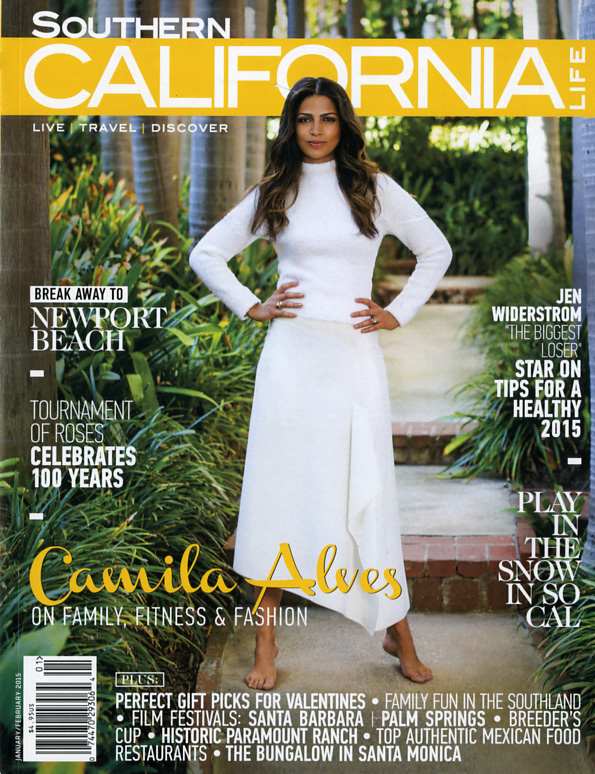
SCL1-44 Creating something from your heart, from the passion that overflows from deep in your soul and spills out onto the printed page that your own vision generates is something that few people realize, that culmination of their dreams. But Monique Reidy is fortunate enough to be one of those “few” people. One of those select visionaries who didn’t let human doubt and financial fear deter her from launching her own magazine, Southern California Life. And she has never been more proud or consumed in her life.

Southern California Life Magazine is more than a regional magazine, as Monique explained to me during a recent conversation I had with her about the magazine. SCL spotlights and highlights the entire southern region of the Golden state, while singling out specific entertainment and travel spots that are “must-see” attractions and activities that are “must-do” adventures. She strives to keep the content authentic and compelling and believes strongly in the principals of good journalism, while offering readers a chance to celebrate the very best of Southern California life.

It’s a beautiful magazine with an addictive personality much like its charming founder, publisher and editor-in-chief. Monique and I enjoyed an inspirational conversation that was open and totally sincere about her love of the printed word and her deep-seated passion for magazines. We also talked about those doubts and fears that she pushed away as she started down this dream woven path of creating a print magazine that some thought showed a misplaced trust in her own vision.

It was a delightful and motivational discussion that I share with you in the hope that you never abandon your dream, no matter how impossible it may seem. And now the Mr. Magazine™ interview with Monique Reidy, Founder, Publisher & Editor-In-Chief, Southern California Life Magazine.

But first, the sound-bites:

Reidy On why she decided to launch Southern California Life: I’ve been a magazine person my entire life. Academically, that was my focus. And I’ve helped people launch magazines before and helped some friends with their startups and I’ve been in publishing for about 30 years now. About three years ago I thought, I’ve helped other people do their magazines basically just because they were friends and I worked like a dog doing so, I might as well do my own. I have a master’s degree in the subject and it’s been my passion for a long time.

On whether any of her colleagues called her crazy for launching a print magazine in this digital age: Yes, that is absolutely true. In fact, when I was working on my thesis, I did quite a few interviews with other publishers and editors to find out, basically, what drove their businesses and why they chose print as opposed to digital, and most of them said don’t do print. Print is very expensive; it’s evolving and it’ll probably phase out. I found that that is not the case because there’s a lot of novelty in digital and people like to read their e-books and things, but after a while I think people realize that they want paper in their hands; they like to be able to highlight and make notes in the margins; you can’t really do that on an e-book. I mean you can to a certain degree, but it’s not as easy to refer to your notes when you need them in an instant.

On whether it’s all been smooth sailing or there have been some choppy seas since she started the magazine: Oh no, there were choppy seas, for sure. Startups are not for the faint of heart. There’s a lot of work that has to be done on the front end and if that’s not in place before you launch your first issue, you might as well forget it. We conducted focus groups to determine how people like to read magazines; what they like to read; what they don’t like to read. We put a very strong advisory board together, people who are Ph.D.’s, professors from universities, people who have marketing companies, people who will tell us the truth; we didn’t want someone to say that our magazine was so pretty. We wanted someone who would say, as was the case, I wouldn’t put a single client in your magazine until you change this or that. So, it helped us to really hone in on being an excellent product as opposed to just a pretty magazine.

On what advice she would give someone who wants to start a magazine: I would say first of all, is it a passion or is it just an idea to generate money? I know that a lot of magazines exist because their main interests are to generate advertising so they can make money, but they have absolutely no journalism experience whatsoever. And that’s reflective in the content. So, my first question to them would be: do you have a passion for magazines; are you educated in, for example, AP style, advertising and just all of the components that make a good print magazine.

SCL2-45 On the many hats she wears at the magazine: publisher, founder, editor-in-chief, and which is her favorite role: The ads are my least favorite part, which is why there is an ad team in place and an ad director. I’m not a salesperson by nature, but I love the creative aspect and that’s the nice thing about being an editor; you get to compose assignments and work with the photographer and the art director. There’s a lot of creativity there.

On anything that she’d like to add: I’ve had so much schooling on magazines and journalism; AP Style and how to write and how to compose and all of that, but no one teaches you how to launch a magazine. Well, you do, because that’s what you do. But typically that’s one area that’s weak in our academic culture and I don’t know why. I know a lot of great journalism professors who are teaching students writing styles, composition and interview styles, but I think a great education in launching a magazine, if someone actually wants to do that, would be valuable.

On if she had the chance to rewind the clock she would do anything differently: Yes, I might have gotten some investors. This whole thing is self-funded and I’m fortunate enough to have a wonderful husband who has been incredibly supportive. But here’s one reason that I didn’t pursue investors, and that is the one thing that I go back and forth with, but I always come back to this. When you have investors they’re going to tell you how to run your magazine.

On what motivates her to get out of bed in the morning: Surprisingly, it’s not my work, it’s my family. I have three great daughters and a couple of incredibly wonderful grandkids. And my husband is incredibly supportive and I have great friends. You just can’t wake up in a bad mood. There is so much happening in the world that can be quite depressing and you just have to make a list of what you have to live for. I have this gratitude journal, I know it sounds dorky, but every morning I write down what I’m grateful for and every night I put down what amazing things happened that day and how could I have made that day better.

On what keeps her up at night: My work. (Laughs) My husband is a physician and he has to be at the hospital by 6:30 a.m., so he goes to bed early, but I never get to the bottom of my list. I could stay up 24/7 and still not be caught up. And again, when it’s a brand new startup you don’t have a big staff, so you wear many hats and there’s a lot that must be done. It’s a very deadline-driven business, as you know.

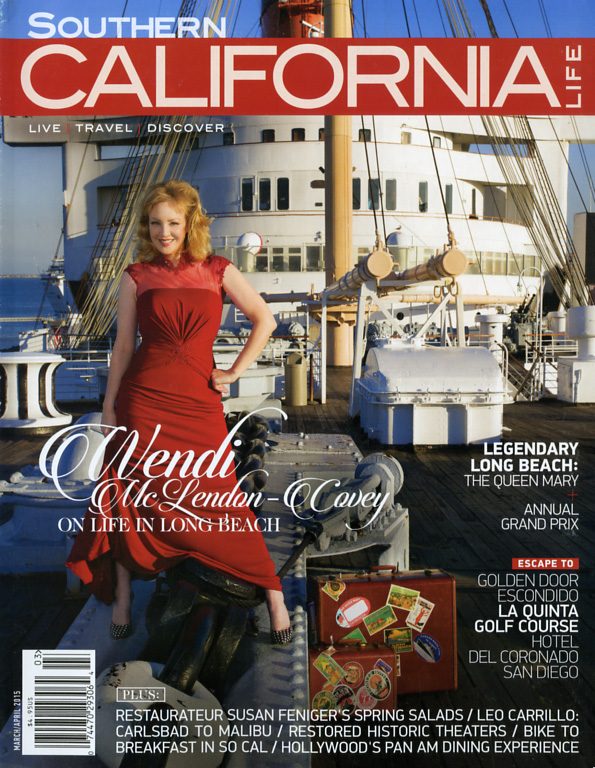
And now the lightly edited transcript of the Mr. Magazine™ interview with Monique Reidy, Founder, Publisher & Editor-In-Chief, Southern California Life Magazine.

Samir Husni: Why did you decide to launch Southern California Life magazine and what led you to that decision?
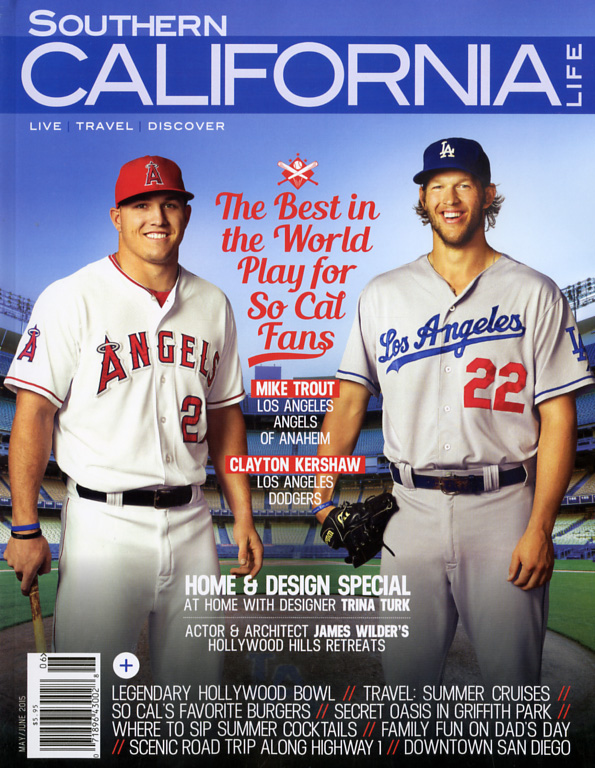
SCL3-46 Monique Reidy: I’ve always been a paper magazine person; print magazines. Even from the time I was a young child I collected magazines, all the teenaged magazines, and as an adult I subscribed to 31 magazines up until recently and it’s just something that I’ve always had a passion for. I love magazines more so than books.

I studied communication/journalism in college, both on the undergrad and graduate programs. And even as a returning student in the master’s program, I went to the director of the program and said that I was an older student and knew exactly what I wanted to do. I asked was it possible to devise a program where I could learn more about magazines, do research in magazines and avoid some of the basic classes and fortunately Pepperdine University allowed me to create a program where I could focus on magazines specifically.

I’ve been a magazine person my entire life. Academically, that was my focus. And I’ve helped people launch magazines before and helped some friends with their startups and I’ve been in publishing for about 30 years now. About three years ago I thought, I’ve helped other people do their magazines basically just because they were friends and I worked like a dog doing so, I might as well do my own. I have a master’s degree in the subject and it’s been my passion for a long time.

So, I went ahead and launched the business. It was quite scary, but I did have some friends who were very supportive and some people that I hired who were bright and had experience in publishing and that’s key. But I tell you, if you don’t have the passion for it, you might as well forget it, because there are going to be challenges and moments of sheer terror and if you don’t have that passion that drives you forward, you’re going to give up.

Two things sort of propelled me into this business; first was my passion for Southern California and the second was my passion for magazines. And there are a ton of regionals in our area; the market is basically saturated with regional magazines. We have Malibu Magazine, Los Angeles Magazine; there’s Westlake Magazine, but there wasn’t a magazine that basically covered the entire territory of Southern California. And we felt that visitors to this area liked to visit the entire territory of Southern California, not just Malibu or Beverly Hills; not just Los Angeles, they come and they want to go to San Diego, Rodeo Drive; they like to drive up the coast, so we wanted to offer something for those people who wanted to learn more about the community and wanted to take it in as an entire region, as opposed to these segregated little areas. So, that was the thinking behind the concept.

Samir Husni: Why did you choose print? I’m sure a lot of your colleagues asked you were you out of your mind to start a print magazine in this digital age that we live in.

Monique Reidy: Yes, that is absolutely true. In fact, when I was working on my thesis, I did quite a few interviews with other publishers and editors to find out, basically, what drove their businesses and why they chose print as opposed to digital, and most of them said don’t do print. Print is very expensive; it’s evolving and it’ll probably phase out. I found that that is not the case because there’s a lot of novelty in digital and people like to read their e-books and things, but after a while I think people realize that they want paper in their hands; they like to be able to highlight and make notes in the margins; you can’t really do that on an e-book. I mean you can to a certain degree, but it’s not as easy to refer to your notes when you need them in an instant.

Also, you can lose things when you’ve stored them online. I don’t care what kind of cloud system you’re using; I’ve had instances where very important notes just evaporated. And you just can’t refer to them anymore, so paper is very important. And even in terms of digital calendars, things drop off of the calendars on occasion. It’s not typical, but it does happen. And we’ve found that even with that, people are returning to their paper calendars and schedules and planners. All of that is what made us decide that print is probably more reliable.
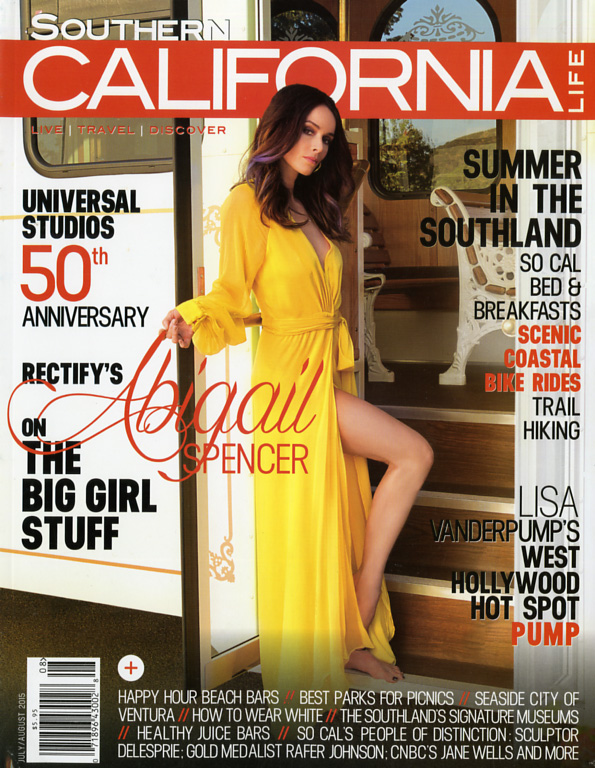
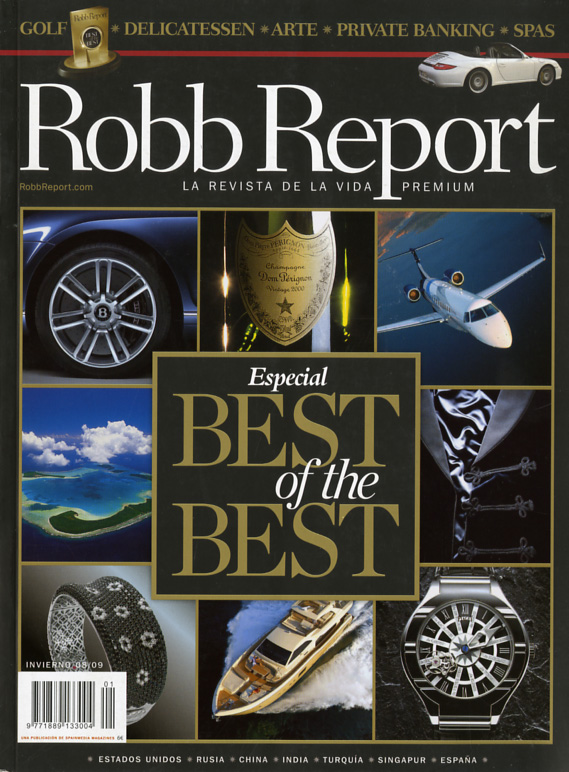
SCL4-47 One of the editors that I had interviewed with Robb Report had said that he did his research when he was launching a different magazine and realized that it cost $47 million to actually launch a magazine product, which made him decide to go digital and that particular business phased out. Well, that made us think quite long and hard about our decision to launch a print product. But it wasn’t $47 million when all was said and done; we just picked a regional magazine as opposed to a national magazine. So, you basically count the cost on the frontend and do your research correctly. We had focus groups who said that they preferred paper magazines to digital magazines and print was more engaging. God help a person who goes to a hair salon and can’t find a magazine to read or someone who is waiting in a doctor’s office who can’t find a magazine.

So, I think that people love magazines and that was what made us decide to move forward with a print product as opposed to just digital. Now we have a website, but it’s entirely different content than our magazine. Nowadays you have to have a digital product because people ask: what is your website and it’s a whole do-or-die business when it comes to digital platforms. I think if you love a paper magazine and you want print, that’s what you should go for.

Samir Husni: Have you had to cross some choppy seas since you started, or has it all been smooth sailing?

Monique Reidy: Oh no, there were choppy seas, for sure. Startups are not for the faint of heart. There’s a lot of work that has to be done on the frontend and if that’s not in place before you launch your first issue, you might as well forget it. We conducted focus groups to determine how people like to read magazines; what they like to read; what they don’t like to read. We put a very strong advisory board together, people who are Ph.D.’s, professors from universities, people who have marketing companies, people who will tell us the truth; we didn’t want someone to say that our magazine was so pretty. We wanted someone who would say, as was the case, I wouldn’t put a single client in your magazine until you change this or that. So, it helped us to really hone in on being an excellent product as opposed to just a pretty magazine.

And we wanted to deliver content that was appropriate and that’s hard to do. It’s a lot of mornings where you wake up and go, oh my goodness; I’m not going to make it through this day because there’s just so much to do.

And the funding is terrifying. It is quite expensive to manage a magazine; it’s expensive to print; it’s expensive to mail; it’s expensive to market. And as a startup, you’re not going to get advertisers right away because nobody is going to sink money into a magazine they’ve never heard of. So, there is quite a bit of challenges, but if you count the costs on the frontend, you’re ready for the challenge.

Samir Husni: I am a student and I’m putting myself in your shoes when you were a student and I come to you and say: Monique, I have an idea for a magazine. What do you tell them? Run away; forget about it? What advice would you give that person?

Monique Reidy: I would say first of all, is it a passion or is it just an idea to generate money? I know that a lot of magazines exist because their main interests are to generate advertising so they can make money, but they have absolutely no journalism experience whatsoever. And that’s reflective in the content. So, my first question to them would be: do you have a passion for magazines; are you educated in, for example, AP style, advertising and just all of the components that make a good print magazine. Is this something that you’re going to be committed to, because it’s a lot of work and a lot of time and effort?

And most importantly, do your research. I would never deter someone from launching a magazine as long as they do it correctly. I think that there’s an awful lot of research that has to be done to determine what the competition is; what the climate is, just many factors. I think one of the more important things is to look at the competition. Who are you going to be racing against? And what’s going to make your product better than theirs and why would someone want to devote their time and money and services to your print magazine as opposed to someone else’s?
If you believe that your answers will rate higher on all of those questions, then I think you should definitely move forward.

One of the really significant things that happened in one of our focus groups was one woman said, you know, I’m tired of buying men’s magazines to learn what the men know. I’d like for a woman’s magazine to be able to teach me something besides getting a flat stomach and shiny hair, which if you read the cover lines on many of the women’s magazines it’s all about improving your physique and things like that. She said I want to learn how to travel smart; I want to learn to invest; do all of the things that a guy is taught in his magazine.

So, I think that maybe conducting focus groups or doing some sort of research in determining what your readership is looking for; what their needs are is very important. And where they’ll spend money to get what you’re offering.

Samir Husni: You wear many hats with the magazine. You’re the publisher, founder and editor-in-chief. Which one of those personalities do you enjoy the most? Selling the ads, writing your editorial, coming up with the ideas; what’s your favorite part?
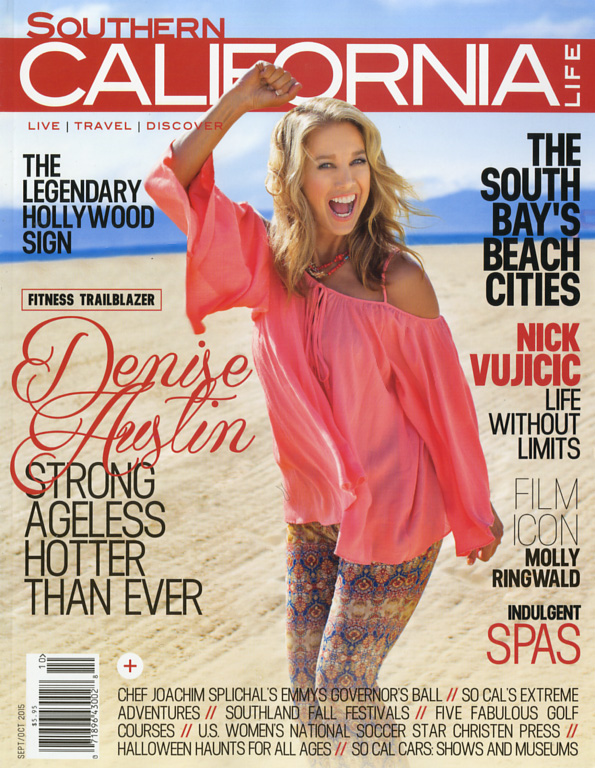
SCL5-48 Monique Reidy: The ads are my least favorite part, which is why there is an ad team in place and an ad director. I’m not a salesperson by nature, but I love the creative aspect and that’s the nice thing about being an editor; you get to compose assignments and work with the photographer and the art director. There’s a lot of creativity there.

But magazines are a mental business and also an emotional business. There are a lot of aspects to putting together a magazine as opposed to, for example, having an accounting firm that’s entirely intellectual. I prefer the creative part, the more linear sort of work, rather than the sales and the money and all of that. That’s not my strongpoint. You hire the best people in those categories and you trust them to make that part happen for you. So, my favorite part is the editorial and the creative angles.

Samir Husni: Is there anything else that you’d like to add?

Monique Reidy: I’ve had so much schooling on magazines and journalism; AP Style and how to write and how to compose and all of that, but no one teaches you how to launch a magazine. Well, you do, because that’s what you do. But typically that’s one area that’s weak in our academic culture and I don’t know why. I know a lot of great journalism professors who are teaching students writing styles, composition and interview styles, but I think a great education in launching a magazine, if someone actually wants to do that, would be valuable. And I’m not really sure that is widely available. And perhaps that’s why so many fail, is that they don’t really do their homework on the frontend.

Samir Husni: Were you stunned and surprised when you launched Southern California Life and it did not cost you $47 million?

Monique Reidy: No, but we’re getting there. (Laughs)

Samir Husni: (Laughs too).

Monique Reidy: You know I was surprised completely, because you get into a business because of the passion, but then when you make your passion a business, the business becomes the most challenging part because most creatives want to do their magazine for the love of it, and then they discover about 10 minutes into it; I’ve got the IRS thing, and don’t forget your taxes and so there’s a lot of that part, which is necessary, that you don’t really think about.

Had I considered all of the things that I think are huge challenges and obstacles, I don’t know that I would have moved forward, but I did move forward because of my love for the entire system. I love the production and I love the result. And that’s what really opened it up for me. There are quite a number of days where you just realize that there were many angles about it all that you never considered.

But again, as I said in the beginning, if you have the passion for it, that’s what propels you forward, because there are certainly an awful lot of details that might cause you to rethink it. Just being undeterred, committed and devoted, and having a team alongside that have the same vision is important.

Samir Husni: If you had the chance to rewind the clock, would you do anything differently?

Monique Reidy: Yes, I might have gotten some investors. This whole thing is self-funded and I’m fortunate enough to have a wonderful husband who has been incredibly supportive.

But here’s one reason that I didn’t pursue investors, and that is the one thing that I go back and forth with, but I always come back to this. When you have investors they’re going to tell you how to run your magazine. They’re going to say, oh, you know, we’d like more stories about our friend being a finance guy or whatever topic they want. And we’ve had a very clear vision from the beginning. If you’re going to have people telling you to sway your content this way or that, you can basically veer off of your vision quickly. We’re pure journalists; we love the craft and we want to do it right.

We even struggle with native advertising and we feel like if we’re ever hiding some sort of paid editorial, it’s not right and it’s deceiving. But if we ever do such a thing, and we have found that most of our advertisers do prefer editorial, we will list it as sponsored content.

Samir Husni: What motivates you to get out of bed in the morning?
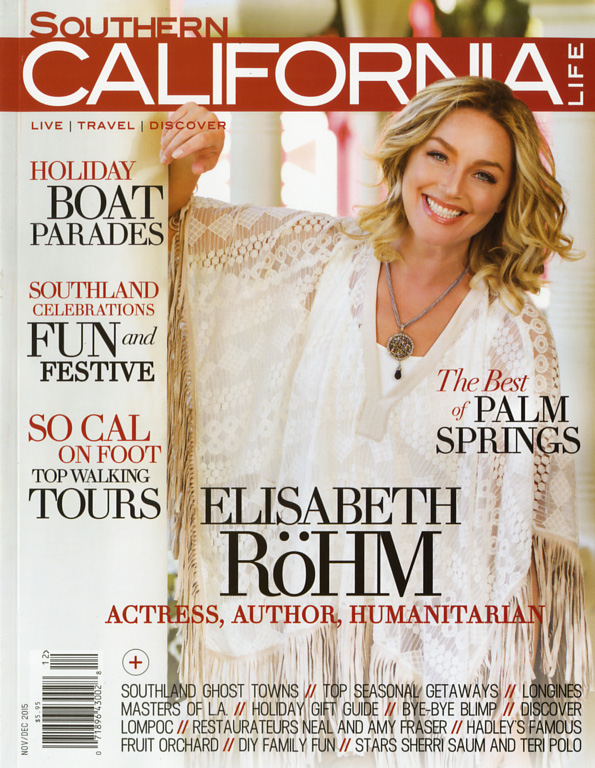
SCL6-50 Monique Reidy: Surprisingly, it’s not my work, it’s my family. I have three great daughters and a couple of incredibly wonderful grandkids. And my husband is incredibly supportive and I have great friends. You just can’t wake up in a bad mood. There is so much happening in the world that can be quite depressing and you just have to make a list of what you have to live for. I have this gratitude journal, I know it sounds dorky, but every morning I write down what I’m grateful for and every night I put down what amazing things happened that day and how could I have made that day better.

So, it’s a lot of self-reflection, but it’s what drives me out of bed. As I said before, there have been days where I’ve put my feet down on the floor and thought, oh my goodness, this day is going to be a challenge, but you can’t look at the negatives because those will always keep you in bed. You have to pop out of bed remembering how blessed you are.

Samir Husni: My typical last question; what keeps you up at night?

Monique Reidy: My work. (Laughs) My husband is a physician and he has to be at the hospital by 6:30 a.m., so he goes to bed early, but I never get to the bottom of my list. I could stay up 24/7 and still not be caught up. And again, when it’s a brand new startup you don’t have a big staff, so you wear many hats and there’s a lot that must be done. It’s a very deadline-driven business, as you know. So, that keeps me up at night. I stay up until I feel like I can’t work any longer.

Samir Husni: Thank you.
h1

Brain, Child: The Magazine for Thinking Mothers: Treating Motherhood As A Topic Worthy Of Literature For Over 15 Years – The Mr. Magazine™ Interview With Marcelle Soviero, Owner & Editor-In-Chief, Brain, Child & Brain, Teen.

February 8, 2016

“Our readers still like hard copy. I think print is important for this kind of content to sort of snuggle up with, while you’re feeding your baby even, and just be able to read and be stimulated intellectually with a magazine on your lap.” Marcelle Soviero

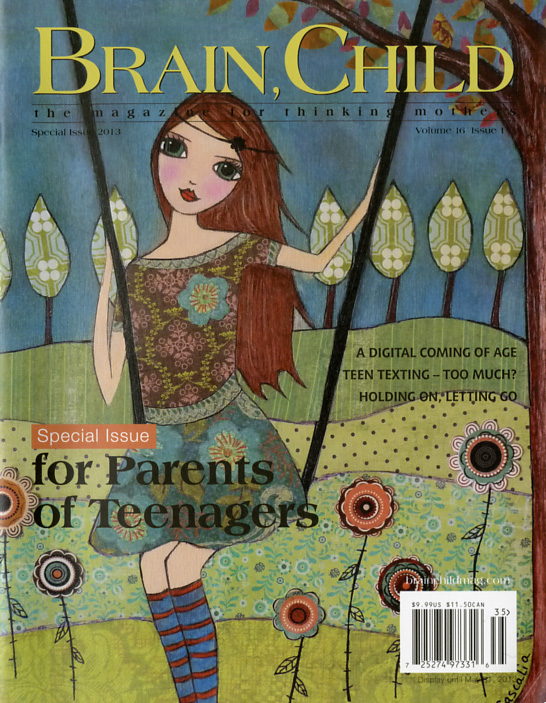
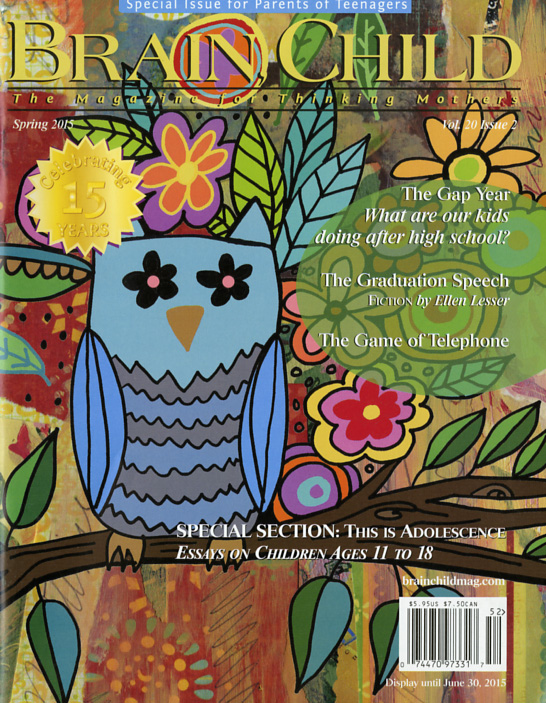
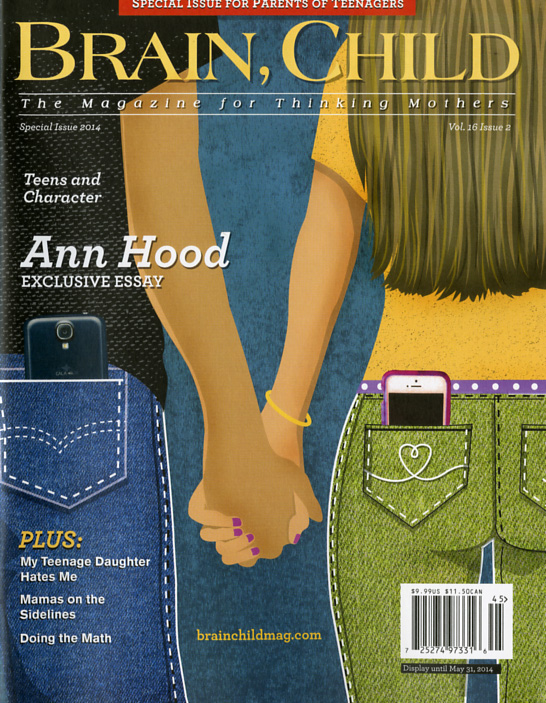
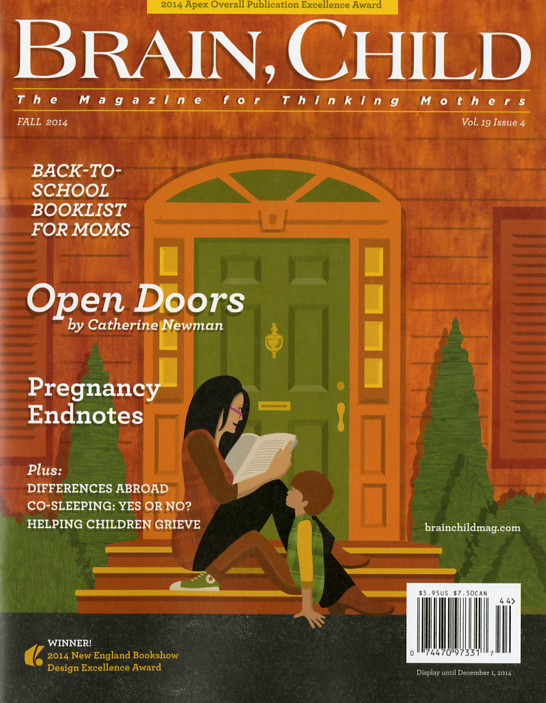
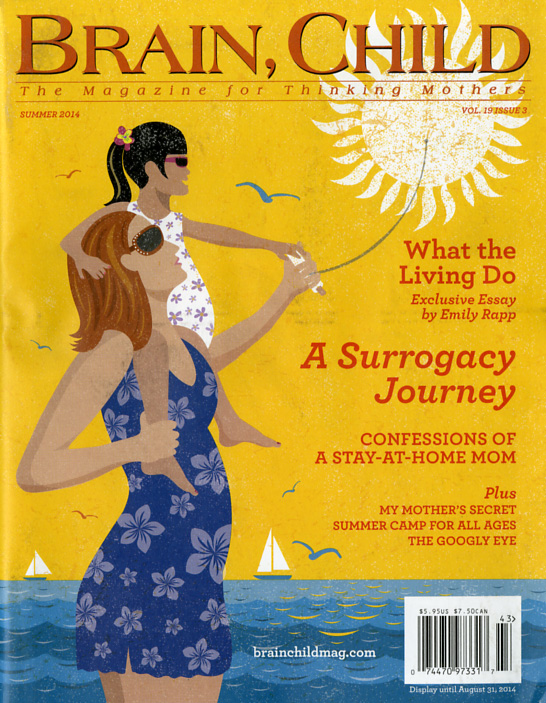
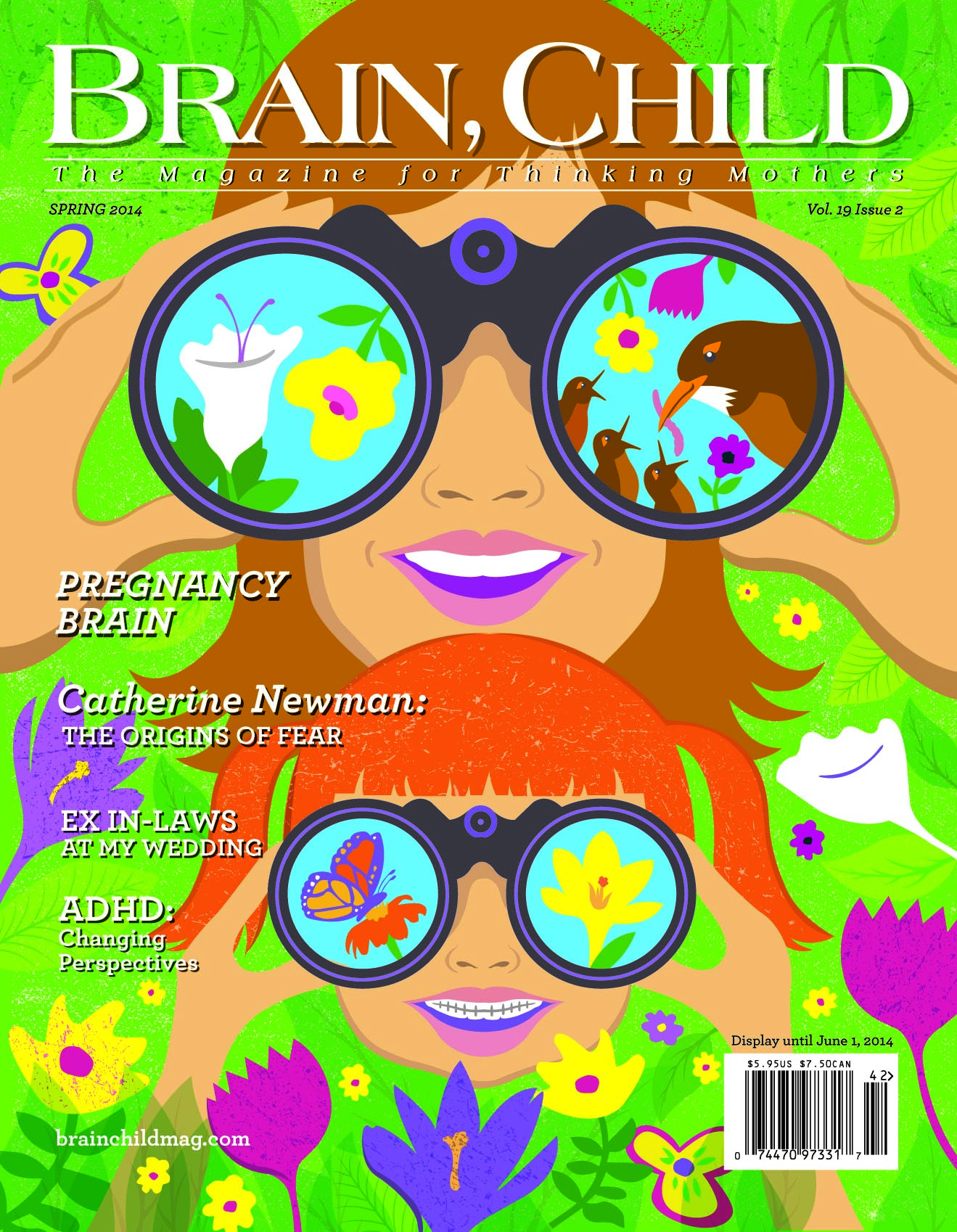
BC SP 14 Cover Final Brain, Child: The Magazine for Thinking Mothers was founded in 2000 and is an award-winning literary magazine dedicated to motherhood. Unfortunately, four years ago the magazine was about to shut down its operation when an essayist and writer happened to send in a submission to the magazine. When she was told that no submissions were being accepted due to the publication’s closure, she did what she felt she had to do when she heard the news: she bought it.

That writer was Marcelle Soviero, who bought Brain, Child in 2012 and immediately launched Brain, Teen to complement a magazine that she had believed in since its inception in 2000. As a mother of five children, Marcelle had grown her children up with the magazine and had always been one of its biggest fans.

Now as the owner, and editor-in-chief, she has expanded the magazine’s social media footprint extensively and has moved the print edition of Brain, Child into the digital realms, while maintaining Brain, Teen and the brand’s annual anthology, in print.

I spoke with Marcelle recently and we talked about her passion for the brand and the decision to take Brain, Child digital-only and her hope that someday the magazine will once again be offered in print as Brain, Teen and her yearly special issues are. And we talked about the brand’s mission: to bring the voices of women of different backgrounds and circumstances together on the page, the website and in the online community. Through essays, fiction and feature stories, Marcelle chooses the best writers she can find to connect mothers with many diverse perspectives on dealing with motherhood in the 21st century.

Marcelle is a woman who believes in print and the need for it in today’s digital age, but also understands the positivity and reach that digital can bring to a brand when the two components are working together for a complementary common goal. And with a literary magazine like Brain, Child, the need for print and digital is strong.

So, I hope that you enjoy the Mr. Magazine™ interview with Brain, Child’s own mother of invention, Marcelle Soviero.

But first the sound-bites:

Marclle Headshot 1 On what made her buy Brain, Child: The Magazine for Thinking Mothers: I was a reader and a writer when my children were young. And I have five children, so I sort of grew them up with the magazine, if you will. I went to submit my writing to them one day and it said that they were ceasing publication. So, I immediately called them up and told them that I wanted to buy it and asked what the picture looked like, because I still believed in the magazine.

On whether her decision to buy was based on business or passion: It was definitely a decision of passion. And then when it became real; when I called the owners and they told me that they hadn’t even thought of selling it; I started to do the numbers and thought that it really made sense and that I could make it work because I was so passionate about it.

On whether people told her she was crazy to invest in print in a digital age: Many people said that to me in jest, but in truth as well. And it has been hard; it’s not easy to keep it up, but we’re healthy and have a good readership. I certainly brought the magazine into the digital age; we have digital products and our social media footprint has gone up to 190,000 on Facebook. When I bought it we were at 8,000, so we’ve certainly developed a wider audience using digital tools and having digital products.

On how she would describe the magazine to someone who had never seen it before: Brain, Child is the magazine for thinking mothers; it’s the largest, oldest literary magazine for mothers. And we’re distributed worldwide. And I also own and edit it.

On what she’s offering mothers that they can’t get anyplace else: We’re offering personal stories and narratives that are edited; we actually edit our pieces. These aren’t just long pieces slapped up on the Internet; we have a rigorous editing, fact-checking, proofreading system that’s expensive, but I will keep it in place because I believe in it.

On whether she changed anything about the magazine after she bought it or kept it the same: No, we did a whole redesign of the magazine after the first issue. We went in and sort of updated everything with a professional designer and we’ve had good feedback with that. In fact, what was most interesting was when I first took it over and it was announced by the previous owner that they weren’t going out of business that I was buying it instead; I received fan mail from around the world, literally, as though I were their knight in shining armor, thanking me for saving the magazine.

On launching Brain, Teen simultaneously with taking over the magazine: Yes, I bought the magazine in August, 2012 and we began planning, and I think the issue actually came out in 2013, the special Brain, Teen issue. It was my immediate plan. It was the business idea that I thought of immediately to sort of bring the business up to speed.

On how large her team is: They are all consultants to the company, freelance, and I have a managing editor. Otherwise, certainly our writers are from all around the world. We get about 1,000 to 2,000 submissions each month for the magazine, both online and digital.

On which she finds more exciting as a writer, seeing her byline in print or online: I would say initially it was print that I found more exciting, but now, as I tell my authors, because we publish a lot more online than we do in print, the readership is so much greater online. It’s not even comparable; our circulation is relatively small, and as I said, I’ve already told you the numbers on our community pages and other digital outlets. So, in terms of actually having the writing out there, it’s become much more important to have the online byline, but my passion is to have my byline in print, I’d say.

Brain Child 1-1 On why she thinks print is still important in this digital age: Our readers still like hard copy. I think print is important for this kind of content to sort of snuggle up with, while you’re feeding your baby even, and just be able to read and be stimulated intellectually with a magazine on your lap.

On any challenges she’s had to face during her four-year journey with the magazine: There have been many challenges and hurdles in just supporting a print magazine with the numbers being nearly impossible. And if we didn’t have the online component, I don’t think that I could do it. Just supporting the print and production and design process and doing it well, as I said, with the best writers; the best design team and things like that, has been a real challenge to make it work.

On whether her magazine is print + digital free and whether she feels they complement each other: No, our magazine Brain, Child is only digital, it’s only online. And our print product, the special issue for parents of teens and our annual Greatest Hits, are print. So, they’re pretty separate in terms of the content and the production process. But they do complement each other, but we never offered print + digital free. Never.

On what motivates her to get out of bed in the morning: The possibility of finding a new writer, the next best piece that I’m going to read and share with the world, with the mothers and the excitement of working with great writers. For someone who is a writer and a mother, I can’t think of anything better.

On whether she thinks Brain, Child will ever come back to print: Yes, absolutely. Some people will call me crazy for that, but we sort of had to get the revenue pieces in check. And as I said, Brain, Teen is a print product and our annual special issue is a print product, so we haven’t abandoned print.

On anything else that she’d like to add: Buying Brain, Child was the best thing that I ever did, outside of marrying my husband. (Laughs) I do want to be clear that Brain, Child is not print anymore, it’s just Brain, Teen that’s print.

On what keeps her up at night: Competition; that there’s more people publishing narrative than ever before. I think when Brain, Child started we were certainly the one and only person writing about motherhood, but now there are plenty of blogs and sites for women. I don’t feel we have the competition, but I worry about it.

And now the lightly edited transcript of the Mr. Magazine™ interview with Marcelle Soviero, Owner, Editor-In-Chief, Brain, Child: The Magazine for Thinking Mothers.

Samir Husni: Tell me about Brain, Child: The Magazine for Thinking Mothers; what made you buy the company?

Marcelle Soviero: I was a reader and a writer when my children were young. And I have five children, so I sort of grew them up with the magazine, if you will. I went to submit my writing to them one day, I’m an essayist and I have a few books, and it said that they were ceasing publication. So, I immediately called them up and told them that I wanted to buy it and asked what the picture looked like, because I still believed in the magazine.

I had had a career in magazine publishing and online publishing when I bought it, and I had just left a job where I was commuting to Chicago in a very high-powered corporate position, so it was like all of the stars came together and I bought the magazine within three weeks. I went down to Virginia and cut thousands of back issues and brought them up to Connecticut where I live, and I just started producing the magazine and keeping it going, so we only missed one issue when I bought it.

Samir Husni: Was it a business decision or a decision of passion that caused you to buy the magazine?

Brain Child 2-2 Marcelle Soviero: It was definitely a decision of passion. And then when it became real; when I called the owners and they told me that they hadn’t even thought of selling it; I started to do the numbers and thought that it really made sense and that I could make it work because I was so passionate about it. And the readership of the magazine was equally as passionate about it as I was, they had grown their kids up with it too, so it was a little bit of both, but definitely first passion and just a gut feeling that it was the right time to do it.

Samir Husni: And four years ago, did anyone say to you that you were crazy to invest in a print product for children; haven’t you heard that we live in a digital age?

Marcelle Soviero: Many people said that to me in jest, but in truth as well. And it has been hard; it’s not easy to keep it up, but we’re healthy and have a good readership. I certainly brought the magazine into the digital age; we have digital products and our social media footprint has gone up to 190,000 on Facebook. When I bought it we were at 8,000, so we’ve certainly developed a wider audience using digital tools and having digital products. No question about that. I sort of took advantage of that, while still producing the print magazine.

Samir Husni: If you met someone on the street and introduced yourself to them by telling them you were the owner, editor and publisher of Brain, Child magazine; the first question they might ask you is “what’s that?”

Marcelle Soviero: And my answer would be Brain, Child is the magazine for thinking mothers; it’s the largest, oldest literary magazine for mothers. And we’re distributed worldwide. And I also own and edit it.

Samir Husni: Tell me a little bit more about the content; what are you offering mothers today that they can’t find any other place?

Brain Child 3-3 Marcelle Soviero: We’re offering personal stories and narratives that are edited; we actually edit our pieces. These aren’t just long pieces slapped up on the Internet; we have a rigorous editing, fact-checking, proofreading system that’s expensive, but I will keep it in place because I believe in it.

So we offer personal stories and connection for women, one story at a time, for mothers in our community, to our pages and our digital products. It’s essays, fiction, poetry, debates and book reviews.

Samir Husni: Since you assumed ownership of the magazine, what has been the feedback that you’ve received? Could the legacy readership tell there was a new ownership with the magazine or have you kept the flow and pace, in terms of the content, the way it was before you bought it?

Marcelle Soviero: No, we did a whole redesign of the magazine after the first issue. We went in and sort of updated everything with a professional designer and we’ve had good feedback with that. In fact, what was most interesting was when I first took it over and it was announced by the previous owner that they weren’t going out of business that I was buying it instead; I received fan mail from around the world, literally, as though I were their knight in shining armor, thanking me for saving the magazine. There was just a ridiculous amount of passion and feedback, so that was the first step that fired my own passion to continue to do it.

I would say the connection with the readers is very good. The biggest thing we’ve done in more recent years is as I aged out of the magazine, because Brain, Child is for mothers who have children 0-12, is I introduced a special issue for parents of teens called, Brain, Teen. Basically I kept for mothers like me who grew up with it and now have teenagers; I kept the product line going so that we could really meet that need. And that has been our more successful product out of the two now in the last four years.

Samir Husni: When did you launch Brain, Teen?

Marcelle Soviero: In 2012.

Samir Husni: So at the same time that you were taking over Brain, Child?

Brain Child 4-4 Marcelle Soviero: Yes, I bought the magazine in August, 2012 and we began planning, and I think the issue actually came out in 2013, the special Brain, Teen issue. It was my immediate plan. It was the business idea that I thought of immediately to sort of bring the business up to speed.

That was a big change and the design was a big change and certainly we post edited, beautiful blog posts every day as we’ve built up this readership. Our social imprint online has become huge and I sort of tapped into that passion. As I said, we have a very large community on Facebook that’s highly engaged in terms of our numbers, compared to other sites that have a million followers and we have around 200,000. Our engagement can be as much as 100,000, which is half our audience.

Samir Husni: As I hear you talk about the magazine, I can hear the passion and fire in your voice. How do you handle everything as a mother of five kids? How big is your team; is Brain, Child Marcelle and a few others? Or do you have a large team working with you? I know you said that you have a very expensive fact-checking system in place that you don’t want to change.

Marcelle Soviero: Right. They are all consultants to the company, freelance, and I have a managing editor. Otherwise, certainly our writers are from all around the world. We get about 1,000 to 2,000 submissions each month for the magazine, both online and digital.

But I think my passion comes from being a writer and having intellectual stimulation in reading all of the submissions that come in. And I love the editing process, being a writer. It makes my own writing better and I realize that we’re doing something different in working with writers and improving the content to make it perfect to be seen by the public, again as opposed to just throwing stuff up online. I also believe in paying our writers. We pay our writers, not much; we’re a commercial magazine and we’re distributed widely, but we’re also a literary magazine and traditionally they’re not high-paying. And we’re not high-paying, but one of my premises, being a writer, is that I pay my writers.

Samir Husni: Let’s forget for a moment that you’re the owner of the magazine; as a writer do you feel a different reaction when you see your name in print as opposed to seeing your name online? Which excites you more and gives you that thrill of saying, look I’ve published something?

Marcelle Soviero: That’s a great question. I would say initially it was print that I found more exciting, but now, as I tell my authors, because we publish a lot more online than we do in print, the readership is so much greater online. It’s not even comparable; our circulation is relatively small, and as I said, I’ve already told you the numbers on our community pages and other digital outlets. So, in terms of actually having the writing out there, it’s become much more important to have the online byline, but my passion is to have my byline in print, I’d say.

Samir Husni: And why do you think print is still important in this digital age?

Brin Child 5-5 Marcelle Soviero: Our readers still like hard copy. I think print is important for this kind of content to sort of snuggle up with, while you’re feeding your baby even, and just be able to read and be stimulated intellectually with a magazine on your lap.

But we have a lot of digital adopters. Our print now is really the special issue for parents of teens and our annual anthology and our magazine is more digital and online now.

Samir Husni: In your four year journey with the magazine, has it always been smooth sailing, or have you had some choppy waters with major challenges along the way?

Marcelle Soviero: There have been many challenges and hurdles in just supporting a print magazine with the numbers being nearly impossible. And if we didn’t have the online component, I don’t think that I could do it. Just supporting the print and production and design process and doing it well, as I said, with the best writers; the best design team and things like that, has been a real challenge to make it work.

Samir Husni: Have you ever considered stopping the print edition and only staying online?

Marcelle Soviero: Brain, Child, actually, the original product, is online now. And our print product is Brain, Teen. And our special issues are print too.

Samir Husni: You said that without online you feel like you could not have survived, but how do you juggle between the need for print and the need for online? Do you view them as complementary to each other or as enemies? Is it print + digital for you or is it print or digital?

Marcelle Soviero: No, our magazine Brain, Child is only digital, it’s only online. And our print product, the special issue for parents of teens and our annual Greatest Hits, are print. So, they’re pretty separate in terms of the content and the production process. But they do complement each other, but we never offered print + digital free. Never. We always did print + and/or pay the same amount for digital.

Samir Husni: So you always charged for digital, there was nothing free? No welfare information society?

Marcelle Soviero: No. The issues were paid for. Obviously, our website is all free content and eventually what’s in print makes it to the website, but it’s much, much later on in the process.

Samir Husni: But the digital editions are paid for?

Marcelle Soviero: Correct.

Samir Husni: What motivates you to get out of bed in the morning and say it’s going to be a great day?

Marcelle Soviero: The possibility of finding a new writer, the next best piece that I’m going to read and share with the world, with the mothers and the excitement of working with great writers. For someone who is a writer and a mother, I can’t think of anything better. So, I’m excited and I always think that I’m going to find the next best piece, the next Pushcart Press Award. And I really love working with all of our writers.

Samir Husni: Do you think Brain, Child will ever come back to print?

Marcelle Soviero: Yes, absolutely. Some people will call me crazy for that, but we sort of had to get the revenue pieces in check. And as I said, Brain, Teen is a print product and our annual special issue is a print product, so we haven’t abandoned print.

Samir Husni: Is there anything else that you’d like to add?

Marcelle Soviero: Buying Brain, Child was the best thing that I ever did, outside of marrying my husband. (Laughs) I do want to be clear that Brain, Child is not print anymore, it’s just Brain, Teen that’s print.

Samir Husni: My typical last question; what keeps you up at night?

Marcelle Soviero: Competition; that there’s more people publishing narrative than ever before. I think when Brain, Child started we were certainly the one and only person writing about motherhood, but now there are plenty of blogs and sites for women. I don’t feel we have the competition, but I worry about it. I think about somebody who really would start actively treating the process of producing a magazine and an online product like we’ve done, somebody who is larger and has more resources.

Samir Husni: Thank you.
h1

Woman’s Day Magazine: A Woman’s Helpmate With Heart, Passion And Zest That Is As Relevant Today As It Was Yesteryear – The Mr. Magazine™ Interview With Susan Spencer, Editor-In-Chief, Woman’s Day.

February 5, 2016

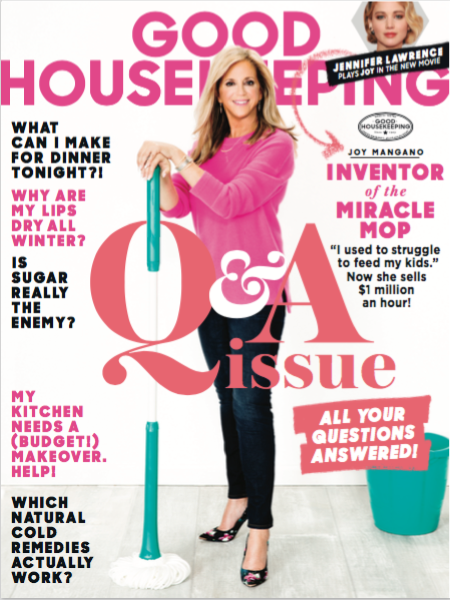
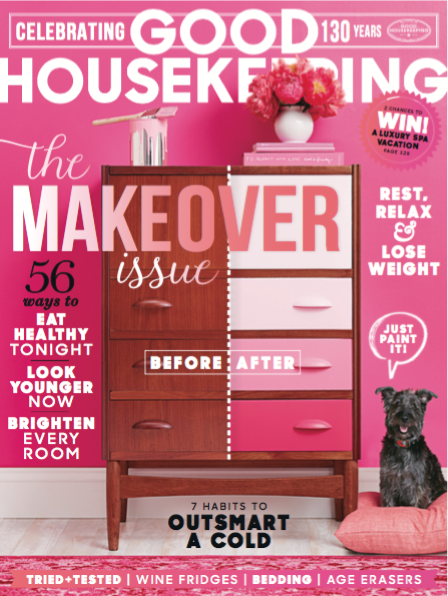
Woman's Day March “No, never. I just can’t. I think it’s important for a legacy brand like ours to continue in print. I believe our readers want it very much. What’s happening in digital and on the website is amazing and wonderful, but I think that the print edition will always be core to our brand and core to what we do.” Susan Spencer (on whether she can ever envision Woman’s Day without a print component)

“Yes, I do. I wouldn’t be doing what I’m doing right now if I didn’t. I believe the question has almost become moot in the last few years. Readers have shown us time and time again that print magazines are here to stay. I love print magazines and I always have; it’s how I got into the business and I can’t imagine them going away.” Susan Spencer (on whether she believes in the future of print)

As far as legacy brands go, Woman’s Day holds a spot among the women’s service magazines that have texture and substance when it comes to longevity in the industry. The magazine’s content is as relevant today as it was nearly 80 years ago (79 to be exact) and has proven that fact with its total immersion into the wants and needs of its audience and a commitment to excellence in the coverage of many topics of interest, most especially health and food.

As the magazine gears up for its 13th Annual Red Dress Awards to be held February 9 at The Allen Room at Frederick P. Rose Hall at the Lincoln Center in New York, Editor-in-Chief Susan Spencer is passionate about the brand’s diligence to continue to heighten awareness of heart disease throughout the country.

RDA_2016 Logo I spoke with Susan recently and we talked about the Red Dress Awards, their past, present and future fusion with Woman’s Day and how readers and the public in general have come to recognize the Awards’ connection with the magazine. And we talked about the magazine itself, where it’s been and where it’s going and about how Susan believes that both print and digital together will be the catalyst that propels the legacy brand forward and keep it relevant and healthy for many, many more years to come, with the foundation and cornerstone core of print still being an integral part of the readership’s involvement with the brand.

Susan is as delightful as the magazine itself and brings an aura of joy, fun and animation to the brand that’s contagious. Zest and relevant information keeps the essence of Woman’s Day always reflective and pertinent to its audience and that’s just the way Susan wants it.

So, without further ado, the Mr. Magazine™ interview with Susan Spencer, Editor-In-Chief, Woman’s Day.

But first, the sound-bites:

Susan Spencer On what Woman’s Day means to its readers today, in the 21st century: Woman’s Day today, as it has done for many years, takes the concerns, the things that are truly relevant and important to her right now and really helps her. And I see us as a real helpmate to this woman; to make that complicated, messy life a little bit easier.

On how it feels to edit a magazine that Ellen Levine once edited: It has never felt awkward; I feel like I stand on Ellen’s shoulders and some other wonderful editors before me who I think created something that American women really turn to. And I think Ellen was pivotal and critical in doing that.

On the history of the Red Dress Awards: Again, turning to past editors, my predecessor, Jane Chesnutt, 13 years ago put together a luncheon to bring together some of the players in the heart disease world. I think at that time she felt that it was a disease that wasn’t getting a lot of attention, but it’s so pervasive and so huge in the lives of our women that she felt that it needed to be brought more into the open. And again, I’m standing on her shoulders; I think what I did when I came on four years ago was that I saw that the disease was still the number one killer of women and while a lot of progress has been made, it hasn’t gone far enough. I wanted to put more resources and more thinking and more pages against this disease.

On whether the power of the brand and the ink on paper magazine made it easier for the Red Dress Awards to be recognized and connect with readers: Yes, very much so. The amount of space that we devote to this topic, again, all year-round, I think our readers now associate us with the Awards. They don’t see it as simply a marketing cause, they see it as something that we’re really deeply passionate about and I think our readership has come to recognize that.

On how as editor-in-chief she maintains balance with the many diverse topics that the magazine covers: I’m both blessed and cursed to edit a magazine that covers many, many topics. (Laughs) Health and food, by far, are our two most important topics. We do a lot of research and Hearst has been very supportive of that. I’m a real research geek and Hearst has been very supportive of me and my desire to understand our reader. So, health and food are the two biggest topics.

On if she could instantly strike the magazine with a magic wand and turn it into a person, who that person would be, herself or some composite woman: I don’t think she would be me, although I come pretty close. I’m a suburban New Jersey mom like many of my readers. (Laughs) But I think that she’s a lot of women. Again, when you have an audience this big, she can be married or not married. She can be an empty-nester or a young mom. She can have kids or not have kids. So, I think that she’s a lot of different people.

On whether the Bible verse that remains today, even after all of the changes to the magazine, is part of its DNA and will never leave: I would say that it’s definitely part of the DNA that will never leave Woman’s Day. We have it there and we have no intention of taking it away. What’s important about the magazine is that we’re not a Christian magazine; we embrace many, many different viewpoints in the magazine and always have. But the Bible verse is intrinsic to who we are and what we are.

On the biggest stumbling block that she’s had to face: For me personally, I think my biggest stumbling block happened about four years ago when I started at this magazine and my publisher at the time told me that in a week I had to make a speech in front of about 500 people. (Laughs) That was a big stumbling block for someone who had never done any public speaking.

On the most pleasant moment so far that she’s had working at Woman’s Day: There have been so many pleasant moments that I can’t even begin to list them. I think getting this job in the first place was such a wonderful experience and I’m really deeply grateful for the opportunity that David Carey gave me four years ago. There have been some moments that have been sort of mindboggling. Last year standing next to Elvis Costello on the red carpet at the Red Dress Awards; I don’t think I’ve ever put up a Facebook post that’s gotten more likes than that one did. (Laughs) It was pretty amazing.

On what has kept Woman’s Day vibrant throughout the years: I think that we work really hard to stay relevant to our readers. When I mentioned research before, that’s definitely part of what we do. Women’s service magazines can tilt into evergreen territory very quickly and I think that we really work hard to make sure that doesn’t happen with Woman’s Day. We make sure that we’re relevant to the moment; our health coverage; in telling women what to cook for dinner; just the things that we put into the magazine, we’re reflecting their lives back at them and really trying to understand where they are.

On whether she can ever envision a day when there is no print component to Woman’s Day and it’s digital only: No, never. I just can’t. I think it’s important for a legacy brand like ours to continue in print. I believe our readers want it very much.

On whether she believes in the future of print: Yes, I do. I wouldn’t be doing what I’m doing right now if I didn’t. I believe the question has almost become moot in the last few years. Readers have shown us time and time again that print magazines are here to stay.

On how she got into the magazine business: A long time ago I graduated from college and moved to New York City and got a job at Redbook magazine. My first job was with Hearst and I have just been passionate about magazines my whole life and was a big consumer of Seventeen and Time magazine and Cricket magazine. I was able to get started and find a job and stay in this industry for almost 28 years now.

On what motivates her to get out of bed every morning: What I love about running a magazine is when I’m sitting in a meeting with my staff and suddenly we click on an idea and then all of us are firing up on all cylinders and this idea is being batted around and we’re figuring out how we’re going to do it and how it’s going to be pertinent and relevant and those are the moments that I live for, as I’m sure most editors do.

On what someone would find her doing if they showed up at her house one evening unexpectedly: As I said before, I’m a suburban New Jersey mom; I have two daughters, one of whom is at home and the other is in college. In the evenings, you might not even catch me at home. I might be driving my kid around or I do a ton of volunteering; I might be making dinner or trying to get my husband to do it. (Laughs again) Like my readers, I have a big, messy complicated life and I think if you were to come over in the evening you would catch a glimpse of that.

On anything else she’d like to add: I thank you for this opportunity. I think that Woman’s Day is a really special brand and I think that we speak to a mass market audience, but I think that we connect with her in a very special way.

On what keeps her up at night: (Laughs) Not much keeps me up at night. I’m usually pretty exhausted by the end of the day, to the point where my 12-year-old actually comes and tucks me in at night. Nothing keeps me from falling asleep.

And now the lightly edited transcript of the Mr. Magazine™ interview with Susan Spencer, Editor-In-Chief, Woman’s Day.

Samir Husni: When you hear the words Woman’s Day, what comes to your mind? Having a magazine that has always been a status quo on the newsstand; everybody has always known it and seen it and every woman has been in touch with the magazine on a regular basis, but what does Woman’s Day mean today?

Woman's Day Feb. Susan Spencer: When I think about our reader, she’s the average American woman. I think that’s the simple answer to who she is. But in reality I believe it’s a lot more complicated than that because she’s a lot more complicated and she has this wonderful, big, joyous, messy life and I think that the magazine today is reflecting that. And we’re adjusting her concerns and giving her solutions for all of the things that make her life messy, whether it’s wanting to get dinner on the table or not being sure of what clothes to buy in the store or house concerns, which are huge for our readers.

Woman’s Day today, as it has done for many years, takes the concerns, the things that are truly relevant and important to her right now and really helps her. And I see us as a real helpmate to this woman; to make that complicated, messy life a little bit easier.

Samir Husni: I asked Ellen Levine once how she felt when Woman’s Day came to Hearst; did it feel like a reunion or a homecoming? Do you ever have an awkward feeling that you’re editing a magazine that Ellen Levine once edited?

Susan Spencer: It has never felt awkward; I feel like I stand on Ellen’s shoulders and some other wonderful editors before me who I think created something that American women really turn to. And I think Ellen was pivotal and critical in doing that. So, I definitely stand on their shoulders, but I’m also moving it forward in my own way, with lots and lots of support from Ellen. I feel very grateful to work with her.

Samir Husni: I know you have a big event coming up on February 9, the Red Dress Awards. Can you tell me a little bit about the history of the Red Dress Awards and why it’s such a big event for Woman’s Day?

Susan Spencer: Again, turning to past editors, my predecessor, Jane Chesnutt, 13 years ago put together a luncheon to bring together some of the players in the heart disease world. I think at that time she felt that it was a disease that wasn’t getting a lot of attention, but it’s so pervasive and so huge in the lives of our women that she felt that it needed to be brought more into the open.

And again, I’m standing on her shoulders; I think what I did when I came on four years ago was that I saw that the disease was still the number one killer of women and while a lot of progress has been made, it hasn’t gone far enough. I wanted to put more resources and more thinking and more pages against this disease.

And because it’s so widespread and because our audience is so enormous, we have 16 million women, it touches everybody. Many of the cancers absolutely touch a lot of lives, but heart disease is different; it’s really, really widespread and pervasive in both men and women.

So, I put some more pages and ink against this idea; we started a column called “Live Longer and Stronger,” which is a monthly column, so we don’t just run our heart disease coverage in February, it’s year-round.

Out of that column we grew an editorial franchise called “Live Longer and Stronger.” And basically what we do is we go out and find a group of women, four to five women, every year that are at high risk or have heart disease and we put them on a plan with our nutritionist, Joy Bauer, and help them lose weight and lower their risk factors.

This program sprang out of our desire to bring to our readers what we’re saying in the magazine and really activate it for them. We just finished up with our third group and they’re going to be onstage February 9 at the Red Dress Awards and they bring a lot of heart to the event and a real sense that the event is more than just honoring the doctors and the researchers; it’s also about the women who are being impacted by this disease every day.

Samir Husni: Do you think the power of the brand; the power of the ink on paper magazine, made it easier for the Red Dress Awards to be recognized and known, to actually connect with the audience, with those women?

Susan Spencer: Yes, very much so. The amount of space that we devote to this topic, again, all year-round, I think our readers now associate us with the Awards. They don’t see it as simply a marketing cause, they see it as something that we’re really deeply passionate about and I think our readership has come to recognize that.

And not just heart disease, I have to say. We’ve had a halo effect, where it’s impacted all of our health coverage, which has become increasingly popular in recent years with our readership.

Samir Husni: As an editor-in-chief, how do you balance the health coverage with the food coverage with the everyday life coverage and as you continue to move Woman’s Day forward, what’s the secret recipe? What are the ingredients that you put together to create this magazine called Woman’s Day?

Susan Spencer: I’m both blessed and cursed to edit a magazine that covers many, many topics. (Laughs) Health and food, by far, are our two most important topics. We do a lot of research and Hearst has been very supportive of that. I’m a real research geek and Hearst has been very supportive of me and my desire to understand our reader. So, health and food are the two biggest topics.

As I said in the beginning of our conversation, she has concerns that range from “is this the right mascara” to “what am I going to put on the table for dinner.” So, we try to address those and we have a rich balance of content. I try to put together a magazine every month with the help of an amazing team that reflects back at her with all of these things. So, it’s a little bit of a balance certainly.

Samir Husni: If I gave you a magic wand that could instantly humanize the magazine, turn it miraculously into a person, who would that person be? Would it be you or some composite woman?

Woman's Day Jan. Cover Susan Spencer: I don’t think she would be me, although I come pretty close. I’m a suburban New Jersey mom like many of my readers. (Laughs) But I think that she’s a lot of women. Again, when you have an audience this big, she can be married or not married. She can be an empty-nester or a young mom. She can have kids or not have kids. So, I think that she’s a lot of different people.

What we do when we think about her is not think about the details of her life; we think about her in terms of her values and I think that’s what pulls our readers together and that’s why they come to Woman’s Day because we do reflect her values back at her. We think about what’s really important to her. We know that her family is number one; they’re absolutely the most important thing that she values.

She’s also deeply involved with friends and her community. We’ve had a lot of success in the magazine with columns that show readers doing good deeds and helping other people. Her faith is also something that is important to some of our readers and drives them.

So, we think of her in those terms as opposed to what she is or who she is. It’s really more of the shared values that all of these women have.

Samir Husni: If you feel blessed and cursed because of the variety of the content; do you feel even more blessed and cursed for having all of these women rolled into one? (Laughs)

Susan Spencer: (Laughs too) No, I think it’s wonderful.

Samir Husni: One thing I’ve noticed over the years with Woman’s Day, with all of the changes that have taken place, that Bible verse is still there.

Susan Spencer: Yes.

Samir Husni: Is it part of the DNA that will never leave Woman’s Day?

Susan Spencer: I would say that it’s definitely part of the DNA that will never leave Woman’s Day. We have it there and we have no intention of taking it away. What’s important about the magazine is that we’re not a Christian magazine; we embrace many, many different viewpoints in the magazine and always have. But the Bible verse is intrinsic to who we are and what we are.

Samir Husni: It’s a positive lift-up verse then?

Susan Spencer: Certainly. It’s meant to put a little stamp on the table of contents and the magazine to give women a lovely moment that’s important to them.

Samir Husni: You’ve been at Woman’s Day now a little over four years; as you approach your next anniversary with the magazine, what has been the most challenging stumbling block that you’ve had to face and how did you overcome it?

Susan Spencer: For me personally, I think my biggest stumbling block happened about four years ago when I started at this magazine and my publisher at the time told me that in a week I had to make a speech in front of about 500 people. (Laughs) That was a big stumbling block for someone who had never done any public speaking. But with training and lots of support, I got through it.

Samir Husni: And what has been the most pleasant moment; if you can identify THE most pleasant moment so far in your four years?

Susan Spencer: There have been so many pleasant moments that I can’t even begin to list them. I think getting this job in the first place was such a wonderful experience and I’m really deeply grateful for the opportunity that David Carey gave me four years ago.

There have been some moments that have been sort of mindboggling. Last year standing next to Elvis Costello on the red carpet at the Red Dress Awards; I don’t think I’ve ever put up a Facebook post that’s gotten more likes than that one did. (Laughs) It was pretty amazing.

I presented an award two years ago to President Bill Clinton and last year to the head of the FDA, so we’ve really had some wonderful moments just in the context of Red Dress. And some wonderful moments just putting issues together and having stories that really resonate with our readers and with us and that makes every issue we do worth it. So, there have been a lot of wonderful moments.

Samir Husni: When I was in college in the early 80s, Woman’s Day was referred to as one of the seven sisters. Today, we’ve lost some of the seven sisters, they’ve aged and disappeared; some have renewed their energy and are still alive and kicking and doing very well. What’s the secret of Woman’s Day that has kept it vibrant over the years?

Susan Spencer: I think that we work really hard to stay relevant to our readers. When I mentioned research before, that’s definitely part of what we do. Women’s service magazines can tilt into evergreen territory very quickly and I think that we really work hard to make sure that doesn’t happen with Woman’s Day. We make sure that we’re relevant to the moment; our health coverage; in telling women what to cook for dinner; just the things that we put into the magazine, we’re reflecting their lives back at them and really trying to understand where they are.

I’d also like to say about the magazine; we’re not an aspirational magazine, we’re an inspirational magazine. We’re not showing her the life that we think she should have; we’re celebrating the life that she has right now. And I think that goes a long way toward keeping us relevant. I’d like to share a quote with you that I got from a reader; she started following me on Instagram and in the comments she thanked me for the magazine and was really excited about it and she said that it helped her to be “the woman that she really was, rather than the woman marketers said that she was.” And I really like that. It’s very nice.

Samir Husni: As you get all of the social media interaction: the Instagram comments; the likes on Facebook; can you ever envision a day when Woman’s Day has no print component and is digital only?

Susan Spencer: No, never. I just can’t. I think it’s important for a legacy brand like ours to continue in print. I believe our readers want it very much. What’s happening in digital and on the website is amazing and wonderful, but I think that the print edition will always be core to our brand and core to what we do.

Samir Husni: Do you believe in the future of print?

Susan Spencer: Yes, I do. I wouldn’t be doing what I’m doing right now if I didn’t. I believe the question has almost become moot in the last few years. Readers have shown us time and time again that print magazines are here to stay. I love print magazines and I always have; it’s how I got into the business and I can’t imagine them going away.

Samir Husni: How did you get into the business?

Susan Spencer: A long time ago I graduated from college and moved to New York City and got a job at Redbook magazine. My first job was with Hearst and I have just been passionate about magazines my whole life and was a big consumer of Seventeen and Time magazine and Cricket magazine. I was able to get started and find a job and stay in this industry for almost 28 years now. I feel very fortunate.

Samir Husni: After 28 years in the industry, what motivates you to get out of bed every morning and still be excited about your job?

Susan Spencer: A couple of things. First of all, I’m a natural problem solver; it’s something that I really enjoy doing and I really love a good challenge. So, that definitely gets me up in the morning, knowing that I have a pile of problems that I have to solve.

What I love about running a magazine is when I’m sitting in a meeting with my staff and suddenly we click on an idea and then all of us are firing up on all cylinders and this idea is being batted around and we’re figuring out how we’re going to do it and how it’s going to be pertinent and relevant and those are the moments that I live for, as I’m sure most editors do. And it’s being in the company of people who are just so creative and know their brand and their audience so well that you can really come up with these amazing ideas and figure out how to execute them.

Samir Husni: If I were to show up unexpectedly to your home one evening, what would I find you doing, reading a magazine; reading your iPad; watching TV, or something else?

Susan Spencer: You’re always invited. (Laughs) As I said before, I’m a suburban New Jersey mom; I have two daughters, one of whom is at home and the other is in college. In the evenings, you might not even catch me at home. I might be driving my kid around or I do a ton of volunteering; I might be making dinner or trying to get my husband to do it. (Laughs again) Like my readers, I have a big, messy complicated life and I think if you were to come over in the evening you would catch a glimpse of that.

Samir Husni: How often do you cook the recipes that you feature in the magazine?

Susan Spencer: A lot, although my food director wants me to cook them more than I do. It’s more a reflection of the time I have to actually cook. It’s one of the secret benefits of being editor-in-chief of Woman’s Day; I can run up to an incredibly accomplished and experienced food director and ask what should I make for dinner? (Laughs) And she has an answer for me.

Samir Husni: Is there anything else that you’d like to add?

Susan Spencer: I thank you for this opportunity. I think that Woman’s Day is a really special brand and I think that we speak to a mass market audience, but I think that we connect with her in a very special way. I love talking about the magazine and reminding people that we have scale and we have voice and I think it’s a pretty amazing group of women that we speak to, so it’s a real privilege.

Samir Husni: My typical last question; what keeps you up at night?

Susan Spencer: (Laughs) Not much keeps me up at night. I’m usually pretty exhausted by the end of the day, to the point where my 12-year-old actually comes and tucks me in at night. Nothing keeps me from falling asleep.

Samir Husni: Thank you.
h1

Celebrate Magazines; Celebrate New Launches: ACT 6 Experience, Segment 3.

February 4, 2016

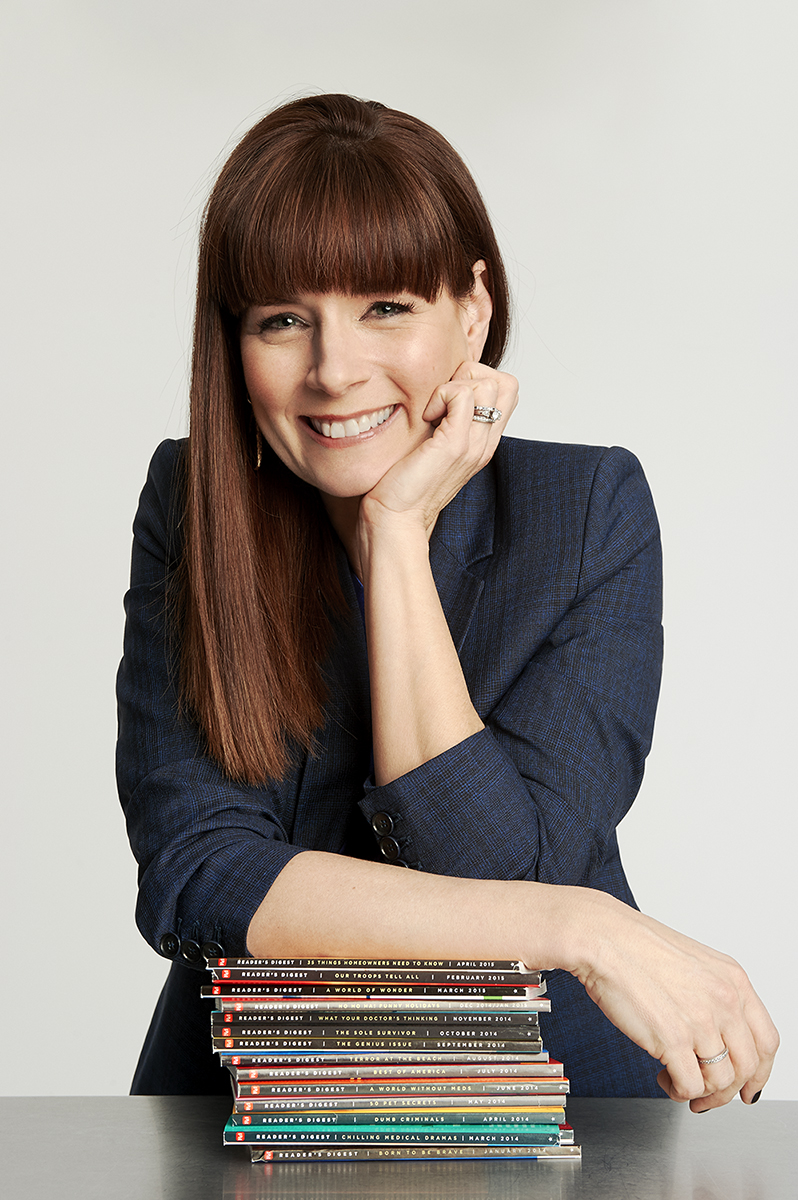
Screen Shot 2016-01-26 at 3.00.45 PMThe ACT 6 Experience (click here to read all about segment 1) and (here to read about segment 2) will conclude with its final day on Friday April 22 with a keynote address from Liz Vaccariello, Editor in Chief, Reader’s Digest magazine, followed by Sherin Pierce, Publisher/VP, The Old Farmer’s Almanac.

PHOTOGRAPH BY STEVE VACCARIELLO;

PHOTOGRAPH BY STEVE VACCARIELLO;

It’s an informative morning of creative minds that wraps up its individual addresses with James Meyers, President & CEO, iMAGINATION., Scott Coffman, SVP and GM, i-5 Distribution, and Joe Berger, Joseph Berger Associates, before we get underway with the final keynote panel of the Experience, “Celebrate Print/Celebrate New Launches” with a host of magazine founders, editors and publishers who have launched new titles into the world.

We have Ron Adams, Publisher/Founder, Via Corsa, Fermin Albert, Founder, Sabor Magazine, The Netherlands, Lauren Clark, Editor, Take Magazine, Brandie Gilliam, Founder & Creative Director, Thoughtfully Magazine, Greg James, Publisher, Marijuana Venture Magazine, Michael Kusek, Publisher, Take Magazine, Carey Ostergard, Deputy Editor, Simple Grace, Monique Reidy, Publisher & President, Southern California Life Magazine, Andrés Rodríguez, President & Editor-In-Chief, SpainMedia, Spain, and Ryan Waterfield, Co-founder, Big Life Magazine.

It’s a celebration of our industry’s lifeblood: new magazines, as we wrap up the 6th Annual ACT Experience.

Be sure to join us April 20-22 as we Celebrate Magazines Celebrate Print at the ACT 6 Experience!

Space is limited to 100 attendees, so register today before all seats are taken.

h1

Millennials, Print and Moneymaking: ACT 6 Experience Segment 2

February 3, 2016

Screen Shot 2016-01-26 at 3.00.45 PM At the end of the first segment (click here to read all about segment 1) of the ACT 6 Experience, the experience will resume after lunch with a keynote address on Millennials and Print by Professor Naomi S. Baron, author of Words on Screen followed by a panel discussion on Making Money in Print moderated by Brian F. O’Leary, Principal, Magellan Media Consulting Partners.

The agenda for Thursday afternoon’s segment of the ACT 6 Experience is as follows:

2:00 p.m. Keynote Address: Millennials and Print
Baron Naomi S. Baron, Executive Director, Center for Teaching, Research, and Learning, Professor of Linguistics (World Languages & Cultures, CAS),
American University, Washington, D.C.

3:00 p.m. Making Money in Print (A Panel Discussion)

This is a segment of the Experience that will focus on making money in print and what people are doing today to ensure that the revenue streams continue, whether it’s from circulation or advertising. Magazine Power is going to be a combination of the different ways and means by which people can still generate revenue from print, whether it is advertising in established magazines; advertising in new magazines, or bookazines and how those publications are making money.

Making Money in Print and the power of magazines will be moderated by Brian F. O’Leary, Principal, Magellan Media Consulting Partners, with the following panelists listed in alphabetical order: Newt Collinson, CEO, Collinson Media & Events, James Elliott, President, The James G. Elliott Co. Inc., Daniel Fuchs, Publisher and Chief Revenue Officer, HGTV magazine, Fred J. Parry, Publisher, Inside Columbia Magazine.

5:00 p.m. A Trip to the Mississippi Delta.

Board buses to the Mississippi Delta where we will stop at the Shack Up Inn for our traditional photo op and then to the Mississippi Blues Museum followed by dinner and blues music at Ground Zero in Clarksdale MS compliments of Scott Coopwood and Delta magazine.

9:30 p.m. Return to Oxford.

Stay tuned to find out what is going on during the ACT 6 Experience Segment 3.

To register for the ACT 6 Experience click here.

h1

Cover Data Analysis For Editors at the ACT 6 Experience: Celebrate Print Celebrate Magazines: April 20 to 22, 2016

February 2, 2016

Screen Shot 2016-01-26 at 3.00.45 PM In the spring of 2016, as the earth is celebrating her rebirth; the ACT 6 Experience will be having a celebration of its own on the power of print, with an emphasis on magazines. The Experience will be divided into three main mini themes:

· Reimagining the Newsstands
· Celebration of Magazine Launches
· Magazine Power

Cover Data Analysis For Editors – Join us for a riveting panel discussion about how print editorial staffs can learn more about consumers, their likes/dislikes, and how to attract more newsstand buyers in a competitive, distracted world. Our panel of distinguished editors from Reader’s Digest, Southern Living, First for Women, Simple Grace and Hoffman Media will discuss and dissect magazine cover lines, cover image types, positioning, and “do’s” and “don’ts” regarding covers, all using smart data modeling.

The Cover Data Analysis For Editors panel will take place on Thursday April 21 at 11:15 am and will be moderated by Joshua Gary from MagNet together with (in alphabetical order):
Brooke Bell, Director of Editorial Operations, Hoffman Media,
Sid Evans, Editor in Chief, Southern Living magazine,
Carey Ostergard, Deputy Editor, First for Women and Simple Grace,
and Liz Vaccariello, Editor in Chief, Reader’s Digest magazine.

The ACT 6 Experience will open by a keynote on the evening of April 20th, Sid Evans, editor-in-chief, Southern Living magazine. Sid will take the attendees on a journey of how the magazine is celebrating its 50th anniversary.

The first and a very important segment of the ACT 6 Experience is reimagining the newsstand. This segment starts on Thursday April 21 at 8:30 am. America without newsstand is inconceivable. I believe the newsstands are the best reflectors of our society. Our ears have been filled with nothing but bad news about newsstand sales over the last few years; it’s time for us to rethink the newsstand business from each and every aspect, from the role of the national distributor to the wholesaler, retailer and not forgetting of course, the publisher; the people who actually produce the magazines or bookazines for newsstands.

Gil Brechtel and Josh Gary from MagNet will be coordinating the“Reimagining the Newsstand” segment at the ACT 6 Experience.

The focus will be the newsstand business, to include its relevancy to publishers, how to stabilize it, as well as the current and perhaps future roles of each of the channel members…wholesaler, national distributor, retailer, and publisher, and how we as an industry engage the retailer to promote and increase sales. Wholesaler participants to date are David Parry, President & CEO of TNG and Shawn Everson, Chief Commercial Officer of Ingram Content Group. Rich Jacobsen, the President & CEO of Time Inc. Retail will be the national distributor participant.

To illustrate how important the newsstand channel is three CEOs of magazine media companies are also going to join this segment of the ACT 6 Experience. They are Hubert Boehle, CEO of Bauer Magazine L.P., Andy Clurman, CEO of AIM (Active Interest Media) and Eric Hoffman, CEO of Hoffman Media.

Prior to the presentations and panel discussion John Harrington will open the segment by presenting a recap of the history of the newsstand channel since its inception through its present status.

This is going to be the first think and do interactive panel that will examine the entire status of the newsstand channel and make concrete recommendations to help ease the newsstand problems that publishers, national distributors, wholesalers and retailers are facing today.

To register for the Magazine Innovation Center’s ACT 6 Experience, click here. Space is limited. The Amplify, Clarify and Testify (ACT) Experience is not a conference, it is an experience. Register today.

Watch this space as we announce the speakers for the other two important segments of the experience: Magazine Power and Magazine Launches.

Stay tuned.

h1

SpainMedia: The Name That Personifies The Man Who Is Media In Spain – The Mr. Magazine™ Interview With Andrés Rodríguez, President & Editor-In-Chief, SpainMedia

January 26, 2016

“As humans, we have five senses and print touches each of those. With the iPad, the electrification touches eyes and ears, but not the nose. Smell is important, the smell of food; the smell of a woman or of a man. The hands are also important. The hands experience touch, touch of the skin; touch of many things. And paper has this quality, especially if you invest in it. Before you read any single word, you touch the paper and the impression is made immediately; either you like it or you don’t.” Andrés Rodríguez

“The magazine business will never die; it will never die because a magazine is the voice of a community. And you need that community to be so big that it gives you advertising to make the magazine. And you need to identify new communities. Magazines will never die.” Andrés Rodríguez

From Spain with love…

Andrés Rodríguez and Samir Husni at the lobby of the NH Collection, Prado Plaza, Madrid, Spain

Andrés Rodríguez and Samir Husni at the lobby of the NH Collection, Prado Plaza, Madrid, Spain


SpainMedia is a company built by a man with a vision, a vision to produce high quality magazines that touch every sense with their tactile and exquisite natures. It’s a forum for the anthem of print from a man who is a very firm believer in the medium and a major contender in the world of publishing in Spain. Andrés Rodríguez is the man who had the vision nine years ago to bring the biggest titles out there to his country. He is president and editor-in-chief of SpainMedia, which publishes Esquire, Forbes, The Robb Report, Tapas, and L’Officiel in Spain.

Andrés is a one-man machine who loves the feeling of falling asleep with a magazine in his hands. He has gone where few have dared, double- mortgaging his home twice, once to launch Esquire and the other to launch Harper’s Bazaar, which he did for five years before Hearst acquired Lagardère and wanted to bring HB in with Elle.

Andrés is every magazine maker’s dream. He was the editor-in-chief of Rolling Stone in Spain when he saw the opportunity to launch Esquire and he jumped on it and now he has created a company that’s the personification of magazines in Spain. Acquiring the licenses to some of the biggest titles around, he used his passion for magazines to attain his dream and bring the beauty and the entertainment quality of magazines to his country.

I spoke with Andrés recently on my recent trip to Spain and we talked about his endeavors with SpainMedia and the success he has seen with the company and the print product. And we talked about his own first-born creation, Tapas magazine, which brings lifestyle and food together in a way that is both unique and satisfying. Andrés is optimistic about his newest baby’s future; after all, he’s known uncertainty with many of his ventures, only to taste the sweet sustenance of success in the end.

So, I hope that you enjoy the Mr. Magazine™ interview with a very nice man who knows how to publish the best if the best in magazine media; Andrés Rodríguez, President & Editor-In-Chief, SpainMedia.

But first the sound-bites:

Esquire-5On the genesis of SpainMedia: I founded the company nine years ago. I started as a journalist 30 years ago. I am 50-years-old now and made my first salary at 19. But just nine years ago I became a publisher. I discussed the instincts I had about the business and my point of view with investors and when I talked with them about how I thought the magazine should be and the new trends that were out there and how we should proceed with the advertising; I wasn’t sure if they would agree. Sometimes investors have their own ideas about how things like this should go. So, I founded the company nine years ago with my own money. I put a lot at risk; I double-mortgaged my house with the bank. And I asked Hearst to give me the license to Esquire because I felt with an international magazine more people would trust me.

On whether anyone ever asked if he was he out of his mind to invest in print in this digital age: Everybody said that to me. Everybody said it, because the big difference is I prefer to polish and edit high quality magazines, with long stories to read, like the classic magazines from the 1960s or 1970s. I’m really not too interested in circulation. And you might ask why? It’s because I feel in the 21st century, the quality of the product is more important than its circulation. Of course, circulation is important. I prefer to print one million copies of one of my magazines, but I don’t want to print one million copies of a magazine that I know when I go to sleep is not a good magazine. I need to try and sleep well. When I push the print button on that printing machine, I try to do the best magazine that I can.

Tapas4-18 On whether Tapas (his first self-created venture) feels like his first born or all of the magazines feel like his own children: Parents say all of the kids are the same, but I know all of the fathers are lying, in my opinion. Fathers do have preferences. I needed to launch my own magazine because I know that I’m a good journalist and a good businessman because I’m making money with this. I’m one of the best at trying to interpret big titles into my country, because Esquire is one of the big titles of the world; Forbes is a big, big title and I changed things with Forbes in Spain; I know this, but I needed to change things in the opposite way, which was to create my own brand.

On why he decided to launch Tapas in Spanish and in English: It’s worldwide with a multi-circulation. I did both editions because when I thought about the magazine that would be my very first creation, I knew it would be a lifestyle and cooking title. And I looked and found some other titles that were interesting, but having both languages was more for me. Two was more. I thought two was more in line with the big mainstream magazines.

On whether he ever doubted the future of print: No. I trusted my instincts. I always follow my heart. I used to explain it like this; of course, I have my iPad and my iPhone and I’m absolutely connected to the world just like everybody else. But when I’m reading a magazine it’s usually in particular places: on a plane, on my sofa, or in my bed. And in these kinds of places I’m relaxed; with a magazine I’m relaxed. My body is in the relaxed position.

On why it took magazine media five or six years to discover the fact that print is not dead: Very simple. Audience and circulation are the two things that all of the companies are fighting for. And in my opinion, this is the second step. The first step is product. The companies need to be more invested in product than circulation because they cannot invest in circulation if they don’t have the money. But the bigger companies are more worried about audience because they identify audience as people and money. They think that if they lose one point in audience, they lose a lot.

L'Officiel 3-11 On anything else that he’d like to add: It’s not true that we live in a very mature market; and it’s also not true that nothing is possible in our market; anything is possible in our Spanish market. The audience is smarter than we are; the readers are smarter than us; they’re faster than we are and they definitely know more than us. And the clients need us, the clients, our advertisers, need good magazines. But we need to be able to explain to them how we can be useful to them, because when clients launch a new product, they hire the best people in the world to launch their product; they hire the best design teams to showcase their products, and they need good magazines to put these products inside of.

On what someone would find him doing if they showed up unexpectedly at his house one evening: You would find just music playing; you would see a mountain of international magazines sitting around that I don’t have time to read, including magazines that I’m really not interested in, but I check them anyway, and a glass of wine, of course. And I do cut pages out of other magazines. And you would also see pages of the latest issues of my magazines around too, printed and edited with my pen, because I correct all of the pages.

On what keeps him up at night: The budget of the magazines. I’m always thinking about how I’m going to find more money to make these magazines stronger and also to find more free time to come up with new ideas.

And now the lightly edited transcript of the Mr. Magazine interview with Andrés Rodríguez, President & Editor-In-Chief, SpainMedia.

Samir Husni: You’re a different breed publisher/editor-in-chief.

IMG_1302 Andrés Rodríguez: Yes.

Samir Husni: You started your own company; you followed both of your passions, being a journalist and being a businessman. Tell me the story of Spain Media.

Andrés Rodríguez: I founded the company nine years ago. I started as a journalist 30 years ago. I am 50-years-old now and made my first salary at 19. But just nine years ago I became a publisher. I discussed the instincts I had about the business and my point of view with investors and when I talked with them about how I thought the magazine should be and the new trends that were out there and how we should proceed with the advertising; I wasn’t sure if they would agree. Sometimes investors have their own ideas about how things like this should go.

For example, sometimes a financial person might try to reduce the quality of the paper to make a better P&L, hence a better bonus. Me, I prefer to spend more money on the quality of the paper because I’m convinced that I’ll find a new audience if my magazine has good quality.

Forbes-3 So, I founded the company nine years ago with my own money. I put a lot at risk; I double-mortgaged my house with the bank. And I asked Hearst to give me the license to Esquire because I felt with an international magazine more people would trust me. I had a few doubts about my businessman’s side; I had never founded a company before and I was afraid that I wouldn’t know where to manage the cash flow or how to talk to the banks about the magazine, or how to make the discounts for the advertisers or the annual discounts for the central media. So, I was nervous about this.

I thought that Hearst, or George Green (former Executive Vice President and Chairman of Hearst Magazines International) would say to me, no, you don’t have the assets to buy the Esquire license and you have no prior experience. But I was the editor-in-chief of Rolling Stone in Spain; I convinced Jann Wenner to give me the license for Rolling Stone for Grupo Prisa, the company that I worked for then.

But I think that this idea helped me with George because Rolling Stone was a big brand and nine years later, I talked with George Green about it and said thank you many times, but I think he gave me the magazine because he knew that he wouldn’t lose anything, because no one wanted to publish Esquire in Spain. He had already talked with all the major companies in Spain about Esquire and everyone had told him no, because they were looking at the numbers and thought that they would need to invest three or four million Euros to launch Esquire, and that’s something they don’t believe in doing. I think George said OK to me so that he could give it a try. It wasn’t Harper’s Bazaar or a big magazine where if he lost Spain it would cost him more.

I remember always the advice that he gave me in one of the meetings I had with him. I said, hey George, I’ll give you issue # 0, the mockup of what my Esquire will look like. And he said to me, no, I don’t want to look at the mockup; do you have a very nice party planned for the launching? And I said, yes, absolutely George. And he asked who paid for the party? You don’t pay for the party; don’t spend a single Euro on the party. I said, OK; don’t worry about that, just have a look at my magazine. He said, no, I’m not interested in your magazine; just don’t spend money on a party. And I thought, wow, this guy isn’t very interested in journalism.

Robb Report-8 Nine years later, he’s trying to tell me your weakness is the money; try to protect the money and I trust you on the magazine side. And in just two years with Esquire we broke even and the second step we took was more on the business side because I didn’t want to put all of the expenses; all of the overhead, the rental of the office, my salary, the secretary’s salary and all the other expenses, in front of just one magazine; I thought that if I shared the overhead with more magazines I would be doing things better; like a family who has more than one child.

And I told George that I wasn’t losing money with Esquire and asked him would he please give me Bazaar, because if I could break even with a men’s magazine, it might be even easier with a women’s title because the market is bigger. And he said to me, no, it’s too soon. I don’t want to give you Bazaar, try to consolidate Esquire, because your country will be destroyed by the International Economy Crisis. And I said, but George, we are a big country and growing, in fact, we grow more than Italy. Then he said to me, be prepared; this crisis will destroy the Spanish economy. So, I didn’t do the other magazines, just Esquire.

I have my own point of view and I offer to CurtCo Media to do Robb Report and they were in love with the idea because it was their first Spanish edition worldwide. I launched the Robb Report quarterly. Year number five with Esquire, we’re making money, and the Robb Report is also making money, and George Green retired and Duncan Edwards took over. Duncan is a great guy and I asked him to give me Bazaar and he gave it to me. It was the first license that he gave in America from the International. And he said to me, all the figures; the entire International picture and all of the information that I have for your country is negative. This is a crazy idea, but I’m going to give you Bazaar.

He gave me Bazaar and I launched six years ago, and I managed the magazine for five years. In the meantime, during those five years, Forbes called me. And Forbes called me because they were looking to be in Spain. They had asked all the major companies and no one wanted to invest in Forbes, due to our country’s economy. The Forbes people asked the Hearst people who was crazy in Spain, and Hearst told them about me. (Laughs) They told Forbes that I paid royalties and I paid every year and that I do good magazines.

When Forbes first called me, I said no, because there was no money. The entire country was being careful due to the economic situation. And all of the economic magazines and newspapers were losing money. And this was in 2011. Forbes responded to me with this answer, when a country has economic problems like Spain; the people are more interested in the economy than ever. And I told them they were absolutely right. And that was a good argument. And they added that my country in the future would recover; we may not know when or how, but of course, Spain would recover. And I knew they were right.

So, I started publishing Forbes three years ago and we’re making money. In the meantime, Hearst bought Lagardère and I thought that was an incredible idea, but not for me. But one day Duncan invited me for lunch and he told me that Hearst had bought Lagardère and said that he believed Bazaar being close to Elle would make more money, because they were going to sell the advertising through the big companies with both, and I agreed he was right. He would make more money than I was making. He asked me to give back Bazaar to Hearst Spain and I quickly received the proposal to launch L’Officiel from the Jalou family. I accepted, because I had been working in the women’s market for five years and I didn’t want to lose the women’s sector. And that’s the big picture.

Samir Husni: Did anybody come to you and ask you if you were out of your mind to put all of this money into print? And not only are you publishing print magazines, but you’re using high quality paper, gorgeous design and basically just investing in print, while the entire media industry is saying the future is in digital. Did any of the advertisers or anyone come to you and ask you were you out of your mind to do this?

L'Officiel-4 Andrés Rodríguez: Everybody said that to me. Everybody said it, because the big difference is I prefer to polish and edit high quality magazines, with long stories to read, like the classic magazines from the 1960s or 1970s. I’m really not too interested in circulation. And you might ask why? It’s because I feel in the 21st century, the quality of the product is more important than its circulation. Of course, circulation is important. I prefer to print one million copies of one of my magazines, but I don’t want to print one million copies of a magazine that I know when I go to sleep is not a good magazine. I need to try and sleep well. When I push the print button on that printing machine, I try to do the best magazine that I can.

And the second thing that I try to do then is get the biggest circulation that I can, so I can offer it to the advertisers as a good platform for their products. But in my opinion, it’s not the most important thing.

I used to say that influence is more important to me than audience, because when you have a big audience you have such a wide variety of people, so many different people. Audience is like when Hollywood launches a big blockbuster and you’re going to see it with family. And when the movie ends, nobody is 100% happy. It was good, but not everyone was happy. And I think this is how audience works.

And with influence, you try to make the magazine more influential for the target and it makes the target bigger. Tapas is a good example. It is my own first-owned title; I identified that lifestyle and food globally is a trend. I haven’t found any international lifestyle and food title; I find recipe titles, but not lifestyle and food. And I created the magazine. And now, I need to convince the advertiser, because the clients are more conservative than the readers; I need to convince the advertisers that this is a good platform to invest in, like Monocle, for example.
I am a great fan of Tyler (Tyler Brûlé – Monocle founder) and I think he has the nose to identify new trends and he convinced the clients that it was a new trend; it’s a global, international, traveler citizen.

Samir Husni: Tapas is your first venture as your own. Do you feel like Tapas is your first born and all of the others are more like adopted children? Or do you treat all of them the same now?

TapasII-14 Andrés Rodríguez: Parents say all of the kids are the same, but I know all of the fathers are lying, in my opinion. Fathers do have preferences. I needed to launch my own magazine because I know that I’m a good journalist and a good businessman because I’m making money with this. I’m one of the best at trying to interpret big titles into my country, because Esquire is one of the big titles of the world; Forbes is a big, big title and I changed things with Forbes in Spain; I know this, but I needed to change things in the opposite way, which was to create my own brand.

And this is what I’m enjoying with Tapas. And I don’t want to license Tapas because it has just begun; we’ve been publishing for nine months now. And I think we’ll be a great business. We’re already breaking even in this short time, but I’m not interested in licensing the magazine for some fee here or some fee there. I’m interested in furthering the brand.

Samir Husni: Why did you decide to not only launch Tapas in Spanish, but also in an English edition? I saw it in the United States and it’s probably in the U.K. as well.

Andrés Rodríguez: Yes, it’s worldwide with a multi-circulation. I did both editions because when I thought about the magazine that would be my very first creation, I knew it would be a lifestyle and cooking title. And I looked and found some other titles that were interesting, but having both languages was more for me. Two was more. I thought two was more in line with the big mainstream magazines.

Tapas 3-17 I knew lifestyle and food was what I wanted, because chefs are the new rock and roll stars. Michelin stars are like the new Oscars. And I asked myself, what other magazine is talking about those things; none. There are magazines out there talking about a cheesecake recipe and that’s great. But with the big chefs, we don’t talk about the recipes; we talk about their tattoos or their hair. And we talk about the experience; let’s go to this country and drive to this chef’s incredible, marvelous restaurant and have an adventure.

After the idea, I knew I needed to find a word; a brand, for the magazine. I happened to be in New York working once and I was riding in a taxi and the word Tapas came to me and I thought this is an incredible brand name and it’s a Spanish word which means basically that we share the food with others, because it’s more important to talk than actually to eat the food.

So, I knew I had the word. Next, I knew we had to publish in English, because if not, if I just published in Spanish…I thought to myself, what would Tyler do with this? (Laughs) I said, OK, Spanish is great because Spanish is the second language in the world, but I also think in English, so we need English too, so that’s why it happened.

Samir Husni: Have you ever doubted yourself with any of the titles; did you ever think that maybe some people were right and print had no future? Yet, here you’re telling me that you’re making money; you’re breaking even on Tapas already; and all of the other titles are doing great. Did you ever doubt print’s future?

L'Officiel Voyage-6 Andrés Rodríguez: No. I trusted my instincts. I always follow my heart. I used to explain it like this; of course, I have my iPad and my iPhone and I’m absolutely connected to the world just like everybody else. But when I’m reading a magazine it’s usually in particular places: on a plane, on my sofa, or in my bed. And in these kinds of places I’m relaxed; with a magazine I’m relaxed. My body is in the relaxed position. When I’m connected with the iPad; I’m electrified by the constant connection with everything. And that’s great; being electrified isn’t worse than being relaxed, but it’s different. It’s like apples and oranges.

Somedays I want to be electrified, but somedays I need to relax and print personifies relaxing. And when you put something in print; it’s like a golden letter. And when you put the same thing on digital, it’s like nothing. I used to use this example: if your wife came to you and asked if you read something on the iPad about the neighbors talking badly about us, and then the same situation, only she asks did you read it in the newspaper; it becomes much more serious when it’s in the print platform. We don’t think about how many copies of the printed version are out there, versus maybe millions of digital readers who just saw those terrible words said about the family, but the printed edition is something that we would shop for. This is what’s marvelous about print.

The other thing is, as humans, we have five senses and print touches each of those. With the iPad, the electrification touches eyes and ears, but not the nose. Smell is important, the smell of food; the smell of a woman or of a man. The hands are also important. The hands experience touch, touch of the skin; touch of many things. And paper has this quality, especially if you invest in it. Before you read any single word, you touch the paper and the impression is made immediately; either you like it or you don’t.

But I need to convince advertisers of this fact, for me it’s obvious, and I know it’s the same for you, but when you talk to the advertisers, sometimes they follow trends rather than sensory feelings.

Samir Husni: If we are to accept the fact that people who work in magazine media are more of the smart and creative types; why did it take us five or six years to discover that print is not dead?

Andrés Rodríguez: Very simple. Audience and circulation are the two things that all of the companies are fighting for. And in my opinion, this is the second step. The first step is product. The companies need to be more invested in product than circulation because they cannot invest in circulation if they don’t have the money. But the bigger companies are more worried about audience because they identify audience as people and money. They think that if they lose one point in audience, they lose a lot.

Esquire II-16 We, all of the people who love magazines the way they were done in the 1960s or 1970s and the life of the magazines then; we realize that type of magazine either has good or bad circulation. When we put all of the covers of Esquire on the wall and look at them; there isn’t a single word spoken about the circulation. There isn’t a single word spoken about how much money one particular cover is going to make. Will it be profitable or a big disaster? Of course, I need to make money in order to continue my magazines, but the first question is product, not circulation.

During the last five years, digital has offered us more audience than we know what to do with; audience and more audience, and those audiences scrambling for more free content. If you have the brand, digital will give you the followers. But many of the followers who clamor after the digital brands aren’t interested in the magazine experience. The experience is what it’s all about with the magazine.

And newspapers have the same problem. They lose the experience when they focus on the exclusivity of the news. The exclusivity of news is not for the newspapers any longer. The newspaper cannot give us news; it must give us the experience.

Samir Husni: That’s one of the things that I tell other journalists and all my clients; the day we end up being just content providers is the day that we’re dead. We have to be experience makers.

Andrés Rodríguez: Content providers are easily available; why not, big companies have the money. They will hire 100 journalists and say give me content; I’ll put it on TV, and it could be journalists on TV, why not? But the experience is the thing.

The magazine business will never die; it will never die because a magazine is the voice of a community. And you need that community to be so big that it gives you advertising to make the magazine. And you need to identify new communities. Magazines will never die.

I think in the present and in the future, we will need to publish the best magazines that we can. I used to say that I liked to publish magazines that made people feel sad when they tossed them in the rubbish. And that’s the magazines that I want to publish, and of course, I need to make money every month too. If not, I will be out of business. (Laughs)

Samir Husni: Is there anything else that you’d like to add?

IMG_1300 Andrés Rodríguez: It’s not true that we live in a very mature market; and it’s also not true that nothing is possible in our market; anything is possible in our Spanish market. The audience is smarter than we are; the readers are smarter than us; they’re faster than we are and they definitely know more than us. And the clients need us, the clients, our advertisers, need good magazines. But we need to be able to explain to them how we can be useful to them, because when clients launch a new product, they hire the best people in the world to launch their product; they hire the best design teams to showcase their products, and they need good magazines to put these products inside of.

We don’t need to be worried about audience; we need to be worried about talent. And I’m absolutely optimistic, even though I suffer every month and every year with my budgets. I want my company to increase and grow and I am very optimistic.

Samir Husni: If I showed up at your house one evening unexpectedly, what would I find you doing? Would you be reading your iPad, or reading a magazine; watching TV?

Andrés Rodríguez: You would find just music playing; you would see a mountain of international magazines sitting around that I don’t have time to read, including magazines that I’m really not interested in, but I check them anyway, and a glass of wine, of course. And I do cut pages out of other magazines. And you would also see pages of the latest issues of my magazines around too, printed and edited with my pen, because I correct all of the pages. Then with my phone I send the corrected pages to my people.

Samir Husni: My typical last question; what keeps you up at night?

Andrés Rodríguez: The budget of the magazines. I’m always thinking about how I’m going to find more money to make these magazines stronger and also to find more free time to come up with new ideas.

Samir Husni: Thank you.
h1

MG Magazine: Connecting Cannabis Professionals With Buyers & Brand Leaders – The B To B Magazine That’s Doing It Consumer-Style – The Mr. Magazine™ Interview With Tom Hymes, Editor-In-Chief

January 22, 2016

“I’ve answered the question is print dead for so many years now; it’s just become ludicrous. Print is not dead; it’s not going to die. People love magazines; they love the tactile nature of them, just like I do and I always have. It’s like books, picking up a book and having it in your hand. And I think that will survive, even through millennials and whatever generations follow.” Tom Hymes

MG Cover-2 The cannabis industry and the publications that cover it, from growing to marketing, are finding their niche on the nation’s newsstands. No longer just B to B trade publications, some of them are moving into the book stores and retailer shops where controversy and compliance go hand-in-hand. MG magazine is one such B to B that could now be described more accurately as a B to C publication with its debut in Barnes & Noble this January.

Tom Hymes is the editor-in-chief of MG and is no stranger to controversy himself. Before he jumped onboard the cannabis express, for many, many years Tom was a driving team member of Adult Video News (AVN) and knows a thing or two about topics of interest that are prone to cause dissention among the ranks.

I spoke with Tom recently about his new endeavor at MG and about his long affiliation with AVN, and how he seemed to thrive in polemic environments, of which he happily agreed with. It was a most entertaining and informative discussion and brought the public’s interest and the magazine industry’s pursuit of the cannabis movement many miles forward.

With Tom’s experience and proclivity for activism in controversial matters and his true concern for human rights across all topics, he would appear to be the man for the job when it comes to leading MG into its proper spot in the marketplace.

So, I hope you enjoy the Mr. Magazine™ interview with Tom Hymes, Editor-In-Chief, MG magazine.

But first the sound-bites:

20160109_205254 On that moment of conception for the magazine and the driving factors behind its creation: In point of fact, I was brought into this project by my former employer, a man by the name of Darren Roberts, who is the publisher and the CEO of CANN Media Group, and previously was the CEO of AVN, which is Adult Video News. He approached me and said he was going to start an integrated media company with a focus on the cannabis industry, which was something that I had been looking at for a couple of years and was thinking about maybe starting for my own magazine. The original conception of what this company was going to be, specifically the publication; was very interesting to me.

On whether there’s a difference when it comes to editing for online versus editing for print and are they the same audience or entirely different: Increasingly, you’re servicing the same people. I feel that I have an advantage in that I’ve thought about this a lot over the years. I’m an older person. I was raised reading books; I was a full-on adult before there was ever an Internet and I was around at the advent of it and I took to it right away. But I’m equally comfortable in both spheres and very able to write long articles. But for many years now I’ve been working in a digital environment and in the same way that I’m bicoastal, I’m steeped in both digital and print. I appreciate both.

On whether working on controversial magazines is what makes him tick and click: Yes, in fact, it does. It does turn me on. I’m an activist type anyway; in between my editorial duties, I was the communications director for the Free Speech Coalition, which is the Trade Association for the adult entertainment industry and I loved that job because I have a true activist bent. And I was on their board of directors, but after a while, unfortunately it interfered with my writing, because I couldn’t write about anything that was happening in those meetings and I’m a writer and a journalist first. It all depends, because the activist part of me believes in our constitution and I don’t believe in running away from things and if it’s something I really believe in, I’ll stand and fight within the parameters of the law. That’s just me. And maybe it’s a similar sort of bent in proclivity that leads me to be interested in these types of industries.

On what keeps him up at night: What keeps me up at night is probably what keeps any other editor up. Even though I don’t panic, being constantly at deadline makes me wary or perhaps it’s the unknown.

And now the lightly edited transcript of the Mr. Magazine™ interview with Tom Hymes, Editor-In-Chief, MG magazine.

Samir Husni: We’re seeing this entire new genre of magazines aimed at cannabis growers and they’re beautifully done, but they’re not what you think of when it comes to a B to B magazine. And you’re also now moving into the B to C area by having the magazine at Barnes & Noble and other locations. So tell me about that moment of conception and the driving factors behind the creation of the magazine.

Tom Hymes: In point of fact, I was brought into this project by my former employer, a man by the name of Darren Roberts, who is the publisher and the CEO of CANN Media Group, and previously served as the CEO of AVN for 17 years, which is Adult Video News. He and his partner Paul Fishbein ran the company and all of its associated properties for several years. Paul founded the company in the 1980s and remained a part of the business until it was sold in 2010.

My wife and I are theatre people and one of the actresses in my theatre company was also working at AVN and she offered me a job writing and that’s how I made my way into the adult entertainment sphere, which I really knew nothing about. And I wound up writing and then becoming the editor-in-chief of a magazine called AVN Online, which covered the adult online industry and I was absolutely fascinated, so I did that for many years.

While AVN was a huge company and due to some unforeseen circumstances both Paul and Darren ended up selling AVN in 2010. Paul went on to forming Plausible Films and Darren took a break from publishing for a few years and then one day last April he called me and wanted to have lunch to talk about this new project he was beginning.

I started at AVN as a writer in 1999 and then I left and worked for the trade association and I also worked for a competitor and then I went back to AVN in 2009, where I was writing just really online, doing daily news from 2009 to 2015. For six years I was writing some features for the magazine, but the staff at that time was really minimal, so I was really covering the entire adult online industry for them. I was writing lots of stories, they were just flowing through me, but I wasn’t very happy.

So, he approached me and said he was going to start a similar type of enterprise, beginning with a print publication, for the cannabis industry, which was something that I had been looking at for a couple of years. I jumped at the opportunity.

20160109_205142 For the original conception of what this publication was; the idea was brought to me. And it’s a tried and true business model. And really the B to C component, in Darren’s mind, is very, very minor. And even though I had argued for many years that even AVN magazine was a consumer magazine masquerading as a business magazine, in the sense that there were very few Bona fide business articles in it, there was a lot of content that was geared for the consumer, like with Hollywood Reporter and other so-called trades, and was read by and almost written for people who are interested in entertainment. And the adult entertainment industry is an entertainment industry just like the other Hollywood across the hill.
And also most of the traffic that went to AVN.com was consumer traffic. That was my take on it. But the business model is purely B to B. It is written for, in this case, mainly medical marijuana dispensaries around the country and then also we’ve expanded that to hydroponic shops and other professionals in the industry. It’s a traditional controlled requested circulation publication. Having overseen controlled circ products before we took all precautions to insure that the right people were receiving MG.

However, that model depends on a mature marketplace. And if there’s anything that’s not mature yet, it is the cannabis marketplace. The relationship between vendors and retailers is still extremely wild, wild west. Much of it is still gray market, some of it is in black market and obviously there are many obstacles to that. One is the fact that it’s still a Schedule I draw and if there is anything that touches the plant, you can’t sell or market across state lines. You often cannot advertise; you can’t do banking, even your professional services are problematic; people are still going to jail, so it’s a big problem.

So, the establishment of those really solid vendor and retailer relationships on a level that supports a very sophisticated B to B magazine is happening as we speak in stops and starts. We recognize that this is an emerging market and that the business model needs to be changes constantly along the way.
Now, Barnes & Noble came to us; they approached us and wanted to carry the magazine, which is, to my understanding, extremely rare, if not unheard of. And even though I was not in on those conversations, my assumption is that they did that because other similar interest publications were selling. This is a lifestyle business and MG needs to serve many needs.

We’re a business magazine and all of our articles need to be tied back to business, but there are elements in it that are very consumer-friendly. And Rob (Rob Hill) and I are very well aware of that. I’m more of a B to B guy; I come out of that world. Rob Hill, the executive editor, as you know, is a B to C guy. I’ve helped him with his conversion to B to B and he’s taken to it very well. We’ve found that balance and we’re really comfortable with it.

Barnes & Noble is only the beginning of our newsstand roll-out and you can expect to see us taper up as the market continues to grow.

Samir Husni: Tom, you’ve had both experiences. You’ve worked online and in print; is there a difference as an editor in the actual job of editing something online versus editing something in print? And are you serving the same readers or are you dealing with two different audiences when it comes to online and print?

Tom Hymes: Increasingly, you’re servicing the same people. I feel that I have an advantage in that I’ve thought about this a lot over the years. I’m an older person. I was raised reading books; I was a full-on adult before there was ever an Internet and I was around at the advent of it and I took to it right away.

But I’m equally comfortable in both spheres and very able to write long articles. I’m a New Yorker-type-magazine guy; Rob and I talk about this all of the time. We cannot conceive of writing a feature article that’s really less than 3,000 words. And our word count has been cut down below that now, which is like cutting off limbs for us. But for many years now I’ve been working in a digital environment and in the same way that I’m bicoastal, I’m steeped in both digital and print. I appreciate both.

And as far as editing something, in the same way that I don’t ever write down to an audience or a reader; I don’t edit for anything really but length. Now online I don’t even think about it. If I’m editing something and it’s going online; it’s simply for clarity. There’s a proper length it should be and I’m in to editing; if it’s not necessary I cut it out. I’m not married to anything, so I’m constantly going back to things online and revising them so they’re what I think of as perfect.

I want everything to be a little gem, so for me it’s like chasing a story or idea and shaving it until it’s perfect. And that could go in any direction, depending on the day. And I’ve become facile over the years, especially writing at AVN, at posting five or six stories every day and now when I go back and remember; I remember looking at them and seeing original material and government reports, Wall Street reports, legal documents and I’d read them all really quickly, turning them around fast. The world of digital media demands that type of speed and you have to be really fast. Likewise, I’m able, like Rob, to sit down and craft a very long piece and have it flow that way.

Handling a 100-page magazine is far different that was I was doing at AVN, at one point AVN was over 400 pages monthly and AVN Online averaged 250 pages and just had a wealth of content in them every month, when I sit down and interview someone I really take my time with them and then I go and transcribe it and often I’ll have 10,000 words and then I sit and relive it and I carve that into a story. And the question is always; what do I leave out? And I’m always leaving gold on the floor.

At AVN I would take all of those long interviews and put them online. The people who were interested in reading all of the other wonderful stuff that didn’t make it into the publication would go online and read that. And those got a lot of traffic and were greatly appreciated and to me it’s the best of both worlds.

I’ve answered the question is print dead for so many years now; it’s just become ludicrous. Print is not dead; it’s not going to die. People love magazines; they love the tactile nature of them, just like I do and I always have. It’s like books, picking up a book and having it in your hand. And I think that will survive, even through millennials and whatever generations follow.

But digital media is so absolutely necessary; it’s an absolute requirement now. For every aspect of this project that we’re doing, there isn’t a person who doesn’t come to us and ask where the article is online. Or can they get the photos online. People need that immediacy and I agree with it. Also, I’m a breaking news guy. I want to cover this industry, so if I get something, I want to break it right away. You can’t do that in a magazine. A magazine is about taking issues and topics and finding larger stories and rendering them with care, but it’s not for breaking stories.

So, I love it all and I think that there’s a place for all of it and I believe that print and online are two masters that serve similar but different needs and work together in harmony. I absolutely believe that and I think both of them are wonderful. A lot of the online stuff will never go away, but I’m not just a fast food person. I do think that people get tired of fast food and they crave sustenance. And sustenance can be found online too.

That’s the irony of all of this, that often you’re going to find more sustenance online, because you can put more of everything online, longer pieces. And you can go off on digressions and longer sidebars and more pieces of information. This is what I appreciate about The New York Times’ digital environment. It’s so rich. I think they set a standard by whatever they’re covering, they expand it and it becomes almost like an encyclopedia of current life.

We are closely following our roll-out strategy and I very much look forward to launching our digital products later this year. This industry is rich with stories and people and just everything. It’s absolutely astonishing. And every day I’m learning new things.

And with the cannabis industry, everything is happening so quickly and the stakes are so high, and then add into that the people and the passions, and not just in one particular state, it’s throughout the country. It’s really a goldmine for journalists.

Samir Husni: As a journalist, and based on your work at AVN and at MG, do you thrive on working on controversial issues; controversial magazines? On the hand, you’ve been worked in the adult video industry and now it’s the marijuana industry; is that what makes you tick and click?

Tom Hymes: Yes, in fact, it does. It does turn me on. I’m an activist type anyway; in between my editorial duties, I was the communications director for the Free Speech Coalition, which is the Trade Association for the adult entertainment industry and I loved that job because I have a true activist bent. And I was on their board of directors, but after a while, unfortunately it interfered with my writing, because I couldn’t write about anything that was happening in those meetings and I’m a writer and a journalist first.

It all depends, because the activist part of me believes in our constitution and I don’t believe in running away from things and if it’s something I really believe in, I’ll stand and fight within the parameters of the law. That’s just me.

And maybe it’s a similar sort of bent in proclivity that leads me to be interested in these types of industries. Obviously, I’ve thought about that a lot too. I’m very comfortable about it. I go perhaps where others fear to tread and take on issues that I think are extremely important. And I have to say when it comes to adult entertainment; yes, there’s just the porn business, but there’s also civil rights issues.

And there are clearly very important, not just civil rights issues, but human issues that run throughout the cannabis industry. It’s not just stoners and people getting high. The issues are extremely serious and go to the core of a lot of what’s going on in this country and has for many years.

And I’m drawn to those and I want to do things that are really important. Of course, there are many other issues out there that I could deal with editorially or I could involve myself with an institution or an organization. But it’s true, there is something about these industries that are more controversial and also highly regulated, where the law comes into play and people are going to jail. It’s very serious stuff. But very few people are going to jail for obscenity prosecutions anymore, they used to. I was very involved with all the legal and political stuff then and it still really speaks to me. All the lawyers know me, just as they will in this industry as well.

I could have become a lawyer myself, but I didn’t want to be a lawyer; I don’t want to be constrained by that. Someone has to get in there and write about the issues in an unbiased way. And sort of a side thing is these are trade magazines, they aren’t really consumer magazines.

The other thing that’s really difficult is to keep your nose clean, because there’s always someone who wants to buy you. There are very few real journalists that are writing the real truthful stories. People used to say that I was the last journalist in adult entertainment. And I would laugh because I’m gone. There is no one at AVN that’s writing the types of stories that I did.

And there were constraints from above about places that I could go and certain stories would get killed, and I was always fighting against that because the fact of the matter is that the mainstream is often unable to really write about industries with a real deep understanding of what’s going on. They’re kind of on the outside looking in. And it’s really up to trade publications to help their industries by writing about the stories that need to be told. And that’s extremely difficult to do sometimes, because there are just a myriad number of forces that are working against you doing that. Sometimes it’s just economics, but often they’re very political.

I’ve never really had a mentor and I didn’t go to journalism school, I just sort of took this on and made my way through it over the years. But I would find myself coming to forks in the road and places where my professional and personal integrity was at stake. Did I go this way or that way? And these things were real; I was confronted by those types of decisions all of the time.

Those things are going to happen, and are happening, in this industry as well. And one thing that I know about myself is that no one could buy me and no one ever will now. But all of these challenges, which are sometimes purely editorial, but sometimes they go for morality and ethics, they’re all of interest to me. And they’re all extremely exciting to me. And they happen in these particular industries. And I think I’m drawn to it. It’s very exciting and challenging and I’m not sure why that is when it comes to me. Nevertheless, it’s true.

Cannabis is a highly regulated industry and it’s full of individuals who are not your typical type of business people. Sometimes they don’t want to be told what to do; they’re not Wall Street types, though there are more of those coming in. In fact, that is where a lot of the tension in this industry resides, there are a lot more mainstream types of people who are now coming into this industry and there are fisher points between them and the old guard.

Adult entertainment was not anything that I was a real consumer of, there was really no reason for me to have stayed there for 15 years. But it was the issues and the subject matter and the people that was an endless source of really interesting possibilities for stories. Just tons and tons of interesting and important, I believed, stories that were impacting, not just the people in the industry, but regular people as well.

And that’s true here as well and will increasingly be so.

Samir Husni: Is there anything else that you’d like to add?

Tom Hymes: There’s a certain satisfaction of seeing all of the hard work we do come together in this magazine, and the fact that it resonates with people; I’m not sure how to describe that feeling. It’s not financial; it’s a level of satisfaction that goes beyond any of that.

Samir Husni: My typical last question; what keeps you up at night?

Tom Hymes: What keeps me up at night is probably what keeps any other editor up. Even though I don’t panic, being constantly at deadline makes me wary or perhaps it’s the unknown.

I’ll get up at 3:00 a.m. because there will be a train of thought in my brain; maybe something was left unresolved or some work still needs to be done. Maybe I forgot to send an email; it’s just never-ending.
Another thing that keeps me up is doing justice to the people and the things that I’m writing about. And that’s what really drives me. My responsibility is not only to provide value to our readers, but also to do justice to the subjects that we write about and to tell their stories as fully as we can. And it’s powerful.

Samir Husni: Thank you.
h1

AARP The Magazine: America’s Largest Consumer Magazine – Fighting The Good Fight To Disrupt The Idea Of Aging In America – The Mr. Magazine™ Interview With Bob Love, Editor-In-Chief of AARP The Magazine

January 19, 2016

“In my business, I’ve been around a long time, 20 years at Rolling Stone, and then the next 15 at a variety of publications. All I know is that the alarmists are almost never correct. Print is far from dead and it’s a great time still to be a journalist.” Bob Love

“I believe it’s (print) far from dead. There are people who think that we’re in the buggy-whip business, but when you deliver 1.3 million new readers to your publication in the last year, I would say that’s not quite true.” Bob Love

aarp6 When media people and those in the advertising side of the business think of audience engagement or reaching core customers and entrancing new ones into the fold, their minds are usually on that sector of individuals dubbed millennials. Fair? No, far from it. True nonetheless. And while millennials are a very important part of the industry’s life’s blood, there is another extremely large group of people, in fact, 100 million strong, who are being overlooked and slighted when it comes to cultivating their readership. That group is the 50+ audience.

Bob Love is out to change that one-sided practice and perception. Bob is editor-in-chief of the largest circulation magazine in the country: AARP The Magazine. And at AARP The Magazine, the 50+ opinion is the only one that matters. According to the magazine’s research, 50+ Americans will soon control more than 70 percent of the disposable income in this country. They buy two-thirds of all the new cars, half of all the computers and a third of all movie tickets. They spend $7 billion a year shopping online. And travel? More than 80 percent of all the premium-travel dollars flow from their credit cards.

So why then do magazines and magazine media and advertisers think this group of readers is not a viable investment? Bob’s answer for that is one simple word: ageism. And he should know since he worked at Rolling Stone magazine for 20 years and saw every assignment and every move the magazine made through, as he called it “the lens of youth.” And now he sees through a much more mature lens that is entirely in focus on the needs of his readers.

Having worked with some of the greats like Hunter S. Thompson, Tom Wolfe and P.J. O’Rourke, he also knows good writing when he reads it and brings that skill and others he has gained throughout his life’s work to AARP The Magazine to make it a force to be reckoned with in the world of magazines. Through respect for his reader and stories, design and photography that engages as well as informs, Bob is making the statement that 50+ is now the age to be and to attract if you want a readership that can spend money, share their free time and have a love for print that no other audience has right now in this country.

So, I hope that you enjoy the Mr. Magazine™ interview with the inimitable Bob Love, Editor-In-Chief, AARP The Magazine.

But first the sound-bites:

Eli Meir Kaplan for AARP The Magazine Portrait of AARP The Magazine editor-in-chief Robert Love on Thursday, August 8, 2013 at AARP in Washington, DC.

Eli Meir Kaplan for AARP The Magazine Portrait of AARP The Magazine editor-in-chief Robert Love on Thursday, August 8, 2013 at AARP in Washington, DC.

On why he thinks the advertising and media worlds today are only interested in what millennials have to say instead of including baby boomers in the conversation as well: First of all, I think there’s ageism in our society. And at AARP we are in kind of a constant battle to counter the pernicious effects of ageism, that thinking that people can be dismissed or counted out because of how many years they’ve lived on earth. I think that advertising and the media itself has fairly ageist persuasions. And I believe that’s the problem.

On the magazine’s readership growth over recent years:
Our readership from the fall of 2003, when we were first measured by MRI, has grown by 11.669 million readers, which is more than the total population of Greece. The growth of the magazine is bigger than 88% of all the MRI measured magazines. That’s why I think this is the great story that’s underneath the noses of all of the media reporters, and you were the only one smart enough to come back to me and say let’s do this interview. This is a very rare success story in publishing in the 21st century.

On the fact that baby boomers have more money to spend and more free time that millennials and yet they remain almost invisible to marketers: It’s a gigantic wave of baby boomers that are still purchasing and still making decisions about what they want to do. They travel more than anybody else and it’s kind of a mystery. That’s why I said you asked me the hardest question first, because I don’t know why the advertising community; why media in general thinks that it’s OK to slag off people over 50.

On how his role of editor has changed since his years at Rolling Stone:
The short answer is we saw everything through the lens of youth and now I see everything through the lens of the fifty-plus American who has dreams and deserves to live a dignified life and to be treated with respect in society.

On how he has utilized his skills to change AARP The Magazine:
I’ve been at AARP The Magazine for 2½ years now and I’ve taken my skills of a lifetime in publishing, a combination of Rolling Stone, which was a mass market dual audience magazine, and my time at Rodale magazines, where service is preeminent; Playboy and Reader’s Digest, which each had their own sort of secret sauce, and I sort of combined them together, but the truth is AARP The Magazine is a dual audience, general interest magazine with a mass audience and a mass reach. We had a chance to do Bob Dylan on the cover in February 2015, and that proved to be kind of a shot-heard-round-the-world, in terms of the impact. People kind of had an “aha” moment: oh my gosh, AARP The Magazine has Bob Dylan on the cover. And Bob Dylan chose us to be on the cover and take his message to Americans who are 50 and over.

On whether he used his Rolling Stone connections more than AARP’s connections to get the Dylan cover:
I have to say in all humility that Bob Dylan chose AARP to take his message out. He could have had the entire arts and leisure section of The New York Times if he’d wanted. But he chose our team and I did know his PR guys and his manager from phone calls at Rolling Stone, but the truth is he made that decision. We just took the ball and ran with it as much as we could.

On when he thinks he’ll feel like he’s accomplished that “it” moment with the magazine:
I don‘t ever feel like this is it; with a magazine you’re constantly tweaking the design, the editorial approach and it pretty much is what I love to do. I hadn’t really been in charge of a magazine since Rolling Stone and it’s great fun. I don’t think there’s any stopping it. We poll our readers online every issue because we’re not sold on the newsstand. We do a great deal of internal research and so we find out the things that they want in their magazine and the things that they consider must-reads.

On whether he can ever envision AARP The Magazine without a print component:
Can I see a day when we don’t have a print component? I can see a day maybe into the future, but older readers tend to be the people who are reading magazines. If you look anywhere around you, young people are reading their phones. It’s older people who are actually reading magazines still. So, we’ll be one of the last ones probably to go over because print is still so necessary to reach our readers. And I believe it’s far from dead. There are people who think that we’re in the buggy-whip business, but when you deliver 1.3 million new readers to your publication in the last year, I would say that’s not quite true.

On working with people such as P.J. O’Rourke, Tom Wolfe and Hunter S. Thompson:
(Laughs) The thing is, I survived; there are editors who did not quite survive their contact with Hunter. First of all, I loved Hunter and I loved working with him. And I was grateful for the privilege of working with him. I wrote a piece about him in the Columbia Journalism Review and if you read it you’ll see that it was quite a journey to work with Hunter.

aarp2 On whether he believes journalism today is more lower-case or upper-case:
I don’t think I would venture an opinion on that because there’s so much more journalism now. When I grew up there were three television stations; there were a few very good national newspapers, and now with the Internet, there are so many more people making journalism and there are so many more outlets, that it would be wrong of me to make a judgement whether or not it’s lower-case journalism.

On the secret sauce of AARP The Magazine:
That’s a good question. I think it’s treating its readers with respect, not talking down to them, giving them as much variety and depth in the pages of an every two month magazine as we can fit. And keeping it modern and up-to-date, not pandering, and using the best talent in photography and design and journalism that you can afford.

On audience engagement with the magazine: I think it’s not taking their interest for granted. We’re an association magazine with all of the joys and exigencies that come with that. People get so much mail that they could throw it away. And AARP generates a lot of mail, but we happen to know from our own surveys, in addition to the independent surveys like MRI, that somewhere between six or seven out of ten readers really read all four issues.

On whether his colleagues and friends thought he was crazy to consider the job as editor-in-chief of AARP The Magazine:
(Laughs) I’m the only one out of all of my contemporaries and colleagues who has a full time job. Everybody else is putting together the freelance life and trying to keep body and soul together job to job. People on the inside who have to make a living practicing the art of journalism know that a general interest magazine that serves 36 million readers is nothing to laugh at.

On the biggest challenge he’s had to face since taking the job with AARP The Magazine: That’s another great question and I know the answer and I’ll be very succinct. The greatest challenge in making an interesting AARP The Magazine is the lack of pages. And because our printing and postage costs are so phenomenally high there is a great deal of energy in getting the number of pages that we do down. Like any magazine, it’s the calculus of how many pages of advertising you have versus how many pages of editorial you can afford to put out to 22 million homes. It is the biggest problem because there is so much more that we could do, that I personally would love to do with the magazine.

On anything else he’d like to add:
We’re fighting the good fight at AARP The Magazine to disrupt the idea of aging in America. And that’s an important notion and that’s what we see as the role of the publication. And by the way, I’m also the editor of the AARP Bulletin, which similarly goes out to 22 million homes, 10 times per year.

On what someone would find him doing at home in the evenings if they showed up unexpectedly on his doorstep:
Typically, I watch the cable news shows in the early evening around dinnertime, one liberal and one conservative, so I can understand the mood of the country. (Laughs) And then if I read at home, I probably tend to read newspapers and magazines on my tablet. I have the paper magazines at work so this just keeps the clutter down in my home.

On what keeps him up at night:
I think I’m concerned about the political discourse in this country. Every time I think I’m shocked by it, by how the backbenchers have grown into a chorus of haters, with their own biosphere of radio, television and print, something else happens. I fear for the nation and I fear for an emerging generation of millennials who will, I also fear, not have as rich a life as we’ve had, because it’ll be harder for them to have higher wages to buy homes and other things that have always been associated with the American Dream.

And now the lightly edited transcript of the Mr. Magazine™ interview with Bob Love, Editor-In-Chief, AARP The Magazine.

Samir Husni: When you were working at Rolling Stone and at almost any other job that you’ve had, people were constantly clamoring to get your views and ideas on everything, and the magazines’ views and ideas that you were working on at the time. And now that you’re working at the largest circulation magazine that we have in the country and serving almost one-third of the Baby Boomers out of the 72 million, everyone only wants to talk about the millennials. Why do you think that’s the case?

Bob Love: Did you have to ask me the hardest question first? (Laughs)

Samir Husni: (Laughs too).

Bob Love: First of all, I think there’s ageism in our society. And at AARP we are in kind of a constant battle to counter the pernicious effects of ageism, that thinking that people can be dismissed or counted out because of how many years they’ve lived on earth. I think that advertising and the media itself has fairly ageist persuasions. And I believe that’s the problem.

If you want to get it on record here about who we are at AARP Publications, we are the largest consumer magazine in the nation. We have 22 million subscribers and 35.95 million readers according to the fall MRI.

Samir Husni: You’ve shown a very healthy growth from years past, where you had something like .75 percent readership per copy and now you’ve increased that readership quite a bit.

aarp4 Bob Love: Our readership from the fall of 2003, when we were first measured by MRI, has grown by 11.669 million readers, which is more than the total population of Greece. The growth of the magazine is bigger than 88% of all the MRI measured magazines. That’s why I think this is the great story that’s underneath the noses of all of the media reporters, and you were the only one smart enough to come back to me and say let’s do this interview. This is a very rare success story in publishing in the 21st century.

Samir Husni: As an editor who has quite a few years under your belt, whether it be at Rolling Stone or editor-at-large at Playboy or as an adjunct professor at Columbia University; what can you do to change the stereotype? I tell my students all of the time; we have as many baby boomers as we have millennials in this country.

Bob Love: That’s right.

Samir Husni: Who has more money to spend; who has more free time: the millennials or the baby boomers?

Bob Love: (Laughs) This is certainly true. We know, because we pay attention to these things. People over the age of 50 are 100 million strong. We will soon control more than 70 percent of the disposable income in this country. We buy two-thirds of all the new cars, half of all the computers and a third of all movie tickets. We spend $7 billion a year shopping online. More than 80 percent of all the premium-travel dollars flow from our credit cards. Add it all up, as my AARP colleague Jody Holtzman did last year, and U.S. adults who are over 50 ka-ching as the third largest economy in the world, trailing only the gross national product of the United States and China!

And still, older Americans are virtually ignored by marketers mired in last century’s obsession with youth. In fact, only 5 percent of advertising is directed at older consumers, according to Nielsen, which has been tracking Americans’ habits for decades. It’s insulting.

As veteran ad man Bob Hoffman put it recently, “Almost everyone you see in a car commercial is between the ages of 18 and 24. And yet, people 75 to dead buy five times as many new cars as people 18 to 24.” Nielsen calls people 50 and up “the most valuable generation in the history of marketing.”

It’s a gigantic wave of baby boomers that are still purchasing and still making decisions about what they want to do. They travel more than anybody else and it’s kind of a mystery. That’s why I said you asked me the hardest question first, because I don’t know why the advertising community; why media in general thinks that it’s OK to slag off people over 50.

I think it’s a reflection of ageism in our society and now that I’m in the middle of this revolution about what it means to be middle-aged and older in our society, I find it very, very interesting.

Samir Husni: You have over 35 years of experience under your belt as a journalist; if you were to compare your role as managing editor at Rolling Stone and your role now as editor of AARP Magazine; how has your role as editor changed since your years with Rolling Stone?

Bob Love: That’s an excellent question and I’ve thought about it. At Rolling Stone we saw everything through the lens of youth; the crime stories were about youth; the political stories were often ones that interested youth, college loans, etc. Jann (Wenner) wanted himself and his readers to have a seat at the table of public discourse, and Rolling Stone was kind of the first on the scene to do that.

So, the short answer is we saw everything through the lens of youth and now I see everything through the lens of the fifty-plus American who has dreams and deserves to live a dignified life and to be treated with respect in society.

Samir Husni: How have you utilized those skills that you have to, maybe not change people’s perceptions of the fifty-plus American, but in reality to change the magazine?

aarp1 Bob Love: I’ve been at AARP The Magazine for 2½ years now and I’ve taken my skills of a lifetime in publishing, a combination of Rolling Stone, which was a mass market dual audience magazine, and my time at Rodale magazines, where service is preeminent; Playboy and Reader’s Digest, which each had their own sort of secret sauce, and I sort of combined them together, but the truth is AARP The Magazine is a dual audience, general interest magazine with a mass audience and a mass reach.

And so it basically comes natural to me to think that what I’m interested in and what I know my friends are interested in, and the people whose opinions count, will be of interest to many of the millions of readers who get the magazine.

We had a chance to do Bob Dylan on the cover in February 2015, and that proved to be kind of a shot-heard-round-the-world, in terms of the impact. People kind of had an “aha” moment: oh my gosh, AARP The Magazine has Bob Dylan on the cover. And Bob Dylan chose us to be on the cover and take his message to Americans who are 50 and over.

Samir Husni: It’s my understanding that you used your connections more than the AARP connections to get that Dylan cover and also to get the CD that went to very specific, lucky subscribers.

Bob Love: I have to say in all humility that Bob Dylan chose AARP to take his message out. He could have had the entire arts and leisure section of The New York Times if he’d wanted. But he chose our team and I did know his PR guys and his manager from phone calls at Rolling Stone, but the truth is he made that decision. We just took the ball and ran with it as much as we could.

And we got to deliver the new CD to thousands of our readers and also a discount to millions of our readers if they wanted to buy it.

That’s one of the things that I love about my job here, the access I am granted. I got to interview Bob Dylan, President Obama, Robin Roberts, Bill O’Reilly and Michael Douglas, all in the space of about 14 months. And I get to work with one of the grand dames of women’s publishing, Myrna Blyth, who dispenses great magazine ideas as easily as breathing.

Samir Husni: When will you feel like this is that “it” moment with the magazine?

Bob Love: I don‘t ever feel like this is it; with a magazine you’re constantly tweaking the design, the editorial approach and it pretty much is what I love to do. I hadn’t really been in charge of a magazine since Rolling Stone and it’s great fun.

I don’t think there’s any stopping it. We poll our readers online every issue because we’re not sold on the newsstand. We do a great deal of internal research and so we find out the things that they want in their magazine and the things that they consider must-reads.

So it’s my job to reinvent service for the fifty-plus readership; it’s my job to bring them something surprising in each issue if we have the pages to do it. And I don’t think that’s a job that’s ever done. I feel like you just keep doing it every day. And surround yourself with people who love to do the same job.

Samir Husni: If I heard you correctly, you said you poll the people online; I thought us older folks didn’t use online. We’re ink on paper people, right?

Bob Love: (Laughs) That’s far from true.

Samir Husni: (Laughs too).

Bob Love: We know that our readers do a lot of online reading. And we get to them for the most important thing, which are our reader engagement surveys, and we do that online.

By the way, one of the things that MRI turned up for us in the fall is that we continue to have the highest reader engagement metrics in the business bar none. Actually, 66% read four out of four of the last issues, compared to the other top ten total reach magazines, which are at least 20 or 30 points behind that.

So, this is a magazine that people really take quite seriously and they love it. They spend 45 minutes with it every time they get it and it’s quite successful when it comes to engaging its readers.

Samir Husni: I know we live in a digital age, but can you ever envision AARP The Magazine without the ink on paper component and everything will be digital-only?

aarp3 Bob Love: That is the great issue of our time. How do we cross over that divide between paper and digital? We have an active online site for the organization; we put our magazines out on tablet and I’m negotiating with Texture right now to get us onto that platform.

Can I see a day when we don’t have a print component? I can see a day maybe into the future, but older readers tend to be the people who are reading magazines. If you look anywhere around you, young people are reading their phones. It’s older people who are actually reading magazines still. So, we’ll be one of the last ones probably to go over because print is still so necessary to reach our readers.

And I believe it’s far from dead. There are people who think that we’re in the buggy-whip business, but when you deliver 1.3 million new readers to your publication in the last year, I would say that’s not quite true.

Samir Husni: Not too many journalists can say they’ve worked with and edited people like Hunter S. Thompson, Tom Wolfe and P. J. O’Rourke. One of my colleagues here at the University of Mississippi is Curtis Wilkie, who was a very good friend of Hunter S. Thompson’s. So, just the mere fact that you worked with Hunter S. Thompson should have left some kind of an impact on you.

Bob Love: (Laughs) The thing is, I survived; there are editors who did not quite survive their contact with Hunter. First of all, I loved Hunter and I loved working with him. And I was grateful for the privilege of working with him. I wrote a piece about him in the Columbia Journalism Review and if you read it you’ll see that it was quite a journey to work with Hunter.

But the guy had such a distinct voice and was so very generous as a writer and as a seer in our society that it left me thinking that there are possibilities with voices in journalism that are out there. But you have to be careful, for every Hunter there are a thousand Hunter imitators. For every Tom Wolfe…it’s the same story, you know?

But to seek out the voices, the truly unique voices working in journalism, that was something that Jann Wenner did very well and I’ll always take my lessons from him and be grateful to him for all of the things that he taught me. And one of them was, believing in people who have an idiosyncratic view and supporting them. It was a long haul with Hunter; it was a long haul with Tom Wolfe’s book, which was serialized in the magazine. I enjoyed working with Tom too, very much; he’s such a great talent and a gentleman to work with. And P.J. O’Rourke; I even brought him into AARP The Magazine to do something on the baby boomers last year.

Does it change you to work with great writers? Yes it does. It shows you possibilities; it shows you the unique power of voices in journalism, which is a subset of what we do.

Samir Husni: Do you think today’s journalism compared to the journalism of the pre-digital age is more of a lower-case journalism or more of an upper-case journalism?

Bob Love: I don’t think I would venture an opinion on that because there’s so much more journalism now. When I grew up there were three television stations; there were a few very good national newspapers, and now with the Internet, there are so many more people making journalism and there are so many more outlets, that it would be wrong of me to make a judgement whether or not it’s lower-case journalism. I would think that some of the stuff we’re seeing now is of the highest quality. It’s much harder to break through to readers in this environment where we are saturated with information.

Samir Husni: When you referred to Reader’s Digest and Playboy as having their own secret sauce; what is the secret sauce for AARP The Magazine?

aarp5 Bob Love: That’s a good question. I think it’s treating its readers with respect, not talking down to them, giving them as much variety and depth in the pages of an every two month magazine as we can fit. And keeping it modern and up-to-date, not pandering, and using the best talent in photography and design and journalism that you can afford.

Basically, it’s all of the ingredients that I learned at the other publications. Reader’s Digest is a mass market magazine that is much smarter than young people might give it credit for. It’s a very smart magazine. At Rodale, they reinvented service and brought young men into the tent that hadn’t been in, and they basically have done so much work in making service relevant and to have its voice speak to young men and young women.

Samir Husni: Not to put down any former editors of the magazine, but somehow you’ve used your magic journalism skills to actually give me, and I am that audience, something to engage with when I sit down to read.

Bob Love: Do you read it?

Samir Husni: Yes, I do. I am an active member. (Laughs)

Bob Love: I think it’s not taking their interest for granted. We’re an association magazine with all of the joys and exigencies that come with that. People get so much mail that they could throw it away. And AARP generates a lot of mail, but we happen to know from our own surveys, in addition to the independent surveys like MRI, that somewhere between six or seven out of ten readers really read all four issues.

So, we pay attention. I think maybe that’s the best way to shorthand what an editor can do to serve his or her readers and that’s to just pay attention and to give them what they want, and also to lead and to give them something surprising in each issue. In the last issue we had a piece on aging gangsters, who of course do not get social security, do not have 401K plans and most of the time do not live to get very aged. But today’s gangsters are living quite long, so it was sort of a surprise curve ball piece to appear in the magazine.

Samir Husni: When you told people you were offered the job as editor-in-chief of AARP The Magazine; did they think you’d lost your mind to even consider it or did they say wow and congratulate you?

Bob Love: (Laughs) I’m the only one out of all of my contemporaries and colleagues who has a full time job.

Samir Husni: (Laughs)

aarp covers Bob Love: Everybody else is putting together the freelance life and trying to keep body and soul together job to job. People on the inside who have to make a living practicing the art of journalism know that a general interest magazine that serves 36 million readers is nothing to laugh at.

Again, it comes back to the inherent ageism in our society. It seems to be OK to make fun of older people, and to make fun of AARP because it represents those older people. We used to be called the American Association of Retired Persons, but we’ve dropped that because maybe 40% of our members work part time or full time now. It’s a different population of people 50 and up, as you well know.

Samir Husni: What has been the biggest challenge that you’ve had to face since taking the job and how did you overcome it?

Bob Love: That’s another great question and I know the answer and I’ll be very succinct. The greatest challenge in making an interesting AARP The Magazine is the lack of pages. And because our printing and postage costs are so phenomenally high there is a great deal of energy in getting the number of pages that we do down. Like any magazine, it’s the calculus of how many pages of advertising you have versus how many pages of editorial you can afford to put out to 22 million homes. It is the biggest problem because there is so much more that we could do, that I personally would love to do with the magazine.

We should have a column for men because women are more natural magazine readers than men and I’d like to appeal to men more. I’d like to use my experience at Best Life and Men’s Health to figure out how to speak more directly to men and bring men into the fold. We know that we’re slightly more women than men in terms of readers, but we also know, and you know too, that women are the great readers of service. They are always looking for ways to improve their lives, their families’ lives, their homes, and men are not that. Men gravitate toward other things.

I would do that and I would expand the feature well. We have this really great little section in the back of the book called “Personal Best.” And these are all photo-driven stories about people 50 and older who are doing really cool and interesting things. That’s a section that I would expand too. Or I would move some of it up front. I’m literally held back by the number of pages in which we have, which is somewhere around 52-53, six times per year.

Samir Husni: Is there anything else you’d like to add?

Bob Love: We’re fighting the good fight at AARP The Magazine to disrupt the idea of aging in America. And that’s an important notion and that’s what we see as the role of the publication. And by the way, I’m also the editor of the AARP Bulletin, which similarly goes out to 22 million homes, 10 times per year. The magazine is the glossy paper with the color photos, which is a bit more accessible. People remember they’re getting it in the mail. It’s kind of our flagship method of communication with our readers.

Samir Husni: If I showed up unexpectedly one evening at your home, what would I find you doing; reading a magazine; reading your iPad; watching TV or simply relaxing with a glass of wine?

Bob Love: Typically, I watch the cable news shows in the early evening around dinnertime, one liberal and one conservative, so I can understand the mood of the country. (Laughs) And then if I read at home, I probably tend to read newspapers and magazines on my tablet. I have the paper magazines at work so this just keeps the clutter down in my home.

And then later on in the evening I go to a book or Netflix or something like that. So, if you arrive unannounced, it depends on what part of the evening you arrive.

Samir Husni: My typical last question; what keeps you up at night?

Bob Love: I think I’m concerned about the political discourse in this country. Every time I think I’m shocked by it, by how the backbenchers have grown into a chorus of haters, with their own biosphere of radio, television and print, something else happens. I fear for the nation and I fear for an emerging generation of millennials who will, I also fear, not have as rich a life as we’ve had, because it’ll be harder for them to have higher wages to buy homes and other things that have always been associated with the American Dream.

And I’m not just being facetious; those are the things that keep me up. In my business, I’ve been around a long time, 20 years at Rolling Stone, and then the next 15 at a variety of publications. All I know is that the alarmists are almost never correct. Print is far from dead and it’s a great time still to be a journalist.

Samir Husni: Thank you.
h1

Good Housekeeping: 130 Years Old & Still Necessary, Relevant & Sufficient In This Digital Age – The Mr. Magazine Interview With Jane Francisco, Editor-In-Chief, Good Housekeeping.

January 15, 2016

“Personally, I’m very passionate about print. I love magazines and I love working on magazines. I love the fact that magazines actually are finite. There’s something about that that’s really special. So, I personally have a passion for print.” Jane Francisco

“In terms of how important print is to our business, more than half of our audience is in print. It requires finer attention, shall we say, because of the fact that it can’t be changed once it’s printed. That’s one of the things about print; people keep it longer. I still think it’s a hugely important part of our business and certainly right now, it’s where our audience is, with nearly 20 million readers every single month, that’s a big deal. And when we sort of carve that audience up and look at it and we look at how many women in our audience are in a certain age and stage in life or are of a group, for instance, people who are very interested in beauty or some other category; we still speak to more women in those niches than a lot of the verticals do.” Jane Francisco

GHFeb As Hearst Magazines celebrates several milestones; Good Housekeeping is 130 years strong; Town & Country is 170, House Beautiful is 120 and Harper’s Bazaar is nearly 150, and these are not typos as David Carey wrote in his recent end of the year letter to the global magazine company; one might ask how do legacy brands such as these inimitable titles stay necessary, relevant and sufficient in this digital age?

With Good Housekeeping, Editor-In-Chief Jane Francisco says it has to do with retaining all of the magazine’s strengths and values that it has stood for through the generations, while simultaneously making sure they stay aligned with the lifestyle of each subsequent generation. And at Good Housekeeping the proof is in the pudding or the Good Housekeeping Institute anyway.

I spoke with Jane recently and we talked about her two-year anniversary with Good Housekeeping after a successful tenure as editor in chief of Chatelaine, the leading women’s lifestyle media brand in Canada. We also discussed the multifaceted extensions that the brand is showcasing in this new year of 2016, such as the inaugural Best New Car Awards for 2016 that GH teamed up with Car and Driver magazine to introduce, the celebration of The Year of the Connected Woman, which they have deemed 2016 to be, and the special themed issue in September tied to the year of The Connected Woman.

All in all, 2016 is lining up to be the magazine’s best year yet. And according to its editor-in-chief, it will only get better and stronger in every area, with each successive year to come.

Jane has settled in at Good Housekeeping and is prepared to steer her massive brand-ship into exciting new waters as the New Year unfolds and Mr. Magazine™ is very anxious to board the GH ship. So without any further ado, here is Mr. Magazine’s™ interview with Jane Francisco, Editor-In-Chief, Good Housekeeping.

But first the sound-bites:


Jane Francisco Headshot-Credit Sian Richards On whether her first two years at Good Housekeeping has been all smooth sailing: The first six months was a lot of absorbing. The magazine that I worked on previously was quite similar, in terms of mix of content, audience, marketing, etc. So that part was a fairly easy transition, but working with a new team and then having the Good Housekeeping Institute also be a part of that, was really an exciting new element for me and sort of a steeper learning curve. Understanding the processes and the methodology of all of the testing and research that’s done there and then working with the team to look at how we could develop more content from that testing and research.

On how it feels in this digital age to edit a legacy brand that’s 130 years old:
First and foremost I feel a huge responsibility to the company that owns the brand and to the audience and their expectations that come with them. It’s a huge challenge because as you go from generation to generation, you have to make sure that this brand continues to be as relevant to the next generation as it was to the previous one. And that’s the challenge.

On whether as an editor she ever feels overwhelmed as the role constantly evolves:
We certainly do have a lot of pots on the stove. A couple of different things about that; one, I would say as someone who has worked on general lifestyle magazines like Good Housekeeping and Chatelaine, the one I worked on previously, and I’ve also worked on verticals, so I’ve worked on shelter publications; I’ve worked on a health and beauty magazine and a fashion magazine. It’s a very different challenge to focus on all of those various areas at one time to a very large audience, than it is to try and deliver depth and expertise in just one area. So, Good Housekeeping presents that challenge on its own, just the magazine because of needing to deliver relevant content for every life stage in health, beauty, fashion and real-life stories; that’s big.

On how important the print edition is to Good Housekeeping in this day and age:
Personally, I’m very passionate about print. I love magazines and I love working on magazines. I love the fact that magazines actually are finite. There’s something about that that’s really special. So, I personally have a passion for it. In terms of how important it is to our business, more than half of our audience is in print. It requires finer attention, shall we say, because of the fact that it can’t be changed once it’s printed. That’s one of the things about print; people keep it longer. I still think it’s a hugely important part of our business and certainly right now, it’s where our audience is, with nearly 20 million readers every single month, that’s a big deal.

On whether her print audience is the same as her digital audience:
Our research is showing that there’s not a huge amount of overlap. Of course, we do have a lot of different audiences within digital as well. There’s online, but then we have Facebook, which is online, but our Facebook audience is really important and that’s fairly sizable as well. And then all of the other social components: Twitter, Instagram, etc.

On her reaction when she was made the offer to become editor-in-chief of Good Housekeeping:
I got the offer for the job through several months of very deep conversations and proposals. So by the time that happened I was pretty engaged in the process, so it wasn’t surprising in the sense that it wasn’t like someone just called me up and said, hey, let me give you this job. (Laughs) But of course, I was thrilled and at that point I had made a decision that it was something that I wanted to do.

On the major stumbling block that she’s had to face:
Well, this may tell you more about me than the job, which is kind of sad. (Laughs) I think the biggest stumbling block for me was probably the same stumbling block that I had on my previous job when I started, and that was making assumptions, thinking that because you had done a job similar to this one before that it was going to be smooth and easy. Not saying necessarily that it wasn’t smooth and easy; it’s just that you kind of come in with an assumption that the learning experience you had before you’ll be able to apply directly and of course you can, but it’s more to the point to say that you apply it more indirectly.

On what motivates her to get out of bed in the morning:
I feel like every day there are too many new things to do. Not too many in a bad way; it’s just every day I feel like I can’t wait to get there. I want to get there early so I can get a jump on the day and the things that I need to do.

On whether service journalism is the core of the print edition or the entire Good Housekeeping brand:
I would say that service journalism is really the core of the brand. In the digital space, the highest traffic drivers are often stories that really draw you in. So, I would say that while the site itself may have a lot of service journalism, a lot of the stories that draw people onto the site is the real-life stories.

On anything else she’d like to add:
This year we are celebrating The Year of the Connected Woman, which is something new and exciting for us at Good Housekeeping. Technology has become such a huge part of women’s everyday lives. And not technology for technology’s sake, but it’s a part of how we connect with one another, with our family and friends and the community.

On what’s in store for Good Housekeeping in 2016:
That’s our big focus, celebrating The Year of the Connected Woman. And we’ll have a special themed issue in September tied to the year of The Connected Woman. Women who are making a difference; women who are connected with their communities, and then we’ll also be looking at how we connect.

On what someone might find her doing in the evening if they showed up unexpectedly at her home:
A typical work night, I would either be watching something on my iPad or, depending on what part of the month we’re in, I would have a stack of pages of the magazine in my lap. I would be flipping back and forth and thinking: I should really do my work now or maybe I’ll do it in the morning; I’ll just finish watching this show or movie first. That’s pretty typical for me once my son is asleep.

On what keeps her up at night:
I may have half-answered this before, but what keeps me up at night usually is all of the balls that we have up in the air. I’m actually a pretty good sleeper, but if I was thinking about work, which I pretty much think about work when I fall asleep, and when I wake up I’m usually thinking: how are we going to get done; who’s going to get it done; and how can we move any number of whatever the projects are forward; and is it moving forward.

And now the lightly edited transcript of the Mr. Magazine™ interview with Jane Francisco, Editor-In-Chief, Good Housekeeping.

Samir Husni: You’ve now been at Good Housekeeping for two years; tell me about those two years. Has it been smooth sailing the entire time or have you encountered some choppy waters? How easy has it been to adjust as editor-in-chief of one of the largest women’s magazines in the country?

GHJan Jane Francisco: The first six months was a lot of absorbing. The magazine that I worked on previously was quite similar, in terms of mix of content, audience, marketing, etc. So that part was a fairly easy transition, but working with a new team and then having the Good Housekeeping Institute also be a part of that, was really an exciting new element for me and sort of a steeper learning curve. Understanding the processes and the methodology of all of the testing and research that’s done there and then working with the team to look at how we could develop more content from that testing and research.

So that was the first thing and at that point we were really focusing on the redesign and a lot of that had to do with creating more content around the testing and the Institute, bringing forward some of our experts a little bit more into the pages and developing the lifestyle content in a stronger way.

At that point, we were 129 years old, so the heritage of this brand is really important. We have a very large, loyal reader base that we wanted to keep happy and excited about the brand. So, I would say that was kind of the whole first year of my initial experience.

I would say the last year has been more like measuring how it’s going and continuing to evolve all of the pieces.

Samir Husni: David Carey in his letter to the company and the media mentioned that Town & Country is 170 years old and Good Housekeeping is 130 years old and he followed that directly by saying this was not a typo. How does it feel today in this digital age to edit a magazine that’s 130 years old? And how is that different than editing the other magazine that you were working on?

Jane Francisco: The other magazine that I was at immediately prior to Good Housekeeping was the Canadian magazine, Chatelaine. In my last year there we celebrated 85 years, which is not 130, but once you get multigenerational and you’re enough generations along that there’s no one living who was around when it started, you’re essentially then dealing with the same type magazine.

But in answer to your question; first and foremost I feel a huge responsibility to the company that owns the brand and to the audience and their expectations that come with them. It’s a huge challenge because as you go from generation to generation, you have to make sure that this brand continues to be as relevant to the next generation as it was to the previous one. And that’s the challenge.

So, how do you retain all of the strengths and values that we’ve stood for over the years and at the same time make sure that it’s aligned to the lifestyles of the next generation? So that when the next generation starts to build their homes and start to think about their families, the offering that Good Housekeeping is providing is completely relevant, useful, compelling and exciting to them.

Samir Husni: Do you ever feel overwhelmed because of all of your responsibilities? You teamed up with Car and Driver to do the Best New Car Awards for 2016; you’re taking what the Institute has done with the Miracle Mop and linking it to the movie, and editing the magazine while trying to reach a new generation; that’s quite a plate-full. As the role of editor evolves; do you feel like you have too many pots on the stove?

Jane Francisco: We certainly do have a lot of pots on the stove. A couple of different things about that; one, I would say as someone who has worked on general lifestyle magazines like Good Housekeeping and Chatelaine, the one I worked on previously, and I’ve also worked on verticals, so I’ve worked on shelter publications; I’ve worked on a health and beauty magazine and a fashion magazine.

It’s a very different challenge to focus on all of those various areas at one time to a very large audience, than it is to try and deliver depth and expertise in just one area. So, Good Housekeeping presents that challenge on its own, just the magazine because of needing to deliver relevant content for every life stage in health, beauty, fashion and real-life stories; that’s big. But we have a great team and that’s the expertise that they bring, and as far as that goes, I’m like the conductor or the orchestra leader. I rely heavily on that team.

And then when we look at the business as a whole, there are a number of different things. You mentioned the Car and Driver awards, the Good Housekeeping Car and Driver awards that we launched this year with Car and Driver magazine. So, that’s really exciting and brand new in a way, but also in a way, we have been testing cars with Car and Driver for a number of years. It’s not new for our engineers. The process is not new and obviously testing products is not new for us, our engineers have been doing that for decades.

This year what was new was in how we packaged it and the fact that we decided to craft it in such a way that we were really focusing on the top cars in each category. So that’s the case for a lot of the different stuff that we’re doing.

You mentioned Joy (Miracle Mop inventor Joy Mangano) and the launch of the movie, and of course her products; she celebrates 20 years since she first got the Good Housekeeping Seal on her products. And that’s really exciting for us.

The Good Housekeeping Seal is the perfect example of the look back and the look forward. It’s something that’s a part of our history and a part of our heritage and very important to the brand.

Joy and her products have been an important part over the last couple of decades. And now here is something that’s really interesting and compelling that’s happening in the popular culture sphere with her and her products and for us to be able to celebrate that and really tell her story and get her personal with her, because of course, those really personal stories are a part of what really drives us at Good Housekeeping and is a big part of the connection with our audience. That was a really wonderful moment for us, to do that and bring all of those pieces together.

So yes, it’s very challenging, but I have fabulous teams and support from Hearst as well. And it is true that our jobs as editors are evolving; beyond the page is more of our job than on the page a lot of the time.

Samir Husni: Mentioning the page; how important is the print edition to Good Housekeeping in this day and age?

Jane Francisco: Personally, I’m very passionate about print. I love magazines and I love working on magazines. I love the fact that magazines actually are finite. There’s something about that that’s really special. So, I personally have a passion for print.

In terms of how important print is to our business, more than half of our audience is in print. It requires finer attention, shall we say, because of the fact that it can’t be changed once it’s printed. That’s one of the things about print; people keep it longer. I still think it’s a hugely important part of our business and certainly right now, it’s where our audience is, with nearly 20 million readers every single month, that’s a big deal. And when we sort of carve that audience up and look at it and we look at how many women in our audience are in a certain age and stage in life or are of a group, for instance, people who are very interested in beauty or some other category; we still speak to more women in those niches than a lot of the verticals do. I feel like we have a huge responsibility to these women.

We speak to more women who are classified MRI as big beauty spenders, than a vertical like Allure. To us our beauty coverage and our beauty lab and the work that we do in there and the information that we give about the products, is really important because we’re speaking to a huge audience of very engaged readers in that category alone.

And on top of that, you add in all of the women who may not be big beauty spenders, but when they do spend money in the category they want to make sure they’re spending it on the right item. What we do is really important.

The growth obviously in the last couple of years, our big growth, has been in the digital space and the big opportunity is how can we expand our audience through the digital space and have a more interactive relationship?

Samir Husni: Those 20 million print readers; are they also your digital audience, or do you have a different audience on the digital side? What’s the percentage of duplication?

Jane Francisco: Our research is showing that there’s not a huge amount of overlap. Of course, we do have a lot of different audiences within digital as well. There’s online, but then we have Facebook, which is online, but our Facebook audience is really important and that’s fairly sizable as well. And then all of the other social components: Twitter, Instagram, etc.

A lot of the online traffic now is being driven from Facebook, so we’re still “search first” and then Facebook. But again, the research is showing that a lot of the audience that we’re getting in the digital space is new audience and when you look at the audience as a whole in digital, the median age is younger. So it is a place where we’re addressing the next generation in terms of growth. And with print, we’re really looking at that as an important element as well.

Samir Husni: Do you remember your reaction when you received the offer to become editor-in-chief of Good Housekeeping?

Jane Francisco: I got the offer for the job through several months of very deep conversations and proposals. So by the time that happened I was pretty engaged in the process, so it wasn’t surprising in the sense that it wasn’t like someone just called me up and said, hey, let me give you this job. (Laughs)

Samir Husni: (Laughs too).

Jane Francisco: I was pretty highly vested in it by that time. But of course, I was thrilled and at that point I had made a decision that it was something that I wanted to do. I will be honest with you, when I was first approached about it, I was very surprised and not 100% certain, because it was such a big move for me personally. I was working on a brand that I was really excited about and proud of; I’d been there for almost five years and so I felt like we were getting some real traction. We’d had significant growth, both on newsstand and in readership in the last couple years I was there. And I felt like we were starting to build a momentum.

And so when you’re in that situation, you feel like everything is working and it’s good and quality of life is happening for you, and then the next opportunity comes up and sometimes it’s hard to know. And at the same time going into it, I knew it was going to be rigorous and they weren’t just going to say here’s the job, take it. So going into it I wasn’t 100% sure.

But I sort of said, OK; let’s explore this together because certainly as an opportunity, I grew up in a household where Good Housekeeping came into our house every single month, so I was very, very familiar with it and it was really connected to me and my life and my mom and grandmother’s lives. It was my grandmother’s favorite magazine.

My ambiguity around it was not because I didn’t think it was an amazing opportunity; it was almost because I wasn’t sure if I wanted to take on that level of commitment. But once I got engaged in the process and the more I learned about the business and the more I explored the possibility with David Carey and Ellen Levine and Michael Clinton, and eventually Pat, who’s the publisher here, I became more and more excited about the possibilities. So when the actual job offer happened, I was very excited and then of course, you sort of click into the, oh no, now what’s; and how do you move your family. (Laughs)

Samir Husni: What has been the major stumbling block that you’ve had to face and how did you overcome it?

Jane Francisco: Well, this may tell you more about me than the job, which is kind of sad. (Laughs) I think the biggest stumbling block for me was probably the same stumbling block that I had on my previous job when I started, and that was making assumptions, thinking that because you had done a job similar to this one before that it was going to be smooth and easy. Not saying necessarily that it wasn’t smooth and easy; it’s just that you kind of come in with an assumption that the learning experience you had before you’ll be able to apply directly and of course you can, but it’s more to the point to say that you apply it more indirectly.

I’m not sure that’s a stumbling block, it’s more of a hindsight thing maybe, because now I feel comfortable in my job and at home with the brand and at home here in this building, with this team and this company and brand.

I guess with every new organization, you have to learn things layer by layer and that can be complicated. And coming into the U.S. market; I’m actually very familiar with it and there’s a huge amount of spillover, but that was new as well because from a human resource perspective, being in the same market you sort of take things for granted. You get to know people; you work with them, whether it’s freelancers or editors; you know of them and of their work indirectly. So coming in here was challenging. It took a little longer to get to know people and to get to know talent.

Samir Husni: What motivates you to get out of bed in the morning and think, wow; I can’t wait to reach the Hearst Tower?

Jane Francisco: I feel like every day there are too many new things to do. Not too many in a bad way; it’s just every day I feel like I can’t wait to get there. I want to get there early so I can get a jump on the day and the things that I need to do.

My day is pretty much filled with meetings, back-to-back. And in almost every single meeting there is a new idea or a new partnership or a new program that I get excited about and that my team can get excited about.

I feel like the industry over the last couple of years feels like it’s speeding up, it’s pretty relentless. And as a result, you have to seize your thinking. And there are more and more opportunities being presented and the biggest challenge is figuring out which opportunity you’re going to follow up on and which ones you can execute well. So, every day I wake up and I can’t wait to get to the office and get started. Although, this morning, honestly, what woke me up was my sick son. (Laughs)

Samir Husni: Is service journalism still the core of the print edition or is it the core for everything that’s Good Housekeeping?

Jane Francisco: I would say that service journalism is really the core of the brand. In the digital space, the highest traffic drivers are often stories that really draw you in. So, I would say that while the site itself may have a lot of service journalism, a lot of the stories that draw people onto the site is the real-life stories. And at the same time, the Top-10 type of products and services that we’re testing for all of the time also are there.

Samir Husni: Is there anything that you would like to add?

Jane Francisco: This year we are celebrating The Year of the Connected Woman, which is something new and exciting for us at Good Housekeeping. Technology has become such a huge part of women’s everyday lives. And not technology for technology’s sake, but it’s a part of how we connect with one another, with our family and friends and the community.

So, as we look at this year, starting with Joy and our car awards and moving into looking at the kitchen of the future, and really melding what Good Housekeeping is best at, which is what is new and the authority that comes from the Institute, along with our relationship with real women in real time and how they’re living their lives. That’s what we’re thinking about right now and planning for and building.

Samir Husni: What’s in store for Good Housekeeping in 2016?

Jane Francisco: That’s our big focus, celebrating The Year of the Connected Woman. And we’ll have a special themed issue in September tied to the year of The Connected Woman. Women who are making a difference; women who are connected with their communities, and then we’ll also be looking at how we connect. How these changes that are happening all around us are going to impact us and how we can determine which ones we want to use and when we want to shut it down.

Samir Husni: If I showed up unexpectedly at your home one evening, what would I find you doing; reading your iPad; reading a magazine; or watching television? It’s your own personal “me time” what would you be doing?

Jane Francisco: A typical work night, I would either be watching something on my iPad or, depending on what part of the month we’re in, I would have a stack of pages of the magazine in my lap. I would be flipping back and forth and thinking: I should really do my work now or maybe I’ll do it in the morning; I’ll just finish watching this show or movie first. That’s pretty typical for me once my son is asleep.

I find that reading; real reading, unless I’m reading for work, like excerpting from a book or something; real reading is something that I do mostly on weekends and on vacation, because so much of what we do all day is reading-oriented and I find by the time my son’s in bed, I’m pretty much ready to just wind down. Occasionally, I might have a glass of wine at that time, if my husband and I are hanging out and then I wouldn’t be watching anything.

Samir Husni: My typical last question; what keeps you up at night?

Jane Francisco: I may have half-answered this before, but what keeps me up at night usually is all of the balls that we have up in the air. I’m actually a pretty good sleeper, but if I was thinking about work, which I pretty much think about work when I fall asleep, and when I wake up I’m usually thinking: how are we going to get done; who’s going to get it done; and how can we move any number of whatever the projects are forward; and is it moving forward. So I think the fact that we have so many things on the go is what keeps me up at night. And that’s in a good way.

Samir Husni: Thank you.