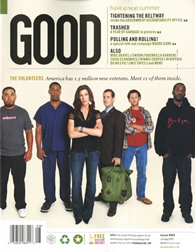

Who said you can’t tell a magazine by its tag-line? Well, I can. Good’s tag-line reads, “Good is for people who give a damn. It’s an entertaining magazine about things that matter.” Check Good here. The Believer’s tag-line, or so to speak, reads, “The Believer is printed on heavy stock paper and is almost entirely awesome.” Check The Believer here. The only two words that I will change in those tag-lines are “entertaining” in Good and “almost” in The Believer. Good is way beyond entertaining. It is one of the best magazines that I have seen in a long long time that Has a Purpose. In fact it reminds me of being similar to Highlights magazine with its famous 60 plus years tag-line Fun with Purpose. The only difference, Good is for Adults. Adults who want to know more than what Brit, Brad, Jan, etc. are doing and do not really care to treat them as newsworthy or as a beat (in journalistic terms) to follow and report on. Good is Journalism with a Purpose. The Believer is not almost awesome. It IS. From the pages that you read to the music that you hear. The current issue is their special music issue and it is worth every penny from the $10 cover price. To use the words of Good, pick up those two magazines today and act as if you give a damn about the future of journalism and magazines in this country…better yet, act as if you give a damn about the future of our country. Act now.

It is Good to be The Believer…
June 12, 2007The right way for the Sunday papers’ future?
June 10, 2007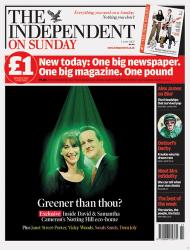

Yet another step in the right direction for the British The Independent on Sunday newspaper. The paper merged all its sections starting last Sunday into one and did the same with the magazine. The editors wrote in last Sunday’s paper, ” Compact, concise and comprehensive, The Independent on Sunday will give you everything you want from the Sunday papers in one big newspaper and one big magazine. With a fresh approach to news presentation, new features, columns and a crisp, modern new design, the paper will give you the latest news and will also offer a comprehensive review of all the big stories and talking points of the past week, as well as all the big issues and big names that will be making the news in the week to come.
In the age of information overload, The Independent on Sunday will make sense of an increasingly confusing world, with all the news values of a daily paper and the production values of a weekly magazine.” Read the whole story here. In the meantime I will continue to watch the North American newspapers march slowly on the road of suicide. You all saw the news last week, we are the only continent that has witnessed a drop in newspaper circulation…the only one worldwide.
The Trail will lead to the Avenue via a Duece (Hot and New, take 10)
June 9, 2007


Once a week, I highlight three new magazines on my web site Mr.Magazine™. This week the three new magazines are ATV Illustrated Trail and Travel Guide, Avenue Report and Duece Builder. Read here about these new launches. To be considered for review on my web site, please send a copy of your first issue to Samir “Mr. Magazine™” Husni, Department of Journalism, The University of Mississippi, University, MS 38677.
Magazine Readers are NOT Commodities…
June 7, 2007
I am really really tired from all the prophets of doom and gloom from our magazine industry. I just read a report based on a speech by a group magazine president. The president said “magazines have a credibility problem with the advertising community” because of “the poor circulation practices of the past, especially the practice of counting unpaid circulation as paid…” For a second, I thought for once a major publisher is thinking about improving their circulations practices for the sake of …. readers. Well, forgive me for thinking about the readers, a commodity that is becoming largely ignored by the publishers of big magazine companies. “Advertising will remain the primary source of revenue,” the executive is quoted as saying. The only reason magazine publishers want to try to fix the advertising woes is pure and simple: get more advertising. Well, Mr. and Mrs. Publisher, do me a favor and spend $10.00, yes $10.00 and order the book that Roy Reiman, founder of Reiman Publications, wrote about his empire of publishing that did NOT sell a single advertising page. Reiman was able to sell his company for $760 million dollars without selling a single advertising page. Reading his book is a MUST for anyone who really wants to understand the value of the reader. Readers to Reiman are much more than numbers. In fact they are not even numbers. They are human beings, pure and simple. Humans who deserve to be appreciated, catered to and served. Readers who were, are and will never be a commodity. Order Reiman’s I Could Write a Book here. Do it today for your own good and the good of the readers.
Three faces of George Clooney & 32 Faces of Star Wars
June 7, 2007
First it was the cover mounds, or as some in Europe like to refer to it, The Italian cover- disease. You cannot buy a magazine without a gift attached to the cover. Now, it is the American disease with split covers of the same magazine spreading like mushrooms. In the UK my friend Jeremy Leslie writes that Empire magazine this month has 32 different covers of Star Wars (see all of them here). The folks at Bladblog in The Netherlands report that Hide&Chic magazine provides its readers with three cover shots of no other than George Clooney (the latest male hot cover subject worldwide). For the die-hard Star Wars fan, the Empire covers are a must, and for the Clooney fans, well maybe you need “more than one look!”



Magazines and the Newsstands: True or False (Test Your Knowledge)
June 6, 2007You think you know the newsstands, and the folks who frequent them to buy magazines, think twice. What follows are ten true and false statements about magazines and the newsstands. Check if you can tell the true ones from the false:
1. Newsstands buyers are habitual buyers
2. The majority of people who buy magazines on the newsstands do not send in the discounted subscription cards.
3. For a lot of publishers, the newsstands are nothing but a showcase for the advertiser to see the magazine “in their face.”
4. The reason publishers put much more copies than they sell is because they do not want to have empty pockets.
5. Some magazines can make money selling only two copies of every ten they put out.
6. Low cover price does not mean selling more copies.
7. The Magazine Publishers of America uses frequency to define a magazine, thus not everything you buy on the newsstands is a magazine according to their definition.
8. Magazines without advertising can survive and thrive on the newsstands.
9. More than 70% of American magazines are sold by subscription rather than single copy.
10. Cosmopolitan magazine sells more copies per issue on the newsstands than any other magazine.
So what is your score? How many true statements and how many false? If you answered true on each and every one of the above ten statements you’ve passed with flying colors. Believe or not, all the above statements are true and in the following days and weeks I will be writing and expanding on each statement, so stay tuned…
A common sense approach to the newsstands’ problems
June 5, 2007What does it take to rejuvenate the newsstands in American and add a glimpse of hope to our industry? The answer is very simple. Treat the newsstand buyer with some respect. Last week I was attending a magazine conference and I heard an editor of a major magazine referring to the customers who buy his magazine on the newsstand as “not very smart and I do not think they deserve to read the magazine.” His reasoning was why should they spend $4.95 on the magazine at the newsstands when they can get 12 issues for less than $15. The sad part is that most of the magazine publishers and the organizations that support them are the ones that continue to insult the readers and accuse them of not being “very smart.” I remember the days when I was a student at the University of Missouri-Columbia, my magazine teacher Dr. William H. Taft used to show us Cosmopolitan magazine’s subscription price that was five cents more than the newsstand cover price. Dr. Taft told us that the reason Cosmo sold as many copies on the newsstands as it used to sell was very simple: “They did not want you to subscribe.” It was true with Family Circle and Woman’s Day too. Now all three have joined the “subscription discounters” and joined the majority of magazines in “alienating the newsstand buyer,” and “blaming the newsstands for their woes.” Cosmo still leads the newsstands sales on an issue by issue basis. The reason is in its content: more of the readers prefer the privacy of the newsstands than the publicity of the mailbox to get Cosmo. So here are seven common sense approachs to recreate the buzz on the newsstands:
1. Be a newsstand only magazine. No subscriptions.
2. Charge more for your subscription than the price of the magazine multiplied by the number of issues offered.
3. Charge the same price for your newsstand issue, as you are willing to offer it by subscription. If you are willing to sell your magazine for 35 cents by subscription that should be your newsstand price and not $4.95.
4. Stop selling your magazine on the newsstands if you are not willing to reduce your newsstand price or increase your subscription price.
5. Keep in mind the big increase in postage that is heading your way. Now is the time for some major decision making… continuing to bury your head in the sands and pretending that all is fine is not going to help any. Remember how our friends the Chinese define insanity: doing the same thing over and over and expecting different results every time.
6. It is time for the MPA and the rest of the magazine publishers of America to start focusing on the millions of customers (readers) all across the country rather than the 50 or so customers (advertisers) who reside within the city limits of NYC. There is more, much more to the magazine business than NYC.
7. Stop blaming the distributors and the retailers; it is time to examine the publishers pricing method and to DO something about it. Now. As in Today.
If you doubt the future of print…visit any city (hot and new this week take 9)
June 3, 2007Yes, I said any city. This week we feature three new regional magazines in our What’s Hot What’s New section on Mr. Magazine. It never stops to amaze me the amount of new titles arriving on the city, state and regional magazine scene. You name the niche, and you will find at least one magazine aimed that city specific niche. Try Brides, Homes, Dogs, Business, you name the category and there is at least one magazine devoted to that subject matter in your own neighborhood. Take a look at Kentucky Bridal, Lake Erie Living and South Carolina Alive here. They are only but a sample from many.
Early May numbers show a healthy month in launches
June 2, 2007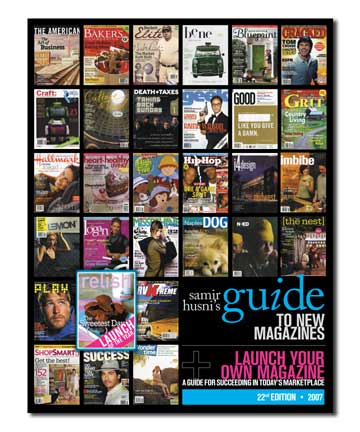
My early numbers for May show a total of 81 new magazines launched during last month. That brings the total number of launches this year to 283 so far which is still short 84 titles from the 367 total of the same period last year. Although it is too soon to say that this may be the beginning of the reverse of the decline in number of launches, it is however the highest number of launches this year (20 more than the previous high of 61 in January). Keep in mind that all the numbers used in Samir Husni’s Guide to New Magazines (Volume 22 out now, you can order here) and Mr. Magazine website are numbers based on real physical possession of the magazines and not launch announcements or preview issues. To ensure your new magazine is included in the Guide or considered for review on our website, please send a copy of your first issue to: Samir Husni, Department of Journalism, The University of Mississippi, University, MS 38677.
A new twist on “on-line magazines”
June 1, 2007
It is amazing how a little common sense can take you a long way. The folks at Automotive Traveler an online-only publication that brings “travel back to the real world,” and where the editors like to say “every drive is an adventure,” did just that. Richard Truesdell, editorial director of the new magazines tells me in an e-mail that Automotive Traveler is “a hybrid, a combination of what I like to think is 75% Condé Nast Traveler with 25% Motor Trend.” He goes on to say, “We are totally interactive, using Olive Software’s innovative Active Magazine platform, combined with a few tricks of our own. You’ll notice we’ve designed and built Automotive Traveler horizontally, taking advantage of almost all of the available screen real estate (The Automotive Traveler viewer interface automatically scales to optimize the viewing experience from everything from a 9-inch laptop to a 42-inch flat panel home theater monitor). This minimizes the need to scroll and zoom; like a traditional magazine, you just flip the page by clicking on the upper right-hand corner of the image when you want to move on.” That horizontal platform is what caught my attention (it is in direct proportion to the magazine spread). I never understood why magazine publishers continue to try to fit a horizontal space on a vertical medium. It is just not easy on the eyes. I have said it before and I will continue to say it, we do not have a problem with any of our platforms…we have a problem with what we are trying to put in and on them… Using the right dimensions, the right typography and the right movement makes Automotive Traveler a welcomed addition to the world of on-line media. They do not need to call themselves a magazine and they do not need to be ink on paper. They are just another medium providing a relevant message through what they consider the best relevant vehicle. Interested in going for a ride, click here.