h1

A Race to Creativity: From Hefner to Nike to Ferrari; Don Pierce Has Created, Broadened Conversations and Connected with Audiences for Decades. The Mr. Magazine™ Interview with Operations Director for Ferrari of Houston – Don Pierce…

April 24, 2014

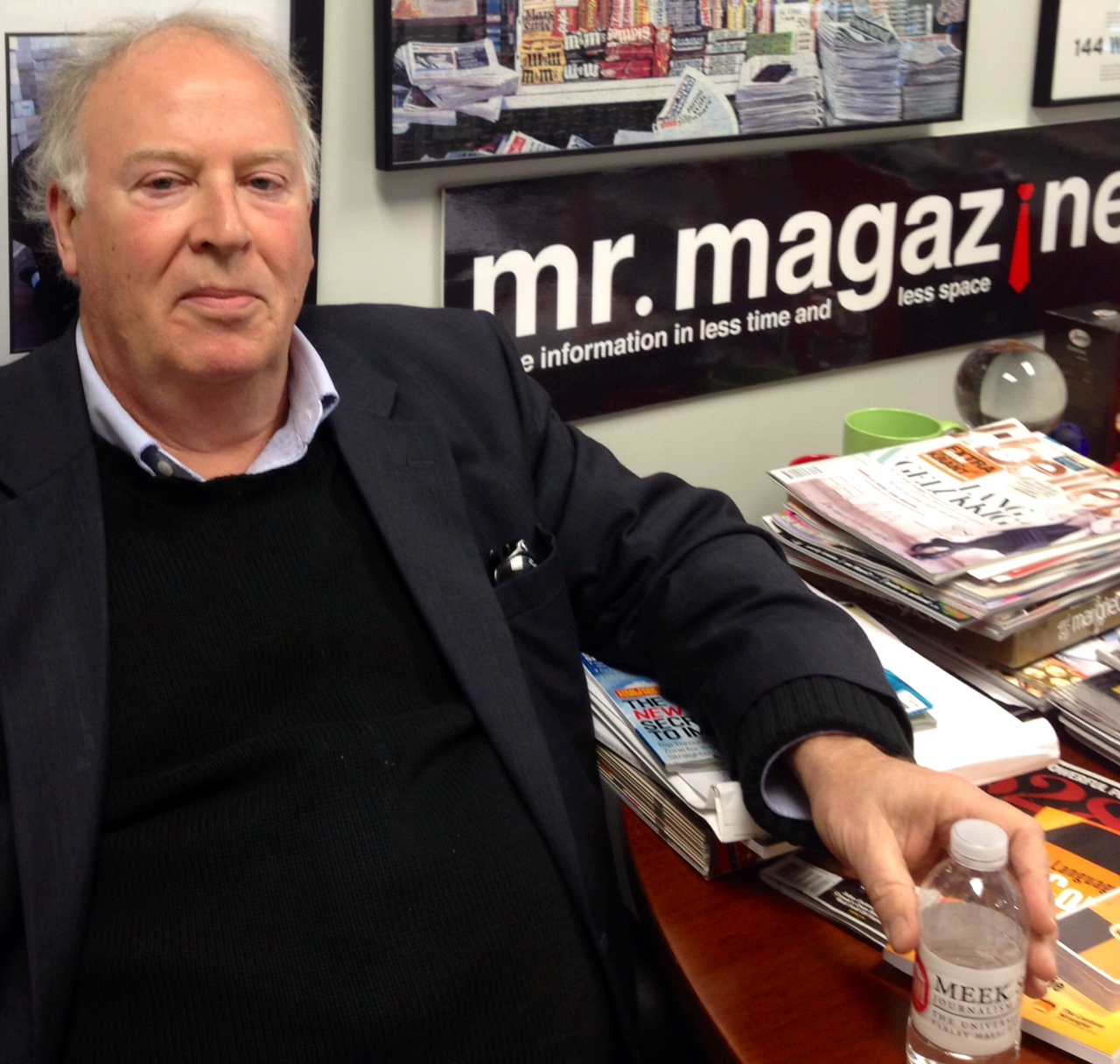
Don Peirce A man who has “donned” many hats; Don Pierce knows how to motivate people and challenge them to be their best. From an early background working in his father’s radio and TV stations, to HMH Publishing and creating new magazines for Hugh Hefner, to teaching creativity at Nike, today’s Operations Director at the Houston-based Ferrari dealership has had his hand in journalism, from writing to producing documentaries, for many years.

And he is still learning and mastering new frontiers.

Mr. Magazine™ talked with Don Pierce about all of this and much more in a recent interview…inviting him to share his abundant career and future goals during the conversation.

So a word of caution before you sit back and be introduced to a man who has literally lived his dream and is still searching for more beyond the horizon… This Mr. Magazine™ conversation with Don Pierce is a lengthy one. It may take you more than a glass of wine to finish it. But I will guarantee you that you will learn more about creativity, marketing, management, writing, editing, publishing, branding, and lots of common sense once finished reading the entire interview.

So relax, watch the Mr. Magazine™ Minute first and dive into the story of one’s man race to creativity…

And now for the sound-bites…

On the paths his career has taken over the years:
I have had a very eclectic career.
My father owned radio and TV stations in very small towns and I was brought up in broadcasting and radio. I was writing and directing little two-minute segments on television and writing and producing little radio shows by the time I was out of high school.

On developing a relationship with your audience and connecting:
Part of your job as an editor is to broaden that conversation as much as possible and expand on the knowledge that you believe the people that you are talking to have.

On starting new magazines and his experience:
I got a pretty good reputation as someone who was good at starting magazines and I also got very interested in the business side because I felt it was a form of protection for the creative side.

On his time at Nike:
We were brought in to blow things up, we have to be disruptive. Nike respects disruption.

On the personification of branding: The idea is we give the brand a set of characteristics, a personality and attributes. Think of a brand as a person and take it all the way through. How does he (or she) dress, what kind of car does he drive, what sports does he like, what type of music, what are the outside interests?

On what keeps him up at night:
I have plenty of responsibilities in the job I have, but I stay up until the wee hours of the morning writing and creating stuff. Writers and journalists have to write and create. It’s not an option.

And now the lightly edited transcript of the Mr. Magazine™ interview with Don Pierce, operations director of Houston Ferrari…

Samir Husni: You have had a great career; would you share some of your background with me?

Don Pierce: I have had a very eclectic career. I went to school in North Carolina and I was raised in small towns; I think there were 400 people in the high schools that I went to. I basically lived places they modeled Mayberry after. It was fine.

I was brought up in broadcasting and radio. My dad was very good with money, so I was constantly working in the stations because I was cheap labor. I tell people that for eight years, I think from the time I was about 14 until I was 22, I worked at those stations every Thanksgiving and Christmas and New Year’s Day because he knew I had to and he wouldn’t have to pay triple overtime like he would if his other employees worked.

At first, I was a little resentful, like any kid would be. Those are big holidays. I would think about all my friends sitting around and having a good time and here I am working on Christmas Day. Then I realized that I was being given a radio station or a TV station to operate or a newscast to do and that was a lot more compelling and lot more interesting to me than hanging around as the only child in my family, talking with my parents for the entire day. Working on those days became great fun and a great learning opportunity. I still miss being in a broadcast station on Christmas Day.

So I was brought up in a media environment and with sensitivity to media and I was also raised in a storytelling and journalism environment. My mother was a librarian and my father was very, very sharp and they always pushed me to read, read and to write. And they were very nurturing in that they let me try stuff even when it didn’t work out. And I had a lot of stuff that didn’t work out.

One point to mention: I am here at Ole Miss today because of the great effect the university on my daughter, who has an undergraduate and Masters Degree from Ole Miss in Accounting and because of the School of Journalism. When she started going to school here (I wanted her to go to a school in the South and Texas is not the South), she said you need to get over here—this place has some very great people in media and journalism and you need to meet them. She was so right.
donpierce1Samir Husni: What were some of your first experiences as a journalist?

I was writing and directing little two-minute segments on television and writing and producing little radio shows by the time I was out of high school. It didn’t seem like a big deal at the time. That’s what you do when you’re in that environment. You write and produce and some stuff is horrible and then some stuff starts to get good and then it starts to get sharper and very good. When I went to college I took television courses in RTVMP (Radio, Television and Motion Pictures) and that was interesting, because I knew the business from a different side, I knew it from the way the professionals did it and from the latest equipment and from what is now called “best practices.”

But college provided the entire arena of knowledge, the big picture that helped tie together all the experiential bits and pieces I had picked up. Also, college was where I started to write a lot.

After I got out of school, I had been nurtured by some of my professors to the point that I felt I was really something special, so I thought well, I’m going to go to New York and I’m going to get a job and I had a list of maybe ten places that I was going to work—all of which were terrific big time firms in advertising, publishing, TV, etc. It was about the most ridiculous set of expectations that you could start with. I knew nothing. I was from Mayberry. New York is New York. It was a shock. But you adapt fast.

I went around and started interviewing with people and I ended up with a job with the artist Peter Max, working in his studio and working with him on a daily basis. He gave me an incredible education and it was all total immersion: licensing, learning about intellectual property, learning about contracts and money, creating with focus, about writing legal documents, putting books together, and how to negotiate situations that had become difficult. Peter was and is the single most supportive person I have ever known. He pushed and he supported. He was very gracious and very positive. His artistic sensibility was embedded into me. And he could produce: he has a reputation for being prodigiously productive and it’s 100% true. He taught me that “real artists ship”, which means you have to create and produce. So many great lessons.
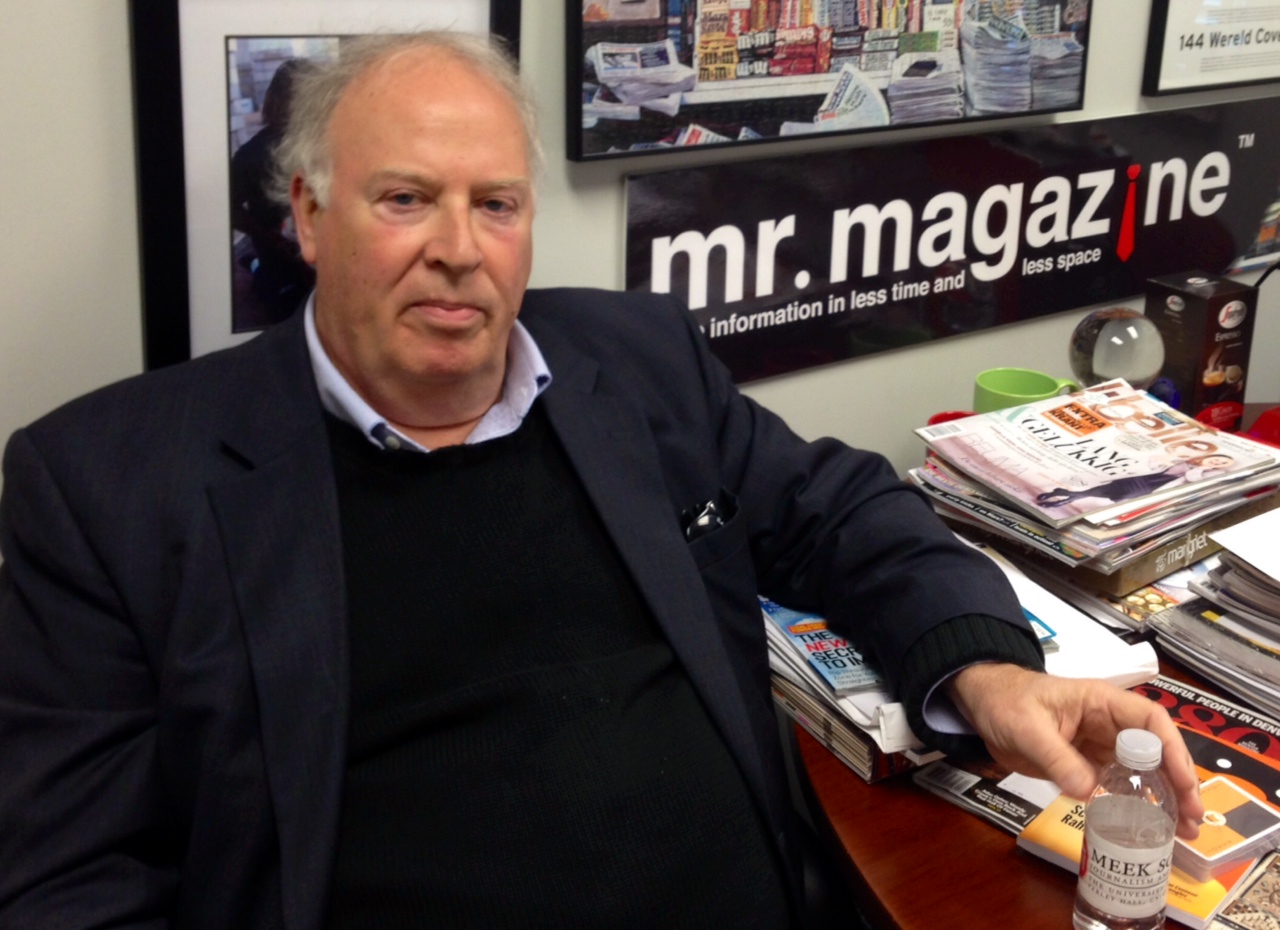
Don Pierce 2 As a journalist and a creative, I will tell you one thing that is needed in the portfolio of new journalists, artists, documentarians is a very acute sense of business, finance, accounting and the legalities of copyrights and IP and other legal issues. Peter Max knew that and he provided the guidance and education. As artists, you’re going to push the envelope and you want to know what your rights are and how to make your endeavors pay off for you. So artists should always be better at business than almost everybody else because people aren’t expecting it from artists; you don’t want to be disadvantaged in some transaction because you don’t have your head 100 percent in the game. Business is an important part of any career so best to learn to do it well. Protect your talent by knowing your business.

After New York, I became a member of a group of guys who started a ski company and built it up over time and eventually sold it. It was fun but it was a start up. That meant tight finances and lots of disappointments as we dialed it in. You learn to re-calibrate, to re-set, to change to something that works, to innovate. After that, I went to Chicago.

Samir Husni: Tell me about your time with Hugh Hefner?

I went to work for HMH Publishing, which is Hugh Hefner’s company, and worked as an editor at OUI, which was a publication, Hefner had started with Publications Filipacci from Paris. While there, I also got the chance to develop new magazines. It seemed right: I was staying up until 2 in the morning creating magazines and article concepts anyway because it was interesting to me. At that time, the company was an absolute publishing powerhouse: they had access to all the great writers and photographers and artists. It was rolling. They had a great editorial style and the company could have produced magazines on different topics, but never did. Hefner liked magazines, but he loved Playboy. So new magazine development became a bit of a think tank inside the company.

Work was done on a whole series of new magazines: a sports magazine, a photography magazine, a clothing magazine, a hi-fi magazine and an automobile magazine. Lots of resources were available. A sports magazine was my big project. It had a very different sensibility than anything else actually in the marketplace. It was about finance and leagues and media, not just scores and personalities. After doing a few prototype outlines and formats, the idea came up about extending the projected editorial inventory for a long period of time, not just the first two or three issues which was the industry standard. So we generated 12 to 18 months of editorial planning. That was a lot at the time. We wanted to avoid the “great first issue/sad second issue” syndrome. We planned the magazine 18 months out because we wanted to see how that editorial voice would develop over time. That’s a very interesting idea and it’s based on editorial voice and reader relationship growth.

A simple idea: What I tell you the first time I meet you and what I tell you the seventh time I meet you will be different because the seventh time we talk, I now have a relationship with you. I know who you are, I know what your interests are and I know what you respond to. The conversation is deeper and more nuanced. These are all things that come into play in journalism, that come into play particularly with periodical publishing; they certainly come into play with video, websites and with digital communications.

As a communicator, you’re always developing a relationship with people and part of your job as an editor or writer is to broaden that conversation as much as possible and expand on the knowledge that you believe the people that you were talking to have. That’s very important. And, it’s a sign of respect, because you are not starting from scratch every time.

But the point is you’re always building on these relationships and prior communications, every Tweet or post you send out builds on the one you sent out before, every article you publish builds on what people know about you that you previously published. You’re building a media personality. So you’re always building communications. It’s a continuum, a flow.

The nice thing for me at that time was that I got to create a lot of editorial formats. And I got very interested in a concept I call, for lack of better words, editorial components. These are the building blocks that can be used to tell a story or format a publication. Whether it’s a piece of journalism or whether it is a documentary film, editorial components are formats used to tell stories and deliver information in a certain way. There’s an interview, there’s a service piece, there’s reportage, there’s the review, a guide, a diary, a timeline, there’s an economic analysis. When you become fluid with their application, you can see how they apply to a given publication and how they add variety and depth to editorial. And, of course, everything is always being combined, re-combined to create new components. Today, that would be called rapid iteration…

Samir Husni: Your career as a journalist really took off after that and you became known as someone who knew a lot about launching magazines. What happened after you left HMH Publishing?

I left the company, left Chicago, went to Texas and became a writer for Texas Monthly, working in the early days of the publication. Mike Levy, founder and publisher of Texas Monthly went to Wharton School of Business and while he was there he saw a magazine published in the New York Herald Tribune, the original New York Magazine, which was at that time a massively groundbreaking publication and to some extent still is. It’s been one of my favorites for years. They take big chances in print.

Levy decided to take that format and move it to Texas and instead of doing a city magazine, he just decided to do a statewide magazine. That was a concept upgrade. It worked really well in Texas, because first of all, they didn’t have that type of sophistication in publishing there and secondly, Texas really is a different country. It has a different culture. And there were no city magazines. He felt the time was ripe and he took the risk. He felt that people would identify first as Texans, then with their city. He was spot on. Levy also believed very strongly in great editorial, and Texas Monthly has been an exemplary publication in terms of editorial. They get it.

I wrote for Texas Monthly and then I started working on some local, statewide and national publications as a consultant, primarily working on the editorial concepts and article inventories and developing the voice. My great advantage was the training and experiences I had received in New York and Chicago.
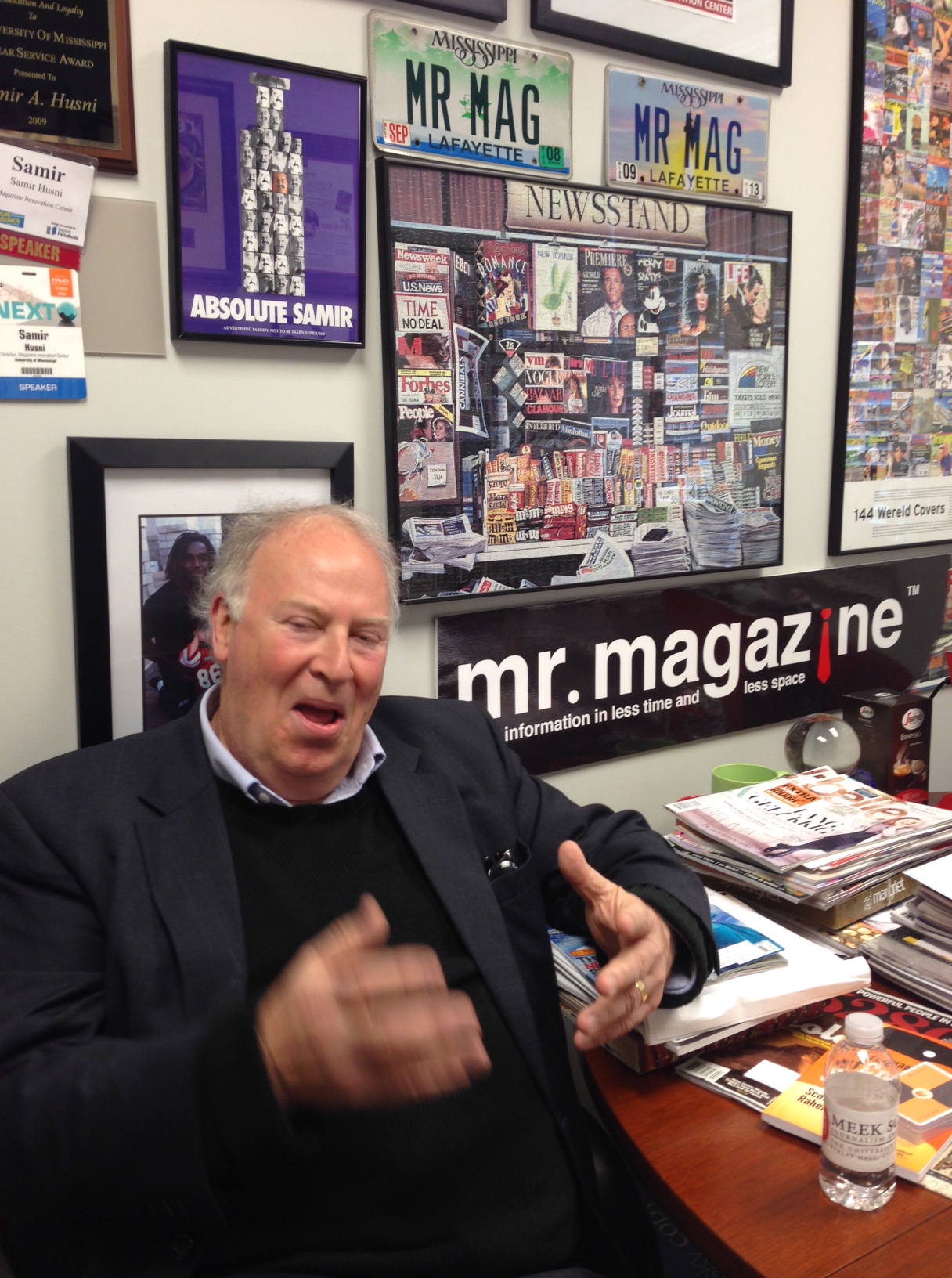
Don Pierce At that point in the magazine publication curve, there were two trends that were happening; One was the pure business model, promulgated by MBAs and the CPAs, who created magazine models based on demographics and large scale direct mailings and percentage responses and if they got a certain percentage response at a certain cover cost that would give them an economic background to make the magazine happen. That’s valid business. But where’s the compelling material that pulls readers in? Where’s the passion?

Then there was the other side of the road: the committed writers, editors, and journalists who had something to say and the passion to say it. Like Jann Wenner of Rolling Stone magazine who got a bunch of his friends together and said, yes, we need to start a magazine about rock and roll. The dichotomy was numbers vs. passion. You need a bit of both, but I’m betting on the people who are committing to the project, the people sitting around the kitchen table because they have something to say and they have passion and a voice and they’re in it for a different reason. That energy is palpable.

Today with Mac computers and Adobe software and all of these modern digital makeup components, it is so easy to put a publication together sitting around a room and working with a couple of friends; you have access to things we didn’t have access to 20 or 30 years ago. You can create instantly and you can print, see what you like and if you don’t like the result, you can change it. And, it’s important to realize that speed itself is another editorial element that can now be turned to your advantage.

So I got a pretty decent reputation as someone who was good at starting magazines and I also got very interested in the business side because I felt it was a form of protection. I did not want to be a creative person at the mercy of a business person who was going to tell me these are the numbers and you can’t argue with them. So I had to learn numbers.

To do that, I started writing business plans and annual reports. I learned to deal with numbers at a very high professional level because I didn’t want to be disadvantaged in my conversations with anybody that I worked with. It’s not a bad idea to be fully literate in both words and numbers.

Samir Husni: Your career took another turn after that; can you tell me about it?

Well, some people noticed me and helped me and I ended up doing work for Disney, developing a special magazine for them, which was very interesting but like lots of those types of projects, they didn’t go forward with it. Another friend brought me up to Nike where I worked on a whole series of sports books for Nike, each one a very high-level guide to the specific sports that Nike was involved in. Great project, terrific editorial, but…ultimately, not necessarily what was expected from the Nike brand, so Nike shelved it. It happens.

One of my very best assignments was going to London to start a publication for Rupert Murdoch, basically a TV Guide for London built around Murdoch’s BSkyB satellite broadcasting franchise there. I was brought in by a friend of mine named Michael Brock, who is a terrific art director; we’d worked together on different projects for about 20 years. By the way, if you’re a journalist, make friends with the best art directors, designers, photographers and video editors you can find. They can enlarge your communications vocabulary to an amazing extent.

Michael Brock has perfect pitch in publication design. He always surprises. He’s got great style and solves problems very efficiently. We went to London and met with the existing development team. Their work was professional—the British do magazines really, really well– but it was pretty safe. We’d seen it before.

We had a break at lunch told the team, look we have to go in and push these guys back. We were not brought in to say yes. We have to come up with enough ideas in a short enough period of time to bring them over to our side. We’re not here to bless what they do. Someone brought us to stir it up.

We finished lunch and started the meeting and I knew it would be difficult. We took them through our ideas of the publication and those ideas were quite opposite to the way they had looked at it. But even though there was some natural emotional reticence to buy in—we all have emotional attachment to our ideas– intellectually the British team realized the value, and by the end of the day we had everybody talking together and everybody was excited. It was a bit scary and then it was exhilarating. Starting out, we were at a huge disadvantage—everything sounds better with an English accent and that was one of the communication advantages that the British team had. So we just had to have better ideas, more breakthroughs in editorial, that American energy.

One of the things that I’ve learned doing creative work and as a journalist, writer, director, is that no matter what you’re doing, bring everyone in and let them contribute.

If you’re really good at creative work, don’t let it all be about you. Be the catalyst.
Put a board up and tell everybody who’s working on it to write down their ideas and story concepts and headlines and hang them up. Everybody: the non-creatives and the support staff. Please share your thoughts. Do not be embarrassed, do not be afraid, put everything up there. We don’t know who’s going to come up with the next great idea but we know somebody is going to come up with it. But you have to give people a chance.

When everybody is involved, you have a totally different type of approach to something, than when only one or two people are involved.

Samir Husni: That’s a good perspective. Do you think that increases creativity by opening up the conversation to more people?

The whole idea of creative work is to include as many people as you possibly can so you can get as many good ideas as you can. Then you have a totally different set of priorities. Which is to sort through a whole bunch of good concepts to find exactly what you need that fits. The great safety net in creative work is to have lots of good ideas to select from.
If you’re generating ideas or story concepts and you have a great one, don’t stop there. Keep going… the next one could be even better.

One other thing, keep records, keep lists and keep your article ideas. Artists and journalists and writers should always archive their ideas. Jot it down. Take a photo with your phone. Make a recording. Whatever. You never know when you’re going to be in that particular mood again, you may not be in that mood again for two or three years or maybe never. The time you spend when you generate ideas and create is precious: when you get in the zone, stay there as long as possible, write it down, keep it some place, and refer to it from time to time. That’s your work product, that’s your life’s work and it should be important to you. You never know when you might find the right time and place to use them or when they might send you off in a new direction. Ideas are like chains—each idea is a link that can lead you to a new idea. .

Samir Husni: So what happened with the magazine?

Well, that publication ended up being the No. 1 circulation magazine in the UK from what we were told. It was a great experience because once it got rolling, everything was up for re-calibration. We had the magazine editors and the magazine sales people go out together. We wanted the editors to see what the sales people had to go through to sell an ad so they would have an appreciation for what the sales team was facing in the market. They got to hear advertisers comments. Valuable stuff. Then we did exactly the opposite and asked the sales people come in to work with the editors to physically bolt it together. It’s not breaking down the editorial/advertising wall so much as having each side understand what’s on the other side of the wall. We wanted each side to see what the other side had to face in terms of challenges and professional discipline. We wanted everybody to be complete. And once again you never know who is going to have the great idea, who’s going to blossom with a little support.

In the end, Mike Brock produced all the design templates on his Apple and when we turned the project over, they had about 18 months of publications planned out. Now—of course, we knew that the cultural landscape on which the magazine was based (television) was going to change over time because TV would change over time, but…the attitude, the angles of editorial coverage laid out in the editorial plan, would provide guidance going forward in terms of developing and extending that editorial voice

Monthly magazines are either looking ahead at something or they’re looking back, but it’s hard for a monthly magazine to be spot on, especially today with all the media and the speed and accessibility of digital communication and the speed of television. This situation specifically applies to magazines that are based on cultural currents and time sensitive topics —sports, news, finance, etc.—but it’s getting harder than ever for even a non time- sensitive magazine, like a shelter publication, to avoid the cultural/news/digital cycle we all exist in now. You have to factor it in. It’s speed vs. depth.

It’s good to have working knowledge of all forms of media today. Somewhere along the line, I got involved in making documentary films; it was a very natural thing as I grew up doing television. To improve my understanding of the theory of documentary films, after I had already done a couple in clueless mode, I went to Rice University and a professor there named James Blue, who was a film professor, gave me basically Oxford-style tutoring for about a month, three, four times a week where he would show films and he would discuss them. I was assigned outside reading so I could develop a theory of how it worked. He provided the intellectual framework for me to more fully understand the medium and what I was going.

Whereas before, I was more of a broadcast journalist. Run and gun ENG style. Show up with a camera and shoot everything in sight and then edit it all into some coherent story. Blue wanted a little less energy and lot more thought. He talked about time compression and had a drill: show the totality of an event by shooting the beginning, middle, and end of a circular process, and then cutting out everything until, if you cut out one more scene, no one can figure out what it was you were shooting.

I’ve since done a lot of television shows as writer, producer, and director. TV specials. Short-form video. Product videos. Sports films. Probably the best one I did was on Earl Campbell; it won the gold medal in the Houston film festival for best documentary but that could have been because it was about Earl Campbell and it was in Houston, where Earl was a legend. No doubt the voters were friendly. Friends tell me that it actually was pretty good. And it was a massive editing job, all documentaries are, because of the high shooting ratios. Creative work is glamorous from a distance but everyone who does it has a story to tell about very long hours spent in an editing suite perfecting five minutes of film or the long, lonely, deep nights writing a piece or editing an interview. Amazing—people who communicate ultimately spend a lot of time by themselves creating the communications. Personally, I like working on tight deadlines. There’s energy in the deadlines. You get decisive in a hurry when the clock is ticking.

All of the modern media can be produced/created through one consciousness. If you can do journalism, you can do documentary films, you can do magazines, you can do books, you can do television shows, you can do podcasts, you can build your website and you can develop a tweet personality. Recalibrate to the requirements of the media and do it. All of this starts with the ability to communicate and tell stories.

I think it’s important if you’re going to be a communicator and you’re going to be a journalist that you produce something every day. Whether or not you put it up on your site or if it never gets published, that’s OK. You should be in the habit of writing or producing something every day. It’s very important. It’s the intellectual equivalent of the morning jog.

Samir Husni: You told me the story about your days at Nike and working with your team; can you tell me a little more about that branding?

One of the things that I learned to do and one of the things that I did when I worked with Nike was to teach people how to become more creative. I have a theory: if creativity is a 100 percent scale with 100 being the top and a zero being the bottom, I can train/help/educate most people to develop a professional degree of creativity; I can get them to about 80 percent out of a 100. The last 20 percent is God’s gift, I can’t do that. But I can get you to 80, maybe 85 percent by teaching you certain techniques and showing how to generate ideas, how to prep to generate ideas, and how to trust your instincts. It just requires thinking in slightly different ways. Most people are far more creative than they think.

One way we put this theory to work was with some product development work for Nike. Nike has product teams for tennis with designers, engineers, marketing people, etc. Each team creates a product group for a specific Nike tennis line. They produce complete lines four times a year and the introduction to coincide with the big tennis tournaments. A new line consists of shoes, warm-ups, shirts, shorts, hats, jackets, bags; the whole deal, even the wristbands. The work is on a 90-day cycle to develop the line. And that’s a cycle that they’re comfortable with, but for some in upper management, it was maybe not frequent enough to push out lots of new ideas. Frequency creates opportunities—that’s why weekly magazines seem to take more chances than monthlies.

We took the design teams down to the Oregon coast and rented condos. We went down on a morning, got comfortable and played some tennis, did some pre-creative programming (looking at new ideas, films, photos etc.) and then it was show time.

Here’s what we did: At 6 o’clock or so, the groups were told they had until midnight to develop a product line, everything, shoe designs…all of it. Present at midnight. Let’s see what you come up with.

No one was expecting anything super, so there was no pressure. Just wanted them to get used to the process. It was a warm up.

Presentations at midnight and some of the stuff were good, but they weren’t really dialed in yet. Good and we’ll see you in the morning.

The next morning we cut the time frame down, so instead of having six hours, they had four hours. Full presentation. By noon they had to do it again. Then you could see this coming. We put all that stuff in the corner and said, OK, you have three hours, so we cut it down again. Then after that, we said you have an hour and a half and that was their final exam.

What we did was ask them to go through five or six cycles, which would have normally taken a year and a half; we pushed it down to a day and a half. It wasn’t as tightly detailed as a full-scale line presentation but it was ideas and new directions that were being developed. And by the time we got to the fifth cycle, the work was a lot more creative and the ideas were farther out there and so was the technology they were using, they were a lot more relaxed with taking chances. They were so conversant with the elements they had to play with; they became highly fluent in combining ideas and pushing things out. I think that was the meeting that the Nike custom-designed shoe project came out of although it was years before the infrastructure to make it real was developed.

The work got better through every cycle and by the end it was just exhilarating to watch. Why did this happen? There were a couple of reasons? They were in competition. It’s Nike. These are competitive people. Secondly, this is very important, they didn’t overthink what they were doing. They worked past assignment requirements and into instinct mode and it was terrific to see. By pulling time away, we actually gave them more freedom.

Samir Husni: You believe in personification of the brand; can you explain that a little?
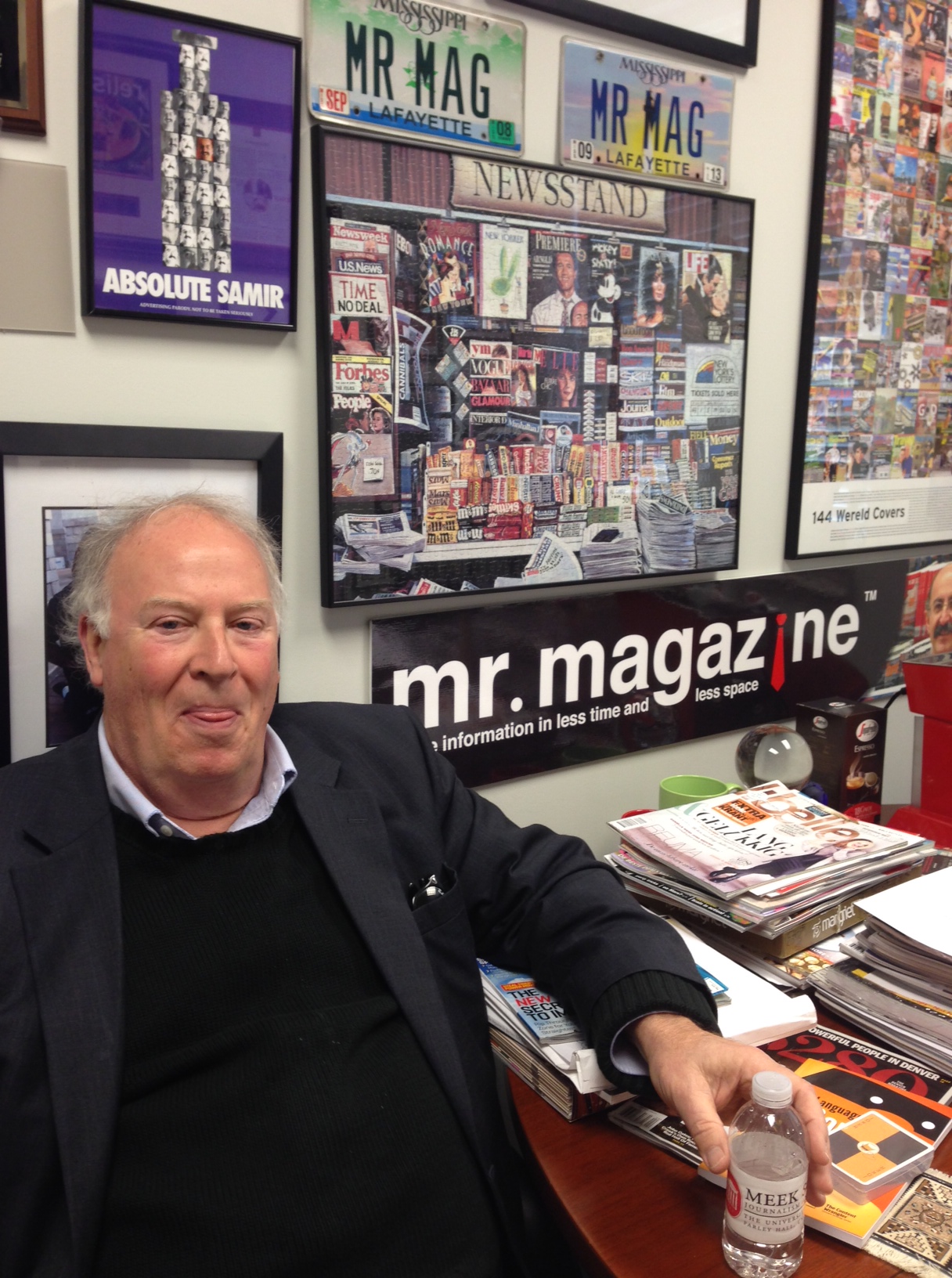
don pierce 4 I’ve done a lot of work in branding at different companies and for different products. Branding has become a bit of a conversation starter these days with so much emphasis on “personal brands”. It’s a word that’s bandied about a lot. It’s certainly been watered-down from the classic definition that came out of P&G.

But branding is a depth process, not just a width process. One way we approach branding projects is to personalize the brand.

The idea is we give the brand a set of characteristics, personality and attributes that you would find in a human. How does he dress, what kind of car does he drive, what sports does he like, where does he eat and what kind of music does he listen to. Who is this brand if this brand is a person? That really provides some great starting points for developing a brand.

In a less personal environment you’re going to call these demographics. But demographics are just numbers. I’m interested in people. If I have everyone in a room write down one thing they really like to talk about and I see it, that’s really different from someone telling me that there are five women and four guys in that room between the ages of 21-23. One data group is a set of non-personal statistics and the other is entry points for communication.

One way you think about branding and communicating is to imagine you’re at a cocktail party. You walk into a giant cocktail party and there are a hundred people there; you might hear 15 or 20 conversations that you could jump into and fit right in. There are different personalities in each conversation, different topics. And then you go on to the next conversation. And that is a lot of what marketing and communication is all about. Picking up on what’s going and using those entry points to establish communication.

And you always want to have your conversation with people at the highest possible level. That’s a sign of respect for their intelligence. It’s also more fun.

Samir Husni: What keeps you up at night?

Work of any kind today is 24/7. No one is immune. Everyone is on call. But late at night is when I like to write and do creative work, in any form. Got to. I like to create stuff and connect with people. I like everything from photography to video to magazines and websites. I like the whole spectrum. I feel very lucky, very blessed, that so many opportunities have been opened up for everyone who writes or produces.

Samir Husni: Thank you.
h1

Need Versus Want – Why You Should Put Your Audience First? A Mr. Magazine™ Musing.

April 23, 2014

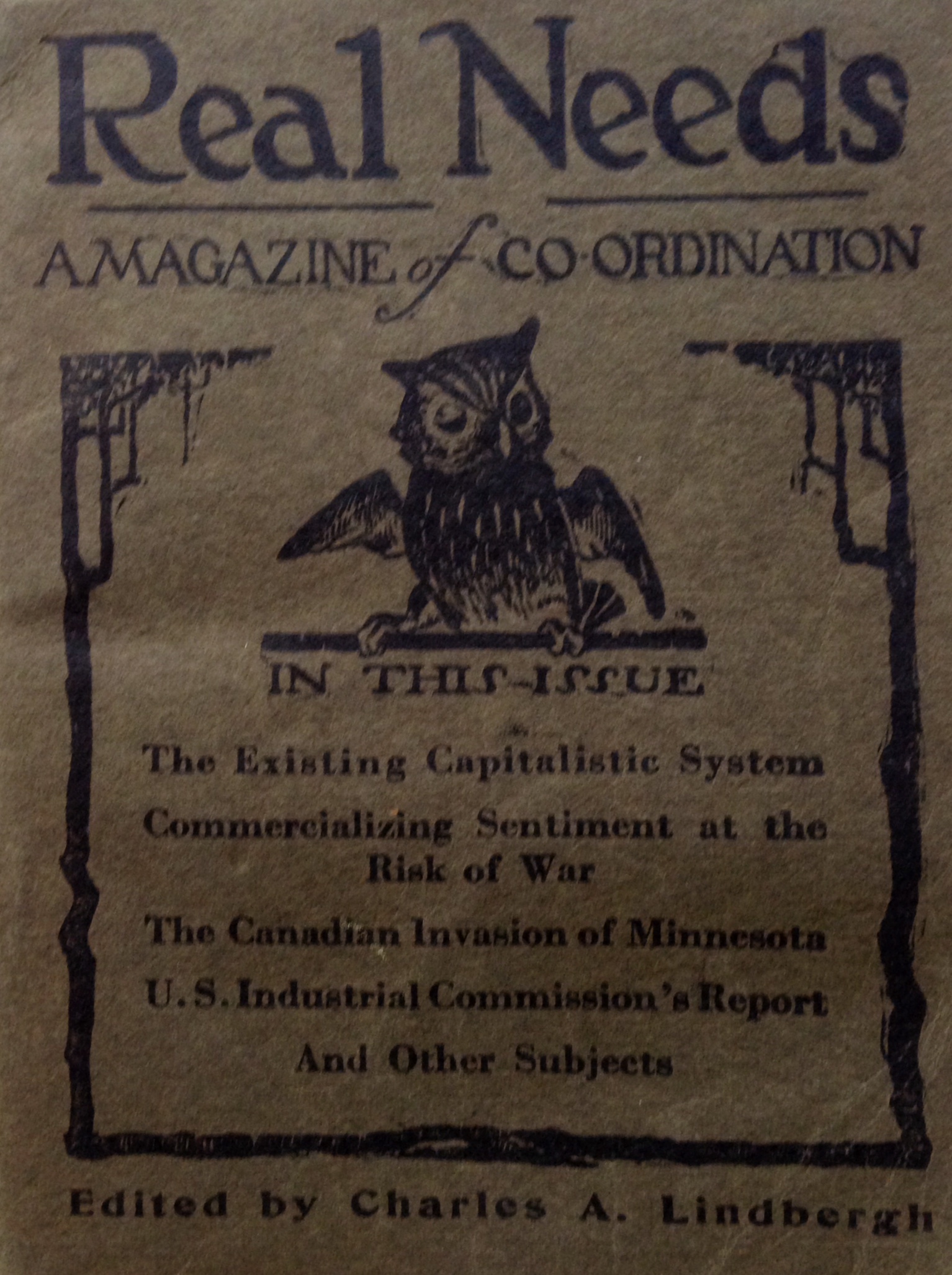
real needs

“As the Magazine is published mainly for the purpose of furnishing information that is usually kept from the public, and which should be known by everybody, I ask those who believe in the work to aid in giving it circulation.”


Charles A. Lindbergh, Little Falls, Minnesota. Editor, Real Needs magazine, First issue, March 1916.

Those were the days, you may say? But reaching into my vault of first editions, I reached for Real Needs’ first issue from March 1916 that was edited by Charles Lindbergh. The name alone was the perfect setting for my musing and his letter from the editor was the perfect lead of this column.

Audience first – is it as important as it sounds? Well, of course it is, especially in this digital age. Audience first is the right thing for any media outlet, but most definitely for magazines.

Some of the major magazines and newspapers were started based on the premise that they were needed. That concept was never more important than in the early days of publishing. People needed their information and they needed to get it from the magazines and the newspapers that were around at the time. For them printed media was the equivalent of our Internet. So the need was there and that need became strong enough years later to even bolster many ad-free models.

For example, DeWitt Wallace’s Reader’s Digest was established with no ads. Roy Reiman’s Country, Taste of Home and a host of other magazines were published for years with no advertising but rather depended on circulation to survive. Highlights, Consumer Reports and many others also still depend solely on their audience for revenue.

superman and I The question today is what has changed? And the answer is very simple – with the flurry of platforms and outlets available, publishers of magazines and newspapers are no longer in the business of satisfying a need, because there are tons of ways to fulfill a person’s requirements these days.

In this, the 21st century, we are in the “want” business. I truly believe no one needs a magazine (yes, I will go on record saying this time and time again) or a newspaper today. But there are millions of people who want magazines and magazine publishers need to work to meet those wants.

So what does that mean?

It means, again very simply, the audience must and should come first. Audience-first thinking will drive up revenues and all things good for magazines and magazine media. You must captivate with dazzling content that is necessary (feeding the want), sufficient (satisfying the want) and relevant (meeting the addiction) to your targeted audience. You have to deliver an experience that is memorable, addictive, and exciting.

If that sounds easy or virtually impossible – you’re right on both counts. There is a simplicity to it and at the same time it can be as complex as a Rubik’s Cube to figure out.

We have to reach the right audiences with our content via the relevant platform. That platform may be print or digital or an integration of the two – but regardless, we have to have an entry point to the audience that means something to them.

The WIIIFM Factor?

What is in it for me – the ultimate question for our customer and one that must be answered completely and satisfyingly if there is any hope of keeping them first when it comes to the content and the product. Because if there isn’t an investment for them, rest assured they may buy your magazine once, but there won’t be a return visit.

Building that connection with the audience is what publishers want and is vital to the life of their magazines. For without that kindred alliance, you’re just putting words on a page or pixels on a screen without any real hope of getting anything back.

Audience first? Always!

© Samir “Mr. Magazine™” Husni, 2014. All Rights Reserved.

h1

When It Comes To Monetary Value, Guess Which Platform Increases Its Value With Time? A Mr. Magazine™ Musing…

April 21, 2014

I have been thinking about the day I bought my first Panasonic personal DVD player recently. It had a five-inch screen and I paid more than $1,000 for it. And guess what? Today it’s sitting useless in my pile of electronic junk at home due to the fact that I cannot find a replacement battery since the player is now considered a dinosaur.

Of course, as the wheels in my mind began turning, I realized another intriguing point. I used to be able to buy a print edition of TIME Magazine for $2.95 twenty years ago and today a copy will cost you $4.99.

So it would appear that all things digital start out at an astronomically high price when they are fresh off the assembly line, but only decrease in value as the years go by. While print seems to increase in value with the passing of time – no pun intended.

photo(4) I started working at the University of Mississippi in 1984 when I received a $30,000 grant from the Meredith Corp. to begin the service journalism program. I was able to buy four Mac Plus computers and a laser printer to set up the first desktop publishing lab in the state of Mississippi. And that was the end of that first grant money.

The same thing can be said for my first Walkman, my own first personal computer, my first cell phone and my first TV. All of these digital accoutrements cost a pretty penny when they were introduced to the buying public and within a few years they were not only obsolete after spending that huge chunk of cash, they were also worth nothing due to their antiquation.

You might be wondering why I am telling you all this. And I might answer for one simple reason: the future value of anything, anything at all. But for the purpose of context we shall stick with the topic…the value of digital versus the value of print.

I was looking on eBay recently and noticed some of the prices for first edition printed books and magazines and what really struck me was the prices are going for higher than the ink on paper items sold for originally.

For example, a copy of the first issue of Action Comics, in which Superman was unveiled to the world, sold in an online auction for a record $2.16 million. It cost 10 cents when it was published in 1938. Needless to try to calculate how many times more that issue’s price multiplied since its inception.

And here’s another example: Playboy magazine – Issue 1, which had a cover price of 50 cents is selling for $4,000.00 on eBay today and another first issue of the magazine sold for a $7,040 winning bid . That’s another magazine selling for almost 8,000 to 15,000 times the original price. Granted it is a first edition, but the point is still the same and the aforementioned are only two of many many examples. Print platforms increase their value, while digital platforms do not. (By the way, a replica of the first issue of Playboy is currently on sale at the newsstands for $9.99, that too is many times the original cover price.)

So, what do you think you would get for a first edition e-magazine a few years from now? The word nada comes to mind.

Late last year, the Bay Psalm Book sold at auction for $14,165,000. It’s a rare book printed in the 17th century… and it’s definitely print. No digital or e-books in 1640. Can you imagine over $14 million dollars for a copy of a virtual book generations down the road? The odds of said book even existing hundreds of years from now are very slim. Who are we kidding? Hundreds of years from now digital may have morphed into something totally unrecognizable from what we know today.

The moral of this story is not to discount digital at all, but to highlight the facets of print which sometimes go unnoticed in this virtual age of cyberspace reality.

Because rest assured it might take an act of God to wipe out a 500 plus-year-old book, but your computer or tablet can be erased with a click or an introduction of a new model.

Print’s value reigns on…

© Samir “Mr. Magazine™” Husni, 2014. All Rights Reserved.
—————————————————————————————
uQc6BbFhSlt6ONYJ849BXm7d2MgMOgw313Js_Pt4M7B-vq9BaPW_y2lRMWye3Q2mlczdcuXMPY02pjr651ert2T9cq6vn8mU07xx0tsWaXo4L4Fl3CBJhP6_DziaBhLVRLkUIWoyyZh7ziOE=s0-d-e1-ft Want more news, interviews and views from Mr. Magazine™? Be sure to subscribe to the new Mr. Magazine™ Monday Morning newsletter. It is free and it is delivered to your in-box every Monday morning. Click here to subscribe.

h1

The Evolution of Change – How a Newspaper Metamorphosed Into A Multimedia Institution – The William (Billy) S. Morris III Story. The Mr. Magazine™ Interview

April 18, 2014

In the life of any media company change is the only constant. But change doesn’t happen by itself; change is always searching for an innovative, passionate visionary who can ensure a successful present, based on a solid past with an eye for an even more successful future.

And change needs a leader who knows what he wants and how to execute a plan to get it, a leader who is involved in every detail of that method to the point that he is an actual foot soldier instead of the general that merely leads the way.

William (Billy) S. Morris III is such a leader. When I flew to the headquarters of Morris Communications in Augusta, GA. to interview Mr. Morris and his president of Morris Media Network, Donna Kessler, I knew there was a story here that needed to be told.

I have worked and consulted with Mr. Morris and Ms. Kessler for years and have witnessed the evolution of a newspaper company into a multimedia institution.

What follows is the Morris Media Network story, related succinctly and passionately by Billy Morris and Dona Kessler.

photo(6)

But first the sound-bites…

On the evolution of Morris Communications: My father was in the newspaper business and I came in the business after I got out of college in 1956 and we continued to add newspapers until we built up a very nice cluster of papers. But along the way we started to add some magazines.

On the common thread that runs through Morris Communications: The thread that runs through them all is the mandate to excellence. We want to be the best that we can possibly be and certainly better than our competitors.

On coping with the changes in type to computers over the years: We were in front of it or up on the upper edge of it. The technological changes that occurred first in the newspaper business by the use of computers to hyphenate and justify type, we were the second or the third newspaper company in the country to use the IBM 513 computer to do that.

On following your passion and your gut instinct when acquiring titles for the company:
I have not found any negative aspects to it at all. As a matter of fact, I think you do better with things that you like and enjoy, that you’re knowledgeable and passionate about and that you do yourself. I think it’s a good thing.

On giving advice when it comes to print in our digital age:
Print obviously is what pays the bills and I think print is a very important part of what we do, but if I had to give somebody advice I don’t think it would necessarily be dollar and cents advice. I think it would be stay true to your passions.

On what keeps them up at night:
I don’t think we have enough time to go through what keeps me up at night. If I have to summarize it would be my commitment and my concern that we continue to serve our readers and our partners and our advertisers the best way that we can.

And now the lightly edited Mr. Magazine™ interview with Billy Morris and Donna Kessler – the powers-that-be at Morris Communications…


Samir Husni: Mr. Morris, for background purposes, can you briefly tell us the history of the Morris Media Network? Morris is known as a newspaper company but now you have more magazines than newspapers. Can you briefly take us through the evolution of Morris Communications from a newspaper company to a multimedia institution now?

Billy Morris: You’re right, Samir. My father was in the newspaper business and I came in the business after I got out of college in 1956 and we continued to add newspapers until we built up a very nice cluster of papers. But along the way we started to add some magazines.

We started a few city magazines, we bought some magazines of various kinds and today we have a very nice cluster of magazines that’s concentrated in visitor magazines, primarily the ‘Where’ brand. We have a cluster of equine magazines and we have a cluster of sporting magazines and we have a cluster of Alaska magazines and a cluster of city magazines.

We have four or five clusters of magazines, all of which are important, all of which serve a specific audience in a specific way. And we’re just privileged to have that opportunity. We are a free people in this country and we need lots of information. We make all of our own decisions and in order to do that we must have information — information on the small items like what movie to go to tonight and what to buy at the grocery store and infinite information on the bigger items like what house to buy or what car to buy or in the case of someone who’s reading an equine magazine, what horse to buy.

And then there’s the more important decisions which we make about our democracy, who to vote for and what to do with those important issues. So we have a real calling as journalists to provide information to a variety of different people on a variety of different subjects and for a variety of different reasons and purposes.

And what we do both in our newspapers as well as in our magazines is essentially important to the people who live in our communities or the people who have the interests that we serve. And we cherish the opportunity to serve them and we hope to be able to have the highest possible standard that we can accomplish to do that for them.

We’re continuing to improve, continuing to change, continuing to recognize that there are new people coming along all along who need the information that we have. We are honored to be in the business — magazines are critically important to what we do and we are very honored to have these magazines and we are greatly privileged to have an opportunity to work with you in different ways such as your ACT conferences as well as the many other things that you do for other magazines.

SH: Thank you. What do you think is the common thread if we are going to take all of those clusters — the national magazines, the equine, the travel, the MVP — is there a common thread that goes through the entire Morris publications?

BM: The thread that runs through them all is the mandate to excellence. We want to be the best that we can possibly be and certainly better than our competitors. The standard that we hold is that we’ve got to be good at what we do. We treat people fairly, we admit our mistakes when we make one and we try to stay on top of the different segments and do a great job for the readers and for our audience. The demand for excellence is the standard.

SH: One of the things that the good Lord gave you and me is that we have been privileged to see journalism change from the hot type to the linotype to the computers…How did you cope with that change?

BM: We were in front of it or up on the upper edge of it. The technological changes that occurred first in the newspaper business by the use of computers to hyphenate and justify type, we were the second or the third newspaper company in the country to use the IMB 513 computer to do that, which greatly speeded up and made more efficient the process of setting type.

We were one of the first companies in the country to connect our three newspapers — Augustus, Savannah and Athens — to one computer located in Augusta over telephone lines, this was back in the 60’s, to use that one machine to hyphenate, justify type for three different newspapers in three different communities.

So we’ve been on the forefront of technological innovation. Efficient production and good technology has been one of the keys to our success. It has given us good profit margins, which has enabled us to reinvest in the product side — the product side, the content side and the editorial side of our business and to do a better job there.

And I’m delighted to have Donna Kessler, her background is production, and she likewise has picked up our standard and gone on to an even higher level with the good production work that she and her staff do.

So doing a good, efficient job of producing what you do is important and it allows you to a better job on the front end of the editorial and the content end. You can do a better job there if you’re efficient with how you produce it.

SH: One of the things that I’ve heard you say often is you bought this magazine out of passion, you bought this magazine because you always wanted to do this magazine like in the case of Western Horseman. Are there any dangers for a CEO of a media company to run with his passion, acquiring titles and building magazine companies or do you still believe that if you don’t follow your gut you’re not going anywhere?

BM: I have not found any negative aspects to it at all. I happen to like horses, and I like travel and I like outdoor sporting events so I haven’t found any negative to it all. As a matter of fact, I think you do better with things that you like and enjoy, that you’re knowledgeable and passionate about and that you do yourself. I think it’s a good thing. This is not to say we couldn’t efficiently run a magazine on a subject that we didn’t have any interest in. We could certainly do that but I just happen to enjoy the ones that we have because I like those activities.

SH: And through the years you’ve collected a lot of titles. You’ve collected competing companies like ‘Guest Informant’ and ‘Where’ titles. You’ve acquired national magazines; you’ve acquired city magazines. And then when you had all these magazines all over the place, then comes a lady from L.A. that you’ve put in charge of the Morris Media Network. So Donna how easy was it taking all these different titles and bringing them in one way or another to Augusta, Georgia?

DK: It wasn’t easy, it was a challenge but it was a lot of fun. We started first with the ‘Where’-branded titles and probably had in excess of 25 different acquisitions. As you mentioned, they were competing titles. We had multiple offices in multiple locations. We had in excess of five or six production centers. We probably had 200 different sales compensation plans. Really the first thing that we needed to do was the travel sector. We really needed to take the company from being a bunch of licensees into really being one solid division and functioning as such.

Part of that entire process was establishing or staying true to the philosophy of what needs to be local stays local because we have 35-plus markets outside of Augusta and we have a strong local presence.

So we wanted to make sure that the editor stayed local because as Mr. Morris said it’s very important to make sure we have our finger on the pulse and we are reporting timely, accurate curated content. We wanted the salespeople to stay local because it’s very important for them to touch their customers on a regular basis. And we wanted the circulation to stay local because they needed to be able to see where the product was going and have a relationship with our distribution partners.

Once we were able to stabilize the travel side of our business and have things that needed to be local and centralize the things on the back end that did not need to be in the markets that’s when Mr. Morris came to me and the team that I work with and said, “Could you do the same thing for the national magazines?” We of course were delighted and thrilled to do that and it’s a model that has worked quite well for us.

SH: We all know that we live in a digital era yet you have millions of print impressions. I mean you still produce millions of copies of different titles and magazines. If somebody comes to you for advice and said, “Donna you’ve established this formula, you were able to do this with the travel sector/cluster, you did this with the equine, you did this with the national magazines — what advice would you offer somebody who is so lost in this digital era to help with the print aspect of the business?”

Donna Kessler: Well, I think first and foremost given where we are right now you can’t only focus on print. Print obviously is what pays the bills and I think print is a very important part of what we do, but if I had to give somebody advice I don’t think it would necessarily be dollar and cents advice. I think it would be stay true to your passions.

Mr. Morris told you what he thought the common threads were that ran through our different publications. Be true to your readers, be true to your advertisers, be dedicated and committed to providing the best possible content, the most usable content to the people who have these passions. And also be prepared in any way, shape or form that they want to receive that content. So I think if you are true to that and know who you are serving then the rest kind of falls into place as long as you can offer that in a variety of different ways.

SH: You have a print background. You came from a print production background. How easy or hard was the adjustment from this print background to this digital era that we’re living in and how did you use that for your benefit in a digital era?

DK: It was a difficult adjustment for me and I think if you would have asked me two years ago or three years ago I probably would have said oh yeah I get it, I get the fact that we need to make the change. But it took me about another year to truly understand what that meant. And I think once I truly embraced it then I was able to communicate that to the team. People say it all the time: If you as a leader don’t believe that this in inevitable and this is happening and you need to touch on a number of different levels then no one in your organization is going to believe it. It was difficult for me to truly feel that I get it now and I truly feel that we are a content company-serving people with different passions. What was the second part of the question?

SH: The adjustment and how do you advise someone who came from a print background…

DK: I think it goes back to what I said to the answer that I gave the question before. Again, if you focus on the content, if you focus on the passion, if you focus on the needs of the person who is consuming your content and then take that — that’s where you start. And then take that and say how can I serve that person, that passionate person about horses for example in whatever way — print, digital, e-commerce or events. I think as long as you focus on that it leads you down the right path.

SH: Where is now, in the current Morris Media Network, the manifestation of the content. Can I find it on the web, can I find it on an app, and can I find it in print?

DK: Yes, and it depends upon which title that you’re talking about. The plan of course is to analyze each title and each passion — we’ve done some of this already — and see what adjacencies if you will make sense. If you look in the travel space, we just launched a new website. We are in the process of also getting ready to launch by the end of the first quarter a native app. If you take a look at some of the more traditional publications, some of them have Adobe DPS versions, some of them just have replica versions and some of them have apps. Some of them have really, really strong social media presences depending on the products type and the passion. Some of them are aggressively going into the events space. Again, it goes back to what is the best way to deliver content to those people.

SH: Do you think there will be a day that you will give up on print?

DK: No.

SH: Mr. Morris, do you think there will ever be a day that you give up on print?

BM: Absolutely not.

SH: Is there anything else that you’d like to add?

DK: You have to love your job. And in addition to being committed to the products that you serve, I think you have to feel good about getting up and going to work every day. If you don’t have that then nothing else comes from it.

SH: Mr. Morris, anything I’ve failed to ask you?

BM: No, I think we’ve got a great opportunity, and a great country and great people and a great company and I’m delighted to have this opportunity.


SH: Then my final question to you…what keeps you up at night?

BM: Nothing. I believe that we’re in a wonderful business of providing a free people with information that they need and that will change form time to time. Some people want it in print. Some people want it online, some people want it on the radio and some people want it in other ways such as magazines or books.

I just think we have a great opportunity to continue to do that. We’ll make some mistakes and we’ll have to do a few things over every now and then. But the fact of the matter is that we’re in a wonderful business, in a free society and it is not going to go away. We’ve got a great business. We’re just as important as anybody else in the structure — doctors, lawyers, accountants and professional people who do important things. We do important things too. We provide important information to a free people who need it — commercial information and non-commercial. So we’ve got a great, great business and a great country in which to live, great opportunities. So absolutely nothing keeps me up at night.

SH: So just for the record, you are the first CEO that I have interviewed in my entire history as a journalist who gave me that answer — that nothing keeps them up at night. Now we are going to put the challenge to Ms. Kessler here…what keeps you up at night?

DK: I don’t think we have enough time to go through what keeps me up at night. If I have to summarize it would be my commitment and my concern that we continue to serve our readers and our partners and our advertisers the best way that we can. That’s really what keeps me up at night. And trying to make sure that my team is going down the right path to figure out how we’re going to do that, anticipating how we can make their love horses better or whatever it may be. So take that and break it down into about 500 hundred different things and that’s what keeps me up at night.

SH: Thank you.

© Samir “Mr. Magazine™” Husni, 2014. All Rights Reserved.

An article based on this interview was published in Press Check, Spring 2014 issue. Press Check is a quarterly newsletter published by Publishers Press, Inc.

h1

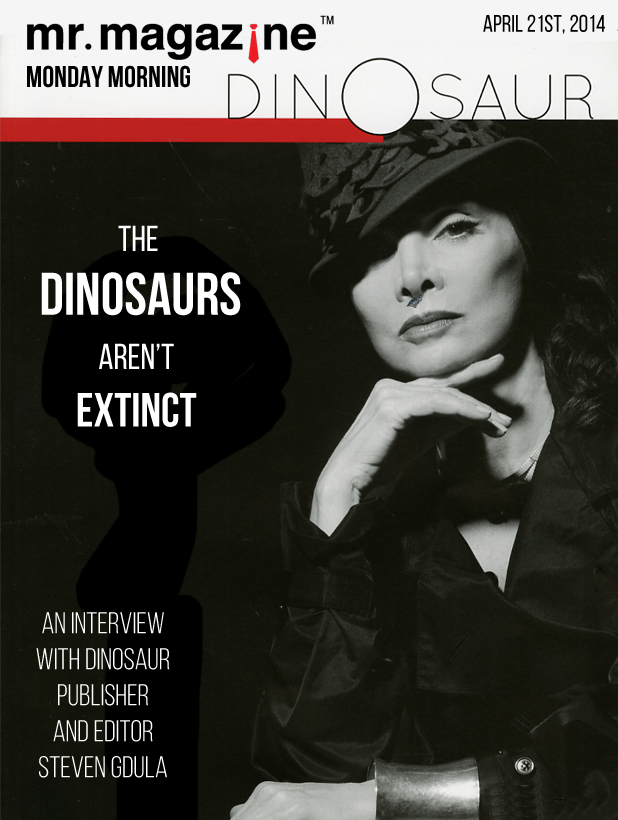
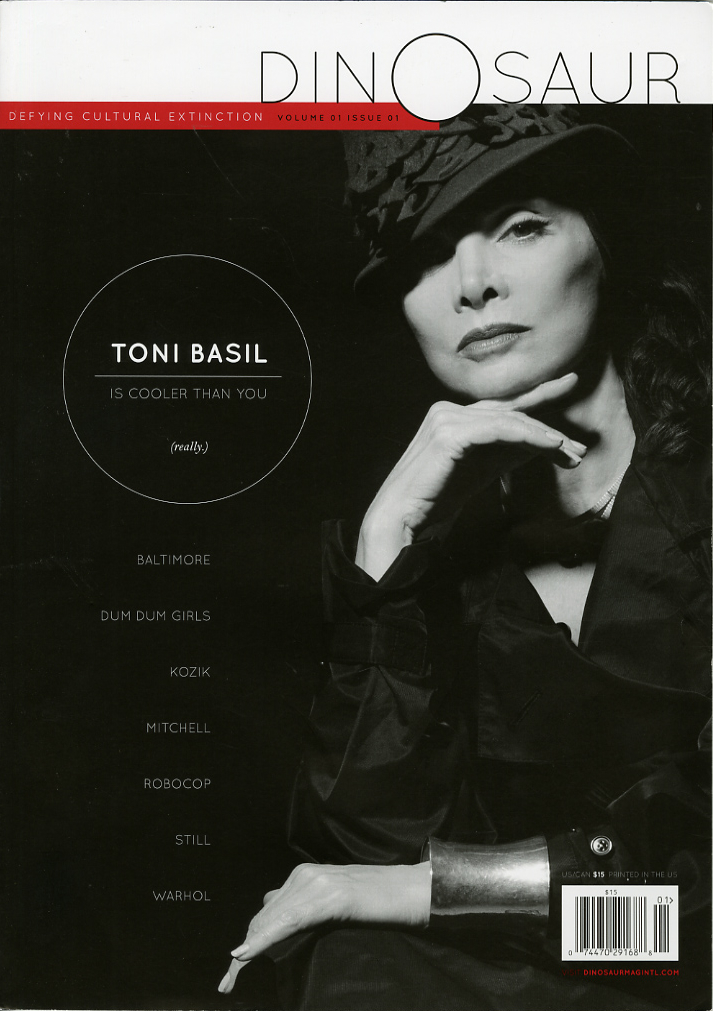
Just Like Print: This Dinosaur Isn’t Extinct. The Mr. Magazine™ Conversation With Steven Gdula, Publisher And Editor Of Dinosaur Magazine…

April 16, 2014

It’s Alive And Kicking And Showing Its Stuff In A New Ink On Paper Magazine That Targets Those Of Us Fifty And Older – Which By The Way – Is A Generation More Relevant And Active Than Ever Before

“… The three main themes behind the name. The idea of print being exciting or going extinct, the idea that there’s this diminished cultural relevance that gets put on people that are a certain age, and the idea that the magazine itself is large.”… Steven Gdula, Publisher and Editor of Dinosaur Magazine…

dinosaur2 Big, bold and vibrant – three words that describe the new magazine Dinosaur to a T. The oversized beauty is amazing to say the least. Targeting an audience of 50 year-olds and over, the premier issue focuses on Baltimore and each subsequent emergence afterward will feature a different city.

Steven Gdula Steven Gdula, Publisher and Editor of the magazine, is as exuberant about his new egg hatching as a proud “Dinosaur” parent would be. Behind the name lives the idea that sometimes people of a certain age get pigeon-holed or stereotyped with certain monikers, dinosaur being one of them.

That being said, this magazine proves beyond a shadow of a doubt that being a “dinosaur” isn’t a bad thing at all.

And now sit back and enjoy the Mr. Magazine™ interview with Steven Gdula, Publisher and Editor of Dinosaur magazine.

But first the sound-bites…


On part of the reasoning behind a three-page magazine introduction…

And we hoped that it wouldn’t be too indulgent, but we found it necessary in this climate with so many publications unfortunately folding that we needed to make our case for the direction of the magazine.

On the three themes to the magazine…
The idea of print being exciting or going extinct, the idea that there’s this diminished cultural relevance that gets put on people that are a certain age, and the idea that the magazine itself is large.

On the city of Baltimore, which is featured in issue No. 1…
There has always been something percolating there, something sort of rumbling just beneath the surface. And in the last 10 years it’s just now started to get its due. And it’s exciting to witness.

On the Eureka moment for Dinosaur…
Once my domestic partner, Lon Chapman, and I had the conversation where we had the Eureka moment of when he was encouraging me to re-launch this small culture zine that I had in the 90s, and I said…well, of course…the line that came out of my mouth, “What would I call it now? Dinosaur?” And that was our Eureka moment.

On the biggest stumbling block to launching the magazine…
The biggest stumbling block: getting advertisers to commit to something that while they trust you and understand your vision, until they can see it and hold it in their hands it’s outside their realm.

On the most pleasant surprise in regard to launching Dinosaur…
I think the reception, we knew that we had created something beautiful and we knew we had created something that people in our demographic would relate to. I didn’t anticipate just how strong the reactions were going to be. And it’s been humbling and just overwhelming.

On what keeps Steven Gdula up at night…

I worry about keeping this venture going, because I have asked people who I’ve worked with, as I said previously, for decades now, I’ve asked people to come along and be a part of this with us and I don’t want to let them down.

And now the lightly edited Mr. Magazine™ conversation with Steven Gdula, publisher and editor of Dinosaur magazine.


Samir Husni: Out of the 200-plus new magazines that are published with a regular frequency, usually only about five or 10 of them jump out at me and tell me I need to talk to this person. With yours, I came back last night from New York and the first thing I told my assistant is that I’m going to try to do an interview with Steven. Anybody who is willing to take three pages to write an editorial, introducing a new magazine, to me is a person who knows what he is doing…

Steven Gdula: Thank you very much. And we hoped that it wouldn’t be too indulgent, but we found it necessary in this climate with so many publications unfortunately folding that we needed to make our case for the direction of the magazine.

We wanted to show the necessity in our opinion for this type of publication right now in the marketplace and just to give people enough background so that when the reader would dive into that editorial they would feel hopefully an immediate sense of belonging and an immediate sense of identification and know that, yes, we were speaking to hopefully a position that they were finding themselves in at this point in their lives as well.

SH: What’s behind the name of the magazine, Dinosaur?

SG: It was certainly a Eureka-type moment based upon having, I think, a good sense of humor about myself and where I am at this point in my life. There are also so many other factors considering print is seen by some as part of the media that is going extinct.

The idea that the magazine itself was supersized and larger and would occupy a pretty good chunk of real estate on a coffee table or on a nightstand or wherever it was being displayed in a home.

And also the idea that there is a diminished cultural and creative relevance that gets attached to certain people of a certain age. I think that having been writing about the entertainment industry for a good portion of my freelance journalism career, I encountered people from time to time who were just 45 years of age addressing the issue of how much time they had left to be considered relevant with their output.

And that really stayed with me, especially as I was approaching 50 and the idea that you are a dinosaur and that what you are doing is no longer relevant and you are no longer contributing something of worth whether it be your creative output or whether it just be your opinion.

I’m reading right now Joe Orton’s diaries and I found it interesting that his partner was referred to by many in their social circles and their artistic circles as a middle-aged non entity. And I think at that time I think he was only in his mid to late 30s I believe.

That struck me because it would’ve been something that ended up in that editorial for the first issue of Dinosaur had I encountered before. And also, the South American writer, Jorge Luis Borges, who in one of his stories referred to someone as being middle aged and they were at the point in their life where their features were rendered infinitely vague.

And I was thinking about all these negative things that people are saying and people have said about the demographic that I’m now a part of. That was not my experience and that was not the experience of the people around me. And as we started talking about pulling this all together what was striking to me was how many of the artists that inspired me when I was growing up and when I was cutting my teeth and forming my own aesthetic, how many of those people were still active.

And the one person that I think that I mentioned in the editorial, specifically David Bowie, coming out after 10 years of supposed retirement with some work that stands up to some of his most brilliant moments in his career and he was 66 years old.

So I think that pretty much touches upon the three main themes behind the name. The idea of print being exciting or going extinct, the idea that there’s this diminished cultural relevance that gets put on people that are a certain age, and the idea that the magazine itself is large.

SH: You’ve crisscrossed the country. You fell in love with Baltimore, then D.C., now San Francisco. There’s sort of homage to Baltimore in the first issue. How are you trying in this magazine to connect the culture to the towns, to the audience?

SG: That’s a really good question and I hadn’t really thought about it. I was thinking ahead of the other cities that we’re featuring. Issue No. 2 will feature Detroit. Issue No. 3 will be Harlem. Issue 4 is Pittsburgh.

So I think that as far as particular relevance with Baltimore, it’s a place that’s been overlooked and just recently is starting to get its due in the media. People are seeing it as its own city and its own culture. Whether that has something to do with the Ravens and their success as well as an influx of new money that’s coming into the city in the form of the Four Seasons and Michael Mina has two wonderful new restaurants.

The food scene there has been developing I would say in the past five to seven years and has been very exciting to see, but there’s always been this vibrant, creative community with bands that some of which have now gone on to major label success and to great touring success. I’m thinking of especially Beach House.

There has always been something percolating there, something sort of rumbling just beneath the surface. And in the last 10 years it’s just now started to get its due. And it’s exciting to witness.

I have many good friends. My art director/partner in this endeavor — he and his wife are also our web team. I’ve known him since I moved to the city. Baltimore is a great place to be as funky, as creative, as unrestricted in your forms of expression as you want to be. I think that tying that into the culture of the first issue, we were looking at, “well what are some of the things that are overlooked that are now starting to be seen as valuable?” Of course people in our demographic feel this way.

And Baltimore just seems like a nice destination to include because visually it’s interesting, artistically it is as well. There’s a lot going on and I hesitate to use the word renaissance because I think that gets used to the point where it’s just no longer effective, it’s lost its meaning.

dinosaur2 SH: Having just mentioned that, I wanted to go back to that moment of conception, when the idea just cemented in your mind, did you go to Joe and say, “Let’s do this?” Who came up with this? All these things that you’ve just described about Baltimore are also in the magazine… I mean the magazine is very artistic, beautiful, the design, the size of the pictures, the whole package. It is indeed a coffee table magazine that demands pick me up, look at me. How does that come into being? Was it you and Joe sitting down and talking? Was it only the two of you or was there a whole bunch of folks that discussed this?

SG: Once my domestic partner, Lon Chapman, and I had the conversation where we had the Eureka moment of when he was encouraging me to re-launch this small culture zine that I had in the 90s, and I said…well of course…the line that came out of my mouth, “What would I call it now? Dinosaur?” And that was our Eureka moment.

I sat with that idea for a few days and realized that one of the things that I always missed was the gorgeous coffee table-sized magazines that were a part of my formative years. And I knew that there were other people out there that missed them as well.

Joe was somebody that I had known from that same circle of writers and artists who were getting up and doing open-mike poetry readings, that’s how Joe and I met. And I knew of his work as a graphic designer and as an artist and we had kind of had conversations over the years where we knew that we had the same aesthetic, well similar aesthetics and definitely an appreciation for visuals that pushed the boundaries a little bit, either literally on the page or I should say pushed the boundaries of what people expected from visual presentation in a magazine.

Joe and I both did small chap books, poetry books back in the 90s. So I knew immediately as I started to conceptualize that he was the person that I wanted to work with on this.

I sent him an email knowing he was extremely busy but I just said do you think that this is doable. I know that we both like large format art and music magazines and culture magazines and he wrote back immediately and said the short answer is yes.

Because we also realized that there was nothing on bookshelves, on the magazine shelves that was appealing to us the way the magazines that we grew up with had appealed to us. We also realized that a lot of our interests were still the same.

So in this ongoing conversation as we laid this idea out in our heads we were talking about the need for beautiful photographic spreads, interesting typography, and I had even said at one point that I loved the Arena, the Face, Vanity Fair in the 80s was spectacular, Interview magazine even Ray Gun magazine into the 90s. They were the types of magazines that I would leave open on the kitchen counter or on the coffee table because the visuals were so inspiring.

And Joe immediately knew what I was referring to and agreed. And we missed the idea of holding those things in our hands. You can pull up a beautiful image on your iPad and there are certainly gorgeous, gorgeous apps out there for various magazines, you can pull that image up on your iPad, you can pull that up on your computer screen. It’s not the same experience of having that tactile sensation of the glossy magazine. Joe is the one who really wanted to push for a certain weight for the paper.

We were in agreement as far as how everything should look and Joe took it one step forward and said this needs to have some heft. And the pages themselves need for practical reason because they have ink on them that we don’t want bleeding through, just so when the pages turn the idea is reinforced that this is something of substance, this is something of significance, the magazine itself, the image on the page, the words on the page.

And we knew some great photographers. I had worked with a couple of people before in Baltimore and some out here on the West Coast and I knew people that would be able to carry this out. Joe’s eye for framing is, he’s just incredibly gifted in that regard. He sees things that other people don’t see. And that’s why, again, why he was the perfect person to pair up with for this project.

SH: What was the major stumbling block in the road to launch the first issue?

SG: Only one? The fact that Joe’s extremely busy; he has a consulting business for user experience. And he and his wife also have a web company. So he was extremely busy. I was calling, I’m going to use the word favors, but I don’t want that to be misunderstood because everybody had been paid. And that was another thing that we wanted to do.

We felt that too many careers had been devalued by the web with writing just being posted and reposted and reposted. And in many cases, writers and photographers were being asked to work for free.

So it was very important to us that everybody was paid a fair wage for what they were doing and a competitive wage. But so when I say I called in favors, I reached out to people that I have worked with in a number of fields over the last 25 years. And a lot of them have a full time job and are actively engaged in some sort of side project as well. So time was an issue.

We had no trouble getting people to understand the mission statement and the direction, so that was easy. More than anything else it was a matter of commitment of time because people were stretched a little thin — like most creative people now, if they don’t have one full-time job then they have several freelance gigs that they piece together. So, that was certainly an issue.

And another thing was, it’s difficult to see the idea of the magazine without something to show people. So we went through a period of shopping around the brand and asking people to commit to advertising. That was the biggest stumbling block: getting advertisers to commit to something that while they trust you and understand your vision, until they can see it and hold it in their hands it’s outside their realm. So that was difficult. When we had people say yes, we will place an ad with you; in some cases they didn’t have an advertising budget in place for a while so we actually had to create their ads for them.

SH: So what was the most pleasant surprise?

SG: Reception. Emails like yours. The way people pick it up and immediately send an email to one of us, it’s been slow getting traction on Twitter and our Facebook presence isn’t even over a 1,000 yet. But I think that the reception, we knew that we had created something beautiful and we knew we had created something that people in our demographic would relate to. I didn’t anticipate just how strong the reactions were going to be. And it’s been humbling and just overwhelming.

SH: Steven, my last question to you is what keeps you up at night?

SG: What keeps me up at night? That’s a great question. And I limit my caffeine intake after a certain point in the day because of that.

I worry about keeping this venture going because I have asked people who I’ve worked with, as I said previously, for decades now, I’ve asked people to come along and be a part of this with us and I don’t want to let them down. And that is a source of some tossing and turning and more than one night glancing over and seeing 3:30 a.m. on the digital clock.

Because you know, it is a risk as I know you are fully aware. It is a risk and I’m asking people to take time that they could devote to something else to work on this project with us. And their commitment has humbled me. And I also want to prove that there is a need for this type of publication that targets this demographic. And we’re seeing it already. I just want to make sure that it lives up to the expectations that we have for it.

SH: Thank you.

© Samir “Mr. Magazine™” Husni, 2014. All Rights Reserved.

h1

Weaving Our Own Web of Entrapment… A Mr. Magazine™ Musing.

April 15, 2014

Gossamer and silky, intriguingly seductive, oftentimes media get entrapped in the web they weave and become cocooned forever inside that hypnotic space. Instead of becoming the butterflies they were meant to be, they get stuck on that web and unfortunately, never experience the joy of freedom.

As creative people, it is paramount for us to avoid that entrapment, because no matter how alluring that moment of conception and birth of that cocoon was, you do not want the sensuous swaddle to become your coffin.

-1 I love magazines, that’s no secret. I love ink on paper in particular, but my love for magazines and ink on paper hasn’t and won’t entrap me in the darkness of the cocoon that lives on that sticky web, whether it’s digital first or print first.

For in me there’s a larger love for the human aspect of magazines, which is the audience and when you fall in love with the audience I can guarantee you there are more benefits than falling in love with ink on paper or pixels on a screen.

The benefits, physical, emotional and spiritual are by far much more rewarding than the virtual love of digital or the tangible love of print. Falling in love with your relevant audience is not only necessary, but also sufficient.

So before you suffocate inside your little cocoon, break out and fly. After all, creativity without humans is worthless. We live, we love, we create and recreate only as humans and not as platforms, be they paper or pixels.

And if you need to break out of your cocoon, just let me know and the human me will be more than glad to show you how to fly!

© Samir “Mr. Magazine™” Husni, 2004. All Rights Reserved.
————————————————————————————————————————
mrmagazineapril14 Want more news, interviews and views from Mr. Magazine™? Be sure to subscribe to the new Mr. Magazine™ Monday Morning newsletter. It is free and it is delivered to your in-box every Monday morning. Click here to subscribe.

h1

Subscribe Now to Get the New Issue of Mr. Magazine™ Monday Morning…

April 14, 2014

mrmagazineapril14 The new newsletter from Mr. Magazine™ delivered every Monday morning to your in-box. This week’s cover story Reinventing TIME.com in addition to The Saturday Evening Post, Raising Cover Prices, Saving Newspapers and a Dwell interview from the vault. Click here to start your free subscription.

h1

So When Should You Raise the Cover Price of Your Magazine? MagNet Has the Answer in This Mr. Magazine™ Interview

April 14, 2014

Picture 10

An ongoing series of Mr. Magazine™ exclusive interviews with MagNet’s Luke Magerko.

Luke Magerko was a consistent contributor to my blog in 2013. Luke has partnered with MagNet to provide retail analytics for the publishing industry. Today, we pick up our conversation from two two weeks ago and, going forward, MagNet will provide me with an interview with Luke every other week highlighting retail analytics.

So Here is my first question of this segment of the Mr. Magazine™ Interview with MagNet’s Luke Magerko.

Samir Husni: DO YOU BELIEVE MAGNET CAN FIND A REVENUE ENHANCEMENT ON EVERY MAGAZINE TITLE?

Yes, we at MagNet believe there is at least one opportunity for every magazine at newsstand. Some opportunities are editorial in nature, some are pricing, and some are promotional.

Luke Magerko: MagNet creates a composite sketch of a consumer using exploratory data analytics (EDA) and statistical modeling techniques. We apply these analyses to determine whether marketing efforts successfully speak to the retail consumer.

For example, we can reveal if certain cover elements were successful, if the price point matches the consumer, and if the product is being sold in the right retail outlets.

SH: WHICH CATEGORY DID YOU ANALYZE THIS WEEK?
LM: MagNet is reporting on the young women’s category with results from February 2014 and March 2014. We also look at a potential opportunity for both magazines (and others like them) to significantly increase revenue.

Picture 1


SH: I NOTE YOU ADDED THE PHRASE “POS ESTIMATES” TO MARCH ISSUES. WHAT DOES THAT MEAN?

LM: The March issue off-sale dates are March 4 (Cosmo) and March 18 (Glamour). All unsold magazines have not been returned so I used Magnet’s Point of Sale (“POS”) data to estimate final sales. MagNet collects POS data for more than 40% of the US market.

SH: WHO WON THE MONTH: THE ISSUE CATEGORY STANDINGS (“ICS”)

LM: February was a soft month for both Cosmo and Glamour, however we estimate Glamour had a very strong showing (1.33 seasonal performance index) in March.

SH: YOU MENTIONED MAGNET HAS A PLAN TO INCREASE REVENUE FOR THIS POWERFUL CATEGORY?

LM: Last time we spoke, I pointed out that a celebrity price increase might not be the best approach to increase revenue. We at MagNet are not against all price increases, however. A price increase is a viable option for these two titles based upon their demography. Let’s focus on Cosmo, highlighting some pertinent demographic information, notably U.S. Census Bureau County Data. This approach also applies to Glamour.

SH: WHAT IS COUNTY DATA AND HOW CAN IT HELP PUBLISHERS?

LM: The United States Census Bureau breaks the U.S. into four distinct regions, ABCD. Here is a definition and example of each:
Picture 4

Now let’s look at an example of how county data is used: This map represents the 2012 Presidential election results by county. Please note that there are blue shades in a heavily red state like Texas and varying shades of red in a blue state like New York.
Picture 5

In many instances, there is more similarity between county groupings than regional groupings. For example, the audience in White Plains, New York, has more in common with the residents of Glenview, Illinois, rather than their fellow statesmen in Schenectady, New York.

This data intelligence supplements regional analyses and provides a clearer picture of the retail consumer.

SH: HOW DOES COSMO SALES BREAK OUT BY COUNTY?

LM: I referenced Cosmo’s website and media kit for this information.

Not surprisingly, 76.5 percent of Cosmo subscribers reside in the major or minor metropolitan (A or B) counties.
We also learned other important traits about the Cosmo subscriber: 56 percent of the readers are 18-34 years old and 83 percent 18-49. The majority are employed, college educated, and nearly half (49 percent) are single.

This information provides a composite image of the Cosmo subscriber: she is in her mid-twenties, single, urban and has significant disposable income.

SH: BUT HOW DOES THAT RELATE TO NEWSSTAND?

LM: Newsstand sales results can confirm subscriber demographics. MagNet compared Cosmo newsstand and subscriber county information and found newsstand sales results mirror subscriber data. 70 percent of all newsstand copies sold are in A and B counties. Further, using MagNet financial estimates, A and B counties are 15.4 percent more profitable than C and D counties suggesting a lower sell through efficiency in the C and D counties.

SH: I KNOW THAT THE PRICE FOR COSMO IS $3.99 IN THE U.S. EXCEPT FOR THE JANUARY AND AUGUST ISSUES WHICH ARE AT $4.99, SO WHAT WOULD YOU CHARGE?
LM: Knowing what we know from the sales data on January and August and the demographic information on Cosmo’s website, we recommend a rollout of $4.99 in the U.S. County information indicates the vast majority of readers live in areas where price sensitivity is less common.

SH: DOES THIS PRICE CHANGE HURT SALES?
LM: The January performance indices have been approximately 10% lower than previous four years’ issues (mostly due to a very poor 2013 issue) and August issues are slightly below average versus other issues. We believe the revenue increase validates the loss in unit sales contingent upon consumer marketing’s ability to find other subscription sources.

The key to any significant change at newsstand is to provide a strategic plan to consumer marketers to ensure price increases are implemented at the optimal time in the circulation cycle.

SH: HOW DOES THAT WORK?
LM: MagNet can work closely with consumer marketing departments to increase price at a time of year that produces high rate base bonuses or in concert with a rate base reduction. A successful price increase should be orchestrated to provide the least amount of disruption for the consumer marketing group.

SH: I HAVE BEEN TOLD IT IS MORE DIFFICULT TO GET PRICE INCREASES APPROVED.

LM: It should be difficult. A price increase for the sake of a price increase is not a solid business model. Most magazines’ page counts are decreasing because of advertising loss. Our price increase recommendation provides incremental revenue that will:
•Increase wholesaler profitability
•Allow stronger promotional activity (thus increasing sales further)
•Enable product enhancements such as more content or higher paper quality

There are more interesting findings using county data and MagNet will be providing those analyses in the future.

SH: THANK YOU.

© Samir “Mr. Magazine™” Husni, 2014. All rights reserved.

h1

The Reinvention & Re-Launch of TIME.com – Henry Luce & Briton Hadden Would Be Proud…The Mr. Magazine™ Interview With Edward Felsenthal, Managing Editor, TIME.com

April 10, 2014

photo-1 On the 23rd floor of the Time & Life Building, Edward Felsenthal, managing editor of TIME.com has managed, together with a host of new editors and producers, to breathe new life into TIME.com’s website. The man from Memphis, TN, is determined to keep TIME.com’s audience first, while bulking up the new digital face of the brand with exciting interactive features and long-term, full stories reminiscent of days gone by in the world of print magazines.

I had the opportunity to visit with Mr. Felsenthal in his office in New York City, and being the true southerner himself, I was not able to convince him that my accent is the true southern accent of Oxford, Mississippi.

I asked Mr. Felsenthal about whether he believes that the fresh look of the site will complement the ink on paper product of the brand nicely and feels their 50 million digital fans will agree with him; competing with the print product isn’t his point; after all, you can never have enough time.

Our conversation ranged from the role of digital in today’s news magazines’ marketplace, to whether audiences are catching up with the changes in the magazine and magazine media world of publishing.

So before you sit back and take your “time” as you read the Mr. Magazine™ conversation with Edward Felsenthal, managing editor, TIME.com watch his answer to my question about journalism and native advertising. Is he afraid that native advertising is creeping into the journalism world and impacting journalism as a whole? His answer is below in the Mr. Magazine™ Minute.

And now for the sound-bites…

On the reinvention and re-launch of TIME.com and whether it’s complement or competition for the print magazine: It’s a complement. The recognition that it’s complementary is what has enabled us to change as much as we have in the past year and grow as much as we’ve grown.

On whether it’s a mistake to focus on print or digital first, rather than audience: Yes and no. I mean, I absolutely think it’s audience first and platforms only matter to the extent that it’s where the audience is.

On whether there’s an audience for TIME 360 and its multi-platform: I think one of our challenges, or maybe better to say, one of our opportunities is there’s not a lot of overlap in the TIME.com reader and the Time print reader. They’re largely different people.

On the biggest stumbling block faced when re-launching TIME.com: So I probably would have guessed that the biggest stumbling block would have been that not everyone was brought into the mission and maybe some people were still tethered to the magazine first and foremost, but that turned out not to be the case at all.

On what keeps him up at night: So we’ve made a tremendous amount of progress, but we our ambitions extend way beyond that. So getting from here to there is the next challenge. And that’s what keeps me up at night.

And now the lightly edited Mr. Magazine™ conversation with Edward Felsenthal, managing editor, TIME.com…

Screen shot 2014-04-09 at 9.10.54 PM

Samir Husni: You recently reinvented and re-launched TIME.com. In this digital age that we’re living in, how do you balance between the necessity of the printed version of TIME Magazine and TIME.com? Is it a complement or a competition?

Edward Felsenthal: It’s a complement. The recognition that it’s complementary is what has enabled us to change as much as we have in the past year and grow as much as we’ve grown.

My first week here, I started almost a year ago here at TIME, somebody handed me a memo that Henry Luce wrote in 1920-something about what Time should be and what’s amazing about that is it’s really spot-on for what TIME.com is today and what a smart news publication needs to be successful in the digital era.

The very name TIME comes from the fact that none of us ever have enough of it. TIME is brief was the Luce slogan. And in the original magazine no story was over 400 words. So TIME was the original aggregator.

What we’ve done on the web is totally complementary with TIME’s mission and our working slogan this year has been: we now do twenty-four-seven what the magazine has always done for the week, which is explain and shed light on what is happening in the world.

Samir Husni: The very first book I read when I came to America was “The Intimate History of Time Inc.” And I fell in love with the idea of the way Henry Luce and Briton Hadden came up with the idea for TIME. I don’t think that if Luce started TIME today he would do it any differently than going to digital and saying this is the platform where the audience is because he was an entrepreneur.

Edward Felsenthal: He won an Oscar. TIME was multi-platform before anybody.

Samir Husni: Do you think it’s a mistake today to focus on digital first or print first, rather than focusing on audience first?

Edward Felsenthal: Yes and no. I mean, I absolutely think it’s audience first and platforms only matter to the extent that it’s where the audience is. I think there’s a lot of reason for us to think in a digital first or even a mobile first way because the audience is moving there so quickly. And in fact 50 percent of our TIME.com audience is mobile, either phone or tablet, which is extraordinary. Higher than almost all of our competitors and we’re all growing in terms of percentages that are mobile, but 50 percent?

We have to think that way because the audience is going that way, but the thing I’m proudest of about our re-launch last month is that it was, in a sense digital first since it was a website re-launch, but it was a multi-platform event. We have lots of new elements on our website, a new look on our website and a new user experience on our website, but the stand-out feature of our launch was the One World Trade story in panorama, interactive video. It was a gatefold cover in print. It was a terrific story in the well, in print. It was at the top of our new website homepage linking to one of the most extraordinary interactive experiences; you can practically find your doorbell in your apartment in Brooklyn or Manhattan or any of the boroughs from the vantage point that John Woods stood at.

And there was a documentary film about the steelworkers with it. So it was an interactive, documentary video with incredible photography, plus a book about the making of One World Trade.

So we’re in a terrific position. We still have 3 million subscribers in print and the power of the Time cover is still, in my mind, the greatest showplace in journalism.

You phrased the question is it a mistake to think digital first as opposed to audience first, but I think we are audience first and we’re multi-platform even as we rapidly and radically reshape and speed up our digital efforts.

Samir Husni: You now have TIME 360 and it’s multi-platform. Do you have an audience that’s 360 now or is the audience lagging in becoming your 360 audience? Are we moving way ahead of them?

Edward Felsenthal: We’re not way ahead of our audience in the sense that we’ve got a huge audience like 50 million in digital, 3 million subscribers in print; so the audience is in all the places that we’re reaching them.

I think one of our challenges, or maybe better to say, one of our opportunities is there’s not a lot of overlap in the TIME.com reader and the Time print reader. They’re largely different people. So I think that’s a great opportunity for the Time brand and it’s true of a lot of brands at Time Inc. To attract the TIME.com user to content in the magazine experience to…if you like TIME, hopefully you’ll like TIME.com. It’s the same people doing all of it.

We’re lucky that we have significant audiences when it comes to getting our content on every platform. The opportunity for us is to deepen the loyalty to the brand across platforms.

Samir Husni: What was the biggest stumbling block that faced you launching the new TIME.com?

Edward Felsenthal: That’s a good question. What was incredible about this experience was that I’ve been in a lot of places and I’ve done a lot of launches and re-launches, but what was pretty amazing about this experience was, and I think it’s unusual, there was a unity of purpose across every department that was involved in launching this new site.

There’s a business strategy that Todd Larsen championed which got us the funding to do this. And unanimity within the company and in edit around that strategy and there may have once been a time when print and digital in edit were not in sync, but Nancy Gibbs, who’s my boss, has made it the really fundamental principal of her tenure, so far and that is we are one editorial staff across platforms.

So I probably would have guessed that the biggest stumbling block would have been that not everyone was brought into the mission and maybe some people were still tethered to the magazine first and foremost, but that turned out not to be the case at all. And I think the reason that we had a great launch and the reason traffic has performed as well as it has and the response of the site in general has been as strong as it has is because everybody on this floor and in TIME edit offices around the world is excited about the digital opportunity and wants to be a part of it.

Samir Husni: So you feel that was the most pleasant surprise?

Edward Felsenthal: I think that was the most pleasant surprise, yes. What we’ve done here is interesting because we’ve been in a lucky position to be able to hire a lot of people all over the time. We’ve hired people in sales, in technology, product and in edit. And we’ve hired in edit from a lot of places that TIME has never hired from before, from Business Insider to Vox to Gawker.

And that new talent has brought great things into TIME and a different way of approaching content and storytelling and a truly digital metabolism. At the same time, a lot of the reasons that those people came here was because they want to work with and learn from the legends of TIME. Almost everyone we’ve hired as part of the digital expansion is writing for the magazine as well and many of them are doing big, long-term, well stories.

At the same time the long timers at TIME have benefited tremendously and are learning from the newcomers, so it’s a whole new DNA that combines old and new and if you look at our traffic and at what performs well on our website, it’s a mix. One of the top performing items on the site was the Steve Brill, “Bitter Pill” story and it was a classic in the sense that it was the opposite of aggregation.

Samir Husni: My last question; what keeps you up at night?

Edward Felsenthal: We’ve made a lot of progress over the last year, but we have also big ambitions and a long way to go. I think the great news is that TIME.com lives up to what the Time brand enables us to do and requires us to do. It’s now a twenty-four-seven news source that brings the best of what Time has to offer all through the day and week.

Our ranking relative to competitors has grown a lot in the last 8 to 10 months. I think we all feel we have a brand that is strong enough to be really in the very top tier of destination when it comes to sites.

So we’ve made a tremendous amount of progress, but we our ambitions extend way beyond that. So getting from here to there is the next challenge. And that’s what keeps me up at night.

Samir Husni: Thank you.
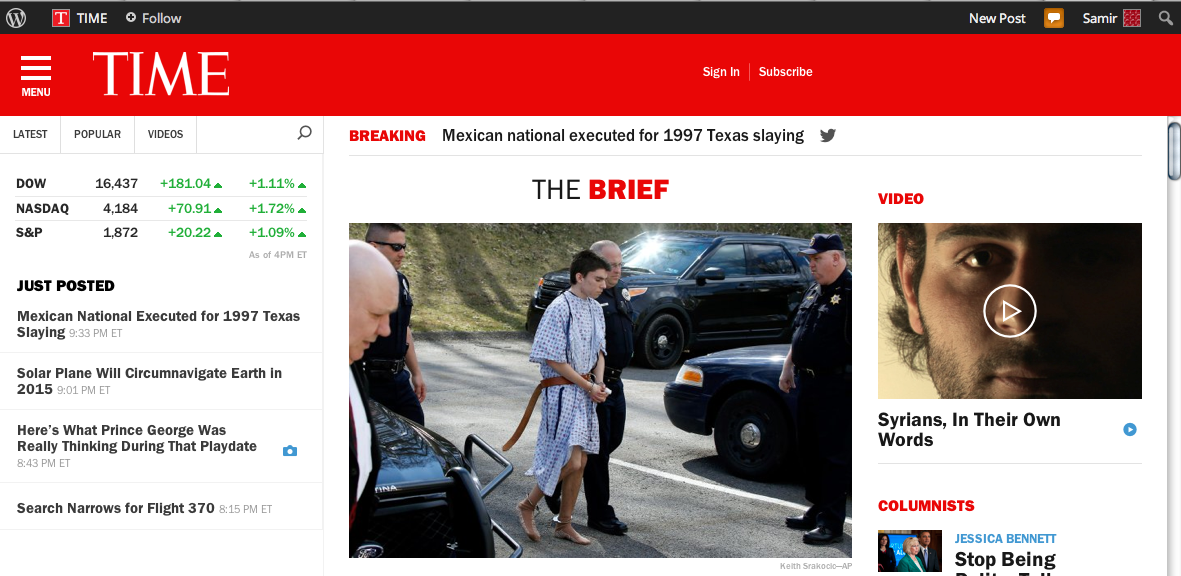
© Samir “Mr. Magazine™” Husni, 2014

h1

Joan SerVaas: A Woman with a Mission. Continuing to Tell the American Story on the Pages of The Saturday Evening Post. The Mr. Magazine™ Interview.

April 9, 2014

Joan SerVaas What does it take to own and maintain an American Icon? Well, for the late Beurt R. SerVaas and his wife Cory Jane the answer was very simple: it was not what does it take but rather whatever it takes. Cory Jane SerVaas fell in love with The Saturday Evening Post after her husband bought it, and thus the plans to buy the magazine, enhance it, and resell it fell apart and the magazine remained in the SerVaas family since they bought it in 1970.

Earlier this year Beurt SerVaas died. His daughter Joan has been the publisher and force behind the magazine since her parents retired a few years back. However, almost 45 years later, Joan SerVaas carries the burden of keeping this American icon alive. Her reason is very simple: to keep on telling the American Story. Her mission is difficult, but not impossible. Her love and passion for the magazine is endless and priceless.

Yet, she knows the hurdles she has to overcome and the stereotypes she has to deal with. Ever-smiling, always energetic and moving, she sat in her office in Indianapolis, IN for a few minutes to answer my questions about her efforts to keep the magazine alive and her reasons behind such an effort.

And, of course, in a typical Mr. Magazine™ Interview, she told me what keeps her up at night.

Click on the video below to watch my interview with Joan SerVaas, publisher, The Saturday Evening Post magazine.