h1

Mr. Magazine™: The Beginnings. Part 2 Of Mr. Magazine’s™ Life With Magazines.

September 12, 2022

At age 10 I fell in love with magazines. The rest is history. A history that you will read about it soon in the book I am working on The Magazines And I. What follows is part 2 of the book’s introduction. Hope you will enjoy…*
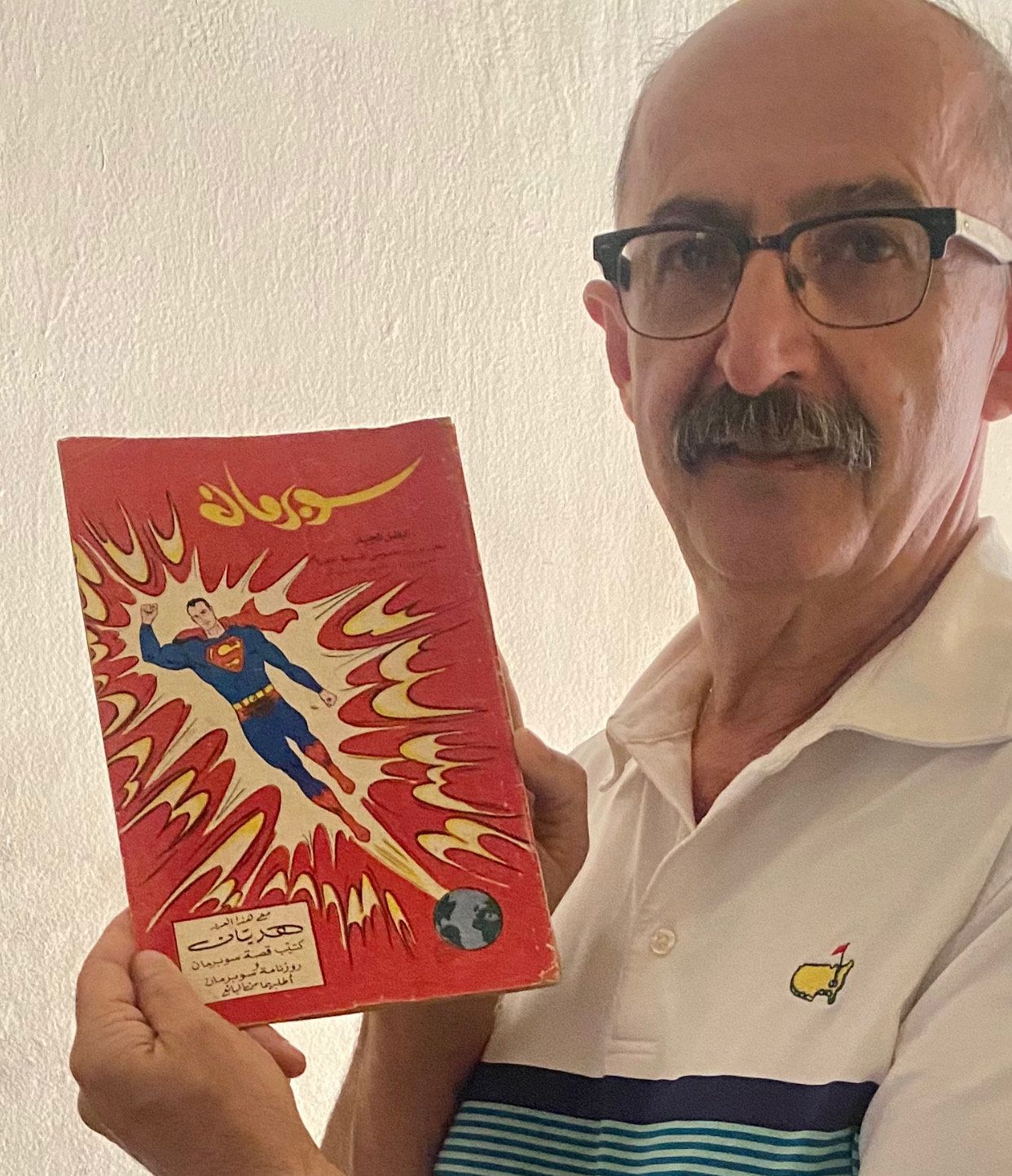
Superman and I: The magazine that started my journey into the magazine world.

My Family Roots

There were five children in my family, my older sister, my three brothers and me. My eldest brother, who was three years older than me, died in 1999 of multiple sclerosis. He was the pride of the family and carried my grandfather’s name – Khalil, like Kahlil Gibran, but spelled correctly. He was the first one in our entire family to have a Ph.D. – it was in English Literature and from the University of Exeter in the United Kingdom. My sister and my two younger brothers are still in Lebanon. I am the poor, misunderstood middle child and maybe that explains my tendencies to be different from what my family deems “normal.” My wife, Marie, is also the middle child. Possibly the reason we understand each other so very well. 

My father was Presbyterian and my mother was Greek Orthodox. They moved from our village called Hakour 20 miles to the north of the big city of Tripoli so my dad could find work. My grandfather was the mouhtar (mayor) of the village, and we had olive groves and an olive mill to make olive oil. When my parents married, my mom was 14 and my dad was 20. It took my mom five years until she had her first child. It was always looked upon as wrong if you didn’t have a child. My dad was the only son, and he had six sisters. My mom had no brothers. So I had no uncles – just aunts. 

Dad found work at the Iraqi Petroleum Company, which was owned by the British. He worked in shifts, and whenever there was a holiday they paid him double. When I was born in 1953, Tripoli was the second largest city in Lebanon. Tripoli comes from the word Tri-po-lis, which goes back to Greek or Roman days, and means the tri-city. The city flooded in 1955 when the river, Abu Ali, overflowed. For some reason, I can remember my dad carrying me on his shoulders and walking in the mud. I was only two, but I recall that he was wearing rubber boots and the mud was high. We lived on the first floor, of the apartment building and the entire floor was filled with mud. 

Our family of seven lived in a two-bedroom apartment. Mom and Dad had a room and the rest of us shared a room.  Being Presbyterian, we kids were sent to a Presbyterian school started by American missionaries. From the first day that you start school at age three, you learned to speak, read, and write Arabic and English at the American school or Arabic and French at the French school. If you were Presbyterian, you went to the American school. 
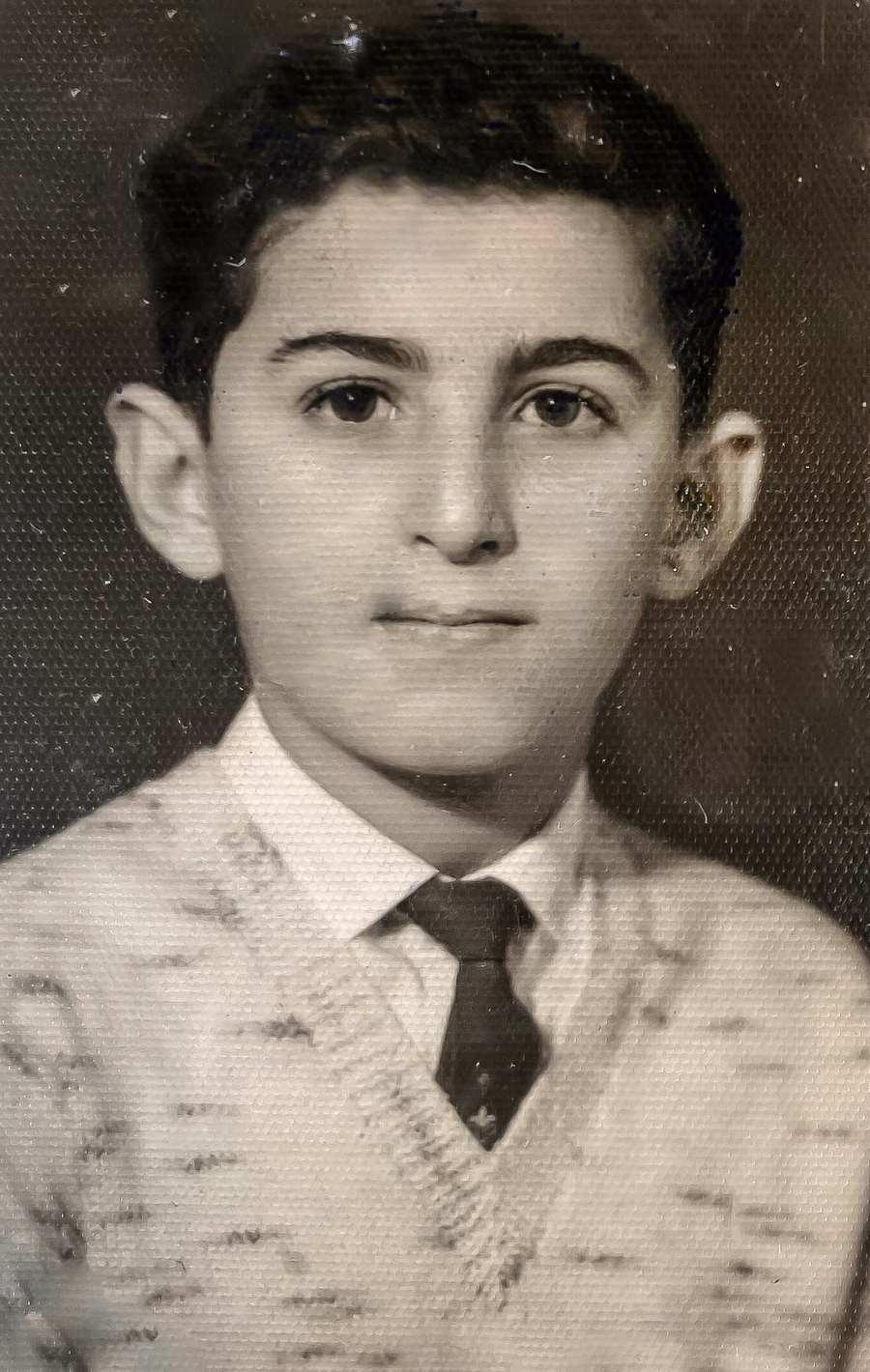
At age 10 my long lasting relationship with magazines started…

We had two American schools in Tripoli: the boys’ school and the girls’ school, run by Presbyterian missionaries. It wasn’t until 1958 that the missionaries gave the schools to the Presbyterian Synod in Lebanon and Syria to be run by locals. The American boys’ school was a good walk away on a hilltop, and the girls’ school was closer to our house, so that’s where I went, the girl’s school, until the third grade. 

The Tripoli Boys School, where I studied from grade 4 to 12, before the beginning of Lebanese Civil War in 1975. The school was occupied and semi destroyed during the war.
I visited my original school in 2018. It has been renovated and is now a public school in Tripoli, Lebanon. Tripoli Evangelical School is now the combination of both Boys and Girls school and is located east of Tripoli.

They were actually called Tripoli Boys School (TBS) and Tripoli Girls School (TGS), but everybody referred to them as American Schools. Today they are combined and called Tripoli Evangelical School (TES). After third grade, the boys and girls went to separate schools. That was the environment that I grew up in. 

Words of Wisdom

From an early age, my dad used to give me what he thought the principles of life were that any employed man should live by: comb your hair, keep your clothes clean and shine your shoes. Simple as that. Before school, he’d shine our shoes. Or if he was busy, he’d get somebody to do it for him. He was so adamant about this, and neither he nor my mom even had a high school education. Dad did his best to study English on his own because most of his employers were British. Because of this, and recognizing the need for a formal education in the future, my parents recognized the importance of education early on, and invested in sensing us to private schools instead of the free public schools. 

Names carry heavy meaning with them in middle eastern culture. All children carry their father’s first name as their middle name. First born sons have the privilege of naming their own first born sons after their fathers. So after my brother was diagnosed with MS and before his death in 1999, he gave me his blessing and his privilege of naming any son that I might have after my dad, “Afif” (Afif is the French spelling that we Americanized to Afeef, the English spelling for easier pronunciation), because he would never have the opportunity to do so. Sometime after that, when my wife was pregnant with my son, I was on the phone with my father and he asked me when he was going to have his “Afeef.” Until that point, we had not truly considered calling our son Afeef. After that, we knew we had to honor my brother’s memory and my father’s wishes and give him a namesake. When my son, Afeef, was born, Dad said he could die in peace.

That’s why a name is so important – it’s a commitment, a culmination of all things past and present that make up a deeper meaning for all who hear it. Some people have asked me why I would call my son a difficult name like Afeef in America. People don’t understand the importance of that name. My dad’s name was Afif, which means pure, and my mom’s name is Afifi, which is exactly the same thing, just feminine. They were not related, just pure coincidence. In Arab culture, often times people can distinguish what religion you are based on your name. All of the names of the children in my family were genuine Arabic names, not named after any particular saint or prophet. My grandfather used to say all the time that people should know your religion by deeds, not by what you tell them, not by what they call you. Myth has it, or what I heard growing up, that if you are Presbyterian and you appear in court, you don’t have to swear on the Bible because Presbyterians don’t swear. Only one percent, if not less, of Lebanon is Presbyterian. So, needless to say, we were from the minority of minorities.

The True Beginning

In the ninth grade, I started calling and harassing editors and complaining to them. That was about the time I started creating my own small magazines. Because at that age, we would visit my grandparent’s village in the summer where there were no magazines. I felt like I had magazine asthma without my ink on paper. I started making my own as an idea to kill time. I would borrow my grandfather’s transistor radio and all day I would sit down and create my own little daily. I’d use candles from my grandmother’s house, rubbing the candles on paper and then rubbing the paper back on old newspapers to get pictures. I’m not sure how I knew to do that, how I knew that images could be lifted in that way, but I did. And I was ecstatic.

That was when I discovered the concept of what I now believe in wholeheartedly. It’s what I preach, teach and consult about: the audience of one.

In those early publications of mine, I was the editor, designer, reporter, and the publisher. At the end of the day, I’d sit down and read my own creations. This whole concept of one theory was both an epiphany and also unbelievable to me. I made my magazines for me, to my specifications. Those may have been some of the first niche productions. At that point in time, without really realizing it, I had targeted an audience: myself.

The First Byline

But the breakthrough in my childhood magazine career happened when I had the opportunity to visit Beirut in 1969 and tour some actual magazine publications. I met the publisher of a magazine called Al-Biet Al-Saeid (Happy Home), and I told him how much I loved the magazine. On the day I left Beirut, his wife called me and asked if I wanted to be the correspondent from the north for the magazine. I said absolutely.
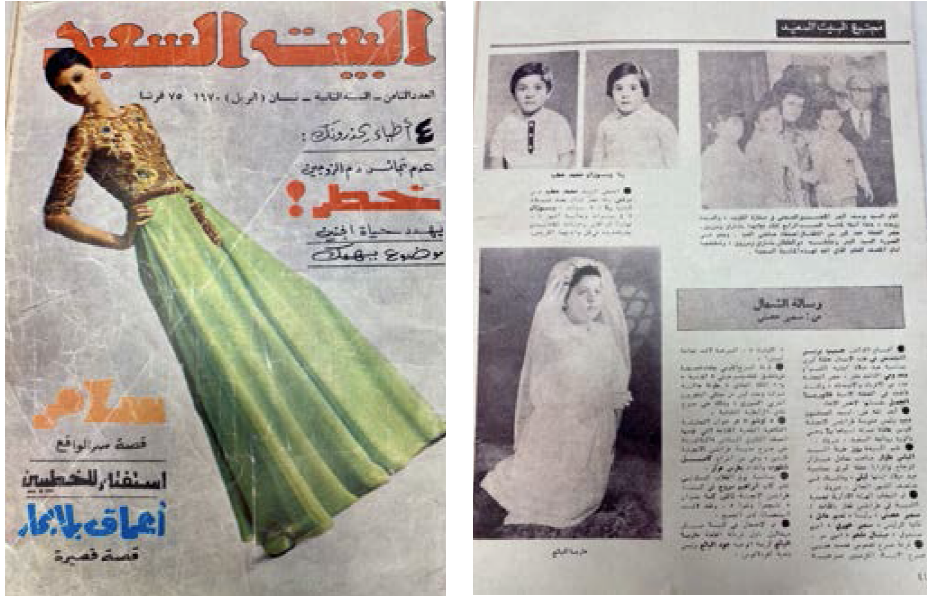
The Happy Home magazine where my very first printed byline appeared in April 1970.

My first assignments consisted of sending actual reports from our area of the country back to Beirut. It wasn’t long until I was doing “News from the North” with my byline. I would include items like “so and so died or so and so got married.” I actually still have a copy of that. My late cousin, God rest her soul, sent me a copy because I wrote a piece about her when she was christened and included her picture. The combination of doing my own writing and starting to buy every issue I could get my hands on changed my approach to things in junior high and later in high school. At that time the number of titles flooding the marketplace continued to grow, names like Superman, Tarzan, Batman, and even a pure born and bread Lebanese magazine called Magic Carpet, with the other Egyptian titles such as Mickey and Samir (my namesake, ha ha ha).

Even having a magazine with my name it continuously didn’t satisfy me. I wanted all magazines in general. During that time period, I was very involved with my church. It was not an option for us growing up. If it was Sunday, that meant Sunday school and church. I remember spending my Sunday allowance, which my dad gave me 50 cents, one quarter for Sunday school and one for a piece of cake from the pastry shop next to the church. One time, on my way to church, I lost one of the quarters. It was a big debate. Did I lose the Sunday school quarter or my allowance quarter to buy the piece of pastry? I made up my mind. God can see everything. That was his quarter and he knew where it was. My parents didn’t seem to agree. Beside that piece of cake, all my allowances went to buying magazines. I don’t think my parents ever really understood my magazine obsession. Their dream was for me to either go to seminary because I was so involved with the church and become a preacher, or become a dentist- both noble professions in their eyes.

Math Meets Magazines

In Lebanon, once you reach the 11th  grade, you declare an education concentration: scientific or literary. And if you are going to dental school, you have to go with science and take classes like physics, geometry and calculus. If you want to study languages, you do literary.

It was a struggle. I had to listen to my dad. I went with the scientific orientation. I’d be sitting in the geometry class, which I was never good at because I never had any patience to sit down and find the area of a triangle or a circle; I’d find myself sitting in class relating the triangles and circles to magazines. What would I create? My entire notebook had more magazine covers than any geometry problems.

I was an average student in high school, but that fascination was always with me. It led me to daydream a lot about this business. Triangles and circles became magazines. And of course, I discovered how this business worked. I learned about wholesalers, distribution, which day they would go on sale, etc. I worked my way from the newsstand sellers to the wholesalers. I tracked the line backwards from how the magazine came to the consumer.

It was at that time that I became acquainted with the wholesale distribution house in Tripoli, which was owned by a family called Jarrous. And because the man had told me to start coming at night so that I could see the magazines before anyone else, I became a fixture there. The distribution house was in an alley near the old center of Tripoli. I remember the first time before he offered me the see-before-anyone opportunity, I would stand sheepishly by the door because I didn’t want them to scream at me. The magazines were unloaded and people from newsstands came to collect them. One day I got the guts to go in and ask the guy if I could take a look. A few days later, I talked to him and he began to explain how distribution worked. It was so fascinating to me that he’d let me see magazines before they were on the newsstands. It was on one of those days when Mr. Jarrous asked me if I wanted to come the night before and he’d let me take whatever magazines I wanted so I wouldn’t be late for school. I would have magazines in my hand before anybody else in the entire city. I don’t think I slept that night.

All the while I stayed on the scientific course I had set for myself. I loved algebra and loved statistics, but I hated geometry. When I took the national test, the math exam was all on geometry. I flunked it badly. But when things were tough, I fell back on my hobby, when things were dark, I’d start dreaming, and when things were light, I kept on going.

The Success of Failure

Since that time, I have thought about one defining fact in my life, if I hadn’t flunked that year, my whole academic career would have ended one year earlier. My life would have been tragically different. I would have graduated before the Civil War in Lebanon began. I wouldn’t have met my wife and I wouldn’t have had a job at the newspaper. So many things would have been different. But there is a reason and a time for everything, I truly believe.

When I was repeating that year, my youth director came to me one day and said, “Samir what have you decided you want to do?” I said that I didn’t know – my parents wanted me to go to seminary or dental school. He looked me in the eye and said he knew it wasn’t his place to disagree with my parents, but, “If you do anything in your life besides journalism, you are disregarding the gift that God has given you.  You don’t have to be a preacher to tell people about God and his love. You don’t have to be a dentist and spend the whole day looking in people’s mouths. God has given you this gift called journalism, and that’s what you need to do.” That year I passed the exam because it was mainly algebra and statistics, and I told my parents that I was going to journalism school.

I had built up these expectations that they were going to be angry. But amazingly, they were resigned to the fact that this was going to be my chosen path. I realized that this was it. What I had been dreaming of the last decade from age 10 to 19 was about to become a reality. I was going to journalism school.  And they said okay. (More on that later…)

*To see the first part of the beginning of my journey with magazines please click on the link below…
h1

The Man Who Sold Superman To The World (And Me)… A New Book By Howard Blue

August 16, 2022

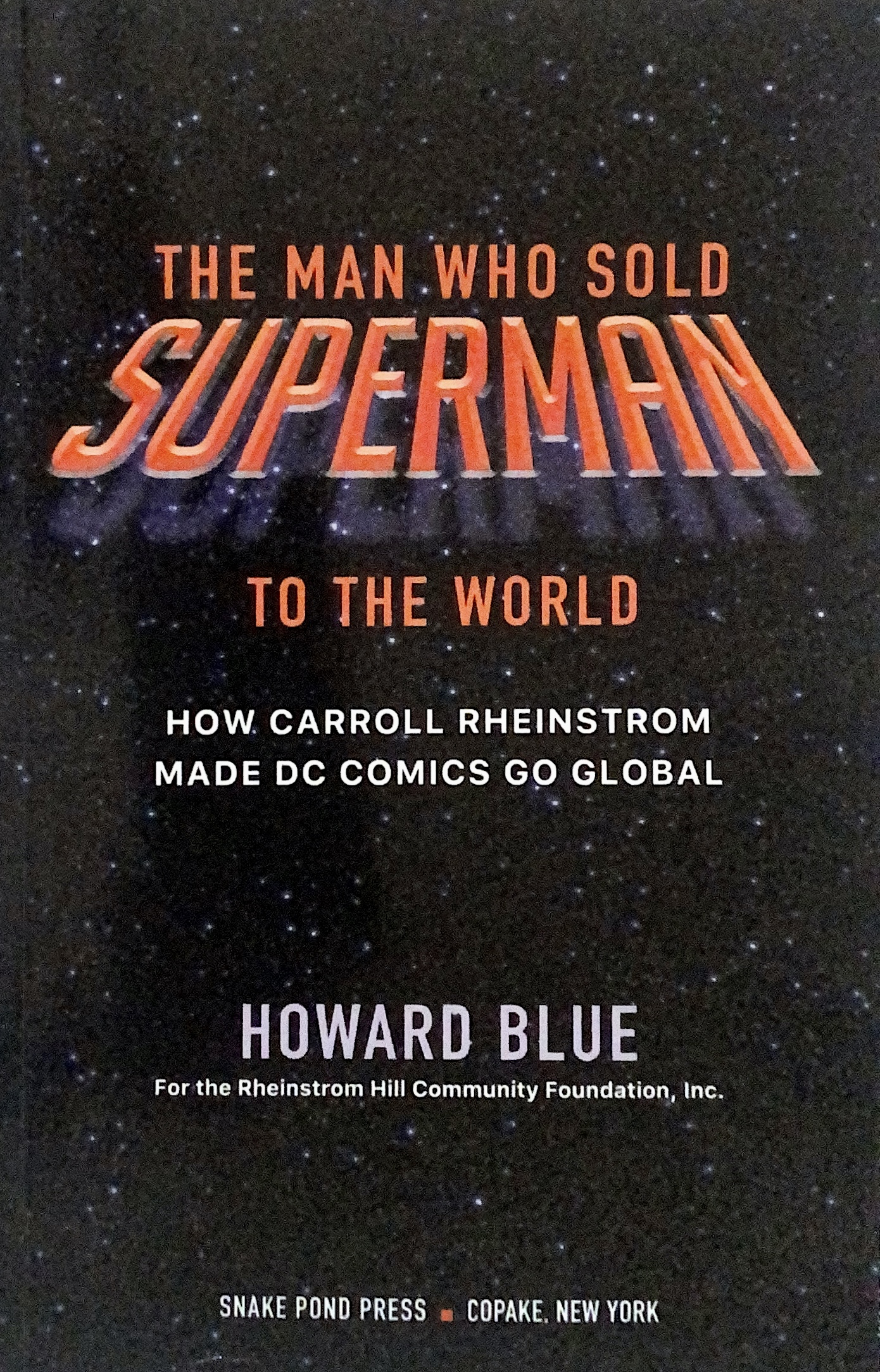
By now, most of this blog readers, know that my career in magazines started after falling in love with the ink and paper of the Lebanese first issue of the comic book Superman. Well, until recently, I did not how Superman made it to Lebanon in the 1960s of the last century. Howard Blue, the author of the new book The Man Who Sold Superman To The World, knew and documented how Superman made it to Lebanon and the rest of the world for that matter.

The Man Who Sold Superman To The World( front cover).

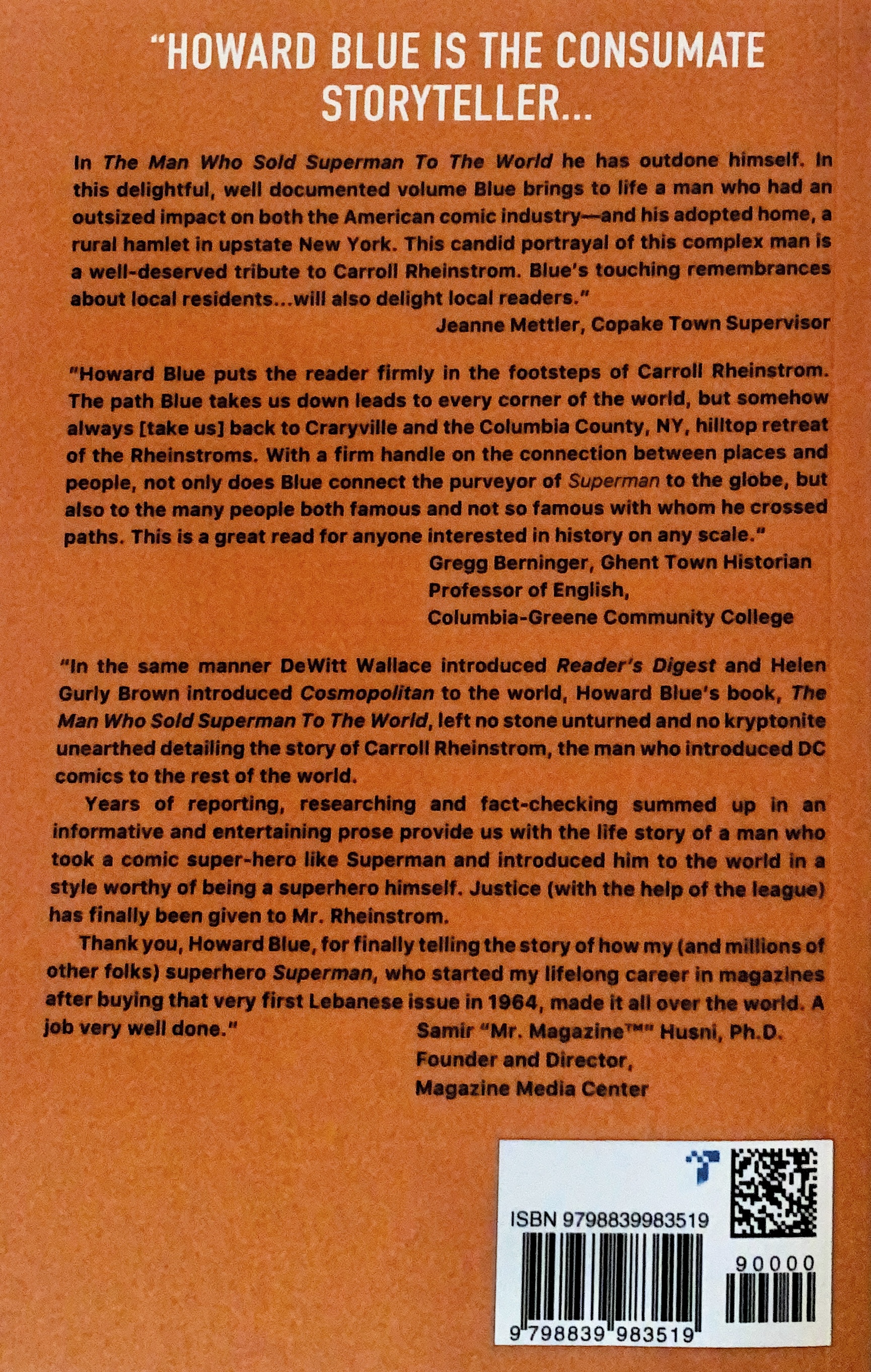
After reviewing the book, here is what I wrote and Howard thankfully used my review on the back of the book:

In the same manner DeWitt Wallace introduced Reader’s Digest and Helen Gurly Brown introduced Cosmopolitan to the world, Howard Blue’s book, The Man Who Sold Superman To The World, left no stone unturned and no kryptonite unearthed detailing the story of Carroll Rheinstrom, the man who introduced DC comics to the rest of the world.  

Years of reporting, researching  and fact-checking summed up in an informative and entertaining prose provide us with the life story of a man who took a comic superhero like Superman and introduced him to the world in a style worthy of being a superhero himself.  Justice (with the help of the league) has finally been given to Mr. Rheinstrom.  

Thank you, Howard Blue, for finally telling the story of how my (and millions of other folks) superhero Superman, who started my lifelong career in magazines after buying that very first Lebanese issue in 1964, made it all over the world. A job very well done.

Samir “Mr. Magazine™” Husni, Ph.D.

Founder and Director

Magazine Media Center

The Man Who Sold Superman To The World (back cover).

And here is part of what Mr. Blue wrote about my fascination with Superman in the book:

In Tripoli, Lebanon in 1964, ten-year old Samir Husni who became a dedicated fan of IP’s version of Superman (and who would in his professional life become known as Mr. Magazine) heard of it for the first time in a TV commercial when the famous phrase, “Look up in the air. It’s a bird it’s a plane, it’s Superman,” caught his attention. Saving up his weekly forty cents allowance, Samir crossed the street in front of his apartment and bought a copy in the neighborhood grocery store. Walking back home he had an almost magical experience, mesmerized as he read about the man from another planet…

The Man Who Sold Superman To The World is available on amazon.com by typing “Howard Blue Superman” you will land on the page to order the book. Highly recommended if you are a DC Comics fan and even more recommended if you are a Marvel Comics fan (as in know your enemy)… Enjoy

h1

A Tale Of Two Magazines: One & Tomorrow’s Man. From The Mr. Magazine™ Vault

August 8, 2022

A Tale of America’s First Two Gay Magazines

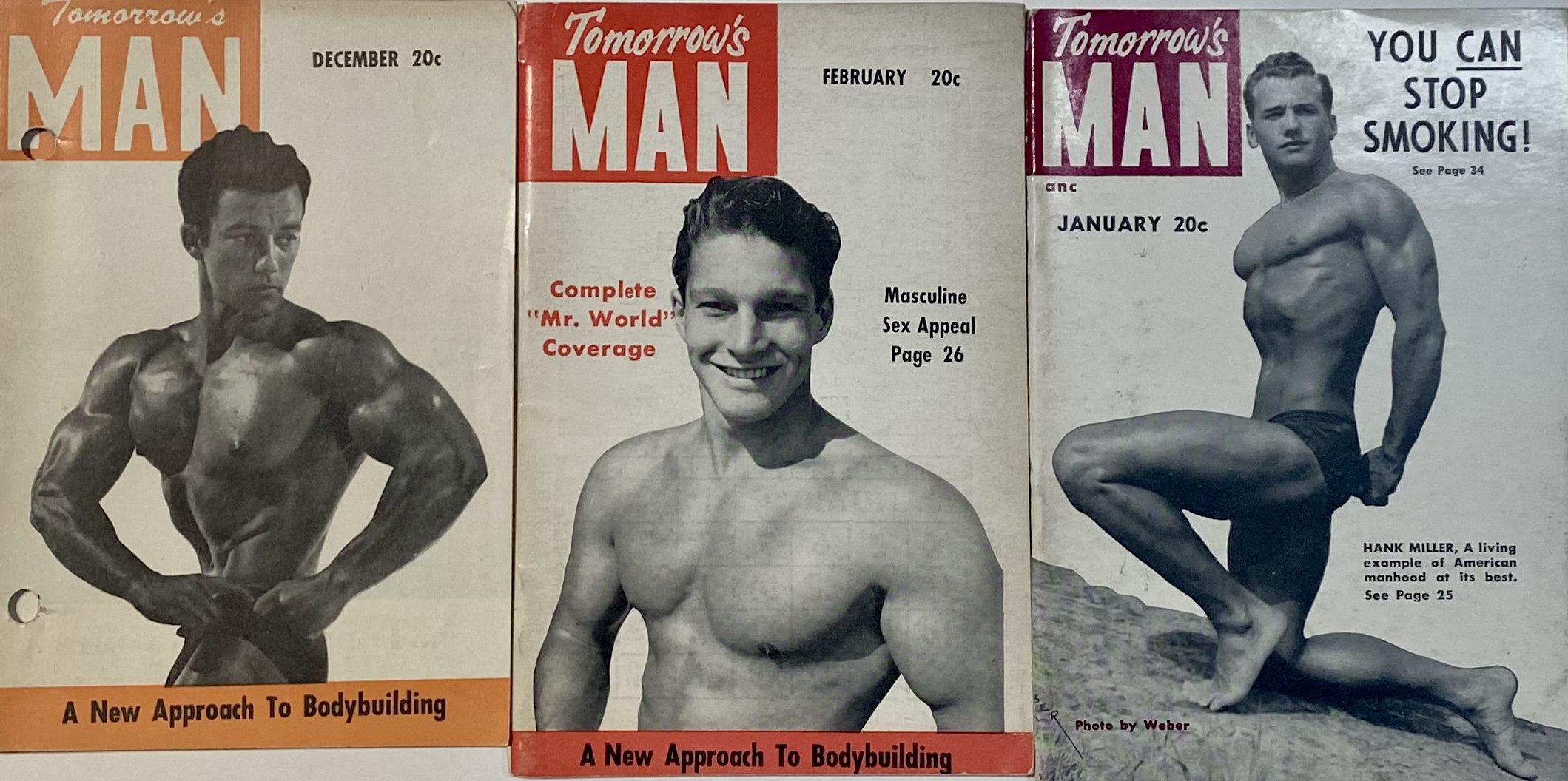
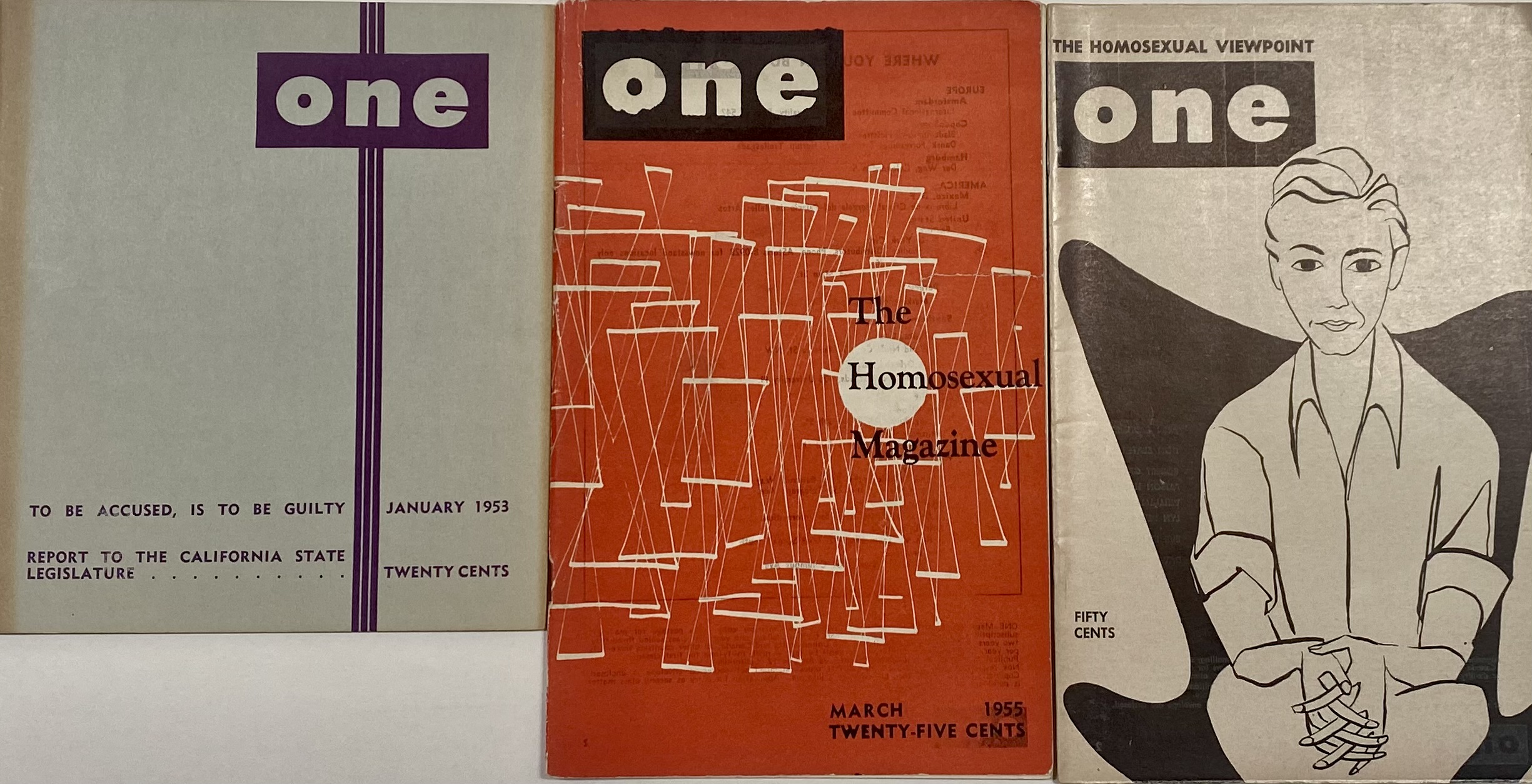
This is a story about what many consider the first two gay magazines in America.  It is a bicoastal story for one (no pun intended) was born on the west coast and the other in the Midwest only to move at the ripe age of two to the east coast. Both died before they reached the age of 20 but the impact they left on the publishing industry and on their audience is unforgettable. One was out, and Tomorrow’s Man was in the closet. Onelaunched in January 1953 in Los Angeles and TM launched in December 1952 in Chicago.  One sold out of the 500 copies that it printed and TM skyrocketed to the largest selling bodybuilding magazine on the nation’s newsstands selling 100,000 a month.  One  labeled itself  first as “The Homosexual Magazine,” and later as “The Homosexual Viewpoint,” and TM was labeled as “America’s first homosexual directed photo magazine.”  One was published from 1953 to 1967 and TM was published from 1952 to 1971.  

The genesis behind the idea for this blog (think of it as a preface to a possible book)  is an article written by the editor of  Drum magazine in 1965. What follows are excerpts of the aforementioned article: 

The Story Behind Physique Photography

From Drum, October 1965, Volume V, Number 8

By Clark P. Polak

“The first issue had a scant 32 pages and measured a tiny 3-3/4 inches by 5-3/4 inches, selling at the then high price of 20¢. Today it has 48 pages and sells at the now low price of 35¢. Then was almost 14 years ago, the magazine was Tomorrow’s Man.

Conceived by Irvin Johnson in his Chicago Health Studio gym as an additional medium for promotion of his already successful high protein tablets, vitamin supplements and other so-called body building products, the first book was mailed to a few hundred enthusiasts.

But Johnson had bigger ideas for his little book. He managed to convince the monolithic American News Co. (now disbanded) that TM was really a body builder’s handbook and within two years his dream came to fruition with TM selling an amazing 100,000 copies per month.

The current best sellers, Strength and Health, plus many more of the ilk, were no competition to America’s first homosexual directed photo magazine, though TM has now dropped from its hey-day top.  Others have now joined the bandwagon, but TM sales, always respectable, are again rising.”

So here are the facts about Tomorrow’s Man magazine (the older of the two by one month) and One magazine…

Tomorrow’s Man magazine:

Tomorrow’s Man magazine from the collection of Samir “Mr. Magazine™” Husni

Tomorrow’s Man

Dec. 1952

Vol. 1, No. 1

20 Cents

32 pages 

3-3/4 inches by 5-3/4 inches

A New Approach To Bodybuilding

Published in Chicago, IL

Tomorrow is yours… pages 2 and 3

“You are standing on the threshold of a new life… a happier healthier existence.  The men who cross this threshold will be stronger, more efficient men, ready to assume roles in the world of tomorrow. In a world torn by strife, the demand for greater strength of mind and body is not only pressing, it is vital.

Whether you take the challenge… whether you open the door or pass it by… depends on you.  Tomorrow can be yours, but the choice is up to you. 

This magazine is dedicated to that better tomorrow. It is dedicated to the young in spirit who will be tomorrow’s men. It is dedicated to men willing to accept something new and revolutionary…

Thus we dedicate this magazine to Tomorrow’s Man. In these pages you will find new ideas on building mental and physical strength.  They are “new” only because they are just now coming into use.  Actually, they are as old as common sense. But “old men” have refused to accept them since they do not conform to old teachings.

We think you will enjoy TOMORROW’S MAN. We hope it will help you find increased physical and mental strength. We know it can… if you’re young enough to accept a “young idea.”

AN OPEN LETTER

PAGE 5

THE Before and After pictures on pages 12 and 13 speak for themselves.  They prove that the Johnson System really works.

The training program you undertake now will determine what you will be two or three months from now.

If you are really sincere, you can start your training now. Just send me a note saying “Send me full information about Johnson’s Scientific Body Building and Nutrition Course.”

IRVIN JOHNSON

22 E. Van Buren

Chicago, 5, Ill.

Table of contents is on page 7 with Irvin Johnson listed as editor and publisher. The magazine is published monthly with a subscription price of $2.00. Cover price 20¢.

One magazine:

One magazine from the collection of Samir “Mr. Magazine™” Husni collection

One magazine

“… a mystic bond of  brotherhood makes all men one.” — Carlyle

Vol. 1, No. 1

January 1953

Published monthly.

20 Cents  per issue, two dollars a year.

6 inches by 7 inches

28 pages

Published in Los Angeles, CA

Editorial Board: Martin Block, Dale Jennings, Don Slater. Contributing Editor: Donald Webster Corey. Business Manager: William Lambert. Circulation Manager: Guy Rousseau.

Letter to you:

ONE is a non-profit corporation dedicated to the service of humanity. Its hopes are high. Its plans ae big, but the moral support and practical backing of ONE’s readers must be had, if it is to go forward and achieve great things. There must be many and substantial financial contributions for supplies, for printing, for legal counsel, for equipment needed. The subscription rate cannot cover the cost of production, and advertisers brave enough to support such a publication may be few for some time to come.

If you cannot personally with us working side by side, your check or money order will put you into the front line. Let us show the world what we can do. It is now up to you, ONE’s readers, for this magazine will continue to go forward as fast you permit. 

THE EDITORS  

Page 3

In the June 1953 issue of One the price became 25¢ by now and the total pages still at 28 and the subscription is $2 a year. 

 On the inside front cover this was written: 

“Everyday come orders for those two historic issues, One’s first and second, January and February 1953.

Everyday we regret we had only enough cash to print five hundred copies each.

Everyday we say, “The minute we get a little ahead, let’s reprint those two.” Then the printer, paper-supplier, binder and plate-maker all gleam with high-priced delight….”

On the last page of the June 1953 issue One identifies itself as such:

“ONE is a non-profit California corporation formed, “to publish and disseminate a magazine dealing primarily with homosexuality from the scientific, historical and critical point of view, and to aid in the social integration and rehabilitation of the sexual variant.” It is also “concerned with medical, social, pathological, psychological and therapeutic research of every kind and description pertaining to socio-sexual behavior,” and aims “to promote among the general public an interest, knowledge and understanding of the problems of such persons.”

One: The Homosexual Magazine tag line appeared for the first time on the cover of the  January 1954 issue and was later changed in 1957 to The Homosexual Viewpoint.

Tomorrow’s Man was heavily driven by photography, largely semi-nude man posing in different forms of bodybuilding. One, on the other hand, was text heavy with very little photography used.

To be continued…

Comments, ideas, responses, feel free to email me at samir.husni@gmail.com or comment in the space below.

Samir “Mr. Magazine™” Husni, Ph.D.

Founder and Director

Magazine Media Center

Preserving the past, present, and future of magazine media.

h1

So What Is A Magazine? A True And Tested Definition… From The Mr. Magazine™ Vault.

June 1, 2022

Defining a magazine, to some, is a very mercuric issue. To others, it is a clear cut definition. During some recent readings, I came across this definition from the book Magazines In The United States published in 1956. However, the definition is from 1908.

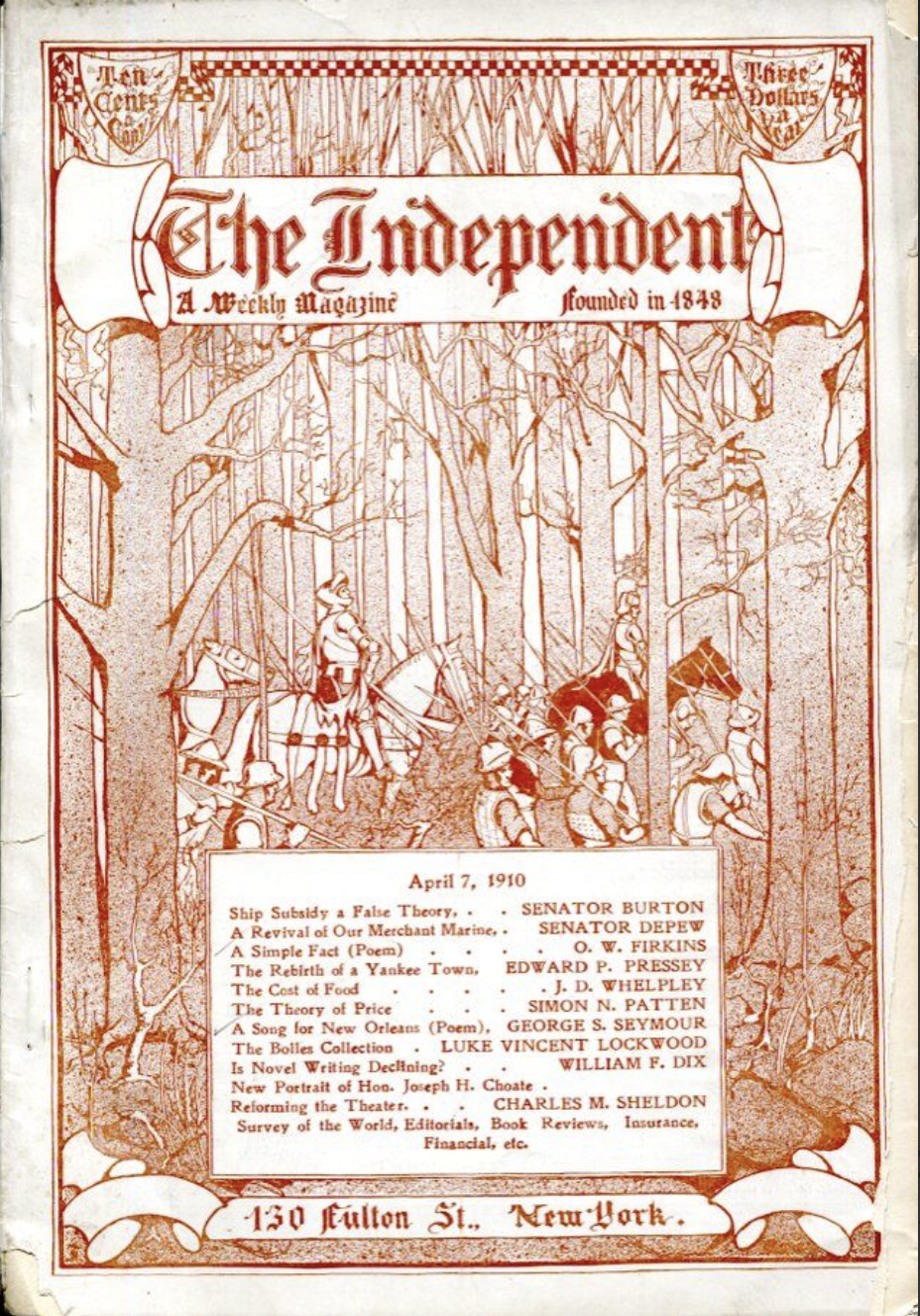
An issue of The Independent from 1910 for illustration purposes only…

What is a magazine?  A definition from The Independent  October 1, 1908

Early in the twentieth century The Independent, at the time a powerful weekly, could say editorially: “Modern American magazines have to a large extent fallen heir to the power formerly exerted by pulpit, by crowds, parliamentary debates and daily newspapers in the molding of public opinion, the development of new issues, and dissemination of information bearing on current questions.”

The Independent editorial writer expanded his argument by specific illustrations: “The magazine represents intellectual activity in its terminal buds. Its function is to work over old plots into new stories; to rewrite biography and history in accordance with the taste of the time, to resurrect forgotten truths, to make sound information palatable, to convert abstract science into applied science, to throw a searchlight into dark corners of the earth and some spots of our civilization, to start new movements and to guide old ones, to wake up people who are asleep by sounding the burglar alarm, to twist around the heads of those who are looking backward over their shoulders; in short, to inspire, to instruct, to interest.”

Quoted from Magazines In The United States, Second Edition, by James Playsted Wood. Published by The Ronald Press Company, New York.  Page 197.

h1

The Resiliency Of Print… An Interview With Mr. Magazine™

May 24, 2022

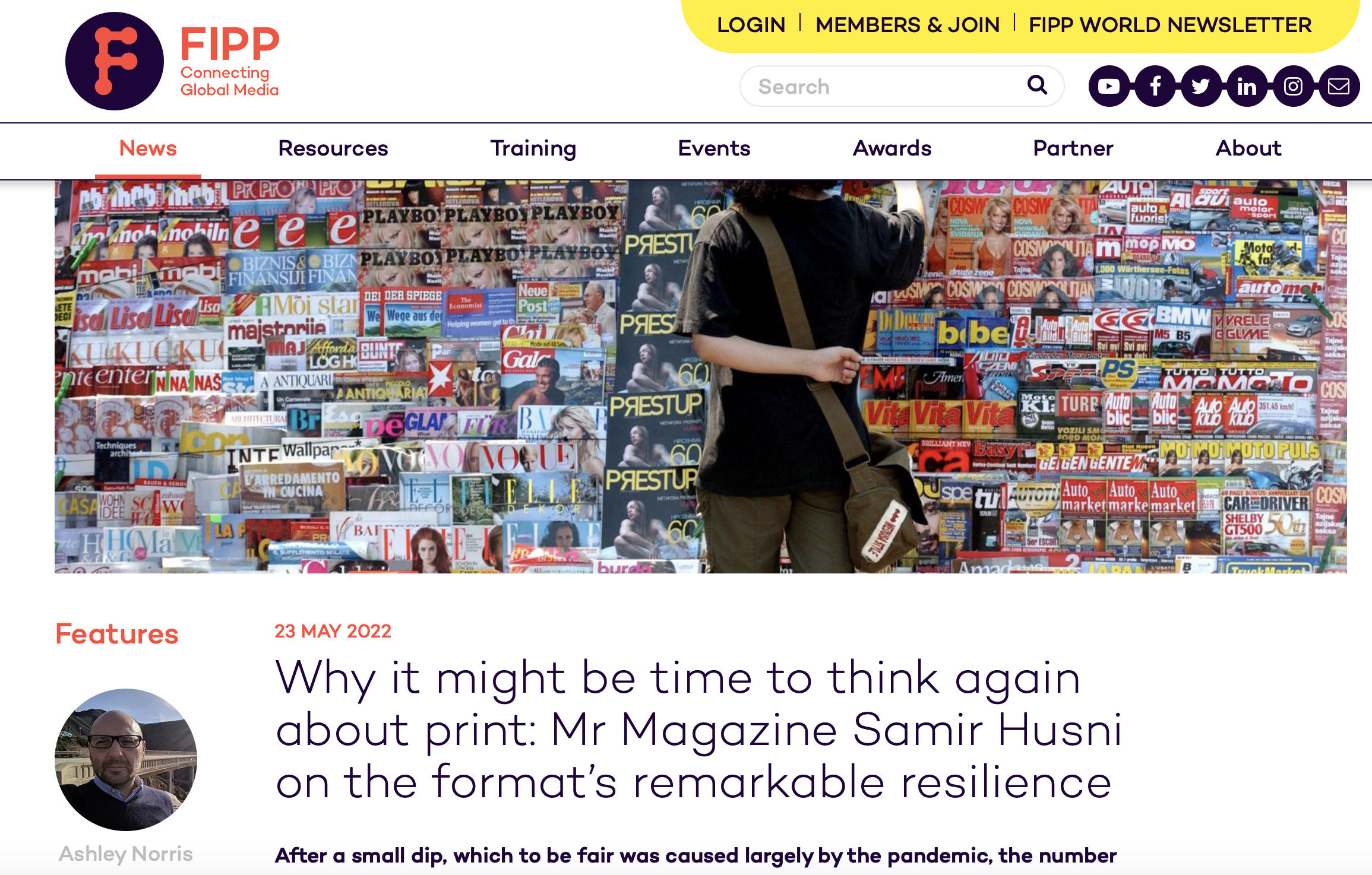
I was interviewed by Ashley Norris for FIPP website as part of his series of interviews with the speakers at the FIPP Congress in Portugal, June 7 to 9.

Please click here to read the interview.

h1

Revealed: The Simple Secret For A Successful Magazine Launch. The Mr. Magazine™ Interview With Doug Bitto, Principal, Advantage Circulation Consulting.

May 17, 2022

I found my match.  Doug Bitto, the principal of Advantage Circulation Consulting, LLC. is as big of a magazine junkie as I am.  He also is a firm believer that if it is not ink on paper, it is not a magazine. He describes himself as a bit of a pop culture junkie. “Magazines have fascinated me ever since I was very young,” he told me, “so it’s no surprise that I gravitated towards the business.”

Doug’s formula for a successful magazine is relatively simple as he says: “The underlying formula for all successful print magazines is relatively simple: Passion combined with deep knowledge, framed within the greater cultural understanding (i.e. what people actually want to read and buy at this particular moment in time).”

So with that in mind, and after a chat with Doug, here is the Mr. Magazine™ interview: Enjoy.

Samir Husni:  During our chat, I felt I found my match in a person who believes in the power of print, can you please explain why? 

Doug Bitto: When a print magazine is produced and distributed, it is a permanent snapshot of a culture. It cannot be changed, to be reviewed and scrutinized for decades (or even centuries) after being produced. A digital “magazine” on the other hand can be altered and the original message lost forever, including the advertising which is an essential component of cultural understanding. In addition, print is much more effective than digital in conveying a message because more of our senses are used when interacting with print. When was the last time anyone smelled their iPad? 

S.H.:  You run a circulation consulting company, do you mind expanding some of what your company does and your role running it? 

D. B.: We have evolved into an end to end consulting firm over the last 20 years. In addition to the physical nuts and bolts aspects of newsstand distribution and management, we have expanded to include consulting on product development, working very closely with editors and designers. One of our strengths, I believe, is our ability to successfully recognize cultural trends and how they are applicable to our clients.

As far as my role is concerned, I wear many hats. At the end of the day, however, it’s about ensuring that I successfully guide my clients.

S. H.: Small, regional, and new niche magazines are your specialty. Why and do you think there is still room for new magazines in this digital age? 

D. B.: Culture is constantly changing but much like radio, print will always be around. One trend we are seeing post-pandemic is the return to traditional media, as discussed in a recent article by Harvard Business Review https://hbr.org/2022/04/why-marketers-are-returning-to-traditional-advertising. Personally, I have not “seen” a digital ad in years, much less clicked on it. And if I find myself on a website that has pop-up ads (or worse yet, autoplay ads) I immediately click out without even looking. Not only are they annoying, they can actually create physical stress. Multiple studies have shown this. As the article states, people are becoming “ad blind” digitally due to these factors. 

Print on the other hand is relaxing. And if ads are well curated, they fit seamlessly within a print magazine. I hate to break it to the digital ad folks out there but from a practical standpoint, print ads are far superior. When you turn the page of a print magazine, you HAVE to look on the next page. Ad blindness is almost impossible. 

Advertising aside, magazines are rapidly turning into higher quality, higher dollar items with very little or no advertising. Again, not a new trend, but it is accelerating. And people are willing to pay for this experience. Out of the six new title launches we have recently launched or are launching over the next few months, four fall into this category. All are high quality in content and physical presentation. All are between $12.99-$14.99US, $14.99-$19.99CAN. 

S. H.:   Define a magazine for me. 

D. B.: I take a traditional approach. Mirriam-Webster’s first entry is how I would define a magazine:

Definition of magazine

1a a print periodical containing miscellaneous pieces (such as articles, stories, poems) and often illustrated

A digital publication is not a magazine, even though our culture is now defining many forms of media as a “magazine”. A different term should be used to describe a digital only publication. 

www.advantagecirc.com

S.H.:   Can you share a success story of a new launch that you consulted on, and can you share one that failed? 

D. B.: I would like to speak in general terms first.

The underlying formula for all successful print magazines is relatively simple: Passion combined with deep knowledge, framed within the greater cultural understanding (i.e. what people actually want to read and buy at this particular moment in time). A product that not only informs and inspires, but entertains. Especially with niche and hyper-niche titles, readers are more than likely to be passionate experts in their own right. They are looking for knowledge above and beyond what they possess. The “formula” does not guarantee success but without its understanding, failure is guaranteed. The most successful publishers have an innate understanding of this. 

Regarding a successful launch, we have one title in the Sports Category that was basically a “gear” catalog when first presented to me. At launch it was approximately 40% catalog, not including additional advertising. But the content was excellent. The launch issue sold 51%. They have since expanded their content extensively but to this day their best selling issue of the year is always the “gear review” issue. Again, the publisher is one of the top experts in his field. And readers trust that the message being printed and products being presented are high quality. 

Now for the really bad failure. When I first started consulting over 20 years ago I signed a lifestyle magazine whose only concern was ad dollars, as I came to find out later. Content was secondary. Lowsingle digit sales on the launch issue. And when I say low, I mean LOW…3%. Naturally, they did not last for more than a couple of issues. 

S. H.:  Anything else you would like to add. 

D.B.: It may sound ridiculous in the digital age but nothing has really changed on the newsstand side of the business since its inception. Print magazines are produced and sent through distribution channels to retail. I believe that this industry has in many respects lost sight of the fundamentals. We cannot forget that this is an organic business and the most important people within the distribution channel are the merchandisers. Proper title placement and rotation are absolutely essential.  Without merchandisers who understand how to merchandise magazines as the unique products that they are, the industry suffers.

On the publishing side, I foresee almost all of the large publishers eventually going digital with print being reserved for special issues, and small independent publishers launching at an increasing rate. This movement started more than a decade ago but it will accelerate and become more prevalent in the future. Driven, ironically enough, by the digital age and the increasing ease of publishing in print.   

S. H.: What keeps Doug up at night these days? 

D. B.: Without question, the health of the newsstand distribution industry. With costs rising and large publishers continuing to go digital only, all levels are being squeezed. That being said, I am actually very positive about the future of newsstand. There will undoubtedly be more pain to come, but I believe that this industry will survive. 

S. H.: Thank you.

h1

Meet “Brainstorm Buddy”: Helping Put Your Ideas On Steroids. The Mr. Magazine™ Interview With Founder And Creator Linda Formichelli.

May 12, 2022

Remember those days when you were told ideas come by the dozen and they are worth a dime? Well, with today’s inflation, they may even be worth less than a dime.  Thus, when I heard about and tried Linda Formichelli’s Brainstorm Buddy, I was quick to reach out to her and request an interview.  Anyone and any tool that can help enhance an idea and help execute it better is worthy of a Mr. Magazine™ interview.  Using technology and AI to help enhance the quality of writing, reporting, and journalism is what pushed Ms. Formichelli to invest time, money, and effort to create Brainstorm Buddy.

An experienced writer, reporter, editor, and educator for over a quarter century, Ms. Formichelli came up with the idea while teaching a class called “Writing for Magazines.”  She did not stop with the idea, but rather decided to act upon it, and execute it in a way that others can benefit and enhance their writing and journalistic abilities.  And, as you and I know, we need that today more than ever.

The tool is very simple to use, but the work behind the scenes was not as simple as the end result.  So, without any further ado, join me in this conversation with Linda Formichelli, founder and creator of Brainstorm Buddy.

Linda Formichelli, founder and creator, Brainstorm Buddy

Samir Husni: In a nutshell what is Brainstorm Buddy and who is its audience?

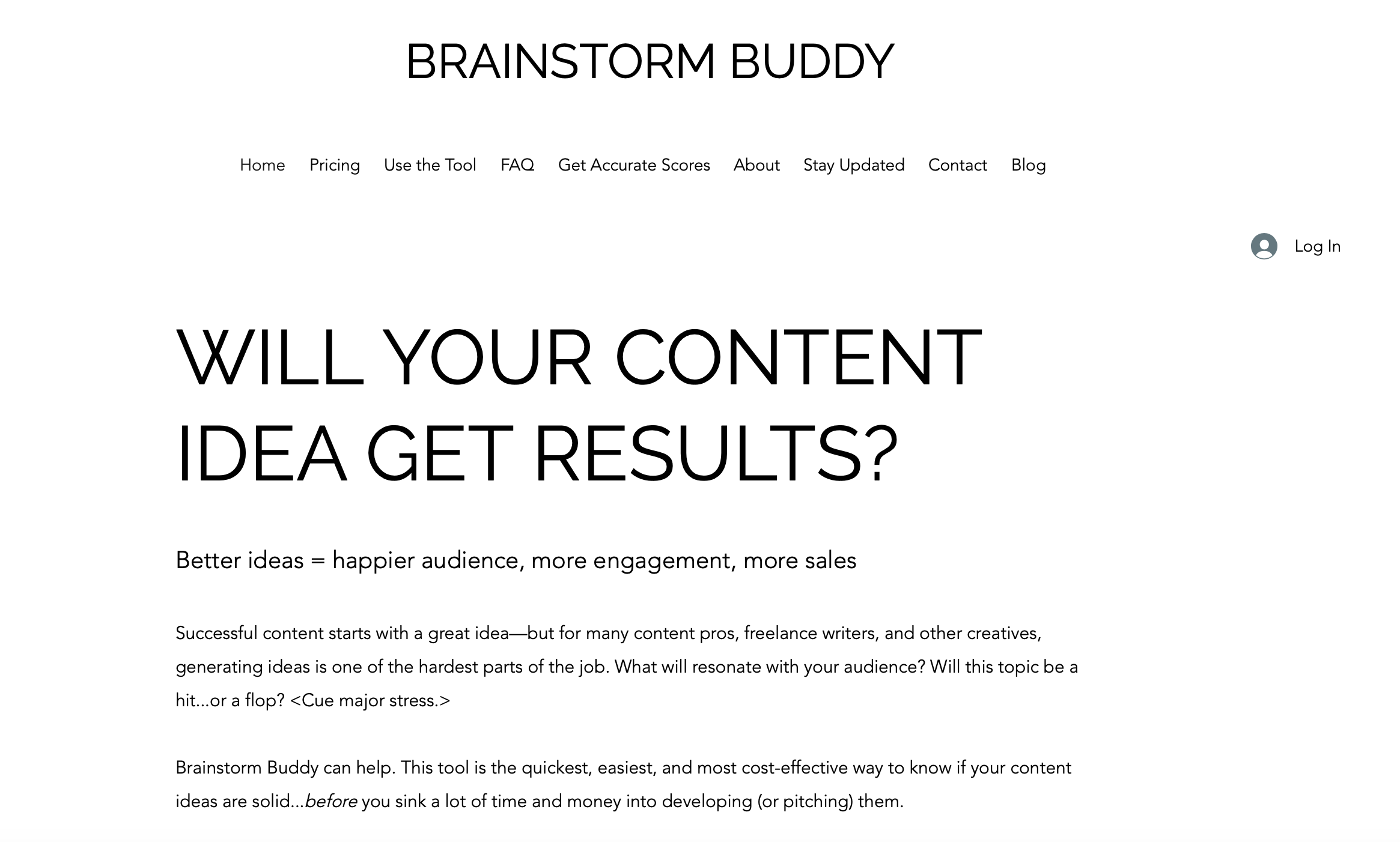
Linda Formichelli: Brainstorm Buddy tool is tool based on journalism best-practices that tells you if your content ideas are solid…before you sink a lot of time and money into developing (or pitching) them. You answer six questions and get a score of 1 – 100, and if your topic could use some improvement, the tool offers customized advice. For example, it can tell you if your idea is too broad, not relevant enough, weak overall, etc.

On the surface it may look like your goal is “get all A’s or you lose,” but that’s actually not the case. Some elements depend on other elements, and sometimes there are ways to shore up an idea that’s weak in one area by improving a different area. Brainstorm Buddy also accounts for evergreen ideas, which are those ideas than aren’t especially unique or timely, but you almost have to publish them because people are always interested; for example, “walk off the weight” for a women’s magazine or “how to budget” for a bank brand.

The tool is meant for anyone whose job or business depends on them coming up with a fairly constant stream of content ideas. The very first iteration, which was just a list I created in 2005, was meant for freelance writers who were pitching article ideas to magazines. Over time I adjusted it to include content professionals, both on staff and freelance, and then I realized it applies to other creative professionals, like podcasters, as well. Most of the verbiage in Brainstorm Buddy is geared toward writers, but I tried to change it up a little bit to be inclusive, and you can also extrapolate the examples into any medium.

S.H.:  Why did you decide to create BB?

L.F.: In short, I needed a way to codify the “rules of good ideas,” which I had internalized through years of experience, in a way that anyone could use. 

S.H.: As a writer/author/journalist yourself, how do you think this tool helps?

L.F.: Brainstorm Buddy takes the knowledge that veteran writers have accumulated in their brains through many hard years of experience, and presents it in a format that anyone can take advantage of. With Brainstorm Buddy, you don’t need ten years of developing content and pitching publications and businesses under your belt to know how to develop a salable idea—you can just run it through Brainstorm Buddy, get a score, and see suggestions for improving the topic if needed.

For creatives like content writers, journalists, podcasters, and so on, ideas are the coin of the realm. I like to say, “No ideas = no money.” But it’s not just ideas they need—they need good ideas, and those are hard to come by. Brainstorm Buddy helps take away some of that stress of needing to be always coming up with engaging, interesting, useful, relevant content ideas.

It took a while, but over time the content industry collectively realized that to be authoritative and trustworthy, content needs to be based in journalism best practices. Because Brainstorm Buddy was born out of a journalism class, it helps not just magazine writers, but other types of content professionals as well.

S.H.:   Can you tell me the invention/creation process of BB?  It seems, as I mentioned, very simple to use, but what is behind the simplicity in use?

L.F.: Brainstorm Buddy originated from a class I started teaching around 2005 called Write for Magazines, where I taught writers how to generate salable article ideas and how to pitch them to magazines. At that time I had been earning a living writing mainly for magazines for eight years, and I had sent hundreds of pitches.

The idea generation part of the class was challenging because there was a lot of confusion around what went into a salable idea. Many people were very unclear on the concept, and when I critiqued their ideas they would often want to just throw them out and start all over again—even though my stance was always that you can take almost any idea and make it salable if you fine-tune it enough.

The first thing I did to make it easier for my students was to create a list of six criteria that every idea needed to have. I had internalized these criteria over my years of pitching and writing for magazines, but it was difficult to explain to students what a good idea was until I was able to codify these criteria on paper.

That did help, because I could then look at a student’s article idea, run it through the six criteria, explain where the idea was lacking, and offer suggestions for bolstering the areas of weakness. And a lot of my students had success! I had students with zero previous credits breaking into magazines like Woman’s Day and Reader’s Digest Canada. I still have writers emailing me to tell me that I helped them launch their career.

Then, a couple of years ago, after I had moved more into the content writing arena, I created a toolkit called the Content Calendar Playbook. This was meant for on-staff content professionals who needed be constantly creating ideas for blog posts, white papers, social media posts, guides, and so on. It included video walk-throughs where I brainstormed ideas almost in real time—I had some rough ideas ahead of time that I fine-tuned and fleshed out live on the video. I thought this would help show users that a content idea is not just a “one and done” thing, where you come up with something and it’s either 100% great or you throw it out and start over. 

I also wanted to include my list of the six criteria from the Write for Magazines class in the Content Calendar Playbook guide…but I realized it needed some tweaking. I realized that some things really were more important than others, so it wasn’t fair to say you need all six of them in equal amounts—or that you really need all six of them at all.

So I created an inverted pyramid-style “filter” where the most important criterion was at the top and the less important, nice-to-have criteria were toward the bottom.

That worked out better. But as I developed the toolkit and the filter, I knew it was even more complicated than that. However, it seemed that a formula that really hit on all the right criteria in all the right amounts and combinations would be too “fiddly” to explain and use…so I decided it would be useful to create a simple app that would help users figure out if their content idea was any good.

My husband has a math degree and is a former freelance writer, so I got him to help me hash out the different scoring weights and dependencies and turn it all into a numeric formula.

The Brainstorm Buddy landing page at http://www.brainstormbuddyapp.com

S.H.: How can folks access BB and is it available for anyone?

L.F.: Brainstorm Buddy is available to anyone at www.brainstormbuddyapp.com for a monthly or annual subscription. If you go for the annual subscription, you get two months free. I plan to raise the price little by little over time as I build in more features.

S.H.:  Any additional info you wish to add?

L.F.: If you plan to try out Brainstorm Buddy, I recommend first reading my article on how to ensure an accurate score. When I beta tested the tool, I saw an awful lot of very high scores, which didn’t really jibe with what I saw when I was teaching and coaching writers live. I realized that we’re all very enamored with things we create; in fact there’s a term for it: the IKEA Effect.

The article is meant to help combat the IKEA Effect; it walks users of Brainstorm Buddy through steps that will help them look at their ideas with a critical eye—just as an editor, client, or reader would. I’m also working on a video for that page in case some people would rather watch than read.

I have lots of plans for improving Brainstorm Buddy. I so appreciate the early adopters, and want to make sure they get their money’s worth and more! Right now I’m working on videos for each results page. The videos will include different examples from the written advice, so if you want you can both watch the video and read the copy, and not get the same examples twice.

As a long-time writer for service magazines, I know how useful it is to include lots of relevant examples, because you never know which one will really “land” with someone. I try to make the advice more actionable by using examples from different content areas, such as brand content, consumer magazines, trade magazines, and even podcasting.

I’m also looking into moving to a platform where Brainstorm Buddy users can get their scores and the advice emailed to them, and where they can share their scores on social media.

People’s ideas and scores will never be shared, but I plan to aggregate the data for research and education purposes. That way I can help writers and content pros even more by sharing information on, say, idea trends, average scores, the most common problems with ideas, etc.

I’d love to eventually incorporate Flip-Pay, which is a system where you can pay per use instead of having to get a subscription. A lot of publications use Flip-Pay to let people pay for access to a single article. Of course, it will be cheaper to get a Brainstorm Buddy subscription, but there will always be people who are certain they want to use it just once or twice, and who don’t want to commit. I have a proposal from Flip-Pay, but right now it’s above my pay grade. 

Finally, I also started a blog that’s all about great content ideas at http://www.brainstormbuddyapp.com/blog.

S.H.: And my typical last question: what keeps Linda up at night these days?

L.F.: I hope the answer doesn’t have to be current-events related; if I even get started on that I won’t sleep for a week.

I’m always trying to balance “just being” with my natural need to be constantly creating. I retired from writing over a year ago, and somehow I ended up as busy as ever: I’m not only working on Brainstorm Buddy, but I started a referral network of freelance writers, started teaching myself to oil paint, took on a ton of home improvement jobs, and started acting. I’m also always extra-invested in whatever my 13-year-old son is into, which right now is weight training and football. So I’m often up at night worrying about one of these things, or worrying because I’m worrying about these things when I should be retired. But I just love all these creative activities!

S.H.: Thank you.

h1

Protecting Your Brand. A Mr. Magazine™ Musing… From The Vault.

May 10, 2022

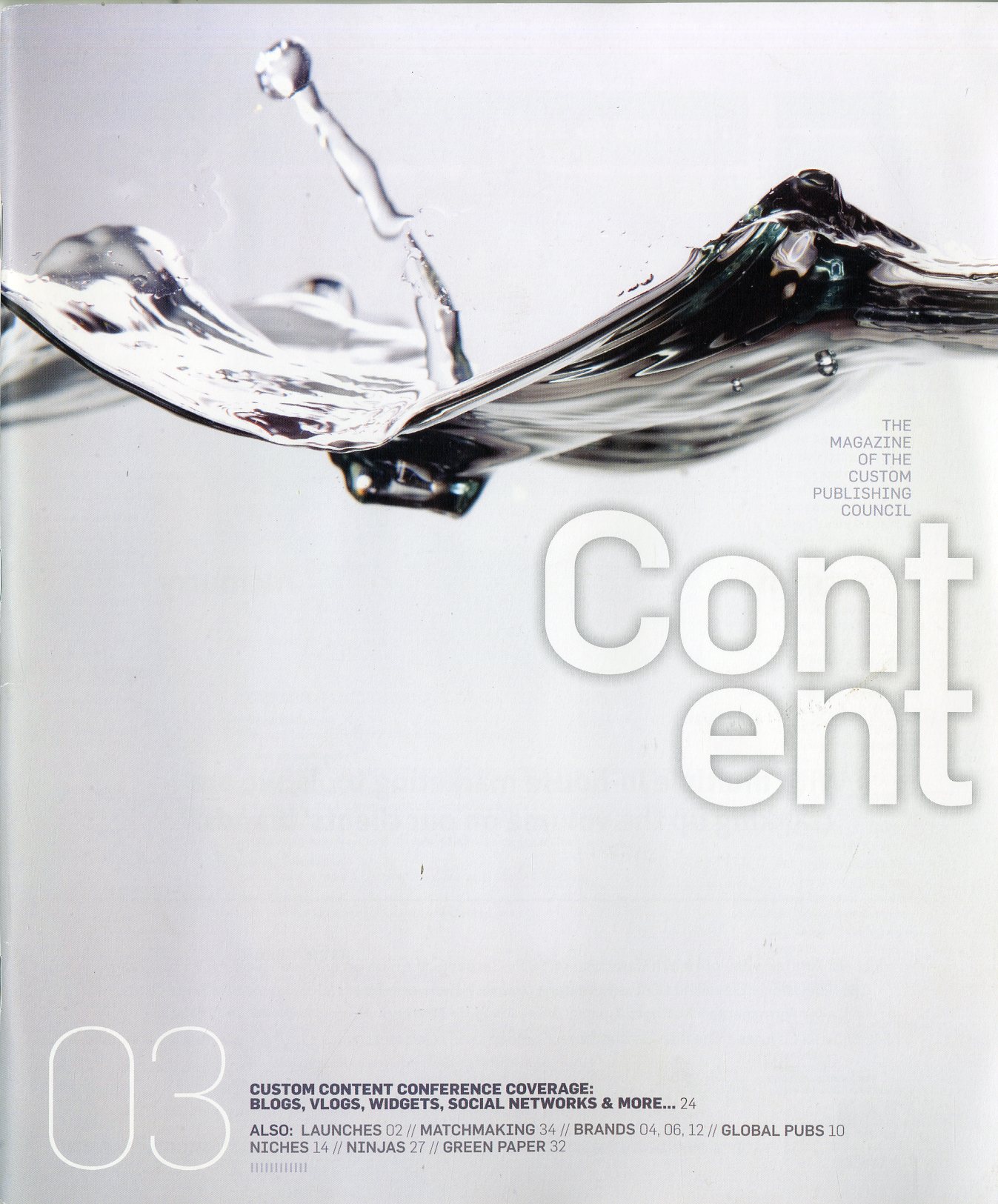
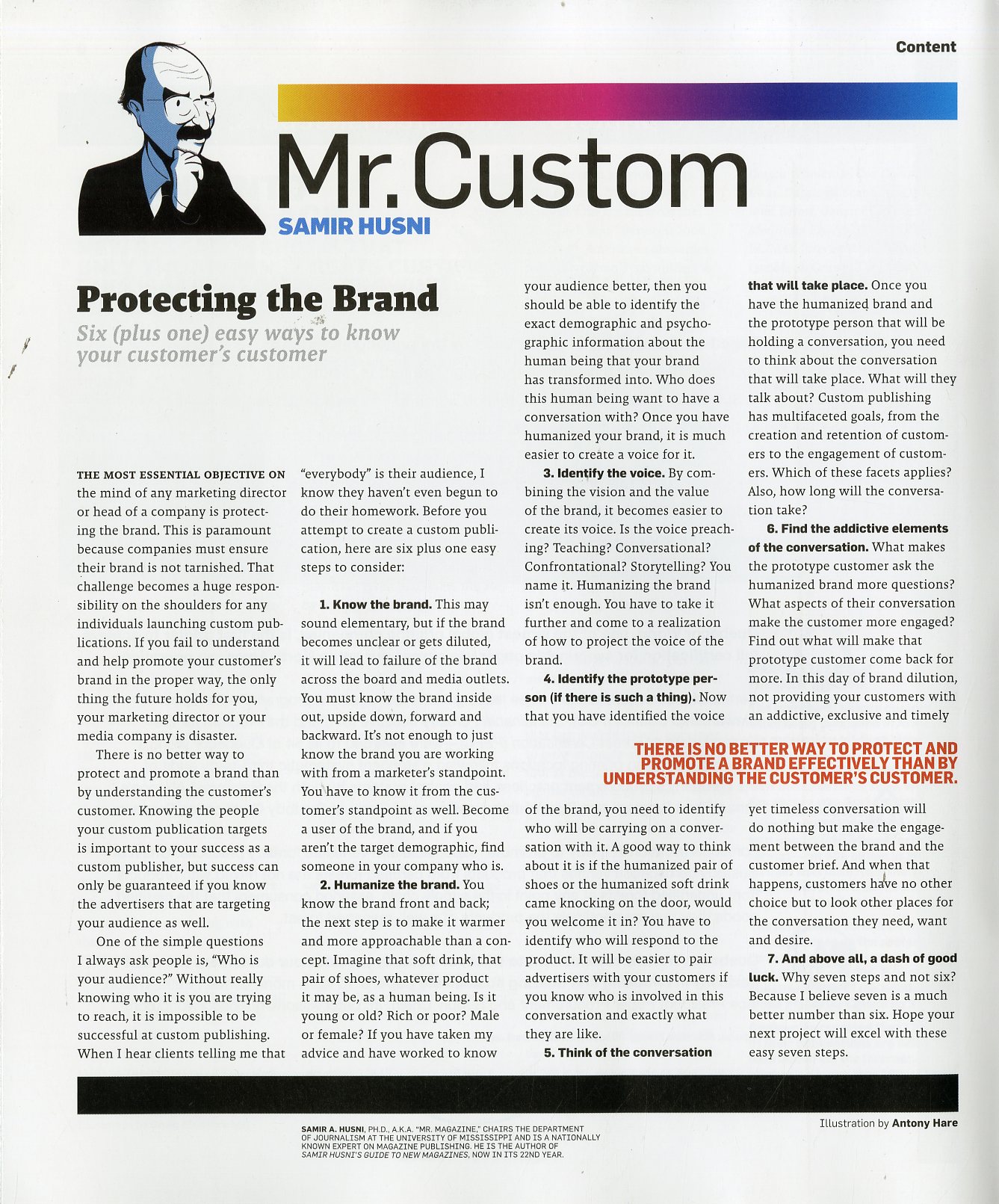
The following is a column I wrote for Content magazine back in 2008. Although it has been 14 years since I wrote it, I still stand by every word in it. Enjoy this journey through the Mr. Magazine™ Vault.

Protecting the Brand
Six (plus one) easy ways to know your customer’s customer

Content Magazine Issue 03 Spring 2008

The most essential objective on the mind of any marketing director or head of a company is protecting the brand. This is paramount because companies must ensure their brand is not tarnished. That challenge becomes a huge responsibility on the shoulders for any individuals launching custom publications. If you fail to understand and help promote your customer’s brand in the proper way, the only thing the future holds for you, your marketing director or your media company is disaster. 

There is no better way to protect and promote a brand than by understanding the customer’s customer. Knowing the people your custom publication targets is important to your success as a custom publisher, but success can only be guaranteed if you know the advertisers that are targeting your audience as well. 

One of the simple questions I always ask people is, “Who is your audience?” Without really knowing who it is you are trying to reach, it is impossible to be successful at custom publishing. When I hear clients telling me that “everybody” is their audience, I know they haven’t even begun to do their homework. Before you attempt to create a custom publication, here are six plus one easy steps to consider:

1. Know the brand. This may sound elementary, but if the brand becomes unclear or gets diluted, it will lead to failure of the brand across the board and media outlets. You must know the brand inside out, upside down, forward and backward. It’s not enough to just know the brand you are working with from a marketer’s standpoint. You have to know it from the customer’s standpoint as well. Become a user of the brand, and if you aren’t the target demographic, find someone in your company who is.

2. Humanize the brand. You know the brand front and back; the next step is to make it warmer and more approachable than a concept. Imagine that soft drink, that pair of shoes, whatever product it may be, as a human being. Is it young or old? Rich or poor? Male or female? If you have taken my advice and have worked to know your audience better, then you should be able to identify the exact demographic and psychographic information about the human being that your brand has transformed into. Who does this human being want to have a conversation with? Once you have humanized your brand, it is much easier to create a voice for it. 

3. Identify the voice. By combining the vision and the value of the brand, it becomes easier to create its voice. Is the voice preaching? Teaching? Conversational? Confrontational? Storytelling? You name it. Humanizing the brand isn’t enough. You have to take it further and come to a realization of how to protect the voice of the brand. 

4. Identify the prototype person (if there is such a thing). Now that you have identified the voice of the brand, you need to identify who will be carrying on a conversation with it. A good way to think about it is if the humanized pair of shoes or the humanized soft drink came knocking on the door, would you welcome it in? You have to identify who will respond to the product. It will be easier to pair advertisers with your customers if you know who is involved in this conversation and exactly what they are like.

5. Think of the conversation that will take place. Once you have the humanized brand and the prototype person that will be holding a conversation, you need to think about the conversation that will take place. What will they talk about? Custom publishing has multifaceted goals, from the creation and retention of customers to the engagement of customers. Which of these facets applies? Also, how long will the conversation take?

6. Find the addictive elements of the conversation. What makes the prototype customer ask the humanized brand more questions? What aspects of their conversation make the customer more engaged? Find out what will make that prototype customer come back for more. In this day of brand dilution, not providing your customers with an addictive, exclusive and timely yet timeless conversation will do nothing but make the engagement between the brand and the customer brief. And when that happens, customers have no other choice but to look other places for the conversation they need, want and desire. 

7. And above all, a dash of good luck. Why seven steps and not six? Because I believe seven is a much better number than six. Hope your next project will excel with these easy seven steps.

Until next time… all my best

Samir “Mr. Magazine™” Husni, Ph.D.

Founder and Director

Magazine Media Center

Preserving the Past, Present, and Future of Magazine Media

samir.husni@gmail.com

h1

In Magazine Publishing, There’s Nothing More Exciting Than The “Launch.” An Excerpt From Our Wisconsin Magazine. From The Mr. Magazine™ Vault.

May 3, 2022

photo

Our Wisconsin magazine is approaching its tenth anniversary in 2023. In its second issue there was an editorial talking about the “joys of magazine publishing.” I found myself emailing my friend Roy Reiman, Publisher of the new magazine Our Wisconsin, and Mike Beno, the magazine editor, to ask their permission to reprint parts of the introduction to the second issue of the magazine. So without any further ado, here is an excerpt from the February/March issue of Our Wisconsin magazine:

In magazine publishing, there’s nothing more exciting than the “launch.” Not many other things in business come close to this kind of adrenalin rush.
You begin by coming up with an idea or concept for a magazine you feel is “entirely different”. You’re sure potential subscribers have never seen anything like this before.
So you spend months (in our case, we began last spring) planning the format, the design and mostly the content. And then you start gathering that content…which isn’t easy when you don’t have a publication to showanyone. You just have to wave your hands a lot and write lengthy descriptions of what you plan to do.
Then you pull all this together…sort through hundreds of pictures and ideas for articles (some terrific, some not even close)…write and design 68 pages…and finallyput the first issue on the press, printing enough to “test the market”….
And then you wait.
And it drives you crazy. You wait for more than a week for the first response…any response, to see what total strangers think of your “baby”.
“Inventing” a magazine is much more personal than inventing a lawn mower or a toothbrush. It’s more revealing of who you are; it’s an extension of your personality. There’s a lot of you between those pages. So the fear of rejection is greater.
After you put that sample issue in the mail, you’re like a field goal kicker with the game on the line, with its heel or hero element. So you wait as the ball sails…for a long week or more.
If, when the early responses begin trickling in, you learn readers don’t like the first issue, it hurts. To a degree, it’s as though you learned they don’t like you.
But when you learn they like it–and some people even say they love it–wow! That ball is sailing through the middle of the uprights, and every subscription is a pat on the back.

I love magazines, and I love magazine launches even more. That is no secret. So, when I acquire a new magazine or read a story about a magazine launch, the urge to share my love with the whole wide world is overwhelming.

A revised copy of the aforementioned blog was first published on March 30, 2013.

Samir “Mr. Magazine™” Husni, Ph.D.

Founder and Director

Magazine Media Center

samir.husni@gmail.com

h1

Newborns And The Life Cycle Of Magazines. A Grandpa Perspective… A Mr. Magazine™ Musing.

May 1, 2022

Today, I am the proud grandpa of seven bundles of joy. The youngest, Sophia, just turned one and the oldest Elliott is now 14. When Michael, my second grandchild, was born I wrote a blog on April 26, 2011 that is as true today as it was 11 years ago… here is a repost of that blog. Enjoy.

I am sure you’ve heard this simile before: “Launching a new magazine is like giving a birth to a new baby.” 

Well, I had the opportunity to put this simile to the test this month, and I promise this will be one of the very few times I bring personal and family issues to the blog. But as long as it is relevant, I figured why not?

My second grandson was born April 8. Baby Michael had difficulty breathing on his own (which meant we all had difficulty breathing). So, for ten days or so, the joys of birth turned into the agony of survival; and that my friends, is what led to this particular topic — the life cycle of new magazines.

When I have heard people use the aforementioned simile, I used to take it for granted. 

However, I gave it a lot of thought during the past three weeks, and decided to compare human life with the life of a new magazine. After all, I have been preaching and teaching the importance to humanize media, particularly print, for years now. Without any further delay, here are the life cycles of a new magazine:

The Joys and Pleasures of Conception
Consider the A-HA! moment when you get the idea for a new magazine and the pleasure you feel, the joy that makes you rush and share the news about your idea with others. It is the same as the pleasures of making love hoping to conceive and have a baby. 

It is the act of conceiving that brings all the joy and pleasure to the couple, the same as the act of coming up with an idea you think is going to be worth a million bucks! Many folks call me or email me daily with ideas they just conceived and want to share the news, seek advice or start the planning process of the “birth” of this new baby. It is rare during this stage that any negative thoughts come to mind. It is all about new beginnings and the joy of the moment at hand.

The Pains of Labor
Giving birth is not as much fun as conceiving. It does not take a genius or even a man to understand that. Women know it and feel it. Giving birth is hard labor, but the pains of labor are an important part of the life cycle of that newborn, whether a human or a magazine. After months of nurturing and tender loving, the time comes to give birth. 

The pains of labor are well-documented and need no explanation. Getting that first issue out, meeting the deadlines and hoping all is A-OK are all part of the life cycle. It is the same with the mother and baby. You have to go through the pains of labor before you are able to enjoy and celebrate the birth, which leads us to the next stage of the life cycle of new magazines.

The Celebration of Birth
While the pleasures of conception may last a few moments, the celebration of birth is supposed to last a lifetime. With a new birth, you are only thinking positive thoughts, happy thoughts. Excitement is in the air and all around you. You are so proud of your new baby, new magazine. 

You check every part of the baby; you check every page of the magazine. In most cases, you are there at the printer waiting for that first signature to come out from the presses. You hold it in your hands exactly like a mother holds the baby for the first time. Birth means celebration. Your future freezes at the present moment and the world gets reduced to your surroundings and the new creature (baby or magazine) at hand. You do not want any interruptions of that moment of celebration. 

Then, as if lightning strikes, reality hits — and all of a sudden, you are not alone. You discover that the joy of celebration is just the beginning to the next step of the life cycle of the newborn — the fight for survival. 

The Fight for Survival
It is a jungle out there. There are so many magazines and there are so many babies in the world. You have to carve your own niche. If the baby can’t breathe on his or her own, your entire world stops. You change course and plans. Your new magazine is out, but now you have to put it in the hands of the distributors. The tender, loving care you’ve given your new creation is no longer in your hands. Someone else is in charge. 

You feel like you are losing control, and the doctors — the distributors — are in charge of that newborn. The baby must fight for survival. The new magazine must fight for survival. 

The big difference here is new babies, thank God, have a much higher survival rate that new magazines. Here is where the similarities end: Survival rate for new magazines is less than two in 10 after four years of publishing. 

Thank goodness for human life. We age much better than magazines, but in both cases we have to start the journey of life.

The Journey of Life

As in any creation, life does not stop at birth. Life continues, day after day, issue after issue. The journey of new magazine launches starts slow, very slow, and progresses as those new magazines try to develop customers who count, thus giving the magazine a long journey in life. 

Folks in our publishing industry now plan their new launches around the 11-to-13-year life span: Three years to establish the magazine and lose money in the process of building the magazine base; four years of solid growth and money making; three to five years of reaching a plateau and one final year to prepare the demise of the publication.

Thank God the journey of life for new babies is not the same as the journey of life for magazines. The simile ends with the beginning of life. The journey, my friends, is a completely different story. Let the never-ending story begins. 

For the record, this blog has been approved by Mr. Magazine Jr.™ and big brother to baby Michael, Mr. Elliott himself.

Samir “Mr. Magazine™” Husni, Ph.D.

Founder and Director

Magazine Media Center

samir.husni@gmail.com