Greg Sullivan,Co-founder/CEO of AFAR Media, publisher of AFAR magazine delivered the second keynote of day three of the ACT 5 Experience. You can view his Oct. 9 presentation by clicking the video below.

Greg Sullivan,Co-founder/CEO of AFAR Media, publisher of AFAR magazine delivered the second keynote of day three of the ACT 5 Experience. You can view his Oct. 9 presentation by clicking the video below.
“A lot of the changes were designed to do two things: create a contemporary magazine, because readers are used to getting their information from a variety of media, particularly from contemporary, sophisticated magazines and we wanted to make our mission very obvious and clear.” Ellen Kampinsky
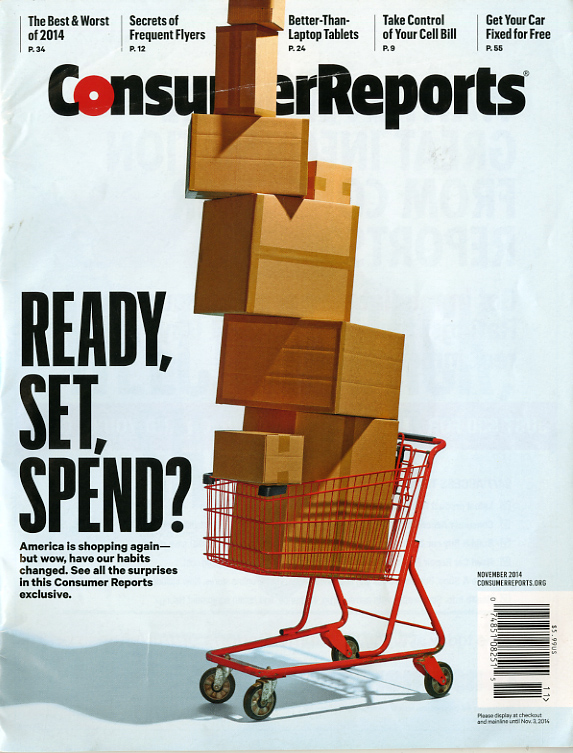 There is one rule of thumb for most any board game played; you have to roll the dice if you plan on moving around the board to win. Sometimes in the world of magazine media, the rules aren’t any different.
Since 1936 Consumer Reports magazine has been the most trusted source for reviews and comparisons of consumer products and reports from in-house laboratory testing in the world. But with the November 2014 issue, some things are changing, in fact a lot of things are changing, however the mission and focus of the magazine are not changing. Looking out for the consumer hasn’t changed nor will it change, according to Brent Diamond and Ellen Kampinsky, two of the driving forces behind the powerhouse magazine.
But is this the biggest gamble in the history of the magazine? Have they rolled the dice too hard with the revamp of a trusted brand with loyal and committed customers? And is having feature stories in a magazine that usually reports statistics, lists and reviews something the audience can relate to?
I went to Ellen Kampinsky, Editor, and Brent Diamond, VP General Manager, to find out the answer to those questions and many more about the “new & improved” Consumer Reports. I think you’ll find their answers very enlightening.
So sit back and enjoy the Mr. Magazine™ conversation with Ellen and Brent and learn how a 78-year-old brand can be reborn into the 21st century.
But first the sound-bites:
On the reasons for the change: Really the impetus for the revamp was to create a much more relevant and deeper engagement with our readers and secondly to highlight all the great things that we do on behalf of consumers.
On the reaction to the November issue (the first new edition released Sept. 30) from the magazine’s readers and others: Yes, we’ve gotten more feedback than we anticipated. Both positive, and there have been some detractors; change can be hard for people, these are very, very loyal, long-term subscribers. So, we’ve gotten a lot of both types of reactions.
On whether they went too far or this change was needed: A lot of the changes were designed to do two things: create a contemporary magazine, because readers are used to getting their information from a variety of media, particularly from contemporary, sophisticated magazines and we wanted to make our mission very obvious and clear.
On the magazine’s “Advocate” section: Part of the role of an advocate section is to be involved in a dialogue with the readers. It’s there for them and a lot of the information in that section is generated by them.
On whether they’re worried the revamp will shrink or obliterate the magazine’s original DNA: The part of our DNA that will likely never change is that what we really offer that other magazines don’t is tested, unbiased information for consumers.
On why their “no advertising accepted” business model works for them: There are people, as much today as ever before, who will pay for valuable information that helps them make smarter and better decisions.
On whether they ever envision a day when Consumer Reports will be digital-only with no print edition: I can foresee delivering the product in various and different ways, but I don’t think the mission and the core of what we do will ever change, whether there continues to be a magazine 20 years from now or not. I don’t know.
On whether more book-a-zine type products are on the horizon: Where we start from all the time is a need in the marketplace or a need that consumers have and if there’s a need there, we’ll try and find a way to fill it.
On what keeps them up at night: This is not a cliché, but what keeps me up at night is the thought of not evolving and not changing quick enough to match how consumers are consuming information today. (Brent Diamond)
And now the lightly edited transcript of the Mr. Magazine™ interview with Ellen Kampinsky, Editor, and Brent Diamond, VP General Manager, Consumer Reports…
Samir Husni: Congratulations on the revamping of the magazine. And I know that it’s much more than just a redesign. Can you tell me why you decided now was the time for this and the reasoning behind the change?
 Brent Diamond: I don’t know if you recall, but well over a year ago I had a brief conversation with you and that was just as we were exploring and really trying to decide where to go.
So what we have done is a fairly in depth analyses of our business and in the end a couple of things were highlighted: our subscriber base was pretty flat for the past six years. For every new subscriber that we brought in, we were losing a subscriber, so we were just maintaining and going along status quo.
Really the impetus for the revamp was to create a much more relevant and deeper engagement with our readers and secondly to highlight all the great things that we do on behalf of consumers. And we felt that if we combined those two things we could have a much more meaningful relationship with our customers and therefore we could find more customers and keep them. In a nutshell, that’s what we’re trying to do.
Samir Husni: I know the new issue has only been on the newsstand for a few days; what has been the reaction? Have you been bombarded with people sending you emails crying, “What have you done?” or have you been hearing the opposite, “Wow! We love it?”
Brent Diamond: One thing you should know is that newsstand is only about 7 % of our base of customers. And while that’s an important piece of our business, we’re more worried about the subscriber base. And yes, we’ve gotten more feedback than we anticipated. Both positive, and there have been some detractors; change can be hard for people, these are very, very loyal, long-term subscribers. So, we’ve gotten a lot of both types of reactions.
What we’ve done is invited the people who have expressed both the positive and the negative comments to join our advisory panel to help us to continue to shape and evolve the magazine.
Samir Husni: Ellen, as the editor it’s as though you’re taking this enormous cruise ship and trying to make a turn on a dime; do you think you’ve gone too far with the first issue or do you think you needed to make this drastic change?
 Ellen Kampinsky: I think the magazine needed a couple of things to make it a successful, contemporary magazine. It needed some reorganization of the sections so that it was clear what the readers were seeing. We needed to highlight our mission; we added features that tell readers that we are working for them and tells them how they can get involved and be empowered. Some of these things are absolutely necessary I think, because we do something that no one else does; we’re there for the reader, not for advertisers, and I think it was really important to make that manifest. A lot of the changes were designed to do two things: create a contemporary magazine, because readers are used to getting their information from a variety of media, particularly from contemporary, sophisticated magazines and we wanted to make our mission very obvious and clear.
Samir Husni: And I noticed you’ve added an “Advocate” section to the magazine. So, are you going to be more involved than ever? The magazine has always had an advocacy role and a very consumer centric approach; how do you envision this new section adding to that existing role? Specifically because you’ve never had advertising and I doubt that you ever will and yet, you are one of the largest magazines in the industry.
Ellen Kampinsky: Part of the role of an advocate section is to be involved in a dialogue with the readers. It’s there for them and a lot of the information in that section is generated by them. And we get the intake on that, not just from the magazine, but also online and we recognize the reader is part of the media spectrum, so we ask them descending questions for the “Problem Solver” or “Ask Our Expert” and we ask them to get involved by signing a petition or by writing their congressperson or going online. We ask them to send in reader tips, either by mail or online and for the best reader tip we’ll pay them $100.
We just want this constant dialogue going on, this constant two-way street with the reader and that’s what the “Advocate” section is all about.
Samir Husni: Do you think that there’s a danger that you may have went too far and Consumer Reports is now competing with other magazines that focus on a single-topic cover story? I mean, do you feel that now the magazine is more in sync with the rest of the magazines that are available to the consumer? And how are you going to protect your DNA, which are the tests and the rankings that you offer your readers?
Brent Diamond: I think that particular issue (the first new issue) had fewer products in it than we normally have, that happened to be a fairly issue-oriented month for us and so while it might appear that we went a little too far, it was just the editorial make-up of that given month. I think you’ll see in the next issue that it’s much more heavily product-focused.
But the part of our DNA that will likely never change is that what we really offer that other magazines don’t is tested, unbiased information for consumers. So we have no problem telling you that this is a great product and you should buy it. On the other hand, we don’t have an issue with saying this really isn’t a great product and you should avoid it. And that will remain a very key component in what we do. And there is nobody else that does that.
Ellen Kampinsky: And the ratings will always be a part of our core product, the ratings and the listings. I mean, it’s a combination of product and services. And you’ll see a lot of that in the December issue.
Samir Husni: You are one of the few magazines left in the country that doesn’t accept advertising, not that you couldn’t get it, but you don’t take the advertising. Do you think this is a sustainable business model for 2014 and the future? And if so, why do you think other publishing houses aren’t going in your direction; you charge a hefty subscription price and you charge for your digital; why do you think it’s working for you and you’re unique?
Brent Diamond: There are people, as much today as ever before, who will pay for valuable information that helps them make smarter and better decisions. I can’t speak for why other publishers don’t do it, but for us it’s always going to be a value proposition for the reader, which really goes back to why we did all of this. We have to remain invaluable to all of these readers because that is our business and our revenue model. So the deeper we’re engaged with them, the more meaningful discussions we have with them, the more we’ve become a critical part of their lives, to the point where they don’t make big decisions without working with us.
And that’s what makes us different. I don’t know of another magazine or media company that really does that.
Samir Husni: Ellen, as an editor of a magazine that has no advertising; do you feel like you’re on cloud nine? Do you feel your responsibility is more or less?
Ellen Kampinsky: (Laughs) I absolutely do feel like I’m on cloud nine. It’s so terrific to be able to call a spade a spade, this works, this doesn’t work. It’s freeing and it makes you appreciate what journalism can do at its best.
Samir Husni: If the November issue is an indication of the future; where do you think the point of differentiation will be between Consumer Reports in 2015 and Consumer Reports before then?
Ellen Kampinsky: I think taking into account the people who consume their information in various ways, that the visuals are as much a part of the information as the text, they work hand-in-hand, recognizing how smart our readers are, how varied their lives are, and then I think it’s just cranking it up another notch to create the ultimate, ultimate service magazine; we’re already in first place there anyway, but then taking it up to the next level of service.
Samir Husni: You are doing all of these changes, but I read one of your comments where you said that you would never put one of the Kardashians on the cover. (Laughs)
Ellen Kampinsky: (Also laughs) Are you asking am I planning to change that? Maybe Justin Bieber? No, I don’t think so.
Samir Husni: You’re investing a lot of money in the revamp of the print edition, but do you ever envision a day when Consumer Reports will be only online or digital?
Brent Diamond: I don’t know. I think the way we all consume media is continually changing, but will there be a day when you don’t get a print edition of Consumer Reports? I can foresee delivering the product in various and different ways, but I don’t think the mission and the core of what we do will ever change, whether there continues to be a magazine 20 years from now or not. I don’t know. As long as people continue to want to consume media that way, we’ll continue doing it. But I believe the point is, we’ll evolve with our readers and the way they consume information.
Samir Husni: Ellen, do you think it would be different editing a magazine that does not have a print edition from an editorial point of view, one that is digital-only?
Ellen Kampinsky: Yes, it would. I think there is always going to be a role for print and that’s what we’re trying to do, evolve our print edition in concert with all our other products online and offline, into the highest form possible. I mean, we look at the graphics as one of our multiple entry points, we look at different ways to engage the reader and I think that’s our job right now, finding all those entry points and all those engagement points for them, that makes the print magazine being in concert with everything else we’re doing absolutely essential.
Samir Husni: Brent, I noticed you’re adding to the roster of special editions and SIP’s, having just launched the Reliability Guide; are we going to see more spinoffs along the lines of book-a-zines and the SIPs on the newsstands, from Consumer Reports?
Brent Diamond: What we always look for are our needs for information, so an SIP and a magazine is only one way of distributing that kind of information. But I think what we’re trying to do is give consumers information in the way that they want to consume it. Rather than us make the judgment as to how people should consume it, we’re kind of letting them decide.
Where we start from all the time is a need in the marketplace or a need that consumers have and if there’s a need there, we’ll try and find a way to fill it.
Samir Husni: Is there anything else you’d like to add or focus on that we haven’t discussed yet?
Brent Diamond: Well, I believe what is really key here is that by involving the consumer so heavily, we, in theory, should never have to go through a major revamp again, because if we do this right and we are having an ongoing dialogue with our customers, we should be able to evolve and change based on their input and their usage of what we’re doing. I think that’s a key component of what we’re trying to do, involve them in the process and not just be the spreader-of-all-wisdom; we’re trying to involve them in this process.
Ellen Kampinsky: I think a key point that Brent made is, OK – we’ve revamped the magazine, let’s sit back, we’re done now. No. This will continue to evolve as the readers respond, as we seek new ways to make it better and better. And that’s almost as exciting as not having any advertising. (Laughs) Almost, but not quite. (Laughs again)
Samir Husni: My typical last question; what keeps you both up at night?
Ellen Kampinsky: What keeps me up at night? Well, there’s always another issue to put out. I think any editor would say the next issue always keeps you up at night. Is it going to be the best, are we going to make the deadlines and is it being done to the very highest degree that we can.
Brent Diamond: This is not a cliché, but what keeps me up at night is the thought of not evolving and not changing quick enough to match how consumers are consuming information today. I worry about that all of the time. We have to continually evolve and change to help them make better decisions. That’s key.
Samir Husni: Thank you.
Dana Points, content director of Meredith Parents Network, was the opening keynote speaker of day three (Oct. 9) of the Magazine Innovation Center’s ACT 5 Experience. Click below to view her presentation.
Keith Bellows, EVP/Editor-in-Chief of National Geographic Traveler and Travel Media ended day two of presentations at the ACT 5 Experience on Oct. 8. Click below to watch his presentation.
Espen Tollefsen, CEO of Interpress, Norway, presented a view from Norway on single copy sales and distribution. His presentation took place on Oct. 8 at the ACT 5 Experience at The University of Mississippi’s Magazine Innovation Center. Click on the video below to watch his presentation.
Gil Brechtel, president of MagNet, and Joshua Gary of MagNet presented the MagNet latest research on covers and single copy sales. Click below to watch their presentation on Oct. 8 at the ACT 5 Experience.
John Harrington, publisher of The New Single Copy newsletter and a member of the advisory board of the Magazine Innovation Center @ The University of Mississippi moderated a panel discussion on Oct. 8 during the ACT 5 Experience. His guests were Malcolm Netburn, CDS Global, and John Phelan, Rodale. Click below to watch the panel discussion.
From the Foredeck of the Titanic
by Joe Berger
I vividly remember my reaction to Dr. Samir Husni’s announcement that he was forming the Magazine Innovation Center at Ole Miss University. It was the winter of 2009. The economy was deep into a slump. The smoldering wreckage of Anderson News was still wreaking havoc on newsstand distribution. It seemed like every day there was another article in the industry trades about the death of print magazines. The web was full of snark and Schadenfreude and the Reaper at Magazine Death Pool was getting more coverage than most writers who covered the magazine world.
Dr. Husni had an interesting response to this roiling mess. Thoroughly fed up with the news that another magazine was shutting down, he announced that he was fighting back. The Magazine Innovation Center at the University of Mississippi was going to be a place where publishers could re-imagine, amplify, clarify and testify to the future of print.

I don’t think anyone would ever say that Samir Husni isn’t bold. My reaction that day was a fist pump, and loud “Yes!” that startled the cat.
A year and a half later, after a job transition, several client changes, and more non-stop bad news in the industry trades, I made my way down to Oxford, MS for the very first ACT I conference. Two thoughts crossed my mind as I looked at the agenda during the first full day of the conference:
“I had never attended a publishing conference that wasn’t thoroughly dominated by the largest magazine companies in the industry.”
And “I had no idea that so many students still wanted to go into magazine publishing.”
Over the next three days, an Ole Miss student and a young startup publisher and me swapped notes, ideas, advice and hope while we listened to a panel of speakers that included consumer, B2B, custom and foreign publishers. We learned about the potential, promise and pitfalls of digital publishing. We learned that in the world of print publishing, the future didn’t have to be an early grave and a post in the Reaper’s Blog if we were nimble, willing to change, willing to work hard and produce quality publications.
That was the best feature of the conference. Not that the speakers weren’t excellent. They were. Not that the speakers spoke about a diverse series of topics ranging from custom publishing, digital editions, social media and e-commerce. They did. But for the first time in a long time, I was able to interact with the next generation of magazine publishers and it was revitalizing to see how committed they were to their career paths.

Last week I landed in Oxford again for ACT V. ACT stands for “Amplify, Clarify and Testify” and there were surely plenty of speakers who attested to that fact. The keynote address was from Michael Clinton of Hearst who gave a good case for how and why Hearst’s print magazines and their digital cousins co-exist and mean so much to each other.
But the next day, it was the students who responded enthusiastically to the presentation by Vanessa Bush, the eloquent and engaging editor of Essence Magazine.* Billy Morris, the CEO of Morris Communications connected the dots between magazine publishing and the need for continued journalistic integrity. Greg Sullivan, one of the founders of the successful startup Afar Magazine, kept the audience spellbound with his description of how the magazine got started and all of the other avenues, many digital, that the magazine has taken the publishing company into.
For me the experience was much like going back to college. And sitting next to the schools undergraduate and graduate journalism students reminded of how important it is for our business to recruit the talented, the dedicated, the enthusiastic, the committed. A few snarky comments written by a reporter who’s never spent five minutes understanding the intersection between social media and circulation shouldn’t control the future of magazine publishing. Clearly these kids don’t think so.
If the future of our industry lies in the hands of the four talented, engaging, thoughtful and interesting women and men who joined me for dinner last Thursday night, our business has nothing to fear and nowhere to go but up.
This week, it’s back to work. It’s back to the grind of airlines, presentations, galleys, reports and Account Executives. That’s fine. I’m armed with a bevy of information, hope and excitement for the future.
*Note: Essence Magazine is the creator of the Essence Festival, a live event the magazine hosts each year. The Festival features performers, speakers and a wide range of activities that attracts African American families from all over the country. This year, the event was hosted in New Orleans and attracted over 500,000 participants. That’s larger than ComicCon, Coachella, South By Southwest and Sundance. Considering that this event doesn’t get mainstream media buzz, can anyone wonder or deny the power of branded magazine publishing?
By Bo Sacks
BoSacks Speaks Out: On Hearst, Mt. Olympus, Oxford and Great Publishing Conferences
 You would think that a guy who goes to a dozen publishing conferences a year and is also the writer/publisher of a daily newsletter on the subject of media, would find it easy to explain why the annual ACT magazine events at the University of Mississippi are so compelling. My problem is that it is hard to exactly define magic, and this special event is filled with magic and marvel. It is hosted by my good friend and industry debating partner Professor Samir Husni, who continuously attracts a world-wide concoction of diverse speakers. But it is not exactly the diversity of the presenters that makes it so special. If that was all it took, it would be easy to replicate, but nobody has an event quite like this one.
Perhaps the most unique thing about the conference is the intimacy of the event along with the interchange with the students. As conferences go it is probably the smallest by population, yet the biggest in comradery and geniality. The auditorium is filled with 40 professional speakers and about the same amount of journalism/media students. We are an intentionally mixed group sitting randomly in the journalism school’s cozy auditorium, senior publishing professionals hobnobbing side-by-side with the next and soon to be leaders of the noble enterprise we call media.
As a professional speaker I think that what I like and look forward to the most is the odd blending of presenting simultaneously to professionals and students. It is a special process to be able to mentor the young and eager and the seasoned professional in the same talk. It has to be detailed enough to keep the interest of the professional and exciting enough to entrance the apprentice.
The list of luminaries was impressive. It started with a keynote by Michael Clinton, President, Marketing and Publishing Director of Hearst Magazines. Michael gave a truly passionate account of what Hearst is up to in this age of publishing transformation. He started with the declaration, “Our children and grandchildren will still read print.” He advised us all interestingly enough with the same advice delivered by Brian Hoffman of Hoffman Media two days later, that you should design your covers and content based on what you know your readers want and urged that we get into the “pulse of the zeitgeist” to know what Americans are looking for.
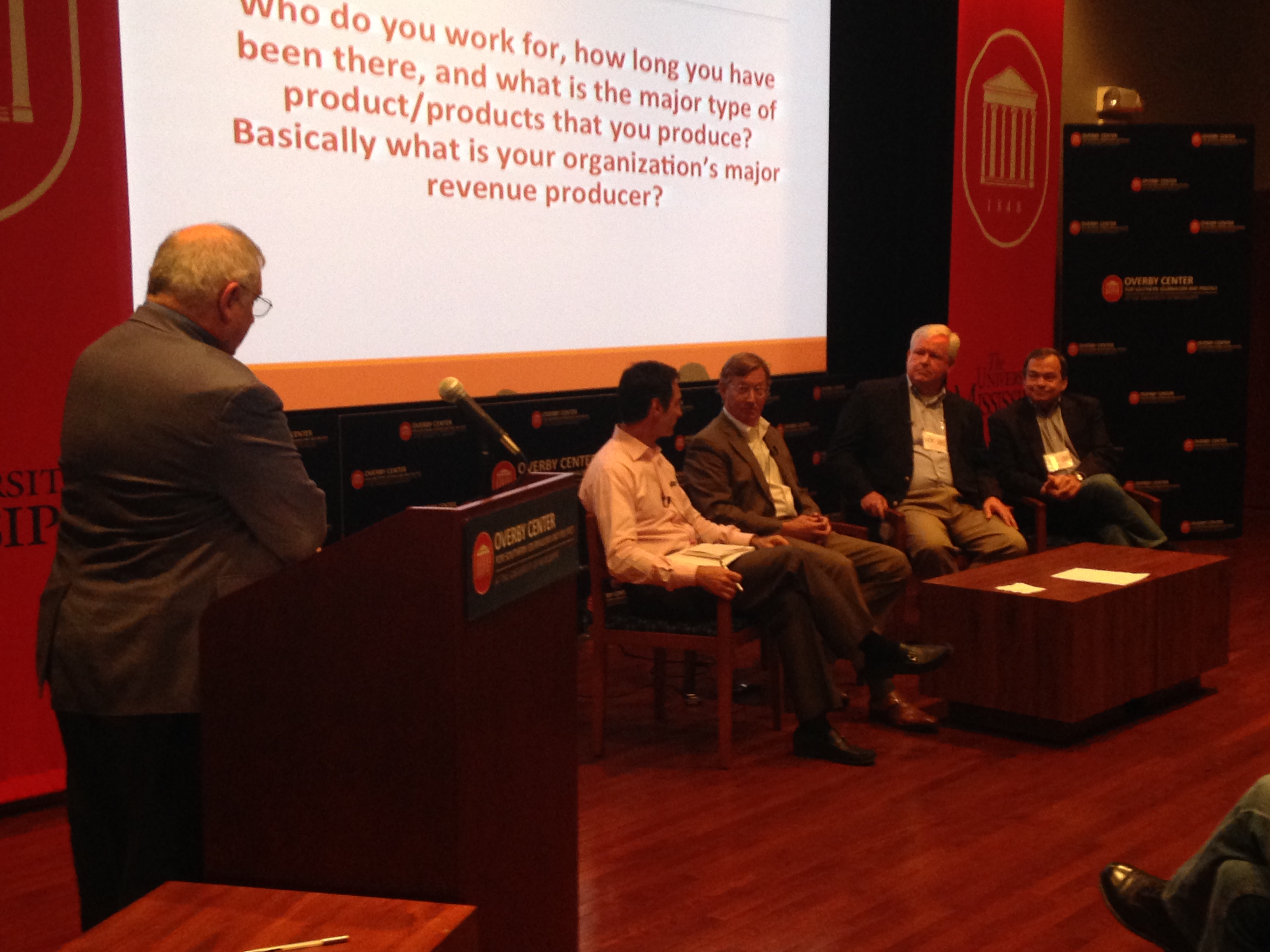 Michael questioned, “If print is dying, why was the 2014 launch of Hearst’s Dr. Oz, the Good Life such a fantastic success? Its first issue sold out on newsstand and it achieved 300,000 subs in 4 months.” He pointed out that magazine readership has been relatively constant at 187 million, even while there is massive disruption in other mediums such as TV audiences. (I actually disagree with the implied serenity of that conclusion, but my reasoning will have to be discussed in another Bo-essay, at another time.)
Michael went on to familiarize us with Hearst “Unbound” and how magazine brands should now exist on a global scale and on many platforms with social media, you tube videos, websites, mobile applications, tablet editions and narrowed targeted editions; for example, Cosmo for Latinas.
Michael also went into some details about how the size of the audience matters more than the measurement of ad pages, (another conclusion that I reserve the right to explore and discuss at a later date.) He previewed the now available “Magazine Media 360,” which is the MPA’s new measurement tool for capturing how readers are connected to magazines across multiple platforms, and not only the print product. This is a bold attempt to combine total magazine reach, a combination of digital audiences and print circulations.
Michael discussed the many paths that Hearst is traveling down other than their core print products. The list of adventures and undertakings at Hearst is as huge as it is possible to imagine and an outside inspiration for publishers everywhere.
A few days later on in the event, when it was my turn to stand before the audience, I offered the following observations: “We heard from Michael Clinton on Tuesday night. His talk was enthusiastic, and uplifting. Indeed Hearst is doing many wonderful things. But he is from a group of Publishing Olympians. If you have as much money as a Greek god, it makes the transformation of our industry look pretty damn easy. They (Hearst) and the other Olympians, such as Time Inc, Meredith, Conde` Nast, Bonnier and a few others can afford to fail many times without effecting the long-term bottom line.
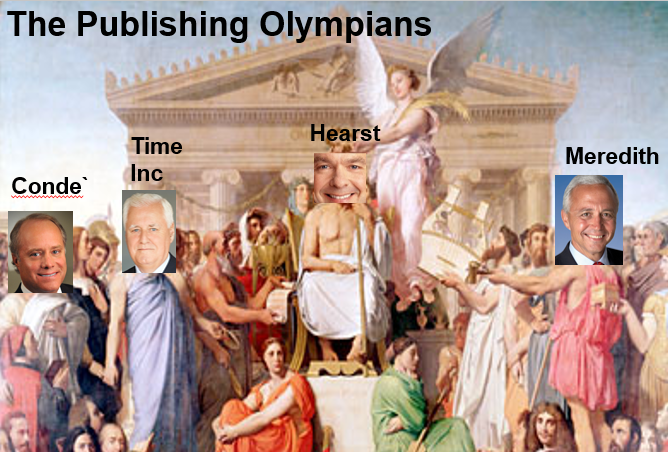
As wonderful as it is to hear of what is possible in the extreme, there are 9,000 other titles working down here on the planet earth, who oddly enough don’t have Olympian resources and yet some are still doing quite well anyway.

After that observation, I focused my discussion in an attempt to make a case for the students to understand that in the midst of the downward trends of print in today’s market place there still continues to be many success stories. In the next session, when I moderated a panel of printers, including Publisher’s Press, Democrat Printing, and Shweiki Media, they confirmed the same thought and took it a step further. The printers brought to everyone’s attention the many thousands of unaudited titles that exist in their shops and the vitality of free circulation magazines.
A thought worth remembering is that when it comes to counting magazines that are produced, it is the unaudited titles that are in the majority and the audited magazines in the minority. And that ratio is by a very large margin.
There is much more that is worth discussing, but I am writing this on my plane ride home and will have to end my recap here. In the next few days I will attempt to go over the many other highlights of this terrific conference.
Post Script: One part of the conference is the assignment of student “shadows” whose job it is to meet, greet and work with all the professionals for the duration of the event. A special note of thanks to my articulate, hard-working and impressive shadow, Jared L. Boyd, with whom it was a pleasure to work and mentor.
Here are just a few of the people and the notes that I’ll be writing about:
William Morris III (Chairman, Morris Communications):
* We’ve moved from information scarcity to information overload
Vanessa Bush (Editor in Chief, Essence Magazine):
* Print is giving birth to countless abundant opportunities to engage with our audiences
John Harrington (Publisher, The New Single Copy)
Malcolm Netburn (Chairman, CDS Global)
John Phelan (Executive Director Consumer Marketing, Rodale):
* Predictive data is the connective tissue between an issue and its readership
* The distance between content and audience must narrow
* We don’t know how to measure success right now — digital tools and platforms are changing everything
Gil Brechtel (President, MagNet)
Joshua Gary (MagNet):
* There’s turmoil in the newsstand but there can be a predictability to be made from it
* 15% of magazines sold are now bookazines, which are starting to flood the market
Espen Tollefsen (CEO, Interpress, Norway):
* Magazine markets are declining
* International titles are declining as well as domestic titles
* #1 reason for large drop is not mobile — it’s a decline in “in-store” focus and distribution issues
Keith Bellows (EVP, Editor-in-Chief, National Geographic Traveler and Travel Media):
* We’re still in the middle of the bridge between print and digital — still driving “dazed and confused”
* Natl Geo is not a media company — we have only 3 mags — rather it’s all about Natl Geo’s mission to teach people about the planet
* The era of relying on subs and advertising to keep the company profitable is over
* The stories are what drives media — don’t lose sight of that
Roy Reiman (founder, Reiman Publications):
* The Act conference brings together people who are “doers instead of dreamers” who are not afraid to share both their mistakes and their successes
Vanessa Bush, editor in chief of Essence magazine, delivered the morning keynote address of day two (October 8) of the ACT 5 Experience at the Magazine Innovation Center @ The University of Mississippi. Click below to watch her presentation.
You are currently browsing the archives for the News and Views category.


 Mr. Magazine