Archive for the ‘News and Views’ Category

h1

A Healthy October Harvest of New Magazines…

November 7, 2014

Welcome to October and 74 wonderful new magazines and magazines reaching a wider distribution than their regional areas. This month there were 13 titles with intended frequency appearing on the nation’s stands with and they were as diverse and different as the autumn leaves scattered across a field. From Sudoku to Yoga – and everything in between, October was an awesome month for magazines.

So enjoy our new covers and get ready for a November to remember! And just in case you are bored this weekend, why don’t you stop by a newsstand and pick up a copy or two from the magazines shown below. I know you will not regret your decision. Enjoy the weekend.

Up first our frequency:

BIZ New Orleans-55Chic Metropolitan-57Crazy for Sudoku-7CyberTrendJoural of AMerican Law-53Not of U-49Shalom Tidings-51Shoes UPStorytimeSilent SportsSweet Tea Times-52The California Sunday Magazine-56Yoga+Health-50

And now our specials:

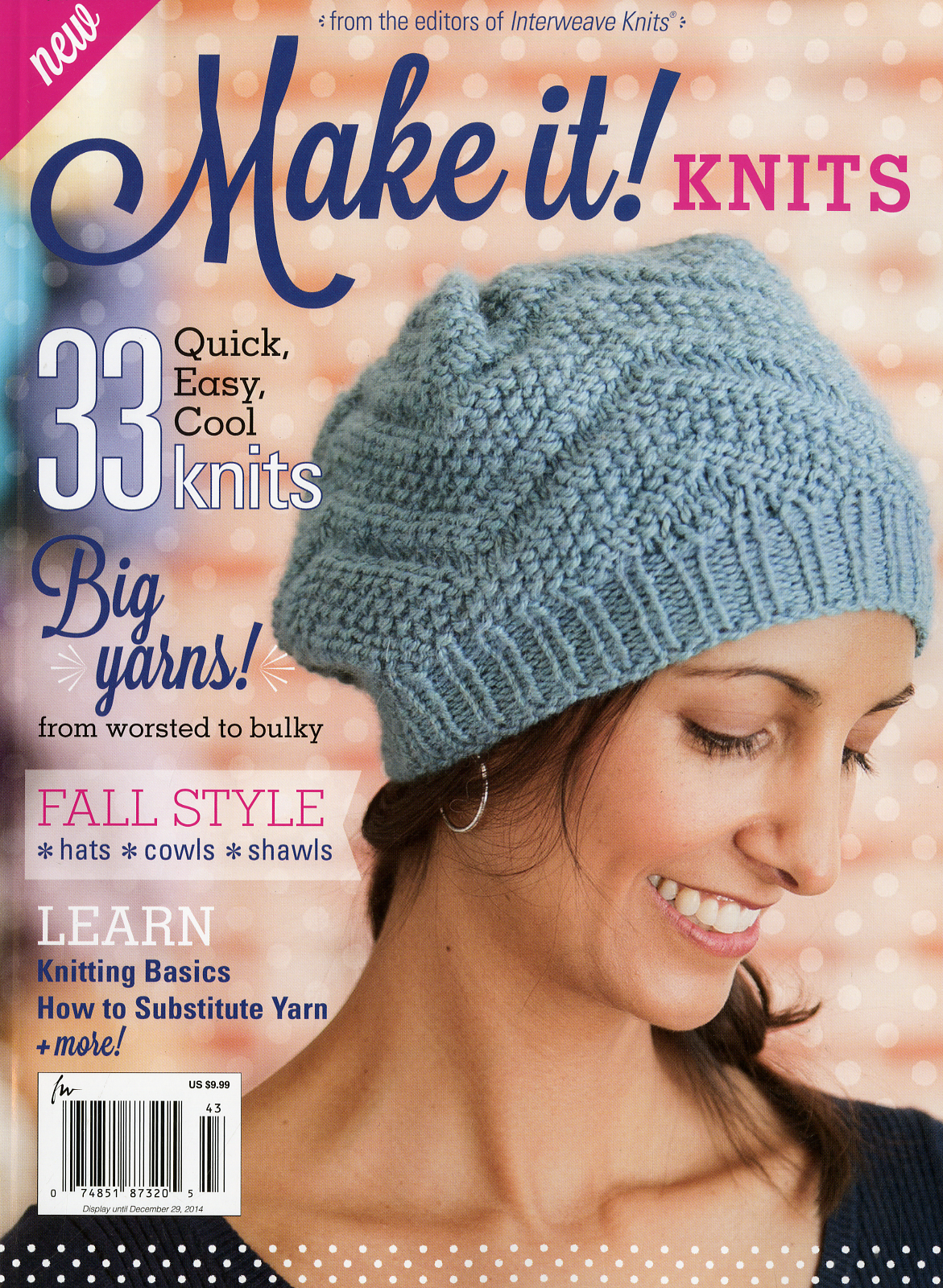
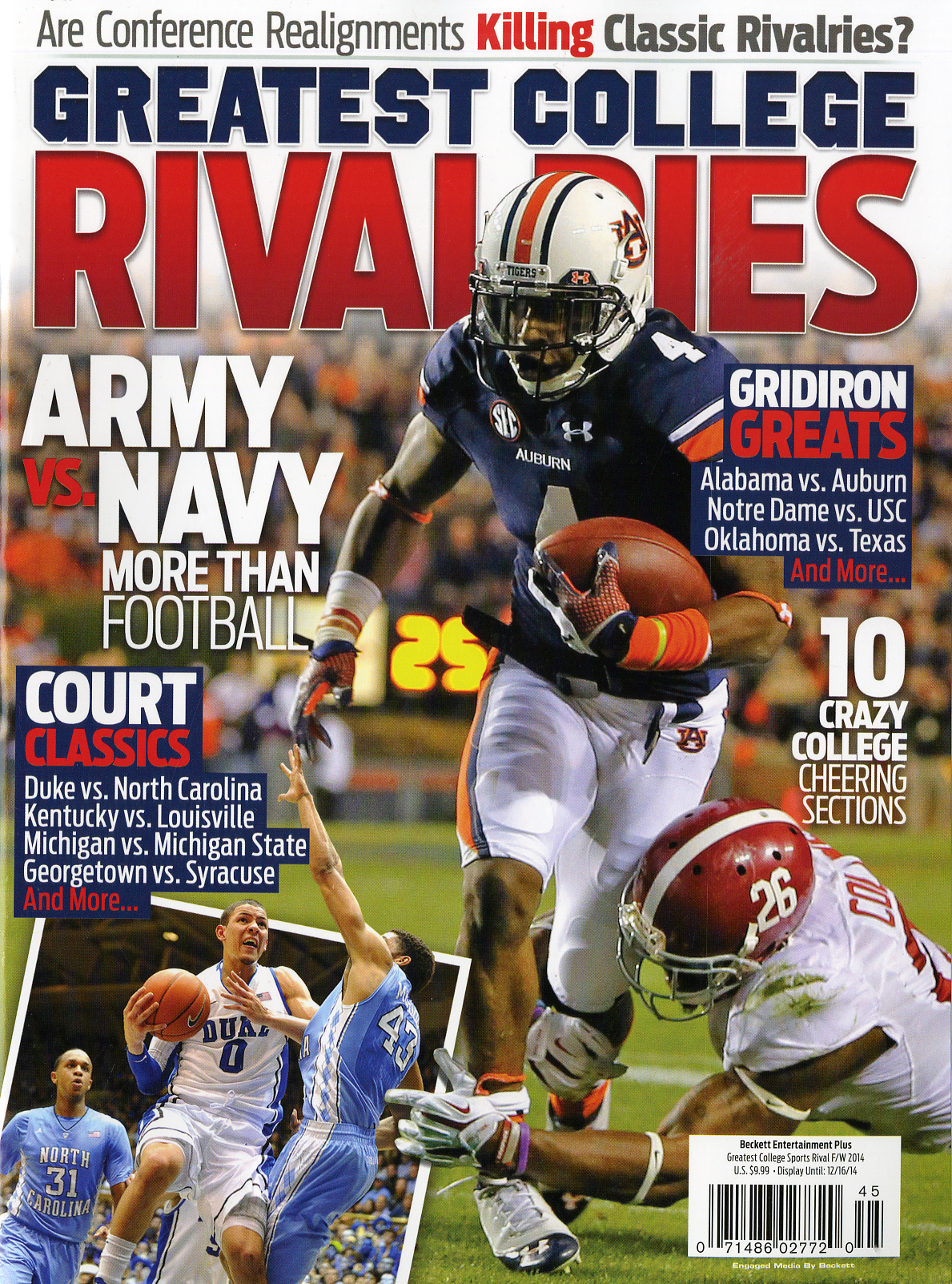
Wine Lovers' Guide to South AmericaNational Geographic - Places of a lifetimeMake Believe Ice PrincessLife - Seeing is BelievingAmerica's Most Highly Decorated HeroesExodusWWII Greatest BattlesTuscan HomeLegends of CountryLife - Gone with the windInside the Criminal MindWorld of Warplanes-11Women's Health-1Vintage Hoidays-28Ultimate Car-16TV Guide Marilyn-30Top 100-24The Vietnam Wars-15The Rise and Fall of the Roman Empire-44The Eco-Living Book-37The Civil War-14The Bible-8The Best for Your Kitchen & Home-46Tactical Training-33Super Star Quilts-2Spin U2-39Southern Cast Iron-21Sons of Anarchy-38Rimfire-47Pro Secrets for DIY-7People-17People Tribute-29NCIS-3Make It Knits-6Magical Moments-6MAD-2How DNA Shapes Your Life-13Holiday Home-10Holiday Crochet-40Herbal Remedies-3Healthy Recipes Around the World-18Halo-41Halloween Fun-zine-12Greatest College Rivalries-48Golf's Greatest-4Gluten-Free Recipes-45George Strait-5Froning-25Football's Greatest Quarterbacks-35Five Seconds of SUmmer-23Fast & Healthy-31Country Sampler's Christmas-42Cooking Light-19Christianity-4Carry Gun Companion-36Call of Duty-22Battle of the Bulge-27Bake It-32Annie's Christmas-43AK vs AR-3450 Great Westerns-5

h1

Samir “Mr. Magazine™” Husni: 30 Years of Teaching and Mentoring at the University of Mississippi*

November 5, 2014

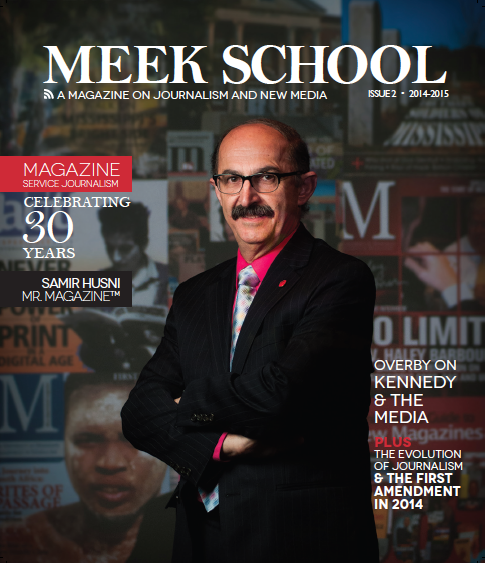
Meek-School-14-15-Cover
Samir Husni
Mr. Magazine™

It’s been said that until the magazine service journalism program began in August 1984, Mississippi was not the first state one thought of when it came to magazine publishing. Music maybe and great literature, but not necessarily the world of magazines and how they’re made. But all that changed after Dr. Samir Husni started the magazine service journalism program at the University of Mississippi.

Steve Cohn
, editor-in-chief of Media Industry Newsletter, described Husni as “a wonderful representative for the state of Mississippi, especially where magazine journalism is concerned.”

“In fact, in New York and all over America,” Cohn said, “when you hear the word Mississippi today, magazines are the first things that come to mind. And it’s because of Dr. Husni’s passion.”

The magazine service journalism program at Ole Miss is celebrating 30 years.

“When Jim Autry and the Meredith Corp. funded the magazine program at Ole Miss, it brought a great deal of media attention to the department of journalism and the University of Mississippi,” said Will Norton, Jr., dean of the Meek School.

Since the inception of the program Husni has been asked to deliver seminars or consult with magazines and magazine media companies on every populated continent of the world.

Many years ago one of his students gave him the moniker “Mr. Magazine™.” Today he is considered the leading expert on magazines and magazine media publishing.

Tony Silber
, vice president/Content of Folio: Min, Expo, Audience Development, and PR News at Access Intelligence, said, “Samir Husni is a magazine-industry treasure.”

“He has built a business as a consultant through his extraordinary intellect and understanding of how magazine-companies work.

“But he’s far more than just that: he’s an icon. He’s a brand. He’s an evangelist for print media who understands the interplay of print and digital media.

“The magazine industry is more successful because of Samir Husni’s work, and the good news is that he’s imparting his knowledge not just to his peers, but also to the next generation of media specialists, through his work at the University of Mississippi.”

The funding and the idea were the first steps. After Husni was hired to head the program, it was time to get down to details.

“With the help of a lot of people from the Meredith Corp. we developed five courses, and we began to offer the program,” Husni said.

Students needed “to know more than just your basic reporting, writing, editing and designing,” Husni said. That was uncommon for the 1980s. Ole Miss was the first school to include journalism and the business side of magazines in one program.

Husni developed editing by design, a course that provided everything a journalist should know about design and what every designer should know about journalism. Students in the department of art as well as students in the service journalism program took the course.

“Then we created a sequence of two courses,” Husni said, “in which students developed an idea from scratch for a new magazine and they created an entire business plan for that magazine, including developing content, design and the budget.

“Along with everything else that goes with a magazine: the media kit, the circulation plan and the advertising plan.”

The program has seen a lot of graduates who have gone on to establish impressive careers and they give Husni and the magazine service journalism program all of the credit.

Newell Turner
, one of Husni’s former students, is now editorial director for Hearst Design Group, specifically Elle Décor, House Beautiful and Veranda.

“After I graduated from Ole Miss with my undergraduate degree in journalism and Southern Studies,” Turner said, “I went to work for a while. I came back to Ole Miss to go to law school and did it for about a year and a half.

“Then I found out this magazine program was launching in the journalism school and I’ve had a passion for magazines that goes back to when I was an early teen.

“So I switched from law over to the magazine service journalism program, and it was like a light came on because suddenly I knew what I wanted to do with my career.”

Turner said magazine design wound up opening up a door for him in his career.

“The first year,” he said, “I met Dorothy Kalins, then editor-in-chief of Metropolitan Home and also that year she was president of ASME.

She spoke at Journalism Week in the spring, and Samir found out that there was a job opening, and he encouraged me to look in to it and help me realize what a great opportunity it was.

“So I pursued it and interviewed for the job, and they hired me.

“Without Dr. Husni and the magazine service journalism program, who knows where I’d be.”

Clinton Smith
, editor-in-chief of Veranda magazine and also a former student of Husni and the magazine service journalism program, said the program always had been unique, and that’s why it has worked.

“The foundation of his coursework has served as my compass throughout my 15-year journalism career—from intern to assistant editor to editor in chief,” Smith said.

“Dr. Husni’s magazine program has never been about textbook learning,” he said, “and that’s why it’s had such an impact on students’ lives over the past 30 years. The practical, real-world experience he instills will serve them throughout their careers.

“Dr. Husni’s magazine program has signaled to the country – and the world – that important and innovative things are happening not only at Ole Miss, but in Mississippi. His influence and the power of the program cannot be underestimated.”

The magazine service journalism program has begun many careers for students and will continue to do so in the future.

Scott Jones
was executive editor of Southern Living magazine from 1999 to 2010. Then he left to start his own companies, called Jones is Hungry and Jones is Thirsty, two separate entities on culinary-related custom content, education and consulting.

“I went to Ole Miss specifically for the magazine program,” Jones said. “The service journalism program and Dr. Husni. This was in 1988 and desktop publishing was really in its infancy. So it was an exciting time to be there because the whole world of magazine publishing was changing, and you could do things then right on your own PC which before would have taken a lot of capital and a huge staff.

“The program had terrific benefits for me. It opened doors and got me up close and personal with people I would have never been connected with if not for the program.”

Cathy Still McGowin
, editor of Birmingham Home and Garden, said the university did not have a graphic design program when she got to campus.

“At the time, I majored in magazine journalism to learn the graphics programs,” she said. “Little did I realize that I would not only learn graphic design in one of the most advanced programs in the South, I also would learn everything I needed to know to gain entrance into the publishing world.

“Editing by design, made the most impact on me, and the tools I learned in that class are ones I still use every day. I learned that information comes in a package—and the more the parts work together, both visually and in words, the greater the impact of the message.”

Still was hired at Southern Progress Corp. when she graduated.

“I worked at Southern Accents and later Coastal Living for 14 years,” she said. “First as a graphic artist, then as a writer, stylist, and editor. At such a large company, tasks and duties are specialized and there wasn’t a lot of crossover with skill sets.

“Now, as editor of Birmingham Home and Garden, a small city magazine, the ability to use all of my skill sets are more critical than ever.

“I still maintain that Dr. Husni’s approach to looking at things from all angles is the reason I have been able to grow and meet the challenges of my career. That, and a lot of hard work.

“Those fundamentals are timeless—no matter your medium of journalism.”

Katriina Kaarre is publishing director for Women, Family and Children Media, published by Otavamedia in Finland.

“Meeting Samir in the corridor of Farley Hall in the fall of 1987 changed my career path,” Kaarre said. “I came to Ole Miss originally only for one year.

“I wanted to learn about the Southern culture and enjoy the blues archives – and take a few classes of marketing on the side.

“After meeting Samir, I quit classes at the business school and started my M.A. in journalism,” she said. “During the three-and-a- half years that I stayed at Ole Miss, I managed to visit the Center for Southern Culture only a few times.

“I’ve stayed on that path ever since, and I still love the touch and feel of a newly printed magazine.

“I still get excited when thinking about editing by design, the mission/vision of a magazine and the tone of it.”

Clearly, Dr. Husni opened doors for many students to develop exceptional careers.

“The ultimate goal,” Husni said, “was and is to teach students about service journalism, which can easily be defined as the factual, service-oriented, active-oriented, non-news type of journalism that has in it the power to activate the readers.

“The magazine service journalism program at the University of Mississippi was designed to create the type of journalism that will activate readers and get them personally involved with the content.”

And that continues today.

* This article, the cover story of the 2014-15 Meek School of Journalism and New Media Alumni magazine, was written by Angela Rogalski.

h1

Bringing Back the Good Times Again: Reminisce Magazine Rediscovers Its Roots. The Mr. Magazine Interview With Editor-In-Chief, Liz Vaccariello.

November 3, 2014

“The biggest challenge, and it’s a daily one, is to listen to the readers. You know, I put my personal email address in Reminisce and Reader’s Digest. I read every consumer letter and I respond to every one of them. That engagement with the audience is so very important.” Liz Vaccariello
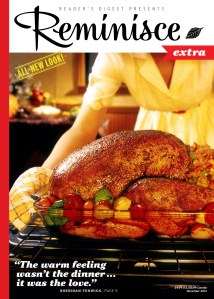
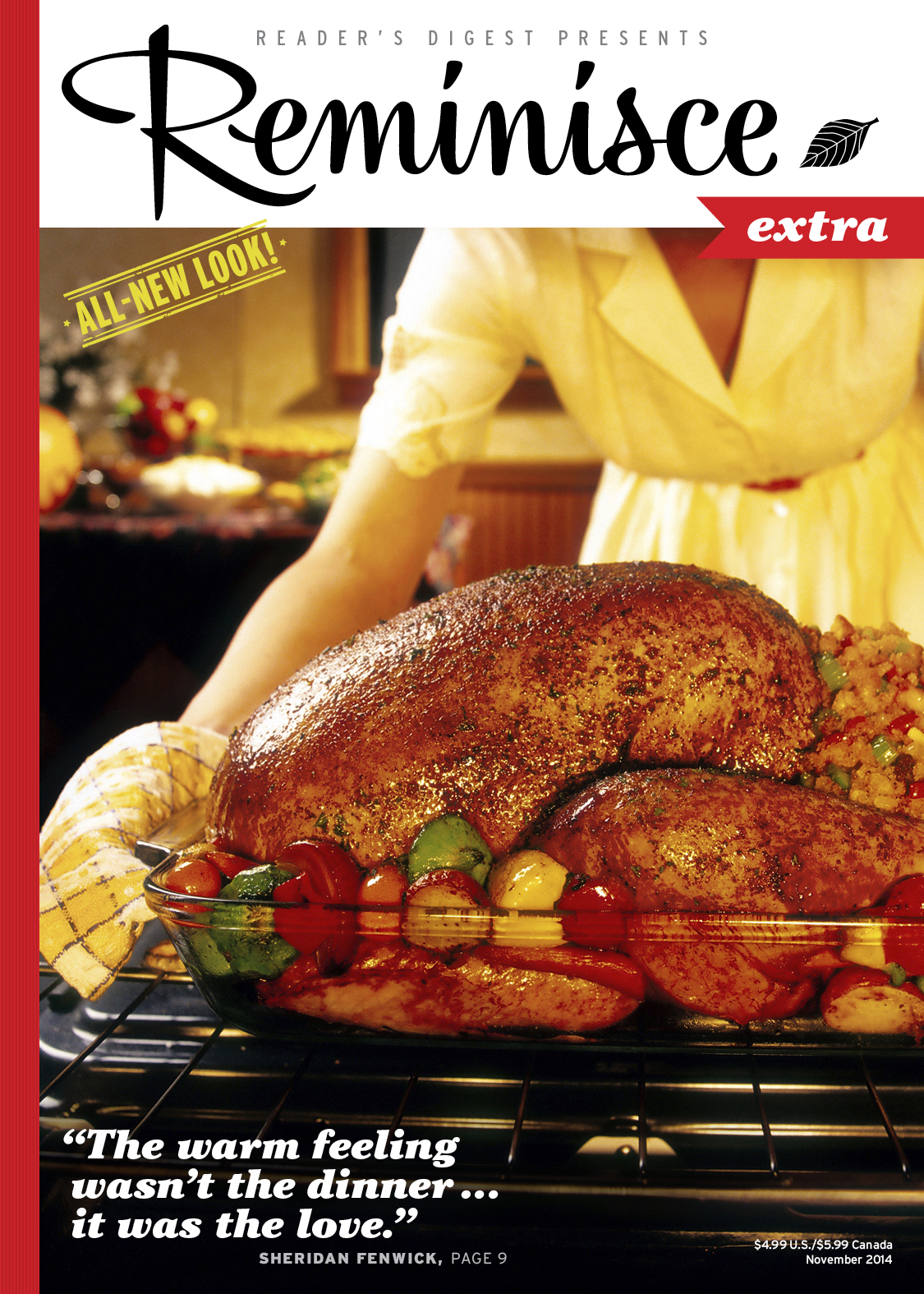
NOV_COVER_REX In the spirit of celebrating Reminisce’s history as a place for reading and sharing memories – and to attract new generations of consumers steeped in nostalgia, Reminisce magazine has turned to the editor in chief of Reader’s Digest Liz Vaccariello and her team to breathe new life into the magazine. Ms. Vaccariello’s first goal is to reaffirm Reminisce’s mission “to touch and inspire readers with stories of cherished memories as told by some of those same readers.” ( Right: The New Reminisce)

After all, the magazine that was started by Roy Reiman in 1991 (and given the name Reminisce by his wife Bobbi) was one of the fastest growing circulation magazines in recent history. It went from zero to one million in less than a year and when the magazine was sold in 1998 it had a circulation of 2.5 million. The magazine, by design, did not carry a single ad and was totally circulation driven. Reminisce was one of many other titles in the Reiman group that in 2002 was sold to the Reader’s Digest Association (RDA).

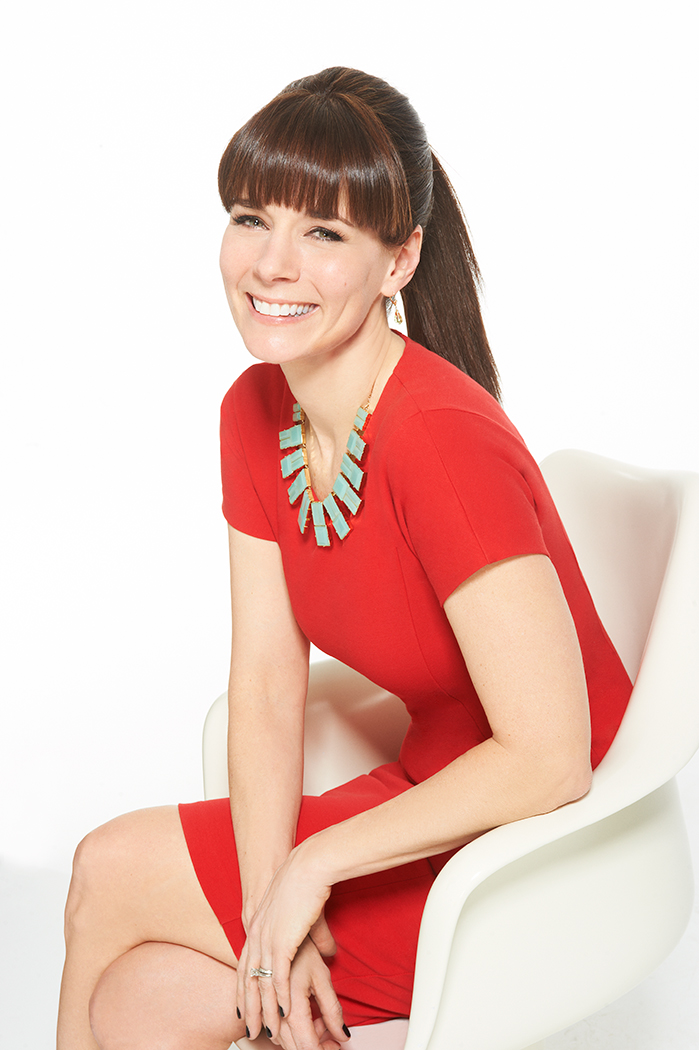
After the sale, the magazine drifted from its original mission and DNA. The once 2.5 million circulation is now around one million. However, 12 years after the RDA ownership, an awakening is taking place. Reader’s Digest Association is moving the magazine from its original home in Wisconsin to New York City and placing it in the tender-loving hands of the editor in chief of Reader’s Digest magazine. Liz Vaccariello, who successfully reinvented Reader’s Digest magazine just a year ago, was given the additional responsibilities of Reminisce. Ms. Vaccariello brought Reader’s Digest back to its roots and reconnected the magazine with its DNA and audience.

Now, together with her Reader’s Digest team, she plans to do the same thing with Reminisce. I reached out to Liz Vaccariello, and we made some wonderful conversational memories of our own. We spoke about the magazine’s past, present and the possibilities for the future, with a great deal of emphasis put on the importance of getting back to the magazine’s roots of being an audience-first publication.

As witnessed on Facebook and other social media sites, the millennial generation has revived nostalgia and grand old memories in mammoth proportions just with “Throwback Thursdays” alone, so wistful reminiscing is more popular than ever. And the magazine plans on returning to their roots and in turn, capturing that new gene pool through the art of “remembering when,” while keeping their loyal and long-time core audience happy as well.

I hope you enjoy the Mr. Magazine™ conversation with Liz Vaccariello, and maybe you’ll relive the original tag-line of the magazine “that brings back the good times…by taking you on a walk down memory lane.”

But first the sound-bites:

Vaccariello_Digest_02_04_131540Mar04-2013On whether she took a reinvention or a return-to-roots route for the magazine: I went back to the roots and that’s what makes this magazine so extraordinary. Readers spend an average of 3.5 hours with this magazine. They want to lose themselves in other people’s personal histories.

On the fact that young people enjoy reading nostalgia more today than ever:
That’s absolutely right. First and foremost, it connects the generations, but more than that there has been research done on nostalgia. And people as young as six can feel the emotion of nostalgia.

On her biggest stumbling block: This is a consumer magazine. And like many publications, we hadn’t been marketing to a new gene pool, if you will, of readers. We’d been marketing to the same audience over and over again.

On whether she considers her new job an easy reward for past success with Reader’s Digest:
No, but it is an easy job when you’re given a magazine that is beloved by its audience and you have to be humble about the brand that’s now in your care.

On whether her dual-editing role gives her twice the excitement in the office than before:
Oh my goodness, I’m living the dream. I don’t know any other way of putting it.

On what she hopes to have accomplished a year from now with Reminisce:
I would hope that I can tell you that I’ve pleased the nearly one million current subscribers of Reminisce, that they feel as if they have a publication that lives up to the importance of their stories.

On whether she believes the magazine can ever attain its 2.5 million in circulation again:
I think it absolutely could.

On what keeps her up at night:
What keeps me up at night, to be honest; nothing.

And now the lightly edited transcript of the Mr. Magazine™ conversation with Liz Vaccariello, Editor, Reminisce and Reader’s Digest Magazines…

Samir Husni: Congratulations on your dual positions with Reader’s Digest and now also Reminisce Magazine.

Liz Vaccariello: Thank you, I’m so delighted. Reminisce and Reader’s Digest has a lot in common. They’re about reading and sharing and in the case of Reader’s Digest, people throughout history have shared jokes with each other, parents have ripped out articles and shared them with sons, daughters and neighbors.

Then Reminisce is all about reader’s sharing their memories and their nostalgia with likeminded people, but also with their families: “Look son, here is my first car” or “this is the story about how I met your mother” and it’s here in this magazine. So it becomes more of a collectable experience by being in the magazine.

So there is a lot of similarity in terms of the missions of both magazines and their audiences.

Samir Husni: Historically speaking, since we are talking about a magazine that deals with nostalgia and history; when the magazine launched in 1991 it was one of the few magazines that in less than 12 months exceeded one million subscribers. And then of course by the time it was sold, it had almost 2.5 million. So it was a huge magazine that back then was totally written by readers before anyone was really talking about audience-generated content. Then the magazine drifted a bit into the celebrity-oriented topics. So tell me, what is your vision now for the magazine? Did you re-invent it or, like with Reader’s Digest, did you go back to the roots?

Liz Vaccariello: I went back to the roots and that’s what makes this magazine so extraordinary. Readers spend an average of 3.5 hours with this magazine. They want to lose themselves in other people’s personal histories.

But to your point; the magazine had drifted away over the years and had become more, as I call it, “magazinified” and they put more editor’s voices in the magazine and they used stories from other places.

Reminisce is the reader’s magazine. They tell us what they want to write about by what they send in. And so the re-launch is really about committing to that user experience; which is personal histories. We’ve taken out almost all of the stock images and Getty images and now almost all of the images inside the magazine are submitted by readers.

Over the years the magazine had developed a little more white space and it tried to feel a little breezier, but our reader wants a sea of stories, they want pages that are packed with information and words. They wanted smaller photographs and more stories.

We really wanted to return it to that scrapbook feel and have that sense of discovery as the reader goes through the magazine. They don’t know if they’re going to stumble upon a story about growing up or about how someone met their first love, beautiful stories like that.

Returning the magazine to its roots is just about having as many stories as possible between the pages and gets the editors out of the way. My job is just to create a setting that does the people’s memories justice and honors them.

Samir Husni: And those stories are important. I even hear it from my students; you don’t have to be ancient to enjoy those types of stories. Even young people in their late teens and early twenties are looking for content to read about memories and life when their parents or grandparents were younger.

Liz Vaccariello: That’s absolutely right. First and foremost, it connects the generations, but more than that there has been research done on nostalgia. And people as young as six can feel the emotion of nostalgia. And they have found that people are at their most nostalgic in times of transition. They found that people who have recently graduated from college feel very nostalgic for high school or for when they were actually in college. People who have just started a family of their own feel nostalgic for their own childhoods. And of course, empty-nesters feel nostalgic for when their children were young and seniors feel nostalgic for when life was simpler and times were better.

So you’re absolutely right, there is no demographic for nostalgia.

Samir Husni: What do you think is going to be your biggest stumbling block?

Liz Vaccariello: This is a consumer magazine. And like many publications, we hadn’t been marketing to a new gene pool, if you will, of readers. We’d been marketing to the same audience over and over again. So for 20 years we haven’t found a new generation of likeminded people to subscribe to Reminisce.

The biggest stumbling block is going to be to continue to appeal to the older reader who wants to reminisce about the 30s, 40s and 50s, while also getting their sons and daughters to consider the magazine their own as well, so they can reminisce about the 60s, 70s and so on.

To do that we’re trying something called “Decade Diversity.” We might do a story on Friday night television and no matter what the demographic; you have a Friday night television show. For my grandmother maybe it was “I Love Lucy,” for my mother maybe it was something else and for me it was “Happy Days” or “Dallas” or “Full House,” so there are ways to introduce the later decades and those stories as part of the mix.

Of course, we don’t want to alienate the readers who have been with us 30 years and who loves this magazine and wants to spend hours and hours with it. We don’t want to all of a sudden turn it into a magazine that’s nostalgic for the 80s.

Samir Husni: By the way, “Sanford and Son” was my favorite television program. (Laughs)

Liz Vaccariello: “Sanford and Son,” I love it. (Laughs) “All In the Family;” we all had a favorite and our destination television.

Samir Husni: In addition to that, which is a big stumbling block; what other hurdles do you see looming before you to clear? It’s a given that you have done great with Reader’s Digest, that it was the cruise ship you were able to turn around; so now does it feel like it’s going to be an easy job? Do you feel as though you’re being rewarded with Reminisce and the powers-that-be think you can also turn around this magazine?

Liz Vaccariello: (Laughs) No, but it is an easy job when you’re given a magazine that is beloved by its audience and you have to be humble about the brand that’s now in your care. You have to have enormous respect for what made the consumer become so attached to it in the first place. You can’t be dismissive and you can’t be like a bull in a china shop, run in and think you have all the answers.

The biggest challenge, and it’s a daily one, is to listen to the readers. You know, I put my personal email address in Reminisce and Reader’s Digest. I read every consumer letter and I respond to every one of them. That engagement with the audience is so very important. They will tell you the stories they like, what they want more of, what they want less of and to respond to that is a delicate task. You have to understand who’s yelling the loudest and that’s not necessarily the person you need to listen to. You have to look at the big arrows.

Samir Husni: Since the last time we spoke, and that was mainly about Reader’s Digest; do you now feel more excitement when you come to the office in the mornings or do you ask yourself what have I gotten myself into?

Liz Vaccariello: (Laughs) Oh my goodness, I’m living the dream. I don’t know any other way of putting it. To have two magazines actually in my care where the overriding emotion is optimism and looking at the world through a hopeful lens, where my job is to curate the most meaningful stories about family, history and about how to live a better life, with a sprinkle of humor in there; there is nothing to not like about that job. I love every minute of it.

And I also have a wonderful team, the Reader’s Digest team absorbed all of the work that’s done on Reminisce, so we didn’t bring the staff of Reminisce with us. We just absorbed it and threw ourselves into it and it’s been a wonderfully energizing project to work on.
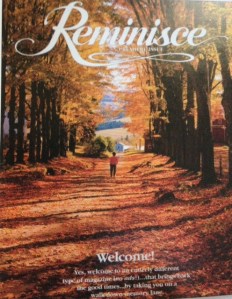
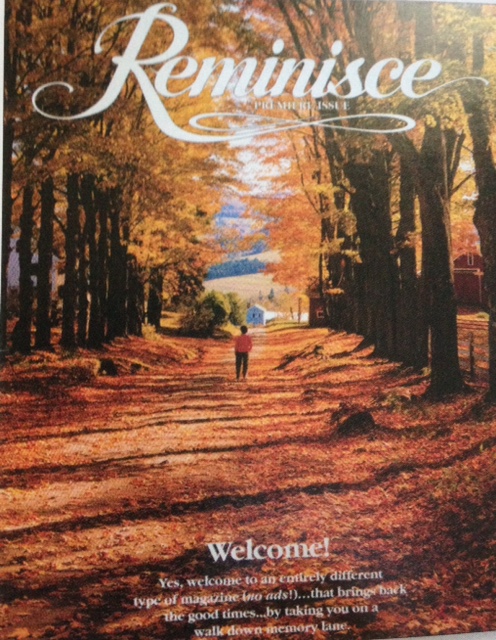
FullSizeRender Samir Husni: Why do you think as a major editor in our industry; why do you think that there aren’t more of those beacons of hope and light out there on the stormy ocean of doom and gloom stories that we are told?
(Right: Cover of the first issue of Reminisce.)

Liz Vaccariello: That’s a wonderful question. I think it’s interesting because the media landscape to a large extent is this cacophony of snarky cynicism, darkness, worry and partisanship, particularly broadcast media. And I think they’re doing it, frankly, because that’s what people respond to. That’s a quick fix; the ratings heroine, if you will.

But if you look at other media and I think magazine media in particular, magazines tend to be an oasis from that, with a few exceptions. I look at the service magazines; I look at health and fitness magazines, at magazines like Oprah and Real Simple. When you get to the end of those publications, you feel wonderful.

So I believe the magazine industry has done a good job of being an oasis from that snarky cynicism. And frankly, I think radio has too. I was just reading this morning about 24-hour Christmas on radio stations. This is the number one trick that radio has found to boost ratings; go Christmas all the time and they’ve bumped it back so that now it’s happening even before Halloween, because radio knows that people want to feel good.

I think that there are pockets of cynicism and negativity, but many people, particularly in magazine media, have seen their role as being a place where people can feel good. You want to spend time with a magazine; you don’t want to spend hours with your snarky friend, you want to spend hours with the friend who’s going to make you laugh, teach you something, make you feel good and tell you a great story that will warm your heart. Those are the people who you want to spend time with and those are the magazines you want to spend time with.

Samir Husni: If we talk again a year from now; what do you hope will have been accomplished in that year with Reminisce?

Liz Vaccariello: I would hope that I can tell you that I’ve pleased the nearly one million current subscribers of Reminisce, that they feel as if they have a publication that lives up to the importance of their stories. That they feel like it’s a collectable experience and that they’re proud to have it in their home and they’re proud to have their stories inside of it.

I hope that I can say that and I hope that I can also tell you that the sons and daughters, the next generation of those readers, are starting to discover us on Facebook, Pinterest and on the web. And that they’re starting to share their photos and stories in that new digital way and that we’ve brought a new network of consumers and readers into the fold.

Samir Husni: Do you see the magazine ever going back to the 2.5 million in circulation?

Liz Vaccariello: I think it absolutely could. I think there is no limit to the amount of people to whom these sort of stories appeal to.

Samir Husni: Is there anything that you’d like to add about Reminisce specifically?

Liz Vaccariello: Just that I’m thrilled and honored to be working on Reminisce and Reader’s Digest.

Samir Husni: My typical last question; what keeps you up at night?

Liz Vaccariello: (Laughs) What keeps me up at night, to be honest; nothing. (Laughs again) I have to answer you very honestly and tell you that I’m sleeping really well and it may sound corny, but I am filled with so much gratitude that I get to do this kind of work with this amazing team.

Samir Husni: You must be reading Reader’s Digest and Reminisce before going to bed.

Liz Vaccariello: (Laughs) And a little Jon Stewart and Stephen Colbert.

Samir Husni: Thank you.

h1

Falling in Love With Your Audience! Reflections on Magazine Relationships and Addictions. From Spain with Love….

November 1, 2014

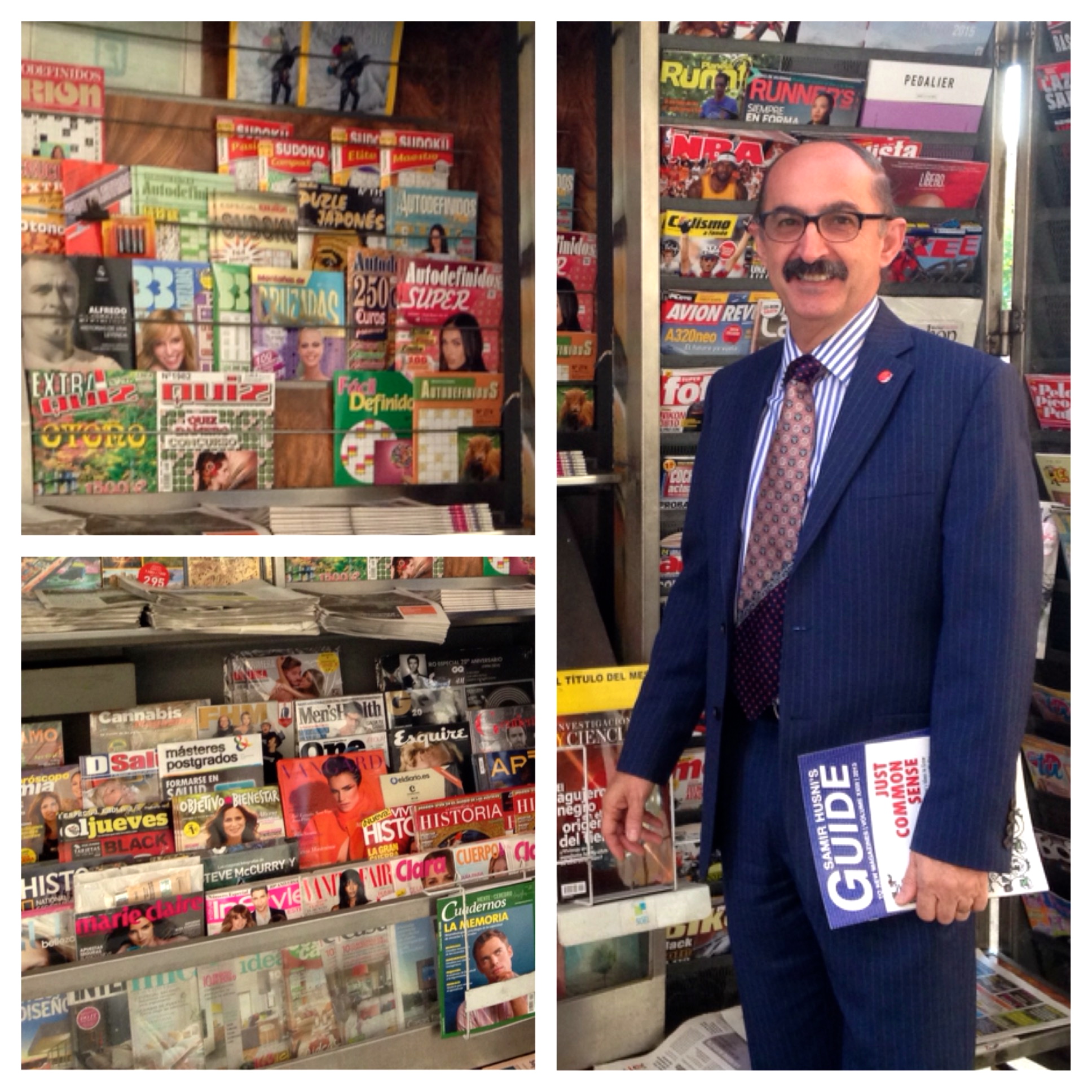
IMG_7216 Complications, dilemmas, obstacles and concerns: all words used when describing the problems going on in magazine media today. In fact, problems that have materialized in our traditional magazine world since 2008 when the economy went bust and technology burst upon the scene. Since then we heard the naysayers who cried: “Print is dead! Long live digital!” And more recently the catchphrase: “Print isn’t dead; it’s just in decline,” as magazine media scrambles to adjust and rise like a phoenix from the ashes of problems that digital supposedly caused print and the entire industry when it fusilladed into prominence in 2008.

But the problem is not with ink on paper and the solution is not with just pixels on a screen. The problem is what are we trying to engage our audience/customers with, and that’s where our troubles lie. And that happens when we forget the importance of the one and only reason we exist; we create, we design and we plan for our audience. That’s it. The only reason we exist. Not for the advertisers, not for the accolades we receive when we put out a noticeably great product (which don’t get me wrong, that’s an amazing and honorable achievement), but we breathe and live for our audience, period.

When we cocoon ourselves inside our offices, falling in love with our many platforms, instead of the many readers who buy our magazines and magazine media, regardless of the platforms, the result can’t be anything but disastrous.

Our audience, our customer, can detect when there is no passion, no relationship; when everything we are providing them is just via automation and there is no blood, sweat or tears involved. In fact, I used to say that we have to be experience-makers, but after a recent trip to Spain where someone said, no not just experience-makers; we have to be experience-love makers, did I really begin to see why addiction and obsession are two things missing in our attempt to satisfy our customers. Addiction and obsession are both parts of real loving relationships, whether we’re talking about human-to-human or human-to-object and that’s a proven fact, and above all, we in magazine media are in the relationship business, without a doubt.

Being in the relationship business, we are then aware that those relationships must exceed ink on paper and they must exceed pixels on a screen. And unless we humanize our magazines and magazine media, there will be no relationship. That’s why it’s so important for us to keep in mind that as we venture into the future, we should not put our hopes in new gadgets, such as tablets or mobile. Less than a few years ago, it was all about tablets, today it’s all about mobile and smart phones; who knows what it will be next?

But truly our only hope for survival is in creating a long-lasting relationship with our audience and creating a brand that relates to that audience and engages that audience, which in turn will create an addiction to that brand; an addiction so strong that the customer will feel a vacuum or a void without it, whether it’s every day, every week or every minute. We have to create this type of long-lasting relationship.

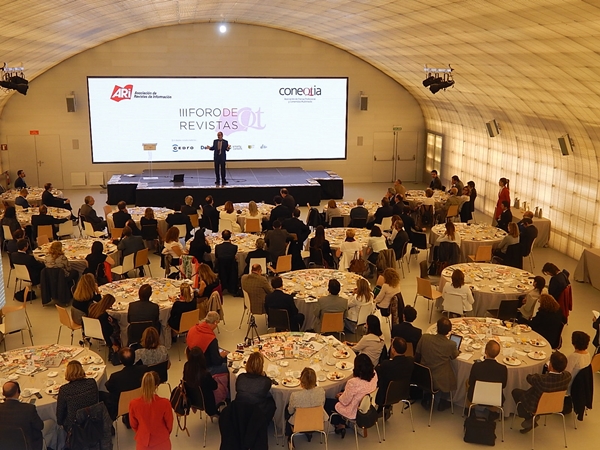
foro6-1
At a recent presentation I gave in Madrid, Spain for the combined ARI (consumer magazine association) and Coneqtia (business magazine association) third annual forum day; I spoke about the necessity of putting the audience first and the importance of learning how to be chief addiction officers, rather than chief content officers or chief design officers. Before giving that presentation, I thought about all the unnecessary additions of titles we have now, especially those that involve the word “chief.” It seems everyone is a chief: chief content officer, chief design officer, chief revenue officer, which puts us heavy on chiefs and light on the regular soldiers who actually do the work. Is everybody a chief officer now? Where are the people who actually do the work?

If that’s the case, maybe we should start thinking about some new titles that include the word chief: how about chief inspiration officer or chief dream officer or chief addiction officer? In a relationship, those are the only kind of chiefs that matter, believe me.

Here are three points from the presentation I made in Madrid and they hold very true:

• Destroy all the platforms…
• Reinvent the way we think about publishing, marketing, branding, etc… and the way we do each and every one of the aforementioned professions…
• To each medium and to each profession their own and we have to respect that and put that as priority number one…

IMG_7129 And in the 21st century it should never be a question of print or digital – the advancement of the generations does not sound a death knell for either one. When television came onto the scene, theaters didn’t die; books didn’t die, nor did radio. Therefore digital did not or will not kill print and vice versa. There is room enough on our audience’s page for both, if we engage them and fascinate them and be their addiction connection. Pushing narcotics may be illegal, but pushing content, captivating content, definitely isn’t.

Here are four mile markers on the highway of a successful future for magazine media:

• Know your audience (all of your audience)
• Free yourself from the platform
• Become an experience and not a guide
• Create a necessary, sufficient, and relevant product

The worst, absolutely the worst, title recently invented for people in magazine media is Chief Content Officer. No one is in the content delivery business only; no one. Magazines are much more than content. You have to be the Chief Drug Dispenser and you have to know what makes your audience addicted…good drugs, good addictions!

But what are the drugs at your disposal that you can use to create the addiction:

• The ABCs… know your words
• Color… learn the psychology of color
• Pictures… bigger is better
• Videos… if you are on the screen, make it move
• Sounds… make them hear
• All combined in one way or another to get you addicted…

And remember: what we create in print is permanent, but digital is ever-changing. That matters and is vitally important to remember. In print there is VALUE… monetary value that you can own, show and engage with… Print is the bridge between yesterday and tomorrow. In digital there is no lasting value… but rather instant value, now you see me now you don’t… now you own me now you don’t.

Another invaluable chief, since we’re so attached to the word in today’s magazine media, is the Chief Seduction Officer. You are to decide whether you want to seduce your audience to a:

• One night stand!
• Love affair!
• A long lasting relationship!

It’s all up to you.

After my Madrid presentation, an editor walked up to me and asked why I was known as “Mr. Magazine™.” I didn’t know quite what to say, until she smiled and returned with,” If magazines were a country, I would definitely think of you more as Mr. Ambassador than Mr. Magazine™.”

The point was well-taken and only confirms what I feel about the power of addiction. I am addicted to magazines and have been since I was a young boy. And that addiction produced a passion that people take note of.

Another editor came up to me later and gave me the honorary title of Chief Inspiration Officer, which also gave me pause.

If my addiction produced a passion that people noticed and in turn inspired people to think outside of the box or propelled their creativity; what in the world could these two new “chiefs” do on the payroll of a magazine: chief addiction officer and chief inspiration officer!

Hmm…

h1

Lessons From the ACT 5 Experience: John Harrington, Bob Sacks and Lisa Scott. The Final ACT 5 Presentaion.

October 30, 2014

There was not a better way to end the ACT 5 Experience than putting three current industry leaders in front of the future industry leaders and engage the two groups in a conversation that summed up the Experience. The three current industry leaders are John Harrington, founder and publisher of The New Single Copy, Bob Sacks, president of Precision Media and Lisa Scott, executive director of the Periodical and Book Association of America.
Click on the video below to watch the final chapter of the ACT 5 Experience…

Looking forward to ACT 6… stay tuned!

h1

Here We Are: Years After Graduation. Veranda’s Clinton Smith; Wide Open Air’s Garreth Blackwell; and Alabama Media Group’s Alex McDaniel. An ACT 5 Presentation.

October 30, 2014

So what happens to the students from the Magazine Service Journalism program at The University of Mississippi? Well at the final day of the ACT 5 Experience we heard from three former students: Clinton Smith, editor of Veranda magazine; Garreth Blackwell, founder and owner of Wide Open Air; and Alex McDaniel, writer and videographer at Alabama Media Group. Click on the video below to watch their presentations:

h1

E-Nough: Great Content and Sustainable Communication Strategies: HP’s Jonahtan Graham. An ACT 5 Presentation

October 30, 2014

The final day of the ACT 5 Experience on Oct. 10 opened with a presentation from Jonathan Graham, HP Graphics and Solutions, Germany. Watch his presentation “E-nough: Great content but what are your sustainable communications strategies?” by clicking the video below.

h1

A Cook First, A Journalist Second – Cooking Light’s New Editor Has A Passion For Food And The Cooking Light Brand…The Mr. Magazine™ Interview With Hunter Lewis, Editor, Cooking Light Magazine.

October 25, 2014

“I think the biggest challenge is going to be to grow print, not just maintain it. This idea of maintaining print or maintaining a slow decline; no, I’m not down with that. I think it’s going to be about growing our print audience and growing our digital audience.” Hunter Lewis

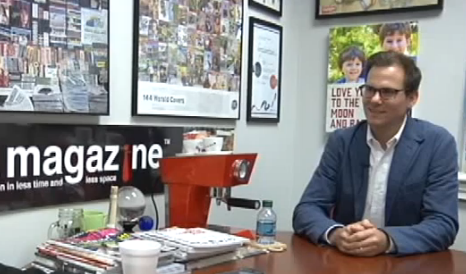
Hunter LewisCooking Light has a new editor and it’s a man whose heart belongs to the kitchen and the brand. Hunter Lewis was executive editor of Southern Living since 2012 and oversaw the brand’s extensive food-related content in print and online and managed the test kitchen team that tests over 5,000 recipes annually. So he knows a thing or two about food, recipes and how to run a magazine and its digital components.

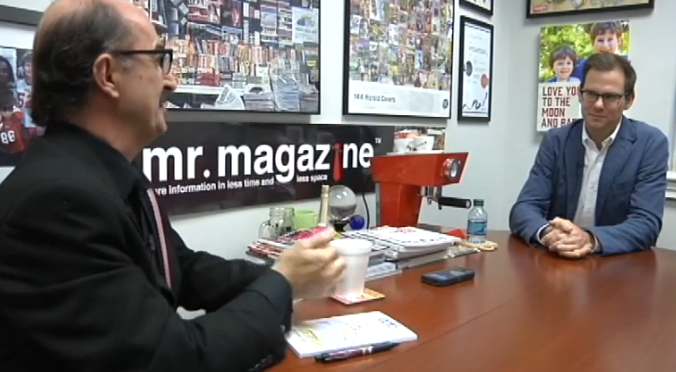
Hunter drove to Oxford, Miss. and to the Magazine Innovation Center at the University of Mississippi from his Birmingham, Ala. headquarters recently to discuss his plans for Cooking Light and how he sees the future of the brand evolving. We talked about print, digital, the power of a good team of people and the passion and excitement he feels about heading up the Cooking Light brand. It was a most savory and delightful conversation.

Click on the video below to watch the interview and you can follow along by reading the lightly edited transcript of the conversation which is below the video.

And now, sit back and enjoy the Mr. Magazine™ conversation with Hunter Lewis, Editor, Cooking Light. I know you’ll find it most appealing.

But first the sound-bites:

cookinglightOn his expectations for Cooking Light: I’ve been on the job for a month and a week now and you go in with some preconceived notions about what you’re going to do and what kind of changes you’re going to make; my first impression is the state of the magazine and the state of the brand is really strong and it has a great team.

On the dating period before the Cooking Light marriage of print and digital: So it’s a lot of different things and there’s a lot of what could be distractions, but I look at each one of these platforms as a different opportunity. It’s not a one-size-fits-all case. What we do in the magazine doesn’t have to translate to digital.

On applying his experience as both a chef and a journalist to his Cooking Light position as editor: First off, it just starts with bringing a passion to the page and bringing the joy of cooking, the joy of sharing and the joy of hospitality to the page and the screen. So at the base line, there’s that.

On the incongruity of the lush, decadent covers of Cooking Light with the magazine’s “light” mission:
I think there is a power in seeing chocolate cake and Cooking Light and it’s not a lie, we’re not saying that this is good for you when it’s not; we have the nutrition rigor behind it and the nutrition that runs through the recipe to back it up.

On his biggest challenge:
We talked about digital; I think the biggest challenge is going to be to grow print, not just maintain it. This idea of maintaining print or maintaining a slow decline; no, I’m not down with that.

On his most pleasant surprise:
As a former jock and someone who believes in teams; I’ve been very pleasantly surprised with how good the people on our team are and how strong they are.

On what he envisions for the magazine’s upcoming 30th anniversary:
When we’re celebrating the 30th, I want us to be seen as a digital innovator and I want people to see Cooking Light as one of the brands that really set the example about what a food magazine can do with its recipes, of what a food magazine can do to create new products, to help people live healthier lives and to help people manage their health in a better way.

On what keeps him up at night:
What keeps me up at night is still what the guy over at Microsoft says: it’s not about longevity in this business; it’s about relevance. And I think on a daily basis, if we are making a good product and if we’re making people happy with our recipes and our content is good, we’re going to be relevant.

And now the lightly edited transcript of the Mr. Magazine™ interview with Hunter Lewis, Editor, Cooking Light magazine.

Samir Husni: As the new editor of Cooking Light, tell me a little bit about your hopes, expectations and changes that you have for the magazine.

Hunter Lewis: I’ve been on the job for a month and a week now and you go in with some preconceived notions about what you’re going to do and what kind of changes you’re going to make; my first impression is the state of the magazine and the state of the brand is really strong and it has a great team.

For print it’s going to be business as usual; we’re going to build on the foundation that Scott built (Scott Mowbray) and we’re going to continue to produce great recipes, beautiful photos and good stories.

I think you’re going to see much more of a focus on digital over the next couple of years and it’s up to me and our team to figure out how we can shift some of our resources that have typically been dedicated to print over to digital in a smart way and not just maintain print, but grow it. And in the digital space, figure out how to tell great stories.

Samir Husni: No one is talking about the death of print anymore; people are saying print has declined, but at least the phrase “death of print” has vanished from our vocabulary. Yet, we are seeing more and more editors and brand leaders talking about the marriage between print and digital. Can you describe your plan for this dating period between print and digital before the actual marriage takes place?

Hunter Lewis: I come from a newspaper background. And when I got into journalism it was right around the point where newspapers were on the verge of dying. We didn’t know that when we were studying it and practicing it right out of college, around the year 2000; we didn’t know that there was going to be this cliff.

When I got into magazines full time, it was when there was that huge cry about the death of print and the death of magazines, but I think we know now that that was BS. What we’re finding out right now is that we’re in the Wild West of digital media. And anyone who says they truly know what’s going on and that they have the answers, I think is full of it.

But we have a great deal of opportunity right now. And if we’re doing our jobs right, if we’re giving people exactly what they want and what they’ve come to expect of print with a great experience and with great service and we’re trying new things in the digital space and trying to figure out what’s going to stick; it’s all good.

Mr. Magazine™ Interviews Hunter Lewis The cool thing right now that I love is it’s not just what’s going on at cookinglight.com, it’s what’s going on at our Instagram account, and it’s our 3.3 million Facebook followers, which is a completely new front page. And as an old newspaper guy, the idea of having that kind of front page and that kind of audience to try new things and test new posts on, is a really cool thing. It’s sharpening our focus on Twitter; it’s making a tighter tablet version with different kinds of bells and whistles.

So it’s a lot of different things and there’s a lot of what could be distractions, but I look at each one of these platforms as a different opportunity. It’s not a one-size-fits-all case. What we do in the magazine doesn’t have to translate to digital. We can parts off different pieces of content and try them in new ways online.

I think that on cookinglight.com you’re going to see much more of an emphasis on digital storytelling down the road. We are at a point right now where we’ve got a great opportunity to capitalize on the interest of food in this country; we’ve never been more passionate about food. We have a great foundation that we’re building with chefs all across the country. There is this massive interest in home cooking.

We’ve also never been unhealthier as a country and what’s going on right now with obesity rates and diabetes, there is this wonderful opportunity with Cooking Light to find out where the intersection should happen between the passion for food and living a healthier way. And that’s going to be my gig; finding that perfect intersection and getting that onto the marketplace.

Samir Husni: And that leads me to the question: it’s also an intersection in your own life. You are a cook and a journalist. How are you going to apply those two professions into the pages and/or pixels on the screen of Cooking Light?

Hunter Lewis: I identify myself as a cook first and an editor second. There are some days that I wish I was at the stove more than at my desk.

But first off, it just starts with bringing a passion to the page and bringing the joy of cooking, the joy of sharing and the joy of hospitality to the page and the screen. So at the base line, there’s that.

My wife is an RD (registered dietitian) and she always says that you pay the grocer now or the doctor later. And I believe that. The best way to be healthier is to cook at home and cook with the right things. I’ve been more impressed with the test kitchen and the healthy recipes we produce more than anything else since I’ve started in the past month. And there’s nothing else like a Cooking Light recipe. We need to be proud about that, especially in this day and age with Pinterest and blogs; there is a lot of dilution of recipes out there, they’re undervalued. So a Cooking Light recipe is a special thing. It’s something that we need to go out into the marketplace and do a better job of promoting and finding new partnerships.

For people who don’t cook; a recipe is just a recipe. It’s kind of a diluted product, but our recipes, if you think about them like a product, like a baguette, they’re a top-notch baguette, being produced in a kitchen by a really, really talented crew of cooks and editors. That will be part of my job as a cook and as an editor; getting the message out about the value of Cooking Light recipes.

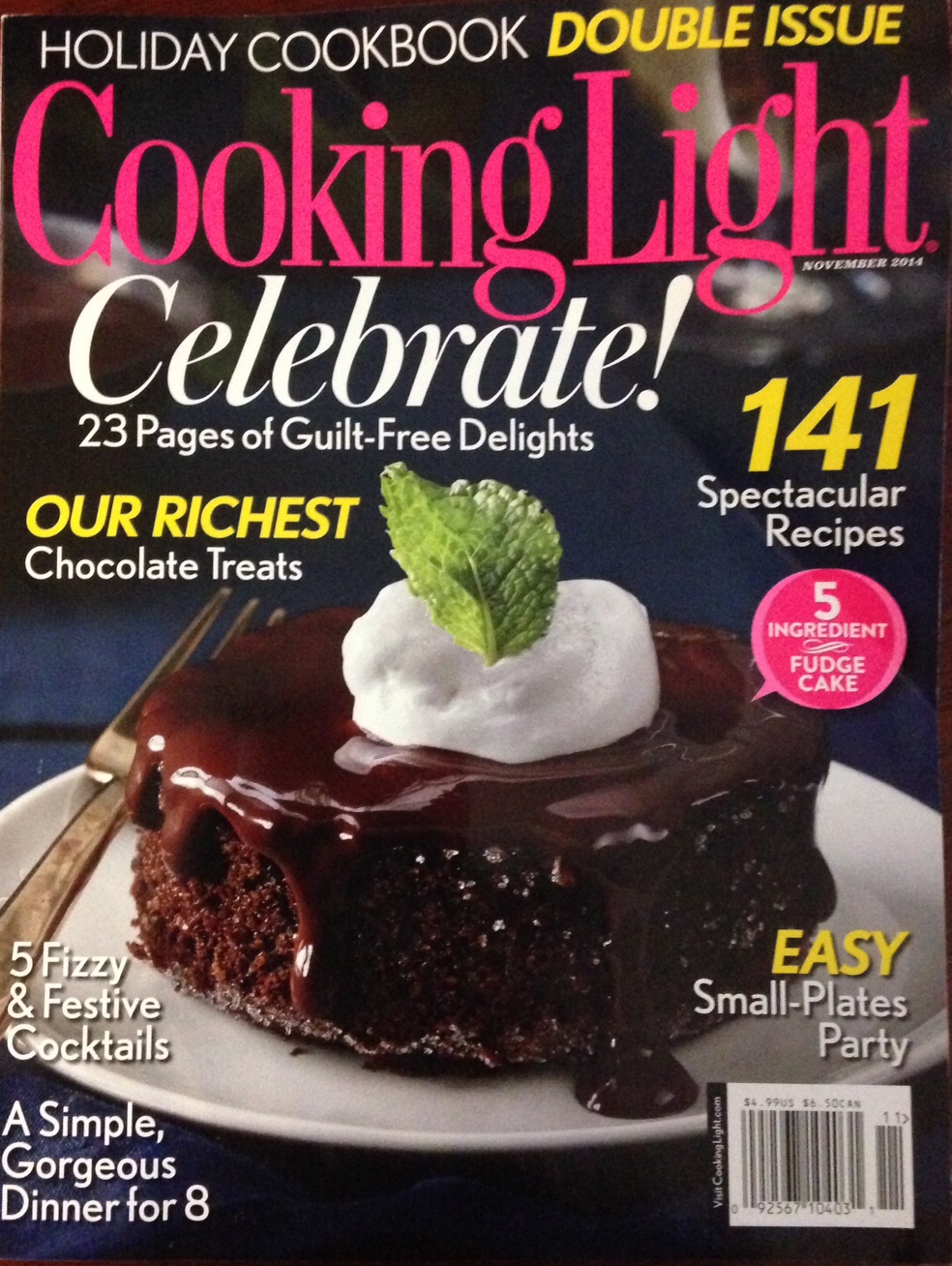
Samir Husni: Cooking Light has been known for its shocking covers. For example, the brownie on the November 2014 cover, someone might say what’s “light” about this. Is that going to be part of your technique as the new editor; are we still going to sell to the eye and then let the brain ask later, is this really light?

Hunter Lewis: Absolutely. We eat with our eyes first. Back in the day you could run recipes without images and people would understand, but we’re such a visual society today that the image has to be just as good as the recipe. And when it comes to our covers, there is a power in that tension between the logo of Cooking Light and an indulgent chocolate cake that you may see there. It just so happens that Deb Wise, who is our recipe goddess, our dessert goddess, created a 5-ingredient cake that takes no time to make; it’s indulgent and it’s not bad for you, it’s good for you.

So I think there is a power in seeing chocolate cake and Cooking Light and it’s not a lie, we’re not saying that this is good for you when it’s not; we have the nutrition rigor behind it and the nutrition that runs through the recipe to back it up.

Samir Husni: What’s going to be Hunter’s biggest challenge?

Hunter Lewis: We talked about digital; I think the biggest challenge is going to be to grow print, not just maintain it. This idea of maintaining print or maintaining a slow decline; no, I’m not down with that. I think it’s going to be about growing our print audience and growing our digital audience.

The biggest thing for me is figuring out with all these different platforms that I was talking about, with everything from Facebook to our site, our blog and Instagram; it’s about delivering the best kind of content and the sharpest content to the right platforms as quickly as possible.

The other thing is Cooking Light is now a mature brand. When it spun out of Southern Living in the 80s, it was seen as a very innovative product. I still believe it’s an innovative product, but I think we need to get out into the marketplace more and we need to get out faster. There is so much paranoia right now that’s going on with health and wellness; there are all of these different trends and studies with whether it’s good fats, bad fats, good carbs, bad carbs; Cooking Light reports on this. We’re at the point right now where we’re bound by the magazine news cycle. We have to get out the “day of,” the “week of,” the moment when these things are being reported on and we need to step out and have more of a point of view.

That would be a big challenge and that’s something that I’m excited about taking on and being in charge of; putting Cooking Light more into the national conversation. It’s a magazine for home cooks and it will always be a magazine for home cooks, but it’s also a magazine and a brand, both print and digital, that people are going to use as a resource to figure out how to live a more balanced life.

Samir Husni: With these multiple audiences and as you grow into these multiple platforms, let’s say, I just want the magazine, the print edition because it is necessary, sufficient and relevant to me, and then if I go to Instagram or Twitter or the digital edition and that’s not necessary, sufficient or relevant to me and there is no link between those audiences; do you think there can be a completely different audience?

Hunter Lewis: Absolutely. What we’re going to find and what we’re already finding is that oftentimes there is very little crossover between people who are consuming our mobile edition, our mobile version of our site, or the print, Instagram, Facebook or our books. I think we’re going to see over the next couple of years that we have our core print audience and we want to grow that, but we’re going to gain a whole new audience over the next few months and in the next year with new digital products. And if that’s how they come to Cooking Light, in that way and that’s how they consume our content and use our recipes, I’m OK with that and if that springboards into a subscription, that’s great. But it’s up to us to create new digital products that people want and that they use. And if that’s all they’re going to use, that’s great too.

We’ve got this Cooking Light diet that we’re watching right now. It’s in beta mode. And we have more than 3,000 subscribers to it. It’s unlike anything else in the magazine world; it’s unlike anything else under the Time Inc. umbrella. And if that’s how people learn about Cooking Light and that’s how they come to it, that’s great. It’s a whole different product.

Samir Husni: What has been the most pleasant surprise that you have encountered since you assumed this new position that you’ve had for less than two months?

Hunter Lewis: As a former jock and someone who believes in teams; I’ve been very pleasantly surprised with how good the people on our team are and how strong they are. From the art department to the test kitchen to the production team; we’ve got a really, really great crew that looks after one another, that works hard, that believes in the brand and that number one believes that giving and producing great content for our readers is important. So I’m really lucky. I don’t have to build a whole new team. It’s just about cultivating and refining what we do.

I think that’s my biggest surprise and probably the biggest blessing is that we have a great crew.

Samir Husni: In a few short years you’ll be celebrating the 30th anniversary of Cooking Light and if we’re sitting here at the Magazine Innovation Center talking about it; what will you tell me about the 30th anniversary?

Hunter Lewis: Well, I’d love to come back, but I hope you’ll come over to Birmingham and break bread with us for the 30th. But when we’re celebrating the 30th, I want us to be seen as a digital innovator and I want people to see Cooking Light as one of the brands that really set the example about what a food magazine can do with its recipes, of what a food magazine can do to create new products, to help people live healthier lives and to help people manage their health in a better way.

So I think the big message that I expect us to convey on our 30th, that I expect us to be celebrating is that we’ve been innovators of the visual space.

Samir Husni: My typical last question; what keeps you up at night?

Hunter Lewis: Last night it was my one-year-old, the next was my three-year-old. (Laughs) No, what keeps me up at night is still what the guy over at Microsoft says: it’s not about longevity in this business; it’s about relevance. And I think on a daily basis, if we are making a good product and if we’re making people happy with our recipes and our content is good, we’re going to be relevant.

And if we’re getting it to people on the right platforms quickly, then we’re relevant. But it’s not about longevity.

Samir Husni: Thank you.

h1

Print Integrated: A Distripress Panel Discussion Moderated by Samir “Mr. Magazine™” Husni

October 24, 2014

During the 59th Distripress Congress in Cannes, France, I moderated a panel discussion with four leading media executives on the integration of print and digital. The panelist were Matt Bean, Editor, Entertainment Weekly, United States, Diane Kenwood, Editor, Woman’s Weekly, UK, Franska Stuy, Editor, Libelle, The Netherlands and Morten Wickstrom, Sales and Analysis Director, VG, Norway.

Click on the video below to watch the panel discussion.

And to watch all the informative, educational and engaging presentations and panel discussions at the Forum Day of the 59th Distripress Congress click on the video below:

h1

Tom Witschi: Confident and Excited About The Magazine Business Today. An ACT 5 Experience Presentation

October 23, 2014

Tom Witschi is EVP and President of the Women’s Lifestyle Group at Meredith Corporation. Tom ended day three of the Magazine Innovation Center’s ACT 5 Experience with a keynote address that showed why he and the Meredith Corp. are confident and excited about magazine business today. His speech was delivered on Oct. 9. Click below to watch Tom’s keynote address at the ACT 5 Experience.