Archive for the ‘News and Views’ Category

h1

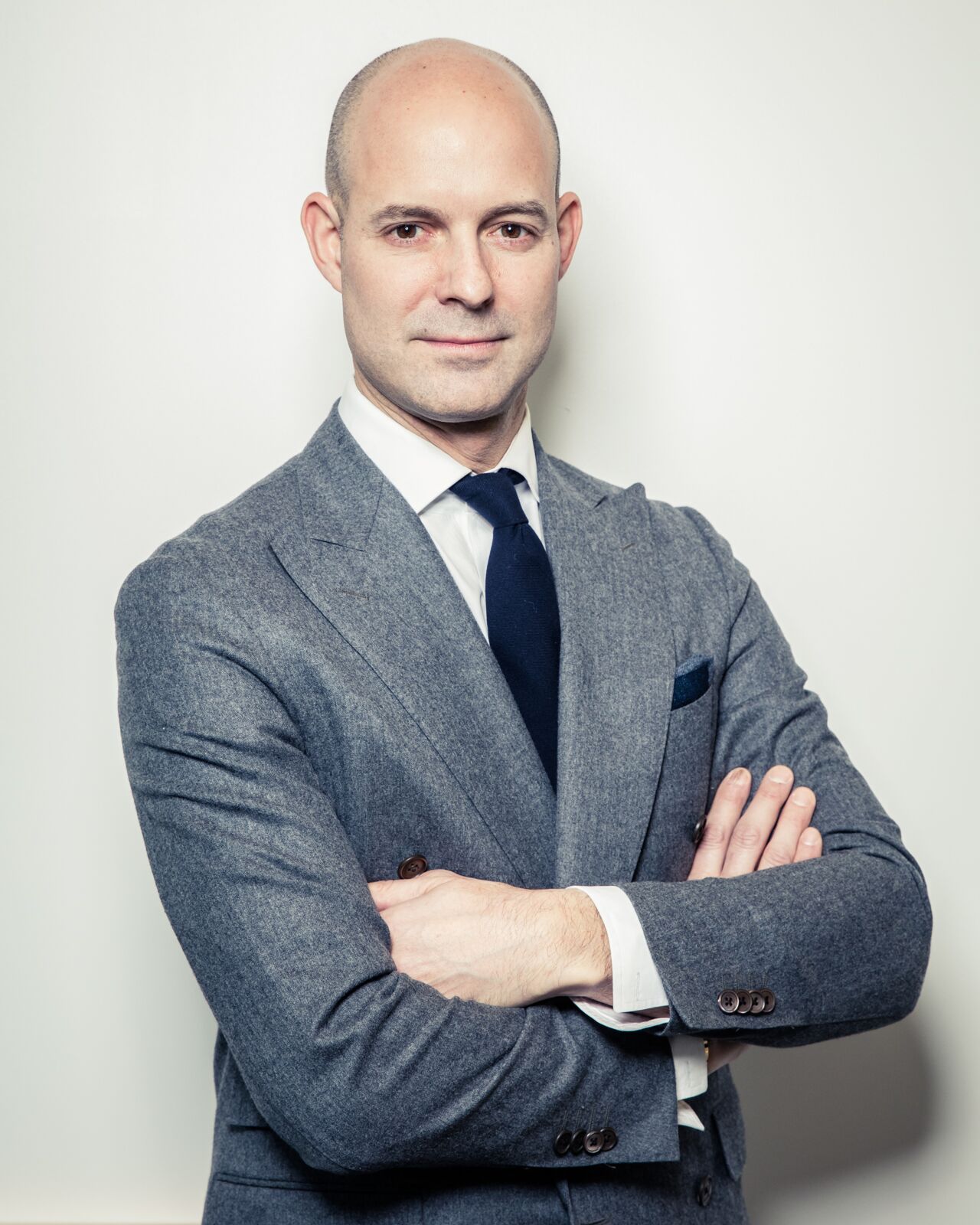
Elle Décor’s Editor In Chief, Whitney Robinson To Samir “Mr. Magazine™” Husni: “It Isn’t About Showcasing Just The Pretty Or The Chic, But Showcasing Also The Cutting Edge And The Sublime.” The Mr. Magazine™ Interview…

November 16, 2017

“I want to thank you for reading the magazine. It means a lot, because what I say to people is this, especially in a world of 15-second sound-bites; a world where everything refreshes literally in seconds, on your phones, on your screens, in front of you; for people to actually know what’s happening in the magazine, they have to read it cover to cover. And they have to go on the journey with us and with me to see how we are iterating this magazine and how we’re changing it for the 21st century.” Whitney Robinson…

“I’m doing this out of the deep passion and love and commitment that I have for this industry, but it’s also because I really do believe passionately that design is all around us; everywhere we are.” Whitney Robinson…
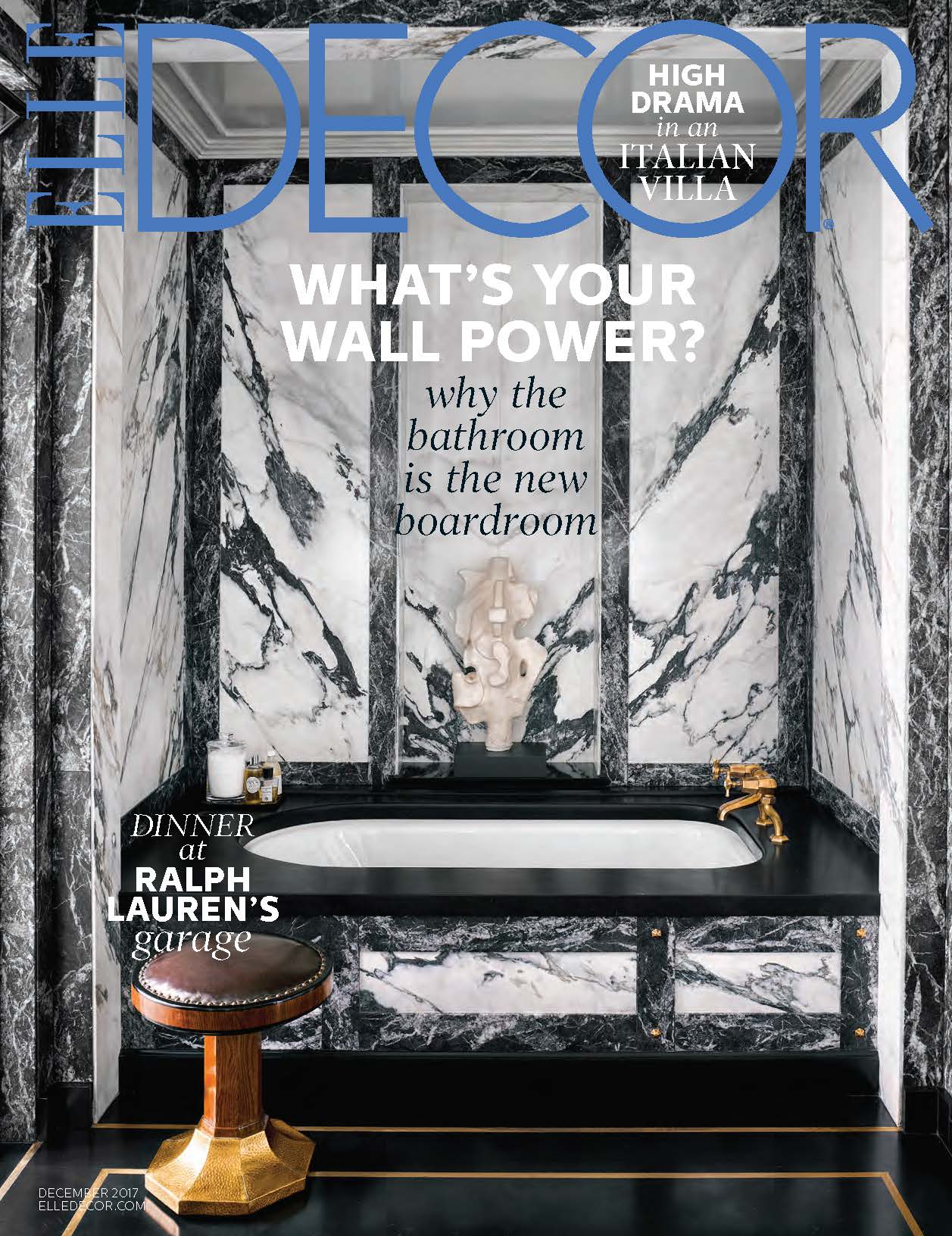
For nearly 30 years Elle Décor has been on the cutting edge of design, of where fashion and the home meet. The magazine has showcased international trends, with its 30 worldwide editions, and has also kept the American Dream of a sanctuary at home alive and well, while opening its pages to a unique mix of culture, cuisine, art and travel, at the same time.

This past summer Whitney Robinson was named editor in chief after his most recent position as style director at Town & Country, where he wrote, assigned and collaborated on a wide variety of stories and topics. Whitney comes to Elle Décor with a diverse blend of knowledge and vision for the brand.
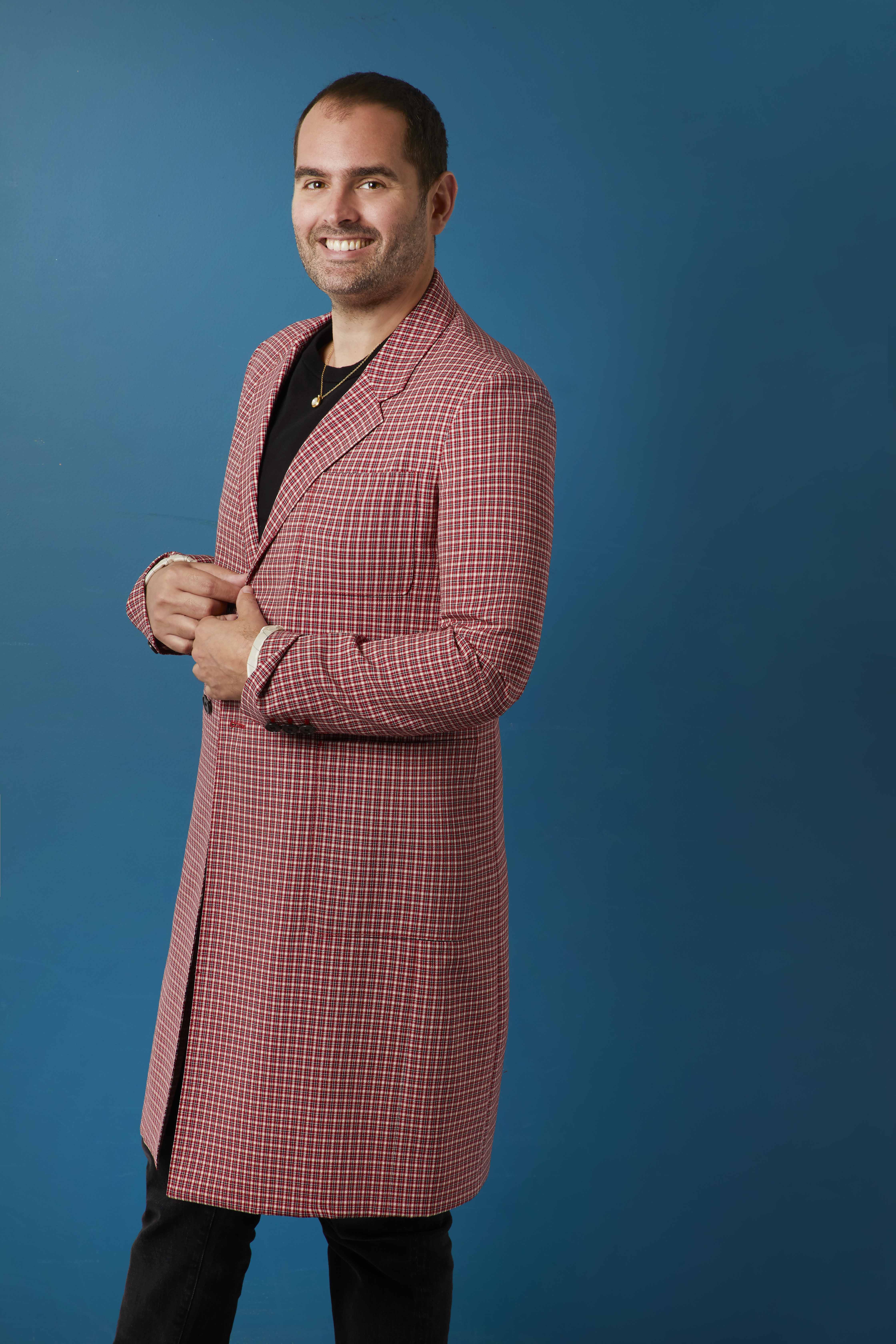
I spoke with Whitney recently and we talked about that knowledgeable vision he has. His thought processes are very straightforward: audience first, readers first. Put the beautiful out there alongside the unusual and the unique, and then let the readers decide. But always show them everything, respecting their ability to discern what they prefer. Audience first; Mr. Magazine™ definitely agrees with that course of action.

So, before you begin reading this most intriguing interview with a man who definitely has a panache and style of his own, let us all take a moment to wish Whitney a very Happy Birthday, as he celebrates on November 16. Happy Birthday, Whitney! And here’s wishing you many, many more! And now the interview with Elle Décor’s editor in chief.

But first the sound-bites:

On what a print magazine should look like in 2017: That’s a very good question; I call it a 3-D Venn Diagram, because I don’t think it can look like one thing and I don’t think it’s the same thing day-to-day and I don’t think it’s the same thing from medium to medium. What that means is, especially for a magazine like Elle Décor; we have many different facets of the magazine.

On whether the reengineering of the magazine, beginning with the October issue, presents a more intentionally humanized element within the pages: We’re iterating in real time. And this is something that I think few magazine editors have done before, probably for good reason (laughs), because we’re a little crazy here, which I think you have to be. And that means, rather than showcase a magazine the way it was, and then just spend six months figuring it out, or eight months, or a year, whatever it is for a typical redesign, and then introduce that to your audience…which by the way, historically has always failed. There are very few instances of a full redesign of any magazine in the last 30 years that has worked, both for subscribers – the loyalists, and also on the newsstand. So, what we decided to do was take a much more contemporary approach to that by experimenting.

On whether he feels the American edition of Elle Décor sets the precedent for the international editions: Historically, you’re talking about a numbers game here. We had the most subscribers and newsstand sales and therefore as a de facto, we became the global leader in showcasing what the magazine could be. And I think taking a more holistic view of this brand; it’s a very American concept, as opposed to dividing it into total, and so, sure; I love for our European counterparts; our Asian counterparts; and our South American counterparts to take a look at what we’re doing here and dovetail into it.

On whether he’s on top of the mountain now or he feels there’s more climbing for him and the magazine: Oh, we haven’t even started. We’re just beginning, and I say that to our readers as well. They’re along on this journey with us, and I thank them for that, because it is a journey. And again, rather than dumb it down or placate them or showcase this monolithic vision of something, I’ve really invited everybody to the party.

On the human feel of the magazine: And there’s a lot of reasons for that. And I’ve said this before, it’s about bringing in the whole world of design and that includes our sections on interiors, fashion and food. And it’s really not the specific topics, because I didn’t invent that coverage in this magazine. I didn’t invent celebrity coverage in this magazine, they’ve been covering it for 30 years. I didn’t invent food in this magazine, Daniel Boulud has been our resident chef for 25 years. What we’ve done is made the topics that we’re covering with those people more relevant, so they don’t feel evergreen or out of time. But actually, and this is where fashion comes in, similar to fashion or pop culture magazines, and more plugged into what’s actually happening in the world around us.

On the back page of the magazine, which has been dubbed the “Not for Sale” page: The genesis of that came from a studio visit with Lindsey Adelman, who is a very well-respected designer in Manhattan. She’s been working in the business for about 25 years, but when she created this brass chandelier, she became super-well-known and super-lauded, and now has a robust global practice. I was in Lindsey’s studio and she showed me ceramic vessels that her son had made for her and I told her they were fantastic. I said that we have to put them in the magazine, and she told me that they weren’t for sale. And I thought that was a sentiment for our time, and because there is so much product in the magazine and so many things for sale, I felt that we needed something that was a bit different.

On his biggest challenge: My biggest challenge is to convince everybody, that’s everyone’s biggest challenge. I’m doing this out of the deep passion and love and commitment that I have for this industry, but it’s also because I really do believe passionately that design is all around us; everywhere we are. From the look of our coffee cups to the cars that we drive to the design of our iPhones it’s absolutely everywhere. And so, talking about it in such a way where it’s more than just pretty; although “just pretty” sometimes matters just as much. But we’re talking about it in a deeper way.

On what’s coming up in 2018 for the brand: It’s a journey. So, we’re ever-evolving; I’m also a Scorpio so it’s my nature. You should do the zodiac signs of editor in chiefs, because I think there’s quite a few of us in this building who have birthdays this week. It’s ever-evolving, but it isn’t that we break news, just to get down to brass tacks and practicality, but it’s that we look like that moment in time that we’re making this magazine.

On anything else he’d like to add: I’m very glad that Elle Décor is a part of the conversation. Again, historically, design magazines have been put to the side, where people say they love design and décor magazines, and they’re so easy to read. But actually, design magazines are functioning in the space that everyone else is too, and we’re asking challenging questions; we’re showcasing magnificent homes around the world, but we’re also relevant.

On what he would have tattooed upon his brain that would be there forever and no one could ever forget about him: That I thought differently and we were able to change people’s perceptions. I think that’s the ultimate goal. It’s the hardest one. Someone once told me that if you think you’re going to a “clap, clap” emoji for changing people’s opinions, think again. (Laughs)

On what someone would find him doing if they showed up unexpectedly one evening at his home: What day is it? Some days you’ll find me at CVS on a Sunday morning, reading all of the papers. Or I’ll be reading articles, ripping things out, getting mad at my editors because we didn’t get something first, calling our contributors to do it, and then watching 60 Minutes. That’s my Sunday. Yesterday, I was playing with a Nintendo Switch all day, and it’s a fantastic piece of technology, by the way. It changes day-to-day, I guess.

On what keeps him up at night: Zero. I sleep like a baby. I’m a deep sleeper. People ask me this question, and it’s so funny; we do this for passion. It’s a passion project. People have a lot of different goals; if your goal is cash, go work for Goldman Sachs. If your goal is politics, go work in the White House or you can work for the Peace Corps. The passion for what we do in magazines is such a specific thing; it’s a band of outsiders, a gangly group, who really believe passionately in this industry.
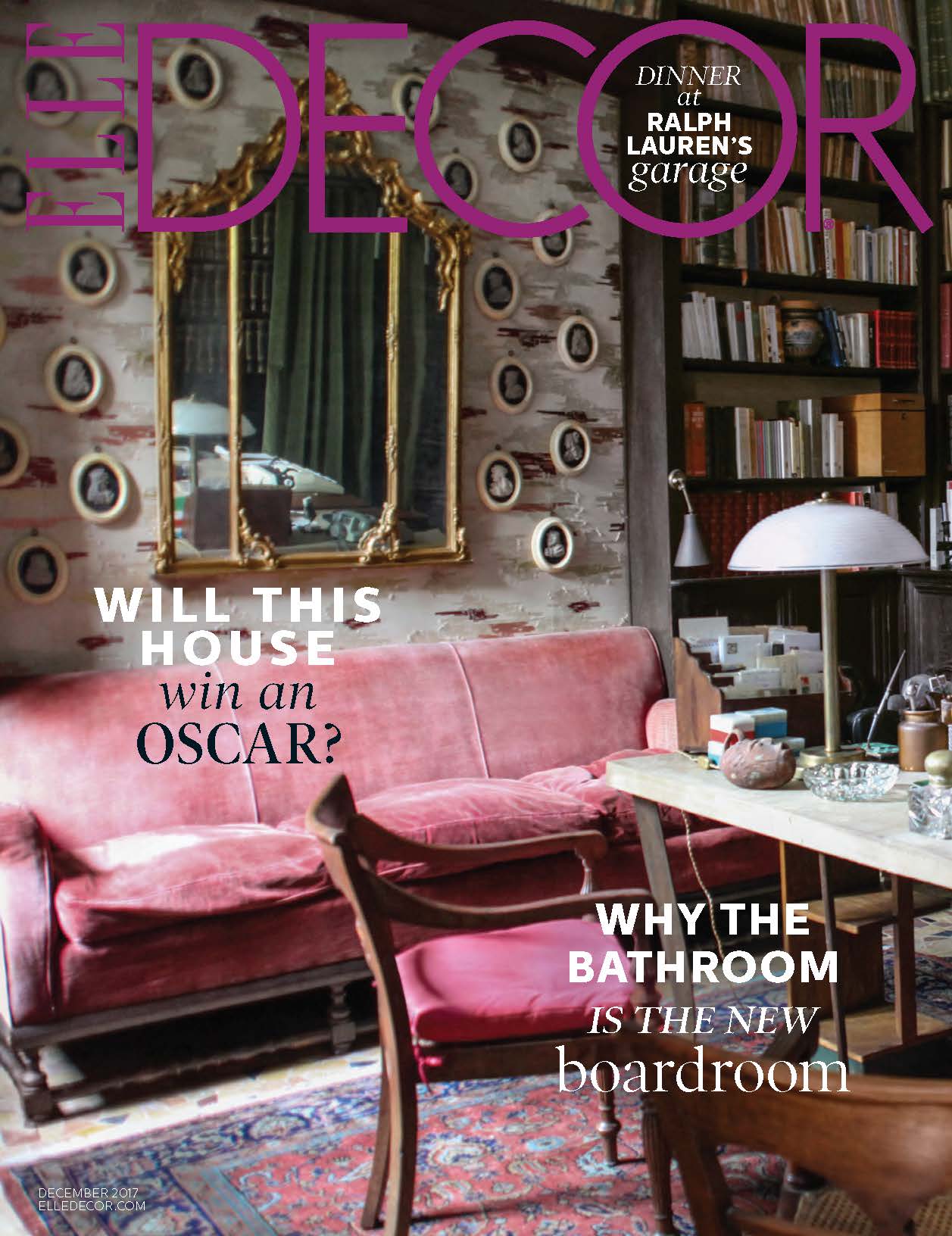
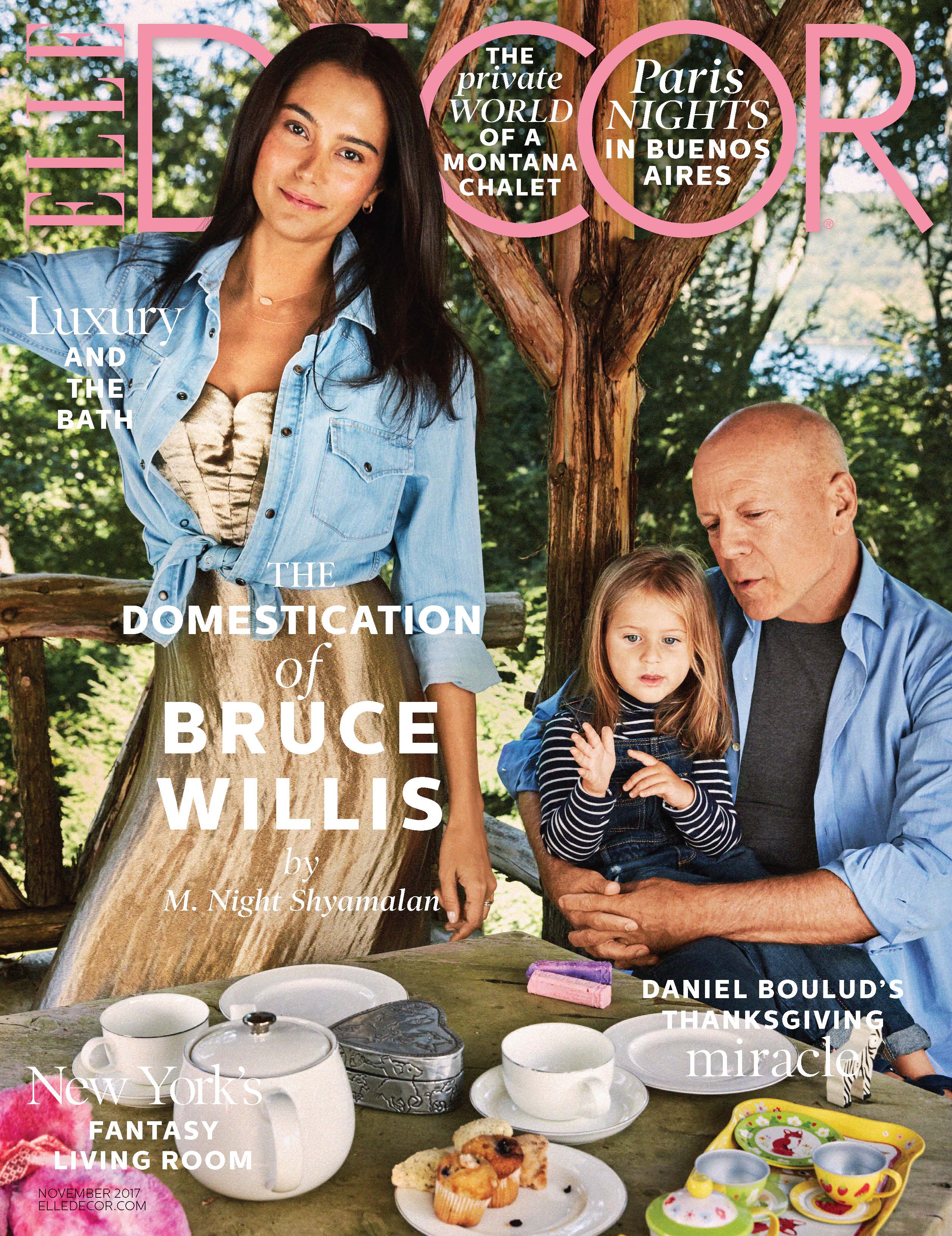
And now the lightly edited transcript of the Mr. Magazine™ interview with Whitney Robinson, editor in chief, Elle Décor.

Samir Husni: In your editor’s letter for the October issue, you write – Apologies to those who have heard this spiel before, but here it goes: What should a print magazine look like in 2017? So, what should it look like?

Whitney Robinson: That’s a very good question; I call it a 3-D Venn Diagram, because I don’t think it can look like one thing and I don’t think it’s the same thing day-to-day and I don’t think it’s the same thing from medium to medium. What that means is, especially for a magazine like Elle Décor; we have many different facets of the magazine.

So, we have our print magazine, which is the core of what we do; it’s what brings in the majority of our revenue, and it’s where most people familiarize themselves with the brand historically. At the same time, we have 2.2 million Instagram followers, a huge social following for any brand at Hearst, but also the most socially-engaged brand at Hearst, which means we get the most comments per post than any other brand here, and that’s extraordinary.

We have a robust online platform, elledecor.com. And we have 31 editions total of Elle Décor around the globe. And on top of that, we have the halo of Elle too. And if you were sitting in front of me now, you’d see me drawing circles with a coffee cup and a candlestick to demonstrate the fact that this is a moving Venn Diagram. And depending on where we are in a cycle, and what stories we’re trying to tell, the importance of each medium changes and ebbs and flows.

But what a magazine should look like in 2017, a print magazine specifically, is something that you want to have pride-of-place on your coffee table or your bookshelves, but it should also be reflective of the time and place that it’s being made. That is to say, if you’re working on a December issue, and our December issue recently hit newsstands; that issue should look like December 2017. It should be reflective of both the topics and the subjects that are inside of it, and also what’s on the cover, and of any given moment of that particular time. Not six months before; not six months after.

Samir Husni: Since you began the reengineering of Elle Décor, from the October, November and December issues; are you trying to humanize the brand? As I read those three issues, I felt there was a strong element of humanization within the brand; is that intentional, or am I now seeing more of Whitney on the pages of Elle Décor?

Whitney Robinson: I want to answer your question, but first I want to thank you for reading the magazine. It means a lot, because what I say to people is this, especially in a world of 15-second sound-bites; a world where everything refreshes literally in seconds, on your phones, on your screens, in front of you; for people to actually know what’s happening in the magazine, they have to read it cover to cover. And they have to go on the journey with us and with me to see how we are iterating this magazine and how we’re changing it for the 21st century.

And what I would say is that we’re doing just that; we’re iterating in real time. And this is something that I think few magazine editors have done before, probably for good reason (laughs), because we’re a little crazy here, which I think you have to be. And that means, rather than showcase a magazine the way it was, and then just spend six months figuring it out, or eight months, or a year, whatever it is for a typical redesign, and then introduce that to your audience…which by the way, historically has always failed. There are very few instances of a full redesign of any magazine in the last 30 years that has worked, both for subscribers – the loyalists, and also on the newsstand.

So, what we decided to do was take a much more contemporary approach to that by experimenting. We’re saying, here’s what the world of Elle Décor looks like, which simply is wherever design happens, and that’s everywhere design happens. So, we’re taking a look at global design, and as a journalist of global design, if you read my editor’s letter, it isn’t about showcasing just the pretty or the chic, but showcasing also the cutting edge and the sublime. And making sure that we show you everything that’s out there, and then letting the reader decide what they like or don’t like.

And I think, perhaps controversially, it’s not about someone saying that they love everything in the magazine or they even like it, it’s about them seeing what’s out there and then letting them choose their own adventure. Iterating in real time means that you show the breadth of what the magazine could be. It does not mean that every section we do or that we have in the magazine that you see in any given issue will continue. And the idea that a magazine can be a living thing doesn’t mean we don’t want a consistency or a thread of a vision that runs through all of it, but that’s a more subtle concept or conceit, than the fact that we can change columns as we see fit. We can reflect, again, the time and the place that it’s being made, to make sure that we’re staying as current as possible.

It doesn’t mean breaking news, by the way. If you want to break news, then you should work on the digital platform. If you want to reflect the news and if you want to create a specific point of view…which is, by the way, what these magazines were able to do and why they were so popular in the beginning, because they provided a specific point of view. You knew what you were going to get when you picked up the magazine. And I hope people pick up this magazine and realize that they’re going to get the best global design. And they’re going to get the most informed, smartest, the most beautiful visceral vision of that global design.

Samir Husni: In your editor’s letter, you’re engaging your readers with all of the evolution that’s taking place at Elle Décor, and as an editor of a brand that exists in over 30 markets worldwide, do you feel an intense responsibility to the other markets? As though whatever you do here is going to be reflected worldwide? How do you interact with the responsibility of the American edition of Elle Décor? Is it setting the stage for everybody else?
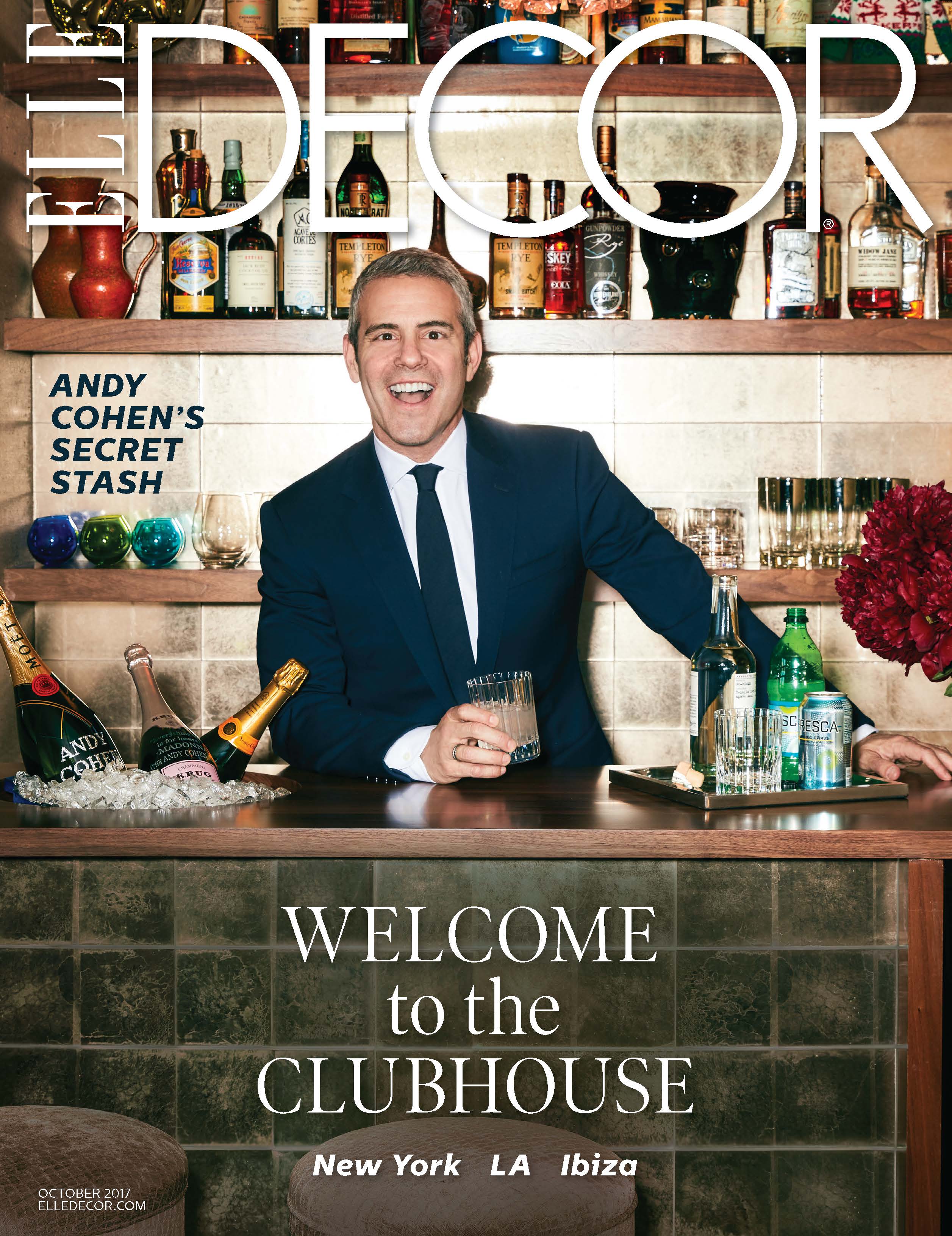
Whitney Robinson: Historically, you’re talking about a numbers game here. We had the most subscribers and newsstand sales and therefore as a de facto, we became the global leader in showcasing what the magazine could be. And I think taking a more holistic view of this brand; it’s a very American concept, as opposed to dividing it into total, and so, sure; I love for our European counterparts; our Asian counterparts; and our South American counterparts to take a look at what we’re doing here and dovetail into it.

And I tell you, we’ve already gotten great feedback from our counterparts in Europe, particularly from the U.K. and Ben Spriggs, an editor who just took over the helm of that magazine, and he’s thrilled with what we’re doing and we’re talking about how we can collaborate better together already. And that’s unprecedented.

Samir Husni: Are you now on top of the mountain or is there still more climbing you and Elle Décor need to do?

Whitney Robinson: Oh, we haven’t even started. We’re just beginning, and I say that to our readers as well. They’re along on this journey with us, and I thank them for that, because it is a journey. And again, rather than dumb it down or placate them or showcase this monolithic vision of something, I’ve really invited everybody to the party.

Are there more people in this magazine; sure; lifestyle has been a dirty word, but not for me. If people want to call it lifestyle, then so be it. It is about the best of design, but it really shows how people live today. And if anyone thinks that’s radical, then they’re not actually living in the world here. It’s about how people interact with everything; the ME generation, so we’re talking about how we can reflect out, but imitate in a beautiful way. And it’s not about selfies and writing LOL in my copy, which I’ve been quoted as saying before. But it is about taking a more conversational approach to our text; it’s about taking a looser look at our photography, so it doesn’t feel so tight.

Samir Husni: And I felt that humanization; it was very evident to me.

Whitney Robinson: And there’s a lot of reasons for that. And I’ve said this before, it’s about bringing in the whole world of design and that includes our sections on interiors, fashion and food. And it’s really not the specific topics, because I didn’t invent that coverage in this magazine. I didn’t invent celebrity coverage in this magazine, they’ve been covering it for 30 years. I didn’t invent food in this magazine, Daniel Boulud has been our resident chef for 25 years. What we’ve done is made the topics that we’re covering with those people more relevant, so they don’t feel evergreen or out of time. But actually, and this is where fashion comes in, similar to fashion or pop culture magazines, and more plugged into what’s actually happening in the world around us.

Samir Husni: One of the things that really stands out to me is your back page; the “Not for Sale” page. Would you tell me a little more about the idea of showcasing and having something in the magazine that’s not for sale?

Whitney Robinson: The genesis of that came from a studio visit with Lindsey Adelman, who is a very well-respected designer in Manhattan. She’s been working in the business for about 25 years, but when she created this brass chandelier, she became super-well-known and super-lauded, and now has a robust global practice.

I was in Lindsey’s studio and she showed me ceramic vessels that her son had made for her and I told her they were fantastic. I said that we have to put them in the magazine, and she told me that they weren’t for sale. And I asked, what do you mean they’re not for sale? And she explained how meaningful they were to her, because they were made by her son. And she didn’t feel that everything had to have a commercial value placed on it in order to be valuable.

And I thought that was a sentiment for our time, and because there is so much product in the magazine and so many things for sale, I felt that we needed something that was a bit different. And back pages are often; I won’t say they’re a throwaway, but they’re often the last thing that you get to. Often, they’re easy to produce and don’t require a ton of thought, and again that goes across the board from fashion to home. And this is really an antidote to the rest of the commerciality of the magazine. The idea that it has a social conscience as well was built into the fact that we wanted people to be able to donate to charities of their choice by showcasing these items. So, it’s something that does well for the magazine, but also does good. And that’s a model that I’m always using in the creation of Elle Décor.

Samir Husni: What’s your biggest challenge now?
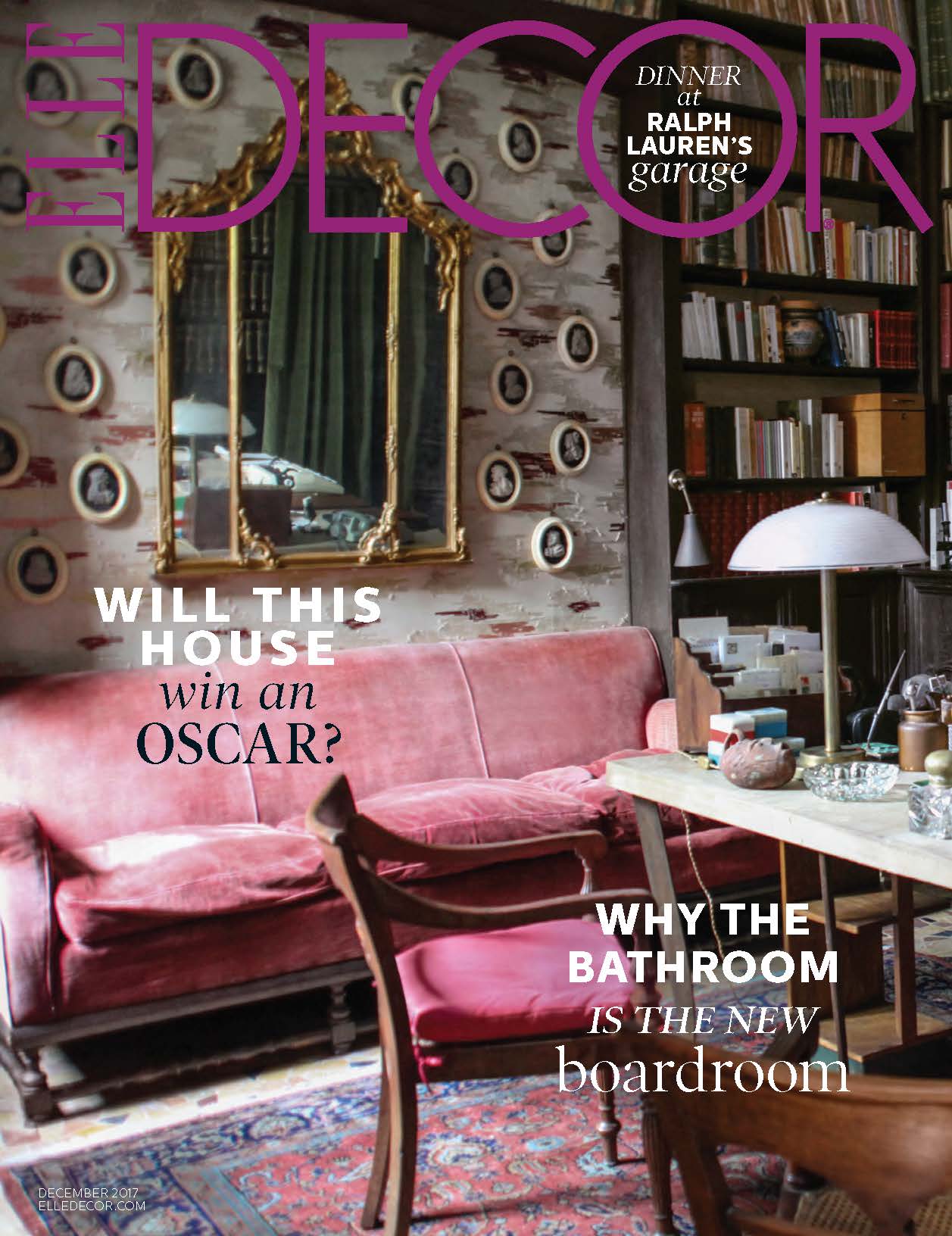
Whitney Robinson: My biggest challenge is to convince everybody, that’s everyone’s biggest challenge. I’m doing this out of the deep passion and love and commitment that I have for this industry, but it’s also because I really do believe passionately that design is all around us; everywhere we are. From the look of our coffee cups to the cars that we drive to the design of our iPhones it’s absolutely everywhere. And so, talking about it in such a way where it’s more than just pretty; although “just pretty” sometimes matters just as much. But we’re talking about it in a deeper way.

Samir Husni: What is coming up for Whitney and Elle Décor in 2018?

Whitney Robinson: It’s a journey. So, we’re ever-evolving; I’m also a Scorpio so it’s my nature. You should do the zodiac signs of editor in chiefs, because I think there’s quite a few of us in this building who have birthdays this week. It’s ever-evolving, but it isn’t that we break news, just to get down to brass tacks and practicality, but it’s that we look like that moment in time that we’re making this magazine.

And our schedule is really just about four weeks out now, which has made everyone on the staff get on their toes, and that’s exciting. And rather than know what’s going to happen a year from now, which is historically how a lot of shelter magazines are produced, they produce about a year in advance and that’s how they photograph; ours is produced to the cuff. So, we produce as a news magazine would, like a New York Times Magazine. We produce really close up until we ship.

Samir Husni: Is there anything you’d like to add?

Whitney Robinson: I’m very glad that Elle Décor is a part of the conversation. Again, historically, design magazines have been put to the side, where people say they love design and décor magazines, and they’re so easy to read. But actually, design magazines are functioning in the space that everyone else is too, and we’re asking challenging questions; we’re showcasing magnificent homes around the world, but we’re also relevant.

Samir Husni: If you could have one thing tattooed upon your brain that no one would ever forget about you, what would it be?

Whitney Robinson: That I thought differently and we were able to change people’s perceptions. I think that’s the ultimate goal. It’s the hardest one. Someone once told me that if you think you’re going to a “clap, clap” emoji for changing people’s opinions, think again. (Laughs)

Samir Husni: If I showed up unexpectedly at your home one evening after work, what would I find you doing? Having a glass of wine; reading a magazine; cooking; watching TV; or something else?

Whitney Robinson: What day is it? Some days you’ll find me at CVS on a Sunday morning, reading all of the papers. Or I’ll be reading articles, ripping things out, getting mad at my editors because we didn’t get something first, calling our contributors to do it, and then watching 60 Minutes. That’s my Sunday. Yesterday, I was playing with a Nintendo Switch all day, and it’s a fantastic piece of technology, by the way. It changes day-to-day, I guess.

What day are we at? For example, today, I’m off on the Red-Eye; I have to ship the magazine today. We’re shipping a cover, and I do not have a dinner tonight, so I will be home with my partner, and we’ll probably cook a Persian meal, because Mark is half Persian, half German, so we’ll cook a Persian stew up, and I’ll put on a rerun of Charlie Rose or Masterpiece. We’re real housewives; we flip through it all. We like a little bit of everything. You know, you can say that you watch Real Housewives or you can lie about watching Real Housewives, but the truth is, you know what we’re talking about. So, we watch a little bit of everything.

Samir Husni: My typical last question; what keeps you up at night?

Whitney Robinson: Zero. I sleep like a baby. I’m a deep sleeper. People ask me this question, and it’s so funny; we do this for passion. It’s a passion project. People have a lot of different goals; if your goal is cash, go work for Goldman Sachs. If your goal is politics, go work in the White House or you can work for the Peace Corps. The passion for what we do in magazines is such a specific thing; it’s a band of outsiders, a gangly group, who really believe passionately in this industry. So, I wake up excited to do this every day. I get to talk about and write about and tell stories about incredible people, places and things. What more could you ask for?

Samir Husni: Thank you.
h1

Vanity Fair’s, David Friend, On His Latest Book “The Naughty Nineties”: I Was Making A Transition That Mirrored, In Terms Of The Magazine World, What The Culture Was Doing In Miniature – The Mr. Magazine™ Interview With David Friend, Editor Of Creative Development, Vanity Fair…

November 13, 2017

“I would maybe say “Disruptive Millennials.” We’re looking at our navel; everything is a selfie. And instead, we need to really look at the globe and globalization; at the environment; and we need to reconnect to the human soul; to humanism. And I think we’re getting too far away from what we are at our core and what really matters in life, which is connecting to one another and communicating honestly with one another. And being fulfilled as human beings, family members, friends and colleagues. What I think is happening is that we’re looking at our screens and our navels.” David Friend (on what word or phrase he would designate the “teen” years of this 21st century)…

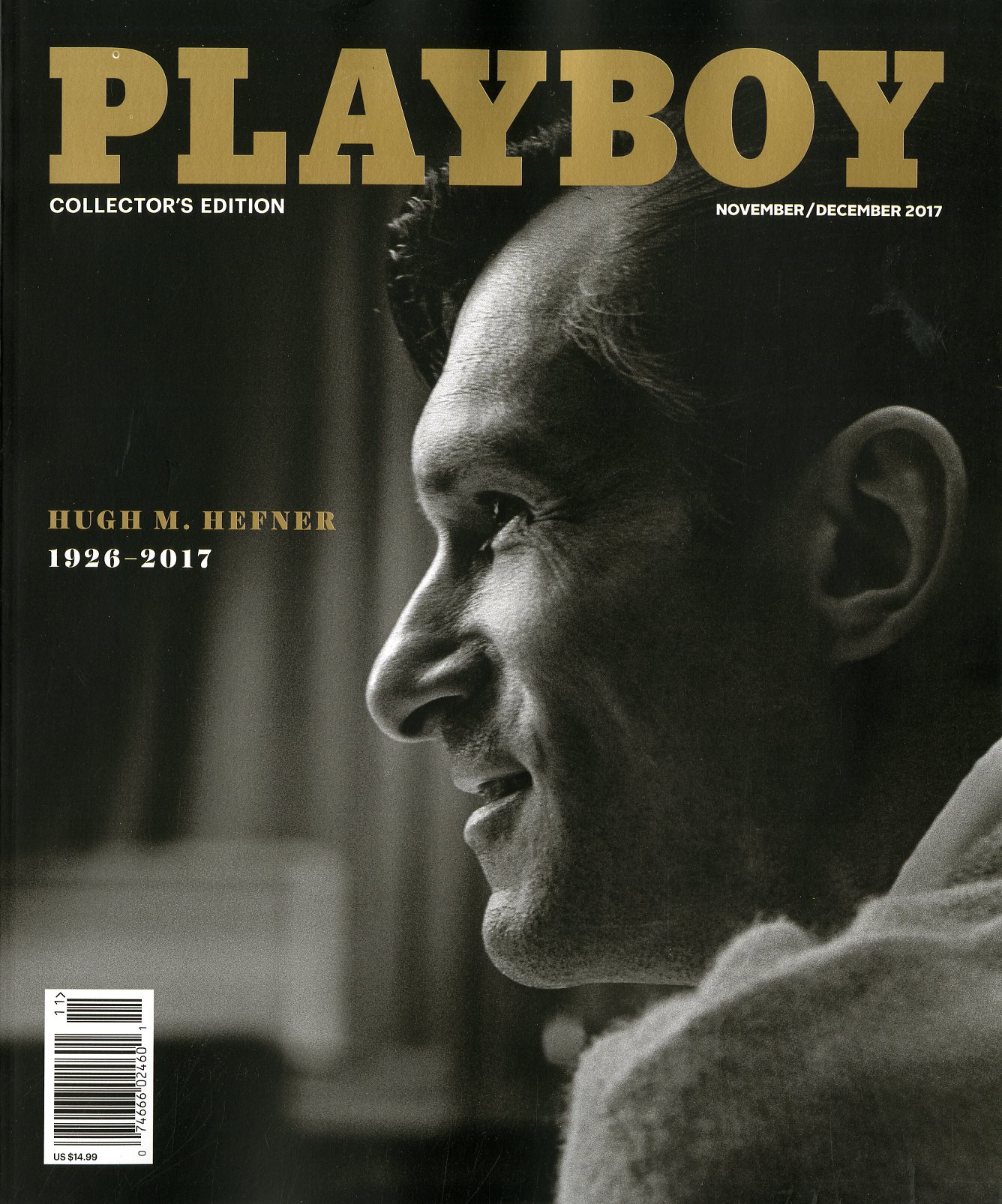
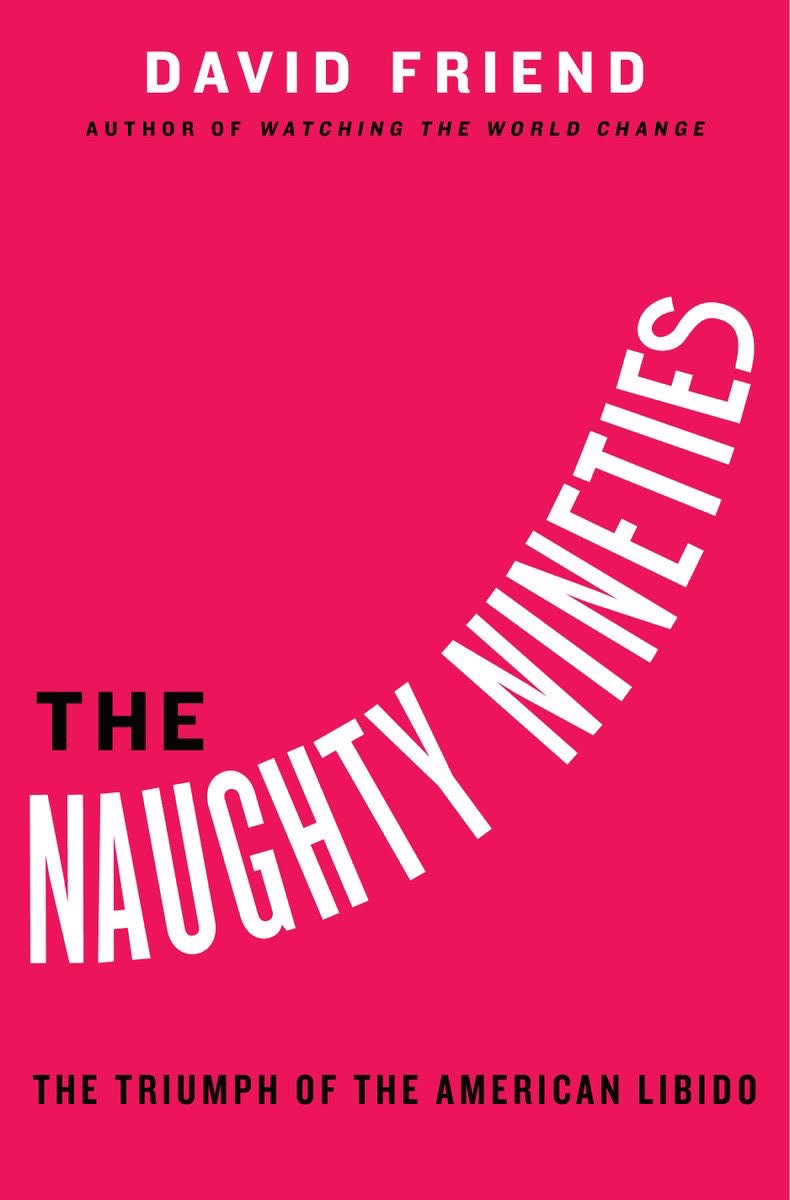
The culture wars of the 1990s and the red-faced years of the Clinton administration are something that David Friend thoroughly researched and then penned a book about, designating its title as “The Naughty Nineties,” and showcasing his idea that those less than wholesome years set the course for many of the issues we face today. Along with being a prolific author, David also joined the staff at Vanity Fair in 1998 as editor of creative development, after serving as Life magazine’s director of photography.

I spoke with David recently and we talked about his latest book and how the culture changes of the 1990s also impacted magazines and magazine media, with the onset of the Internet and the many disruptions that cable and satellite television presented. It was a fascinating and intriguing conversation that opened up many possibilities for answers to some questions that are being asked today.

So, without further ado, I hope that you enjoy the Mr. Magazine™ interview with David Friend, author and editor of creative development, Vanity Fair.

But first the sound-bites:

On the tipping point that made him decide to write a book about “The Naughty Nineties,” and what role the magazine industry played during that decade in the book: My last book was on the 9/11 tragedy in 2006, and that book was so depressing and so much to confront emotionally as a writer and reporter, deeply reporting people’s stories. So, I felt that in my next book I needed something that would be a lot more fun for me, and I looked back on the nineties as being sort of this overlay of sexuality in our lives. And when you talk about magazines, I looked at myself and my transition from a magazine editor; in April 1998, I made the move from Life magazine, which was middle of the road, middle-American, centrist and wholesome, to Vanity Fair magazine. And that was sophisticated, chic, smart, leaning-left; and it’s really the change that the culture was making, I think; the Boomers had grown up and the counterculture had become the culture.

On whether he believes there will be another revival of the “Gay Twenties” in magazines, where they return to that legendary sophistication: You and I are both glass-half-full people; we look at the world in rose-colored glasses, so I would love to think that you’re right. I love the ‘20s and ‘30s in magazines; I love the between-the-wars Vanity Fair. I love the early New Yorker, and I love when Time magazine and Esquire began. But the jury is out about what’s going to happen with print magazines now. We have real questions with big media companies and the value placed on them. We have big questions about young people who are spending so much time on digital devices. But I’m Pollyannaish and hopeful. I hope we are not at the end of the lifespan of magazines. I hope that there is still kick in the old girl.

On whether he was surprised to find out, after doing research for his book, that it appeared the men’s sophisticate magazine was a dying breed: No, I went into the book understanding that it was as dead as a doornail. What surprised was when I interviewed this very smart guy named Professor Samir Husni and he said to me, and I quote, and I am going to read from the book: “From the late ‘80s and until 1997, there were more new sex magazines published than any other genre. One year in the ‘90s, I still remember the number vividly, one-seventh of all new publications were sex magazines, often devoted to special interests. You could dissect the human body, name any part, and you’ll have five magazines for it.” So, there was this boom, and yet, as I point out in the book, you had three or four other things that were going on at the same time.

On whether by the time he finished the book he felt like judge and jury, defense attorney or prosecutor of the nineties: I think I’m more of a prosecutor, because what I find out at the end is we have Donald Trump and so much of what happened in the ‘90s; the coarseness; the rise of reality TV; the rise of lying as a public default among our leaders, our athletes and our stars; the cheapening of culture to the point of there almost isn’t a business in high culture anymore.

On if he was writing a new book about this teen decade of the 21st century, instead of the “Naughty Nineties,” what would he call 2013-2017: I’m not doing that, but were I to do it, I would maybe say the “Disruptive Millennials.” We’re looking at our navel; everything is a selfie. And instead, we need to really look at the globe and globalization; at the environment; and we need to reconnect to the human soul. To humanism and I think we’re getting too far away from what we are at our core and what really matters in life, which is connecting to one another and communicating honestly with one another. And being fulfilled as human beings, family members, friends and colleagues. What I think is happening is that we’re looking at our screens and our navels.

On what he would have tattooed upon his brain that would be there forever and no one could ever forget about him: He was like his name, a good friend.

On what someone would find him doing if they showed up unexpectedly one evening at his home: I’m rushing to drink very good wine with my wife or my buddies or an exciting group of people. And then for a late nightcap, it’s Soho House.

On what keeps him up at night: The meaning of existence. Why are we here; what is our purpose? How am I spending and how have I spent my life?

And now the lightly edited transcript of the Mr. Magazine™ interview with David Friend, author and editor of creative development, Vanity Fair.

Samir Husni: You’ve written a book called “The Naughty Nineties.” And of course my area of particular interest is the magazine coverage in the book and the entire magazine industry in that sector; what we used to call “The Men’s Sophisticate.” Tell me a little about your interest in this subject matter. What was that tipping point that made you decide to write a book on this subject?

David Friend: Thank you; I’m glad you think we’re innovative. My last book was on the 9/11 tragedy in 2006, and that book was so depressing and so much to confront emotionally as a writer and reporter, deeply reporting people’s stories. So, I felt that in my next book I needed something that would be a lot more fun for me, and I looked back on the nineties as being sort of this overlay of sexuality in our lives. I was raising two kids; my daughter was continually doing sit-ups to have a washboard ab stomach, because she wanted to get a belly-ring like Britney Spears, who she and her girlfriends looked up to.

And there were these sexual cues in MTV and society. And then my son, who was her twin brother, was playing a lot of these online, massive, multiplayer games, as they call them, with older people at night and that was nerve-racking to me and my wife. But I saw this sort of coarsening of the culture in the ‘90s, and the president was talking about his relationships with Gennifer Flowers and what happened with Paula Jones, then his relationship with Monica Lewinsky, and this was a sort of drumbeat throughout the ‘90s.

So, I looked back on the ‘90s and I thought, if the Boomers are the ones that screwed this all up, maybe there’s a book in this. And when you talk about magazines, I looked at myself and my transition from a magazine editor; in April 1998, I made the move from Life magazine, which was middle of the road, middle-American, centrist and wholesome, to Vanity Fair magazine. And that was sophisticated, chic, smart, leaning-left; and it’s really the change that the culture was making, I think; the Boomers had grown up and the counterculture had become the culture.

And even though now we’re still fighting some of the same culture wars that we were in the ‘80s and ‘90s, that transition, that pivot that I made in 1998 was partially reflecting this migration in the culture toward a more open sensibility, both socially and culturally; culturally at least. Maybe not socially, but culturally there was that shift.

My first day on the job, which was April Fool’s Day 1998, Graydon Carter was the editor of Vanity Fair, and he called me in to talk about getting exclusives. And one of the reasons that he hired me was he knew my reputation at Life because we worked together there in the ‘80s. He asked me to see if I could line up Monica Lewinsky, and this was at the height of the scandal with Clinton.

And sure enough, within 22 days I had landed a photo shoot with Herb Ritts and text by Christopher Hitchens. Then I knew I wasn’t in Kansas anymore. (Laughs) It wasn’t Life magazine; this was a new sense of general interest magazine. This bubbling, exciting Vanity Fair. At the same time, the gentrification of the culture and the sophistication of the culture, and the sophistication of magazines, really, was becoming the norm. Graphic design was important; storytelling was important; print was significant, and print still seemed to be, in many ways, driving the conversation. When journalists woke up in the morning, blogging was a new thing in 1998, they still looked to their morning newspapers to get their leads. That’s not true anymore.

So, I think I was making a transition that mirrored, in terms of the magazine world, what the culture was doing in miniature.

Samir Husni: As we move forward, and as I look at and study the magazines of the last century, the 1920s and 1930s, including Vanity Fair; is this the centennial return of that sophistication that you talk about in magazines, and are we going to see another Gay Twenties in 2020 and beyond?

David Friend: You and I are both glass-half-full people; we look at the world in rose-colored glasses, so I would love to think that you’re right. I love the ‘20s and ‘30s in magazines; I love the between-the-wars Vanity Fair. I love the early New Yorker, and I love when Time magazine and Esquire began. But the jury is out about what’s going to happen with print magazines now. We have real questions with big media companies and the value placed on them. We have big questions about young people who are spending so much time on digital devices.

So, what a magazine is today is hard to say. I think it was Kurt Andersen in The New York Times, quite recently, who had a quote: “The 1920s to the 2020s was kind of the century of the magazine,” he said, noting that The New Yorker and Time were founded in the decade before the Great Depression. Today, he added, the industry was in “more of a dusk, a slow dusk, and we’re closer to sunset.” But I’m Pollyannaish and hopeful. I hope we are not at the end of the lifespan of magazines. I hope that there is still kick in the old girl.

Samir Husni: Of course, my position is that as long as we have human beings, we’re going to have magazines. And from your research, technically you had enough evidence to show that there is a life cycle even for categories within magazines. And what you’ve done with the men’s sophisticate magazines in your book, with the research, and the interviews done with Diane Hanson; were you surprised by the conclusions that this is a dying category within the magazine business?

David Friend: No, I went into the book understanding that it was as dead as a doornail. What surprised was when I interviewed this very smart guy named Professor Samir Husni…

Samir Husni: (Laughs).

David Friend: …and he said to me, and I quote, and I am going to read from the book: “From the late ‘80s and until 1997, there were more new sex magazines published than any other genre. One year in the ‘90s, I still remember the number vividly, one-seventh of all new publications were sex magazines, often devoted to special interests. You could dissect the human body, name any part, and you’ll have five magazines for it.” So, there was this boom, and yet, as I point out in the book, you had three or four other things that were going on at the same time.

Why was there a rise in so many different magazines? One, I would say that the cost of entry was declining; it was much easier to produce magazines. It was a print boom. Secondly, there were lax pornography laws. With Janet Reno as the Attorney General under Clinton, people were not being litigated against for porn. So, there was just more of a freedom to generate magazines.

Then there were more lax values; the people who had grown up in the sixties, a generation had passed, and by the nineties, their values became what was driving commerce. So, I think that it was easier to print some of these things with the lax attitudes.

Plus there was AIDS in the eighties. And people were looking for avenues for safer sex, and there’s nothing safer than a magazine. This was a period where strip clubs were on the rise; you didn’t take your clothes off. You went to these places and you had people who were taking their clothes off next to you, but you were “safe.” But for all of those reasons, you had this boom in magazines. There was also a liberation among people who were modeling, men and women, for these magazines.

What else did you have? You had two other big things then that spelled doom for the “men’s sophisticate” magazines, one was the VHS video boom. You had cable TV, satellite TV and VHS tapes. And CD-ROMs. People were seeing sex that didn’t even have to have plots anymore, it was just sex tapes everywhere. And the photos in a magazine didn’t hold a candle to moving pictures. You say something very funny in my book where I quote you as saying: “When pornography became disseminated on cable and on your laptops; you can’t compete in print. No matter how much you shake the magazine, it’ll never move the same way.” (Laughs)

Samir Husni: (Laughs too).

David Friend: But you also had this new thing called the Internet. The Internet had been around for a while, but the Worldwide Web really began in ’92 and ’93. And by the end of the decade, people were getting pornography online. People were having sex chat on AOL People were connecting online and were then able to meet up offline. People were seeing almost the entire smorgasbord of sexuality, every single fetish or desire could be met or found in a community somewhere online. This also spelled doom for the publications, because you had this new medium.

Magazines tried to keep up; you’d have fun sex ads in the magazines and you’d have DVDs and CD-ROMs poly-bagged with these magazines, but it was too late. It was just not to be. There is a fellow who is a historian named Robert Rosen, who did a very good book called, oddly-titled “Beaver Street” about this same period. And he talks about this same thing; the collapse of the companies that were able to sustain these magazines for 15-25 years. They just couldn’t sustain them anymore, because the market fell out.

Samir Husni: Yes, you can’t compete with free. It’s as simple as that.

David Friend: You’re absolutely right; you cannot compete with free.

Samir Husni: As you finished the book; did you feel that you were the judge and jury; the defense attorney and the prosecutor of the ‘90s?

David Friend: I think I’m more of a prosecutor, because what I find out at the end is we have Donald Trump and so much of what happened in the ‘90s; the coarseness; the rise of reality TV; the rise of lying as a public default among our leaders, our athletes and our stars; the cheapening of culture to the point of there almost isn’t a business in high culture anymore.

The 24/7 scandal that arose when you had CNN competing suddenly with a new channel called Fox News, starting in 1996, and the Census spectacle. All of this led to an environment in which voters would be comfortable voting for Donald Trump. And that’s the afterword of the book, really how the nineties laid the groundwork for the sorry state we’re in now.

Samir Husni: If you were working on a new book about the “teens” decade of the 21st century, what’s the word that comes to mind? You named the nineties the “naughty” nineties; what would you call 2013-2017 of this century?

David Friend: I’m not doing that, but were I to do it, I would maybe say “Disruptive Millennials.” We’re looking at our navel; everything is a selfie. And instead, we need to really look at the globe and globalization; at the environment; and we need to reconnect to the human soul; to humanism. And I think we’re getting too far away from what we are at our core and what really matters in life, which is connecting to one another and communicating honestly with one another. And being fulfilled as human beings, family members, friends and colleagues. What I think is happening is that we’re looking at our screens and our navels.

Samir Husni: One phrase I coined and that I use in my teaching is that we live in an age of isolated connectivity.

David Friend: Yes, it’s almost like psychologists talking about parallel play, where children are engaging themselves in the same room with others, but each is doing their own thing next to each other, as opposed to engaging with one another.

Samir Husni: If you could have one thing tattooed upon your brain that no one would ever forget about you, what would it be?

David Friend: He was like his name, a good friend.

Samir Husni: If I showed up unexpectedly at your home one evening after work, what would I find you doing? Having a glass of wine; reading a magazine; cooking; watching TV; or something else?

David Friend: I’m rushing to drink very good wine with my wife or my buddies or an exciting group of people. And then for a late nightcap, it’s Soho House.

Samir Husni: My typical last question; what keeps you up at night?

David Friend: The meaning of existence. Why are we here; what is our purpose? How am I spending and how have I spent my life?

Samir Husni: Thank you.
h1

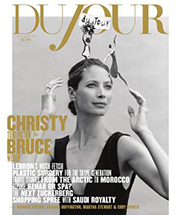
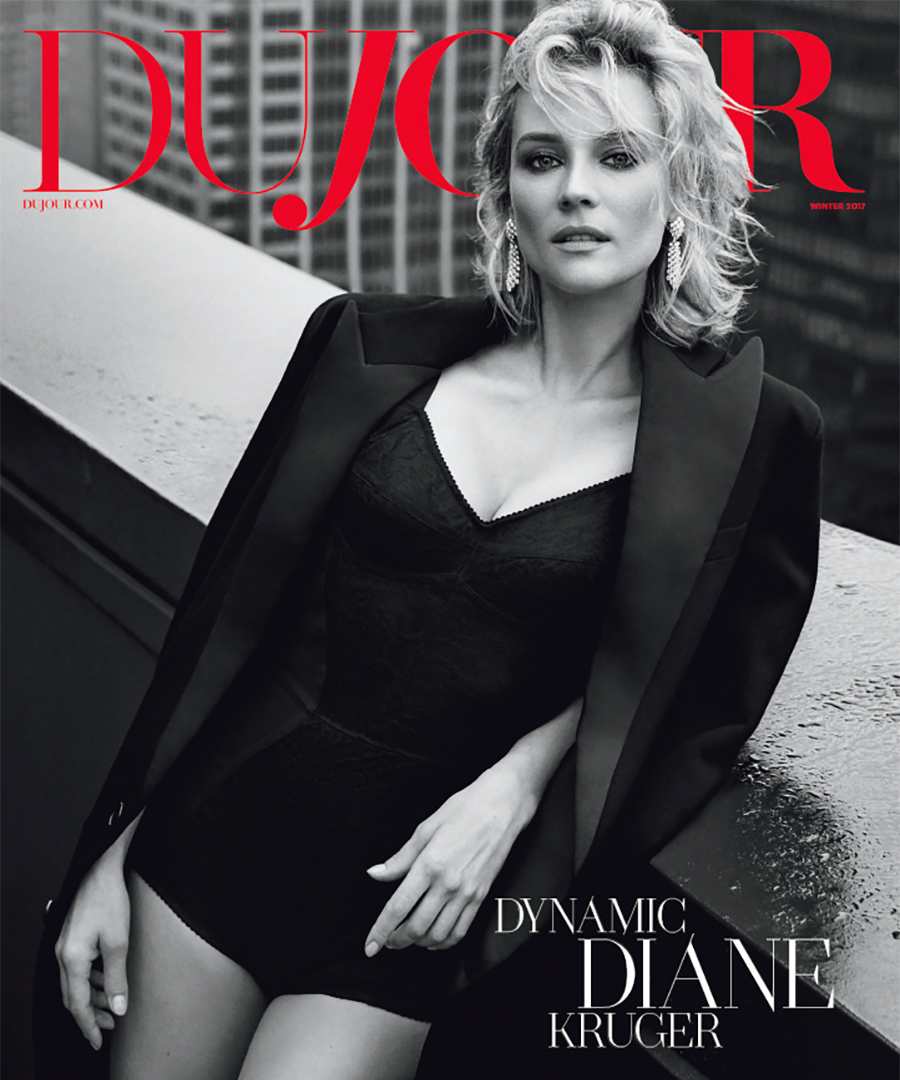
DuJour Magazine: The Superlative Of Luxury Magazines – Setting The Standard High By Concentrating On A Dual Audience, Online and Offline – The Mr. Magazine™ Interview With Jason Binn, CEO/Publisher…

November 9, 2017

“It was time to create something that didn’t exist, that conformed to what 2012 was bringing on and what 2017 today has really embraced, which is publishing a high-quality product on the highest-quality paper stock; a quarterly book. Obviously with print, no one can deny or challenge that print is really where the majority of the ad revenue still comes from. And I don’t believe, whether it’s the bigger media companies or whomever, they are feeling anything different. And there’s the power of print to create your community, your brand, in a physical and meaningful way.” Jason Binn…

DuJour is the luxury magazine that makes no apologies for its exquisite tastes. The magazine promotes and revels in the intoxicating lifestyles of the rich and famous. And does it with style and class. Since 2012, when the word magazine was becoming more and more taboo, DuJour burst through the publishing door and dropped a print diamond in the middle of a plethora of pixels. And the man who stepped over that threshold and brought the magazine to the targeted audience with a smile and a flourish was Jason Binn.

Jason has been in the publishing business for almost 25 years, so he knows something about magazines and magazine brands, having launched Ocean Drive in 1993. But with DuJour he has tapped into a very elite market that appreciates his efforts of bringing them a quarterly magazine and a digital monthly. I spoke with Jason recently and we talked about what he feels is and will continue to be a hot topic in the months and years to come: staying in front of your audience both online and offline, playing that dual role. And so far, DuJour is everywhere their readers want them to be. And that’s exactly the idea.

So, with the confetti and pomp that Jason’s DuJour cover parties are known to feature, I bring you the Mr. Magazine™ interview with a true entrepreneur, a man who believes that if it doesn’t come to life, it just won’t work, Jason Binn, CEO/Publisher, DuJour magazine.

But first the sound-bites:

On how life changed for him as a publisher/CEO of luxury magazines since his launch of Ocean Drive magazine over 20 years ago: Having the opportunity to launch a multi-tier platform; a digital, print, hybrid publication that was in a sense responsible for getting the audit by BPA for my digital distribution, and leveraging the data and transparency of accessing the most affluent individuals in 10 markets that are responsible for the affluent consumers and/or the majority of the sales and purchasing power, was amazing. It was a great time to evolve, not just personally, but as a business.

On what he has learned in his almost 25 years of being in the publishing business: I learned that while everyone is playing so many channels, everyone is also chasing their consumers and ways to message the audience, but when I go back and look at the evolution of media and social media, I look at how people feel content. And whether it was 1999 when it was an advertorial, or 2000 with Myspace, or 2001 with QR codes, or even 2002 with Google+, or 2004 with Twitter; Tumblr in 2007, or Pinterest in 2010, and native advertising content just a few years ago; you learn that you are in control of your audience and your messaging. And your success is to maintain and retain your audience and build your community.

On why he thinks no one has ever been able to do what he does with the cover parties, events and the success of DuJour’s glitz and glamour-type business model: I think people try to do it, but I think it’s no different than the business model of distribution of content and leveraging your platforms. If you look on DuJour.com at our media kit, we have these robust channels, and what I’m doing today through my social distribution, whether it’s our million followers – and by the way, Departures has 34,000 followers on Instagram, Robb Report has around 60,000, and DuJour has 60,000 , so between Robb Report and Departures, that’s 100,000 followers. And those businesses have been around for 100 years.

On whether DuJour is a reflection of himself: You see the people. Our job is to access and make these people accessible to our readers and consumers. The amazing thing about DuJour now is that everybody who gets the magazine and opts in on and offline, self-collected; those people also get to be a part of our community and our events. And when we do events, whether we have 100 people or 200 people, or 30 people, I always know those people are the best potential audience for our clients, because they have the three highest filter-checks that exist today with the most prominent and prestigious data mining companies.

On the biggest challenge that he’s facing today and how he plans to overcome it: To keep going deeper into the mindset, lifestyles and behaviors of that one-percent that we own. To constantly communicate and win them over and make them partake in responsible and more meaningful ways, so our advertisers can communicate their brands or their messaging, or expose their products to these people. We’re going deeper into the one-percent and evolving the platforms more and more.

On anything he’d like to add: It’s important to be a dual audience, lifestyle magazine today that focuses on a fashion issue, an arts issue, and a music issue. When you’re a lifestyle and you’re focusing on fashion, art, entertainment, accessories; you have all of these constant columns on and offline. And you’re thinking toward a dual audience and it’s great to be in their homes and invited to sit on their coffee tables, because yes, today, there aren’t as many magazines in people’s homes. And to be invited and accepted into their homes, and to be a magazine that caters to all, 80 percent of our readers are female, but we still walk a very responsible line, so that it is something that men and women can enjoy in their homes and that speaks to everyone.

On what he would have tattooed upon his brain that would be there forever and no one could ever forget about him: When it comes to DuJour, my work or my art, I’m a passionate, engaged and responsible entrepreneur.

On what someone would find him doing if they showed up unexpectedly one evening at his home: For me, it’s work and family. When I’m not working I’m at home with the kids and the family, and that’s it. To me working is playing. I enjoy what I do. I’m on the frontline with my team. And I think that’s important today. A lot of people hide behind their titles or their businesses, and then there’s people who go out there and really fight for what they believe in and what they have. And I have been fortunate enough since 2012 to have people want to go on this mission with me, this journey. And win. And we only win.

On what keeps him up at night: I just want to make sure we’re always ahead of the competition. It wasn’t any different than when I started Niche Media. National advertisers didn’t do regional; they just didn’t do it. And they didn’t do a network in markets that multiple magazines were in for many years. And redefine it and see where those city magazines ended up later in the game. It’s great to know that what you do has purpose and that it has staying power. We’re not here to do what everyone else is doing, because that wouldn’t make us different.

And now the lightly edited transcript of the Mr. Magazine™ interview with Jason Binn, CEO/Publisher, DuJour magazine.

Samir Husni: You’ve come a long way since Ocean Drive magazine, so between Ocean Drive and DuJour; how did life change for you as a publisher/CEO of luxury magazines?

Jason Binn: I was very fortunate. Do you know many luxury magazines that launched in 2012?

Samir Husni: (Laughs) I think I could count them on one hand.

Jason Binn: Having the opportunity to launch a multi-tier platform; a digital, print, hybrid publication that was in a sense responsible for getting the audit by BPA for my digital distribution, and leveraging the data and transparency of accessing the most affluent individuals in 10 markets that are responsible for the affluent consumers and/or the majority of the sales and purchasing power, was amazing. It was a great time to evolve, not just personally, but as a business.

Just because back in the old days when I first started, data was leveraged to intellect with things and learn about homes, etc., eventually we’d get to know their names. But in 2012, I had a whiteboard and I was able to build from the bottom up and look at what the advertisers and the readers wanted. And back then, in 2012, when I called the Magazine Publishing Association, and I wanted to find out what the recommended frequency was, or the least amount of frequency you could publish, and they said to me quarterly, if you had won awards and accolades, which we had the hottest magazine by Adweek and we got the Webby Award, 60 countries, 50 states, 14,000 applicants, and we won the Webby for homepage and navigation, beating out Google and Condé Nast.

So, it was time to create something that didn’t exist, that conformed to what 2012 was bringing on and what 2017 today has really embraced, which is publishing a high-quality product on the highest-quality paper stock; a quarterly book. Obviously with print, no one can deny or challenge that print is really where the majority of the ad revenue still comes from. And I don’t believe, whether it’s the bigger media companies or whomever, they are feeling anything different. And there’s the power of print to create your community, your brand, in a physical and meaningful way.

And there are other platforms, no different than maybe a Refinery29 or Vice, where these platforms complement each other and are strategically aligned so that you’re messaging people through newsletters, data mining, events; through content and photography. It just becomes more channels and creates more communities and interaction and experiences with your readers and consumers.

Samir Husni: In 2018, you’ll be celebrating 25 years in the publishing business, that’s when you launched Ocean Drive in 1993. Then 20 years later came DuJour; you’ve set a standard for luxury magazines, both in print and digital. What have you learned in those 25 years?

Jason Binn: I’ve learned that the rich stay rich or get richer (Laughs). I learned that while everyone is playing so many channels, everyone is also chasing their consumers and ways to message the audience, but when I go back and look at the evolution of media and social media, I look at how people feel content. And whether it was 1999 when it was an advertorial, or 2000 with Myspace, or 2001 with QR codes, or even 2002 with Google+, or 2004 with Twitter; Tumblr in 2007, or Pinterest in 2010, and native advertising content just a few years ago; you learn that you are in control of your audience and your messaging. And your success is to maintain and retain your audience and build your community.

And quarterly magazines if done right, are timed with the seasons: winter, spring, summer and fall. And being a lifestyle book, to be invited into a home, to the opt-in selected audiences that we have, where each recipient has opted in for the digital with the print. But if they opt out, we don’t send the print.

So, we have this engaged audience on and offline, and we leverage our platforms; we don’t sell against them. We don’t break it up by digital emails, social media, events; we don’t breakdown those channels of distribution and different P&L’s or revenue streams. We actually work hard to integrate them all and create a budget that has monthly or quarterly billing where these assets are laid out and clients can use it at their leisure when they want to.

I think the more that we can put our business model and audience, and shape it around the readers and the clients, and then give them the affordability and access to choose those assets when or how they want over the fourth of their contractual agreement, it gives the advertiser more freedom and flexibility. Because what’s going on today is everyone is creating assets for distribution no differently than someone who creates a movie and is looking for distribution. And the luxury brands’ clients are distributing these assets through their own distribution channels, whether it’s their websites, or their social media outlets.

And what I’m seeing is that they’re getting zonked after the first eight months or a year; they don’t really see a building of their community or audience on or offline. They keep distributing their own assets through their own channels and messaging the same people over and over again. And what DuJour has become to many clients is a distribution channel of content and assets. I’m not here to create native content for our clients. I’d rather distribute content through our unique channels that’s on-brand with them, and what we do. I think that’s the point of differentiation.

I also think a point of differentiation in where we’re heading is print and digital need to be bundled, which is how DuJour has been packaged since its launch in 2012. We were bundled up into one buy. Or you can buy us individually, but 80 percent of the clients that came in our first issue in 2012, bought the combination buy of print and digital. And to me that was a revelation. There were only a handful of clients that just said we don’t want to be in the digital sense.

I also find that our digital lines push content out sooner and aren’t beholden to print when it comes out. Many times the magazine’s stories come out and they’re great, but they are great sooner online. Sometimes the companies are competing with themselves. It’s no different than a publisher or an editor, knowing who’s on the cover and how to market those people, whether through cover parties or through integrations that are meaningful. Where the advertisers can connect with the consumers in a social environment and be a part of what that media company does.

Samir Husni: Many people say that you’re the whiz of social parties around the magazine and having all of the events; can DuJour’s model be duplicated or does it have to be Jason Binn that makes it work? Why do you think no one else has succeeded in doing what you do? Is it because of you and your “Binn” there skills?

Jason Binn: I think people try to do it, but I think it’s no different than the business model of distribution of content and leveraging your platforms. If you look on DuJour.com at our media kit, we have these robust channels, and what I’m doing today through my social distribution, whether it’s our million followers – and by the way, Departures has 34,000 followers on Instagram, Robb Report has around 60,000, and DuJour has 60,000 , so between Robb Report and Departures, that’s 100,000 followers. And those businesses have been around for 100 years.

What that shows me is a rich desire or appetite on social and Instagram with affluent people, especially when their brands are on-brand on and offline. I think very key to your business is being defined on and offline. Not moving your message or your audience on your different platforms, which I believe is one of those things that helps make these events get bigger and better every year, and makes us keep doing them.

The other thing is DuJour’s knowledge; the business model that I created at Niche and the mindset when I was there; everything needs to come to life, else it doesn’t work. It’s a very simple idea. Everything must come to life. I don’t care if it’s bringing the people on the pages to the parties; I don’t care if it’s posting the screenings for the films of the celebrities on the cover; whatever it is. Editors have to think like marketers. We spend millions of dollar a year, millions, on creating great content. If we don’t bring it to life, whether it comes off the screen, the mobile device; off the magazine, whatever platform; if we don’t bring it to life it’s not successful to me. It’s not a win. And my editors have always known that from day one.

Samir Husni: Are your magazines a reflection of yourself? Do I see Jason on the pages of DuJour or on the pixels on the website’s screen?

Jason Binn: You see the people. Our job is to access and make these people accessible to our readers and consumers. The amazing thing about DuJour now is that everybody who gets the magazine and opts in on and offline, self-collected; those people also get to be a part of our community and our events. And when we do events, whether we have 100 people or 200 people, or 30 people, I always know those people are the best potential audience for our clients, because they have the three highest filter-checks that exist today with the most prominent and prestigious data mining companies. They have a million dollar-plus home, $250-plus income, and they have a net worth of $5 million.

A consumer today lives in the money, makes the money, and has the money. They’re not saving up to buy a home; they don’t have money in the bank to earn income off their investments; these are people who can go on their devices and buy products. And that’s a unique thing. If we talked about building something like that today; I definitely would question myself today. Would I be able to do today what I did in 2012, because 2012 was such a point of challenges for print. And so when people ask what’s going on today, 2012 was worse. No one was even talking about magazines. All of the big layoffs were coming the year before and into 2012. All of the big layoffs. It was the first time that people had said the big companies were human and actually could bleed.

So, for me today, what I see now is I’m going deeper into the one-percent; I’m getting to know them better. And I see that the other media companies are going wider and farther out there to reach more and more people through more and more channels, which has become an exercise where I know 95 percent of the people in our universe.

So, our wheelhouse between all of our platforms is six million people a quarter. That’s using the magazine, the quarterly rhythm of the magazine, and then plugging in all of the newsletters, direct mail, and email. We have 400,000 people that are responsible for over 70 percent of the nation’s wealth and purchasing power. It really does come down to, 25 years later, the one-percent. It comes down to a small select group of people and when you hit six million people a quarter for your wheelhouse, that’s 24 million people a year. So, I’m not reaching what a traditional national book has of 250 million maybe over the course of a year, but I know out of 24 million people, 95 percent of those people could actually afford the products and services that we do business with.

Samir Husni: What’s the biggest challenge that you’re facing today and how do you plan to overcome it?

Jason Binn: To keep going deeper into the mindset, lifestyles and behaviors of that one-percent that we own. To constantly communicate and win them over and make them partake in responsible and more meaningful ways, so our advertisers can communicate their brands or their messaging, or expose their products to these people. We’re going deeper into the one-percent and evolving the platforms more and more.

Today to be a lifestyles, dual audience magazine, and have access to the homes and coffee tables of these people, we break it down this way – Tier-One distribution: Miami, New York, L.A., and Chicago., which gets anywhere from 15 to 20,000 books direct mail. Tier-Two markets are: San Francisco, Dallas, the markets you would assume, Orange County, and then Houston. The sizzle markets are Aspen during the summer and winter; the Hamptons during the summer and fall; and Palm Beach during the spring and winter. So, it’s not super-complicated, and everything we do is transparent, so what you see on the magazine’s spine are the markets we’re in.

The business model hasn’t been touched since we launched, which to me is a good thing. The business model we set and announced in the summer of 2012 and went live in the fall has not changed course. I was fortunate enough to have access to these people who have really wanted to be a part of our world. And it’s been accredited and documented all over, so I don’t really know who does what I do, because it’s kind of something that I had the luxury over the last 25 years to understand each market and the styles and sensibilities of these communities. So, 70 percent of the magazine is national and 30 percent is the New York City section.

What I’ve learned is 47 percent of the people that go to Miami are from New York. Aspen gets people from Dallas, Chicago, Houston, and New York. The Hamptons, that resort market gets Philly, Boston, and that area, the East Coast and New York City and Miami. And then Palm Beach gets a different crowd, it’s a very ancestral kind of community, where people are first cousins or second cousins.

So, those 100 or 200 influencers are the ones that move each market. Their families and/or themselves have primary, secondary and third homes in these markets. And the news that we cover comes a lot from New York and L.A. These seasonal markets and second Tier markets, there’s news, but not a lot of it, but we’re responsible to cover each market in our DuJour cities. Obviously, the Tier-One cities get more coverage; Tier-Two markets get less; and then the sizzle markets we cover during the seasons. It’s a glocal magazine. It just feels to me like a very responsible magazine that’s engrained in these markets editorially and promotionally.

Samir Husni: Is there anything else you’d like to add?

Jason Binn: It’s important to be a dual audience, lifestyle magazine today that focuses on a fashion issue, an arts issue, and a music issue. When you’re a lifestyle and you’re focusing on fashion, art, entertainment, accessories; you have all of these constant columns on and offline. And you’re thinking toward a dual audience and it’s great to be in their homes and invited to sit on their coffee tables, because yes, today, there aren’t as many magazines in people’s homes.

And to be invited and accepted into their homes, and to be a magazine that caters to all, 80 percent of our readers are female, but we still walk a very responsible line, so that it is something that men and women can enjoy in their homes and that speaks to everyone. Younger people want to feel a little more sophisticated, and sophisticated people want to feel younger, and we’re fortunate enough that we own DuJour, the name, on every level.

Samir Husni: If you could have one thing tattooed upon your brain that no one would ever forget about you, what would it be?

Jason Binn: When it comes to DuJour, my work or my art, I’m a passionate, engaged and responsible entrepreneur.

Samir Husni: If I showed up unexpectedly at your home one evening after work, what would I find you doing? Having a glass of wine; reading a magazine; cooking; watching TV; or something else?

Jason Binn: For me, it’s work and family. When I’m not working I’m at home with the kids and the family, and that’s it. To me working is playing. I enjoy what I do. I’m on the frontline with my team. And I think that’s important today. A lot of people hide behind their titles or their businesses, and then there’s people who go out there and really fight for what they believe in and what they have. And I have been fortunate enough since 2012 to have people want to go on this mission with me, this journey. And win. And we only win.

Samir Husni: My typical last question; what keeps you up at night?

Jason Binn: I just want to make sure we’re always ahead of the competition. It wasn’t any different than when I started Niche Media. National advertisers didn’t do regional; they just didn’t do it. And they didn’t do a network in markets that multiple magazines were in for many years. And redefine it and see where those city magazines ended up later in the game. It’s great to know that what you do has purpose and that it has staying power. We’re not here to do what everyone else is doing, because that wouldn’t make us different.

By looking at the playing field of lifestyle magazines at the big media houses, there’s only three or four of them in the country, and when I look at the market, it comes out at the end of the day, 25 years later, those top markets that I’ve been fortunate enough to work and play in, it’s great that I was able to evolve my brand and put out the highest-quality content on the highest-quality paper, and work with people that I’ve never worked with before. Being able to work with Bruce Weber or Peter Lindbergh is another level.

Even the guy in the magazine with the navigation bars at the top and the page numbers on the side, where your fingers hold the magazine; all those little things, those details, are important. Why are the page numbers on the side? Someone a thousand years ago put them on the bottom right. It’s almost like the monthly magazines come out two weeks before the month. September comes out in November. My digital monthlies come out on the first and goes through that month, whether it’s January or February; it’s the entire month.

And today to be a monthly digital with a quarterly print is exciting too, because you want to keep active and engaged with your audience, and to be able to have this audience that we talk with every month, and do covers and activations; it just keeps your brand out there and keeps people talking about what you’re doing. And then we do the quarterly print, which wraps ourselves around that season. I think many magazines, as we have seen, are reducing their frequency, but they’re not leveraging that distribution of content and creating a digital magazine every month. Magazines were trying to sell digital subscriptions on their own and charging premium for them in 2012, and then they were charging print a different price, and then they did the combo, and now they just do all access and wrap it all in together. I think people are still trying to find their way. And I believe we’ve found our way and we just keep beating to that beat.

Today, being in a controlled environment and dictating and shaping around the right audience is important. We’ve laid out the map and we’ve built it and people have come and embraced it.

Samir Husni: Thank you.
h1

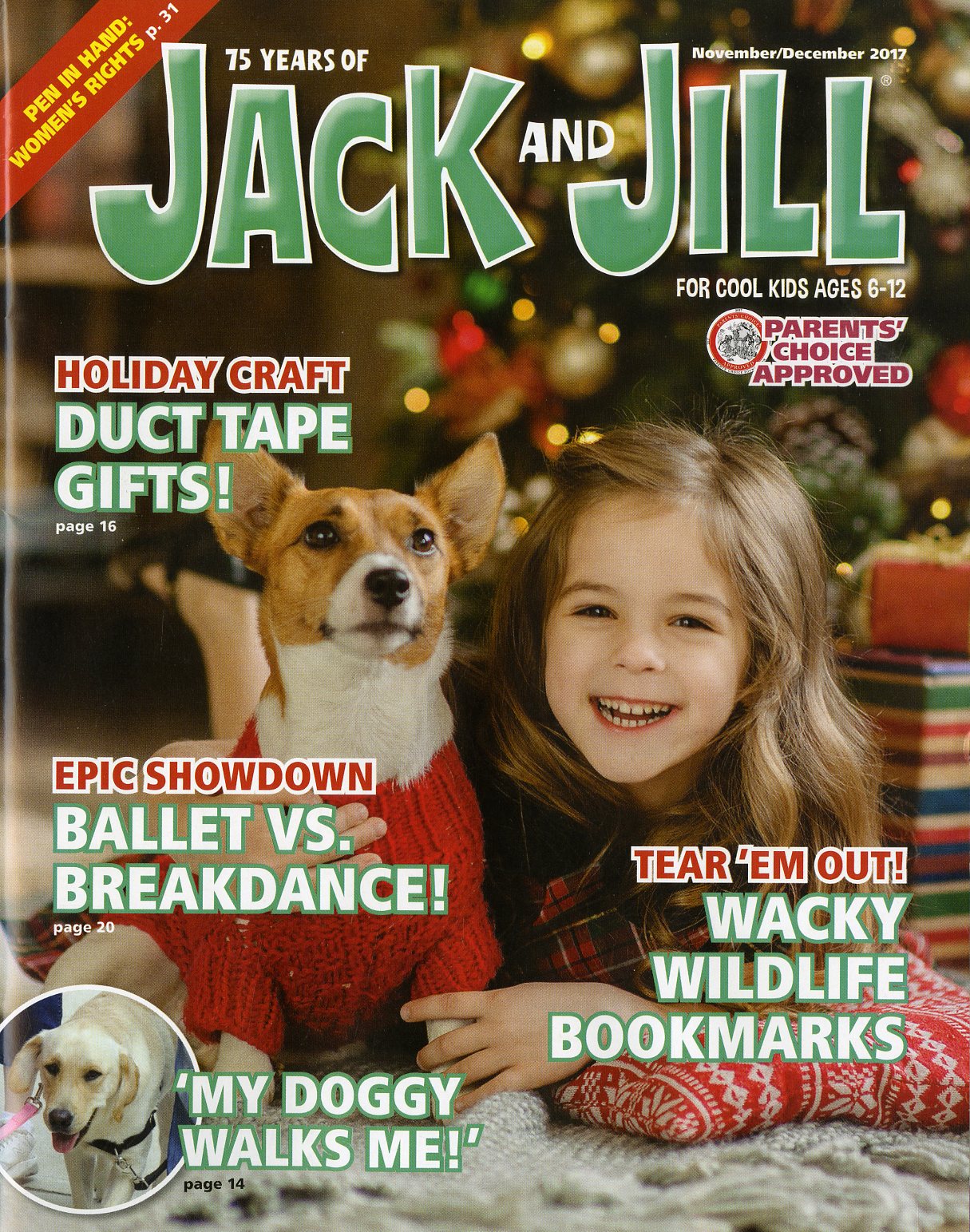
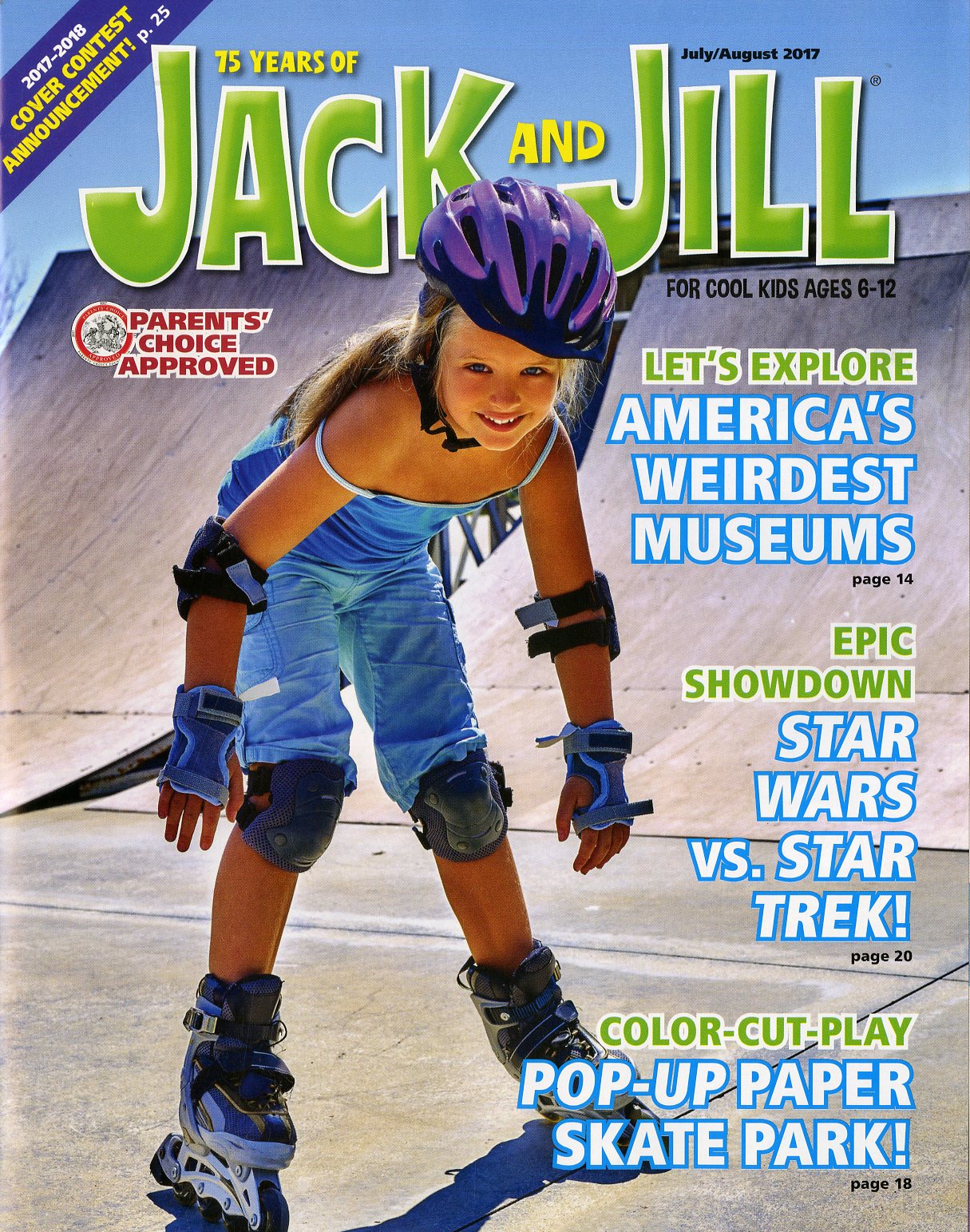
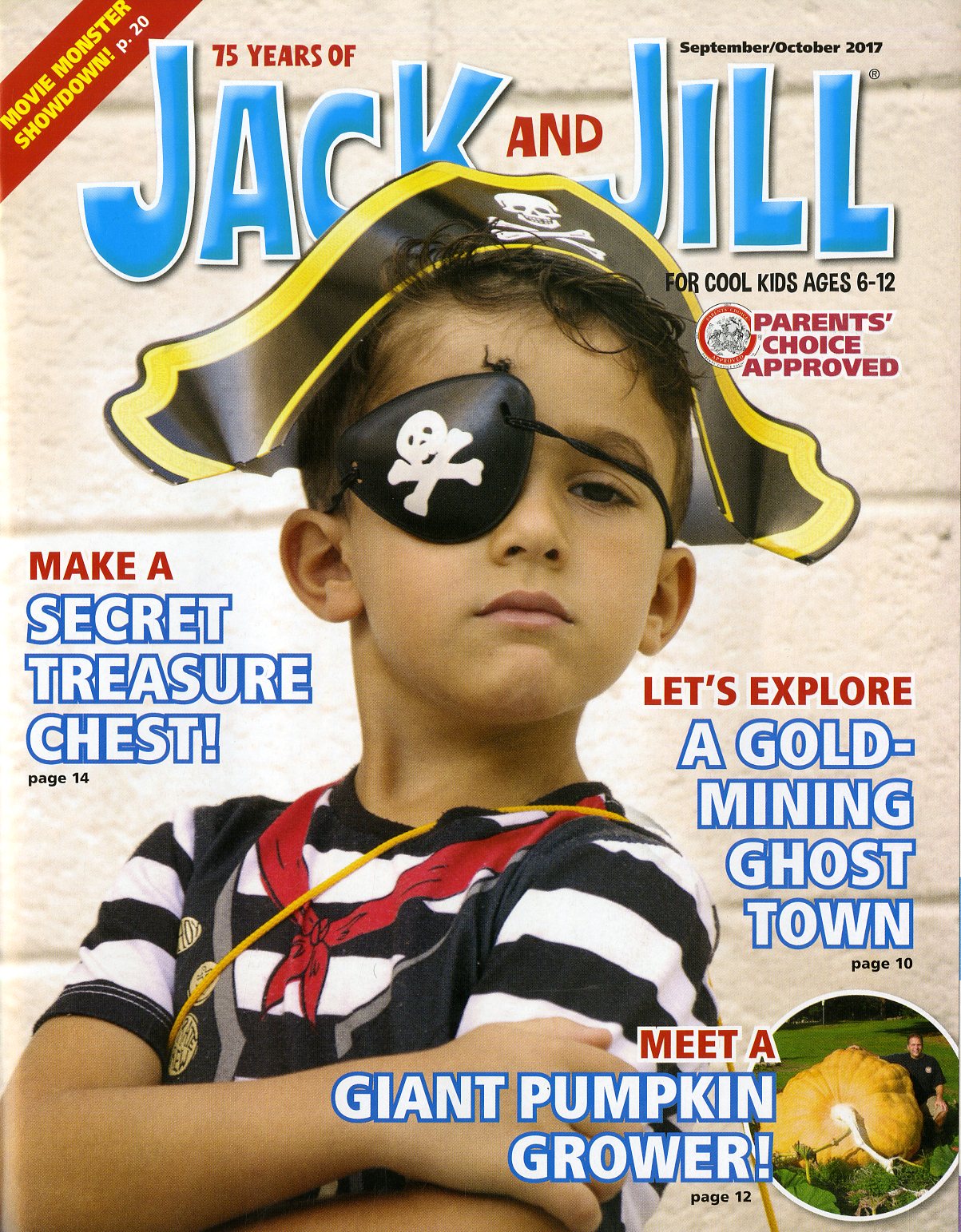
Jack And Jill Magazine: 80 Years Of Publishing And As Young As Ever With A Mission To Create A Magazine By, For & About Kids – The Mr. Magazine™ Interview With Joan SerVaas, Publisher & Steve Slon, Editorial Director…

November 6, 2017

“A magazine connects a lot better with kids today, because it’s something that they can hold and touch and feel, and use to interact with their parents. And it’s something that they can write on and color and fill-in, and just discover and go back to. It’s a much different aspect that being on a computer and looking at a screen. So, when we were talking about us connecting as editors to our audience, there’s also what connects the kids to their parents. How do they connect?” Joan SerVaas…

“I’ll tell you that one shift I’m working on developing now with our editor is to make it even more by, for and about kids. Many children’s magazines, including Jack and Jill, have traditionally been about some created kid content, let’s say, but generally we’re sort of instructional or didactic material, delivered by adults or teachers, and more in the vein of teaching. In rethinking the magazine, we’re looking at making it all about you, changing the little slug line on the cover to be “All about you,” and more by, for and about kids. And have more kid-created content; more stories about kids who are doing interesting things; inspirational pieces, and so on. As well as continuing our games and cartoons, recipes, and fun stuff for kids.” Steve Slon…

For a magazine that’s about to turn 80 years old next January, one might think with that kind of legacy behind them, they don’t need a plan for the future; just keep on doing what they have been for almost eight decades and get ready for the next 80. But Jack and Jill magazine doesn’t believe in resting on its laurels, the powers-that-be behind the magazine, namely Publisher, Joan SerVaas, and Editorial Director, Steve Slon, have a definitive plan for the brand’s foreseeable future; make it more kid-centric. More by, for and about kids. And according to Joan SerVaas, that’s what it’s all about.

I spoke with Joan and Steve recently and we talked about the historical title and about the other two very esteemed magazines that reside in Joan’s family tree: The Saturday Evening Post and Humpty Dumpty. All three publications have a legacy of tradition and prominence in the world of publishing, and with Jack and Jill’s list of past contributors, from Pearl S. Buck, who contributed “One Bright Day,” a two-part story that appeared in August and September of 1950, to Cartoonist Ted Key (best known for his “Hazel” cartoons, which appeared in the Post), and who contributed the 2-page cartoon feature “Diz and Liz” from 1961 to 1972, to New York Times bestselling author, Ben H. Winters, who contributed an original short story in the Nov./Dec. issue from 2012, the children’s title deserves its 80-year recognition.

Steve shared with me the many kid-loved aspects of the magazine, such as the cover contest, in which Steve said Jim Davis (cartoonist and creator of Garfield) has been a judge for in recent years. The cover contest is an art contest in which readers are invited to send their original illustrations for use as cover art. Steve was excited by the 1300 entries they had last year combined for Jack and Jill and Humpty Dumpty, and that the winner’s school receives a check for up to $1,500 to support their art classes, with the winning illustration used on the cover of the magazine.

And while the magazine is certainly a business, it’s not all about the bottom line. Joan and Steve agree that the future is the children and the magazine is about the betterment of children and everything that concerns them, from health and education, to just plain fun; all of the things that the Jack and Jill brand believes in.

So, without further ado, please enjoy the Mr. Magazine™ interview with the living, breathing counterparts of “Jack and Jill,” two people who are determined to make the hill climb a wonderful experience for children, Joan SerVaas, publisher, and Steve Slon, editorial director, Jack and Jill magazine.

But first the sound-bites:

On the status of children’s magazines in this digital age (Joan SerVaas): Well, I don’t think it matters what age you’re in, children always love a story. And they like to play games and interact with their parents or parents like for them to be entertained by stories, activities and games, and we’ve been introducing those in a traditional way. But we’re not shying away from the digital age either.

On what has kept the magazine going for all of these years (Joan SerVaas): What has kept the magazine going is the fact that children are being born every day and are entering into what the editor used to refer to as their “growing up.” And as they grow up, they are learning and discovering and are curious, and I think that we continue to provide that option for parents through our magazine by finding wholesome, entertaining material.

On what role Editorial Director, Steve Slon thinks the printed children’s magazine plays in today’s marketplace (Steve Slon): That’s a good question. Certainly, there are many other entertainment sources competing for a child’s attention, so to make a magazine relevant, the magazine has to kind of reach in and grab the attention of the kids about subjects that they are already interested in. Today, of course, there is so much digital content going on that we’re increasing our coverage of, say, the digital stars, so we’re doing stories about kids who are famous on Facebook, Twitter, YouTube, and this is our way of finding that same connection to the reader that the magazine has always had.

On whether connectivity to the reader today is easier or harder or has digital made it simpler to connect with them (Steve Slon): I think it’s a little harder if your primary publication is print these days, because we’re talking to them in print about digital subject matter. Of course, we also have an online presence too, so through Facebook, Q & A’s, and that kind of possible engagement; it’s still certainly not easy. As I said, there are so many competing resources.

On whether connectivity to the reader today is easier or harder or has digital made it simpler to connect with them (Joan SerVaas): A magazine connects a lot better with kids today, because it’s something that they can hold and touch and feel, and use to interact with their parents. And it’s something that they can write on and color and fill-in, and just discover and go back to. It’s a much different aspect that being on a computer and looking at a screen. So, when we were talking about us connecting as editors to our audience, there’s also what connects the kids to their parents. How do they connect?

On why it’s important for her to continue the SerVaas legacy in publishing with their historic titles, such as The Saturday Evening Post, Humpty Dumpty and Jack and Jill (Joan SerVaas): Carrying on the tradition, especially for children, is important because we need to give them that continuity and to continue to reach out to them and respect their capabilities for learning. And I feel like it’s a little more challenging today to connect to children, because in a lot of ways there’s a lot of censorship out there now. You have to go through much today, especially in school-age kids and books, to be politically correct. And so, you don’t want to offend anybody; you want to be careful. Sometimes it’s a little more difficult to go in and bring something out that might be an uncomfortable aspect of life.

On whether her position as guardian of three very powerful brands weighs on her as a burden (Joan SerVaas): It doesn’t weigh on me as a burden; I feel like it’s an opportunity and something that’s important to preserve, because it goes back to 1938, before World War II. They continued through the war, although they did not continue to put it on the newsstand because they had to save paper, but when you go through and look at the activities and the type of interest that kids had in those days, it’s interesting to see how it evolved and how it was considered a modern magazine. And we want to continue to be a modern magazine, but for kids growing up, with their curiosity and interest to absorb all of this information; we want them to be stimulated. But the important thing is it’s entertaining and joyful for them.

On whether his position as editorial director of three very powerful brands weighs on him as a burden (Steve Slon): I would add that as far as The Post is concerned, rather than being a burden, I see it as incredibly exciting to look at the extraordinary reporting and illustration and fiction that makes up the body of this legacy publication. We can draw on some of that and put stories of today in context by talking about something that happened 50 years ago that we reported on. It’s been very exciting and not at all a burden. Just thrilling, really.

On the letter grade they would give Jack and Jill magazine, compared to other children’s magazines (Joan SerVaas): I would give us an A on content. The struggle for us is the cost of getting the distribution of the magazine to readers. It’s a very expensive process to do it through the mail, and getting circulation. So, that’s our biggest challenge and our biggest burden.

On the letter grade they would give Jack and Jill magazine, compared to other children’s magazines (Steve Slon): The whole circulation model of magazines is antiquated and extremely expensive. You send out a million pieces of mail to get maybe 20 to 30,000 responses. It’s a horrendous amount of waste and cost. And that’s very difficult. One thing we do that’s a little unique with Jack and Jill is that we have the mailing list, of course, for subscribers of The Saturday Evening Post. And probably our most successful mailing now, and I would rate it maybe B+ if not an A, is that we do an Annual around this season, for a gift-giving offer to The Saturday Evening Post reader, for their children or grandchildren.

On why they think there seems to be two extremes in magazine pricing today; the magazines with high cover prices for one issue and the magazines with the same price for an entire year (Steve Slon): The usual relationship is very high-priced, high-quality paper; very expensive production with very low circulation. Then you have Highlights, for example, which is low-priced and has high circulation; we’re somewhere in between. Certainly, we’d like to increase our circulation, but we’re delivering high-quality substance at lower cost than the new arrivals.

On why they think there seems to be two extremes in magazine pricing today; the magazines with high cover prices for one issue and the magazines with the same price for an entire year (Joan SerVaas): There is a lot of effort being made with people trying to figure out how to continue to reach the market for the younger audience, and it’s directed to parents, not to children when it’s selling on a newsstand. And I’m not an expert in this area, but I would say there are a lot of magazines that come and go that are trends. We’re trying to navigate, but I feel like magazines will not go away and we’re looking for the right formula to provide it.

On the plans for Jack and Jill as the brand approaches its 80th anniversary in 2018 (Steve Slon): I’ll tell you that one shift I’m working on developing now with our editor is to make it even more by, for and about kids. Many children’s magazines, including Jack and Jill, have traditionally been about some created kid content, let’s say, but generally we’re sort of instructional or didactic material, delivered by adults or teachers, and more in the vein of teaching. In rethinking the magazine, we’re looking at making it all about you, changing the little slug line on the cover to be “All about you,” and more by, for and about kids.

On the plans for Jack and Jill as the brand approaches its 80th anniversary in 2018 (Joan SerVaas): I think our audience will continue to grow and we’ll continue to provide great content. We want to make it more kid-centric and not necessarily focus on the educational points, such as math and science, and all the things that are so important in the curriculum-building that seems to be popular. We want kids to enjoy the magazine and be engaged and we want parents to be able to enjoy reading it with their children and discovering new things about parenthood and childhood as they go. I don’t see a big shift; I think that kids are going to always enjoy our magazine. It’s a great magazine.

On how long they think they can survive in an ink on paper business in this digital age (Steve Slon): We’re surviving fine, but we’re expanding our digital footprint, and we’re developing a website now that will allow readers of The Post and Jack and Jill to see past issues of the magazines and past covers, past articles and fantastic illustrations of The Saturday Evening Post, all the way back to the turn of the last century. Obviously, we have to keep up with that kind of aspect, but we’re solid, in the black with the magazine as it is. So, we expect to have continuing interest in a readable magazine. A magazine, as Joan said, that you can hold, interact with, share with friends, color, read with your parents and talk about.

On how long they think they can survive in an ink on paper business in this digital age (Joan SerVaas): I would add to that, we’ll see. Because if it becomes not worth our while; if it gets to the point where the mail is too expensive and we can’t do it, maybe we’ll continue to publish it, but we will have it on the newsstand. Or we’ll go to different intervals in publishing, instead of monthly we would go to a four times a year, larger booklet that would go out. We’re going to remain open-minded, because it’s not worth it if we can’t afford to send it by mail.

On any plans to go beyond what they’re doing now with the Jack and Jill brand (Joan SerVaas): I think it’s important, and yes, I think especially if we’re not going out to individual parents and selling it, that it would be much more important. We’re lucky to have such an iconic brand that people know and so, I don’t disagree with it. It’s something that we’ll continue to focus on . And what Steve was talking about; if we did it more child-centric or got more children involved in it. We’ve talked about working with schools and having kids interact with us in the publishing part of the magazine.

On any plans to go beyond what they’re doing now with the Jack and Jill brand (Steve Slon): I don’t know what “brandier” means, but we have an 80-year-old brand. And just by that alone, we have recognition that really gives us an advantage over the startups.

On whether a children’s magazine could implement the changes of a magazine like Sports Illustrated that is going to less frequency, higher-quality paper, and making its presence known on every available platform (Joan SerVaas): The difference between us and Sports Illustrated is that the kids grow up and the parents’ interests change as they get older, and different types of material become more important. And we’ve set this on a younger age, so that brand marketing has to be continuous, in terms of contacting parents.

On anything they’d like to add (Steve Slon): We’re a non-profit, so part of the mission is education, of course, and part of it is health and self-care; better awareness of health issues for kids. And Joan has developed as a brand extension the Fitness Farm in Indianapolis, which is a summer camp dedicated to health and weight loss, but it’s really more than just a camp; it’s developing a prototype of programs that would guide and could be replicated elsewhere. And it’s received significant outside funding to help kids with learning about health and fitness and childhood obesity is one of the big subjects.

On what she would have tattooed upon her brain that would be there forever and no one could ever forget about her (Joan SerVaas): Creative thinker.

On what he would have tattooed upon his brain that would be there forever and no one could ever forget about him (Steve Slon): I think I’m a good magazine creator and revitalizer and help people, as far as my industry reputation goes.

On what someone would find her doing if they showed up unexpectedly one evening at her home (Joan SerVaas): I would be out running three miles.

On what someone would find him doing if they showed up unexpectedly one evening at his home (Steve Slon): A glass of red wine and a good book. And it would be print. The Kindle is certainly a convenience for traveling, but when you’re at home and you have time, it’s print.

On what keeps them up at night (Joan SerVaas): (Laughs) My dog. There are a lot of challenges today, but I look forward to the challenge, so I sleep well. But what I do want to make sure of; we have a lot of great employees and I want the magazines to work and I want them to have a job. We have a great group and so we’re working really hard to survive in a world that’s transitioning big into the digital age. I want to keep this team together. And we’re going to work hard to do it.

On what keeps them up at night (Steve Slon): On a large scale, I’m worried about global warming, which we can’t even call global warming anymore; we have to call it climate change. I live in Florida, and Miami is already flooding regularly. And it’s pretty scary. I have grandchildren who are going to have to face this. I doubt we will overmuch in the next ten or twenty years, but in 100 years; I have no idea how we’re going to cope.

And now the lightly edited transcript of the Mr. Magazine™ interview with Joan SerVaas, publisher, and Steve Slon, editorial director, Jack and Jill magazine.

Samir Husni: In this digital age that we live in, when you tell somebody that you have a children’s magazine that’s now entering its 80th year, some people probably ask you what gives? What’s the status of children’s magazines in this digital age?

Joan SerVaas: Well, I don’t think it matters what age you’re in, children always love a story. And they like to play games and interact with their parents or parents like for them to be entertained by stories, activities and games, and we’ve been introducing those in a traditional way. But we’re not shying away from the digital age either.

Samir Husni: What has kept Jack and Jill going for all of these years?

Joan SerVaas: What has kept the magazine going is the fact that children are being born every day and are entering into what the editor used to refer to as their “growing up.” And as they grow up, they are learning and discovering and are curious, and I think that we continue to provide that option for parents through our magazine by finding wholesome, entertaining material.

Samir Husni: And Steve, from an editorial standpoint, you’ve seen your share of magazines that you’ve edited and that you continue to edit; what role do you think the printed children’s magazine plays in today’s marketplace?

Steve Slon: That’s a good question. Certainly, there are many other entertainment sources competing for a child’s attention, so to make a magazine relevant, the magazine has to kind of reach in and grab the attention of the kids about subjects that they are already interested in. One of the innovations that the magazine did historically was when adult magazines were focusing on movies, this was back in the 1950s, movie stars had started talking about television, which was something that kids were more engaged with. And they would go behind the scenes on TV shows and it would attract and be something that kids would really relate to, because 1950-era kids were TV addicts, as we all know.

Well today, of course, there is so much digital content going on that we’re increasing our coverage of, say, the digital stars, so we’re doing stories about kids who are famous on Facebook, Twitter, YouTube, and this is our way of finding that same connection to the reader that the magazine has always had.

Samir Husni: You talk about that connection to the reader; do you feel your job as an editor today is easier or harder than what it used to be? Is that connectivity more elusive today or has digital made it simpler to connect?

Steve Slon: I think it’s a little harder if your primary publication is print these days, because we’re talking to them in print about digital subject matter. Of course, we also have an online presence too, so through Facebook, Q & A’s, and that kind of possible engagement; it’s still certainly not easy. As I said, there are so many competing resources.

You asked is it easier today or not to be an editor; one thing that’s harder for me as the overseer of this whole program, is relating to the interest of, say, six, seven and eight year olds. It’s one thing when I’m dealing with The Saturday Evening Post, which is a magazine whose readers are my peers and I can intuit or feel in a sense what we’re looking at. But we have a terrific young editor, Jennifer Burnham, who is in her twenties and who’s tapped into the age group. She visits schools and she talks to kids all of the time, so we rely on her to have that feel of where kids are at and what they’re doing.

Joan SerVaas: A magazine connects a lot better with kids today, because it’s something that they can hold and touch and feel, and use to interact with their parents. And it’s something that they can write on and color and fill-in, and just discover and go back to. It’s a much different aspect that being on a computer and looking at a screen. So, when we were talking about us connecting as editors to our audience, there’s also what connects the kids to their parents. How do they connect?

Samir Husni: Joan, Steve mentioned The Saturday Evening Post, which is a part of your family heritage; as a family member that is guardian of these very highly-esteemed, traditional and historic magazines such as The Post and Humpty Dumpty and Jack and Jill, why is it important that you continue the legacy?

Joan SerVaas: Carrying on the tradition, especially for children, is important because we need to give them that continuity and to continue to reach out to them and respect their capabilities for learning. And I feel like it’s a little more challenging today to connect to children, because in a lot of ways there’s a lot of censorship out there now. You have to go through much today, especially in school-age kids and books, to be politically correct. And so, you don’t want to offend anybody; you want to be careful. Sometimes it’s a little more difficult to go in and bring something out that might be an uncomfortable aspect of life.

So, I think having the continuity and the structure; it’s important for us to continue to find ways to reach kids to bring deeper character descriptions about the things that are happening. When Steve mentioned our editor today, she is connected very well with our current audiences and also with what parents want for their children.

Samir Husni: Does your position feel like a burden, that you have been entrusted with three very powerful brands, that at one stage were the movers and shakers of the magazine media industry? How does that weigh on you?

Joan SerVaas: It doesn’t weigh on me as a burden; I feel like it’s an opportunity and something that’s important to preserve, because it goes back to 1938, before World War II. They continued through the war, although they did not continue to put it on the newsstand because they had to save paper, but when you go through and look at the activities and the type of interest that kids had in those days, it’s interesting to see how it evolved and how it was considered a modern magazine. And we want to continue to be a modern magazine, but for kids growing up, with their curiosity and interest to absorb all of this information; we want them to be stimulated. But the important thing is it’s entertaining and joyful for them.

So, we have to continually translate what is going on in our society to continue to reach those kids. And it’s very interesting to go back and look at what was important. And to look at the games, where you might see a wooden spool for knitting and thimbles. It probably wouldn’t make any sense to kids today, because their mothers don’t have the sewing machines necessarily, in some families. It’s a different society. But it’s an interesting historical retrospective, if you’re interested in that.

Steve Slon: And I would add that as far as The Post is concerned, rather than being a burden, I see it as incredibly exciting to look at the extraordinary reporting and illustration and fiction that makes up the body of this legacy publication. We can draw on some of that and put stories of today in context by talking about something that happened 50 years ago that we reported on. It’s been very exciting and not at all a burden. Just thrilling, really.

Samir Husni: As you’re enjoying this thrill of editing an 80-year-old magazine for children, with no advertising; where does that place you on the marker of successful publishing? If you were going to give yourself a letter grade, in terms of children’s magazines, what would that be, specifically with Jack and Jill?

Joan SerVaas: I would give us an A on content. The struggle for us is the cost of getting the distribution of the magazine to readers. It’s a very expensive process to do it through the mail, and getting circulation. So, that’s our biggest challenge and our biggest burden.

And what everybody is going to today is going online to see if kids do in fact read online. We’re searching for the right formula to be able to continue getting the actual magazine to kids, with a mix of opportunity online to read stories and enjoy looking at the magazine online. And those are challenges. I don’t know that we can really give ourselves a grade, but it’s A for effort.

Steve Slon: The whole circulation model of magazines is antiquated and extremely expensive. You send out a million pieces of mail to get maybe 20 to 30,000 responses. It’s a horrendous amount of waste and cost. And that’s very difficult. One thing we do that’s a little unique with Jack and Jill is that we have the mailing list, of course, for subscribers of The Saturday Evening Post.

And probably our most successful mailing now, and I would rate it maybe B+ if not an A, is that we do an Annual around this season, for a gift-giving offer to The Saturday Evening Post reader, for their children or grandchildren. The average age of The Saturday Evening Post reader is high-40s to mid-50s. Some have children, some have grandchildren, and they’re more likely to subscribe and we do have those lists. So, we have that going for us, but again, it’s an inefficient system.

Samir Husni: If you look at the market as a whole; we’ve seen a lot of new magazines arrive on the marketplace aimed at children, more at young girls than young boys. But there’s certainly no shortage of new magazines coming to the marketplace. And some of them have cover prices for one issue that costs as much as an entire year’s subscription of Jack and Jill. Why do you think we have those two extremes now? We have magazines that sell for $12 per issue and magazines that sell for $12 for the whole year.

Steve Slon: The usual relationship is very high-priced, high-quality paper; very expensive production with very low circulation. Then you have Highlights, for example, which is low-priced and has high circulation; we’re somewhere in between. Certainly, we’d like to increase our circulation, but we’re delivering high-quality substance at lower cost than the new arrivals.

Joan SerVaas: There is a lot of effort being made with people trying to figure out how to continue to reach the market for the younger audience, and it’s directed to parents, not to children when it’s selling on a newsstand. And I’m not an expert in this area, but I would say there are a lot of magazines that come and go that are trends. We’re trying to navigate, but I feel like magazines will not go away and we’re looking for the right formula to provide it.

We’re not going to lose money; we’re going to try and do it so that we can make money. We’re not on the newsstands; we’re not selling to parents on those newsstands, so we’re trying to keep them engaged through various ways of communication, which used to be the mail, or through affordable magazine sales to schools and that type of thing. The income from that has gotten lower and lower, in terms of what actually comes to the publisher. We’re hanging in there because we think it’s an important part of our mission as well. And we’ll continue to do it. But it’s not easy, but I’m not going to call it a burden.

Samir Husni: As you look toward 2018, you’ll be celebrating the 80th anniversary of Jack and Jill, what are your plans? What do you have in store for Jack and Jill?

Steve Slon: Well, I’ll tell you that one shift I’m working on developing now with our editor is to make it even more by, for and about kids. Many children’s magazines, including Jack and Jill, have traditionally been about some created kid content, let’s say, but generally we’re sort of instructional or didactic material, delivered by adults or teachers, and more in the vein of teaching. In rethinking the magazine, we’re looking at making it all about you, changing the little slug line on the cover to be “All about you,” and more by, for and about kids. And have more kid-created content; more stories about kids who are doing interesting things; inspirational pieces, and so on. As well as continuing our games and cartoons, recipes, and fun stuff for kids.

Joan SerVaas: I think our audience will continue to grow and we’ll continue to provide great content. We want to make it more kid-centric and not necessarily focus on the educational points, such as math and science, and all the things that are so important in the curriculum-building that seems to be popular. We want kids to enjoy the magazine and be engaged and we want parents to be able to enjoy reading it with their children and discovering new things about parenthood and childhood as they go. I don’t see a big shift; I think that kids are going to always enjoy our magazine. It’s a great magazine.

Samir Husni: You have two children’s magazine and one adult magazine, The Saturday Evening Post; you’re doing quite a few SIPs; how long can you survive in this ink on paper business in this digital age?

Steve Slon: We’re surviving fine, but we’re expanding our digital footprint, and we’re developing a website now that will allow readers of The Post and Jack and Jill to see past issues of the magazines and past covers, past articles and fantastic illustrations of The Saturday Evening Post, all the way back to the turn of the last century. Obviously, we have to keep up with that kind of aspect, but we’re solid, in the black with the magazine as it is. So, we expect to have continuing interest in a readable magazine. A magazine, as Joan said, that you can hold, interact with, share with friends, color, read with your parents and talk about.

Joan SerVaas: I would add to that, we’ll see. Because if it becomes not worth our while; if it gets to the point where the mail is too expensive and we can’t do it, maybe we’ll continue to publish it, but we will have it on the newsstand. Or we’ll go to different intervals in publishing, instead of monthly we would go to a four times a year, larger booklet that would go out. We’re going to remain open-minded, because it’s not worth it if we can’t afford to send it by mail.

Samir Husni: One of the things I hear throughout the industry these days is about the importance of making the brand “brandier” and the print “printier,” as we move into 2018 and beyond. Any plans for the Jack and Jill brand to go beyond what you’re doing now?

Joan SerVaas: I think it’s important, and yes, I think especially if we’re not going out to individual parents and selling it, that it would be much more important. We’re lucky to have such an iconic brand that people know and so, I don’t disagree with it. It’s something that we’ll continue to focus on . And what Steve was talking about; if we did it more child-centric or got more children involved in it. We’ve talked about working with schools and having kids interact with us in the publishing part of the magazine. And I think there’s a lot of opportunity in that area as well, but I do believe it’s important and it’s something that we try to do and will continue to do.

Steve Slon: I don’t know what “brandier” means, but we have an 80-year-old brand. And just by that alone, we have recognition that really gives us an advantage over the startups.

Samir Husni: When I interviewed the editorial director of Sports Illustrated, he told me they’re reducing the frequency of the magazine; they’re enhancing the quality of the paper; increasing the editorial pages; and trying to be on every platform, wherever the readers are. Can we do that with a children’s magazine?

Joan SerVaas: The difference between us and Sports Illustrated is that the kids grow up and the parents’ interests change as they get older, and different types of material become more important. And we’ve set this on a younger age, so that brand marketing has to be continuous, in terms of contacting parents.

Today millennials are getting everything through the digital world and social media, so that’s how brand is developed now, so we’ll continue to try and do that. At the same time, we’re continuing our traditional way of doing things too. I think through educational programs and events and sponsorships, that’s the way we will continue to try and reach out and work on the branding. But it’s going to be a continuous effort, because our audience comes and goes pretty fast.

Samir Husni: Is there anything you’d like to add?

Steve Slon: We’re a non-profit, so part of the mission is education, of course, and part of it is health and self-care; better awareness of health issues for kids. And Joan has developed as a brand extension the Fitness Farm in Indianapolis, which is a summer camp dedicated to health and weight loss, but it’s really more than just a camp; it’s developing a prototype of programs that would guide and could be replicated elsewhere. And it’s received significant outside funding to help kids with learning about health and fitness and childhood obesity is one of the big subjects.

You asked earlier about brand and by implication, brand extension, and this is a really strong example of Joan’s creative ideas around what can be done always for the benefit of the children; it’s not strictly bottom line issues, it’s what we can do to take the message of good health and good self-care and good fitness to kids.

Samir Husni: If you could have one thing tattooed upon your brain that no one would ever forget about you, what would it be?

Joan SerVaas: Creative thinker.

Steve Slon: I think I’m a good magazine creator and revitalizer and help people, as far as my industry reputation goes.

Samir Husni: If I showed up unexpectedly at your home one evening after work, what would I find you doing? Having a glass of wine; reading a magazine; cooking; watching TV; or something else?

Joan SerVaas: I would be out running three miles.

Steve Slon: A glass of red wine and a good book. And it would be print. The Kindle is certainly a convenience for traveling, but when you’re at home and you have time, it’s print.

Samir Husni: My typical last question; what keeps you up at night?

Joan SerVaas: (Laughs) My dog. There are a lot of challenges today, but I look forward to the challenge, so I sleep well. But what I do want to make sure of; we have a lot of great employees and I want the magazines to work and I want them to have a job. We have a great group and so we’re working really hard to survive in a world that’s transitioning big into the digital age. I want to keep this team together. And we’re going to work hard to do it.

Steve Slon: On a large scale, I’m worried about global warming, which we can’t even call global warming anymore; we have to call it climate change. I live in Florida, and Miami is already flooding regularly. And it’s pretty scary. I have grandchildren who are going to have to face this. I doubt we will overmuch in the next ten or twenty years, but in 100 years; I have no idea how we’re going to cope.

Samir Husni: Thank you.
h1

Condé Nast’s New Culture Collection Tsar, Chris Mitchell: Bringing the Diverse Strength & Power of Individual Brands Together For A Solid Future – The Mr. Magazine™ Interview With Condé Nast’s Chief Business Officer…

November 1, 2017

“I’m one of those people who believe that despite all of the changes we’ve seen, magazines have a very important place, their print components as well, and I don’t think they’re going away anytime soon. I think they may shift and change in frequency and circulation size and advertising, but they are a very important part of this culture and I think people continue to recognize that.” Chris Mitchell…

The power of the brand as a whole is a vital component to the health wheel of publishing, and when you have a very significant number of powerful brands, bringing them together into a collection of culture is an innovative and intriguing direction. And Condé Nast certainly has the number of powerful, individual brands to make that collection even stronger than it was, especially with the right person moving that force into the future.

Chris Mitchell is definitely the right person. Chris has held the responsibility of publisher and chief revenue officer of Vanity Fair since 2014, and now has become the chief business officer for seven different brands under the Condé Nast banner. From The New Yorker to Vanity Fair to W to Teen Vogue to them platform to the Fashion Enterprise and the Entertainment Enterprise, Chris sees the diversity of demographics as a plus not a minus, and is determined to use the power of the individual brand to reinforce each other and bring even more strength and solidarity to the company.

I spoke with Chris recently and we talked about this new position he finds himself in. Chris said he is both excited and busy as he slides into the driver’s seat of his shiny, new machine. Busy, because of the hectic nature of his schedule, excited because of the possibilities this opportunity offers Condé Nast. New revenue streams, new advertising business; just the entire move seems right and he’s ready to take on the challenge. It’s the perfect time and he’s looking forward to a broader spectrum of responsibilities and possibilities.

So, I hope that you enjoy the Mr. Magazine™ interview with a man who is the Tsar of Culture in a Collection of diverse strength and power – Chris Mitchell, chief business officer, The Condé Nast Culture Collection.

But first the sound-bites:

On being named chief business officer of the new Condé Nast Culture Collection: Obviously, it’s been a little bit hectic in this transition phase, but it’s also been really fun. It’s giving me new and different things to do, which I’m enjoying a lot. And that’s been rewarding.

On the difference between his role as publisher, and today as chief business officer and whether it’s just semantics: I’m sure some of it is semantics, because obviously much of the role that I did before as a publisher, I’m still doing as a chief business officer. I’d say the notable difference is as our business evolves, the company sort of charged all of the CBOs with thinking even more broadly than the advertising responsibilities that we previously thought of ourselves as really owning as a publisher.

On whether overseeing the pure digital entity “Them” required a mind adjustment for him or it just came naturally: I’m sure the dynamic will be slightly different because it is digital-only. And The New Yorker, as you probably well know, has become a very sizeable digital business; something like The New Yorker is really evenly split between its print and digital revenues, which I think is another interesting dynamic. So, they are further along in this evolution of truly becoming a balanced business between print and digital. But Vanity Fair is a sizeable, $20 million digital business in and of itself, so while there is even a certainly larger print business at Vanity Fair to run, we’ve had experience running a pretty big digital business already.

On whether he envisions a day where everyone will be talking about brand advertising, rather than print or digital or print plus digital advertising: I can tell you that we’re experimenting with some things in some of the enterprise accounts and enterprise selling that we’re doing. What we want our advertising partners to really think of the relationship with Condé Nast as, is a marketing relationship. We want that investment to be a holistic investment as a marketing partner now.

On whether today it’s about the Condé Nast brand as a whole, rather than individual entities having their own brands, such as Vanity Fair and The New Yorker: I think this can happen on an enterprise level, on a Condé Nast level, where we’re going to marketing partners and saying Condé Nast, with its 100 million consumers and multi 100 million digital and social footprints is something that we can aggregate across all of our brands for these partners. But at the same time, individual brands, or individual brand collections, The Culture Collection being a great example, I can go to a marketing partner and give them some real scale across the various titles and various demographics within The Culture Collection.

On the biggest challenge he’s faced so far and how he overcame it: As you said, it’s early days, so I’m sure I’m yet to face my biggest challenge, but I think broadly speaking, this is an important time management exercise for me. So, I’d like to think that where I’ve found success at this company has been in building teams of incredibly talented people and frankly, staying out of their way to the degree that I am letting them do their job that they’re imminently capable of doing.

On whether he feels overwhelmed by all of the brands he oversees and all of the different demographics that they represent: No, I think that’s what’s great about it. And what’s interesting is, and again, I think if we look at the company’s strategy behind this, and perhaps this collection more than the other; what S. I. Newhouse was so brilliant at in his long career at Condé Nast was really having his finger on the pulse of culture. He shaped it with all of the magazines at the time and the editors and the choices that he made, so to me culture is really the heart of what this company stands for. And this collection is notable for just what you’ve pointed out; as a collection it really spans the full breadth of our culture in so many ways demographically, not even just age.

On whether he thinks it will be smooth sailing ahead despite all of the changes, or that he has some rough seas to get through: This year has certainly been a challenging one for media companies. In our case, and in all of the media companies cases, I think we’ve all seen the print lines have been somewhat challenging this year as the shift continues to digital. We’ve all seen a decline in our print advertising, but a market growth in our digital advertising. I would like to believe that going into 2018, we’re going to see a stabilization of print. I think that we have reached a level where print has just found its natural level among the other platforms. And I expect that we will continue to see a real rise in digital display, but more even in video and in the growth of social.

On what message he gives his team when they leave their offices to sell the various brands in the collection: I like to use the old saw that I got from my mother, which is: if you want something done, give it to a busy person. And I think while we’re still integrating these various brands into one collection, to answer your question honestly, it’s going to be a work in progress to really figure out what is that collective message.

On anything else he’d like to add: It’s early days, but it’s exciting. For the last six months, we were a smaller collection, which was made up of just Vanity Fair and W, two brands that have a lot of similarities and fit well together, but it didn’t fully make a collection. And what pleases me about this is, as you noted, you get a real gestalt in putting these brands together, and in some cases, seemingly very different brands, with The New Yorker and Teen Vogue. But the whole is greater than some of its parts, in how they can all fit together in a collection. And that’s exceptionally exciting for me.

On what he would have tattooed upon his brain that would be there forever and no one could ever forget about him: If I’m lucky enough for this to be where I spend my whole career, and certainly I have more years behind me than ahead of me, I’d guess, I would want people to say he put his mark on the very important thing that Condé Nast stands for. And if I could be known as someone who worked very hard to make Condé Nast an even more successful place than I found it, and the brands that I’ve had the pleasure of working on, better when I left them than when I started, I’ll feel like it was a life’s work well done.

On what someone would find him doing if they showed up unexpectedly one evening at his home: My wife works at Condé Nast as well, you may recall that, Pilar Guzmán, she’s the editor of Condé Nast Traveler. We have two boys, one’s a teenager and one is almost, so like a lot of working families, it’s somewhat of a juggling act in our hectic schedules. The truth is I, as does Pilar, we go home every night that we possibly can and try to have as quiet and as normal a life with our two kids that we can.

On what keeps him up at night: I’d say that it’s seven different things: Vanity Fair, The New Yorker, Teen Vogue, Them, W, our fashion and entertainment business as a whole. But all that said, I sleep pretty well. And I think if I can spend more of my time thinking about new ways that we’re going to market, that we are working with our partners, that we are thinking about everything from the pricing strategies, the value proposition, the ways that we can continue to innovate in our marketing, the ways that we can make this collection and each of its individual brands stronger; the more of my time that I can lie awake excitedly thinking about those things and trust in really strong people to continue to manage the advertising, revenue piece, I’m a happy man.

And now the lightly edited transcript of the Mr. Magazine™ interview with Chris Mitchell, chief business officer, The Condé Nast Culture Collection.

Samir Husni: Chris, you’re now the “Culture Tsar” of The Condé Nast Culture Collection. (Laughs)

Chris Mitchell: (Laughs too) I like Tsar along with culture, I hadn’t thought of that yet.

Samir Husni: Congratulations on being named chief business officer of The Condé Nast Culture Collection. I’m sure you’ve been extremely busy.

Chris Mitchell: Thank you. Obviously, it’s been a little bit hectic in this transition phase, but it’s also been really fun. It’s giving me new and different things to do, which I’m enjoying a lot. And that’s been rewarding.

Samir Husni: You’re overseeing this new Culture division at Condé Nast, which includes Vanity Fair, The New Yorker, W, Teen Vogue and Them. What’s the difference between the title of publisher and chief business officer? Is this just semantics or is there a difference?

Chris Mitchell: I’m sure some of it is semantics, because obviously much of the role that I did before as a publisher, I’m still doing as a chief business officer. I’d say the notable difference is as our business evolves, the company sort of charged all of the CBOs with thinking even more broadly than the advertising responsibilities that we previously thought of ourselves as really owning as a publisher.

And so, that’s probably your big difference is that the chief business officer role encompasses our business development, broader partnerships, and M&A work that we think could be interesting for our collections, and particularly in that vein, as we grow these digital footprints, Bob Sauerberg (Chief Executive Officer & President – Condé Nast) has charged us with really bringing back to him this holistic view of what other things we should be building, buying, and partnering with in the digital space to really accelerate that growth.

So, the job does become broader, especially in my case, since this has become a fairly sizeable collection. And by the way, in addition to the collection, I also oversee our enterprise relationships for the fashion category for the company, as well as for the entertainment and media categories. I’ve got teams who really work on the enterprise products selling for the whole company around the fashion relationships and also around the entertainment relationships.

But in addition to those things; we’re constantly thinking about how can we really grow this business and I now have VPs underneath me who I’m asking to step up and take on more of what frankly used to be a publisher’s role, really, owning that advertising revenue piece of the business.

Samir Husni: You’ve been publisher of many magazines before, and now you’re also dealing with a pure digital entity with Them. Did that require a mind adjustment or did it just come natural?

Chris Mitchell: I’m sure the dynamic will be slightly different because it is digital-only. And The New Yorker, as you probably well know, has become a very sizeable digital business; something like The New Yorker is really evenly split between its print and digital revenues, which I think is another interesting dynamic. So, they are further along in this evolution of truly becoming a balanced business between print and digital.

But Vanity Fair is a sizeable, $20 million digital business in and of itself, so while there is even a certainly larger print business at Vanity Fair to run, we’ve had experience running a pretty big digital business already. And frankly speaking, the evolution that I’ve gone through as a publisher, a chief business officer over the last five years, has been that digital education. That self-education that we’ve all had to give ourselves as the world has moved to a more digital advertising model and as a lot of our clients have shifted more of their money from print to digital.

Samir Husni: Do you envision a day where everyone will be talking about just the “brand” advertising, rather than print versus digital or print plus digital?

Chris Mitchell: I can tell you that we’re experimenting with some things in some of the enterprise accounts and enterprise selling that we’re doing. What we want our advertising partners to really think of the relationship with Condé Nast as, is a marketing relationship. We want that investment to be a holistic investment as a marketing partner now.

And that’s more than just words or semantics. That’s a sizeable shift from what we’ve done before, where we were looking at these as individual platforms and frankly where we probably had some legacy behavior toward protecting one platform versus another. I think those days are gone. We’re not doing service to the brand and we’re not doing service to our marketing partners if we’re here trying to protect print. That isn’t our job. And I think there will be a natural evolution and that this will level itself.

What level of print advertising a brand is doing is going to depend entirely on the brand itself; what category of advertising that brand is in, and then a lot of other things that about the maturity or development of that brand. But if we let those brands decide, find a natural level of what is the role of print; what is the role of digital; and then importantly, what is the role of other marketing services that Condé Nast is invested in the last couple of years, things like Data Solutions, things like Branded Content and Experiential Events. Those are all huge areas of growth for this company. And we want our partners to invest in those areas, as much as they’re investing in our traditional media areas.

Samir Husni: If I understand you correctly, you’re moving in the direction of Condé Nast being the brand, rather than individual brands, such as the Vanity Fair brand and The New Yorker brand?

Chris Mitchell: It’s two things. I think this can happen on an enterprise level, on a Condé Nast level, where we’re going to marketing partners and saying Condé Nast, with its 100 million consumers and multi 100 million digital and social footprints is something that we can aggregate across all of our brands for these partners. But at the same time, individual brands, or individual brand collections, The Culture Collection being a great example, I can go to a marketing partner and give them some real scale across the various titles and various demographics within The Culture Collection.

I can also go to them on a brand-by-brand and say, let’s talk about how you can work with The New Yorker specifically or Vanity Fair specifically and still be able to touch a lot of different areas. They can do digital advertising, print advertising; we can monetize our social media with our partners. We can do native advertising across any of those platforms. They can also do events and sponsorships and things like that, things that are non-media expenditures that are obviously very important marketing expenditures. And as this company has evolved, even a single brand partner, a New Yorker specific advertiser, should be able to take advantage of an entire suite of marketing services that The New Yorker itself, or that Condé Nast can offer.

So, these are brand conversations; these are collection conversations; and then these are also Condé Nast-wide conversations. And I think that’s the mix that allows us to be the most versatile partner and frankly the best in overall business.

Samir Husni: You’ve been less than two weeks on this job; what has been the biggest challenge that you’ve faced and how did you overcome it?

Chris Mitchell: As you said, it’s early days, so I’m sure I’m yet to face my biggest challenge, but I think broadly speaking, this is an important time management exercise for me. So, I’d like to think that where I’ve found success at this company has been in building teams of incredibly talented people and frankly, staying out of their way to the degree that I am letting them do their job that they’re imminently capable of doing.

And as I explained to my bosses when we were doing this transition, I was very clear-eyed about the fact that there was going to be a lot on my plate and it will require me to empower and delegate to the really strong VPs and executive directors, and very senior sales and marketing talent that we already have at this company.

What we’re in the middle of right now is putting the finishing touches on what that organization looks like, but I know already that it’s going to depend very greatly on the very talented VPs of revenue and marketing who will be working on the various brands.

The other thing that’s interesting and what I love about this, and given how long that I’ve been at this company, I worked at The New Yorker for three years, from 2001 to 2004 as the associate publisher then with David Remnick, and I regard that as the three probably most enjoyable years I’ve spent at this company, so to be back working at The New Yorker is a privilege as much as it is a great challenge. I’m lucky in the sense that I get to now dip into a lot of different things. The New Yorker has a huge consumer business, which will be a great learning experience for the rest of the brands in this collection.

I think where we’re going to see real synergy is where we can apply the strength of one brand and have that work for the other brands. The advocacy and millennial audience and buzz of Teen Vogue; the exciting and experimental project that is Them; the consumer business of Vanity Fair; we’re doing some very interesting things with W to really lean into its oversized format for print; and then of course Vanity Fair, which has a host of things from the experiential conferences, to the web strategy we put into place a couple of years ago with these three different verticals. So, we’re going to have a lot of learning across all of these brands that I think will benefit the collection, and hopefully the company.

Samir Husni: Do you feel overwhelmed, like you’re almost reaching every age group, from the teens, all the way to the aging baby boomers?

Chris Mitchell: No, I think that’s what’s great about it. And what’s interesting is, and again, I think if we look at the company’s strategy behind this, and perhaps this collection more than the other; what S. I. Newhouse was so brilliant at in his long career at Condé Nast was really having his finger on the pulse of culture. He shaped it with all of the magazines at the time and the editors and the choices that he made, so to me culture is really the heart of what this company stands for. And this collection is notable for just what you’ve pointed out; as a collection it really spans the full breadth of our culture in so many ways demographically, not even just age.

I also think what’s interesting is most of the individual titles within The Culture Collection have that really broad range. The New Yorker is a prime example of being incredibly relevant to millennials, just take a subway anywhere in New York and look at the number of New Yorker tote bags that you see on 20-somethings, and as you noted, all the way up to aging baby boomers and beyond.

And we have great examples like that with all of the brands, where the breadth of the readership, age-wise and otherwise, is much broader that you might even expect. Something like a Teen Vogue that actually has a median age of 24, and quite a few readers, because of its female empowerment message, skew far older than what the title would suggest.

So, this is going to be an exercise in dispelling certain notions, even within the individual brands, as well as using the breadth of the collection to be that much more powerful as a marketing partner for our advertisers.

Samir Husni: As you plan for the changes, such as the editorship of Vanity Fair; how do you think that particular ship will continue to sail? Is it smooth sailing ahead or maybe some rough seas?

Chris Mitchell: This year has certainly been a challenging one for media companies. In our case, and in all of the media companies cases, I think we’ve all seen the print lines have been somewhat challenging this year as the shift continues to digital. We’ve all seen a decline in our print advertising, but a market growth in our digital advertising.

I would like to believe that going into 2018, we’re going to see a stabilization of print. I think that we have reached a level where print has just found its natural level among the other platforms. And I expect that we will continue to see a real rise in digital display, but more even in video and in the growth of social. Our company is betting big that video is going to continue to be a very strong growth area, and an area where we really can excel as a company, as we compete with things like linear TV. A great number of dollars go into video advertising in non-linear formats, and I think Condé Nast can and should be the major player within the upscale lifestyle space.

Samir Husni: As the Culture Tsar now at Condé Nast, what’s the message that you give your teams before they go out from their offices? You have The Culture Collection; you have the two enterprises, the fashion and entertainment categories. I once read a quote from Bob Sauerberg saying that he doesn’t motivate people; he hires motivated people…

Chris Mitchell: I think that’s a great quote. And I certainly second that. I like to use the old saw that I got from my mother, which is: if you want something done, give it to a busy person. And I think while we’re still integrating these various brands into one collection, to answer your question honestly, it’s going to be a work in progress to really figure out what is that collective message.

But we’re going to have a matrixed organization here, within this collection, where we will have some people who are dedicated to advertising categories across the entire collection, and we’ll have other people dedicated to specific brands. And I think that’s going to be the right way. Some of the advertising categories certainly learned this on a company level within the last reorganization. These advertising categories behave differently and should be staffed and structured differently.

So, what we consider the inventive fashion accounts should probably be handled on a more specific brand-by-brand basis, those are very hand-sold, handheld relationships. And other categories, like perhaps automotive, can be done across the whole collection, where you’ll get more power from the breadth of brands.

And where we are going out to the market with a collection story; I would point back to what I said earlier, that’s the beating heart of this company, our ability to shape and reflect culture. So, we have this great mantle of responsibility within this collection, that we can go out and speak to so many advertisers and categories because we’re at the real center of relevance for that.

Samir Husni: Is there anything else you’d like to add?

Chris Mitchell: No, it’s early days, but it’s exciting. For the last six months, we were a smaller collection, which was made up of just Vanity Fair and W, two brands that have a lot of similarities and fit well together, but it didn’t fully make a collection. And what pleases me about this is, as you noted, you get a real gestalt in putting these brands together, and in some cases, seemingly very different brands, with The New Yorker and Teen Vogue. But the whole is greater than some of its parts, in how they can all fit together in a collection. And that’s exceptionally exciting for me.

I’m one of those people who believe that despite all of the changes we’ve seen, magazines have a very important place, their print components as well, and I don’t think they’re going away anytime soon. I think they may shift and change in frequency and circulation size and advertising, but they are a very important part of this culture and I think people continue to recognize that.

Samir Husni: If you could have one thing tattooed upon your brain that no one would ever forget about you, what would it be?

Chris Mitchell: That’s a good question. I’ve essentially spent my entire career at Condé Nast. I’ve left just once to do a startup for about a year and then I came right back to Condé Nast. And given the tumult in our industry, and obviously the changes in our company, I haven’t for a day taken lightly the honor of working here.

If I’m lucky enough for this to be where I spend my whole career, and certainly I have more years behind me than ahead of me, I’d guess, I would want people to say he put his mark on the very important thing that Condé Nast stands for. And if I could be known as someone who worked very hard to make Condé Nast an even more successful place than I found it, and the brands that I’ve had the pleasure of working on, better when I left them than when I started, I’ll feel like it was a life’s work well done.

Samir Husni: If I showed up unexpectedly at your home one evening after work, what would I find you doing? Having a glass of wine; reading a magazine; cooking; watching TV; or something else?

Chris Mitchell: My wife works at Condé Nast as well, you may recall that, Pilar Guzmán, she’s the editor of Condé Nast Traveler. We have two boys, one’s a teenager and one is almost, so like a lot of working families, it’s somewhat of a juggling act in our hectic schedules. The truth is I, as does Pilar, we go home every night that we possibly can and try to have as quiet and as normal a life with our two kids that we can.

Time management is time management. I think it doesn’t matter if you have the top job at this company or you’ve got a junior job here, two people working, whether you have kids or you have pets, whether you have responsibilities in your life otherwise, everyone has a juggling act. We don’t feel like ours is more difficult or complicated, and there’s certainly no sympathy that we’re looking for here. I think everybody in this economy is working harder than ever to make sure that they’re staying ahead and contributing, and all that stuff. So, I don’t think we have anymore pressures or time pressures than most people. We lead a very normal life. (Laughs)

Samir Husni: My typical last question; what keeps you up at night?

Chris Mitchell: I’d say that it’s seven different things: Vanity Fair, The New Yorker, Teen Vogue, Them, W, our fashion and entertainment business as a whole. But all that said, I sleep pretty well. And I think if I can spend more of my time thinking about new ways that we’re going to market, that we are working with our partners, that we are thinking about everything from the pricing strategies, the value proposition, the ways that we can continue to innovate in our marketing, the ways that we can make this collection and each of its individual brands stronger; the more of my time that I can lie awake excitedly thinking about those things and trust in really strong people to continue to manage the advertising, revenue piece, I’m a happy man.

Samir Husni: Thank you.
h1

After 64 Years Between The Covers – Hugh Hefner Makes It To The Playboy Cover

October 31, 2017

A Mr. Magazine Musing…

For the first time ever a man is on the cover of Playboy without a model accompanying him – and it’s the founder himself, Hugh Hefner. And Mr. Magazine™ wonders what Hef would think about that. After 64 years between the covers (no pun intended) he makes the cover, and a few extra dollars to boot.

And what would he think about those few extra dollars, considering the cover price is almost $15 (minus one penny) for the special “collector’s edition” that bears his likeness? Possibly, that he’s no different than the rest of us, worth monetarily more in death than in life.

When Cooper Hefner returned the nudity to the magazine and changed the frequency to six times per year instead of 12 and doubled the cover price to $12.99, which was the same price for a one year subscription; it seemed to be an effort to bolster a somewhat sagging framework. Plus, correct the major error Cooper thought his father had made when he did away with the nudity in the magazine.

And now with the collector’s edition, which has Hefner in profile on the cover, they’ve added the label “collector’s edition” and a few extra pages, and are charging $2 more. For the man who enjoyed being on the inside of the magazine, I contemplate what he would really think about being on the cover? And what he would think about the fairly blatant attempt to not only honor him, but also make money?

Maybe a nod of approval – after all, he always said:

“Life is too short to be living somebody else’s dream.”

Until next time…
See you at the newsstands…

h1

Sports Illustrated: Making The Entire Brand A Much “Brandier” Experience And The Print Magazine A Richer, More “Printier” Component – The Mr. Magazine™ Interview With Chris Stone, Editorial Director, Sports Illustrated.

October 30, 2017

“A friend of mine recently wondered; he had written a story in 2011, which prophesized that the Kansas City Royals would win the World Series in 2014, which turned out to be true, and is actually one step further ahead than where the Astros stand right now. The Astros haven’t won the World Series yet. And yet my friend was openly wondering on social media recently why more people hadn’t paid attention to that particular prediction, as opposed to the Astros prediction, which actually hasn’t come to full fruition yet. And the reason is very simple; one of the biggest reasons is that the Astros prediction was on the cover of Sports Illustrated. And we are talking about it to the extent we have recently because that prediction was on the cover of a print magazine, and if it wasn’t on the cover of a print magazine, it would not be the same discussion.” Chris Stone…(On the Houston Astros cover that SI ran in 2014 and has been a hotbed of discussion recently)…

Sports Illustrated has been the go-to source for everything that is “sports” for over 60 years. The brand’s coverage of all types of sports is a trusted source for enthusiasts who want to get that deeply immersive print experience and those who want to get their scores quick and clean online. From the ink on paper magazine to Si.com, Sports Illustrated always has and still does reflect some of the best journalism in sports.

And with Chris Stone, a 25 year SI vet, who began his career at the magazine as a fact checker and now holds the reins of the entire brand, Sports Illustrated has some new moves on the field for 2018 that will bring a deeper, more premium print experience to its readers and a much larger digital footprint as well.

I spoke to Chris recently and we talked about these new and improved changes that will begin in 2018, starting with a reduction in frequency from a weekly to 26 issues per year, which will allow for some aesthetic changes to the magazine as well, such as an increase of 15 percent in its paper stock. And of course, the continuation of the rich content that SI is known for.

And when it comes to its digital footprint, Chris said new platforms are being explored in order to bring the digital audience a more diverse and varied portal to receive their content, with the goal of giving consumers what they want, when they want it, and how they want it.

As far as their current digital space, he added that SI.com is coming off its best traffic month in the history of the site for September 2017 and according to the September 2017 comScore report, traffic to SI.com (UVs) was up an amazing 62 percent year over year. And October is on track to be an even bigger traffic month for the site. So, it seems SI has found the right playbook for its future and the right man to order up those plays in Chris Stone.

So, without further ado, the Mr. Magazine™ interview with Chris Stone, editorial director, Sports Illustrated.

But first the sound-bites:

On his 25-year journey from Sports Illustrated fact checker to editorial director for the brand: It’s hard to remember what I thought when I was 22-years-old and arrived at Sports Illustrated. I was fairly certain that I wanted to stay a while, whether I anticipated being here 25 years, I’m not sure. But I did want to be around for quite a while, and be able to participate in the evolution of Sports Illustrated in whatever direction it was going.

On how his thought processes switch between all of the different platforms within the brand: The core of what we do, and I anticipate the core of what we’ll always do, will be built around the stories we tell and the journalism that we do. Over my 25 years, the stories and the commitment to those stories, especially the ambitious, longer form stories; the commitment to those things hasn’t changed at all. They’re very much an essential part of our DNA. Now how we get those stories out to our audiences has most certainly changed in a huge way.

On how he feels the brand will evolve with some of the recent changes in frequency and paper upgrades he is making: Much of our reputation over the last 60-plus years has been built on the back of a weekly magazine, so we were creating a premium weekly experience. And once upon a time that seemed like a high-velocity thing. Think about it, once upon a time to create a weekly magazine meant that you were really working fast. That was a high-velocity product. But in 2017, there’s nobody who is going to suggest that a magazine is a high-velocity product. If you were building a magazine in 2017 from scratch and you said we want to build a weekly magazine because it’s moving at the speed that all of our consumers are, people would laugh at you. In fact, what we have to create in the magazine is an experience that in some ways better replicates what a monthly magazine does.

On whether he feels the industry as a whole, and Sports Illustrated as well, took longer than necessary to realize there needed to be differentiation among its many platforms: I think that’s a fair point. I wish we had done this 10 years ago.

On why he thinks the industry did not implement this type of differentiation 10 years ago: I think that the marketplace was less cluttered and that the foothold magazines had 10 years ago was still pretty strong, with a lot of revenue that was still being thrown off. And when you’re throwing off solid revenue and solid margins, I think a lot of companies, not just within the media industry; it’s hard to recalibrate yourself and anticipate that those margins and revenues might continue to decline. And if you’re still throwing off big profits, I think there’s an inclination not to mess with that.

On how his past decisions as managing editor will impact the brand and his decisions today as editorial director: The goal when I became the managing editor in 2012, in context with my boss, Paul Fichtenbaum and Matt, was to create a more seamless organization, more of a single ecosystem, in which all of the great content that we produced to some degree would be platform agnostic. It’s funny, I was thinking about when I got here in 1992, and all of these great stories would come in a week ahead of time, these great college football stories that were written overnight Saturday and come in on Sunday morning. The same with the NFL Sunday night into Monday morning. And in 1992, imagine if we had the capacity to be able to deliver those stories to our readers immediately?

On the biggest challenge he thinks the brand will face moving forward into 2018 and how he plans to overcome it: The biggest challenge remains economic. There are more good storytelling and journalistic entities out there now than there has ever been, competing for a finite amount of revenue. And that will always remain. And that will remain our biggest challenge going into the new year. Now, the way to combat that and overcome it is to really fortify those new platforms that we’re creating. The digital platforms and the video platforms that enable us to take the best of what we do and reach people the way they want to be reached. And to reach them as quickly as possible.

On some who have compared the recent changes to be implemented at Sports Illustrated to what ESPN does and whether he thinks that’s a fair comparison: No, I think that would be an unfair comparison. I would argue that the fact that there are similar methods that we might be adopting from some of our competitors such as ESPN, it’s not just ESPN that’s adopting that model, it’s all of our competitors out there to some degree that are trying to find a model that happily optimizes the things that they do best. And many of the things that we do best will remain what we do in the magazine.

On whether he’s enjoying his position as editorial director of the SI brand, or he feels as though he has the whole wide world of sports upon his shoulders: No, I don’t feel like I have any particular burden on me, other than the same burden that’s always existed. You don’t stay at a company for 25 years unless you really love what you’re doing. And I’ve been here for 25 years for a reason, and that’s because I love what we’re doing and I love the possibilities that exist. I love the heritage that we have and I love how that heritage enables us to build something bigger and really exciting for our future.

On anything else he’d like to add: Obviously, the future of Sports Illustrated is not going to be built on the back of the magazine, and certainly not the magazine alone. But I’ll tell you a little story that is reflective of why the magazine is a very powerful part of our future in whatever form it takes. A friend of mine recently wondered; he had written a story in 2011, which prophesized that the Kansas City Royals would win the World Series in 2015, which turned out to be true, and is actually one step further ahead than where the Astros stand right now. The Astros haven’t won the World Series yet. And yet my friend was openly wondering on social media recently why more hadn’t paid attention to that particular prediction, as opposed to the Astros prediction, which actually hasn’t come to full fruition yet. And the reason is very simple; one of the biggest reasons is that the Astros prediction was on the cover of Sports Illustrated. And we are talking about it to the extent we have recently because that prediction was on the cover of a print magazine.

On what he would have tattooed upon his brain that would be there forever and no one could ever forget about him: I’ll borrow something from my old boss and mentor, Mark Mulvoy – sometimes right, sometimes wrong; never in doubt.

On what someone would find him doing if they showed up unexpectedly one evening at his home: Often cooking, while watching a live sporting event.

On what keeps him up at night: Sports Illustrated keeps me up at night.

And now the lightly edited transcript of the Mr. Magazine™ interview with Chris Stone, editorial director, Sports Illustrated.

Samir Husni: First, congratulations; this is your 25th year at Sports Illustrated.

Chris Stone: It is and thank you.

Samir Husni: You started as a fact checker for Sports Illustrated, and now you’re in charge of the entire brand, not only the magazine, but everything that makes up the Sports Illustrated brand. Can you describe that journey from fact checker to editorial director?

Chris Stone: It’s hard to remember what I thought when I was 22-years-old and arrived at Sports Illustrated. I was fairly certain that I wanted to stay a while, whether I anticipated being here 25 years, I’m not sure. But I did want to be around for quite a while, and be able to participate in the evolution of Sports Illustrated in whatever direction it was going.

I knew from the start that this wasn’t just a job, but it was something that felt very much like an extension of my adolescence. I was doing the same thing that I had been doing pretty much every day since I was seven years old, when I became a sports fan. I was paying attention to sports and I was contemplating what it meant; why we cared about it so much. Why I cared about it so much. So, being here 25 years later, I feel very lucky, and if I could have mapped it out this way, there are worse scenarios that could have unfolded.

Samir Husni: Today, you’ve almost assumed every editorial position conceivable at the brand, at the magazine. You were the managing editor and now you’re the editorial director; how do you shuffle between the changes you’re implementing at the printed magazine; the video facet of the brand and the app? How does your thought processes switch between all of these different platforms within the brand?

Chris Stone: The core of what we do, and I anticipate the core of what we’ll always do, will be built around the stories we tell and the journalism that we do. Over my 25 years, the stories and the commitment to those stories, especially the ambitious, longer form stories; the commitment to those things hasn’t changed at all. They’re very much an essential part of our DNA. Now how we get those stories out to our audiences has most certainly changed in a huge way.

So, if you start with the foundation of great stories and great journalism, and continue doing that, you’ve accomplished one important part of our mission going forward. The harder part, and perhaps maybe even the most essential part, is how are we going to get these great stories and this great journalism in front of as many people as possible?

When I got here in 1992, Sports Illustrated to some degree represented a virtual monopoly on national and global sports coverage, and we had a certain competitive advantage that has been eroded by digital changes, because there’s more great storytelling journalism than there has ever been before because of access to the platforms to tell those stories in journalism. So, we have to accept that we’re now competing in a very cluttered marketplace.

The two things we have to do is continue to tell the best stories and do the best journalism, and to find and build those platforms that help us reach those audiences, because I’m certain that the audience is out there as much as they have evolved over the years, and they still have an appetite for the best, most differentiated content there is. Now, it’s our mandate to find a way to get this to those people.

Samir Husni: One of the things that I read you’re doing as you’re changing the existing platforms and introducing new ones, is decreasing the frequency of Sports Illustrated to 26 times per year, but adding more editorial pages and using better paper for print. How do you feel the brand is evolving with that mix of print and digital in a very cluttered sports marketplace today?

Chris Stone: Much of our reputation over the last 60-plus years has been built on the back of a weekly magazine, so we were creating a premium weekly experience. And once upon a time that seemed like a high-velocity thing. Think about it, once upon a time to create a weekly magazine meant that you were really working fast. That was a high-velocity product. But in 2017, there’s nobody who is going to suggest that a magazine is a high-velocity product.

If you were building a magazine in 2017 from scratch and you said we want to build a weekly magazine because it’s moving at the speed that all of our consumers are, people would laugh at you. In fact, what we have to create in the magazine is an experience that in some ways better replicates what a monthly magazine does. In other words, when the magazine arrives in your hands, the stories that you’ll read in that magazine have to resonate a week later; two weeks later. We can’t just anticipate that every consumer of our magazine, every reader, is going to pick the magazine up from their mailbox on a Thursday or Friday and immediately start reading it. It might lie around for a week or even two weeks, but when that reader does ultimately pick up the magazine it still has to feel fresh.

And the other reason for the frequency change is that the magazine is a product; it is a physical product. And with the changing marketplace, the ability to create a weekly magazine that felt thick, in the way that we remembered Sports Illustrated, was becoming increasingly difficult. So now we have the opportunity to actually create a more premium product on a biweekly basis. It’s not just going to be a single issue of Sports Illustrated; in 2018, it will be 64 to 68 edit pages. Right now it ranges between 48 and 52. So, that’s a pretty substantial change right there.

And on top of that, again, as I mentioned, this is a product, and paper is an essential piece of that product. So, we want to create something that feels more like a premium product in a literal sense. And so, we’re increasing our paper stock by 15 percent. In a year, if we’re having this conversation, I think we’re going to be marveling at what a different product the magazine is, as opposed to what it is now.

Samir Husni: Do you think the industry as a whole, and Sports Illustrated too, took longer than it needed to reach that point of realization that in the midst of all this clutter in the marketplace it had to differentiate between the different platforms: print, digital, and everything else that’s being done?

Chris Stone: I think that’s a fair point. I wish we had done this 10 years ago.

Samir Husni: Why do you think the industry did not?

Chris Stone: I think that the marketplace was less cluttered and that the foothold magazines had 10 years ago was still pretty strong, with a lot of revenue that was still being thrown off. And when you’re throwing off solid revenue and solid margins, I think a lot of companies, not just within the media industry; it’s hard to recalibrate yourself and anticipate that those margins and revenues might continue to decline. And if you’re still throwing off big profits, I think there’s an inclination not to mess with that.

Samir Husni: When you became managing editor in 2012, five years ago, before you became editorial director, you seemed to start two tracks; you were investing in the content of the print magazine, having great editorial moments, whether it was the Jason Collins story or the LeBron James piece, and you also invested in the brand’s digital footprint with Matt Bean, who was your managing editor for SI.com, with the MMQB and the SI Edge. You also built the video production unit, which was the first at Time Inc. So, you had all of these things in the making; how did that impact your current decision to go 26 times a year with the print magazine and the other changes that will happen?

Chris Stone: The goal when I became the managing editor in 2012, in context with my boss, Paul Fichtenbaum and Matt, was to create a more seamless organization, more of a single ecosystem, in which all of the great content that we produced to some degree would be platform agnostic.

You referenced Jason Collins and LeBron, but remember those two pieces lived first digitally, and they probably resonated most deeply as digital stories. What we really wanted to do was recognize that we have this extraordinary trove of content that we produce on a daily basis. So, how do we get that in front of as many people as possible?

And obviously, some of that could work in the magazine, but the fact that digital is every day, digital is every hour and every minute; when stories started to come in, we began to evaluate them as to how they could work best for our audience. Are we holding this story to create a better magazine at the expense of what is the best reader experience? If we have a piece of news like LeBron James or Jason Collins, people should be able to access that as quickly as possible.

It’s funny, I was thinking about when I got here in 1992, and all of these great stories would come in a week ahead of time, these great college football stories that were written overnight Saturday and come in on Sunday morning. The same with the NFL Sunday night into Monday morning.

And in 1992, imagine if we had the capacity to be able to deliver those stories to our readers immediately? In other words, on Sunday for college football; on Monday for pro football, rather than requiring them to wait an extra three or four days. Wouldn’t we sign up for that? And so, digital has afforded us that opportunity. Video affords us the ability to tell those great stories we do in documentary format.

Obviously, this resonates with audiences, especially younger audiences, when you look at the success of something like 30 for 30 and that’s what we want to do with our video going forward. We want to recognize that one enduring trait of Sports Illustrated; that there is always going to be great stories and there’s always going to be great journalism. But if we’re not maximizing those stories in journalism by putting them on the best platform, then we’re doing a disservice not just to our readers, but to ourselves.

Samir Husni: What do you think will be the biggest challenge that you’ll have to face as the brand moves into 2018 and how will you overcome it?

Chris Stone: The biggest challenge remains economic. There are more good storytelling and journalistic entities out there now than there has ever been, competing for a finite amount of revenue. And that will always remain. And that will remain our biggest challenge going into the new year. Now, the way to combat that and overcome it is to really fortify those new platforms that we’re creating. The digital platforms and the video platforms that enable us to take the best of what we do and reach people the way they want to be reached. And to reach them as quickly as possible.

Samir Husni: One of your critics suggested that Sports Illustrated was taking a page from ESPN with the changes; would that be a fair comparison?

Chris Stone: No, I think that would be an unfair comparison. I would argue that the fact that there are similar methods that we might be adopting from some of our competitors such as ESPN, it’s not just ESPN that’s adopting that model, it’s all of our competitors out there to some degree that are trying to find a model that happily optimizes the things that they do best. And many of the things that we do best will remain what we do in the magazine.

We have the opportunity, as we’ve already discussed, to create the most premium magazine experience than an SI reader has had in a long time, in at least a decade. At the same time, we have the opportunity to tell the stories in new ways, and just because the platforms are similar to the platforms that competitors are leveraging, the big differentiating piece is, what is it that we are putting on those platforms? What are the stories that we’re telling; what is the journalism that we’re putting on those platforms? That’s what will represent the competitive advantage for Sports Illustrated and what will differentiate us from what our competitors are doing. It’s in the premium natures of that experience.

Samir Husni: Are you enjoying your work today as an editorial director much more than, say, five or 10 years ago? Or do you feel as though you have the whole wide world of sports on your shoulders now?

Chris Stone: No, I don’t feel like I have any particular burden on me, other than the same burden that’s always existed. You don’t stay at a company for 25 years unless you really love what you’re doing. And I’ve been here for 25 years for a reason, and that’s because I love what we’re doing and I love the possibilities that exist. I love the heritage that we have and I love how that heritage enables us to build something bigger and really exciting for our future.

Samir Husni: Is there anything else you’d like to add?

Chris Stone: Well, you’re Mr. Magazine™, right? That’s what they call you, correct?

Samir Husni: (Laughs) That’s my trademark, yes.

Chris Stone: I bring that up because I want to make one more point about the magazine and the power of the magazine. Obviously, the future of Sports Illustrated is not going to be built on the back of the magazine, and certainly not the magazine alone. But I’ll tell you a little story that is reflective of why the magazine is a very powerful part of our future in whatever form it takes. Are you familiar with the cover of the Houston Astros that we did three years ago?

Samir Husni: Yes, I am.

Chris Stone: Obviously, recently that has been a big discussion point that we received a lot of attention for. And I can tell you that a friend of mine recently wondered; he had written a story in 2011, which prophesized that the Kansas City Royals would win the World Series in 2015, which turned out to be true, and is actually one step further ahead than where the Astros stand right now. The Astros haven’t won the World Series yet.

And yet my friend was openly wondering on social media recently why more people hadn’t paid attention to that particular prediction, as opposed to the Astros prediction, which actually hasn’t come to full fruition yet. And the reason is very simple; one of the biggest reasons is that the Astros prediction was on the cover of Sports Illustrated. And we are talking about it to the extent we have recently because that prediction was on the cover of a print magazine, and if it wasn’t on the cover of a print magazine, it would not be the same discussion. I think we have to recognize that there are parts of the magazine that are always going to be appealing to a broad audience as long as you can continue to deliver topnotch content within that magazine.

I think it’s been a revelation how many people have wanted to talk about that particular prediction. I guarantee you that very few, if any, people would want to talk about that particular story prediction if it had not been on the cover of a magazine. The magazine still represents a point of differentiation, and by extension, a competitive advantage. So, why wouldn’t we feed that competitive advantage, especially when our bosses are giving us the opportunity to create the best print product that we can from a product standpoint in a very long time.

Samir Husni: If you could have one thing tattooed upon your brain that no one would ever forget about you, what would it be?

Chris Stone: I’ll borrow something from my old boss and mentor, Mark Mulvoy – sometimes right, sometimes wrong; never in doubt.

Samir Husni: If I showed up unexpectedly at your home one evening after work, what would I find you doing? Having a glass of wine; reading a magazine; cooking; watching TV; or something else?

Chris Stone: Often cooking, while watching a live sporting event.

Samir Husni: My typical last question; what keeps you up at night?

Chris Stone: Sports Illustrated keeps me up at night.

Samir Husni: Thank you.

h1

Better Homes & Gardens: With A Continued 7.6 Million In Circulation And 40 Million Readers, The Magazine Proves That Staying True To Your Audience Really Does Work – The Mr. Magazine™ Interview With Stephen Bohlinger, VP/Group Publisher, & Stephen Orr, Editor In Chief…

October 27, 2017

“We’ve been hearing from readers that they’re on every platform that they want to be on. They’re very savvy. They go where they want to get the information the way they want to find it. If they want to find a Butternut squash recipe, they Google it or search for it on bhg.com. If they want to see things in the print magazine, because many of them will say, even millennials, that they like a paper product on certain points because it’s easier to show their husband or their partner an idea, rather than having to find it on their phone. They can just dog-ear the page and then discuss whatever it is with them. So, they’re very savvy about how they use every platform and we as a brand need to be wherever they want and need us to be.” Stephen Orr…

“So, when my advertisers ask me: 7.6 million, are you kidding? I break out my statement and I show them exactly how we’re reaching them. Newsstand isn’t what it used to be, of course, but we still have this magazine going into the homes of consumers across the country and they’re waiting for it and spending time with it. So, our advertisers know this and that’s why we had such a terrific last year, because they want the “reach” title.” Stephen Bohlinger…

Better Homes & Gardens, Meredith’s flagship lifestyle, home and food brand, has grown a lot since it first premiered in 1922. And it’s continued to both maintain and flourish during the digital disruption and rapid technological changes that face the industry on almost a daily basis. Today, it reaches nearly 40 million readers on a monthly basis and still maintains its 7.6 million in guaranteed circulation that it has had for years.
Many would call that amazing in this day and age, but Editor in Chief, Stephen Orr and VP/Group Publisher, Stephen Bohlinger, would say it’s because the magazine has stayed true to its audience and true to its roots, yet evolved with the times, bringing in as many millennials and new readers as its sustained legacy audience.

Stephen Bohlinger, VP/Group Publisher, (left)& Stephen Orr, Editor In Chief, Better Homes & Gardens

I spoke with the two Stephen’s recently and we talked about the solid direction of the brand. Stephen Orr is an editor in chief who believes in speaking to his vast readership as both a group and as individuals, realizing that until the magazine seems personal and meant for one single reader, it hasn’t connected the way it should, and BH&G has its voice down pat, reaching each and every reader as though that issue was meant for just them. His edits are strong and sure, just as Stephen Bohlinger knows how to sell his brand to the advertiser, putting the reader right at the table during the presentation, making it a win/win for the consumer and the ad client.

So, sit back and relax and come into the world of Better Homes & Gardens, a magazine that’s been around for almost a century, yet has stayed as strong with relevance today as it was yesterday – the Mr. Magazine™ interview with Stephen Orr and Stephen Bohlinger, the Stephen-Squared team that continues to bring the brand success.

But first the sound-bites:

On being the editor in chief of the largest non-membership magazine in the country (Stephen Orr): It’s a very exciting responsibility, which is two strange words to use together, because usually responsibility is not something you call exciting, but I do think of it as a big responsibility, but also very exciting. You’re speaking to such a huge audience, but you’re also speaking to individuals, so each individual is as important as the group. So, when we’re making the magazine, we really are thinking about different types of individuals that different stories will reach. And hoping to reach a broad market, but also speak very specifically to our readers.

On being the group publisher of the largest non-membership magazine in the country (Stephen Bohlinger): When I got the job about a year ago, from Doug Olson, my new boss, he said sit down, I’m about to hand you the keys to the kingdom. And I was elated. Every morning before my feet hit the ground, I am just so invigorated and so excited to work with a juggernaut, a giant magazine called Better Homes & Gardens, and the people that I work for; the brand and the corporation. Meredith, obviously, is so well-poised to win as an organization. The Better Homes and Gardens brand is the largest, so when he tells you you’re going to be handed the keys to the kingdom, that’s certainly a lot of pressure, but I love it.

On what the secret formula is to Better Homes & Gardens continued success in circulation after all of these years and an unpredictable marketplace (Stephen Orr): I think for me, editorially, and that includes the print magazine, digital, video, social, and everything that we’re doing, is we’re a moment of respite for our audience, because to them Better Homes and Gardens means that they can take a break from everything they’re doing with the kids, the demands of the household budget, or the scheduling of everything, or their jobs. All the things that stress people out. We are a break from that. We’re an inspirational break and creative break.

On whether advertisers tell Stephen B. that he is out of his mind when he tells them that the magazine still has 7.6 million in circulation (Stephen Bohlinger): Yes, it’s a question that we get all of the time. We have our earnings call from Meredith coming up and one of the things that Steve Lacy, our chairman, always says to the board of directors and to our shareholders is that we’ve been putting 7.6 million copies of Better Homes and Gardens out today because there’s a need. Our consumers still want it. And what we have today is a contemporary breakout women’s lifestyle magazine, really.

On how Stephen Orr is juggling between retaining his legacy audience and acquiring new readers, such as the millennial age group (Stephen Orr): I’d say that one of the big things is that the idea of the magazine, as far as being relevant, as Stephen was talking about, is that people of all ages want to know what’s cool. They want to know what’s trending; they may not want to do it, but they want to know. In one of our recent focus groups, we had a younger set and an older set of people. And both sides were very similar in their desire to keep up with what the trends are for home décor, home decorating, gardening, cooking and recipe trends. They want to keep up. Now, they may not do all the trends, but they want to know about them. And that resonates over all ages.

On whether you can afford for any advertiser not to love the content of the magazine (Stephen Bohlinger): (Laughs) It’s all about the education process. Think about the median age of our magazine buyers today; our media planners across the country. They keep getting younger every year. The funny thing is, I now have my two kids in the industry, they’re 25 and 24, and they didn’t come up in the same way as young media planners did 20 years ago, which meant their magazines were coming in and it was their priority. They have this thing called mobile in their hands today, so it’s the education process. When we’re talking to them, no matter what account that they’re working on, it’s just explaining to them the significance and the relevance of a magazine brand, specifically the size and scope of Better Homes & Gardens.

On whether he sells everything individually to advertisers, such as print separate, digital separate, video separate, or everything as a package (Stephen Bohlinger): You might recall the old brand wheel. The old brand wheel would have the magazine in the middle and then the spokes would be our special interest magazines, our video, our digital, our partnership with Wal-Mart; whatever it may have been. Now, the brand is in the middle – the brand being Better Homes & Gardens, and the magazine becomes a spoke. So, when we present the brand, we present it as an Omni-channel first and foremost, that’s the first slide we show.

On how he decides what content is best for which platform (Stephen Orr): In the digital space; if people are going to a website, they’re looking for something specific. Generally speaking, they’re coming in looking for one thing that they want; a certain recipe, or a certain way to do some home improvement, or a DIY project. In the magazine, what we always talk about as editors is that we’re showing people things that we think they want before they know they want it. So, we’re giving them ideas and inspiration before they actually recognize it. It’s a surprise for them; it’s more of an a-ha.

On what makes people come to Better Homes & gardens in this Internet age of infinite information (Stephen Orr): Trust, 100 percent. We’re trusted and they know us. We put our recipes through every kind of testing that you can do in our test kitchen in Des Moines. We’ve done all of the homework and we have the knowledge.

On how important that trust factor is in advertisement in today’s world of fake news, fake ads, fake-just-about-anything (Stephen Bohlinger): It’s at the top of the list. They want to trust the editorial product; they want to trust the editor; that’s why the most important thing that I can do for my clients is to get my editor in chief, Stephen Orr, in front of them. Recently, we had a meeting out in the Midwest and Stephen was in town, and Crate & Barrel were also there, and we had a meeting with them and it wasn’t a sales pitch at all, really. It was really to talk about how Stephen curates his edits; and is a modern-day editor’s role different today than it was maybe even four or five years ago, and certainly 20 years ago. And it was an eye-opening presentation, and something that we’re going to consider taking to some other clients, because it’s not a sales pitch; it’s really about the trust of what Stephen has built with his editorial team across the country, and why this is a relevant product today.

On whether there is any internal feeling of competition between all of the many successful Meredith brands (Stephen Orr): Editorially, absolutely not. I’ve never worked at a company where the editors are as closely-knit together. We have regular meetings and phone calls. If one of us has a question about what another person is doing for a specific ad, integration, or app, we just pick up the phone and talk. It’s a completely open-door policy here among the editors, and non-competitive.

On whether there is any internal feeling of competition between all of the many successful Meredith brands (Stephen Bohlinger): And from the advertising perspective, I’ll mirror what Stephen said. I was 20 years at Time Inc. and we certainly got together and shared, but nothing like we do here at the Meredith Corporation. We have publishers meet weekly on Friday mornings at 8:00 a.m. and it’s full disclosure.

On what he would have tattooed upon his brain that would be there forever and no one could ever forget about him (Stephen Bohlinger): For me it would be that I care about people. At the end of the day, the most important thing to me is respect and reputation. And it all begins and ends with who you surround yourself with. I’m the son of a coach; my father was a high school gym coach and I learned a lot about how he treated everyone with respect. And that’s something that has carried with me my entire life and I take it very personally. I have three children of my own and the most important thing that you can do and hold is your reputation, and that starts with how you treat people.

On what he would have tattooed upon his brain that would be there forever and no one could ever forget about him (Stephen Orr): I would say good. I think there’s something about that word that gets overlooked because many lean more toward great. But there’s something about good that is very solid and lasting. And if that was something that I was known for I would be very happy. To be known as a good person and someone who did good work and worked with good people like Stephen Bohlinger and all of the editors I work with, I think that word gets overlooked a lot.

On what someone would find him doing if they showed up unexpectedly one evening at his home (Stephen Orr): I would be cooking and gardening.

On what someone would find him doing if they showed up unexpectedly one evening at his home (Stephen Bohlinger): I would be coaching, youth Lacrosse or helping out with the youth basketball team. Again, I’m the son of a coach and a lot of what I’ve learned as an athlete, I played Lacrosse in college, and both my boys played collegiately and I coached them. It’s the greatest joy. I consider my job here as a publisher as a coach. I refer to myself as that, and when you’re a coach, you get some great satisfaction. So, that’s what you would find me doing at home, coaching.

On what keeps him up at night (Stephen Orr): Invariably, it’s making sure the people that work with me on my team have what they need to succeed in a time of shrinking resources, and it’s not always shrinking, sometimes it’s moving, probably more moving than shrinking. It’s the constantly shifting landscape of media and I just want to make sure that the people I work with have all of the resources that they can use to succeed and thrive.

On what keeps him up at night (Stephen Bohlinger): For me, it’s one word: short-term-itis. I don’t even know if it’s a word, but I was at a conference and someone used it and it really stuck with me. And what I mean by short-term-itis is in the industry today we’re always closing the next issue and looking at what’s in front of us at the moment. And what keeps me up is as a publisher and a leader of this great brand, you have to have a 30-60-90, right? You have to think long-term and sometimes you’re going to take your hits and your lumps, but you can’t get caught up with short-term-itis.

Stephen Bohlinger, VP/Group Publisher, (left)& Stephen Orr, Editor In Chief, Better Homes & Gardens

And now the lightly edited transcript of the Mr. Magazine™ interview with Stephen Bohlinger, VP/Group Publisher, & Stephen Orr, Editor in Chief, Better Homes & Gardens.

Samir Husni: This question is for the both of you; how does it feel to be the editor and group publisher of the largest non-membership magazine in this country with 7.6 million guaranteed circulation?

Stephen Orr: It’s a very exciting responsibility, which is two strange words to use together, because usually responsibility is not something you call exciting, but I do think of it as a big responsibility, but also very exciting. You’re speaking to such a huge audience, but you’re also speaking to individuals, so each individual is as important as the group. So, when we’re making the magazine, we really are thinking about different types of individuals that different stories will reach. And hoping to reach a broad market, but also speak very specifically to our readers.

And I can tell from the correspondence that I get, either from emails, handwritten letters; a lot of people Tweeting comments to me or private messaging me on Instagram with compliments or criticisms; Facebook too; it’s every form of communication that you can think of where I hear from the readers. And every one of those readers shows one thing, which is that they think the magazine is just for them and that’s exciting and what we want to try and keep going. This personalization with the product for our readers, that even though it’s such a huge audience, every reader feels like it’s written for just them.

Stephen Bohlinger: When I got the job about a year ago, from Doug Olson, my new boss, he said sit down, I’m about to hand you the keys to the kingdom. And I was elated. Every morning before my feet hit the ground, I am just so invigorated and so excited to work with a juggernaut, a giant magazine called Better Homes & Gardens, and the people that I work for; the brand and the corporation. Meredith, obviously, is so well-poised to win as an organization. The Better Homes & Gardens brand is the largest, so when he tells you you’re going to be handed the keys to the kingdom, that’s certainly a lot of pressure, but I love it.

I’ve been in the industry since 1985 and you always want to be with the biggest. It’s like being with the New York Yankees, right? The Dallas Cowboys; the big organization. And to be here at this point in my career, with the knowledge and everything that I’ve learned over the years, it’s just the perfect timing for me. And it’s the perfect timing for me to be with Stephen Orr, who is the best and smartest editor that I’ve ever worked with.

Samir Husni: So, having the two of you together, the Stephen-squared, with the exact same spelling, I might add (Laughs), seems to be working greatly. What’s the secret formula that has kept Better Homes & Gardens, after all of these years, at the same level of circulation with all of today’s changes in the marketplace? It’s still a big, mass-circulation, print magazine, in addition to all of the other digital venues that you have put into place.

Stephen Orr: I think for me, editorially, and that includes the print magazine, digital, video, social, and everything that we’re doing, is we’re a moment of respite for our audience, because to them Better Homes & Gardens means that they can take a break from everything they’re doing with the kids, the demands of the household budget, or the scheduling of everything, or their jobs. All the things that stress people out. We are a break from that. We’re an inspirational break and creative break.

And our audience will tell us that when they get the magazine, or they want to look through our social media, it’s a way for them to connect to their own creativity. And the print magazine, especially, when it shows up, is very special. Recently, we’ve been doing focus groups, and people have told me that they love being able to have that magazine. They will set it aside until they know they can get to it at some point during the week, because that’s going to be their time, maybe with a glass of wine, where no one is going to bother them.

And they can cut out recipes or look at a DIY project that they want to do and dream about how things can look, so I think that’s our connection to the audience. And we haven’t lost that over the years. And that’s what the entire existence of the brand is about, making life better every day. In this day and age, when things can be upsetting on all fronts, Better Homes and Gardens is a haven for people. So, we just keep doing what we’ve been doing and I think the authenticity of that resonates with our audience.

Samir Husni: Stephen, advertisers don’t tell you that you’re out of your mind when you tell them that you still have 7.6 million in circulation?

Stephen Bohlinger: Yes, it’s a question that we get all of the time. We have our earnings call from Meredith coming up and one of the things that Steve Lacy, our chairman, always says to the board of directors and to our shareholders is that we’ve been putting 7.6 million copies of Better Homes & Gardens out today because there’s a need. Our consumers still want it. And what we have today is a contemporary breakout women’s lifestyle magazine, really.

And what Stephen Orr has done is he’s made it relevant for today’s Better Homes and Gardens reader. We have 7.7 million millennials who read this magazine, and it’s because Stephen is connecting with this new generation of Better Homes & Gardens readers. How is he reaching them? He’s reaching them via Instagram, social; he isn’t waiting for the snail mail to show up like we did 25 years ago; he is taking the brand in a direction that is going to be able to communicate with these millennials, and that is making this brand relevant today. And 7.6 million is still the audience because that’s what the demand is.

So, when my advertisers ask me: 7.6 million, are you kidding? I break out my statement and I show them exactly how we’re reaching them. Newsstand isn’t what it used to be, of course, but we still have this magazine going into the homes of consumers across the country and they’re waiting for it and spending time with it. So, our advertisers know this and that’s why we had such a terrific last year, because they want the “reach” title.

Samir Husni: You have 40 million readers per month, and as Stephen said, you have 7.7 million millennials and the rest are your traditional readers. How are you juggling between retaining your current audience and gaining the millennials who are not familiar with the magazine?

Stephen Orr: I’d say that one of the big things is that the idea of the magazine, as far as being relevant, as Stephen was talking about, is that people of all ages want to know what’s cool. They want to know what’s trending; they may not want to do it, but they want to know. In one of our recent focus groups, we had a younger set and an older set of people. And both sides were very similar in their desire to keep up with what the trends are for home décor, home decorating, gardening, cooking and recipe trends. They want to keep up. Now, they may not do all the trends, but they want to know about them. And that resonates over all ages.

They want to keep up with what’s happening, whether it’s a new color or a trend for wallpaper, houseplants, or certain ingredients you might use in a recipe that is new to your pantry. All of those things resonate with all age groups. And what I do is try to take all of the trends that I see and keep up with them in the same way through social media, and friends that I admire who have great taste, and I’m thinking of how I can translate that to our audience.

And it seems to be resonating. If we alienate one group of people with something, other people love it. So, you kind of have to balance it where you know where you’re pushing it a little bit, and you recognize that some will love it and some won’t. But I find that our audience is very accepting for the most part, and recognize that even if it’s not something they want to do, they still want to know about it. People want to be current.

Samir Husni: Stephen, from an advertiser’s point of view, you don’t have the same luxury that Stephen does with the editorial: if someone doesn’t love something, no big deal, they’ll find something they do love. With your advertisers, can you afford to have someone not love you?

Stephen Bohlinger: (Laughs) It’s all about the education process. Think about the median age of our magazine buyers today; our media planners across the country. They keep getting younger every year. The funny thing is, I now have my two kids in the industry, they’re 25 and 24, and they didn’t come up in the same way as young media planners did 20 years ago, which meant their magazines were coming in and it was their priority. They have this thing called mobile in their hands today, so it’s the education process. When we’re talking to them, no matter what account that they’re working on, it’s just explaining to them the significance and the relevance of a magazine brand, specifically the size and scope of Better Homes and Gardens.

So, you really need to slow it down a little bit. And you need to get in there and educate this young team of new media planners that are coming up, and why print. Print in its Omni-channel experience, the way Better Homes & Gardens is presented, is so very important to the ROI of their client’s business. Whether they’re targeting 25-34, 25-54, or 55+, we’re a big brand and no matter how you slice it, we can do runs against your business spec and show why we’re efficient against your business.

Advertisers today are looking for efficiencies and they’re looking for efficiencies with ROI’s. And Better Homes and Gardens provides that. We’re the best and the most efficient, and we’re not compromising our product to get you there. And that’s what Stephen and I do; we meet and talk on a weekly basis.

What I love about Stephen is he has two residences, one here on the East Coast, and one in Des Moines, so he’s back and forth. And when he’s in New York, we meet face-to-face and if he’s in Des Moines, we’re on the phone. He becomes to me like my publishing director. He’s a student of the industry; he’s not just an editor. He’s a modern-day editor who understands the ebbs and flows and the unique asks of advertisers today, and we talk openly about that regularly. And about how best we can work with them, so that they win and our consumers win.

Samir Husni: When you and your team are selling the magazine, are you selling it as an Omni-channel or are you selling each format separate, such as print, digital, video, etc.?

Stephen Bohlinger: You might recall the old brand wheel. The old brand wheel would have the magazine in the middle and then the spokes would be our special interest magazines, our video, our digital, our partnership with Wal-Mart; whatever it may have been. Now, the brand is in the middle – the brand being Better Homes and Gardens, and the magazine becomes a spoke. So, when we present the brand, we present it as an Omni-channel first and foremost, that’s the first slide we show.

Then it depends on what the need of the advertiser is. Sometimes the advertisers that we’re calling on are very specific, such as just print buyers. But we always present the brand as an Omni-channel out of the gate, and we put the consumer, our client, in the middle, whatever their need is, and then everyone decides. If they want just certain things, we can talk to them about that too. We really let them have it the way they want it.

Stephen Orr: And I’d also add to that about the Omni-channel, multiplatform strategy; we’ve been hearing from readers that they’re on every platform that they want to be on. They’re very savvy. They go where they want to get the information the way they want to find it. If they want to find a Butternut squash recipe, they Google it or search for it on bhg.com. If they want to see things in the print magazine, because many of them will say, even millennials, that they like a paper product on certain points because it’s easier to show their husband or their partner an idea, rather than having to find it on their phone. They can just dog-ear the page and then discuss whatever it is with them. So, they’re very savvy about how they use every platform and we as a brand need to be wherever they want and need us to be.

Samir Husni: How do you decide what content is best for which platform?

Stephen Orr: You could say that one topic could be expressed differently and what’s the reader’s desire on how they want to receive that information? So, let’s say, in the digital space; if people are going to a website, they’re looking for something specific. Generally speaking, they’re coming in looking for one thing that they want; a certain recipe, or a certain way to do some home improvement, or a DIY project. In the magazine, what we always talk about as editors is that we’re showing people things that we think they want before they know they want it. So, we’re giving them ideas and inspiration before they actually recognize it. It’s a surprise for them; it’s more of an a-ha.

It’s less likely, unless they’re spending a lot of time working their way through the website, that they’re going to have all of those a-ha moments. So, two ways we service to them in ways they don’t know they want yet is through the print magazine and social media. People look at their Instagram, and it’s served to them much like the print magazine is; it’s things we think they’ll like, and they either like or they don’t, right? They either hit the red heart or they don’t hit the red heart.

Also on Pinterest; if someone is looking for inspiration for a bathroom remodel, they’re looking for something specific. They may also go into their Pinterest account just to look at beautiful images that are served to them in their account. But generally speaking, a lot of people are looking for something specific there. So, we’re there however they like to receive information.

As a journalist, one of the most exciting parts is to give people what they want before they know they want it. That’s very exciting and the trend part of what we’re trying to do.

Samir Husni: In this day and age, where people are bombarded by information and the Web is available at the touch of your fingertips; what makes people come to Better Homes and Gardens?

Stephen Orr: Trust, 100 percent. We’re trusted and they know us. We put our recipes through every kind of testing that you can do in our test kitchen in Des Moines. We’ve done all of the homework and we have the knowledge.

When I go looking for a recipe, a new something that I want to make for Thanksgiving dinner maybe, I have to really compare what the sources are. And as you know from news particularly, what’s given to you on Facebook and through different social media, such as Twitter; you really have to look and see where it’s coming from. And now more than ever, an authentic sense of trust with a brand is more valuable than anything. So, in many ways that’s what we’re giving people is trust, because if it just came from some random spot, it may not work out. But our stuff works and that’s why people keep coming back for all these many decades.

Samir Husni: And how important is that trust factor in advertising in today’s fake ads, fake information, fake you name it?

Stephen Bohlinger: It’s at the top of the list. They want to trust the editorial product; they want to trust the editor; that’s why the most important thing that I can do for my clients is to get my editor in chief, Stephen Orr, in front of them. Recently, we had a meeting out in the Midwest and Stephen was in town, and Crate & Barrel were also there, and we had a meeting with them and it wasn’t a sales pitch at all, really. It was really to talk about how Stephen curates his edits; and is a modern-day editor’s role different today than it was maybe even four or five years ago, and certainly 20 years ago.

And it was an eye-opening presentation, and something that we’re going to consider taking to some other clients, because it’s not a sales pitch; it’s really about the trust of what Stephen has built with his editorial team across the country, and why this is a relevant product today. Where he’s getting his information through social and how he’s finding new ways to inspire and invigorate these readers, which has just been tremendous. And that’s all about trust.

Samir Husni: Meredith is known for reaching more women than any other company; you have the corner on the women’s market in this country, in terms of media brands. Do you ever feel any internal competition? There’s Martha, Rachael, Allrecipes, Chip and Joanna Gaines; is there any feeling of internal competition among the many successful brands?

Stephen Orr: Editorially, absolutely not. I’ve never worked at a company where the editors are as closely-knit together. We have regular meetings and phone calls. If one of us has a question about what another person is doing for a specific ad, integration, or app, we just pick up the phone and talk. It’s a completely open-door policy here among the editors, and non-competitive.

Just to make our portfolio as productive and diverse as possible, I share my cover ideas for as many months out as I can with other titles, so that we can make sure we’re not duplicating cover ideas, because especially around the holidays, you might get the same turkey or Christmas tree idea, and we want to show diversity among our cover images, so we share those images to make sure we’re not working on the same idea. Sometimes we make a mistake, and double up, but we try not to as much as we can. And that kind of sharing I’ve never experienced at any other publishing company.

Stephen Bohlinger: And from the advertising perspective, I’ll mirror what Stephen said. I was 20 years at Tine Inc. and we certainly got together and shared, but nothing like we do here at the Meredith Corporation. We have publishers meet weekly on Friday mornings at 8:00 a.m. and it’s full disclosure. We’re sharing with one another, there’s a great respect for each other, and we don’t let it get in each other’s way. At the end of the day, we want the Meredith Corporation to win and that’s at the forefront. When Meredith wins, we all win. Obviously, we have our own individual brands, but we don’t ever feel the internal competition like you might at other publishing houses.

Samir Husni: Stephen, do you feel like a Midwesterner now? Have you adjusted to the move?

Stephen Orr: I feel like I have the best of both worlds. And many New Yorkers are from somewhere else; I consider myself a New Yorker, but I was born and raised in West Texas and left right after college and moved to New York City. So, I’ve lived most of my life in New York City, but now I’m two and a half years in Des Moines, and I think as a magazine editor, what really works for me is that I can be in New York once every six weeks, and I can soak up as many of those trends and fresh ideas that you get on the streets in New York. Just the way people present themselves; all of the diversity that you see; all the ideas you can pick up from an art museum or a new store or a new restaurant. All of those things help me come back and talk to my editors, and we have New York editors as well, of course, for that reason.

And then when I’m in Des Moines, what’s great is that I’m in the middle of the country, and Iowa has always been symbolic of the heart and soul of middle America, it’s a bellwether state on so many different points, and it’s great to be able to connect with people who live in the Midwest and that way I can understand our reader, many of whom do not live in NYC, obviously. So, I have the best of both possible worlds. I love it and the house I have in Des Moines is my favorite house that I’ve ever lived in. And I love my garden. It’s been great all around.

Samir Husni: If you could have one thing tattooed upon your brain that no one would ever forget about you, what would it be?

Stephen Bohlinger: For me it would be that I care about people. At the end of the day, the most important thing to me is respect and reputation. And it all begins and ends with who you surround yourself with. I’m the son of a coach; my father was a high school gym coach and I learned a lot about how he treated everyone with respect. And that’s something that has carried with me my entire life and I take it very personally. I have three children of my own and the most important thing that you can do and hold is your reputation, and that starts with how you treat people.

I’ve been very fortunate to be in the industry for a long time and I’ve been a publisher since 2004, which the lifespan of a publisher if you Google it, is not really as long as I’ve been happy to enjoy. And I’ve been able to take with me some of the best people in the industry because of the respect that we have for one another.

Stephen Orr: I would say good. I think there’s something about that word that gets overlooked because many lean more toward great. But there’s something about good that is very solid and lasting. And if that was something that I was known for I would be very happy. To be known as a good person and someone who did good work and worked with good people like Stephen Bohlinger and all of the editors I work with, I think that word gets overlooked a lot.

Samir Husni: If I showed up unexpectedly at your home one evening after work, what would I find you doing? Having a glass of wine; reading a magazine; cooking; watching TV; or something else?

Stephen Orr: I would be cooking and gardening.

Stephen Bohlinger: I would be coaching, youth Lacrosse or helping out with the youth basketball team. Again, I’m the son of a coach and a lot of what I’ve learned as an athlete, I played Lacrosse in college, and both my boys played collegiately and I coached them. It’s the greatest joy. I consider my job here as a publisher as a coach. I refer to myself as that, and when you’re a coach, you get some great satisfaction. So, that’s what you would find me doing at home, coaching.

Samir Husni: My typical last question; what keeps you up at night?

Stephen Orr: Invariably, it’s making sure the people that work with me on my team have what they need to succeed in a time of shrinking resources, and it’s not always shrinking, sometimes it’s moving, probably more moving than shrinking. It’s the constantly shifting landscape of media and I just want to make sure that the people I work with have all of the resources that they can use to succeed and thrive.

Stephen Bohlinger: For me, it’s one word: short-term-itis. I don’t even know if it’s a word, but I was at a conference and someone used it and it really stuck with me. And what I mean by short-term-itis is in the industry today we’re always closing the next issue and looking at what’s in front of us at the moment. And what keeps me up is as a publisher and a leader of this great brand, you have to have a 30-60-90, right? You have to think long-term and sometimes you’re going to take your hits and your lumps, but you can’t get caught up with short-term-itis.

That keeps me up a little bit, and I have to keep reminding myself that it’s a marathon, not a sprint. We’re going to be around for a long, long time in print and the brand, Better Homes & Gardens, will be around for another 100 years. And you can’t think short-term-itis.

Samir Husni: Thank you.

h1

Sid Evans: My Number One Secret For Success: ALWAYS Put Readers First – The Mr. Magazine™ Interview With Sid Evans, Editor in Chief, Southern Living and Coastal Living Magazines…

October 23, 2017

“I tell my staff all of the time; think about your reader, and when you have a million things coming at you; when you’re wrestling with a story or when you’re confused about what to do next, just think about your reader and put yourself in their shoes and look at it from their perspective. And as long as you do that, you’re going to make the right decision.” Sid Evans…

When Sid Evans sits down behind his desk in his office these days, he’s editing for two – two magazines, that is. Southern Living, where he has been mixing the mint juleps for over three years now, and Coastal Living, where he has just begun to navigate the editorial seas. But if anybody can handle the differences of these two great brands, it’s Sid.

Coming from a stellar legacy of editor in chief’s positions: Field & Stream and Garden & Gun, Sid is more than ready for the opportunities this new challenge presents. And he knows that as long as he continues to do what he’s always believed in doing, putting the reader first, the results will be satisfaction to established readers and a refreshing “welcome” to the new audiences coming to both magazines.

I spoke with Sid recently and we talked about the differences in both brands and the editorial role he will play as editor in chief of Southern Living, a magazine that has been around for over 50 years and is a generational staple, and Coastal Living, a publication that caters to everything seaside-inspired, from décor to food and travel. It might sound like the two titles will make for a suddenly incongruous professional life, but Sid is passionately positive that both magazines and everything that goes with their individual brands will continue to prosper, adding only a deep and rewarding satisfaction to his own accomplished journey.

So, grab a glass of sweet tea (or that mint julep, if you prefer) and a nice maritime mentality, and come along with Mr. Magazine™ as we explore the worlds of deep Southern culture and the saltiness of the sea with the man who has his feet firmly planted in both – the Mr. Magazine™ interview with Sid Evans, editor in chief, Southern Living and Coastal Living magazines.

But first the sound-bites:

On being in charge of two magazines now, and how he balances between a legacy brand like Southern Living and a newer publication such as Coastal Living: I think these days this business is all about juggling. There are so many different things that you have to keep in the air at the same time. So, I guess adding another magazine to some extent is just one more thing.

On how he preserves the DNA of Southern Living, yet keeps up with the rapid changes in magazine media today: I don’t think the DNA of the magazine has changed and I don’t think the mission of the magazine has changed, which is really to help people enjoy life in the South to the fullest, and take advantage of all the wonderful things the South has to offer. But what is changing is the South. And we have changed with it, and that’s why the magazine has stayed dynamic, interesting, and relevant to its readers.

On how he is maintaining the youthful spirit of the magazine considering its age: The velocity of what we’re doing has changed. We are now doing about 25 to 30 pieces of original content a day in digital. So, that is radically different from what we were doing even two years ago. And that has enabled us to expand the amount of content that we’re doing; the kinds of content that we’re creating, the stories that we’re telling; and to reach new audiences. And I think that’s really key. And then leveraging all of that content across social media as well. But with regard to the print magazine, I think that has evolved too. Southern Living is a very generational magazine; it’s a brand that gets passed down from one generation to the next. And we reach all of them through print.

On how he makes the decision on what content is for which platform: That’s a great question. When we’re looking at digital stories, we’re thinking about things that are shareable, and they tend to be very focused. They tend to be shorter, and it’s perhaps less dependent on photography, but you also have no boundaries. You don’t have the boundaries of a page the way you do in print. With a print story, it has to be something that’s going to relate to people through photography, design, and that’s going to have a lasting impact.

On whether it makes a difference to writers these days about whether their work appears in print or in digital: I don’t think so; as long as they’re getting paid, I don’t think it matters. (Laughs) Every writer that I know wants to reach as broad an audience as possible. And we don’t have a huge overlap between our print and digital audiences. So, anything that we run in print and then also run on digital, you’re reaching a lot of new people.

On Southern Living’s reach now with digital: We like to say that we are house to house and door to door in the South. I don’t think there’s any other brand or entity that has the penetration and the saturation that Southern Living does. And I think that’s become even more true as we’ve grown our digital audience. When I got here we had about 600,000 unique visitors to our site. And as of last month, we’re at almost 7 million in comScore. So, we’ve grown dramatically and I think we have a lot more growth ahead of us.

On whether reaching that large an audience with the magazine’s message terrifies him: I think it demonstrates that the content we’re creating is relevant to a really large audience. That was true 50 years ago and it’s just as true today. Another thing that’s been interesting to see over the last couple of years is how relevant our content is outside of the South. We have huge audiences in New York and California and of course, all throughout the Midwest, and places where you wouldn’t expect Southern Living to resonate.

On changing his thinking caps between Southern Living and Coastal Living: (Laughs) You have short meetings; you make quick decisions; you plan obsessively; and you stay true to your audience. And you have to be kind of ruthless and decisive about what makes sense for your audience and what doesn’t. Then make a decision and move on.

On how the role and responsibilities of being editor in chief have changed over the years for him: (Laughs) I think I feel more like an entrepreneur than ever before. When I got to Field & Stream, I was managing an historic brand and I was trying to reinvent that brand, but I wasn’t necessarily trying to start whole new businesses. Being an editor today; I feel like you’re constantly looking for new ways to reach audiences, find new revenue streams, new marketing partnerships, and increasingly, find new ways to communicate. And there’s just so much learning to be done every, single day, because everything is changing so fast.

On how he keeps his editorial integrity: Always be true to your reader and always be transparent. I think transparency is paramount. And anytime that you’re creating content that is tied to some kind of partner or advertiser, I think people understand that, as long as you are clear and transparent about what you’re doing. I think that’s absolutely critical.

On anything he’d like to add: Coastal Living is a very different brand from Southern Living. For one thing, it has a very high household income; it’s among the highest in the company and in the industry. So, you have this incredibly valuable audience and they’re used to living the good life. They come to the magazine for escape; they come to it for something that’s going to make them feel good; it’s a place to relax, and the mindset that they have when they pick up a copy of Coastal Living, I think is so valuable. It’s where you want to be. I picture them laying in a hammock or sitting in a chair on a front porch or sitting on a beach. So, they’re in a very happy place when they pick up a copy of Coastal.

On whether there will be more of his handprint throughout the pages of Coastal Living now that he’s editor in chief: (Laughs) I hope so.

On what he would have tattooed upon his brain that would be there forever and no one could ever forget about him: That he always put his readers first. That’s what I tell my staff all of the time; think about your reader, and when you have a million things coming at you; when you’re wrestling with a story or when you’re confused about what to do next, just think about your reader and put yourself in their shoes and look at it from their perspective. And as long as you do that, you’re going to make the right decision.

On who each of the magazines would be if he could strike them both with a magic wand and they could instantly transform into a human being: (Laughs) Well, it would definitely be two different people. The Southern Living reader is not a celebrity; it’s someone who is living in a small town in the South and just moved into her dream home. And she’s sitting on the porch with a copy of our magazine and she couldn’t be happier. And for Coastal Living, I think it’s probably the same thing, but she’s on a beach.

On what someone would find him doing if they showed up unexpectedly one evening at his home: I may have told you this before; I’m probably playing my guitar badly, but hopefully I’ve gotten a little better at it since the last time I talked to you. And hanging out with the family; there’s no place that I’d rather be.

On what keeps him up at night: I don’t sleep much anymore, so I’m up a lot. But it concerns me that we’re creating so much content for other people’s platforms. And as an editor, I am something of a control freak. I like to control my content; I like to control how it’s presented; I like to control how it’s designed, and I like to control the vehicle that gets it from me to the reader. And of course, that is more and more of a luxury.

And now the lightly edited transcript of the Mr. Magazine™ interview with Sid Evans, editor in chief of both Southern Living and Coastal Living magazines.

Samir Husni: Sid, you’re in charge of two magazines now instead of one, Southern Living and Coastal Living. Tell me, you’re not even 50-years-old yet, and you’re editing a magazine that’s older than you and one that’s much younger than you. How do you juggle between a publication that was started before you were born, and one that came along when you were in your 20s?

Sid Evans: I think these days this business is all about juggling. There are so many different things that you have to keep in the air at the same time. So, I guess adding another magazine to some extent is just one more thing.

And they’re very distinct brands, and they both have very distinct identities. As long as I keep that in mind and stay true to the brands, I think it’ll be fun. I just have to find a few more hours in the day.

Samir Husni: Technology hasn’t enabled us to add four or five more hours to the normal 24-hour day? (Laughs)

Sid Evans: (Laughs too). If it has, no one has told me.

Samir Husni: Let’s talk a little bit about Southern Living. The magazine is over 50 years old.

Sid Evans: We’re 51 this year.

Samir Husni: As an editor, how do you preserve the identity or the DNA of Southern Living and yet, keep up with all of the changes taking place in magazine media today, whether that’s digital disruption or just the rapid pace of change that’s sweeping the industry?

Sid Evans: I don’t think the DNA of the magazine has changed and I don’t think the mission of the magazine has changed, which is really to help people enjoy life in the South to the fullest, and take advantage of all the wonderful things the South has to offer. But what is changing is the South. And we have changed with it, and that’s why the magazine has stayed dynamic, interesting, and relevant to its readers.

There is constant change and evolution in the South, whether you’re looking at food, homes, travel, or what’s going on in the cities and small towns of the South. So, we stay relevant by trying to keep up with all of that, and capture it for our readers.

Samir Husni: As you’re capturing this change for the readers; you’re not only reflecting, you’re also initiating some things for the South. How do you think you’re mending the fences between established, legacy readers who have been with the magazine since it was born, and the new readers who are coming to the magazine? How are you keeping the youthful spirit of the magazine considering its age?

Sid Evans: The velocity of what we’re doing has changed. We are now doing about 25 to 30 pieces of original content a day in digital. So, that is radically different from what we were doing even two years ago. And that has enabled us to expand the amount of content that we’re doing; the kinds of content that we’re creating, the stories that we’re telling; and to reach new audiences. And I think that’s really key. And then leveraging all of that content across social media as well.

But with regard to the print magazine, I think that has evolved too. Southern Living is a very generational magazine; it’s a brand that gets passed down from one generation to the next. And we reach all of them through print. We reach Boomers, Gen Xers, and we reach Millennials, so it’s all different generations. And we really speak to them all at the same time. And we focus on the things that they have in common; the things that bring those generations together, food being a key one. People pass recipes down from one generation to the next, just as much now as they were 50 years ago. They’re doing it in different ways, but food is still that connective tissue between the generations.

And I think the way that we live in our homes and the way that we decorate our homes, that’s also connective tissue. And of course, southern culture. So we tend to focus on the things, in print especially, that unify people and bring all of those audiences together.

Samir Husni: Is there a light bulb that goes off in your mind when you’re deciding what content is for print and what is for digital? Creatively, how do you make the decision on which stories are for which platform?

Sid Evans: That’s a great question. When we’re looking at digital stories, we’re thinking about things that are shareable, and they tend to be very focused. They tend to be shorter, and it’s perhaps less dependent on photography, but you also have no boundaries. You don’t have the boundaries of a page the way you do in print. With a print story, it has to be something that’s going to relate to people through photography, design, and that’s going to have a lasting impact.

We’re doing over 600 videos a year now, and we’re always looking for stories that will translate well in video. Obviously these take time and resources to produce, so we’re always trying to determine which stories will have the most impact in that medium. Southern Living is generating millions of views both on site and on social by telling stories that resonate with audiences on an emotional level.

Samir Husni: Have you ever had a writer tell you that they wanted their story in print, that they really didn’t care about digital, or does it make a difference to writers nowadays where their stories appear?

Sid Evans: I don’t think so; as long as they’re getting paid, I don’t think it matters. (Laughs)

Samir Husni: (Laughs too).

Sid Evans: Every writer that I know wants to reach as broad an audience as possible. And we don’t have a huge overlap between our print and digital audiences. So, anything that we run in print and then also run on digital, you’re reaching a lot of new people. And then every time they share it, you’re reaching more new people.

Samir Husni: I was told sometime back, in fact pre-digital, if we can imagine such a time, that Southern Living, the print magazine, reached one out of every five households in the Southern United States. What’s the reach now with digital? Do you saturate the South now?

Sid Evans: We like to say that we are house to house and door to door in the South. I don’t think there’s any other brand or entity that has the penetration and the saturation that Southern Living does. And I think that’s become even more true as we’ve grown our digital audience. When I got here we had about 600,000 unique visitors to our site. And as of last month, we’re at almost 7 million in comScore. So, we’ve grown dramatically and I think we have a lot more growth ahead of us.

Samir Husni: Does that terrify you, seeing that you have this massive reach? Does that keep you at night, being in charge of the message that you’re delivering to all of these people?

Sid Evans: I think it demonstrates that the content we’re creating is relevant to a really large audience. That was true 50 years ago and it’s just as true today. Another thing that’s been interesting to see over the last couple of years is how relevant our content is outside of the South. We have huge audiences in New York and California and of course, all throughout the Midwest, and places where you wouldn’t expect Southern Living to resonate. But I think as the South has grown, as Southern culture has become more omnipresent and more relevant to people’s lives outside the South, so has Southern Living.

Samir Husni: With the added responsibilities that you now have, needless to say, there haven’t been these huge increases in staff lately, so how do you change your thinking cap from Southern Living to Coastal Living? How do you divide your day?

Sid Evans: (Laughs) You have short meetings; you make quick decisions; you plan obsessively; and you stay true to your audience. And you have to be kind of ruthless and decisive about what makes sense for your audience and what doesn’t. Then make a decision and move on.

And the planning is really important, more so than ever, because we have a very lean team, and we have limited hours in the day. But when we’re well-planned, we can move quickly. We know how to execute a good story; we know how to pull off a good photo shoot; and we know how to report, whether it’s on the South or on the Coast. But having a detailed editorial plan is more critical than ever.

Samir Husni: You’ve been editor in chief before, of Field & Stream, of Garden & Gun, of Southern Living; now in addition to that, Coastal Living. Can you tell me how that role and its responsibilities have changed over the years?

Sid Evans: (Laughs) I think I feel more like an entrepreneur than ever before. When I got to Field & Stream, I was managing an historic brand and I was trying to reinvent that brand, but I wasn’t necessarily trying to start whole new businesses. Being an editor today; I feel like you’re constantly looking for new ways to reach audiences, find new revenue streams, new marketing partnerships, and increasingly, find new ways to communicate. And there’s just so much learning to be done every, single day, because everything is changing so fast. It’s very exciting, but it’s also very different from what it was like to be an editor 10 or 15 years ago.

Samir Husni: And how do you keep your editorial integrity? What are the lines in the sand that you’ll never cross?

Sid Evans: Always be true to your reader and always be transparent. I think transparency is paramount. And anytime that you’re creating content that is tied to some kind of partner or advertiser, I think people understand that, as long as you are clear and transparent about what you’re doing. I think that’s absolutely critical.

Samir Husni: Is there anything else that you’d like to add?

Sid Evans: Coastal Living is a very different brand from Southern Living. For one thing, it has a very high household income; it’s among the highest in the company and in the industry. So, you have this incredibly valuable audience and they’re used to living the good life. They come to the magazine for escape; they come to it for something that’s going to make them feel good; it’s a place to relax, and the mindset that they have when they pick up a copy of Coastal Living, I think is so valuable. It’s where you want to be. I picture them laying in a hammock or sitting in a chair on a front porch or sitting on a beach. So, they’re in a very happy place when they pick up a copy of Coastal.

And we hear this from them. We hear them say, I was sitting on my porch reading Coastal the other day. So, that really informs so much of what we do and what that brand is about. And especially right now, in this day and age, when there is so much ugliness in the world, I think Coastal is a reprieve from that. That’s something that has a lot of value to people.

Coastal Living has a remarkably loyal following. And I know what a big fan of print you are, and this is one of those magazines that people take pictures of and they take pictures of themselves with it in all of these wonderful places and send them to us. And five, ten, fifteen years from now, when there are fewer print magazines, I can guarantee you that this one is still going to be around.

Samir Husni: And are we going to see more of Sid’s handprint throughout the pages of Coastal Living now that you’re the editor in chief?

Sid Evans: (Laughs) I hope so.

Samir Husni: If you could have one thing tattooed upon your brain that no one would ever forget about you, what would it be?

Sid Evans: That he always put his readers first. That’s what I tell my staff all of the time; think about your reader, and when you have a million things coming at you; when you’re wrestling with a story or when you’re confused about what to do next, just think about your reader and put yourself in their shoes and look at it from their perspective. And as long as you do that, you’re going to make the right decision.

Samir Husni: If I gave you a magic wand and you could strike Southern Living and Coastal Living with it and they would both instantaneously turn into a human being, who would that be for each magazine?

Sid Evans: (Laughs) Well, it would definitely be two different people. The Southern Living reader is not a celebrity; it’s someone who is living in a small town in the South and just moved into her dream home. And she’s sitting on the porch with a copy of our magazine and she couldn’t be happier. And for Coastal Living, I think it’s probably the same thing, but she’s on a beach.

Samir Husni: If I showed up unexpectedly at your home one evening after work, what would I find you doing? Having a glass of wine; reading a magazine; cooking; watching TV; or something else?

Sid Evans: I may have told you this before; I’m probably playing my guitar badly, but hopefully I’ve gotten a little better at it since the last time I talked to you. And hanging out with the family; there’s no place that I’d rather be.

Samir Husni: My typical last question; what keeps you up at night?

Sid Evans: I don’t sleep much anymore, so I’m up a lot. But it concerns me that we’re creating so much content for other people’s platforms. And as an editor, I am something of a control freak. I like to control my content; I like to control how it’s presented; I like to control how it’s designed, and I like to control the vehicle that gets it from me to the reader. And of course, that is more and more of a luxury. And with all of these growing platforms in the world that have such a share of the market, we’re increasingly creating content for them. So, that keeps me up at night.

Samir Husni: Thank you.
h1

The Magnolia Journal Celebrates One Year Of Publishing Success – Proving The Power Of Print Is No Longer Under Debate – The Mr. Magazine™ Interview With Christine Guilfoyle, Senior VP, Publisher, Meredith National Media Group…

October 19, 2017

“I have spent my entire career in the print brand space, and frankly, when you give consumers what it is that they want in a space where a specific niche is being filled, there is obviously success attached to that.” Christine Guilfoyle…

Almost one year to the date, I spoke with Christine Guilfoyle, senior VP, publisher, upon the launch of Meredith’s then brand new title, The Magnolia Journal. At that time, no one really knew the phenomenal success that the magazine would enjoy, in really less time than you could say, Chip and Joanna Gaines, but it did. The ink on paper magazine debuted in October 2016 as a newsstand-only title with an initial run of 400,000 copies and a cover price of $7.99. Within one week, it had sold out certain places across the United States, and was going back to press.

Not hard to see, when you have the right print product, consumers are as anxious to embrace ink on paper as they ever were. It’s as I’ve always said, publishers don’t have a print problem, they have a content problem. There is nothing wrong with the delivery of ink on paper, but instead, it’s what is being put on that paper.

But with The Magnolia Journal, there are definitely no problems with the content inside the very auspicious magazine, nor the Magnolia brand that Chip and Joanna Gaines brought to Meredith. And even though their very popular TV show, “Fixer Upper” is ending its run with this next season (by the Gaines’s choice), number Five, which airs in November, they are by no means slowing down with the Magnolia brand.

According to Christine Guilfoyle, it’s really quite the opposite. I spoke with Chris recently and we talked about the dynamic duo that make up the Magnolia brand, and the couple’s insatiable desire to connect with their audiences, across all platforms. She is convinced that the magazine, an integral part of the empire the Gaines’ have created, has only just begun and still has many plateaus to reach before it gets to the top of the mountain. And while the TV show may be a thing of the past for them, it only opens more doors for the time to do other projects, and move the magazine forward into its very bright future.

After one year, Chris is still as excited as when she spoke to me last October. When I asked her what she thought she would tell me a year from that first interview about whether she would be as positive and upbeat about print publishing as she is today, part of her answer then was: “I can’t imagine, honestly, that I will ever really run out of enthusiasm, even if you told me that I had to do it for 22 more years versus 11, because I think you create your own opportunity. You surround yourself with smart people of all ages and levels of experience.”

And one year later that enthusiasm and positivity is still just as strong as ever, especially when it comes to The Magnolia Journal. So, I hope that you enjoy this conversation I had with a very special and wise lover of print, Christine Guilfoyle, because it’s a given Mr. Magazine™ did.

But first the sound-bites:

On why she thinks The Magnolia Journal is surpassing everyone’s wildest print dreams in this digital age: As you know, I have spent my entire career in the print brand space, and frankly, when you give consumers what it is that they want in a space where a specific niche is being filled, there is obviously success attached to that.

On The Magnolia Journal being launched from Meredith’s Core Media, only to become part of the Mothership after the first two issues with Christine herself overseeing the sales: It was always me and it’s still part of our core business, so I would say that this is a bit of a hybrid. The management team, Scott Mortimer, from a lead publisher’s standpoint; he manages that group, but I was assigned the sales responsibility for The Magnolia Journal from the very first issue. And actually, for the first issue it was just me, so who knows how it became successful with just my one extra set of hands.

On the magic Meredith used to translate two human beings, Chip and Joanna Gaines, and their personalities, into an ink on paper magazine so successfully: Here’s the thing; it has nothing to do with what we were able to do, it really has to do with how incredibly involved the two of them are. And really, let’s face it, it’s Jo. Chip appears, he has a column, but the magazine is really her labor of love. It is her ability to translate all of her passion and enthusiasm around things that she loves: her family, the celebration of holidays, being grateful and hospitable; all of those types of things are translated into the magazine in her voice.

On whether she had to do any recalculating or rethinking when all of the celebrity editors came onboard at Meredith: I think the thing is with each of those celebrities they’re integrated into the family, but in the way that works the best for them. So, I think it’s more individualized versus democratized.

On the future of the magazine and whether she feels there’s still more climbing to do with the brand or they’ve reached the top of the mountain: For The Magnolia Journal, I feel like we’re just getting started. We haven’t even reached the base camp yet. We just closed the fifth issue, which is November. Chip and Joanna announced their Target partnership; they announced that Season five is the last of their TV show. But believe me, they’re nowhere near retirement. And I think it’ll be very interesting to watch them grow and develop new ways of connecting with their consumer constituents.

On whether they will increase the frequency of the magazine from a quarterly: At this point we are continuing with the quarterly frequency, so we’ll do four issues again next year: February, May, August and November. And each one of those issues has a theme, like we had this year. So, it’s intentionality, curiosity, generosity, and contentment. Every issue has a theme, and the content; when Jo sits with the editorial team, it brainstorms around that theme, and then that package is delivered to the consumer.

On whether she feels her job is different now than it was five or 10 years ago: Oh my, are you kidding me? Absolutely! There is hardly anything the same about my job. If you think back to 2005 when I was launching Everyday with Rachael Ray, which at the time was also only two people, Tracy Hadel and myself. I don’t think I can launch a magazine without a Tracy. (Laughs) How we launched Rachael Ray, and it was a different company then, Reader’s Digest, but similar family values under Mr. Ryder (Thomas Ryder, CEO, Reader’s Digest), as The Magnolia Journal is under Mr. Lacy (Steve Lacy, Chairman and CEO, Meredith), it was completely and utterly different.

On the launch of Everyday with Rachael Ray (Now Rachael Ray Every Day) at Reader’s Digest: When I think about the launch of Everyday with Rachael Ray at Reader’s Digest, we were a very small, but mighty team, and I think the company’s senior management took the launch very seriously, but it seemed the majority of the workforce that worked on Reader’s Digest did not really take it seriously.

On The Magnolia Journal’s current rate base: It’s currently 800,000 and that is our first claimed rate base, and we claimed that in August. And we’re holding that rate base for August and November. And then we’re increasing our rate base in February to 1.2 million.

On anything she’d like to add: I just think that you have to be open to the situation and the circumstance that you’ve been dealt, and use your past experience to help and guide you, but not specifically to set the rule book for you.
On what she would have tattooed upon her brain that would be there forever and no one could ever forget about her: Don’t take anything for granted.

On what someone would find her doing if they showed up unexpectedly one evening at her home: It’s so interesting; my oldest daughter just went off to college, so I only have one teenaged daughter home, who is 16, and I have to tell you, I don’t know what to do with myself. I said to my husband recently, I can fill my Saturdays with normal things that women do when they’re not working: cooking, cleaning, friends, etc. But when I’ve done all of that on Saturday, for Sunday, I need to find a hobby. I’m tortured with not knowing exactly what to do with myself. (Laughs)

On what keeps her up at night: The disruption that is taking place in the media industry keeps me, and anybody who is employed in it, up at night for a variety of reasons. Are we challenging ourselves? Are we prioritizing our time and resources? Do we have the right talent? If we do, in fact, have the right talent, are we showing them that we appreciate them enough and giving them every opportunity? There are lots of things that keep me up at night, that’s for sure.

And now the lightly edited transcript of the Mr. Magazine™ interview with Christine Guilfoyle, Senior VP, Publisher, Meredith National Media Group.

Samir Husni: I received a phone call recently from a friend of mine who owns a midsized magazine company and he was telling me that everyone working for him was declaring there was no future for print; he better sell the company because he isn’t going to make any more money in print ever again. And of course, the first thing that popped into my mind was The Magnolia Journal. So, what gives, Chris? Why is The Magnolia Journal, a print magazine, surpassing everyone’s wildest dreams in this digital age?

Christine Guilfoyle: First of all, I have 11 more years until I can retire, so I hope those people who told your friend all of that are completely and utterly wrong. And as you know, I have spent my entire career in the print brand space, and frankly, when you give consumers what it is that they want in a space where a specific niche is being filled, there is obviously success attached to that.

And you can look at that thinking with Martha Stewart; with Rachael Ray; with Oprah Winfrey. You can look at it in the continuing production of bookazines and specialty titles, such as WholeFoods Magazine or Kraft’s magazine. So, to the very broad or to the very niche, if you provide consumers with something useful and entertaining, I believe there’s a market for it.

Samir Husni: The Magnolia Journal was launched from Meredith’s Core Media and then after the first two issues, it immigrated to you and now it’s part of the Mothership. Is this the new business model today when launching a magazine?

Christine Guilfoyle: It was always me and it’s still part of our core business, so I would say that this is a bit of a hybrid. The management team, Scott Mortimer, from a lead publisher’s standpoint; he manages that group, but I was assigned the sales responsibility for The Magnolia Journal from the very first issue. And actually, for the first issue it was just me, so who knows how it became successful with just my one extra set of hands.

And at that point, I was overseeing Better Homes & Gardens and Martha Stewart Living at the time. And you’re right, the first two issues were to see if there was going to be consumer want for the magazine. And I think when you and I spoke a year ago, ultimately, we weren’t sure that the consumer was going to respond to a paid product, and a premium paid product to that end; it’s $7.99 on the newsstand and the sub offer is four issues for $20. So, we wanted to make sure that the consumer, who received a lot of Chip and Jo and Magnolia content for free, was actually going to step up and pay for it. We had a pretty good hunch, just like with Allrecipes, which also if you’ll remember, was completely free content that we curated and charged the consumer for, and there has been a great success around that product as well.

So, the first two issues worked, and they worked incredibly well. And obviously, we renegotiated our contract and said yes, we’re in this now, and let’s move forward and build toward being a rate based model. It’s still managed out of the Core Media Group, as it relates to content and distribution and P&L oversight. But from a sales and marketing standpoint, I manage it here in New York, and the team is incredibly lean; incredibly. There are two dedicated sellers, myself and one other seller who is an ad director, Tracie Lichten. And then one marketer, Tricia Solimeno, who is dedicated 100 percent. And really, the rest of it is good Meredith family values; everybody helping out their sisters.

Samir Husni: (Laughs) No room for brothers?

Christine Guilfoyle: Oh, we’ll take brothers, not just sisters. It’s a non-sexual orientation world nowadays. (Laughs too) You are always welcomed.

Samir Husni: Chip and Joanna Gaines have departed from HGTV, yet they’re on the cover of People this week; they’re on the cover of HGTV Magazine this week; everybody talks about them, and every now and then they appear here in Oxford, Miss. on campus, in our Grove at Ole Miss, what’s the magic that you used to translate two human beings into an ink on paper magazine so successfully?

Christine Guilfoyle: Here’s the thing; it has nothing to do with what we were able to do, it really has to do with how incredibly involved the two of them are. And really, let’s face it, it’s Jo. Chip appears, he has a column, but the magazine is really her labor of love. It is her ability to translate all of her passion and enthusiasm around things that she loves: her family, the celebration of holidays, being grateful and hospitable; all of those types of things are translated into the magazine in her voice.

We were able to do that because, guess what, it’s her voice. She is incredibly hands-on, active, and involved in not only the planning stages, but all the way through until the magazine is sent to the printer.

Samir Husni: We read a lot today in the media about all of these celebrity editors, but for years, no one knew who the editor of Better Homes & Gardens was; it was more about the brand than the person at the helm. But now you’re dealing with quite a few, whether it’s Martha or Rachael or Jo; did you have to do some recalculating or rethinking when all of these celebrities came onboard, or everyone is still one big Meredith family?

Christine Guilfoyle: I think the thing is with each of those celebrities they’re integrated into the family, but in the way that works the best for them. So, I think it’s more individualized versus democratized.

I do agree with you that in the past all brands here at Meredith were about the brand and not necessarily the editorial voice that was behind it. But frankly, many of our brands are traditional media brands and that’s what the relationship was between the content and the consumer. And nowadays, just look at Liz Vaccariello at Parents, or Stephen Orr at Better Homes & Gardens, or Cheryl Brown at Family Circle; these are editors in chief that have their own social platform. And as a result, their voices are being heard as individuals to support the brands.

So, I think that we have shifted toward there being a better understanding of who the editors are, because of where the industry and the consumer has gone. That has happened naturally with our heritage brands. And in this instance, like the Rachael Ray and the Martha Stewart instances, those people had a relationship with consumers already, so we wanted to make sure that we were enhancing that experience, and have the experience be additive, and however that worked for them best personality-wise. Not necessarily what was our model.

Samir Husni: You mentioned that you still have 11 years before you can retire.

Christine Guilfoyle: Yes, but my husband would argue with that. (Laughs)

Samir Husni: So, for the future – do you think you’re at the top of the mountain now and you’re going to hope that it’s like a tabletop – flat and holding steady, or do you feel there’s still more climbing to go?

Christine Guilfoyle: For The Magnolia Journal, I feel like we’re just getting started. We haven’t even reached the base camp yet. We just closed the fifth issue, which is November. Chip and Joanna announced their Target partnership; they announced that Season five is the last of their TV show. But believe me, they’re nowhere near retirement. And I think it’ll be very interesting to watch them grow and develop new ways of connecting with their consumer constituents.

For example, recently was their “Silobration” at their Magnolia Market in Waco, Texas. And although I was not there, I watched the video and members of our management team were there, and there were double the number of consumers there this year versus last year. And I would almost suspect that will continue to evolve, and where it’s only a day and half event now, it will eventually become a complete weekend or even a full week of activities. I think it probably will. And then they’ll wake up and have a delicious Cinnamon Bun from their Magnolia Bakery, which are spectacular, and when the fog clears by that afternoon, they’ll be planning for next year’s event.

I think they are just getting started. And that’s exciting. They have books that are coming out; Chip is on a book tour for his book now, and I think their book deal was eight or ten hardcover books, something like that. So, that’s a whole other new area for them.

And you mentioned People magazine, they’ve been on the cover three times since we launched The Magnolia Journal and having worked at People magazine, I know very well that the only way you get to be on the cover is if you sell copies at the newsstand. And frankly, that continues to reinforce our position. And by the way, Jess Cagle (editorial director, People and Entertainment Weekly) is also from Texas, so I’m sure he is voting for the hometown heroes. Actually, Jess Cagle and Stephen Orr, the editor in chief of Better Homes & Gardens, are from the same small town, Abilene, Texas, and they went to rival high schools. So, it’s a small world.

Samir Husni: Are you going to increase the frequency of The Magnolia Journal or stick to the quarterly format; stay with that high cover price? What’s the future of the magazine?

Christine Guilfoyle: At this point we are continuing with the quarterly frequency, so we’ll do four issues again next year: February, May, August and November. And each one of those issues has a theme, like we had this year. So, it’s intentionality, curiosity, generosity, and contentment. Every issue has a theme, and the content; when Jo sits with the editorial team, it brainstorms around that theme, and then that package is delivered to the consumer.

And again, I think the whole notion of more frequency, less frequency; at this point, the amount of frequency that we have, quarterly, is what Jo feels comfortable committing to, based upon her high level of involvement.

Samir Husni: I want you to put on your publisher’s hat, your chief revenue officer’s hat, for a moment; let’s say your dispensing advice to students who are future magazine industry leaders, would you tell them that your job now is any different that it was five or 10 years ago?

Christine Guilfoyle: Oh my, are you kidding me? Absolutely! There is hardly anything the same about my job. If you think back to 2005 when I was launching Everyday with Rachael Ray, which at the time was also only two people, Tracy Hadel and myself. I don’t think I can launch a magazine without a Tracy. (Laughs) How we launched Rachael Ray, and it was a different company then, Reader’s Digest, but similar family values under Mr. Ryder (Thomas Ryder, CEO, Reader’s Digest), as The Magnolia Journal is under Mr. Lacy (Steve Lacy, Chairman and CEO, Meredith), it was completely and utterly different.

Everything about the launch was different. I think the only two things they had in common were they both had a celebrity who appeared on the cover and they were both runaway consumer circulation successes. Outside of that, there wasn’t a single thing that I did the same.

Samir Husni: Could you expand a little bit on that?

Christine Guilfoyle: No one has really ever asked me the question like that before, but when I think about the launch of Everyday with Rachael Ray at Reader’s Digest, we were a very small, but mighty team, and I think the company’s senior management took the launch very seriously, but it seemed the majority of the workforce that worked on Reader’s Digest did not really take it seriously.

I think Rachael’s popularity at that particular moment in time, May 2005, if my memory serves me correctly, is when the article was published in The New York Times about Rachael launching a magazine. And there were many people, including all of my contacts at Unilever, remember I had come from Better Homes & Gardens, so I was calling on all of the major national advertisers, People at Unilever did not know who Rachael was. And she had three shows on the Food Network at the time; probably around 10 cookbooks out at the time, she was a celebrated cookbook author, and you couldn’t turn on the Food Network without seeing Rachael Ray.

The difference was that a celebrity at that particular time, and yes, there was Oprah and her show and O The Oprah Magazine, and yes, there was Martha and all of her great extensions, but celebrities on the Food Network or HGTV, they weren’t looked upon or even known to have extensions beyond just what that program was. I know it seems so completely hard to believe.

I knew Rachael before she had met Oprah, before she had her own talk show, just as she was launching her South by Southwest footprint, and we were all under 40. It was a pretty amazing time. In her particular lifecycle and development, at that time, she wasn’t married, and who she wanted to be as a brand was being defined, and the magazine really got to help shape that footprint of who Rachael was and what she was going to stand for. The consumer is who is important to her and that’s the charm of Rachael. If I can do it, you can too; it’s the whole collective girl-next-door thing.

And with The Magnolia Journal, it’s the same, we don’t need to teach Chip and Jo who it is that they are and what it is that they stand for, and how it is that they relate to their consumer constituency. Like Rachael, they are masterful in the dissemination of their own story, utilizing all forms of social and digital to make sure that who it is that they are, what they stand for, their values and business proposition; all of it is so incredibly crystal clear. So, none of the time that we spend with them is about that. We’re here to be a mentor and a guide on how to produce great consumer content in a magazine format. And that’s something that they haven’t done before.

Our go-to-market sale; at Reader’s Digest, there really weren’t corporate deals, there weren’t any sharing of proposals, the targeted audiences were completely different between the Reader’s Digest and Everyday with Rachael Ray. Here at the Meredith Corporation, we work completely in cooperation. Our book of business is quite similar, but our cost of entry, because of the limited inventory not only in the number of ads, but also in the frequency of publication, allows us to put together a very consumer-centric 85 percent editorial, 15 percent advertising, and that is completely and utterly by design.

Samir Husni: What is your rate base now?

Christine Guilfoyle: It’s currently 800,000 and that is our first claimed rate base, and we claimed that in August. And we’re holding that rate base for August and November. And then we’re increasing our rate base in February to 1.2 million.

Samir Husni: Is there anything you’d like to add?

Christine Guilfoyle: I just think that you have to be open to the situation and the circumstance that you’ve been dealt, and use your past experience to help and guide you, but not specifically to set the rule book for you.

Samir Husni: If you could have one thing tattooed upon your brain that no one would ever forget about you, what would it be?

Christine Guilfoyle: Don’t take anything for granted.
Samir Husni: If I showed up unexpectedly at your home one evening after work, what would I find you doing? Having a glass of wine; reading a magazine; cooking; watching TV; or something else?

Christine Guilfoyle: It’s so interesting; my oldest daughter just went off to college, so I only have one teenaged daughter home, who is 16, and I have to tell you, I don’t know what to do with myself. I said to my husband recently, I can fill my Saturdays with normal things that women do when they’re not working: cooking, cleaning, friends, etc. But when I’ve done all of that on Saturday, for Sunday, I need to find a hobby. I’m tortured with not knowing exactly what to do with myself. (Laughs)

Samir Husni: You can always buy some magazines and sit down and read them. (Laughs)

Christine Guilfoyle: Are you kidding me? You know me, I don’t just read them, I sit down and tear sheet them. And that is a voracious hobby of mine. But I would actually say that falls into the work bucket, versus my leisure bucket. (Laughs)

Samir Husni: My typical last question; what keeps you up at night?

Christine Guilfoyle: The disruption that is taking place in the media industry keeps me, and anybody who is employed in it, up at night for a variety of reasons. Are we challenging ourselves? Are we prioritizing our time and resources? Do we have the right talent? If we do, in fact, have the right talent, are we showing them that we appreciate them enough and giving them every opportunity? There are lots of things that keep me up at night, that’s for sure. But I also think it’s a very exciting time, and one that when we come out of it on the other side, which I hope is sooner rather than later, those of us that have persevered, people and companies, will be better for it.

Samir Husni: Thank you.