Archive for the ‘News and Views’ Category

h1

The Magazines And I: Memoirs Of A Magazine Junkie. Chapter One, Part Two…

June 30, 2020

Chapter One, Part Two

It is Physical

I soon realized that it was the actual, physical presence of the magazine itself that grabbed me more than the content of what I was reading. Even at that young age, I knew there was more to it than just Superman. I felt that no matter how much I loved the Man of Steel, I loved the idea of the magazine more, holding it, reading the story, flipping the pages incessantly. Because I was really not as fascinated by the superhero himself as all my friends were, it was very easy for me to move on from getting every issue of Superman to getting other new magazines. I began to buy first issues of others. At that stage, it was still all comics.

Once I had a little more allowance, if I saw a magazine that I liked, I would buy it. In junior high, I used to watch my friends buying a Pepsi and a piece of cake during recess, but I would hold my 50 cents because I wasn’t going to waste it on Pepsi. I could at least buy something lasting, a magazine. That fascination was always there. I became obsessed with buying first editions. It was like some higher power put me on this track, one issue at a time. And it’s funny, when I remember sitting down to compare and evaluate those magazines, I would compare all those first editions and daydream about cover stories and what they were going to be. At that time, I was completely convinced that what I had found was what I wanted to do for the rest of my life.

Along with my magazine addiction, I also revered education. I remember my early childhood, crying at the door, wanting to go to school with my sister and brother. I still remember on my own first day, I ran out of my new class trying to find my sister’s class. I was fascinated by the idea of school, but even more fascinated with creating my own imaginary class. I would create exams and tests for imaginary students that I would grade. I would create grade books for those imaginary students. I would lecture about different topics, and I would hold discussions with students on how they could enhance their grade.

Today, those childhood practices seem eerily familiar.

So it begins

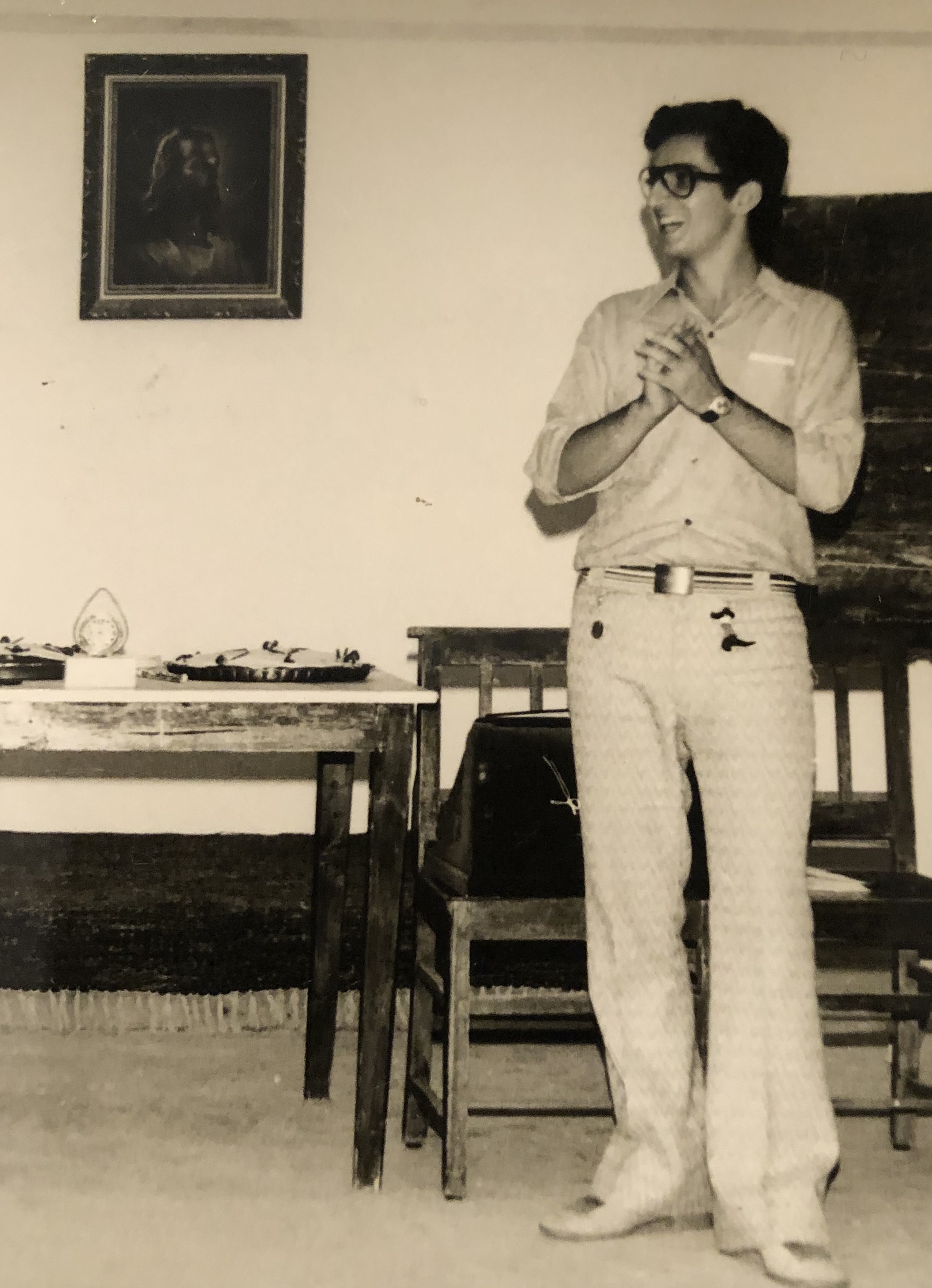
Leading a youth group meeting at my church, Tripoli Evangelical Presbyterian Church, in Lebanon.

When I finally came to the realization that I could not buy every magazine because I didn’t have the funds, I started trying to find little jobs. In high school, I even befriended the wholesaler in town, so I could see the magazines before they were distributed that morning.

One day the wholesaler said, “Kid, why don’t you go on to school and start coming here in the evenings? I will let you see what magazines we are going to distribute in the morning and I’ll let you buy them from here.”

I was like a kid in a candy store. To be able to get the magazines before anybody else in town, the night before, regardless of the magazine, was utopia to me.

I have also always had a deep fascination for seeing my name in print. I think I was in the eighth grade when I wrote my first short story and sent it to a magazine. I used to send letters to the publications. Any new magazine that came out, I would send them a letter, with my full name, because I wanted them to publish the letters in the “letters to the editor” section.

Magazines and seeing my name in print became the main reasons I drew breath each and every day. I held firm to the belief that God had paved the road before me and I was determined to follow it. I still believe that today. Although I personally feel that my religious beliefs were very solid, some of the content that my magazines contained could often put me at odds with those beliefs.

One day my sister found a stash of magazines with semi-naked people on the pages.  She asked me, “Why are you hiding these magazines?”

I tried to explain to her how I didn’t want to put them out there for everybody to see due to the content.

I’ll never forget the fierce emotion that I saw in her eyes and the words she spoke to me were just as impenetrable, “If you really believe in those magazines, you don’t need to hide them. If you’re going to hide them, you don’t need to buy them at all.”

But even with my sister’s convictions ringing in my ears, I still had conflicting emotions when it came to the magazines that, at the time, I deemed contradictory to my religious beliefs.

It Was Not a Walk in a Rose Garden

Fast forward to 1980, I remember when I bought my first issue of Playgirl. Well, let me rephrase that, when I had my first issue bought for me. There was no way I was going to walk up to the newsstand and buy Playgirl. That was just beyond the pale. It took a lot of convincing to get my wife to stand in front of me and pretend that she was the one buying it, and of course, she’d never forgive me if I reminded her of it. I could foresee a lot of apologizing in my immediate future once she reads this book. It was during that time period when I became more interested in the creative aspect of magazines. With that mindset, I could justify looking at magazines that were somewhat adverse to my Christian beliefs and be able to critique and enjoy them from a different perspective than simply writing them off as unacceptable.

No amount of fortune telling would have predicted my journey with magazines, my destiny.

But not only did I want to look at the magazines, I wanted to create them. I started my own tiny magazines and my own daily newspapers, creating them from scratch, by listening to radio stations and absorbing all of the media outlets available to me at that time. No matter who I became involved with – scouts, Sunday school, youth groups – any organization that I was a part of, I convinced them to start a magazine. I would call long distance to Beirut, which was expensive, but call I would, and ask all the magazines questions. It was a lot of fun, the whole experience of creating magazines, of getting involved in any way I could, and there was always the chance I would see my name in print. I loved that possibility. I wouldn’t change the childhood I enjoyed for anything.

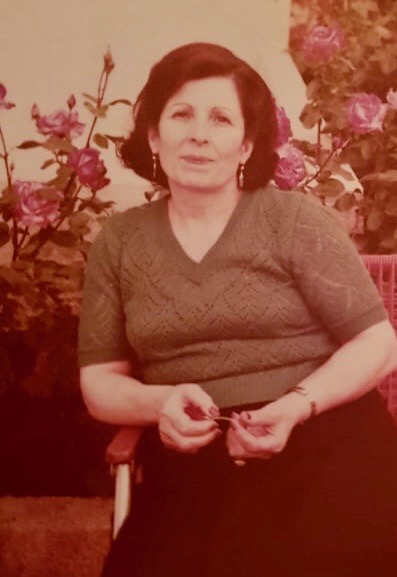
Needless to say, not everyone thought my fascination for ink on paper was as incredibly wonderful as I did… my mother, for example, was a naysayer. I was the kid that she would always yell at asking me, “Why don’t you go outside like the normal kids and play?”

My mom, until her last breath, felt that I am spending too much money on magazines.

Even until her death, my mom thought I was wasting all of my money on “just paper”. A lot of my relatives still don’t know what I do. They think I just read magazines. It frustrates my wife to no end when she tries to explain it.

I still have some of my magazine collection in an apartment in Lebanon. I moved them there after my mother’s death. I still vividly remember Mom’s voice every time I visited, always ask me if it’s all right if she gave the magazines away. I would ask her, “Mom are they really bothering you? They’ve been sitting in the attic for years.” But she definitely worried about them, whether their presence really annoyed her or not. One time there was some mold on some of the magazines, so she washed them. The mold had to go. The memory still makes me smile.

From There to Here

Sometimes I wonder if the people I work with on a daily basis even understand exactly what I do. I remember one time here at the University of Mississippi, which has been my academic home for 35 years now; the Arab Student Association had a reception for then Chancellor Robert Khayat because he was of Lebanese descent. I was sitting on the Chancellor’s right and the Director of the Natural Pharmacy center was on his left. The good director was also in charge of the marijuana fields that are grown for research purposes here at the university. When Dr. Khayat stood up to make his speech, I’ll never forget what he said:

“I might be the only chancellor in the country that can say that sitting on my left is a man who grows marijuana and tells me he’s doing his job, and sitting on my right is a man who sits in his office all day reading Hustler magazine and tells me he’s doing his job.”

Of course, I know the Chancellor was joking; however, I’m sure there are those who wonder about me and my job, and the director of the marijuana fields. After all, the name Samir in Arabic means the jester or entertainer of kings. Personally, I’d rather go with entertainer of kings, but either way Samir is the person who entertains you and humors you throughout the days and nights. Something to think about. Something so appropriate for a magazine.

To be continued…

In case you missed part one from Chapter One, click here.

h1

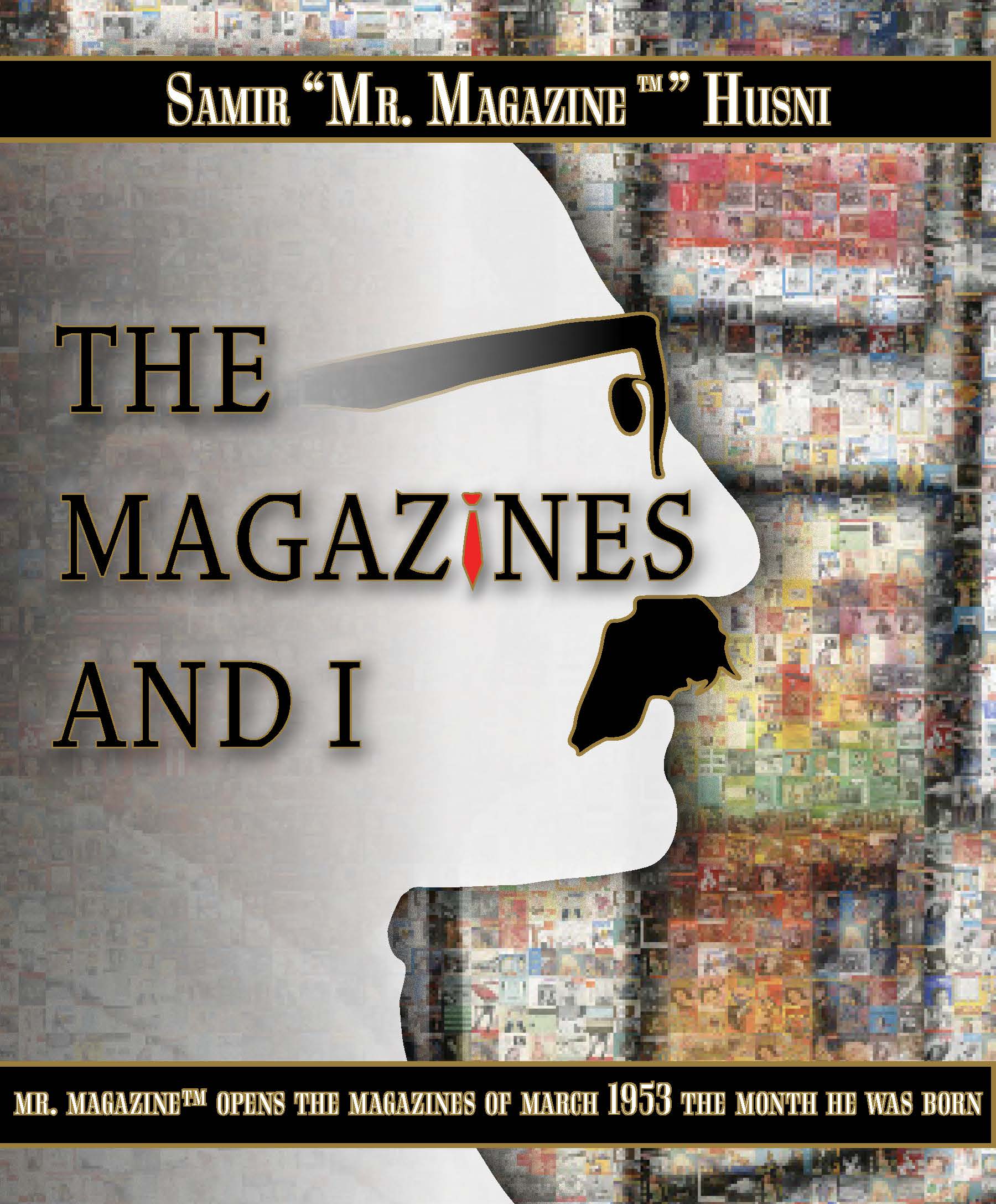
The Magazines And I … A Preview Of A New Book From Mr. Magazine™

June 21, 2020

A draft book cover design by James Daulton Byars.

Coming soon to the Mr. Magazine™ Blog the serialized first chapter of the new book I am working on titled The Magazines and I.  The book will chronicle the story of how I fell in love with magazines from the young age of 10 and how that love of magazines that started as a hobby, turned into an education, and ended up as a profession. I can easily say I have never worked a day in my life. In addition to a brief background chapter on how I became Mr. Magazine™,  I will be taking a look at the more than 500 magazines of March 1953 that were published in the United States of America, the month I was born.

Stay tuned and enjoy the lazy days of summer.  Take care, be safe, and know that this too shall pass.

All the best,

Samir “Mr. Magazine™” Husni

h1

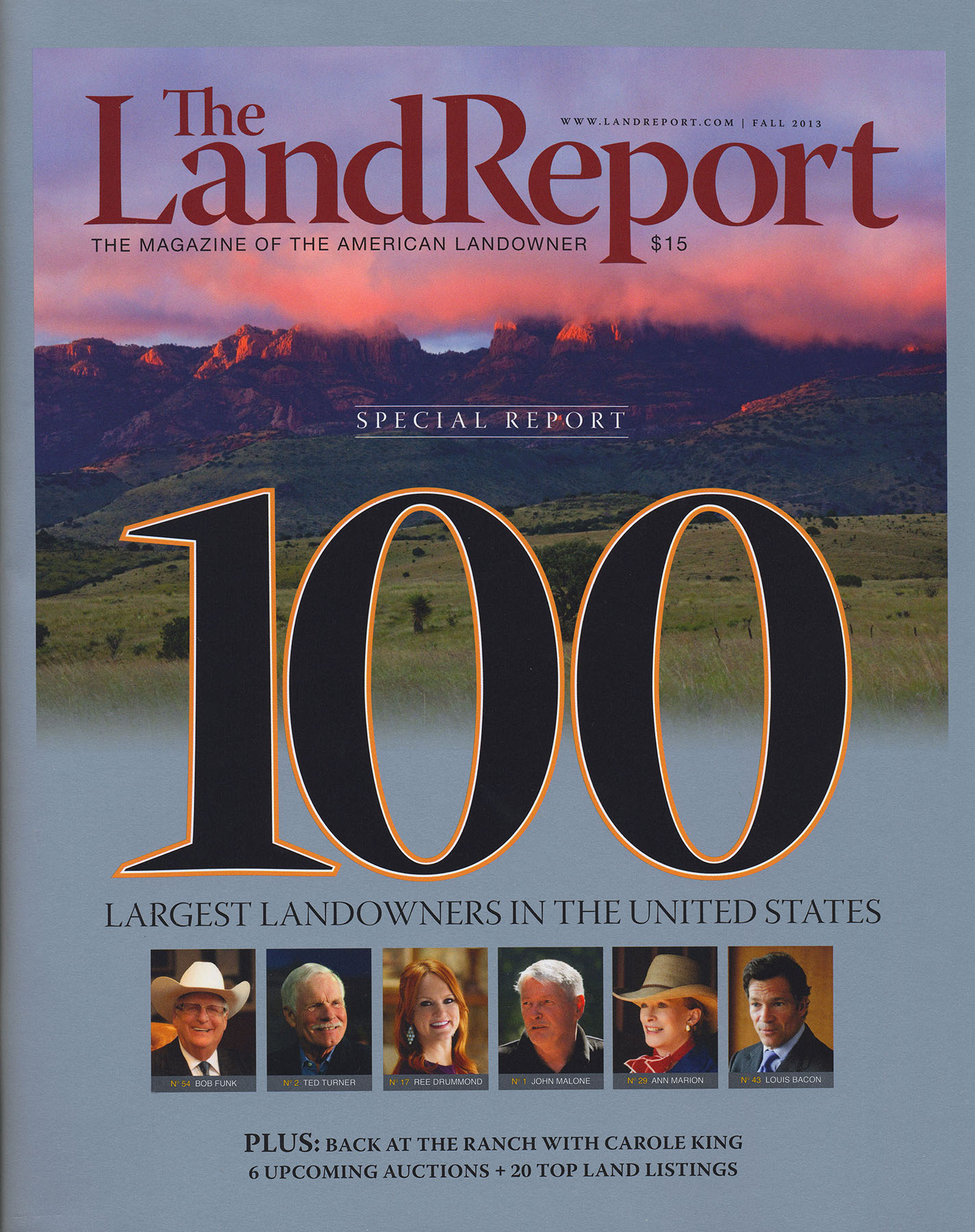
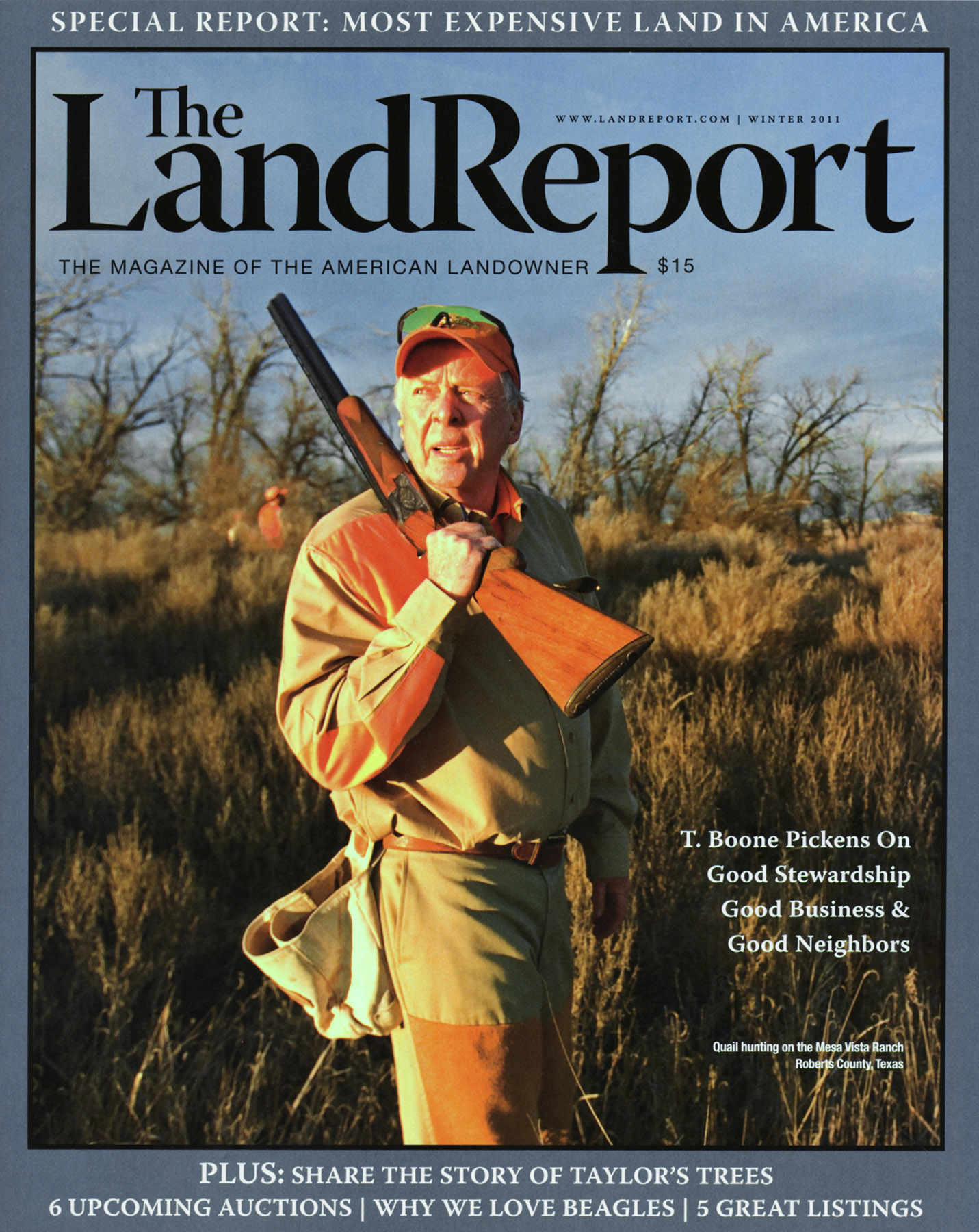
During A Pandemic, The Land Report Magazine Publishes Its Largest Issue Ever. The Mr. Magazine™ Interview With Eric O’Keefe, Founder & Editor, And Eddie Lee Rider, Founder & Publisher…

June 11, 2020

Publishing During A Pandemic (36)

“Our goal is to educate individuals on the attractiveness of land as a long-term investment. That’s really what we’re about. What we focus on is finding those stories that show how people have pursued and developed a strategy with their land and what kind of returns they’ve enjoyed with their land.” … Eric O’Keefe

“We have targeted those private jet terminals in highly-trafficked areas that meet our demographic: Rocky Mountain states, Southeast, Northeast Corridor, and Texas, that’s where you can find our publication, especially now when the commercial air traffic has been so reduced, private air traffic is still moderately healthy. I believe the print product is extremely relevant for us and our audience.” … Eddie Lee Rider

Even during a pandemic, people are investing in, buying and maintaining land. And The Land Report is the magazine that profiles passionate landowners, identifies investment opportunities, explains ways to improve and conserve land, provides legislation updates, and highlights outdoor gear and equipment. I spoke recently with Eric O’Keefe, editor and founder and Eddie Lee Rider, publisher and founder of the brand and we discussed the operating of a brand during the pandemic.

For the most part, both the powers-that-be at The Land Report told me that business as usual has been the norm for them, except for the event space, which of course isn’t happening right now. But the hopes are that the events will be back up and going very soon and The Land Report can get back to 100 percent, because after all it is the magazine of the American Landowner.  In fact, The Land Report just uploaded their latest issue with 160 pages plus covers, “the largest ever for us,” says Eddie.

And now the 36th Mr. Magazine™ interview in the series of Publishing During A Pandemic with Eric O’Keefe, editor and founder, & Eddie Lee Rider, publisher and founder, The Land Report.

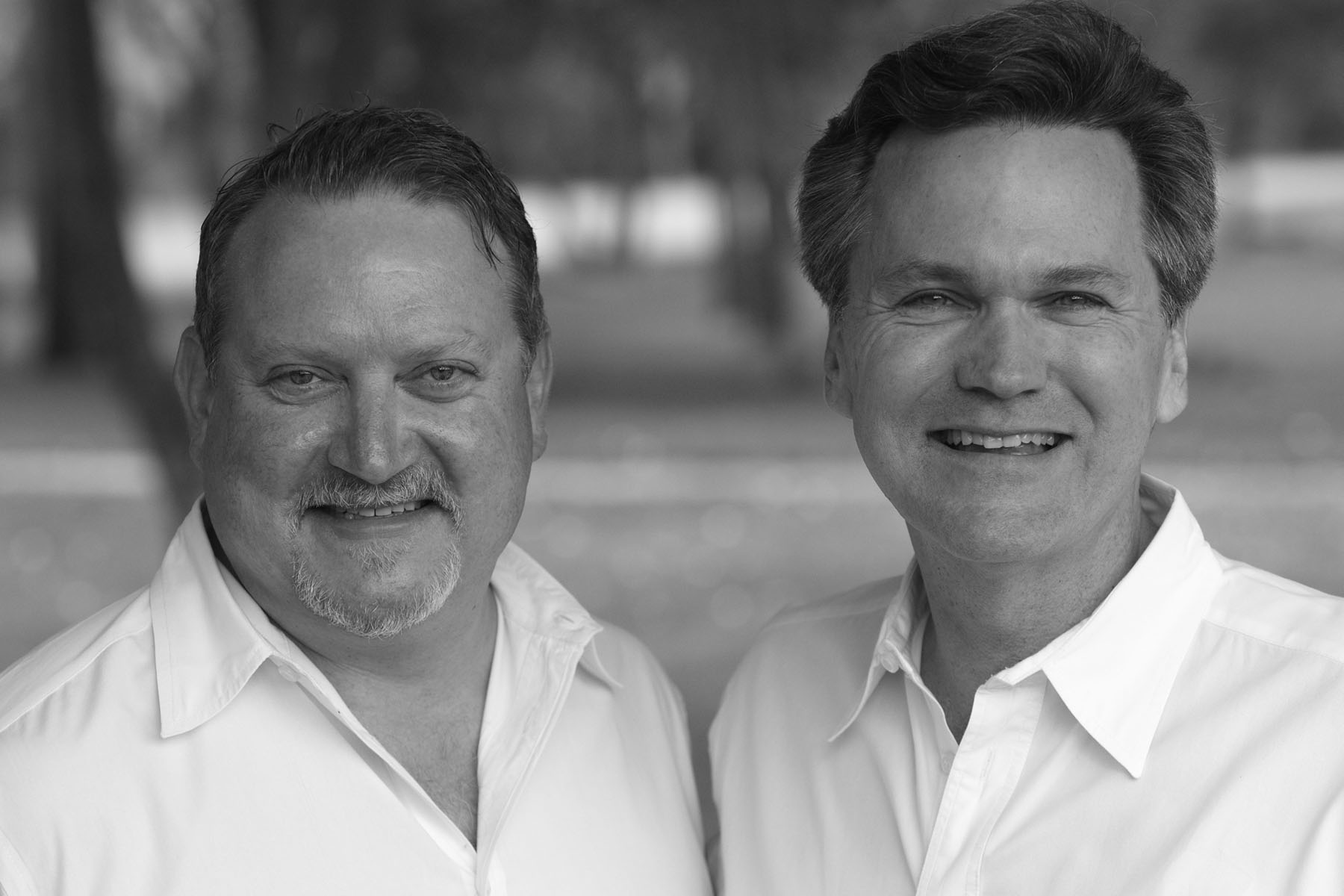
Eddie Lee Rider, Jr. and Eric O’Keefe

But first the sound-bites:

On how The Land Report has been operating during the pandemic (Eric O’Keefe): I don’t mean to sound unrealistic, but it’s been better than ever. From the editorial side, everything can be done from layout assignments, proofing, production, all of those elements can be done from home. Eddie, I’ll invite you to talk about our sales numbers.

On how The Land Report has been operating during the pandemic (Eddie Lee Rider): From last spring to this spring, we saw an increase in our ad revenue of a little over 75 percent, closer to 80 percent actually. It’s been remarkable. We have two full-time employees, everybody else connected with the business is a contract employee, freelancer or independent rep. Our business has not changed at all during this situation.

On why The Land Report in a printed format is relevant during these uncertain times (Eddie Lee Rider): Our demographics skew toward an older reader, our average reader the last time we did some surveys was 62-years-old. They like a print product. And our distribution lends itself to print in that we have teamed up with Sandow Media to distribute our publication through Signature FBOs (Fixed Based Operation) across the country. I believe the print product is extremely relevant for us and our audience.

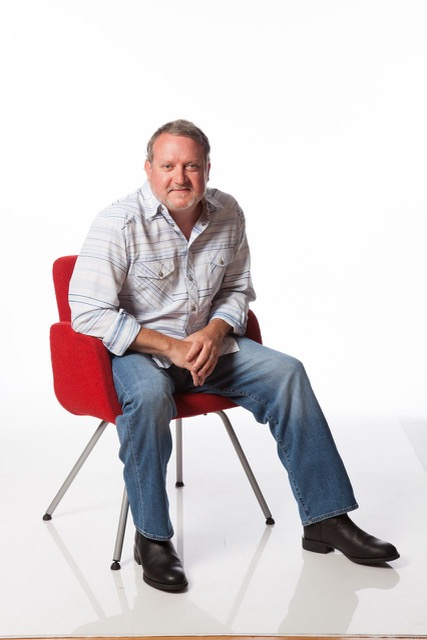
Eddie Lee Rider

On any challenges they’ve had to face during the pandemic (Eddie Lee Rider): The first for me as publisher and head marketer of the publication was how do you get your editorial product, your advertisers’ marketing, into the hands of the most qualified potential investors and buyers? We tried the newsstand and that wasn’t a fit; you’re not going to generally find someone in a typical Barnes & Noble who is looking for a $3 million ranch.

On any challenges they’ve had to face during the pandemic (Eric O’Keefe): I’d just like to follow-up on your point, Eddie. We have a major client, a very well-known player in the industry, whose point is his company spends millions every year on marketing. And they know that two-thirds of their closed transactions will come from their own Rolodex. And his point to me and Eddie is how do I find that last 10 percent, and that’s where we come in. We are the ones who have created a distribution model that has effectively provided a portion of that 10 percent to get the client the right eyeballs on that property. And at the end of the day that’s what it’s all about, getting our magazine into the right people’s hands.

On whether there are any changes in store for them beyond the pandemic (Eric O’Keefe): I think it’s business as usual for us. When I look at all of the elements, whether it’s the marketing side – we never took up your brilliant suggestion. You had said that this magazine was made for a trade show. And something that included a lot of land-related vendors. And we never went that route. I think what you will see more of from our standpoint is, we’ve had some exceptional success with Land Report broker events by invitation only.

On whether there are any changes in store for them beyond the pandemic (Eddie Lee Rider): We have an event scheduled for the middle of July. These events are paid for by a single broker or brokerage and they hire us to do an event where we develop an invitation list of other brokers that have their own deep Rolodexes. We fly everybody into a location that’s normally a 24 to 48 hour event. We cover all of the accommodations and transportation. We have photographers on the ground, videographers. We get content for the magazine. By touring the property it creates a networking event, nobody else in our space is doing it. We’re averaging maybe one event per quarter.

Eric O’Keefe

On what keeps them up at night (Eric O’Keefe): On my part it’s always accuracy. The magazine has to be 100 percent spot-on and because it’s land, a lot of the minutiae is buried in public records. Fortunately, more of them are coming online and you can access them, but we’re the authority and we need to be 100 percent accurate. So that’s what keeps me awake at night.

On what keeps them up at night (Eddie Lee Rider): For me, I’m always worried about how do I get my advertisers’ marketing into the right hands. I mentioned that we have these relationships with these event companies, and obviously they’re not having events right now. They can’t meet in person. So, they’re meeting virtually. I’m reaching out and asking if we can get a mailing list of the people who will be attending the virtual conference and can we get a magazine into their hands?

And now the lightly edited transcript of the Mr. Magazine™ interview with Eric O’Keefe, editor and founder, The Land Report & Eddie Lee Rider, founder and publisher.

Samir Husni: How has it been publishing The Land Report during the pandemic?

Eric O’Keefe: I don’t mean to sound unrealistic, but it’s been better than ever. From the editorial side, everything can be done from layout assignments, proofing, production, all of those elements can be done from home. Eddie, I’ll invite you to talk about our sales numbers.

Eddie Lee Rider: From last spring to this spring, we saw an increase in our ad revenue of a little over 75 percent, closer to 80 percent actually. It’s been remarkable. We have two full-time employees, everybody else connected with the business is a contract employee, freelancer or independent rep. Our business has not changed at all during this situation.

The land business has been extremely resilient. It is the ultimate social distancing, to have a piece of land, to have a cabin, to have a ranch, somewhere you can grab the kids and the family dog, grab some groceries and get out of Dodge for a few days or weeks if you can. Our clients are having a lot of success in this environment and it’s proving itself in our advertising numbers.

Eric O’Keefe: One thing to keep in mind is that we’ve been through the Great Recession of 2008-2009, we saw the dotcom bubble burst in the late 1990s, we’ve seen a whole wave of magazines come and go, we’ve seen a lot, and so much of it in my opinion is the fickle finger of fate. Are we in the right niche at the right time? And that will determine quite often whether one succeeds or fails. Right now when people are looking to shelter in place and they want to do it in a manner that gives their families an opportunity to enjoy the outdoors and be healthy, that falls right into our laps.

We have an article on social distancing in Montana. Some of our biggest advertisers, our best sources of anecdotal data are in Montana and they have certain markets where there’s no inventory available anymore. They have completely sold out. So I say that to compare to the Great Recession 10-12 years ago when you were actually seeing brokerages take it on the chin and brokerages and land-related advertisers are base, and they took it on the chin in 2008 and now they are seeing an acceleration of business. There are all sorts of numbers to support it, leads, web traffic, as well as sales. So, I really feel that we’re fortunate in that regard.

Samir Husni: You deal with something tangible; you deal with land. Why do you think The Land Report as an ink on paper platform is relevant, since everyone can do everything virtually these days? Going out and actually experiencing the land in person isn’t the same as a virtual tour of that same land, is it the same for the printed magazine experience?

Eddie Lee Rider: Our demographics skew toward an older reader, our average reader the last time we did some surveys was 62-years-old. They like a print product. And our distribution lends itself to print in that we have teamed up with Sandow Media to distribute our publication through Signature FBOs (Fixed Based Operation) across the country. We have targeted those private jet terminals in highly-trafficked areas that meet our demographic: Rocky Mountain states, Southeast, Northeast Corridor, and Texas, that’s where you can find our publication, especially now when the commercial air traffic has been so reduced, private air traffic is still moderately healthy. I believe the print product is extremely relevant for us and our audience.

Eric O’Keefe: With the addition of drones, you can take a virtual tour, it offers a real opportunity from a seasonal standpoint, if you’re looking at beautiful meadows in the middle of winter when it’s a snow filled Colorado ranch…so now you have to actually see what the ranch is about. So, I think it’s been a tool for that. Also one of the things that we do is we profile individuals who have a passion for a certain piece of property. That could be something historic in Mississippi, someone could be multigenerational on a plantation, someone could be multigenerational in a New England small town.

One of the things that we do, which is unlike anyone else in our space, is we have strong editorial content. There are a lot of magalogs out there that produce ad after ad after ad, and quite honestly, we know them all. And some have told us that they don’t want editorial. They want a picture book for then people to go to the website and do exactly what you’re talking about.

I’ll share another profile; it’s a $70 million piece of property that has just come to market in Virginia. It’s 7,000 acres between Charlottesville and D.C. And it’s gorgeous. It was assembled by a very passionate land steward. It is immediately adjacent to the first city of Washington and the nation, that George Washington himself actually surveyed in the 1740s. That can’t be so effectively communicated in a normal page view.

Forgive me for going off base here, but in the 1950s TV really accelerated. And the movie industry saw it as a threat. Suddenly, movies were trying to distinguish themselves. You had two and three hour movies, things like that. And you had all those multi-surround sounds and other items. I don’t see the online as a threat in that fashion. I see it as an enhancement. If you’re building a case for yourself to buy a piece of property, you’re going to look at the broker’s webpage, you’re going to read more about it in The Land Report, and then you might go to USDA figures online or take a look at what sort of values have been developed over the years by Mississippi State.

That’s one of the things that we really have in our favor is that land as an asset has been tracked, it’s values have been tracked by all of these state colleges, so we don’t have to replicate that information. We don’t have to say “according to a Land Report study,” it’s all out there. And these are top-tiered schools, so we can then use that to make our case about land’s resilience. When you’re looking at land for the most part, you want as many inputs as possible. And we’ve established ourselves as a key input.

Eddie Lee Rider

Samir Husni: What are some challenges you’ve had to face during this pandemic and how did you overcome them?

Eddie Lee Rider: The first for me as publisher and head marketer of the publication was how do you get your editorial product, your advertisers’ marketing, into the hands of the most qualified potential investors and buyers? We tried the newsstand and that wasn’t a fit; you’re not going to generally find someone in a typical Barnes & Noble who is looking for a $3 million ranch.

We’ve gone through different phases. After 11 or 12 years, we’ve found a really great formula of these private jet terminals, a data base that has evolved over those years, rural land professionals that can refer each other back and forth. The Wall Street Journal and other papers that can do home delivery of our magazine in key markets  from time to time, depending on what issues we’re doing. For  instance, the Texas issue that just came out, that was home delivered via The New York Times weekend newspapers in Houston and Dallas to select high net worth zip codes.

We’ve also developed a relationship with companies that put on conferences for family offices. Wealth management companies; we distribute our publication at those events. So, it’s really evolved into this mix of where can we get our publication into the most prequalified hands? And I think that our advertisers see that effort from us and they see the results from their phones ringing.

Eric O’Keefe: And I’d just like to follow-up on your point, Eddie. We have a major client, a very well-known player in the industry, whose point is his company spends millions every year on marketing. And they know that two-thirds of their closed transactions will come from their own Rolodex. And his point to me and Eddie is how do I find that last 10 percent, and that’s where we come in. We are the ones who have created a distribution model that has effectively provided a portion of that 10 percent to get the client the right eyeballs on that property. And at the end of the day that’s what it’s all about, getting our magazine into the right people’s hands.

Our goal is to educate individuals on the attractiveness of land as a long-term investment. That’s really what we’re about. What we focus on is finding those stories that show how people have pursued and developed a strategy with their land and what kind of returns they’ve enjoyed with their land. And there are all sorts of effective strategies for preserving wealth via land that may not be available to you via your house there. It may not be available to you via your financial assets, but land on the other hand can be managed very effectively, in terms of minimizing  estate taxes and lowering value.

Eddie Lee Rider, Jr. and Eric O’Keefe

I’ll give you an example, conservation easements, which could benefit a family that has income through another source; a 1031 exchange, which is basically when you sell a piece of income-producing property like land, you’re not taxed if you buy another larger parcel. These are not available to people who normally invest in markets.

And yes, you have a downside to land. Probably the most obvious one is ill equity, you can’t buy and sell tens of thousands or even 10 acres quickly. Land is typically established as an anchor for a portfolio. It’s not meant to day trade. This market and what’s been going on with the pandemic, one of the reasons why it’s fascinating to me from a transaction standpoint is some people are actually trying to liquidate some of their more valuable property so that they can go into the equities markets because the opportunities were so great there. And they can get back into the land, but the stock market was down at 17,000 after being close to 30, and you just knew it was going to come back.

From my standpoint, Eddie elaborated on getting it into the right hands and yes, we made all sorts of direct mail pitches that were complete belly flops, just negative responses. But from the editorial side, it is such a rich, uniquely American asset. I was talking with someone recently and before women got the right to vote they could own land. What’s the first asset that a freed slave could own? They could go west and they could own land by the Homestead Act.

There are just so many elements, older elements and newer ones. Eddie and I are constantly getting stories of who’s buying what great pieces of property. When we launched you may have seen our stories on Ted Turner and then John Malone became the nation’s largest landowner.

Now you have people like Jeff Bezos who is launching his rockets from his 400,000 acre ranch. Another land story. So, what are you going to do on your piece of land, that’s my approach. Are you going to launch rockets or raise elk or are you going to fly fish or track migrating birds? And the fact that Eddie and I have, what we call “permission givers” in terms of a Jeff Bezos or a Ted Turner, some of these very large operators that get us eyeballs, makes it very easy from the editorial side.

Samir Husni: As we look beyond the pandemic, any changes in store or will everything move forward in the same way?

Eric O’Keefe: I think it’s business as usual for us. When I look at all of the elements, whether it’s the marketing side – we never took up your brilliant suggestion. You had said that this magazine was made for a trade show. And something that included a lot of land-related vendors. And we never went that route. I think what you will see more of from our standpoint is, we’ve had some exceptional success with Land Report broker events by invitation only. So, we’re going to do more of our events, where we actually go and preview a property with brokers. And we show them what’s coming to market or what’s on market.

Those will obviously take place more frequently, but other than that, I think it will be business as usual.

Eddie Lee Rider: I totally agree. We have an event scheduled for the middle of July. These events are paid for by a single broker or brokerage and they hire us to do an event where we develop an invitation list of other brokers that have their own deep Rolodexes. We fly everybody into a location that’s normally a 24 to 48 hour event. We cover all of the accommodations and transportation. We have photographers on the ground, videographers. We get content for the magazine. By touring the property it creates a networking event, nobody else in our space is doing it. We’re averaging maybe one event per quarter.

These events us with content and help us to create working events for our brokers who many times know about each other, but they’ve never really met. We bring them in from all over the country. It’s a very successful model for us.

Samir Husni: My typical last question, what keeps you both up at night these days?

Eric O’Keefe: On my part it’s always accuracy. The magazine has to be 100 percent spot-on and because it’s land, a lot of the minutiae is buried in public records. Fortunately, more of them are coming online and you can access them, but we’re the authority and we need to be 100 percent accurate. So that’s what keeps me awake at night.

Eddie Lee Rider: For me, I’m always worried about how do I get my advertisers’ marketing into the right hands. I mentioned that we have these relationships with these event companies, and obviously they’re not having events right now. They can’t meet in person. So, they’re meeting virtually. I’m reaching out and asking if we can get a mailing list of the people who will be attending the virtual conference and can we get a magazine into their hands? Can we partner more with papers to do the home delivery?

I’m constantly obsessed with how I get my marketing partners’ messages into the right hands. And that’s what keeps me up at night, but I think we’re doing a job of overcoming that.

Samir Husni: Thank you both.


h1

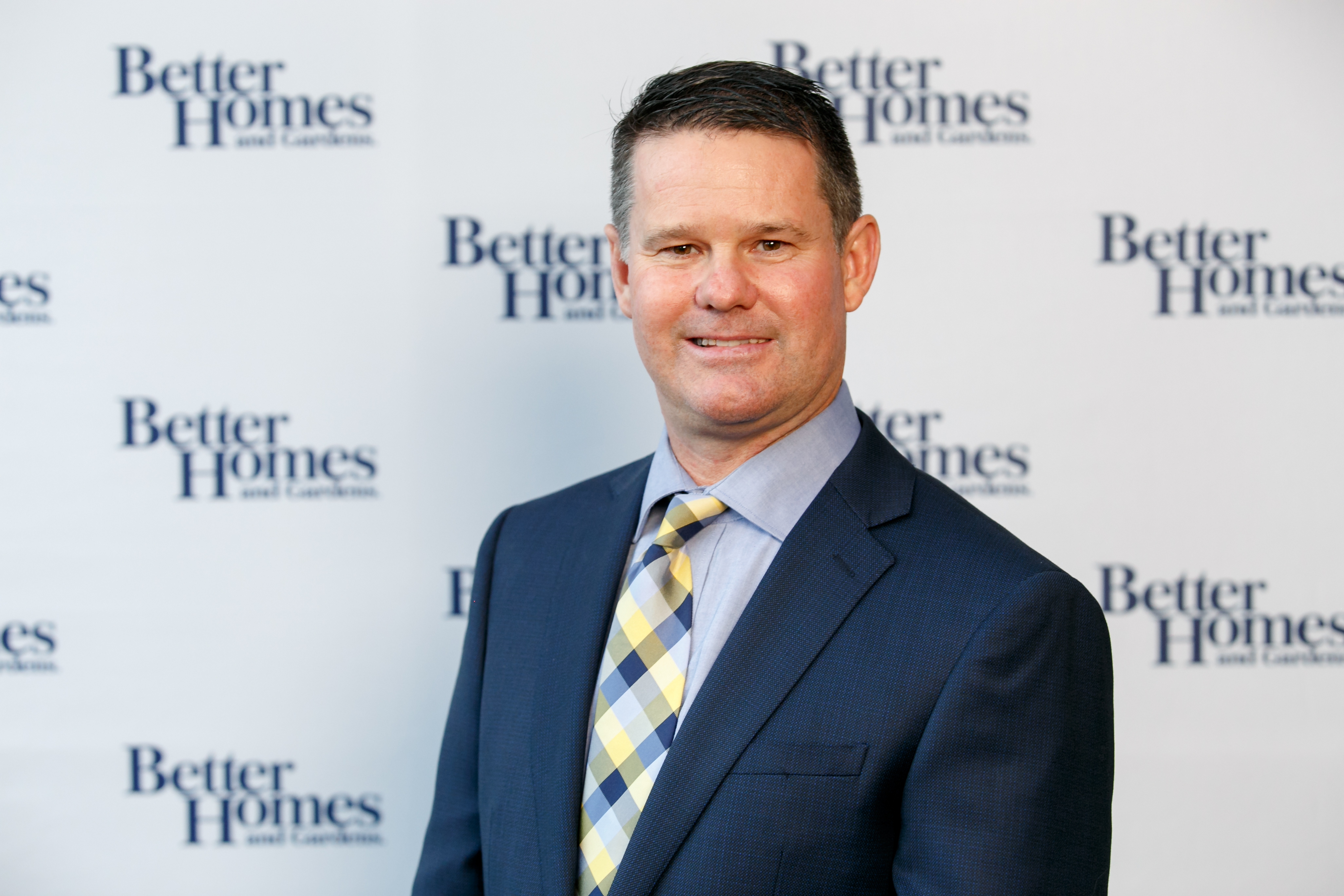
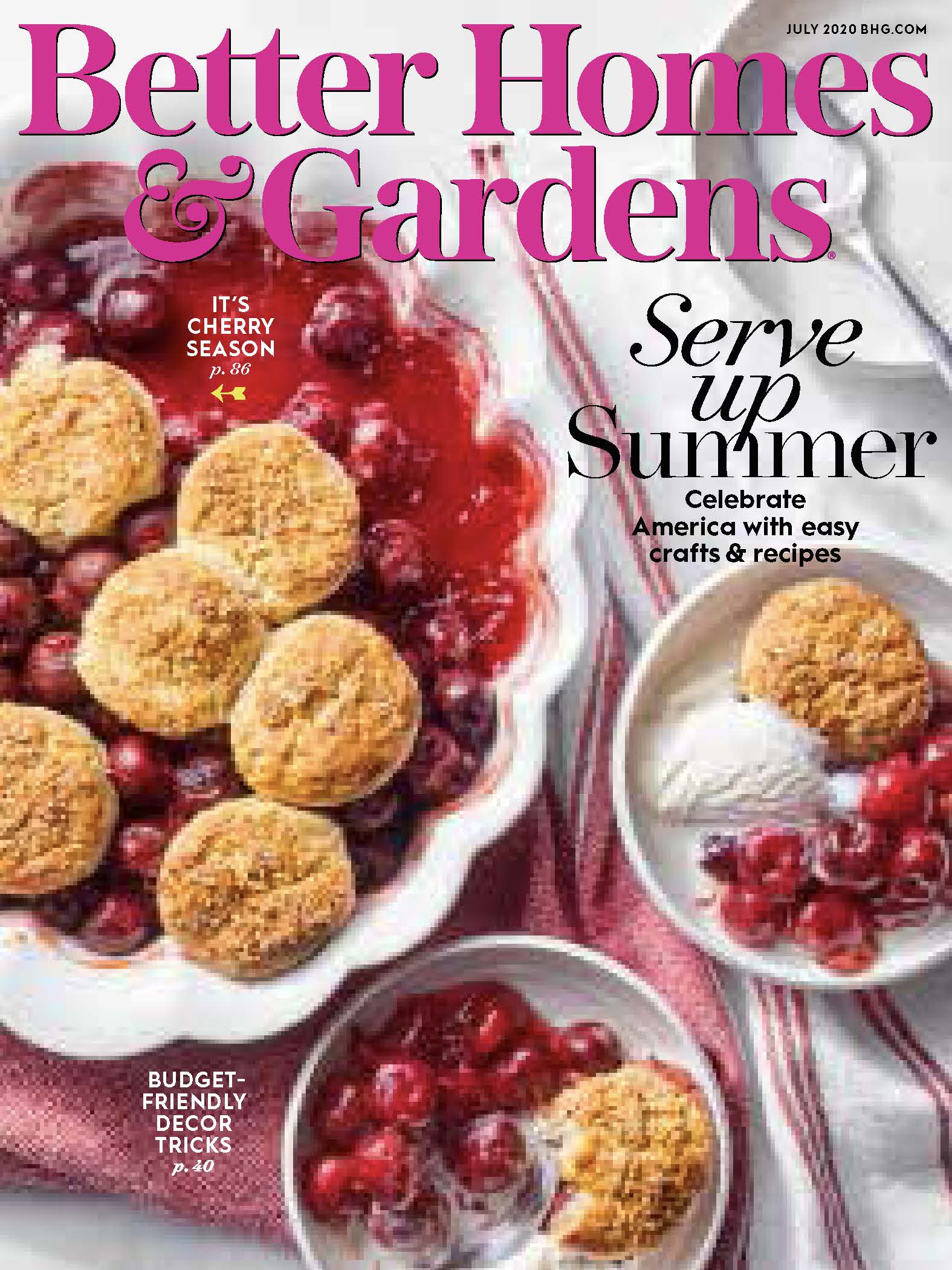
Stephen Bohlinger, Senior Vice President Group Publisher, Better Homes & Gardens To Samir “Mr. Magazine™” Husni: “We’re Staying The Course As A Monthly, Staying At 7.6 Million Rate Base.” The Mr. Magazine™ Interview…

June 5, 2020

Publishing During A Pandemic (35)

“I believe there will be a resurgence for print and that this will be a great time for the industry, a great time for iconic, 100-year-old, heritage brands like Better Homes & Gardens, which is 100 percent relevant today. We reach 8.2 million millennials, and the leading millennial is turning 40. People always say that millennials aren’t going to buy homes  but guess what? They’re not only buying homes. They’re buying their second homes. There are 40-year-olds who are buying their second home right now.” … Stephen Bohlinger

“What we are seeing is some great things with our consumers. The renewals are pacing in the double digits; the direct mail efforts are up 11 percent, proving the power of print. They’re voting with their wallets, the magazine store has recorded nine straight weeks of growth, up 47 percent and the Amazon sub orders have seen eight straight weeks of growth, up 76 percent. So, that’s a good sign. We’re going to have to weather the storm on the ad revenue, but we are getting more from the consumer. That’s why we’re staying the course as a monthly, staying at 7.6 million rate base.”… Stephen Bohlinger

Content drives Meredith Corporation, quality, relevant content. And never has that been more evident than with Better Homes & Gardens, Southern Living and Traditional Home, three Meredith brands that are weathering the pandemic storm quite admirably. Stephen Bohlinger is Senior Vice President Group Publisher for the trio of titles and is happy to report that things are moving along very well during these uncertain times.
“This is a wonderful time for our brands – Better Homes & Gardens, Southern Living and Traditional Home. Why is it a wonderful time? Because not only are we going home, but most of our readers and advertisers are doing the same.”

I spoke with Stephen recently and he shared that comment and many more with me during our conversation. As always, it was a pleasure to hear from the powers-that-be at Meredith, especially to find out the pandemic may have presented its challenges, but it hadn’t stopped the company from doing what they do best: putting out quality content without disruption.

And now the 35th Mr. Magazine™ interview in the series of Publishing During A Pandemic with Stephen Bohlinger,  Senior Vice President Group Publisher, Better Homes & Gardens, Southern Living and Traditional Home.

But first the sound-bites:

On how the business has been operating during the pandemic: First and foremost, I’ve been commuting, working and living out of the mecca New York City since 1985, so I lived through recessions, 9/11 and the banking crisis, but this is unprecedented. I’ve never seen anything like this. We went from 100 percent seated across the country – all of our offices – to 100 percent home in the snap of a finger within 24 hours. The first thing that we needed to do was adjust quickly. There was no script, no game plan that we could refer to because this had never been seen before; we’d never done this before. Certainly, I hadn’t seen it.

On whether they have had to change any magazine frequencies because of the pandemic: We talked to our CEO, Tom Harty, and my boss, Doug Olson, and we looked at every single element: frequency, rate base, print, bind and mail. We realized that this is a wonderful time for our brands – Better Homes & Gardens, Southern Living and Traditional Home. Why is it a wonderful time? Because not only are we going home, but most of our readers and advertisers are doing the same. They’re sitting at home and as they look at their four walls, they’re realizing that they might need a paint job. Or they need to redo their kitchen. And they can achieve these goals by spending time with our powerful and relevant brands which are now UP with readers spending 33 minutes per issue with Better Homes & Gardens.

On whether he thinks people will rediscover print once the pandemic is behind us: Yes, I really do believe so. I believe there will be a resurgence for print and that this will be a great time for the industry, a great time for iconic, 100-year-old, heritage brands like Better Homes & Gardens, which is 100 percent relevant today.

On if he feels running the company during a pandemic has been a walk in a rose garden or very challenging: It hasn’t been a walk in a rose garden, no. It’s been a challenge since day one, but I’m the son of a coach. My dad was an educator like you, a gym teacher and coach, and he always taught me to stick to your heart and stomach and call it guts. And, that’s what we did. The best thing for us – and what allowed us to avoid that “this is too much” moment – has been the communication and the relationships we have at the Meredith Corporation.

On whether he thinks working from home will become the new “normal” indefinitely: I’m all about the high-five, the hug and the pat on the back, and there’s nothing ever that will replace a face-to-face meeting with a client, breaking bread with them over lunch, or going to a ballgame with them or playing golf with them. This is a relationship business and it has been since day one. I always tell my team that you’re only as good as your reputation and you’re only as good as the relationships you can build and keep.

On the budget for this fiscal year: When the pandemic hit there were certainly advertisers out of the game, and that put a pause on spending. So, we’re not going to reach budget where we were year over year. We’re always compared by what we did the year before, and the June issue was the first issue where we saw advertisers taking a pause.

On anything he’d like to add: We’re an omni-channel experience, so this is a brand that has many touchpoints. We have a huge content licensing business with Walmart. We have BH&G Real Estate, which is doing extremely well. What’s also performing at its highest level and is showing amazing growth is digital, with BH&G’s highest traffic since 2015, at more than 17.7 million visits.

On what keeps him up at night: It’s the health and wellness of my team across the board. Most of my team members, as I said earlier, are hardworking mothers, and the majority of those in New York commute, so that in and of itself is a challenge. I just worry about them and their families. Some are also caring for their parents. Some staff members lost their grandparents here in the New York metropolitan area, which was very sad. I worry about them and the disruption they may face in their lives.

And now the lightly edited transcript of the Mr. Magazine™ interview with Stephen Bohlinger, Senior Vice President Group Publisher, Better Homes & Gardens, Southern Living and Traditional Home.

Samir Husni: How are you adjusting as group publisher of Better Homes & Gardens, Southern Living and Traditional Home during this pandemic?

Stephen Bohlinger: First and foremost, I’ve been commuting, working and living out of the mecca New York City since 1985, so I lived through recessions, 9/11 and the banking crisis, but this is unprecedented. I’ve never seen anything like this. We went from 100 percent seated across the country – all of our offices – to 100 percent home in the snap of a finger within 24 hours. The first thing that we needed to do was adjust quickly. There was no script, no game plan that we could refer to because this had never been seen before; we’d never done this before. Certainly, I hadn’t seen it.

We needed to be really nimble and to adjust rapidly because we knew we had to continue doing business. And I am amazed at how our team has responded. Most of the people on my team are working mothers, so they were not only disrupted in their own work environment, but they were disrupted at home. They were disrupted with their kids, who were no longer going to school and were now at home, so they were taking care of their children and, in some cases, their parents as well. So, I’ve just been amazed at how nimble and quick they’ve been able to adjust to the new world of working from home while still serving our clients’ needs.

The good news is that we have phenomenal relationships with our clients and our agency partners and that translated very well. We were able to do calls on Zoom/Webex and see one another, so we were practicing social distancing and didn’t have to wear masks. We were able to get business done productively and efficiently. It happened overnight, and the team responded seamlessly.

Samir Husni: Have you had to change any frequencies with your magazines due to the pandemic or make any tough decisions?

Stephen Bohlinger: Great questions and ones we took to the highest level. We talked to our CEO, Tom Harty, and my boss, Doug Olson, and we looked at every single element: frequency, rate base, print, bind and mail. We realized that this is a wonderful time for our brands – Better Homes & Gardens, Southern Living and Traditional Home. Why is it a wonderful time? Because not only are we going home, but most of our readers and advertisers are doing the same. They’re sitting at home and as they look at their four walls, they’re realizing that they might need a paint job. Or they need to redo their kitchen. And they can achieve these goals by spending time with our powerful and relevant brands which are now UP with readers spending 33 minutes per issue with Better Homes & Gardens.

Better Homes & Gardens is a 100-year-old brand and has historic archives to reflect on. Our editor in chief, Stephen Orr, is an amazing leader. We’ve been together for five years, and I just love him as a person, a friend and certainly as the leader of the largest monthly magazine in the world. We’re 12 times per year; the readers want and need our brand and so it makes perfect sense to continue with this monthly frequency. The brand is more relevant today than ever before so let’s stay the course and deliver a great product they demand. When we looked at the rate base, which we do every year – it’s 7.6 million – it made sense financially. This is a juggernaut for the Meredith Corporation; it’s such a big brand reaching 43 million fans and followers. So it made perfect sense to continue delivering the rate base of 7.6 million and sending that to the homes of our consumers 12 times per year.

Yes, it made sense financially, but even more important is that the content is more relevant today than it has ever been. Given this time and this pandemic, people looking inward, people are returning to their homes and doing things they may never have done, I feel this is a resurgence for print. I see this as a great time for our industry because people are sick of looking at a screen every day, sick of leaning in, seated looking at a screen. And at night, they’ve seen every Netflix show. I’ve seen it with my own children. They’re millennials and would rather curl up and read a book after a long day than looking at a screen, They want to close the computer, put the phone away. That’s wonderful to see and it’s great for our brands.

Samir Husni: As you move forward and this pandemic is behind us, do you think this resurgence will continue and people will rediscover print after spending so much time with screens? After the virtual for so long, will they be looking for reality?

Stephen Bohlinger: Yes, I really do believe so. I believe there will be a resurgence for print and that this will be a great time for the industry, a great time for iconic, 100-year-old, heritage brands like Better Homes & Gardens, which is 100 percent relevant today. We reach 8.2 million millennials, and the leading millennial is turning 40. People always say that millennials aren’t going to buy homes  but guess what? They’re not only buying homes. They’re buying their second homes. There are 40-year-olds who are buying their second home right now.

I see the millennial audience disengaging with what they were brought up on, which was screen time. They’re throwing their phones down for a while and reading books or magazines, whether it’s BH&G, Southern Living or Traditional Home. I think it’s a wonderful time for the Meredith Corporation and the industry.

As for our clients and advertisers, it’s been rough, right? Initially, when the pandemic hit, there was lots of  uncertainty. We didn’t know what the future looked like, so there were a lot of advertisers, clients that said they were going to take a pause in categories like automotive or beauty. However, we saw an uptick for some advertisers like packaged goods – certainly in cleaning products and convenient food brands. In some of our categories there was opportunity for them to reach out and show the American public that they were there for them, that we’re in it together. And there are no better brands to do that than the ones that they’re getting at home. And, the ones they trust.

Samir Husni: Was there a moment in the last few months where you said that’s it, I can’t take it anymore? Or has it been a walk in a rose garden throughout this pandemic?

Stephen Bohlinger: It hasn’t been a walk in a rose garden, no. It’s been a challenge since day one, but I’m the son of a coach. My dad was an educator like you, a gym teacher and coach, and he always taught me to stick to your heart and stomach and call it guts. And, that’s what we did. The best thing for us – and what allowed us to avoid that “this is too much” moment – has been the communication and the relationships we have at the Meredith Corporation. I talk to my boss, Doug Olson, every day. We have a business continuity meeting with all of his direct reports every day. And even if it’s just to get everybody on the phone and communicating, it helps everyone to relax and take a breath, to feel that we really are in this together. So that communication from the highest level has been extremely helpful.

My team is the same. We meet daily and talk regularly about what their fears and concerns are. I really feel that communication and those relationships and trust within our team have helped everyone. Whether it’s relationships within our own team or our relationship with the highest level at Meredith, the communication is there and its constant.

 Samir Husni: Once the pandemic is behind us, do you think working from home will be the new normal or you’ll go back to the face-to-face environment of the office?

Stephen Bohlinger: I’m all about the high-five, the hug and the pat on the back, and there’s nothing ever that will replace a face-to-face meeting with a client, breaking bread with them over lunch, or going to a ballgame with them or playing golf with them. This is a relationship business and it has been since day one. I always tell my team that you’re only as good as your reputation and you’re only as good as the relationships you can build and keep.

I’d love to see us return to that at some point, but I’ve been amazed at how efficient we’ve been in running our business with our clients thanks to those relationships. I’ll give you a perfect example. As we pivot the content – working with Stephen and his amazing, talented edit team  – we were able to do what we’re calling “Project Joy,” editorial meetings with our clients.

We bring in Stephen, who is not only the editor of BH&G but is the content leader for more than half of the Meredith brands. We reached out to all of our key agency partners and clients, and we’ve done over a dozen of these meetings, which are usually an hour long, and I’m amazed at how many people attend these meetings. The screen is full, with 20 to 25 people seated at the highest level, interested and leaning in. I always used to say that if you feed them they will come, so we’d do lunch and learns, but we’re not feeding them. We’re just giving them solutions for their clients and they’re showing up in droves.

This has opened our eyes to a new way of doing business. It has totally changed overnight, but we haven’t lost any momentum. Communication has probably been better than before because we’re leaning in and being more nimble. We always ask our clients if we’re serving them the way they need to be served in these “Project Joy” meetings. And they all answer “Absolutely and thank you.”

Samir Husni: What’s your forecast for meeting the budget this fiscal year?

Stephen Bohlinger: When the pandemic hit there were certainly advertisers out of the game, and that put a pause on spending. So, we’re not going to reach budget where we were year over year. We’re always compared by what we did the year before, and the June issue was the first issue where we saw advertisers taking a pause.

The leaders at Meredith are realists, and it starts at the top with our CEO Tom Harty. He knows what’s going on with the economy; he’s extremely close to it; and he said let’s do the best we possibly can and let’s be very understanding of what our clients are going through. We’re in this together, and let’s be there for them. Let’s listen to what their challenges are and try to figure out the solutions for them. Try and convince them why we feel they need to be here at this given time.

Issue to issue, being realists, we knew we would not match where we were year over year, but as we look at August, the issue that we’re closing right now, the panic seems to have subsided. I haven’t seen anyone pulling out at the 11th hour. Are we where we were a year ago? Not yet. This isn’t going to be a V snapback. This is going to be a U. It’s going to take a little longer, and we’re going to be patient.

But what we are seeing is some great things with our consumers. The renewals are pacing in the double digits; the direct mail efforts are up 11 percent, proving the power of print. They’re voting with their wallets, the magazine store has recorded nine straight weeks of growth, up 47 percent and the Amazon sub orders have seen eight straight weeks of growth, up 76 percent. So, that’s a good sign. We’re going to have to weather the storm on the ad revenue, but we are getting more from the consumer. That’s why we’re staying the course as a monthly, staying at 7.6 million rate base.

Newsstands, particularly for the brands that I oversee, aren’t that big. There has been some disruption on newsstand, but that doesn’t really affect ours because the majority of our brands are delivered to the home. By the way, the average time spent with BH&G is now 33 minutes, up from 30 minutes. Readers are spending more time with us, which is phenomenal.

Samir Husni: Is there anything you’d like to add?

Stephen Bohlinger: We’re an omni-channel experience, so this is a brand that has many touchpoints. We have a huge content licensing business with Walmart. We have BH&G Real Estate, which is doing extremely well. What’s also performing at its highest level and is showing amazing growth is digital, with BH&G’s highest traffic since 2015, at more than 17.7 million visits. I recently went to a big box retailer to buy some things. I waited 45 minutes, mask on, six feet apart from other shoppers. The store was packed with long lines of people buying home products. They’re going to BHG.com prior for gardening, home or whatever project it might be as we are there for all of their home needs. In addition, Pinterest traffic is the highest it’s been since 2014, email is also up, and we had 45 million in video views, the highest since 2019. All very positive signs.

We’re a multi-platform experience. Print is a big part of what we do, but our digital business has been tremendous throughout these times. We have over 43 million fans and followers right now. It’s enormous. That’s an enormous monthly reach for BH&G. We’re definitely proud of that.

On the readership side, print-only has a total readership of 33 million. Our total brand audience, per Magazine Media 360, is 43 million. Those are galactic numbers. Other brands within the industry are reducing rate bases and frequencies, but we’re staying the course for all the right reasons. We’re creating a gap as the leader – more so than ever before.

From an editorial standpoint, it’s wonderful to go through this time with a partner like Stephen, who is just tremendous. We had our Style Maker issue in September, a big tentpole event, and it drives from print. We have an event in New York City in September, and we invite over 100 style makers from throughout the country – be it food, home, gardening, décor, beauty, whatever it may be – and they show up for a full day. Early on we had to make a decision. Stephen said we’re not going to be able to pull this off in September. We don’t know where the world will be.

This was just a week in at being at home and he knew what was needed to be done: It’s going to be a better idea to move it. By the way, it’s our 10th anniversary for the Style Maker event, so we had a lot of fanfare behind it, and advertisers had already signed up. So, we pivoted. We moved it to spring 2021, and we changed the editorial theme in September to the power of home. Brilliant.

And in these “Project Joy,” editorial roadshows, Stephen ensures them that we’re getting the brand out into the consumers’ hands without disruption. The “Power of Home” will be the theme of our September issue. It’s about getting joy out of life, whether it’s cooking a recipe at home or organizing your drawers – all of the great content that BH&G brings to our audience through all of our channels.

Samir Husni:  My typical last question; what keeps you up at night?

Stephen Bohlinger: It’s the health and wellness of my team across the board. Most of my team members, as I said earlier, are hardworking mothers, and the majority of those in New York commute, so that in and of itself is a challenge. I just worry about them and their families. Some are also caring for their parents. Some staff members lost their grandparents here in the New York metropolitan area, which was very sad. I worry about them and the disruption they may face in their lives.

Again, it’s a relationship business. We’re a team and we’ve been together for a long time. I care about them, and they care about their fellow team members. Thankfully we’ve been pretty healthy, but I do worry about that.

We have been talking about phasing back in. We’re on track to open the Des Moines office in phases first. In New York, which is home to most of our team, we’ll also look at when it is safe to phase in, and I feel extremely confident about how Meredith leadership is putting together a careful and thoughtful plan as to how we bring our employees back to work in an environment that is safe. The health and wellness of the team is what keeps me up. I always worry, but it makes me feel good when we talk each morning as a team and I get to see everyone’s face.

 Samir Husni: Thank you.

h1

On Service And Hesitation: Words Of Wisdom From A Century Ago…

May 26, 2020

From the Mr. Magazine™ Vault

100 years ago in the June 1, 1920 issue of the Campbell’s Courant, “A Periodical of Cheer Published Monthly by the JOSEPH CAMPBELL COMPANY, Camden, N.J.” published two great pieces, inside its front cover and inside the back cover, that I felt are as appropriate today, if not more than the year they were published.

The inside front cover piece was entitled “Service

Willingness to serve is the very backbone of successful merchandising. Of itself, it breeds success; because it is the living evidence of a smooth running organization equal to the task of meeting requirements or of even anticipating wants.

In reality, it means far more than good organization or routing activity. For back of it lies the impelling thought, the feeling, the sincerity, the unselfishness, based upon the understanding that we are all dependent upon our fellows for every benefit derived in this world.

It is merely the working out of the Golden Rule, the practical application of a great principle which always pays – in dollars and cents, in self-respect and true happiness.

The inside back cover piece was entitled “He Who Hesitates

In order to do anything in this world that is worth doing, we must not stand shivering on the bank, and thinking of the cold, but jump in and scramble through as best we can. It will not do to be perpetually calculating and adjusting nice chances. It did all very well before the Flood, when a man could consult his friends upon an intended enterprise for a hundred and fifty years, and then live to see its success for six or seven centuries afterwards. But at present a man waits, and doubts, and hesitates until one day he finds that he has lost so much time in consulting first cousins and particular friends, that he has no more time left to follow their advice.

Words of wisdom from the past.

h1

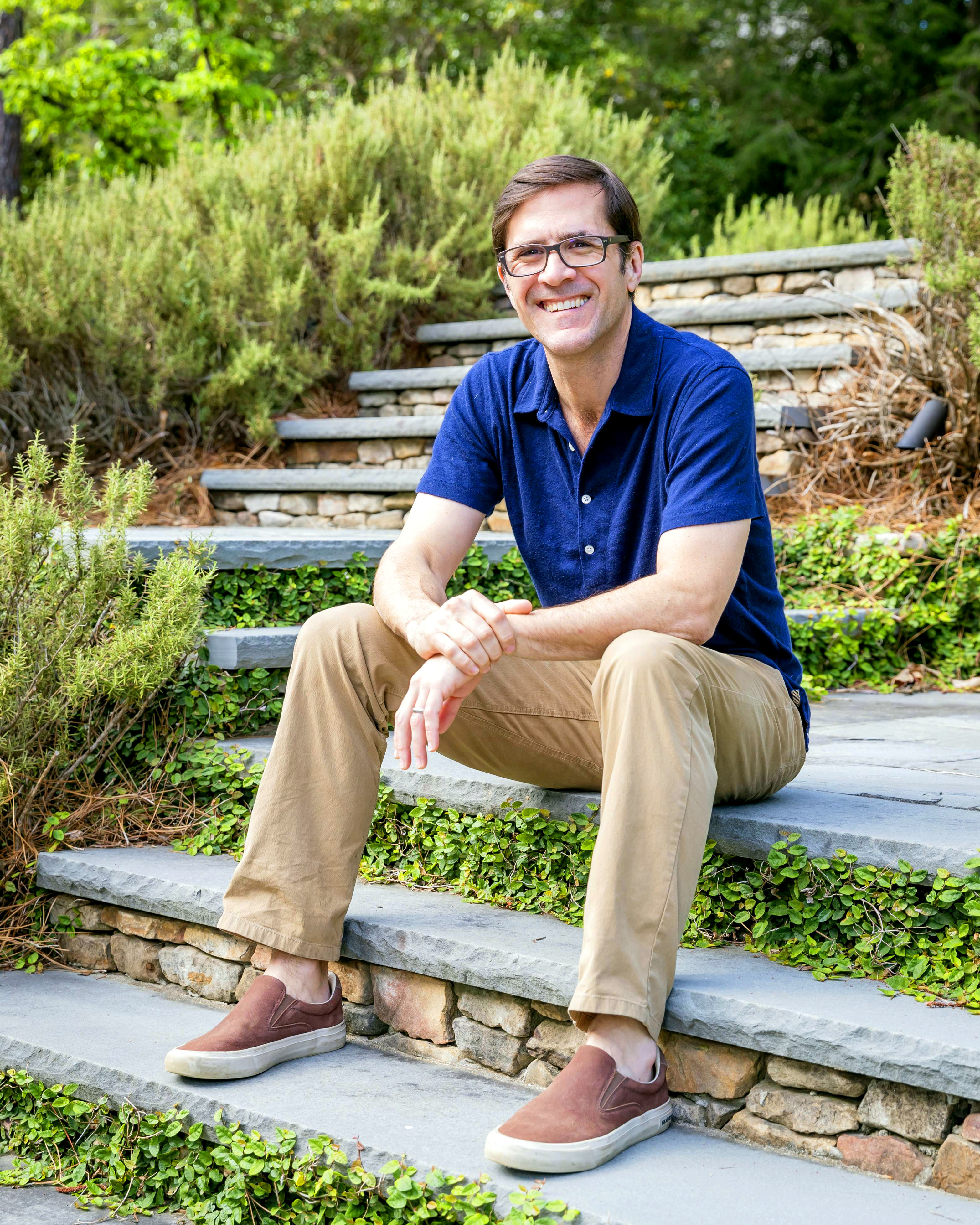
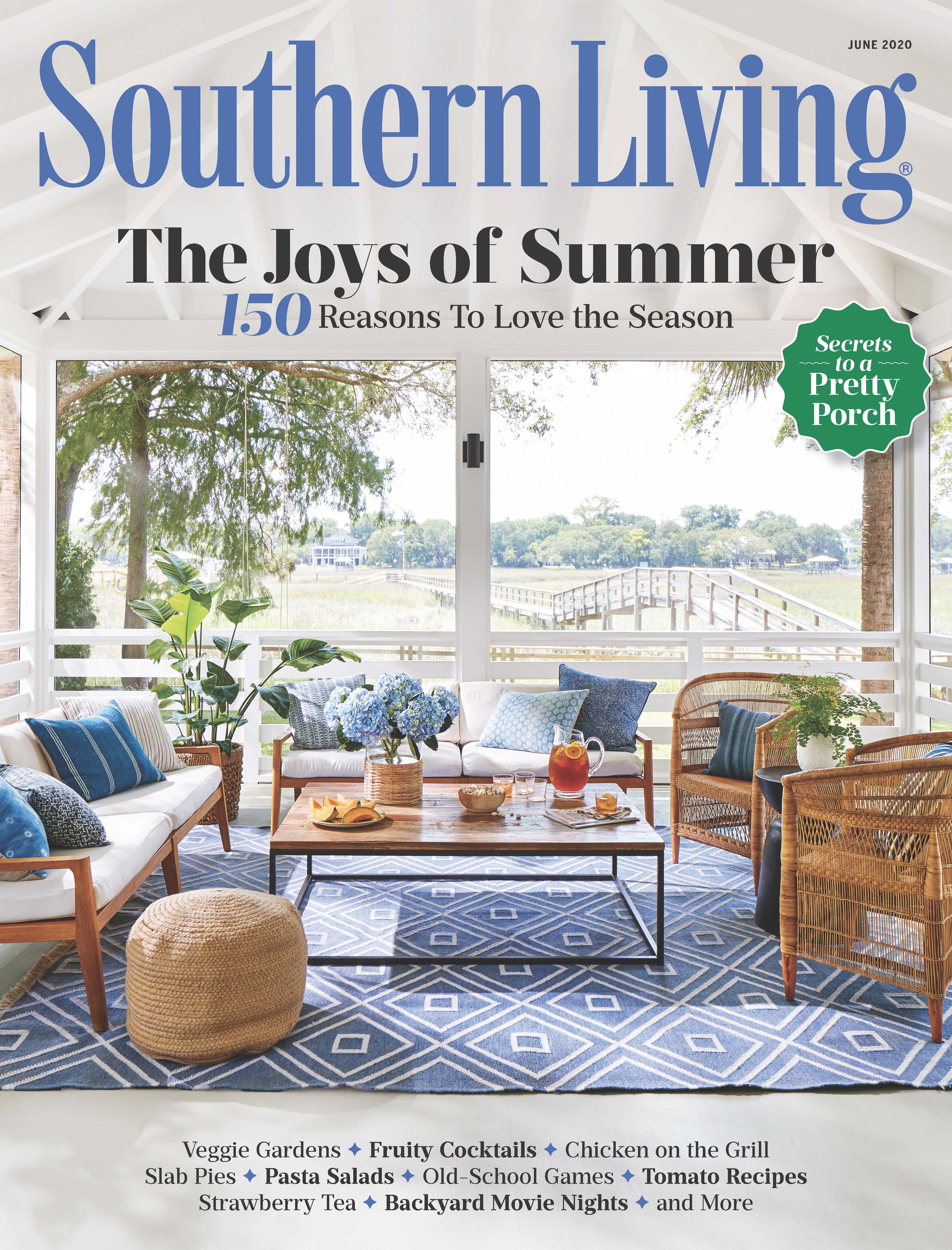
Sid Evans, Editor In Chief, Southern Living, To Samir “Mr. Magazine™” Husni: “This Pandemic Has Made People Value The Simple Things In Life More Than Ever.” The Mr. Magazine™ Interview…

May 19, 2020

Publishing During A Pandemic (34)

“This pandemic has made people value the simple things in life more than ever. People have an appreciation for cooking, family time and gardening. These things have become much more meaningful, more than ever before. And we’ve certainly heard that from our readers. They also value Southern Living more than they have ever valued it. We’re hearing that through letters and emails, that when their magazine shows up in their mailbox it’s an exciting and happy moment. It connects them to the world in a way that has become very important.” … Sid Evans

“We still have a very popular, very profitable print magazine that is valued by both readers and advertisers. I just don’t see that just-digital day yet. For Southern Living, for our audience, having that print magazine show up right now is absolutely golden. They are so grateful to get that magazine and there’s so much value to them in that print magazine. It has a lot of meaning to them and a lot of value.” … Sid Evans

The little things in life have become the most important things in life for many of us during this pandemic. Staying at home has become the norm and making home the best place to stay has become vital. Enter the comfort of Southern Living magazine and brand. Southern Living has been making us feel happy and secure for decades. The magazine offers up delicious recipes, amazing home ideas and inspiration to make each day better than the last.

Sid Evans is editor in chief at Southern Living and knows a thing or two about what the brand gives to its readers. Joy, happiness and a sense of home are just three of the attributes the magazine provides to its loyal audience. I spoke with Sid recently and we talked about publishing this tried and true brand that people trust and depend on. And while Sid admitted things were definitely different now than before the pandemic hit, Southern Living is still publishing the same quality content and joyful ideas and inspiration that it always has.

And now the 34th Mr. Magazine™ interview in the series of Publishing During A Pandemic with Sid Evans, editor in chief, Southern Living..

But first the sound-bites:

On looking for the little things in life during a pandemic: This pandemic has made people value the simple things in life more than ever. People have an appreciation for cooking, family time and gardening. These things have become much more meaningful, more than ever before. And we’ve certainly heard that from our readers.

On how easy, hard, or disruptive was the move to working from home: It has been a challenge, that’s for sure. There are aspects of it that we adapted to very quickly. We have a very digitally-savvy staff and most of our communications and systems are built on digital platforms. In some ways we were able to adapt quickly and well and keep the production cycle moving.

On whether there will be a different type of content in the summer issues: Fortunately, much of the content that we have produced already is very timely and very relevant to what’s going on right now. For example, in June we have stories about what to do with all of those tomatoes you may have. And great summer cocktail recipes. Things that I think people will appreciate. How to brighten your porch and make it a prettier place to spend time. All of those things are very relevant.

On whether he thinks Southern Living’s content is more relevant today than ever: It’s more relevant than ever because if you think about what people are doing right now, they’re cooking every day, three meals a day. They can’t go to restaurants right now, they are cooking at home. They need ideas and inspiration. They need something to break them out of their rut and that’s something that we do every month in the magazine and every day on the website.

On whether he ever imagined that he would be working during a pandemic: No, I never imagined that I’d be living through a situation like this. I never imagined it for my family, my friends or my colleagues at the office. If you’d said to me two months ago that we would be putting out Southern Living from home without going into an office, I couldn’t even have conceived of that. But I will say that this team has surprised and amazed me with what they’ve been able to do.

On what message he is communicating with his staff and readers during these uncertain times: I tell my staff to stay focused on the reader, think about what they’re going through, think about what they need from us and what we can provide. And think about how Southern Living can improve their lives and give them something hopeful every month. I think that really motivates this team.

On how the pandemic is impacting the relationship with the advertisers: We stay in close touch with our advertisers. We’re listening to them, particularly in the travel space where we’re talking to them, rooting for them, hoping that they’re going to get back online in a safe and responsible way. And that they can start to see some of their businesses come back.

On what he thinks justifies the continued printing of the ink on paper Southern Living: We still have a very popular, very profitable print magazine that is valued by both readers and advertisers. I just don’t see that just-digital day yet. For Southern Living, for our audience, having that print magazine show up right now is absolutely golden. They are so grateful to get that magazine and there’s so much value to them in that print magazine. It has a lot of meaning to them and a lot of value.

On anything he’d like to add: On the innovation front, we have a lot going on. We’re launching a new podcast series called “Biscuits & Jam,” where I’ve been interviewing musicians who are holed up at home and who are going through a lot of the same things that our readers are. I’ve been talking to them about food and family, and that’s been really interesting and a great use of this new platform. It will launch on June 2.

On what keeps him up at night: First and foremost, the health and safety of my team. That’s the thing that is top of mind and that I’m most concerned about. Also, what is creating content going to look like going forward? Creating content is a social endeavor. We get together in teams and create and shoot recipes and we decorate porches and we also brainstorm ideas together. So much of what we do is social in nature.

And now the lightly edited transcript of the Mr. Magazine™ interview with Sid Evans, editor in chief, Southern Living.

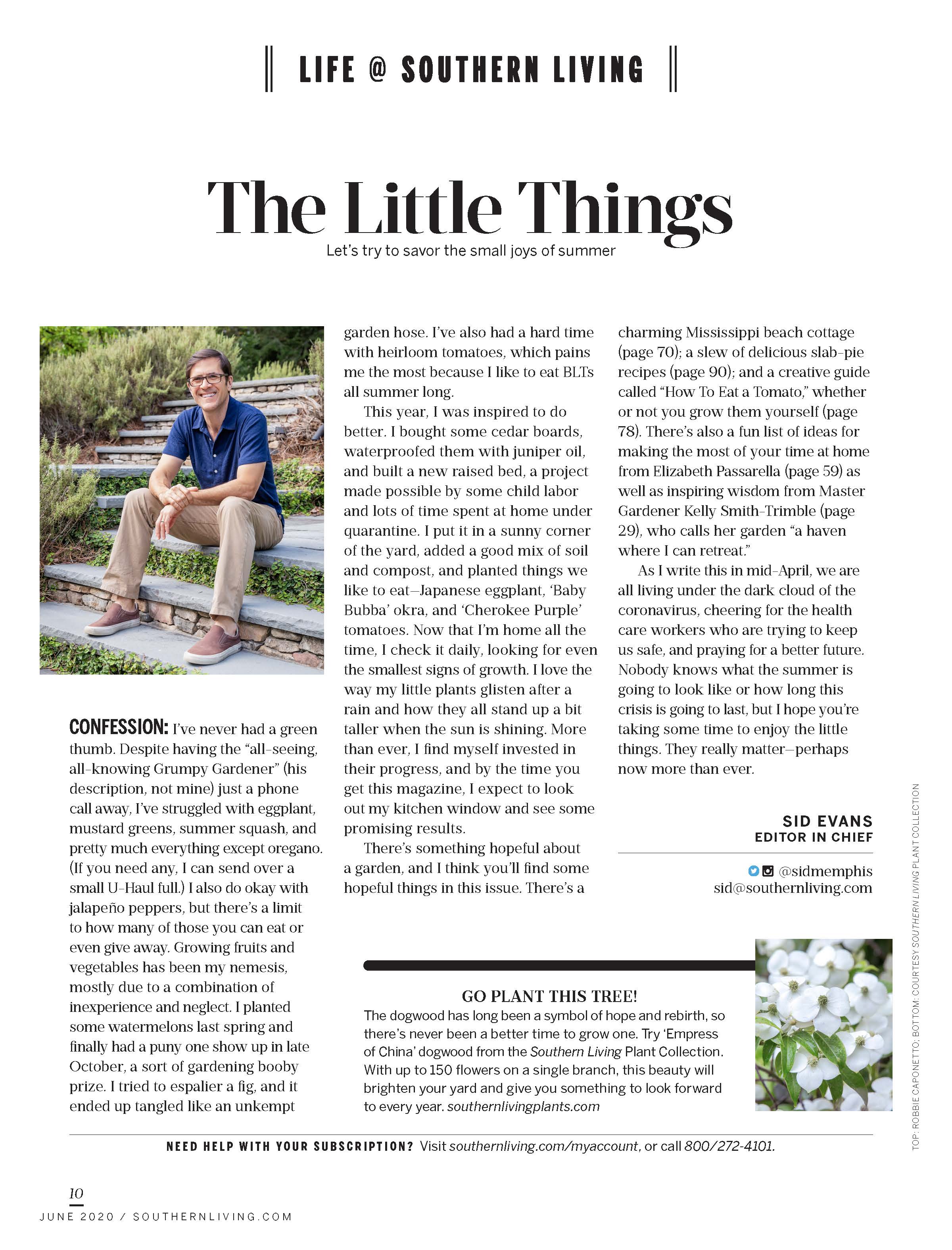
Samir Husni: You wrote in the June issue about the little things in life. Do you think publishing during a pandemic is forcing magazine publishers and editors to look more into those simple things? Did it take a pandemic for us to search for a simpler philosophy?

Sid Evans: This pandemic has made people value the simple things in life more than ever. People have an appreciation for cooking, family time and gardening. These things have become much more meaningful, more than ever before. And we’ve certainly heard that from our readers. They also value Southern Living more than they have ever valued it. We’re hearing that through letters and emails, that when their magazine shows up in their mailbox it’s an exciting and happy moment. It connects them to the world in a way that has become very important.

Samir Husni: How easy, hard, or disruptive was the move to working from home?

Sid Evans: It has been a challenge, that’s for sure. There are aspects of it that we adapted to very quickly. We have a very digitally-savvy staff and most of our communications and systems are built on digital platforms. In some ways we were able to adapt quickly and well and keep the production cycle moving.

In other ways it has been much harder because we can’t produce content the way we used to. We can’t photograph food in the food studios; we can’t go into people’s homes and do home shoots; we don’t have any restaurants to take pictures of. So, all of that has really changed the kinds of stories that we can do and the way that we produce them.

Samir Husni: If we look forward to the summer issues, are we going to see a different type of content than usual? Or are you readjusting your publishing schedule because of the pandemic?

Sid Evans: Yes. Fortunately, much of the content that we have produced already is very timely and very relevant to what’s going on right now. For example, in June we have stories about what to do with all of those tomatoes you may have. And great summer cocktail recipes. Things that I think people will appreciate. How to brighten your porch and make it a prettier place to spend time. All of those things are very relevant.

We shoot a lot of stuff a year in advance, because seasonality is so important to Southern Living. I would say that more than 50 percent of our content we plan and shoot one year in advance so that we can capture the absolute peak of the season. All of that is going to make for very strong June and July issues that will be really relevant right now. Looking ahead to next summer, that’s a little harder.

Samir Husni: Why do you think Southern Living’s content today is more relevant than ever? Or do you think it is?

Sid Evans: It’s more relevant than ever because if you think about what people are doing right now, they’re cooking every day, three meals a day. They can’t go to restaurants right now, they are cooking at home. They need ideas and inspiration. They need something to break them out of their rut and that’s something that we do every month in the magazine and every day on the website. They need ideas for how to make their home more livable, more enjoyable, and more of a sanctuary. That’s something that we do. People really appreciate that content right now; it’s just so important. It’s part of what’s helping them get through this whole ordeal.

Samir Husni: Did you ever imagine that you would be working during a pandemic and what was your first reaction when it hit?

Sid Evans: No, I never imagined that I’d be living through a situation like this. I never imagined it for my family, my friends or my colleagues at the office. If you’d said to me two months ago that we would be putting out Southern Living from home without going into an office, I couldn’t even have conceived of that. But I will say that this team has surprised and amazed me with what they’ve been able to do. And the creativity that they have brought to this whole enterprise and their devotion to the brand and to the readers. We’ve been figuring it out one day at a time, and somehow we’re making it work. We’re all motivated by the response we’re getting from our audience.

Samir Husni: What message are you communicating with your staff and readers during these uncertain times?

Sid Evans: I tell my staff to stay focused on the reader, think about what they’re going through, think about what they need from us and what we can provide. And think about how Southern Living can improve their lives and give them something hopeful every month. I think that really motivates this team.

I will tell you that one area that is a challenge, especially right now, is travel. That’s a really important part of Southern Living. We are a guide to the South. We’ve covered the cities, small towns, the beaches and the mountains. We recommend the best places to go and we have a lot of stories lined up that spoke to that. All of that is on hold right now. Until places start to open up, we’ve really had to put a lot of great travel coverage on hold. I’m looking forward to bringing that back and I know that our readers are looking forward to getting back out there, back on the road to start visiting places again.

Samir Husni: How is this impacting the relationship with the advertisers?

Sid Evans: We stay in close touch with our advertisers. We’re listening to them, particularly in the travel space where we’re talking to them, rooting for them, hoping that they’re going to get back online in a safe and responsible way. And that they can start to see some of their businesses come back.

One of the things that we’ve been doing is to share a lot of research with our advertisers about what our audience is going through. We have access to phenomenal research. We have panels that we can tap into; we have audiences that we can reach out to in real time and very quickly take their temperature and get a sense of what they’re worried about, what they’re looking forward to, and how they’re dealing with this pandemic.

We’ve been sharing that research on calls with some of our advertising partners and they’ve been really grateful and appreciative to hear this information, because these are their consumers. That’s something that has been a real advantage for Southern Living right now.

Samir Husni: What do you think justifies the continued printing of the ink on paper Southern Living?

Sid Evans: We still have a very popular, very profitable print magazine that is valued by both readers and advertisers. I just don’t see that just-digital day yet. For Southern Living, for our audience, having that print magazine show up right now is absolutely golden. They are so grateful to get that magazine and there’s so much value to them in that print magazine. It has a lot of meaning to them and a lot of value.

That being said, we’re also seeing incredible traffic to our digital platforms. The online traffic has been remarkable. There is a ton of engagement on our social platforms and we’re doing a lot of innovating on that front as well. So, I think you have to do both at the same time. You have to keep reaching those new audiences and you also have to take care of your print audience.

Samir Husni: Is there anything you’d like to add?

Sid Evans: On the innovation front, we have a lot going on. We’re launching a new podcast series called “Biscuits & Jam,” where I’ve been interviewing musicians who are holed up at home and who are going through a lot of the same things that our readers are. I’ve been talking to them about food and family, and that’s been really interesting and a great use of this new platform. It will launch on June 2.

We have a television show that just launched in April called “The Southern Living Show” that’s on a lot of the Meredith Television networks. It’s in 12 markets. That’s seeing a lot of audience growth week over week.

We have a Facebook group devoted to cooking where it’s become a really important community and a way for people to share Southern Living recipes and talk about them. And show each other what they’re making and what they’re baking. These are all important things to the brand, in terms of reaching out to new audiences and continuing to innovate. This is a time for innovation. Now more than ever.

Samir Husni: My typical last question; what keeps you up at night?

Sid Evans: First and foremost, the health and safety of my team. That’s the thing that is top of mind and that I’m most concerned about. Also, what is creating content going to look like going forward? Creating content is a social endeavor. We get together in teams and create and shoot recipes and we decorate porches and we also brainstorm ideas together. So much of what we do is social in nature.

We photograph restaurants and towns and so I worry about what that is going to look like and how we’re going to do it. At the moment, I don’t see that breaking for a while. I do worry about that.

I do think that even though we’re living under this dark cloud of the virus, there are things to really value and appreciate right now. And there’s an opportunity to reconnect with family and to reset priorities. That only comes along once in a lifetime. So we have to take advantage of that.

Samir Husni: Thank you.
h1

GLC: A Content & Marketing Agency Creating Vital Content Strategies During A Pandemic – The Mr. Magazine™ Interview With John Cimba, President & CEO, Joe Stella, Vice President, Associations & Shannon Cummins, Vice President, Healthcare…

May 15, 2020

Publishing During A Pandemic (33)

“We can even go so far as to use a term we’ve used for years, which is that print is the Trojan Horse. It enters the home; it stays on the table; it’s there and around; it’s not a digital view – click, on to the next thing. So, there is an opportunity to stay in front of them.” … John Cimba

“For the association side, in the absence of in-person meetings, print is even more important and more essential. As more of our interactions shift online, people are spending more time on a screen with meetings they would normally have in the office. I have personally participated in more webinars than I ever have. Print is a real breakthrough product right now. As more things shift online, there’s more space to reach people and grab mindshare through a printed product, something that’s tangible.” … Joe Stella

“The fact that our approach to working with our clients is so customized. In the healthcare space, we work with small, independent individual hospitals to the largest healthcare system in New Jersey, and everything in between. Their demands and needs in the consumer market and how they want to communicate, whether it’s digital or print, what their budget will allow; I think the fact that we are so customized in the way we work with our clients, we don’t have a one-size-fits-all approach, is going to benefit us even more going forward.” … Shannon Cummins

GLC based in Chicago, delivers award-winning marketing strategies and programs for more than 50 companies, healthcare organizations, and professional associations across the country. Whether the content is delivered via print, digital, video, or social channels, GLC believes a good program starts with a sound strategy and improves through measurable results.

Recently, I spoke with the president and CEO of the company, John Cimba, the vice president over Associations, Joe Stella, and the vice president over Healthcare, Shannon Cummins. The three of them sat down with me via Zoom to talk about how their company was moving forward during a pandemic. It was a very interesting and informative conversation with three people who are involved in creating strategies for companies who need content to assist them in getting their message out to the public.

And now the 33rd Mr. Magazine™ interview in the series of Publishing During A Pandemic with the leadership team at GLC in Chicago.

But first the sound-bites:

On how they are operating during a pandemic (John Cimba): Right now, one of the things that we were very fortunate to have happen for us was that before all of this happened we as a company had gone into two days a week of working remotely. So the transition from going two days a week to five days a week wasn’t actually that tough. We were already set up for it. So, that was one thing that was an easy transition.

On the decision to work two days per week from home even before the pandemic (John Cimba): Where our office is located is a suburb of Chicago, in Skokie, but there are a lot of great talents that are in the city itself. We’re locked into a lease, so we can’t just pack up and move into the city, so we knew that a draw for some of that talent in the city was to allow them to work remotely a couple of days a week.

On the company’s clients and how they’re overcoming any client-relationship difficulties (Shannon Cummins): The direct impact on them has been significant. Many of our client contacts are still in the hospital and not necessarily at home because of the fact that they are frontline workers in a different way. I’ve been in the healthcare communications space since 1986. In this time more than ever, it has been really interesting in terms of the immediate response in communications about COVID.

On why they believe print is more essential than ever (Joe Stella): For the association side, in the absence of in-person meetings, print is even more important and more essential. As more of our interactions shift online, people are spending more time on a screen with meetings they would normally have in the office. I have personally participated in more webinars than I ever have. Print is a real breakthrough product right now.

On whether anyone ever thought healthcare would be the world’s topic of conversation (Shannon Cummins): It was interesting because there was a video recording that I sent around about a gentleman in the healthcare space who is pretty well-known from an agency communications perspective. One of the things that he said is it’s his least favorite thing when he opens up a magazine and somebody is talking about their doctor, it’s all about the doctors. He said now more than ever frontline workers are heroes everywhere.

On any changes he envisions for GLC after the pandemic (John Cimba): I think we actually laid the foundation to put us in a very good place going forward. As a content agency, we’re delivery agnostic. So, whether it’s video, print, digital; it’s about the content for us first. We’ve positioned ourselves where we’re not dependent on one form of delivery over another.

On any lessons learned during this pandemic (John Cimba): From a business standpoint, the lesson learned is something I already knew, which is our company has an unbelievable staff. To be able to see the staff that we have, the team that we have, jump onto the transition of being full-time remote, juggling family and everything, it’s a reminder that the people around us are what makes this great and us successful.

On what keeps them up at night (John Cimba): My number one job; my number one goal going through this, I don’t want to lose one person through this. So, doing whatever we can do as a company for our clients and at the same time keeping every single person we have engaged, in the best place they can be, and I know it’s hard for some, and most importantly not losing any employees. That’s the biggest thing for me.

On what keeps them up at night (Joe Stella): The economy keeps me up at night. We need to bring buyers and sellers together again and when I look at the outlook on travel and large group gatherings and the fact that Chicago isn’t going to open its conventions until there’s a vaccine, which will have a huge impact on the city, it’s tough.

On what keeps them up at night (Shannon Cummins): Personally, what keeps me up at night is my family and them remaining safe with elderly parents and my 26-year-old son who is an EMT transporting COVID patients every weekend, so I don’t get to see him in person. And that’s hard.

And now the lightly edited transcript of the Mr. Magazine™ interview with John Cimba, president and CEO, Joe Stella, VP/Associations, and Shannon Cummins, VP/Healthcare, GLC.

John Cimba

Samir Husni: How are you operating during this pandemic?

John Cimba: Right now, one of the things that we were very fortunate to have happen for us was that before all of this happened we as a company had gone into two days a week of working remotely. So the transition from going two days a week to five days a week wasn’t actually that tough. We were already set up for it. So, that was one thing that was an easy transition.

The tough part has been working with our clients who are not used to working remotely and trying to help them through it all. There are a lot of hiccups along the way: technical, financial, all sorts of things that are impacted with that. But as a company, on our end, we’re functioning business as usual.

Samir Husni; Why was the decision made even before the pandemic to work remotely two days a week?

John Cimba: Where our office is located is a suburb of Chicago, in Skokie, but there are a lot of great talents that are in the city itself. We’re locked into a lease, so we can’t just pack up and move into the city, so we knew that a draw for some of that talent in the city was to allow them to work remotely a couple of days a week. Then when we saw that was going well, we unveiled it for the whole company and it’s actually been very successful for us.

Samir Husni: You mentioned that your clients were having more difficulty with working remotely, how are you overcoming that challenge?

John Cimba: A big change has been suddenly people who were 30 days current are now 60-70 days because they’re still trying to figure out a CFO is no longer in the office, they’re at home. They have to figure out how do I get checks cut, etc. From that standpoint, it has gotten a lot better, it’s moving back to normal. But in working with clients directly, I’ll let Joe and Shannon tackle that one.

Shannon Cummins: My clients are all in the healthcare space, so they’re definitely feeling the impact directly. Many of our clients over the last several weeks have been involved in managing the communication and literally in the command center on a daily basis reporting on information. In some instances, for larger clients, it’s part of what they’re doing for some of our smaller clients where maybe there’s one person managing all communications in marketing. They’ve been taken out of their regular job to manage communication around the COVID.

So, we’ve had a lot of shifting of schedules and calls that had to get rescheduled, work that may have had to be pushed a little bit, but at the same time the challenge of needing to communicate with their community, almost now more than ever, in terms of what they’re doing and what’s going on, is vital. I have received so many emails and communications in the healthcare space. There has been webinar after webinar about communication. Communication about coming back, that it’s safe to go into an ER. Hospitals are laying off emergency room workers because people are not going to ERs because they don’t feel it’s safe.

The direct impact on them has been significant. Many of our client contacts are still in the hospital and not necessarily at home because of the fact that they are frontline workers in a different way. I’ve been in the healthcare communications space since 1986. In this time more than ever, it has been really interesting in terms of the immediate response in communications about COVID.

The loss of revenue they have experienced over the last few months and how to get people back in the hospital and using their services and to know it’s safe, is going to be a real opportunity and challenge for them.

Joe Stella

Joe Stella: My clients are trade and professional associations. The project management processes that we implement when we engage with a client has actually helped our clients through this. We use online project management tools to manage our projects anyway, so there’s clear visibility through every phase of the project online. And we have standing status calls with our customers.

Where we in our industry have been impacted is the revenue side, which is largely generated by in-person meetings with the association industry. A lot of those resources have been taken away, from managing our program and to unraveling the in-person meetings and conferences that had been planned for this year, shifting those to digital or postponing them to later in the year. The resulting fallout from that has been plans getting postponed, initiatives that we had intended to launch this year are being postponed.

We haven’t seen a real impact on our programs just yet. I think it’s a little soon to tell how it’s going to be impacted for the remainder of the year. The most common thing that we’ve seen is our clients are cutting back on printing and postage. They’re just doing digital issues because folks just aren’t in the office, the offices are closed so they don’t want to mail magazine copies to an empty office. A couple of savvy clients have sent emails out asking their constituents if they would like to receive their publications at home and offering guidance on how to login to their profile and change their mailing address temporarily.

But some of our clients don’t have that capability within their AMS for their constituents to login and change that information, so there isn’t an efficient way to do that. That’s how we’ve been impacted so far. Our clients have been taken aback a little in trying to future plan during this uncertain time. It’s difficult for everybody.

Samir Husni: On your website you say print is more essential than ever, why do you believe that?

Joe Stella: For the association side, in the absence of in-person meetings, print is even more important and more essential. As more of our interactions shift online, people are spending more time on a screen with meetings they would normally have in the office. I have personally participated in more webinars than I ever have. Print is a real breakthrough product right now. As more things shift online, there’s more space to reach people and grab mindshare through a printed product, something that’s tangible.

For me in the association space, it’s a member benefit. That physical, tangible product that arrives in the mailbox is a reminder that as a member I belong to this exclusive community of industry leaders. That’s important because in the absence of these meetings, where you’re networking with your peers and gaining best practice knowledge, the publication is a way to break through all the digital clutter and still maintain that connection and engagement.

John Cimba: We can even go so far as to use a term we’ve used for years, which is that print is the Trojan Horse. It enters the home; it stays on the table; it’s there and around; it’s not a digital view – click, on to the next thing. So, there is an opportunity to stay in front of them. There’s an online clothing company called UNTUCKit and I get a kick out of it because every month I get their printed piece, and this is an online company where you buy online. And what does it do? It sits on our counter at home and I find myself looking through it, and ultimately, like today, I’m wearing one. Now more than ever, with so much digital noise everywhere, print is very valuable.

Samir Husni: Did you ever imagine that everything we talk about in the world would be health-related? And does that help or hurt your healthcare clients?

Shannon Cummins

Shannon Cummins: It was interesting because there was a video recording that I sent around about a gentleman in the healthcare space who is pretty well-known from an agency communications perspective. One of the things that he said is it’s his least favorite thing when he opens up a magazine and somebody is talking about their doctor, it’s all about the doctors. He said now more than ever frontline workers are heroes everywhere.

Our clients who have been publishing and who continue to publish print are moving away from their traditional type of communication around service line and all of that, and are really highlighting what they’ve done and the progress they’re making, really featuring COVID stories from a provider and patient perspective. Healthcare, now more than ever, has a great story to tell. And they are telling that story.

Our client in New Jersey said they had over one million hits to their website, specifically their content hub where they’re offering up communications over the past two months as COVID occurred. Over one million hits to their website, which is the number they saw for the entirety of 2019. Our clients are proactively using print and emails, social media, to communicate their message, and quickly pivoting to getting people back in the door with elective procedures, things that have been put off.

The challenge of communicating around COVID was very real and important. And now they’ve gotten people back. They have now almost a more important story to tell. People are concerned about going back to healthcare and they need to let them it’s safe.

The evolution of Telehealth is also very interesting. In the same way that we’re going to see changes in the way schools and businesses are handled, healthcare too will be handled a bit differently. My husband struggles with sleep apnea and he was able to get a Tele-visit with a neurologist who ordered a sleep study that he can do at home. And the fact that he can do that without ever going in for healthcare organization, they bill our insurance as if we met personally with the doctor, it’s pretty interesting and amazing and very comforting to us.

Samir Husni: Do you envision any changes at GLC after the pandemic is behind us?

John Cimba: I think we actually laid the foundation to put us in a very good place going forward. As a content agency, we’re delivery agnostic. So, whether it’s video, print, digital; it’s about the content for us first. We’ve positioned ourselves where we’re not dependent on one form of delivery over another. Change is how we live and I think we’re in a very good place as a company, whichever way this goes. Whether it’s print, video or digital, we’re positioned for it. And I’m thankful for that because it would be tough to just jump in and try and transition our company while going through all of this.

Samir Husni: Any lessons you have learned from this pandemic? Any words of wisdom or advice?

John Cimba: From a business standpoint, the lesson learned is something I already knew, which is our company has an unbelievable staff. To be able to see the staff that we have, the team that we have, jump onto the transition of being full-time remote, juggling family and everything, it’s a reminder that the people around us are what makes this great and us successful.

Shannon Cummins: The fact that our approach to working with our clients is so customized. In the healthcare space, we work with small, independent individual hospitals to the largest healthcare system in New Jersey, and everything in between. Their demands and needs in the consumer market and how they want to communicate, whether it’s digital or print, what their budget will allow; I think the fact that we are so customized in the way we work with our clients, we don’t have a one-size-fits-all approach, is going to benefit us even more going forward.

The demand in healthcare communication isn’t going away and how they need to deliver content is going to continue to vary. We’re very well-positioned to continue to do well, and hopefully even better, as a company because our work is important. The biggest challenge is how we, in that custom approach, make sure the message is differentiated. The message has to stand out and not just be what everyone else is sharing. The need to communicate creatively and differently is vital today.

Joe Stella: Stay focused on your mission. In this time, you have all of this downward pressure in organization because you’re dealing with something that’s unprecedented and is impacting some of your main revenue channels. So, don’t take your eye off of your mission. And for our clients that means quality of content. It’s easy to say we’re not going to have our event, but if we produce 25 webinars, we can replace half of that revenue, but can you produce 25 webinars and do it well? Is it going to provide information to your constituents, your members, in the way that they need that information? Or is just filling a revenue gap?

The pressure that a lot of people are feeling might lead them down a wrong path and to make some decisions that may impact the overall perception of the organization if it’s not executed well. So focus on what you do well, double-down on those channels, don’t try to do too much, everyone is scattering and trying to master everything digitally, don’t be all over the place. Stay focused on what your mission is, own a channel, produce quality content, and your audience will stick with you through this because they need you and they’ll need you afterward because of the new lessons there will be to learn. Everybody is going to need to learn from each other during the “new normal.”

Samir Husni: My typical last question; what keeps you up at night?

John Cimba: My number one job; my number one goal going through this, I don’t want to lose one person through this. So, doing whatever we can do as a company for our clients and at the same time keeping every single person we have engaged, in the best place they can be, and I know it’s hard for some, and most importantly not losing any employees. That’s the biggest thing for me.

Joe Stella: The economy keeps me up at night. We need to bring buyers and sellers together again and when I look at the outlook on travel and large group gatherings and the fact that Chicago isn’t going to open its conventions until there’s a vaccine, which will have a huge impact on the city, it’s tough. You realize how much impact all of that has and how it reverberates through this area’s economy to the people who need it the most, those essential workers and the folks who run the restaurants, the drivers who are getting us to and from places.

That worries me and the faster we can get back to that normal, where everyone feels comfortable, the better. We need to really focus on getting back to normal. We need the meetings to start up again. We need these buyers and sellers to come together again.

Shannon Cummins: I like both John and Joe’s answers, they were both good ones. GLC has an amazing group of people that we’re lucky to work with. John and Ed’s commitment to making sure everyone stays employed and has a job is a testament. I’m lucky in that my children are grown and so many of the people that I work with who are taking care of our clients are at home managing, being now teachers and parents and working at the same time. And I know that has been a struggle for them, but they don’t bring that to the table every day. They’re doing such great and amazing work and I’m so appreciative of that.

Personally, what keeps me up at night is my family and them remaining safe with elderly parents and my 26-year-old son who is an EMT transporting COVID patients every weekend, so I don’t get to see him in person. And that’s hard. The issue around education, what’s happening with schools and the plan for schools going forward, my sister is a principal and my other sister is an education consultant, and figuring how that moves forward. In the same way that the economy is impacting so many people, education is as well.

From a work perspective, I feel very lucky to be part of this organization and the work that we’re doing and the people who we get to work with.

Samir Husni: Thank you all.

h1

Entertainment Weekly’s Editor In Chief, JD Heyman, To Samir “Mr. Magazine™” Husni: “The Wonderful Thing About Moments Of Crises Is That It Brings Out The Best In Most People.” The Mr. Magazine™ Interview…

May 13, 2020

Publishing During A Pandemic (32)

“The biggest challenge is the economic challenge that we’re all in as a country, as a world. But the content challenge has not been that difficult for us at all. There are plenty of stories to tell. What we discovered very early in the pandemic, really by late February, early March, was that we were going to need to address how to cater to people who were going to be spending a lot more time at home.” … JD Heyman

 “The words matter; the design matters. If you look at our May issue—we just closed our June issue, and I think we’re one of the few brands in today’s economy that broke new business in June from an advertising perspective, because we really believe in collaborating on the advertising side—but we really believe in giving readers a high-touched, deluxe experience in print as well as serving them digital news.” … JD Heyman

In June 2019, JD Heyman was named Editor in Chief of Entertainment Weekly, the world’s leading media brand covering entertainment and the business of popular culture. As EIC, he has repositioned EW as the voice of the new golden age of show business across all platforms, with a deluxe monthly magazine, a news driven website and growing extensions in social media, audio, television and events. But as we all know, the world has changed inexplicably with the onset and  continuation of the pandemic.

I spoke with JD recently and we talked about how EW has been operating during this pandemic and how a magazine that relies on up close and personal interviews and photographs of celebrities and others who entertain and inform us is handling the situation. JD was upbeat and optimistic about the present and the future, while remaining realistic when it came to how that future may look beyond the pandemic.

As he said, “The words matter; the design matters.” And he believes that tripling-down on the quality and relevance of the product they offer readers is vital. And with EW, quality is a given.

And now the 32nd Mr. Magazine™ interview in the series of Publishing During A Pandemic with JD Heyman, editor in chief, Entertainment Weekly.

But first the sound-bites:

On how Entertainment Weekly is operating during the pandemic: It has actually been an amazing experience as a magazine-maker, as an editor, as a journalist, a marketer and as a business-development person. It has been a challenging, but really exciting time. There were a lot of things that we were already in the process of really thinking deeply about and reinventing at Entertainment Weekly when this all happened.

On how he sees the magazine moving forward beyond the pandemic: That’s an interesting question and I think I have to use my very narrow experience of history as a guide. Earlier in my career, I went through the 2008 recession. And what we learned out of that experience as editors was that consumer habits do change and there are some permanent changes that happen in a big adjustment such as this.

On any challenges he has faced during the pandemic that he’s still dealing with: Oh sure, there were things that we really had to rethink, such as photography. A lot of what we do is experiential. In addition to doing our magazine, EW is really good at leading panels and talks, creating experiences at film festivals and television festivals where we go and interview celebrities and engage with fans. We have a big thing every year at  Comic-Con in San Diego, obviously that’s not happening, so we have to come up with alternatives for people. Looking at the medium-term, we have to create a robust array of experiences for people that replaces going out to be part of a conversation.

On anything he’d like to add: The main job of an editor anywhere, but certainly at EW, is to create great storytelling. Magazines are an interesting array of ideas, packaged in a dynamic and exciting way for an audience. And that idea is as relevant and as exciting as it ever was.

On what keeps him up at night: My son is deciding where he’s going to college, so that keeps me up at night. What keeps me up at night? Everything. No, I think as a culture and as a world we are in a very fragmented state. And sometimes our media increases that sense of fragmentation —actually quite often. And what keeps me up at night is whether the next several generations will rediscover shared experience. The best part of our media is in its opportunity to bring people together.

And now the lightly edited transcript of the Mr. Magazine™ interview with JD Heyman, editor in chief, Entertainment Weekly.

Samir Husni: You’re now based in L.A., the magazine moved several years ago, then the pandemic happened. How are you operating during this pandemic since you have a publication that depends a lot on photography, celebrities and entertainment?

JD Heyman: It has actually been an amazing experience as a magazine-maker, as an editor, as a journalist, a marketer and as a business-development person. It has been a challenging, but really exciting time. There were a lot of things that we were already in the process of really thinking deeply about and reinventing at Entertainment Weekly when this all happened. I’ve been at EW for seven months and before the pandemic I was at PEOPLE running the entertainment coverage there before that, so I’ve been a long-time fan and collaborator with EW, because we’re sister brands.

The biggest challenge is the economic challenge that we’re all in as a country, as a world. But the content challenge has not been that difficult for us at all. There are plenty of stories to tell. What we discovered very early in the pandemic, really by late February, early March, was that we were going to need to address how to cater to people who were going to be spending a lot more time at home.

In the first week or so of March, we came up with something called “Quaranstream,” which was our content recommendations for people who were sheltering-in-place. We started that very early and then by March 15, we decided that it would be better for us to work from home, so just right before there was mandated sheltering-in-place in California and New York. Our systems were in place, in terms of production and communication; none of that was difficult to adopt. We were very quick to move into a work-from-home environment.

As far as the entertainment community and Hollywood are concerned, the wonderful thing about moments of crises is that it brings out the best in most people. And certainly in the world of entertainment, not to be totally glib, because there are very important things going on in the world and people doing the real work of making this situation better, but entertainers have a role to play. I was sitting at home working, watching a lot of old screwball comedies of the 1930s, and I asked myself what was it about these old movies that so appeals to me? Why do I like comedies from that period?

If you know pop culture at all, you realize very quickly those films were made during very dark times in world history. There was a Great Depression; there was a fascist empire on the rise; there was genocide, and yet, you would never know that from most of the popular culture of the time. And that’s true in the late 1960s, and it’s true during other tumultuous times in our culture. People turned to entertainment as a kind of balm. I call it the healing balm of fun. That’s what we’re here to provide for our audience. We decided very quickly that we’re going to reorient a lot of our content toward that proposition, bringing Hollywood home with humor and with heart. That’s what we believe.

All of our writers and reporters, and actually all of the entertainers that we deal with, were very excited to do that. We have sort of a dual mission at Entertainment Weekly; we reach a broad audience of more than 24 million people. We also reach a lot of people who work in entertainment, who are influencers within the industry. We thought it was important to both support the industry and to give people distraction.

And the results have been huge. We’ve had a significant increase in our digital traffic, more than 20 percent, and our May issue was our bestselling monthly issue ever. So, that goes to show you that there’s some truth in this idea of being the place where people go to be lifted up, enlightened, entertained; putting on a show for people in times of trial is extremely important. The craft of magazine-making is something that I believe to be as contemporary as ever, and I think when we look at the products that we make in any platform, we have to really create a quality experience for the audience, a deeper quality experience than perhaps we have in the recent past.

The words matter; the design matters. If you look at our May issue—we just closed our June issue, and I think we’re one of the few brands in today’s economy that broke new business in June from an advertising perspective, because we really believe in collaborating on the advertising side—but we really believe in giving readers a high-touched, deluxe experience in print as well as serving them digital news. If you look at our May issue, we have a high degree of humor; we have a high degree of content that promotes engagement, interactive puzzles and games, recommendations, a whole feature full of recommended content for them; a lot of comedy and deep dives into stuff people love.

So, I wouldn’t say we’re the place to come if you’re looking for hard news about a vaccine, that’s not our job. Our place is to create some lightness, some counterprogramming for people who are in their homes and really kind of desperate for recommendations about how to make the load a little lighter, from board games to trivia to great look-backs at Hollywood moments to really fun interviews and access.

As far as your question about access goes, it’s challenging and different, but we had an unprecedented number of celebrity contributors in the last two issues. And we’ve also figured out how we may photograph people. In our June issue, we had something which was very rare for us, an illustrated cover because we thought it was important to support artists at this time. So, sort of our own WPA kind of effect. But I believe we’ll be photographing people sooner rather than later. We were also lucky in that we had shot a lot of stuff for our magazine previously. It hasn’t thus far been a problem.

Samir Husni: How do you see the direction of the magazine moving forward beyond the pandemic? Do you think it will be a new day or life will go back to the way it was for EW?

JD Heyman: That’s an interesting question and I think I have to use my very narrow experience of history as a guide. Earlier in my career, I went through the 2008 recession. And what we learned out of that experience as editors was that consumer habits do change and there are some permanent changes that happen in a big adjustment such as this.

The big lesson for us from 2008 was that you have to be as close to the audience as possible. You have to listen to them and be engaged in a dialogue with them, because their habits do shift. They shift because they have less disposable income or they get their information in different ways, so what that taught me was that while the experience of a magazine is as relevant as ever the quality of that experience has to go ever-deeper. Our job is to build an affinity with our audience in every way we can —constantly. Our job is to be really as close to them as possible. When I took over this job, I’ve been in constant conversation with readers about what they like and don’t like and I have tried to be responsive to that.

On the other hand, the lesson is not to be led by larger trends. If you’re using your brain correctly in this business, you take the data, the information you have, and you lead. You create a place that feels distinctive. I believe that in our business it’s not a search for every single eyeball, but the right eyeballs for your brand. And to build that as a distinctive and unique home forpeople. The best magazines in history are the ones that feel like a trusted friend with a particular point of view and are in dialogue with their audience.

I kind of boil it down to making unique, memorable, shareable content. Is what I’m telling you something you’ll share? Does it feel like value added to your life? If I’m asking you to buy something that costs money to make, is it a good value proposition for you? Looking at this particular crisis I would say our job is to triple-down on making a quality product that feels enhancing to the lives of its audience; to do that in print, which is a vivid, beautiful medium and really a billboard in every town in America for what you do; to do that digitally in terms of having a sense of relevance and urgency in storytelling, and to do that in new platforms as they evolve.

I think of this content as a cloud that I take and seed different plots of earth with. I rarely think about the platform first —except for what best serves that technology. A magazine after all is just a form of technology. And it should be delightful and a deluxe experience. And for the people who get it, it should feel like a magazine for a special club. Anyone who reads EW should feel part of a club. We share a certain language; we have certain things we like; we enjoy reading and culture and art and we’re funny. The EW reader has a wiseacre kind of view, a sort of wry view of life. And while they are diverse, they share a sensibility. My old publisher used to say they are a psychographic not a demographic. They’re the cool kids in the cafeteria who always know what’s going on. We want to deepen that culture for them.

Samir Husni: Have you faced any challenges during this pandemic that you failed to overcome or are still dealing with?

JD Heyman: Oh sure, there were things that we really had to rethink, such as photography. A lot of what we do is experiential. In addition to doing our magazine, EW is really good at leading panels and talks, creating experiences at film festivals and television festivals where we go and interview celebrities and engage with fans. We have a big thing every year at  Comic-Con in San Diego, obviously that’s not happening, so we have to come up with alternatives for people. Looking at the medium-term, we have to create a robust array of experiences for people that replaces going out to be part of a conversation.

If you would have asked me a year ago where I believed a lot of growth in our industry would be, it would be in these experiences of bringing people together. Obviously, I still believe that, but the ways that we bring people together will naturally have to change. And we’re in dynamic conversation with  people all the time about how to do that.

The good thing is that the best metric of all is conversational. If you’re having a good conversation with someone, as I am with you, then that is interesting to other people. And conversation, if you look at the growth of podcasting and everything that you see in today’s culture, it’s really less about here’s a big movie star, we have five minutes of her time, we’ll do a great piece on her and spend a lot of money on photography. The audience is far more sophisticated now. They know what TV writers do; they want to know how to make movies. They know far more about the process than the public of a generation ago.

They’re much more interested in how everything works. And in feeling like they’re peers and equals in that conversation rather than the magazine editor coming up with an idea and dispensing that idea to the public. That’s an old idea of doing things.

 Samir Husni: Is there anything you’d like to add?

JD Heyman: The main job of an editor anywhere, but certainly at EW, is to create great storytelling. Magazines are an interesting array of ideas, packaged in a dynamic and exciting way for an audience. And that idea is as relevant and as exciting as it ever was. I never think on any day that I go to work, whether it’s in my house or at my office, that I don’t have an incredibly interesting, creative job, but it really does start from the audience. All innovation really comes from the audience. And the best magazine-makers get as close to that audience as possible.

 Samir Husni: My typical last question; what keeps you up at night?

JD Heyman: My son is deciding where he’s going to college, so that keeps me up at night. What keeps me up at night? Everything. No, I think as a culture and as a world we are in a very fragmented state. And sometimes our media increases that sense of fragmentation —actually quite often. And what keeps me up at night is whether the next several generations will rediscover shared experience. The best part of our media is in its opportunity to bring people together. To inform, engage and enlighten people, not just to agitate and alienate people. There should be another kind of algorithm in our media that isn’t based on outrage.

What I hope for is that people who are in the media business, and the consumers who buy their products, are engaged in this higher conversation—beyond what we’re able to monetize. I think we should always remember that this is an extremely important role and we should all be thinking about how to bring community together, particularly as the world comes out of this crisis. I worry a lot about what community will look like. People being together is important. All media has a role to play in that.

Samir Husni: Thank you.
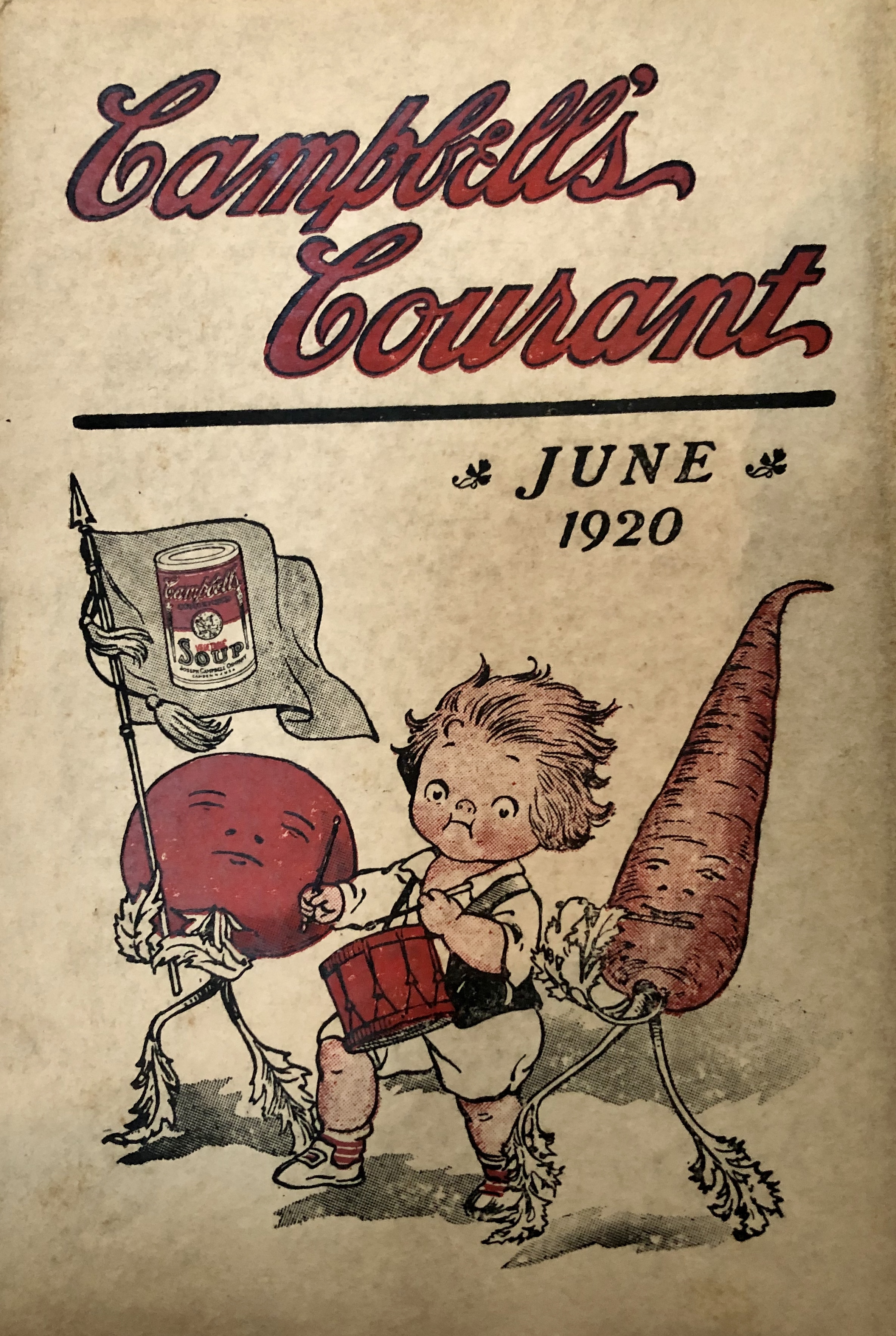
h1

Bernie Mann, Publisher, Our State Magazine, To Samir “Mr. Magazine™” Husni: “People Want To Get Some News That They Know Every Month Is Going To Come In Their Mailboxes, Good News, Happy News, Pleasant News…” The Mr. Magazine™ Interview…

May 11, 2020

Publishing During A Pandemic (31)

“For us, the pandemic is something that’s covered by other people. There’s no need for us to tell more of the same story over and over again. So, we don’t tell that story at all. That’s not for us. What we tell is the story of optimism; the story of beauty; the story of how lovely North Carolina is and what a great place it is to live and visit.” Bernie Mann

“You build a brand by constantly having the right message in the right places. So, that’s what we do. We go straight to the client. And that may be easier for us because most of our clients are in North Carolina, but I would dare say that if you live in New York and your clients are in Michigan, up until a few months ago, you get on an airplane and you go there.” Bernie Mann

Our State magazine celebrates North Carolina. By far, it is one of the most successful state and regional magazines published. For over two decades, owner and publisher Bernie Mann has been doing just that, celebrating the state he loves, and publishing the magazine “the Mann way.”  Today the company is an ESOP (Employee Stock Ownership) as he sold it to his employees.  So how is publishing a magazine “the Mann way” is going in the midst of a pandemic. The latter something he never imagined, much less considered living through.

I spoke with Bernie recently and we talked about running a magazine publishing company during these uncertain times and all of the things many of us will never get to do again, like sit in an office together and work. It may sound unreal, but as Bernie said we just do not know what the future holds. In the magazine, he chooses not to mention or report on COVID-19, as he stated everyone else is handling that repeatedly. Instead, he brings the magazine alive with beauty and optimism, everything North Carolina means to him and his audience.

Bernie assured me that Our State is maintaining and putting out magazines. And right now that’s a good thing. With working from home and technology’s assistance, the beautiful magazine that focuses on optimism, nature’s beauty and North Carolina’s culture is still going strong. And Mr. Magazine™ thinks that’s a very good thing.

And now the 31st Mr. Magazine™ interview in the series of Publishing During A Pandemic with Bernie Mann, publisher, Our State magazine.

But first the sound-bites:

On how he has been operating during the pandemic: For us, the pandemic is something that’s covered by other people. There’s no need for us to tell more of the same story over and over again. So, we don’t tell that story at all. That’s not for us. What we tell is the story of optimism; the story of beauty; the story of how lovely North Carolina is and what a great place it is to live and visit. We talk about the history, the foods and the beauty, and that’s what people expect from us.

On how his work environment has changed with the pandemic and it has effected he and his team: We have had what I enjoy and what we have enjoyed having as a collaborative group of people who love being together and sharing ideas, and we still answer the phone. The door is locked, we’re not having visitors, but the phone is answered by a human from 8:30 a.m. until 5:00 p.m. I think that’s terribly important.

On spending almost half a million dollars recently on advertising for the magazine: We started our campaign in September and continued it through the end of April, very early May. It felt like the right thing to do to promote our magazine. When you ask people to advertise because you tell them it will help their business, if it’s so good, then why don’t you advertise? I think it’s good and advertising is important. It’s terribly important to have the right message in the right place.

On his different approach to the business model: You build a brand by constantly having the right message in the right places. So, that’s what we do. We go straight to the client. And that may be easier for us because most of our clients are in North Carolina, but I would dare say that if you live in New York and your clients are in Michigan, up until a few months ago, you get on an airplane and you go there.

On whether the pandemic has affected his publishing or advertising schedule: It’s been very painful. We’ve had so many of our clients who have had to close. It’s hard for them to advertise if the store is closed. It’s hard for them to advertise if you can’t go into the restaurant or the hotel or go visit their attraction. So yes, from an advertising standpoint, this has been very painful. But we’ve had gigantic numbers of people who have bought subscriptions. Not enough to make up for the print.

On whether he had ever thought of working during something like a pandemic and if he thinks someone could prepare for something like it: Never could have imagined this. In fact, now we’re an ESOP, I sold the company to the employees. We have a board of directors and there’s a woman on the board, she and her husband own hotels and restaurants, and she said you know what might happen, we might have to close both the restaurants and the hotels. I asked her how in the world she could even conceive of such a thing. And three weeks later that’s what happened. So, this is a very difficult time for everybody. Who could have conceived this ever?

On what keeps him up at night: The biggest concern I have is number one, that everybody in my company stays healthy, that’s the biggest concern I have. The second is tell me when it’s over. When it’s over, we can plan for what’s going to happen. It won’t be a light switch; it won’t happen all at once. Will my employees ever be back together in the same room for Monday morning meetings at 8:30? I don’t know if that will happen again.

And now the lightly edited transcript of the Mr. Magazine™ interview with Bernie Mann, publisher, Our State magazine.

Samir Husni: Tell me how you’re operating Our State magazine during this pandemic?

Bernie Mann: For us, the pandemic is something that’s covered by other people. There’s no need for us to tell more of the same story over and over again. So, we don’t tell that story at all. That’s not for us. What we tell is the story of optimism; the story of beauty; the story of how lovely North Carolina is and what a great place it is to live and visit. We talk about the history, the foods and the beauty, and that’s what people expect from us.

The number of people sending us checks for circulation has never been greater. It’s just been amazing. But people want to get some news that they know every month is going to come in their mailboxes, good news, happy news, pleasant news, stuff that they can enjoy and quite frankly, they can get in their car and go to and see. The issue we had about waterfalls, as soon as the restriction is lifted, you can go there in two hours from almost any place in North Carolina and see these magnificent waterfalls. And in June our issue is going to be about the Coast. On the cover is a long pier that is just beautiful and people will see it and look forward to going and walking on that pier.

Our take on the Coronavirus is that it exists; we don’t discuss it; we don’t deal with it. Our editor, Elizabeth Hudson, she writes a column each month and it’s not like any column because it is strictly her own feelings and impressions, things that have happened in her life. And when she sat down to write the column this month, she said that she wasn’t going to write about what was happening to people, she said I’m going to write about how much I enjoy the feeling of the sand between my toes when I go to the beach.  And that was her column about the things that she remembered when going to the beach.

Samir Husni: How has your work environment changed with the pandemic and how has it impacted you and your team?

Bernie Mann: We have had what I enjoy and what we have enjoyed having as a collaborative group of people who love being together and sharing ideas, and we still answer the phone. The door is locked, we’re not having visitors, but the phone is answered by a human from 8:30 a.m. until 5:00 p.m. I think that’s terribly important. I’m in the service business and if the first impression you get is from a machine, then that doesn’t say very much about the service I’m providing. So, I provide a human who actually talks to you.

Samir Husni: You mentioned that you have spent almost half a million dollars in advertising; why are you spending money now for the magazine?

Bernie Mann: We started our campaign in September and continued it through the end of April, very early May. It felt like the right thing to do to promote our magazine. When you ask people to advertise because you tell them it will help their business, if it’s so good, then why don’t you advertise? I think it’s good and advertising is important. It’s terribly important to have the right message in the right place. When you advertise a magazine like ours, it’s not easy to just say: let’s buy some radio or billboards or some television advertising. We have been very specific in what we have done. And very narrow-focused.

And then we do it with a lot of repetition. We always tell people you need repetition in your advertising. Okay, if we think it’s so smart, then we should do it too. It’s just using basic techniques. We’re not that smart. They used to say about Vince Lombardi, people should play a Vince Lombardi football team, everybody knew exactly what he was going to do, he just implemented it with consistency. And that’s what we do. We’re very consistent; we’ve set up some guidelines for what is important to us and it seems to be important to our readers. And it is constantly promoting North Carolina. We say it in our name: Our State Celebrating North Carolina. We celebrate. And our TV commercials celebrate the beauty of where we live.

Samir Husni: Tell me about your different approach to the business model. I know you don’t use ad agencies, your team calls on advertisers. Tell me how this works.

Bernie Mann: When I look around me in the industry and I see such wonderful magazines, and they keep getting thinner and thinner. And then good magazines like Esquire are six timers per year. And so many of the others have either dropped out or gone smaller. And I know it’s not because there isn’t enough content, there’s plenty of content. Why are they getting smaller? Because they don’t have the advertising. Why don’t they have the advertising? Because for years and years there has been a plan, you go to ad agencies and pick up your ads.

Now the ad agencies, God love them, are in business to make money. There’s nothing wrong with that. And they’ve found that they can make money by doing other things than print advertising. So, my girlfriend is no longer my girlfriend. What do I do next?

They don’t do anything next. And the ads get smaller and smaller because the ads have gone away. If you rely on the ad agency as your girlfriend. And I don’t fault the agencies because there’s nothing better than digital for the ad agencies. I always think of it as the Three C’s: costly, digital is costly, digital is cool, and digital is confusing. It’s the best thing that ever happened to an ad agency. (Laughs)

My girlfriend has gone away. So what do I do?  I find another girlfriend. And who is my best girlfriend? It’s the client, because the client still loves print. The client loves seeing their ads in beautiful color, on wonderful paper, and they know that’s how you build brand. You build a brand by constantly having the right message in the right places. So, that’s what we do. We go straight to the client. And that may be easier for us because most of our clients are in North Carolina, but I would dare say that if you live in New York and your clients are in Michigan, up until a few months ago, you get on an airplane and you go there.

But I don’t think too many of the salespeople for the magazine industry have done that. And they’ve relied on going to the same places on the same streets. They go to pick up their ads and they tell them we have no ads for you. And then they go back and are told the ad business is terrible. No, no, the ad business isn’t terrible, it’s the people who used to spend money with you who aren’t anymore. So, you find someone else.

Samir Husni: Has your publishing or advertising schedule been affected by the pandemic:

Bernie Mann: It’s been very painful. We’ve had so many of our clients who have had to close. It’s hard for them to advertise if the store is closed. It’s hard for them to advertise if you can’t go into the restaurant or the hotel or go visit their attraction. So yes, from an advertising standpoint, this has been very painful. But we’ve had gigantic numbers of people who have bought subscriptions. Not enough to make up for the print. We make most of our money from print, but it’s nice to know that at least there’s a secondary source.

This is very funny; we have a little store, has about 750 sku’s and one of the items that we sell in our store is a jigsaw puzzle. Normally, we sell about 40 or 50 of them a month and they’re puzzles depicting North Carolina. Last month, in April, we sold 1,200 puzzles. If you go on Amazon right now, you can’t even buy them, they’re sold out because people need something to do just sitting at home. And they enjoy doing puzzles. But it’s just funny that there are certain things that sell. There’s always someone who is going to make money during a difficult time.

We’re not making money during this time and it’s painful, but at least we’re not out of business like some people I know.

Samir Husni: Did you ever imagine that you would be working during a pandemic and can you prepare for something like that?

Bernie Mann: Never could have imagined this. In fact, now we’re an ESOP, I sold the company to the employees. We have a board of directors and there’s a woman on the board, she and her husband own hotels and restaurants, and she said you know what might happen, we might have to close both the restaurants and the hotels. I asked her how in the world she could even conceive of such a thing. And three weeks later that’s what happened. So, this is a very difficult time for everybody. Who could have conceived this ever?

But everyone we have who can work from home is working from home. We’ve set up computers and thank God for Zoom. So we have conferences all the time. And we’re putting out magazines.

 Samir Husni: My typical last question; what keeps you up at night?

Bernie Mann: The biggest concern I have is number one, that everybody in my company stays healthy, that’s the biggest concern I have. The second is tell me when it’s over. When it’s over, we can plan for what’s going to happen. It won’t be a light switch; it won’t happen all at once. Will my employees ever be back together in the same room for Monday morning meetings at 8:30? I don’t know if that will happen again. We always enjoyed that; we enjoyed the camaraderie of being together. I don’t know if that will happen.
I don’t know if we’ll be able to sit in an office with people near each other. I don’t know if I can take my clients to lunch with a mask on. What do I do, lift the mask and put the spoon in? I don’t how that’s going to work. But maybe I’ll learn. We’re in difficult times. I don’t think many people have ever even imagined.

Samir Husni: Thank you.
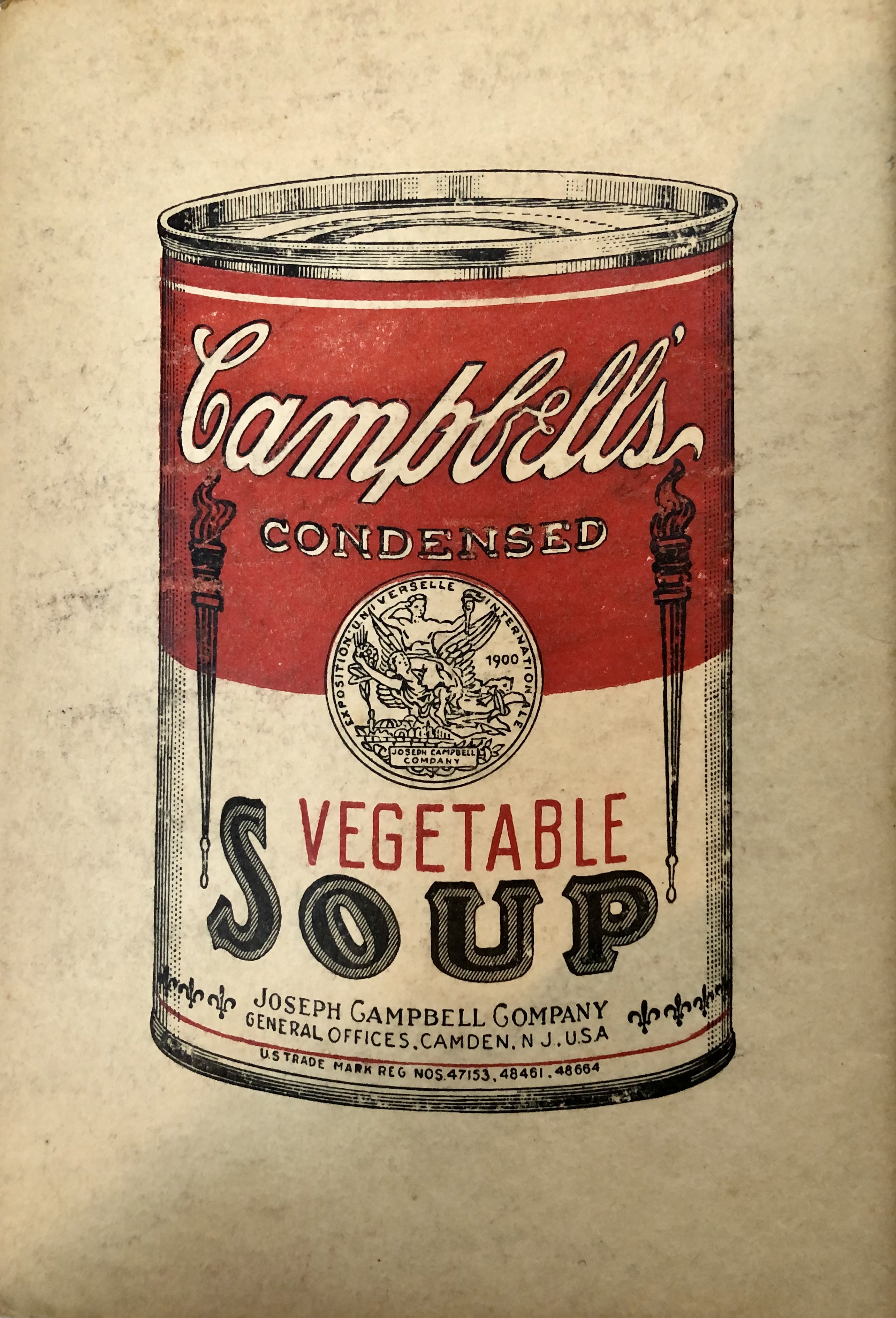
h1

Sherin Pierce, Publisher, The Old Farmer’s Almanac To Samir “Mr. Magazine™” Husni: “The Almanac Deals With The Essentials Of Everyday Life, Whether There’s A Pandemic Or Not… And That Provides Comfort And Security. ” The Mr. Magazine™ Interview…
May 8, 2020

Publishing During A Pandemic (30)

“And part of our mission is to give people our products in the way they want them. A lot of people still want the ink on paper product. They still want that. In fact, soon I’ll be meeting with Fry online to go through our whole publishing schedule because it’s coming up. This month we print the calendars. After all these years, people still want the paper calendars. Then in June, we print the different versions of The Almanac. That hasn’t changed. You can also provide extra information around The Almanac philosophy electronically.” … Sherin Pierce

“You still have to tend to your farms and grow your crops; you still need to know about the weather. So that’s what we try to do. We don’t ignore facts, but we try to give you a safe place.” … Sherin Pierce

The Old Farmer’s Almanac has seen more crises in its 228 years than many of us have even thought of. Yet, it has survived and not only that, but thrived over the years. Sherin Pierce is the publisher and has held that position for over 25 years. And over the years, The Almanac has not remained stagnant, it has expanded to include The Old Farmer’s Almanac for Kids, The Garden Guide, and a series of cookbooks with themes that resonate with Almanac readers, such as Comfort Food, Everyday Baking, and Cooking Fresh. The magazine knows how to survive and realizes we are all in this together, for sure.

I spoke with Sherin recently and we talked about the deep trust The Almanac’s audience has for its content and how even a pandemic can’t break that confidence or take away the safe place many people feel about the publication. Because it’s a given, The Old Farmer’s Almanac is a special publication and one that has proven itself over the years, even during life changing events such as this pandemic we’re all experiencing. Just know The Almanac is with us through it all.

And now the 30th Mr. Magazine™ interview in the series of Publishing During A Pandemic with Sherin Pierce, publisher, The Old Farmer’s Almanac.

But first the sound-bites:

On the amount of crises The Old Farmer’s Almanac has already seen: Yes. It passed through the War of 1812, the Civil War, they went through both World Wars, I and II, The Korean War, the Vietnam War, they’ve been through the Flu pandemics, H1N1, so yes, The Old Farmer’s Almanac has survived quite a lot.

On how the publication is operating during this pandemic: The 228th edition, the 2020 issue came out in September, 2019, so we were through with the greatest sales months, between September and January, and by the time the pandemic hit the majority of the sales were complete. So, The Almanac has one print publishing event and that got us through that period of time.

On how The Almanac today, in the midst of this pandemic, is as relevant or even more relevant than ever before: First of all, because The Almanac deals with the essentials of everyday life. It tells you what time the sun is going to set; what time the sun is going to rise; what the phases of the moon are; what the rhythms of nature are. And whether there’s a pandemic or not, those things are going to happen in any event. And that, kind of, provides comfort and security. That no matter what’s going on, there are certain rhythms of nature that will always happen. And we’re there to guide you through that.

On how their work environment has changed with the pandemic: Working in Dublin, New Hampshire, we were already hyper-connected by technology. That’s the first thing, because you can’t publish from a remote region without having all that. As we could see what was starting to happen, we were able to move everyone back home remotely with VPN abilities, so that the editors could go into their servers and work.

On whether she thinks things will go back to the way they were once the pandemic is behind us: It will never be the same. However, we can take it and incorporate it into the future of our business. We live in area where the weather can be terrible. Huge snowstorms. So, yes, we can work from home those days. If there is a resurgence of the virus, we know we can go back, but what we’ve learned now and have responded to is the way we have been communicating with our people on a daily basis. That’s something that we’re going to keep moving forward with, we have to be aware of what’s happening on a daily basis.

On whether she had ever thought of working during something like a pandemic and if she thinks someone could prepare for something like it: Not a pandemic. I always thought that there would be an economic downturn. So, in the back of my mind I was always preparing for that and making sure that we had different channels of distribution, different ways of serving our customers. We’re not wedded to big advertising dollars, that’s not what we do in print.

On what keeps her up at night: Thoughts about people’s health, consumer confidence and what the state of affairs will be in the next six months as we move toward the fall and if there will be a resurgence of this.

And now the lightly edited transcript of the Mr. Magazine™ interview with Sherin Pierce, publisher, The Old Farmer’s Almanac.

Samir Husni: You’re the publisher of the oldest continually published publication, The Old Farmer’s Almanac, which is almost 228-years-old. So, this title has seen its fair share of crises, correct?

Sherin Pierce: Yes. It passed through the War of 1812, the Civil War, they went through both World Wars, I and II, The Korean War, the Vietnam War, they’ve been through the Flu pandemics, H1N1, so yes, The Old Farmer’s Almanac has survived quite a lot.

Samir Husni: Tell me how you’re operating during this pandemic?

Sherin Pierce: The 228th edition, the 2020 issue came out in September, 2019, so we were through with the greatest sales months, between September and January, and by the time the pandemic hit the majority of the sales were complete. So, The Almanac has one print publishing event and that got us through that period of time. What we do is be on a daily basis and daily contact, 24/7, with our readers. We have our online, almanac.com; we have our social media, Facebook, Instagram and Pinterest; we have our newsletters, which have gone up from 339,000 to 550,000 subscribers, so with all these daily points of contact, we’re able to continue publishing on a daily basis to stay in touch with our customers until the next print event comes up on September 1, 2020.

However, even though one would think after January, once a year changes, people would lose interest, but because of the gardening information and the weather information, you see another resurgence of sales as people are planning their planting and want to do their research on frosts and things like that.  This year, because people are home, there’s such an extraordinary interest in gardening, and the sales of The Almanac, both online and the print version, most importantly the print version, have just continued going.

When I say the print version, because we’re in places like Lowe’s, Home Depot, Ace and True Value, that are essential businesses and still open and keep the product until the next issue comes out, that’s where we’re seeing all the sales. For us, it’s always a balancing act, we want to make sure that we’re providing online information, but we drive people to buy the print edition as well. And that’s really important for us.

Samir Husni: How is The Almanac today, in the midst of this pandemic, as relevant or even more relevant than ever before?

Sherin Pierce: First of all, because The Almanac deals with the essentials of everyday life. It tells you what time the sun is going to set; what time the sun is going to rise; what the phases of the moon are; what the rhythms of nature are. And whether there’s a pandemic or not, those things are going to happen in any event. And that, kind of,  provides comfort and security. That no matter what’s going on, there are certain rhythms of nature that will always happen. And we’re there to guide you through that.

Also, with the areas of interest with The Almanac, like astronomy, of course gardening, food, the weather, and now with Kids, we’re providing that comfort and credibility. What The Almanac has is incredible trust from our readers and that is something that we have earned. You can’t buy that. You have to earn it day-by-day, year-by-year; you have to earn that trust. And in times when there are a lot of insecurities and stress, people want to come back to something that provides them that comfort and gives them information to help them through these periods.

For instance, in terms of food, we’ve gone back and curated recipes with fewer ingredients. Not recipes that require tons of esoteric ingredients, more like things that you have in your pantry, the basics. This is the reality; here are some of the recipes: five ingredients, eight ingredients, things you already have in your kitchen.  Even give people a list of substitutions or a list of what they should have in their pantries during this time. This is some of the levels of information and advice that we offer our readers.

In gardening, I think the main thing people are interested in is vegetable gardening, but maybe they don’t know how to do it. So taking them A through Z, whether it’s a small space, container gardening, because a lot of people live in apartments, they don’t have a lot of space to garden, so we’ve taken that back to wherever you live, here is a way you can grow something of your own. People want that self-reliance and sustainability.

We’ve started a gardening webinar and it’s on Hydroponics, how to grow indoors with lights and everything. We’re hoping people will enjoy attending it.

Samir Husni: How has your work environment changed with the pandemic?

Sherin Pierce: Working in Dublin, New Hampshire, we were already hyper-connected by technology. That’s the first thing, because you can’t publish from a remote region without having all that. As we could see what was starting to happen, we were able to move everyone back home remotely with VPN abilities, so that the editors could go into their servers and work. And they’ve been very innovative, the editors, because sometimes moving large files are difficult and they have evolved a way of fact-checking and passing things around electronically. And also using Dropbox more than depending on servers. Our OFA digital editor has worked remotely from both the U.K. and now Indiana for the past seven years as has the assistant digital editor who works remotely from  Boston.

Add to that our almanac.com programmer who has worked remotely for 24 years and our PR folks on Bainbridge Island Wash. who have worked with us since 1993. We have made these relationships work and now we are all doing it.

We have a lot of Zoom meetings as well. We have our editorial meeting, but we’ve also used Zoom and Teams to connect with one another. So, creatively, how we’ve responded besides just the mechanics of creating and moving files around and doing the work that needs to be done, we’ve also used that as a way to brainstorm about new products, about how we should update things online to reflect what’s happening. You have to evaluate what’s happening in the moment and speak to that right away. And we can do that every day with our online presence, so we’re not stuck in this old publishing model. Through social media and online we can talk to people each and every day.

And for people who want to buy our products, we’re able to sell to them through our ecommerce operation, especially the print product. You can buy all of our stuff online, digital and print versions. I think that ecommerce component has been really important for us.

Samir Husni; Do you think that once this pandemic is behind us, you’ll go back to the way you conducted business before? Or do you envision remote working replacing the office?

Sherin Pierce: It will never be the same. However, we can take it and incorporate it into the future of our business. We live in area where the weather can be terrible. Huge snowstorms. So, yes, we can work from home those days. If there is a resurgence of the virus, we know we can go back, but what we’ve learned now and have responded to is the way we have been communicating with our people on a daily basis. That’s something that we’re going to keep moving forward with, we have to be aware of what’s happening on a daily basis.

And part of our mission is to give people our products in the way they want them. A lot of people still want the ink on paper product. They still want that. In fact, soon I’ll be meeting with Fry online to go through our whole publishing schedule because it’s coming up. This month we print the calendars. After all these years, people still want the paper calendars. Then in June, we print the different versions of The Almanac. That hasn’t changed. You can also provide extra information around The Almanac philosophy electronically.

Samir Husni: Did you ever imagine that you would be working during a pandemic and can you prepare for something like that?

Sherin Pierce: Not a pandemic. I always thought that there would be an economic downturn. So, in the back of my mind I was always preparing for that and making sure that we had different channels of distribution, different ways of serving our customers. We’re not wedded to big advertising dollars, that’s not what we do in print.

The advertising actually comes from online now, we do far better than. But again it’s not a reliance on one single thing. You have to minimize your risk, that’s one thing we’ve learned. You can’t depend on newsstand or bookstore sales or your online, you have to develop a lot of different things and sometimes it’s hard to do that.

The Almanac for Kids, for instance, we had a lot of pushback about it and now here we are, 16 years later, and we’ve built a nice little publishing program. We print about 225,000 of those every two years and for a book that’s a pretty sizeable print order.

Things are not always going to go up, up, up. You’re going to have challenges and pushbacks. After 228 years, one thing you can be sure if is you’re going to have pushbacks. (Laughs) And maybe that’s just the cautiousness in me, I try to anticipate what will happen, but no way did I imagine a pandemic. But we always try to do what our founder told us in the first edition: We strive to always be useful with a pleasant degree of humor.

Samir Husni: My typical last question; what keeps you up at night?

Sherin Pierce: Thoughts about people’s health, consumer confidence and what the state of affairs will be in the next six months as we move toward the fall and if there will be a resurgence of this. Our staff is so flexible and so innovative. For instance, with our newsletter we started a Sunday edition recently to calm things down. Instead of during the week, when it’s a certain format, a boom-boom-boom. But on Sunday, you can sit with your cup of coffee and read it. We don’t mention Coronavirus or anything. If you looked at The Almanac from 1860-1865, you wouldn’t have known there was a Civil War going on.

You still have to tend to your farms and grow your crops; you still need to know about the weather. So that’s what we try to do. We don’t ignore facts, but we try to give you a safe place.

Samir Husni: Thank you, and now for a little extra from the folks at The Old Farmer’s Almanac:

FROM THE MR. MAGAZINE™ VAULT


Thanks to Sherin Pierce for sending me replicas of the 1820 and 1920 editions of The Old Farmer’s Almanac.  What you will find below is the letter from the editor from 1920 and the two May sections from The Old Farmer’s Almanac calendar. Talk about timely yet timeless content.  Enjoy.

The Old Farmer’s Alamac 1920 Letter From The Editor

TO PATRONS AND CORRESPONDENTS.

We submit to you this our 128th successive annual number.

Since we last went to press the Armistice has been signed, the problems of war have passed and those of peace succeed. During the year business on the whole has been good, and the crops as well; but there is one crop that has been springing up amongst us in increasing volume of late, which can afford us but little good. It is that crop of work-shirkers and trouble-makers whose principal business seems to be the minding of other people’s business; who seek to stir up discontent, and who preach the strange doctrine that the road to prosperity lies in less work and less production. Yet we are firm in the belief that such teachings will not long prevail against our native common sense; — for still there stands an ancient law laid down for mankind that cannot be repealed by visionary legislators, nor nullified by radical agitators, one of the oldest laws in the Scriptures, — “In the sweat of thy face shalt thou eat bread.” So once again we say, “It is by our works and not by our words we would be judged: these we hope will sustain us in the humble though proud station we have so long held. . . .

The Old Farmer’s Almanac May section intro 1920

Farmer’s Calendar

Now this month your garden will be planted, or all laid out for planting, and when you come to that, try to leave a little for the women-folks. Some of them will say that they have enough housework to do without pottering around a garden, and so they have, but a little outdoor work will help them to do the indoor work all the better. The improvement in the health and strength of women resulting from outdoor work during the war has gained wide recognition. A good way to keep us their interest in such work, now that the war is over, is to give them full charge of some particular portion of the garden, however small.

We have observed that some of the early vegetables, like lettuce and radishes, seem to thrive under a woman’s care and tomatoes as well.

It may be that some few of the so called “farmerettes” were more picturesque than useful, but on the whole, the women achieved results which surprised themselves as well as the men.

While you are about it, leave the women-folks a place along the edge of one or two sides of the garden for flowers, such as Dalhias, Cosmos and the like. These, in addition to being a pleasure in themselves, will help to dress up your garden along towards the end of the season when the rest of it begins to look a little seedy.


The Old ‘Farmer’s Almanac May Section Intro 1820

FARMER’S CALENDAR

Let no one neglect his garden. “For gardening is the most productive and advantageous mode of occupying the soil. Gardens also employ the greatest number of laborers, and furnish the greatest quantity of useful produce from the smallest space of ground. The greater the extent of land therefore, thus cultivated, the more beneficial to community.” You may think that a garden is of little consequence to you, as your father before you never paid much attention to one. But, my friend, I tell you for a truth, that a good garden, well managed, is as valuable as a beef and pork barrel well filled. By making use of the product of your garden, less bread and animal food is rendered necessary; “and if taken in sufficient quantities,” says a well-experienced writer on agriculture, “the human frame can be supported by them alone, more especially in youth, or when severe labor is avoided.” You may say that you can live on meat alone, because you care nothing about sauce. But the fact is, that you would eat of the oyster were it not for the trouble of breaking the shell.