The Mr. Magazine™ Interview
 A publisher, a story–teller and an editorial director, Bryan Welch wears more than one hat at Ogden Publications, Inc. He oversees Mother Earth News, Natural Home, Utne Reader and Grit magazines among many others. He has been called an eco-pioneer and has been interviewed by various media outlets seeking his advice and insights on independent magazine publishing, circulation driven publications and all things “green.”
I had the opportunity to interview Mr. Welch for The Mr. Magazine™ Interview earlier this week. His advice was great, his insights were splendid and his views on all things green can’t be any brighter.
What follows are my 11 take-away sounds bites from the interview followed by a healthy dose of questions and answers:
These are very good times…
Print’s biggest problem is not environmental
I see a world of very specialized media created on one a time basis
The current advertising driven business model is not dead yet
The internet brings us all these great tools
Online has been a powerful asset in improving the quality of our print product
Our newsstands numbers are up dramatically
I got into this business because I like to tell stories
Here is my solution for the newspaper problems: give free Kindles with two years subs
We don’t think about the audience as being one age or the other
Be in the business of making the strongest attachment to the audience
Samir Husni: Is it the best of times or the worst of times for the media business?
Bryan Welch: Well, I think actually, these are among the best of times for circulation independent driven magazines. Certainly, in my career, things have never been better for circ driven magazines, so than they are today, largely because the internet just gives them much superior tools for aggregating audiences and for reaching out specifically to niche audiences…to people with a very high affinity for our content. Um, the internet is perfect for that. And so, among my peers, among independent publishers in general, you know, most of the people I talk to are having good success in audience aggregation these days. If they’re able to drive positive cash flows from the audience, then their business model is expanding…their potential is expanding. And these are very good times.
SH: I know you are an advocate and big speaker for green and anything that has to do with green. You’ve been in so many different conferences…many interviews you have given…yet we hear from the critics that a lot about we are wasting the environment, the dead trees, and digital is the future and what’s your take on the future of print as we know it?
 BW: Well, print’s biggest problem is not environmental. I ask environmentalists when they raise this issue to consider the differences between virtually any activity one could engage in and the act of sitting in natural light or under a single reading light and reading a book or magazine and then take into account the environmental footprint of journeying to the nearest Starbucks and consuming a latte and look at the gallons, you know more than 50 gallons of water is consumed, whatever your transportation costs are, etc. …Reading is a very, has a very low environmental impact. It’s a very positive, in general, it’s a very benign act, and people still prefer reading many media in the print form. I would, I argue, I believe strongly that the existence of print overall has a positive impact on the environment by distracting people from activities that require running around in automobiles or in busses or on trains that require you know going out to restaurants, that require going out to bars…there’s a long list of things. So, I argue in favor of whatever we can do to improve the environment and create a more sustainable presence on the planet. But I don’t buy the argument that print is somehow one of the great demons in this conversation
SH: Ok, so you see then there will be more print publications? Less print publications? I mean, how do you see the shift taking place? I know nobody can forecast the future, but if you have the magic ball, and you are looking to the next five to ten years from now…
BW: I think there will be many more print publications, but they will be distributed in much more efficient ways. I believe that, uh, magazines will improve the efficiency of their distributions through various channels so that, you know, they can effectively be printed on demand so people can order print publications one at a time. I think the Mag Cloud program that Hewlett Packard is putting together, which I know you are very familiar with, is a harbinger of things to come. I guess I see a world in which there can be very, very specialized print media created on a one at a time basis…created on demand…so that we are not printing magazines that no one ever sees, as we do today. Which, you know, is inefficient and on the whole kind of destructive.
SH: Do you think that the business model that currently exists, ie the advertising driven model, for the majority of the magazines is dead, and there is no way it is going to be revived?
 BW: No, I don’t think it’s dead yet, but I think it is on the descendant, and I think that the circulation driven or the audience driven model is on the ascendant among periodical publishers in general. I don’t think it’s possible to accurately predict the speed of the descent or the ascent, but I believe both of those trends are underway. I think we’ll see a short term rebound in print advertising for magazines in the near future. But I don’t think the print advertising market on the whole is destined for long term recovery. And I think it’s in the descendant, so I hate to be so meticulous in my answer. I’d love to make a more declarative statement, but I think all that can be said at this point is that indiscriminant mass market print advertising is in the long term going to decline, and more and more advertising is going to be on demand as well as the print products themselves. What I believe is that really successful advertising in the future will have to be so ingenious, provocative, and well-targeted that people will in fact request to see ads from advertisers in whose products they are interested.
SH: All your magazines seem to have one theme in common: a sense of community. They are all down to earth. How do you see the impact of the internet, the impact of the social networks on this sense of community that you find in your magazines? Is it being affected? Is it being complemented? What are you doing to enhance that sense of community that your magazines are known for?
Well, the internet brings us all these great tools, as I was saying earlier. We aren’t nearly as good at social networking as we need to be, and it’s a primary focus for us these days. But just imagine when we can monitor media and stimulate wide ranging conversations among hundreds of thousands of people on topics that we’ve covered historically. That strengthens our brand, that strengthens our role, and strengthens our databases in a really profound way. Our belief is that in a few years, the core of our business will be driven by databases of tens of millions of e-mail addresses and that we’ll have very detailed information attached to each of those addresses about the owner of the address….what they love, what they buy, what they reached out for, what do they read about, where have they gone, how communicative are they, etc. etc. And we’ll be able to build those databases into profoundly powerful businesses that are on some levels very much like our business is today, which is a business driven by our engagement with an audience, except that the media will include absolutely everything, every kind of medium that can be delivered to or can facilitate a conversation with a given audience…as many media as there already are. So what are we doing today? Well, certainly we are distributing our content in many many more ways than we ever have in the past. We have eBooks and eNewsletters and dvd’s and cd’s and video, video both online and distributed on disk. We have blogs and tweets, our own Twitter persona. We have Facebook pages and pages on other networking sites. We have alliances with social networking sites that are topic specific and they utilize us to enhance their content, so we’re distributing to other people’s networking sites as well as trying to build our own. The fact is we used to have one way of connecting to our audiences…building relationships with our readers, and that was by creating a magazine that was loved. Today we have dozens of ways of connecting with audiences by distributing our content in all of these new ways, and that’s a big step forward for people who are in the business of aggregating audiences and distributing content.
SH: How do you improve and innovate your print products? Are you using any innovation techniques to enhance your printed products?
 BW: Well, I think we are. I know for us, the engagement of editorial advisory boards which are made up of any reader who wishes to register online has been a powerful asset in improving our, the quality of the print products so that our covers of Mother Earth News look nothing like they looked 5 years ago. And they’ve, you know, we’ve sort of hit a sweet spot now so that they tend to look very much the same…issue in and issue out, which as an editor vaguely irritates me. Seems to take some of the creativity out of it, except that they sell like hotcakes. And our newsstand numbers are up dramatically. And in Mother Earth’s case, I think it’s largely thanks to the feedback we were able to get on the covers themselves. Historically, as we all know, editors created covers largely by the seat of their pants. I mean, the few research tools we had were primitive at best, and every editor felt like he or she really understood what the audience wanted to see and that was the end of that conversation. One way in which we could enhance the whole product is by seeking more feedback on the print product. We’ve started doing both before and after surveys of subject matter for every magazine so that we ask people before we publish the issue which of these topics do you find most interesting? And then we ask them the same question after they’ve seen the magazine to see where we’ve gone astray in how we crafted or presented specific stories. We’re looking for variation between the before question and the after question…to see where we haven’t presented or executed properly. And learning a great deal from that process. It’s letting us know as we’ve never been able to tell before when it’s not, we’ve never been able to sort out before whether a story was unpopular because of the subject matter or because of how it’s treated. And now we have tools at our disposal to do that. So I think this probably is infinite horizon for improvement of the print product. Have I discovered any silver bullets in terms of, you know, a new design for a table of contents or some damn thing or another that would create, you know, a huge popularity increases for the magazine? No, I don’t know that there are any, as I say, silver bullets…no miracle drug for the print products, but steady ongoing feedback loop with the audience is a, boy, that’s a fantastic improvement in the way that we craft magazines and I’m surprised that not every publisher out there is taking advantage of it.
SH: I’m surprised you’re surprised.
BW: Good point.
SH: What makes Bryan get out of bed and say “wow, you know, I’m in this great business, I love what I’m doing, it’s a great day. Or is it oh God, I have to go on, working in this business, when all the media pundits are saying we are on the way out, we are dying? What makes you tick every morning?
BW: By nature, I’m a story teller. I got into the media business because I really like telling stories. Story tellers, entertainers, people who do what we do out of natural passion love connecting with the audience, love connecting with bigger audiences more than connecting with smaller audiences…love building the audience for the information that we distribute for the stories we tell. And so I’m as enthusiastic today as I was on the first day I ever did this for a living. The first time I ever wrote a story and somebody paid me money for it, I thought I’d gone to heaven. I couldn’t believe it was possible to have that much fun and have somebody pay you for it at the same time. And I, more or less, have the same sense of wonder, amazement, and gratitude today that I had then. I’ve got so many great new ways of communicating. I’ll tell you one thing that relates to this. I hear all the time from publishers that I cannot get the editors to develop the websites to work online like they should, and the one thing that I try to say, every time I get a chance, is give your editors access to the metrics, get your editors into Google metrics or whatever you’re using and let them watch where people are going and how many of them are going and the editor will become the most passionate advocate in your organization for development of the digital media as soon as they see those people coming into our environment and reading our work. It’s thrilling.
SH: As you know I am in the process of establishing the Magazine Innovation Center with the goal to amplify the future of print. So, I am looking for both the future of magazines and the future of newspapers. Do you think people are still willing to wait to the next morning to read the news in their paper and what do you think is the future of newspapers?
BW: It’s just not the most efficient way to deliver news, the newspapers future is not pleasurable. There isn’t a future for the daily newspaper except in this respect, and this blows my mind. I mean, the fact that no one has done this yet boggles my mind…why aren’t newspapers offering free Kindles with two- year subscriptions, digital subscriptions. In this competitive business, surely they can acquire them somewhere between $150 and $200 on a wholesale basis. Then they go out and advertise “buy a two- year subscription at the regular price and we’ll give you a free $350 device on which you can read anything and everything. Own this big library and all its benefits, we’re going to give it to you free with a two year subscription”. The newspapers cash flow would be increased exponentially from that subscription, because they would not be delivering that expensive daily newspaper and they’d be building audiences in the digital realm, which they would need to do. And two years from now, when that subscription runs out, there’d be some other device, some better device available, and they can renew people on the same basis. And I can’t fathom why no one is doing that. In doing so they will be locking people in to a set of behaviors, locking a new generation into a set of behaviors that gives the newspaper a franchise, an ongoing franchise. I think it seems very natural to me.
SH: You mention the word “new generation” , and when I look at the magazines that you all publish, what are you doing to bring in the new generation?
 BW: Well, you know, we’re trying to innovate all the time. We’re trying to move them all in a hipper, younger direction all the time. Some of them are more successful at that than others. You know, I think the reader has built a young audience faster than the others. One important thing to remember, in my opinion, is that advertisers are always seeking out new customers among a younger generation…a generation so young that they’re not very good readers and they’re not contemplative in a way that long-formed journalism needs an audience to be. My wife a few years ago for fun gave me a book full of the minutes from the Missouri Press Association between, I think it was between 1916 and 1928 or something like that…this massive book. And all it was the minutes of the annual meetings of the Missouri Press Association. And I’m flipping through this thing, it’s a wonderful piece of history, and every single year between 1916 and 1928, the subject, one of the major subjects of their annual meeting is why young people don’t read newspapers and what are we going to do? We are going to be run out of business. It’s true to a certain extent that young people just don’t form a bond with a print brand the way that people in their child-bearing years and later do. We try to be as important to our audience as we can possibly be. We try to segment the audience by degrees of passion and not to segment the audience by other criteria. We try not to think about the audience, frankly as being one age or another. We don’t try to push the brand toward one age or another but now if we lose momentum overall, we may look at, whether we’re outmoded. In fact, we’re repositioning a couple of our magazines dramatically this year as we have done regularly over the years to change the design, change the production values, change the content, change whatever we have to do so that we remain relevant and valuable to the audience. Sometimes that means we’re pushing out towards a younger audience, but that’s not the primary motivator. The primary motivator is audience growth by whatever means we need to do that. I think it’s important to make that distinction. The advertisers say, you know, marketers like to say oh we’re looking for the 21-38 year old demographic or whatever. Well, ok, fine, and if we deliver that, fine, and if we don’t, I guess we’re not your medium. But we’re in the business of making the strongest possible attachment with an audience. We’re in the business of being as important as we can possibly be to an audience with a particular interest. And I believe that distraction from that fundamental goal is bad for the magazine and bad for the industry. So, that’s why I tell our marketers: Don’t talk to me about pushing, don’t change a magazine just to appeal to a 24 year old unless it’s going to make your magazine more appealing to the most passionate people in your audience.
SH: Thank you.
The Mr. Magazine™ Interviews are a series of informal questions and answers with industry leaders meant to echo the conversation style in which the interview took place. It is more like telling an oral story using the written word. Enjoy. To read previous interviews click here.

As editor-in-chief of Reader’s Digest since November, 2007, I am happy to clear up the confusion generated by the New York Times article, which has been picked up, quoted, and spun out into the far reaches of the blogosphere. To be perfectly clear, Reader’s Digest has not changed its editorial direction to a more conservative approach. What we have done over the last year is modernize our look, sharpen our voice, and add new sections that hark back to our roots as a ‘digester’ of valuable content—all while maintaining our focus on the “hometown” values that our millions of readers share.
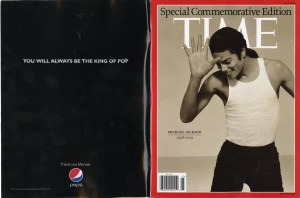 Do you want a commemorative edition that honors, explains and documents the late King of Pop Michael Jackson? Well look no further than the special issue of TIME magazine that started arriving on the newsstands last Sunday afternoon beating all the celebrities titles including TIME’s parent company’s own People magazine. The 68-page magazine (all devoted to MJ) was done in less than 24 hours and was printed on heavier stock cover and inside paper. In addition the magazine was able to sell one ad page to Pepsi that created an ad in honor of the late King of Pop. (See cover and ad above). Newsweek, on the other hand. had to do some quick adjusting to their issue hitting the newsstands last Monday. The main cover story was about books and what to read now.
 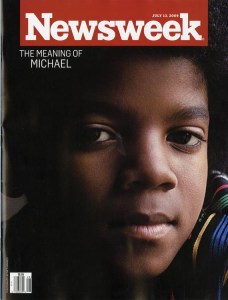 However, the newsstands cover was replaced by a picture of MJ and the tag line The Meaning of Michael and a 9-page special section was produced devoted to MJ. The subscribers cover remained unchanged. What bothered me with the Newsweek cover is that it was made to appear as a special issue on MJ rather than a few pages insert, especially that the cover price for this issue has been hiked to $6.95, one dollar more than the regular price of $5.95. (For the record, TIME also increased its cover price on the special issue by one dollar to $5.99 from $4.99).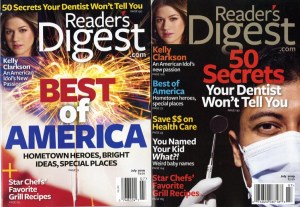
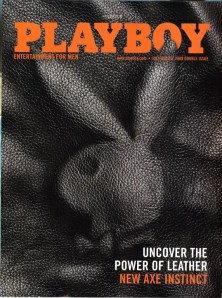 In the last few months I have noticed that my subscription copies of some magazines are arriving with a cover mount that is nothing but an ad. Rolling Stone few months back did that and now my most recent issue of Playboy covered with a New AXE Instinct ad. You can barely (no pun indented) see the word promotion on top of the name of the magazine, but you can easily see the famous trademarked bunny on the cover as part of the ad and an invite to “uncover…”
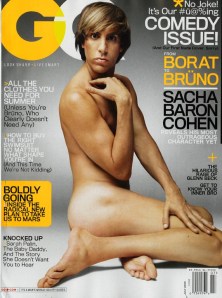
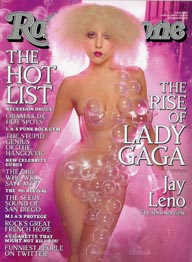
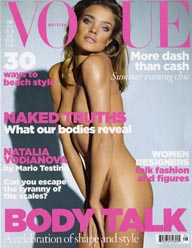
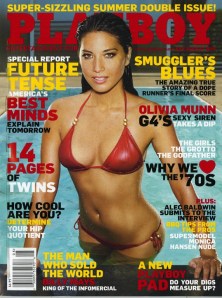 Unlike Playboy, my recent issue of Wallpaper came with no warning, and not one but two naked women on the cover. Now, I am not a purist and I think that I have seen it all, but for a design, interiors, fashion, art and lifestyle magazine to have naked women on their cover is, at least to me, stretching the word “interiors” a little bit too much. (Of course the naked women cover is a limited edition rewarding those of us who subscribed to the magazine as opposed to the single copy buyers; so do not rush to the nearest newsstand since you will not find that copy there).




 Mr. Magazine