“I believe that you have to be the reader. You can’t try and force the reader to be you. So you have to give them what they want and understand it emotionally, understand the voice and the need.” Ellen Levine
Being responsible for some really big magazine titles that have been around for a very long time is only one of Ellen Levine’s job duties as the first-ever Editorial Director of Hearst Magazines; she also knows what it means to develop and strengthen the flock. Dr. Oz The Good Life, Food Network Magazine, HGTV Magazine are just a few of her success stories while at Hearst.
If anyone in the magazine industry deserves the title “launch queen,” it is Ellen Levine. And not only launch queen, but successful magazines launch queen. She succeeded where others failed and she continues to do so. Levine is the no non-sense editor who puts her money where her mouth is. In fact, she is the “less-talk” and “more-do” editor. Levine’s mantra for success is becoming the reader, learning to look at each one of her titles through the eyes of her audience and connecting with each individual person in a very human, very empathetic way.
I spoke with Ms. Levine recently about her past and present accomplishments and her secrets of keeping that audience engagement.
So, sit back, relax and enjoy the Mr. Magazine™ conversation with Ellen Levine, Editorial Director, Hearst Magazines.
But first the sound-bites:
On her recipe for audience connectivity: You need to be able to give them what they didn’t know they wanted or needed in a way that’s appealing.
On her secret for keeping her feet firmly planted on the ground: I really don’t know my secret. I like to define myself as a normal reader when I read all the magazines that we do.
On what keeps her up at night: I am usually up at three in the morning, saying, we should have fixed that headline or that cover line.
And now the lightly edited transcript of the Mr. Magazine™ interview with Ellen Levine, Editorial Director, Hearst Magazines…
Samir Husni: You’ve launched and supervised more successful magazines than probably any female editor that I can think of; what’s your secret recipe for that editorial connectivity with an audience in these changing times? Things have changed so much and yet, from your days at Woman’s Day until the present with Dr. Oz The Good Life, you’re always able to captivate that audience out there.
Ellen Levine: That’s a good question. I believe that you have to be the reader. You can’t try and force the reader to be you. So you have to give them what they want and understand it emotionally, understand the voice and the need. In terms of that, it doesn’t mean you have to have multi-personalities, but you have to be open to what they want. You’re not a teacher, you’re not forcing things. And you need to be able to give them what they didn’t know they wanted or needed in a way that’s appealing.
Everybody wants health information, but they don’t want it the same way. Some want it in an academic voice, some want it in a kind of sillier voice and there is an intimacy that you have to feel. You can’t intellectualize it.
Samir Husni: You also keep your feet on the ground. A lot of editors who have achieved less than you have aren’t so grounded. You see their heads above the clouds; what’s your secret?
Ellen Levine: I don’t know. I’m sorry. I really don’t know my secret. I like to define myself as a normal reader when I read all the magazines that we do. Maybe I have so many different personalities that I should be hospitalized.
But in fact, I can just get into it. And we look to hire staffs that have the same wonderful journalism skills and are very embedded in that fact, but also have understanding and empathy with the reader, none of the holier-than-thou attitudes. You come to us and we will educate you. We want to speak in a different language in each magazine and of course, with somebody like Oz it’s very easy to capture what the energy should be.
On other brands where you’re trying to read the needs of the Food Network person, the best lesson that we ever learned, first of all was to hire brilliant editors like Maile Carpenter, Sara Peterson and now Jill Herzig; you have to understand from that reader exactly how to approach her.
The one other anecdote on Food Network, which is very much of an example, is that we went into focus groups, we did two prototypes and we went into those groups thinking, oh my gosh, what are we going to name this magazine? We liked Spoon, we liked Butter; you know we went through all these names and we’re putting them out there in the focus groups and one of the women said, “I don’t care what you call it, I’m calling it Food Network Magazine.” And there became the name.
Samir Husni: What keeps you up at night?
Ellen Levine: Everything, my children and my husband. But really, toward the closing of every magazine issue, I am usually up at three in the morning, saying, we should have fixed that headline or that cover line.
It was once described as the little engine that could. Hoffman Media, the Birmingham, AL based magazine media company has grown over the last 30 years to become a major player in the magazine field. Eric Hoffman, the executive vice president and COO of the company is now the chairman of the IMAG (Independent Magazine Media Group) and a member of the board of the MPA: The Association of Magazine Media.
I asked Eric what is Hoffman Media secret of success? His answer in the following Mr. Magazine™ Minute.
On the day after Time Inc. became its own publicly traded company, Joe Ripp, CEO of Time Inc., shares with Samir “Mr. Magazine™” Husni his views on the future of Time Inc. in this Mr. Magazine™ Minute.
“Design is a part of communication and media; it’s a part of everything. It’s all very much interconnected.” Joe Natoli
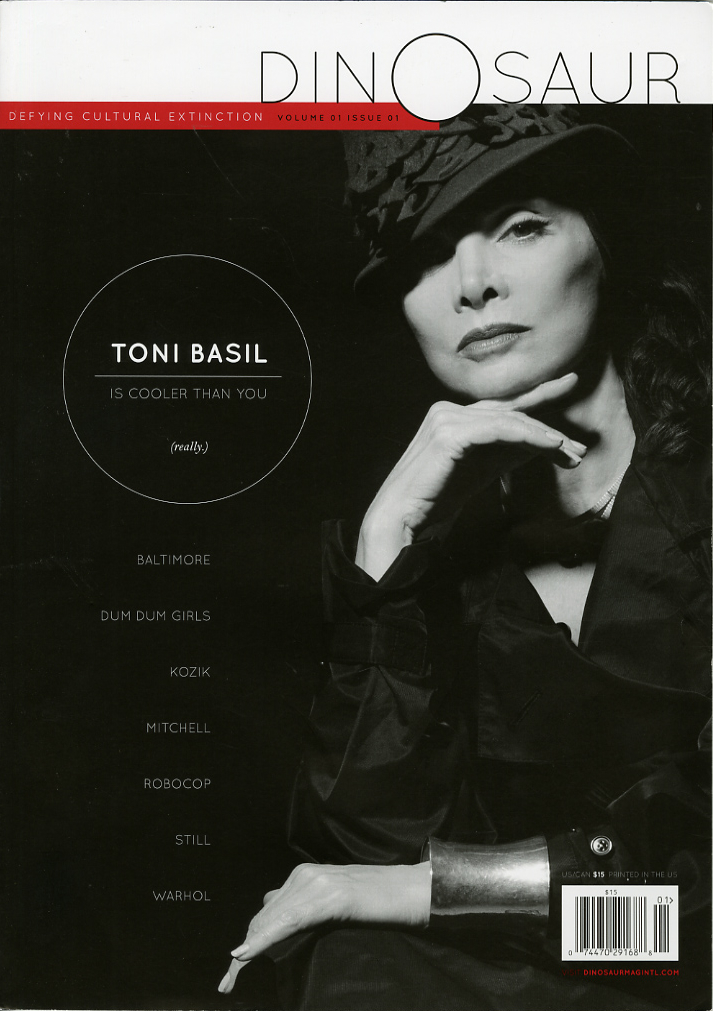
What can you say about a man who has been designing creatively and passionately for over 25 years and is still filled with the excitement of a child when he talks about his work and once again designing for print as the art director of Dinosaur Magazine? The word amazing comes to mind.
Joe Natoli is a consultant, teacher and master of design and brings more to the table of interactive connection and engagement with the audience than any designer out there. He can visualize print pages as alive with movement as pixels on a screen and the best thing about his perception? He knows how to make that mobility happen.
I spoke with Joe recently about his theories and ideals on design, working at Dinosaur and the “Imposter Syndrome,” something he is definitely not when it comes to the creativity of his designs.
So grab the latest issue of Dinosaur and follow along as you enjoy the Mr. Magazine™
Interview with Joe Natoli…
But first the sound-bites…
Sound-bites:
On going up onto the mountain of design and bringing down three commandments: I believe there are three components that are incredibly important and I think one of those is you have to have a mission and a focus if you’re going to put anything out onto the marketplace, magazines especially.
On the biggest challenge he’s faced in his career and how he overcame it: I think the biggest challenge that I ever faced was self-confidence, really believing enough in my ability, in my talent, in the gifts that I’m fortunate enough to have, and to sort of go out there and just do it.
On the most pleasant surprise of his career so far: I look at this from a very human perspective. When something I do helps someone in some way, I feel very good about what I do.
On what keeps him up at night: I think honestly, I’m still trying to decide what I want to do when I grow up.
And now the lightly edited transcript of the Mr. Magazine™ conversation with Joe Natoli, Creative Director, Dinosaur Magazine…
Samir Husni: There are hundreds of magazines out there, thousands of apps; what would be the three most important differentiation points that would say: OK, this is what needs to be done so that this picture, this article and this design is solely for Dinosaur? I mean, is this a scenario where Joe Natoli goes up onto the mountain and comes back down with these three commandments?
Joe Natoli: I think so. I believe there are three components that are incredibly important and I think one of those is you have to have a mission and a focus if you’re going to put anything out onto the marketplace, magazines especially. You have to have a mission and a focus that is not presently being served. You cannot go out there with more of the same content-wise and just package it differently.
And whatever that is, it has to strike an emotional chord. From a psychological standpoint, one of the things that I tell designers all the time and marketing people as well is that a call to action is related to money and will only work if you’re not appealing directly to the act of subscribing or the act of making money. The call to action has to be in some sense, a personal connection. And we’re wired for personal stuff first, that’s what we respond to.
So if I get the idea that you’re going to make really good use of my time; you’re going to entertain and inspire me, you got me, you have my attention. I will at least take ten seconds to check this out. That’s the first part. You have to have that and it has to be something that’s not out there currently. I am a big believer in zigging when everyone else is zagging. I think that’s the first thing.
The second thing is the visual design part. The presentation has to be way beyond adequate. There is any number of templates out there for print design; web design and visually they look nice. They’re clean, everything is aligned, and the colors are nice, it’s pleasant to look at. It has to go beyond that.
Every visual design decision that you make has to support and exclusively communicate your specific vision, your mission; the design has to come to life and push all that. So it has to be extraordinary, it can’t just be good. There’s just too much out there that you’re competing with for it not to be extraordinary. You have to find a way, which means you have to spend money, to hire, not a “good” designer but a “great” designer. That’s the second thing.
The third thing is material. It’s format, size and it’s paper. One of the other things that I see a lot of is magazines have sort of been forced to cut cost and downsize, and I understand the pressure, I really do.
Also you see a lot of size changes, big magazines, oversized magazines are now getting smaller and the paper is a lot thinner. The problem with that is that you’re sacrificing the emotional components of numbers one and two that we’ve talked about. And again, the emotional component is what makes the connection with the reader. The emotional component is what makes people feel like they have a relationship with you. And the touch of that paper, the feel of it in your hand as you pick this thing up and it feels substantial, that has an impact. There’s an intangible, unconscious impact that happens because of that. Now Dinosaur is 10×14 in size. When we originally conceived this, we thought about 11×17; we wanted to go even bigger. We wanted it to be a coffee table piece and we kind of wanted to make it where people would have no choice but to pay attention to it.
But here’s the reality; paper costs money. So you hear from the printers and you say, wow, that’s a lot of money. So we had to rethink the size issue. So the way that we compensated for it, in our case, is we said we’re not sacrificing paper weight, so we moved to a different type of press and went to 10×14. It’s a compromise, but we didn’t go to 9×12 or 8½x11.
And for the first issue, we went to two colors. That saved us money, but also the real reason that we did it is at the end of the day the big deciding factor was that this was going to differentiate us because no one does this. Every other magazine is full color.
So the material form, the paper, the weight, the size, the message you use to produce it absolutely matters. People can see the difference. You can pick up two products in the store and if one feels heavier in your hand, there’s an immediate assumption that the heavier article is of higher quality. And that’s cognitive wiring, nothing more.
Samir Husni: What has been the biggest challenge that you’ve faced in your career as a designer and how did you overcome it?
Joe Natoli: Quite honestly, I think that the biggest challenge, and you may find this funny, a lot of people do after they talk to me awhile; I think the biggest challenge that I ever faced was self-confidence, really believing enough in my ability, in my talent, in the gifts that I’m fortunate enough to have, and to sort of go out there and just do it.
I don’t know if you ever completely overcome that, but what you do come to realize is that the only way to get that, and I think this holds true for my students as well, I have taught part-time for many years; the only thing that you can really do is go out there and get your nose broken. The first thing that happens when you fall hard that first time is you realize that it didn’t kill you. And then I think it also gives you a sense of what you’re made of and you start to understand just what you’re capable of. And if you keep at it what eventually happens is you start having some successes. And that hopefully gives you more confidence about what you can do and it feeds itself.
But I think it’s hard. I read something somewhere, and I don’t know if it’s just creative people or maybe smart people, but a lot of successful people in particular have something called “The Imposter Syndrome.” There’s a converse proportion where the more talented and successful and capable that you are, the more likely you are to have these moments where you say, “I’m an imposter. Everyone is going to find out that I really don’t know what I’m talking about. I really don’t know how to do any of this stuff.” It’s a weird correlation between ability and fear.
The fact is, and here’s the funny thing, you do have something that for whatever reason they’re not able to get to themselves. And that’s not a decision on anybody’s part, if you think about it it’s probably just a testament to the fact that we’re all very different. We all think about things in very different ways. And I wrestle with that a lot.
Samir Husni: What has been the most pleasant surprise of your career so far?
Joe Natoli: I don’t know if it’s been the most pleasant surprise, but I’ll tell you this thing that happens that makes me feel like this is absolutely what I should be doing.
When I’m in a room with people or in a room with a client’s team or with students or a one-on-one situation, coaching someone through something; when the light bulb moment happens and when everybody’s attention sort of perks up and everyone has that yes moment at the same time and they get it and when whatever it is gets implemented and the team comes back to me and says, “I cannot possibly explain to you how much this helped us.” That’s what matters to me. It may be cliché to say it, but my client’s successes are my successes. And it’s the truth.
I look at this from a very human perspective. When something I do helps someone in some way, I feel very good about what I do. It’s time well spent. It’s proof that you’re in the right place and I love that.
Samir Husni: My typical last question; what keeps you up at night?
Joe Natoli: I think honestly, I’m still trying to decide what I want to do when I grow up. It seems to be getting clearer in that the more consulting and speaking that I do and the teaching moments, because consulting is teaching in many ways; I think I’m figuring out that’s what makes me the happiest, but I’m interested in so many things.
Like I hadn’t done print design in probably ten years before Steven from Dinosaur called me about this. And who knew? I certainly didn’t.
So I don’t know; the problem is so many things get my attention and I’m like the proverbial dog, when they’re constantly distracted. Some part of me feels like I’m still trying to figure it out, but you have kids and you’re supporting them and trying to be there for them and you know that you can’t go diving off into every adventure you find because you have a wife and kids; a family.
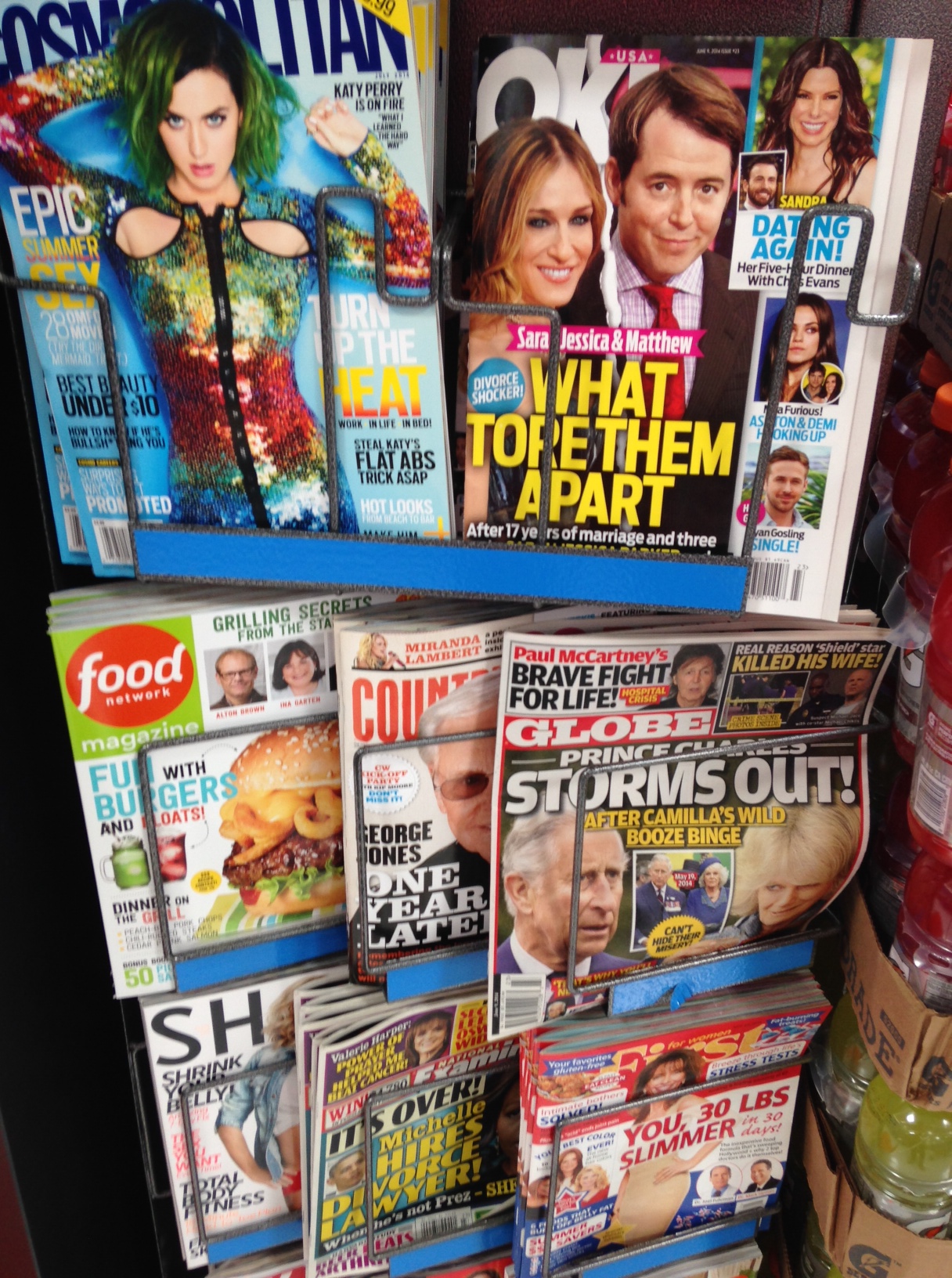
Americans depend on newsstands. While that might seem like a ridiculous statement considering the number of establishments that are threatening to close or already have; it’s nonetheless true. Nowhere is the social impact of magazines developed and realized more thoroughly than on the newsstands.
And while yes, for the majority of ink on paper publications the newsstands only represent 10% of their revenues, newsstands have never proven themselves to be more essential and more important than they are right now in the scheme of all print media, even in this digital age.
Why are they so important? Because of one fact that not even the most staunch digital supporter can deny: they’re in-your-face bold and they never apologize for their intrusiveness. Nor should they.
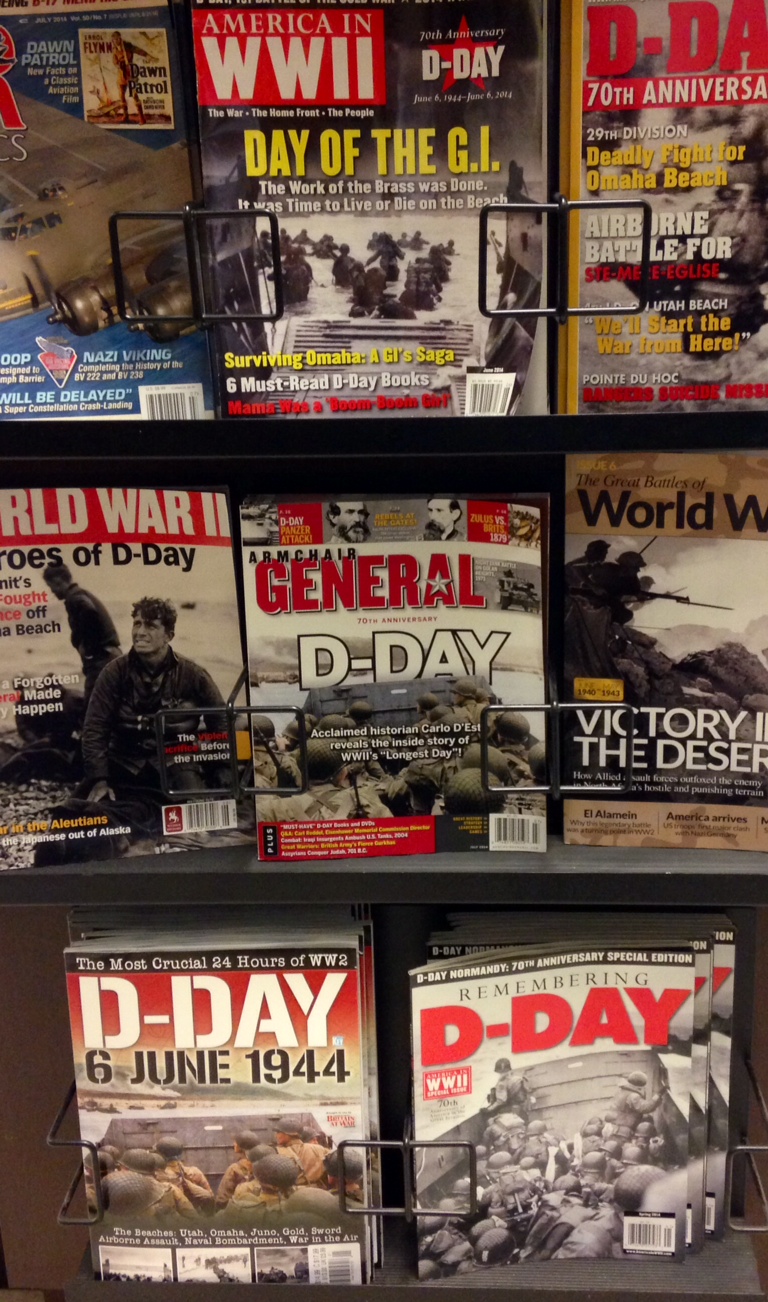
You’re at the newsstands, walking slowly and perusing some of your favorite titles. Suddenly, you see a cover that fairly leaps from its spot on the stand and almost attacks you with its social importance and vibrancy. D-Day: a 70th Anniversary issue that quickly brings the World War II battle to the forefront of your mind. Nothing can pierce that moment in time between you and that magazine cover, nothing. Not the people chattering around you in the background, nor the sounds of cars honking as they go by. It’s just you and that infinite juncture in time where your gaze and your mind connected with a magazine cover that caused a reaction no news broadcast or digital pop-up notification ever could.
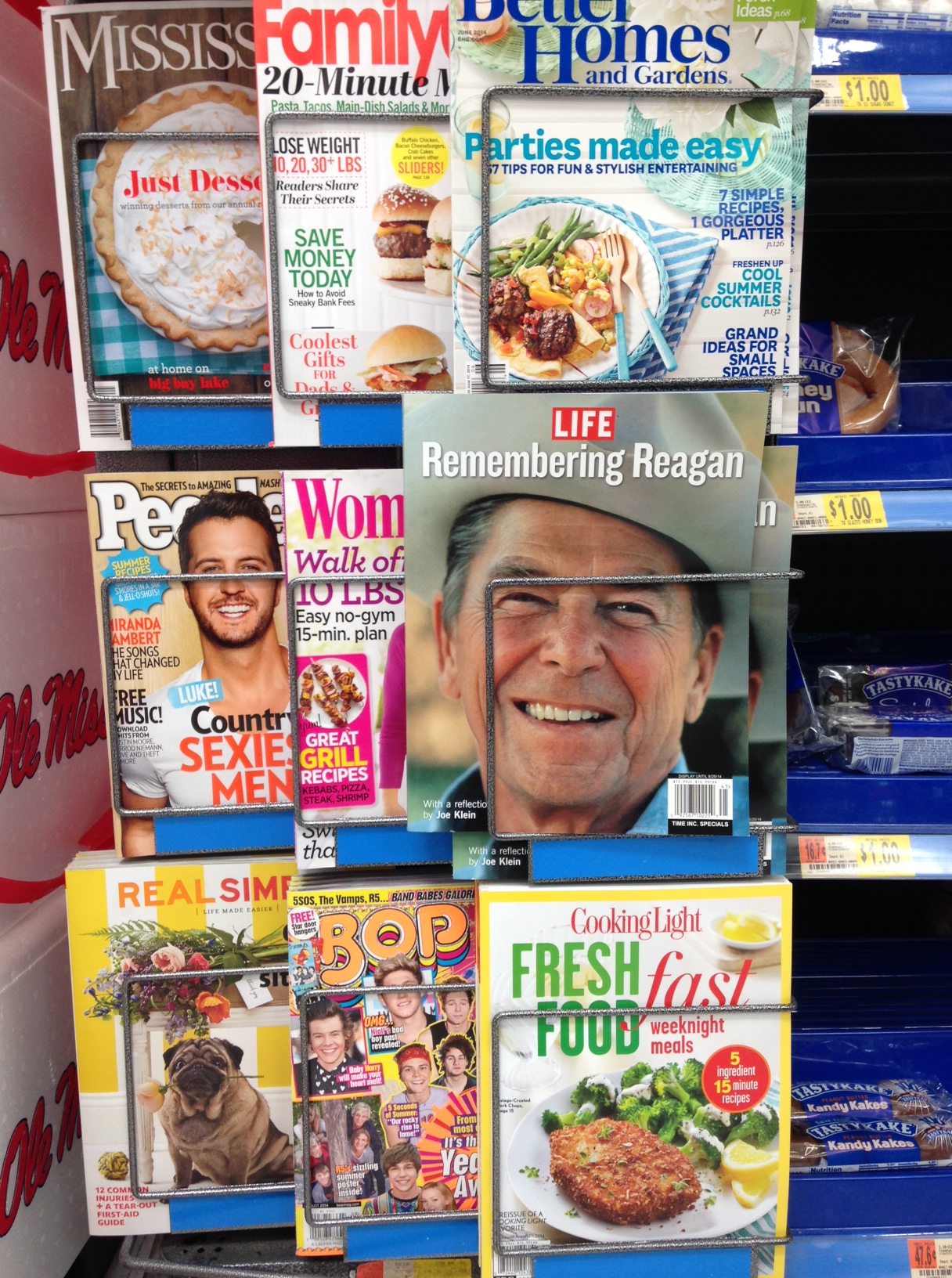
It doesn’t matter if you’re in California, Mississippi or Colorado; when you walk into your local Wal-Mart or grocery store and see all the special niche publications on D-Day or whatever event or happening is important to the American Canvas when it comes to that particular time, the newsstands help you to remember that epoch without you even trying. No Google, no Yahoo Search can ever compare to the in-your-face response a magazine cover can generate without even leaving its slot on the stand.
Newsstands are also a great barometer for the demographics and psychographics of any given neighborhood or community. Nowhere else on earth can the inhabitants and their beliefs, practices and habitual ideals be more prominently displayed than in the contents of neighborhood newsstands. It’s a given that what the people of the area like and want will be on display there and the measurements of those details duly noted.
So the next time someone asks you why are newsstands still an important part of the media world; maybe you can just say that when it comes to the fabric of our American canvas, newsstands keep it stitched together with the taut strings of relevance and impact.
As I sat musing about the magazine media industry (as I often do on a minute by minute basis), my thoughts turned to some positive trends going on in the single copy sales today in the midst of all the negative news most reporters and critics are more than anxious and happy to cover. I tend to do my research at the newsstand, something that I have done for the last 52 years of my life. So on to the field and the five amazing things that led to this Mr. Magazine™ Musing.
One by one, five different directions things seem to be moving toward (at least presently) came to mind – four of them brand-spanking new and one tried and true…no extra charge for my easy rhyme, by the way…because that would be a trend unto itself.
Years ago, most of these would be unheard of, no doubt, but it’s a given that in the marketplace and on the newsstands, in order to grab people’s attention and dollars in this digital age, creative marketing and packaging is something that has to be done. And I would definitely call these trends creative, if not downright visionary.
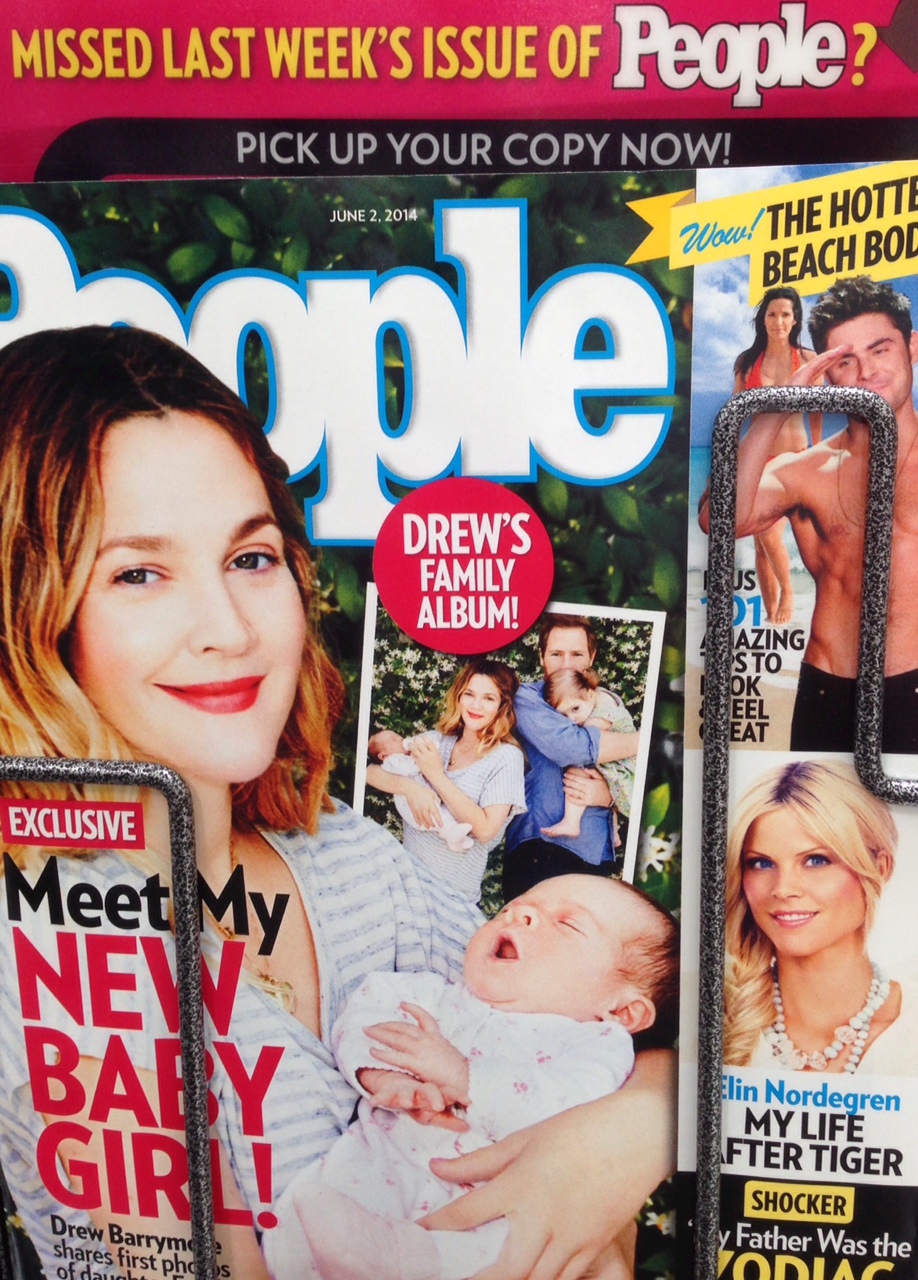
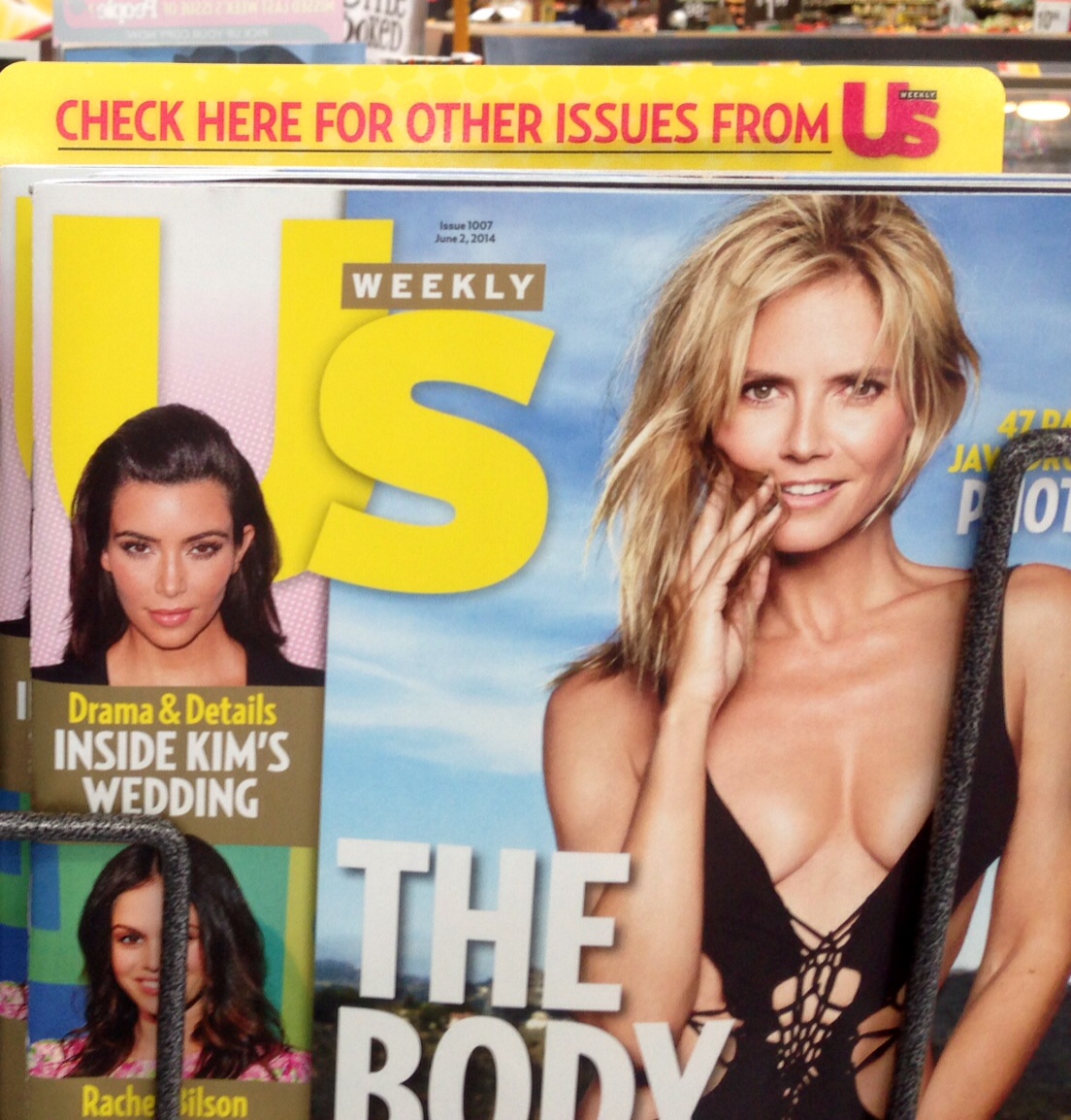
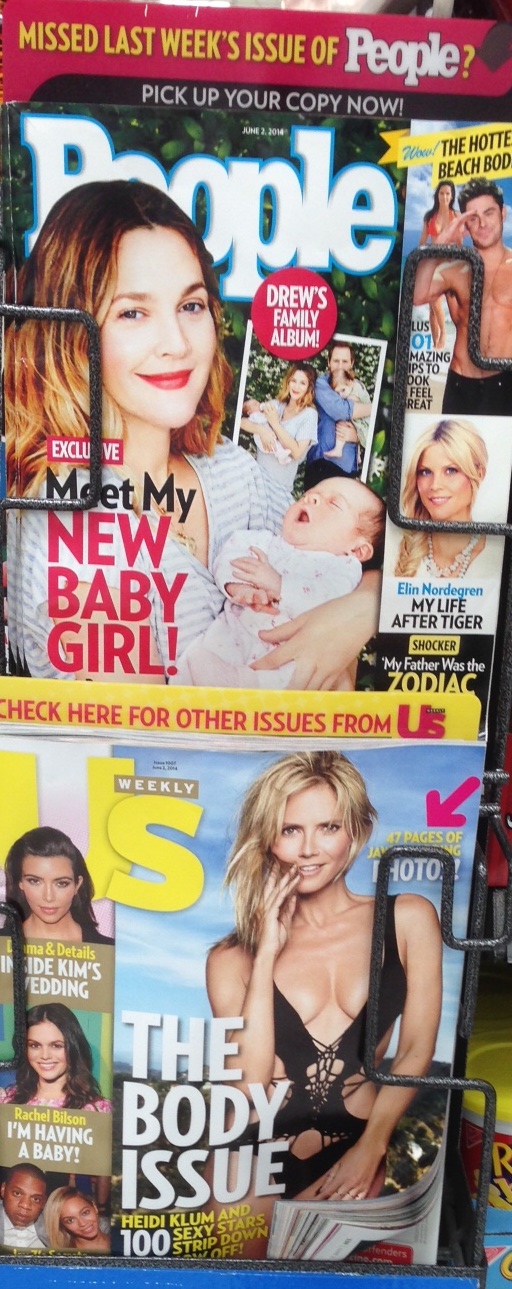
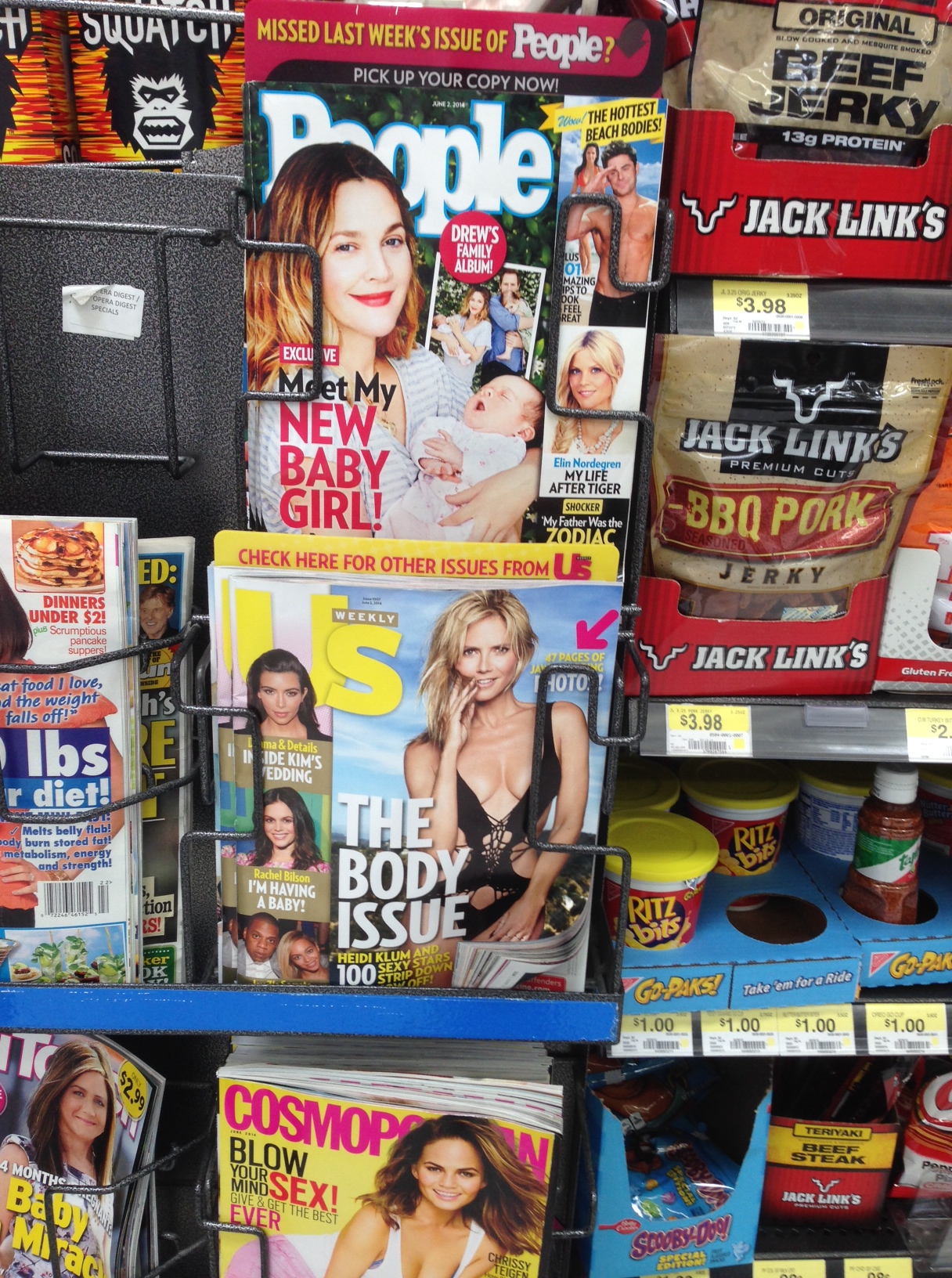
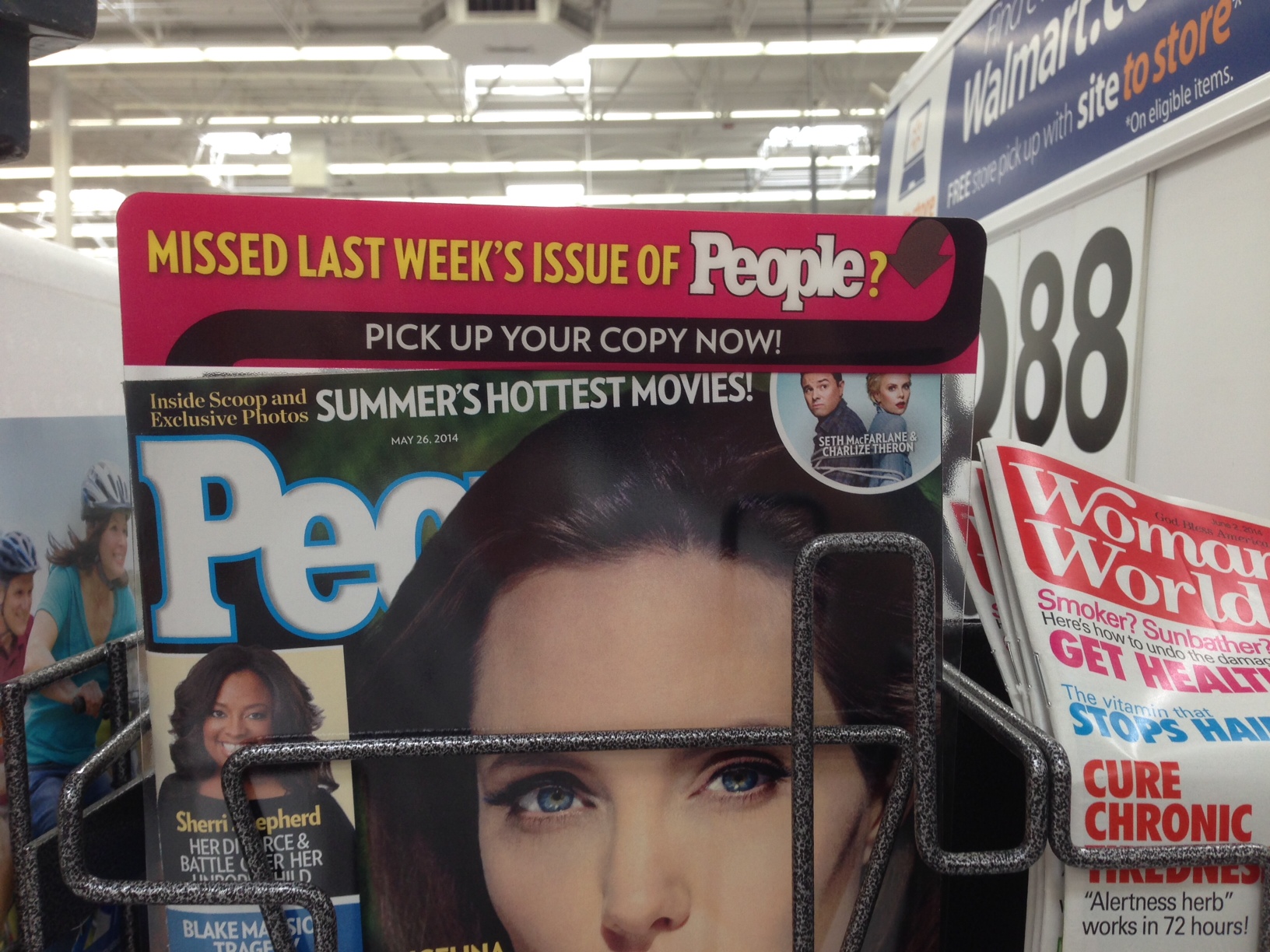
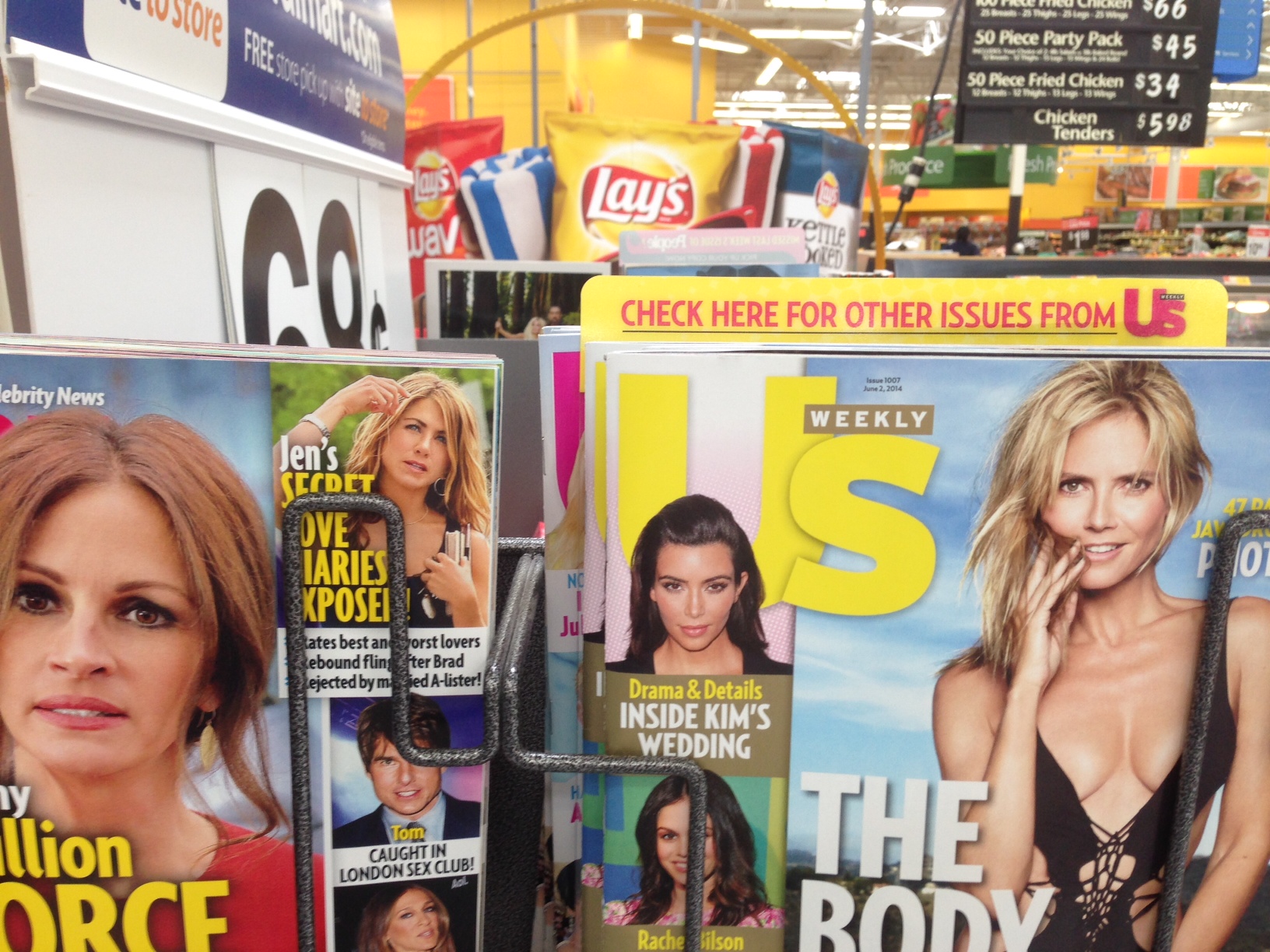
Having said that, I begin with Trend #1, which is one for the record books, I believe: selling back issues of certain titles on the newsstands. This is a practice that began when People Magazine and US Weekly started offering specific pockets on the stands filled with back issues just in case consumers wanted to pick up an old with the new; as I said an unprecedented gambit that has proven not only daring, but profitable. Once I got over my initial knee-jerk reaction of, “What – we don’t have enough current issues to sell?” I realized that this one may be right up there with sliced bread. I like it more and more as I consider the revenue potential.
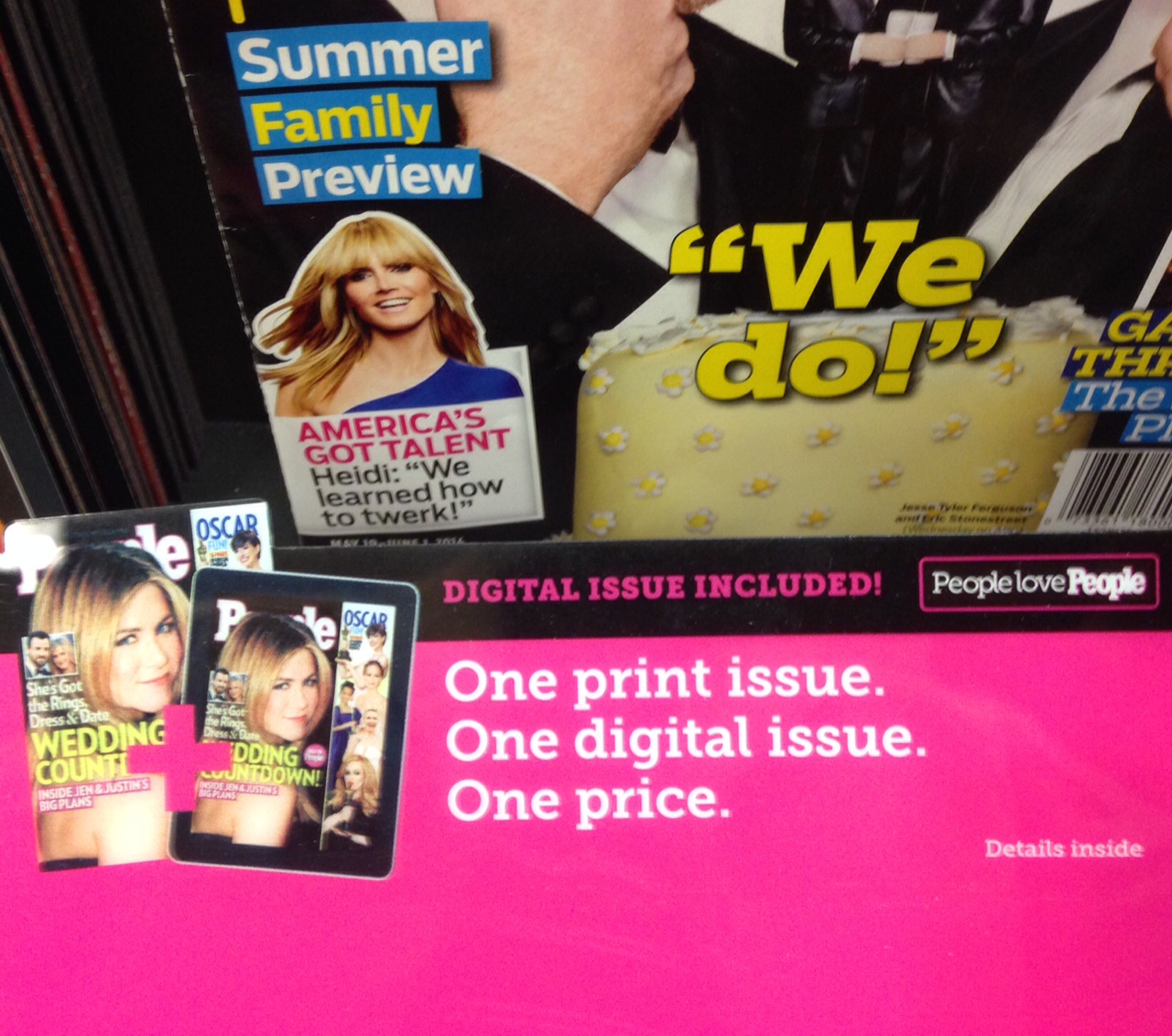
Trend #2 – Also led by People Magazine – is the method of buying the printed product on the newsstands and receiving access to the digital components of the publication as well. While this may not sound as gutsy as #1 – it really is when you consider the potential lack of profitability of the move. Usually fee versus free is a good mantra to follow; however sometimes you have to risk the farm to gain the ranch. So I’m open to this one – if not completely convinced.
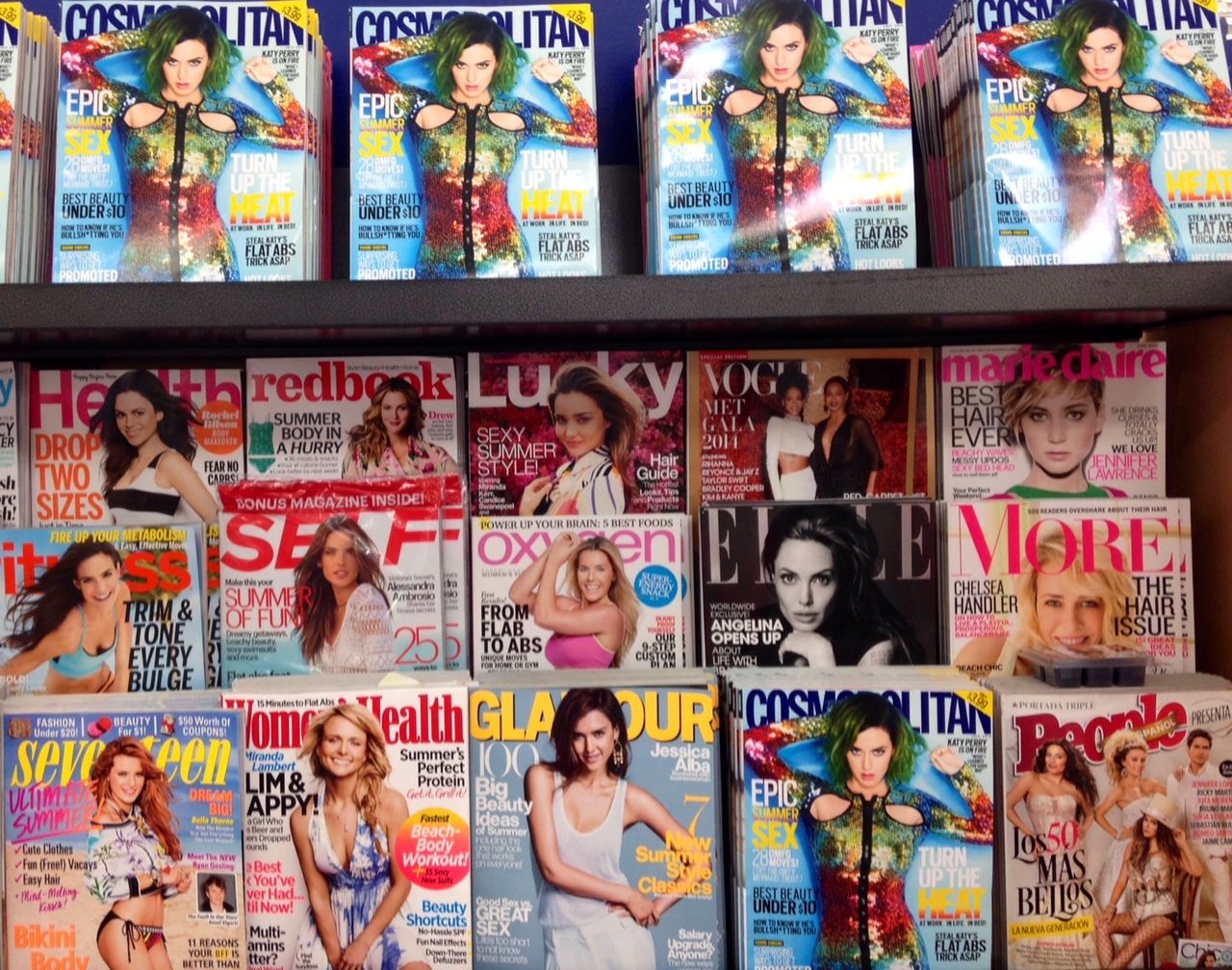
Trend #3 – What I like to call: The Miley Cyrus Ripple Effect…when America’s former sweetheart-turned-bad-girl put out a Tweet that read: “Let’s play a game! All my fans go and put my @Cosmopolitan in front of all the magazines at the store!!! Send me pics haha!” Needless to say, her many fans complied and stuck her Cosmo cover in front of many other magazines on newsstands across the country and the rest, as they say, is history.
Well, that little episode gave birth to the action of every Cosmopolitan Magazine at Wal-Mart being displayed with multiple facing issues or covers of the same issue. Needless to say it is making Cosmopolitan reigning supreme.
Trend #4 – You might remember the days when magazines at the check-outs were priced under a $1…well, my friend – those days are gone. Now we have those wonderful niche dreams called Book-a-zines featured in those spots and anywhere from $9 to $15 has become the norm for a magazine presence there. It may seem indulgently expensive, but these types of printed products do draw attention from the consumer and are proving quite effective when it comes to revenue.
Trend #5 – And then one of our “old faithful” stratagems, enforcing the statement that some things never change – most magazines on newsstand check-out counters are still aimed at women. That will probably never change and no matter how the demography of the public changes and the shopping habits of the audience change, some stuff in life (or on the newsstands) seem never to change.
So, there you go five trends, with five different perspectives and five different ways of trying to gain our audience’s attention and ultimately their loyalty to the printed product that we’re selling; all interesting points of entry for ink on paper when it comes to consumer’s shopping carts. Maybe, after all, the future of digital starts with PRINT.
A Month’s Bevy Of New Launches Is Unbelievable! 96 New Titles In All & 27 Of Them Are With Regular Frequency…
From titles whose premier issue didn’t make the cut due to a non-newsstand presence to their second or third issue that did; May 2014 has proven to be a successful month for new launches. 96 new faces smiled back at me as I joyfully shopped and purchased each one…27 are with regular frequency; titles such as Anglers Journal, Bible Fun, and TVTOR show the diverse spectrum of topics that tempted magazine lovers in May…and from the 69 special issues; there was anything from Erotic Ink to book-a-zines paying tribute to the 70th anniversary of D-Day.
All-in-all, May was a spectacular month for new launches. Sit back and have a glass of lemonade as summertime approaches, and we say hello and goodbye to the month of May 2014. Something tells me we won’t be seeing the last of some of these titles from the frequency list…
So for the critics who continue to attack the state of new magazines and its future, all I have to say is that they will continue to talk nonsense when it comes to the health and pulse of the industry and the newbies it brings to the marketplace day in and day out. Some like to talk “non-sense,” others “some-sense,” but as for me and my blog, you are not going to see anything here but commonsense combined with actual field research and study. No pontifications from behind the desk, in the den or inside the walls of academia… (Photo Illustration:The Critics and I)
With all the problems facing the newsstands, (and I know there are a lot) single copy revenues are still far far higher than any digital revenue being generated by the so called “digital magazines.”
Enough said, relax, and take a look at all the new titles. Enjoy!
“What probably keeps me up at night is the dynamic relevance of printed magazines and what they mean to the consumer and making sure that a generation of advertising and media professionals appreciates the value of the medium.”
“I think about magazines and magazine media all the time.”
“More Print Products are coming from Hearst in the coming years.”
Michael Clinton
A pilot, an accomplished photographer, a philanthropist who started his own charity, Circle of Generosity, a publishing director, an author of several books, a marathon runner, a traveler to more than 120 countries, an executive, a magazine rabbi and a high priest in the eyes of those who know him and work with him… In fact, there is no shortage of adjectives to describe Michael Clinton, who is also the chairman of the MPA — The Association of Magazine Media.
He and David Carey, the president of Hearst Magazines, seem to be among the few magazine executives who are not closing any magazines, downsizing, or just reducing the weight of the paper. No, actually they’re doing just the opposite. Hearst magazines has been acquiring magazines, launching very successful print products, without forgetting digital which as of today only represents 3% of the total circulation of Hearst Magazines.
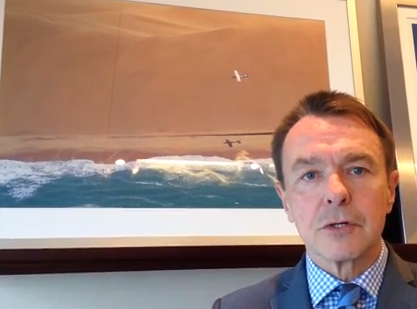
So when I had the opportunity to engage in a conversation with the multi-talented Michael Clinton, my brain was racing with a million questions I was ready to fire at Michael and my eyes were roaming his office observing the pictures on the walls and the model Air-Force One on the round table among many other memorabilia scattered around his office.
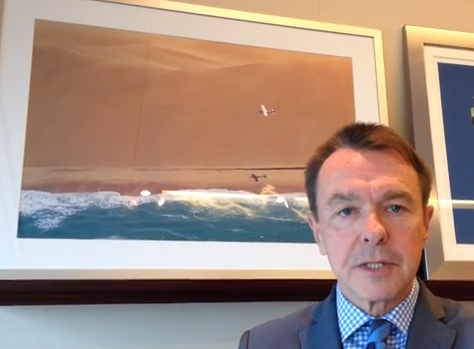
I asked Michael about his favorite picture from all the photos he has taken over the years. He was quick to point to a picture on the wall facing his desk of a plane off the coast of Namibia. The same picture is also adorning the cover of his book The Globetrotter Diaries.
I chose that spot in Mr. Clinton’s office on the 43rd floor of the Hearst Tower in NYC as the backdrop for The Mr. Magazine™ Minute with Michael Clinton. I asked Michael Clinton why more publishers aren’t following in the footsteps of Hearst Magazines? Click the video below to listen to his answer:
And now for the sound-bites…
On whether he thinks about magazines when he wears his other, innumerable hats: And so I think about magazines and magazine media all the time. And actually some people around here laugh at me when I say, “I was out for a long run the other day.” And they know that that means that I concocted some idea in my head while I was running that I was about to lay on them.
On the most challenging moment in his career: For many people, a dark moment was in the depths of the recession because as businesses really cut back in their spending, and it was across all media, part of my job is to keep the troops motivated.
On what he believes the other magazine professionals are doing when it comes to why Hearst seems to be one of the few publishers promoting and launching new magazines: That’s a great question, but I don’t know. We’d love more of our peer companies to step out and put out a new magazine and a new concept. But we’re happy to continue to innovate on that front.
On whether he’s a believer in print: Big time.
On what he believes is the most problematic issue we have today in the magazine marketplace: I think that we’re in a state of confusion and disruption in the media landscape in general.
On a solution for the newsstand problems: I think to do innovative things at newsstands such as working with retailers. We’re doing some really innovative things on the shopper marketing front where we’re creating customized units that are combinations of gift-with-purchase.
On what keeps him up at night: I think that what probably keeps me up at night is the dynamic relevance of printed magazines and what they mean to the consumer and making sure that a generation of advertising and media professionals appreciates the value of the medium.
And now the lightly edited transcript of the Mr. Magazine™ conversation with Michael Clinton, President, Marketing and Publishing Director of Hearst…
Samir Husni: I’ve been doing some homework, checking around the building and talking to people; three things I learned about you, some I knew before, some I did not. One is your philanthropy, which hasn’t been covered much, but people do know about it. Two is your marathons, which you cover yourself on your tweets. And third is that you’re the rabbi to most of the magazine publishers and editors in the building, they refer to you as Rabbi Michael. So as the high priest of magazines, especially the ones that you’ve been really involved with – the three most successful launches of the last five years, from the Food Network to Dr. Oz; how do you combine those three entities and juggle between them? Is it always magazines on your mind whether you are teaching, running or giving away your money?
Michael Clinton: That’s a great, great question. I think that fortunately for me I still love the magazine industry; I’ve been in it a long time. So I’m one of the lucky people who wake up every day and am excited to go to work. And I think regardless of what industry you’re in it’s great to be able to have that sense of drive, commitment and interest in your chosen profession.
And so I think about magazines and magazine media all the time. And actually some people around here laugh at me when I say, “I was out for a long run the other day.” And they know that that means that I concocted some idea in my head while I was running that I was about to lay on them.
I often find that my down time of going and running a marathon or training in the park is actually great for clearing my head to come up with new ideas or solutions, solving problems or thinking about new ways to go at what we do.
To answer your question, a lot of what I think about with regards to magazines, a lot of it solves problems, not necessarily in the Hearst Tower, but outside doing a lot of the other things that I do.
Samir Husni: And what has been a most challenging moment in your career? Maybe a time you had to run extremely far to get it out of your system and come up with a solution.
Michael Clinton: For many people, a dark moment was in the depths of the recession because as businesses really cut back in their spending, and it was across all media, part of my job is to keep the troops motivated.
And so when you see the kind of business downturns everyone faced during the recession, especially younger professionals who never experienced a recession, for some of us we’ve been through different business cycles, but for younger people it’s harder for them to see the other side and younger publishers who were coming off of those phenomenal go-go years and 2007 being kind of the penultimate one and keeping people motivated and focused, making them try and appreciate that it wasn’t the end of the world, that business cycles happen and there would be a leveling out and a rebuild, that proved challenging.
So there were a lot of long runs during that time.
Samir Husni: With the Food Network it was smooth sailing from day one. Dr. Oz was a bit rocky in terms of staffing, correct?
Michael Clinton: Yes, we had an editor change and she left on her own to go back to California. I think the thing that was very interesting in 2008 when we decided to launch a magazine, obviously it was a very bold and daring statement, and I think what happened was we were counter-contrary to the marketplace and we went out and launched Food Network Magazine in a very strange way, talking about my earlier comment. It kind of lifted the whole organization because when you do bold things in tough times, what happens is often it not only lifts the entire organization, but when you have the success, it really shows there is clear view out there for other businesses to grow. So you’re right Food Network was an instant takeoff.
Samir Husni: And why is it that you and David Carey are among the very few who have been promoting new magazines, talking about new launches; what’s the rest of the industry doing?
Michael Clinton: That’s a great question, but I don’t know. I think that as the chairman of the MPA, we always talk with encouragement when it comes to new product launches and bringing new magazines to the marketplace, because we now have new proof points that if you put out a great product, the consumer will come and the consumer will pay. We now have three proof points on that.
We’d love more of our peer companies to step out and put out a new magazine and a new concept. But we’re happy to continue to innovate on that front. We now have the perception in the marketplace that we are the innovators in regards to new magazines in this time period. That we’re the ones that will innovate and put out new products and feel strong about new print products as well as all the other things that we’re doing digitally.
Samir Husni: You are one of very few companies that never lost its focus on print, just to swim in the digital ocean. That you actually kept both print and digital.
Michael Clinton: And don’t forget we acquired Hachette. So at the same time, aside from launching new products, we made a very big print acquisition also coming right off the heels of the recession.
Samir Husni: So are you a believer in print?
Michael Clinton: Big time. I think what we see, and once again I’ll go back to today, Dr. Oz, we have 300,000 subscriptions in hand. It has been one of the fastest ramp ups, one of the highest pay rates, where the consumer actually wrote the check; and as you know we sold out on the newsstand and went back to press.
So I think even if it was 2008 when it was Food Network, people might say, well OK, that was then and then we did HGTV in 2011 and people might say, that was then, but it’s 2014 and it’s happening again people. I think the trick is in finding a fresh voice in a cluttered marketplace and I think those three examples really had a fresh voice in their market.
Samir Husni: What do you think is the most problematic issue we have today in the magazine marketplace?
Michael Clinton: I think that we’re in a state of confusion and disruption in the media landscape in general. And I think that if you’re a CMO today of a brand and you think about everything that is coming at you, the big headline in Adweek: is TV dead? Video is taking over. What’s happening in the digital marketplace with programmatic and view ability.
Every media platform seems to have big issues as part of the overall media ecosystem that marketers are challenged with. So the print medium has a long history of tried and true audience and audience measurement, but in a world of disruption everything is sort of up for grabs.
So I think what a lot of marketers are finding and what I’m seeing is that it’s all about the media mix and magazines play a part in that mix. That when you have the correct media mix in your media spends it can actually lift all boats.
There’s a lot of noise and disruption and I think the overall noise and disruption affects all media, not just magazines.
Samir Husni: Putting the rabbi hat on and talking to the future generations, people interested in our business, in journalism, in magazines; if you’re teaching a class, what do you tell the students?
Michael Clinton: You know I think that the good news is that magazine brands used to be just print. And if I use an analogy in the retail world, I call that our bricks & mortar business. Even though E-commerce is ubiquitous, bricks & mortar is not going to go away. It’s a different experience. So when someone is in the pages of Esquire, Oprah or Cosmo, they’re having a very unique and different experience.
It’s part of the bricks & mortar story. The beauty we’ve had and I think that what gets lost in the conversation and I talk to publishers about this all the time, is that the brand footprint now for Cosmo can live in many different places. So the core is always going to be magazines and print and I think that’s as far as the eye can see. Cosmo.com, Cosmo – social media, Cosmo events, Cosmo won-off-TV-things; we now have the ability to take our brands out to other brand and media platforms that before we didn’t really have the opportunity to do.
So I think that for young people I like to say, think about it as a horizontal experience, not just a vertical experience. Because whether you’re on the publishing side or the editorial side, and this has already happened in the news marketplace, if you speak to a young reporter now, they’re producing their story, filming their story, and posting on the dot com, doing their social media; so they’re multitasking with different content and we’re doing the same thing, so it’s a big opportunity.
I think magazine media’s core is still going to be the printed page.
Samir Husni: Do you think we can ever succeed with a digital-only magazine? Even though I don’t call anything but print a magazine…
Michael Clinton: I think you have to clarify that question; are you talking about web-based or tablet-based?
Samir Husni: Can you name a tablet-based digital magazine that’s making money?
Michael Clinton: Well, that’s a great point. I think that the opportunity is there for a magazine that is a tablet-only magazine. I think the tablet world may have to mature a bit. But in our May issues we did a test; we took 10 of our women’s magazines and we embedded a 12-page beauty supplement that ran in 800,000 copies of those paid circulation magazines. Now that’s a bit of a scale play that never really existed before. You know, could that become its own magazine, who knows.
But I think that we’re in the very early days of testing whether something could have a circulation of a half million, but only live as a tablet distributed magazine. I think we’re too early in the product life cycle of magazines on tablets, but five or ten years from now it could be possible. But I think that we have a long way to go.
As you know we only have three percent in total magazine subscriptions on the tablet to begin with, so I think you almost need to have the consumer have a deeper learned experience in how they’re getting their content.
Samir Husni: Which leads me to say you are the only company that doesn’t bundle…
Michael Clinton: We do not bundle, no.
Samir Husni: If you want Cosmo on the tablet, you pay $19.95 or $14.95 and if you want the magazine, you buy the magazine…
Michael Clinton: Why do we do that? We have an expression: fee not free. Let me first talk about authentication. The analogy we would make is I went to go see Godzilla on Saturday night, but when you walked out of the theater they did not hand you a free CD because you just paid for your ticket or when you buy a book, say the new Hillary Clinton book, you don’t get a free download on your tablet. If you want it then you buy it two different times.
I think what’s been great about iTunes, in particular, is if you wanted the content you paid for it, hardcover book versus download book. So we took that position very early on and as a result we have about a million, almost a million-four, paid subs that are tablet-based subs and it creates a level, from our perspective, of wantedness from the consumer and also a story we can tell the advertiser. So it’s choosing your distribution.
Samir Husni: Talking about distribution; how’s Next Issue doing?
Michael Clinton: It’s coming along. It’s a fantastic consumer proposition. In their next round, where they need to go next as they continue to build their brand is a big marketing and promotional play. At a certain point they have to get the message out to the consumer marketplace at large, because while it’s growing, they need to get that lift-off. They’re going to have to get that funding to be able to promote it in a big, big way to the consumer.
Samir Husni: What can we do about the newsstands? With closings and rumors of closings…can we have a magazine industry in this country without newsstands?
Michael Clinton: It’s 10 percent of magazine circulation, so it’s small, but it’s an important piece; forget the economics because it’s an important economic contributor. But it’s an important piece for sampling, to get that magazine in front of the consumer’s eyeballs.
So the good news is as doors shrink, borders go out of business; on the flip side there are other doors and stores that are actually growing their magazine presence such as Costco and Dollar General; points that didn’t have magazines. So the answer is yes, it’s important to have newsstand.
And also I think to do innovative things at newsstands such as working with retailers. We’re doing some really innovative things on the shopper marketing front where we’re creating customized units that are combinations of gift-with-purchase. So if you buy a skincare product and if you buy a copy of Marie Clare, Elle or Cosmo and we align ourselves with the skincare product, there can be a dollar off somewhere.
Creating these customized incentive packages at floor level, which is what happens in general with retail anyway, aside from just being in the traditional slots that magazines occupy.
I think the next generation is going to be doing more inventive marketing programs at floor level, so you’re stimulating sales as opposed to magazines just sitting there stagnant. We’re doing a lot on that front here.
Samir Husni: Do you think that will solve the mobile blinders problem?
Michael Clinton: I heard a stat the other day about how many times someone checks their mobile phone, but you have to think at a certain point it’s going to be overload. So I guess the answer is probably not, but the mobile blinders affect any impulse purchase if you think about it. Unless you’re going to just buy something specifically, you’re going to have that.
But I think about something like Hudson News at the airports; when you go into that store, you’re basically going in because you are looking at the magazines versus a check-out. The mobile blinders are a big issue for every business category.
Samir Husni: This question is for you, the photographer; what’s the best picture you’ve ever taken?
Michael Clinton: There it is, on the far left. The story behind that picture is that I’m a pilot and I was on the famous Skeleton Coast of Namibia, which is in the country just north of South Africa, on the West Coast. It is a spectacularly beautiful landscape. You’re flying along the coast and the sand dunes hit the water and this is where you find these hulls of ships in the flat sand dunes because that’s why they call it the Skeleton Coast because of all these boats.
So I was literally flying up this coast for a couple of three hours, I wasn’t the pilot the entire time, there were six of us on board, but I happened to be then, and it was very difficult to see another plane in the air throughout the whole week that we were in Namibia and all of a sudden I saw that plane coming beneath us and I asked the other pilot could you please take the controls because I was flying at the time, grabbed the camera and I yelled, “Come on, we have to keep up with him.” So we tracked him and just the image of that airplane against that backdrop with the shadow is a very romantic shot. It’s actually a shot that, when I’ve had gallery exhibits, it’s one of my most popular.
Samir Husni: My typical last question; what keeps Michael Clinton up at night?
Michael Clinton: I’m a good sleeper. I go to sleep with a clear head. No, I think that what probably keeps me up at night is the dynamic relevance of printed magazines and what they mean to the consumer and making sure that a generation of advertising and media professionals appreciates the value of the medium. And we do a lot of things to innovate to keep that message front and center, but it is a very dynamic and growing medium with new products. And from a circulation and audience standpoint, it’s been very consistent even during the recession. You’ve heard the famous line during the recession: we didn’t have a consumer problem, we had an advertising problem.
“We did a reader survey last year and I was convinced that digital has been around for a long time, we have mobile apps, digital editions, social media; I thought for sure more of our membership was really going to express a preference for those digital platforms as a way to get their information. And it was almost 40% of the members who said that they really just wanted print.” Erin Pressley
Membership and content are two very important facets for the new president of Association Media & Publishing, Erin Pressley. The AM&P is the premier membership organization that serves the needs of association publishers, business operation executives, communications professionals, designers, and content generators and the media they create.
And while digital is an important part of their business, Erin is extremely pleased by the love and loyalty their members have for their print products, especially since she pleaded ink on paper’s case in front of her CEO and the board of directors.
And her entreaty for print has really paid off since a large part of their membership still revel at the feel of a magazine in their hand and the investment for that tangibility is proving most successful.
So get ready to learn a lot about association media and the points that make it tick as you enjoy the Mr. magazine™ interview with Erin Pressley – President of AM&P.
But first The Mr. Magazine™ Minute with the newly installed president of the Association Media & Publishing Erin Pressley and listen to her dream and mantra for AM&P.
And now the sound-bites:
On the current status of the Association Media & Publishing: Association Media right now I think is really undergoing an evolution. There’s a tremendous amount of opportunity that’s out there, but there’s also a lot of choices to be made.
On the platforms Associations prefer when it comes to their content: It depends on the association. I think some are a little more thoughtful and progressive than others. I know some have experimented by dropping print altogether. We still invest in our print and we still believe it’s a valuable member benefit.
On her most pleasant surprise when it comes to her career with the AM&P: I thought for sure more of our membership was really going to express a preference for our digital platforms as a way to get their information. And it was almost 40% of the members who said that they really just wanted print.
On her biggest stumbling block: A stumbling block? I think it’s the same with many associations; it’s resources. It’s financial resources to invest in new innovations and properties, it’s human resources to have the team to really execute on a lot of what we need to really get done.
On what keeps her up at night: I’m well aware of the resources that we have at our organization and that gap seems to be getting wider and wider. And so my struggle is to figure out how I can lessen that gap.
And now the lightly edited transcript of the Mr. Magazine interview with Erin Pressley, President of the Association Media & Publishing…
Samir Husni: You’re the new president of the AM&P and your background is in editorial. Can you briefly tell me about the current status of the Association Media?
Erin Pressley: Association Media right now I think, as I’ve heard many people speak today at the conference, is really undergoing an evolution. There’s a tremendous amount of opportunity that’s out there, but there’s also a lot of choices to be made. And I think that most associations are headed in the right direction, but there are too many tools to choose from and too many paths to go down and I think what most association publishers need to do is really sit back and think more strategically, develop a content eco-system, learn who their members are and what they want, do an audit of the communication resources that they have and really be more strategic before they continue to go down the road.
I think a lot of associations are just so used to doing the work, getting the work done, pumping the work out; it’s all tactics. And I think when you have few resources, whether it’s budget or human resources, you just get in this mode of status quo and whatever is the easiest. And it’s just hard to sit back and think more strategically about what you need to do. But I think that’s the only way associations are going to stay relevant in the years ahead.
Samir Husni: Is there a divide in the associations about whether they should go print, digital or both? Or is there a united front when it comes to platforms?
Erin Pressley: It depends on the association. I think some are a little more thoughtful and progressive than others. I know some have experimented by dropping print altogether. We still invest in our print and we still believe it’s a valuable member benefit, but I had to get up in front of our board of directors and in front of my CEO and really defend that proposition.
There are so many options out there and I think the breadth of membership that we have in our association and what we call the male-stale-and-pale, the old guys who have been around a long time and who still their love print, is strong. But we want to be in business for the next hundred years, if not more. So we want to make sure we’re bringing these millennials and these other folks in.
So there is a sense that you need to be on all platforms, be everything to all people and I think again it goes back to the strategy of really thinking through what your members want and where you want to go. It might mean a lot in print and a little in digital, it might mean a little more in digital and I think it’s different for every association.
Samir Husni: What has been the most pleasant surprise in your experience when it comes to Association Media?
Erin Pressley: For my association we did a reader survey last year and I was convinced that digital has been around for a long time, we have mobile apps, digital editions, social media; I thought for sure more of our membership was really going to express a preference for those digital platforms as a way to get their information. And it was almost 40% of the members who said that they really just wanted print. They knew that we had digital options; they knew we communicated that way, but they really loved having the magazine in their hands.
That’s very heartening to me and I’m also talking to advertisers, it’s good information to share with them. We’ve had advertising growth over the last few years, small, but it’s growing. And we’ve actually had circulation growth with our print publication too.
So there’s a lot of organic growth and loyalty around the print publication. And it’s really easy to fall prey to the myths that are out there or colleagues who are in the publishing sphere who talk about the death of print, advertisers who say they just want digital, but to have that kind of concrete numbers showing that our members still really love print, I think was really surprising. And I was very thankful to see that too.
Samir Husni: What has been the biggest stumbling block and how did you overcome it?
Erin Pressley: A stumbling block? I think it’s the same with many associations; it’s resources. It’s financial resources to invest in new innovations and properties, it’s human resources to have the team to really execute on a lot of what we need to really get done.
The way I’ve tried to overcome within the organization is just to really get more people to understand what we’re up against and the importance of content. And I think more and more if you can draw that content up to the strategic level: how it can help drive membership, how it can help influence events, how it can advance advocacy in legislative things that you’re doing; I think then more people in your organization see the value of that content and then they’re willing to kind of join you in the content crusade. So I’ve really tried to work on that internally.
Samir Husni: What is your Association? What is NACS?
Erin Pressley: NACS is formerly the National Association of Convenience Stores. But over the years we have developed an international presence and we’re also fuel as well, so we’re the Association for Convenience and Fuel Retailing and we’re also convenience stores and gas stations.
Samir Husni: My typical last question; what keeps you up at night?
Erin Pressley: What keeps me up at night, again, is really resources. I know who my competitors are; I see them as these for-profit publications and websites that are out there and I know even though we’re an association publication that’s where I want to be. And that’s very far-off in the distance.
I’m also well aware of the resources that we have at our organization and that gap seems to be getting wider and wider. And so my struggle is to figure out how I can lessen that gap.
The Five Percent vs. the Rest of the Magazines: The Real Numbers and The Real Problems
In life there is the one percent vs. the 99 percent, in magazines there is the five percent vs. the 95 percent.
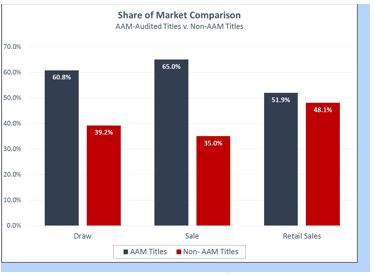
This week, in my ongoing conversations with MagNet’s Luke Magerko our focus once again is on increasing retail sales by changing the title mix at checkout. First, we report on a topic in the news this week: the share of market of AAM-audited titles and non-AAM titles and why industry reporting of AAM-Audited titles do much more harm than good.
MANY NEWSSTAND EXPERTS NOTE THAT AAM-AUDITED TITLES REPRESENT NEARLY TWO-THIRDS OF SALE AND SHOULD BE THE FOCUS OF ANY NEWSSTAND INITIATIVE.
Those experts chose the wrong metric. MagNet agrees that nearly two-thirds of all UNIT sales are AAM-Audited titles, but this metric is meaningless. Retail outlets do not measure the publishing industry by units sold, and the wholesalers do not get paid based on units sold. The important analysis is revenue; and it looks much different than unit sales.
WHAT ARE THE ACTUAL RESULTS BETWEEN AAM-AUDITED TITLES AND NON-AAM AUDITED TITLES?
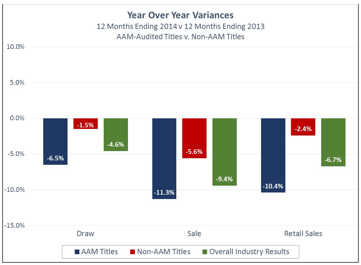
MagNet analyzed sales results from two time periods: 12 months ending March 31, 2014, and 12 months ending Mach 31, 2013. AAM titles were categorized based upon AAM 2013 second-half results.
The weighted cover price of AAM-Audited titles is $3.97 while the weighted cover price of Non-AAM titles is $6.81. This cover price difference causes parity between the two groups of titles.
HOW ARE THE TWO GROUPS PERFORMING?
This is where the publishing industry hurts itself greatly. AAM titles perform far worse as a group than the publishing industry as a whole. MagNet compared year-over-year sales variance between AAM-Audited titles and Non-AAM titles and added a third grouping— the entire industry variance:
This will be the headline in the New York Times, USA Today and all other major newspapers: “The magazine publishing industry yet again produced double digit declines….” The headline is true, if you only look at a small subset of titles representing barely half of all retail sales.
Reporting AAM-audited titles has been a disaster to the image of magazines at retail, and the reporting must change immediately.
BUT CHANGING A REPORT WILL NOT CHANGE THE INDUSTRY!
The report is a symptom of a greater challenge. The publishing industry has stagnated because this small cadre of titles* also owns the vast majority of checkout space and has fended off other magazine challengers for the space.
CHECKOUT IS A MERITOCRACY: THE BEST TITLES ARE AT THE CHECKOUT.
Checkout pockets are judged based upon profitability per pocket and most, if not all, checkout titles pay exorbitant pocket fees to maintain their ranking and space. There is also one other fee to consider: the “Pay-to-Stay” fee.
WHAT IS PAY TO STAY?
Pay-to-Stay is exactly what it sounds like: checkout publishers are given the first opportunity to hold on to checkout space through this fee. “Pay-to-Stay” implies the current checkout title mix is the best mix of magazines and that current titles should keep their space.
DO PUBLISHERS EVER DECLINE A PAY TO STAY?
No. Checkout publishers acquired the space because they know its value. There are few instances where a publisher declines a pay-to-stay. Taking this to its logical conclusion, current checkout titles own the space and fight to keep it while many profitable small to mid-sized publishers are relegated to the mainline section in aisle.
HOW DO MID-SIZED OR SMALLER PUBLISHERS ASCEND TO CHECKOUT?
First, we need to agree checkout space is not being maximized for sales growth and profitability. We cite two examples, one estimate and one anecdotal. MagNet estimates that certain top ten checkout weeklies sell less than one copy per pocket per issue at least 10 percent of the time and less than two copies 40 percent of the time.
THAT IS IMPOSSIBLE! THAT WOULD BE AN INCREDIBLE WASTE OF CHECKOUT SPACE!
It is happening and MagNet now provides evidence that unit sales have declined to a point where even the strongest checkout titles are changing strategy to maintain its checkout space.
People Magazine and Us Magazine have added dividers to the checkout pocket, ostensibly to sell off-sale issues. The dividers also suggest these titles know they cannot ship a full pocket of copies as their sales do not recommend it.
SO WHAT NEEDS TO HAPPEN AT CHECKOUT? Step One: Mid-sized publishers must understand their titles are worthy of checkout space. Their current sales volume from the mainline would be more than enough to usurp some existing checkout titles. Five publishers have enough product to create a multi-title checkout pocket similar to Meredith’s Special Interest Publications right now. Step Two: Mid-sized publishers must understand the economics of checkout, and determine if they can remain profitable while increasing sales. Step Three: Wholesalers/category managers must open the checkout acquisition process to more publishers, and reach out directly to inform them of opportunities. Step Four: Smaller publishers must be engaged in this process as well, but that will be another article.
WHAT SHOULD SMALL/MID-SIZED PUBLISHERS FOCUS ON NOW?
I am not suggesting publishers should assume they will acquire 200,000 checkout pockets in the next twelve months. Publishers must understand where there are opportunities, however and create a strategic plan around those opportunities, budget for those opportunities and move forward.
MagNet’s proposal for checkout fosters competition, increases sales, and provides increased profit for retailers. It is a win for an industry desperately needing a win; and is an opportunity to change the story from constant sales declines to increased sales.
VERY INTERESTING, PRO-GROWTH STRATEGY, LUKE! AGAIN, IF YOU WOULD LIKE TO REACH OUT LUKE, PLEASE CONTACT HIM AT LMAGERKO@MAGNETDATA.NETOR TO REACH OUT JOSH GARY, PLEASE CONTACT JOSH ATJGARY@MAGNETDATA.NET.
I hope this week’s conversation will be a good base to start a true conversation toward a vibrant newsstands checkouts and single copy sales. Needless to see without the newsstands the magazine industry will truly be hurt.
Whether you agree with Magnet’s solution or not, now is the time to voice your opinion, please click on the comment button below and post your comments.

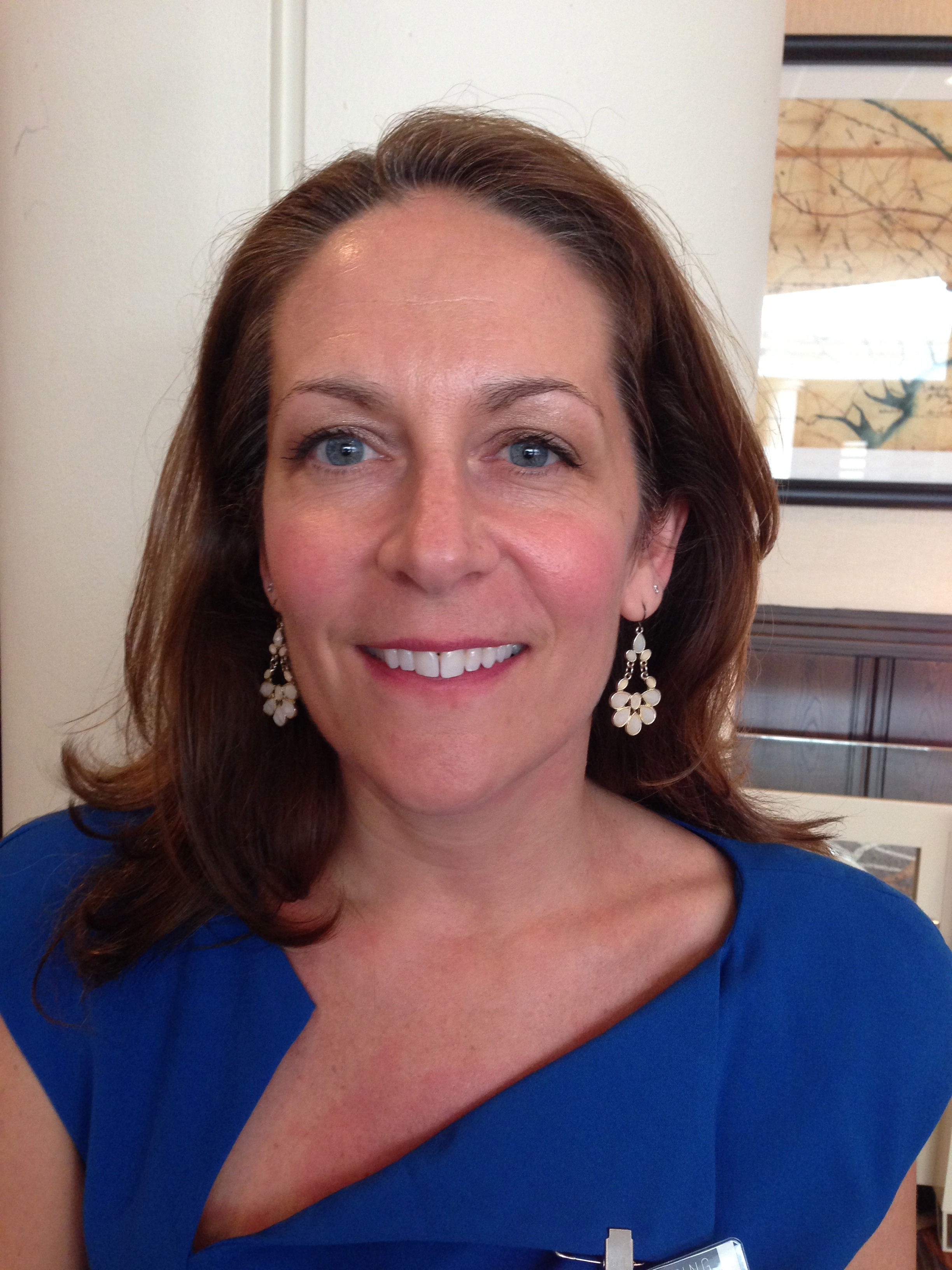
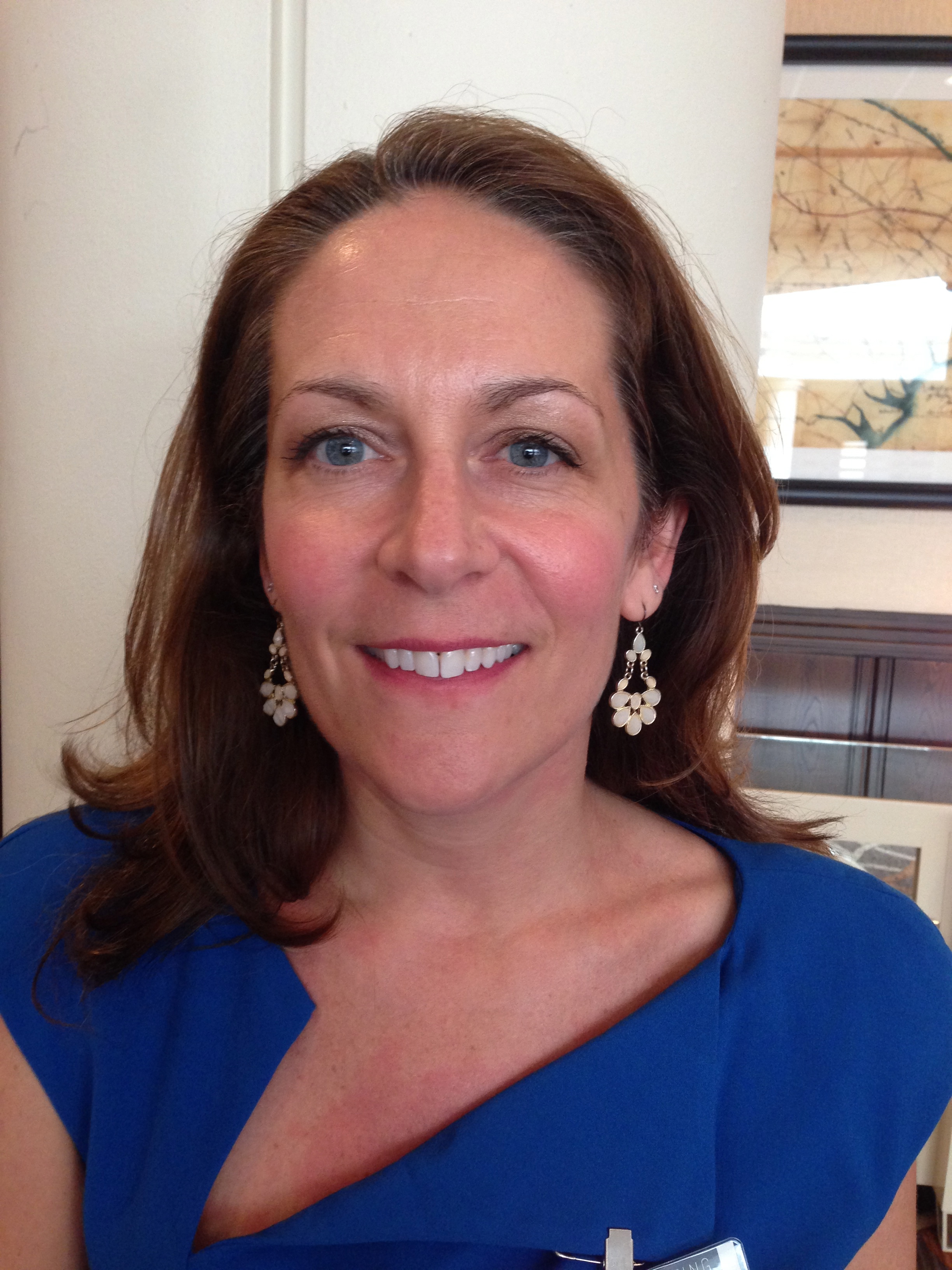
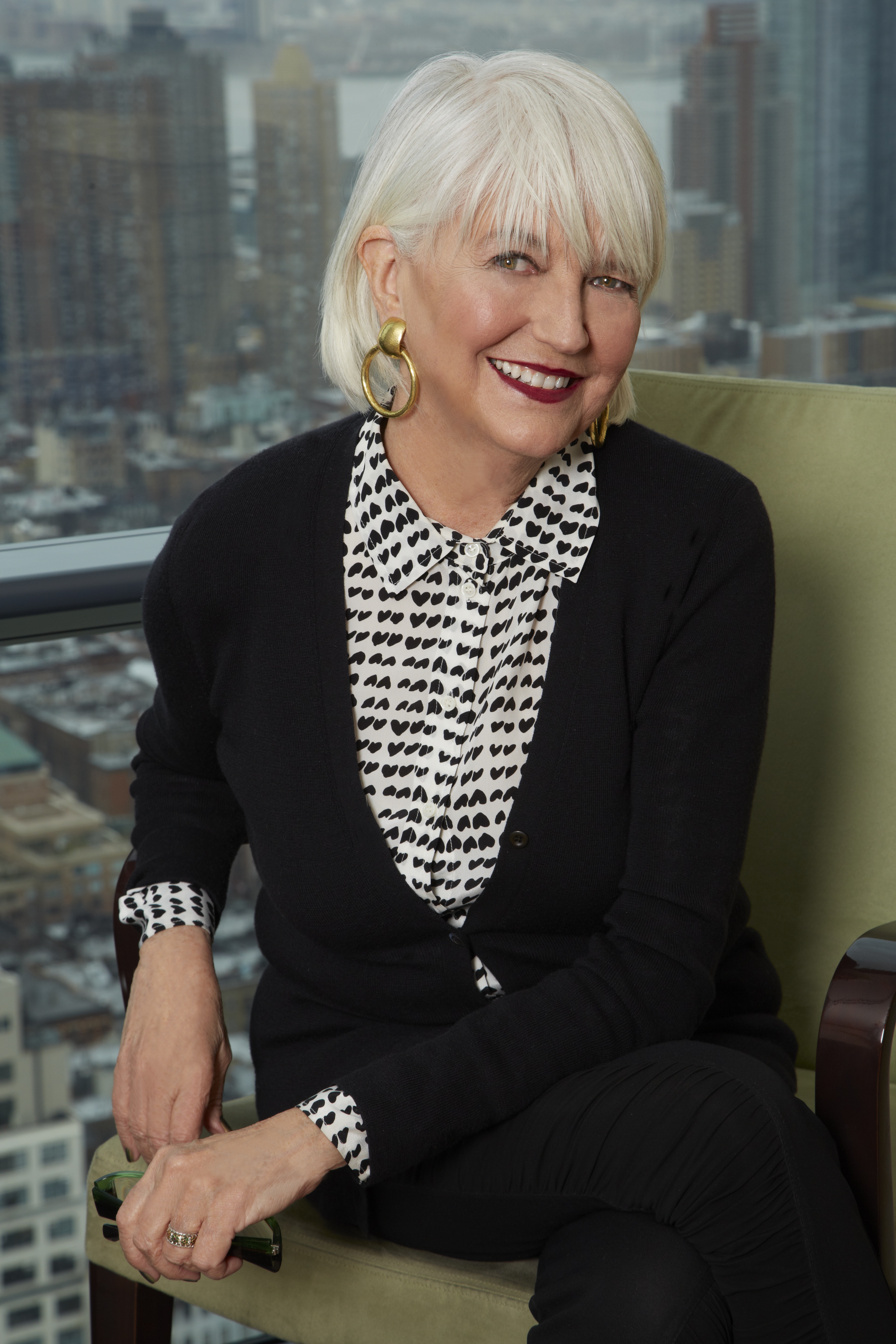 Being responsible for some really big magazine titles that have been around for a very long time is only one of Ellen Levine’s job duties as the first-ever Editorial Director of Hearst Magazines; she also knows what it means to develop and strengthen the flock. Dr. Oz The Good Life, Food Network Magazine, HGTV Magazine are just a few of her success stories while at Hearst.








 Mr. Magazine