“We believe in print and the transportive nature that it can provide and disconnecting from the blue screen, from the noise, from the constant chaos of our screens in the digital world for just a little bit. And with that in mind, we really wanted to create this beautiful print product that reminds people and returns people to understanding that there is quality to be had behind those experiences and behind those products.”
“And that’s really what we’re aiming for with Full Pour. It’s not you get your subscription, you flip through it in the restroom and you throw it away after five minutes, having not really read or retained any information from it. This is a beautiful package that you see, and you just want to spend time with it. You want to give yourself the excuse and the reason to really dive into the stories, to the beautiful imagery, to the wonderful feel and smell of the paper. I still believe that there is something behind that smell that people love. (Laughs)
According to the world at large, beginning a print magazine in these days and times is a really bad idea. People want the digital experience; the instantaneous gratification they feel when they get something online in a matter of minutes, seconds even. Of course, most of you know how Mr. Magazine™ feels: the word baloney comes to mind.
To prove my point in a huge way, please allow me to introduce you to Full Pour magazine and Lauren Buzzeo. Full Pour is a new print publication about wine, beer, tea; all kinds of beverages, alcoholic and non-alcoholic.
I spoke with Lauren recently and we talked about this new magazine and her decades of experience in the business. Working at Wine Enthusiast magazine for 16 years was a position that she stepped away from knowing that she wanted to start her own magazine and do things her own way. And that she did. Full Pour is beautiful and informative. I hope you will get a copy ASAP.
Meanwhile, enjoy this Mr. Magazine™ interview with Lauren Buzzeo, editor and publisher, Full Pour magazine.
But first the sound bites:
On what she was thinking to start a print magazine in 2023: (Laughs) Obviously, I don’t know; it is a very questionable choice, I know. But honestly at the heart of it, print and magazines are my passion. It’s always been something that I’ve been incredibly passionate about. And certainly from a professional and educational perspective, that’s what I got my degree in, in terms of English and Journalism, and I’ve worked in magazines for nearly two decades now and in publishing production overall. So it’s a format that I know and love and believe in.
On her new business model and the partnerships she’s making: What I came up with is a program that we call our “Flow-Into Community” program. And what that means is our advertising partners, and we will work with only one advertising partner per category per issue. So there’s not going to be tons and tons of advertisements, that’s not the magazine format we’re looking for. We’re really looking for very specialized, high-quality partnerships with dedicated partners that we know and believe in and similarly know and believe in what we’re doing.
On what people have said about the first issue which is out: Issue one is out. It came into the world officially at the end of March, and the response has been so overwhelmingly positive. I’m so grateful for it. I think at the end of the day, I created a magazine that I really felt was needed in the space and that I selfishly, really wanted to read and see myself in. The hopes that there were other people out there like me that wanted to see the same. And the response that we’ve received from the first issue tells us that indeed we were not alone.
On the esoterica of the magazine and whether she is trying to save the world with its creation: You’re right, even down to the mailer that we ship our single issues in. It’s cornstarch-based, it’s not plastic. So it’s 100 percent biodegradable and compostable. Because again to us every little bit that we can do that makes a difference helps. We’re not going to save the world; we’re not going to really change the world, but we can change what we do.
On any challenges she has faced along the way: I don’t know any magazine that’s a walk in a rose garden. But I will say that I am incredibly passionate and incredibly happy and fortunate to have had this opportunity to create this magazine. I wake up and I work all the time, every day. But I am so energized and so happy to be putting that effort and that energy into something that I believe in so greatly. And that has received such wonderful feedback from other people who are appreciative of those efforts as well.
On the uniqueness of the cover, black and white on the front, color on the back: I think at the end of the day we take our content very seriously, and we very much believe in telling the stories behind the bottles in a very informative way. So I’m not necessarily interested in more surface-generated content, more quick takes, infographics, buying lists, things of that nature. We really believe in getting into the stories of the who, the why, the how, the history, the geographic locations, whatever it may be to really provide that information to consumers to empower them to make those purchasing choices on their own for whatever needs they may have.
On the name Full Pour: Honestly, I dreamed it. I created the logo as well. The Pour is my penmanship. The Full part is a font type, but before I designed that, I drew it. It was in my mind, came to me in a dream. And so it was always something around Pour. Singularly “Pour” didn’t really seem to, I don’t know, land or resonate the way that I really wanted it to.
On anything she’d like to add: I’ll say on a side note my favorite page to put together for the spring issue was the contributors page. It brought me such great joy to be able to work with so many wonderful writers, artists, illustrators, and talent from a wide variety of backgrounds and perspectives.
On being her own boss: It feels great, but it feels scary. It feels liberating, but it feels empowering. There are so many emotions that go along with entrepreneurship that are intimidating and can cause apprehension sometimes, but at the end of the day are so infinitely rewarding that it outweighs to me any of the potential downfalls. So yes, it’s been great.
On what keeps her up at night: What keeps me up at night is finding enough hours in the day. I also have two small children. I have an eight year old son and a two and a half year old daughter. So I am a mom in addition to being a business owner. And sometimes finding the balance, the work life balance and the hours in the day to accomplish all of the things that I want to accomplish, is not an easy feat.
And now the lightly edited transcript of the Mr. Magazine™ interview with Lauren Buzzeo, editor and publisher, Full Pour magazine.
Samir Husni: First, congratulations on the new magazine.
Lauren Buzzeo: Thank you so much.
Samir Husni: My first question to you is what were you thinking to start a print magazine in 2023?
Lauren Buzzeo: (Laughs) Obviously, I don’t know; it is a very questionable choice, I know. But honestly at the heart of it, print and magazines are my passion. It’s always been something that I’ve been incredibly passionate about. And certainly from a professional and educational perspective, that’s what I got my degree in, in terms of English and Journalism, and I’ve worked in magazines for nearly two decades now and in publishing production overall. So it’s a format that I know and love and believe in.
The reason that I stepped away from my former position after nearly 16 years of working at Wine Enthusiast magazine was that for so many people over the last few years there was a lot of dialogue and consideration and retrospective thinking and realignment so to speak, in terms of priorities and what you want to leave your mark on in this world.
And to me I just saw that there was a need and a desire, hopefully beyond myself, for a new print product, specifically in the drinks media space that was really more of an organic and holistic view of the modern drinks landscape. I think a lot of legacy drinks’ magazines are very much beholding to either their namesake or their legacy audience. I think there’s a tie-in between the two.
But try as they might to sort of adapt and evolve and integrate other areas in the drinks and beverage world, it just never really lands or feels completely authentic or well-received from their audience that might be expecting something more singular from them, in terms of scope and coverage.
So to me, knowing how I consumed content and my passion for quality drinks and consumables across all categories, and just seeing other people around me: friends, family, co-workers, other professionals, and how they were enjoying beverages without this sort of dated notion of category exclusivity, to me just seemed like an opportunity for a fresh take from someone who can bring a comprehensive view to the modern drinks landscape.
So what that means is basically not focusing on one category exclusively, but really
embracing all of the different beverages that are available today, whether that’s traditional beverage-alc, wine, beer and spirits, but also encompassing the new cannabis-infused beverages, as well as non-alcoholic. And that could be in sort of that bev-alc proxy sort of vein, in terms of a non-alc Negroni or scotch, or whatever it may be. But also beverages like tea and coffee and Kombucha; again, things that we all know, love and consume in social settings with people we love at different circumstances and occasions, just equal opportunity consumption. So it’s really embracing all of those categories.
Samir Husni: Lauren, you’ve been in the business, for like you said, almost two decades. Yet your business model for the magazine is not the traditional. I mean you’re not depending on advertising, you’re charging $20 per issue, which you can subscribe to the legacy magazines for a year for that price. Tell me a little bit about this new business model that you are following and the partnerships that you are making.
Lauren Buzzeo: In addition to having this perspective of leaving my former position and thinking there’s got to be another way; there’s got to be a different way, that certainly correlates to our editorial mission. And in terms of the stories that we’re looking to share in each issue, it also extends to advertising and partnerships. And so with that thinking of what could be different, what could be better, what could be a new approach to something that honestly hasn’t seen a lot of change in innovation since the invention of a print advertisement, right? What could that look like, what could we do?
So essentially, what I came up with is a program that we call our “Flow-Into Community”
program. And what that means is our advertising partners, and we will work with only one advertising partner per category per issue. So there’s not going to be tons and tons of advertisements, that’s not the magazine format we’re looking for. We’re really looking for very specialized, high-quality partnerships with dedicated partners that we know and believe in and similarly know and believe in what we’re doing.
So what the “Flow-Into Community” program encompasses is the traditional insertion of an ad space for the partner, a full page ad they’re sort of used to, but it also means that we work with. the client to identify a nonprofit organization in our space. So whether that’s food and beverage at large hospitality, that is improving our community in some relevant, tangible way.
So in the case of wine, you can look at organizations such as Wine Empowered or Wine Unify; in the case of beer, you can look at the Michael James Jackson Brewing Foundation. In the case of cannabis, you could look at the Last Prisoner Project. And in the case of food, something like World Central Kitchen or City Harvest. So we work with our partners to select a nonprofit that then gets a dedicated spotlight page about that nonprofit’s work that is sponsored by Full Pour and the partner to give visibility, promotion, and space to that nonprofit, in addition to the partner’s traditional full page ad. So both of those placements go into the issue, as well as we have a grapevine page, which is essentially think of it like Kickstarter, but for nonprofits and donations.
So the grapevine page Full Pour commits a $750 seasonal donation to, and we encourage all of our partners and readers, anybody who’s interested can also make donations into this grapevine page. And then at the end of the issue season, all of the donations received are disbursed to the nonprofit partners for that season’s issue as well.
So again, we’re talking about a traditional relationship and format in terms of print advertising. But it’s also extending to really try to do something that goes beyond maybe a more self-serving interest for that partner, for that client and really promoting, giving visibility and monetary support and contribution to nonprofits that are really working to make our drink’s world and our world at large a better place.
Samir Husni: So tell me what was the response of the first issue. The initial one is out. Did people say wow, or something else?
Lauren Buzzeo: Issue one is out. It came into the world officially at the end of March, and the response has been so overwhelmingly positive. I’m so grateful for it. I think at the end of the day, I created a magazine that I really felt was needed in the space and that I selfishly, really wanted to read and see myself in. The hopes that there were other people out there like me that wanted to see the same. And the response that we’ve received from the first issue tells us that indeed we were not alone. That people were ready and excited for something new, a fresh take on drink’s journalism, and ready to embrace all of these varied categories that really did not necessarily have a home. A consistent home in a print format like they’ve experienced before.
So it’s really about building that community. An equal opportunity drinking for everyone, no matter what fills your glass, whether it is wine or a cocktail or a non-alc drink or an infused beverage. We have the content and the space for all of it. And I think it also speaks to just drinking with that category, cross category. I like to say I’m a proud cross drinker, and I think many of us in this modern beverage landscape are. We are enjoying a cup of tea or a great cup of coffee at one point with friends or over a meeting. Whereas we might be sharing a bottle of wine or a special beer on another occasion or on a family outing. So I think it’s really trying to embrace that diversity and that varied landscape that’s out there today.
In the last question you had asked about the format of the magazine. I just want to touch upon that really quickly because you’re right. We did come out with sort of a different, not only a different model in terms of the editorial content and not only a different model in terms of what we’re striving for with our advertising partnerships, but a different model in terms of the product itself.
We believe in print and the transportive nature that it can provide and disconnecting from the blue screen, from the noise, from the constant chaos of our screens in the digital world for just a little bit. And with that in mind, we really wanted to create this beautiful print product that reminds people and returns people to understanding that there is quality to be had behind those experiences and behind those products.
I think a lot of newsstand publications, they are great and they are wide-reaching, but I think that they also have a certain connotation to them in terms of how they feel, the tactile experience the reader takeaway. Whereas if you think of something more in lines of a book that sits on a shelf or a coffee table or whatever it may be, there’s a little bit more staying power, there’s a little bit more impact, there’s a little bit more reverence for the content and the quality behind it.
And that’s really what we’re aiming for with Full Pour. It’s not you get your subscription, you flip through it in the restroom and you throw it away after five minutes, having not really read or retained any information from it. This is a beautiful package that you see, and you just want to spend time with it. You want to give yourself the excuse and the reason to really dive into the stories, to the beautiful imagery, to the wonderful feel and smell of the paper. I still believe that there is something behind that smell that people love. (Laughs)
Samir Husni: (Laughs too) You’re preaching to the choir here.
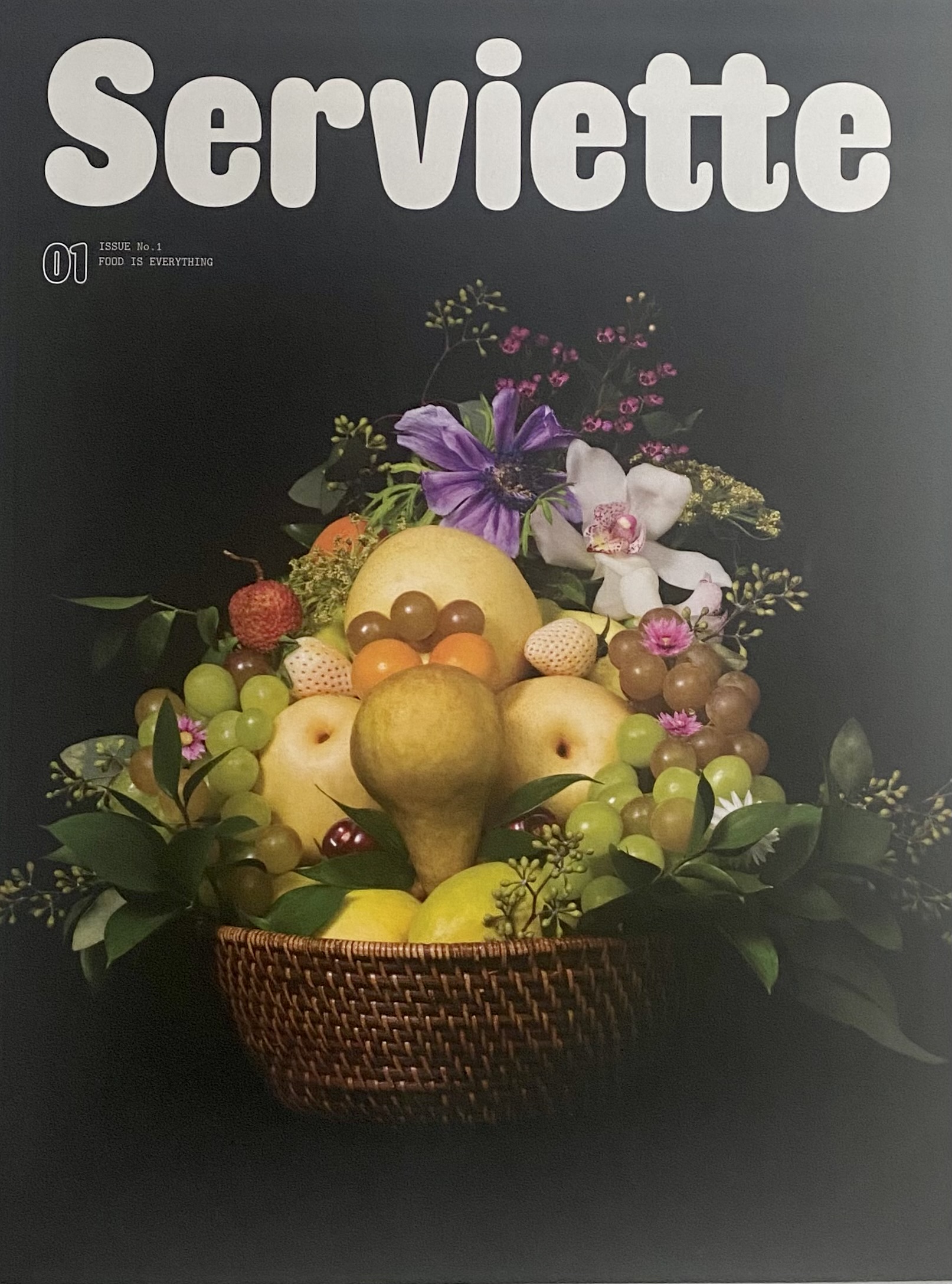
Lauren Buzzeo: So this is what we’re trying to offer in terms of the experience of a print product. And it is very much in that sort of independent magazine or zine, which is very hard to define because there is such a variety in terms of formats and quality. But it isn’t that independent vein in terms of quality and that almost middle ground between a newsstand floppy and a hardcover book.
Samir Husni: You wrote a lot about the sustainability and the type of paper, and even the mailing envelope that the magazine is sent in. Are you trying to save the world? Or what are you doing?
Lauren Buzzeo: (Laughs) I would love to save the world, but I don’t think I could do it. But I think at the end of the day everything that I did in creating this magazine was with the question and with the frame of mind of there’s got to be a different way, there’s got to be a better way there’s got to be another way. What can that look like? What can that be? What can we do differently to make a better impact? And that is absolutely extended to production.
I think a lot of people might not necessarily know the impact that a lot of treatments, in terms of newsstand’s glossy magazines has on our environment, in terms of the laminates that are used for those covers, for those genes, the sourcing of the paper if they’re not environmentally friendly, if they’re not post-consumer waste.
So yes, we did very intentionally look for production partners that were in line with that thinking. So we do source 100 percent post-consumer waste recycled paper; we do use natural vegetable or soy based inks for all of our printing. There’s no chemical toners. There’s no plastic laminates or chemical laminates that will affect recyclability.
And you’re right, even down to the mailer that we ship our single issues in. It’s cornstarch-based, it’s not plastic. So it’s 100 percent biodegradable and compostable. Because again to us every little bit that we can do that makes a difference helps. We’re not going to save the world; we’re not going to really change the world, but we can change what we do. We’re not going to save the world. We can try to change the world. That’s what I’ll say.
Samir Husni: You’re so excited about the magazine and that’s great and you’re passionate about it. Tell me, has it been a walk in a rose garden or have you had some challenges?
Lauren Buzzeo: (Laughs) I don’t know any magazine that’s a walk in a rose garden. But I will say that I am incredibly passionate and incredibly happy and fortunate to have had this opportunity to create this magazine. I wake up and I work all the time, every day. But I am so energized and so happy to be putting that effort and that energy into something that I believe in so greatly. And that has received such wonderful feedback from other people who are appreciative of those efforts as well.
So no, nothing is a walk in the rose garden. And certainly as an independent magazine, and as a woman-owned, self-funded startup, nothing has been easy and I am wearing more hats than I ever thought I would have been.
But I am also a Taurus, and thank God for that because I love the challenge and I love to be stimulated. I love to learn new things and to have the opportunity to really dive into all aspects of print production. That part has been a pleasure and a joy and something that keeps me going every single day.
Certainly from a content perspective, that’s something that I was very comfortable and used to. And even from an overall direction, working with artists and writers was familiar territory. Things like setting up tax considerations. And to even sourcing some of those materials, like the mailing bag, which I did myself as well. There’s a lot of considerations, every step of the way that you don’t really know until you dive into it. But if you believe in it and if you’re passionate about it, it is infinitely rewarding.
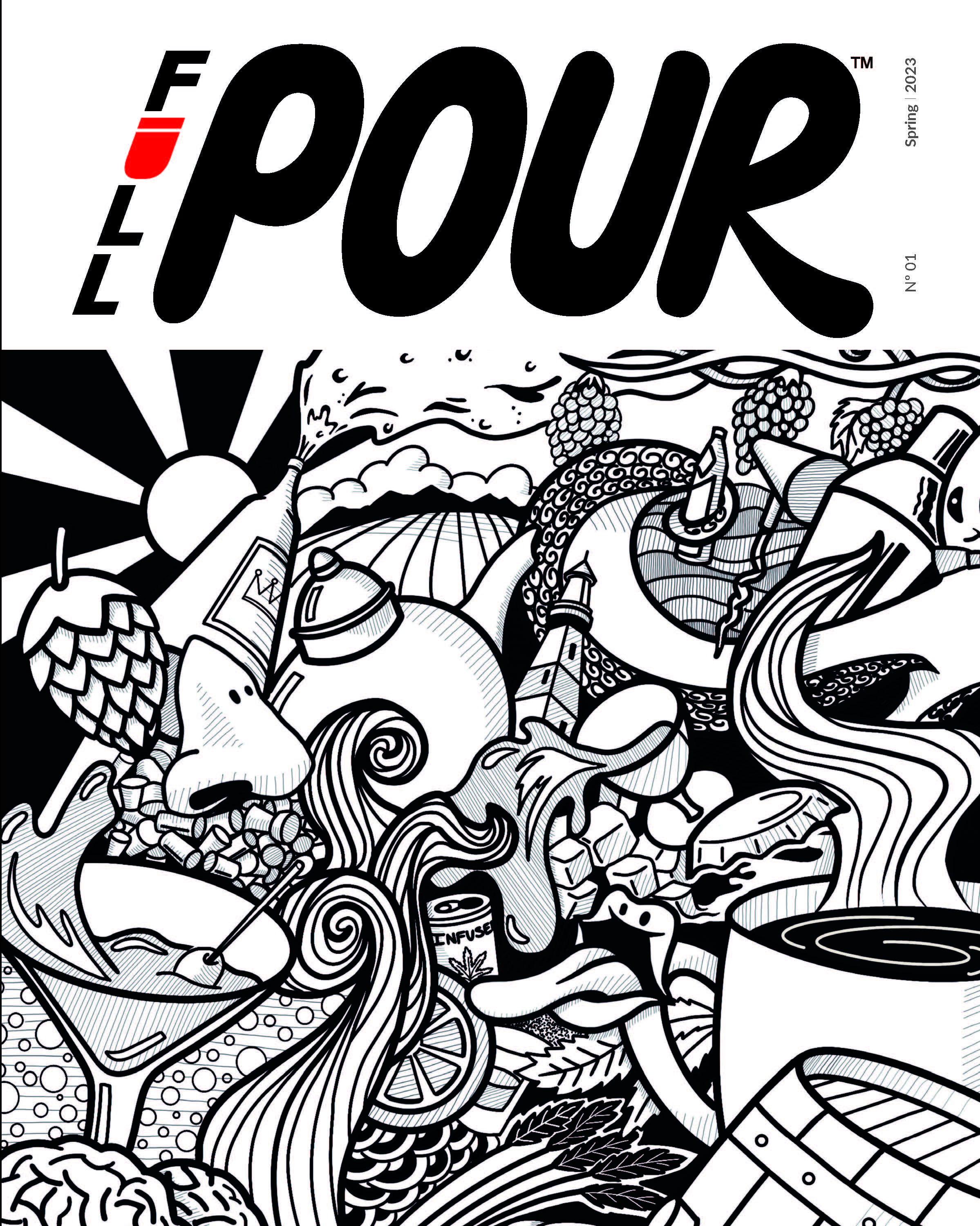
Samir Husni: Tell me about your cover. It’s black and white on the front, but the same thing in color on the back. It looks like you want to enter the psychedelic word, but you don’t.
Lauren Buzzeo: (Laughs) I love that interpretation of it. I think at the end of the day we take our content very seriously, and we very much believe in telling the stories behind the bottles in a very informative way. So I’m not necessarily interested in more surface-generated content, more quick takes, infographics, buying lists, things of that nature. We really believe in getting into the stories of the who, the why, the how, the history, the geographic locations, whatever it may be to really provide that information to consumers to empower them to make those purchasing choices on their own for whatever needs they may have.
This isn’t something where we want to dictate what we believe people should be drinking. Because I don’t think that’s the way to go. I don’t think that that’s what people are generally interested in. And I think that in building our community we want to empower them with the information.
So in terms of the imagery we’re hopefully supporting a tone that is informative and serious with our content, but still fun and approachable. And I think our cover extends to that intent in terms of wanting to give a wide representation of all of the categories that we cover. So you’ll see representation of all the various main categories in that illustration and in every color illustration to come as well. But again in a very playful, vibrant, energetic format that we hope engages people to dive in, regardless of how serious the content might be.
Samir Husni: How did you come up with the name Full Pour?
Lauren Buzzeo: Honestly, I dreamed it. I created the logo as well. The Pour is my penmanship. The Full part is a font type, but before I designed that, I drew it. It was in my mind, came to me in a dream. And so it was always something around Pour. Singularly “Pour” didn’t really seem to, I don’t know, land or resonate the way that I really wanted it to.
So after a lot of deliberation with a lot of words to combine with it, I sort of landed on Full because that’s what we’re about, embracing the full category of drinks, beverages available to us. And also living a full and satisfying life. And the way that the beverages intertwine with our lives to give us that feeling of fullness and satisfaction.
Samir Husni: Is there anything you’d like to add?
Lauren Buzzeo: I’ll say on a side note my favorite page to put together for the spring issue was the contributors page. It brought me such great joy to be able to work with so many wonderful writers, artists, illustrators, and talent from a wide variety of backgrounds and perspectives.
And that is something that I am so keen and happy to continue doing with every issue of Full Pour, which is working with a wide range of contributors who bring different perspectives and energy to all of these different stories because we all come into various drinks and opportunities at different points and from different experiences and perspectives in our lives.
And I think that it’s important to give platform to all of those various capabilities and potentials in terms of entry points. So I love working with so many diverse voices and talents, and I really can’t wait to share more in the issues to come.
Samir Husni: How does it feel to be your own boss?
Lauren Buzzeo: It feels great, but it feels scary. It feels liberating, but it feels empowering. There are so many emotions that go along with entrepreneurship that are intimidating and can cause apprehension sometimes, but at the end of the day are so infinitely rewarding that it outweighs to me any of the potential downfalls. So yes, it’s been great.
And that is also largely reason why I did want to do this as an independent, self-funded project. I did want to just answer and speak to myself. I had a very clear vision. I didn’t want it to be compromised in any way, whether that was editorially, financially, or partners commercially. I really wanted to be true and authentic to what I believe this should and could be. And will work my hardest to keep that up for as long as I can.
Samir Husni: My typical last question, what keeps you at night?
Lauren Buzzeo: What keeps me up at night is finding enough hours in the day. I also have two small children. I have an eight year old son and a two and a half year old daughter. So I am a mom in addition to being a business owner. And sometimes finding the balance, the work life balance and the hours in the day to accomplish all of the things that I want to accomplish, is not an easy feat. But I think that those are the struggles that we all live with day to day in terms of finding our balance and staying true to ourselves and trying to be our best selves as possible. So I try not to keep myself up too much or for too long at night worrying about that and just do the best I can to meet all of those needs as best as I can.
“We want people to actually sit and read the stories, not just look at the photos, because we spend a lot of time choosing who we want to write and the stories that are written are all really meaningful and there are reasons behind that. And I want to make sure it’s not just scrolled through or swiped really quickly.”
“That we are still in print. This time next year we’ll be in our seventh edition and that we have reached millions of people through our stories in print. And hopefully received emails and letters about how this magazine has changed lives. And be able to give millions of dollars to North Tulsa kids and students and become more of a light to the community.”
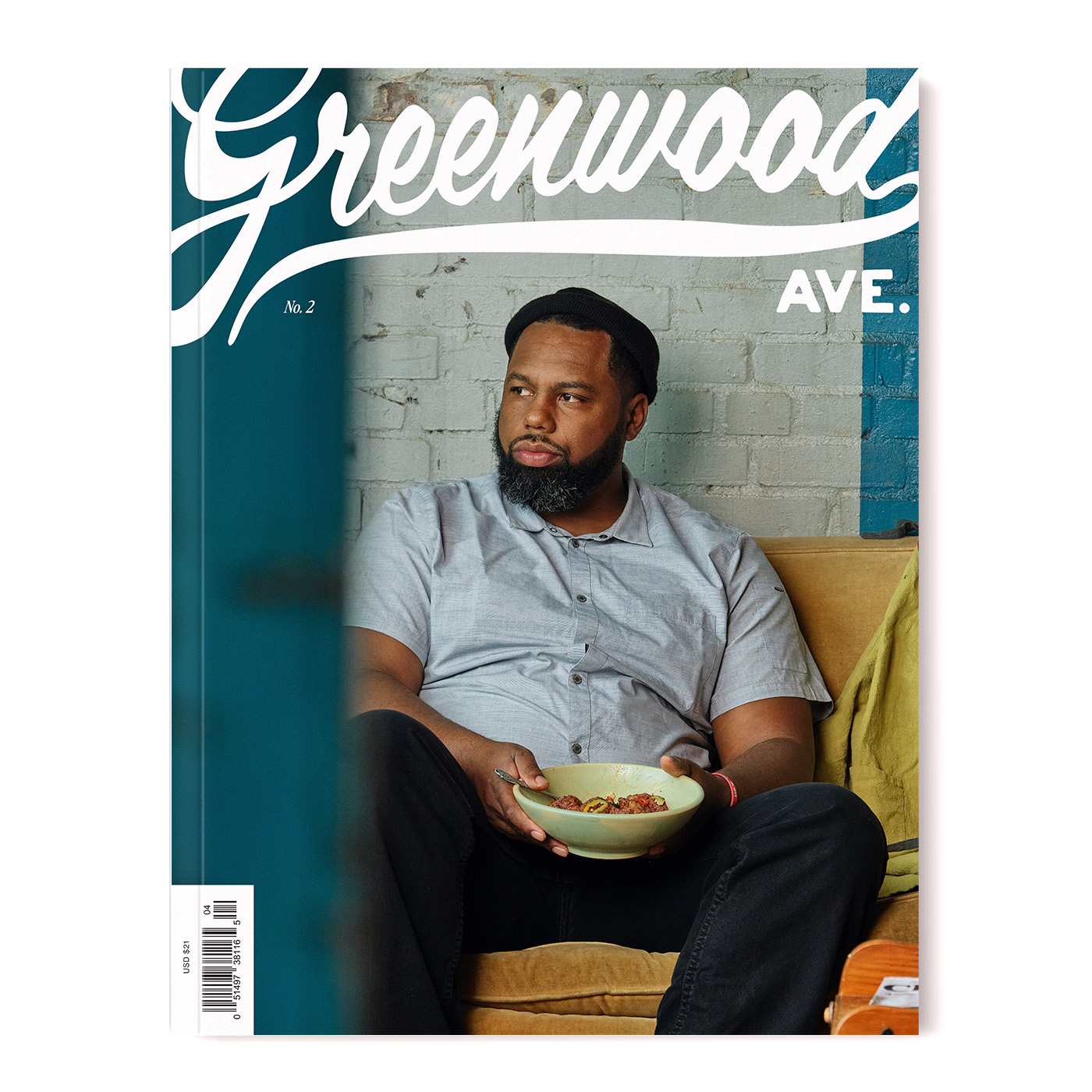
Trey Thaxton is a Black entrepreneur with a plan to turn the violent history of Tulsa’s Greenwood district into an inspiring and bright future. Greenwood Ave. is a new magazine he has launched in print, no less, to tell the deeply moving stories of the district’s past, but most importantly to him, the refocus of all that trauma and hurt into a bright and challenging new future.
I spoke with Trey recently and we talked about his plans and how there was no choice, the magazine had to be in print for its longevity and tactile nature. For a man who is only 36-years-old, Trey is a staunch believer in print and believes that the medium is the only one that would work for his very important messages.
So, without further ado, the Mr. Magazine™ interview with Trey Thaxton, CEO and Founder, Greenwood Ave.
But first the sound bites:
On why it took 122 years to create a magazine about Greenwood Ave. and why it’s in print:
The reason I did the magazine; my background is in design, print design, and branding, and that’s why it’s in print for sure. I went to high school in Tulsa and college in Oklahoma. And I had never heard of Greenwood or Black Wall Street until after I graduated college. I felt it was such a tragedy not to have known that history when I had been walking in the shadow of Black Wall Street for over 20 years.
On what he’s offering Black entrepreneurs that that can’t find in other magazines: And other magazines are always focused on the history or trauma or the survivors and what they went through and their fight for justice, which is all necessary and part of the story, obviously, but for me I didn’t see a part that talked about the victory of Greenwood. I think for this magazine, you really get the insight into the victory part.
On how he has diversity, inclusion and equality in his magazine: That’s the heart of the whole magazine and the brand. Our theme is Greenwood Ave. is everywhere, so it’s not just in Tulsa, but around the world. Our goal is centered around those entrepreneurs who helped build Greenwood. So for us that is the essence of why we got started and what we’ll continue to do.
On what he says if someone asks why he’s so adamant about print: We want people to actually sit and read the stories, not just look at the photos, because we spend a lot of time choosing who we want to write and the stories that are written are all really meaningful and there are reasons behind that. And I want to make sure it’s not just scrolled through or swiped really quickly. I want it to sit on people’s desks and coffee tables and is passed around and shared and to really have a more tactile interaction than just a swipe on a screen. I think it means a lot more when you can touch and feel and not just read it, but feel the quality of the magazine as well.
On the cover price of $21: We wanted to make sure it was substantial and that number 21 obviously means a lot to the history of Greenwood in that year and is something we try to continue to highlight. On top of that, when people hear the word magazine, they might think of the news rags or something else on the shelf, but this is really more of a coffee table book. The word magazine is somewhat of a misnomer, but it is something that will last the test of time.
On any challenges he’s faced with this project: Just like with any startup, there will be challenges. A lot being capital or will anyone listen. The Greenwood Cultural Center worked for years telling the stories of survivors and there were a lot of documentaries about to start as I was starting this too, but for me there are a lot of different areas, there’s no one side to every story. For me, nobody was coming from the angle of the future.
On any pleasant surprises since he launched the magazine: The first was a little difficult. A lot of people in there were either friends of mine or acquaintances of people I’d met or one person away from them, but as we’ve gone on with the magazine and began to reach out to people who are outside our network to be a part of this, the response has been an overwhelming yes. They want to be a part of it. And how much the stories resonate with people outside of Tulsa has been amazingly beautiful.
On whether he think the magazine industry is moving in the right direction: I can’t speak to the magazine industry as a whole, but with what happened to George Floyd and that tragedy, there are a lot more people who are searching for ways to be an “ally.” We have a good friend here in town who has the only Black-owned bookstore in Tulsa, and he saw an enormous rise in interest in what they call an “ally box” where people from all over the world were subscribing to books on how to be an ally; how to be an anti-racist.
On why he decided to call the magazine Greenwood Ave. instead of Black Wall Street: I think Black Wall Street is ubiquitous, even Greenwood is becoming more well-known. Greenwood is a very known name. Tulsa was the first Black Wall Street, but there were others. So that’s a bit more ubiquitous. But Greenwood Ave. for me speaks to Tulsa. Being based in Tulsa, we do want to expand outside, but Greenwood Ave. to me just spoke more to Tulsa.
On what he would hope to tell someone in a year that he had accomplished with Greenwood Ave.: That we are still in print. This time next year we’ll be in our seventh edition and that we have reached millions of people through our stories in print. And hopefully received emails and letters about how this magazine has changed lives. And be able to give millions of dollars to North Tulsa kids and students and became more of a light to the community.
On what someone would find him doing if they showed up unannounced at his house: Most likely you’ll find me with my kids. Right after work I cook dinner; I’m busy every night. My wife is also an entrepreneur. She is a real-life super-hero, working with clientele so much as a therapist. I try to make it home every night to put dinner on the table for her and our two children. So every night we try to do something with our kids.
On whether he has a mentor or not: I look at a lot of different names. I’ve been able to take inspiration from everywhere, probably because I’m not a great artists I would say. I’m not sure how I passed any of my art classes in school. (Laughs) The great thing about this is I don’t have to do a lot. The meat is really everyone else, so that is the beauty of what this is. All the stories are really telling the great things that other people are doing. And that’s a great thing for me.
On what keeps him up at night: For this past year I’ve been really working on mindset and trying to figure out my purpose and direction. For entrepreneurship, we always talk about the pivot and I think COVID in 2020 – 2021 was a big pivot for a lot of people as far as their direction. When I started doing design after graduation, in my mind if I could just work for Nike or somewhere in the NBA that would be the pinnacle of my career.
And now the lightly edited transcript of the Mr. Magazine™ interview with Trey Thaxton, CEO and Founder, Greenwood Ave.
Samir Husni: Congratulations on the new magazine. It’s very well done.
Trey Thaxton: Thank you very much.
Samir Husni: Tell me, why did it take 122 years for somebody to create a magazine about Greenwood Ave. and why do it in print?
Trey Thaxton: That’s a great question. I’m not sure why it’s taken 122 years. I know for a fact that there are books on the subject. There have been a lot of documentaries that have come out in the last couple of years on Greenwood Ave and Black Wall Street. As of two years ago there’s a new history center dedicated to the memory of how Greenwood is rising – the new River Rising – in North Tulsa right now.
But the reason I did the magazine; my background is in design, print design, and branding, and that’s why it’s in print for sure. I went to high school in Tulsa and college in Oklahoma. And I had never heard of Greenwood or Black Wall Street until after I graduated college. I felt it was such a tragedy not to have known that history when I had been walking in the shadow of Black Wall Street for over 20 years.
Being a designer and an entrepreneur in Tulsa, I believe there’s no way to hide from the gravitas that the spirit of Greenwood is. I wanted to do something that highlights the history and hopefully no one else will have the excuse of not knowing what’s happening here. And once I started hearing about the massacre, the deaths, the 300 lives that were taken and the 600 businesses that were destroyed, for me, I’m a believer in Jesus and I know that there’s more power in the resurrection that there is the death. We just celebrated Easter and I always want to make sure that we highlight that resurrection, because to me that’s where the inspiration comes from.
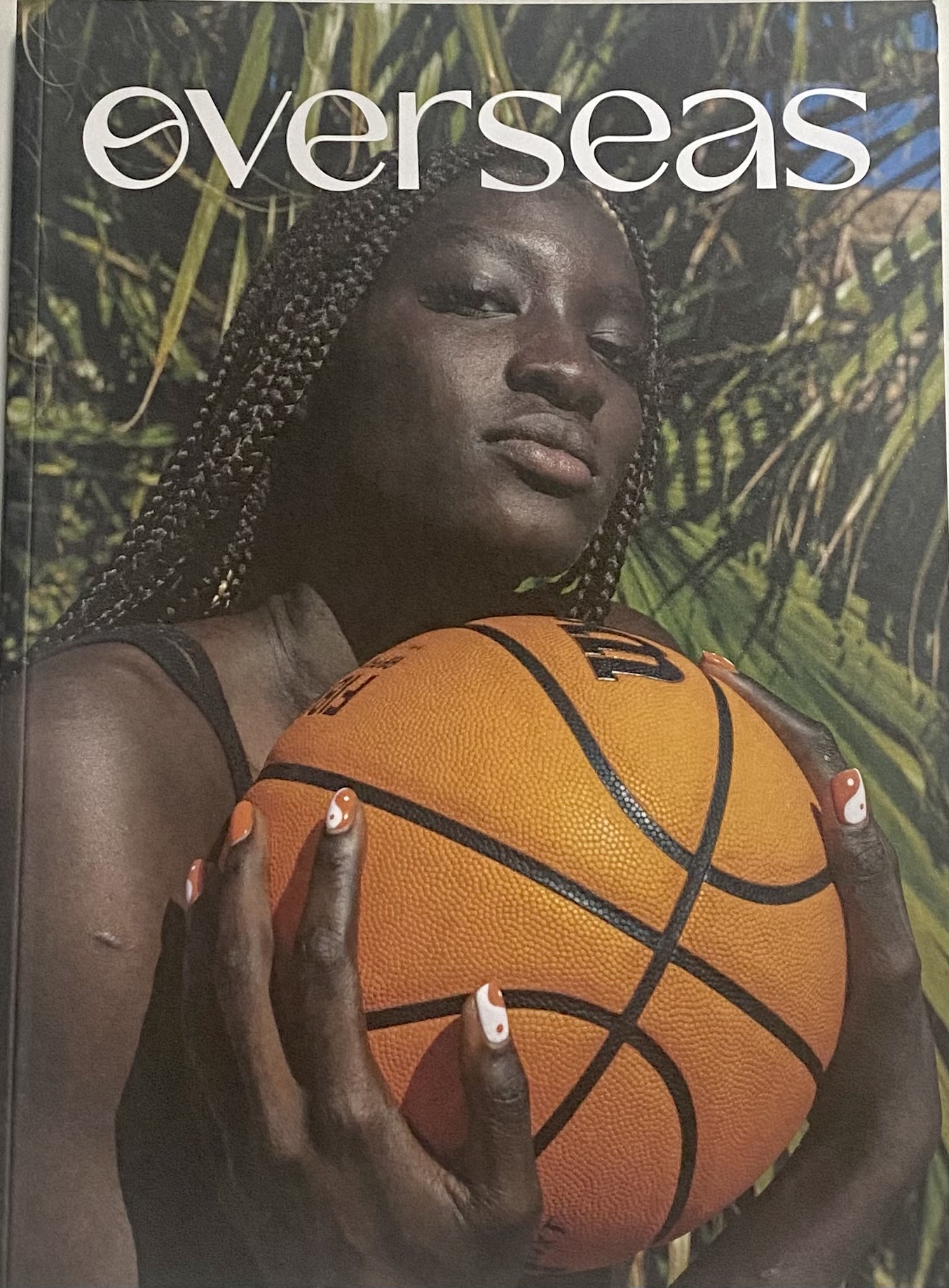
I hear so many people now who are inspired by, not only that it was there before 1921, but that they actually rebuilt it bigger and better after the massacre. So to me, highlighting that resurrection; it’s not just those 40 blocks underneath Tulsa, it really is about the spirit that’s reenergizing, black people all over the world who are realizing their ideas, dreams and visions in various, different industries.
Samir Husni: You mentioned that it’s not just about the history; you’re not just reflecting on the past, but you’re projecting the future and making it more of a magazine for all Black entrepreneurs. What are you offering that they can’t find in other magazines?
Trey Thaxton: Greenwood focuses a lot on the trauma side of everything. For instance, our first issue, the author who wrote the first article is actually a descendant of Black Wall Street and Greenwood. His great-grandparents owned shops in Greenwood and he gets asked all the time because he actually runs a company called The Black Wall Street Times based here in Tulsa and Atlanta; he gets asked all the time to write or retell stories about Greenwood.
And other magazines are always focused on the history or trauma or the survivors and what they went through and their fight for justice, which is all necessary and part of the story, obviously, but for me I didn’t see a part that talked about the victory of Greenwood. I think for this magazine, you really get the insight into the victory part.
We’ve only had one to come out so far, but every first quarter is our “everywhere magazines” we’re calling them, where we talk to different people in different cities. Our next issue will be around Black chefs and we have 12 different chefs from around the country: Tulsa, Houston, Florida and New York, to name a few, who submitted recipes. So, it’s not just a magazine, it’s also a cookbook. So we have recipes from five-star restaurants and chefs from around the country and we get to tell their stories and recipes through the lens of food and its history.
The one after that is going to be around Black take-out entrepreneurs where we highlight, not only what they’re doing, but some of their struggles and how they overcame that. So I think that in this magazine we get to talk through what people are doing in different spaces and in different industries, but also talk about how they’re overcoming obstacles in entrepreneurship. Entrepreneurs have always been faced with adversity, so we talk about how they are able to overcome and hopefully will inspire people to continue to follow their own dreams and passions.
Samir Husni: The buzzword now after 2020 is diversity. How are you ensuring that the magazine for Black entrepreneurs will have diversity, inclusion and equality within its pages?
Trey Thaxton: That’s the heart of the whole magazine and the brand. Our theme is Greenwood Ave. is everywhere, so it’s not just in Tulsa, but around the world. Our goal is centered around those entrepreneurs who helped build Greenwood. So for us that is the essence of why we got started and what we’ll continue to do.
And the beauty of it is we get to characterize these different industries, whether it be tech or sports, or food, agriculture, or artists. Every issue will be a different industry, where we’ll talk to different people and show their diversity, not just in race and ethnicity, but in the diaspora as well.
In our first one we have features in London; in our artists issue we’re talking to someone right now in Lagos, Africa, so we’re trying to show diversity across the diaspora, not just in language or area. but also in disciplines as well.
Samir Husni: If someone asks why is this young man, who is also a print designer, so engrossed with print, what do you say?
Trey Thaxton: Funny you should bring that up. We get asked all the time if there will be a digital version? We’ll have digital aspects around it, but for me, I’ll be 36 this year, I grew up in a digital age, but I also grew up with print. I think with social media; it goes away so quick. If we did a digital magazine people might scroll through the pictures and we might get a couple of likes, but for me the print component will last a lot longer.
We want people to actually sit and read the stories, not just look at the photos, because we spend a lot of time choosing who we want to write and the stories that are written are all really meaningful and there are reasons behind that. And I want to make sure it’s not just scrolled through or swiped really quickly.
I want it to sit on people’s desks and coffee tables and is passed around and shared and to really have a more tactile interaction than just a swipe on a screen. I think it means a lot more when you can touch and feel and not just read it, but feel the quality of the magazine as well. We want it to be something people want to have in their space. It can get very easily lost on a phone or swipe or a save on Pinterest, so we want to make sure we have that tactile component.
Samir Husni: It’s not a cheap magazine; the cover price is $21. Tell me about that.
Trey Thaxton: Again, we wanted to make sure it was substantial and that number 21 obviously means a lot to the history of Greenwood in that year and is something we try to continue to highlight. On top of that, when people hear the word magazine, they might think of the news rags or something else on the shelf, but this is really more of a coffee table book. The word magazine is somewhat of a misnomer, but it is something that will last the test of time.
We try to make sure everything is evergreen. So when you pick this magazine up, the way it’s designed, the way the stories are written, the way we put it together; if you look at this in the next five years, it’ll feel just as relevant then as it does today. So it is a more expensive price, but it will last for a long time.
Samir Husni: Has this been easy for you, or have you faced some challenges with this project along the way and if so, how did you overcome them?
Trey Thaxton: Just like with any startup, there will be challenges. A lot being capital or will anyone listen. The Greenwood Cultural Center worked for years telling the stories of survivors and there were a lot of documentaries about to start as I was starting this too, but for me there are a lot of different areas, there’s no one side to every story. For me, nobody was coming from the angle of the future.
The challenges for me were if anyone would listen and care, but I’m a believer of doing something if it’s in your heart and you have a passion for it. With a business, you try to overcome your fears. We actually launched this project with a T-shirt series, it didn’t start as a magazine.
As a brand and logo designer, I would take the original names of some of the shops that were on Greenwood in the ‘20s like Rambo Cab Company and Dreamland Theatre and design the shirts to help tell the story. And during February and Black History Month, we did really well. And I thought, how do I continue the story after that, which lead to a video series where we went in and highlighted entrepreneurs who were carrying on the legacy.
That went over really well and we launched more merch around it and did more videos around it, and then just last year we really wanted to do that print component to help share stories and expand outside of Tulsa. And we wanted to help people get a piece of that history as well.
There are always challenges: how do we do a magazine; how do we fund it; will anyone buy it, and there has been a great response so far. For me, it’s really about the level of excellence. From that movie “Field of Dreams” they say, if you build it they will come, that’s not necessarily true. It sounds great in a movie, but if you build it, you also have to promote it, get the right team around and do it well. So for me, doing things in excellence I think has shone through some of the noise and hopefully that will continue to be the case.
Samir Husni: Have there been any pleasant surprises since you launched the magazine?
Trey Thaxton: The first was a little difficult. A lot of people in there were either friends of mine or acquaintances of people I’d met or one person away from them, but as we’ve gone on with the magazine and began to reach out to people who are outside our network to be a part of this, the response has been an overwhelming yes. They want to be a part of it. And how much the stories resonate with people outside of Tulsa has been amazingly beautiful.
When I started this, not being from Tulsa, I’ve been here since I was 11, but not being born and raised in Tulsa and not being a descendant, I wanted to make sure that I was honoring this properly and not just seeing it as someone coming from the outside and not capitalize on anyone’s trauma. I was trying to keep that up front and I got a great response from the descendants here and from people who had been fighting for justice for a long time. And that has been a really pleasant surprise.
When we first started doing the video series, I got emails from teachers who were showing our videos inside the classroom. That wasn’t something that I’d really thought about happening, but seeing it happen has been truly phenomenal.
We have a new partnership with Russell Westbrook and his team and the History Channel during the centennial. They used our video series as part of their curriculum to get out to kids in Tulsa and around the world. These are things you don’t see coming as you attempt to enlighten people. We were featured in Vogue magazine last year. Our jackets have been in the Wall Street Times and Wall Street journals. That kind of stuff is overwhelmingly amazing.
Samir Husni: After George Floyd and the other life-changing experiences we have had, do you think the magazine industry is moving in the right direction or just paying lip service?
Trey Thaxton: I can’t speak to the magazine industry as a whole, but with what happened to George Floyd and that tragedy, there are a lot more people who are searching for ways to be an “ally.” We have a good friend here in town who has the only Black-owned bookstore in Tulsa, and he saw an enormous rise in interest in what they call an “ally box” where people from all over the world were subscribing to books on how to be an ally; how to be an anti-racist.
So I think the hunger, thirst and curiosity was peaked a lot. I would say a few years later that seems to have dwindled down, but I try not to focus on the industry as a whole, obviously there are other ways to make money, so for me this is really more about purpose and passion versus any dollar amount.
Our parent company is actually called Goldmill Co. and that’s our creative agency that Greenwood Ave. is under, and our whole concept is to create brands that uplift, inspire and shine. So with Greenwood, we’re able to uplift the community by uplifting other Black entrepreneurs, not just in Tulsa, but around the world. We also give 10 percent of our proceeds to North Tulsa building efforts. The Oasis Project, a black-owned grocery store doing food deserts, we support them, along with many other North Tulsa projects. So we’re able to do things like that with our work with Greenwood Ave.
We inspire by shining a light on other entrepreneurs. We also want to have more resources to share and be that inspiration. And we want to give to other groups that are doing similar work. To me that’s what it’s all about.
Samir Husni: Why did you decide on Greenwood Ave. and not Black Wall Street?
Trey Thaxton: I think Black Wall Street is ubiquitous, even Greenwood is becoming more well-known. Greenwood is a very known name. Tulsa was the first Black Wall Street, but there were others. So that’s a bit more ubiquitous. But Greenwood Ave. for me speaks to Tulsa. Being based in Tulsa, we do want to expand outside, but Greenwood Ave. to me just spoke more to Tulsa.
Samir Husni: What would you hope to tell someone you had accomplished with Greenwood Ave. in a year?
Trey Thaxton: That we are still in print. This time next year we’ll be in our seventh edition and that we have reached millions of people through our stories in print. And hopefully received emails and letters about how this magazine has changed lives. And be able to give millions of dollars to North Tulsa kids and students and become more of a light to the community.
Samir Husni: If I show up at your house one evening unannounced, what do I find you doing?
Trey Thaxton: Most likely you’ll find me with my kids. Right after work I cook dinner; I’m busy every night. My wife is also an entrepreneur. She is a real-life super-hero, working with clientele so much as a therapist. I try to make it home every night to put dinner on the table for her and our two children. So every night we try to do something with our kids.
Samir Husni: Being a designer and a print person at a young age, do you have a mentor?
Trey Thaxton: I look at a lot of different names. I’ve been able to take inspiration from everywhere, probably because I’m not a great artists I would say. I’m not sure how I passed any of my art classes in school. (Laughs) The great thing about this is I don’t have to do a lot. The meat is really everyone else, so that is the beauty of what this is. All the stories are really telling the great things that other people are doing. And that’s a great thing for me.
As a designer I look at Pentagram a lot; they’re a huge design consultant that does things in print, branding, video and film. I look at that a lot. I love all that branding work. I try to look at everything, not just one or two people in the print world.
Samir Husni: My final question is: what keeps you up at night?
Trey Thaxton: Literally our son. He’s three-years-old and he wants to be up at night in our bed and not in his own. So that literally keeps me up at night.
For this past year I’ve been really working on mindset and trying to figure out my purpose and direction. For entrepreneurship, we always talk about the pivot and I think COVID in 2020 – 2021 was a big pivot for a lot of people as far as their direction. When I started doing design after graduation, in my mind if I could just work for Nike or somewhere in the NBA that would be the pinnacle of my career.
Before Goldmill, I actually worked the ministry for a while helping launch a church and became a choir director for a while and stepped down after about five years. After that, I prayed about it and knew that I wanted to make sure that everything I touched for the next twenty years had real value. So for me, it’s how can I have more value to my family, our staff’s lives and to the world. And how can I share value with other people.
“I’m sure some people will say these guys are crazy for launching a new title, but we feel very strongly there is a need for us, for our expert guidance on all things streaming. People today watch shows on various platforms – mobile phones, tablets , computers and tv screens. They want too know what to stream next. And this is what you get with TV Insider; the best and most comprehensive guidance to the world of streaming.”TV Insider president, Tony Frost.
“The future for us is TV Guide magazine maintaining its presence as a relevant guide for traditional TV while TV Insider grows over the next three to five years as a relevant guide for everyone who streams. Because streaming is everything these days. If you watch TV streaming is it.” Tony Frost.
Today streaming is one of the most important ways to watch your favorite shows, be they on a specific streaming service or a primetime network. But the need for a guide to what streaming has to offer has become something we may all need.
Enter Tony Frost and TV Insider. This great new print magazine features streaming in its complete form. And talking to Tony I have found another human being as bullish about print as I am. He believes strongly in it. In fact, the entire company – NTVB Media – feels there is a need for this new printed magazine with a direct link to their successful digital entertainment website, tvinsider.com.
First issue of TV Insider on the newsstands today….
The first steps to creating TV Insider, a monthly title, came last April after TV Guide Magazine carried out its biggest-ever reader survey. Seventy-four per cent of respondents said they now streamed. Soon after Neilsen reported that viewers were spending more time steaming than watching cable or broadcast programming.
At a business meeting in New York City, Tony presented the idea for a streaming magazine independent of the regular TV Guide Magazine to NTVB owners Andy DeAngelis and Larry Mckenzie. After discussions with subscriptions guru Ed Fones, the project was green-lighted.
“Ed was very bullish,” says Tony. “He felt it could attract a significant number of subscribers.”
After several mock covers using the instantly recognizable TV Guide logo for the “special Streaming Edition” failed to impress, , fast-forward to September when TV Guide EIC Michael Fell came up with the idea of calling the new title tvinsider magazine.
DeAngelis and Frost loved it and the tvinsider website team gave it their seal of approval.Thus tvinsider monthly was born.
So, I hope that you enjoy this great conversation with a man who really knows his way around a television. Without further ado, the Mr. Magazine™ interview with Tony Frost, president, TV Insider magazine.
But first the soundbites:
On the story behind TV Insider: TV Guide readers have doubled their interests in streaming. And we decided to do something about it. We had various meetings with the owners of the company, Andy DeAngelis and Larry McKenzie who fly in once a month from Michigan for executive meetings, and managed to convince them that there is a marketplace for a streaming magazine. And we talked about how it would look; how it would affect TV Guide magazine, and we tried various iterations of the TV Guide logo, which is one of the most recognizable logos in America and still a very strong brand.
On why they didn’t just change TV Guide instead of launching a new magazine: Michael Fell, the editor in chief of TV Guide magazine, asked why didn’t we call it TVInsider? We have a very successful website called tvinsider.com that we own and Michael’s idea was let’s spin off the title of our website with all the obvious advantages and synergies. But on the first cover we locked up we used the TV Guide logo close to the UPC stating From The Publishers of….., The TV Insider logo, created by our Creative Director Paul Aarons is very different and distinctive in its own right.
On whether he feels there’s a need for a printed publication about streaming: You hear many people tell you there’s so much to watch on TV these days, but what do I watch? What’s worth watching? And the slogan of our magazine is “Know what to stream next.” That slogan comes from Barb Oates who runs our custom publishing unit in Milwaukee. She’s overseen our industry-related TV magazines for a number of years. And she believes the one thing regular streamers want to know to know is what to stream next. So yes, we really do believe that there’s a market for this.
On the shrinking newsstand today: Obviously, the newsstand today has shrunk. Not just for TV Guide magazine but for every title. We’ve been putting out less than a 100,000 copies of TV Guide on newsstands and we’re there will be approximately the same number of copies for TV Insider. They will be at the newsstand side by side and readers will have a choice between the TV Guide magazine or TVInsider. Some hopefully will want both! Maybe streamers who buy TV Guide magazine use TVInsider as a companion guide.
On launching the magazine monthly: It’s a monthly, yes. TV Guide remains biweekly and TV Insider will be monthly. It’s larger than TV Guide with an 80lb cover with pages and pages of advice on all things streaming: articles, interviews, features and more highlighting the newest shows specials and movies. It’s a very nice-looking book, which Michael Fell and the TV Guide editors have put together, designed by Paul Aarons, who is our creative director, with uncut from Barn Oates in Milwaukee and Marcie Waldrup, NTVB’s marketing director in Troy, Michigan. It’s been real teamwork and we’ve had great support from Samantha Westfall, chief content director at tvinsider.com. You know, Samir, it’s really great when it all comes together!
On today’s magazine ownership being people with really no interest in magazines at all: That’s a very good point. The fact is that Andy and Larry, who own the company, and myself the president of it; we all have a huge and sustained interest run print and magazines and love magazines. We’re not going to walk away from print when there is still great opportunity like this.
On whether their belief in print is their age or their convictions that it’s still necessary: We think print is viable to so many people. TV didn’t kill the radio, did it? Radio adapted and so will we. We have one million TV Guide magazine subscribers. TV Insider can be successful with 100,000 subscribers. You talk about venture capitalists and hedge finders owning media, well they would want to see a million dollar return in the first couple of months. We don’t expect that. We are realists and know it is going to take time to build the audience and to make consumers aware of this excellent product. And that’s what we’re doing now..
On the magazine Stream + and any other competition: That’s encouraging in itself, the fact that a360 believes there’s a market for this type of magazine. Stream + is a nice magazine, but it’s not a guide, it’s an entertainment magazine. We’re a guide. We’re the experts and we provide the expert knowledge and utility. From my standpoint, it would be great to think that a360’s title and TV Insider could co-exist at the newsstand. Nothing would please me more.
On his biggest fear with the launch of this new magazine: I don’t think fear plays into it. We want to remain relevant in 2023 and in going forward. TV Guide has been relevant for 70 years. Let’s hope tour new title heralds the start of another 70 year cycle.
Tony Frost, president, TV Insider.
On the future of magazines in print: The future for us is TV Guide magazine and maintaining its presence as a relevant guide for traditional broadcast TV. And TV Insider growing over the next three to five years and becoming a relevant guide for everyone who streams. Because streaming is everything these days. Practically everything on regular TV ends up on a streaming service eventually.Streaming is it.And we feel that this guide is both vital and relevant in this day of the streaming revolution. People can read it leave in their coffee tables, pick it up again several times during the month and keep finding something fresh to watch.
On TV Insider having no grids or listings: The grids and listings still appear in TV Guide. There are still a lot of people who love the grids and listings. They’ll continue to get those. The audience for TV Insider are those people who perhaps rely less on grids today, but are frustrated because they can’t find anything to watch. And they channel surf for two hours without finding anything worthwhile. With TV Insider magazine they will be getting plenty of options
On what keeps him up at night: I go to bed at 10pm most nights but if Arsenal – my favorite English Premier League football team – lose it takes me a while to get to sleep. I get up at 5:30 most mornings and my staff see a lot of early morning emails from me. I read the pages – headlines, full text and photo captions – of all the magazines we produce. I’m invested in making sure TV Guide, our SIPs, Puzzler magazine and now TV Insider are the best they can be.That’s why I sleep so well.
And now the lightly edited transcript of the Mr. Magazine™ interview with Tony Frost, president TV Insider.
First issue of TV Insider….
Samir Husni: It’s one month away from 70 years and the launch of TV Guide. So tell me the story behind TV Insider.
Tony Frost: The story is that last April 2022, TV Guide magazine carried out its largest reader survey ever. And we had thousands of replies, both online and by mail. And most of them were loads of interesting information. One of the most fascinating discoveries was that at that time, a year ago, 74 percent of TV Guide readers were now streaming. And that compares to our previous TV Guide survey in 2018, where 35 percent were streaming.
So in that four years, TV Guide readers have doubled their interests in streaming. And we decided to do something about it. We had various meetings with the owners of the company, Andy DeAngelis and Larry McKenzie who fly in once a month from Michigan for executive meetings, and managed to convince them that there is a marketplace for a streaming magazine. And we talked about how it would look; how it would affect TV Guide magazine, and we tried various iterations of the TV Guide logo, which is very important still. It’s one of the most recognizable logos in America and it’s still a very strong brand.
We have one million TV Guide magazine subscribers still and as you correctly said we’re about to celebrate our 70th birthday and we decided that this would be an opportune time to launch the new title. It will launch very soon.
Samir Husni: Why didn’t you just change TV Guide instead of launching a new magazine?
Tony Frost: TV Guide will continue to exist just as it is right now. What we did was try the TV Guide logo and TV Guide streaming, etc., but we needed to work on that. And we felt that, especially at newsstand, it would be hard to differentiate between TV Guide magazine, regular issue and the streaming issue if we used the logo in the same way.
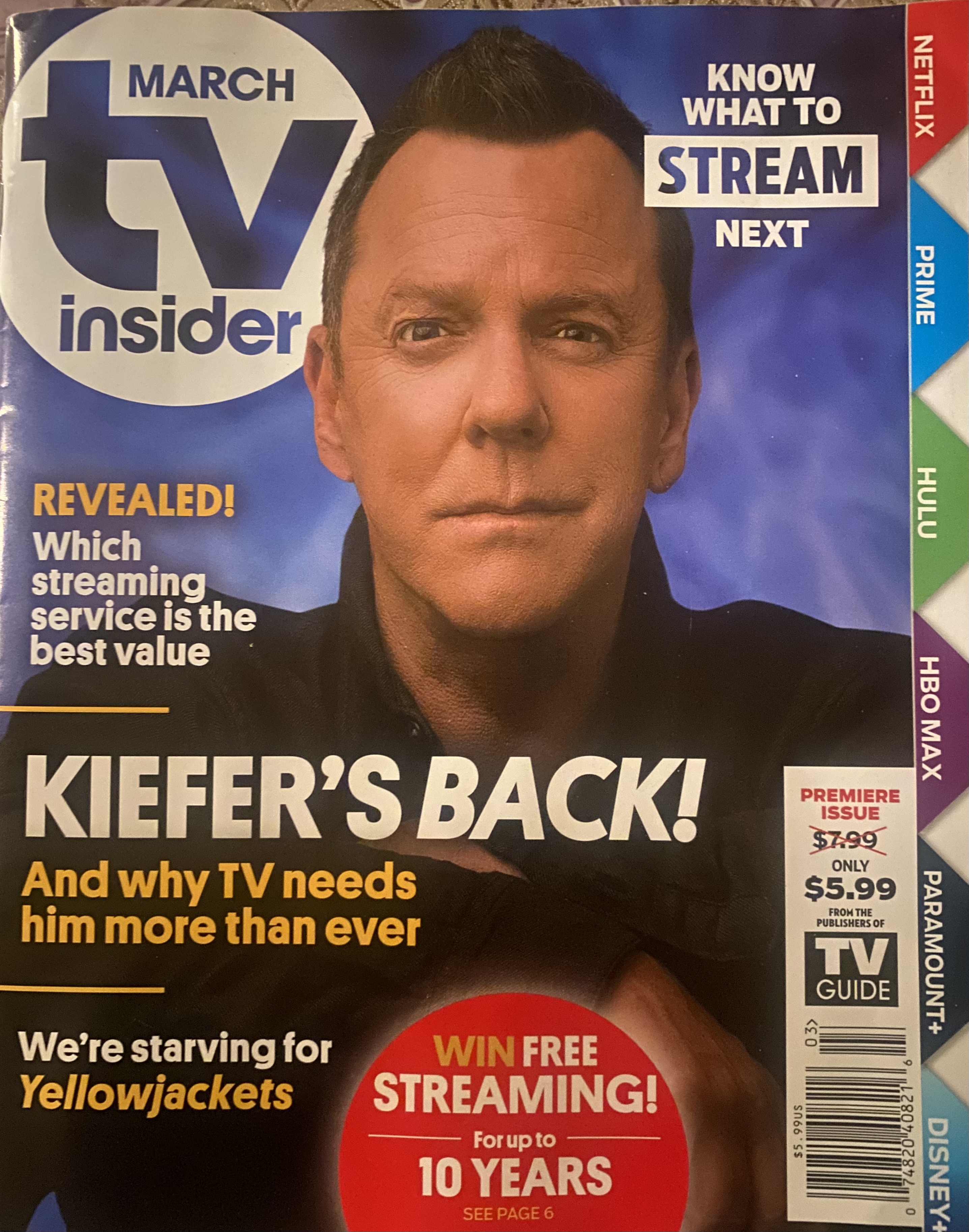
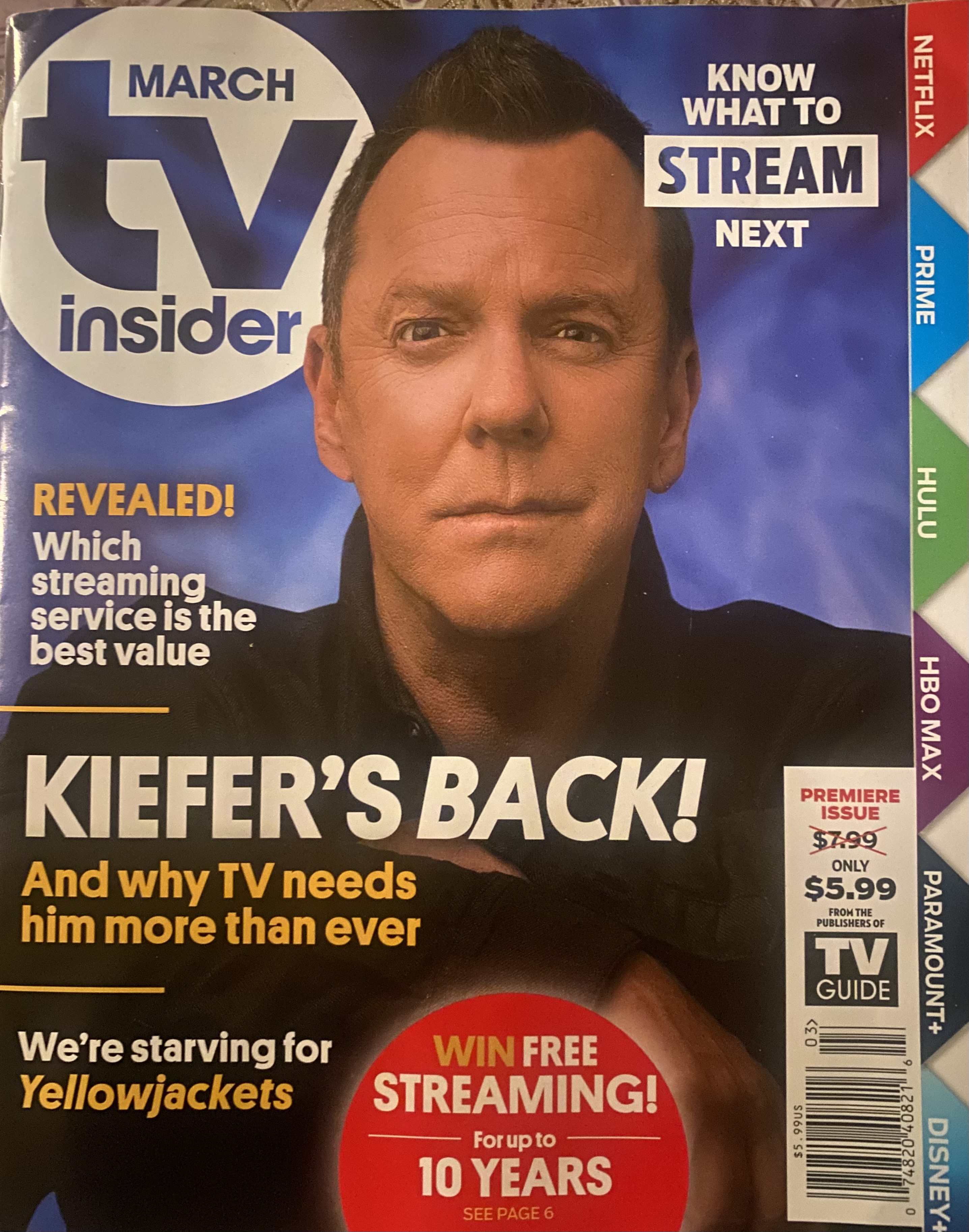
So Michael Fell, the editor in chief of TV Guide magazine, suggested and asked us why didn’t we call it IV Insider? We have a very successful website called tvinsider.com that we own and Michael’s idea was let’s spin off the title of our website with all the obvious advantages and synergies. So we locked up a cover and as you can see, that’s the traditional TV Guide logo, so the TV Insider logo, we decided to make different.
But on the cover you will still see the TV Guide logo on TV Insider magazine. It’s telling people that it’s from the publishers of TV Guide magazine; it’s from the editors of TV Guide magazine. They are getting expert guidance on streaming from TV experts.
Samir Husni: As you launch this new magazine, do you still feel there’s a need for a printed publication to tell people what to stream and what to watch on TV?
Tony Frost: We’ve promoted this magazine in our publications; in TV Guide already and other publications that the company owns and we already had several thousand subscribers before it’s even launched. So the answer is, yes we do feel there’s a need for a printed magazine.
You hear many people tell you there’s so much to watch on TV these days, so what do I watch? What’s worth watching? And the slogan of our magazine is “Know what to stream next.” That slogan comes from Barb Oates who runs our custom publishing unit in Milwaukee. She’s been responsible for our industry magazines for a number of years. And she agreed that people want to know what to stream next. So yes, we really do believe that there’s a market for this. The tears were there to put out a magazine that is different from TV Guide and doesn’t confuse TV Guide readers, and one that maybe TV Guide readers will want to buy and subscribe to as a companion to TV Guide magazine.
Samir Husni: The days that TV Guide used to sell 12 million copies on the newsstand are gone.
Tony Frost: Obviously, the newsstand today has shrunk. Not just for TV Guide magazine but for every title. We’ve put out less than a 100,000 copies of TV Guide on newsstands right now and we’re putting out approximately 100,000 TV Insider, so they’ll be at the newsstands side by side and readers will have a choice between the TV Guide magazine or the average streamers who buy TV Guide magazine; will they switch to TV Insider or buy it as a companion guide.
It’s interesting that we’re launching this magazine as TV Guide’s 70th birthday approaches, but it’s even more interesting that it’s at this time when many magazines are closing and going to digital, we’re going from digital back to a magazine.
Samir Husni: Are you crazy, or is there something behind the craziness?
Tony Frost, president, TV Insider.
Tony Frost: I’m sure some people will say these guys are crazy for launching a new magazine, but we feel very strongly that there is a need for us, for guidance; for all things streaming. And this is what you get with TV Insider; all things streaming.
Samir Husni: And you’re launching it as a monthly magazine instead of a weekly.
Tony Frost: It’s a monthly, yes. TV Guide remains biweekly and TV Insider will be monthly. It’s larger than TV Guide and has 40 lb. stock for the inside pages. It’s a very nice-looking book, which Michael Fell and the TV Guide editors put together. It’s been designed by Paul Aarons, who is our creative director and he’s done a great job. We’ve worked very closely together.
We have another traditional TV magazine called TV Weekly, which is produced in Troy, Michigan. And the team at TV Weekly came up with ideas for the streaming magazine. In fact, the index look on the right side of the cover with the titles of the major streaming services, that was given to us by Marci Waldrup, who is marketing director for TV Weekly. Barb Oates, our custom publisher in Milwaukee came up with a slogo: What to stream next. Michael Fell, the TV Guide editor in chief, came up with the idea of calling the magazine TV Insider, which leads you directly to our website.
Samir Husni: You’ve sort of done some reverse engineering by taking the digital to print.
Tony Frost: You can call it reverse engineering; you can call it crazy; you can call it what you want, but the good thing about our company is we have no debt. We have Andy and Larry who own the company and they don’t have investors, they don’t have banks breathing down their necks; they don’t have to go to quarterly meetings with BS projections. When we do something, we do it slowly and steadily and we will grow this publication in a slow and steady way.
Samir Husni: Back a century ago, when magazines like TV Guide, Time and Reader’s Digest all came onto the scene, there were individual entrepreneurs behind them. Nowadays it’s more of a venture capitalist endeavor. The two largest magazine companies, Meredith and A360 Media, are both technically owned by digital capitalist folks who have no interest in magazines.
Tony Frost: That’s a very good point. The fact is that Andy and Larry, who own the company, and I’m the president of it; we all have huge interests in magazines and love magazines. We’re not going to walk away from print when there is still great opportunity like this. And this is an extension of what we do. This is something that became a natural progression for us as we worked on it. And we realized just how much knowledge the team has. And how quickly this crazy idea became a reality. And a very good one.
Samir Husni: Forgive my question, but is the love of print by Andy, Larry and yourself, is it your age or is it because you still feel print is necessary in this day and age?
Tony Frost: We think print is viable to so many people. TV didn’t kill the radio, did it? Radio adapted and so will we. We have one million TV Guide magazine subscribers. TV Insider can be successful with 100,000 subscribers. You talk about venture capitalists, venture capitalists will see a million dollar return in the first couple of months. We don’t. We know this is going to take time to build the audience and to make the consumer aware of this excellent product. And that’s what we’re doing.
Our internet marketing director is starting a marketing campaign very soon. It’ll be pretty extensive and we feel that with TV Guide and our other in-house titles and with tvinsider.com and our marketing and promotion plan, we can get word out pretty widely that this is an excellent product for everyone who loves streaming. And that’s practically everything now, everything is streaming. Even the traditional broadcast shows end up on streaming.
Samir Husni: Other than Stream +, which is published by a360 Media, is there any competition out there for your magazine?
Tony Frost: That’s encouraging in itself, the fact that a360 believes there’s a market for this type of magazine. Stream + is a nice magazine, but it’s not a guide, it’s an entertainment magazine. We’re a guide. We’re the experts and we provide the expert knowledge. From my standpoint, it would be great to think that a360’s title and TV Insider could exist close to each other on the newsstand. Nothing would please me more.
Samir Husni: As you launch this new magazine, what is your biggest fear?
Tony Frost: I don’t think fear plays into it. We want to remain relevant in 2023 and in going forward. TV Guide has been relevant for 70 years. Let’s hope this is the start of another 70 year cycle with a new title.
Samir Husni: I noticed that you’re giving away free streaming for up to 10 years.
Tony Frost: It’s a promotion, which we feel we have to offer. And we’re doing a sweepstakes. It’s just an add-on; an added value to our readers.
Samir Husni: You have been with TV Guide for years and you’ve seen the changes in the marketplace, in the industry and with the wholesalers and distributors. What do you believe is the future of magazines in print?
Tony Frost: I think it wouldn’t hurt if there were more people like Andy DeAngelis and Larry McKenzie, myself and Michael Fell, who are commissioned to the future of magazines. We believe in them and can’t imagine a world without them.
The future for us is TV Guide magazine and maintaining its presence as a relevant guide for traditional TV. And TV Insider growing over the next three to five years and being a relevant guide for everyone who streams. Because streaming is everything these days. If you watch TV streaming is it.
And we feel that this guide is relevant in this day and age and is needed by people to read from the coffee table, pick up again and see what they can watch tonight, and pick it up next week to see what’s on. It gives people options and you can’t spend your whole life glaring at a screen, whether it’s your workplace computer, mobile phone or tablet or your TV. You have to have something to read in print. And this as a guide for giving you the best advice on how to spend two hours watching something that appeals to you. There’s nothing better than TV Insider.
Samir Husni: You opted with TV Insider not to have any grids.
Tony Frost: The grids and listings still appear in TV Guide. There are still a lot of people who love the grids and listings. They’ll continue to get those. The audience for TV Insider are those people who perhaps rely less on grids today, but are frustrated because they can’t find anything to watch. And they channel surf for two hours without finding anything to watch. With TV Insider magazine hopefully they can find something to watch.
Samir Husni: Anything I failed to ask you?
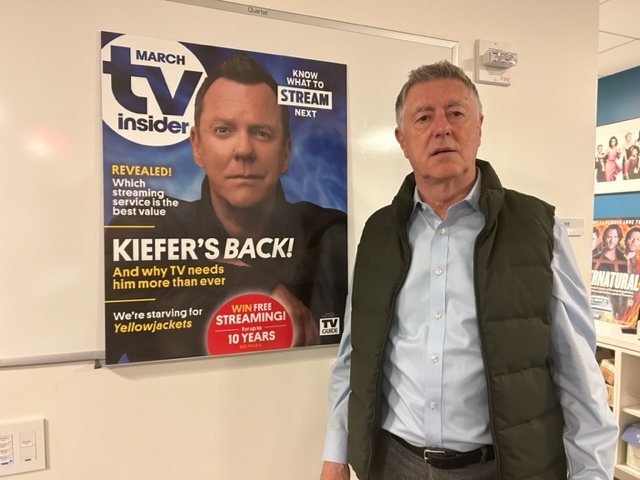
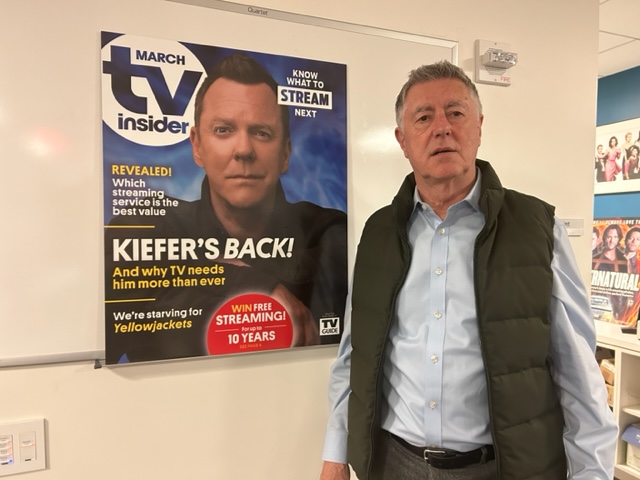
Tony Frost: The interesting thing is that on the cover of TV Guide is Kiefer Sutherland who’s star of the new espionage drama on Paramount Plus. He’s the cover and we have an exclusive interview with him. He has graced 19 TV Guide magazines. But the timing was right to choose him. TV Guide magazine is one of the most important brands in the entertainment world today 70 years after it was launched.
Samir Husni: Anyone ever ask you to be on the front page of a digital product?
Tony Frost: We have a very robust website, tvinsider.com. It has 8 to 9 million users per month. And we think we can transport material from TV Insider print to tninsider.com. And readers may like the magazine and may well become subscribers.
Samir Husni; My typical last question, what keeps you up at night?
Tony Frost: I get up at 5:30 most mornings. My staff sees a lot of emails from me at 5:30 in the morning. I look at the pages, make suggestions, because we’re all invested in making TV Insider the best product possible. I run Central Park twice a week, which means that noting keeps me up at night. (Laughs)
”The pandemic brought the world to a halt, but not Embrace Magazine. I decided to launch anyway, keeping all unpaid ads intact to allow LGBTQ+ owned businesses and their ally businesses a chance to bring awareness to their products and services during the pandemic while launching the magazine as it was intended…” John Sotomayor
“Publishing Embrace will always be a labor of love akin to the quote by Mark Twain, “find a job you enjoy doing, and you will never have to work a day in your life,” however, it is definitely a business venture…” John Sotomayor
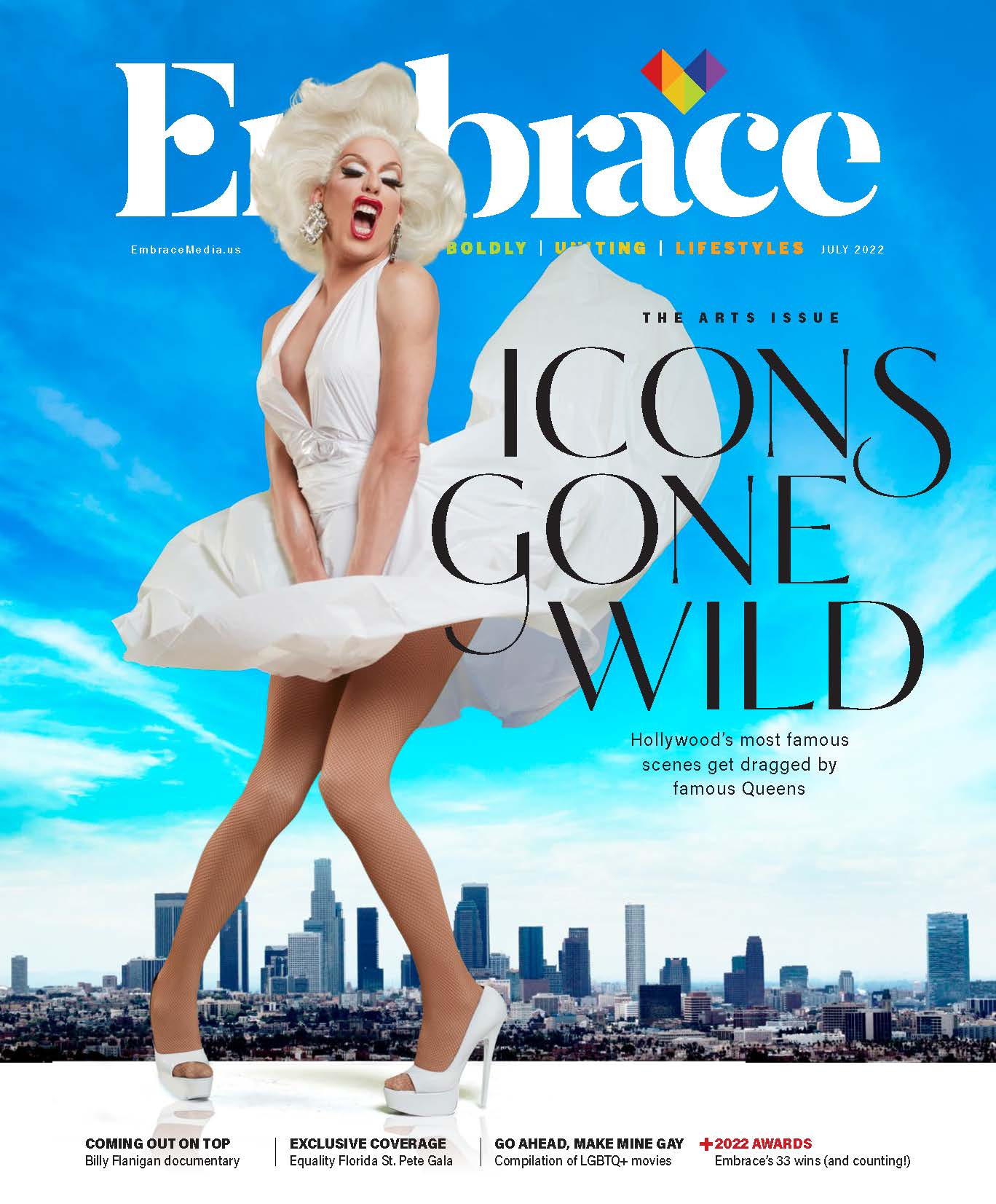
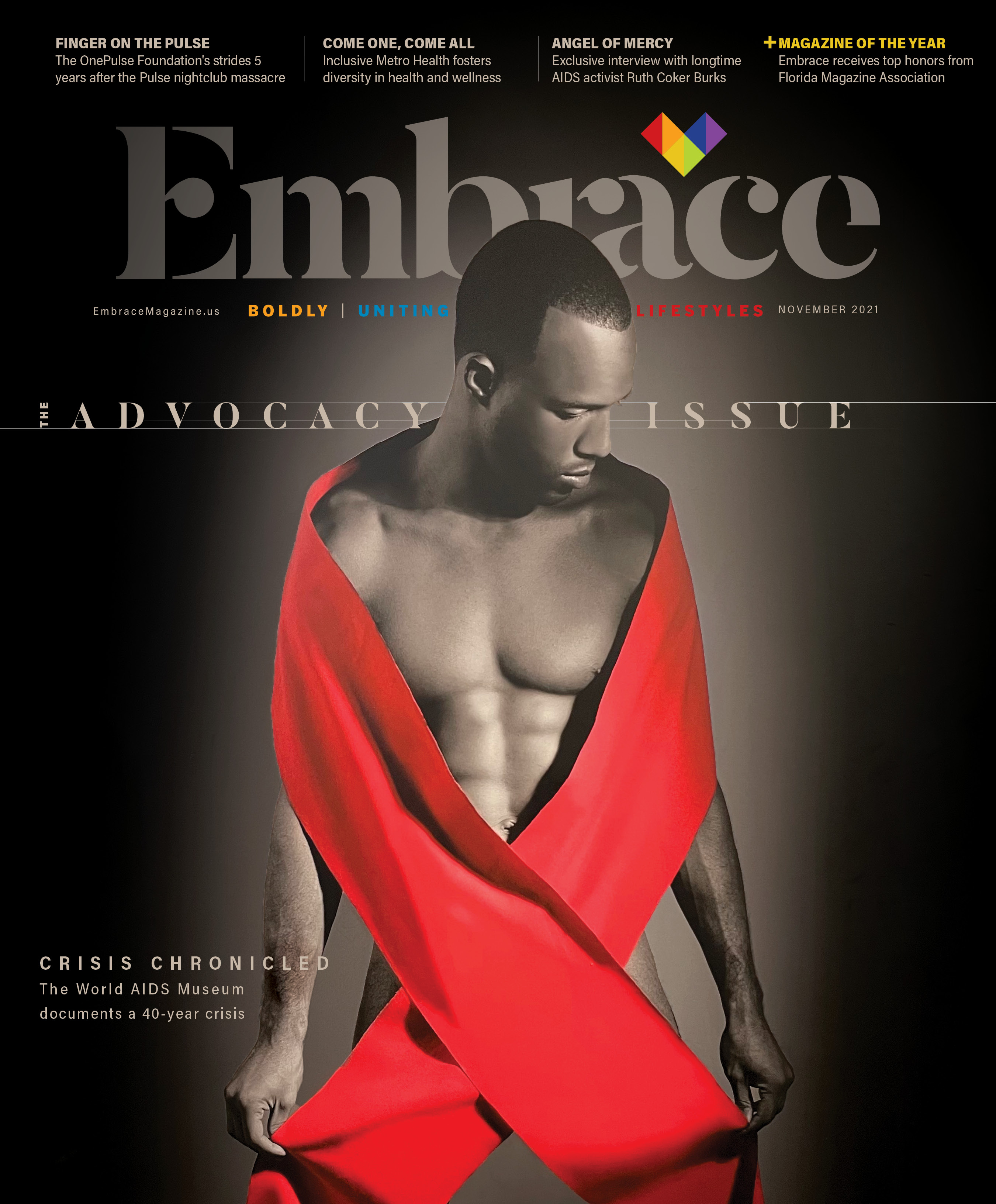
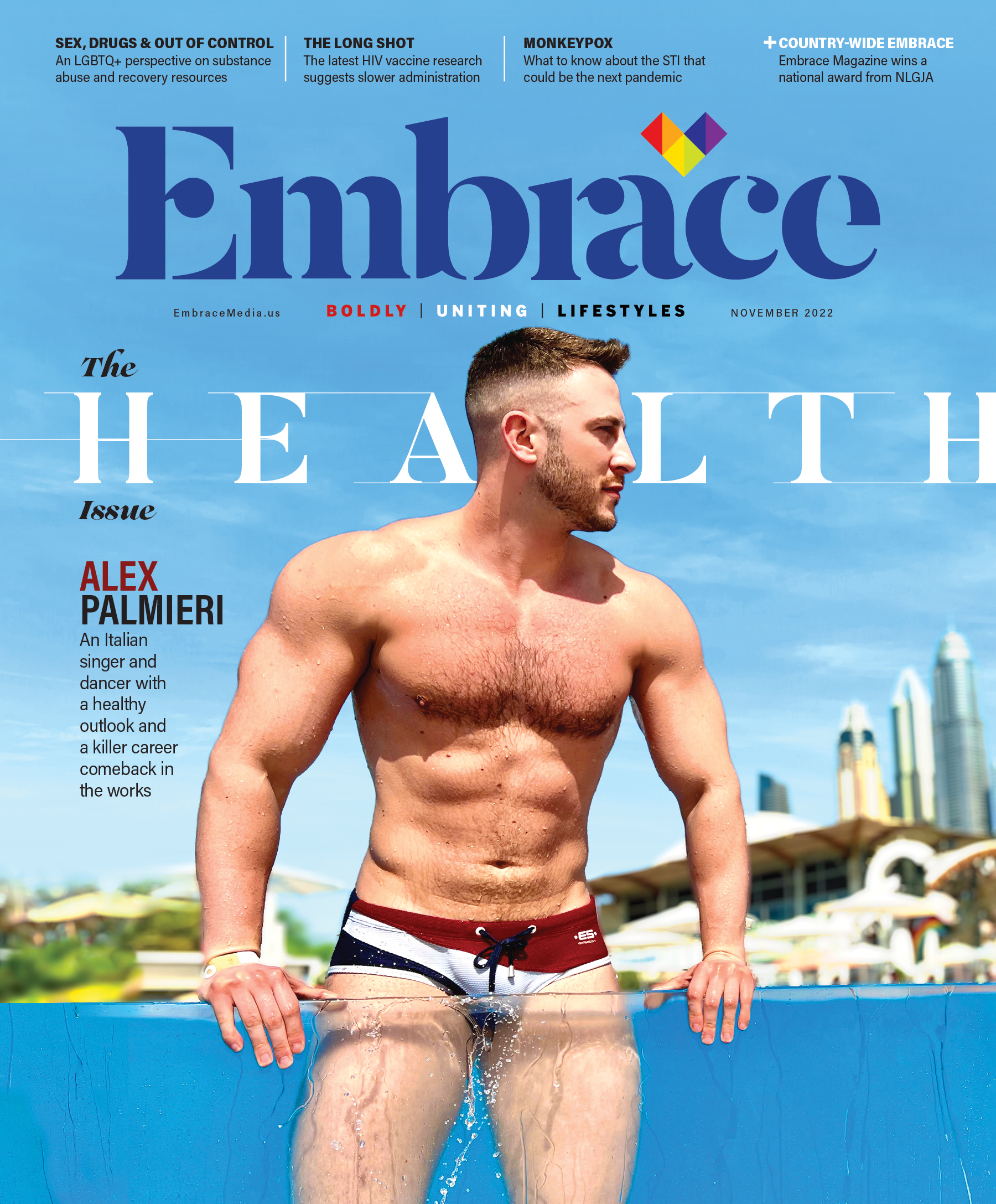
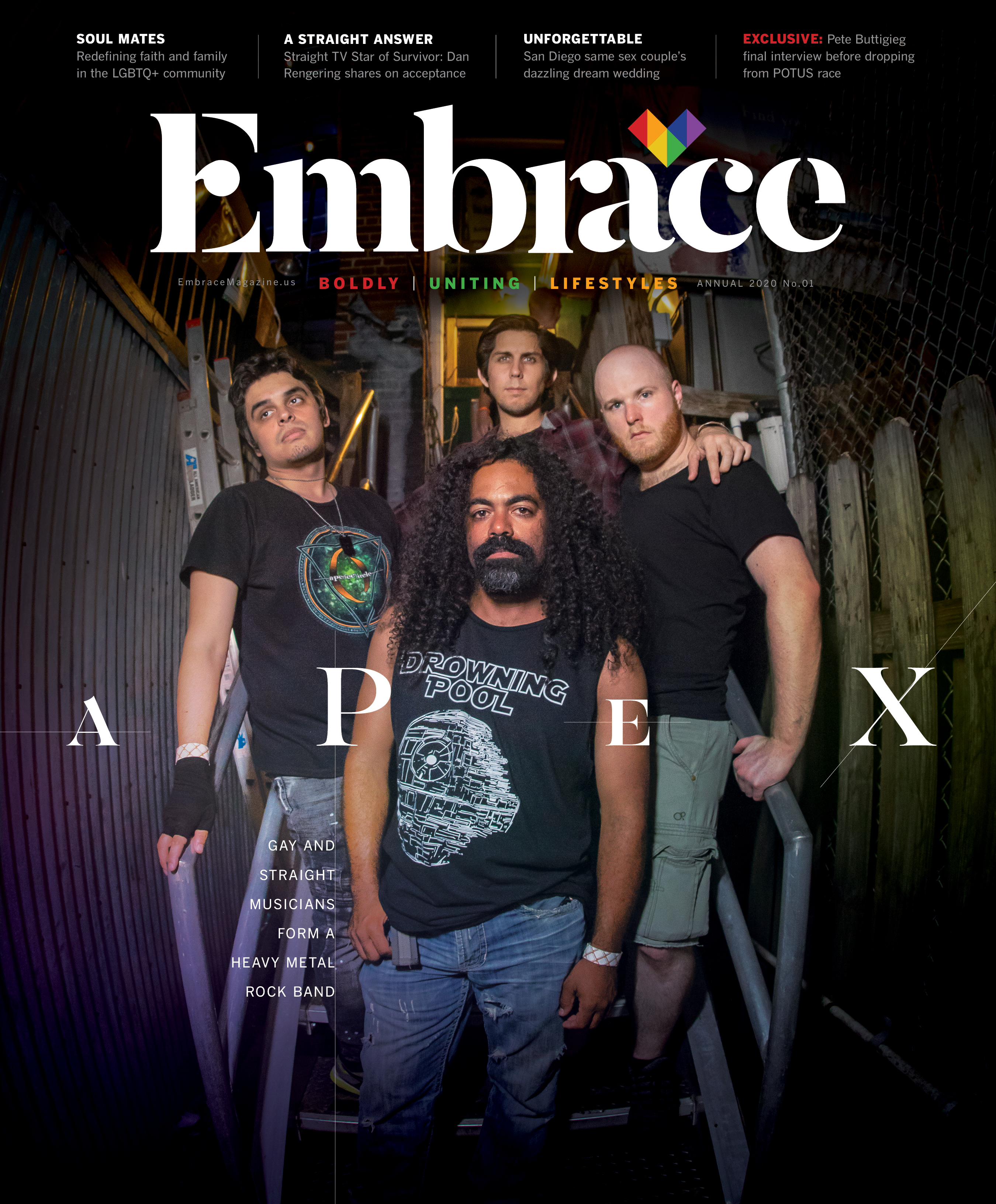
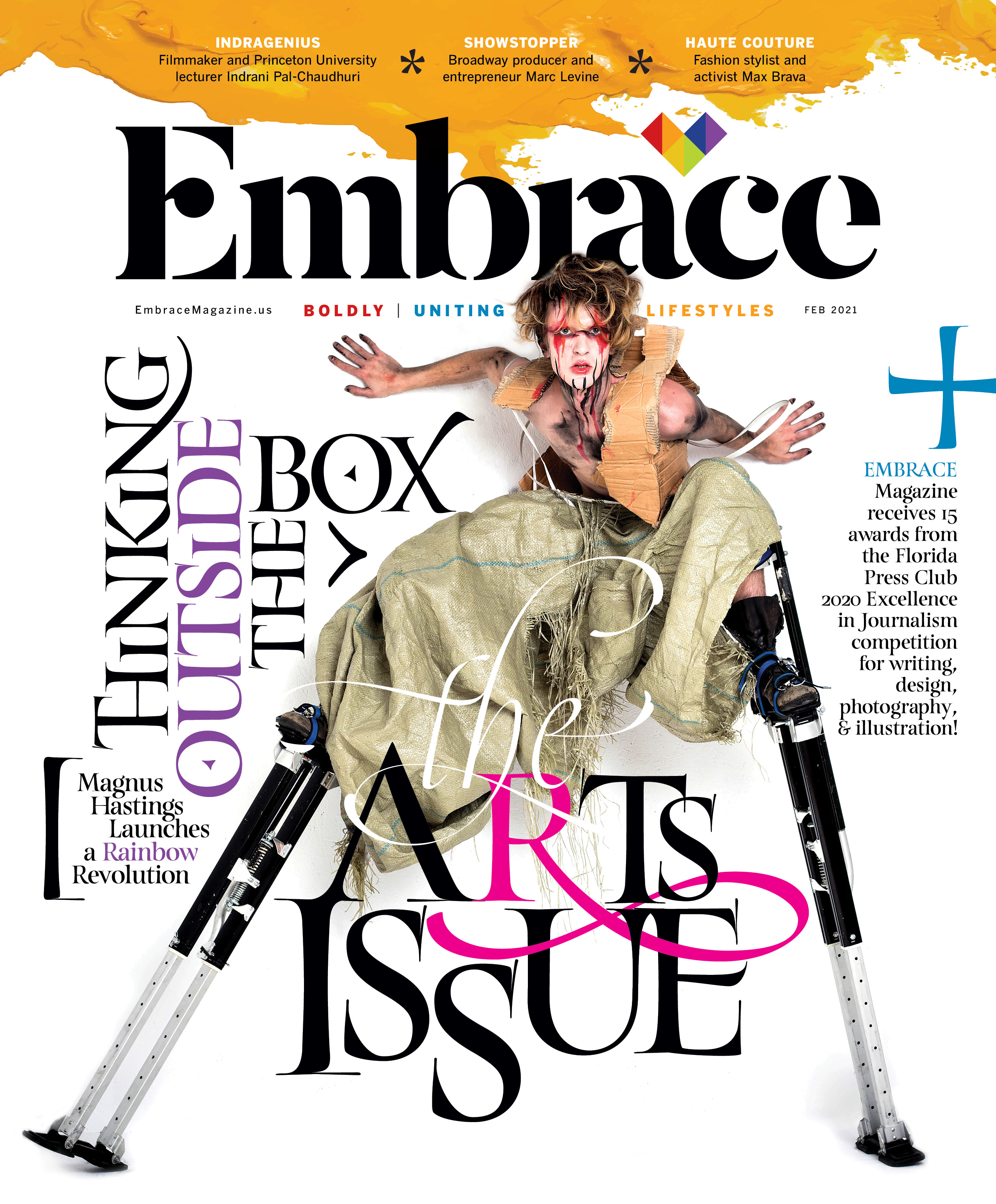
What happens when you mix in a blender a creative person at heart, with a strong business sense and enjoys the aesthetic appeal of magazine design, along with the intellectual application of the editorial content that can have an outward impact on the world around us? This person also adds every personal and educational experience of his life into the mix. And did I fail to mention he is gay, and also Roman Catholic? This and all is John Sotomayor, the publisher, editor-in-chief, and executive producer of the Florida based Embrace Magazine and Media.
I met John last year at the annual conference of the Florida Magazine Association where I was speaking. His love for magazines and specifically for what he was doing with magazines, was evident in every single word he told me. I could feel the passion, the love, the excitement, but at the same time the fear of the future. How can one survive in this marketplace and how can a great magazine (my words, not his) survive in the midst of all the headwinds?
I have decided to interview John and ask him a few questions about him and Embrace magazine and Embrace media. What follows is my Q and A with John:
Samir Husni: Two years ago, you single handedly launched Embrace, tell me the story of that launch and your memories of that period…
John Sotomayor: After the success of a previous brand magazine, I decided I wanted to launch an LGBTQ+ magazine, which was more inline with my identity. I decided to make my formal announcement on June 28, 2019, the 50th anniversary of the Stonewall Riots in my native New York City, which signified the start of the LGBTQ+ civil rights movement. I used the next few months on market research and development. Prepared to launch in January 2020, I had some delays that occur naturally with a startup. I was ready to launch next quarter, April 2020 when the world had other plans. The pandemic brought the world to a halt, but not Embrace Magazine. I decided to launch anyway, keeping all unpaid ads intact to allow LGBTQ+ owned businesses and their ally businesses a chance to bring awareness to their products and services during the pandemic while launching the magazine as it was intended. It paid off. We received public engagement. Emergency relief funds provided us the financial assistance we needed to get the first three issues published.
S.H. : As you reflect on the launch, what are some of the most pleasant moments that you can recall?
J. S. : The most pleasant moments involved working with the contributors and our supporters toward developing the vision and content I desired to achieve the level of publication I sought Embrace to be. Everyone brought their A game. Many contributed at a fraction of their worth, and some contributed for free. Where some might have thought print publishing was on a downturn at best, and a thing of the past at worst, those around me saw this as an opportunity to achieve a next level platform for the LGBTQ+ community. Then, there was the reveal. The premiere issue exceeded all expectations. Minds were blown, and new engagement began instantaneously. My former employer, Kendra Akers, publisher for Akers Media Group publications I wrote for, sent the following message, “Hi John, WOW, you have outdone yourself with this publication. Great job! I wish you the best of luck with this new endeavor! I think people will really love it and appreciate it.” She was right. Many others shared similar sentiments. On competition level, judges awarded us with the highest honors in every competition we entered for various journalism organizations throughout Florida and the nation.
S.H. : What are the biggest hurdles you faced and how did you overcome them? In case you did not overcome them, what are the plans to do so?
J. S. : The largest hurdle we faced so far was the COVID-19 pandemic that saw a worldwide shutdown and isolation for almost two years. As we all know, businesses were closed from most of 2020 – 2021. Even when they reopened, for their own survival, they had to drastically reduce their operating budgets. The first for most to go was advertising. That was our bread and butter. We managed to stay afloat by publishing three issues per year rather than four. We planned to publish quarterly. We also kept our operational costs extremely low, again, thanks to the generosity of our contributors. Not only did I not make any earnings for the first three years, but I also contributed financially from my personal savings. It is unwise but necessary. This leads to the next hurdle, becoming sustainable, and even profitable. The solution I am currently negotiating is an acquisition deal with a major media group that sees value in our branding. They have a vast umbrella of luxury brand magazines, but none solely devoted to the lucrative LGBTQ+ audience. Embrace is that asset. If the deal goes through, they will handle all operations — circulation, distribution, advertising, expansion — and I will retain creative control as managing partner, publisher, and editor-in-chief. We will retain our status as a certified LGBTBE (LGBT Business Owned Enterprise), granted to us by the NGLCC (The National LGTB Chamber of Commerce). That status as an LGBTQ+ owned business helps us enormously to attract businesses, including Fortune 500 companies, that wish to do business with a supplier diversity business.
S. H. : The magazine was well received by the magazine community in the state of Florida and in fact it won the magazine of the year in its first year from the Florida Magazine Association. What’s next?
J. S. : Thank you, that was a major moment for us! To give the full effect of winning Magazine of the Year by the Florida Magazine Association in 2021, we need to add that Embrace Magazine won Charlie (first place) for Best New Magazine, Best Overall Magazine, and won Magazine of the Year, all in the magazine’s inaugural year. That has never happened before and some say, may never happen again. Also, we took top honors in all four Best Overalls, including Charlie for Best Overall Writing and Best Overall Magazine, and Silver (second place) for Best Overall Design and Best Overall Digital Innovator, the latter a new category. No other magazine has ever accomplished that either yet. In total, we were honored with 22 awards, the highest any startup magazine has ever garnered. We also made history at the FMA as the first ever LGBTQ+ magazine member in 2021, the organization established in 1953, and the highest awarded startup. We made history with the Associated Church Press, being the first LGBTQ+ magazine member in 2020 of that Christian-based journalism organization, established in 1916. This year, we added a national award from the NLGJA: Association of LGBTQ Journalists for Photo-journalism Excellence, and a national board position for me, as publisher, with the NLGJA as well. Both occurred in Chicago. The FMA also added me as a board member. As a result of these achievements, Embrace Magazine was approached by the Poynter Institute of Media Studies to do a profile on us as a successful startup LGBTQ+ magazine. That by itself, is a high honor given the status in media the Poynter Institute carries. What’s next in 2023? I have already entered us in the GLAAD Media Awards. We should know the results in early 2023. If we are a finalist, I will attend the ceremony in either Los Angeles or New York City. If we win, anything is possible, as that will indeed be a high honor.
S. H. : Is publishing Embrace still a labor of love or more of a business venture now?
J. S. : Publishing Embrace will always be a labor of love akin to the quote by Mark Twain, “find a job you enjoy doing, and you will never have to work a day in your life,” however, it is definitely a business venture. Embrace is designed by Em Agency, owned by my good friend and long-time colleague, Jamie Mark. With them, we work on ads together. Our website, embracemedia.us was designed by A Great Idea, owned by my new close associate, Shane Lukas, who also contributes content to our online resource blog. We added Embrace Media, which in addition to the magazine, includes Embrace On-Air, our radio show broadcast out of 93.6 FM/1370 AM WOCA The Source, in Ocala. We create video content inhouse but are also in negotiations with Gardner Productions based in Toronto, Canada and New York City to create video advertisements. Hopefully, the acquisition deal with the media group goes through. We should see regional distribution grow to include Barnes & Noble for print, then eventually expand to other regional markets, applying national content to regional advertising. Ultimately, I hope Embrace Magazine and Embrace Media take me to a comfortable retirement, while leaving a lasting legacy.
S. H. : What makes John tick and click?
J. S. : I am creative at heart, with a strong business sense. I enjoy the aesthetic appeal of magazine design, along with the intellectual application of the editorial content that can have an outward impact on the world around us. I also apply every personal and educational experience of my life. I am gay, but I am also Roman Catholic. I made it a point to include a Religion department alongside Issues + Politics, International News, Art + Culture, and Activism + Charity. We have made many major advancements socially, politically, and culturally as a community. However, if the LGBTQ+ community is to ever be completely free of oppression, then we need to confront and unify with our largest oppressors, which are religious groups. I would like to be a catalyst of real change. I also am diversely educated. I studied mechanical engineering but have a dual bachelor’s degree from the University of Rochester in Economics and Political Science with a certification in Marketing and Finance. I studied law at Howard University School of Law in Washington, DC but did not complete my JD degree due to complications from being outed as gay. I am also a natural, self-trained artist with the ability to draw. I apply all of my education and artistry to my magazine. I am hands on with every editorial and design decision in Embrace. I have been told by the COO of the media group I am negotiating with that in essence, I am the magazine. What you see within the pages are all a reflection of me.
S. H. : What are the plans for 2023 and beyond?
The immediate plans are to lock the negotiations with the media group and Gardner Productions. Then hopefully become a finalist at the GLAAD Media Awards and hopefully win. Either way, the plan is to attend the GLAAD Media Awards in LA or NYC and continue to network and bring awareness to Embrace Magazine and Embrace Media. If the deal with the media group goes through, Embrace Magazine will grow regionally, starting with states that have large LGBTQ+ communities, then expand outward. Ultimately, I would like to see a European version of Embrace, and a Spanish language version called Abrazo. There are still many areas in South and Central Americas that do not embrace the LGBTQ+ community yet. When a person comes out to their family, the family either shuns them or tries to have them institutionalized until they denounce being LGBTQ and reassimilate as straight. We need to reach those areas to promote and assist change. From there, assist those in need in other repressed areas of the world for LGBTQ+ people in Asia, Africa, and the Middle East. Looking further into the future, I would like to see Embrace Magazine have its own televised programming, maybe even a network, like National Geographic. Imagine the potential outreach Embrace could produce then.
S. H. : Anything you’d like to add that I failed to ask, or you’d like to mention?
J. S. : When I am asked to improvise, I see an opportunity to add my shameless plug. As a startup, Embrace Magazine still needs financial support. We welcome investors, and of course advertisers. Our 2023 Media Kit is available on our website, embracemedia.us. I also welcome story ideas. Please reach me at john@sotomayormedia.com. Finally, I welcome new contributors: writers, columnists, photographers, illustrators, and graphic artists. Two-thirds of our contributors are LGBTQ+, the remaining third are allies. One of my goals was to provide a platform for talented LGBTQ+ artists to showcase their writing, photography, and design skills toward LGBTQ+ related subjects. They may not have the opportunity elsewhere. Allies are welcomed. Why would I not include the best writer or photographer simply because he or she or they are not gay? So long as they support the mission of the magazine, their talent is welcomed in our pages. We are all inclusive, diverse, and unifying.
S. H. : And my typical last question, what keeps John up at night these days?
J. S. : I have two answers. First, I am concerned for all of our LGBTQ+ community, that our hard-earned civil rights are not torn away by the political mechanism that seems hellbent on doing so. Being from Florida, I see that already being enacted on the state level by our current governor, who has his eyes on the presidency in 2024. I have seen and heard the hate spewed by the Proud Boys who meet in rural bars to plan their next protest. They are getting louder, and forceful. They are no longer satisfied with disruption, they seek destruction. We at Embrace exist to counter, using intellect, compassion, and love to persuade people so that peace and prosperity win. These are the nightmares that keep me up at night.
Second, I am always thinking three steps ahead, as I always have played my favorite game, chess. I do not compete against others. I compete against myself. However high I set the bar previously, I focus on how I can raise the bar even higher. I think, what theme or concept can we come up with to excite our audiences? The photo-essay that won our national award in photo excellence was world renown and revered drag photographer, and Embrace Magazine contributor, Magnus Hastings’ brilliant concept for his book, “Rainbow Revolution” which we used as the foundation for “Thinking Outside the Box.” We collaborated on the July 2022 Arts issue, “Icons Gone Wild” which featured popular LA drag queens reenacting iconic Hollywood actresses in well-known scenes, with a twist. The result will surely garner more awards, as it has received world-wide attention. We have come up with another concept I will keep secret, for now. I can tell you it will be published in our summer Travel issue, and it will be our campiest drag photo-essay yet! These are the thoughts that keep me up at night, that eventually turn to dreams.
As the shift continues at the nation’s newsstands from regularly published magazines to book-a-zines, one can see as we enter 2023 that the future of ink on paper is going to be with those single topic, high-priced publications. They are everywhere: at the checkouts and at the mainlines. They cover every conceivable topic from Inside the Mind of Your Dog to Inside the Mind of Your Cat and everything in between. The cover price of these publications ranges between a low of $9.99 to a high of $14.99. Some of these publications are second, third and even fourth printing. All returning to the newsstands by “popular demand.”
So can the aforementioned be the reason for the drop in the total of new magazines published with a regular frequency? Well, the simple and short answer is YES. A crowded marketplace combined with the three headwinds (paper shortage, printing cost, and postage rates) publishers had to deal with in 2022, kept the major remaining publishers from entering the new magazine field (in fact just the opposite happened for the major publishers, they folded some of the existing magazines that they have), and those publishers focused more on the book-a-zine market.
My sources tell me that the two major publishers Dotdash Meredith and a360 media now control 60% of the book-a-zine marketplace. Well, for those of us who recall the “golden age of magazines” in the 1980s and 1990s, you will remember that Meredith used to be a leader in publishing what was called back then SIPs or special interest publications. Those SIPs were used as a test before that SIP was changed to a regularly published magazine. Country Home comes to mind as one of those SIPs later becoming a magazine with frequency. a360 media is doing now the same with their book-a-zines such as Feel Free, Steam+ and Gold Buckle (all introduced as new magazines in 2022).
So here is a recap of what I wrote in an earlier blog late last year:
The new magazine launches of 2022 were as cold as the arctic weather that hit the nation in the last few days of December. In 2020 the number of new magazines dropped to 60 titles, but then we had COVID 19 to blame. In 2021 the number of new launches doubled and some more to 122. But in 2022 the number of the brave souls who launched new titles, or brought old ones back to life stopped at 74 new titles.
I asked Doug Olson, the president of a360 Media, about his reaction to the aforementioned news. His answer, “2022 was a year of perseverance for the magazine industry. Through hard work, leadership, and continued innovation, the industry navigated input costs, advertiser supply chain issues, labor shortages, and unprecedented consumer inflation in ways that position the industry for a successful 2023!”
Whether 2023 will see an improvement in the number of new title launches or not is yet to be seen. What is for sure is that the so called book-a-zines or special interest publications have taken over the nation’s newsstands squeezing out both the established regularly published magazines and the arriving newbies.
Never in my recent memories have I walk into a newsstand and left empty handed. Twice in 2022 that happened, to the surprise of my wife. “You mean you did not find a single new magazine,” she asked with honest surprise on her face.
But, enough of the doom and gloom, let us concentrate on the bright side of the new magazine world and on the brave souls who still believe in ink on paper in addition to all things digital. Those brave souls were led by Alan Katz and his The Mountains magazine. The Mountains is an example of how a print magazine is and should be done. High quality writing, photography and design, The Mountains: From The Catskills To The Berkshires, deserves to be the 2022 Launch of the Year. Although it is a regional magazine, its content is one of the best I have seen in some time. Whether you live in the mountains or in the valleys, The Mountains and its team is the magazine for those who enjoy a lean back and relax kind of read with pages of experiences and not mere content.
As for the rest of the new magazines of 2022, here is the breakdown of the categories of the new magazine launches of last year:
Total US Print Magazines LaunchedBy Category In 2022*
16 Special Interest
10 Sex
08 Women’s
07 Arts & Literary
05 Metro & Regional
05 Home
05 Crafts/Games/Hobbies
05 Black/Ethnic
04 Auto, Motorcycle, & Bikes
03 Food
02 Children’s
01 Travel
01 Music
01 Men’s
01 Hunting & Fishing
*A total of 74 new magazines were launched in 2022 compared to 122 in 2021 and 60 in 2020.
The Mountains magazine is the Launch of the Year, plus 9 Most Notable Launches of 2022.
The new magazine launches of 2022 were as cold as the arctic weather that hit the nation in the last few days of December. In 2020 the number of new magazines dropped to 60 titles, but then we had COVID 19 to blame. In 2021 the number of new launches doubled and some more to 122. But in 2022 the number of the brave souls who launched new titles, or brought old ones back to life stopped at 74 new titles.
I asked Doug Olson, the president of a360 Media, about his reaction to the aforementioned news. His answer, “2022 was a year of perseverance for the magazine industry. Through hard work, leadership, and continued innovation, the industry navigated input costs, advertiser supply chain issues, labor shortages, and unprecedented consumer inflation in ways that position the industry for a successful 2023!”
Whether 2023 will see an improvement in the number of new title launches or not is yet to be seen. What is for sure is that the so called book-a-zines or special interest publications have taken over the nation’s newsstands squeezing out both the established regularly published magazines and the arriving newbies.
Never in my recent memories have I walk into a newsstand and left empty handed. Twice in 2022 that happened, to the surprise of my wife. “You mean you did not find a single new magazine,” she asked with honest surprise on her face.
But, enough of the doom and gloom, let us concentrate on the bright side of the new magazine world and on the brave souls who still believe in ink on paper in addition to all things digital. Those brave souls were let by Alan Katz and his The Mountains magazine. The Mountains is an example of how a print magazine is and should be done. High quality writing, photography and design, The Mountains: From The Catskills To The Berkshires, deserves to be the 2022 Launch of the Year. Although it is a regional magazine, its content is one of the best I have seen in some time. Whether you live in the mountains or in the valleys, The Mountains and its team is the magazine for those who enjoy a lean back and relax kind of read with pages of experiences and not mere content.
In addition to The Mountains other magazines rising to the top of the ten most notable launches of 2022 like the froth of a good cup of espresso are in alphabetical order:
Al Hayya: Al Hayya is a magazine that publishes literary and visual content on the works, interest and strife of women, bilingually in Arabic and English.
Bavual: The African Heritage Magazine.
Britannica Magazine: The ultimate guide for curious young minds!
Creem: America’s Only Rock ‘n’ Roll Magazine.
Feel Free: Leanne Ford’s Magazine.
Raised Southern: Inspiration from the heart and soul of the South.
So Flo Habitat: For what it means to live in South Florida.
The Home Edit: Feel-Good Organizing from the Stars of the Netflix series.
Western Life Today: Designed to honor and celebrate the heritage of the West while simultaneously embracing the latest trends.
Here’s to a successful 2023 filled with new magazine launches and great experience making…
All the best,
Samir “Mr. Magazine™” Husni, Ph.D.
Founder and Director
Magazine Media Center
Preserving the Past, Present and Future of Magazine Media
I found my match. Doug Bitto, the principal of Advantage Circulation Consulting, LLC. is as big of a magazine junkie as I am. He also is a firm believer that if it is not ink on paper, it is not a magazine. He describes himself as a bit of a pop culture junkie. “Magazines have fascinated me ever since I was very young,” he told me, “so it’s no surprise that I gravitated towards the business.”
Doug’s formula for a successful magazine is relatively simple as he says: “The underlying formula for all successful print magazines is relatively simple: Passion combined with deep knowledge, framed within the greater cultural understanding (i.e. what people actually want to read and buy at this particular moment in time).”
So with that in mind, and after a chat with Doug, here is the Mr. Magazine™ interview: Enjoy.
Samir Husni: During our chat, I felt I found my match in a person who believes in the power of print, can you please explain why?
Doug Bitto: When a print magazine is produced and distributed, it is a permanent snapshot of a culture. It cannot be changed, to be reviewed and scrutinized for decades (or even centuries) after being produced. A digital “magazine” on the other hand can be altered and the original message lost forever, including the advertising which is an essential component of cultural understanding. In addition, print is much more effective than digital in conveying a message because more of our senses are used when interacting with print. When was the last time anyone smelled their iPad?
S.H.: You run a circulation consulting company, do you mind expanding some of what your company does and your role running it?
D. B.: We have evolved into an end to end consulting firm over the last 20 years. In addition to the physical nuts and bolts aspects of newsstand distribution and management, we have expanded to include consulting on product development, working very closely with editors and designers. One of our strengths, I believe, is our ability to successfully recognize cultural trends and how they are applicable to our clients.
As far as my role is concerned, I wear many hats. At the end of the day, however, it’s about ensuring that I successfully guide my clients.
S. H.: Small, regional, and new niche magazines are your specialty. Why and do you think there is still room for new magazines in this digital age?
D. B.: Culture is constantly changing but much like radio, print will always be around. One trend we are seeing post-pandemic is the return to traditional media, as discussed in a recent article by Harvard Business Review https://hbr.org/2022/04/why-marketers-are-returning-to-traditional-advertising. Personally, I have not “seen” a digital ad in years, much less clicked on it. And if I find myself on a website that has pop-up ads (or worse yet, autoplay ads) I immediately click out without even looking. Not only are they annoying, they can actually create physical stress. Multiple studies have shown this. As the article states, people are becoming “ad blind” digitally due to these factors.
Print on the other hand is relaxing. And if ads are well curated, they fit seamlessly within a print magazine. I hate to break it to the digital ad folks out there but from a practical standpoint, print ads are far superior. When you turn the page of a print magazine, you HAVE to look on the next page. Ad blindness is almost impossible.
Advertising aside, magazines are rapidly turning into higher quality, higher dollar items with very little or no advertising. Again, not a new trend, but it is accelerating. And people are willing to pay for this experience. Out of the six new title launches we have recently launched or are launching over the next few months, four fall into this category. All are high quality in content and physical presentation. All are between $12.99-$14.99US, $14.99-$19.99CAN.
S. H.: Define a magazine for me.
D. B.: I take a traditional approach. Mirriam-Webster’s first entry is how I would define a magazine:
Definition of magazine
1a : a print periodical containing miscellaneous pieces (such as articles, stories, poems) and often illustrated
A digital publication is not a magazine, even though our culture is now defining many forms of media as a “magazine”. A different term should be used to describe a digital only publication.
S.H.: Can you share a success story of a new launch that you consulted on, and can you share one that failed?
D. B.: I would like to speak in general terms first.
The underlying formula for all successful print magazines is relatively simple: Passion combined with deep knowledge, framed within the greater cultural understanding (i.e. what people actually want to read and buy at this particular moment in time). A product that not only informs and inspires, but entertains. Especially with niche and hyper-niche titles, readers are more than likely to be passionate experts in their own right. They are looking for knowledge above and beyond what they possess. The “formula” does not guarantee success but without its understanding, failure is guaranteed. The most successful publishers have an innate understanding of this.
Regarding a successful launch, we have one title in the Sports Category that was basically a “gear” catalog when first presented to me. At launch it was approximately 40% catalog, not including additional advertising. But the content was excellent. The launch issue sold 51%. They have since expanded their content extensively but to this day their best selling issue of the year is always the “gear review” issue. Again, the publisher is one of the top experts in his field. And readers trust that the message being printed and products being presented are high quality.
Now for the really bad failure. When I first started consulting over 20 years ago I signed a lifestyle magazine whose only concern was ad dollars, as I came to find out later. Content was secondary. Lowsingle digit sales on the launch issue. And when I say low, I mean LOW…3%. Naturally, they did not last for more than a couple of issues.
S. H.: Anything else you would like to add.
D.B.: It may sound ridiculous in the digital age but nothing has really changed on the newsstand side of the business since its inception. Print magazines are produced and sent through distribution channels to retail. I believe that this industry has in many respects lost sight of the fundamentals. We cannot forget that this is an organic business and the most important people within the distribution channel are the merchandisers. Proper title placement and rotation are absolutely essential. Without merchandisers who understand how to merchandise magazines as the unique products that they are, the industry suffers.
On the publishing side, I foresee almost all of the large publishers eventually going digital with print being reserved for special issues, and small independent publishers launching at an increasing rate. This movement started more than a decade ago but it will accelerate and become more prevalent in the future. Driven, ironically enough, by the digital age and the increasing ease of publishing in print.
S. H.: What keeps Doug up at night these days?
D. B.: Without question, the health of the newsstand distribution industry. With costs rising and large publishers continuing to go digital only, all levels are being squeezed. That being said, I am actually very positive about the future of newsstand. There will undoubtedly be more pain to come, but I believe that this industry will survive.
Our Wisconsin magazine is approaching its tenth anniversary in 2023. In its second issue there was an editorial talking about the “joys of magazine publishing.” I found myself emailing my friend Roy Reiman, Publisher of the new magazine Our Wisconsin, and Mike Beno, the magazine editor, to ask their permission to reprint parts of the introduction to the second issue of the magazine. So without any further ado, here is an excerpt from the February/March issue of Our Wisconsin magazine:
In magazine publishing, there’s nothing more exciting than the “launch.” Not many other things in business come close to this kind of adrenalin rush. You begin by coming up with an idea or concept for a magazine you feel is “entirely different”. You’re sure potential subscribers have never seen anything like this before. So you spend months (in our case, we began last spring) planning the format, the design and mostly the content. And then you start gathering that content…which isn’t easy when you don’t have a publication to showanyone. You just have to wave your hands a lot and write lengthy descriptions of what you plan to do. Then you pull all this together…sort through hundreds of pictures and ideas for articles (some terrific, some not even close)…write and design 68 pages…and finallyput the first issue on the press, printing enough to “test the market”…. And then you wait. And it drives you crazy. You wait for more than a week for the first response…any response, to see what total strangers think of your “baby”. “Inventing” a magazine is much more personal than inventing a lawn mower or a toothbrush. It’s more revealing of who you are; it’s an extension of your personality. There’s a lot of you between those pages. So the fear of rejection is greater. After you put that sample issue in the mail, you’re like a field goal kicker with the game on the line, with its heel or hero element. So you wait as the ball sails…for a long week or more. If, when the early responses begin trickling in, you learn readers don’t like the first issue, it hurts. To a degree, it’s as though you learned they don’t like you. But when you learn they like it–and some people even say they love it–wow! That ball is sailing through the middle of the uprights, and every subscription is a pat on the back.
I love magazines, and I love magazine launches even more. That is no secret. So, when I acquire a new magazine or read a story about a magazine launch, the urge to share my love with the whole wide world is overwhelming.
A revised copy of the aforementioned blog was first published on March 30, 2013.
Welcome to the wonderful world of new magazines. And by world, I mean literally, the world. Here are four new magazines from Canada, China, England, and France, all in English and all are a clear testimony of the intimacy of the ink on paper and their creators. Thanks are in order to my friends at www.magculture.com who on a regular basis supply me with a host of new magazines from their store in the UK.
It used to be said that ideas come by the dozen and they are worth a dime; it is the execution of the ideas that count. Here are four very well executed ideas as introduced by their creators:
Chicken + Bread
From The United Kingdom
Editor in Chief Hope Cunningham writes in the intro of the first issue:
Chicken + Bread is a platform created to document food stories and histories that centre people of colour, especially those in the UK. Our contributions to food continue to change what we perceive to be “English” and this is certainly the case for various communities around the world and throughout history…
And this issue you in your hands is rooted in nostalgia too; fulfilling my lifelong dream of creating my own magazine. After many years of doubting, I’ve finally done it. I hope you enjoy, or, as the French say, bone apple tea.
Check it out at chickenandbread.com
Serviette
From Canada
Founder and Editor at Large Max Meighen writes in the intro of the first issue:
Hello and welcome to the inaugural issue of Serviette Magazine. For those who are unfamiliar with word “serviette”, it’s Canadian vernacular for a napkin… Whatever the circumstances, you can be certain that wherever there’s food, a serviette is close by.
To that same sentiment, Serviette is a magazine about food, but not just about the food we eat. It’s about the themes, ideas, conversations, an connectivity around the cycle of our food: the language, culture and transformative possibilities of the future of our food; the journey it takes from seed to stomach, and all of the people who helped it along its way.
Thank you so much for reading and supporting independent publishing. We wouldn’t exist without you.
Check it out at serviettemag.com
Overseas
From France
Editorial Director Andrea Casati writes in the note To Our Readers:
It all started with the waves. The waves of desire, the waves of passion. Overseas is a journey inspired by a challenge, a vision, a will: to tell the story of basketball from perspectives different than the canonical North American narrative. It wasn’t easy to start-out and sail, it wasn’t easy to face the fear of the unknown. But moving from port to port, from meeting to meeting, we understood that the route was the right one, yet not obvious.
Overseas is a pilgrimage in a basketball rooted I local cultures, an immersion int eh sea of superficiality and generalisation that continues to impoverish a movement with infinite facets, infinite meanings, infinite connections. Addition over subtractions. Complexity over banality…
Thank you for riding the wave of curiosity with us.
Check the magazine out at overseas-mag.com
Noisé
From China
Editor in Chief and Creative Director Tang Siyu writes in the intro of the first issue:
Noisé is a dream and an urge.
It’s about good stories that last.
It’s about visions and sensations that do not diminish.
It’s about true beauty, whether inside or outside.
It’s about trusting our instincts and breaking the rules.
It’s about our faith that people with a gift and people with a dream will shine.
So what are you waiting for? Head to your nearest magazine store and pick up a copy of a brand new magazine. There is no more intimacy than holding an ink on paper magazine in your hands. Wake up and smell the ink on paper. It is divine. Enjoy.
Keeping on track with the first quarter of 2021, a total of 29 magazines were available at the marketplace (whether at the newsstands or available via digital newsstands selling print). The magazines were as diverse in their subject matter and content as anyone can imagine.
Those new titles ranged in topics from Divorcing Well to In Her Garden, from Aspiring who launched its first national issue after being a regional magazine, to Al-Hayya a bilingual magazine in Arabic and English aimed at Arab women all over the globe. Ebony made its return to print with a special issue and Bavual made its debut after a preview issue earlier last Fall. Hills Views & Valleys is attempting to redefine luxury, while Reed is attempting to redefine design.
Of note the return of sex magazines to the marketplace. Nine of the 29 titles were sex titles as you can see in the pictures below.
Keep in mind that if it is not ink on paper, it is not a magazine in my book, and if I do not have a physical copy of the magazine it is not on the list.
Here are the titles that I was able to find in the first Quarter of 2022. Enjoy.