Archive for the ‘New Launches’ Category

h1

Creativity, Innovation, Politics, In-Depth Reporting, Great Content, Excellent Design, Ink on Paper, Pixels on a Screen, and Ambition: That, in Short, is the New Politico Magazine. The Mr. Magazine™ Interview with Susan Glasser, Politico Magazine’s Editor.

December 9, 2013

“You know, you may serve audiences with multiple different kinds of approaches that work for them at different points in their day. They read and encounter The New York Times on their mobile phone and it’s different than the paper they consume in print in the morning over their coffee and it’s different than how they read it at work. And I think that’s a great thing.”
-Susan Glasser
politicomagcoverIt may be the “Launch Issue” of Politico magazine, but it looks, reads and feels like a 50th anniversary issue. It’s not everyday a new magazine comes along and captivates me like Politico Magazine did. It feels like an established magazine that has reached its prime. It is already on the top of the mountain.

However the question on how to integrate a print magazine that features long-form journalism and a broad spectrum of topics that appeal not only to the core Washington audience, but also international and non-political readers around the country, into Politico’s already successful repertoire remains editor Susan Glasser’s ambitious goal.

And she uses the word ambitious many times throughout our interview, and with good reason. Giving birth to a political print magazine that’s lofty goal is to become the leading, dominant news outlet for coverage of Washington, politics and power-at-large, is definitely ambitious, but certainly attainable, especially with the enthusiasm and dedication of Politico Magazine’s Editor, Susan Glasser.

So get ready for an uplifting and energetic conversation as Mr. Magazine™ interviews Politico Magazine’s Editor, Susan Glasser. And enjoy digital/print integration at its best!

But first the sound-bites:


Susan Glasser, POLITICO Magazine staff Nov. 7, 2013. (John Shinkle/POLITICO)On why it took the industry so long to discover digital and print can coexist successfully:
For too long people greeted the rise of the Internet and digital technology in a very zero sum way. The rise of the Internet meant the decline of print. And clearly we have seen the decline of print, but I think Politico is a good example of how we all need to be thinking in a much more – not platform agnostic way, but multiplatform way and reaching audiences in a variety of different ways.

On the genesis behind Politico Magazine:
If Politico’s transparent ambition is to own the Washington conversation and to be the leading, dominant news outlet for coverage of Washington, politics and power-at-large, to do so I think this kind of content is an important component of that.

On the most pleasant surprise since the magazine’s launch: You know I was very excited about Glenn Thrush’s cover piece in the first issue of the print magazine “Locked in the Cabinet,” a very ambitious piece of reporting with 7,500 words, probably one of the longest stories that Politico has ever run.

On the biggest obstacle the magazine’s launch faced:
Well, this was a very ambitious project that we’re doing with a very small start-up staff. It’s a terrific group of people, but it’s really small. We got this project up and running and we were adding people and throwing them into it as we were hurdling down the path toward launch.

On what keeps her up at night:
Issues number two through the rest of my life. It’s an ambitious project to keep going at this pace and I want for it to keep getting better and better.

And now the lightly edited transcript of the Mr. Magazine™ Interview with Susan Glasser, Editor of Politico


Samir Husni: Politico was one of the first entities from the beginning that was both print and digital and now the magazine. Why do you think it took the industry so long to discover that the two can work together, rather than against each other?

Susan Glasser: I agree with the framing of your question; I mean I totally agree with it, as a matter of fact. For too long people greeted the rise of the Internet and digital technology in a very zero sum way. The rise of the Internet meant the decline of print. And clearly we have seen the decline of print, but I think Politico is a good example of how we all need to be thinking in a much more – not platform agnostic way, but multiplatform way and reaching audiences in a variety of different ways.

I think most publishing companies have moved in that direction and I’m delighted about that. You know, you may serve audiences with multiple different kinds of approaches that work for them at different points in their day. They read and encounter The New York Times on their mobile phone and it’s different than the paper they consume in print in the morning over their coffee and it’s different than how they read it at work. And I think that’s a great thing.

Samir Husni: Earlier in the year Politico Pro was launched and now Politico magazine; can you tell me what the idea is; what’s the genesis behind Politico magazine?

Susan Glasser: I do believe there’s a genuine opportunity after a number of years that people are definitely pulling back and retrenching and not producing as much great ambitious original journalism on big subjects. There’s certainly an opportunity to come in and set up the flag and say in addition to living in the 24 hour news cycle and aiming to drive the conversation there that there are opportunities to do longer, bigger, deeper report-to-projects and magazine articles that exist outside of that news cycle and that exist in a way to set the agenda as well as react to it.

And if Politico’s transparent ambition is to own the Washington conversation and to be the leading, dominant news outlet for coverage of Washington, politics and power-at-large, to do so I think this kind of content is an important component of that. And so it’s a platform for great outside writers and thinkers. The war of ideas is a big part of the daily combat of Washington. You need those outside writers and thinkers and that conversation existing under your umbrella. So that’s one aspect of Politico magazine.

Samir Husni: What’s a day in the life of Susan, especially since you’re updating the magazine every single day?

Susan Glasser: It’s a very ambitious project and we’re just getting used to keeping the plane in the air; now that we’ve built it, we have to fly it. And that’s definitely challenging.

The flip side is it’s great to have such a wonderful and adaptable new tool. I’m so thrilled about the magazine platform that we’ve built on the website. I think it’s beautiful; I think it’s a showcase for big impactful content and big stunning visuals and we’re really trying to signify to readers in every way possible that this is a different environment; this is a new kind of Politico for you to experience. In addition to – you came for all this great news and up-to-the-minute information and agenda-setting beat coverage of Congress, the White House or healthcare, but here is a space where there’s going to be a terrific cover story every day and three or four interesting things to go around it and I think that’s a cool model.

Samir Husni: What has been the most pleasant surprise since you launched the magazine that came your way?

Susan Glasser: You know I was very excited about Glenn Thrush’s cover piece in the first issue of the print magazine “Locked in the Cabinet,” a very ambitious piece of reporting with 7,500 words, probably one of the longest stories that Politico has ever run.

And it turns out that that kind of great journalism filled with new information really cracked the code on the often opaque White House by coming at it from a totally different perspective, that of the cabinet. So I knew it was great journalism, but I was really delighted to see that it broke through as well and really took off with audiences and readers too. That is also one of the most read stories in Politico of the year, with over a million readers. I knew it was a great piece, but it was certainly a surprise to me to see how well it connected with people and how big it went.

Samir Husni: And what was the biggest obstacle you had to face?

Susan Glasser: Well, this was a very ambitious project that we’re doing with a very small start-up staff. It’s a terrific group of people, but it’s really small. We got this project up and running and we were adding people and throwing them into it as we were hurdling down the path toward launch.

Our art director, her very first day and week in the office, was the week that we did a lot of the key work in designing the website. Literally people were saying to each other, “Nice to meet you. What fonts were thinking about?”

So it’s been an incredible amount of work by all of our people.

Samir Husni: One of the things that struck me about the first issue is that it felt as an established magazine and not a newbie. Are you going to be able to maintain that?

Susan Glasser: Well, I certainly hope so. I think that this project is very much about power in politics and in that sense I think there should be an inexhaustible interest in it, not only from core Washington readers but from people around the country for whom these are subjects of great interest and internationally too. So I’m pretty bullish about the prospects.

I think also it’s a great complement to what Politico already does. It reaches not only its core audience, but also people who don’t need the 15 terrific updates about what’s happening in the negotiations in the middle of the government shutdown, for example. But they want to read one or two great pieces a day on that subject.

My hope is that we reach potentially millions of readers for whom, day in and day out, politics is an interest, but not necessarily a necessity and we can do it, while at the same time clearly serving the interests and the needs of our core Washington audience.

Samir Husni: Do you wish that you could have done anything differently with that first issue?

Susan Glasser: Sure, I wish I could have had twice as much time and space. It’s so humbling to have the chance to do something new and to work from the proverbial blank page. Because you immediately realize that could be a paralyzing opportunity. And we didn’t really have the luxury of doing the months and months long version of designing some ideal magazine.

So on one hand I’m sure we could have come up with something better, but on the other hand this was very much a learn-by-doing exercise. And I think the publishing we’re doing every day is fine.

And there are real benefits as well. Seeing what readers respond to, understanding a little about what works and what doesn’t. Being forced to make those millions of small decisions that come up when you actually sit down and go from your theoretical magazine to actually having to put it out. That’s when a lot of the real policy decisions get made, so I hope there was a benefit in just jumping in and getting started on this.

Samir Husni: What keeps you up at night?

Susan Glasser: Issues number two through the rest of my life. It’s an ambitious project to keep going at this pace and I want for it to keep getting better and better. So of course, I’m worried about how to do that.

Samir Husni: Thank you.

h1

Bauer’s Focus is on Great Products That They Can Make Money With: A Magazine Media Company With a Different Execution Plan. The Mr. Magazine™ Interview.

December 6, 2013

“We Believe in the Content… We Believe in What We’ve Got… It is Progressing Very Nicely.” Ian Scott and Marc Richards Talk About Bauer’s Newest Magazine Launches: Closer Weekly, Girls’ World and Celebrate with Women’s World. The Mr. Magazine™ Interview with Ian Scott, President and Publisher, Bauer Media Group and Marc Richards, Vice President, Group Publisher, Bauer Media Group

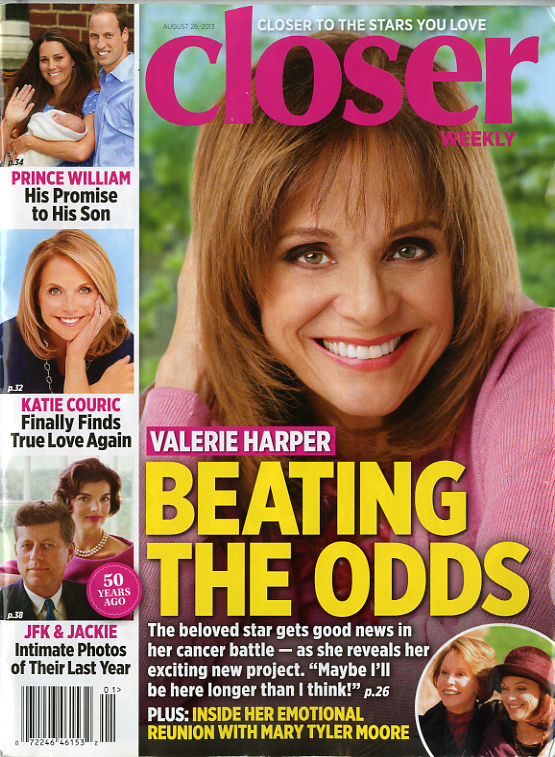
Closer2-4 To say Bauer Media Group is different than any other magazine media group in the United States would be an understatement. Bauer is more of a bird that sings outside the flock of magazine publishers. However, it is a big bird and as of this year, Bauer’s Women’s World magazine has become the largest selling weekly on the nation’s newsstands.

Bauer believes in a newsstand where publishers make money rather than a ploy to meet rate base by using their products to get subscribers at a very discounted price.

The company that launched three new magazines in the last three months continues to swim against the current. In addition to Women’s World, In Touch and Life & Style weeklies, Bauer launched late in October Closer weekly and a few weeks earlier Celebrate with Women’s World and Girls’ World.

A new weekly, a monthly and a quarterly all launched in the last quarter of 2013? What gives? In order to find the answers to my questions and many others, I headed to Bauer’s offices in New York City and met with Ian Scott, president and publisher of Bauer Media Group and Marc Richards, vice president and group publisher.

As with any Mr. Magazine™ Interview, first the sound bites followed by the lightly edited transcript of the interview. Enjoy.

First the sound-bites:

On why Bauer is launching another weekly when everyone is saying print is something from the past:
Ian Scott: Our belief is that there is a future in magazines and we are committed to that future and to make sure that we do have an exciting future we have to continue to look at how we can evolve and bring new products to the market.

On the expectation of instant returns in regard to new magazine launches:
Ian Scott: The only thing I can think of is that maybe that’s what people are used to. People are used to instant gratification. We’re getting it everywhere. Maybe the expectation is that everything has to happen right away.

On Bauer’s business model:
Ian Scott: Once you make your choice you have to stick with it. I believe in what Martin Sorrell said a couple of years back — with long-term success you’ve got to bring revenue in from the consumer and the advertiser and that’s always been our goal and where Bauer has had the most success.

On the rumor of Closer replacing Life & Style:
Marc Richards: Life & Style still sells 271,000 copies at newsstand. That’s incredibly profitable. Without seeing everyone’s final numbers, I doubt that.

On Bauer launching three new titles in 2013 when others are pulling back on print:

Marc Richards: I don’t think we went out of our way to launch during a difficult time economically, but we didn’t shy away from it either because there’s an advantage to launching in that kind of economy. You share a voice. And when the sky is blue and the sun is out and everyone is launching five magazines at the same time it’s tough to stand out. So in hindsight it’s actually a pretty good time to launch though we didn’t launch for that reason.

On the goal of Closer magazine:

Marc Richards: The goal is to be profitable.

On the future of ink on paper:

Ian Scott: As long as there is the consumer out there that wants to relax with a magazine and enjoys that whole concept of holding something and kind of getting involved in that product, there will be magazines. We don’t mind whether you want an ink on paper format or you want a tablet format. Magazines can be consumed in any of those formats. As long as someone is buying the magazine, we’re completely fine with that.

On the biggest pleasant surprise with the launch of Closer:

Ian Scott: I think the way Hollywood has received the magazine. I think that it’s really been very well received to the point where people are really excited about being featured in the magazine and that’s great. I think that’s a really long-term part of the success of this magazine.

On what keeps Ian Scott up at night:

Ian Scott: I think for me it’s always about trying to think of the next thing. I mean you’re always trying to think about new products that you can come out with where the opportunities are so it’s always about what’s next.

And now the lightly edited transcript of Mr. Magazine’s™ interview with Ian Scott, President and Publisher of Bauer Media Group and Marc Richards, Vice President, Group Publisher

Closer-3Samir Husni: My first question to you is what is Bauer thinking — are you out of your mind to launch another weekly in the marketplace when everyone is telling you print is something from the past?

Ian Scott: I think that’s a good question. I think that Bauer is the one that’s at the forefront of trying to embrace change and bring out new products. It isn’t just one product. It’s three products in this year with both Closer, Celebrate and Girls World. Our belief is that there is a future in magazines and we are committed to that future and to make sure that we do have an exciting future we have to continue to look at how we can evolve and we can bring new products to market. And that’s what we’re committed to not just here in the US, but the fact that we’ve done that with 90 new products in the last three years around the world. That’s the kind of commitment, I think, from a publishing company that actually believes in magazines and has continued to do so.

SH: But some folks have already written the obituaries after four issues of Closer weekly because of how many copies the first issue sold and they’ve neglected the fact that Bauer is now the second company in the United States that actually have four weekly consumer magazines.

IS: Which is great. I think that commitment is to continue to launch more products. We’re not for the short-term. Establishing a brand means that you must have a long-term view. We believe in the product that we’ve launched. We believe in the audience that we’re going after. And we are also evolving the brand. We’re delighted at the fact that it has a more celebrity feel. We’re getting a lot of positive feedback from Hollywood in the fact that celebrities are welcoming the magazine and its tone. And that is a development. You have to get products out there so we’re seeing that evolve as well. We don’t have any numbers yet on how well it’s selling exactly. We do know that in the small percentage of retailers that we can look at, which isn’t anything that we can project out yet, we’re seeing that week after week sales are improving. That’s what we want to look at because ultimately, it’s as I said, a long-term view and that’s what we’re doing with this magazine.

Marc Richards: And as far as a long-term view, just so we’re clear, we didn’t come in to this lightly. There was two years of focus testing throughout the country to figure out this idea and perfect this idea which we still believe in strongly after an issue or two — which we don’t even have final numbers back. And the idea was pretty simple for Closer specifically — this is the generation that built the category. I mean this generation was there when this category exploded and you had Us Weekly becoming a weekly, In Touch Life and Style launching and Star becoming a glossy. All those 25 year olds are the people who are reading Closer. And they’ve gotten older, they have families, they want to read about celebrities, it’s fun and it’s enjoyable, it’s the lifestyles of the rich and the famous and when they pick up the current generation of celebrity magazines they don’t know Miley Cyrus and Liam Hemsworth and they haven’t seen Twilight 10 times. So we’re just creating a magazine for the people who love this category, for the people that they still want to read about.

SH: But in this day and age when everyone expects instant returns, can you afford to launch a weekly that may take you four, five, 10 years, like in the case of Woman’s World or Sports Illustrated — and that was in the pre-digital age. Why do people want an instant success story?

MR: People being advertisers?

SH: Advertisers, media agencies, media reporters, you name it.

IS: The only thing I can think of is that maybe that’s what people are used to. People are used to instant gratification. We’re getting it everywhere. Maybe the expectation is that everything has to happen right away. But I think history has shown us… Woman’s World was 10 years and Sports Illustrated took a long time. This magazine is a great product and we believe in the content and we believe in what we’ve got and it is progressing very nicely.

SH: So my question to you; why is it other media companies in the States don’t see what Bauer is doing and duplicate? I mean why is it you’re the only major company that is newsstand driven, single copy driven?

MR: I think what happened was when people basically created their business model years ago, the American business model was more successful and there was more advertising money. And right now we’re in a situation where it’s more structural. We have a more structural problem than a cyclical problem. The money that went to Google, the $42.1 billion that went online, isn’t coming back when the recession ends.

So everyone has built a model based on an advertising environment that’s not going to come back. So we feel we have some good ideas and we feel the company is in a very healthy position right now to kind of go on the attack when everyone’s retrenching because our business model is most effective for the times.

A lot of what you’re reading pretty much everywhere is other publishing companies are saying that they acknowledge that the advertising is not going to be where it was, so our goal is to make more money off our reader again. And what we feel is you can have more expensive subscriptions when you add the tablet, which isn’t really working. And our thought is that once the genie is out of the bottle, once you tell a reader that a magazine is worth something, it’s always going to be worth such and such. So that model is not going to work. So the reason we feel that they’re not adapting our model is because at this point they can’t — that’s the model they chose and this is the model we chose.

IS: Once you make your choice you have to stick with it. I believe in what Martin Sorrell said a couple of years back — with long-term success you’ve got to bring revenue in from the consumer and the advertiser and that’s always been our goal and where Bauer has had the most success.

SH: The rumor mill says that now with Closer Bauer maybe planning on stopping Life & Style…

MR: Life & Style still sells 271,000 copies at newsstand. That’s incredibly profitable. Without seeing everyone’s final numbers, I doubt that.

IS: We’re committed to all the magazines that we have. And we’re committed to growing. It’s not about replacing; it’s about finding new consumers and launching more products. I think that’s how any vital, exciting business grows and we’re no different to anyone else looking to bring out more exciting and new products. And we’ll always be doing that.

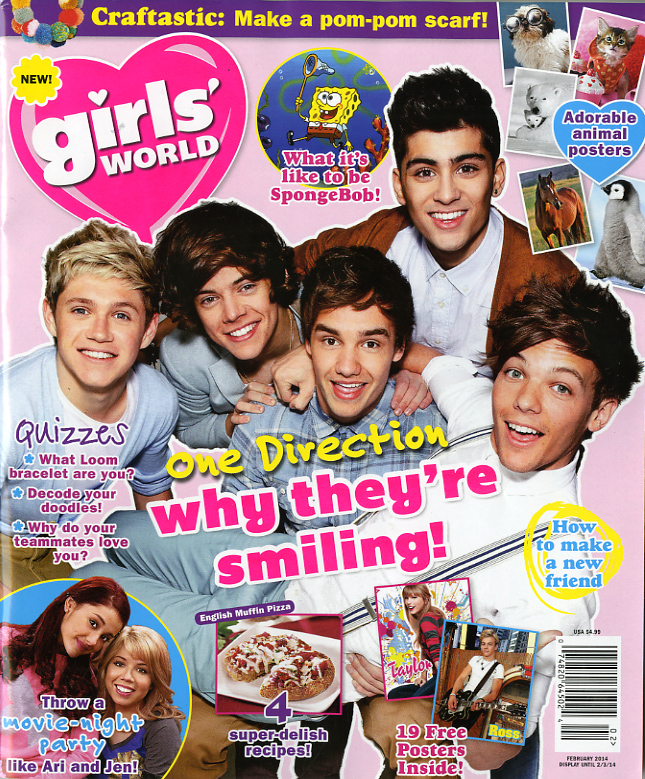
Girls' World-5SH: You chose 2013 to launch three new titles when others are pulling back on print and others are reducing their frequency. Why is that? Is it the Jersey water that makes you think differently than New York?

IS: I think that again there’s no saying, “Here is the perfect time.” The right time is when you have the products ready and that is really what it comes down to. We spend a lot of money and time investing and developing products and when we’re ready to launch and we feel comfortable that we’ve got the right thing, we do it. And I think that’s the way you have to operate. And you know we’re always developing new products and we have other products that we’re developing now. Again when we’re ready we’ll go.

MR: I don’t think we went out of our way to launch during a difficult time economically but we didn’t shy away from it either because there’s an advantage to launching in that kind of economy. You share a voice. And when the sky is blue and the sun is out and everyone is launching five magazines at the same time it’s tough to stand out. So in hindsight it’s actually a pretty good time to launch though we didn’t launch for that reason.

SH: But actually most of the successful magazines were launched in the worst of times. How long is the commitment? How long are you going to wait?

IS: I think that we can only say that the history of our company is that we have a long-term viewpoint. And one of the great things about being a privately owned business is that you can afford to do that. We’re not beholden to short-term, shareholder return.

MR: That’s a big difference between, from what you said earlier, about how we’re not as instantaneous. I know the media is and I know they love the horse race aspect of it. But I think companies that are beholden to private equity and bondholders and public markets, there’s definitely more of a gun to their head.

SH: What’s the goal. Where do you feel happy as a publisher?

MR: The goal is to be profitable.

SH: But regardless of the circulation?

IS: Any businesses goal is to be if you measure success by making money and that’s why we’re in business in the first place. We’re not always focused on size. We’re focused on a great product that we can make money with.

SH: You’ve cornered the market on the woman’s market and yet you have this magazine that feels out-of-place with the other titles. But just the idea that you keep on bringing new products to the market; why do you feel we’re not celebrating new products like we should like any other industry?

IS: I think it comes down to the fact that — which is a shame — I don’t think magazines get together and really sell the value of what we do. A lot of the times we’re still competing for market share of advertising so we’re kind of very focused on that. I think that as an industry magazines are great and I think that the relationship magazines have with the consumer and the reader is such a strong one. I would love everyone to celebrate the fact that people are bringing out new and exciting products because I think that’s what it’s all about but it’s a shame that we don’t.

SH: Yet on the other hand you have magazines that sell 1.2, 1.3 million every week and it’s ink on paper. What do you think is the future of ink on paper?

IS: As long as there is the consumer out there that wants to relax with a magazine and enjoys that whole concept of holding something and kind of getting involved in that product, there will be magazines. We don’t mind whether you want an ink on paper format or you want a tablet format. Magazines can be consumed in any of those formats. As long as someone is buying the magazine, we’re completely fine with that.

SH: What’s the biggest challenge that you’re facing as the publisher of a new weekly magazine?

MR: The biggest challenge is a lot of what we said earlier. The biggest challenge for Bauer is changing the conversation amongst the industry from size to responsiveness. And a magazine like Closer where you’re going to build an audience organically and you’re not just going to show up on Monday and on Tuesday, have a million rate base because you bought someone’s sub files. That doesn’t make sense to anyone.

And Bauer is a contrarian company in America. In Europe we’re not. In America we’re a contrarian company — we don’t do things the same way everyone else does. So everything we do is a learning process for everyone. People are receptive to the learning process but for every advertiser it’s a learning process. They don’t know innately why we do things the way we do things.

SH: What was the biggest pleasant surprise you had with the launch of Closer?

IS: I think the way Hollywood has received the magazine. I think that it’s really been very well received to the point where people are really excited about being featured in the magazine and that’s great. I think that’s a really long-term part of the success of this magazine.

MR: I think if the media community is any guide, and we put a survey in a bunch of the early issues trying to get some numbers back, and one thing we’re pretty positive about is that 55 percent of the people who read the second issue read the first. So we’re seeing that people who read the magazine like the magazine. A positive surprise I had just in my individual focus group of 3,000 advertisers just taking the issues out to them, taking them through the issues, that the response was very good. They liked the issue and most importantly to me where I feel a magazine succeeds and everyone agreed and felt that it was unique.

You probably know this better than anyone but with 10,000 magazines out there it’s very hard to be unique. It’s very hard to create a unique product. And we’re doing something that no one else is in the marketplace. The magazines that have had trouble succeeding are the magazines that meet this and meet that. The magazines that are truly unique; they have a chance.

SH: One final question for both of you… What keeps you up at night?

MR: From an industry perspective, it’s great to be the contrarian. I would like the magazine industry to speak with one voice more often. I feel like a lot of what our competitors are doing hurts us because it’s playing a bad hand. I feel you have a community that has built a business model that doesn’t work so they made everything free online because they thought there was a pot of gold at the end of the digital rainbow and that didn’t work. So now tablets are going to save the day.

I feel like we don’t get enough press because we don’t fit into the conversation that everyone is having, which is that tablets are going to save the day. I don’t know when that conversation is going to end or simmer down but it’s 2.4 percent of total circulation and I believe one-third of that is one magazine. So it hasn’t caught on nearly as quickly as everyone thought.

If people would get off that conversation and back on to what makes a successful magazine and still believe in magazines and celebrate launches or celebrate magazines that are around that are doing it right and that have a new section that’s really successful, I think the industry would put itself in a better position both on its own and as far as educating the ad community.

IS: I think for me it’s always about trying to think of the next thing. I mean you’re always trying to think about new products that you can come out with where the opportunities are. So it’s always about what’s next.

SH: Thank You.

h1

Ian Scott: This is the Reason Bauer Media Group Continues to Publish Print Weeklies. The Mr. Magazine™ Minute

December 5, 2013

The birth of a new product, any product, was, is and will continue to be an event to celebrate… except when it comes to magazines. Rather than celebrating the launch of a new print weekly, in this case Closer weekly, from Bauer Media Group, media critics and pundits started writing the magazine’s obituary rather than celebrating its birth.

Why? Do critics think that Bauer Media Group, publishers of Women’s World, In Touch, Life & Style, are out of their mind launching a fourth print weekly in today’s digital age? Ian Scott, president and publisher of Bauer in the United States begs to differ. I asked Ian about the reason Bauer continues to publish weeklies at a time when others are trimming their frequencies. His answer in the following Mr. Magazine™ Minute.

And watch tomorrow for an in-depth Mr. Magazine™ Interview with Ian Scott and Marc Richards, vice president and group publisher at Bauer.

h1

Is Print the Code that Cracks the Safe to Reaching People? World Wildlife Fund Introduces World Wildlife Magazine in Print, on the Web, and of Course, on the Tablet. Mr. Magazine™ Talks About This Step Into Print Integrated With Editorial Director, Alex MacLennan.

December 2, 2013

When WWF started envisioning World Wildlife magazine, we knew that we wanted to find new ways to inspire you, connect you to nature, and bring you even closer to our shared world.

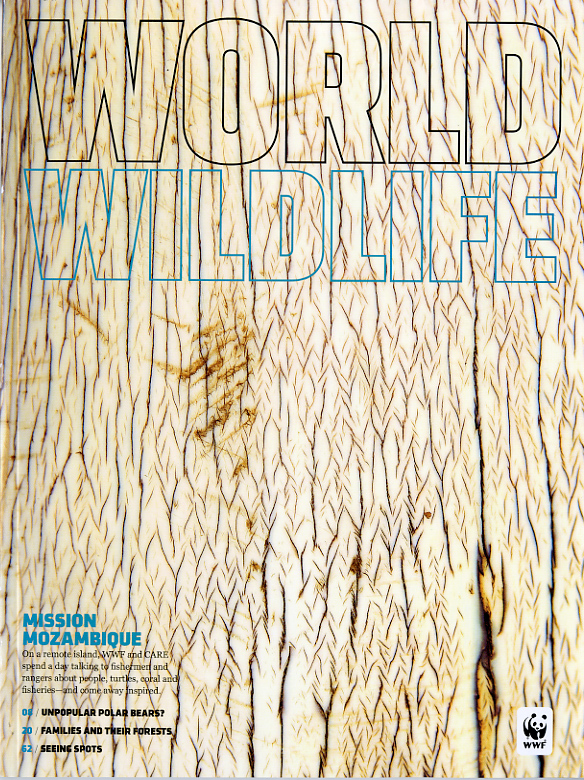
World Wildlife-9 “We knew that we wanted to find new ways to inspire you…,” and lo and behold, the new way is a MAGAZINE. The quote above is from Alex MacLennan’s introduction to the first issue of World Wildlife magazine. Alex is editorial director of the new magazine published by the World Wildlife Fund. WWF is the world’s leading conservation organization; WWF works in 100 countries and is supported by 1.2 million members in the United States and close to 5 million globally.

“We knew that we wanted to find new ways to inspire you…,” and lo and behold, the new way is a MAGAZINE.

The excitement of being able to bring the organization’s supporters a print magazine that they can actually feel and touch is palpable as Alex MacLennan, Editorial Director at World Wildlife Fund, talks to Mr. Magazine™ about showcasing long-form journalism and beautiful photography within the pages of their ink on paper platform.

Changing the way they connect and communicate to members and supporters is vital, MacLennan believes, to the success of the goals the organization is trying to achieve. And he’s hoping the print form will be the code that cracks the safe to reaching people about the importance of WWF’s vision.

So sit back and enjoy Mr. Magazine’s™ interview with Alex MacLennan, Editorial Director at WWF.

But first the sound-bites:

On the reason behind a print platform now, in this day and age: Why now? The reason we expanded and changed our publication’s model and the reason we went to a full-based magazine now was because I think that the parallel we looked at would be of other non-profit organizations and universities and the real value of having something we can send into someone’s home and that we’re not doing just an email that can be easily ignored.

On using direct mail for their digest edition and if the hope is to propel the print version: Well, yes, sort of. When we decided that we wanted to change the way we talked to our members, we also knew that we didn’t have a lot of extra money to spend and obviously printing and mailing a full-size magazine was much more expensive than printing and mailing a newsletter.

On why someone would contribute or become a member when everything is free on the digital platform: We’re not selling the print magazine, right? We offer it as a thank you to members at a certain level. So we’re not at this point choosing the print versions as rewards for higher donations in anyway. We are investing in the model that you see in a lot of digital thinking that free content is the best path to loyal supporters.

On whether the money they’re spending on the varied platforms is reaching a relevant audience: What we did is look at our entire supporter list of a couple of million people and we said who should get what and that’s how we decided what to send to people. So it’s really targeted, even though the tablet and the web could be discovered by anyone, we are emailing for the first time we’ve ever done this in a consistent planned way as a publication scheme is we are emailing our full list of two and a half million supporters, most of whom don’t give any money, an email that reads download the app or go online and read it right now.

On the gamble on print: We know that a personal connection to us and to our issues is what causes people to act. Whether that act is getting solar panels on their roof or giving money to the organization, speaking out about legislation that’s important or calling for a ban on ivory, calling for the Prime Minister of Thailand to ban ivory trade in her country; we know that a direct personal connection to us and to the cause is the best way to get people to do that.

On what keeps him up at night: What keeps me up at night is making me good enough to make people who don’t care, care. I think that my fear is I haven’t cracked the code on creating magazine stories, whether departments or features, that are specific and universal enough that anyone who stumbles upon it is going to feel that tug in their chest and say that I want to make a difference here.

World Wildlfe-8And now the lightly edited transcript of Mr. Magazine’s™ interview with Alex MacLennan, Editorial Director at World Wildlife Fund.

Samir Husni: When everybody is selling the public on the future of digital; why after all these years are you publishing a printed magazine right now, plus the tablet and the web; why now?

Alex MacLennan: Why now? The reason we expanded and changed our publication’s model and the reason we went to a full-based magazine now was because I think that the parallel we looked at would be of other non-profit organizations and universities and the real value of having something we can send into someone’s home and that we’re not doing just an email that can be easily ignored, that we are sort of offering our best right to someone’s doorstep, and hopefully to their coffee table and also to have photos clipped out and put up on their refrigerators, is important. And to really share the big complex, beautiful story of what we’re trying to do in the most direct, visceral, personal way.

So that’s why print. That’s why we said that we need a magazine that gives us different ways of telling stories, short, quick accessible stuff, plus long-form journalism, plus amazing photographs. We just really looked at who are members are and what they’re looking for and how they want to feel connected to us. So it’s like offering them something of quality that comes to their home and hopefully they will keep and be proud of and have a stack on their coffee table and in their bookshelf and see the importance of how we’re trying to stay connected with them.

Samir Husni: I see you also have a digest edition that’s going with the direct mail and then you have the full-length edition; can you tell me a little bit about the thinking behind that? Is that a direct mail, sort of like let’s bombard everybody with the digest and hopefully it will be the bait and they will get the magazine?

Alex MacLennan: Well, yes, sort of. We had a direct mail newsletter which went to almost all the active membership for many, many years; it’s 35 years old and we just started the 36th edition. That was part of a membership, sort of an education and also a revenue stream.

When we decided that we wanted to change the way we talked to our members, we also knew that we didn’t have a lot of extra money to spend and obviously printing and mailing a full-size magazine was much more expensive than printing and mailing a newsletter.

What we did was we looked at our budget for the project and said: how could we shift the most money to story gathering, to actually sending writers out into the field to talk to the people and find out what’s happening, to actually sending photographers out to the places where things are going on, and how do we shift our financial model to allow for that, rather than putting all the money into printing and mailing.

So, what we came up with was a full-sized magazine to a small print run, the digest version to a larger group and the tablet app and web content intentionally free and behind no firewalls so that as many people as possible can get it. We really tried to build a kind of a multi-tiered approach that fit our budget and allowed us to do the things that we wanted to do and really change our model.

In the past the newsletter was only for members who had made a donation. Now, while the print versions are only for members who have made a donation, the digital versions are free to everyone. Really what we wanted to do was find a way to give this content to anyone who might be interested in it and then might come closer to us as an organization.

Samir Husni: So the logical question one has to ask is why would I contribute or become a member if I can get everything for free on the digital side?

Alex MacLennan: We’re not selling the print magazine, right? We offer it as a thank you to members at a certain level. So we’re not at this point choosing the print versions as rewards for higher donations in anyway. We are investing in the model that you see in a lot of digital thinking that free content is the best path to loyal supporters.

So yes, we don’t expect that anyone would give a certain dollar amount to get the print version at home. We’ve gotten some calls about that since we launched and we tell people the beginning level to get the print version of the full-sized magazine is $20 a month or $250 a year and some people are very interested in that and don’t bat an eye, but really that’s not the message and that’s not our goal. The goal is to get as many people to look at our stuff as possible and then, very intentionally, we want to make sure that the people who are closest to us get this kind of bonus product, and you’re right, there’s more content on the app and online than there is even in the full-sized magazine, because of the videos and the links.

For example, on the use-your-noodle piece, under the object of conservation, there’s actually more fact on the app and the digital version, than there are in the print version. So really the most expansive product is the free one.

We just believe if people have the opportunity to connect with what we’re doing and to feel it in a more personal or visceral way, that we will benefit from that. Maybe it’s not as quantified, but that will be good for us too and our cause.

Samir Husni: So you’re really more in the mission field than the merchant field?

Alex MacLennan: Oh, absolutely! We are a non-profit and our goal is to get people to care about this and hopefully to do something about it.

Samir Husni: From what I’ve seen, the magazine looks great.

Alex MacLennan: It feels really good. The cover has the nicest feel to the touch. It makes me really happy.

Samir Husni: In this day and age, where organizations, including non-profits, feel they have to be everywhere; how can you ensure that the money you’re spending, whether on print or the web, is reaching a relevant audience? With print, you have the donation list, but how do you reach the relevant audience for the WWF via casting this wide net? Are you hoping that people will hear about it and go to the web, or are you also using direct mail to send people to the web?

Alex MacLennan: Yes, we are very much. If you look at the numbers, we looked very closely at our members and supporters who don’t give money; we looked at our entire list and that’s how we decided who gets what.

It’s not just the giving levels, but it’s the people who give at a certain level or the people who are supporters. We have a certain thing called a conservation action network where people can write their senators and say I care about this particular issue, so people like that can get the print magazine. Or people who haven’t given more than $5 a year, but they’ve given every year for 10 years.

So there’s all these ways that we’ve identified groups that we really believe are close to us. We have a VIP list and we’re sending it to political people, corporations and foundations, governmental groups that we think should know about what we’re doing.

What we did is look at our entire supporter list of a couple of million people and we said who should get what and that’s how we decided what to send to people. So it’s really targeted, even though the tablet and the web could be discovered by anyone, we are emailing for the first time we’ve ever done this in a consistent planned way as a publication scheme, is we are emailing our full list of two and a half million supporters, most of whom don’t give any money, an email that reads download the app or go online and read it right now. We want you to have this.

So the idea was sort of two-fold, targeted, but hoping that we can push it out, and push it out into the social world. We’re working with Facebook and Twitter to push out particular stories at particular times and it makes sense to try and lure people in. I would call it a targeted scattershot. It’s this targeted approach to making sure everybody that we have access to gets the right version for them and then additional work to push awareness farther out and hopefully people will find us.

Samir Husni: If you are a betting man; are you putting your money on the print edition to have the most impact on the people, the actual movers and shakers of the areas of concern to you? Why gamble on print in this day and age?

Alex MacLennan: We know that a personal connection to us and to our issues is what causes people to act. Whether that act is getting solar panels on their roof or giving money to the organization, speaking out about legislation that’s important or calling for a ban on ivory, calling for the Prime Minister of Thailand to ban ivory trade in her country; we know that a direct personal connection to us and to the cause is the best way to get people to do that.

While we have social media action, while we have all the contents of the magazine on the website, while we have these different ways of getting it out; we really believe that being able to put the print product in someone’s home where they can peruse it at their leisure, where they can read long-form, print magazines are still a more likely place to read long-form journalism, we believe we can give it to people. We can put a copy in the mail with a personal note; it’s very old school, I guess. We can tell them that we want them to be aware of this. Our president and CEO goes to a lot of big meetings with influential people who could affect our goals and he takes a handful of magazines with him now and he offers them to people and people take them. And that’s a much more direct and personal way to build a relationship and to engender support than, I think, a digital platform.

We’re in no way against digital; I do want to emphasize that. We’re doing it all. But there’s something in the delivery of this print product that’s more personal and makes it more direct and a more genuine connection.

Samir Husni: What keeps you up at night?

Alex MacLennan: What keeps me up at night is making me good enough to make people who don’t care, care. I think that my fear is I haven’t cracked the code on creating magazine stories, whether departments or features, that are specific and universal enough that anyone who stumbles upon it is going to feel that tug in their chest and say that I want to make a difference here.

I read magazines, of course, and I watch them and see magazines that can make me read 3,000 words about something I never thought I would care about. And I think that we have to do that with this magazine and we have a lot of internal pressures to tell stories about specific work we’re doing, specific goals we have, like getting a ban on ivory trade or help fisheries understand how to do their work more sustainably.

But how do I, as the editor, create stories that are going to make any person on the street feel that as a deep personal thing. And I wake up, more like 3 o’clock in the morning than during the night, and I don’t think anyone has really cracked that code.

The thing that really keeps me up at night, I would say, are these insanely in depth, impressive digital storytelling packages that are really pushing the boundaries of what websites and responsive design, video and integration, animation and all these things can do and I feel like I can’t tell if we should be putting more energy there or if the investments we have made in the platforms that we’re committed to is the right place. It all changes so fast, it’s hard to know if you’re keeping up.

Samir Husni: Having said that; if money were no object what would you do different with the magazine and the approach that you’ve done?

Alex MacLennan: If money was no object we would send a reporter and a photographer for every story. We would, and this is not money, this is time, be able to go deeper and never accept the first answer we get on what’s the way to tell the story and we would really dig to find the best way. We would also give it to a lot more people. If money were no object, I would have the print magazine in every doctor’s office in the country. I would have the print magazine in every auto shop waiting room in the country and in every hotel room in the country. That would be my dream.

It would be to make it the best that we can and give it to as many people as possible.

Samir Husni: Anything you’d like to add?

Alex MacLennan: I do love print magazines. I mean, I have my iPad and all my subscriptions are both…I read both ways. And I think it’s important that we do that.

Our first issue was iPad only, but we are retroactively optimizing it for the Droid platforms and with the second issue both Apple and Droid platforms will be represented for tablets. The website is totally optimized and will look beautiful on your cell, so we’re kind of hitting the mobile thing.

But I think it’s important to meet people where they are, but I still think something that someone can hold in their hand, I mean, you just see people reading magazines that way and I just want more people to read this one.

Samir Husni: Thank you.

h1

Pitchfork In Print – Why A Successful Online Magazine Is Adding A Print Prong To Its Repertoire. Mr. Magazine™ Talks To Pitchfork President, Chris Kaskie, About Collectability And The Romance Of Print

November 27, 2013

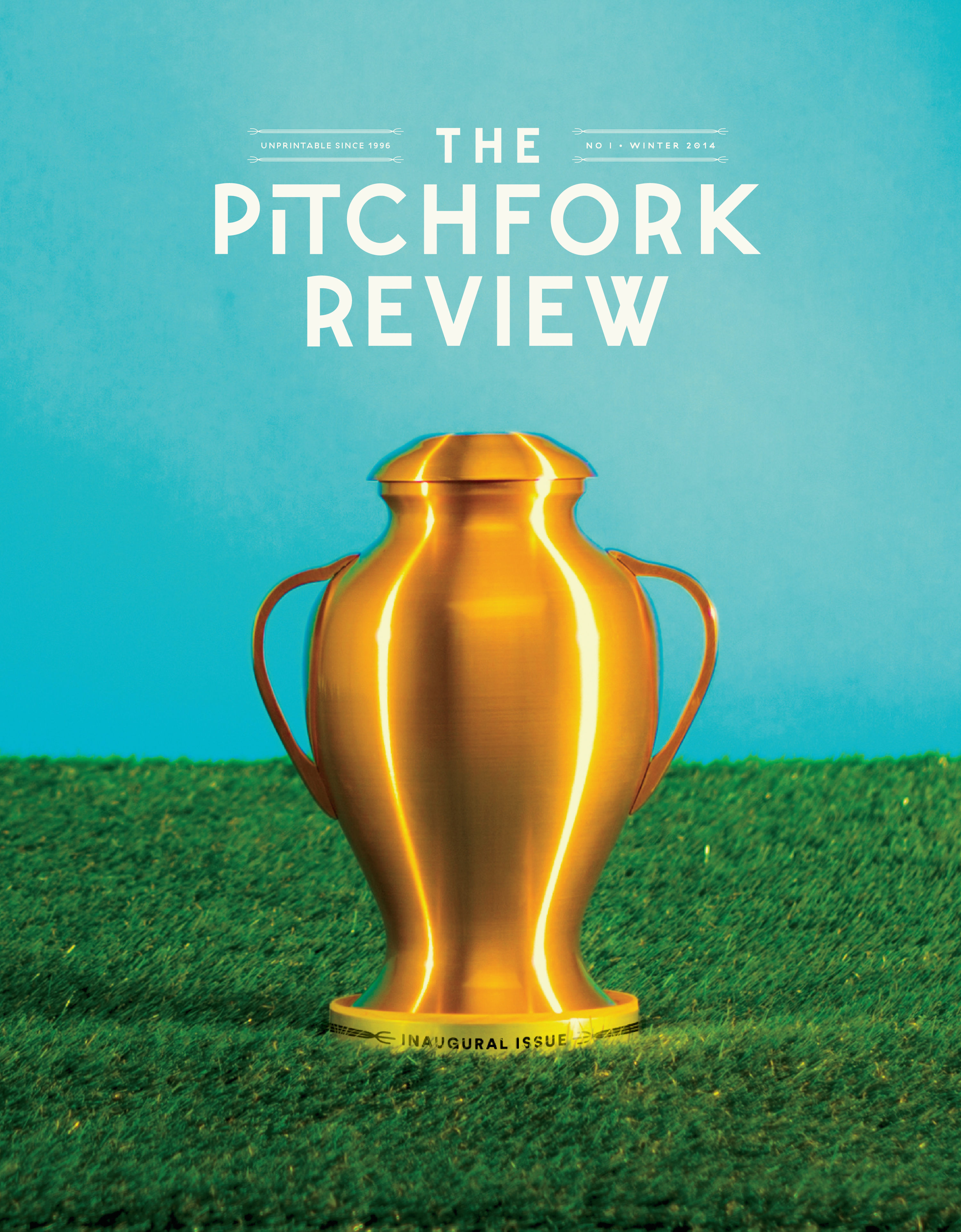
Pitchfork Review Cover Romancing Print… one Pitchfork at a time!

Pitching print, the online entity, Pitchfork, a successful daily Internet publication devoted to music criticism and commentary, music news, and artist interview, is excited about the tangible nature of their new ink on paper magazine/journal-type publication. President of Pitchfork, Chris Kaskie, believes the time has come for the music website to broaden its horizons. And instead of print being a step back into the dark ages, Kaskie thinks the time has come for a more “collectible” counterpart.

Not that he doesn’t believe in the permanence of digital, but more along the lines of celebrating long-form content and the creativeness of print design. His excitement about the new publication is contagious as he talks about cultivating music fans from all generations and allowing them to share in the same creative words of music he hears in his own head.

So sit back and enjoy Mr. Magazine’s™ interview with Chris Kaskie, President of Pitchfork as he talks about impacting music fans with the new “collectability” of a printed product.

But first the sound-bites:

On why Pitchfork is delving into print when other publications are going to a digital-only format: The way in which we’re going to go into print is a little bit different from people who are steering away from it have done. A lot of the places that are getting away from print have long since been print first, digital second businesses.

On whether print gets a ten out of ten rating when it comes to a publication’s sustainability: It’s a headier idea of what we would probably end up giving a 10.0, which is just the idea of celebrating music, celebrating long-form content, celebrating beautiful design and trying to do that ourselves and putting our own little impact on the world for fans who would hopefully be interested in it. It’s more about that than giving print a perfect score because everything has its flaws.

On the fact that humans love that sense of physical ownership: Well, the idea of ownership has obviously changed and I think the processes haven’t changed as much as the definition. Just like Pitchfork is a magazine and has been. If you read it on the internet, you’ll never be able to own it beyond your computer or your phone.

On whether or not the print publication is trying to reach the same audience as the digital version: To be totally honest, there’s not a strategy with regards to who we’re trying to attract with this other than music fans. Our creative team here works on ways to further the way in which people engage and how to read and contextualize the stuff that we put out there.

On what’s next for Pitchfork after this brand expansion: But in terms of specific growth ideas beyond that, now that we’ve accomplished a few things this year whether it is event-based or focusing on the international, there are a few things that we’ll continue to evolve, but at this moment I can’t think of anything that’s going to be like, “Hey, this is where we are next.”

On what keeps him up at night? So that’s what keeps me up at night, just how to keep that going. Because there are some seriously brilliant people working here who will continue to work to transform the way in which people think about Pitchfork and other media like Pitchfork in the long term. And to be leaders and innovators in that and continue to have respect for our audience is paramount.

CK headshot 1 2013And now the lightly edited transcript of Mr. Magazine’s™ interview with Chris Kaskie, President of Pitchfork.

Samir Husni: When magazines like Paste and Spin fold their print editions and they say they are going to be online, you’re doing just the opposite. What gives?

Chris Kaskie: The way in which we’re going to go into print is a little bit different from people who are steering away from it have done. A lot of the places that are getting away from print have long since been print first, digital second businesses. There’s a lot of, which we’ve even learned in our small example, overhead that comes with that. There are roadblocks and frustrations that come with getting something into print and putting it out there. It gets expensive and when you scale to the point of where they had probably scaled with their print circulation, it was probably financially untenable.

At the same time, we were working very hard to create and redefine what it means to be a magazine in a digital publication on the web. And as we continued to do that it was always taking cues from the history of print and being inspired by it. But recognizing that there’s disposableness just like there is with magazines, or newspapers; you get your monthly copy of a magazine and it’s just a normal, glossy thing and you read it and you toss it. It’s not something that you feel like you want to keep.

We stepped back and we said: we really don’t want to do a magazine, per se. It’s more like a hybrid between a journal and a book and a bit of a magazine, but something that’s worthy of collecting and putting on your bookshelf for a long time and referring to over the years and complementing what we’re doing everyday online and how fast we’re working. So creating modest goals and expectations of what we could do there from a business standpoint was obviously important and putting creativity in the quality of content and design first and also making sure we create sustainability with how we operate, that was really our goal. And we’re in the beneficial position of having a successful digital publication, so taking some of the cues from that and understanding what people would want and treating ourselves like the music fans that we are, that love music media and love it in all forms and what kind of things we might want to keep for ourselves in doing that.

To draw a very loose parallel to the way we created our music festivals, there are a lot of music festivals out there and we’ve been doing ours in Chicago for about ten years. Why get into music festivals? Well, it’s really so we could indulge ourselves and create a festival that we would want to go to and is a perfect example of our perspective and it’s pretty fun.

Samir Husni: One of the things that I’ve read is that you’re giving print a ten out of ten, referring to the most revered rating system you give to bands and music; are you really giving print ten out of ten?

Chris Kaskie: Well, instead of giving print per se a 10.0, I think it’s giving the idea of permanence, and there is permanence on the web, mind you, and it’s the same thing. All of our content would be available to you forever on the internet as long as the internet is still online. So the permanency is there, it’s just more in the way you’re engaging with it, thinking about it and contextualizing it. Just like people download MP3’s and subscribe to streaming services, music seems much like probably websites seem, like they’re moving very quickly, and you can go from one thing to the next very quickly, and of course it’s the way we all live our lives and we’re very happy to live our lives celebrating that, and if you’re a band, it’s the equivalent of putting it on vinyl and having someone buy your record and putting it on the record shelf. Then you would know you’re going to have that record forever, even though it’s on your iPod.

It’s a headier idea of what we would probably end up giving a 10.0, which is just the idea of celebrating music, celebrating long-form content, celebrating beautiful design and trying to do that ourselves and putting our own little impact on the world for fans who would hopefully be interested in it. It’s more about that than giving print a perfect score because everything has its flaws.

Samir Husni: But how about that sense of ownership? I’ve heard this so many times, that as human beings, we like to own physical things and having my music on my iPad or iTunes; it’s still not there, it’s not mine.

Chris Kaskie: Well, the idea of ownership has obviously changed and I think the processes haven’t changed as much as the definition.

Just like Pitchfork is a magazine and has been. If you read it on the internet, you’ll never be able to own it beyond your computer or your phone. You don’t own your MP3’s, you might have bought them, but you’re basically borrowing them and downloading them and they should exist as long as your device exists.

There’s something romantic about, not print per se, but the idea of having something that is tangible and that you can celebrate and enjoy. The festival is a good example too. You can’t take the festival home with you, but having that experience is something hard to replicate. It’s more of a celebration of all that we do and all that we want to do and taking the cues from how to create a business around it that makes sense and is sustainable and doesn’t overstep its bounds and how to choose the content that we publish and the way its presented, designed and the people that we get to work with.

It’s a very romantic idea of owning it and being able to contribute is really the goal versus saying that we have a publication that we’re releasing, which is great and it will continue to be good because we have that, but it serves a different purpose and all the purposes are equally valuable.

Samir Husni: So are you trying to reach the same audience that you have now on the web or on digital?

Chris Kaskie: To be totally honest, there’s not a strategy with regards to who we’re trying to attract with this other than music fans. Our creative team here works on ways to further the way in which people engage and how to read and contextualize the stuff that we put out there. If you’re a music fan and you like to buy records then this is the same thing.

It’ll take some education for someone that’s less attuned to that. My nieces who are sixteen and seventeen years old don’t really think about magazines like this. They don’t think about books or journals and they don’t think about the care that something like this is given and put together with. But that’s as much of a relevant audience for this as someone who’s older or is more attuned to buying records because they understand what this means.

It’s a fun balance because it can both satiate the desire for someone to have something to collect as well as provide inspiration for some kids who really like what this means and the idea of inheriting their Dad’s record collection.

It’s more of an ideal that’s being targeted than it is a specific group.

Samir Husni: As you expand the brand, now you’re everywhere; what’s next for Pitchfork?

Chris Kaskie: As we expand the brand, in 2013 we accomplished a lot we wanted to do. There was a lot for a long time that felt like something we wanted to do, but we didn’t need to do and that’s the way we’ve been appropriately able to grow our business presence.

It’s the constant goal of having what we do in the context of where people are experiencing music and where they want Pitchfork or where they’re listening to music and having Pitchfork be a part of the conversation, for lack of a better term, of what’s happening when someone’s gauging and listening to music or reading about music.

So if you’re on a streaming service, you have no clue, if you open up a digital streaming service or something, where to go. It’s just like going to a restaurant that has 55 pages on their menu; you have no idea where to start or end. And that’s where we fall in. So it’s being in places like that as much as it is having Pitchfork everywhere. And continue to be strategic.

But in terms of specific growth ideas beyond that, now that we’ve accomplished a few things this year whether it is event-based or focusing on the international, there are a few things that we’ll continue to evolve, but at this moment I can’t think of anything that’s going to be like, “Hey, this is where we are next.” We’ve just peppered the world with a whole lot of stuff and we’re doing it all by ourselves. We’ve got to make sure this all works.

Samir Husni: What keeps you up at night?

Chris Kaskie: What keeps me up at night? Beyond my children? What keeps me up at night is the fact that we are reaching a point which is inevitable where there is a lot that, at one point, the same way that I, and I hate to say run my family, but I think about the way my family works; you look at things and you say, “Do we want that? Do we need that or do we want that?” And most times it’s that you want it and don’t need it and just don’t worry about it. And you do what you need to do and you create a good life for yourself.

So that’s the goal of Pitchfork is to make those decisions the same way. A lot of stuff looks fun and may be great, but we don’t need to be doing that. But that stuff is converging now and being an independently owned and operated company that has our hands in different things and just keeping everyone inspired and everyone that works so hard for us to continue to be inspired and have our audience. And to think about ways to innovate, instead of thinking about things we want to do and may not need to do. And now it’s like what we need to do is actually what we want to do.

This year alone we did our third Pitchfork music festival in France, we did our ninth Pitchfork festival in Chicago, we launched a film publication, we launched applications, the Pitchfork Review, which we’re talking about now; so that’s a lot for us, giving that we have under 50 people working for us full time and limited resources.

People look at you and say, “Wow! Pitchfork is huge.” But we’re also like a little family that’s just trying to do our best.

So that’s what keeps me up at night, just how to keep that going. Because there are some seriously brilliant people working here who will continue to work to transform the way in which people think about Pitchfork and other media like Pitchfork in the long term. And to be leaders and innovators in that and continue to have respect for our audience is paramount.

Screen shot 2013-11-13 at 9.47.23 AM

h1

Tony Silber: “A Celebration of Magazine Launches…” Reliving the ACT 4 Experience (Part 3)

November 19, 2013

Now that the Magazine Innovation Center’s ACT 4 (Amplify, Clarify, and Testify) Experience is one for the history books, the Mr. Magazine™ Blog is going to showcase the keynote speakers and panels that took place during the two and a half days Experience.

Tony Silber, VP/Content, at Folio, Min, Expo, PR News, and Audience Development moderated a panel celebrating new print magazine launches in this digital age.

John Harrington, publisher and editor of The New Single Copy, summed the panel best in his newsletter. John wrote, “Six new (and comparatively young) magazine publishers shared their experiences, all characterized by a remarkable level of integration across publishing platforms: print, of course, but also websites, tablets, seminars, and levels of brand extensions. Their energy and enthusiasm was contagious, and they deserve a special mention. There’s more than a good chance they’ll be heard from in the future, but for what it’s worth, they were…”

Craig Chapman, Producer, Real Food Real Kitchens
Carol Kicinski, Founder and Editor in Chief, Simply Gluten Free Magazine
Thom Kicinski, CEO, Edgewater Park Media Inc.
Megan Smith, Founder and Editor, Cake & Whiskey magazine
Jordana Megonigal, Editor in Chief, Business Black Box
Julie Wilson, Owner/Publisher, STORY magazine
Kelly Waldrop, Associate Publisher, Covey Rise magazine
Scott Coopwood, Owner/Publisher, Delta Magazine.

Enjoy the panel discussion below.

Screen shot 2013-11-13 at 9.47.23 AM

h1

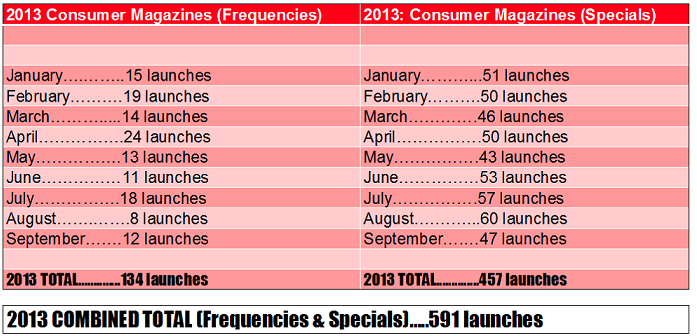
New Magazine Launches: October Harvest Was Extremely Plentiful As We Had A Total Of 115 New Launches – 32 Of Them With Regular Frequency

November 4, 2013

October 2013 was an unbelievable month for new launches! The magazine media industry saw 32 new magazines with regular frequency and 83 specials…for a total of 115 October launches! Absolutely a stellar performance for the world of new magazines. From Christmas cooking magazines to the new weekly, Closer, aimed at a more mature celebrity-craving audience and that’s first issue was priced at a mere $.25 and will sell after the premiere issue for $3.99; the magazines were fun, colorful and entertaining. So let’s take a look at this outstanding list of new magazines, beginning first with our frequency issues. (As always, magazines are not listed in the launch monitor until a physical copy of the first issue is acquired, received or bought by yours truly.)

Click here to see and each and everyone of the 115 new magazines.

h1

Live Happy Magazine: Happiness Finds Its Way to Print. The Mr. Magazine™ Interview with Editor in Chief Karol DeWulf Nickell.

October 28, 2013

Live Happy – Print Magazine, Website, Movement – Brand. Happiness Is Not Just An Old Adage Written On A Plaque In Your Mother’s Kitchen Anymore – It’s A Science Now And There Is Now A Magazine To Dispense Its Findings! Mr. Magazine’s™ Conversation With Editor-in-Chief Of Live Happy Magazine – Karol DeWulf Nickell.

reg 48 It’s a given that we want to “Live Happy.” On that, I think we can all agree. Now there’s a magazine out there that is going to help us scientifically learn how to do it and show us data that not only backs up the old adage Mom used to wish for us, but proves that the endless quest isn’t as incessant as we might believe.

From her experience at Better Homes and Gardens, Fresh Homes and the home and gardening group at Reader’s Digest, Karol DeWulf Nickell is now learning to “Live Happy” as Editor-in-Chief of the magazine by the same name. She talks with Mr. Magazine™ about the print magazine, website and the Live Happy Movement.

But first, the sound-bites:

Sound-bites:

Karol N Headshot-1On why Live Happy Magazine is not just a print title but a brand as well:
It’s very difficult to launch a traditional magazine with only two streams of revenue, circulation and advertising. So this magazine is not just a magazine, it is a whole brand.

On the role of the print magazine within the Live Happy brand:

The role of the magazine is obviously to be the first thing a customer sees.

On the value that Live Happy Magazine provides consumers:

So it’s the science of happiness that is new and what has not happened up to this point is there’s been no translator of that science to the general public.

On how Live Happy Magazine standing out in a crowded, mature marketplace:
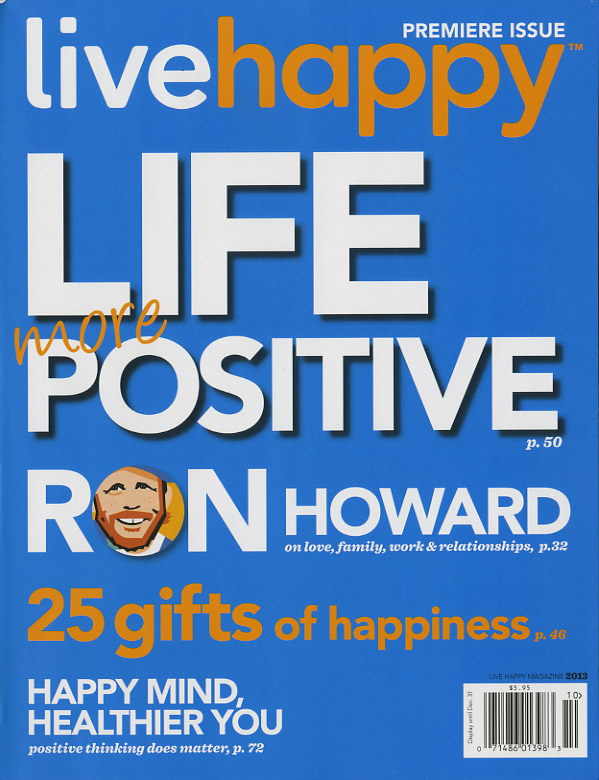
If you look at our cover, you’ll see immediately that it stands out. We have snapshots of newsstands all across the country already and we are placed very well beside either lifestyle magazines, health magazines or food magazines. And we stand out.

On the versatility of Live Happy Magazine:
I think that this (concept) translates very well to digital, to web, to social media and apparel. So think it’s very translatable. I think print, in our case, is a lead vehicle, it’s going to be an essential vehicle, but it is one within a group.

On the important of science within Live Happy Magazine:

When you look at the magazine and you look at the number of science articles in the first issue, our first issue has 70 percent science and 30 percent lifestyle. We did that deliberately because we think that a lot people won’t have known about positive psychology.

On potential stumbling blocks for Live Happy Magazine:

I think Live Happy is going to have to very quickly explain itself. We are not a magazine of just feel good stories. This is real data. This is real science. We have to be able to explain it real quickly and to get our message out.

On what keeps Karol Nickell up at night:

Well, I am building a magazine at the same time I’m building a staff so I think that those two very, very essential responsibilities are keeping me up at night.

And now the lightly edited transcript of Mr. Magazine’s™ conversation with Live Happy Editor-in-Chief, Karol DeWulf Nickell.

Samir Husni: Launching a new magazine in this “connected digital age” about happiness; the first thing that people will ask, is are you out of your mind or are you happy to do it?

Karol Nickell: It’s very difficult to launch a traditional-model magazine with only two streams of revenue: circulation and advertising. So this magazine is not just a magazine, it is a whole brand. We have a live website which is part of the launch. But we also have a happiness movement and this movement will in time also provide different customers and different avenues of revenue to be a part of the brand. That kind of multifaceted magazine base is important; the magazine driven brand today is different than the old model.

SH: What role does the printed magazine in this model play?

KN: The most important thing is that it’s a fresh face out there. So we launched this week as you now. We printed 500,000. You’ll see us all across the country. It is truly a country-wide launch.

We will be doing what you consider to be a monthly rollout again in 2014, so this is a soft launch and then we’ll have monthly circulation starting in 2014.

The role of the magazine is obviously to be the first thing a customer sees. And she and he are people who care about other people, who like to live happy. So that kind of describes a lot of us. So we think the audience is large, we think that’s it’s international, we think it’s non-generational and we think that it’s very much a positive statement in a world where some negativity can cause stress and cause life to be less than happy.

SH: With your experience at Better Homes and Gardens, Fresh Homes, the home and gardening group at Reader’s Digest and with all these magazines, there are a lot of competitive titles in the marketplace. Why do you think no one has come up with a Live Happy Magazine before with the need for happiness that we have since we live in a much more stressful world?

KN: That is the question I asked myself when I was asked to consider this role. The beautiful thing that’s happening here is, people wanting to live happy is not a new deal. Your parents wanted to live happy and they wanted you to live happy. Their parents wanted to live happy — it’s not a new deal.

However, what is new is that positive psychology has come into the idea of positive emotion, positive thinking and now that has provided us with new data and how the body, both mind and physicalness, can come together and help people understand what’s going on when you have a happy moment and what’s going on when you feel stressed.

So it’s the science of happiness that is new and what has not happened up to this point is there’s been no translator of that science to the general public. People who are in positive psychology and the other related scientists are well versed in this. It has been 20-some years since Martin Seligman sat on the stage and said, “We really need to think positively versus negatively as psychologists.”

However, that bubble is still a bubble and so now with the magazine and a brand and a consumer positioning in the marketplace, that science is being adapted and translated to the general public.

SH: So what are some the challenges that you will face so you won’t be lost in the translation of that science of happiness?

KN: I think that is a big challenge, but it’s a challenge that anyone faces when they’re out there because we’re in a very crowded, mature marketplace.

If you look at our cover, you’ll see immediately that it stands out. We have snapshots of newsstands all across the country starting with Monday already and we are placed very well beside either lifestyle magazines, health magazines or food magazines. And we stand out. Hudson, when we talked to them about this magazine, said that anything that has happy on it really sells.

So we think the consumer poll is going to be very strong, we think we’re unique within the marketplace and we think we have a really solid product and positioning.

SH: You said you wanted the print magazine to be the first thing that the customer, your audience will see. So how important is print today?

KN: I think that print will always be important. I think that in some cases some brands need print more than other brands. In our case, it is truly just a first step. I think that this translates very well to digital, to web, to social media and apparel. So I think it’s very translatable. I think print, in our case, is a lead vehicle, it’s going to be an essential vehicle, but it is one within a group.

SH: So within this entire science of happiness, what’s been the most stressful part of creating a Live Happy Magazine or has it been one happy, smiley road so far?

KN: When you look at the magazine and you look at the number of science articles in the first issue; our first issue has 70 percent science and 30 percent lifestyle. We did that deliberately because we think that a lot people won’t have known about positive psychology.

So then we have brought the story of positive psychology in the story that starts on page 50, we actually explain how these two sciences met randomly on a beach and started a conversation. I mean this is really an incredible and unlikely story.

We really wanted people to understand that this is based in science and it’s also based in years of science. It has the founders like Martin and Michael, but it also has young stars like Barbara Fredrickson and Sonia. It is not a difficult science. People are just observing what people do and they are putting it into the matrix of research and bringing back data and that data is easy enough to understand but it is not usually in the everyday conversation. We hope to put it into the conversation of every day.

I just attended a positive education summit in the UK. Positive psychology has been applied in schools, especially in the UK and Australia. Those schools have results five years in the making that show kids actually excel when character strengths and positive emotions are laced into the curriculum. So there’s really remarkable things happening and we need to know about them.

SH: How can you apply that positive psychology to the role of the editor today? In this world, and I’m sure you are familiar with all the doom and gloom articles about journalism, editors and the role of the media; did that affect your role 10 years ago when you were the editor of Better Homes and Gardens? Is it any different now being an editor of a magazine than what it used to be?

KN: As an editor of Better Homes & Gardens, I was responsible for stories that talked about happiness and talked about positive psychology, so I was very aware of it.

However, that was not the core category. This magazine being dedicated to it cover to cover is unique. That is different for me in this role. However, I truly believe and always have the idea that you have people in your life who inspire you. You have people in your life who show resilience.

The point is, these are things that we witness, we know. Now science is backing this up and showing how that actually happens and how you have a decision to make in your own life to be resilient, to be happy and to give happiness to others. There’s a story on page 66, The Good Guys Win, it’s actually based on research and basically it showed two professors at The University of Michigan and they have actual data that shows that when you have compassion and virtue at work, that business is better on the bottom line.

These are real things, it’s not just a good thing to do, but these are real positive results of people doing the right thing. That’s a great message.

SH: How does that message impact the messenger, in this case, you?

KN: This is the way I’ve approached my own life and my own business. This is the way that I also get inspired and continue to work hard in a very hard industry. So I really feel like this is integrated. I think it’s a discovery.

For example, I have a young gentleman who’s working with us. Magazines are not his world, he’s an IT guy. I was explaining to him some of the content that was going into the magazine about three or four months ago and he kind of put his hand up to his face and said, “Stop Karol, that’s enough.” And then he said, “You know Karol, I’m glad you’re telling me this but it really doesn’t matter — content just doesn’t really matter.” I said, “OK, fine.”

I came back after three weeks of being on the road. The first issue is now out. He’s read the magazine a number of times because he manages all the files. He turned to me and said, “Karol, my life has been changed by reading this magazine. I get it.” So that to me is amazing. There’s a story for how this might indeed change someone and have a positive result.

SH: What’s the major stumbling block that’s going to face Live Happy?

KN: I think Live Happy is going to have to very quickly explain itself. We are not a magazine of just feel good stories. This is real data. This is real science. We have to be able to explain it very quickly and to get our message out.

SH: My last question to you… What keeps Karol up at night now?

KN: Well, I am building a magazine at the same time I’m building a staff so I think that those two very, very essential responsibilities are keeping me up at night, but I also know that everybody that we’ve had on this team are wonderful and dedicated and I feel very confident that after the first issue is out, the second one is going to be even better.

SH: Any last words of wisdom you want to share with the world out there about happiness or about Live Happy?

KN: I think the important thing is please take a look and please go to the website and please join the movement. The movement is really essential to the fact that happiness starts with you. This magazine is not about stars and experts; it’s about the individuals and that I think is the best message. Happiness starts with you.

SH: Thank you.

h1

“The Print Magazine Is The Mechanism By Which We Can Bring Back The Brand.” Beth Brenner, Domino Magazine’s Chief Revenue Officer, Talks With Mr. Magazine™ About The Rebirth Of Domino…

October 18, 2013

Beth Brenner loved Domino before it folded in 2009 and she loves the new and improved, higher-priced model of today’s brand even better. You ask me how I know that? I know that from the tone of her voice when she mentions the word Domino, and from her trip to Oxford, Mississippi, when Domino was launched in 2009 and the way she preached the “Domino Gospel” to my magazine students at the University of Mississippi. Believing in print, the power of curation the category offers, and the magazine audience, are a big part of Brenner’s faith in the platform. She is a woman who puts her money where her mouth is.

It did not take her long to make the decision to leave her position as publisher of Meredith’s Traditional Home and go back to the job that she was “forced” to leave when Condé Nast folded Domino. Somehow it seems that Ms. Brenner and Domino are destined to be together.

domino5
The Domino Five team: (left to right) Michelle Adams, EIC, Aaron Wallace, Co-founder & CTO of Domino Media Group, Beth Brenner, Chief Revenue Officer, Andy Appelbaum, Co-Founder of Domino Media Group, and Cliff Sirlin, Co-Founder of Domino Media Group.

So sit back and relax and enjoy the Mr. Magazine™ interview with Beth Brenner, Publisher and Chief Revenue Officer of Domino Magazine.

But first the Sound-bites.

On the outpouring of love Domino received after it folded:
There was such an outpouring after we folded … The letters started pouring in. I mean, I frankly don’t think they knew what they had before it closed and really came to realize how many scores of fans we had.

On the need for a print magazine:
The reason for a print magazine is because I firmly believe, as do my new bosses, the founders of this new company, that the print magazine is the mechanism by which we can bring back the brand.

On the reason behind the high cover price:
So the reason for the high cover price, and I love talking about this cover price, is because in all of my years in the business people have said to us, “What’s wrong with you people? Why are you only charging a $1 an issue for a subscription and only $3.50 on the newsstands? Don’t you think people will pay for this?” Agency people say this to us all the time. It just devalues your brand when you sell it for so little and I couldn’t agree more.

On the value that Domino provides:
I recently renovated part of my house and we wanted to look at bathrooms and I went on to House.com and I researched modern bathrooms and I had to look through 6,000 images. People want curation and they want things to be edited for them. There’s too much out there and that’s what magazines do. That’s what magazine editors do.

On Domino’s unique revenue model:
You know every print publishing model is about 80 percent based on advertising. And in this case it’s commerce that’s really engine driving the business model, with advertising as a really important component, but not the driver.

On what keeps Beth Brenner up at night:
Everything keeps me up at night because I’m basically a one-woman show right now.

On the feeling of bringing Domino back:
You know, it does kind of feel like Domino 101 in that this is just a great group of sort of hungry, excited people who love this brand. And we’ve come together to bring it back and that feels really good.

On the importance of the Domino voice:
Because we want content to lead, it has to be believable, it has to be in our voice, it has to be beautiful and I think there’s a confidence factor that comes with loving a brand so we want people to love it because Domino curated it.

iPadMagsAnd now, in typical Mr. Magazine™ Interview style, for the lightly edited transcript of the Mr. Magazine™ Interview with Beth Brenner of Domino…

Samir Husni: Back when Domino folded and when the economy crashed and digital came on the scene it was like a double whammy. The economy crashed, digital burst and a lot of people in our industry did not know if it was the economy that was hurting the magazines or if it was digital that was hurting the magazines. If you could go back and relive those days, after four or five years later; what was the main reason you think Condé Nast folded Domino?

Beth Brenner: 2009 was a year of tough decisions for a lot of companies. What I came to understand is that the newspaper business was in far worse shape than the magazine business. That precipitated a number of tough decisions in the magazine division. We were one, House & Garden was certainly one, right before us, Condé Nast Portfolio was another three months after us.

Condé Nast funded magazines like no one else and they gave us a seven-year profit strategy. They gave us a lot of time and a lot of rope and a lot of money to get a brand out of the starting gate and we were only in year three. We were way ahead of our plan but there was a huge investment still to come on Domino on Portfolio. So they had to make some tough decisions that year.

So it’s hard to say if it was digital or was it the economy. It was definitely the economy. So with magazines in general I do think digital definitely impacted us and it has even more severely since that time, than at that time.

SH: We were lost. We could not determine if it was the economy or if it was the digital and now we’re finding out that maybe it was both. Maybe it was the economy and digital. But then they decided to bring back the magazine and bring back the smart publisher behind the magazine.

BB: There was such an outpouring after we folded. Penelope did the piece in The New York Times like eulogizing the magazine. The letters started pouring in. I mean, I frankly don’t think they knew what they had before it closed and really came to realize how many scores of fans we had. I will tell you when I was at Traditional Home not a day went by when I didn’t hear about Domino.

SH: With all the digital talk and all the e-commerce; why did you feel there’s a need for a print magazine now and why the high cover price?

BB: The reason for a print magazine is because I firmly believe, as do my new bosses, the founders of this new company, that the print magazine is the mechanism by which we can bring back the brand. I mean it’s what people loved.

We’ve been live for a week now and 80 percent of the sales on the website are for the print magazine. Interesting, right? We’re only selling at newsstands and on the website and people are coming to us in droves and I don’t know if they’re too lazy to go outside and look on the newsstand, I mean thank you for buying it in Baltimore, or it’s just easy and they’re on the site anyway and they want to see it.

So the reason for the high cover price, and I love talking about this cover price, is because in all of my years in the business people have said to us, “What’s wrong with you people? Why are you only charging a $1 an issue for a subscription and only $3.50 on the newsstands? Don’t you think people will pay for this?” Agency people say this to us all the time. It just devalues your brand when you sell it for so little and I couldn’t agree more.

But when Condé Nast brought Domino back two years ago effectively as an SIP, they put re-purposed content out on the newsstand — it was $11.99 — and they were selling 80,000 copies. It was such a great wanted-ness story so why change the model? They have now proven that if people want it they will pay for it.

SH: It’s something that I’ve been preaching all along. Let’s look for the customers that count rather than counting customers.

BB: Exactly. I love that. And you know the president of a furniture company literally emailed me last week and he said, “I’m at LaGuardia and I just watched somebody buy Domino and when she went up to pay for it the newsstand owner said to her, you know that this is $12 and she said yeah, but I’ve been waiting for this for so long.” And he recounted the conversation to me and it had nothing to do with price.

SH: We saw what happened to Gourmet and they said OK we’re going to be on the web and then they killed the web and they killed the app. Do you think a print magazine today can survive on the web and digital alone without the print component? Or do you think that that’s the reason that you brought back the print edition because it’s the only mechanism? If you were born in print you have to stay in print?

BB: I think it depends on what the brand is. I think that Domino is a unique brand in that it can live equally as well on both. I don’t know that everything can or should, but you know what, I’m getting old and I love reading paper. And I love cozying up with it. I do think it’s unique to this category. I think when you’re home it’s a process and you start it, and you need ideas and inspiration, you tear things out and you look for months and months, if not years before you can make a decision or define your own style.

And I think that the print component of that is huge. It’s part of the research process. If you want to find nice rooms on the web you can do it but… I recently renovated part of my house and we wanted to look at bathrooms and I went on to House.com and I researched modern bathrooms and I had to look through 6,000 images. People want curation and they want things to be edited for them. There’s too much out there and that’s what magazines do. That’s what magazine editors do.

SH: How do you as a magazine publisher and as the chief revenue officer convince — or is there a need to convince — the media buyers and the young folks in the agencies that print is still a valid medium? I mean we all know it. We see the revenues and we see where the revenues are coming from. But there’s this myth…

BB: I don’t think that there’s much convincing that needs to happen in the shopping arena, because people are very much fans of print. In that category I think when you get into the sort of non-endemics like why wouldn’t I want automotive advertising or credit card advertising and all of that? Those people are harder to convince, but the reason I came back to Domino is because we’re not just a print magazine and my bag of tricks are much broader now.

It’s really nice to walk into an agency and say we’re print but we’re also creating native advertising campaigns on our website and if your product is appropriate we can also sell your product on our site. But it’s print, it’s digital and it’s e-commerce. And that’s a pretty powerful package for some people.

SH: So are you selling different audiences or do you have one audience in mind that you’re selling them the Domino brand rather than the Domino print, the Domino e-commerce or the Domino website?

BB: I think that would be really interesting to see if the audience makeup has changed. In Domino’s first iteration our media age was 37 and our median income was bout $103,000. It was largely urban. I think that will change because we’re giving access to people everywhere with the website.

I envision that the reader will be the same and it’s kind of the next generation of design lovers. It was true then and it’s true now. Nothing really came in to take our place or fill that gap with the possible exception of HGTV. I don’t know where their demographics are actually netting out but it does feel younger. There’s really nothing in that space.

SH: Why do you think nobody came to fill that void and that space? Were people afraid that if Condé Nast can’t do it, then who can?

BB: I don’t think there were a whole lot of home design titles that launched in the last five years. So it wasn’t that no one came to fill the space. This sector was very slow to come back from the recession. And it wasn’t until 2012 that we really had a banner year. I think it was more of a function of why go into this sector now with a print magazine or only a print magazine? I feel like our new team is giving Domino what it should have always had. We brought you right to that point of inspiration, but yet we couldn’t sell you what you saw. And now we’ve closed that loop.

The model is completely flipped on its head, which kind of goes back to your other question. You know every print publishing model is about 80 percent based on advertising. And in this case it’s commerce that’s really engine driving the business model, with advertising as a really important component, but not the driver.

SH: With your knowledge in the field and observing everybody else, is there anyone doing something similar or a better job of what you’re doing in this industry?

BB: Nobody in this sector is doing e-commerce with the exception of, if you broaden the field, I would say Better Homes & Gardens — they just launched a store on their website. But nobody in the sort of upscale shelter side is also selling product. So, I’d say no.

SH: The typical question I ask everybody I interview is what keeps Beth up at night now?

BB: Everything keeps me up at night because I’m basically a one-woman show right now. All of the advertising is falling on me. We’re a start up. Conde Nast is an investor in this business but it’s a wholly-owned separate business.

And there are very few people doing a lot of jobs. And it’s super fun but everything keeps me up at night. So right now the March issue is keeping me up at night but so is the highpoint schedule for next week. It’s a little bit of everything.

SH: So how does it feel… Is this your first entrepreneurship, publishing part of a business? Is this the first time you’re not working for a big company?

BB: Yes, it is. You know, it does kind of feel like Domino 101 in that this is just a great group of sort of hungry, excited people who love this brand. And we’ve come together to bring it back and that feels really good.

And even though we were inside a big company the first time, I think we felt like we were a start-up. It was a smaller team than I had ever had at another title. We were all in it together. It was just sort of a great spirit. So it’s, I guess, my third launch because I launched M Magazine back in the 80s and I have to say the Domino launch really whetted my appetite to do it again so I feel like I have that feeling again.

SH: So my final question to you… If we are talking about Domino three years from now, what will you be telling me?

BB: Oh God, I can’t put a number on this. Everybody’s sitting around going, “Do you know how big this could be?” So what am I telling you? I think there may be a bit more publishing frequency than we’re planning for 2014. We’re planning four issues. If there’s a demand then we may go to six.

And I think right now we have a website with about 40,000 products. I’m thinking we could have half a million products if not more and a really dynamic e-commerce business which is driving the ship for the entire company.

SH: Thank you.

h1

2013 Consumer Magazine Launches—It’s the Year of the ‘Book-A-Zine’: Mr. Magazine’s ™ Year-to-Date Recap

October 7, 2013

2013 IS the year of book-a-zines and special issues when it comes to the new magazine launches and the newsstands. In the first three quarters of 2013 new magazine launches witnessed a decline of 24 titles, from a total of 614 in 2012 to a total of 591 in the same period of 2013. The charts below show the increase of 11 book-a-zines in 2013, compared to 2012, and a decrease of 34 magazines with a regular frequency. However, launching a new magazine is still best in the worst of times… enjoy the numbers.

Screen shot 2013-10-07 at 5.29.29 AM

Screen shot 2013-10-07 at 5.29.29 AM

Editor’s Note: Learn more about “Magazines becoming replaced by high-priced ‘bookazines’” in NY Post media columnist Keith Kelly’s discussion with Samir Husni.