The Mr. Magazine™ Interview With Jeff Stoffer, American Legion Media & Communication Director and Editor of American Legion Magazine.
“As the nation’s largest veteran’s service organization, there is kind of an expectation that we would be the voice of the veteran stakeholder in VA healthcare.” Jeff Stoffer
On Memorial Day we honor our veterans who have fought in the battles our country has faced to retain the wonderful freedoms we Americans enjoy. Their needs and priorities may have changed since they donned their uniforms, as many of them have aged with the passing of time. But there is one organization that continues to fight for their ever-changing concerns and remains a loud and clear voice for each and every one of them.
From the growing concerns of VA healthcare with the controversial 40 who died in the Phoenix VA Hospital due to delays in receiving care, to using every channel available to get that message and many others out; the American Legion Magazine stands strong for veteran’s everywhere.
I recently spoke with Jeff Stoffer, American Legion Media & Communication Director and Editor of American Legion Magazine, about the Phoenix controversy and the growing concerns of vets and what his organization is doing to help.
Passionate about his members, print and the many channels the American Legion uses to promote and be an advocate for veterans all over the country, Jeff has a deep and abiding affinity for the men and women who have and still are defending it.
I hope you enjoy this very moving and uplifting interview with Jeff Stoffer and to everyone out there: Happy Memorial Day!
But first for The Mr. Magazine™ Minute with Jeff Stoffer and how The American Legion engages with the members it serves:
And now for the sound-bites:
On the role the American Legion organization plays in controversies like the Phoenix tragedy: We recently reorganized our whole communications program to run the gamut between digital, from social media, from Intraday, social media messaging, all the way through to print product, every piece in between and we’re all driving at the same holes.
On whether the gamut of channels his organization uses adds to or detracts from their print product: They all drive to the print edition. The print edition brings, as a completely separate identity, in a use in these different media.
On his most pleasant surprise in his career with the American Legion: Media-wise, I would say that the most interesting phenomenon is that we started an E-newsletter with a very small Alpha population of 86,000 subscribers and now we’re at 509,000 subscribers.
On his biggest stumbling block: Certainly the issue of silos. We’re a multi-faceted, broad organization with many different divisions.
On what keeps him up at night: I think what keeps me up at night is the infinite nature of today’s media. It seems like whenever you open up a door, there is another door down the hall and another door. You never know what is going to happen next.
And now the lightly edited transcript of the Mr. Magazine™ conversation with Jim Stoffer…
Samir Husni: You are currently in the midst of one of the most newsworthy and controversial situations ever. Everyone is talking about the veterans; everyone is talking about the 40 who died. What role does The American Legion play in all of this and how do you differentiate from having a print magazine, a website, the blog; how are you integrating all of this and what is the benefit to the veterans?
Jeff Stoffer: As the nation’s largest veteran’s service organization, there is kind of an expectation that we would be the voice of the veteran stakeholder in VA healthcare. In this case, this is not an issue that is new to us. We have been tracking preventable deaths at VA Medical Centers for the past couple of years because a few have popped up. We’ve been following the VA since the 1930s when the American Legion was instrumental in its formation. Now comes the time when a lot of people have a stereotype or maybe even a negative stereotype or a misunderstanding of what the American Legion is and does.
We recently reorganized our whole communications program to run the gamut between digital, from social media, from Intraday, social media messaging, all the way through to print product, every piece in between and we’re all driving at the same holes.
This reorganization did not really complete until March, 2014 and a month later we have CNN breaking the news of at least 40 preventable deaths in Phoenix. So it turned out that this would be a good opportunity for us to see how our reorganization was going to work. And it began with our social media program, tweeting about it; it was followed by our Facebook messaging where we received a great deal of market response, our audience responded to it. We got a lot of activity, we had a press release and stories started going onto our website.
So we created a branded web platform that wasn’t just “here’s the story,” but was interactive, it asked veterans to step into that site and actually type in and tell us their stories of waiting for care at VA health centers.
So at the end of the day what we ended up doing was we were already engaging the market essentially by sort of interviewing veterans across the country about their experiences with this big issue, using social media and the website so now as the story unfolds and more people learn about it and network news becomes involved, we become part of a Senate committee hearing on veteran’s affairs that is nationally televised and aired.
And now as this arc of media sort of continues to flow, we have reconfigured our editorial land so that the American Legion Magazine’s cover story in July will bring perspective, interpretation and analysis to all of these different hits.
And think about this, it’s almost like a reporting tool because we were able to get so many people to respond to it, provide us their voices. We turned our writer on to voices that came through Facebook that came through our interactive web platform, and the national media: the NBC’s, the CNN’s and the Washington Posts’ of the world were coming to us and asking what were veterans saying.
So we fulfilled our tried and true role as the voice of the stakeholder in veteran’s advocacy on this issue. And this extends beyond, quote-unquote, media channels. We had a town hall meeting in Phoenix, Arizona which was actually a physical presence by our national commander to step up, we coordinated media and veterans, and we brought 200 people into one American Legion post and 60 veterans got up and talked about the problem and it was aired on local and national television and it was aired on our website.
So it’s not about so much the channel; channels have their unique identities and they have different purposes, but it’s about the message and how we use the different channels to deliver the message efficiently. And I think we have done so in this way.
What we’re trying to do now is find a way to measure what this whole gamut of media mean to the American Legion. We’re going to talk about how frequently our brand was delivered to our audience and to external audiences. And then what is the number of that audience; we’re talking about network news and tens of millions of people; if we’re talking about Twitter, we’re talking about 250 million Twitter followers. But what is real about that and how do we measure the media impact in this era. We know the magazine has a fundamental baseline audience, we have metrics on our readership, so we can put a number on our magazine, but what we can’t put a number on is what does a Facebook “like” really mean. What does a “retweet” really mean? Are those real numbers? What does it mean when NBC Nightly News says that they might have 8 million viewers a night, or whatever it might be; I just made that number up, but ultimately that doesn’t mean they all just jumped on the bandwagon for the American Legion. Or maybe they just tuned completely out on it.
But what we want to do is develop some sort of a model that would identify what all this experience, this issue, our coverage of this issue, using all of our multiple channels did in terms of total impact and we’ll measure impact by visits to our website, by membership, acquisition via online or not and donations; we have a fundraising program in merchandising, our four big revenue streams. And so our plan is to say what our coverage of this issue means to the association or the organizations.
Samir Husni: Are all these channels that you’ve used going to help the print edition or detract from it?
Jeff Stoffer: They all drive to the print edition. The print edition brings, as a completely separate identity, in a use in these different media. From Twitter, which is a 140 character message to a big cover story within a feature well of a magazine, to everything in between; all of these electronic media blasts are like little fireworks that shoot off and they go and filter out, landing on the ground, and then at the end of this experience somehow, some way we have to put it all into perspective and into one overarching analysis, even if it’s for posterity to say what this experience was, what it meant, what about it helps define our organization. That’s the purpose of a magazine feature in my opinion is to bring context to multiple issues perhaps.
So I think that they all have separate related interests, they all feed one into the other and they cross pollenate each other. We will have in our magazine feature a sidebar, a capsule sidebar to say, tell us about your experience waiting for your VA appointment or your VA community visit at legion.org.
And that’s not read more on legion.org; we’re saying act on legion.org and there’s a big difference. I’m with you when you say if you want to read more, go on legion.org and read more. I’m not going to go to the next movie theater to watch the rest of my movie.
But if they say I just watched a movie and now I want to go do something about it, I will go to that next building and do something about it. So it’s an idea of mobilizing our audience and activating our audience, because I think there is value when you’re a member of something. You want to feel that you’re not just a member in name only. You want to feel like you’re a part of something that’s happening and doing something and functioning to correct a problem, to be an advocate on behalf of your fellow veteran in our case.
Samir Husni: What has been the most pleasant surprise in your tenure with the American Legion?
Jeff Stoffer: It’s completely off base, since 2006, when I first went to Normandy, France I got to know many D-Day veterans and I wrote a magazine article about Sainte-Mère-Église , France and how that community rebuilds and reconstructs itself every first week of June, every year. And this is kind of a fun experience with media to, because I write a feature story and then a documentary filmmaker fights my story and he says, “Hey, I would like you to write a treatment for a documentary film.” So I wrote a treatment for a documentary film and a script and a screenplay and I get to meet and interview multiple World War II D-Day veterans and these were incredible people.
Then I ended up writing a book about a particular figure in Normandy that was really important. And now I take the national commander back and in two weeks I’ll be going back to Normandy with the national commander for my 8th straight year, this time for the 70th anniversary. And what makes me smile is I know that I’m going to meet some of these guys that I’ve known, even though many of them have passed since I was last there.
When I talk to these guys and I come to understand this important moment in world history, the Normandy Invasion, and to have actually helped tell their story and be a part of this developing and understanding of it brings me pleasure.
Media-wise, I would say that the most interesting phenomenon is that we started an E-newsletter with a very small Alpha population of 86,000 subscribers and now we’re at 509,000 subscribers and sometimes they’ll open this up at 56%. It is an email opening audience and it’s fun because every week we have the opportunity to kind of produce a best-of what’s in our digital media and a little bit to our print. It’s a weekly promotional thrust that has been just so successful that I get excited for Thursday to come. It’s fun.
Samir Husni: And what has been the biggest stumbling block that you’ve faced and how did you overcome it?
Jeff Stoffer: Certainly the issue of silos. We’re a multi-faceted, broad organization with many different divisions. We work in jobs and economics, business development for veterans. We work in healthcare and benefits; all of these different areas of Americanism, American Legion baseball is housed in the American Legion National Headquarters, we have Jr. Shooting Sports, Boy’s State, Boy’s Nation, oratorical and a big gamut of legislation.
So all of these things that were spread out across all of these multiple landscapes, we previously did not really treat in our media, or not much, it was just kind of what we did on the Hill or in the community. And the magazine was more of a general interest magazine.
So what communication that was done in support of those programs was usually done in each of those divisions. What we had to do as we got the website and we started to break down some of those silos was to try to move some of the divisions out of the kind of thinking like I’ve got be my own public relations person and my own media person when they’re really program managers or policy people, they aren’t communications people.
And through time, slowly and painfully, we have broken down the silos, integrated some divisions, gotten other divisions, other areas of the organization to work with us to best brand and deliver the American Legion’s message. So it’s been a multi-faceted breaking down and I know this is true of a lot of associations, but it’s a lot of different departments and a lot of different communications people. Now we’ve standardized our brand, made for a more coherent and cohesive message for the whole organization.
Samir Husni: My typical last question; what keeps you up at night?
Jeff Stoffer: I think what keeps me up at night is the infinite nature of today’s media. It seems like whenever you open up a door, there is another door down the hall and another door. You never know what is going to happen next and you have choices and you are not confined by the amount of paper you can afford or the size of the sheet. You are only confined by the priority of the messaging. Because electronic media gives you infinite opportunities and that can be a lot; when there are no restrictions on the space that you can use.
What keeps me up at night right now is that I have many, many divisions because we have been very successful in our media program. Many interests in the organization are at the door knocking, saying hey, I need you to do this, or we need to develop this, can you help me with our social media program. You want to do it all.
Sustainability, Audience Awareness And A Love Of Print – Three Things Ogden Publications Foster & Promote Unashamedly – The Mr. Magazine™ Interview With Bryan Welch – Publisher & Editorial Director, Ogden Publications
“For most of the last ten years, Mother Earth News out of all the MRI measured magazines had the best and most consistent rate of growth…” Bryan Welch
There are few left in today’s publishing industry that actually put their money where their mouth is, but Bryan Welch – Publisher & Editorial Director – Ogden Publications, is one man who does. His love for print and magazines is second only to his love for Mother Earth and sustainability. And there is a reason for that.
Bryan’s first job was herding goats, so he has a good and compassionate feel for the Earth and all its inhabitants. And the second training ground that prepared him for the job he has now was taking a shot at being a stand-up comedian. The lesson he learned from that job, adapting and refining jokes based on the instantaneous reaction from the audience, made him more aware of how important audience awareness is and how vital adapting to their changing behaviors can be for publishers and magazine media.
The printed product is also very important and significant to him and he continues to place a very high value on his ink on paper products and in the people who buy and read them lovingly and loyally. He is a man close to the earth both professionally and personally. I asked Bryan about the things that are vital to Mother Earth News (just one of many Ogden magazines) and to him, such as sustainability and engagement with his audience.
His answers will engage and surprise you as you sit back, relax and think “green” and enjoy the Mr. Magazine™ conversation with Bryan Welch – Publisher & Editorial Director of Mother Earth News.
But first The Mr. Magazine™ Minute with Bryan Welch on his secret of success in the magazine media world today:
And now for the sound-bites:
On whether the world is getting closer to actual sustainability or farther away: We are continuing to accelerate toward a bad outcome, unfortunately and mainly that’s driven by population and by prosperity. I’ll start by saying that I am very optimistic. I think we are going to solve our problem.
On how the focus of sustainability and service is helping his magazines: For most of the last five years it has been the MRI measured magazine most likely to be reader’s favorite; it’s often had the most time-spent-reading number, so we have both engagement and audience growth.
On whether he believes print is dead and it’s an all-digital future: Every time this question comes up I just mention that there’s this print magazine that has a 750,000 rate base and is an inch and half thick and weighs about 2lbs and it’s called Wired. And it’s about the digital media. Why is there a magazine about the digital media?
On why we should focus on the audience instead of the platform: That’s such an interesting question. I think one reason is most magazines are run by people who are not passionate about the subject matter. As a result, I think that they are psychologically reluctant, or rather, reluctant for psychological reasons, to analyze the problem in terms of engagement.
On the most pleasant surprise in his career: In my career it was the acquisition of Mother Earth News because I had a stack of Mother Earth News underneath my bed when I was nineteen years old.
On the biggest stumbling block he has had to face: On a very mundane level I’m deeply dissatisfied with how we’ve communicated the value of our audience with advertisers. I think that we’ve, by and large, failed to acquaint them with the value of engagement, we have failed to acquaint them with the value of influential audiences, of profoundly passionate people.
On what keeps him up at night: You know every day I can enumerate several dozen things that I could have done better, so if you’re asking that question in the traditional sense, as in something negative that keeps me up at night, I do count off and review the things that I didn’t do as well as I could have done.
And now the lightly edited transcript of the Mr. Magazine™ interview with Bryan Welch – Publisher & Editorial Director – Ogden Publications
Samir Husni: My first question to you is, are we getting closer to Mother Earth News with all these new technological developments or are we going away from Mother Earth News?
Bryan Welch: We are continuing to accelerate toward a bad outcome, unfortunately and mainly that’s driven by population and by prosperity. I’ll start by saying that I am very optimistic. I think we are going to solve our problem. The question is how big of a catastrophe do we need to create before we come to grips with the essential problem.
The human population has doubled in my lifetime and that’s compounded when you have the two most populace countries in the world increasing their prosperity to an unprecedented rate. I’m very happy that the people of India and China are more prosperous than they’ve ever been, but as people become more prosperous of course, they buy more stuff, and they burn more fuel; they do everything more and all of those things compound the growing problem with the habitat.
Now psychologically, every day we’re a little closer to the realizations that need to be made. And that’s the most promising sign for me, is that the awareness is growing as quickly as it is. And of course, it’s a great source of satisfaction to those of us who work in the areas where we focus on sustainability; it’s gratifying to see awareness growing and the audience growing.
Samir Husni: You publish a group of magazines that are aimed at that awareness and service; how is that helping the magazines?
Bryan Welch: For most of the last ten years, Mother Earth News out of all the MRI measured magazines had the best and most consistent rate of growth over the last ten years, averaged out. For most of the last five years it has been the MRI measured magazine most likely to be reader’s favorite; it’s often had the most time-spent-reading number, so we have both engagement and audience growth.
So today, I believe we’re at a million and a half unique visitors to the website every month. The audience total for the magazine is approaching seven million. And all of these are unprecedented numbers for us. Mathematically speaking we’re having a brief significant success and I think that grows out of people’s increasing awareness.
One of the numbers that I find most promising, last year I just started asking people about their political beliefs: do you consider yourself very conservative, somewhat conservative, neutral, somewhat liberal or very liberal. The Mother Earth News reader’s index for being very liberal is about 195 and the index for being very conservative is about 185. And because so many more Americans are quote – unquote very conservative that means about 9% of our readership said they’re quote-unquote very liberal. And about 20% of our readership said they are very conservative politically.
What that looks like to me is a social overhang. It looks to me like a harbinger of a very significant change in how we behave and how we view the world if all these very conservative people are subscribing to Mother Earth News. And the mass media doesn’t recognize that any very conservative person has deep feelings about sustainability. But there you have it. They have very deep feelings about Mother Earth News and pay us money to tell them about sustainability.
Samir Husni: How is the shift taking place? Are we still talking about print is dead and the future is all digital? Where do you see yourself, your colleagues and your publishers on this issue?
Bryan Welch: Every time this question comes up I just mention that there’s this print magazine that has a 750,000 rate base and is an inch and half thick and weighs about 2lbs and it’s called Wired. And it’s about the digital media. Why is there a magazine about the digital media? Well, I can’t explain that, but as long as there is one I’m not all that concerned about the print future of Mother Earth News or Grit. You know there’s something about print.
One of my friends, a very smart person, says that the print product is an artifact. Not a historical artifact, but an artifact of your value system and you want to own a physical object because it reflects your value system. You want it in your home, on your table and within your reach. Even if you’re reading mostly on your mobile device in a completely different format, you still want the physical object and certainly we’ve not seen significant erosion of the value of our print subscriptions; we’ve not seen any erosion in the value of our print subscriptions over these last ten years and I would have expected to see it.
So I think the right posture for us is to be completely agnostic about platform and focus on engagement; to focus all of our efforts on being more meaningful to the audiences we choose to serve and deepening the relationship with those audiences and of course being there with the product in the format that they want.
But the relationship with the magazine brand and the relationship with the media brand is the fundamental unit of value in our business. And I try to get my colleagues to focus on that above and beyond all other things.
Samir Husni: It seems so just common sense for us to focus on the audience instead of the platform. Why do you think we’ve not done that and why do we avoid common sense?
Bryan Welch: That’s such an interesting question. I think one reason is most magazines are run by people who are not passionate about the subject matter. As a result, I think that they are psychologically reluctant, or rather, reluctant for psychological reasons, to analyze the problem in terms of engagement. Engagement is a complicated question and deep engagement with an audience requires deep empathy which is easier to achieve if you share their value system and their passions. But most people who wind up running magazines do not share those same passions of their audience. So I think as a result many are reluctant to analyze the problem in those terms, because that’s a more difficult way for them to solve the problem than a new consultant, a new gadget or a new platform.
Samir Husni: What’s been the most pleasant surprise for you in your career?
Bryan Welch: In my career it was the acquisition of Mother Earth News because I had a stack of Mother Earth News underneath my bed when I was nineteen years old.
And for me, I’m a business person, but I’m in the particular business that I’m in because I’m a storyteller by nature, my vocation is probably storytelling. So for me it was always important to be emotionally engaged with the subject matter and it always seemed to me, as a personal goal, that that should be paramount. And every day is very exciting.
And the acquisition of Mother Earth News for me was very lucky. It just really felt like a dream come true for me.
Samir Husni: What has been the major stumbling block for you that you’ve been able to overcome or not?
Bryan Welch: On a very mundane level I’m deeply dissatisfied with how we’ve communicated the value of our audience with advertisers. I think that we’ve, by and large, failed to acquaint them with the value of engagement, we have failed to acquaint them with the value of influential audiences, of profoundly passionate people. Because there are many categories of products: natural foods, energy-efficient automobiles that are points of really deep engagement with our audiences. And the advertisers in those categories have almost ignored us altogether.
And so that’s a disappointment and a stumbling block that we’ve not overcome yet and that we continue to work on.
Other than that, you know I suppose that I’m, like most entrepreneurs, optimistic by nature, so the vast majority of the obstacles that we face, I feel like we’re in the process of crawling over them, whether that’s the case or not. But I tend to feel that we are.
Samir Husni: My typical last question; what keeps you up at night?
Bryan Welch: You know every day I can enumerate several dozen things that I could have done better, so if you’re asking that question in the traditional sense, as in something negative that keeps me up at night, I do count off and review the things that I didn’t do as well as I could have done. I think like a lot of people do probably.
But I’m more likely to be up at night or particularly early in the morning more often because I have something exciting that I want to do. I’ve been lucky to have had that kind of career that’s given me a lot of work that I want to get to. So it gets me up.
“You can talk to someone about the differences; listen to the words they use when they describe online versus magazines. They say, “My magazine” and “The website.” It’s just the words they use, “My Magazine,” because of the actual touch.” Gary Rubin
Courage. The one word that comes to mind when I think about my recent interview with Gary Rubin, Senior Vice President Publishing and E-Media, at the Society For Human Resource Management. As SHRM’s Senior Vice President of Publishing and E-Media, Gary Rubin leads the Publications and New Media division, which publishes HR Magazine, produces the editorial components of SHRMOnline (the Society’s website), is responsible for SHRM’s member facing social media initiatives such as HR Talk and SHRM Connect, directs book publishing operations, leads SHRM’s retail sales SHRM, E-Learning, video &multimedia production, SHRM’s virtual/on-demand conferences, organizational design production and business development via mergers and acquisitions, and a man who’s about to chuck it all and go sailing around the world.
But I’ve always believed that in order to succeed in the world of media, we have to be experience makers first. And I’d say that Gary is definitely about to make another new experience that may wind up bringing him back full circle someday to the media business.
After all, you can’t sail around the world and not tell someone about it and what better way than through the tangible presence of print media. But before we consider that possibility – sit back, grab your globe and give it a spin and enjoy the Mr. Magazine™ interview with Gary Rubin…
But first The Mr. Magazine™ Minute followed by the sound-bites and the lightly edited conversation.
The Mr. Magazine™ Minute:
The Sound-bites:
On why he’s leaving the world of business media for the sea: It’s really because life is short and greedy. I’m more interested in experiences than money.
On any similarities between sailing the world and publishing: After going through this brief recession, there’s nothing that the sea can throw at me that’s going to frighten me more.
On any lessons publishers should have learned from the recent recession: Don’t panic. The fundamentals of our business during the good times and the bad times are the same, that readers, whether they’re on the BtoB side or the consumer side, have either a need for content if it’s BtoB or a want for content if it’s consumer, and sometimes on the consumer side need and want intersect.
On any words of wisdom he might impart before he sets sail: Don’t give up. Because you look at the total patterns of our business going into the recession, BtoB suffers first, and then consumers get hit. And then coming out of the recession, consumers recover first then BtoB recovers second and this happens every single time.
On the best platform for branding: Print.
On the reasons why print is the best platform for branding: Because an advertiser has as many pages as they want to tell their story. And a print ad evokes a feeling in addition to providing information.
On the most pleasant experience he’s had throughout his career: There are so many things. It’s just such a wonderful business. It’s a people business. The business of media is so great because you work with so many super smart, interesting and dedicated people to create these products that people you don’t even know benefit from.
On the major stumbling block he’s faced: I’m not sure that I’ve overcome most of them. The business changes faster than you can learn it. And so I’ve always been slightly behind; there’s just so much more to know than you have time to learn and understand.
On the comparison of people in the media from ten years ago with today: I don’t know, things look different to me because I’m older. And I think that I’ve screwed more things up over the years that helped me learn more about people and business and myself, so things look different to me now because I’m different.
And now the lightly edited transcript of the Mr. Magazine™ interview with Gary Rubin….
Samir Husni: You’re leaving this business behind and sailing around the world; what’s your gut feeling about doing this? Do you feel like you’ve done everything you can do with the business or you’re leaving it in a better place or a worse place? Or this is it, there’s no future, let me go sail?
Gary Rubin: Oh no, neither of those things. It’s really because life is short and greedy. I’m more interested in experiences than money. That’s why I have been interested in publishing for all these years; it’s that you learn new things and every day you realize how little you know, plus just the process of learning new things and discovering new interests and trying to constantly chase after some things with competency.
The problem is that I love the business and I think this is the most interesting time in the business because we’re in this brilliant transition between print and digital and how the two play together and the tool kit of things that we have as publishers to create incredible content that’s visual and really takes print into places it hasn’t been before. I’m really sad that I’m going to miss out on a lot of that, but on the other hand we all have limited time on earth and there are things that I want to experience and I want to try and sail around the world and I can’t do that when I’m 70.
So, this is the time. I have enough experience as a sailor and wisdom as a person, but enough ignorance that I don’t know what I’m getting into and if I did I probably wouldn’t do it. This is the right time for me to try it and I’m afraid if I postpone it I won’t do it and I’ll always have that regret.
Samir Husni: Being in the publishing business; do you feel it prepared you for this adventure? Are there any similarities, do you think, between publishing and sailing around the world?
Gary Rubin: After going through this brief recession, there’s nothing that the sea can throw at me that’s going to frighten me more.
Samir Husni: As we’re coming out of this recession, you’ve experienced the good times and the bad times; what lessons do you think publishers should have learned from it?
Gary Rubin: Don’t panic. The fundamentals of our business during the good times and the bad times are the same, that readers, whether they’re on the BtoB side or the consumer side, have either a need for content if it’s BtoB or a want for content if it’s consumer, and sometimes on the consumer side need and want intersect.
You know, my DNA didn’t change as a reader in a recession or in a boon. The only difference was the ad revenue, the advertisers got scared, but the readership never went down depreciably, people’s interests in learning things and doing things never went down.
So, some publishers started doing stupid things, corroding the value of their brand because they were going through some negative times, instead of thinking they’d recover when the economy came back, so their competitors who had confidence in the basic value composition of their media thrived when coming out of the recession and those that panicked died.
Samir Husni: And what advice or famous last words would you impart to BtoB magazine before you set sail?
Gary Rubin: Don’t give up. Because you look at the total patterns of our business going into the recession, BtoB suffers first, and then consumers get hit. And then coming out of the recession, consumers recover first then BtoB recovers second and this happens every single time. And now we’re seeing the consumer media recovering and to me this means BtoB will recover and marketers ultimately.
The problem that BtoB is having is that marketers are shifted away from branding to regeneration, putting money into the web, LinkedIn and other places like that. And they haven’t been investing in branding. And without branding, you know you put a button, a banner or a contextual ad up, but without understanding the value of a marketer’s brand, what good is it?
And particularly at BtoB, where a number of products are poorly differentiated from one another; how do you know what product is better than another? And so the pendulum is going to switch back and there is going to be a greater emphasis on branding and I don’t think it’s that far away. And ultimately, that’s where the juice is.
Samir Husni: Which is the best platform for branding?
Gary Rubin: Print.
Samir Husni: Why is that?
Gary Rubin: Because an advertiser has as many pages as they want to tell their story. And a print ad evokes a feeling in addition to providing information. No one’s heart has ever jumped seeing a skyscraper or a banner, but you look at a gorgeous print ad of a Porsche and it makes you yearn for that car. A button or a banner helps direct you to where to buy it. And the web does a very poor job of that. And the web only delivers information that you know you don’t know. Print tells you every time you turn the page that you’re discovering something new and different, something that you didn’t know you didn’t know.
And print advertisers that create beautiful and enticing ads get the benefit of discovering that whatever happens in a person’s brain, when they’re learning through exploring, that happens in print. I’m not being negative about online at all; I love online. But print is special. And perhaps it’s because people can hold a magazine in their hands and so there’s a physical connection between a magazine and a reader.
You can talk to someone about the differences; listen to the words they use when they describe online versus magazines. They say, “My magazine” and “The website.” It’s just the words they use, “My Magazine,” because of the actual touch. People are sensual to a certain level and there’s that intimate connection with a magazine that doesn’t happen on the web.
Samir Husni: What has been the most pleasant experience you’ve had throughout your career?
Gary Rubin: There are so many things. It’s just such a wonderful business. It’s a people business. The business of media is so great because you work with so many super smart, interesting and dedicated people to create these products that people you don’t even know benefit from. So the reach and the benefit from your activity with your team affect hundreds and thousands of people and so I’ll miss feeling like I’m doing something that matters on a bigger scale.
And I’ll miss a lot of great friends that I’ve made in the business. I mean, I’m not going to lose them, but going to conferences and just the act of doing business, there’s a connection because you’re sharing a common goal or interest.
And it’s sinking in that I’m really on the precipice of leaving the business. You just don’t appreciate it as much when you’re in it as when you’re about to leave it.
Samir Husni: And what was the major stumbling block that you faced during your career that you had to overcome?
Gary Rubin: I’m not sure that I’ve overcome most of them. The business changes faster than you can learn it. And so I’ve always been slightly behind; there’s just so much more to know than you have time to learn and understand. And now it’s harder even when you feel like you’ve got some great level of understanding and insight.
In the old days you’d just write it and you’d have the tools; you’d have the word processors, the printers and the paper and ink. And now so many of the really cool and interesting things require technology which is so much more difficult to implement.
So I think in the future we have to work this out. It’s so hard to bring ideas into action because it’s so expensive and the technology is much more difficult.
Samir Husni: Because of your role in human resources; have you noticed any change in people in the media business? If you wanted to compare people in media today to ten years ago; where do we stand?
Gary Rubin: I don’t know, things look different to me because I’m older. And I think that I’ve screwed more things up over the years that helped me learn more about people and business and myself, so things look different to me now because I’m different. But I suspect people are still the same; it’s just that I’ve grown a bit.
Samir Husni: My typical last question; what keeps you up at night?
Gary Rubin: My wife. She keeps waking me up because I’m snoring.
A man who has “donned” many hats; Don Pierce knows how to motivate people and challenge them to be their best. From an early background working in his father’s radio and TV stations, to HMH Publishing and creating new magazines for Hugh Hefner, to teaching creativity at Nike, today’s Operations Director at the Houston-based Ferrari dealership has had his hand in journalism, from writing to producing documentaries, for many years.
And he is still learning and mastering new frontiers.
Mr. Magazine™ talked with Don Pierce about all of this and much more in a recent interview…inviting him to share his abundant career and future goals during the conversation.
So a word of caution before you sit back and be introduced to a man who has literally lived his dream and is still searching for more beyond the horizon… This Mr. Magazine™ conversation with Don Pierce is a lengthy one. It may take you more than a glass of wine to finish it. But I will guarantee you that you will learn more about creativity, marketing, management, writing, editing, publishing, branding, and lots of common sense once finished reading the entire interview.
So relax, watch the Mr. Magazine™ Minute first and dive into the story of one’s man race to creativity…
And now for the sound-bites…
On the paths his career has taken over the years: I have had a very eclectic career.
My father owned radio and TV stations in very small towns and I was brought up in broadcasting and radio. I was writing and directing little two-minute segments on television and writing and producing little radio shows by the time I was out of high school.
On developing a relationship with your audience and connecting: Part of your job as an editor is to broaden that conversation as much as possible and expand on the knowledge that you believe the people that you are talking to have.
On starting new magazines and his experience: I got a pretty good reputation as someone who was good at starting magazines and I also got very interested in the business side because I felt it was a form of protection for the creative side.
On his time at Nike: We were brought in to blow things up, we have to be disruptive. Nike respects disruption.
On the personification of branding: The idea is we give the brand a set of characteristics, a personality and attributes. Think of a brand as a person and take it all the way through. How does he (or she) dress, what kind of car does he drive, what sports does he like, what type of music, what are the outside interests?
On what keeps him up at night: I have plenty of responsibilities in the job I have, but I stay up until the wee hours of the morning writing and creating stuff. Writers and journalists have to write and create. It’s not an option.
And now the lightly edited transcript of the Mr. Magazine™ interview with Don Pierce, operations director of Houston Ferrari…
Samir Husni: You have had a great career; would you share some of your background with me?
Don Pierce: I have had a very eclectic career. I went to school in North Carolina and I was raised in small towns; I think there were 400 people in the high schools that I went to. I basically lived places they modeled Mayberry after. It was fine.
I was brought up in broadcasting and radio. My dad was very good with money, so I was constantly working in the stations because I was cheap labor. I tell people that for eight years, I think from the time I was about 14 until I was 22, I worked at those stations every Thanksgiving and Christmas and New Year’s Day because he knew I had to and he wouldn’t have to pay triple overtime like he would if his other employees worked.
At first, I was a little resentful, like any kid would be. Those are big holidays. I would think about all my friends sitting around and having a good time and here I am working on Christmas Day. Then I realized that I was being given a radio station or a TV station to operate or a newscast to do and that was a lot more compelling and lot more interesting to me than hanging around as the only child in my family, talking with my parents for the entire day. Working on those days became great fun and a great learning opportunity. I still miss being in a broadcast station on Christmas Day.
So I was brought up in a media environment and with sensitivity to media and I was also raised in a storytelling and journalism environment. My mother was a librarian and my father was very, very sharp and they always pushed me to read, read and to write. And they were very nurturing in that they let me try stuff even when it didn’t work out. And I had a lot of stuff that didn’t work out.
One point to mention: I am here at Ole Miss today because of the great effect the university on my daughter, who has an undergraduate and Masters Degree from Ole Miss in Accounting and because of the School of Journalism. When she started going to school here (I wanted her to go to a school in the South and Texas is not the South), she said you need to get over here—this place has some very great people in media and journalism and you need to meet them. She was so right. Samir Husni: What were some of your first experiences as a journalist?
I was writing and directing little two-minute segments on television and writing and producing little radio shows by the time I was out of high school. It didn’t seem like a big deal at the time. That’s what you do when you’re in that environment. You write and produce and some stuff is horrible and then some stuff starts to get good and then it starts to get sharper and very good. When I went to college I took television courses in RTVMP (Radio, Television and Motion Pictures) and that was interesting, because I knew the business from a different side, I knew it from the way the professionals did it and from the latest equipment and from what is now called “best practices.”
But college provided the entire arena of knowledge, the big picture that helped tie together all the experiential bits and pieces I had picked up. Also, college was where I started to write a lot.
After I got out of school, I had been nurtured by some of my professors to the point that I felt I was really something special, so I thought well, I’m going to go to New York and I’m going to get a job and I had a list of maybe ten places that I was going to work—all of which were terrific big time firms in advertising, publishing, TV, etc. It was about the most ridiculous set of expectations that you could start with. I knew nothing. I was from Mayberry. New York is New York. It was a shock. But you adapt fast.
I went around and started interviewing with people and I ended up with a job with the artist Peter Max, working in his studio and working with him on a daily basis. He gave me an incredible education and it was all total immersion: licensing, learning about intellectual property, learning about contracts and money, creating with focus, about writing legal documents, putting books together, and how to negotiate situations that had become difficult. Peter was and is the single most supportive person I have ever known. He pushed and he supported. He was very gracious and very positive. His artistic sensibility was embedded into me. And he could produce: he has a reputation for being prodigiously productive and it’s 100% true. He taught me that “real artists ship”, which means you have to create and produce. So many great lessons.
As a journalist and a creative, I will tell you one thing that is needed in the portfolio of new journalists, artists, documentarians is a very acute sense of business, finance, accounting and the legalities of copyrights and IP and other legal issues. Peter Max knew that and he provided the guidance and education. As artists, you’re going to push the envelope and you want to know what your rights are and how to make your endeavors pay off for you. So artists should always be better at business than almost everybody else because people aren’t expecting it from artists; you don’t want to be disadvantaged in some transaction because you don’t have your head 100 percent in the game. Business is an important part of any career so best to learn to do it well. Protect your talent by knowing your business.
After New York, I became a member of a group of guys who started a ski company and built it up over time and eventually sold it. It was fun but it was a start up. That meant tight finances and lots of disappointments as we dialed it in. You learn to re-calibrate, to re-set, to change to something that works, to innovate. After that, I went to Chicago.
Samir Husni: Tell me about your time with Hugh Hefner?
I went to work for HMH Publishing, which is Hugh Hefner’s company, and worked as an editor at OUI, which was a publication, Hefner had started with Publications Filipacci from Paris. While there, I also got the chance to develop new magazines. It seemed right: I was staying up until 2 in the morning creating magazines and article concepts anyway because it was interesting to me. At that time, the company was an absolute publishing powerhouse: they had access to all the great writers and photographers and artists. It was rolling. They had a great editorial style and the company could have produced magazines on different topics, but never did. Hefner liked magazines, but he loved Playboy. So new magazine development became a bit of a think tank inside the company.
Work was done on a whole series of new magazines: a sports magazine, a photography magazine, a clothing magazine, a hi-fi magazine and an automobile magazine. Lots of resources were available. A sports magazine was my big project. It had a very different sensibility than anything else actually in the marketplace. It was about finance and leagues and media, not just scores and personalities. After doing a few prototype outlines and formats, the idea came up about extending the projected editorial inventory for a long period of time, not just the first two or three issues which was the industry standard. So we generated 12 to 18 months of editorial planning. That was a lot at the time. We wanted to avoid the “great first issue/sad second issue” syndrome. We planned the magazine 18 months out because we wanted to see how that editorial voice would develop over time. That’s a very interesting idea and it’s based on editorial voice and reader relationship growth.
A simple idea: What I tell you the first time I meet you and what I tell you the seventh time I meet you will be different because the seventh time we talk, I now have a relationship with you. I know who you are, I know what your interests are and I know what you respond to. The conversation is deeper and more nuanced. These are all things that come into play in journalism, that come into play particularly with periodical publishing; they certainly come into play with video, websites and with digital communications.
As a communicator, you’re always developing a relationship with people and part of your job as an editor or writer is to broaden that conversation as much as possible and expand on the knowledge that you believe the people that you were talking to have. That’s very important. And, it’s a sign of respect, because you are not starting from scratch every time.
But the point is you’re always building on these relationships and prior communications, every Tweet or post you send out builds on the one you sent out before, every article you publish builds on what people know about you that you previously published. You’re building a media personality. So you’re always building communications. It’s a continuum, a flow.
The nice thing for me at that time was that I got to create a lot of editorial formats. And I got very interested in a concept I call, for lack of better words, editorial components. These are the building blocks that can be used to tell a story or format a publication. Whether it’s a piece of journalism or whether it is a documentary film, editorial components are formats used to tell stories and deliver information in a certain way. There’s an interview, there’s a service piece, there’s reportage, there’s the review, a guide, a diary, a timeline, there’s an economic analysis. When you become fluid with their application, you can see how they apply to a given publication and how they add variety and depth to editorial. And, of course, everything is always being combined, re-combined to create new components. Today, that would be called rapid iteration…
Samir Husni: Your career as a journalist really took off after that and you became known as someone who knew a lot about launching magazines. What happened after you left HMH Publishing?
I left the company, left Chicago, went to Texas and became a writer for Texas Monthly, working in the early days of the publication. Mike Levy, founder and publisher of Texas Monthly went to Wharton School of Business and while he was there he saw a magazine published in the New York Herald Tribune, the original New York Magazine, which was at that time a massively groundbreaking publication and to some extent still is. It’s been one of my favorites for years. They take big chances in print.
Levy decided to take that format and move it to Texas and instead of doing a city magazine, he just decided to do a statewide magazine. That was a concept upgrade. It worked really well in Texas, because first of all, they didn’t have that type of sophistication in publishing there and secondly, Texas really is a different country. It has a different culture. And there were no city magazines. He felt the time was ripe and he took the risk. He felt that people would identify first as Texans, then with their city. He was spot on. Levy also believed very strongly in great editorial, and Texas Monthly has been an exemplary publication in terms of editorial. They get it.
I wrote for Texas Monthly and then I started working on some local, statewide and national publications as a consultant, primarily working on the editorial concepts and article inventories and developing the voice. My great advantage was the training and experiences I had received in New York and Chicago.
At that point in the magazine publication curve, there were two trends that were happening; One was the pure business model, promulgated by MBAs and the CPAs, who created magazine models based on demographics and large scale direct mailings and percentage responses and if they got a certain percentage response at a certain cover cost that would give them an economic background to make the magazine happen. That’s valid business. But where’s the compelling material that pulls readers in? Where’s the passion?
Then there was the other side of the road: the committed writers, editors, and journalists who had something to say and the passion to say it. Like Jann Wenner of Rolling Stone magazine who got a bunch of his friends together and said, yes, we need to start a magazine about rock and roll. The dichotomy was numbers vs. passion. You need a bit of both, but I’m betting on the people who are committing to the project, the people sitting around the kitchen table because they have something to say and they have passion and a voice and they’re in it for a different reason. That energy is palpable.
Today with Mac computers and Adobe software and all of these modern digital makeup components, it is so easy to put a publication together sitting around a room and working with a couple of friends; you have access to things we didn’t have access to 20 or 30 years ago. You can create instantly and you can print, see what you like and if you don’t like the result, you can change it. And, it’s important to realize that speed itself is another editorial element that can now be turned to your advantage.
So I got a pretty decent reputation as someone who was good at starting magazines and I also got very interested in the business side because I felt it was a form of protection. I did not want to be a creative person at the mercy of a business person who was going to tell me these are the numbers and you can’t argue with them. So I had to learn numbers.
To do that, I started writing business plans and annual reports. I learned to deal with numbers at a very high professional level because I didn’t want to be disadvantaged in my conversations with anybody that I worked with. It’s not a bad idea to be fully literate in both words and numbers.
Samir Husni: Your career took another turn after that; can you tell me about it?
Well, some people noticed me and helped me and I ended up doing work for Disney, developing a special magazine for them, which was very interesting but like lots of those types of projects, they didn’t go forward with it. Another friend brought me up to Nike where I worked on a whole series of sports books for Nike, each one a very high-level guide to the specific sports that Nike was involved in. Great project, terrific editorial, but…ultimately, not necessarily what was expected from the Nike brand, so Nike shelved it. It happens.
One of my very best assignments was going to London to start a publication for Rupert Murdoch, basically a TV Guide for London built around Murdoch’s BSkyB satellite broadcasting franchise there. I was brought in by a friend of mine named Michael Brock, who is a terrific art director; we’d worked together on different projects for about 20 years. By the way, if you’re a journalist, make friends with the best art directors, designers, photographers and video editors you can find. They can enlarge your communications vocabulary to an amazing extent.
Michael Brock has perfect pitch in publication design. He always surprises. He’s got great style and solves problems very efficiently. We went to London and met with the existing development team. Their work was professional—the British do magazines really, really well– but it was pretty safe. We’d seen it before.
We had a break at lunch told the team, look we have to go in and push these guys back. We were not brought in to say yes. We have to come up with enough ideas in a short enough period of time to bring them over to our side. We’re not here to bless what they do. Someone brought us to stir it up.
We finished lunch and started the meeting and I knew it would be difficult. We took them through our ideas of the publication and those ideas were quite opposite to the way they had looked at it. But even though there was some natural emotional reticence to buy in—we all have emotional attachment to our ideas– intellectually the British team realized the value, and by the end of the day we had everybody talking together and everybody was excited. It was a bit scary and then it was exhilarating. Starting out, we were at a huge disadvantage—everything sounds better with an English accent and that was one of the communication advantages that the British team had. So we just had to have better ideas, more breakthroughs in editorial, that American energy.
One of the things that I’ve learned doing creative work and as a journalist, writer, director, is that no matter what you’re doing, bring everyone in and let them contribute.
If you’re really good at creative work, don’t let it all be about you. Be the catalyst.
Put a board up and tell everybody who’s working on it to write down their ideas and story concepts and headlines and hang them up. Everybody: the non-creatives and the support staff. Please share your thoughts. Do not be embarrassed, do not be afraid, put everything up there. We don’t know who’s going to come up with the next great idea but we know somebody is going to come up with it. But you have to give people a chance.
When everybody is involved, you have a totally different type of approach to something, than when only one or two people are involved.
Samir Husni: That’s a good perspective. Do you think that increases creativity by opening up the conversation to more people?
The whole idea of creative work is to include as many people as you possibly can so you can get as many good ideas as you can. Then you have a totally different set of priorities. Which is to sort through a whole bunch of good concepts to find exactly what you need that fits. The great safety net in creative work is to have lots of good ideas to select from.
If you’re generating ideas or story concepts and you have a great one, don’t stop there. Keep going… the next one could be even better.
One other thing, keep records, keep lists and keep your article ideas. Artists and journalists and writers should always archive their ideas. Jot it down. Take a photo with your phone. Make a recording. Whatever. You never know when you’re going to be in that particular mood again, you may not be in that mood again for two or three years or maybe never. The time you spend when you generate ideas and create is precious: when you get in the zone, stay there as long as possible, write it down, keep it some place, and refer to it from time to time. That’s your work product, that’s your life’s work and it should be important to you. You never know when you might find the right time and place to use them or when they might send you off in a new direction. Ideas are like chains—each idea is a link that can lead you to a new idea. .
Samir Husni: So what happened with the magazine?
Well, that publication ended up being the No. 1 circulation magazine in the UK from what we were told. It was a great experience because once it got rolling, everything was up for re-calibration. We had the magazine editors and the magazine sales people go out together. We wanted the editors to see what the sales people had to go through to sell an ad so they would have an appreciation for what the sales team was facing in the market. They got to hear advertisers comments. Valuable stuff. Then we did exactly the opposite and asked the sales people come in to work with the editors to physically bolt it together. It’s not breaking down the editorial/advertising wall so much as having each side understand what’s on the other side of the wall. We wanted each side to see what the other side had to face in terms of challenges and professional discipline. We wanted everybody to be complete. And once again you never know who is going to have the great idea, who’s going to blossom with a little support.
In the end, Mike Brock produced all the design templates on his Apple and when we turned the project over, they had about 18 months of publications planned out. Now—of course, we knew that the cultural landscape on which the magazine was based (television) was going to change over time because TV would change over time, but…the attitude, the angles of editorial coverage laid out in the editorial plan, would provide guidance going forward in terms of developing and extending that editorial voice
Monthly magazines are either looking ahead at something or they’re looking back, but it’s hard for a monthly magazine to be spot on, especially today with all the media and the speed and accessibility of digital communication and the speed of television. This situation specifically applies to magazines that are based on cultural currents and time sensitive topics —sports, news, finance, etc.—but it’s getting harder than ever for even a non time- sensitive magazine, like a shelter publication, to avoid the cultural/news/digital cycle we all exist in now. You have to factor it in. It’s speed vs. depth.
It’s good to have working knowledge of all forms of media today. Somewhere along the line, I got involved in making documentary films; it was a very natural thing as I grew up doing television. To improve my understanding of the theory of documentary films, after I had already done a couple in clueless mode, I went to Rice University and a professor there named James Blue, who was a film professor, gave me basically Oxford-style tutoring for about a month, three, four times a week where he would show films and he would discuss them. I was assigned outside reading so I could develop a theory of how it worked. He provided the intellectual framework for me to more fully understand the medium and what I was going.
Whereas before, I was more of a broadcast journalist. Run and gun ENG style. Show up with a camera and shoot everything in sight and then edit it all into some coherent story. Blue wanted a little less energy and lot more thought. He talked about time compression and had a drill: show the totality of an event by shooting the beginning, middle, and end of a circular process, and then cutting out everything until, if you cut out one more scene, no one can figure out what it was you were shooting.
I’ve since done a lot of television shows as writer, producer, and director. TV specials. Short-form video. Product videos. Sports films. Probably the best one I did was on Earl Campbell; it won the gold medal in the Houston film festival for best documentary but that could have been because it was about Earl Campbell and it was in Houston, where Earl was a legend. No doubt the voters were friendly. Friends tell me that it actually was pretty good. And it was a massive editing job, all documentaries are, because of the high shooting ratios. Creative work is glamorous from a distance but everyone who does it has a story to tell about very long hours spent in an editing suite perfecting five minutes of film or the long, lonely, deep nights writing a piece or editing an interview. Amazing—people who communicate ultimately spend a lot of time by themselves creating the communications. Personally, I like working on tight deadlines. There’s energy in the deadlines. You get decisive in a hurry when the clock is ticking.
All of the modern media can be produced/created through one consciousness. If you can do journalism, you can do documentary films, you can do magazines, you can do books, you can do television shows, you can do podcasts, you can build your website and you can develop a tweet personality. Recalibrate to the requirements of the media and do it. All of this starts with the ability to communicate and tell stories.
I think it’s important if you’re going to be a communicator and you’re going to be a journalist that you produce something every day. Whether or not you put it up on your site or if it never gets published, that’s OK. You should be in the habit of writing or producing something every day. It’s very important. It’s the intellectual equivalent of the morning jog.
Samir Husni: You told me the story about your days at Nike and working with your team; can you tell me a little more about that branding?
One of the things that I learned to do and one of the things that I did when I worked with Nike was to teach people how to become more creative. I have a theory: if creativity is a 100 percent scale with 100 being the top and a zero being the bottom, I can train/help/educate most people to develop a professional degree of creativity; I can get them to about 80 percent out of a 100. The last 20 percent is God’s gift, I can’t do that. But I can get you to 80, maybe 85 percent by teaching you certain techniques and showing how to generate ideas, how to prep to generate ideas, and how to trust your instincts. It just requires thinking in slightly different ways. Most people are far more creative than they think.
One way we put this theory to work was with some product development work for Nike. Nike has product teams for tennis with designers, engineers, marketing people, etc. Each team creates a product group for a specific Nike tennis line. They produce complete lines four times a year and the introduction to coincide with the big tennis tournaments. A new line consists of shoes, warm-ups, shirts, shorts, hats, jackets, bags; the whole deal, even the wristbands. The work is on a 90-day cycle to develop the line. And that’s a cycle that they’re comfortable with, but for some in upper management, it was maybe not frequent enough to push out lots of new ideas. Frequency creates opportunities—that’s why weekly magazines seem to take more chances than monthlies.
We took the design teams down to the Oregon coast and rented condos. We went down on a morning, got comfortable and played some tennis, did some pre-creative programming (looking at new ideas, films, photos etc.) and then it was show time.
Here’s what we did: At 6 o’clock or so, the groups were told they had until midnight to develop a product line, everything, shoe designs…all of it. Present at midnight. Let’s see what you come up with.
No one was expecting anything super, so there was no pressure. Just wanted them to get used to the process. It was a warm up.
Presentations at midnight and some of the stuff were good, but they weren’t really dialed in yet. Good and we’ll see you in the morning.
The next morning we cut the time frame down, so instead of having six hours, they had four hours. Full presentation. By noon they had to do it again. Then you could see this coming. We put all that stuff in the corner and said, OK, you have three hours, so we cut it down again. Then after that, we said you have an hour and a half and that was their final exam.
What we did was ask them to go through five or six cycles, which would have normally taken a year and a half; we pushed it down to a day and a half. It wasn’t as tightly detailed as a full-scale line presentation but it was ideas and new directions that were being developed. And by the time we got to the fifth cycle, the work was a lot more creative and the ideas were farther out there and so was the technology they were using, they were a lot more relaxed with taking chances. They were so conversant with the elements they had to play with; they became highly fluent in combining ideas and pushing things out. I think that was the meeting that the Nike custom-designed shoe project came out of although it was years before the infrastructure to make it real was developed.
The work got better through every cycle and by the end it was just exhilarating to watch. Why did this happen? There were a couple of reasons? They were in competition. It’s Nike. These are competitive people. Secondly, this is very important, they didn’t overthink what they were doing. They worked past assignment requirements and into instinct mode and it was terrific to see. By pulling time away, we actually gave them more freedom.
Samir Husni: You believe in personification of the brand; can you explain that a little?
I’ve done a lot of work in branding at different companies and for different products. Branding has become a bit of a conversation starter these days with so much emphasis on “personal brands”. It’s a word that’s bandied about a lot. It’s certainly been watered-down from the classic definition that came out of P&G.
But branding is a depth process, not just a width process. One way we approach branding projects is to personalize the brand.
The idea is we give the brand a set of characteristics, personality and attributes that you would find in a human. How does he dress, what kind of car does he drive, what sports does he like, where does he eat and what kind of music does he listen to. Who is this brand if this brand is a person? That really provides some great starting points for developing a brand.
In a less personal environment you’re going to call these demographics. But demographics are just numbers. I’m interested in people. If I have everyone in a room write down one thing they really like to talk about and I see it, that’s really different from someone telling me that there are five women and four guys in that room between the ages of 21-23. One data group is a set of non-personal statistics and the other is entry points for communication.
One way you think about branding and communicating is to imagine you’re at a cocktail party. You walk into a giant cocktail party and there are a hundred people there; you might hear 15 or 20 conversations that you could jump into and fit right in. There are different personalities in each conversation, different topics. And then you go on to the next conversation. And that is a lot of what marketing and communication is all about. Picking up on what’s going and using those entry points to establish communication.
And you always want to have your conversation with people at the highest possible level. That’s a sign of respect for their intelligence. It’s also more fun.
Samir Husni: What keeps you up at night?
Work of any kind today is 24/7. No one is immune. Everyone is on call. But late at night is when I like to write and do creative work, in any form. Got to. I like to create stuff and connect with people. I like everything from photography to video to magazines and websites. I like the whole spectrum. I feel very lucky, very blessed, that so many opportunities have been opened up for everyone who writes or produces.
Samir Husni: Thank you.
“As soon as we purchased Newsweek, we had partners and businesspeople who wanted to work with us and we were open with them and we want this business to grow so we are willing to do deals, we’re willing to grow the brand based on a strong editorial core.” Etienne Uzac
Fresh life has been breathed into Newsweek with its purchase by IBT Media, a global digital news organization founded by Etienne Uzac and Johnathan Davis. I spoke with one half of the duo while in New York recently, Etienne Uzac who is also CEO of the company, and was met with enthusiasm for his Newsweek team and profitable plans for the future, including their reawakening of the printed edition.
In Uzac’s opinion, there was no reason not to revive the print product as long as it could be done profitably and provide a major service to their customers and he certainly feels as though it can. He knew there were people out there who loved and wanted the magazine back in print and was determined to give the customer what they desired.
The man and his company’s reasons for the purchase and the return to print follow in the Mr. Magazine™ conversation with Etienne Uzac, Co-Founder and CEO of IBT Media. So sit back and enjoy Newsweek’s reemergence with a new company, a new future and a whole new leadership vision.
But first, the Mr. Magazine™ Minute with Mr. Uzac answering my question whether he’d rather read Newsweek in print or digital. Click the video to hear his answer:
And now for the Sound-bites:
On why IBT Media bought Newsweek and why they resurrected the print product: There are several reasons we bought Newsweek. The first one is the excellence in journalism that it represents. When we purchased Newsweek we didn’t rule out going back into print. However, we didn’t think we would go back into print this soon.
On their involvement with international editions already in print: Newsweek has had foreign licensed partners. Those are typically in foreign languages and they are complementary to the global/English editions. We currently have about 6 partners and we are planning to continue growing that number this year with partners all around the world.
On their most pleasant surprise since buying Newsweek: I think working with the Newsweek team; I’ve rarely seen this much excitement in the people who work for the brand.
On their major stumbling block: I think as the team grows, as it integrates into a new company, as it integrates with IBT Media, there are technical hiccups sometimes and there are staff hiccups sometimes; I would say it has not been easy, but it has always been moving forward overall.
On his reaction to the media onslaught after the first print issue came out: There was a lot of talk about the cover story and that had a lot to do with editorial. So from a business perspective, I thought that we had a lot of great articles about the launch.
On the future of Newsweek a year from now: I think this passion and the quality of the staff that we have put together will make for really exciting content over the year. And I think it’s going to get better and better.
On whether he prefers to read Newsweek in print or on the app: Personally I prefer the print right now.
On what keeps him up at night: I think making sure that the customer who used the website, who logged into the applications, who subscribed to the magazines, since we’re just launching; they’re experience was great.
And now the lightly-edited transcript of the Mr. Magazine™ conversation with Etienne Uzac, co-founder and CEO of IBT Media about his company’s purchase of Newsweek…
Samir Husni: Tell me first about why you decided to buy Newsweek and why did you choose to bring it back to print?
Etienne Uzac: There are several reasons we bought Newsweek. The first one is the excellence in journalism that it represents. This is something that we want to aspire to for the current Newsweek team and our company as a whole. Newsweek has an amazing history of great journalism, has won many awards and it’s had some of the greatest journalists in America working for the brand. We want to aspire to bring that back into the brand and into the company. It’s a great legacy to aspire to.
Secondly, I would say that Newsweek has an amazing global brand. IBT Media, from its inception in 2006, has always looked at the world to grow and develop. We want to end up making more of our business outside the United States than inside the States in the long run. So we thought that Newsweek was a great way for us to open up doors to meet new partners and that did happen. Since we bought the brand it has opened up a lot of doors internationally and we‘re glad that we bought it.
The third reason is that Newsweek had complementary business models to IB Times and some of our other digital properties. Even up until today, we make over 90 percent of our revenue from digital advertising. We saw in Newsweek opportunities to diversify that; we wanted to diversify that ahead of the purchase of Newsweek, but we thought that by purchasing it we could bring that know-how into the company. So whether it’s subscription revenues or user-based revenues; Newsweek also had foreign-licensing agreements and it also had great syndication deals with big university content aggregators. So it had complementary business models to what we were doing. That’s some of the reasons that we bought Newsweek as a brand.
When we purchased Newsweek we didn’t rule out going back into print. However, we didn’t think we would go back into print this soon. I think what really allowed us to make this decision was one day I essentially asked for the numbers, basically how much would it cost to do a magazine out of curiosity. And I received the numbers; we have a great team of people who work for us either on staff or as consultants.
I got the numbers and I looked at them and was not surprised or shocked by them at all. Because you hear a lot of fear mongering in the market, you hear losses of $20 million dollars, you hear losses of $40 million dollars; if you just read the news you think it’s really scary.
When I looked at the numbers I thought, yes, it’ll cost a few dozen cents to make and distribute, sure; I didn’t expect it to be free. Really, looking at the pricing and the cost of a yearly subscription, distribution and print as well as newsstand; very quickly we were able to see that there was a way for us to become profitable fairly rapidly based on as long as the pricing model made sense.
When we did decide to go to print, we were very clear in our minds that this would not be a loss-leader. That was very clear. We said if we’re going to do print, this is a new platform for us, we have the website and the apps; print is just another platform to reach our audience. There are people out there who do like and want print; we are printing for them, but it has to be profitable.
Samir Husni: One of the things that very few people noticed in the States is that internationally Newsweek did not stop printing; it stopped maybe for 3 weeks before different licensees started printing it in Asia, the Middle East and Europe. Are you now involved in the international editions or is this going to be the national and international edition of Newsweek?
Etienne Uzac: The one you’re looking at now is the U.S. edition and we have a sister edition for Europe, the Middle East and Africa that launched at the same time as the one in the States.
We’re also planning later on to launch an Asia/English edition. So you will have, when the Asian edition comes out; you’ll have your Americas/English edition, you’ll have your EMEA/English edition and you’ll have your Asian/Pacific English edition. So those are all owned and operated by us.
Now, as you said, Newsweek has had foreign licensed partners. Those are typically in foreign languages and they are complementary to the global/English editions. We currently have about 6 partners and we are planning to continue growing that number this year with partners all around the world. And they will typically be in their local language to reach their local audience. And they will probably share the majority of the content with us, they will translate it and there will be a portion of that content that we will allow them to produce on their own. So we will co-exist together; the global/English editions and the foreign licensing agreements in each particular country with their own languages.
Samir Husni: What was the most pleasant surprise in all this, from the day you bought Newsweek until today?
Etienne Uzac: I think working with the Newsweek team; I’ve rarely seen this much excitement in the people who work for the brand. I think just working with this team that’s so passionate about the brand and is trying really, really hard to bring back Newsweek to where it once was; we have really great people on staff. I think working together with them and seeing the level of excitement that we have internally and also externally.
As soon as we purchased Newsweek, we had partners and businesspeople who wanted to work with us and we were open with them and we want this business to grow so we are willing to do deals, we’re willing to grow the brand based on a strong editorial core.
So I guess my best surprise has been the level of enthusiasm that this has generated both internally and externally.
Samir Husni: And what was the major stumbling block?
Etienne Uzac: The major stumbling block? I mean, you have growing pains; we started putting out weekly digital issues, so there were technical difficulties putting out on different platforms: the iPads, Kindles and all that. And transferring the assets from the previous owner and making sure that we fulfilled the date of the digital issue on time for the customer that was stressful.
I think as the team grows, as it integrates into a new company, as it integrates with IBT Media, there are technical hiccups sometimes and there are staff hiccups sometimes; I would say it has not been easy, but it has always been moving forward overall. So I wouldn’t say there have been massive stumbling blocks yet.
Samir Husni: Were you expecting when the first issue came out that you were going to be under the microscope and the gates of the media would “open” at you and were you pleasantly surprised by it, were you upset; what was your reaction when you saw the media onslaught?
Etienne Uzac: There was a lot of talk about the cover story and that had a lot to do with editorial. So from a business perspective, I thought that we had a lot of great articles about the launch. I did several interviews and most of the articles turned out very well.
We did get a lot of media attention, but from a business perspective I was pretty satisfied. I thought that it went pretty well.
Samir Husni: If I sit with you here a year from now; what will you tell me about the year in the life of Newsweek?
Etienne Uzac: I think people will really love the content that we produce and I think they will like the vitality of the content that we bring. Again as I said to you; the team is extremely excited about working here. We have experienced editors that have been doing this for the greatest newspapers on the planet; we have junior guys with digital backgrounds; but really they’re all uniting under this desire to have Newsweek really be a strong editorial brand in media.
I think this passion and the quality of the staff that we have put together will make for really exciting content over the year. And I think it’s going to get better and better. We will continue hiring and investing in editorial. I think that we’ll continue revamping and renewing our apps and the website to give the best possible experience to the user. And I think those folks who are really print nostalgic and who like the medium will be very pleased with the quality of the magazine. They will see beautiful paper, design and images that look really, really high definition, great colors on the beautiful advertisements. So people who like print will be really satisfied by the product.
Samir Husni: Which do you prefer to read Newsweek on, in print or on your app?
Etienne Uzac: I prefer the print because I look at a backlit screen 8 hours a day, so I don’t want to go home and read more news on another backlit tablet screen. Personally I prefer the print right now.
Samir Husni: What keeps you up at night?
Etienne Uzac: Just making sure all the nuts and bolts of the subscription process is working flawlessly. I think making sure that the customer who used the website, who logged into the applications, who subscribed to the magazines, since we’re just launching; they’re experience was great. I think this is what I’m most focused on right now. Making sure that everything runs smoothly as the launch continues to extend.
Samir Husni: Thank you.
———————————————————————————– New: Mr. Magazine™ Monday Morning newsletter. Free and delivered to your in box every Monday. Click here to subscribe. Issue Preview 2 is now available.Click here to view.
“We wanted to return Reader’s Digest to what it had always been for most of its 90 year history and that is a place for reading…” Liz Vaccariello
Reader’s Digest, the magazine, has underwent a major revamp last January and has brought back some old favorites, while reveling in a more compelling and modern presentation for its readers. So the audience can still enjoy “coming home” to the magazine they’ve always loved, but also appreciate a fresher design and concept.
The ever smiling, laughing, energetic Liz Vaccariello is Vice President, Editor-in-Chief and Chief Content Officer of Reader’s Digest and while she loves the fact that readers have identified with the magazine for decades, to say she is excited and thrilled by the changes that have taken place at the magazine would be an understatement. Liz feels the fresh look of the magazine will attract a whole new demographic without losing the old one.
From a new logo which puts emphasis on the word “Reader’s” to putting the table of contents back on the cover; the magazine is proving that yesterday can still be enjoyed in today’s contemporary world and in the most fascinating of ways.
I visited with Ms. Vaccariello in her office in New York City and engaged with her in a conversation about Reader’s Digest, magazines in general, and the future of mass general interest magazines in this digital age.
So before you sit back and enjoy our conversation, watch her answer about the need for a mass general interest magazine today and then read the Mr. Magazine’s™ conversation with Liz Vaccariello.
And now for the sound-bites:
On her manifesto for the new Reader’s Digest: We wanted to return Reader’s Digest to what it had always been for most of its 90 year history and that is a place for reading. We wanted to say to the reader that we’re curators of interesting stories that are of lasting interest.
On cutting advertising and how long that will be sustainable: Our owners have invested huge sums in 2014 in a consumer ad campaign. Our demographic has gotten older and it’s because we’ve been marketing to the same gene pool for the last 20 years.
On connecting with a new demographic and shedding the image of “our parents” magazine and is that important for the future: I am very glad you said that. If our biggest problem in a consumer’s mind or our biggest challenge is their mother loved it; I can overcome that problem, because they associate us with their family home.
On feedback from the redesign and what the magazine has done over the last three months: This is a three inch thick binder that we went to Kinko’s and had made, double-sided, sever-point type; these are the letters that I received personally from readers, from January 1st to March 1st, so 60 days’ worth of letters, hundreds of letters; I’d say 85 to 90 percent of them simply thanking me.
On where she feels the magazine will be a year from now: Already our renewals and our insert cards are wildly over-budget and up year over year. So hopefully, next year I will have a story about huge consumer marketing success and reader growth and attention and buzz.
On what keeps her up at night: So what keeps me up at night is that I haven’t done this reader, many of whom have been with us for decades, and I value every single one of them, that I haven’t done this reader justice
And now the lightly edited transcript of the Mr. Magazine™ interview with Liz Vaccariello, Vice President, Editor-in-Chief and Chief Content Officer of Reader’s Digest…
Samir Husni: Reader’s Digest is witnessing yet another revival. The magazine, since January, has seen an uplift in sales, circulation, design and overall looks. Some people feel there is a touch of the old with a new life, rather than a woman’s magazine. What’s your manifesto for the new Reader’s Digest?
Liz Vaccariello: We wanted to return Reader’s Digest to what it had always been for most of its 90 year history and that is a place for reading. So everything we did from the change in the logo, where we amplified the word “Reader’s” to the streamlined design that’s much simpler and just highlights the written word, bigger iconic photography as opposed to little bits and pieces, to the table of contents on the cover; we wanted to say to the reader that we’re curators of interesting stories that are of lasting interest. And we’re going to make you laugh, we’re going to teach you something you didn’t know and we’re going to inspire you.
And the reason for it was because the whole company is about attending to the customer first. And that’s why we went with the premium advertising model. Our readers had complained that there were too many advertisements in the magazine and too many of them in the front of the book. So we now have a premium ad model where we said, OK, we’re going to put fewer ads in, but we’re going to charge more.
So everything we did was through the lens of looking at the customer, but also asking what makes us different? What makes the consumer need Reader’s Digest today? And the reasons are the same as they were in 1938 or 1948; you want something in your home that is an oasis from the snark, the pessimism, the partisanship and the celebrity cacophony that is our media landscape today with the 24 hour news channels and entertainment news. Reader’s Digest is an oasis from all that and it’s a place to quietly read and feel good.
Samir Husni: Do you think you’re putting your money where your mouth is when you say you’re cutting on advertising and how long can you sustain that?
Liz Vaccariello: We’ve done a number of things that have, to use your words, put our money where our mouth is. First of all, a year ago we went from 10 times a year to 12 times a year because many of our customers still didn’t understand why a magazine was showing up 10 times a year, it needed to be monthly.
That’s number one; number two is many of our readers are older and they complained about the paper. The paper had not only a glare because it was glossy, but it was also hard, it had an awkward finger-feel, it was hard for many of them to turn the pages. So we invested over a million dollars in this new paper stock.
And number three is our owners have invested huge sums in 2014 in a consumer ad campaign. Our demographic has gotten older and it’s because we’ve been marketing to the same gene pool for the last 20 years. We haven’t told the next generation of homeowners or head of households who would want a Reader’s Digest that we’re still around.
The first question that I get asked often when I tell people that I’m the editor of Reader’s Digest; the first thing that they say is “Oh, my parents got it when I was growing up. I loved that magazine. It was a part of my home growing up.” Which is lovely, but then you hear, “But I didn’t know it was still around,” because they can’t find it at retail and because we haven’t marketed it to new consumers. So that’s the third leg of this; our board is investing in a consumer marketing campaign.
Samir Husni: On the editorial and design side; what’s your secret to connecting with a new demographic? How are you going to shed this image of: that was my parents’ magazine? And is there anything wrong with being my parents’ magazine?
Liz Vaccariello: I am very glad you said that. If our biggest problem in a consumer’s mind or our biggest challenge is their mother loved it; I can overcome that problem, because they associate us with their family home.
When I interviewed President Barack Obama in the Oval Office; the first thing he said to me was when he was growing up his grandfather used to rip out “Laughter is the Best Medicine,” rip out the jokes in Reader’s Digest and give them to the President when he was a child.
So we have this heritage of sharing among family members down through generations. I don’t care if our readers are 95, 65, 45 or 15 years old; I get letters from all of them. We’re not a demographic; we’re a psychographic. And for people who want stories that are inspiring and uplifting, a little bit of humor that’s family-friendly and service that’s surprising, that they’re not going to find anywhere else, really the best of service, delivered in a package, we find the best of the best, in an easy-to-read format and an easy-to-hold format; that’s ageless.
Samir Husni: Being the journalist who always scans the desks of people he interviews; I see a big binder here with feedback on the redesign and what you’ve done in the last three months…
Liz Vaccariello: This is a three inch thick binder that we went to Kinko’s and had made, double-sided, sever-point type; these are the letters that I received personally from readers, from January 1st to March 1st, so 60 days’ worth of letters, hundreds of letters; I’d say 85 to 90 percent of them simply thanking me. Thanking me for taking these steps, fewer ads, better paper, wider and thicker paper. And bringing back even more of their favorite columns: News from the World of Medicine, You Be the Judge, Points to Ponder; putting some of the more serious and thoughtful pieces in the front of the magazine as opposed to all the food for advertisers.
Just thanking us and saying my old Reader’s Digest is back in a fresh way. How many editors get thousands of letters? I feel so gratified and humbled, that I keep this next to me to remind myself.
Samir Husni: If I’m interviewing and asking you about the magazine, a year later; what will you tell me?
Liz Vaccariello: Hopefully, I’ll tell you that so far, knock on wood, the first three issues at newsstand are scanning an average of 30 percent higher than last year. So already we’re getting attention at the newsstand.
Already our renewals and our insert cards are wildly over-budget and up year over year. So hopefully, next year I will have a story about huge consumer marketing success and reader growth and attention and buzz.
Samir Husni: What keeps Liz up at night?
Liz Vaccariello: This may sound strange, but this is like a little miracle. Every 30 days I know the blood, sweat and tears that goes into every picture, every caption and story, the right mix of stories. And what keeps me up at night is; I’ll wake up at 4 a.m. and have doubts about a headline in an issue that’s about to go to press or the lead isn’t quite right.
So what keeps me up at night is that I haven’t done this reader, many of whom have been with us for decades, and I value every single one of them, that I haven’t done this reader justice. That I haven’t done a good enough job. That I haven’t delivered the joke that’s the funniest or that I’ve done something that could offend them.
If that’s striving for perfection, well…I’m a Type A person, but you can never make a perfect magazine; it’s why I don’t golf, you can never master golf, right? You can never master a magazine. So I live in a constant state of worry that it could be better.
To some it may seem crazy, but to the passionate, fired-up, excited and curious Kristine Welker, vice president, publisher, and chief revenue officer of the newly launched Dr. Oz The Good Life magazine, the move back to print is nothing but a logical step in her publishing career journey. Dr. Oz The Good Life magazine is the third major print launch from Hearst magazines in the last five years, and Hearst is betting on a trifecta!
Ms. Welker was the founding publisher of Cosmo Girl! magazine in the late 90s, and the former chief revenue officer of Hearst Digital Media, a job she held for the last seven years. Now, she is back in the print saddle with the launch of Dr. Oz The Good Life magazine. What gives?
For the Mr. Magazine™ Minute, I asked her why did she move back to print from the digital world? Her answer below:
And stay tuned Tuesday for the in-depth Mr. Magazine™ Interview with Kristine Welker, publisher of Dr. Oz The Good Life magazine.
When you hear the names Robert Priest and Grace Lee, the first thing that comes to mind is a great design team. Between the two of them they have designed, redesigned and reinvented an endless number of magazines. But, today, in addition to their design work, they have new titles: Robert Priest, founder and editor and Grace Lee, founder and creative director of a new magazine of their own creation 8by8 magazine.
I asked them to share with me the pleasures of moving beyond design into creating and editing an entire magazine. Their answer is in the Mr. Magazine™ Mintue below:
And watch this space for a more in-depth interview with Robert and Grace about the story of 8by8 magazine soon.
The birth of a new product, any product, was, is and will continue to be an event to celebrate… except when it comes to magazines. Rather than celebrating the launch of a new print weekly, in this case Closer weekly, from Bauer Media Group, media critics and pundits started writing the magazine’s obituary rather than celebrating its birth.
Why? Do critics think that Bauer Media Group, publishers of Women’s World, In Touch, Life & Style, are out of their mind launching a fourth print weekly in today’s digital age? Ian Scott, president and publisher of Bauer in the United States begs to differ. I asked Ian about the reason Bauer continues to publish weeklies at a time when others are trimming their frequencies. His answer in the following Mr. Magazine™ Minute.
And watch tomorrow for an in-depth Mr. Magazine™ Interview with Ian Scott and Marc Richards, vice president and group publisher at Bauer.
In the midst of the print doom and gloom that some in the media world wants us to believe, one magazine media company, Rodale, has had one of it best years in print yet. Yes, you read that right. In 2013 a magazine media company telling the world that 2013 had been their best year yet.
So, I asked Chris Lambiase, senior vice president and group publisher of Rodale (Men’s Health, Women’s Health, Prevention, Runner’s World, among many others), about the secret of Rodale’s success in 2013 and his expectations for 2014. The answer is in this Mr. Magazine™ Minute below…
Stay tuned for my Mr. Magazine™ Interview with Chris Lambiase soon.


 I recently spoke with Jeff Stoffer, American Legion Media & Communication Director and Editor of American Legion Magazine, about the Phoenix controversy and the growing concerns of vets and what his organization is doing to help.
  Jeff Stoffer: As the nation’s largest veteran’s service organization, there is kind of an expectation that we would be the voice of the veteran stakeholder in VA healthcare. In this case, this is not an issue that is new to us. We have been tracking preventable deaths at VA Medical Centers for the past couple of years because a few have popped up. We’ve been following the VA since the 1930s when the American Legion was instrumental in its formation. Now comes the time when a lot of people have a stereotype or maybe even a negative stereotype or a misunderstanding of what the American Legion is and does.
  Jeff Stoffer: They all drive to the print edition. The print edition brings, as a completely separate identity, in a use in these different media. From Twitter, which is a 140 character message to a big cover story within a feature well of a magazine, to everything in between; all of these electronic media blasts are like little fireworks that shoot off and they go and filter out, landing on the ground, and then at the end of this experience somehow, some way we have to put it all into perspective and into one overarching analysis, even if it’s for posterity to say what this experience was, what it meant, what about it helps define our organization. That’s the purpose of a magazine feature in my opinion is to bring context to multiple issues perhaps.
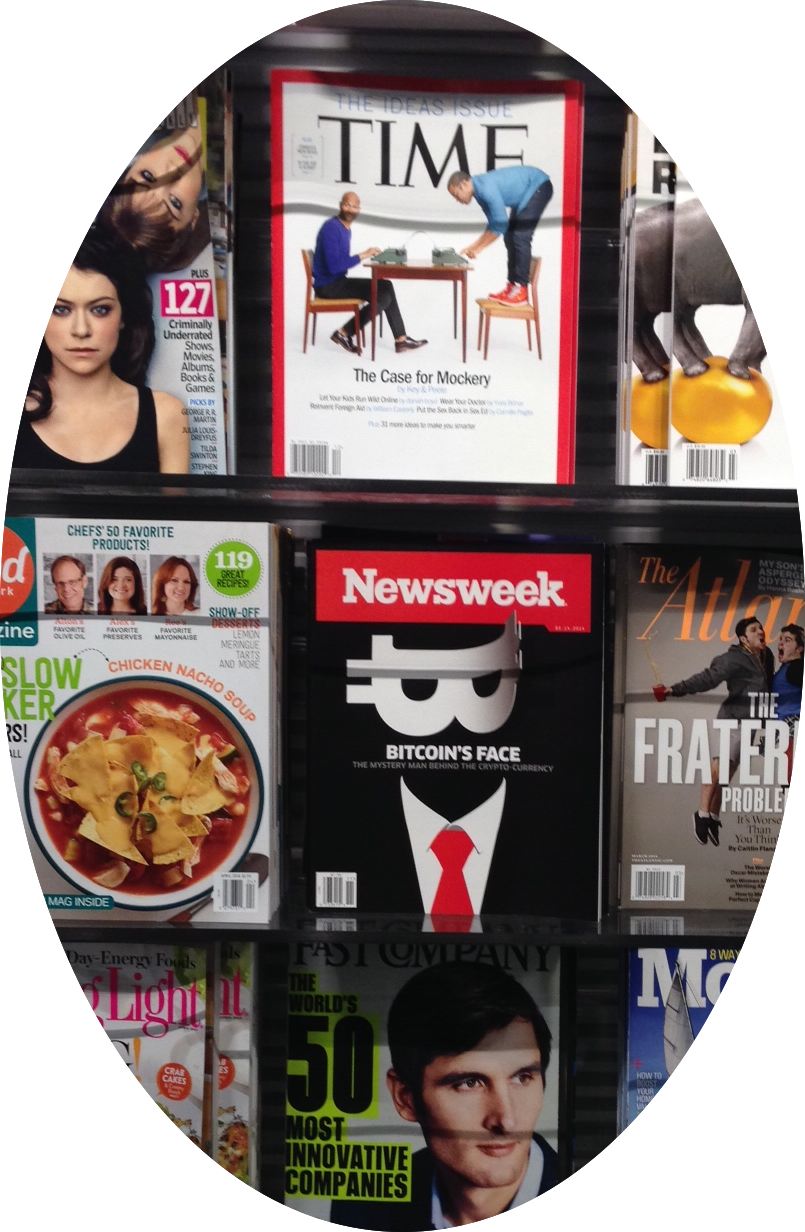
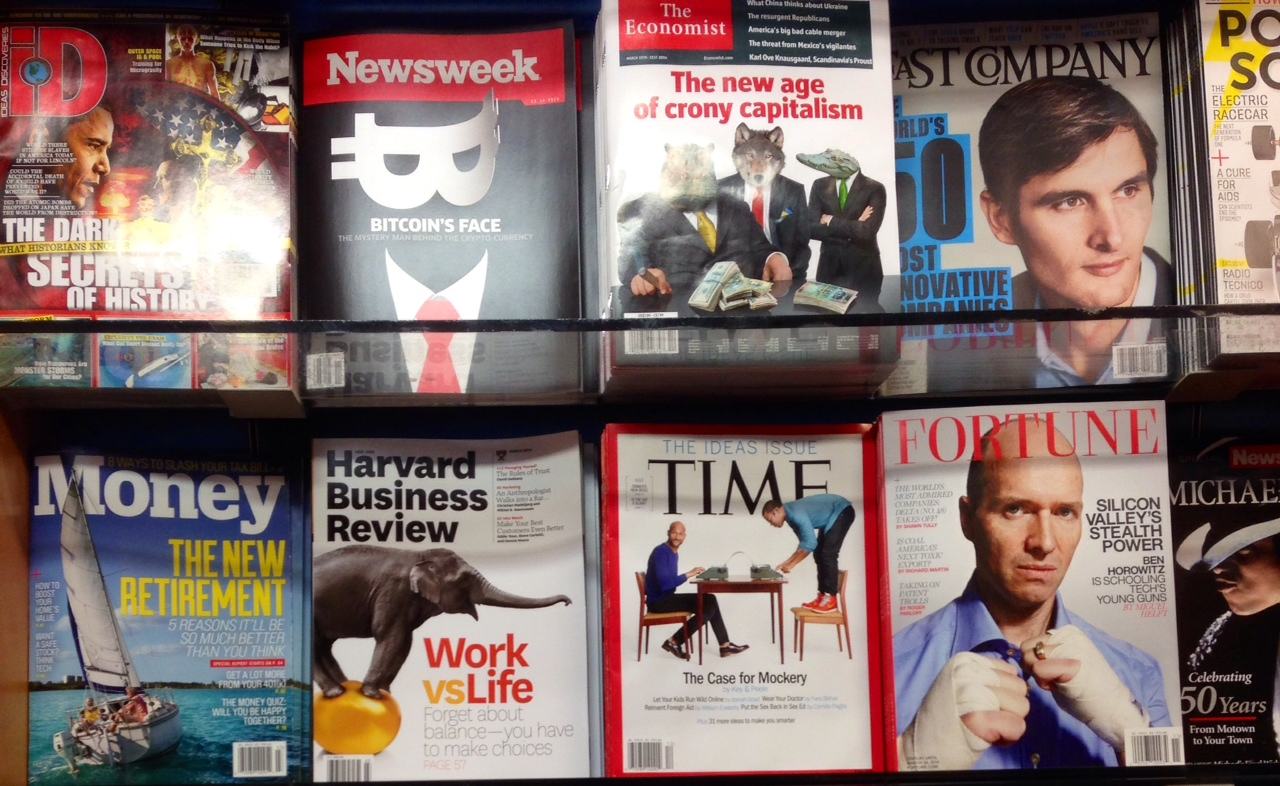


 Mr. Magazine