Archive for the ‘Magazine Power’ Category

h1

AARP The Magazine: America’s Largest Consumer Magazine – Fighting The Good Fight To Disrupt The Idea Of Aging In America – The Mr. Magazine™ Interview With Bob Love, Editor-In-Chief of AARP The Magazine

January 19, 2016

“In my business, I’ve been around a long time, 20 years at Rolling Stone, and then the next 15 at a variety of publications. All I know is that the alarmists are almost never correct. Print is far from dead and it’s a great time still to be a journalist.” Bob Love

“I believe it’s (print) far from dead. There are people who think that we’re in the buggy-whip business, but when you deliver 1.3 million new readers to your publication in the last year, I would say that’s not quite true.” Bob Love
aarp6 When media people and those in the advertising side of the business think of audience engagement or reaching core customers and entrancing new ones into the fold, their minds are usually on that sector of individuals dubbed millennials. Fair? No, far from it. True nonetheless. And while millennials are a very important part of the industry’s life’s blood, there is another extremely large group of people, in fact, 100 million strong, who are being overlooked and slighted when it comes to cultivating their readership. That group is the 50+ audience.

Bob Love is out to change that one-sided practice and perception. Bob is editor-in-chief of the largest circulation magazine in the country: AARP The Magazine. And at AARP The Magazine, the 50+ opinion is the only one that matters. According to the magazine’s research, 50+ Americans will soon control more than 70 percent of the disposable income in this country. They buy two-thirds of all the new cars, half of all the computers and a third of all movie tickets. They spend $7 billion a year shopping online. And travel? More than 80 percent of all the premium-travel dollars flow from their credit cards.

So why then do magazines and magazine media and advertisers think this group of readers is not a viable investment? Bob’s answer for that is one simple word: ageism. And he should know since he worked at Rolling Stone magazine for 20 years and saw every assignment and every move the magazine made through, as he called it “the lens of youth.” And now he sees through a much more mature lens that is entirely in focus on the needs of his readers.

Having worked with some of the greats like Hunter S. Thompson, Tom Wolfe and P.J. O’Rourke, he also knows good writing when he reads it and brings that skill and others he has gained throughout his life’s work to AARP The Magazine to make it a force to be reckoned with in the world of magazines. Through respect for his reader and stories, design and photography that engages as well as informs, Bob is making the statement that 50+ is now the age to be and to attract if you want a readership that can spend money, share their free time and have a love for print that no other audience has right now in this country.

So, I hope that you enjoy the Mr. Magazine™ interview with the inimitable Bob Love, Editor-In-Chief, AARP The Magazine.

But first the sound-bites:

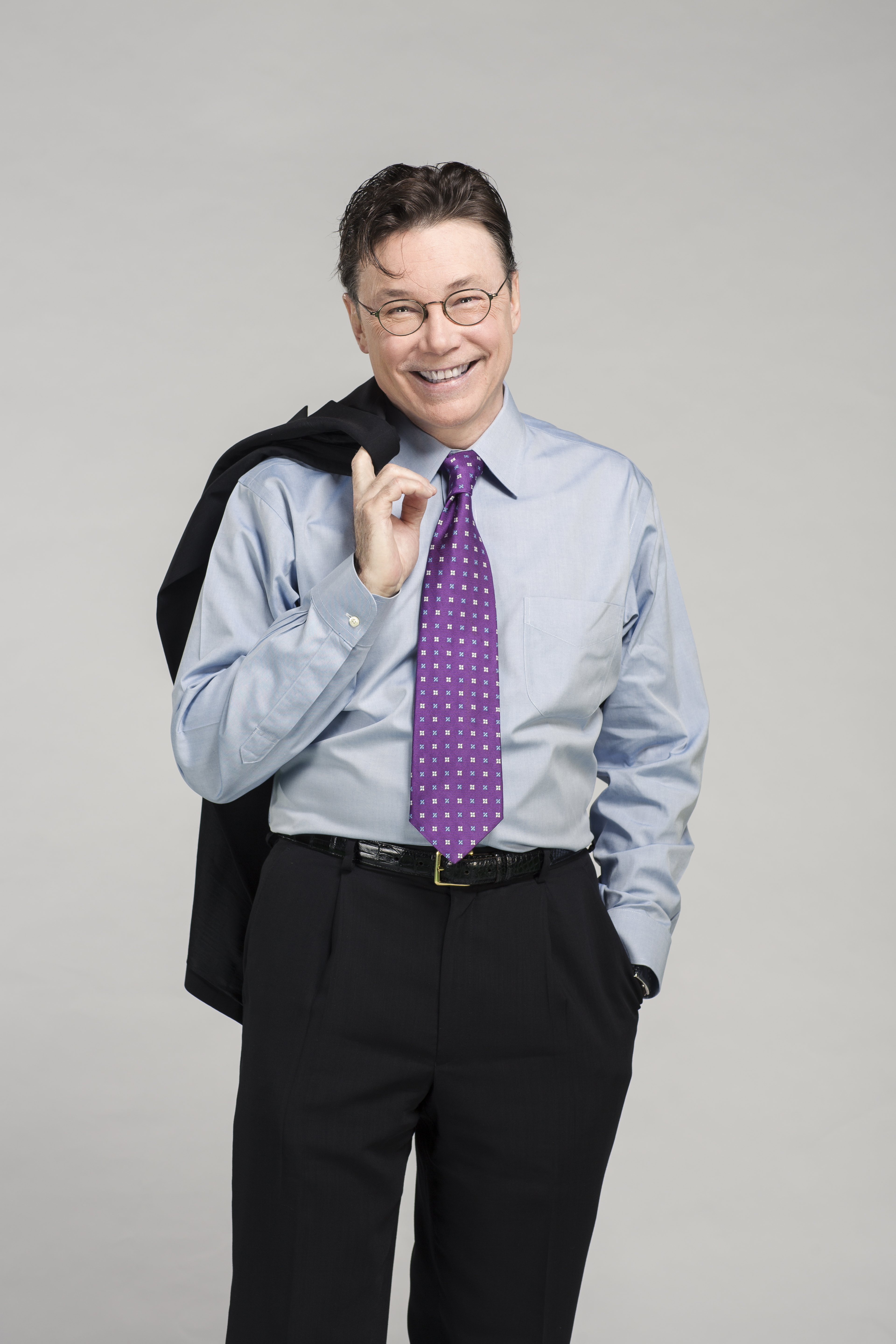
Eli Meir Kaplan for AARP The Magazine Portrait of AARP The Magazine editor-in-chief Robert Love on Thursday, August 8, 2013 at AARP in Washington, DC.

Eli Meir Kaplan for AARP The Magazine Portrait of AARP The Magazine editor-in-chief Robert Love on Thursday, August 8, 2013 at AARP in Washington, DC.

On why he thinks the advertising and media worlds today are only interested in what millennials have to say instead of including baby boomers in the conversation as well: First of all, I think there’s ageism in our society. And at AARP we are in kind of a constant battle to counter the pernicious effects of ageism, that thinking that people can be dismissed or counted out because of how many years they’ve lived on earth. I think that advertising and the media itself has fairly ageist persuasions. And I believe that’s the problem.

On the magazine’s readership growth over recent years:
Our readership from the fall of 2003, when we were first measured by MRI, has grown by 11.669 million readers, which is more than the total population of Greece. The growth of the magazine is bigger than 88% of all the MRI measured magazines. That’s why I think this is the great story that’s underneath the noses of all of the media reporters, and you were the only one smart enough to come back to me and say let’s do this interview. This is a very rare success story in publishing in the 21st century.

On the fact that baby boomers have more money to spend and more free time that millennials and yet they remain almost invisible to marketers: It’s a gigantic wave of baby boomers that are still purchasing and still making decisions about what they want to do. They travel more than anybody else and it’s kind of a mystery. That’s why I said you asked me the hardest question first, because I don’t know why the advertising community; why media in general thinks that it’s OK to slag off people over 50.

On how his role of editor has changed since his years at Rolling Stone:
The short answer is we saw everything through the lens of youth and now I see everything through the lens of the fifty-plus American who has dreams and deserves to live a dignified life and to be treated with respect in society.

On how he has utilized his skills to change AARP The Magazine:
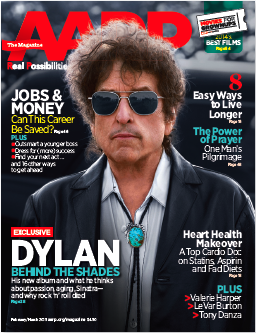
I’ve been at AARP The Magazine for 2½ years now and I’ve taken my skills of a lifetime in publishing, a combination of Rolling Stone, which was a mass market dual audience magazine, and my time at Rodale magazines, where service is preeminent; Playboy and Reader’s Digest, which each had their own sort of secret sauce, and I sort of combined them together, but the truth is AARP The Magazine is a dual audience, general interest magazine with a mass audience and a mass reach. We had a chance to do Bob Dylan on the cover in February 2015, and that proved to be kind of a shot-heard-round-the-world, in terms of the impact. People kind of had an “aha” moment: oh my gosh, AARP The Magazine has Bob Dylan on the cover. And Bob Dylan chose us to be on the cover and take his message to Americans who are 50 and over.

On whether he used his Rolling Stone connections more than AARP’s connections to get the Dylan cover:
I have to say in all humility that Bob Dylan chose AARP to take his message out. He could have had the entire arts and leisure section of The New York Times if he’d wanted. But he chose our team and I did know his PR guys and his manager from phone calls at Rolling Stone, but the truth is he made that decision. We just took the ball and ran with it as much as we could.

On when he thinks he’ll feel like he’s accomplished that “it” moment with the magazine:
I don‘t ever feel like this is it; with a magazine you’re constantly tweaking the design, the editorial approach and it pretty much is what I love to do. I hadn’t really been in charge of a magazine since Rolling Stone and it’s great fun. I don’t think there’s any stopping it. We poll our readers online every issue because we’re not sold on the newsstand. We do a great deal of internal research and so we find out the things that they want in their magazine and the things that they consider must-reads.

On whether he can ever envision AARP The Magazine without a print component:
Can I see a day when we don’t have a print component? I can see a day maybe into the future, but older readers tend to be the people who are reading magazines. If you look anywhere around you, young people are reading their phones. It’s older people who are actually reading magazines still. So, we’ll be one of the last ones probably to go over because print is still so necessary to reach our readers. And I believe it’s far from dead. There are people who think that we’re in the buggy-whip business, but when you deliver 1.3 million new readers to your publication in the last year, I would say that’s not quite true.

On working with people such as P.J. O’Rourke, Tom Wolfe and Hunter S. Thompson:
(Laughs) The thing is, I survived; there are editors who did not quite survive their contact with Hunter. First of all, I loved Hunter and I loved working with him. And I was grateful for the privilege of working with him. I wrote a piece about him in the Columbia Journalism Review and if you read it you’ll see that it was quite a journey to work with Hunter.

aarp2 On whether he believes journalism today is more lower-case or upper-case:
I don’t think I would venture an opinion on that because there’s so much more journalism now. When I grew up there were three television stations; there were a few very good national newspapers, and now with the Internet, there are so many more people making journalism and there are so many more outlets, that it would be wrong of me to make a judgement whether or not it’s lower-case journalism.

On the secret sauce of AARP The Magazine:
That’s a good question. I think it’s treating its readers with respect, not talking down to them, giving them as much variety and depth in the pages of an every two month magazine as we can fit. And keeping it modern and up-to-date, not pandering, and using the best talent in photography and design and journalism that you can afford.

On audience engagement with the magazine: I think it’s not taking their interest for granted. We’re an association magazine with all of the joys and exigencies that come with that. People get so much mail that they could throw it away. And AARP generates a lot of mail, but we happen to know from our own surveys, in addition to the independent surveys like MRI, that somewhere between six or seven out of ten readers really read all four issues.

On whether his colleagues and friends thought he was crazy to consider the job as editor-in-chief of AARP The Magazine:
(Laughs) I’m the only one out of all of my contemporaries and colleagues who has a full time job. Everybody else is putting together the freelance life and trying to keep body and soul together job to job. People on the inside who have to make a living practicing the art of journalism know that a general interest magazine that serves 36 million readers is nothing to laugh at.

On the biggest challenge he’s had to face since taking the job with AARP The Magazine: That’s another great question and I know the answer and I’ll be very succinct. The greatest challenge in making an interesting AARP The Magazine is the lack of pages. And because our printing and postage costs are so phenomenally high there is a great deal of energy in getting the number of pages that we do down. Like any magazine, it’s the calculus of how many pages of advertising you have versus how many pages of editorial you can afford to put out to 22 million homes. It is the biggest problem because there is so much more that we could do, that I personally would love to do with the magazine.

On anything else he’d like to add:
We’re fighting the good fight at AARP The Magazine to disrupt the idea of aging in America. And that’s an important notion and that’s what we see as the role of the publication. And by the way, I’m also the editor of the AARP Bulletin, which similarly goes out to 22 million homes, 10 times per year.

On what someone would find him doing at home in the evenings if they showed up unexpectedly on his doorstep:
Typically, I watch the cable news shows in the early evening around dinnertime, one liberal and one conservative, so I can understand the mood of the country. (Laughs) And then if I read at home, I probably tend to read newspapers and magazines on my tablet. I have the paper magazines at work so this just keeps the clutter down in my home.

On what keeps him up at night:
I think I’m concerned about the political discourse in this country. Every time I think I’m shocked by it, by how the backbenchers have grown into a chorus of haters, with their own biosphere of radio, television and print, something else happens. I fear for the nation and I fear for an emerging generation of millennials who will, I also fear, not have as rich a life as we’ve had, because it’ll be harder for them to have higher wages to buy homes and other things that have always been associated with the American Dream.
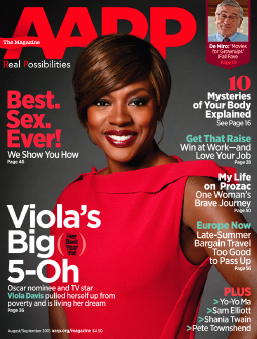
And now the lightly edited transcript of the Mr. Magazine™ interview with Bob Love, Editor-In-Chief, AARP The Magazine.

Samir Husni: When you were working at Rolling Stone and at almost any other job that you’ve had, people were constantly clamoring to get your views and ideas on everything, and the magazines’ views and ideas that you were working on at the time. And now that you’re working at the largest circulation magazine that we have in the country and serving almost one-third of the Baby Boomers out of the 72 million, everyone only wants to talk about the millennials. Why do you think that’s the case?

Bob Love: Did you have to ask me the hardest question first? (Laughs)

Samir Husni: (Laughs too).

Bob Love: First of all, I think there’s ageism in our society. And at AARP we are in kind of a constant battle to counter the pernicious effects of ageism, that thinking that people can be dismissed or counted out because of how many years they’ve lived on earth. I think that advertising and the media itself has fairly ageist persuasions. And I believe that’s the problem.

If you want to get it on record here about who we are at AARP Publications, we are the largest consumer magazine in the nation. We have 22 million subscribers and 35.95 million readers according to the fall MRI.

Samir Husni: You’ve shown a very healthy growth from years past, where you had something like .75 percent readership per copy and now you’ve increased that readership quite a bit.
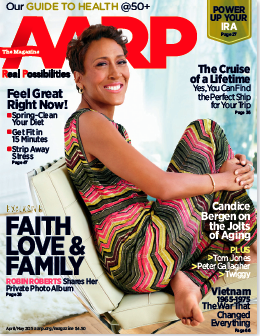
aarp4 Bob Love: Our readership from the fall of 2003, when we were first measured by MRI, has grown by 11.669 million readers, which is more than the total population of Greece. The growth of the magazine is bigger than 88% of all the MRI measured magazines. That’s why I think this is the great story that’s underneath the noses of all of the media reporters, and you were the only one smart enough to come back to me and say let’s do this interview. This is a very rare success story in publishing in the 21st century.

Samir Husni: As an editor who has quite a few years under your belt, whether it be at Rolling Stone or editor-at-large at Playboy or as an adjunct professor at Columbia University; what can you do to change the stereotype? I tell my students all of the time; we have as many baby boomers as we have millennials in this country.

Bob Love: That’s right.

Samir Husni: Who has more money to spend; who has more free time: the millennials or the baby boomers?

Bob Love: (Laughs) This is certainly true. We know, because we pay attention to these things. People over the age of 50 are 100 million strong. We will soon control more than 70 percent of the disposable income in this country. We buy two-thirds of all the new cars, half of all the computers and a third of all movie tickets. We spend $7 billion a year shopping online. More than 80 percent of all the premium-travel dollars flow from our credit cards. Add it all up, as my AARP colleague Jody Holtzman did last year, and U.S. adults who are over 50 ka-ching as the third largest economy in the world, trailing only the gross national product of the United States and China!

And still, older Americans are virtually ignored by marketers mired in last century’s obsession with youth. In fact, only 5 percent of advertising is directed at older consumers, according to Nielsen, which has been tracking Americans’ habits for decades. It’s insulting.

As veteran ad man Bob Hoffman put it recently, “Almost everyone you see in a car commercial is between the ages of 18 and 24. And yet, people 75 to dead buy five times as many new cars as people 18 to 24.” Nielsen calls people 50 and up “the most valuable generation in the history of marketing.”

It’s a gigantic wave of baby boomers that are still purchasing and still making decisions about what they want to do. They travel more than anybody else and it’s kind of a mystery. That’s why I said you asked me the hardest question first, because I don’t know why the advertising community; why media in general thinks that it’s OK to slag off people over 50.

I think it’s a reflection of ageism in our society and now that I’m in the middle of this revolution about what it means to be middle-aged and older in our society, I find it very, very interesting.

Samir Husni: You have over 35 years of experience under your belt as a journalist; if you were to compare your role as managing editor at Rolling Stone and your role now as editor of AARP Magazine; how has your role as editor changed since your years with Rolling Stone?

Bob Love: That’s an excellent question and I’ve thought about it. At Rolling Stone we saw everything through the lens of youth; the crime stories were about youth; the political stories were often ones that interested youth, college loans, etc. Jann (Wenner) wanted himself and his readers to have a seat at the table of public discourse, and Rolling Stone was kind of the first on the scene to do that.

So, the short answer is we saw everything through the lens of youth and now I see everything through the lens of the fifty-plus American who has dreams and deserves to live a dignified life and to be treated with respect in society.

Samir Husni: How have you utilized those skills that you have to, maybe not change people’s perceptions of the fifty-plus American, but in reality to change the magazine?

aarp1 Bob Love: I’ve been at AARP The Magazine for 2½ years now and I’ve taken my skills of a lifetime in publishing, a combination of Rolling Stone, which was a mass market dual audience magazine, and my time at Rodale magazines, where service is preeminent; Playboy and Reader’s Digest, which each had their own sort of secret sauce, and I sort of combined them together, but the truth is AARP The Magazine is a dual audience, general interest magazine with a mass audience and a mass reach.

And so it basically comes natural to me to think that what I’m interested in and what I know my friends are interested in, and the people whose opinions count, will be of interest to many of the millions of readers who get the magazine.

We had a chance to do Bob Dylan on the cover in February 2015, and that proved to be kind of a shot-heard-round-the-world, in terms of the impact. People kind of had an “aha” moment: oh my gosh, AARP The Magazine has Bob Dylan on the cover. And Bob Dylan chose us to be on the cover and take his message to Americans who are 50 and over.

Samir Husni: It’s my understanding that you used your connections more than the AARP connections to get that Dylan cover and also to get the CD that went to very specific, lucky subscribers.

Bob Love: I have to say in all humility that Bob Dylan chose AARP to take his message out. He could have had the entire arts and leisure section of The New York Times if he’d wanted. But he chose our team and I did know his PR guys and his manager from phone calls at Rolling Stone, but the truth is he made that decision. We just took the ball and ran with it as much as we could.

And we got to deliver the new CD to thousands of our readers and also a discount to millions of our readers if they wanted to buy it.

That’s one of the things that I love about my job here, the access I am granted. I got to interview Bob Dylan, President Obama, Robin Roberts, Bill O’Reilly and Michael Douglas, all in the space of about 14 months. And I get to work with one of the grand dames of women’s publishing, Myrna Blyth, who dispenses great magazine ideas as easily as breathing.

Samir Husni: When will you feel like this is that “it” moment with the magazine?

Bob Love: I don‘t ever feel like this is it; with a magazine you’re constantly tweaking the design, the editorial approach and it pretty much is what I love to do. I hadn’t really been in charge of a magazine since Rolling Stone and it’s great fun.

I don’t think there’s any stopping it. We poll our readers online every issue because we’re not sold on the newsstand. We do a great deal of internal research and so we find out the things that they want in their magazine and the things that they consider must-reads.

So it’s my job to reinvent service for the fifty-plus readership; it’s my job to bring them something surprising in each issue if we have the pages to do it. And I don’t think that’s a job that’s ever done. I feel like you just keep doing it every day. And surround yourself with people who love to do the same job.

Samir Husni: If I heard you correctly, you said you poll the people online; I thought us older folks didn’t use online. We’re ink on paper people, right?

Bob Love: (Laughs) That’s far from true.

Samir Husni: (Laughs too).

Bob Love: We know that our readers do a lot of online reading. And we get to them for the most important thing, which are our reader engagement surveys, and we do that online.

By the way, one of the things that MRI turned up for us in the fall is that we continue to have the highest reader engagement metrics in the business bar none. Actually, 66% read four out of four of the last issues, compared to the other top ten total reach magazines, which are at least 20 or 30 points behind that.

So, this is a magazine that people really take quite seriously and they love it. They spend 45 minutes with it every time they get it and it’s quite successful when it comes to engaging its readers.

Samir Husni: I know we live in a digital age, but can you ever envision AARP The Magazine without the ink on paper component and everything will be digital-only?
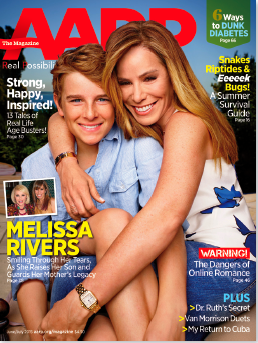
aarp3 Bob Love: That is the great issue of our time. How do we cross over that divide between paper and digital? We have an active online site for the organization; we put our magazines out on tablet and I’m negotiating with Texture right now to get us onto that platform.

Can I see a day when we don’t have a print component? I can see a day maybe into the future, but older readers tend to be the people who are reading magazines. If you look anywhere around you, young people are reading their phones. It’s older people who are actually reading magazines still. So, we’ll be one of the last ones probably to go over because print is still so necessary to reach our readers.

And I believe it’s far from dead. There are people who think that we’re in the buggy-whip business, but when you deliver 1.3 million new readers to your publication in the last year, I would say that’s not quite true.

Samir Husni: Not too many journalists can say they’ve worked with and edited people like Hunter S. Thompson, Tom Wolfe and P. J. O’Rourke. One of my colleagues here at the University of Mississippi is Curtis Wilkie, who was a very good friend of Hunter S. Thompson’s. So, just the mere fact that you worked with Hunter S. Thompson should have left some kind of an impact on you.

Bob Love: (Laughs) The thing is, I survived; there are editors who did not quite survive their contact with Hunter. First of all, I loved Hunter and I loved working with him. And I was grateful for the privilege of working with him. I wrote a piece about him in the Columbia Journalism Review and if you read it you’ll see that it was quite a journey to work with Hunter.

But the guy had such a distinct voice and was so very generous as a writer and as a seer in our society that it left me thinking that there are possibilities with voices in journalism that are out there. But you have to be careful, for every Hunter there are a thousand Hunter imitators. For every Tom Wolfe…it’s the same story, you know?

But to seek out the voices, the truly unique voices working in journalism, that was something that Jann Wenner did very well and I’ll always take my lessons from him and be grateful to him for all of the things that he taught me. And one of them was, believing in people who have an idiosyncratic view and supporting them. It was a long haul with Hunter; it was a long haul with Tom Wolfe’s book, which was serialized in the magazine. I enjoyed working with Tom too, very much; he’s such a great talent and a gentleman to work with. And P.J. O’Rourke; I even brought him into AARP The Magazine to do something on the baby boomers last year.

Does it change you to work with great writers? Yes it does. It shows you possibilities; it shows you the unique power of voices in journalism, which is a subset of what we do.

Samir Husni: Do you think today’s journalism compared to the journalism of the pre-digital age is more of a lower-case journalism or more of an upper-case journalism?

Bob Love: I don’t think I would venture an opinion on that because there’s so much more journalism now. When I grew up there were three television stations; there were a few very good national newspapers, and now with the Internet, there are so many more people making journalism and there are so many more outlets, that it would be wrong of me to make a judgement whether or not it’s lower-case journalism. I would think that some of the stuff we’re seeing now is of the highest quality. It’s much harder to break through to readers in this environment where we are saturated with information.

Samir Husni: When you referred to Reader’s Digest and Playboy as having their own secret sauce; what is the secret sauce for AARP The Magazine?
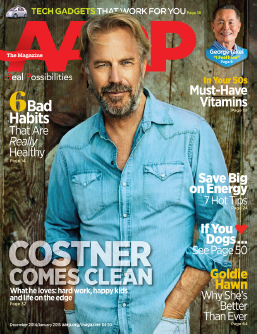
aarp5 Bob Love: That’s a good question. I think it’s treating its readers with respect, not talking down to them, giving them as much variety and depth in the pages of an every two month magazine as we can fit. And keeping it modern and up-to-date, not pandering, and using the best talent in photography and design and journalism that you can afford.

Basically, it’s all of the ingredients that I learned at the other publications. Reader’s Digest is a mass market magazine that is much smarter than young people might give it credit for. It’s a very smart magazine. At Rodale, they reinvented service and brought young men into the tent that hadn’t been in, and they basically have done so much work in making service relevant and to have its voice speak to young men and young women.

Samir Husni: Not to put down any former editors of the magazine, but somehow you’ve used your magic journalism skills to actually give me, and I am that audience, something to engage with when I sit down to read.

Bob Love: Do you read it?

Samir Husni: Yes, I do. I am an active member. (Laughs)

Bob Love: I think it’s not taking their interest for granted. We’re an association magazine with all of the joys and exigencies that come with that. People get so much mail that they could throw it away. And AARP generates a lot of mail, but we happen to know from our own surveys, in addition to the independent surveys like MRI, that somewhere between six or seven out of ten readers really read all four issues.

So, we pay attention. I think maybe that’s the best way to shorthand what an editor can do to serve his or her readers and that’s to just pay attention and to give them what they want, and also to lead and to give them something surprising in each issue. In the last issue we had a piece on aging gangsters, who of course do not get social security, do not have 401K plans and most of the time do not live to get very aged. But today’s gangsters are living quite long, so it was sort of a surprise curve ball piece to appear in the magazine.

Samir Husni: When you told people you were offered the job as editor-in-chief of AARP The Magazine; did they think you’d lost your mind to even consider it or did they say wow and congratulate you?

Bob Love: (Laughs) I’m the only one out of all of my contemporaries and colleagues who has a full time job.

Samir Husni: (Laughs)

aarp covers Bob Love: Everybody else is putting together the freelance life and trying to keep body and soul together job to job. People on the inside who have to make a living practicing the art of journalism know that a general interest magazine that serves 36 million readers is nothing to laugh at.

Again, it comes back to the inherent ageism in our society. It seems to be OK to make fun of older people, and to make fun of AARP because it represents those older people. We used to be called the American Association of Retired Persons, but we’ve dropped that because maybe 40% of our members work part time or full time now. It’s a different population of people 50 and up, as you well know.

Samir Husni: What has been the biggest challenge that you’ve had to face since taking the job and how did you overcome it?

Bob Love: That’s another great question and I know the answer and I’ll be very succinct. The greatest challenge in making an interesting AARP The Magazine is the lack of pages. And because our printing and postage costs are so phenomenally high there is a great deal of energy in getting the number of pages that we do down. Like any magazine, it’s the calculus of how many pages of advertising you have versus how many pages of editorial you can afford to put out to 22 million homes. It is the biggest problem because there is so much more that we could do, that I personally would love to do with the magazine.

We should have a column for men because women are more natural magazine readers than men and I’d like to appeal to men more. I’d like to use my experience at Best Life and Men’s Health to figure out how to speak more directly to men and bring men into the fold. We know that we’re slightly more women than men in terms of readers, but we also know, and you know too, that women are the great readers of service. They are always looking for ways to improve their lives, their families’ lives, their homes, and men are not that. Men gravitate toward other things.

I would do that and I would expand the feature well. We have this really great little section in the back of the book called “Personal Best.” And these are all photo-driven stories about people 50 and older who are doing really cool and interesting things. That’s a section that I would expand too. Or I would move some of it up front. I’m literally held back by the number of pages in which we have, which is somewhere around 52-53, six times per year.

Samir Husni: Is there anything else you’d like to add?

Bob Love: We’re fighting the good fight at AARP The Magazine to disrupt the idea of aging in America. And that’s an important notion and that’s what we see as the role of the publication. And by the way, I’m also the editor of the AARP Bulletin, which similarly goes out to 22 million homes, 10 times per year. The magazine is the glossy paper with the color photos, which is a bit more accessible. People remember they’re getting it in the mail. It’s kind of our flagship method of communication with our readers.

Samir Husni: If I showed up unexpectedly one evening at your home, what would I find you doing; reading a magazine; reading your iPad; watching TV or simply relaxing with a glass of wine?

Bob Love: Typically, I watch the cable news shows in the early evening around dinnertime, one liberal and one conservative, so I can understand the mood of the country. (Laughs) And then if I read at home, I probably tend to read newspapers and magazines on my tablet. I have the paper magazines at work so this just keeps the clutter down in my home.

And then later on in the evening I go to a book or Netflix or something like that. So, if you arrive unannounced, it depends on what part of the evening you arrive.

Samir Husni: My typical last question; what keeps you up at night?

Bob Love: I think I’m concerned about the political discourse in this country. Every time I think I’m shocked by it, by how the backbenchers have grown into a chorus of haters, with their own biosphere of radio, television and print, something else happens. I fear for the nation and I fear for an emerging generation of millennials who will, I also fear, not have as rich a life as we’ve had, because it’ll be harder for them to have higher wages to buy homes and other things that have always been associated with the American Dream.

And I’m not just being facetious; those are the things that keep me up. In my business, I’ve been around a long time, 20 years at Rolling Stone, and then the next 15 at a variety of publications. All I know is that the alarmists are almost never correct. Print is far from dead and it’s a great time still to be a journalist.

Samir Husni: Thank you.
h1

Good Housekeeping: 130 Years Old & Still Necessary, Relevant & Sufficient In This Digital Age – The Mr. Magazine Interview With Jane Francisco, Editor-In-Chief, Good Housekeeping.

January 15, 2016

“Personally, I’m very passionate about print. I love magazines and I love working on magazines. I love the fact that magazines actually are finite. There’s something about that that’s really special. So, I personally have a passion for print.” Jane Francisco

“In terms of how important print is to our business, more than half of our audience is in print. It requires finer attention, shall we say, because of the fact that it can’t be changed once it’s printed. That’s one of the things about print; people keep it longer. I still think it’s a hugely important part of our business and certainly right now, it’s where our audience is, with nearly 20 million readers every single month, that’s a big deal. And when we sort of carve that audience up and look at it and we look at how many women in our audience are in a certain age and stage in life or are of a group, for instance, people who are very interested in beauty or some other category; we still speak to more women in those niches than a lot of the verticals do.” Jane Francisco

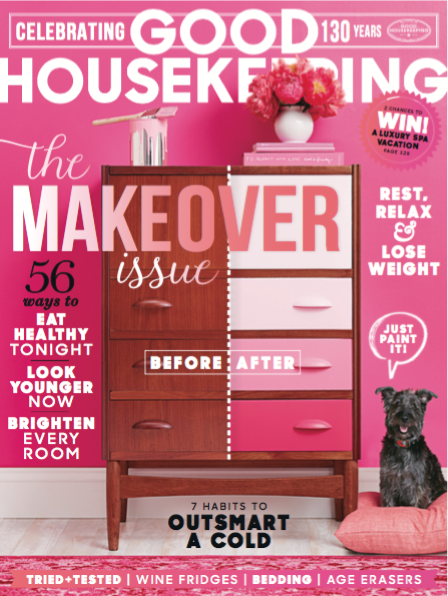
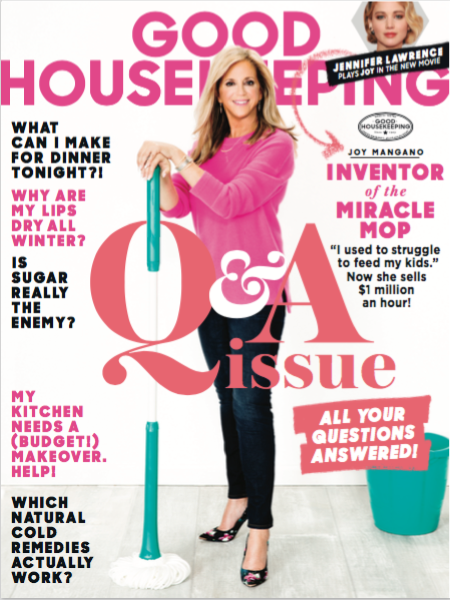
GHFeb As Hearst Magazines celebrates several milestones; Good Housekeeping is 130 years strong; Town & Country is 170, House Beautiful is 120 and Harper’s Bazaar is nearly 150, and these are not typos as David Carey wrote in his recent end of the year letter to the global magazine company; one might ask how do legacy brands such as these inimitable titles stay necessary, relevant and sufficient in this digital age?

With Good Housekeeping, Editor-In-Chief Jane Francisco says it has to do with retaining all of the magazine’s strengths and values that it has stood for through the generations, while simultaneously making sure they stay aligned with the lifestyle of each subsequent generation. And at Good Housekeeping the proof is in the pudding or the Good Housekeeping Institute anyway.

I spoke with Jane recently and we talked about her two-year anniversary with Good Housekeeping after a successful tenure as editor in chief of Chatelaine, the leading women’s lifestyle media brand in Canada. We also discussed the multifaceted extensions that the brand is showcasing in this new year of 2016, such as the inaugural Best New Car Awards for 2016 that GH teamed up with Car and Driver magazine to introduce, the celebration of The Year of the Connected Woman, which they have deemed 2016 to be, and the special themed issue in September tied to the year of The Connected Woman.

All in all, 2016 is lining up to be the magazine’s best year yet. And according to its editor-in-chief, it will only get better and stronger in every area, with each successive year to come.

Jane has settled in at Good Housekeeping and is prepared to steer her massive brand-ship into exciting new waters as the New Year unfolds and Mr. Magazine™ is very anxious to board the GH ship. So without any further ado, here is Mr. Magazine’s™ interview with Jane Francisco, Editor-In-Chief, Good Housekeeping.

But first the sound-bites:


Jane Francisco Headshot-Credit Sian Richards On whether her first two years at Good Housekeeping has been all smooth sailing: The first six months was a lot of absorbing. The magazine that I worked on previously was quite similar, in terms of mix of content, audience, marketing, etc. So that part was a fairly easy transition, but working with a new team and then having the Good Housekeeping Institute also be a part of that, was really an exciting new element for me and sort of a steeper learning curve. Understanding the processes and the methodology of all of the testing and research that’s done there and then working with the team to look at how we could develop more content from that testing and research.

On how it feels in this digital age to edit a legacy brand that’s 130 years old:
First and foremost I feel a huge responsibility to the company that owns the brand and to the audience and their expectations that come with them. It’s a huge challenge because as you go from generation to generation, you have to make sure that this brand continues to be as relevant to the next generation as it was to the previous one. And that’s the challenge.

On whether as an editor she ever feels overwhelmed as the role constantly evolves:
We certainly do have a lot of pots on the stove. A couple of different things about that; one, I would say as someone who has worked on general lifestyle magazines like Good Housekeeping and Chatelaine, the one I worked on previously, and I’ve also worked on verticals, so I’ve worked on shelter publications; I’ve worked on a health and beauty magazine and a fashion magazine. It’s a very different challenge to focus on all of those various areas at one time to a very large audience, than it is to try and deliver depth and expertise in just one area. So, Good Housekeeping presents that challenge on its own, just the magazine because of needing to deliver relevant content for every life stage in health, beauty, fashion and real-life stories; that’s big.

On how important the print edition is to Good Housekeeping in this day and age:
Personally, I’m very passionate about print. I love magazines and I love working on magazines. I love the fact that magazines actually are finite. There’s something about that that’s really special. So, I personally have a passion for it. In terms of how important it is to our business, more than half of our audience is in print. It requires finer attention, shall we say, because of the fact that it can’t be changed once it’s printed. That’s one of the things about print; people keep it longer. I still think it’s a hugely important part of our business and certainly right now, it’s where our audience is, with nearly 20 million readers every single month, that’s a big deal.

On whether her print audience is the same as her digital audience:
Our research is showing that there’s not a huge amount of overlap. Of course, we do have a lot of different audiences within digital as well. There’s online, but then we have Facebook, which is online, but our Facebook audience is really important and that’s fairly sizable as well. And then all of the other social components: Twitter, Instagram, etc.

On her reaction when she was made the offer to become editor-in-chief of Good Housekeeping:
I got the offer for the job through several months of very deep conversations and proposals. So by the time that happened I was pretty engaged in the process, so it wasn’t surprising in the sense that it wasn’t like someone just called me up and said, hey, let me give you this job. (Laughs) But of course, I was thrilled and at that point I had made a decision that it was something that I wanted to do.

On the major stumbling block that she’s had to face:
Well, this may tell you more about me than the job, which is kind of sad. (Laughs) I think the biggest stumbling block for me was probably the same stumbling block that I had on my previous job when I started, and that was making assumptions, thinking that because you had done a job similar to this one before that it was going to be smooth and easy. Not saying necessarily that it wasn’t smooth and easy; it’s just that you kind of come in with an assumption that the learning experience you had before you’ll be able to apply directly and of course you can, but it’s more to the point to say that you apply it more indirectly.

On what motivates her to get out of bed in the morning:
I feel like every day there are too many new things to do. Not too many in a bad way; it’s just every day I feel like I can’t wait to get there. I want to get there early so I can get a jump on the day and the things that I need to do.

On whether service journalism is the core of the print edition or the entire Good Housekeeping brand:
I would say that service journalism is really the core of the brand. In the digital space, the highest traffic drivers are often stories that really draw you in. So, I would say that while the site itself may have a lot of service journalism, a lot of the stories that draw people onto the site is the real-life stories.

On anything else she’d like to add:
This year we are celebrating The Year of the Connected Woman, which is something new and exciting for us at Good Housekeeping. Technology has become such a huge part of women’s everyday lives. And not technology for technology’s sake, but it’s a part of how we connect with one another, with our family and friends and the community.

On what’s in store for Good Housekeeping in 2016:
That’s our big focus, celebrating The Year of the Connected Woman. And we’ll have a special themed issue in September tied to the year of The Connected Woman. Women who are making a difference; women who are connected with their communities, and then we’ll also be looking at how we connect.

On what someone might find her doing in the evening if they showed up unexpectedly at her home:
A typical work night, I would either be watching something on my iPad or, depending on what part of the month we’re in, I would have a stack of pages of the magazine in my lap. I would be flipping back and forth and thinking: I should really do my work now or maybe I’ll do it in the morning; I’ll just finish watching this show or movie first. That’s pretty typical for me once my son is asleep.

On what keeps her up at night:
I may have half-answered this before, but what keeps me up at night usually is all of the balls that we have up in the air. I’m actually a pretty good sleeper, but if I was thinking about work, which I pretty much think about work when I fall asleep, and when I wake up I’m usually thinking: how are we going to get done; who’s going to get it done; and how can we move any number of whatever the projects are forward; and is it moving forward.

And now the lightly edited transcript of the Mr. Magazine™ interview with Jane Francisco, Editor-In-Chief, Good Housekeeping.

Samir Husni: You’ve now been at Good Housekeeping for two years; tell me about those two years. Has it been smooth sailing the entire time or have you encountered some choppy waters? How easy has it been to adjust as editor-in-chief of one of the largest women’s magazines in the country?

GHJan Jane Francisco: The first six months was a lot of absorbing. The magazine that I worked on previously was quite similar, in terms of mix of content, audience, marketing, etc. So that part was a fairly easy transition, but working with a new team and then having the Good Housekeeping Institute also be a part of that, was really an exciting new element for me and sort of a steeper learning curve. Understanding the processes and the methodology of all of the testing and research that’s done there and then working with the team to look at how we could develop more content from that testing and research.

So that was the first thing and at that point we were really focusing on the redesign and a lot of that had to do with creating more content around the testing and the Institute, bringing forward some of our experts a little bit more into the pages and developing the lifestyle content in a stronger way.

At that point, we were 129 years old, so the heritage of this brand is really important. We have a very large, loyal reader base that we wanted to keep happy and excited about the brand. So, I would say that was kind of the whole first year of my initial experience.

I would say the last year has been more like measuring how it’s going and continuing to evolve all of the pieces.

Samir Husni: David Carey in his letter to the company and the media mentioned that Town & Country is 170 years old and Good Housekeeping is 130 years old and he followed that directly by saying this was not a typo. How does it feel today in this digital age to edit a magazine that’s 130 years old? And how is that different than editing the other magazine that you were working on?

Jane Francisco: The other magazine that I was at immediately prior to Good Housekeeping was the Canadian magazine, Chatelaine. In my last year there we celebrated 85 years, which is not 130, but once you get multigenerational and you’re enough generations along that there’s no one living who was around when it started, you’re essentially then dealing with the same type magazine.

But in answer to your question; first and foremost I feel a huge responsibility to the company that owns the brand and to the audience and their expectations that come with them. It’s a huge challenge because as you go from generation to generation, you have to make sure that this brand continues to be as relevant to the next generation as it was to the previous one. And that’s the challenge.

So, how do you retain all of the strengths and values that we’ve stood for over the years and at the same time make sure that it’s aligned to the lifestyles of the next generation? So that when the next generation starts to build their homes and start to think about their families, the offering that Good Housekeeping is providing is completely relevant, useful, compelling and exciting to them.

Samir Husni: Do you ever feel overwhelmed because of all of your responsibilities? You teamed up with Car and Driver to do the Best New Car Awards for 2016; you’re taking what the Institute has done with the Miracle Mop and linking it to the movie, and editing the magazine while trying to reach a new generation; that’s quite a plate-full. As the role of editor evolves; do you feel like you have too many pots on the stove?

Jane Francisco: We certainly do have a lot of pots on the stove. A couple of different things about that; one, I would say as someone who has worked on general lifestyle magazines like Good Housekeeping and Chatelaine, the one I worked on previously, and I’ve also worked on verticals, so I’ve worked on shelter publications; I’ve worked on a health and beauty magazine and a fashion magazine.

It’s a very different challenge to focus on all of those various areas at one time to a very large audience, than it is to try and deliver depth and expertise in just one area. So, Good Housekeeping presents that challenge on its own, just the magazine because of needing to deliver relevant content for every life stage in health, beauty, fashion and real-life stories; that’s big. But we have a great team and that’s the expertise that they bring, and as far as that goes, I’m like the conductor or the orchestra leader. I rely heavily on that team.

And then when we look at the business as a whole, there are a number of different things. You mentioned the Car and Driver awards, the Good Housekeeping Car and Driver awards that we launched this year with Car and Driver magazine. So, that’s really exciting and brand new in a way, but also in a way, we have been testing cars with Car and Driver for a number of years. It’s not new for our engineers. The process is not new and obviously testing products is not new for us, our engineers have been doing that for decades.

This year what was new was in how we packaged it and the fact that we decided to craft it in such a way that we were really focusing on the top cars in each category. So that’s the case for a lot of the different stuff that we’re doing.

You mentioned Joy (Miracle Mop inventor Joy Mangano) and the launch of the movie, and of course her products; she celebrates 20 years since she first got the Good Housekeeping Seal on her products. And that’s really exciting for us.

The Good Housekeeping Seal is the perfect example of the look back and the look forward. It’s something that’s a part of our history and a part of our heritage and very important to the brand.

Joy and her products have been an important part over the last couple of decades. And now here is something that’s really interesting and compelling that’s happening in the popular culture sphere with her and her products and for us to be able to celebrate that and really tell her story and get her personal with her, because of course, those really personal stories are a part of what really drives us at Good Housekeeping and is a big part of the connection with our audience. That was a really wonderful moment for us, to do that and bring all of those pieces together.

So yes, it’s very challenging, but I have fabulous teams and support from Hearst as well. And it is true that our jobs as editors are evolving; beyond the page is more of our job than on the page a lot of the time.

Samir Husni: Mentioning the page; how important is the print edition to Good Housekeeping in this day and age?

Jane Francisco: Personally, I’m very passionate about print. I love magazines and I love working on magazines. I love the fact that magazines actually are finite. There’s something about that that’s really special. So, I personally have a passion for print.

In terms of how important print is to our business, more than half of our audience is in print. It requires finer attention, shall we say, because of the fact that it can’t be changed once it’s printed. That’s one of the things about print; people keep it longer. I still think it’s a hugely important part of our business and certainly right now, it’s where our audience is, with nearly 20 million readers every single month, that’s a big deal. And when we sort of carve that audience up and look at it and we look at how many women in our audience are in a certain age and stage in life or are of a group, for instance, people who are very interested in beauty or some other category; we still speak to more women in those niches than a lot of the verticals do. I feel like we have a huge responsibility to these women.

We speak to more women who are classified MRI as big beauty spenders, than a vertical like Allure. To us our beauty coverage and our beauty lab and the work that we do in there and the information that we give about the products, is really important because we’re speaking to a huge audience of very engaged readers in that category alone.

And on top of that, you add in all of the women who may not be big beauty spenders, but when they do spend money in the category they want to make sure they’re spending it on the right item. What we do is really important.

The growth obviously in the last couple of years, our big growth, has been in the digital space and the big opportunity is how can we expand our audience through the digital space and have a more interactive relationship?

Samir Husni: Those 20 million print readers; are they also your digital audience, or do you have a different audience on the digital side? What’s the percentage of duplication?

Jane Francisco: Our research is showing that there’s not a huge amount of overlap. Of course, we do have a lot of different audiences within digital as well. There’s online, but then we have Facebook, which is online, but our Facebook audience is really important and that’s fairly sizable as well. And then all of the other social components: Twitter, Instagram, etc.

A lot of the online traffic now is being driven from Facebook, so we’re still “search first” and then Facebook. But again, the research is showing that a lot of the audience that we’re getting in the digital space is new audience and when you look at the audience as a whole in digital, the median age is younger. So it is a place where we’re addressing the next generation in terms of growth. And with print, we’re really looking at that as an important element as well.

Samir Husni: Do you remember your reaction when you received the offer to become editor-in-chief of Good Housekeeping?

Jane Francisco: I got the offer for the job through several months of very deep conversations and proposals. So by the time that happened I was pretty engaged in the process, so it wasn’t surprising in the sense that it wasn’t like someone just called me up and said, hey, let me give you this job. (Laughs)

Samir Husni: (Laughs too).

Jane Francisco: I was pretty highly vested in it by that time. But of course, I was thrilled and at that point I had made a decision that it was something that I wanted to do. I will be honest with you, when I was first approached about it, I was very surprised and not 100% certain, because it was such a big move for me personally. I was working on a brand that I was really excited about and proud of; I’d been there for almost five years and so I felt like we were getting some real traction. We’d had significant growth, both on newsstand and in readership in the last couple years I was there. And I felt like we were starting to build a momentum.

And so when you’re in that situation, you feel like everything is working and it’s good and quality of life is happening for you, and then the next opportunity comes up and sometimes it’s hard to know. And at the same time going into it, I knew it was going to be rigorous and they weren’t just going to say here’s the job, take it. So going into it I wasn’t 100% sure.

But I sort of said, OK; let’s explore this together because certainly as an opportunity, I grew up in a household where Good Housekeeping came into our house every single month, so I was very, very familiar with it and it was really connected to me and my life and my mom and grandmother’s lives. It was my grandmother’s favorite magazine.

My ambiguity around it was not because I didn’t think it was an amazing opportunity; it was almost because I wasn’t sure if I wanted to take on that level of commitment. But once I got engaged in the process and the more I learned about the business and the more I explored the possibility with David Carey and Ellen Levine and Michael Clinton, and eventually Pat, who’s the publisher here, I became more and more excited about the possibilities. So when the actual job offer happened, I was very excited and then of course, you sort of click into the, oh no, now what’s; and how do you move your family. (Laughs)

Samir Husni: What has been the major stumbling block that you’ve had to face and how did you overcome it?

Jane Francisco: Well, this may tell you more about me than the job, which is kind of sad. (Laughs) I think the biggest stumbling block for me was probably the same stumbling block that I had on my previous job when I started, and that was making assumptions, thinking that because you had done a job similar to this one before that it was going to be smooth and easy. Not saying necessarily that it wasn’t smooth and easy; it’s just that you kind of come in with an assumption that the learning experience you had before you’ll be able to apply directly and of course you can, but it’s more to the point to say that you apply it more indirectly.

I’m not sure that’s a stumbling block, it’s more of a hindsight thing maybe, because now I feel comfortable in my job and at home with the brand and at home here in this building, with this team and this company and brand.

I guess with every new organization, you have to learn things layer by layer and that can be complicated. And coming into the U.S. market; I’m actually very familiar with it and there’s a huge amount of spillover, but that was new as well because from a human resource perspective, being in the same market you sort of take things for granted. You get to know people; you work with them, whether it’s freelancers or editors; you know of them and of their work indirectly. So coming in here was challenging. It took a little longer to get to know people and to get to know talent.

Samir Husni: What motivates you to get out of bed in the morning and think, wow; I can’t wait to reach the Hearst Tower?

Jane Francisco: I feel like every day there are too many new things to do. Not too many in a bad way; it’s just every day I feel like I can’t wait to get there. I want to get there early so I can get a jump on the day and the things that I need to do.

My day is pretty much filled with meetings, back-to-back. And in almost every single meeting there is a new idea or a new partnership or a new program that I get excited about and that my team can get excited about.

I feel like the industry over the last couple of years feels like it’s speeding up, it’s pretty relentless. And as a result, you have to seize your thinking. And there are more and more opportunities being presented and the biggest challenge is figuring out which opportunity you’re going to follow up on and which ones you can execute well. So, every day I wake up and I can’t wait to get to the office and get started. Although, this morning, honestly, what woke me up was my sick son. (Laughs)

Samir Husni: Is service journalism still the core of the print edition or is it the core for everything that’s Good Housekeeping?

Jane Francisco: I would say that service journalism is really the core of the brand. In the digital space, the highest traffic drivers are often stories that really draw you in. So, I would say that while the site itself may have a lot of service journalism, a lot of the stories that draw people onto the site is the real-life stories. And at the same time, the Top-10 type of products and services that we’re testing for all of the time also are there.

Samir Husni: Is there anything that you would like to add?

Jane Francisco: This year we are celebrating The Year of the Connected Woman, which is something new and exciting for us at Good Housekeeping. Technology has become such a huge part of women’s everyday lives. And not technology for technology’s sake, but it’s a part of how we connect with one another, with our family and friends and the community.

So, as we look at this year, starting with Joy and our car awards and moving into looking at the kitchen of the future, and really melding what Good Housekeeping is best at, which is what is new and the authority that comes from the Institute, along with our relationship with real women in real time and how they’re living their lives. That’s what we’re thinking about right now and planning for and building.

Samir Husni: What’s in store for Good Housekeeping in 2016?

Jane Francisco: That’s our big focus, celebrating The Year of the Connected Woman. And we’ll have a special themed issue in September tied to the year of The Connected Woman. Women who are making a difference; women who are connected with their communities, and then we’ll also be looking at how we connect. How these changes that are happening all around us are going to impact us and how we can determine which ones we want to use and when we want to shut it down.

Samir Husni: If I showed up unexpectedly at your home one evening, what would I find you doing; reading your iPad; reading a magazine; or watching television? It’s your own personal “me time” what would you be doing?

Jane Francisco: A typical work night, I would either be watching something on my iPad or, depending on what part of the month we’re in, I would have a stack of pages of the magazine in my lap. I would be flipping back and forth and thinking: I should really do my work now or maybe I’ll do it in the morning; I’ll just finish watching this show or movie first. That’s pretty typical for me once my son is asleep.

I find that reading; real reading, unless I’m reading for work, like excerpting from a book or something; real reading is something that I do mostly on weekends and on vacation, because so much of what we do all day is reading-oriented and I find by the time my son’s in bed, I’m pretty much ready to just wind down. Occasionally, I might have a glass of wine at that time, if my husband and I are hanging out and then I wouldn’t be watching anything.

Samir Husni: My typical last question; what keeps you up at night?

Jane Francisco: I may have half-answered this before, but what keeps me up at night usually is all of the balls that we have up in the air. I’m actually a pretty good sleeper, but if I was thinking about work, which I pretty much think about work when I fall asleep, and when I wake up I’m usually thinking: how are we going to get done; who’s going to get it done; and how can we move any number of whatever the projects are forward; and is it moving forward. So I think the fact that we have so many things on the go is what keeps me up at night. And that’s in a good way.

Samir Husni: Thank you.

h1

Thoughtfully Magazine: Living Passionately, Beautifully & Thoughtfully Every Day – The Mr. Magazine™ Interview With Brandie Gilliam, Founding Editor & Creative Director, Thoughtfully Magazine

January 13, 2016

“When I look at print and digital; for me, digital is something that you go to when you need something fast. You’re looking up information, which is typically how most people are engaging with digital. It’s very much something on the go. When you look at digital, the underbelly is much different; it’s not for this kind of meaningful, thoughtful connection and I think that’s what print brings. They’re different mediums and I think it all comes to life. That’s what I’ll say print does; print brings a project to life.” Brandie Gilliam

“They’re hungry and I think with print it’s not so much that print is dead; I think the way we’ve been doing print is dead. And it’s very important for those who are doing print to understand that. Readers, especially in this digital age, are much more informed than ever. They are much savvier than they’ve ever been and the power is really in their hands, not in our hands. No longer can we just feed this level of information and expect people to just accept it.” Brandie Gilliam

A Mr. Magazine™ Launch Story

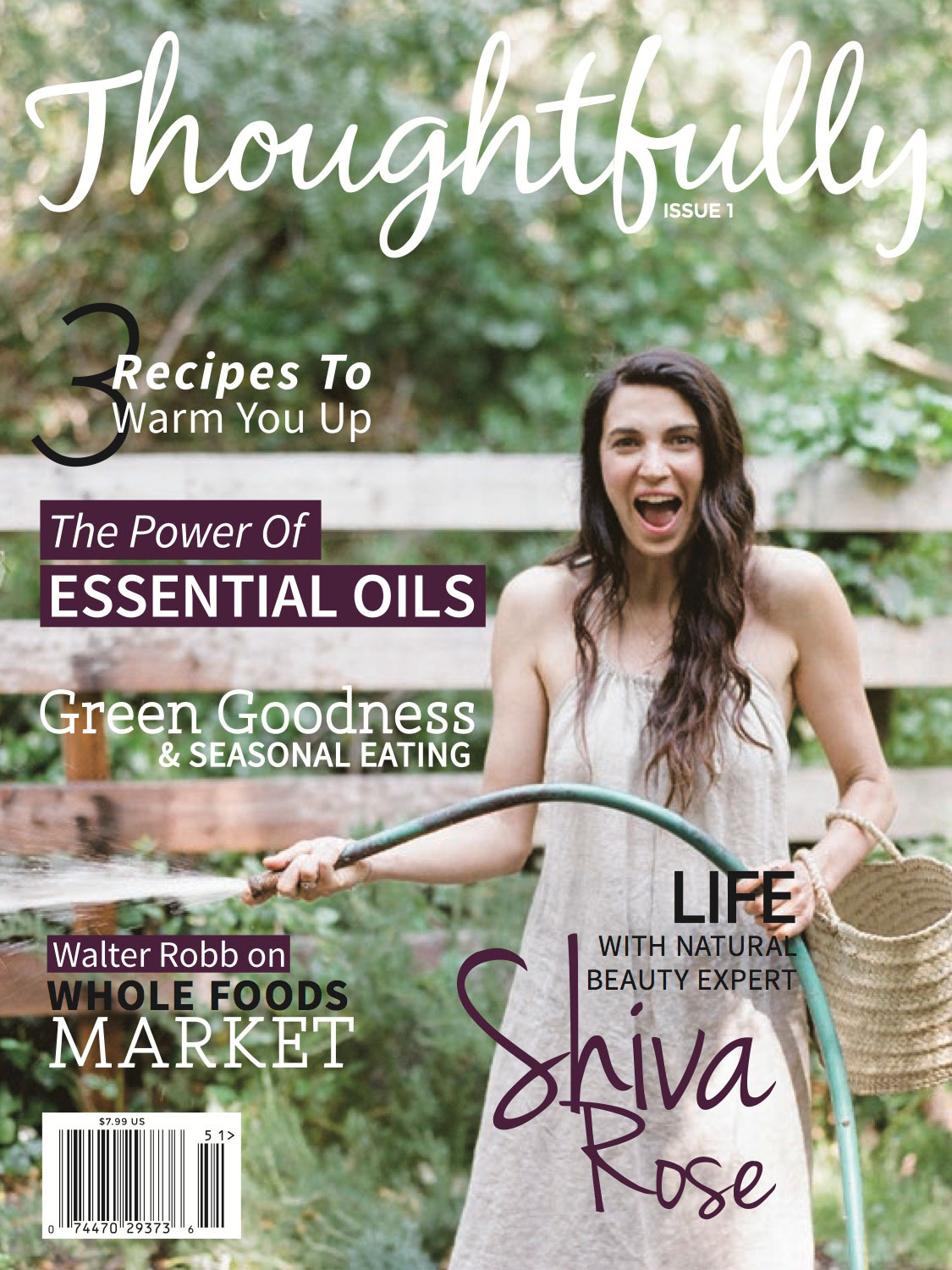
image1 Creative curators and inspiration enthusiasts, this is how the magazine Thoughtfully describes itself. It is a passionate statement made through the pages of an exceptionally stunning magazine that encourages its readers to live passionately, beautifully and thoughtfully every day of their lives. And the driving force behind this creatively-done publication is a woman who personifies those elements of the “Thoughtfully” lifestyle herself.

Brandie Gilliam comes from the corporate world and knows how to wield understanding and marketing strategies to really comprehend what the customer wants and needs when it comes to a product. According to Brandie, Thoughtfully was born from a consumer need to understand what print was and could be in this digital age, and a desire that women had to see themselves in a more definitively positive way.

I spoke with Brandie recently about the genesis of Thoughtfully and the fact that she felt this consumer need was better served in print and digital, rather than a pixels-only publication that couldn’t be physically held and touched.

We talked about the fact that Thoughtfully is not only an engaging magazine, but also a community and a movement; a lifestyle that the brand is encouraging their readers to delve into. Living passionately, beautifully and thoughtfully is not only the magazine’s tagline, but also its underlying reason for existing. And through every word printed, Brandie strives to convey that message.

So, I hope you enjoy this most “thoughtful” interview with a woman who knows how to help us all live a better life in a very creative way.

And now, the Mr. Magazine™ interview with Brandie Gilliam, Founding Editor & Creative Director, Thoughtfully Magazine.

But first the sound-bites:

image1 On whether “Thoughtfully” began first on the web and then moved into print: No, we actually started in print. It’s available in a digital version that you can download to your iPad or digital reader. We wanted to give that option to readers, even though we do ship internationally.

On that moment of conception with the magazine and why she decided to go with print in this digital age: I think there’s always been this recognition that there was something needed on the newsstands; we would hear it over and over in different conversations, whether it was in forums or on social or Vine, but women were really longing for a better connection with what’s happening in print today. They wanted something that was more representative of them, something they could read and feel good about doing so. They wanted to read something that assured them that they were good enough.

On her own personal background: My background is in corporate. I have a Bachelor’s of Science from Liberty University in Management Information Systems, with a dual minor in Psychology and French. So, marketing and branding has been my labor of love over the years in both the print and digital space. And I’ve also been in a couple of Fortune 500 companies. That’s really what I’ve been doing over the years.

On the fact that she’s not just founding editor and creative director of the magazine, she also writes quite a bit herself: Yes, there’s a lot that I touch at Thoughtfully, so it’s really a labor of love for me. The entire process, from laying out what our content is to the different contributors; it’s all very much hand-selected through a thought process. Everything is intentional. Everybody who touches the pages of Thoughtfully is carefully selected. Even the content that I may get involved with; obviously, I’m not going to set out to write an entire magazine, nor do I think anyone wants to read a complete magazine with one, solo writer. Plus, I think it makes it great when you hear different perspectives, different stories from different viewpoints.

On whether friends and colleagues asked her if she was out of her mind to launch a print magazine today: (Laughs) I don’t think anyone asked me that because it happened so fast. Maybe if I had done the typical planning, which usually I would do. I come from years of being in a corporate environment where there’s a lot of market research and product development goes into it and it’s one or two years in the making before you even hit to market. This was not the story for Thoughtfully.

On what she thinks print can deliver today that digital cannot: You hear so many people say all of the time; when I just want to lie on the beach and read a good book or have a good magazine with me or the times when I just want to cozy up on my couch and feel something between my fingertips and have an experience, I want print. It’s a bit different and much more connective since it’s tangible and something you can actually feel when you touch the pages between your fingertips. You’re able to see print come to life and it’s a much different experience.

On what she has learned between issue one and issue four: (Laughs) Oh, I have learned a lot. Some of the big differences obviously, coming from a corporate background; you’re used to a big, big budget. And Thoughtfully, of course, doesn’t have that luxury. When you’re starting new, you don’t always have it, especially when you’re doing it and it’s not backed by some type of corporation. So doing more with less has been a big lesson that I’ve learned.

On the major stumbling block that she’s had to face: We are based out of Destin, Fla. and literally most of our team members are spread throughout the United States and I even have some contributors internationally based. My background in corporate has served me well up to this point, in terms of being used to working with great talent. Sometimes you find that working with great talent means that they may not be sitting in your backyard and so you have to get really good at communicating over the phone and via emails.

On whether a year later she is more determined than ever to continue on this journey: Yes, more than ever I’m encouraged by our readers and the feedback we’ve been getting when people discover us. They call us a breath of fresh air and say that we’re exactly the magazine that they’ve been waiting their entire lives for. And to see it really resonate with people, that for me really is exciting because it’s much more than a magazine. We call ourselves a community and a movement, but I really look at Thoughtfully as being this kind of aide with helping people live their best lives.

On whom her reader actually is: Our reader is primarily female, between the ages of 25-40. She has a hunger and a desire for more. She eats relatively healthy or wants to eat healthy; she enjoys traveling and exploring; she enjoys wanting to be the best version of herself, and she may be vegan or she may want to go organic. Or maybe she’s just more thoughtful in her approach to her eating habits. And she loves the outdoors and being connected to nature as well as those around her.

On why she wants to slow her very active reader down and make her think: That is what we’re literally doing. So, how do you, with all you’re encountering and doing, get this kind of moment where you can stop and really be thoughtful and intentional in how you’re living day to day? We’re all in this kind of rat race, this journey where we’re chasing life. We just did an article about that in issue four. And so, how do you provide these types of pauses and touchpoints to get this woman to dig a little deeper? And it’s up to her as to how deep she wants to dig, but what we want to do is be able to provide that.

On anything else she’d like to add: For us, just adding what Thoughtfully is really doing to this space and why I think people are gravitating toward it. They’re hungry and I think with print it’s not so much that print is dead; I think the way we’ve been doing print is dead. And it’s very important for those who are doing print to understand that.

On what she would be doing if someone showed up unexpectedly to her home: It would be a combination. You’d definitely find me curled up with my husband and our dog. We have a small dog; she’s a Lhasa Apso named Angel. So you would see me curled up with them and I will probably have a magazine by my side. I will have an iPad in hand and I’ll probably have my iPhone next to me. And a book of some sort as well.

On what motivates her to get out of bed in the morning: The desire to create at a high level. That’s what gets me out of bed, the desire to do it better than I did it the day before.

On what keeps her up at night: How to do it better. And when I say do it better; with Thoughtfully I’m constantly thinking what are the conversations that are happening? What do our readers need to know right now? What is top of mind in their lives and how do I get to know that and how can I do that better? How do I tell the story better visually and in our writing?

And now the lightly edited transcript of the Mr. Magazine™ interview with Brandie Gilliam, Founding Editor & Creative Director, Thoughtfully Magazine.

Samir Husni: My first question to you is, did “Thoughtfully” start out on the web and then move to print?

image2 Brandie Gilliam: No, we actually started in print. It’s available in a digital version that you can download to your iPad or digital reader. We wanted to give that option to readers, even though we do ship internationally. There is just an element of our readers and customers that do want that ease of a digital format. And we made sure to provide that.

Samir Husni: Tell me about that moment of conception for the magazine, when you had the idea to live “Passionately, Beautifully and Thoughtfully” every day. How did you come up with the idea and why did you decide to go with print in this digital age?

Brandie Gilliam: That’s a great question. I’ll start by saying that our story is a bit different than most. It was really one of those things where you see a need that’s been there for a while and then one day you decide to fill it. And I think anytime an idea forms, there’s usually this buildup, these conversations in our lives and then everything just sort of escalates to this moment in time where suddenly you say: I need to do this. Or it comes to mind that now is the time.

But I think there’s always been this recognition that there was something needed on the newsstands; we would hear it over and over in different conversations, whether it was in forums or on social or Vine, but women were really longing for a better connection with what’s happening in print today. They wanted something that was more representative of them, something they could read and feel good about doing so. They wanted to read something that assured them that they were good enough.

Also the sort of green beauty or that organic space; really finding something that from a beauty perspective had products in there that did not contain toxic chemicals or fashion that was actually ethical as far as where it was produced. When you see the main pockets of thoughtful living, you usually see it in health and fitness and some gardening things. But really food and fitness are what dominate it.

So literally, it was this idea that happened; we saw the need and in a matter of three months, from the idea to the content, Thoughtfully was born. And within a month of our first issue being born we were on newsstands nationwide starting with Whole Foods Markets.

Samir Husni: Tell me a little about yourself, Brandie.

Brandie Gilliam: My background is in corporate. I have a Bachelor’s of Science from Liberty University in Management Information Systems, with a dual minor in Psychology and French. So, marketing and branding has been my labor of love over the years in both the print and digital space. And I’ve also been in a couple of Fortune 500 companies. That’s really what I’ve been doing over the years.

I do not come from the world of journalism or magazines. I attended Fashion Institute of Technology for my graduate level work in New York City and had the opportunity to intern for Essence magazine, and that’s about as close to the magazine world as I’ve been. But I’m an avid reader. And being a marketer and a brander, a good one, you learn the skill of listening. What I believe a good marketer does is not just solely push a message or a product on someone; you really understand how that end-user would be relating with your product or service and you’re getting to know what they want.

With Thoughtfully, it was really listening to the conversation and saying, you know what, there’s a big need for this, let’s produce something with the expertise that I bring to the table. Knowing how to bring creators and different creatives together and being able to spearhead and execute a project from start to finish, knowing the level of detail and project management, resource management; all the things that are involved with it. And I had to transfer that skillset into this world of constant producing.

I kept it at a quarterly because I knew that was something that would be doable and I certainly wasn’t going to bite off more than I could chew. And it’s really been a great story since we’ve launched our first issue.

Samir Husni: I noticed after reading through Thoughtfully that you’ve written a lot yourself in the magazine, so you’re not just acting as a founding editor and creative director, you’re also a writer for the magazine.

Brandie Gilliam: Yes, there’s a lot that I touch at Thoughtfully, so it’s really a labor of love for me. The entire process, from laying out what our content is to the different contributors; it’s all very much hand-selected through a thought process. Everything is intentional. Everybody who touches the pages of Thoughtfully is carefully selected. Even the content that I may get involved with; obviously, I’m not going to set out to write an entire magazine, nor do I think anyone wants to read a complete magazine with one, solo writer. Plus, I think it makes it great when you hear different perspectives, different stories from different viewpoints.

But yes, I do play a role in everything from start to finish; I’m not just the publisher. We try to make sure at Thoughtfully that we have a nice group of different creatives, from photographers, other writers, illustrators, artists that get to play a part, because that’s important. To me there are so many talented people out there and how do we provide this platform for them and do it in a way where we get to really share those gifts with the rest of the world.

Samir Husni: When you discussed the idea with friends and colleagues at work; did people ask you if you were out of your mind to launch a print magazine today?

Brandie Gilliam: (Laughs) I don’t think anyone asked me that because it happened so fast. Maybe if I had done the typical planning, which usually I would do. I come from years of being in a corporate environment where there’s a lot of market research and product development goes into it and it’s one or two years in the making before you even hit to market. This was not the story for Thoughtfully.

That being said, because it all happened so quickly, no I didn’t. I didn’t really have time to stop and think and ask that. It was one of those things that happened fast, but we did it in a way that was worth the risk. I’m very conservative in my thought processes and approach, but obviously starting a print publication you can definitely tell I’m a risk-taker. But I take risks that whatever the outcome, I’m willing to live with.

With Thoughtfully we said let’s produce an issue that we’re literally willing to live with and if it doesn’t work, great; if it does, great. So either way for me it was a win/win outcome, even if it turned out to be solely something that just allowed me to create a really meaningful product like I had done for so many other people over the years that would be fine too. But only this time I was doing it for myself, which was a completely different ballgame. If that was only going to be it, then so be it.

So because of that and the moving so fast, again, there wasn’t a whole lot of time for other input, just simply getting people to buy into the idea, in terms of if they wanted to be a part of it. And through that process and through the formulation of issue one, we did not encounter a single person who didn’t want to be part of it or who wasn’t excited about it. And that for me was a confirmation that we were really headed in the right direction.

I’m a big believer that print is not dead. And I think that because I have that underlying ideal within me, this endeavor was worth doing. And again, we did it in such a way where it was well thought-out, because that’s where I see a lot of publications going wrong. They sometimes bite off more than they can chew and they don’t think about all of the aspects that are involved with going to print and making sure that you’re doing something again, that’s really well thought-out.

Samir Husni: What do you think that print can deliver today that digital cannot?

Brandie Gilliam: When I look at print and digital; for me, digital is something that you go to when you need something fast. You’re looking up information, which is typically how most people are engaging with digital. It’s very much something on the go. When you look at digital, the underbelly is much different; it’s not for this kind of meaningful, thoughtful connection and I think that’s what print brings.

You hear so many people say all of the time; when I just want to lie on the beach and read a good book or have a good magazine with me or the times when I just want to cozy up on my couch and feel something between my fingertips and have an experience, I want print. It’s a bit different and much more connective since it’s tangible and something you can actually feel when you touch the pages between your fingertips. You’re able to see print come to life and it’s a much different experience.

Even with Thoughtfully; from reading our digital to seeing it on print, and we hear this over and over again; it’s a completely different experience. And that to me really sums up the experience between digital and print. They’re different mediums and I think it all comes to life. That’s what I’ll say print does; print brings a project to life. That’s really what it does.

Samir Husni: What have you learned between issue one and issue four, over this one year span?

Brandie Gilliam: (Laughs) Oh, I have learned a lot. Some of the big differences obviously, coming from a corporate background; you’re used to a big, big budget. And Thoughtfully, of course, doesn’t have that luxury. When you’re starting new, you don’t always have it, especially when you’re doing it and it’s not backed by some type of corporation. So doing more with less has been a big lesson that I’ve learned.

Another lesson has really been to pace myself. If you’ll notice the differences between issue one and issue four, you can see a clear evolution and a clear transformation visually, as well as our content and that was very intentional. When you’re doing something with a smaller budget on a smaller scale, you have to give yourself room, meaning, I know what we’re capable of doing if we had a much larger budget, but unfortunately that’s not the case. You really have to start where you are, use what you have, to do what you can. And that’s really been the motto. And that’s really some of the things that I’ve learned to a greater level with Thoughtfully.

I’ve always been well-researched with everything and of course you become even more so when you’re running a ship of this scale from start to finish. Previous roles; yes, you play a part when you’re working for an organization or for someone, but I think when you’re actually doing it for yourself and doing it of this magnitude and people are depending on you, you go to an even greater level of personal ownership and accountability.

Samir Husni: What has been the major stumbling block you’ve had to face and how did you overcome it?

image3 Brandie Gilliam: We are based out of Destin, Fla. and literally most of our team members are spread throughout the United States and I even have some contributors internationally based. My background in corporate has served me well up to this point, in terms of being used to working with great talent. Sometimes you find that working with great talent means that they may not be sitting in your backyard and so you have to get really good at communicating over the phone and via emails. When you don’t have access to them readily by phone, you have to constantly be able to convey your message through email, because with Thoughtfully it’s very hands-on; it’s not simply passing it off to some third party and letting them create the magazine and then it just shows up on our doorstep.

It’s really working with everyone and making sure that vision comes to life and really reading the stories through and through. There may be a certain point or idea that we want to expound on, so we push it back to the writer and pull that out of them. Or working with one of our artists or photographers who are starting to scratch the surface, but it’s not quite there; how do you keep pushing back to get to that depth product?

That’s our motto at Thoughtfully; we don’t go for good or average, the whole goal is that everything we’re doing has to be great. We don’t have time to waste or energy to expend for just the sake of expending energy. We want to output our best at that time and place. And that has been something to really learn and get good at; how to communicate with people who aren’t sitting beside you every day. And to bring out the best in everyone that you’re working with.

Samir Husni: And a year later, are you more determined than ever to continue on this journey?

Brandie Gilliam: Yes, I am. We’ve gotten really great feedback thus far in our first year and we’ll continue on with all of our same outlets that we’re currently being sold at. And of course direct to customer through our website.

So yes, more than ever I’m encouraged by our readers and the feedback we’ve been getting when people discover us. They call us a breath of fresh air and say that we’re exactly the magazine that they’ve been waiting their entire lives for. And to see it really resonate with people, that for me really is exciting because it’s much more than a magazine. We call ourselves a community and a movement, but I really look at Thoughtfully as being this kind of aide with helping people live their best lives.

And how we do that in a really creative and innovative way is in how we approach design and content. It’s in everything that we’re doing and I believe our readers feel that authenticity when they touch our pages and get a chance to read us from start to finish.

Samir Husni: Who’s your reader?

Brandie Gilliam: Our reader is primarily female, between the ages of 25-40. She has a hunger and a desire for more. She eats relatively healthy or wants to eat healthy; she enjoys traveling and exploring; she enjoys wanting to be the best version of herself, and she may be vegan or she may want to go organic. Or maybe she’s just more thoughtful in her approach to her eating habits. And she loves the outdoors and being connected to nature as well as those around her.

Samir Husni: Technically speaking then, this woman is very active, living in the speed lane; why do you want to slow her down and make her think?

Brandie Gilliam: Yes, that is what we’re literally doing. So, how do you, with all you’re encountering and doing, get this kind of moment where you can stop and really be thoughtful and intentional in how you’re living day to day? We’re all in this kind of rat race, this journey where we’re chasing life. We just did an article about that in issue four.

And so, how do you provide these types of pauses and touchpoints to get this woman to dig a little deeper? And it’s up to her as to how deep she wants to dig, but what we want to do is be able to provide that. It’s not up to us to tell someone how thoughtful they should be living. You’ll have a number of readers, as I mentioned before; some of them are Vegans; some are not. It’s not up to us to tell them how to eat.

I will say that, obviously, we are huge components of being cruelty-free; we are completely against animal cruelty. We want to get them to understand where their food comes from and if that causes them to be Vegan or to choose a different action, then so be it.

We want them to really understand. Do you know where your clothes are being made and produced? Do you understand the affects, when you continue to support that fashion; what that’s doing to those people on the other end and their livelihoods in different parts of the world? And not just that, but how it’s affecting the environment where those factories are.

It’s not this idea that it’s overwhelming or a worry or a fear about things, but really getting people to give a little bit more thought. And if that starts with just five minutes a day, and then through your journey maybe it increases to 15 minutes, an hour, and then before you know it; it’s infiltrated your entire life.

But again, it’s that idea of starting where you are, with what you have. And then how do you become thoughtful starting with just a few minutes each day?

Samir Husni: Is there anything else you’d like to add?

Brandie Gilliam: For us, just adding what Thoughtfully is really doing to this space and why I think people are gravitating toward it. They’re hungry and I think with print it’s not so much that print is dead; I think the way we’ve been doing print is dead. And it’s very important for those who are doing print to understand that.

Readers, especially in this digital age, are much more informed than ever. They are much savvier than they’ve ever been and the power is really in their hands, not in our hands. No longer can we just feed this level of information and expect people to just accept it. Now they question it. They know; they can tell things that are authentic versus what isn’t. They can tell when you’re just trying to sell them something.

Even in print, folks are longing for ad-free; they don’t want to be bombarded with a whole bunch of ads. And their digital experiences are being customized. Now we see digital wanting to go over to the print perspective.

So I think it’s really important for those of us who are in print to learn that. I know that’s one of the things that we do here at Thoughtfully, and again, really producing something that lasts. Each issue is meant to keep and to have. Each issue is something that’s timeless, but still belongs to the now-season. But it’s also something that you can go back to and reference. And that’s very important with us.

We want to empower and inspire those who touch our pages, who live passionately, beautifully and thoughtfully every day.

Samir Husni: If I showed up unexpectedly to your home, what would I find you doing? Would you be reading a magazine, or your iPad; watching television or what?

Brandie Gilliam: It would be a combination. You’d definitely find me curled up with my husband and our dog. We have a small dog; she’s a Lhasa Apso named Angel. So you would see me curled up with them and I will probably have a magazine by my side. I will have an iPad in hand and I’ll probably have my iPhone next to me. And a book of some sort as well.

My husband and I will be chatting and discussing the day’s events or a certain topic that’s caught our interest, while maybe we’re preparing to watch a show on Netflix or pull it from an app.

It would definitely be a combination. That’s typically what you’ll find me doing on any given evening.

Samir Husni: What motivates you to get out of bed in the morning?

Brandie Gilliam: The desire to create at a high level. That’s what gets me out of bed, the desire to do it better than I did it the day before. And to be better than I was the day before and in turn, to make others better than they were the day before.

Samir Husni: My typical last question; what keeps you up at night?

Brandie Gilliam: How to do it better. And when I say do it better; with Thoughtfully I’m constantly thinking what are the conversations that are happening? What do our readers need to know right now? What is top of mind in their lives and how do I get to know that and how can I do that better? How do I tell the story better visually and in our writing?

But it ultimately leads back to the readers and how can I provide a better experience for them with Thoughtfully each issue?

Samir Husni: Thank you.

h1

There Is Hope: Samir “Mr. Magazine™” Husni’s 2016 Manifesto. Published In min: Media Industry Newsletter 1/11/2016 Issue.

January 10, 2016

Screen Shot 2016-01-09 at 4.19.34 PMScreen Shot 2016-01-09 at 4.19.52 PMThere is a sign that has hung over my office for many, many years. Its message is simple and straightforward: There is hope.

And if you have a modicum of positivity beating within your chest at all, you’ll agree that there is always hope in every situation.

Unless you’re just absolutely convinced that the world and everything in it, including yourself, is irrefutably lost, there is always hope.

And even in that particular case, if you dig deep enough and reach beyond your negativity to that inner light that was placed inside you the moment you took your first breath, you’ll find that tiny “thumbs-up” that always promises a better day ahead.

When it comes to magazines and magazine media, never in my 30-plus years of experience has that statement ringed more true.
Why, you might ask? There are many reasons, and in my 2016 Manifesto, I am giving my “top 10.”

1. Hope springs eternal. After every naysayer from every corner of the globe cried from the mountaintops that print was dead and that digital was the new print, they’re swallowing these words as print has been rediscovered lately by everybody from the smallest independent publisher to the game-changers in the industry.

2. Print also springs eternal. Since Moses came down from Mount Sinai with those two stone tablets (the original print platform), print–in one shape or another–has been delivering information that helps and benefits our lives.

3. What goes around eventually comes back around. As it has with Tablet magazine, which was born on the Web. Tablet rediscovered its “original roots” in 2015, as did a plethora of digital entities.

4. Every print entity has a life cycle, but not the entire medium. Print has a time to draw its first breath and a time to take its last, but certainly not as an entire platform. When a television program is cancelled or a movie’s title is removed from the marquis, that doesn’t mean that we all need to set a huge bonfire and burn our TV sets or never go to a movie theater again because they ceased to exist

5. Magazines’ 2015 birth rate was much higher than the death rate. And 2015 is not alone. For the past 30 years, more magazine launches were announced than closures. Remember: If it’s not ink on paper, it’s not a magazine.

That definition and reaffirmation of it by the resurgence of print make it officially time for us to find a new name for the digital entities that exist on the Web as online “magazines.” After television became widespread in the 1950s, few referred to the medium as “radio with pictures,” so we should immediately cease calling websites with content and pictures “magazines.”

6. Magazines must offer their audience an experience. Magazines in 2016 have to be more than content and pictures: they have to be experiences, and magazine-makers have to morph into experience makers. That is the only way they can survive in today’s infinite environment.

When you travel anywhere in the world with the swipe of your finger or the click of a mouse, ink on paper has to offer something more lasting and collectible than instantaneous satisfaction. That collectability factor has to be predominant without any trace of dispensability. And to personify that collectability factor, magazine makers must create, curate and make that content credible.

7. Magazines need more editors and publishers. We need more editors and publishers than we need chief content officers and chief revenue officers, and that’s a truth that can’t be ignored. Creation and curation require more editors and publishers who are hands-on, and certainly the credibility factor has to be one that is predominately practiced through the eyes of people who deeply care.

8. Print is the new, “new media.” One statement is true as we begin 2016: Print is the new, “new media.” And I must say that it feels good to be vindicated after all these years in that belief and faith in print, especially considering that Columbia Journalism Review used that headline in a recent article.

9. Rejected simplicity. I won’t. Instead, I will just bring the term “rejected simplicity” to top of mind. This simple, easy, beautiful and wonderful technology called print has been rejected over the past few years because of its simplicity. We tend to think that if you don’t have to connect 20 million dots with 40 million lines, the end result won’t be spectacular. And that’s simply not true.

10. Common sense. So it is with that thought in mind, I say that we must use common sense when it comes to the rule of thumb regarding print. Create, curate, and make that content credible and collectible. In the time that we live in, there is absolutely no reason that it has to be “either/or.” It’s just a ridiculously small-minded scenario.

And let’s bury that phrase “print is dead” once and for all.

h1

The Power and Future of PRINT…Part IX As told by Magazine and Magazine Media Makers…

January 9, 2016

A Mr. Magazine™ “Quotable” Retrospective…

Celebrate Magazines Celebrate Print. The theme for ACT 6 Experience that takes place April 20 to 22, 2016.  Painting by and © Laura McCrory. For information about the ACT 6 Experience email me at samir.husni@gmail.com

Celebrate Magazines Celebrate Print. The theme for ACT 6 Experience that takes place April 20 to 22, 2016. Painting by and © Laura McCrory.
For information about the ACT 6 Experience email me at samir.husni@gmail.com

I have been a firm believer in print and its power even when many doubted its future and even its role in today’s media world. I have been quoted as saying, “As long as we have human beings, we will have print.” And that quote stands firm and true as we enter into a brand New Year.

Of course, I’m not oblivious to the fact that we live in a digital age…just check the many devices you and I are using on a daily basis, even the platform that you’re reading this on now as we connect. Yet that did not deter my belief in the role and future of print. Nor, will it ever.

However, as an academic and a professor of journalism, I’d rather share with you what others from the field say about the future and the role of print in today’s media world and tomorrow’s; that way it isn’t just my word you’re hearing and reading. Never would I yearn to be lumped in with others who pontificate to high heaven with their opinions and speculations for the condition of magazines and magazine media; be it print or digital or any other platform that may arise before I can finish writing this. The blah-blah-blah disease spreads pretty fast on its own, without any help from Mr. Magazine™

And so without any further ado, here is the ninth installment of the 136 quotes (in random order) that Mr. Magazine™ has accumulated over the last two years through the wonderfully informative conversations I have had with the game changers and the passionate entrepreneurs in the magazine industry.

129. “The excitement that comes and builds on Instagram and all of the posts that we re-Gram, the day the issue arrives; these consumers stage little photo shoots the day their magazine gets there because it is their time, when they’re online looking for recipes, that’s not me-time, that’s family-prep time. They’re working. When they sit down to go through Southern Living magazine that is time that they’ve decided to set aside for them every single month. They really lose themselves in the pages of Southern Living and I can’t think of a better time for advertisers to reach them than during their me-time.” (on the advantage of having a printed magazine in this digital age) Ron King, Publisher, Southern Living.

130. “I think magazines are different; there’s a different creative concept; a different mix of text and graphics. Something that makes one plus one equal more than two and that’s something that maybe magazines can’t do as fast as electronic media can do, but there are things that magazines can do that aren’t just replicated online. And then there’s the more basic answer; you get better writing.” Jack Kliger, Publisher, Tablet magazine.

131. “I think that print has been wildly underestimated. The Internet came along and people imagined that it was a tool to be used for every single thing in their lives. But it’s not a tool for everything in their lives; it’s a tool for some very important things in our lives like news or information, information that we need for our daily lives, but I don’t necessarily know that the Internet is the right medium for deeper reads.” Alana Newhouse, Editor-In-Chief, Tablet magazine.

132. “And how not to burn out at it, if you’re small, just one or two people, how do you keep it fresh? I think that is one of the big challenges with digital media. It reminds me of going to a sushi place, where they have these little rivers and they do their California rolls and put them on floating plates and you sort of grab the little bites as they go by; to me digital media often feels like that. It’s just not sustaining from a reader’s standpoint. And that was a lot of the impetus for wanting to do print, because the relationship between the reader and the words is different. It feels like it sates you and fills you up better.” Steve Casimiro, Founder, Adventure Journal Quarterly.

133. “I am a big believer that there is this turning point now or in the very near future where people are being reminded of the luxury of reading offline. I know that myself, because when I’m online I have this low level of anxiety that comes with reading online because I feel like I can never get to the end of what’s ahead. There’s just endless information and I’m forever bookmarking things and saying I’ll come back to that later. And I do think there is this return to print and what that brings is you’ve invested some money, say $15, it’s not cheap, you’ve invested the money so you’re going to stop and make some time.” Rick Bannister, Co-Founder, Pallet magazine.

134. “We’re also not interested in objects that are just throwaways. We’ve spent so much time in this content and so much of ourselves; the idea of putting that in a magazine that people would toss and not keep around for a long time as something that they cherished just didn’t sit right.” (on why they wanted the magazine’s production values of the highest quality) Nadia Saccardo, Co-Founder, Pallet magazine.

135. “We see the website as just growing into a community for the people who believe in the magazine and in craft beer and who want to find each other. And that’s why I love the fact that the website isn’t just regurgitated content that we expect people to be holding in their hands; it’s something complementary to that content.” (on the magazine’s content and the website’s content being totally different) Sam Calagione, Founder & President Dogfish Head Brewery & Pallet Executive Editor.

136. “I think they both (print and digital) have their own advantages, but with print you feel more relaxed and I have to tell you the truth; I only read news digitally, but I really don’t have the time to read long stories onscreen. It’s nice, but I don’t have the time; it’s tiresome. But in print, I love to read the longer stories. And I think that’s the advantage of print; you just relax. I know that sounds cliché, but it’s true. I’m more relaxed when I have a hard copy; it’s so tactile.” Fermin Albert, Founder, Sabor magazine.

These 136 quotes are from some of the most notable leaders in the industry, who lead some of the most prestigious publishing companies around today. There are also quotes from up and coming leaders whose talent and passion for magazines (ink on paper, of course) knows no boundaries. And that’s why their vision is so important to the industry’s future. Supporting them and the print platform is an obligation that’s paramount to those of us who love the medium.

Until next time – Happy 2016 and remember to Celebrate the Power of PRINT …

All the best,
Mr. Magazine™

h1

The Power and Future of PRINT…Part VIII As told by Magazine and Magazine Media Makers…

January 8, 2016

A Mr. Magazine™ “Quotable” Retrospective…

Celebrate Magazines Celebrate Print. The theme for ACT 6 Experience that takes place April 20 to 22, 2016.  Painting by and © Laura McCrory. For information about the ACT 6 Experience email me at samir.husni@gmail.com

Celebrate Magazines Celebrate Print. The theme for ACT 6 Experience that takes place April 20 to 22, 2016. Painting by and © Laura McCrory.
For information about the ACT 6 Experience email me at samir.husni@gmail.com

I have been a firm believer in print and its power even when many doubted its future and even its role in today’s media world. I have been quoted as saying, “As long as we have human beings, we will have print.” And that quote stands firm and true as we enter into a brand New Year.

Of course, I’m not oblivious to the fact that we live in a digital age…just check the many devices you and I are using on a daily basis, even the platform that you’re reading this on now as we connect. Yet that did not deter my belief in the role and future of print. Nor, will it ever.

However, as an academic and a professor of journalism, I’d rather share with you what others from the field say about the future and the role of print in today’s media world and tomorrow’s; that way it isn’t just my word you’re hearing and reading. Never would I yearn to be lumped in with others who pontificate to high heaven with their opinions and speculations for the condition of magazines and magazine media; be it print or digital or any other platform that may arise before I can finish writing this. The blah-blah-blah disease spreads pretty fast on its own, without any help from Mr. Magazine™

And so without any further ado, here is the eighth installment of the 136 quotes (in random order) that Mr. Magazine™ has accumulated over the last two years through the wonderfully informative conversations I have had with the game changers and the passionate entrepreneurs in the magazine industry.

113. “I recently returned from England where I had the opportunity to interview the owner of the best manufacturer of large scale model automobiles on the planet. Their models are highly detailed works of art that are custom made for automobile enthusiasts, car manufacturers and race teams. It was during my interview when I asked him what else he had done, to which he replied he had also built industrial scale models of everything from drilling platforms to office buildings for one of the largest commercial architectural firms in the U.K. He then paused and flippantly said that in the design phase, the firm’s customers really preferred his scale models over the 3D digital renderings. He went on to explain that these models were something tangible that the client could touch and feel and see and therefore felt they could trust. I laughed and told him it sounds a lot like the magazine business.” Ron Adams, Founder & Publisher, Via Corsa magazine.

114. “We kind of struggled with that in the beginning, because obviously our age demographic is a digital age group: 18-39. They’re engaging with mobile more than anything, but what we wanted to start with was something really tangible. So, at the base level we wanted it to be something that when you’re in a waiting room, you could find it on the table and you could see it, experience it and actually hold it in your hand.” (on why they decided on a print publication instead of digital-only), Sarah Hubbard, Marketing Director, Out Living It magazine.

115. “A lot of people say that print is declining and digital is the thing these days, but I think there’s still a huge demand for print and I think because the barrier of entry to digital is so low there’s just so much stuff out there that a lot of people like the fact that we have a real print magazine that’s 150 pages and it’s in real bookstores. That could be the one thing, there are competitors out there and there is very little barrier to entry for digital magazines, but I think if we just continue to put out a really good publication and focus on business, we’ll be fine.” Greg James, Publisher, Marijuana Venture magazine.

116. “Could the magazine exist without a print edition? Yes, I guess so. But I know that our readers love the tactile experience of getting a bound magazine in their mailboxes every month. And our subscription sales have been strong. But beyond that, just seeing how our Real Women Style Award winners circled back to our September issue and are on the cover of the magazine is enough to convince you of how much print matters. We unveiled it to one of the winners the other day and she had tears in her eyes and couldn’t believe she was on the cover of a magazine. I think that sums up why print is still an incredibly special medium.” Meredith Rollins, Editor-in-Chief, Redbook magazine.

117. “I think print is the most powerful medium. I think it’s an engagement opportunity for consumers to be hands-on (no pun intended) and connected with the content. I’ve been a magazine fan since high school; I believe in print and always will believe in print. It’s something that you can take with you and have an intimate experience with. The photography is bold; the typography is modern and continues to change. It’s something that you can take with you no matter where you are, from the beach to the boardroom, onboard a boat or onboard a plane; it can go with you everywhere. There’s no place that you can’t take a magazine.” Louis Coletti, Associate Publisher, Luxury Advertising, ShowBoats International magazine.

118. “We enter our 120th year in 2016. The reason House Beautiful has been successful for that many years is because of the stories. This is what you can still turn to print magazines for; you have the luxury of dealing with experts, in fact-checking articles, in creating a photo shoot whole cloth, something brand new to show the reader. This is indulgent in this day and age. Content moves fast and there’s great demand in the digital space to do more and more and more. And I’m sitting here asking: how do I do less better? I want to create the richest, most indulgent experience. This is a chocolate mousse; this is a special treat. And our readers recognize that. I think a great deal about every inch, every page of that magazine. I want to make sure it’s the best that it can be.” Sophie Donelson, Editor-in-Chief, House Beautiful magazine.

119. “Looking at the realities of the business now, I can’t imagine the print product going away in the next 10 years, because frankly too many people want it and it makes too much money. It’s such a gigantic part of our business and just based on consumer demand; I don’t think it’s going to go away.” Jess Cagle, Editorial Director, People magazine.

120. “I believe that magazines will never die. I really do believe that. I think that they will transform and continue to evolve, as they have forever. I believe that black magazines will continue. I think that we will continue to have unique challenges, but also unique successes. Again, as long as the black experience remains a distinctly unique one from the “American” experience, per se, there will be a market for a particular lens. There will be a market for a particular perspective. And I think when you understand that; you understand that black magazines will always have a certain impact. And as you said, the reason there was such a reaction (to the August cover of Ebony) may very well be in part due to the fact that this statement was made on paper.” Kierna Mayo, Editor-in-Chief, Ebony magazine.

121. “In the day and age of “print is dead” we really feel that there’s still a place for print. I work with a group of very young editors who still love print and who still value print. We still believe that if you create something that is well done and artfully put together and you produce it with good, high-quality, there is still a place for print. Print is not dead exclamation point.” Pamela Jaccarino, Editor-in-Chief, Luxe Interiors + Design magazine.

122. “It’s exciting to see your work in both formats, (print & digital) but in different ways. Having said that; I’m not sure how to describe to you how it’s different. I guess the web is more immediate and it generates that immediate, sort of social media response. But seeing your byline in print, on the printed page, it’s like your work is going into a permanent record. And I would think a lot of writers would say the same thing. It’s thrilling in both places for those different reasons.” Lauren Clark, Editor-in-Chief, Take magazine.

123. “The biggest challenge has been, with certain people, to counter this belief that print is on its way out, rather than saying that print is evolving. In our Kickstarter video and with people who have these mindsets, we sort of describe ourselves as being the modern magazine. And that what’s going to be interesting is not whether it’s print or digital. We have a print edition and an online edition that work together. You can get certain information from our online source that doesn’t translate into print, like video and audio, and you can get information through our print edition, such as really beautiful photography, stories that demand to be on the printed page, that doesn’t translate digitally. And that’s where this industry is going; print is not going away.” Michael Kusek, Publisher, Take magazine.

124. “And I think that no matter what happens people are always going to be thirsty for good reads and information. I know that I have romanticized visions of print because I’ve worked in it for my short career after college, the last 12 years, but I just think that print is the perfect medium for this type of project. I don’t think this same project would work online, with the book type thing going on. I just don’t think people want to read 6,000 word features online or on their phones. They want to read short, punchy things and to not take anything away from a lot of current magazines, but my opinion is that a lot of magazines are trying too hard to be like the web, shortening down their content, making columns that are super, super short and blog-like, using hashtags and @ symbols.” Brandon Hayward, Publisher & Editor-in-Chief, The Bight magazine.

125. “Print is not going away. Print is the necessary part of this business because that’s where the lion’s share of revenues comes from, but the big guys who are the innovators in the printing industry; they understand that the publishers want to make money and they need to make money. And I think that we have a model that’s flexible enough for them to really test and figure out what will work in their market.” Larry Genkin, Founder & CEO, Eleven Media.

126. It’s not self-help; we’re not a trade vehicle, something that’s designed to help you with the day-to-day running of the business necessarily. But what you have is a lot of people who believe in the power of good journalism to move society forward, to help good ideas rise to the top and to help uncover negative issues when those arise. And I think the cohering DNA of anybody who works at Quartz, whether you are on the editorial, engineering, or marketing teams, is a desire to figure out a way to make high-quality, intellectually rigorous journalism thrive in a digital age.” 127, Publisher & President, Quartz.

127. “We have taught audiences to get content for free and to expect it for free. And in a way, it’s not only bad strategic decisions made 20 years ago when digital technology first began having its impact; if you think about it and go back 300 years, that was the offer then; the quid pro quo. Free or subsidized content in exchange for people’s grudging attention to advertising. It wasn’t so easy to ignore back then. And then when the digital revolution came around and publishers decided to attract an audience first and then figure out how to monetize it through digital advertising, not realizing that CPM’s were going to go down, down, down to the vanishing point, it was then that we reinforced the notion that content was free. So, it’s going to be really hard to retrain audiences to pay for what they’re using.” Bob Garfield, Columnist, Critic, Broadcaster, Author and Lecturer.

128. “No, I don’t see that day in my lifetime. I think that the bond that we have with our audience is really extraordinary. It’s remarkably strong. And don’t get me wrong; we have a very diverse business and we’re being very aggressive about what we’re doing in the digital space and what we’re doing in terms of video and in brand extensions and new businesses and in books. But our readers love the print magazine and we hear from them all of the time asking us to never do anything to the print magazine.” (on whether he can envision a day when Southern Living does not have a printed magazine)Sid Evans, Editor-In-Chief, Southern Living.

Stay tuned for Part IX of the Mr. Magazine™ “Quotable” Retrospective…

h1

The Power and Future of PRINT…Part VII As told by Magazine and Magazine Media Makers…

January 7, 2016

A Mr. Magazine™ “Quotable” Retrospective…

Celebrate Magazines Celebrate Print. The theme for ACT 6 Experience that takes place April 20 to 22, 2016.  Painting by and © Laura McCrory. For information about the ACT 6 Experience email me at samir.husni@gmail.com

Celebrate Magazines Celebrate Print. The theme for ACT 6 Experience that takes place April 20 to 22, 2016. Painting by and © Laura McCrory.
For information about the ACT 6 Experience email me at samir.husni@gmail.com

I have been a firm believer in print and its power even when many doubted its future and even its role in today’s media world. I have been quoted as saying, “As long as we have human beings, we will have print.” And that quote stands firm and true as we enter into a brand New Year.

Of course, I’m not oblivious to the fact that we live in a digital age…just check the many devices you and I are using on a daily basis, even the platform that you’re reading this on now as we connect. Yet that did not deter my belief in the role and future of print. Nor, will it ever.

However, as an academic and a professor of journalism, I’d rather share with you what others from the field say about the future and the role of print in today’s media world and tomorrow’s; that way it isn’t just my word you’re hearing and reading. Never would I yearn to be lumped in with others who pontificate to high heaven with their opinions and speculations for the condition of magazines and magazine media; be it print or digital or any other platform that may arise before I can finish writing this. The blah-blah-blah disease spreads pretty fast on its own, without any help from Mr. Magazine™

And so without any further ado, here is the seventh installment of the 136 quotes (in random order) that Mr. Magazine™ has accumulated over the last two years through the wonderfully informative conversations I have had with the game changers and the passionate entrepreneurs in the magazine industry.

97. “We’ve never believed print is dead. We hope to launch in the U.S., as I said, new print magazines every 24 months.” David Carey, President, Hearst Magazines.

98. “First and foremost our print is a very good business all around the world. We have profits that we want to generate for our parent company and we’re good at publishing magazines. And so we believe in them; we have a portfolio of titles. In any given year we’ll have brands like Town & Country and Woman’s Day that are having terrific years and then sometimes you have others that have an off year.” David Carey, President, Hearst Magazines.

99. “The types of content pieces that are created in the magazine, the opportunities that it affords us from an editorial perspective to continue to celebrate the entrepreneurs and entrepreneurial capitalism around the world that the world is increasingly moving to a place where those are the types of people that do tell the stories of business; it gives us access in a way that we would not have with just digital.” Mark Howard, Chief Revenue Officer, Forbes magazine.

100. “How it all worked out was we were seeing so many dynamic people and so many amazing creations and these great efforts in curation and sharing, but we thought, it’s still not enough. We wanted to propagate it further in a way that was almost sacred to people and we thought that magazines were in that category.” Blake Brinker, Publisher, Creativ magazine.

101. “I get motivated every day when people come up to us and say, creativity is the most important thing we have and you’re putting it into this beautiful print publication that I can get on a monthly or bimonthly basis. Just wow; what you’re doing is so inspiring and the world needs this, with the things that are happening in the world today, we need something like this to give people hope and optimism. With all the negativity that we hear every day, this is an incredible amount of positivity showcasing people doing absolutely amazing things.” Brad Thomas, Editor-in-Chief, Creativ magazine.

102. “The industry has gone through some peaks and valleys. I can remember when some of the people, where I serve on the board; some of the people there would say well, print is dead. We have to shift to digital; we have to get out because of postage and paper and all of these kinds of things. We don’t have to do that anymore. People understand that there is a very valuable role for print. And people like the tactile feel. In my view, print is never going to go away. It’s never going to go away.” John Temple, President & CEO, Guideposts.

103. “The print magazine was the foundation by which we brought the brand back, so even the savviest digital people on our team know how important the print vehicle is. No, I don’t think we could have brought it back without print; I mean that’s what people knew and loved and adored. And frankly, people don’t necessarily know that we’re back online, but they know that we’re back in print.” Beth Fuchs Brenner, Chief Revenue Officer, Domino Media Group.

104. “Growing up, I always had a knack for physical things and I was never that great when it came to technology, so for me the printed product was a natural choice when I chose to make the magazine. For a magazine that’s mission is to ignite the renaissance of this area of the world; I don’t think digital-only can achieve that; people need to feel the tangible aspect of things.” Ibrahim Nehme, Founder & Editor-in-Chief, The Outpost magazine.

105. “I know that magazines have always been and continue to be a really rare and wonderful thing. I think, especially with a magazine like ours, it is a uniquely, immersive experience. It’s such a pleasure to have this beautifully curated collection of stories, ideas, sometimes quizzes, exercises; things that have been put together to challenge readers and to lift them up and get them to see their own life in a new way.” Lucy Kaylin, Editor-in-Chief, O, The Oprah Magazine.

106. “I suppose it could, simply because there are so many other ways to express one’s ideas. There are obviously so many formats and platforms out there today. But I wouldn’t love that; I wouldn’t think that would be a positive thing. O, as a print publication is incredibly special and it’s lush and beautiful and it’s tactile and something that is very well-enjoyed in bed, in a hammock, on the couch or in the tub. The physical nature of it is one of the very special things about it.” (on whether the magazine could exist without the print component), Lucy Kaylin, Editor-in-Chief, O, The Oprah Magazine.

107. “I still feel like the magazines are a core part of people being in that community and we know from our own data that our magazine subscribers are the most loyal buyers when it comes to art e-commerce store. Those people are very committed to following the pursuit of their art and they look to us to provide instruction in a lot of different formats. I would say the magazines are still a core part of the communities, whether they are Watercolor Artist or Acrylic Artist or somebody who likes to draw.” Jamie Markle, Group Publisher, Acrylic Artist magazine.

108. “Despite the fact that some people may be saying, oh, print is dead or it’s challenged, it’s encouraging to me that as a corporation, we understand our customers’ needs, this magazine is something they want, they want a print product. Our results are double what we expected.” Patty Craft, Community Leader & Content Creator/Editor, Acrylic Artist magazine.

109. “I think the future is incredibly bright for print and I think that if you just look at what we’ve been doing at Hearst, which is Food Network and HGTV as partners, you can also see Esquire and Elle partnering on cross-content things. Diversity is key. We have a very diverse portfolio at this company. I think the successful print publishers are going to be the ones who are innovative, but whether it’s print, digital or TV, everything is really all about content and that’s what print does so well.” Dan Fuchs, Publisher & Chief Revenue Officer, HGTV magazine.

110. “I think that every major publisher would tell you that the newsstand is a major factor in launching a publication. So they need it there for that. It may certainly be smaller and carry less titles, but for the major publishers launching new titles it will remain necessary to maintain it in some way.” John Harrington, editor-in-Chief, The New Single Copy.

111. “I’m such a firm believer in print. I think one big mistake magazines make is they start looking to cut corners and they denigrate the actual physical print product and in this case Modern Farmer is a luxury item with a high cover price and the actual object looks and feels luxurious. And at the end of the day, the print is the legitimizer of everything that flows from it. Yes, we have a great website; we have a fantastic digital director running it and we’re all over social media, but the print is the true legitimizer and the hub from which everything else flows. And there’s just no substitute for sitting down with a magazine and a glass of wine or a cup of coffee, whatever your poison is, and flipping through it.” Sarah Gray Miller, Editor-in-Chief, Modern Farmer magazine.

112. “I think the brands are strong. As a long-time editor, I am very much attached to print. But I would say that my title over the past couple of years hasn’t been editorial director; it’s really been brand manager. I’m a brand steward and it’s about the brand. And I can see that in certain areas maybe print would provide better and in other areas maybe a digital-only aspect of that brand would exist.” (on whether the many brands could exist without a print component), Kim St. Clair Bodden, Senior Vice President/Editorial Director, Hearst Magazines International.

Stay tuned for Part VIII of the Mr. Magazine™ “Quotable” Retrospective…

h1

The Power and Future of PRINT…Part VI As told by Magazine and Magazine Media Makers…

January 6, 2016

A Mr. Magazine™ “Quotable” Retrospective…

Celebrate Magazines Celebrate Print. The theme for ACT 6 Experience that takes place April 20 to 22, 2016.  Painting by and © Laura McCrory. For information about the ACT 6 Experience email me at samir.husni@gmail.com

Celebrate Magazines Celebrate Print. The theme for ACT 6 Experience that takes place April 20 to 22, 2016. Painting by and © Laura McCrory.
For information about the ACT 6 Experience email me at samir.husni@gmail.com

I have been a firm believer in print and its power even when many doubted its future and even its role in today’s media world. I have been quoted as saying, “As long as we have human beings, we will have print.” And that quote stands firm and true as we enter into a brand New Year.

Of course, I’m not oblivious to the fact that we live in a digital age…just check the many devices you and I are using on a daily basis, even the platform that you’re reading this on now as we connect. Yet that did not deter my belief in the role and future of print. Nor, will it ever.

However, as an academic and a professor of journalism, I’d rather share with you what others from the field say about the future and the role of print in today’s media world and tomorrow’s; that way it isn’t just my word you’re hearing and reading. Never would I yearn to be lumped in with others who pontificate to high heaven with their opinions and speculations for the condition of magazines and magazine media; be it print or digital or any other platform that may arise before I can finish writing this. The blah-blah-blah disease spreads pretty fast on its own, without any help from Mr. Magazine™

And so without any further ado, here is the sixth installment of the 136 quotes (in random order) that Mr. Magazine™ has accumulated over the last two years through the wonderfully informative conversations I have had with the game changers and the passionate entrepreneurs in the magazine industry.

81. “We wanted to make it easy for publishers to communicate to their customers where their magazines were available for purchase; not only via a traditional website, but also making it available via mobile, so that when people are actually in the store, they can get information about what’s available to help facilitate that spur-of-the-moment decision. We want to take off the “mobile blinders”, and put a “mobile spotlight” on our brands.” Joshua Gary, Senior Vice President, MagNet.

82. “Country Living had never dipped its toes fully into the country music waters, but if that audience is going to read a shelter decorating magazine, I think Country Living is the magazine for them. So, we talked about how to be very deliberate about penetrating that world without alienating our core readership, because I’m realistic; I know not all of our readers are country music fans and they don’t come to our magazine for celebrities and/or music.” Rachel Barrett, Editor-in-Chief, Country Living magazine.

83. “One of the results of living on your Smartphone is you crave a break and people like me and my friends; our readers, I think increasingly, new magazines bring a breath of fresh air and a treat. Although, like you, it’s my job to read magazines and keep up with everything that’s going on, I still favor them and bring them on vacation with me, because you read a magazine very differently on a long commute or a flight or in a beach chair than you do at your desk.” Emily Cronin, Editor-in-Chief, Trending NY magazine.

84. “In my case, I guess you could say it’s like putting a beggar in charge of a bank. (Laughs) I turned my passion, my addiction; my love for shoes into a business. I guess it’s part of my African background, take every opportunity possible for survival. It’s just a way of life for us.” Tinu, Publisher, Shoeholics magazine.

85. “I believe that tablet access for all brands has kind of flattened out a bit; if you look at two or three years ago when we all believed that tablets were going to soar and some believed they would replace print, but that hasn’t been the case. The paper format is still the primary vehicle that women want to engage with. They curl up with it, take it with them, and tablets have pretty much plateaued in the marketplace.” Daren Mazzucca, Publisher, Martha Stewart Living magazine.

86. “If you look at travel media; travel media has had a growth of 37% in the last three years and the research team says that because of two reasons. One: because travel is luxury, and two: because we’re all so attached to our desktops, tablets and phones; at some point in time, people actually want to put those devices away and have a lean-back experience and dream a little bit and plan a trip; do something for themselves.” Jay Meyer, Publisher, Travel + Leisure magazine.

87. “What we’re seeing from the business community is that obviously, from a brand awareness and storytelling perspective, print is still a really important tool for us and that’s also partially because we’re living in the luxury space. And luxury advertisers have really seen that print still works for them from that perspective.” Nathan Lump, Editor-in-Chief, Travel + Leisure magazine.

88. “I believe magazines will always be there and being strong financially and being a decent size, but not too big gives some companies an advantage in the marketplace… I think trying to figure out this business and what works is challenging and exciting. Putting together a nice group of folks, along with some good strong content, whether it’s editorial or art, and finding out this really helps sales is exciting.” Nick Singh, President, Engaged Media Inc.

89. “One of the things on one post-it is “create addiction.” And every time I look at content, because my editors will show me and get my opinion or they’ll show me the finished feature; I’ll look at it and ask myself does this piece create addiction or why would someone want to read more? Or would I want to read more next month? So, that’s one of the messages and if the answer is no, it doesn’t create addiction or that it’s boring; we won’t run it. We don’t run things just to run them. It has to have that special spark.” (on her use of post-it-notes for inspiration), Ana Ureña, Editor-in-Chief, Cosmopolitan Spain.

90. “Given what our print circulation is right now and the revenue that comes from it, which to me suggests that there is an audience who wants it, I don’t think it’s anytime soon. My biggest concern is the post office problems at this point. (Laughs) It’s not the audience; we have the audience. We’re doing really well with renewal rates and like I said, I think a lot of that has to do with the fact that we have this dialogue with the consumer that lets us give them what they want.” (on if he can ever envision This Old House without the print component), Scott Omelianuk, Editor-in-Chief, This Old House magazine.

91. “This is what print can do. Print is so different. Print is something that lives on forever. It’s not a commercial; it’s not a webpage; it’s not a posting; it lives on and it’s a document. And I think that’s what’s so lovely about it.” (on Michelle Obama guest editing an issue of More magazine), Lesley Jane Seymour, Editor-in-Chief, More magazine.

92. “No, I can’t see that. I don’t think that will happen. There may be some transition in people’s personal needs, but no, we will continue to do print. I do remember reading how excited everyone was when they looked at the first printed Bible and how excited people were when they found, I think it was in Israel, some original writings in a cave. They wouldn’t have been as excited if they’d found somebody’s laptop back then.” (on if she can ever envision a day print will not exist), Ellen Levine, Editorial Director, Hearst Magazines.

93. “I think the path to victory these days is opening your mind to what kind of businesses you can be in that may be obvious or not so obvious. And I also think to not being overly fixated quite honestly on digital as the singular path to prosperity for, call it, traditional media companies. I’ve seen a lot of people overspend and over-focus on digital and it’s grown their audience and in some case may have grown their revenue, but I haven’t seen a company transformed by just basically saying we’re going to go from print to print plus digital.” Andrew Clurman, CEO & President AIM (Active Interest Media).

94. “In our world we’ve got a lot of incredible loyalists and people of all ages who like the aesthetic of print, they like the print medium. And our print is profitable, it’s not the highest margin business that we have, but it’s profitable. I would say that it would be hard for me to imagine us getting out of print and just being event services and digital.” Andrew Clurman, CEO & President AIM (Active Interest Media).

95. “I think the bigger surprise is that in this day and age there’s so much of the world that somehow believes that the rise of digital media has undermined the importance of print media and I think we’ve proven that not only is that false, but it’s really the exact opposite. If you harness it correctly, digital media only enhances the power of print media because it gives you so many different pipes to tell the story.” Chris Mitchell, Publisher, Vanity Fair magazine.

96. “I’m a believer in the power of beautiful production quality and in telling that story, especially where there is a visual element, as only ink on paper can do.” Chris Mitchell, Publisher, Vanity Fair magazine.

Stay tuned for Part VII of the Mr. Magazine™ “Quotable” Retrospective…

h1

The Power and Future of PRINT…Part V As told by Magazine and Magazine Media Makers…

January 5, 2016

A Mr. Magazine™ “Quotable” Retrospective…

Celebrate Magazines Celebrate Print. The theme for ACT 6 Experience that takes place April 20 to 22, 2016.  Painting by and © Laura McCrory. For information about the ACT 6 Experience email me at samir.husni@gmail.com

Celebrate Magazines Celebrate Print. The theme for ACT 6 Experience that takes place April 20 to 22, 2016. Painting by and © Laura McCrory.
For information about the ACT 6 Experience email me at samir.husni@gmail.com

I have been a firm believer in print and its power even when many doubted its future and even its role in today’s media world. I have been quoted as saying, “As long as we have human beings, we will have print.” And that quote stands firm and true as we enter into a brand New Year.

Of course, I’m not oblivious to the fact that we live in a digital age…just check the many devices you and I are using on a daily basis, even the platform that you’re reading this on now as we connect. Yet that did not deter my belief in the role and future of print. Nor, will it ever.

However, as an academic and a professor of journalism, I’d rather share with you what others from the field say about the future and the role of print in today’s media world and tomorrow’s; that way it isn’t just my word you’re hearing and reading. Never would I yearn to be lumped in with others who pontificate to high heaven with their opinions and speculations for the condition of magazines and magazine media; be it print or digital or any other platform that may arise before I can finish writing this. The blah-blah-blah disease spreads pretty fast on its own, without any help from Mr. Magazine™

And so without any further ado, here is the fifth installment of the 136 quotes (in random order) that Mr. Magazine™ has accumulated over the last two years through the wonderfully informative conversations I have had with the game changers and the passionate entrepreneurs in the magazine industry.

65. “I really can’t imagine Real Simple without a print product. I mean, we are thrilled to see the growth that we’ve experienced in other areas, but I can’t imagine us never being a magazine. And I happen to know that you define a magazine as something that exists on paper.” Kristin van Ogtrop, Editor-in-Chief, Real Simple magazine.

66. “When we first put up the website for GX, I had a Mom call me and she said, hey, can you print this story, because I want to keep it. So, I printed it out for her on nice paper and mail it to her. I printed it and mailed it to her and she told me she ended up framing it. People want to physically hold it; they want to see it and share it that way. It legitimizes everything when it’s in print.” Keith Kawasaki, Vice President, Client Services, iostudio.

67. “It is such a beautiful print product and I think to be inspired to make real changes in your life, and some of them may be small, such as a lip gloss that’s moisturizing, and some of them are big, like you’re going to think differently about your life, and then some are medium, such as taking the stairs instead of the elevator, but for those kinds of inspiring changes I think print is a great medium for them. It tells a story and it tells it so completely.” Laura Frerer-Schmidt, Publisher, Women’s Health magazine.

68. “The whole idea of this one-to-one; she (Helen Gurley Brown) used to say that she wanted to have a one-to-one conversation with millions of women at the same time. So that whole idea of community, which is now what everyone is talking about, that’s something that Cosmo has always had. We’ve always said that we were the first interactive medium. Before there was an internet, there was Cosmo.” Donna Kalajian Lagani, Senior Vice President, Publishing Director & Chief Revenue Officer, Cosmopolitan magazine.

69. “Print is not dead for us; it’s thrilling. Of course, I hear it in other magazines and it scares me to death because I’m such an old print horse that I never want it to go away. And so it’s really exciting for me to be at a magazine where there’s never talk of not doing print anymore. Yes, it’s doing well.” Diane Anderson-Minshall, Editor-in-Chief, Plus magazine.

70. “When I’ve worked at legacy publications, we’d create this content that was basically designed to be an adjacency to advertising. Whatever, fine. Then the advertising disappears. Advertising definitely comes and goes; you have to make sure that you have a product at the end of the day that your readers actually care about, because the advertising dollar today will disappear tomorrow.” Adi Ignatius, Editor-in-Chief, Harvard Business Review magazine.

71. “By creating My Smart Newspaper, with its 16 pages, the reader will be able to spend 10 or 15 minutes to get a summary of everything that’s in the market today through a small, compact newspaper, and at the same time has the feel and look that only print can deliver. You are getting all the information with no waste whatsoever. No waste in paper and no waste of the readers time… it is a win-win situation.” Faisal Salem Bin Haider, CEO, Printing & Distribution Sector, Dubai Media Inc.

72. I’m very excited about this part of our business. I was brought up in print and I do believe that it’s the role of print and how it plays in the overall world of our media. You see it as much as I do; now we’re seeing digital-only plays that want to get into the print business and so, isn’t it right that we should actually start with the median and grow it the other way? That’s where I see the future going, creating content that can be deeper and articulated in different ways in the world of publishing.” Steve Giannetti, Publisher, Smithsonian Journeys magazine.

73. “I believe very much in the importance of the commercial side. I don’t feel successful without being successful.” Victoria Pope, Editor-in-Chief, Smithsonian Journeys magazine.

74. “There is something very particular about the act of physically holding a magazine in one’s hand and flipping through it slowly, then placing it aside onto your nightstand or coffee table or kitchen counter and returning to that same thing that you placed aside an hour later or even a few days later. The way that our minds and indeed our bodies interact with printed matter, it’s simply not the same.” James Oseland, Editor-in-Chief, Organic Life magazine.

75. “I think that the pendulum always swings back and forth and I think the pendulum, which had swung pretty much to digital, now may swing, while not all the way back, certainly somewhat toward starting the comeback a bit, because there is a recognition that audiences do like their magazine products.” Lewis DVorkin, Chief Product Officer, Forbes magazine.

76. “People think that print has gone away because they don’t understand what they’re hearing about the decline of newsstand sales. But newsstand is only a small portion of magazines and the idea that, in the case of Parents and American Baby, thousands of them a day are raising their hands and inviting print products into their home, which to me says this is still a really robust area.” Dana Points, Editor-in-Chief & Content Director, Parents group, Meredith.

77. “And these tributaries (collector’s editions) are how I think print will stay around because it’s specialized. I can go to any dot com or any digital platform and get all of my news for every facet of my life right then on the spot. But we don’t want to do that. We just want to do one very specific brand of news, for one very specific customer and that’s it.” Tony Romando, CEO & Co-founder, Topix Media Lab.

78. “We’re not surprised that digital brands are launching publishing products; it’s the most powerful level of engagement, whether it’s a book, newspaper, or a magazine; there is no higher level of engagement than when a consumer is reading a printed product. We’re in for the long-haul.” Scott Dickey, CEO, TEN (The Enthusiast Network).

79. “We will not pull the plug on the print edition. It does too well with advertisers; it does too well with people who like print, and not just people of a certain age, but across a whole stretch. So, I can’t foresee it.” Bruce Kelley, Editor-in-Chief, Prevention magazine.

80. “The number two media channel that the entire pharmaceutical industry spends in is print. Consumers are hungry for this information and they want to make great choices.” Lori Burgess, Publisher, Prevention magazine.

Stay tuned for Part VI of the Mr. Magazine™ “Quotable” Retrospective…

h1

The Power and Future of PRINT…Part IV As told by Magazine and Magazine Media Makers…

January 4, 2016

A Mr. Magazine™ “Quotable” Retrospective…

Celebrate Magazines Celebrate Print. The theme for ACT 6 Experience that takes place April 20 to 22, 2016.  Painting by and © Laura McCrory. For information about the ACT 6 Experience email me at samir.husni@gmail.com

Celebrate Magazines Celebrate Print. The theme for ACT 6 Experience that takes place April 20 to 22, 2016. Painting by and © Laura McCrory.
For information about the ACT 6 Experience email me at samir.husni@gmail.com

I have been a firm believer in print and its power even when many doubted its future and even its role in today’s media world. I have been quoted as saying, “As long as we have human beings, we will have print.” And that quote stands firm and true as we enter into a brand New Year.

Of course, I’m not oblivious to the fact that we live in a digital age…just check the many devices you and I are using on a daily basis, even the platform that you’re reading this on now as we connect. Yet that did not deter my belief in the role and future of print. Nor, will it ever.

However, as an academic and a professor of journalism, I’d rather share with you what others from the field say about the future and the role of print in today’s media world and tomorrow’s; that way it isn’t just my word you’re hearing and reading. Never would I yearn to be lumped in with others who pontificate to high heaven with their opinions and speculations for the condition of magazines and magazine media; be it print or digital or any other platform that may arise before I can finish writing this. The blah-blah-blah disease spreads pretty fast on its own, without any help from Mr. Magazine™

And so without any further ado, here is the fourth installment of the 136 quotes (in random order) that Mr. Magazine™ has accumulated over the last two years through the wonderfully informative conversations I have had with the game changers and the passionate entrepreneurs in the magazine industry.

49. “But the reality is, to actually create a beautiful, curated, well-edited printed magazine; it’s not an easy process. And when we really looked at the space and thought about who our reader and customer was and what she’s really interested in right then, which is having some me-time, we felt the reader was looking for a publication where she could actually turn off her phone or the TV and have an appointed reading time with a tangible product that she can hold in her hands and go through page by page.” Danny Seo, Naturally Danny Seo magazine.

50. “The biggest challenge, and it’s a daily one, is to listen to the readers. You know, I put my personal email address in Reminisce and Reader’s Digest. I read every consumer letter and I respond to every one of them. That engagement with the audience is so very important.” Liz Vaccariello, Editor-in-Chief, Reader’s Digest magazine.

51. “I’m a firm believer in print; I love print and my kids love print. My eight-year-old daughter asked for magazines on her Christmas list, which I think is a good sign. But I think every media finds its place in our lives.” Maria Rodale, CEO & Chairman, Rodale Inc.

52. “We’re having our biggest print magazine readership in our 97-year history right now. You just have to listen to your readers and understand the medium that you’re working in and not try to make it something it doesn’t want to be. If you try to make a magazine like a website, it’ll be a bad magazine.” Randall Lane, Editor-in-Chief, Forbes magazine.

53. “In fact, our new magazines plus digital, now account for 32% of the profits of our U.S. companies. These are businesses that 5 years ago either did not exist or were in a loss position.” David Carey, President, Hearst Magazines.

54. “We believe print is a really unique way to experience content and a really unique way to engage with our readers. The tactile quality of the paper that we’re producing the magazine on, the photography; all of it, really comes to life on paper in a way you can’t necessarily get on a digital screen.” Christopher Lukezic, Publisher, Pineapple magazine.

55. “We keep hearing: print is dead, print is dead. Well, no, print is not dead. What’s happening is it’s shifting and the people who are on the internet, it’s in their best interests to promote the internet over print and they’re saying it as loud as they can.” Buzz Kanter, Publisher, TAM Communications.

56. “I love print magazines and I will never give up the fight or the belief that I have in their value. I was just at the beach with my family and everyone that I saw there had a print magazine. I mean, you just don’t read on an iPad when you’re at the beach.” Ryan Waterfield, Co-founder & Editor-in-Chief, Big Life magazine.

57. “Our particular niche, which is inflight magazines, bucks trends because more and more people are traveling each year, so in fact, where you might have a decline in newsstand titles, we’re actually getting more readers.” Michael Keating, CEO & Co-founder, INK Global.

58. “When I deal with the Internet, I don’t feel there’s a sense of accomplishment necessarily or permanence with it; it’s so fleeting. And I wonder if that’s something that my generation is responding to, in terms of something tangible. When I finish reading a book or a magazine; I can look at it and say, I finished that, rather than just moving on to the next click or page.” Seth Putnam, Editorial Director, Collective Quarterly magazine.

59. “We had a very successful website, but we felt that the engagement with the material was superficial. People were only spending a few minutes, even less than a minute, on an article and not really thinking deeply about the topics we were raising.” Sam Hine, Publisher, Plough Quarterly magazine.

60. “The magazine is an outlet. We all need something to inspire us and if it’s going to inspire other people, so much the better. I get emails from people telling me they cry when they look through the magazine or they tense up. And when I read that I say, wow, it’s not just me. There are other people who appreciate what I’m doing.” Jimon Aframian, Editor-in-Chief, Jimon magazine.

61. “Now that digital media are around, print hasn’t disappeared, but it has changed. And it’ll continue to change and I would expect it to. It would probably be very boring living on this planet if things didn’t change.” Mariette DiChristina, Editor-in-Chief & Senior Vice President, Scientific American magazine.

62. “We may change the (publishing) model in different ways; we may become more sophisticated about printing and delivering content by zip code or by ways in which our readers define themselves, but I think that there’s still a robust market for print having had such a long tradition of creating content.” Norman Pearlstine, Executive Vice President & Chief Content Officer, Time Inc.

63. “I do believe there will continue to be an audience for a printed product who will be willing to pay for that delivery system.” Norman Pearlstine, Executive Vice President & Chief Content Officer, Time Inc.

64. “Having to figure out how to make a story a compelling one, but where a desire for fairness really forces you to understand what people do; why they do it, and to really seek out that kind of balance, I think doesn’t come automatically. And that’s one of the things that I always worry about.” Norman Pearlstine, Executive Vice President & Chief Content Officer, Time Inc.

Stay tuned for Part V of the Mr. Magazine™ “Quotable” Retrospective…