Archive for the ‘Innovation in print’ Category

h1

More Anniversaries, More Celebrations, More Staying Power Of Magazines…

November 14, 2016

A Mr. Magazine™ Musing…

It is a fact that I enjoy recording births of new magazines rather than deaths of magazines. With every birth there lives the challenge of survival. Some new magazines survive to a respectable age and some are not so lucky; they barely celebrate their first year.

But what about those that survive not one, or two years, but ten, 20, 40, 75 and even 90 years and are still going strong? Well, in my book it is yet another reason to celebrate the power of magazines. Needless to remind you that by my definition “if it is not ink on paper, it is not a magazine.”

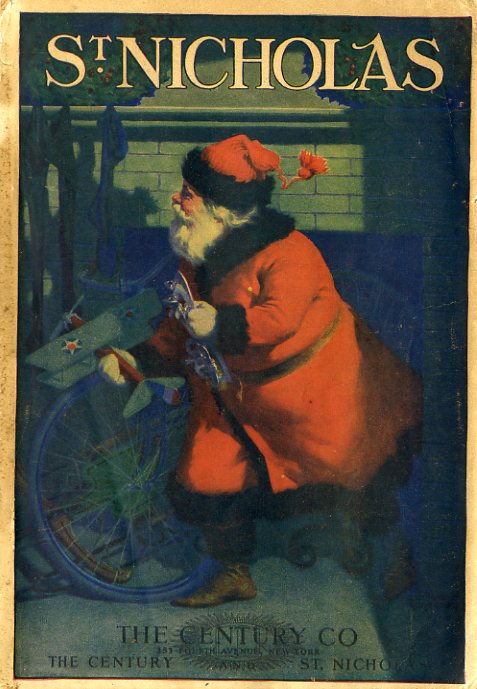
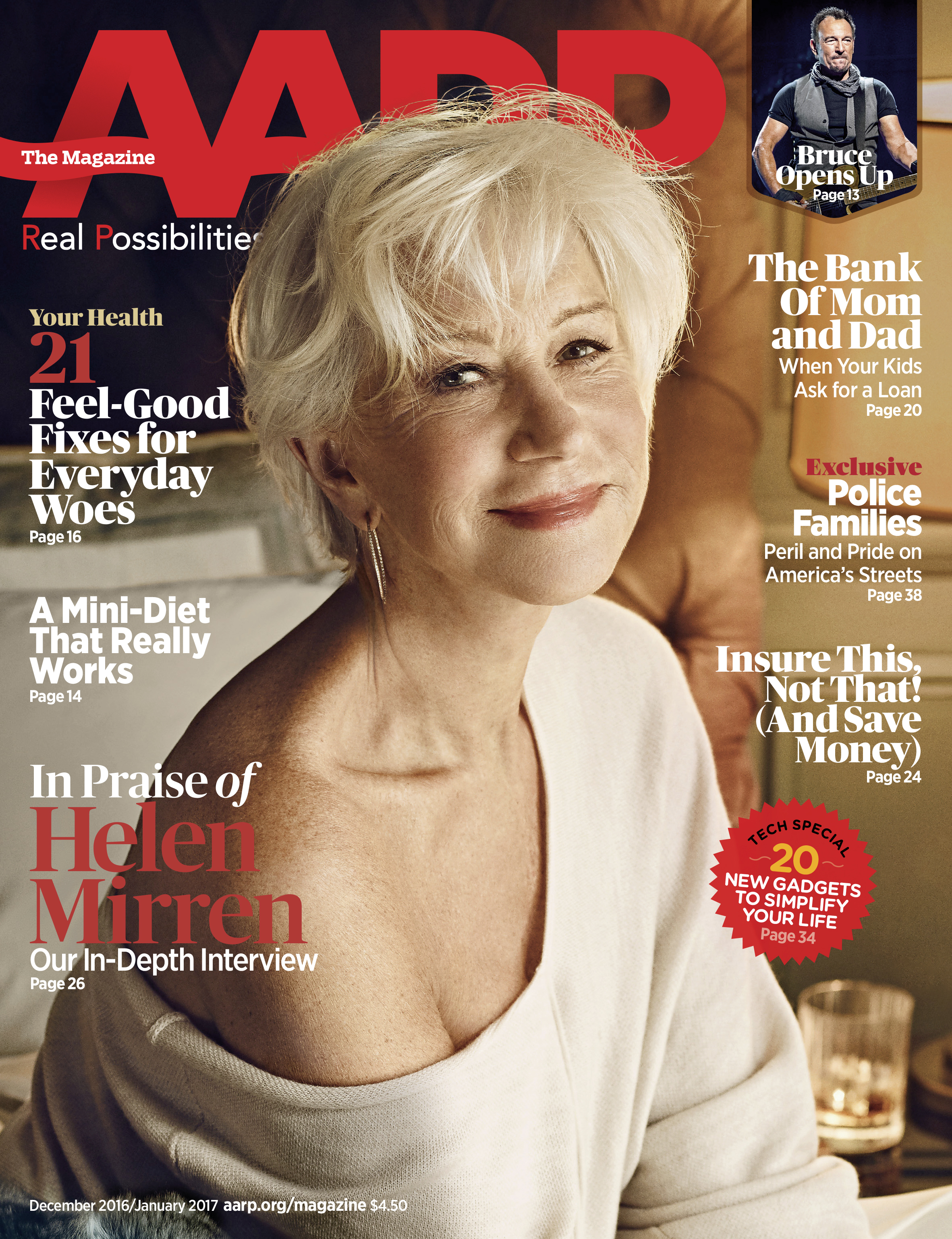
So, please join me as the magazine industry celebrates the 90th anniversary of World Literature Today magazine, the 75th anniversary of the Antioch Review, the 50th anniversary of The Chronicle of Higher Education, the 40th anniversary of In These Times and Lilith magazines, the 20th anniversary of Yes magazine, and the 10th anniversary of Good magazine.

And talking about good things, here are the anniversary covers of these celebrating titles:

world-literature-today-90-yearsantioch-review-75-yearsche-anthology-coverin-these-times-40-yearslilith-40-yearsyes-20-yearsgood-10-years

Until the next celebration, enjoy and may the power of magazines be with you.

h1

The Competitor Group’s John Bradley: Showcasing And Serving A Deeply Engaged Audience – The Mr. Magazine™ Interview With John Bradley, Senior Vice President of Media…

November 14, 2016

velo-annual

“I think there’s that big emotional component that lends itself to some really dramatic photography, which just works better in print. And then there’s also a tremendous historical component. Anybody who is a cyclist can tell you who was winning the Tour de France in 1972 and they can talk about some of the famous climbs, so you can always talk about these historical stories and those just work better in print. You can sort of sit back and absorb the history and look at the old photos. So, the print component is still vital and if you look at any of our competitors, that’s what’s happened with their print products as well. There is always some sort of a historical story or a big photo issue and we’re starting to leverage print for that.” John Bradley…

“The doom and gloom that everyone talks about in print really ignores the emotional attachment that we know is there. We know because of the visceral reaction that people have when they hear a story is only going to be online instead of in print. So, we’re still trying to leverage that value as much as we can, while being realistic of the fact that we’re not a print entity; we’re not a digital entity; we’re not a video entity; we’re a storytelling platform and we tell those stories in the best way we can.” John Bradley…

Competitor Group is a company that celebrates the active lifestyle and serves its audience through events, print, digital, mobile and social media platforms. The company has four sports magazines that bring endurance sports fans the epitome of adventure and storytelling: Triathlete, Competitor, Women’s Running and the soon-to-be, 45-year-old VeloNews. The man in charge of those brands is longtime media veteran John Bradley.

John has good bloodlines, coming from Wired and Outside magazines, having been senior editor at both, and he not only brings experience to the table – 25 years of it – but he also brings a deep-seated passion for endurance sports, being an avid cyclist himself.

I spoke with John recently and we talked about VeloNews and the other brands under his watchful and keen eye. John is a firm believer in the art of print and that it still holds its own place in the marketplace, but he also has his finger on the pulse of the always-palpitating world of digital and knows that while they are both vital to magazine media, the two platforms are very different and offer different things to their readers, so they must be handled in different ways.

A good and spot-on perspective from a man who believes in giving his readers much more than just the winner’s name when they cover a race; he believes in weaving an experience. So, without further ado, the Mr. Magazine™ interview with John Bradley, Senior Vice President of Media, Competitive Group.

But first the sound-bites:

wired-john-bradley

On whether he believes that the Competitor Group has been one of the hidden gems of the industry: One of the hidden gems? Yes, I would say that’s a fair statement. I think having this collection of titles, all built around endurance sports and that lifestyle, is a pretty great thing, because certainly, some people might define themselves as a football fan or a basketball fan, but if you’re a runner or a cyclist or a triathlete, participating in those sports; it takes over your life. You have to spend so much of your time training and you spend your available money on it, on equipment and traveling to races for it, that it really does become your identity in a way that I don’t think happens in other sports, especially spectator sports.


On a brief description of VeloNews, a magazine that’s been publishing for almost 45 years:
For VeloNews, it’s interesting. The word “news” in the title is not by accident. It started as a news publication. In 1972 if you wanted to know who won a big bike race in Europe, quite often you had to wait two or three months and hopefully you could see a photo somewhere. Even for the editors of VeloNews, they would have correspondents over in Europe who would send in a batch of photos by mail, and they would open up the photos two weeks later to see who won the race. So, it started as a way to help American race fans find out what was going on in the sport. And also even locally, even races in America, there was no one really collecting the results and talking about this sport as a spectator sport; it was a very fringe thing of people riding bikes.

On whether he feels his role as editor in chief today is more of a curator than a creator:
We still create; I curate the content that’s coming in from our staff and our freelancers, but our job is a little bit more challenging than it was 20 years ago in that the news happened. We didn’t have to go out and find stories; we just knew that if you showed up at this time and that place on a certain day, there would be a race and you would write up the story and that’s that. And it was the same if you covered NFL; you went to the game and you wrote a story, you maybe grabbed quotes from a couple of players and did a couple of smaller stories and that was it. And that’s not enough anymore; you really have to do a whole lot of context and explanation.

On whether he feels this is his dream job or another milestone in his journalistic journey: This is a pretty remarkable marriage of personal and professional. There has never been a time in my life where I wasn’t reading about what’s happening in cycling anyway. So to have that be my full-time job is pretty special. Sometimes I’m still at work, especially overseeing the whole media division, and navigating all of the challenges of the media space can still be a tricky thing, but the subject matter and the marriage of the personal and professional has been pretty fantastic.

On the stumbling blocks he’s had to face:
Enthusiast media is uniquely challenging. The running titles have bigger audiences, they can play a little bit in the non-endemic space as far as advertising, but for cycling and triathlon; these are very narrow worlds. The audiences are not big, they’re engaged, but they’re not so big that we can easily go out and sell advertising to Budweiser or United Airlines. They want to advertise on NBC or The New York Times, so we’re completely reliant on our narrow verticals. If the bicycle industry is down one year, even if the economy is doing well, but the bike industry happens to be down because of whatever trends in consumer buying habits, then we will feel that.

On what role he thinks print will continue to play in this digital age:
That’s an interesting question and we’re constantly grappling with that. I think for service journalism, which a lot of what we do in print right now ends up being more service oriented; how to train; how to travel for these sports; the buying guides, those sorts of things. I think print still works very well for that, and I think when you’re doing that service journalism it’s how to live that lifestyle. And it goes back to what I said earlier about the fact that we have these deeply engaged audiences built around these lifestyles, and print does really well showcasing how to live that lifestyle. It’s the content that you want to save.
screen-shot-2016-11-12-at-7-00-49-pm
On whether he feels that if there were no print component to the brand, sports enthusiast fans might feel as though they were missing something:
In running, I don’t know as much, because of the three sports that we cover in endurance sports, cycling is the only one that’s really a big spectator sport. You are covering the news around races; there are a lot more ways to come at the content, because you have this huge spectator element. Running and triathlon, especially running, are largely participatory. People don’t read about other people running, they read about how to run. So, I think print is still important there; it’s engaging, but I don’t think it’s as vital as it is in the cycling space, where cycling has this very deep history and emotional connection.

On the most important thing he’s accomplished since coming to the Competitor Group:
The first thing we’ve accomplished since I’ve been here is the shift in content focus. What I said earlier about where before, who won the race was the end of our coverage and now that’s just the beginning. That I think has been the biggest shift, going into this sort of 360 degree contextual approach to covering our sport has been the most important change.

On anything else he’d like to add:
It’s interesting thinking about the difference between print and digital from our advertiser’s perspective and the brand’s perspective; the PR agency’s perspective. Quite often if we have a story that’s print only, the writer will be really disappointed because they know that the story is going to reach more people if it goes online. But when we have PR companies that know we’re going to be reviewing a product, they always ask if it’s going to be in the magazine. While all the news is about how print is dying, and we know the struggles in print and that everyone’s circulation is down, there is still an inherent value in print that we all know is there.

On what someone would find him doing if they showed up unexpectedly one evening at his home: Before 8:00 p.m., you’re going to catch me playing with my son; I have a two-and-a-half-year-old son, so before he goes to bed it’s all about him, although, he’s already been in his first bike race. (Laughs) So, quite often you’ll see me at the park teaching him how to ride his bike. After 8:00 p.m. I’m usually either reading, and now that’s it’s dark earlier, I’m usually riding a bike on a stationary trainer. When it’s still light outside I’m going for a ride. And then reading and writing; I’m working on a book right now. My evening free time is still generally either consuming content or creating content.

On what keeps him up at night: There has always been an attitude that because these spaces are small and that people will just read about cycling because it’s cycling; it hasn’t always been treated as a modern media entity. But I think that whether you’re reading about the 2016 Presidential Election or a small bike race that nobody has ever heard of, if those readers are coming to you they deserve a modern media experience. They deserve good writing and good video and some smart thinking about things. And they deserve evolving platforms; evolving ways to engage. So, what keeps me up at night is trying to do that across all of these titles, while working within the inherent limitations of being in a small vertical.

And now the lightly edited transcript of the Mr. Magazine™ interview with John Bradley, Senior Vice President of Media, Competitive Group.

Samir Husni: Do you believe that the Competitor Group has been one of the hidden gems of the industry when it comes to your competitive field?

fc_vnapr_John Bradley: One of the hidden gems? Yes, I would say that’s a fair statement. I think having this collection of titles, all built around endurance sports and that lifestyle, is a pretty great thing, because certainly, some people might define themselves as a football fan or a basketball fan, but if you’re a runner or a cyclist or a triathlete, participating in those sports; it takes over your life. You have to spend so much of your time training and you spend your available money on it, on equipment and traveling to races for it, that it really does become your identity in a way that I don’t think happens in other sports, especially spectator sports.

So, as a result of that you get this incredibly engaged community, because the magazine becomes almost a newsletter for the club. I tell people that I’m a cyclist because it’s part of my identity. You have people engaging on a level that they don’t in a lot of other sports, and I know that having come from Wired and Outside magazines, and seeing the level of passion among the reader’s letters and comments on Facebook and on our stories. You see a level of passion that I haven’t seen other places.

So to have one company owning several different titles in all of these sports areas is pretty special. The audiences are huge by The New York Times numbers, but for our spaces the numbers are big. But then when you see the level of engagement, it’s pretty special.

Samir Husni: You’re editor in chief of VeloNews, which started the entire company in 1972, and now you’re the editorial director of all of the titles. As VeloNews prepares to celebrate 45 years of existence; how do you describe the different titles to someone who isn’t familiar with the company, from VeloNews to Women’s Running to Triathlete to Competitor? Can you give me a brief introduction to a magazine that’s been publishing for 44 years?

John Bradley: For VeloNews, it’s interesting. The word “news” in the title is not by accident. It started as a news publication. In 1972 if you wanted to know who won a big bike race in Europe, quite often you had to wait two or three months and hopefully you could see a photo somewhere. Even for the editors of VeloNews, they would have correspondents over in Europe who would send in a batch of photos by mail, and they would open up the photos two weeks later to see who won the race. So, it started as a way to help American race fans find out what was going on in the sport. And also even locally, even races in America, there was no one really collecting the results and talking about this sport as a spectator sport; it was a very fringe thing of people riding bikes.

It was the first platform in America for bike racing fans. There were other cycling publications about cycling as a hobby, but for cycling as a sport there was nobody in the United States doing that. So that was the start.

And the title has evolved as things have changed. Obviously now, the race news happens on Twitter, but there is a whole culture around being a fan and a participant of the sport, so the content has evolved with that. We still talk about the races, but 20 years ago talking about the race was the end of the coverage, and now that’s just the beginning of the coverage. There is so much that goes on afterwards, talking about the context, and not just who won the race, but why they won the race and why that race even happened and is the race going to happen next year, are the promoters losing money; so we’re going a lot deeper into the sport than we ever have before, which is just the reality of sports news coverage in general today, I think. ESPN is dealing with the same changes.

Samir Husni: Do you feel that your role as editor in chief today is more of a curator than a creator?

John Bradley: We still create; I curate the content that’s coming in from our staff and our freelancers, but our job is a little bit more challenging than it was 20 years ago in that the news happened. We didn’t have to go out and find stories; we just knew that if you showed up at this time and that place on a certain day, there would be a race and you would write up the story and that’s that. And it was the same if you covered NFL; you went to the game and you wrote a story, you maybe grabbed quotes from a couple of players and did a couple of smaller stories and that was it. And that’s not enough anymore; you really have to do a whole lot of context and explanation.

If you pick up a copy of Sport’s Illustrated, they’re not talking about who won the Super Bowl; they’re talking about the stadium planning and what the NFL Commission is planning for next year; and all of this context and backstory that gives you a much richer experience. They start talking about the tactics and all of the things around the sport that nobody ever talked about before. You have to find new ways in, because obviously, the readers know what happened, who won the game or who won the race on Twitter, so we have to provide a whole lot more.

So, no, I would say that I’m more of a creator than ever before because we’re not only creating the stories, we’re creating the opportunities to tell those stories. Instead of sending one person to a race to find out who won, we’re sending four people to a race and they’re finding different angles and context that we can provide that we never had to worry about before. I would say the creation job is even more important now than it was before.

Samir Husni: You’ve just returned from Japan, and you’ve worked in that country before. You’ve worked at Wired and Outside magazines; do you feel at home now? Is this your dream job or is this another milestone in your journalistic journey?

John Bradley: That’s an interesting question. All of those jobs; Outside and Wired and this one now, they’re all similar in that you look at the world through one lens. If you’re at Outside magazine, it all has to come back to that sort of adventure component and embracing nature and challenging yourself; and adventure sports, camping and mountain biking, just whatever the case may be.

At Wired, you had to look at the whole world through a lens of technology. You can’t just do a story; you had to do a story that came back to science and technology. How do we put the Wired spin on this?

So being at VeloNews or overseeing triathletes and running titles, the lens is narrower than it’s ever been before, but that’s the lens that I view my personal life through anyway. When I was at Wired and Outside, I was still always a cyclist. Quite often I would actually leave work from Wired and go up to the Golden Gate Bridge for a ride before I went home. So, that’s always what I’ve done in my free time.

And so this is a pretty remarkable marriage of personal and professional. There has never been a time in my life where I wasn’t reading about what’s happening in cycling anyway. So to have that be my full-time job is pretty special. Sometimes I’m still at work, especially overseeing the whole media division, and navigating all of the challenges of the media space can still be a tricky thing, but the subject matter and the marriage of the personal and professional has been pretty fantastic.

Samir Husni: What’s been some of the stumbling blocks that you’ve had to face and how did you overcome them?

John Bradley: Enthusiast media is uniquely challenging. The running titles have bigger audiences, they can play a little bit in the non-endemic space as far as advertising, but for cycling and triathlon; these are very narrow worlds. The audiences are not big, they’re engaged, but they’re not so big that we can easily go out and sell advertising to Budweiser or United Airlines. They want to advertise on NBC or The New York Times, so we’re completely reliant on our narrow verticals. If the bicycle industry is down one year, even if the economy is doing well, but the bike industry happens to be down because of whatever trends in consumer buying habits, then we will feel that.

So, when I was at Wired or Outside, maybe the watch industry is down one year, but that’s OK because we can still go sell ads to airlines and liquor and clothing, or whatever else the case may be. In enthusiast media you don’t have those release valves; you are very reliant on one, narrow slice of advertisers. And that can be challenging.

Also, in enthusiast media, we want to pay our salaries and be a profitable company, and with a lot of enthusiast media, you’ll be competing against people who have started a blog just because they love doing it. They’ll lose money or just break even on it, but they love having it there because, as I said, in these spaces people define themselves by loving these sports. So, you end up as a business competing against websites that aren’t really a business, they don’t have to worry about profit. And that’s also challenging.

It’s challenging when they can sell ads really, really inexpensively because they’re not worrying about actually making any money and we want to stay in business. The New York Times is not competing against news enthusiasts who are working for free. But in these spaces you do end up quite often competing against people who’re working for free. So, that’s another challenge for us. We overcome that, but those are things that you don’t find in broader media.

How we’re overcoming those; we do have more resources than some of the enthusiast publishers. We can get to the races that they can’t; we can get access to the riders in ways that perhaps they can’t, and so going back to what I said about the way that we provide context and became a whole lot smarter about how we cover the sport, that’s stuff that they can’t match. They can write about who won a race and perhaps sometimes they can get a rider on the phone and do an interview, but we can talk to the heads of the sport; we can get the riders on the phone all of the time; and we can come at the sport from a lot of different angles.

And then we have a very experienced staff. Most of our staff has graduate degrees of one kind or another; one is from Columbia Journalism School. So, we know how to think about storytelling; we’re starting to branch into video and podcasting and all of these other formats.

While it’s sometimes challenging to have the profit pressures of being a business, we are part of a bigger company. We have a bit of a corporate umbrella over us, and so maybe if one year the cycling industry is down, the running industry is up and so things kind of even out, whereas if you were out there just doing something about cycling, you don’t have the almost corporate socialism keeping things going. So, there are advantages and disadvantages to being part of a bigger company. But I think we’re getting a lot smarter about leveraging those advantages and getting smarter about how we differentiate ourselves by the coverage that we do.

Samir Husni: We can see the future heading into more niche titles; what role do you think print will continue to play in this digital age?

John Bradley: That’s an interesting question and we’re constantly grappling with that. I think for service journalism, which a lot of what we do in print right now ends up being more service oriented; how to train; how to travel for these sports; the buying guides, those sorts of things. I think print still works very well for that, and I think when you’re doing that service journalism it’s how to live that lifestyle. And it goes back to what I said earlier about the fact that we have these deeply engaged audiences built around these lifestyles, and print does really well showcasing how to live that lifestyle. It’s the content that you want to save.

For the most part, when you’re doing news stories or news analysis or the context around the sport, those aren’t the sort of stories that people want to save. They’re fine online and people read those for 24 or 48 hours and they start disappearing into the ether. If we use print for those things that people want to save, and also of course, for the big, glossy engaging photos that remind people of the passion of the sport; print still works for that. So, I think if you approach print as the newsletter for the people who follow these sports, it works really well. And then you use digital as the news and context component for that.

But I’m not going to lie; print is very much a challenge. It goes back to having these very narrow verticals. Your audiences are smaller and so you don’t have the economies of scale around printing and distribution and newsstand. Newsstand is very challenging; there aren’t that many people who buy triathlon and cycling magazines in the United States, and so newsstand is not super-effective a lot of the time, because how many people passing through bookstore happen to be passionate cycling fans? There’s not a lot. And as you know, being on the newsstand gets more and more expensive every year.

So, that’s tricky for us. We’ve become very reliant on subscribers and on trying to reach those subscribers through digital promotions with ways to remind them that this magazine is here and to invite them to come and subscribe. We’re trying to enter some subscription partnerships with different organizations and doing some of that.

We tend to be more effective with our verticals selling into specialty retail stores, selling into running shops and bike shops, but brick and mortar retail has their own challenges and they don’t always like to operate as a newsstand, dealing with the monthly returns and all of that. So, getting print to the readers now is much more challenging than it was even two or three years ago. It’s tricky.

And then because we are smaller and we have smaller staffs and print takes a lot of time and sometimes we look at the traction that we can get with a story online versus getting it into print and the math becomes very difficult. At VeloNews we compete against print-only entities and we compete against digital-only entities, so we’re fighting this twofold war. And knowing sometimes that people are running with a story online that we can’t run with because we have to get a print issue out of the door, can be kind of a challenge, but our brand is tied up in that print product that has been around for 45 years and that’s still our identity and our point of pride. So we have to keep doing it.

But it’s a challenge; I’m not going to lie. Justifying the print gets trickier every year. We’ve really had to evolve it. When I came here a year and a half ago, the print was still largely talking about who won the race and we’ve really moved away from that rapidly and gone to more of that contextualization that I was talking about earlier. And we’re doing that across all of our titles and really doing more of the lifestyle and service component that makes the magazine feel like something you want to save and maybe rip a page out and put it up on your cubicle wall to remind you why you love this sport. We’re trying to find new ways to separate those.

At this point, none of our magazines are just a print version of the website. They’re something else entirely. They have the same name, but they are completely different in the sort of content they do and how they approach those stories. But that’s how we’re trying to play that game. But as soon as we sort of figure something out, ad rates go up or it’s something else. So, it’s a constant adjustment.

Samir Husni: For someone like you who is a cyclist, unlike me, who is an armchair sports person, do you feel that if there were no print titles for the enduring sports fan, people who are actually engaged in doing all of these sports; do you feel that just covering it virtually wouldn’t be enough for them? That they might feel they were missing something?

John Bradley: In running, I don’t know as much, because of the three sports that we cover in endurance sports, cycling is the only one that’s really a big spectator sport. You are covering the news around races; there are a lot more ways to come at the content, because you have this huge spectator element.

Running and triathlon, especially running, are largely participatory. People don’t read about other people running, they read about how to run. So, I think print is still important there; it’s engaging, but I don’t think it’s as vital as it is in the cycling space, where cycling has this very deep history and emotional connection. Going out for a six hour ride on the weekend is a big commitment. You’re missing time with friends and family and other hobbies. You’re going up this mountain for fun and it’s so hard and it takes such a commitment. It’s unlike any other sport that I’ve ever been a part of.

So, I think there’s that big emotional component that lends itself to some really dramatic photography, which just works better in print. And then there’s also a tremendous historical component. Anybody who is a cyclist can tell you who was winning the Tour de France in 1972 and they can talk about some of the famous climbs, so you can always talk about these historical stories and those just work better in print. You can sort of sit back and absorb the history and look at the old photos. So, the print component is still vital and if you look at any of our competitors, that’s what’s happened with their print products as well. There is always some sort of a historical story or a big photo issue and we’re starting to leverage print for that. I’m not sure it works quite the same way in the triathlon and running spaces, especially not if you’re covering baseball or soccer or any of the traditional ball sports.

Samir Husni: What do you feel is the most important thing you’ve accomplished since you’ve been here?

John Bradley: The first thing we’ve accomplished since I’ve been here is the shift in content focus. What I said earlier about where before, who won the race was the end of our coverage and now that’s just the beginning. That I think has been the biggest shift, going into this sort of 360 degree contextual approach to covering our sport has been the most important change.

We also, five or six years ago, changed the name of the magazine to Velo; the website stayed VeloNews and the magazine became Velo. But there was no shift in the actual content, there was just a change in the name and it really created this sort of disconnect. And it also disconnected with the history because we had been VeloNews since 1972 and everybody who runs the whole cycling industry in the United States grew up with VeloNews, so it created a sort of weird disconnect.

When I came into this job, one of my demands was that we were going to go back to the VeloNews name, and we’ve done that, and I think that was important to acknowledge our history, because again, as I was saying, history is so important for cycling fans. So, we’ve acknowledged our history and our place, and honestly VeloNews probably isn’t the best name if you were launching this publication today, but that’s always been our name and that’s our name now. And we’re embracing that.

But while we went back to the history with our name, we have completely modernized the content in print and online. We’re not only moving into a whole lot more of the contextual blog-type content, but also moving into video and podcasting, and all of the other ways we can come at these stories.

And while I’ve always worked in print, I’ve also always worked online. I started working in media in 1994 and we had print and web then. And in fact, VeloNews.com launched in 1993, so we’re coming up on our 25th anniversary of a website as well. I didn’t enter media because I loved print or I loved digital; I entered it because I love telling stories. So, I think the biggest change is that we have not really wedded ourselves to a platform or format; we’ve wedded ourselves to trying to find the best way to tell any given story and make it the most engaging for our readers whoever they might be.

So, that would be the biggest change; this publication was always run by cycling enthusiasts, which is wonderful, but they weren’t necessarily always legacy media veterans, and so now while we are still 100 percent created by passionate cyclists, we’re also approaching it as a modern media entity, which is that you have to get those stories out there in the best way you possibly can and sometimes that’s a 5,000 word print feature; sometimes it’s a 2-minute web video and everything in between.

Samir Husni: Is there anything else you’d like to add?

John Bradley: It’s interesting thinking about the difference between print and digital from our advertiser’s perspective and the brand’s perspective; the PR agency’s perspective. Quite often if we have a story that’s print only, the writer will be really disappointed because they know that the story is going to reach more people if it goes online.

But when we have PR companies that know we’re going to be reviewing a product, they always ask if it’s going to be in the magazine. While all the news is about how print is dying, and we know the struggles in print and that everyone’s circulation is down, there is still an inherent value in print that we all know is there. These brands that know we’re writing about their new bike or their new helmet, or whatever the case may be; new running shoes, they ask if it’s going to be in the magazine. So, we know the value is there and the disconnect in the circulation and the advertising front between the value that we know is in print and the value that we get out of print is frustrating. That’s something that we’re trying to navigate, but we love the print product. We love the digital as well; we love telling our stories.

The doom and gloom that everyone talks about in print really ignores the emotional attachment that we know is there. We know because of the visceral reaction that people have when they hear a story is only going to be online instead of in print. So, we’re still trying to leverage that value as much as we can, while being realistic of the fact that we’re not a print entity; we’re not a digital entity; we’re not a video entity; we’re a storytelling platform and we tell those stories in the best way we can.

Samir Husni: If I showed up unexpectedly at your home one evening after work, what would I find you doing; reading a magazine; reading your iPad; riding your bike; or something else?

John Bradley: Before 8:00 p.m., you’re going to catch me playing with my son; I have a two-and-a-half-year-old son, so before he goes to bed it’s all about him, although, he’s already been in his first bike race. (Laughs) So, quite often you’ll see me at the park teaching him how to ride his bike. After 8:00 p.m. I’m usually either reading, and now that’s it’s dark earlier, I’m usually riding a bike on a stationary trainer. When it’s still light outside I’m going for a ride. And then reading and writing; I’m working on a book right now. My evening free time is still generally either consuming content or creating content.

Samir Husni: My typical last question; what keeps you up at night?

John Bradley: When I came into the role running this media division, the Competitive Group was created eight years ago and Competitor Group is largely an events company, and I think they saw media as something that was sort of self-supporting and that would just be there. And they’ve realized that isn’t the case, so there was maybe a few years of the division not getting the attention and direction that it needed to.

They were running along fine, but they weren’t changing; they weren’t responding to the changing media landscape. And so we’ve fallen a bit behind in some that, so what keeps me awake right now is trying to find ways to, not just follow, but start leading in media. This is a time where nobody’s budgets are growing, so finding a way to grow on our existing budgets is a goal.

There has always been an attitude that because these spaces are small and that people will just read about cycling because it’s cycling; it hasn’t always been treated as a modern media entity. But I think that whether you’re reading about the 2016 Presidential Election or a small bike race that nobody has ever heard of, if those readers are coming to you they deserve a modern media experience. They deserve good writing and good video and some smart thinking about things. And they deserve evolving platforms; evolving ways to engage.

So, what keeps me up at night is trying to do that across all of these titles, while working within the inherent limitations of being in a small vertical. It’s a big challenge and does often wake me up at 3:00 a.m., but it’s also a really interesting one. When I came in here I was just getting to leave my fingerprint on VeloNews and now I get to leave it across four brands that have all existed for a really long time. So, that’s a pretty unique experience.

Samir Husni: Thank you.

h1

GQ Style & Will Welch: Bringing The Human Soul & Style Together In The Most Wonderful of Ways – The Mr. Magazine Interview With Will Welch, Editor In Chief, GQ Style…

November 10, 2016

gq-style-2

“There is no news section. If you want to know about what’s happening with the fashion houses or who the most stylish young band is, or what people wore at the New York City Marathon yesterday, I would happily direct you to GQStyle.com and our social feeds. What we are going to do in print is something that could only successfully live in print. We are going to use those pages to really do something that only works on the quarterly schedule that GQ Style is released in. I think it’s all about the width of throwing some, not all, but some magazine structure and thinking out of the window and saying, ‘what should print be now?’” Will Welch…

Heart and soul for the brand, two of the most important passions a magazine maker can have. Add in an honesty that goes much deeper than just the pages of the magazine; a candor that comes from the actual depths of the human being creating it, and you have Condé Nast’s latest title and its editor in chief, Will Welch; a man who is redefining just exactly what a luxury men’s magazine is.

Will joined Condé Nast in 2007 on GQ’s editorial team, most recently serving as the magazine’s style editor. Today, Will is editor in chief of GQ Style and is bringing his own fresh approach to the art of being a man. There are no taboos when it comes to what goes with fashion, as far as Will sees it. His vision is clear and focused; men mix fashion with art, music and interior design every day, and that authentic direction, while unique, is also spot on with his readers.

I spoke with Will recently and we talked about his passionate and soulful belief and views about the magazine. His mission statement for the magazine is simple: how to succeed with style and soul. And for him that isn’t always about an expensive price tag hanging from the shirt. It’s about beauty, integrity and much more than the design of the jacket. In Will’s own words, “It is feeling like the stuff we are covering is coming from a really honest place and that’s the most important thing to me.” And you absolutely can’t argue with that.

In fact, Mr. Magazine™ was so impressed with GQ Style; I selected it as one of the 30 Hottest New Launches for 2016. It was a refreshing change of pace to have an editor in chief of a men’s magazine see that we males have quite a bit more on our minds than just clothes. GQ Style has put a new definition on the five-letter word. Being stylish involves a lifestyle more than just trendy attire.

So, I hope that you enjoy this refreshing glimpse into the world of a man who is not afraid to shake up the space of men’s magazines, especially when he does so with heart, soul, and a new type of “style” – the Mr. Magazine™ interview with Will Welch, Editor in Chief of GQ Style.

But first the sound-bites:

Will Welch Photo by Jake Rosenburg

Will Welch
Photo by Jake Rosenburg

On why he thinks GQ Style wouldn’t have existed 10 years ago: There’s a real culture around fashion, art and interior design. The conversations I have with friends, and have had since I was in college, related to art had nothing to do with our means to actually buy a piece of art from a gallery. But, there was enthusiasm, excitement, awareness, and vocabulary built around that. What that means, for me, GQ Style was able to be really organic, authentic, and this word might be a stretch but I think I can explain it, and I put it on the cover of the first issue for a reason – soulful. That created the dialogue, discussion, and presentation of all of these elements that can be defined as luxury or lifestyle and culture in magazine form.

On how much of his own soul he puts into the magazine: (Laughs) There are a few things that I invest myself in. I think of things that my wife and I are interested in and conversations we have that aren’t in the magazine. But pretty much a huge portion of what I’m invested in, finds itself in the magazine in one form or another.

On the Holiday issue that features a 20-page Jazz portfolio: Again, just really investing in things that we believe are a little bit outside of what everybody might be talking about in the culture of the moment or they seem a little bit offbeat. I feel like the key to GQ Style connecting with readers and an audience, and the key to being relevant for us is to continue to throw ourselves at the stuff we really believe in, whether it’s huge and mainstream or tiny and niche.

On whether that portfolio could only be achieved in print: You can’t achieve the same portfolio in digital. You can do a piece about the same guys, in the same attitude and same spirit and make it every bit as impactful and as much of a document of the moment in time. But, it would have to be rethought. Video and audio would have to play an important part of it. You would really want to conceive of it outside the standard idea of still-photography, written words, and the design that brings the two together.

On what role he thinks GQ Style plays in today’s digital world: There is no news section. If you want to know about what’s happening with the fashion houses or who the most stylish young band is, or what people wore at the New York City Marathon yesterday, I would happily direct you to GQStyle.com and our social feeds. What we are going to do in print is something that could only successfully live in print. We are going to use those pages to really do something that only works on the quarterly schedule that GQ Style is released in. I think it’s all about the width of throwing some, not all, but some magazine structure and thinking out of the window and saying, ‘what should print be now?’

On if there have been any stumbling blocks: Well, to be really honest, it has been an overwhelmingly positive experience. Of course, there have been challenges along the way. There are quirky aspects of the way that GQ Style is designed and the way it operates that require some problem solving and some patience and smart thinking.

On writing an introduction for the Rick Ruben interview with Kendrick Lamar: I felt like there needed to be a moment where, especially because GQ Style is such a new magazine and such a new title across the platforms, there needed to be a moment where our readers understood why we had chosen Kendrick Lamar and why now.

On coming up with cover stories: It can be a moment in the middle of the night. It can be that for me or any member of my team, or someone from the GQ staff, like ‘You know who I’ve been thinking would be really cool for you guys?’ Because we all work on the same floor here together and there’s a constant ebb and flow of communication and ideas and just hallway communication like any cool collegial office. So it’s sort of like a nonstop topic of conversations.

On his expectations for GQ Style one year from now: I feel very strongly that the first three issues have been successful in that they’ve defined and sort of laid out the case for GQ Style, and why what we’re doing is relevant, and what a reader can gain by coming to us in all of our forms, social, GQStyle.com, GQ Style in print.

On what someone would find him doing if they showed up unexpectedly to his home one evening: Evenings at home are usually spent on the couch with my wife, and I’m not too proud of this, but we’ll be having dinner next to each other on the couch with two cats around, and there’s always a series of things going on, it could be a football game or a TV show on, or my wife might be reading a book and I might be on my phone at the same time or vice versa.

On what keeps him up at night: What keeps me up at night is family-related, I’m 35 years old and it just seems to be an interesting time in my life, there are all of these opportunities for me to grow and mature, so I’m sort of trying to evolve as a man and a husband and a son and all of these things, and elements of that keep me up at night. But what pertains to GQ Style is usually there is a story I want to tell and there are some elements blocking it, it could be a budget thing or a talent booking issue, or a photography or a photographer-booking question.

And now the lightly edited transcript of the Mr. Magazine™ interview with Will Welch,
Editor in Chief, GQ Style.

Samir Husni: You redefined luxury in the magazine with the first issue and you created a magazine that technically you have admitted would not have existed just a few years ago. Why do think that GQ Style would not have existed 10 years ago?

Will Welch: There are a couple of reasons, but the place I’d like to start is with the awareness of men’s style and men’s lifestyle pursuits, including fashion, interior design, design, architecture, art and travel. Men have this awareness and ease with the vocabulary, and excitement about these topics has grown. The amount that these topics are a part of their lives and conversations, let’s just ballpark within the last 16 years, has really accelerated, but especially within the last 10 years. That allowed GQ Style to tackle those topics with real passion, they’re not floating off in the abstract and they’re not these exclusive pursuits of the rich and well-heeled, or people with money to burn.

There’s a real culture around fashion, art and interior design. The conversations I have with friends, and have had since I was in college, related to art had nothing to do with our means to actually buy a piece of art from a gallery. But, there was enthusiasm, excitement, awareness, and vocabulary built around that. What that means, for me, GQ Style was able to be really organic, authentic, and this word might be a stretch but I think I can explain it, and I put it on the cover of the first issue for a reason – soulful. That created the dialogue, discussion, and presentation of all of these elements that can be defined as luxury or lifestyle and culture in magazine form.

I feel like in a way, GQ style was made possible because of the culture among American men. Over the last 16 years it has been evolving at a clip that made a magazine where the discussion of this stuff was really natural and not in anyway forced. That cover line from our debut issue, which came out in May with Robert Downey Jr. on the cover, was sort of presented as the cover-line selling the Robert Downey Jr. story. But to me, it was secretly the mission statement of the magazine, which is how to succeed with style and a soul. That was my way of sending a coded signal that the content of this magazine isn’t going to be fancy, expensive or luxury just for expensive sake, and I think there’s a history of luxury magazines participating in that and I wanted a clean break. I felt that the culture had created a moment that was ready for GQ Style. So, that’s what we’ve been striving to make and we have three issues that have come out so far and it’s feeling good. It’s feeling like the stuff we are covering is coming from a really honest place and that’s the most important thing to me.
gq-style-1

Samir Husni: Will, you are now 35, so how much of your own soul do you put into this magazine to make it even more soulful.

Will Welch: (Laughs) There are a few things that I invest myself in. I think of things that my wife and I are interested in and conversations we have that aren’t in the magazine. But pretty much a huge portion of what I’m invested in, finds itself in the magazine in one form or another.

For example, in the debut issue, there was an 8-page spread on Sid Mashburn store. Which I think is one of the very best stores in the country. It was started in Atlanta and now posted in D.C., Houston, Dallas, and Los Angeles. Sid Mashburn is an incredibly interesting guy who has started this store. He comes from a family that had small town stores in the American south, where it was really about community and value and he doesn’t use this word but I would, soul, as much as it was about clothes or profit margin. It’s just a store in Atlanta, but to me there’s something going on there and there’s a story to tell. He’s doing something really unique that brings new ideas to bear on fashion and retail and getting dressed and all these topics that are relevant to GQ Style that I felt like eight pages made perfect sense.

In the Holiday Issue there’s a four-page story on the shop in Los Angeles called RTH, which was founded about 7 years ago by this designer, but even designer feels like too small of a word. He’s really a creative and a maker of interesting worlds named Rene Holguin. It’s just a shop in L.A., they have no e-commerce presence and it’s two stores that are just three doors down from each other. You walk in and find that he has created this whole world that is truly immersive. It’s like falling down a rabbit hole to walk into this store. I thought to myself, yes this is just a store in L.A. but this deserves a feature. I knew that Erykah Badu is also a huge fan of RTH, and by chance she discovered it the year it opened so we interviewed her about her love for RTH and what she knows about Rene Holguin, who founded it.

I guess what I’m saying is that these are small passions of mine. These are two little stores that I love, but to me there is something happening in both of them that is much bigger than just the footprint of their shops, so we wanted to give them a big space in GQ Style.

Also, in the Holiday Issue there is a 20 page Jazz portfolio. Again, just really investing in things that we believe are a little bit outside of what everybody might be talking about in the culture of the moment or they seem a little bit offbeat. I feel like the key to GQ Style connecting with readers and an audience, and the key to being relevant for us is to continue to throw ourselves at the stuff we really believe in, whether it be huge and mainstream or tiny and niche.

Samir Husni: That was my next question to you because when I saw the piece on jazz, I noticed some of the people featured reached the age of 91. That’s where I felt the soul of the magazine was. When I saw that feature, I felt like nobody thinks about jazz artists and what they wear, but rather they just enjoy their music. But you were able to turn it around and it was a combination of everything.

Will Welch: I think it was interesting because basically what happened is GQ’s great, longtime design director, Fred Woodward, who’s also the design director at GQ Style, although I think he brings out a very different style of himself when he’s working of GQ Style versus GQ. We were in an ideas meeting and he says to me: ‘Think of all the great lions of jazz that are still alive today. Not only are they alive but they’re still playing, they’re still making music, still playing at Village Vanguard, still releasing new albums. We talk about soul and passion and he was fired-up when he brought up this idea. He felt like it was something that was not only a nice piece for the 3 months that this issue is on newsstands, but it could be something that would really be a permanent document, a marking of this moment.

Any good magazine strives to be a document of the cultural moments of its time. So, we started going through the list and it was unbelievable, some of the histories of these guys who are still doing it. There were a couple key things for us. One, I think that jazz is synonymous with men’s style. The way that the jazz musicians, even going back to the 1920s but especially the 40s, 50s, 60s and even early 70s. I was talking with a friend and we were joking about the dashiki period of jazz, where the style of dress changed along with the sound of the music that was constantly happening. The jazzmen were some of the most stylish men of their times and so let’s work with these guys and do a portfolio, let’s collaborate with them. Our fashion editor, Mobolaji Dawodu did just a beautiful job styling the piece. But our vision for the photography and the fashion went hand-in-hand. Let’s not try to freeze these guys in time. Let’s not do classic black and white portraiture of guys who in their 60s, 70s, and as you mentioned, even 90s. These guys were, and are, visionaries.

The piece is called ‘The Explorers Club’ and these guys really used their instruments to explore the human condition, both internally and externally. We think about space travel when we think about a lot of these musicians like Pharoah Sanders. I also think about the exploration of the human interior of the human consciousness, and so we wanted to make them look futuristic now, not freeze them in stone. That was the director for both Christian Weeber, who is an incredible photographer and did a beautiful job with this portfolio, but also the director for Mobolaji Dawodu’s work with the fashion. You know, these guys are incredibly opinionated, his (Dawodu’s) stories coming back from set were hilarious like: ‘Hell no, I’ll never wear that. Get that out of my face.’ He would slowly find a rhythm with each of them. But taking that idea and believing it. Finding a way to not do it the expected way, but to make it fresh. Then to really invest in it, as far as the pages we are giving over to it. I guess if you really include the appendix where we talk about some of their greatest albums of all time, it’s like 26 pages of content.
Samir Husni: You look at those pages and flip those 26 pages and see the life and soul of the music. Is there a way you can do that in digital or can you only achieve that same portfolio in print?

Will Welch: You can’t achieve the same portfolio in digital. You can do a piece about the same guys, in the same attitude and same spirit and make it every bit as impactful and as much of a document of the moment in time. But, it would have to be rethought. Video and audio would have to play an important part of it. You would really want to conceive of it outside the standard idea of still-photography, written words, and the design that brings the two together.

I absolutely think you could do something that ambitious, and of course we are trying to do both. When we are commissioning the piece we are thinking about the digital version of it and trying to prepare for that. We have some interesting things in the works right now so that it really is compelling in something more than just a print piece translated online in an unsatisfying way when we launch it on GQStyle.com. The two have to be conceived independently from one another. For digital to be impactful it has to be thought of as digital.

Samir Husni: Nobody can accuse you of not being a digital native at your age. (Laughs)

Will Welch: (Laughs)

Samir Husni: So, as a digital native, what do you feel the role of print, as exemplified in GQ Style, is going to be for your generation?

Will Welch: I think when we are designing new print products or if someone young takes over a preexisting magazine, you have to toss out some of the institutional memory of the way a magazine is constructed. I tried to do that with GQ Style. This is oversimplifying a little bit but the traditional way a magazine is structured is there is newsy and small bits orientated beginning of the magazine called the front of the book. There is some different modular mid-length storytelling that is usually deemed the middle of the book. Which are all single pages that have ads next to them. Then you fit the feature-well, at which point the vast majority of the spreads are all editorial. There are no longer ads breaking up the editorial and that’s when you save your big visual moments and your long-form pieces. So, that is the way a magazine, again oversimplifying a little bit, but traditionally been structured.

With the launch of GQ Style, and I think anybody else my age who has the opportunity, rare though that may be these days, to launch something or alter something in print, has to look at that with a very critical eye and wonder how much of it is still relevant. I mean, a front of book news section, for a quarterly magazine especially, but I think even in a monthly as well, you’re just never going to keep up with the Internet so why even try?

So, really what happened with the launch of GQ Style, I spent a lot of the early days trying to think about, in the age of the internet, this is not the age of both the internet and print, this is the age purely of the internet, what can print do? What service can print provide the reader that they can’t already get online? I tried to build; of course with collaboration from my colleagues here, particularly Fred Woodword, the Design Director and Chris Opresic, the Photo Director, we tried to build a new structure that is specific to the digital age, specific to the concerns and topics of the imagined audience of GQ Style. This also included the out publisher Howard Mittman.

Howard deserves a lot of credit for understanding why that was going to make a difference, why that would be modern, why his advertisers would be okay with that, why that would help the fact that we cost $14.99 on the newsstand. I mean that was very collaborative and a huge leap of faith on his part and I thought pretty visionary to see the value in that and to know that that made sense from a business perspective. One very unique, and favorite aspects, there are a lot of readers who probably wouldn’t even be able to tell you that it’s happening but they feel it is that once the editorial section of the magazine begins, and earnest is all editorial spread, all the ads are backed upfront, maybe a couple in the back and add the back cover. But what would traditionally be a front of book, middle of book, and feature well is all editorial spreads. We have really tried to take advantage of that. Again, whether the reader knows it or not, they feel the difference.

There is no news section. If you want to know about what’s happening with the fashion houses or who the most stylish young band is, or what people wore at the New York City Marathon yesterday, I would happily direct you to GQStyle.com and our social feeds. What we are going to do in print is something that could only successfully live in print. We are going to use those pages to really do something that only works on the quarterly schedule that GQ Style is released in. I think it’s all about the width of throwing some, not all, but some magazine structure and thinking out of the window and saying, ‘what should print be now?’

Samir Husni: In fact, that’s what caught my attention. When I told Howard after I saw the first issue, “I have to interview Will.” I felt like you put your thumb on the heart of the problem. I am so glad you explained it the way you did. I always tell my clients or if I’m ever doing consulting, if you’re still doing the magazine as if it’s 2007 we have a problem.

Will Welch: Yes.

Samir Husni: Yours is a great example. I show my students your magazine. In fact, my teaching assistant, this is his favorite magazine. He’ll sit down and stop working to read GQ Style.

Will Welch: (Laughs) That gives me great, great joy. I’m so happy to hear that, thank you for passing that along.

Samir Husni: I mean the combination is really a new way of putting a magazine together, whether it’s a fashion magazine or any magazine that’s going to be in print.

Will Welch: I think that has to be the way to do it right now.

Samir Husni: So tell me, has it all been great, no stumbling blocks? Everything was as though you should have done this 3 years ago?

Will Welch: Well, to be really honest, it has been an overwhelmingly positive experience. Of course, there have been challenges along the way. There are quirky aspects of the way that GQ Style is designed and the way it operates that require some problem solving and some patience and smart thinking. But those are little pebbles compared to the stuff about it that’s felt really great.

I think crucially it has broadened the power and the reach of GQ. I feel like the existence of GQ Style has not only been a success in its own terms but has also been a list for GQ and just the umbrella brand. One thing that I’ve been thinking about a lot last week in particular, and I’m going to digress a little bit with the holiday issue; we launched it two weeks ago and we had this interesting cover package built around Kendrick Lamar. I had asked Rick Rubin, the legendary music producer, to interview Kendrick for the print piece. He and Kendrick also agreed to have that conversation videotaped and we did it at Rick Rubin’s Shangri La Studios outside in Malibu, which is how Rick Rubin likes to do things, and I said let’s do a cut. And we had 3 cameras on them, and we did a cut that was all 55 minutes of this interview and put it online. I can’t remember the exact timeline, but in a week and a half or so, it hit about a million views on YouTube alone. You know that doesn’t count all of the plays on GQ and GQ Style’s websites. It was a very proud moment for us that it got to a million views that quickly just on YouTube.

I realized that the only way to think about this title, GQ Style, in this moment, is what GQ Style is to each reader. In each moment whatever piece of content is in front of them. So, I’ve been really working, starting with myself and also with my team, as well as with Howard and his team, that how do we get rid of the idea entirely that GQ Style is a print magazine that is supported by social channels, video content, GQStyle.com, that its print with these other supportive elements or buffers.
How do we realize that if somebody is reading? If a tweet or Facebook post or something else comes across a reader’s trance at any given moment that is from us that is GQ Style, that’s what GQ Style is in the moment. In fact, with this Kendrick Lamar and Rick Rubin video the fact that it had found that big of an audience that fast meant that GQ Style is this YouTube video to more people than it is anything else so far in our very young life. So, we have to think about the brand holistically but we also have to think about each tweet, each Instagram, each Facebook post, each story in each issue, all of those things, each picture that we publish, the way that we represent ourselves as we move around the world, or do interviews, or go out on meetings. GQ Style is whatever that thing is to that person in that moment. I think it is of upmost importance that my team and myself digest that in order to have success, managing all of the many elements of this new entity.

Samir Husni: I noticed in that specific interview that Rick Rubin did with Kendrick Lamar, that you wrote an introduction to that interview, which is unusual. In the traditional way of doing magazines, you ask the person who does the interview to do the introduction or also the lead.

Will Welch: Yes, absolutely, and I just felt like it needed a moment because we had asked Rick to do this interview and he had so graciously agreed, and I had sort of said you should ask Kendrick whatever you want. I felt like there needed to be a moment where, especially because GQ Style is such a new magazine and such a new title across the platforms, there needed to be a moment where our readers understood why we had chosen Kendrick Lamar and why now. I was present for the interview and sort of done a lot of the arranging, so I felt like there should… you know it’s only a could of paragraphs long you know, it’s very short, but just a quick taste for like its only our third issue, it’s our first ever holiday issue here’s why we’ve chosen Kendrick Lamar for the cover and here’s why Rick Rubin is interviewing him and here’s just a little bit of insight into what happened that cool day in Malibu, and then I kind of get out of the way and let the two of them talk.

Samir Husni: So how do those cover ideas come to you? Do you lie in bed and think ‘Oh, we need to have Kendrick Lamar on the cover?’ Or, if I am to go inside your brain, how do you reach those moments in selecting your cover story?
gq-style-3

Will Welch: It can be a moment in the middle of the night. It can be that for me or any member of my team, or someone from the GQ staff, like ‘You know who I’ve been thinking would be really cool for you guys?’ Because we all work on the same floor here together and there’s a constant ebb and flow of communication and ideas and just hallway communication like any cool collegial office. So it’s sort of like a nonstop topic of conversations. I mean we’re talking about, of course, the spring 2017 cover which is our next issue that we’re currently putting together, but we’re really taking about the next year of covers, and I find myself thinking about it while I’m riding the train in the morning or driving, or on planes.

Names come up out of conversations that are completely unrelated to like editorial coverage, just some conversation with a friend or acquaintance that mentioned somebody. You kind of go ‘Wait a minute, that person could be really interesting’. From there, it’s really just about, well, another thing that I think is crucial to these early days of GQ Style is that I was kind of obsessing about this and the first couple of weeks that we had announced this launch, I was like how do you break through like we’re going to be doing this new thing and how do we break through?

Everybody knows how noisy of a time it is for media, but not just for media, there are kids with twitter accounts who have a louder voice than some of the most storied media entities in the world. I mean it’s a really intense and tricky time for any new launch; it could be a new fashion brand, I don’t know a new brand of kale chips, whatever the case may be, or in my case this new magazine title like how we break through? I think the key to it is you have to know who you are and you have to digest that and feel it in your bones. Then, you have to move forward always looking for new and interesting ways to do your thing whatever that might be, but it always has to be anchored in a real knowledge of who you are, and by who I am I mean what GQ Style is and what it’s all about.

So, I spend a lot of time in my own head and the notes folder in my iPhone and then once I kind of put a staff together with developing this together with my staff and it’s changed as different personalities have come on board and added their ideas to the mix, but we’ve really just been honing this idea of just what GQ Style is, what it’s all about, and then it gets really interesting when you’re thinking of new ideas and who should be on the cover to take this. You know for our covers so far they’ve all been celebrities, to take these celebrities and say what do they have to do with this idea of GQ Style that we’ve been talking so much about. Do they twist it in an interesting way or are they not related to it or are they perfect on message, do they seem like they’re related to what we’re doing but maybe it’s a year down the road? So, its like there’s this litmus test and you’re kind of bringing different people, different ideas, different stories, different kinds of storytelling into the mix and trying to figure out what that means for this central idea that you’re defining.

Samir Husni: If I speak with you a year from now, what would you hope to tell me about GQ Style; what are your expectations?

Will Welch: I feel very strongly that the first three issues have been successful in that they’ve defined and sort of laid out the case for GQ Style, and why what we’re doing is relevant, and what a reader can gain by coming to us in all of our forms, social, GQStyle.com, GQ Style in print. I’m very proud of the content that we’ve made.

I think we’ll continue to do what we’ve been doing, but evolve that in 2017 as well. We have the opportunity to really think outside the box and be creative in the way we use all of these tools that are currently at our disposal, which could be Facebook or an event that we throw, it could be any number of things. I think we’ve created a pretty cool product, I really believe that, but we need to raise awareness and there’s the opportunity to do that in new ways, print magazines certainly, but media entities in general haven’t breached yet. We’re a really small team but I think we have the creativity and the brainpower and the resources to be innovative. I hope that’s the story of 2017, I hope that’s the story we get to tell when the time comes.

Samir Husni: If I showed up unexpectedly to your home one evening after work, what would I find you doing; reading a magazine; reading your iPad; having a glass of wine; watching television; or something else?

Will Welch: Evenings at home are usually spent on the couch with my wife, and I’m not too proud of this, but we’ll be having dinner next to each other on the couch with two cats around, and there’s always a series of things going on, it could be a football game or a TV show on, or my wife might be reading a book and I might be on my phone at the same time or vice versa. So, it’s interesting to think how that relates to GQ Style; we’re relaxing but there’s also this mix of print, digital, fiber optic cable, all of this stuff swirling in the mix you know? Sometimes, like now, it’s starting to get cold so there might be a fire going and just books, but usually the TV’s off and on, books and magazines and newspapers are in the mix, but so are our iPhones, and dinner and our two pet cats.

Samir Husni: My typical last question; what keeps you up at night?

Will Welch: What keeps me up at night is family-related, I’m 35 years old and it just seems to be an interesting time in my life, there are all of these opportunities for me to grow and mature, so I’m sort of trying to evolve as a man and a husband and a son and all of these things, and elements of that keep me up at night. But what pertains to GQ Style is usually there is a story I want to tell and there are some elements blocking it, it could be a budget thing or a talent booking issue, or a photography or a photographer-booking question. You know to tell a successful story there are always a lot of people and a lot of talents and expertise moving in the same direction. That usually takes some finesse, so sometimes I’m up at night figuring out the right way to finesse.

Samir Husni: Thank you.

h1

It’s The Best of Both Worlds When It Comes To Magazines…Maybe The Election Process Should Take Notice…

November 8, 2016

A Mr. Magazine™ Musing…

Mr. Magazine wearing "the best of both worlds." Photo by Anna Grace Usery

Mr. Magazine wearing “the best of both worlds.” Photo by Anna Grace Usery

As I sit here pondering the fact that today is Election Day – and the choices are pretty cut and dried; either/or, I think the phrase is, an interesting idea weaved its way into my politically-overloaded brain, why can’t candidates and the entire election process be more like the world of magazines, where more often than not – we have the best of both worlds; a clear choice, if you will, and not just the lesser of two evils.

Throughout this entire mud-covered presidential campaign (on both sides) we have endured the candidates adding not only insult to injury, but ridiculously absurd and lewd epithets that have left most of us with our mouths hanging open. The rhetoric has been beyond the pale with both the democratic nominee and the conservative choice – I don’t even feel compelled to write their names as by now it’s a moot point. But voting is vital to the democratic process, and while many of us have been disillusioned somewhat, the overall good will always overshadow the bad. That is something we must remember.

easy-rider-rated-geasy-rider-rated-r1And when it comes to the magazine environment – the field of choice is usually ripe with clear-cut picks that really comes down to either the customer’s moral preference or simply the mood of the moment. For example, look at Easy Rider magazine. Since 1971, the magazine has sought to provide its core audience with the type of content they were and are still looking for. And in doing so, have offered on the newsstand, not just in subscriptions, both a G-rated cover and an R-rated cover, letting them know exactly what was between the pages by those simple earmarks. And while the content of both has the best Easy Rider information the magazine can provide, it also brings the more raw style of content to the forefront for the reader should they desire it, and clearly shows that difference. It offers them the best of both worlds.

There are no surprises. You get what you select. Why can’t the election be as simple? Republican or Democrat; none of us desire a candidate that we can’t tell the difference between. Their individual policies have been overshadowed by the R-rating of their campaigns.

While back in the world of magazines, life is simple and good – we have choices, both G and R choices – it’s all up to us. The best of both worlds becomes much more than just a song a Disney character made famous.

Until the next Mr. Magazine™ Musing…

Go vote!

h1

Mr. Magazine™ Celebrates More Magazine Anniversaries…

November 8, 2016

A Mr. Magazine™ Musing…

And the list continues to grow and Mr. Magazine™ is celebrating right along with these great titles as they reach milestone anniversaries! There aren’t too many other media that can boast about the longevity of their product the way the magazine industry can. Not a radio show or TV show or an Internet site has the power of the printed word! Longevity and history reigns supreme in the world of magazines! Happy Anniversary one & all!

Congratulations to House & Home as they reach their 30th publishing anniversary!

Tattoo magazine proves body art is addictive in more ways than one as it shouts out 30 years in its print form!

25 years of British Esquire! Let the celebration begin!

People en Espanol reaches its 20th anniversary! Felicitaciones!

Soho NYC Happy 15th Anniversary!

Esquire The Big Black Book celebrates 10 wonderful years!

Congratulations to all of these exceptional titles! And Mr. Magazine™ wishes you many, many more years of success!

house-home-30th-anniversarytattoo-30th-anniversaryesquire-25th-british-anniversarypeople-en-espanol-20th-anniversarysoho-nyc-15th-anniversaryesquire-big-black-book-10th-anniversary

h1

Jack Essig’s Esquire & Hearst Men’s Group: One Man’s Passion For The Brands He Believes In Makes Selling The Magazines’ Experiences To Advertisers Quite Exciting Indeed – The Mr. Magazine™ Interview With Jack Essig, Chief Revenue Officer, Hearst Men’s Group

November 7, 2016

november

“Some of those things were super-hot, red-hot at the time, and then they simmered down. They worked for a lot of marketers, and they worked for a lot of magazine brands to bring exposure to the consumers out there for both the magazine brand and for the advertiser that locked into and surrounded themselves with that. But at the end of the day, it still comes down to a lot of really beautiful creative, running opposite or within great content and I think hopefully that things are getting back to the basics of just smart marketing for marketers, and creating really smart 360 programs where you’re delivering on the print message and then you’re also doing something crazy-smart digitally for them.” Jack Essig (On whether he thinks all of the new toys and bells and whistles of today are here to stay)

Jack Essig joined Hearst Men’s group in 2011 when it was a newly formed idea to bring the Group’s audiences together to amplify their advertising partners’ campaigns across a broader spectrum of men’s interests. Jack came from a strong and diverse background; from Men’s Journal to Men’s Health to Women’s Health, serving as publisher at the majority of those titles. So, it’s safe to say he has a deep knowledge of how to best serve his advertising partners and the brands’ readers.

I spoke with Jack on a recent visit to New York and we talked about the Hearst Men’s Group, Esquire in particular, and Jack admitted that these days 80 percent of his energies are devoted to Esquire, as he had fabulous publishers at his other titles, Car and Driver, Road & Track and Popular Mechanics, that kept the magazines running, sales-wise, like well-oiled machines. We also talked about his passion for the Hearst Men’s Group brands and how he and his team value the advertiser and the reader in everything that they do. It was a deeply knowledgeable look into the business side of some very successful titles and at a company (Hearst) that has always valued their print product as much as their digital innovations.

So, I hope that you enjoy this glimpse into the world of magazine revenue and business, and how print and digital play their inimitable roles throughout the process – the Mr. Magazine™ interview with Jack Essig, Chief revenue Officer, Hearst Men’s Group.

But first the sound-bites:

Jack Essig

Jack Essig

On how his role as CRO has changed over the last five years he’s spent at Hearst: Honestly, I think David (Carey) and Michael (Clinton) brought me over because they anticipated changes happening. You have to understand; we created the Hearst Men’s Group really before a lot of other groups started consolidating a bit. So, that was the goal; how do we maximize these great brands under one marketing department? And how do we get the best automotive sales reps in the industry to rep all of these magazines? And it’s working.

On whether those changes were easy and a walk in the Rose Garden for him: No, I wouldn’t say that it was a walk in the Rose Garden, but I do love a challenge. And there was a lot of great talent out there that we brought on who could see the way the business was going and they embraced that, understanding that print is alive and well, but that we also had this huge opportunity to go after digital dollars.

On whether he thinks grouping magazines together is simply going back to our roots or it’s a new trend in the states: I think each brand has to have its individual voice, but I definitely believe that there are big opportunities in shared resources, and many times it can work best for the overall brand.

On how he divides his energies between all of the brands: Right now, I would say that I am putting 80 percent of my energy into Esquire. And I’m able to do that because we’ve got a great publisher on Car and Driver and Road & Track, Felix Difilippo, and a great publisher at Popular Mechanics, Cameron Connors. So, as much as I have daily check-ins with them and we’re forever talking about different accounts and how we can group them together and leverage them to give us the most business, I really am focused primarily on Esquire.

On how his job was impacted by the change from David Granger as editor in chief to Jay Fielden: With Esquire specifically, David Granger did a fantastic job and deserves all of the credit in the world for everything he did in his tenure here. What Jay is doing is sort of keeping what was always great about Esquire, such as how it was always rooted in journalism, and he’s also been a subscriber, reader of Esquire since he was, I believe he said, fourteen-years-old, so he has this great passion; he bleeds the brand. Jay came in and he had a very clear vision of where he could see it going. I think what has changed in magazines is we’d be foolish in thinking that affluent, successful, cultured men have the time or desire to read five to seven different magazines based on all of their varied interests. And what Esquire does best is it puts this great Esquire filter over all of those things that I might be interested in and delivers it in one place. And that I think we do much better than anybody else does.

On how he is using that filter to bring in more products to the brand: When we look at our overall editorial mix, we have grooming now in every single issue. Grooming is a category that men are not like women; they’re not talking to each other day-to-day about their grooming regiments, but I believe Esquire has the opportunity to be the source that they turn to, whether it is in the magazine or online, to get their grooming tips.

On whether his passion for the brands he has worked for, both past and present, is a reflection of him or rather the brands themselves: It is me. I need to believe in the brand that I sell. When I was at Traditional Home, my wife and I had just purchased our first home, so we were sort of diving deep into that world. And I really got behind that and I believed in what Traditional Home was doing at that time. And it continues to be a good brand. I saw early on what David and Michael were doing here (at Hearst) and how anything I heard them speak about reflected how they embraced magazines and media, and wanted to stay ahead of what was about to happen next. And not only the opportunity to come to Hearst, but to work on these brands, and that was the most ideal thing that I could think of. And I’ve been thrilled here for five years.

On whether advertisers come to him asking to be on the websites or the apps, or whether print is still the cornerstone of the brands: I think it depends on the ad category and then it depends on the advertiser. We’re so fortunate; all brands at Hearst are fortunate that if budgets do shift to digital, we have a stronger digital story than most out there. So, we can collect on those dollars. I think that we lead with the brand – say the brand of Esquire, we lead and that’s the cornerstone. It’s not necessarily just the magazine that’s the cornerstone. The magazine is one of the biggest spokes that we have, but we really are a 360 brand.

On Hearst’s continued investment in print, even when they were delving into digital: And you look at their track record of what they’ve invested in when others weren’t, some of the bestselling magazines on newsstand right now are launches like Food Network HGTV, so I think that if they’re investing in print right now, it goes to show that here are experts in this field and they’re still investing, and others should take note that print is alive and well from that Hearst proven track record.

popular-mechanics-december-16On whether he thinks men’s magazines are coming of age and finding a broader audience: Car and Driver and Road & Track are doing exceptionally well; 2016 was an exceptional year for Popular Mechanics. And when you look at Esquire magazine, I think what Jay has done a good job with, and continues to, is that it’s a magazine that a father and son can enjoy together. It’s much less about a demographic, but much more about a sensibility. And I do believe that there are young men who are 27 and then there are men who are 57 that are having a harder time finding really smart content out there, and that have an appreciation for great writing and journalism.

On native advertising: That’s a tough question. I do believe that everyone looks at the whole native advertising concept very black or white, when it’s really a very gray area. I firmly believe, and we have so many examples, of delivering an advertiser’s message either in or around great edit. Done right, it enhances the reader’s experience and really puts the product front and center. I think Jay Fielden is absolutely open to talking about creative ways to incorporate the advertiser’s message throughout a lot of the content. And we have to be careful of who the advertiser is and what the content is. As long as there’s value to the reader, we are absolutely open to it because that’s the win-win we’re all looking for.

On what has been the biggest stumbling block he’s had to face: If it was a stumbling block or a real opportunity is that a lot of our marketers turn to us to be their marketing department. They have less and less time. And we may have looked at that as a stumbling block, but it was really the opportunity to help them and go back to them with solutions.

On whether he thinks all of the bells and whistles of today are here to stay or merely passing fads: I think any advertisers that were smart enough to jump in on a first-ever got a lot of PR, whether it was the Live Inc. cover or if it was an augmented reality. Esquire has always been known for great innovation. And people continue to ask us what the new, big thing that we’re working on is.

On the most pleasant moment he’s had over the last five years: There’s no doubt that 2016 was a really challenging year for many of us, but it was a time that this team worked so incredibly hard and we sold so many really, really smart programs. And we used the downturn to sort of prepare for the upturn, which we are hoping is 2017. We feel really ready for that. We used it as a time to get out with our message, the new message of Esquire; it is a new era and a new day at Esquire. That alone was an exciting time, but every win that you have, large or small, I think you celebrate.

On anything else he’d like to add: If we had to do this interview again in one year; I think it would be a really exciting read to see just how we talk about the new era of Esquire. And how that is really going to come to life this year, because I do think 2017 is going to be the year for Esquire.

On what someone would find him doing if they showed up unexpectedly to his home one evening: I have four daughters and a wife and two dogs; you’d catch me multitasking something. I think I’m always and forever checking emails, but I’m probably working on some homework assignment and half eating dinner; there’s always a lot going on in the Essig house. My oldest is a senior in high school; she just turned 17. Recently one evening, we were talking a lot about her college applications; it’s an exciting time for her. And then my youngest is in fourth grade, so we’re going through a lot of her math problems and talking to them about their day.

On what keeps him up at night: That changes on any given day, but I think overall it’s: how do you stay ahead? It’s so exciting that we are part of an industry that continues to evolve and I think our success comes from us staying ahead of the pack, leading. At any given time we have 10 big ideas out there. What keeps me up at night is wondering how I can close these big ideas.

And now the lightly edited transcript of the Mr. Magazine™ interview with Jack Essig, Chief Revenue Officer, Hearst Men’s Group.

Samir Husni: You just celebrated your fifth anniversary at Hearst, and quite a number of changes have taken place under your tenure with the company; how has your role as chief revenue officer changed over the course of those five years?

Jack Essig: Honestly, I think David (Carey) and Michael (Clinton) brought me over because they anticipated changes happening. You have to understand; we created the Hearst Men’s Group really before a lot of other groups started consolidating a bit. So, that was the goal; how do we maximize these great brands under one marketing department? And how do we get the best automotive sales reps in the industry to rep all of these magazines? And it’s working.

So, I think we had a vision early on and we’re always trying to stay ahead of what’s going to happen and embrace how our business continues to evolve.

Samir Husni: And was that a walk through the Rose Garden for you; was it easy?

Jack Essig: No, I wouldn’t say that it was a walk in the Rose Garden, but I do love a challenge. And there was a lot of great talent out there that we brought on who could see the way the business was going and they embraced that, understanding that print is alive and well, but that we also had this huge opportunity to go after digital dollars. No matter what the client was asking for, we wanted to create a group that could deliver on all of those things.

esquire-coverSamir Husni: Historically speaking, Esquire was always a part of a group. I did some research and went back to my vault and dug up the first issue of Esquire; the fifth anniversary issue, but they were part of a group of Coronet and Ken, which was an oversized, political weekly in the 1930s, published by David Smart. So, there was always this connectivity, and with some very big names as well. Ernest Heming way was supposed to be the editor of Ken magazine, but they had one article from him in that first issue and then they had a sidebar that read despite Hemingway’s promise to read and edit all of the articles, he never participated in any way, but they would keep him on the masthead as a contributing writer until he either resigned or they fired him. (Laughs) And then of course, he began writing for Esquire later.

Jack Essig: (Laughs too.)

Samir Husni: Do you think this is the future; are we taking a page from the past? There is nothing new in grouping those magazines, and David Smart was the publisher of all three. Are we going back to our roots or is this a new trend in the States?

Jack Essig: I think each brand has to have its individual voice, but I definitely believe that there are big opportunities in shared resources, and many times it can work best for the overall brand.

Samir Husni: With all of these different brands, how easy is it for you to shuffle between them, or not to be tempted to put more energy into one than the other?

car-and-driver-december-16-newsstandJack Essig: Right now, I would say that I am putting 80 percent of my energy into Esquire. And I’m able to do that because we’ve got a great publisher on Car and Driver and Road & Track, Felix Difilippo, and a great publisher at Popular Mechanics, Cameron Connors. So, as much as I have daily check-ins with them and we’re forever talking about different accounts and how we can group them together and leverage them to give us the most business, I really am focused primarily on Esquire.

And that’s what’s super-exciting; it’s a whole new era at Esquire. There’s so much that we need to do, but we have the product to do it and the voice to make some noise. And people really want to hear what’s going on at Esquire, so that’s taking up the majority of my time and excites me.

Samir Husni: You’ve been here since David Granger was the editor, but now with Jay Fielden as the new editorial director and editor in chief; did that impact your role at all? How did the market react to the change?

Jack Essig: I’ve always been a huge Esquire fan. And that was why it was so easy to come, not only to Esquire, which is a brand that I’ve always loved, but all four of the brands that are in the Hearst’s Men’s Group, I’ve always had a great respect for, and really liked. So, it was easy for me to come over here.

But with Esquire specifically, David Granger did a fantastic job and deserves all of the credit in the world for everything he did in his tenure here. What Jay is doing is sort of keeping what was always great about Esquire, such as how it was always rooted in journalism, and he’s also been a subscriber, reader of Esquire since he was, I believe he said, fourteen-years-old, so he has this great passion; he bleeds the brand. Jay came in and he had a very clear vision of where he could see it going. I think Jay has an incredible pulse of what our readers want from this brand and he is going to deliver on that promise.

So, I wouldn’t say that everything has completely blown up and changed. I think Esquire is always going to be known and rooted for the best quality. If it comes from Esquire, it’s got to be true journalism. I just think that we’re incorporating more. The idea being, we’re not trying to be everything to everybody; we’re trying to be most things to this one particular, sophisticated guy across many different categories.

I think what has changed in magazines is we’d be foolish in thinking that affluent, successful, cultured men have the time or desire to read five to seven different magazines based on all of their varied interests. And what Esquire does best is it puts this great Esquire filter over all of those things that I might be interested in and delivers it in one place. And that I think we do much better than anybody else does.

Samir Husni: And how are you using that filter to bring new products to the magazines?

Jack Essig: When we look at our overall editorial mix, we have grooming now in every single issue. Grooming is a category that men are not like women; they’re not talking to each other day-to-day about their grooming regiments, but I believe Esquire has the opportunity to be the source that they turn to, whether it is in the magazine or online, to get their grooming tips.

I think the same is true around fashion. We are a trusted source, men don’t want to know what just came off of the runway; they want and they have the propensity to spend on brands they believe in, but they want to turn to Esquire to see how they can dress it up or dress it down.

Samir Husni: You talk with such passion about Esquire and about what’s happening with the magazine. I have to ask, when you were at Traditional Home, did you always have that same passion, or when you moved to Men’s Health or Women’s Health; is that you or is it the reflection of the brand on you?

Jack Essig: It is me. I need to believe in the brand that I sell. When I was at Traditional Home, my wife and I had just purchased our first home, so we were sort of diving deep into that world. And I really got behind that and I believed in what Traditional Home was doing at that time. And it continues to be a good brand.

But then I really did set my sights on following other passions that I had. I went from there to Men’s Journal, which was a magazine that I subscribed to, and I loved my time there. And then I went on to become the publisher of Men’s Health magazine. I was big into triathlons and fitness is a part of my life. And then we launched Women’s Health, which is also a great magazine.

From there it was the opportunity to come to Hearst. I saw early on what David and Michael were doing here and how anything I heard them speak about reflected how they embraced magazines and media, and wanted to stay ahead of what was about to happen next. And not only the opportunity to come to Hearst, but to work on these brands, and that was the most ideal thing that I could think of. And I’ve been thrilled here for five years.

Samir Husni: When I used to speak with CEOs and other industry leaders back in the ‘80s, the Golden Age of magazines; magazines were always referred to as a printed product, and that is still my own definition of a magazine today; if it’s not ink on paper, it’s not a magazine. Find another name for it. It’s a great platform, but why should we call it a magazine? Nobody ever called television radio with pictures. The editor of Forbes, Randall Lane, recently said they’ve made the magazine more magazine-ier, and that’s why he believes that their print readership is the highest now than it’s been in their 99 years. With Esquire and Popular Mechanics, there is a lot of history behind all of these titles; do you now differentiate when you’re selling these brands? Do advertisers come to you and say they need to be on the websites or on the apps or is print still the cornerstone of the brands?

Jack Essig: I think it depends on the ad category and then it depends on the advertiser. We’re so fortunate; all brands at Hearst are fortunate that if budgets do shift to digital, we have a stronger digital story than most out there. So, we can collect on those dollars. I think that we lead with the brand – say the brand of Esquire, we lead and that’s the cornerstone. It’s not necessarily just the magazine that’s the cornerstone. The magazine is one of the biggest spokes that we have, but we really are a 360 brand.

And I think what advertisers are turning to us for is big ideas, because they know that we can deliver and we have the proven track record to deliver on these ideas. We spend a lot of our time showing advertisers case studies of others who have felt the same way and have had the same issues, and here’s how we problem-solved for them.
Samir Husni: I give David and Michael credit anytime I write or speak about Hearst; it was the only company that did not abandon print when they began to dive into digital.

Jack Essig: You’re absolutely right.

Samir Husni: They upsized the magazines and upgraded the paper; Hearst was one of the few companies that invested in print at the same time they were investing in digital.

Jack Essig: And you look at their track record of what they’ve invested in when others weren’t, some of the bestselling magazines on newsstand right now are launches like Food Network HGTV, so I think that if they’re investing in print right now, it goes to show that here are experts in this field and they’re still investing, and others should take note that print is alive and well from that Hearst proven track record.

Samir Husni: As a chief revenue officer in charge of the men’s category, are men’s magazines as a whole coming of age? Women’s magazines have previously been recognized as the ones that have the huge, thick issues and special editions; nobody ever talks about the “Seven Brothers.” People in the industry always refer to the “Seven Sisters.” Are we seeing a change in the marketplace?

Jack Essig: Car and Driver and Road & Track are doing exceptionally well; 2016 was an exceptional year for Popular Mechanics. And when you look at Esquire magazine, I think what Jay has done a good job with, and continues to, is that it’s a magazine that a father and son can enjoy together. It’s much less about a demographic, but much more about a sensibility. And I do believe that there are young men who are 27 and then there are men who are 57 that are having a harder time finding really smart content out there, and that have an appreciation for great writing and journalism.

And the idea that we respect their time enough to curate this magazine and deliver all of the information in one spot is not only appealing to readers, but also to our biggest advertisers and marketers and that’s what they love about the brand.

Samir Husni: I was reading a speech that Henry Luce gave in 1937 for the Connecticut Ad Club. He was struggling with life after one year of publishing and he said to the advertisers, and I’m paraphrasing somewhat, “You’re the only one I can come to; if you don’t support me, LIFE will not exist. I need you to buy X-number of pages.” Of course, I found out that someone wrote in Fortune years later that he’d had a few too many drinks before he gave the speech. (Laughs) And I found a lot of native advertising in the old LIFE magazines and in Esquire, they never called it native advertising, but it was there. Who has your mantra quote; if you were to appear in the magazine industry court, who would be your defender and prosecutor?

Jack Essig: That’s a tough question. I do believe that everyone looks at the whole native advertising concept very black or white, when it’s really a very gray area. I firmly believe, and we have so many examples, of delivering an advertiser’s message either in or around great edit. Done right, it enhances the reader’s experience and really puts the product front and center. I think Jay Fielden is absolutely open to talking about creative ways to incorporate the advertiser’s message throughout a lot of the content. And we have to be careful of who the advertiser is and what the content is. As long as there’s value to the reader, we are absolutely open to it because that’s the win-win we’re all looking for.

It’s not easy; because I think too many people might do it much like advertorials. Advertorials, early on, were smart. And then people starting getting loose with them and they didn’t look as great. And consumers were smarter than that. With a lot of this native advertising, some brands have diluted it to a point where the reader could see through it, and frankly I thought that the marketers should have realized that it did more harm than good. Done right, it is the win-win that we’re looking for.

And that’s what good communication with your editor, being in lock-step with what the editors are doing, and then in the big, big ideas, incorporating the seed of an idea before anything is flushed out. Working with your advertising partner in incorporating their DNA right in the big overall initiative; the editorial initiative that you’re doing, so that the editors are right there with you and the advertiser, talking about how this is all going to look. And then managing their expectations and setting real goals, because at the end of the day, if you help in achieving and surpassing what the advertiser’s original goal was and you sell product, you’re only going to become that much closer to your marketing partner.

Samir Husni: I saw a picture in the office of the editor of Western Horseman magazine in Colorado Springs a few years back when they were still there He had an ad that he’d framed from some old magazine and the words: If you create a great magazine for the readers, you’ll be creating a great magazine for the advertisers.

Jack Essig: I totally believe that.

Samir Husni: People buy the magazines for both. You’ll never find anybody tearing the ads from a magazine before they start reading the articles, like we do with the DVR. What has been the biggest stumbling block that you’ve faced in these last five years and how did you overcome it?

Jack Essig: If it was a stumbling block or a real opportunity is that a lot of our marketers turn to us to be their marketing department. They have less and less time. And we may have looked at that as a stumbling block, but it was really the opportunity to help them and go back to them with solutions.

We talk a lot in our sales and marketing meetings about the fact that we’re most effective when we listen more than we are if we just assume that we know what they’re trying to face, because the more information that we can get from these advertisers about what they need help with solving, the more we can go back and ideate and really come up with an answer that suits what they’re looking to do and can be delivered out to all of our readers.

So, a stumbling block would be, are we staying ahead of what the next new shiny toy is? I think we’re fortunate to be a part of Hearst because we are given the resources to arm everybody with whatever that new thing is. But we’re really focused on what the readers want and working closely with the editorial department to deliver that.

Samir Husni: You mentioned the new toys; do you think that all of these toys and gimmicks that we’ve implemented within the magazines, whether it’s augmented reality; the new things that Condé Nast said they were going to do, in terms of some visual AR. Do you think these things are fads or are they here to stay? And are they helping your job?

ROA1216_Zinio.pdfJack Essig: I think any advertisers that were smart enough to jump in on a first-ever got a lot of PR, whether it was the Live Inc. cover or if it was an augmented reality. Esquire has always been known for great innovation. And people continue to ask us what the new, big thing that we’re working on is.

Some of those things were super-hot, red-hot at the time, and then they simmered down. They worked for a lot of marketers, and they worked for a lot of magazine brands to bring exposure to the consumers out there for both the magazine brand and for the advertiser that locked into and surrounded themselves with that. But at the end of the day, it still comes down to a lot of really beautiful creative, running opposite or within great content and I think hopefully that things are getting back to the basics of just smart marketing for marketers, and creating really smart 360 programs where you’re delivering on the print message and then you’re also doing something crazy-smart digitally for them. And perhaps it’s celebrated with a great event.
Samir Husni: What has been the most pleasant moment during the last five years?

Jack Essig: There’s no doubt that 2016 was a really challenging year for many of us, but it was a time that this team worked so incredibly hard and we sold so many really, really smart programs. And we used the downturn to sort of prepare for the upturn, which we are hoping is 2017. We feel really ready for that. We used it as a time to get out with our message, the new message of Esquire; it is a new era and a new day at Esquire. That alone was an exciting time, but every win that you have, large or small, I think you celebrate.

The most fun is having and building a team; it really is. The team here and you can feel it. And I love when people come to our floor and work with the Hearst Men’s Group and they see how everyone has a passion and conviction for what they do. And when you go in and you put yourselves in front of clients and you show that you bleed these brands and you really believe in the idea, that becomes contagious and they get super-excited about that and I’m told time and time again that we’re not only delivering a great idea, but that the entire team has passion behind that, which fuels us to go and sell the next one.

Samir Husni: Is there anything else that you’d like to add?

Jack Essig: If we had to do this interview again in one year; I think it would be a really exciting read to see just how we talk about the new era of Esquire. And how that is really going to come to life this year, because I do think 2017 is going to be the year for Esquire.

Samir Husni: If I showed up unexpectedly to your home one evening after work, what would I find you doing; reading a magazine; reading your iPad; having a glass of wine; watching television; or something else?

Jack Essig: I have four daughters and a wife and two dogs; you’d catch me multitasking something. I think I’m always and forever checking emails, but I’m probably working on some homework assignment and half eating dinner; there’s always a lot going on in the Essig house. My oldest is a senior in high school; she just turned 17. Recently one evening, we were talking a lot about her college applications; it’s an exciting time for her. And then my youngest is in fourth grade, so we’re going through a lot of her math problems and talking to them about their day. I love my time with the girls.

Samir Husni: My typical last question; what keeps you up at night?

Jack Essig: That changes on any given day, but I think overall it’s: how do you stay ahead? It’s so exciting that we are part of an industry that continues to evolve and I think our success comes from us staying ahead of the pack, leading. At any given time we have 10 big ideas out there. What keeps me up at night is wondering how I can close these big ideas.

Samir Husni: Thank you.

h1

People en Español: The Largest Selling Hispanic Magazine In The U.S. Celebrates Its 20th Anniversary – The Mr. Magazine™ Interview With Armando Correa, Editor In Chief & Monique Manso, Vice-President, Brand Sales Director, People en Español

November 4, 2016

The Mr. Magazine™ Weekend Interview

people-espanol-front-cover

“So, the printed magazine isn’t going away; it’s one element of everything else that we’re doing. And a very important element, because I’ll tell you, what Armando is being very humble about is that celebrities call him when they want to tell their baby stories, such as when they’re pregnant; or when they want to talk about divorces; illnesses that they’re battling. From the celebrity point of view, that magazine coverage is where they want their exclusives to appear.” Monique Manso

“In the beginning it was only the print. And then we created the website; the social media, we’re really growing in social media. We also have the 50 Most Beautiful Hispanics; the 25 Most Powerful Women, so we’re events, we’re print, we’re social media. People en Español is like a force right now in the Hispanic market.” Armando Correa

People en Español is the largest selling Hispanic magazine in the United States and it’s also celebrating its 20th anniversary this year. For a project that was only given, according to its Editor in Chief, Armando Correa, a five-year lifespan, the magazine isn’t doing too bad at all. Published 11 times a year, People en Español reaches an audience of 7 million every month with its editorial mix of Hispanic and popular entertainment, fashion and beauty trends, and compelling human-interest stories. The brand’s social media footprint includes 1,320,000 followers on Twitter, over 3,960,781 “Likes” on Facebook and 1,300,000 followers on Instagram. And its live event Festival, a two-day event that has become one of the most-anticipated celebrations of Hispanic culture in the country is in its fifth year and growing annually. So, for a five-year prediction, this 20-year vet of the magazine industry is proving that the printed page, combined with all of the digital and live components together can far exceed expectations.

I recently spoke with Armando Correa, editor in chief and Monique Manso, vice-president and brand sales director about People en Español’s past, present and future. Armando has been there since the beginning and his faith in the brand has never wavered. And Monique’s passion and love for the brand is highly contagious. It’s no wonder People en Español shows no signs of resting on its laurels, as it prepares to penetrate the Latin American market even more with new extensions of the brand like Chica and Ponte Bella, in-book inserts that appear to be growing and taking on a life of their own.

So, I hope that you enjoy this Mr. Magazine™ interview with two people who work diligently and very complementary together to keep their brand at the top of its game, Armando Correa, Editor in Chief & Monique Manso, Vice-President, Brand Sales Director, People en Español.

But first the sound-bites:

Armando Correa

Armando Correa

On whether Armando Correa ever thought the magazine would be celebrating its 20th anniversary (Armando Correa): When I came to New York in 1997, they hired me as a senior writer and I moved from Miami to New York. I sold my house and I left a steady job at the Miami Herald, the Spanish edition, and the editor of People en Español at that time told me the job was only going to be for five years. And now we’re celebrating 20 years.

On whether they’re seeing a larger Hispanic market opening up or just competition as more and more new Hispanic titles are being launched each year (Monique Manso): I wouldn’t say that we’ve seen a huge boom in the marketplace, but I do believe that there are marketers that have never been really focused on the Hispanic community before that are now suddenly targeting them and looking for an eye toward growth. But our growth has been so organic over the past 20 years that Armando and his team have grown this audience by giving the reader what they want.

On what role the print component of People en Español plays in editorial decisions (Armando Correa): People en Español is a Spanish magazine for the entire Spanish community. We’re talking about people who are English dominant, Spanish dominant, bilingual, multicultural and multigenerational. And the Spanish dominance of this audience is the unifier. We’re talking about people who are the stock in Univision and Telemundo, watching soap operas in the Spanish market in primetime: 7, 8 and 9:00 p.m.

On what role the print component of People en Español plays in editorial decisions (Monique Manso): We act as, not only the unifier, but the curator, the funnel for all of that to come together in one place, where a Latino could certainly go to multiple locations to get this information; we’re the curator of everything under one umbrella; as I said whether it’s Univision, Telemundo, Hollywood, music, or Broadway.

Monique Manso

Monique Manso

On whether they feel the curation aspect of what the magazine does can be done anywhere else other than in the printed edition (Monique Manso): The printed edition is only one place where we deliver that information. We deliver to people at peopleenespanol.com, and certainly through our social and mobile products. Socially, our editors here at People en Español have a huge audience, as well as peopleenespanol.com, and so print is only one place to tell a part of the story. But just like everybody else who is in the celebrity-entertainment news world, we’re doing all of our breaking news and our timely information digitally.

On whether he ever imagined that People en Español would receive the accolades that it has over the years and retain such longevity (Armando Correa): I was sure that People en Español would live longer than five years. I remember when we started the magazine; we had instead of the 50 Most Beautiful, the 25 Most Beautiful and half of them were from the general market, people like Julia Roberts. Right now we have the 50 Most Beautiful, all of them Hispanic. And you can go from Jennifer Lopez to all the talent from Univision and Telemundo. And next year for 2017, we’ll celebrate the 20th anniversary of the 50 Most Beautiful franchise and we’ll celebrate with a list of 100.

On a stumbling block that they face (Monique Manso): I don’t think it’s a stumbling block, but I think it’s watching the changes in our audience. I’m a first generation Latino born in the U.S. married to a Latino male, who is a foreign-born Latino, and I have twin boys who are Latino, born in the U.S., and Armando has a very similar story to my husband, if you compare him to my husband. My twins are eight-years-old and Armando has children ranging from 13 to 5 years old. And I think the real question on everybody’s mind is what are these kids who are playing soccer on soccer fields or Lacrosse in mixed communities whose jerseys read Gomez or Gorrea; how are they going to consume media? I don’t think it’s a black and white answer.

On whether they would have been able to do any of this without the People brand attached to their title (Monique Manso): I guess we’ll never know, because that’s all we’ve ever been. But the reality is that it’s a very powerful name. We have the huge benefit of being part of the People family and being part of the Time Inc. family.

On whether we’ll be seeing a larger portion of the newsstands carrying more Hispanic magazines with all of the political and media attention Latinos have received recently (Monique Manso): I don’t know. I think that the very early closure of Glam Belleza and Cosmo Latina was probably something that made people pause and wonder just what was the right recipe for success. I mean Hola!; again, a beautiful publication, but this isn’t their first time at the rodeo. They’ve tried this before and have been unsuccessful. So, I wouldn’t be so bold as to say that I could predict that there would be more magazines. I think the folks that we have to keep our eyes on are some of those millennial offerings that are out there and really trying to develop a completely new space in the Hispanic community.

cvr_zoeOn whether they feel there is a part of the audience that Time Inc. as a whole isn’t reaching or they have everyone covered (Monique Manso): I think right now we have them covered. You’re right; the Essence Festival is the largest celebration of African American culture and that just turned 21-years-old. It happens in New Orleans every Fourth of July. We have a huge live events business coming out of Sports Illustrated. We’ve got the market cornered on the empowerment of Latino women and then the cultural celebration with Festival. Fortune’s Most Powerful Women Summit is an amazing experience that just passed, and now they have something for the millennial which is coming up in San Diego.

On any thoughts or worries about the upcoming election (Armando Correa): We have 27 million Hispanics right now with the right to vote and I think if that entire 27 million Hispanics go and vote on November 8th, we will be deciding who will be the next president.

On anything they would like to add (Monique Manso): From my end, I’m just really proud of continuing to be the number one brand in this country for this community, and having the most affluent readers. As the Latino community becomes more successful, they become more empowered and more affluent; we continue to serve that community.

On anything they would like to add (Armando Correa): People en Español is the number one brand in the United States and I think for the next year we’re looking for more penetration with Latin Americans. We’re working on it and you’re going to see that soon.

On what someone would find them doing if they showed up unexpectedly one evening to either of their homes (Monique Manso): I have twin boys who are eight, so for me it’s all about spending quality time with them and making them feel special in the time that they have with me, whether it’s homework or watching a movie together. But if you caught me on a weekend, you’d also find me cooking, because it’s a real passion of mine and something very core to the Latino culture as well.

On what someone would find them doing if they showed up unexpectedly one evening to either of their homes (Armando Correa): For me, taking care of the kids at night and during the weekends, and between 9:00 p.m. and 2:00 a.m., I write. I published my first fiction novel, and I’m still writing. That’s my therapy, some people meditate; I write.

On what keeps each of them up at night (Monique Manso): What keeps me up at night is how to best serve this community. If you’ve read the press recently, whether it’s around diversity in the workplace or Black Lives Matter; Corporate America, depending on how you look at it, can be struggling at times with how to be inclusive of our multicultural communities as a whole.

On what keeps each of them up at night (Armando Correa): I am very competitive and I am always trying to get all of the exclusives for the Hispanic market. Those exclusives have to be in People en Español. I’m fighting all of the time for all of the exclusives. People call me when they’re getting engaged or pregnant, and I want to know all of the exclusives, the biggest ones and the smallest ones.

And now the lightly edited transcript of the Mr. Magazine™ interview with Armando Correa, Editor in Chief & Monique Manso, Vice-President, Brand Sales Director, People en Español.

Samir Husni: Armando, did you ever in your wildest dreams think People en Español would be celebrating its 20th anniversary?

Armando Correa: When I came to New York in 1997, they hired me as a senior writer and I moved from Miami to New York. I sold my house and I left a steady job at the Miami Herald, the Spanish edition, and the editor of People en Español at that time told me the job was only going to be for five years. And now we’re celebrating 20 years.

Since the beginning I have believed in the market; I have believed in the project; and I have believed in Time Inc. and People en Español.

Samir Husni: This year alone we saw two new titles launching, Cara Mia from Argentina, and Hola! Made in USA; are you seeing a much bigger market for Hispanic magazines or are you just seeing more competition?

Armando Correa: It is a big market right now; we’re at 55 million Hispanics in the States. And we’re not exactly competing with Hola!

Monique Manso: No, we don’t view them as our competitor. I wouldn’t say that we’ve seen a huge boom in the marketplace, but I do believe that there are marketers that have never been really focused on the Hispanic community before that are now suddenly targeting them and looking for an eye toward growth. But our growth has been so organic over the past 20 years that Armando and his team have grown this audience by giving the reader what they want.

Hola! is one of the newest launches that you’re talking about, but two years ago we had Glam Belleza launch and Cosmo Latina, both of which folded and I think that they were beautiful products, but weren’t really studying their audience to see where that organic growth was coming from.

So, we play in a very different space; everything that we do at People en Español is through the filter of celebrity and entertainment. We are an entertainment news publication, we’re not a fashion magazine and we’re not a lifestyle publication; although we do incorporate some of that. So we do live in a unique space.

Samir Husni: Armando, in both celebrating 20 years and looking into the future, we know that the entire entertainment field has exploded, from TV to the Internet to social media. What role does a printed People en Español play in your editorial decisions of what to showcase in the magazine?

people-espanol-back-coverArmando Correa: People en Español is a Spanish magazine for the entire Spanish community. We’re talking about people who are English dominant, Spanish dominant, bilingual, multicultural and multigenerational. And the Spanish dominance of this audience is the unifier. We’re talking about people who are the stock in Univision and Telemundo, watching soap operas in the Spanish market in primetime: 7, 8 and 9:00 p.m.

Monique Manso: So, we’re the only place where they can get their Univision talent news and their Telemundo talent news and it could live side-by-side with stories from Hollywood and those celebrities that are coming, whether it’s the Eva Longoria’s of the world; the Salma Hayek’s, or the J Lo’s of the world. And that’s coupled with music that ranges from Mexican-regional to global pop, such as what Ricky Martin does.

We act as, not only the unifier, but the curator, the funnel for all of that to come together in one place, where a Latino could certainly go to multiple locations to get this information; we’re the curator of everything under one umbrella; as I said whether it’s Univision, Telemundo, Hollywood, music, or Broadway. You’ll see all of the coverage we’ve just done of Lin-Manuel Miranda, and that all comes with a very different point of view, because the editors of People en Español aren’t just telling the stories that a Hollywood Reporter can tell; their doing it with the DNA of the Hispanic community. So, our readers expect to see a very different side; a very personal side; a very culturally-relevant side of those stories that they wouldn’t get anywhere else.

Armando Correa: People en Español is defined by the access we have to the celebrities. We open the conversation with the celebrities and the audience trusts us.

Samir Husni: Do you think the printed magazine can be replaced when it comes to delivering that curation aspect, or do you feel that as long as we have that audience we will continue to have the printed edition of People en Español?

Monique Manso: The printed edition is only one place where we deliver that information. We deliver to people at peopleenespanol.com, and certainly through our social and mobile products. Socially, our editors here at People en Español have a huge audience, as well as peopleenespanol.com, and so print is only one place to tell a part of the story. But just like everybody else who is in the celebrity-entertainment news world, we’re doing all of our breaking news and our timely information digitally.

We also launched a product a few years ago in-book called Chica, which is an English-language insert and we did that because in studying our audience we realized that about 30 percent of our audience were millennials, so when Armando went on the road with the editors to talk to the audience about the redesign, he heard more and more from this millennial audience not to change a thing about their magazine; don’t change a thing about peopleenespanol.com, but they wanted more content, which would appeal to all of the aspects of their millennial lifestyle. And so we launched Chica in-book, but what you will see happen over the course of the next several months is you’ll see it really evolve into a much bigger digital play that will be predominantly English, in some cases bilingual.

people-espanol-insideThe same will happen with another part of our brand called Ponte Bella, which is becoming more and more successful with that millennial audience online. So, the printed magazine isn’t going away; it’s one element of everything else that we’re doing. And a very important element, because I’ll tell you, what Armando is being very humble about is that celebrities call him when they want to tell their baby stories, such as when they’re pregnant; or when they want to talk about divorces; illnesses that they’re battling. From the celebrity point of view, that magazine coverage is where they want their exclusives to appear.

Armando Correa: In the beginning it was only the print. And then we created the website; the social media, we’re really growing in social media. We also have the 50 Most Beautiful Hispanics; the 25 Most Powerful Women, so we’re events, we’re print, we’re social media. People en Español is like a force right now in the Hispanic market.

Samir Husni: Armando, when you left your full-time job at the Miami Herald and People en Español told you it was only going to be a five-year project, did you ever dream that, one; you would be selected by myself and min as one of the hottest launches of the last 30 years, and two; that you would not only be celebrating 20 years, but looking forward to the next 20?

Armando Correa: I was sure that People en Español would live longer than five years. I remember when we started the magazine; we had instead of the 50 Most Beautiful, the 25 Most Beautiful and half of them were from the general market, people like Julia Roberts. Right now we have the 50 Most Beautiful, all of them Hispanic. And you can go from Jennifer Lopez to all the talent from Univision and Telemundo. And next year for 2017, we’ll celebrate the 20th anniversary of the 50 Most Beautiful franchise and we’ll celebrate with a list of 100.

Samir Husni: What do you see as a major stumbling block that you’ll have to face and how will you overcome it?

Monique Manso: I don’t think it’s a stumbling block, but I think it’s watching the changes in our audience. I’m a first generation Latino born in the U.S. married to a Latino male, who is a foreign-born Latino, and I have twin boys who are Latino, born in the U.S., and Armando has a very similar story to my husband, if you compare him to my husband. My twins are eight-years-old and Armando has children ranging from 13 to 5 years old.

And I think the real question on everybody’s mind is what are these kids who are playing soccer on soccer fields or Lacrosse in mixed communities whose jerseys read Gomez or Gorrea; how are they going to consume media? I don’t think it’s a black and white answer. I believe we’re still living in a time where the average age of these young women who are reading our magazine and migrating to the U.S. came when they were 13, if they were foreign born. So, a lot of their DNA; a lot of who they were became already established, and they’re fully bilingual and they’re still really immersed in living in two cultures.

I don’t think this is a trip through the rose garden, but I do think that if anybody has proven themselves in the way that they can keep a finger on the pulse of what their audience wants, it’s this editorial team. And so they’re continuing to do that.

Twenty years ago, Armando’s predecessor may have rolled over and said are you crazy? I would never put an English language insert in my magazine, and here’s Armando 18 years later not only putting an English language insert in, but also developing an extension of the brand online in English and bilingual to give more content. And I think that over time we’ll continue to measure the appetite for that. I don’t think it’s one size fits all, because we’re never going to alienate our core audience, and even the youngest millennial, the 18 to the 24-year-olds, have said to us that Spanish makes them feel an emotional connection.

And the stories that we tell are emotional stories, whether it’s the birth of a new baby; a divorce; a human success story; these are all very emotional stories and there’s something attached to them that we appeal to.

people-espanol-inside-2Armando Correa: I remember when I talked to Benjamin Bratt during the ‘90s at the beginning of the magazine, he told me that when his mom came from Peru in the ‘60s and ‘70s, they tried to be integrated in the United States, but it was completely different than it is right now. And she said to him that he had to have an American name and he had to forget Spanish; he had to be fully integrated in this society if he wanted to be respected in the U.S.

Today, my children speak Spanish; Monique’s children speak Spanish, because now Hispanics are a force in the United States. We’re 55 million and we can keep our culture and be integrated in this society.

Monique Manso: The other thing that I wanted to talk about, and it’s sort of couched in a franchise that we’re focused on and developing is our 25 Most Influential Women franchise. This is a piece that started in-book in the magazine, where every editor of People en Español would celebrate the 25 Most Influential Women and year after year we’d look at very similar celebrities and entertainers, musical acts, etc. As time has gone on, we realized that our readers are incredibly focused on their careers. Never before in the history of Hispanic women have they been this successful and they’re really starting to shape the labor force for two reasons, one is pure volume; numbers and growth in this country, and the other is because they don’t come from the kind of financial stability that allows them to drop out of the labor force, so life-changes like babies and marriage or having to care for an elderly parent or parents; those two things, coupled with their success is really helping them to shape the labor force.

But interestingly, what we’ve learned after much research is that they don’t feel completely at home in their own homes because they may be more successful than anybody in their family and they don’t feel completely in place at work because of gender biases and racial biases, not malicious, just very subtle, and they feel like they don’t bring their true selves to work. So, again, that’s an example of how we show them (our readers) that success story.

And now with the 25 Most Influential franchise, we’re actually creating workshops and consumer-facing experiences where we bring females to speak about careers and entrepreneurship and empowerment. And many of these celebrities who show them another side of themselves as businesspeople, not just as the beautiful woman they see on the screen.

So, again, those are very emotional connections for women who are living in a predominantly English-language society at work during the day, but come home to a very culturally centered, relevant home.

Samir Husni: Would you be able to do any of this without the People brand attached to the title of the magazine?

Monique Manso: I guess we’ll never know, because that’s all we’ve ever been. But the reality is that it’s a very powerful name. We have the huge benefit of being part of the People family and being part of the Time Inc. family. When you look at Hispanics across all of Time Inc. by the way, just before you get to our third party partners and before you layer in the data-driven offerings that we have now through our new acquisition, Viant, we’re over 14 million Hispanics, so when you look at the Hispanic audience and at People magazine, Real Simple, In Style and Health; and at People en Español and many others here at Time Inc., you tie it altogether; we’ve go the largest Hispanic audience out there, bigger than Univision and Telemundo, and certainly bigger than any traditional Hispanic competitor in the field.

There are a lot of benefits in being a part of the Time Inc. family. We were born out of the People name; I’m sure you know the history and the story, Samir. During the tragic death of Selena, People covered the story and actually put Selena on the cover and that was way before my time here, but Armando still remembers the numbers. It sold over a million copies and everyone realized that this was an audience that was important. And that was way before the news that we saw in the last census.

Armando Correa: When they created People en Español, at the same time they created Teen People, but Teen People is gone and 18 years later we’re here celebrating our 20th anniversary. And Teen People grew faster than us. I remember we started with 120,000, and they went from 100,000 to 250,000, from 250,000 to a half million. And then, unfortunately, they disappeared a year later.

Samir Husni: I think they hit 1.6 million before they died.

Armando Correa: Exactly.

Samir Husni: Today, there is a lot of attention toward the Latino audience, whether it’s from the political right, left, or from the media; do you expect to see more magazines coming to the marketplace that will be integrated with all of the general interest magazines on the newsstand? Are we going see a bigger chunk of the newsstands carrying Hispanic-focused magazines?

Monique Manso: I don’t know. I think that the very early closure of Glam Belleza and Cosmo Latina was probably something that made people pause and wonder just what was the right recipe for success. I mean Hola!; again, a beautiful publication, but this isn’t their first time at the rodeo. They’ve tried this before and have been unsuccessful. So, I’m skeptical as well as to whether or not it’s going to happen. It’s also imported. There is no original content in Hola! Latinos are not stupid, so to give them a European-based publication with repurposed content that they can find on the web time and time again before it even hits the newsstand, I don’t think is the right way to go either.

So, I wouldn’t be so bold as to say that I could predict that there would be more magazines. I think the folks that we have to keep our eyes on are some of those millennial offerings that are out there and really trying to develop a completely new space in the Hispanic community. And they’re starting small, but with very good products and quite frankly, those are the kinds of folks that Armando and I are most interested in partnering with, because the other stuff; we have that down pat, right? Many people come to us looking for the scale that they can’t get on their own and we’re looking for ways to continue to develop new offerings, so I’m more focused on those kinds of spaces.

Armando Correa: And all these new products, they are concentrating on part of the market; we’re seeing the market as a whole.

Monique Manso: We’re branching out a lot in the digital space; as I said, with Ponte Bella and definitely Chica, keep your eye on those two, for sure. The other place is in the live events space. I told you about the 25 Most Influential Women experience, which I believe in addition to this consumer facing day of empowerment, careerism and professionalism can become so much more through E-learning series, networking events, speakers, bureaus and things like that.

And then in Hispanic Heritage month, we’ve created, quite frankly, the only one of its kind and the largest of its kind; a curated content experience with our Festival. So, there are amazing cultural events out there, such as Fiesta Broadway, and they are all phenomenal sampling opportunities. There are also amazing musical experiences out there, whether it’s the iHeartRadio Tour, etc., and those are all just concert experiences, but are phenomenal.

But what we’ve done is really bring together an entire experience during Hispanic heritage month that not only entertains, even though we’re People en Español, but in addition to entertaining, we inspire and inform and motivate. So, you’ll see us develop that more and more over time. It’s two full days of activities and we just celebrated our fifth year of this experience. So, five years later, again, many of our competitors have tried to launch live events’ experiences and they haven’t made it past year one or two. We bring the best and the brightest of Hollywood and Hispanic television, so whether it’s Wilmer Valderramam, who was there to inspire and motivate people to vote, to the most popular Univision and Telemundo talent; really, this live event experience is something that we continue to grow and that generates even more digital and social media content. And that’s really the space that we’re focused on.

Samir Husni: When we look at Time Inc. as a whole; the Essence Jazz Festival is one of the largest in the world, in terms of live events that’s hosted by a brand. And then you are doing live events and Time and Fortune are doing something on an international basis. From your experience and your work at Time Inc., is there any segment of the audience that you’re not reaching? Or do you feel you have it all covered?

Monique Manso: I think right now we have them covered. You’re right; the Essence Festival is the largest celebration of African American culture and that just turned 21-years-old. It happens in New Orleans every Fourth of July. We have a huge live events business coming out of Sports Illustrated. We’ve got the market cornered on the empowerment of Latino women and then the cultural celebration with Festival. Fortune’s Most Powerful Women Summit is an amazing experience that just passed, and now they have something for the millennial which is coming up in San Diego.

And then People is launching the Pro Beauty Tour and that will be focused on beauty, beauty, beauty. And EW has launched Pop Fest, which is all about pop culture. So, I think we’re pretty covered right now. I’m sure we’ll think of more. With Tasty we just did a breakfast event; it’s one of our new digital launches. Everything from epicurean to empowerment to sports to the Latino community to the African American community; we’ve got it all. And it’s becoming a real growing business for us.

Samir Husni: As we head toward electing a new president, any thoughts or worries about the upcoming election?

Armando Correa: We have 27 million Hispanics right now with the right to vote and I think if that entire 27 million Hispanics go and vote on November 8th, we will be deciding who will be the next president.

Monique Manso: Those Hispanics who don’t understand their rights or feel empowered to vote or feel as though their vote doesn’t matter; that’s the most important thing for us. It’s why we made it such a crucial part of our message during Festival on October 15th and 16th, because we feel the responsibility to use our power to convene; the power that Armando has to convene Latinos in such large numbers either through the printed page, through social media, or through digital. It’s our responsibility to use that power to convene to make them all understand how important their vote is.

Samir Husni: Is there anything that either of you would like to add?

Monique Manso: From my end, I’m just really proud of continuing to be the number one brand in this country for this community, and having the most affluent readers. As the Latino community becomes more successful, they become more empowered and more affluent; we continue to serve that community. We’ve got more moms, more homeowners, more millennials, than any of our competitors out there and I would just say that the listening tool that our editors have used has led to our success, and I think you’ll just continue to see us listen.

Armando Correa: People en Español is the number one brand in the United States and I think for the next year we’re looking for more penetration with Latin Americans. We’re working on it and you’re going to see that soon.

Samir Husni: If I showed up unexpectedly one evening to your home what would I find you doing; reading a magazine; reading your iPad; watching television; having a glass of wine; or something else?

Monique Manso: I have twin boys who are eight, so for me it’s all about spending quality time with them and making them feel special in the time that they have with me, whether it’s homework or watching a movie together. But if you caught me on a weekend, you’d also find me cooking, because it’s a real passion of mine and something very core to the Latino culture as well. That’s me, but Armando just released a book, so I’m sure you’ll catch him writing. (Laughs)

Armando Correa: For me, taking care of the kids at night and during the weekends, and between 9:00 p.m. and 2:00 a.m., I write. I published my first fiction novel, and I’m still writing. That’s my therapy, some people meditate; I write.

Samir Husni: My typical last question; what keeps you up at night?

Monique Manso: What keeps me up at night is how to best serve this community. If you’ve read the press recently, whether it’s around diversity in the workplace or Black Lives Matter; Corporate America, depending on how you look at it, can be struggling at times with how to be inclusive of our multicultural communities as a whole.

And so I think it’s really important that people in roles such as mine, which is the brand lead for People en Español and in such an important company like Time Inc., really sort of wave the baton loudly and proudly in front of everybody to ask, are we listening; are we including? And if we are to speak on behalf of our marketers to the community out there who is shopping for the products of our partners and who is watching their movies and driving their cars; let’s make sure that our inner organization looks like the external.

Armando Correa: I am very competitive and I am always trying to get all of the exclusives for the Hispanic market. Those exclusives have to be in People en Español. I’m fighting all of the time for all of the exclusives. People call me when they’re getting engaged or pregnant, and I want to know all of the exclusives, the biggest ones and the smallest ones.

Monique Manso: Yes, he’s about breaking the story fast and making sure that we’re the only ones to break it.

Armando Correa: And that’s my fight every night. At the same time, we run a business and I want to be in budget and those are some of the things that keep me up at night.

Samir Husni: Thank you.

h1

Gulfshore Life Magazine: A Regional Publication That’s Proving Local Interests Are A Grand Way For The Printed Page To Shine – The Mr. Magazine™ Interview With Brett Wilson, President & Group Publisher, Gulfshore Life

November 3, 2016

“I can tell you the obituary for the death of magazines has been written way too soon. We can see the longevity of magazines, not only with Gulfshore Life, but with all of Open Sky’s magazines; Austin Monthly, Marin Magazine, San Antonio Magazine and Oklahoma City. We can see a bright future for the regionalism of magazines.” Brett Wilson

gulfshore-life-art-coupBecoming involved in the community you live in has always been a good idea for everyone, magazines as well, and when you’re a regional publication; the more involvement, the better. Gulfshore Life magazine takes that theory to heart. Since 1970, Gulfshore Life magazine has captured the vibrant spirit, style and natural beauty of Southwest Florida’s Gulf Coast, from Fort Myers and Cape Coral down to Naples and Marco Island. And they show no signs of slowing down now.

Around a year ago, the powers-that-be at the magazine decided to bring a seasoned veteran of the publishing business to its table by hiring Brett Wilson as group publisher and president of the longstanding read. With Brett’s experience at titles such as Sports Illustrated and Southern Living and a host of other national titles, Gulfshore Life gained a coup when they brought him onboard. However, when I spoke with Brett recently in my office at the Magazine Innovation Center at the University of Mississippi, he told me in his own words that adjusting to a regional title after so many years of working at mass market brands was a bit tough. But it didn’t take him long to get into the swing of things, and now he describes Gulfshore Life as a Godsend to him.

Along with his past magazine experiences, Brett and I talked about the growth of regional magazines and how he felt that they had a very bright and promising future. And not only Gulfshore Life, but all of Open Sky Media’s titles, which include San Antonio Magazine and Austin Monthly, to name a few. And when it comes to native advertising, the accompanying boutique-sized magazines, Celebrate and Holiday Wish Book, are beautifully-done creations in and of themselves that offer advertisers a wonderful option for an artfully-crafted environment for their products. And there’s also a Gulfshore Business magazine that complements the creative brand nicely. It’s a win-win situation for everyone concerned.

So, I hope that you enjoy this very insightful trip into the world of regional magazines with a man who has now ran the gamut of publisher – from the national titles to local brands, and will tell you in a heartbeat that while he certainly believes in promoting and offering digital into the landscape of his brand; the death of print was highly exaggerated – the Mr. Magazine™ interview with Brett Wilson, president and group publisher, Gulfshore Life.

But first the sound-bites:

Brett Wilson

On why he is still doing print in this digital age: Well, it’s interesting. First I show them, Samir, my 450-page magazine from January and I say if print is dead then we must be in the wrong business, because we just cut down a lot of trees for our January issue. We’re a seasonal company, primarily dependent on the seasonality of the southwest Florida region. So, we can tell you with tangible facts that year-round we publish a magazine 12 times per year. As the season kicks in, starting in about September or October, you’ll see our magazine double and triple in size. So, there’s still a large demand for it. We’re selling a large percentage from off of the newsstands and we have demands for subscriptions.

On how the role of publisher has changed over the years: I think it’s come full circle. The job of a publisher today is more important than ever, because you have to understand both the church and state divisions, and understand how to monetize your product both digitally and in print without sacrificing the integrity of your journalism.

On whether he believes that imaginary wall between church and state exists today or it’s becoming more like the Berlin Wall: No, it’s not the Berlin Wall. I can tell you that in the early days you had to almost whistle by the editor’s office so that he wouldn’t catch you just walking by. Today, the wall has lowered to maybe fence status, where there’s a lot more handshaking and more cooperation. Good editors understand the need for, obviously, monetization of what they sell. There is a fine line. And the fine line is what the publisher can keep them from crossing.

On working for a regional publication versus a national one: It’s been a Godsend for me personally. The national business, the last 12 or 15 years of my career, I felt like it was pretty much a yearly undertaking to downsize my staff. It was death by a 1,000 cuts in the national space, well-documented by yourself and others. I’ve worked everywhere from USA Today to Time and Sports Illustrated, and in each one of those jobs we had to do more with less, which is what all businesses have to do. In the regional world, I think we’re seeing resurgence in the interest in the magazines. We think of ourselves as craft beer or craft cheese; it’s handmade in a region, and people love the handmade aspects of what we do in the magazine business in the region. They’re passionate about it.

On whether the print product showcases the “handmade” aspect better or it’s hand-in-hand with digital: It’s hand-in-hand and it depends on the user. We do know that a lot of people depend on our digital assets to plan their weekends. Since we’re a monthly, we’re not as timely in the print product, so they definitely use our digital aspects to plan what restaurant they’re going to review, when they look at past issues of our magazine. But they still curl up with our magazine and I think in many ways they like having it on their coffee tables.

On what has been the most pleasant moment for him since he became publisher and president of Gulfshore Life: What has been so pleasurable that I haven’t experienced in the last five or six years of my life was sitting down at a table and having the chef of a restaurant come over and introduce himself and try to provide me a free meal or try and buy me a drink because he’s so enamored of the magazine that we publish. The love and the attention that our magazine gets in our region makes you feel very special.

On the biggest stumbling block he’s had to face and how he overcame it: I came down about a year ago and I had starry eyes, thinking that I could bring a lot of my “big” magazine experience to make it work in a microcosm like what we do in the region. And I stumbled a little bit. I have to be sure that what I do now is not just because it worked in a big magazine format. A lot of what we did in the big scale; it’s not just as simple as scaling it down for the local. And so I’ve had to adapt the way I look at business and be much more attentive to what my existing staff tells me, and to listen more. It’s been humbling for me.

On anything else he’d like to add: I can tell you that we’ve redesigned the magazine, which was a great process for all of us on my staff to go through. We increased the size of the magazine; we gave it a new, modern, fresher look. But I can tell you the obituary for the death of magazines has been written way too soon.

On what someone would find him doing if they showed up unexpectedly at his home one evening: I am very proud to say that I’m 53-years-old and almost every day I go to an outdoor community swimming pool and take 45 minutes to exercise in an outdoor pool and that’s year-round. I couldn’t do that in Connecticut. (Laughs) And you may catch me with a glass of wine, watching a beautiful sunset off of the Gulf Shore coast, which is also something that can’t be missed and I try at least twice a week to catch one of those sunsets.

On what keeps him up at night: Making sure that my staff and our business model is looking ahead and being as bright as we possibly can be for the light that we need to shine on our community. And making sure that we don’t get complacent and making sure that we don’t turn into only a fashion magazine. That we talk about what’s important in our community and that’s a broad reach of topics.

And now the lightly edited transcript of the Mr. Magazine™ interview with Brett Wilson, president and group publisher of Gulfshore Life magazine.

Samir Husni: You’re the publisher of Gulfshore Life magazine and a host of other magazines in the Florida region; why are you still doing print in this digital age? What do you say to people when they ask you that question?

gulfshore-life-businessBrett Wilson: Well, it’s interesting. First I show them, Samir, my 450-page magazine from January and I say if print is dead then we must be in the wrong business, because we just cut down a lot of trees for our January issue.

We’re a seasonal company, primarily dependent on the seasonality of the southwest Florida region. So, we can tell you with tangible facts that year-round we publish a magazine 12 times per year. As the season kicks in, starting in about September or October, you’ll see our magazine double and triple in size. So, there’s still a large demand for it. We’re selling a large percentage from off of the newsstands and we have demands for subscriptions.

But we haven’t walked away from digital; we have digital as a supplement. We use a lot of social media. We have a lot of events. We’re still targeting our normal demographics, which are 55+, but we’re also going after incognizant, because there are a lot of younger families staying in Florida.

Samir Husni: You have a history; you’ve been on the business/publishing side since your days with Southern Living, Sports Illustrated, Time, Parade, just a host of titles.

Brett Wilson: I can’t keep a job, Samir. (Laughs)

Samir Husni: (Laughs too). How has the job of publisher changed over the years? Are you still doing the same job that you did on the West Coast for Southern Living selling ads?

Brett Wilson: I think it’s come full circle. The job of a publisher today is more important than ever, because you have to understand both the church and state divisions, and understand how to monetize your product both digitally and in print without sacrificing the integrity of your journalism.

In the early days of Time Inc. and certainly Southern Living, it was taught and hammered into me that we would never sell our soul; never sell the integrity of what we do. But today with native advertising and with a lot of the other social media pushing the edges of integrity, I think a publisher’s job is to be a Solomon-like, benevolent dictator who is making sure that while we still monetize the product, we keep that product with strong editorial integrity.

Samir Husni: Do you think that imaginary wall between church and state still exists today, or do you feel it’s becoming like the Berlin Wall?

Brett Wilson: No, it’s not the Berlin Wall. I can tell you that in the early days you had to almost whistle by the editor’s office so that he wouldn’t catch you just walking by. Today, the wall has lowered to maybe fence status, where there’s a lot more handshaking and more cooperation. Good editors understand the need for, obviously, monetization of what they sell. There is a fine line. And the fine line is what the publisher can keep them from crossing.

It depends on the magazine you work in. Obviously, we’re a lifestyle magazine, but we also kind of fancy ourselves as the Vanity Fair of our region. We’ve published award-winning stories; we’ve published stories on heroin addiction recently and what it has done to the region. We’ve embedded a reporter in the Dunbar section of Fort Myers, which is an impoverished section, primarily African American, and we report on all of the struggles that that community has had.

So while we’re a lifestyle magazine, we’re also not afraid to be hard-hitting journalists. And as a result we have to make sure that we still keep that fence up, but we also want to make sure that we handshake with both sides of the business.

Samir Husni: How is it to work for a regional publication versus a national one?

gulfshore-life-celebrateBrett Wilson: It’s been a Godsend for me personally. The national business, the last 12 or 15 years of my career, I felt like it was pretty much a yearly undertaking to downsize my staff. It was death by a 1,000 cuts in the national space, well-documented by yourself and others. I’ve worked everywhere from USA Today to Time and Sports Illustrated, and in each one of those jobs we had to do more with less, which is what all businesses have to do. But it’s been a difficult time in the last 10 or 15 years. Time Inc. was where I spent 21 years of my career and as stories will be written and have been written, changes they are dramatic.

In the regional world, I think we’re seeing resurgence in the interest in the magazines. We think of ourselves as craft beer or craft cheese; it’s handmade in a region, and people love the handmade aspects of what we do in the magazine business in the region. They’re passionate about it.

Samir Husni: Do you think that print showcases that “handmade” aspect more than digital or it’s hand-in-hand?

gulfshore-life-holiday-wish-bookBrett Wilson: It’s hand-in-hand and it depends on the user. We do know that a lot of people depend on our digital assets to plan their weekends. Since we’re a monthly, we’re not as timely in the print product, so they definitely use our digital aspects to plan what restaurant they’re going to review, when they look at past issues of our magazine.

But they still curl up with our magazine and I think in many ways they like having it on their coffee tables. They like the fact that they’re part of the community, even though they may only live in that community eight months out of the year.

Samir Husni: What has been the most pleasant moment for you since becoming publisher and president of Gulfshore Life?

Brett Wilson: What has been so pleasurable that I haven’t experienced in the last five or six years of my life was sitting down at a table and having the chef of a restaurant come over and introduce himself and try to provide me a free meal or try and buy me a drink because he’s so enamored of the magazine that we publish.

The love and the attention that our magazine gets in our region makes you feel very special. So, it’s not just one moment, it’s a daily walk through the community, where they have a respect and it’s probably akin to the old-time newspaper publisher in a town where everyone needs each other and it’s a symbolic relationship. And it’s been great. That has been a very pleasurable part of all of this; the happiness that we bring to people.

Samir Husni: What has been the biggest stumbling block for you and how did you overcome it?

Brett Wilson: I came down about a year ago and I had starry eyes, thinking that I could bring a lot of my “big” magazine experience to make it work in a microcosm like what we do in the region. And I stumbled a little bit. I have to be sure that what I do now is not just because it worked in a big magazine format. A lot of what we did in the big scale; it’s not just as simple as scaling it down for the local. And so I’ve had to adapt the way I look at business and be much more attentive to what my existing staff tells me, and to listen more. It’s been humbling for me.

Samir Husni: Is there anything else you’d like to add?

Brett Wilson: I can tell you that we’ve redesigned the magazine, which was a great process for all of us on my staff to go through. We increased the size of the magazine; we gave it a new, modern, fresher look.

But I can tell you the obituary for the death of magazines has been written way too soon. We can see the longevity of magazines, not only with Gulfshore Life, but with all of Open Sky’s magazines; Austin Monthly, Marin Magazine, San Antonio Magazine and Oklahoma City. We can see a bright future for the regionalism of magazines.

Samir Husni: If I showed up unexpectedly at your home one evening, what would I find you doing; reading a magazine; reading your iPad; having a glass of wine; watching television; or something else?

Brett Wilson: I am very proud to say that I’m 53-years-old and almost every day I go to an outdoor community swimming pool and take 45 minutes to exercise in an outdoor pool and that’s year-round. I couldn’t do that in Connecticut. (Laughs) And you may catch me with a glass of wine, watching a beautiful sunset off of the Gulf Shore coast, which is also something that can’t be missed and I try at least twice a week to catch one of those sunsets.

Samir Husni: My typical last question; what keeps you up at night?

Brett Wilson: Making sure that my staff and our business model is looking ahead and being as bright as we possibly can be for the light that we need to shine on our community. And making sure that we don’t get complacent and making sure that we don’t turn into only a fashion magazine. That we talk about what’s important in our community and that’s a broad reach of topics. That keeps me up at night. I like to think about what we can do better. And we can always do better.

Samir Husni: Thank you.

h1

Kazoo: A Magazine That Puts A Different Perspective On What It Means To Be A Little Girl In Today’s World – It’s Not Always About The Lip Gloss – The Mr. Magazine™ Interview With Erin Bried, Founder, Kazoo Magazine

October 31, 2016

A Mr. Magazine™ Launch Story

Kazoo issue number 2.

Kazoo issue number 2.

“It does feel like a radical thing to do at this moment, for sure. But I think kids in particular still crave, and in fact, require printed material. There are statistics from the American Academy of Pediatrics that children have on average seven hours of screen time per day, which is insane. No parent wants that for their child. And I don’t think it’s satisfying for kids either; it’s not engaging. And I know this is true of my daughters; kids like to have that tactile sensation; they like to turn and feel the pages and see the bright colors. And also go back to stories over and over again, without all those annoying popup ads and the low-battery lights; all of those things.” Erin Bried (On whether anyone asked her during this magazine journey if she was out of her mind to launch a print publication in this digital age)

“The act of holding a magazine in your hands and turning the pages gives you some breathing room and some time to focus and concentrate. It gives you a moment to pay attention and sit with material and come back to stories over and over in a way that the Internet doesn’t allow. It’s just so fast paced. It just gives kids space to think and dream. With Kazoo that’s what I want for them. I want girls and boys too, but girls especially, to come to these pages and be inspired. Here’s a scientist who’s studying space and meteorites that come to Earth, and what if I could do that? And I don’t think you have the room to daydream like that on the Internet and to imagine your future like that when you’re on the computer and you’re constantly clicking forward and backward and bookmarking and closing popup ads. It just doesn’t give you the space to do that like print does.” Erin Bried
Kazoo is a new kind of print magazine for girls – one that offers a world filled with more than the color pink and shiny lip glosses. Its founder, Erin Bried, is an author and veteran of the publishing industry. She decided to launch Kazoo magazine as an alternative to the staunchly stereotypical girl’s magazines that are out there in the marketplace and give her readers, target age 5-10 years old, something a little meatier to engage with; a magazine that promotes critical thinking and strong women, both past and present, and gives its readers successful and admirable role models to consider.

It’s a lovely magazine with a fresh and energetic take on the world of little girls. And it’s a Mr. Magazine™ selection for one of the 30 Hottest New Launches, well-deserved, I might add. I spoke with Erin recently and we talked about her vision for Kazoo, both before the first page was ever printed and now, after the second issue has been completed. Having been unable to find any magazines that reflected her daughter’s passions and interests, such as science and tree-climbing, Erin decided that it was time to fill that niche. So, Kazoo was born through Kickstarter and a lot of support from readers who obviously agreed with Erin, as her campaign was the highest-grossing journalistic endeavor in history for the crowdfunding resource.

I hope that you enjoy this conversation with a woman who knows innately that to offer children the world, there’s no better way to do it than through a great magazine; the Mr. Magazine™ interview with Erin Bried, founder, Kazoo magazine.

But first the sound-bites:

Erin Bried. (Photo by Circe)

Erin Bried. (Photo by Circe)

On that moment when she discovered that there was a niche, a place for a new type of kid’s magazine: Yes, it all revolved around that trip to the bookstore with my five year old. We were picking up some books and then we stopped by the newsstand and I looked at all of the titles. I’m familiar with the adult magazines, certainly, having been in the industry for so long. But I hadn’t really paid too much attention to the kid’s magazines up until then, when my older daughter came of age and started reading them. So, I figured we would stop by the newsstand and see if we could find something good for her to read. And I was so shocked by the offering on the newsstand and the lack of diversity for girls. Every cover we saw that day had a little girl in lip gloss and makeup on the cover; stories on good manners or pretty hair, or about her personal drama, and I just wanted so much more for my daughter.
On the prevalence to launch new magazines these days via a crowdfunding source such as Kickstarter: I think it’s such a fantastic platform for us. I chose to launch through Kickstarter because I wanted to see if there was a big enough audience right away. I know how hard the print landscape is right now and I wanted to make sure that I was launching a successful enterprise with a big enough and passionate enough audience behind it.

On whether anyone stopped her during this journey to ask if she was out of mind for launching a print magazine in this digital age: It does feel like a radical thing to do at this moment, for sure. But I think kids in particular still crave, and in fact, require printed material. There are statistics from the American Academy of Pediatrics that children have on average seven hours of screen time per day, which is insane. No parent wants that for their child. And I don’t think it’s satisfying for kids either; it’s not engaging. And I know this is true of my daughters; kids like to have that tactile sensation; they like to turn and feel the pages and see the bright colors. And also go back to stories over and over again, without all those annoying popup ads and the low-battery lights; all of those things.

On the biggest stumbling block she’s had to face and how she overcame it: I wouldn’t say that there has been a stumbling block; I think it was a tremendous blessing for us, but we took off so quickly. We finished the Kickstarter and I had scheduled the first issue to come out only three months later, which in retrospect I wish I would have allowed myself a little bit more time (Laughs), because we spent the first few weeks fulfilling all of the rewards for the Kickstarter. So we were sending T-shirts and bags; kazoos and stickers all over the world. And that was very time-consuming. We’ve had such tremendous growth so quickly, and for that I am so excited and grateful. And we’ve had to adapt to that quickly as well. I was doing the envelope-licking and stuffing and managing the subscriber data base myself with this increasingly unwieldy Excel spreadsheet. We finally got help for that and I think it will make a huge difference in freeing up my time and brain space to think harder and longer about the actual making of the magazine.

On the most pleasant moment for her throughout this experience: Despite all of the glue on my tongue from the envelope licking, the entire process has been so exciting, heartening and inspiring. And I have loved every second of it. We have gotten such incredible reader feedback everyday on social media. And through email we get pictures of our readers clipping the magazine with their art projects. Now we’re starting to get mail from them with pictures they’ve drawn and funny jokes they want to share, and questions they want us to ask scientists.

On whether she thinks there is room for more children’s magazines in the marketplace that are purely circulation driven and with no ad revenue: I certainly think there is more room; we’re definitely proof of that. There is nothing like Kazoo on the newsstands. There is nothing with such a strong point of view. And I think that’s what sets up apart; every story in Kazoo is either developed or inspired by a top woman in her field.

On whether she believes that’s the future of the magazine industry; to be more circulation driven than advertising driven, especially in print: We don’t have any ads between our covers and I think that’s because no parent wants their kid wading through advertisements; these aren’t savvy consumers, and they don’t know the difference between editorial and ads. And I want our editorial to remain pure. Most magazines make most of their revenue through advertising and I feel like that can be a problematic paradigm.

On whether she hesitated when she made the cover price of Kazoo $12.50: I was a little concerned about that, but then I thought of all of these major consumer magazines and if you pulled out every ad page, the quantity of editorial in Kazoo is certainly comparable. So, will parents pay a higher premium to protect their children from a constant barrage of advertisements; I think so.

On having an online presence: You have to have an online presence, that’s the way we connect with the parents of our readers and let them know what we’re doing. To be a quarterly; you put your issue out and then you’re sort of quiet for a few months, and I want to maintain the relationship throughout the whole year, every day.

On what role she thinks the printed magazine plays in today’s digital age: The act of holding a magazine in your hands and turning the pages gives you some breathing room and some time to focus and concentrate. It gives you a moment to pay attention and sit with material and come back to stories over and over in a way that the Internet doesn’t allow. It’s just so fast paced. It just gives kids space to think and dream.

On whether she will publish a Kazoo for boys: As far as boys go, we certainly welcome boys as our readers; our target is girls, but I think it would be amazing for boys to subscribe to Kazoo. There’s nothing about the actual content of the magazine that boys couldn’t read and enjoy. They could do the mazes, read the short stories, and do the science experiments. There is nothing gendered about it. Would I launch a separate magazine for boys? Not right now.

Erin Bried  with daughters, Ellie (5) and Bea (1). The daughters are Kazoo’s Tiny and Teeny Editors. (Illustration by Libby Vanderploeg)

Erin Bried with daughters, Ellie (5) and Bea (1). The daughters are Kazoo’s Tiny and Teeny Editors. (Illustration by Libby Vanderploeg)

On what made her decide to go with the handwritten-type covers: I wanted it to be colorful and playful and engaging, and also accessible for our readers. Our five-year-old readers are only just learning to read, so they’ll be reading with their parents. Our ten-year-old’s certainly will be reading by themselves, so I wanted it to engage and be accessible to all of our readers.

On anything else she’d like to add: One thing I would like to say about Kazoo is you hear a lot of talk about how we need to inspire our girls and help them feel confident and all of these different things. That’s often the talk we hear about what girls need and require, but I think what’s different about Kazoo is young girls are our target readers, ages 5-10, and they already know that they’re smart. They already know that they can be silly and run fast and they can do anything, this is not new information to them. It would be shocking to them if you told them otherwise.

On what someone would find her doing if they showed up at her home one evening unexpectedly: Right now, after the kids go to bed, I’ll often hop back on the computer and do more work while the house is quiet. But yes, a glass of wine is always such a nice way to end the day, and some conversation with my better half. Going out to dinner in Brooklyn; any of those things sound great.

On what keeps her up at night: (Laughs) What doesn’t keep me up at night? It’s been a little bit difficult lately. My kindergartner was having a thing at school where her whole class takes a bite of an apple at the same time, and I woke up in the middle of the night because I had forgotten to put an apple in her bag. I got up and put the apple in her bag, so it can be something as trivial as that, to what artist are we going to use for the spring issue? Which fiction author will write our next short story?

And now the lightly edited transcription of the Mr. Magazine™ interview with Erin Bried, founder, Kazoo magazine.

Samir Husni: You’ve managed to receive a lot of publicity and write-ups about Kazoo and about your story; would you mind telling me about that moment when you discovered there was a niche, a place for a new kind of kid’s magazine?

Erin Bried: Yes, it all revolved around that trip to the bookstore with my five year old. We were picking up some books and then we stopped by the newsstand and I looked at all of the titles. I’m familiar with the adult magazines, certainly, having been in the industry for so long. But I hadn’t really paid too much attention to the kid’s magazines up until then, when my older daughter came of age and started reading them. So, I figured we would stop by the newsstand and see if we could find something good for her to read.

And I was so shocked by the offering on the newsstand and the lack of diversity for girls. Every cover we saw that day had a little girl in lip gloss and makeup on the cover; stories on good manners or pretty hair, or about her personal drama, and I just wanted so much more for my daughter. She’s not interested in any of that. She’s more interested in climbing trees, running fast and playing pirates. There was nothing on the newsstand that we saw to reflect her interests and her passions.

So, we left that day with no magazines and she was just totally OK with it; she didn’t think twice about it. As we were walking home I kept thinking about it. I kept thinking how terrible it was that I could not find anything for her and that we could do so much better for our daughters. These messages have real consequences in their lives; we’ve seen this in so much of the research.

Well, I tucked it in the back of my mind, but I kept thinking that somebody should do something about it, and it became one of those ideas that stuck. It kept percolating and percolating. Finally I thought if somebody is going to do something; I can’t wait on that. I had the background and I certainly had the skills, so I decided to do it. I was going to be the one to bring this into the world. And then shortly after that we launched the Kickstarter.

Samir Husni: It seems that almost three out of every ten new magazines I see have been launched via crowdfunding; via Kickstarter.

Erin Bried: I think it’s such a fantastic platform for us. I chose to launch through Kickstarter because I wanted to see if there was a big enough audience right away. I know how hard the print landscape is right now and I wanted to make sure that I was launching a successful enterprise with a big enough and passionate enough audience behind it.

And I was so happy and inspired to find out that there were so many other parents and uncles, grandparents and neighbors who felt the same way I did. Within 30 days we had raised over $171,000, which made us when we closed our campaign, the highest journalism Kickstarter campaign in history. And that was so exciting.

Samir Husni: Erin, you’re a product of this magazine industry and have been involved with so many things; did anyone stop you during this entire journey and ask you were you out of your mind to launch a print magazine in this digital age?

Kazoo

Kazoo

Erin Bried: (Laughs) It does feel like a radical thing to do at this moment, for sure. But I think kids in particular still crave, and in fact, require printed material. There are statistics from the American Academy of Pediatrics that children have on average seven hours of screen time per day, which is insane. No parent wants that for their child. And I don’t think it’s satisfying for kids either; it’s not engaging. And I know this is true of my daughters; kids like to have that tactile sensation; they like to turn and feel the pages and see the bright colors. And also go back to stories over and over again, without all those annoying popup ads and the low-battery lights; all of those things.

Also, Kazoo is designed for kids to actually use and manipulate the pages. There are search and finds, where they will circle the hidden objects; there are mazes where they will take a crayon or pencil and mark right on the page and I think that’s very important.

And I was also heartened by the statistics that the sales of children’s books were up; they’ve gone up steadily over the years. I think it was a 13 percent rise last year, so children may buck this trend. (Laughs)

Samir Husni: Now, with two issues under your belt; what has been the biggest stumbling block that you’ve had to face and how did you overcome it?

Erin Bried: I wouldn’t say that there has been a stumbling block; I think it was a tremendous blessing for us, but we took off so quickly. We finished the Kickstarter and I had scheduled the first issue to come out only three months later, which in retrospect I wish I would have allowed myself a little bit more time (Laughs), because we spent the first few weeks fulfilling all of the rewards for the Kickstarter. So we were sending T-shirts and bags; kazoos and stickers all over the world. And that was very time-consuming.

But we managed to pull off a wonderful first issue. We had all of these great contributors from Alison Bechdel to Diana Nyad and Mickalene Thomas. So we did it. It wasn’t easy and I didn’t sleep very well, but we made it. So, I would have allowed more time.

And as I said earlier in our conversation, we’ve had such tremendous growth so quickly, and for that I am so excited and grateful. And we’ve had to adapt to that quickly as well. I was doing the envelope-licking and stuffing and managing the subscriber data base myself with this increasingly unwieldy Excel spreadsheet. We finally got help for that and I think it will make a huge difference in freeing up my time and brain space to think harder and longer about the actual making of the magazine.

Samir Husni: What has been the most pleasant moment for you throughout this experience?

Erin Bried: Despite all of the glue on my tongue from the envelope licking, the entire process has been so exciting, heartening and inspiring. And I have loved every second of it. We have gotten such incredible reader feedback everyday on social media. And through email we get pictures of our readers clipping the magazine with their art projects. Now we’re starting to get mail from them with pictures they’ve drawn and funny jokes they want to share, and questions they want us to ask scientists.

And I have never before in my career felt so connected with the reader and so conscious of doing right by them. I want to exceed their expectations every issue, and I’m talking about both the kids and the parents. I just want to make it great and I want everybody to be excited. I want every issue to be better than the last. And just seeing the smiles on their faces and the art projects that they’ve been inspired to do, and getting these letters from parents that say things like their kids have never read out loud before, but they have been reading the stories over and over again to everyone. There is nothing better than that; there’s nothing more satisfying than that.

Samir Husni: There are plenty of children’s magazines in the marketplace and as you’ve said, the majority of them cater to the Barbies and the princesses of the category. When you look at magazines like Highlights, which for 70 years never accepted advertising and depended on circulation; do you think there is more room for children’s publications today that are along the same route as Kazoo, which is purely circulation driven with no ad revenue?

Erin Bried: Yes, Highlights is amazing with what they have done and what they’ve grown. I certainly think there is more room; we’re definitely proof of that. There is nothing like Kazoo on the newsstands. There is nothing with such a strong point of view. And I think that’s what sets up apart; every story in Kazoo is either developed or inspired by a top woman in her field.

Samir Husni: Do you think that’s the future of the industry; to be more circulation driven, rather than advertising driven, especially in print?

Erin Bried: We don’t have any ads between our covers and I think that’s because no parent wants their kid wading through advertisements; these aren’t savvy consumers, and they don’t know the difference between editorial and ads. And I want our editorial to remain pure. Most magazines make most of their revenue through advertising and I feel like that can be a problematic paradigm.

Samir Husni: You’re someone who is in the industry; you’re not some novice who just one day decides to start a magazine. You know how the industry works. Did you hesitate when you put a cover price of $12.50 on the magazine? For $12.50 I can get a whole year of some magazines that will remain nameless.

Erin Bried: Yes, it’s true, I was a little concerned about that, but then I thought of all of these major consumer magazines and if you pulled out every ad page, the quantity of editorial in Kazoo is certainly comparable. So, will parents pay a higher premium to protect their children from a constant barrage of advertisements; I think so.

There are two other reasons for our cover price. One is we print in the U.S.A., in Vermont, on recycled paper, which I think is important when you’re making a magazine for children to keep their futures in mind; we wanted to do it in a sustainable way.

And finally, I feel very passionately about the importance of paying your contributors, and I think that’s one of the problems with digital media. You have all of these websites that are asking for content and are not paying their contributors as well. And I want top contributors and I want to value our artists for their work. And to do that, you need to pay them.

Samir Husni: I love your P.S. in the first issue: Although Kazoo is print only by design, we have some cool stuff online.

Erin Bried: You have to have an online presence, that’s the way we connect with the parents of our readers and let them know what we’re doing. To be a quarterly; you put your issue out and then you’re sort of quiet for a few months, and I want to maintain the relationship throughout the whole year, every day. And let people know what we’re up to and what we’re excited about. We want to hear from them and find out what they want to see more of so that we can keep evolving the magazine, and keep everyone excited, happy and satisfied.

Samir Husni: In this day and age, where you see we are bombarded by information and we’re living in what I call an “isolated connectivity,” what role do you think the print magazine plays in today’s new generation?

Erin Bried: The act of holding a magazine in your hands and turning the pages gives you some breathing room and some time to focus and concentrate. It gives you a moment to pay attention and sit with material and come back to stories over and over in a way that the Internet doesn’t allow. It’s just so fast paced. It just gives kids space to think and dream.

With Kazoo that’s what I want for them. I want girls and boys too, but girls especially, to come to these pages and be inspired. Here’s a scientist who’s studying space and meteorites that come to Earth, and what if I could do that? And I don’t think you have the room to daydream like that on the Internet and to imagine your future like that when you’re on the computer and you’re constantly clicking forward and backward and bookmarking and closing popup ads. It just doesn’t give you the space to do that like print does.

One thing that I love that we do in Kazoo is that we illustrate all of our experts as they were when they we were young girls. So, I get photos of all of them when they were girls to give to whoever is illustrating our current issue, we have a different illustrator every issue, and they illustrate our experts. We get their childhood photos and we draw them as they were when they were kids, so our readers can more easily see themselves in these future positions of power. What does a future Fulbright Award winning cosmos chemist look like? She looks just like me. Or what does a future Olympian look like? She looks just like me. A future major artist or a future record-breaking swimmer; what do they look like? I just want our readers to be able to see themselves in every page of the magazine and imagine a future where they can be anything.

Samir Husni: Will you publish a Kazoo for boys?

Erin Bried: We get so many emails from parents asking about a Kazoo for teenaged girls and I always laugh and I’m so flattered that people will write and think why not just launch two magazines at once. (Laughs) It’s a wonderful idea, but I don’t think I can do that right now.

As far as boys go, we certainly welcome boys as our readers; our target is girls, but I think it would be amazing for boys to subscribe to Kazoo. There’s nothing about the actual content of the magazine that boys couldn’t read and enjoy. They could do the mazes, read the short stories, and do the science experiments. There is nothing gendered about it.

It would be amazing for them to see all of these wonderful women role models, because we don’t see them when you look around in popular culture. We don’t see them as much in politics, or hanging on the walls of our museums or in our Fortune 500 companies. We just don’t see women as much, so I think it’s important to carve out that niche for girls. We don’t see them even in children’s books. Boys are 1.6 times more likely to be in the title of a children’s book than a girl. It’s important to create this space for girls.

Boys certainly have a lot of gender expectations that are put on them that are as unfair as the gender expectations that are often put on girls. Would I launch a separate magazine for boys? Not right now.

Samir Husni: I have to ask you about the design. What made you decide to go with handwritten covers; what was your thinking behind that?

Erin Bried: I wanted it to be colorful and playful and engaging, and also accessible for our readers. Our five-year-old readers are only just learning to read, so they’ll be reading with their parents. Our ten-year-old’s certainly will be reading by themselves, so I wanted it to engage and be accessible to all of our readers.

And we also made a conscious decision not to picture any girls on our pages. You’ll see that there are no photos of real girls on any page, because I never wanted our readers to start comparing themselves to anyone else and think that they don’t look right or doing it right; that they don’t look happy enough or just whatever. I wanted them to totally be lost in their own experience. So, that was a conscious decision not to picture girls on any pages. And it was a good one. It allows us to be really playful with our illustrations and we often combine illustrations with photos, which I think is really fun and engaging, and offers a lot of depth and diversity.

I have such a great team helping me; Nia Lawrence is our art director and Andie Diemer is our photo editor. I just feel so grateful to be working with such smart and creative people.

Samir Husni: Is there anything else you’d like to add?

Erin Bried: One thing I would like to say about Kazoo is you hear a lot of talk about how we need to inspire our girls and help them feel confident and all of these different things. That’s often the talk we hear about what girls need and require, but I think what’s different about Kazoo is young girls are our target readers, ages 5-10, and they already know that they’re smart. They already know that they can be silly and run fast and they can do anything, this is not new information to them. It would be shocking to them if you told them otherwise.

Kazoo’s mission is to reinforce what they already know. If you go to playground and you look at young girls play, they’re screaming, running, hanging upside down; they’re being strong; they’re already amazing. And Kazoo is just reinforcing in them what they already know, so that by the time they do get to adolescence, which is typically when young girls start to question their confidence, our Kazoo readers will be fortified, they will be more likely to question anybody who makes them feel wrong or that they can’t do something, than they would themselves.

I’d also like to say that I don’t have a problem with princesses, just that there is more out there than the color pink for girls. Kazoo is not an anti-princess magazine in any way; it’s just a magazine that offers a whole world out there.

Samir Husni: If I showed up at your home one evening unexpectedly what would I find you doing; reading a magazine; reading your iPad; having a glass of wine; watching television; or something else?

Erin Bried: Right now, after the kids go to bed, I’ll often hop back on the computer and do more work while the house is quiet. But yes, a glass of wine is always such a nice way to end the day, and some conversation with my better half. Going out to dinner in Brooklyn; any of those things sound great.

I feel like it’s been a while since I’ve done any of those things. Right now it’s still fast and furious startup mode.

Samir Husni: My typical last question; what keeps you up at night?

Erin Bried: (Laughs) What doesn’t keep me up at night? It’s been a little bit difficult lately. My kindergartner was having a thing at school where her whole class takes a bite of an apple at the same time, and I woke up in the middle of the night because I had forgotten to put an apple in her bag. I got up and put the apple in her bag, so it can be something as trivial as that, to what artist are we going to use for the spring issue? Which fiction author will write our next short story?

It’s such exciting stuff to think about, and I guess I’m up because I’m excited about everything we can do. There’s so much to do and having only put out two issues so far I have a list of ideas longer than my arm. It’s just so amazing and I feel so grateful and lucky to know I have a job where I can think, who do I want to talk to? Which writer in the whole world do I want to talk to next about writing and getting writing activities or lessons from to teach our readers? Which amazing woman should we feature in the next maze, where they can meet her from one point to her destination? We’ve done Jane Goodall, Into the Forest of Tanzania; we’ve done Diana Nyad, from Cuba to Florida; who do we want to feature next in this maze? It’s just all so exciting.

The whole world is out there for us to explore and to share with our readers; that’s what keeps me up at night.

Samir Husni: Thank you.

h1

Marketing Content vs. Content Marketing – Is There A Difference? As A Famous Brand of Mustard Once Said: But of Course…

October 30, 2016

A Mr. Magazine™ Musing…

mr-magazine-by-robert-jordanI teach a graduate class in Content Marketing that is being offered at our school for the first time as part of the Integrated Marketing Communications program. It brought back a lot of memories of seminars that I gave both in the States and in Europe about content and custom marketing even before the word content marketing became a household phrase in media circles.

In addition to that I wrote a book in 2003 titled $elling Content, and yes it is a $ and it is not a typo. I used the dollar sign to replace the letter S. I always believed that good journalism and good marketing are alike. They need each other today more than yesterday and less than tomorrow. We should be in the business of selling content (after all that is the only goods a journalist produces) and we should not stop at anything to ensure we are selling our goods to both customers: our audience and our advertisers.

However, teaching this course made me think what does it mean to “market content” and how is that different from “content marketing?” Well, the old saying: drive your pigs to market usually meant the farmer was trying to sell his pigs; the same principal applies to content. When you market what’s between the pages of your magazine, you are for all intents and purposes selling that content to the consumer. Therefore, as the magazine industry continues to evolve, it is important now more than ever to learn about the difference between marketing content and content marketing.

When you throw those two phrases into the same sentence, many times people fail to see the difference, but there is one most definitely. Contrary to popular belief, magazines are in the business of selling content, in fact, that is the product in which they produce; viable, sellable content. And that content always comes in the form of words on a page, images, ads and anything else that’s placed between the front and back covers of your book. End of debate, if there was one going on that I am unable to know about at the other end of this computer.

When you start looking at marketing, and you start equating journalism, brands and marketing, what is the only common factor between those three? It’s the content. We may not call the products of a brand content, but if we think of Nike shoes as made of rubber, threads, fabric, etc. the content of the product becomes very important to what we are doing. You cannot create a good product if you use cheap content. So if you use cheap fabric, guess what? Those Nike shoes are not going to be built to last. So when we say we are in the business of content, regardless of what the product is, our job becomes so much more important.

So, if marketing content is selling your content; just what in the blue blazes is content marketing? Well, for starters, it isn’t marketing content, that’s for sure.

With content marketing you market a brand to an audience. With marketing content, you need to identify the audience first, see what content they are looking for and then complement that content with your brand.

Remember, marketing content is about those elements that build that audience relationship: design, images, typography and storytelling. When you market that structured content to the target audience, you stand a greater chance for success.

Content marketing is using content to market a brand to an audience; a noble venture, no doubt, but very different from marketing content.

bake-from-scratchLet’s take two magazines that are similar in “content” only because they are both filled with delicious recipes. They sell on the newsstands for $12.99 and $12.95 respectively. Bake from Scratch has 114 pages, Sift has 108 pages. Bake from Scratch, a Hoffman Media publication, and Sift, A King Arthur Flour Publication.

Bake from Scratch is a magazine that is designed, polished and fulfilled around its content. In other words, the magazine exists because of the architecture of the topics within its pages. And I use architecture as a description because that is what marketing content is all about; the structure of your design, images, typography and storytelling. Without each of these building blocks, your ads (if your magazine has them) will mean nothing. You can’t sell ads without content that is worth buying. Think about that statement. Bake from Scratch is the superlative example of marketing content. It is exquisitely done and promotes the entire book, rather than bolstering any other ideal.

siftNow, let’s look within the pages of Sift. This publication is a vehicle for all things King Arthur Flour. The magazine is not only published by the flour company; it’s designed to promote everything they hold near and dear; primarily their company. It is a superb example of content marketing. There is nothing wrong at all with using content to market yourself or other advertisers, but let’s be clear on the difference between that mission and the mission of marketing your content to sell your magazine.

And that’s where the fine line is drawn between the two principals. Publishers today engage in both marketing content and content marketing. And that is fine, but defining the two as interchangeable won’t wash anymore, even though I know this is a new era of relationship between church and state.

And whether we are marketing content or content marketing, how can we make sure the content for the product is the best content ever? It is all about quality vs. quantity. And, as with everything in life, you can cheat someone once, but chances are it will be tough to pull the same trick on the same person twice.

In content marketing, we know the audience and the audience knows the brand. The purpose of content marketing, simply stated, is to promote the brand and the experience that exists between the brand and its audience. Wearing a Nike t-shirt is unlike wearing a t-shirt. For the person who wears a Nike, he or she is making a statement, that this is not any t-shirt, but a good t-shirt. That reminds of the story I heard about the guy who went to Cuba. He saw a person selling Granny Smith apples on a cart with a Nike swoosh on top of the cart. He asked the seller do you know what that symbol is? The seller answered, “Yes of course, it is Nike.” But of course the guy said, Nike sells shoes. “No sir,” the seller said, “Nike sells good shoes, and those are Nike apples, good apples.” It is all about the experience.

The relationship that exists between the audience and the brand thus becomes the end result for content marketing. It is a relationship that already exists. It is only fair to call content marketing a celebration of the brand and its relationship with the audience. It can be a birthday, an anniversary or to simply say I am thinking of you.

In marketing content our relationship with the audience is like trying to go on a first date. We have an idea grounded in content, but are searching for that special audience. Our audience does not know who we are yet, but we are attempting to be recognized. It will take more than one date, or for that matter, more than one issue to get to know us.

life-first-issueUnlike content marketing, the relationship in marketing content between audience and product (magazine, website, etc.) does not exist in the beginning. Those who are in the business of marketing content are also in the business of relationship making. It may start with a date and end up with a long lasting relationship for years to come, or it may be a one-night stand (think book-a-zines, special tribute issues) or even a love affair (think bridal or baby magazines).

The editors of Life magazine, back on Nov. 23, 1936, wrote in that first issue, “The first issue of a magazine is not the magazine. It is the beginning. The Editors anticipate a strenuous and exciting year of growth and adventure. To Charter Subscribers they express again their deep appreciation and their hope that this new relationship of Editor and Subscriber may continue through many years.”

Enough said …

Until the next Mr. Magazine™ musing…