Archive for the ‘Across the Pond’ Category

h1

37 good things I have learned from the 37th FIPP World Magazine Congress

May 10, 2009

4327_103017896186_746391186_2993181_206397_n
I just came back from London after attending the 37th FIPP World Magazine Congress. Here are the 37 good things I have learned from the conference. You will notice that I have focused on the positive things, since media reporters and pundits alike chose to focus on every negative statement that was made in the Congress. Take those 37 positive statements and compare them with you’ve read and heard from the rest of the media world, and I can assure you that you will see, as I do, the cup as half full and not have empty.
All of the following 37 statements come directly from the different speeches and panel discussions that were held during the two-day event in London on May 5 and 6:

1. It is important to adapt a long-term perspective and to accept the short-term decline.
2. Magazine companies will continue to acquire publications and will emerge leaner but better able to compete in the years ahead.
3. The magazine industry may find a new role after one or two false starts
4. By the 4th quarter of 2009 the advertising issues will hit bottom; by 2010 it will be flat.
5. Journalism is an extremely expensive business.
6. The music has suddenly stopped and now we are having a cold shower. In the magazine world the problem is the economy.
7. The digital model (we have now) is a dumb model: putting dollars to chase cents.
8. Increasing traffic to your site is not a trade off: you can’t monetize traffic.
9. The web is a great enabler.
10. Continue to make sure that you are producing quality content (and not just content) and enduring brand. Keep the brand relevant.
11. Continue to invest in valuable editorial content. Content others can’t replicate.
12. If all publishers agree to charge for content, what would Google do?
13. We will still launch new magazines: it is still a very good business.
14. Even newspapers will have longevity.
15. Great magazines are not simply great content; they have a heart and a soul and they will be with us for a long, long time.
16. Magazines have the ability to have an intellectual exchange with the readers.
17. You can’t substitute the magazine experience; it is a treat and is welcomed in your private space.
18. Magazines provide a quality reflective experience and a beautiful thing to have.
19. Do not call the established media traditional media; call it Analog.
20. Do not blame digital and keep in mind it is not yet time for obituaries.
21. Take complete advantage of your brand.
22. Do not stand still.
23. Unlike many sectors, Gucci will see a decrease in luxury online spending.
24. Magazines are still useful, relevant and interesting.
25. Digital and online are like a “successful parasite that does not kill its host.”
26. Google is not a media company; it is a technology company.
27. Magazines are robust and tactical products. The best lifestyle package to sell every issue.
28. Select your best brands and invest in them.
29. The current crisis should help us innovate and find new sources of revenue.
30. The brand DNA should transfer to the web; not the ink on paper magazine.
31. Once you feel safe you should start thinking about the incoming danger.
32. Paper provides emotional engagement and attention: the so called “Did you see moment?”
33. Print is a moment in time. We need to get consumers to value that moment.
34. Content creates conversation; utility creates engagement. Only outstanding content is king and queen.
35. Those who believe that paper and print will disappear, there is only one word to pronounce – nonsense
36. Don’t waste the crisis. Use the time to start thinking. Take advantage of magazines great brands. Magazines have built communities long before the internet started.
37. Ten years from now we will remember the current situation as one of the greatest financial opportunity in the history of our magazine industry.

So, ladies and gentlemen, here you have it in 37 simple aforementioned statements that I hope will push us to innovate and amplify the future of our magazine industry. We are not dead yet, and we will not be for a long, long time.
h1

On making the magazine cup FULL

May 8, 2009


So is the magazine cup half full or half empty? Well, my friend Jeremy Leslie, the executive creative director of the London-based customer communications agency John Brown and the creator of www.magCulture.com, answered this question unlike any other person I have interviewed so far regarding my video blog series on innovation, print and the future. Jeremy was covering the second day of the 37th FIPP World Magazine Congress in London. In the midst of one of the breaks (thus all the noise in the video) I asked Jeremy if print is dead and if he sees the cup half full or half empty. Hear his one minute plus answer by clicking the video above.

h1

Innovation and the future: The view from the Arab World

May 7, 2009


So what does the editor of one of the largest women’s weeklies in the Middle East think about the future of print, magazines and the web. I had the opportunity to ask my two questions to Mohammed Al-Harthi, the editor in chief of Sayidaty and Al-Jamila magazines with offices in Dubai Media City, Beirut and London, and the only Arab magazine editor attending the 37th FIPP World Magazine Congress. Mr. Al-Harthi issues a call for more forward thinking the Arab media and to look at what is happening in Europe and the United States to learn from the current crisis and take lessons for the future. Click on the above video to hear his two minutes answers.

h1

The Only Obama/Bush Cover I found in Europe…

January 29, 2009

panorama
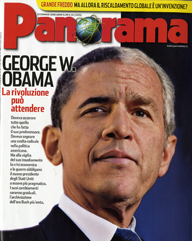
Traveling through-out Europe last week, I came back with tens of newspapers and magazines celebrating the inauguration of President Obama. It was a complete celebration. You would have thought that President Obama has been elected president in Belgium, Holland, France, Germany, Spain, and even as far as Finland. However, one magazine stopped me in my tracks: the Italian newsweekly Panorama. Their cover read George W. Obama and the picture is one of the best photo-shopped images that I have witnessed on a magazine cover in a long time. Judge it for yourself and let me know whether you agree with me or not. It pays to be different (sometimes)…

h1

Lessons from Abroad: Selling Content, and NOT Giving Content…

December 9, 2008

lexpresslexpressstyleslepointparis-match
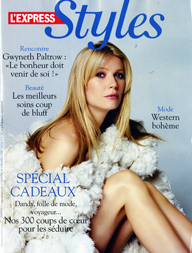
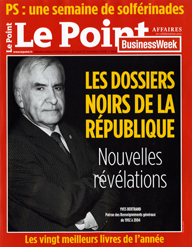
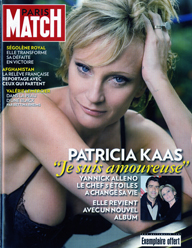
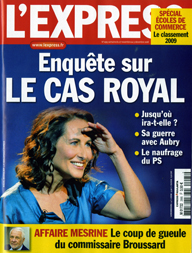
I know it is the season to give, but I am going to write today about selling rather than giving. For starters, I am amazed by the size of the so called news weeklies in Europe. Every time I am on an overseas trip I pick up some of the weeklies, regardless whether I can read them or not, and I am shocked how thick and heavy they are. Case in point the three weeklies I picked up in Paris. L’Express (with a supplement), Le Point and Paris Match. Each is a least 140 pages with one reaching the 200 page count. Paris is not unique, Rome is the same (some issues of Panorama hit the 350+ pages). Brussels, Amsterdam, London, Madrid and other European cities still are producing hefty-sized printed weeklies. So why them and not us? Why are our news weeklies limited to 68 to 80 pages most of the times? One thing I know for sure, it is NOT the size of the staff. Our magazines have at least double if not triple the staff of their European counterparts. So, is it the publishing model or is it the audience? Or is it as one of my colleagues at the University of Mississippi said, “My theory is that our society’s and culture’s anti-intellectualism is partly responsible.”
My theory has more to do with our publishing model. Few points to consider. Point number one, our publishing model is bloated. We SPEND much MORE to CREATE LESS content than our European counter parts. (Did you notice that even with all the cuts in our media industry there were no change in the size of the publications? Whether it is a magazine or a newspaper operating with a slimmer staff, a much slimmer staff, the publications are still the same size. Makes you wonder what were all these people doing!)
Point number two, the publishing model overseas still charges readers/customers for the content of the magazine. We give it away. The publishing model overseas still offers readers/customers content they can’t find in any other medium. We are losing our uniqueness in print. The publishing model overseas is adapting to the changing media consumptions of its audience ONLY when it is needed. Here we are talking a lot about change, we are changing for change sake, but in reality we are doing the same thing over and over and expecting different results every time; the Chinese define that as INSANITY.
Point number three: I know change is hard to come by. Yet, I also know that if we do not change we are going to die. We have to start catering to our Most Valuable Person. Our MVP is our reader turned customer. Our MVP is expecting us to Meet and exceed his or her expectations when in comes to content; Validate his or her expectations; and Preview what is coming in the days ahead. It is all about the content and the price of that content. I will feel much better if a magazine offers its selected readers/customers free subscriptions because they meet the criteria of “customers who count” than asking anyone to send $5 or $10 dollars for a one year subscription. Customers who count will be looking for “content that counts” and not just for any content delivered to any customer.
Drop your shotguns, and sharpen your lasers… The light at the end of the tunnel should not be the train coming.

h1

Back in the USA with a Refreshed View of Print and Newspapers

December 5, 2008

newspapercovers
After a 10-day trip to The Netherlands, France and Lebanon I am back in the office with a more refreshed view of the future of ink on paper and anything else that surrounds it. I will be devoting this space in the next few days on some of the observations that I have witnessed first hand about the future of newspapers, news magazines and print in general.
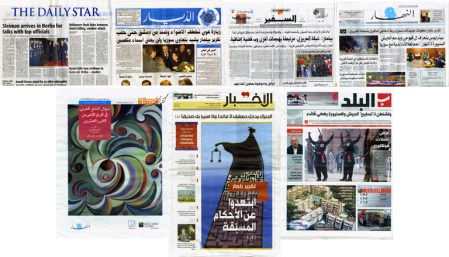
In Lebanon, my native homeland, I am amazed at the number of dailies that are still published. Every morning I had the choice of almost 20 newspapers, yes, you read that right. In this small tiny middle eastern country newspapers are still thriving. I bought 10 papers every morning (My mom still does not understand why I waste my money on paper… She held the same view since I was eight years old). Each paper provides its readers with a distinct point of view, a deep understanding of what is going on and an explanation of how you are supposed to react to what is going on. There are the independent papers, the political party papers and the so called supported/sponsored papers. Each has its own philosophy and understanding that makes the different television channels available look like child play by comparison.
Yes, there is internet in Lebanon, and yes there is a hefty number of television stations, and yes newspapers have their web sites and on line updates, yet no one is talking about the death of print. No one is digging their own grave by digging so deep in the ground that they are surrounded by nothing but the walls they’ve just created. They studied their content, adjusted their content and some adjusted their size to meet the needs, wants and desires of their readers. Lebanon is not alone; the same is true in the other two countries I have visited. Technology is thriving, but not at the expense of print (More about that in a later blog).
Folks overseas are watching us and learning from our mistakes. My question is, when are we going to learn from their innovations in print and its content?

h1

A Magazine Vote from The Netherlands…

November 5, 2008

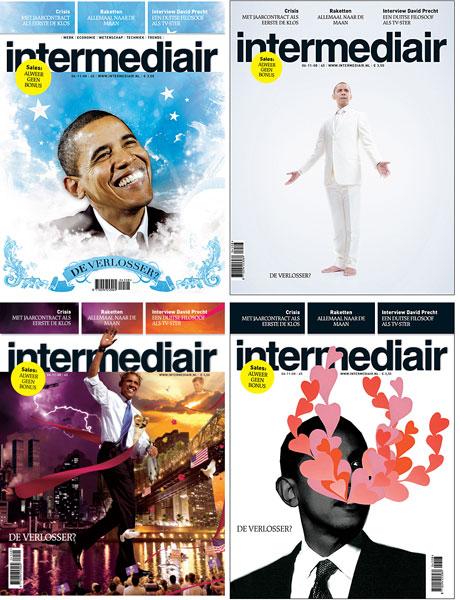
Here is an e mail I received earlier today from The Netherlands regarding the presidential elections and magazine covers.

a_1225793347

Hello Mr Magazine,

As i read your blog i wanted to give some attention on a special split-run-cover about Obama; beautiful artwork.
Printed BEFORE the result of the election, so this is a big gamble for the magazine from the Netherlands, Europe.

Cheers Jaap Biemans

Thank you Jaap.

h1

Greece adds Your… and Yet Another Reader-Generated Magazine is Born

October 24, 2008


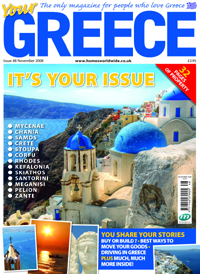
Reader-generated content is becoming something of the present. Before the web (BTW) magazines like Country and Taste of Home depended on the postal service to deliver bags of mail to create the reader- generated content that was the corner stone of the Reiman Publications’ empire before selling it to Reader’s Digest Association. After the web (ATW) JPG magazine and its publishing company 8020 pioneered the use of the internet to create printed reader-generated content magazines. Budget Travel magazine and This Old House both created magazines written completely by readers. In fact This Old House altered the name of the magazine to Your Old House to reflect the nature of the content.

Now in this ATW age, comes Greece magazine from the United Kingdom. Merricks Media’s John Weir tells me that the November issue of Greece magazine will be their first reader-generated issue and they too altered the name of the magazine from Greece to Your Greece.

I asked John about this ATW experiment with Greece magazine and the input he received from the readers.

He responded, “We had more than 500 entries to the reader issue. The really pleasing thing is the quality of both written submissions and picture entries -in many cases the quality and selection of pictures were better than the photo libraries!!”

And as to who had the final say in the selections of the articles and pictures, John said, “The editor and the editorial team did the selection of both articles and pictures and then contacted the readers who were successful in submitting the material.”

As for the major benefit from this experiment John told me that “In all cases, the major benefit to the magazine was the detail on the “undiscovered” Greece – all the tavernas, restaurants, tourist sights and antiquities that are both off the beaten track and real finds for tourists. They are exactly the sorts of things that one journalist cannot find but that thousands of readers can.”

Will he do it again? “We’ll definitely do it again – already we’ve seen a 30% rise in subscription applications and the emails have started coming asking when the next issue containing reader content will be put together,” he said.

John added, “If anything, it has exceeded expectations, and has encouraged us to get a more regular conversation going with readers.”
http://www.merricksmedia.co.uk

h1

Brits Bring Knowledge to the American Shores…

August 27, 2008


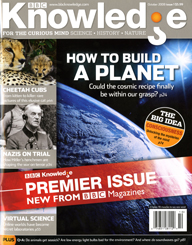
The British are coming… This time they are coming armed with Knowledge for “the curious mind.” Whether it is science, history or nature the first issue of the BBC Knowledge magazine does indeed offer a wealth of knowledge. Andy Benham, the magazine’s publishing director said in a press release that “the magazine has been poistioned to capitalize on the strength of the BBC’s brand in the U.S. and while the content will feed American interests, the Britishness and BBC-ness of the magazine are seen as being key assets, offering consumers a fresh alternative to what is currently on the market.”
Two things captivated me about the BBC Knowledge: the first is the variety of content and design that indeed sets the magazine apart of what is on the market. The mix of in depth stories and great stunning photography made me stop on every page of the 100-page premiere issue. I can feel the European flair of the magazine in every page, yet it also felt so American. A welcomed blend of that Euro-American mix that hopefully one day will find its way to more magazines and newspapers in our country. The second thing that grabbed my attention is the dependency on circulation rather than advertising to survive in today’s market place. It is something that I have been advocating for some time. The magazine carries a limited number of ads, but Benham comments in the press release that “our primary aim is to build a solid core of subscribers…we want to offer readers the best of BBC stories in the magazine while carefully considering the tone and quality of any potential advertisers.”
BBC Knowledge is indeed a breath of fresh air in today’s market place where more major magazine publishers are committing suicide with some of their magazines rather than attempting to adjust to the changing market place. Check BBC Knowledge here, buy a copy at the newsstand for $5.99 or order an annual (six issues) subscription for $29.95. Real prices for real content. Enjoy your imported knowledge for the week.

h1

Two Trend Setting Magazines…

July 10, 2008


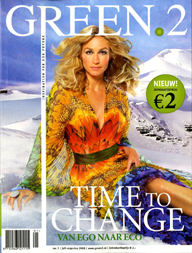
Two magazines have captured my attention lately and neither are published in the United States of America. The first one is brand new and the first issue is barely two weeks old. The name is Green.2 and the tag line is “Inspiration for the Future” and bills itself in its ads as “The first green glossy in the world.” The first issue was published June 25, and dated July/August 2008, in Amsterdam, The Netherlands. The magazine brings its cover story Time to Change to reality through the different stories and quotes inside the magazine. A well designed publication with a host of quotes including this one from Robert Redford, yes The Robert Redford: “Whatever you today, think what it means seven generations down the line.”
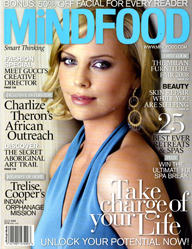
The other magazine just published its fourth issue dated July 2008 is MindFood and its tag line is “Smart Thinking.” And, smart thinking it is. It has been some time since I have seen a magazine with Food in the title and is not aimed at the lower part of the body but rather at the upper part, and specifically the Mind. Published in New Zealand on a monthly basis the magazine is a great example of 360 publishing. It is a well written, well designed glossy; it is online; it is tv; it is podcast; it is newsletter; it is gallery; it is puzzles; it is recipes; and it is shopping. I have been using MindFood in all my recent presentations both in Europe and the United States as yet another example of a great magazine utilizing the power of print and beyond. Talk about innovation in print, on line and off line. The total MindFood experience will leave you breathless. Check it here.
As long as we can create magazines such as Green.2 and MindFood, there is no fear or doubt about the future of print—not today and not tomorrow. I said it before and it is worthy of repeating time and time again: our problem is not in our medium, it is in our message.