Archive for the ‘Across the Pond’ Category

h1

BurdaInternational: Bringing The World Of Magazines and Magazine Media To A Global Audience – The Mr. Magazine™ Interview With Frances Evans, Director of International Licensing & Advertising, Burda Media

November 20, 2015

From Germany with love…

“I really like magazine media. I’ve loved it forever. And I really want our brands to succeed and I believe that magazine media is an excellent platform to reach consumers because it’s trusted quality brands that they love and I like to be in that value chain.” Frances Evans
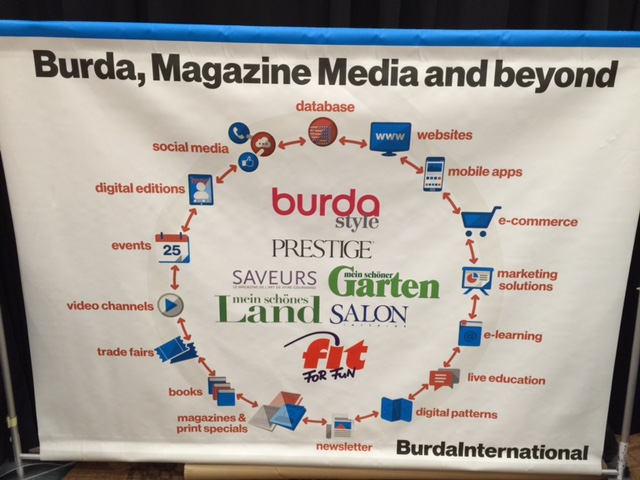
IMG_9545 Burda Media is a German magazine publishing company that started back in 1898 and BurdaInternational, one of its subsidiaries, currently publishes different magazines in 20 markets internationally. They are the licensures for brands such as Cosmopolitan, Marie Claire, Elle and many others throughout the world.

Frances Evans is the Director of International Licensing & Advertising with Burda and also a woman who is passionate about innovation and all of the brands that she handles and works with. From Asia to the U.K., Frances has her finger on the pulse of what’s going on around the globe with each of her titles, providing support, encouragement, innovation education and a strong team spirit that reverberates back to each and every member of Burda’s wide-reaching family and the audiences that love their magazines deeply.

I spoke with Frances during the FIPP Congress last month in Toronto, Canada, and we talked about Burda and the many titles they have. About the support and open communication she gets from the powers-that-be at the top of the company chain and how much she loves magazines and her job. It was a truly delightful conversation.

So, sit back, relax and enjoy the Mr. Magazine™ interview with a woman who knows her way around the globe and also around the world of magazine media, Frances Evans, Director of International Licensing & Advertising, Burda Media.

But first, the sound-bites:


IMG_9543 On an introduction to BurdaInternational:
BurdaInternational is a subsidiary of Burda Media, which is the holding company and the main company. Burda has four main platforms and one is the publishing business in Germany, so we have many brands in Germany, such as Harper’s Bazaar, InStyle, Out, Playboy, but also digital brands like Huffington Post and we also have a lot of digital properties attached to the magazine brands. The second part of the company which is the printing business is the legacy part of the business, so we have printers in Germany, France and a very big printing company in India. Then we have the digital business with brands such as the German version of LinkedIn, which is XING.com; a German version of something like TripAdvisor, it’s called HolidayCheck.com; we have brands that are related to computer sales, such as Computer Universe and Cyberport. And then we have a lot of VC capital invested in digital and technology properties.

On how easy or difficult it was to move from that legacy business of printing to where Burda is today:
I would say that the start was very difficult. Not many people really like change. You can’t always affect change with people who have been there for a long time, so yes, there was some changeover with the managers, but also in the way the managers were then briefed. So, a lot of change had to come from the top.

On that “aha” moment when she realized it wasn’t either/or, print or digital, but both:
The last two or three years have been a huge learning curve for all of us. The more we’ve done; the more we’ve seen what used to be those ancillary revenues grow and in some cases the magazine is the ancillary revenue and the other business is the revenue model and I think with some titles that’s happened.

On why it took so long for media professionals, described by some as some of the “smartest people on earth,” so long to realize the truth about print and digital, that they must both be utilized in this day and age:
It’s very simple actually. Media owners were used to making money with their eyes closed. And when you have your eyes closed, you don’t see change coming. You don’t see it because you’re not looking.

On the most pleasant moment she’s faced over the last three to five years:
There have been a couple of very pleasant moments. And they’ve all been emails. I had two emails this year from one particular editor of a brand and I’ve known her for a very long time. I spent a lot of time training her 10 years ago and she went off and went to work for another company, but now we’re back together again in way. I spent a long evening explaining to her pretty much what I’ve just explained to you, and if she wanted to not be obsolete that she would need to learn Google Analytics because it would help her to create better content for her title. We had this discussion in Paris on a Wednesday night. She got back to her country on Friday and on Friday one week later, I got a message from her saying that she had just completed a Google Analytics, Google Trends and Facebook training and she’d also had her team to do it and how amazed she was by this data. And what it could do for her, so that was probably one of the best things that has ever happened to me. Having these conversations and being able to explain to people that they can do things differently and then affecting change.

On the biggest stumbling block she’s had to face:
People. (Laughs) People don’t like change, in general. Most people find change difficult. It’s normal and it’s human nature. You have to create an environment where change is a part of the fabric of the society you’re working in and as I said earlier; people were used to making money with their eyes closed. So, it’s not always that easy to persuade people to do something that they don’t know how to do. You need to review short-term conflicts and medium-term conflicts that might arise during an innovation process. In an innovation process there will always be conflicts; there will always be areas where people are uncomfortable.

On whether she has a favorite country or magazine to work with out of all the international brands Burda owns:
No, not really. I like working with most of them actually. I have maybe a few brands that I work on more than others. We have four editions of Marie Claire and I like working with those guys, because Marie Claire is quite a difficult magazine. It’s not as easy to do as something like Cosmopolitan or maybe even Elle, because they’re very well-established brands. Marie Claire is also very well-established, but it has a much more journalistic approach to it. And it’s not always the number one brand on the market, so I like to work with those teams because they try really hard to innovate.

IMG_9544 On anything else she’d like to add:
We’re not really a top of mind licensure; we’re not somebody you’d come running to for content, because it’s German. But what we’ve seen in the last couple of years is that people will come to us for many other things. What we’ve done in the past few years is get people to want to partner with us or collaborate with us and that’s something that’s very special about the company, because I think we’re seen as a very collaborative and good partner.

On what motivates her to get out of bed in the morning:
I’m stubborn. (Laughs) I’m stubborn and I don’t give up. I really like magazine media. I’ve loved it forever. And I really want our brands to succeed and I believe that magazine media is an excellent platform to reach consumers because it’s trusted quality brands that they love and I like to be in that value chain.

On what keeps her up at night:
Planning my next diving holiday. (Laughs) I’m an avid diver and I spend hours researching dive sites and livable dive boats and where I’m going to find some hammerhead sharks. You have to have a nice balance and a couple of years ago I did my first professional qualification in diving, so if it all goes wrong with magazines I can always go and work as a dive master.

And now the lightly edited transcription of the Mr. Magazine™ interview with Frances Evans, Director of International Licensing & Advertising, Burda Media.

Samir Husni: Introduce me to BurdaInternational and tell me about your tagline, “Burda Magazine Media and Beyond.”

Frances Evans: BurdaInternational is a subsidiary of Burda Media, which is the holding company and the main company. Burda has four main platforms and one is the publishing business in Germany, so we have many brands in Germany, such as Harper’s Bazaar, InStyle, Out, Playboy, but also digital brands like Huffington Post and we also have a lot of digital properties attached to the magazine brands.

The second part of the company which is the printing business is the legacy part of the business, so we have printers in Germany, France and a very big printing company in India.

Then we have the digital business with brands such as the German version of LinkedIn, which is XING.com; a German version of something like TripAdvisor, it’s called HolidayCheck.com; we have brands that are related to computer sales, such as Computer Universe and Cyberport. And then we have a lot of VC capital invested in digital and technology properties. And I think I mentioned that we do Huffington Post Germany; we also have one of the biggest news sites in Germany called Focus Online. And so we have a very large digital section of the business.

And the fourth part of the business is BurdaInternational, which is all of the publishing activities outside of Germany. BurdaInternational is in 20 markets, ranging from Central and Eastern Europe, so Russia, Ukraine and Kyrgyzstan, Poland, Czech and Romania, to Brazil, Spain, Portugal, France, the U.K., India, five other markets in Asia, Turkey and some small startups in China as well.

So, we have all different types of businesses. Some of our businesses are crafting-related businesses, or food-related; so very small and very focused on verticals. And then a couple of our markets are big companies with a wide range of service magazines; also luxury and fashion titles. Just a wide portfolio like we have in Germany.

Our Asian business is based on high net worth individuals. They’re data-based driven products that are aimed at multimillionaires and their individual experiences and individual products aimed and geared at that very high society.

So, because we try to be a media and tech company, we’re trying all of the time to move beyond magazines and we’ve moved beyond magazines into magazine media quite successfully. A lot of our brands are really working in a 360° way. We have a very strong event business; in some cases, some very strong digital platforms and apps and all kinds of different things.

Now we’re trying to move into the next phase where we’re having really strong digital platforms with transactional capabilities. We want to be the electrical current between the advertisers on the one hand and the consumers on the other hand. So, we want to be in that value chain and be the connecting wire, but taking money out of the value chain as we go along.

Samir Husni: How easy was the transformation from the legacy business, which was printing, to where you are today, the 360° way of conducting business?

IMG_9542 Frances Evans: I would say that the start was very difficult. Not many people really like change. You can’t always affect change with people who have been there for a long time, so yes, there was some changeover with the managers, but also in the way the managers were then briefed. So, a lot of change had to come from the top.

And there was a lot of training involved and discussion and communication involved. And best-practice changes involved as well. Not only was it quite hard-going, but it was also quite expensive to train everyone and to communicate on a regular basis how to do things; to get people together to see what other people were doing.

Eventually, we managed that quite successfully, especially with some of our vertical brands. With those titles like BurdaStyle magazine, a magazine that is our legacy brand and was launched by the mother of our company’s owner, Hubert Burda; the magazine is very close to his heart, so we have to take great care to do any changes in a very good way. And for him the most important thing with the brand is to make sure that it transitions into the future. Now, if we don’t do anything with the title, it won’t transition, so it’s clear that we have to do certain things and it’s also clear that not everything we do will work immediately. So, there’s a lot of tweaking and testing that goes on.

With a lot of the digital products that we’ve tried, or certain platforms that we’ve tried, they might work for a while, or maybe that don’t work and they need a bit of tweaking and testing and rearranging. And then you learn because you have new partnerships, so you bring new things to the table and that helps you to improve.

I think to answer the question; what we’ve done is a lot of collaboration and training; a lot of communication and there’s been quite a few exchanges of people in certain roles. That doesn’t mean they’ve left the company, but they’ve been moved out of maybe that innovation role and other people who have been more innovative have taken over naturally as well.

For some people and in some countries it was harder, but then in other countries, they’ve had no choice. In the Ukraine, where 90% of your advertising revenue disappears in months, weeks or days, then you’ve got no choice but to innovate really fast and try to find revenue streams wherever you can and that’s not necessarily going to be a classical advertising revenue and it’s also most probably not going to be in distribution revenue, so it’s events or it could be all kinds of different things, trunk sales for fashion clients or doing innovation days for clients and helping them to innovate, doing shopping events or entertainment events; just a host of different things.

Samir Husni: Can you recall that pivotal moment or that “aha” moment where you said it isn’t either/or, print or digital, but rather we have to be involved in all of it?

Frances Evans: The last two or three years have been a huge learning curve for all of us. The more we’ve done; the more we’ve seen what used to be those ancillary revenues grow and in some cases the magazine is the ancillary revenue and the other business is the revenue model and I think with some titles that’s happened.

I’d say the last two or three years we’ve been working very hard. We knew that it had to be done and there have been quite a few changes within our company and in how our company has been set up in those last few years. So, that’s what we’ve been pushing significantly and no we have a lot of proof cases so there’s no way out for people who aren’t doing it any longer. There are proof cases for everything in all of the verticals and in all of the segments and now it’s the case of just getting stuff done.

I’d say the last three years have been instrumental, but I’d also say for the last 18 months of that we’ve known exactly what to do. And then going forward, there will be other things that we’ll need to do because the speed of change isn’t going to slow down according to Moore’s Law. It’s only going to get faster and faster.

Actually, one of the things that we try to preach to everybody is the way that they work today is going to change, more than what they’re doing, but the way that they do their work. In 2010, 100% of someone’s time was print-focused. And we have a paragraph now when we’re training someone that reads they need to be spending 40% of their time on print, which means they’re going to have to let stuff go, so we talk about decluttering quite a bit. Letting go of old projects that might not be as important and not focusing on that high quality project that isn’t as beneficial to them as spending another 20% of their week on Instagram and social media would be, and developing ideas for online.

I also think a significant part of the time that we spend nowadays has to be on education and on how to develop you. If you don’t learn what’s going on in the market and you don’t learn about technology, data, analytics and conversions, you will become obsolete. So, an essential part of what we do today is educating ourselves.

Samir Husni: Why do you think the “smartest people on the face of the earth,” as journalists and media professionals have been described, took so long to realize this stage where we are now, that print and digital must both be utilized and work together in this day and age?

Frances Evans: It’s very simple actually. Media owners were used to making money with their eyes closed. And when you have your eyes closed, you don’t see change coming. You don’t see it because you’re not looking.

Samir Husni: That’s a great answer.

Frances Evans: I think that’s actually it.

Samir Husni: In that three to five year journey, what was the most pleasant moment that you experienced and what was the biggest stumbling block you had to face and how did you overcome it?

Frances Evans: There have been a couple of very pleasant moments. And they’ve all been emails. I had two emails this year from one particular editor of a brand and I’ve known her for a very long time. I spent a lot of time training her 10 years ago and she went off and went to work for another company, but now we’re back together again in way. I spent a long evening explaining to her pretty much what I’ve just explained to you, and if she wanted to not be obsolete that she would need to learn Google Analytics because it would help her to create better content for her title. It would help her to create better content for her online products too. And she needed to learn how to use Facebook marketing and how to use Google Trends; to use data to create content and to understand her readership better. And it would help her to know if what she was doing was working or not and she could tweak and test accordingly.

We had this discussion in Paris on a Wednesday night. She got back to her country on Friday and on Friday one week later, I got a message from her saying that she had just completed a Google Analytics, Google Trends and Facebook training and she’d also had her team to do it and how amazed she was by this data. And what it could do for her, so that was probably one of the best things that has ever happened to me. Having these conversations and being able to explain to people that they can do things differently and then affecting change.

Then I received a follow-up email from her two weeks ago where she told me that she had increased her Facebook likes and shares over 10 times. The change was enormous. They’ve managed to increase the traffic on their website by spectacular amounts with no money. They’ve spent no money; they’ve just done what they have done very well. And they’ve been watching and learning and then applied it. And it worked. That I think probably is one of the best things that has happened to me.

Another one was I recently did a bunch of trainings for our team in Thailand and they liked it so much. They don’t all speak very good English, but the CEO thought it was so useful that she translated the entire training program into Thai and redid it herself a week later. And they sent me all of these photos, which was quite awesome because it was very unexpected that they would feel so grateful to have had that training.

Also, I was asked to set up some kind of content repository for those practices and I spoke to a trainee in the company about it and he said that I should use “Slack.” I told him that I had never heard of it, but he encouraged me to try it. He did a five minute presentation for me and I said OK, let’s use this; it’s free, so let’s give it a go.

Within two months I had 450 people from a 2,500-peopled company, of which I would guess a significant proportion do not speak English, but they’re on there and the number of messages is growing every week and the knowledge transfer is growing enormously and they now write to each other. I’m watching, so I can see it. They’re asking each other things like: has anyone tested this tool; has anybody tested that software and so they now have a platform, it’s significantly used by the digital team, but the publishers and the marketers and the salespeople exchange best practices or if they crack a new client with a certain, really cool idea, they share it. And the others pick it up and ask.

So, trying to change the company from a push mentality to a pull mentality has been incredibly difficult. But that tool has been quite successful in a very short period of time to do that. I personally find that quite successful. But I think it’s working because we can see best practices being put into place in sales, distribution, product and digital. And when you start seeing the speed of change then there has to be some money behind it. So, maybe this innovation will turn into money; we’ll see.

Samir Husni: And what has been the biggest stumbling block you’ve faced?

Frances Evans: People. (Laughs) People don’t like change, in general. Most people find change difficult. It’s normal and it’s human nature. You have to create an environment where change is a part of the fabric of the society you’re working in and as I said earlier; people were used to making money with their eyes closed. So, it’s not always that easy to persuade people to do something that they don’t know how to do. You need to review short-term conflicts and medium-term conflicts that might arise during an innovation process. In an innovation process there will always be conflicts; there will always be areas where people are uncomfortable.

Even dealing with that can create other conflicts, so it’s difficult. And it’s very challenging because it’s very stressful for a lot of people. Where there’s that much of a stress level ongoing, it can create a difficult environment, which can always be solved, but it just means that there’s a high level of pressure and you can feel it.

In the last three years, especially for us because we have a lot of business in Russia and Ukraine, which have been very difficult markets, we have business in Thailand which continuously every year something happens. When you just get back up on your feet, it happens again. Turkey is very similar as well. This year Malaysia has been a nightmare with the exchange rates. The exchange rates in Brazil have been a nightmare too. So, you can be doing everything right and the world can be against you. The exchange rates just are terrible and so whatever you’re doing, it’s working in local currency, but when you have to bring the money home, it doesn’t make for a pleasant story.

Samir Husni: From all of the countries that you work with; is there one that’s a favorite or a dear to your heart country or a favorite brand?

Frances Evans: No, not really. I like working with most of them actually. I have maybe a few brands that I work on more than others. We have four editions of Marie Claire and I like working with those guys, because Marie Claire is quite a difficult magazine. It’s not as easy to do as something like Cosmopolitan or maybe even Elle, because they’re very well-established brands. Marie Claire is also very well-established, but it has a much more journalistic approach to it. And it’s not always the number one brand on the market, so I like to work with those teams because they try really hard to innovate.

Recently, I’ve been doing a little bit more in Asia than I’ve done previously and that’s been quite a nice experience because they’re very grateful for the knowledge-sharing, so that’s been great. But I also have very high quality team of peer colleagues, so working in that team with a lot of incredibly intelligent people who are very dedicated and who are all fighting for the company. That’s actually a real honor to work with a group of people who are really dedicated and very good at what they do across the board.

I think the headquarter team that we have, the regional director and everyone else, is really a strong team and that’s really nice to have. Having colleagues that you can exchange with and who bring so much to the table that you can learn from them is terrific. And no one is very proprietary about information; everybody is open and we have a lot of discussions, and a lot of arguments as well, obviously, as you would, but everyone pushes together to propel the company forward whether it’s from exchanging their best practices or whether it’s giving people content for free because someone else’s country is having real problems and they need content. And that kind of thing is very unusual and I think that it defines the way that we work at BurdaInternational; it’s trial and error and collaboration.

We know what we need to do; we just don’t know how to get there, but nobody does. I don’t think anybody really knows the route, but we do know where we need to go and so we work together to get there. And we have a vision of what we want to achieve and we have the commitment from a shareholder and a group CEO to support us to do that.

Samir Husni: Is there anything else that you’d like to add?

Frances Evans: I think that a lot of the big international publishers have really great, amazing brands. And at Burda we actually license most of those brands. So we have a lot of inbound licensing as well. And we learn a lot from our partners. We’re very lucky because we do a lot of cool things, but we also learn from a lot of cool people too. And what we’ve done is built a really solid base in vertical and food publishing and garden publishing, those kinds of areas; crafting and things like that.

So, we’re not really a top of mind licensure; we’re not somebody you’d come running to for content, because it’s German. But what we’ve seen in the last couple of years is that people will come to us for many other things. What we’ve done in the past few years is get people to want to partner with us or collaborate with us and that’s something that’s very special about the company, because I think we’re seen as a very collaborative and good partner.

Samir Husni: What motivates you to get out of bed in the morning?

Frances Evans: I’m stubborn. (Laughs) I’m stubborn and I don’t give up. I really like magazine media. I’ve loved it forever. And I really want our brands to succeed and I believe that magazine media is an excellent platform to reach consumers because it’s trusted quality brands that they love and I like to be in that value chain. I used to work for an advertising agency. And I’d do projects; the client would like it; the client wouldn’t like it, and I liked that working with media. And working with magazines; people love what you’re giving to them. From a work perspective, I love the brands and I think that there’s a real reason for us to be there.

Now, we have to be there in many different ways than we were before. And that challenge and helping people to develop those platforms, I find incredibly challenging and very gratifying when it works.

Samir Husni: My typical last question; what keeps you up at night?

Frances Evans: Planning my next diving holiday. (Laughs) I’m an avid diver and I spend hours researching dive sites and livable dive boats and where I’m going to find some hammerhead sharks. You have to have a nice balance and a couple of years ago I did my first professional qualification in diving, so if it all goes wrong with magazines I can always go and work as a dive master.

Samir Husni: Thank you.
h1

Flow Magazine: For Life’s Little Pleasures And Paper Lovers Here, There And Everywhere – The Mr. Magazine™ Interview With Joyce Nieuwenhuijs, Brand Director & Irene Smit, Creative Director.

November 16, 2015

From The Netherlands With Love…

“I think it’s good to say that we are an example of the fact that print is not dead. And I think that we show the power of print, but I also believe in digital. The goal must not be about the medium, but the consumer’s needs. We started off in print and it’s more a luxury and a passion for women, but we can’t exist and grow fast internationally without digital and social media. So, certainly, we also need digital and not just print.” Joyce Nieuwenhuijs

“As for the digital part, we were never opposed to digital; it was just that we love paper so much that we put all of that emotion for paper into the magazine. And when we started Facebook and other social media, it helped us to grow very much.” Irene Smit

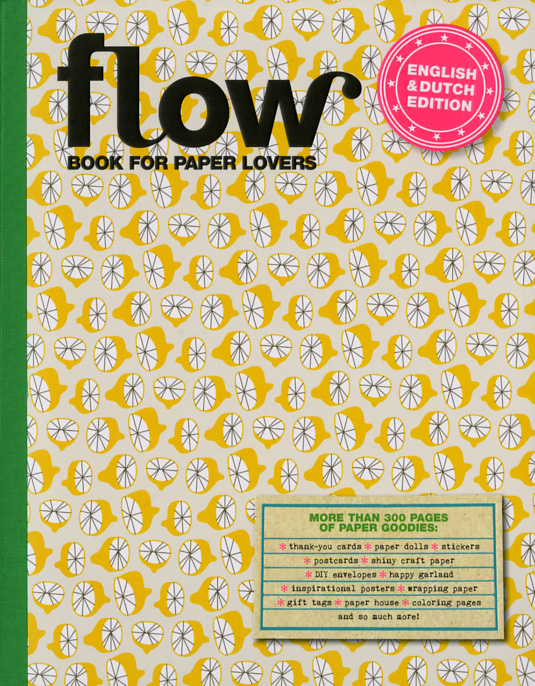
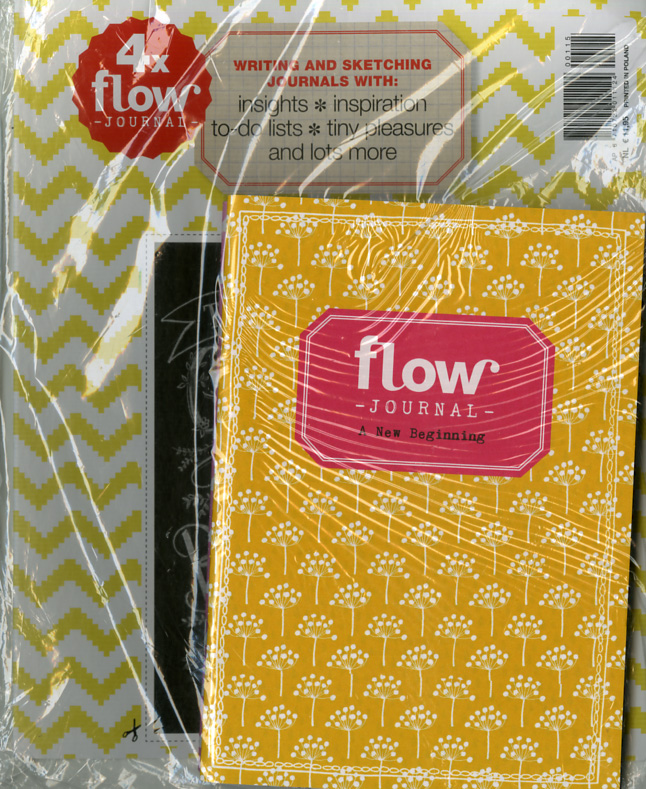
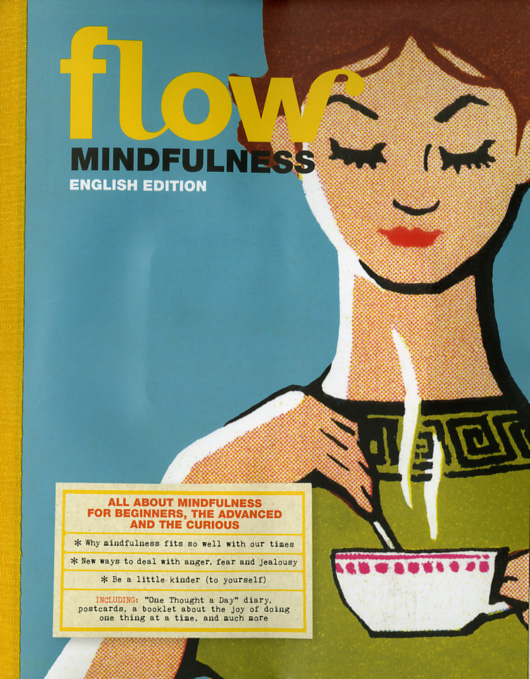
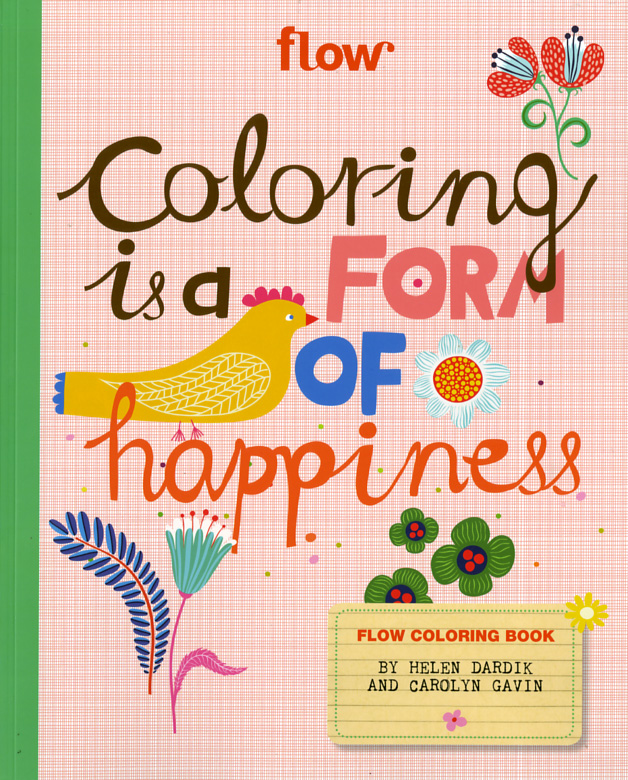
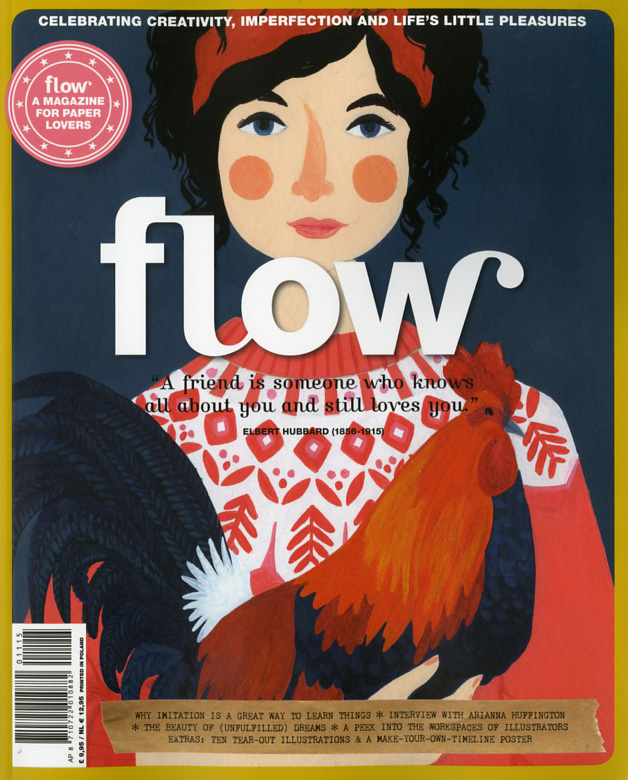
Flow3-2 Flow is a magazine that takes its time; it promotes celebrating creativity, imperfection, and life’s little pleasures. And it does so beautifully. The magazine and all of its special extensions and creative products are a print-lover’s dream. The different papers that are used with each issue are heavenly to the touch and mesmerizing to eye. It has become an international sensation with its many editions across the globe, having started out as a small Dutch magazine at the height of the economic crisis in 2008. It has since proven that if you follow your heart and your passion, anything is possible.

I still have vivid memories of holding that first issue of Flow magazine in my hands, together with its media kit, as the co-founders, flowing with joy (pun intended) presented me that first copy of the magazine. I was visiting the offices of Sanoma in The Netherlands where Joyce Nieuwenhuijs and Irene Smit work. Joyce is the brand director of Flow and Irene is the creative director. Both women have a firm grip on their seven-year-old’s hand and know how to lead it down the long and sometimes very winding road that is today’s magazine media world.

I spoke with Joyce and Irene recently and we talked about the concept of mindfulness and about how the magazine educates and encourages its readers to slow down and be conscious of every minute that they can. It was a look into a lifestyle that is both sought-after and needed in the busy world that we live in today.

So, I hope that you enjoy this respite with Joyce, Irene and Mr. Magazine™ as we take you into a world that will teach you how to go with the “Flow.”

But first, the sound-bites:

Joyce_Nieuwenhuijs On the birth of Flow Magazine (Joyce): Seven years ago we started Flow Magazine. It was 2008 and we got the go-ahead from the Board in July of that year. In September, the crisis began, so it was really a tough time to launch a new magazine. But actually, I think the crisis was a good point for us because everybody, especially Irene, the creative director, found a plan for the new concept, and a new magazine was born that didn’t exist until then.

On Irene’s recollection of the beginning of Flow (Irene):
I was with my Co-Editor-in-Chief, Astrid van der Hulst, and we were sitting with papers all around us, talking about what kind of magazine we would like to read. And we had both brought everything that inspired us with us, wrapping paper, little cards and all of these paper things. That was the time when we found out that we wanted to make a magazine that focused on living mindfully and being inspired.

On Flow presenting itself as the “anti-digital” and its DNA (Joyce): First, I think it’s good to say that we are an example of the fact that print is not dead. And I think that we show the power of print, but I also believe in digital. The goal must not be about the medium, but the consumer’s needs. We started off in print and it’s more a luxury and a passion for women, but we can’t exist and grow fast internationally without digital and social media. So, certainly, we also need digital and not just print.

flow2-1 On the biggest stumbling block she’s faced since the launch of the magazine (Joyce):
I only thought in opportunities in the beginning. But the challenge was Flow is an experience and you can’t just say that you have a new magazine, you have to see Flow before you can believe it’s a good idea. So, from the beginning really, that was a challenge. People get that Flow-feeling, and if they have a Flow Magazine in their hands; they’re in love. And for sure, if you have a brand that people love, you also have some people who don’t like it, but that’s OK, because you have to focus on the people who do love it. And if you’re mainstream; everybody likes you, but you’re not special. And I think that’s why Flow is good; it’s a love brand, but some people, mostly men, don’t understand what the magazine is. And from the beginning, we have to tell the story and that’s why I created the marketing strategy in ambassadors.

Irene Smit On how Irene coped with the economic crisis and the digital explosion in 2008 when the magazine was launched (Irene):
Well, the economic crisis was more of a natural thing that happened, because when we started the magazine it was something that we already felt. Everything was getting bigger, people were not getting happier, and the shift was to more expensive and purer products. So, I think the crisis helped us because the feeling that we wanted to put in the magazine was reflected in the people at that time. A lot of them recognized themselves in our magazine. And that was OK for us, certainly. I mean, the crisis wasn’t good for the sales market, of course, but I do think it helped to grow the magazine. A lot of people felt like there was no more welfare and were looking for new ways of living. And that’s what Flow is all about.

On the ambassador program that she strategized to get the magazine into the hands of people (Joyce):
Physically giving them their magazine to show them Flow, because before we did that, they couldn’t understand the magazine without it being in their hands; you couldn’t tell them the story. I think that’s another secret of Flow; it’s a true experience. It’s not just reading a magazine; it’s much more. And that’s why we’re able to grow the brand quickly.

On any cultural issues the magazine has faced crossing borders (Joyce):
That’s a good point. We thought when we launched Flow that we’d focus on the Dutch market because we didn’t really consider the international market eight years ago. But we received so much feedback from abroad, people who had seen it in airport shelves that we knew that we had to do something internationally, but we had to figure out how. We wondered if we’d need to change our content for something more local or culturally different. But that’s why the prices for us and the changes in the world are so good, because in the world we have the oppressions; everybody is under the same pressures with their jobs or working very hard to balance their daily lives. It’s a worldwide challenge. And digital really helped us because the world is nearby now. Eight years ago it wasn’t so nearby.

flow5-4 On defining Flow Magazine (Joyce): What is Flow? The essence of Flow is that we are a magazine that takes its time. And we help people to learn to do the same. And it helps people look for the imperfections, because we are living in a world of perfections. Flow shows you that life doesn’t have to be perfect.

On the success of Flow (Irene): The success is that we really make the magazine ourselves; it comes from us. And every Wednesday, we still sit together and drink coffee and come up with new ideas and new products. And we have to find time for that. We are creative directors, but we’re magazine makers as well.

On the most pleasant moment for her during the last seven years (Joyce):
When you’ve worked with Flow from the beginning; I think working with such a creative team every day and growing from a small magazine into a big, strong international brand makes each day so very pleasant. Also, the moment that we broke even and the return on our investment became really big was great.

On Irene’s most pleasant moment (Irene):
The best moment for me is that Astrid and I sit together every Wednesday morning in a very nice coffee shop and we drink coffee together and talk about everything that’s going on. New products we want to make; problems we have to deal with, just everything that’s going on.

On anything else she’d like to add (Joyce):
I think we have always had, and I will always have, a big ambition to grow the brand. But I believe it’s good to start small; think big, act small. That’s the secret of how we made Flow such a big brand. Nowadays, you have to learn by doing and you have to be an entrepreneur. More and more in the big challenge that we have as publishers you have to stay innovative with your product. And content is key for sure.

On what motivates her to get out of bed in the morning (Joyce):
Life is good, for sure. You have to claim the energy and look forward to doing things with your family. I love my job and love growing the brand. And being a part of today’s transformation gives me energy.

On what motivates Irene to get out of bed in the morning (Irene):
Truthfully, my children. (Laughs) My family life is still the most important thing to me. And my work life is important as well, and I love what I do. It’s so nice that I can invent new products and think about new products. I get a lot of letters from people worldwide who tell me that the magazine helps them so much. I even received a letter from someone in London who told me that her husband had just died and she read the magazine and it helped her tremendously. And I love these readers; they’re so special to us. Their letters mean so much.

On what keeps her up at night (Joyce):
I learned that if you get up very early and you work very hard, you have to sleep. (Laughs) We can work 20 hours, for sure, there is enough to do. But sometimes you have to take off and I learned that from Flow.

On what keeps Irene up at night (Irene): I never stay up at night. (Laughs) I sleep a lot. I go to bed very early and I’m so tired, I fall right to sleep.

And now the lightly edited transcript of the Mr. Magazine™ interview with Joyce Nieuwenhuijs, Brand Director and Irene Smit, Creative Director, Flow Magazine.

Samir Husni: Joyce, Flow Magazine is your baby.

Joyce Nieuwenhuijs: Yes, it is.

Samir Husni: Recreate that birth moment for me.

Joyce Nieuwenhuijs: Seven years ago we started Flow Magazine. It was 2008 and we got the go-ahead from the Board in July of that year. In September, the crisis began, so it was really a tough time to launch a new magazine. But actually, I think the crisis was a good point for us because everybody, especially Irene, the creative director, found a plan for the new concept, and a new magazine was born that didn’t exist until then.

We actually started Flow Magazine in November, 2008 and now seven years later, it’s growing very fast into a really beautiful, strong brand. The process we used was learning by doing and not starting with big budgets and huge print runs, but as entrepreneurs, with at first, a frequency of just six issues, so that we could grow the brand and surprise the readers.

From the beginning there was a lot of demand from readers in the Netherlands, but also from abroad. They couldn’t read it, but they thought it was amazing. It has grown very fast and now we have eight issues per year and six specials for the Netherlands, but we also have two licenses in Germany, France and the international edition in 20 countries.

So, in seven years and through entrepreneurship, we have 39 products now and we’re really proud of the baby we gave birth to in such chaotic times as it was for media then. Flow is a magazine that will give you rest in your hectic life.

Samir Husni: As the creative director, Irene, can you recall that moment of conception for you?

Irene Smit: Yes, very much. I was with my Co-Editor-in-Chief, Astrid van der Hulst, and we were sitting with papers all around us, talking about what kind of magazine we would like to read. And we had both brought everything that inspired us with us, wrapping paper, little cards and all of these paper things. That was the time when we found out that we wanted to make a magazine that focused on living mindfully and being inspired. We wanted to use four lines to describe the magazine.

So, we came up with those four lines that first day. I can remember vividly we were saying how nice this was or that was, and let’s do this or that. (Laughs) And we both did a mindfulness course, and mindfulness wasn’t as big then as it is now. But we really felt like it brought us so much.

We both finished the mindfulness course together and we learned so much. The idea of life and just accepting it as it is more, and to try and not to struggle so much. And this concept gave so much relief that we decided to use the idea for a magazine.

And I think that’s part of Flow’s success now; the message that you shouldn’t work too hard or try to be happy all of the time, just accept life with its ups and downs and be as happy as you can.

Samir Husni: We live in a digital age, and I don’t think anyone would argue with that statement. However, Flow presents itself as the “anti-digital.” So, what’s the DNA? What’s the philosophy behind Flow and can you describe the magazine a little bit, Joyce?

Joyce Nieuwenhuijs: First, I think it’s good to say that we are an example of the fact that print is not dead. And I think that we show the power of print, but I also believe in digital. The goal must not be about the medium, but the consumer’s needs. We started off in print and it’s more a luxury and a passion for women, but we can’t exist and grow fast internationally without digital and social media. So, certainly, we also need digital and not just print.

But the secret of Flow is we are a perfect fit for women, men too of course, but women lead very busy lives and it’s not only in the Netherlands, it’s worldwide. And I think that’s the secret behind how we have grown so fast. Also from abroad too, because times are changing; everybody has digital products and we all need a break from our hectic lives and Flow gives you the present of staying in the present, and Flow is a tool that they can use as me-time for themselves.

Samir Husni: Irene, when you brought the idea for the magazine to the powers-that-be, what was the initial reaction? Was everyone jumping up and down and telling you what a great idea it was?

Irene Smit: (Laughs) No, no one said what a great idea it was.

Samir Husni: (Laughs too).

Irene Smit: We tried to put it in a magazine format and it was a little bit difficult. And there were a lot of people who had ideas about it; some said we should go this way and some said that way. But we said just believe in us and let us do it how we think we should do it. If not, it will be just another magazine like all of the others out there. If you want to do things differently, you need to skip all of the other people and let us do it. So it was a struggle to get everyone to agree, for sure.

Samir Husni: What about you, Joyce; I remember when I first met you and the magazine was just coming out. A lot of people were happy and excited about the magazine, but some were skeptical and wondered could it really work; there were so many different types of paper; so many different sizes inside the magazine and pullouts. It was and continues to be a very interactive magazine with the readers. What was the biggest stumbling block or challenge that you faced since the launch and how did you overcome it?

Joyce Nieuwenhuijs: I only thought in opportunities in the beginning. But the challenge was Flow is an experience and you can’t just say that you have a new magazine, you have to see Flow before you can believe it’s a good idea. So, from the beginning really, that was a challenge. People get that Flow-feeling, and if they have a Flow Magazine in their hands; they’re in love. And for sure, if you have a brand that people love, you also have some people who don’t like it, but that’s OK, because you have to focus on the people who do love it. And if you’re mainstream; everybody likes you, but you’re not special.

And I think that’s why Flow is good; it’s a love brand, but some people, mostly men, don’t understand what the magazine is. And from the beginning, we have to tell the story and that’s why I created the marketing strategy in ambassadors. So, we started with a small ambassador group and then it grew to a wider reach. I invested a lot, not in big marketing budgets, but just in giving people that Flow-feeling, a sample of Flow.

We didn’t have social media until 2008; can you imagine? (Laughs)

Samir Husni: (Laughs too).

Joyce Nieuwenhuijs: We invest very much in marketing personally to give Flow to people, and now, when we launched in Germany and France, I said we have a very big marketing tool that doesn’t cost anything; we can use social media to spread the word. And we definitely spread the word with social media. So, that’s why social media is so important to us. It helps spread the word of Flow internationally.

Samir Husni: So, the ambassador program is actually having people physically taking the magazine?

Joyce Nieuwenhuijs: Physically giving them their magazine to show them Flow, because before we did that, they couldn’t understand the magazine without it being in their hands; you couldn’t tell them the story. I think that’s another secret of Flow; it’s a true experience. It’s not just reading a magazine; it’s much more. And that’s why we’re able to grow the brand quickly.

From the beginning, the strategy has been to expand the brand and form brand awareness in order to entrepreneur with other products in the magazine, especially products such as stationery. To build the brand and bring awareness is important because the engagement was so strong from the beginning. People love the brand and they want to have more of it. That’s why we now have 39 products, to build the brand. And I think it’s good because with Flow, your readers are really investors, so that’s why we invested a lot in the marketing plan. But that’s also why my strategy is to expand the brand in a healthy way, not too strong as a concept, but give surprises to the reader and encourage them to buy new products.

Samir Husni: Irene, as you were ready to do that first issue, something major was about to take place on the world’s stage.

Irene Smit: Yes, the economic crisis.

Samir Husni: The economic crisis and digital. We had both exploding at that time. So, how did you cope with both of those dramatic happenings during the launch of a brand new magazine that uses – how many types of paper?

Irene Smit: I don’t even know. I think maybe eight or nine every edition. Well, the economic crisis was more of a natural thing that happened, because when we started the magazine it was something that we already felt. Everything was getting bigger, people were not getting happier, and the shift was to more expensive and purer products.

So, I think the crisis helped us because the feeling that we wanted to put in the magazine was reflected in the people at that time. A lot of them recognized themselves in our magazine. And that was OK for us, certainly. I mean, the crisis wasn’t good for the sales market, of course, but I do think it helped to grow the magazine. A lot of people felt like there was no more welfare and were looking for new ways of living. And that’s what Flow is all about.

As for the digital part, we were never opposed to digital; it was just that we love paper so much that we put all of that emotion for paper into the magazine. And when we started Facebook and other social media, it helped us to grow very much. We have so many followers on Instagram and we have illustrators and crafters worldwide that we connect with on Instagram and Flow readers too. Digital helps us a lot to make connections so that we can be in contact with fans and readers all over the world. Also stay in touch with creative people who can help spread the word about Flow.

When we connect with someone like an illustrator from another part of the world, such as Australia, it’s a really great feeling to know they’re reading your magazine and you have that brand awareness.
flow 1-1

Joyce Nieuwenhuijs: That’s a good point. We thought when we launched Flow that we’d focus on the Dutch market because we didn’t really consider the international market eight years ago. But we received so much feedback from abroad, people who had seen it in airport shelves that we knew that we had to do something internationally, but we had to figure out how. We wondered if we’d need to change our content for something more local or culturally different.

But that’s why the prices for us and the changes in the world are so good, because in the world we have the oppressions; everybody is under the same pressures with their jobs or working very hard to balance their daily lives. It’s a worldwide challenge. And digital really helped us because the world is nearby now. Eight years ago it wasn’t so nearby.

We also have a lot of freelancers working internationally with us, we have a really international team, and we work many people from abroad, so that’s also a really nice thing. Also, with our digital and social media, everyone is looking on their emails or mobile devices for us and our videos.

Flow allows you to relax and step out of the busy world and that means that we are for everybody, that concept is universal.

Samir Husni: How does it feel, Irene, seven years later, and Flow being your creation, to see all of the imitations like Flow in the marketplace today? When you came there was nothing like it on the market. But today, almost everywhere I travel, people tell me how much they would love to do a magazine like Flow. Does that fact change anything about the present creation of the magazine; the fact that so many others, either have imitated it or want to? Your feet may be still on the ground, but is your head in the clouds with all of the admiration for the magazine?

Irene Smit: No, our heads are the same as they were in the beginning. (Laughs) We just want to create the most beautiful magazine that we would want to read ourselves. We still put everything from our lives into the magazine. It still feels very much like our baby and all the competitors aren’t real, because to me, some of them don’t come from the heart. And I think a reader can feel that. People may use a different kind of paper and try to do a remake of Flow, but it’s not the same. And that’s why I don’t think they’ll ever be as successful as our magazine.

It feels strange that it’s grown so big, because in daily life we’re still doing the same work. The success is that we really make the magazine ourselves; it comes from us. And every Wednesday, we still sit together and drink coffee and come up with new ideas and new products. And we have to find time for that. We are creative directors, but we’re magazine makers as well.

Samir Husni: What about you, Joyce; if somebody asked you to define Flow today, seven years later, what would you tell them?

Joyce Nieuwenhuijs: What is Flow? The essence of Flow is that we are a magazine that takes its time. And we help people to learn to do the same. And it helps people look for the imperfections, because we are living in a world of perfections. Flow shows you that life doesn’t have to be perfect.

Samir Husni: What has been the most pleasant moment for you during the last seven years?

Joyce Nieuwenhuijs: When you’ve worked with Flow from the beginning; I think working with such a creative team every day and growing from a small magazine into a big, strong international brand makes each day so very pleasant. Also, the moment that we broke even and the return on our investment became really big was great.

But for me, working with a good creative team is what makes every day pleasant and we also love being entrepreneurs. When we are here at FIPP and have become one the growing brands, I will be even more proud of the magazine.

Samir Husni: And Irene, what has been the most pleasant moment for you during the seven years?

Irene Smit: The best moment for me is that Astrid and I sit together every Wednesday morning in a very nice coffee shop and we drink coffee together and talk about everything that’s going on. New products we want to make; problems we have to deal with, just everything that’s going on.

We drink coffee for two hours and then everything feels OK and we come up with a lot of new ideas and those are the best moments of the week. And I think those two hours are some of the most successful hours of Flow. And we have to fight for the time to keep those Wednesday morning coffee sessions.

Samir Husni: Irene, what has been the biggest challenge that’s faced you over the seven years and how did you overcome it?

Irene Smit: The growth is still the most difficult challenge for us. To find a way to grow, but still keep this feeling that you’re a small team with quick decisions. There are more meetings now and more people that we have to inform and who are involved in the magazine.

Also the international teams; it’s difficult for us to tell them how to make the magazine because it’s just something that we do on our intuition. Now, we have to write down or tell them how we do it. (Laughs) How do you tell them when it’s just a feeling that we have? So, it’s a challenge to explain it, to let it grow, and to let it go a bit. Letting go is the most difficult for me.

Samir Husni: We have the Dutch, French and German editions and the English one in 20 different countries. Irene, can anyone actually claim that this is a Dutch thing – that Flow comes from the Dutch mentality?

Irene Smit: I think one of the strengths of Flow is that it’s not your typical Dutch magazine, because the Dutch magazine is now already so international because we work with a lot of illustrators. All our ideas about life and mindfulness, we put them into articles from our daily lives and we get letters from all over the world: Australia, Brazil and Canada. They tell us that we feel like their friends because we all have the same life and the same ideas.

I think this feeling and the things that we write about are so worldwide and that’s why the magazine is such a success. People recognize themselves in the magazine. There is an international vibe throughout the magazine that no matter where you’re from you can relate to it.

Samir Husni: Do you and your Co-Editor-in-Chief, Astrid, live the relaxed Flow-lifestyle and are you very close friends?

Irene Smit: No, we don’t live the relaxed Flow-lifestyle, because if we did we wouldn’t have the inspiration for the magazine anymore. (Laughs) We always say that our lives aren’t perfect and that’s what we write about, the things that come up in our lives. We are very good colleagues, but try not to be real friends. We are in a working relationship and we try not to do anything too personal together. We already spend a lot of time together at the office. And we live in the same town.

We think alike very much; we feel the same vibes when we enter a room. We get along so well together that it makes it very nice to work on the magazine.

Samir Husni: Joyce, is there anything else you’d like to add?

Flow4-3 Joyce Nieuwenhuijs: I think we have always had, and I will always have, a big ambition to grow the brand. But I believe it’s good to start small; think big, act small. That’s the secret of how we made Flow such a big brand. Nowadays, you have to learn by doing and you have to be an entrepreneur. More and more in the big challenge that we have as publishers you have to stay innovative with your product. And content is key for sure. The medium isn’t the goal, but it’s the consumer’s needs that we have to focus on, and growing our brands.

Samir Husni: Irene, is there any message you’d like to give your readers worldwide?

Irene Smit: It’s good to be more conscious of your time. I think that’s one of the biggest problems in the world at the moment. I just received some wonderful articles recently about mindfulness and all the pressures people have on their time. We’re always putting new stuff in our head. We should try to be more conscious of time off and empty our heads. Just be idle for a while. It’s very important to rest your mind.

Samir Husni: Joyce, what motivates you to get out of bed in the morning?

Joyce Nieuwenhuijs: Life is good, for sure. You have to claim the energy and look forward to doing things with your family. I love my job and love growing the brand. And being a part of today’s transformation gives me energy.

Samir Husni: And Irene, what about you?

Irene Smit: Truthfully, my children. (Laughs) My family life is still the most important thing to me. And my work life is important as well, and I love what I do. It’s so nice that I can invent new products and think about new products. I get a lot of letters from people worldwide who tell me that the magazine helps them so much. I even received a letter from someone in London who told me that her husband had just died and she read the magazine and it helped her tremendously. And I love these readers; they’re so special to us. Their letters mean so much.

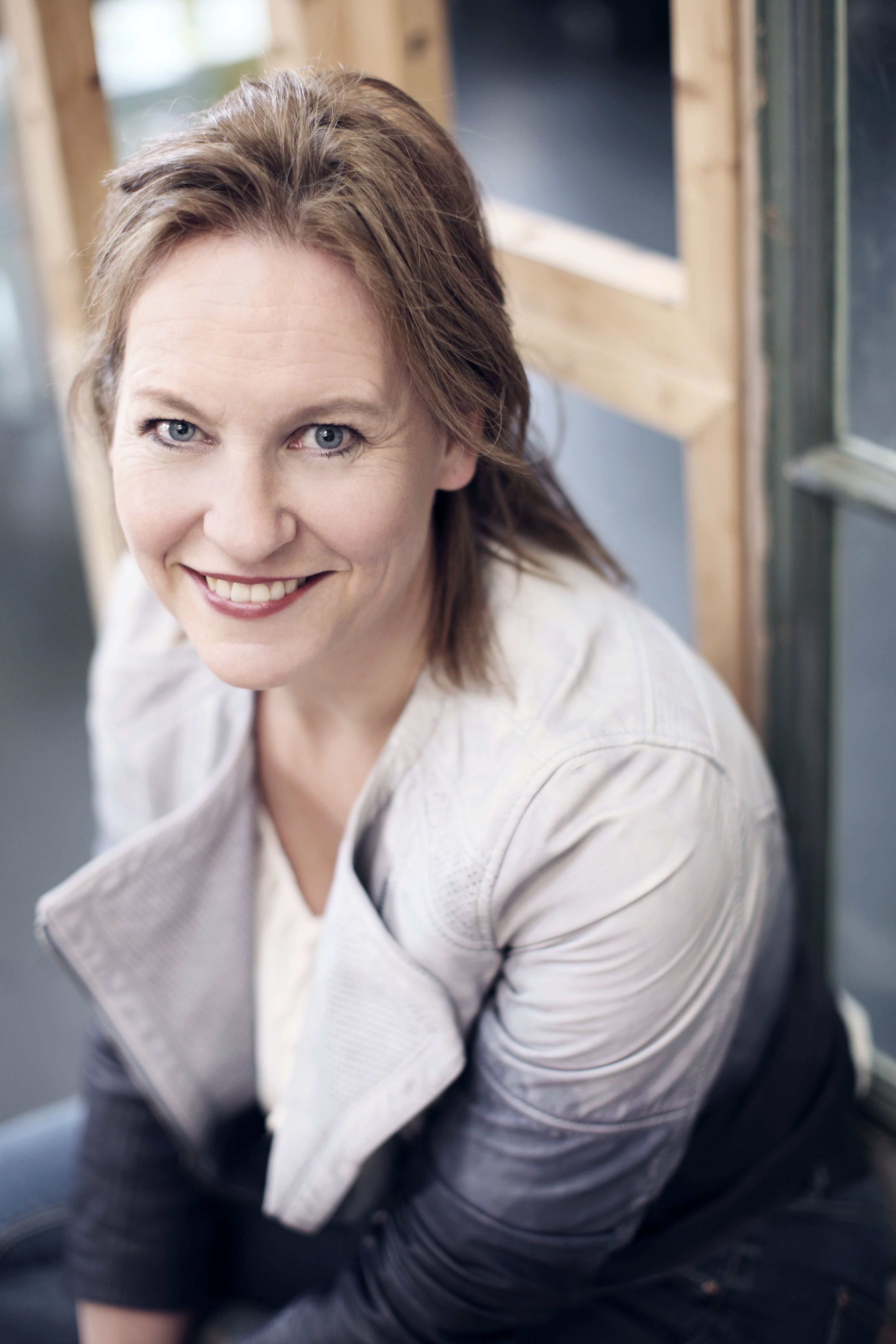
With Joyce at the FIPP Congress in Toronto, Canada.

With Joyce at the FIPP Congress in Toronto, Canada.

Samir Husni: Joyce, my typical last question; what keeps you up at night?

Joyce Nieuwenhuijs: I learned that if you get up very early and you work very hard, you have to sleep. (Laughs) We can work 20 hours, for sure, there is enough to do. But sometimes you have to take off and I learned that from Flow. Sometimes you have to take off and be in the present. A good sleep will help you to grow.

Samir Husni: And Irene; what keeps you up at night?

Irene Smit: I never stay up at night. (Laughs) I sleep a lot. I go to bed very early and I’m so tired, I fall right to sleep.

Samir Husni: Thank you both.

h1

Marie Claire Spain: Speaking The Language Of Women Internationally With Humor, Style & Class – The Mr. Magazine™ Interview With Editor-In-Chief, Maria Pardo de Santayana

November 13, 2015

From Spain with love…

“I think the printed magazine’s mission is to curate all of these things that might be of the reader’s interest and put it into the perfect format that you don’t need to plug in and charge; in fact, you don’t need to do anything with it except enjoy it. You can take it with you everywhere and you can keep it forever. It’s a good photography of the time that it shows. If you see the magazine in 20 years’ time and you pick it up and read it; you’ll find that it’s a perfect history book because you can see the time represented in its pages vividly.” Maria Pardo de Santayana

MC2-2 Marie Claire is a unique fashion magazine. Mr. Magazine™ likes to call it “the fashion magazine with a conscience,” because of the high bar it sets for a rigorous standard for journalism. It is a fashion and beauty magazine, of that there’s no doubt, but it doesn’t shy away from the important issues that matter to women in the 21st century.

And Marie Claire Spain is the perfect international extension of the brand by offering its readers ideas for improving both their life and their personal image, by providing the latest trends, with a sense of humor and from an avant-garde but also close point of view.

Maria Pardo de Santayana is the editor-in-chief of Marie Claire Spain and has a passion for the brand that is palpable. Maria comes from an extensive magazine background, having worked at GQ for many years and also Hachette Spanish Press. She has a journalism degree in Information Sciences and a broad range of knowledge when it comes to what it takes to be at the helm of a magazine like Marie Claire Spain.

I spoke with Maria recently and we talked about her penchant for humor when it comes to most situations, whether good or bad. Her spirit of joy and laughter and her take on life in general was contagious as it spilled over into our conversation and made the interview wonderfully light-hearted and filled with confidence for her brand’s future.

Maria is a woman who has seen disappointment, but talks it all with a grain of salt as she keeps the optimism flowing and never forgets her passion and love for magazines.

So, I hope you enjoy this Mr. Magazine™ conversation with a lady who can make you laugh and make you admire the many facets of life in the magazine realm.

But first, the sound-bites:


FullSizeRender On the day in the life of an international magazine editor:
It depends very much on the time of the year. A normal day within the office starts with our first meeting with the team to look at the job that needs to be done for that day. And then the rest of the day moves on between meetings, readings, approvals and more meetings…(Laughs), more readings, and then giving birth to new ideas for the magazine.

On whether digital has made her life as an editor easier or harder:
Digital has made life 24/7; now you can’t close the office ever. And there are no Saturdays and Sundays. Of course, in some ways it’s made life easier too because technology is always helpful, but it also requires more dedication.

On how she balances the international theme of the magazine with the Spanish content:
Marie Claire is a brand that really takes care of its uniqueness and its DNA. More than that, because of Marie Claire’s long history in Spain, more than 20 years, it’s very well-established and it has managed to create its own uniqueness. In terms of the balance, it’s quite simple because the French and the Spanish women are quite similar; they’re both European and western; they share, more or less, the same difficulties and the same struggles and ambitions. So, it’s much easier, I believe, for our European Marie Claire to become nearer to the core of Marie Claire than maybe one from Asia, America, South Africa or Australia. For us, it’s much easier because we are really near the French culture.

On whether her entire team is tuned into the DNA of Marie Claire Spain:
One good point that I have with my team is that I have people from the founding of Marie Claire Spain, so they are still working here and they’re really able to teach me about the DNA of Marie Claire because these people have been working here for over 20 years, so they know a lot about Marie Claire.

On what motivates her to get out of bed in the morning: The thing that I like most is magazines. It’s always been like that with me since I was 14 years old. When you have the opportunity and the chance to work in something that you like so much; you don’t feel like it’s a job. It’s more like your hobby or something that you love to do, so there are not enough hours in the day for you to enjoy it. And that’s one of the things that motivate me. My father wanted me to be an engineer because I have a mathematical brain. I was a very good student; all A’s or A+’s. But I really liked magazines and that’s why I’m dedicated to them.

On any stumbling blocks she’s had to face:
I started as a journalist and I liked it very much and I believe that I have good managerial skills. I was moved and promoted to the management side. I was an Internet Director for five years for a large retail company and then I moved into an executive position and it was fun. I received good information from the MBA and I learned a lot, but I wasn’t happy. Of course, I was well-paid, but I just wasn’t happy. For me it’s very important to be happy and have fun where I work. So, I had to come back to the magazine business, but when I left I was just a normal editor, but I was a director at the time so I wanted to try to find a way to come back in a higher position. It took quite a lot.

On whether some of the covers of the spinoff specials that Marie Claire is publishing are a reflection of her own personality, such as “Shoes First”:
Yes, they are. I believe that life without humor is useless. You have to laugh at yourself and at all of the bad situations that might come up. It’s not like being superficial, but it’s taking life with optimism. And that’s what we want to reflect. As I take my life with a lot of humor; I find that it is very important to life itself and to the magazine. And trying to make a 100-page supplement about shoes could bore someone to death, going from shoe-to-shoe-to-shoe. So, if you don’t put humor into that subject, it will be dull and boring.

On whether she believes in the future of print in this digital age:
Yes, absolutely I do, because I think that printed magazines work as the perfect curator for all of these platforms, the visual and audio impacts of digital; all of these things coming up to you in notifications, the nonsense and the important things. This generation has access to more information than ever, but less analyzed. So you see a lot of things, but there is so much that you don’t even have the time to take in what you’re seeing.

On what keeps her up at night:
Marie Claire. (Laughs) You know what, the thing is I was telling someone, when I go on holiday I can’t sleep the night through, but then when I start working again; your mind needs several hours of sleep and then it turns on. My head is full of Marie Claire in every way, Marie Claire ideas; Marie Claire people; Marie Claire stories, and so my mind is just awake all of the time.

And now the lightly edited transcript of the Mr. Magazine™ conversation with Maria Pardo de Santayana, Editor-In-Chief, Marie Claire Spain.

Samir Husni: Tell me about the day in the life of an international magazine editor, such as Marie Claire, in Spain?

IMG_9069 Maria Pardo de Santayana: It depends very much on the time of the year. A normal day within the office starts with our first meeting with the team to look at the job that needs to be done for that day. And then the rest of the day moves on between meetings, readings, approvals and more meetings…(Laughs), more readings, and then giving birth to new ideas for the magazine.

When it comes to the first of the season, things change a little bit because we have to meet much more in terms of fashion to try and plan the whole season. And then we do that again for beauty and another for the covers. And then we have all of these spinoffs and supplements that we try to create.

So, it’s always a lot of work, but then again when we are at the shows, all of my days off are there and I have to do everything by mobile.

Samir Husni: It’s my understanding that the job of editors worldwide have dramatically changed since the dawn of the digital age. You’re no longer just editing a printed magazine, but you have so many other outlets that you have to care about. If you compared your life at GQ when you were there, and your life today at Marie Claire; did digital make life easier on you?

Maria Pardo de Santayana: Not at all. It’s become more troubling. When I was at GQ I was the deputy editor, I wasn’t the editor-in-chief, so I had a bit of an easier time, because I didn’t have the responsibility or the stress that comes with the editor-in-chief position. And also because the men’s market in Spain is much smaller than the women’s, so it’s a bit more relaxed work.

In terms of digital, the peculiar side of my job position at Marie Claire is that I don’t really take care of the website because it has an independent team. And they work it separately. So, for me it was more complicated at GQ because I did take care of more of the digital side, with GQ.com, but not here.

Digital has made life 24/7; now you can’t close the office ever. And there are no Saturdays and Sundays. Of course, in some ways it’s made life easier too because technology is always helpful, but it also requires more dedication.

Samir Husni: With Marie Claire specifically; with this magazine I always like to refer to as “fashion with a conscience,” as I flip through the pages of the magazine, there are a lot of similarities with all of the other Marie Claire international editions and there are also unique facets to the magazine. How do you balance that mix between international and Spanish?

MC1-1 Maria Pardo de Santayana: The Marie Claire DNA is quite clear for all of the international editions and they work very hard to make this real and happening. For instance, in June we’re all meeting in Paris, Marie Claire International, and we’ll have a two or three-day summit where we’ll discuss everything through the eyes of Marie Claire as a whole.

Marie Claire is a brand that really takes care of its uniqueness and its DNA. More than that, because of Marie Claire’s long history in Spain, more than 20 years, it’s very well-established and it has managed to create its own uniqueness.

In terms of the balance, it’s quite simple because the French and the Spanish women are quite similar; they’re both European and western; they share, more or less, the same difficulties and the same struggles and ambitions. So, it’s much easier, I believe, for our European Marie Claire to become nearer to the core of Marie Claire than maybe one from Asia, America, South Africa or Australia. For us, it’s much easier because we are really near the French culture.

Samir Husni: As you sit with your team and try to establish that issue in/issue out; I take it all of your team is Spanish?

Maria Pardo de Santayana: The fashion director is half American, but apart from that, yes, we are all Spanish.

Samir Husni: So, everyone is tuned into the DNA of Marie Claire or do you have any difficulties with that?

Maria Pardo de Santayana: One good point that I have with my team is that I have people from the founding of Marie Claire Spain, so they are still working here and they’re really able to teach me about the DNA of Marie Claire because these people have been working here for over 20 years, so they know a lot about Marie Claire.

And we’re a very small team, there are only 10 of us, it’s very easy to make the magazine work from one way to another. Also, it’s quite an international team because our deputy editor, she was raised in France, and also I had an international education. The syndication manager is also German, French and Spanish. So, it’s quite an international team.

But more important than that, on the core of the team we have people who have been working for Marie Claire since its beginning in Spain.

Samir Husni: What motivates you to get out of bed in the morning and say it’s going to be a great day?

Maria Pardo de Santayana: The thing that I like most is magazines. It’s always been like that with me since I was 14 years old. When you have the opportunity and the chance to work in something that you like so much; you don’t feel like it’s a job. It’s more like your hobby or something that you love to do, so there are not enough hours in the day for you to enjoy it. And that’s one of the things that motivate me. My father wanted me to be an engineer because I have a mathematical brain. I was a very good student; all A’s or A+’s. But I really liked magazines and that’s why I’m dedicated to them.

When I first told my father that I was going to be a journalist, he was like: Really? I was hoping that you’d be an engineer. And I told him that wasn’t going to happen because I really loved magazines.

I think that there has to be good people everywhere and if you’re doing what you love, good people help you do it better. I’m very lucky because this is my dream job.

Samir Husni: Has it been all smooth sailing for you or have you had to deal with a stumbling block or two along the way?

Maria Pardo de Santayana: I started as a journalist and I liked it very much and I believe that I have good managerial skills. I was moved and promoted to the management side. I was an Internet Director for five years for a large retail company and then I moved into an executive position and it was fun. I received good information from the MBA and I learned a lot, but I wasn’t happy. Of course, I was well-paid, but I just wasn’t happy.

For me it’s very important to be happy and have fun where I work. So, I had to come back to the magazine business, but when I left I was just a normal editor, but I was a director at the time so I wanted to try to find a way to come back in a higher position. It took quite a lot. I had several opportunities but they didn’t crystallize into anything because some of the offers I didn’t like enough to leave my then current position, and some of the others just didn’t happen.

After 5½ years of being out of the editorial business, and in the internet business for a big retail company, I managed to get back into magazines. Life isn’t always an easy path, but I always take it with a lot of optimism and I really enjoy my life. And even the bad times for me are a way of learning. When I see the glass it’s always half-full instead of half-empty.

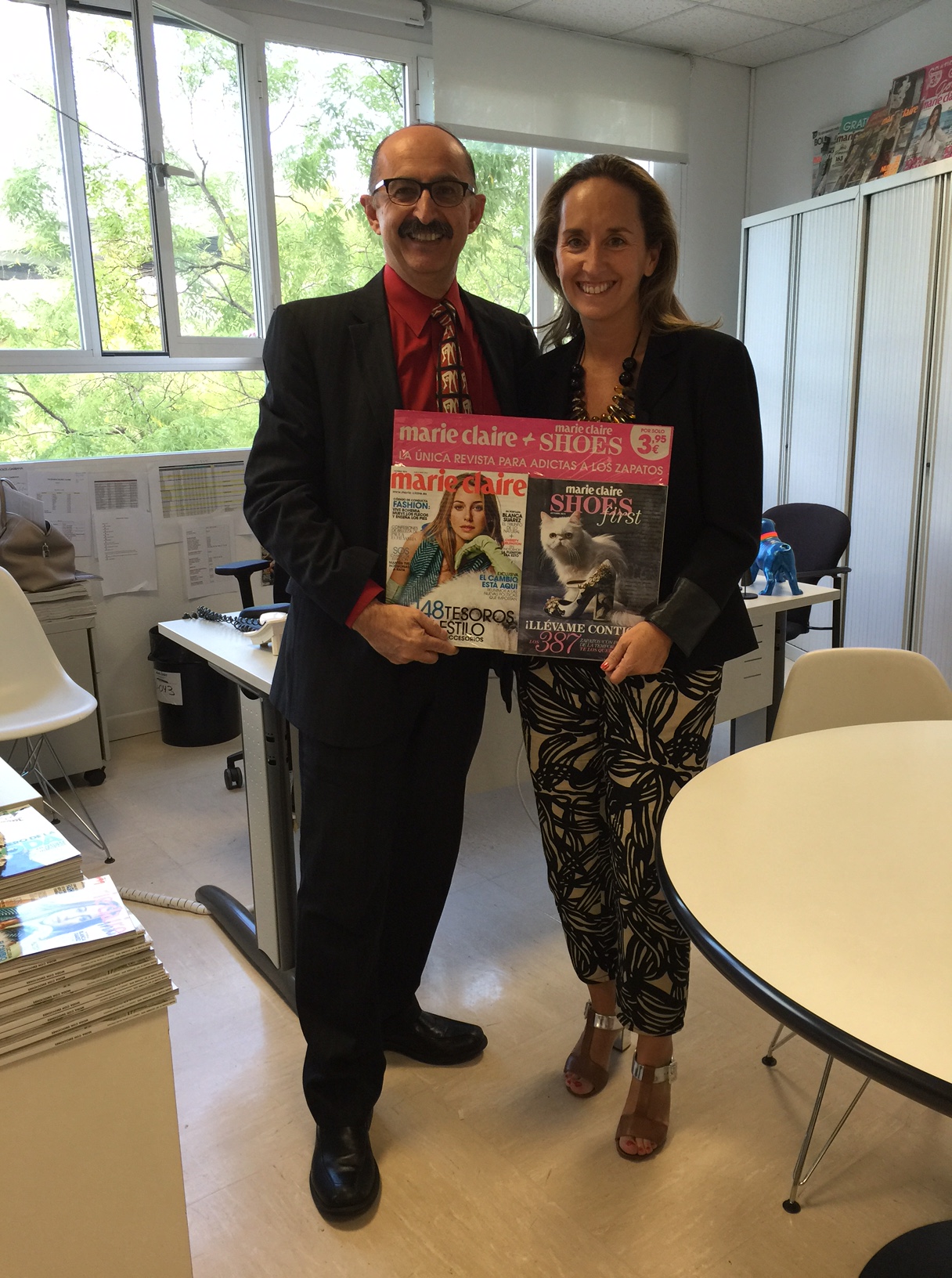
MC3-3 Samir Husni: Looking at the covers of your spinoffs, especially with the “Shoes First,” are the covers a reflection of the fun, passionate Maria?

Maria Pardo de Santayana: Yes, they are. I believe that life without humor is useless. You have to laugh at yourself and at all of the bad situations that might come up. It’s not like being superficial, but it’s taking life with optimism. And that’s what we want to reflect.

As my CEO always tells me, we are absolutely disposable; you have to make people happy. There is no reason they should buy us, except for having fun and providing them with joy and something inspirational.

As I take my life with a lot of humor; I find that it is very important to life itself and to the magazine. And trying to make a 100-page supplement about shoes could bore someone to death, going from shoe-to-shoe-to-shoe. So, if you don’t put humor into that subject, it will be dull and boring. I always try to put some humor into everything that I do.

Samir Husni: Why do you think in this digital age that we live in, amidst all of these social media giants that we actually compete with, such as Google, Facebook and Twitter; why do you think there’s still a reason for a printed magazine? Do you believe in the future of print?

Maria Pardo de Santayana: Yes, absolutely I do, because I think that printed magazines work as the perfect curator for all of these platforms, the visual and audio impacts of digital; all of these things coming up to you in notifications, the nonsense and the important things. This generation has access to more information than ever, but less analyzed. So you see a lot of things, but there is so much that you don’t even have the time to take in what you’re seeing.

I think the printed magazine’s mission is to curate all of these things that might be of the reader’s interest and put it into the perfect format that you don’t need to plug in and charge; in fact, you don’t need to do anything with it except enjoy it. You can take it with you everywhere and you can keep it forever. It’s a good photography of the time that it shows. If you see the magazine in 20 years’ time and you pick it up and read it; you’ll find that it’s a perfect history book because you can see the time represented in its pages vividly.

Samir Husni: My typical last question; what keeps you up at night?

Maria Pardo de Santayana: Marie Claire. (Laughs) You know what, the thing is I was telling someone, when I go on holiday I can’t sleep the night through, but then when I start working again; your mind needs several hours of sleep and then it turns on. My head is full of Marie Claire in every way, Marie Claire ideas; Marie Claire people; Marie Claire stories, and so my mind is just awake all of the time. By the time I lay down to go to sleep, I might get a few hours and then it’s right back on. It’s all about Marie Claire now. I’m a little bit obsessed. (Laughs again)

Samir Husni: Thank you.

h1

Ricardo: For The Love Of Food, Family, Magazines And Canada… The Mr. Magazine™ Interview With Marie-Josè Desmarais, Publisher & Denis Chamberland, CEO – Ricardo Magazine.

November 5, 2015

From Canada With Love…

“One of the big things that have come out of this is that, perhaps some people thought we were crazy to launch a paper product a year ago; people were looking at us and saying, are you sure you want to do this and we said yes, absolutely. We believe in magazines in the food category and we believe there’s a market and we believe we have something great to offer. And we were confident that it would work and we were right. Actually, people welcome new magazines when you’re doing them the right way, because you’ve seen what’s happened in past years; a lot of publishers have been their own worst enemies, with smaller editorial ratios and decreasing the overall quality of the magazine, such as the paper.” Marie-Josè Desmarais

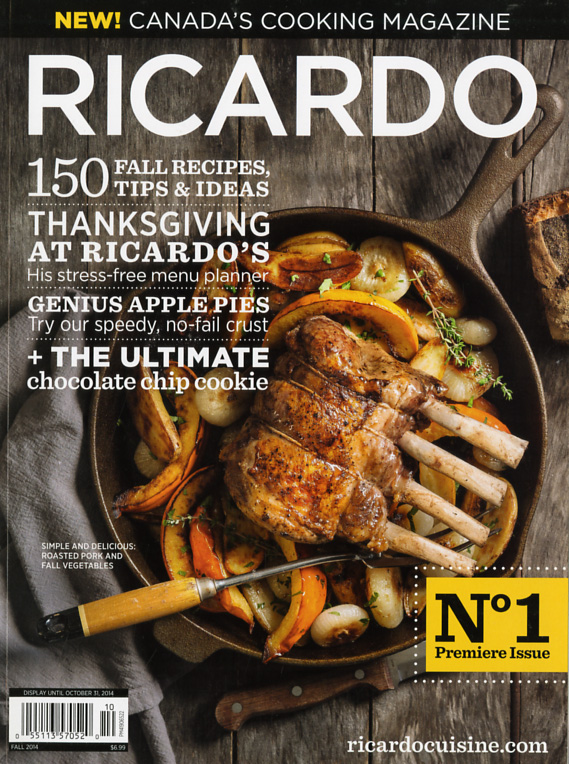
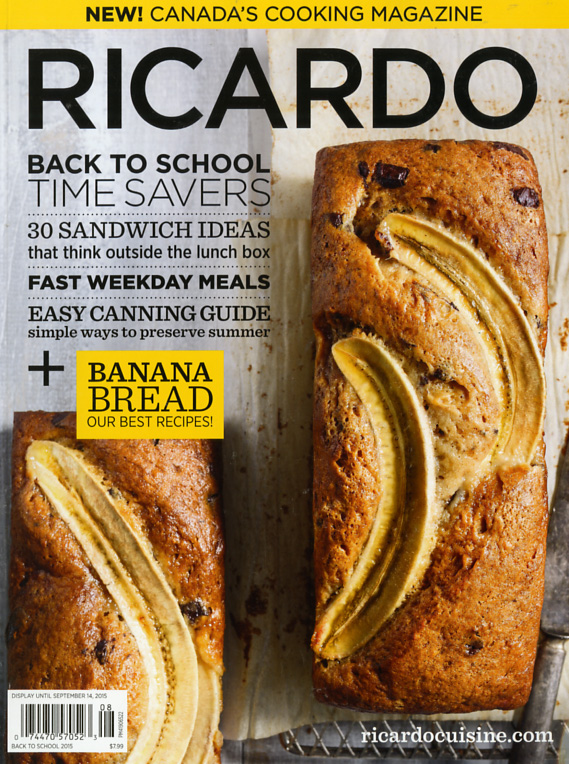
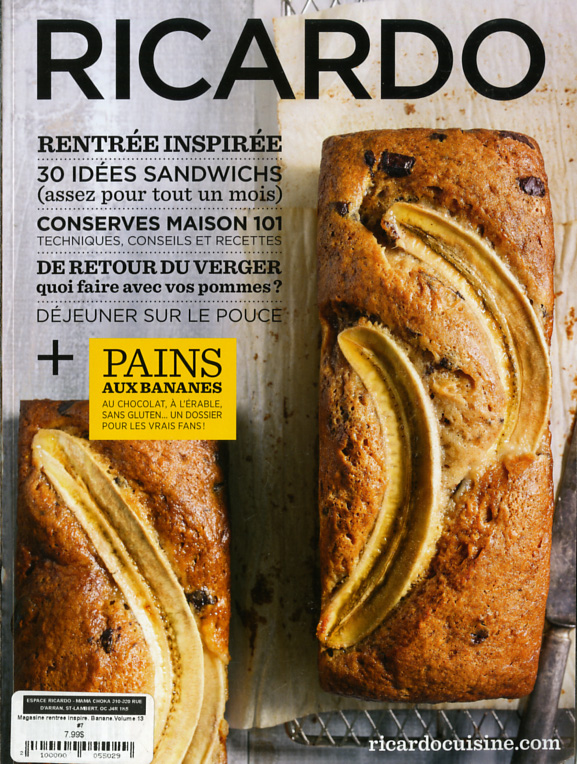
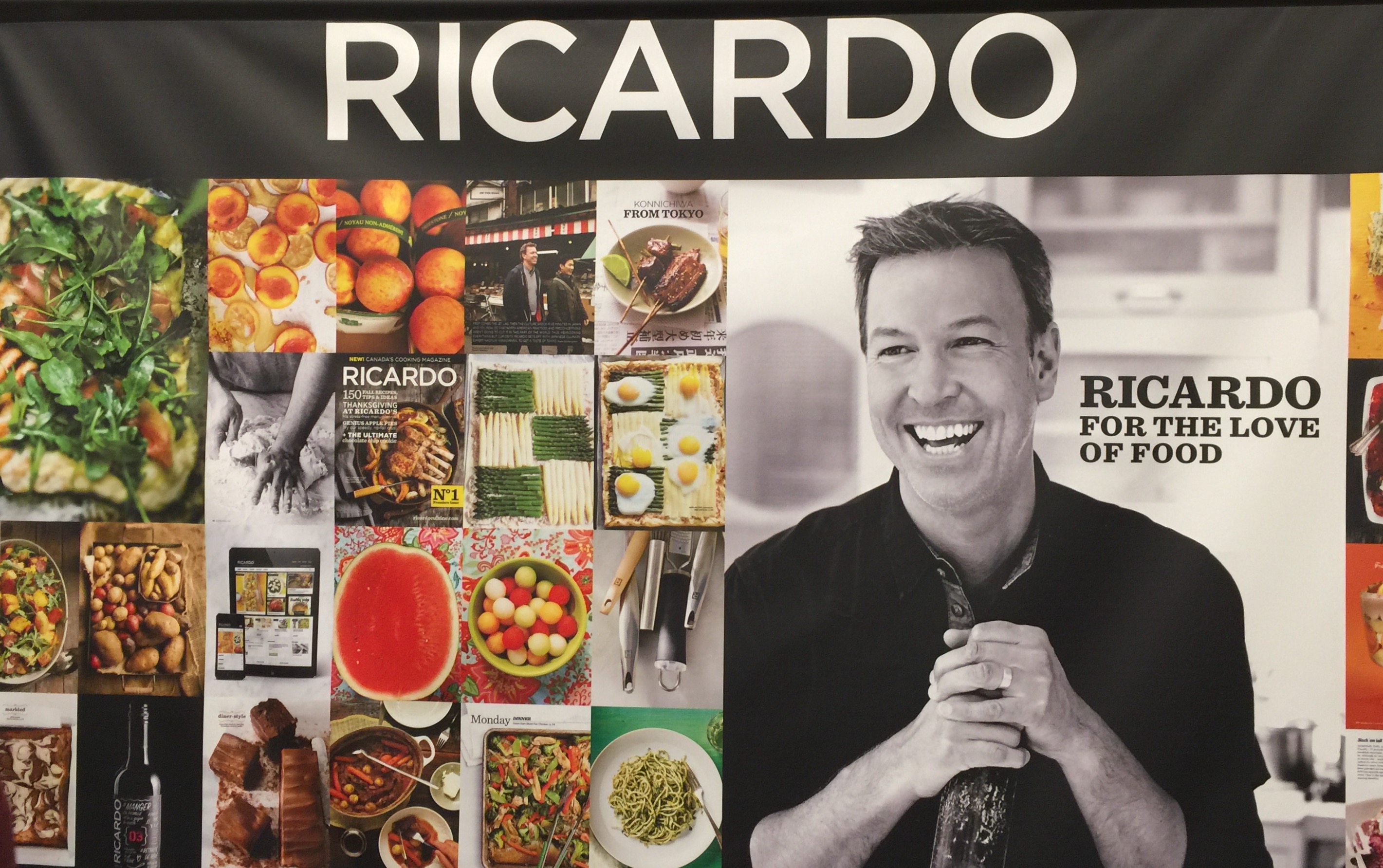
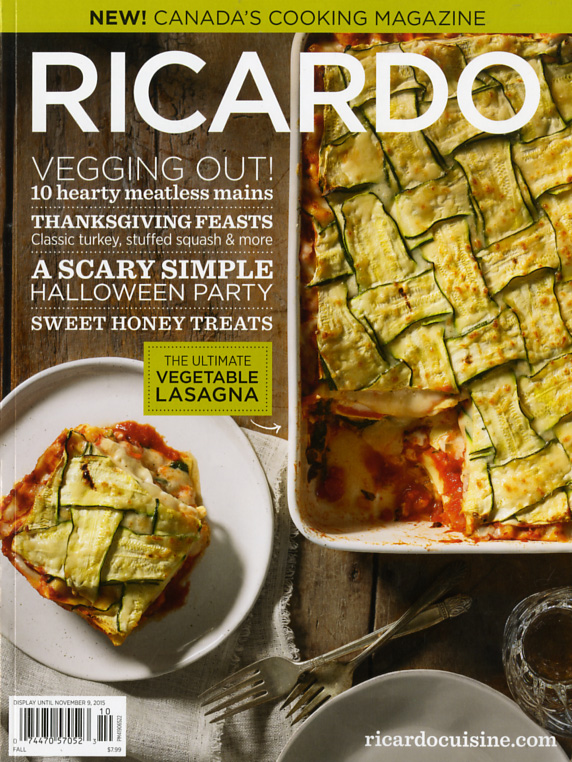
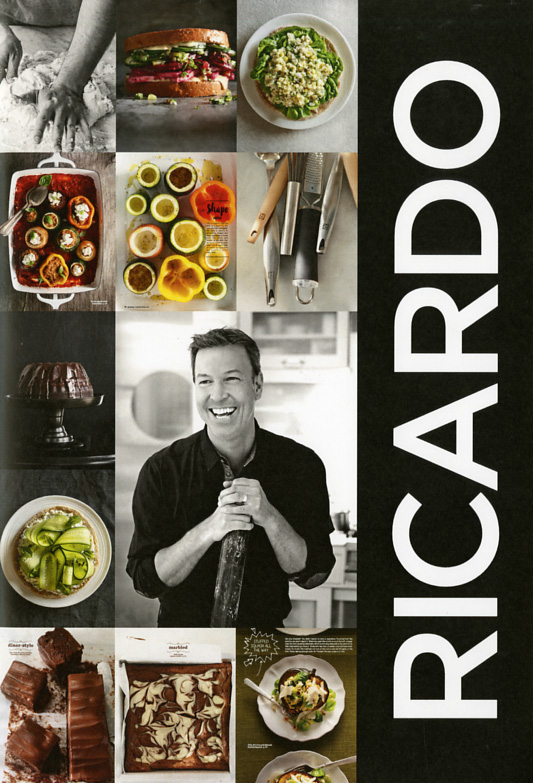
Ricardo 5-6 Celebrity chef, Ricardo Larrivée, brings his highly successful brand to the English/Canadian audience with Ricardo Magazine’s English language version of the 14-year-old French magazine. The launch of the English version of the print publication happened a little over a year ago and according to Marie-Josè Desmarais, Ricardo Magazine’s publisher, the response has been totally positive.

I spoke with Marie-Josè recently and Denis Chamberland, CEO of the magazine, and the conversation served to reinforce the extreme fascination the buying public has with the food category in today’s market even more than the obvious explosion of food titles on newsstands does. It has become the “celebrity” section when it comes to magazine popularity.

We identified several reasons why this phenomenon might be taking place, along with the success of Ricardo’s latest metamorphosis, possible future plans of a more southern expansion for the magazine, and how it was to work with Ricardo himself, because it’s a given, when your brand has a living, breathing persona things can get interesting.

It was an enlightening conversation with two people who value their brand, adore and respect the man it was named for, and have very definitive goals when it comes to the future of the newest addition to the Ricardo family.

So, turn the oven on and get ready to be deliciously motivated as you enjoy the Mr. Magazine™ interview with Marie-Josè Desmarais, Publisher & Denis Chamberland, CEO, Ricardo Magazine.

But first, the sound-bites:


On the genesis of Ricardo Magazine (Marie-Josè Desmarais):
The magazine is new in English, but it’s not new in French, we’re into our 14th year in French, so it has been founded for a while. And Ricardo started the company. As a chef, he started out as a food columnist; he was a TV personality and then he had his own show. So, it’s been like an organic growth that happened with his brand and he is very charismatic.

Ricardo Publisher and CEO On why they decided to launch the English language version of Ricardo in Canada now (Marie-Josè Desmarais):
In order to become a success in English Canada, you really have to be tough because it’s a difficult market. In English Canada we compete against international titles, especially U.S. titles. The distribution process is extremely complex, that’s why we enlist the aid of our Consulting Circulation Executive, Tracey McKinley, who used to head circulation at Rogers Publishing. And you need a lot of money and you need to be very solid as a company, and we’re a private company. We’re not one of those giant companies that have a lot of assets in the market; we have a lot of assets in Québec, but we had to feel that we were very solid in order to do it. And that’s what decided it.

On that “aha” moment when all the planets were aligned and they decided to launch the magazine (Denis Chamberland):
I think Marie-Josè just said it; you have to be financially sound to launch a magazine and it was the right time for us to do so. But we had been thinking about it for years. We were dreaming about being Canada’s cooking magazine. But it was the right time financially to do it and to do it well.

On the most pleasant moment during this magazine journey (Marie-Josè Desmarais):
I’m an ex-editor, so I was publisher on this one. Seeing the first issue is always an amazing moment, when it’s off the printer’s, you know paper still holds its magic. But we did a big launch event on Dundas Square to launch the brand in Toronto. We were all there and we took a train with our clients. We fed people, it was a fun lunch event, and that, for us, was a very natural thing for our company. We love to feed people. And that was the day that we officially launched the magazine.

On the major stumbling block they’ve had to face with the launch of the magazine: That’s a good question. I don’t think there was a massive stumbling block. Obviously, we’re in a market where advertising sales can be a challenge. We’re coming with a big success, and having the success of Fringe behind us opened the door for advertising, so there was really nothing. Everything we’ve heard has been positive. You know, things like, you’re finally launching it or I’m so happy you’re doing it after all these years.

On how it is to work with Ricardo when putting together an issue of the magazine (Marie-Josè Desmarais):
Well, for example, he’ll come into the room where we’re working and entertain us for an hour and a half. He’s just so energetic and there are absolutely no horror stories when it comes to working with Ricardo. The person you see in the magazine or on television is authentic. What you see is what you get. He’s inspiring, dynamic, and full of energy and he tastes everything when he goes around the kitchen.

On the reaction from the English/Canadian market since the magazine has been out (Marie-Josè Desmarais):
Very positive. It was, at last we have a Ricardo magazine. Journalists were all over it; we had very good press I don’t remember seeing anything negative about our magazine. It was all positive and it was gorgeous.

On whether they believe in the future of a print product in this digital age (Marie-Josè Desmarais):
Yes, but we also believe in digital. We invest a lot in in digital. If you look at our website, it’s very, very high-quality and we do invest a lot in our website. We would not invest only in paper. We believe in catching our reader where they want to be. We think that print, for food; our food magazine is like a reference book, a cookbook that’s published six times per year. Nobody ever throws a Ricardo issue away; it’s not for recycling, it’s for consultation. And we believe people go onto the website when they, let’s say, need a quick chicken recipe.

On why they think the food category is so fascinating to audiences right now (Marie-Josè Desmarais):
It’s a cultural phenomenon right now. I think yes, it’s a trend, like there have been lots of trends, but it’s not a fast-moving trend. It’s been slowly building for years and it’s all about connecting people around the meal and the table; it’s not just about eating something delicious. It’s: why do you cook; why do you prepare that? It’s because you want to serve something great to your friends and family. There’s something very generous about that and very calming in these stressful times. We find that food media are like a refuge.

On whether the goal of the magazine is the same as Ricardo’s wish, for everyone who sits down at the table to be at ease and happy (Marie-Josè Desmarais): It is. We want people to sit together and enjoy the meal and that’s the goal. It’s not about competing to make the most complicated dessert; it’s about creating something good for you, delicious, and that will please everyone around the table and also make the cook proud. That’s one of the most important things.

On any future plans to bring Ricardo Magazine further south, across the border (Denis Chamberland):
We would love to see our magazine across the border, so I suppose it’s possible.

On why if expanding across the border is possible, each issue focuses on being “Canada’s Cooking Magazine” (Marie-Josè Desmarais):
Another good question. We want to be noticed because we’re a new title. We also want our audience to know that this is a Canadian magazine that’s tailored to their needs. But the recipes will work in any country. It’s not Canadian food. It’s international-level food, but it’s packaged specially for Canadians.

On her decision to move from a former editor of magazines to the publisher of Ricardo (Marie-Josè Desmarais):
I was an editor-in-chief years ago before I came to Ricardo. I came to Ricardo as a publisher. One of my former bosses, who was the president of Rogers Publishing at the time, Brian Segal, said famously, “You can’t make an editor out of a publisher, but you can make a publisher out of an editor.” And he had started doing that and he was the first in the business who started putting editors in publishers’ positions, and that started around 2007/2008 when the market was really difficult.

On whether she’s more of a content-provider or an experience-maker (Marie-Josè Desmarais):
Both. To me it’s the same thing. I don’t see a difference. It depends on the medium. But in Ricardo it’s sitting around the table and everybody is happy eating that lasagna. That’s contentment. That’s what we do.

On what keeps Marie-Josè up at night:
What keeps me up at night is how to get to the next step and just working the new ideas, working them up. And there are so many options; it’s more about where you start. And I reword the puzzle all of the time. A few years ago we didn’t have so many options in the magazine world; it was a very simple, straightforward business. But today, there are so many things you can do.

On what keeps Denis up at night:
Sometimes I would like to go faster, so sometimes I’m thinking about our future and that can keep me up at night because I would like to have our products in other countries and it’s not possible to do too many things at the same time.

And now the lightly edited transcript of the Mr. Magazine™ interview with Marie-Josè Desmarais, Publisher, & Denis Chamberland, CEO, Ricardo Magazine.

Samir Husni: Tell me the genesis of Ricardo Magazine. I know the tagline is New! Canada’s Cooking Magazine, but Ricardo has a history, such as 18 years on television in France and then 8 years in Canada. How did the idea for Ricardo Magazine start?

Ricardo 4-5E

Ricardo 3-3F Marie-Josè Desmarais: The magazine is new in English, but it’s not new in French, we’re into our 14th year in French, so it has been founded for a while. And Ricardo started the company. As a chef, he started out as a food columnist; he was a TV personality and then he had his own show. So, it’s been like an organic growth that happened with his brand and he is very charismatic.

Denis Chamberland: It was natural for Ricardo to launch a magazine because as a columnist, people really liked him and they wanted more content from him than once a week in the paper.

Samir Husni: Why did it take so long for you to launch the English language version of the magazine in Canada, considering that Martha Stewart started this trend about 20 years ago in the States and then Rachael Ray? It would seem that “food” has become the new celebrity when it comes to magazines. So, why did you decide to launch Ricardo in English in Canada now?

Denis Chamberland: We were waiting for somebody as special as Marie-Josè Desmarais to launch a magazine in English.

Marie-Josè Desmarais: (Laughs). We were waiting for the right moment. Launching a magazine in Québec is different. Are you familiar with Québec?

Samir Husni: Yes.

Marie-Josè Desmarais: Business in Québec is very particular. We do have our own system and it’s a place on earth where local magazines sell really well. That’s why we had Elle Québec very early, like 20 years ago.

So, in order to become a success in English Canada, you really have to be tough because it’s a difficult market. In English Canada we compete against international titles, especially U.S. titles. The distribution process is extremely complex, that’s why we enlist the aid of our Consulting Circulation Executive, Tracey McKinley, who used to head circulation at Rogers Publishing. And you need a lot of money and you need to be very solid as a company, and we’re a private company. We’re not one of those giant companies that have a lot of assets in the market; we have a lot of assets in Québec, but we had to feel that we were very solid in order to do it. And that’s what decided it.

Samir Husni: And at that point of conception when you got that “aha” moment and said, let’s do it; can you relive that a little?

Denis Chamberland: I think Marie-Josè just said it; you have to be financially sound to launch a magazine and it was the right time for us to do so. But we had been thinking about it for years. We were dreaming about being Canada’s cooking magazine. But it was the right time financially to do it and to do it well.

Samir Husni: What has been the most pleasant moment in this journey?

Marie-Josè Desmarais: I’m an ex-editor, so I was publisher on this one. Seeing the first issue is always an amazing moment, when it’s off the printer’s, you know paper still holds its magic. But we did a big launch event on Dundas Square to launch the brand in Toronto. We were all there and we took a train with our clients. We fed people, it was a fun lunch event, and that, for us, was a very natural thing for our company. We love to feed people. And that was the day that we officially launched the magazine. We met directly with our future readers.

Samir Husni: What has been the major stumbling block you’ve had to face with this launch and how did you overcome it?

Ricardo poster Marie-Josè Desmarais: That’s a good question. I don’t think there was a massive stumbling block. Obviously, we’re in a market where advertising sales can be a challenge. We’re coming with a big success, and having the success of Fringe behind us opened the door for advertising, so there was really nothing. Everything we’ve heard has been positive. You know, things like, you’re finally launching it or I’m so happy you’re doing it after all these years.

And for the record, we had launched in English years ago, very briefly, when we were with Gesca in France. We launched for about two years and that was around 2007 or so. We were partners with Gesca, it was a soft launch then, with a small circulation. But then Ricardo decided to buy back his shares and become the sole owner of his company.

In that context, it was not sustainable. It didn’t make sense, so Ricardo decided at that time that he wanted to wait and do it big and on his own terms. So, that’s what happened.

Denis Chamberland: And with original content in English. With that first launch, more or less, it was a translation of the magazine. And we don’t want that. We have a magazine for Canadians and it’s great new content for them.

Marie-Josè Desmarais: If you look at the magazine; if you look at it in French and English, you have the same cover and it does look like the same magazine as the French version, but if you look at it more closely, you’ll see that our columnists are English/Canadian for the English/Canadian version of the magazine out of respect for our readers. Not because our columnists aren’t good, but we want to encourage the business here and also we want to have a truly Canadian voice, so we’re adapting to the market. You’ll see that throughout the issue; it’s very important for us to have those columnists. We also adapt the content.

Samir Husni: Sometimes I hear fun stories about working with celebrities when it comes to creating a magazine and sometimes I hear horror stories; describe a typical workday with Ricardo as you’re creating an issue of the magazine.

Marie-Josè Desmarais: Well, for example, he’ll come into the room where we’re working and entertain us for an hour and a half. He’s just so energetic and there are absolutely no horror stories when it comes to working with Ricardo. The person you see in the magazine or on television is authentic. What you see is what you get. He’s inspiring, dynamic, and full of energy and he tastes things when he goes around the kitchen.

Samir Husni: And what has been the reaction coming from the English/Canadian market since the magazine has been out?

Ricardo 1-1 Marie-Josè Desmarais: Very positive. It was, at last we have a Ricardo magazine. Journalists were all over it; we had very good press I don’t remember seeing anything negative about our magazine. It was all positive and it was gorgeous.

One of the big things that have come out of this is that, perhaps some people thought we were crazy to launch a paper product a year ago; people were looking at us and saying, are you sure you want to do this and we said yes, absolutely. We believe in magazines in the food category and we believe there’s a market and we believe we have something great to offer.

And we also believe that the only way we could do this magazine was to go high-quality, very good paper quality and excellent photography; a very high editorial ratio versus advertising, and then do it in a deliberate way, not a desperate way. Our ratio is always 70% editorial, with a high cover price of $7.99. At launch it was $6.99, which is pretty high in this market.

But we decided to go with quality; to do a statement of quality and excellence. And we were confident that it would work and we were right. Actually, people welcome new magazines when you’re doing them the right way, because you’ve seen what’s happened in past years; a lot of publishers have been their own worst enemies, with smaller editorial ratios and decreasing the overall quality of the magazine, such as the paper. And we respect American publishers, everybody works hard, but we really believe we have a good recipe for success.

Samir Husni: So you believe in the future of a printed product in this digital age?

Marie-Josè Desmarais: Yes, but we also believe in digital. We invest a lot in in digital. If you look at our website, it’s very, very high-quality and we do invest a lot in our website. We would not invest only in paper.

Denis Chamberland: We believe in both.

Marie-Josè Desmarais: Yes, we do. We believe in catching our reader where they want to be. We think that print, for food; our food magazine is like a reference book, a cookbook that’s published six times per year. Nobody ever throws a Ricardo issue away; it’s not for recycling, it’s for consultation. And we believe people go onto the website when they, let’s say, need a quick chicken recipe. And they can go onto our website and find it. So, you go to both platforms for different reasons.

Samir Husni: Why do you think the food category, specifically in print magazines, has become the celebrity category of the 21st century, compared to the end of the 20th century when it was actual celebrities and other topics? Now, suddenly, it’s food. In the United States more food titles are published on a weekly basis, whether it’s bookazines or digest-sized, than in any other category. Why do you think there’s such a fascination with food today?

Marie-Josè Desmarais: (Laughs) That’s a big social and cultural question.

Denis Chamberland: I think people have become very health conscious; they want to take care of themselves. Same as running has never been so popular. Food is part of that movement.

Marie-Josè Desmarais: And it’s also a cultural phenomenon right now. I think yes, it’s a trend, like there have been lots of trends, but it’s not a fast-moving trend. It’s been slowly building for years and it’s all about connecting people around the meal and the table; it’s not just about eating something delicious. It’s: why do you cook; why do you prepare that? It’s because you want to serve something great to your friends and family. There’s something very generous about that and very calming in these stressful times. We find that food media are like a refuge.

And I also think that people are more informed now with the speed of communications. You can go and look at a restaurant menu where you can find out exactly what’s being served in Copenhagen or somewhere in Brazil; so it’s part of our world culture.

Samir Husni: I read Ricardo’s editorial in this issue and he wants everyone to feel at ease and happy when they’re sitting around the table. Is that also the goal with the magazine?

Ricardo 2-2 Marie-Josè Desmarais: It is. We want people to sit together and enjoy the meal and that’s the goal. It’s not about competing to make the most complicated dessert; it’s about creating something good for you, delicious, and that will please everyone around the table and also make the cook proud. That’s one of the most important things. And that the recipes are no-fail. And why, you might ask, are they no-fail? It’s because they’re tested to death; we don’t triple-test, we test 12 times if we need to. We test until it’s perfect. This magazine is about making people happy and proud to serve something great to family and friends.

Samir Husni: Are there any future plans to expand Ricardo’s borders, such as going a little more toward the south from Canada?

Denis Chamberland: We would love to see our magazine across the border, so I suppose it’s possible.

Samir Husni: So, why the focus on every issue as “Canada’s Cooking Magazine?”

Marie-Josè Desmarais: Another good question. We want to be noticed because we’re a new title. We also want our audience to know that this is a Canadian magazine that’s tailored to their needs. So, for instance, all of the ingredients that we talk about in our recipes will be available in most Canadian grocers. The wines we talk about are available at wine stores and the novelties, if you’re talking about a cookbook or a jar of jam; it doesn’t matter, everything is easily available. And that’s very highly appreciated by our audience. We’ve gotten a lot of comments that say, at last, a magazine that’s made in Canada and that helps me in my everyday life. You can find everything in it easily.

But the recipes will work in any country. It’s not Canadian food. It’s international-level food, but it’s packaged specially for Canadians.

Samir Husni: We are finding out that identification with the audience is very important. You’re looking for customers who count, rather than counting customers.

Marie-Josè Desmarais: Exactly. I love the way you said that.

Samir Husni: And that’s what grabbed me with Ricardo. I had heard about it before, but I had never seen it until recently. It certainly grabbed my attention.

Marie-Josè Desmarais: Thank you. I’m glad you liked it.

Samir Husni: As a journalist-turned-publisher, how easy or hard was that decision for you? Or was it simply easy because who could better explain the magazine than a journalist or editor?

Marie-Josè Desmarais: I was an editor-in-chief years ago before I came to Ricardo. I came to Ricardo as a publisher. One of my former bosses, who was the president of Rogers Publishing at the time, Brian Segal, said famously, “You can’t make an editor out of a publisher, but you can make a publisher out of an editor.” And he had started doing that and he was the first in the business who started putting editors in publishers’ positions, and that started around 2007/2008 when the market was really difficult. He said that content was the driving force behind the success in magazines and that’s why he decided to put editors in those positions.

Samir Husni: Do you believe it’s the content that drives magazines or is it the experience-making? Are you more of a content-provider or an experience-maker?

Marie-Josè Desmarais: Both. To me it’s the same thing. I don’t see a difference. It depends on the medium. But in Ricardo it’s sitting around the table and everybody is happy eating that lasagna. That’s contentment. That’s what we do.

But it’s not just the thing about circulation strategies, which are very important or advertising sales strategies and all of those business models that you’ve seen in magazines where you would inflate your circulation at a very high cost in order to get more money from advertisers without really caring about your audience. That’s not what we do. We do a great product, a great magazine with great content and great recipes, and the rest comes.

Samir Husni: Is there anything else you’d like to add?

Marie-Josè Desmarais: You’ll see us in paper, but you’ll also see us in digital as well; whatever platform people want to consume their content on.

Denis Chamberland: It’s the same experience and the same great content and the same audience.

Samir Husni: What motivates you to get up in the mornings and say it’s going to be a great day?

Denis Chamberland: Creating great content.

Marie-Josè Desmarais: That’s it.

Denis Chamberland: Make sure people relate to the brand more and more, day after day.

Marie-Josè Desmarais: I agree.

Samir Husni: My typical last question; what keeps you up at night?

Marie-Josè Desmarais: What keeps me up at night is how to get to the next step and just working the new ideas, working them up. And there are so many options; it’s more about where you start. And I reword the puzzle all of the time. A few years ago we didn’t have so many options in the magazine world; it was a very simple, straightforward business. But today, there are so many things you can do. You just want to pick the right path. With a small company we can rewrite that path if we have to and adapt it to the new reality.

Denis Chamberland: Sometimes I would like to go faster, so sometimes I’m thinking about our future and that can keep me up at night because I would like to have our products in other countries and it’s not possible to do too many things at the same time. We’re working on this new product that we launched last year and we want to make sure that it’s a success.

Samir Husni: Thank you.

h1

Duncan Edwards: Head Above The Clouds and Feet Grounded On Earth — Inside The Great Mind Of The President And CEO Of Hearst Magazines International And FIPP Chairman. The Mr. Magazine™ Interview

October 19, 2015

CN Tower photo by Samir Husni

The Mr. Magazine™ Reports from the FIPP 40th Congress in Toronto, Canada.

“The future of print is good. It’s changed, particularly in the more mass market area of the business. It’s changed a lot. And consumers have not fallen out of love with what we do and our content, but their habits of buying printed magazines have changed. It’s much less so at the more high-end of the market where the products are very tangible and nice to have.” Duncan Edwards

HMI Duncan Edwards, president and CEO of Hearst Magazines International, has been elected as the new chairman of FIPP. The chairmanship of the international magazine media association was passed to Edwards after Fabrizio D’Angelo, CEO, Burda International, completed his two-year term. And for the man who spends half of his life above the clouds, but always has his feet on the ground, it is only fitting that he acquire yet one more title to his long list of accomplishments.

Duncan is man who is a clear leader as his strong convictions to brand, customers and Hearst management teams all across the globe are succinct when he talks about the future of the company. His dedication is superseded only by his love for magazines and what he does.

I had a chance to catch up with Duncan during the 40th FIPP congress and was able to engage him with a lovely and insightful conversation about his role as president and CEO of Hearst Magazines International. It was an intriguing trip inside the mind of yet another great magazine maker….So, I hope you enjoy this most cosmopolitan of conversations (no pun intended) with Duncan Edwards.

But first, the sound-bites:


On a day-in-the-life of Duncan Edwards:
About half of my working life is spent traveling outside the United States. And the other half, I’m in the office in New York. So, to be honest, they’re very different. When I’m traveling, I spend time with the management of our local companies doing all of the normal things that you would expect. I’m doing business reviews, talking with the senior management about the implementation of strategy and I try to spend time every day when I’m in a foreign country meeting editors of our products, print and digital editors. When I’m in New York it tends to be different; it tends to be more corporate-oriented, more budgeting and planning, administration and those sorts of things.

On which chapter of his professional life he prefers, overseas or New York City:
There’s nothing I like better than talking about product. So spending a day or an off-day with editors and product people talking about the content that we’re creating and the ways that we’re delivering it to our customers is by far my favorite part of my job. And if I could spend all of my time doing that I would.

On whether the globalization of many of the Hearst brands made his job easier or harder: Well, we’ve been fortunate in that the products that we create and the brands that we produce have always been desirable by international publishers as licenses. So when George Green drove that business for so many years and so successfully, he could choose between partners in most countries, it wasn’t like you had to really sell the idea of becoming a Cosmo licensee because everybody wanted to do it. And that was because it was pretty much a guaranteed way of making money. Clearly the world is changing. And certainly on the print side of the business it isn’t as easy as it was and the predictable profitability of magazines outside of the U.S. is not as much of a guarantee. On the other hand though, what we’ve created, particularly around Cosmo, but also around our other brands, is really strong digital products.

On the fact that Hearst has been reacquiring or establishing Hearst licenses in countries like Spain and the Netherlands and whether that was a corporate decision or more like a trend:
What happened was in 2010 we negotiated the acquisition of the Lagardere’s International publishing business, the Hachette magazines’ publishing business. And that was a deal that I led on behalf of Hearst to acquire a number of companies, primarily because they published Elle and we always felt that Elle was one of the true global magazine brands, alongside magazines such as Cosmo, Bazaar, Esquire and Vogue. There are only a handful of true global magazine brands and Elle was one of them. In the process of acquiring Elle, we acquired companies in different markets, like Holland, Spain, one in China and another one in Russia and also Japan. And so of course in that sense, that meant if we already had licenses then we were in a slightly complicated situation.

On what it is about himself that is said to attract people like magnets:
I’m an Englishman, so talking about one’s self is very difficult. (Laughs) But let me say this. I’ve spent my entire career in this business, from the age of 21 to now, 51. I’ve spent that entire 30 years in the magazine business and I’ve done lots of different jobs within that time frame. So, I know what good content is like and I know what good ad sales are like and also good marketing. So, hopefully some of that experience and knowledge I’m able to pass on as I go around the world.

On the biggest challenge he’s faced since assuming his present role with Hearst:
It was a challenge and a huge opportunity when we made the acquisition for the Lagardere Company. We acquired businesses in more than 10 countries, with a very large turnover, and integrating that business into Hearst and all of the issues that go along with that; the management teams becoming Hearst managers and getting everybody aligned, in terms of expectations and delivery was a hugely complex job.

On anything else he’d like to add:
The future of print is good. It’s changed, particularly in the more mass market area of the business. It’s changed a lot. And consumers have not fallen out of love with what we do and our content, but their habits of buying printed magazines have changed. It’s much less so at the more high-end of the market where the products are very tangible and nice to have.

On what motivates him to get up every morning: Do you know it’s funny; I’m such an enthusiast. I was born with the enthusiast gene. There’s almost nothing that I’m not interested in, whether it’s sports, books, music, politics or business. So, I never have any problem at all getting out of bed and facing the day because I know there’s going to be something exciting and interesting that’s going to be happening, whether it’s at work or in my personal life.

On what keeps him up at night:
Truthfully, first of all I’m an extremely good sleeper, which is also a good thing if you travel as much as I do. Work issues, they honestly don’t keep me awake at night. I have two young sons at college and worrying what they’re doing is much more likely to keep me awake.

And now the lightly edited transcript of the Mr. Magazine™ conversation with Duncan Edwards, President and CEO of Hearst Magazines International.

Samir Husni: As the president and CEO of Hearst Magazines International, could you describe a day in the life of Duncan Edwards?

Town & Country Thailand Duncan Edwards: About half of my working life is spent traveling outside the United States. And the other half, I’m in the office in New York. So, to be honest, they’re very different. When I’m traveling, I spend time with the management of our local companies doing all of the normal things that you would expect. I’m doing business reviews, talking with the senior management about the implementation of strategy and I try to spend time every day when I’m in a foreign country meeting editors of our products, print and digital editors. And then I’ll spend time with our customers as well. I always like to see our advertising customers when I’m in a different country to make sure they’re happy with what we’re doing.

When I’m in New York it tends to be different; it tends to be more corporate-oriented, more budgeting and planning, administration and those sorts of things. Also, as I’m obviously an EVP of the magazine division as well, I spend a lot of time with my colleagues David Carey and Michael Clinton, and Troy Young from the digital side of the business; again, talking about strategy and execution. It’s a combination of thinking about what we want to do and then making sure that we actually do it.

Samir Husni: And which chapter of your professional life do you prefer, overseas or New York City?

Duncan Edwards: There’s nothing I like better than talking about product. So spending a day or an off-day with editors and product people talking about the content that we’re creating and the ways that we’re delivering it to our customers is by far my favorite part of my job. And if I could spend all of my time doing that I would.

I think second after that I really like talking to our customers. I’m ad ad-sales guy by origin; my entry into the magazine business was through selling advertising. And so I consider it responsibility and a passion to actually continue to be actively talking to our customers and supporting the sales organizations of our companies around the world. But you can’t travel all of the time though. At least, my wife would not thank me for doing that. (Laughs)

Samir Husni: (Laughs too).

Duncan Edwards: So, it’s a balance, like any big, serious job. There’s a balance between that external facing functions and the more internal things that you need to do.

Samir Husni: Hearst has been a leader in licensing and in expanding and publishing a lot of its titles overseas, whether it’s Harper’s Bazaar or Cosmopolitan, which is the biggest one if I’m not mistaken. With the digital age coming upon us in 2007/2008; how did the licensing or the globalization of the brands that Hearst has in the United States affect your job? Did it make it easier or harder to preach the Hearst gospel overseas?

Duncan Edwards: Well, we’ve been fortunate in that the products that we create and the brands that we produce have always been desirable by international publishers as licenses. So when George Green drove that business for so many years and so successfully, he could choose between partners in most countries, it wasn’t like you had to really sell the idea of becoming a Cosmo licensee because everybody wanted to do it. And that was because it was pretty much a guaranteed way of making money.

Clearly the world is changing. And certainly on the print side of the business it isn’t as easy as it was and the predictable profitability of magazines outside of the U.S. is not as much of a guarantee.

On the other hand though, what we’ve created, particularly around Cosmo, but also around our other brands, is really strong digital products. And we’ve been as disciplined about that, in terms of creating brand books and processes to create really strong digital products, as we have been around the print side. So our partners, when they’ve followed our guideline as well, are also doing extremely well in digital.

Samir Husni: I’ve noticed that in some markets you’re reacquiring the licenses or establishing Hearst magazines, such as in Spain or the Netherlands; is that a trend or a corporate decision or is it that circumstances have forced you to move in that direction?

Harper's Bazaar China Duncan Edwards: What happened was in 2010 we negotiated the acquisition of the Lagardere’s International publishing business, the Hachette magazines’ publishing business. And that was a deal that I led on behalf of Hearst to acquire a number of companies, primarily because they published Elle and we always felt that Elle was one of the true global magazine brands, alongside magazines such as Cosmo, Bazaar, Esquire and Vogue. There are only a handful of true global magazine brands and Elle was one of them.

In the process of acquiring Elle, we acquired companies in different markets, like Holland, Spain, one in China and another one in Russia and also Japan. And so of course in that sense, that meant if we already had licenses then we were in a slightly complicated situation.

What we tried to do was take a careful and respectful approach to consolidating our licenses and we did. We took Cosmo back in Holland and Harper’s Bazaar back in Spain. We’re in the process of taking all of our licenses back in Taiwan, for example. And it makes sense; if you have your own company in the country, then having a license for one of your major brands with a third party doesn’t really make sense.

So, we’re respecting the contracts that we have, but in the end it is very likely that the magazines that are owned by Hearst, the brands that are owned by Hearst, will be published by a Hearst company if that company exists in the market.

Samir Husni: As you travel across all of these continents, cities and countries; I’ve heard a lot about you. There’s almost a halo around the name Duncan Edwards. When people say Duncan is coming, there is an angelic tone to their voice. But I didn’t hear the same about your predecessor; is it you or is it the way you interact with people? What makes you attract people that you deal with like a magnet?

Duncan Edwards: I’m an Englishman, so talking about one’s self is very difficult. (Laughs) But let me say this. I’ve spent my entire career in this business, from the age of 21 to now, 51. I’ve spent that entire 30 years in the magazine business and I’ve done lots of different jobs within that time frame. So, I know what good content is like and I know what good ad sales are like and also good marketing. So, hopefully some of that experience and knowledge I’m able to pass on as I go around the world.

Fundamentally, I’m quite an international sort of person. I don’t come to any country with any preconceptions of what it should be like. But I’m very respectful. I’m a huge believer, by the way, in the power and importance of local culture when it comes to editorial. We’ve learned, even though we have these incredible, global brands, that the most successful editorial content is the local content.

It’s impossible for someone sitting in New York or London to really know what’s going to be the most exciting content for someone in Southern Italy or Northern China. You’ve got to leave those kinds of decisions to the local management.

So, hopefully some of those kinds of things come across. You’d be much better off asking the people who say that about me than myself. (Laughs)

Samir Husni: One of the most amazing comments that I heard once was that although you’re the CEO and like the guru of Hearst overseas, when people are talking with you, whether they’re editors or CEOs themselves, you’re down-to-earth, with your feet securely planted on the ground, although your head may be repeatedly in the clouds the way you travel, and they only want to learn from the master.

Esquire Singapore Duncan Edwards: We’re all just human beings. We’re all employees of Hearst and we all have our different jobs to do and I think it’s not just true about me, but I think it’s true of Hearst, that we are not a big, kind of ego-driven organization. We are much more interested in the success of our company than we are in the reputation of ourselves as individuals. And that permeates through from the very top of the Hearst Corporation to management every level. We’re interested in what can we do to make our business more successful, rather than it being all about any one person.

Samir Husni: Since you took over this job; what has been the biggest stumbling block or challenge that you’ve faced and how did you overcome it?

Duncan Edwards: It was a challenge and a huge opportunity when we made the acquisition for the Lagardere Company. We acquired businesses in more than 10 countries, with a very large turnover, and integrating that business into Hearst and all of the issues that go along with that; the management teams becoming Hearst managers and getting everybody aligned, in terms of expectations and delivery was a hugely complex job.

And you couple that with the changes that are going on in the industry at the same time. So, not only have you just acquired this very big business, but you’ve also got these massive changes in consumer behavior.

And how do you deal with it? You deal with it step-by-step. First of all I think we’d look very carefully at the managers we had in those companies and quickly came to open conclusion as to whether they were the right people or not. Fortunately we felt in pretty much every case that they were.

And then what we tried to do was be clear about strategy and I think this is really important. Maybe one of the things that I do well is be very clear about what the strategy is and I try to be consistent about it so that we’ve been saying the same kind of thing for the last four or five years, so that our business and our managers and our partners know the direction that we’re going in and how we should align our businesses. There’s no secret sauce to any of this stuff. It’s about their being disciplined and well-organized and doing things step-by-step.

Samir Husni: Is there anything that you’d like to add?

seventeen Argentina Duncan Edwards: The future of print is good. It’s changed, particularly in the more mass market area of the business. It’s changed a lot. And consumers have not fallen out of love with what we do and our content, but their habits of buying printed magazines have changed. It’s much less so at the more high-end of the market where the products are very tangible and nice to have.

But at the more middle-end mass of the market, it’s changed a lot. We have therefore been building a digital business with real energy and real resources behind it. And we’ve deliberately not tried to do something twice, so we’re taking all the learning and knowledge from the U.S. company, where we’ve had real success, and we’re pushing that out around the world. That’s an important story and an important message and all our managers know that we are becoming a digital, mobile content company. And I use that expression sometimes in somewhere like Holland and it’s true. We’re really a digital content company that produces magazines, rather than a magazine company that produces websites. And it’s a mental switch and a semantic change.

Samir Husni: What motivates you to get up every morning?

Duncan Edwards: Do you know it’s funny; I’m such an enthusiast. I was born with the enthusiast gene. There’s almost nothing that I’m not interested in, whether it’s sports, books, music, politics or business. So, I never have any problem at all getting out of bed and facing the day because I know there’s going to be something exciting and interesting that’s going to be happening, whether it’s at work or in my personal life. I was just born enthusiastic, which is a good asset when you’re dealing with jet lag as much as I am. (Laughs)

Samir Husni: Before I ask you my typical last question, any message from the guru to your disciples all over the world?

Duncan Edwards: (Laughs) Just keep up the great work.

Samir Husni: My typical last question; what keeps you up at night?

Duncan Edwards: Truthfully, first of all I’m an extremely good sleeper, which is also a good thing if you travel as much as I do. Work issues, they honestly don’t keep me awake at night. I have two young sons at college and worrying what they’re doing is much more likely to keep me awake.

But honestly, I’m fine. Work is work and it’s important to separate that from your personal life. You give your work everything and you do the best you possibly can, but it’s certainly not something you should lose sleep over.

Samir Husni: Thank you.
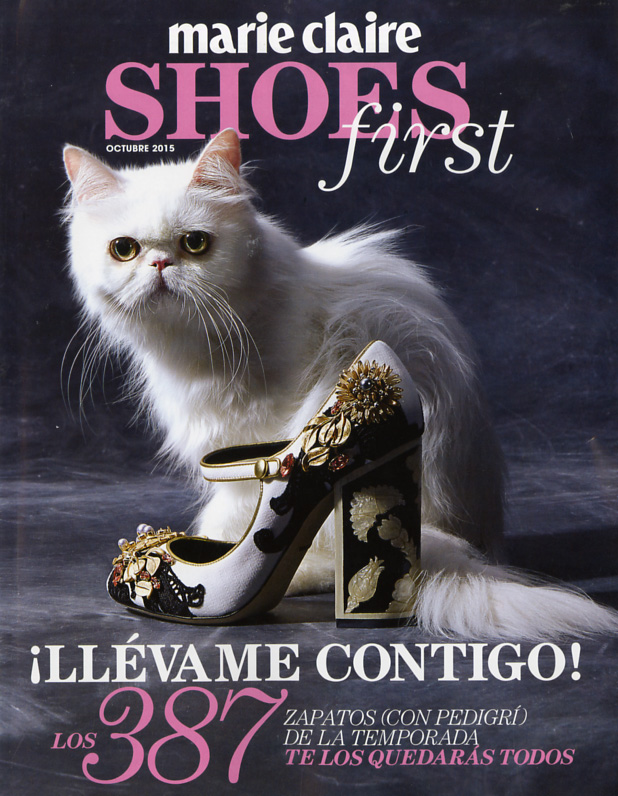
h1

The Changing World Of Magazines & Magazine Media According To Chris Llewellyn, FIPP President and CEO. The Mr. Magazine™ Interview.

October 16, 2015

CN Tower photo by Samir Husni

The Mr. Magazine™ Reports from the FIPP 40th Congress in Toronto, Canada.

“They key thing for FIPP is we bring an industry together to work with each other. And that industry now is the old silo definition of breaking down. We’ve heard of silos within an organization breaking down, but it’s happening in associations. We are no longer defined by magazine; we’re defined by the content we create, how we create it and the audiences we reach. So, I think FIPP is about content reaching defined audiences.” Chris Llewellyn

FIPP – The Worldwide Magazine Media Association, held its 40th World Congress in Toronto, October 13-15. The event is the largest and most prestigious global magazine media event in the world. It offers the opportunity to hear from some of the industry’s top speakers on the latest trends, developments and innovations in magazines and magazine media publishing.

I had the opportunity to attend the event and listened to and spoke with so many industry leaders and magazine media publishers who talked about creativity and audience first, along with innovation and change. The energy that could be felt at the World Congress was palpable.

Chris Llewellyn 2 Chris Llewellyn has been the president and CEO of FIPP since October 2009. He is a man who is both knowledgeable, with 30 years in the magazine business under his belt, and open-minded about the future of magazines and magazine media. His thoughts on the fact that he believes the industry cannot be defined by the word “magazine” anymore is proof of that. Chris said that we’re defined by the content we create, how we create it and the audiences we reach, definitely an accurate description in the digital age we live in.

During the World Congress, Chris and I sat down for a riveting conversation about all of those things and many other issues that face magazines and magazine media today. From global digital changes to the FIPP events (such as the World Congress) that help industry leaders and individuals come together to learn the latest trends and innovations in order to do business with each other and discover many other opportunities.

As always, the event was enlightening and insightful, much like the Mr. Magazine™ interview with Chris Llewellyn. I hope you are as inspired as I was.

But first, the sound-bites:

On the major change that he’s witnessed worldwide in magazines and magazine media over the years and on whether it was a change for the better or the worse: There have been some changes that have affected our geography. In some countries they still don’t know there’s change in the air. In China or even in India, magazines are still being launched. The Indian magazine conference was held earlier this year. I was there five years ago when one of the publishers, who shall remain nameless, said the Internet will never catch on in India, and that was five years ago. This year the Association of Indian Magazines was 90% discussing digital; in India. And I think that’s a sign of the times. It’s changed. We’re talking about the digital transformation of this industry.

On why he thinks it took five or six years for people in the media industry, who are supposedly the most creative people on the face of the earth, to discover that digital is not our enemy and print isn’t going away: I think there are two reasons and one is your stakeholders, whether you’re public or private, they want a return and they want to launch magazines and make money. And even then we’ve got a problem. But digital just seems like such a gamble. And there are just so many gambles you can make in a year, so you have a lot of failure. And a lot of shareholders started resisting that level of investment. I think now as we start to see some success, they’re starting to see it too.

On the biggest challenge he thinks magazines and magazine media companies are facing in 2015: If you look at my program from this World Congress, you’ll see that this isn’t a magazine conference. Peter Kreisky and I argue about who invented the first magazine major, but that in itself is becoming redundant as a phrase. If you see my program, we’ve had BuzzFeed, Huffington Post, the Business Insider, Politico; Slate was on this afternoon, world famous magazine companies, world famous content creators, and world famous audience aggregators; yes, that’s what we are.

On what FIPP does to help magazines and magazine media companies to complement their new competitors, such as Google, Facebook and Twitter: By exposing different levels of thinking, by bringing more examples into the picture. Again, look at this Congress. The events are really what it’s all about. We’re there to network. We’re not there as a national association that does lobbying and argues with different services, things that I find extremely necessary, but frankly boring. We’re there to help the members, but that’s businesses. And the way to do that is meet face to face. That’s the best way to do it.

On whether he thinks in this digital age we live in, licensing and going across borders has become easier or harder: Ironically, both, which is not very hopeful. If you’re an English-language publication, your audience isn’t just, from my point of view, the U.K. And if you’re American, it’s not just America. You have to do business across borders. And there are great opportunities there. But what you also find is borders do still exist, borders of culture and language and borders of this-is-how-we-do-things-here.

On anything else he’d like to add: We are no longer defined by magazine; we’re defined by the content we create, how we create it and the audiences we reach. So, I think FIPP is about content reaching defined audiences. And therefore our events and products and services will start to reflect that, so it’s not about “here’s good news for magazine publishers,” it’s about “here are some people producing some great content and distributing it in a really interesting way and there’s a business opportunity getting together.”

On what motivates him to get out of bed in the mornings: It’s such a great job. I’ve got 30 years in magazines. I love magazines; I love the brands that we have in this industry and I’m really excited about what those brands are doing and I lead an organization which I think its job is to get out in front of what’s happening. And that’s really interesting.

On what keeps him up at night: Nothing really; I sleep pretty well. I think when I was at EMAP, that’s a publishing company I spent the bulk of my career with; you were really involved in the day-to-day activity and as a manager the accounting of everything, especially when they had to announce to their shareholders why we were down three percent. Well, no one is asking me that at FIPP, which is a great release. The Board doesn’t measure me on a P&L. The Board doesn’t measure me on year-to-year growth. The Board measures me on is this event delivering.

And now the lightly edited transcript of the Mr. Magazine™ conversation with Chris Llewellyn, President and CEO, FIPP.

Samir Husni: Through the years, you’ve been witnessing the change in the magazine and magazine media environment worldwide, not just in one specific country. What do you think has been the major change that took place in the industry and was it a change for the better or the worse?

Chris Llewellyn: There have been some changes that have affected our geography. In some countries they still don’t know there’s change in the air. In China or even in India, magazines are still being launched. If I took more time and looked at the Indian magazine conference earlier this year; I was there five years ago when one of the publishers, who shall remain nameless, said the Internet will never catch on in India, and that was five years ago. This year the Association of Indian Magazines was 90% discussing digital; in India. And I think that’s a sign of the times. It’s changed. We’re talking about the digital transformation of this industry.

I think we’ve gone through the phase of wanting it to be like it was in the past and then the blind panic of what do we do. I think we’re in the phase now where we’re experimenting; some of those experiments are working really well. And we’re finding new businesses and new business models. Actually, I’m seeing a lot of confidence and I’m going to share some information at the conference on how we measure industry pessimism and optimism and it’s becoming more optimistic.

Samir Husni: Why do you think it took five or six years for people in the media industry, who are supposedly the most creative people on the face of the earth, to discover that digital is not our enemy and print isn’t going away?

Chris Llewellyn: I think there are two reasons and one is your stakeholders, whether you’re public or private, they want a return and they want to launch magazines and make money. And even then we’ve got a problem. But digital just seems like such a gamble. And there are just so many gambles you can make in a year, so you have a lot of failure. And a lot of shareholders started resisting that level of investment. I think now as we start to see some success, they’re starting to see it too.

And that’s one issue, the financial pressures. I think the other one is a generational issue. I’m a Baby Boomer like you are, and it’s hard, isn’t it? It’s really hard to understand some things.

I know exactly how to put a magazine together, there’s nothing you can tell me about the design of a cover and the flow of the pages and what makes a good story or why that logo is that color and why we should use that type font. But I have no idea if any of that works on a website. I’m learning, but it’s going to take a lot of time.

Meanwhile, there are 26-year-olds who just do it. And that’s another thing that we’re seeing now, that generation of managers, the Baby Boomer managers, who don’t understand accepting that they’re never going to learn from the 26-year-olds. And the role of those managers, and we have some of this information from FIPP surveys that we do with our members, those managers now if you asked them what are the most important things they’re looking at, the biggest thing that they manage is culture, not product. They’re not looking at the nuts and bolts of the business, it’s the managing of culture that’s the big change over the last three or four years.

And that’s what has taken us so long; it’s that manager-mindset that had to grasp what its real role was. And we needed shareholders, people who fund what we do, to accept that things don’t always work as they used to.

Samir Husni: As you travel the globe and head an association that brings all magazines and magazine media companies together; what do you think is the biggest challenge that we’re facing in 2015?

Chris Llewellyn: If you look at my program from this World Congress, you’ll see that this isn’t a magazine conference. Peter Kreisky and I argue about who invented the first magazine major, but that in itself is becoming redundant as a phrase.

If you see my program, we’ve had BuzzFeed, Huffington Post, the Business Insider, Politico; Slate was on this afternoon, world famous magazine companies, world famous content creators, and world famous audience aggregators; yes, that’s what we are. And I think defining us as magazines is over-summing.

Samir Husni: I did an interview with Bob Garfield not too long ago. He said our biggest competitors today are companies that really don’t consider themselves media companies, such as Google, Facebook and Twitter. How is FIPP helping the magazines and magazine media companies complement all of these new competitors?

Chris Llewellyn: By exposing different levels of thinking, by bringing more examples into the picture. Again, look at this Congress. The events are really what it’s all about. We’re there to network. We’re not there as a national association that does lobbying and argues with different services, things that I find extremely necessary, but frankly boring. We’re there to help the members, but that’s businesses. And the way to do that is meet face to face. That’s the best way to do it.

So, I’m bringing people together who want to do business. And increasingly, the people who want to do business…well, it used to be, “I want to do business with that magazine company in that country.” But now that’s not the rules. There all kinds of different options they want. They want to meet e-commerce companies or data analytic companies. They want to meet the new digital pure plays.

It’s interesting, talking about one of the big innovation trends coming, which is Refinery29, they’re speaking at my conference in Berlin in March. I’m exposing them to a new audience that wants to see and hear about these people. FIPP’s objective is to find people you’ve never heard of, because they have something to say.

Samir Husni: I noticed at this FIPP Congress, a lot of companies are trying to license their products and to reach across borders; do you think in this digital age we live in, licensing and going across borders has become easier or harder?

Chris Llewellyn: Ironically, both, which is not very hopeful. If you’re an English-language publication, your audience isn’t just, from my point of view, the U.K. And if you’re American, it’s not just America. You have to do business across borders. And there are great opportunities there.

But what you also find is borders do still exist, borders of culture and language and borders of this-is-how-we-do-things-here. If we go back to India, the Bollywood magazine, I think it’s Filmfare; suddenly, they sold their digital edition to the Indian diaspora and they’re rubbing their hands with glee. They’re making more money off of that than they ever did in India.

What the digital change has meant is content can become feed really quickly and easily. Content management systems make that easy. I think they realize that there’s an international opportunity, look at the Huffington Post My Story. I think what they’re doing is probably the right way. They’re getting to market quickly.

George Green is here, the grandfather of 50 editions of Cosmo; we were doing this 30 years ago. And I just discovered the joy of having an international network and how it amplifies your brand and your opportunity to make money.

Samir Husni: Is there anything else you’d like to add?

Chris Llewellyn: They key thing for FIPP is we bring an industry together to work with each other. And that industry now is the old silo definition of breaking down. We’ve heard of silos within an organization breaking down, but it’s happening in associations. We are no longer defined by magazine; we’re defined by the content we create, how we create it and the audiences we reach. So, I think FIPP is about content reaching defined audiences. And therefore our events and products and services will start to reflect that, so it’s not about “here’s good news for magazine publishers,” it’s about “here are some people producing some great content and distributing it in a really interesting way and there’s a business opportunity getting together.”

Samir Husni: What motivates you to get out of bed in the mornings?

Chris Llewellyn: It’s such a great job. I’ve got 30 years in magazines. I love magazines; I love the brands that we have in this industry and I’m really excited about what those brands are doing and I lead an organization which I think its job is to get out in front of what’s happening. And that’s really interesting.

It’s all about innovation. I was a marketing manager, but I was also a marketing research manager for a long time, specifically on new products. Something new and exciting has always gotten me out of bed. I don’t want to be doing a budget for the same thing for the twentieth time.

So that’s really what motivates me. This is not about industry; these people are really interesting people. They’re clever, they’re smart and intelligent and they have interesting things to say. You really want to work with them.

Samir Husni: My typical last question; what keeps you up at night?

Chris Llewellyn: Nothing really; I sleep pretty well. I think when I was at EMAP, that’s a publishing company I spent the bulk of my career with; you were really involved in the day-to-day activity and as a manager the accounting of everything, especially when they had to announce to their shareholders why we were down three percent. Well, no one is asking me that at FIPP, which is a great release. The Board doesn’t measure me on a P&L. The Board doesn’t measure me on year-to-year growth. The Board measures me on is this event delivering. And that’s wonderful. And that makes me sleep easier because I can do that.

Samir Husni: Thank you.
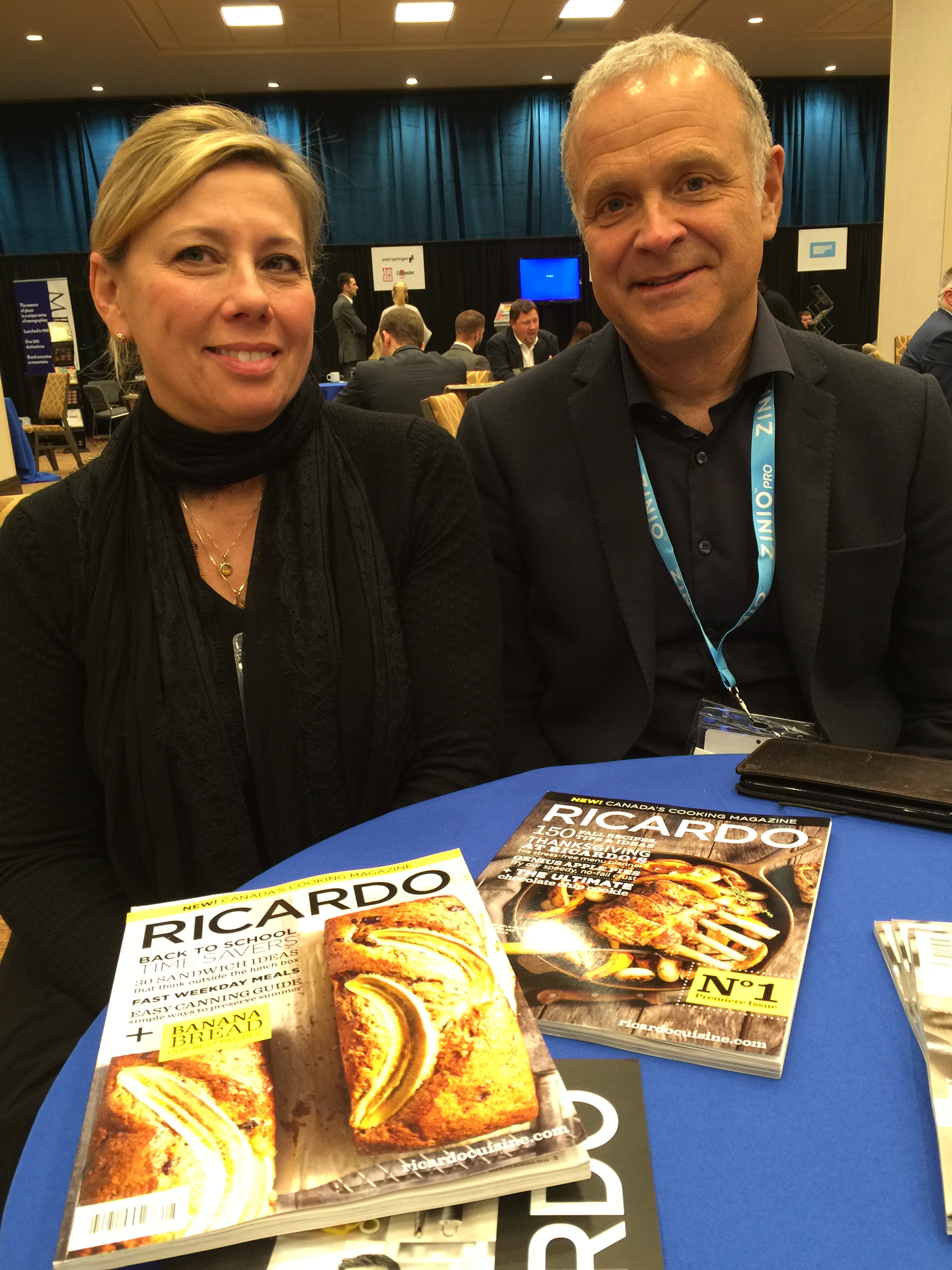
h1

Quartz: The Power Of Good Journalism To Move Society Forward – The Mr. Magazine™ Interview With Jay Lauf, Publisher and President, Quartz.

September 17, 2015

Mr. Magazine™ at the waterfront in Cape Town.

Mr. Magazine™ at the waterfront in Cape Town.

From South Africa with Love: The Mr. Magazine™ Interview

“It’s not self-help; we’re not a trade vehicle, something that’s designed to help you with the day-to-day running of the business necessarily. But what you have is a lot of people who believe in the power of good journalism to move society forward, to help good ideas rise to the top and to help uncover negative issues when those arise. And I think the cohering DNA of anybody who works at Quartz, whether you are on the editorial, engineering, or marketing teams, is a desire to figure out a way to make high-quality, intellectually rigorous journalism thrive in a digital age.” Jay Lauf

Quartz is an arm of Atlantic Media that is a global business news brand that was launched in September 2012 for people who are excited by change. It serves as a digital guide to the new global economy. Designed for an efficient, mobile reading experience, Quartz serves business professionals who travel the world, are focused on international markets, and value critical thinking.

Jay Lauf is publisher and president of Quartz and is a man who has managed to do what others in the publishing industry haven’t been able to quite master; he has grown the audience of Quartz tremendously and has brought digital revenue to the company, revenue that accounts for more than half of its total dollars. And while Jay refuses to take all the credit for that growth, he knows a little bit about publishing, having 25 years of experience, serving as publisher at both Wired and The Atlantic for many years.

I caught up with Jay recently in Cape Town, South Africa, where we were both speaking at the Media24/Lifestyle Summit. We talked about the global mission of Quartz and the drive to educate and help people all over the world find their place in this often confusing global economy of ours. Jay is a man who is as business savvy as the brand he is so passionate about. We talked about the upcoming three-year anniversary of Quartz and the digital publications’ many achievements and its robust success. And in typical Mr. Magazine™ style, we even talked about the possibility of adding a print component to the mix. No definite answer to that one; I’ll get back to you later on Quartz-in-print.

I hope you enjoy this lively and extremely interesting Mr. Magazine™ conversation with a man who has been in the business long enough to know a winner when he stares one in the face each and every day; the Mr. Magazine™ interview with Jay Lauf, publisher and president, Quartz. Our conversation took place at the beautiful and famous Tea Room at the Mount Nelson Hotel in Cape Town.

But first, the sound-bites:


Jay Lauf In Cape Town with The Lion's Head mountaintop to his right and Table mountain to his left.

Jay Lauf In Cape Town with The Lion’s Head mountaintop to his right and Table mountain to his left.


On some of the most important achievements that Quartz has realized since its inception three years ago in 2012:
I think some of the greatest achievements for Quartz over the last three years have to do with how quickly we’ve scaled. Starting with an audience of zero in September 2012 and ostensibly without any advertising; we achieved 10 million readers globally before we were 2½ years old. And to do that as rapidly as we did, I think is an achievement that we’re really proud of and frankly, a testament to the power of social word-spreading.

On whether he feels the achievements that Quartz has had over the last three years would have been possible or the venture even doable at all without the strong Atlantic brand behind it:
That’s a really great question. Do I think we could have achieved what we have so far? Yes; I think the premise of Quartz and the independence of Quartz stands on its own, but there’s absolutely no question that the brand certainly helped by giving us a strong foundation and instant credibility, being born from a company that produces The Atlantic certainly helped with both, advertisers trusting us from the beginning and readership as well.

On whether or not he immediately jumped on the job at Quartz or took some time to mull it over from all angles: I have navigated most of the last 15 years of my career with my gut and my heart, quite frankly. The Atlantic had been my favorite magazine; I’d been a subscriber for well over ten years before I received the first recruiting call from Justin Smith (then president of Atlantic Media). I went on the original interview for The Atlantic with Justin and David Bradley out of purely a fan-voiced curiosity. I really wanted to see who put The Atlantic together because I loved it and I had never met these guys before. When the Quartz opportunity came about it was the first time that I was less about gut and more calculated, because that for me offered an opportunity to pick your buzz word, jump into a purely digital, social startup, but inside a company I already had equity with and one where I knew the owner and I knew the company and we knew each other.

On how Quartz puts the reader first and offers them something different from everything else out there on the digital landscape:
What we try to do every single day whether it’s through the lenses of advertising, content or design is to think about what would we want as users from this proposition? And what you discover is that if you respect the reader first, it’s not only because that’s great for the reader, it’s great for the publisher and the advertiser too. So, “reader-first” is absolutely at the heart of literally everything that we develop at Quartz.

On the moment he knew that he’d made the right decision to take the job with Quartz:
I would say halfway through, maybe toward the end of 2013. The first year of any startup you’re kind of just in a fog. You’re not really stepping back and assessing; you’re in the thick of it 24-7. By the end of 2013 when we really started to see an acceleration of the business side and advertisers were really beginning to jump in and being very positive about what they were hearing from us; you could see in the tea leaves that 2014 was going to be a really strong year.

On whether he believes an endeavor like Quartz would have been possible without the financial backing of David Bradley or was it simply part luck and the other part good-sense:
I think any success that’s as drastic as what we’ve achieved is part luck, and anyone who tells you otherwise is probably a charlatan. But there’s no question that having David’s backing was important. But I think it has as much to do with his support and fresh ideas and a willingness to take risks on those ideas, as it does his money that put us in a position to be as successful as this.

On the global audience of Quartz and how it came about:
The concept was to be global from the beginning; to be distinctly post-national. We try to speak in a post-national voice. What’s amazing to me and just fascinating to observe, is that putting out great content and putting it on the free and open web, and again, without any local promotion in this market or any, actually grew a global audience. The audience found us through the sharing mechanisms that are now networked globally. And it’s pretty amazing.

On whether he believes the homepage is dead:
I think in the beginning we were correct and boldly said the homepage was dead and launched as you may remember, without a homepage at all. That level of focus allowed us to really spend our intellectual and financial resources on creating things besides the homepage that were actually going to be bigger drivers of traffic. So, it depends on how one defines “dead.”

On whether or not he can envision a print version of Quartz in the future:
I’m done predicting the future; those of us who predict the future end up contradicting ourselves three or four years later. I will say there is a bunch of people on our team who love beautiful magazines. And a lot of the queues that we do in terms of design and advertising are taken from magazines. So, that’s certainly something that we talk about and have talked about. But there’s certainly nothing in the imminent future.

On anything else he’d like to add:
I think the interesting thing to think about on the inside is we are an institution that recognizes that the economy is now global and increasingly interconnected and the world is getting smaller, but we do not want to come into these locales and tell the same stories that typical western media are telling over and over again.

On the mission of Quartz:
It’s not self-help; we’re not a trade vehicle, something that’s designed to help you with the day-to-day running of the business necessarily. But what you have is a lot of people who believe in the power of good journalism to move society forward, to help good ideas rise to the top and to help uncover negative issues when those arise.

On whether he feels that Quartz is a candle illuminating the darker side of social media and the Internet:
Yes, but I think there are many candles; I can’t claim that we’re the only flickering light in a dark storm. And I don’t think the storm is as dark as people claim it is. I believe that journalism is very alive and vibrant right now. It’s definitely very noisy and confusing, and yes; I think what we try to do is adhere to a certain set of principles that regardless of the noise that’s going on around us, our readers can rely on to get consistent quality from us.

On what makes him tick and click and motivates him to get out of bed every morning:
There are times when I feel like the luckiest guy in media. I was an English and History major in college and if you’d told me then that I would someday be the publisher of Wired and The Atlantic, of all things, and now this thing called Quartz, which if we do it right will be an iconic media property of its time, I would have either laughed you out of the room or said sign me up right now.

On what keeps him up at night:
The main thing that keeps me up at night in today’s ecosystem is finding and retaining great talent, particularly in the publishing business. The biggest resource that we have is our talent: designers, engineers, journalists, thinkers, ad sales people and writers. Without them you can have the most meaningful mission in the world, but you can’t necessarily execute on it.

And now the lightly edited transcription of the Mr. Magazine™ interview with Jay Lauf, president and publisher, Quartz.

Samir Husni: You’ve been president and publisher at Quartz since 2012; can you briefly recap some of the most important achievements you’ve accomplished in the last three years and any stumbling blocks you’ve had to face and how you overcame them?

Jay Lauf: Sure, I’ll try and encapsulate that. I think some of the greatest achievements for Quartz over the last three years have to do with how quickly we’ve scaled. Starting with an audience of zero in September 2012 and ostensibly without any advertising; we achieved 10 million readers globally before we were 2½ years old. And to do that as rapidly as we did, I think is an achievement that we’re really proud of and frankly, a testament to the power of social word-spreading.

But scale isn’t the only attainment; the other thing we’ve achieved that we’re quite proud of is the right demographics. We had a very specific target demographic over the course of these first 2½ years that we were hoping to reach, which was and is global business professionals who are in decision-making roles and when you look at the syndicated research, we have achieved a really high-end audience of those 10 million people. And that’s been a really gratifying piece of the experience.

The other two quick things that I’d cite are one: what was then a novel approach to design, and by design I mean Big D and Small D design, Big D meaning user interface and really thinking about the systems, and Small D referring to aesthetic design, has actually changed the way some of the biggest bellwethers that we were hoping to compete with thought about doing their design, which is the sincerest form of flattery in a way. And those are the things; recognition is a high-quality vehicle, while scaling quickly has been really gratifying.

Lastly, on the business side of the equation, we’ve got over 125 blue-chip companies that have run advertising with us across the three years that we’ve been in existence. We’re doing everything custom, there’s no IAB (Interactive Advertising Bureau) standard advertising units on the page, so despite the fact that there could theoretically be challenges for these advertisers in terms of custom work, a price point that is much higher than your standard banner ad, I’ve got a better than 90%, at this point, renewal rate/retention rate with advertisers. So, clearly we’re doing something really well on that front.

Samir Husni: Do you think you could have achieved or actually done any of those things if you weren’t part of the Atlantic Media group and launched with that solid brand, which has been in business for over a century and a half, behind you?

Jay Lauf: That’s a really great question. Do I think we could have achieved what we have so far? Yes; I think the premise of Quartz and the independence of Quartz stands on its own, but there’s absolutely no question that the brand certainly helped by giving us a strong foundation and instant credibility, being born from a company that produces The Atlantic certainly helped with both, advertisers trusting us from the beginning and readership as well.

So, there’s no question that we had a head start and maybe it helped to accelerate us in the beginning much more quickly, but I think doing Quartz on its own would have been possible, just not nearly as easy.

Samir Husni: When you were offered the job at Ouartz; did you just immediately say yes and jump onboard, or did you step back and look at it from all perspectives? Can you recall your thoughts pre-September 2012 before Quartz actually began?

Jay Lauf: I have navigated most of the last 15 years of my career with my gut and my heart, quite frankly. I got the opportunity at Wired back in 2001 and the brand just got under my skin in a deep way and we were really passionate about the mission we were on.

But The Atlantic had been my favorite magazine; I’d been a subscriber for well over ten years before I received the first recruiting call from Justin Smith (then president of Atlantic Media). I went on the original interview for The Atlantic with Justin and David Bradley out of purely a fan-voiced curiosity. I really wanted to see who put The Atlantic together because I loved it and I had never met these guys before.

And when I did meet them, I realized how serious they were about pivoting The Atlantic to a digital-first position, and how determined they were to really make it a viable business. And I thought, wow, this is never going to come along again in my career and I took The Atlantic job as much out of passion as calculation. And when I did it at the time, people asked: are you crazy? You’re leaving Wired to go to The Atlantic? And people couldn’t understand why one would take what seemed like a step down. It ended up being one of the best moves of my career and I passionately advocated for that magazine and worked on it through the four years that I was there.

So, when the Quartz opportunity came about it was the first time that I was less about gut and more calculated, because that for me offered an opportunity to pick your buzz word, jump into a purely digital, social startup, but inside a company I already had equity with and one where I knew the owner and I knew the company and we knew each other. So, I just thought that an opportunity like Quartz was never going to come along again in my career and that I had to do it.

And three years later I’m as grateful that I made that decision as I was when I chose to go to The Atlantic in 2008.

Samir Husni: You used the phrase “digital-first” which was buzz words a few years back. Now we rarely hear “digital-first” or “print-first” phrases; we’re hearing more of what I mentioned in my new book “Audience First.” How did you approach your customers, whether that’s the advertiser or the reader, in a different way with Quartz than what was already out there, such as the two giants that you went after, FT (Financial Times) and The Economist?

Jay Lauf: The FT and The Economist may say that they do this as well, and perhaps they do, but from the beginning we have been zealous about a reader-first approach. So, if you look at the conventions that Quartz did away with as a reader-first approach, we realized our target audience is using mobile devices more than any other mechanism for reading and discovering the content. We realize that they don’t respond to banner ads and a lot of the commoditized ad units that one has on a website.

And so what we try to do every single day whether it’s through the lenses of advertising, content or design is to think about what would we want as users from this proposition? And what you discover is that if you respect the reader first, it’s not only because that’s great for the reader, it’s great for the publisher and the advertiser too. So, “reader-first” is absolutely at the heart of literally everything that we develop at Quartz.

Samir Husni: So, my reading won’t be preempted by a video that I have to watch first before I receive access to the content, unless I hit “skip ad?”

Jay Lauf: Correct. I’ve said publicly to keep myself honest, you will never see one of those interstitial takeovers that jumps in front of your reading experience and asks you politely to “wait 15 to 30 seconds” before you can read the content. We won’t do that. Kevin Delaney, my co-president, has said publicly that we won’t do pre-roll on Quartz. And sometimes I’m biting the back of my knuckle over that one, but we say that because we know that it’s a lousy user experience and there has to be a better way to have readers experience the advertising on our site.

Samir Husni: In these last three years, and I believe you’re celebrating exactly three years as we speak…

Jay Lauf: Yes, you’re right. Next week will be the actual three-year anniversary of Quartz.

Samir Husni: What has been that “wow” moment for you? That time during those three years when you said, yes, I made the right decision when I took the job at Quartz?

Jay Lauf: I would say halfway through, maybe toward the end of 2013. The first year of any startup you’re kind of just in a fog. You’re not really stepping back and assessing; you’re in the thick of it 24-7.

By the end of 2013 when we really started to see an acceleration of the business side and advertisers were really beginning to jump in and being very positive about what they were hearing from us; you could see in the tea leaves that 2014 was going to be a really strong year.

So, I would say that have to be it. By the Q4 of 2013 I could finally lift up and say, wow, this is actually starting to take off the way we had hoped it would.

Samir Husni: And do you think were it not for the financial backing of David Bradley a project like Quartz could have been started today? For example, could a random person who heard your story do the same thing without some very deep pockets? Does it take a lot of money and capital to achieve what you’ve achieved with Quartz or was it part luck, part good sense?

Jay Lauf: I think any success that’s as drastic as what we’ve achieved is part luck, and anyone who tells you otherwise is probably a charlatan. But there’s no question that having David’s backing was important. But I think it has as much to do with his support and fresh ideas and a willingness to take risks on those ideas, as it does his money that put us in a position to be as successful as this.

And it probably took less money than people might suspect in the first year. I’m not at liberty to discuss what those numbers would be, but the difference is we didn’t have to go out and pull together other shareholders, stakeholders and investors who may or may not have the same level of commitment that somebody like David does and expect a return on that investment far more quickly than he might. And we were liberated from that and I think that gave us the latitude and freedom to create something that was unlike what you had seen before. And that was distinctly reader-first, because sometimes when you’re building reader first, the pathway to monetization is not as direct as a much more commoditized thing.

Samir Husni: In just three short years, you are not only national but Quartz also has an international scope. Today you’re in South Africa, tomorrow you’re going to be in Nairobi, and the next day who knows? You have a network. How did you accomplish that? Was it the concept that attracted the international interest or was it the content? And what came first, the concept, the content or the audience?

Jay Lauf: Probably in the order that you just described. The concept was to be global from the beginning; to be distinctly post-national. We try to speak in a post-national voice. When Kevin Delaney first began to assemble his editorial team, he required that they speak at least two languages fluently and our first team of journalists that were with us at the very beginning spoke over 15 languages fluently and had reported from over 100 different countries in their careers.

So, I think that we achieved both a perspective and a tone of voice that appealed globally. From the first month and you might be surprised to learn this, we were 60% U.S. and the other 40% was outside the U.S. audience. By the end of the first year, we had been accessed in over 170 countries around the world. Today we are closer to something like 56/44 – 56% U.S. – 44% outside the U.S.

What’s amazing to me and just fascinating to observe, is that putting out great content and putting it on the free and open web, and again, without any local promotion in this market or any, actually grew a global audience. The audience found us through the sharing mechanisms that are now networked globally. And it’s pretty amazing.

Samir Husni: I’ve heard talk recently about the death of the homepage; is the homepage dead and do we now depend on social media to spread the word or links to articles? Having achieved what you’ve achieved in three short years; what’s your take on the homepage and its importance?

Jay Lauf: I think in the beginning we were correct and boldly said the homepage was dead and launched as you may remember, without a homepage at all. That level of focus allowed us to really spend our intellectual and financial resources on creating things besides the homepage that were actually going to be bigger drivers of traffic. So, it depends on how one defines “dead.” Eight to ten percent of our traffic comes to the homepage. And with 10 million readers globally, that means somewhere between 800,000 and one million readers come to the homepage.

That begins to change the way that we think about the homepage in the sense that’s a decently robust magazine subscription base. So, we have instituted what you would call a homepage as a way to treat that group of readers differently. We suspect there are two groups that come to the homepage: the real loyalists who want to come every single day and check out what we’re doing and then people who are discovering us for the first time. They may have heard about us and somebody may have said they should try Quartz or check into QZ.com.

So, signaling something different to those folks than you might to the person who discovers you more serendipitously in their feed or has already discovered you and therefore by habit is clicking on your link in their feed, means that you can probably do something different with the homepage.

But speaking in purest terms that the homepage is dead helps you rear-end your thinking around the convention that if not completely dead, then certainly not as important as it once was.

Samir Husni: Being Mr. Magazine™ I have to ask this question, is there a printed magazine in your future?

Jay Lauf: (Laughs) I’m done predicting the future; those of us who predict the future end up contradicting ourselves three or four years later. I will say there is a bunch of people on our team who love beautiful magazines. And a lot of the queues that we do in terms of design and advertising are taken from magazines. So, that’s certainly something that we talk about and have talked about. But there’s certainly nothing in the imminent future. But if we reconvened here ten years from now and it turned out there was a print version of Quartz, I wouldn’t fall off my chair.

Samir Husni: Is there anything else that you’d like to add?

Jay Lauf: I think the interesting thing to think about on the inside is we are an institution that recognizes that the economy is now global and increasingly interconnected and the world is getting smaller, but we do not want to come into these locales and tell the same stories that typical western media are telling over and over again. So, if you’re in Africa it’s pretty straightforward; it’s about political turmoil and crises; it’s about piracy.

But when you come to Africa, what you discover is that there’s vibrancy to the entrepreneurial community and to the business community that’s just beginning to take hold here. And no one is telling those stories; no one is helping Africans understand their place in the global economy or what the impact of the global economy is on them. And this is true not just in Africa, but in places like India, even in Asia, which have markets that have highly evolved media, but a lot of the media is very, sort of myopic and inward-facing. What we’re hoping to do all over the world is help people understand their place in this global economy and help them navigate the challenges and take hold of the opportunities that it presents for them.

So, I think that’s what’s on our mind when we come to places like Africa, is to try and understand what the stories are that no one is telling and that are actually interesting and related to the global economy.

Samir Husni: In the early stages of the 20th century, Professor Ben Patterson defined magazine publishing in America as two groups: the missionaries and the merchants. With the missionaries, they still want to make money and it’s a business, but they want to promote America the Great as well, they had a greater-good mission. And then there were the merchants who were strictly moneymaking and business. You reminded me of the missionaries as you were talking about Quartz; you’re on a mission. There’s that DNA of the whole concept of helping others from an economical and global point of view.

Jay Lauf: Yes; it’s not self-help; we’re not a trade vehicle, something that’s designed to help you with the day-to-day running of the business necessarily. But what you have is a lot of people who believe in the power of good journalism to move society forward, to help good ideas rise to the top and to help uncover negative issues when those arise.

And I think the cohering DNA of anybody who works at Quartz, whether you are on the editorial, engineering, or marketing teams, is a desire to figure out a way to make high-quality, intellectually rigorous journalism thrive in a digital age. And we feel like if we can figure that out, all of us will someday be able to look back on that chapter of our careers and say, wow, we really accomplished something that mattered.

Samir Husni: So, do you feel as though you’re a candle in the midst of this dark side of social media and the Internet? That you feel a social responsibility to journalism as opposed to gossip journalism?

Jay Lauf: Yes, but I think there are many candles; I can’t claim that we’re the only flickering light in a dark storm. And I don’t think the storm is as dark as people claim it is. I believe that journalism is very alive and vibrant right now. It’s definitely very noisy and confusing, and yes; I think what we try to do is adhere to a certain set of principles that regardless of the noise that’s going on around us, our readers can rely on to get consistent quality from us. And hopefully we lead the way sometimes in that.

Samir Husni: What makes you tick and click and motivates you to get out of bed every morning and say it’s going to be a great day?

Jay Lauf: There are times when I feel like the luckiest guy in media. I was an English and History major in college and if you’d told me then that I would someday be the publisher of Wired and The Atlantic, of all things, and now this thing called Quartz, which if we do it right will be an iconic media property of its time, I would have either laughed you out of the room or said sign me up right now.

I feel like I’m in graduate school every day. I’m smarter every day at the end of the day than I was when I came in that morning. And I get paid for that. That gets me up every day; it’s fun and dynamic.

Samir Husni: My typical last question; what keeps you up at night?

Jay Lauf: The main thing that keeps me up at night in today’s ecosystem is finding and retaining great talent, particularly in the publishing business. The biggest resource that we have is our talent: designers, engineers, journalists, thinkers, ad sales people and writers. Without them you can have the most meaningful mission in the world, but you can’t necessarily execute on it. And it’s harder and harder because there are more and more options; we’re in an era where people are not loyal to companies and companies are not loyal to people. And people move around a lot, certainly in this industry space. So that’s what keeps me up at night; it’s how do I find the right people for the Quartz mission and how do we keep them excited about that every day.

Samir Husni: Thank you and until we meet in the States enjoy your journeys…

Sunset at Cape Town, South Africa...

Sunset at Cape Town, South Africa…

h1

Falling In Love With Your Audience: Husni On South African e-NCA’s “Maggs on Media”

September 15, 2015

From South Africa With Love

On the set of Maggs on Media, eNCA television, South Africa.

On the set of Maggs on Media, eNCA television, South Africa.

Media24/Lifestyle invited me to visit South Africa and speak at two events: “Media24/Lifestyle presents Mr. Magazine™ in SA” that took place in Johannesburg and “Media24/Lifestyle Summit” that took place in Cape Town, so last week I did just that. After my presentation at Johannesburg, which was aimed at an audience of advertisers and advertising agencies, I was interviewed by Jeremy Maggs, host of “Maggs on Media” on e-NCA television station.

According to e-NCA website, “Maggs on Media is a powerful digest of media issues and topical advertising. This weekly programme features the good, the bad – and the newsworthy of the media world. Presenter Jeremy Maggs’ extensive experience in the media industry makes him an informed facilitator of discussions on issues facing the media. Regular insights from leading local and global thinkers mean viewers are exposed to trends affecting brand communications and the new technologies driving them – and its not a one-way broadcast. An active social media community share their thoughts on programme content and often influence what is covered on the show.”

Click here to watch the opening segment from the program that I appeared on.

h1

From South Africa With Love: Magazines Are Not Dead…

September 15, 2015

Magazines are not dead!
Posted By: Michael Bratton: September 09, 2015In: Magazines

IMG_8354 Samir Husni, better known in the world of media as Mr Magazine, is in South Africa as part of a Media24 conference to train and assist its magazine staff. Michael Bratt attended an event where Husni gave a talk about how he sees the current magazine landscape and what could happen in future.

Husni came into his presentation with a strong, clear message: Magazines are not dead! In fact, he says print is making a comeback and “It is time to bury our Print is Dead buddy”. Husni says the print industry has no one else to blame for falling circulation numbers other than itself as it keeps writing and publishing articles about its own demise and how digital is the future.

There are certain things that magazines need to do in order to stay relevant and successful, however. “There needs to be a shift from counting customers to customers who count. Every publication is worried about large readership but they should be focused on becoming experience makers whose innovations and creations must grab, keep and ensure a repeat,” Husni says.

Magazines can do this by ensuring the audience is always placed first and that there is a focus on consumers who count. He says a large portion of magazine audiences can be considered as trash audiences, people who won’t bother spending money with you, but will read or look at your content online.

Husni believes the biggest threat to media are those companies who do not brand themselves as media companies but are in the process of generating content. He cites Facebook, Google and Amazon as some examples. “They do not worry about journalistic standards or social responsibility, all they care about is reach and money.” He says this is not just a bad thing as this is what will keep magazines in business, “social responsibility and curation of news”.

Samir "Mr. Magazine™" Husni with South Africa's The Media On Line reporter Michael Bratt

Samir “Mr. Magazine™” Husni with South Africa’s The Media On Line reporter Michael Bratt

Husni also touched on what impact digital is having on magazines. He compared the entrance of digital as a mistress who looked so attractive to media organisations that they just had to have an affair with her, cheating on their faithful wife, print. There is a belief that digital is the future and that magazines and other print mediums will soon become obsolete. Husni says that we must not kid ourselves into thinking that we do not live in a digital world. In fact he describes the situation as “isolated connectivity” as people interact with each other now from afar.

“Digital is not killing analog, and analog is not going to kill digital. They are living hand in hand and will continue to do so,” Husni believes. He says that this is another way magazines can continue to thrive, by leveraging their content through the use of digital. “Social media can be the friend of print.” However he does admit that digital is a real threat saying, “It’s really hard to retrain people to pay for what they are using.”

Husni gave some tips in order to help magazines succeed. He says that magazines and newspapers need to do more than simply report news, they need to add value and analysis, things which cannot be easily found online. He also believes that, “We need to be in the business of innovation and creation, not renovation.” He also pointed out that in today’s world advertisers are doing business with brands seen as trusted, who are normally first or second placed in their market. He also says journalism has gone beyond simply the five Ws (Who, What, Where, When, Why) and the H (How) to WIIIFM, what is in it for me, to match the attitude of consumers.

Husni also explained that more and more new magazine titles are being created everyday as digital has had the effect of specialising society. He compares the landscape to a cafeteria, saying there is more choice for consumers depending on their interests, rather than a melting pot as it used to be. “We are going to see more magazines, the more specialised our society becomes. Who better to curate and represent that segmentation than magazines?”

Husni’s success tips

Give the consumer immediate answers, look what is in here from me to you

A good magazine is the one that gives predictive answers to the consumer’s questions
Humanise the magazine by putting the consumer first

Identify and work on 4 or 5 unique experiences that your magazine will offer

Make your magazine cover like a soap opera with a cliff hanger ending previewing the next issue

A magazine must create value rather than simply repeating news which consumers have already seen online

Bring young, new blood into the industry

h1

Super Yachting Anyone? You Only Need A Net Worth Of $680 Million To Join The Fun – But Not To Enjoy The Magazine – The Mr. Magazine™ Interview With Louis Coletti, Associate Publisher Luxury Advertising, ShowBoats International Magazine.

August 14, 2015

“I think print is the most powerful medium. I think it’s an engagement opportunity for consumers to be hands-on (no pun intended) and connected with the content. I’ve been a magazine fan since high school; I believe in print and always will believe in print. It’s something that you can take with you and have an intimate experience with. The photography is bold; the typography is modern and continues to change. It’s something that you can take with you no matter where you are, from the beach to the boardroom, onboard a boat or onboard a plane; it can go with you everywhere. There’s no place that you can’t take a magazine.” Louis Coletti

Showboats 3-14 For most of us the superyacht stratosphere of existence is but a mere fantasy that we dream about after a really large, superb dinner. But for some people, that’s not the case. Spending $10 million a year on maintenance alone for one of these magnificent vessels is just an annual expense that they write a check for unflinchingly. Just thinking about it makes me hyperventilate a bit.

ShowBoats International is a magazine dedicated to those individuals who can sail the seven seas in a style and luxury that many of us have never known, nor ever will. But it’s definitely entertaining to read about.

According to Louis Coletti, associate publisher luxury advertising for the magazine, ShowBoats International has the wealthiest readership of any publication in the United States, with the mean net worth of a superyacht owner estimated at $680 million. The magazine has the highest concentration of ultra-high net worth individuals and billionaire’s listed among its readership and provides the content this echelon of people need to stay up-to-date and abreast of what’s going on in the superyacht and mega yacht communities.

Louis is determined to take this superyacht brand to a whole new level. I spoke with him recently and we talked about the redesign and relaunch of the U.S. edition of the brand beginning with the March 2015 issue of the magazine. Louis said investments were made in editorial content, paper stock and the overall size and binding of the publication, proving that not only do us mere mortals appreciate the power of print, but so do the ultra-mega-rich as well.

Some mindboggling statistics that Louis provided for Mr. Magazine™ only goes to show that a niche audience takes on a whole new meaning when it comes to the superyacht community:


• Many superyacht owners keep their vessels for no more than three years before selling up.

• In 2013, 355 superyachts were sold with a total combined price of $3.4 billion U.S.

• Of the 125 owners’ nationalities identified, 14% were Americans, followed closely by Russians.

• Luxury yachts top the list of the ten most expensive asset purchases ever recorded.

• 10% of the yacht purchase price is usually paid immediately.

So, as you let those statistics sink in, I hope you enjoy the Mr. Magazine™ interview with a man who rubs elbows with the ultra-wealthy quite often, but keeps his feet firmly planted on the ground when it comes to the future of his brand, Louis Coletti, Associate Publisher Luxury Advertising, ShowBoats International Magazine.

But first, the sound-bites:

Louis Coletti
On defining the superyacht community:
It really is a fascinating community. The superyacht world is becoming more known and more aware in the United States now, thanks to social media and all of the entertainment channels. As you know, super yachting has been a very big presence in Europe; it’s been part of their culture for decades and centuries with Sardinia and St. Moritz, Monaco and the French Riviera and all over Italy. Yachts are in the harbors there and can be seen all year long, but it’s just becoming known here in the U.S., which is exciting for us.

On the need for a magazine like ShowBoats Magazine in the scheme of things: We’re globally the number one content provider in the superyacht world, for both the motor boat and sailing. We have the strongest hold on the community, in terms of the inside access to who these people are and the people who create this industry. We’ve been around for over 30 years and it’s the number one trusted media brand in the superyacht world. We host the largest and most high profile private event in the industry; we host over 14 global events, exclusively for superyacht and mega yacht owners, brokers and builders.

On the superyacht owner’s estimated net worth being $680 million and whether advertisers are waiting in line to get inside the magazine’s pages because of that:
Our advertising clients directly get it. Every time that I meet with a client, especially Europeans – Italians or French, they immediately understand exactly who this audience is. They’ve been around it, especially as a luxury marketer, they understand who these people are and how powerful and influential they are, and most importantly how private they are.

On the redesign, rebranding and relaunch of the magazine: We increased the trim size as you saw. We have top-quality paper stock and beautiful binding for the magazine; big, bold photography and to improve the design we cut the issue cover-to-cover, beginning with the March issue. And together with our investors as well as many of our readers that attend our events; they all kept speaking to my CEO and the editors about including luxury lifestyle content in the magazine.

On why he thinks we still need print in this digital age: I think print is the most powerful medium. I think it’s an engagement opportunity for consumers to be hands-on (no pun intended) and connected with the content. I’ve been a magazine fan since high school; I believe in print and always will believe in print. It’s something that you can take with you and have an intimate experience with. The photography is bold; the typography is modern and continues to change. It’s something that you can take with you no matter where you are, from the beach to the boardroom, onboard a boat or onboard a plane; it can go with you everywhere. There’s no place that you can’t take a magazine.

On the biggest stumbling block he’s had to face:
It’s brand development basically. We just opened a New York office in April 2015 and I’m here in charge of building all the luxury non-marine; everything that’s non-marine related. It’s just building the brand; making people aware that ShowBoats International is redesigned and relaunched. We have the most powerful audience, in terms of wealth and influence. It’s just about educating people on what the superyacht and mega yacht world is and what it’s about; the amount of money that it takes to participate in this community and that a superyacht is literally the most expensive consumer item for purchase on earth right now.

On how it makes him feel to be in the company of people with ultra-high net worth’s:
It’s exciting to be part of this development. I wish that it was easily understood, in terms of when I talk about super yachting, I just wish more people would understand exactly what it means. And what this industry is about.

On anything else he’d like to add:
The way I see this media opportunity/partnership with us is more a financial decision than a media decision. If marketers are looking to affect their bottom line in a significant way and move product; move a luxury auto off the lot; move a $150,000 timepiece out of the showcase; move custom, made-to-order pretty much anything that’s in their stable of offerings; this is the audience to do it.

On what keeps him up at night: What keeps me up the most honestly though is the excitement of wanting to get out and see more people and do more and just build this brand and take it to a whole new level. I’m in month four, going on month five, and sometimes it feels like it’s been two years and sometimes it feels like it’s been five weeks. Every day it’s new and exciting.

And now for the lightly edited transcript of the Mr. Magazine™ conversation with Louis Coletti, Associate Publisher Luxury Advertising, ShowBoats International Magazine.

Samir Husni: Tell me a little about the superyacht community.

Showboats 2-13 Louis Coletti: It really is a fascinating community. The superyacht world is becoming more known and more aware in the United States now, thanks to social media and all of the entertainment channels.

As you know, super yachting has been a very big presence in Europe; it’s been part of their culture for decades and centuries with Sardinia and St. Moritz, Monaco and the French Riviera and all over Italy. Yachts are in the harbors there and can be seen all year long, but it’s just becoming known here in the U.S., which is exciting for us.

I’m not sure if you’re aware of this, but Ft. Lauderdale is the third largest shipbuilding, manufacturing and marina setting in North and South America. It’s actually the third largest in the world. It’s the top largest in North and South America.

Most Europeans still have their superyachts here in Ft. Lauderdale during the wintertime when they’re doing the transatlantic trips. They send their boats ahead with the captain and the crew and then they meet up with them in Florida. So, it’s become really big, which is very exciting for us. We’re very happy about all of the attention the community has been getting.

Samir Husni: I’m hearing a lot lately that the reason we exist in print is because of the impact of social media and the Internet and how it’s introducing the world to each other. What is the need for ShowBoats International Magazine in the scheme of these introductions?

Louis Coletti: We’re globally the number one content provider in the superyacht world, for both the motor boat and sailing. We have the strongest hold on the community, in terms of the inside access to who these people are and the people who create this industry. We’ve been around for over 30 years and it’s the number one trusted media brand in the superyacht world. We host the largest and most high profile private event in the industry; we host over 14 global events, exclusively for superyacht and mega yacht owners, brokers and builders.

So, it’s really these great partnerships and we have access in terms of exclusive interviews; we get invited onboard for the new build before they’re launched. We have what’s called the Superyacht Design Symposium, which is an event that we host once a year where all the top superyacht architects and designers gather together. It’s a three-day event that’s an open forum and discussion, plus there are seminars and other types of events there as well. And they’ll all get together once a year to share the new updates and ideas on technology, regulations, design opportunities and new build that are coming out. So, we’re involved on the build side as well as the actual boats themselves being launched on the water.

Samir Husni: In addition to that, you have the Ultra High Net Worth individuals in the world; I’m quoting you from your email. You said the superyacht owner is estimated at $680 million, that’s the mean net worth. How do you utilize that audience in reaching the advertisers? You’re in charge of the luxury advertising for the magazines of the brand; when you go meet with an ad agency, are they just champing at the bit to advertise in the magazines?

Louis Coletti: That’s a very interesting question. When I meet with a client directly, they get it immediately. They understand the amount of money that it takes to be a superyacht owner. And additionally, the amount of money that it takes to support the lifestyle that evolves with this community.

On average, they spend two months out of the year on their superyachts. They have a whole life outside of their boating activities. So, for them to spend hundreds of millions of dollars on something they only spend two months a year on, they have an excessive amount of income to spend supporting their hobby and their luxuries.

So our advertising clients directly get it. Every time that I meet with a client, especially Europeans – Italians or French, they immediately understand exactly who this audience is. They’ve been around it, especially as a luxury marketer, they understand who these people are and how powerful and influential they are, and most importantly how private they are.

The ability to gain access is what we provide. We provide inside access with people who we have very intimate relationships with. And you can just imagine based on the size of these boats and they’re all new build that we feature in the magazine. Every issue when you receive ShowBoats International and you see the content, every boat in there is a new build; every boat that’s in there is one of our readers, and we only feature yachts of a 100 ft. or larger on the cover. So, if you have an 80 ft. yacht and it’s spectacular, it might not make the cover, because our rule is 100 ft. or larger.

Also another statistic is on average they spend 10% of the cost of the yachts annually on maintenance. For example, they’ll spend $100 million on their yacht at purchase and then they’re spending $10 million per year to maintain it. Between fuel, docking fees, insurance; whatever they pay in terms of a captain’s salary, crew salaries and everything else that goes along with it, it’s about 10% a year that they spend. That automatically increases the caliber of wealth behind these people. Steven Spielberg is one of our readers. He’s one of the biggest superyacht owners in the Americas, pretty much in the world, but definitely in the Americas.

This explains the difference between a high net worth individual and a very high net worth individual, (Laughs) or an ultra-high net worth person.

Samir Husni: (Laughs too) Yes, ultra-high indeed.

Louis Coletti: Yes, ultra, as they’re definitely called.

Samir Husni: I was in L.A. with a friend at the marina and he was showing me the yacht of Microsoft’s Paul Allen…

Louis Coletti: Yes, he owns three. He has three superyachts. And up until two years ago, he had the largest yacht on the water. He spent around $200 million building that boat. And one year later billionaire Roman Abramovich built a yacht 10 feet larger just to beat Paul Allen. (Laughs)

Samir Husni: (Laughs too).

Louis Coletti: It’s very competitive. Who wants to have the fastest boat; who wants to have the biggest boat; who wants to have one of the top architects and designers building their boat? It’s a very, very competitive community and it’s a very small community too. It’s just the richest people in the world.

Samir Husni: You said that Spielberg has the biggest now?

Louis Coletti: Well, there are two that are vying for the biggest superyacht on earth; one is a Malaysian businessman and one is a guy with no name from the Middle East. Those two are being discussed as the largest boats on the water. But that could always change.

Samir Husni: In March, the entire magazine was relaunched, redesigned and rebranded; tell me a little about the before and after of ShowBoats International.

Louis Coletti: Before it was a different trim size, a different paper stock, a different type of production quality and not as luxurious as you see it today. And it was strictly cover-to-cover boating. It was a place for the boats’ owners to have a showcase, but also for brokers to market and showcase their clients’ boats that were up for charter. Basically, it was a very specific trade-type of magazine, although it was for anyone who appreciated boating, but really for the superyacht owner.

We have a new group of investors in the company; Tara Getty, for instance, from the Getty family Art Foundation; Tara Getty is one of our investors. H
e’s a superyacht owner and very involved in the community.

And together with our investors as well as many of our readers that attend our events; they all kept speaking to my CEO and the editors about including luxury lifestyle content in the magazine. These are very, very busy people; they’re all over the world and they own several homes; they’re not in one place too often. So, the opportunity to read one publication that they’re most excited about; the number one passion point should be yachting. And to infuse it with other luxury content such as watches; they’re big collectors of luxury timepieces. That’s another thing that they spend so much of their money on is watches. Luxury automobiles, fashion, jewelry, spirits, technology and things like that.

We took the liberty to hire new editors; our editor-in-chief in the U.K. Sacha Bonsor; she comes from Hearst, where she worked at Harper’s Bazaar and she’s editor-in-chief in the U.K. overseeing all of the content. She’s very well connected in the luxury space and she’s bringing really fantastic contributors onboard to build the luxury content in the magazine. And it has been so well-received; readers are just praising the redesign; they love the fact that we’re including this new content in addition to boating. And it’s really brought a new element to the brand.

We increased the trim size as you saw. We have top-quality paper stock and beautiful binding for the magazine; big, bold photography and to improve the design we cut the issue cover-to-cover, beginning with the March issue.

Our sister publication, Boat International, which is for our European market and based in the U.K., they did their redesign first. Their redesign launched in October 2014. And then ShowBoats International for the U.S. was redesigned as of March 2015.

Samir Husni: With the redesign and relaunch of the brand; tell me a little about the power of the print publication. You’ve invested in the quality of the paper; you’ve invested in the branding; you’ve invested in the editorial content; why do you think in this digital age people still need print?

Louis Coletti: I think print is the most powerful medium. I think it’s an engagement opportunity for consumers to be hands-on (no pun intended) and connected with the content. I’ve been a magazine fan since high school; I believe in print and always will believe in print. It’s something that you can take with you and have an intimate experience with. The photography is bold; the typography is modern and continues to change. It’s something that you can take with you no matter where you are, from the beach to the boardroom, onboard a boat or onboard a plane; it can go with you everywhere. There’s no place that you can’t take a magazine.

And it’s a whole different experience, in terms of content. Does print and digital work well together? Absolutely. We have content online that’s not in the magazine. We also have videos online as well.

That’s another thing, our company has its own video production company and we produce videos for all of the major yacht builders. We produce videos for all of our events. We produce and host The Loro Piana Superyacht Regatta twice a year; once in Sardinia and once in the Caribbean and we’ve been doing it for eight years with Loro Piana. And we videotape the entire week’s events, from start to finish. All the races; all the interviews; all the entertainment; all of it is recorded in a beautiful documentary way. And we press those videos online.

We also host what’s called The World Superyacht Awards. It’s similar to The Oscars for the superyacht industry and it’s something that our readers look forward to every single year. It’s with several different, very high-profile luxury partners. Baccarat builds the statue for us that they win, it’s called The Neptune, and it’s a very big deal. It’s a black-tie event that’s hosted in a different country around the world every year. And we videotape that entire event and we press that online too.

So, the content online is much different. We also list now over 7,000 superyachts for sale and for charter; it’s the number one directory for sale and charter in the industry. And we host that on our sites. We also produce what’s called the Superyacht Register, which is an outline of every detail of the top superyachts in the world. And it lists the builder, the year it was built, the owner, the architect, the interior designer, the size and speed of the boat; all the specifics of the boats are registered.

My point with this is it’s a whole different experience and additional content that’s found online.

Showboats 1-12 Samir Husni: With all the glitz and glamour of the superyacht world; what has been the biggest stumbling block that you’ve had to face and how did you overcome it?

Louis Coletti: It’s brand development basically. We just opened a New York office in April 2015 and I’m here in charge of building all the luxury non-marine; everything that’s non-marine related. It’s just building the brand; making people aware that ShowBoats International is redesigned and relaunched.

We have the most powerful audience, in terms of wealth and influence. It’s just about educating people on what the superyacht and mega yacht world is and what it’s about; the amount of money that it takes to participate in this community and that a superyacht is literally the most expensive consumer item for purchase on earth right now. Until you can own private rocket-ships going up into space; there isn’t anything more expensive than superyachts. It costs more than any real estate, any watch, any piece of art, any automobile, and any airplane. The average cost of a plane is $5 million; these people spend more than that just maintaining their boat. (Laughs)

Samir Husni: (Laughs too).

Louis Coletti: It’s just a matter now of really educating the community. The challenge has been, I’d say, the ad agencies; not clients. Clients get it immediately. They’ve been on a superyacht; they know someone who owns a superyacht; they’ve been in St. Tropez, St. Bart’s or Sardinia and they see these superyachts in the harbors or out at sea, so they understand exactly what I’m saying. Several of my clients are part of this community. David Geffen is one of our readers; he owns two superyachts. I think I mentioned that Steven Spielberg is one of our readers; Paul Allen is one of our readers; Mark Zuckerberg is a reader; these people own superyachts and we’re the number one content provider in this community. If they own a boat, it’s registered with us; they get the magazine.

Samir Husni: How does it make you feel to be in such company?

Louis Coletti: It’s exciting to be part of this development. I wish that it was easily understood, in terms of when I talk about super yachting, I just wish more people would understand exactly what it means. And what this industry is about.

But like everything, it takes time and we’re making great progress. We’ve already secured seven new luxury clients that have never worked with us in this yachting space before. We’re getting a lot of interest for 2016 from a lot of the A-list top luxury brands across all categories, not just in the watch category. I wish there were more like me. (Laughs) I wish there were 10 of me; it would make it happen a lot faster.

We’re in building mode right now. We know our strengths. There are other magazines in this space, but they can’t compare to what we’re doing. They don’t have events and if they do, not at the caliber of the events that we have. They definitely don’t have the guest list of attendees that we have. They don’t have the respect and the appreciation for our quality content that we have.

It feels good to be the leader; it’s just being a leader in a space that’s not so widely-known in the U.S. yet.

Samir Husni: Is there anything else that you’d like to add?

Louis Coletti: The way I see this media opportunity/partnership with us is more a financial decision than a media decision. If marketers are looking to affect their bottom line in a significant way and move product; move a luxury auto off the lot; move a $150,000 timepiece out of the showcase; move custom, made-to-order pretty much anything that’s in their stable of offerings; this is the audience to do it.

It’s not about branding; it’s not about running ads in this magazine or that magazine because so-and-so is friends with the editor-in-chief or doing favors for a favor. I understand the importance of all that and that’s definitely a part of how this industry works, but in our case it really is about a financial decision. You invest in us and the rate of return is so much higher than pretty much any other magazine or media available. And it’s because of the amount of wealth and influence that these people have. And it’s a global community. ShowBoats International is for U.S.-based superyacht owners and Boat International is for European superyacht owners; however, combined together it’s a global community. They travel the circuit. They’re all in the Mediterranean at the same time and when the seasons change they go over to the Caribbean and spend time and then they travel to the Americas around the same time, based on the climate and the season. And it’s a circuit. Sometimes you can see five or ten, maybe more, of these superyachts in the same vicinity. We post on our website about whose yacht was spotted where.

Just keep an eye on us. If you’re ever going to follow the America’s Cup, now is an exciting time to do that. We publish America’s Cup updates on our site daily. Right now it’s going on as the World Series and so we’re featuring content on the America’s Cup for the next two years. The World Series just started in June.

The way I see this media opportunity/partnership with us was more a financial decision than a media decision. If marketers are looking to affect their bottom line in a significant way and move product; move a luxury auto off the lot; move a $150,000 timepiece out of the showcase; make custom made-to-order pretty much anything that’s in their stable of offerings; this is the audience to do it.

So, just keep an eye on us and it’ll be exciting to see the growth and the new achievements that we make.

Samir Husni: My typical last question; what keeps you up at night?

Louis Coletti: (Laughs) Thinking of everything that I have to get done the next day; things that I didn’t get to scratch off my to-do list that day, which carries over to tomorrow.

What keeps me up the most honestly though is the excitement of wanting to get out and see more people and do more and just build this brand and take it to a whole new level. I’m in month four, going on month five, and sometimes it feels like it’s been two years and sometimes it feels like it’s been five weeks. Every day it’s new and exciting. Just knowing how much we have yet to do is both exciting and keeps me up at night sometimes.

Samir Husni: Thank you.