Archive for the ‘Across the Pond’ Category

h1

Elsie Magazine: The Creatively Sumptuous Publication Teams Up With Fiverr’s Website For Its Fourth Issue To Bring The Most Eclectic & Interesting Content To Its Audience Yet – The Mr. Magazine™ Interview With Les Jones, Founder & Creator, Elsie Magazine

September 26, 2016

A Mr. Magazine™ Interview from Across the Pond
image

“I think, probably like you, Samir, I’m a huge lover of print. I don’t think that you can really substitute that kind of quality of sitting down with a magazine or a book. I think the online, digital environment is extremely exciting, but it’s just different for me. The production of an actual physical item that people not only read, but hopefully put onto their shelves and keep is really important to me. So, no, I don’t think digital is the absolute future; there’s still a big future for print.” Les Jones

“I suppose it was always inevitable that there would be a bit of a print backlash. Digital came in rather big and bold and everyone just assumed that was the future and print would disappear, but there’s no indication of that at the moment. I think people still like to hold a magazine and flip through the pages; it’s a completely different experience than scrolling through a digital magazine.” Les Jones

Picture a magazine with fantastic photography, eye-catching typography and a dedication to design that would make even the most studied of creators of layouts salivate. Then throw in an individualized theme or topic of content that is so totally unique in its concept that the magazine virtually stops you in your tracks with its originality of information.

Once you’ve conjured up that image in your mind’s eye, you’ll find yourself thinking about Elsie magazine, a creative and independent publication whose founder is based in England. And while the magazine may originate from across the Pond, the content is completely global in perception.
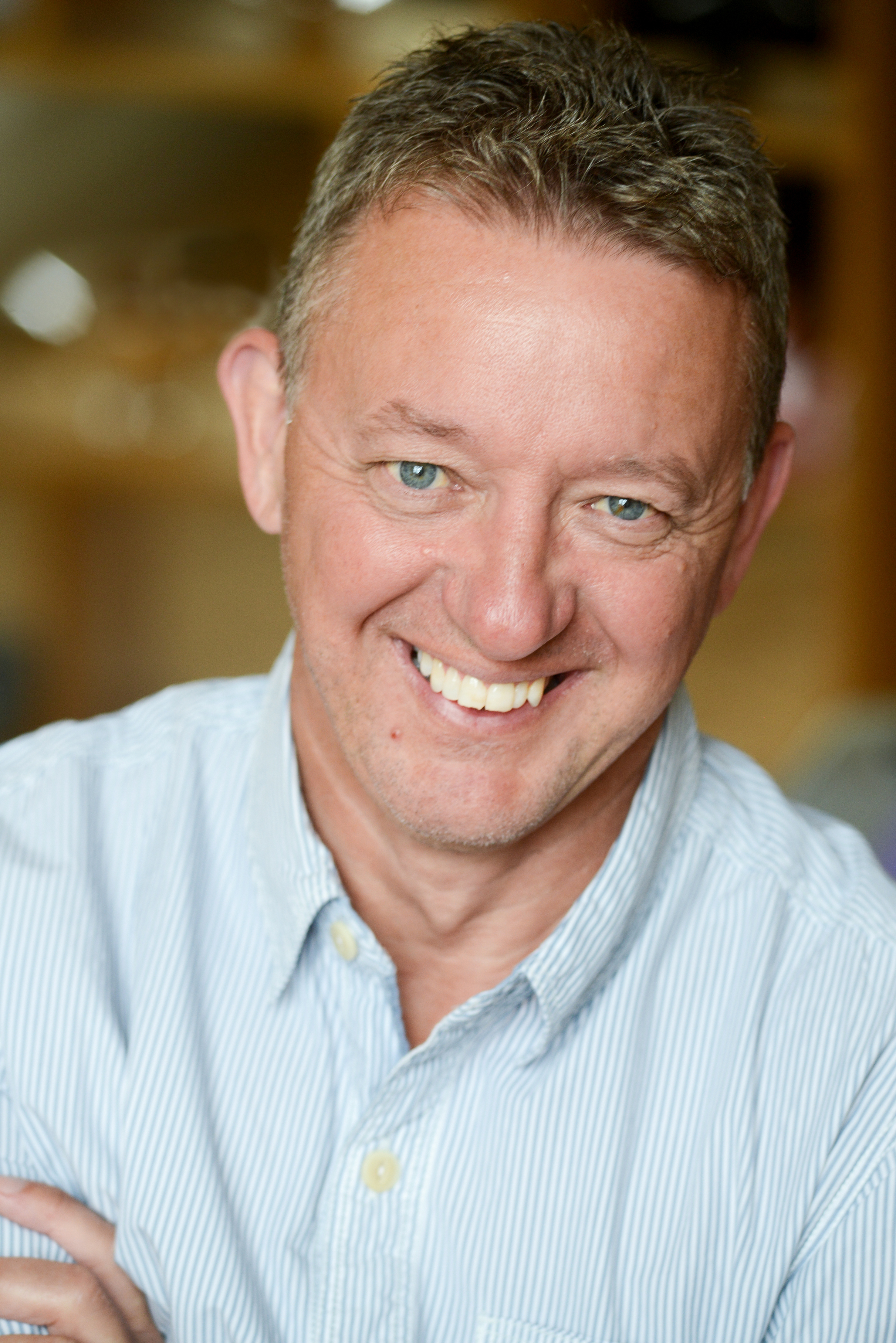
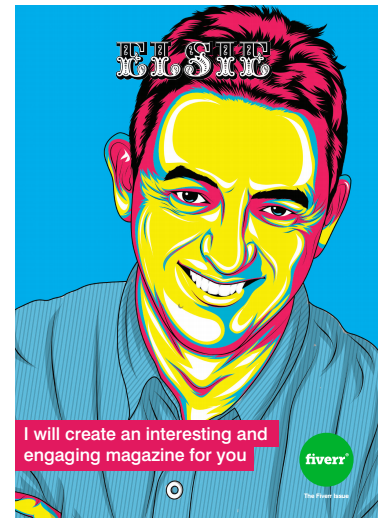
les-portrait-1-colourFounder and creator of Elsie, Les Jones, is a man who is a self-admitted thinker of thoughts – thoughts that come with rapidity and continuity. And when you peruse Elsie for the first or the fifteenth time, you’ll understand his genius. I spoke with Les recently as he had just wrapped up issue four of the magazine and had teamed up for this issue with the website Fiverr, a unique site that is a marketplace for creative and professional services. For the fourth issue, Les decided to commission a random group of individuals who use the site to advertise their skills and areas of interest, something the website refers to as “gigs,” to fill the pages of the fourth issue. The powers-that-be at the website saw the magical conglomeration of creative design and typography and decided to join the fun for this iteration of the magazine by sponsoring Les in his endeavors for the “Fiverr” issue.

It’s a spot-on idea that hits on everything good and viable for combining two platforms that offer two different experiences. I hope that you enjoy the Mr. Magazine™ interview with a man who has a thing for print, but knows how to utilize digital to make it an original and provocative experience, Les Jones, founder and creator, Elsie magazine.

But first the sound-bites:
elsie-3-1

On the creation of issue four of Elsie magazine: In order to tell you about issue four, I need to tell you a little bit about issue three. Issue three was based completely on one photograph that I took in London. It was a picture of a sign that had been covered in stickers. And when I had a look at it on my screen, I suddenly had the thought that behind every one of those stickers was a person and a story. When I came to issue four, having spent quite a while tracking all of the people down behind the stickers, traveling all across Europe to meet all of these really interesting people, I decided that I wanted to make as eclectic a magazine for number four as I had done for number three. But I gave myself the self-imposed grief of doing it without leaving my house. And I had a few ideas knocking around in my head as to where I wanted to take the magazine.

On whether the future of print is utilizing the best of digital: I’m not sure. I think, probably like you, Samir, I’m a huge lover of print. I don’t think that you can really substitute that kind of quality of sitting down with a magazine or a book. I think the online, digital environment is extremely exciting, but it’s just different for me. The production of an actual physical item that people not only read, but hopefully put onto their shelves and keep is really important to me.

On whether he’s using the magazine as an experience that he’s actually living: Yes, I would say so. For me, the reason that I said the magazine was not specifically because I wanted to publish a magazine; it was very much along the lines that I wanted to create experiences for myself. So, you might have picked up from earlier issues of the magazine that randomness plays quite a big role in what I do. You might remember from the first issue I ended up in Poland and it was a completely random visit, where I threw a dart into a map and then just went off for a week.

On whether he felt allowing the website Fiverr to be a sponsor was a wow factor for this issue: To be honest, I hit on the idea, having been pointed in the direction of their website. And I kind of lost myself in the project and I was probably at least two-thirds of the way through the magazine, if not three-quarters of the way finished, when, and why it hadn’t occurred to me before I don’t know, but it occurred to me that I was obviously doing an entire magazine through the conduit of the Fiverr website, that this might be something that Sam and the guys at Fiverr would be interested in as well.

On whether people can go to the Fiverr website and find Les Jones there: If you go to Fiverr and you search “Les Jones,” you can download a copy of the magazine, the Fiverr issue. And I have put a couple of other gigs on the site that are linked to previous iterations of the magazine.

On why he thinks it took so long for the magazine industry as a whole to realize that print is still a viable resource and very important: That’s a very good question. I think print has always been there in the background, fighting the rearguard action, hasn’t it, in terms of trying to maintain its presence within the marketplace. But what I see, and I’m sure you do too working with magazines across the world, if anything it’s a growing environment. The amount of small, independent magazines out there at the moment all just trying to carve out a particular niche; I think they’re coming in thick and fast at the moment.

On his most pleasant moment during his magazine journey: There were many, I must say. The nicest moment for me was the piece of mail art that I had from a girl in Canada. It was the most beautiful thing that she produced and in the actual words that she put in the letter, she talks about the fact that on her university campus she quite often leaves the letters around randomly for people to find and pick up. And she enjoys that experience; dropping a little bit of creativity into people’s lives even though she might never meet them.

On the biggest stumbling block he had to face and how he overcame it: If I’m honest, Samir, there really weren’t any really big stumbling blocks whatsoever. I commissioned the gigs and I worked on the process or on the basis that if it was interesting to me and I if I thought what was going to come back was interesting to other people, I went with it.

elsie-3On what someone would find him doing if they showed up at his house one evening unexpectedly: You’d have to catch me in the house and not out in one of the fields around my house walking my dog, but I also could be watching football on the television. I’m into football big time. Generally, I’d probably be on my computer doing some work. There’s usually a glass of wine in the vicinity; although I have been pretty good for the last six to eight months. I don’t have a glass of wine during the week, only on the weekends these days.

On what keeps him up at night: I tell you what keeps me up at night and I just recently had this experience when I woke up at half past four in the morning; it’s ideas. I wish sometimes that I could turn the tap off and not have the ideas swimming around in my head all of the time. I don’t particularly solicit them, they just drop in. As soon as they’re there, they announce their arrival and I feel as though I have to give them the space and think about them.
And now the lightly edited transcript of the Mr. Magazine™ interview with founder and creator, Les Jones, Elsie magazine.
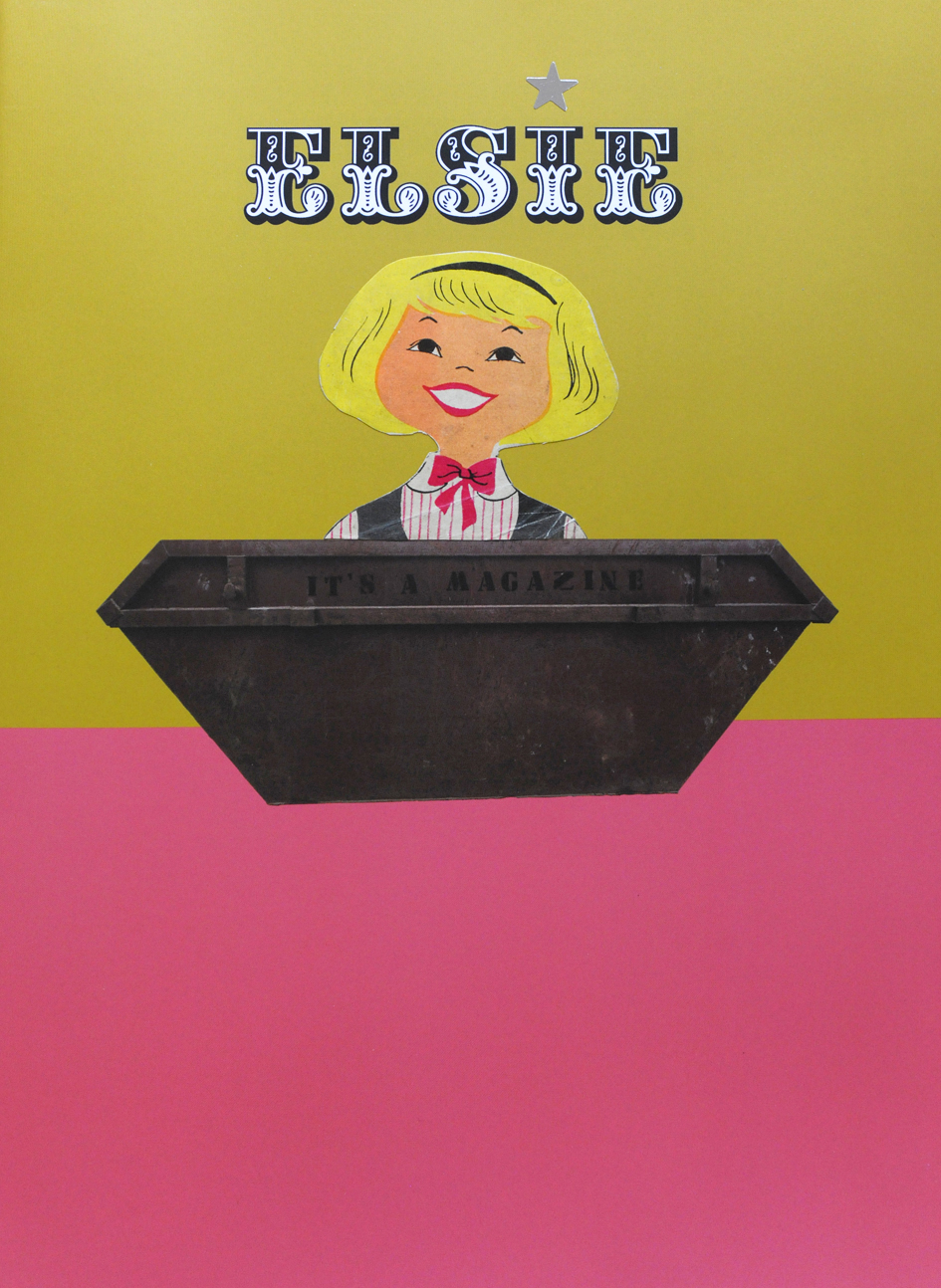
elsie-cover-1Samir Husni: The last time we spoke was in 2011 when the first issue of Elsie came out and you were creating individualized magazines. Now, somehow you’ve turned the tables and you’ve done a magazine created by a host of individuals in one magazine. Tell me about issue four.

Les Jones: In order to tell you about issue four, I need to tell you a little bit about issue three. Issue three was based completely on one photograph that I took in London. It was a picture of a sign that had been covered in stickers. And when I had a look at it on my screen, I suddenly had the thought that behind every one of those stickers was a person and a story.

So, I set out to try and track down all of the people behind the stickers in that one photograph. So issue three of the magazine is basically the entire journey of tracking down all of these people behind the stickers, which took me all over Europe to Italy and to Portugal, to The Netherlands and New York, where the guy was a tattoo artist, and I really just tracked all of these people down behind those stickers. It was really an interesting project. I printed all of the stickers on a sheet, and the idea was that people then would actually put the stickers on their own cover, so they created their own magazine cover.

When I came to issue four, having spent quite a while tracking all of the people down behind the stickers, traveling all across Europe to meet all of these really interesting people, I decided that I wanted to make as eclectic a magazine for number four as I had done for number three. But I gave myself the self-imposed grief of doing it without leaving my house. And I had a few ideas knocking around in my head as to where I wanted to take the magazine.

And then a friend introduced me to Fiverr; she had just had some illustrations done for her wedding invitations. So, I went onto their website and thought it was a very interesting environment, with these people all over the world basically posting their gigs, what they’re prepared to do and what their skills are, into the marketplace.

So, I started to dabble and I started to commission people all across the world to just do whatever it was they were advertising to do. And I just waited for things to come in. And as soon as they started coming in I felt that I had a really strong concept for the magazine, and rather than it be all about me and my photography and my graphics, things like that, I would create a curated magazine, where I’m putting all of these things in, and is quite random and eclectic, coming from 29 different countries. And then I would piece it all together as a whole. So, that’s kind of where it all started.

Samir Husni: It seems to me that you have utilized the best of digital to create a print collectible edition; is that the future of print?

Les Jones: I’m not sure. I think, probably like you, Samir, I’m a huge lover of print. I don’t think that you can really substitute that kind of quality of sitting down with a magazine or a book. I think the online, digital environment is extremely exciting, but it’s just different for me. The production of an actual physical item that people not only read, but hopefully put onto their shelves and keep is really important to me.
elsie-2The interesting thing about all of the stuff that came in for the magazine is that it all started with digital; you’re right about that, people sent me their content via email and download. But quite a lot of it was also physical. One of the first things I commissioned was a woman in Japan and her gig was to send Japanese sweets to post. And she was actually the first one, and then I got this envelope and I opened it, and outpoured all of these beautiful Japanese sweets in their wrappings.

Quite often, when I was going into the actual Fiverr site and looking around for things that I wanted to feature in the magazine, the physical nature was quite important. People would send me postcards, and I had a couple of people send me mail art, where they literally designed the letter, from the envelope to little drawings and the notes that they put inside. And all of that is very tactile stuff, which for me were probably the most interesting things that went into the magazine. So, no, I don’t think digital is the absolute future; there’s still a big future for print.

Samir Husni: You invite people to come to your place and stop by; you’ve put your address on all of these envelopes; are you using Elsie as more than a printed magazine? Are you using it as an experience that you’re actually living?

Les Jones: Yes, I would say so. For me, the reason that I said the magazine was not specifically because I wanted to publish a magazine; it was very much along the lines that I wanted to create experiences for myself. So, you might have picked up from earlier issues of the magazine that randomness plays quite a big role in what I do. You might remember from the first issue I ended up in Poland and it was a completely random visit, where I threw a dart into a map and then just went off for a week.

And I think that kind of setting the ball rolling and then just following where it lead was really interesting for me. And that’s where I get the creative payback, if you like. I don’t sit down and have a clear vision of a finished product; I just like to start it and then see where it leads.

So, I think you’re right. Using the magazine as a catalyst to experiences and interactions and ways of working with people, is very much what it’s about. I’m also about to start new live events with it as well. So, I’m doing about 12 Elsie magazine events around the U.K. The first one starts next week and will go into the New Year. As well as sort of gauging reactions about Elsie and the stories in the magazine; I’m also going to use those events to get the audience to actually create new content for future issues. So, they’ll be doing stuff also to actually provide content for future issues. And I like that idea and the interactions and that experience-based thing; very much so.

Samir Husni: The experience that you had this time is you were able to get a sponsor, which you have not done with the first three issues.

Les Jones: No, I hadn’t done that before.

Samir Husni: Were you that convinced that the website Fiverr and this issue of Elsie was a wow factor, so you decided to merge your efforts with them and see what happened?

Les Jones: To be honest, I hit on the idea, having been pointed in the direction of their website. And I kind of lost myself in the project and I was probably at least two-thirds of the way through the magazine, if not three-quarters of the way finished, when, and why it hadn’t occurred to me before I don’t know, but it occurred to me that I was obviously doing an entire magazine through the conduit of the Fiverr website, that this might be something that Sam (Katzen – PR Manager) and the guys at Fiverr would be interested in as well. *(See my question to Sam Katzen at the end of the interview with Les Jones…)

So, I literally sent them an email and told them about doing the entire magazine pretty much through the content on their website and that it was coming together really well and was an interesting experience; would they be interested? And I asked if we could have a conversation; I didn’t really make a formal approach for sponsorship, if you like.
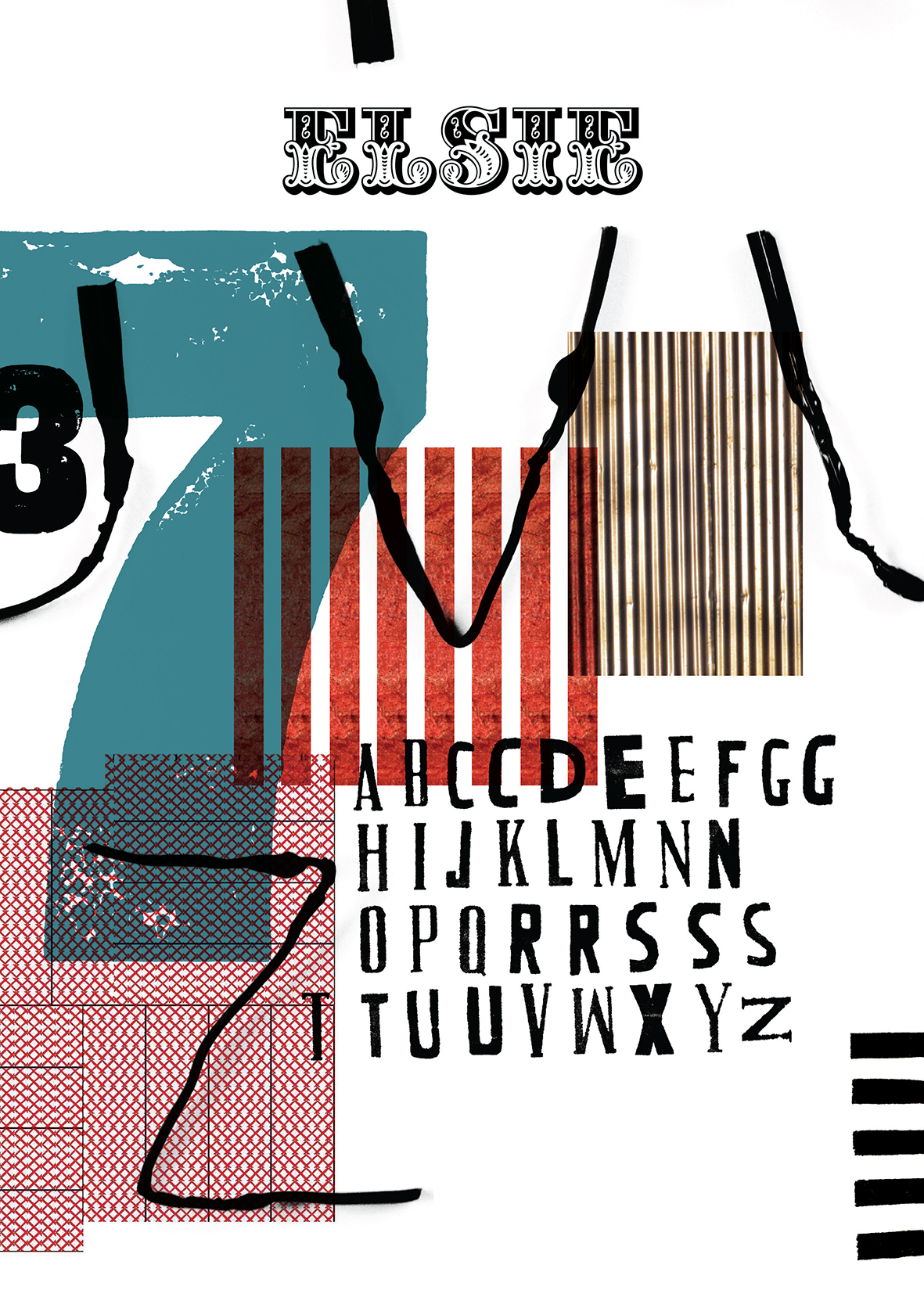
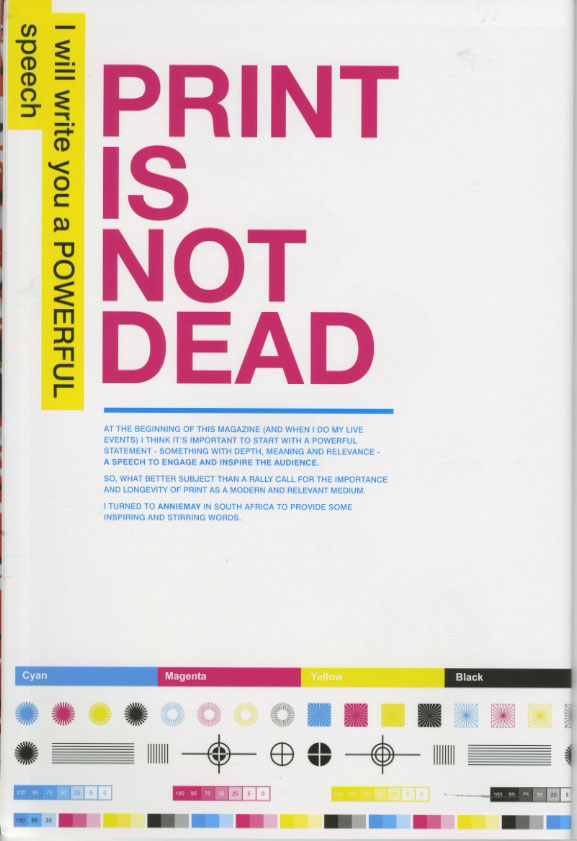
elsie-2-cover-009It was when I sent the stuff to Sam that they got in touch with me and said that it looked like a really interesting project. And that they would like to get involved with it in some way. And it’s fantastic to have some sponsorship behind the magazine, because everything I do on the magazine is self-funded and I pay for everything myself, so to have that support was great.

I was very keen to point out and to be fair to Sam and the people at Fiverr, and they were also in agreement, that they had no involvement in the editorial direction of the magazine whatsoever. That was 100 percent me and they supported it from the general principle.

Samir Husni: Can I expect to be able to locate you when I go to the Fiverr website, and see your name with the statement that you’re willing to create a magazine for whoever wants one? All they have to do is submit their idea and you’ll create the magazine and this is what it will cost them? (Laughs)

Les Jones: (Laughs too) That would be interesting, wouldn’t it? If you go to Fiverr and you search “Les Jones,” you can download a copy of the magazine, the Fiverr issue. And I have put a couple of other gigs on the site that are linked to previous iterations of the magazine.

One of the things I do, and I think there are a few in issue one, are these random illustrations where I literally just put my finger in the dictionary and then create a word from Googling that image. So, I’ve put that on a as a gig, If you want me to use your name and Google your name and then whatever comes up, create a unique piece of art from it, that’s one of the gigs that I’ve put onto Fiverr. But to do a magazine, a whole magazine, knowing how long it takes? (Laughs) That might be pushing it a little bit.

Samir Husni: Why do you think it took the magazine industry as a whole almost five to ten years to recognize that print isn’t going away and that digital isn’t our sole future? Supposedly, we are some of the top creative minds in the world today; why do you think it took so long for magazine media to figure out that print is still a viable resource and very important?

Les Jones: That’s a very good question. I think print has always been there in the background, fighting the rearguard action, hasn’t it, in terms of trying to maintain its presence within the marketplace. But what I see, and I’m sure you do too working with magazines across the world, if anything it’s a growing environment. The amount of small, independent magazines out there at the moment all just trying to carve out a particular niche; I think they’re coming in thick and fast at the moment.

How long they’ll survive, I don’t know. That’s been one of the questions that I’ve often asked myself about Elsie; how long can I keep it going? One of the things that was a real spur to me is when I launched the first issue and it was reviewed by The New York Library Journal, they voted it one of their top 10 new magazines of that year, which was fantastic. And one of the things that they put in the review was, the chance of Les Jones keeping this magazine going was pretty small, but enjoy it while it lasts, is the way I believe they put it. And I kind of took that on the chin and thought OK, I am going to keep this going and I am going to keep pushing it. (Laughs)

It’s a tough journey because without the same exposure the mainstream magazines get, just trying to get the word out there and the magazine in front of people is really difficult. Slowly, but surely, it’s growing a fan base of people who value the uniqueness of the magazine.

I suppose it was always inevitable that there would be a bit of a print backlash. Digital came in rather big and bold and everyone just assumed that was the future and print would disappear, but there’s no indication of that at the moment. I think people still like to hold a magazine and flip through the pages; it’s a completely different experience than scrolling through a digital magazine. I find that I concentrate more when I have a physical thing, rather than the digital.

Samir Husni: What was the most pleasant moment for you during this journey; I mean besides receiving all of those candies from Japan?

Les Jones: (Laughs) Which I haven’t eaten yet.

Samir Husni: (Laughs too).

Les Jones: There were many, I must say. The nicest moment for me was the piece of mail art that I had from a girl in Canada. It was the most beautiful thing that she produced and in the actual words that she put in the letter, she talks about the fact that on her university campus she quite often leaves the letters around randomly for people to find and pick up. And she enjoys that experience; dropping a little bit of creativity into people’s lives even though she might never meet them. That letter just kind of kept opening and revealing more bits of stuff and little letters and bits of typography. I thought it was fantastic.

The most humorous and the one that made me laugh the most was a crocheted beard, which I have shown it to all my friends and after the New Year, in the winter, I’m thinking of getting everyone a crocheted beard. (Laughs) So, that was great.

I love that kind of eclectic nature of some of those kinds of gigs. I deliberately chose those that were slightly off the wall, rather than some of the more mainstream things.

Samir Husni: And what was the biggest stumbling block with issue four that you had to face and how did you overcome it?

Les Jones: If I’m honest, Samir, there really weren’t any really big stumbling blocks whatsoever. I commissioned the gigs and I worked on the process or on the basis that if it was interesting to me and I if I thought what was going to come back was interesting to other people, I went with it.

I curated the magazine, so not everything that I actually commissioned went in. Probably 20 percent of the stuff didn’t make it for whatever reason, I just didn’t think it fit or wasn’t in keeping with the flow of the magazine.

I suppose the only small thing was that once I’d actually commissioned a gig from someone, and then went back to them and told them what I was doing with the magazine, then asked them if they would contribute some information about themselves, where they lived and what they did, and most people responded, but I had to chase a few down for the information. Not because they were being reluctant, they just hadn’t gotten around to it. Other than that, it was really a pleasurable experience. It was great having those kinds of things drop into your email inbox or having an envelope dropping into my mailbox. It was great.
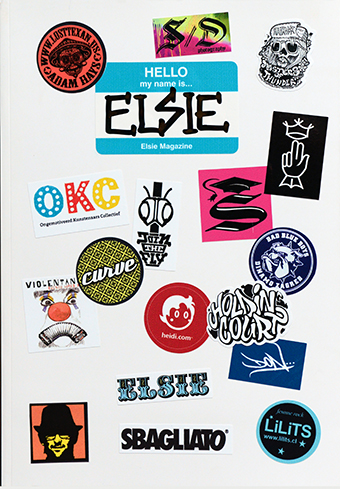
elsie-3-cover-with-stickers2-lrSamir Husni: If I showed up unexpectedly to your home one evening after work, what would I find you doing, reading a magazine, reading on your iPad, watching television, or something else?

Les Jones: You’d have to catch me in the house and not out in one of the fields around my house walking my dog, but I also could be watching football on the television. I’m into football big time. Generally, I’d probably be on my computer doing some work. There’s usually a glass of wine in the vicinity; although I have been pretty good for the last six to eight months. I don’t have a glass of wine during the week, only on the weekends these days.

It’s a very relaxed environment. Probably a lot of noise with all of the kids in the house; I have four children; although they don’t all live at home now. But, yes, I’d probably be doing something creative or just catching up on things.

Samir Husni: My typical last question; what keeps you up at night?

Les Jones: I tell you what keeps me up at night and I just recently had this experience when I woke up at half past four in the morning; it’s ideas. I wish sometimes that I could turn the tap off and not have the ideas swimming around in my head all of the time. I don’t particularly solicit them, they just drop in. As soon as they’re there, they announce their arrival and I feel as though I have to give them the space and think about them.

I’ve actually got lots of ideas for other magazines, other than Elsie. Hopefully one day I’ll turn Elsie into, not just the magazine it is, but into a publishing house for a range of titles. So, I have lots of creative ideas for other magazines floating around in my head, I just need to find the time, space and the resources to bring them to market.

Samir Husni: Thank you.
_______________________________________________________________________________________________

*About Fiverr
A question to Sam Katzen, Fiverr manager of PR:

Samir Husni: Sam, may I ask you a question? Why are there so many people on Fiverr offering print and print related services; offering to send you a postcard or a handwritten note?

Sam Katzen: While there are a lot of people offering those gigs on Fiverr, in reality about 99 percent of our marketplace is digital services. So, most of the things are being delivered via the Internet, and that makes sense because a lot of the users and customers are small businesses. So, a lot of the services are sort of in the professional vein, but I also think that because our marketplace is so broad; we’re in 190 countries, with millions of users because of that, you have an opportunity for creativity to really flourish and be exposed from a global standpoint.

What Les has experienced in Elsie and what the magazine really showcases to me is that there are different varieties of what’s considered interesting and creative from all over the world and those things can all be expressed in a place like Fiverr. And that’s probably one of the reasons you see a lot of mail art, for instance.
h1

WOTH Magazine: “Wonderful Things” Happen Between The Pages Of This New Dutch Launch – The Mr. Magazine™ Interview With Publisher, Toon Lauwen & Founding Editor, Mary Hessing

September 22, 2016

A Mr. Magazine™ Launch Story…

01covereng

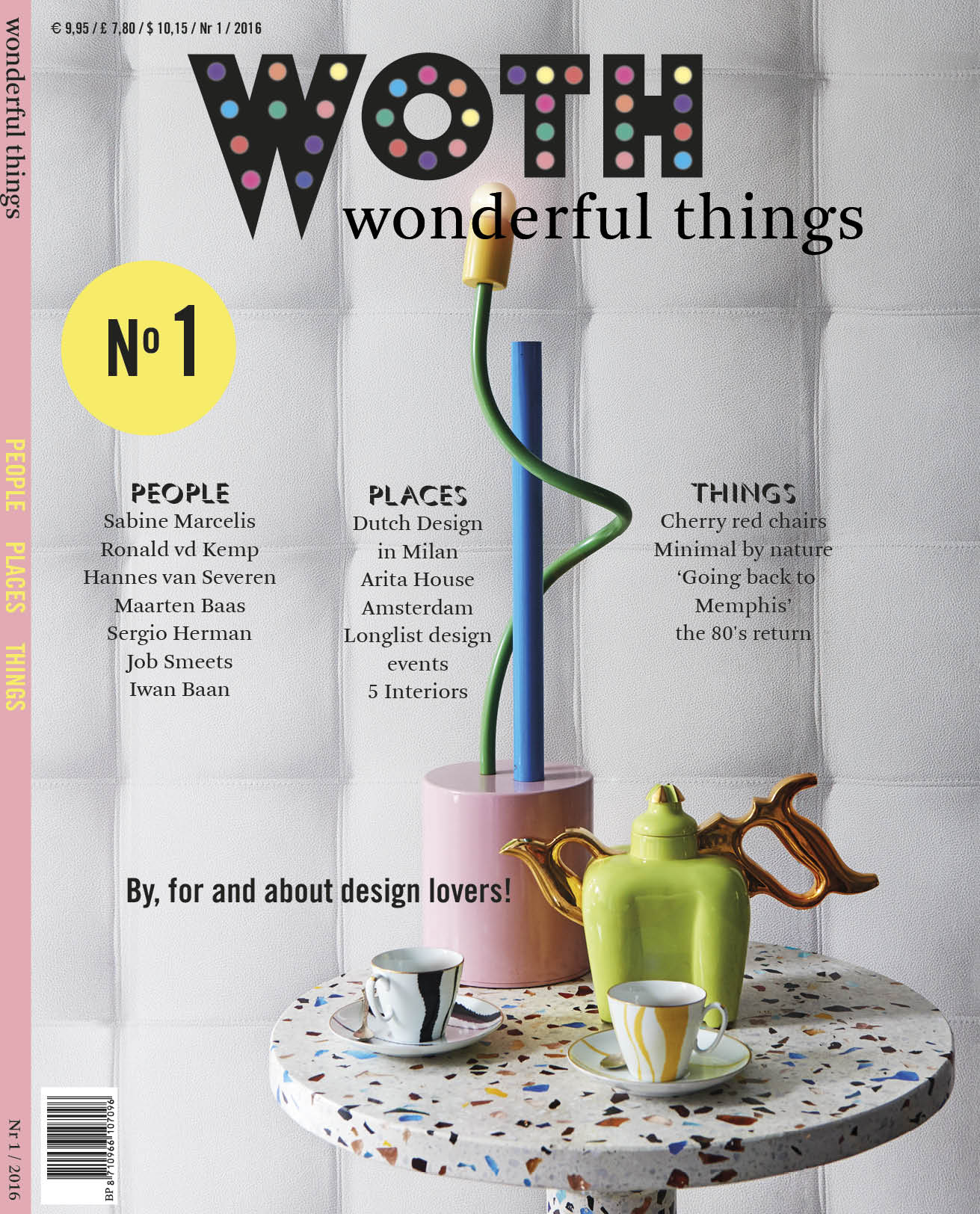
“We decided to make a print magazine because we wanted it to be a beautiful thing and we thought about design and designers and the way they work, for them materials are very important. We also thought about their skills and the stories behind their ideas for the product. We figured for the magazine, for the media in which we’re telling these stories, it’s the same. So, this is something that you want to hold in your hands, something that materializes. It’s not that we don’t want to have any digital additions, but we want it to be something that you can cherish and keep and something that you can hold and feel the paper, because it’s the same with design.” Mary Hessing

“We also want to reach out to a larger community than the Dutch one, because that’s the reason we took it into an English version too, to have a larger exposure and make it possible to be more European. And that’s also a twist of the necessary optimism it takes to move forward. We tried to show the quality of the magazine with the paper, the lettering and the typeface, etc.” Toon Lauwen

Woth Wonderful Things is a new lifestyle magazine focused on interiors and design, but one done in a more personal way, with strong visuals and content about people and objects that are so interesting they make you wonder about them and the innovative creativity they display that stirs imaginations.

Real-life couple, Toon Lauwen and Mary Hessing, who are based in The Hague in the Netherlands, created this beautiful new publication, and between their support network of longstanding Dutch designers and professionals they have both been involved with for decades, Mary is a former editor in chief for Dutch design magazine Eigen Huis & Interieur, and her partner Toon has been in the business for decades, they started a crowdfunding campaign and made the design dream magazine a reality.

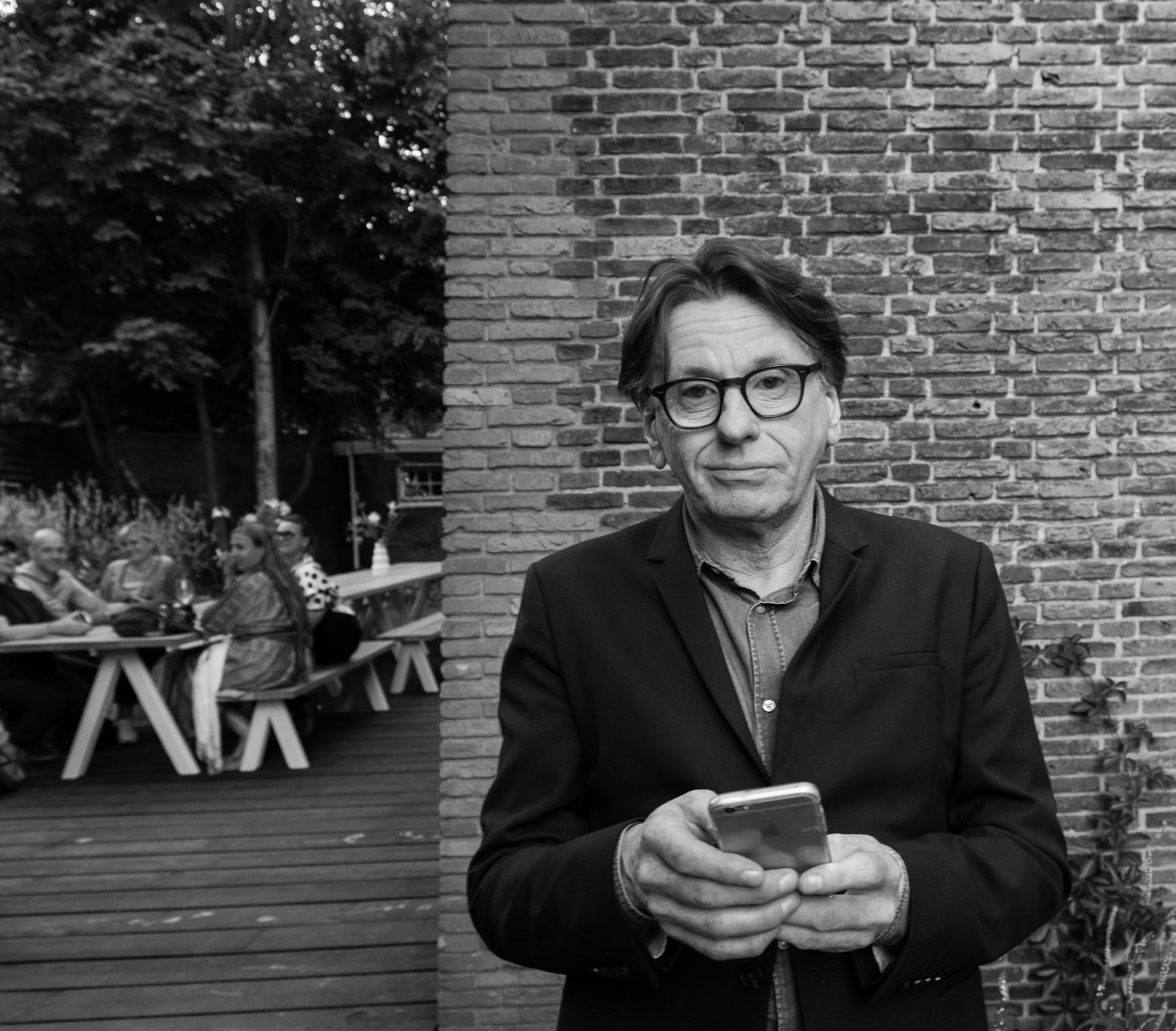
00000663portraitmaryhessingvoorinternet-photo-brenda-van-leeuwenI spoke with both Toon and Mary recently and we talked about their vision for this outstanding new magazine. The deep sentiments of a personal relationship with both the reader and the subject matter that Mary so strongly believes in, and the focus on good content and magnificent writing that Toon strives for with each and every word and page; it’s clear the two of them have a passion for Woth that will only grow and flourish.

So, I hope you enjoy this Mr. Magazine™ interview with two people who made a dream into a reality with hard work, creative ideas and superb content, and a network of people who believe in this magazine as much as they do, Toon Lauwen, Publisher, and Founding Editor, Mary Hessing, Woth Wonderful Things Magazine.

But first the sound-bites:

On the idea behind the magazine and why they decided on a print product (Mary Hessing): We decided to make a print magazine because we wanted it to be a beautiful thing and we thought about design and designers and the way they work, for them materials are very important. We also thought about their skills and the stories behind their ideas for the product. We figured for the magazine, for the media in which we’re telling these stories, it’s the same. So, this is something that you want to hold in your hands, something that materializes.

On why they chose to publish it in an English version (Mary Hessing): Because we have very good connections in Holland with Dutch designers. And Dutch designers are worldwide and that’s very important in this industry. And I think that we have the best commitment for making good content. And we’re trying to broaden our scope and bring it to the world, not only to Holland.

jwk_1653On whether it was easy to market the magazine (Toon Lauwen): Initially we started out with an idea, so we made a crowdfunding campaign, Indiegogo. So, we did interviews and Mary did that to engage our public with the new idea of this magazine. As an independent, we had to start out using a network that we already had. I have been doing this for over 20 years. Mary is the figurehead, so to speak, and she has actually done a lot of good footwork with those designers and brands in Italy and all over Europe to make all of those connections, also with the advertisers.

On any stumbling blocks they had to face and how they overcame them (Mary Hessing): What was really difficult was we started out with no money, with just this idea, so we asked a lot of people to help us. We did the crowdfunding campaign, but even before that we had been asking people from our network if they would help us out with the content. And I received all positive responses, everyone was really supportive and really thought we should do the magazine. Everybody felt there was a need for a project like this and that it would definitely get off the ground. Then we did the crowdfunding campaign, and I also asked the people I used to work with, most of them are freelancers now, to help us out with making the magazine.

On how difficult it was as a couple working together (Toon Lauwen): We’ve worked together before, of course. But then I was writing for a former magazine, but now we’re really teaming up because we’re both responsible for getting it to the printer and getting the bills paid, etc. We’re a business team. And that does take some adjustment, but on the other hand it’s also something we like to do. With our house, we did it together.

On what they hope the magazine has achieved in one year (Mary Hessing): I would really like the magazine to have a solid base and have a strong and healthy existence. And that it has secured its right to exist. And I want it to stand out independently from other magazines.

01coverengOn anything else they’d like to add (Mary Hessing): I’d like to emphasize that Dutch Designer Gert Dumbar made our logo. He’s an old family friend of mine and he did this as a favor to us. And I’m really proud of it. It’s so funny because I asked this really elderly gentleman to make something really bold and daring and fantastic, and when I asked him for the logo for “Wonderful Things,” he thought the word Woth was a strange and intriguing word. It’s such a strong logo and I think in a way there’s a little bit of the 1980s influence there, and I think it’s interesting because everybody is now looking at the ‘80s for inspiration and we have the real thing.

On what someone would find them doing if they showed up unexpectedly one evening at their home (Mary Hessing): I would probably be putting my children to bed which takes forever. (Laughs) I always like to make up with them for all of the things I missed during the day, so that takes time.

On what someone would find them doing if they showed up unexpectedly one evening at their home (Toon Lauwen): I might be watching a documentary or reading a book. I read about history a lot.

On what keeps them up at night (Mary Hessing): Living up to expectations from other people, not normally, but especially about this project.

On what keeps them up at night (Toon Lauwen): I’m always reasoning in my head about a tagline, or just some small thing. I’ve been a worrier since I was young; it’s my nature. (Laughs)

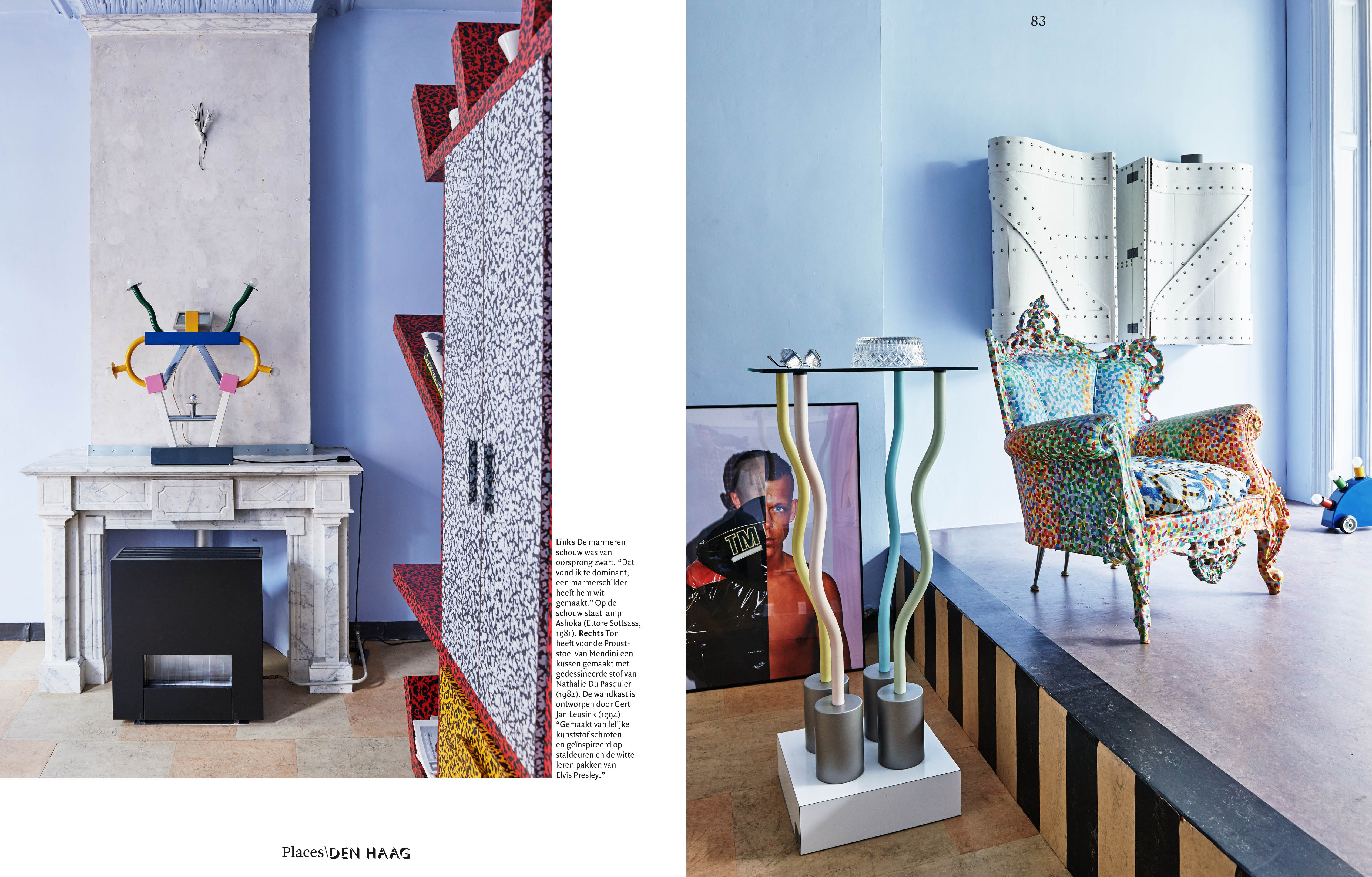
ton-of-hollandspreadAnd now the lightly edited transcript of the Mr. Magazine™ interview with Toon Lauwen, Publisher, and Founding Editor, Mary Hessing, Woth Wonderful Things Magazine.

Samir Husni: Tell me the idea behind the magazine and why you decided to launch a print publication in this digital age?

Mary Hessing: We decided to make a print magazine because we wanted it to be a beautiful thing and we thought about design and designers and the way they work, for them materials are very important. We also thought about their skills and the stories behind their ideas for the product. We figured for the magazine, for the media in which we’re telling these stories, it’s the same. So, this is something that you want to hold in your hands, something that materializes. It’s not that we don’t want to have any digital additions, but we want it to be something that you can cherish and keep and something that you can hold and feel the paper, because it’s the same with design.

Samir Husni: And why did you publish in an English version as well?

Mary Hessing: Because we have very good connections in Holland with Dutch designers. And Dutch designers are worldwide and that’s very important in this industry. And I think that we have the best commitment for making good content. And we’re trying to broaden our scope and bring it to the world, not only to Holland.

Samir Husni: Toon, as the publisher, how easy was it for you to market the magazine? You’re a great team and you have a known editor and the Dutch design is known all over the world. What was the reaction when you first went and tried to sell an ad or tried to get some sponsorship for the magazine?

Toon Lauwen: Initially we started out with an idea, so we made a crowdfunding campaign, Indiegogo. So, we did interviews and Mary did that to engage our public with the new idea of this magazine. As an independent, we had to start out using a network that we already had. I have been doing this for over 20 years. Mary is the figurehead, so to speak, and she has actually done a lot of good footwork with those designers and brands in Italy and all over Europe to make all of those connections, also with the advertisers.

That footwork really enabled us to make direct contact with the advertisers, the bosses of those brands, to ask them to support our magazine in the middle of the year, because we started out in May or June. So, our campaign was concentrated in mid-season, summer. It wasn’t a piece of cake, that’s for sure.

But nevertheless, we’ve found a true optimism with the people and an involvement with them at the brands, helping us out, buying advertisements, and also with the readership through subscriptions and single issues, just based on a campaign or an idea and largely dependent on an image that Mary put out as an editor in chief of the title that she worked at before.

Samir Husni: Was it all just a stroll through a rose garden, or should I say; a tulip walk…

Toon Lauwen: (Laughs).

Samir Husni: …that you had no stumbling blocks and no problems? Or did you have stumbling blocks, and if so, what were they and how did you overcome them?

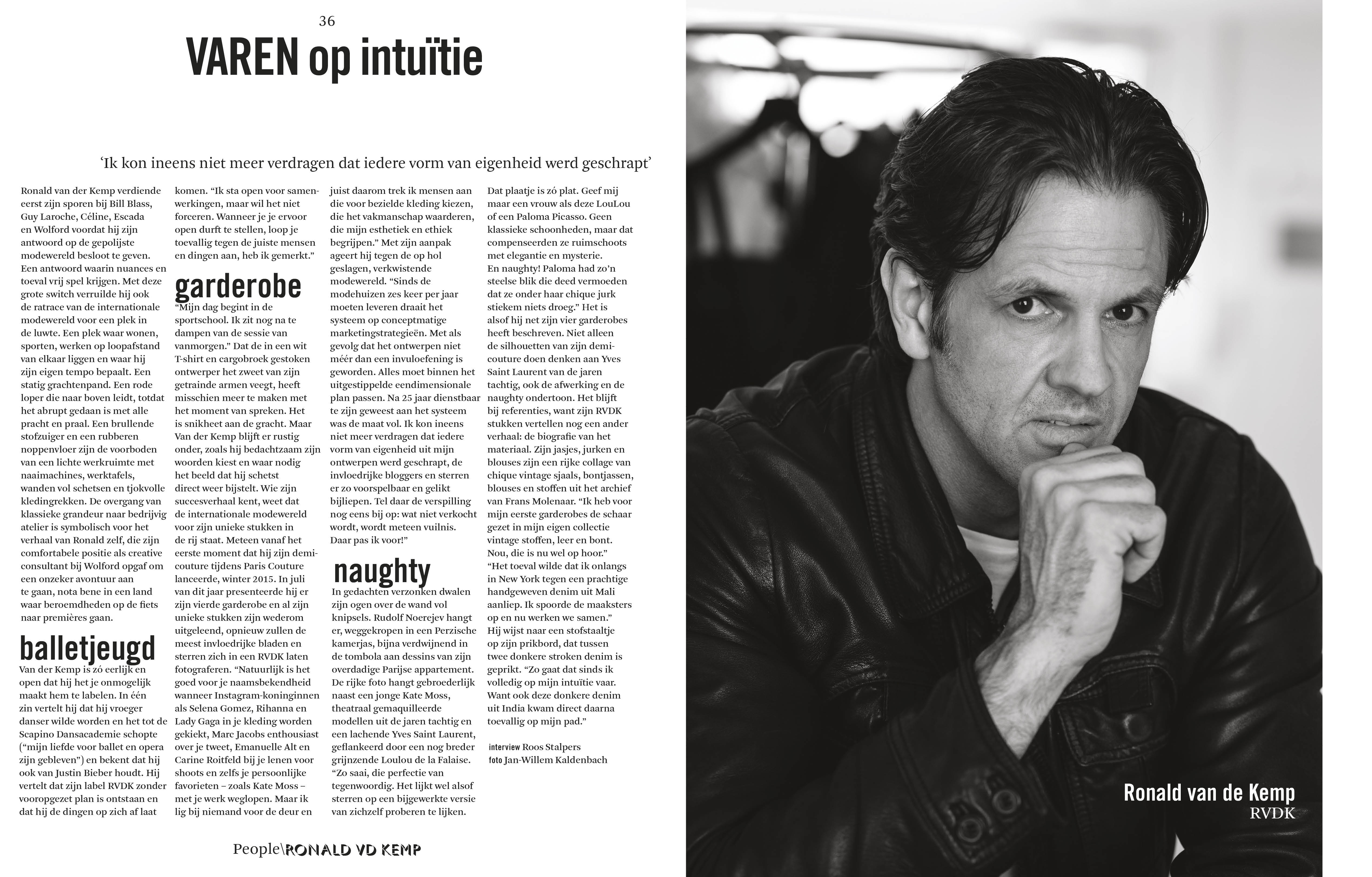
portretten-ronald-vd-kempMary Hessing: What was really difficult was we started out with no money, with just this idea, so we asked a lot of people to help us. We did the crowdfunding campaign, but even before that we had been asking people from our network if they would help us out with the content. And I received all positive responses, everyone was really supportive and really thought we should do the magazine. Everybody felt there was a need for a project like this and that it would definitely get off the ground. Then we did the crowdfunding campaign, and I also asked the people I used to work with, most of them are freelancers now, to help us out with making the magazine.

So, we had the contacts and the crowdfunding. Then we had to actually make the pages. And everyone helped us for as long as they could, but at the end of the day we’re the only ones responsible for getting it to the printers. We are really grateful and happy that everybody was so supportive and helpful, but it can only stretch so far.

Samir Husni: How difficult is it for you as a couple to work together?

Toon Lauwen: It’s really easy because I’m writing a lot, so my concentration is totally different. To begin with, I work best in the mornings and Mary works at night, until 2 or 3:00 a.m. I’m always reasoning in my head what to write, which usually takes a lot of time and concentration for me. But now there was no time for that. We had to produce a lot of text.

Mary Hessing: You are two different people in your thought patterns, but also on energy levels as well. So, I work at night and normally I sleep very well. But these days, with the magazine, sleep was very difficult, so I was awake a lot. I would go to bed late and rise really early because I knew there were things we had to do for the magazine. So I would just do it.

Toon Lauwen: We’ve worked together before, of course. But then I was writing for a former magazine, but now we’re really teaming up because we’re both responsible for getting it to the printer and getting the bills paid, etc. We’re a business team. And that does take some adjustment, but on the other hand it’s also something we like to do. With our house, we did it together.

Mary Hessing: We renovated 15,000 squares and we’re still together, so I think we can argue, but we will manage. (Laughs)

Samir Husni: If we’re talking one year from now about the magazine; what do you hope you could tell me that Woth had achieved in that year?

Mary Hessing: I would really like the magazine to have a solid base and have a strong and healthy existence. And that it has secured its right to exist. And I want it to stand out independently from other magazines.

Toon Lauwen: We started out as a new title, typically niche, since it’s about design. And the name itself, calling it “Wonderful Things,” we want it to reach out to people with its ideas and its motivation of people who work with design, but not only designers, just anyone creative in general, chefs and any other professions. So, we made the format a bit broader that just the theory of design only. That’s what we were trying to do with the title, “Wonderful Things,” and the brand.

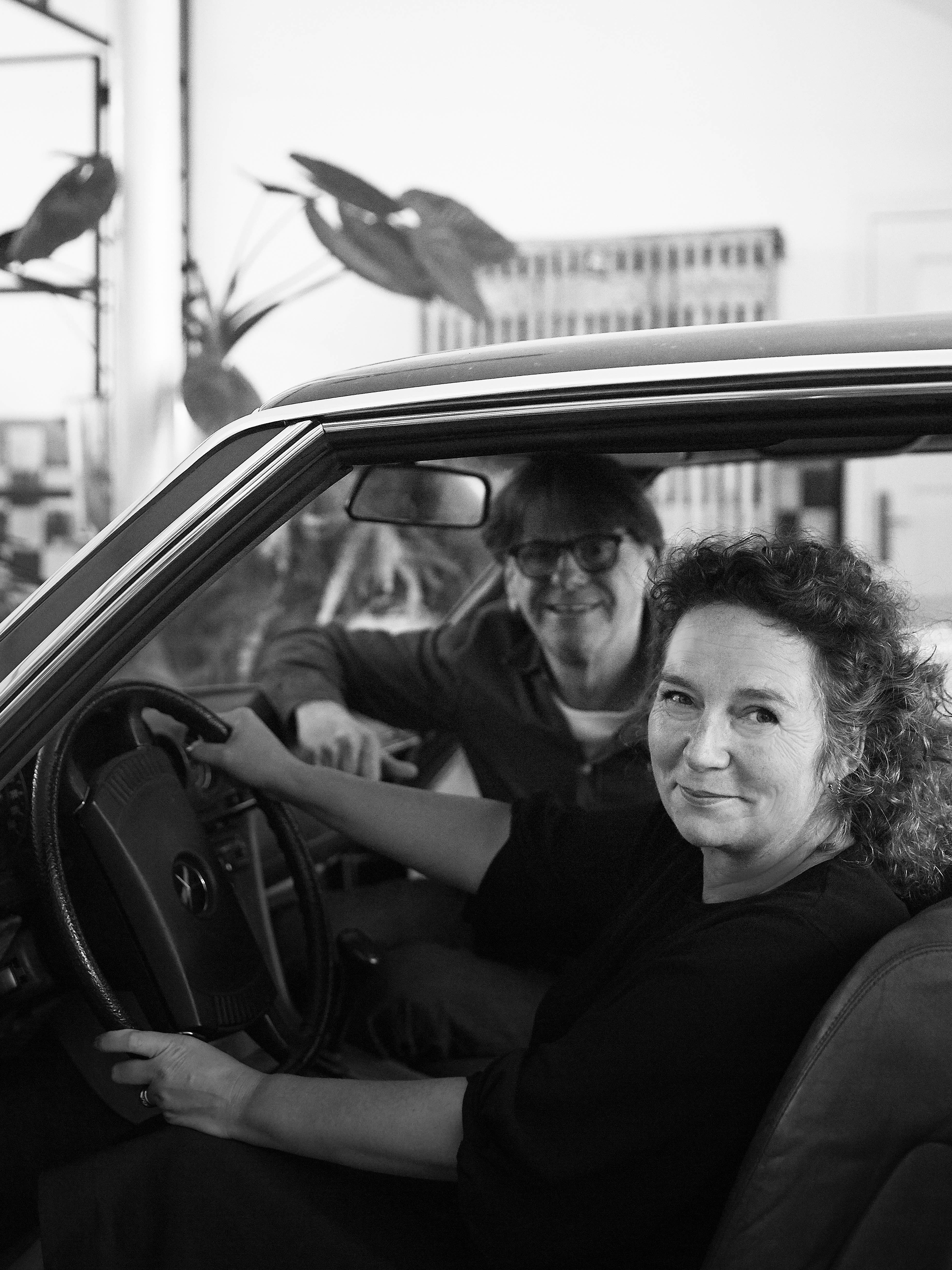
mary437defbwphotokasiagatkowskaMary Hessing: Also, I wrote for many years for two other design titles and working with design can be difficult. When you look at all of the living magazines around the world, a lot are based on the same formula and it’s very difficult to make it personal, so we’re really trying to find a way to make Woth personal. And we’re doing this by focusing on the creatives. Whatever we do we want to put them central. And in a way I think this could be like a human interest idea for a design and interior decorating magazine. I think people are interested in these people in the magazine; they’re superstars in a way, and they have a very nice way of living and great view of the world, so we really want to speak to them on a personal level.

This is what we’re aiming for. We want it to be personal. What I get back from people is the way it’s written, it is really personal.

Toon Lauwen: We also want to reach out to a larger community than the Dutch one, because that’s the reason we took it into an English version too, to have a larger exposure and make it possible to be more European. And that’s also a twist of the necessary optimism it takes to move forward. We tried to show the quality of the magazine with the paper, the lettering and the typeface, etc.

So, we hope that we can answer your question about where we’ll be in a year by saying we have evolved from a local niche magazine to bit more European, and that we even have a global reach.

Mary Hessing: Because of my work, I’ve been visiting countries and people everywhere and there is this connection between people, the way that they look at their lives, the way they live them. The people I work with, the agents and photographers internationally; these are all very nice and interesting people. I feel like there’s already a connection and I’d really like this magazine to be a magnet for that as well

Samir Husni: Is there anything else you’d like to add?

Mary Hessing: I’d like to emphasize that Dutch Designer Gert Dumbar made our logo. He’s an old family friend of mine and he did this as a favor to us. And I’m really proud of it.

Samir Husni: It really looks good.

Mary Hessing: It’s so funny because I asked this really elderly gentleman to make something really bold and daring and fantastic, and when I asked him for the logo for “Wonderful Things,” he thought the word Woth was a strange and intriguing word. It’s such a strong logo and I think in a way there’s a little bit of the 1980s influence there, and I think it’s interesting because everybody is now looking at the ‘80s for inspiration and we have the real thing. He’s from the spirit, so I think this is very interesting that all these other people are copying this idea and we have the real thing.

Samir Husni: If I showed up unexpectedly to your home one evening after work, what would I find you doing; would you be reading a magazine, your iPad, watching television, or something else?

Mary Hessing: I would probably be putting my children to bed which takes forever. (Laughs) I always like to make up with them for all of the things I missed during the day, so that takes time.

Toon Lauwen: I might be watching a documentary or reading a book. I read about history a lot.

Mary Hessing: He’s also a great cook and he always says that he cooks and it’s his gift to us and it is. But actually it’s his hobby, his way to relax.

Samir Husni: And you’re based in The Hague, correct?

Mary Hessing: Yes, we are.

Samir Husni: My typical last question; what keeps you up at night?

Mary Hessing: Living up to expectations from other people, not normally, but especially about this project.

Toon Lauwen: I’m always reasoning in my head about a tagline, or just some small thing. I’ve been a worrier since I was young; it’s my nature. (Laughs)

Samir Husni: Thank you.

h1

Hola! Made In USA Magazine: The Passion & The Legacy Continues Through The Third Generation – The Mr. Magazine™ Interview With Eduardo Sánchez Pérez, Editor-In-Chief, ¡Hola! and Hello Magazines. An Encore Presentation

August 15, 2016

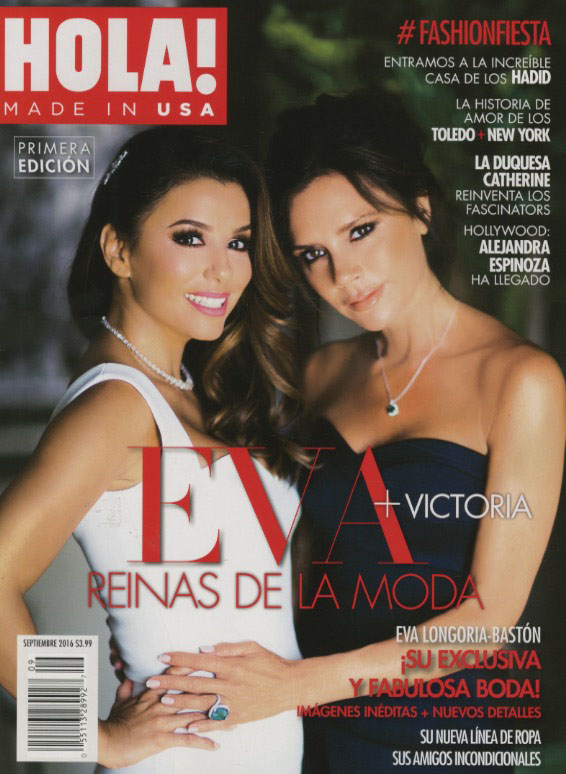
Hola! Made In USA magazine just hit the newsstands in the United States and in honor of this new edition to the wonderful world of print, here is an encore  Mr. Magazine™ interview from February, 2016 with ¡Hola!’s Editor In Chief, Eduardo Sánchez Pérez. 

August 2016 issue of ¡Hola! that hit U.S. newsstands.

August 2016 issue of ¡Hola! that hit U.S. newsstands.

“I don’t envision a day when we will have no print editions. I don’t know if ¡Hola! will be forever, but a magazine with beautiful pictures and positive stories will always be there. You cannot give the same product in digital. With a print magazine, you can buy it, collect it, and share it with someone. And you have that ownership feeling that this magazine is yours. Also the flow of the content into the magazine is important. We always start with beautiful houses or beautiful people at home; this is a product that needs some physical connection, it’s real and tangible, so paper is the best way to present it.” Eduardo Sánchez Pérez

From Spain with love…

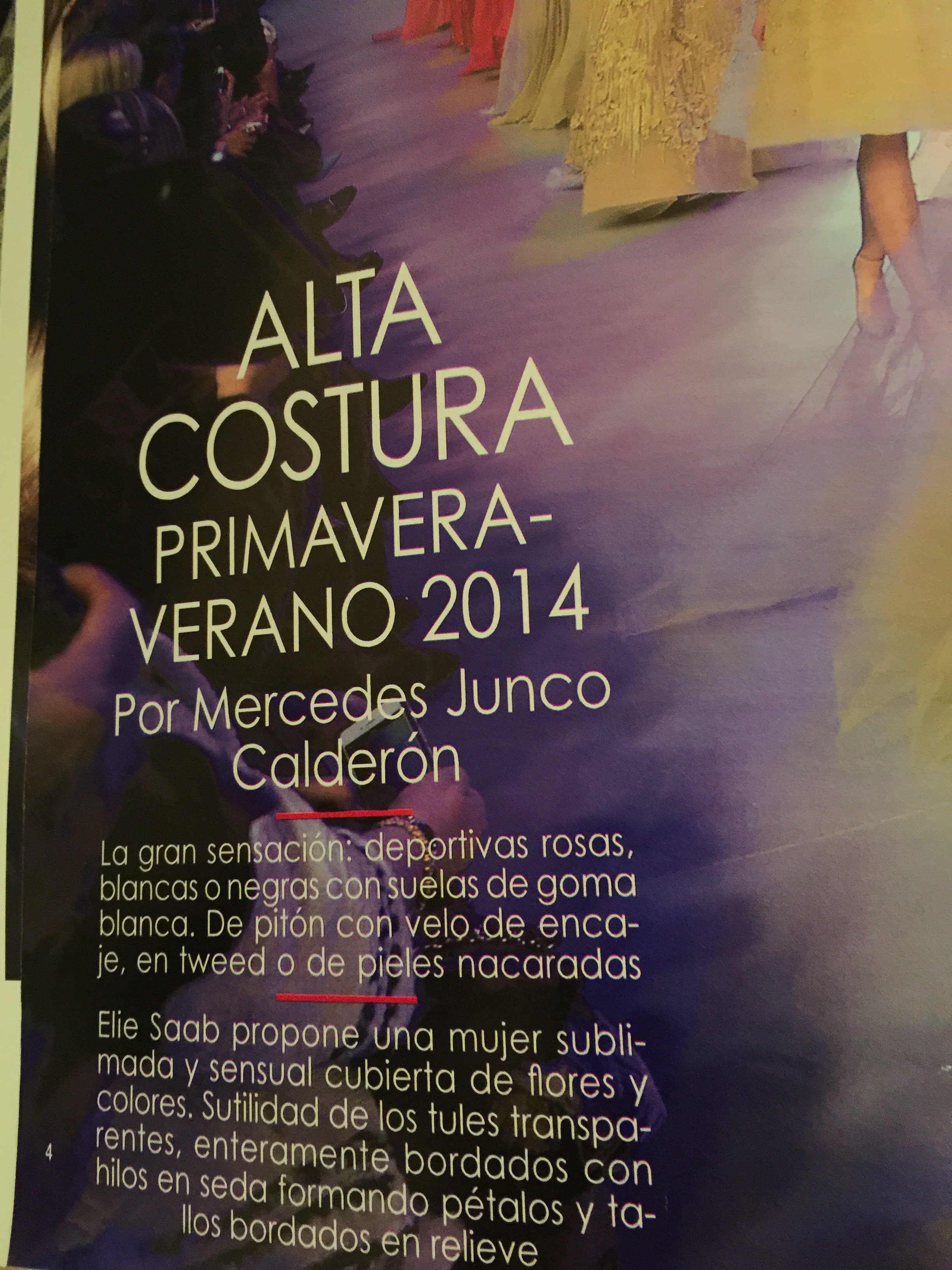
HOLA-2 A magazine born from a beautiful love story that’s all about family, tradition and legacy; ¡Hola! was founded in Barcelona in 1944 by Antonio Sánchez Gómez and his wife, Mercedes Junco Calderón. The two had a dream of creating a small magazine that could entertain readers and show them the beauty of life through great stories and breathtaking photographs.

As the magazine grew over the years, their son Eduardo Sánchez Junco, joined the family business, along with his wife, Mamen Pérez Villota and the values of family, respect and honor were woven deeply into the ¡Hola! brand.

Today, ¡Hola! and Hello magazines are still family owned and ran by the children of Eduardo Sánchez Junco and Mamen Pérez Villota, along with Eduardo’s 95-year-old mother, who still does layouts and works for the magazine.

Their youngest child, Eduardo Sánchez Pérez is Editor-In-Chief of ¡Hola! and Hello and oversees, along with his sisters, the “small” magazine that has grown into a readership of 20 million according to Eduardo, and is translated into 11 different languages.

Hello III-15 I spoke with Eduardo on a recent trip to Spain and we talked about the special ingredients that have made both magazines so successful. As Eduardo’s father called it: the “Espuma de la vida” or the froth of life that both ¡Hola! and Hello are committed to bringing their readers each week. We also talked about all of the expansions and growth the brand has seen over the years and its possible print birth in the United States. It was a moving and inspiring conversation with a man who appreciates the traditions of his family’s past, while keeping his eyes firmly on the future.

So, I hope you enjoy this Mr. Magazine™ interview with Eduardo Sánchez Pérez, Editor-In-Chief, ¡Hola! and Hello magazines as he shows us that the family who publishes together definitely stays together through many generations.

But first the sound-bites:

EIC On the legacy of ¡Hola! and Hello: If you ask someone in Spain about ¡Hola!, people who know the business, they would say that ¡Hola! is Eduardo Sánchez Junco, my father. They would say my father. My father had three children and I am the youngest of the three. I have two sisters; Mamen is the oldest; and my other sister is called Mercedes. Although Mamen, the oldest, is the one that is more involved with me in the magazine and she’s the editor of the Mexican edition, while Mercedes is more involved in different parts of the business.

On how the company has managed to maintain its familial structure over the years and not become traded and have shares and shareholders: That’s probably because we’re a third generation and what we’ve seen over the years. My father was the only son of my grandparents. My grandfather was very much focused on journalism; he worked at a newspaper first and then he had the idea to create ¡Hola! in 1944 in Barcelona. So then my father continued the tradition in the 1980s doing all of the same things my grandfather had done and continuing the secret of this business, which is what he described as “being in the kitchen.” We have the restaurant and so we have to do the cooking, so we put together the ingredients.

On the ingredients that go into ¡Hola! to make it different from all the other celebrity magazines out there: (Laughs) It’s difficult to know exactly, but probably every cook would say a lot of love and a lot of charm. (Laughs again) It’s true that we have to do things thinking in the long-term. We never make any editorial decision based on the short-term, so it’s focusing very much on what ¡Hola! or Hello means. I sometimes feel like I’m just continuing a heritage that I received. And I will one day pass it to my children. At least, we hope someone from the family continues it. We follow what my grandfather called “Espuma de la vida” which is our brand name. We call it “Espuma de la vida,” a froth of life, but basically we do content that is normally positive, more than negative.

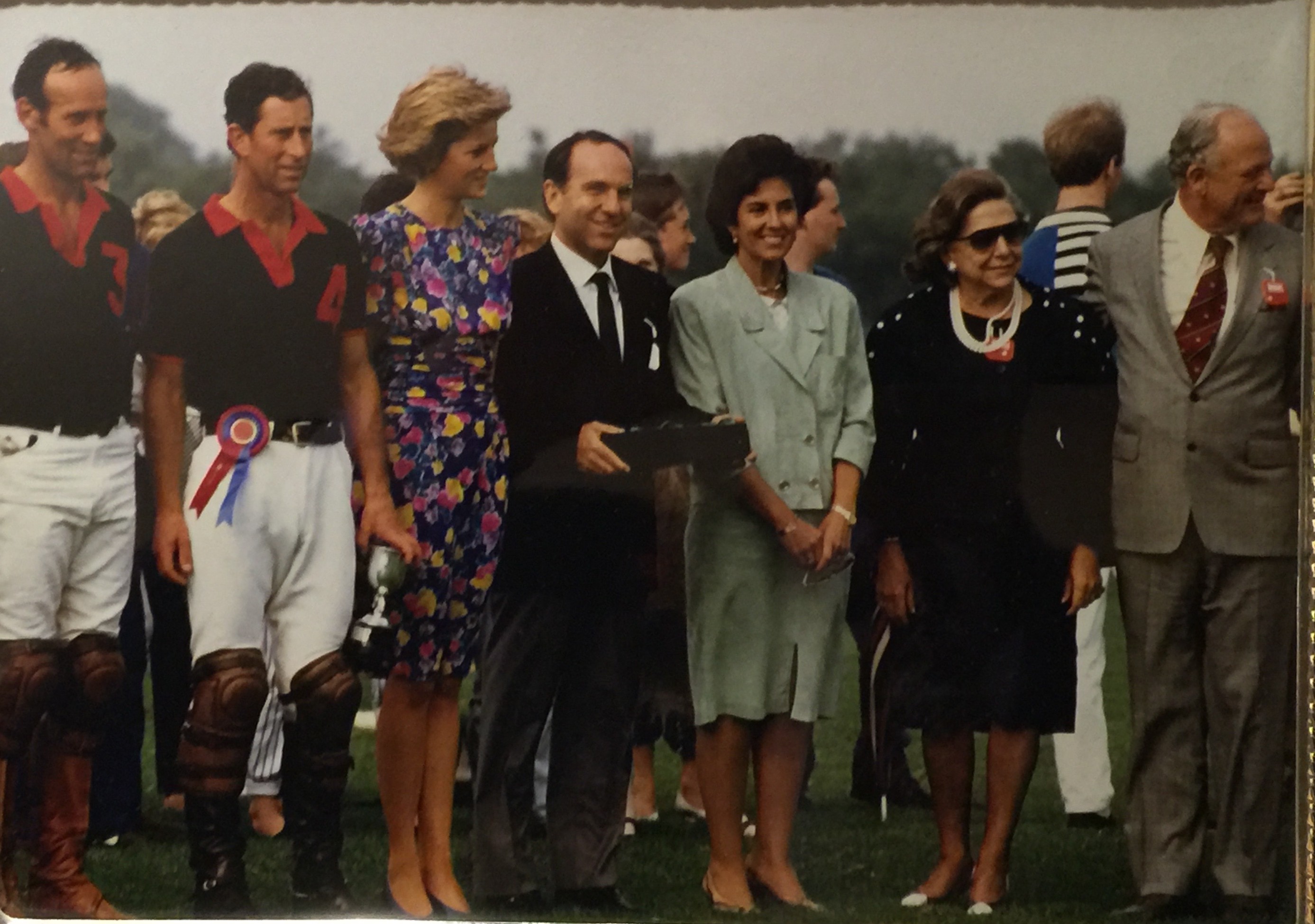
On the fact that his father was able to buy pictures of Lady Diana topless and then buried them in the archives so they would never be published: Yes, that was really exceptional. But my father was very exceptional. He had this intuition to move quickly when making decisions. And that’s probably one reason he was so successful. It never took him very long to make any decision about anything of great importance such as that, or any important piece of news. He always said that was an advantage, that he was the owner and the editor, which put him in another position when it came to important decisions about the company. But yes, he made the quick decision to buy and destroy the pictures. Nowadays, it would seem difficult that this could be repeated. And also Lady Diana was someone our readers loved and sometimes there is that special relationship between readers and personalities. And we consider our readers as part of our family. And of course, my family was shocked when Lady Diana died.

cover after fundraisingfamily with royal familyOn the decision to launch Hello magazine in the U.K.: My sisters were staying in London in the 80s and we went a couple of times to visit them, I think in the summertime. And my father always told me wherever I went for holiday or in the summer, I was in this business, so if there was a kiosk nearby, go and see what was out there. My father and I went to Harrod’s and there was a kiosk there and we looked for ¡Hola! and it was there buried in the same place as all of the other magazines and newspapers. Then we saw two English ladies come into Harrod’s for tea and they bought ¡Hola! magazine in Spanish, sat down in the restaurant and began chatting with the magazine in their hands, without speaking Spanish. Suddenly, my father realized that there wasn’t anything in the market with Lady Diana on the cover the way ¡Hola! had; we had her on the cover all of the time.

On the expansion of ¡Hola! or Hello almost globally: The expansion of ¡Hola! magazine probably started with ¡Hola! Spain in the 60s by going to Latin America. Well, actually, it probably started with my grandfather. Latin America has always liked ¡Hola! very much. There’s always been, and there still is, this connection between Latin America and Spain. We feel very much that we are united; we’re connected by the language and also by our way of life and we just have many things in common. ¡Hola! has always been very welcomed in all of the American countries, including the Hispanic speaking Americas.

On how he decides which country gets which magazine: ¡Hola! or Hello and how decisions such as those are made: We try to analyze a country and its market. That’s why it’s so important to have local partnerships, local people who can understand everything better. We’re publishing in 11 or 12 different languages right now. We reach more than 20 million readers. It’s quite a challenge, of course, but the principles are the same; we’re deeply respectful of the personalities and the local traditions and also the readers who are going to buy it.

On whether his grandmother, who started the magazine with her husband and who is 95 now, ever expect the magazine to be worldwide: (Laughs) No, of course not. In the beginning they had the idea to launch this small magazine. In a country like Spain in the 40s, it was after the War, their expectations were to create a small business for maybe 10 years or so. That’s why my grandfather asked my father to go to university to study something else other than journalism. Not because he didn’t love journalism, but because he thought ¡Hola! magazine would only last several years. No one ever thought it would grow as big as it is right now.

On his mother and father returning to school and his dad getting a degree in journalism after a law was passed in Spain requiring one to be an editor of a magazine: Yes, I remember when I was younger going with my mother and father to the university to see if they passed their exams. He went for four or five years to the university at the same time that he was editing the magazine. I know he enjoyed it and he liked it very much. It was probably a good thing because you always learn when you go to the university. So, that’s true. My mother and my father went.

On what motivates him to get out of bed in the morning: I feel very lucky because it’s always different every week. And it’s very exciting every week. Every week you have to find the right story for the cover and find the right people to talk with. Every week you find interesting people and their stories that you can share with your readers. And sometimes you receive a story so beautiful that the feeling is it’s the right content and it’s an exciting thing. And we have the satisfaction of knowing that we’re making a product that our readers like. There are some weeks better than others, of course, but then another week comes and it’s great. With the weekly, I have a little time to relax and make decisions with my small team, along with my main family members.

On whether he can ever envision a day when ¡Hola! and Hello are digital only: No, I don’t envision a day when we will have no print editions. I don’t know if ¡Hola! will be forever, but a magazine with beautiful pictures and positive stories will always be there. You cannot give the same product in digital. With a print magazine, you can buy it, collect it, and share it with someone. And you have that ownership feeling that this magazine is yours. Also the flow of the content into the magazine is important. We always start with beautiful houses or beautiful people at home; this is a product that needs some physical connection, it’s real and tangible, so paper is the best way to present it.

On whether the magazine is coming to the United States soon: We are starting with the website right now, hola.com-usa. We will have a team that will be working with both the website and then the magazine too. For example, on two occasions we have published a big scoop on hola.com-usa first, such as Paulina Rubio being pregnant. The scoop was to be in all of our magazines, but we decided to put it on our American website first. So the American print edition is an absolute priority.

On anything else he’d like to add: People have to feel it’s their magazine; it’s not international. It’s the magazine of their country. It doesn’t matter the ownership, because the spirit of the magazine is done for British people by British people.

On what keeps him up at night: What’s probably most difficult is, one of the brand values of ¡Hola! and Hello is when we publish a story or any piece of news, we’re very sure about the content. We’re very sure that we’re not wrong. You have to be very sure about the content. To be correct every week and not to fail in any small thing and continue to be the magazine that’s reliable and truthful; that’s probably my main worry.

And now the lightly edited transcript of the Mr. Magazine™ interview with Eduardo Sánchez Pérez, Editor-In-Chief, ¡Hola! and Hello.

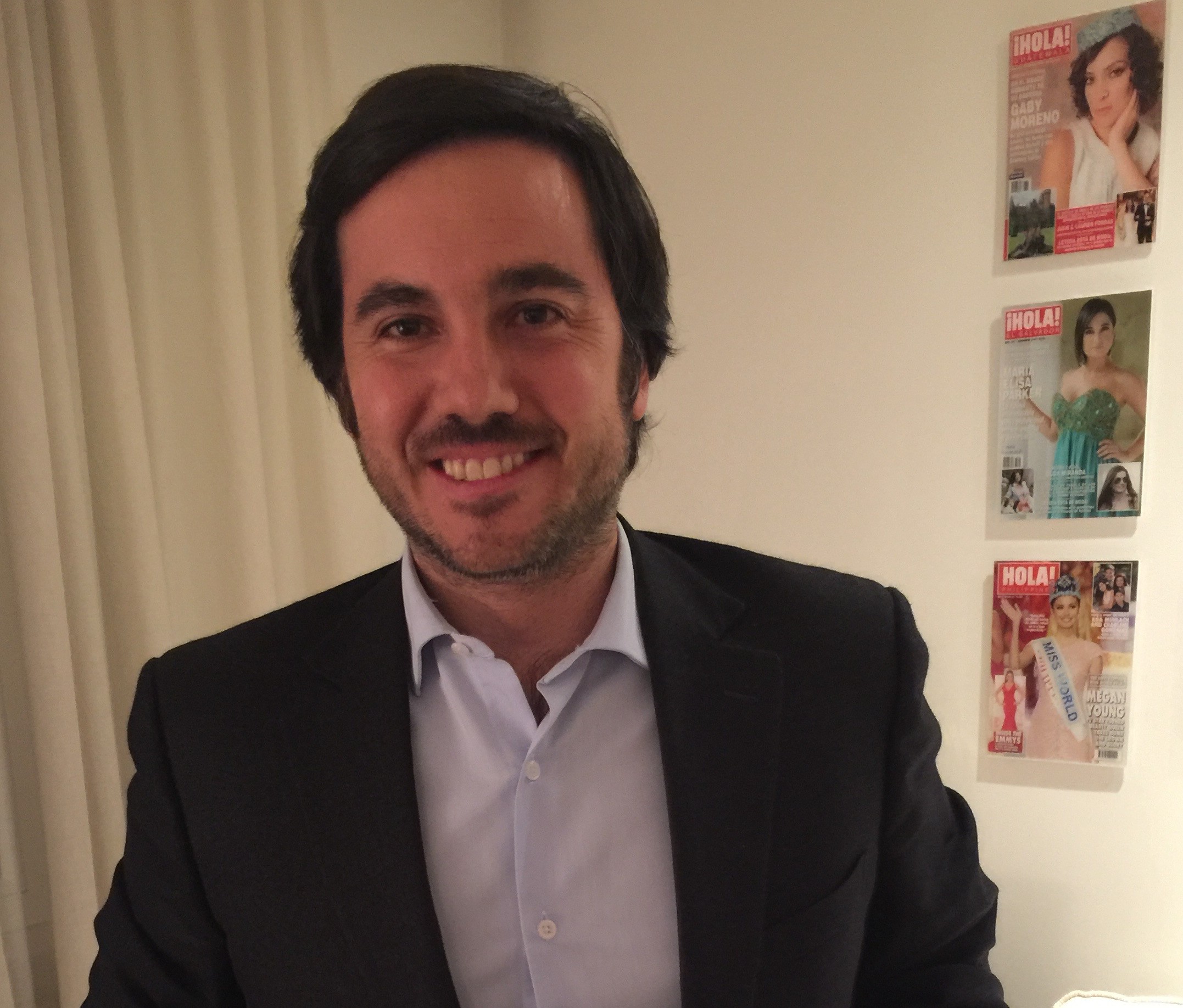
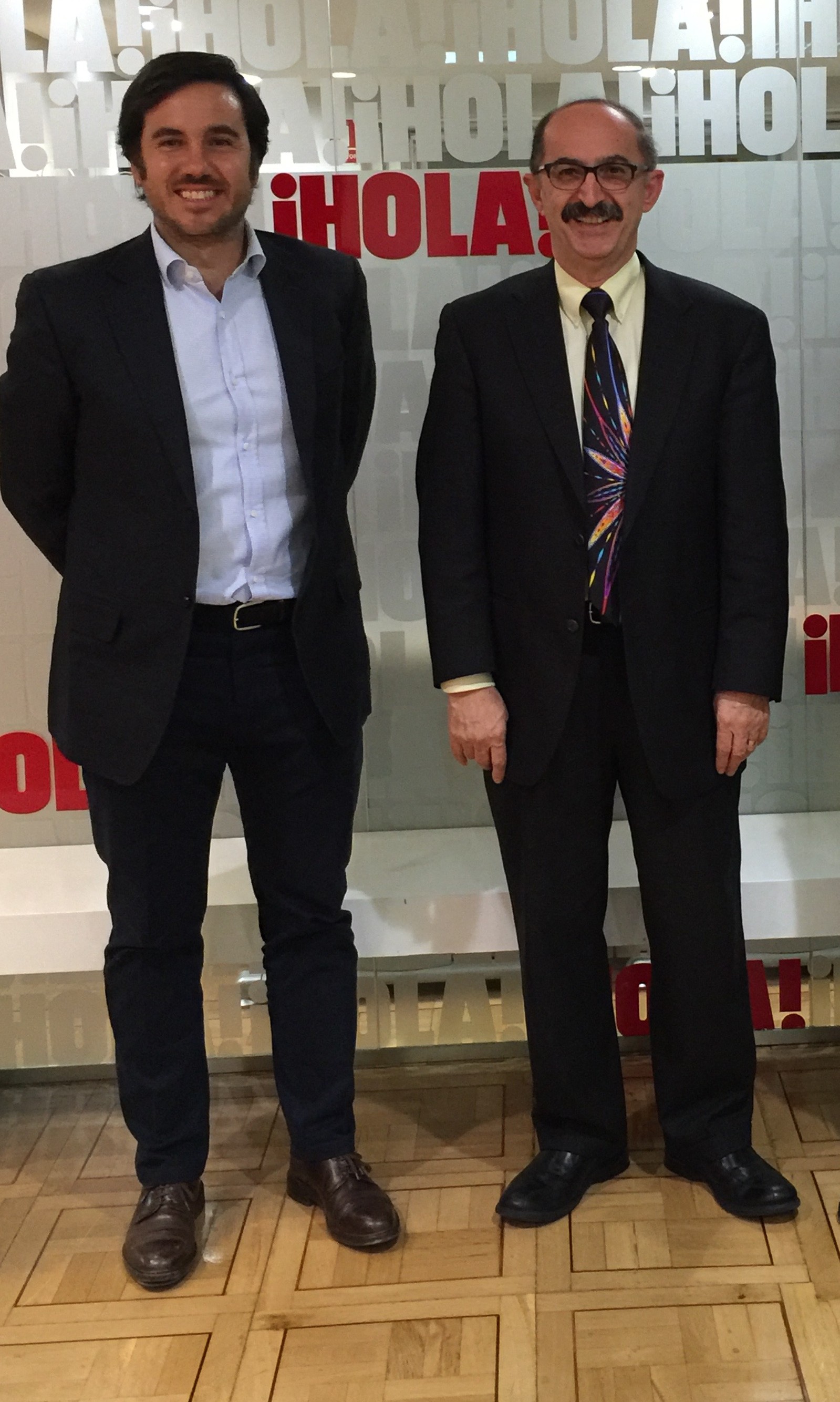
With Eduardo Sánchez Pérez at the magazine's offices in Madrid.

With Eduardo Sánchez Pérez at the magazine’s offices in Madrid.

Samir Husni: In this world of corporate ownership it’s rare to see a grandson continuing the traditions of his grandfather and also his dad. Your grandfather started the magazine in Barcelona, moved it to Madrid, and now it’s almost worldwide. Everywhere you go there’s an ¡Hola! or Hello magazine, and it’s still in the family.

Eduardo Sánchez Pérez: If you ask someone in Spain about ¡Hola!, people who know the business, they would say that ¡Hola! is Eduardo Sánchez Junco, my father. They would say my father. My father had three children and I am the youngest of the three. I have two sisters; Mamen is the oldest; and my other sister is called Mercedes. Although Mamen, the oldest, is the one that is more involved with me in the magazine and she’s the editor of the Mexican edition, while Mercedes is more involved in different parts of the business.

Samir Husni: No one thinks of ¡Hola! as a family business because it’s worldwide. Everywhere you go; the Middle East, Canada, the Philippines, Thailand; just everywhere there is either an ¡Hola! or a Hello. How have you been able to maintain that family ownership and not become Wall Street traded or another company-traded with shares and shareholders?

Eduardo Sánchez Pérez: That’s probably because we’re a third generation and what we’ve seen over the years. My father was the only son of my grandparents. My grandfather was very much focused on journalism; he worked at a newspaper first and then he had the idea to create ¡Hola! in 1944 in Barcelona.

So then my father continued the tradition in the 1980s doing all of the same things my grandfather had done and continuing the secret of this business, which is what he described as “being in the kitchen.” We have the restaurant and so we have to do the cooking, so we put together the ingredients. And we do the meal every day. (Laughs) Well, every week in this case. And we serve it as if we were the owners of a restaurant. We feel the contact with our readers and our audience and our clients as strongly as if they were a part of our house or our family. We’ve always believed that that is the differentiation and the value of all of our business We’ve always been in control of the editorial line of the magazines and the little touch of the ¡Hola! family point of view. We always want that touch to be behind the product. And as the third generation, we are very much involved in this right now.

active at 95 I’m the editor of ¡Hola!, the magazine of Spain, and editor-in-chief of Hello magazine and trying to oversee all of the operations, my sister is co-editor of ¡Hola! and also editor in Mexico and we also have some other members of the family like my aunt; my uncle (General Manager of ¡Hola, Javier Junco Aguado) and my mother and my grandmother who is still around and a part of things. My grandmother, Mercedes Junco Calderon, is 95-years-old, but she still continues to do one magazine, this one. She is the founder and she makes the selections and deals with all of the productions of these different articles and different photo shoots. So this DNA; this business, is a big part of our family. We believe if we lose this family contact with the business, it would not be the same.

That’s one reason when we started being more international, our partners have to always think like and see that the original family owners are still involved when making decisions. So, when we go to a country, sometimes we own it; we buy the operation from the family. Sometimes we license the brand, but we always sustain control of the editorial line of the ¡Hola! family in Spain.

And we hope the spirit continues like this. And it’s not that we control every page of every magazine in the world, but we try, with everyone doing ¡Hola! magazine from every part of the world, to think what the ¡Hola! family would do in each case. And if there’s any doubt, they ask me; they ask Madrid and we share opinions about other experiences and we make sure to put the brand in the hands of some of our favorite partners in every country. Plus, the feeling that our partners have that they’re in good hands when we share this kind of market is very important to us.

Samir Husni: Let me go with you to the kitchen; what are the ingredients of that recipe that you serve every week and how is it different than all of the other celebrity magazines; all of the other weeklies that are out there? What’s your grandfather’s secret recipe that you continue using?

Eduardo Sánchez Pérez: (Laughs) It’s difficult to know exactly, but probably every cook would say a lot of love and a lot of charm. (Laughs again) It’s true that we have to do things thinking in the long-term. We never make any editorial decision based on the short-term, so it’s focusing very much on what ¡Hola! or Hello means.

illustradted issue I sometimes feel like I’m just continuing a heritage that I received. And I will one day pass it to my children. At least, we hope someone from the family continues it. We follow what my grandfather called “Espuma de la vida” which is our brand name. We call it “Espuma de la vida,” a froth of life, but basically we do content that is normally positive, more than negative. It’s glamorous and it’s happiness; it celebrates life. When you open the magazine, you forget about your worries and you know that you are in a comfortable environment. You’re not going to find anything inside the magazine that is going to increase your daily worries.

I would say that that’s the main part. There’s nothing in the short-term that’s worth changing the editorial line of the magazine that we’ve had for all of these years. But basically the ingredients are to get exclusive content of the personal life or the human interest of famous people. And not only celebrities, but personalities. We normally don’t call it celebrities; we prefer to say personalities or relevant people.

As another ingredient; it’s never-before-seen pictures of a certain event, or exclusive pictures of an event. So, when you have all of these things, you have our main menu. (Laughs)

Samir Husni: One of the examples I heard that reflects that menu or those ingredients was that your father was able to buy the pictures of Lady Diana topless and he buried them in the archives so that they would never be published. Do you think that you could find a publisher today or an editor today who would go to that extreme to buy a scoop and bury it, rather than publishing it? And did that happen after the launch of the magazine in the U.K.? And I’d like for you to tell me the story again of how Lady Diana was influential through her pictures of publishing the magazine in the U.K.

Eduardo Sánchez Pérez: Yes, that was really exceptional. But my father was very exceptional. He had this intuition to move quickly when making decisions. And that’s probably one reason he was so successful. It never took him very long to make any decision about anything of great importance such as that, or any important piece of news. He always said that was an advantage, that he was the owner and the editor, which put him in another position when it came to important decisions about the company.

I wasn’t involved really in the decision, but he always said that he had the opportunity to protect someone who was the main reason we were launching in the U.K. from bad pictures. And the main reason that we were so successful in the U.K. Lady Diana had given us hundreds of covers. And the fact that he had this opportunity was the unusual thing. Normally, these photographers prefer to do bigger business by spreading that content all over the world.

But he had the opportunity at that moment and he made the decision quickly and of course it was very personal to him. And the decision was based only on his appreciation of the image of someone who had done so much for him, without her knowing that she had done anything at all. But Hello could express its gratitude by doing this. It was preferable that those pictures were never published.

But yes, he made the quick decision to buy and destroy the pictures. Nowadays, it would seem difficult that this could be repeated. And also Lady Diana was someone our readers loved and sometimes there is that special relationship between readers and personalities. And we consider our readers as part of our family. And of course, my family was shocked when Lady Diana died.
People really get involved in this business, as you know; you’re passionate about it. And our readers feel these personalities are a part of their lives and that’s how we want to produce the product; with respect to these personalities and respect to the readers. We want to respect personalities because they deserve respect, but also because we put ourselves as readers too, as buyers even. And they deserve the respect and the attention, so we want to make every page of the magazine special. And maybe that’s one of the reasons we have these special relationships with the stories that we approach.

Samir Husni: Going back to Lady Diana; you told me the story of how the decision was made to launch the British edition of Hello. Can you recall that story?

Eduardo Sánchez Pérez: My sisters were staying in London in the 80s and we went a couple of times to visit them, I think in the summertime. And my father always told me wherever I went for holiday or in the summer, I was in this business, so if there was a kiosk nearby, go and see what was out there. My father and I went to Harrod’s and there was a kiosk there and we looked for ¡Hola! and it was there buried in the same place as all of the other magazines and newspapers. Then we saw two English ladies come into Harrod’s for tea and they bought ¡Hola! magazine in Spanish, sat down in the restaurant and began chatting with the magazine in their hands, without speaking Spanish.

Suddenly, my father realized that there wasn’t anything in the market with Lady Diana on the cover the way ¡Hola! had; we had her on the cover all of the time. Whenever we had a doubt about ¡Hola!’s cover, we would put Lady Diana or Caroline of Monaco on the cover. As far as what we had been told, the English press was in a big crisis in the 80s. In general, the U.K. was in an economic crisis.

So, the market was a bit stagnant, not many new magazines were being launched. So it was another great decision of my father’s after studying the market somewhat, that even though the environment wasn’t very good to launch a magazine, he was certain that he could bring something new to the market as ¡Hola! and Hello magazine had done with our different approach to the news and beautiful pictures.

Samir Husni: And the rest of the story is history. ¡Hola! or Hello are almost everywhere.

Eduardo Sánchez Pérez: The expansion of ¡Hola! magazine probably started with ¡Hola! Spain in the 60s by going to Latin America. Well, actually, it probably started with my grandfather. Latin America has always liked ¡Hola! very much. There’s always been, and there still is, this connection between Latin America and Spain. We feel very much that we are united; we’re connected by the language and also by our way of life and we just have many things in common.

¡Hola! has always been very welcomed in all of the American countries, including the Hispanic speaking Americas. So, the magazine has always put a lot of attention on international stories. Spain in the 60s; we used to put a lot of American stars on the covers. For example, I remember when the three astronauts went to the moon; we covered that so ¡Hola! has always had the idea of being a very international magazine. We believe it doesn’t always matter who, but what or how.

I remember my father, who didn’t speak English, when he started Hello in the U.K. and began working with the British team and was trying to explain what Hello was all about. And it was probably one of the biggest success stories of the British press for a magazine. And it was just by sharing stories more than names. It’s the human interest stories basically and putting all of the ingredients together which has given the magazine such success.

International stories have always been a part of our magazine, so after the success of the British edition, we went to Mexico, where we’re quite successful right now. Then we started finding certain partners in other countries. And in the beginning it was more of an adventure, an unknown field.
For example, what would happen if we started a magazine in a certain county? Russia and Turkey were the first two countries where we went into a partnership with another country and the result was fantastic and we found great people who understood the essence of the brand and how to take care of it. We found out that the Hello and ¡Hola! brand was more flexible than we believed at the beginning. And now we are in 35 different countries.

Of course, you need to find the right partner and you need the right team; a team that you can explain the way you want the product to be done and they instinctively know.

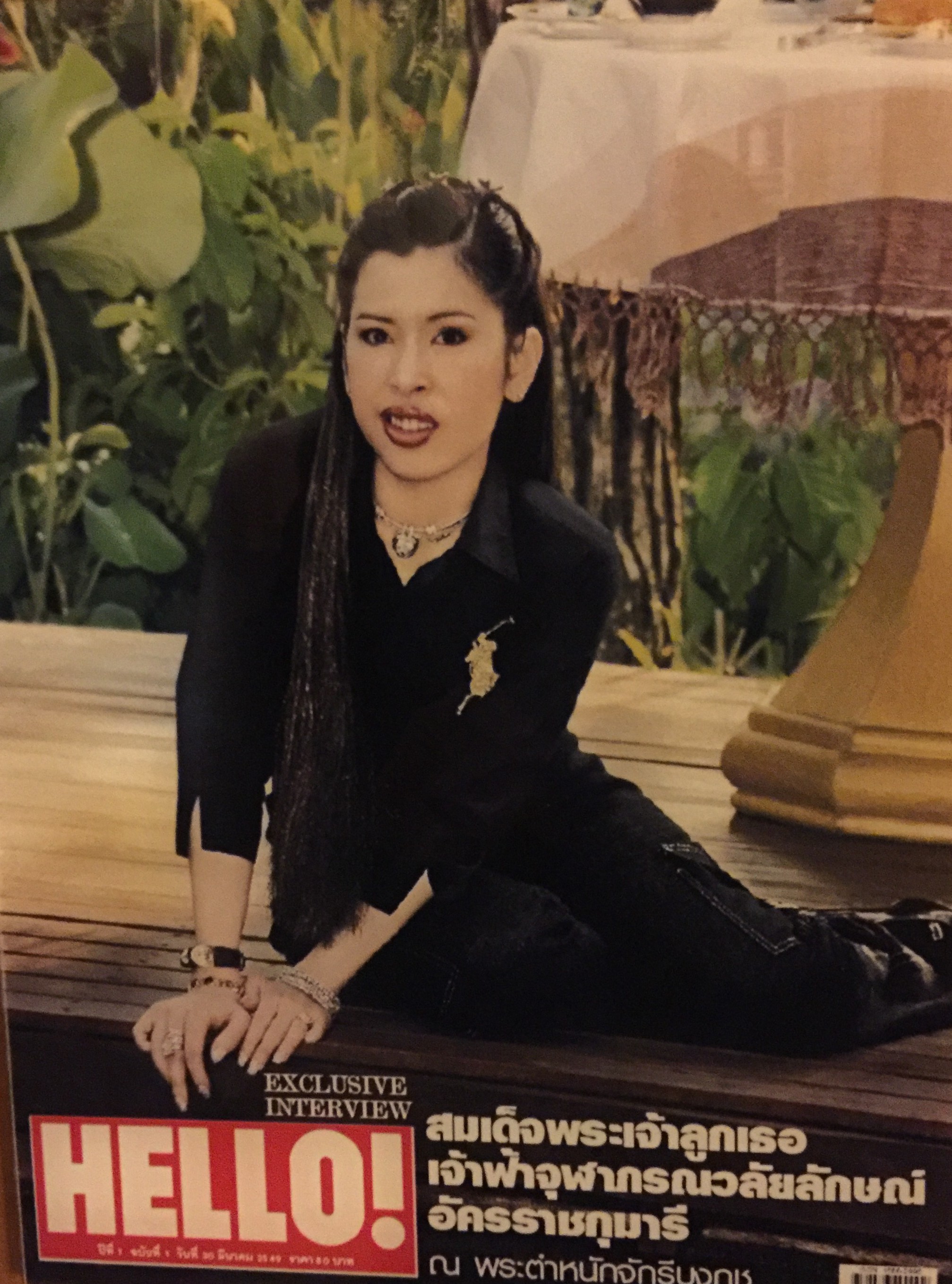
Samir Husni: I’ve heard a lot of stories, such as when you launched Hello in Thailand, with the Royal Family on the cover. You had an issue with where to put the logo because you can’t put anything above the Royal Family. And I saw one of the copies in the hallway when I first came into the building and it had the logo on the bottom of the page. How sensitive do you have to be to all of the cultural issues with Hello in the Middle East or Thailand or the Philippines? And also, how do you decide which country gets Hello as the name or ¡Hola!? I noticed the Philippine edition is ¡Hola!, although it’s in English. How do you make those decisions?

Thai coverEduardo Sánchez Pérez: We try to analyze a country and its market. That’s why it’s so important to have local partnerships, local people who can understand everything better. We’re publishing in 11 or 12 different languages right now. We reach more than 20 million readers. It’s quite a challenge, of course, but the principles are the same; we’re deeply respectful of the personalities and the local traditions and also the readers who are going to buy it.

It’s true that royal families are very important to us. Royalties, in our opinion, are an asset for a country and that joins the different values and makes royal families try and be good examples for society. They are our ambassadors and are the essence of traditions of the countries they are born to and also people who are working for the benefits of the society.

And being the first family, they have to attend to guests when they come to the country, so they show others much hospitality. They’re a mixture of glamour, high society and aristocracy, which is something that people like to read about. ¡Hola! and Hello take the reader to places they don’t normally have access to. So it’s important that we show how it is to be a part of the glitz and glamour and the parties. So, the royal families are an important part of our magazine and our product.

Yet, this was something that we didn’t really know about when we started in Thailand. That was something that the local editor of the magazine was very clear about, that nothing goes above the Royal Family, such as a logo, and there was no problem then. We were honored by the princess of Thailand, who was the first cover of the magazine. It was a very important thing for us and we are very grateful to the Royal Family that they would give us this consideration.

Actually, the first cover of Hello magazine was Princess Anne; it was an exclusive interview with Princess Anne inside the royal palace.

Samir Husni: Did you ever have a discussion with your grandmother, who is 95 now; did she ever expect that this little magazine that she and her husband created would grow to such magnitude? And it’s my understanding that he was the journalist and she was the designer?

Eduardo Sánchez Pérez: Yes, that’s right.

Samir Husni: Did she, in her wildest dreams, ever expect ¡Hola! and Hello to be this worldwide publication?

Eduardo Sánchez Pérez: (Laughs) No, of course not. In the beginning they had the idea to launch this small magazine. In a country like Spain in the 40s, it was after the War, their expectations were to create a small business for maybe 10 years or so. That’s why my grandfather asked my father to go to university to study something else other than journalism. Not because he didn’t love journalism, but because he thought ¡Hola! magazine would only last several years. No one ever thought it would grow as big as it is right now.

It’s a very beautiful story. My grandmother said she became a journalist for love; she was in love with my grandfather and she wanted to spend more time with him. And he thought it was a great idea. So he left his job at the newspaper and they began to work together from their home. And that’s how it all began. They worked at a very small table in a small room. They were a couple in love and making a magazine that they believed would entertain people. The magazine was created to entertain and to take readers to places they wouldn’t otherwise have access to. And to take the best of life and put it into a magazine and into pictures.

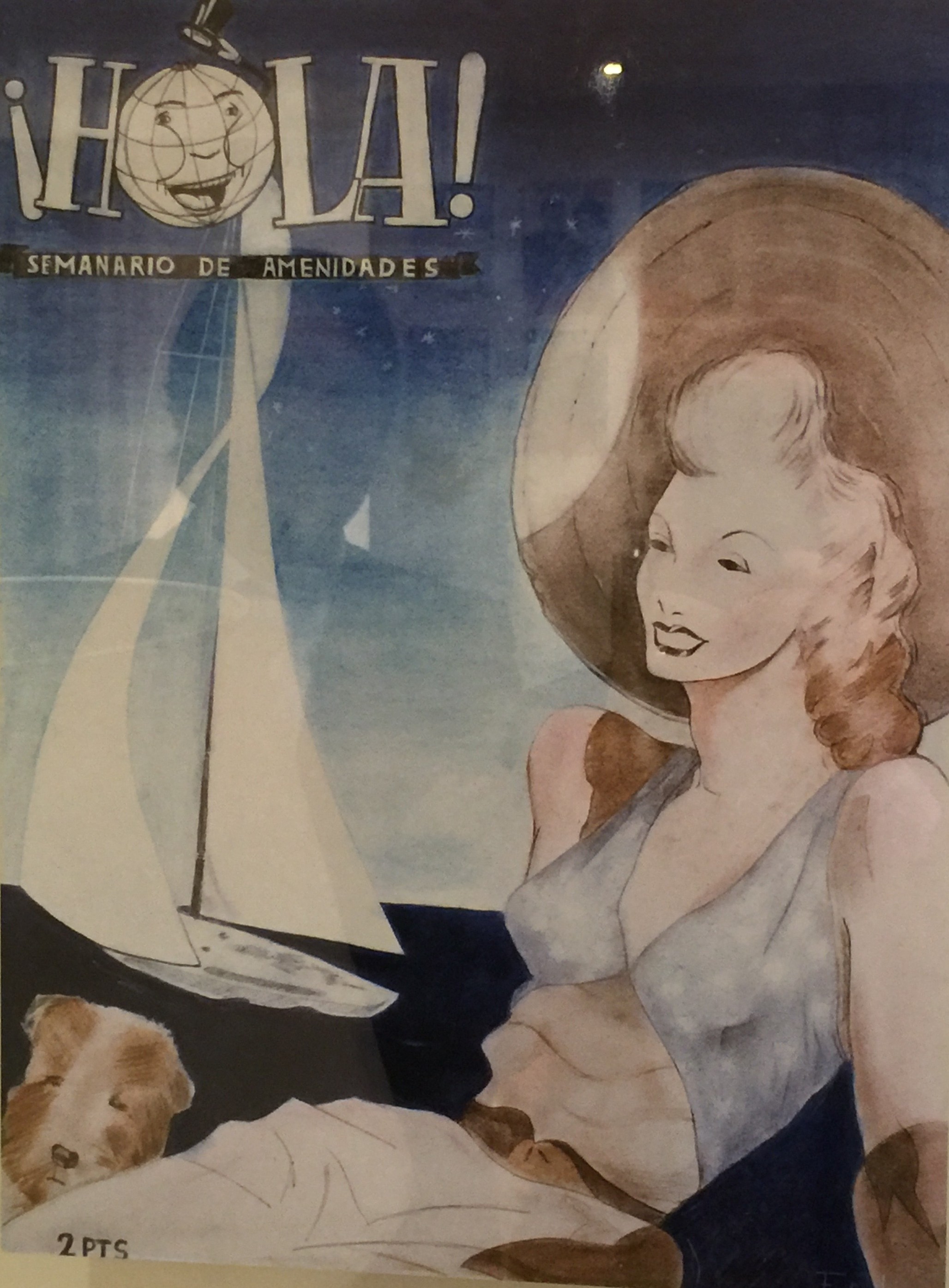
frist pic coverAn interesting anecdote is, those first five covers of the magazine have illustrations, because at that time prestigious magazines had illustrations on the covers and not pictures. The magazine was more or less about the society of Spain, but also you’ll read about Hollywood actors and some very interesting stories. But the cover was always a glamourous illustration, done by a very well-known illustrator, and of glamourous events. The first cover is the seaside in Barcelona; another cover was about going to the theatre; another one is horseracing at a country club; and it was done weekly. We’ve always been weekly since 1944. We have always been ready for our readers every week.

So, after five covers, they had to cut to reduce costs and my grandfather was very concerned about losing the illustration, they were very expensive. He thought there was nothing else to cut, he had analyzed everything and he would have to stop doing the illustrations and put a picture on the cover instead. So he went to the cinemas, because the cinemas were the first clients of ¡Hola! and also he had a good relationship with the owners of the cinemas in Barcelona. So he went to see his friends and asked what the next film they were showing would be. And it was a Clark Gable film, so he put a picture of Clark Gable on the cover. (Laughs)

Samir Husni: (Laughs too).

Eduardo Sánchez Pérez: And he discovered by accident, all because he wanted to reduce costs, what people really liked; to have pictures of celebrities on the covers. Why did he choose Hollywood actors; well first, because he had always wanted to include film reviews and talk about Hollywood celebrities in the magazine. But also because the only way you can have access to good quality pictures was to ask the cinemas to give you pictures they received from Hollywood. They would receive the films plus pictures to promote the film. It was an easy way to find high resolution pictures of Hollywood actors.

It’s interesting, my grandfather wrote a little bit about the story of the magazine when we published issue 2,000. And he talked about the phrase “Espuma de la vida,” which is what’s at the top of the glass of say, champagne, for example. The froth of life is at the top of the glass of champagne, which he related with happiness, with a glamorous life. He said business and economics; these things were heavy and made people think too much. That kind of heavy news goes to the bottom of the glass; what’s at the top? That’s ours; our news.

That’s why we don’t talk about politics or economics or anything like that. That’s why ¡Hola! and Hello are read by a large number of different kinds of people. And we hope that they all find something inside to help them forget about their problems and something that makes them feel better. And at the same time, they can talk and share the magazine with others and maybe find solutions to their own problems by reading how others have done it. Reading about family sagas, such as Lady Diana and now seeing Prince William; people have that feeling of involvement or of a relationship with the family.

Samir Husni: As fate would have it, your dad studied engineering and then there was a law in Spain that you have to have a degree in journalism to be an editor of a magazine. So, it’s my understanding that he went back with your mother to school to study journalism.

Eduardo Sánchez Pérez: Yes, I remember when I was younger going with my mother and father to the university to see if they passed their exams. He went for four or five years to the university at the same time that he was editing the magazine. I know he enjoyed it and he liked it very much. It was probably a good thing because you always learn when you go to the university. So, that’s true. My mother and my father went. A little bit more of their love story. My young parents doing what they needed to do. And my mother saying of course she would go, she could spend more time with her husband. My mother was originally involved in the magazine, so she went because she wanted to help my father.

Samir Husni: And did they advise you and say don’t go to school for journalism, there’s no future in it; go for something else? Or did you go to school for journalism too?

Eduardo Sánchez Pérez: I went to the Journalism University here in Madrid. I have two degrees basically, journalism and business and administration. So, I have a little bit of both. My father always said to me he would trade his degree to speak English. (Laughs)

Samir Husni: (Laughs too).

Eduardo Sánchez Pérez: English or another language. He spoke French, but he felt very bad that he couldn’t communicate his thoughts to the English-speaking people. Fortunately, he always had a good team of people who spoke both Spanish and English around him.

We live in the house where my grandparents lived when they left Barcelona and came to Madrid. They bought two floors of a house, the basement and the first floor where they put the office and they lived on the second floor.

Another example, my father said we were like farmers; they have a house underneath their house. (Laughs) It’s more or less the same. We live on the second floor and the cow is in the basement.
I don’t think it’s still there, but my grandfather had a small connection from the house to the office, a way to go in without going through the main entrance, because many times my grandfather and father would go to work in pajamas. (Laughs) And I remember my father would receive visitors anytime. The office was so small that he didn’t have a proper meeting room, so where I used to study and watch TV was his meeting room. So, I’d come home from school and go to watch TV and there might be someone famous standing there with him.

And that carried over to the magazine; you’re in my house, you’re part of my family. We used to say that ¡Hola! magazine should be something that you could leave on the table and not be afraid for your children to read. It’s a family magazine. You won’t find anything inside that would be bad for them, family-friendly, but very interesting.

a letter and KingAnd it’s not always positive, sometimes it’s a sad story, but what you get at the end, even if it’s sad, is a positive message. And the pictures are always beautiful. And it was a family unit, my grandparent and my parents would discuss why they did this or that in the magazine. And you learned a lot from these conversations. We’re bigger now, but we’re still in the same building and we still have lunch with my grandmother almost every day. And now we explain to her why we’ve done this or that. We all still try to share opinions. We feel more like journalists and publishers than businesspeople.

And also designers in a way; the design of ¡Hola! is another secret or another ingredient, which is big pictures and finding those big pictures from the right selection of pictures and giving them the right space and the right number of pages. We never begin a story thinking about how many pages we want to use. We just let our imagination flow. But if we have to cut, we always do more first and then cut. (Laughs)

Samir Husni: Through osmosis or something, magazines are in you. You’ve seen it from your grandfather; your father; your grandmother; your mother; what motivates you to get out of bed in the morning? Is it tradition, because your entire family has done it all of your life or there is something that excites you every morning and causes you to look forward to going to the office?

Eduardo Sánchez Pérez: I feel very lucky because it’s always different every week. And it’s very exciting every week. Every week you have to find the right story for the cover and find the right people to talk with. Every week you find interesting people and their stories that you can share with your readers. And sometimes you receive a story so beautiful that the feeling is it’s the right content and it’s an exciting thing. And we have the satisfaction of knowing that we’re making a product that our readers like. There are some weeks better than others, of course, but then another week comes and it’s great. With the weekly, I have a little time to relax and make decisions with my small team, along with my main family members.

As we’re improving and increasing the size, it’s very important that we keep professionalism a top priority. To have a professional team is very important. That’s something that we’ve been building on in the last years. Knowing that our business must have an important technology element, art, and we actually have more people working on the website now than in the magazines. So, there are many changes that we know we have to face and we’ll face them in a very professional way, while trying to continue with the family ownership. And keeping the family in on the editorial line and in every piece of print that we publish; I believe that we’re building a very professional team. And internationally we are competitive.

Samir Husni: Can you ever envision a day when there is no print component to ¡Hola! or Hello?

Hello Arabia II-10Eduardo Sánchez Pérez: No, I don’t envision a day when we will have no print editions. I don’t know if ¡Hola! will be forever, but a magazine with beautiful pictures and positive stories will always be there. You cannot give the same product in digital. With a print magazine, you can buy it, collect it, and share it with someone. And you have that ownership feeling that this magazine is yours. Also the flow of the content into the magazine is important. We always start with beautiful houses or beautiful people at home; this is a product that needs some physical connection, it’s real and tangible, so paper is the best way to present it.

Of course, there are technological advances that are really interesting and can be really beautiful. We were awarded by Apple the best newsstand application. We’re doing videos and we’re also including QR codes for watching videos. There is a lot of interaction that you can have with your readers by using the telephone and the magazine at the same time.

And I’m completely sure that magazines like ¡Hola! are necessary for a society. A healthy society will always have an ¡Hola! or Hello magazine.

Samir Husni: Are you bringing the magazine to the United States soon?

Eduardo Sánchez Pérez: We are starting with the website right now, hola.com-usa. We will have a team that will be working with both the website and then the magazine too. For example, on two occasions we have published a big scoop on hola.com-usa first, such as Paulina Rubio being pregnant. The scoop was to be in all of our magazines, but we decided to put it on our American website first. So the American print edition is an absolute priority. We don’t have a partner there, we’re going by ourselves. We already have some readership in the U.S. with ¡Hola! Spain in California. And at the same time we’re building a beautiful website with reliable information. Thankfully, we have learned a lot about digital from our Spanish readers and in the summertime we hope to establish the magazine. But for now we’re starting with the website.

Samir Husni: Is there anything else you’d like to add?

Eduardo Sánchez Pérez: People have to feel it’s their magazine; it’s not international. It’s the magazine of their country. It doesn’t matter the ownership, because the spirit of the magazine is done for British people by British people. It’s a British product. Everywhere we go; the product is about the people and their stories.

Samir Husni: My typical last question; what keeps you up at night?

Eduardo Sánchez Pérez: What’s probably most difficult is, one of the brand values of ¡Hola! and Hello is when we publish a story or any piece of news, we’re very sure about the content. We’re very sure that we’re not wrong. You have to be very sure about the content. To be correct every week and not to fail in any small thing and continue to be the magazine that’s reliable and truthful; that’s probably my main worry.

Plus, of course, to continue to have this relationship with our readers; the relationship of community and knowledge of what they like.

Samir Husni: Thank you.

h1

One Night Stand; Love Affair; Marriage – What Kind of Relationship Do You Have With Your Print Audience?

June 6, 2016

A Mr. Magazine™ Musing…

Lately, I have been traveling all over the country and the world in general, preaching about the role of print in a digital age for two reasons: (1) I do believe in the future of print and that print is here to stay on a permanent basis, and (2) I do believe that the role of print is changing, that we cannot have the same “old” print that we had before the digital age. Everything evolves and changes, that’s a given.

TIME's special Ali issuePrince However, some of the fundamentals are not going to change, whether you publish a weekly magazine, a monthly magazine, or a quarterly publication; there are some things that are inherent in the definition of print that will never cease. The number one trait that will always remain is: if it’s not ink on paper, it is not a magazine. It can be many platforms if it isn’t ink on paper, because there are many platforms, but it cannot be a magazine. We have to be careful about what we define as a magazine.

Having said that, I want to explain what I believe the role of print is in this digital age, but to do that we need to understand the nature of magazines and their continued relationship with their audience. We need to recognize the types of magazines that exist in the marketplace today and look at the number of new magazines that are arriving on a daily basis. And of course, we need to acknowledge the principles of creating a magazine that will also never change, among them being that the foundation of that creation, which includes content, design, curation, innovation; all of the things that have been a part of magazine making for years, is still very much alive and kicking.

The way that I classify the relationship between a magazine and its audience is really very simple. I am a firm believer that one of the most important things when it comes to building and sustaining that relationship is knowing your audience and putting them first, not the platform. Not print first, not digital first; audience first. That is paramount to the success of any publication. And that is not just lip-service or words to fill up a page on my blog. That is truth. Without our audiences, we have no reason to exist.

When it comes to magazines or print in general, we create this relationship with our audience, unlike any other entity. That relationship can be one of three types: a one night stand; a love affair; or a marriage. Print as a whole has a broad spectrum of entities, from a 700 page hard-bound book to a 36 page magazine and each one of those entities has a different relationship with their audience.

For example, my grandson developed a love affair with the “Harry Potter” brand. So, he read all of the books that were out there, from Book One all the way to the current end of the series. Once the books are completed, he may watch the movies, and once the movies are under his belt, that love affair will fade and he’ll move on to something else. And so it goes with our magazine audience.

Samir Husni at Media Hungary I had the pleasure of meeting Pam Didner on one of my recent trips to Hungary. Pam is the author of “Global Content Marketing: How to Create Great Content, Reach More Customers, and Build a Worldwide Marketing Strategy that Works.” She asked me about the different relationships that we form with our audiences and I believe that she captured my feelings on the subject very well. So, rather than restating the obvious, here’s what Pam wrote:

“I love how he (Mr. Magazine™) categorizes magazines; he uses love relationships as categories.

One-Night Stand
Love Affair
Marriage

The One-Night Stand Magazine

“Magazines that are published based on a milestone, key event or a person. Life Magazine usually does a great job of publishing one-night stands. They have published special editions or tributes for “Princess Diana”, “John F. Kennedy”, “Ronald Reagan”, “Queen Elizabeth II’s Golden Jubilee” and “WWII 60th Anniversary.” These types of magazines need to be timely to entice readers into a one-night stand.

The Love Affair Magazine

“People will buy magazines for a short period of time based on key decisions in their lives. The best examples are wedding-planning, pregnancy preparation and travel. Brides-to-be will purchase bridal magazines when they start planning their wedding and shopping for a dress. Parents-to-be will purchase parenting and baby-related magazines to get ready for their first-borns. When the wedding is over, the baby is born; they are no longer interested in the magazine as if a love affair lost its fire and passion.

The Marriage Magazine

“This is the type of magazine that becomes a ritual to the readers’ daily lives. My mother-in-law loves her New Yorker and my husband reads his monthly car plates magazine (He collects car plates and their organization has a member’s only magazine.) These types of magazines become part of their lives and they are loyal followers.”

USA Today Sports AliThe relationship that you develop with your audience is the cornerstone of everything that we do. The moment the world lost Prince, and more recently, Muhammad Ali, one-night stands were formed. Epic specials on deceased celebrities and sports figures are synonymous with the one-night stand because they are timely at that moment and extremely important to fans of the artist.

Everything that we create today has to be built upon those three cornerstones: one-night stand, love affair, or marriage.

And the old adage: “There is nothing new under the sun” can now be sent to its final resting place, because in reality in today’s digital world, there are a lot of new things under the sun.

When it comes to new magazines, they are continuing to launch unceasingly. In fact, the total number of new magazines arriving on the marketplace is comparable to the pre-digital days that we all remember so nostalgically. And they’re still the same three categories that I’ve always said new magazines fall into:

Groundbreakers: Woman's WorldThe magazines that are singular and there is nothing else like them, such as when Woman’s World was created. There was no weekly women’s magazine for American women when it hit the newsstands that had the rapid change of a non-news magazine on a weekly basis. It takes creativity and determination, and it takes being a weekly to keep that link between addictiveness and disposability with your audience in every issue.

Copycats: The group of magazines that come based on the success of other magazines. These magazines are created by people who basically sniff out the prosperity of other magazines that are very similar, but feel they have a different take on the subject matter. In so many cases, the copycats can end up being better than the original publications. With all the hunting and self-defense magazines out there, here comes a magazine like Recoil that sets itself apart from everything else on the marketplace. Suddenly, you have an upscale looking and upscale feeling magazine that treats guns as a lifestyle, rather than just a special interest. And you target the lifestyle of the gun owner, instead of the gun per se, without putting the weaponry aside. So, some copycats can be even more significant and successful than the groundbreakers.

Cheap Imitators: Companies and publishers that are in the business just to ride on the coattails of the successful magazines. The Food Network magazine is flourishing; suddenly, you start seeing an influx of food and celebrity magazines, or food and travel; just any combination of the successful titles out there on the newsstand just to imitate it and be a mirror image of those magazines, hoping that the Groundbreakers and the Copycats will establish an audience big enough, that even if you’re a cheap imitation, you can cash in on the overflow.

Having said that and combining the relationship aspect with the creative aspect of a new magazine, the marketplace is showing no signs of slowing down. The numbers speak for themselves. Every month as you can see on Mr. Magazine’s™ Launch Monitor, there is no shortage of regularly-published magazines, covering any topic that you can think of, such as a
Groundbreaker like Pallet Magazine – one that joins great articles with the setting of craft beer.

Frequency new launches for the past six months:

• May – 25
• April – 21
• March – 7
• February – 12
• January – 21
• December – 32

Fabuplus So, if you look at the numbers there is no slow down. If you look at the topics; how many times can one publish a magazine on the big, beautiful woman, yet in May, there was a brand new title called, FabUplus. These new magazines believe they may have found a new twist on a well-used subject. Over time people forget the older titles, those that came and went before one can remember, so there’s always a new audience, a new churning taking place.

And if anyone doubts the future of print in this digital age? All they have to do is look at all of the digital-only entities that are discovering, and have already discovered, the power and substance of print. Entities such as Net-A-Porter, WebMD, Sneaker News, and Posi+tive have all established a foothold in the printed word because no media company today can afford to be omni-platform in today’s marketplace; they must be multiplatform. You’re creating a brand, not just a new magazine. And that’s very important to remember. Are you launching a brand or a singular title? Because nowadays you have to be in the branding business with the printed magazine as your cornerstone, if you’re going to survive into the future.

Technology has changed everything, even printing. I just returned from a visit to Trend Offset Printing. They have introduced the first web Canon inkjet printing press. And it was amazing. The quality, personalization and the speed were unbelievable. And the quantities. Printing is making it easier to launch new magazines. No printer will throw you out of the facilities if you tell them you want 5,000 copies or 10, 000 copies because in today’s world, those quantities are no problem.

And remember, magazines are much more than just content-providers. Magazines are experience makers. Excellent writing, reporting and photography are still just as important today as they were generations ago. Magazines have a great future, if executed properly. Ideas are a dime a dozen; it’s the execution of the idea that counts, and will produce either a one-night stand, a love affair, or a long-lasting relationship.

So, until next time…go pick up a magazine and begin the experience…

h1

Gulf News Publishing: One Of The United Arab Emirate’s Largest Media Groups Brings Great Magazines To The Arab World Through Licensing & Innovation – The Mr. Magazine™ Interview With James Hewes, Publishing Director, GN Publishing, UAE

February 22, 2016

“We were very clear if we were going to go out and do a large digital business, create a large events business, which we are in the process of doing, we needed to have a very stable and secure print base. In this market, print is still very strong. You can still make good money from print magazines and in some sectors it’s also growing, like the luxury category. So it is entirely feasible to have a very successful and sustainable business here and really if you’re going to do that, it gives you as a publisher some comfort as you make those investments in other media.” James Hewes

From Dubai with love…

Reporting from the  FIPP Middle East & Africa conference in Dubai Feb. 10 and 11.

Reporting from the FIPP Middle East & Africa conference in Dubai Feb. 10 and 11.

Gulf News Publishing produces a number of multilingual tailor-made publications for a host of national and multi-national organizations in the UAE. From concept to distribution, from newsletters to coffee-table books, the company offers a full spectrum of publishing services in English, Arabic and French.

James Hewes is publishing director for GN Publishing and is responsible for the group’s portfolio of consumer magazines, newspaper supplements and contract publishing. He started with the company in 2013 after 12 years at BBC Worldwide as Head of International Development for the magazines business and latterly as Publishing Director for the brands retained by the BBC following the sale of BBC Magazines.

James’ experience in magazines is undeniable and his love for the genre unquestionable. I spoke with him recently while we both attended the FIPP Middle East and Africa conference held in Dubai. James’ take on the print magazine business is enhanced by his strong belief in partnerships and knowing your audience as personally as possible. He is a man passionate about moving his company forward and keeping that connection with consumers.

We talked about his division’s most recent acquisition of the licensing of Citizen K, the eminent French fashion magazine, and we talked about his hopes for the future, both digitally and the ink on paper horizon. It was an exhilarating and informative discussion that I know you’re going to enjoy.

So, without further ado, the Mr. Magazine™ interview with James Hewes, Publishing Director, GN Publishing, UAE.

But first, the sound-bites:

IMG_1535 On Gulf News and Gulf News Group and his beginnings with the company: Gulf News and the Gulf News group has been a leading national newspaper in the Middle East for many years now and its current form started in 1985, so it’s now 31 years old. It’s the leading English-language newspaper in the Middle East. It does 105,000 copies per day. And it now has a very successful website as well. And at some point in its development the company decided that it needed to diversify its offering, so as well as all of the natural things, such as distribution and commercial printing, it diversified into areas like radio and broadcasting and magazine publishing.

On why he thinks it’s important to have a good print product in this digital age: I think you have to be very pragmatic as a publisher and as an individual and a company. Very few companies have the appetite to make large investments into something like digital without having a solid base of profit behind them in which to fall back. So, we were very clear if we were going to go out and do a large digital business, create a large events business, which we are in the process of doing, we needed to have a very stable and secure print base. In this market, print is still very strong. You can still make good money from print magazines and in some sectors it’s also growing, like the luxury category.

Screen Shot 2016-02-21 at 3.26.44 PM On whether he thinks the brand extensions, such as events, digital and mobile, could exist without the core print product: I think we’ll find out. I think we’re going to start doing some products now that are not based in print form, primarily starting in digital. So we’ll be able to get a sense of whether or not it’s possible to have a sustainable brand without a print anchor.

On the fact that 95% of the Middle Eastern audience is still Arabic-speaking, yet most of the magazines are published in English: I think it’s a fascinating case study. A large part of that in days gone by would have been that there was an extreme lack of transparency in the media industry here. And therefore you could publish magazines in English to relatively small audiences and make decent money, let’s be honest. I believe with the digital world that’s all going to change. Digital advertising not only needs transparency, it almost can’t operate without transparency.

On the biggest challenge he’s had to face: The biggest challenge that you have in any business now is culture; changing the company’s culture. I wouldn’t say that I’ve been 100% successful in changing Gulf News’ culture, that’s not my job and that’s not what I do. But I’d like to think that within our business unit, the publishing business unit, we’ve tried to embrace a culture that allows people to innovate and to take risks. I’m a great believer in giving people responsibility and in return they get accountability. You can take a project and run with it; you’re accountable for its results, but it’s yours. You can do what you like.

insideout-cover On whether he feels the recent new “happiness” ministry that was established in the United Arab Emirates will become a trend and spread around the globe: Hopefully. I think it’s a very bold visionary move, as you’d expect from the government of Dubai. His Highness, Sheikh Mohammed, is very good at making those bold and visionary moves and it may pay off. I’m fully expecting that that’s going to be something that is copied elsewhere in the world when people see the effects of it.

On how he thinks print can be fixed: In terms of print and luxury, I think the initial thing there is to find the right partner. We’re very lucky in that the luxury magazine that we’re launching next month is OK. We have a great partner who has really helped us to get access to the luxury market. You’ve got to recognize in business what you’re good at and what you’re not good at. If you know that there’s a strategic opportunity somewhere and you don’t have the skills or the knowledge, you have to go out and get them by whatever means you can, in some cases that means hiring new people, which we’ve done in this case.

On why he pursued the licensing of Citizen K magazine: We were impressed with the vision and we were impressed with the founder. The man who founded Citizen K, Kappauf, is a well-known figure in the fashion industry. He brings a credibility of himself to that brand and therefore to the industry, and so in extension he also brings that to us. It absolutely has to do with who you’re working with. We always used to find this on the reverse; I was very often on the other side of the coin when I was licensing around the world.

IMG_1536 On what motivates him to get out of bed in the morning: Opportunities for our brands to connect with consumers. And I love going to our events because that’s a chance to see sometimes our advertisers and sometimes our consumers in the flesh and to hear more about them and learn more about their brand experiences and to know that our brand has touched their lives in some way. So that’s a really powerful and uplifting moment. When I worked on “Good Food” in the U.K., I used to love going to the “Good Food” show in Birmingham and sell subscriptions; I’d sometimes stand at the desk and sell subscriptions for the day, and it was a great way to meet your customers.

On what someone would find him doing if they showed up unexpectedly one evening at his home: Probably a combination of all of those. I still read magazines and I’m a passionate reader. The genre of magazines really appeals to me. For example, I read “Motor Sport Magazine” from the U.K. I’m an absolute addict of that brand; it’s a fantastic brand and one that we’re hoping to bring here at some point.

On what keeps him up at night: Not moving fast enough. I guess it’s the same in any company; you always sit there and look at your competitors and think how much faster they’re moving than you are.

And now for the lightly edited transcript of the Mr. Magazine™ interview with James Hewes, Publishing Director, GN Publishing, UAE.

Samir Husni: Tell me about Gulf News and the Gulf News Group and your beginnings with the company.

James Hewes: Gulf News and the Gulf News group has been a leading national newspaper in the Middle East for many years now and its current form started in 1985, so it’s now 31 years old. It’s the leading English-language newspaper in the Middle East. It does 105,000 copies per day. And it now has a very successful website as well.

Screen Shot 2016-02-21 at 3.25.20 PM And at some point in its development the company decided that it needed to diversify its offering, so as well as all of the natural things, such as distribution and commercial printing, it diversified into areas like radio and broadcasting and magazine publishing.

So when I came into this company three years ago, I took over what was then GN Magazines, a reasonably small magazine business with five titles, quite commercially successful, good turnover, average margins, not great margins, but the company was ready to develop that business into something suitable in the multiplatform world.

One of the first things we did was look at consolidating all of our publishing activity, apart from the newspaper, into a single place and create what is now GN Publishing. And GN Publishing is the publishing unit of Gulf News and does everything from traditional consumer magazines to business magazines to content marketing and contract publishing and newspaper supplements.

Samir Husni: I think we can agree that we live in a digital age, yet you have mentioned before that part of your future plans is to fix print. Why do you think it’s important to have a good print product in this digital age?

James Hewes: I think you have to be very pragmatic as a publisher and as an individual and a company. Very few companies have the appetite to make large investments into something like digital without having a solid base of profit behind them in which to fall back.

So, we were very clear if we were going to go out and do a large digital business, create a large events business, which we are in the process of doing, we needed to have a very stable and secure print base. In this market, print is still very strong. You can still make good money from print magazines and in some sectors it’s also growing, like the luxury category. So it is entirely feasible to have a very successful and sustainable business here and really if you’re going to do that, it gives you as a publisher some comfort as you make those investments in other media.

Samir Husni: Do you think all of the other line extensions, whether it’s the events or the digital or the mobile, can exist in this market without the core print product?

James Hewes: I think we’ll find out. I think we’re going to start doing some products now that are not based in print form, primarily starting in digital. So we’ll be able to get a sense of whether or not it’s possible to have a sustainable brand without a print anchor.

There are some brands that do that already here and I can give you an example, the trade publishing space, the B to B space, The Media Network. The Media Network is based here in Dubai and it’s basically a trade website for the magazine industry; the communications industry. And they’ve existed most successfully for the last few years without ever having a print component, ironically, for a magazine industry site.

So, I think it is possible and I believe it’s going to become more possible. But rather than saying that we have print brands and line extensions, I think it’s more about saying that we have brands. And each of those brands can spread over into a certain number of platforms and one of those might be print. And I love the phrase a friend of mine from the BBC uses when he talks about publishing. He says that we do print for profit and we do digital for growth. And I think that’s exactly right.

If you’re doing an extension of your brand and it’s print, you need to subject that extension to the same commercial rigor that you would any other line extension. And if it’s not going to be profitable, why would you do it? And if it is profitable then you should embrace it.

Samir Husni: What about the audience? We’ve heard that 95% of the audience in the Middle East is still Arabic-speaking, yet most of the magazines that we see are English editions.

James Hewes: I think it’s a fascinating case study. A large part of that in days gone by would have been that there was an extreme lack of transparency in the media industry here. And therefore you could publish magazines in English to relatively small audiences and make decent money, let’s be honest. I believe with the digital world that’s all going to change. Digital advertising not only needs transparency, it almost can’t operate without transparency.

If you think about something like programmatic advertising; it can only exist when the data is there, so you have to disclose your data if you want the programmatic revenue. And that’s going to force out into the open a lot of thinking, particularly among marketers and brands that if they can get clear proof of their ROI in digital then they must be able to get it in all of their other media as well. And I think when it comes down to it, the volume is there in the Arabic market, but we don’t yet have a good enough understanding of that audience to be able to identify where the niches are and where the quality segments are, the quality audience pieces are, but they are there. They’re absolutely there.

And I think that’s going to be a really exciting development in the next few years as we big publishing companies that have done so well in the English-speaking media start to pivot toward Arabic and start to apply some of the learnings that we’ve taken in the English space and apply it to Arabic, which by the way is not to down the efforts of Arabic-language media companies. There are a great many of them that do fantastically well. And for the time that I’ve been here, it’s been a real revelation because it has exposed me to the reality that there is a huge market in publishing that the rest of the publishing world never sees, which is the Arabic-language market. There are hundreds, thousands of magazines and hundreds of newspapers and thousands of websites that are out there publishing in Arabic, thriving and doing really, really well. But because it’s Arabic, because it’s never had the focus from the western world that other magazines and cultures have, it’s been hidden away, though they’re starting to come to the surface now.

Samir Husni: When you think about your three years here, has it all been smooth sailing or have you encountered some choppy seas along the way? What has been the biggest challenge you’ve had to face and how did you overcome it?

IMG_1537 James Hewes: The biggest challenge that you have in any business now is culture; changing the company’s culture. I wouldn’t say that I’ve been 100% successful in changing Gulf News’ culture, that’s not my job and that’s not what I do. But I’d like to think that within our business unit, the publishing business unit, we’ve tried to embrace a culture that allows people to innovate and to take risks. I’m a great believer in giving people responsibility and in return they get accountability. You can take a project and run with it; you’re accountable for its results, but it’s yours. You can do what you like.

One of my absolute mantras is, and I think I heard it from some management guru; you hire good people and you give them the room to do their jobs. And that’s the biggest change and the biggest challenge that we’ve tried to bring into the business is to apply that rule.

Traditionally, a business is very used to having a very clear hierarchy structure, with a lot of power spread around senior management individuals, trying to delegate that power out to people and to get the company used to it, with functions like our finance department, our PR department and it’s great. When you sit down and explain to a finance team what you’re trying to do they nod and say yes, that sounds like a good idea. We’ve never done it before, but let’s try it.

So, it’s really gratifying to see a culture change to come along. And I think unless you do that, you can’t possibly hope to do any of the other plans that you have. I laugh sometimes when I go out into the market and see businesses, of which there are many in this region, huge businesses run by one person, and all of the decisions go through that one person. In this modern age, it’s impossible now to have the time and attention to cope with all of the different revenue streams that there are in the media business. And I think we’ve done a great job with that, thanks I large part to the leadership that our company has, to allow us to actually go out and try things.

Samir Husni: You also mentioned earlier that the values of the company today are much different than what they used to be. One example you mentioned was that it’s a given that you have to respect your audience, but in your case, you said that you want joy and happiness. And recently here in the United Arab Emirates, they established a new ministry for happiness. Do you think this is a trend born here that will spread around the globe?

James Hewes: Hopefully. I think it’s a very bold visionary move, as you’d expect from the government of Dubai. His Highness, Sheikh Mohammed, is very good at making those bold and visionary moves and it may pay off. I’m fully expecting that that’s going to be something that is copied elsewhere in the world when people see the effects of it. The happiness index and the idea that you can measure someone’s happiness and measure a country’s happiness, or a company’s happiness in our case and use that in a way to manage business is a great idea. People spend a third of their lives at work, they should enjoy it.

Samir Husni: I don’t know if you’re familiar with it, but there’s a magazine in the United States that’s around two years old called “Live Happy.” I interviewed the editor and she told me that happiness was a science and now more than ever people are studying it as a science. So, am I going to see a new happiness magazine coming out from Gulf News Publishing?

James Hewes: (Laughs) I don’t know if we’ll have a happiness magazine, but I’d like to think that happiness will be in all of our magazines.

Samir Husni: Is there anything else that you’d like to add? You mentioned the luxury category and fixing print; how do you plan on fixing it?

James Hewes: In terms of print and luxury, I think the initial thing there is to find the right partner. We’re very lucky in that the luxury magazine that we’re launching next month is OK. We have a great partner who has really helped us to get access to the luxury market. You’ve got to recognize in business what you’re good at and what you’re not good at. If you know that there’s a strategic opportunity somewhere and you don’t have the skills or the knowledge, you have to go out and get them by whatever means you can, in some cases that means hiring new people, which we’ve done in this case. But also you’ve got to rely on partners. You have to find good partners who can help you out.

I started out in this business primarily doing licensing and syndication of magazine brands overseas and it taught me that partnerships are a really strong way to do business and if you get it right, everybody benefits. And if you’re going into a new space like luxury, you have to have partners.

You’ve got to also embrace the opportunity. It’s no good just picking at the edges and doing the wrong thing. You have to have two or three or four things in that space to show that you’re really committed to it.

Samir Husni: Why did you specifically go after the licensing of Citizen K?

James Hewes: We were impressed with the vision and we were impressed with the founder. The man who founded Citizen K, Kappauf, is a well-known figure in the fashion industry. He brings a credibility of himself to that brand and therefore to the industry, and so in extension he also brings that to us. It absolutely has to do with who you’re working with. We always used to find this on the reverse; I was very often on the other side of the coin when I was licensing around the world.

And one of the crucial factors about whether or not we were going to deal with someone was our personal feelings about the partner; if you don’t like somebody; chances are you really don’t want to have to do business with them. So, that likeability factor and a willingness to cooperate and be a partner, rather than having a client/supplier relationship is something that attracted us to Citizen K. And I have to say, of all of the licensing projects that I’ve been involved with, and I’ve been involved in more than 50 in my career, I have never seen the level of work that has gone into this project. These guys are absolutely fantastic.

Samir Husni: What motivates you to get out of bed in the morning?

James Hewes: Opportunities for our brands to connect with consumers. And I love going to our events because that’s a chance to see sometimes our advertisers and sometimes our consumers in the flesh and to hear more about them and learn more about their brand experiences and to know that our brand has touched their lives in some way. So that’s a really powerful and uplifting moment.

When I worked on “Good Food” in the U.K., I used to love going to the “Good Food” show in Birmingham and sell subscriptions; I’d sometimes stand at the desk and sell subscriptions for the day, and it was a great way to meet your customers. And as you were selling them a subscription you could ask questions about their engagement with the magazine. You just got that anecdotal connection with your audience. You could put a face to your readers.

So that really gets me up in the morning, that idea that you’ve made a connection and actually made a difference in someone’s life. And you’ve entertained them with a future piece of knowledge that’s also helped them get through their day.

And that’s what I like about the digital opportunities; what excites me about the digital opportunities. I love sitting there and watching the analytics’ screen. It may sound boring, but you can see the number of people who are on your site right then and you can’t see that with a magazine. Occasionally when you worked in magazines you might see someone at a newsstand buying your magazine and you’d think, wow, that’s mine and they bought it. That’s fantastic. But now you can sit in the office 24/7 and see live the engagement consumers have with your product. It’s wonderful.

Samir Husni: If I showed up at your home one evening unexpectedly, what would I find you doing, reading a magazine; reading your iPad; watching television, or something else?

James Hewes: Probably a combination of all of those. I still read magazines and I’m a passionate reader. The genre of magazines really appeals to me. For example, I read “Motor Sport Magazine” from the U.K. I’m an absolute addict of that brand; it’s a fantastic brand and one that we’re hoping to bring here at some point.

I read magazines and books; I read books in print and I read them on my Kindle, it just depends on what kind of book it is. I watch TV; I must say the biggest change in my habits is that I watch much less linear TV than I did even a year ago. I watch almost all of my TV on demand now. But it’s a combination of all of those things, when I’m not playing with my children. Playing with my children is fun and it’s nice to see them interacting with magazines and books. My son is sitting home today reading his Diary of a Wimpy Kid book in print and loving it. And I’m egging him on and really enthusiastic about that because I know it’s his gateway to knowledge and experiences.

Samir Husni: My typical last question; what keeps you up at night?

James Hewes: Not moving fast enough. I guess it’s the same in any company; you always sit there and look at your competitors and think how much faster they’re moving than you are. And they’re probably thinking the same thing when they look at your company. It never feels like you can act quick enough and I suspect even the guys at – I don’t know – pick a fast-moving company, even those guys probably think they can’t move fast enough.

So, I would say speed-to-market and the fear that somebody is going to do something before we do and our ideas are going to be trumped by somebody is what keeps me up at night.

Samir Husni: Thank you.

h1

Middle East Business Magazine & News: The First Media Publication From Palestine To Serve The Middle East & Arab Countries – The Mr. Magazine™ Interview With Amal Daraghmeh Masri, CEO at Ougarit Group, Editor-In-Chief and CEO Middle East Business News and Magazine.

February 18, 2016

Middle East 3-3 “Before I did print I knew everybody was going to tell me that I was going against the current and that everyone else was going digital and I shouldn’t do it on paper. I didn’t believe them, though many, many people told me this, including one of our advertisers. And I see our advertisers as our partners. When I asked most of our advertisers about print they told me if I insisted, then go for it, do print and digital. So I went strongly with the website, mobile application and paper and our individual channel, which is all very expensive, but I assure you that people like to see paper because they trust in it more.” Amal Daraghmeh Masri

From Dubai with love…

Reporting from the  FIPP Middle East & Africa conference in Dubai Feb. 10 and 11.

Reporting from the FIPP Middle East & Africa conference in Dubai Feb. 10 and 11.

Bringing a magazine to fruition is hard work even in the best of circumstances, but bringing one or more to the newsstand when you’re the first in your country to do it, other than locally, is a true feat indeed. Amal Daraghmeh Masri has achieved that feat. Amal is CEO at Ougarit Group, editor-in-chief and CEO Middle East Business Magazine & News and the magazine’s founder. She is a woman who has held many positions in local business organizations that work for the advancement of women in Palestine, which is her home country, and across the Arab world, including being a member of Palestinian Working Women’s Society for Development and a founding member, former President of Business Women Forum of Palestine. Regionally and internationally, she is founder and a former board member of Middle East Business Women’s Network.

And Amal is also an avid reader and extreme lover of ink on paper. Her magazine is her passion and her work ethic and print mission is simple and direct: audience first. Give them what they want when it comes to content and presentation and the magazine will grow from that engaged connection.

I spoke with Amal recently at the FIPP Middle East and Africa conference held in Dubai. We spoke of that passion that she has for print and the mission she feels her magazine accepted from issue one. The audience is her main concern and while she believes in the many benefits of digital, she also knows that for a more lasting and trusting relationship with her customers, print is the deciding factor that brings it all together, despite many who tried to convince her otherwise. Amal is a businesswoman, an entrepreneur and more importantly to her print product, a magazine maker who knows what it’s all about: her audience.

So, I hope you enjoy this motivational and inspiring story from a woman who knows what it means to work against adversity when passion is your driving force; the Mr. Magazine™ interview with Amal Daraghmeh Masri, CEO at Ougarit Group, editor-in-chief and CEO Middle East Business Magazine & News.

But first, the sound-bites:

FullSizeRender-2 On the history of her business magazine: This is my second magazine; my first one I sold. The second one covers Arab countries and Middle Eastern countries, which is why it’s in Arabic and English, with 100 pages of different content in two different languages; this is the base. And I love paper; I wanted to produce something that has a face and that you can touch and almost speak with. That’s why we made an individual channel online and the website, but without paper it’s not the same.

On the fact that she started first with an English-only edition: Yes, we started first with only an English version that was published four times a year. And then we thought that we were missing the Arab readers, though there are many in English. Many people had asked us to do another edition in Arabic with the same quality, because it’s a nice-looking magazine with good content. So one day I said OK, I’m going to be crazy and do an Arabic part and do a different one.

On what inspired her to do a totally different issue in Arabic: Most Middle Eastern and Arab readers who are interested in business and economy articles, 98% of them read both languages, so out of respect for their intelligence I gave them different content, because they are all smart and they can choose for themselves. And amazingly, one of the presidents of the chamber of commerce told me that he loved it because when he was tired he reads the Arabic part. He added that when he woke up in the morning and went to his office; with his coffee he would read the English part. These words for me were like a big prize because this was exactly what I wanted.

On whether the magazine will ever have a flip side in French: I thought of it. But it would be too heavy to ship out of Ramallah. (Laughs) I’ve actually had a proposal from one of the Arab countries to make it monthly even. I didn’t want to make it monthly because online it’s ongoing. I think it would be too much because it’s for people who work a lot and every three months gives them enough time to read what’s inside it.

On how big the magazine business is in her country of Palestine: Actually there is none. There are no real magazines in business. There is only a small one about culture, but it’s very local. This is the first magazine that has really come out of Palestine to the Middle East and Arab countries. Usually, the magazines come from Dubai or Lebanon, sometimes from Egypt, but never from Palestine. And I think since my first name is Amal, and it starts with an “A,” I was always called to speak first at school. So, I said that I’d like to be the first to do something like this, though it’s very difficult, but you know, with challenges you create new things to help you overcome obstacles.

On where she came up with the idea to publish a business magazine from Ramallah: I established my business 18 years ago, which is an advertising agency, with marketing and PR. It was called Ougarit Company at that time. A few months earlier we established a printing company with my husband and that was around 1998 or 1999. So now we have two companies, one for printing and one for advertising. And with time you have more ideas and we started doing conferences and then we started training for media. We have a training center for media and anything related to communications and media. Then five years ago we started making magazines.

On whether her belief in print is just from passion or good business sense, or both: In general, businesses are driven by sales and profits. But it’s even better if it’s driven by passion. It’s like a bird with two fabulous wings. When it became English and Arabic, it became like a bird with two super wings. It flew much faster.

On the biggest challenge she’s had to face: I am a stubborn person by nature. So, all challenges for me are fun to deal with. For example, transporting the magazine outside Palestine, because I print and send out to almost 10 countries and it’s very expensive and challenging. And it takes a lot of time. It’s also a lot of follow-up. Sometimes it arrives on time and sometimes it doesn’t. But I spend a lot of energy every single day on the magazine. That is just one challenge.

On anything else she’d like to add: When you do a magazine, don’t make it just paper. It is a paper, but don’t make it just paper. That’s what I tell many of my clients; our magazine is not just paper. And there is a phrase that I use a lot: it’s a mission; it’s a passion; it’s a business, and it’s a partnership.

On what motivates her to get out of bed in the morning: I have a great partner who has been with me since we started our life together 21 years ago. And we establish all businesses together. So, an inspiring husband and a great helper and a cup of coffee in the morning; there’s nothing better.

On what keeps her up at night: It’s how to create great content. I want people to love what we write and I don’t want to write it in the traditional way. What we like to do is sometimes combine curation; people don’t want to read from zero, because people are busy. So we accommodate information together and decide how to present it.

And now the lightly edited transcript of the Mr. Magazine™ interview with Amal Daraghmeh Masri, CEO at Ougarit Group, Editor in Chief and CEO Middle East Business Magazine & News.

Samir Husni: Tell me a little about the history of your business magazine.

With Amal Daraghmeh Masri at the FIPP Middle East & Africa conference in Dubai, UAE.

With Amal Daraghmeh Masri at the FIPP Middle East & Africa conference in Dubai, UAE.

Amal Daraghmeh Masri: This is my second magazine; my first one I sold. The second one covers Arab countries and Middle Eastern countries, which is why it’s in Arabic and English, with 100 pages of different content in two different languages; this is the base. And I love paper; I wanted to produce something that has a face and that you can touch and almost speak with. That’s why we made an individual channel online and the website, but without paper it’s not the same.

Samir Husni: It’s my understanding that the magazine started in English and then you had the inspiration one day to add an Arabic section, but not translated from the English.

Amal Daraghmeh Masri: Yes, we started first with only an English version that was published four times a year. And then we thought that we were missing the Arab readers, though there are many in English. Many people had asked us to do another edition in Arabic with the same quality, because it’s a nice-looking magazine with good content. So one day I said OK, I’m going to be crazy and do an Arabic part and do a different one.

We designed it as a totally different brand, but the day before printing I woke up at midnight, well, it was probably after, because I don’t sleep before midnight. But I woke up and said, no, I have to put them together in one volume. It was a quite challenging experience and I didn’t think it would work at that time because it was a crazy idea, but it turned out to be very popular. People liked it.

Samir Husni: Most of the magazines that have flip covers or flip sections that I’ve seen in the Middle East are usually translated. What inspired you to do one in Arabic that was different? Did you think that most people could speak both languages, so why give them the same thing? Or were you trying to solicit a new audience?

Middle East 1-1 Amal Daraghmeh Masri: Most Middle Eastern and Arab readers who are interested in business and economy articles, 98% of them read both languages, so out of respect for their intelligence I gave them different content, because they are all smart and they can choose for themselves. And amazingly, one of the presidents of the chamber of commerce told me that he loved it because when he was tired he reads the Arabic part. He added that when he woke up in the morning and went to his office; with his coffee he would read the English part. These words for me were like a big prize because this was exactly what I wanted.

Another thing is the translation can become boring and it’s less work actually. Different content is much better; it’s like two magazines in one. The only thing they have in common is the cover, but with different aspects and different content to make it both concise and completely unique to one another.

Samir Husni: Are we ever going to see another flip side to the magazine in French?

Amal Daraghmeh Masri: I thought of it. But it would be too heavy to ship out of Ramallah. (Laughs) I’ve actually had a proposal from one of the Arab countries to make it monthly even. I didn’t want to make it monthly because online it’s ongoing. I think it would be too much because it’s for people who work a lot and every three months gives them enough time to read what’s inside it. And generally, people do not throw away nice magazines that are quarterly. They tend to throw away more monthly magazines that move fast. I think they feel the quarterly magazine is more precious and has more inside, with nicer covers. So they keep it.

Samir Husni: Please excuse me for not knowing this, but how big is the magazine business in the Palestinian territories?

Amal Daraghmeh Masri: Actually there is none. There are no real magazines in business. There is only a small one about culture, but it’s very local. This is the first magazine that has really come out of Palestine to the Middle East and Arab countries. Usually, the magazines come from Dubai or Lebanon, sometimes from Egypt, but never from Palestine. And I think since my first name is Amal, and it starts with an “A,” I was always called to speak first at school. So, I said that I’d like to be the first to do something like this, though it’s very difficult, but you know, with challenges you create new things to help you overcome obstacles.

So you become adamant to be different and that’s why we’re not local, we’re Middle Eastern and we have an office in Jordan and in Dubai. And we are registered even in Cypress. We have customers from Greece, Cypress, even some of the islands, also from Dubai, Belgium, from many countries and I have quite a lot in Jordan and Palestine. But we don’t spread our magazines according to where our advertisers come from. We make the content for everybody.

Samir Husni: How did you get the, as you called it, “crazy idea” to publish a business magazine from Ramallah?

Amal Daraghmeh Masri: I established my business 18 years ago, which is an advertising agency, with marketing and PR. It was called Ougarit Company at that time. A few months earlier we established a printing company with my husband and that was around 1998 or 1999. So now we have two companies, one for printing and one for advertising.

And with time you have more ideas and we started doing conferences and then we started training for media. We have a training center for media and anything related to communications and media. Then five years ago we started making magazines. We did the first one and we sold it. Three years ago I started this magazine and I also collect news for the website. And I’ve done a French one, because I graduated from a French school, so I speak French. And we do another one called EcoMag, but it is local. It’s only for Palestine, so it doesn’t go out.

Samir Husni: So, technically you did a reverse, in terms of first you started with the ad agency and then the printing and then the magazines. Most stories that I’ve heard, they start a magazine, then buy an ad agency and then they buy a printer.

Amal Daraghmeh Masri: It’s very difficult. It’s like trying to get an old person to make a baby.

Samir Husni: (Laughs).

Amal Daraghmeh Masri: In this case, I’m a woman and I finally had my baby. (Laughs too) Though it took me more than nine months to do it. The whole thing is about the experience. Graphic design is about thinking and creativity and it’s not about lines and colors. Marketing and communications are about spirit, love to others and love to what you do.

When you go to media, it’s another thing, but needs these bridges to reach the other part, which is the media part of the magazine. Though I don’t consider ourselves a journalistic magazine because what we write about is from people’s experiences. And to their peers actually, to other people who want to know what this particular person has to say. So we depend more on expert opinion so that we pass this passion and love to what we do to other people.

Samir Husni: I saw the article that your husband wrote about the future of print and knowing now that you own a printing plant; an ad agency and another print magazine; is it passion that makes you feel there’s a future for print or is it still a good business and you’re making money from it?

Amal Daraghmeh Masri: In general, businesses are driven by sales and profits. But it’s even better if it’s driven by passion. It’s like a bird with two fabulous wings. When it became English and Arabic, it became like a bird with two super wings. It flew much faster. And the same thing comes to the magazine and maybe because I am a good reader, ever since I was six-years-old I have been an avid reader; I have loved the smell of old papers. My grandfather used to be a teacher and he used to bring books with him when he would visit when I was a child. And I would smell them and I thought they smelled beautiful. Until today, I am addicted to the smell of old papers.

I believe that human beings need to touch and see and hear, that’s how we were created. So paper is an important element. We can use online and listen to it and see it, but we cannot say or pretend or publicize that print will disappear. It has been around forever and it will be around as long as there are trees.

Middle East 2-2 I met a lady who had one of the biggest printing companies in South France. She came to see how we print in a difficult situation like Ramallah and she told us that many of her clients used to print magazines with her company and they stopped because people were telling them digital, digital and more digital. So they freaked out and moved into digital and she told me that one year later they were losing so much money that they came back to print again. And this lady is alive and she told me this.
Before I did print I knew everybody was going to tell me that I was going against the current and that everyone else was going digital and I shouldn’t do it on paper. I didn’t believe them, though many, many people told me this, including one of our advertisers. And I see our advertisers as our partners. When I asked most of our advertisers about print they told me if I insisted, then go for it, do print and digital. So I went strongly with the website, mobile application and paper and our individual channel, which is all very expensive, but I assure you that people like to see paper because they trust in it more.

As soon as you show them the magazine, it’s different than showing them the tablet or the website or the mobile application. It’s a totally different thing. So we have to be aware of human beings’ roots, origins and feelings. It’s like fear, when you see something that scares you it’s a natural response. It’s like marrying a virtual woman; would you do that? Human beings still need real people.

Samir Husni: I totally agree with you. You said it very well, as long as we have trees; we’re going to have paper. I always say that as long as we have human beings we’re going to have paper, because of that sense of touch and all of the five senses. But specifically in your case, has it been smooth sailing for you during this journey, or have you encountered some choppy seas along the way? What was the biggest challenge that you’ve faced and how did you overcome it?

Amal Daraghmeh Masri: I am a stubborn person by nature. So, all challenges for me are fun to deal with. For example, transporting the magazine outside Palestine, because I print and send out to almost 10 countries and it’s very expensive and challenging. And it takes a lot of time. It’s also a lot of follow-up. Sometimes it arrives on time and sometimes it doesn’t. But I spend a lot of energy every single day on the magazine. That is just one challenge.

I’ve been in the Middle East for quite some time; I’m a founding member of Middle East Business Women’s Network and I’ve been in many organizations on the Arab level. I go to many conferences, so I have the network and the confidence. I know that I can create content and supervise content. But the main challenge was being in another occupation actually.
And creating great covers is very important and we always try to predict what people want. This is another challenge because people want an article so much, but before publishing it I ask myself this question a hundred times and sometimes I ask people I know: would this article be of interest? And if people tell me yes, I think more about publishing it. The human feelings are so important.

Samir Husni: Is there anything else that you’d like to add?

Amal Daraghmeh Masri: When you do a magazine, don’t make it just paper. It is a paper, but don’t make it just paper. That’s what I tell many of my clients; our magazine is not just paper; it’s much more than paper. And there is a phrase that I use a lot: it’s a mission; it’s a passion; it’s a business, and it’s a partnership.

Samir Husni: I love that; it’s more than ink on paper.

Amal Daraghmeh Masri: Absolutely.

Samir Husni: What motivates you to get out of bed in the morning; what drives you to look forward to another day at the office?

Amal Daraghmeh Masri: Actually, I usually go to sleep at 3:00 a.m. I read so much. But I wake up at 6:30 a.m. because my husband gets me up for coffee. (Laughs) I’m sure that’s not your typical answer. But I have a great partner who has been with me since we started our life together 21 years ago. And we establish all businesses together. So, an inspiring husband and a great helper and a cup of coffee in the morning; there’s nothing better.

Samir Husni: My typical last question; what keeps you up at night?

Amal Daraghmeh Masri: It’s how to create great content. I want people to love what we write and I don’t want to write it in the traditional way. What we like to do is sometimes combine curation; people don’t want to read from zero, because people are busy. So we accommodate information together and decide how to present it. When you ask an editor to write, it can get technical and we don’t want that. So, I keep changing the beginnings to make it more attractive and the rest follows.

Samir Husni: Thank you.

h1

Saudi Specialized Publishing Company: Bringing The Top 50 International Titles Plus A Host of Niche & Diverse Genres To The Arab World Since 2006 – The Mr. Magazine™ Interview With Mohammad Alomar, Managing Director, Saudi Specialized Publishing Company

February 16, 2016
Reporting from the  FIPP Middle East & Africa conference in Dubai Feb. 10 and 11.

Reporting from the FIPP Middle East & Africa conference in Dubai Feb. 10 and 11.

“Thinking, planning and mixing poetry with mathematics for new projects.”

“We do believe strongly in print. We do not think at all that print is dying or has already died, because I am doing the kind of business like Condé Nast International is doing. They are doing Madame Magazine for Air France; they are doing the same for BMW and Mercedes. We are doing this sector in print and we are making a lot of profit. And we know the market and we know that millennials are not on digital devices all the time. They know Vogue and Marie Claire. They know this magazine and that magazine and they’re bringing these beautiful things to their tables.” Mohammad Alomar

From Dubai with love…

Saudi Specialized Publishing Company has been bringing niche magazines to targeted audiences in the Arab world since 2006, along with licensing some of the most popular titles around. With support from their parent company, Saudi Research and Marketing Group, the SSPC is healthy and expanding with an optimistic eye on the future.

IMG_1527Mohammad Alomar is managing director of the company and leads his group, according to Mohammad, like a maestro guides his orchestra to the ultimate goal of bringing entertainment and joy to its audience. Mohammad has been in journalism and publishing media for more than 20 years as an editor-in-chief of many magazines, among them Robb Report Arabia, the Arabic edition for the luxury Robb Report magazine.
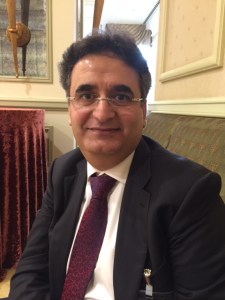
He has brought his many skills and abundant experience to SSPC and has led the company in developing an extensive base of investment in international licensing, commercial publishing and education. I spoke with Mohammad recently at the FIPP Middle East and Africa conference held in Dubai and we had a very interesting and exuberant talk about the status of Middle East publishing and the many accomplishments, and ones still to be made, of Saudi Specialized Publishing Company. Under Mohammad’s leadership, SSPC has forged diversified business relations with a number of international publishers like Disney, Societé du Figaro, Editoriale Domus, Meredith Corporation and Curtco Media. The future looks bright indeed for SSPC.

So, I hope you enjoy this glimpse into international publishing and licensing at its best as you read the Mr. Magazine™ interview with Mohammad Alomar, Managing Director, Saudi Specialized Publishing Company.

But first, the sound-bites:

On the genesis of the Saudi Specialized Publishing Company: The Saudi Specialized Publishing Company was established in 2006 out of the idea that we are the largest in the market, but after reviewing the kind of changes that the market would be facing in the next few years in publishing when it came to newspapers and magazines we began to think about special publishing targeting a special audience because the market was fragmented and cemented.

On already being specialized with the foundational company and what made them feel as though they needed even more specialization with the establishment of Saudi Specialized Publishing Company: For us mainly, most of our dailies were in politics. We have a daily in sports and the magazines were mainly lifestyle magazines, like Sayidaty. We moved to be a public company. Moving from a holding to a public company means you have a big responsibility to shareholders. Then we had to figure out our next move and the next move was establishing the company and new horizons that were very successful in the world. We started talking with Condé Nast, Time Inc. Meredith and others and we started with our partners in New York. And we saw that the kind of target audience we could create with the kind of advertising for those segments would make it a very seductive choice for us.

RRA Cover 34On his mission to bring the top 50 magazines in the world to the Arab region and on how he identifies the top 50: We did our exercise very well. We started in the markets in the Western world. In the lifestyle category, we asked ourselves what we wanted. We talked with Condé Nast and I’m a very big fan of Vanity Fair. And we knew we also needed something for mother and child; is there one? We wanted something with interior design and indoor lifestyle, like Better Homes and Gardens.
On the fact that he’s been described as a hands-on director: Yes, especially when it comes to Robb Report. I’m the editor-in-chief and I’m always telling my team that I’m the maestro of an orchestra, not a manager in a company. A maestro should not play every instrument. If he did he’d be a clown. If you see a maestro, sometimes he tells the orchestra how to play, but more often they are the best around and they’re closing their eyes and flying high in the sky, and even the maestro is moving his hand without opening his eyes. He is leading their souls to entertain the audience. This is my role.

On the biggest challenge he’s had to face: It hasn’t been smooth sailing always. Building something new, you always encounter challenges, and encountering sometimes, some regulations that will not allow you to fly higher. Sometimes even in big organizations you have corporate politics, but I consider myself lucky enough that I was supported big time by my CEO and we’re friends. He told me one day when we met for the first time, we spoke about the concept of specialized publishing, he told me to consider my dreams. He said that was my job description, to fulfill my dreams here. And we did that.

January Cover On his opinion of the future of print: The future we believe in. Everyone has a TV, but it did not destroy the legacy of radio. These are media and media are pipes. The biggest challenge is readers and what they want. If they want apples, then you need to invest in apples. If they would like to have apricots, invest in apricots. We believe and this is the most important thing, digital expanded our reach, it didn’t threaten our circulation at all.
On what he would hope to say he had accomplished in one year: I would tell you about the first issues of our magazines and that digital will be doing some things from sites and apps, but most importantly, we will be capitalizing on ink on paper. This is what we believe.

On anything else he’d like to add: We do believe strongly in print. We do not think at all that print is dying or has already died, because I am doing the kind of business like Condé Nast International is doing. They are doing Madame Magazine for Air France; they are doing the same for BMW and Mercedes. We are doing this sector in print and we are making a lot of profit. And we know the market and we know that millennials are not on digital devices all the time. They know Vogue and Marie Claire. They know this magazine and that magazine and they’re bringing these beautiful things to their tables.

On what motivates him to get out of bed in the morning: My work is my lifestyle. It’s not my way of living; it is my lifestyle and my passion. I have two important things in my life: my son and my work. It’s like birds, they do not wake up to eat; they wake up to sing. And they enjoy it and I do strongly enjoy my work, because it is my lifestyle. I’m there sometimes at 6:00 a.m. and leaving at 9:00 p.m.

On what keeps him up at night: Thinking, planning and mixing poetry with mathematics for new projects.

And now the lightly edited transcript of the Mr. Magazine™ interview with Mohammad Alomar, Managing Director, Saudi Specialized Publishing Company.

Samir Husni: Tell me a little bit about the beginnings of the Saudi Specialized Publishing Company.

IMG_1526 Mohammad Alomar: The Saudi Specialized Publishing Company was established in 2006 out of the idea that we are the largest in the market, but after reviewing the kind of changes that the market would be facing in the next few years in publishing when it came to newspapers and magazines we began to think about special publishing targeting a special audience because the market was fragmented and cemented.
So we established Saudi Specialized Publishing Company as the platform of special publishing, special content creation, and for international publishing and licensing.

Samir Husni: However, the mother company was a leader in the Arab world in terms of daily newspapers and specialized newspapers, like the sports newspaper. Why didn’t you think that was enough of a degree of specialization; what forced you to move into even ultra-specializations?

Mohammad Alomar: For us mainly, most of our dailies were in politics. We have a daily in sports and the magazines were mainly lifestyle magazines, like Sayidaty. We moved to be a public company. Moving from a holding to a public company means you have a big responsibility to shareholders. Then we had to figure out our next move and the next move was establishing the company and new horizons that were very successful in the world.

We started talking with Condé Nast, Time Inc. Meredith and others and we started with our partners in New York. And we saw that the kind of target audience we could create with the kind of advertising for those segments would make it a very seductive choice for us.

When the company was established, it was 500,000 riyals, half a million riyals; we didn’t want to risk that much, but the profit for the first year was 200% and the second year was 400%. In 2006/2007, the company became public and the stocks changed. In 2008, after three years of very big growth in our area, the board made the decision for us to see a holding with the capital of 100 million riyals. And this became a small growth in the womb of the mother company. And that growth became Saudi Specialized Publishing Company, which became SSPH (Saudi Specialized Publishing Holdings).

Under SSPH, we have a company in Dubai, in Amman and two companies in Riyadh. Then it came to us that the world was now a new opportunity. We were doing very well, so we invested big time. We were not to start a business from scratch, no; that wasn’t the model we were doing. We started buying the gas stations, not building the gas stations. We acquired the biggest company in education in the region, two companies in U.A.E., one company in Saudi Arabia and one in Amman.

Before this, for our business only and for the kind of magazines we were publishing, we acquired the biggest printing house in Riyadh to add it to our sister companies in printing. In 2007, to add to the business of printing we began under the name Saudi Printing and Packaging Company. Traditionally, we used to print dailies and weeklies, now we do a lot of business for others; we are publishing for a lot of other companies that must be licensed. So the kind of operation we do is good for the sister companies.

Samir Husni: You mentioned earlier that you want to get the top 50 magazines worldwide and bring them to the Arab world, to the region. How are you identifying the top 50?

PA FEB Cover Mohammad Alomar: We did our exercise very well. We started in the markets in the Western world. In the lifestyle category, we asked ourselves what we wanted. We talked with Condé Nast and I’m a very big fan of Vanity Fair. And we knew we also needed something for mother and child; is there one? We wanted something with interior design and indoor lifestyle, like Better Homes and Gardens.
Our CEO has been a big supporter of these things we’ve been doing and is an architect. He has a Ph.D. in architecture and he was for a while the minister of education in Saudi Arabia. And he is one of the biggest figures followed on Twitter. Two million follow him on Twitter.

So, at the time we spoke about the new initiatives, he supported the idea to go and grow bigger with all of these magazines. I told him that he being an architect, he knew that we needed Domes; it is the Bible of architecture, but we don’t want to compete with our sister company, so I was more inclined toward Madame Figaro. I wanted to speak to ladies who were into fashion traditionally and plus we are close politically and culturally etc. So, we targeted Madame Figaro. And we brought it as a lifestyle magazine.

And for the very young generation, for children whose moms are reading for them, to 15-16 year olds, Disney publications were the target. We publish more than 10 of their magazines. But the number one magazine published with our populace in Beirut in 2006 was Businessweek.

When we started with Businessweek, I spoke with Time Inc. about Fortune. Forbes, at that time, was with somebody else in the region. And I adored The Economist and what we could have done with The Economist, but they were not at that time into licensing. Also they were selling the syndication of The New York Times and they are my friends. We met in Paris, London one time. This way when we studied the numbers about the best magazines, we studied what were the target audiences of these magazines. This is a very beautiful addition to our very strong growth structure.

Yes, we shall not prostrate, this is a very stupid way to do licensing. We choose from the original magazines, whatever is appealing to our readership, and we do the other part, sometimes it’s 50% or 60% or 70% in-house made, but up to international standards, so this was how we did it on many sectors. One day we dreamt we might have Fortune or The Economist. At that time we were negotiating with Curtco Media about Robb Report, which is the number one digital magazine in the world. We work with The Economist of course, in syndication.

In 2008 it was a rosy year for us, though all of the problems were starting in the United States with the crash. In 2008, we achieved double the number net profit, and then in 2009 the international crash happened. We were hit badly. But we didn’t lose. We went down from 240 to about 80, while others died. After that, it was the consequences of the international crisis in Dubai and in the region. In 2010 it was very bad in the region. So we suffered in 2010.

After that, we went down. Our people thought that during that we might die, but we reached the bottom, took a breath, and then we came out higher. It was the year we went down and then came up.

Our CEO has returned to the group after being the minister of education and we’re planning again. We are publishing and reprinting daily in more capitals around the world. And they set us free to fly higher again and again in licensing international business. In our tradition falcons only go up, up and up, but they don’t eat a lot, they are very picky. They choose whatever they like to eat and this is what we’re doing now.

Samir Husni: It’s my understanding from talking to some of your editors and others that you’re a hands-on managing director; you like to read every word and see every picture before the magazine goes to print.

RRA Cover 34 Mohammad Alomar: Yes, especially when it comes to Robb Report. I’m the editor-in-chief and I’m always telling my team that I’m the maestro of an orchestra, not a manager in a company. A maestro should not play every instrument. If he did he’d be a clown. If you see a maestro, sometimes he tells the orchestra how to play, but more often they are the best around and they’re closing their eyes and flying high in the sky, and even the maestro is moving his hand without opening his eyes. He is leading their souls to entertain the audience. This is my role.

When it comes to Robb Report, it’s music for me. I adore language and my Arabic language. It’s poetry and I told them that we want, especially with this magazine, and they promised the best level of English would be involved, as if Shakespeare were writing about stocks and finances, and that he wrote the magazine from the beginning to the end. The system you use, the orchestra, should not mix beautiful music. The passion you have helps you lead sometimes modestly and set a good model, so this is what we’ve been doing. Yes, it’s the passion and by the end of the day, as you know, you’re a journalist. And being a journalist means your name. If you want to come up to the stage and say anything, people will not spare your face.

Samir Husni: Has it always been smooth sailing for you or have you had some choppy seas along the way during your journalistic journey? What has been the biggest challenge that you’ve been faced with and how did you overcome it?

IMG_1527 Mohammad Alomar: It hasn’t been smooth sailing always. Building something new, you always encounter challenges, and encountering sometimes, some regulations that will not allow you to fly higher. Sometimes even in big organizations you have corporate politics, but I consider myself lucky enough that I was supported big time by my CEO and we’re friends. He told me one day when we met for the first time, we spoke about the concept of specialized publishing, he told me to consider my dreams. He said that was my job description, to fulfill my dreams here. And we did that.

Other than the difficult financial years of 2008-2010, we suffered, but we were very persistent and believed strongly in what we were doing. And thank God, we’re flying high again and making profits again.

Samir Husni: You’ve bought a new printing plant, so that tells me that you do still believe in print, but what about the future?

Mohammad Alomar: The future we believe in. Everyone has a TV, but it did not destroy the legacy of radio. These are media and media are pipes. The biggest challenge is readers and what they want. If they want apples, then you need to invest in apples. If they would like to have apricots, invest in apricots. We believe and this is the most important thing, digital expanded our reach, it didn’t threaten our circulation at all. Being a very big conglomerate, we have our own big solution company and the media that’s working in the market, the share is 32% of the Middle East market, and it’s our company. And print is our company. Events are our company. Education is our company. We could transform the cost in a smart way to lay the groundwork for our business to be better. This way we could overcome whatever problems we faced after.

Samir Husni: If a year from now you and I are sitting and having this same discussion, what would you hope to tell me that you’ve accomplished in that year?

Mohammad Alomar: I would tell you, Mr. Magazine™ these are the first issues of our magazines and I have kept them for you.

Samir Husni: (Laughs).

Mohammad Alomar: I would tell you about the first issues of our magazines and that digital will be doing some things from sites and apps, but most importantly, we will be capitalizing on ink on paper. This is what we believe.

Samir Husni: Is there anything else you’d like to add?

Diplo37-1 Mohammad Alomar: We do believe strongly in print. We do not think at all that print is dying or has already died, because I am doing the kind of business like Condé Nast International is doing. They are doing Madame Magazine for Air France; they are doing the same for BMW and Mercedes. We are doing this sector in print and we are making a lot of profit. And we know the market and we know that millennials are not on digital devices all the time. They know Vogue and Marie Claire. They know this magazine and that magazine and they’re bringing these beautiful things to their tables.
Samir Husni: What motivates you to get out of bed in the morning?

Mohammad Alomar: My work is my lifestyle. It’s not my way of living; it is my lifestyle and my passion. I have two important things in my life: my son and my work. It’s like birds, they do not wake up to eat; they wake up to sing. And they enjoy it and I do strongly enjoy my work, because it is my lifestyle. I’m there sometimes at 6:00 a.m. and leaving at 9:00 p.m.

Samir Husni: My typical last question; what keeps you up at night?

Mohammad Alomar: Thinking, planning and mixing poetry with mathematics for new projects.

Samir Husni: Thank you.

h1

SpainMedia: The Name That Personifies The Man Who Is Media In Spain – The Mr. Magazine™ Interview With Andrés Rodríguez, President & Editor-In-Chief, SpainMedia

January 26, 2016

“As humans, we have five senses and print touches each of those. With the iPad, the electrification touches eyes and ears, but not the nose. Smell is important, the smell of food; the smell of a woman or of a man. The hands are also important. The hands experience touch, touch of the skin; touch of many things. And paper has this quality, especially if you invest in it. Before you read any single word, you touch the paper and the impression is made immediately; either you like it or you don’t.” Andrés Rodríguez

“The magazine business will never die; it will never die because a magazine is the voice of a community. And you need that community to be so big that it gives you advertising to make the magazine. And you need to identify new communities. Magazines will never die.” Andrés Rodríguez

From Spain with love…

Andrés Rodríguez and Samir Husni at the lobby of the NH Collection, Prado Plaza, Madrid, Spain

Andrés Rodríguez and Samir Husni at the lobby of the NH Collection, Prado Plaza, Madrid, Spain


SpainMedia is a company built by a man with a vision, a vision to produce high quality magazines that touch every sense with their tactile and exquisite natures. It’s a forum for the anthem of print from a man who is a very firm believer in the medium and a major contender in the world of publishing in Spain. Andrés Rodríguez is the man who had the vision nine years ago to bring the biggest titles out there to his country. He is president and editor-in-chief of SpainMedia, which publishes Esquire, Forbes, The Robb Report, Tapas, and L’Officiel in Spain.

Andrés is a one-man machine who loves the feeling of falling asleep with a magazine in his hands. He has gone where few have dared, double- mortgaging his home twice, once to launch Esquire and the other to launch Harper’s Bazaar, which he did for five years before Hearst acquired Lagardère and wanted to bring HB in with Elle.

Andrés is every magazine maker’s dream. He was the editor-in-chief of Rolling Stone in Spain when he saw the opportunity to launch Esquire and he jumped on it and now he has created a company that’s the personification of magazines in Spain. Acquiring the licenses to some of the biggest titles around, he used his passion for magazines to attain his dream and bring the beauty and the entertainment quality of magazines to his country.

I spoke with Andrés recently on my recent trip to Spain and we talked about his endeavors with SpainMedia and the success he has seen with the company and the print product. And we talked about his own first-born creation, Tapas magazine, which brings lifestyle and food together in a way that is both unique and satisfying. Andrés is optimistic about his newest baby’s future; after all, he’s known uncertainty with many of his ventures, only to taste the sweet sustenance of success in the end.

So, I hope that you enjoy the Mr. Magazine™ interview with a very nice man who knows how to publish the best if the best in magazine media; Andrés Rodríguez, President & Editor-In-Chief, SpainMedia.

But first the sound-bites:

Esquire-5On the genesis of SpainMedia: I founded the company nine years ago. I started as a journalist 30 years ago. I am 50-years-old now and made my first salary at 19. But just nine years ago I became a publisher. I discussed the instincts I had about the business and my point of view with investors and when I talked with them about how I thought the magazine should be and the new trends that were out there and how we should proceed with the advertising; I wasn’t sure if they would agree. Sometimes investors have their own ideas about how things like this should go. So, I founded the company nine years ago with my own money. I put a lot at risk; I double-mortgaged my house with the bank. And I asked Hearst to give me the license to Esquire because I felt with an international magazine more people would trust me.

On whether anyone ever asked if he was he out of his mind to invest in print in this digital age: Everybody said that to me. Everybody said it, because the big difference is I prefer to polish and edit high quality magazines, with long stories to read, like the classic magazines from the 1960s or 1970s. I’m really not too interested in circulation. And you might ask why? It’s because I feel in the 21st century, the quality of the product is more important than its circulation. Of course, circulation is important. I prefer to print one million copies of one of my magazines, but I don’t want to print one million copies of a magazine that I know when I go to sleep is not a good magazine. I need to try and sleep well. When I push the print button on that printing machine, I try to do the best magazine that I can.

Tapas4-18 On whether Tapas (his first self-created venture) feels like his first born or all of the magazines feel like his own children: Parents say all of the kids are the same, but I know all of the fathers are lying, in my opinion. Fathers do have preferences. I needed to launch my own magazine because I know that I’m a good journalist and a good businessman because I’m making money with this. I’m one of the best at trying to interpret big titles into my country, because Esquire is one of the big titles of the world; Forbes is a big, big title and I changed things with Forbes in Spain; I know this, but I needed to change things in the opposite way, which was to create my own brand.

On why he decided to launch Tapas in Spanish and in English: It’s worldwide with a multi-circulation. I did both editions because when I thought about the magazine that would be my very first creation, I knew it would be a lifestyle and cooking title. And I looked and found some other titles that were interesting, but having both languages was more for me. Two was more. I thought two was more in line with the big mainstream magazines.

On whether he ever doubted the future of print: No. I trusted my instincts. I always follow my heart. I used to explain it like this; of course, I have my iPad and my iPhone and I’m absolutely connected to the world just like everybody else. But when I’m reading a magazine it’s usually in particular places: on a plane, on my sofa, or in my bed. And in these kinds of places I’m relaxed; with a magazine I’m relaxed. My body is in the relaxed position.

On why it took magazine media five or six years to discover the fact that print is not dead: Very simple. Audience and circulation are the two things that all of the companies are fighting for. And in my opinion, this is the second step. The first step is product. The companies need to be more invested in product than circulation because they cannot invest in circulation if they don’t have the money. But the bigger companies are more worried about audience because they identify audience as people and money. They think that if they lose one point in audience, they lose a lot.

L'Officiel 3-11 On anything else that he’d like to add: It’s not true that we live in a very mature market; and it’s also not true that nothing is possible in our market; anything is possible in our Spanish market. The audience is smarter than we are; the readers are smarter than us; they’re faster than we are and they definitely know more than us. And the clients need us, the clients, our advertisers, need good magazines. But we need to be able to explain to them how we can be useful to them, because when clients launch a new product, they hire the best people in the world to launch their product; they hire the best design teams to showcase their products, and they need good magazines to put these products inside of.

On what someone would find him doing if they showed up unexpectedly at his house one evening: You would find just music playing; you would see a mountain of international magazines sitting around that I don’t have time to read, including magazines that I’m really not interested in, but I check them anyway, and a glass of wine, of course. And I do cut pages out of other magazines. And you would also see pages of the latest issues of my magazines around too, printed and edited with my pen, because I correct all of the pages.

On what keeps him up at night: The budget of the magazines. I’m always thinking about how I’m going to find more money to make these magazines stronger and also to find more free time to come up with new ideas.

And now the lightly edited transcript of the Mr. Magazine interview with Andrés Rodríguez, President & Editor-In-Chief, SpainMedia.

Samir Husni: You’re a different breed publisher/editor-in-chief.

IMG_1302 Andrés Rodríguez: Yes.

Samir Husni: You started your own company; you followed both of your passions, being a journalist and being a businessman. Tell me the story of Spain Media.

Andrés Rodríguez: I founded the company nine years ago. I started as a journalist 30 years ago. I am 50-years-old now and made my first salary at 19. But just nine years ago I became a publisher. I discussed the instincts I had about the business and my point of view with investors and when I talked with them about how I thought the magazine should be and the new trends that were out there and how we should proceed with the advertising; I wasn’t sure if they would agree. Sometimes investors have their own ideas about how things like this should go.

For example, sometimes a financial person might try to reduce the quality of the paper to make a better P&L, hence a better bonus. Me, I prefer to spend more money on the quality of the paper because I’m convinced that I’ll find a new audience if my magazine has good quality.

Forbes-3 So, I founded the company nine years ago with my own money. I put a lot at risk; I double-mortgaged my house with the bank. And I asked Hearst to give me the license to Esquire because I felt with an international magazine more people would trust me. I had a few doubts about my businessman’s side; I had never founded a company before and I was afraid that I wouldn’t know where to manage the cash flow or how to talk to the banks about the magazine, or how to make the discounts for the advertisers or the annual discounts for the central media. So, I was nervous about this.

I thought that Hearst, or George Green (former Executive Vice President and Chairman of Hearst Magazines International) would say to me, no, you don’t have the assets to buy the Esquire license and you have no prior experience. But I was the editor-in-chief of Rolling Stone in Spain; I convinced Jann Wenner to give me the license for Rolling Stone for Grupo Prisa, the company that I worked for then.

But I think that this idea helped me with George because Rolling Stone was a big brand and nine years later, I talked with George Green about it and said thank you many times, but I think he gave me the magazine because he knew that he wouldn’t lose anything, because no one wanted to publish Esquire in Spain. He had already talked with all the major companies in Spain about Esquire and everyone had told him no, because they were looking at the numbers and thought that they would need to invest three or four million Euros to launch Esquire, and that’s something they don’t believe in doing. I think George said OK to me so that he could give it a try. It wasn’t Harper’s Bazaar or a big magazine where if he lost Spain it would cost him more.

I remember always the advice that he gave me in one of the meetings I had with him. I said, hey George, I’ll give you issue # 0, the mockup of what my Esquire will look like. And he said to me, no, I don’t want to look at the mockup; do you have a very nice party planned for the launching? And I said, yes, absolutely George. And he asked who paid for the party? You don’t pay for the party; don’t spend a single Euro on the party. I said, OK; don’t worry about that, just have a look at my magazine. He said, no, I’m not interested in your magazine; just don’t spend money on a party. And I thought, wow, this guy isn’t very interested in journalism.

Robb Report-8 Nine years later, he’s trying to tell me your weakness is the money; try to protect the money and I trust you on the magazine side. And in just two years with Esquire we broke even and the second step we took was more on the business side because I didn’t want to put all of the expenses; all of the overhead, the rental of the office, my salary, the secretary’s salary and all the other expenses, in front of just one magazine; I thought that if I shared the overhead with more magazines I would be doing things better; like a family who has more than one child.

And I told George that I wasn’t losing money with Esquire and asked him would he please give me Bazaar, because if I could break even with a men’s magazine, it might be even easier with a women’s title because the market is bigger. And he said to me, no, it’s too soon. I don’t want to give you Bazaar, try to consolidate Esquire, because your country will be destroyed by the International Economy Crisis. And I said, but George, we are a big country and growing, in fact, we grow more than Italy. Then he said to me, be prepared; this crisis will destroy the Spanish economy. So, I didn’t do the other magazines, just Esquire.

I have my own point of view and I offer to CurtCo Media to do Robb Report and they were in love with the idea because it was their first Spanish edition worldwide. I launched the Robb Report quarterly. Year number five with Esquire, we’re making money, and the Robb Report is also making money, and George Green retired and Duncan Edwards took over. Duncan is a great guy and I asked him to give me Bazaar and he gave it to me. It was the first license that he gave in America from the International. And he said to me, all the figures; the entire International picture and all of the information that I have for your country is negative. This is a crazy idea, but I’m going to give you Bazaar.

He gave me Bazaar and I launched six years ago, and I managed the magazine for five years. In the meantime, during those five years, Forbes called me. And Forbes called me because they were looking to be in Spain. They had asked all the major companies and no one wanted to invest in Forbes, due to our country’s economy. The Forbes people asked the Hearst people who was crazy in Spain, and Hearst told them about me. (Laughs) They told Forbes that I paid royalties and I paid every year and that I do good magazines.

When Forbes first called me, I said no, because there was no money. The entire country was being careful due to the economic situation. And all of the economic magazines and newspapers were losing money. And this was in 2011. Forbes responded to me with this answer, when a country has economic problems like Spain; the people are more interested in the economy than ever. And I told them they were absolutely right. And that was a good argument. And they added that my country in the future would recover; we may not know when or how, but of course, Spain would recover. And I knew they were right.

So, I started publishing Forbes three years ago and we’re making money. In the meantime, Hearst bought Lagardère and I thought that was an incredible idea, but not for me. But one day Duncan invited me for lunch and he told me that Hearst had bought Lagardère and said that he believed Bazaar being close to Elle would make more money, because they were going to sell the advertising through the big companies with both, and I agreed he was right. He would make more money than I was making. He asked me to give back Bazaar to Hearst Spain and I quickly received the proposal to launch L’Officiel from the Jalou family. I accepted, because I had been working in the women’s market for five years and I didn’t want to lose the women’s sector. And that’s the big picture.

Samir Husni: Did anybody come to you and ask you if you were out of your mind to put all of this money into print? And not only are you publishing print magazines, but you’re using high quality paper, gorgeous design and basically just investing in print, while the entire media industry is saying the future is in digital. Did any of the advertisers or anyone come to you and ask you were you out of your mind to do this?

L'Officiel-4 Andrés Rodríguez: Everybody said that to me. Everybody said it, because the big difference is I prefer to polish and edit high quality magazines, with long stories to read, like the classic magazines from the 1960s or 1970s. I’m really not too interested in circulation. And you might ask why? It’s because I feel in the 21st century, the quality of the product is more important than its circulation. Of course, circulation is important. I prefer to print one million copies of one of my magazines, but I don’t want to print one million copies of a magazine that I know when I go to sleep is not a good magazine. I need to try and sleep well. When I push the print button on that printing machine, I try to do the best magazine that I can.

And the second thing that I try to do then is get the biggest circulation that I can, so I can offer it to the advertisers as a good platform for their products. But in my opinion, it’s not the most important thing.

I used to say that influence is more important to me than audience, because when you have a big audience you have such a wide variety of people, so many different people. Audience is like when Hollywood launches a big blockbuster and you’re going to see it with family. And when the movie ends, nobody is 100% happy. It was good, but not everyone was happy. And I think this is how audience works.

And with influence, you try to make the magazine more influential for the target and it makes the target bigger. Tapas is a good example. It is my own first-owned title; I identified that lifestyle and food globally is a trend. I haven’t found any international lifestyle and food title; I find recipe titles, but not lifestyle and food. And I created the magazine. And now, I need to convince the advertiser, because the clients are more conservative than the readers; I need to convince the advertisers that this is a good platform to invest in, like Monocle, for example.
I am a great fan of Tyler (Tyler Brûlé – Monocle founder) and I think he has the nose to identify new trends and he convinced the clients that it was a new trend; it’s a global, international, traveler citizen.

Samir Husni: Tapas is your first venture as your own. Do you feel like Tapas is your first born and all of the others are more like adopted children? Or do you treat all of them the same now?

TapasII-14 Andrés Rodríguez: Parents say all of the kids are the same, but I know all of the fathers are lying, in my opinion. Fathers do have preferences. I needed to launch my own magazine because I know that I’m a good journalist and a good businessman because I’m making money with this. I’m one of the best at trying to interpret big titles into my country, because Esquire is one of the big titles of the world; Forbes is a big, big title and I changed things with Forbes in Spain; I know this, but I needed to change things in the opposite way, which was to create my own brand.

And this is what I’m enjoying with Tapas. And I don’t want to license Tapas because it has just begun; we’ve been publishing for nine months now. And I think we’ll be a great business. We’re already breaking even in this short time, but I’m not interested in licensing the magazine for some fee here or some fee there. I’m interested in furthering the brand.

Samir Husni: Why did you decide to not only launch Tapas in Spanish, but also in an English edition? I saw it in the United States and it’s probably in the U.K. as well.

Andrés Rodríguez: Yes, it’s worldwide with a multi-circulation. I did both editions because when I thought about the magazine that would be my very first creation, I knew it would be a lifestyle and cooking title. And I looked and found some other titles that were interesting, but having both languages was more for me. Two was more. I thought two was more in line with the big mainstream magazines.

Tapas 3-17 I knew lifestyle and food was what I wanted, because chefs are the new rock and roll stars. Michelin stars are like the new Oscars. And I asked myself, what other magazine is talking about those things; none. There are magazines out there talking about a cheesecake recipe and that’s great. But with the big chefs, we don’t talk about the recipes; we talk about their tattoos or their hair. And we talk about the experience; let’s go to this country and drive to this chef’s incredible, marvelous restaurant and have an adventure.

After the idea, I knew I needed to find a word; a brand, for the magazine. I happened to be in New York working once and I was riding in a taxi and the word Tapas came to me and I thought this is an incredible brand name and it’s a Spanish word which means basically that we share the food with others, because it’s more important to talk than actually to eat the food.

So, I knew I had the word. Next, I knew we had to publish in English, because if not, if I just published in Spanish…I thought to myself, what would Tyler do with this? (Laughs) I said, OK, Spanish is great because Spanish is the second language in the world, but I also think in English, so we need English too, so that’s why it happened.

Samir Husni: Have you ever doubted yourself with any of the titles; did you ever think that maybe some people were right and print had no future? Yet, here you’re telling me that you’re making money; you’re breaking even on Tapas already; and all of the other titles are doing great. Did you ever doubt print’s future?

L'Officiel Voyage-6 Andrés Rodríguez: No. I trusted my instincts. I always follow my heart. I used to explain it like this; of course, I have my iPad and my iPhone and I’m absolutely connected to the world just like everybody else. But when I’m reading a magazine it’s usually in particular places: on a plane, on my sofa, or in my bed. And in these kinds of places I’m relaxed; with a magazine I’m relaxed. My body is in the relaxed position. When I’m connected with the iPad; I’m electrified by the constant connection with everything. And that’s great; being electrified isn’t worse than being relaxed, but it’s different. It’s like apples and oranges.

Somedays I want to be electrified, but somedays I need to relax and print personifies relaxing. And when you put something in print; it’s like a golden letter. And when you put the same thing on digital, it’s like nothing. I used to use this example: if your wife came to you and asked if you read something on the iPad about the neighbors talking badly about us, and then the same situation, only she asks did you read it in the newspaper; it becomes much more serious when it’s in the print platform. We don’t think about how many copies of the printed version are out there, versus maybe millions of digital readers who just saw those terrible words said about the family, but the printed edition is something that we would shop for. This is what’s marvelous about print.

The other thing is, as humans, we have five senses and print touches each of those. With the iPad, the electrification touches eyes and ears, but not the nose. Smell is important, the smell of food; the smell of a woman or of a man. The hands are also important. The hands experience touch, touch of the skin; touch of many things. And paper has this quality, especially if you invest in it. Before you read any single word, you touch the paper and the impression is made immediately; either you like it or you don’t.

But I need to convince advertisers of this fact, for me it’s obvious, and I know it’s the same for you, but when you talk to the advertisers, sometimes they follow trends rather than sensory feelings.

Samir Husni: If we are to accept the fact that people who work in magazine media are more of the smart and creative types; why did it take us five or six years to discover that print is not dead?

Andrés Rodríguez: Very simple. Audience and circulation are the two things that all of the companies are fighting for. And in my opinion, this is the second step. The first step is product. The companies need to be more invested in product than circulation because they cannot invest in circulation if they don’t have the money. But the bigger companies are more worried about audience because they identify audience as people and money. They think that if they lose one point in audience, they lose a lot.

Esquire II-16 We, all of the people who love magazines the way they were done in the 1960s or 1970s and the life of the magazines then; we realize that type of magazine either has good or bad circulation. When we put all of the covers of Esquire on the wall and look at them; there isn’t a single word spoken about the circulation. There isn’t a single word spoken about how much money one particular cover is going to make. Will it be profitable or a big disaster? Of course, I need to make money in order to continue my magazines, but the first question is product, not circulation.

During the last five years, digital has offered us more audience than we know what to do with; audience and more audience, and those audiences scrambling for more free content. If you have the brand, digital will give you the followers. But many of the followers who clamor after the digital brands aren’t interested in the magazine experience. The experience is what it’s all about with the magazine.

And newspapers have the same problem. They lose the experience when they focus on the exclusivity of the news. The exclusivity of news is not for the newspapers any longer. The newspaper cannot give us news; it must give us the experience.

Samir Husni: That’s one of the things that I tell other journalists and all my clients; the day we end up being just content providers is the day that we’re dead. We have to be experience makers.

Andrés Rodríguez: Content providers are easily available; why not, big companies have the money. They will hire 100 journalists and say give me content; I’ll put it on TV, and it could be journalists on TV, why not? But the experience is the thing.

The magazine business will never die; it will never die because a magazine is the voice of a community. And you need that community to be so big that it gives you advertising to make the magazine. And you need to identify new communities. Magazines will never die.

I think in the present and in the future, we will need to publish the best magazines that we can. I used to say that I liked to publish magazines that made people feel sad when they tossed them in the rubbish. And that’s the magazines that I want to publish, and of course, I need to make money every month too. If not, I will be out of business. (Laughs)

Samir Husni: Is there anything else that you’d like to add?

IMG_1300 Andrés Rodríguez: It’s not true that we live in a very mature market; and it’s also not true that nothing is possible in our market; anything is possible in our Spanish market. The audience is smarter than we are; the readers are smarter than us; they’re faster than we are and they definitely know more than us. And the clients need us, the clients, our advertisers, need good magazines. But we need to be able to explain to them how we can be useful to them, because when clients launch a new product, they hire the best people in the world to launch their product; they hire the best design teams to showcase their products, and they need good magazines to put these products inside of.

We don’t need to be worried about audience; we need to be worried about talent. And I’m absolutely optimistic, even though I suffer every month and every year with my budgets. I want my company to increase and grow and I am very optimistic.

Samir Husni: If I showed up at your house one evening unexpectedly, what would I find you doing? Would you be reading your iPad, or reading a magazine; watching TV?

Andrés Rodríguez: You would find just music playing; you would see a mountain of international magazines sitting around that I don’t have time to read, including magazines that I’m really not interested in, but I check them anyway, and a glass of wine, of course. And I do cut pages out of other magazines. And you would also see pages of the latest issues of my magazines around too, printed and edited with my pen, because I correct all of the pages. Then with my phone I send the corrected pages to my people.

Samir Husni: My typical last question; what keeps you up at night?

Andrés Rodríguez: The budget of the magazines. I’m always thinking about how I’m going to find more money to make these magazines stronger and also to find more free time to come up with new ideas.

Samir Husni: Thank you.

h1

Pallet Magazine: One Beer – One Story – The Global Launch Story Of A Magazine With Dual Citizenship – From Australia To The United States.

December 16, 2015

Pallet Is A New Title That Satisfies The Craft Beer Lovers “Palate” Exquisitely – The Mr. Magazine™ Interview With The Pallet Team…Rick Bannister & Nadia Saccardo, Founders, Pallet Magazine & Sam Calagione, Founder & President Dogfish Head Brewery & Pallet Executive Editor.

From Australia and The United States With Love and a Glass of Craft Beer…

“I am a big believer that there is this turning point now or in the very near future where people are being reminded of the luxury of reading offline. I know that myself, because when I’m online I have this low level of anxiety that comes with reading online because I feel like I can never get to the end of what’s ahead. There’s just endless information and I’m forever bookmarking things and saying I’ll come back to that later. And I do think there is this return to print and what that brings is you’ve invested some money, say $15, it’s not cheap, you’ve invested the money so you’re going to stop and make some time.” Rick Bannister

“We’re also not interested in objects that are just throwaways. We’ve spent so much time in this content and so much of ourselves; the idea of putting that in a magazine that people would toss and not keep around for a long time as something that they cherished just didn’t sit right.” Nadia Saccardo (on why they wanted the magazine’s production values of the highest quality)

“We see the website as just growing into a community for the people who believe in the magazine and in craft beer and who want to find each other. And that’s why I love the fact that the website isn’t just regurgitated content that we expect people to be holding in their hands; it’s something complementary to that content.” Sam Calagione (on the magazine’s content and the website’s content being totally different)

Pallet A new magazine for people who are “only interested in everything;” Pallet was born from the minds of Nadia Saccardo and Rick Bannister from Australia, joined by the craft beer expertise of Sam Calagione who is founder and president of Dogfish Head Brewery in Milton, Delaware. Coming from a background of magazines and publishing, Nadia and Rick knew a thing or two about the art of creative magazine making and joined forces with Sam to produce a title that weaves the craft beer culture into just about every topic you could possibly think of, and does it in a most upscale and visually creative way.

I spoke with Sam, Nadia and Rick recently about each one’s respective talent and ability to produce such a thoroughly enjoyable magazine as Pallet. With Nadia and Rick in Australia and Sam and myself in the States, we talked about what it took to collaborate the efforts of the indie beer lover’s magazine to be the catalyst for global knowledge and all-around fun about the world of craft beer.

When you consider the name Pallet was derived from a story that Nadia and Rick had done in a former magazine, Smith Journal, where they both worked at the time, you can see the type of creativeness and talent that the duo has. The pallet being the wooden element that changed the face of global shipping and transportation, but remains an insignificantly understated object, as inconspicuously important as a lock is to a key, yet as Nadia explained, something you wouldn’t look twice at if you walked past it. And if you couple Rick and Nadia’s magazine experience with Sam’s vision and global connections as a craft brewer, one can see why the three came together to produce this superbly understated magazine.

The four of us talked about that subtlety and the visual beauty of the magazine itself, with its high production values and brilliantly-done content. It was an entertaining and exceptionally redolent conversation, robust with humor, information and hope for the magazine’s future.

So, I hope you enjoy this launch story that showcases three very different individuals who came together, each with their own talent, to put together a remarkable magazine that shows sometimes great things begin simply – with one beer and one story; the Mr. Magazine™ interview with the Pallet team, Sam, Nadia and Rick.

But first, the sound-bites:

Rick Sharp On how three people, two from Australia and one from the Unites States got together to create Pallet Magazine (Rick Bannister): Nadia (Saccardo) and I have both been in magazines our entire careers or in media and publishing in one form or another. I personally had worked in magazines for about 12 years and then decided that I wanted to try something different, so I went traveling for 12 months, to the States actually. And that’s where a good friend of mine over there introduced me to craft beer, which I hadn’t really come across in Australia much. My friend was going to do a brewing course in Chicago and I decided to join him. However, it ended up my friend couldn’t make it, but I went. So, I took a detour from making magazines for nearly five years and worked in the craft beer industry in Australia. During that time I started thinking about the fact that there wasn’t a magazine for all of the people who really loved the craft beer culture.

(Nadia Saccardo): Rick had had these great ideas and we decided to investigate it and that turned into, after his road trip to the United States, meeting a lot of people last year in publishing and in the craft brewing industry, and that developed into talking about the potential of this magazine, and it was also when we came down to Delaware and met Sam (Calagione).

On Pallet being more of an upscale magazine and very different from the beer magazines already on the marketplace (Sam Calagione): When I saw the work that Nadia and Rick were doing at Smith Journal and with a couple of my own thoughts about if a person is going to pay premium to have this sort of affordable luxury that they’re sipping on, then it means they’re taking the time to appreciate the finer things in life and they’re obviously enjoying a peaceful, reflective moment when they’re having a beer. And to me the things that complement that thoughtful, peaceful moment of enjoying a beautifully designed beer are two-fold: an awesome album or an awesome magazine. I don’t enjoy reading Kafka or War and Peace when I’m having a beer I want something that I can consume in about the same amount of time that it takes to consume my craft beer.

NADIA_Sharp On how they came up with the name Pallet (Nadia Saccardo):
Rick and I were throwing names back and forth for a while and then we had a story that we published in Smith Journal about the wooden pallet and about how this one very ubiquitous object had transformed the whole nature of global shipping and transportation. And we loved that story because it took a simple object, something that you’d walk past every day and not look at twice, and gave it this depth and history and relevance that was so vital.

On whether anyone ever told them they’d had one craft beer too many when it came to starting a print magazine in today’s world (Rick Bannister):
It is definitely something that a lot of people ask us. And in a lot of ways, it is kind of insane to start a print magazine at this time, but also there is some element of the fact that it’s a great opportunity as well, because as you said Pallet stands out and in a time when there’s less of that stuff, I think you can look at it the other way and see the opportunity.

On how decisions are made for the magazine, such as the cover, design and content (Nadia Saccardo):
We work in a partnership across the entire thing; the design; the production; the ideas; pretty much everything. We have a designer who we work with, Marta Roca, who is brilliant and helps across, obviously, designing the layout and with creative direction, but Rick and I really read the content in partnership. Rick is incredible. Most of the ideas come from his brain and then they roll out and get stuck into the words and the structural editing of the publication.

On any plans to incorporate the magazine into the Dogfish Head brewery business (Sam Calagione):
That’s actually not far from the truth. I go to Australia in a few weeks to do some Pallet events and while the magazine launch is in the U.S., I think we all are hopeful, because the craft beer phenomenon isn’t just happening in the U.S.; adventurous, independent, small artful breweries are exploding globally, hot pockets of gold, including Australia, New Zealand, Scandinavia, Italy and Canada. We’re hopeful that there’s a global appetite for Pallet and that sort of second phase as you alluded to for us is that while we’re down in Australia we’re doing a collaborative beer between Dogfish and Nomad Brewing in the Sydney area. And Pallet will be a sort of a business card in liquid form for the philosophy and the global stance of the magazine.

SamCalagione2 On whether Sam sees himself now as the ambassador of craft beer and Pallet Magazine as the nation that will unite that corner of the world (Sam Calagione):
I do see it like that and beer is not equal to armament; it’s fun. And the content and design and our intentions should come from a place that’s thought-provoking, but also there’s real whimsy in it; we’re beer geeks, we’re not beer snobs. We’re not trying to show our beer prowess to lord over other people.

On whether the magazine is available in Australia or just the United States for now (Nadia Saccardo):
At the moment this edition on shelves is just available in North America, but we’re looking to expand internationally fairly quickly. We’ve had a lot of demand for Pallet in Australia, but also in the U.K. and Japan.

On the production values of the magazine and how the feel of the paper is important (Rick Bannister):
I think when you’re paying premium for anything; it’s good to have perceptions of value that go beyond the normal. A change in stock is a subtle thing in a lot of ways, but if you’re a person who’s into this kind of stuff, you’ll get a little kick out of that. And it’s the same with the dust jacket on the cover; it’s a visual cue that maybe this is something more like a book, there’s an element to this that’s more than a magazine.

On the fact that the website and the print magazine will have entirely different content (Rick Bannister):
Yes, that’s right. What we’ve noticed with other magazines and their websites is that quite often the website is just reflective of the magazine. And to us, that seemed to diminish the idea that what you have in print is special.

On what motivates Sam to get out of bed in the mornings (Sam Calagione):
For me, honestly, when I travel to Australia and have to put on my customs form what I do; I’m always so proud to write that my vocation is a brewer first and a businessman second. Really, to me, the word brewer is just a more specific term for an artist and I don’t say that I’m a world-class artist; I’m just a person who loves brewing whatever my creativity brings me and I know that I’m very lucky that I can make my livelihood around my creative drive. And for me, those most creative moments come from collaborating with other creative people.

On whether Sam, as a brewer, thinks the first issue of Pallet is the perfect brew (Sam Calagione):
(Laughs) The other form of Pallet is in our mouths and we’re all individuals and we all have different palates and that’s why there’s not one beer that appeals to everyone and that’s why there won’t be just one issue of Pallet that is perfect. I love the first issue, but I can’t wait to see where our creative journey takes us with each future issue.

On what motivates Nadia to get out of bed in the mornings (Nadia Saccardo):
In creating something like Pallet, the thing that does get me out of bed in the mornings is working with the team that I get to work with and also the opportunity that the magazine provides to connect with anyone and anything that I’m interested in basically.

On whether the future of magazine making is doing so from varied parts of the world and not confined to one office (Nadia Saccardo):
Rick and I laugh about it a lot. Pallet and none of the magazines that we have created, which have been beautiful, tangible printed things, could have existed without Skype. We’re on Skype together every day and we were when we were making Smith as well. Without technology, there would be no way we could create these old-world type printed things, which is very cool.

On what motivates Rick to get out of bed in the mornings (Rick Bannister): Mostly my kids jumping on me. (Laughs) Similar stuff to what these guys have said. As well as working in magazines, I’ve also taken breaks from working in magazines, because I’ve had these crazy ideas that I wanted to do other jobs. From time to time I’d say to myself, no, I just want to do a 9-5 job, so I’d go and become a baggage handler at the airport. One of the things that I think is a reminder for me when you get to work in those type jobs is you remember to get up, and even on the worst day ever of making a magazine, it’s still a far greater day than if you’re throwing bags on a plane, I can tell you that. What’s that old cliché? The worst day fishing is better than the best day working?

On what keeps Nadia up at night (Nadia Saccardo):
The thing about making a magazine, it’s very different from reading a magazine. It’s not a glamourous profession at all. The business is all-consuming and we’re doing everything ourselves, from distribution to managing the printing to organizing sales and creating content and working on design, just everything. And running the business and making sure that we’re invoicing on time and all of that. So really, there’s a whirlpool of different things that keep me up at night. But it’s definitely worth it because so far it’s been such a cool journey.

On what keeps Rick up at night (Rick Bannister): I’m in the same boat as Nadia. It’s usually just silly things or small things like worrying about whether a photo shoot is going to come off the way you want it to or worrying about getting enough ad sales; I guess it’s just all of that normal startup business concerns, whether it’s magazines or anything else.

On what keeps Sam up at night (Sam Calagione): My reasons are a little bit different because Nadia and Rick are the ones that have to set the economic component of running Pallet and I get the pleasure of thinking about the creative and editorial content and obviously, they think a lot about that too, but that distinguishes me with the luxury of not having as much of an economic and business and operational component of running the publication. So, in the context of Pallet what keeps me up at night is an occasional idea for a new story and jotting that down or thinking about a story idea that maybe Rick or Nadia brought to me. It’s all the fun stuff that keeps me up, in terms of Pallet.

And now the lightly edited transcript of the Mr. Magazine™ interview with the Pallet team, Sam Calagione, Nadia Saccardo & Rick Bannister.

Samir Husni: I’m someone who’s “only interested in everything,” as your tagline states, so tell me how three people, two from Australia and one from the United States got together to create Pallet Magazine; where did the idea come from?

Pallet Rick Bannister: Nadia (Saccardo) and I have both been in magazines our entire careers or in media and publishing in one form or another. I personally had worked in magazines for about 12 years and then decided that I wanted to try something different, so I went traveling for 12 months, to the States actually. And that’s where a good friend of mine over there introduced me to craft beer, which I hadn’t really come across in Australia much. My friend was going to do a brewing course in Chicago and I decided to join him. However, it ended up my friend couldn’t make it, but I went.

So, I took a detour from making magazines for nearly five years and worked in the craft beer industry in Australia. During that time I started thinking about the fact that there wasn’t a magazine for all of the people who really loved the craft beer culture.

Well, at the end of those five years I had the opportunity to go back and work in magazines and that’s where I ended up working with Nadia. We worked together for about a year maybe and then the company that we were working for was sold.

So Nadia and I were at loose ends and that’s when we started kicking around some ideas. I asked her about the beer mag idea and it was Nadia who really encouraged it from there and said it was worth chasing.

Nadia Saccardo: We had a bunch of ideas and all of them seem to have a craft beer thread running through them. And so we pinpointed that we’d like to do something with craft beer. My background is in publishing; I worked online in digital for a while and I’ve been in magazines at Smith Journal and Frankie Press.

Rick had had these great ideas and we decided to investigate it and that turned into, after his road trip to the United States, meeting a lot of people last year in publishing and in the craft brewing industry, and that developed into talking about the potential of this magazine, and it was also when we came down to Delaware and met Sam (Calagione).

Rick Bannister: I should backtrack a little bit because it was Nadia who had the idea of reaching out to Sam. We were kind of inspired by Lucky Peach and David Chang is, I guess you’d call him a bit of a champion of the magazine. And so Nadia had the idea of finding out whom the person was in beer that was kind of like Lucky Peach’s David Chang. And straightaway we thought of Sam and with the whole ethos of what we were trying to do, this “only interested in everything” mentality; Sam was just the obvious guy who seemed to embody that spirit and philosophy.

A true connection in craft beer land; we just cold-called him, or cold-emailed him anyway, and being the generous guy he is, he said the idea sounded interesting and he asked to talk some more about it. We ended up landing on his doorstep and having a beer and chatting about it. And here we are.

Samir Husni: Sam, whose idea was it to do the magazine very differently from the other craft and beer magazines on the marketplace? Pallet is more upscale literarily, visually, typographically, and in an all-appealing way that by far stands apart from the competition.

Sam Calagione: Thank you, Samir. In a getting to know each other phase, Nadia and Rick sent me a box with copies of Smith Journal in it. And as a global magazine expert; I’m sure you’d be as equally impressed with that as I was, both from a design standpoint and a content standpoint.

Compared to you I’m a neophyte, but I’ve been kind of obsessed with magazines from an early age, and growing up my parents subscribed to Forbes and Sports Illustrated and I had an older sister who also subscribed to Sassy Magazine, which was kind of ahead of its time in having a very irreverent and DIY voice and fairly design-forward for a mass media magazine. And then in college Art Forum and The New Yorker. So, I’ve been obsessed with magazines as an English major and a bit of a writer myself for a long time.

So, when I saw the work that Nadia and Rick were doing at Smith Journal and with a couple of my own thoughts about if a person is going to pay premium to have this sort of affordable luxury that they’re sipping on, then it means they’re taking the time to appreciate the finer things in life and they’re obviously enjoying a peaceful, reflective moment when they’re having a beer. And to me the things that complement that thoughtful, peaceful moment of enjoying a beautifully designed beer are two-fold: an awesome album or an awesome magazine. I don’t enjoy reading Kafka or War and Peace when I’m having a beer I want something that I can consume in about the same amount of time that it takes to consume my craft beer.

And with the magazines that are out there; some of them are great and some of them are just OK, but they literally have long-format stories that can be a 20 or 30 minute experience, which to me is about the right amount of time to sip on a beer and read something thought-provoking and provocative.

Samir Husni: Can all of you recall that moment of conception when all the planets aligned and the light bulb went off and everyone said let’s call it Pallet? How did the name come about?

Nadia Saccardo: Rick and I were throwing names back and forth for a while and then we had a story that we published in Smith Journal about the wooden pallet and about how this one very ubiquitous object had transformed the whole nature of global shipping and transportation. And we loved that story because it took a simple object, something that you’d walk past every day and not look at twice, and gave it this depth and history and relevance that was so vital.

So, when we were thinking about this magazine and throwing around names, I remembered that story and asked Rick what about Pallet? And the more that we thought about it, the more we thought OK, that works. It goes back to something that we love that’s very simple and that still had the connection with beer. It’s a play on words in many ways, which also worked for us too. After a time, we sort of realized that we were stuck with it.

Samir Husni: Did anyone tell you guys that you’d had one too many craft beers when you decided to launch a print magazine in a digital age?

(Everyone laughs).

Sam Calagione: I’ve been asked that, Samir, and as someone who has studied the industry for as long as you have, what are your thoughts about the long-term viability of print, and particularly magazines like Pallet, or Pitchfork Review? They’re going after a younger reader with what’s considered a format that some people would say is a format of past generations; what are your thoughts on that?

Samir Husni: If you saw my recent quotes in the Columbia Journalism Review; I resigned my position as Chairman of the Journalism Department here at the University of Mississippi in 2009 to start the Magazine Innovation Center with the tagline “Amplifying the Future of Print in a Digital Age.” And to me as long as we have human beings, we’re going to have print. We love that collectability factor, that ownership factor, that membership factor and the showmanship of it all. If I’m reading something on my iPad, no one sitting next to me on the plane will know what I’m reading. How can I show off and say, hey look, I’m reading a $14.95 Pallet Magazine, this is not a cheap, disposable item? (Laughs)

(Everyone laughs too).

Rick Bannister: That’s a good point. It is definitely something that a lot of people ask us. And in a lot of ways, it is kind of insane to start a print magazine at this time, but also there is some element of the fact that it’s a great opportunity as well, because as you said Pallet stands out and in a time when there’s less of that stuff, I think you can look at it the other way and see the opportunity.

And I am a big believer that there is this turning point now or in the very near future where people are being reminded of the luxury of reading offline. I know that myself, because when I’m online I have this low level of anxiety that comes with reading online because I feel like I can never get to the end of what’s ahead. There’s just endless information and I’m forever bookmarking things and saying I’ll come back to that later. And I do think there is this return to print and what that brings is you’ve invested some money, say $15, it’s not cheap, you’ve invested the money so you’re going to stop and make some time. So, I think all of these things coming to light; it’s good timing for it in some ways.

Samir Husni: Nadia, are you more of the editor; the designer; or the creative person? For example, who decided on the cover of the first issue to introduce Pallet to the marketplace, or even the tagline: only interested in everything? And then inside you read the editorial and it states that this is a magazine for people who like to think and drink.

Nadia Saccardo: We work in a partnership across the entire thing; the design; the production; the ideas; pretty much everything. We have a designer who we work with, Marta Roca, who is brilliant and helps across, obviously, designing the layout and with creative direction, but Rick and I really read the content in partnership. Rick is incredible. Most of the ideas come from his brain and then they roll out and get stuck into the words and the structural editing of the publication.

So, it’s really a partnership between the two of us and also Sam, in terms of the flow and the ideas of the publication and contributing his pace as well to each issue.

Samir Husni: Sam, what are your plans when it comes to taking this magazine even one step further; are we going to start seeing on the craft beer that your company produces an offer to subscribe to Pallet?

Sam Calagione: That’s actually not far from the truth. I go to Australia in a few weeks to do some Pallet events and while the magazine launch is in the U.S., I think we all are hopeful, because the craft beer phenomenon isn’t just happening in the U.S.; adventurous, independent, small artful breweries are exploding globally, hot pockets of gold, including Australia, New Zealand, Scandinavia, Italy and Canada.

We’re hopeful that there’s a global appetite for Pallet and that sort of second phase as you alluded to for us is that while we’re down in Australia we’re doing a collaborative beer between Dogfish and Nomad Brewing in the Sydney area. And Pallet will be a sort of a business card in liquid form for the philosophy and the global stance of the magazine.

My contribution, besides creative input to the content when we have meetings before every issue to talk about that, and I’m glad to have a voice in that process, but also my contribution is a global outreach because I’ve done a Discovery channel show that aired in around 40 countries and because I’ve brewed collaborative beers with my friends in 11 different countries. And I’m lucky to have forged these global relationships with other brewers so that when Nadia and Rick suggest doing an article on beers that have been inspired by Breaking Bad, and they ask who I know in Canada, I can put out my bat signal to my friends around the globe and do that outreach for almost any creative story that we want to consider.

I have both the role of executive editor and writer, not always, but I intend to contribute short pieces, but also I have the role of that sort of global steward that keeps the magazine connected to the brewing community globally.

Samir Husni: So Sam, you see yourself now as the ambassador for craft beer, where Pallet is going to be the nation that unites all of these countries?

Sam Calagione: I do see it like that and beer is not equal to armament; it’s fun. And the content and design and our intentions should come from a place that’s thought-provoking, but also there’s real whimsy in it; we’re beer geeks, we’re not beer snobs. We’re not trying to show our beer prowess to lord over other people.

There’s going to be some content in this magazine that’s very specific to what’s exciting and creative about the world of beer and it’s not going to be influenced by the juggernauts that dominate the beer world with the advertising messages that sometimes run into editorial. This magazine is for indie beer lovers and the content isn’t always going to be about beer, but it’s content that has been curated through the lens of what beer lover’s want to read about in addition to wanting to read about beer.

Samir Husni: Are you going to launch Pallet in Australia or is it already available there? Or is it only available here in the United States for now?

Nadia Saccardo: At the moment this edition on shelves is just available in North America, but we’re looking to expand internationally fairly quickly. We’ve had a lot of demand for Pallet in Australia, but also in the U.K. and Japan.

Samir Husni: The choice for the paper reminded me somehow of Monocle; you’re using the matte paper and you’re using the glossy paper. How is the feel of the magazine important?

Rick Bannister: I think when you’re paying premium for anything; it’s good to have perceptions of value that go beyond the normal. A change in stock is a subtle thing in a lot of ways, but if you’re a person who’s into this kind of stuff, you’ll get a little kick out of that. And it’s the same with the dust jacket on the cover; it’s a visual cue that maybe this is something more like a book, there’s an element to this that’s more than a magazine.

Our printers tried to talk us out of making it such high quality many times. They told us it would be expensive and make the magazine heavy and they said that we didn’t need to have it like this. And that’s the printer. I thought that they would want us to spend more money with them.

But we wanted something that felt special to us and that’s where it all comes from really. And we hope that other people will appreciate the same thing.

Nadia Saccardo: We’re also not interested in objects that are just throwaways. We’ve spent so much time in this content and so much of ourselves; the idea of putting that in a magazine that people would toss and not keep around for a long time as something that they cherished just didn’t sit right.

Also, the waste, as you probably know, in the print and magazine industry is pretty dire and not something that we’re interested in contributing to, so if we can help by creating an object, as well as a great read, in hopes that people will hang onto it and keep it on their shelves for a long time and that’s a good thing.

Samir Husni: One thing that I keep telling anyone who is willing to listen is that we are much more than information; if ink on paper is just about content, we would have been dead a long time ago. We are about that lasting impression.

Nadia Saccardo: Yes, make it a nice thing with beautiful paper. It makes perfect sense.

Samir Husni: Is there anything else either of you would like to add? I read somewhere that none of the magazine’s content will be available on the website, is that right?

Rick Bannister: Yes, that’s right. What we’ve noticed with other magazines and their websites is that quite often the website is just reflective of the magazine. And to us, that seemed to diminish the idea that what you have in print is special.

We also saw the web as an opportunity. Websites work in such different ways and people consume information in such different ways that we took some time to think about that and came up with the idea that our content is that be-one-is-one story and is much more visually-driven and about small bits of information, but also builds this kind of global tapestry of this culture. You can see them and the website is complementary to the mag. We didn’t want to just roll out the same stuff.

Sam Calagione: Also we see the website as just growing into a community for the people who believe in the magazine and in craft beer and who want to find each other. And that’s why I love the fact that the website isn’t just regurgitated content that we expect people to be holding in their hands; it’s something complementary to that content.

Samir Husni: Sam, what motivates you to get out of bed in the mornings?

Sam Calagione: For me, honestly, when I travel to Australia and have to put on my customs form what I do; I’m always so proud to write that my vocation is a brewer first and a businessman second. Really, to me, the word brewer is just a more specific term for an artist and I don’t say that I’m a world-class artist; I’m just a person who loves brewing whatever my creativity brings me and I know that I’m very lucky that I can make my livelihood around my creative drive. And for me, those most creative moments come from collaborating with other creative people. Making that connection with people is why we’re here.

So, I see Pallet as another important layer of the awesome opportunity that I have to make my career and my vocation and my avocation, all the same thing, and to create and it be my livelihood.

Samir Husni: Do you think as a brewer, the first issue of Pallet is the perfect brew?

Sam Calagione: (Laughs) The other form of Pallet is in our mouths and we’re all individuals and we all have different palates and that’s why there’s not one beer that appeals to everyone and that’s why there won’t be just one issue of Pallet that is perfect. I love the first issue, but I can’t wait to see where our creative journey takes us with each future issue.

Samir Husni: Nadia, what motivates you to get out of bed in the mornings?

Nadia Saccardo: Well, some mornings it’s coffee. (Laughs) I started out in online publishing in city guides because I loved my city and I was really curious about finding interesting spaces and then I moved into print. It’s interesting when people showcase their spaces and also create objects that communicate their stories and resonate with other people.

And now in creating something like Pallet, the thing that does get me out of bed in the mornings is working with the team that I get to work with and also the opportunity that the magazine provides to connect with anyone and anything that I’m interested in basically.

It’s just an amazing thing to be able to sit down and speak to people and find out what makes them tick and also to highlight people who have done some incredible things and maybe would never get any recognition from other media sources, but will get to extract and connect with our audience. And that gives me a natural buzz. It’s an amazing responsibility in many ways, but it’s definitely what drives me.

Samir Husni: And are you based in Sydney or Melbourne?

Nadia Saccardo: I’m in Melbourne at the moment. I’m kind of drifting between Melbourne and the States.

Samir Husni: Rick, are you also in Melbourne?

Rick Bannister: No, I’m up near a place called Byron Bay, so it’s Northern New South Wales. It’s way out in the country.

Samir Husni: Technically, the three of you are in three different corners of the world, is this the future of magazine editing? Is this the future; you know, where we don’t need to have a central office on Madison Avenue in New York City, we can create a beautiful and lovely magazine from anywhere?

Nadia Saccardo: Rick and I laugh about it a lot. Pallet and none of the magazines that we have created, which have been beautiful, tangible printed things, could have existed without Skype. We’re on Skype together every day and we were when we were making Smith as well. Without technology, there would be no way we could create these old-world type printed things, which is very cool.

Samir Husni: It’s amazing. Putting today’s technology to use to create an old technology. Rick, what motivates you to get out of bed in the mornings?

Rick Bannister: Mostly my kids jumping on me. (Laughs) Similar stuff to what these guys have said. As well as working in magazines, I’ve also taken breaks from working in magazines, because I’ve had these crazy ideas that I wanted to do other jobs. From time to time I’d say to myself, no, I just want to do a 9-5 job, so I’d go and become a baggage handler at the airport. Or I’d go and become a laborer on a building site. And I’d always only last about 2 or 3 months.

I did this even last year when I went and worked in a food factory. One of the things that I think is a reminder for me when you get to work in those type jobs is you remember to get up, and even on the worst day ever of making a magazine, it’s still a far greater day than if you’re throwing bags on a plane, I can tell you that. What’s that old cliché? The worst day fishing is better than the best day working? It’s kind of that ethos. It’s not hard to get out of bed when all you’re going to do is talk to people you like and use your brain and be able to go and have coffee whenever you want.

Samir Husni: My typical last question and we’ll start with you, Nadia; what keeps you up at night?

Nadia Saccardo: Where do I start? The thing about making a magazine, it’s very different from reading a magazine. It’s not a glamourous profession at all. The business is all-consuming and we’re doing everything ourselves, from distribution to managing the printing to organizing sales and creating content and working on design, just everything. And running the business and making sure that we’re invoicing on time and all of that. So really, there’s a whirlpool of different things that keep me up at night. But it’s definitely worth it because so far it’s been such a cool journey. Also being on this side of the world, the interview times are terrible so they often keep me up at night.

Samir Husni: Rick, what keeps you up at night?

Rick Bannister: I’m in the same boat as Nadia. It’s usually just silly things or small things like worrying about whether a photo shoot is going to come off the way you want it to or worrying about getting enough ad sales; I guess it’s just all of that normal startup business concerns, whether it’s magazines or anything else.

We officially started in August, so we’re just in that stage where we’re still fighting for survival. There are just a lot of things to worry about.

Samir Husni: And Sam, what about you?

Sam Calagione: My reasons are a little bit different because Nadia and Rick are the ones that have to set the economic component of running Pallet and I get the pleasure of thinking about the creative and editorial content and obviously, they think a lot about that too, but that distinguishes me with the luxury of not having as much of an economic and business and operational component of running the publication.

So, in the context of Pallet what keeps me up at night is an occasional idea for a new story and jotting that down or thinking about a story idea that maybe Rick or Nadia brought to me. It’s all the fun stuff that keeps me up, in terms of Pallet.

Then of course, the business stuff that has to do with my own brewery and the 230 co-workers that I have at Dogfish Head and that’s where I have to worry about the economic and financial operational stuff. That’s really not what keeps me up; that’s what wakes me up about halfway through the night. (Laughs)

Samir Husni: Thank you all.

h1

Sabor Magazine: One Young Man’s Curiosity Puts A New Twist On A Food Magazine & Begins His Magazine Journey – The Mr. Magazine™ Interview With Sabor Founder, Fermin Albert

December 11, 2015

“I think they both (print and digital) have their own advantages, but with print you feel more relaxed and I have to tell you the truth; I only read news digitally, but I really don’t have the time to read long stories onscreen. It’s nice, but I don’t have the time; it’s tiresome. But in print, I love to read the longer stories. And I think that’s the advantage of print; you just relax. I know that sounds cliché, but it’s true. I’m more relaxed when I have a hard copy; it’s so tactile.” Fermin Albert


A Mr. Magazine™ Launch Story from the Netherlands…

Sabor 1-1 (2) This is a launch story about a young man with a twinkle in his eye and a dream in his heart. It’s about one of those rogue believers who actually thinks passion for magazines and a strong work ethic can make that dream come true. It’s a story about a genuine magazine maker; one that really sums up what magazines and the art of storytelling and design are all about: the fervor of one’s dream.

Fermin Albert grew up on a small Dutch island called Curacao. He loved magazines from the time he was a very young boy (sounded very familiar to Mr. Magazine™). He tried his hand at his dream several years ago with a Dutch version of the superb magazine that he’s publishing today called Sabor. Unfortunately, several years ago didn’t seem to be the right time for him and as odd as it sounds, since Dutch is his native language, maybe not the right audience for what his dream produced.

Today, Sabor is an amazing contribution to the food category that is uniquely different from everything else, a plump, juicy, ripe tomato growing in a field of corn. Not that the corn isn’t equally as delicious as the tomato; it’s just that the tomato is such a pleasant surprise to happen upon when one is out harvesting corn.

I spoke with Fermin recently about his latest print endeavor and I must say, I haven’t laughed so much in a very long time. Fermin paralleled my own reasons for loving magazines, in so many ways. His sense of humor was contagious and his passion familiar. It was indeed a joyful conversation.

We talked about those early days, when his hope was that a magazine could flourish just on one’s tenacious belief in it alone. Then we moved into the realities of finance and distribution and all of the other stars that must be aligned in order to get one’s dream out of one’s head and onto newsstands.

So, I hope that you enjoy this most delightful interview with a young man who will definitely bring a smile to your lips, but maybe also a resurgence of a dream that you once had. And now the Mr. Magazine™ interview with Fermin Albert, Founder, Sabor Magazine.

But first, the sound-bites:

Fermin Portrait_cropped On whether the Dutch edition of Sabor that he began in 2012 is still being published: No, I stopped the Dutch issue. The reason I started the Dutch issue is that I wanted to publish it just like the big houses do it. I started with 35,000 copies and the distribution was a mess. (Laughs) I discovered a lot of things along the way like you have to pay to stay in the shops. (Laughs again) And that was a big disappointment to find that out and I just couldn’t maintain the magazine, so I had to trim down and I decided to go with a digital issue just as a test to see how it would work out.

On the early reaction he’s received on the relaunch of Sabor in print:
It’s been very positive. Every reaction that I have received has been extremely positive, which is great, but I want to be challenged. Positive reactions are nice, but some days you just need some hard feedback.

On his background and how he became interested in the magazine business:
My passion for magazines started when I was really young. I remember that I had friends whose parents traveled every week to Miami and they used to bring a lot of magazines back with them: People, Vanity Fair and many others. And I really liked those magazines and I would sit and read them for hours. I grew up in a family of printers; we were in the printing business, but we weren’t doing anything with magazines or anything like that. We didn’t really have the resources to publish a magazine because I’m originally from a small island that’s part of the Dutch kingdom. Resources are limited there and the market is also very limited for publishing a nice magazine.

On the concept of the magazine:
Sabor was intended to be a service magazine, service-driven, just like your typical Bon Appetit Magazine. That was the idea when my partner asked me, why we didn’t do a magazine together, because initially I had wanted to do travel and business magazines. But my life-partner suggested we do a culinary magazine together, a service magazine. I wasn’t really interested because I’m not a foodie. And that’s why Sabor is also different, because it’s all about my own take on the food world, what I’ve seen and discovered.

On the concept of the logo – the letter “O” in the title with two bites taken out of it: The new logo is a combination of imageries that I had in mind for the cover, and doing something that I didn’t set out to do. I had been working on several logo concepts before, but they were too delicate or to serious to appeal to a younger audience. In my mind the new logo needed to be fresh. Dissatisfied with previous concepts, I decided to start playing with bolder typefaces. I found a perfect one that looked kind of doughy — and looked very inviting to take a bite into it.

On what drives him, being a creative director, a journalist, writer, or all of them: It’s a combination of all. Every story you see in the magazine, I come up with the ideas for, and then I find the writers to write those stories. And usually they’re experts in that particular field, which is something that I’m adamant about.

On what motivates him to believe that he’ll be making magazines for the rest if his life: I think it’s trying to stay informed with the right information. That’s something that I’m truly passionate about. My big dream is to diversify in the media. My dream would be to have a new site, something news-driven, with information that’s clear. I think news can be terribly biased and that’s what really drives me.

On whether print has an advantage over digital or vice versa:
I think they both have their own advantages, but with print you feel more relaxed and I have to tell you the truth; I only read news digitally, but I really don’t have the time to read long stories onscreen. It’s nice, but I don’t have the time; it’s tiresome. But in print, I love to read the longer stories.

On his life-partner’s reaction when the first issue came out:
Excited, definitely. I was disappointed. (Laughs) I was disappointed.

On why he was disappointed:
I think it was a long, upheld journey, especially when you’re independent. We were supposed to come out in the summer, but my main feature dropped out, so I had to restructure the whole magazine, from March to July. And I think in the restructuring it lost a lot of energy.

On what advice he would give a young entrepreneur about starting their own magazine:
That’s a tough one, because I’ve been discouraged a lot and I wouldn’t want to discourage them. If they have what it takes, I would say just follow the journey and do it. Just do it. And experience it for themselves and if they have the tenacity that will be good, because I didn’t have anyone to help me; I worked hard and my life-partner worked hard. But if they really want it; go for it.

On what keeps him up at night:
Everything. (Laughs) I can’t lie about that. That’s a bad habit of mine; I tend to worry a lot, even about little things. But concerning Sabor, I would say, are people loving it? With the first issue you don’t have any idea about the distribution and sales; it’s crazy how the distribution is. You have to wait months to get any idea how the magazine is doing.

And now the lightly edited transcript of the Mr. Magazine™ interview with Fermin Albert, Founder, Sabor Magazine.

Samir Husni: Back in 2012, you published two issues of Sabor.


Fermin Albert: Yes, I did, in Dutch.

Samir Husni: Is the Dutch edition still going?

SABOR 2 Fermin Albert: No, I stopped the Dutch issue. The reason I started the Dutch issue is that I wanted to publish it just like the big houses do it. I started with 35,000 copies and the distribution was a mess. (Laughs) I discovered a lot of things along the way like you have to pay to stay in the shops. (Laughs again) And that was a big disappointment to find that out and I just couldn’t maintain the magazine, so I had to trim down and I decided to go with a digital issue just as a test to see how it would work out. After that, I received some positive reactions and so I decided to relaunch it again as a hard copy.

Samir Husni: You’ve done a great job. The first issue is very well done. What has been the early reaction since the magazine hit the market again?

Fermin Albert: It’s been very positive. Every reaction that I have received has been extremely positive, which is great, but I want to be challenged. Positive reactions are nice, but some days you just need some hard feedback. I don’t think it’s perfect; there’s no way the first issue can be that perfect, but I haven’t gotten any harsh feedback yet.

Samir Husni: Tell me a little bit about Fermin Albert. What got you into the magazine business?

sabor 2-2 (2) Fermin Albert: My passion for magazines started when I was really young. I remember that I had friends whose parents traveled every week to Miami and they used to bring a lot of magazines back with them: People, Vanity Fair and many others. And I really liked those magazines and I would sit and read them for hours. So, I guess that was the real beginning of my passion for magazines.

I grew up in a family of printers; we were in the printing business, but we weren’t doing anything with magazines or anything like that. We didn’t really have the resources to publish a magazine because I’m originally from a small island that’s part of the Dutch kingdom. Resources are limited there and the market is also very limited for publishing a nice magazine.

Samir Husni: What’s the name of the island that you’re from?

Fermin Albert: It’s Curacao. So, when I started studying in the Netherlands in 2000; I started researching the magazine industry and I think it was around that time that I discovered your blog as well. I’ve been following you since then.

And I tried very hard to publish a magazine, but getting the capital was hard. It’s very expensive. I couldn’t manage to find any fools to publish my endeavor. (Laughs)

Samir Husni: (Laughs too).

Fermin Albert: After saving a lot, I manage to publish the first issues of Sabor. And before that I tried a lot of other publications, but they never really took off.

Samir Husni: With this hefty first issue, technically you didn’t leave anything out; if you can eat it, touch it or smell it; it’s in the magazine. Tell me about the concept of Sabor and the logo, with two bites taken out of the letter “O”.

Fermin Albert: Sabor was intended to be a service magazine, service-driven, just like your typical Bon Appetit Magazine. That was the idea when my partner asked me, why we didn’t do a magazine together, because initially I had wanted to do travel and business magazines. But my life-partner suggested we do a culinary magazine together, a service magazine. I wasn’t really interested because I’m not a foodie. And that’s why Sabor is also different, because it’s all about my own take on the food world and my curiosity, what I’ve seen and discovered.

sabor 3-4 (2) Sabor is a learning process; what I learn along the way, I publish this as well. So, the concept grew from a service-driven magazine to a more literary magazine. And the literary came about with Darra Goldstein from Gastronomica. I sent her an email asking her would she like to contribute a content-driven memoir to Sabor and the way that I explained it to her she said that she liked my idea for a journal. (Laughs) Of course, it wasn’t intended to be a journal.

Samir Husni: (Laughs too). That was a polite way of telling you that she didn’t want competition.

Fermin Albert: (Continues laughing). But she did it anyway. So, I thought if people are taking me that seriously, why not go all the way with it. So, I transformed Sabor. As I said, it’s my own curiosity and I love doing it.

Samir Husni: And the concept of the logo?

Fermin Albert: The new logo is a combination of imageries that I had in mind for the cover, and doing something that I didn’t set out to do. I had been working on several logo concepts before, but they were too delicate or to serious to appeal to a younger audience. In my mind the new logo needed to be fresh. Dissatisfied with previous concepts, I decided to start playing with bolder typefaces. I found a perfect one that looked kind of doughy — and looked very inviting to take a bite into it. Combined with cover concepts that I had mocking-up, of which all had teeth and sultry lips…well, eventually everything came together, just naturally, you might say.

Samir Husni: What drives you, Fermin? Are you more of the creative art director, or are you the journalist, the writer, or is it a combination of all of the above?

Fermin Albert: It’s a combination of all. Every story you see in the magazine, I come up with the ideas for, and then I find the writers to write those stories. And usually they’re experts in that particular field, which is something that I’m adamant about. I really try to go to historians and professors, at least to the source. I wouldn’t hire a blogger to write a historical piece; instead I would go right to the source.

Samir Husni: Do you consider yourself now an independent publisher in the Netherlands?

Fermin Albert: (Laughs) Independent I am, yes, but I’m not established yet.

Samir Husni: What makes you tick and click and motivates you to believe that you’re going to spend your life doing this; making magazines?

Fermin Albert: I think it’s trying to stay informed with the right information. That’s something that I’m truly passionate about. My big dream is to diversify in the media. My dream would be to have a new site, something news-driven, with information that’s clear. I think news can be terribly biased and that’s what really drives me.

And with the magazine, I may drive some of my writer’s crazy, but the facts have to right. They have to be correct and that really drives me.

Samir Husni: Do you think that’s an advantage of print over digital? That in print, we can’t afford mistakes, but with digital we see a lot of mistakes?

Fermin Albert: Of course. I think they both have their own advantages, but with print you feel more relaxed and I have to tell you the truth; I only read news digitally, but I really don’t have the time to read long stories onscreen. It’s nice, but I don’t have the time; it’s tiresome. But in print, I love to read the longer stories. And I think that’s the advantage of print; you just relax. I know that sounds cliché, but it’s true. I’m more relaxed when I have a hard copy; it’s so tactile.

Samir Husni: When the first issue of the magazine came out, what was your life-partner’s reaction?

Fermin Albert: Excited, definitely. I was disappointed. (Laughs) I was disappointed.

Samir Husni: Why?

Fermin Albert: I think it was a long, upheld journey, especially when you’re independent. We were supposed to come out in the summer, but my main feature dropped out, so I had to restructure the whole magazine, from March to July. And I think in the restructuring it lost a lot of energy. I think it’s only natural though after a long process to be tired.

Samir Husni: And what’s next?

Fermin Albert: The second issue, of course. (Laughs)

Samir Husni: When is the second issue coming out?

Fermin Albert: It’s due June 2016. It’s biannual.

Samir Husni: What advice would you give a young entrepreneur, such as yourself; if they had an idea they’re passionate about and wanted to start their own magazine? And I don’t want to guestimate your age, but you’re young.

Fermin Albert: I’m in my mid-30s.

Samir Husni: So, if someone in their 20s came to you for advice about starting their own magazine, what would you tell them?

Fermin Albert: That’s a tough one, because I’ve been discouraged a lot and I wouldn’t want to discourage them. If they have what it takes, I would say just follow the journey and do it. Just do it. And experience it for themselves and if they have the tenacity that will be good, because I didn’t have anyone to help me; I worked hard and my life-partner worked hard. But if they really want it; go for it. Some people think I’m crazy, but Sabor is my stepping-stone to hopefully bigger projects.

Samir Husni: My typical last question is; what keeps you up at night?

Fermin Albert: Everything. (Laughs) I can’t lie about that. That’s a bad habit of mine; I tend to worry a lot, even about little things. But concerning Sabor, I would say, are people loving it? With the first issue you don’t have any idea about the distribution and sales; it’s crazy how the distribution is. You have to wait months to get any idea how the magazine is doing. And I worry a lot about that.

Samir Husni: Thank you.