Archive for the ‘A Launch Story…’ Category

h1

Neither Cop Nor Convict, But Rather King Of The Newsstand: Single-Copy, No Advertising, No Subscriptions, No Digital – Topix Media Lab Goes Bookazine Print In A Big Way – The Mr. Magazine™ Interview With Tony Romando, CEO and Co-Founder, Topix Media Lab.

May 27, 2015

The Mr. Magazine™ Reports from the IMAG conference.

“And these tributaries (collector’s editions) are how I think print will stay around because it’s specialized. I can go to any dot com or any digital platform and get all of my news for every facet of my life right then on the spot. But we don’t want to do that. We just want to do one very specific brand of news, for one very specific customer and that’s it.” Tony Romando

Collectability is a word that has become synonymous with print in the 21st century. It’s a fait accompli. Without that collectability factor, print today is what digital content would be tomorrow; a day late and a dollar short.
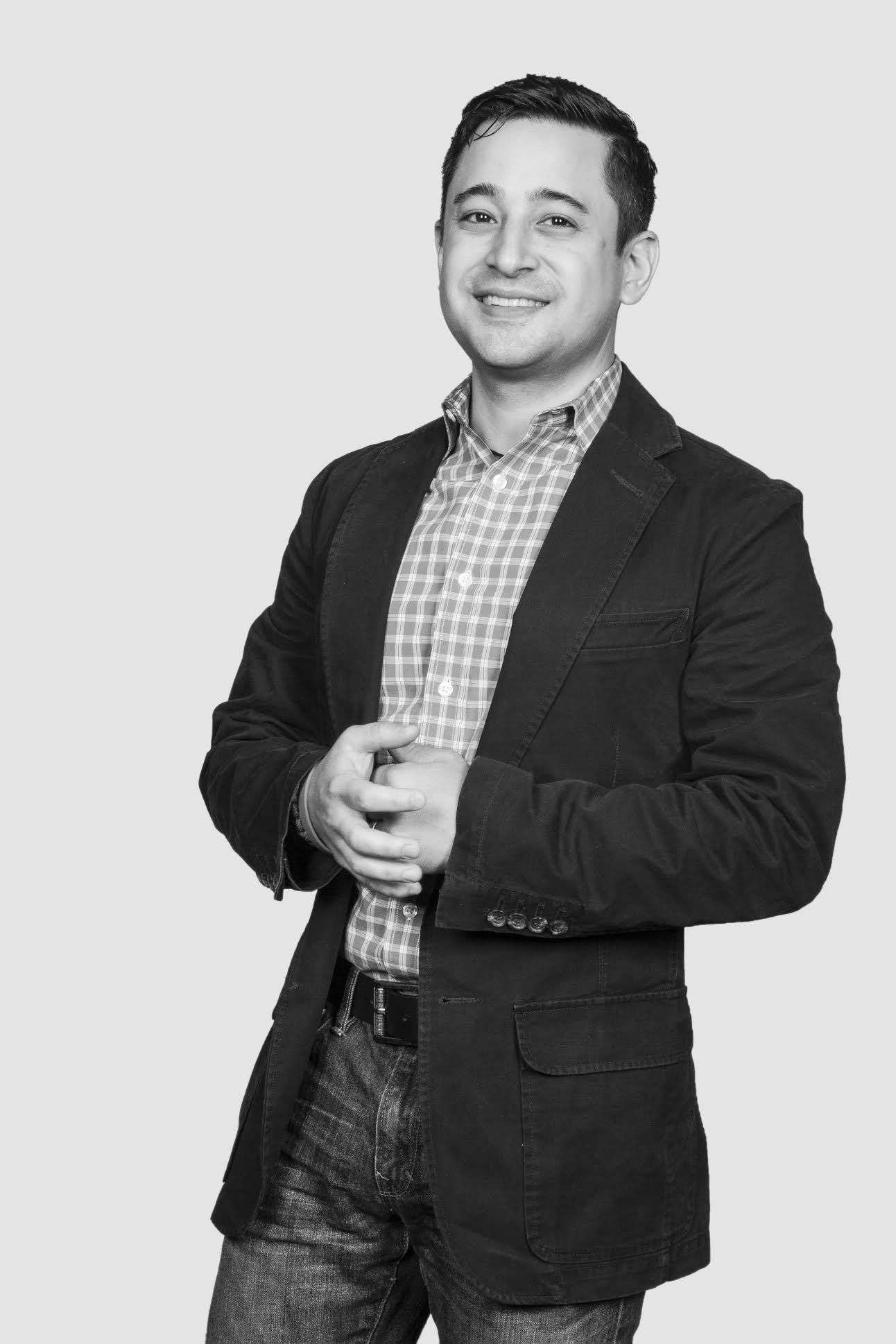
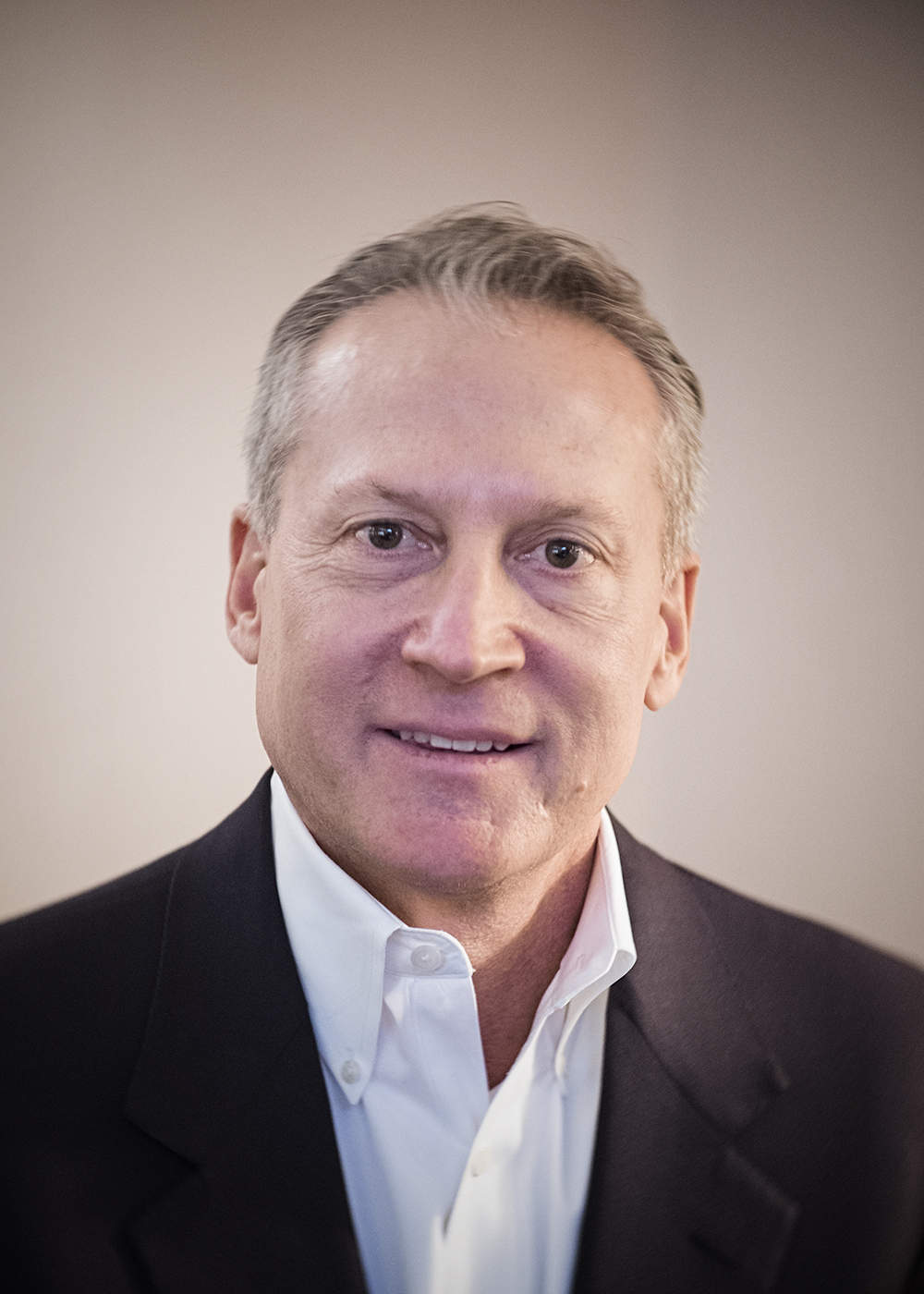
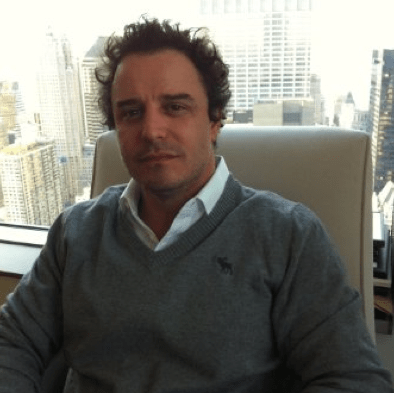
tony-photoTony Romando, CEO and co-founder of Topix Media Lab, probably understands the viability of collectable print better than anyone in the industry today, because that’s the name of his game: collectability. Publishing anywhere from 90 to 110 specialized topical bookazines per year; he is a man who knows his business and knows it well. From his triumphs to his defeats; Tony remains true to the Topix mission: providing quality products for one specialized consumer at a time, with no advertising, no subscriptions and no digital.

During the IMAG Annual Conference, which took place May 18th to 20th in Boulder, Colorado; I was able to sit down with Tony and discuss where his career had been, where it was now and where he saw it heading in the future with Topix. The man is as down-to-earth and open as the conference was enlightening. From convicts and cops, which according to him was sprinkled throughout his family tree, to the recently degreed CEO of one of the most prolific bookazine publishing companies in the world today; Tony is a force to be reckoned with and a man who was a true pleasure to interview.

So, I hope you enjoy the Mr. Magazine™ reports from the IMAG conference with Tony Romando, CEO & Co-Founder of Topix Media Lab. It will inspire you to believe that with the right dream and focus, you can do whatever your heart desires by staying true to your vision.

But first, the sound-bites:

topix8 On the genesis of Topix Media Lab: The genesis started with, I was at WWE (World Wrestling Entertainment) working for Vince McMahon and like any good, smart business guy, he wanted to figure out new revenue streams that basically weren’t totally wrestling-based. We had an infrastructure of publishing; we had everything already set up and it seemed to make sense that we could do publishing for other businesses. When he didn’t really love the idea of stepping that far outside of his comfort zone, it seemed like the right time and opportunity to start the company on my own. I and another guy founded the company three years ago and it started off horribly; catastrophic.

On why it started out horribly: I think the general plan was we would do generic collector’s edition magazines. My incorrect opinion was that we would have readers who really loved the subject matter, but didn’t care about the brand. Brands are not important. They care about One Direction or The Hobbitt or 50 Shades of Grey; they don’t care who is the one doing the magazine or who the authority is, they just care about the subject matter. And it turned out that was completely incorrect.

On how he turned it around and became one of the most prolific bookazine publishers out there: We’re doing, to be honest with you, two per week. Some weeks we do three; some weeks one, but I think the real turning point was realizing that we couldn’t sustain a generic magazine business.

topix 2 On what he was thinking when he decided to go single-copy sales only: No advertising; no subscriptions; no digital. It’s as though I’m trying to sell you a steam engine or a trolley car. I would say that even though it may be a slowly declining business, there will always be room for the biggest brands. There will always be Men’s Health because they’re the category leader; there will always be Scientific American, they’re the best at what they do, and the best of those magazines will always be there.

On whether he fears there may come a time when the newsstands are filled with only bookazines and a magazine only shows up every now and then: The flagship magazines don’t want to do collector’s editions, they look down on those; those are marketing tools, revenue streams, they’re not important enough. And because of that, there’s a real push/pull between the people who do the bookazines for the big companies and the people who do the flagship magazines. And because of that they’ll never have the best quality product they can put out at the same time.

On his major stumbling block: The major stumbling block was not on the publishing side, it was on the entrepreneurial side. You do six magazines a year; you can balance a checkbook easily, there are a few dollars coming in, a few dollars going out and very few people to concern you. But as you add clients and you get to a point where you’re probably doing 90 magazines or more per year; we’ll probably do between 90 and 110, you hit a point where it becomes very complex.

On his most pleasant moment: That’s a tough question. I almost want to say being my own boss, but as I said before, I have more people to answer to now than ever before. So, I think the most pleasant part of this journey is knowing that Topix Media Lab is on everyone’s radar.

On what keeps him up at night: What keeps me up is more research and more data and I’ll stumble onto one new piece of information that basically says instead of doing a cover with six images, I should do it with three images. And that’s the best part of it. I think too many people are on autopilot when it comes to what they should do; it’s the same stuff, year in and year out. And there is so much good stuff out there that hasn’t been tried yet. So, what keeps me up is doing more research.
And now the lightly edited transcription of the Mr. Magazine™ interview with Tony Romando, CEO, Co-Founder, Topix Media Lab.

Samir Husni: Tell me about the genesis of Topix Media Lab.

Tony Romando: The genesis started with, I was at WWE (World Wrestling Entertainment) working for Vince McMahon and like any good, smart business guy, he wanted to figure out new revenue streams that basically weren’t totally wrestling-based. We had an infrastructure of publishing; we had everything already set up and it seemed to make sense that we could do publishing for other businesses.

There were other harebrained ideas, like doing catering; you know they feed 100 of those crazy wrestlers every week, three or four days a week, so it seemed like they could be one of the largest catering businesses in the world. He said no to the catering. He also said no to doing any publishing outside of WWE.

I wanted to do Biggest Loser magazine in 2008 and I wanted to do it as a bookazine because the Brits have been doing it for a long time and they’re the best; they’ve been doing it even longer than Time Inc.

So, when he didn’t really love the idea of stepping that far outside of his comfort zone, it seemed like the right time and opportunity to start the company on my own. I and another guy founded the company three years ago and it started off horribly; catastrophic.

Samir Husni: What happened?

Tony Romando: You know, you put a little bit of money together and you acquire a very small team, four editors, not even, two editors and one designer with one photo person; five guys in a tiny room in a cramped New York office. I’ve made a million mistakes and I’m making fewer mistakes every week that goes by, but still, huge numbers of mistakes.

I think the general plan was we would do generic collector’s edition magazines. My incorrect opinion was that we would have readers who really loved the subject matter, but didn’t care about the brand. Brands are not important. They care about One Direction or The Hobbitt or 50 Shades of Grey; they don’t care who is the one doing the magazine or who the authority is, they just care about the subject matter. And it turned out that was completely incorrect.

Every now and then we would have a successful issue with one brand that was a stand-alone generic, but for the most part they were kind of failures. All of them, except for two were failures. And I didn’t think it was possible that I sold magazines that were 4% sellers, the kind of issues that just shut companies down. On my office wall I have framed the first of four of our lowest selling covers of all time: 4%, 6%, 7%; I think one was 11%. All four of them I have in my office now as reminders of what not to do.

Samir Husni: And yet in a short span of time, you’ve become one of the most prolific publishers of bookazines. You’re putting out almost a quarterly on a weekly basis.
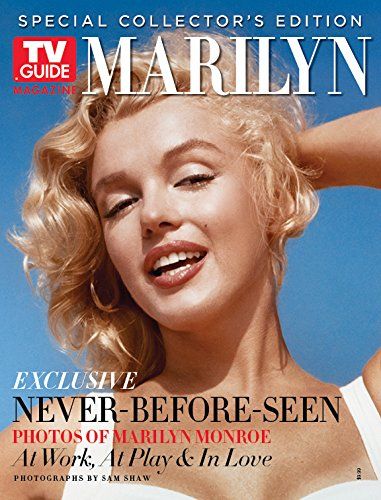
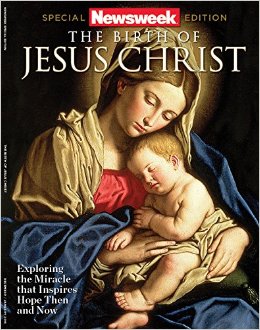
topix 3 Tony Romando: We’re doing, to be honest with you, two per week. Some weeks we do three; some weeks one, but I think the real turning point was realizing that we couldn’t sustain a generic magazine business. There are a lot of companies that are even getting into this space right now; I just saw four new generic bookazines on the newsstand two weeks ago on Marilyn Monroe, The Beatles, Jesus; people just flood the market with them.

And knowing that I had been in the generic space and that it didn’t work; I came in one day and said if I can’t land a good, proper brand to do special collector’s editions for within six months, then I’m done. And that’ll be it. It was my way of getting our team to focus on partnering with existing iconic brands. So, we were fortunate that Dave Fishman of TV Guide took a chance on us, because at that point we made a quality product, but we had no proof in the sales, because when you cut those licensing deals in the beginning, you give away a lot to try and get your footing and build a foundation.

But backing up; I think the thing about Topix that’s different from most bookazine companies is that we are strictly an analytically researched-based company. It’s all in the numbers; nothing matters on gut. I come up from the editorial side and coming from there; you know, editors think they know everything.

I think I spoke to a circulation conference 10 years ago in Atlantic City, massively hungover, standing in a room with a 1,000 people, and I think my speech to them was editorial people don’t know squat; they think they know everything and if they would follow the circulation people’s advice, the newsstand people would sell more copies.

But editorial people don’t care about copy sales really, as much as they should. So, having come up the editorial side, I realized that knowing that we are an editorial-based company and knowing that it’s all in the cover or the subject or the 100 pages that we do, it was crucial that we use analytics to base everything on.

We landed TV Guide and started doing research and I came across a mathematical equation that John Wayne was still one of the single-most popular adult celebrities. People think of him as a great American; he’s iconic; people live their lives by his code, and no one had put him on a cover; he was the only guy 20 years running to be on the Harris Poll for top actors; I think he was in the top 10 for 20 years. It was just the perfect storm.

So we did that for our first TV Guide and it sold 35 or 36%, which is a homerun these days. For us it was like the first time that we had seen any real money, real revenue; we were off and running at that point.

From there it was trying to figure out how we could leverage our one brand, TV Guide, to parlay it into more brands. I think now we’re up to 15, 16, around 17 brands.

Samir Husni: And I’m sure you’re no longer just five people in a small room?
topix 4 Tony Romando: No, now we’re 16 people in a little bit bigger room. (Laughs) Our story is a good one because everything we’ve done has been haphazard; it’s calculated, but I’m still the IT guy; I’m still the mailroom guy; I’m the CEO, but I’m also one of the edit guys. We all have 15 different jobs.

I had found an office space in midtown through my wife’s friend, who had a private equity company in this office that was owned by Blackstone and I gave them a good deal. They gave us this little remnant piece of office space and the only reason we moved out of there was because we became a fire hazard; we had ten people in a room that was unsafe and illegal.

Then we wondered if we could get cheaper space and more of it if we moved down to the Wall Street area before Condè Nast, before Time Inc.; before everyone. I had lived down in that area for 20 years; I knew that everything was cheap, and I lived very close so it was helpful.

Samir Husni: We live in a digital age; no one can argue that no matter how much we love print. What were you thinking when you decided, not that you were only going print, but you were only going single-copy sales?

topix 5 Tony Romando: (Laughs) No advertising; no subscriptions; no digital. It’s as though I’m trying to sell you a steam engine or a trolley car. I would say that even though it may be a slowly declining business, there will always be room for the biggest brands. There will always be Men’s Health because they’re the category leader; there will always be Scientific American, they’re the best at what they do, and the best of those magazines will always be there.

And because of that, there should always be collector’s editions that go along with the best. But the ones that are the second and third tier down from those best ones, if those get weeded out; we’re not selling monthly magazines, we’re selling one thing to one very specific customer. We’re not all things to all people, so if you buy GQ, you learn how to drink with style and dress with style; there’s something for every part of your life. These bookazines are only one topic, so for us it was easy to say this is where we want to be because people will always read about these iconic figures.

I think the difference really is saying that originally we targeted certain brands for the 50-plus market. They still want magazines. But people don’t want to spend $10 or $11 on a digital magazine. They just don’t. We’ve tried it, there’s just no money there. People want to collect something. So these are a poor man’s coffee table books. They stay on their coffee tables to be showcased forever. They don’t just read it and throw it away.

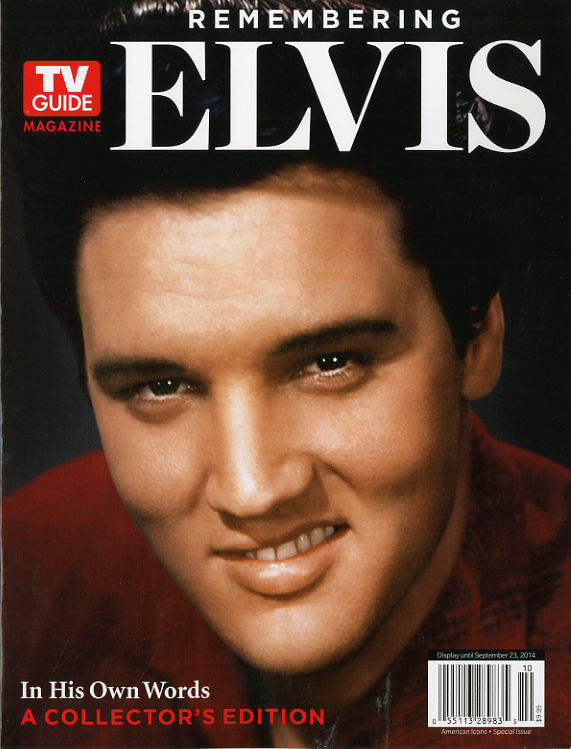
topix 6 And I think that’s been the real tradeoff for us because once we think of these as magazines, we’ll be dead. They have to be considered as keepsakes forever. To my point on John Wayne, we did John Wayne on TV Guide and it did so well that I went back to John Wayne’s son, Ethan Wayne, who runs John Wayne Enterprises, and said why don’t we do a stand-alone John Wayne collectable every other month. And he said let’s try it. And it was our bestseller. And we went ahead and put Elvis on Newsweek and it was also one of our bestsellers. So we went to the people who own Elvis, Authentic Brands Group, and told them the same thing, let’s do Elvis every other month.

And these tributaries are how I think print will stay around because it’s specialized. I can go to any dot com or any digital platform and get all of my news for every facet of my life right then on the spot. But we don’t want to do that. We just want to do one very specific brand of news, for one very specific customer and that’s it.

topix7 The final thing I’ll say though is our business is a lot less complicated because we don’t have advertising and we don’t have subscriptions, so there’s no subscription debt liability hanging over our heads. We don’t have a fleet of people selling ads; we have a rep firm and sometimes we sell a sponsorship for a couple of bucks. People have tried it and been semi-successful; we’ve had a little bit of success, but that’s just gravy for us. And I think because we don’t have those complications, we’re not beholden to a member.

We put out a really great product; if we don’t put out a piece of crap, people buy it. And if they buy it, the proof is in the numbers. And if it’s in the numbers and we sell those copies that means we did our job right. And so companies will now come to us and say we do bookazines and we’re breaking even; we do six of them per year and we’re selling 60,000 units and we still can’t make any money. Why is that? And my answer to them is I don’t know what you have built into your infrastructure, but I have 16 people; we create everything; we generate everything; we do everything from front to back, and we can turn a big profit on 60,000 units, so let us do it for you. And we’ll champion your brand and at the same time, we’re ambassadors of their brand and we want to make a few dollars in the process, but our goal is to make sure that their brand has the extension that we are in control of.

Samir Husni: I’m sure that you’ve noticed lately, keeping up with all of these launches and all of the different brands, it’s almost a ratio of 2 to 1, in terms of the number of bookazines arriving on the marketplace. Are you afraid that we’ll reach a situation point where the entire newsstands will become bookazines and every now and then there’s a magazine?
tony-photo2Tony Romando: You know I think it should keep me up at night, but it doesn’t because I didn’t invent it; I saw a good opportunity and I think I was ahead of the curve, but there were other companies in front of us. We got in the market and they all said, they’re going to take away all of our sales and we see that their sales still work and our sales work.

Just last week, as I mentioned, someone else brought their bookazines to market as well. In the entrepreneurial spirit, I want everyone to do well. But I think what it comes down to is the quality of the product and the brand of the product. And I think that I have the best brands and I believe as long as I continue to bring in really great brands, such as a Reader’s Digest or Discovery Channel, Disney; to be able to do all of the Star Wars magazines for the next couple of years is a big deal. And I think no matter who puts a generic Star Wars magazine on the newsstand at the same time, if mine is the official LucasArts collector’s edition or Disney collector’s edition, that’s what matters.

I think the tradeoff between us and other companies is we are an editorial-based company; the integrity of the product comes first. And I believe any of our partners would say that our product is superior to most because unfortunately, the bigger companies say, how can we make a few more bucks and they put a team on making special issues. The flagship magazines don’t want to do collector’s editions, they look down on those; those are marketing tools, revenue streams, they’re not important enough. And because of that, there’s a real push/pull between the people who do the bookazines for the big companies and the people who do the flagship magazines. And because of that they’ll never have the best quality product they can put out at the same time.

Now, we don’t own any products and we don’t want to own any products. We cut licensing deals for a few years, but we want to be able to say this is your product; we work for you.

I was an intern at Rolling Stone 20 years ago. I have more bosses today as CEO than I had 20 years ago. I answer to probably 42 people on a daily basis. And some of those people that I answer to don’t know the magazine business well and some do know it well. And I don’t know which one is worse, but there are a lot of people to answer to. I think as long as we make the quality of the product better than the next guy, we should be good.

Samir Husni: You were at Rolling Stone?

topix 1 Tony Romando: When I was in college many years ago, I went to Rolling Stone and they offered me an assistant’s job and I promised then I would go back and get my degree. So all of these years later, I did. I had four classes, which I finally just banged out over two semesters and I got my diploma in the mail two weeks ago. And to have it is really a big deal. I’m from a long line of convicts and cops. My family has worked as convicts and cops. All from Chicago and no one had ever been to college. Not one member, even in the extended families.

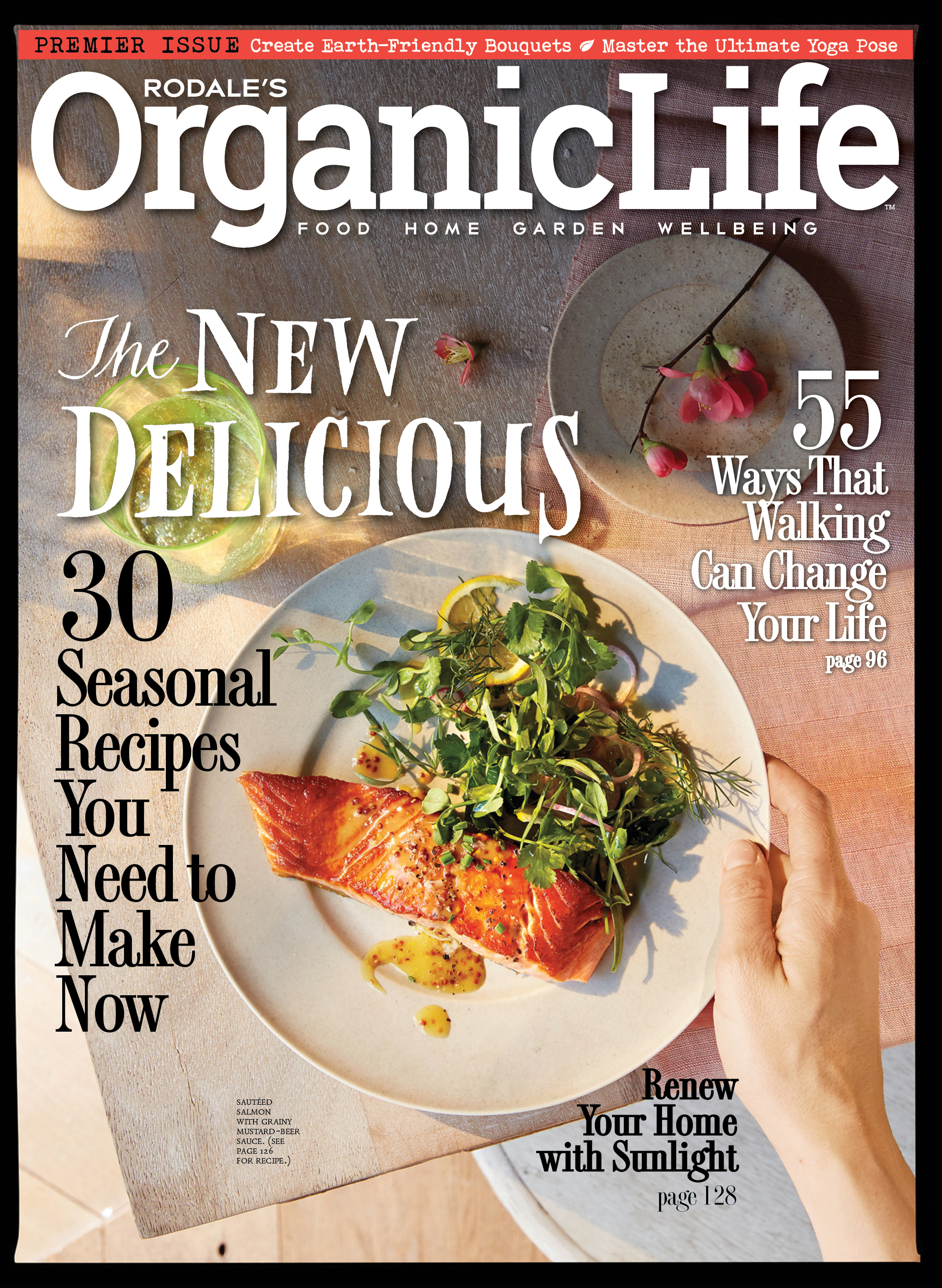
It’s been a good year. I just graduated and we’re in contract with Rodale to do 12 bookazines a year for them. And their bookazines are always very successful. But they can’t seem to figure out how to make any good money. Prevention is really small down here. No one even knows who Prevention is. It’s like 65,000 copies; that’s a lot of money. So, when they called me and said we can’t figure out how to make this work; I got my fork and knife out and told them I can make this work for you.

The funny thing; what we do, I think, is very simple. You analyze the space better than anyone and I spend a lot of time also analyzing the space out there.

Samir Husni: And you know it’s amazing. It started in the U.K. with the bookazines, but now it’s all over Europe and all over the world. I just gave an interview to a magazine in the Netherlands all about the bookazine trend. They wanted to know all about the bookazine phenomenon. So, I can guarantee you that your interview is going to be making the rounds.

Tony Romando: Good, because long-term plans are really short-term because two years ago I said I’m going to give it six months and if I don’t end up flying, I’m out. Then I started adding clients. And last year, around May, I said 2015 is my year. I’ve built up everything and if I can’t make it work in 2015, I’m leaving. I’m done. My wife has her own company and I’ll do something else.

And then we hit May and I knew that we really had something. Now I’m looking at it, still in short-term stages, but I’m starting to look at it more long-term; what can I do in 2016 and 2017? And one of the things that I want to do is look into the international market; what can we do in India, in Australia and in the U.K. to make them buy our magazines. International is a good step, because there’s only so much we can do here.

Samir Husni: What has been the major stumbling block that’s faced you through your journey with Topix Media Lab and how did you overcome it?

Tony Romando: The major stumbling block was not on the publishing side, it was on the entrepreneurial side. You do six magazines a year; you can balance a checkbook easily, there are a few dollars coming in, a few dollars going out and very few people to concern you. But as you add clients and you get to a point where you’re probably doing 90 magazines or more per year; we’ll probably do between 90 and 110, you hit a point where it becomes very complex.

And because it becomes complex, the fear was that we would outgrow our internal mechanism, so we’ve kind of pumped the brakes. We have so many brands now, that we’ve hit a point where we want to make sure our brands get the love they need. We don’t want to be greedy. I think we’re all chasing the same brands and sometimes I beat Time Inc. to the punch and sometimes I don’t beat them. We may be on their coattails, but we’re a long distant second place or third place or whatever it is.

I think the big stumbling block is making sure the internal side of it works and that we don’t outgrow what we have the capability of doing. The Source thing really threw us for a loop because it’s kind of skewed all of our numbers for an entire year and as a small company; I think we went from $3 million in revenue to $12 million in revenue to $18 million in revenue, with a forecast of maybe $40 million in revenue this year. That’s pretty heavy growth for an industry that claims to be dying, which is pretty shocking.

But the good news, and I mean this in the most sincere way; I don’t know what I don’t know. So, I’m sure that I’m making mistakes that I don’t even know about along the way and the ignorance of it has been slightly beneficial.

For me, it’s a different kind of story. When I was 17, I joined the Navy. I left home and joined the Navy, spent five years scrubbing bird crap off a runway; the second longest; largest runway in the world is in Guam. I was there for years and I was chipping bird crap off of the runway. So, 18 hours a day, 6 days a week; I know what real hard work is.

Doing this for 18 hours a day and crunching numbers and making magazines is a cakewalk. And it’s a treat. If you get the right people to do the right thing; it’s like I used to pick all the topics; I did all the analyses, the John Wayne stuff, and then at a certain point I realized I’m not good enough at it, so I hired someone who just comes in and crunches numbers all day. I think the stumbling block was how you actually put out quality topics that will sell and hit the certain sell-through range; now, they don’t all have to be winners, but we don’t want any that are 12% either. And if they can all stay somewhere here, with a couple of spikes on this end, then we’ll make a lot of money.

So, to answer your question; one of the biggest mistakes I’ve made is not realizing fast enough that I’m not great at something. And if I’m not great at this thing, then I need to hire someone who is amazing. And now that I have these people in place, it’s become a lot easier to sit back. Now I can just criticize their work all day as opposed to my own. (Laughs)

Samir Husni: (Laughs too) And what has been the most pleasant moment throughout this journey?

Tony Romando: That’s a tough question. I almost want to say being my own boss, but as I said before, I have more people to answer to now than ever before. So, I think the most pleasant part of this journey is knowing that Topix Media Lab is on everyone’s radar. We tried to fly under the radar for three years; I was hoping to go six years without anyone noticing that we existed. Being on your radar, knowing that we come up in board meetings or meetings at big publishing companies; it’s a very flattering thing. To know that we’re in the mix with those guys is great, but it’s also daunting because that means we have the bull’s-eye on our back.

The long-term goal or the short-term goal really, is to partner with one of these bigger guys and knowing that we have the ability to bring in bigger brands than most people, whether that’s because we identify them sooner, there are a couple of really big untapped brands that people don’t even think about that I have on my list of ideas on my wall that I think would make really great bookazines.

And because we haven’t gone to those yet; we don’t want to get too big too quick. What we really want to do, what I really want to do, is partner with someone big who wants to be part of something smaller that they can share in the revenue stream of it and would help us get to certain pockets because, and you know this as well as anyone, you want to be at the main line; well, you’re at the main line, but you want to be at the checkout.

But a lot of those guys want to be at the checkout because of their advertising rate base and I don’t need that, so I want to systematically pick checkouts. If I can get 30,000 copies in Wal-Mart, instead of 10,000 copies, and sell 40%, I’m going to do a lot better.

But the downside to that is no matter how much money that you have, you can’t just drop a bag of money down and say I want in; you have to wait your turn, start at the bottom, work your way up; you’re in the bad aisle that’s never opened, then you slowly move over.

And I think a lot of these big guys have the millions of dollars invested in those pockets and because we know that you can take a magazine and go from 25% sell-through to 35 or 40% sell-through just by going to the checkout, I’m now trying to figure out how to jockey ourselves into a position where we can partner with someone we might be competing with right now and pool our resources together, because I think we can show them how to do the bookazine business for one-tenth of what they’re doing it and they can kind of carry us across the finish line to some of those checkout pockets. That would be a really great synergy and that’s where we’re headed next.

Samir Husni: And before I ask you my typical last question: who was your favorite wrestling figure, since you’re no longer with WWE? (Laughs)

Tony Romando: (Laughs too) Strangely, it would have to be Shane McMahon. Vince McMahon, who’s the CEO and Chairman of the Board, his son Shane, who I worked for, was a business guy. But he also grew up in the business.

And he used to jump off of the Jumbotron, which is this huge screen, and he would jump 50 or 60 feet onto a table with other people. I mean, he owned the company and he did not have to do that kind of stuff or put himself in harm’s way. He was amazing in the sense that he would jump from the highest point and put himself at the biggest risk. He’d put himself in the most dangerous positions.

But on Monday, when wrestling was over, on Tuesday, he was back at the office and wearing a suit, looking at the consumer product group, the China expansion. The rest of these guys were wrestling again. He was able to do both and no matter what you think about wrestling, they are a pretty amazing group of guys because you’re afraid of them because they’re massive and they’re also just a little bit crazy, but they’re really impressive athletes too.

So, with all of these guys, it’s like they’re the most amazing guys to see in person because they’re just huge. And they have great character and they’re all banged up. Whether you call it real or not, it’s scripted, but the action is really real. Everyone should go to a wrestling show.

Samir Husni: We have followed it some; in fact, I was the crazy person who took his entire family to the Valentine’s Night Massacre. (Laughs)

Tony Romando: (Laughs too) It’s really amazing, isn’t it?

Samir Husni: It really is.

Tony Romando: Yes.

Samir Husni: My typical last question; what keeps you up at night?

Tony Romando: Single-copy sales would be the answer that I give you. But to be honest, what keeps me up at night is doing more research on the next big project. I don’t lose any sleep and I don’t stress over this business at all. I have a two-year-old son; my wife is pregnant with twins; I’m up all night anyway. I’m up day and night from the family side, but it’s not because I’m worried about the business.

What keeps me up is more research and more data and I’ll stumble onto one new piece of information that basically says instead of doing a cover with six images, I should do it with three images. And that’s the best part of it. I think too many people are on autopilot when it comes to what they should do; it’s the same stuff, year in and year out. And there is so much good stuff out there that hasn’t been tried yet. So, what keeps me up is doing more research. The more information I have, the less dumb I feel when things go bad. At least, I did my homework. (Laughs)

Samir Husni: Thank you.
h1

Dedicated To Print – Headmaster Inspires Creativity & Conceptualism Through Its Visionary Content – The Mr. Magazine™ Interview With Matthew Lawrence & Jason Tranchida, Editors

May 23, 2015

“My background is as a writer and Jason’s is as a graphic designer. And we got to a point where we were both doing a lot of work online and we wanted to make something that we would be able to actually pick up and hand to somebody and say that this is what we’re doing.” Matthew Lawrence

“This is our creative outlet as well as a business, so it’s sort of like: this is our project and we can do whatever we want. (Laughs) I’m excited because there are so many parts of it now that have a structure; we know roughly how many pages there are going to be; we know its distribution and we’ve got the concept down, so now we can really have fun with it.” Jason Tranchida

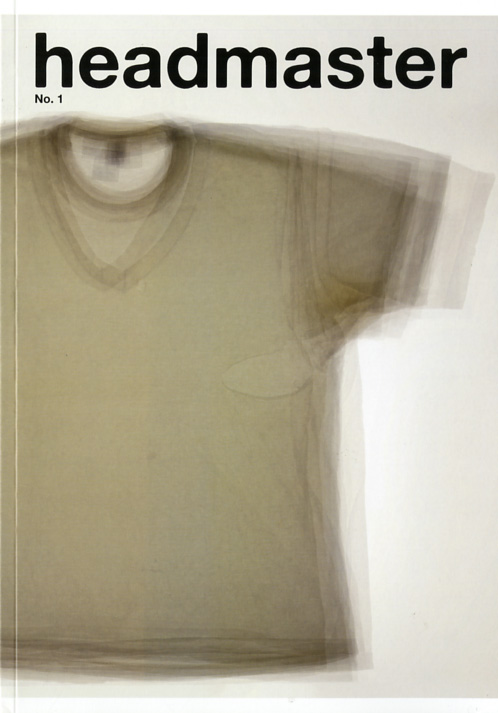
headmaster2-2 Headmaster is a biannual magazine that is for the man-lover. It’s sophisticated, sexy and extremely thought-provoking. Artists, writers and photographers are given assignments and through their own vision are allowed to create projects that become content for the magazine. It’s an interesting concept with two very savvy and smart captains at its helm: Matthew Lawrence and Jason Tranchida.

I spoke with both gentlemen recently about the magazine’s past, present and future. It was a no holds barred conversation; from the sexual preference of the magazine’s contributors to whether it was easier or harder to produce a gay magazine today than 25 years ago. It was an enlightening discussion that was reminiscent of the magazine itself.

So, I hope you enjoy the Mr. Magazine™ conversation with Matthew and Jason, two men who are definitely ‘Headmasters’ of their creative future.

But first, the sound-bites:


Headmaseter_Press_Photo On the story behind Headmaster magazine:
(Matthew Lawrence) Primarily it’s a magazine with original projects and the concept behind it is that we find artists and writers that we like and we give them assignments to do those original projects for the magazine. So, everything between the pages is made for Headmaster.

On the early days of the magazine:
(Jason Tranchida) Originally, there were four Headmasters, actually, who started it off and conceptualized it. We all came from diverse backgrounds and we were all magazine and book lovers. We really wanted to do some sort of print publication.

On why they chose a print product:
(Matthew Lawrence) My background is as a writer and Jason’s is as a graphic designer. And we got to a point where we were both doing a lot of work online and we wanted to make something that we would be able to actually pick up and hand to somebody and say that this is what we’re doing.

On a major stumbling block they had to face: (Jason Tranchida) I think the stumbling block probably, because it is a physical thing; one of the stumbling blocks was distribution. And obviously, we say that we’re a print magazine, but we couldn’t survive also without digital media, of course, in terms of communication and that type of thing.

On the most pleasant moment: (Matthew Lawrence) The most pleasant moment for me actually is when we get to meet our artists. Each issue has about nine artists and writers in it and we try to maintain that relationship with them by staying up-to-date on their careers and what they’re doing and sort of bring them back into the Headmaster family.

On the description ‘curators’ when it comes to their main role with the magazine:
(Matthew Lawrence) I think you’re right as far as thinking it’s a curatorial process, because we do have generally nine, sometimes ten, artists per issue and we try to strike a balance of photographers and writers.

On whether all the contributors of the magazine are from the LGBT community:
(Jason Tranchida) Mostly, but not all. But it’s not a prerequisite to being a contributor for Headmaster. It’s a balance.

On their main source of revenue:
(Jason Tranchida) It’s selling the magazine, a bit of advertising, and we started something recently, which goes back to what we said about maintaining a relationship with our artists; on our website we have what we call the Alumni Shoppe, and it’s all work done by our contributors that’s done outside of the magazine.

On where they see the magazine a year from now:
(Jason Tranchida) It’s the 8th issue and obviously, we’re very proud of the 7th issue, the current one, but we’re also excited about the next one too. I feel like it’s going to be something very special.

On what keeps them motivated to get out of bed each morning:
(Jason Tranchida) Coffee. (Laughs)

On anything they’d like to add:
(Matthew Lawrence) We live in Providence, Rhode Island, which is where the magazine is based. It’s an extremely creative city, but also small. Which for us is a bit of a plus and a minus, but I think that being able to live in a city where you can do things creatively, projects like Headmaster, and be able to afford the luxury of doing that, is probably what keeps me getting up in the mornings.

On what keeps them up at night:
(Matthew Lawrence) Coffee. (Laughs)

And now the lightly edited Mr. Magazine™ conversation with Matthew Lawrence and Jason Tranchida, Editors, Headmaster.

Samir Husni: Matthew, can you tell me the story behind Headmaster magazine?

Matthew Lawrence: Primarily it’s a magazine with original projects and the concept behind it is that we find artists and writers that we like and we give them assignments to do those original projects for the magazine. So, everything between the pages is made for Headmaster.

Samir Husni: Jason, I see that you’ve been there since the very beginning of the magazine, back in 2010; one of the Headmaster’s.

Jason Tranchida: (Laughs) Yes, Exactly.

Samir Husni: (Laughs too)

Jason Tranchida: Part of us did stay behind. Originally, there were four Headmasters, actually, who started it off and conceptualized it. We all came from diverse backgrounds and we were all magazine and book lovers. We really wanted to do some sort of print publication.

The backstory of how it all started is we all got together every week and had some beer and wine and enjoyed some of our favorite books and magazines and tried to come up with a concept for a magazine.

We kind of knew what we wanted; a digital arts magazine, but we got to a point where we wondered how we were going to get content for it. So, we started actually giving assignments to each other and doing some work ourselves to get things flowing. But the name hadn’t come along yet. Eventually though it all just started coming together.

I think a lot of artists really like getting assignments and most people that we’ve worked with have been really excited by the challenge and the focus of having to do a project that we conceptualize for them.

Each assignment is actually written specifically with that person in mind, so no two people get the same assignment. Different types of artists shouldn’t have the same assignments as some, so we fit the assignment to the particular artist.

That’s how it all started and then over the years it just became Matthew and I, because the other two have other obligations and realized it was a ridiculous amount of work that you have to put into a magazine like this. (Laughs)

Samir Husni: (Laughs too) I hear the phrase ‘we live in a digital age’ from people all of the time and my typical answer is always the same: yes, I know. Why did you decide to create Headmaster in print rather than a digital entity on the many different and personal platforms out there?

Matthew Lawrence: There were a couple of different reasons. My background is as a writer and Jason’s is as a graphic designer. And we got to a point where we were both doing a lot of work online and we wanted to make something that we would be able to actually pick up and hand to somebody and say that this is what we’re doing.

At the same time, we still liked a lot of print magazines and there seemed to be a huge influx of print magazines that we liked right around the time that we started, so we were never really interested at all in having Headmaster be a digital project.

Samir Husni: When the magazine was launched in 2010 and even until today, we are seeing more and more of the upscale, expensive print magazines aimed at specific communities. Over the years what was the major stumbling block that you had to face and overcome, besides losing two of your Headmasters?

Jason Tranchida: Well, we solved some complications and then made some others. (Laughs)

Samir Husni: (Laughs too)

Jason Tranchida: I think the stumbling block probably, because it is a physical thing; one of the stumbling blocks was distribution. And obviously, we say that we’re a print magazine, but we couldn’t survive also without digital media, of course, in terms of communication and that type of thing.

Distribution was something that we both had to learn. Matthew had a little more experience with that because he’d once worked in a bookstore and knew the ins and outs a bit more about distribution than I did. I had designed a lot of books for clients; I never had anything to do with the distribution. So, that was a big stumbling block.

We’ve learned a lot about that though, going to book fairs and things like that. We’ve also learned that there are plenty of people out there who want to hold the magazine in their hand.

Samir Husni: And what has been your most pleasant moment since the first issue came out?

Matthew Lawrence: The most pleasant moment for me actually is when we get to meet our artists. Each issue has about nine artists and writers in it and we try to maintain that relationship with them by staying up-to-date on their careers and what they’re doing and sort of bring them back into the Headmaster family.

Our contributors are from all over the world, so there is a large amount that we never get to meet. But we do have those great moments when we’ll go to a city and run into someone we’ve worked with. For example, we were in Miami last December and the very first person from Seattle that we ever gave an assignment to, who we’d never met, actually showed up there for an event we had. It was really nice that five years later, we finally got to meet in person someone we’ve maintained a relationship with. So, those are some of the most satisfying parts of my job.

Samir Husni: Do you feel like you and Jason are curators? That each issue is like a museum and you’re inviting people in for the tour? I noticed that each issue has a theme; Issue 7 is The Field Trip Issue.

Matthew Lawrence: We did the first three issues without a theme for each one. Issue 4 we had women contributors entirely and Issue 6, rather than give our writers written assignments, we gave them other assignment prompts; we sent somebody a score of music and we sent somebody else a bottle of Vodka. Theming the issues is sort of a way for us to keep it interesting for ourselves.

And I think you’re right as far as thinking it’s a curatorial process, because we do have generally nine, sometimes ten, artists per issue and we try to strike a balance of photographers and writers. More and more we’re working with artists who are into interdisciplinary things, where we might not even know what we’re getting.

Samir Husni: Are all the artists in the magazine that you select; are they all from the LGBT community or do have a diverse group?

Jason Tranchida: Mostly, but not all. But it’s not a prerequisite to being a contributor for Headmaster. It’s a balance. For example, in the second issue the person who did the photo shoot of the Rugby outfit was a wife with two kids. The work just had so much masculinity in it that she just sort of fit into the issue as well. Some might say all the work has to fit into the queer cannon, but that just opens up a huge debate on what is queer, which can mean a million different things, so the artists themselves don’t have to be a member of the LGBT community.

Samir Husni: In reality, the content is what makes a magazine, so as long as the artists have the same vision of what the magazine is all about; it makes no difference whether they’re gay or straight or anything else.

Headmaster1-1 Jason Tranchida: Exactly. And that’s kind of like our magazine’s tagline: the biannual art magazine for man-lovers and the man-lovers reference is just a convenient way to be specific and completely non-specific at the same time. It may seem silly, but I think it gets the point across. Who’s a man-lover? Anyone can be a man-lover. (Laughs)

Samir Husni: (Laughs too) We’ve come a long way since Out Magazine was first published and before that it was The Advocate, but really I consider Out to be the first mainstream gay magazine that was available everywhere. Do you think it’s easier today to publish a gay/lesbian magazine than in, let’s say, 1990? Is the industry more accepting now or not? I mean, I looked to see how many ad pages you have in the magazine and I didn’t find very many. Although, we know a lot of businesses and companies that are owned by gay people are still advertising only in mainstream magazines. Do you feel there is a conflict of interest here somewhere?

Matthew Lawrence: That’s a complicated question.

Samir Husni: (Laughs) Give me a simple answer.

Matthew Lawrence: (Laughs too) I think that in some ways it’s probably easier now to make a magazine like this, because I can only think of one instance where we picked up a new store and sent them however many copies they ordered and they called us immediately to return them because they weren’t OK with the content, where 20 years ago I don’t know if it would have been just one store that would have reacted that way.

As far as advertising goes, that’s something we’re always trying to figure out. We’re a pretty small publication; we only print 1,000 copies of each issue. A lot of people aren’t interested in advertising with that small of a market to begin with.

Jason Tranchida: I would say that it would be kind of hard to differentiate. I don’t feel like when we approach advertisers, for example, that it’s so much an issue of the content; we try to get the physical magazine into their hands and they realize the quality of the publication itself. I would say our problem in getting advertisers is the fact that it’s a niche market and we’re a pretty low-run, limited edition type item. After five years, it’s still a major piece that we’re trying to figure out.

Samir Husni: So, circulation and selling is your major source of revenue?

Jason Tranchida: Yes, it’s selling the magazine, a bit of advertising, and we started something recently, which goes back to what we said about maintaining a relationship with our artists; on our website we have what we call the Alumni Shoppe, and it’s all work done by our contributors that’s done outside of the magazine. So, that adds content to our website and we sell items that would speak to the Headmaster audience, whether it’s limited edition prints or T-shirts or bathing suits, which our artists have made. And that’s become another source of revenue for us. We launched that about a year ago. We were brainstorming on how we could expand the brand a little bit and increase our sources of revenue and we came up with this idea.

Samir Husni: If I’m speaking with you both a year from now, where would you like Headmaster to be at that time?

Matthew Lawrence: We’ll have our 8th issue out by then, which we’re not really talking about yet, but it’s going to be the most conceptual concept issue that we’ve done yet. That’s funny, I feel like we should have a more definitive answer. (Laughs) Some sort of big plans or something. But I don’t think we actually do. (Laughs again)

Jason Tranchida: It’s the 8th issue and obviously, we’re very proud of the 7th issue, the current one, but we’re also excited about the next one too. I feel like it’s going to be something very special.

Samir Husni: Maybe something like: only in print, a special issue where you can only read that particular issue in print. (Laughs)

Jason Tranchida: (Laughs too) Exactly. As for any long-term future plans, we might just take this to the 10th issue and then do a book-type publication, where we put the artists’ work from the last nine issues together. That’s something I’m really excited about because there are projects in Issue 1 that I want to see next to a project in Issue 6, just because I think that they speak to each other in a special way, content-wise.

And I also think that Issue 10 will be where we evaluate and see where we want to go from there. I think that we’ll always do some sort of project called Headmaster, whether it’s the magazine or that sort of launches into something else. I think that will be a good time to reflect on what we’ve done and see which direction we want to take it.

This is our creative outlet as well as a business, so it’s sort of like: this is our project and we can do whatever we want. (Laughs) I’m excited because there are so many parts of it now that have a structure; we know roughly how many pages there are going to be; we know its distribution and we’ve got the concept down, so now we can really have fun with it.

Samir Husni: I love your quote that this more of a creative outlet, and a business, but it’s a passion. That’s what I tell people about my job; it was my hobby when I was nine-years-old and reading and collecting magazines, now people pay me for it. (Laughs)

Jason Tranchida: (Laughs too)

Samir Husni: What motivates Matthew to get out of bed in the mornings and get excited about his day? And what motivates Jason to do the same?

Jason Tranchida: Coffee. (Laughs)

Matthew Lawrence: I also like coffee quite a bit. (Laughs too)

Samir Husni: (Laughs) Is there anything else either of you would like to add?

Matthew Lawrence: We live in Providence, Rhode Island, which is where the magazine is based. It’s an extremely creative city, but also small. Which for us is a bit of a plus and a minus, but I think that being able to live in a city where you can do things creatively, projects like Headmaster, and be able to afford the luxury of doing that, is probably what keeps me getting up in the mornings.

Samir Husni: My typical last question; what keeps you up at night? Matthew first?

Matthew Lawrence: Coffee. (Laughs)

Samir Husni: (Also Laughs) You both are starting to sound like me. I fall asleep drinking my cup of coffee and if I don’t finish it, I wake up later and finish the rest of the cup. (Laughs)

Jason Tranchida: (Laughs too) Matthew often falls asleep with coffee next to the bed.

Samir Husni: Thank you.

h1

The Shoeholic Addiction Is “Stiletto” Sharp For Its Creator – The Mr. Magazine™ Interview With Tinu, Publisher, Shoeholics Magazine…

May 8, 2015

“In my case, I guess you could say it’s like putting a beggar in charge of a bank. (Laughs) I turned my passion, my addiction; my love for shoes into a business. I guess it’s part of my African background, take every opportunity possible for survival. It’s just a way of life for us.” Tinu

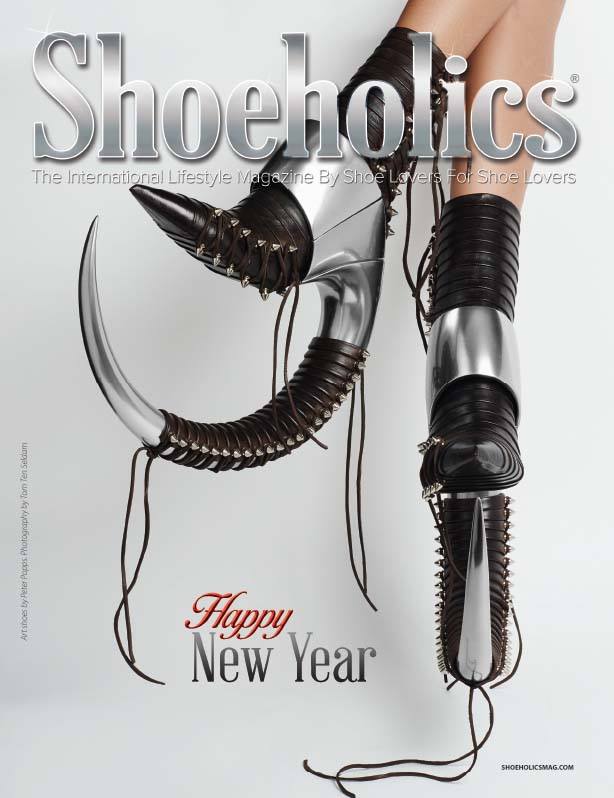
21307_10153109681061201_5711377935958755971_n Shoes are an important part of all of our wardrobes; most of us wear them without a second thought. But for some, shoes are much more than a necessity; they’re a passion that knows no bounds. Rather than just protect the feet; for the “shoeholic” shoes adorn and grace every podiatric inch.

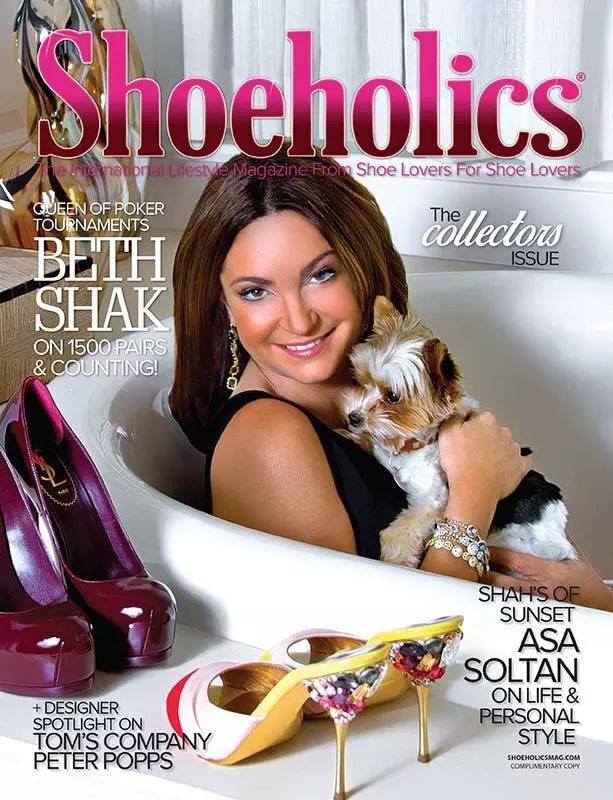
For a woman simply known as Tinu, the term “shoeholic” fits to a perfect T. Tinu is a New York City based singer-songwriter, designer, philanthropist and publisher of Shoeholics Magazine. Brooklyn-born, but globally raised, Tinu’s sense of style is as dazzlingly-known as her extensive shoe collection.

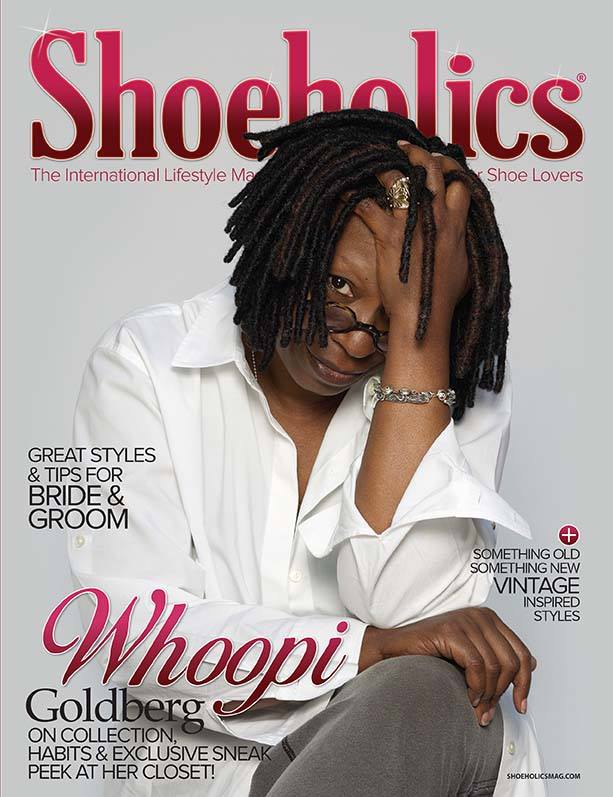
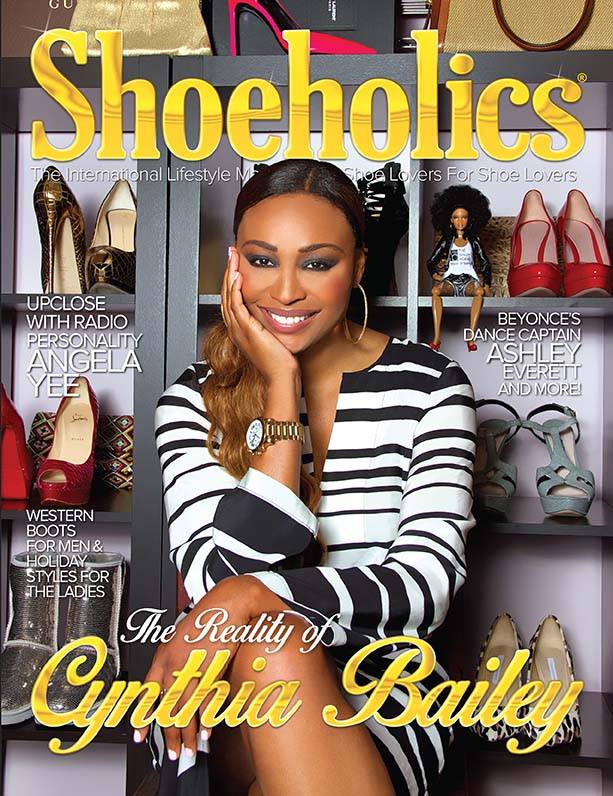
Her video by the same name, Shoeholic, which went viral, started Tinu on the road to her present magazine publishing destination. She is an entrepreneur who brought something elementally tangible to the magazine media table: a limitless addiction for her magazine’s subject matter. Tinu’s efforts are not only showcasing her love of shoes, but also paying off with some very big-name celebrities gracing her covers. From Cyndi Lauper to Whoopi Goldberg, famous faces are sharing the Shoeholic mania. In fact, on a recent episode of The View, Whoopi showed the magazine and talked at great length about it on the show, which provided a massive spike in sales that day, proving that tenacity and a passionate dream can go hand-in-hand.

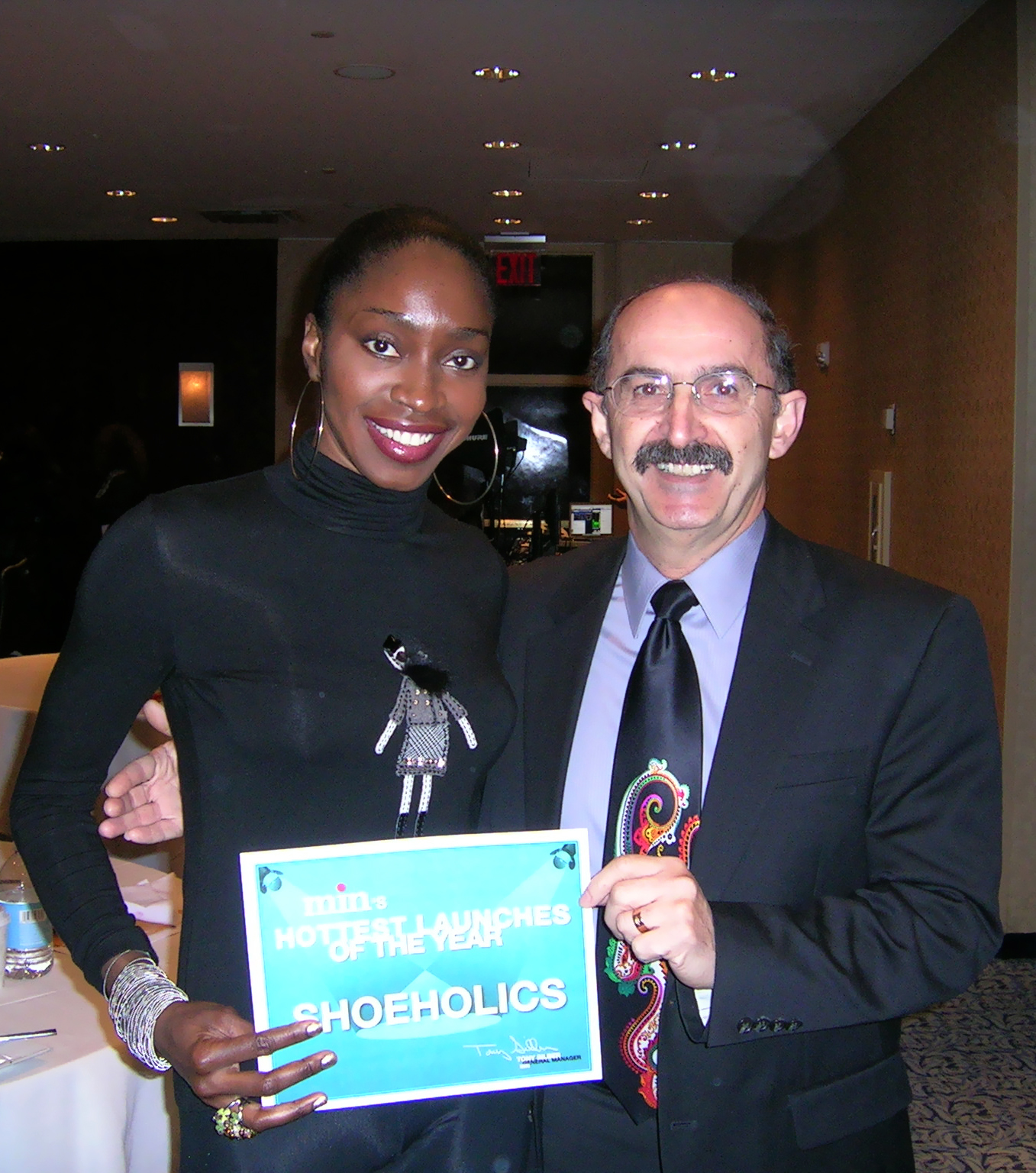
Tinu with Samir I spoke with Tinu recently about Shoeholic and her magazine’s business model, which might be described by some as eclectically executed, but is working wonderfully for her, and the fact that collecting shoes and the pages of Shoeholics Magazine is an art form in itself.

Tinu is a free spirit and a businessperson, savvy and sophisticated; her personality shines through the pages of her magazine. I hope you enjoy the Mr. Magazine™ interview with a woman who made me laugh and made me think as we talked about the beauty, collectability and success of Shoeholics…

But first the sound-bites:


20150121_151253-01x On how as an individual entrepreneur she’s managed to be successful in the magazine media world:
In my case, I guess you could say it’s like putting a beggar in charge of a bank. (Laughs) I turned my passion, my addiction; my love for shoes into a business. I guess it’s part of my African background, take every opportunity possible for survival. It’s just a way of life for us.

On being one of the first to use digital to cross over to print:
Yes and yes. (Laughs) It’s true. You cannot log into our website and flip through the magazine. It doesn’t work that way; I’m sure you know that. We have the blogs and the regular stuff online, but to be able to just log on and flip through the entire contents of the magazine; no, we don’t have that.

On whether she can envision a day when Shoeholics isn’t in print: Our livelihood and survival is in print. Although we have a great digital following, at the end of the day a lot of them do both. Our magazine is a collectable and we have to have it in print.

On the balance between her budget between advertising revenue and circulation: When we started this magazine, none of us had profit in mind. It was more about feeding our addiction and that of our fellow addicts. Think of it as a main vein. (Laughs) We saw no profit. We started out with little or no ads. We do have ads, don’t get me wrong, but we can go an entire issue without an ad; we don’t care.

On her most pleasant moment since the magazine launched:
My shoe collection grew. Put an alcoholic into a bar and you’ll understand why my shoe collection grew. When I started the magazine, I had 500 pairs; now, I would be pushing it to imagine a number. I’m crossing the line between a collector and a hoarder. That’s the best way I can describe it.

On any stumbling block she’s had along the way:
There was one particular public figure that I wanted to interview, but her people had a different mindset. Some people don’t understand the concept of being a shoe collector; they think it’s a joke.

On what keeps her up at night
: My shoes, of course. A lot of times when I’m at home and bored, I put on a pair of shoes and get into bed and just relax. (Laughs)


And now the lightly edited transcript of the Mr. Magazine™ interview with Tinu, Publisher, Shoeholics Magazine.


10898044_10152916047931201_4724832597722037549_n Samir Husni: You’ve beaten the odds; you’ve started a magazine as an individual entrepreneur about a subject that you love and you’ve stayed in business. How have you managed that? What gives?

Tinu: In my case, I guess you could say it’s like putting a beggar in charge of a bank. (Laughs) I turned my passion, my addiction; my love for shoes into a business. I guess it’s part of my African background, take every opportunity possible for survival. It’s just a way of life for us.

I thought, why should I keep wearing all these shoes and spending all this money and it’s not giving me anything back. Especially as you get older, I’m not 18 anymore; I wondered what was going to happen to my beautiful collection? I knew I’d love to share it with the world.

Everything actually started with the music video. The video is called Shoeholic and it went viral on YouTube. At the time when I did the video, shoes were much more in the background than they are today. Now you have big shoe stores; places like Saks, Macy’s and internationally too, in Dubai and the Netherlands; all of these kinds of places make shoes a lot grander than they once were.

Shoeholic went viral and everyone was asking about the shoes in the video; were they mine or someone else’s. It was then that my publicist said, you’re getting asked a lot of questions, you should write a book. So, I did that; I wrote a book. The book is on Amazon.com and I also sell it out of my own warehouse and it is doing phenomenally well. It’s called “The Shoeholic.” I’m very excited about it.

It just sort of grew from there. And the next thing you know, retail stores started carrying it in their shoe department. You have a whole floor of shoes and they’re beautiful. Shoes are now in the foreground, as opposed to when I did the video, shoes were in the background. The only shoe song that comes to mind, other than mine, is the 1960s song by Nancy Sinatra: These Boots Are Made for Walking. That was the only shoe song that was out there. And that was years ago.

Then the song got airplay on MTV, along with YouTube, and then it sort of caught fire, I would say. Thousands of people saw it, and then tens of thousands and it just kept growing.

Prior to Shoeholics Magazine, I had a fitness magazine and that was sort of my lead into the publishing world, as it were. And there were really no shoe magazines out there, except for trade publications, and I knew if anyone was going to do a shoe magazine, it had to be me. So, I said; why not? I had the book out and we already had all the necessary stuff to make a magazine, the graphic department, printer and Barnes & Noble was interested and Target; literally the first issue went straight to the newsstand. There was no let’s wait and see the first issue to see what it looks like; no, they wanted it straight so they could immediately stock it.

I remember when we emailed some fashion designers at the time; no one would give us the time of day. No one even responded; they just ignored us. Literally, the first issue, 90% of the clothes and the shoes that we used on the models were from my closet, believe it or not. Yes, we had to make do. It’s understandable though; the designers didn’t know who we were; they had no idea what the creative angle would be.

So, we put out the first issue and it was a blockbuster. First of all, the people in Asia ate it up like wildfire. The Japanese especially and the Koreans; our circulation grew like an addiction. I’ve never been on drugs in my life, but this has to be similar. Yes, this magazine is my drug. We get high on every issue.

How do I put it? I guess it’s kind of hard if you’re not a shoe kind of person the way we are to do this, because you have to have it in your DNA to do what we do. It’s not just a regular fashion print, it’s not just another magazine to pick up wherever; this is an addiction-feeder. We have collectors who are addicted to every issue; the pages have to be perfect because usually they frame them. It’s a collectable magazine and we take it very seriously not to have any issue dated, meaning, we don’t even talk about trends; not a word about what’s coming up for the fall or spring. We want a magazine that comes out today or last year to be as current as possible, even ten years from now. So, we tend to generalize our stories, our articles.

Samir Husni: You’re actually one of the first to use digital to cross over to print.

Tinu: Yes and yes. (Laughs) It’s true. You cannot log into our website and flip through the magazine. It doesn’t work that way; I’m sure you know that. We have the blogs and the regular stuff online, but to be able to just log on and flip through the entire contents of the magazine; no, we don’t have that. You can find it on our app; you can look through it on your phone, but we don’t really want to spoil our readers. Personally, I think that’s what’s killing a lot of magazines; they’re spoiling their readers. It’s giving everything away; it’s too easy to get to online. Seriously, why would anyone buy it in print if it’s already there?

People get our app and see it there and go rushing out to buy the print version. That makes sense, not giving it away, because at the end of the day, our audience is print collectors.

Samir Husni: Can you envision a day when Shoeholics will not be in print and only digital?

IMG_5647 Rx Tinu: Our livelihood and survival is in print. Although we have a great digital following, at the end of the day a lot of them do both. Our magazine is a collectable and we have to have it in print.

We’ve actually changed our model. When you first saw the magazine we were on the newsstands. Now, we’re not there anymore. The reason for that is because first of all, a lot of the stores are dying. It used to pain me to walk into Barnes & Noble and see people reading parts of the magazines: Vogue, Elle, Shoeholics, just whatever. Just sit there in the store and read them and then put them back. I went in one day and literally counted how many people read Shoeholics or Vogue; it happened from the time they opened until the time they closed. And to calculate how much we just lost as a publisher; how much money we could have made if people had bought all the issues that were read and then returned to the shelf. I did the math. One day, in one store 12 issues were read. And they were $7.99 per copy, so, $7.99 x 12; that’s how much money we lost that day.

However, it’s good for the advertisers. Their ads get seen by the world; yes, they put them back, so for the publisher it’s a killer. And do you know what happens at the end of the season? At the end of the issue cycle? They still send them back and say “unsold copies.”

We just realized that that wasn’t the way for us. We have a high number of subscribers and we have our digital and our app. We talked to our distributor and said, hey, we want to check-out. (Laughs) We canceled that section; here’s the check and we’re done. (Laughs again)

Now, we have them printed and delivered directly to us and we have some very highly-placed venues around the world that we ship boxes to and they give them to their clientele for free. So, it gets into the right hands and it still makes the connections around the world. We’re in a better situation today than we were.

Samir Husni: Are the venues retail stores?

10984162_10152997832016201_3481924300470859236_n Tinu: Yes, top retail stores, higher end, independent places that are higher in traffic. We send them boxes of the magazine and in the box are 100 copies. A higher end store might be in Chicago, we send them a box; we have another big store here in New York City that’s uptown, we send them two boxes. In Australia, we might send them four; in Russia; we might send two, but we’re still getting our international circulation.

In fact, we just came back from Japan where we shot our first international editorial, for our upcoming summer issue in July. So, at the end of the day the boxes that the stores get around the world get the magazines to key people and we don’t have to worry about copies that aren’t sold.

And here’s the kicker; we offer them for free this time.

Samir Husni: The stores buy them and give them away for free?

Tinu: No, we don’t sell to the stores; they get them for free. The way we make our money is when people get addicted to that first issue they see and then subscribe. They subscribe and then they get it automatically every two months.

Samir Husni: How’s the balance in your budget now between advertising revenue and circulation?

Tinu: When we started this magazine, none of us had profit in mind. It was more about feeding our addiction and that of our fellow addicts. Think of it as a main vein. (Laughs) We saw no profit. We started out with little or no ads. We do have ads, don’t get me wrong, but we can go an entire issue without an ad; we don’t care. We don’t care, because we’re not thinking profit, profit, profit. As long as we have enough money coming in from circulation and subscribers to pay for production costs and to get the boxes to as many people around the world as we can, we’re good. If advertising money happens to come in; it’s icing on the cake, but it’s not our main goal.

Samir Husni: One of the topics that I use in my seminars is for us to create a magazine in this day and age, we have to create elements of addiction and we have to be the drug dispenser and the doctor who prescribes the drug.

Tinu: Exactly. (Laughs)

Samir Husni: And you’re a prime example of that.

Tinu: We’re sort of built-to-order for that description. (Laughs)

Samir Husni: If I gave you a magic wand that could turn Shoeholics into a human being with one strike upon its cover; would I see Tinu?

Tinu: Of course.

Samir Husni: Since the inception of the magazine until today; what has been the most pleasant moment in this launch story?

Tinu: My shoe collection grew. Put an alcoholic into a bar and you’ll understand why my shoe collection grew. When I started the magazine, I had 500 pairs; now, I would be pushing it to imagine a number. I’m crossing the line between a collector and a hoarder. That’s the best way I can describe it.

My big beautiful living room with its18-foot ceiling; one wall is literally covered with shoeboxes. Yes, it grew.

My taste in shoes also changed. Instead of the conservative, high heeled pumps; now I’m starting to get a bit more whimsical. I like odd-shaped shoes and retro-looking. Unusual heel shapes. Just something that strikes a conversation the minute you walk into a door. Every time I turn around, someone wants to talk about what I’m wearing.

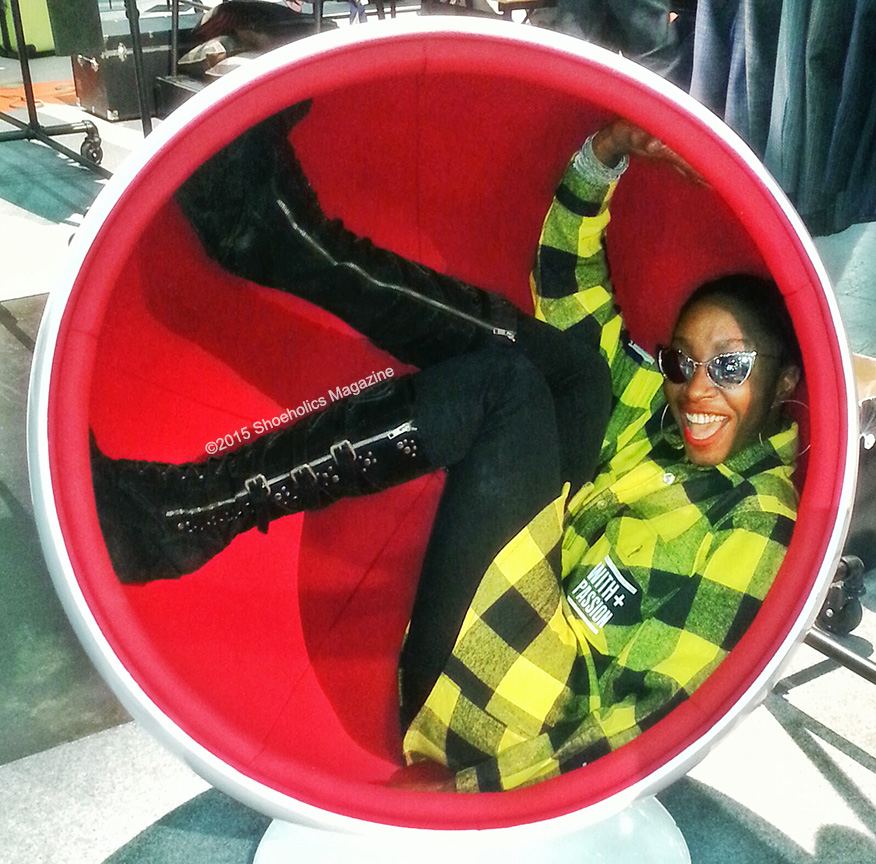
I’ve been on Instagram for about a year now and I find I post my shoes more than anything. Recently, I posted a picture of me in thigh-high boots. I’ve become more daring with my shoes; I guess is what I’m trying to say. Thigh-boots, laced all the way up the front to the thigh, that’s seductive.

I met my friend in the park and we took a picture of me in those thigh-high boots and a one-piece swimsuit with a high-waisted cinch belt and I posted it and the picture went viral. It was shared almost 200 times in the last five days. That’s the beauty of what I do and it’s very pleasant.

Samir Husni: If someone is reading this interview, they’re going to think that you’re living the dream, that you’ve never had any stumbling blocks and everything has gone your way. But was there a stumbling block that you had to overcome?

997085_10152678117466201_2409483018856811511_n Tinu: There was one particular public figure that I wanted to interview, but her people had a different mindset. Some people don’t understand the concept of being a shoe collector; they think it’s a joke. But this particular person happened to have a gatekeeper who didn’t get it when came to fashion, because I Googled her and researched her.

So, that’s a downside to the business; when you want to interview someone and you can’t get them. But I don’t think it’s unique to me; it happens a lot.

Samir Husni: If someone like me, who has an addiction besides magazines, neckties; 1800 of them so far, comes to you and says, Tinu, you took your addiction and started Shoeholic Magazine, should I start a Tieholic magazine?

Tinu: I don’t see why not.

Samir Husni: (Laughs) I don’t have time for one thing.

Tinu: I understand that.

Samir Husni: My typical last question; what keeps you up at night?

Tinu: My shoes, of course. A lot of times when I’m at home and bored, I put on a pair of shoes and get into bed and just relax. (Laughs)

Samir Husni: Thank you.
h1

Travel With A Purpose: Smithsonian Embarks On New Journeys (The Magazine, That Is). The Mr. Magazine™ Interview With Publisher Steve Giannetti And Editor-in-Chief Victoria Pope

April 15, 2015

“I’m very excited about this part of our business. I was brought up in print and I do believe that it’s the role of print and how it plays in the overall world of our media. You see it as much as I do; now we’re seeing digital-only plays that want to get into the print business and so, isn’t it right that we should actually start with the median and grow it the other way? That’s where I see the future going, creating content that can be deeper and articulated in different ways in the world of publishing.” Steve Giannetti

“I believe very much in the importance of the commercial side. I don’t feel successful without being successful.” Victoria Pope

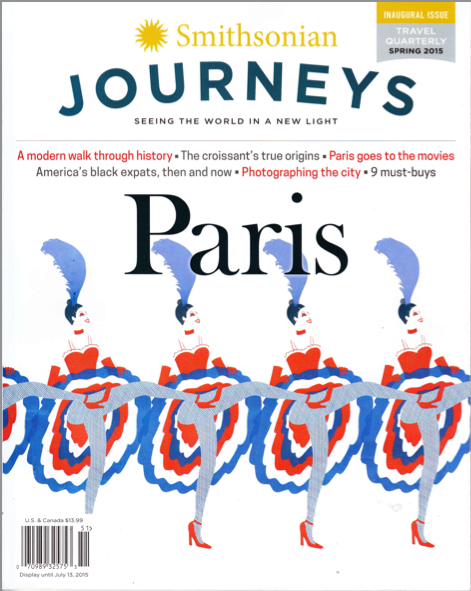
SJ If you love to travel and you love to learn about the places and destinations you’re traveling to, then Smithsonian’s new magazine, Smithsonian Journeys is for you. The magazine could easily have the tagline, “Travel with A Purpose.” Of course, the one it has bodes well for it too, “Seeing the World in a New Light.”

Steve Giannetti is the chief revenue officer and Victoria Pope is editor-in-chief and the two together have a collaborative bond that is apparent throughout the pages of the sleek magazine. The editorial is wonderful and the ads are dynamic and only add to the energy and flow of the magazine.

I spoke with Steve and Victoria recently and they praised their new baby as only parents could and should, without ignoring the inherent pitfalls of growing up that every infant has. The power and beauty of print was a driving factor behind the powers-that-be of the Smithsonian’s decision to launch a new title. And by the deep, enriched feeling you get from just flipping through the pages, I would say they made a stellar decision.

So, sit back and enjoy the Mr. Magazine™ interview with Steve Giannetti, Publisher and Victoria Pope, Editor-in-Chief, Smithsonian Journeys.

But first, the sound-bites:

On why Smithsonian decided to launch a print magazine in a digital age: What a great opportunity to create a tangible, tactile, beautiful product that is able to take all of our travel resources and put them together in one place. (SG)

On why Paris was the city of choice for the first issue: Honestly, when I came into the job, I could do whatever I wanted, but within a very short period of time. And I wanted to pick a place that I felt I knew on the ground a bit. I knew a little bit about Arab culture there; I had read a lot about black American culture historically there, so I felt like I had a strong starting point. (VP)

On whether the history of the city or region chosen will play an integral part of every issue: That’s the idea. We’re in the midst of doing an issue now that will be on what’s called the “Inca Highway,” the countries of the Andes, so Peru, Ecuador, Bolivia and Chile. Again, it’s trying to create a rounded, curated view of that region. We have a piece on what’s called “Astro Tourism” in Chile, which is to say it’s going to be a story on the southern night sky and about stargazing. (VP)

On whether anyone told Steve that Smithsonian was out of its mind for launching a print magazine today: I can tell you that exact quote was said to me several times. I was asked why we would do it and I explained to them that if you look at the magazine business today, Samir, where is it resonating the most? With high quality, beautiful, tactile publications and that this is far more than just a magazine print launch. And I also said wait until you see the issue.

On where Steve sees the future of print: There is no doubt the future of print, I think, is creating products that are more a part of a larger medium mix, it’s not just print alone. It’s now the launching point of a content platform that we’re going to be expanding, so I see this more as print’s role in the entire medium mix and I see us growing in, and I don’t want to call them niches, because that’s not the right word, but I see us growing in areas that can create content that is deeper and more easily articulated in other platforms. And I think consumers will pay for that. And if consumers pay for it, advertisers will follow.

On the major stumbling block Victoria felt they had to face while launching the magazine: Of course, you have to start small and by that I mean small budget as well. For me, it’s been quite an issue to find the kinds of contributors that I want in a foreign venue. I have to start from scratch basically when it’s a place far away. I don’t have the budget to send people from the states and I’m not even sure that’s the model that I want to follow.

On Steve’s opinion of the biggest stumbling block: The biggest stumbling block was really in convincing people that we were creating a beautiful product that no one had ever seen before, but tell them also that they were going to have trust and take that ride with us.

On whether Steve believes pricey magazines and consumer-driven revenue may be the new business model for magazines: As the chief revenue officer and I’m also in charge of consumer marketing as well, so yes, I don’t want to be reliant on just sponsors and advertisers, so the answer to that question is yes. We do feel a product has to be paid for, or at least somewhat paid for or monetized through the consumer.

On the human being Victoria feels the magazine would become if struck with a magic wand that could turn Smithsonian Journeys into a person: It’s Victoria, but it’s also the Smithsonian Journeys traveler, frankly. I spent a lot of time talking with the people on the travel side about the people they’ve met on the trips, who they are and what they are, people who are autodidacts, who are very interested in all kinds of subjects. Then I try to incorporate my personality and the things that I’m interested in and the visual sense of the art director, in with those people, so truly it’s rather a cohort of people.

On what motivates Victoria to get our bed and look forward to going to work: I really love the process of figuring out how the magazine is going to look with the art director.

On what motivates Steve to get out of bed and look forward to going to work: Having been in this business for a long time, what I really love about getting up today is that we’ve created a new product that’s amazing. I’m sitting here with the editor-in-chief, right? I believe in church and state, but what I really love is that we’ve created this arm-in-arm, not me telling Victoria how to write the edit or what to write, but us constantly talking about how we can make it better and sharing what we think about every facet of the magazine.

On what keeps Steve up at night: What keeps me up at night is very simple right now. It’s that I know we’ve created a great product, but is the consumer going to think it’s great.

On what keeps Victoria up at night: I’m kept awake by the many needs to move very quickly ahead and whether I’ll be able to make something as good as I want it to be. There really isn’t a lot of time between issues, it seems that way, and that keeps me up.

And now for the lightly edited transcription of the Mr. Magazine™ conversation with Steve Giannetti, Publisher, and Victoria Pope, Editor-in-Chief, Smithsonian Journeys.

Samir Husni: Why did Smithsonian decide to launch a new magazine in print in today’s digital age?

Steve Giannetti Photo Steve Giannetti: There are a couple of reasons why and the first one is that travel is in the DNA of the Smithsonian brand and our travel division is called Smithsonian Journeys. Smithsonian Journeys is a place where you can book a trip to virtually any place in the world and when you go on one of our trips a Smithsonian expert is with you. This has been around for about 30 years and it’s a really robust business for us.

From a commercial standpoint, travel has been a really large part of our advertising and sponsorship and the Smithsonian consumers love to travel; we know that from our business; they have money and they have time.

We felt with all these areas coming together; what a great opportunity to create a tangible, tactile, beautiful product that is able to take all of our travel resources and put them together in one place. That was really the genesis of this idea and then we brought Victoria on, who used to work at National Geographic, and she’s just brought a whole new perspective. As we say on the cover: seeing the world in a new light is exactly what this publication is about.

Samir Husni: Victoria, that leads me to the question, why did you choose the city that never ceases to delight and fascinate Americans, Paris, for the first issue?

Victoria Pope: (Laughs) Doesn’t that say it all? Honestly, when I came into the job, I could do whatever I wanted, but within a very short period of time. And I wanted to pick a place that I felt I knew on the ground a bit. I knew a little bit about Arab culture there; I had read a lot about black American culture historically there, so I felt like I had a strong starting point. I also just wanted a place in which we could follow very vividly the template that I think is important in this kind of journalism, which is taking history and bringing it into the modern and bringing it alive. Paris is a city that does have those connections everywhere, so it was a good model location for us.

Samir Husni: Victoria, what was your position at National Geographic?

Victoria Pope Headshot Victoria Pope: I had several positions. For most of my nine years there I was deputy to the editor-in-chief, so I was number two at the magazine.

Samir Husni: When I flipped through the pages of the first issue, I felt as though you were a curator of Paris. If someone is interested in Paris and its history and how it relates to Americans; you’ve done a great job with that curation. Is this what we’ll see with every issue’s topic?

Victoria Pope: That’s the idea. We’re in the midst of doing an issue now that will be on what’s called the “Inca Highway,” the countries of the Andes, so Peru, Ecuador, Bolivia and Chile. Again, it’s trying to create a rounded, curated view of that region. We have a piece on what’s called “Astro Tourism” in Chile, which is to say it’s going to be a story on the southern night sky and about stargazing.

Then there will be a piece on La Paz on the ways in which superstition infuses everyday life. Charles Mann, who is the author of 1491, is going to be looking at the ecology of the region and how that ecology really gave it the possibilities of becoming a great civilization back at the time of the Incas. And several stories deal with Incan civilization.

What we do know with each issue is that we want to follow the kinds of subjects that are most important to the Smithsonian readers, meaning Smithsonian in a general sense, the Smithsonian partaker, if you will, the people who go on tours and who like the museums in the magazine. And we’re always going to try and have one science story; we’re always going to have history, whether it be deep history, like archaeology in the case of the Andean countries, or in the case of Paris, we went back to the 17th century.

So we know that these two elements will be in each issue and then also a certain amount of food history, but also some contemporary food reporting. We feel that people care about this a lot and we’re trying to do everything a little bit deeper than it is in most travel publications because I personally find that most travel magazines don’t give me enough of what I want.

I was a foreign correspondent for over 10 years and I remember that when people would visit me, tourists and friends, they really wanted to know about the places; they really wanted to know more than just what they could find out quickly in a list of places to see, such as monuments and restaurants, and that’s what we’re trying to cater to.

Samir Husni: Steve, this is a print publication in a digital age and as the chief revenue officer, you had the responsibility of trying to sell this magazine to advertisers. Did anybody tell you that you were out of your mind to bring another print publication into this digital age?

Steve Giannetti: I can tell you that exact quote was said to me several times. I was asked why we would do it and I explained to them that if you look at the magazine business today, Samir, where is it resonating the most? With high quality, beautiful, tactile publications and that this is far more than just a magazine print launch. And I also said wait until you see the issue.

The initial response was that, but after a bit it was more of, I’m really happy you’re doing this and that you’re staying committed to a platform that is very important. And as you can see, we were very successful in bringing in a quality group of advertisers to the magazine and we hope to bring in more.

Samir Husni: The whole “print is dead” marching band has dissolved and now the new group’s mantra is “print is in decline.” Where do you see the future of print?

Steve Giannetti: There is no doubt the future of print, I think, is creating products that are more a part of a larger medium mix, it’s not just print alone. It’s now the launching point of a content platform that we’re going to be expanding, so I see this more as print’s role in the entire medium mix and I see us growing in, and I don’t want to call them niches, because that’s not the right word, but I see us growing in areas that can create content that is deeper and more easily articulated in other platforms. And I think consumers will pay for that. And if consumers pay for it, advertisers will follow.

I’m very excited about this part of our business. I was brought up in print and I do believe that it’s the role of print and how it plays in the overall world of our media. You see it as much as I do; now we’re seeing digital-only plays that want to get into the print business and so, isn’t it right that we should actually start with the median and grow it the other way? That’s where I see the future going, creating content that can be deeper and articulated in different ways in the world of publishing.

Samir Husni: What was the major stumbling block that you had to face during this launch process and how did you overcome it?

Steve Giannetti: In terms of advertising or in general?

Samir Husni: In general, or in terms of what you consider the major stumbling block from the point of conception to the point of birth of Smithsonian Journeys?

Victoria Pope: Of course, you have to start small and by that I mean small budget as well. For me, it’s been quite an issue to find the kinds of contributors that I want in a foreign venue. I have to start from scratch basically when it’s a place far away. I don’t have the budget to send people from the states and I’m not even sure that’s the model that I want to follow. I felt finally, when I did get the freelancers that I wanted in Paris to contribute that I would be much happier that I had people who were based in Paris doing it than sending people that I knew from National Geographic or some other place to go over, but it’s very tricky to do that and also not have a very big budget or lead time.

Those are the typical kinds of problems of a start-up and you work on fumes a lot of the time. I’m just very pleased that the first issue has turned out well and I think the second issue will be very good too and we’ll probably be able to grow and put more resources quickly into it.

Steve Giannetti: And that’s the word: resources. The biggest stumbling block was really in convincing people that we were creating a beautiful product that no one had ever seen before, but tell them also that they were going to have trust and take that ride with us. There are going to be bumps from a budgeting standpoint, and I from the chief revenue officer’s standpoint said, we’re going to bring more advertisers into this as well. Hopefully, Samir, what we’re going to find is that it won’t be just travel advertisers, but we’ll get more advertisers that are in the travel genre.

And once we overcame that and people started seeing the magazine being created and seeing it as it grew, internally here at the Smithsonian it’s become a fulcrum of “I want to see this.” I’m in D.C. and I’m carrying a copy and keeping it close to my vest so people don’t steal it from me.

It took a while to get over that first hump, but once we got there and people saw what we were creating and the type of advertising that we were bringing in and the product itself, everybody called and said let’s do it. And you get that with a lot of start-ups.

Samir Husni: I noticed that the cover price is $13.99, for one issue, while you can get almost an entire year of Smithsonian for that price. Is this the new model? Are we going to see more consumer-driven revenue generation from print than from advertising?

Steve Giannetti: As the chief revenue officer and I’m also in charge of consumer marketing as well, so yes, I don’t want to be reliant on just sponsors and advertisers, so the answer to that question is yes. We do feel a product has to be paid for, or at least somewhat paid for or monetized through the consumer. To be successful in the future, Samir, I think any print publication has to look at that model, absolutely.

Samir Husni: The new magazine that National Geographic just launched, National Geographic History, the cover price is $9.99 and published 6 times per year, so we’re starting to see these high cover prices, which to me is sending a signal that if you really like what you see, you will pay for it.

Steve Giannetti: That’s exactly right and remember, Smithsonian Journeys is all original editorial, while some launches are able to use and take into consideration refurbished editorial. So nobody has seen this before. And we felt if we were able to create this unique editorial, it would be great. And this is unique, not only in terms of the content, but also in the view that we’re looking at traveling, and I think this is something that consumers will pay for. And the consumers will talk, so knock on wood, Samir; I’m hoping you’ll buy 200 copies. (Laughs)

Samir Husni: (Laughs too) Victoria, if I give you a magic wand and you strike Smithsonian Journeys premier issue with it and a person, a human being, appears in place of the magazine; who would it be and how will that person, male or female, engage with the audience?

SJ Victoria Pope: It’s Victoria, but it’s also the Smithsonian Journeys traveler, frankly. I spent a lot of time talking with the people on the travel side about the people they’ve met on the trips, who they are and what they are, people who are autodidacts, who are very interested in all kinds of subjects. Then I try to incorporate my personality and the things that I’m interested in and the visual sense of the art director, in with those people, so truly it’s rather a cohort of people. I try to bring all of that into this person who represents the magazine. And I think if that’s successful, then I’ve reached a large enough readership. We don’t need to be huge; we just need to be…

Steve Giannetti: …loved. (Laughs)

Victoria Pope: By a subset of people who love to travel and like knowing about places and like the idea of reading several stories about a region or a city at once. And I have to say, I think quite a few people fit that.

Steve Giannetti: If you were going to go to Paris and you read this magazine, I think you’d have a huge head start on seeing the city in a way that probably you would not have experienced in a first-time journey. And that’s what our people want. The traveler from Smithsonian; the cultural traveler wants to learn about things that are new. Not new in the fact that they’re brand-new, but they’re uncovered. They like to discover and they’re curious and that’s the type of person that we want to read this. The ability to take this content and grow it out is something that I’m excited about as well.

Samir Husni: What is the initial launch; can you share some numbers?

Steve Giannetti: We’re putting out 150,000 on the newsstand and I have some alternate distribution going into some cruise lines as well. So, it’s probably about 170,000 altogether.

Samir Husni: Will the magazine have subscriptions or be strictly on the newsstands in the beginning?

Steve Giannetti: Good question. What we did, Samir, was a pre-launch email exchange with some of our list to see if they would buy the magazine in advance. And the response has been very robust, so that’s good. And we have a card in the magazine that asks the reader if they’d like to receive it, I want to get that feedback. I would love to grow it, but right now I think you have to establish the beat ship with the fact that if it works on the newsstand, I would love to grow it, yes. But we have to wait and see what the consumer says here first, if that makes sense.

Samir Husni: Most good magazine launches considered the newsstand as their acid test; if it worked on the newsstand first, then they could go from there.

Steve Giannetti: That’s exactly right. We’re confident that this is going to work, that’s why we’ve committed to four of these.

Samir Husni: Victoria, would you think it was a horrible nightmare if Steve came to you and said let’s do this magazine monthly?

Victoria Pope: (Laughs)

Steve Giannetti: (Laughs too) Yes, the answer is yes.

Victoria Pope: Definitely. (Laughing) That would be an impossibility, but we do need to grow in a lot of ways. We need to grow both in having more editorial products, whether they are specials that come out of Journeys or other things. I have lots of ideas of things that we could produce. I want to spend my free time that I’ll someday have, building up our digital extensions, because I feel there is so much that I could do to help them. We want to make at lists of eating, for example, with the feature that we have on food and the history of food, a very regular and important feature digitally, so I’m trying to get people every week to write something on the subject of food history. We have many things to do beyond the print location.

Steve Giannetti: So, the growth process is to not necessarily increase frequency, it’s increasing the engagement with the consumer in different areas of this great content. And I think if we can do that, frequency will become part of it, but that’s really not going to be our barometer of growth. You don’t want to be just pumping out magazines that don’t have the quality that we have with the Smithsonian. Quality is something we always strive for, whether it’s the magazine or anything else we do. We always ask the question, is this going to represent the brand that we have to represent?

Samir Husni: Anything else either of you would like to add?

Victoria Pope: When you have time to settle down and read it; I’d love to have your thoughts about how we could make it better. Maybe it’s unfair to ask that of you, but I’d love to have your practiced eye to tell us what you think might be missing because it’s evolving; it’s definitely going to evolve.

Samir Husni: I’ll be more than happy to do that.

Samir Husni: Victoria, what makes you get out of bed in the mornings and motivates you to say, wow, I can’t wait to get to work?

Victoria Pope: I really love the process of figuring out how the magazine is going to look with the art director. I have, for probably the fifth time in my life in journalism, probably the perfect partner in my art director because we’re able to bounce ideas off of each other and we often agree about things and that to me, being able to create a product that’s so visual and written that is in harmony, where the visuals are exciting and help to bring people into the storytelling, is really wonderful.

Samir Husni: And Steve?

Steve Giannetti: Having been in this business for a long time, what I really love about getting up today is that we’ve created a new product that’s amazing. I’m sitting here with the editor-in-chief, right? I believe in church and state, but what I really love is that we’ve created this arm-in-arm, not me telling Victoria how to write the edit or what to write, but us constantly talking about how we can make it better and sharing what we think about every facet of the magazine. So, it has really re-jazzed me and reenergized me to say that I’m in a business that has a lot of growth areas.

We’re working together now and I really love that. Years ago, the church and state chasm was so big that it just didn’t work. But now, being able to collaborate on something new and come out with a great product, that’s really energizing, even for an old guy like me.

Samir Husni: (Laughs) Steve, since you mentioned the old guy and I did not, my typical last question; what keeps you up at night?

Steve Giannetti: (Laughs too) What keeps me up at night is very simple right now. It’s that I know we’ve created a great product, but is the consumer going to think it’s great.

Samir Husni: And Victoria?

Victoria Pope: I’m kept awake by the many needs to move very quickly ahead and whether I’ll be able to make something as good as I want it to be. There really isn’t a lot of time between issues, it seems that way, and that keeps me up. I still have two assignments to make for the next issue.

Let me just say something about the collaboration with Steve. It’s been really nice. I remember the very first day we met on my fifth day on the job and I said, I think that we’re going to have to stream these quarterlies; it’s going to be better if we just, instead of covering the world every four months, we narrow it down to cities and regions. And Steve immediately picked up on that and was able to reinforce what I was thinking editorially from a business standpoint. And that meant a lot to me.

I believe very much in the importance of the commercial side. I don’t feel successful without being successful.

Samir Husni: Thank you.
h1

Rodale’s Organic Life: The Story Of A Perfect Magazine Launch from Conception to Delivery. The Mr. Magazine™ Interview With Editor-in-Chief James Oseland And Publisher Ellen Carucci.

April 13, 2015

“There is something very particular about the act of physically holding a magazine in one’s hand and flipping through it slowly, then placing it aside onto your nightstand or coffee table or kitchen counter and returning to that same thing that you placed aside an hour later or even a few days later. The way that our minds and indeed our bodies interact with printed matter, it’s simply not the same.” James Oseland


“I almost think there is sort of a rebellion against people’s screens right now. I was reading books on Kindle until a couple of months ago; I’m hearing that hardcover books are having resurgence. I think people want something in their hands, they spend so many hours on their screens for work, I think they’re looking for an opportunity to disconnect and have their own personal time.” Ellen Carucci

Rodale's Organic Life Sub. J.I. Rodale founded Rodale in 1930. His granddaughter, Maria Rodale, delivered the dream that her grandfather envisioned 85 years ago. That vision is encapsulated between the covers of the premiere issue of Rodale’s Organic Life magazine. Under the watchful eye of Editor-in-chief James (Jim) Oseland and the marketing skills of publisher Ellen Caruuci, the first issue of the magazine delivers 158 hefty pages from which 54 pages are advertising pages.

From the moment of conception, to the hour of delivery, this is the story of a perfect magazine launch in 2015. I spoke with Jim and Ellen separately and I tried my best to reconstruct the organic launch story of a magazine that in fact has been 85 years in the making. The dream of J. I. Rodale has been fulfilled and as he looks down from above, you can hear him tell the team, ” a job well done.”

So, I hope you enjoy these interviews with two people who know how to live an “Organic Life” and are ready to help all of us do the same.

But first the sound-bites:

On James’ description of the moment of conception for Organic Life:
It was an exhilarating moment, the promise that the concept held just immediately got my creative juices flowing.

On Ellen’s description of the “pregnancy and delivery” for Organic Life:
I think relatively painless.

On James’ opinion of what Organic Life is all about: Organic Life is a new brand for the very many of us who are striving to live better, to consume and shop responsibly, to raise and interact with our families responsibly, and to tend to our living environment very mindfully, but do all of the above with a kind of gusto and vibrancy as well.

On whether Ellen heard the phrase you’re out of your mind to launch a print magazine in a digital age:
I didn’t hear it often. I heard it maybe once or twice and people didn’t phrase it as are you out of your mind, it was kind of like, wow, you’re brave. But my feeling is that for a magazine that has lush photography, that has a very artisanal feel to it; there will always be a market for that.

On any stumbling blocks James felt he had to face:
You know, it’s the strangest thing, Samir, there weren’t any. I mean, there were a couple of small banana peels along the way, but in my now almost four decades of making things, from being a filmmaker in my twenties, to my years of association with Saveur until now; I have never encountered a creative process so easy and so inspirational; I kid you not.

On Ellen’s opinion of the magazine’s competitive set:
That’s an interesting question and I actually just heard from an agency in Minneapolis recently where the lady said, wow, there really isn’t anything like this in the marketplace. Figuring out our competitive set is going to be a little bit tricky.

On why Ellen believes there has been this sudden reemergence of print with major publishers:
I almost think there is sort of a rebellion against people’s screens right now. I was reading books on Kindle until a couple of months ago; I’m hearing that hardcover books are having resurgence. I think people want something in their hands, they spend so many hours on their screens for work, I think they’re looking for an opportunity to disconnect and have their own personal time.

On James’ thoughts of what J.I. Rodale would think about Organic Life:
That’s a really beautiful question. We had a launch toast just yesterday here in Emmaus (Pennsylvania) for the entire Emmaus staff. Roughly, 400 people gathered together and Maria gave a really beautiful short speech at the beginning of the toast answering that exact question. I think she’s far more the appropriate person to answer that question than I would be and what she said was, she felt that what we had created had harnessed her grandfather’s and her father’s aims and ideologies, the things that thrilled them most about the possibilities of what human beings can do in a very grateful and eloquent, beautiful and true way.

On Ellen’s thoughts of what J.I. Rodale would think about Organic Life:
I think he would say that at last the rest of the world has caught up.

On what makes James click and tick:
The idea that I am the luckiest person in the world because I get to spend every day of my adult life making beautiful and smart things. I feel very privileged to be able to do that.

On what makes Ellen click and tick: I believe that I’m working for a company that is so different from any other magazine company out there because I think this company walks the walk and talks the talk and the whole mission of well-being and wellness is so core to Rodale.

On anything else Ellen would like to add:
I think the one point that I want to make is this is a magazine that’s a very inclusive brand and I don’t want people to be scared off by the fact that we have organic in the title, because we’re organic with a small “o.”

On what keeps James up at night:
I tend to be someone who is restless with my own sense of perfection and so I’m always wanting to do better and go farther and though we might have moved mountains during the course of any particular day, I have a hard time letting go at night of my mind figuring out other ways in which that mountain could have been moved, perhaps even better.

On what keeps Ellen up at night:
What keeps me up at night is there is simply not enough hours in the day for me to get to all the places where I need to get to.

James Oseland And now the lightly edited Mr. Magazine™ conversation with James Oseland, Editor-in-chief, Organic Life & Ellen Caucci, Publisher.

Samir Husni: Jim, first, congratulations on the new magazine, Rodale’s Organic Life.

James Oseland: Thank you.

Samir Husni: You wrote in the editor’s letter of the first issue: magazines are slow foods, made to be lingered over, but the internet is also a keen resource for organic living; your Smartphone is the library of Alexandria; a symphony hall, and a weather station in your pocket; how amazing is that. Jim, how amazing is that?

James Oseland: Yes, it’s very amazing. The odds of all this constant 24-7 accessibility to information; I can be driving on a Lebanese country road and curious about an unfamiliar species of coniferous tree and get to the bottom of that species, from its name to its lifespan to its growing requirements, within minutes. It’s mind-blowing, the access to information about all aspects of life on earth that are literally at our fingertips. The only times that information isn’t accessible is when we’re out of range, but most places on planet Earth these days, at least the inhabited ones, you’re very in range.

It’s very easy to decry the internet and maybe some of the less lofty information streams available on it, from celebrity-plastic-surgeries-gone-wrong galleries to even sillier stuff, but the fact is it’s just an extraordinary tool. Internet accessibility is an extraordinary tool if one uses it mindfully and conscientiously.

That being said, there is something very particular about the act of physically holding a magazine in one’s hand and flipping through it slowly, then placing it aside onto your nightstand or coffee table or kitchen counter and returning to that same thing that you placed aside an hour later or even a few days later. The way that our minds and indeed our bodies interact with printed matter, it’s simply not the same. I’m not a scientist and I can’t precisely put my thumb on what the physiological ramifications of that action or process is, but I just know that as a human being it’s just not the same thing. I know how I read on my Smartphone or on my laptop or even on my desktop, it has nothing to do with the way that I react and interact with a print magazine.

I think the fact is, what a fantastic moment we’re living in when we’ve got on the one hand, this accessibility of infinite information and on the other hand this sacred, simple and very satisfying reality of having a print magazine. I see it as a best-of-both-worlds moment.

Samir Husni: As an editor of a brand new magazine; the first issue is out on the newsstands on April 13, can you recreate that genesis; that moment when you first sat down with the Queen of Organic, Ms. Maria Rodale, and found out Rodale was going to do this new magazine, Organic Life? Can you describe that moment of conception?

James Oseland: Sure. Maria and I are old friends going back to when I worked on Organic Style with her. We had spoken directly, and largely indirectly, about doing something else at some vague point in the future; however, what we’d spoken of didn’t take this specific form until roughly winter 2013.

And when she presented the specific construct of Organic Life, it wasn’t called that yet, it was, I can honestly say, absolutely and truly one of those rare moments that come along where it was nothing short of a lightning bolt or an epiphany; it was, “yes, I get that. I see that, so absolutely and so vividly. Why hasn’t this existed before? Let’s get on it.”

So, it was an exhilarating moment, the promise that the concept held just immediately got my creative juices flowing.

Samir Husni: For those who don’t yet have a copy of the first issue in their hands; can you briefly tell me what Organic Life is?

James Oseland: Organic Life is a new brand for the very many of us who are striving to live better, to consume and shop responsibly, to raise and interact with our families responsibly, and to tend to our living environment very mindfully, but do all of the above with a kind of gusto and vibrancy as well.

We strive to be a magazine that celebrates the idea of doing better and that empowers all of our readers, whether they are die-hard, fully immersed people in the world of organic, or those that are just discovering it for the first time. We want to welcome everybody to the table with a beautiful, immersive print magazine, which in certain respects is a kind of throwback to the glory days of the magazines of my youth. I think of Life and Look, Time and Newsweek with their comprehensiveness and their beauty; their power and ability to transport readers to someplace else, to edify and enthrall me with beauty. We’re striving to do nothing less than that and I realize that might sound like a really tall order, but to my mind we’re ready for it.

And as I was referencing a moment or two ago, it’s odd that such a title in this particular set hasn’t existed before. So, that’s largely a very, very thrilling concept that it hasn’t. It’s a kind of wonderful, glorious open-field moment for those of us who are creating it.

Samir Husni: From that moment of conception to the time of birth, were there any stumbling blocks during the pregnancy and if so, how did you overcome them?

James Oseland: You know, it’s the strangest thing, Samir, there weren’t any. I mean, there were a couple of small banana peels along the way, but in my now almost four decades of making things, from being a filmmaker in my twenties, to my years of association with Saveur until now; I have never encountered a creative process so easy and so inspirational; I kid you not. From start to finish there was this kind of subconscious knowledge inside of me and the very wonderful team that we put together, that no, we’re doing the right thing here and everything just flowed. I’ve never encountered such an easy situation putting together something, especially from scratch.

Samir Husni: Do you think the reason for that easy pregnancy was the concept of the magazine or the people you have surrounded yourself with?

James Oseland: I think both. You know, it’s just something, energetically speaking, where it all just came together. And who knows, it might have something to do with the fact that our terrific business manager, our general manager, Cindy Carter, is also a Reike practitioner. (Laughs) But I think in addition to Cindy’s absolutely proven, magnificent powers, the rest is just something so right and so accurate and so pure about this construct that it just flowed.

Not to mention the fact that there is something about the kind of purity and earnestness of Rodale itself that created this wonderful safety net as well as a source of automatic inspiration for what we’ve done. To my knowledge there is no other media company on earth that has the true physical heart and psychic soul of a 300-plus acre, experimental organic farm just a 20-minute drive from the home office. To be able to plug into all that means is almost like Rodale-the company did a significant amount of the work for us just by the very nature of the company, if that makes any sense.

Samir Husni: If the premier issue of Rodale’s Organic Life could be delivered to the founder of the company, Mr. Rodale, in his other life, what do you think his reaction would be?

James Oseland: That’s a really beautiful question. We had a launch toast just yesterday here in Emmaus (Pennsylvania) for the entire Emmaus staff. Roughly, 400 people gathered together and Maria gave a really beautiful short speech at the beginning of the toast answering that exact question. I think she’s far more the appropriate person to answer that question than I would be and what she said was, she felt that what we had created had harnessed her grandfather’s and her father’s aims and ideologies, the things that thrilled them most about the possibilities of what human beings can do in a very grateful and eloquent, beautiful and true way, and when she said that it was, for me, a very misty-eyed experience. I had not heard that specifically from her before and it was very gratifying to hear.

Samir Husni: What makes Jim tick and click every morning? What makes you get out of bed and motivates you to start your day?

James Oseland: The nice bowl of Muesli that I made the night before with all sorts of wonderful oats and wheat germ and chopped fruit. (Laughs) And the idea that I am the luckiest person in the world because I get to spend every day of my adult life making beautiful and smart things. I feel very privileged to be able to do that. There are lots of people who don’t have it so lucky and I don’t forget it for a second.

Samir Husni: My typical last question; what keeps you up at night?

James Oseland: I don’t think this is a contradiction to what I just said about what jumpstarts me every morning; I think it’s part and parcel, and all a part of this kind of strange and fabulous and sometimes infuriating miracle of the creative life, but I tend to be someone who is restless with my own sense of perfection and so I’m always wanting to do better and go farther and though we might have moved mountains during the course of any particular day, I have a hard time letting go at night of my mind figuring out other ways in which that mountain could have been moved, perhaps even better. It’s a kind of restlessness, but it’s a fire inside that I’ve just learned to accept and work with, rather than be consumed by.

Samir Husni: Thank you.
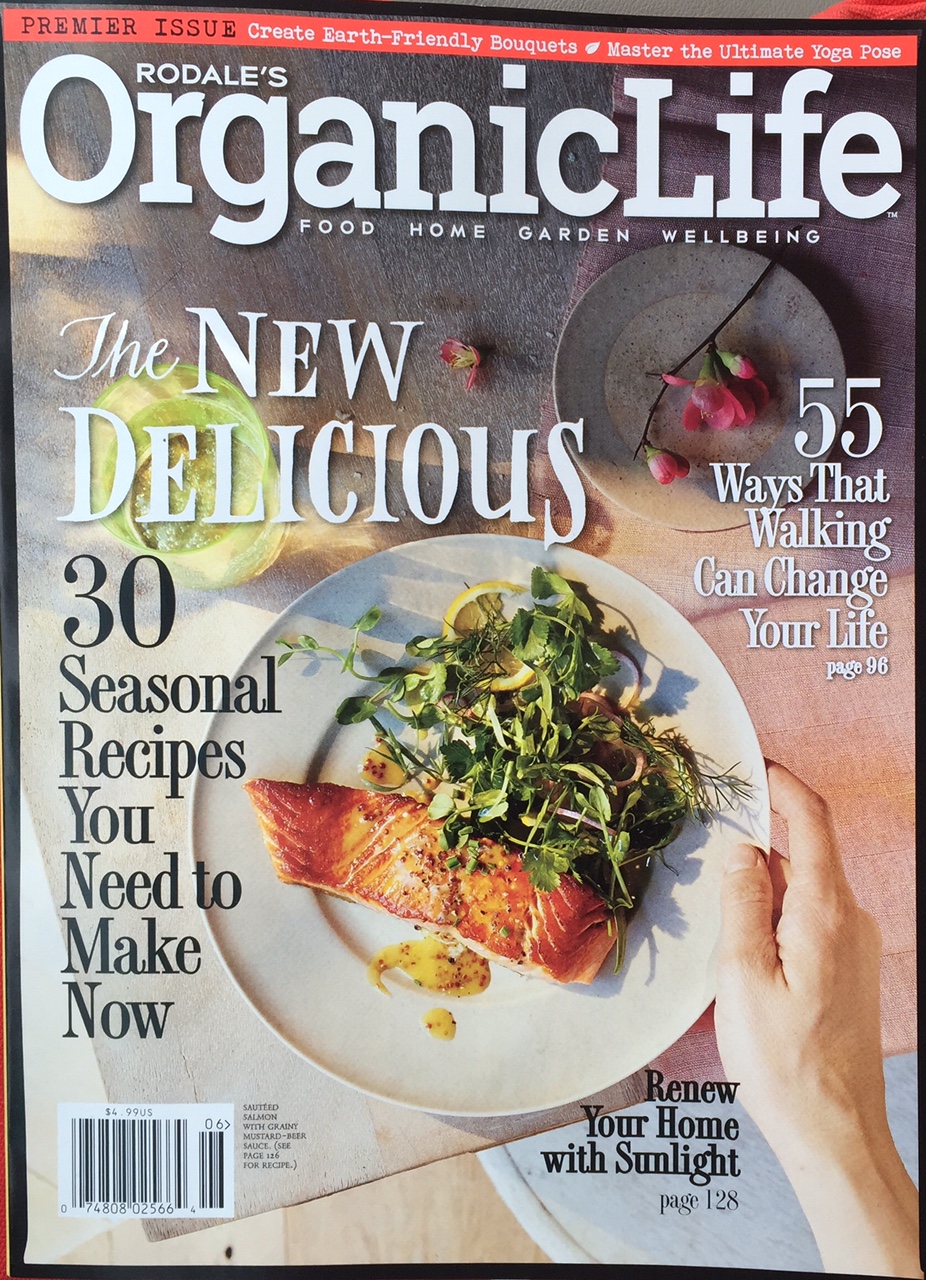
And now the Mr. Magazine™ conversation with Ellen Carucci, Publisher, Rodale’s Organic Life magazine…

Samir Husni: As I just asked Jim, since the moment of conception to the moment of birth; how was the pregnancy?

Ellen Carucci 2013_rev Ellen Carucci: I think relatively painless.

Samir Husni: As a publisher, when you went to talk to the ad agencies and the advertisers; did you often hear the question: are you out of your mind launching a print magazine in this digital age?

Ellen Carucci: I didn’t hear it often. I heard it maybe once or twice and people didn’t phrase it as are you out of your mind, it was kind of like, wow, you’re brave. But my feeling is that for a magazine that has lush photography, that has a very artisanal feel to it; there will always be a market for that. It’s not like we’re publishing a newsweekly where the information is already days old by the time the magazine hits subscribers’ mailboxes.

So, I think this is a very, very different kind of magazine. It’s a magazine that’s very lush; it’s got great photography, great production; it’s a fascinating read; it’s a brand that you want to curl up with. And I think that there will always be a place for that kind of print, at least for the rest of my lifetime.

Samir Husni: And when you’re told that there’s nothing like it in the marketplace; what can or could you compare it to?

Ellen Carucci: That’s an interesting question and I actually just heard from an agency in Minneapolis recently where the lady said, wow, there really isn’t anything like this in the marketplace. Figuring out our competitive set is going to be a little bit tricky.

In some ways, we look at Real Simple as kind of a magazine that we admire a lot. Our prototype for people who ask what kind of metrics they should use as far as MRI, we’re actually recommending a two-thirds Better Homes and Gardens and one-third Real Simple, but I also think that Martha Stewart and Oprah have affinities for the brand.

We’ll still have gardening, but it’s become a much less important content pillar than it obviously had been when we were Organic Gardening, because fine gardening is something we could look at, but certainly not for our media competitive set. But I think part of that is going to depend on the marketplace’s response.

Samir Husni: And so far I know that it’s just a first issue; how has the marketplace’s response been to you?

Ellen Carucci: The marketplace response has been phenomenal. Don’t forget that we’ve only had the issue in our hands for the last week. We had a prototype that we had on the marketplace in early January and the reception to the prototype was fantastic, but I’m in the wonderful position of saying that the real product has blown the prototype out of the water. People absolutely love it; they think it’s gorgeous and they think it’s beyond their expectations.

There is an element, and I think this is something that Jim intended right out of the gate; there is an element of surprise, delight, whimsy and of the unexpected that really rings through on every single page.

Samir Husni: Why do you think it was easy on you; you said it was an easy pregnancy; is it because you’re part of Rodale or can anyone create a magazine similar to Organic Life and have the response you’ve had from the ad industry?

Ellen Carucci: I could have scripted your question; thank you for asking it. It’s interesting, because J.I. Rodale said in 1942, when he was launching Organic Gardening and Farming; he said one of these days the public is going to wake up and be willing to pay more for eggs, meat and vegetables according to how they are produced. The fact that our founder said that in 1942, when people thought that we were better living through chemicals that were going to solve world hunger, gives us I think the authority and the authenticity to launch this, where no one else could have the same permission to do it.

And given the sidebar that the first advertising partner I told about the re-launch was Subaru, because they’ve been a very loyal organic gardening advertiser for many years, and they were thrilled and said they thought we were moving in absolutely the right direction and that they loved what we were doing with the brand. They also said that no one would believe how many magazines come in and pitch them with: oh, we’re green too; we’ve got this great green message. One of their ad directors said that we (Rodale and Organic Gardening) were green when the rest of the world was black and white. Rodale invented the category.

So, I think that being part of Rodale does give us the permission to do this and everyone knows that our roots are deep and that we’re so authentic in what we’re doing. It’s not like we decided to do this to jump on a bandwagon, we started the trend.

Samir Husni: I asked Jim if the magazine could arrive at the heavenly gates and Mr. Rodale could get a copy, what he thought his reaction would be. He told me what Maria said at the event you had recently, celebrating the launch with the team. If you were able to take J.I. Rodale with you on your sales calls; what do you think he would say to the advertising people?

Ellen Carucci: I think he would say that at last the rest of the world has caught up.

ROLnewsstands Samir Husni: Tell me, Ellen; this is a new launch, yet I know it’s rooted in Organic Gardening. Rodale tried Organic Style and it didn’t work; now with Organic Life everyone said it was so easy. Are you telling me that there were no stumbling blocks on the road of this new launch?

Ellen Carucci: Surprisingly few. I think the one difficulty might have been that there is always going to be that handful of advertisers who say, it sounds very interesting, send us the first issue. Those people who can’t make the leap of faith or they have a policy where they don’t do launches.

But a lot of people did take the leap of faith. So, I don’t think that there were any recurrent stumbling blocks that came up that we couldn’t easily overcome.

Samir Husni: How many ad pages did you end up with for the first issue?

Ellen Carucci: There are 54 ad pages in the first issue. And what I’m very excited about is that we have every main content well-represented. We’ve got food, home, garden and well-being.

Samir Husni: What makes Ellen click and tick? What makes you get up in the morning and motivates your day, making you glad to head to work?

Ellen Carucci: I believe that I’m working for a company that is so different from any other magazine company out there because I think this company walks the walk and talks the talk and the whole mission of well-being and wellness is so core to Rodale.

I’m also an organic gardener myself and a composter. I believe in sustainability, so I’m working for a magazine that’s mission I believe in so completely and I’ve also been in this business a long time and I’ve never worked with an editor that I’ve clicked with more than Jim. I think he’s a visionary, as well as one of the nicest people that I’ve ever had the privilege of working with.

I feel like this is my dream job. In all my years of publishing, to work for a magazine that’s mission is so in tune with, not only what I believe in, but also I feel is a magazine that’s so in the right place at the right time and hitting on so many key society trends that I think this is going to be a homerun. So, I am so jazzed to get to work every day. I’ve never been prouder in my career, frankly.

Samir Husni: Put your futuristic cap on for a moment, if you would; if I’m speaking with you a year from now, what would you like to tell me about Organic Life?

Ellen Carucci: That it did indeed become THE launch of 2015, as we had hoped. And that the circulation goals are exceeding our expectations. And that we have broken most of our target accounts, although there were a few tough nuts to crack, but that I think it’s an extraordinary success and will continue to be so. And I would like to say that in a year, we would have hit every one of our key metrics.

Samir Husni: What’s your circulation base now?

Ellen Carucci: It’s a 300,000 rate base. And what I’m very excited about is that Organic Gardening had fantastic content that was very hard to find on the newsstands. And you asked the question about starting a print magazine right now, but I also don’t want to leave out our beautiful website, which launched April 1. We are truly a multiplatform brand, so I don’t want to overemphasize just our print product.

In this day of newsstand consolidation, when we approached 98 different retailers and every one of them agreed to carry the magazine that told me that we’re on the right track. We’re going to be in every Whole Foods, the organic section of Wal-Mart; we’re going to be in every major grocery chain, whether it’s Kroger, Wegmans, Winn-Dixie, Safeway; we’re also in CVS and Rite Aid and in Lowe’s So, I think even our retail sales department was blown away by the positive response.

We’re going from having a newsstand draw of 15,000 copies per issue to 200,000. I believe the ability of new consumers to sample this is going to be phenomenal. We’re going to see where the circulation goes; it’s not like we have an artificial cap that we’re working toward, like we want to be at 450 by mid-2016, but we have high hopes that the circulation is going to grow.

The appeal for this magazine is going to transcend age and gender and I think it’s going to have enormous appeal to millennials, just because of the inherent value and sense of authenticity and artisanal qualities of the magazine. And the fact that it’s a fantastic and very unexpected read.

Samir Husni: It seems that suddenly, especially this month in April, this is around the fifth magazine coming to the marketplace from a major publisher. Meredith launched Parents Latina, Bauer launched Simple Grace, Smithsonian is launching Smithsonian Journeys, National Geographic launched National Geographic History and Rodale is launching Organic Life; why do you think there’s this sudden reemergence of print in this digital age?

Ellen Carucci: I almost think there is sort of a rebellion against people’s screens right now. I was reading books on Kindle until a couple of months ago; I’m hearing that hardcover books are having resurgence. I think people want something in their hands, they spend so many hours on their screens for work, I think they’re looking for an opportunity to disconnect and have their own personal time. And I think that’s part of what’s driving it.

But I have a question for you now. I know you have a copy of the magazine and I’m not sure how much of a chance you’ve had to dig into it yet, but I’d love to hear your thoughts on it.

Samir Husni: I read it cover to cover, including the Almanac. I loved it. I felt so close to the earth with it and an immediate connection. It gives you this pleasant, joyful feeling, which I don’t think any other medium besides a magazine can give you, especially if it’s a magazine that relates to your everyday life: food, gardening and your general well-being. It was very pleasant and I could see the pages of Organic Style and I could think that’s what went wrong with Organic Style, it never felt really organic like Organic Life does.

Ellen Carucci: I think the element of joy, whimsy, surprise and connection to nature that you feel on almost every page is obvious. Maria’s column, which was her talking about raising children and that even though she may not have made her own baby food and used disposable diapers for the first child, she said the number one organic ingredient that you can give your children was unconditional love.

And even in Jim’s editor’s letter; I think it’s so in touch with what people need to hear right now. It may sound kind of hokey, but that old chestnut is true: your body is a temple and sometimes that means yoga, but sometimes it means chocolate cake too.

I think a lot of people are going to be surprised by the joyousness and the whimsy of this magazine. I think it’s going to be a lot more fun than people may have expected.

Samir Husni: Yes, and that was the biggest surprise that I received from reading it too, the fun part. And that’s why I asked Jim how it felt to work with the Queen of Organic, so I’ll ask you the same question; how does it feel working with Maria?

Ellen Carucci: Maria is the loveliest, most down-to-earth person in the world. I love her self-deprecating humor. She comes across so personally, especially in the column that she’s written for the first issue. She’s a force of nature and she has a big legacy on her shoulders and she wears it beautifully.

Samir Husni: It seems that what I hear from almost everyone who knows Maria or who works at Rodale, that there is this connectivity, even among the team at Organic Life. I guess all your feet are grounded in the soil and then you’re heads are above the clouds.

Ellen Carucci: There is truly a sense of shared missions here that I’ve never felt any other place that I’ve worked.

Samir Husni: Is there anything else that you’d like to add?

Ellen Carucci: I think the one point that I want to make is this is a magazine that’s a very inclusive brand and I don’t want people to be scared off by the fact that we have organic in the title, because we’re organic with a small “o.” We don’t really think of ourselves as organic; we don’t think of the USDA terminology of organic; we don’t think of growing without pesticides, if you look at the Webster’s Dictionary definition of organic; it means systems more closely aligned with nature.

So, I want people to know that no matter where they are in their journey, even if they don’t compost, even if they don’t like kale; they’re welcomed to a seat at our table. Whatever small stages; whatever life changes they’re making right now to live better, healthier lives, we embrace that and we’re happy to help people on their journey and we’re not hardcore; we’re not militant; we’re not preachy and I think that’s an important takeaway that we want people to know.

Samir Husni: My typical last question; what keeps you up at night?

Ellen Carucci: What keeps me up at night is there is simply not enough hours in the day for me to get to all the places where I need to get to.

Samir Husni: Thank you.
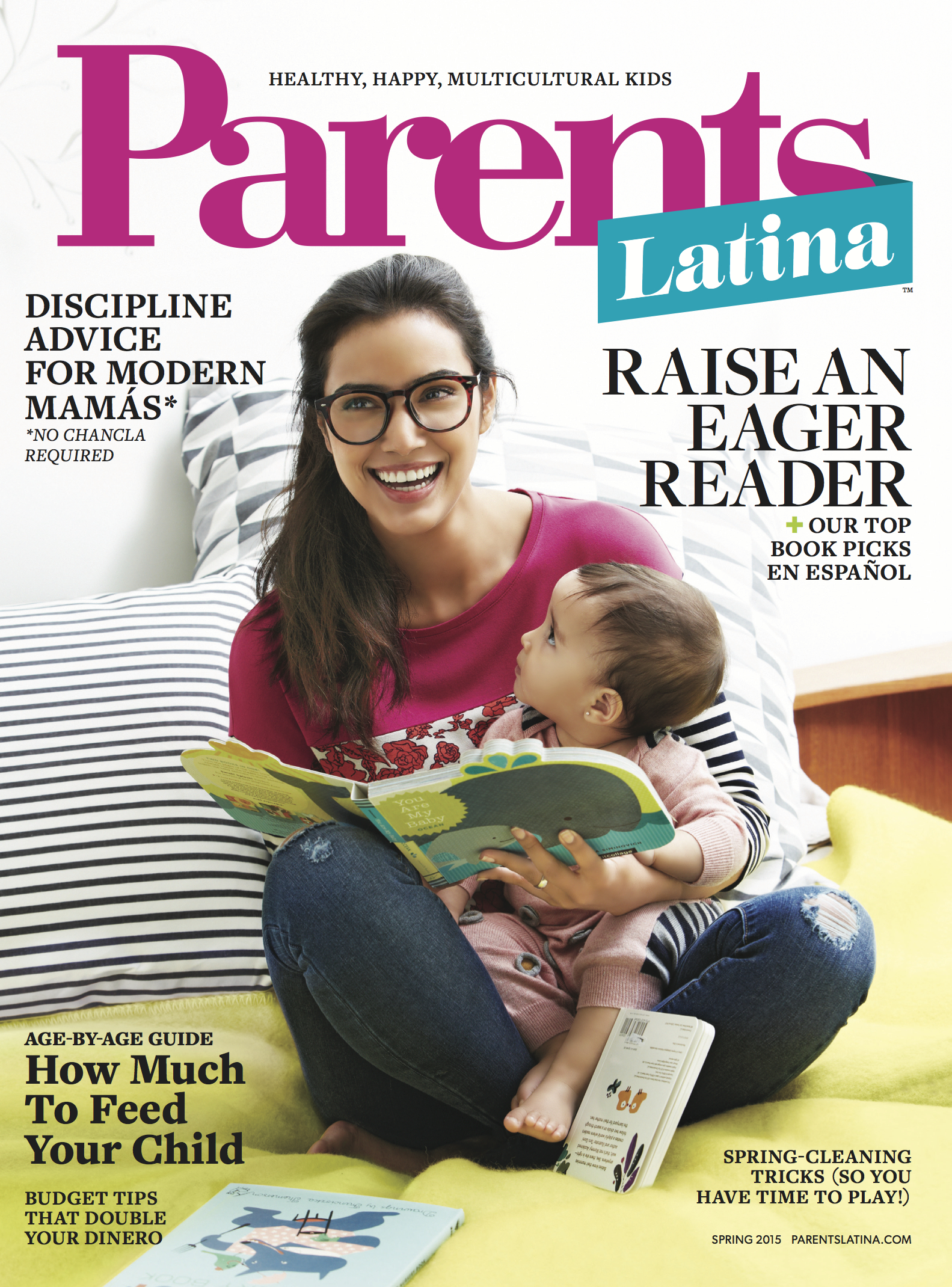
h1

She Has The Whole “Parents” In Her Hands… Parents Latina: A New Addition To The Parents Brand. The Mr. Magazine™ Interview With Content Officer Dana Points.

April 9, 2015

“People think that print has gone away because they don’t understand what they’re hearing about the decline of newsstand sales. But newsstand is only a small portion of magazines and the idea that, in the case of Parents and American Baby, thousands of them a day are raising their hands and inviting print products into their home, which to me says this is still a really robust area.” Dana Points

parents latina The Parents (as in the magazine and its family of platforms) brand is a phenomenal scope of content that exceeds expectations when it comes to platform and audience. The success and popularity and trustworthiness of the brand are unquestionable and pave the way for a new baby for the ‘Parents’ to love: Parents Latina.

Dana Points is editor-in-chief and content director for the Parents group at Meredith. The passion and knowledge that she brings to the table when it comes to this niche in the publishing marketplace is unequivocal.

I spoke to Dana recently about the new infant over at the Parents hospital and was delighted to learn that this title was a very welcomed addition to the family. The need for a parenting magazine in English for second-generation Hispanics was the selling factor behind this new venture. The hope is to touch readers that Parents and Ser Padres might miss and give that audience a voice and an information outlet to consider.

So, I hope that you enjoy the Mr. Magazine™ interview with Dana Points, content director, Parents Latina, and consider yourself invited to the new baby’s first birthday.

But first, the sound-bites:

Points, Dana Headshot On why she believes publishers are rediscovering print: I don’t know if it’s that publishers are rediscovering print; I mean across the industry I think you are definitely seeing a lot of experimentation and innovation happening, looking for alternate revenue sources because of what’s going on in the larger print ad market.

On the impact print has on readers and advertisers:
We see, not only for the readers, but for the advertisers, that print advertising has a proven impact on consumer behavior and sales, so I think that’s a strong story as well.

On whether she thinks Latina-oriented magazines are a trend and every major publisher will soon be launching one:
I don’t know, because I think this is a very fast-moving market when you look at the pace of the adaptation of the consumer. It could be that for many publishers, the portion of their audience that is Hispanic, reading on their regular titles that they already produce, will grow to match the portion of Hispanics in the population. I don’t know.

On the Hispanic heritage that is thriving in the U.S.: Already 26% of children under age one are in a Hispanic household. So, my audience for American Baby, for example, which we tend to get these women often in their first pregnancy to around five months of age, that’s already a very Hispanic audience.

On the fact that Parents Latina is leading the pack in its market niche and who its real competition is:
I think people would argue to some extent that our competition is from the Hispanic mom’s phone. With the Hispanic consumer there is higher mobile use incidence in that population.

On where she believes the magazine will be a year from now:
I’d like to see our Hispanic readers grow on Parents, as it grows and as the population of moms who are Latina grows, I would like to see the numbers pick up on the main magazine, Parents, the English magazine as well.

On her directives to her editorial team:
In the United States, Mexican heritage is dominant. The directive to my small team that works here on Parents Latina is that we want to speak, in English, to the parenting passions of the new generation of Hispanic moms.

On the biggest stumbling block she’s had to face so far:
I would say in part just the linguistics of working on a magazine that is quarterly. Right now, we’re just in kind of start-up mode from a staffing perspective, so just working out the intricacies of the production schedule, tucking it into the group here when we are already producing 12 issues of Parent, 11 issues of American Baby.

On what it feels like to be the Queen Bee of the entire parenting garden:
I don’t feel like a Queen Bee at all; I feel like there’s a lot of worker bees that are surrounding me at all times and I’m just another worker bee. But I will say it’s really fun.

On whether there will ever be a parenting magazine on teenagers from Meredith: People ask us about teenagers all the time. I think that often readers might graduate from Family Fun to Family Circle. And Family Circle has, under Linda Fears, over the last few years done a considerable amount of coverage of issues that would be of specific concern to parents of teenagers,

On what makes Dana click and tick:
First of all, I love working, and I’ve done this at other points in my career, but I love working on brands that really make a difference in people’s lives; a contact that really makes a difference.

On what keeps her up at night:
Really, not much, which is not to say that I don’t have concerns, but I’ve always been a good sleeper. I think that people are finally getting the straight story about what’s going on in print magazines, but there are still some people who don’t fully understand.

And now the lightly edited transcript of the Mr. Magazine™ conversation with Dana Points, Editor-in-Chief and Content Director, Parents Latina…

Samir Husni: Why do you think that suddenly publishers are rediscovering print? Meredith just came out with Parents Latina; Bauer has a new title, Simple Grace; National Geographic just came out with History; Rodale is launching Organic Life…

Dana Points: Right. And then you have the examples such as the CNET magazine; all of these digital/verticals that are creating print products and obviously, I know you’ve covered the very successful Allrecipes trajectory.

I don’t know if it’s that publishers are rediscovering print; I mean across the industry I think you are definitely seeing a lot of experimentation and innovation happening, looking for alternate revenue sources because of what’s going on in the larger print ad market.

And I think, in the case of Parents Latina, we really saw a group that no one was talking to directly, which is the English-dominant, largely second-generation Hispanic mom. She is very likely, at this point, to have been born in this country and prefers to read in English versus Spanish. We have a magazine, Ser Padres, that serves our Spanish-dominant customer, and then we have Parents, which is really for anyone who wants to read in English. And we know we have a significant group of Hispanic women who are reading Parents already, but we looked at Parents Latina to sort of fill in the gap between the people who we might be missing with Parents and the people who are reading in Spanish with Ser Padres.

Samir Husni: Without new magazines we don’t have an industry. You have to keep adding new blood, while you are reinventing the established ones. And as you said, no one is talking about print being dead anymore; they’re now saying that print is in decline. I give them five more years and they’ll once again be talking about the power of print.

Dana Points: I think so too. We see, not only for the readers, but for the advertisers, that print advertising has a proven impact on consumer behavior and sales, so I think that’s a strong story as well. And I applaud all that the MPA has done to tell the whole story about magazines and audience and include digital.

Samir Husni: Do you feel there’s a trend in the wind to reach that English-speaking Hispanic market, because as you know, Cosmopolitan launched Cosmo Latina in English and now Meredith has launched Parents Latina; do you think that we’re going to see every major magazine spinning a Latina edition in English?

Dana Points: I don’t know, because I think this is a very fast-moving market when you look at the pace of the adaptation of the consumer. It could be that for many publishers, the portion of their audience that is Hispanic, reading on their regular titles that they already produce, will grow to match the portion of Hispanics in the population. I don’t know. I think in the case of parenthood, it’s a very emotional, personal experience and so we felt that there was a need, and in our research we saw a need, for a product that hit on some of the aspects of parenthood that are unique for this audience.

Samir Husni: As editor-in-chief and content director and as you consider all of the parenting magazines underneath your umbrella; you mentioned a bit about the similarities, but also that there are some unique differences when it comes to content. And according to the most recent census you researched, by 2030 one out of three children born in the U.S. will be of Hispanic heritage.

Dana Points: Yes and already 26% of children under age one are in a Hispanic household. So, my audience for American Baby, for example, which we tend to get these women often in their first pregnancy to around five months of age, that’s already a very Hispanic audience. And we’ve recognized that for really as long as I’ve worked on the brand, which is six years now. We adjusted our photography, for example, in American Baby to reflect more Latina moms on our pages. So, we’ve been incubating and following this audience for a while.

Samir Husni: As the leader of the pack, and I don’t think there is really even any competition for you in this field…

Dana Points: Not really. I think people would argue to some extent that our competition is from the Hispanic mom’s phone. With the Hispanic consumer there is higher mobile use incidence in that population.

We are platform agnostic here at Meredith; we work on everything. But I think that we have seen the fragmentation of where this woman is consuming her information and I will share with you that we have some new data coming on that probably in the next couple of weeks. We are releasing another wave of our Moms and Media survey that we’ve done now for several years and I can tell you that this mom, be she Hispanic or not, is just using so many different sources of information.

So, one of the things that I’ve been very interested in over the last few years is when you have so many different sources of information; what really grabs your attention in an immersive way; what do you focus on, and where do you place your trust?

In the Parents brand, we have this incredibly trusted, 85-plus-year history behind us and this very well-recognized brand and then we have this immersive experience of reading print. When you’re reading print, and I know I’m preaching to the choir here, but when you’re reading print, there’s nothing else that’s going across your screen. If you’re looking at print, there is nothing else popping up on the screen, although, if we could figure out how to make that happen, it might be cool.

Samir Husni: (Laughs).

Dana Points: But anyway, that’s an opportunity to really get to her on a very personal topic at a time when she’s a huge sponge when it comes to information consumption and in a setting that is immersive and visually rich.

Samir Husni: If I’m talking with you a year from now and ask you about the success of Parents Latina; what do you think you’ll tell me?

Dana Points: I would like to be able to tell you that 700,000 was no problem, which I’m sure it will be; we’d like to see it potentially grow and possibly grow in frequency, but there is no plan for that right now; it’s a quarterly.

And then I’d like to also see our Hispanic readers grow on Parents, as it grows and as the population of moms who are Latina grows, I would like to see the numbers pick up on the main magazine, Parents, the English magazine as well. And then of course, build out a presence of Parents Latina on Parents.com, which is very embryonic at this stage of the game.

Samir Husni: I was flipping through the pages of the first issue of Parents Latina and for some reason it took me back in time to 1978 when I first came to the United States and when Parents magazine had its first major reinvention. The magazine just feels so close to the audience.

Dana Points: That’s good. We did a lot of digging into, not only the research that we have on the audience, but also what’s out there in the larger population. I’ll give you an example; one thing we know is that a modern, second-generation female Hispanic, of those who marry, about 40% will marry someone who is not Hispanic. So, this is an issue of blending cultures; people think, oh, here’s a magazine for this population, we’re going to have to talk about being bi-cultural or being Hispanic and “American.”

Well, in the case of this particular reader, it’s actually often tri-cultural. We have a case in the first issue that acknowledges and speaks to that. And you can see a little bit of that also in Grace Bastidas’ editor’s letter in the first issue.

Another area that is more specific to this population is, first of all, how they might handle discipline. Typically, you might have a more traditional approach to discipline, particularly in a first-generation, Spanish-dominant reader. But this is a reader who is maybe a little farther down the spectrum and maybe is wrestling with how she can reconcile the discipline that she grew up with and the discipline that her mother might favor versus what friends who are not Latina are doing.

And then you have nuances like the fact that a family member, particularly the grandmother, is more likely to be a caregiver for this reader, so it’s things like that, hopefully, that are giving you this sense of specificity when it comes to the audience.

Samir Husni: What’s your directive to your editorial team when they are actually reflecting that specificity? It’s my understanding that there several different Hispanic backgrounds, whether they’re from Mexico, Cuba or the Caribbean.

Dana Points: In the United States, Mexican heritage is dominant. The directive to my small team that works here on Parents Latina is that we want to speak, in English, to the parenting passions of the new generation of Hispanic moms, so that means culturally relevant, advice, information, just doing so much of what Parents magazine does; you know, we say: we answer your questions, address your concerns, advocate your causes and celebrate the joys of raising children. That’s the same across both brands; we just want to do it in a way that’s culturally relevant.

Samir Husni: What has been the biggest stumbling block that you’ve had to face so far and how did you overcome it?

Dana Points: I would say in part just the linguistics of working on a magazine that is quarterly. Right now, we’re just in kind of start-up mode from a staffing perspective, so just working out the intricacies of the production schedule, tucking it into the group here when we are already producing 12 issues of Parent, 11 issues of American Baby; I mean really silly things like we can’t be shipping all of these products simultaneously; we have a good-sized group here working on all the magazines, but from a logistics standpoint, it’s a little bit like creating a calendar from scratch and I’ve had the managing editor of Parents, Michaela Garibaldi, working on that and she’s done a terrific job.

Samir Husni: How does it feel to be the Queen Bee in this whole parenting marketplace? You’re it, in terms of anything that comes to parenting or the brand as a whole.

Dana Points: No pressure.

Samir Husni: No pressure? (Laughs)

Dana Points: (Laughs too) I don’t feel like a Queen Bee at all; I feel like there’s a lot of worker bees that are surrounding me at all times and I’m just another worker bee. But I will say it’s really fun. I’m looking at my wall right now, looking at Family Fun and Parents, American Baby and Parents Latina, and then we also have in this portfolio Ser Padres and there are global specials and lots and lots of great stuff that’s being created and thinking about how all these things fit together is a wonderful, challenging, fun puzzle. I think that is another aspect of what’s challenging about it, not just squeezing it into the production schedule.

My goal is to have magazines that are distinct, in terms of brand identity and appearance. For example, in the case of Parents and Parents Latina, they feel like they’re of the same family. They don’t look the same; you wouldn’t confuse them if they were lying on the table next to each other, but they come from a similar heritage. I always think, and this is not how the reader sees the product, because we have very minimal overlap from an audience standpoint on the various titles, but when we go into a discussion with an advertising partner, I want to see, when you lay all these products on the table that my group works on, I want to see a consistency of quality, great visual design, journalistic chops, and really understanding who the consumer is and speaking to her directly.

Samir Husni: When I put all the magazines next to each other that Meredith has, and when I look at the 100-million-women database the company uses for part of the research; you seem to have all of the babies and parents covered, but there is a gap between Family Fun and Better Homes and Gardens; is there any plan to fill in that gap? To create magazines for when those babies become toddlers or teenagers?

Dana Points: People ask us about teenagers all the time. I think that often readers might graduate from Family Fun to Family Circle. And Family Circle has, under Linda Fears, over the last few years done a considerable amount of coverage of issues that would be of specific concern to parents of teenagers. I think what’s interesting about it is, and I now have a teenager, Samir, at the point that you are the parent of a teenager; on one hand you have a really acute need for help in areas like texting and driving, college admissions and academics and social stuff, but on the other hand you’re also feeling the beginnings of the distance and that’s why I feel like there might not be a product in print that totally revolves around the care and feeding of your teenager. You have kids, right?

Samir Husni: Oh yes, kids and grandkids.

Dana Points: American parents are really involved in their kids’ lives and there’s been a lot of back and forth about that statement. It’s very different from how it might have been a generation or two ago or in other cultures and so if you get really wrapped up in your kids’ lives, there’s a point where you need to make sure that there are other things on your dance card because you can’t live through your kids. So, I think that a product that has diversity, in terms of its coverage is important.

Samir Husni: What makes Dana click and tick? What makes you get out of bed in the morning and look forward to going to work?

Dana Points: First of all, I love working, and I’ve done this at other points in my career, but I love working on brands that really make a difference in people’s lives; a contact that really makes a difference. You hear that a lot and I hear it when people come to interview me; I hear it when people leave our group to go on to other jobs, that they feel like they weren’t just kind of selling space, that they really did have an opportunity to impact people’s happiness, their behavior, by virtue of the fact that they’re consuming our content.

I like the kind of do-good aspect of my job, even as I also like the business part of my job, which is all the stuff we’ve talked about already, thinking about all the brand entities and how they all fit together and how do we do what we need to do on the budgets that we have, strategizing about new projects or PR or redesigns or special sections, things like that.

And then I just love the team that I work with. We have a great group here and in Northampton at Family Fun and in our Spanish-language group as well.

Samir Husni: My typical last question; what keeps you at night?

Dana Points: Really, not much, which is not to say that I don’t have concerns, but I’ve always been a good sleeper. I think that people are finally getting the straight story about what’s going on in print magazines, but there are still some people who don’t fully understand. Occasionally, I’ll be somewhere and someone will meet me for the first time and say, how’s it going? And they sound worried and I think that there are still too many people who have the perception that print is going away, which I’m talking to some of the youngest customers out there and we are simply not seeing it. These readers do still love their print magazines.

I think what’s happened, most acutely in the last year, in terms of newsstand sales, has tarnished the idea of print a bit. People think that print has gone away because they don’t understand what they’re hearing about the decline of newsstand sales. But newsstand is only a small portion of magazines and the idea that, in the case of Parents and American Baby, thousands of them a day are raising their hands and inviting print products into their home, which to me says this is still a really robust area. That people like to have that magazine hit their mailboxes, be on their coffee tables, be beside their beds at night, etc. So, that perception that print is threatened keeps me up some at night.

And then right now we have a lot of great products and just sort of keeping all those balls in the air and working with the digital team here to make sure that you really have brand evenly across the platforms, which is not to say that we have to do the same thing across platforms because it’s different and the audience can be different. But how do we continue to use digital and social, which is so fragmented and everybody is always on to the shiny new thing; how do we continue to bring new audiences into our brand, whether that be print, digital or whatever.

Samir Husni: Thank you.

h1

Get Out Of Your Mind & Step Into The GOOD World…Re-launching A Good Magazine – The Mr. Magazine™ Interview With Max Schorr, Co-Founder & Will Tacy, General Manager, Good Media…

April 7, 2015

“As we designed the magazine we weren’t thinking, OK – we need to make sure that everything in this magazine is going to work in digital just as well, because that’s not what it’s meant to do. It’s meant to work beautifully as a magazine. And everything that we do on the site is meant to work beautifully in digital. We’re not trying to make sure that we can optimize every effort so that everything is working in both media. I think by doing that, you lessen the quality of both and you don’t let either media do what it can do wonderfully.” Will Tacy

Good_COVER The “Good” movement was born 10 years ago with the ambitious dream of “pushing forward an emerging community of people committed to living like they give a damn.” This statement comes from the minds of the original founders of Good: Max Schorr, Ben Goldhirsh and Casey Caplowe. In 2012, Good shifted its focus to its social network and stopped print production.

Today Good in print has been reborn from its social pixels-only, with a new format and redesign. The mission is the same, to live well and do good, but the journal-type magazine with a quarterly frequency is a brave new attempt to get back into print with the positive gusto the brand has always stood for and believed in.

I spoke with Max Schorr (one of the original co-founders of Good) and Will Tacy (former managing editor of The New York Times.com) and now general manager of Good Media, recently about the innovative design and re-launch of the magazine. It was an informative and affirming conversation about the magazine’s mission and where the two men see the brand heading in the future. Their positivity and assurance of the need for that mission was contagious and emboldened our discussion and the re-launch with the same zeal and impactful appetite.

I hope you enjoy the Mr. Magazine™ interview with Good Co-Founder, Max Schorr and Good Media General Manager, Will Tacy, because it’s a given you’ll find it a “good” read.

Max Schorr, (right) Co-Founder GOOD and Will Tacy, Good Media General Manager.

Max Schorr, (right) Co-Founder GOOD and Will Tacy, Good Media General Manager.

But first, the sound-bites…

On why Good magazine shifted strategies and came back to print in journal form: Good never actually moved away from print. We took some time to reimagine and redesign the magazine, but there was never a time where we decided that we weren’t going to be in print. We did want to make sure that the magazine was something we felt would really resonate with the audience.

On defining the audience as a global citizen: The one thing I would say is the nature of global citizenship hasn’t really changed from what it was in 2006. It’s still rooted in this idea of people who give a damn; people who have faith that the world can be better and are willing to invest in it and make it better.

On the major stumbling block they anticipate on facing with the re-launch: I think that we have to reintroduce ourselves to the world, but I have faith that the audience that has been there for Good all along is still there and in fact, is bigger than it’s ever been. I also have faith that there is an audience that understands what we’re trying to create: something that’s not disposable and that was very intentional on our part.

On defining the magazine’s mantra of living “the good life,” to live well and do good: We see an increasing amount of people who really feel connected across the whole world and so part of it is creatively engaging the world where you are and finding what it is that brings your purpose alive.

On how Good balances digital and print: As we designed the magazine we weren’t thinking, OK – we need to make sure that everything in this magazine is going to work in digital just as well, because that’s not what it’s meant to do. It’s meant to work beautifully as a magazine. And everything that we do on the site is meant to work beautifully in digital.

On where they see Good Media a year from now: I think that in both the digital realm and in print, you’re going to see Good as an ongoing part of a cultural conversation about what it means to live well and to do good; what our shared values are; what we need to push toward; what progress means; so, Good is going to be a reference point, a sounding board and a source of inspiration for people having that conversation, and also increasingly a source of pertinent and pressing questions.

On how Good has evolved over the last 10 years: We’ve been an independent media company for 10 years and it feels like now we’re sort of ready to go into the world. Maybe we’re graduating college and we’re now armed with a lot of knowledge and really ready to stand on our own in the world, but there are definitely challenges that are ahead and we need to now bring these things that we’ve learned into the world and really thrive and make the contribution that’s possible.

On what motivates Will Tacy and gets him excited about Good: What gets me excited, this opportunity to actually give people inspiration and energy and ideas to let them move forward to unleash their creativity and inspire them. On a personal level, I think that apathy and cynicism are the two things that are going to undermine us as a society, as a people and as sort of a global tribe.

On what motivates Max Schorr and gets him excited about Good: I think what motivates me is seeing how much work remains; we have everything from the warmest temperatures on record to wars to all sorts of hatred to a lot of inequality; so there’s so many vital issues that need attention and just being able to contribute as a part of that is a great honor.

On what Max Schorr’s role is today at Good: I’m helping across the company right now and really focusing on partnerships that can help bring our brand to life and also help other organizations embody the meaning of Good and to realize their purpose and engage people in a smart way.

On anything else they’d like to add: The heritage of Good, being the first company to curate YouTube’s home page, as one of the early players that was providing high-quality media that would also be shared, is now really hitting its stride and we’re growing digitally, while back in a strong way in print, makes for an exciting time.

On what keeps Will up at night: One thing that keeps me up at night, not really in a worried way, but in a my-brain-can’t-turn-off way, is wanting to be sure that we’re executing at the highest level every day on everything. I want us to be excellent all the time.

On what keeps Max up at night: I just want to keep strengthening this business model so that we can support all the great people out there doing this work and be able to have wonderful jobs for people who want to live well and do good and realize their potential to contribute to the world.

And now the lightly edited transcript of the Mr. Magazine™ interview with Max Schorr and Will Tacy, Good Media…

Good-1 Samir Husni: Congratulations on the re-launch of Good. Tell me, why did you decide to come back to print and shift from the strategy of Good – the magazine, to Good – the journal?

Max Schorr: Good never actually moved away from print. We took some time to reimagine and redesign the magazine, but there was never a time where we decided that we weren’t going to be in print. We did want to make sure that the magazine was something we felt would really resonate with the audience. So, we took our time to be sure we were exactly where we wanted to be with the magazine.

In terms of the change in format and the change in design, it was really a question of what we thought the audience was hungry for. And the recognition that the magazine that was launched 10 years ago was, in many ways, perfect for that time and moment. But today, the media landscape has changed, culture has changed, and the movement that Good launched to embrace and cover has changed. Therefore the magazine needed to change and evolve along with that.

Samir Husni: I just came back from Cape Town, South Africa where I gave a presentation on: if you are still creating a magazine in the way you did before 2007, there is something wrong with that picture.

Max Schorr: (Laughs) Exactly.

Samir Husni: Then along comes Good with a very solid example of the role of the curator versus creator and how to reach an audience. And you’re now calling that audience the global citizen; can you define that audience for me and how you’re trying to reach them through the magazine?

Will Tacy: The one thing I would say is the nature of global citizenship hasn’t really changed from what it was in 2006. It’s still rooted in this idea of people who give a damn; people who have faith that the world can be better and are willing to invest in it and make it better.

One thing I would say that has changed is that sensibility and that movement has moved from being something that would look good on the fridge of common society and common conversation, to something that’s more a part of who we all are.

One of the things that we’re seeing is that global citizenship, which really means being rooted locally, but thinking globally and being global-conscious, is becoming more and more a part of how a larger and larger section of society behaves.

Samir Husni: Will, what do you envision the major stumbling block you’ll have to face with a magazine as good as Good to be, with its very hefty cover price of $14 and its quarterly frequency?

Will Tacy: I think that we have to reintroduce ourselves to the world, but I have faith that the audience that has been there for Good all along is still there and in fact, is bigger than it’s ever been. I also have faith that there is an audience that understands what we’re trying to create: something that’s not disposable and that was very intentional on our part.

A lot of magazines have moved into this realm of being truly disposable. And that’s not a great place to be. To be in a place where a magazine is bought by someone to take with them on a plane and then they leave it there when they get off. So, we wanted to build something that has lasting value that people would want to keep on their coffee table and come back to and continually think about over the course of weeks and months.

But I do think that we have to introduce that to a larger audience; we need to make sure that we’re creating something that is resonant and that people want to make that kind of investment in. And that’s not just in terms of the cover price, but also in the audience’s time. We are building a print product that’s asking people to spend time with it and not just to skim through and read one or two pieces and then set it aside.

Samir Husni: In one of the promotional cards inside the magazine, it reads: Good is from people to meet to ideas to ponder, each issue of our quarterly journal spans the globe, exploring what it means to live the good life today. Tell me in an elevator pitch how you define “good life today?”

Max Schorr: We see an increasing amount of people who really feel connected across the whole world and so part of it is creatively engaging the world where you are and finding what it is that brings your purpose alive; part of it is being present; part of it is doing work that you believe in and part of it is helping to make your community better, and the combination of people doing that locally everywhere, connected all around the world, is a really exciting proposition for us.

Samir Husni: Do you think that meets the definition of a good life?

Max Schorr: You remember our first issue, Samir; it was ___________ (blank) like you give a damn, and we’ve always liked definitions that are open-ended. We don’t try to prescribe to people that there’s one answer for the good life, but we think when people have their own questions come alive in a very real way and they find out how they can contribute locally in their own lives that begins to tell a really great story.

You asked about global citizenship; we actually brought back a Thomas Paine quote from the first issue; my country is the world and my religion is to do good, and that sort of speaks to this idea of a global citizen.

We intentionally used the term “the good life” because part of what we want to do is push against the assumed definition of it; that the good life is a life lived for the common good as much as it is for the personal good and that there’s not a conflict there. There’s not a conflict between doing good and living a good life, in fact, they’re connected; they’re necessary to one another. Just as we say we firmly believe that there’s not a conflict between pragmatism and optimism; the solutions are born from the combination of those two things. We’re intentionally using that term to say it’s time to think more deeply about it and redefine it for our new time.

Samir Husni: Will, you were the managing editor of The New York Times.com and now you’re the general manager for Good Media. Where do you see a balance between, what I call, the seductive, beautiful mistress called “digital” and the old man called “ink on paper?” Since you have been and still are in both worlds; how can you balance digital and print?

Will Tacy: It’s funny, because I never saw a conflict between the two. I’ve always felt that they serve very different purposes; very valuable purposes, but different. And one of the things that I think, in particular a lot of magazines have stumbled on, is trying to figure out how you do the same thing in both, rather than simply embracing the two different media for what they’re wonderful at.

And some of that means that things we used to think were really the province of print, particularly newsweeklies, don’t really work anymore. They’re more effective in digital. And print has a very different purpose. The same audience is going to be incredibly psyched and excited about what you’re producing in print and in digital. As long as you’re meeting them where they are and where they want to be in each of those two media.

For instance, as we designed the magazine we weren’t thinking, OK – we need to make sure that everything in this magazine is going to work in digital just as well, because that’s not what it’s meant to do. It’s meant to work beautifully as a magazine. And everything that we do on the site is meant to work beautifully in digital. We’re not trying to make sure that we can optimize every effort so that everything is working in both media. I think by doing that, you lessen the quality of both and you don’t let either media do what it can do wonderfully.

Samir Husni: Put your futuristic cap on for a minute and tell me where you see Good a year from now.

Will Tacy: I think that in both the digital realm and in print, you’re going to see Good as an ongoing part of a cultural conversation about what it means to live well and to do good; what our shared values are; what we need to push toward; what progress means; so, Good is going to be a reference point, a sounding board and a source of inspiration for people having that conversation, and also increasingly a source of pertinent and pressing questions. Part of what we’re going to increasingly embrace is the idea that as this movement has matured and as it has moved farther and farther into the mainstream, part of our role is to ask the movement tough questions about itself and about ourselves.

I think you’ll see a much larger digital footprint; we’ve already seen our digital audience grow at an almost exponential rate over the last several months. You’ll see Good as a source of more and more content in pure digital streams, social streams and otherwise. And you’ll see Good as a voice in the national and global issues and values conversation.

You’re not going to see us playing in the breaking news game, that’s not somewhere that I think we can add value. You’re not going to see us playing in the “Gotcha’” media game and you’re not going to see us playing in the celebrity media game, but you will absolutely see Good as a contributor to a national conversation about what we all should value and where we all should be pushing.

Samir Husni: Max, this question is for you since you were there 10 years ago when this baby was born, and in the life of a magazine 10 years is an incredible lifespan; where do you see Good now from that infant that was born with a lot of fanfare 10 years ago?

Max Schorr: That’s a great question. We’ve been an independent media company for 10 years and it feels like now we’re sort of ready to go into the world. Maybe we’re graduating college and we’re now armed with a lot of knowledge and really ready to stand on our own in the world, but there are definitely challenges that are ahead and we need to now bring these things that we’ve learned into the world and really thrive and make the contribution that’s possible. The ideals from when we started are alive and well and they’re really what bring us all together as a cohesive team. So, we’re mature, but still hopeful and vibrant.

Samir Husni: I’m talking with two out of the three parents of Good: Will and Max.

Will Tacy: I would say that Max is definitely a parent, but I’m maybe a recently-discovered uncle. (Laughs)

Max Schorr: A wonderful uncle. (Laughs too)

Samir Husni: What happened to Ben (Ben Goldhirsh – one of the original founders)?

Max Schorr: Ben is still very much in the mix. He is currently recharging his batteries in Costa Rica; he visited us a couple of weeks ago and he’s coming through again in couple of weeks. He’s been such a huge part of this entire effort; he’s just recharging now because we’ve all put in a lot of work over the last decade.

Samir Husni: My question to you Will is; what makes you click and tick? What makes you get out of bed in the mornings and say, wow, I’m going to do some good today? No pun intended.

Will Tacy: (Laughs) No, actually, that’s the perfect way of saying it. I really do believe that fundamentally media has a critical role to play in providing people ways to think about our ability to move the world forward and ideas and models to inspire us.

And I think Good has such a wonderful opportunity to be that voice, that rallying, questioning, thoughtful, challenging voice that’s so necessary to begin to connect this larger and larger tribe and to be a sort of antidote to cynicism and apathy.

And that’s what gets me excited, this opportunity to actually give people inspiration and energy and ideas to let them move forward to unleash their creativity and inspire them. On a personal level, I think that apathy and cynicism are the two things that are going to undermine us as a society, as a people and as sort of a global tribe. And the opportunity to everyday try and kick down that door is just wonderful and inspiring.

Professionally, I’ve always loved being in places where you’re inventing and you’re constantly embracing the idea that there are new things we can do in media, there are new opportunities and that the audience is brilliant, hungry and thoughtful. And our job every day is to try and meet them where they are. There are no established rules that can never change and we can always think of ways to do this job better and more thoughtfully.

And to be at Good, where that’s not just accepted, but expected, and where there’s a hunger to continuously improve and to be thoughtful and forward-thinking, is just wonderful. And that’s what excites me every day.

Samir Husni: And Max, I’ll ask you the same question that I asked Will; what makes you get out of bed in the mornings and motivates you to say it’s going to be a good day?

Max Schorr: It’s just been such a great honor to start this magazine and meet people all around our country and all around the world who are putting these ideals into action and who are making changes happen in small ways, in their own lives and in their communities.

It started as a sort of audacious dream; we said that you could live well and do good and when we took the word good and decided to call our company that, people made fun of it. They didn’t understand how pragmatism and idealism could come together, or that doing good could ever be an appealing thing, but now we really see a growing movement of these people and we see it as the predominant sensibility.

And yet, I think what motivates me is seeing how much work remains; we have everything from the warmest temperatures on record to wars to all sorts of hatred to a lot of inequality; so there’s so many vital issues that need attention and just being able to contribute as a part of that is a great honor.

Samir Husni: Max, what’s your role now; I realize you’re one of the co-founders, but besides that; what’s your role at Good?

Max Schorr: I’m helping across the company right now and really focusing on partnerships that can help bring our brand to life and also help other organizations embody the meaning of Good and to realize their purpose and engage people in a smart way. So, I’m spending a lot of time here at Good and I’ve also been invited by the Berkman Center for Internet and Society out of Harvard Law School to study the intersection of social change in new media. So, I’m a student of that and doing research and also looking at how Good can really be the leading platform in moving the world forward.

Samir Husni: Is there anything else either of you would like to add about Good – the magazine, Good – digital, or Good – the global citizen?

Max Schorr: It’s an exciting time, Samir. Will mentioned our digital is really growing exponentially and that’s an important piece. We’ve launched this high-quality print journal for the global citizen and what’s really exciting is there’s a whole buzz in the office right now because we were at several million unique visitors in January, but then in February we were at over 4½ million as verified by Quantcast. And in March, it’s not official yet, but we’ve beat that by a wide margin and so we’re seeing that continued growth.

The heritage of Good, being the first company to curate YouTube’s home page, as one of the early players that was providing high-quality media that would also be shared, is now really hitting its stride and we’re growing digitally, while back in a strong way in print, makes for an exciting time.

Samir Husni: My typical last question and it’s for both of you; what keeps you up at night?

Will Tacy: (Laughs) There are so many things. One thing that keeps me up at night, not really in a worried way, but in a my-brain-can’t-turn-off way, is wanting to be sure that we’re executing at the highest level every day on everything. I want us to be excellent all the time. So, that is super-exciting and it’s what keeps my brain going.

There’s not a lot that keeps me up in terms of worry, concern or fear. What keeps me up is there’s so much to think about and so much to consider and so much great work to do and my brain just can’t turn it off.

Max Schorr: Similar to Will, I just want to do the best work possible, but also it’s been a volatile stretch of time for the media industry. We’ve learned a lot, but we’re still an independent media company and I think we’re still strengthening our business model and our financial position in the world. And we’re really grateful for the wonderful partners that are in this magazine like Apple, Patagonia and Ben & Jerry’s.

I just want to keep strengthening this business model so that we can support all the great people out there doing this work and be able to have wonderful jobs for people who want to live well and do good and realize their potential to contribute to the world. There’s just a lot of work to do.

Samir Husni: Thank you.
h1

Simplifying Women’s Lives For 15 Years – A “Real Simple Magazine” Success Story – The Mr. Magazine™ Interview With Editor Kristin van Ogtrop

March 19, 2015

“I really can’t imagine Real Simple without a print product. I mean, we are thrilled to see the growth that we’ve experienced in other areas, but I can’t imagine us never being a magazine. And I happen to know that you define a magazine as something that exists on paper.” Kristin van Ogtrop

Real Simple scanned at 72 for blog-2 In April 2000, Real Simple magazine launched with the purpose of making women’s lives simpler. The content between the covers was inexplicably created to provide busy women, whether executives or stay-at-home moms and all women in between, with alternatives to the noisy, sometimes stressful environment of their worlds. And 15 years later, Real Simple is still proving that uncomplicated point.

No celebrities, no sex and, for the most part, no chocolate, has been a manifesto that the magazine has adhered to and succeeded with. Over the last decade and a half, Real Simple has evolved into what could only be described as the definitive authority for women who want to make the most of their time and enjoy doing it.

Kristin van Ogtrop is Real Simple’s editor and has guided the successful magazine into a multifaceted brand harbor, with print, digital and numerous marketing brand extensions. She is a woman who knows what it means to need a little “real simple” in her life.

I spoke with Kristin recently and we talked about the simplistic simplicity of Real Simple’s formula and how when something is truly valuable to the audience, it will succeed no matter what the doomsayers might cry. And that’s just what they did 15 years ago when Time Inc. launched the magazine into the women’s lifestyle place. How could a magazine with no celebrities, no sex, and no chocolate gracing its cover ever survive on the newsstands? 15 Years later, Real Simple shows them how.

I hope you “simply” enjoy this lively and fun conversation with a woman who exudes joy, contentment and excitement about the future of the magazine and all its brand components, including print, as you read the Mr. Magazine™ interview with Kristin van Ogtrop, Editor, Real Simple.

But first the sound-bites:

Kristin van Ogtrop, Editor, Real Simple magazine.

Kristin van Ogtrop, Editor, Real Simple magazine.


On whether her life is simpler now than it was 15 years ago when the magazine started:
I think you already know the answer to that one, Samir. (Laughs) No, it’s not; it’s a lot more complicated because consumers expect to find you everywhere and you’re trying to find them everywhere.

On how you could launch a women’s magazine without at least a celebrity on the cover:
Going back to your original question about whether or not you can launch a magazine without a celebrity on the cover; I think we are a break from that, particularly as celebrities infuse our culture more and more on social media and reality TV shows. I think a brand like Real Simple, where we really are a celebrity-free zone, solidifies our identity, but also continues to provide a nice break from that.

On whether or not she believes Real Simple could exist without a print component:
No, never. When you talk to people who read the magazine there are consistent things that you hear over and over about what they love about the magazine. But one of the first five always is the paper; they talk a lot about the paper.

On whether she feels the need to ensure that each extension of the Real Simple brand has the same DNA as the magazine:
Yes. I mean, I look at myself as a content steward. But content could be what the packaging on a box at Bed Bath & Beyond looks like. It’s about the expression of the brand that consumers see, whether that’s on the website, on packaging, something written, or a picture.

On the biggest stumbling block that she’s had to face and how she overcame it: What has been hard for Real Simple, and this isn’t unique to us; I think big brands like us have to learn to fail fast, to try new things and to know when to cut your losses and move on to the next thing.

On her most pleasant surprise during her career at Real Simple:
There have been huge highlights over the years. The brand has grown exponentially since 2000. But I would say my personal highlights, and they come with some frequency, is when you encounter someone who is really passionate about this brand and is very happy to tell you why. Those are the best parts.

On what makes her look forward to going to work:
One of the great things for me about working here is that there is so much of what we do that deals with problems in my own life and I think you could say that about a lot of the people on staff here. So, you come to work, but you’re also kind of making your own life easier, more beautiful, better, more delicious, and all of that’s fun.

On the type of person the magazine would become if struck by a magic wand:
I am a Real Simple woman, but I’m not sure I’m who would spring from the pages, but maybe. I think a lot of people could. Part of what works for us is that, and I talk about this a little in my Editor’s Letter in the 15th anniversary issue, with every story that we publish, whether it’s on realsimple.com or in the magazine, we try to cast as wide a net as we can.

On why the attempts of copycatting Real Simple have never worked:
In terms of why we have succeeded where others have failed, it’s a lot of factors, and a fair amount of the reason has to do with Time Inc. The company is very supportive of its editorial endeavors, obviously. It invests a lot in consumer research; it’s a big, healthy machine. Time Inc. has believed in this magazine from the beginning and we’ve gotten a lot of support.

On anything that she’d like to add about the magazine or brand:
The only thing that I would add is that we’re so proud when we look at what we’ve done over the last 15 years. And we’re excited about the future of this brand, including in print and all our other areas too.

On what keeps her up at night:
Worrying about my children keeps me up at night. I would say having three boys and two of them being teenagers keep me up at night.

And now the lightly edited transcript of the Mr. Magazine™ conversation with Kristin van Ogtrop, Editor, Real Simple…

real simple list Samir Husni: On page eight of the 15th anniversary edition of Real Simple, you asked the question is life simpler now than it was 15 years ago in 2000 and you listed seven different areas where you compared that year to now – 2015; my first question to you is that I want to add one more area for comparison; is life simpler for a magazine editor today than 15 years ago?

Kristin van Ogtrop: I think you already know the answer to that one, Samir. (Laughs) No, it’s not; it’s a lot more complicated because consumers expect to find you everywhere and you’re trying to find them everywhere.

People like me came up through our childhoods, college, and in some cases, graduate school and entered the magazine business when the whole enterprise was all about words on paper, and finding your customers at the newsstands or in their physical mailboxes. And now it’s a much more diffused relationship. It’s more interesting for that reason, but it’s also, I think, more confusing and you have a lot more balls in the air.

Samir Husni: Let’s go back a bit in history; when Real Simple was launched everyone asked the question: how can a women’s magazine survive without celebrities, sex and chocolate on its cover? And yet, over the last 15 years, not only have you survived, you’ve thrived and Real Simple has turned into a huge success story for women’s service magazines. What do you believe has been the magical ingredients that have propelled Real Simple to such success?

Kristin van Ogtrop: I do want to point out that we have had chocolate on the cover once as a test; maybe three years ago, we put chocolate pudding on the cover and chicken pot pie too. And I must say, the chicken pot pie killed the chocolate pudding. (Laughs) I don’t know if we’ll ever have chocolate on the cover again.

When the magazine launched in 2000, it obviously launched to a lot of fanfare because Time Inc. doesn’t do launches lightly or in a small way, frankly, and I believe there was this market there that people in the magazine industry and advertisers didn’t even know was there, which was women who are a lot more overwhelmed than anyone knew. And they just want a calming, really clear informational delivery system. And I think that’s what Real People delivered.

Recently, in fact, I was getting my hair cut and there was this really adorable woman working at the hair salon. And she came up to me and said, “Oh my gosh, I know who you are and I’m so happy to meet you.” I felt kind of strange because I thought she thought that I was somebody else. (Laughs) Then she said, “I love Real Simple magazine.”

Now, this is a woman who works at a New York City hair salon. Usually, when you go to a hair salon, you see a lot of celebrity and fashion magazines. So, I started asking her questions about herself. She told me that she was 29-years-old and that she loved Real Simple because it didn’t have celebrities in it. That kind of conversation, which I’m lucky enough to have from time to time, just affirms Real Simple’s engagement with women.

Going back to your original question about whether or not you can launch a magazine without a celebrity on the cover; I think we are a break from that, particularly as celebrities infuse our culture more and more on social media and reality TV shows. I think a brand like Real Simple, where we really are a celebrity-free zone, solidifies our identity, but also continues to provide a nice break from that.

I read People magazine more than probably just about anybody in this building, but I still like that we don’t have that kind of content. And I think that readers do too.

Samir Husni: Real Simple has evolved from a print magazine to a brand; it’s everywhere, on the web, social media, the brand extensions, the products; you name it. But can you envision Real Simple existing without the print component?

real simple first cover at 72-3 Kristin van Ogtrop: No, never. When you talk to people who read the magazine there are consistent things that you hear over and over about what they love about the magazine. But one of the first five always is the paper; they talk a lot about the paper.

Dick Parsons, the former head of Time Warner had this expression that he always used, magazines would exist as long as the three B’s were around: bedroom, bathroom and beach. And I think that tactile experience with the matte paper and a very controlled design, that physical experience makes people feel very calm.

I really can’t imagine Real Simple without a print product. I mean, we are thrilled to see the growth that we’ve experienced in other areas, but I can’t imagine us never being a magazine. And I happen to know that you define a magazine as something that exists on paper, right?

Samir Husni: Yes, that’s true.

Kristin van Ogtrop: We are still very much a magazine and I can’t imagine Real Simple ever not being a magazine.

Samir Husni: Do you feel as though your role has changed in 2015 since Real Simple has become a brand with a multitude of brand extensions out there, such as Wayfair.com, 1-800-FLOWERS and Bed Bath & Beyond; do you feel you’ve moved beyond editor and are now a brand keeper that needs to ensure everything that has the name Real Simple on it meets the DNA of the magazine?

Kristin van Ogtrop: Yes. I mean, I look at myself as a content steward. But content could be what the packaging on a box at Bed Bath & Beyond looks like. It’s about the expression of the brand that consumers see, whether that’s on the website, on packaging, something written, or a picture; we just launched four new podcasts with The Slate Network recently, so content could be something consumers hear on a podcast or something downloaded from iTunes.

I will say though, that as brands like Real Simple grow and other bigger magazine brands, a lot of that informs how you hire people, because it’s impossible for an editor, and using Real Simple as an example, it would be impossible for me to put my individual stamp of approval on every single expression of the brand that goes out every day, whether in a store or on social, and I guess those are probably the two biggest ones that happen constantly. So, you have to have a team in place that understands the brand DNA in the same way that you do. And we’re lucky enough at Real Simple to have that.

We’re not just magazine editors anymore; although that’s still a part of my job that I really love, that’s why we all got into the business. And as it goes beyond that it gets more interesting, but you don’t lose the thing that you love.

Samir Husni: Throughout the 15 years of the magazine; what has been the biggest stumbling block you’ve had to face and how did you overcome it?

Kristin van Ogtrop: What has been hard for Real Simple, and this isn’t unique to us; I think big brands like us have to learn to fail fast, to try new things and to know when to cut your losses and move on to the next thing, because some of what makes us successful as a brand is a sense of control; a controlled message; a controlled look, and when you hand our consumers something that feels controlled it makes them feel calmer. It’s hard to fail fast when you want to be in control.

Over the years, from a 30,000 foot level, that has probably been our biggest stumbling block and probably always will be. But that doesn’t mean we can’t keep trying to do it better.

Samir Husni: And what was your most pleasant moment in those 15 years, the one that made you say, wow, and how often do you have those moments?

Real Simple Subscriber cover gatefold April 2015Kristin van Ogtrop: That’s a really hard question to answer. My most pleasant moments would be like the one that I had with the woman from the hair salon the other day. When I meet someone who says to me Real Simple is the only magazine that I ever read or I’ve started listening to your podcasts and I have my whole office hooked or you talk to media planners who tell you that Real Simple is the only magazine they read, they get a lot, but Real Simple is the only one they actually read.

There have been huge highlights over the years. The brand has grown exponentially since 2000. But I would say my personal highlights, and they come with some frequency, is when you encounter someone who is really passionate about this brand and is very happy to tell you why. Those are the best parts.

Samir Husni: If you had the opportunity to travel back in time and speak to all of the media critics and those prophets of gloom and doom who blasted Real Simple when it was launched and thought Time Inc. was out of its mind and asked why would Time Inc. publish something like Real Simple; if you had the gift of time travel what would you tell them?

Kristin van Ogtrop: I would tell them to just wait. (Laughs) I would tell them that they don’t understand women; that’s what I would tell them. Or they don’t understand a certain kind of woman and to just wait and they’ll see what we can do.

Samir Husni: What makes Kristin click and tick every morning; what makes you want to get out of bed and go to work?

Kristin van Ogtrop: Well, coffee is what makes me want to get out of bed. (Laughs) What makes me want to run to the office? I’ve worked in magazines now for about 20 years and I just really love this brand. I understand this consumer and I am this consumer. My life is very similar to many of the readers’ lives; I have three kids and I live in a house and I’ve got two dogs and I always have car problems and I can’t find black pants that I really like (Laughs); just all the things that bring people to a wonderful brand like this.

One of the great things for me about working here is that there is so much of what we do that deals with problems in my own life and I think you could say that about a lot of the people on staff here. So, you come to work, but you’re also kind of making your own life easier, more beautiful, better, more delicious, and all of that’s fun.

Samir Husni: One of the questions that I often ask editors is, if I gave you a magic wand and you struck Real Simple, the magazine, with it and a flesh and blood human being materialized, who would that person be? Would it be Kristin? Are you a Real Simple woman?

Kristin van Ogtrop: Definitely, I am a Real Simple woman, but I’m not sure I’m who would spring from the pages, but maybe. I think a lot of people could. Part of what works for us is that, and I talk about this a little in my Editor’s Letter in the 15th anniversary issue, with every story that we publish, whether it’s on realsimple.com or in the magazine, we try to cast as wide a net as we can, because we have almost 2 million subscribers or monthly readers and millions upon millions of visitors to our website every month.

The women who engage with Real Simple are from all over the country; they have different lifestyles and are different ages. So, I think that I represent the brand really well. That way maybe when the magazine is hit with the magic wand, I would pop out, but I believe that we’re much broader than just me.

Samir Husni: Our industry is known to be a copycat industry; why do you think that other publishers haven’t copied Real Simple? There have been a few attempts here and there, but they have been short-lived. Is it the simplicity of the magazine that makes it hard to replicate or imitate?

Kristin van Ogtrop: First of all, I think people over the 12 years that I’ve been here have tried to copy Real Simple. But as you said, those efforts tend to be fairly short-lived. I think that our formula has crept out into the women’s magazine culture a little bit. If you look at cover lines on some other women’s magazines, you see the word organizing, for example, or clutter control, something like that, and you definitely didn’t see those before this brand existed.

In terms of why we have succeeded where others have failed, it’s a lot of factors, and a fair amount of the reason has to do with Time Inc. The company is very supportive of its editorial endeavors, obviously. It invests a lot in consumer research; it’s a big, healthy machine. Time Inc. has believed in this magazine from the beginning and we’ve gotten a lot of support.

Samir Husni: You’ve done a wonderful job with the magazine. I still remember that first issue and the reaction it received and all the changes that took place after you came, which solidified the brand and made it the powerhouse that it is today. Is there anything else that you’d like to add about Real Simple or the brand?

Kristin van Ogtrop: Thank you. The only thing that I would add is that we’re so proud when we look at what we’ve done over the last 15 years. And we’re excited about the future of this brand, including in print and all our other areas too. All of us here still really believe we have a lot of opportunities with Real Simple; it’s just up to us to find them.

Samir Husni: My typical last question; what keeps you up at night?

Kristin van Ogtrop: Nothing related to work keeps me up at night, actually. (Laughs) I would say having three boys and two of them being teenagers keep me up at night.

Samir Husni: Thank you.
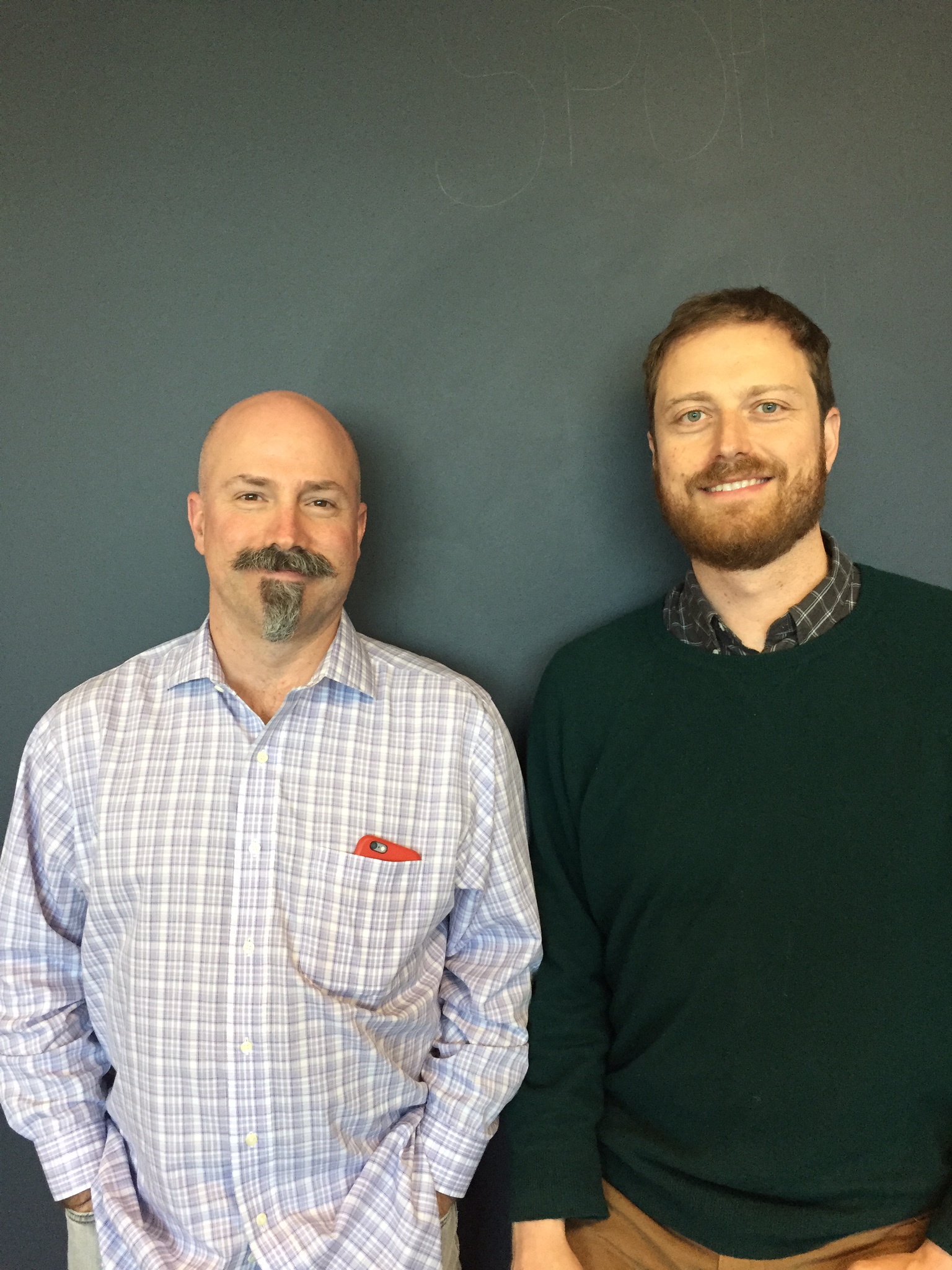
h1

Print Is The Heart Of The Experience At GX The Guard Experience Magazine: The Mr. Magazine™ Interview With GX’s Keith Kawasaki…

March 18, 2015

“When we first put up the website for GX, I had a Mom call me and she said, hey, can you print this story, because I want to keep it. So, I printed it out for her on nice paper and mail it to her. I printed it and mailed it to her and she told me she ended up framing it. People want to physically hold it; they want to see it and share it that way. It legitimizes everything when it’s in print.” Keith Kawasaki

gx1 A print legacy vehicle that not only connects its audience within communities, but provides them with a vehicle that drives their personal stories and photographs straight into the future for subsequent generations; GX magazine is a relevant and important part of people’s lives who serve in the Army National Guard and also for people who may not know the intricacies and benefits of Guard life. The magazine tells the stories of these service men and women, from their perspectives; it publishes their pictures from their mindsets, and it does it well.

Keith Kawasaki is vice president in charge of client services for iostudio, the ad agency that handles the magazine for the Guard. I have been a paid consultant for ios for years, but only from a larger perspective, not involved with issue-by-issue content at all. And I can truly say, the depth of Keith’s feelings when he talks about the magazine and the important stories that it tells can be heard and read in his words. The sincere honor and respect that he holds for what the men and women of the Army National Guard do is behind the magazine’s articulated success and propels it farther down the road of accomplishment.

Keith is a firm believer in the value of print and has brought that conviction to the forefront of the Guard’s mission with this product. The strategies and truths that ios used in conceptualizing the magazine 12 years ago are continued today and keep the print product valuable and an asset in this digital age.

I hope you enjoy this very moving and important magazine story about one branch of our country’s military service and the men and women who bring the pages to life…The Mr. Magazine™ interview with Keith Kawasaki, Vice President, Client Services, iostudio.

But first the sound-bites…

On the concept of GX: Being that the Guard had not been as active prior to 2004, not as active as the other branches for two decades; while they did serve in the Gulf War, it wasn’t as extensive as some of the other branches; when these Guard soldiers would get thrown into the mix with the other active-duty people, there was a misperception of who the Guard was. So, their brand was influx and they needed help to answer the questions: who are the Guard and why are they relevant and important?

On why GX is content marketing:
Well, because there was a marketing objective to reposition the Guard in 2004 and then continually strengthen that position over the years, as the service of choice for these individuals. There are other options out there for people, but the Guard uses GX to say, hey, we are a service of choice and here’s how you can maximize your service for both you and your family.

On why a printed product was the best choice to facilitate the Guard’s objective:
When we first put up the website for GX, I had a Mom call me and she said, hey, can you print this story, because I want to keep it. So, I printed it out for her on nice paper and mail it to her. I printed it and mailed it to her and she told me she ended up framing it. People want to physically hold it; they want to see it and share it that way. It legitimizes everything when it’s in print.

On any major stumbling block he’s had to face and how he overcame it:
Oddly enough, with GX we haven’t had any major stumbling blocks; we’ve had challenges, no job is ever easy. With the Government you are required to prove your worth continuously, because it’s tax payer’s dollars and we take that very seriously at iostudio.

On his most pleasant surprise so far during his GX career:
I had a woman call me (during his travels) and she said, hey, I hear you’re going to be in our town. Can you stop by? I’d love to share my story with you and tell you about my son. I ended up spending such quality time with her and her Pastor and she had taken pictures of GX and passed them around in her town.

On what keeps him up at night:
Lately, my son has been sick and he keeps me up at night. And taking care of my family is always on my mind.

And now the lightly edited transcript of the Mr. Magazine™ conversation with Keith Kawasaki, Vice President, Client Services, iostudio.

Samir Husni: GX magazine has now been in business for 12 years; would you explain the concept of the magazine and the role it plays with the National Guard?

Keith Kawasaki Keith Kawasaki: Sure. We are incredibly blessed with a great client and that’s the unique thing about the work that we do; it’s content marketing. The client had a need to communicate and they chose to use the magazine as that vehicle.

It’s been exceptional that the Army National Guard sees the true value in print and understands the importance of telling personal stories to convey a message. And they have such tremendous stories to draw from. And through those stories comes the great inspiration of GX.

Going back to the beginning, you can ask the question, what was the environment then in 2004 for the Army National Guard? They had wars going on in Iraq and Afghanistan and recruiting was at an all-time low. There was an incredible need to put feet in boots and get overseas and at the same time to keep the men and women that they had.

The Army National Guard brand in and of itself was in a bit of a crisis, because if you think about the service historically, the Guard had developed the reputation of being “Weekend Warriors,” which is a term that a lot of active-duty folks threw around and really was a discredit to the skills that the Guard brought to the table. “For most of the month, they are not drill. They’re teachers or engineers; just normal jobs, but then one weekend a month they drill and then go to training during the summertime for two weeks, unless they get activated on Federal service to go overseas or wherever they’re needed, whereas, on active duty in the regular Army, they’re serving full-time, all the time.

Being that the Guard had not been as active prior to 2004, not as active as the other branches for two decades; while they did serve in the Gulf War, it wasn’t as extensive as some of the other branches; when these Guard soldiers would get thrown into the mix with the other active-duty people, there was a misperception of who the Guard was. So, their brand was influx and they needed help to answer the questions: who are the Guard and why are they relevant and important?

The higher force was in transition as well, operationally, geographically and technologically, because all their technology up to that point had not been developed for going down the roads in Iraq and engaging the enemy, so their technology was going left and right. Geographically, the Guard was moving bases around; operationally, their needs were changing, going from just being a ready-reserve to a fighting force, there was a lot of infrastructure and training that had to be changed.

So, they brought all of this to iostudio and said here’s where we’re at; what can we do to keep our men and women in the Guard and then also have something to leverage as a recruiting tool? The owners of our company, Mitch Powers, Ed Brown and Chris West, came up with the magazine GX, the Guard Experience, and it’s a 108 page bi-monthly publication that distributes 220,000 copies per issue, 215,000 are individual and 5,000 are bulk.

It’s changed over the years, the distribution and the frequency based on the Government’s needs. There are no third-party ads in the publication; we have maybe 10 ads in each issue and they’re not really ads, they’re public service announcements talking about other opportunities in the Guard. So, it’s entirely 108 pages of National Guard content that’s turned out every other month. And it’s all original content.

Samir Husni: You used the term content marketing and this term has been used so loosely in everything, whether describing a magazine promoting a car or describing a magazine that’s promoting a cause. Why do you feel there is a need to coin such a phrase as “content marketing?” Why can’t GX just be a magazine for the Guard?

Keith Kawasaki: Well, because there was a marketing objective to reposition the Guard in 2004 and then continually strengthen that position over the years, as the service of choice for these individuals. There are other options out there for people, but the Guard uses GX to say, hey, we are a service of choice and here’s how you can maximize your service for both you and your family. Here are the career advance opportunities; here are the things that are going to help you live a healthier, happier life. And that’s a marketing tool. It is not an objective news source.

There’s nothing false in GX, but it’s a marketing tool. But it’s done in a way that I think is content marketing, because it’s much rested in the content part, in the stories that are told. These are true, amazing, inspirational stories of real people in the Army National Guard and they can see their faces in the magazine.

What we’ve done with this is what you always advise: to create an experience and I love that. I like to think of GX as a magnetic experience. And there are three core components of that magnetic experience.

Just to take you back through that, the Guard has about 350,000 people and they’re spread out over 3,500 communities across the nation. They’re all their own owner-operated franchises in their individual States, born from the militia. Service-to-state is the bulk of the experience, unless you get activated for Federal duty. So, it’s incredibly spread apart and serving in Sleepy Eye, Minnesota versus serving in Miami, Florida is wildly different. GX is the magnetic experience that is bringing everyone together and connecting the dots. The soldiers read it, the families read it and they can see what’s going on and they can understand the picture of the Guard.

And to create that we have our audience and client research, our audience involvement and our audience empowerment and because of these differences you have to get out there. Every state and territory as well as overseas missions, GX has gone out there and embedded with the soldiers, their families, their employers and their community leaders to understand what that service is from every angle. Because how else could we presume to tell their story?

Samir Husni: For truth-in-reporting, I am a paid consultant that has worked with IOStudio for years now, in terms of the publishing aspect. I have nothing to do with the creation of the content of the magazine on an issue by issue basis, but rather I consult on the bigger picture. That being said; why do you feel in today’s digital world that print is still the best way to serve the mission of the Guard? Or do you believe print is the best way?

Keith Kawasaki: I do and that’s the perfect segue to my next point. You’re reading my mind, Sir. (Laughs) The soldiers of the Army National Guard, because we’re out there all the time working with them and capturing their stories, they see themselves ultimately in the magazine. They write for the magazine; they take photos that appear in the magazine; their personal stories and legacies are captured in the magazine. If you take this over the past 10 years during the Guard’s most tumultuous and courageous period since World War II, we’re talking about so many important missions, so many acts of bravery, and the only way that they are captured in print, in any kind of lasting medium, is through GX. So, soldiers cherish GX; it’s their personal legacy documented that they can show to their kids, and those kids can show it to their kids and so on. At some point, they’re going to reach a time where they can say, hey, here’s Grandpa in GX.

And we’ve already had experiences where soldiers’ kids have contacted us and said; send me that issue because my Dad is in it. And there’s such pride with that, such meaningful engagement with it, that it’s not lost.

Also, when you think of the print publication; it’s mailed directly to the homes of the soldiers, so there’s no: hey, I didn’t get that email or I didn’t get a chance to go to that website. Here is a hardcopy publication, high quality, a luxury item from its aesthetic, and it’s sent to your home; you’re going to see it and your family is going to see it. And because the content is so good and because the magazine is presented so well; it doesn’t get tossed in the trash. This is why more than 80% of our readers share the magazine. And that’s important. They can take an article in there and share it. And this is speaking directly to the audience empowerment point; we believe in incorporating functional content. Functional content meaning content readers can do something with and can serve as a life coach even, and compels them to share it.

There are a lot of list-based things in our finance sections and in our career sections of the magazine, so they can recognize things like: OK, here are the laws that protect your job while you’re deployed. You can take that article to your employer and it’s going to have a lot more weight when you put down a publication like GX on his or her desk and be able to accurately show how it is and it’s also very easy to understand. They don’t have to go to any website or whatever to see it. Digital items come and go and there’s a lot of misinformation on the internet. People find print to be more trustworthy and that’s been proven year after year by industry research.

All these different things enable the client, and I agree with the client, that print is the lasting medium and the most effective for them at this time. There are digital projects that we do; there’s a website for GX, http://www.gxonline.com/, but the heart of the experience is in that print product. And nothing can take that away. It’s there and on their bookshelves and coffee tables.

When we first put up the website for GX, I had a Mom call me and she said, hey, can you print this story, because I want to keep it. So, I printed it out for her on nice paper and mail it to her. I printed it and mailed it to her and she told me she ended up framing it. People want to physically hold it; they want to see it and share it that way. It legitimizes everything when it’s in print.

Samir Husni: What has been the major stumbling block you’ve had to face during your career with GX and how did you overcome it?

gx2 Keith Kawasaki: Oddly enough, with GX we haven’t had any major stumbling blocks; we’ve had challenges, no job is ever easy. With the Government you are required to prove your worth continuously, because it’s tax payer’s dollars and we take that very seriously at iostudio. This is important work that’s going to ultimately help with the mission of the Guard. Things have drawn down on the military warfront scale, but at any point things could change. Everything is cyclical and if you pay attention to the news; you know where things are heating up again.

Every year, seasonally, there are natural disasters that happen across the nation and you need your soldiers to respond to these things, so we take great pride and passion in the work that we do as being part of that effort. And it’s been proven again by the survey data that more than 90% of GX readers believe it’s a valuable retention tool. It’s helping soldiers feel invested and showing value in their service.

I don’t want to say that it’s a stumbling block or a challenge, but we do have to continually prove our worth, and as we should. The community, as a whole with the Guard, has embraced us, so that’s been great. The value of print hasn’t been a hard sell on the Government as our client; because they see it and they value it, and many are soldiers themselves. And they know its worth and hear it from the field as well.

We’ve had three U.S. presidents in the magazine, two Secretaries of Defense, chairmen of the Joint Chiefs; have all seen value in sharing their message through GX magazine. I wish I had something to share with you like: gosh, here has been this big challenge; it hasn’t been a breeze, but it’s been very rewarding work every step of the way.

Samir Husni: What has been the most pleasant surprise? When did you have that “aha” moment in your career, working at GX?

Keith Kawasaki: There have been many, but there’s a story that I love to tell about. You know, it’s impossible not to be affected personally by this client, because the work that they do and the people themselves are just amazing.

Years ago, I was traveling from one end of Wisconsin to the other end of North Dakota, so I went across Wisconsin, then Minnesota, and then hit the border of North Dakota to meet with the families of the 34th Infantry, Red Bull Division, during their deployment around 2006 or 2007. They ended up being gone for 22 months and it was a massive deployment, somewhere around 3,500 soldiers plus units that were attached to them.

So, I went and visited with the families of these soldiers and I did it long before GPS told you everywhere to go, so I had all of these maps and everything timed perfectly so that I could get to each city precisely on time. I was visiting all these small towns along the way and right before I left, I had a woman call me and she said, hey, I hear you’re going to be in our town. Can you stop by? I’d love to share my story with you and tell you about my son.

I had my trip so planned out that I thought, gosh, this is going to be really hard to make time for this, but I felt like I had to do it. I figured it out and when I got to the lady’s town, which was Sleepy Eye, Minnesota, and it has a very special place in my heart, I called up this woman and told her that I was there and asked her about getting together.

I ended up spending such quality time with her and her Pastor and she had taken pictures of GX and passed them around in her town. We had done an article on the history of the Yellow Ribbon, so she had driven up community support for the town’s soldiers by passing around pages of GX. So, she’s a very special woman and that town of Sleepy Eye had something like 16 guys deployed in that mission, including her son.

We had a wonderful time together and I stayed in touch with her. It turned out that out of all those guys that were deployed, her son ended up getting wounded pretty badly. He had burns all over his body, but a very strong young man who had some very serious combat experience and ended up going down to a medical center in Texas and she nursed him back to health. I went to his Purple Heart ceremony in Sleepy Eye. The whole town shut down and had gathered together behind the VFW there when he was presented the Purple Heart.

And it’s in all that when you realize that this is a powerful publication and we’re so honored to be a part of it. We were able to help drive community support in the town of Sleepy Eye and we’re able to capture these amazing stories of these soldiers and their families and show what service is really like. GX is a conduit for that. This isn’t something that we’re creating, we’re not getting a pat on the back for creating any of the stories, but to be able to share them with people and get the message out there and unite these 3,500 communities of soldiers together and let them see their common bond is a pretty great thing. Unifying that mission and objective is what we’re all about. It’s important stuff and carries weight and I think about it often.

Samir Husni: Is there anything else that you’d like to add; also, are you a member of the Guard?

Keith Kawasaki: No, I’m not. I’m from Eastern Long Island and I was just unaware of the service experiences. I was, I don’t want to say sheltered, but it just wasn’t a part of my growing up experience. Service was something that your grandparents had done, but then my eyes were certainly opened up with GX and all of the life experiences of these amazing people. I have learned so much and have such an incredible appreciation for our soldiers and their families since coming here. And it’s a little embarrassing to think back on how ignorant I was to it.

Samir Husni: My typical last question; what keeps you up at night?

Keith Kawasaki: (Laughs) Lately, my son has been sick and he keeps me up at night. And taking care of my family is always on my mind.

Samir Husni: Thank you.
h1

The Doctor Is In As Physicians’ Life Magazine Gets Ready To Launch – The Mr. Magazine™ Interview With Peter Slack, President of Slack Incorporated, Publisher of Physicians’ Life… A Launch Story

March 11, 2015

“The nature of this publication is we want physicians to spend some time away from their practice, getting away, relaxing and curling up with something. And that’s what print does.” Peter Slack

PhysiciansLifecover A lifestyle print magazine targeted for the busy, sometimes stressful world, of clinical practice; Physicians’ Life offers a respite to the maddening world of medical for those overworked men and women who choose to dedicate their lives to others. The magazine aims for a place where doctors can escape from their offices and patients for a while and enjoy getting lost in a world of travel, exercise and connection with other professionals just like themselves. And not only does it aim; it hits its mark quite well.

I have met Peter Slack, president of Slack Incorporated and publisher of Physicians’ Life, and we clicked from the first time we met. In fact, we clicked so much that he hired me to be a publishing consultant on this new magazine launch. So here you have it, truth in reporting, I am a paid consultant for Physicians’ Life but that did not stop me from having a frank conversation with Peter Slack about this new magazine venture. It is a story of a new launch and no one can explain it more than the publisher of the magazine.

I spoke with Peter recently about this brave new world called consumer magazines. Slack has been publishing B to B magazines for years, but this is their first endeavor into the world of consumerism. And while the target audience is physicians, the advertisers won’t necessarily be from the pharmaceutical and health-care worlds. Physicians’ Life will play more toward the affluence of doctor hood, with travel, fashion, auto and luxury being a prime mark for advertisers.

Peter and I talked about the risks; the rewards, and the expense of such a project as this, but he noted that a print component in the consumer world was a very natural extension of what Slack is already doing, and a superb way to grow their market.

So, sit back and relax, the doctor is in and enjoy the Mr. Magazine™ interview with Peter Slack, President of Slack Incorporated, Publisher of Physicians’ Life…

But first the sound-bites:


Wyanoke-aOn whether he is out of his mind to launch a print magazine in this digital age:
No, I don’t think we are out of our minds. I think it’s a great idea and we’ve done our research. All along the way with our research, we were prepared to change our minds and say no. But the results kept coming back as green lights, and the red lights didn’t pop up.

On why his company is making the move to the consumer side of magazines:
The way it came about is the leadership of our company got together about two years ago and we made the statement that we’re a very healthy company; we know what we’re doing in the professional healthcare media space; what more can we do to expand our company, because if you’re not going forward, you’re going backward in the business climate today.

On what he envisions his major stumbling block to be and how he plans to overcome it:
The major stumbling block for us is that we’re privately held and we did not go and get outside financing for this publication. We’re still funding it in-house. We’re fortunate that we do have a lot saved up since we spend our money very judiciously. We’re not a public company; we’re not floating a bond and we’re not going to a VC (venture capitalist), so we have a limited budget to do this and it’s a very expensive project.

On his most pleasant moment so far:
The pilot issue came out in early January and we took copies with us to a meeting we had of ophthalmologists in Hawaii. I took several of them (ophthalmologists) aside and gave them copies of the pilot issue and to man, every single one said, “This is tremendous and much-needed. You guys are on the right track.”

On what he expects the next year to bring:
A year from now I hope to tell you that physicians are reading it and advertisers are embracing it.

On why he decided to go with a print publication for consumers:
The nature of this publication is we want physicians to spend some time away from their practice, getting away, relaxing and curling up with something. And that’s what print does.

On the doctors sharing with doctors tagline of the magazine:
Doctors are unique people, just as any professionals are, but doctors do respect each other. They’ve gone through the same schooling and we’ve learned over time that doctors enjoy hearing from other doctors.

On what keeps him up at night: There is so much opportunity right now in healthcare publishing, with the different platforms: print, online, mobile and there’s a lot of substandard information out there because it’s so easy for almost anyone to put information online. What keeps me up at night is making sure that we’re intelligently approaching that opportunity in the most aggressive way that we can and that we’re not missing the boat.

And now the lightly edited transcript of the Mr. Magazine™ conversation with Peter Slack, President of Slack Incorporated, Publisher of Physicians’ Life…

Samir Husni: Are you out of your mind launching a print magazine in this environment that we live in; one where you hear nothing but gloom and doom?

Peter Slack: (Laughs) I knew you’d start with a good question. No, I don’t think we are out of our minds. I think it’s a great idea and we’ve done our research. All along the way with our research, we were prepared to change our minds and say no. But the results kept coming back as green lights, and the red lights didn’t pop up.

And we’re not the only people launching new publications right now. It’s seems like the time is right for this one.

Samir Husni: You’re an established media company that is specialized in B to B magazines; you have a lot of specialty magazines aimed at physicians and all kinds of people in the medical and healthcare field; why are you making the move to the consumer side?

Peter Slack: That’s a great question. The way it came about is the leadership of our company got together about two years ago and we made the statement that we’re a very healthy company; we know what we’re doing in the professional healthcare media space; what more can we do to expand our company, because if you’re not going forward, you’re going backward in the business climate today.

So, I challenged our upper leadership to come back with new ideas that could either be within our current comfort zone or outside it. And the idea of a consumer magazine came back from our chief financial officer, Darrell Blood, whose fiancée is a physician, and he made a strong argument that the time was right for someone who knows physicians and knows what they’re all about, to put together a publication that would meet their needs outside of the daily practice.

And yes, this is outside of what we do, but it’s related to what we do, because what we do 24 hours per day, every day of the year, is we work with physicians. That’s what we do and what we know, and we listen to their lives, both professionally and outside of what they do in their clinical practices.

When Darrell brought up the idea and said that he’d heard about the stresses that physicians were under when he’d attended cocktail parties and dinners with his fiancée and her colleagues; well, we’d been hearing these same things at our editorial boards and dinners that we’d been going to for several years from doctors that we knew very well.

So, yes, we know our marketplace well; we know the professional healthcare publishing world well, and we’re thankful that we’ve done well and continue to do well. But we’re looking for new ways to grow our company. And this seems like a natural fit.

Samir Husni: What do you envision to be the major stumbling block through this consumer journey and what do you plan on doing to overcome it?

Peter Slack: The major stumbling block for us is that we’re privately held and we did not go and get outside financing for this publication. We’re still funding it in-house. We’re fortunate that we do have a lot saved up since we spend our money very judiciously. We’re not a public company; we’re not floating a bond and we’re not going to a VC (venture capitalist), so we have a limited budget to do this and it’s a very expensive project.

We’re fortunate also in that we have around 40 advertising sales reps that sell to the professional marketplace, to pharmaceutical and device companies, and our editors are professional editors in creating professional, peer-reviewed publications and newspapers for physicians and other healthcare practitioners. None of us on the advertising sales side or the editorial side really fully understand the consumer marketplace, or the lifestyle marketplace and so one of the best things that happened to us is we went on a search to find out who could help us and we discovered the James G. Elliott Company in New York and they’ve brought great resources, on both the research side to prove the concept, they introduced us to you, Samir, and you have helped us and consulted with us along the way in this new kind of arena, and you introduced us to Beth Weinhouse who has turned out to be a Godsend on the editorial side.

The Elliott Group are professionals and they know how to reach the luxury marketplace; the consumer marketplace; the affluent marketplace which physicians fall into. Samir, you’ve helped us with the overall consulting of magazine publishing versus professional healthcare publishing, and Beth has jumped in and given us just what we needed to develop the editorial.

Samir Husni: What has been the most pleasant moment so far, since you’ve launched the pilot issue and until the launch of the first issue; what was the moment that made Peter Slack think: Wow!

Peter Slack: The pilot issue came out in early January and we took copies with us to a meeting we had of ophthalmologists in Hawaii, it’s a meeting every year of about 1,000 ophthalmologists, and we know them very well; we’ve been in ophthalmology forever, so we know many of them that attend extremely well.

So, I took several of them aside and gave them copies of the pilot issue and to man, every single one said, “This is tremendous and much-needed. You guys are on the right track.” That’s an anecdotal way of saying that our research is validated and the concept is good.

Samir Husni: Peter, if I sit down with you a year from now and ask you to reflect on the first year of Physicians’ Life; what would you tell me?

Wyanoke-a Peter Slack: I would tell you that in the past year the factors that we’ve looked at about its success was of course advertising, but before advertising, the support was editorial interest. We’re going to test the first couple of issues to see how well it’s being read. We’re going to test the audience and I hope to tell you that the audience embraces it.

And the second thing that I hope to tell you is that the advertising community has embraced it as well, because that’s essential. There have been publications in the past that have been produced by healthcare publishers that went outside of the clinical realm and provided some of this kind of information and they did well. But the advertising environment changed over that period of time and that’s why we’re going to a different segment this time which we think is going to work.

So, a year from now I hope to tell you that physicians are reading it and advertisers are embracing it.

Samir Husni: You are launching, as far as I know, the largest consumer magazine launch in 2015; you’re launching with almost 350,000 in controlled circulation, magazines mailed to the physicians, and another 150,000 copies to distribute at conventions. Technically, you may end up with half a million copies. Does that make you tremble a little or have some doubts about launching the largest new magazine launch of 2015?

Peter Slack: It’s exciting, isn’t it? (Laughs) I think the answer to that question is that the physicians who are going to be receiving this publication; we already have a relationship with. As a company we mail or reach electronically or in some way, 450,000 physicians every month. So the list of 350,000 that we’re going to be mailing Physicians’ Life to is culled from that same list of 450,000 that receive something from us every month. So, they know us. They know who Slack is.

And there is this confidence that when it arrives in the mail to them, and I’m not saying the first issue is going to be read by every single one of them, but there is this confidence that when they ask who’s behind this publication and they see it’s us, they’re going to recognize it as something they should spend a little more time with.

And the copies that are distributed at conventions, and they’re going to be distributed from our booths, we exhibit at 70 to 80 medical conventions each year, and right on the booth it’s going to read Slack Publishing and Physicians’ Life is going to be there and they’ll make that connection as well.

So, you’re right; it’s going to be an expensive proposition; you know what it costs to print and mail 350,000 copies, plus now we have the additional 150,000; it’s an expensive proposition. But this is the risk that we have decided to take.

Samir Husni: I know people will understand the reason that you decided to go with print because you’re working with me. (Laughs)

Peter Slack: (Laughs too) I’m glad that you believe in print too.

Samir Husni: So, if you take me out of the equation; why did you decide to go with a print publication for these physicians?

Peter Slack: The nature of this publication is we want physicians to spend some time away from their practice, getting away, relaxing and curling up with something. And that’s what print does.

Right now they have a big stack of peer-reviewed publications and they read some of them and maybe they read them just when they need to or when they have the time. They go online and they search for information and Google brings it to them; they’re used to that kind of quick information; that quick hit, to go in when they need something and find it.

This is different. This is not go to Google and put in: where do I want to go on vacation, or I wonder if there are other physicians doing what I’m doing or if they enjoy wine or if they have the same challenges I do in getting a workout in. This is something they can pick up in one place and read it in their home or on the airplane, have it in their hands and flip the pages and actually get a feeling that they’ve escaped their professional world for a little while. And print does that.

We will have a website and it will operate under the same premise: this is a place that you can go and escape. And this is interesting; we’re not even going to have a search function on the website. We don’t want them to go to the website and put in search words; the front page is going to have categories that they can go to and clock on and over time, when the articles build up, there will be a reservoir of articles, but we don’t want them to go in and search and immediately go to a little nugget of information; we want them to really experience what we’ve put together to help them escape from their practice.

So, there’ll be a website and it’ll do that and it’s going to be restricted to physicians only. We plan on having a forum set up where they can share ideas with each other on the website.

But the print in this case really fits and really works because we’re going to have a front cover and a back cover and everything in between. It’s information that’s going to be developed by us and our physicians’ editors. And we think it is important for them to get in one place and actually pick it up and spend some time with it.

Samir Husni: I noticed your tagline: doctors sharing with doctors. Tell me a little about that tagline and about the importance of that personal connection with each other for the physicians, rather than just journalists sharing with doctors.

Peter Slack: Doctors are unique people, just as any professionals are, but doctors do respect each other. They’ve gone through the same schooling and we’ve learned over time that doctors enjoy hearing from other doctors. So, what we’ve done, and our research bore this out too and it was very clear, if this was written and directed by doctors to other doctors and doctors were on the editorial board and the editorship that it would make a difference. So, every article is going to have a spin on it to make it directed toward doctors and written by doctors. There might be an article there about working out, but this is going to be about how physicians have very difficult schedules, so how do you get your workout in because you’re a physician? Just those kinds of things. The general topic can generally be found anywhere across the many, many magazines on the newsstands, but these articles are going to be written in the direction of physicians only, written by our staff, which are directed by physicians.

Samir Husni: Anything else you’d like to add?

Peter Slack: Nothing, other than the fact that this is something that is really a natural extension of us. You made the great point that it’s somewhat out of our comfort zone, but it really is a natural extension. And it’s something that we’re very excited about.

Samir Husni: My typical last question; what keeps you up at night?

Peter Slack: Probably two things: getting a good putting stroke going; that’s probably the number one thing. (Laughs) And number two is there is so much opportunity right now in healthcare publishing, with the different platforms: print, online, mobile and there’s a lot of substandard information out there because it’s so easy for almost anyone to put information online. There is such a great opportunity for legitimate publishers to approach the marketplace now.

So, what keeps me up at night is making sure that we’re intelligently approaching that opportunity in the most aggressive way that we can and that we’re not missing the boat, because I really think that this is a tremendous opportunity, the time right now, for legitimate publishers to put out quality information and to gain the interest of their audience.

Samir Husni: Thank you.