Archive for the ‘A Launch Story…’ Category

h1

Via Corsa Magazine: Get Ready For Travel And Adventure From A New Car Enthusiasts Magazine. The Mr. Magazine™ Interview With Ron Adams, Founder And Publisher.

August 24, 2015

A Mr. Magazine™ Launch Story…

“I recently returned from England where I had the opportunity to interview the owner of the best manufacturer of large scale model automobiles on the planet. Their models are highly detailed works of art that are custom made for automobile enthusiasts, car manufacturers and race teams. It was during my interview when I asked him what else he had done, to which he replied he had also built industrial scale models of everything from drilling platforms to office buildings for one of the largest commercial architectural firms in the U.K. He then paused and flippantly said that in the design phase, the firm’s customers really preferred his scale models over the 3D digital renderings. He went on to explain that these models were something tangible that the client could touch and feel and see and therefore felt they could trust. I laughed and told him it sounds a lot like the magazine business.” Ron Adams
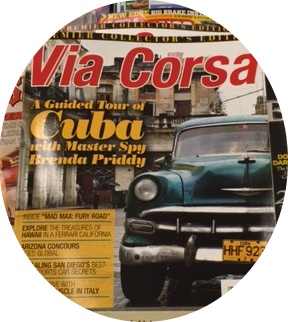
via corsa From guidebooks that take you on scenic routes to interesting places all over the globe, to a magazine that defines travel and adventure in some of the most beautiful and exotic cars a person can drive; Ron Adams is a man whose enthusiasm and passion for the trip far exceeds his overwhelming love for the potential vehicle.

Via Corsa magazine is the latest endeavor for Ron and his publishing business, Via Corsa, Ltd. The magazine is a totally collectible publication that’s different from other car mags by promoting travel and the adventure of the trip more than the actual car itself.

I spoke with Ron recently about the launch, which happened this month, and since I am also consulting with him on the magazine, we covered quite a bit of information regarding the genesis, process and ultimate birth and delivery of Via Corsa.

Ron is a man very passionate about adventure when it comes to travel. His love for the trip and the experiences he encounters along the way is infinite. We talked about what it took to go from publishing guidebooks and straight informative content, to a magazine that weaves stories and enchants the reader with a much different type of editorial.

It was a conversation that unlocked many doors to Ron’s belief that the tangibility of print and the power of the written word to tell those stories are priceless.

So, I hope you enjoy the Mr. Magazine™ interview with Ron Adams, Editor-In-Chief, Publisher of Via Corsa magazine – rev up your engines and get ready to read!

But first, the sound-bites:

ron adams On the genesis of the magazine and why he wanted to start a print magazine in this digital age: The passion started many years ago; in fact, as a youngster. But the passion isn’t just for the cars; it’s for the travel and the adventure as well. I recently returned from England where I had the opportunity to interview the owner of the best manufacturer of large scale model automobiles on the planet. It was during my interview when I asked him what else he had done, to which he replied he had also built industrial scale models of everything from drilling platforms to office buildings for one of the largest commercial architectural firms in the U.K. He then paused and flippantly said that in the design phase, the firm’s customers really preferred his scale models over the 3D digital renderings. He went on to explain that these models were something tangible that the client could touch and feel and see and therefore felt they could trust. I laughed and told him it sounds a lot like the magazine business.

On what his expectations are for the magazine:
The whole idea begins with the car, but not as something you might think. The car is just a tool; the car is, perhaps the object of your passion, but the car is just a tool to begin living the adventure. And that’s where the true passion is. And that’s where my passion is.

On the launch story of Via Corsa:
Smooth sailing, it was not. Coming from guidebooks and as a guidebook publisher, we were really looking at only content and information and to transition into a magazine is to become a storyteller. When we looked at what we had in the guidebooks, and the people, places, events and drives that we were covering; we had to take what was really just a listing of information for users who traveled and turn it into stories of adventure. To have the reader experience our adventure as Via Corsa experienced them.

On his emotional journey during the process of bringing the magazine to fruition:
It seemed fairly straightforward and easy to do the guidebooks by comparison. In fact, as a major stumbling block; it was a much harder journey to move to the magazine because everything was so much more complicated, though it was in a good way. There were several times however when I just wanted to throw in the towel and say this is beyond me as a publisher. But we pushed forward and as we did a couple of interesting things happened.

On whether the cover story on Cuba was planned with travel restrictions from the United States being lifted: That was pure luck. It just so happened that Brenda Priddy was going to Cuba and just after she’d finished that trip, announcements were made about travel restrictions to Cuba being lifted. So, it was pure luck.

On what he hopes to say and accomplish concerning the first year of the magazine:
Wow, what a ride! We’ve gone on a great adventure with this magazine. We’re not really talking about the business side of the model; we’re talking about the editorial and the content. And that’s really what drives me as a publisher. The business is what it is. Print is what it is. But really what I’m trying to dive deep into is all of the stories out there to be told.

On how much the magazine launch consumed him and whether his wife and children ever gave him the ultimatum, us or the magazine:
No, that didn’t really happen. Again, coming from several years of publishing the guidebooks, we were able to pace everything pretty well. So, that didn’t happen and as we move forward through priming out the future issues, everything seems to be fitting into a nice schedule.

On the most pleasant surprise he’s had during his publishing experience:
What I call Easter Eggs. And if you know what Easter Eggs are in DVD’s; it’s those weird little icons that you can push with your remote and something strange happens. Easter Eggs in my world are strange little happenings and I’ll tell you a story of one. Several years ago I was at the BMW factory in Germany; they actually have a couple, this was in a place called Dingolfing. And I’d made an appointment to see the media liaison for BMW to photograph the factory. And when I showed up he had no idea who I was, his demeanor said I don’t really care about this; I don’t like this and who are you. So, I handed him a guidebook and he looked at it. After about 30 seconds he put the guidebook down and said, “Moment.” He picked up the phone and spoke in German to someone, hung up the phone and said, “I’ve got a surprise for you.” So, on his own time, after we photographed the BMW factory, he took us to a brand new museum in Dingolfing, Germany that we then covered. And he got it. He saw what we were trying to accomplish.

On where he is going to position Via Corsa in the marketplace with so many titles out there:
A lot of the car magazines today cater to the new purchase experience; in other words, they’re looking to sell a car and that’s a good thing, a lot of people need help when buying their cars. But once you buy your car and it’s sitting in your garage, then what? There are virtually no publications out there, online or in print, that really cater to the enthusiast once he or she owns the car. And that’s where we pick up.

On what his dream car is and where his dream location would be if he were driving that car:
That is the proverbial question isn’t it? Is it the journey or the destination? For me personally, I love the journey. The journey is where the adventure lies and the destination is simply the end. But what would be the dream car? That’s tough. I guess the car manufacturers are far too good at building better and better sports cars for me to want to stick with any one car. But if I had to narrow it down, it has to be Italian.

On what motivates him to get out of bed every morning: Looking for the next story. The joy in getting up and going to the computer, going on the trips, doing the work on the editorial side, is what gets me up in the morning.

On anything else he’d like to add:
When someone looks at my magazine, I don’t want them to say, “Oh, this is great,” and then toss it aside when they’re done. I’m trying to create a magazine that’s enjoyable, informative and tells good stories, but is also collectible. And I would love to hear from people a year from now, five years from now, who would contact us and say, “I so remember that first issue; I still have it. It’s still relevant and interesting. It’s still something that I would read today.”

On what keeps him up at night:
I sleep pretty well, but the one thing that keeps me up at night is I’m always thinking about that next trip.
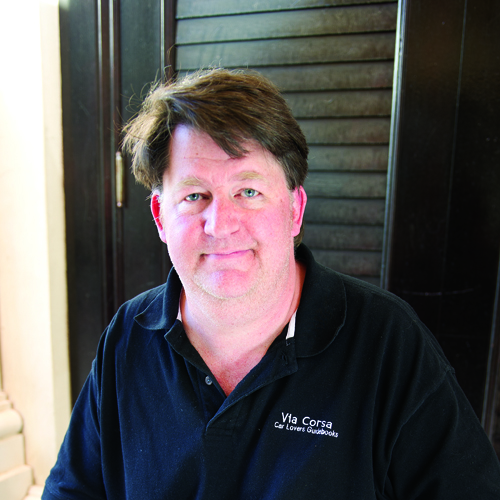
And now the lightly edited transcript of the Mr. Magazine™ conversation with Ron Adams, Editor-In-Chief, Publisher, Via Corsa magazine.
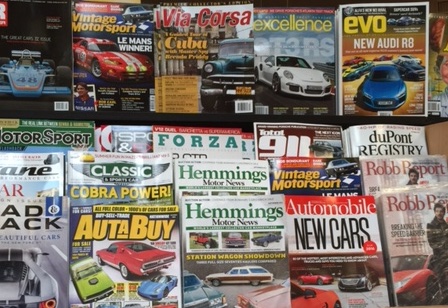
via corsa 2 Samir Husni: After looking at the first issue of Via Corsa, I can feel that this is a labor of love and passion for you. Tell me a little about the genesis of the magazine; what made you decide that you wanted to start a print magazine in this digital age?

Ron Adams: The passion started many years ago; in fact, as a youngster. But the passion isn’t just for the cars; it’s for the travel and the adventure as well. And the two for me have always gone hand-in-hand, both the travel and the passion for the cars.

I recently returned from England where I had the opportunity to interview the owner of the best manufacturer of large scale model automobiles on the planet. Their models are highly detailed works of art that are custom made for automobile enthusiasts, car manufacturers and race teams. It was during my interview when I asked him what else he had done, to which he replied he had also built industrial scale models of everything from drilling platforms to office buildings for one of the largest commercial architectural firms in the U.K. He then paused and flippantly said that in the design phase, the firm’s customers really preferred his scale models over the 3D digital renderings.

He went on to explain that these models were something tangible that the client could touch and feel and see and therefore felt they could trust. I laughed and told him it sounds a lot like the magazine business.

Samir Husni: What do you expect to showcase to the world from this magazine; to the rest of the hobbyists and to people like you? What are your expectations for Via Corsa?

Ron Adams: The whole idea begins with the car, but not as something you might think. The car is just a tool; the car is, perhaps the object of your passion, but the car is just a tool to begin living the adventure. And that’s where the true passion is. And that’s where my passion is.

The car sitting in the garage doesn’t do very much for anyone, maybe some people, but not for me. The car is there to go on the racetrack; the car is there to go on a drive and it doesn’t matter if you go on a drive down the road to the store or a 1,000 mile rally cross-country. It’s the adventure that the car can take you on; the adventure that you can live and that’s what it’s really all about.

Samir Husni: How did you take that adventure and passion, that car, and create the first issue of the magazine? Tell me the story of the launch. Was it all smooth sailing?

Ron Adams: Smooth sailing, it was not. Coming from guidebooks and as a guidebook publisher, we were really looking at only content and information and to transition into a magazine is to become a storyteller.

When we looked at what we had in the guidebooks, and the people, places, events and drives that we were covering; we had to take what was really just a listing of information for users who traveled and turn it into stories of adventure. To have the reader experience our adventure as Via Corsa experienced them. We had to be able to turn a relatively bland guidebook story about a museum into something far more interesting or a drive that we may have only listed the route for into an adventure along the coast of Oahu, which is one of our feature stories in the first issue.

And that’s a good thing. I think people really want to see more than just a listing of hotel prices or routes along a drive; they really want to feel the passion of the person behind the wheel going on that drive through the countryside or that lap of that racetrack.

Samir Husni: I received a press release for the first issue announcing that the magazine would go on sale in mid-August and it is indeed out now. And for truth in reporting, I am consulting with you on this magazine launch. That being said, from the time you conceived the idea to the day you received your copy of the first issue and held it in your hands, can you describe your emotional journey during that time frame? Was there ever a moment when you said to yourself, this is too hard; why am I doing this?

Ron Adams: There are several times that I said that. It seemed fairly straightforward and easy to do the guidebooks by comparison. In fact, as a major stumbling block; it was a much harder journey to move to the magazine because everything was so much more complicated, though it was in a good way.

There were several times however when I just wanted to throw in the towel and say this is beyond me as a publisher. But we pushed forward and as we did a couple of interesting things happened.

The turning point really came during the ACT 5 Conference, something I want to thank you for, and that was a conversation that I had with Keith Bellows (former editor-in-chief, National Geographic Traveler). Up until that point, everything was headed in one direction and he singlehandedly, in one sentence, changed everything into a different direction.

In talking with him, and at the time he was the editor-in-chief of National Geographic Traveler; I asked him how he approached travel destinations that he knew beyond a shadow of a doubt that most people couldn’t go to. And he said very simply: just tell a good story. And that’s what we’re trying to do.

We’re trying to leave all of that information on our digital side; the information that tells you the routes and the airport times or any of that type of content, but in print we want to bring you the story. We want to bring you into the world that we’re experiencing. And when Keith Bellows said what he did, that really changed the entire direction of the magazine. And from that point on it’s been fairly easy to create the content that you see today.

Samir Husni: Your cover story for the first issue is on Cuba; was that luck or planned, considering what is happening with the United States’ relationship with Cuba?

Ron Adams: That was pure luck. It just so happened that Brenda Priddy was going to Cuba and just after she’d finished that trip, announcements were made about travel restrictions to Cuba being lifted. So, it was pure luck.

The initial cover was supposed to be on Hawaii, but as it turned out, Brenda provided a much better story.

Samir Husni: If you and I talk again a year from now and I ask you how the first year with Via Corsa went, what would you like to think your answer would be?

Ron Adams: Wow, what a ride! We’ve gone on a great adventure with this magazine. We’re not really talking about the business side of the model; we’re talking about the editorial and the content. And that’s really what drives me as a publisher. The business is what it is. Print is what it is. But really what I’m trying to dive deep into is all of the stories out there to be told. And that’s where my passion and my love are. And that’s where I want to see myself one year from now, to look back and reflect on all of those stories that I was able to put into print.

Samir Husni: I hear a lot of fun stories and a lot of horror stories too about people who fall in love with the launch of their magazine and get so busy with that first issue that they lose the rest of their lives; how much did the launch of Via Corsa consume you? Did your wife and kids ever say it’s the magazine or us?
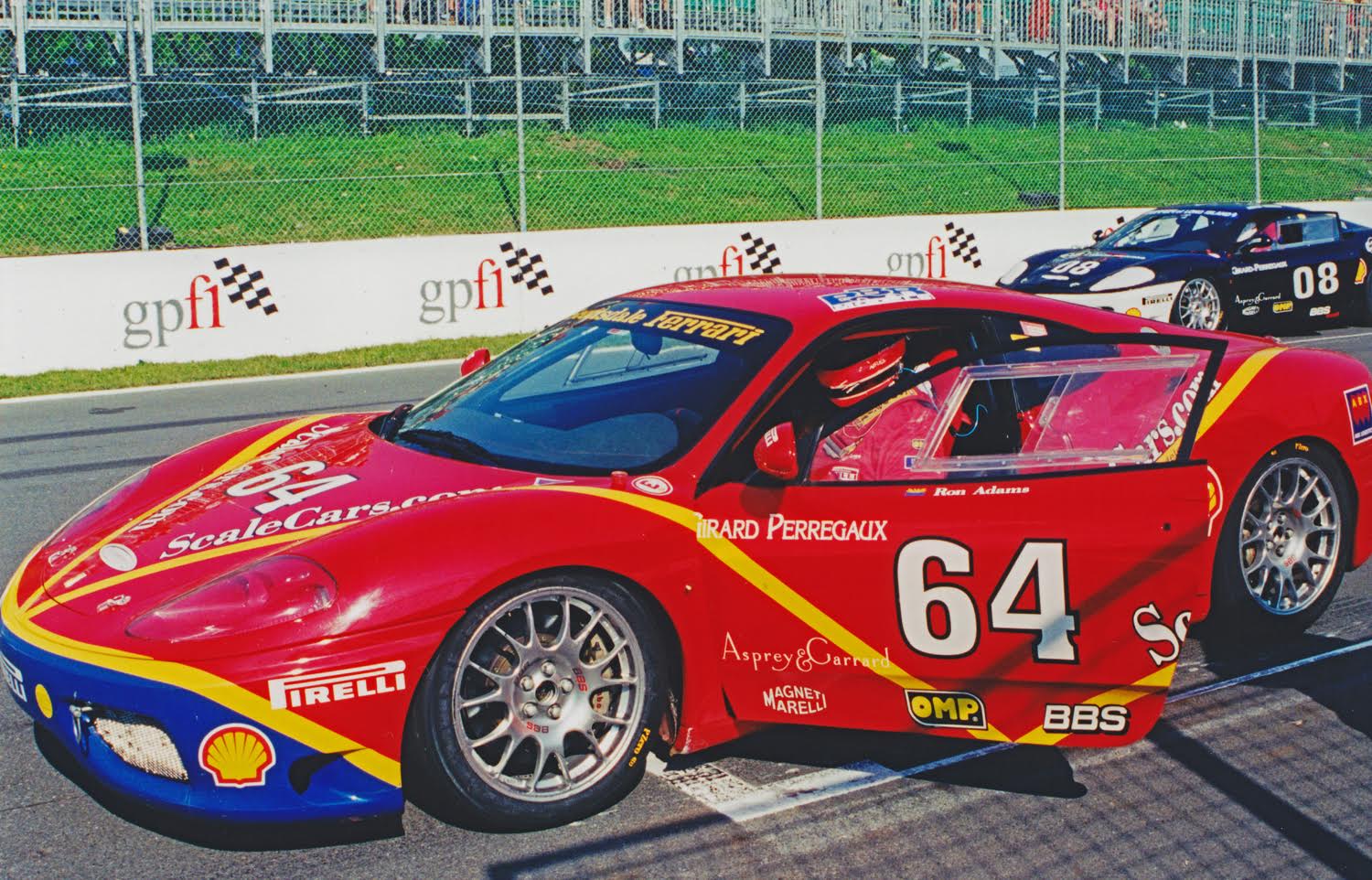
ron adams car Ron Adams: No, that didn’t really happen. Again, coming from several years of publishing the guidebooks, we were able to pace everything pretty well. So, that didn’t happen and as we move forward through priming out the future issues, everything seems to be fitting into a nice schedule, with production, the editorial side, the business side and with family too.

Samir Husni: What has been the most pleasant surprise with the launch of the magazine?

Ron Adams: What I call Easter Eggs. And if you know what Easter Eggs are in DVD’s; it’s those weird little icons that you can push with your remote and something strange happens. Easter Eggs in my world are strange little happenings and I’ll tell you a story of one.

Several years ago I was at the BMW factory in Germany; they actually have a couple, this was in a place called Dingolfing. And I’d made an appointment to see the media liaison for BMW to photograph the factory. And when I showed up he had no idea who I was, his demeanor said I don’t really care about this; I don’t like this and who are you. So, I handed him a guidebook and he looked at it. You could see his expression begin to change from one of confusion and perhaps a little bit of disdain for me, to complete enlightenment and joy.

After about 30 seconds he put the guidebook down and said, “Moment.” He picked up the phone and spoke in German to someone, hung up the phone and said, “I’ve got a surprise for you.” I said great; what is it? He told me that there was a new museum about 300 yards from where we were and he was going to take me to it over lunch.

So, on his own time, after we photographed the BMW factory, he took us to a brand new museum in Dingolfing, Germany that we then covered. And he got it. He saw what we were trying to accomplish. It was something that we could not describe via emails or PDF’s; it was something that couldn’t be described over the phone, but once he held that guidebook in his hands, he saw what we wanted to do and he showed us more. And those little surprises happen all the time and I love those.

Samir Husni: We hear it a lot; in fact, every time a new magazine is launched: there are so many car titles out there, so many travel titles, so many this and so many that. How are you going to position Via Corsa in the marketplace?

Ron Adams: A lot of the car magazines today cater to the new purchase experience; in other words, they’re looking to sell a car and that’s a good thing, a lot of people need help when buying their cars. But once you buy your car and it’s sitting in your garage, then what?

There are virtually no publications out there, online or in print, that really cater to the enthusiast once he or she owns the car. And that’s where we pick up. We’re filling a need that’s there because people have a desire to experience their car, to drive their car once they’ve bought it.

Is this magazine a car magazine; well, maybe, but I think of it as more of a travel and adventure magazine. It just so happens to be geared for car enthusiasts. And I believe that’s an untapped market.

Samir Husni: I’m going to put you in the driver’s seat for a moment, no pun intended. Tell me the dream car that you’d like to be driving to the dream destination that you’d like to be arriving. What would those be?

Ron Adams: That is the proverbial question isn’t it? Is it the journey or the destination? For me personally, I love the journey. The journey is where the adventure lies and the destination is simply the end. I try to live my life as much as an adventure as much as possible and I am far too restless to settle down at any one destination. But what would be the dream car? That’s tough. I guess the car manufacturers are far too good at building better and better sports cars for me to want to stick with any one car. But if I had to narrow it down, it has to be Italian. After all Italian automobiles are passion.

Samir Husni: What motivates you to get out of bed every morning and say it’s going to be a great day? What drives you?
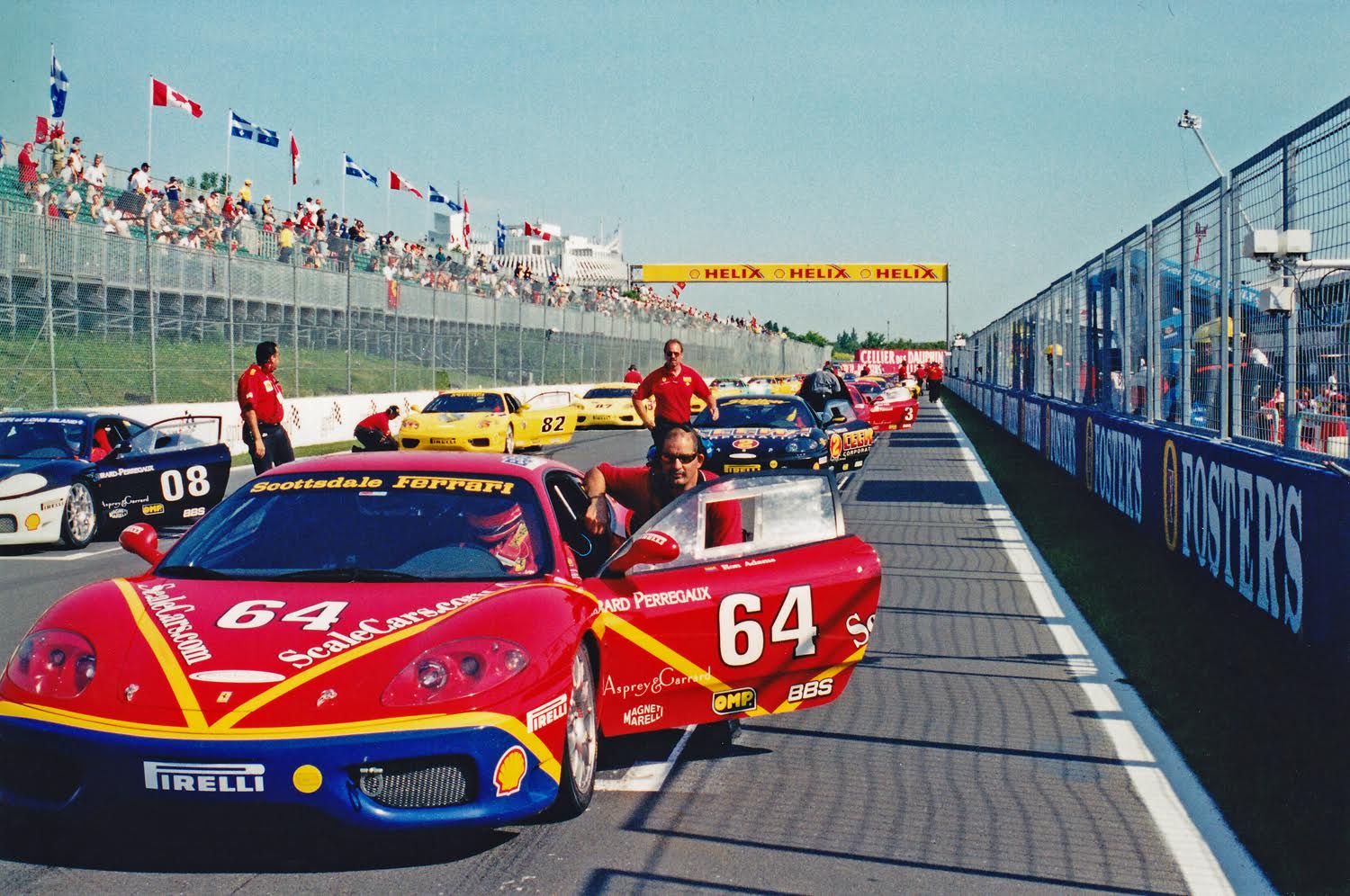
ron adams car2 Ron Adams: Looking for the next story. The joy in getting up and going to the computer, going on the trips, doing the work on the editorial side, is what gets me up in the morning. The business side; that’s important; I’m living and dealing with that, it’s something that’s been a part of my life ever since the guidebooks began. But that’s really not what drives me or gets me up in the morning. It’s the ability to look at the world and try to funnel it through this magazine and bring it to the readers in an exciting way.

Samir Husni: Is there anything else you’d like to add?

Ron Adams: When someone looks at my magazine, I don’t want them to say, “Oh, this is great,” and then toss it aside when they’re done. I’m trying to create a magazine that’s enjoyable, informative and tells good stories, but is also collectible.

And I would love to hear from people a year from now, five years from now, who would contact us and say, “I so remember that first issue; I still have it. It’s still relevant and interesting. It’s still something that I would read today.”

So, as we move through this magazine business, what I hope to see is with this magazine that we’ve created is something that’s really enduring.

Samir Husni: My typical last question; what keeps you up at night?

Ron Adams: I sleep pretty well, but the one thing that keeps me up at night is I’m always thinking about that next trip.

Samir Husni: Thank you.
h1

Fighters And Survivors Of Cancer & Many Other Challenges Are “Out Living It” With Positive Energy And An Outdoor Commitment That Helps Heal The Soul – The Mr. Magazine™ Interview With Sarah Hubbard, Director of Marketing, Out Living It Magazine

August 21, 2015

“We kind of struggled with that in the beginning, because obviously our age demographic is a digital age group: 18-39. They’re engaging with mobile more than anything, but what we wanted to start with was something really tangible. So, at the base level we wanted it to be something that when you’re in a waiting room, you could find it on the table and you could see it, experience it and actually hold it in your hand.” Sarah Hubbard (on why they decided on a print publication instead of digital-only)

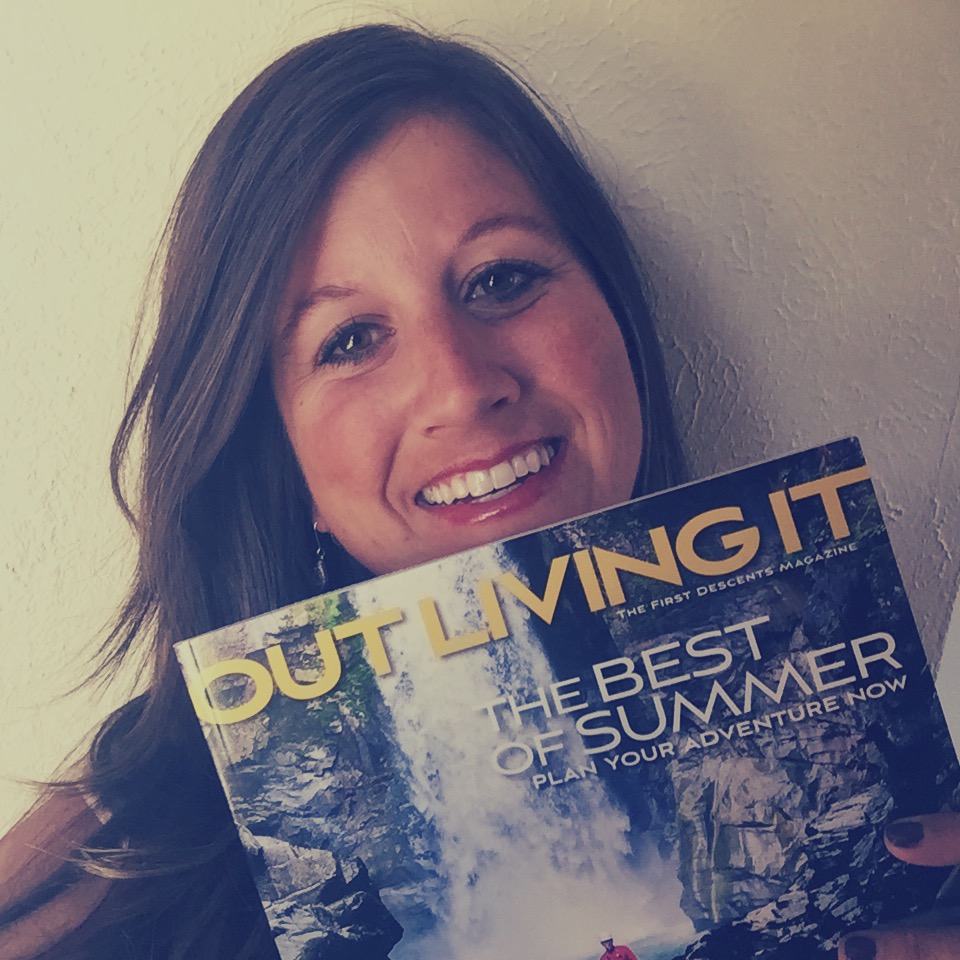
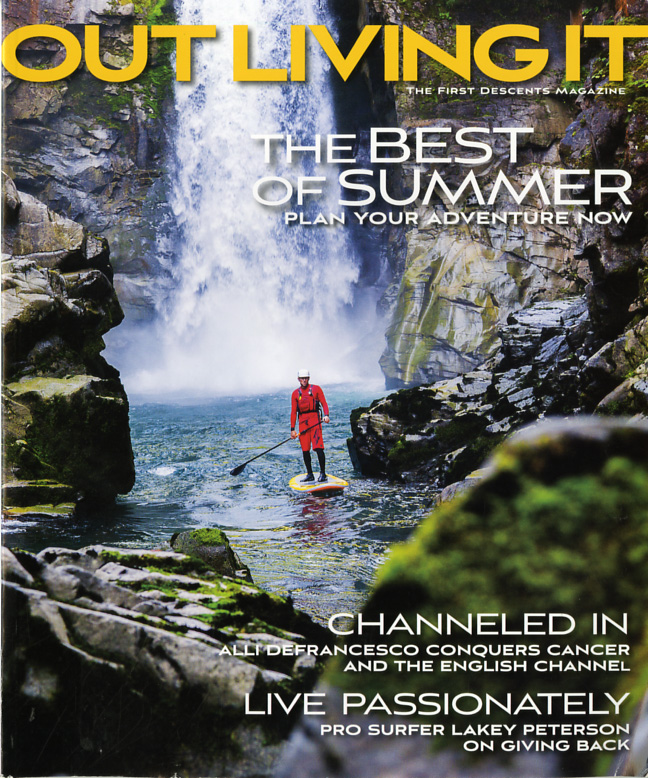
Out Living It-1 First Descents is a non-profit organization that provides life-changing outdoor adventures for young adults impacted by cancer and many other challenges. The lifestyle promotes the peace, serenity and positivity of nature to bring people who are facing some of life’s biggest trials a sense of zeal and confidence despite their circumstances.

Sarah Hubbard is the marketing director for the organization and a cancer survivor herself. As a survivor of pediatric cancer, First Descents and the new Out Living It magazine are a combination of Sarah’s love for the outdoor lifestyle and the cause that is the nearest and dearest to her heart.

I spoke with Sarah recently and we talked about the foundation for the magazine, the First Descents organization, and the need she felt was there for a print publication in a world where digital content is fleetingly plentiful. The tangibility of print and the substance of something that could be held and enjoyed was a powerful motivation for Sarah when it came to bringing the magazine to fruition. The passion she has for the First Descents mission is transcended only by her dedication to making the magazine Out Living It a success.

After reading this interview with Sarah, maybe you’ll be reminded of how each day we should all be “Out Living It” to the fullest. I know Mr. Magazine™ was. And now the Mr. Magazine™ interview with Sarah Hubbard, Marketing Director, Out Living It magazine.

But first, the sound-bites:


On the launch of the magazine and on why they decided to add a print publication to their organization:
First Descents provides outdoor adventures for young adults, and for us that means ages 18-39, who’re fighting cancer. The really unique thing about First Descents is, even if you go to the website, but more importantly if you meet some of our participants in person, is it’s a really positive energy. It’s not your typical cancer organization; it’s this incredibly positivity. And I think our participants really embody our mantra of “Out Living It.” So, in thinking about how this would resonate with a larger community, we realized that we use the outdoors as a way to challenge these people and remind them that they’re capable of living a really wonderful life, but that goes way beyond our campus. There are people out there who are facing other diseases and going through really difficult life stages and they might need that mantra of “Out Living It” as well.

On the connection between Mountain Magazine and Out Living It:
Mountain Media publishes a lot of custom publications; I actually had worked with them in a prior career and so when I thought about whom I wanted to publish the magazine and partner with, they were the obvious choice.
Sarah Hubbard
On why they chose print instead of digital-only content:
We kind of struggled with that in the beginning, because obviously our age demographic is a digital age group: 18-39. They’re engaging with mobile more than anything, but what we wanted to start with was something really tangible. So, at the base level we wanted it to be something that when you’re in a waiting room, you could find it on the table and you could see it, experience it and actually hold it in your hand.

On whether the tagline “Out Living It” was always a part of the organization or was added for the magazine: It wasn’t, no. I believe it was added to the organization around 2011. Our founder was trying to come up with a mantra and a tagline for the organization and he came up with Out Living It, which I think is an absolute success. It means getting outside and living your life, but it also means living so well that cancer doesn’t stand a chance or whatever disease doesn’t stand a chance or any given challenge doesn’t stand a chance; just whatever your circumstances might be.

On some of the major challenges she thinks the magazine will face: We put together a combination of content where I think anyone could pick up the magazine and it would look and feel like maybe a Mountain Magazine; it’s travel tips and recipes and it’s these incredible feature stories. But for those who are in our community and those who are really paying attention to the content; I think it’s really easy to realize there’s a thread that goes through all of the stories. And that thread is that every single person from the photographer who is at the very front of the magazine to the athlete at the very end is living the “Out Living It” mantra; there’s some sort of challenge that’s being faced through every single story. The easy part is finding that content; it’s easy to find inspiring content. I think the testing for us is going to be growing this community on just the First Descents family.

On since all of the stories in the magazine are based on survivors of many types of medical and other challenges, whether it’s also written by those same survivors: It’s not. In the first issue we really tried to incorporate other people who were using the outdoors as the root of their therapy, if you will. In the first issue we did a great feature on an amazing organization called High Fives and it’s based more in treatment for people who’ve had debilitating injuries. We try to go beyond campus as much as we can. The articles are not written, at this point, by the people who are going through the challenges. We do have professional writers interviewing them and putting the stories together just like for any other publication.

On what she’d like to be able to say the magazine had accomplished one year from now:
This magazine for us is less about the financial and more about connecting a group of people who are finding common ground in the way that they’re facing whatever challenges are in their lives. So, I really want the energy that exists within First Descents, this really positive outlook on a very difficult situation, to spread outward. For us, obviously growing subscriptions would be really great, just in the fact that it would show us that the momentum was building and that people were really liking the idea and really gravitating toward it.

On being a cancer survivor herself and what motivates her to get out of bed every morning now and look forward to going to work: I was involved with First Descents as a volunteer here and there over the years, even before I came on as the marketing director. And the reason that this really resonated with me, and I think the reason it resonates with so many people is, first of all, the positivity that I talked about; there’s something so unique about this organization; it’s not depressing; it’s so inspiring and happy and funny. But beyond that, I realized that if I were to get cancer again at the age of 33, this is how I would fight it. This is the organization that I would seek out.

On what keeps her up at night:
Right now, this magazine. (Laughs) I’m so passionate about it. It’s really become my little baby. It’s an experiment, for sure, and something that our staff has really gotten behind. I feel like it’s my responsibility to make it successful, so yes, I woke up in the middle of last night, about 2:00 a.m., thinking about how I can do things better for the fall issue; how we can make it successful.

And now the lightly edited transcript of the Mr. Magazine™ conversation with Sarah Hubbard, Marketing Director, Out Living It magazine.

Samir Husni: Would you tell me about the launch of Out Living It magazine and why you decided to add a print publication to the organization?

Sarah Hubbard: Sure. First Descents provides outdoor adventures for young adults, and for us that means ages 18-39, who’re fighting cancer. The really unique thing about First Descents is, even if you go to the website, but more importantly if you meet some of our participants in person, is it’s a really positive energy. It’s not your typical cancer organization; it’s this incredibly positivity. And I think our participants really embody our mantra of “Out Living It.” And they say over and over again that they wouldn’t trade anything, even the cancer diagnosis, because the energy they received from the First Descents organization reminded them that they need to be living.

A lot of us live in this sort of default; we go to work; we come home; we sometimes just go through the motions and this community of people at First Descents really doesn’t live that way. They’re living this packed, engaging and actively-positive lifestyle, which for me, coming in as an employee, was really inspiring. They have more energy and passion in their little finger than I do period.

So, in thinking about how this would resonate with a larger community, we realized that we use the outdoors as a way to challenge these people and remind them that they’re capable of living a really wonderful life, but that goes way beyond our campus. There are people out there who are facing other diseases and going through really difficult life stages and they might need that mantra of “Out Living It” as well.

I started looking out into the marketplace to see what sort of publications were out there in, first and foremost, waiting rooms. If you’ve ever sat in a waiting room, there can be some really depressing type of publications there. They’re either research-based or there’s a bit of a melancholy element to them, so I wanted to come up with a magazine that really exemplified what this “Out Living It” energy was, which is exciting, colorful and adventurous and a wonderful tool for anyone going through something difficult. And they could read it and relate to what others were going through and maybe say, “OK, I got this. If other people are going through something similar to what I’m going through and they’re looking at it with this amazing perspective; I can too.”

And I also wanted it to be a magazine that anyone could read, healthy or unhealthy. Anyone could have it on their coffee table and have a really exciting collection of stories that would really light a fire under them, regardless of whom they were or what they might be going through. And a magazine that would give you great reasons to travel or tell you a little about companies that you didn’t know were doing great things, but they are. I just wanted the magazine to be a really amazing tool on how to live that “Out Living It” type of lifestyle for everyone.

Samir Husni: What’s the link between Out Living It and Mountain Magazine? I get Mountain Magazine and Out Living It was sent to me.

Sarah Hubbard: Mountain Media publishes a lot of custom publications; I actually had worked with them in a prior career and so when I thought about whom I wanted to publish the magazine and partner with, they were the obvious choice.

We work on the editorial content together; I kind of put together to edit what stories I want and who I want to profile and then they take it from there. They contact the writers, they do the editing and layout and they’re not making any profit off of it. They’re doing it absolutely as a passion project and they’re such an amazing group of people and they really believe in the mission as well and that was very important to me.

Samir Husni: As you reflect on your own life, you’re a survivor of pediatric cancer; do you think having a printed magazine instead of digital-only content is a better way to reach that audience? Why print?

Sarah Hubbard: That’s a really good question. We kind of struggled with that in the beginning, because obviously our age demographic is a digital age group: 18-39. They’re engaging with mobile more than anything, but what we wanted to start with was something really tangible. So, at the base level we wanted it to be something that when you’re in a waiting room, you could find it on the table and you could see it, experience it and actually hold it in your hand.

We also wanted it to be a great tool to connect our community; we wanted to be able to send it out to people who were supporting us and have it be something that they actually received in the mail and could look at and flip through.

So, I think the plan is to start with the print magazine to show people what this really looks and feels like, and then potentially, hopefully we’ll be successful and can transition to just digital down the line. I think we needed the print to kind of show people what we’re doing, because it’s such a new concept; I believe we needed something that they could actually hold in their hands to really understand what we’re trying to accomplish.

Samir Husni: Did you always have the “Out Living It” logo under the First Descents umbrella? Was the tagline always there or was this something strictly added for the print magazine?

Sarah Hubbard: It wasn’t, no. I believe it was added to the organization around 2011. Our founder was trying to come up with a mantra and a tagline for the organization and he came up with Out Living It, which I think is an absolute success. It means getting outside and living your life, but it also means living so well that cancer doesn’t stand a chance or whatever disease doesn’t stand a chance or any given challenge doesn’t stand a chance; just whatever your circumstances might be.

I think it speaks perfectly to our audience. We still use the logo without sometimes for marketing purposes, but for the most part we do use the “Out Living It” script logo as much as we possibly can.

Samir Husni: What do you think will be some of the major challenges that will face this new magazine and how do you plan on overcoming them?

Sarah Hubbard: Good question. We put together a combination of content where I think anyone could pick up the magazine and it would look and feel like maybe a Mountain Magazine; it’s travel tips and recipes and it’s these incredible feature stories. But for those who are in our community and those who are really paying attention to the content; I think it’s really easy to realize there’s a thread that goes through all of the stories. And that thread is that every single person from the photographer who is at the very front of the magazine to the athlete at the very end is living the “Out Living It” mantra; there’s some sort of challenge that’s being faced through every single story.

The easy part is finding that content; it’s easy to find inspiring content. I think the testing for us is going to be growing this community on just the First Descents family. And trying to get the Out Living It message out to a broader group of people and have them accept it and be interested in it, especially with a medium like print.

That’s going to be a big challenge. It’s a print magazine; print magazines and content in general can be challenging; I think anyone in the editorial world would say that. So, just trying to make a name for this publication, I think, will probably always be challenging.

I was with the publisher yesterday and we were talking and he said, you know, we’re always going to have to fight for this. And I agree. But I believe it’s really something to fight for and the feedback that we’ve gotten from advertisers, writers and people reading it, has been great. They’ve said they’ve never seen anything like this before. So, I’m really hoping that momentum builds, but you know better than anyone, it’s always a challenge to try and come up with content that people are going to engage with.

Samir Husni: I know all of the stories are featuring survivors; will that always be your DNA? And since all of the features, everything you’ll find in the magazine is about survivors; is it also written by survivors?

Sarah Hubbard: It’s not. In the first issue we really tried to incorporate other people who were using the outdoors as the root of their therapy, if you will. In the first issue we did a great feature on an amazing organization called High Fives and it’s based more in treatment for people who’ve had debilitating injuries. We try to go beyond campus as much as we can. The articles are not written, at this point, by the people who are going through the challenges. We do have professional writers interviewing them and putting the stories together just like for any other publication.

That being said, we do have a lot of talented alumni in our community and some very talented writers that have gone through some really challenging things and we’d love to start folding them in so that they could write from a first-person perspective. We’re hoping to do some of that in the fall issue.

Samir Husni: If we have a conversation one year from now when you’re celebrating the first anniversary of Out Living It magazine; what would you hope to tell me that you’ve accomplished within that year?

Sarah Hubbard: This magazine for us is less about the financial and more about connecting a group of people who are finding common ground in the way that they’re facing whatever challenges are in their lives. So, I really want the energy that exists within First Descents, this really positive outlook on a very difficult situation, to spread outward.

For us, obviously growing subscriptions would be really great, just in the fact that it would show us that the momentum was building and that people were really liking the idea and really gravitating toward it.

But beyond that, I think that a year from now, we’d like to be receiving the same feedback that we’ve been getting from people lately, which has been how inspiring and upbeat the magazine is for someone who’s read it at their oncologist’s office or doctor’s office. Or how people have said it’s the only thing they want to read while they’re waiting to have their bloodwork done and how the magazine really speaks to them on many levels, especially as a young person facing a really difficult time. That would be enough for me.

The financial, I think, will come later, but for me, as long as we continue to get the feedback we’ve been receiving, that would be great. There was a hole in the market and we filled it and it’s really speaking to people, that would be a huge success for me.

Samir Husni: To talk a little on the personal side, you’ve said that you love the outdoor lifestyle and this cause is near and dear to your heart because you yourself are a survivor. What motivates you now to get out of bed every morning and say wow, I can’t wait to get to work?

Sarah Hubbard: I was involved with First Descents as a volunteer here and there over the years, even before I came on as the marketing director. And the reason that this really resonated with me, and I think the reason it resonates with so many people is, first of all, the positivity that I talked about; there’s something so unique about this organization; it’s not depressing; it’s so inspiring and happy and funny.

But beyond that, I realized that if I were to get cancer again at the age of 33, this is how I would fight it. This is the organization that I would seek out, because I’ve already turned to the outdoors for my own kind of personal solace, happiness and adventure, but if I were to be facing something really difficult, First Descents would be the perfect match for me.

The amazing thing about working for an organization like First Descents is that you’re surrounded by and engaging with people all day long who are facing challenges that some of us can’t even imagine. And these people are parents; they have careers; they’re literally trying to schedule in fighting cancer in an everyday life that we all have. It blows my mind what some of them are going through. And they’re going through it with smiles on their faces and they’re making jokes and supporting one another. So, I think this job, unlike any other job I’ve ever had, is a very strong, daily reminder of how important it is to really live every day. That may sound cliché, but it’s true.

Samir Husni: We need those types of clichés in the world today.

Sarah Hubbard: Yes, we do. It’s like all the little catastrophes in my life, such as my car breaking down; they just don’t mean anything in the world that I live in at First Descents. It’s just trying to stay surrounded by the people that I love and being able to do the things that I love and living life as well as I possibly can, those are the things that are really important.

Samir Husni: Is there anything else that you’d like to add?

Sarah Hubbard: We’re just hoping to continue to get great feedback and keep the magazine going and keep it alive as long as we possibly can, because I think there’s something really unique about it.

Samir Husni: My typical last question; what keeps you up at night?

Sarah Hubbard: Right now, this magazine. (Laughs) I’m so passionate about it. It’s really become my little baby. It’s an experiment, for sure, and something that our staff has really gotten behind. I feel like it’s my responsibility to make it successful, so yes, I woke up in the middle of last night, about 2:00 a.m., thinking about how I can do things better for the fall issue; how we can make it successful. So yes, the magazine is keeping me up at night right now.

Samir Husni: Thank you.

h1

Going Green Takes On A Whole New Meaning – “Venturing” Into The Business World Of Marijuana Growers & Retailers – A Magazine For The Cannabis Professional – The Mr. Magazine™ Interview With Greg James, Publisher, Marijuana Venture Magazine.

August 19, 2015

“A lot of people say that print is declining and digital is the thing these days, but I think there’s still a huge demand for print and I think because the barrier of entry to digital is so low there’s just so much stuff out there that a lot of people like the fact that we have a real print magazine that’s 150 pages and it’s in real bookstores. That could be the one thing, there are competitors out there and there is very little barrier to entry for digital magazines, but I think if we just continue to put out a really good publication and focus on business, we’ll be fine.” Greg James

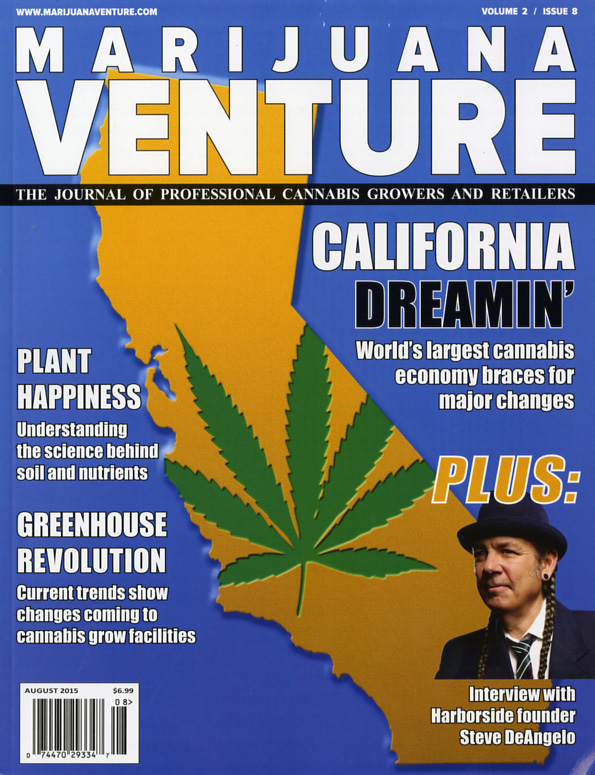
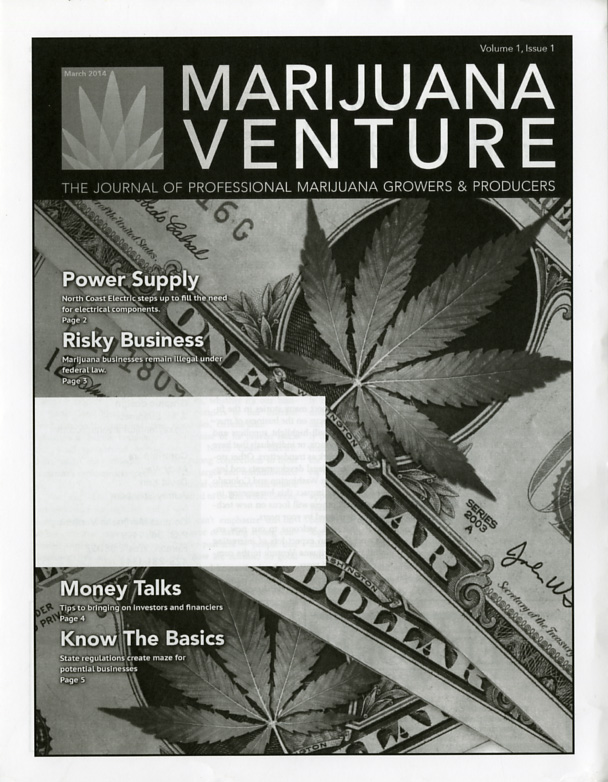
MV 2-2 A strictly-business voice in the world of cannabis magazines; Marijuana Venture is a new business-to-business magazine that focuses on the professional side of planting and growing marijuana. From new techniques to the retailers trying to reach this niche audience, the magazine is a no-nonsense look at the industry of marijuana. There are no ads for the biggest and baddest bong or the latest implement to help one pass a drug test, just ads that are centered on the professional world of growers and retailers.

Greg James is publisher and knows a thing or two about the publishing industry, having founded Topics Entertainment in 1990 and still remains active as the company’s CEO. From CD-ROMS’s to DVD’s, Greg has been involved in media for quite some time.

With Marijuana Venture magazine (his first magazine endeavor), he has seen the magazine go from an eight-page local newsletter as recently as March 2015, to a full-fledged magazine that has grown and expanded with pages of advertising and can now be found from Barnes & Noble to Books-A-Million. It’s a success story that centers on hard work, originality and content that is both tasteful and socially responsible as it delves into the business world of legalized marijuana.

I spoke with Greg recently and we talked about “going green” and what that meant to him as a businessman already in the publishing world and how venturing into the magazine aspect of that environment was both different and the same. We talked about any stigma attached to the subject matter of his publication and the social responsibility the magazine conducts as it educates.

The conversation was open, honest and a lot of fun, much like the personality of the man himself. So, I hope you enjoy the Mr. Magazine™ interview with Greg James, Publisher, Marijuana Venture magazine; Mr. Magazine™ certainly did.

But first, the sound-bites:

Alpental spring On how he made the transition from CD’s and DVD’s to a magazine and whether it’s his first magazine venture (no pun intended): Yes, it is the first time that I’ve done a magazine. I think the background we have in CD-ROM’s and DVD publishing definitely helped, because I knew already how that business worked and there are a lot of similarities. The CD/DVD business, the book business and the magazine business are all fairly similar and a lot of it is handled by the same distributors, they just have different divisions.

On how he came up with the idea for the magazine: Yes, well, I just looked around about a year and a half ago and the marijuana business was getting a lot of publicity and all the existing magazines were all really about pot culture, about getting stoned, but there wasn’t really any business magazine out there that was serious. And I just figured that this could be something that there might be a need for.

On where he sees the magazine one year from now: Well, I just want to keep growing it. We just hired another designer a few weeks ago and I got another salesperson recently, so I think the magazine could become quite a bit bigger and quite a bit more influential.

On the biggest stumbling he thinks he’ll have to face:
A lot of people say that print is declining and digital is the thing these days, but I think there’s still a huge demand for print and I think because the barrier of entry to digital is so low there’s just so much stuff out there that a lot of people like the fact that we have a real print magazine that’s 150 pages in real bookstores. That could be the one thing, there are competitors out there and there is very little barrier to entry for digital magazines, but I think if we just continue to put out a really good publication and focus on business, we’ll be fine.

On the role of print and the content curation it exemplifies when it comes to the low barrier of entry involving digital and social responsibility:
That’s a really, really good point. You can say anything you want on social media and in a digital magazine and it doesn’t really matter. And that really is another reason why we’ve been popular; a lot of the content in the culture pot magazines is just anecdotal articles on growing; where someone says I’ve always done it this way and it’s always worked for me. What we’ve tried to do is go to some of these university websites that do research on controlled environment agriculture and reprint that research.

On whether being a new magazine publisher motivates and excites him, or it’s just another day-at-the-office:
There’s a little bit of the be-careful-what-you-ask-for in this deal. (Laughs) But a year and a half ago I was thinking, this might be a fun little project, and now all of a sudden I’m putting in 10-hour days. No, I’m excited by it and I like it. I love the fact that we’re growing as fast as we are and I like the fact that we’re putting out something that I think is useful for people.

On whether he envisions more competition from other new magazines aimed at the business side of cannabis:
I hope not. (Laughs) Frankly, I was surprised that there weren’t more competitors already, but I think people are kind of figuring it out now that we’re getting all of this exposure at Barnes & Noble, Hastings and Books-A-Million and getting into more places. We probably will get more competition, but we’ve got a pretty good lead.

On how he came up with the name, Marijuana Venture:
I found Garrett Rudolph, the editor, when he was working at a small newspaper in eastern Washington, I have some property up there and I get that newspaper, and he had mentioned that he was leaving, so I shot him an email and asked him would he be interested in doing the magazine. But basically we sat in this office and you know how things are today; we had to find a dot.com that would also work with the magazine name, so we tried all kinds of different names. We discovered that Marijuana Venture.com was an available website, so that became the name.

On anything else he’d like to add or that surprised him with this endeavor: One thing that surprised me a little was that there has been very little negative feedback from anybody that I’ve mentioned the magazine to. In other words, I’ve been pleasantly surprised at how accepted the whole legal recreational marijuana field has become in Washington and just about anywhere else and with everybody I talk to. I think that’s really cool.

On what keeps him up at night:
Nothing. (Laughs) I have about two shots of Johnny Walker every night before I go to bed, so I sleep very soundly. I honestly don’t have any worries about the magazine or the business because it’s been making a profit for about the last eight or nine months in a row and it’s growing, maybe not spectacularly, obviously it doesn’t have the revenues that the software publishing business had. But it’s a nice, consistent growth pattern.

And now the lightly edited transcript of the Mr. Magazine™ interview with Greg James, Publisher, Marijuana Venture Magazine.

Samir Husni: Congratulations on the new magazine and the new reach to the newsstands.

Greg James: Thank you.

Samir Husni: I was looking at the background of your company and at what you do; how did you make the jump from what the company does, in terms of entertainment, languages, documentaries, videos, audio and all the software to a magazine? Is this your first magazine venture (no pun intended)?

MJV Greg James: Yes, it is the first time that I’ve done a magazine. I think the background we have in CD-ROM’s and DVD publishing definitely helped, because I knew already how that business worked and there are a lot of similarities. The CD/DVD business, the book business and the magazine business are all fairly similar and a lot of it is handled by the same distributors, they just have different divisions.

Ingram Publishing or Ingram Periodicals is part of the whole Ingram Company, which also has Ingram Entertainment and Ingram Micro, so that helped. It made it a lot easier to get it into the big retail stores because I knew how it worked at Barnes & Noble, Hastings and Books-A-Million, plus we already had the relationship with those three venues on the entertainment side. So, it was also easier because I knew how to call one of the buyers that bought magazines.

Samir Husni: How did you come up with the idea for the magazine? I know you’re in Washington State, so it’s easier to consider the idea there. (Laughs)

Greg James: (Laughs too) Yes, well, I just looked around about a year and a half ago and the marijuana business was getting a lot of publicity and all the existing magazines were all really about pot culture, about getting stoned, but there wasn’t really any business magazine out there that was serious. And I just figured that this could be something that there might be a need for.

We started out with an eight-page newsletter in Washington State and it just started growing almost immediately. I don’t want to sound too cocky, but it was fairly easy to find advertisers because they were all looking for a way to reach all these people that had their applications in for licenses. So, there were a lot of companies that wanted to sell them lights and soils, fertilizers and fencing, along with security systems and everything else. There were a lot of advertisers immediately out there that wanted to reach these people.

Samir Husni: That statement is more than evident, because the first issue I saw on the newsstand was almost 80 pages of ads.

Greg James: Yes, and it keeps growing every month. We’re probably at 85 or 90 this month.

Samir Husni: If you and I are having this conversation one year from now; where do you think Marijuana Venture magazine will be by then?

Greg James: Well, I just want to keep growing it. We just hired another designer a few weeks ago and I got another salesperson recently, so I think the magazine could become quite a bit bigger and quite a bit more influential.

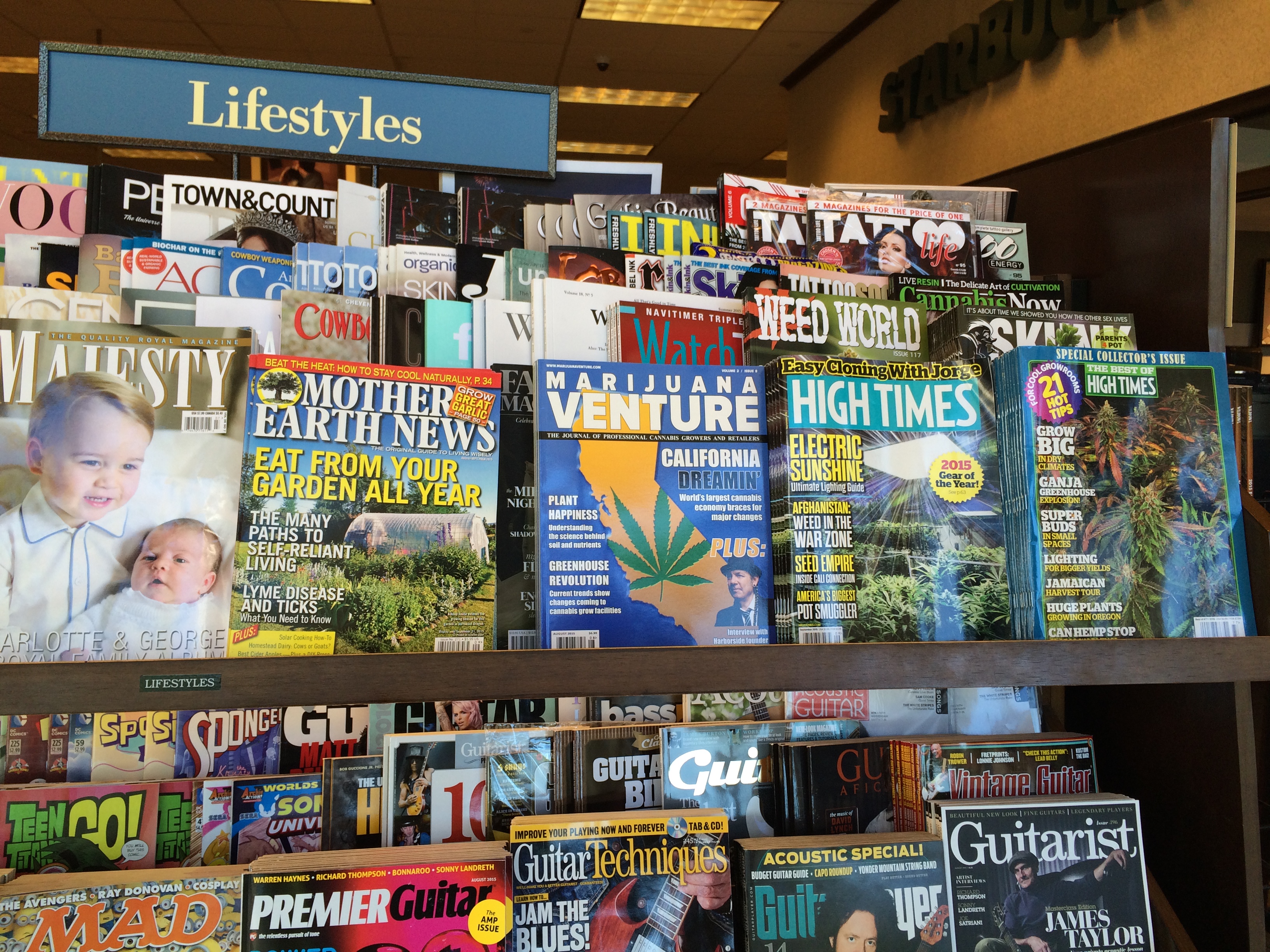
Our deal is basically to just stay focused on the business. There are probably half dozen, at least, other magazines that deal with marijuana. There are High Times, Weed World, Skunk, Culture, Dope and Chronic; they all have culture-type things in them. They’re all about pot culture. They have articles on getting stoned in Europe and the potency of pot, tattoo art and all those kinds of things. They’re all culture magazines.

High Times has an ad for the Whizzinator; I’m not going to describe it to you, but it’s something you whip out to put fake urine in for a drug test so you don’t fail the test. We’re not going to run an ad for the Whizzinator and we refuse to run ads with girls in skimpy outfits sitting on bongs and things like that, which is what you find in most of those other magazines.

We found that the advertisers that we have really love the fact that we don’t carry ads like that and a lot of them have told us that they won’t advertise in High Times because they think it’s kind of tacky; they don’t want to be in that kind of a magazine. It’s more of a serious business.

Samir Husni: What do you think is going to be the biggest stumbling block that you’ll have to face and how do you plan to overcome it?

MV 1-1 Greg James: A lot of people say that print is declining and digital is the thing these days, but I think there’s still a huge demand for print and I think because the barrier of entry to digital is so low there’s just so much stuff out there that a lot of people like the fact that we have a real print magazine that’s 150 pages and it’s in real bookstores.

That could be the one thing, there are competitors out there and there is very little barrier to entry for digital magazines, but I think if we just continue to put out a really good publication and focus on business, we’ll be fine.

The other thing is if you read the magazine, there are lots of articles written by lawyers and accountants in there on the legal aspects of it and I think that’s the other thing that really resonates with our readers is that they are learning a lot about all of the legalities; that it’s not as simple as they thought to get into the commercial marijuana business. There are a lot of rules and regulations and taxes, among other things that I think our readers are discovering.

Samir Husni: One of my pet peeves, in fact I wrote a Mr. Magazine™ Musing about it recently, is that there is no social responsibility with any of the “social” media. As you said, there are very low barriers to entry and if you say a simple “hi” to someone, they can respond with an inappropriate picture or comment without any repercussions. And that’s why I believe that now more than ever before there’s an even bigger role for print when it comes to the curation aspect of content; exactly as you said about Marijuana Venture and its obligation to remain seriously professional about a topic that is sometimes misused inappropriately.

Dec-Cover-150x150 Greg James; Yes, and that’s a really, really good point. You can say anything you want on social media and in a digital magazine and it doesn’t really matter. And that really is another reason why we’ve been popular; a lot of the content in the culture pot magazines is just anecdotal articles on growing; where someone says I’ve always done it this way and it’s always worked for me.

What we’ve tried to do is go to some of these university websites that do research on controlled environment agriculture and reprint that research. We say, hey, you may have always grown with metal halide lights, but Utah State University did a study, a full-blown research paper was printed and published, on which lights were the best for controlled environment agriculture and they came to the conclusion that it was the double-ended, high-pressure sodium lights that were best. Well, we printed that in the magazine. And it was actually kind of funny because we did get some feedback and usually, you’ll laugh, but a couple of comments we received were: well, what does this guy know about growing marijuana; he’s a university professor; we’ve been doing it forever. (Laughs)

Samir Husni: (Laughs too).

Greg James: I was thinking, you need to listen to yourself here. (Laughs again) This guy is a university professor; he has a Ph.D. in horticulture in the study of lights and their effect on plants for 20 years and you’re trying to tell me you know more about this than he does, because you’ve been growing pot in your basement for the last few years.

Samir Husni: Just an FYI; we have the only legal marijuana field at a university in the United States of America here at the University of Mississippi.

marijuana-venture-4 Greg James: Yes, I know you do. (Laughs) You guys know what’s going on too, but it’s kind of funny, a lot of the pot business is like that. It’s based on anecdotal stuff and it’s based on the marketing departments of lighting companies. They haven’t relied on science because, when you think about it, with these huge margins, maybe 80 or 90 % margins, when you’re growing it illegally in your garage and you don’t have to pay any taxes on it, really if anything works, you’re probably going to get a good return on that investment.

Whereas now that it’s commercially legal in Washington and Colorado and soon they’re going to be growing it in Oregon and Alaska; now there’s real competition all of a sudden. And if you’re going to spend $1 million to create this state-of-that-art indoor growth facility like they’re doing in Colorado and Washington; you better do your research and figure out which lights are the most efficient and which ones have been studied.

And I think that’s one of the things that we’re doing at the magazine now, but again; it’s really funny how people say I’ve always done it this way, so it has to be the best way to do it. Ok, but maybe you should read up a little on it before you buy half-a-million- dollars’ worth of lights.

Samir Husni: As a new magazine publisher; do you get out of bed in the mornings motivated and more excited or is it just another day at the office?

Greg James: There’s a little bit of the be-careful-what-you-ask-for in this deal. (Laughs) But a year and a half ago I was thinking, this might be a fun little project, and now all of a sudden I’m putting in 10-hour days.

No, I’m excited by it and I like it. I love the fact that we’re growing as fast as we are and I like the fact that we’re putting out something that I think is useful for people. I don’t really have an exit strategy or anything; it was all about just doing this and it’s been a fun project and it’s growing fast. We just come in and work hard every day and sell ads, write stories and try and get it into more locations. It’s all pretty basic stuff; there’s nothing super-glamorous about it. Photographers are going out and shooting pot plants; maybe if it was Playboy it would be a little more fun. (Laughs)

Samir Husni: (Laughs too).

Greg James: And none of us in the office, by the way, are users. In a sense, maybe that makes us a little more agnostic or unbiased in our approach to the business. And I do think that might be another thing that has given us a little advantage; I sense when I look at some of these other magazines like Skunk, High Times and Weed World, most of the people who are writing for them and work for them are all pot users. We’re not. We have a clinical approach to the whole thing.

Samir Husni: I was going to ask you if you were going to have the Marijuana Venture Good Housekeeping test kitchen. (Laughs)

Greg James: (Laughs too) We have one guy in the office who’s like our Mikey; he does try it; we give him test pot sometimes, but I learned my lesson; I let him take a toke of this vape and he got so stoned he was useless for most of the rest of the afternoon. (Laughs)

Samir Husni: (Laughs too).

Greg James: So, it’s very restricted now.

Samir Husni: Do you envision that we’re going to see more magazines aimed at the business of growing marijuana with the magazine MG just arriving on the market? Do you think you’re going to have more competitors?

Greg James: I hope not. (Laughs) Frankly, I was surprised that there weren’t more competitors already, but I think people are kind of figuring it out now that we’re getting all of this exposure at Barnes & Noble, Hastings and Books-A-Million and getting into more places. We probably will get more competition, but we’ve got a pretty good lead.

My honest view of a business like this is those that work the hardest are the ones who will succeed. That’s the way it was for Topics Entertainment and the CD-ROM and DVD business. And it seems to me it’s the same thing here; you just get in the office early and you get on the phone, start calling and you work it.

I’ve actually been rather surprised that we haven’t had more competition, but part of it, as I said, is all about how hard you work and I sell ads every day. I’m on the phone all day long.

Samir Husni: How did you come up with the name? You didn’t try and soften it at all; Marijuana Venture is pretty self-explanatory.

Greg James: The name was a bit funny. I found Garrett Rudolph, the editor, when he was working at a small newspaper in eastern Washington, I have some property up there and I get that newspaper, and he had mentioned that he was leaving, so I shot him an email and asked him would he be interested in doing the magazine. And he said he would be, so that’s how fast that happened.

But basically we sat in this office and you know how things are today; we had to find a dot.com that would also work with the magazine name, so we tried all kinds of different names. We discovered that Marijuana Venture.com was an available website, so that became the name. But we tried everything: Marijuana Business, Cannabis Business, Marijuana-whatever, you name it, we tried it and finally Marijuana Venture was the one name that worked for both the magazine and a domain name that we could register. So, it stuck.

Samir Husni: Is there anything else that you’d like to add about Marijuana Venture? Anything that really surprised you?

Greg James: One thing that surprised me a little was that there has been very little negative feedback from anybody that I’ve mentioned the magazine to. In other words, I’ve been pleasantly surprised at how accepted the whole legal recreational marijuana field has become in Washington and just about anywhere else and with everybody I talk to. I think that’s really cool.

I’m going to guess that in most of the states in this country it’s going to be legal within the next ten years, because none of the bad stuff has happened in Colorado that some people predicted. They’re raising taxes from this; it’s been closely regulated; the stores are all nice and clean, they’re not full of weirdos and I think all of the doomsday people are finding out that none of their dark predictions have happened, so that’s what has surprised me.

I’ve mentioned to people that I’m doing a magazine on the legal marijuana business; nobody is judgmental. They just respond with a “that’s cool” or “that’s a good idea”

Samir Husni: My typical last question; what keeps you up at night?

Greg James: Nothing. (Laughs) I have about two shots of Johnny Walker every night before I go to bed, so I sleep very soundly. I honestly don’t have any worries about the magazine or the business because it’s been making a profit for about the last eight or nine months in a row and it’s growing, maybe not spectacularly, obviously it doesn’t have the revenues that the software publishing business had. But it’s a nice, consistent growth pattern. The people I work with are all fun and cool; we all get along well. Yes, so nothing keeps me up at night. I’m quite a sound sleeper and I get up early at 6:00 a.m. every morning.

Samir Husni: Thank you.

h1

The ‘Take’ On New England’s New Culture – Brought To You By A Magazine That Defines It – The Mr. Magazine™ Interview With Michael Kusek, Publisher & Lauren Clark, Editor – Take Magazine. A Mr. Magazine™ Launch Story.

August 3, 2015

A Mr. Magazine™ Interview.  Photo by Jared Senseman.

A Mr. Magazine™ Interview. Photo by Jared Senseman.

“The biggest challenge has been, with certain people, to counter this belief that print is on its way out, rather than saying that print is evolving. In our Kickstarter video and with people who have these mindsets, we sort of describe ourselves as being the modern magazine. And that what’s going to be interesting is not whether it’s print or digital. We have a print edition and an online edition that work together. You can get certain information from our online source that doesn’t translate into print, like video and audio, and you can get information through our print edition, such as really beautiful photography, stories that demand to be on the printed page, that doesn’t translate digitally. And that’s where this industry is going; print is not going away.” Michael Kusek

“It’s exciting to see your work in both formats, (print & digital) but in different ways. Having said that; I’m not sure how to describe to you how it’s different. I guess the web is more immediate and it generates that immediate, sort of social media response. But seeing your byline in print, on the printed page, it’s like your work is going into a permanent record. And I would think a lot of writers would say the same thing. It’s thrilling in both places for those different reasons.” Lauren Clark

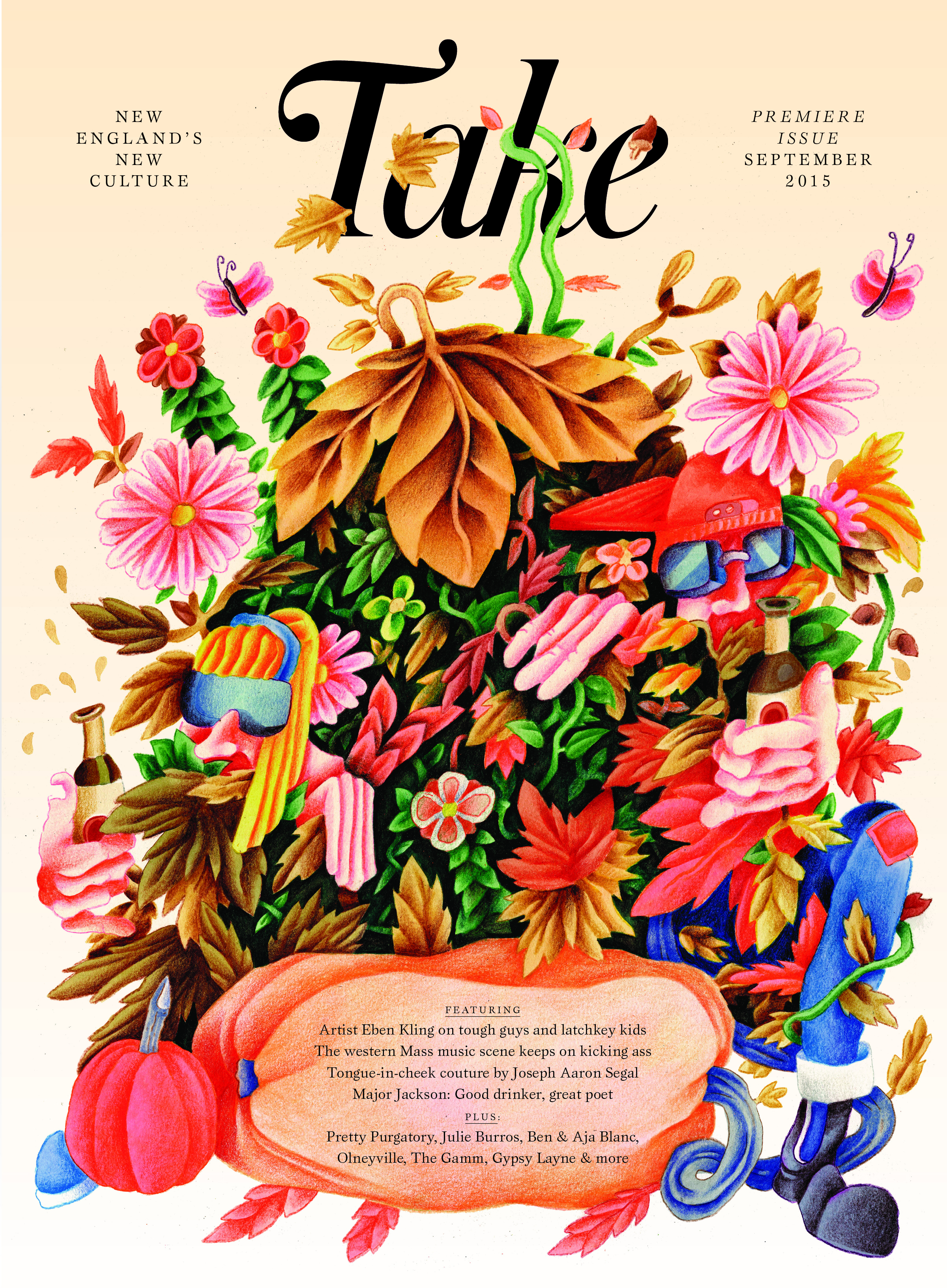
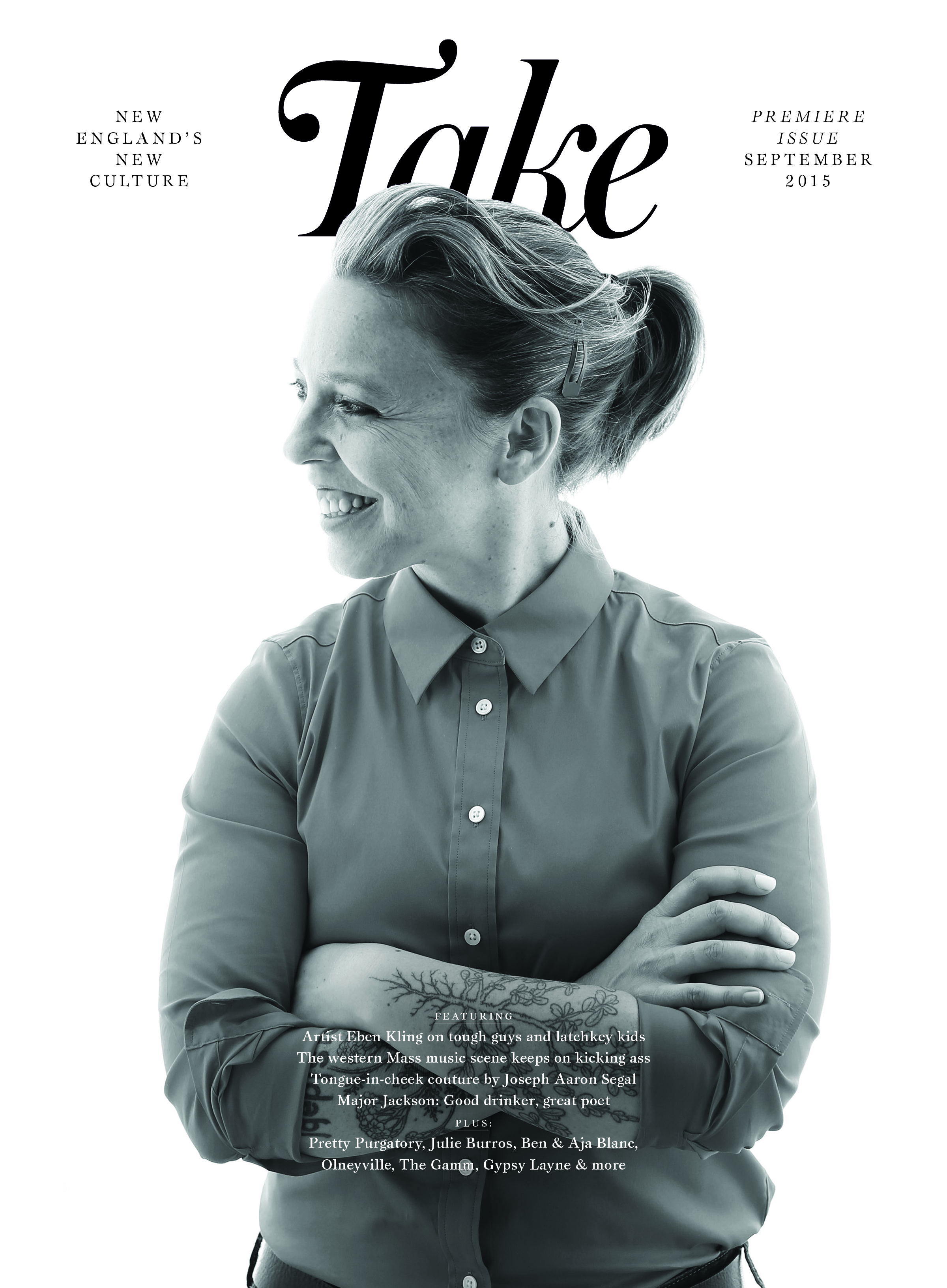
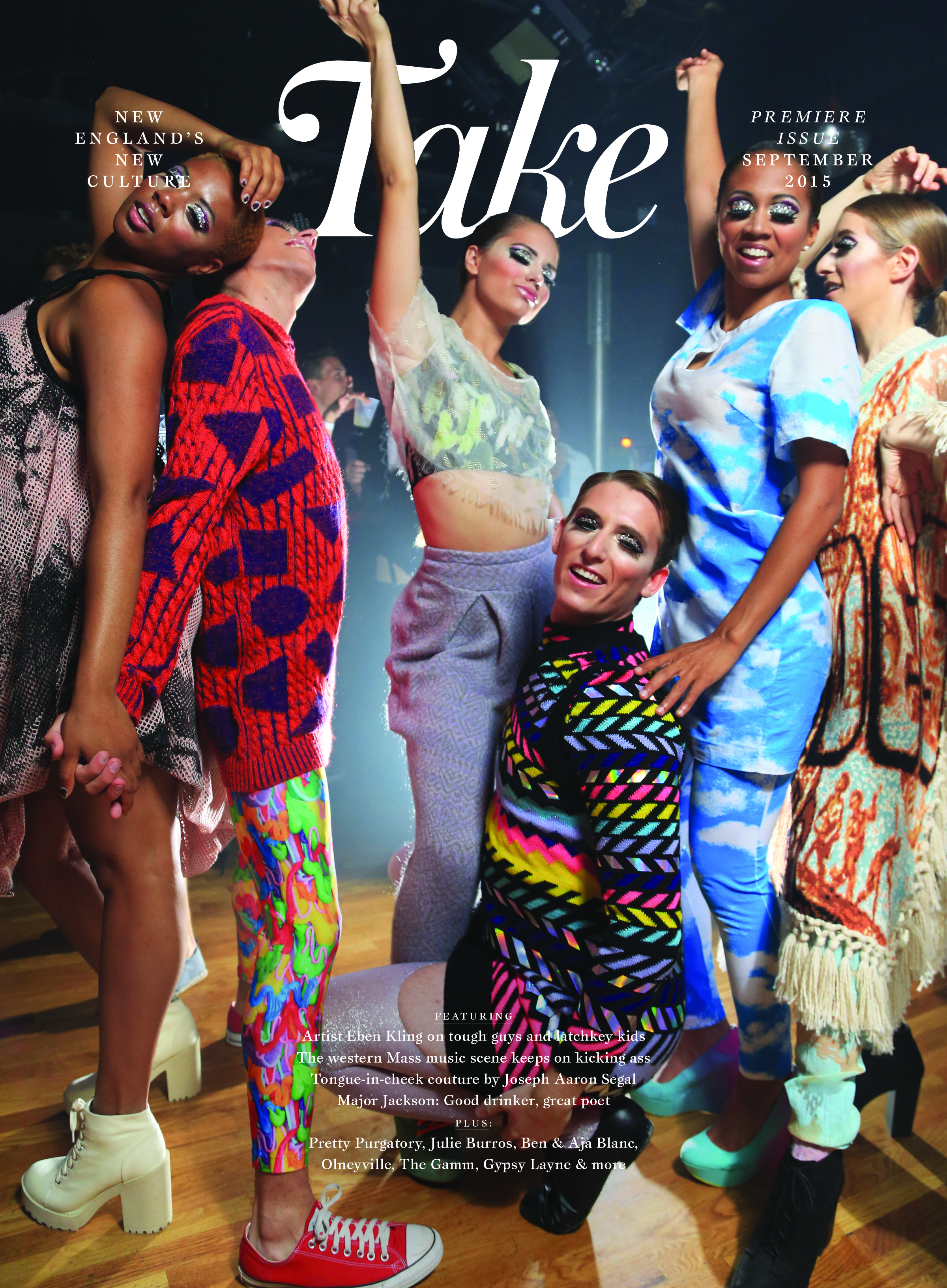
take_001_cover_FINAL Bringing New England’s new culture to a passionate and diverse audience is the mission of Take magazine. From dance to art to theatre to food; Michael Kusek, publisher and Lauren Clark, editor of the magazine, due to debut its first issue in September 2015, are both very determined to make this the ink on paper place to be for people who want to be in the know about New England culture and each state’s distinctive “take” on that enlightenment.

Recently, I spoke with both Michael and Lauren about the upcoming September launch and the conception of the actual idea for Take. Michael took me on an eight year journey of how the magazine was born. From the initial thought way back when (2008) before publishing as we once knew it plummeted into the depths of despair, to a few years later when things once again began to pump up a lung and breathe again.

This is a story of passion and belief in a dream’s concept, so much so that the individual almost wills it into being. Michael is a man filled with that passion and the belief that a magazine that covers the entire New England area, not just one particular section, has a place on the marketplace reserved just for its uniqueness.

And Lauren is a woman with as much passion about the magazine as its publisher and the right person to complement the publication’s leader.

It’s a win/win situation and a total team effort, from designers to photographers, writers to salespeople. It’s a magazine conjoined with its digital counterpart, yet celebrated for its very different “take” on content that just doesn’t seem to be right for the web. It’s a great read and a visual extravaganza. And of course, there are so many twists you can create with the word “Take” that one can’t help but be fascinated by it.

So, sit down and “take” 15 minutes or so to read this new magazine’s contemporary “take” on New England culture; it’s sure to enlighten and entertain you. And “take” my word for it; you won’t be disappointed. Enjoy the Mr. Magazine™ interview with Michael Kusek, Publisher and Lauren Clark, Editor-In-Chief, Take magazine.

But first, the sound-bites:

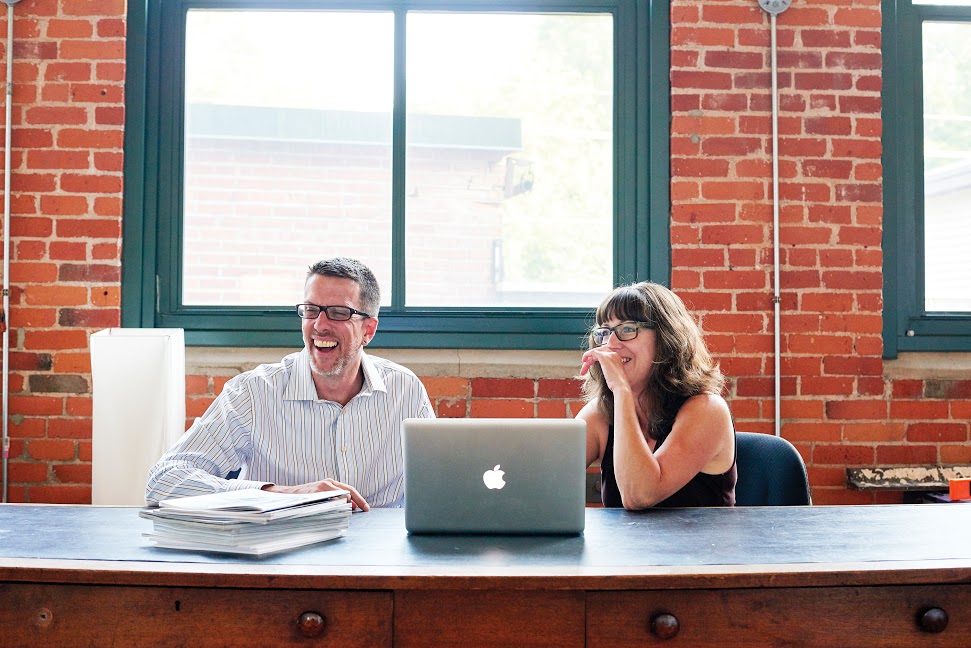
Michael Kusek and Lauren Clark. Photo by Dominic Perry.

Michael Kusek and Lauren Clark. Photo by Dominic Perry.

On why it took Michael eight years to actually launch Take magazine:
That’s a good question. When I started I was working at an alternative newsweekly here in western Massachusetts. I had made plans then to leave and start Take magazine, but I decided to go on a vacation first and was traveling overseas when the entire U.S. market went into the toilet. I came back and that’s when so many magazines were folding and it didn’t seem like a great time to go out and seek investors, so I put it on the backburner for a little while, until it looked like the industry was changing and getting a bit healthier.

On whether Lauren thought he was out of his mind when he asked her to be the editor of a print magazine in today’s digital world:
At first I said, wow, that’s really exciting. Yes, I’d love to be involved. And then as we started really talking about it and it became more serious, I thought to myself, is this idea crazy? (Laughs again) But the more I looked at a lot of the things that Michael just told you, and the more we talked together; he really helped to enlighten me, because like a lot of people nowadays, I do read a lot of things online. But I also still read print.

On the concept of Take and what Michael is trying to accomplish with the magazine:
Take magazine is a publication about culture-makers who live in the New England area. So, unlike your standard “arts” magazine that would just cover, say, fine art or maybe just theatre; we’re taking a really broad look at culture in the region. And that includes things like fine art and theatre, but it also includes design, food, literature and dance; just many areas of cultural interest.

On how Michael came up with the name “Take” for the magazine:
It’s simply our “take” on things. It’s our lens on the creative community here in New England.

On whether Michael’s decision to cover the entire New England area was a business or editorial one:
It was a little of both. We can really talk about how we’re tackling it from the editorial side. Having worked for a very regional, localized newspaper that covered three counties and had a small arts magazine that covered western Massachusetts; I saw the limitations in audience, in terms of the business side. But the other part of that was the last sort of all-New England-magazine to launch was in the late 80s, early 90s, at least from my research; I haven’t been able to find anything any later than that time frame and it was New England Monthly.

On the process Lauren used to put together the first issue of Take which will launch in September:
Some of the content will be updated material from the prototype, but the first issue is a much bigger one that that. The first things we do are try to get stories from a diversity of disciplines and from every state in the region. So, we want content that has geographic diversity and disciplinary diversity. We need a designer from Rhode Island; we need a writer from New Hampshire, so that’s how I’m planning every issue, sort of making this grid of how do we cover the entire region so that everybody in New England feels like this is their magazine.

On how Lauren decided what the cover of the premier issue should be:
Well, we were actually thinking about having six covers at first, to represent each state. (Laughs) But that was just a little too ambitious for the first issue. So, we decided on three different covers instead. We had some terrific feature stories that had fantastic imagery.

On the biggest stumbling block Michael faced after starting the magazine and how he overcame it:
I think one of the biggest challenges has been that people have bought into this idea that print is dead or print is on its way out. And these are things I’ve heard from potential advertisers and certainly from some potential investors. They’re skeptical about the future of print. And that has been the biggest challenge because for somebody who’s in it, you can look at all of the great independent magazines that are coming out and you can see that there are a lot of dynamic things happening from all of the legacy publishers of magazines as well, and you wonder where that mindset comes from.

On where Lauren feels more accomplished in her work, online or in print, or is it the same experience for her in either format: I think it’s the same. It’s exciting to see your work in both formats, but in different ways. Having said that; I’m not sure how to describe to you how it’s different. I guess the web is more immediate and it generates that immediate, sort of social media response. But seeing your byline in print, on the printed page, it’s like your work is going into a permanent record.

On what makes Lauren tick and click and motivates her to get out of bed in the mornings: The amount of work I need to get done. (Laughs again) The amount of tasks that I have to do and the people I need to get in touch with; articles I have to assign. That’s the nuts and bolts, but I’m attached to this project because I think Michael is the guy to do it, frankly. And I’m not the only one who thinks that either. He has a really good intellect about these sorts of things and he has a super professional and personal network and he’s very persuasive. (Laughs)

On what makes Michael click and tick and motivates him to get out of bed in the mornings:
I’m an incredibly lucky guy and I work with an amazing group of people every day. And I’m so lucky that when I was putting things together, I had this dream team in my head, and when Lauren and I met and became friends, there was that epiphany one time where I just turned to her at a party and said you have to be my editor. And I’m so happy that she agreed.

On who Michael thinks the magazine’s audience is and how he defines Take’s team when it comes to delivering the best of New England’s culture to that targeted group:
I think that’s really our audience; our audience is really a New Englander first and our audience is somebody who works in the creative economy and secondarily are people who are cultural consumers and I think that if you add those groups together, you have a sizably potential audience for this as a magazine. And who are we, the people who are going to bring it to you? I think at the core it’s really our amazing staff of people who work on Take.

On anything else Michael would like to add:
Viva print!

On anything else Lauren would like to add:
We want to get the people in New England to think of themselves as New Englanders, not just “I’m from Providence,” but “I’m from New England” and there’s a lot of great contemporary culture in the region to explore and they don’t have to take the train to New York to see great culture.

On what keeps Michael up at night:
It’s making sure that my staff is taken care of and that we have the resources to keep moving forward.

On what keeps Lauren up at night:
What keeps me up at night is the haunting feeling that I need to have more information coming out of New Hampshire. (Laughs)

And now the lightly edited transcription of the Mr. Magazine™ conversation with Michael Kusek, Publisher and Lauren Clark, Editor-In-Chief, Take magazine.

Samir Husni: Why did it take you eight years to launch Take magazine?

Michael Kusek: (Laughs) That’s a good question. When I started I was working at an alternative newsweekly here in western Massachusetts. We had started a small regional magazine and I saw what we had done there and I was getting ready to end my time with them and that was at the very end of 2008.

I had made plans then to leave and start Take magazine, but I decided to go on a vacation first and was traveling overseas when the entire U.S. market went into the toilet. I came back and that’s when so many magazines were folding and it didn’t seem like a great time to go out and seek investors, so I put it on the backburner for a little while, until it looked like the industry was changing and getting a bit healthier.

In that period of time, the iPad was born. And everyone was going to buy millions of magazines on their iPad. (Laughs) And it was that mindset that got me to look at the magazine again. I had gone back into doing public relations and communications, which had been my professional background for a very long time. But I began to look at the magazine again and at a different source of revenue for it, and while that hasn’t necessarily worn itself out, it definitely got me back into the swing of trying to start Take magazine. So, this was sort of my little side project for a number of years.

At the beginning of 2014, I was sitting with a business consultant friend of mine having a beer and he asked me when on earth are you ever going to start the magazine that you’ve been talking about trying to start for a very long time, and I said to him that I would love to start it except I’m having a horrible time trying to write the business plan. So, he pulled together a group of people and helped me write the business plan over the course of last spring and summer.

In that period of time, I had been talking with Lauren about being my editor-in-chief when we started to get some seed money to make things happen. And then in the fall of 2014, we created our prototype and soft-launched it in January 2015.

So, to make a long story longer, there have been lots of years of research and watching the market and deciding that now was exactly the right time to start it.

Samir Husni: Lauren, when Michael approached you about becoming the editor of a print magazine, did you ask him was he out of his mind?

Lauren Clark: (Laughs) No, not at first.

Samir Husni: (Laughs too).

Lauren Clark: At first I said, wow, that’s really exciting. Yes, I’d love to be involved. And then as we started really talking about it and it became more serious, I asked myself, is this idea crazy? (Laughs again)

But the more I looked at a lot of the things that Michael just told you, and the more we talked together; he really helped to enlighten me, because like a lot of people nowadays, I do read a lot of things online. But I also still read print. And what we’re doing with Take magazine is pretty specific for a pretty targeted audience and a specific topic, which I think lends itself pretty well to print, so I’m onboard with that.

Samir Husni: Michael, tell me the concept of Take; what are you trying to do with the magazine?

Michael Kusek: Take magazine is a publication about culture-makers who live in the New England area. So, unlike your standard “arts” magazine that would just cover, say, fine art or maybe just theatre; we’re taking a really broad look at culture in the region. And that includes things like fine art and theatre, but it also includes design, food, literature and dance; just many areas of cultural interest.

This is a region rich with people making things and there wasn’t one cohesive publication that covered this entire region. And our goal is to be that magazine that ties everything that is happening here altogether.

Samir Husni: And what is the background on the name “Take?” One of the hardest things for people who are starting a new magazine to come up with is the title. How was the name “Take” conceived?

Michael Kusek: It’s simply our “take” on things. It’s our lens on the creative community here in New England. And the other part of the reason I chose Take is as a marketer, as a person who comes out of marketing and communications, there are about a million different ways that you can use the word “take” to generate a hook and to generate interest.

Samir Husni: You mention in the intro of the prototype issue, the pilot issue from January, that it’s the entire area of New England. And while I know that regional magazines are doing much better than the general interest magazines, was that a business decision or a reflection of the editorial content and you felt that the rest of us all over the country didn’t have a need to read about the culture of New England? (Laughs)

Michael Kusek: (Laughs too) It was a little of both. We can really talk about how we’re tackling it from the editorial side. Having worked for a very regional, localized newspaper that covered three counties and had a small arts magazine that covered western Massachusetts; I saw the limitations in audience, in terms of the business side. To develop a critical mass of readership, I needed to think bigger when we were looking at the business plan.

But the other part of that was the last sort of all-New England-magazine to launch was in the late 80s, early 90s, at least from my research; I haven’t been able to find anything any later than that time frame and it was New England Monthly. New England Monthly was late 80s, early 90s and was very successful. It was kind of a Harper’s/Atlantic, but for the whole region. And that was also based here in Northampton where I am.

New England Monthly’s footprints here in western Massachusetts, even though it hasn’t been around for a long time; it’s footprints still has some influence here today, and I think that also got me to look, from a business sense, at the entire region.

Samir Husni: Are you still on target to launch the first issue in September?

Lauren Clark: Yes, our first issue is at the printer now.

Samir Husni: Lauren, tell me about the process; how did you put together that first issue? Did you sit down with your team, alone, or with Michael; what was the conception mode of the content of the first issue?

take_001_cover_FINAL2 Lauren Clark: Some of the content will be updated material from the prototype, but the first issue is a much bigger one that that. The first things we do are try to get stories from a diversity of disciplines and from every state in the region. So, we want content that has geographic diversity and disciplinary diversity. We need a designer from Rhode Island; we need a writer from New Hampshire, so that’s how I’m planning every issue, sort of making this grid of how do we cover the entire region so that everybody in New England feels like this is their magazine; so that the creative people in New England feel like we really are covering the entire region and all the cool stuff that’s going on throughout all the New England states.

So, that was the starting point. Then it was just a matter of tapping into a lot of the really talented contributors that are in this region. We have a photo editor who helps us out from the Boston area and he knows people all over the region. So, we had some great photography, fantastic writers, which a lot of them started out writing for us on the website.

And we have writers from all over the region. We have some great ones in Rhode Island, in Maine and Vermont, some people out of Boston; we’re trying to get the contributors of our content to be all over the region as well. It’s really important to us to not just be Northampton-centric or Boston-centric, but to really spread ourselves out content and contributor-wise.

Samir Husni: And how did you make the decision about what went onto the cover of the premier issue?

Lauren Clark: Well, we were actually thinking about having six covers at first, to represent each state. (Laughs) But that was just a little too ambitious for the first issue. So, we decided on three different covers instead. We had some terrific feature stories that had fantastic imagery. And we featured some original artwork from one of our feature subjects, the artist Eben Kling, who lives in Connecticut, so that’s one of our covers, original artwork by him and it’s just fantastic.

And the other two are photographs from our photo editor, Izzy Berdan. So, it’s going to be exciting when these covers come out, because people are just going to kind of randomly get whatever cover they get and they’ll be able to compare their issue with somebody who received a different cover.

Samir Husni: Michael, what has been the biggest stumbling block that you’ve had to face since actually starting the magazine and how did you overcome it?

Michael Kusek: I think one of the biggest challenges has been that people have bought into this idea that print is dead or print is on its way out. And these are things I’ve heard from potential advertisers and certainly from some potential investors. They’re skeptical about the future of print. And that has been the biggest challenge because for somebody who’s in it, you can look at all of the great independent magazines that are coming out and you can see that there are a lot of dynamic things happening from all of the legacy publishers of magazines as well, and you wonder where that mindset comes from.

Some of the people we connect with a lot, such as some of our younger contributors, even people on our staff here at the magazine are all very much into analog. They buy vinyl, they like photographing with film cameras, and they also buy books. And we see that.

The biggest challenge has been, with certain people, to counter this belief that print is on its way out, rather than saying that print is evolving. In our Kickstarter video and with people who have these mindsets, we sort of describe ourselves as being the modern magazine. And that what’s going to be interesting is not whether it’s print or digital. We have a print edition and an online edition that work together. You can get certain information from our online source that doesn’t translate into print, like video and audio, and you can get information through our print edition, such as really beautiful photography, stories that demand to be on the printed page, that doesn’t translate digitally. And that’s where this industry is going; print is not going away.

That’s always been the biggest challenge, particularly when it comes to us accessing resources to grow as a business.

Samir Husni: Lauren, where do you value your work more? Do you feel that you’ve accomplished more when you see your work in print or when it’s in a digital format or is it the same thing for you?

take_001_cover_FINAL3 Lauren Clark: I think it’s the same. It’s exciting to see your work in both formats, but in different ways. Having said that; I’m not sure how to describe to you how it’s different. I guess the web is more immediate and it generates that immediate, sort of social media response. But seeing your byline in print, on the printed page, it’s like your work is going into a permanent record. And I would think a lot of writers would say the same thing. It’s thrilling in both places for those different reasons.

Samir Husni: Lauren, what makes you tick and click and motivates you to get out of bed in the mornings?

Lauren Clark: (Laughs) The amount of work I need to get done. (Laughs again) The amount of tasks that I have to do and the people I need to get in touch with; articles I have to assign. That’s the nuts and bolts, but I’m attached to this project because I think Michael is the guy to do it, frankly. And I’m not the only one who thinks that either. He has a really good intellect about these sorts of things and he has a super professional and personal network and he’s very persuasive. (Laughs)

And the rest of the people on our team feel the same way and they’re all talented in their backgrounds. And some of their backgrounds are not necessarily conventional when it comes to working on a magazine, but that kind of puts them in a better position to react and be flexible to anything that’s thrown their way in this start-up.

Samir Husni: And Michael, what makes you tick and click and motivates you to get out of bed in the mornings?

Michael Kusek: I’m an incredibly lucky guy and I work with an amazing group of people every day. And I’m so lucky that when I was putting things together, I had this dream team in my head, and when Lauren and I met and became friends, there was that epiphany one time where I just turned to her at a party and said you have to be my editor. And I’m so happy that she agreed.

It’s the people that I work with. And it’s an incredible amount of work; it’s an always-on type of proposition; you always have to be on and working. We soft-launched in January and received 200 pitches, and 400 people went to our website within a month and said that they wanted to freelance for us.

We just sent our first press release out at the beginning of July. We really went public with this whole idea and we’ve been able to sell close to 600 subscriptions, just in terms of people coming to our website or responding to what we’ve been putting out on social media. With every event we do, people are genuinely excited and this is a project. I get very little negatives, such as this is never going to work. People are just overwhelmingly positive and what to see this happen and that gets me out of bed in the mornings. I know we’re on the right path.

Samir Husni: That’s great. One of my new books coming out in the middle of August is called “Audience First” and I’m reading your last paragraph in the prototype’s publisher’s letter and you say: I believe that there’s an audience out there for a new, well-written and beautifully designed magazine on paper about New England. I think we’re just the people to bring it to you. Tell me who is that audience and who are you?

TAKE cover-1 Michael Kusek: That audience is culturally adventurous people and that audience member is a person who is not only interested in what’s happening in their hometown here in New England, but they have a willingness to hop in their car and drive around to see who else is in the rest of the neighborhood.

I think that’s really our audience; our audience is really a New Englander first and our audience is somebody who works in the creative economy and secondarily are people who are cultural consumers and I think that if you add those groups together, you have a sizably potential audience for this as a magazine.

And who are we, the people who are going to bring it to you? I think at the core it’s really our amazing staff of people who work on Take: my editor, my photo editor and our art director and our web guy; we just have an amazing team. It’s our circulation people who are helping us out; it’s our sales folks. So far this year, we’ve probably worked with almost 50 different freelancers from all over the region and we’re finding them to be as equally committed to us and very excited about this idea of bringing a new look to New England culture. And I think that team may look small on the masthead now, but that team is actually just going to grow larger over time.

Samir Husni: Are you still planning on 10 issues per year?

Michael Kusek: Yes, we are.

Samir Husni: Any final “take” you’d like to add about anything we’ve discussed or haven’t discussed? Pun intended. (Laughs)

Michael Kusek: (Laughs too) Viva print! That’s my final thought on magazines.

Samir Husni: Indeed.

Lauren Clark: My final Take would be it’s just something about New England. As I said at the beginning of my editor’s letter, yes, New England’s new culture is a “thing.” We want to get the people in New England to think of themselves as New Englanders, not just “I’m from Providence,” but “I’m from New England” and there’s a lot of great contemporary culture in the region to explore and they don’t have to take the train to New York to see great culture.

Samir Husni: My typical last question; what keeps you up at night? Michael?

Michael Kusek: (Laughs) What keeps me up at night? When I do stay up at night it’s usually because I’m exhausted. (Laughs again) No, it’s making sure that my staff is taken care of and that we have the resources to keep moving forward.

Samir Husni: And Lauren?

Lauren Clark: What keeps me up at night is the haunting feeling that I need to have more information coming out of New Hampshire. (Laughs)

Samir Husni: Thank you.

h1

A Magazine Of Possibilities That Was Born From The Womb Of The Arab Spring – Seeking Change & Inspiration – The Mr. Magazine™ Interview With Ibrahim Nehme, Editor-In-Chief, Founder, The Outpost Magazine.

July 28, 2015

Reporting from Lebanon.

Reporting from Lebanon.

From Lebanon With Love. A Mr. Magazine™ Interview From Lebanon.

“Growing up, I always had a knack for physical things and I was never that great when it came to technology, so for me the printed product was a natural choice when I chose to make the magazine. For a magazine that’s mission is to ignite the renaissance of this area of the world; I don’t think digital-only can achieve that; people need to feel the tangible aspect of things.” Ibrahim Nehme

scan-20150725194142-1 The possibility of possibility was the idea-embryo for The Outpost magazine, a Beirut-based publication that seeks to promote the positive and facilitate real change within the Arab world. Ibrahim Nehme is the founder and editor-in-chief of the magazine and a young man who is adamant about his creation and about the mission he is dedicated to. An excerpt from his editor’s letter in the very first issue showcases the magazine’s reason for existence quite eloquently:

There are moments in history when humanity, with grit, passion and erudition, saliently moves forward. In moments like these, all the fears that have previously held us back, the ideas that sounded impossible, and the assumptions that defined our limits disintegrate as a breed of individuals reaffirm the notion of the possibility of possibility.

I met with Ibrahim on a recent trip to Lebanon. We spoke at Paul’s, a coffee shop on the main highway leading to North Lebanon and close to the Casino Du Liban. It was as inspiring a conversation as The Outpost’s mission statement is. Positivity and idealism and real passion are three words that can be used liberally when describing the young man who sat before me and talked about young people in the Arab nation who are ready for change and growth and a clear and concise direction for a successful future.

From the first-issue editor’s letter:

Our first issue is being published at a time when a renewed sense of possibility enshrines the Middle East. The current social, cultural and political transformations are reweaving the fabric of the societies we inherited. A new generation is emerging that is, for the most part, eager to dust off thick layer of tyranny, narrow-mindedness and impotence to embark on a cathartic journey of reform.

scan-20150725194535-2 As you can read for yourself from the inspiring editorial; the magazine is intelligent, poignant and excellently written and gives a most personal look at life in the Arab world. I spoke with Ibrahim about the magazine’s frequency change (from quarterly to bi-annual), the sustainability of the publication through the World Makers concept (allowing readers to pay for a spot in the magazine to feature their own work), and about the future of the magazine. It was a premier interview with a young man who is a premier human being, using his passion to change his world for the better.

So, I hope you enjoy this stirring interview with Ibrahim Nehme, Founder & Editor, The Outpost magazine; it certainly made Mr. magazine™ see the “possibility of possibility,” and I’m sure it will you too.

But first, the sound-bites:

Ibrahim Nehme On the background of The Outpost magazine: Basically, in 2011 I was contemplating whether or not I should leave Lebanon and go somewhere abroad and continue my studies. At the time I was working for ArabAd, which is a local magazine, and the experience with ArabAd kind of opened my eyes to the world and the situation of the country, which at that time, and in a way still is, really bad. It came down to staying in Lebanon and doing something about it, like trying to create a magazine that actually ups the standards of the local print industry, or just leaving.

On why he chose English instead of Arabic for the language of the magazine: We wanted to publish in English because we wanted to reach out to this particular target group, but for a magazine that has a mission really larger-than-life, with a mission that seeks to ignite change in this part of the world, we’re aware of the limitations of the English language and we do have plans to publish in Arabic, possibly a newspaper that will be distributed for free.

On whether he felt it was crazy to start a print magazine in a digital world: For a magazine that’s mission is to ignite the renaissance of this area of the world; I don’t think digital-only can achieve that; people need to feel the tangible aspect of things.

On the biggest stumbling block that he’s had to face: The biggest stumbling block was the fact that before starting I had a very clear plan as to how to gear this magazine forward. I had a plan for after the first year and what would happen; how we would secure revenue, but as it turned out, how things worked in my head were completely at odds with how the commercial world works.

On why he thinks the magazine is selling out at bookstores, even with the hefty cover price of $12: When we first launched Issue # 0 everyone said that it was too expensive. It’s a quarterly magazine, so it comes out every three months and you’re paying $5 technically for three months, whereas there are monthly magazines that are $7.00 here on the stands. I think because it’s all new and the market is completely immature, people aren’t familiar with the concept that you actually have to pay for quality products.

On why he changed the frequency from quarterly to bi-annual: Primarily for financial reasons because to produce this kind of magazine it takes so many resources, also time being one of those resources.

On what motivates him to get out of bed each morning: The magazine is what motivates me, because the prospect is so exciting. We haven’t even scratched the surface of what we can achieve with this magazine. And just the prospect of really seeing the long-term vision of where this could go and trying to work toward that is really exciting.

On where he expects to see the magazine one year from now: So, in a year’s time, if this works out, we will have three main pillars for the operation, which is the printed edition, the project that we are conceiving, as well as our digital platform, which is not going to be as much a hub for content as much as a platform for World Makers. So that will encourage people to connect with each other, because I think that it can become a facilitator for change.

On the definition of a World Maker: A World Maker is a person, in this case, really an Arab person, living in the region and who is trying to do something independently to facilitate positive change in the Arab world.

On anything else he’d like to add: I think that we’re meeting at an interesting point because for the longest of time we’ve been trying to figure out who we are and what the magazine stands for and the point of view resonates with the type of people we are trying to reach out to. I think now we have matured somewhat and really know what we stand for and we know what we’re trying to do and that dictates our editorial and our conceptual strategies. We’re really doing very well; we’re in 50 cities around the world.

On what keeps him up at night: Lately, as I said, I’ve been sleeping like a baby. Nothing is keeping me up.

And now the lightly edited transcript of the Mr. Magazine™ conversation with Ibrahim Nehme, Founder and Editor-In-Chief, The Outpost magazine…

From Lebanon With Love

From Lebanon With Love

Samir Husni: Tell me about the background of The Outpost – why Lebanon and how did it get started?

Ibrahim Nehme: Basically, in 2011 I was contemplating whether or not I should leave Lebanon and go somewhere abroad and continue my studies. At the time I was working for ArabAd, which is a local magazine, and the experience with ArabAd kind of opened my eyes to the world and the situation of the country, which at that time, and in a way still is, really bad.

It came down to staying in Lebanon and doing something about it, like trying to create a magazine that actually ups the standards of the local print industry, or just leaving. And at the time the Arab spring was happening and there was this inspiring energy going throughout the region and I felt that it was a good time to stay and do something with print.

And that’s how the magazine of possibilities was born, because at the time the region was open to all inspiring possibilities. In a way it was born from the womb of the Arab spring as a magazine of possibilities that aims to capitalize some kind of change in this ongoing revolution. It’s a political magazine; it’s a socially-conscious magazine, and it reaches out primarily to young Arabs who are the activators of change.

So, that was the initial idea. We launched our very first issue, number zero, and it was intentionally numbered zero because we were a bunch of young people with no significant experience in making a magazine or in publishing. We just wanted to put our ideas out there.

It kind of picked up though soon after the issue was out; we were nominated for awards and the feedback was really good. It just took off from there. There have been so many changes to our strategy in how we’re approaching print.

Samir Husni: Why did you choose English and not Arabic as the language of the magazine?

Ibrahim Nehme: English was the striking point because the creative director at the time and myself, were like most Lebanese, American-schooled, and we consume our media primarily in English. And like us, there are legions of other young Arabs in Lebanon and in other parts of the region who also consume media in English and not in Arabic, which may be a shame I know, but that’s the reality of things.

We wanted to publish in English because we wanted to reach out to this particular target group, but for a magazine that has a mission really larger-than-life, with a mission that seeks to ignite change in this part of the world, we’re aware of the limitations of the English language and we do have plans to publish in Arabic, possibly a newspaper that will be distributed for free.

And also, because now we’re reaching out to Europe and America; we’ve been getting a lot of requests that are from non-Arabs. And I think publishing in English is helping to break these stereotypes associated with the Arab world. I always get messages from surprised readers, such as: we didn’t expect Beirut to be as you show it, so I think that it’s helping in that sense.

Samir Husni: We live in a digital age and you’re a young man, under 30, fully aware of the digital tendencies of your generation; are you crazy to start a print magazine today and to also try and defend the future of print in this digital age?

Ibrahim Nehme: Growing up, I always had a knack for physical things and I was never that great when it came to technology, so for me the printed product was a natural choice when I chose to make the magazine.

It was never really a matter of print or digital; I think that somehow the conversation has been skewed and framed in such a way that it’s wrong. Every media has its different pros and cons and its different features.

We started out in print and we knew that digital would come at some point down the line, so we have to start working on our digital platform, which we are now doing. And we’re thinking that we will conceive it the way that we did the print edition.

Again, for a magazine that’s mission is to ignite the renaissance of this area of the world; I don’t think digital-only can achieve that; people need to feel the tangible aspect of things.

Samir Husni: What has been the biggest stumbling block that you’ve had to face and how did you overcome it?

Ibrahim Nehme: The biggest stumbling block was the fact that before starting I had a very clear plan as to how to gear this magazine forward. I had a plan for after the first year and what would happen; how we would secure revenue, but as it turned out, how things worked in my head were completely at odds with how the commercial world works.

And it took me almost a year to grasp that we, the publishers of the magazine, and the media industry were on a completely different page. We speak a completely different language and for the longest time we were trying to change our language to make them understand who we are and what we’re trying to do, up until we finally realized that wasn’t going to happen. Now we’re at the point of realizing what we stand for and how we’ve been doing in the market and we’re trying to turn that into revenue that will help us sustain this enterprise.

What we’re doing is scrapping advertising; starting with the next issue we will no longer publish any form of advertising; I’ll tell you more about this. We thought that moving forward and in order to keep this magazine sustainable, we could enlist the people who really believe in the value of the magazine, not advertising agencies or media companies; but the people who are really seeing the value of the magazine, the readers. And in many ways these readers are the change agents who are implementing positive change in the region, which in this issue we call them “World Makers.” A “World Maker” is anyone who lives and is trying to do something positive for nothing in return.

scan-20150725194724-3 With the next issue we have something called the World-Making Factorium, which is a poster inside the magazine. We talked about 50 World Makers and we tried to find connections between them. The idea is, for example, one woman is trying to make one place better and then collectively the whole place is going to become better because it’s inhabited by all of these caring people. These World Makers were numbered, indexed and rearranged, then connected to each other based on what they are working on. The result is a network showing the world that is constructed due to each of them making change in different clusters.

We have to take money, of course, to sustain it, but the gift that we’re giving is important involving the World Makers, who are the revenue generators of the magazine. But it’s an upfront framework for supporting the magazine.

Samir Husni: I tried to find Issue 5 when I first arrived in Lebanon recently and in every bookstore that I visited they told me it was sold out. So, even with the $12 cover price, which is a hefty price for a magazine in Lebanon, it’s still sold out. Why do you think that’s happening?

Ibrahim Nehme: Yes, it’s $12 and when we first launched Issue # 0 everyone said that it was too expensive. It’s a quarterly magazine, so it comes out every three months and you’re paying $5 technically for three months, whereas there are monthly magazines that are $7.00 here on the stands. I think because it’s all new and the market is completely immature, people aren’t familiar with the concept that you actually have to pay for quality products.

But we went bi-annual and people are buying it anyway and the price is still the same – $12 for every six months. What happened is we went bi-annual and we forgot to account for the fact that there are three more months that the magazine is on the shelves, so it was set up very fast.

Samir Husni: Why did you change the frequency?

Ibrahim Nehme: Primarily for financial reasons because to produce this kind of magazine it takes so many resources, also time being one of those resources. It’s a conceptual magazine, so we spend a lot of time developing the concept that binds everything together. And the quarterly frequency made it very short.

Samir Husni: Is The Outpost your night job or your day job? (Laughs)

Ibrahim Nehme: (Laughs too) My night and day job. It’s my life right now. And this is another source of revenue; we’ve been partnering with organizations that have been approaching us to produce some printed material for them and these types of jobs are really paying for the printing of the magazine and other costs. So, even when I’m working on that, it’s under The Outpost’s umbrella.

Samir Husni: What motivates you to get out of bed each morning and say it’s going to be a great day?

Ibrahim Nehme: Recently, I haven’t been able to wake up easily because I’ve been working so hard; I’ve been really exhausted.

Aside from that because it’s just a phase, the magazine is what motivates me, because the prospect is so exciting. We haven’t even scratched the surface of what we can achieve with this magazine. And just the prospect of really seeing the long-term vision of where this could go and trying to work toward that is really exciting.

Samir Husni: Do you envision seeing yourself one day being the Tyler Brûlé of the Middle East and The Outpost as having the same success as Monocle?

Ibrahim Nehme: No, because we’re not a commercial magazine such as that; we’re more like an activist magazine than a lifestyle magazine, which is what Tyler has in Monocle. I love hearing his stories, they’re very inspiring and a lot of what he’s trying to do now, in terms of a business model, could inspire us in many ways, but to say that we may someday be as Monocle – no.

Samir Husni: You’ve created a very well done magazine, in terms of content, readability, design, photography, charts and infographics; you name it, it’s very well done. And all of this is rare for an activist-type magazine. If I’m sitting here with you in Beirut next year; how far has The Outpost come in one year? Where do you expect to see the magazine a year from now?

Ibrahim Nehme: Actually, we are currently working on a project that’s due a year from now. We’re trying to test different things and see how they would fit into each other. One of the things that we’re doing is developing a project, it’s an offline and online project, whereby we get the readers, as well as artists that we select from the region, to engage in a debate concerning a particular topic and then all the outcomes from the interactions and interventions that happen will be channeled into that issue.

I think that a lot of the things that happen in the process of creating the magazine remain in our heads and ideas from our closed brainstorming sessions and I think that these things are important and we need to open up the discussion and let other people in who are outside the magazine.

So, in a year’s time, if this works out, we will have three main pillars for the operation, which is the printed edition, the project that we are conceiving, as well as our digital platform, which is not going to be as much a hub for content as much as a platform for World Makers. So that will encourage people to connect with each other, because I think that it can become a facilitator for change.

Samir Husni: Give me your definition of a World Maker.

Ibrahim Nehme: A World Maker is a person, in this case, really an Arab person, living in the region and who is trying to do something independently to facilitate positive change in the Arab world. They could be an entrepreneur, an artist, an environmentalist, a lawyer, an activist or a feminist, you name it. Any person across different levels of activity who are trying to advance the region against all odds and creating worlds from scratch, because they’re living in a place where the entire infrastructure for living, for working, for production, for creation, is non-existent. That’s a World Maker.

Samir Husni: Do you feel like you’re the oddball, like you’re swimming against the current in this part of the world?

Ibrahim Nehme: For sure.

Samir Husni: Does that frustrate you or encourage you?

Ibrahim Nehme: It used to frustrate me a lot; now, I’ve made peace with it.

Samir Husni: Is there anything else you’d like to add?

Ibrahim Nehme: I think that we’re meeting at an interesting point because for the longest of time we’ve been trying to figure out who we are and what the magazine stands for and the point of view resonates with the type of people we are trying to reach out to. I think now we have matured somewhat and really know what we stand for and we know what we’re trying to do and that dictates our editorial and our conceptual strategies. We’re really doing very well; we’re in 50 cities around the world.

Also I think that it’s helping. When you say that it’s mission is to help ignite a renaissance by basically inspiring people to do positive things, like inspiring this person to start up a business, or that person to work on fixing something else, just so many different things. We had a message from a lady in Cairo who said she had seen our magazine and she was really inspired, so she decided to buy the magazine in Egypt. If we could have that woman times 2,000 in five years, , it would be awesome. As I said, we’re just scratching the surface.

Samir Husni: My typical last question; what keeps you up at night?

Ibrahim Nehme: Lately, as I said, I’ve been sleeping like a baby. Nothing is keeping me up.

Samir Husni: Thank you.
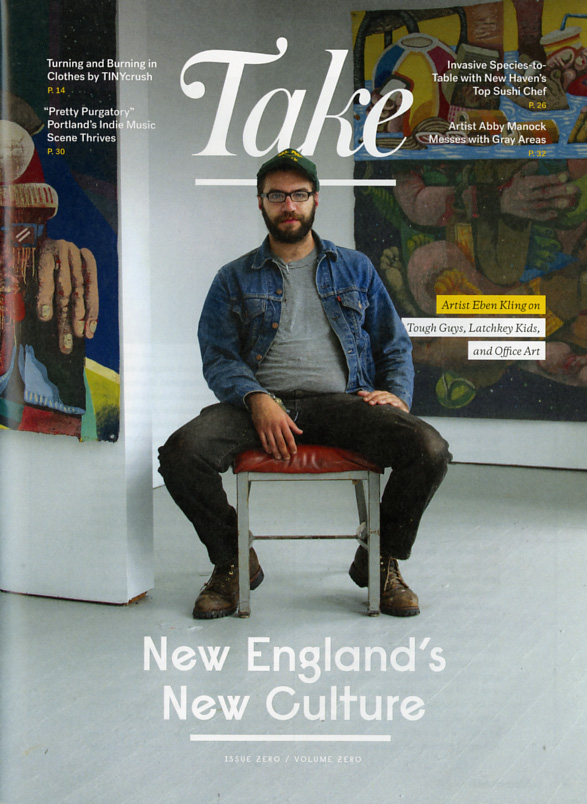
h1

The Perfect Canvas: A Gardener, A Painter, And A Magazine: The Story of Acrylic Artist Magazine.

July 8, 2015

Artistic Inspiration Along With Navigational Instruction Join Hands To Bring Yet Another Creative Masterpiece To Life – The Mr. Magazine™ Interview With Patty Craft, Community Leader & Content Creator/Editor, and Jamie Markle, Group Publisher, Acrylic Artist Magazine.

“I still feel like the magazines are a core part of people being in that community and we know from our own data that our magazine subscribers are the most loyal buyers when it comes to art e-commerce store. Those people are very committed to following the pursuit of their art and they look to us to provide instruction in a lot of different formats. I would say the magazines are still a core part of the communities, whether they are Watercolor Artist or Acrylic Artist or somebody who likes to draw.” Jamie Markle

“Despite the fact that some people may be saying, oh, print is dead or it’s challenged, it’s encouraging to me that as a corporation, we understand our customers’ needs, this magazine is something they want, they want a print product. Our results are double what we expected.” Patty Craft

AAsm15_500 For the artist, F+W Media have been producing quality magazines of inspiration and instruction for generations. From Watercolor Artist to Pastel Journal, the niche titles serve the specific audience they’re intended for perfectly, with a new launch joining the stable to fill a need in the acrylic market.

Acrylic Artist joins its brothers and sisters proudly and the parents that are nurturing this new baby are Patty Craft, community leader & content creator/editor, and Jamie Markle, group publisher. Patty reached out to me recently to talk about the new launch and joined by Jamie, we had a lively discussion about niche markets and the future of the targeted title. It was a past, present and future conversation about the long-lived F+W Media and its many reinventions and a glimpse into the personal hopes of both Patty and Jamie for their newborn.

So, get out your easel and brushes and sit down with the three of us for a brief moment in time and be prepared to receive creative inspiration from a painter and wordsmith who both love what they do and believe strongly in their brand. The Mr. Magazine™ interview with Patty Craft, Community Leader & Content Creator/Editor, and Jamie Markle, Group Publisher, Acrylic Artist magazine.

But first, the sound-bites:

J.Markle_April_2011_073 On whether or not he (Jamie Markle) believes the future for print is more and more specialized titles: I would agree with that statement. As the world changes I think that print will continue on, but I think that we’ll see more and more niche publications like Acrylic Artist.

On the higher end cover price of Acrylic Artist magazine and what kind of message the price sends to its audience (Jamie Markle): Acrylic Artist is the only magazine of its kind, the only magazine that is for the acrylic artist and only the acrylic artist and what we’re saying is that we want to provide quality content, but in order for us to provide content in the form that they want with beautiful paper and a nice trim size, we need to charge a little bit more in order to make it work.

On his (Jamie Markle) dual duty as group publisher and vice president of fine art for F+W: I’m the vice president and group publisher for the fine art community here at F+W and we do things a little bit differently. I oversee all the editorial teams and they report directly to me as does the sales teams. I really have a 360° view of the content that we produce whether it’s content from the editorial side that we put in the magazine, but also working with the salespeople as we work with our partners.

On Editor Patty Craft’s feelings about coming back to the creative content side of F+W’s Artist’s magazine collection:
I’ve also been with the company for 15 years and in my early years I started out on Watercolor and Pastel, so many of the teammates that I have now were here then. I moved around a little bit in the business and did some different things. I was also a community leader for our garden community and horticulture magazine. But coming back as the editor to actually work with content creation has been really great. Like Jamie said; it’s the balance between the business side and the creative content side.

On what sort of experience she’s (Patty Craft) looking to engage her audience with in the execution of Acrylic Artist: That’s a great question. We put together each issue; you know it’s quarterly and when it comes out, it feels more like a catalog to me. It has a dual purpose: to inspire and to instruct. You can almost look at the issue as part art gallery and part classroom or workshop experience.


On today’s high cover price trend and whether he (Jamie Markle) sees a point where the consumer will say that’s too high a price for a magazine:
I think that bookazines have really opened the door to higher prices for SIP’s on the newsstands. So, I think that we’re able to get to that $15 range, but I believe going much higher than that, unless it’s a larger product, I think that might be a little bit challenging. But I do believe that people will pay for quality, but we’re still very cognizant to prices according to the skill level and what the production values are.

On Patty’s most pleasant moment during her career at F+W:
The most rewarding and pleasant experience I have is when we do find an artist that we know has great art or a beautiful garden or a really great story to tell and we are then able to work with them to encapsulate their story in such a way that we can share it with thousands of other people. It’s the beauty of community; it really is what community is about.

On why Jamie thinks we surrendered the term “community” to the digital world when communities have long been a part of the magazine domain from almost the beginning: I still feel like the magazines are a core part of people being in that community and we know from our own data that our magazine subscribers are the most loyal buyers when it comes to art e-commerce store. Those people are very committed to following the pursuit of their art and they look to us to provide instruction in a lot of different formats. I would say the magazines are still a core part of the communities, whether they are Watercolor Artist or Acrylic Artist or somebody who likes to draw.

On whether Jamie can ever envision F+W as a digital-only community with no print component:
Gosh, I hope not. Our print subscribers are really loyal. I suppose that it could happen, but I don’t foresee it happening in the next five years. People still like their subscriptions to their favorite magazines and I feel like we’ve helped, along with every other print producer out there.


PattyCraft_headshot On Patty’s thoughts about how quickly people are talking about the death of the tablet and homepage, whereas it took 500 years for people to coin the phrase print is dead:
Despite the fact that some people may be saying, oh, print is dead or it’s challenged, it’s encouraging to me that as a corporation, we understand our customers’ needs, this magazine is something they want, they want a print product. Our results are double what we expected.

On what motivates Jamie to get out of bed each day and go to work: I would say getting to know the members of the community, whether it’s our contributing writers, the artists we interview, the people who write books for us or make videos for us, my staff; I see the passion that people have for the art that they make and the things that they teach and those connections and that view of what they do and how important it is to our consumers, that’s really what brings me to the office every day.

On what motivates Patty to get out of bed each day and go to work:
As I said in one of my Letters from the Editor: your wings as readers are made of paintings. When they get up in the mornings, what makes them soar is to be able to paint. My wings are made of words. And I’ve always dreamed of a career in writing. And so, it’s an opportunity for me as the editor of this magazine to be able to take these people’s stories, which are very visual, and translate them into the written word for people to read.

On anything else either would like to add (Jamie Markle):
I guess the only thing I would say is one of the other reasons that we launched Acrylic Artist is when we looked at our art business as a whole, we saw that we were serving the acrylic artist with books, video and education, but there really wasn’t a hole in the magazine area. So, it really is our hope that we can build up that community of acrylic artists with our subscription plan.

On what keeps Patty up at night:
Right now, when you are launching, even though as a company we produce a vast number of print publications, this is still a new baby. It’s in its first year of subscription service. Horticulture Magazine, for example, it’s been in print for 110 years. I know what the themes are; I know who the writers are; I know who the gardeners are; I am so immersed in the magazine. With Acrylic Artist, acrylic painting has only been around for 75 years. And I’m new to this. So, the thing that keeps me up at night is making sure that not only am I getting this fall issue that we’re going to send to the printer buttoned up tightly and in good shape, but that I have a deep enough view of 2016 and 2017 to make sure that I can keep the momentum going.

On what keeps Jamie up at night:
I think because I’m a pretty chill person and I sleep really well (Laughs), but if anything concerns me it’s that I’m in charge of making sure that we provide a lot of different types of content to a lot of different people, whether it’s our magazines or books. Not only am I responsible for my consumers, but also my staff, so I always want to make sure I’m doing my best to make sure the business is on track and the content is on track.

And now the lightly edited transcript of the Mr. Magazine™ conversation with Patty Craft, Community Leader & Content Creator/Editor, and Jamie Markle, Group Publisher, Acrylic Artist magazine.

Acrylic artists1-1 Samir Husni: F+W Media started The Artist first. Now you have a stable of artist’s magazines, from Watercolor to Acrylic and many others. Are we seeing that the future for print is going to be more and more specialized titles?

Jamie Markle: I would agree with that statement. As the world changes I think that print will continue on, but I think that we’ll see more and more niche publications like Acrylic Artist, which is one of the reasons we decided to branch off into that specific area, because the magazines that we have like Watercolor and Pastel Journal and Drawing; they have very dedicated subscriber bases and we thought that we would be able to replicate that with the Acrylic market.

Samir Husni: The cover price is almost $15; what message are you sending to your audience, to your “cult readership” with that price?

Jamie Markle: Acrylic Artist is the only magazine of its kind, the only magazine that is for the acrylic artist and only the acrylic artist and what we’re saying is that we want to provide quality content, but in order for us to provide content in the form that they want with beautiful paper and a nice trim size, we need to charge a little bit more in order to make it work.

Samir Husni: In one of the ads I saw that you had edited the book Acrylicworks 2: Radical Breakthroughs?

Jamie Markle: Correct.

Samir Husni: So, are you on both the publishing and editorial side?

Jamie Markle: I’m the vice president and group publisher for the fine art community here at F+W and we do things a little bit differently. I oversee all the editorial teams and they report directly to me as does the sales teams.

I really have a 360° view of the content that we produce whether it’s content from the editorial side that we put in the magazine, but also working with the salespeople as we work with our partners.

Sales opportunities in the fine arts area are limited to a certain group of manufacturers and retailers, so those relationships are longstanding and very important. I’ve been with the company for 15 years and having that 360° perspective has helped me to come up with new ideas and to look for crossover opportunities between editorial and our advertisers.

Samir Husni: Patty, I saw that you came onboard with issue three and from reading your editorial, you were very excited to come back to the art community.

Acrylic Artists 2-2 Patty Craft: That’s true. Social media can be sort of a challenge at some points, but I love the opportunity it affords us to reach out to one another. I’ve also been with the company for 15 years and in my early years I started out on Watercolor and Pastel, so many of the teammates that I have now were here then. I moved around a little bit in the business and did some different things. I was also a community leader for our garden community and horticulture magazine.

But coming back as the editor to actually work with content creation has been really great. Like Jamie said; it’s the balance between the business side and the creative content side.

Samir Husni: One of my premises that I try to teach my students is that we’re no longer just content providers; if we’re just in the business of content providing, we’re dead. We are more of the experience makers. Can you explain to me that as you’re putting the magazine together, what sort of experience are you looking to engage your audience with?

Patty Craft: That’s a great question. We put together each issue; you know it’s quarterly and when it comes out, it feels more like a catalog to me. It has a dual purpose: to inspire and to instruct. You can almost look at the issue as part art gallery and part classroom or workshop experience.

We feel that people who are reading Acrylic Artist have a variety of levels of experiences of painting, but across the board, and I’m not making this up for the interview, we have gotten nothing but positive feedback from artists of all levels. They love the format; they love the glossy paper; they love that it’s 116 pages and they feel like that’s something tangible and meaty that they can go back to over and over. And they’re pleased with the variety of artists that we’re showing, so we feel like we’re doing a nice job based on our readership’s response.

Samir Husni: And did anybody get upset with you when you told them in your Letter from the Editor that you would love for them to subscribe and by doing so they could save almost 42% off the cover price? Did they feel a bit taken aback because they had just paid $15 for one issue and the company is telling them after the fact that they could save quite a bit of money by subscribing?

Patty Craft: (Laughs) I have to tell you no, I have not gotten any bad feedback from that at all.

Jamie Markle: I actually think consumers are pretty used to that now. I’ve never had anyone come to me and say anything about that on any of our magazines. I’ve had people say there’s a better offer over here on this title; why didn’t you give me that one? But there are always different offers for different magazines all the time based on who you’re selling it through.

Samir Husni: Where do you see the specialty magazines and the bookazines that are coming to the marketplace and actually flooding the newsstands going? In June alone, the average cover price for new magazines was over $10. Do you see a point where the consumer will say that’s too much money for a magazine? Or the sky is the limit?

Jamie Markle: I think that bookazines have really opened the door to higher prices for SIP’s on the newsstands. So, I think that we’re able to get to that $15 range, but I believe going much higher than that, unless it’s a larger product, I think that might be a little bit challenging.

But I do believe that people will pay for quality, but we’re still very cognizant to prices according to the skill level and what the production values are. We’ve had a couple other magazines come out this year that we’ve really fit $9.99 on, that were still just around 100 pages, but because the skill level was a little bit lower and more entry level, we thought the consumer was a little bit of a general person and not a specific artist, but someone who was a generalist and might just pick up something on drawing. We chose to get that entry level market instead. I would be cautious to go much higher than $15 or $20 at this point, but bookazines sort of open up that market.

The other thing that’s interesting with us is we’re a book publisher as well, so if we’re going to put a lot of energy into something that is larger and book-sized, we’re probably more likely to put it into bookstore shelves, rather than on newsstand, that way it would have a longer life and it could live on all the outlets, like our own directed consumer stores, Amazon and any of the other bookstores, so if we were to go much higher than $15, for us that enters into a different type of product.

Samir Husni: Patty, what has been the most pleasant moment in your career working at F+W and with all of these communities?

Patty Craft: The most rewarding and pleasant experience I have is when we do find an artist that we know has great art or a beautiful garden or a really great story to tell and we are then able to work with them to encapsulate their story in such a way that we can share it with thousands of other people. It’s the beauty of community; it really is what community is about. I love the opportunity to look for these people who are doing something amazing that inspires that niche, whether it’s painting or gardening. Back when I was on Living Ready even, people who were looking at a preparedness way of life.

Being able to connect those people who are truly doing it as a way of life with people who may be aspiring to do it or are looking for a way to improve how they’re already doing it, that’s my greatest joy.

Samir Husni: And why do you think we have surrendered the term “community” to the digital world when in years past magazines were known for being communities and customers who came to our magazines were meant to be a part of that community they identified with?

Jamie Markle: It’s interesting because I think that what you said is true, a lot of communities were focused around “I am a subscriber to X Magazine” and I actually still see that’s true. We have a couple of different direct consumer websites, whether it is selling books and magazines or we have a streaming video service or online education. And when we have the chance to talk to some of those people, and sometimes it’ll be to tell us they have an issue with a product or about their membership, when I get a chance to talk to those people often I still hear, I’ve been a subscriber of The Pastel Journal for 10 years and I now have access to your streaming video site, and they tell me about how much they love the magazine and how they want to try one of our new services.

So, I still feel like the magazines are a core part of people being in that community and we know from our own data that our magazine subscribers are the most loyal buyers when it comes to art e-commerce store. Those people are very committed to following the pursuit of their art and they look to us to provide instruction in a lot of different formats. I would say the magazines are still a core part of the communities, whether they are Watercolor Artist or Acrylic Artist or somebody who likes to draw.

Samir Husni: Jamie, having said that, do you ever envision F+W as a digital-only community with no print?

Jamie Markle: Gosh, I hope not. Our print subscribers are really loyal. I suppose that it could happen, but I don’t foresee it happening in the next five years. People still like their subscriptions to their favorite magazines and I feel like we’ve helped, along with every other print producer out there. We saw some decline in the newsstand and some subscriber decline, but it’s really leveled off in the past couple of years where we’ve been seeing some nice steady numbers again. I think it’s been really good.

Samir Husni: I was at a conference in New York and people were talking about the death of the iPad and the death of the homepage, so I had to Tweet that it took us more than 500 years to talk about the death of print; now in less than seven years we’re talking about the death of the tablet and the death of the homepage.

Jamie Markle: We’ve actually seen some resurgence when it comes to people interested in print advertising again too. They used to scream: give me digital, give me digital and now we’re hearing what, can you do for print or what can we do for both.

Patty Craft: I’m pretty proud of the fact that our customers’ needs are important to us and when we look at the demographic of people who are acrylic painters who have already been consuming online video or online workshops or DVDs, that group is still attracted to a tangible print product. So, despite the fact that some people may be saying, oh, print is dead or its’s challenged, it’s encouraging to me that as a corporation, we understand our customers’ needs, this magazine is something they want, they want a print product. Our results are double what we expected.

Jamie Markle: I agree with Patty. I would add that I wouldn’t expect to see a lot of other magazine launches anytime soon, other than some SIPs. It was really an exception to take this to subscription, but I was really proud and happy that the executive management team saw the opportunity. And I do feel like it’s because there is such an opening in that marketplace that we were able to come in and sell it.

Samir Husni: What motivates either or both of you to get out of bed in the mornings and say I’m heading to F+W and it’s going to be a great day?

Jamie Markle: We can’t speak for the whole of F+W, of course, but we can speak for the fine art community. For me, I’m in a category that I love. My degree is in painting. I came into publishing a little bit after college. I’d always been involved in other ways, like the Yearbook or the newspaper, but I really didn’t leave college with a degree in journalism, I have one in painting, so for me to be able to work with art every day is just a wonderful gift.

And I would say getting to know the members of the community, whether it’s our contributing writers, the artists we interview, the people who write books for us or make videos for us, my staff; I see the passion that people have for the art that they make and the things that they teach and those connections and that view of what they do and how important it is to our consumers, that’s really what brings me to the office every day. It’s a chance to get to work with really great content creators and to serve the needs of our consumers who are so grateful and vocal about what they love and what they don’t love. It’s just very rewarding.

Samir Husni: Before Patty answers, have you Jamie ever seen any of your own paintings make it to the cover of a magazine?

Jamie Markle: (Laughs) No, I always tell people whenever they ask me that question about myself, I leave all of the decisions like that up to the editors of the magazine.

Samir Husni: What type of paintings do you do; oil or watercolor or acrylic?

Jamie Markle: I have done oil and acrylic. I haven’t done a lot of watercolor.

Samir Husni: Patty, what motivates you to go to work each day?

Patty Craft: I am very transparent. As I said in one of my Letters from the Editor: your wings as readers are made of paintings. When they get up in the mornings, what makes them soar is to be able to paint. My wings are made of words. And I’ve always dreamed of a career in writing. And so, it’s an opportunity for me as the editor of this magazine to be able to take these people’s stories, which are very visual, and translate them into the written word for people to read.

Our readers are obviously very visual, but they also love to read the stories. For me, it’s the fact that I get to come to work and I get to write about things that people are very passionate about.

And separate from that, in the horticulture community, I too am a gardener and as Jamie is a painter, I’ve been the community leader for horticulture for five or six years now. It’s the same with me for that community.

Samir Husni: Is there anything else either of you would like to add?

Jamie Markle: I guess the only thing I would say is one of the other reasons that we launched Acrylic Artist is when we looked at our art business as a whole, we saw that we were serving the acrylic artist with books, video and education, but there really wasn’t a hole in the magazine area. So, it really is our hope that we can build up that community of acrylic artists with our subscription plan.

Looking at the entire scope of what we were able to do for people in the watercolor area and the pastel area, we wanted to emulate that for the acrylic person, because what we do here at F+W is to try and provide content in the format for people when and how they want it.

Samir Husni: And I noticed also that your email address is F+W community.com.

Jamie Markle: Yes, because we really wanted to make that statement. We really are focused on the communities. Our titles change a little bit. Internally, we are called community leaders and externally we use the term publisher, because it makes more sense for people who aren’t within F+W.

Samir Husni: My typical last question; what keeps you both up at night?

Patty Craft: Right now, when you are launching, even though as a company we produce a vast number of print publications, this is still a new baby. It’s in its first year of subscription service. Horticulture Magazine, for example, it’s been in print for 110 years. I know what the themes are; I know who the writers are; I know who the gardeners are; I am so immersed in the magazine.

With Acrylic Artist, acrylic painting has only been around for 75 years. And I’m new to this. So, the thing that keeps me up at night is making sure that not only am I getting this fall issue that we’re going to send to the printer buttoned up tightly and in good shape, but that I have a deep enough view of 2016 and 2017 to make sure that I can keep the momentum going. Keep providing what people are accustomed to getting with this launch. Those are the things that give me a little pause once in a while.

Acrylic Artists 3-3 Jamie Markle: I think because I’m a pretty chill person and I sleep really well (Laughs), but if anything concerns me it’s that I’m in charge of making sure that we provide a lot of different types of content to a lot of different people, whether it’s our magazines or books. Not only am I responsible for my consumers, but also my staff, so I always want to make sure I’m doing my best to make sure the business is on track and the content is on track.

The great thing is that I have a super, awesome, amazing team and they really make my job easy because they know the communities and they provide that content portion without a lot of steps, so I consider myself very fortunate.

But if anything keeps me up, it’s making sure that we’re growing the overall business and the tricky part of that is that things are changing still pretty rapidly in the scope of things. And we just want to make sure that we’re covering all the bases and making sure we’re growing the print portion of the business as well as the online portion, because we feel like we need to have all of those in our wheelhouse at this point so that we can make sure that we keep up with the times.

Samir Husni: Thank you.

h1

Innovation Through Cross-Content Proves Success Is Made When Creativity & Audience-First Comes Into Play – The Mr. Magazine™ Interview With Dan Fuchs, Publisher & Chief Revenue Officer, HGTV Magazine.

July 6, 2015

HGTV & Hearst Magazines: A Success Story From Pixels On The Screen To Ink On Paper.

“I think the future is incredibly bright for print and I think that if you just look at what we’ve been doing at Hearst, which is Food Network and HGTV as partners, you can also see Esquire and Elle partnering on cross-content things. Diversity is key. We have a very diverse portfolio at this company. I think the successful print publishers are going to be the ones who are innovative, but whether it’s print, digital or TV, everything is really all about content and that’s what print does so well.” Dan Fuchs

HGTV July Aug 15 Cover The success of HGTV Magazine has been phenomenal since the day it was launched. The magazine was inspired by HGTV’s own exciting and informative programming and brings the same helpful and trusted advice to the pages of print.

Dan Fuchs is publisher and chief revenue officer for the magazine. I spoke with Dan recently about the innovations Hearst is doing between the titles of its very successful magazines, such as the cross-content of HGTV Magazine and Food Network, Esquire and Elle, and the possibility of other dynamic combos that show true marketing and creative trailblazing. It’s an exciting time for Hearst and all of its prosperous titles.

Dan has been with Hearst for 13 years, having spent the first part of his career with the company at The Oprah Magazine and a brief stint at the now defunct Lifetime. But with HGTV Magazine, Dan is seeing a level of success that crosses boundaries between Hearst properties and brings the most important factor for Hearst and HGTV Magazine to the forefront, audience-first appreciation and consumer satisfaction.

So, I hope you enjoy the Mr. Magazine™ interview with Dan Fuchs, Publisher and Chief Revenue Officer, HGTV Magazine, as we talk about the success and popularity of a fun and exciting brand.

But first, the sound-bites:

On being approached about the publisher’s job at HGTV Magazine:Dan Fuchs I had been talking to Michael about a publisher position and he had said that there would be an interesting opportunity coming up and that I should stay tuned. And so while I was working at The Oprah Magazine, he and I had some conversations.

On keeping his new appointment as publisher temporarily under wraps at first: That’s because as the publisher I am client-facing. And when you’re out there actually talking with the advertisers about their budgets that means you’re in business. And while I was fairly anxious about hitting our goals for our first issue, I think we had about 10 weeks to do it and a staff of three at that time, it was one of the most amazing experiences of my career, because to be so empowered by Michael and to have a great partner in Sara, and Jeff Hamill and his team, I just can’t say enough about the Hearst integrated media corporate team.

On why he feels HGTV Magazine and Food Network Magazine’s worked and the short-lived Lifetime didn’t: As an insider, I would say that it had a lot to do with timing. I came aboard Lifetime after the launch, so we were already a few issues into it. And the circulation hadn’t performed the way that we had expected it to. So, I don’t really know much about the time leading up to the launch; what I do know about HGTV is the way that magazine was launched was similar to the way Food Network was launched. It was very shrewd and very responsible.

On whether he felt he was taking a gamble in leaving his secure job at O, The Oprah Magazine to go the new HGTV Magazine: Did I feel like I was taking a gamble? No. I think in terms of career progression and that may be a subject for another interview, there’s a big difference between being an associate publisher and being a publisher. And were it not for having a great boss and mentor like Michael Clinton, I think it would have been much more challenging, because you really do have to rise to the occasion, particularly when you’re in a work situation where everything is being built from the ground up, meaning not only are you building strategy and weight cards, but you’re building the whole staff and you’re building the way you go to market.

On the major stumbling block he’s had to face and how he overcame it: Expectations were high because HGTV is a superbrand. And I wouldn’t call it so much of a stumbling block, but more of a challenge. Advertisers are excited about a new magazine and new ways to reach their consumers, but when you’re tied into a multimedia brand there are high expectations about how all the pieces are put together.

On the innovative methods he’s implemented at HGTV Magazine: In terms of working with Food Network; Vicki and I as you know used to work together back at Self, so we’ve got a longstanding relationship and we partner a lot because our magazines have some similarities and they’re both doing very well across consumers. They also have a great sensibility and we both work with the same great joint venture partner, so last year we did our first-ever joint cover and Sara and Maile used to work together too at, I believe, Time Inc., so they have a longstanding partnership.

On whether he believes in the future of print: I think you know the answer to that. (Laughs) I think the future is incredibly bright for print and I think that if you just look at what we’ve been doing at Hearst, which is Food Network and HGTV as partners, you can also see Esquire and Elle partnering on cross-content things. Diversity is key. We have a very diverse portfolio at this company.

On his most pleasant moment so far in his career: I’ve been privileged to have had a few of those. And reflecting back over the years, there were some pretty special moments at The Oprah Magazine, particularly as Oprah was ending The Oprah Winfrey Show after 25 years. The way the magazine was really able to communicate with readers and how special the brand was to them. I feel like magazines are a way for people to communicate with brands.

On what motivates him to get out of bed in the mornings: Well, this isn’t just HGTV Magazine specific, this is the nature of our business. What I love about this business and what makes me excited to come to work every day is every day really is different. Sure, there are production emergencies and fires to put out, but each day is an opportunity to get that feeling of wow, we accomplished something; we sold a great deal; we got a great compliment from an advertiser on an issue.

On what keeps him at night: There’s great disruption in the media business and there’s great unpredictability and I do think that it can be easy to lose your way. What are we doing on social; what are we doing with events; how are we monetizing this; how are we doing in print and e-commerce? The number of options that we’re given now, while it can be exciting, it can produce a good deal of anxiety too, because what you don’t want to ever do is lose your way.

And now the lightly edited transcript of the Mr. Magazine™ conversation with Dan Fuchs, Publisher and Chief Revenue Officer, HGTV Magazine.

Samir Husni: Can you recreate the moment when you were first approached about being publisher of HGTV magazine and how it all came about?

Dan Fuchs: I’ve been at Hearst now for 13 years and I had worked with Michael Clinton before at a previous company. Since coming over to Hearst, my experience here has really been all partnership magazines; so there was my brief stint at Lifetime, which I think, as you’ve heard David Carey talk about, we’re always launching new products and we’ve learned from all of those enterprises, and I learned a lot from that one.

I also had eight great years working underneath Jill Seelig at O,The Oprah Magazine, just a tremendous partnership and a great way to learn about how you extend what is not at first a print brand and turn it into a print execution. Also working with joint venture partners and how you take that to advertisers.

I had been talking to Michael about a publisher position and he had said that there would be an interesting opportunity coming up and that I should stay tuned. And so while I was working at The Oprah Magazine, he and I had some conversations.

Everything we do at Hearst is so very purposeful and our partnership with Scripps is really fabulous, the level of trust and sharing; both parties really benefit from the partnership. So, with Food Network being such a success and the amazing job that Vicki (Wellington) and Maile (Carpenter) had done there and the conversations that were ongoing with HGTV, but in the beginning I didn’t know for sure that it was HGTV, although I sort of figured it out as we were looking at various ad categories and some of the assignments that Michael had me doing. I’ll tell you though for a brief time I had to tell our open staff that I was working on “a special project for Michael Clinton.”

And then when I relocated offices from the Tower to The Sheffield, which is a Hearst property and where we have some of our businesses, including an amazing new office for Cosmo.com; I was sort of working there by myself in an office, but as you know I’m on the business side and Sara Peterson had been hired the year before and she had a whole team working on the editorial development of this magazine, so it was going on in the press and I was sort of stealthily going to presentations, but she didn’t know that I was going to be the publisher, nor could I tell her that.

By the time we got to the point where our test issues had come out and they were a tremendous success on newsstands, both our test issues sold over 350,000 copies, so we knew we had a hit on our hands. Scripps did a lot to promote the magazine, there was a wonderful TV special, an hour long special on HGTV called The Making of Our Magazine, narrated by Genevieve Gorder, an HGTV star, and featuring Sara and her team. We sold thousands of subscriptions the night that aired and we knew we had a really exciting thing. So things moved along very quickly after that.

And one day I was able to pick up the phone and call Sara Peterson and was able to say that I was the mystery guest. We both live on the upper east side and we met at EJ’s on 3rd Ave. and it’s amazing that that was over three years ago. You know in 2015, the most effective businesses have the highest level of collaboration between editor and publisher and I have such great respect for what she’s been able to do; to take a TV brand that was so beloved by people and actually give consumers something that’s in line with that brand, but content that in many ways is unique and different and complementary. We’ve done so many great things together over the past few years and in many ways we feel like we’re just getting started.

Samir Husni: I hear a lot of stories about media companies and magazine companies keeping titles under wraps and Michael and David have both hinted about the next new title coming up from Hearst, but no one will ever reveal the title. This is the first time however that I have ever heard of them keeping a publisher quiet.

Dan Fuchs: That’s because as the publisher I am client-facing. And when you’re out there actually talking with the advertisers about their budgets that means you’re in business. And while I was fairly anxious about hitting our goals for our first issue, I think we had about 10 weeks to do it and a staff of three at that time, it was one of the most amazing experiences of my career, because to be so empowered by Michael and to have a great partner in Sara, and Jeff Hamill and his team, I just can’t say enough about the first integrated media corporate team. They all did such a great job bringing this magazine to market, talking to some of Hearst’s advertisers, both big and small, so by the time my team was fully up and running, we had really been set up to succeed by the company.

Samir Husni: Do you recall Sara’s reaction when you told her?

Dan Fuchs: She told me that Ellen Levine had said that when they were going to make an announcement about the publisher, Ellen had told them that “he” was someone with a goodly amount of experience and that Sara should sit down and talk about issue themes and things like that with him and Sara asked, oh, it’s a he? (Laughs) So, she was playing the same guessing game that I was.

But I could tell right away when Sara and I first sat down together that it was going to be a great collaboration. Sara is a 21st century editor and she is able, whether it’s through the most basic fundamental means of communication or whether it’s letters, emails or social media; she has her finger on the pulse of what’s going on with consumers and readers and also she knows this brand very well. And she’s a very quick study. She’d spent a lot of time with the HGTV folks in Knoxville and so I could tell right away that she and I were going to see things very similarly.

If HGTV Magazine is anything, and you know it is because you did the first interview with Sara, it is fun. Sara is the queen of fun and she and I both love this business very, very much and we come to work everyday and we have a great time. It’s a great brand and it’s really exciting and really fun and when we’re working together on a quad cover, a native ad unit or a cool event; I think that we’re very appreciative of our partnership and that we have a very fun brand to work on.

Samir Husni: Within the industry, you hear people saying that the reason HGTV Magazine, Food Network, O, The Oprah magazine or Dr. Oz The Good Life are doing very well is because they had television networks or television programs before they had the magazines, yet the first experience for Hearst with this type of endeavor was taking the television network Lifetime and creating a magazine from it, and that didn’t work. Why do you think Lifetime didn’t work and the others did? As an insider, what was the difference?

Dan Fuchs: As an insider, I would say that it had a lot to do with timing. I came aboard Lifetime after the launch, so we were already a few issues into it. And the circulation hadn’t performed the way that we had expected it to. So, I don’t really know much about the time leading up to the launch; what I do know about HGTV is the way that magazine was launched was similar to the way Food Network was launched. It was very shrewd and very responsible.

I think that if you look at magazine launches today versus let’s say Lifetime 13 years ago or magazines before that, by the time that we’re ready to go to market, we’ve done enough research, not just on the consumer side, but the business side as well, that the advertisers’ comfort level is very high.

This has been the first model for the last couple of magazines: we do the investment up front, without the advertisers and we put the product on newsstand and we market it, so there’s a lot of investment that goes into that, but then we know what the consumer likes and we know really right away. And I think when we’re out there as magazine people, the numbers don’t lie. You look at circulation numbers and that’s consumer wantedness right there.

The launch of HGTV Magazine was so well orchestrated that by the time I was up and with a full team, I was able to have real concrete data on consumer response so that people were saying, OK, you’ve already proven it to me now and I have a bigger comfort level, so let me get onboard this train because this thing is going to go really far, really quickly.

And it’s a great feeling for me to look back on those advertisers who came onboard the first three or four issues in 2012, who are still with us and have grown with us and in many cases have grown their businesses, so it’s a tremendous win-win because the bonus circulation that we’ve delivered over the last few years is in the millions of copies. And so I think that there’s a great trust factor about working with a brand like HGTV, but a really big trust factor also in working with a company like Hearst.

Samir Husni: When you talk about HGTV, you can feel that excitement in your voice, the same level of fun that I found with Sara talking about the magazine, it seems that the two of you share that fun experience working on a new launch, leaving an established launch and coming to a new launch where all the odds are technically against you. Did you feel that you were taking a gamble leaving your secure job at O and coming to HGTV?

Dan Fuchs: I managed to run it by Michael and what he told me was, and coming off the success of Food Network, he said let’s see if lightning can strike twice. And it did.

Did I feel like I was taking a gamble? No. I think in terms of career progression and that may be a subject for another interview, there’s a big difference between being an associate publisher and being a publisher. And were it not for having a great boss and mentor like Michael Clinton, I think it would have been much more challenging, because you really do have to rise to the occasion, particularly when you’re in a work situation where everything is being built from the ground up, meaning not only are you building strategy and rate cards, but you’re building the whole staff and you’re building the way you go to market. And Michael really let me determine a lot of that and continues to guide us along the way.

HGTV is such a strong brand and I think when I was looking through the research that was done, one factor was does the brand have the power to extend itself outside of TV and digital and it seemed very clear that the answer was yes.

Another factor was do we have an editor-in-chief who can communicate that? And once I started looking through prototypes and then the first test issue, we talked about the fact, and I know that Ellen (Levine) and David (Carey) talked about this too, consumers love the new. And they have a strong sensibility and excitement about new products.And what I saw in the first two issues of HGTV Magazine was like nothing else I had seen before. I’d seen some other magazines try and come close to that, but our execution was so spot-on.

I think Hearst takes risks and we take risks in our career, but this one felt like a very calculated one and again it’s the three-years-later-look-how-far-we’ve-come moment and you can tell the excitement that Sara and I have and part of that is because even though it’s been three and a half years, it still feels very much like a launch in many ways. We’re still breaking new ground; we’re making new ad categories and we’re trying new things. We just got into the bookazine business and we’re doing more in terms of events. In many ways, look how far we’ve come in a short period of time, but it still feels like we’re just getting started.

Samir Husni: What was the major stumbling block that you had to face during these three and a half years and how did you overcome it?

Dan Fuchs: Expectations were high because HGTV is a superbrand. And I wouldn’t call it so much of a stumbling block, but more of a challenge. Advertisers are excited about a new magazine and new ways to reach their consumers, but when you’re tied into a multimedia brand there are high expectations about how all the pieces are put together. If I’m advertiser X, I’m really interested with the opportunity of buying HGTV Magazine and HGTV on-air and HGTV dot.com; you’re two separate companies, Scripps and Hearst, so how are we going to do that kind of business?

So, that to me, and I wouldn’t really call it a stumbling block but more of a challenge, was a major focus on our launch. And we’ve been very successful. It’s varied over the years, but maybe 20% of our business is across all three HGTV media. And there are some print executions in our magazine that you won’t see in any other magazine because those advertisers are buying the brand and they’ve challenged our marketing team to, in some cases that advertiser may not have print creative, so our associate publisher of marketing, Kate English, someone who came to us within Hearst Corporation, has put together not only a great marketing team, but also a great design team. So we actually execute on behalf of the advertisers a lot of their creative.

I think we’ve overcome that stumbling block or challenge, which is how are you going to have a great process, and I attribute it to the success and skill of our marketing team, but also we acknowledge and thank Scripps who works with us as part of the family and every week someone on my team is meeting with an advertiser in conjunction with an HGTV.com sales person or an HGTV on-air person.

Samir Husni: And you’re doing a lot in terms of innovation in print, whether it’s the different cover treatments or the combination between the covers of the Food Network magazine and HGTV Magazine; can you talk a little bit about some of those innovative methods that you’ve implemented with HGTV Magazine?

Food Network Mag - May '14 CoverHGTV Mag Cover - May '14 Dan Fuchs: When you’re brand is all about fun, these cover treatments are exciting and a lot of fun themselves, especially for advertisers. And consumers love them. They love the things that open up and they like the surprise and the delight.

In terms of working with Food Network; Vicki and I as you know used to work together back at Self, so we’ve got a longstanding relationship and we partner a lot because our magazines have some similarities and they’re both doing very well across consumers. They also have a great sensibility and we both work with the same great joint venture partner, so last year we did our first-ever joint cover and Sara and Maile used to work together too at, I believe, Time Inc., so they have a longstanding partnership.

The four of us will get together not infrequently, either proactively or challenged by an advertiser, to come up with something exciting, but last year we decided we were going to do a big spring party and we were going to do cover executions that would be designed by those editors and I think that was the first time that ever happened, where you have two separate editors, two separate magazines designing and going to the same photo shoot. They had a great time with it.

We did a beautiful spring party that lived across both magazines and then when we put that idea out in the marketplace, our partners at Pepsi said they were bringing Pure Leaf tea back to market again and they really wanted to tie into the fun and the table setting and the recipes and they thought it was a perfect match for them.

So, we got together with them and it seemed like the right environment and then the added challenge, which was also the fun part, was they didn’t have four pages of print creative, they had one, so we, Food Network and HGTV Magazine, worked together on marketing teams to design it for them.

It turned out to be a beautiful execution and one those great advertiser stories where you’ve got editors, clients, agency salespeople and marketing, all working together and it got us a half-page story write-up in The New York Times about the great cross opportunity.

That has led into other things. We did two great partnerships with Citibank, where we did cross-content promotions. We did holiday gifts and DIY handmade gifts in December and when you opened up the gatefold there was bonus content from Food Network magazine. And then vice-versa in their magazine.

If you look at our July/August issue, you’ll actually see in our summer entertaining section, that we feature recipes from Food Network and if you look at Food Network’s July/August issue and in their entertaining section, they have great table settings and place setting ideas brought to you by HGTV Magazine.

It’s really a great partnership and I think it’s fairly innovative and at the crux of it lies a great partnership and great communication.

Samir Husni: Do you think that’s the future of print, that you have to continue to be innovative and coming up with new ideas? Or you don’t believe in a future for print?

Dan Fuchs: I think you know the answer to that. (Laughs) I think the future is incredibly bright for print and I think that if you just look at what we’ve been doing at Hearst, which is Food Network and HGTV as partners, you can also see Esquire and Elle partnering on cross-content things. Diversity is key. We have a very diverse portfolio at this company. And hopefully the next time we talk, I’ll be able to share with you that we’re meeting with other magazines in the company beyond Food Network about cross-content ideas, because advertisers want environments, but they also want audiences and we, at this company, have both of them in different formats.

I think the successful print publishers are going to be the ones who are innovative, but whether it’s print, digital or TV, everything is really all about content and that’s what print does so well. How you become successful with that is when you really start working with advertisers and you’re not just selling them the page, but you’re trying to find out how to help them tie into content or build content for them that we know our consumers and readers are really going to engage with.

Samir Husni: What has been the most pleasant moment so far in your career; maybe one where you said wow, I don’t think this could ever happen again?

Dan Fuchs: I’ve been privileged to have had a few of those. And reflecting back over the years, there were some pretty special moments at The Oprah Magazine, particularly as Oprah was ending The Oprah Winfrey Show after 25 years. The way the magazine was really able to communicate with readers and how special the brand was to them. I feel like magazines are a way for people to communicate with brands. Whether it’s what they write into editors about; how they reflect on things; we’ve done a good job with magazine space being social, so to me, I knew that was a special point.

And now a decade later The Oprah Magazine is still going strong and we’re seeing the brand sort of moving to a new thing. I’m excited though to have been at the magazine at that time. That was a really special thing for me.

The opportunity to launch HGTV Magazine and while we had a really great launch year, I think the second year when things really picked up; I think there was a bit of a reaction that said wow, this is incredibly amazing; how are we going to continue to do this? But we found a way to do it.

I think when you interviewed Chris Mitchell (publisher at Vanity fair) and asked him the “what keeps you up at night” question, it resonated with me, which is in the magazine or periodical world, there’s always a next issue. There’s always the next thing coming up.

But I think that I’ve learned not to be anxious about that, but instead to be excited about that, because for us, again, we’re still holding onto, and this is the fake word that we use, our “launchiness” at HGTV Magazine. We try and look at every issue as our second or third issue, not our 33rd or 34th issue. You can work your whole career and never get an opportunity to do something like this, so I’m very appreciative of it.

Samir Husni: What motivates you to get out of bed each morning and say wow, it’s going to be a great day?

Dan Fuchs: Well, this isn’t just HGTV Magazine specific, this is the nature of our business. What I love about this business and what makes me excited to come to work every day is every day really is different. Sure, there are production emergencies and fires to put out, but each day is an opportunity to get that feeling of wow, we accomplished something; we sold a great deal; we got a great compliment from an advertiser on an issue. I could be meeting with Triscuit in the morning and Sherwin Williams at night; I’m in Cleveland one day, I’m in San Francisco the next.

It’s nonstop excitement for me and that’s what energizes me is that everyday’s a new opportunity and each day is going to be something different. Maybe when I get a little bit older I would like a little more predictability in my career, but I wouldn’t trade it for anything. It still remains to me one of the best careers that a person could have.

Samir Husni: My typical last question; what keeps you up at night?

Dan Fuchs: I sleep really well, Samir, I really do. We can get into the fact that my daughters, which one is a teenager now and one is very preteen, keep me up at night. (Laughs)

There’s great disruption in the media business and there’s great unpredictability and I do think that it can be easy to lose your way. What are we doing on social; what are we doing with events; how are we monetizing this; how are we doing in print and e-commerce? The number of options that we’re given now, while it can be exciting, it can produce a good deal of anxiety too, because what you don’t want to ever do is lose your way.

And I always want to remind myself, and this is one of the reasons that it’s so great to have such a close relationship with an editor, we have many constituencies and advertisers, joint venture partners, but our readers are really the ones who make us success. Are we doing right by all three constituencies and I would hope if you talked to our readers, our friends at Scripps and our advertisers, they would tell you yes, so far so good.

That allows me to sleep at night as long as I stay focused on making sure everyone is happy.

Samir Husni: Thank you.
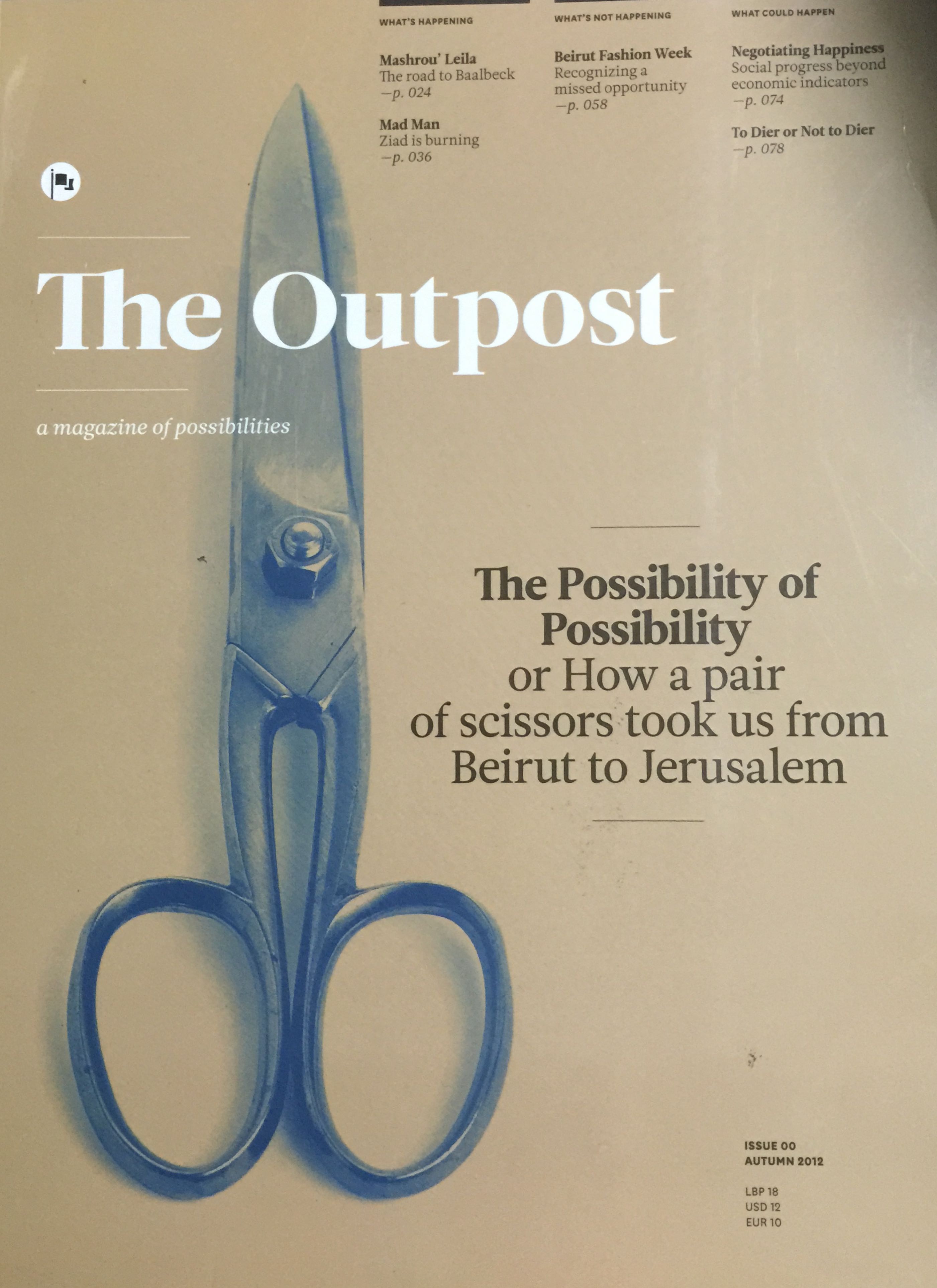
h1

“Plugin” To The World Of Electric Cars & The Lifestyles Of Their Owners – The Mr. Magazine™ Interview With Dusan Lukic, Editor-in-Chief, Plugin Magazine

June 25, 2015

“We decided that we had to go with print because if you’re talking about lifestyle and life stories; if you’re talking about photography; you just have to showcase all of that in print. And there are still a lot of people who are willing to pay for that in a print format.” Dusan Lukic (on why he chose ink on paper for Plugin)

Plugin English-6 Welcome to another installment of the Mr. Magazine™ International Interviews where I had the extreme pleasure of speaking with Dusan Lukic, editor-in-chief, Plugin Magazine, from his office in the beautiful city of Ljubljana, Slovenia.

Dusan is a veteran of magazine publishing and knows his way around the small market, having worked at Adria Media in Ljubljana from the very beginning. Publishing licensed powerhouse titles such as Elle and Cosmo, Dusan and his team are now proudly publishing their first international offering with the new Plugin Magazine. With an English version and a German and Slovenian version as well, the beautifully-done, sleek coffee table collectable is an amazing journey into the eco-friendliness of electric cars and the lifestyles of their owners. It’s certainly what you need to “Plugin” to the world of alternative automotive experiences.

I hope you enjoy the Mr. Magazine™ interview with Dusan Lukic, Editor-in-Chief, Plugin Magazine, as you get a glimpse into the world of magazine publishing from the beautiful country of Slovenia.

But first, the sound-bites:


On the genesis of Plugin Magazine and why it was done in both an English version and a German version:
We came up with the idea of adding a lifestyle element to it and thought about maybe doing it for a chain of hotels, so it would have a controlled distribution. Then we decided to just go national with it and do an English version and a German version because we discussed it with the distributor and they agreed that we should do both because that would be the easiest thing to do with the first issue.

On how the lifestyle element of the magazine is presented:
We’re going to be highlighting the people who are buyers or are thinking about buying electric cars. They’re people who aren’t prepared to give up their freedom of riding around, yet they want to be more environmentally friendly, so they’re considering or have already bought an electric car. On that same note, they also do not want to give up their comfortable home, but they want it to be more eco-friendly. So basically, our target audience is people like that, which usually mean more men than women.

On why the company chose a print component when the magazine deals with the eco-friendly subject of electric cars:
We chose a paper that is quite environmentally friendly. We also have a website; of course, we really started with the website before the magazine. We also have a social media presence too, but we decided that we had to go with print because if you’re talking about lifestyle and life stories; if you’re talking about photography; you just have to showcase all of that in print.

Dusan_Lukic On whether he feels the pendulum is swinging back toward print in Europe the way it is in the United States:
Basically, there is no simple answer to your question. We know what we think; we think that in some markets, print is far from dead and in other markets we have our digital to split the difference.

On the history of Adria Media:
Adria Media is quite an old company; we started with our first magazine in 1996 and I’ve been with the company since the beginning. We started with a car magazine that no longer exists and then we started adding other magazines, either our own or through licensing. We now have 13 magazines and 10 websites, but it’s still a small company, about 120 people.

On the major stumbling block Europe and his company in particular is facing in today’s magazine media market:
In Slovenia, we’ve always been a small market, but we know how to operate in a small market. Of all the countries in this part of Europe, Slovenia was hit hardest by recession. And of course, consumer confidence sank to floor-level and one of the first things that people stopped buying was magazines.

On the hefty cover price and whether that was due to the first issue being ad-free:
It’s like this; we did the first issue without advertising and that was on purpose. What we didn’t want to do was to contact the car industry and the fashion industry without a product on the market. Now we are discussing different ad strategies since we’ve published the first issue.

On what keeps him up at night:
Currently worrying about the future and the stories that we have to do. If you’re a publisher for a small market and you go international, one of the things that you have to do is learn to think like the big international publishers do. I know what I’m doing thanks to my education, but still it’s hard. We know our market here and we know our reader, but we don’t exactly know what would be interesting to our readers outside of this country.

And now the lightly edited Mr. Magazine™ interview with Dusan Lukic, Editor-In-Chief, Plugin Magazine…

Samir Husni: Can you tell me a little about the genesis of Plugin Magazine? Why both an English and German version and why it’s ad-free? And also what’s the mission with this magazine? You say you want people to live smart, drive green and Plugin.

Dusan Lukic: Well, you know that Slovenia is a really small country and of course in Europe, generally print media doesn’t do that well, and that fact is even more obvious here. For example, we have a much distorted advertising market; almost 80% of advertising money goes to television.

We’ve done what we can basically; we have quite a big publishing company; we do a lot of licensed titles; we do Elle, Playboy, Cosmo and others, but we started thinking there’s 2 million in the country and if we only think locally from the beginning, then we’re doomed from the beginning. So we switched and started thinking instead, what else can we do? What is out there that hasn’t been done yet?

We do a car magazine here also, so we’ve sort of found a niche with electric cars and so we started thinking about an electric cars magazine and plugging highways and things like that into it.

But then again, anyone can do a car magazine, so we needed to do something better and different. We came up with the idea of adding a lifestyle element to it and thought about maybe doing it for a chain of hotels, so it would have a controlled distribution. Then we decided to just go national with it and do an English version and a German version because we discussed it with the distributor and they agreed that we should do both because that would be the easiest thing to do with the first issue.

We also have a really good knowledge of the languages here, because Slovenia is close to Austria, so a lot of people speak German and English is a language that is spoken quite a lot here and it wasn’t hard to find people who could write in English or translate.

Samir Husni: Tell me about the concept of Plugin, because the magazine is technically divided into two sections: driving and living. How is the concept of the lifestyle element done? Is it the lifestyle of the electric car owner or driver or the car itself?

Plugin German-5 Dusan Lukic: We’re adjusting a little bit now with the magazine. All the stories that are in it about electric cars, there are two really big ones in the first issue and there is going to be more, but they’re going to be done in more of a lifestyle-type way. We’re going to be highlighting the people who are buyers or are thinking about buying electric cars.

They’re people who aren’t prepared to give up their freedom of riding around, yet they want to be more environmentally friendly, so they’re considering or have already bought an electric car. On that same note, they also do not want to give up their comfortable home, but they want it to be more eco-friendly. So basically, our target audience is people like that, which usually mean more men than women.

What we want to do is make a very interesting lifestyle magazine and also use it to showcase to those people the electric cars and the Plugin hybrid. This target generation, let’s call it 35-50 years old, affluent enough; they know how to live nicely, yet they’re very environmentally conscious and friendly. They don’t want to read a specialized car magazine; they don’t want to read a specialized architectural magazine, but they do like to read nice stories about all of the areas in Plugin.

Samir Husni: Since one of the focuses of Plugin is environmentally friendly electric cars; why did you decide to go with print when some people say print is not environmentally friendly because it involves the killing of trees?

Dusan Lukic: That’s not true, basically. We chose a paper that is quite environmentally friendly. We have a website; of course, we really started with the website before the magazine. We also have a social media presence too, but we decided that we had to go with print because if you’re talking about lifestyle and life stories; if you’re talking about photography; you just have to showcase all of that in print. And there are still a lot of people who are willing to pay for that in a print format.

Samir Husni: In the United States we’re starting to see the pendulum swinging back toward print. Five years ago everyone was talking about the fact that print was dead; now they’re talking about print’s changing nature or the decline of print. Do you see that happening now in Europe, even though you’re having trouble with advertising, newsstands and single-copy sales? Not the same print that we had before the digital age, but a different print business model that’s on the horizon?

Dusan Lukic: There’s no simple answer to that in Europe. I certainly hope that’s the case. But if you look at our biggest market for our German issue, which is Germany, you’ll find the country still has a really strong print base. If you look at their car magazines, there are about 300,000 different car magazines for a country of 80 million.

And then on the other side we have the U.K. and they don’t really sell a lot of digital issues, percentage-wise, but on the other side of the U.K., the biggest car magazines sell only 50,000, but you’ll find online subscribers at around 15 or 20,000.

Basically, there is no simple answer to your question. We know what we think; we think that in some markets, print is far from dead and in other markets we have our digital to split the difference.

Samir Husni: Tell me a little about Adria Media.

Dusan Lukic: Adria Media is quite an old company; we started with our first magazine in 1996 and I’ve been with the company since the beginning. We started with a car magazine that no longer exists and then we started adding other magazines, either our own or through licensing. We now have 13 magazines and 10 websites, but it’s still a small company, about 120 people.

We started with some really niche products. The first magazine was about Formula One, then a car magazine, one about sports climbing, and then we shifted our focus more toward the women’s side. We have three glossy weeklies; we have Elle, Cosmo; we have a magazine called Sensa, which is about inner well-being. And we’re the first magazine company here in Slovenia to really embrace digital. In 2009, we had about 16 or 18% share of our advertising revenue from digital, which was, even for European standards, quite high then.

We were the first to start doing digital versions of the magazines. But in the last few years we’ve had to really consolidate the company because our revenues went down 30% more. The advertising market shrank, the copies-sold went down and television became all-conquering.

But we’re still alive and we’re the only magazine publisher here. There is another company that went bankrupt and their titles got picked up by another publishing company, but they’re selling it again, so we are basically the only stable magazine publisher here.

Samir Husni: What do you think is the major stumbling block facing your company specifically and magazine companies in general in Europe?

Dusan Lukic: In Slovenia, we’ve always been a small market, but we know how to operate in a small market. Of all the countries in this part of Europe, Slovenia was hit hardest by recession. And of course, consumer confidence sank to floor-level and one of the first things that people stopped buying was magazines.

The other thing was this big shift of advertising money to TV. The problem is we basically have one national TV station. We have two commercial channels, but they’re owned by the same company. We also have the largest Internet portal in Slovenia and they have done deals that are still being investigated by the anti-competition authority. But basically they really lowered prices, they were almost dumping prices and then they gained 75 or 80% of the advertising market.

So there is very little left for everybody else and that includes magazines. In Europe, the normal share for television is 40%, maybe 50%, but not 70 or 80%.

The third thing is a lot people bought magazines in grocery stores before the recession. Now there are chains here that do not sell magazines at all. They have food items cheaper than some of the larger chains that do still sell magazines, so as the consumers started shopping with those for the cheaper food prices, all of the impulse buyers that used to buy magazines on the way out aren’t doing that anymore. We’ve lost a lot of business to the stores that no longer sell magazines.

So, there are three of four factors that figure into it and while each by themselves might not present a big problem; altogether they do.

Samir Husni: What’s the solution?

Dusan Lukic: We didn’t go for the big advertising because once you lower your prices you can never get them back up. We managed to get into contact with some of these retailers and put together special magazine packages for them that they could sell at the cash price. We got some sales there.

We also optimized our own internal structure to cope with the loss of revenue. And we’re trying to get some licensed titles to start publishing and do some smaller titles.

And of course the biggest thing we’ve done is Plugin and going international. International markets are big and they’re different; we have to learn a lot about them, but the opportunities are much bigger than if you just stay close and within your own country’s borders.

Samir Husni: I noticed that you not only went international, but you also went with a hefty cover price, because if there’s no advertising, the magazine needs to sell for almost 8 Euros?

Dusan Lukic: It’s like this; we did the first issue without advertising and that was on purpose. What we didn’t want to do was to contact the car industry and the fashion industry without a product on the market. Now we are discussing different ad strategies since we’ve published the first issue.

It seems to have been a good decision, because in Slovenia we’re not really used to big companies telling us about advertising. And that’s what’s happening to us now. I think it was the right decision to do the first issue ad-free and now we can go all-out.

In fact, in our first Slovenian issue, we had about 25 ad pages. And we’re thinking that the next international issues will be similar.

Samir Husni: So, you’re actually publishing three editions? German, English and Slovenian?

Dusan Lukic: Yes and I’ll say this, financially speaking, the Slovenian edition doesn’t really make much sense, but we are a Slovenian company and we are working in Slovenia and it is a topic important to the Slovenian people, so we felt we had to do it regardless of the amount of money we would make.

Samir Husni: My typical last question; what keeps you up at night?

Dusan Lukic: (Laughs) Currently worrying about the future and the stories that we have to do. If you’re a publisher for a small market and you go international, one of the things that you have to do is learn to think like the big international publishers do. I know what I’m doing thanks to my education, but still it’s hard. We know our market here and we know our reader, but we don’t exactly know what would be interesting to our readers outside of this country.

And just thinking about the next story, who to get for the next interview and how to promote the magazine. Those are some of things that keep me up at night.

Plus, I like to read, so I read magazines long into the night because I don’t have time during the day. And I read about 50/50 print and digital. Some magazines have to be read in print, architecture magazines or car magazines with great photography. I still prefer to read them in print if possible. Some magazines are really good in digital, so it’s different.

Samir Husni: Thank You.

h1

Reunion Planning At Its Best – 25 Years Of Family, Military & Class Reunions – The Mr. Magazine™ Interview With Edith Wagner, Founder, Publisher, Reunions Magazine

June 19, 2015

“A decision had to be made in terms of whether or not we could continue to afford to print. At this point with the last several issues, the amount of advertising has covered it, but we’ve really survived for the last 25 years because I’m very passionate about it. A lot of my savings is gone. I’ve never missed a payroll and we pay our bills, but it’s hard.” Edith Wagner

Reunions-18 Reunions Magazine has been around for 25 years and is a small publication that has the backbone of a mammoth. Edith Wagner is the founder and publisher and the glue that has held it together for a quarter of a century. Refusing to give up, Edith has done whatever it took to keep the magazine afloat, even dipping into her own savings. Her passion for the magazine and its subject matter was equaled only by her determination.

Today the magazine is in its 25th year and about to undergo a drastic change by attempting a digital-only format designed to keep Edith’s dream alive and allow the audience to continue its relationship with the brand.

I spoke with Edith recently about the transition and about the history and legacy of the Reunions brand. Her determination and passion is still strong and her faith in what she’s about to do is focused. And for Reunions’ creator and leader, she is as tenacious today as she was 25 years ago.

So, I hope you enjoy the Mr. Magazine™ interview with Edith Wagner, Founder & Publisher, Reunions Magazine and meeting a lady who believes in her passion and her brand.

But first, the sound-bites:

edith_headshot_edited On the genesis of Reunions Magazine: When I started out we were talking about reunions of adoptees and birth parents and I very quickly learned that there was no money in that. I would talk to people about my idea and they would say oh, it could be interesting, and that was my reaction. And this went on for two years before the 25-year-ago beginning of the actual magazine. But with the family, class, military and other reunions we found a market.

On just who the Reunion audience is: For the audience, our audience is reunion planners. And the magazine has become reader-driven; we get almost all of our material from our readers. I think what happens with a lot of reunions is that they love to see their story in a magazine. And I make it clear that there has to be something special about the reunion.

On the fact that after 25 years, Reunions is going digital-only: A decision had to be made in terms of whether or not we could continue to afford to print. At this point with the last several issues, the amount of advertising has covered it, but we’ve really survived for the last 25 years because I’m very passionate about it. A lot of my savings is gone. I’ve never missed a payroll and we pay our bills, but it’s hard.

On whether she believes the legacy of the brand can survive without a print component: Your guess is as good as mine, but we do have a huge presence on the web. We have a very large webpage. I have about 12 years’ worth of content that I haven’t even forced onto the webpage yet. We don’t date things because frankly reunions aren’t dated. And that fact has been a real serious advantage for us. Every now and then there’s news. But what I hear from readers a lot is that they just collect the magazines and when they’re getting ready to plan their next reunion they sit down and they read them all.

On the major stumbling block that she’s had to face over the last 25 years and how she overcame it: It’s always been money. How did we overcome it? We just sort of knuckled down and every now and again we’d come up with a new idea for a special thing we could do and sell.

On her most pleasant moment: Travel writing and traveling to represent companies was a couple of things that were a bonus and just fell into my lap over the years and made it a lot of fun.

On what keeps her up at night: I don’t have a lot of trouble sleeping. (Laughs) Right now it would have to be the transition. There are a lot of people who have to be notified and I’m not talking about sending out a form letter. What I’ve been agonizing and losing sleep over is exactly how to tell people what we’re doing. So far, the response has been amazing because we’ve been talking to advertisers first.

And now the Mr. Magazine™ interview with Edith Wagner, Founder and Publisher, Reunions Magazine…

Samir Husni: Congratulations on staying in business for 25 years.

Edith Wagner: Thank you.

Samir Husni: Tell me the story of Reunions magazine and its quarter-century history.

Edith Wagner: When I started out we were talking about reunions of adoptees and birth parents and I very quickly learned that there was no money in that. I would talk to people about my idea and they would say oh, it could be interesting, and that was my reaction. And this went on for two years before the 25-year-ago beginning of the actual magazine.

At that time Phil Donahue and Oprah Winfrey were on television. And people could relate to those types of programs, of course, but they were always telling me about their military reunions or their family or class reunions. So, I quickly realized that if I used the title Reunions my idea could be expanded to cover all of those things and that’s when we got out of just the adoptee and birth parent part.

But with the family, class, military and other reunions we found a market. But we started out in a slightly down-market in the 90s. It was the early 90s that a lot of businesses started pulling their salespeople back, because then they were on the road all the time and that was becoming very expensive, people were doing a lot more work over the phone. And the hotels needed to fill up their rooms on the weekend; if they had all the business during the week, they could have a skeleton staff on Saturday and Sunday and get by, but all of a sudden they weren’t having as much business during the week and they needed to fill up on weekends and what better way to fill up on weekends than with reunions? And there began the basis for our being able to support ourselves.

Our primary advertisers are convention and visitors bureaus and hotels. Our big problem now, obviously, is advertising. Who have you not heard that from? Now, we’re much more into the convention and visitors bureaus than we are hotels, some resorts and one time a year we have a big feature on ranches; ranches are great places for family reunions.

We’ve worked out some of the problems, but there’s not enough in it consistently right now for the cost of printing and postage. And that’s one of the reasons that we’re making some changes.

Samir Husni: Who is the Reunion audience?

Edith Wagner: For the audience, our audience is reunion planners. And the magazine has become reader-driven; we get almost all of our material from our readers. I think what happens with a lot of reunions is that they love to see their story in a magazine. And I make it clear that there has to be something special about the reunion.

One of the things that I discovered very early on was a very substantial part of our audience is African Americans. And in terms of the advertisers, most of the advertisers that we have are appealing, to a great extent, if you look at the images they use, to African American families. Certainly, in proportion to the overall population, I would say that the percentage of African American families who have family reunions is a little bigger than any of the other percentages. And these reunions are usually the most well-organized and best put together of any.

Samir Husni: And how has that fact impacted the magazine over the years? Since African Americans are a substantial part of your audience, can Reunions now be classified as an ethnic magazine?

Edith Wagner: No, not at all. I think what it impacted was family reunions in general. African American families have taken the family reunion to another level and have demonstrated to other ethnic groups that there are all of these wonderful things that you can do with family reunions.

When we first started out, reunions were just really moving into being a three-day event, with people having to travel to reunions. Prior to that, reunions had been a Sunday picnic. People may have gone to reunions, but they were usually going home, back to the home place or back the farm where everyone grew up. And that still happens, but not as much as it did 25 years ago.

People had begun to travel for reunions and they had turned into more of a Friday, Saturday and Sunday-type event. And now with many reunions, people travel Tuesday through Thursday and make the reunion even longer, in part because if you’re going to travel, you don’t want to picnic just on Sunday afternoon, you have to make the travel worthwhile.

Another trend that has begun to happen is large groups of people will take their vacations together. It takes some planning; you obviously have to be some place that can accommodate everybody. And a lot of these kinds of things are what we include in the stories that go into the magazine and online.

Samir Husni: I read your letter from the last issue and in it you said that would be the last of Reunions regularly-scheduled print edition for now. Is it 25 years and now it’s over?

Edith Wagner: A decision had to be made in terms of whether or not we could continue to afford to print. At this point with the last several issues, the amount of advertising has covered it, but we’ve really survived for the last 25 years because I’m very passionate about it. A lot of my savings is gone. I’ve never missed a payroll and we pay our bills, but it’s hard.

But I didn’t want to give it up. I haven’t aggressively tried to sell it; I can think of people who I wish would consider buying it, but the people I have talked to want to turn it into a travel magazine. And while we have travel information in the magazine; I don’t want it to be a travel magazine. We have a substantial following.

Convention and visitors bureaus frequently have family reunion planning workshops and it’s usually either a half or an all-day Saturday and often I’m invited to come and speak. Recently, I was in Newport News, Virginia, and the way most of them get their audience is through the magazine. We don’t sponsor it and we have nothing to do with it other than I’m the speaker. And at this point, I only do it for advertisers. It’s an added value.

Samir Husni: Do you think the legacy of the magazine will be able to survive without a print edition?

Edith Wagner: Your guess is as good as mine, but we do have a huge presence on the web. We have a very large webpage. I have about 12 years’ worth of content that I haven’t even forced onto the webpage yet. We don’t date things because frankly reunions aren’t dated. And that fact has been a real serious advantage for us. Every now and then there’s news. But what I hear from readers a lot is that they just collect the magazines and when they’re getting ready to plan their next reunion they sit down and they read them all.

And as I said, we have a huge webpage and a very active Facebook page. And some people are impressed by our numbers and others aren’t, we’re a very small business. But the reasons we can attract advertisers is our readers, our webpage visitors and we also have a huge Pinterest page and all of these people are reunion planners.

If you’re a Convention and Visitors Bureau, a hotel or a rancher or even a cruise line looking to book reunions; we’re the ones who can deliver the reunion planners. That’s certainly what has kept us going all of these years.

Plus, a lot of the CVB’s that we work with have been with us for a long time. We know them well and they know us well. I wish we had a lot more. And a lot more say they are doing reunions and are recruiting them.

The other thing is that reunions travel. A lot of families, military groups and even class reunions are beginning to travel more and more. For class reunions we always include information, but it isn’t of particular interest to our advertisers because if they do class reunions they’re right there; they’re generally in the same city where the people went to school.

Samir Husni: What has been the major stumbling block that you’ve had to face in this 25-year journey and how did you overcome it?

Edith Wagner: It’s always been money. How did we overcome it? We just sort of knuckled down and every now and again we’d come up with a new idea for a special thing we could do and sell.

Samir Husni: And what has been the most pleasant moment in these last 25 years?

Edith Wagner: The people who are with me today have all pretty much been here for at least 24 of those 25 years and we’re all neighbors.

There are a couple of things that have happened that I could have certainly never predicted and are pretty cool. First of all there were a number of summers that I stayed on the phone doing interviews and talking about reunions, which I loved because I love talking about reunions. And this was probably in the late 1990s or early 2000s.

Then I was hired by a series of companies to travel around the country and do mostly early morning or late afternoon local TV shows to talk about reunions. And my job was to slip in the name of the company during an interview. I did Kentucky Fried Chicken, Hebrew National and a folding furniture company that I promoted as a furniture people would want for their reunion picnic.

Samir Husni: So, you were basically doing native advertising before native advertising was a topic of conversation? (Laughs)

Edith Wagner: (Laughs too) Yes, yes. One summer I did 23 cities and that wasn’t in a straight line; I kept coming back home. And that was the summer I also wrote a book called “The Family Reunion Source Book.” It was 1998 or 1999.

But then about the same time I started getting invitations to go on press trips and do travel writing. And I did a lot of that, some foreign travel, not very much, but some. And I really limited myself to the kinds of places that reunions would go to. Every now and then I’d get an invitation that was a bit of a stretch, where I knew it was too expensive for a reunion or a place that was just not somewhere a reunion would be held.

Travel writing and traveling to represent companies was a couple of things that were a bonus and just fell into my lap over the years and made it a lot of fun.

Samir Husni: My typical last question; what keeps you up at night?

Edith Wagner: I don’t have a lot of trouble sleeping. (Laughs) Right now it would have to be the transition. There are a lot of people who have to be notified and I’m not talking about sending out a form letter. What I’ve been agonizing and losing sleep over is exactly how to tell people what we’re doing. So far, the response has been amazing because we’ve been talking to advertisers first. And advertisers are interested in supporting us online. I’m hoping that our advertisers are going to follow us online. We’ve come up with a whole web-based rate sheet for them and some ideas of what we want to do online, adding things like video. So, the transition keeps me up a bit at night.

Samir Husni: Thank you.
h1

Compelling & Visually Addictive – There Are No Rules In Creativity – Only The Realization Of Human Potential – The Mr. Magazine™ Interview With Blake Brinker, Publisher & Brad Thomas, Editor-In-Chief, Creativ Magazine

June 3, 2015

“How it all worked out was we were seeing so many dynamic people and so many amazing creations and these great efforts in curation and sharing, but we thought, it’s still not enough. We wanted to propagate it further in a way that was almost sacred to people and we thought that magazines were in that category.” Blake Brinker


“I get motivated every day when people come up to us and say, creativity is the most important thing we have and you’re putting it into this beautiful print publication that I can get on a monthly or bimonthly basis. Just wow; what you’re doing is so inspiring and the world needs this, with the things that are happening in the world today, we need something like this to give people hope and optimism. With all the negativity that we hear every day, this is an incredible amount of positivity showcasing people doing absolutely amazing things.” Brad Thomas

Creativ April-1 (2) What can you say about a magazine that literally takes your breath away? One that is so visually and design prolific that your reaction each and every time you pick it up is nothing short of amazing?

Creativ is a concept born from the minds of Blake Brinker and Brad Thomas, publisher and editor-in-chief respectively. The magazine is an extension of their global online network that is serving to integrate print and digital to the acme of their intertwined possibilities.

A showcase for the creativity of the Creativ community; the magazine celebrates the human imagination and originality in tangible form, cradling creativity of all kinds. With every spread between the magazine’s covers, links are offered to the featured artist’s individual portal on Creativ.com. It’s a unique and ingenious gratuity that conjoins the tangible with the conceptual.

I spoke with Blake and Brad recently about the inspiring and wonder-filled magazine and about the celebration of human potential they offer with every issue. Gracious and fun-spirited; the two men offered a glimpse into the Creativ world and their hopes and expectations for the brand’s future.

I hope you enjoy the Mr. Magazine™ interview with Blake and Brad; the powers-that-be behind Creativ Magazine as you open your mind and let your ‘Creativ’ juices flow. And be sure to watch the two Creativ videos embedded in this blog by the Creativ team… I will not spoil the surprise, but I know you would thank the Creativ team for creating them and me for embedding them in this Mr. Magazine™ interview.

But first, the sound-bites…


Brad Thomas  (left in blue) and Blake Brinker (right in black)

Brad Thomas (left in blue) and Blake Brinker (right in black)

On the Creativ story: (Blake Brinker) Early in my life and pretty much early in Brad’s life, we just developed this fascination around the human potential. And around what makes good people great. What makes some people leave lasting marks on the world? What is it that makes up their character? What are the things that they do and what are the thoughts that they have that enable them to push further and look at the world differently and create things which ultimately make a difference; things that create inspiration and wonder?

On being a bit crazy to start a print magazine after being a digital-only entity first:
(Brad Thomas) (Laughs) I believe we’re just crazy enough to try things that make other people want it. Cheers to the crazy ones, right? (Laughs again) Creative jobs are a little bit crazy; otherwise, we wouldn’t have the iPhones or anything else creative, so I think being crazy to a certain extent is a good thing, because doing what we’re doing, and not even just what we’re doing, but just being an entrepreneur in general, is really a scary thing. You have to be a little naive and a little crazy to even go forward with it.

On why they decided on a print component:
(Blake Brinker) How it all worked out was we were seeing so many dynamic people and so many amazing creations and these great efforts in curation and sharing, but we thought, it’s still not enough. We wanted to propagate it further in a way that was almost sacred to people and we thought that magazines were in that category.

On a major stumbling block they’ve had to face:
(Blake Brinker) The execution; the actual publishing side of it has been a huge stumbling block, a lot more than it was, but thankfully we have a very tendered gentleman that has helped us. He has a lot of history in manufacturing and working with tradesmen and he’s really came in here and helped us take this dream of making this magazine and turned it into what you see today, which is this ultra-high quality piece.

On the decision to start out as a monthly magazine:
(Blake Brinker) We chose to go monthly mainly at first because we really wanted to see what the market opportunity was. Where I think strategically what we realized was, one might be the best idea for us to do in all reality considering the fact that we are attempting to create impact, but bimonthly is actually probably better for us for a certain period of time because it allows us to propagate awareness about each issue much longer, instead of running into that distribution triangle problem that we have for the last month or two.

On the most pleasant surprise they’ve encountered along the way:
(Blake Brinker) Seeing people’s reaction in 2015 when we hand them our quality publication that comes from a company that has a social media platform, seeing that reaction to a tangible product is great. People say: oh, I get it. People who may not have gotten what we were doing before who get it and say: there are 72 pages here; I can see who you guys are and I can see what you’re doing. That was a very pleasant surprise.

On whether they’re stronger believers in the power of print now that they have a print component within their brand:
(Blake Brinker) I think that to some degree we are, but I would say we always understood the power and the beauty of print. And as students of history, we look back at how the printing press changed the world so dramatically and it’s such a special thing to humanity, so I think that it’s on par with this mission that we have.

On what motivates them to get out of bed every morning and say it’s going to be a great day:
(Brad Thomas) I get motivated every day when people come up to us and say, creativity is the most important thing we have and you’re putting it into this beautiful print publication that I can get on a monthly or bimonthly basis. Just wow; what you’re doing is so inspiring and the world needs this, with the things that are happening in the world today, we need something like this to give people hope and optimism.

On what motivates them to get out of bed every morning and say it’s going to be a great day:
(Blake Brinker) I just wanted to say Brad did a really good job of expressing some really good examples that are contextual as to why we wake up in the morning. I’ll just say this from my own level; as entrepreneurs and creatives and as humans, we’re not remembered by how we projected ourselves to be; we’re remembered by the stories of our own paths and by the paths that we’ve forged.

On whom Creativ Magazine would be if they had a magic wand that could turn it into a human being with one strike: (Blake Brinker) Honestly, I would say a combination between Steve Jobs and Nelson Mandela.

On anything else they’d like to add:
(Blake Brinker) Just how everything is so all about digital. It makes me think of a science fiction movie where the future is really dark and people are scared and depressed, but there’s an underground movement where people are holding onto art, because it’s so sacred and real. It’s funny how accurate sometimes science fiction can actually be.

On anything else they’d like to add:
(Brad Thomas) Getting people out there to buy the magazine and to support this movement, to support all of these people who are really putting their lives on the line to do something that matters, to realize that they can be a part of effecting change and a part of inspiring curiosity.

On what keeps them up at night:
(Brad Thomas) All of the unknowns. It’s knowing that we feel we have something so incredible here that the world is craving. And it’s the worry that you have something so beautiful and something that you believe people truly want and you just want it to succeed.

On what keeps them up at night:
(Blake Brinker) I think about people who haven’t seen the light. I think about people who are living their lives in a way that they’re being told to and they’re living their lives in ways they don’t even understand because they’re not awake. I think about how good it would feel to help be a part of something that brings them to the light, so to speak.

And now the lightly edited transcript of the Mr. Magazine™ conversation with Blake Brinker, Publisher and Brad Thomas, Editor-in-Chief, Creativ Magazine.

Samir Husni: Congratulations on the magazine. It is just beautiful.

Blake Brinker: Thank you very much.

Samir Husni: Blake, allow me to quote from your publisher’s letter; you write: curiosity drives imagination, imagination sparks creativity, and creativity manifests solutions, inspiration, and wonder. Creativity is the realization of human potential.

Tell me the story about Brad approaching you with the idea and how, after two hours in a hot tub, it really began to take shape. And also have you graduated yet; are you an M.D. now?

Blake Brinker: I actually dropped out of medical school to build this company with Brad. It’s one of those choices that you can’t necessarily look back from.

Early in my life, and pretty much early in Brad’s life, we just developed this fascination around the human potential. And around what makes good people great. What makes some people leave lasting marks on the world? What is it that makes up their character? What are the things that they do and what are the thoughts that they have that enable them to push further and look at the world differently and create things which ultimately make a difference; things that create inspiration and wonder?

We just believe that when we look at the attributes of the human condition, that pathway quote that you just read from the publisher’s note; you encounter the pathway to finding ourselves and connecting with each other in a way which breaks down borders, creeds, religion, and race. It connects us in such unique ways; creativity is this invisible cord between people.

When you look back at history, which is something that Brad and I like to do often, you see what happened as a result of the Renaissance, in Europe and throughout the world. You see what happened when a few key members of society engendered artisans and creators and encouraged them and gave them venues for expression. It ultimately connected them and had a real economic impact.

We looked at this new era, with this huge technological boom and we saw the opportunity to create a similar catalyst as was done with the artisans in Italy back in the day. We wanted to create a place that further catalyzed that primal element of ignition, which was the tie between curiosity and the manifestation of imagination, which was creativity, and which is the most powerful tool that we have.

And I will say lastly that we see so many people in this world who are doing great things. There are a lot of them that are focusing on the problems and that’s great, we need people focusing on the problems to provide solutions, but we look at the world a little bit differently. We said, OK, there are a lot of problems, we get that, but who are the people who ultimately create solutions? And who are the people who ultimately inspire solutions?

And when you look at that, you look at the population, which is overtly creative, the ones who are carving their own path and we ultimately just wanted to provide a resource and a catalyst for them to see that they’re not alone and that it’s a really good balance.

Samir Husni: Brad, I know this was your idea and your brainchild. I always I tell my students that you can’t be creative unless you’re crazy. Are you crazy to publish a print magazine in today’s digital age, after beginning on the digital front first?

Brad Thomas: (Laughs) I believe we’re just crazy enough to try things that make other people want it. Cheers to the crazy ones, right? (Laughs again) Creative jobs are a little bit crazy; otherwise, we wouldn’t have the iPhones or anything else creative, so I think being crazy to a certain extent is a good thing, because doing what we’re doing, and not even just what we’re doing, but just being an entrepreneur in general, is really a scary thing. You have to be a little naive and a little crazy to even go forward with it. (Laughs)

There is so much uncertainty with everything, but I don’t think we’re crazy. I consider ourselves smartly creative and we’re just going for it. We’re trying to do something that’s different. Whatever direction everyone else’s path is going in; we’re trying to go in a slightly different one and to show that there are a lot of amazing people out there, doing a lot of incredible things using all types of creativity.

Samir Husni: You started with digital; the first four issues were digital-only. Then with issue five you moved to print. Why?

Blake Brinker: Our thought was to get the word out about what we were doing. We had been out in the world at a few different conferences internationally and we had brought some sample issues with us that we had digitally printed, because we wanted to get reactions to the concept.

Another thing to remember is we started this company by building an online social media platform first and we really started when it was the foremost current of the digital realm.

How it all worked out was we were seeing so many dynamic people and so many amazing creations and these great efforts in curation and sharing, but we thought, it’s still not enough. We wanted to propagate it further in a way that was almost sacred to people and we thought that magazines were in that category.

So, we wanted to test it out. We printed the copies and we took them to the conferences at different places in the world. And the reaction was great. People were asking; what are you doing; is this like a brochure? It was really amazing to see the reaction of people who were covered in our social media platform and people who were sharing on social media, because many of these people had never even thought about being published in a magazine. And when it happened, it was just different for them. It was different from being featured on a blog; it was different from someone sharing a Facebook post about them. It felt different; it felt real.

It was then that we said you know what; what the heck? Let’s see how far we can get this thing out there and bring physicality to what we’d been doing all along.

Samir Husni: What has been the major stumbling block that you’ve had to face, from the point of conception to the point of delivery?

Creativ May-2 (2) Blake Brinker: The execution; the actual publishing side of it has been a huge stumbling block, a lot more than it was, but thankfully we have a very tendered gentleman that has helped us. He has a lot of history in manufacturing and working with tradesmen and he’s really came in here and helped us take this dream of making this magazine and turned it into what you see today, which is this ultra-high quality piece.

So, publishing definitely would have been a lot bigger stumbling block had we not had him, but it’s still challenging, because there are so many pieces to put together, from the creation to the binding, to the palletizing and shipping for distribution.

Ironically, we didn’t even realize it, but living in Phoenix, there are some very high-tech training platforms about 30 minutes from our office. When we started investigating how we would create these magazines, especially the covers, and have the quality be so high, we started realizing that we could now do something extremely different in terms of the design and the quality and we could do it at a cost that wouldn’t bury us and we could sell the magazine at a good price and still make a little money.

And the second thing is we got a major distribution deal two months ago, which is the reason why you saw the magazine. And we got it on our first print issue. We were placed in all the Barnes & Noble’s in the country and lots of other stores, around 300 stores initially. Now we’re double.

I’d say the biggest stumbling block for us now is trying to put the pieces together and create the whole circle. We want to create a really valuable and meaningful magazine on top of extending our distribution in intelligent ways and commanding exceptional ad prices for the publication and also extending into the digital platform that we have. So, the challenge now is really to put all those pieces together and turn it into a viable and self-sustaining project.

We consider ourselves a media company, so the print publishing is one side and the digital side is the other; we have this huge online community. We also have a whole development team in Vietnam that’s currently working on the version 3 of our community platform, which is going to be really exciting because we’ll be making the whole experience online very cohesive with the experience of the magazine.

So, that’s the other challenge. We have all of this stuff going on with the magazine and then we have this huge platform that we’re building. We have 20 or 22 employees that are solely tech. And one thing that we’ve realized, all the conferences that we have gone to all over the world, especially last year, what we have realized without a doubt, between the publication and the platform online, is that we’re serving a recipe that everyone wants. We have the dish; but what’s the most effective way to get it out there so that people know it exists. We can’t tell you how many people have said: this is what I’ve been waiting for. And that’s validation for us.

Samir Husni: Where most of the new magazines that are coming out into the marketplace, which I might say, have much less creativity and much less production value and the expensive look than Creativ, are published four or six times a year, you’re publishing monthly.

Blake Brinker: It’s interesting; I think because we started in a space that we probably really shouldn’t have been in, there are no rules for us, which is kind of invigorating, right? We don’t have to abide by a certain set of rules that are handed down by a big multinational company or something.

We chose to go monthly mainly at first because we really wanted to see what the market opportunity was. Where I think strategically what we realized was, one might be the best idea for us to do in all reality considering the fact that we are attempting to create impact, but bimonthly is actually probably better for us for a certain period of time because it allows us to propagate awareness about each issue much longer, instead of running into that distribution triangle problem that we have for the last month or two.

You’re working and working, turning things out and you take a day off; then you’re working doubly hard again for the next 26 days trying to get the next one out. We realized that our team may be a little too small still to be able to knock out that exceptional quality of a magazine every 15 to 20 days and make sure that we obviously focus on the rest of the business at the same time. We don’t have any rules on this, but we’ve strategically decided now that for the time being we are going to go to a bimonthly, so that we can really make sure that every future issue is better than the least. Not only better, but also equally important, making sure that every issue has, at least with the size team that we have, making sure that every issue is properly marketed.

As soon as we got this last one done, we actually just finished up what would have been the June issue, we realized we really hadn’t spent any effort in trying to figure out how to effectively market the May one or any future ones. We’re just spinning in circles here. We need to slow down a little bit and really figure out how to let people know we have the dish that they want. How to do that takes time to learn. So, we’re going to slow things down just a bit, at least until the end of the year. Our intention is to be monthly again and we’re going to be doing a weekly newsletter digitally too.

Samir Husni: What was the most pleasant surprise that you’ve had during this experience?

Blake Brinker: The reaction of people when they receive something that is beautiful like this; the reaction, especially of young people, because again, it’s almost foreign to them. I’m 31 and Brad’s 35 and we grew up with National Geographic on our coffee tables and TIME magazine and it was sacred to us, almost as sacred as it was to our parents’ generation.

Seeing people’s reaction in 2015 when we hand them our quality publication that comes from a company that has a social media platform, seeing that reaction to a tangible product is great. People say: oh, I get it. People who may not have gotten what we were doing before who get it and say: there are 72 pages here; I can see who you guys are and I can see what you’re doing. That was a very pleasant surprise. You see 17 year-olds who get a copy of it and their eyes light up and they’re intrigued and want to know what it is. We actually had someone tell us last week that their young kids couldn’t put it down.

Samir Husni: Are you now stronger believers in the power of print than you were before you brought the magazine to print?

Blake Brinker: I think that to some degree we are, but I would say we always understood the power and the beauty of print. And as students of history, we look back at how the printing press changed the world so dramatically and it’s such a special thing to humanity, so I think that it’s on par with this mission that we have.

Samir Husni: What motivates you to get out of bed each morning and say wow; this is going to be a great day?

Brad Thomas: Well, I could give you a million examples. Recently, we were in Las Vegas at a major tech convention. Our tech company is being showcased as one of the top special companies in 2015 and we’re a tech company with a print publication, so we were getting a lot of attention.

And I get motivated every day when people come up to us and say, creativity is the most important thing we have and you’re putting it into this beautiful print publication that I can get on a monthly or bimonthly basis. Just wow; what you’re doing is so inspiring and the world needs this, with the things that are happening in the world today, we need something like this to give people hope and optimism. With all the negativity that we hear every day, this is an incredible amount of positivity showcasing people doing absolutely amazing things.

Someone else came up to us recently and she almost had tears in her eyes when she was looking at the magazine and she said, oh my gosh, you guys are doing exactly what I’m so passionate about. And she pulled up her sleeve and she showed us this tattoo that was in Arabic and it read “Bring Arab Creativity Back,” and it was a pretty special moment. I mean, she literally started crying.

Samir Husni: It’s an amazing thing you’re telling me about the younger generation falling in love with print. So many times I’ve thought that it is we who are our own worst enemy; we who predicted the demise of our own medium; we who predicted the death of print and almost force-fed the new generation the idea that everything is now digital, from E-paper to E-books, which of course now, we’re reaching a plateau in that area.

Blake Brinker: I just wanted to say Brad did a really good job of expressing some really good examples that are contextual as to why we wake up in the morning. I’ll just say this from my own level; as entrepreneurs and creatives and as humans, we’re not remembered by how we projected ourselves to be; we’re remembered by the stories of our own paths and by the paths that we’ve forged.

And so for us, this whole project; this whole endeavor is about creating impact that creates a legacy of impact where that new generation is affected. And that we change at least one paradigm into a positive reaction and I think that from a high level, we think about that every day and every morning, despite the fact that we’re a startup and it’s so hard. There are so many different things that startups have to do, that they’ve always had to do, no matter what age it is. We call them startups now, there weren’t necessarily called that before, but the impact of what we’re working on is the sole reason that we get up every morning.

Samir Husni: I read both of your backgrounds and it looks like curiosity and creativity are the common denominators between the two of you. What would be an additional ‘C’ besides curiosity and creativity that drives the both of you?

Blake Brinker: I would say opportunity in the largest sense. We both look at the future and we see opportunity more than we see challenge. We didn’t know each other four years ago and we’ve become such great business partners because we became such good friends. Our deep belief in everything we’ve just discussed over the course of this interview has actually made us into better friends than could have ever happened. And even though this is very scary, being a startup and everything, with all the unknowns that we have to deal with; it’s great knowing that you’re in it with a best friend who is right there with you on the exact same page, which I think is a huge advantage for us.

Brad Thomas: We have a very human connection with one another and it’s not based on profit.

Blake Brinker: It’s a very deep connection.

Samir Husni: If I gave either or both of you a magic wand and you struck Creativ Magazine with it and a human being appeared instead of the magazine; who would that person be?

Blake Brinker: Can it be a combination of two people?

Samir Husni: Yes, it can.

Blake Brinker: Honestly, I would say a combination between Steve Jobs and Nelson Mandela.

Samir Husni: That’s a very good answer.

Blake Brinker: Thank you.
Samir Husni: Is there anything else you’d like to add?

Blake Brinker: Just how everything is so all about digital. It makes me think of a science fiction movie where the future is really dark and people are scared and depressed, but there’s an underground movement where people are holding onto art, because it’s so sacred and real. It’s funny how accurate sometimes science fiction can actually be.

I mean, when you think of digital; digital creates a lot of things of course, but there comes a point when we have to keep some things sacred. It’s important for our past and it’s important for our future.

Brad Thomas: Getting people out there to buy the magazine and to support this movement, to support all of these people who are really putting their lives on the line to do something that matters, to realize that they can be a part of effecting change and a part of inspiring curiosity.

The biggest thing is just trying to call all people and that is our thing right now, to get as many people as possible to join the movement. We’re reaching out with open arms to the world and saying: join us.

Samir Husni: My typical last question; what keeps you up at night?

Brad Thomas: All of the unknowns. It’s knowing that we feel we have something so incredible here that the world is craving. And it’s the worry that you have something so beautiful and something that you believe people truly want and you just want it to succeed.

We have a picture on our wall of a pie. One slice of the pie is 15% and the rest of the pie is 85%. And the slice of pie is the 15% of what you can control and the last 85% you’re dealing with circumstances. I have a difficult time sometimes dealing with the fact that there are uncertainties. And all that we can focus on is the 15% that we can control. And that you have to pretty much roll with the punches and when you do that and you have an awesome partner and a great team, you can take those punches a little easier. And that’s the one thing that helps me sleep at night. Otherwise, I’d be a wreck. (Laughs)

Blake Brinker: I agree with that as well, but for me; I think about people who haven’t seen the light. I think about people who are living their lives in a way that they’re being told to and they’re living their lives in ways they don’t even understand because they’re not awake. I think about how good it would feel to help be a part of something that brings them to the light, so to speak. I come from a place where many, many people are just accepting of the circumstances handed to them and I think that can be said about a lot of places in the world. There is a big part of the population that does that. And I think about how much happier so many of them would be if they just kind of looked on the brighter side of things. And it’s really not just about that; it’s a matter of seeing opportunity everywhere and showing up, opening the door and then running through it. I think about people who are struggling to run through that door, who are doubtful of doing it and are scared.

And that makes us want to work harder to get to them, to show them that they are not alone.

Samir Husni: Thank you.