Archive for the ‘A Launch Story…’ Category

h1

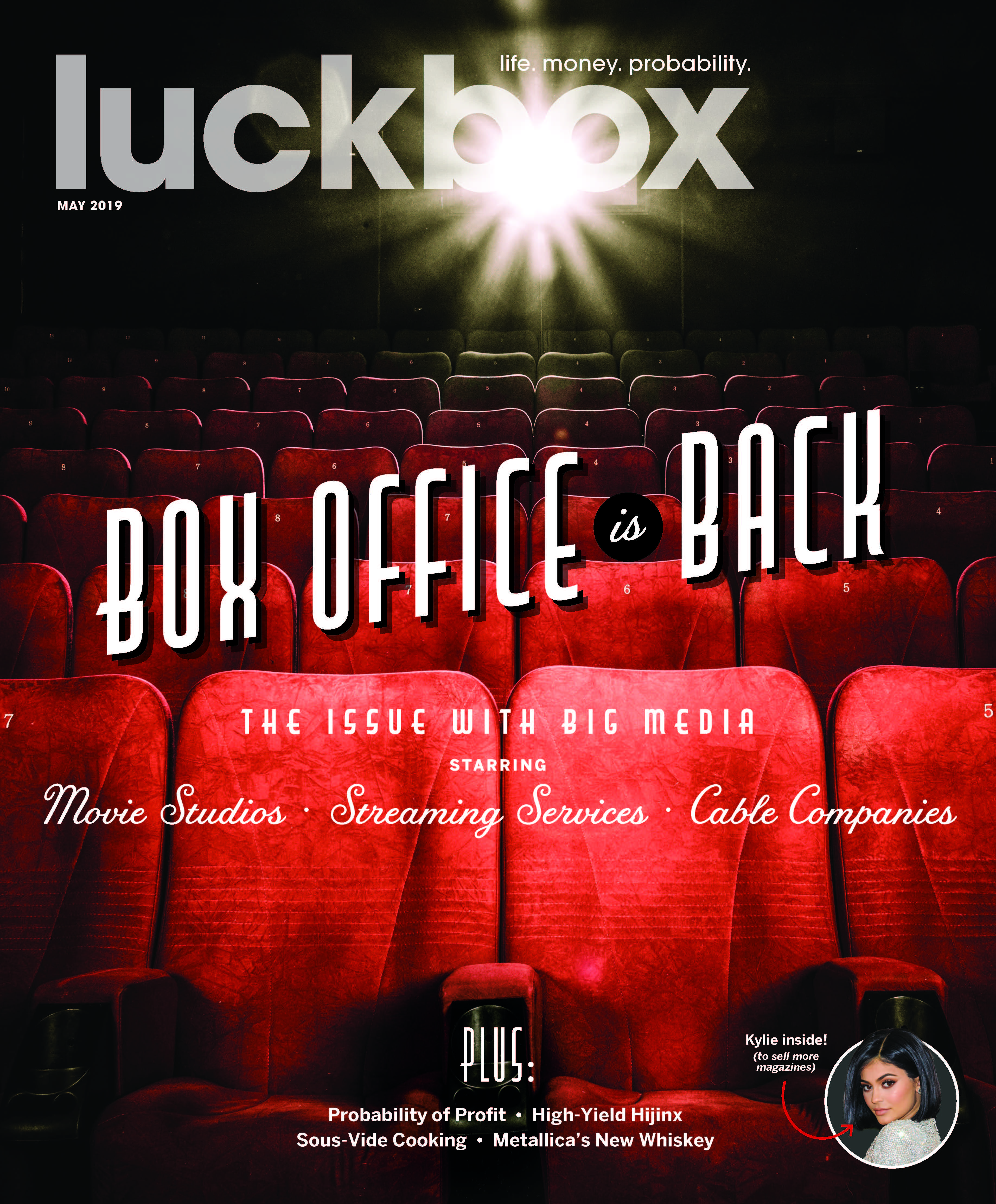
Luckbox Magazine: A Definite Alternative To Depending On Lady Luck When It Comes To Decisions Of Money & Investments – The Mr. Magazine™ Interview With Jeff Joseph, Publisher & Editorial Director, Luckbox Magazine…

April 1, 2019

“Ultimately, we have one objective; we did a lot of surveying of our audiences in the past, because that’s the only way you really measure if you’re engaging, and if your unique content proposition is resonating with your audience. So we measure that a lot, frequently, in the form of surveys with our audience. And the survey criteria that we’ve had in our prior financial publications that we aspire to achieve is that in the past, within sixty percent of our audience never threw out their print editions, ever. They kept them as a permanent library. That specific metric of engagement really drives us and motivates us. It means that we are providing a library of resource to our audience that they go back to and refer to over and over again. That means that they like the look and feel and texture, and the magazine is aspirational to them. And that it provides a value beyond the first read.” Jeff Joseph…

A Mr. Magazine™ Launch Story…

With investment experience from floor trader to institutional asset management, and venture experience as well, Jeff Joseph has the expertise needed to bring a financial magazine, such as the new title Luckbox, to great success and bring even greater informational strategies to lead readers from chancy risks to skilled decisions when it comes to their investments. And as chief content officer and publisher of Modern Trader magazine, he knows a thing or two about the publishing industry as well, although he’ll tell you he is a financial wiz much more than a publishing tycoon.

I spoke with Jeff recently and we talked about the new magazine Luckbox, which he and his team are developing and publishing for TastyTrade, one of the fastest growing online financial networks in the world. Partnering with TastyTrade on this endeavor, Jeff said that the magazine started with an already embedded audience that allows him to do what he wanted to do, allocate resources for content. In Jeff’s opinion, it’s all about the content. And with TastyTrade as owner of the magazine and Jeff as its publisher and editorial director, the magazine about probabilities and content is a sharply designed, extremely smart new publication that takes the “what ifs” and the “might happens” and quantifies those probabilities when it comes to making money on investments. It’s a magazine for investors who want to take control of their money and make their own decisions.

So, I hope that you enjoy the Mr. magazine™ interview with a man who talks magazine as fluently as he does money – Jeff Joseph, publisher and editorial director, Luckbox Magazine.

But first the sound-bites:

On starting another print magazine in this digital age: I’ve always agreed with your premise, that it’s not a magazine if it isn’t print. But at the same time there is something else that I believe is true, and that is that a magazine has many forms. And in the long run a magazine is still about content. I’m agnostic as to what platform our readers choose to access our content. I prefer it to be in print, because I agree with you, that it’s a beautiful, tactile, engaging experience, but for those who prefer to access our content through digital platforms, that’s fine.

On the idea for Luckbox and how the magazine was born: Luckbox is a partnership with a financial services firm that is a content marketing firm that understands the importance of content marketing to engage with a larger audience and is all about the idea of giving information to be able to create goodwill and customer engagement and customer loyalty. And it had the marketing means and the audience size that would immediately allow this new publication, Luckbox, to reach even larger audiences.

On the concept of Luckbox and how that applies to the audience he is attempting to reach: We’re very focused on a step-by-step process that defines our unique content position, and then ultimately measures the engagement of that content and the scalability to larger audiences. So the unique content proposition is like every publication, you have to have a very clear idea of what you are and what you stand for, and that idea should drive all of your editorial decisions. In our case, it’s about life and money broadly speaking, but narrowly speaking, our publication is really about probabilities. And the key word in unique content proposition is “unique.” What’s the differentiator?

On were there any stumbling blocks or challenges along the way: I think my distinctive advantage as a publisher and also as the editorial director is that I have subject matter expertise and domain expertise, first and foremost. I come from finance and trading and the investment industry, the decades of my professional career have been in that area. I’ve been a publisher for only five years, although those five years seem like twenty years, but it’s the content knowledge and domain expertise.

On having a partner with this venture and why he felt he needed one: To be clear, this publication is owned by the financial partner Tastytrade, this is their publication and we’re developing it for them. And the reason is, to answer your question, is scale. It’s that simple. As you know the economics of print are still predominantly focused on subscription revenue or advertising revenue. And they feed each other, the larger your subscription base, the larger your ad revenues. There is that third level of event revenue, but you first have to focus on brand development and audience building before you can go down that event path.

On the probability that he will be having this conversation one year from now: (Laughs) That’s a great question and that’s exactly the business concern that I have been most focused on. So unlike a publisher that would be launching a new magazine that has to deal with all of the business issues, when you have an embedded audience from day one, that probability rises materially, so I would tell you right now, go on the record as saying there is a 95 percent-plus probability that next year we are talking about how we’re expanding our audience and that Luckbox is looking at is next phases of evolution.

On anything he’d like to add: You know what it’s like out of the gate, there is just so much to do. You just want to focus on trying to get better and better. I’ve never been happy with any issue we’ve ever produced. I have a really smart and knowledgeable team, with great editors that are willing to shake up the conventional way of looking at things. Our parent company is very provocative in the manner in which they work, they have their own marketing voice. And that makes this all just a lot more fun.

On the biggest misconception he thinks people have about him: I guess that I’m a publisher. Again, my background is first and foremost in the financial industry investment and trading, that’s where I’ve spent my entire career. It’s the content expertise that I think gives me an edge. And with my past entrepreneurial and venture activities, I’m more of an entrepreneur than a publisher, and that to me only implies a little bit more flexibility. That’s all.

On what someone would find him doing if they showed up unexpectedly one evening at his home: Aside from family, my passions are brown whiskey, cigars, and my Samoyed, my dog. I also probably spend more time consuming media than any single person I know. Whether it’s walking, listening to podcast news or every morning listening to financial media, every night listening to political media, and then every evening on the weekend reading, I consume a lot of media. And that’s probably where most of my time is spent.

On what he would have tattooed upon his brain that would be there forever and no one could ever forget about him: I’m my father’s son and my father is approaching a milestone birthday on April 3rd, he’ll be 100 years old. And his spirit and his heart is still beating strongly and he, above everything else, is a warm, wonderful man, the nicest man I’ve ever met, but the hardest working man I’ve ever met. And with an insatiable, entrepreneurial spirit. He was at Normandy in the second wave, he did five European tours; he was an innovator as a restaurateur, he worked long hard hours. He had as many as a dozen restaurants at one time. I’ve learned my work ethic from him and an entrepreneurial spirit and an accept-no-failure attitude and that becomes my greatest challenge, to pass it on to my children as well.

On what keeps him up at night: All this media that I consume. (Laughs) I don’t sleep much. I consume a lot of media. What keeps me up in terms of the business, is the challenge. We know where the headwinds are working print to digital, and again, in the same way that I embrace what you’ve always said, which I find very motivating, it’s not print if it’s not a magazine, at the same time it’s finding the way to engage new audiences. It’s not about marketing that keeps me up, it’s about that content. I believe in the power of content, and content to mobilize and engage, to be aspirational, to be educational; and finding the way to communicate that content is to me the challenge.

And now the lightly edited transcript of the Mr. Magazine™ interview with Jeff Joseph, publisher and editorial director, Luckbox Magazine.

Samir Husni: Are you completely losing it to start another print magazine in this digital age?

Jeff Joseph: (Laughs) That’s a loaded question. I’ve always agreed with your premise, that it’s not a magazine if it isn’t print. But at the same time there is something else that I believe is true, and that is that a magazine has many forms. And in the long run a magazine is still about content. I’m agnostic as to what platform our readers choose to access our content. I prefer it to be in print, because I agree with you, that it’s a beautiful, tactile, engaging experience, but for those who prefer to access our content through digital platforms, that’s fine.

I think being platform agnostic is important. The love of print is motivating and I believe completely in the segmentation of lean-in versus lean-back media; the idea that there are people who are spending their time focusing on digital content and accessing digital content, they’re leaning into it on a daily basis. I’m a big proponent and advocate of the studies that have made it very, very clear now that when it comes to actually engaging with content and actually absorbing it, recent studies out of the University of Maryland show very compelling data that the print reader and the digital reader walk away with the same basic understanding of the content. But if your content is detailed-oriented, as ours is, there is far more engagement retention and recognition of those details for the print reader than there is for the digital reader. And that has been verified through a number of independent university studies.

And the third thing, which I have always thought was ironic that those same studies have pointed out, is that the digital reader and the print reader although they’re absorbing different levels of detail walk away with the notion that they’ve retained the content equally. So this false sense of confidence that the digital reader has, in terms of their ability to actually engage with and retain the content, is something that print seeks to address. So, I look at two worlds, one where you’re leaning into content and one where you’re leaning back with content. And I prefer the magazine, but I’m not going to let my bias get in the way of what readers choose to access.

Again, it’s balancing what you believe, which I believe that it’s not a magazine if it’s not print, but at the same time you can believe something else and that is it’s still all about content; it’s not the medium, it’s the message in the long run, and the manner in which the reader chooses to access that content. And I prefer to be agnostic about it.

Samir Husni: You’ve been involved in many other financial publications and platforms, from Tastytrade to Modern Trader, but how did you come up with the idea for Luckbox and how was the magazine born?

Jeff Joseph: The two prior print publications that I have been involved in; Futures Magazine, which was around for a long, long time, a full decade, was a B to B publication that was focused on futures and options and derivatives, and was predominantly for professional traders. When I acquired that company several years back, it was just limping along and the decision was made to reach a broader audience and make a shift to a B to C audience by adding in equities and financial markets. And that included the stock markets and being less focused on an obscure, narrowed segment of the financial market, which opened up a more B to C appeal.

And we had success with that publication. We achieved a number of editorial and design awards, including Best Business to Business Magazine during that transition. And we learned a number of things and having come to that conclusion of learning, we started seeking opportunities that would allow us to reach an even larger audience.

And that’s what Luckbox is, a partnership with a financial services firm that is a content marketing firm that understands the importance of content marketing to engage with a larger audience and is all about the idea of giving information to be able to create goodwill and customer engagement and customer loyalty. And it had the marketing means and the audience size that would immediately allow this new publication, Luckbox, to reach even larger audiences.

So, what we’ve ensured with Luckbox, which just launched last month, is that in a short period of time, within the next two or three months, we’ll achieve an audience that exceeds the largest audience that we ever had. We expect to be reaching 60,000 to 70,000 subscribers in a matter of months. And that is a result of this partnership with this multiplatform content marketing group in financial media.

Samir Husni: From the concept of the magazine, it’s a monthly magazine for anti-Wall-Streeters, proactive investors who want to make better investment decisions. Tell me a little bit more about the concept and how that applies to the audience you are attempting to reach.

Jeff Joseph: We’re very focused on a step-by-step process that defines our unique content position, and then ultimately measures the engagement of that content and the scalability to larger audiences. So the unique content proposition is like every publication, you have to have a very clear idea of what you are and what you stand for, and that idea should drive all of your editorial decisions. In our case, it’s about life and money broadly speaking, but narrowly speaking, our publication is really about probabilities. And the key word in unique content proposition is “unique.” What’s the differentiator?

And what we are aware of is that in print media there is not a single publication today, not one, that engages with the active investor. And that is someone who either trades or makes their own investment decisions and doesn’t allocate to a delegator or to a robot. They want control over their money; they want greater understanding of the decisions that they’re making and they want to learn how to make better decisions. And there isn’t a single publication in print form that addresses those issues.

So, that is our unique content proposition. We’re very focused on probabilities, and if you take a look at the “Welcome to Luckbox” page, which is a Publisher’s Note to our first readers in our debut issue, we clearly state what we’re about and that is looking at the world through the lens of probability. And that there is an irony to the name Luckbox, which is really a fun name, I love the name. It wasn’t my idea, to be clear, but it’s a wonderful name that has this curiosity gap: what is Luckbox?

And it has great irony about it, because our magazine is really about imparting knowledge, confidence and skills, and it has a lot of educational content. And the irony of the name Luckbox is that a luckbox is a slang term that traders, gamblers, and poker players know, and it refers to somebody who’s luck is significantly beyond what they deserve. Where somebody’s outcomes materially exceeds their skillsets. And that’s kind of the irony of this name. There are a couple of quotes on that very page where we define what Luckbox is. One from Seneca Roman, a philosopher who said: “Luck is what happens when preparation meets opportunity,” and that’s really what we’re focused on is that preparation of recognizing our opportunity. And then at that point, a little luck is not a bad thing. And that is our unique content proposition that we’re very focused on.

So, as we evolve, and as you know magazines evolve, we had our first issue and we’re proud of it and we’re pleased with it, but it’s like launching software, you have to have your next version; in our case it’s our next issue. And then our next issue and our next issue after that. We always look at magazines as being a lot like software launches and software releases, where every version gets better and better and more focused on delivering that unique content proposition.

So, that’s what we’re focusing on right now, being this platform that really focuses on the odds of everything. The odds of a successful investment than a particular stock or particular option. The odds of successful outcomes in life and in personal business pursuits. There is not a publication focused on that and the reason we’re focused on it is we know understanding math and probabilities empowers individuals to become more confident about the decisions they make, with respect to their own investments.

Samir Husni: Has it been a walk in a rose garden for you? You have all of this experience behind you, having done this before; were there any stumbling blocks or challenges along the way?

Jeff Joseph: I think my distinctive advantage as a publisher and also as the editorial director is that I have subject matter expertise and domain expertise, first and foremost. I come from finance and trading and the investment industry, the decades of my professional career have been in that area. I’ve been a publisher for only five years, although those five years seem like twenty years, but it’s the content knowledge and domain expertise.

And I personally believe it’s the absence of having decades of publishing experience that allows us to be more flexible, less inclined to accept the rules; this is how it needs to be done. Clearly, our least favorite words are “this is how it’s been done in the past,” we want to be provocative. We want to challenge some of the rules that have guided publishing and journalism in recent years.

And to some degree I think it’s kind of led the industry down a path and in the long run you still have to be relevant and engage with your audience. And I truly think that our team is more entrepreneurial as opposed to being beholden to journalism practices and publishing rules. And by focusing on our content and our knowledge of the content and just trying to find more engaging and compelling ways to deliver that content, I think that’s a distinct advantage for us.

My push back on your setup to that question is that I understand the publishing industry, those five years seem like twenty, but I’m learning every day. But what I do understand is our content, the investment and trading and financial industry. And that understanding of our content, when in the long run it’s the content that we are delivering as a product, not the magazine, I think that’s our advantage.

Samir Husni: You said you have a custom content publishing firm as your partner, specializing in finances; why did you feel you needed a partner with this venture?
Jeff Joseph: To be clear, this publication is owned by the financial partner Tastytrade, this is their publication and we’re developing it for them. And the reason is, to answer your question, is scale. It’s that simple. As you know the economics of print are still predominantly focused on subscription revenue or advertising revenue. And they feed each other, the larger your subscription base, the larger your ad revenues. There is that third level of event revenue, but you first have to focus on brand development and audience building before you can go down that event path.

And what we wanted and what we needed was to reach the widest possible audience. So, by working with a group that had an embedded audience from day one as opposed to spending all of our energies on audience acquisition, we have an audience. Our financial partner Tastytrade is a content marketing firm, every day at Tastytrade.com they are producing five days a week, eight hours a day, original live on-air financial programming to a large audience of hundreds of thousands that watch that programming. And that’s free programming, so they already recognized the value of providing important educational and actionable content on a daily basis to generate goodwill to monetize through their brokerage company.

And it’s that understanding, that audiences are the prerequisite to being able to scale and focus on content, and that’s what I wanted to do. I wanted to focus on content. And so much of a publisher’s responsibility is focusing on audience acquisition, and by having an audience from day one it guarantees your success in terms of potential subscriber revenue and advertising revenue. That’s very important. I think it allows us to allocate our resources more for writing and refining the content that maximizes engagement with our intended audience.

Samir Husni: What’s the probability that a year from now you and I are having this conversation?

Jeff Joseph: (Laughs) That’s a great question and that’s exactly the business concern that I have been most focused on. So unlike a publisher that would be launching a new magazine that has to deal with all of the business issues, when you have an embedded audience from day one, that probability rises materially, so I would tell you right now, go on the record as saying there is a 95 percent-plus probability that next year we are talking about how we’re expanding our audience and that Luckbox is looking at is next phases of evolution.

So, unlike the challenges that a publisher has on a daily basis, is it going to be subscription revenue or advertising revenue and they feed each other and how do I acquire more, when you start from a base it gives you a lot of advantages. And of course, we’ve just had our first issue, but our second issue will appear nationwide at Barnes & Noble and other newsstands. And we pass out complimentary issues at investment, trade, financial and entrepreneurial conferences every single month. And we’re looking at a number of different distribution platforms as opposed to both print and digital.

And of course, we’re doing the other things that integrate with technology. We have augmented reality in our very first issue, right out of the gate. And we’re integrating technology, and since we already have this lean-in media environment, by that I mean the digital programming that is online every day, that live programming, this lean-back form of media is very complimentary to that.

Ultimately, we have one objective; we did a lot of surveying of our audiences in the past, because that’s the only way you really measure if you’re engaging, and if your unique content proposition is resonating with your audience. So we measure that a lot, frequently, in the form of surveys with our audience. And the survey criteria that we’ve had in our prior financial publications that we aspire to achieve is that in the past, within sixty percent of our audience never threw out their print editions, ever. They kept them as a permanent library. That specific metric of engagement really drives us and motivates us. It means that we are providing a library of resource to our audience that they go back to and refer to over and over again. That means that they like the look and feel and texture, and the magazine is aspirational to them. And that it provides a value beyond the first read.

And everyone has their KPIs (Key Performance Indicators) that they look at; the KPI that I’m most interested in is that this is a publication that once somebody has it in their hands, they never want to throw it out. That means it has actionable, short-term information, and then it has educational, long-term information that becomes an essential, which is a key word for us, an essential resource.

And that’s what we always seek to be, essential to our readers, in the same way that if you’re a mechanic, Popular Mechanics is essential to you. If you’re a designer, Architectural Digest is essential to you. If you’re in the fashion industry, Vogue is essential to you. If you’re in the music industry, Rolling Stone is essential. If you’re a guitar player, Guitar World is essential. That’s what we’re focused on being, is essential to our readers.

Samir Husni: Is there anything you’d like to add?

Jeff Joseph: You know what it’s like out of the gate, there is just so much to do. You just want to focus on trying to get better and better. I’ve never been happy with any issue we’ve ever produced. I have a really smart and knowledgeable team, with great editors that are willing to shake up the conventional way of looking at things. Our parent company is very provocative in the manner in which they work, they have their own marketing voice. And that makes this all just a lot more fun.

We don’t feel beholden to any real rules and because we’re small we can make quick decisions and we can fail fast and adapt, and evolve and move forward immediately. There’s not a whole team of people that belabor every decision, we just decide to do something and we do it, we measure it and we move on if it doesn’t succeed.

Samir Husni: What’s the biggest misconception you think people have about you?

Jeff Joseph: I guess that I’m a publisher. Again, my background is first and foremost in the financial industry investment and trading, that’s where I’ve spent my entire career. It’s the content expertise that I think gives me an edge. And with my past entrepreneurial and venture activities, I’m more of an entrepreneur than a publisher, and that to me only implies a little bit more flexibility. That’s all, and a lot of learning as well.

Samir Husni: If I showed up unexpectedly at your home one evening after work, what would I find you doing? Having a glass of wine; reading a magazine; cooking; watching TV; or something else? How do you unwind?

Jeff Joseph: Aside from family, my passions are brown whiskey, cigars, and my Samoyed, my dog. I also probably spend more time consuming media than any single person I know. Whether it’s walking, listening to podcast news or every morning listening to financial media, every night listening to political media, and then every evening on the weekend reading, I consume a lot of media. And that’s probably where most of my time is spent.

Samir Husni: If you could have one thing tattooed upon your brain that no one would ever forget about you, what would it be?

Jeff Joseph: I’m my father’s son and my father is approaching a milestone birthday on April 3rd, he’ll be 100 years old. And his spirit and his heart is still beating strongly and he, above everything else, is a warm, wonderful man, the nicest man I’ve ever met, but the hardest working man I’ve ever met. And with an insatiable, entrepreneurial spirit. He was at Normandy in the second wave, he did five European tours; he was an innovator as a restaurateur, he worked long hard hours. He had as many as a dozen restaurants at one time. I’ve learned my work ethic from him and an entrepreneurial spirit and an accept-no-failure attitude and that becomes my greatest challenge, to pass it on to my children as well.

Samir Husni: My typical last question; what keeps you up at night?

Jeff Joseph: All this media that I consume. (Laughs) I don’t sleep much. I consume a lot of media. What keeps me up in terms of the business, is the challenge. We know where the headwinds are working print to digital, and again, in the same way that I embrace what you’ve always said, which I find very motivating, it’s not print if it’s not a magazine, at the same time it’s finding the way to engage new audiences. It’s not about marketing that keeps me up, it’s about that content. I believe in the power of content, and content to mobilize and engage, to be aspirational, to be educational; and finding the way to communicate that content is to me the challenge.

For example, it’s one of the reasons that we’re doing something in the first issue of Luckbox that we’ll continue doing going forward, we’re doing magazine reviews. In the first issue we noted Popular Mechanics and did a review, and there was a reason for that. The second issue will have a review of The Atlantic magazine, because we welcome media in all forms. And there is extraordinary journalism out there. It’s one of the reasons we want to try and bring it to the attention of younger audiences who might not be consuming print, and not aware of these different platforms and publications. So, we’ll continue to mention other magazines and promote them on a multi-basis in our own magazine going forward, because we believe in the platform.

Samir Husni: Thank you.
h1

Oh-So Magazine: From The Dreams Of A Daughter To The Pages Of A Magazine, One Father Creates The “Oh-So” Perfect Skateboarding Magazine Dedicated To The Females Of The Sport – The Mr. Magazine™ Interview With Rob Hewitt, Founder, Oh-So Magazine…

March 12, 2019

A Mr. Magazine™ Launch Story

“I feel like on Instagram and on the web, and I’m sure a lot of people will shake their heads and that’s fine, you kind of move so quickly and you forget so quickly about what it is exactly you’re documenting in the back of your brain, where a true visual and visceral experience, especially with skateboarding where there is so much movement that you hardly get to reflect on the person’s face and personality because it’s all about the trick and what’s being done on the board, I really wanted to slow that down and pull back a little bit. And it’s intentional that you don’t see so many tricks in this magazine; it’s more about the females who are in the sport and their experiences and their journeys. And hopefully, whoever sees it; it gets them to slow down and reflect on the fact that they may have seen so much stuff on Instagram, but barely remember any of it.” Rob Hewitt (On why he chose print instead of digital-only for Oh-So magazine)…

When Rob Hewitt discovered that his daughter Amelia had an affinity for skateboarding, he and the animated seven-year-old went on the hunt for a publication that was made for her and her age group. Her tastes ran toward the sparkly, emoji-filled dreams of a little girl who loved to have fun, but who also wanted to learn more about other girls who loved her newfound sport. Disappointed with what they found on the newsstands about females and the sport of skateboarding, Rob decided to create a magazine just for Amelia. And Oh-So was born.

From the fun and energetic design to the fantastic illustrations and stories that fill its pages, Oh-So definitely lives up to its name: it’s oh-so engaging and informative. And with the tagline “Celebrating The Female Skateboarding Community,” the magazine shows the renegade spirit and talents of the female skateboarder, but also tells the story of their individual journeys. And it shows the passion of a true graphic artist, Rob Hewitt.

Aside from being an entrepreneurial magazine maker, Rob is also creative director for Dwell magazine, among other creative endeavors, and his passion for design is only overshadowed by his love for his daughter, which he has poured into this publishing project. And if Mr. Magazine™ may be so bold as to say – it is “Oh-So” delightful. So, please enjoy the Mr. Magazine™ interview with Rob Hewitt, founder, Oh-So magazine.

But first the sound-bites:

On creating a magazine about skateboarding for his daughter when he could find nothing already in the marketplace that spoke to her: Through the years, as a designer I’ve always had my eye on typography and graphic design in general. And a few years ago, I actually purchased a skateboard deck without the wheels or the trucks that was in celebration of a typeface and they just put the typeface on the skateboard deck. I have that still. And my wife and I got a couple of boards because we’re in Manhattan and we would sort of cruise up the West Side Highway, and this was again maybe five or six years ago. There were literally a couple of skateboards sitting around and my daughter found one and brought it into the house and was cruising up and down the hallway. And I found it really interesting, because this was not on my radar; I hadn’t thought about skateboarding at all.

On how typography and Instagram brought him to skateboarding and how that turned into Oh-So magazine: The visual part of it came a little bit later. This was purely an intuitive process, because it was just me reflecting on needs and figuring out I how I could use what I do and what I know, which is visual thinking and visual problem-solving, how could I use that in a way that would be interesting to, first and foremost, females. And my daughter may be secondary a little, because she can read, but she’s not as fluent at seven as most of the girls out there skateboarding. And from that, what sort of ingredients do I need to do that?

On why he chose print in this digital age: My background was a huge part of it. I am so passionate about graphic design in general. And I absolutely love print. It’s probably the wrong thing to say, but I refuse to give up on the power of print. One thing that I really found in this journey of creating this publication, it occurred to me that everything is documented on Instagram or in video and there is a publication for men called Thrasher, which has been around for a long time, but they don’t really call too much attention to the female skate world. I think they’re trying to now, but in recent years they haven’t.

On bringing in Robert Priest and Grace Lee (8×8 magazine) to help with the magazine: I’m grateful to Robert, he actually gave me my first job in New York and I’m thankful that we’ve remained friends after all this time. When I had the idea for this magazine and I had maybe 15 pages of bad layouts and three or four covers, I went and visited their studio to really just get raw feedback from them because I really respect Robert and Grace for what they’ve done in the industry and what they’re currently doing with their magazine. And I straight-up said to them, you guys have inspired this because you’ve created a product that has turned soccer/football magazines on their heads.

On having the first issue done and what’s next: What’s next is working on the second issue. I’m very excited, there is some really good stuff. I don’t want to jinx it but Issue One has been received really well, and I honestly don’t know what to think because I entered into this thinking that I had nothing to lose, it could just disappear and that’s fine, I need to stay true to my journey and my focus. And I’ve done that. And people have reached out and said great things.

On his daughter’s reaction when she first saw the magazine: Actually, the printouts were on the floor and on the table and I would invite her over to look at them, because she’s seven and her world consists literally of emoji’s and bright colors and fun things. And I asked her what she thought about the magazine and she would just point at things and say that’s fun or I like that or I don’t know what that is. And I thought they were some good reactions from her.

On anything he’d like to add: If people pick it up, there are a few articles in there, especially one about Atita Verghese, who is the first pro female out of India, and she is an incredible spokesperson for equality in India, especially for girls. I think it’s a really important thing. And she’s kind of doing it by herself. I try to get people to that article more than some of the others because it really is so raw and her message is so powerful. If I had to highlight only one person it would be her; she is a force. I have so much respect for her.

On what someone would find him doing if they showed up unexpectedly one evening at his home: Probably watching something on Netflix. I tend to binge watch and I tend to get stuck on certain theories. And believe it or not, I will watch them multiple times.

On the biggest misconception he thinks people have about him: I’m a very shy person and I consider myself an introvert. And knowing that I’m not very outspoken in public or in groups, I think sometimes that comes off as aloof. But I think I’m actually the complete opposite of that. Unfortunately, the nature of being quiet and being more of an observer sometimes comes across as aloof.

On what he would have tattooed upon his brain that would be there forever and no one could ever forget about him: Hopefully that I tried my best and tried to do the right thing. In my career in general, I’ve always loved the idea of the design problem and what is the right solution for that problem. And when I say that I tried my best, I like to think that in my work, and Oh-So in general, I really try to solve the problem in a way that is an emotional reaction visually. And I try to get it right.

On what keeps him up at night: Right now, Oh-So keeps me up at night, my kids keep me up at night; I think I’m a worrier, I worry about a lot of things. I worry about things in the world that I have no control over. I worry about messaging that I have no control over. And I worry about a lot of stuff for my kids. There are things that you see and hear, a lot of disturbing stuff, and unfortunately because I’m a dad, I worry about that stuff.


And now the lightly edited transcript of the Mr. Magazine™ interview with Rob Hewitt, Founder, Oh-So magazine.

Samir Husni: In the introduction of Oh-So magazine, you write that you saw your daughter’s interest in skateboarding escalating, but could find nothing in the marketplace that spoke to her, so you created a magazine for her.

Rob Hewitt: It literally started with me being a graphic designer. I skateboarded a little bit when I was a kid, using the Bones Brigade boards and the Tony Hawk boards, but by no means did I pursue it professionally or anything like that. It was more like there’s a board, I’m going to jump on it and skate.

So, through the years, as a designer I’ve always had my eye on typography and graphic design in general. And a few years ago, I actually purchased a skateboard deck without the wheels or the trucks that was in celebration of a typeface and they just put the typeface on the skateboard deck. I have that still. And my wife and I got a couple of boards because we’re in Manhattan and we would sort of cruise up the West Side Highway, and this was again maybe five or six years ago.

There were literally a couple of skateboards sitting around and my daughter found one and brought it into the house and was cruising up and down the hallway. And I found it really interesting, because this was not on my radar; I hadn’t thought about skateboarding at all. (Laughs) I just kind of looked at her and asked was she having fun? And she said yes, that she could go fast and get from here to there really quickly. We decided to go and see if there was something that appealed to her, because my board was clearly more masculine and frankly quite blind to what her needs were.

We went to a skate shop and looked around. I didn’t initiate or push anything and she just said there was no pink, no emoji’s, no unicorns; there was nothing sparkly there for her. And this was this past summer, mid to late summer. And it really sparked the question: my daughter has taken an interest in something and there wasn’t anything out there that she felt comfortable with.

So, it was as though the muse appeared and we grabbed on and went on this journey. It was crazy because in a matter of a few weeks, that movie by the Skate Kitchen crew was literally just coming out and I hadn’t heard anything about them, they’re this crew in New York, they’re amateur skateboarders and they skate for fun. And I was like wait a minute, there are other people out there doing this, let’s look further.

I was searching online and on Instagram and just reached out to some people and this conversation started. And it went from there. And there were some stops and starts because I didn’t know if I should really try and make a publication out of this. I have a good friend who is an illustrator and he had done an illustration and that was one thing. And then on Instagram I found a photographer in New York who had taken these beautiful photos, which were in the issue of Chelsea Piers Skatepark and it was like okay, there is something. And then the Skate Kitchen segment, there was something else.

And on Instagram, the doors just began to open up quickly and I certainly began to see that there were a lot of females doing this professionally, as well as amateurs and just for fun. So, it just started to happen. I just followed it. And while it was happening I really just wanted to stay true to, and maybe this sounds cliché or a bit of a stereotype, but stay true to what my daughter would experience if she did this. And how could I provide her with a little bit of knowledge and education so that she felt like she knew what she was getting into, because there didn’t really feel like there was a lot of it.

Samir Husni: How old is your daughter?

Rob Hewitt: She’s seven.

Samir Husni: Typography brought you to skateboarding and Instagram brought you to global skateboarding. How did those two combinations create Oh-So magazine?

Rob Hewitt: The visual part of it came a little bit later. This was purely an intuitive process, because it was just me reflecting on needs and figuring out I how I could use what I do and what I know, which is visual thinking and visual problem-solving, how could I use that in a way that would be interesting to, first and foremost, females. And my daughter may be secondary a little, because she can read, but she’s not as fluent at seven as most of the girls out there skateboarding. And from that, what sort of ingredients do I need to do that?

Again, through Instagram, the cover appeared really quickly. I found it and thought, this is a great image. And I took stock of that. Around the same time, I hadn’t found the primary typeface that’s in the magazine, I was actually using a completely different typeface, but then by late summer I stumbled upon work by Corita Kent, and I knew her work, she was an activist in the ‘60s who did those very powerful feminine-driven posters, and I had always loved her work. And she had done a lot of this work typography in the ‘60s. So, I thought here was another ingredient that felt like what this vernacular was, because it’s all about movement. They do not stop, it’s continuous motion. Corita Kent’s posters had that energy.

I was reading an interview with Corita Kent, and I kid you not, in the interview she said she was doing some work and it felt “oh-so” cool. I was like, wait a minute, oh-so and the way that she used it with an action word behind it, made this seem like – I don’t really know, but it just felt right. I literally looked at my wife and said what about “Oh-So” and she said it was interesting, but what does it mean? I said it’s just a nice way to segue into it, being that skateboarding is “oh-so” cool or “oh-so” equal or “oh-so” raw. All of these things just started to churn.

But we sat on it for a little while, asked a couple of people what they would think of that for a name for a female skateboarding magazine. And the reception was pretty good. And that was one thing that was banked.

Then starting to do layouts, I stumbled across the primary typeface that you see, and again, it just seemed to fit because it’s like three typefaces in one, as though each character can go three different ways. And it was interesting because I could use this typeface in a way that wasn’t just set. Yes, there is the true Sans Serif that’s used, which is the one used for the actual articles, but then the display stuff and some of the big letters and numbers has an energy that just felt right, because there was a lot of curves and free form, in a way. It reminded me of Corita Kent and her work. So, the bubble was being created and all of these things were in there.

There were so many times when I just second-guessed if it was right. (Laughs) And asked myself should I even keep going with this? It was just me and I kept wondering was I doing the right thing for a publication. And I just really had to trust that I was going to do it right. For me it felt good and at the end of the day it was a great feeling to see my daughter involved and excited. And I believe there is a philosophy to what I did here and what I tried to accomplish. It was education and filling a need that females didn’t have when it came to knowledge in the sport. Or even just knowing what other girls are going through at the skate parks. And the editorial felt as though it was serving a true purpose.

Samir Husni: Why did you feel in this digital age that Oh-So magazine would be better-served as a print publication?

Rob Hewitt: My background was a huge part of it. I am so passionate about graphic design in general. And I absolutely love print. It’s probably the wrong thing to say, but I refuse to give up on the power of print. One thing that I really found in this journey of creating this publication, it occurred to me that everything is documented on Instagram or in video and there is a publication for men called Thrasher, which has been around for a long time, but they don’t really call too much attention to the female skate world. I think they’re trying to now, but in recent years they haven’t.

So, why couldn’t there be a magazine for girls, and there are a couple of others out there, but they have a different sort of message, why couldn’t there be a magazine for girls where everyone can join in and learn about this sport and what the girls go through? And in a weird way, why couldn’t it be a documentation of what is happening now, a lot like Corita Kent was documenting and making poetry on movement in the sixties for feminists, and she was reacting to those movements. So, why couldn’t it exist?

I feel like on Instagram and on the web, and I’m sure a lot of people will shake their heads and that’s fine, you kind of move so quickly and you forget so quickly about what it is exactly you’re documenting in the back of your brain, where a true visual and visceral experience, especially with skateboarding where there is so much movement that you hardly get to reflect on the person’s face and personality because it’s all about the trick and what’s being done on the board, I really wanted to slow that down and pull back a little bit. And it’s intentional that you don’t see so many tricks in this magazine; it’s more about the females who are in the sport and their experiences and their journeys. And hopefully, whoever sees it; it gets them to slow down and reflect on the fact that they may have seen so much stuff on Instagram, but barely remember any of it.

Samir Husni: I interviewed the editor of Mindful magazine recently and she referred to the print magazine as slow-food in an age of fast-food, there’s a big difference in sitting at a restaurant and having a three-course meal versus grabbing a burger through a drive-thru.

Rob Hewitt: I agree. There are so many amazing independent print magazines out there and there is such a great attention to detail, and I just wanted to try and do that too. And I wanted to try and do it for the small market that doesn’t have that. And be loud for them as well and get them excited about what they’re doing in skateboarding.

Samir Husni: I see you brought in some big guns to help with this magazine, Robert Priest and Grace Lee, who have their own magazine, 8×8, among other things that they have done.

Rob Hewitt: I’m grateful to Robert, he actually gave me my first job in New York and I’m thankful that we’ve remained friends after all this time. When I had the idea for this magazine and I had maybe 15 pages of bad layouts and three or four covers, I went and visited their studio to really just get raw feedback from them because I really respect Robert and Grace for what they’ve done in the industry and what they’re currently doing with their magazine. And I straight-up said to them, you guys have inspired this because you’ve created a product that has turned soccer/football magazines on their heads.

Getting their response and feedback was great, because they didn’t hold back and they were honest and that’s what it needed. It’s just great to be able to talk to people like them and to have them as a sounding board. I’ve talked to Grace so many times about mailings and the size of the magazine and where there might be some speed bumps. And they’ve been immensely helpful, so much gratitude to them as well, for sure.

Samir Husni: The first issue is now in the history books, what next?

Rob Hewitt: What’s next is working on the second issue. I’m very excited, there is some really good stuff. I don’t want to jinx it but Issue One has been received really well, and I honestly don’t know what to think because I entered into this thinking that I had nothing to lose, it could just disappear and that’s fine, I need to stay true to my journey and my focus. And I’ve done that. And people have reached out and said great things.

You mentioned Jeremy Leslie when we were speaking right before the interview, he has been incredibly supportive and he was the first person to carry it in a store. Since then, there have been small victories almost every week that make me feel like I need to keep going. So, we’re going to do a second issue. And it’s just trying to keep it true to its focus and keep it light. I actually feel more stress with the second issue, (Laughs) because I’m really trying so hard to keep it focused. The reception has been incredibly positive and it’s overwhelming to know that you can touch people in this way. And with print, you send it to people and people pick it up and there is a true reaction. It’s really amazing. (Laughs)

Samir Husni: What was your daughter’s reaction when you showed her the first copy of the magazine? Did she say it was “oh-so” cool?

Rob Hewitt: (Laughs) She did. Actually, the printouts were on the floor and on the table and I would invite her over to look at them, because she’s seven and her world consists literally of emoji’s and bright colors and fun things. And I asked her what she thought about the magazine and she would just point at things and say that’s fun or I like that or I don’t know what that is. And I thought they were some good reactions from her.

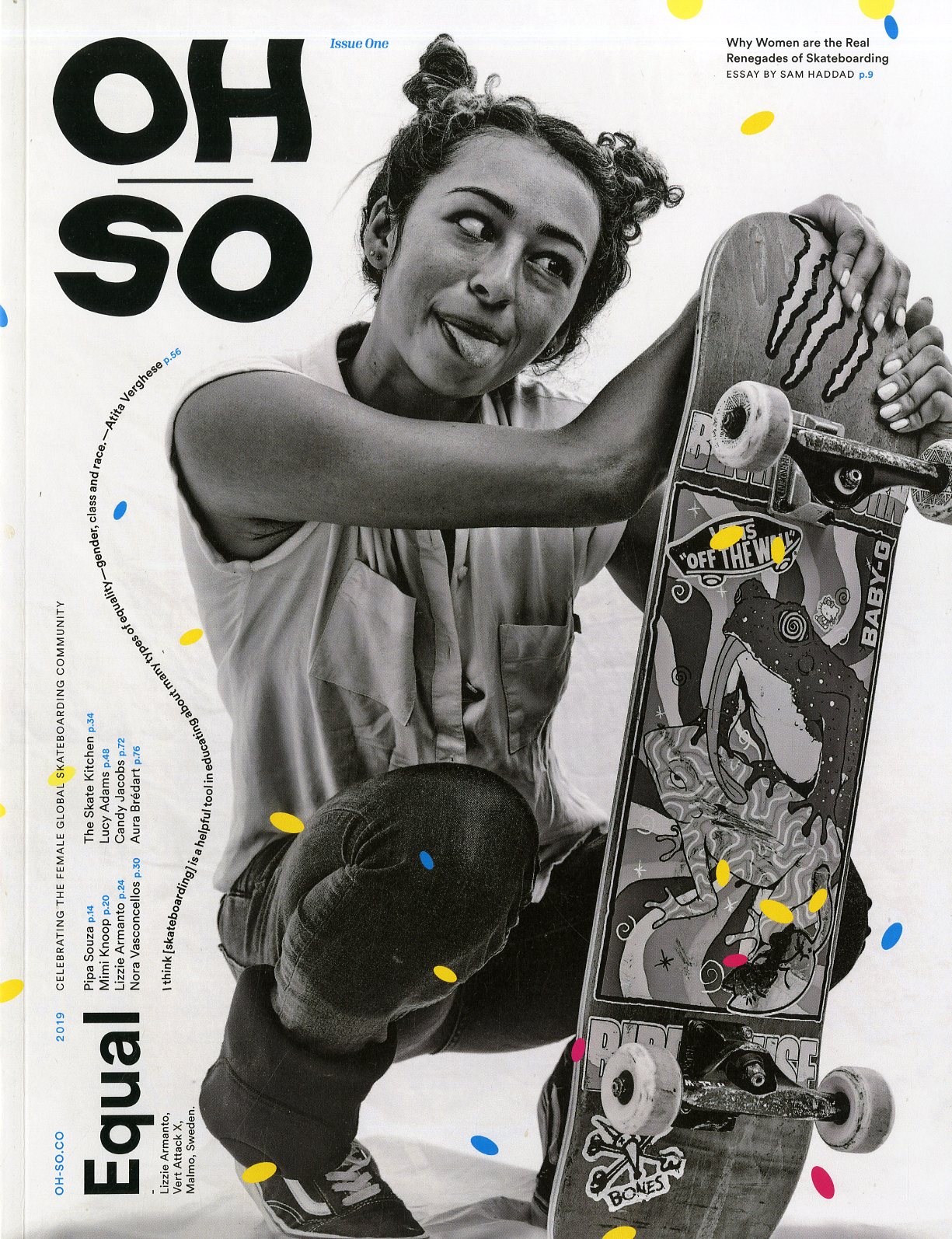
And back to the cover, I don’t mean to stress this point but there were three covers, and for me intuitively this felt like the right thing, because it kind of put skateboarding on a different level, not necessarily about what the trick was and how great it was, which that in and of itself deserves its own respect and appreciation, but one cover has this girl Lizzie, who is incredibly talented and has exposed herself in a way that is pure emotion.

And my daughter, Amelia, went to this particular cover without hesitation, she pointed to it and said that one. I asked her why that one and she said, “Because that girl looks pretty and she looks fun.” And that was a huge thing. This cover makes me really uncomfortable because it is a girl who has her eyes crossed and her tongue out and holding a skateboard. (Laughs) Was that the right thing? I don’t know. (Laughs again) But going with the message of equality in skateboarding, which is another underlying philosophy and theme to the issue, it just sort of helped.

And believe it or not, if you read the articles, out of everyone who has spoken, nine times out of ten they’re in skateboarding to have fun. And I thought that was really important. It’s still the underlying thing, especially with the girls in general. Yes, they’re competitive, but they’re not as competitive as the guys. They want to bring groups of girls together to the skate park, they want the energy to be in the moment, and they want to have fun with it.

Samir Husni: Is there anything you’d like to add?

Rob Hewitt: If people pick it up, there are a few articles in there, especially one about Atita Verghese, who is the first pro female out of India, and she is an incredible spokesperson for equality in India, especially for girls. I think it’s a really important thing. And she’s kind of doing it by herself. I try to get people to that article more than some of the others because it really is so raw and her message is so powerful. If I had to highlight only one person it would be her; she is a force. I have so much respect for her.

Samir Husni: If I showed up unexpectedly at your home one evening after work, what would I find you doing? Having a glass of wine; reading a magazine; cooking; watching TV; or something else? How do you unwind?

Rob Hewitt: (Laughs) Probably watching something on Netflix. I tend to binge watch and I tend to get stuck on certain theories. And believe it or not, I will watch them multiple times.

Samir Husni: What’s the biggest misconception you think people have about you?

Rob Hewitt: I’m a very shy person and I consider myself an introvert. And knowing that I’m not very outspoken in public or in groups, I think sometimes that comes off as aloof. But I think I’m actually the complete opposite of that. Unfortunately, the nature of being quiet and being more of an observer sometimes comes across as aloof.

And one of the things with Oh-So is that it has taken me so far out of my comfort zone and it’s actually allowed, even with my being an introvert and sort of a deep diver, it’s allowed that wanting to get to know people, to come to the forefront. Like most people who are quiet, I think if you can talk to people one on one, you feel like you’re really engaged and getting a lot out of the conversation. And I’ve actually found with some of these girls that has happened. It’s almost like I’ve tapped into something and allowed some freedom and some escape from it. At events and things, I’m more of the fly on the wall, I have a hard time going up to people and talking to them in groups and things like that.

Samir Husni: If you could have one thing tattooed upon your brain that no one would ever forget about you, what would it be?

Rob Hewitt: Hopefully that I tried my best and tried to do the right thing. In my career in general, I’ve always loved the idea of the design problem and what is the right solution for that problem. And when I say that I tried my best, I like to think that in my work, and Oh-So in general, I really try to solve the problem in a way that is an emotional reaction visually. And I try to get it right.

Samir Husni: My typical last question; what keeps you up at night?

Rob Hewitt: Right now, Oh-So keeps me up at night, my kids keep me up at night; I think I’m a worrier, I worry about a lot of things. I worry about things in the world that I have no control over. I worry about messaging that I have no control over. And I worry about a lot of stuff for my kids. There are things that you see and hear, a lot of disturbing stuff, and unfortunately because I’m a dad, I worry about that stuff.

Samir Husni: Thank you.
h1

: FORM: Pioneering Design Magazine: Reborn In Print & Digital By Someone Who May Not Be An Architect, But Who Is Passionate About Southern California Architecture & Design & The Community It Serves – The Mr. Magazine™ Interview With Jerri Levi, Owner & Publisher…

January 31, 2019

A Mr. Magazine™ Launch Story…

I really did have to examine print. What I did is I went around and talked to different architects and people in the industry and I just put it out there. I asked did anybody see a need for print? And what I’m seeing now is, I think there is going to be a new renaissance in print. And of course the purpose of print is going to be changing, because it’s no longer a primary source of information. But I think by and large architects are visual, they’re tactile; I think there is something about having something sitting in front of you that you can lay down, pick up again and use it as reference.” Jerri Levi…

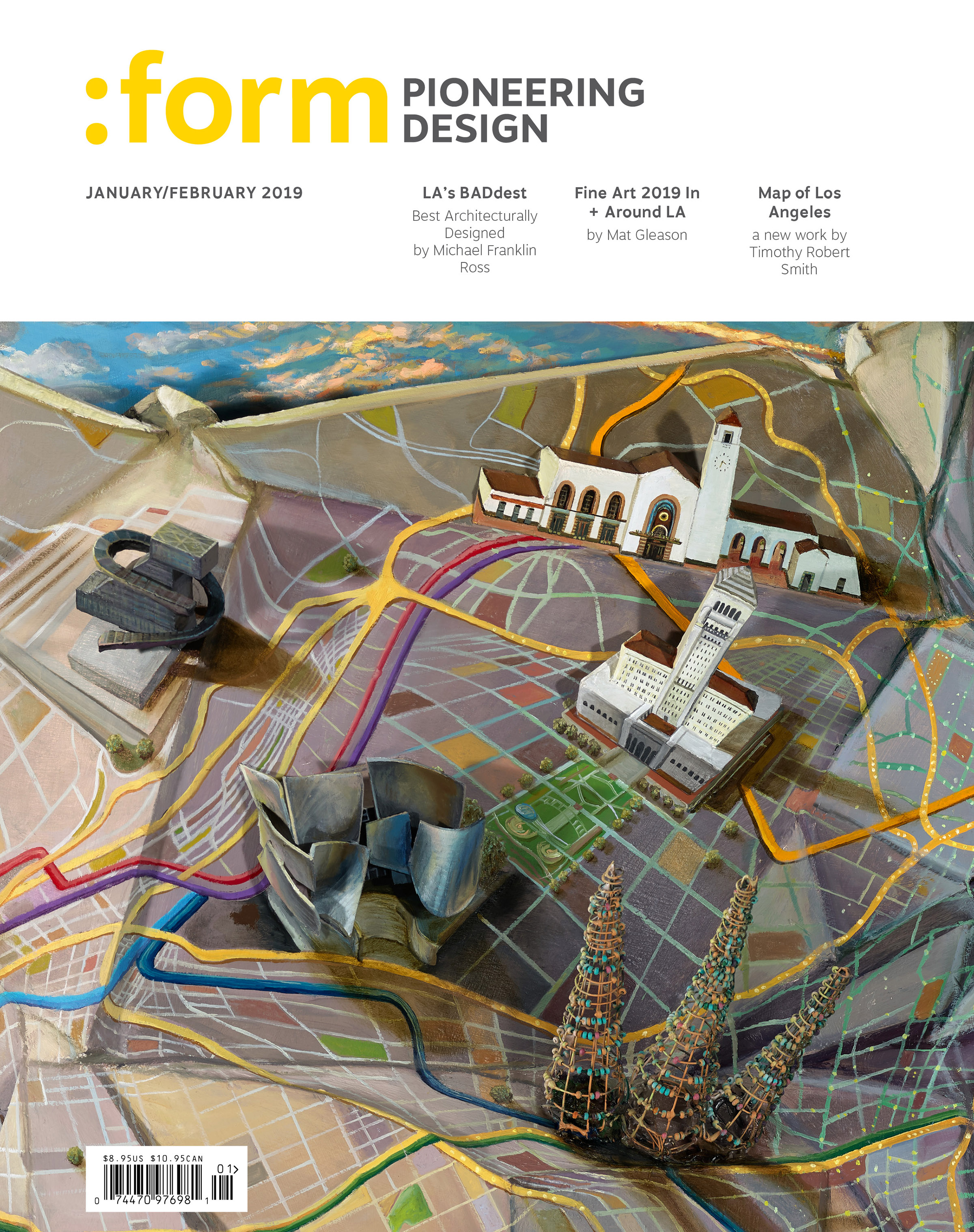
Celebrating Southern California Architecture, Design & Artwork, :Form: Pioneering Design magazine has been reborn into a robust, beautiful print publication that also has its own digital footprint. The magazine focuses on the Southern California area and the artists, designers and architects who inspire and create there. Owner and publisher Jerri Levi bought the magazine with the vision of celebrating Los Angeles and Southern California in general.

I spoke with Jerri recently and we talked about the quality and beauty of the magazine and on why she chose to bring it back to life in print as well as online. It ceased publication some four years ago and Jerri, as a former marketing director for :Form, saw the value it had for the Southern California design community and sought to revive it and to bring back a regional publication to serve that community. And after much examination, Jerri realized that architects and designers were tactile and visual people and a print magazine would be the best way to serve them.

Jerri isn’t an architect, but she is passionate about the subject and knows her way around the world of marketing, so :Form was reborn. And what a great time to do it. Entrepreneurs are breaking new ground in the world of magazines and Jerri is no exception. I hope that you enjoy this delightful conversation with a woman whose strongest desire is to serve the community she loves and respects. And now the Mr. Magazine™ interview with Jerri Levi, owner and publisher, :Form: Pioneering Design magazine.

But first the sound-bites:

On why she bought the magazine and brought it back to print:I used to work for the magazine. I was their marketing and advertising director for eight years, so I started working for an L.A. architect when it was still the official publication for the AIA (American Institute of Architects) of Los Angeles. And so I always had a deep affection for the magazine and I’ve always recognized the value it has had for the design community out here. So, basically what happened is I went my separate ways, I ended up getting an art gallery and got into real estate. When I heard that the magazine was no longer going to be in print and no longer on the website; I’m still a very good friend of Ann Gray who is the original publisher, and kind of on a whim I decided to say if no one else wants it, I’ll take it, naively thinking that because I had worked for it before I knew all about publishing, of which I now know I don’t.It’s been a very humbling experience trying to bring a publication back to life.

On what made her feel there was a need to bring this publication back to life in print:First of all, as you know there have been a lot of changes in the publishing industry. And of course when I was working for :Form way back when, and I also used to work for Metropolis, print used to be the primary form of getting your information. It’s really an interesting thing to come back now and really examine why you would want to go into print. The one thing that I realized was there were no longer any regional publications that reached out B to B to the architectural and design community.

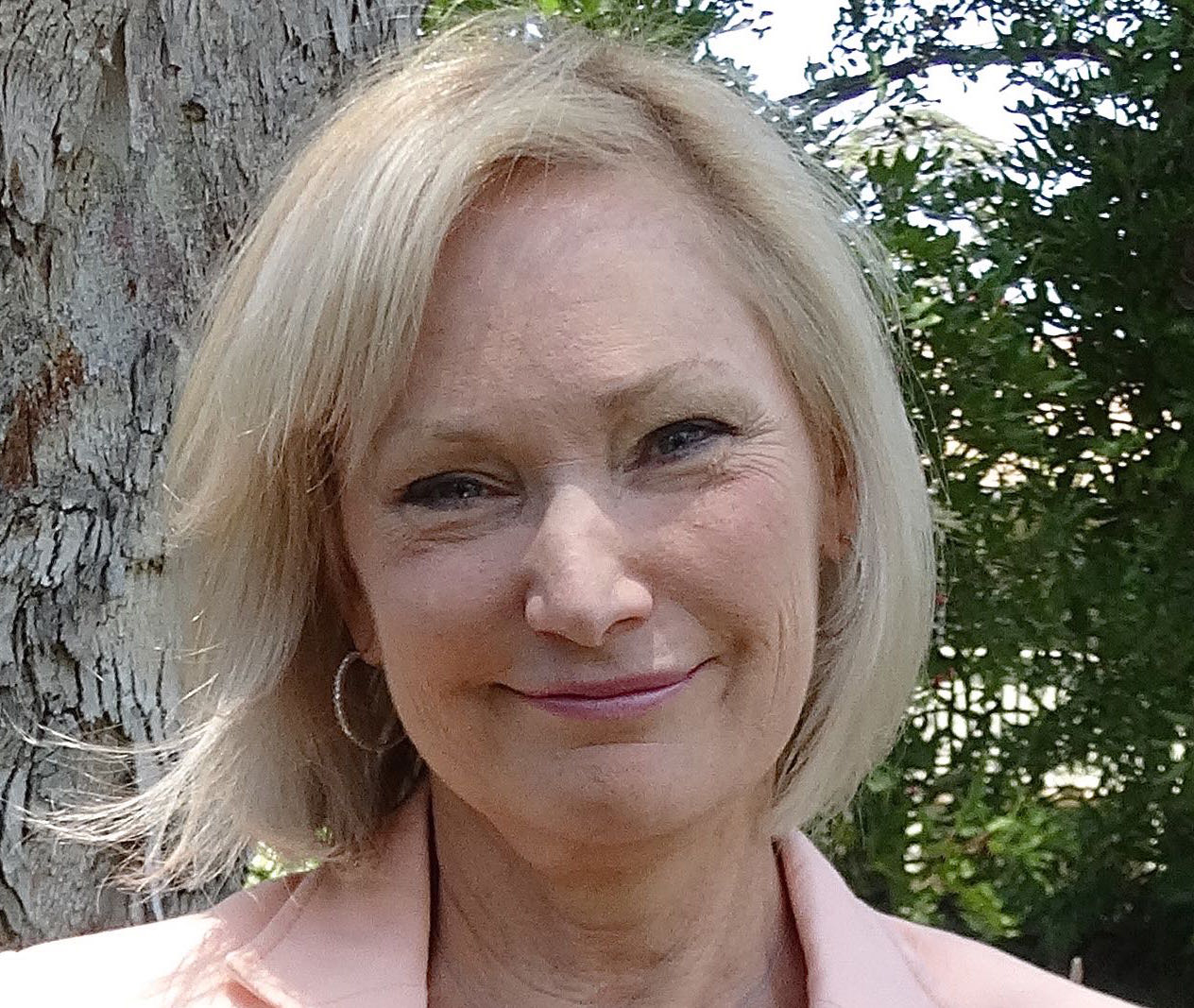
Head shot

On whether relaunching the magazine has been a walk in a rose garden for her or she has had some challenges along the way:No, I tell you, once again, it’s a humbling experience, because everybody laughed at me. First of all, I had two different crowds. I had people who immediately got it, like Michael Webb, God bless him, he’s one of the absolute cornerstones of architectural criticism out here in Southern California. And Michael, God bless him, he stepped up and wanted to be a part of the new :Form almost immediately.

On people’s initial reaction since the magazine has come out:People have been blown away. I commissioned a fine artist by the name of Timothy Robert Smith to do a definitive map of Los Angeles and I think just that pullout map is really blowing people away.  I had Michael Franklin Ross essentially do an article about the best architectural design in L.A. for the past 100 years. And I think what’s going to happen is this magazine is going to start a new dialogue, just having experts go: I think the concert hall is the greatest building in Los Angeles, that’s going to get people talking. And it’s really going to get eyeballs back on how Los Angeles is developing and how we see this metropolis.

On anything she’d like to add:Just that I’m very happy to be here and I’m very happy to be exploring this magazine in a way that I never have before, coming in as a publisher, as opposed to coming in as the marketing director. It’s a very different experience. And in some ways it’s very daunting, because I still don’t know if I’m going to be accepted by this very distinguished community. But I’m also very excited and challenged, and I feel like we’re going to serve a greater purpose. So, I’m very happy to be here.

On what someone would find her doing if they showed up unexpectedly one evening at her home:I play with my dogs. I have three dogs, two Shih Tzus and a Standard Poodle. I do a lot with them. I have one dog that’s a service dog and I take him to hospitals to visit people. I lead a pretty quiet life really.

On the biggest misconception she thinks people have about her:I don’t know, but I think that some of the pushback that I’m getting is because I am not an architect. And so they feel like I’m not qualified to address this very sophisticated architectural community. And I think because I surround myself with great talent and people who are much smarter than myself, I believe I’m underestimated. But I think people are going to be surprised when they see the high quality of writing and journalism that we’re going to be bringing to the table. So, I’m hoping I’m going to prove some people wrong.

On what she would have tattooed upon her brain that would be there forever and no one could ever forget about her:Just that I’m sincere, that I have absolute respect for what I’m doing and that I want to bring the best quality and bring the best out of people. And I’m hopefully to be trusted and embraced eventually.

On what keeps her up a night:Money. (Laughs) Creating a magazine is an expensive endeavor and I guess my biggest challenge right now is sustaining the vision and being able to follow through. I’m thrilled that I was able to do my January/February issue, and I have to look at the bigger picture and I’m hoping that I’m going to be able to sustain it.

And now the lightly edited transcript of the Mr. Magazine™ interview with Jerri Levi, owner and publisher, :Form: Pioneering Design magazine.

Samir Husni: Why did you decide to buy the magazine and bring it back to print?

Jerri Levi: I used to work for the magazine. I was their marketing and advertising director for eight years, so I started working for an L.A. architect when it was still the official publication for the AIA (American Institute of Architects) of Los Angeles. And so I always had a deep affection for the magazine and I’ve always recognized the value it has had for the design community out here.

So, basically what happened is I went my separate ways, I ended up getting an art gallery and got into real estate. When I heard that the magazine was no longer going to be in print and no longer on the website; I’m still a very good friend of Ann Gray who is the original publisher, and kind of on a whim I decided to say if no one else wants it, I’ll take it, naively thinking that because I had worked for it before I knew all about publishing, of which I now know I don’t. It’s been a very humbling experience trying to bring a publication back to life.

Samir Husni: What made you feel that there was a need for this publication, for :Form, and an even bigger need to bring it back in print? And of course on the web too.

Jerri Levi: First of all, as you know there have been a lot of changes in the publishing industry. And of course when I was working for :Form way back when, and I also used to work for Metropolis, print used to be the primary form of getting your information. It’s really an interesting thing to come back now and really examine why you would want to go into print. The one thing that I realized was there were no longer any regional publications that reached out B to B to the architectural and design community.

The Architect’s Newspaper has gone, it no longer has a regional side to it. Obviously, Architectural Record is a national publication, so nothing was really speaking to the community, particularly in Southern California, which is huge. The AIA of Los Angeles is the second largest architectural body in the United States. And there was really nothing that was serving this very unique crowd of highly educated, influential designers.

The second thing is I really did have to examine print. What I did is I went around and talked to different architects and people in the industry and I just put it out there. I asked did anybody see a need for print? And what I’m seeing now is, I think there is going to be a new renaissance in print. And of course the purpose of print is going to be changing, because it’s no longer a primary source of information. But I think by and large architects are visual, they’re tactile; I think there is something about having something sitting in front of you that you can lay down, pick up again and use it as reference.

And this magazine is almost like a small work of art. I have the best graphic designers working on it; I have a brilliant editor. And these issues are going to be saved. A long time ago, when it was L.A. Architect, people collected L.A. Architect. And I’m hoping in a way that :Form is going to be coming back to being almost a collectible.

Samir Husni: I tell all of my students that print is the new “new” media.

Jerri Levi: I love print. And once again, I’m an old-timer. I remember when there were dozens of regional print publications in our area and they’ve all fallen by the wayside. And I think there’s a real hunger for it. I have to say, going to the printers and actually having a conversation about paper, and about what this magazine is visually going to look like, how it’s going to be formatted; you really are looking at a three-dimensional object, which conveys its own sensibility. It’s a completely different experience when you have a print publication in front of you versus getting your information online.

Samir Husni: Since you got the idea of purchasing the magazine and relaunching it, has it been a walk in a rose garden for you? Or have you had some challenges along the way?

Jerri Levi: (Laughs) No, I tell you, once again, it’s a humbling experience, because everybody laughed at me. First of all, I had two different crowds. I had people who immediately got it, like Michael Webb, God bless him, he’s one of the absolute cornerstones of architectural criticism out here in Southern California. And Michael, God bless him, he stepped up and wanted to be a part of the new :Form almost immediately.

But I’ve also had people essentially question me as to why I think I am worthy of taking this on, because my predecessor Ann Gray was an architect herself, she was very much a part of the industry, she was an insider; she’s an AIA Array FAIA. She’s a bigshot. And so people feel comfortable with that. I, on the other hand, I’m a salesman. I’m a marketing person and I’m a publisher. But I think that also gives me the perspective of being able to work with different talents and different points of view that I think an insider doesn’t have.

So, it’s been a challenge and I’ve had  a lot of criticism, but on the other hand, now that the magazine is out, I think I’m going to see a lot of enthusiasm.

Samir Husni: The first issue has been out for a bit now; what has been the initial reaction?

Jerri Levi: (Laughs) People have been blown away. I commissioned a fine artist by the name of Timothy Robert Smith to do a definitive map of Los Angeles and I think just that pullout map is really blowing people away.  I had Michael Franklin Ross essentially do an article about the best architectural design in L.A. for the past 100 years. And I think what’s going to happen is this magazine is going to start a new dialogue, just having experts go: I think the concert hall is the greatest building in Los Angeles, that’s going to get people talking. And it’s really going to get eyeballs back on how Los Angeles is developing and how we see this metropolis.

Samir Husni: Is there anything you’d like to add?

Jerri Levi: Just that I’m very happy to be here and I’m very happy to be exploring this magazine in a way that I never have before, coming in as a publisher, as opposed to coming in as the marketing director. It’s a very different experience. And in some ways it’s very daunting, because I still don’t know if I’m going to be accepted by this very distinguished community. But I’m also very excited and challenged, and I feel like we’re going to serve a greater purpose. So, I’m very happy to be here.

Samir Husni: If I showed up unexpectedly at your home one evening after work, what would I find you doing? Having a glass of wine; reading a magazine; cooking; watching TV; or something else? How do you unwind?

Jerri Levi: I play with my dogs. I have three dogs, two Shih Tzus and a Standard Poodle. I do a lot with them. I have one dog that’s a service dog and I take him to hospitals to visit people. I lead a pretty quiet life really.

Samir Husni: What’s the biggest misconception people have about you?

Head shot

Jerri Levi: I don’t know, but I think that some of the pushback that I’m getting is because I am not an architect. And so they feel like I’m not qualified to address this very sophisticated architectural community. And I think because I surround myself with great talent and people who are much smarter than myself, I believe I’m underestimated. But I think people are going to be surprised when they see the high quality of writing and journalism that we’re going to be bringing to the table. So, I’m hoping I’m going to prove some people wrong.

Samir Husni: If you could have one thing tattooed upon your brain that no one would ever forget about you, what would it be?

Jerri Levi: Just that I’m sincere, that I have absolute respect for what I’m doing and that I want to bring the best quality and bring the best out of people. And I’m hopefully to be trusted and embraced eventually.

Samir Husni: My typical last question; what keeps you up at night?

Jerri Levi: Money. (Laughs) Creating a magazine is an expensive endeavor and I guess my biggest challenge right now is sustaining the vision and being able to follow through. I’m thrilled that I was able to do my January/February issue, and I have to look at the bigger picture and I’m hoping that I’m going to be able to sustain it.

Samir Husni: Thank you.
h1

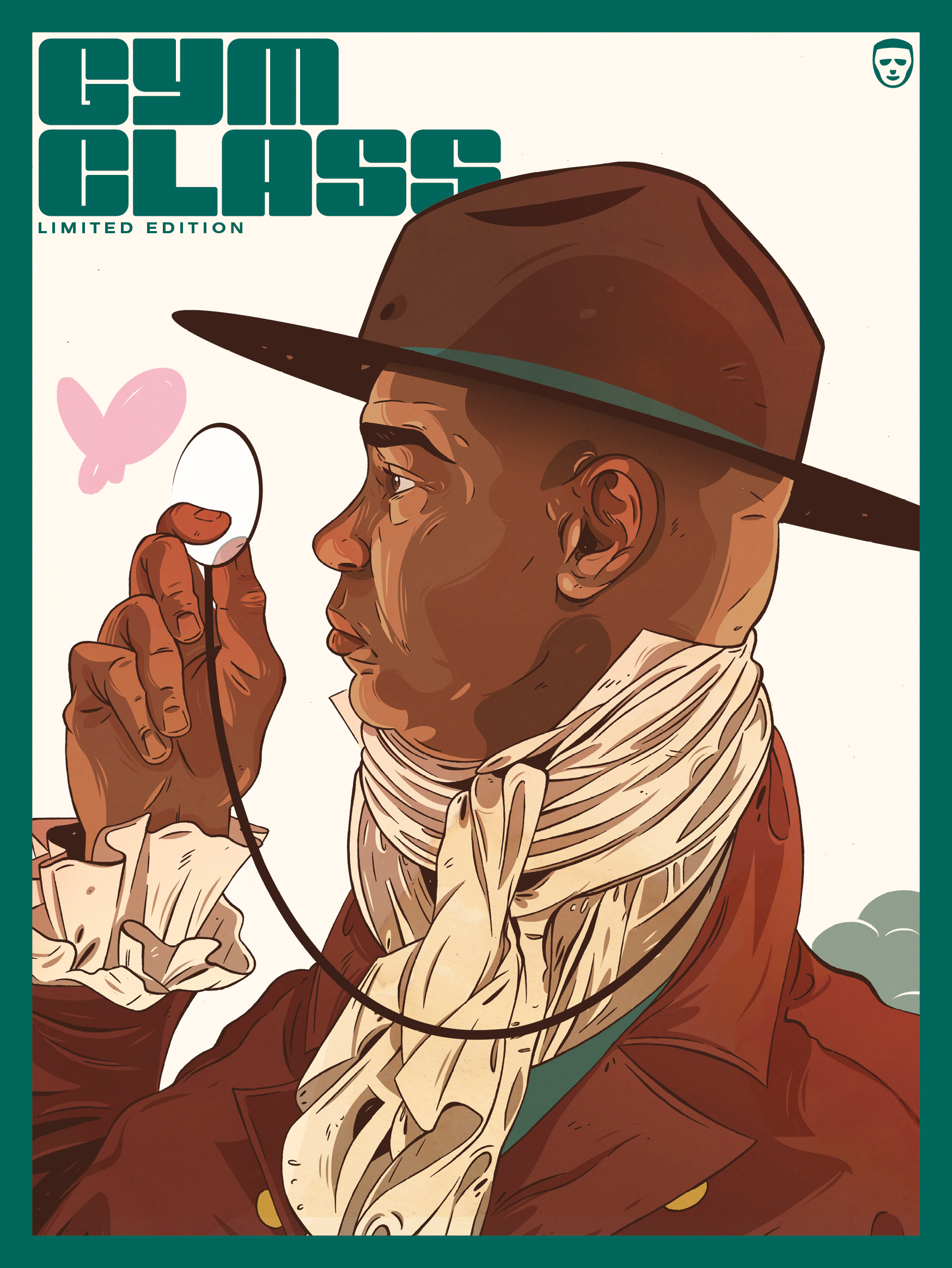
Gym Class Magazine: Reborn & Serving Up Quality Journalism In The Best Format To Consume It – The Mr. Magazine™ Interview With Steven Gregor, Founder, Gym Class Magazine…

January 24, 2019

A Mr. Magazine™ Relaunch Story

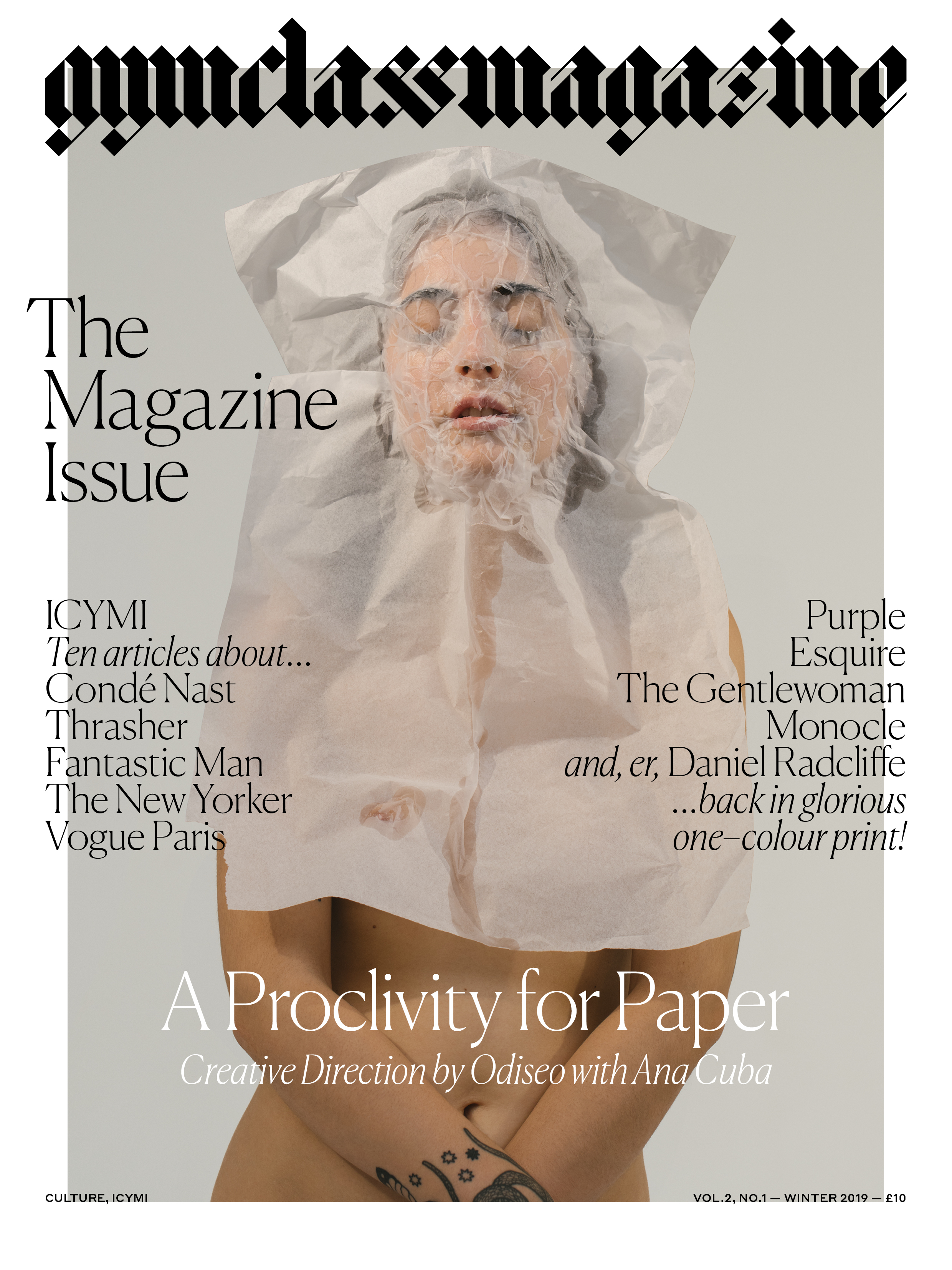
“I don’t think listening to vinyl is the best way to listen to music necessarily. Technology has maybe improved the way people can listen to music, but I think magazines are still the best way to consume quality journalism.” Steven Gregor…

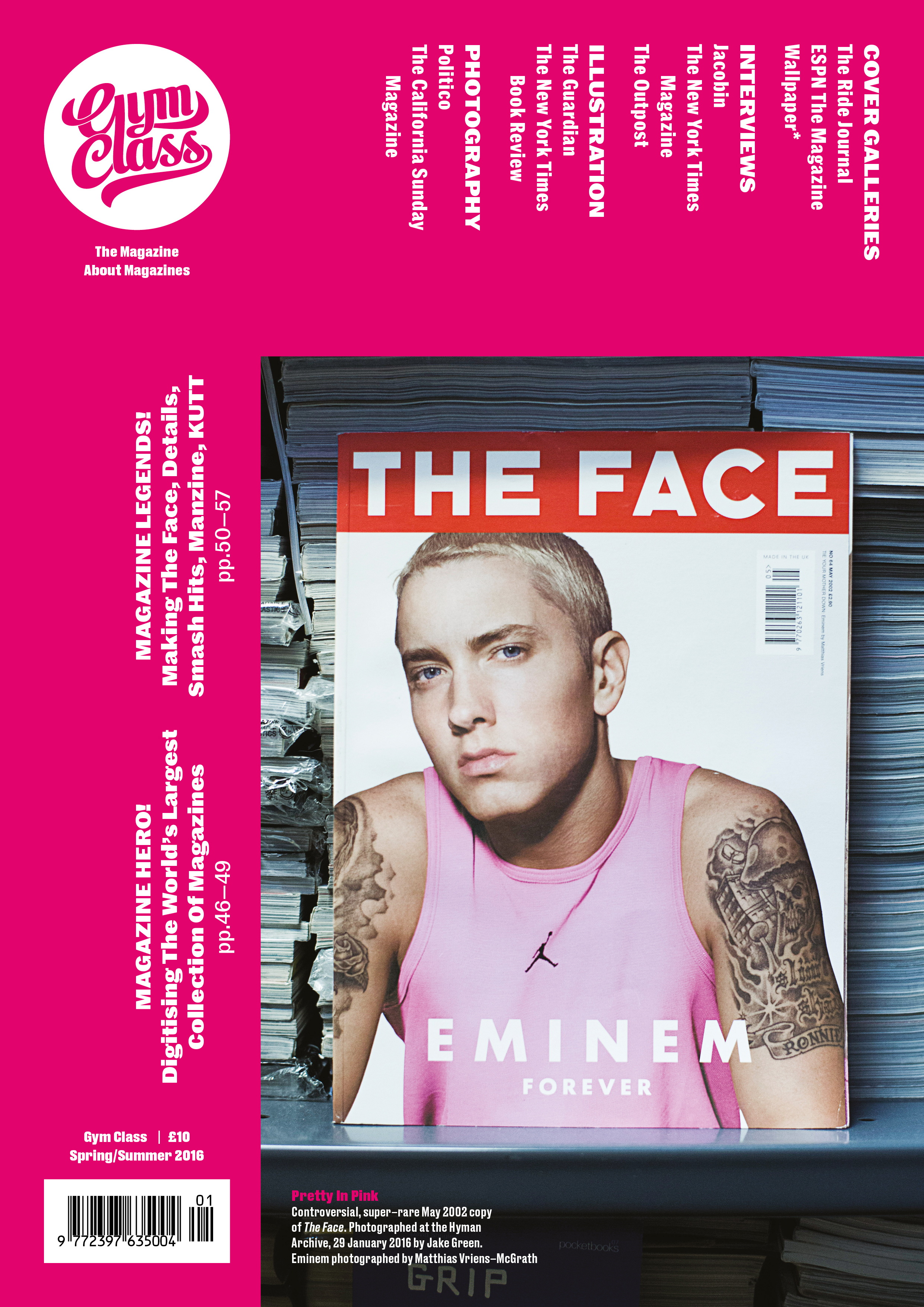
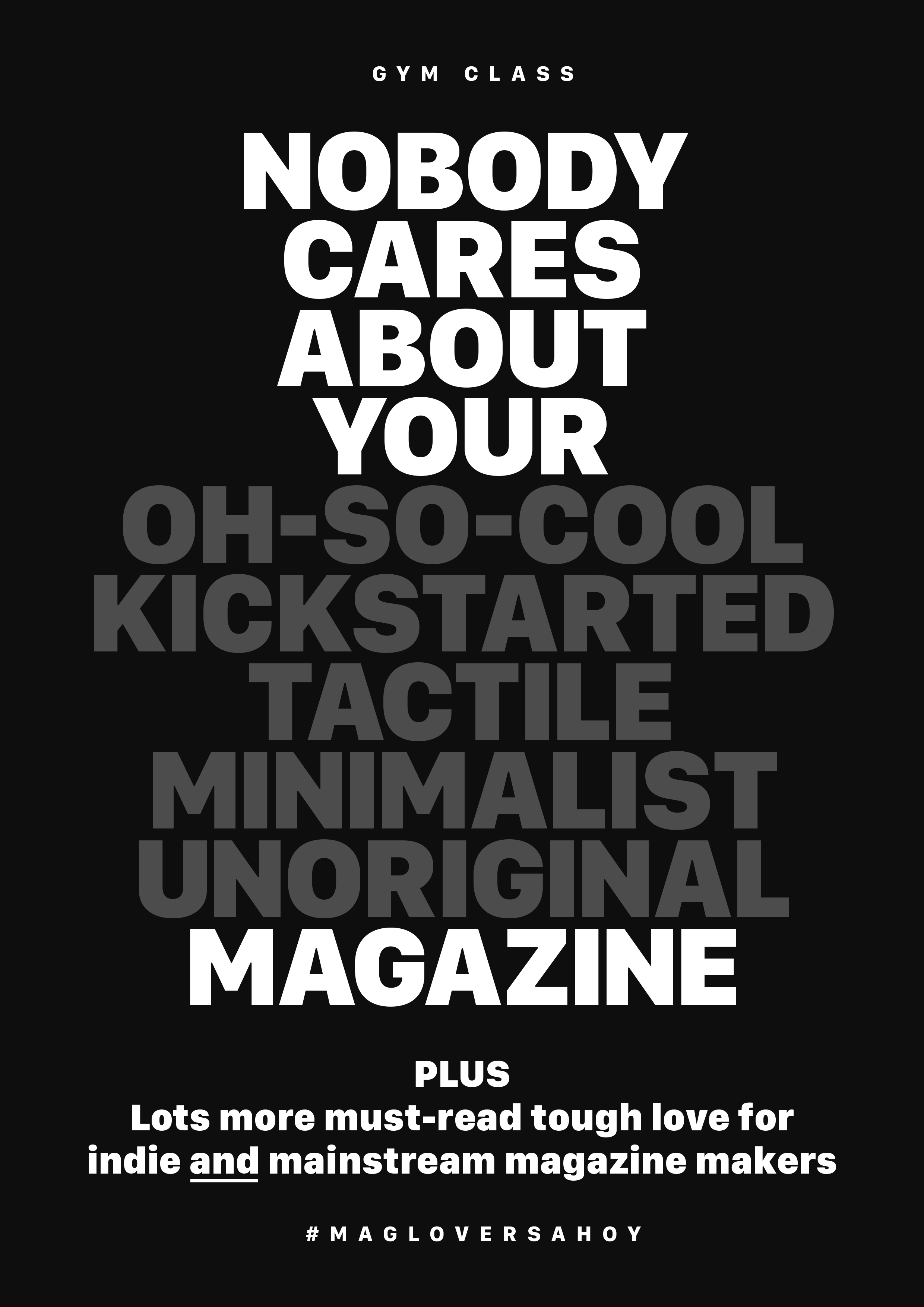
When a print magazine is resurrected, Mr. Magazine™ rejoices and never more so than with the iconic Gym Class – born first from the passions of a man who has always been in love with magazines and breathing once again from that same passion. Steven Gregor created Gym Class to promote and support magazines and that mission is still prevalent – but with the new Gym Class, he is determined to curate the best of the best in journalism.

I spoke with Steven recently and we talked about the reborn magazine and his decision to theme each issue of the new Gym Class and republish stories that tell the most compelling, the most factual and the most comprehensive content out there in the world today. Steven is determined to become a curator of content extraordinaire. And that determination is palpable when he talks about Gym Class and his never-ending love of and for magazines.

So, I hope that you enjoy this delightful conversation with a man who believes in magazines and in what they stand for and represent. From joy to entertainment to information, there is no better way to consume quality journalism than with a great magazine – and Steven Gregor, founder of Gym Class Magazine, has created and curated what he feels is one of the best. Read all about it here in the Mr. Magazine™ interview.

But first the sound-bites:

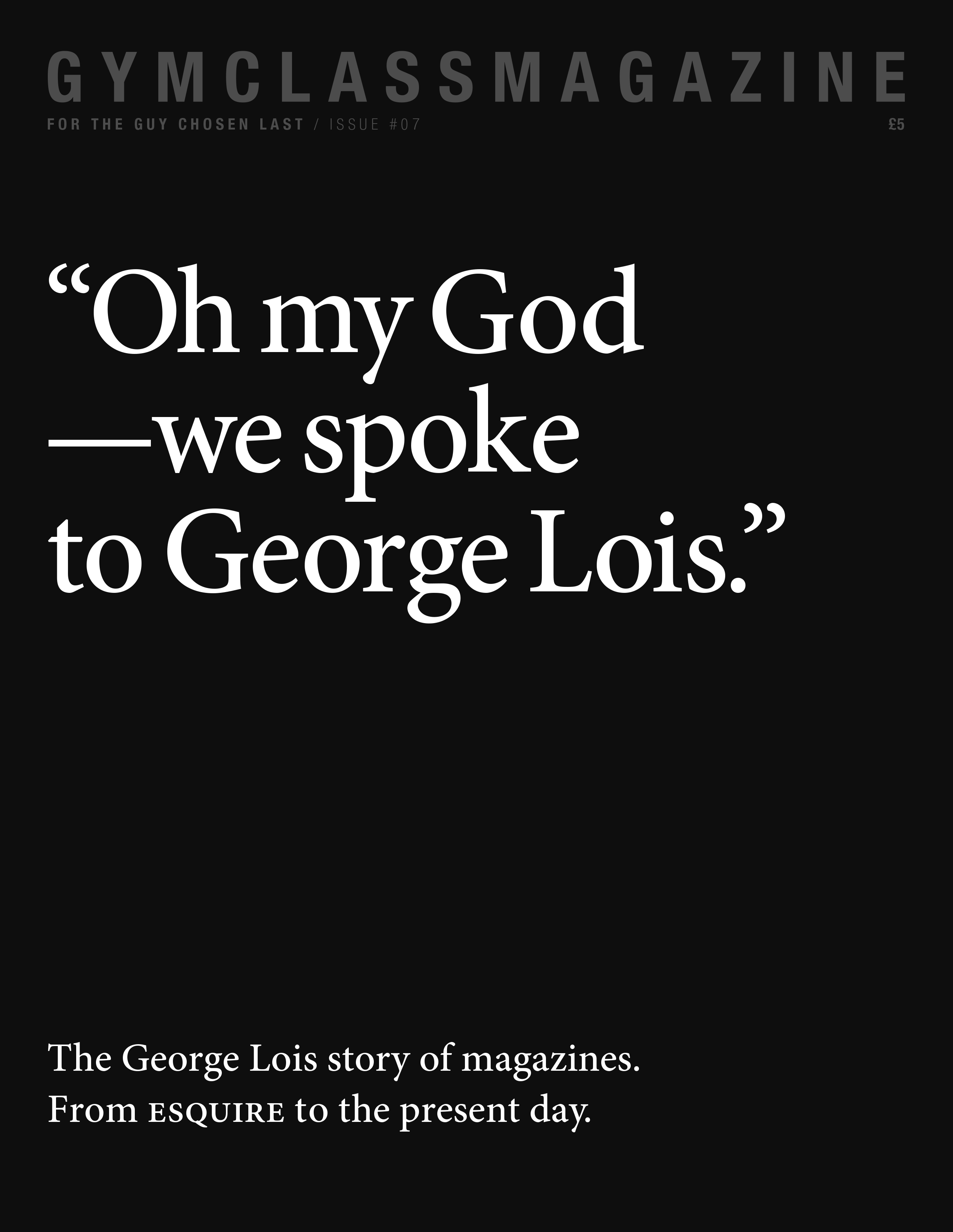
On the story of Gym Class Magazine:It’s been almost 10 years since I started Gym Class; I started it in 2009. And it started as a very small zine. And it started as a zine which was a riposte to men’s magazines. So, it wasn’t a magazine about magazines at all, which is maybe why it wasn’t such an obvious match to the world. Overtime, it became a magazine about magazines, and it developed from there. The reason why I decided to stop publishing with the 15th issue was I felt like things had changed, because my main priority with Gym Class was promotion magazines and I felt like, obviously making a magazine is a massive financial undertaking, and it felt like so much of the conversation around magazines was happening online or in person at events. I didn’t really feel there was much need for a magazine about magazines anymore.

On the name Gym Class and it sounding like an exercise magazine:I have to say I receive a lot of comments from Instagram and social media from gym and fitness people. Basically, Gym Class started as an alternative, independent magazine or a zine for men. And I thought that the majority of mainstream magazines that targeted men promoted this idea of what was involved with the “ideal” man: the successful job, the fancy car, the attractive partner, the big house; all of that sort of stuff. And I didn’t really respond to that all that much. So, I decided to make Gym Class the opposite to that, a riposte to that. And it had the strapline at the time “For the Guy Chosen Last,” so that’s where the name Gym Class comes from. It was a magazine for the guy chosen last in gym class, the opposite of the guy mainstream magazines, I thought, were telling me that I needed to be.

On deciding there was a need for a magazine like Gym Class and why he continued with it rather than starting a new magazine:To be honest with you, the motivation for Gym Class was about making something that I wanted to make, so I never did take a stand back and identify a magazine about magazines as being a niche or there being a hole in the market for that type of magazine. I never thought about it like that. It was just that I started Gym Class because I wanted to make a magazine about things that I was interested in, and just because I am so interested in magazines, that side of things took over.

On what motivates him to do what he does:I wish I could tell you. I’ve always loved magazines. I was that kid who was chosen last in high school gym class; I was that person, that young kid. What I used to do after school; I didn’t go play sports after school, I used to go hang out at the local Blockbuster, over local news agents, and somehow it seems so unusual now, but back then I was fortunate enough in the suburb that I grew up in to have massive news agents with an international range of magazines, which was very unusual. The person who ran the shop was quite happy for me to just while away an hour or two quite regularly and just flip through the magazines. So, I was very lucky.

On how he would define the DNA of Gym Class today:At the heart of the project, the heart of making Gym Class is still to promote magazines. So, I did that in earlier issues with interviews with magazine art directors, designers, and editors. This time I have decided to republish articles from other magazines based on a theme. Each issue of the new Gym Class will have 10 feature articles and they’ll all be previously published from other magazines and they’ll all be about one thing which I will choose. And the new Gym Class has the strapline culture in case you missed it. In the new issue there are articles with magazine makers previously published in New York Magazine, The New York Times newspaper, California Sunday Magazine, The New Yorker; so it’s about curating a reading list of articles.

On whether he thinks people miss a lot in this fast-paced digital world:Gym Class has come back, first and foremost, to promote other magazines and other publications, but there is a little bit of motivation there to provide an alternative to social media, which is so much a celebration of the very newest of everything. And so much does get missed. So, hopefully Gym Class can present people with something they may have missed, which they didn’t know they had missed or they didn’t know they would have enjoyed.

On what role he thinks print plays in today’s digital world:I think there is a requirement on print, perhaps more than ever that what is included on the pages of the magazine is the very best it can be. That’s not to say that it can’t be frivolous, because I believe it can be. It can be pure entertainment. But what it does need to do is be of the highest possible quality of what it is presenting. It’s not about being first doing something, it’s about being the best at covering it.

On whether he feels some people’s comparison of print magazines to vinyl records is a fair one:I hope not. And I say I hope not because I feel like I have records on the shelf only because there’s an element of nostalgia there, an element of wanting to collect something. With magazines, of course there are people who collect magazines for nostalgia and the desire to collect them exists, but I hope that magazines continue to thrive because what they’re doing is vital, not from their nostalgic comfortable position on the sofa with warm socks on. I hope magazines are more relevant than vinyl.

On whether he thinks Gym Class is trying to be a curator for the content out there:Definitely. I think of Gym Class now, from the next issue, as being a carefully curated reading list. It’s about only including the best of what I found on that particular theme of that particular issue. It’s about celebrating and promoting the very best. If people read it and then go on to read the publications that are featured in it, then fantastic. I think everyone needs to think more about what they consume. They need to take a responsibility for what they consume, and I feel like only then will the publishers who are interested in the best of the best hopefully grow.

On anything he’d like to add:Only to say that I’m quite interested to see how people respond to it, because it is very different to what it was the last issue. It’s very different to that. The new Gym Class is first and foremost a celebration of quality journalism and quality writing, so I hope people respond well to that, and I hope they’re open-minded to it.

On what he would have tattooed upon his brain that would be there forever and no one could ever forget about him:Apart from the title Gym Class (Laughs), I would like them to think of me as someone who champions the very best of magazine publishing.

On the biggest misconception he thinks people have about him:(Laughs) I think that people think that I have more magazines than I have. And a common misconception among people who don’t know me is that there’s a much bigger team involved in making Gym Class, whereas the team 90 percent of the time the team is just me.

On what someone would find him doing if they showed up unexpectedly one evening at his home:The radio will be on; the radio will definitely be on. And I will probably be looking at my iPhone. I hate to admit that and it’s embarrassing. (Laughs)

 On what keeps him up at night:(Laughs) That’s such a hard question. I worry a lot about social media and its addictiveness and how much of it I feel is a waste of time. We were talking earlier about magazines providing a curated voice and I feel like that is harder and harder to find on social media. I feel like I have to endure a lot of stuff that I’m not interested in to every once in a while get one of those nuggets that I love or that I find interesting or inspiring. A good example is I am really not interested in hearing anything more about the American president, other than from The Guardian newspaper or the television news that I might watch here in London, in the U.K.

And now the lightly edited transcript of the Mr. Magazine™ interview with Steven Gregor, founder, Gym Class Magazine.

Samir Husni: The first time I saw Gym Class Magazine it was Issue 11 and I just said, “Wow!” It was great. And I wondered why I hadn’t seen it in the States before Issue 11, and then the next time I picked it up was Issue 15 and I was saddened to learn it would soon be gone. But now you’re back. So, tell me the story of Gym Class.

Steven Gregor: It’s been almost 10 years since I started Gym Class; I started it in 2009. And it started as a very small zine. And it started as a zine which was a riposte to men’s magazines. So, it wasn’t a magazine about magazines at all, which is maybe why it wasn’t such an obvious match to the world. Overtime, it became a magazine about magazines, and it developed from there.

The reason why I decided to stop publishing with the 15thissue was I felt like things had changed, because my main priority with Gym Class was promotion magazines and I felt like, obviously making a magazine is a massive financial undertaking, and it felt like so much of the conversation around magazines was happening online or in person at events. I didn’t really feel there was much need for a magazine about magazines anymore.

Two years past and I still loved magazines as much as I always had, and decided to give it a go. The challenge was to bring Gym Class back but not to what I had done before, but to think of a new way of promoting and supporting magazines.

Samir Husni: Let’s go back to 2009 and tell me what was the idea behind the name – when you hear Gym Class, you think it’s another exercise magazine.

Steven Gregor: Exactly, and I have to say I receive a lot of comments from Instagram and social media from gym and fitness people. Basically, Gym Class started as an alternative, independent magazine or a zine for men. And I thought that the majority of mainstream magazines that targeted men promoted this idea of what was involved with the “ideal” man: the successful job, the fancy car, the attractive partner, the big house; all of that sort of stuff. And I didn’t really respond to that all that much. So, I decided to make Gym Class the opposite to that, a riposte to that. And it had the strapline at the time “For the Guy Chosen Last,” so that’s where the name Gym Class comes from. It was a magazine for the guy chosen last in gym class, the opposite of the guy mainstream magazines, I thought, were telling me that I needed to be.

Samir Husni: When you did decide there was a niche for a magazine about magazines, when was that realization and how did you decide to act upon it; rather than starting a new magazine, why did you continue with Gym Class?

Steven Gregor: To be honest with you, the motivation for Gym Class was about making something that I wanted to make, so I never did take a stand back and identify a magazine about magazines as being a niche or there being a hole in the market for that type of magazine. I never thought about it like that. It was just that I started Gym Class because I wanted to make a magazine about things that I was interested in, and just because I am so interested in magazines, that side of things took over.

And when people started to notice Gym Class, it tended to be, I’m a magazine art director myself, and I noticed that it tended to be other art directors/designers from a magazine or publishing background that responded to it. And that’s just how it developed. There was no masterplan.

Samir Husni: Did you fall in love with that combination of words and pictures and ink on paper? What is it that motivates you to do what you’re doing?

Steven Gregor: I wish I could tell you. I’ve always loved magazines. I was that kid who was chosen last in high school gym class; I was that person, that young kid. What I used to do after school; I didn’t go play sports after school, I used to go hang out at the local Blockbuster, over local news agents, and somehow it seems so unusual now, but back then I was fortunate enough in the suburb that I grew up in to have massive news agents with an international range of magazines, which was very unusual. The person who ran the shop was quite happy for me to just while away an hour or two quite regularly and just flip through the magazines. So, I was very lucky.

Where did that come from? I have no idea. I grew up in a very traditional suburban family environment and I think maybe magazines offered a window to a more exciting or glamorous world and I guess it was the same with movies, hanging out at Blockbuster. It was this window to a new world, a new exciting world. Of course, this was years before the international social media.

Samir Husni: Magazines were the Internet of the previous years.

Steven Gregor: This is where we got our culture, our news, our gossip; it was our sense of escape and escapism.

Samir Husni: And being connected to the world; we were connected through the pages of the magazines, whether I lived in Lebanon or the United States or the U.K., or France; all of these magazines that ended up at the news agents wherever a person lived were from all over the world.

Steven Gregor: Yes, it was amazing. I grew up in Australia and the first magazine I remember loving was the Australian edition of Smash Hits Magazine, the pop music magazine. But I also remember equally discovering Wallpaper Magazine for the first time, which was truly international in what it covered and what it presented. And I remember that blowing my mind, the idea of this international person.

Samir Husni: If you were to define what you envision as your DNA now for the born-again Gym Class, what would it be?

Steven Gregor: At the heart of the project, the heart of making Gym Class is still to promote magazines. So, I did that in earlier issues with interviews with magazine art directors, designers, and editors. This time I have decided to republish articles from other magazines based on a theme. Each issue of the new Gym Class will have 10 feature articles and they’ll all be previously published from other magazines and they’ll all be about one thing which I will choose. And the new Gym Class has the strapline culture in case you missed it. In the new issue there are articles with magazine makers previously published in New York Magazine, The New York Times newspaper, California Sunday Magazine, The New Yorker; so it’s about curating a reading list of articles.

The next issue is called the Magazine Issue so it’s about magazines. Moving forward, the theme won’t be about magazines. It could be about film or TV or music, something like that. And the idea is by republishing quality articles from other quality publications, therefore we’re promoting both magazines. And hopefully someone reads Gym Class and then goes on to purchase or subscribe to one of those magazines that has been republished in Gym Class.

Samir Husni: In this digital age, where everything is moving so fast and so quick, you want to remind people in case they’re missing something, but do you think they’re missing a lot of things?

Steven Gregor: (Laughs) Gym Class has come back, first and foremost, to promote other magazines and other publications, but there is a little bit of motivation there to provide an alternative to social media, which is so much a celebration of the very newest of everything. And so much does get missed. So, hopefully Gym Class can present people with something they may have missed, which they didn’t know they had missed or they didn’t know they would have enjoyed.

Samir Husni: What do you think the role of print is in today’s digital age? Do you think print should continue being done as it was in 2009 or  is today’s print totally different?

Steven Gregor: I think there is a requirement on print, perhaps more than ever that what is included on the pages of the magazine is the very best it can be. That’s not to say that it can’t be frivolous, because I believe it can be. It can be pure entertainment. But what it does need to do is be of the highest possible quality of what it is presenting. It’s not about being first doing something, it’s about being the best at covering it.

Samir Husni: A lot of people compare print to vinyl records. Do you think this is a fair comparison?

Steven Gregor: I hope not. And I say I hope not because I feel like I have records on the shelf only because there’s an element of nostalgia there, an element of wanting to collect something. With magazines, of course there are people who collect magazines for nostalgia and the desire to collect them exists, but I hope that magazines continue to thrive because what they’re doing is vital, not from their nostalgic comfortable position on the sofa with warm socks on. I hope magazines are more relevant than vinyl.

I don’t think listening to vinyl is the best way to listen to music necessarily. Technology has maybe improved the way people can listen to music, but I think magazines are still the best way to consume quality journalism.

Samir Husni: Looking at the industry as a whole, you said that print should be quality journalism, and yet there’s still a lot of fluff and a lot of junk out there. How do you think the public, the audience, can differentiate between what’s good, bad, ugly; do you think a publication like Gym Class will help the audience curate and to show them the best of the best? Are you trying to be a curator for the content out there?

Steven Gregor: Definitely. I think of Gym Class now, from the next issue, as being a carefully curated reading list. It’s about only including the best of what I found on that particular theme of that particular issue. It’s about celebrating and promoting the very best. If people read it and then go on to read the publications that are featured in it, then fantastic. I think everyone needs to think more about what they consume. They need to take a responsibility for what they consume, and I feel like only then will the publishers who are interested in the best of the best hopefully grow.

Samir Husni: Is there anything you’d like to add?

Steven Gregor: Only to say that I’m quite interested to see how people respond to it, because it is very different to what it was the last issue. It’s very different to that. The new Gym Class is first and foremost a celebration of quality journalism and quality writing, so I hope people respond well to that, and I hope they’re open-minded to it.

Samir Husni: If you could have one thing tattooed upon your brain that no one would ever forget about you, what would it be?

Steven Gregor: Apart from the title Gym Class (Laughs), I would like them to think of me as someone who champions the very best of magazine publishing.

Samir Husni: What’s the biggest misconception you think people have about you?

Steven Gregor: (Laughs) I think that people think that I have more magazines than I have. And a common misconception among people who don’t know me is that there’s a much bigger team involved in making Gym Class, whereas the team 90 percent of the time the team is just me.

Samir Husni: If I showed up unexpectedly at your home one evening after work, what would I find you doing? Having a glass of wine; reading a magazine; cooking; watching TV; or something else? How do you unwind?

Steven Gregor: The radio will be on; the radio will definitely be on. And I will probably be looking at my iPhone. I hate to admit that and it’s embarrassing. (Laughs)

Samir Husni: My typical last question; what keeps you up at night?

Steven Gregor: (Laughs) That’s such a hard question. I worry a lot about social media and its addictiveness and how much of it I feel is a waste of time. We were talking earlier about magazines providing a curated voice and I feel like that is harder and harder to find on social media. I feel like I have to endure a lot of stuff that I’m not interested in to every once in a while get one of those nuggets that I love or that I find interesting or inspiring. A good example is I am really not interested in hearing anything more about the American president, other than from The Guardian newspaper or the television news that I might watch here in London, in the U.K.

I really don’t need all of the noise. All of the comments; all of the opinions. I feel like I’ve reached the peak of the American president. So, worrying about all of that stuff does enter my mind, things that I let in and have no interest in. That’s a concern. The real concern is if there are people that social media is their whole diet, that’s quite scary.

Samir Husni: Thank you.
h1

Sesi Magazine: On A Mission To Fill The Void In The Mainstream Market For African American Teen Girls – The Mr. Magazine™ Interview With Andréa Butler, Editor In Chief & Founder, Sesi Magazine…

January 21, 2019

A Mr. Magazine™ Launch Story…

“I personally love print, but just keeping them (our teen readers) in mind, I did do a survey and we’ve done several surveys in between throughout the years, and every time 100 percent of our responders say they prefer print magazines to digital ones. People would say that print is dead and that’s just not true. I totally cosign your tagline that says if it’s not ink on paper, it’s not a magazine. I totally believe that. And the teenagers do too, at least our niche of black teen girls, they are all about print. And they’re all about getting off of their cellphones sometimes. Yes, they’re always on them, on Instagram, Twitter and all that, but they also like to take a break from it.” Andréa Butler…

Enthralled with magazines since she was a teenager, but frustrated by the lack of diversity when it came to the mainstream magazines she saw on newsstands as a girl, Andréa Butler vowed one day to start her own title for young black girls. Girls who really couldn’t relate to the pages of Seventeen and Teen People that they were forced to read by default then. So, when she went to grad school for magazine journalism, her seriousness and long-time vow became more of a reality. But after graduation she strayed from her course for a few years, teaching and then editing for someone else, only to come back strong, creating her own title: Sesi Magazine.

On a mission to fill that void in the mainstream media, one in which Andréa felt Black girls were virtually invisible, Sesi (a quarterly, print magazine for Black teen girls) celebrates them. I spoke with Andréa recently and we talked about Sesi and its dedication to and for young African American girls who need that voice, that foundation of understanding to relate to. As Andréa put it, it’s not part-time engagement and understanding, it’s 365 days of magic for its readers. The magazine is filled with content that uplifts, helps and celebrates teendom for the young black female.

And it had to be print, Andréa said. Print is her first love, but more importantly she said the surveys that she had conducted were firm and immovable: young, black teen girls wanted print and they wanted Sesi. And thankfully, Andréa gave it to them.

So, I hope that you enjoy this conversation with a very determined young lady who knew what the ethnic market needed and gave it to them as well, Sesi Magazine. Please enjoy the Mr. Magazine™ interview with Andréa Butler, editor in chief and founder, Sesi Magazine.

But first the sound-bites:

On the story of Sesi Magazine:When I was a teenager I was obsessed with teen magazines like Seventeen, Teen People and YM, but I realized that there was never really anybody who looked like me on the cover. Or on the inside they might have that token black girl who I couldn’t use the makeup tips or the hair tips because it was a different shade or different hair texture. And they also didn’t really speak about the issues that I was going through, so there was a lot of stuff that I couldn’t relate to, but I still read them because that was all there was. So, when I was about 17 and flipping through these magazines I literally just had a this sentence pop into my head that said: if nothing has changed by the time I’m done with school, I’ll just start one myself.

On why she chose a print magazine for her teen readers:I personally love print, but just keeping them (our teen readers) in mind, I did do a survey and we’ve done several surveys in between throughout the years, and every time 100 percent of our responders say they prefer print magazines to digital ones. People would say that print is dead and that’s just not true. I totally cosign your tagline that says if it’s not ink on paper, it’s not a magazine. I totally believe that. And the teenagers do too, at least our niche of black teen girls, they are all about print. And they’re all about getting off of their cellphones sometimes. Yes, they’re always on them, on Instagram, Twitter and all that, but they also like to take a break from it.

On whether her magazine journey has been a walk in a rose garden or there have been challenges:There have been a lot of challenges. (Laughs) We still go through challenges now, it’s still a hustle. And it’s a hard  business because it’s always been based on advertising, and while we are also looking at other ways to monetize, we still do reach out to advertisers. And what has been the hardest thing is getting them to understand that print is valuable, especially the smaller companies. We’ve been trying to go after smaller companies and black-owned companies, mostly to start with because we know that we’re very aligned.

On her elevator pitch to someone about Sesi Magazine:I would say that Sesi is a teen magazine for black girls that we created to fill that void in the mainstream magazine market.

On whether she feels the need is as strong today as it was 10 years ago for a black teen magazine:Yes, because we still do what no other magazine does. Yes, they may put a black girl on the cover more often sometimes now in mainstream magazines, but they’re still not just specifically edited for the group that we specifically edit for. So, of course, anybody can read Sesi, but we are geared specifically for that niche. We talk about things that black girls go through; things that black girls relate to all year long, not just a few articles in one issue.

On what she hopes to accomplish in one year:I’m hoping that I would be able to say that we have brought on many more partnerships for the magazine and that we have grown our readership by another 10,000 readers in the next year. And that we have become more of a household name, at least among our niche. And that the trend is continuing upward with our readership as it has been. Just continuing to grow and to get our name out there and hopefully we will have had more appearances in the media and be able to advertise ourselves more and hire more people. And do some events. That’s what I hope to be able to say in one year.

On any plans to increase the frequency in the future:We don’t plan on increasing the frequency anytime soon. When I first started it, my plan was to start out quarterly and then go to bimonthly and then go to ten times per year, but it’s a lot to, we have a small team, so it’s a lot to maintain just quarterly. So, I think quarterly is a good publishing schedule for us. And we fill in between our issues with our website. We publish more current event kinds of posts that are trending more, like things we wouldn’t really cover in the magazine or curate for the magazine.

On how she gauges the ethnic market out there today:I feel like we’ve come a way, a long way from like 30 years ago, but I still think there’s always going to be room for improvement. And I think that a niche magazine like Sesi, like Essence, like Latinas, are always going to be relevant, because a general magazine just can’t focus on a specific audience as a niche magazine can. Our kinds of magazines aren’t really going anywhere, but I think it’s great that mainstream magazines are being more inclusive.

On the low price of the magazine and its subscription:I was trying to be comparable to the other teen magazine prices and I wanted teens to be able to afford it. We’re hoping that we get more partnerships to help cover those costs also. We’re thinking about raising the price of the subscription to $12-$15 in the next year, so we may also be doing that. But right now it’s still $10.

On what she would have tattooed upon her brain that would be there forever and no one could ever forget about her:That’s a good question. I would like them to think driven and really connected to the culture. Those two things are important, because when I was coming up with the name for Sesi I knew that I wanted it to have a connection to the continent of Africa and I didn’t know what to call it. I knew that I didn’t want to call it Black Girl Magazine because that was generic and I didn’t like it. So, I just actually went online looking for baby names that were of African descent and I stumbled upon Sesi. And it means sister in the Sotho language of Southern Africa and it comes from the country Lesotho.

On the biggest misconception she thinks people have about her:I’m not sure what people say about me when I’m not around. (Laughs) But when I was younger people would tell me that they thought that I was quiet, and I guess I am, but I think that would be a misconception because I’m quiet when I don’t really know people. I am really an introvert, but once I get to know someone I am outgoing with those people. It just takes me a little while to warm up. But I’m not mean or anything. I don’t think anyone has ever said I’m mean. (Laughs)

On what someone would find her doing if they showed up unexpectedly one evening at her home:A lot of the time, I find myself working into 8 or 9 o’clock at night, it’s hard for me to pull myself away, but when I do force myself to stop working, I do watch a lot of TV, it’s a relaxation for me. And I’ll pour a glass of wine or open a bottle of hard cider and just relax and also read a book. I’m reading “Well, That Escalated Quickly” by Franchesca Ramsey right now. And so I do enjoy that.

On what keeps her up at night:Always thinking about who I can reach out to next for a potential partnership or what can we write about for the next issue that we haven’t written about before. So, I keep my phone next to me and sometime I wake up in the middle of the night and just jot things down. So, those kinds of things do keep me, just thinking about what else I can do with the magazine, something new. New partnerships; new features; new people to work with in any kind of way.

And now the lightly edited transcript of the Mr. Magazine™ interview with Andréa Butler, editor in chief & founder, Sesi Magazine.

Samir Husni: Tell me the story of Sesi, what made you decide to create a magazine?

Andréa Butler: When I was a teenager I was obsessed with teen magazines like Seventeen, Teen People and YM, but I realized that there was never really anybody who looked like me on the cover. Or on the inside they might have that token black girl who I couldn’t use the makeup tips or the hair tips because it was a different shade or different hair texture. And they also didn’t really speak about the issues that I was going through, so there was a lot of stuff that I couldn’t relate to, but I still read them because that was all there was. So, when I was about 17 and flipping through these magazines I literally just had a this sentence pop into my head that said: if nothing has changed by the time I’m done with school, I’ll just start one myself.

I didn’t really give it much thought after that, I was only 17, and I didn’t think about it again until I was getting ready to graduate from college and I decided to try this idea. I decided to go to grad school for magazine journalism and that’s where I developed the first business plan and the first prototype. And then I actually ended up teaching high school for five years and then working at Living Social doing editing for another four years before I actually launched the magazine all the way. We did a few test issues in 2009/2010, but we relaunched consecutively; we’ve been publishing since December 2012.

Samir Husni: Where did you go to graduate school?

Andréa Butler: Kent State.

Samir Husni: Everyone you talk to will tell you that teens don’t read, and if they do everything they read is digital; why did you decide, especially after you put the magazine on the newsstands last June, why did you decide that you were going to do something in print for teens?

Andréa Butler: I personally love print, but just keeping them (our teen readers) in mind, I did do a survey and we’ve done several surveys in between throughout the years, and every time 100 percent of our responders say they prefer print magazines to digital ones. People would say that print is dead and that’s just not true. I totally cosign your tagline that says if it’s not ink on paper, it’s not a magazine. I totally believe that. And the teenagers do too, at least our niche of black teen girls, they are all about print. And they’re all about getting off of their cellphones sometimes. Yes, they’re always on them, on Instagram, Twitter and all that, but they also like to take a break from it.

I’ve had readers, on their Instagram story say how they were feeling sick, so they pulled out their magazine and it made them feel better. And how they loved just actually engaging with the print magazine. And since June, each quarter, our sales on the newsstand have also gone up. We’re heavily subscription right now, most of our orders are subscription, but we’re growing on the newsstand sales as well.

Samir Husni: As you look at your own history, going from graduate school, developing the prototype, then actually doing and testing the magazine, then launching the magazine, has it been a walk in a rose garden for you or have there been some challenges you’ve had to face and if so, how did you overcome them?

Andréa Butler: There have been a lot of challenges. (Laughs) We still go through challenges now, it’s still a hustle. And it’s a hard  business because it’s always been based on advertising, and while we are also looking at other ways to monetize, we still do reach out to advertisers. And what has been the hardest thing is getting them to understand that print is valuable, especially the smaller companies. We’ve been trying to go after smaller companies and black-owned companies, mostly to start with because we know that we’re very aligned.

And with a lot of the smaller companies, it’s sometimes harder to educate them about the importance of print and how we can also do integrated marketing as well. So, that has been the biggest challenge, just money. (Laughs) But we’re hanging in there.

We have partnered with Mixed Chicks and Kinky-Curly, which are two national hair companies. We also just closed a deal with Black Girls Golf and the PGA, because the PGA is trying to get more black teens involved in golf. And so that was interesting niche that we hadn’t really thought of before. But we have a lot of athletic girls who read the magazine too and we thought they may be interested. And we already had a kind of cost-sharing thing with Black Girls Golf anyway, where they sign up for a junior membership and they get a subscription to Sesi automatically.

We also have a swimwear company that was started by a black teen and she advertises with us as well. So, it has been a struggle, but the readership has been growing quickly, so that’s something good to have.

Samir Husni: If you meet someone and you introduce yourself to them by telling them that you’re the publisher and founder of Sesi, what would be your elevator pitch? If I gave you 18 seconds to tell me about the magazine, what would you tell me?

Andréa Butler: I would say that Sesi is a teen magazine for black girls that we created to fill that void in the mainstream magazine market.

Samir Husni: With all of the supposed integration that’s taking place and you can read a lot of articles about more African Americans appearing on mainstream magazine covers, do you still feel the need is as strong today as it was 10 years ago for a black teen magazine?

Andréa Butler: Yes, because we still do what no other magazine does. Yes, they may put a black girl on the cover more often sometimes now in mainstream magazines, but they’re still not just specifically edited for the group that we specifically edit for. So, of course, anybody can read Sesi, but we are geared specifically for that niche. We talk about things that black girls go through; things that black girls relate to all year long, not just a few articles in one issue.

It’s kind of like that campaign for Black History 365, we do black girl magic 365. It’s not an afterthought; it’s not just sometimes, it’s all of the time. So, it’s something that our readers tell us that they’ve been waiting for and they’re excited about. Some of them have said that they used to read Seventeen, but since they found Sesi they stopped and read Sesi now.

The biggest way that people find out about us is through the search engine results, typing in teen magazines for black girls. That’s still what people are searching for.

Samir Husni: Let’s say you and I are having this conversation one year from now, what would you hope to tell me you had accomplished with Sesi?

Andréa Butler: I’m hoping that I would be able to say that we have brought on many more partnerships for the magazine and that we have grown our readership by another 10,000 readers in the next year. And that we have become more of a household name, at least among our niche. And that the trend is continuing upward with our readership as it has been. Just continuing to grow and to get our name out there and hopefully we will have had more appearances in the media and be able to advertise ourselves more and hire more people. And do some events. That’s what I hope to be able to say in one year.

Samir Husni: As you move forward, you publish the magazine now as a quarterly, any plans to increase the frequency? Besides increasing the circulation and maybe the advertising, what are your plans for the future?

Andréa Butler: We don’t plan on increasing the frequency anytime soon. When I first started it, my plan was to start out quarterly and then go to bimonthly and then go to ten times per year, but it’s a lot to, we have a small team, so it’s a lot to maintain just quarterly. So, I think quarterly is a good publishing schedule for us. And we fill in between our issues with our website. We publish more current event kinds of posts that are trending more, like things we wouldn’t really cover in the magazine or curate for the magazine.

We will continue to stay quarterly, but what I do want to do over the next several years is grow the size of the book a little bit. It’s 52 pages or so of content mostly, we have like three or four ads in there right now, so it’s full of content. So, I do want to increase that even more and hire more people so that we can have more fashion stories, which people have asked us for. And more beauty stories in the same issue. I just want to be able to give readers more content at once than we do now. More stories in one department to grow the book.

Samir Husni: Is there anything you’d like to add about the ethnic magazine market as a whole? Do you feel that we’ve come a long way or that we’re still a long way away from “coming a long way?” How do you gauge the ethnic market out there now?

Andréa Butler: I feel like we’ve come a way, a long way from like 30 years ago, but I still think there’s always going to be room for improvement. And I think that a niche magazine like Sesi, like Essence, like Latinas, are always going to be relevant, because a general magazine just can’t focus on a specific audience as a niche magazine can. Our kinds of magazines aren’t really going anywhere, but I think it’s great that mainstream magazines are being more inclusive.

But I do think there is always going to be room for improvement and while mainstream magazines are being more inclusive, but again, they will never be able to do what the niche magazines can do. And something else about Sesi is that it’s only $10 per year for a subscription and it’s $4.99 per copy on the newsstand. And we’re in Barnes & Noble and Books-A-Million is coming this year. I just have to fill out the paperwork. (Laughs)

Samir Husni: It’s very cheap in price.

Andréa Butler: That’s what everyone says. I was trying to be comparable to the other teen magazine prices and I wanted teens to be able to afford it. We’re hoping that we get more partnerships to help cover those costs also. We’re  thinking about raising the price of the subscription to $12-$15 in the next year, so we may also be doing that. But right now it’s still $10.

Samir Husni: Where are you based, by the way?

Andréa Butler: In the D.C. area, actually in Stafford, Virginia. And all of our team is all over the country and we communicate via email or text or phone calls.

Samir Husni: If you could have one thing tattooed upon your brain that no one would ever forget about you, what would it be?

Andréa Butler: That’s a good question. I would like them to think driven and really connected to the culture. Those two things are important, because when I was coming up with the name for Sesi I knew that I wanted it to have a connection to the continent of Africa and I didn’t know what to call it. I knew that I didn’t want to call it Black Girl Magazine because that was generic and I didn’t like it. So, I just actually went online looking for baby names that were of African descent and I stumbled upon Sesi. And it means sister in the Sotho language of Southern Africa and it comes from the country Lesotho.

And what’s crazy, and that’s crazy in a good way, is a few years ago a Peace Corps worker reached out to me from Lesotho and she said that she stumbled upon the magazine and wondered if we could donate to the girls there to help build their library. So, we did that for several years. And I just thought that was really cool connection because she had no idea where I had gotten the name from or why I had started the magazine.

And then just recently I did my ancestry DNA and found out that 39 percent of me is from a region that one of the included countries is Lesotho. And I thought oh my gosh!

Samir Husni: What’s the biggest misconception you think people have about you?

Andréa Butler: I’m not sure what people say about me when I’m not around. (Laughs) But when I was younger people would tell me that they thought that I was quiet, and I guess I am, but I think that would be a misconception because I’m quiet when I don’t really know people. I am really an introvert, but once I get to know someone I am outgoing with those people. It just takes me a little while to warm up. But I’m not mean or anything. I don’t think anyone has ever said I’m mean. (Laughs)

Samir Husni: If I showed up unexpectedly at your home one evening after work, what would I find you doing? Having a glass of wine; reading a magazine; cooking; watching TV; or something else? How do you unwind?

Andréa Butler: Probably all of those things. (Laughs) A lot of the time, I find myself working into 8 or 9 o’clock at night, it’s hard for me to pull myself away, but when I do force myself to stop working, I do watch a lot of TV, it’s a relaxation for me. And I’ll pour a glass of wine or open a bottle of hard cider and just relax and also read a book. I’m reading “Well, That Escalated Quickly” by Franchesca Ramsey right now. And so I do enjoy that.

Samir Husni: My typical last question; what keeps you up at night?

Andréa Butler: Always thinking about who I can reach out to next for a potential partnership or what can we write about for the next issue that we haven’t written about before. So, I keep my phone next to me and sometime I wake up in the middle of the night and just jot things down. So, those kinds of things do keep me, just thinking about what else I can do with the magazine, something new. New partnerships; new features; new people to work with in any kind of way.

Samir Husni: Thank you.

h1

Jugular Magazine: “An Antidote For Boredom” Where The Passionate Connection Between The Brain & The Heart Can Flow – The Mr. Magazine™ Interview With Max Zambelli, Co-Founder & Co-Editor In Chief, Jugular Magazine…

December 18, 2018

A Mr. Magazine™ Launch Story…

 With our idea, the paper for us was unbelievably magical. If you’re doing something on paper, I have an opportunity for you to touch and discover my magazine page by page. Today, there is every resource available, from Instagram to all things digital, but for us, for the message we want to give, it would be impossible on anything other than paper. Paper is expensive, but we believe that this is the way for us.” Max Zambelli (On why they chose print for Jugular in this digital age)…

 Jugular Magazine is an editorial project, a flat screen “Manifesto,” a mammoth idea characterized by a special and innovative layout. Co-founder and Co-Editor in Chief Max Zambelli said Jugular was born out of the desire to tell real and uncontaminated stories filtered through one of the keywords of the 21st century: DESIGN. Design as the perfect balance between shape, content and substance; where products and experiences merge to convey harmony, beauty, curiosity and emotions at sight, at touch and to the soul.

I spoke with Max recently via Skype from Milan, Italy,  and we talked about this beautiful project that was born out of the passion of people who wanted to go deeper into the story, deeper into the design, and hit that “jugular” where the blood flows passionately between the brain and heart. And just speaking with Max, I could hear his passion for this project, that by the way, already has a death date of 09/15/2023. Unique certainly, as the magazine is. Max said the death date is to remind them to always be different and to remember that the moment now is all that’s important. Be different, be unique and do it now, in the moment. And being a photographer himself, Max feels the creativeness of each image and story that goes into the magazine.

So, I hope that you enjoy this very passionate look into the Jugular and that you feel that flow of uniqueness that runs between mind and heart that touches deeply into each story and image that the magazine brings to its pages. And as a photographer first and an editor second, Max brings total beauty to those depths. And now the Mr. Magazine™ interview with Max Zambelli, co-founder and co-editor in chief, Jugular Magazine.

 But first the sound-bites:

On the concept of Jugular:The Jugular concept arrived because of two people meeting, Lucia Braggion, an interior photographer and Maurizio Marchiori, who comes more from the business side, so two people with a completely different mindset, completely different thinking, with one, more on the production of the image, and Maurizio more on the marketing side. We met in New York, even though we’re both from Italy, and we started talking about why today’s editors are so commercial and they become so poor about ideas. Maybe the new generations of magazines they became very specialized and you can find a fantastic magazine maybe for a skateboarder or a surfer, but specialty in the arts, in design, in architecture; we want Jugular to go a little bit deeper.

On why they have already decided to close the magazine in five years:We want to be very clear and very respectful for the people in Jugular, because the world changes so fast and we’re thinking in five years that maybe the project will be perfect for this period. In five years, maybe I can close my eyes, and I can send to you in the mail or walk in the city and maybe advertising can be on my body and maybe I can make a choice without even using the computer. So, how can I say, especially for our clients, for the people reading, we want to do something interesting now.

On why they chose print as the best vehicle for Jugular:With our idea, the paper for us was unbelievably magical. If you’re doing something on paper, I have an opportunity for you to touch and discover my magazine page by page. Today, there is every resource available, from Instagram to all things digital, but for us, for the message we want to give, it would be impossible on anything other than paper. Paper is expensive, but we believe that this is the way for us.

On the biggest challenge they faced when starting Jugular:To make something completely different. I can do a beautiful story about the City because it’s so beautiful and full of energy, and I can use 40 artists to capture the beauty, and then send it to a magazine. And then someone will be glad to buy it and you can read and see it between one advertising page and another. But we want to give to every artist good space to explain what they do. All the artists we worked with were so surprised, no one magazine gives that space. They all wanted copies to send to everyone, agents, everyone. So, doing this is the real challenge.

On creating an interactive print magazine:I tried to explain, even when people ask why did you create this magazine, and I tell them that I love being the editor, that I want them to relax with the magazine, dedicate one hour to themselves maybe every two or three days to enjoy and go deeper and see all of the stories and enjoy the touch of the paper, the different paper we use. So, it’s something that you dedicate to yourself that you will enjoy. Like spending one hour in the spa.

On anything he’d like to add:What the younger people are thinking about Jugular, they’re saying that in this moment of Facebook, Instagram, or whatever, in all of this, even the Internet, it’s very difficult in this fast moment to give a message. So, what we try to do with Jugular is whatever is the age, young or old, we try to do a product where you will enjoy and discover. The feeling about touching something nice, reading something good, it can be food for your eyes.

On what he would have tattooed upon his brain that would be there forever and no one could ever forget about him:This has already happened, because people are surprised about me when they say, you do a magazine? Why? And I say, why? Because unfortunately, at a certain point I was so boring and I put so much energy to a client of mine because I am a photographer and I was working with a magazine on some interiors. And my work is not just to take a picture, my work is my gift to that brand, that magazine. Something more that only Max can do, can give that magazine. And if that magazine treats me like every photographer is the same photographer, it fails my job, my job would be done.

On what keeps him up at night:I have just one word: passion. The passion for my work; the passion I have for Jugular, because through Jugular I am a different photographer. I have changed completely. Four years ago, I was just a commercial photographer. And I was working to make money. Now I am a different photographer and especially during this period, I think I make very good quality. And  a very high quality picture is not easy. And the image in this moment has to be very strong. And sometimes I can’t sleep because of this and I am always looking for something new and something right for Jugular.

And now the lightly edited transcript of the Mr. Magazine™ interview with Max Zambelli, co-founder and co-editor in chief, Jugular Magazine.

Samir Husni: Congratulations on this mammoth magazine. I had to pay extra weight coming back from New York after buying it on the newsstand. (Laughs)

Max Zambelli: I am so sorry. (Laughs too)

Samir Husni: But it is a gorgeous idea. Everyone who knows me knows that I always say that we were born to die, and you have put those words into action by actually giving the death date of this magazine: 09/15/2023, which is five years from now. So, tell me about the concept of Jugular.

Max Zambelli: The Jugular concept arrived because of two people meeting,one,an interior photographer, and then Maurizio Marchiori, who comes more from the business side, so two people with a completely different mindset, completely different thinking, with one, more on the production of the image, and Maurizio more on the marketing side. We met in New York, even though we’re both from Italy, and we started talking about why today’s editors are so commercial and they become so poor about ideas. Maybe the new generations of magazines they became very specialized and you can find a fantastic magazine maybe for a skateboarder or a surfer, but specialty in the arts, in design, in architecture; we want Jugular to go a little bit deeper.

We couldn’t find a very exclusive eye-level, quality magazine, because most of the time the very famous, if you will, people – I’ll give you an example, if you’re thinking about décor or if you’re thinking about ideas, they miss a little bit because they want to be a bit more facial, they want to be a bit more architectural, they want to be everything, but they lose their way. So, what we are doing when we think of doing something completely different, the phrase “an antidote to boredom” can be a little bit spoiled, as though we are the best and the rest are nothing, but it’s not that. We have a very big respect for all of the magazines, but we’re thinking again in this space, put the human being in the middle of the project, this was our first thought, because in this digital moment we are so fast and so furious, a lot of people don’t have time to discover a store or catch things at the end, such as in the music business, now they have discovered the LP because of the sound. Maybe to some this is old, but it’s not a question of being old, it’s that it’s more deep, deepening the concept.

So, with Jugular, the first value we would like to bring is to be very deep, to dedicate to every artist we are going to have the good space to evolve all of the art and what it does, because for us we get emotional. And an editor would like to transmit that emotion to our topic and maybe people will discover the magazine and they will open it. That’s why even the word “Jugular” is the very important vein that connects the brain to the heart, and you have a very big emotion. Your heart pumps very hard and the jugular vein carries that blood. It’s not just a question of passion, but it’s a connection of the brain and the heart. We call the magazine Jugular because we want to give to that passion to our readers.

To be a magazine right now, you have to be a bit ignorant, but curious. Because you can get everything new in your life, but the attitude today is for the magazine to explain its heart, explain its concept. And being an editor for me is to listen to people. I am a born photographer who will die a photographer, maybe I won’t die an editor, (Laughs) but every time I begin a job – a lot of photographers get started because they have a creativity, their own style; I don’t carry my own style because if I have to do a job or a story and I have to get the best of you, first of all, I have to listen to you. What is your concept; what is your idea; why do this when I should do that? And Jugular has that base.

First of all, it has the passion to put on the paper and we’re a very high quality, high level of print. It’s not just a good visual thing, but a concept, because when we’re looking around, so many times we say, every six months we come out and maybe we are to give an idea  of the name of the story we put inside, but on the other hand, we have the feeling, all of the people working for Jugular, they came together and they’re all under a beautiful umbrella called Jugular, because they are unique. We respect the arts. We don’t want to take someone and change them into a Jugular artist. Jugular became Jugular because of the respect of four different people who are involved in Jugular. It’s a feeling. We are in this moment, 2018, we are the mirror of whatever moment we are in.

Samir Husni: Why are you stopping after five years? Why are you exciting me so much with this new magazine (Laughs) and then telling me at the same time that your death date is already known?

Max Zambelli: We want to be very clear and very respectful for the people in Jugular, because the world changes so fast and we’re thinking in five years that maybe the project will be perfect for this period. In five years, maybe I can close my eyes, and I can send to you in the mail or walk in the city and maybe advertising can be on my body and maybe I can make a choice without even using the computer. So, how can I say, especially for our clients, for the people reading, we want to do something interesting now.

All the big companies maybe 20 years ago their project was due in five years, maybe three years ago it was three years, now the project is one year. It’s all short, so even for us. We want to give the best on this five years, do the best project that we can do, so we can be a collectible book, because in 10 years you may see another Jugular and you will enjoy it again. We try to do a unique magazine in the world. And we’re trying to find our way, and our way is very clear. We started a year and a half ago and we came out after some very deep thinking about what we wanted to be. The first number is out now. But in the number two, we have already changed completely because Jugular changes when it meets people. We go so much deeper into the story of the people. And we change our ideas.

From the beginning I said that a magazine has to be like a volcano, because our magma can find people globally, can incorporate this idea, this mindset, and Jugular can become bigger and more beautiful. This is our idea. And the people who read Jugular will open it up and say wow. And maybe someone will say I have a friend, a story that will be perfect for Jugular. I want all people to find something in Jugular that’s interesting. This is our goal, so that’s why we’re so different.

I was at a college in London recently, and I’m Italian, and my English is so-so, as you can tell. (Laughs) I was thinking about our community with Jugular, and a professor after seeing the magazine told me, it’s not correct to say community, because community means a bunch of people who are all the same. And Jugular is not that, because Jugular contains a very elaborate and talented group of people, but completely different. So, for us right now that was the best compliment for us. Under the Jugular umbrella, they can survive and they can stay completely different artists, architects, designers or whatever and Jugular can make a very high-level magazine with these different people. They can speak different languages and have very different thinking. And that is a very big compliment for us.

Samir Husni: In this digital age, why did you decide that print would be the best vehicle for Jugular?

Max Zambelli: With our idea, the paper for us was unbelievably magical. If you’re doing something on paper, I have an opportunity for you to touch and discover my magazine page by page. Today, there is every resource available, from Instagram to all things digital, but for us, for the message we want to give, it would be impossible on anything other than paper. Paper is expensive, but we believe that this is the way for us.

Samir Husni: What was the biggest challenge that you and your partner faced when starting Jugular and how did you overcome it?

Max Zambelli: To make something completely different. I can do a beautiful story about the City because it’s so beautiful and full of energy, and I can use 40 artists to capture the beauty, and then send it to a magazine. And then someone will be glad to buy it and you can read and see it between one advertising page and another. But we want to give to every artist good space to explain what they do. All the artists we worked with were so surprised, no one magazine gives that space. They all wanted copies to send to everyone, agents, everyone. So, doing this is the real challenge.

And we love it when the artists we put in the magazine are discovered by readers, it’s one of the best compliments we get to hear people in Miami say they saw the magazine in New York and maybe the shop they saw it in has three to five copies and they sold out in just one month. This is the best compliment that could be given to us.

Samir Husni: You’ve managed to create an interactive printed magazine, you can’t just sit down and read it, you have to get involved with the pages.

Max Zambelli: Yes, I tried to explain, even when people ask why did you create this magazine, and I tell them that I love being the editor, that I want them to relax with the magazine, dedicate one hour to themselves maybe every two or three days to enjoy and go deeper and see all of the stories and enjoy the touch of the paper, the different paper we use. So, it’s something that you dedicate to yourself that you will enjoy. Like spending one hour in the spa.

Samir Husni: Is there anything you’d like to add?

Max Zambelli: What the younger people are thinking about Jugular, they’re saying that in this moment of Facebook, Instagram, or whatever, in all of this, even the Internet, it’s very difficult in this fast moment to give a message. So, what we try to do with Jugular is whatever is the age, young or old, we try to do a product where you will enjoy and discover. The feeling about touching something nice, reading something good, it can be food for your eyes.

Samir Husni: If you could have one thing tattooed upon your brain that no one would ever forget about you, what would it be?

Max Zambelli: This has already happened, because people are surprised about me when they say, you do a magazine? Why? And I say, why? Because unfortunately, at a certain point I was so boring and I put so much energy to a client of mine because I am a photographer and I was working with a magazine on some interiors. And my work is not just to take a picture, my work is my gift to that brand, that magazine. Something more that only Max can do, can give that magazine. And if that magazine treats me like every photographer is the same photographer, it fails my job, my job would be done.

I believe in creativity. You have to do it for money, because you have to survive and pay your bills, but it’s completely different if you have a dream and you get the money through your dream. Jugular is a valuable product because I am doing it with my heart and with my passion and that is unique. And being an editor is completely different. I was just saying that in the last year and a half I did so many things, I learned about marketing and selling advertising and presenting a concept. Being an editor is something completely different.

I can tell you a story about when I received the first copy of Jugular in my hand, the printer gave it to me and I opened it up and I saw every single page and after I had finished, I went into the corner and cried for five minutes because of the attention to detail, and I had been so stressed and so tired because it had been an unbelievable amount of work. And after five minutes I started thinking, okay now I have the product, what was I going to do next, because if you print only 3,000 copies, the world is so big and even if you say it’s a very special project, how can Jugular be in this world? So, we started thinking we would do a communication platform with this. So, it’s not just a good product, but it has to be a good platform for communication, because without that we cannot survive. It’s just too small of a project. I want people to enjoy Jugular and to have more and more people under our umbrella.

Samir Husni: My typical last question; what keeps you up at night?

Max Zambelli: I have just one word: passion. The passion for my work; the passion I have for Jugular, because through Jugular I am a different photographer. I have changed completely. Four years ago, I was just a commercial photographer. And I was working to make money. Now I am a different photographer and especially during this period, I think I make very good quality. And  a very high quality picture is not easy. And the image in this moment has to be very strong. And sometimes I can’t sleep because of this and I am always looking for something new and something right for Jugular.

Samir Husni: Thank you.
 

h1

Strung Magazine: For Both The Armchair Adventurer & The Seasoned Outdoor Enthusiast, Strung Magazine Takes You to “Life At The Treeline” And Captivates You Into Staying There – The Mr. Magazine™ Interview With Tyler Justice Allen, Editor In Chief…

December 10, 2018

A Mr. Magazine™  Launch Story…

“We decided to go with a print publication because we wanted to create something that would leave a lasting impression on the reader. We went with an oversized format, Strung is 9.5 x 12 inches, so it’s a full inch taller and wider than you’ll find most publications. And it’s printed on heavy grade, not finished paper. So, we wanted to create something that was almost akin to a coffee table book.”… Tyler Justice Allen on why they chose print in a digital age.


Strung Magazine* is a new title from the same people who brought you Tail Fly Fishing Magazine, only Strung is dedicated to considerably more outdoor activities and sports than just fly fishing. As its tagline entices, Strung shows you that passionate, yet slightly dangerous “life at the treeline” and begs you to glance down from those lofty heights, throwing caution to the wind as you follow your outdoor passions. From hunting to fishing, rock climbing to snowboarding, Strung takes you on that ultimate adventure with beautiful photography and great storytelling.

For truth in reporting purposes, Mr. Magazine™ would just like to mention that I have worked with the publisher of Strung, Joseph Ballarini, on Tail Fly Fishing Magazine, so I am familiar with the passion that the people behind this magazine have. And Strung is definitely about passion, and according to editor in chief, Tyler Justice Allen, that passion for many outdoor endeavors is what makes the magazine stand out from all the others.

I spoke with Tyler recently and we talked about this new title that aims to put another option in the outdoor space when it comes to untamed adventure. Tyler said they chose print for their new magazine because they wanted to leave an impression upon their readers, and what better way to do that than with the feel and texture of the oversized book that would look so fantastic on anyone’s coffee table. It’s an experience-filled publication that also gives its readers an unforgettable experience, and it’s exactly what print should be about in this day and age.

So, join me for an exciting glimpse at “life at the treeline” as we get good and “Strung” on wild, outdoor adventure with Tyler Justice Allen, editor in chief, Strung Magazine.


But first the sound-bites:

On how Strung began:A little over a year ago, Joseph Ballarini and I were talking about creating a new magazine that was focused primarily on freshwater fishing, but also brought in other elements of the outdoor lifestyle. In that Strung was born. And we were able to create a publication that was targeting folks that pursue more than one outdoor activity. And in the case of Strung, we ended up going after the people who may engage in fly fishing, responsible hunting, rock climbing, alpine climbing, paddle sports, be it rafting or kayaking, as well as having a strong focus on wildland stewardship and conservation.

On the name Strung:I was trying to come up with a name that pertained to a variety of different outdoor endeavors, and we stuck with Strung because it pertained, one – to fly fishing, if you think about stringing up a fly rod, it pertained to bow hunting, a bow is strung, and also when you’re rock climbing and you are between pieces of protection, it’s referred to being “strung out,” so it’s related to three of the things that we’re focusing on.

On the magazine’s unique tagline:“Life at the treeline.” That was something that Joe and I developed when we were first coming up with the concept of Strung. For us, life at the treeline is living life right on the edge, right where things start to change. And up on a mountain, the treeline signifies the boundary between the safer, lower slopes and the more dangerous exposed areas in the Alpine area. So, it seemed fitting for our audience and with what we were doing.

On why they decided on a print publication in this digital age:We decided to go with a print publication because we wanted to create something that would leave a lasting impression on the reader. We went with an oversized format, Strung is 9.5 x 12 inches, so it’s a full inch taller and wider than you’ll find most publications. And it’s printed on heavy grade, not finished paper. So, we wanted to create something that was almost akin to a coffee table book.

On what differentiates Strung from the rest of the outdoor magazines on the market:And what makes Strung a bit different from the other outdoor magazines out there is we are tackling such a variety of outdoor endeavors that we’re unique just in that right. Most magazines are covering one or two different sports, you have large fly-fishing publications that are focused exclusively on that sport; you have hunting publications; then you have publications similar to Outside Magazine, for example, that does look at a variety of outdoor sports and recreation, but they don’t bring a fly fishing or responsible hunting component into the fold. And that’s where you find us. We’re trying to bring all of these together and I haven’t seen another publication that is really trying to tackle all of them.

On what he thinks the fascination with magazines and with print is for his magazine publisher, Joe Ballarini, since he is an emergency room doctor first:That’s a great question and I can only speculate, but I think it offered a great outlet for Joe’s creative side. Being an emergency room doctor you’re looking at things that may be very black and white, and you’re not necessarily able to utilize the creative side of your brain and utilize any sort of creative agency that you might want. So, being able to create these two publications, Strung and Tail Fly Fishing Magazine, it really gives him a chance to flex that side of his brain and do something a little bit different.

On the most pleasant moment for him in launching Strung:The most pleasant moment honestly has come in probably the last seven or eight days when our contributors, advertisers, and VIP’s started to receive the magazine and the feedback that we have begun to get. We had a pretty good idea that we had created a quality publication, but we weren’t entirely sure how it was going to be received. And as people are getting it, we’ve heard nothing but wonderful feedback. And that has definitely been validating for us.We’ve been working on this initial issue for almost a year now, and to have it finally come to fruition and be as attractive and of this caliber of quality as we could possibly imagine, has been very fulfilling. And it’s good to know that we were able to create something of this quality and to know that we’re just going to get better from here.

On if it took them a year to create the first issue, how long will it take to create the second issue: I’m actually almost finished with our second issue. I have been working on multiple issues at a time, just trying to get ahead of the game and make sure that we have adequate content moving forward. Content collection is not always the easiest thing and I’m a bit of a stickler for ensuring what we put into the magazine is the highest quality content that we could have and that means time, so if I’m able to work on two or three issues at a time and collect content along the way it just means we’re going to have a better final product.

On anything he’d like to add:I hope that folks are willing to give Strung a try. It’s a beautiful magazine and hopefully people will enjoy the variety of content that we’ve been able to include. We have some wonderful well-known contributors, incredible photographers that we have working with us, as well as newer players, newer folks who are just getting established and that I can guarantee you are going to be big names as they get their foot in the doors.

On the biggest misconception he thinks people have about him:I think people may assume that all I typically do with my time is fish and work, but I do other things. I made a little bit of a name for myself  in the fly fishing world and have worked in a variety of roles in the fly fishing industry over the past eight or nine years. But as much as I love to fish, there are other things that I do just as much if not more frequently. I consider myself to be a hunter as well as a rock climber, as well as an alpine climber, as well as a snowboarder, as well as a kayaker; I’m not a one trick pony. I try and do a lot of things with my time.

On what he would have tattooed upon his brain that would be there forever and no one could ever forget about him:That whatever he undertakes to do is going to be done with maximum effort. My personal mantra is anything worth doing is worth doing right. And I don’t want to do anything halfheartedly. I would rather not do it at all than do something halfheartedly. So, if it’s coming from my hands or from my brain, you can be assured that it was my best effort.

On what someone would find him doing if they showed up unexpectedly one evening at his home:You still might find me fly tying or more commonly, hanging out with my dog and my wife. I do enjoy cooking. I cooked professionally for a number of years after I got into the fly fishing industry, because I needed to do something to make ends meet and I still very much enjoy cooking for my family, fly tying, reading, and brewing beer when I can.

On what keeps him up at night:Deadlines; in the end, it’s deadlines. There are a lot of things to be concerned about in the world right now, with the current state of political affairs and everything else, but really in the end just making sure that I am doing my personal best to continue to create and to put new ideas out into the world.


And now the lightly edited transcript of the Mr. Magazine™ interview with Tyler Justice Allen, editor in chief, Strung Magazine.

Samir Husni: Tell me the story of Strung Magazine.

Tyler Justice Allen: A little over a year ago, Joseph Ballarini and I were talking about creating a new magazine that was focused primarily on freshwater fishing, but also brought in other elements of the outdoor lifestyle. In that Strung was born. And we were able to create a publication that was targeting folks that pursue more than one outdoor activity. And in the case of Strung, we ended up going after the people who may engage in fly fishing, responsible hunting, rock climbing, alpine climbing, paddle sports, be it rafting or kayaking, as well as having a strong focus on wildland stewardship and conservation.

Samir Husni: Tell me about the name; how did you end up with a name like Strung?

Tyler Justice Allen: I was trying to come up with a name that pertained to a variety of different outdoor endeavors, and we stuck with Strung because it pertained, one – to fly fishing, if you think about stringing up a fly rod, it pertained to bow hunting, a bow is strung, and also when you’re rock climbing and you are between pieces of protection, it’s referred to being “strung out,” so it’s related to three of the things that we’re focusing on.

Samir Husni: You also have a unique tagline.

Tyler Justice Allen: Yes, “life at the treeline.” That was something that Joe and I developed when we were first coming up with the concept of Strung. For us, life at the treeline is living life right on the edge, right where things start to change. And up on a mountain, the treeline signifies the boundary between the safer, lower slopes and the more dangerous exposed areas in the Alpine area. So, it seemed fitting for our audience and with what we were doing.

Samir Husni: You’re an editor and I’m sure you’ve seen your share of print magazines come and go, so why did you decide to do a print magazine in this digital age and what differentiates it from the rest of the outdoor magazines out there?

Tyler Justice Allen: We decided to go with a print publication because we wanted to create something that would leave a lasting impression on the reader. We went with an oversized format, Strung is 9.5 x 12 inches, so it’s a full inch taller and wider than you’ll find most publications. And it’s printed on heavy grade, not finished paper. So, we wanted to create something that was almost akin to a coffee table book.

It’s 128 pages and what we wanted is something that included such high quality content and that was visually appealing enough that folks might actually leave it out. Hopefully, it’s not something that they’re going to immediately put in the recycle bin or put onto the shelf, but something that they might leave out on their coffee table to go back to or for their guests to read when they come by. But we certainly have a digital presence as well, Strung is available digitally and a digital subscription comes with the print subscription or the digital version can also be purchased separately. We really wanted something with some staying power and something that people would come back to and read time and again.

And what makes Strung a bit different from the other outdoor magazines out there is we are tackling such a variety of outdoor endeavors that we’re unique just in that right. Most magazines are covering one or two different sports, you have large fly fishing publications that are focused exclusively on that sport; you have hunting publications; then you have publications similar to Outside Magazine, for example, that does look at a variety of outdoor sports and recreation, but they don’t bring a fly fishing or responsible hunting component into the fold. And that’s where you find us. We’re trying to bring all of these together and I haven’t seen another publication that is really trying to tackle all of them.

And there are more and more readers, especially folks of a younger generation, who aren’t necessarily focused on just one sport, they’re not just fly anglers, they’re not just snowboarders, they’re not just climbers; they’re doing a variety of things  depending on the season. And that’s who Strung is for.

Samir Husni:  And for truth in reporting, I’d like to mention that I’ve worked with Joe (Ballarini) before on his other magazine Tail.  And since you worked with Joe on this new venture, this new magazine, what do you think is the fascination with magazines and with print for him, since he is an emergency room doctor first?

Tyler Justice Allen: That’s a great question and I can only speculate, but I think it offered a great outlet for Joe’s creative side. Being an emergency room doctor you’re looking at things that may be very black and white, and you’re not necessarily able to utilize the creative side of your brain and utilize any sort of creative agency that you might want. So, being able to create these two publications, Strung and Tail Fly Fishing Magazine, it really gives him a chance to flex that side of his brain and do something a little bit different.

And also to create two unique publications the likes of which you don’t find out on the market, Tail being unique in that it is the only fly fishing magazine dedicated to saltwater, and Strung being what it is, focusing on this variety of different outdoor activities, it just gave him the chance to do something unique and creative.

Samir Husni: What has been the most pleasant moment in your experience launching Strung?

Tyler Justice Allen: The most pleasant moment honestly has come in probably the last seven or eight days when our contributors, advertisers, and VIP’s started to receive the magazine and the feedback that we have begun to get. We had a pretty good idea that we had created a quality publication, but we weren’t entirely sure how it was going to be received. And as people are getting it, we’ve heard nothing but wonderful feedback. And that has definitely been validating for us.

We’ve been working on this initial issue for almost a year now, and to have it finally come to fruition and be as attractive and of this caliber of quality as we could possibly imagine, has been very fulfilling. And it’s good to know that we were able to create something of this quality and to know that we’re just going to get better from here.

Samir Husni: If it took you a year to create this issue, how long will it take you to create the second issue? 

Tyler Justice Allen: I’m actually almost finished with our second issue. I have been working on multiple issues at a time, just trying to get ahead of the game and make sure that we have adequate content moving forward. Content collection is not always the easiest thing and I’m a bit of a stickler for ensuring what we put into the magazine is the highest quality content that we could have and that means time, so if I’m able to work on two or three issues at a time and collect content along the way it just means we’re going to have a better final product.

Samir Husni: Is there anything you’d like to add?

Tyler Justice Allen: I hope that folks are willing to give Strung a try. It’s a beautiful magazine and hopefully people will enjoy the variety of content that we’ve been able to include. We have some wonderful well-known contributors, incredible photographers that we have working with us, as well as newer players, newer folks who are just getting established and that I can guarantee you are going to be big names as they get their foot in the doors.

So, I hope folks will give us a try and to keep checking back to see what new things we’re creating and putting into the magazine.

Samir Husni: What do you think is the biggest misconception people have about you?

Tyler Justice Allen: I think people may assume that all I typically do with my time is fish and work, but I do other things. I made a little bit of a name for myself  in the fly fishing world and have worked in a variety of roles in the fly fishing industry over the past eight or nine years. But as much as I love to fish, there are other things that I do just as much if not more frequently. I consider myself to be a hunter as well as a rock climber, as well as an alpine climber, as well as a snowboarder, as well as a kayaker; I’m not a one trick pony. I try and do a lot of things with my time.

Samir Husni: If you could have one thing tattooed upon your brain that no one would ever forget about you, what would it be?

Tyler Justice Allen: That whatever he undertakes to do is going to be done with maximum effort. My personal mantra is anything worth doing is worth doing right. And I don’t want to do anything halfheartedly. I would rather not do it at all than do something halfheartedly. So, if it’s coming from my hands or from my brain, you can be assured that it was my best effort.

Samir Husni: If I showed up unexpectedly at your home one evening after work, what would I find you doing? Having a glass of wine; reading a magazine; cooking; watching TV; or something else? How do you unwind?

Tyler Justice Allen: You still might find me fly tying or more commonly, hanging out with my dog and my wife. I do enjoy cooking. I cooked professionally for a number of years after I got into the fly fishing industry, because I needed to do something to make ends meet and I still very much enjoy cooking for my family, fly tying, reading, and brewing beer when I can.

Samir Husni: My typical last question; what keeps you up at night?

Tyler Justice Allen: Deadlines; in the end, it’s deadlines. There are a lot of things to be concerned about in the world right now, with the current state of political affairs and everything else, but really in the end just making sure that I am doing my personal best to continue to create and to put new ideas out into the world.

Samir Husni: Thank you.
* Truth in Reporting:  I have consulted with the publisher of Strung on his previous magazine Tail and discussed the plans for the launch of Strung.  However, although my name is listed as publishing consultant on Strung, I have not worked or received any money for the listing of my name on the masthead.


h1

Our/Los Angeles Vodka: Taste. Listen. Read. Building The Brand Through The Immersive Experience Of Voice & Print – The Mr. Magazine™ Interview With Anton Van Der Woude, Managing Partner, Our/Los Angeles Vodka…

November 15, 2018

“We felt that it completed the package. It’s another way of collaborating and tying in links with local artists. The local zine artist is pretty well-respected. Also with the three, we have the taste – the vodka; we have the listen – the podcast; and we have the read – the zine. So, it’s full circle really. Taste, listen and read.” (Anton Van Der Woude on why he felt in this digital age he needed a zine and voice to build the brand)…

Our/Los Angeles, a distillery in Los Angeles, California, has created a unique concept to build, promote and elevate their brand using taste – the vodka, listen – a podcast they have launched about their beloved L.A., and read – a zine that is illustrated by local artists and that accompanies each episode of the podcast. Taste. Listen. Read. A first for the spirits industry and something that Managing Partner, Anton Van Der Woude, feels sets them apart from other liquor brands out there.

Anton has spent the last 10 years in the alcohol industry, working on different brands in various countries. Today he is thankful to be working on his own brand: Our/Los Angeles. I spoke with Anton recently and we talked about the global/local aspect of building the brand. Our/Los Angeles has several micro distilleries in the Our/Vodka family, from New York to London to Berlin, and this global/local identity serves to further their ties within the communities of each city’s distillery, giving the brand that warm, fuzzy feeling of closeness with local ingredients used in each location, while remaining international and a player within the spirits industry.

Anton said that using voice and the zine to connect with the people, either locals or visitors to L.A., to help them understand the creativeness and beauty that lives within the City of Angels, is just another leg of the stool that connects the brand to L.A. and its various cultures. And while Our/Los Angeles is the only one of the micro distilleries using the concept of taste, listen and read for now, Anton said who knows what the future may bring for all if the unique idea becomes a huge success.

Mr. Magazine™ will keep an eye out on this emerging brand – and be “taste buds” ready for the possible expansion. Who knows – Our/Oxford may be on the horizon.

So, I hope that you enjoy this fascinating Mr. Magazine™ interview as we take a trip to Our/Los Angeles and immerse ourselves in the Our/Vodka culture with Anton Van Der Woude.

But first the sound-bites:


On what he is trying to do with his Our/Vodka, Our/Los Angeles brand and its podcasts and zine:
Our/Los Angeles is the name of our brand and it’s really a celebration of the city and the people in it. Given the fact that the name of our brand is Our/Los Angeles, we’re doing a lot of things to further our ties with the city. And really, we want to be synonymous with everything that’s iconic to L.A. And there are so many weird and wonderful, crazy things going on in this city and everyone is so different here, but the one thing that everyone shares is a love of this wonderfully crazy city.

On whether they plan to expand the concept into more cities: Right now it’s just the focus on L.A. We do have a distillery in New York and we have a distillery in London, and although we’re part of the same family, each distillery is run independently. They’re the same brand; the same P&L with the same positioning. But right now Los Angeles, we’re the only one that has developed this concept of the podcast and the zine. If we have tremendous success with it, the other cities may pick it up and follow a similar concept, but for now it’s just us.

On whether he feels he is a content marketer, content provider or just someone who loves L.A. and its many cultures: This is more of a celebration of the city. Myself personally, I have a sales background and a commercial background. And that’s the part of the business that I run. My business partner is the marketer, he’s had a long distinguished career in the world’s top agencies. He ran Vista Innovations for Leo Burnett and opened several of their American offices. And this was his idea. One of the reasons that we decided to go this route as well is no alcohol brand has ever used voice as a medium to build their brand. So, given that we’re called Our/Los Angeles, we can turn this into not being just about vodka. And we feel that there is a really good opportunity to use voice to build the brand.

On why he felt in this digital age he needed a zine to go along with the voice: Because we felt that it completed the package. It’s another way of collaborating and tying in links with local artists. The local zine artist is pretty well-respected. Also with the three, we have the taste – the vodka; we have the listen – the podcast; and we have the read – the zine. So, it’s full circle really. Taste, listen and read. And we felt that was the complete local package for hotels.

On what he would hope to tell someone the brand had accomplished a year from now: I would like to say that it would be a staple for all major hotel groups in the Los Angeles area. I would like to feel that’s what we are known for. This package is pretty different; there’s nothing else out there like it, no alcohol brand has used voice as a medium to build their brand. And so we think it’s pretty exciting and innovative. And for us, there’s no reason why it shouldn’t be in every single major hotel in Los Angeles.

On what reaction he is aiming for with his audience: It’s to help them understand this city and what’s going on here. And all of the wonderful things they can enjoy when they’re visiting it. Also, the rich, creative culture of Los Angeles; it’s pretty incomparable to anywhere else in the world. One in every six jobs is creative in this city and people come from all over the world, specifically, for that very reason. There’s just a lot going on and we really want to expose that, and to associate our brand with everything that’s going on in the city. And we want to educate and to share.

On anything he’d like to add: The concept of the brand itself is very unique. Again, this is the first time it’s ever been done before in the history of the spirits industry. It’s been done in other industries, but not in liquor. We are the first brand ever to have both a global and local identity at the same time. What I mean by that is earlier I referred to us as having sister distilleries in London and New York and we have one in Berlin; we’re all micro distilleries and we all run independently, as I said. However, we all distill to the same uniform global recipe, but we use local ingredients at every distillery. So, Our/New York tastes different from Our/Los Angeles. The branding looks the same, the bottle looks the same, it’s just says Our/New York or Our/Berlin instead of Our/Los Angeles on the label.

On what he would have tattooed upon his brain that would be there forever and no one could ever forget about him: For me, I would like it to be the success of Our/Los Angeles. I’ve worked on a lot of brands all over the world and I’ve been in the alcohol industry now for over ten years and I finally have one of my own. I’ve always worked for other brands, and one of the reasons this opportunity is so exciting for me is because I get a chance to build my own from scratch. It takes years to build a brand; it’s a very saturated market. There’s not a lot to differentiate each of the brands out there. I would hope that, in years to come, my name will be associated with the success of the brand along with the rest of the team.

On what someone would find him doing if they showed up unexpectedly one evening at his home:
Given the nature of the business, for the first part of the evening, almost every evening, I’m out, picking up relationships, visiting cocktail bars, etc., so that when I get home, I live in a little bit of a zoo. I have 10 animals and animals are very important to me, and so when I get home I tend to the zoo.

On what keeps him up at night: When you’re starting out, and this goes back to the fact that it takes a long time, it takes years to build a brand, and you can be working 24 hours a day and things can be going brilliantly well, but it takes a little bit of time for those successes to be reflected in the P&L of the business. And of course there are moments that can be disheartening, that you’re working so hard and you essentially feel that you’re making so much progress when it comes to the P&L and making money; but it takes a while for those day-to-day wins to be reflected. So really, I guess if I’m ever up at night it’s due to lack of management on my part on that front. I just occasionally get a little impatient and worried that there will be difficulties with all of this.

And now the lightly edited transcript of the Mr. Magazine™ interview with Anton van der Woude, managing partner, Our/Los Angeles Vodka.

Samir Husni: Give me that combination of Our/Vodka brand, with the podcast, and with the zine; what are you trying to do with these entities?

Anton van der Woude: Our/Los Angeles is the name of our brand and it’s really a celebration of the city and the people in it. Given the fact that the name of our brand is Our/Los Angeles, we’re doing a lot of things to further our ties with the city. And really, we want to be synonymous with everything that’s iconic to L.A. And there are so many weird and wonderful, crazy things going on in this city and everyone is so different here, but the one thing that everyone shares is a love of this wonderfully crazy city.

And we’ve designed a local package essentially; it was originally designed as an idea for a hotel and an in-room package for hotels. And the idea was our little .375 bottle really lends itself to portability, gift-ability and share-ability. It has won design awards and it’s great in the rooms. We really wanted to further the local package, so we came up with the idea of podcasts. And the podcast is not about vodka, it’s about Our/Los Angeles. And we’ve had a wonderful range of speakers, everything from local politicians to music venue owners; we even had the Drag Queen of L.A.; we had a white witch, we’ve just had everything under the sun, in terms of guest speakers.

And we also created a little physical zine to accompany the podcasts and the idea is that in the room you can taste, read and listen to something local. It appeals to locals and tourists alike. If you want to tune in to a little bit of culture, little bit of history, you can do that. Or if you’re simply looking for the latest cool hotel roof to go and have a drink at on your trip, there’s information on that.

And the zine accompanies the podcast; we have a zine for each episode. It’s done by a local artist who is well known in that world. As I said earlier, we really want to be synonymous with everything that’s iconic to L.A. and there are so many creative things going on here that we felt this was a good way of furthering our ties with the city without just being about a vodka brand. This isn’t just about vodka; it’s about the love for Los Angeles.

Samir Husni: So, is it about the love of Los Angeles today; maybe tomorrow it’s the love of New York and San Francisco; do you plan on expanding this into more locations than L.A.? Or are you L.A. bound and kept?

Anton van der Woude: Right now it’s just the focus on L.A. We do have a distillery in New York and we have a distillery in London, and although we’re part of the same family, each distillery is run independently. They’re the same brand; the same P&L with the same positioning. But right now with Los Angeles, we’re the only one that has developed this concept of the podcast and the zine. If we have tremendous success with it, the other cities may pick it up and follow a similar concept, but for now it’s just us.

Samir Husni: Do you consider yourself a content marketer or a content provider now, or is it simply because you’re in love with L.A. and its culture that you’re doing this?

Anton van der Woude: This is more of a celebration of the city. Myself personally, I have a sales background and a commercial background. And that’s the part of the business that I run. My business partner is the marketer, he’s had a long distinguished career in the world’s top agencies. He ran Vista Innovations for Leo Burnett and opened several of their American offices. And this was his idea. One of the reasons that we decided to go this route as well is no alcohol brand has ever used voice as a medium to build their brand. So, given that we’re called Our/Los Angeles, we can turn this into not being just about vodka. And we feel that there is a really good opportunity to use voice to build the brand.

Samir Husni: In this digital age that we live in, why did you feel that in addition to voice you needed to have a zine to go along with the voice?

Anton van der Woude: Because we felt that it completed the package. It’s another way of collaborating and tying in links with local artists. The local zine artist is pretty well-respected. Also with the three, we have the taste – the vodka; we have the listen – the podcast; and we have the read – the zine. So, it’s full circle really. Taste, listen and read. And we felt that was the complete local package for hotels.

Samir Husni: If you and I are having this conversation a year from now, what would you hope to tell me that you’ve accomplished in 2019?

Anton van der Woude: I would like to say that it would be a staple for all major hotel groups in the Los Angeles area. I would like to feel that’s what we are known for. This package is pretty different; there’s nothing else out there like it, no alcohol brand has used voice as a medium to build their brand. And so we think it’s pretty exciting and innovative. And for us, there’s no reason why it shouldn’t be in every single major hotel in Los Angeles.

Samir Husni: How will the vodka be allocated, in the minibars?

Anton van der Woude: Yes, it will be in the minibars in the rooms. The bottles of vodka are small .375 bottles.

Samir Husni: You have the concept of taste, listen and read and it has been tried before with craft beer. I have a magazine from Australia that was published with the help of the craft beer industry, where with every beer you read an article. After people have experienced those three elements, taste, listen and read, what do you expect their reaction to be? What are you aiming for?

Anton van der Woude: It’s to help them understand this city and what’s going on here. And all of the wonderful things they can enjoy when they’re visiting it. Also, the rich, creative culture of Los Angeles; it’s pretty incomparable to anywhere else in the world. One in every six jobs is creative in this city and people come from all over the world, specifically, for that very reason. There’s just a lot going on and we really want to expose that, and to associate our brand with everything that’s going on in the city. And we want to educate and to share.

Samir Husni: Is there anything you’d like to add?

Anton van der Woude: The concept of the brand itself is very unique. Again, this is the first time it’s ever been done before in the history of the spirits industry. It’s been done in other industries, but not in liquor. We are the first brand ever to have both a global and local identity at the same time. What I mean by that is earlier I referred to us as having sister distilleries in London and New York and we have one in Berlin; we’re all micro distilleries and we all run independently, as I said. However, we all distill to the same uniform global recipe, but we use local ingredients at every distillery. So, Our/New York tastes different from Our/Los Angeles. The branding looks the same, the bottle looks the same, it’s just says Our/New York or Our/Berlin instead of Our/Los Angeles on the label.

What this means is that people can resonate with the brand around the world, but drink locally in each city. And that’s genius. It’s the way the market is going, with globalization, today the world is so small, everyone has roots everywhere. People want to be able to drink under and recognize a trusted name, but yet drink locally in each place with individual characteristics. And until now, you’re a cross distillery or you’re a big national and there’s no one who has this global/local identity, and for me, it’s the way the market is going. And one of the reasons that I’m a part of this project.

Samir Husni: What do you think is the biggest misconception that people have about you?

Anton van der Woude: Maybe that I’m British and I don’t know L.A. as well as I claim to. (Laughs) Apart from that, the biggest misconception about me…I’m not sure. I guess that would be my answer.

Samir Husni: If you could have one thing tattooed upon your brain that no one would ever forget about you, what would it be?

Anton van der Woude: For me, I would like it to be the success of Our/Los Angeles. I’ve worked on a lot of brands all over the world and I’ve been in the alcohol industry now for over ten years and I finally have one of my own. I’ve always worked for other brands, and one of the reasons this opportunity is so exciting for me is because I get a chance to build my own from scratch. It takes years to build a brand; it’s a very saturated market. There’s not a lot to differentiate each of the brands out there.

And again, this is one of the reasons that we’re trying to do things really differently, like launch the podcast. I have a marketing campaign that’s – you know, alcohol is always traditionally done inside and because of our little .375 and its’ portability, we’ve got a whole marketing campaign about the short trip space. We’re really trying to do things a little differently and innovate, and the only way to survive in this market is to be constantly innovating and be one step ahead. I would hope that, in years to come, my name will be associated with the success of the brand along with the rest of the team.

Samir Husni: If I showed up unexpectedly at your home one evening after work, what would I find you doing? Are you drinking Our/LA; reading a magazine; cooking; watching TV; or something else? How do you unwind?

Anton van der Woude: Given the nature of the business, for the first part of the evening, almost every evening, I’m out, picking up relationships, visiting cocktail bars, etc., so that when I get home, I live in a little bit of a zoo. I have 10 animals and animals are very important to me, and so when I get home I tend to the zoo.

Samir Husni: My typical last question; what keeps you up at night?

Anton van der Woude: When you’re starting out, and this goes back to the fact that it takes a long time, it takes years to build a brand, and you can be working 24 hours a day and things can be going brilliantly well, but it takes a little bit of time for those successes to be reflected in the P&L of the business. And of course there are moments that can be disheartening, that you’re working so hard and you essentially feel that you’re making so much progress when it comes to the P&L and making money; but it takes a while for those day-to-day wins to be reflected. So really, I guess if I’m ever up at night it’s due to lack of management on my part on that front. I just occasionally get a little impatient and worried that there will be difficulties with all of this.

Samir Husni: Thank you.
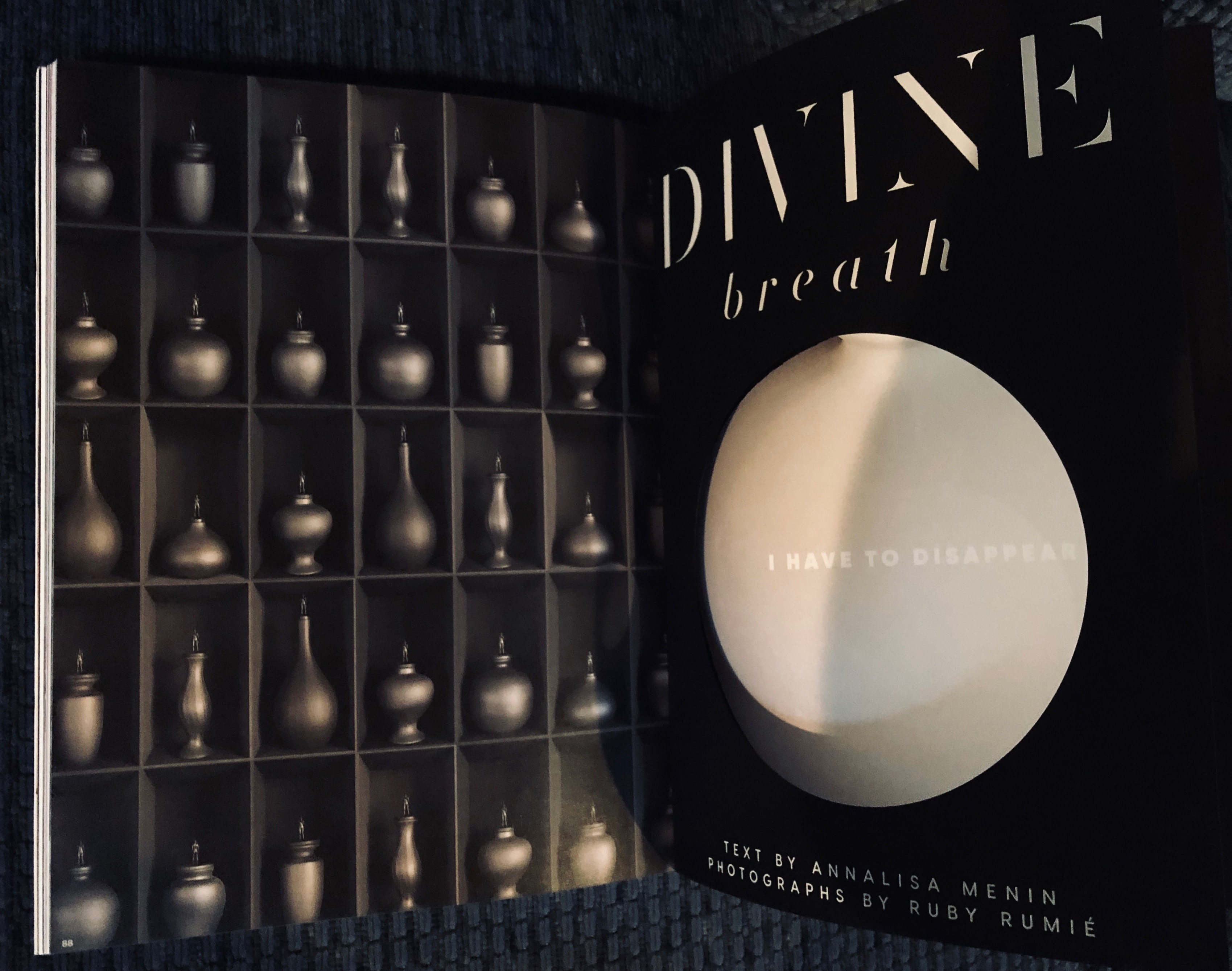
h1

Your Teen For Parents Magazine: A Resource For Teen Parenting That Strives To Shed Light Into The Sometimes Scary Darkness That Is Adolescent Parenting – The Mr. Magazine™ Interview With Susan Borison, Cofounder & Editor In Chief…

November 9, 2018

“The experience of holding a magazine feels like an entirely different experience than sitting at my computer getting information or looking at my phone for information. I’m on the couch; it’s just a different interaction. I even feel as though I retain things differently when I’m touching paper. Obviously, my kids don’t have the same attachment, because they’ve grown up with their brains learning how to read textbooks online. For our demographic at that time, it seemed like a natural and everybody was excited to have it.” Susan Borison (on why she chose print for the cornerstone of the brand)…

Almost 12 years ago, Your Teen for Parents Magazine was born out of a personal passion, but grew out of a universal need that cofounder Susan Borison and her business partner, Stephanie Silverman, along with a group of other concerned women, saw in the marketplace when it came to a resource for teen parenting. Susan and the other ladies saw that their own parenting concerns and fears resonated with most everyone they polled. As they were wondering whether their teens’ struggles were normal, or whether their parenting woes were typical, other parents were dealing with the same insecurities. Unfortunately, the books and magazines they had relied on when their children were younger didn’t help much with teenagers. And so, Your Teen Magazine for Parents was born.

I spoke with Susan recently and we talked about this concerned niche that she and the others were trying to fill as they created the cornerstone print publication, which later became a multiplatform brand with the magazine’s digital website. Launching a print magazine 12 years ago, at the height of the digital onset, was something that may have seemed odd to naysayers, but according to Susan, seemed only natural for them at the time. But it hasn’t been a walk in a rose garden for them either, she added. However, what began 12 years ago is still growing today and this year the magazine won Best Print Publication for Editorial at the Content Marketing Awards, something that Susan said proves there are still people out there who prefer print.

So, I hope that you enjoy this conversation with a mother of five who decided to let her passion and her concerns drive her toward a print dream that she didn’t really know she had until she began, much like the effect a print magazine has on you when you discover a pleasant surprise between its covers. And now, the Mr. Magazine™ interview with Susan Borison, cofounder and editor in chief, Your Teen for Parents Magazine.

But first the sound-bites:

On the genesis of Your Teen for Parents: I have five children and when they started getting older, I started feeling like I didn’t have the resources that I needed, that I had when they were younger. And I could only equate it to walking into my house with my husband with my firstborn and we looked around and said, “Where are the grownups?” And we felt very much unqualified to be in charge of this child and keeping her alive. So, as time went on, you get better at parenting, but it’s not really a cumulative skillset all the way through; you hit early adolescence and what I saw happening made me realize that the way I had been parenting was not going to work anymore. It wasn’t working, and so I didn’t know what to do. And I was looking for resources, but I didn’t want to read books on every issue. And there really wasn’t any resource that kind of mimicked Parents Magazine when our kids were younger, so I felt at a loss. So, I brought a group of women together and we started from there. No one had a background in media; I was a lawyer before, my business partner was a banker, we had a host of women who were just looking for this kind of resource. And that’s how it started.

On why she thought a print magazine should be the cornerstone of the brand: We were probably late to the game, in terms of understanding that print was not the future, although we jumped onboard later and understood that we had to be a much bigger platform, rather than just creating great content that gets distributed wherever you are. But at that time, I guess what I was locked into was replicating what had mattered to me when my kids were younger. And the experience of holding a magazine feels like an entirely different experience than sitting at my computer getting information or looking at my phone for information. I’m on the couch; it’s just a different interaction. I even feel as though I retain things differently when I’m touching paper.

On what she’s doing right in print to win the Best Print Publication at the Content Marketing Awards: I think there are still many people who prefer print, not exclusively, because there is no way to live in that space. It is just a different experience. You dog-ear something that you read when you want to go back to it; you store it as a resource. How many times do people store something on their computers, never to go back to it again? Or even be able to figure out where they saved it. Our magazines are a resource. And they cover adolescence through applying to college, so wherever you are on that scale, you might say to yourself this article is interesting, but it doesn’t apply to me at the time, but I know that I’ll want to go back to it. So, you keep the magazine and use it as a resource later on. It just felt like the right thing to do at the time.

On whether it has been a walk in a rose garden to publish the magazine: I would not call it a walk in a rose garden; it’s a struggle for everyone right now. One of the things that we did in the beginning was build relationships with schools. The bimonthly magazine is predominantly a regional and the bulk of it goes to the parents whose kids are in the district where the school wanted the parents to receive it. It’s free; we have a free distribution for that model. We have another print magazine that is a parents’ guide to the college process and we created our own databases, schools and college counselors, and again we offer that as free distribution. The business model is advertising sponsorship and the distribution is predominantly free in those arenas.

On her plans for the future: Well, we have lots of plans. Some of them are underway and some of them are about to move from the backburner to the front burner. What we’re trying to do is take this arsenal of really valuable information and figure out where it gets distributed so that it has a broader reach.

On that a-ha moment when she said: yes, we’ve done it: I feel that over and over again, and maybe in the same day having the same opposite emotions, so I can’t give you a moment where that happened. The pace is too quick, the change is too quick. We get onboard with something and it’s doing great and then Facebook changes its algorithm or Google makes a change or something else happens where we have to keep pivoting. And I think that our biggest strength is we started in an industry where people who were in it for a long time said things like, we’ve always done it this way, and so it was very hard to pivot.

On the biggest challenge facing her and how she plans to overcome it: We’ve really always felt like we could be Parents Magazine, a household name where somebody has a friend or a relative who has a kid, a daughter who just got left out at a table in the lunchroom because she’s 11 or 12-years-old, and the mother is as devastated as the child and the friend said, I have to get you a subscription to this magazine or sends the link or shares Pinterest or Facebook or any other platform and says, you have to be a part of their Facebook group, just whatever it is. And to us, that will make us feel like we have succeeded with what our goal is, which is to be a resource for all parents who are looking for information about raising teenagers.

On anything she’d like to add: I’d just like to say that we are women who started this and we’re now called entrepreneurs. We didn’t go at it thinking we were going to be entrepreneurs, we went out and tried to sell a niche that we were looking for. And the journey along the way has just shown us how many times you have to go with your gut and not listen to people who are naysayers and it’s so easy to find that advice all over, with everyone’s story. But when you’re in the thick of it – we would be having these meetings and feel our bodies retreating as someone was telling us basically that it was a dumb idea or that what we were doing would never work, and then we’d say, well, we’re just going to keep going until we find people who tell us this is a great idea. So, we rejected the “no’s” and we embraced the “yeses” and 12 years later, we’re still here.

On her reaction to a reader’s less than agreeable comment: I’ll tell you a story that recently happened and I’ll tell you why I think people were surprised by my reaction. We reposted an article that we had originally posted a year ago with no comments whatsoever. And the article was by a mom who had wrote: I had teenagers come to my door trick or treating, the guy had facial hair, I think she wrote that he had a beard, and he didn’t have a costume on and there was a little suggestion of a sneer. And she wrote, what I thought was tongue-in-cheek, an article about how the next year she was putting up a sign that she was not giving out Halloween candy to teenagers, but she was going to go buy extra cleaning supplies.

On what someone would find her doing if they showed up unexpectedly one evening at her home: The real answer is that I’m still working. (Laughs) But the other answer is my youngest child is a senior in high school, so he just finished his last football season and so he’s actually home some now. So, I’ll sit and watch a TV show with him and we’ll have dinner. So, I guess that’s my new normal for a short time and then my husband and I will have to figure out a new normal as we hit empty-nesting.

On what she would have tattooed upon her brain that would be there forever and no one could ever forget about her: In relation to Your Teen magazine, I hope people will think that my business partner, Stephanie Silverman and I, built something that has enhanced their family lives and has helped them to enjoy parenting and to know how to navigate the really tough times that happen during adolescence, and coming out on the other side saying we did a good job and we thank your team. And we get those emails all of the time and it’s so satisfying.

On what keeps her up at night: (Laughs) I think the world. Sometimes it ties into access to information and some of it is just terrifying. In my world, I find leadership to be entirely significant in the tone of a conversation. And I see that happen over and over again. I see it happen on a very grand way in families, when parents scream, kids seem to scream. And I find that in schools, in organizations, that leadership matters. So, when the tone is caustic and the tone has attack, I think the culture changes around that. For me, that’s very unnerving.

And now the lightly edited transcript of the Mr. Magazine™ interview with Susan Borison, cofounder, editor in chief, Your Teen Magazine for Parents.

Samir Husni: Tell me about this little engine that could, and has been going now for almost 11 years, Your Teen for Parents.

Susan Borison: I have five children and when they started getting older, I started feeling like I didn’t have the resources that I needed, that I had when they were younger. And I could only equate it to walking into my house with my husband with my firstborn and we looked around and said, “Where are the grownups?” And we felt very much unqualified to be in charge of this child and keeping her alive.

So, as time went on, you get better at parenting, but it’s not really a cumulative skillset all the way through; you hit early adolescence and what I saw happening made me realize that the way I had been parenting was not going to work anymore. It wasn’t working, and so I didn’t know what to do. And I was looking for resources, but I didn’t want to read books on every issue. And there really wasn’t any resource that kind of mimicked Parents Magazine when our kids were younger, so I felt at a loss. And I always felt like I wished someone would do this and no one had done it. I decided to see if this idea would resonate with other people, so I kept asking friends who had young adolescents and the unequivocal answer was that we’re all struggling. And we’re all unsure as to how to navigate this new space.

So, I brought a group of women together and we started from there. What we realized very quickly was there are a number of reasons why we were sitting around the table at that moment. One was, we all had the resource of Parents Magazine when we were younger, so if you look at why things happen generationally, we had all had that experience of having quick, easy access to short tips that might change our day, and cumulatively might change your whole parenting experience. So, that didn’t exist for this demographic.

Also, I had playgroups when my kids were little. We sat around as moms, sharing the things that were challenging to us. And they were topics that were a little more neutral: my kid isn’t sleeping through the night, they still use a pacifier; they were topics that didn’t carry so much judgment with them. Also, the stories weren’t so threatening, my baby, my toddler, they didn’t own those stories yet. So, for all of those reasons, it became much harder to get bolstered and even to know whether something was normal or not normal. And even erratic, crazy behavior in adolescence can be normal and might require intervention, but how do you go about figuring that out.

So, we were all onboard and we just said let’s do it. No one had a background in media; I was a lawyer before, my business partner was a banker, we had a host of women who were just looking for this kind of resource. And that’s how it started.

Samir Husni: Between a lawyer, a banker, and a group of other parents, why did you think that a print magazine should be the cornerstone for this whole endeavor, especially since it was born around the same time that the digital age was really taking hold?

Susan Borison: We were probably late to the game, in terms of understanding that print was not the future, although we jumped onboard later and understood that we had to be a much bigger platform, rather than just creating great content that gets distributed wherever you are. But at that time, I guess what I was locked into was replicating what had mattered to me when my kids were younger.

And the experience of holding a magazine feels like an entirely different experience than sitting at my computer getting information or looking at my phone for information. I’m on the couch; it’s just a different interaction. I even feel as though I retain things differently when I’m touching paper. Obviously, my kids don’t have the same attachment, because they’ve grown up with their brains learning how to read textbooks online. For our demographic at that time, it seemed like a natural and everybody was excited to have it. That’s not true, from the business side of things, it didn’t get a lot of respect, but from the user end, people were really excited to have it.

Samir Husni: You just recently won Best Print Publication at the Content Marketing Awards. What are you doing right in print to continue that community that you started 11 years ago?

Susan Borison: I think there are still many people who prefer print, not exclusively, because there is no way to live in that space. It is just a different experience. You dog-ear something that you read when you want to go back to it; you store it as a resource. How many times do people store something on their computers, never to go back to it again? Or even be able to figure out where they saved it. Our magazines are a resource. And they cover adolescence through applying to college, so wherever you are on that scale, you might say to yourself this article is interesting, but it doesn’t apply to me at the time, but I know that I’ll want to go back to it. So, you keep the magazine and use it as a resource later on. It just felt like the right thing to do at the time.

Samir Husni: As a mother of five and in trying to reach this community for parents with teenaged children, has it been a walk in a rose garden for you, so easy to do, with the weekly newsletter online and the bimonthly magazine? Has it been simple?

Susan Borison: I would not call it a walk in a rose garden; it’s a struggle for everyone right now. One of the things that we did in the beginning was build relationships with schools. The bimonthly magazine is predominantly a regional and the bulk of it goes to the parents whose kids are in the district where the school wanted the parents to receive it. It’s free; we have a free distribution for that model. We have another print magazine that is a parents’ guide to the college process and we created our own databases, schools and college counselors, and again we offer that as free distribution. The business model is advertising sponsorship and the distribution is predominantly free in those arenas.

Samir Husni: As you look ahead to 2019 and beyond, what’s next on your plate? Anything new on the horizon or just staying the course? What’s the plan?

Susan Borison: Well, we have lots of plans. Some of them are underway and some of them are about to move from the backburner to the front burner. What we’re trying to do is take this arsenal of really valuable information and figure out where it gets distributed so that it has a broader reach.

One of the things that we hate hearing from somebody is, how did I not know about this? There are very few parents, moms in particular, hitting adolescence who aren’t feeling uncertain. And the stakes are so high, if you miss certain cues and red flags, you go back and relive that in a horrible way. But if you know up front that this is the moment when you can say to yourself, this is so typical and they’re going to get through it, or I really have a problem and I better get someone in here to help us.

We try very hard to give those tips over and over again to parents in different environments, so when we’re talking about technology, it might be the exact same advice, but you hear it differently when it’s around technology than if you’re talking about driving or letting your kids become independent, which is a topic today and Julie Lythcott-Haims wrote this whole book about it, I believe she was the former dean of freshmen at Stanford. Her book is all about how we’re letting our kids down by not getting them to adulthood before we send them off to college.

So, in every print issue we talk about move-out skills and we do that online and we have digital-only editorials. We’re starting to do online courses and there’s going to be a lot of attention to that this year. We’re just looking at all of the different ways that we can repurpose the content so that wherever you are, you know about us and you’re benefiting from the great advice.

Samir Husni: Since you started Your Teen for Parents, what has been the most pleasant moment? Can you look back and remember that a-ha moment where you said, we’ve done it?

Susan Borison: I feel that over and over again, and maybe in the same day having the same opposite emotions, so I can’t give you a moment where that happened. The pace is too quick, the change is too quick. We get onboard with something and it’s doing great and then Facebook changes its algorithm or Google makes a change or something else happens where we have to keep pivoting. And I think that our biggest strength is we started in an industry where people who were in it for a long time said things like, we’ve always done it this way, and so it was very hard to pivot.

And because we started as it was crashing we said, we’ll try that, so we’ve basically grown up in a culture of pivoting. I don’t know that you can ever get to the point in media where you’re saying, ah-we’re there, but we’re really good at seeing what’s coming down the pike and how we can integrate that into what we’re doing. And we’re really good at reaching out to people who know better than we do and getting advice.

Samir Husni: What’s your biggest challenge, opportunity or stumbling block that you’re facing and how do you plan to overcome it?

Susan Borison: We’ve really always felt like we could be Parents Magazine, a household name where somebody has a friend or a relative who has a kid, a daughter who just got left out at a table in the lunchroom because she’s 11 or 12-years-old, and the mother is as devastated as the child and the friend said, I have to get you a subscription to this magazine or sends the link or shares Pinterest or Facebook or any other platform and says, you have to be a part of their Facebook group, just whatever it is. And to us, that will make us feel like we have succeeded with what our goal is, which is to be a resource for all parents who are looking for information about raising teenagers.

And on the business side, when that audience gets big enough and we’re not hearing from people: why didn’t I know about you, then in selling a course, we’ve created an easy pipeline for that, so that’s our 2019 for us.

Samir Husni: Is there anything else you’d like to add?

Susan Borison: I’d just like to say that we are women who started this and we’re now called entrepreneurs. We didn’t go at it thinking we were going to be entrepreneurs, we went out and tried to sell a niche that we were looking for. And the journey along the way has just shown us how many times you have to go with your gut and not listen to people who are naysayers and it’s so easy to find that advice all over, with everyone’s story. But when you’re in the thick of it – we would be having these meetings and feel our bodies retreating as someone was telling us basically that it was a dumb idea or that what we were doing would never work, and then we’d say, well, we’re just going to keep going until we find people who tell us this is a great idea. So, we rejected the “no’s” and we embraced the “yeses” and 12 years later, we’re still here.

Samir Husni: Here’s a question that I borrowed from one of our graduate students who now works for 60 Minutes, she asked Paul McCartney: what do you think is the biggest misconception about you?

Susan Borison: I’ll tell you a story that recently happened and I’ll tell you why I think people were surprised by my reaction. We reposted an article that we had originally posted a year ago with no comments whatsoever. And the article was by a mom who had wrote: I had teenagers come to my door trick or treating, the guy had facial hair, I think she wrote that he had a beard, and he didn’t have a costume on and there was a little suggestion of a sneer. And she wrote, what I thought was tongue-in-cheek, an article about how the next year she was putting up a sign that she was not giving out Halloween candy to teenagers, but she was going to go buy extra cleaning supplies.

So, we posted it last year, had some readers, and no negative reactions. We post it this year, and there’s a climate right now where everybody is on edge, it was right after the week of the Kavanaugh hearing, and there’s probably a host of reasons why people were just waiting for an opportunity to really ream somebody. I didn’t know that trick or treating wasn’t benign. You know, kids go trick or treating and either they get candy or they don’t get candy, I did not know how loaded a topic it was. And neither did anyone else on my team because no one flagged it. And we had ran it last year.

So, I came out of a movie after that and I had a text that read: check out Facebook, what should we do? There were 800 comments. Now, I guess some people might see it as constructive criticism, but the comments ranged from: I will never read another thing from Your Teen and I’m going to tell everyone I know to never read anything to one woman who sent me a private message saying: I am going to your advisory board to tell each one of them what you did. (Laughs) What did I do, right?

It was so over-the-top, calling names to the writer; it was such an assault. And so I took it down and I posted it on my own personal page, asking people to give me a clue as to what was tone deaf about the article. And I got similar comments, but what you could see, the closer you got to friendship, was that people spoke nicer. It was the same range. It turns out trick or treating is a hot button for many people. People who have kids with disabilities, minorities; there’s a host of hot buttons about trick or treating that I did not know a few weeks ago, but I know deeply now.

But on my own personal Facebook page, people were polite in their disagreement, but in a somewhat anonymous situation on Your Teen’s Facebook page, people did not feel like they had to be. So, I lived with that. I couldn’t sleep at night. I felt personally invaded and I also felt vulnerable in a very weird way. And I think people would be surprised – I think there’s a certain sense when women run something, start something, own something, of this, thick-skinned isn’t the right word, but we can navigate a lot and deal with a lot of ups and downs and you have to figure out how to keep smiling through all of it.

And this situation really threw me in a way that – I just got an email from one of our writers, she had to further the conversation this week, and I sent it to someone else who was copied on the email and said you have to reply, I just can’t do it.

So, I think that’s the biggest surprise, that no matter how tough we appear and how tough we are, at the end of the day all of us have feelings and all of us feel, when someone points a finger at you in your face and calls you names, you feel assaulted. And that’s true, we see it in the media all of the time, it’s coming out now. I watch Monica Lewinsky’s “Ted Talk” and I feel like I have to email her and apologize to her because when I was that age, which when it was happening with her I was probably in my late 20s, she was free game. It was like a unifying fun. And now that she’s put a face to that name and told her story, I’m horrified at my behavior.

So, I think that Facebook has a little bit of that same feeling, not even a little bit, probably even an exaggerated feeling, of “no one on the other side is going to get hurt.” That’s my opinion.

Samir Husni: If I showed up unexpectedly at your home one evening after work, what would I find you doing? Having a glass of wine; reading a magazine; cooking; watching TV; or something else? How do you unwind?

Susan Borison: The real answer is that I’m still working. (Laughs) But the other answer is my youngest child is a senior in high school, so he just finished his last football season and so he’s actually home some now. So, I’ll sit and watch a TV show with him and we’ll have dinner. So, I guess that’s my new normal for a short time and then my husband and I will have to figure out a new normal as we hit empty-nesting.

Samir Husni: If you could have one thing tattooed upon your brain that no one would ever forget about you, what would it be?

Susan Borison: In relation to Your Teen Magazine, I hope people will think that my business partner, Stephanie Silverman and I, built something that has enhanced their family lives and has helped them to enjoy parenting and to know how to navigate the really tough times that happen during adolescence, and coming out on the other side saying we did a good job and we thank your team. And we get those emails all of the time and it’s so satisfying.

Samir Husni: And my typical last question; what keeps you up at night?

Susan Borison: (Laughs) I think the world. Sometimes it ties into access to information and some of it is just terrifying. In my world, I find leadership to be entirely significant in the tone of a conversation. And I see that happen over and over again. I see it happen on a very grand way in families, when parents scream, kids seem to scream. And I find that in schools, in organizations, that leadership matters. So, when the tone is caustic and the tone has attack, I think the culture changes around that. For me, that’s very unnerving.

Samir Husni: Thank you.
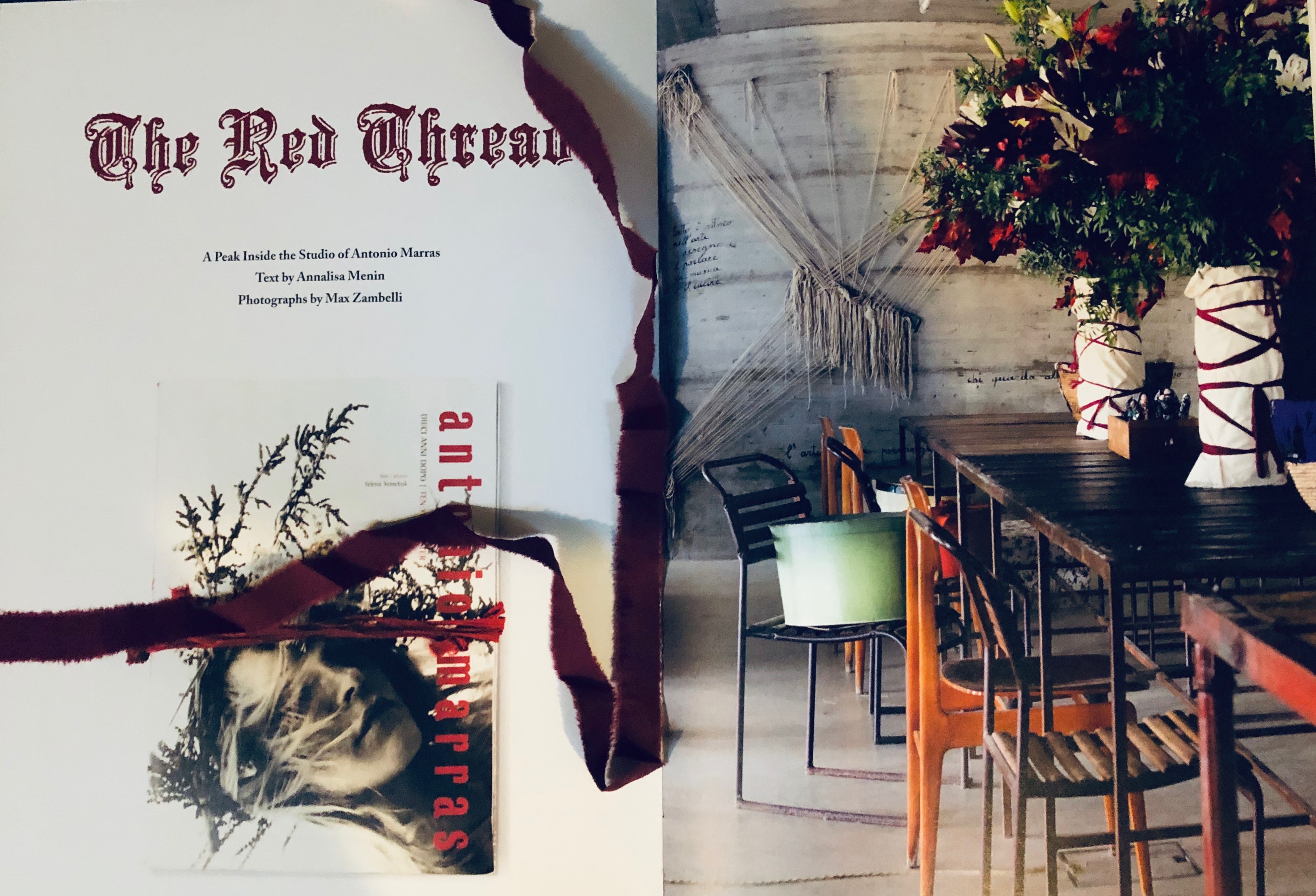
h1

Perfect Strangers Magazine: Bringing The World & Its Many Cultures Together For The “Perfect” Introduction – The Mr. Magazine™ Interview With Alice Xiang, Founder, Editor And Publisher…
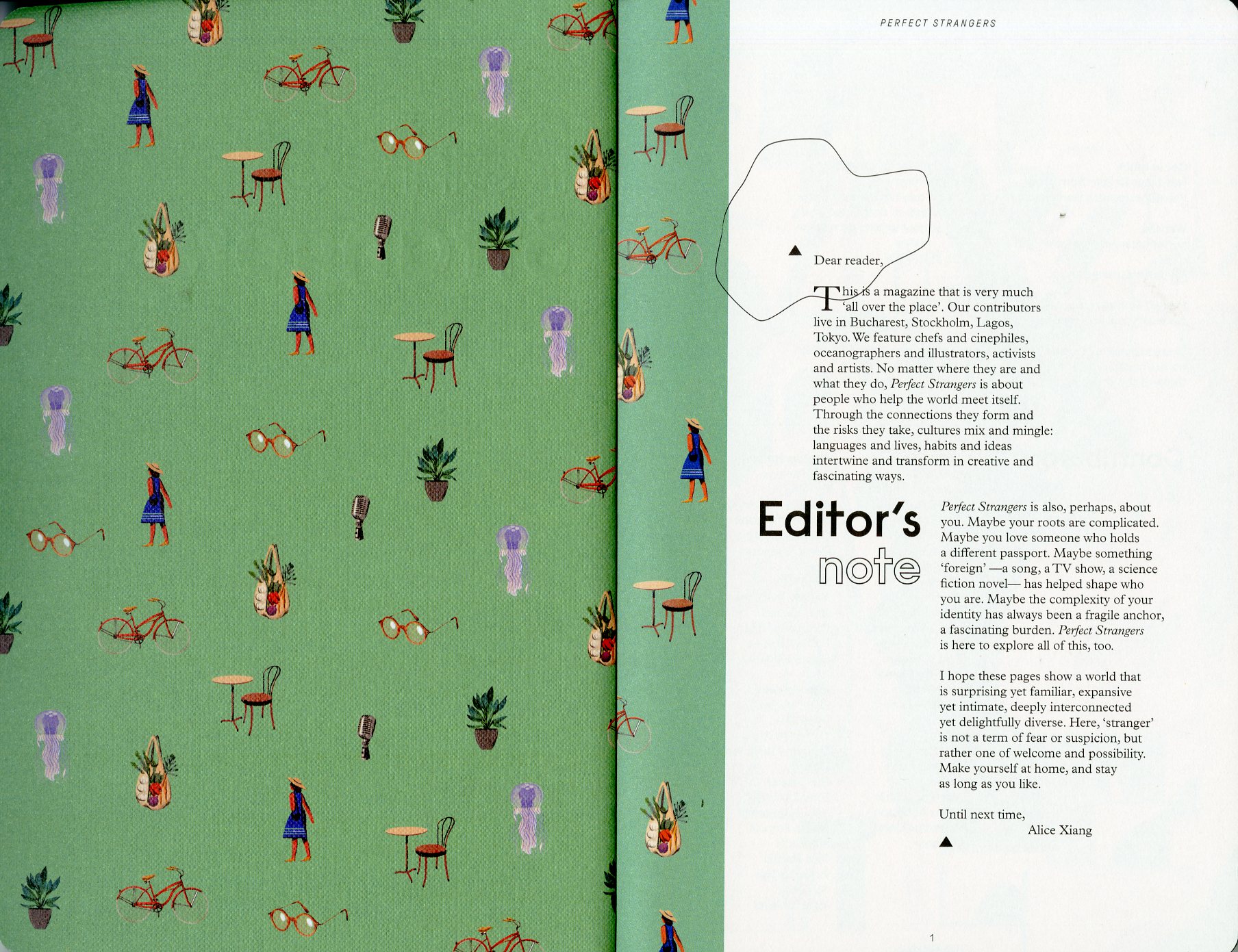
October 24, 2018

A Mr. Magazine™ Launch Story…

“I also love that there’s a certain intimacy that comes with print magazines. Digital content remains contained in our devices; print magazines become a part of the messy physical fabric of our daily lives. They ‘live’ in our homes: squeezed under a sofa cushion, sprawled out on a coffee table, propped next to the bed or biscuit tin. You can delete an app or close a browser window in a second, but there’s something odd about chucking a printed book or magazine; you usually end up passing it on to a friend or family member, or donating it.” Alice Xiang…

Perfect Strangers is a magazine dedicated to bringing the world together and exploring the cross-cultural. The burning question for the concept is: how does the world meet itself? Founder of the magazine, Alice Xiang, seeks to answer that curiosity by producing a magazine that features people from all walks of life that help to connect the world. From artists and entrepreneurs to grandparents and lovers and through their perspectives, the magazine looks at how cultures and languages, habits and ideas, styles and foods, intertwine and transform.

I spoke with Alice recently and she shared a bit about her background and how it fuses with the magazine “perfectly.” She herself is no “stranger” (puns intended) to the cross-cultural; before launching Perfect Strangers, she completed a Ph.D. in comparative literature, doing her dissertation on cosmopolitanism, specifically on an interconnected set of writers in early 20th-century Shanghai, Istanbul, and Paris. Alice said, “In some ways, I suppose “Perfect Strangers” is the magazine form of what I was up to academically.” And Mr. Magazine™ thinks it’s a great print transformation.

Interconnecting the world is a worthy goal and the magazine does it beautifully with its printed pages and colorful pictures. The content between those pages is on point and well written. Published twice a year, Perfect Strangers is a welcomed addition to newsstands.

So, without further ado, the Mr. Magazine™ interview with founder, editor, and publisher of Perfect Strangers magazine, Alice Xiang.

But first the sound-bites:

On the genesis of Perfect Strangers: Partly as a result of how I grew up —which involved a fair bit of moving between cities and countries— I’ve always been fascinated by how cultures meet and mix. For years, I’d been on the lookout for a magazine focused on the cross-cultural; a magazine in which I could read about Nepalese filmmakers in Montréal, perhaps, or Chinese students in Cairo, and everything beyond and between. A magazine that would both make me feel ‘at home’ and connected to others with a similarly complex sense of belonging, but also push me beyond what I already thought and knew about these matters.

On why she felt the magazine would be best served in print rather than a digital-only product: I wanted Perfect Strangers to be something to cherish and immerse oneself in, on both an aesthetic and mental level. It’s much harder, of course, to reach the average reader than it would be with a website or digital magazine. But once you do —once someone picks up a physical copy—it’s much easier to pull that reader out of their usual routine, out of their stream of distractions, and into the little universe of your magazine. There’s a certain stubbornness to the thing-ness of a printed object that commands a different kind of engagement. I settled on the print format because I was very drawn to creating that ‘oasis of attention’ for readers.

On her own professional background: Before launching Perfect Strangers, I’d just completed a Ph.D. in comparative literature. My dissertation was on cosmopolitanism, specifically on an interconnected set of writers in early 20th-century Shanghai, Istanbul, and Paris. In some ways, I suppose ‘Perfect Strangers’ is the magazine form of what I was up to academically.

On what role she thinks print will play in the future: As we become inundated with digital and multimedia content, print will increasingly be seen as a kind of refuge, as a special medium for a different kind of attention. And I think that refuge, that difference of attention, will provide fertile ground for various kinds of creative and political expression.

On how she came up with the name: Benedict Anderson came up with the idea that every nation is an ‘imagined community,’ since most of its members will never actually meet, and yet they nevertheless think of themselves as part of the same group. I wanted to allude to that contradiction, which is inherent to any large-scale community. ‘Perfect Strangers’ has connotations of distance and alienation, but also of positivity and playfulness.

On her most pleasant moment with the launch: Editors often talk about the moment they receive the first printed copy of the magazine as their favorite. That wasn’t mine at all; I was terrified. I was so worried that I’d open the magazine and notice all kinds of irrevocable and embarrassing mistakes. I don’t have one moment in particular that stands out the most. I’d say the process contained a series of moments of delight — of me being surprised by the generosity of, well, perfect strangers.

On her biggest challenge: Being a one-person team. It was overwhelming to have to take care of every single aspect of the magazine. I started out rather naïvely, not realizing that being an editor-publisher involves a lot more than simply ‘editing.’ There was so much fiddling about with images, with titles and captions and lists, with italicization and formatting gone rogue, etc. Every single inch of a magazine needs to be attended to, often multiple times, before it goes off to print. Not to mention scheduling, distribution, marketing, invoicing…

On what she would have tattooed upon her brain that would be there forever and no one could ever forget about her: Nothing! —I don’t mean that facetiously. I think most people undergo constant change and transformation, even if it seems imperceptible day-to-day. I don’t think I’m a consistent enough person for a brain tattoo. Your question reminds me of a book by Louis Sachar that I read when I was little, in which a character decides to get a tattoo of a potato, because that’s the one thing they were sure they wouldn’t get tired of… As a child I found that incredibly wise and sensible.

On what someone would find her doing if they showed up unexpectedly at her home one evening: I have a one-year-old, so you might well find me reading a book to her. Got to instill that love of print early on, right? We’re currently waiting to see what her first word will be: Turkish (my husband’s mother tongue), Chinese (my parents’), or English (mine). The race is on!

On what keeps her up at night: The number of unanswered emails in my inbox.

And now the lightly edited transcript of the Mr. Magazine™ interview with founder, editor, and publisher, Alice Xiang, Perfect Strangers magazine.

Samir Husni: Tell me about the genesis of Perfect Strangers.

Alice Xiang: Partly as a result of how I grew up —which involved a fair bit of moving between cities and countries— I’ve always been fascinated by how cultures meet and mix. For years, I’d been on the lookout for a magazine focused on the cross-cultural; a magazine in which I could read about Nepalese filmmakers in Montréal, perhaps, or Chinese students in Cairo, and everything beyond and between. A magazine that would both make me feel ‘at home’ and connected to others with a similarly complex sense of belonging, but also push me beyond what I already thought and knew about these matters.

I was lying in bed one night when it struck me that I should perhaps just go ahead and create this magazine that I’d never been able to find. I sat up then and there with a jolt of excitement, and was unable to sleep for several hours afterwards from the sheer adrenaline of the idea. As someone with no background or experience in media, but with plenty of passion for the subject and for the written word, it felt like just the right mix of ‘well-this-is-completely-bonkers’ and ‘OK-I-can-do-this’.

“Does the world need another magazine?” is a question I’ve asked myself many times since then. There are so many beautifully made magazines out there that serve just about every niche one can think of. Still, I was convinced there was a bit of space left in the landscape for something like Perfect Strangers. There are so many people across the world who are fascinated by, or whose lives have been defined by, the cross-cultural. Making a publication for and about this global readership still gets me excited every day.

Samir Husni: Why did you feel Perfect Strangers is best served in print rather than an online entity?

Alice Xiang: I wanted Perfect Strangers to be something to cherish and immerse oneself in, on both an aesthetic and mental level. It’s much harder, of course, to reach the average reader than it would be with a website or digital magazine. But once you do —once someone picks up a physical copy—it’s much easier to pull that reader out of their usual routine, out of their stream of distractions, and into the little universe of your magazine. There’s a certain stubbornness to the thing-ness of a printed object that commands a different kind of engagement. I settled on the print format because I was very drawn to creating that ‘oasis of attention’ for readers.

I also love that there’s a certain intimacy that comes with print magazines. Digital content remains contained in our devices; print magazines become a part of the messy physical fabric of our daily lives. They ‘live’ in our homes: squeezed under a sofa cushion, sprawled out on a coffee table, propped next to the bed or biscuit tin. You can delete an app or close a browser window in a second, but there’s something odd about chucking a printed book or magazine; you usually end up passing it on to a friend or family member, or donating it.

With print also comes certain standards. You feel like you have to ‘make it count’, to make what you’re printing worthwhile and memorable. It’s a beneficial kind of pressure to have.

Samir Husni: Tell me about your own professional background.

Alice Xiang: Before launching Perfect Strangers, I’d just completed a Ph.D. in comparative literature. My dissertation was on cosmopolitanism, specifically on an interconnected set of writers in early 20th-century Shanghai, Istanbul, and Paris. In some ways, I suppose ‘Perfect Strangers’ is the magazine form of what I was up to academically.

Samir Husni: What role do you feel print will play in 2018 and beyond with the multimedia mix that’s out there today?

Alice Xiang: Initially, print and digital were viewed as inherently antagonistic mediums. But now that digital has become the norm for media consumption, that relationship has shifted. Whatever becomes dominant also loses its ‘edge,’ its special aura, due to that very dominance. And so, for me, online and print media have now become complementary to one another. The same person can be a voracious consumer of media on their smartphone and at the same time —precisely because of this— be deeply appreciative of the tactile and aesthetic qualities unique to print.

As we become inundated with digital and multimedia content, print will increasingly be seen as a kind of refuge, as a special medium for a different kind of attention. And I think that refuge, that difference of attention, will provide fertile ground for various kinds of creative and political expression.

Samir Husni: How did you come up with the name “Perfect Strangers?”

Alice Xiang: Benedict Anderson came up with the idea that every nation is an ‘imagined community,’ since most of its members will never actually meet, and yet they nevertheless think of themselves as part of the same group. I wanted to allude to that contradiction, which is inherent to any large-scale community. ‘Perfect Strangers’ has connotations of distance and alienation, but also of positivity and playfulness. I like to think it also hints at the beauty and power of our imaginations when it comes to thinking about, and empathizing with, people different from ourselves. Also, I have a weak spot for puns — the name could have turned out a lot worse.

Samir Husni: What would you consider the most pleasant moment you have experienced during this magazine launch journey?

Alice Xiang: Editors often talk about the moment they receive the first printed copy of the magazine as their favorite. That wasn’t mine at all; I was terrified. I was so worried that I’d open the magazine and notice all kinds of irrevocable and embarrassing mistakes.

I don’t have one moment in particular that stands out the most. I’d say the process contained a series of moments of delight — of me being surprised by the generosity of, well, perfect strangers. From potential interviewees to bookshops in countries I’ve never visited, I sent an absurd number of ‘cold’ emails to people who had absolutely no reason to give me any of their time or take me seriously, and yet who did. The magazine is really an accumulation of the generosities of many people.

Samir Husni: And what has been the biggest challenge that you’ve had to face and how did you overcome it?

Alice Xiang: Being a one-person team. It was overwhelming to have to take care of every single aspect of the magazine. I started out rather naïvely, not realizing that being an editor-publisher involves a lot more than simply ‘editing.’ There was so much fiddling about with images, with titles and captions and lists, with italicization and formatting gone rogue, etc. Every single inch of a magazine needs to be attended to, often multiple times, before it goes off to print. Not to mention scheduling, distribution, marketing, invoicing…

This is frankly a challenge I’ve yet to overcome — I am constantly behind! But there’s a wonderful upside to it all: the magazine is extremely ‘nimble,’ and truly independent, in the sense that there’s a single point of creative and editorial control. Which is worth all the late nights, in the end. And there are inspiring one-person teams who’ve accomplished brilliant things with their magazines —like Kai Brach of Offscreen, or Les Jones of Elsie Magazine— to draw strength from. Their examples are a reminder to stay optimistic: to keep working hard and improving upon what you do, and to remember that ultimately your biggest limitations can also be your greatest strengths.

Samir Husni: If you could have one thing tattooed upon your brain that no one would ever forget about you, what would it be?

Alice Xiang: Nothing! —I don’t mean that facetiously. I think most people undergo constant change and transformation, even if it seems imperceptible day-to-day. I don’t think I’m a consistent enough person for a brain tattoo. Your question reminds me of a book by Louis Sachar that I read when I was little, in which a character decides to get a tattoo of a potato, because that’s the one thing they were sure they wouldn’t get tired of… As a child I found that incredibly wise and sensible.

Samir Husni: If I showed up unexpectedly at your home one evening after work, what would I find you doing? Having a glass of wine; reading a magazine; cooking; watching TV; or something else? How do you unwind?

Alice Xiang: I have a one-year-old, so you might well find me reading a book to her. Got to instill that love of print early on, right? We’re currently waiting to see what her first word will be: Turkish (my husband’s mother tongue), Chinese (my parents’), or English (mine). The race is on!

Samir Husni: My typical last question; what keeps you up at night?

Alice Xiang: The number of unanswered emails in my inbox.

Samir Husni: Thank you.