
An Upscale Magazine For The Masses. The Story Of The Launch Of hiii: “The Vanity Fair For Weed.” The Mr. Magazine™ Interview With Rob Hill, Co-Founder And Editor In Chief, And Pam Patterson, Co-Founder And Creative Director.
September 12, 2024“We love magazines. We’re finding out that a lot of other people who didn’t know they love magazines, love magazines. I’m feeling really buoyant and positive. You say, “Will this be a business? Yes, we are very, very confident. This is not a vanity project. We’re here to make money. The universe is conspiring such a thing.” Rob Hill

An upscale magazine for the masses “who partake.” A “Vanity Fair for weed.” A new twist on marijuana magazines. Elegant in design and even more elegant and sophisticated in writing and photography. The brainchild of Rob Hill and Pam Patterson, hiii magazine arrived on the newsstands in the city of Los Angeles and at all its dispensaries.
The lifestyle magazine utilizes every inch of space to channel messages to its readers and advertisers. From the margins to the spine and the front edge of the magazine, there is content, a very specific message to the audience.
To say the magazine is well done will be an understatement. Rob and Pam poured their heart and soul into this new publication that goes beyond the ink on paper magazine. To find out about this hiii adventure I reached out to Rob and Pam and had a delightful conversation about the magazine and the entities surrounding the publication.
Please enjoy this conversation with Rob Hill, co-founder and editor in chief, and Pam Patterson, co-founder and creative director, that is sure to give you a hiii whether you partake or not. But first for the soundbites:
On the genesis of the magazine idea: “My thinking was that the industry had nowhere to brand. And there are about 2800 potential advertisers in this city. So I just saw it as a numbers game. But it also had to bring a new and veneer to the industry. A new take for a new time.”
On the mission of the magazine: “Because what this industry didn’t need was another rag that was basically looking backwards and not forwards, actually propelling the stereotypes. We’re totally anti that. We don’t believe that. I think 64% of people use cannabis in this country.”
On scoring an ad from Porsche: “We don’t all live in a silo. We buy Porsches. I hope you saw the ad. We booked Porsche, which has never been done in a cannabis magazine. They booked it for the full year and paid. So we’re going after car companies, we’re going after mainstream brands.”
On expanding beyond Los Angeles: “We’re getting calls from Vegas, NYC, and Detroit, etc, to bring the magazine there. It’s just been so exciting. I don’t want to say we’re saving print, but I think we’re part of a resurgence of print. Nylon is back, Spin is back, Creem is back, Life is back, Playboy is back. There is a digital fatigue that has set in.”
On the role the magazine aims to play: “One of the things that makes this audience so much different is we really are a lifestyle magazine. It’s a tool for connection between people. I think people who don’t smoke wouldn’t completely understand it.”

On the flipbook in the margins: “When I heard that Mickey Mouse came into public domain, at least Steamboat Willie, we took a look at it. He’s driving the boat and it’s just begging for a joint in his mouth. “
On the distribution model: “The thinking is to conquer the country through cities rather than the traditional way of printing half a million magazines and putting them on newsstands all over the country.”
On the creation of the magazine: “We just felt we were the best people to redefine, update, and package it in a way that made sense to everyone. Concentrate on the positive, creative, and medicinal parts.”
On the content: “We’re going to always have some really good stories in there too. Like the prison story we did. People don’t know that there are people still rotting in jail for selling three joints in 1975. It’s crazy.”
On the audience: “The audience is very broad, but it’s like the coolest people in all of those sort of segments smoke weed.”
On young folks reaction to the magazine: “We have a lot of young people that work in our office who are in their twenties and a lot of people that come through here who are millennials that treat the magazine like it’s a jewel. It’s an exotic thing to them that they’re liking. What’s not to like?”
And now for the lightly edited conversation with Rob Hill, Co-founder and editor in chief, and Pam Patterson, Co-founder and creative director of hiii magazine:
Samir Husni: In this digital age, you are launching a print magazine, and not any print magazine, a print magazine “for people who partake.” What’s the reasoning behind it? What were you thinking? Are you out of your mind?
Rob Hill: Well, during COVID, I was sitting home alone a lot. I kind of fell back in love with cannabis. I’ve had an on and off love affair with it.
I was coming from a business to business cannabis magazine called MG, which was the biggest cannabis business to business magazine with a very different model. It was a subscription only model. It went out to CEOs and owners of companies.
I would go down to the Malibu newsstand before they locked us all down. Even when they did, and just kind of, buy magazines and bring them home. I started to make a collage on my wall and started to just envision it.
My thinking was that the industry had nowhere to brand. And there are about 2800 potential advertisers in this city. So I just saw it as a numbers game. But it also had to bring a new and veneer to the industry. A new take for a new time.
I thought if we could bring it into the 21st century, and give it a splashy, fun, and modern take, that it would work. That was kind of the thinking behind it.
We’re going to make money. We spent the first 18 months after we developed the idea and got it where it needed to be.
I think what’s really broken in the magazine industry is the distribution model and the fact that if you don’t love magazines don’t launch one. Anyone can have a blog and a website but not everyone can have a magazine.
In addition the print pages, we sold eight activations at our launch party, which means that a company brings their product, sets up a table, has their signage, while educating consumers and handing out samples.
Samir Husni: hiii is unlike any of the cannabis magazines that were launched even as back as the 70s. We had a lot of magazines like High Times, Inside Dope, Head, Kush, you name it. hiii is more like an upscale magazine, yet it’s a mass magazine. Tell me the thinking behind combining upscale and mass at the same time.
Rob Hill: I think that’s the target we needed to hit to be successful. Because what this industry didn’t need was another rag that was basically looking backwards and not forwards, actually propelling the stereotypes. We’re totally anti that. We don’t believe that. I think 64% of people use cannabis in this country.
We don’t all live in a silo. We buy Porsches. I hope you saw the ad. We booked Porsche, which has never been done in a cannabis magazine. They booked it for the full year and paid. So we’re going after car companies, we’re going after mainstream brands.
Our hope is by this time next year, a third of the magazine is going to have advertising in it that has nothing to do with cannabis. We’ll get Levi’s and Doc Martens and Bentley and Range Rover. Porsche plowed the road for us, so to speak. They parked their cars at our party to out in front of Woody Harrelson and Bill Maher’s cannabis lounge/garden The Woods in West Hollywood which was really cool.
Porsche’s whole marketing team came and it’s a really big deal. Ad Age or Adweek should really do an article on that.
We were hoping to have 15 ads and we booked 26. And the Porsche ad, goes above and beyond what they paid. It’s not even about the money with Porsche. It’s about having that real estate for the full year in the magazine
Samir Husni: That’s not your first venture editing a magazine. You’ve been there, done that. What’s the difference? You and Pam are now owners and publishers. Does it feel any different that just being an editor?
Rob Hill: The last time we spoke we were launching Treats magazine. That was pretty exciting. Hugh Hefner tried to buy it the day after we launched it. He invited us up to the mansion.
But this is different. Pam and I purposely put our emails in our editor’s letters because we wanted people to email us. We didn’t want to do info@ or editorial@. And we’re getting about a dozen a week of just people that are saying things like, “I saw your magazine at the dispensary. I picked it up. I commute to work on a bus. I read it cover to cover.”
We’re getting calls from Vegas, NYC, and Detroit, etc, to bring the magazine there. It’s just been so exciting. I don’t want to say we’re saving print, but I think we’re part of a resurgence of print. Nylon is back, Spin is back, Creem is back, Life is back, Playboy is back. There is a digital fatigue that has set in. People are tired of being on their phones and all ages are looking for more tangible experience. This is why we spent lavishly on our paper stock, size, and design. And it’s paying off.
Samir Husni: The design of the magazine from printing on the edge of the magazine or having an edgy design. Tell me about the creative design of hiii.
Pam Patterson: I’m the creative director and I’ve been a weed smoker since I was 13.
One of the things that makes this audience so much different is we really are a lifestyle magazine. It’s a tool for connection between people. I think people who don’t smoke wouldn’t completely understand it. But when you’re part of this community, there’s a bond there that we channel when we’re concepting the magazine.
We wanted to create a toy, something where people could relate to it in a lot of different ways. We could have a story of substance, and then have a story that speaks to the tools of the trade and whatnot. Also where they could have a little passage from some novel that someone may see in a new light.
We want to be fun like Bob Marley’s quote on the edge printing. It’s just a fun way. I think it’s kind of a wink to our audience that we get it. Weed smokers are thinkers. We’re creative thinkers.
Samir Husni: What about the flipbook? I mean, the images that run in the margins?
Pam Patterson: When I heard that Mickey Mouse came into public domain, at least Steamboat Willie, we took a look at it. He’s driving the boat and it’s just begging for a joint in his mouth. We wanted to do a flipbook for some time, and that was kind of a thing we devoted that real estate, the right hand margin to, in addition to a literary passage and the edge-printing. People were like, oh, advertisers are not going to like you getting into that space. But it’s been just fine.
Samir Husni: It looks like you have a love affair with the magazine and with print. But my question to you how is hiii as a business? Are you going to spend your savings or are you going to make money out of this?
Rob Hill: Absolutely. We’re going to make money. We spent the first 18 months after we developed the idea and got it where it needed to be. We have a CFO who was CFO from Hard Rock Cafe and other companies. We did talk to a lot of people. But what we found was the investors didn’t get it as much as the advertisers did. So our business development consultant said, “Well, your advertisers are your investors. So just go start selling and don’t worry about all of this other stuff.”
We were hoping to have 15 ads and we booked 26. And the Porsche ad, goes above and beyond what they paid. It’s not even about the money with Porsche. It’s about having that real estate for the full year in the magazine and being able to go to other brands like Woody Harrelson, Whiz Khalifa, Snoop, Jay-Z, Willie Nelson etc., and say, “Hey, your ad is going to be after Porsche.” They like that.
We just started to knock down some barrier to entry and it was difficult in the very beginning. People were saying cannabis isn’t the hottest thing right now and magazines aren’t the hottest thing right now. But we didn’t believe that. And Samir, I think what’s really broken in the magazine industry is the distribution model and the fact that if you don’t love magazines don’t launch one. Anyone can have a blog and a website but not everyone can have a magazine.
I think we’ve come up with a way to do distribution right. In fact, last night, I went after dinner to go check the markets in Studio City and Laurel Canyon, where we distribute the magazine on the racks outside the markets. And there we put 25 on each and they’re gone in three days. There are 128 dispensaries and cannabis lounges that also carry the magazine in their stores and half a dozen that we have partnered with to deliver the magazine right to their door of their VIP customers with their cannabis.
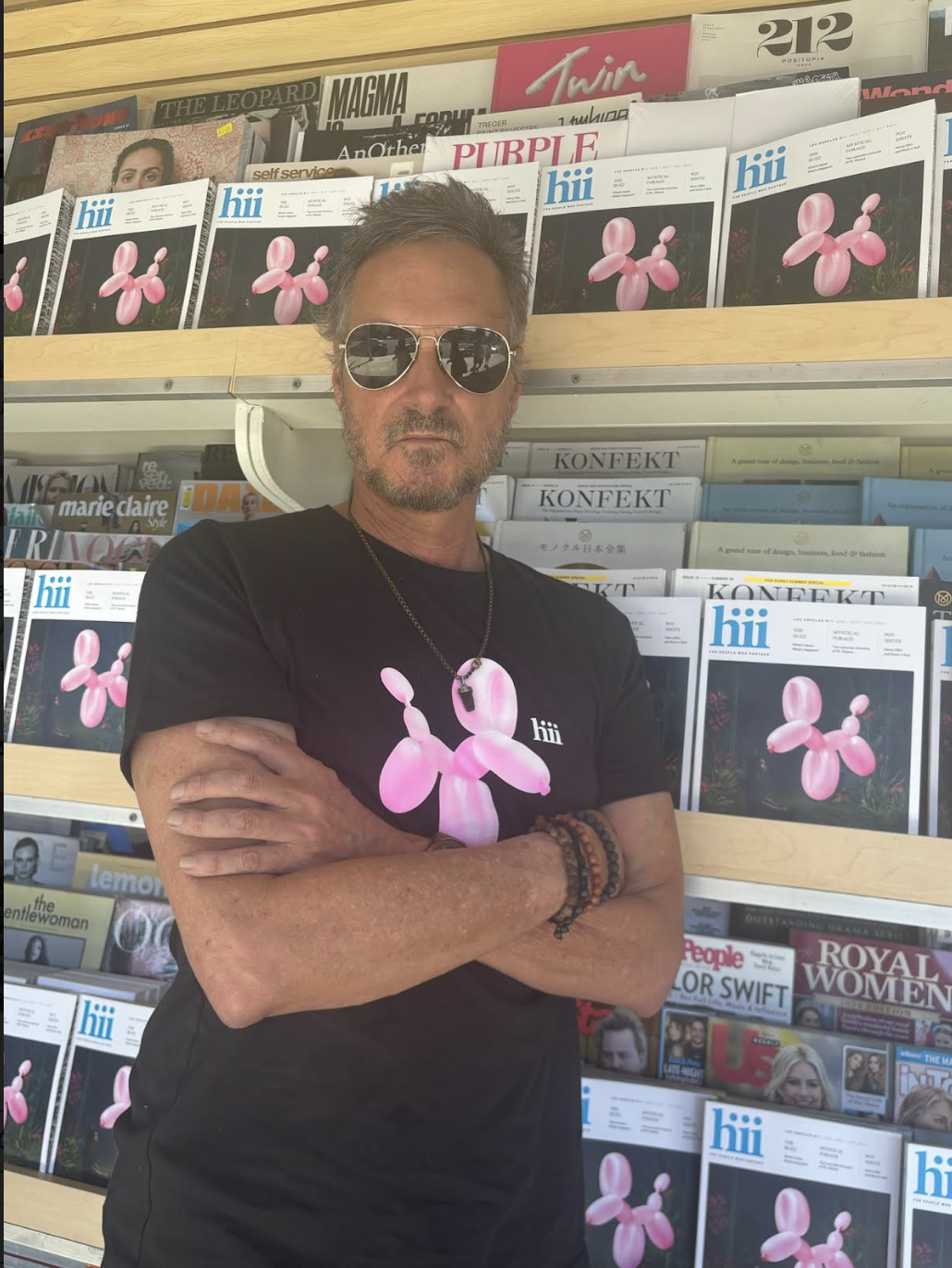
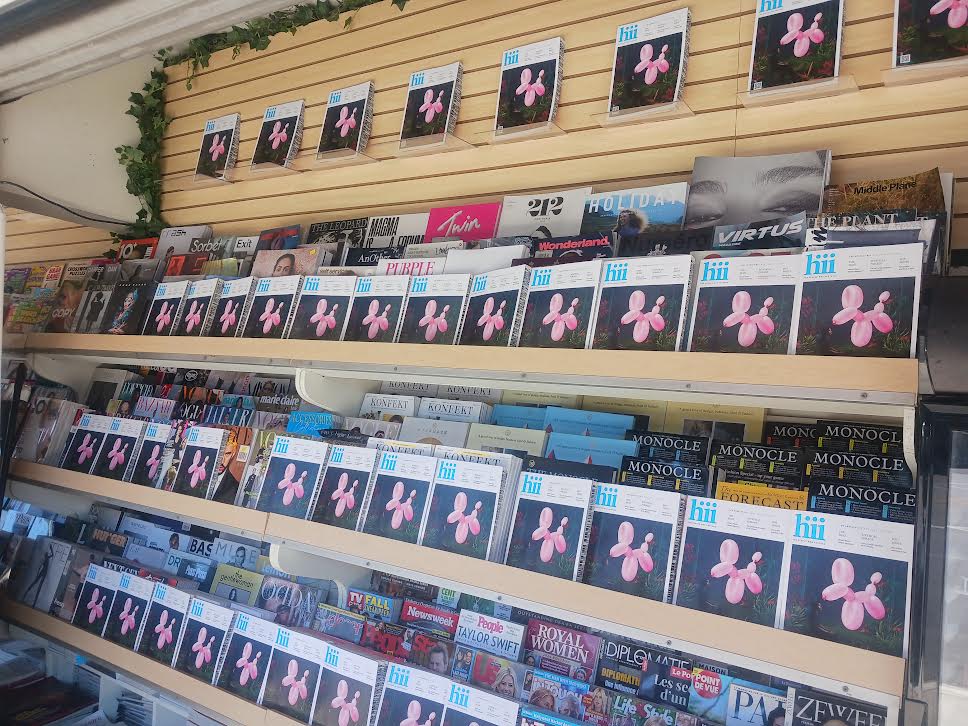
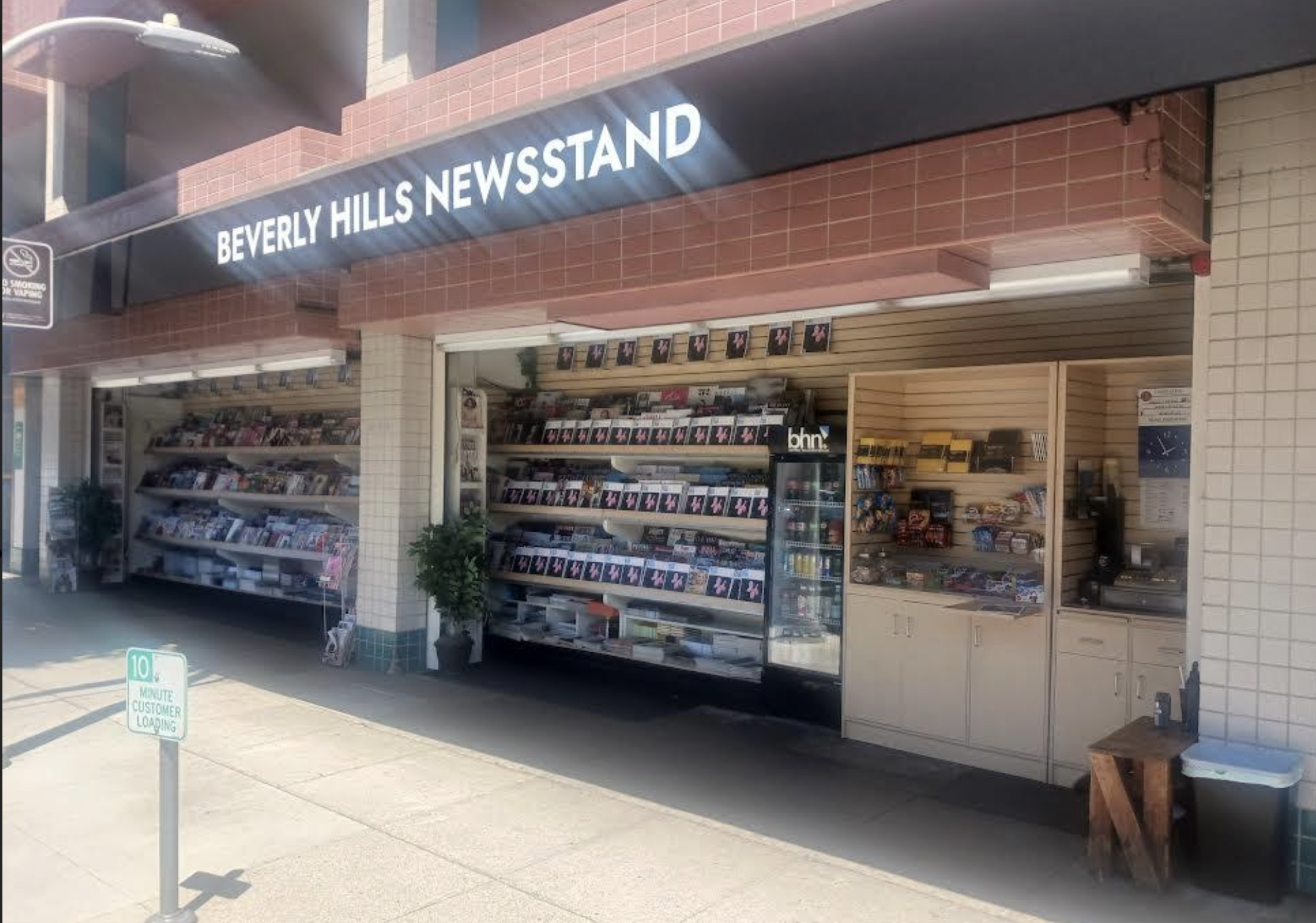
And that’s all over the city. That’s Erewhon, Vons, Ralphs, Whole Foods. And then we do have a paid model. We’re distributed through Mader News. We took over the Beverly Hills newsstand for the month of August! Never been done before by a cannabis magazine. The first day David Lynch sent his assistant to buy the magazine. The next day it was Quentin Tarantino.
They put us right next to Monocle, which was really cool because Tyler (Brule) is one of my heroes. I think we figured out distribution, and the model is to take this to the next city in second quarter 2025.
The thinking is to conquer the country through cities rather than the traditional way of printing half a million magazines and putting them on newsstands all over the country. We’re sort of doing what Cigar Aficionado does married with what Departures did, with a dollop of traditional newsstand and the whole National Geographic in the dentist office thing.
Once Cigar Afficionado got distribution in the thousands of cigar lounges, the advertisers were like, What more could we want? If you’re an advertiser, you have a guy or a woman that’s in a cigar shop, hanging out, having a good time, talking with their friends and then they pick up Cigar Aficionado and spend 20 minutes enjoying it. It’s a warm audience. That’s hiii in the lounges and dispensaries.
The other unique and singular thing hiii does is reach not only consumers but also the budtnders, buyers, and owners of cannabis dispensaries who are all reading the magazine. The competition is fierce for foot traffic and for space on the shelves. Yesterday I got two calls from buyers who saw ads in the magazine of products that they would like to carry. Both brands scored over a 1000 unit order. That will be 10x what they paid for the ad. Needless to say, they called and asked to book for the rest of the year. Smart. Happy advertisers make my day.
Samir Husni: You wrote that you’re “going to change the perception and the veneer of the industry.” What do you mean?
Rob Hill: I think that so much of this world is about perception and whether that perception is real or not, it is your reality. If you are a person that is perceiving cannabis users as criminals and low-lifes, then that’s not good for our industry. I always felt if we don’t define it, someone else will, and they have tried their darndest. Even magazines like Rolling Stone and The Atlantic have begun to take pot shots at the industry.
We just felt we were the best people to redefine, update, and package it in a way that made sense to everyone. Concentrate on the positive, creative, and medicinal parts.
Pam Patterson: Not everyone’s asleep on the couch. I think some of the highest performing individuals, and especially in the creative fields, are smoking pot all the time.
Rob Hill: You know what I’m most proud of? I’d say 80% of our advertisers have never done a print ad before. They’ve never done any marketing. This is a brand new industry, so to speak. And it’s hitting another phase because the genie can’t be put back in the bottle.
They’ve tried to slow it down and that’s not working either because humans are very malleable, flexible, and we figure stuff out. So one of the good things that happened to us right when we were getting out to sell ads, a law was passed that’s going to allow cannabis companies to write off their marketing and their advertising like every other industry. And that kind of gave us a little bit of a tailwind where we were coming from a headwind.
That changed a lot right there. Right after that, we went to the biggest cannabis expo and met with over 400 companies and started selling ads. Started telling them, “You can now write this off, like a beer company or a clothing company.”
Samir Husni: So here’s my question to you. What can you do in print that you could not do on the digital portal?
Rob Hill: Well, I was going to make a comment that because the industry is not federally legal, it makes a lot of media vehicles unwilling to do any advertising with cannabis. So things like radio, TV, much of print, etc. is off limits to cannabis companies. Also you can’t trade across state lines. So it’s all very regional play. There are some very unique, specific things to this industry that make hiii something that the community really needs.
They need an advertising vehicle. They need a place to brand. We can’t be shadow banned. We can’t be censored. We feel good. And we are something that the industry can be proud of. Every revolution needs a magazine, right?
I like the idea that we’re not going to wake up in the morning and have our Instagram taken down. I mean, like a lot of people wake up in the morning, have their Instagrams just taken down. That just happened to the biggest guy in our industry who had 8 million followers. He just woke up and it vanished. The disruption to people’s businesses who depend on that for a product that’s locally legal it’s kind of crazy.
We’re finding that print done well, like the paper that Pam picked and the size of the magazine, she’s so good at just packaging things and understanding what’s good and what catches the zeitgeist.
Print is a tangible object, people are buying vinyl albums again, and magazines are back in vogue. Are there going to be 2 million circulation magazines launching weekly? No. Those days are over.
Life magazine is coming back as a quarterly. Not a bad idea. I think quarterly is where these magazines are finding their sweet spot. Mader News told us what’s working right now are quarterlies with high quality and a high cover price. That’s why we’re charging $20 for that because they said you will get that at these newsstands.
Samir Husni: To me, this year is the year of the relaunches. But you are the year of the launch. You are launching something from scratch and using all the experience that you had for year. It’s manifested in hiii. The goal now is quarterly and LA. What next?
Rob Hill: Well we may change our minds. We talk about telepathy every night when I’m in my bed and she’s in her bed, 25 miles away. We started thinking the same. It’s been interesting.
One of the things I do want to say that’s very important to our business and unique to this business is the trade shows and the events. This industry will write big checks, 50,000, 70,000, 150,000 to have booths at these trade shows. They’ve been doing it for about a decade now.
So they’re very comfortable writing those checks. What they haven’t been comfortable with or what they haven’t been doing is writing checks for magazine advertising because there hasn’t really been that vehicle. So we wanted to combine the two.
In addition the print pages, we sold eight activations at our launch party, which means that a company brings their product, sets up a table, has their signage, while educating consumers and handing out samples. We had 500 people at our launch party We’re packaging this with, You get the goodie bag, which they all want because they want these products in people’s homes very badly.
They want the activation to basically give samples away and to educate the consumer. They all fell in love with the magazine too. That’s going to be a big revenue generator for us.
We have an event space here that’s 12,000 square foot that’s outside that can fit 500 people. For every issue we’ll do a party. So we’re selling a 360 product because our newsletter has a 67% open rate.
We’ve curated a newsletter that’s like triple or double what you’d hope to have—a 67% open rate. We’ll be able to, as we grow that, monetize it. Digital is obviously really important, but we want the magazine to drive ROI and traffic to the stores. And so far after a month the ROI is tangible.
Digital doesn’t really do that well, but a magazine that you pick up and put in your car that when you go pick up your girlfriend and her friends after class or whatever, and they all see it and begin passing it around and gawking at the ads, does that really well. There’s something happening right now and it’s totally counterintuitive, but it’s happening. I’ve never been more excited in my life. We had to throw caution to the wind. We’ve had to just jump in.
I really do feel it. We have a lot of young people that work in our office who are in their twenties and a lot of people that come through here who are millennials that treat the magazine like it’s a jewel. It’s an exotic thing to them that they’re liking. What’s not to like?
Pam Patterson: It pays off. People who take the time to open the magazine, get rewarded. And that is an essential quality. One thing I wanted to mention, too, is that weed smokers are of all different ilks, all ages, highly diverse, from all different kinds of communities including LGBTQI+. The audience is very broad, but it’s like the coolest people in all of those sort of segments smoke weed.
There’s a common thread. It’s intentionally made to relate to a broad section of people, to be a unifying factor among everyone, and something everyone can be proud of. People who are in this industry are in it because they love it. It’s still very much a mom and pop industry.
Rob Hill: You know, it’s very difficult to be a big Coca-Cola type brand when you can’t sell your product in many states and almost all countries. That’s going to start changing pretty rapidly. Japan, Thailand, Germany, and Israel are opening up. We’re probably going to have to think about some licensing deals here because it looks like globally this thing is just on fire and I think is very interesting.
I liked what Imbibe did for the alcohol industry and they rallied behind it and they have stuck with it. It’s a good magazine. They have big brands in there and we actually really feel like we’re going to get a lot of those alcohol brands at some point. You only lose when you run away from the internet or run away from the things that you know are coming. Well, and in LA I think that there are more dispensaries than McDonald’s now.
Pam Patterson: And it’s outselling wine. There’s a lot of really big categories that cannabis is marching past.
Samir Husni: So before I ask you my typical last questions, is there any question I failed to ask you or is anything you would like to add.
Rob Hill: No, think you covered it. You totally understand the magazine.
I’ve always had a lot of respect for you and follow your blog and did my favorite interview with Treats with you. And, you know, it’s great to be endorsed. You love magazines.
We love magazines. We’re finding out that a lot of other people who didn’t know they love magazines, love magazines. I’m feeling really buoyant and positive. You say, “Will this be a business? Yes, we are very, very confident.
This is not a vanity project. We’re here to make money. The universe is conspiring such a thing.
Samir Husni: I know you are playing on the word high and hi. What was the thinking about the Hii?
Rob Hill: Well, we really liked the sing-song because it’s when you see somebody that you like, or maybe you’re flirting with, it’s kind of like, hiii. And so we thought that that was a sweet way to do it.
You got to be careful in this industry to not be too obvious. A lot of those like really obvious brands get into that realm of just showing pictures of flower and stuff like that. We wanted to be something fresh, new, and friendly.
It just made a lot of sense in that regard. We trademarked the whole thing. “hiii: For People Who Partake.”
Pam put on the spine “The Third Eye,” which is referring to our pineal gland, our antenna to other dimensions, etc. There’s evidence that cannabis, CBD, and mushrooms help to decalcify the gland which has been corroded with Fluoride, etc.
Pam Patterson: We’re going to always have some really good stories in there too. Like the prison story we did. People don’t know that there are people still rotting in jail for selling three joints in 1975. It’s crazy. Not many. Lots of them have been pardoned, but it’s pretty crazy.
Samir Husni: If I come to visit you one evening unannounced, what do I catch you doing? Reading a book, smoking a joint, watching TV?
Rob Hill: At six pm we’re still at work. We’ll probably have people dropping in and probably smoking a pre-roll, but we’re not watching TV. We’re talking about issues.
We’re talking about the magic of the plant. Our office and event compound has a neighborhood clubhouse feel; hundreds and hundreds of people flow through here every month. The word is out. Frogtown and hiii are the place to be.
We’re the center of the community. We have this event space. We have the magazine that people are rallying behind.
We just hired the woman that used to work for Bob Guccione Jr. at Spin. She also worked at Cosmo too. She’s on our ad sales staff; we have now five ad sales people.
I just really feel like the ads are going to go from 26 to 40 to who know how many pages. Our main competitor, who’s not really a competitor, but he’s more of a newsstand magazine, he’s doing consistently 176 pages six times a year.
He’s doing pretty well. He has a different audience than us and a different business plan, but it’s good. We see that as a good thing.
Samir Husni: My typical last question is what keeps you up at night?
Pam Patterson: We’re hitting our stride. We have a lot of fun stories.
Rob Hill: There’s a difference when you can’t sleep at night because you’re freaking out and stressed out. Then there’s this other side that for me, it’s just excitement, almost like I don’t want to go to bed. I know I have to, because the rocket’s taken off. There’s so much to do in so many fantastic ways. It’s really a playground over here. The timing is perfect.
I think we’ve caught lightning in a bottle.
Samir Husni: Thank you both and good luck.


 Mr. Magazine
[…] Mr. Magazine: “We love magazines. We’re finding out that a lot of other people who didn’t know they love magazines, love magazines. I’m feeling really buoyant and positive. You say, “Will this be a business? Yes, we are very, very confident. This is not a vanity project. We’re here to make money. The universe is conspiring such… […]
”we booked Porsche”
Hey Rob please tell us the story Rob of landing Victor at Beverly Hills Porsche
I’d love to hear it
Was it hard to get that signature?
Just seeing this message, Alex. It was easy! With the right product and a great sales person (plus a solid side-kick) you just get ‘er done! 😉 – P