
Andy Clurman, President & CEO, AIM Media To Samir “Mr. Magazine™” Husni: “I Think There’s A Future For Print. It’s One Of The Oldest Forms Of Communication.” The Mr. Magazine™ Exclusive Interview…
January 22, 2024“Print is a foundation. Individually, everything we publish in print is profitable. And it’s part of our brand, position, platform, legitimacy, authenticity, all those things. You can get it, but it’s hard to get just in a digital form because there are so many people producing content all day every day.” Andy Clurman…
“We’re managing print as part of the portfolio and we’re doing it happily as long as it continues to contribute. I’ve seen a little bit of growth in print and subscription revenues in 2023, which was gratifying, particularly after the pandemic finally eased up.” Andy Clurman…
If you’re an enthusiast, AIM Media has a magazine for you. One of the world’s largest enthusiast media companies, Active Interest Media (aimmedia.com) produces leading consumer and trade events, websites, magazines, and films and TV shows that reach millions of readers, fans, and attendees in 85 countries. From Fine Homebuilding to Writer’s Digest, AIM has an eclectic mix of titles to entertain you and feed your enthusiasm.
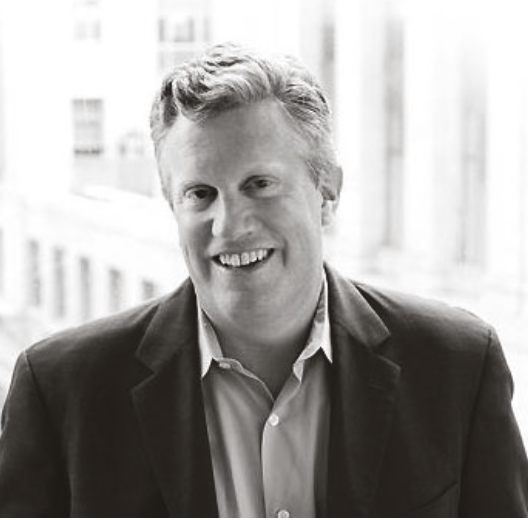
Andy Clurman is president and CEO of the company and firmly behind AIM’s M&A (Merger & Acquisition) strategies, such as the acquisition of The Taunton Press in 2023, a respected consumer media and book business, based in Newtown, Connecticut. I spoke with Andy recently and we talked about the acquisition and how it would expand AIM’s ever-growing enthusiast audience even more. It was an insightful discussion that offered knowledge and interesting concepts. And one that I hope you enjoy.
So now, here’s the Mr. Magazine™ interview with Andy Clurman, president & CEO, Active Interest Media (AIM) Please enjoy…
But first the soundbites:
On how he would evaluate 2023: I say that 2024 is a lot more promising than 2023 was. We didn’t set out a path to make a big acquisition in 2023, but as we got into the year and we saw the results of the increases in cost and the challenges of growing without investing, we thought ok, we need to change the model here. How do you do that?
On the revenue mix of AIM’s digital and print collectible events: We are now about 52% in terms of print revenue and of that it’s about 60/40 consumer revenue to advertising revenue. The remainder is made up of digital revenue from digital products, digital memberships, online education and learning, digital events, which we do a lot of digital events, and then live events. So we still have a good portfolio of in-person events and we’re growing more of those.
On his favorite brand among AIM’s many: It depends on who’s making the most money at any given moment. It’s just like I have three kids and I might tell any one of them, you’re my favorite today. (Laughs) Some are more evolved than others. Where our woodworking business has got 10 different dimensions to it and it’s really incredible to see what’s been built there over the years, some are more one dimensional. It’s fun to have them learn from each other.
On whether they will merge any of the magazines they just acquired, such as Fine Woodworking and Popular Woodworking: We kept them separate and they have thrived in that way. Likewise, with Horticulture and Fine Gardening which are great brands and have big audiences, our belief is that if it is a consumer driven business and consumers have made a choice to be part of a brand and a community, forcing them to join another doesn’t always work out the way you thought it might.
On whether he feels there’s still a future for print: I think there’s a future for print. It’s one of the oldest forms of communication. And we know from neurological studies that it has a different impact on people when it comes to consuming information. The tactile experience. The ability to curate and surprise people with things they weren’t expecting. And I think the fundamental demand for print is still there; the channels to get it into people’s hands is very challenged, especially from the newsstand standpoint.
On whether he thinks you can trust print more than digital: It’s funny at how print is held at such a different standard than digital, which is a good thing. You can do outrageous things on digital networks and social media networks and suffer no consequences, where if you betray your audience in print, do that at your peril.
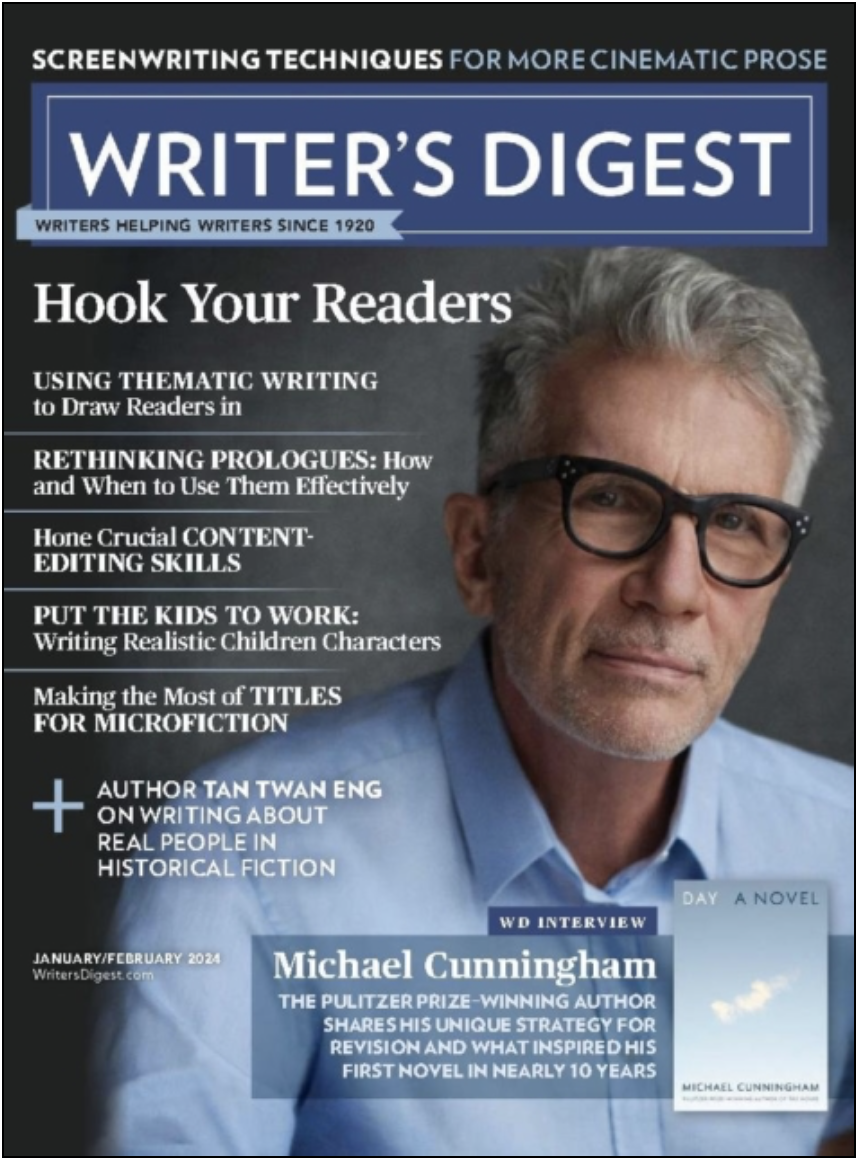
On where Writer’s Digest fits in with all of the other titles: There are things that I personally have an affinity for, that goes with my own hobbies and interests. But as a business, where there’s a strong community of people with enough critical mass and high information needs you can build a great business around them; Writer’s Digest has been doing this for over 100 years.
On what he would hope to tell someone that he had accomplished a year from now: With the combined energy and experience of the AIM and Taunton brands and people, I’d love to be looking back this time next year and say we have achieved some growth in our major lines of business. We don’t need to grow 20% but if we can stay ahead of inflation and continue to evolve our brands and business we will secure the future. I’ll consider that a good day’s work.
On what keeps him up at night: We have a lot of people relying on us in our company for their welfare and prosperity. As I tell them that even though we’re not a public company, I consider them shareholders because they’re investing their time, money and career. For us, it’s making sure that we can provide them with a good outcome and a fair return on their investment
And now the lightly edited Mr. Magazine™ interview with Andy Clurman, president & CEO, Active Interest Media.
Samir Husni: Congratulations on acquiring The Taunton Press.
Andy Clurman: Thank you.
Samir Husni: It’s one of the few merger/acquisitions of 2023 that took place in the industry. That being said, how would you evaluate 2023?
Andy Clurman: It was a tough year in terms of managing cost and inflation, all while trying to grow simultaneously. And also trying to unlock some investment dollars while you’re attempting to satisfy everyone’s demands for price increases and more money, which was part of our impetus for the acquisition after spinning off AIM.
I don’t know if I’ve talked to you since this happened, but AIM is now a private company. And that’s great; it’s still a pretty good size. But it occurred to me, in the industry, with the companies that are our relative size, there are a lot of platforms and portfolios that used to be a lot healthier. But now because costs have risen, revenue hasn’t grown and I think they are finding themselves in what I call the ‘subscale zone.’ And that means that you’re big enough that you need to have all of the services and people and platforms to manage a company that’s $25 to $50 million, but with the cost pressures you’re not able to free up enough money to invest in your growth. And if you’re not investing in your growth, then you’re probably standing still.
And standing still is really going backward because everyone wants a raise. The landlord wants a raise; the paper company wants a raise; their staff wants a raise. Somebody told me once that if you’re not growing your revenue, you’re going out of business slowly and that’s absolutely true.
Despite having phenomenal products and people and a lot of innovation, being stuck in that subscale box puts a lot of a pressure on a company. So this acquisition is a great antidote to that. It gets us out of that zone and puts us in a higher revenue tax bracket in terms of the size of the company. It gave us a ton of new, super-talented people that are a lot like our A people coming over from Taunton and they’re super innovative. With limited resources they’re laying a lot of good foundations to grow the business, which we can now do together.
So I say that 2024 is a lot more promising than 2023 was. We didn’t set out a path to make a big acquisition in 2023, but as we got into the year and we saw the results of the increases in cost and the challenges of growing without investing, we thought ok, we need to change the model here. How do you do that? It’s certainly always risky and fraught with lots of other unintended consequences, but we’ve been M&A (Merger & Acquisition) driven for 20 years and had a lot of great success doing that. The only difference is this one is on my back and my partner’s completely to make it work. We don’t have any outside investors or banks, so we’re operating without a net.
Samir Husni: But on one hand, I’m sure it’s a relief. The only people you have to congratulate or blame would be you or your partner.
Andy Clurman: It’s a really fun position to be in. And then on the other hand, I’m still very involved with our equine business, which is backed by some great private equity partners and we’ve been going great guns there with the Equine Network. It’s somewhat of a parallel universe, but a little different business model.
Samir Husni: You’re strong on events, digital and print, what’s the end collectibles? And what’s the revenue mix?
Andy Clurman: We are now about 52% in terms of print revenue and of that it’s about 60/40 consumer revenue to advertising revenue. The remainder is made up of digital revenue from digital products, digital memberships, online education and learning, digital events, which we do a lot of digital events, and then live events. So we still have a good portfolio of in-person events and we’re growing more of those.
We’re doing curated gardening tours internationally and domestically, which have been booming. We’re relaunching a woodworking in-person event series. We still have in-person writing events for novelists and screenwriters. We still have some boutique home shows and traditional building conferences.
So I look at the business as we have 36 revenue lines in our P&L’s, not all in equal size and magnitude, and they certainly benefit from each other, but they don’t operate in box step. We look at where the things are that we can grow and put time and investment into those.
Samir Husni: I know it’s not a fair question to ask you, but do you have a crown jewel? Do you have a favorite child among your many?
Andy Clurman: It depends on who’s making the most money at any given moment. It’s just like I have three kids and I might tell any one of them, you’re my favorite today. (Laughs) Some are more evolved than others. Where our woodworking business has got 10 different dimensions to it and it’s really credible to see what’s been built there over the years, some are more one dimensional. It’s fun to have them learn from each other.
But there’s not a template boiler plate for every brand in every market. So what works in wood working wouldn’t necessarily work in super yachts. The strength of the company is in the diversity of the markets, the brands, and the people we have. Unfortunately, I spend most of my time on fixing problems or pushing the envelope on new frontiers, so I probably don’t spend enough time appreciating when the brands are going great and our crown jewels.
Samir Husni: Are you going to merge any of the magazines you just acquired, such as Fine Woodworking and Popular Woodworking? Are they going to be combined or continue as separate entities?
Andy Clurman: It’s interesting, historically I’ve worked for companies like Times Mirror when they owned Ski Magazine and Field & Stream, then bought Skiing Magazine and Outdoor Life. So I’ve worked in companies where you had multiple brands within one category. When those brands were ad businesses and ad driven, then they easily cannibalized each other with the advertisers.
When they’re consumer driven…for example, when we bought Popular Woodworking and Horticulture out of the F+W bankruptcy and we already had Woodsmith and Garden Gate, we thought that we were just going to combine them. But as we got into it and did some research, we found out they both had unique consumer franchises. And you know well, in the magazine world one plus one equals one typically in magazines and magazine brand audiences.
So we kept them separate and they have thrived in that way. Likewise, with Fine Woodworking and Fine Gardening which are great brands and have big audiences, our belief is that if it is a consumer driven business and consumers have made a choice to be part of a brand and a community, forcing them to join another doesn’t always work out the way you thought it might.
We’re going to look at lots of ways to cross-promote, cross-sell, up-sell, and take products that exist in one but not the other. But for now, unless proven otherwise, we think we’re going to keep the brands and manage them independently.
Samir Husni: Are they going to stay in Connecticut or are you moving everything to Colorado?
Andy Clurman: We have both in Colorado and Connecticut. Our official headquarters is Des Moines, Iowa now. After we sold our Healthy Living and Outdoor group to Outside, we don’t really have a critical mass of people in Colorado anymore. Taunton has also been working remotely since the pandemic, so they only had a few people going onto their campus in Newtown. And we’ve been wildly successful working remotely.
We still have offices in Des Moines and we have our woodshop and TV studio there and office space. We’re going to keep the woodshop and office space in Newtown, Connecticut where Taunton is, for the folks who work out of there. A lot of them are producing video, producing television, and doing the hands-on woodworking projects. So we’ve leased that building going forward.
Samir Husni: I call 2023 the year of the bookazines. We’ve seen more than 1,000 SIPs come to the marketplace. A360 put 525 on the shelves.
Andy Clurman: You can thank my friend Doug Olson for that.
Samir Husni: (Laughs) Do you think there’s still a future for print or do you feel it’s changing?

Andy Clurman: I think there’s a future for print. It’s one of the oldest forms of communication. And we know from neurological studies that it has a different impact on people when it comes to consuming information. The tactile experience. The ability to curate and surprise people with things they weren’t expecting. And I think the fundamental demand for print is still there; the channels to get it into people’s hands is very challenged, especially from the newsstand standpoint.
As much as we still produce a lot of newsstand products and we’re on the newsstand and we produce a lot of print subscription products, we’re trying to evolve the business where we’re not going to be beholden to Google and Facebook, newsstand distribution and the retail system, which I think right now would be algorithmic changes.
I’m hearing from friends of mine who run digital only companies that are seeing these massive audience drops, they’re telling me whatever Google is up to now. And that is consuming their every waking thought. I don’t want to be beholden to one big advertiser or one big platform.
Print is a foundation. Individually, everything we publish in print is profitable. And it’s part of our brand, position, platform, legitimacy, authenticity, all those things. You can get it, but it’s hard to get just in a digital form because there are so many people producing content all day every day.
Samir Husni: Let’s talk about the trust factor; can you trust print more than digital? Because once you print something you can’t change it.
Andy Clurman: Is that a rhetorical question? It’s funny at how print is held at such a different standard than digital, which is a good thing. You can do outrageous things on digital networks and social media networks and suffer no consequences, where if you betray your audience in print, do that at your peril.
I think the things that have a very strong affinity with the audience make people take ownership of a magazine. They say things like don’t do that to my magazine. I know that our editors feel the same way. The people at Fine Homebuilding or Woodsmith or Power & Motoryacht, the editors and designers all feel that responsibility from the audience.
I’m not sentimental about print, however. My first magazine job was at Skiing Magazine in New York City and I’m the one who discontinued it in print a bunch of years ago when the business didn’t work anymore.
So we’re managing print as part of the portfolio and we’re doing it happily as long as it continues to contribute. I’ve seen a little bit of growth in print and subscription revenues in 2023, which was gratifying, particularly after the pandemic finally eased up.
It’s not a line of business that private equity is going to get excited about or Wall Street gets excited about, but it’s a great business as an owner-operated private company where you’re not subject to the expectations and pressures of those kind of investors.
Samir Husni: You have all of these specialized titles with the marine brand, the hallmark, homebuilding brand and others. And you also have Writer’s Digest. Where does it fit in this group of titles that you have?
Andy Clurman: There are things that I personally have an affinity for, that goes with my own hobbies and interests. But as a business, where there’s a great, strong community of people, like my new people, with enough critical mass and information, with community wants and needs, there’s your reason. And not everything works for everyone, but we have the abilities in the people in the company to manage events, to produce online education, to produce all kinds of digital products.
So you can substitute woodworking for writing or car collecting for gardening, but our mentality and strategies are roughly the same across the whole waterfront.
Samir Husni: And it’s your oldest title at over 100-years-old?
Andy Clurman: Writer’s Digest and Horticulture are both well over 100-years-old.
Samir Husni: I wonder if we’ll ever celebrate 100 years with any digital entity?
Andy Clurman: (Laughs) Well, we always hear that Meet The Press is the longest running television show on television. I’m on the board of Yankee Publishing. And compared to Meet The Press, Yankee is the longest, continuously published periodical in America dating back, I think, 275 years. And they still sell over a million copies a year.
Samir Husni: So if you and I were talking a year from now, what would you hope to tell me you had accomplished in 2024?
Andy Clurman: We are expecting, projecting, counting on reigniting some growth in our business after spending last year fighting inflation and figuring out a transformative way to get out of that box I was describing.
Having done that, I hope to follow through with all the plans we have around that. And one of those is, we are in the late stages of building out a much more sophisticated consumer data platform and automated marketing stack, which we built a big organization around to manage that. Then we can launch a whole bunch of even nichier products because even within the audience of writers there’s people who are science fiction writers, screen writers, murder-mystery writers and more..
So we think we can identify new groups of people or smaller groups of people and have an ability to serve more tailored content and services and products of interest to them. In Power & Motoryacht you’ve got people who are center console, offshore fishing people, you’ve got people who are Great Lakes bass boat fishing people.
So even though were already very niche, we still have a pretty big tent within these markets. So being able to serve them efficiently and at a relative scale, and also do a much better job of marketing to people rather than just everybody being the same. And to have a system set up where you’re speaking more specifically to people’s interests and serving them with a whole array of products around that.
We think that’s a growth path for us. So with the combined energy, people and experience, I’d love to be looking back this time next year and say we have all of the major lines of business growing at some rate. We don’t need to grow 20% if we can stay ahead of inflation instead of going out of business slowly. Instead, securing the future. Then I’ll consider that a good day’s work.
Samir Husni: My typical last question; what keeps you up at night?
Andy Clurman: We have a lot of people relying on us in our company for their welfare and prosperity, even though I tell them that I consider them shareholders because they’re investing their time, money and career. For us, it’s making sure that we can provide them with a good outcome. I don’t think that we’re living on the ragged edge, but we’re risk takers and we’re doing things that are hopefully for all of our benefit.
I feel like the promises have been made and the expectations have been set so that everybody is gratified to be part of this. And is proud of what they’re doing.
Samir Husni: Thank you.


 Mr. Magazine
[…] Andy Clurman, President & CEO, AIM Media To Samir “Mr. Magazine™” Husni: “I Think There…: “Print is a foundation. Individually, everything we publish in print is profitable. And it’s part of our brand, position, platform, legitimacy, authenticity, all those things. You can get it, but it’s hard to get just in a digital form because there are so many people producing content all day every day.” Andy Clurman… […]