h1

Forbes And The BrandVoice Match-Making: Mark Howard, Forbes’ Chief Revenue Officer And Chief Match-Maker Explains And Elaborates… The Mr. Magazine™ Interview.

June 5, 2015

“The types of content pieces that are created in the magazine, the opportunities that it affords us from an editorial perspective to continue to celebrate the entrepreneurs and entrepreneurial capitalism around the world that the world is increasingly moving to a place where those are the types of people that do tell the stories of business; it gives us access in a way that we would not have with just digital.” Mark Howard
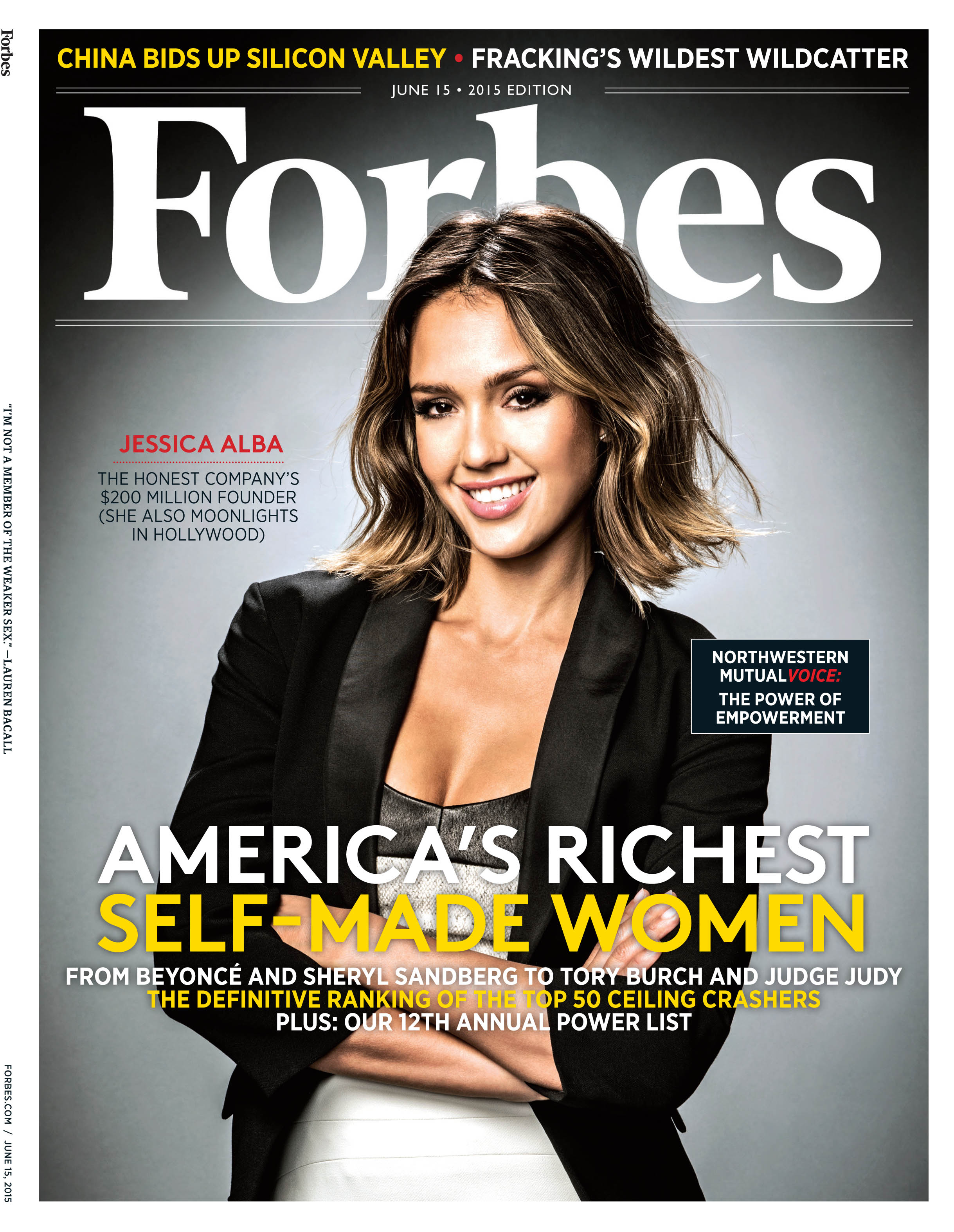
forbes cover 061515Before native advertising, product placement and content marketing were terms that some holier-than-thou media critics and magazine pontiffs were using to cast aspersions and judgements on those that were practicing the model, Forbes Media was busy perfecting it. From content stories that were brand-produced, with their highly successful BrandVoice business model, to custom publishing done to an art form, Forbes has been leading the way in honoring their reader’s intelligence to know the difference between editorial and advertorial, with the act of transparency at the forefront of everything they do.

Mark Howard is chief revenue officer of Forbes and knows better than anyone that innovation and creative thinking when it comes to the execution of ideas is critical to the survival of any magazine media company in today’s digital world.

I recently spoke with Mark about the success of BrandVoice, the future of Forbes and where he saw the company heading. It was a very open and honest discussion about the idea of native advertising and content marketing that may have some rethinking their position on the subject. The transparent and highly savvy execution of Forbes’ business model presents another alternative to the revenues of legacies and offers a vision for the future many could use.

So, I hope you enjoy this illuminating conversation with Mark Howard, CRO, Forbes Media. And if you keep an open mind when it comes to something other mediums have been doing for generations; you may be surprised at the possibilities.

But first, the sound-bites:

HowardMarkOn anything negative he can visualize from the BrandVoice concept of telling different brand stories from the business world on Forbes’ covers: We do not and I’ll explain why. For many, many years we’ve believed that the cover of the magazine is the front door of the brand. For five years now, we’ve been embracing a people-centric cover strategy where individuals grace the cover of our magazine. And coinciding with that philosophy, five years ago we also launched the concept of BrandVoice, where brands tell stories through their lenses and from their points of view from the business world.

On why there seems to be a different set of rules for magazine media from other platforms when it comes to native advertising and product placement: I think for many years there were a set of rules that people for the most part followed, in terms of best practices for the industry. And quite frankly, I think that the times progressed faster than those rules, so we lived in an interim period where the way consumers behaved and certainly the way that those other mediums evolved was just quicker when it came to best business practices.

On the fact the Forbes’ model has been leading the way in programmatic buying and native advertising before anyone else was even talking about it: You know I think the driving force behind all of this was really when the Forbes family took a chance and acquired True/Slant, which was of course created by Lewis DVorkin, who has since stayed on and really transformed the overall vision for Forbes media.

On whether he thinks other media companies may replicate the Forbes model: In various forms there have been a lot of other companies that have replicated either digitally or in print the expansion of contributor-based content creation. I don’t think very many of them, certainly none that have the brand cache of a Forbes; none of the other brands at our level necessarily tout it the way that we do, where we put it front and center and we talk about the fact that the economics of content creation were broken and disruptions like digital media and programmatic media and social media were changing the way that you had to think about your business.

On whether he believes Forbes could have reached its present 70% digital revenue without a print component: When you think about the Forbes brand and you think about our history and the equity that the Forbes name carries in the marketplace; that has absolutely given us an opportunity to build our digital business in a way that we would not have been able to do otherwise without it.

On whether he can ever envision Forbes media without a printed Forbes magazine: Today, no, and in the near future, no, absolutely not. The types of content pieces that are created in the magazine, the opportunities that it affords us from an editorial perspective to continue to celebrate the entrepreneurs and entrepreneurial capitalism around the world that the world is increasingly moving to a place where those are the types of people that do tell the stories of business; it gives us access in a way that we would not have with just digital.

On the fear that a smaller company will look at Forbes business model and start selling their covers as cover stories: It’s always possible. I think what it will come down to is what value do readers place on that brand? If they’re starting from scratch, they don’t have the equity in the marketplace that a Forbes does. They certainly don’t have the cache.

On the definition of the term BrandVoice in the world of advertising today: It’s content that’s told in the voice of the brand, not something that’s been created necessarily in the Forbes voice on behalf of a brand.

On the difference between BrandVoice and the whole genre of content marketing and custom publishing: Obviously, custom publishing still represents a lot of business for us as well. That’s actually doing particularly well, which is exciting for us. But I think the big difference is the content is intended to read more like an article or be presented as an infographic or an online post in the same sort of format and read the same way that editorial content would be presented.

On the major stumbling block he’s had to face: I inherited the business at a time when the digital revenue had just, at that point, equaled print revenue. And of course, digital was continuing to grow. The big challenges in the marketplace surrounding the plateauing or slight decline overall of print advertising of course is something that we addressed as well as the continued migration of digital ad dollars in the programmatic.

On the fact that everything Forbes has done to improve their model and digital business has been with an eye on their print component as well: You’re absolutely right. We have tremendous readership; in fact, we’re at our all-time high in terms of average issue readership, according to MRI, with essentially seven million readers per issue. We actually had with our Billionaire’s issue, which was the last issue that was reported on; we had 7.4 million readers, which was the largest readership of an issue since 2009.

On media critic’s reactions, on a scale from one to ten, on Forbes’ BrandVoice model – ten being the opinion that Forbes sold out: In 2010 when we first launched this, I would say the reaction was a 10. There are articles online about how Forbes had officially sold itself out and this was the beginning of the end of premiere journalism. And the reaction was pretty intense.

On what he would tell Mr. Magazine™ a year from now about Forbes if they were having a conversation: I would tell you that the way in which we’ve used technology and design in both print and digital could further expand the way that brands are telling stories and creating content on Forbes.com and in Forbes magazine.

On anything else he’d like to add: All of these partners are looking at us as cross platforms, integrated partnerships for them. And I think that that’s really where we’re going to continue to see high value for our ability to work with which ever brands; when we can leverage live events featuring the content or at least content ideas; where we can use the magazine to beautifully lay out data that a brand is able to provide for our readership, in context with the flow of the book.

On what keeps him up at night: The biggest thing that I’m thinking about is mobile. It’s mobile and it’s also how do we continue to make sure that we’re quantifying value of the print product.

And now the lightly edited transcript of the Mr. Magazine™ interview with Mark Howard, Chief Revenue Officer, Forbes Media.

Samir Husni: Lately, magazine covers seem to have become very hot, most recently the Vanity Fair cover with Caitlyn Jenner comes to mind. No other medium that I can think of can deliver a topic with the same impact as a magazine cover. And when it comes to the cover of Forbes and what you’ve done with the NorthWestern Mutual voice; do you see anything negative that can result from that move?

AT&T on second cover 012014 Mark Howard: We do not and I’ll explain why. For many, many years we’ve believed that the cover of the magazine is the front door of the brand. For five years now, we’ve been embracing a people-centric cover strategy where individuals grace the cover of our magazine. And we think that it’s reflective of the way that we tell the stories of business through the lens of individuals who are doing interesting and amazing things in the world.

And coinciding with that philosophy, five years ago we also launched the concept of BrandVoice, where brands tell stories through their lenses and from their points of view from the business world. And because we’ve been consistent, in terms of the way that we’ve been presenting our content, labeling our content and calling out that material on the table of contents, as we’ve moved into this year and we had the second cover of the magazine, which was an AT&T BrandVoice, then in the following issue, the retirement guide; Fidelity actually got called out as part of our retirement package on the cover with their BrandVoice.

And now the execution with NorthWestern Mutual, which was a content experience that was very consistent with our Top Women’s issue; we feel that there’s a consistency here, in terms of the way that we’ve developed this program over the last few years and then their inclusion on the cover we believe fits with that concept of being fully transparent, connected with the issue seen, but also separated and identified so that the consumer knows that it’s different from a Forbes editorial product.

Samir Husni: For years other platforms such as television and movies have used the brand voice, have put product placement, native advertising, you name it, into their different environments; why is it when it comes to magazines, and anytime I refer to the word magazine I mean the printed product, why are we treated differently do you think?

Mark Howard: I think for many years there were a set of rules that people for the most part followed, in terms of best practices for the industry. And quite frankly, I think that the times progressed faster than those rules, so we lived in an interim period where the way consumers behaved and certainly the way that those other mediums evolved was just quicker when it came to best business practices.

And so I think it took a number of different executions and publishers to break beyond the governing rules that had existed for many decades and do things that weren’t necessarily accepted as being something the industry as a whole was comfortable with, but like any change I think somebody has got to go first and do things that are reflective of the times that we live in and the fact that consumers are able to comprehend the difference between an ad and editorial.

Samir Husni: For five years now you and Forbes have been leading that revenue strategy based on programmatic buying and native advertising even before anybody else was talking about it. What prepared you from your background to take this leading role and do you think it would have worked at any other media company other than Forbes?

Mark Howard: That’s a great question. You know I think the driving force behind all of this was really when the Forbes family took a chance and acquired True/Slant, which was of course created by Lewis DVorkin, who has since stayed on and really transformed the overall vision for Forbes media.

He really set out with this notion that he’s going to disrupt business journalism and that the tools of the web and the behaviors of consumers as a result of living their lives on the web, increasingly the social web, were capable of experiencing a different type of content-based media company.

Lewis came and shared that vision and at that time, 2009 and 2010, with all the challenges businesses were facing, but especially the business press. The market was right for disruption and Forbes being an independent, at that time family-owned business, we always celebrated that concept of entrepreneurship and entrepreneurism, so it was time for us to also embrace it ourselves, in terms of our own business. That was something that inspired a lot of people. It really did take somebody like Lewis who had a vision, understood where he wanted to go with it and could very clearly articulate that.

I think if you look at all of his posts dating back to 2010; he published our blueprint for what we were doing, not just what we had already done, but also looking forward. And he was fully transparent to anyone who read him about where we were going and that form of communication for the individuals, myself included, who were part of it at Forbes, was very inspiring. We really were a part of a change that was happening with a model that had yet to be proven, but it was absolutely a model that was differentiated.

Samir Husni: Do you expect that model to now be replicated by other magazine companies?

Mark Howard: In various forms there have been a lot of other companies that have replicated either digitally or in print the expansion of contributor-based content creation. I don’t think very many of them, certainly none that have the brand cache of a Forbes; none of the other brands at our level necessarily tout it the way that we do, where we put it front and center and we talk about the fact that the economics of content creation were broken and disruptions like digital media and programmatic media and social media were changing the way that you had to think about your business.

But I think that you see varying degrees of it and I think you see with a lot of the new media that they’re building similar types of businesses knowing that they’re not tied to some of the legacy infrastructure that exists with a lot of traditional companies.

The model has proven itself in that our print business has really stabilized, which is exciting. We’ve been able to hold where we are, and yet the digital business now represents about 70% of our revenue and we’re not in the situation some of the other traditional media companies and traditional publishers are, where they’re trying to make the lead to sustainable growth business; we’ve already made that transition and are profitable and are continuing to grow at a significant clip every year.

Samir Husni: Do you think you could have reached 70% digital revenue without the print component of Forbes as the brand’s cornerstone?

Mark Howard: When you think about the Forbes brand and you think about our history and the equity that the Forbes name carries in the marketplace; that has absolutely given us an opportunity to build our digital business in a way that we would not have been able to do otherwise without it. There is absolutely an expectation around quality of content, quality of organization and quality of audience that comes when you have a background like we do. And that does not necessarily exit with the new media startup companies. So, yes, I think it played a significant part in what we’ve been able to accomplish.

Samir Husni: Can you imagine Forbes media without a printed Forbes magazine?

Mark Howard: Today, no, and in the near future, no, absolutely not. The types of content pieces that are created in the magazine, the opportunities that it affords us from an editorial perspective to continue to celebrate the entrepreneurs and entrepreneurial capitalism around the world that the world is increasingly moving to a place where those are the types of people that do tell the stories of business; it gives us access in a way that we would not have with just digital.

And I also think that it gives us access to editorial talent that we might not necessarily get if we only had a digital property.

Samir Husni: One CEO of a media company was telling me that with the legacy brands it’s so hard to change. His thoughts were it’s easier to kill a legacy brand than start something new because with something new you can do so many different things that you can’t do with a legacy. But when you look at Forbes and what you’ve done; in fact, investing in the print editions and launching international editions all over the world; do you think that there’s a fear that a smaller company or an entrepreneur will look at your model and start actually selling their covers for cover stories?

Mark Howard: It’s always possible. I think what it will come down to is what value do readers place on that brand? If they’re starting from scratch, they don’t have the equity in the marketplace that a Forbes does. They certainly don’t have the cache.

From a reader’s perspective, I think the notion of being on the cover of Forbes magazine can carry such great weight from a business and cultural perspective that it would be very hard for somebody else to be able to replicate that. Now, would I see a place where other startups would take that approach and offer that? Certainly. But would consumers be accepting of that? Probably, as long as they understood that that’s why that individual or that company was placed there. Then it would come down to the merits of the story and if the story behind it was something that was relevant to whatever brand was telling that story, then you’re on to something.

But the worst thing is when your integration of the advertiser isn’t authentic to the way that your brand is positioned in the expectations of your readers.

Samir Husni: Define for me the term BrandVoice in the world of advertising today.

Mark Howard: The quick history is when we launched it as a product in 2010 it was called AdVoice, but AdVoice wasn’t an accurate description of what it is. It wasn’t intended to be an advertisement or advertorial; it was intended to be content told through the voice of a brand.

Almost three years ago there was a team: Lewis DVorkin, myself, Meredith Levien, when she was still at Forbes, Andrea Stegall, who was on Lewis’s team and then of course, with the guidance of Mike Perlis, our CEO, we decided in order to more accurately describe what the product is we were going to change the name from AdVoice to BrandVoice, which has been a tremendous success for us.

To boil it all down and answer your question, it’s content that’s told in the voice of the brand, not something that’s been created necessarily in the Forbes voice on behalf of a brand. And we believe that more and more brands are looking to tell good stories and connect with consumers through the content, but we really want the stories that are being told to feel like they’re coming from that brand, but they need to be nuanced so that’s it’s very appropriate to be consumed on Forbes or in Forbes magazine.

Samir Husni: I know this is a very obvious question and I know what you’re going to tell me, but how is this different from the whole genre of content marketing and custom publishing?

Mark Howard: Obviously, custom publishing still represents a lot of business for us as well. That’s actually doing particularly well, which is exciting for us. But I think the big difference is the content is intended to read more like an article or be presented as an infographic or an online post in the same sort of format and read the same way that editorial content would be presented.

The custom content still reads very much brand-centric, whereas the BrandVoice tells the story of the brand and its products. The BrandVoice is telling the story of the business marketplace or finance marketplace through the lens of the brand, but not necessarily about them.

It’s a nuance thing and sort of in the eyes of the beholder, but I think the other big difference is within context. So, a BrandVoice program, if you look at it in the magazine, always runs within relevant editorial content. An advertorial or a special section is its own thing that’s siloed in the magazine and is not really working to the flow of the content.

Same thing on the website; each of the brands select which editorial stream they want their content to flow through. So, if it’s an article by SAP on cloud computing, they would select something in our cloud computing stream; NorthWestern Mutual would select retirement or one of the other relevant investing streams.

It’s all about the contextual discovery of the content as well as the nuance approach to how it reads more about a topic as opposed to about a brand, if it’s going to be BrandVoice.

Samir Husni: Mark, since you assumed the job as chief revenue officer; what has been the major stumbling block that you’ve had to face and how did you overcome it?

Mark Howard: I inherited the business at a time when the digital revenue had just, at that point, equaled print revenue. And of course, digital was continuing to grow. The big challenges in the marketplace surrounding the plateauing or slight decline overall of print advertising of course is something that we addressed as well as the continued migration of digital ad dollars in the programmatic.

And then increasingly the biggest issue for all publishers is how consumers are now finding and consuming content more and more on mobile devices and yet, a brand advertising marketplace does not yet fully exist to capitalize on that traffic. So, there is very much a macro of factors that are weighing in on us that we’re addressing.

But to your point; we were very aggressive in 2010 on building out the BrandVoice product and creating a new revenue stream, even very aggressive since 2012 in the first quarter and hyper-aggressive with programmatic. And both of those debts have paid off and have continued to stay the course for the rest of our business and helped us to achieve the gross success that we have.

Samir Husni: One of Lewis’s famous quotes when I interviewed him when he was visiting with us here at the University of Mississippi was: “We do not have a magazine problem; we have an advertising problem,” when referring to the print product. And looking at what Forbes has done; it seems to me that you’ve also enhanced the print product; that all of this digital growth didn’t come at the expense of your print entity, but rather, it’s finding ways to ensure that there will be a future for print in this digital age. Am I right or am I wrong?

fidelity on cover 030215 (2) Mark Howard: You’re absolutely right. There are two things; one is that quote is absolutely correct. We have tremendous readership; in fact, we’re at our all-time high in terms of average issue readership, according to MRI, with essentially seven million readers per issue. We actually had with our Billionaire’s issue, which was the last issue that was reported on; we had 7.4 million readers, which was the largest readership of an issue since 2009.

So, the readership is strong and certainly if you look at the MPA 360 data to look at our overall brand footprint, depending on the given month, we’re either the 4th or 5th largest brand in the entire study, that’s with all magazine brands included. Certainly, the digital has given us exposure to a new audience.

We also think that the unwavering commitment that we’ve had to always represent entrepreneurship and entrepreneurial capitalism and the business world that we live in today, which is all about that, plays true to us as we’ve never had to chase trends or try and reinvent ourselves.

In terms of the print commitment to the product, I think that what’s been spectacular is that the editor of the magazine, Randall Lane, has been very methodical in terms of how he’s evolved the look, feel and flow of the magazine. And while we haven’t done any form of a full-fledged redesign, I think what you would notice is if you laid out an issue from April 2015 to April 2014 and April, the year before that; it’s a very, very different looking product and he puts it together very differently than he used to, but he’s been doing that through a series of small integral changes as opposed to any dramatic shifts, which has resulted in a completely differentiated product that we’re working with right now.

So, it’s been exciting to see that and yet we haven’t necessarily done the things that get some of the big splashes of attention like a full-fledged redesign. But to your point, we have been making very significant investments in photography and design that makes a big difference for the business.

Samir Husni: Since BrandVoice has been in the marketplace; how would you gauge the media critic’s reactions? What has it been on a scale of 1 to 10, with 10 being the opinion that Forbes has sold out and journalism is dead and what in the world is Forbes doing? From your connections, what do you think the reaction has been?

Mark Howard: In 2010 when we first launched this, I would say the reaction was a 10. There are articles online about how Forbes had officially sold itself out and this was the beginning of the end of premiere journalism. And the reaction was pretty intense.

Just a couple of years ago in 2012 when native advertising really came onto the scene, all of those same publications and many of the same reporters were writing stories about how Forbes had created a new line of business understanding the new opportunities of the digital world. And then because everybody, every publisher at that point, had essentially built some form of a native content business; I think that the media world has gotten very comfortable with the various forms that native content comes in, but certainly in January and February, when we did the AT&T and Fidelity covers, people popped back up again. I would put it at a five on that go-round because it involved the cover.

But at the same time, there are also a number of phenomenal posts that said we don’t understand what all this reaction is about; it’s logical and transparent and Forbes has been consistent in the way that they’ve presented themselves over the years. So, that’s why I would put it at a five with this cover, because of the recent cover treatment.

Samir Husni: If you and I are engaged in a conversation one year from now, what would you tell me?

Mark Howard: I would tell you that the way in which we’ve used technology and design in both print and digital could further expand the way that brands are telling stories and creating content on Forbes.com and in Forbes magazine. It’s been very exciting in that a number of very interesting approaches and concepts have been released in the last year.

Samir Husni: Anything else that you’d like to add?

Mark Howard: What’s really exciting for us is that if you look at a partner who has participated in the BrandVoice spread so far this year; you have AT&T, Fidelty, NorthWestern Mutual and ADP in the last issue; we’re taking new approaches to how we’re having their content and usually their data presented.

But more importantly is that all of these partners are looking at us as cross platforms, integrated partnerships for them. And I think that that’s really where we’re going to continue to see high value for our ability to work with which ever brands; when we can leverage live events featuring the content or at least content ideas; where we can use the magazine to beautifully lay out data that a brand is able to provide for our readership, in context with the flow of the book.

We’re starting to see a lot more interest in brands in that level of equal partnerships and that’s very promising for media overall, especially print. And these high impact executions are important. We’re very excited. We have a whole queue of content now that we’re working on and I think you’re going to continue to see the evolution of what you have with BrandVoice, especially in print today, but digital as well. And you’re going to continue to see us push through with creative concepts that hopefully will be very interesting to the readers and will allow us to bring it forward with different advertisers.

Samir Husni: My typical last question; what keeps you up at night?

Mark Howard: The biggest thing that I’m thinking about is mobile. It’s mobile and it’s also how do we continue to make sure that we’re quantifying value of the print product. If we can continue to build more data stats per print and our current readership, then that’s helpful and really the big frontier is a mobile world where most of the monetization takes place with apps and direct response. How do brands break through and use the medium as a brand-building platform and how do we as a publisher continue to create opportunity to do so.

And certainly, BrandVoice, because it’s optimized for mobile and it’s the first step in that process, but I really think that we’re at the first stages of figuring all of that out.

Samir Husni: Thank you.

h1

Digging ‘Print Is Dead’s’ Grave – Sounds Like Fun. A Mr. Magazine™ Musing…

June 3, 2015

Photo illustration of the dearly departed "PRINT IS DEAD" by Darren Sanefski.

Photo illustration of the dearly departed “PRINT IS DEAD” by Darren Sanefski.

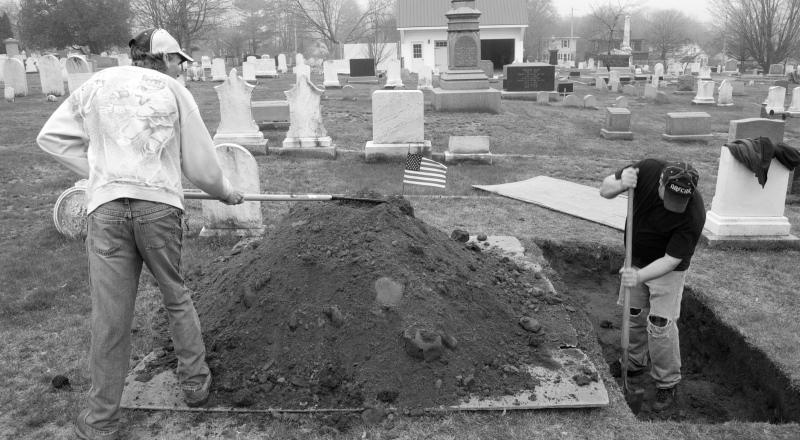
From http://transom.org/2011/four-feet-under/ Picture used for illustration from http://transom.org/2011/four-feet-under/%5B/caption%5D I’ve been thinking a lot lately about all of the self-appointed media critics and analysts that seem to be coming out of the woodwork today when it comes to the vital signs of American magazines and magazine media. From a slight pulse to no pulse, these “chosen” ones have deemed it their mission in life to report negatively on the heart rate of magazines and magazine media.

I’m not sure when the pontificators of print’s demise were put upon their lofty thrones, or who dubbed them kings and queens of the print-is-dying court, but nevertheless, they know who they are, no matter how much they claimed to have never said ‘print is dead.’ I am sick and tired of reading and hearing their opinions on what I should think and how I should interpret what’s happening in the magazine industry today.

Not even in my wildest dreams have I ever imagined myself in a position where I could commandingly influence a CEO, an editor, or a magazine publisher on what they should be reading or how they should be running their company. I consult with them and offer my opinions, but never try to bewitch them to agree. Needless to say that with all my years of and in education, with my doctorate and all of my life’s studies, I have not considered that ability among my many talents.

I have always tried to be the bearer of positivity, rather than negativity when it comes to the status and health of magazines and magazine media. True, sometimes when you see the light at the end of the tunnel, be careful, because it could be the train coming. However, more often than not that scenario is the exception, rather than the rule. Usually, light doesn’t mean darkness; usually light is self-explanatory, it means light. Hope. Possibilities. The dark times have been illuminated.

I try never to curse the darkness; you never know what you may discover while you’re stumbling around in there; instead, I try to dig the match out of my pocket and light the candle.

Having said all of this; a few things have taken place over the last few days that motivated this particular justifiable tirade, justifiable because every con has a pro and every action has a reaction and this is mine.

One is the story of Caitlyn Jenner. If you’re a person who knows the media and knows how the media works; was it really a surprise to you that Caitlyn Jenner chose a magazine such as Vanity Fair to release the story and her first pictures to? What other medium could have created the same lasting effect, the same day in and day out, in-your-face exposure as a magazine like Vanity Fair? Every means of communication out there, from television to Internet, was talking about Vanity Fair magazine. Every social media site that digital media has brought into being was consumed with one thing: the subject matter of an ink on paper magazine, a print entity that was lighting the Internet up with more curiosity and concern than the latest pop-up ad from this store or that.

xeyqffdecqgbr9m9dyzz-2 That print publication, Vanity Fair, is as powerful today as it was yesterday, if not more. And the Caitlyn Jenner cover validates that.

Oh, the cynics will cry from their familiar spot at Complaining’s table that we have to be realistic and look at the condition of the newsstands and the numbers. But how often do we need to remind those same cynics (who have also appointed themselves media prophets) that in the United States of America, newsstands are only 8% of the total distribution for regularly published magazines?

I wish those same naysayers would try to tell someone like Tony Romando of Topix Media Lab, who’s making his entire living from the newsstands with his Bookazines, which really are only glorified magazines, that print is in decline or out the door completely. Tony has adapted his business model to the needs and the desires of the American public and it’s working.

I have decided to stop reading all of these opinionated, emotionally driven, power-seeking editorials and comments that continue to tell me how bad off the industry is and will remain, whether it’s circulation revenue in newspapers is starting to be larger than advertising revenue, which by the way should be reason to celebrate, we are finally charging the consumer the fair price for our products.

It was always known that if we created a product that’s worthy of buying, consumers would pay for it, because we’re not just in the content delivery business. The media company as a whole may be a content-generating company, but magazines are much more than content. Magazines are experiences. And the experience that Caitlyn Jenner’s story in Vanity Fair will generate, you can bet will be much more than a five-second click of the mouse.

When I travel overseas and bring back all of these new magazines and first editions; when I talk to these companies’ CEO’s, editors, and publishers and I see the energy and the intriguing responses they have for how media is changing; I never hear that negativity or that phrase: Print is dead or dying.

Needless to say, for those of us, including myself, who don’t have a horse in this race; I feel if we don’t have anything good to say, then we should keep our mouths shut. That’s just plain common sense. If we can’t edify the industry that we all claim to love; if our opinions shed misplaced doubt and negativity on the very profession that allows us to be talking about this today; then we should all stay quiet.

Look at any other medium, any other platform, any other product, and tell me where do you find as much negativism, as many energy-draining articles and predictions about an industry where every CEO you’ve spoken with tells you they’re still making money, good money, and if they start something that doesn’t work, they kill it and start something else. And that has always been the mantra of the magazine business. The death of one publication doesn’t mean the death of an industry. If so, when they removed your favorite TV program; your entire television experience was over. I guess you just haven’t realized it yet.

I am a student of the newsstands; I am a student of the streets; I am someone who spends almost $30, 000 a year buying magazines from the newsstands. I’m not just writing fiction. I live the newsstands; I walk it everyday. I purchase magazines every single day. My monthly magazine bill is larger than my monthly food bill.

And when I see those negative comments, I think about all of the digital entities that have either added a print component for the first time or brought one back from the grave. People like Creativ Magazine, who were digital before print; C-Net; Pitchfork Review, Porter and the list goes on and on. How do the naysayers of print pigeonhole those people?

Or major publishers who have launched new titles: Bauer’s Simple Grace, National Geographic’s History, Smithsonian’s Journeys and Rodale’s Organic Life, to name a few. These are people who don’t take their money lightly and yet, they’re investing in print. And they’re not listening to the self-appointed media critics? How dare they?

Like many in the publishing world, I will continue to refuse the gravediggers of print as they spout their invitations to join their negativity. And as their shovels toss dirt upon print’s coffin, I’ll refuse to play a part in that as well.

In fact, the only shovel you will ever see Mr. Magazine™ touch is the one that will be used after they lower the lifeless (pun intended) phrase “Print is Dead” into the ground. For that one, I will toss a shovel or two…

Until the next Mr. Magazine Musing…

h1

Compelling & Visually Addictive – There Are No Rules In Creativity – Only The Realization Of Human Potential – The Mr. Magazine™ Interview With Blake Brinker, Publisher & Brad Thomas, Editor-In-Chief, Creativ Magazine

June 3, 2015

“How it all worked out was we were seeing so many dynamic people and so many amazing creations and these great efforts in curation and sharing, but we thought, it’s still not enough. We wanted to propagate it further in a way that was almost sacred to people and we thought that magazines were in that category.” Blake Brinker


“I get motivated every day when people come up to us and say, creativity is the most important thing we have and you’re putting it into this beautiful print publication that I can get on a monthly or bimonthly basis. Just wow; what you’re doing is so inspiring and the world needs this, with the things that are happening in the world today, we need something like this to give people hope and optimism. With all the negativity that we hear every day, this is an incredible amount of positivity showcasing people doing absolutely amazing things.” Brad Thomas

Creativ April-1 (2) What can you say about a magazine that literally takes your breath away? One that is so visually and design prolific that your reaction each and every time you pick it up is nothing short of amazing?

Creativ is a concept born from the minds of Blake Brinker and Brad Thomas, publisher and editor-in-chief respectively. The magazine is an extension of their global online network that is serving to integrate print and digital to the acme of their intertwined possibilities.

A showcase for the creativity of the Creativ community; the magazine celebrates the human imagination and originality in tangible form, cradling creativity of all kinds. With every spread between the magazine’s covers, links are offered to the featured artist’s individual portal on Creativ.com. It’s a unique and ingenious gratuity that conjoins the tangible with the conceptual.

I spoke with Blake and Brad recently about the inspiring and wonder-filled magazine and about the celebration of human potential they offer with every issue. Gracious and fun-spirited; the two men offered a glimpse into the Creativ world and their hopes and expectations for the brand’s future.

I hope you enjoy the Mr. Magazine™ interview with Blake and Brad; the powers-that-be behind Creativ Magazine as you open your mind and let your ‘Creativ’ juices flow. And be sure to watch the two Creativ videos embedded in this blog by the Creativ team… I will not spoil the surprise, but I know you would thank the Creativ team for creating them and me for embedding them in this Mr. Magazine™ interview.

But first, the sound-bites…


Brad Thomas  (left in blue) and Blake Brinker (right in black)

Brad Thomas (left in blue) and Blake Brinker (right in black)

On the Creativ story: (Blake Brinker) Early in my life and pretty much early in Brad’s life, we just developed this fascination around the human potential. And around what makes good people great. What makes some people leave lasting marks on the world? What is it that makes up their character? What are the things that they do and what are the thoughts that they have that enable them to push further and look at the world differently and create things which ultimately make a difference; things that create inspiration and wonder?

On being a bit crazy to start a print magazine after being a digital-only entity first:
(Brad Thomas) (Laughs) I believe we’re just crazy enough to try things that make other people want it. Cheers to the crazy ones, right? (Laughs again) Creative jobs are a little bit crazy; otherwise, we wouldn’t have the iPhones or anything else creative, so I think being crazy to a certain extent is a good thing, because doing what we’re doing, and not even just what we’re doing, but just being an entrepreneur in general, is really a scary thing. You have to be a little naive and a little crazy to even go forward with it.

On why they decided on a print component:
(Blake Brinker) How it all worked out was we were seeing so many dynamic people and so many amazing creations and these great efforts in curation and sharing, but we thought, it’s still not enough. We wanted to propagate it further in a way that was almost sacred to people and we thought that magazines were in that category.

On a major stumbling block they’ve had to face:
(Blake Brinker) The execution; the actual publishing side of it has been a huge stumbling block, a lot more than it was, but thankfully we have a very tendered gentleman that has helped us. He has a lot of history in manufacturing and working with tradesmen and he’s really came in here and helped us take this dream of making this magazine and turned it into what you see today, which is this ultra-high quality piece.

On the decision to start out as a monthly magazine:
(Blake Brinker) We chose to go monthly mainly at first because we really wanted to see what the market opportunity was. Where I think strategically what we realized was, one might be the best idea for us to do in all reality considering the fact that we are attempting to create impact, but bimonthly is actually probably better for us for a certain period of time because it allows us to propagate awareness about each issue much longer, instead of running into that distribution triangle problem that we have for the last month or two.

On the most pleasant surprise they’ve encountered along the way:
(Blake Brinker) Seeing people’s reaction in 2015 when we hand them our quality publication that comes from a company that has a social media platform, seeing that reaction to a tangible product is great. People say: oh, I get it. People who may not have gotten what we were doing before who get it and say: there are 72 pages here; I can see who you guys are and I can see what you’re doing. That was a very pleasant surprise.

On whether they’re stronger believers in the power of print now that they have a print component within their brand:
(Blake Brinker) I think that to some degree we are, but I would say we always understood the power and the beauty of print. And as students of history, we look back at how the printing press changed the world so dramatically and it’s such a special thing to humanity, so I think that it’s on par with this mission that we have.

On what motivates them to get out of bed every morning and say it’s going to be a great day:
(Brad Thomas) I get motivated every day when people come up to us and say, creativity is the most important thing we have and you’re putting it into this beautiful print publication that I can get on a monthly or bimonthly basis. Just wow; what you’re doing is so inspiring and the world needs this, with the things that are happening in the world today, we need something like this to give people hope and optimism.

On what motivates them to get out of bed every morning and say it’s going to be a great day:
(Blake Brinker) I just wanted to say Brad did a really good job of expressing some really good examples that are contextual as to why we wake up in the morning. I’ll just say this from my own level; as entrepreneurs and creatives and as humans, we’re not remembered by how we projected ourselves to be; we’re remembered by the stories of our own paths and by the paths that we’ve forged.

On whom Creativ Magazine would be if they had a magic wand that could turn it into a human being with one strike: (Blake Brinker) Honestly, I would say a combination between Steve Jobs and Nelson Mandela.

On anything else they’d like to add:
(Blake Brinker) Just how everything is so all about digital. It makes me think of a science fiction movie where the future is really dark and people are scared and depressed, but there’s an underground movement where people are holding onto art, because it’s so sacred and real. It’s funny how accurate sometimes science fiction can actually be.

On anything else they’d like to add:
(Brad Thomas) Getting people out there to buy the magazine and to support this movement, to support all of these people who are really putting their lives on the line to do something that matters, to realize that they can be a part of effecting change and a part of inspiring curiosity.

On what keeps them up at night:
(Brad Thomas) All of the unknowns. It’s knowing that we feel we have something so incredible here that the world is craving. And it’s the worry that you have something so beautiful and something that you believe people truly want and you just want it to succeed.

On what keeps them up at night:
(Blake Brinker) I think about people who haven’t seen the light. I think about people who are living their lives in a way that they’re being told to and they’re living their lives in ways they don’t even understand because they’re not awake. I think about how good it would feel to help be a part of something that brings them to the light, so to speak.

And now the lightly edited transcript of the Mr. Magazine™ conversation with Blake Brinker, Publisher and Brad Thomas, Editor-in-Chief, Creativ Magazine.

Samir Husni: Congratulations on the magazine. It is just beautiful.

Blake Brinker: Thank you very much.

Samir Husni: Blake, allow me to quote from your publisher’s letter; you write: curiosity drives imagination, imagination sparks creativity, and creativity manifests solutions, inspiration, and wonder. Creativity is the realization of human potential.

Tell me the story about Brad approaching you with the idea and how, after two hours in a hot tub, it really began to take shape. And also have you graduated yet; are you an M.D. now?

Blake Brinker: I actually dropped out of medical school to build this company with Brad. It’s one of those choices that you can’t necessarily look back from.

Early in my life, and pretty much early in Brad’s life, we just developed this fascination around the human potential. And around what makes good people great. What makes some people leave lasting marks on the world? What is it that makes up their character? What are the things that they do and what are the thoughts that they have that enable them to push further and look at the world differently and create things which ultimately make a difference; things that create inspiration and wonder?

We just believe that when we look at the attributes of the human condition, that pathway quote that you just read from the publisher’s note; you encounter the pathway to finding ourselves and connecting with each other in a way which breaks down borders, creeds, religion, and race. It connects us in such unique ways; creativity is this invisible cord between people.

When you look back at history, which is something that Brad and I like to do often, you see what happened as a result of the Renaissance, in Europe and throughout the world. You see what happened when a few key members of society engendered artisans and creators and encouraged them and gave them venues for expression. It ultimately connected them and had a real economic impact.

We looked at this new era, with this huge technological boom and we saw the opportunity to create a similar catalyst as was done with the artisans in Italy back in the day. We wanted to create a place that further catalyzed that primal element of ignition, which was the tie between curiosity and the manifestation of imagination, which was creativity, and which is the most powerful tool that we have.

And I will say lastly that we see so many people in this world who are doing great things. There are a lot of them that are focusing on the problems and that’s great, we need people focusing on the problems to provide solutions, but we look at the world a little bit differently. We said, OK, there are a lot of problems, we get that, but who are the people who ultimately create solutions? And who are the people who ultimately inspire solutions?

And when you look at that, you look at the population, which is overtly creative, the ones who are carving their own path and we ultimately just wanted to provide a resource and a catalyst for them to see that they’re not alone and that it’s a really good balance.

Samir Husni: Brad, I know this was your idea and your brainchild. I always I tell my students that you can’t be creative unless you’re crazy. Are you crazy to publish a print magazine in today’s digital age, after beginning on the digital front first?

Brad Thomas: (Laughs) I believe we’re just crazy enough to try things that make other people want it. Cheers to the crazy ones, right? (Laughs again) Creative jobs are a little bit crazy; otherwise, we wouldn’t have the iPhones or anything else creative, so I think being crazy to a certain extent is a good thing, because doing what we’re doing, and not even just what we’re doing, but just being an entrepreneur in general, is really a scary thing. You have to be a little naive and a little crazy to even go forward with it. (Laughs)

There is so much uncertainty with everything, but I don’t think we’re crazy. I consider ourselves smartly creative and we’re just going for it. We’re trying to do something that’s different. Whatever direction everyone else’s path is going in; we’re trying to go in a slightly different one and to show that there are a lot of amazing people out there, doing a lot of incredible things using all types of creativity.

Samir Husni: You started with digital; the first four issues were digital-only. Then with issue five you moved to print. Why?

Blake Brinker: Our thought was to get the word out about what we were doing. We had been out in the world at a few different conferences internationally and we had brought some sample issues with us that we had digitally printed, because we wanted to get reactions to the concept.

Another thing to remember is we started this company by building an online social media platform first and we really started when it was the foremost current of the digital realm.

How it all worked out was we were seeing so many dynamic people and so many amazing creations and these great efforts in curation and sharing, but we thought, it’s still not enough. We wanted to propagate it further in a way that was almost sacred to people and we thought that magazines were in that category.

So, we wanted to test it out. We printed the copies and we took them to the conferences at different places in the world. And the reaction was great. People were asking; what are you doing; is this like a brochure? It was really amazing to see the reaction of people who were covered in our social media platform and people who were sharing on social media, because many of these people had never even thought about being published in a magazine. And when it happened, it was just different for them. It was different from being featured on a blog; it was different from someone sharing a Facebook post about them. It felt different; it felt real.

It was then that we said you know what; what the heck? Let’s see how far we can get this thing out there and bring physicality to what we’d been doing all along.

Samir Husni: What has been the major stumbling block that you’ve had to face, from the point of conception to the point of delivery?

Creativ May-2 (2) Blake Brinker: The execution; the actual publishing side of it has been a huge stumbling block, a lot more than it was, but thankfully we have a very tendered gentleman that has helped us. He has a lot of history in manufacturing and working with tradesmen and he’s really came in here and helped us take this dream of making this magazine and turned it into what you see today, which is this ultra-high quality piece.

So, publishing definitely would have been a lot bigger stumbling block had we not had him, but it’s still challenging, because there are so many pieces to put together, from the creation to the binding, to the palletizing and shipping for distribution.

Ironically, we didn’t even realize it, but living in Phoenix, there are some very high-tech training platforms about 30 minutes from our office. When we started investigating how we would create these magazines, especially the covers, and have the quality be so high, we started realizing that we could now do something extremely different in terms of the design and the quality and we could do it at a cost that wouldn’t bury us and we could sell the magazine at a good price and still make a little money.

And the second thing is we got a major distribution deal two months ago, which is the reason why you saw the magazine. And we got it on our first print issue. We were placed in all the Barnes & Noble’s in the country and lots of other stores, around 300 stores initially. Now we’re double.

I’d say the biggest stumbling block for us now is trying to put the pieces together and create the whole circle. We want to create a really valuable and meaningful magazine on top of extending our distribution in intelligent ways and commanding exceptional ad prices for the publication and also extending into the digital platform that we have. So, the challenge now is really to put all those pieces together and turn it into a viable and self-sustaining project.

We consider ourselves a media company, so the print publishing is one side and the digital side is the other; we have this huge online community. We also have a whole development team in Vietnam that’s currently working on the version 3 of our community platform, which is going to be really exciting because we’ll be making the whole experience online very cohesive with the experience of the magazine.

So, that’s the other challenge. We have all of this stuff going on with the magazine and then we have this huge platform that we’re building. We have 20 or 22 employees that are solely tech. And one thing that we’ve realized, all the conferences that we have gone to all over the world, especially last year, what we have realized without a doubt, between the publication and the platform online, is that we’re serving a recipe that everyone wants. We have the dish; but what’s the most effective way to get it out there so that people know it exists. We can’t tell you how many people have said: this is what I’ve been waiting for. And that’s validation for us.

Samir Husni: Where most of the new magazines that are coming out into the marketplace, which I might say, have much less creativity and much less production value and the expensive look than Creativ, are published four or six times a year, you’re publishing monthly.

Blake Brinker: It’s interesting; I think because we started in a space that we probably really shouldn’t have been in, there are no rules for us, which is kind of invigorating, right? We don’t have to abide by a certain set of rules that are handed down by a big multinational company or something.

We chose to go monthly mainly at first because we really wanted to see what the market opportunity was. Where I think strategically what we realized was, one might be the best idea for us to do in all reality considering the fact that we are attempting to create impact, but bimonthly is actually probably better for us for a certain period of time because it allows us to propagate awareness about each issue much longer, instead of running into that distribution triangle problem that we have for the last month or two.

You’re working and working, turning things out and you take a day off; then you’re working doubly hard again for the next 26 days trying to get the next one out. We realized that our team may be a little too small still to be able to knock out that exceptional quality of a magazine every 15 to 20 days and make sure that we obviously focus on the rest of the business at the same time. We don’t have any rules on this, but we’ve strategically decided now that for the time being we are going to go to a bimonthly, so that we can really make sure that every future issue is better than the least. Not only better, but also equally important, making sure that every issue has, at least with the size team that we have, making sure that every issue is properly marketed.

As soon as we got this last one done, we actually just finished up what would have been the June issue, we realized we really hadn’t spent any effort in trying to figure out how to effectively market the May one or any future ones. We’re just spinning in circles here. We need to slow down a little bit and really figure out how to let people know we have the dish that they want. How to do that takes time to learn. So, we’re going to slow things down just a bit, at least until the end of the year. Our intention is to be monthly again and we’re going to be doing a weekly newsletter digitally too.

Samir Husni: What was the most pleasant surprise that you’ve had during this experience?

Blake Brinker: The reaction of people when they receive something that is beautiful like this; the reaction, especially of young people, because again, it’s almost foreign to them. I’m 31 and Brad’s 35 and we grew up with National Geographic on our coffee tables and TIME magazine and it was sacred to us, almost as sacred as it was to our parents’ generation.

Seeing people’s reaction in 2015 when we hand them our quality publication that comes from a company that has a social media platform, seeing that reaction to a tangible product is great. People say: oh, I get it. People who may not have gotten what we were doing before who get it and say: there are 72 pages here; I can see who you guys are and I can see what you’re doing. That was a very pleasant surprise. You see 17 year-olds who get a copy of it and their eyes light up and they’re intrigued and want to know what it is. We actually had someone tell us last week that their young kids couldn’t put it down.

Samir Husni: Are you now stronger believers in the power of print than you were before you brought the magazine to print?

Blake Brinker: I think that to some degree we are, but I would say we always understood the power and the beauty of print. And as students of history, we look back at how the printing press changed the world so dramatically and it’s such a special thing to humanity, so I think that it’s on par with this mission that we have.

Samir Husni: What motivates you to get out of bed each morning and say wow; this is going to be a great day?

Brad Thomas: Well, I could give you a million examples. Recently, we were in Las Vegas at a major tech convention. Our tech company is being showcased as one of the top special companies in 2015 and we’re a tech company with a print publication, so we were getting a lot of attention.

And I get motivated every day when people come up to us and say, creativity is the most important thing we have and you’re putting it into this beautiful print publication that I can get on a monthly or bimonthly basis. Just wow; what you’re doing is so inspiring and the world needs this, with the things that are happening in the world today, we need something like this to give people hope and optimism. With all the negativity that we hear every day, this is an incredible amount of positivity showcasing people doing absolutely amazing things.

Someone else came up to us recently and she almost had tears in her eyes when she was looking at the magazine and she said, oh my gosh, you guys are doing exactly what I’m so passionate about. And she pulled up her sleeve and she showed us this tattoo that was in Arabic and it read “Bring Arab Creativity Back,” and it was a pretty special moment. I mean, she literally started crying.

Samir Husni: It’s an amazing thing you’re telling me about the younger generation falling in love with print. So many times I’ve thought that it is we who are our own worst enemy; we who predicted the demise of our own medium; we who predicted the death of print and almost force-fed the new generation the idea that everything is now digital, from E-paper to E-books, which of course now, we’re reaching a plateau in that area.

Blake Brinker: I just wanted to say Brad did a really good job of expressing some really good examples that are contextual as to why we wake up in the morning. I’ll just say this from my own level; as entrepreneurs and creatives and as humans, we’re not remembered by how we projected ourselves to be; we’re remembered by the stories of our own paths and by the paths that we’ve forged.

And so for us, this whole project; this whole endeavor is about creating impact that creates a legacy of impact where that new generation is affected. And that we change at least one paradigm into a positive reaction and I think that from a high level, we think about that every day and every morning, despite the fact that we’re a startup and it’s so hard. There are so many different things that startups have to do, that they’ve always had to do, no matter what age it is. We call them startups now, there weren’t necessarily called that before, but the impact of what we’re working on is the sole reason that we get up every morning.

Samir Husni: I read both of your backgrounds and it looks like curiosity and creativity are the common denominators between the two of you. What would be an additional ‘C’ besides curiosity and creativity that drives the both of you?

Blake Brinker: I would say opportunity in the largest sense. We both look at the future and we see opportunity more than we see challenge. We didn’t know each other four years ago and we’ve become such great business partners because we became such good friends. Our deep belief in everything we’ve just discussed over the course of this interview has actually made us into better friends than could have ever happened. And even though this is very scary, being a startup and everything, with all the unknowns that we have to deal with; it’s great knowing that you’re in it with a best friend who is right there with you on the exact same page, which I think is a huge advantage for us.

Brad Thomas: We have a very human connection with one another and it’s not based on profit.

Blake Brinker: It’s a very deep connection.

Samir Husni: If I gave either or both of you a magic wand and you struck Creativ Magazine with it and a human being appeared instead of the magazine; who would that person be?

Blake Brinker: Can it be a combination of two people?

Samir Husni: Yes, it can.

Blake Brinker: Honestly, I would say a combination between Steve Jobs and Nelson Mandela.

Samir Husni: That’s a very good answer.

Blake Brinker: Thank you.

Samir Husni: Is there anything else you’d like to add?

Blake Brinker: Just how everything is so all about digital. It makes me think of a science fiction movie where the future is really dark and people are scared and depressed, but there’s an underground movement where people are holding onto art, because it’s so sacred and real. It’s funny how accurate sometimes science fiction can actually be.

I mean, when you think of digital; digital creates a lot of things of course, but there comes a point when we have to keep some things sacred. It’s important for our past and it’s important for our future.

Brad Thomas: Getting people out there to buy the magazine and to support this movement, to support all of these people who are really putting their lives on the line to do something that matters, to realize that they can be a part of effecting change and a part of inspiring curiosity.

The biggest thing is just trying to call all people and that is our thing right now, to get as many people as possible to join the movement. We’re reaching out with open arms to the world and saying: join us.

Samir Husni: My typical last question; what keeps you up at night?

Brad Thomas: All of the unknowns. It’s knowing that we feel we have something so incredible here that the world is craving. And it’s the worry that you have something so beautiful and something that you believe people truly want and you just want it to succeed.

We have a picture on our wall of a pie. One slice of the pie is 15% and the rest of the pie is 85%. And the slice of pie is the 15% of what you can control and the last 85% you’re dealing with circumstances. I have a difficult time sometimes dealing with the fact that there are uncertainties. And all that we can focus on is the 15% that we can control. And that you have to pretty much roll with the punches and when you do that and you have an awesome partner and a great team, you can take those punches a little easier. And that’s the one thing that helps me sleep at night. Otherwise, I’d be a wreck. (Laughs)

Blake Brinker: I agree with that as well, but for me; I think about people who haven’t seen the light. I think about people who are living their lives in a way that they’re being told to and they’re living their lives in ways they don’t even understand because they’re not awake. I think about how good it would feel to help be a part of something that brings them to the light, so to speak. I come from a place where many, many people are just accepting of the circumstances handed to them and I think that can be said about a lot of places in the world. There is a big part of the population that does that. And I think about how much happier so many of them would be if they just kind of looked on the brighter side of things. And it’s really not just about that; it’s a matter of seeing opportunity everywhere and showing up, opening the door and then running through it. I think about people who are struggling to run through that door, who are doubtful of doing it and are scared.

And that makes us want to work harder to get to them, to show them that they are not alone.

Samir Husni: Thank you.

h1

Mr. Magazine™ Launch Monitor: A Very HOT, HOT, HOT May…

June 2, 2015

May turned in some very serious numbers for 2015 – 28 new titles with frequency & 53 specials – 81 new magazine launches total. An absolutely beautiful way to kick off the upcoming summer months. And from every indication Mr. Magazine™ has; it’s going to be a sizzling-hot summer for magazines and magazine media.

May showed us once again print’s stamina and its ability to showcase content the way no other media can. Frequency titles tempted us to sit back and relax with everything from tips on genealogy to 3D printing. And the special issues were just as entertaining and diverse; from the party of the year; Vogue’s Met Gala, to American’s Most Notorious Criminals – and no, none on that list attended the Gala; at least, I hope not.

Check the numbers below and click here to see each and every new magazine cover on the Mr. Magazine™ Launch Monitor.

Chart Number 1: New Magazines May 2015 vs. New Magazines May 2014
Screen Shot 2015-06-02 at 10.35.07 AM

Chart Number 2: New Magazines by Categories May 2015 vs. New Magazines by Categories May 2014
Screen Shot 2015-06-02 at 10.35.28 AM

h1

Mornings With Jesus Magazine Joins Guideposts In ‘Guiding’ The Way Spiritually; A New Launch From The Folks Who Brought Hope And Inspiration To Millions – The Mr. Magazine™ Interview With John Temple, President & CEO, Guideposts

June 2, 2015

“The industry has gone through some peaks and valleys. I can remember when some of the people, where I serve on the board; some of the people there would say well, print is dead. We have to shift to digital; we have to get out because of postage and paper and all of these kinds of things. We don’t have to do that anymore. People understand that there is a very valuable role for print. And people like the tactile feel. In my view, print is never going to go away. It’s never going to go away.” John Temple

The Mr. Magazine™ Reports from the IMAG conference.

A prototype cover of the new magazine Mornings with JESUS.

A prototype cover of the new magazine Mornings with JESUS.

In a world oftentimes filled with frenetic and spiraling conflicts, cataclysmic happenings and mayhem in general, it seems natural and spontaneous that people would begin a quest for a more peaceful and even-keeled existence, where life becomes more inspirational and there is a meaning and a method to the madness. And one place the masses are turning to for that piece of spirituality and comfort is magazines and magazine media. The trend is becoming one of the most popular in the industry today and with good reason.

For 70 years Guideposts has been leading the pack when it comes to content that is encouraging, uplifting and inspirational and the brand shows no sign of slowing down now, with the upcoming launch of a new magazine in the wings and a deep commitment to both their print and digital platforms. My own memories of Guideposts date back to 1979 when my first feature writing professor in the United States, Ben Peterson, was one of the magazine’s senior editors. I was able to learn a lot about Guideposts, the magazine, first hand from him, and until now, my learning about this inspirational magazine has never ceased.

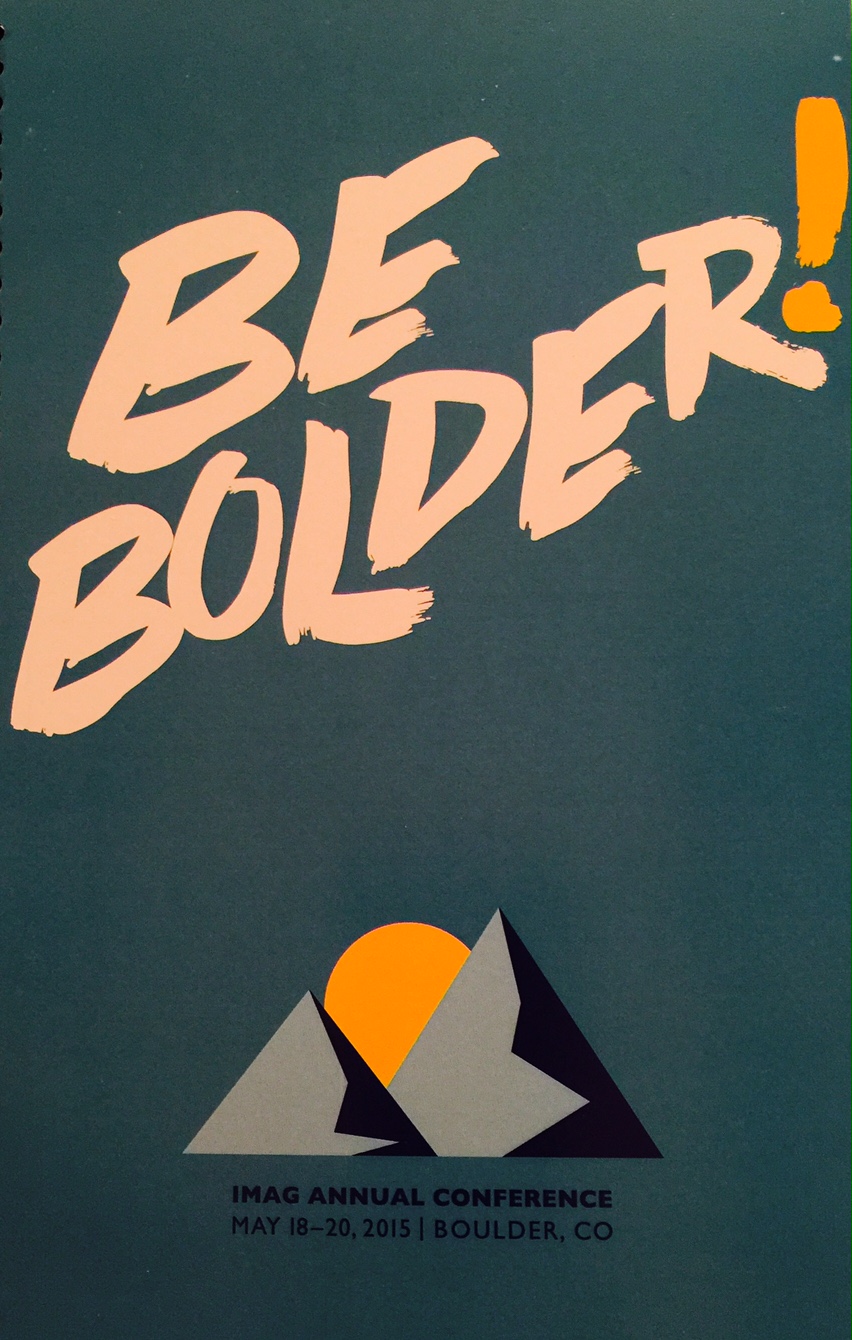
So, during the IMAG Annual Conference, which took place May 18th to 20th in Boulder, Colorado; I was lucky enough to be able to sit down with John Temple, president and CEO of Guideposts, to talk about the magazine and the brand. From the spiritual movement which seems to be sweeping the land and the magazine industry, to the strategy Guideposts is implementing to fulfill and keep up with its audience’s needs; John and I talked the spectrum about the magazine, the brand and the new launch: Mornings with Jesus. It was as informative a discussion as the conference itself was. I thoroughly enjoyed John’s take on the subject matter and was excited to hear about yet another new title we can all welcome into the fold.

So, sit back and be inspired and encouraged by the Guideposts brand, which has been providing those comforts for generations as you read the Mr. Magazine™ reports from the IMAG conference with John Temple, President & CEO, Guideposts.

But first, the sound-bites:


IMG_6730 On his opinion about the sudden spirituality trend in magazine media:
I think the country is changing. The country is getting older and the baby boomers are getting older, so they start thinking about things that maybe they didn’t think about when they were young and building careers and having children and all of these kinds of things. I think there’s a natural progression to faith and religion and some of the other things. It may manifest itself in different ways because people aren’t so much going to church as they used to. But I don’t think that they’re any less spiritual than they were.

On his strategy for leading the company in today’s digital world:
In my view, this is the best of all times. I’ve been in this business a long, long time and I’ve never seen the opportunities so great for companies like ours, media companies, content companies, inspirational and religious companies, because we can now use the digital environment to build communities and talk to different groups in ways that we could never do it before.

On how he plans to double the company’s digital revenue: We’re going to do it really by leveraging digital and brands and making sure that we use a lot of the digital content and the digital audiences that we have. We have 800,000 people on Facebook, and they really are our friends, and yet we don’t do anything with them now. We don’t tell them about anything that we’re doing.

On the launch of the new title, Mornings with Jesus:
When I came back two years ago, they had this book that they had created in 2010 called Mornings with Jesus, it was daily devotionals. And I looked at it and I said wow; I love that brand. It’s a tremendous brand. And you can just see a young mother in her kitchen, the sun’s shining through, she’s got a cup of coffee there; the kids have gone to school; she hasn’t gone to work yet and she opens up this magazine called Mornings with Jesus. And it’s just really, really powerful.

On the fact that the company is moving toward a more Christian perspective, rather than the Judeo-Christian views the brand was founded upon:
The reason for that is we haven’t left the Judeo-Christian point-of-view with Guideposts and others, but we’re broadening the reach. So, we’re reaching into people who want a little more than what we had provided, because there’s a connection there, a kind of funnel. You bring in a whole bunch of people through Guideposts and the faith and inspiration, but as you go down the funnel there are people who want more and more of the religious component. So, we’re providing that.

On whether the new magazine, Mornings with Jesus, will be ad-free:
It’s going to be ad-free for a while. We have to see how this thing is going to work and we’re going to grow it organically.

On the new title’s circulation base: We’re looking for 100,000 at the end of the fiscal year within the next 12 months. But we’re going to do a lot of testing.

On whether he sees today’s market as a return to the ‘power-of-print’ days:
Absolutely. The industry has gone through some peaks and valleys. I can remember when some of the people, where I serve on the board; some of the people there would say well, print is dead. We have to shift to digital; we have to get out because of postage and paper and all of these kinds of things. We don’t have to do that anymore. People understand that there is a very valuable role for print.

On the major stumbling block he’s had to face and overcome since becoming CEO of Guideposts:
The digital component has to sit at the same table with print; it has to. So that when you talk about a new idea; it isn’t just a print idea, it can be a digital idea or a digital handprint as well. And that’s the biggest task, to get people to understand that and kind of unlearn old habits.

On what keeps him up at night:
I do worry; I’m taking such a big transformation risk and I’ll kind of wake up in the middle of the night and ask myself, am I right? Do I really have the vision right? I do worry a little about that.

And now the lightly edited transcription of the Mr. Magazine™ conversation with John Temple, President & CEO, Guideposts.

Samir Husni: Suddenly, there seems to be a resurgence of spiritual-like magazines. We saw this recently with Simple Grace and the many bookazines about Jesus, Mary and the Bible. Of course, Guideposts has been doing this for 70 years or so. What do you think about this trend? Is the country changing; is the overall mood changing, or are people simply looking for some kind of relief?

John Temple: Yes, I think the country is changing. The country is getting older and the baby boomers are getting older, so they start thinking about things that maybe they didn’t think about when they were young and building careers and having children and all of these kinds of things. I think there’s a natural progression to faith and religion and some of the other things. It may manifest itself in different ways because people aren’t so much going to church as they used to. But I don’t think that they’re any less spiritual than they were.

The other area which I find very exciting is the new millennials. These people are coming along and they have a commitment; a social commitment; a spiritual commitment and it’s not manifested in the same old ways, but it’s there and I have great hopes for that generation, and for the changes that they’ll bring about in this country.

Samir Husni: How do you think Guideposts is adapting to all of these changes? Is it benefiting from these changes, especially since we now live in a digital age and you’re reaching both the millennials and the baby boomers? What’s your strategy; how are you leading the company now in this digital age?

IMG_6731 John Temple: In my view, this is the best of all times. I’ve been in this business a long, long time and I’ve never seen the opportunities so great for companies like ours, media companies, content companies, inspirational and religious companies, because we can now use the digital environment to build communities and talk to different groups in ways that we could never do it before.

Samir Husni: And you mentioned in your speech that you’re hoping to double your digital revenue; how are you going to do that?

John Temple: We’re going to do it really by leveraging digital and brands and making sure that we use a lot of the digital content and the digital audiences that we have. We have 800,000 people on Facebook, and they really are our friends, and yet we don’t do anything with them now. We don’t tell them about anything that we’re doing. We’re launching this new magazine next month and we’re going to tell them; we’re going to say hey, come to the Guideposts website because we have a new magazine that we think you would really be interested in. So, there’s going to be a lot of cross-fertilization between digital, promotion and print and just everything else that we’re doing.

Samir Husni: Can you tell me a little bit about the new magazine?

John Temple: It’s called Mornings with Jesus. When I came back two years ago, they had this book that they had created in 2010 called Mornings with Jesus, it was daily devotionals. And I looked at it and I said wow; I love that brand. It’s a tremendous brand. And you can just see a young mother in her kitchen, the sun’s shining through, she’s got a cup of coffee there; the kids have gone to school; she hasn’t gone to work yet and she opens up this magazine called Mornings with Jesus. And it’s just really, really powerful.

And what we’ve found is the test results are spectacular. They’re just wonderful. And we’ve tested some outside lists and things like that and it’s going to lists that we don’t normally mail. We tested a whole bunch of different ideas; we tested the donor’s campaign; we tested the fundraising club and we tested the magazine; all three of them worked.

Samir Husni: With Mornings with Jesus; you’re taking the company one more step toward Christianity, rather than the Judeo-Christian principles that were what Guideposts was based on.

image.aspx John Temple: That’s very astute. Yes and the reason for that is we haven’t left the Judeo-Christian point-of-view with Guideposts and others, but we’re broadening the reach. So, we’re reaching into people who want a little more than what we had provided, because there’s a connection there, a kind of funnel. You bring in a whole bunch of people through Guideposts and the faith and inspiration, but as you go down the funnel there are people who want more and more of the religious component. So, we’re providing that.

Samir Husni: And is it going to be ad-free, or are you going to be depending on advertising, circulation and digital?

John Temple: It’s going to be ad-free for a while. We have to see how this thing is going to work and we’re going to grow it organically. We’ll see about ads as time goes on.

Samir Husni: Any idea about the circulation?

John Temple: We’re looking for 100,000 at the end of the fiscal year within the next 12 months. But we’re going to do a lot of testing. So, within the next year we’ll know where this magazine is going.

Samir Husni: Any newsstands or just subscriptions for now?

John Temple: Not yet, just subscriptions.

Samir Husni: So, I need to know how to get my copy then. (Laughs)

John Temple: (Laughs too) We’ll send you one.

Samir Husni: It seems that suddenly we are seeing almost every media company in this country going back to print. How has your experience been with Guideposts; it was one of the largest magazines in the country and I’m sure you suffered when everybody else suffered. So, are you seeing the power of print coming back now?

John Temple: Absolutely. The industry has gone through some peaks and valleys. I can remember when some of the people, where I serve on the board; some of the people there would say well, print is dead. We have to shift to digital; we have to get out because of postage and paper and all of these kinds of things. We don’t have to do that anymore. People understand that there is a very valuable role for print. And people like the tactile feel. In my view, print is never going to go away. It’s never going to go away.

Samir Husni: Since you became the CEO of Guideposts; what has been the major stumbling block that you’ve had to face and how did you overcome it?

John Temple: The major stumbling block was, as I said in my speech today, was to really get people to understand about digital. And I used the expression ‘infused Guideposts with a digital soul’ which really means putting the digital component into the DNA of the company. The digital component has to sit at the same table with print; it has to. So that when you talk about a new idea; it isn’t just a print idea, it can be a digital idea or a digital handprint as well. And that’s the biggest task, to get people to understand that and kind of unlearn old habits.

Samir Husni: My typical last question; what keeps you up at night?

John Temple: (Laughs) I just get very excited about everything. I wake up in the middle of the night and I have things on my mind and I just can’t go back to sleep. And some of my best ideas come at 3:00 a.m.

But I do worry; I’m taking such a big transformation risk and I’ll kind of wake up in the middle of the night and ask myself, am I right? Do I really have the vision right? I do worry a little about that.

Samir Husni: Thank you.
h1

Domino’s Second Wind Is Blowing The Magazine And The Brand Full-Speed Ahead – The Mr. Magazine™ Interview With Beth Fuchs Brenner, Chief Revenue Officer, Domino Media Group

June 1, 2015

“The print magazine was the foundation by which we brought the brand back, so even the savviest digital people on our team know how important the print vehicle is. No, I don’t think we could have brought it back without print; I mean that’s what people knew and loved and adored. And frankly, people don’t necessarily know that we’re back online, but they know that we’re back in print.” Beth Fuchs Brenner


The Mr. Magazine™ Reports from the IMAG conference.

IMG_6720 Reinventing something requires the ability to take the foundation of the original and build something better and stronger upon it. And that’s just what Domino Media Group has done with Domino, the print magazine, and Domino, the brand. It’s still the same brilliant home design go-to destination as it always was, but has a newer, fresher more synergetic appeal.

During the IMAG Annual Conference, which took place May 18th to 20th in Boulder, Colorado; I was able to sit down with Beth Fuchs Brenner, Chief Revenue Officer for Domino Media Group and talk a bit about the magazine and the brand itself. Beth was very succinct when she said the print magazine was the foundation by which the brand was resurrected from its 2009 grave.

We talked about where the magazine is today; the power of the print component of the brand and how her life is different today than it was in Domino’s former years. It was a very illuminating discussion, with a woman as engaging as the Domino brand itself.

So I hope you enjoy the Mr. Magazine™ reports from the IMAG conference with Beth Fuchs Brenner, Chief Revenue Officer, Domino Media Group. I know it was Mr. Magazine’s™ pleasure to be a part of it.

But first, the sound-bites:

On where Domino is today: Well, we’re light years ahead of where we were in 2009 and also from where we were a year and a half ago. I’ve been known to say in the last few months that everything is really starting to hum.

On whether the brand could have been resuscitated without the print component:
The print magazine was the foundation by which we brought the brand back, so even the savviest digital people on our team know how important the print vehicle is. No, I don’t think we could have brought it back without print.

On whether she believes Lucky is taking a page from Domino’s reinvention book:
I do think that the new Domino Media Group wrote the script and Lucky is playing us in the movie. Clearly the deal itself — the sale of Lucky Magazine to LA-based Beachmint by Condé Nast — was inspired by the success of Domino’s new model.

On how her life has changed today since her former Domino days:
In my former Domino life, I worked for a huge corporation and my new life is a start-up; that alone counts for the difference. I think about the weeks and months that it took to get decisions worked up the chain at a big company versus the many, many decisions we make every day now. And if they’re good ones, great and if they’re not, we pivot and we choose another path.

On the major stumbling block she’s had to face:
I would say that I think it’s harder today to spread the word about a brand and let people know that you’re really back. So, I think just communication and brand awareness is a challenge. Lucky for us we have a lot of that. But if you’re launching a brand today from scratch, that’s a really tough challenge.

On what motivates her to get out of bed every day: Exhilaration. I’ll say that and the fact that I have skin in the game this time and everyone on the team has skin in the game. So, we’re all working toward something that we feel we’re really a part of.

On what keeps her up at night:
Everything. (Laughs) Everything from this job to my kids. And if you ask my staff, they’ll tell you that I’m always up sending messages to them.

And now the lightly edited transcript of the Mr. Magazine™ interview with Beth Fuchs Brenner, Chief Revenue Officer, Domino Media Group.

Perfect for the coffee table: The latest issue of Domino

Perfect for the coffee table: The latest issue of Domino

Samir Husni: It’s been almost two years since Domino’s return from the dead.

Beth Fuchs Brenner: Exactly.

Samir Husni: Tell me, where is Domino today?

Beth Fuchs Brenner: Well, we’re light years ahead of where we were in 2009 and also from where we were a year and a half ago. I’ve been known to say in the last few months that everything is really starting to hum.

We’re a quarterly magazine that has 200,000 in circulation and an incredible wanted story, with people paying $12 per copy, $48 for 4 issues. I’m so pleased to hear the same sort of passion and engagement that we had back in the days before we were dead still exists today. And we’re hearing that anecdotally from everywhere.

And on the website; we have a dynamic website that has over half a million uniques every month and we have a full-on retail store; we’re an official commerce business and we’re selling hundreds of thousands of products every month.

Samir Husni: Do you think any of that would have existed if you hadn’t brought the print magazine back?

Beth Fuchs Brenner: I think the print magazine was the foundation by which we brought the brand back, so even the savviest digital people on our team know how important the print vehicle is. No, I don’t think we could have brought it back without print; I mean that’s what people knew and loved and adored. And frankly, people don’t necessarily know that we’re back online, but they know that we’re back in print.

Samir Husni: Do you think Lucky is taking a page from Domino in their new plan of action?

Beth Fuchs Brenner: I do think that the new Domino Media Group wrote the script and Lucky is playing us in the movie. Clearly the deal itself — the sale of Lucky Magazine to LA-based Beachmint by Condé Nast — was inspired by the success of Domino’s new model.

But the structures of the companies are vastly different — Domino was essentially a start-up business whereas Beachmint is an established e-retailer with a pre-existing corporate structure. We started from scratch and built a team and a business from the ground up, whereas Lucky and Beachmint have to merge their businesses and their employees. Their transition is still going on — and we will all be watching to see where the company goes next.

Samir Husni: You were gracious enough to show me your latest issue that’s not yet on the newsstands. It looks to be the biggest issue yet.

Beth Fuchs Brenner: It’s not the biggest issue ever, but it’s the biggest issue since the re-launch. And they did look that up, because it felt bigger to me than anything we’d ever published. It’s 184 pages with about 55 pages of ads, so that tells you how lovely our ad-to-edit ratio is. We’re putting in more editorial than we ever have before, so there’s that commitment to really engage people with a lot of editorial.

Samir Husni: If someone asked you to describe Beth’s life with the former Domino versus Beth’s life today with the resurrected Domino; how has your 24-hour day changed?

Beth Fuchs Brenner: That’s such a good question. In my former Domino life, I worked for a huge corporation and my new life is a start-up; that alone counts for the difference. I think about the weeks and months that it took to get decisions worked up the chain at a big company versus the many, many decisions we make every day now. And if they’re good ones, great and if they’re not, we pivot and we choose another path.

But it’s hugely different. Domino alone had about 120 people back in 2009. Domino today has about 30 people and that’s across print, digital and commerce. So, it’s a horse of a different color today.

Samir Husni: What has been the major stumbling block that you’ve had to face with the re-launch and how did you overcome it?

Beth Fuchs Brenner: I would say that I think it’s harder today to spread the word about a brand and let people know that you’re really back. So, I think just communication and brand awareness is a challenge. Lucky for us we have a lot of that. But if you’re launching a brand today from scratch, that’s a really tough challenge.

And the other challenge, I would say, is just growing digitally. You know this from your blog; if you put it out there, people don’t just come. So, you really have to engage people; you have to target people; you really have to work towards that in a big way. And I think our biggest challenge digitally is growing our traffic, because we know as the traffic grows everything else rises to meet it.

Samir Husni: What motivates you to get out of bed every morning and say it’s going to be a great day?

Beth Fuchs Brenner: Exhilaration. I’ll say that and the fact that I have skin in the game this time and everyone on the team has skin in the game. So, we’re all working toward something that we feel we’re really a part of.

Samir Husni: My typical last question; what keeps you up at night?

Beth Fuchs Brenner: Everything. (Laughs) Everything from this job to my kids. And if you ask my staff, they’ll tell you that I’m always up sending messages to them. (Laughs again) I don’t know about you, but I don’t sleep much these days.

Samir Husni: Thank you.
h1

Neither Cop Nor Convict, But Rather King Of The Newsstand: Single-Copy, No Advertising, No Subscriptions, No Digital – Topix Media Lab Goes Bookazine Print In A Big Way – The Mr. Magazine™ Interview With Tony Romando, CEO and Co-Founder, Topix Media Lab.

May 27, 2015

The Mr. Magazine™ Reports from the IMAG conference.

“And these tributaries (collector’s editions) are how I think print will stay around because it’s specialized. I can go to any dot com or any digital platform and get all of my news for every facet of my life right then on the spot. But we don’t want to do that. We just want to do one very specific brand of news, for one very specific customer and that’s it.” Tony Romando

Collectability is a word that has become synonymous with print in the 21st century. It’s a fait accompli. Without that collectability factor, print today is what digital content would be tomorrow; a day late and a dollar short.

tony-photoTony Romando, CEO and co-founder of Topix Media Lab, probably understands the viability of collectable print better than anyone in the industry today, because that’s the name of his game: collectability. Publishing anywhere from 90 to 110 specialized topical bookazines per year; he is a man who knows his business and knows it well. From his triumphs to his defeats; Tony remains true to the Topix mission: providing quality products for one specialized consumer at a time, with no advertising, no subscriptions and no digital.
During the IMAG Annual Conference, which took place May 18th to 20th in Boulder, Colorado; I was able to sit down with Tony and discuss where his career had been, where it was now and where he saw it heading in the future with Topix. The man is as down-to-earth and open as the conference was enlightening. From convicts and cops, which according to him was sprinkled throughout his family tree, to the recently degreed CEO of one of the most prolific bookazine publishing companies in the world today; Tony is a force to be reckoned with and a man who was a true pleasure to interview.

So, I hope you enjoy the Mr. Magazine™ reports from the IMAG conference with Tony Romando, CEO & Co-Founder of Topix Media Lab. It will inspire you to believe that with the right dream and focus, you can do whatever your heart desires by staying true to your vision.

But first, the sound-bites:

topix8 On the genesis of Topix Media Lab: The genesis started with, I was at WWE (World Wrestling Entertainment) working for Vince McMahon and like any good, smart business guy, he wanted to figure out new revenue streams that basically weren’t totally wrestling-based. We had an infrastructure of publishing; we had everything already set up and it seemed to make sense that we could do publishing for other businesses. When he didn’t really love the idea of stepping that far outside of his comfort zone, it seemed like the right time and opportunity to start the company on my own. I and another guy founded the company three years ago and it started off horribly; catastrophic.

On why it started out horribly: I think the general plan was we would do generic collector’s edition magazines. My incorrect opinion was that we would have readers who really loved the subject matter, but didn’t care about the brand. Brands are not important. They care about One Direction or The Hobbitt or 50 Shades of Grey; they don’t care who is the one doing the magazine or who the authority is, they just care about the subject matter. And it turned out that was completely incorrect.

On how he turned it around and became one of the most prolific bookazine publishers out there: We’re doing, to be honest with you, two per week. Some weeks we do three; some weeks one, but I think the real turning point was realizing that we couldn’t sustain a generic magazine business.

topix 2 On what he was thinking when he decided to go single-copy sales only: No advertising; no subscriptions; no digital. It’s as though I’m trying to sell you a steam engine or a trolley car. I would say that even though it may be a slowly declining business, there will always be room for the biggest brands. There will always be Men’s Health because they’re the category leader; there will always be Scientific American, they’re the best at what they do, and the best of those magazines will always be there.

On whether he fears there may come a time when the newsstands are filled with only bookazines and a magazine only shows up every now and then: The flagship magazines don’t want to do collector’s editions, they look down on those; those are marketing tools, revenue streams, they’re not important enough. And because of that, there’s a real push/pull between the people who do the bookazines for the big companies and the people who do the flagship magazines. And because of that they’ll never have the best quality product they can put out at the same time.

On his major stumbling block: The major stumbling block was not on the publishing side, it was on the entrepreneurial side. You do six magazines a year; you can balance a checkbook easily, there are a few dollars coming in, a few dollars going out and very few people to concern you. But as you add clients and you get to a point where you’re probably doing 90 magazines or more per year; we’ll probably do between 90 and 110, you hit a point where it becomes very complex.

On his most pleasant moment: That’s a tough question. I almost want to say being my own boss, but as I said before, I have more people to answer to now than ever before. So, I think the most pleasant part of this journey is knowing that Topix Media Lab is on everyone’s radar.

On what keeps him up at night: What keeps me up is more research and more data and I’ll stumble onto one new piece of information that basically says instead of doing a cover with six images, I should do it with three images. And that’s the best part of it. I think too many people are on autopilot when it comes to what they should do; it’s the same stuff, year in and year out. And there is so much good stuff out there that hasn’t been tried yet. So, what keeps me up is doing more research.

And now the lightly edited transcription of the Mr. Magazine™ interview with Tony Romando, CEO, Co-Founder, Topix Media Lab.

Samir Husni: Tell me about the genesis of Topix Media Lab.

Tony Romando: The genesis started with, I was at WWE (World Wrestling Entertainment) working for Vince McMahon and like any good, smart business guy, he wanted to figure out new revenue streams that basically weren’t totally wrestling-based. We had an infrastructure of publishing; we had everything already set up and it seemed to make sense that we could do publishing for other businesses.

There were other harebrained ideas, like doing catering; you know they feed 100 of those crazy wrestlers every week, three or four days a week, so it seemed like they could be one of the largest catering businesses in the world. He said no to the catering. He also said no to doing any publishing outside of WWE.

I wanted to do Biggest Loser magazine in 2008 and I wanted to do it as a bookazine because the Brits have been doing it for a long time and they’re the best; they’ve been doing it even longer than Time Inc.

So, when he didn’t really love the idea of stepping that far outside of his comfort zone, it seemed like the right time and opportunity to start the company on my own. I and another guy founded the company three years ago and it started off horribly; catastrophic.

Samir Husni: What happened?

Tony Romando: You know, you put a little bit of money together and you acquire a very small team, four editors, not even, two editors and one designer with one photo person; five guys in a tiny room in a cramped New York office. I’ve made a million mistakes and I’m making fewer mistakes every week that goes by, but still, huge numbers of mistakes.

I think the general plan was we would do generic collector’s edition magazines. My incorrect opinion was that we would have readers who really loved the subject matter, but didn’t care about the brand. Brands are not important. They care about One Direction or The Hobbitt or 50 Shades of Grey; they don’t care who is the one doing the magazine or who the authority is, they just care about the subject matter. And it turned out that was completely incorrect.

Every now and then we would have a successful issue with one brand that was a stand-alone generic, but for the most part they were kind of failures. All of them, except for two were failures. And I didn’t think it was possible that I sold magazines that were 4% sellers, the kind of issues that just shut companies down. On my office wall I have framed the first of four of our lowest selling covers of all time: 4%, 6%, 7%; I think one was 11%. All four of them I have in my office now as reminders of what not to do.

Samir Husni: And yet in a short span of time, you’ve become one of the most prolific publishers of bookazines. You’re putting out almost a quarterly on a weekly basis.

topix 3 Tony Romando: We’re doing, to be honest with you, two per week. Some weeks we do three; some weeks one, but I think the real turning point was realizing that we couldn’t sustain a generic magazine business. There are a lot of companies that are even getting into this space right now; I just saw four new generic bookazines on the newsstand two weeks ago on Marilyn Monroe, The Beatles, Jesus; people just flood the market with them.

And knowing that I had been in the generic space and that it didn’t work; I came in one day and said if I can’t land a good, proper brand to do special collector’s editions for within six months, then I’m done. And that’ll be it. It was my way of getting our team to focus on partnering with existing iconic brands. So, we were fortunate that Dave Fishman of TV Guide took a chance on us, because at that point we made a quality product, but we had no proof in the sales, because when you cut those licensing deals in the beginning, you give away a lot to try and get your footing and build a foundation.

But backing up; I think the thing about Topix that’s different from most bookazine companies is that we are strictly an analytically researched-based company. It’s all in the numbers; nothing matters on gut. I come up from the editorial side and coming from there; you know, editors think they know everything.

I think I spoke to a circulation conference 10 years ago in Atlantic City, massively hungover, standing in a room with a 1,000 people, and I think my speech to them was editorial people don’t know squat; they think they know everything and if they would follow the circulation people’s advice, the newsstand people would sell more copies.

But editorial people don’t care about copy sales really, as much as they should. So, having come up the editorial side, I realized that knowing that we are an editorial-based company and knowing that it’s all in the cover or the subject or the 100 pages that we do, it was crucial that we use analytics to base everything on.

We landed TV Guide and started doing research and I came across a mathematical equation that John Wayne was still one of the single-most popular adult celebrities. People think of him as a great American; he’s iconic; people live their lives by his code, and no one had put him on a cover; he was the only guy 20 years running to be on the Harris Poll for top actors; I think he was in the top 10 for 20 years. It was just the perfect storm.

So we did that for our first TV Guide and it sold 35 or 36%, which is a homerun these days. For us it was like the first time that we had seen any real money, real revenue; we were off and running at that point.

From there it was trying to figure out how we could leverage our one brand, TV Guide, to parlay it into more brands. I think now we’re up to 15, 16, around 17 brands.

Samir Husni: And I’m sure you’re no longer just five people in a small room?

topix 4 Tony Romando: No, now we’re 16 people in a little bit bigger room. (Laughs) Our story is a good one because everything we’ve done has been haphazard; it’s calculated, but I’m still the IT guy; I’m still the mailroom guy; I’m the CEO, but I’m also one of the edit guys. We all have 15 different jobs.

I had found an office space in midtown through my wife’s friend, who had a private equity company in this office that was owned by Blackstone and I gave them a good deal. They gave us this little remnant piece of office space and the only reason we moved out of there was because we became a fire hazard; we had ten people in a room that was unsafe and illegal.

Then we wondered if we could get cheaper space and more of it if we moved down to the Wall Street area before Condè Nast, before Time Inc.; before everyone. I had lived down in that area for 20 years; I knew that everything was cheap, and I lived very close so it was helpful.

Samir Husni: We live in a digital age; no one can argue that no matter how much we love print. What were you thinking when you decided, not that you were only going print, but you were only going single-copy sales?

topix 5 Tony Romando: (Laughs) No advertising; no subscriptions; no digital. It’s as though I’m trying to sell you a steam engine or a trolley car. I would say that even though it may be a slowly declining business, there will always be room for the biggest brands. There will always be Men’s Health because they’re the category leader; there will always be Scientific American, they’re the best at what they do, and the best of those magazines will always be there.

And because of that, there should always be collector’s editions that go along with the best. But the ones that are the second and third tier down from those best ones, if those get weeded out; we’re not selling monthly magazines, we’re selling one thing to one very specific customer. We’re not all things to all people, so if you buy GQ, you learn how to drink with style and dress with style; there’s something for every part of your life. These bookazines are only one topic, so for us it was easy to say this is where we want to be because people will always read about these iconic figures.

I think the difference really is saying that originally we targeted certain brands for the 50-plus market. They still want magazines. But people don’t want to spend $10 or $11 on a digital magazine. They just don’t. We’ve tried it, there’s just no money there. People want to collect something. So these are a poor man’s coffee table books. They stay on their coffee tables to be showcased forever. They don’t just read it and throw it away.

topix 6 And I think that’s been the real tradeoff for us because once we think of these as magazines, we’ll be dead. They have to be considered as keepsakes forever. To my point on John Wayne, we did John Wayne on TV Guide and it did so well that I went back to John Wayne’s son, Ethan Wayne, who runs John Wayne Enterprises, and said why don’t we do a stand-alone John Wayne collectable every other month. And he said let’s try it. And it was our bestseller. And we went ahead and put Elvis on Newsweek and it was also one of our bestsellers. So we went to the people who own Elvis, Authentic Brands Group, and told them the same thing, let’s do Elvis every other month.

And these tributaries are how I think print will stay around because it’s specialized. I can go to any dot com or any digital platform and get all of my news for every facet of my life right then on the spot. But we don’t want to do that. We just want to do one very specific brand of news, for one very specific customer and that’s it.

topix7 The final thing I’ll say though is our business is a lot less complicated because we don’t have advertising and we don’t have subscriptions, so there’s no subscription debt liability hanging over our heads. We don’t have a fleet of people selling ads; we have a rep firm and sometimes we sell a sponsorship for a couple of bucks. People have tried it and been semi-successful; we’ve had a little bit of success, but that’s just gravy for us. And I think because we don’t have those complications, we’re not beholden to a member.

We put out a really great product; if we don’t put out a piece of crap, people buy it. And if they buy it, the proof is in the numbers. And if it’s in the numbers and we sell those copies that means we did our job right. And so companies will now come to us and say we do bookazines and we’re breaking even; we do six of them per year and we’re selling 60,000 units and we still can’t make any money. Why is that? And my answer to them is I don’t know what you have built into your infrastructure, but I have 16 people; we create everything; we generate everything; we do everything from front to back, and we can turn a big profit on 60,000 units, so let us do it for you. And we’ll champion your brand and at the same time, we’re ambassadors of their brand and we want to make a few dollars in the process, but our goal is to make sure that their brand has the extension that we are in control of.

Samir Husni: I’m sure that you’ve noticed lately, keeping up with all of these launches and all of the different brands, it’s almost a ratio of 2 to 1, in terms of the number of bookazines arriving on the marketplace. Are you afraid that we’ll reach a situation point where the entire newsstands will become bookazines and every now and then there’s a magazine?

tony-photo2Tony Romando: You know I think it should keep me up at night, but it doesn’t because I didn’t invent it; I saw a good opportunity and I think I was ahead of the curve, but there were other companies in front of us. We got in the market and they all said, they’re going to take away all of our sales and we see that their sales still work and our sales work.

Just last week, as I mentioned, someone else brought their bookazines to market as well. In the entrepreneurial spirit, I want everyone to do well. But I think what it comes down to is the quality of the product and the brand of the product. And I think that I have the best brands and I believe as long as I continue to bring in really great brands, such as a Reader’s Digest or Discovery Channel, Disney; to be able to do all of the Star Wars magazines for the next couple of years is a big deal. And I think no matter who puts a generic Star Wars magazine on the newsstand at the same time, if mine is the official LucasArts collector’s edition or Disney collector’s edition, that’s what matters.

I think the tradeoff between us and other companies is we are an editorial-based company; the integrity of the product comes first. And I believe any of our partners would say that our product is superior to most because unfortunately, the bigger companies say, how can we make a few more bucks and they put a team on making special issues. The flagship magazines don’t want to do collector’s editions, they look down on those; those are marketing tools, revenue streams, they’re not important enough. And because of that, there’s a real push/pull between the people who do the bookazines for the big companies and the people who do the flagship magazines. And because of that they’ll never have the best quality product they can put out at the same time.

Now, we don’t own any products and we don’t want to own any products. We cut licensing deals for a few years, but we want to be able to say this is your product; we work for you.

I was an intern at Rolling Stone 20 years ago. I have more bosses today as CEO than I had 20 years ago. I answer to probably 42 people on a daily basis. And some of those people that I answer to don’t know the magazine business well and some do know it well. And I don’t know which one is worse, but there are a lot of people to answer to. I think as long as we make the quality of the product better than the next guy, we should be good.

Samir Husni: You were at Rolling Stone?

topix 1 Tony Romando: When I was in college many years ago, I went to Rolling Stone and they offered me an assistant’s job and I promised then I would go back and get my degree. So all of these years later, I did. I had four classes, which I finally just banged out over two semesters and I got my diploma in the mail two weeks ago. And to have it is really a big deal. I’m from a long line of convicts and cops. My family has worked as convicts and cops. All from Chicago and no one had ever been to college. Not one member, even in the extended families.

It’s been a good year. I just graduated and we’re in contract with Rodale to do 12 bookazines a year for them. And their bookazines are always very successful. But they can’t seem to figure out how to make any good money. Prevention is really small down here. No one even knows who Prevention is. It’s like 65,000 copies; that’s a lot of money. So, when they called me and said we can’t figure out how to make this work; I got my fork and knife out and told them I can make this work for you.

The funny thing; what we do, I think, is very simple. You analyze the space better than anyone and I spend a lot of time also analyzing the space out there.

Samir Husni: And you know it’s amazing. It started in the U.K. with the bookazines, but now it’s all over Europe and all over the world. I just gave an interview to a magazine in the Netherlands all about the bookazine trend. They wanted to know all about the bookazine phenomenon. So, I can guarantee you that your interview is going to be making the rounds.

Tony Romando: Good, because long-term plans are really short-term because two years ago I said I’m going to give it six months and if I don’t end up flying, I’m out. Then I started adding clients. And last year, around May, I said 2015 is my year. I’ve built up everything and if I can’t make it work in 2015, I’m leaving. I’m done. My wife has her own company and I’ll do something else.

And then we hit May and I knew that we really had something. Now I’m looking at it, still in short-term stages, but I’m starting to look at it more long-term; what can I do in 2016 and 2017? And one of the things that I want to do is look into the international market; what can we do in India, in Australia and in the U.K. to make them buy our magazines. International is a good step, because there’s only so much we can do here.

Samir Husni: What has been the major stumbling block that’s faced you through your journey with Topix Media Lab and how did you overcome it?

Tony Romando: The major stumbling block was not on the publishing side, it was on the entrepreneurial side. You do six magazines a year; you can balance a checkbook easily, there are a few dollars coming in, a few dollars going out and very few people to concern you. But as you add clients and you get to a point where you’re probably doing 90 magazines or more per year; we’ll probably do between 90 and 110, you hit a point where it becomes very complex.

And because it becomes complex, the fear was that we would outgrow our internal mechanism, so we’ve kind of pumped the brakes. We have so many brands now, that we’ve hit a point where we want to make sure our brands get the love they need. We don’t want to be greedy. I think we’re all chasing the same brands and sometimes I beat Time Inc. to the punch and sometimes I don’t beat them. We may be on their coattails, but we’re a long distant second place or third place or whatever it is.

I think the big stumbling block is making sure the internal side of it works and that we don’t outgrow what we have the capability of doing. The Source thing really threw us for a loop because it’s kind of skewed all of our numbers for an entire year and as a small company; I think we went from $3 million in revenue to $12 million in revenue to $18 million in revenue, with a forecast of maybe $40 million in revenue this year. That’s pretty heavy growth for an industry that claims to be dying, which is pretty shocking.

But the good news, and I mean this in the most sincere way; I don’t know what I don’t know. So, I’m sure that I’m making mistakes that I don’t even know about along the way and the ignorance of it has been slightly beneficial.

For me, it’s a different kind of story. When I was 17, I joined the Navy. I left home and joined the Navy, spent five years scrubbing bird crap off a runway; the second longest; largest runway in the world is in Guam. I was there for years and I was chipping bird crap off of the runway. So, 18 hours a day, 6 days a week; I know what real hard work is.

Doing this for 18 hours a day and crunching numbers and making magazines is a cakewalk. And it’s a treat. If you get the right people to do the right thing; it’s like I used to pick all the topics; I did all the analyses, the John Wayne stuff, and then at a certain point I realized I’m not good enough at it, so I hired someone who just comes in and crunches numbers all day. I think the stumbling block was how you actually put out quality topics that will sell and hit the certain sell-through range; now, they don’t all have to be winners, but we don’t want any that are 12% either. And if they can all stay somewhere here, with a couple of spikes on this end, then we’ll make a lot of money.

So, to answer your question; one of the biggest mistakes I’ve made is not realizing fast enough that I’m not great at something. And if I’m not great at this thing, then I need to hire someone who is amazing. And now that I have these people in place, it’s become a lot easier to sit back. Now I can just criticize their work all day as opposed to my own. (Laughs)

Samir Husni: (Laughs too) And what has been the most pleasant moment throughout this journey?

Tony Romando: That’s a tough question. I almost want to say being my own boss, but as I said before, I have more people to answer to now than ever before. So, I think the most pleasant part of this journey is knowing that Topix Media Lab is on everyone’s radar. We tried to fly under the radar for three years; I was hoping to go six years without anyone noticing that we existed. Being on your radar, knowing that we come up in board meetings or meetings at big publishing companies; it’s a very flattering thing. To know that we’re in the mix with those guys is great, but it’s also daunting because that means we have the bull’s-eye on our back.

The long-term goal or the short-term goal really, is to partner with one of these bigger guys and knowing that we have the ability to bring in bigger brands than most people, whether that’s because we identify them sooner, there are a couple of really big untapped brands that people don’t even think about that I have on my list of ideas on my wall that I think would make really great bookazines.

And because we haven’t gone to those yet; we don’t want to get too big too quick. What we really want to do, what I really want to do, is partner with someone big who wants to be part of something smaller that they can share in the revenue stream of it and would help us get to certain pockets because, and you know this as well as anyone, you want to be at the main line; well, you’re at the main line, but you want to be at the checkout.

But a lot of those guys want to be at the checkout because of their advertising rate base and I don’t need that, so I want to systematically pick checkouts. If I can get 30,000 copies in Wal-Mart, instead of 10,000 copies, and sell 40%, I’m going to do a lot better.

But the downside to that is no matter how much money that you have, you can’t just drop a bag of money down and say I want in; you have to wait your turn, start at the bottom, work your way up; you’re in the bad aisle that’s never opened, then you slowly move over.

And I think a lot of these big guys have the millions of dollars invested in those pockets and because we know that you can take a magazine and go from 25% sell-through to 35 or 40% sell-through just by going to the checkout, I’m now trying to figure out how to jockey ourselves into a position where we can partner with someone we might be competing with right now and pool our resources together, because I think we can show them how to do the bookazine business for one-tenth of what they’re doing it and they can kind of carry us across the finish line to some of those checkout pockets. That would be a really great synergy and that’s where we’re headed next.

Samir Husni: And before I ask you my typical last question: who was your favorite wrestling figure, since you’re no longer with WWE? (Laughs)

Tony Romando: (Laughs too) Strangely, it would have to be Shane McMahon. Vince McMahon, who’s the CEO and Chairman of the Board, his son Shane, who I worked for, was a business guy. But he also grew up in the business.

And he used to jump off of the Jumbotron, which is this huge screen, and he would jump 50 or 60 feet onto a table with other people. I mean, he owned the company and he did not have to do that kind of stuff or put himself in harm’s way. He was amazing in the sense that he would jump from the highest point and put himself at the biggest risk. He’d put himself in the most dangerous positions.

But on Monday, when wrestling was over, on Tuesday, he was back at the office and wearing a suit, looking at the consumer product group, the China expansion. The rest of these guys were wrestling again. He was able to do both and no matter what you think about wrestling, they are a pretty amazing group of guys because you’re afraid of them because they’re massive and they’re also just a little bit crazy, but they’re really impressive athletes too.

So, with all of these guys, it’s like they’re the most amazing guys to see in person because they’re just huge. And they have great character and they’re all banged up. Whether you call it real or not, it’s scripted, but the action is really real. Everyone should go to a wrestling show.

Samir Husni: We have followed it some; in fact, I was the crazy person who took his entire family to the Valentine’s Night Massacre. (Laughs)

Tony Romando: (Laughs too) It’s really amazing, isn’t it?

Samir Husni: It really is.

Tony Romando: Yes.

Samir Husni: My typical last question; what keeps you up at night?

Tony Romando: Single-copy sales would be the answer that I give you. But to be honest, what keeps me up at night is doing more research on the next big project. I don’t lose any sleep and I don’t stress over this business at all. I have a two-year-old son; my wife is pregnant with twins; I’m up all night anyway. I’m up day and night from the family side, but it’s not because I’m worried about the business.

What keeps me up is more research and more data and I’ll stumble onto one new piece of information that basically says instead of doing a cover with six images, I should do it with three images. And that’s the best part of it. I think too many people are on autopilot when it comes to what they should do; it’s the same stuff, year in and year out. And there is so much good stuff out there that hasn’t been tried yet. So, what keeps me up is doing more research. The more information I have, the less dumb I feel when things go bad. At least, I did my homework. (Laughs)

Samir Husni: Thank you.

h1

On A Scale Of One-To-Ten – TEN: The Enthusiast Network Lives Up to Its Name – The Mr. Magazine™ Interview With Scott Dickey, CEO, TEN.

May 25, 2015

The Mr. Magazine™ Reports from the IMAG conference.

“We’re not surprised that digital brands are launching publishing products; it’s the most powerful level of engagement, whether it’s a book, newspaper, or a magazine; there is no higher level of engagement than when a consumer is reading a printed product. We’re in for the long-haul.” Scott Dickey

IMG_6733
The IMAG Annual Conference took place May 18th to 20th in Boulder, Colorado and it was without a doubt one of the most enlightening and effective conferences I’ve attended in quite a while. Be Bolder in Boulder was the theme of the conference and many of the speakers at the event were aiming their cannons toward just that for the future of their brands.

Scott Dickey of TEN: The Enthusiast Network was no exception. His presentation was an eye opener to many if not all at the conference. He joked that when he took charge of the company, one of his publishers told him that the true name of the company is PEPSI, as in the soft drink. Of course that soft drink reference reflects the many changes and ownerships that is the current TEN company’s heritage. In a few magazine years, the name evolved to TEN from Peterson, E-Map, PRIMEDIA, and Source Interlink before it went bankrupt. Scott joked and said the company now is PEPSI TEN.

I spoke with Scott after his own presentation and we talked about the last fifteen months, since his joining the team, of the content company’s rebranding and his vision for its future. Since his taking the helm, his mission has been to create and deliver content that engages with his audience: enthusiasts of everything action and outdoor oriented.

His focus is clear and his determination to return to some of the core fundamentals of the company is succinct. From Motor Trend to Surfer and a possible new print version of their highly successful “Roadkill” digital brand; Scott has set TEN on course for a very bright future indeed, both in print and in digital.

I hope you enjoy the Mr. Magazine™ interview with Scott Dickey, CEO, TEN: The Enthusiast Network. It’s sure to leave you as motivated and inspired as the man himself is.

But first the sound-bites:


On why TEN is one of the best-kept secrets in the industry:
That’s a flattering way to put it. It’s certainly not something that we want to be a secret. I think when companies go through unfortunate transitions of ownership, leadership and financial disarray, you lose a lot of momentum and the fundamentals of operating a company and I think this company unfortunately didn’t spend a lot of time talking to the industry about who they were and what they had to offer.

On his magic touch and the formula he’s using to lead the company into the future: I think the biggest thing that I realized early on was that the company didn’t have any creditability within its own staff and that we needed to focus on the core fundamentals of internal communication, very clear lines of organization; we had to get the company back focused on the fundamentals of all this and what success looked like and what our expectations were and where we felt we could win.

On the role print plays currently in the company: Social obviously dwarfs everything and digital is just enormous for us. But in terms of the importance of our everyday roles and responsibility in the company, we’re still foundationally a publishing entity at our core, so it still represents 50% of the company’s business, less or more depending on what metric you’re looking at.

On whether he can imagine TEN without any print components: I definitely see where there are going to be pockets of opportunity where we’ll have brands that won’t have a print entity. One of our most powerful and valuable brands today is a brand called Roadkill, which I mentioned is sort of our House of Cards, our Game of Thrones in the automotive industry. If you go on YouTube and you take a Roadkill, you’ll see the power of that audience and it doesn’t live in print at all. We’re actually thinking about launching a print product this fall behind that brand because it has such a huge following and we think we can extend the power of that brand by getting into different distribution channels.

On any improvements he thinks the distribution model needs: Being owned by a distributor, they put more time and energy and value in what was being distributed at newsstand because of the cover price and the economics for somebody who may buy the magazine once a year or once a quarter. Those customers are experiencing the good stuff, the better package, the better paper quality, even better content. But the loyal subscriber was getting the crap, right, because we had driven down the subscriber economics so much that you’re actually penalizing the people who were committing to you for a year or two or three. And I think that’s a model that we have to completely unwind.

On launching digital-only entities, such as TEN’s “Roadkill” into a print format: We see opportunity there. And we’re not surprised that digital brands are launching publishing products; it’s the most powerful level of engagement, whether it’s a book, newspaper, or a magazine; there is no higher level of engagement than when a consumer is reading a printed product. We’re in for the long-haul.

source_motor_trend_february_2015_usa On the example of Recoil’s business model: High cover price, high subscription price and more reliance on circulation than advertising for revenue resources, is why TEN has shed some of its legacy titles and started new titles such as Roadkill: We had a lot of duplicative content as a company historically through a series of acquisitions and consolidations of smaller publishers along the way; Peterson, Mcmullen Argus, and when I came in we had four titles dedicated to the world of Mustangs; four Mustang magazines. And that’s just very difficult to rationalize.

On the biggest stumbling block he’s had to face or is currently facing: You started the conversation with one of them: no one knows who the heck we are. But that’s just a case of blocking and tackling and execution and time in the marketplace, investing in the audience.

On what keeps him up at night: Right now, we’re having some pretty significant SEO (Search Engine Optimization) challenges internally with some of our automotive business. And we’re not doing as good a job on delivering against some of our digital campaigns that we’ve secured with some of our larger clients. So, we’ve got some work to do.

And now the lightly edited transcript of the Mr. Magazine™ conversation with Scott Dickey, CEO, TEN: The Enthusiast Network.

Samir Husni: I noticed during your speech that everyone’s jaws dropped and their eyes opened when you said that TEN is the fifth largest magazine company in the United States. Why do you think that TEN is one of the best-kept secrets in the industry?

Scott Dickey: That’s a flattering way to put it. It’s certainly not something that we want to be a secret. I think when companies go through unfortunate transitions of ownership, leadership and financial disarray, you lose a lot of momentum and the fundamentals of operating a company and I think this company unfortunately didn’t spend a lot of time talking to the industry about who they were and what they had to offer. It’s understandable; I’m not being critical, but we’re in a moment in time where we’re now a new enterprise; we’ve been restructured and we have foundational strength and great assets and brands and great audiences, so we have to start the educational process all over again.

Whether we’re the fifth, sixth or seventh, it’s all debatable. But it’s a huge company with great depth and reasonable reach, but with a base of consumers that can really add a lot of value to our advertisers.

Samir Husni: What’s Scott’s magic touch? All bets were against you when you took this job. So, in the midst of this transformation, in creating this new network, this content company; first you’ve eliminated the title publisher, you have general managers now; what’s the secret or not-so-secret formula that you’re using to lead the company?

Scott Dickey: Well, I’m learning too, this is a process. I think the biggest thing that I realized early on was that the company didn’t have any creditability within its own staff and that we needed to focus on the core fundamentals of internal communication, very clear lines of organization; we had to get the company back focused on the fundamentals of all this and what success looked like and what our expectations were and where we felt we could win.

And we had to eradicate stagnation and build a trust back with the staff, so that they could take risks and attempt to innovate. I think that there was so much fear in the building and so much just legacy muck that the company was in disarray, so we had to do a lot of clean-up early on and start the conversation fresh and that took some time. We’re still in the clean-up mode, 15 or 16 months later and I think we probably have another six months of that ahead of us.

Samir Husni: One of the things that I’ve noticed you’ve done; you’ve sort of flipped the formula, where print content used to be the most dominant thing, now if I recall correctly from your presentation, print is around 4%?

Scott Dickey: From an audience perspective, yes. Social obviously dwarfs everything and digital is just enormous for us. But in terms of the importance of our everyday roles and responsibility in the company, we’re still foundationally a publishing entity at our core, so it still represents 50% of the company’s business, less or more depending on what metric you’re looking at.

But our focus is to try to divert as many resources as we can toward new growth opportunities, toward new revenue models and new opportunities to stimulate growth in the organization and that’s a tricky process, but it’s one that we’re challenging ourselves to evaluate on any given moment on any given day.

Hot Rod 2015-03_000001 Samir Husni: Can you ever imagine TEN without a print component? Can you imagine those brands existing without a print entity at all?

Scott Dickey: Yes; I mean, we’re already there. We shelved 18 brands last year, shelved the print versions of them and several of those brands live on in in the digital and social worlds.

So, yes, I definitely see where there are going to be pockets of opportunity where we’ll have brands that won’t have a print entity. One of our most powerful and valuable brands today is a brand called Roadkill, which I mentioned is sort of our House of Cards, our Game of Thrones in the automotive industry. If you go on YouTube and you take a Roadkill, you’ll see the power of that audience and it doesn’t live in print at all. We’re actually thinking about launching a print product this fall behind that brand because it has such a huge following and we think we can extend the power of that brand by getting into different distribution channels.

Samir Husni: Where do you see a need for improvement in our distribution business model?

Scott Dickey: Being owned by a distributor, they put more time and energy and value in what was being distributed at newsstand because of the cover price and the economics for somebody who may buy the magazine once a year or once a quarter. Those customers are experiencing the good stuff, the better package, the better paper quality, even better content. But the loyal subscriber was getting the crap, right, because we had driven down the subscriber economics so much that you’re actually penalizing the people who were committing to you for a year or two or three. And I think that’s a model that we have to completely unwind.

Samir Husni: This industry is the only industry that I know of that rewards the marginal customer and penalizes the frequent.

Scott Dickey: And then even with the marginal customer, where we should raise price, we’ve got retailers like Wal-Mart that just won’t let you do it. And you’ve got massive amounts of distribution with one retailer and that retailer says unless you give me product improvement to justify the price increase, you can’t increase the price.

So, we’ve got some work to do. I think there are some legacy aspects to the business model that needs to be reinvented and we saw a lot of good stuff today with the presentations.

Samir Husni: I’ve noticed lately, within the last few years, a lot of digital-only companies are bringing in print magazines to complement. With Roadkill, do you envision that as a regularly published magazine or a test-run in September?

surfer-april-2015 Scott Dickey: We’re starting with the mantra of being a quarterly and that we put it predominantly on newsstands to start and build a subscription business from scratch. We’ve been very successful with a few other properties: Recoil and Offgrid, in particular. They’re number one sellers on newsstands; they’re bigger than Motor Trend and have a very different economic model behind them, $8.99 cover price and $59.99 subscription for six issues.

So, we believe that if you don’t have the legacy baggage that some of the publishing brands have had to deal with, you can resurrect from scratch, a great business model that we all can kind of reflect back on from the ‘80s and ‘90s. We see opportunity there. And we’re not surprised that digital brands are launching publishing products; it’s the most powerful level of engagement, whether it’s a book, newspaper, or a magazine; there is no higher level of engagement than when a consumer is reading a printed product. We’re in for the long-haul.

Samir Husni: This year in April, almost every major media company in the United States, with the exception of maybe Time Inc., launched a new print magazine. Technically, following the Recoil model: very high cover price, very high subscription price, more dependence on circulation than advertising in terms of revenue; is this the reason you’re shedding some of the legacy titles and coming up with new titles like Roadkill?

Scott Dickey: We had a lot of duplicative content as a company historically through a series of acquisitions and consolidations of smaller publishers along the way; Peterson, Mcmullen Argus, and when I came in we had four titles dedicated to the world of Mustangs; four Mustang magazines. And that’s just very difficult to rationalize.

Our consolidation started and ended with one single premise: what is in the best interest of the consumer. We really believe that all roads start and end with that line of thinking. If you answer the question what’s in the best interest of the consumer; what is the consumer looking for, and you can solve that problem or meet that need, then it’ll work for your customers a.k.a. your advertisers, and certainly work for the company and my colleagues.

Samir Husni: What has been the major stumbling block you’ve either had to face or you’re facing now as CEO of TEN?

Scott Dickey: You started the conversation with one of them: no one knows who the heck we are. But that’s just a case of blocking and tackling and execution and time in the marketplace, investing in the audience.

We just launched a big advertising campaign on Automotive News, Adweek and Ad Age and I’m attending conferences like this to help spread the word; spread the Gospel of what we have to offer. It’s a short-term challenge, but one that I think we can overcome.

We’re still outrunning the declining economics of print, just like everybody else, and I think trying to dedicate resources to areas of growth, whether it’s digital, social, video, experiential, data, even for us broadcasting, and going over the top with our own channel this summer, just trying to build those businesses, while trying to maintain and protect the four, that’s clearly the biggest challenge.

Also, balancing the allocation of resources on both sides of that equation is challenging, but it is doable. We know that we can make it happen; we know that we can become the first publisher to cross that chasm, the first big publisher to cross that chasm, and we’re dedicated to winning that fight.

Samir Husni: My typical last question; what keeps you up at night?

Scott Dickey: Right now, we’re having some pretty significant SEO (Search Engine Optimization) challenges internally with some of our automotive business. And we’re not doing as good a job on delivering against some of our digital campaigns that we’ve secured with some of our larger clients. So, we’ve got some work to do.

One of the reasons our company is a habit in the transformation of a legacy publisher to a content creation company is because our websites were so bad that our editors just skipped digital in terms of desktop website experiences and went directly to social and video. So, we’re ahead of the game on social and video, but we’re way behind on digital. And we have to do a lot of rebuilding. That’s what’s keeping me up at night right now.

Samir Husni: Thank you.


h1

Dedicated To Print – Headmaster Inspires Creativity & Conceptualism Through Its Visionary Content – The Mr. Magazine™ Interview With Matthew Lawrence & Jason Tranchida, Editors

May 23, 2015

“My background is as a writer and Jason’s is as a graphic designer. And we got to a point where we were both doing a lot of work online and we wanted to make something that we would be able to actually pick up and hand to somebody and say that this is what we’re doing.” Matthew Lawrence

“This is our creative outlet as well as a business, so it’s sort of like: this is our project and we can do whatever we want. (Laughs) I’m excited because there are so many parts of it now that have a structure; we know roughly how many pages there are going to be; we know its distribution and we’ve got the concept down, so now we can really have fun with it.” Jason Tranchida

headmaster2-2 Headmaster is a biannual magazine that is for the man-lover. It’s sophisticated, sexy and extremely thought-provoking. Artists, writers and photographers are given assignments and through their own vision are allowed to create projects that become content for the magazine. It’s an interesting concept with two very savvy and smart captains at its helm: Matthew Lawrence and Jason Tranchida.

I spoke with both gentlemen recently about the magazine’s past, present and future. It was a no holds barred conversation; from the sexual preference of the magazine’s contributors to whether it was easier or harder to produce a gay magazine today than 25 years ago. It was an enlightening discussion that was reminiscent of the magazine itself.

So, I hope you enjoy the Mr. Magazine™ conversation with Matthew and Jason, two men who are definitely ‘Headmasters’ of their creative future.

But first, the sound-bites:


Headmaseter_Press_Photo On the story behind Headmaster magazine:
(Matthew Lawrence) Primarily it’s a magazine with original projects and the concept behind it is that we find artists and writers that we like and we give them assignments to do those original projects for the magazine. So, everything between the pages is made for Headmaster.

On the early days of the magazine:
(Jason Tranchida) Originally, there were four Headmasters, actually, who started it off and conceptualized it. We all came from diverse backgrounds and we were all magazine and book lovers. We really wanted to do some sort of print publication.

On why they chose a print product:
(Matthew Lawrence) My background is as a writer and Jason’s is as a graphic designer. And we got to a point where we were both doing a lot of work online and we wanted to make something that we would be able to actually pick up and hand to somebody and say that this is what we’re doing.

On a major stumbling block they had to face: (Jason Tranchida) I think the stumbling block probably, because it is a physical thing; one of the stumbling blocks was distribution. And obviously, we say that we’re a print magazine, but we couldn’t survive also without digital media, of course, in terms of communication and that type of thing.

On the most pleasant moment: (Matthew Lawrence) The most pleasant moment for me actually is when we get to meet our artists. Each issue has about nine artists and writers in it and we try to maintain that relationship with them by staying up-to-date on their careers and what they’re doing and sort of bring them back into the Headmaster family.

On the description ‘curators’ when it comes to their main role with the magazine:
(Matthew Lawrence) I think you’re right as far as thinking it’s a curatorial process, because we do have generally nine, sometimes ten, artists per issue and we try to strike a balance of photographers and writers.

On whether all the contributors of the magazine are from the LGBT community:
(Jason Tranchida) Mostly, but not all. But it’s not a prerequisite to being a contributor for Headmaster. It’s a balance.

On their main source of revenue:
(Jason Tranchida) It’s selling the magazine, a bit of advertising, and we started something recently, which goes back to what we said about maintaining a relationship with our artists; on our website we have what we call the Alumni Shoppe, and it’s all work done by our contributors that’s done outside of the magazine.

On where they see the magazine a year from now:
(Jason Tranchida) It’s the 8th issue and obviously, we’re very proud of the 7th issue, the current one, but we’re also excited about the next one too. I feel like it’s going to be something very special.

On what keeps them motivated to get out of bed each morning:
(Jason Tranchida) Coffee. (Laughs)

On anything they’d like to add:
(Matthew Lawrence) We live in Providence, Rhode Island, which is where the magazine is based. It’s an extremely creative city, but also small. Which for us is a bit of a plus and a minus, but I think that being able to live in a city where you can do things creatively, projects like Headmaster, and be able to afford the luxury of doing that, is probably what keeps me getting up in the mornings.

On what keeps them up at night:
(Matthew Lawrence) Coffee. (Laughs)

And now the lightly edited Mr. Magazine™ conversation with Matthew Lawrence and Jason Tranchida, Editors, Headmaster.

Samir Husni: Matthew, can you tell me the story behind Headmaster magazine?

Matthew Lawrence: Primarily it’s a magazine with original projects and the concept behind it is that we find artists and writers that we like and we give them assignments to do those original projects for the magazine. So, everything between the pages is made for Headmaster.

Samir Husni: Jason, I see that you’ve been there since the very beginning of the magazine, back in 2010; one of the Headmaster’s.

Jason Tranchida: (Laughs) Yes, Exactly.

Samir Husni: (Laughs too)

Jason Tranchida: Part of us did stay behind. Originally, there were four Headmasters, actually, who started it off and conceptualized it. We all came from diverse backgrounds and we were all magazine and book lovers. We really wanted to do some sort of print publication.

The backstory of how it all started is we all got together every week and had some beer and wine and enjoyed some of our favorite books and magazines and tried to come up with a concept for a magazine.

We kind of knew what we wanted; a digital arts magazine, but we got to a point where we wondered how we were going to get content for it. So, we started actually giving assignments to each other and doing some work ourselves to get things flowing. But the name hadn’t come along yet. Eventually though it all just started coming together.

I think a lot of artists really like getting assignments and most people that we’ve worked with have been really excited by the challenge and the focus of having to do a project that we conceptualize for them.

Each assignment is actually written specifically with that person in mind, so no two people get the same assignment. Different types of artists shouldn’t have the same assignments as some, so we fit the assignment to the particular artist.

That’s how it all started and then over the years it just became Matthew and I, because the other two have other obligations and realized it was a ridiculous amount of work that you have to put into a magazine like this. (Laughs)

Samir Husni: (Laughs too) I hear the phrase ‘we live in a digital age’ from people all of the time and my typical answer is always the same: yes, I know. Why did you decide to create Headmaster in print rather than a digital entity on the many different and personal platforms out there?

Matthew Lawrence: There were a couple of different reasons. My background is as a writer and Jason’s is as a graphic designer. And we got to a point where we were both doing a lot of work online and we wanted to make something that we would be able to actually pick up and hand to somebody and say that this is what we’re doing.

At the same time, we still liked a lot of print magazines and there seemed to be a huge influx of print magazines that we liked right around the time that we started, so we were never really interested at all in having Headmaster be a digital project.

Samir Husni: When the magazine was launched in 2010 and even until today, we are seeing more and more of the upscale, expensive print magazines aimed at specific communities. Over the years what was the major stumbling block that you had to face and overcome, besides losing two of your Headmasters?

Jason Tranchida: Well, we solved some complications and then made some others. (Laughs)

Samir Husni: (Laughs too)

Jason Tranchida: I think the stumbling block probably, because it is a physical thing; one of the stumbling blocks was distribution. And obviously, we say that we’re a print magazine, but we couldn’t survive also without digital media, of course, in terms of communication and that type of thing.

Distribution was something that we both had to learn. Matthew had a little more experience with that because he’d once worked in a bookstore and knew the ins and outs a bit more about distribution than I did. I had designed a lot of books for clients; I never had anything to do with the distribution. So, that was a big stumbling block.

We’ve learned a lot about that though, going to book fairs and things like that. We’ve also learned that there are plenty of people out there who want to hold the magazine in their hand.

Samir Husni: And what has been your most pleasant moment since the first issue came out?

Matthew Lawrence: The most pleasant moment for me actually is when we get to meet our artists. Each issue has about nine artists and writers in it and we try to maintain that relationship with them by staying up-to-date on their careers and what they’re doing and sort of bring them back into the Headmaster family.

Our contributors are from all over the world, so there is a large amount that we never get to meet. But we do have those great moments when we’ll go to a city and run into someone we’ve worked with. For example, we were in Miami last December and the very first person from Seattle that we ever gave an assignment to, who we’d never met, actually showed up there for an event we had. It was really nice that five years later, we finally got to meet in person someone we’ve maintained a relationship with. So, those are some of the most satisfying parts of my job.

Samir Husni: Do you feel like you and Jason are curators? That each issue is like a museum and you’re inviting people in for the tour? I noticed that each issue has a theme; Issue 7 is The Field Trip Issue.

Matthew Lawrence: We did the first three issues without a theme for each one. Issue 4 we had women contributors entirely and Issue 6, rather than give our writers written assignments, we gave them other assignment prompts; we sent somebody a score of music and we sent somebody else a bottle of Vodka. Theming the issues is sort of a way for us to keep it interesting for ourselves.

And I think you’re right as far as thinking it’s a curatorial process, because we do have generally nine, sometimes ten, artists per issue and we try to strike a balance of photographers and writers. More and more we’re working with artists who are into interdisciplinary things, where we might not even know what we’re getting.

Samir Husni: Are all the artists in the magazine that you select; are they all from the LGBT community or do have a diverse group?

Jason Tranchida: Mostly, but not all. But it’s not a prerequisite to being a contributor for Headmaster. It’s a balance. For example, in the second issue the person who did the photo shoot of the Rugby outfit was a wife with two kids. The work just had so much masculinity in it that she just sort of fit into the issue as well. Some might say all the work has to fit into the queer cannon, but that just opens up a huge debate on what is queer, which can mean a million different things, so the artists themselves don’t have to be a member of the LGBT community.

Samir Husni: In reality, the content is what makes a magazine, so as long as the artists have the same vision of what the magazine is all about; it makes no difference whether they’re gay or straight or anything else.

Headmaster1-1 Jason Tranchida: Exactly. And that’s kind of like our magazine’s tagline: the biannual art magazine for man-lovers and the man-lovers reference is just a convenient way to be specific and completely non-specific at the same time. It may seem silly, but I think it gets the point across. Who’s a man-lover? Anyone can be a man-lover. (Laughs)

Samir Husni: (Laughs too) We’ve come a long way since Out Magazine was first published and before that it was The Advocate, but really I consider Out to be the first mainstream gay magazine that was available everywhere. Do you think it’s easier today to publish a gay/lesbian magazine than in, let’s say, 1990? Is the industry more accepting now or not? I mean, I looked to see how many ad pages you have in the magazine and I didn’t find very many. Although, we know a lot of businesses and companies that are owned by gay people are still advertising only in mainstream magazines. Do you feel there is a conflict of interest here somewhere?

Matthew Lawrence: That’s a complicated question.

Samir Husni: (Laughs) Give me a simple answer.

Matthew Lawrence: (Laughs too) I think that in some ways it’s probably easier now to make a magazine like this, because I can only think of one instance where we picked up a new store and sent them however many copies they ordered and they called us immediately to return them because they weren’t OK with the content, where 20 years ago I don’t know if it would have been just one store that would have reacted that way.

As far as advertising goes, that’s something we’re always trying to figure out. We’re a pretty small publication; we only print 1,000 copies of each issue. A lot of people aren’t interested in advertising with that small of a market to begin with.

Jason Tranchida: I would say that it would be kind of hard to differentiate. I don’t feel like when we approach advertisers, for example, that it’s so much an issue of the content; we try to get the physical magazine into their hands and they realize the quality of the publication itself. I would say our problem in getting advertisers is the fact that it’s a niche market and we’re a pretty low-run, limited edition type item. After five years, it’s still a major piece that we’re trying to figure out.

Samir Husni: So, circulation and selling is your major source of revenue?

Jason Tranchida: Yes, it’s selling the magazine, a bit of advertising, and we started something recently, which goes back to what we said about maintaining a relationship with our artists; on our website we have what we call the Alumni Shoppe, and it’s all work done by our contributors that’s done outside of the magazine. So, that adds content to our website and we sell items that would speak to the Headmaster audience, whether it’s limited edition prints or T-shirts or bathing suits, which our artists have made. And that’s become another source of revenue for us. We launched that about a year ago. We were brainstorming on how we could expand the brand a little bit and increase our sources of revenue and we came up with this idea.

Samir Husni: If I’m speaking with you both a year from now, where would you like Headmaster to be at that time?

Matthew Lawrence: We’ll have our 8th issue out by then, which we’re not really talking about yet, but it’s going to be the most conceptual concept issue that we’ve done yet. That’s funny, I feel like we should have a more definitive answer. (Laughs) Some sort of big plans or something. But I don’t think we actually do. (Laughs again)

Jason Tranchida: It’s the 8th issue and obviously, we’re very proud of the 7th issue, the current one, but we’re also excited about the next one too. I feel like it’s going to be something very special.

Samir Husni: Maybe something like: only in print, a special issue where you can only read that particular issue in print. (Laughs)

Jason Tranchida: (Laughs too) Exactly. As for any long-term future plans, we might just take this to the 10th issue and then do a book-type publication, where we put the artists’ work from the last nine issues together. That’s something I’m really excited about because there are projects in Issue 1 that I want to see next to a project in Issue 6, just because I think that they speak to each other in a special way, content-wise.

And I also think that Issue 10 will be where we evaluate and see where we want to go from there. I think that we’ll always do some sort of project called Headmaster, whether it’s the magazine or that sort of launches into something else. I think that will be a good time to reflect on what we’ve done and see which direction we want to take it.

This is our creative outlet as well as a business, so it’s sort of like: this is our project and we can do whatever we want. (Laughs) I’m excited because there are so many parts of it now that have a structure; we know roughly how many pages there are going to be; we know its distribution and we’ve got the concept down, so now we can really have fun with it.

Samir Husni: I love your quote that this more of a creative outlet, and a business, but it’s a passion. That’s what I tell people about my job; it was my hobby when I was nine-years-old and reading and collecting magazines, now people pay me for it. (Laughs)

Jason Tranchida: (Laughs too)

Samir Husni: What motivates Matthew to get out of bed in the mornings and get excited about his day? And what motivates Jason to do the same?

Jason Tranchida: Coffee. (Laughs)

Matthew Lawrence: I also like coffee quite a bit. (Laughs too)

Samir Husni: (Laughs) Is there anything else either of you would like to add?

Matthew Lawrence: We live in Providence, Rhode Island, which is where the magazine is based. It’s an extremely creative city, but also small. Which for us is a bit of a plus and a minus, but I think that being able to live in a city where you can do things creatively, projects like Headmaster, and be able to afford the luxury of doing that, is probably what keeps me getting up in the mornings.

Samir Husni: My typical last question; what keeps you up at night? Matthew first?

Matthew Lawrence: Coffee. (Laughs)

Samir Husni: (Also Laughs) You both are starting to sound like me. I fall asleep drinking my cup of coffee and if I don’t finish it, I wake up later and finish the rest of the cup. (Laughs)

Jason Tranchida: (Laughs too) Matthew often falls asleep with coffee next to the bed.

Samir Husni: Thank you.

h1

Be Magazine and Magazine Media Bolder… A Love Letter From The IMAG Conference. A Mr. Magazine™ Musing.

May 21, 2015

FullSizeRender-3 Without magazines, there is no magazine media. Without content, authentic content, there is no magazine brand. And without a brand, there is no future to the industry that we love and cherish.

That, in short, was what was enforced and repeated time and time again at one of the best magazine and magazine media conferences I have ever attended. The IMAG Annual Conference took place May 18th to 20th in Boulder, Colorado.

Be Bolder in Boulder was the theme of the conference that was organized under the watchful eye of Mary G. Berner, President and CEO of the MPA: The Association of Magazine Media, and the masterful execution of Beth Tighe, VP of Marketing and her team at the MPA. Ms. Berner and Ms. Tighe wrote in the introduction to the program booklet, “Some of the most innovative work in our industry today is coming from the group gathered here this week. We celebrate your boldness, we celebrate your innovation and we celebrate your success.”

And indeed, the speakers at IMAG, with no exceptions, a rarity in magazine and magazine conferences, all were bold, innovative and successful.

The leaders from almost every major magazine and magazine media company, sans the big four (Time Inc., Hearst, Condé Nast and Meredith) were among the speakers at the conference. While there was some debate on whether this company is number five or that company is number seven, the consensus among all speakers was that magazines, print magazines to be specific (and need not I remind you that in my book, if is it not ink on paper, it is NOT a magazine) were, are and will continue to be the core, the foundation of each and every content company that has a magazine or two (or 20) in its stable of content delivery systems.

However, speakers were quick to remind all that “Audience First” is the new mantra for the magazine and magazine media industry. Andrew Clurman, President and CEO, Active Interest Media, Inc. (AIM), reminded the audience that twenty years ago we used to launch magazines for advertisers. “We were fully obsessed with selling ad pages,” he said. “The business was small minded. All the focus of any new launch was on the advertiser,” but things have changed now and we look “audience first rather than advertising first is the new mantra.” And, companies are doing that now with less than half the staff that they used to have 20 years ago.

Michela O’Conor Abrams, President and CEO, Dwell Media, summed it well when she introduced her “3 Cs” that are magic formula that served Dwell Media very well. Ms. Abrams identified those three Cs that she likes to dwell on (pun intended) as such: Authentic Content, Engaged Community and Contextualized Commerce. Those 3 Cs: Content, Community and Commerce, are the foundation of the brand called Dwell. A foundation that has served Dwell very well indeed.

In fact, Ms. Abrams showed the audience a chart from a study that answered the question asked to design and architect professionals, “When you decide to undertake a project to renovate or improve your space, do you rely on any of the following resources for getting started with ideas, creating a plan, or selecting products?” The number one choice by far was the magazine, the ink on paper magazine. That was music to my ears and to many folks attending the conference. Without ignoring all the other types of platforms and tools to reach the audience, magazines and magazine media were right at the heart of the discussion and for all the right reasons I will add.

That power of engagement, was also echoed by Ms. Berner in her opening presentation at the conference. When it comes to engagement, “There is nothing higher than print,” she said. But Ms. Berner was also quick to remind the attendees that 2014 was a “pivotal year for our industry, marked by overall audience growth (on all platforms of magazine media as measured by the new Magazine Media 360 that the MPA introduced last year) of more than 10% in the first quarter (2015) compared to last year.”

“We are a content company,” says Scott Dickey, CEO, TEN: The Enthusiast Network. “We are no longer just a publishing company, thus we eliminated the title publisher and replaced it with general manager.” Mr. Dickey told the story of transforming an almost dead magazine company to a thriving content magazine media company in today’s marketplace.

Some myths were also demystified at the IMAG conference. “Direct mail is still one of the most productive sources to get subscribers,” said Jeff Paro, President and CEO, Outdoor Sportsman Group (OSG). Our audience still wants and reads magazines, he added. The other platforms, from video to television channels, etc. they all provide “air cover to the brand.”

The collective wisdom of all the CEOs in the audience was amazing. It was as if John Temple, President and CEO, Guideposts, was indeed able to channel the positive thinking and stories of inspirations from the pages of Guideposts, to the entire conference. His presentation, “Infusing a Media Company with a Digital Soul,” was the perfect magazine and magazine media 360 approach to focusing on the community without ignoring the ever changing marketplace. That focus on the community will result in a new magazine from Guideposts this fall called, “Mornings With Jesus.”

I guess by now, you can tell that Mr. Magazine™ fell in love with the IMAG conference head over heels, but the dear reader of this musing is approaching the end of their attention span, so I better close with what Scott Schulman, President, Rodale Inc., told the audience. “We at Rodale focus on the consumer and the consumer revenue.” Sweet, short and simple. Words of wisdom for those who are not struggling to stay alive in the magazine and magazine media world, but rather are thriving and doing very well indeed.

I hope the gentle readers and speakers of the IMAG conference will forgive me for not covering every speaker and every presentation in this short musings, otherwise you and I will be here for a long long time, and I was reminded at the conference that our average attention span now resides at 8 seconds… I know it has been more than 8 seconds since you started reading this… but when you are in love, who cares? Right?

Thank you MPA and thank you IMAG for a most pleasant experience in a very long time…

PS: Watch this space for The Mr. Magazine™ Interviews with some of the movers and shakers who attended the IMAG conference starting Tuesday after Memorial Day Weekend.