h1

Audience First And The Four Cs*

March 21, 2016

Screen Shot 2016-03-21 at 8.05.28 AM Since the dawn of the digital age, certain people have been predicting the demise of print magazines.

As many of you may or may not know, I am a follower of magazines. Well, actually, that’s not exactly accurate. I would define myself as much more than a mere follower; I would lean more towards the word ‘disciple’. You know who they are; those cynics and prophets of gloom and doom who apparently have nothing better to do than spout rhetoric about subjects they actually know nothing about. It would be absolutely comical, if it wasn’t such a thorn in the side of print producers globally.

For much longer than the 30 years that I have been documented as an ink on paper zealot, I have lived, breathed and loved magazines. For that reason, since the beginning of the nonsensical cries of ‘print is dead’ or ‘print is in decline’, I’ve censured that discussion with more than just my own passion for the medium. I have produced new launch numbers every month each year on my Mr. Magazine’s Launch Monitor that contradicts such negativity.

Some have listened and some haven’t. Regardless of that, the numbers exist and the proof is in the addition.

Screen Shot 2016-03-21 at 8.17.16 AM Take 2015, for example**. There were 814 new magazine launches, with 237 of them promising frequency. Healthy numbers for a declining medium, I’d say. And many of these new titles are from some of the biggest names in the publishing world. And when major industry leaders launch new print magazines, that’s something that surely must be recognised because it speaks volumes about the power of the medium.

These people aren’t in the business of wasting dollars on something that has no value, especially when some of those new babies are the best of the best. From companies like Meredith, Smithsonian and National Geographic to Rodale and Bauer, these mega giants of the industry have managed to create magic with titles that are content-engaging and design-brilliant.

So, what’s the secret to print success for magazines in the 21st century? Well, it’s really no big secret.

It’s based on Audience First and the Four Cs that are needed to secure a print future in a digital age, and how those Four Cs relate to the culture and the community of the different parts of the world.

The Audience First movement

In order for us to achieve the highest power of print that relates to the customers and culture of the community, we must focus on the community itself, making the message loud and clear: Audience First, rather than digital first or print first or anything else first.

Screen Shot 2016-03-21 at 8.16.58 AM The Four Cs that are vital to the future of magazines in this digital age are:

Content
Creation
Curation
Credibility

Now, how can we put those Four Cs into the service of the customer and culture? Putting our customers and our culture first is an essential vehicle for future survival and for not only selling content, but to be in the business of serving content on a silver platter to audiences in each region of the world.

What’s most essential to remember about the Four C approach is the importance of creating more with less and of achieving a link with your audience – your customers – based on their preferences, choices and giving them the sense that they are the ones really in control. It really is all about ‘Audience First’.

In the world we live in today, change is the only constant. That’s an irrefutable fact.

And while change in the media in general and in the magazine industry in particular has been occurring at record speed, the Audience First movement is based on the premise that the focus of media managers today should be on the audience and not on the platforms themselves.

So as we experience all of these technological and digitally-inherent changes, we must never lose sight of what’s important: the audience, not the platform they consume their content on. The ‘Four Cs’ strategy puts that premise into action by linking the first Four Cs with the Foundational Four Cs and using ‘C-Power’ to keep our customers engaged.

The Foundational Four Cs are:

Customer – the audience is our customer
Choice – the customer wants choices
Control – the customer is in control
Change – the only constant in our business

It may sound like a whole lot of Cs, but we’re surrounded by seas in just about any country we may live in, so we have to sink or swim and it’s time we all learned to do more than dog paddle!

Customer

Call a customer a customer. It is what it is. Customers are our main goal, main source of revenue and the only reason that we in the magazine business have a job.

So, the first thing publishers and makers of content have to do is to know their audiences. It’s as simple as that. You can’t sell milk to someone who already owns ten cows, unless those cows are unable to lactate.

You have to give your audience something they need and want before they’re going to become addicted to your product.

Choice

Creating relevant and important content is a must. In this day and age the customer already has so much choice. They can find content anywhere, anytime on the internet. From their PC and laptop to their mobile device, choice is a plentiful commodity.

Therefore, you have to make your product even more engaging and relevant to the customer if you even hope to have a snowball’s chance in summertime Mississippi of creating a dent in the competition’s armour. It’s up to you.

Control

Truly, the power of audiences has never been greater. It’s certainly an on-demand world when it comes to content consumption and magazines have learned the hard way that getting information to the ones ultimately in control – the audience – in the way that they want it, is key to maintaining relevance.

There are mediums for each type of content the audience wants and needs to consume. And magazines may not be for breaking news, but they do have a collectability factor that digital does not have.

And audiences have long-recognised that fact. It’s time magazine makers did as well. Ceding control is never easy, but it’s sometimes mandatory for survival.

Change

Instead of fearing change, we need to embrace it. We must recognise the fact that technology isn’t going away. Magazines and magazine media must face that and grow along with the rest of the world.

Through creativity and innovation, magazines can and will survive and in fact, thrive, in this digital world. We just have to be willing to realise that as fast as technology evolves, magazines have to evolve too.

You can’t know where you’re going until you know where you’ve been. However, there’s no sense in overstaying your welcome in the past.

Acknowledge it, revel in it or wallow in it for a moment, whichever is suitable for your particular situation, and then move along.

I dare say that the future of magazines is what we make it.

After all, no one can define magazines like the people who create them. So, we have to be relevant and necessary, content-engaging and offer a viable, collectable choice for our customers. And above all else, we have to put the Audience First at all times.

There’s nothing more important than the hands that choose your product from the newsstand or retrieve it from their mailboxes.

Many things come next when it comes to the future of magazines, but only one thing will ever come first: the audience.

*This article appeared as a chapter in the magazine section of in The Media Yearbook, an annual book from Wag the Dog Publishers in South Africa.
** The 2015 numbers that appeared in that chapter were estimates. The numbers in this post are the final numbers of 2015.

h1

min: How Does Mr. Magazine™ Narrow Down 10,000 Magazines To 30? My Interview With The Staff Of Media Industry Newsletter*

March 17, 2016

Screen Shot 2016-03-16 at 3.59.20 PM A lot has changed in media over the past 30 years. That is especially true for magazines, as digital media continues to disrupt the century-old business model. Nevertheless, new magazines are opening all the time—and at a much faster rate than closures.

Over the past 30 years, Dr. Samir “Mr. Magazine” Husni, professor at the University of Mississippi, has been tracking all of these launches. In that time, Husni has looked at thousands of new magazines and then determined which amongst them are best in class.

To mark his 30 year endeavor, Husni is teaming up with min to honor the 30 Hottest Launches of the Past 30 years. Each of which will be honored at “The 30 Event” on April 14 at the Grand Hyatt in New York City. Additionally, Husni will reveal which brand was the hottest of the hot, as well as honor three individuals (hottest editor, hottest publisher and hottest art/creative director) who have been influential in moving the needle forward for magazine media.

Here, min catches up with Husni to discuss what goes into determining his annual “hot” list and how he was able to narrow it down to just 30 magazines over the past 30 years.

min: Tell us about the process you go through every year to select your hottest 30 launches, and likewise how you were able to narrow it down over a 30-year period.

Mr. Magazine's™ Photo by Allie Haake.

Mr. Magazine’s™ Photo by Allie Haake.

Samir Husni: One of the easiest and most enjoyable parts of my job is finding all of the new magazines that arrive on the newsstands. I am a student of the newsstands and have been since I was a very young boy. It was my beloved hobby then and has continued with me. So much so, that my hobby turned into my education; my education became my profession; and today people pay me for my hobby.

It started from the sheer pleasure I received from searching, finding and locating those first editions. And by the way, new titles were always there, before the economic crisis, after the economic crisis, before and after digital, before and after the Internet. And today, new magazines continue to arrive to the marketplace at almost the same level they were in 1978. The new magazine titles are averaging between 200-300 magazines published on a regular frequency; plus another 400-500 published as bookazines, specials, or annuals.

The process I use for selecting the hottest launches is very simple actually; yet at the same time, very tough because it’s always hard to choose among your children, so there has to be some carved-in-stone criteria for the process.

The very first criterion is, no matter how good the magazine is, if it’s not continuously published, it’s not a “hot” title. Once you’re dead, you’re cold. And since we’re dealing with the 30 “Hottest Launches” you definitely need to be among the living to be considered.

The second important criterion is that the magazine must be launched and published in the United States. There are some who might say, for example, you didn’t include Vice on your list. Vice was started in Canada. This list is strictly for magazines that were born and launched in the United States, and have continuously been in business since the end of 2011, because that 4-year marker is a very important milestone in the success or failure of a new magazine. Based on my research and my studies, most magazines that make it to the 4-year mark, unless some unforeseen disaster takes place, they are going to continue publishing.

min: What’s the biggest challenge in making your final selections?

Husni: Could you imagine a father having to select publicly which one of his children he preferred? This is something that is deeply personal to me. That’s why most of the titles of the books that I have written and published are: Samir Husni’s Guide to New Magazines; Samir Husni’s Guide to the Hottest Launch List, because there is a lot of subjectivity. I am an outsider looking in, not an insider that has access to all of the data and all of the numbers.

So from my helicopter view, when I look at the industry and at what’s happening; I look at how much a new title is gaining in traction, media attention and expansion, such as going overseas, publishing spin-offs, being all over the Web and mobile. All of these criteria have to be looked at. It’s very difficult. I do not base my selections on ad pages or circulation or distribution of a magazine. It is more of an observer’s wholesome approach.

Just to give you an example; in the past 30 years we had 23,318 new magazines, from which there were 9,828 titles published on a regular frequency. I had to look at all of those 9,828 magazines, which by the way, I do have each and every one of them, to reach my 30 Hottest. And it’s not easy. Having all those titles makes access easy, but not the decision process.

min: When it comes to magazines (ink and paper product not brands), what changes have you seen since you started tracking these hottest launches 30 years ago?

Husni: Of course, my definition of a magazine is “if it’s not ink on paper, it’s not a magazine.” So, that did not change. I still track magazines the same way I have always tracked them.

The major change is the degree of specialization. We are seeing more and more niche titles coming to the marketplace and we’re seeing more and more expensive cover prices. When I first began tracking magazines in 1978, the average cover price was around $2. Today the average cover price is around $10. That’s a big difference.

The number of new magazines that are coming to the marketplace with the intention of validating the customers who count, rather than counting customers is another very welcomed change. And this is new because of two reasons: The new printing processes make it easier for magazines to launch with a very low circulation. It can have a circulation as low as 1,000, but then you look at the cover price and it’s $35 or $50 per issue.

Secondly, because of digital and technology, we can dissect and personalize those magazines. Your copy can be different than my copy. We are seeing more intimacy with the customer, making it more of an experience, therefore we aren’t counting customers; we’re getting customers who count.

min: What hasn’t changed?

Husni: The role that magazines play in today’s society is, was and will continue to be the same. If you spend any time at all watching television or surfing the Web, or engaging with an app, you’ll understand readily why we still need ink on paper and that content. It’s amazing how much repetition and junk is out there.

Magazines have always been and will continue to be that relaxing “me” time that we all need, that sitting down with a nice glass of wine or tea and enjoying a special shared experience between you and the magazine. That will absolutely never change.

min: Obviously you can’t reveal who the hottest launch is overall, but can you tell us a little bit about that selection and how you finally arrived on the winner? Likewise, how many magazines made the short list, and what put the big winner over the top?

Husni: Every one of the 30 magazines that made the final cut deserves it. Out of almost 10,000 titles, these 30 were chosen. However, there can only be one winner and that’s where the struggle comes in. How do you scale down such an illustrious list of titles to one? And I’ll admit, it was an agonizingly, lengthy process. Each one of those titles could easily be THE hottest launch of the past 30 years.

But I had to start somewhere to narrow it down; so I started with the magazines that excelled and were wonderful, but didn’t have the extras that we were looking for. Such as, did the magazine really grow so much bigger over the past 30 years from its infancy, that today it is a mega force to be reckoned with in its category? How many international editions do they have? How have they expanded? How much has the brand expanded?

We went from 30, down to 20, down to 10 and finally on the shortlist, we were down to two magazines. So after that, I just flipped a coin… Just kidding.

The final decision was made thoughtfully and carefully and it was very close between the two titles.

And you’ll find out at the min 30 Event on April 14, 2016…

Looking forward to seeing you there!

For more information on the event, and to get one of the few remaining tickets, click here.
________________________________________________________________________________________
* From minonline March 16, 2016

h1

Texture App: Will It Succeed In Changing The Way People Read Magazines? The Mr. Magazine™ Interview With Maggie Murphy, Editorial Content Director, Texture.

March 15, 2016

“The challenge of magazines these days is that we’re delivering them the same way that we did 50 years ago. There’s a guy with a truck and a newsstand (Laughs); it’s not an efficient way. This is a good way. I believe there will always be things that you want on paper, but I don’t think that means that we can’t have this experience digitally.” Maggie Murphy

IMG_2145 What Spotify is to music, Texture is to magazines, or so the powers-that-be at Texture by Next Issue say, especially the App’s editorial content director, Maggie Murphy. Maggie comes from a long background in print, having been editorial director and content strategist at Parade and content consultant at Time Inc. Her love for magazines knows no boundaries. And with the Texture App, which is a joint venture formed by six leading publishers – Condé Nast, Hearst, Meredith, News Corp., Rogers Communications and Time Inc., she gets to show her love and adoration to 200 different magazines at a time rather than just one.

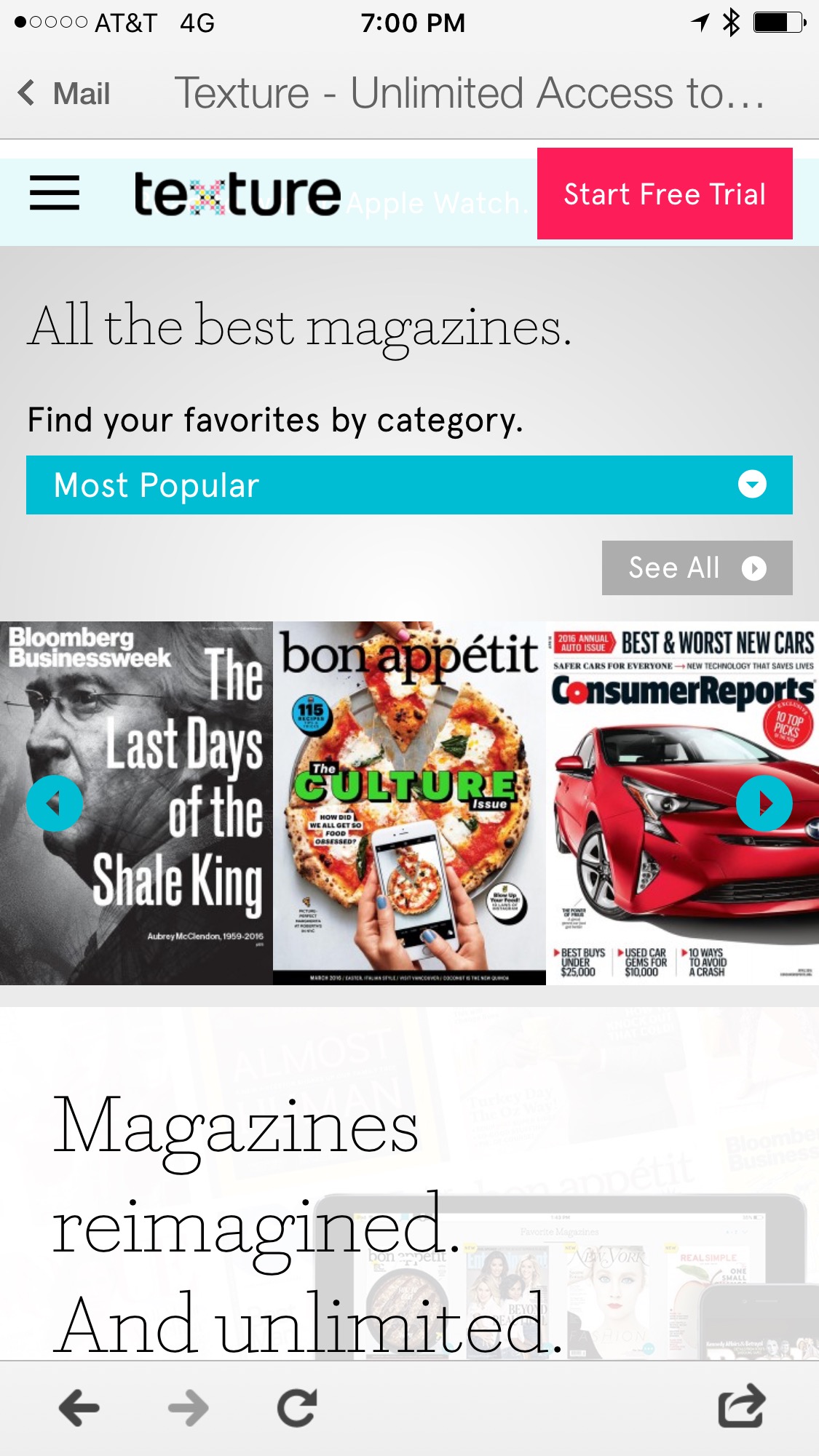
Next Issue Media is the start-up company behind the Texture App. At the core of Next Issue’s offerings are the Texture Apps for iPad® and iPhone®, Android™ and Windows® 8 PCs and tablets, and offers a digital reading experience that gives the reader an all-access pass to the world’s best magazines.

Maggie is a strong believer in the app and believes that this is an alternative that can work in conjunction with other digital media and with print as well, to give the reader a better and more diverse experience.

I spoke with Maggie recently and we talked about Texture and the ability the app gives its readers to buy single-copy stories or immerse themselves fully into their favorite magazines; it’s all about giving them choice. Through the sampling, Maggie believes that many titles that consumers wouldn’t normally buy, they might on the other hand purchase one article or story that catches their eye and a new customer is born. It is a very interesting concept that may be the answer to developing a new digital revenue stream that actually works. It certainly shows promise and hope.

So, I hope you enjoy the Mr. Magazine™ interview with Maggie Murphy, Editorial Content Director, Texture, as she shares her hopes and dreams for the app that presents the magazines she loves in a most interesting and diverse way.

But first, the sound-bites:

unnamed-1 On the differences in experience between accessing something on an article by article basis versus having an actual magazine in hand: It was getting harder and harder to find magazines, especially in New York, and I never seemed to have one in my hand when I wanted to read one. And carrying around my device and just loading the app, I was suddenly able to read things that I hadn’t in months. There was everything I loved about Real Simple at my fingertips; there was The New Yorker; Vogue; just everything. And I think it made me actually an even more diverse reader, for instance, the app’s connection and our relationship with Rogers Communications, which is one of our owners; I was going to read Maclean’s and Maclean’s take on the U.S. election is fascinating.

On whether she feels there’s a difference in experiences when it comes to actually holding a magazine to read, versus not having that weight in your hand: I feel a digital experience delivers to me quality content, and the second thing about it is that I can share that content. I’m running around over time; I’m trying to simplify my life, and I come across a story in Marie Claire that I really think my niece would love, I can send that to her in one step. I think you’re going to have people who will always love the feel of paper; they appreciate it, but the reality is that when it comes to the visual experience, the iPad does a wonderful job of giving me a beautiful image of National Geographic. It looks as vibrant on the screen as when I would produce a magazine.

On whether she agrees with the statement some publishers have made that the tablet and the homepage are dead: (Laughs) No, I don’t. I think just like the lyrics in one Bruce Springsteen song says: everything that dies one day grows back. I believe there was incredible bitterness and disappointment in the arrival of the tablet and how it was supposed to save magazines, and unfortunately that wasn’t the case. But I think there was too much too soon, before the reader was ready. And I don’t believe the technology was as nimble as our ambitions.

IMG_2143 (1) On the total number of magazines available on the app: We’re closing in on 200 magazines and recently we added the Reader’s Digest team, along with The Atavist, so we’re covering from every spectrum. And we have all of the partners’ brands, so that’s all of the magazines from Time Inc., from Sports Illustrated to People to EW and of course Time magazine. We have Condé Nast and all of their brands, such as Bon Appétit, Vogue and The New Yorker. We have all of Hearst’s wonderful titles, like Marie Claire, Esquire, Town & Country and we have titles outside our partners.

On how she feels her job has changed since her days as editor of Parade, where she created content, to her role today as a curator of content: Today Texture isn’t creating content, but I don’t think that’s off the table. I believe that could be a long-term goal and I especially think as we look at how wonderful things like The Atavist’s Mastermind is doing, that’s a model that we’re intrigued by. Fundamentally, when I said that I wanted to be a journalist, to me, that meant that I wanted to work in magazines and I am working in magazines. And I think I’m working in magazines at a time and with a platform that shows a different way to go forward.

On why someone would pay money to access content through Texture when they can get it for free on most magazine websites: What we believe is for someone who is looking for that magazine experience, and people love magazines; what we’re saying is this is a way to get all of them at your fingertips, just like there is in a Netflix model or a satellite radio model and there’s a fee for that so that we can make sure that we can continue to pay for it and continue a revenue model.

On what she’d like to say she had accomplished a year from now with Texture: The biggest problem we face right now is just that people don’t know that we exist. We’re doing our very best to get the message out there. We’re working with our owners, who have been incredibly supportive by really investing in the brand, and really updating it. We’re working on a mobile adaptive so that we’re really able to deliver magazine content in a mobile-friendly manner for the phablet that is to come. And I think it’s just really giving magazine lovers choice, of saying here’s another way.

On what motivates her to get out of bed in the morning: I still get to discover great stories; that’s what I like about it. I was talking to friends one day and they asked me why I got into this business. I simply told them: I love magazines. I thought it would be cool to work on magazines. And today I’m not working on simply one; I’m working on 200 of them. I want to see these magazines succeed. From the way that they are put into the app; the way pulling out a story delivers a message; to the push notifications. We’re championing great reading.

On selling content story-by-story instead of offering the entire experience: One of the main ways people read many brands is cover to cover. They’ll go into the app, they love the magazines that are their favorites, and they read cover to cover and we see that in our data. However, by offering them singles, we’re potentially offering them the chance to sample something that they might not. And in fact, one of the more interesting aspects after the horrible Paris attacks; we collected stories together about how Islamic terrorism might have come to Paris. And there’s a piece from The New Yorker and a piece from Time about why did this happen; what’s going on. And there was a piece from Vogue about the wives and female jihadists. And a number of people said to me: I would have expected that piece from The New Yorker; I would have expected that piece from Time, but I didn’t know that was in Vogue, and it gave me a new appreciation of Vogue.

On what keeps her up at night: People believing that the only way to get great magazine content is a website; that’s not the case anymore. We’re here; we have a great product and it’s improving every single day and I just want more people to know about it.

And now the lightly edited transcript of the Mr. Magazine™ Interview with Maggie Murphy, Editorial Content Director, Texture.

Samir Husni: Recently there was some news about Texture, that now you can view it on a horizontal screen as opposed to only vertical. And you’re also signing digital-only magazines, so as one who was so involved in the print component of a magazine; how do you access the feeling of reading something article by article versus having an actual magazine in your hand?

unnamed Maggie Murphy: That’s a great question. I have really loved reading as many magazines as I get to do, thanks to the Texture app. That was my reintroduction to it because I had worked at Time Inc. when the original idea was invented by John Squires and he had worked with a consortium of publishers to get them to sign on. But I hadn’t really looked at the app until last spring and when I opened it up I thought to myself, oh my gosh, where has this been?

It was getting harder and harder to find magazines, especially in New York, and I never seemed to have one in my hand when I wanted to read one. And carrying around my device and just loading the app, I was suddenly able to read things that I hadn’t in months. There was everything I loved about Real Simple at my fingertips; there was The New Yorker; Vogue; just everything. And I think it made me actually an even more diverse reader, for instance, the app’s connection and our relationship with Rogers Communications, which is one of our owners; I was going to read Maclean’s and Maclean’s take on the U.S. election is fascinating.

So, I think that we’re moving to a more accepting place, that this is one way that we have our phones with us all the time and I can’t count on always being able to find a magazine in paper, but I can truly always have a magazine at my disposal thanks to the app.

Samir Husni: Do you think that the experience changes; do you get the same feeling when you’re flipping through the pages of a magazine, feeling the weight of Vogue in your hand, as opposed to not feeling the weight? Does that make a difference in that experience?

Maggie Murphy: I look at that question very differently than some do. I would often hear readers penalize magazines because they weren’t thick, even though the content was good, if not better, and the reason they weren’t thick anymore may have had to do with, not the status or the quality of the work, but because of the way the advertising industry had changed.

And I feel a digital experience delivers to me quality content, and the second thing about it is that I can share that content. I’m running around over time; I’m trying to simplify my life, and I come across a story in Marie Claire that I really think my niece would love, I can send that to her in one step.

I think you’re going to have people who will always love the feel of paper; they appreciate it, but the reality is that when it comes to the visual experience, the iPad does a wonderful job of giving me a beautiful image of National Geographic. It looks as vibrant on the screen as when I would produce a magazine.

That was always actually really interesting; we would use E-readers, as everybody does, to check proofs. You go through the magazine in your last hours before you pushed the button and you’d flip through it. It’s the last stage most editors go through. And the colors were always so vibrant. And sometimes paper would not always print as we’d hoped. And for me, I feel the transition is here and the up side of it is tremendous. The availability; the grasp and the range that is always with me outweigh any charm of having a bundled-up magazine or newspaper in my pocket.

Samir Husni: Last May I took a group of my students to New York and we attended a conference where one magazine publisher after another said that the tablet was dead; the homepage was dead, and it was now all about mobile, videos and notifications. Do you agree with that statement?

Maggie Murphy: (Laughs) No, I don’t.

Samir Husni: (Laughs too).

Maggie Murphy: I think just like the lyrics in one Bruce Springsteen song says: everything that dies one day grows back. I believe there was incredible bitterness and disappointment in the arrival of the tablet and how it was supposed to save magazines, and unfortunately that wasn’t the case. But I think there was too much too soon, before the reader was ready. And I don’t believe the technology was as nimble as our ambitions.

But now as we move toward something that looks more like a phablet, you know it’s not that far from a mini iPad; I feel that the ultimate reason I don’t agree with that statement is that the magazine-reading experience, that narrative, is told with pictures and words over a period of a few minutes or in the case of The Atavist’s Mastermind, which we debuted recently, over a number of weeks, is so well-suited for this device.

We took content and tried to just add to it and move it onto the tablet and it didn’t work at first, but a lot of things don’t work at first. And then later they work better. And also other things that people have said died came back, vinyl, for example. I don’t think we’ve quite figured out what magazine making transforms into with these new devices. And what these new devices will be. We’re going to have a digital reader of some kind. Now, for some people it’s going to be their phone and with others it may be the new Amazon reader which our app is now available on that product.

I read somewhere that there are 40 million magazine subscribers. I don’t have to get all of them; I’d love to have all of them, if everyone downloaded the app, think of all of the trees that we’d save; it would be fabulous. However, I do think that I can get a good portion of those people. I think we can get people who are magazine readers and who are tired of subscribing to a magazine for $10 or $15 and getting a blow card from them. We bring real value. I want culturally-curated content; I want to read.

And that’s what was so revelatory for me when I rediscovered the app in the spring when John Loughlin, our CEO, reached out to me and said he might be looking for an editor to help curate this. After months and months of working in blogs, I appreciate getting content quick and readily because I want to read stories. I still think magazines, hands-down, deliver that better than any other medium.

The challenge of magazines these days is that we’re delivering them the same way that we did 50 years ago. There’s a guy with a truck and a newsstand (Laughs); it’s not an efficient way. This is a good way. I believe there will always be things that you want on paper, but I don’t think that means that we can’t have this experience digitally.

It is almost impossible to find a newsstand in New York that allows you to browse. At supermarkets and drug chains, they’ve moved those pockets and magazine racks to the back or the side of the store. Sometimes, with the weeklies, it’s hard to figure out if that’s the old cover or the new cover. What’s dying is the 50-plus-year-old newsstand delivery system, not the value of the words, the images, the content, or the editorial packaging that makes a magazine, a magazine. People still love magazines. But it’s like the opening of The Six Million Dollar Man: we can deliver them better and faster than we did before. Most people who try Texture are blown away by what they get. Our stats show that users come in for a magazine and are sampling content they never knew they would enjoy. They double and triple their magazine-reading time. We are addictive and habit- forming. And we are the ultimate de-clutterer. What’s not to love?

And I do think it’s a different type of story. If you talk to people, there is content on a website and there is content in a magazine; it’s very different skills that produce each. They’re all very important; one is not superior to the other.

The question is how do we make money and that’s one of the things about this app. It allows magazines to make money off of traditional structures in a digital way and because the advertising is included it can count towards someone’s rate base, and also by paying through that monthly fee, the magazines get a portion of that every month. So, there is a new revenue stream here. It’s very small today, but I don’t think that it’s going to stay that way.

Samir Husni: What’s the total number of magazines that are available on the app now?

Maggie Murphy: We’re closing in on 200 magazines and recently we added the Reader’s Digest team, along with The Atavist, so we’re covering from every spectrum. And we have all of the partners’ brands, so that’s all of the magazines from Time Inc., from Sports Illustrated to People to EW and of course Time magazine. We have Condé Nast and all of their brands, such as Bon Appétit, Vogue and The New Yorker. We have all of Hearst’s wonderful titles, like Marie Claire, Esquire, Town & Country and we have titles outside our partners. We have hundreds of magazines, literally thousands of articles and I’m really excited by what I get to read. It’s a small team, myself and two other editors, and each day we read as much as we can and really overlap interesting stories.

I was just reading Rolling Stone’s cover story on Bernie versus Hillary. There was the Chatelaine story about whether or not we’re drinking too much. (Laughs) And there was a beautiful piece in Time recently from Patti Davis about her mom, Nancy Reagan, and these are things that we can call out. It’s a great opportunity to curate amazing content.

Samir Husni: Describe the difference between what you did as editor of Parade, where you were assigning stories and creating content, to where you are now, curating content. How do you feel your job has changed?

Maggie Murphy: Today Texture isn’t creating content, but I don’t think that’s off the table. I believe that could be a long-term goal and I especially think as we look at how wonderful things like The Atavist’s Mastermind is doing, that’s a model that we’re intrigued by.

Fundamentally, when I said that I wanted to be a journalist, to me, that meant that I wanted to work in magazines and I am working in magazines. And I think I’m working in magazines at a time and with a platform that shows a different way to go forward. And potentially, in a way that can really become an incredibly engaging business for people who want to read researched, visually enticing, reported narratives.

And we see the quest and the desire to read stories of substance; stories of consequence. And stories that are really helpful. Brands with consumer reports do wonderfully in our app. Service stories do terrific. And we can not only give people Real Simple’s tips for declaring this week, but we can package together their content dating back until 2012 and we can do this for magazine editors themselves, where it’s difficult sometimes to go back and ask, didn’t we do this story a few years back? With the touch of their fingertips, they can search these brands. So, if you’re interested in planning an Italian vacation, through our search you can get stories from Afar and Condé Nast Traveler and many others.

I love magazine making and I would so like to continue in some creative outlet, but I had always envisioned that my next career would be a librarian. (Laughs)

Samir Husni: (Laughs too).

Maggie Murphy: But I’m sitting here every day and all of these wonderful stories are coming in and I can ask people, have you read this story or that terrific story? It’s just very exciting every single day. It’s like Christmas. I open it up and say: oh my gosh, Esquire is dropping, this is so exciting. We get so thrilled when GQ is coming in.

And one of the other things that we’re able to do with our partners is early access, so for instance, on the Thursday before Vanity Fair dropped its amazing Jennifer Garner story, we saw an early version of that story and Condé Nast was so wonderful to give it to us early on Friday. So, we had that story simultaneously with the same time their website had it. Our subscribers got to read it with the pictures and in the way that the content makers had developed it. And of course, it was mutually engaging and I got to say that I had just read the story and it was amazing.

Samir Husni: Why do I have to pay money to access Texture when I can get the same content if I go to Vanity Fair?

Maggie Murphy: I think that’s one of the things that we’d like to encourage with magazine makers. Most content that appears in magazines is not on the website. They’re different formats. Most magazines aren’t putting the content that they are developing for their print brands online, some of it appears, some of it doesn’t, but if it’s behind a paywall, it’s there. I think that’s one of the issues that is still being navigated. I could see why a brand would want to put a hot story out there, but we’re offering a different way to give people access to that in a way that allows us to continue to do those stories.

If the entire business had it to do over again, would we follow the same path of just repurposing our content and putting it online? I think what we realized is that it doesn’t work as well as content that was made for digital. It’s a different format. A website and what you’re looking for online is very different than the print experience and what you’re aiming to learn when you sit down and read a magazine.

What we believe is for someone who is looking for that magazine experience, and people love magazines; what we’re saying is this is a way to get all of them at your fingertips, just like there is in a Netflix model or a satellite radio model and there’s a fee for that so that we can make sure that we can continue to pay for it and continue a revenue model.

That’s one of the things that we’d like to see. We’d like to see more and more access simultaneously and eventually the partners will have to kind of come to terms on how they want to distribute their content. But we think that this is a viable alternative to subscription and giving people something behind a paywall.

Recently, I went downstairs and got a free cup of coffee at the hotel. It hit the spot. It did the job. But it’s not like my venti Pike from Starbucks. Which I not only enjoy, I savor. It makes me feel satisfied and happy. I pay $4 a day for that experience. That’s valuable to me because it brings me joy. There is a lot of good content out there for free. But I want great content. That brings me joy. For our premium subscription, that’s roughly 50 cents a day, I am able to read a New Yorker story, a Popular Mechanics feature; introduce my daughter to Cricket or National Geographic, and still check out “Stars Like Us” and that’s a great value. Yes, I can do that on the web, but it’s not a singular storefront. Plus, once I am in the store, there’s something new to read or investigate, whether it’s a recipe or a travel story. And we’re doing more early access to content. Whether that was Jennifer Garner’s Vanity Fair cover story or a first look at EW’s David Bowie issue.

The truth is most magazines do not end up putting all of the brand’s content on the website. What works on a website, for the most part, is a different type of story, just as newspaper stories were different than magazine stories. I do believe there are readers who don’t feel strongly about the difference and will never pay for content again. Post-recession, it’s just not what they do. You can see that in the decline of the gossips. But I do believe there is a reader who wants a reading experience beyond listicles and bulleted pieces. There are many blogs I enjoy, but I don’t want every experience through a personal lens. I want to read that richly reported piece. I want the fact-checked recipe from Bon Appétit.

Digitally, brands like The Atavist are exploring magazine long-form—and that’s what makes our partnership with them so exciting. But we showcase stories on Texture that might not get showcased elsewhere. There was a wonderful essay from Self last month that we featured in our New & Noteworthy that might not have been seen outside the confines of the print product if you didn’t have a subscription to the magazine. I would say that Texture is a new way for brands that are beloved and have been part of the fabric of American life to thrive digitally, separate from their web and mobile-based experiences. I don’t know her, but Kate Lewis of Hearst said something that I think is spot on: “Print tells me what’s next. Digital tells me what’s now.” I think many, many readers still want to learn what’s next, and magazines (on paper or in Texture) still do that better than any other medium. Put another way: Think about filmed content. You can have it delivered on network, on cable, in pay-per-view, or via YouTube. And many other ways. The publishing industry has finally caught up to the television industry in providing many varied content experiences: on paper, on web, through mobile, social, vlog, blog, and in app via Texture. Among others being invented as we speak.

Samir Husni: If you and I are having this same conversation a year from now; what do you hope that you can tell me you have accomplished during that year?

Maggie Murphy: That’s a really good question. The biggest problem we face right now is just that people don’t know that we exist. We’re doing our very best to get the message out there. We’re working with our owners, who have been incredibly supportive by really investing in the brand, and really updating it. We’re working on a mobile adaptive so that we’re really able to deliver magazine content in a mobile-friendly manner for the phablet that is to come. And I think it’s just really giving magazine lovers choice, of saying here’s another way. There is paper; there is the website, and there is a magazine app that is a Spotify for magazines; a Netflix for magazines, for those people out there who want this experience, but want it in a more convenient, on-the-go way.

Samir Husni: What motivates you to get out of bed in the morning and take on the day?

Maggie Murphy: I still get to discover great stories; that’s what I like about it. I was talking to friends one day and they asked me why I got into this business. I simply told them: I love magazines. I thought it would be cool to work on magazines.

And today I’m not working on simply one; I’m working on 200 of them. I want to see these magazines succeed. From the way that they are put into the app; the way pulling out a story delivers a message; to the push notifications. We’re championing great reading. And our readers are responding. The Texture reader is cultured, curious; they have high incomes and they really love this kind of content. I feel like I’m championing great content, which is what I always wanted to do. So, when you’re doing something that really speaks to your core, you feel it’s important. And I do. I feel that this is important.

I have had a tremendous career working at some of the best brands that gave ever been around. And I have many, many friends who are in their 20s and 30s who really love magazine making. And for me, I think this is a way forward. The technology will get better; the organization and what-belongs-where will get better and the support of the companies has just been fantastic. I think that there’s nowhere to go but up. I don’t believe that this is the death of something; I think it’s the beginning of something. And I think that’s where we need to not to be negative. As magazine editors, there are new ways to deliver our content. And that’s what we are: a new way. And it’s really a fun experience. Just this morning, I read Rolling Stone and Esquire; both before breakfast. (Laughs)

Samir Husni: On Spotify I listen to a complete song; Netflix, I watch a complete movie; are we changing the experience when you actually sell a story, rather than a complete magazine experience; instead, you are selling segments of that experience. Are you in the sampling business or the entire content business?

Maggie Murphy: I would flip that question first; one of the main ways people read many brands is cover to cover. They’ll go into the app, they love the magazines that are their favorites, and they read cover to cover and we see that in our data. However, by offering them singles, we’re potentially offering them the chance to sample something that they might not. And in fact, one of the more interesting aspects after the horrible Paris attacks; we collected stories together about how Islamic terrorism might have come to Paris. And there’s a piece from The New Yorker and a piece from Time about why did this happen; what’s going on. And there was a piece from Vogue about the wives and female jihadists. And a number of people said to me: I would have expected that piece from The New Yorker; I would have expected that piece from Time, but I didn’t know that was in Vogue, and it gave me a new appreciation of Vogue.

And that I believe is what we’re doing. There are people who love albums and love the entire experience. And there are people who love the entire magazine and want it cover to cover, but I listen to music sometimes one at a time. Give me a great Pop song, and then I might take two or three. I like to sample and then commit. I think you’re going to have both types of readers; you’re going to have every type of reader. There’s enough content and I would say that this is the multiplex and we’re offering trailers. Here’s a taste of this, you might like that. Being able to deliver that overtime builds discovery. We believe that we can build discovery with this model, while we’re still serving the person who wants to read their magazine cover to cover and have that unique experience.

Samir Husni: My typical last question; what keeps you up at night?

Maggie Murphy: People believing that the only way to get great magazine content is a website; that’s not the case anymore. We’re here; we have a great product and it’s improving every single day and I just want more people to know about it.

Samir Husni: Thank you.

h1

The 30 Hottest Magazine Launches of the Past 30 Years…

March 7, 2016
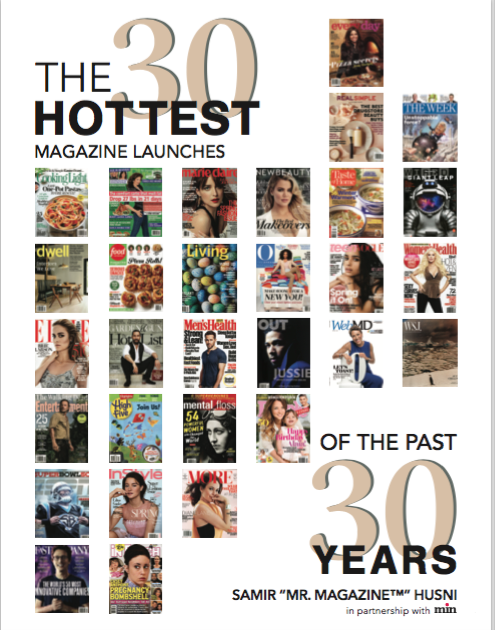
The 30 Hottest Magazine Launches of the Last 30 Years to be published April 14. The book is published by the Magazine Innovation Center in partnership with min (media industry newsletter) and is sponsored by Fry Communications.

The 30 Hottest Magazine Launches of the Last 30 Years to be published April 14. The book is published by the Magazine Innovation Center in partnership with min (media industry newsletter) and is sponsored by Fry Communications.

The last 30 years in the life of American magazines were, to say the least, the best and the worst of years. The era from 1985 to 2015 was described as the golden age of American magazines and also as the changing age of American magazines. Definitions changed, publishing companies changed, and what used to be described as magazines only, is now known as magazine media.

However, one thing did not change. New magazines, those bundles of pure reading joy that continue to arrive in the marketplace, were hot in 1985 and they were still just as hot in 2015.

A total of 23,318 new magazines arrived at the nation’s newsstands during those last 30 years from which 9,828 titles were born with the intention to publish at least four times a year, and if I may add, I have each and every one of those 23,318 titles.

In 2015 and from those 9,828 frequency titles, I started the task of identifying the 30 hottest titles of the last 30 years. It was no easy feat and I’m sure that the majority would agree that the distinguished titles chosen are well deserving of the Screen Shot 2016-03-06 at 5.54.26 PMhonor; however, I also know that some will name other magazines that should reside on that list. But there were benchmarks that had to be met in order to be a part of the stellar lineup.

Here are some of the criteria I used when choosing those titles:

1. The magazine must have been continuously published since its inceptionScreen Shot 2016-03-06 at 6.00.57 PM
2. The magazine must have been in business since at least 2012
3. The magazine must have either broken new ground or entered a very competitive market and thrived in it
4. The magazine must have transferred from a magazine to a brand
5. The magazine must have extended its reach beyond the ink and paper and/or created other entities based on its DNA
6. The magazine crossed the borders of the United States and created international editions worldwide
7. The magazine today is a force to contend with in its specific category of publishing

Achieving five of the seven mentioned criteria assured the magazine a spot on the list of the hottest magazines of the last 30 years.

For me, someone who loves and encourages every new magazine equally, this was an extremely arduous task to accomplish. It’s hard to differentiate among your children (and all new magazines are like my children to me), but at the end of the day choices had to be made. But I assure you, I am as proud of the entire 9,828 titles that were born with frequency as I am of the 30 chosen.

From individual entrepreneurs who launched their titles with nothing but the passion in their hearts, to the large magazine media companies we all trust and love to bring us the best in magazine reading, the 30 titles chosen are but a small representation of a still-thriving, still-kicking magazine and magazine media industry. Let us all celebrate the entire industry as we honor these 30 titles.

And the celebration of those 30 magazines will take place in New York City at the min 30 event on  April 14.  To register for the event click here.

And now for the 30 hottest magazine launches of the last 30 years:

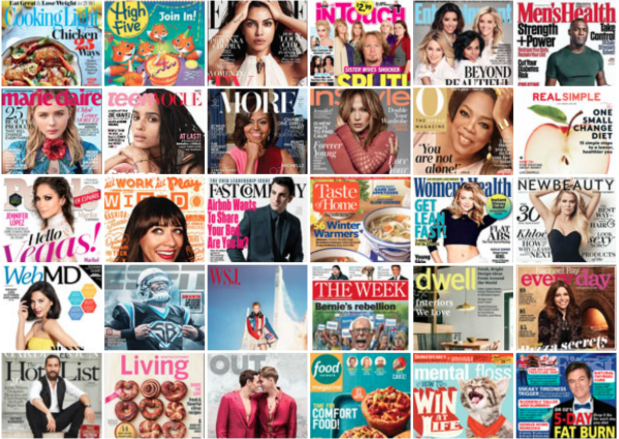
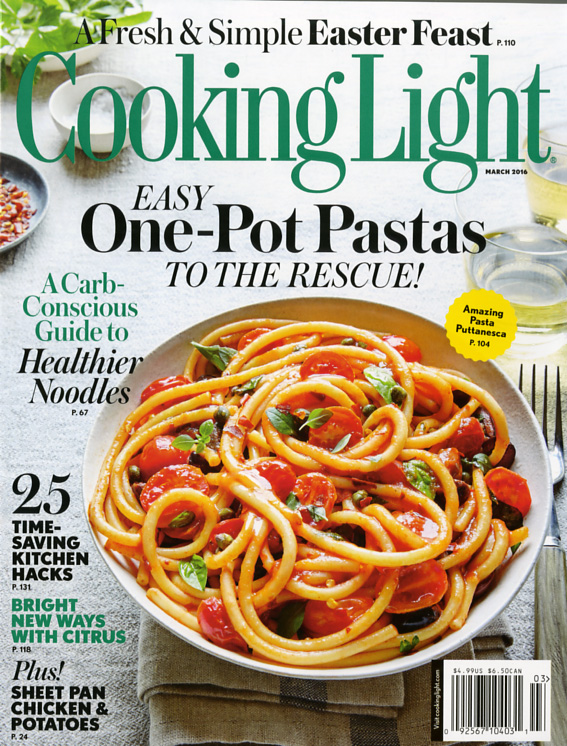
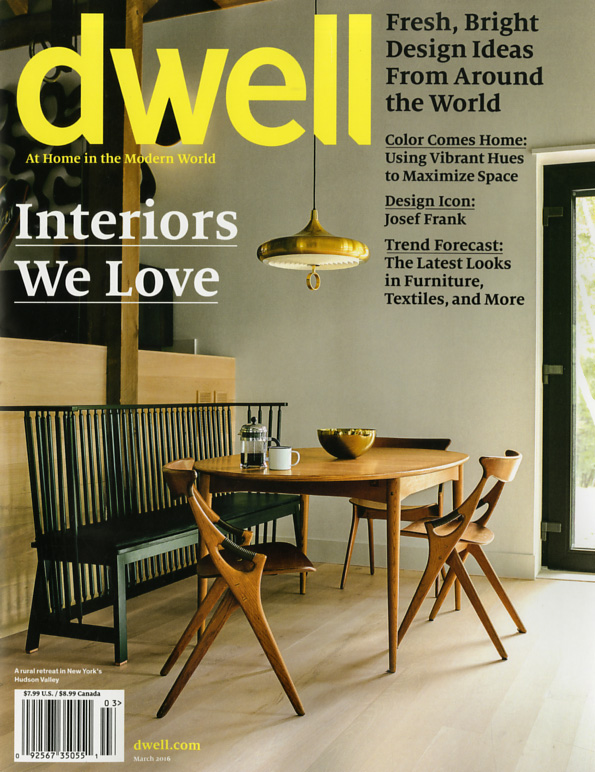
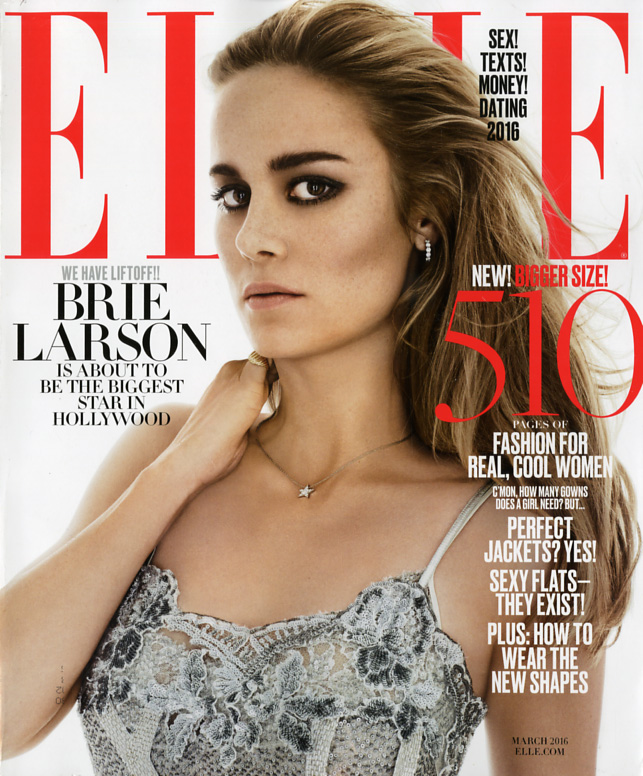
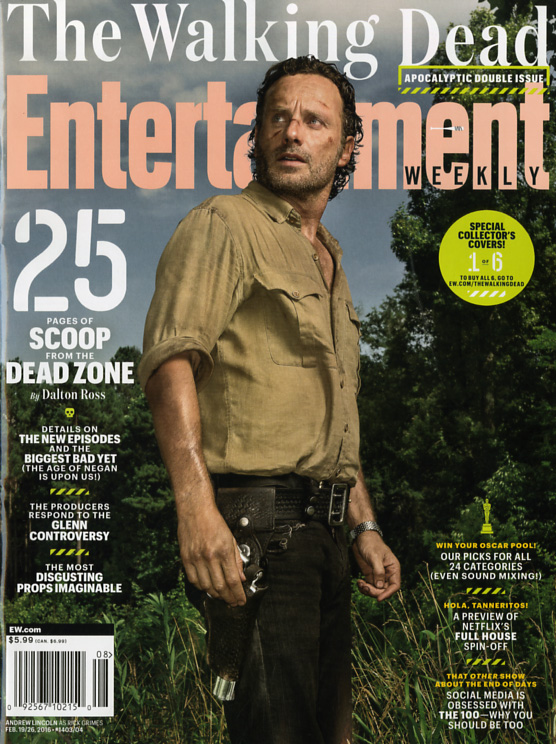
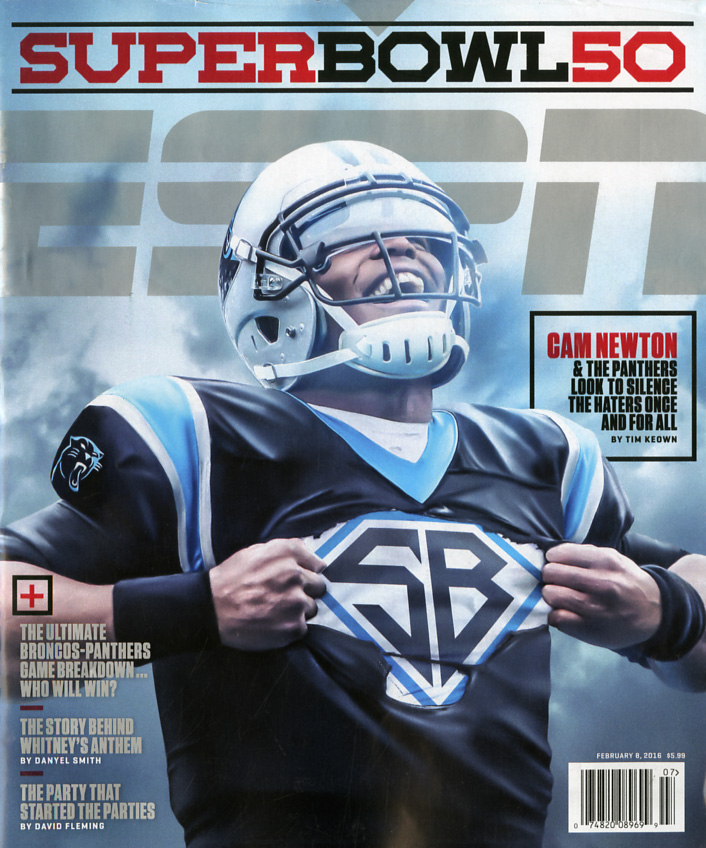
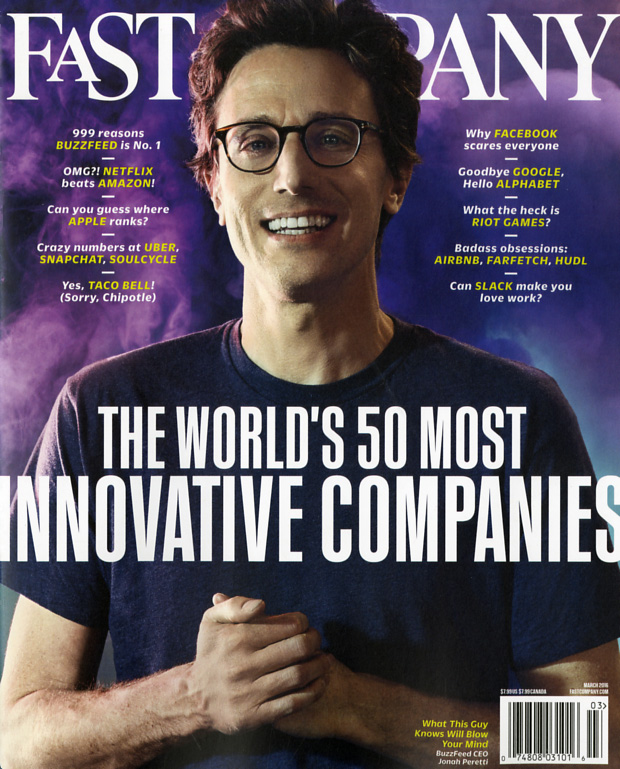
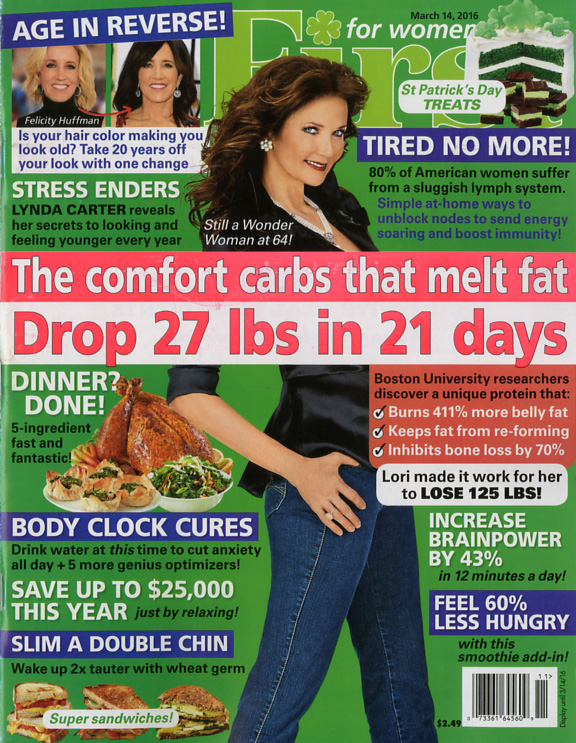
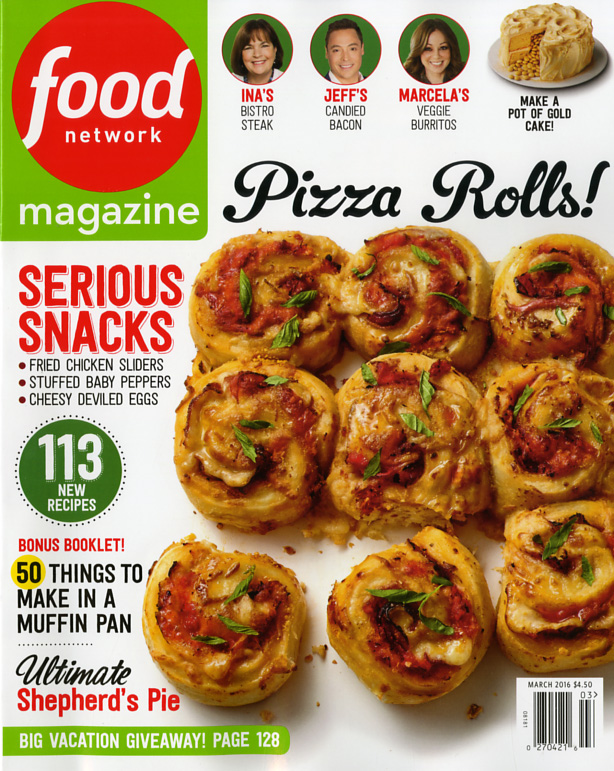
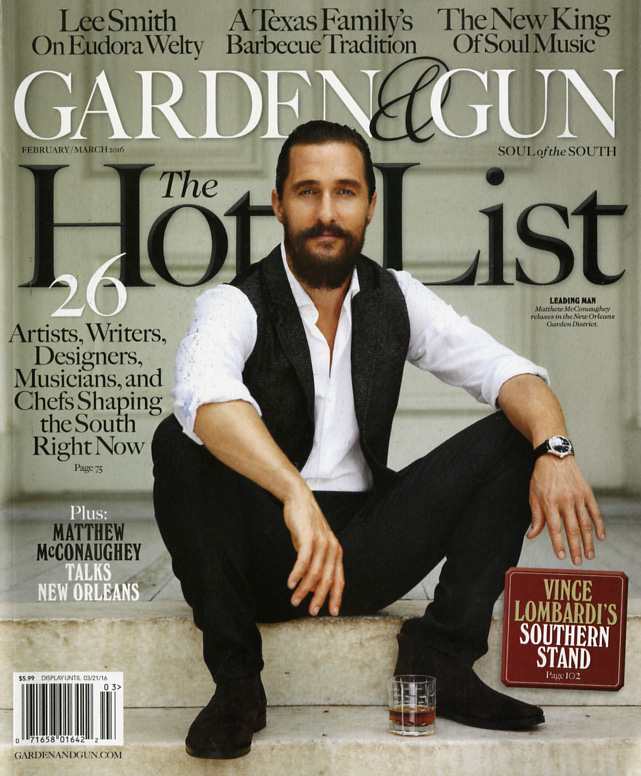
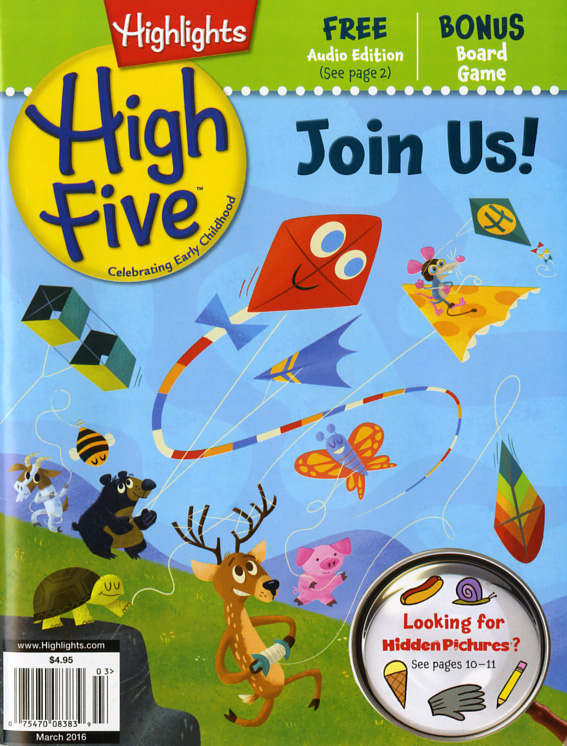
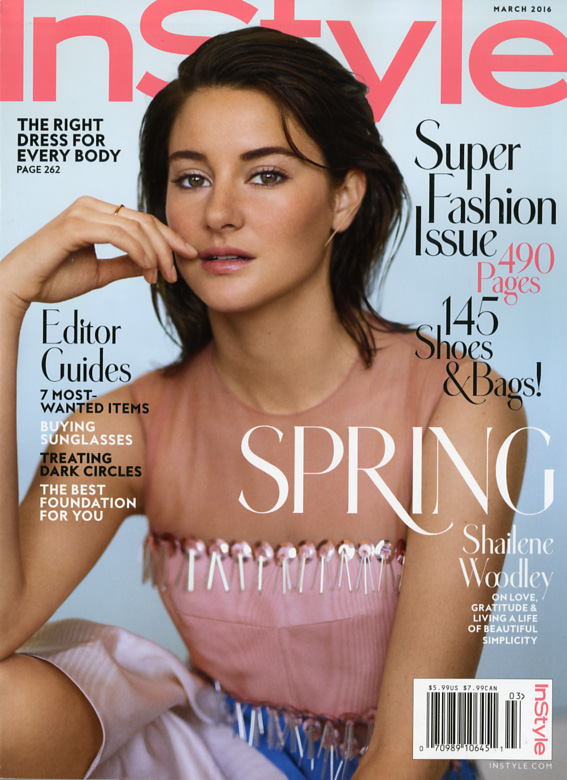
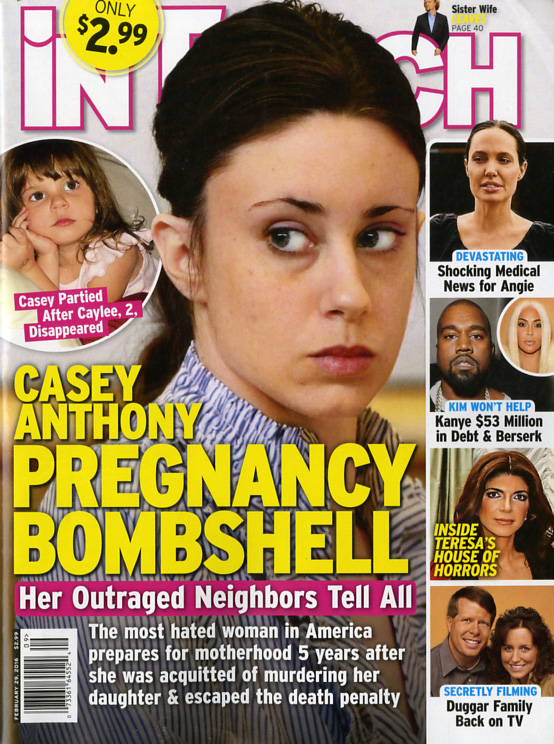
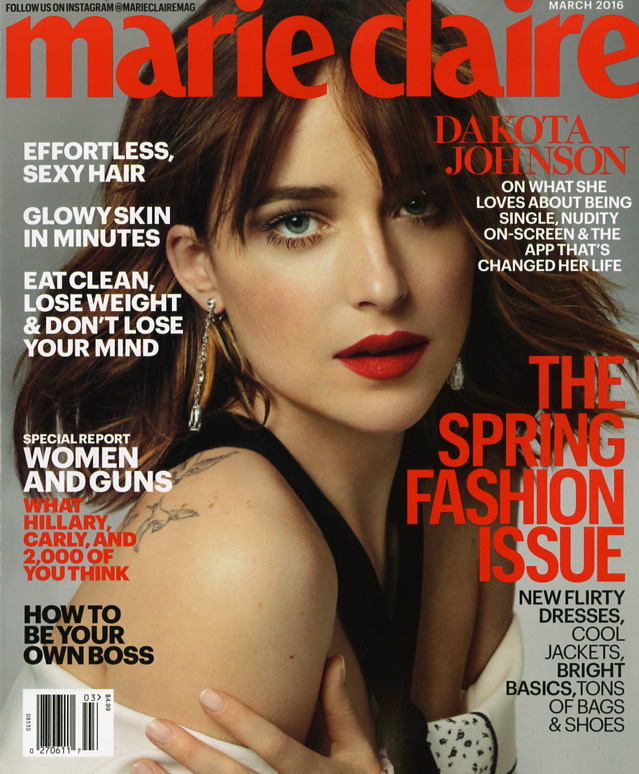
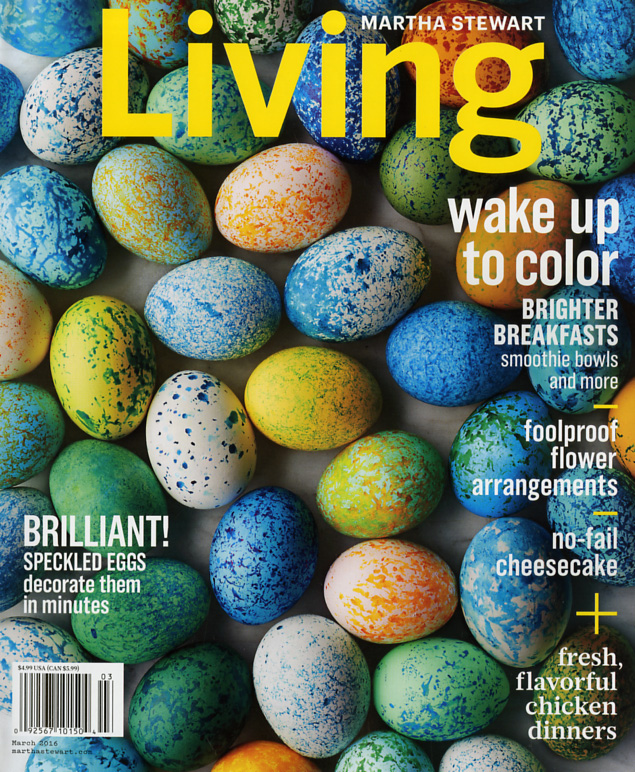
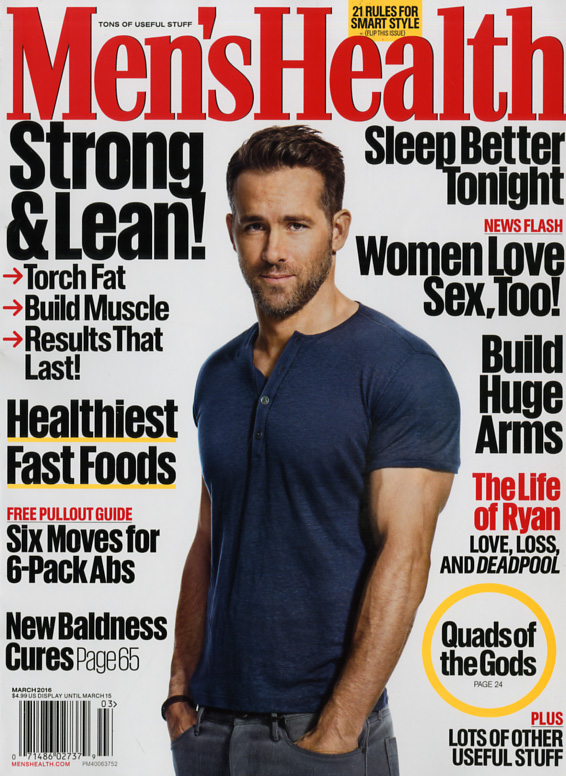
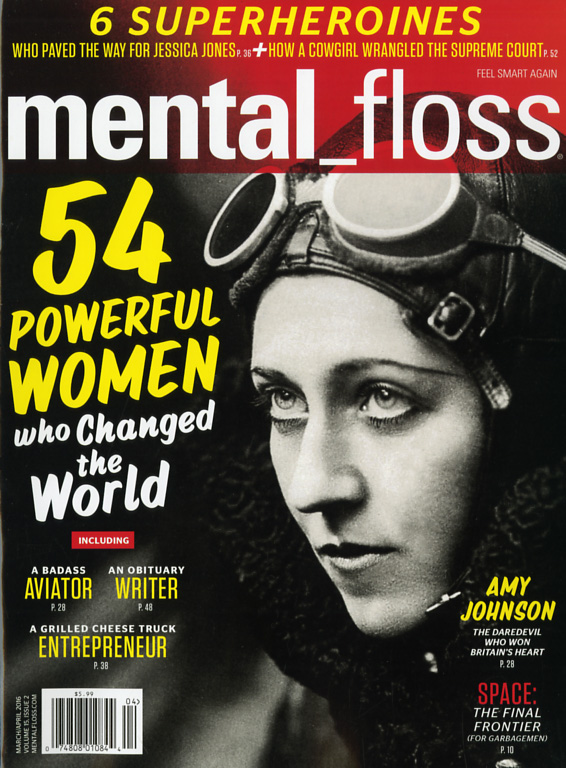
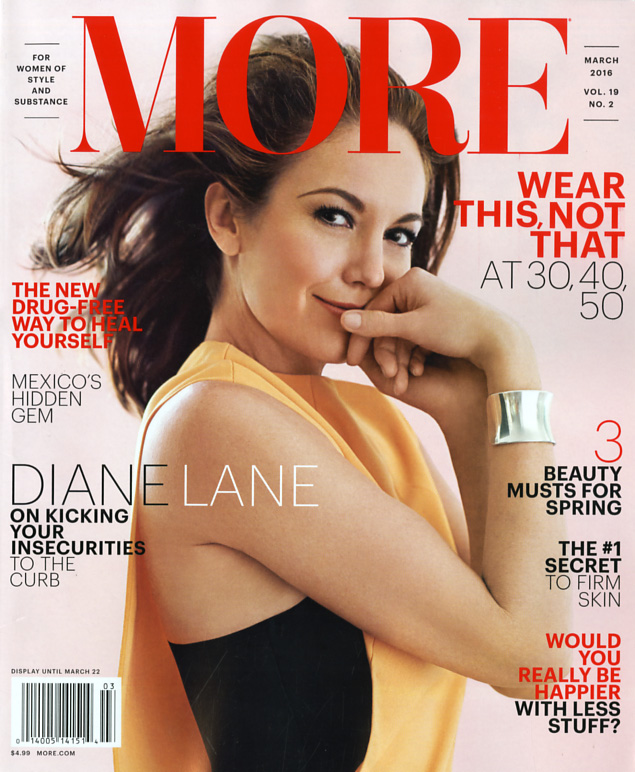
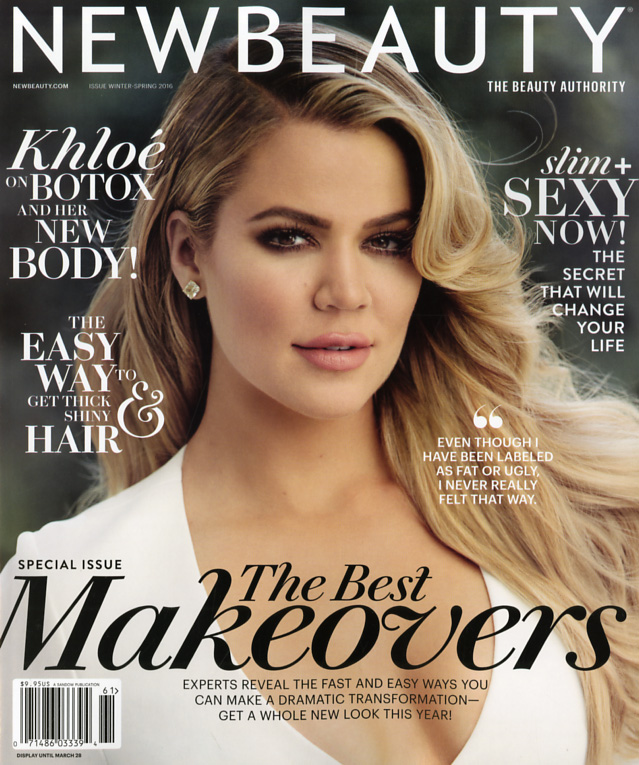
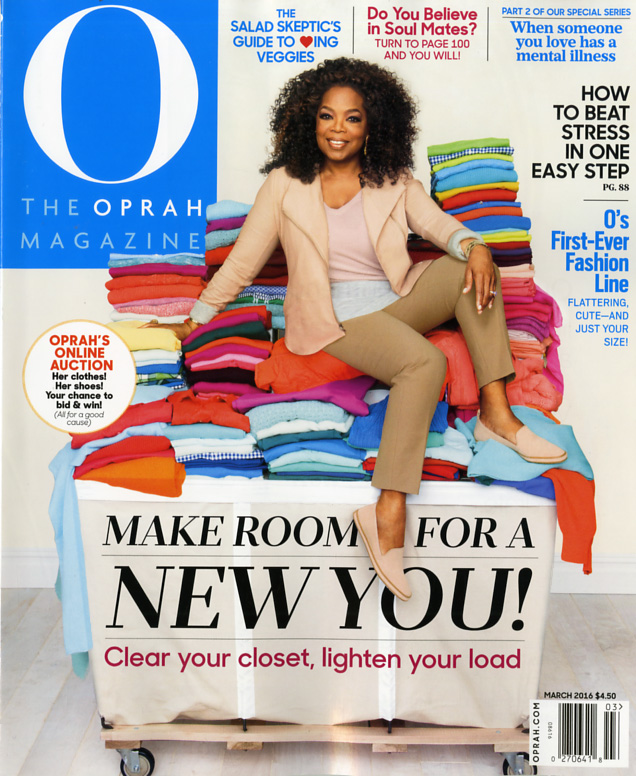
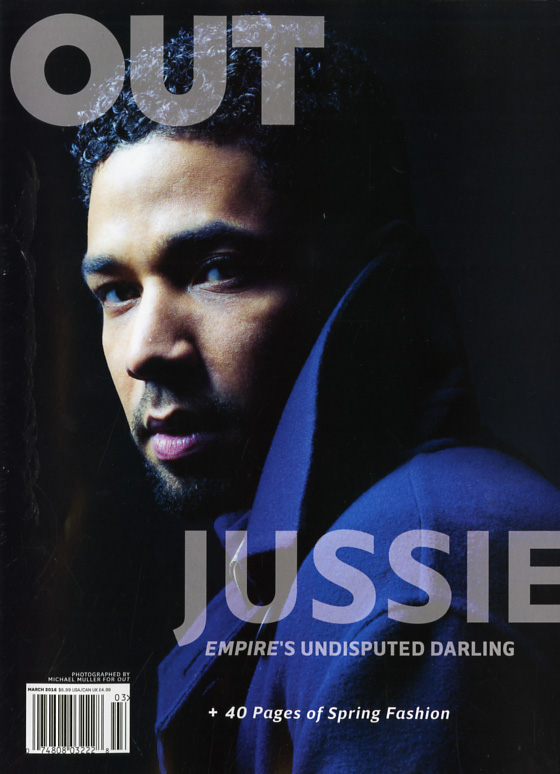
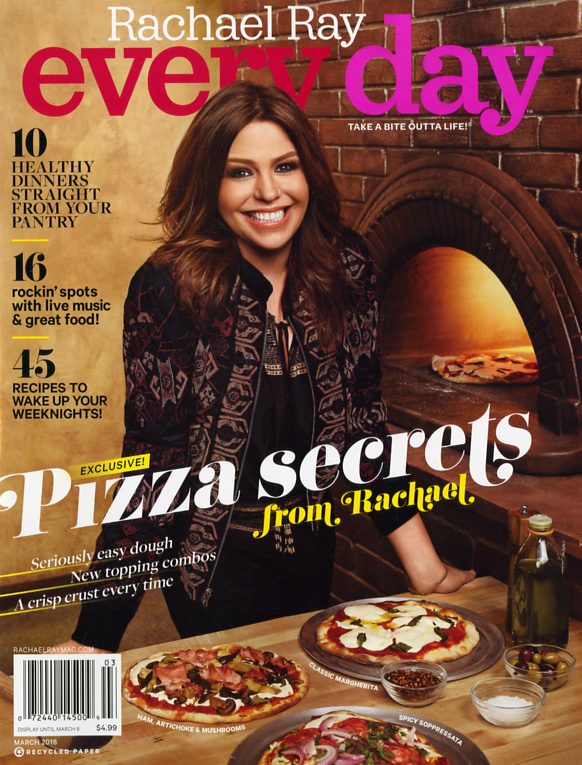
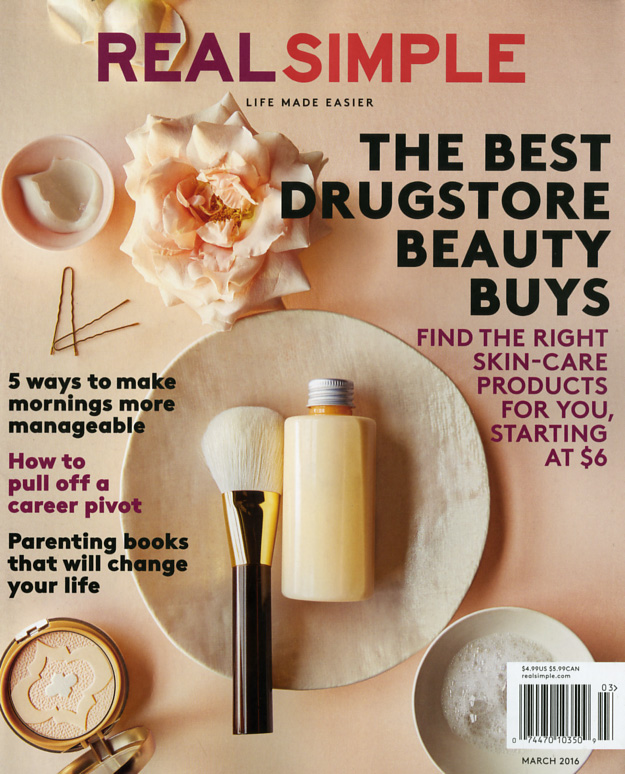
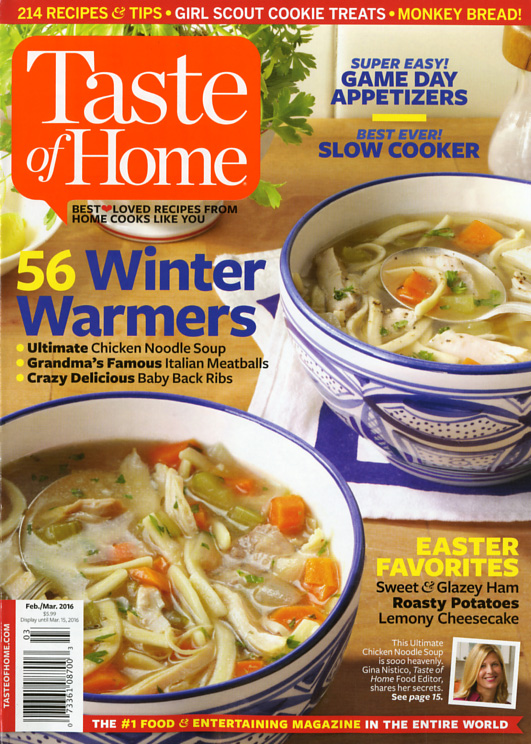
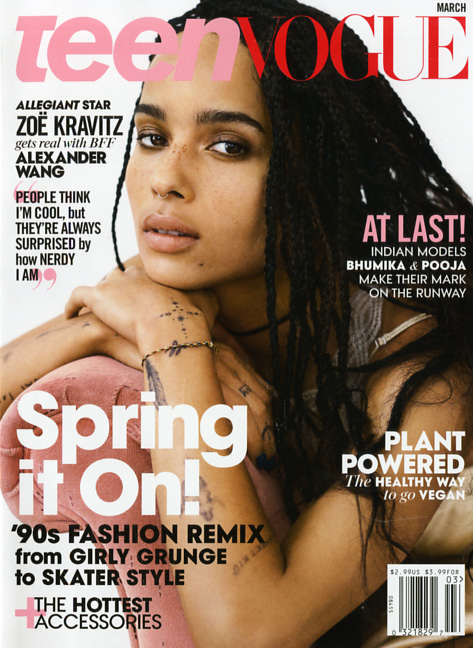
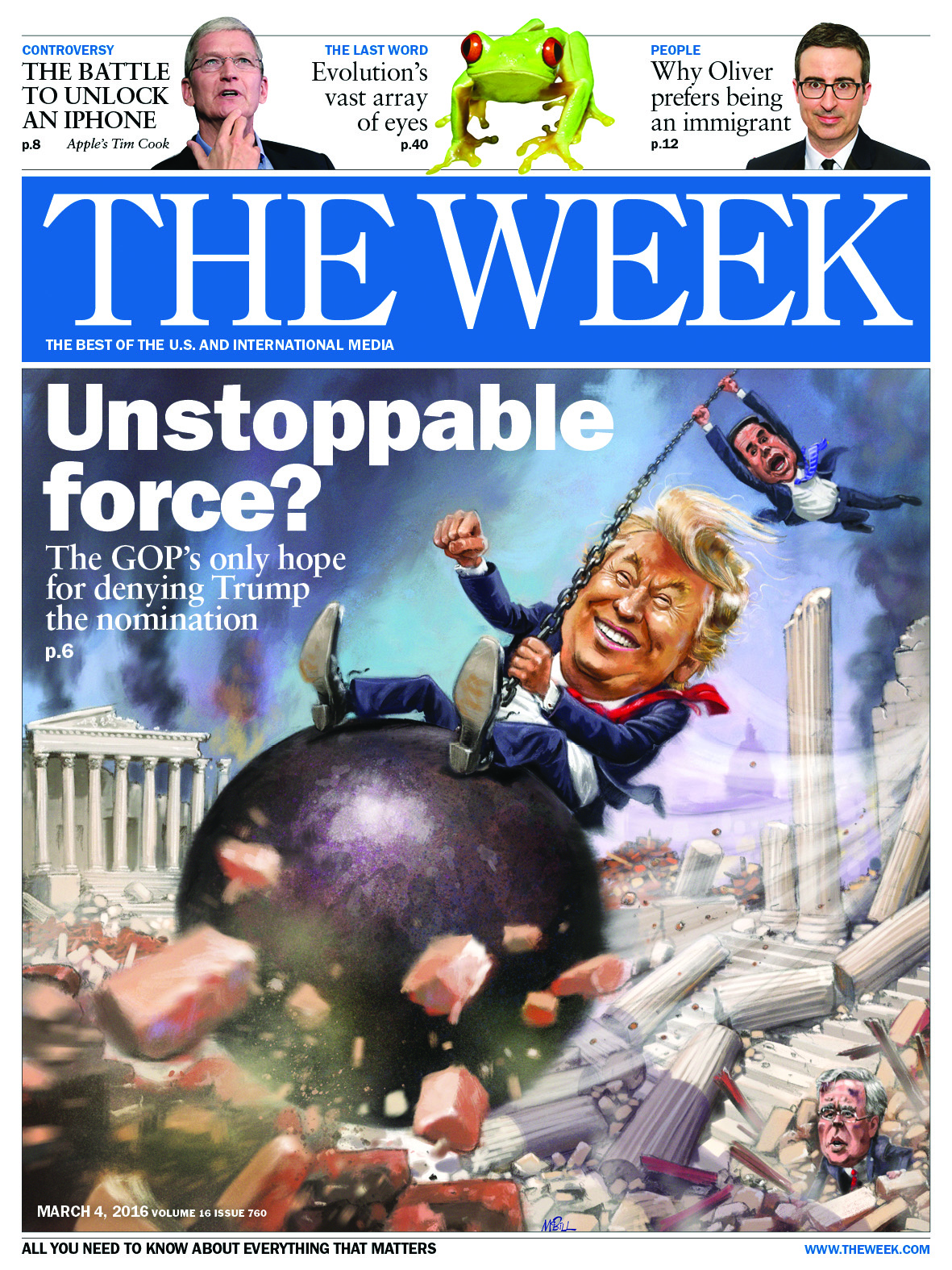
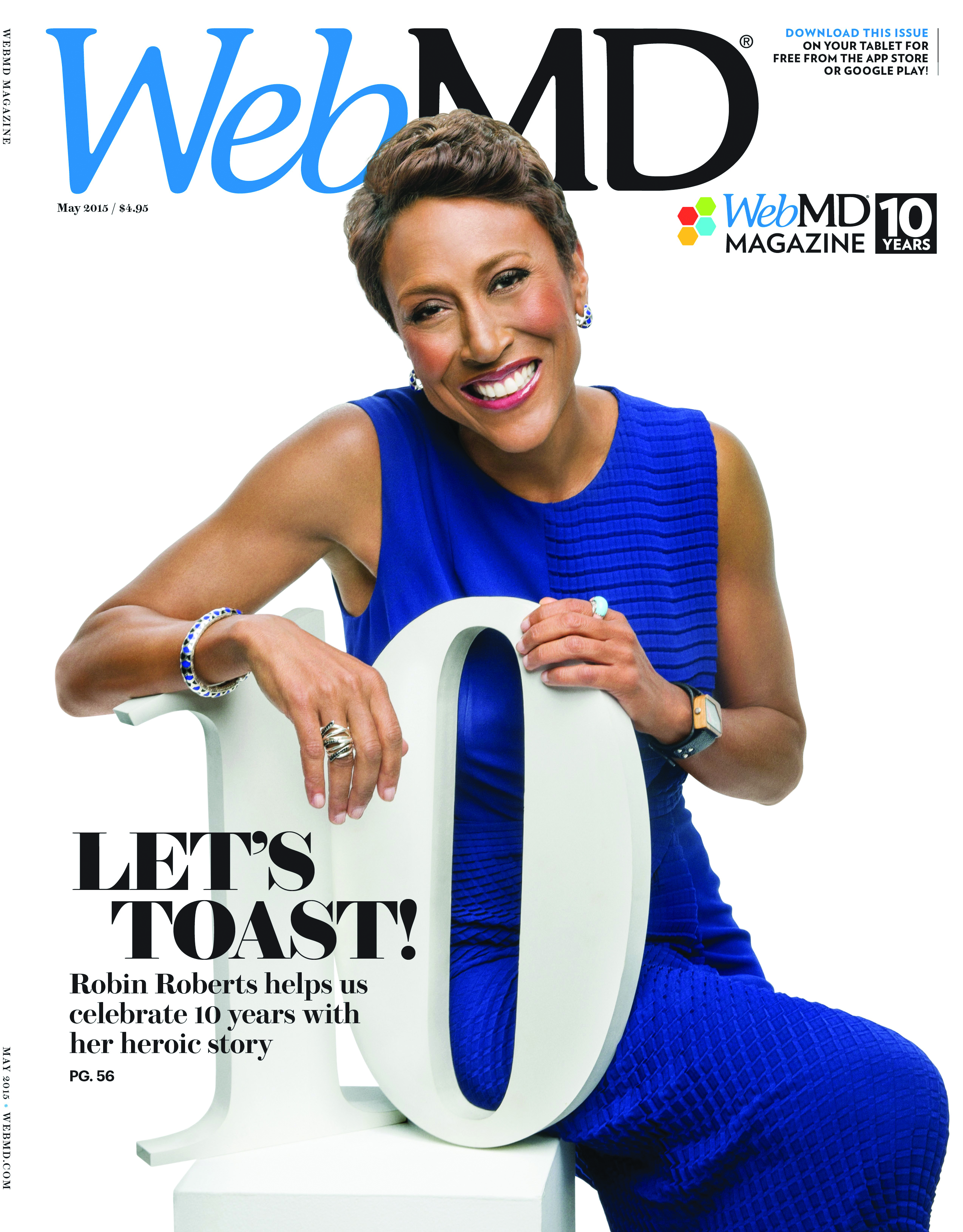
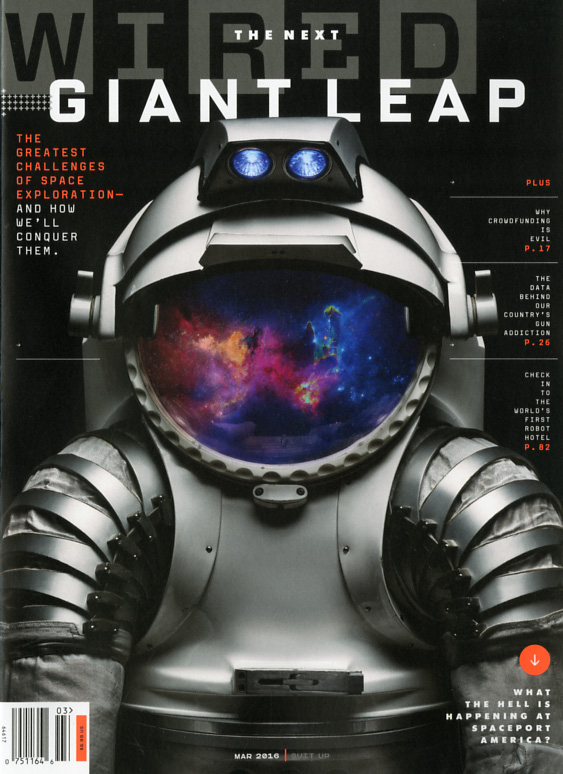
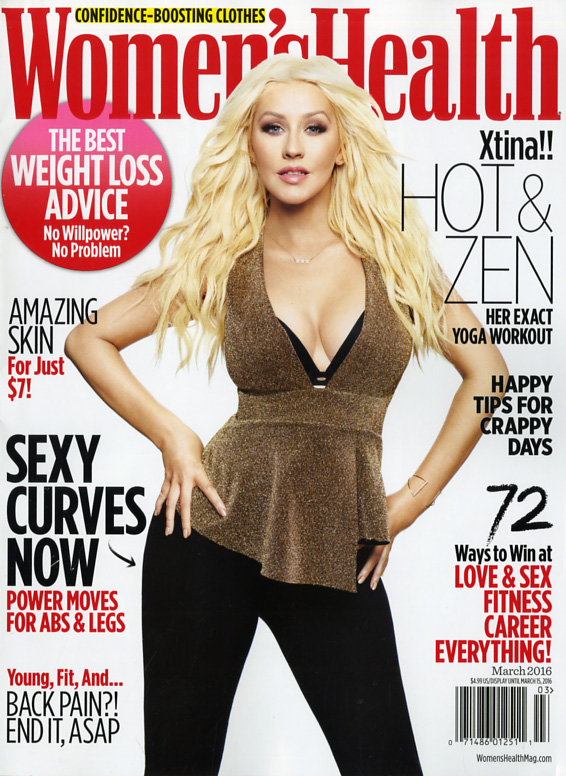
Cooking Light-2Dwell-4ELLE-2Entertainment Weekly-8ESPN-1Fast Company-3First for Women-2Food Network-5Garden & Gun-12Highlights High Five-1InStyle-1InTouch-9Marie Claire-6Living-5Men's Health-11Mental Flos-4MORE-3New Beauty-2O The Oprah-13OUT-7ESCVR04_EAST_1_print.pdfRachael Ray-3Real Simple-8A Taste of Home-1Teen Vogue-6THE WEEKCMKYWebMDCYMKWired-7Women's Health-10WSJ 72-2 (2)

h1

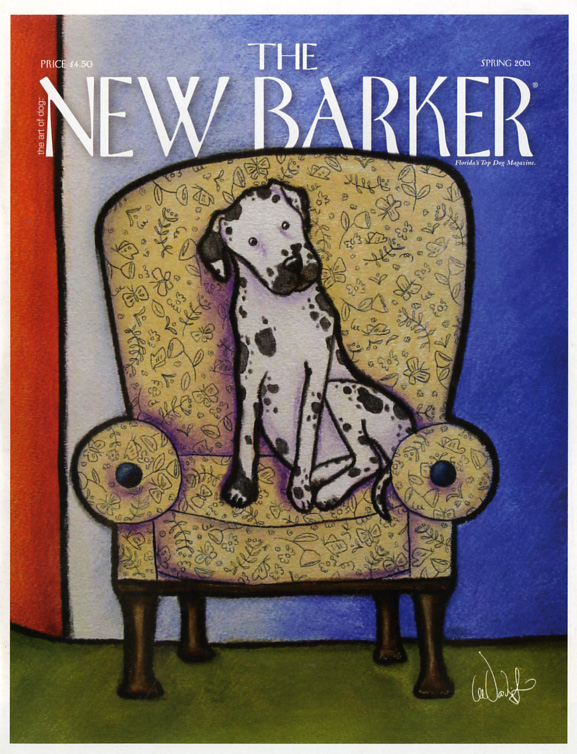
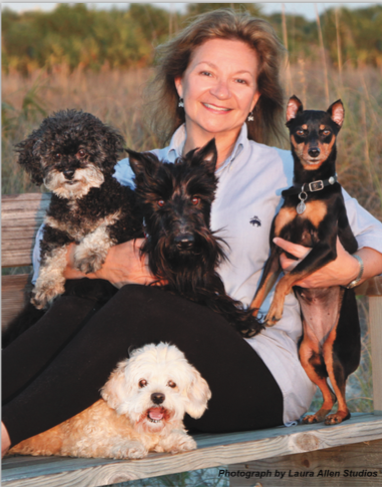
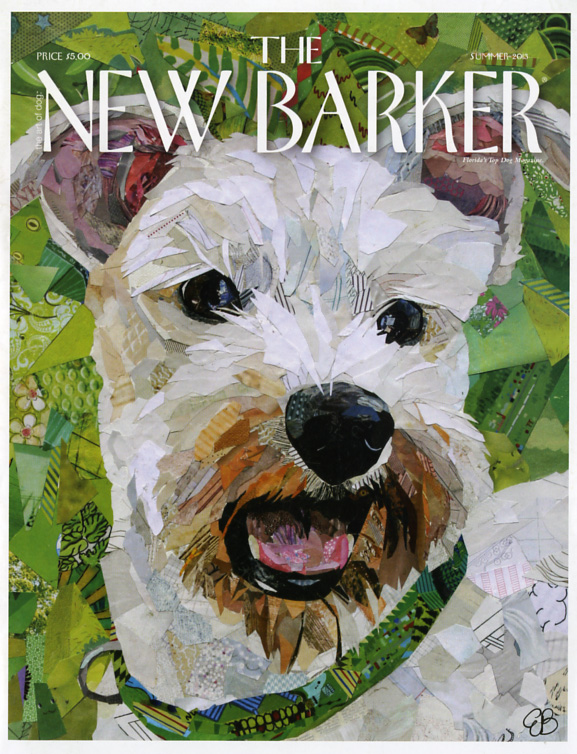
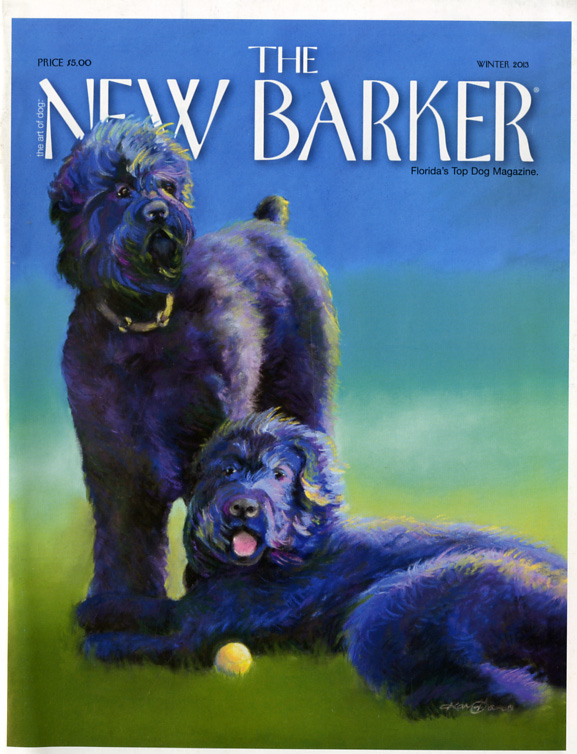
The New Barker Magazine: At Last Florida Dogs Have Their Own New Yorker – The Mr. Magazine™ Interview With Founder, Editor & Creative Director, Anna Cooke, The New Barker Magazine.

March 2, 2016

The New Barker 2-2 “I’m heartened every time we attend an event that’s a dog-related event. People of all ages come up to me and tell me that when they get their (print) copy of the magazine they read it cover to cover. I know there’s a need for digital and we’re working on improving that experience every single day. I have to go back to time, the time and effort it takes to continually evolve digitally so that we stay connected to the readers. I understand that because we’re a quarterly publication a lot of things happen between quarters and if you don’t stay in front of your audience they’re going to forget you and go somewhere else to get the information.” Anna Cooke

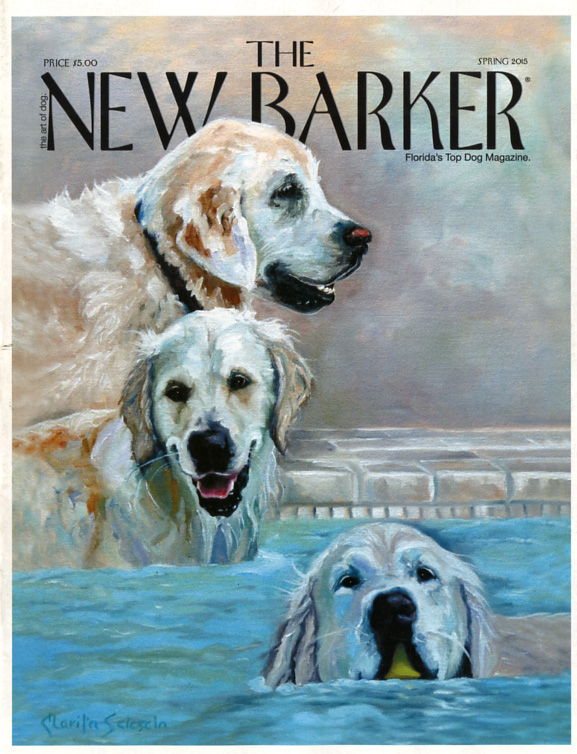
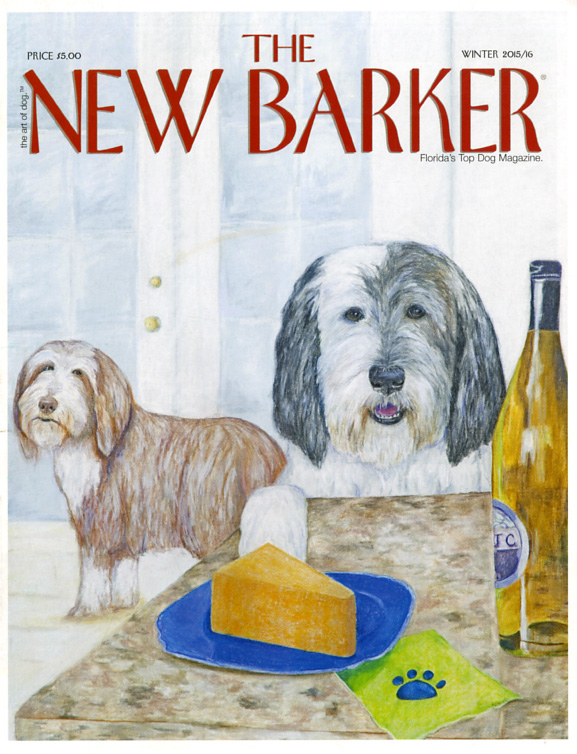
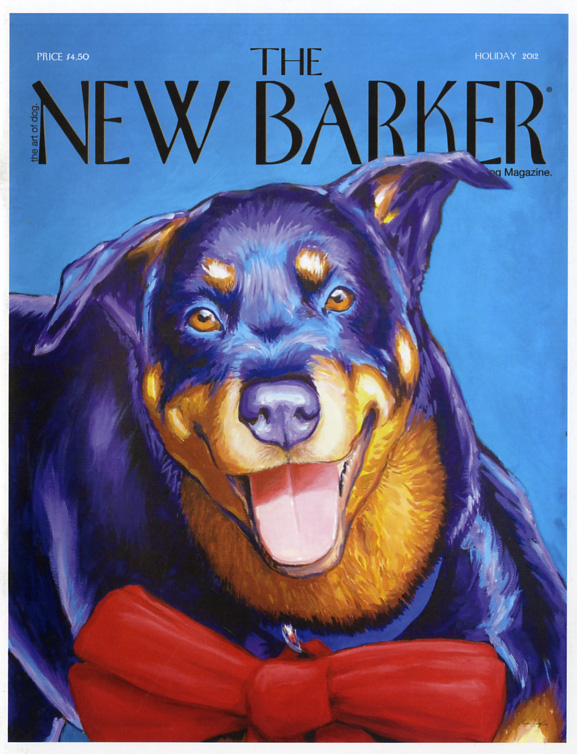
With every stylish cover, The New Barker proves that it’s not just another dog magazine. From founder, editor and creative director Anna Cooke’s own love for The New Yorker magazine, she pays homage to her paragon with beautiful and uncanny covers that imitate the veteran publication’s own creativity. Imitation is the sincerest form of flattery and Anna is genuinely sincere when it comes to her love for The New Yorker and magazines in general.

In fact, her love for magazines and design is what led her down the path of creating one of her own for Florida dog-lovers. Her mission to stay true to good content and artful design has never wavered as the magazine celebrates 10 years in publishing.

I spoke with Anna recently about her love for magazines and her specific fondness for The New Yorker and we also chatted about her goals for The New Barker and the way that she and her husband have committed themselves to the mission of bringing Florida dog-lovers the best regional content that’s both compelling and entertaining. The covers of each issue bring a style and charm to the magazine that sets the tone for the entire experience very definitively. It’s a unique concept and a refreshing read, much like the lady producing the magazine, proving that entrepreneurship can certainly pay off with hard work and dedication.

The New Barker 7-7 We talked about Anna’s love for animals and the fact that she donates the artful covers to local shelters to be auctioned at their fundraisers at least twice a year. We also hit upon her desire to expand The New Barker to more states. It was a delightful and inspiring conversation that I know you’ll love reading. So without further ado, I hope you enjoy the Mr. Magazine™ interview with Anna Cooke, Founder, Editor and Creative Director, The New Barker magazine.

But first, the sound-bites:

On the background of The New Barker: My husband and I have an advertising and design studio and we’ve been running it around 30 years or so. About 11 years ago we had a client who had a dog boutique and we developed an ad campaign and put a media plan together for her. The client ran it for a while and then said that she couldn’t afford it. One of the things that we selected for the media plan was lifestyle magazines, they had a great reach and demographic, but they reached across the demographics. It wasn’t a magazine specifically targeted to dogs, so we were getting demographics, but not as targeted as we wanted. So, we realized that maybe there was a need for a lifestyle magazine that was much more targeted to the lifestyle of dog owners.

anna cooke On the biggest stumbling block she’s had to face: With a stumbling block, I keep going back to time; the lack of enough time to get everything done that we want to get done. We don’t have a lack of content or stories. We certainly don’t have a lack in advertisers and advertising potential, we always just run out of time in producing the next issue to go after those advertisers and to go after those stories. So, it’s time management.

On the thinking behind the creative design of the magazine and its resemblance to The New Yorker with its covers: Well, I’m a fan of The New Yorker and I’m a huge fan of magazines. I love to look at the design, the page layout, and the typesetting and rich content like is in The New Yorker. You pick up a magazine like The New Yorker and you’re not going to just thumb through it; you’re going to become involved with it and spend time with it. We did trademark the name, The New Barker; we do have a national trademark and we actually paid homage to The New Yorker and we included that in the paperwork for our trademark.

On whether she ever heard from The New Yorker: No, but about seven years ago I received a phone call from a woman in New York and she wanted to purchase a subscription, but she thought that it was The New Yorker’s version of a dog magazine in New York. (Laughs) And then when I pointed out to her that it was a Florida lifestyle magazine, which is OK because our stories will resonate with everyone, but at the time I wanted her to understand that it was based in Florida, and she looked at the masthead then and realized that it wasn’t The New Yorker.

On whether she believes there’s a need for print in this digital age: Yes, I’m heartened every time we attend an event that’s a dog-related event. People of all ages come up to me and tell me that when they get their copy of the magazine they read it cover to cover. I know there’s a need for digital and we’re working on improving that experience every single day.

On whether she has any time left over for her ad agency or she’s now a full-time magazine maker: I would say that 95% of my time is devoted to the magazine and then through time management we are able to work with clients that have stayed with us over the years. I’m not actively seeking new business for the ad agency side because what’s running the business is the advertising side of the magazine. Again, it’s a balance and a desire to want to stay connected to our clients with the ad agency business.

The New Barker 6-6 On whether she works with the artists who illustrate the covers or leaves the decisions to them when it comes to style and type of dog featured: We work with the artists; in the last few issues we have donated the cover as a live auction item to animal shelters in Florida for their fundraising events. What that does is give somebody an opportunity to bid on the cover. We select the artist and what I do is provide half a dozen, five or six different artists and styles, and they pick the style, then we do a photo shoot, and then the artist, in their own particular style, will paint the portrait for the person who had the highest bid for that particular cover.

On whether she has any plans to expand the magazine nationally: I would like to expand it. We have expansion plans, but not necessarily to make it a national publication, instead, taking it into another state and doing another publication for The New Barker, for example, Pennsylvania’s top dog. That kind of thing, because I believe the success of the magazine is its regionalism.

On what differentiates the magazine from other dog-specific publications: First of all, I think the cover is very unique. It stands out from other magazines. I think the cover immediately sets the tone, in terms of the tongue-in-cheek humor. You look at that and you smile. You have to pick it up and flip through it.

On anything she’d like to add about The New Barker: I think when people put magazines out they’re so beautiful and people don’t realize the extent of the work that goes on behind the scenes. It is the most fulfilling and all-consuming work that we have ever done. We’ve been in the ad business, as I said, for 30-something years and we’re accustomed to deadlines and the gut-wrenching, from start to finish, to get it done. It’s a difficult process. It’s like a Jackson Browne song where he travels the country with his band. And his roadies put the stage together; they’re the first ones to arrive and the last ones to leave. Then they have to do it all over again the next night and you just have to be constantly up and on-the-go. That’s the essence of what we do: constantly up and on-the-go.

On what motivates her to get out of bed in the morning: I have to say the dogs do. (Laughs) The needs of our dogs are a priority. They get up and they have to go out; they have to drink water; they have to eat, and then I have my coffee and it’s off to work. I enjoy coming to work. I enjoy the prospect of what the new day has to offer.

On what someone would find her doing if they showed up one evening unexpectedly at her home: Cooking. It’s funny, in the throes of production, when we’re nearing the deadline and we’ve got to go to press, I suddenly find myself cooking. I’ll go to the grocery store, buy the ingredients for a recipe I haven’t tried. And it’s not something that I consciously do. I just realized when I looked back on those last couple of years that I was doing this; looking for another creative outlet that was completely different from print production.

On what keeps her up at night: The deadlines. We’ve been doing this for 10 years and I still worry about the deadlines. Are we going to make it? We’re so committed to our advertisers; you want to get the publication out there because the advertisers are counting on it.

And now the lightly edited transcript of the Mr. Magazine™ interview with Anna Cooke, Editor and Creative Director, The New Barker.

Samir Husni: Give me some background about The New Barker. It feels and looks like The New Yorker, but it’s all about dogs.

The New Barker 5-5 Anna Cooke: Correct. (Laughs) My husband and I have an advertising and design studio and we’ve been running it around 30 years or so. About 11 years ago we had a client who had a dog boutique and we developed an ad campaign and put a media plan together for her. The client ran it for a while and then said that she couldn’t afford it. One of the things that we selected for the media plan was lifestyle magazines, they had a great reach and demographic, but they reached across the demographics. It wasn’t a magazine specifically targeted to dogs, so we were getting demographics, but not as targeted as we wanted.

So, we realized that maybe there was a need for a lifestyle magazine that was much more targeted to the lifestyle of dog owners. And we did some research; we actually did some focus groups, invited professionals in the industry; we invited consumers, potential subscribers to the magazine and all things pointed to a need for that type of magazine. We felt we would get advertising support and we would have readership, so we started developing the first issue.

I went out and sold advertising myself with just a kind of a mom-and-pop media kit and I would receive checks and I wouldn’t deposit them. I would just post them on my bulletin board next to my desk. (Laughs) I thought that if the magazine didn’t come together, I could just tear up the checks or hand them back to people. I guess to be truthful I didn’t have a strong belief in myself and in what we were doing.

Then about two weeks before going to press, my husband and partner said, “I think it’s time to deposit those checks. We have enough money to pay for the printing and the mail, with a few bucks left over.”

The first issue came out in 2006 and the response was overwhelming. My husband came into my office and said this thing is bigger than we thought it would be. Then we headed into the production of the second issue and we just haven’t had time to look back since.

Samir Husni: As you approach your 10th anniversary, what has been the biggest stumbling block that you’ve had to face and how did you overcome it?

The New Barker 4-4 Anna Cooke: With a stumbling block, I keep going back to time; the lack of enough time to get everything done that we want to get done. We don’t have a lack of content or stories. We certainly don’t have a lack in advertisers and advertising potential, we always just run out of time in producing the next issue to go after those advertisers and to go after those stories. So, it’s time management.

I’ve gotten to a point where we’re now able to, and actually this happened several years ago, we’re able to forecast stories for two, three or four issues down the road. As I said, we’ve never had a problem with content, but now it’s prioritizing them. OK, we’re working on this story; this story is immediate, we’ll put it in the upcoming issue; these stories we’ll use for the summer issue or that will be a great story for the winter issue.

Samir Husni: I have to ask this question. When I saw the magazine I had to take a double-look. Is this The New Yorker or is this The New Barker? As the creative person, what was the thinking behind creating “the art of dog” and looks like “the art of The New Yorker?”

Anna Cooke: (Laughs) Well, I’m a fan of The New Yorker and I’m a huge fan of magazines. I love to look at the design, the page layout, and the typesetting and rich content like is in The New Yorker. You pick up a magazine like The New Yorker and you’re not going to just thumb through it; you’re going to become involved with it and spend time with it.

And the idea of The New Barker, the name; it just came to me like one of those epiphanies. One evening a light bulb went off and with that came the idea that every cover would be a piece of art, an original work of art in support of local artists based on the Florida market. So, we’re supporting the art world as well as focusing on the art of dog and the stories of dogs.

We did trademark the name, The New Barker; we do have a national trademark and we actually paid homage to The New Yorker and we included that in the paperwork for our trademark.

Samir Husni: And did you ever hear from The New Yorker?

The New Barker 1-1 Anna Cooke: No, but about seven years ago I received a phone call from a woman in New York and she wanted to purchase a subscription, but she thought that it was The New Yorker’s version of a dog magazine in New York. (Laughs) And then when I pointed out to her that it was a Florida lifestyle magazine, which is OK because our stories will resonate with everyone, but at the time I wanted her to understand that it was based in Florida, and she looked at the masthead then and realized that it wasn’t The New Yorker.

I’ve had people who recognize, especially people who love The New Yorker, who recognize the humor.

Samir Husni: As you developed this magazine over the last 10 years, how do you think the marketplace has changed? You started publishing just slightly before the dawn of digital devices and Smartphones and iPads. How did the digital world impact your print magazine, and do you think you still need a print magazine to show the art of dog?

Anna Cooke: Yes, I’m heartened every time we attend an event that’s a dog-related event. People of all ages come up to me and tell me that when they get their (print) copy of the magazine they read it cover to cover. I know there’s a need for digital and we’re working on improving that experience every single day. I have to go back to time, the time and effort it takes to continually evolve digitally so that we stay connected to the readers. I understand that because we’re a quarterly publication a lot of things happen between quarters and if you don’t stay in front of your audience they’re going to forget you and go somewhere else to get the information.

When we first came up it was easier to stay connected to them. It was new, so people were looking forward to it. But 10 years later there’s so much information everywhere, all over these electronic devices; all over these applications and many of them are dog specific so people have so many more ways to stay connected. I believe in the power of print that connects passively with people, but I also understand the power of digital.

Samir Husni: I see from the magazine that you’re not only the editor, creative director and a photographer, but you also actually write quite a bit of the content. Do you have any time left to give to your other creative business, the ad agency, or are you now a full-time magazine maker?

Anna Cooke: I would say that 95% of my time is devoted to the magazine and then through time management we are able to work with clients that have stayed with us over the years. I’m not actively seeking new business for the ad agency side because what’s running the business is the advertising side of the magazine. Again, it’s a balance and a desire to want to stay connected to our clients with the ad agency business. So, we try and plan the production schedules and we treat The New Barker as a client, a client that takes up 95% of our time. (Laughs)

Samir Husni: I am fascinated with the covers, with that old stylish feel; each cover you can tear off and frame. And I noticed that all of the covers are based on real dogs; inside the magazine you put a picture of the real dog. Do you work with the artists on the ideas of what type of dog is going to be on this cover or that cover, or it is completely the artist’s own freedom and decision?

The New Barker 3-3 Anna Cooke: We work with the artists; in the last few issues we have donated the cover as a live auction item to animal shelters in Florida for their fundraising events. What that does is give somebody an opportunity to bid on the cover. We select the artist and what I do is provide half a dozen, five or six different artists and styles, and they pick the style, then we do a photo shoot, and then the artist, in their own particular style, will paint the portrait for the person who had the highest bid for that particular cover.

We’re actually working on a cover right now, someone bid $12,000, and the money was donated to the Humane Society of Tampa Bay.

Samir Husni: So the artist will take those people’s dog and paint it for the cover?

Anna Cooke: Correct. And that happens probably once or twice a year, then the other times we’ll work with an artist and utilize something within that artist’s portfolio, something that just resonates with me personally. What I’m looking for is something that hasn’t been published. We have a treasure trove of artists’ portfolios. I get emails probably once or twice a week from Florida artists wanting to know how they can have their artwork on the cover of the magazine.

Samir Husni: Are Florida dogs so special that they deserve their own magazine or do you have plans to expand the magazine nationally?

Anna Cooke: I would like to expand it. We have expansion plans, but not necessarily to make it a national publication, instead, taking it into another state and doing another publication for The New Barker, for example, Pennsylvania’s top dog. That kind of thing, because I believe the success of the magazine is its regionalism. People enjoy flipping through it and seeing places that they have visited or are going to visit, or restaurants that they’re aware of, or their own dog in the magazine.

Samir Husni: If you were to meet someone on the street and they asked you what you did professionally and you said I’m the editor and creative director of The New Barker, how would you define the magazine to them? What differentiates it from the rest of the dog magazines, both locally and nationally?

Anna Cooke: First of all, I think the cover is very unique. It stands out from other magazines. I think the cover immediately sets the tone, in terms of the tongue-in-cheek humor. You look at that and you smile. You have to pick it up and flip through it.

In terms of the content, I feel we spend a lot of time researching the stories and developing the stories. Not as long as The New Yorker articles are, but I try, and I hope that we’re accomplishing this; to have a beginning, middle and an end to the story, where the reader is satisfied. They’ve been satiated after they’ve read the article. Our society today is such a grab-and-go; we get a news article or a piece and we read the headline and we read the subhead. We scan it for whatever reason; we don’t have time to really read it. But a magazine like The New Barker resonates to the reader to slow down and curl up with a good magazine.

Samir Husni: Is there anything else you’d like to add about The New Barker?

Anna Cooke: I think when people put magazines out they’re so beautiful and people don’t realize the extent of the work that goes on behind the scenes. It is the most fulfilling and all-consuming work that we have ever done. We’ve been in the ad business, as I said, for 30-something years and we’re accustomed to deadlines and the gut-wrenching, from start to finish, to get it done. It’s a difficult process.

It’s like a Jackson Browne song where he travels the country with his band. And his roadies put the stage together; they’re the first ones to arrive and the last ones to leave. Then they have to do it all over again the next night and you just have to be constantly up and on-the-go. That’s the essence of what we do: constantly up and on-the-go. We’re a lifestyle magazine about dogs, so we have to be happy and positive to make sure that the message we’re conveying is a happy and positive one.

Samir Husni: What motivates you to get out of bed in the morning?

Anna Cooke: I have to say the dogs do. (Laughs) The needs of our dogs are a priority. They get up and they have to go out; they have to drink water; they have to eat, and then I have my coffee and it’s off to work. I enjoy coming to work. I enjoy the prospect of what the new day has to offer. It doesn’t matter what you’ve done the night before, in terms of OK, here’s what I’m going to do tomorrow. You get up and you get in front of the computer and you look at your calendar and everything just changes. (Laughs again)

Samir Husni: If I showed up unexpectedly at your home one evening, what would I find you doing; reading a magazine, reading on your iPad, watching television, or what?

Anna Cooke: Cooking. It’s funny, in the throes of production, when we’re nearing the deadline and we’ve got to go to press, I suddenly find myself cooking. I’ll go to the grocery store, buy the ingredients for a recipe I haven’t tried. And it’s not something that I consciously do. I just realized when I looked back on those last couple of years that I was doing this; looking for another creative outlet that was completely different from print production. So, I’ll cook and serve up a nice meal for us, a glass of wine. While I’m waiting on dinner to get ready, I love the Hollywood Reporter, Vanity Fair and of course, The New Yorker. I have subscriptions to all of those. I love their content and the way they present it.

Samir Husni: My typical last question; what keeps you up at night?

Anna Cooke: The deadlines. We’ve been doing this for 10 years and I still worry about the deadlines. Are we going to make it? We’re so committed to our advertisers; you want to get the publication out there because the advertisers are counting on it. So, that keeps me up at night.

Samir Husni: Thank you.

h1

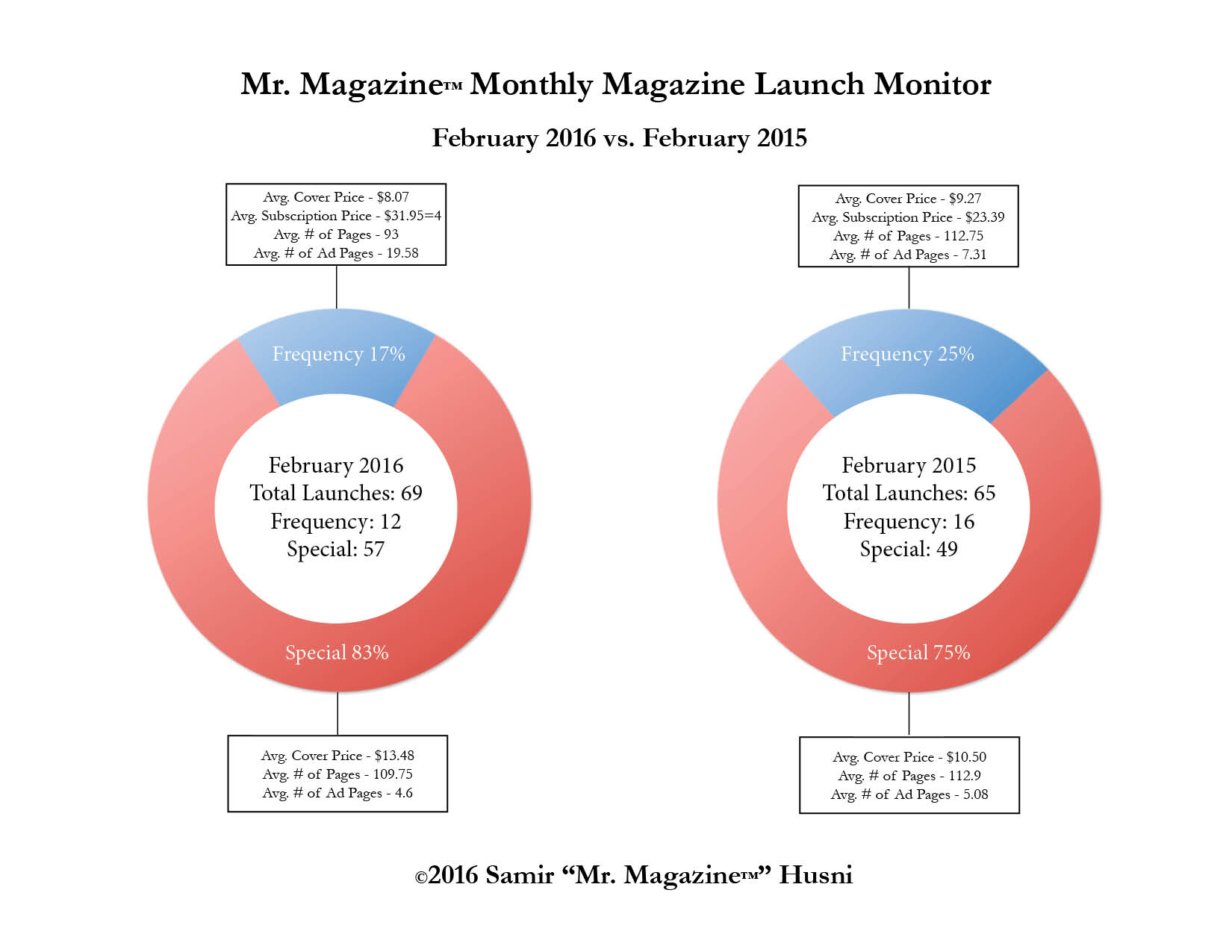
February Proved That It Was Truly The Month For Lovers – Of Magazines That Is…With 69 New Titles Hitting The Market – 12 With Promised Frequency.

February 29, 2016

Chilly temps may have kept you inside with that special someone during the month of February, and if it did there was certainly no shortage of interesting and entertaining new magazines out there to read and enjoy. From gardening to adult coloring to what to bring to that church potluck supper; February delivered a heart-shaped basket full of super magazines.

Take a look at all of the covers and notice the diversity and beauty that each bring to the reader and to the world of magazines…

See you next month for a monumental March…

But first here are the stats:
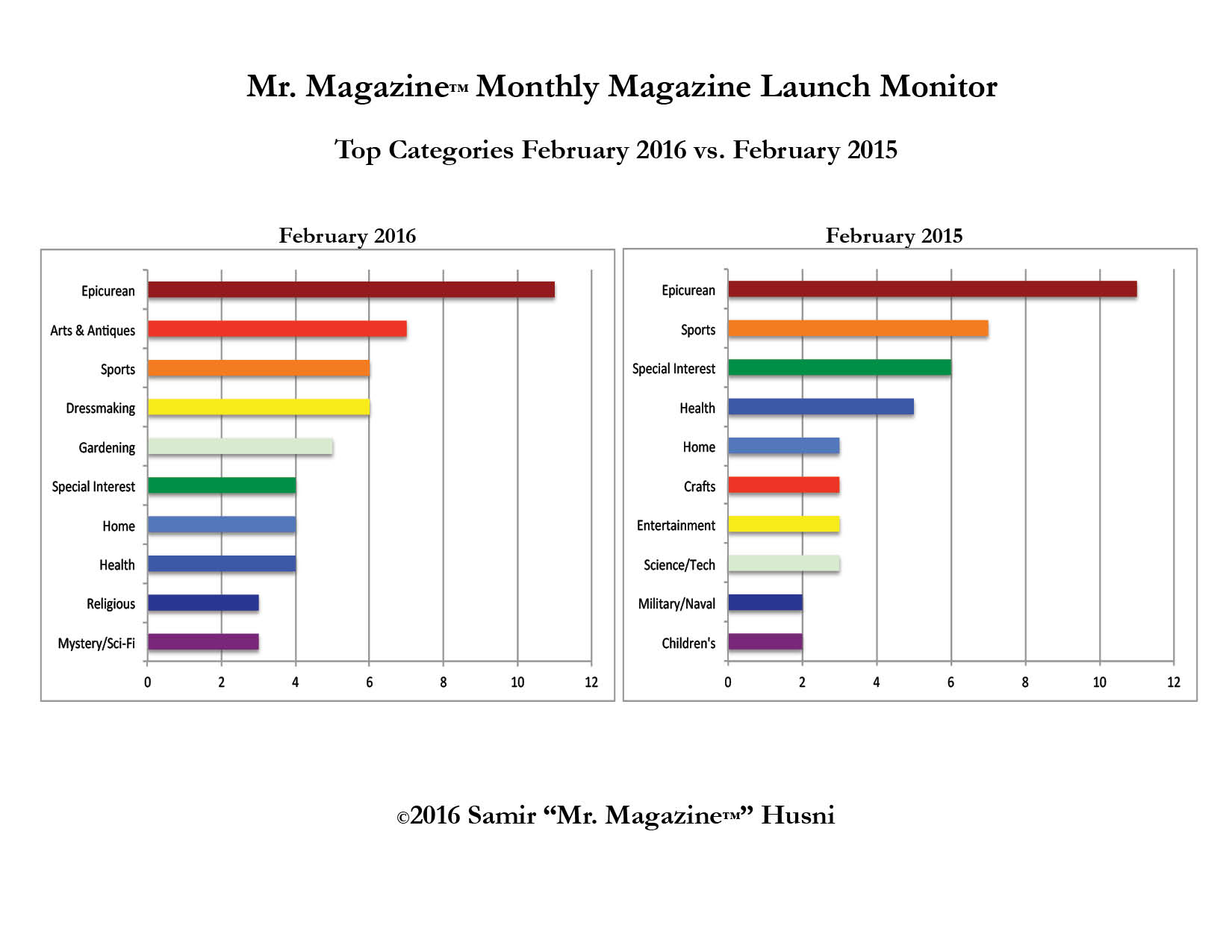
Feb 2016 vs 2015 pie graphs

Feb 2016 v 2015 top categories bar graph

Up first our frequency covers:

Cartoons-3 Chess Life Kids-4 First American Art-6 HOT BREATH MAGAZINE JARRY Kitesurfing-7 LION'S ROAR Mustang Driver-2 ORIGIN._COVER 1 ORIGIN._COVER 2 Think Realty-5 WESTERN HORSE & GUN WORLD OF COLOR


And now our specials:

100 GREATEST MYSTERIES REVEALED Bama Time-28 Best Recipe Makeovers-16 Best Southern Gardens-17 CELEBRATING THE WHITE HOUSE Church Potluck-30 COLOR ME DELICIOUS COMFORT FOOD COTTAGES OF WHITE CREATIVE CROCHET IN A DAY Crochet-9 CROCHET DAVID BOWIE DEER HUNTER'S FIELD GUIDE Easiest Quilts Ever-19 Easy Weekend Projects-14 Eat for Health-25 Edible Gardening-13 Elvis-11 Gluten free Best Recipes ever-26 GOURMET COMFORT GOURMET MEXICAN COOKBOOK GRATEFUL GARDENS HEART SMART RECIPES Home Tours-27 How to Clean Anything-18 Indoor Gardening-20 JESUS Just Mixed Media-8 KITCHENS & BATHS LAND & GROOVES Mini Gardens-10 MODERN DAY CONSPIRACY THEORIES National Champions-24 PLAY LIKE YOUR HEROES - BLUES PLAY LIKE YOUR HEROES - ROCK PORCHES & GARDENS SECRETS TO A HEALTHY HEART Spirtual Living-21 Spring Greetings-29 STRANGE BUT TRUE SUPER BOWL 50 CHAMPION BRONCOS SUPER BOWL 50 SUPER EASY SOUPS & STEWS TECHNIQUE WORKSHOP Texas Football Rising-23 THE BACHELOR THE COMPLETE BRUNCH COOKBOOK THE GARDEN OF EDEN THE METABOLISM MIRACLE THE SECRET LAGOON THE WHO Time Friendly Quilting-12 Ultimate Guide to Health-22 WALKING WITH JESUS WWII - VICTORY IN EUROPE YOUR COMPLETE HEALTHY EATING GUIDE

h1

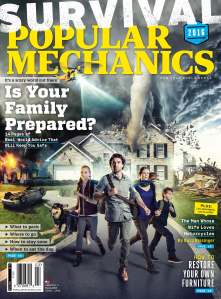
Popular Mechanics: Redefining The Word “Mechanics” & Proving That America Is Once Again A Nation Of Crafters And Builders – The Mr. Magazine™ Interview With Cameron Connors, Publisher and Ryan D’Agostino, Editor-In-Chief, Popular Mechanics

February 26, 2016

March “Magazines are a pretty unique medium. I’m not saying they’re better or worse than anything else that we do or any other way that people consume stories, but reading a magazine is an experience that it’s very hard to replicate. I think we saw that when magazines started rolling out tablet editions and that the reception was different than I think the industry thought it was going to be. Now the industry has adapted and made it better and it’s working, but it’s pretty hard to replicate the experience of sitting down with a magazine.” Ryan D’Agostino

“Do I think that I could ever sell it without a print component? Absolutely, but I don’t see that happening in any near future picture. I think the brand has such a great heritage and if anything we’ve double-downed on that heritage over the past couple of years, which is what’s giving us this resonance in the marketplace that I think will help us build and sustain momentum for the foreseeable future.” Cameron Connors

Popular Mechanics magazine began in 1902 and has witnessed many changes in the technological world over those 114 years, right along with its own transformation. Today the magazine retains that initial DNA, the foundation of a time when people valued building skills and loved making things themselves, but has a new voice and vibrancy that comes from a magazine team, headed by editor-in-chief, Ryan D’Agostino, and publisher, Cameron Connors, which honors the magazine’s heritage, but also believes in growth and fun at any age.

I spoke with both Ryan and Cameron recently and we talked about the changing roles of editors and publishers in today’s digital age and how infusing the longevity that Popular Mechanics enjoys, with an IV filled with fresh ideas and new voices was the goal and the fruition of both Ryan and Cameron’s past few years with the brand. The success of what they’ve done with the magazine as far as rejuvenated content and a rebirth of ad interest is apparent. Bringing back the magazine’s original thinking that people can do and make anything, with the right tools and knowledge, yet putting a zest and energy into that foundation, has been something that the two men have done favorably.

Both men bring a vibrancy and excitement to the brand that cannot be denied and is contagious when it comes to sharing that natural engagement they have with the audience. It was a fun and informative discussion that I know you will enjoy.

So, grab your latest Popular Mechanics issue and take some time to read the Mr. Magazine™ interview with Ryan and Cameron.

But first, the sound-bites:

Cameron_Connors On the changing role of a publisher in today’s magazine and magazine media marketplace (Cameron Connors): That’s a great question. I think having the digital experience is definitely one thing that’s setting today’s publishers apart and understanding how to fully represent a brand, particularly in today’s market where brands are becoming more and more fragmented with various access points across the social media platforms that we all use. I think the publisher’s role has increased to the point where you have to become a master of all of those platforms too, understanding at any given time how your brand is being represented on those platforms.

On whether he feels his role has changed now and is more involved than ever before (Cameron Connors): Absolutely. I mean, it is an always on role. We’re always thinking of new and inventive ways to extend the brand to attract a new advertiser. The days of old where you sit down and are able to ink a full schedule with just a lunch conversation are kind of over. There is so much, in terms of media, everything has changed.

On the definition of an editor today (Ryan D’Agostino): It’s also quite different than it was in years past, generations past, and even just a few years ago. An editor today is overseeing an entire brand. It’s weird to use that term, because what we typically think of ourselves as doing is telling stories and editing great stories, and that’s still a part of it. It’s a huge part of what any good editor-in-chief is doing now. That part has not changed.

On whether Ryan believes the name Popular Mechanics hinders people from knowing exactly what the magazine is about (Ryan D’Agostino): I don’t think it hinders at all. I love the name of the magazine; it feels like it could have been created in 1902, which it was, or it feels like it could have been launched in Brooklyn last week. I love the name Popular Mechanics; in fact, my first day on the job here two years ago, I assembled the staff, they didn’t know me, I just gathered them around and my first official act here was I told them that I wanted to outlaw the phrase “Pop Mech.” (Laughs) There was this habit of calling it Pop Mech and even in the magazine regularly and abundantly, on the folio was Pop Mech and Pop Mech was everywhere and I just thought I don’t know what that means.

On whether publisher, Cameron Connors asked himself why he was taking a job at Popular Mechanics when he first accepted the offer (Cameron Connors): Actually, it was quite the opposite. I was thrilled when I was given this opportunity because what I saw was a brand with so much unrealized potential. You asked Ryan if the name of the brand was a hindrance at all; I think we actually use the name to our advantage and fully change the conversation around the brand based precisely on what Ryan has been able to do: refreshing the voice, refreshing the environment, bringing on vibrant, new writers that have great and amazing ideas that give everybody, the media community, the Academy of Motion Pictures Arts and Sciences, a whole new take on what Popular Mechanics means to people in this day and age.

On whether Cameron feels making the magazine more of a men’s general interest magazine would broaden the scope of its audience, rather than make it even more of a niche magazine (Cameron Connors): Yes I do. And that’s by design on the editorial side. And from an advertising standpoint, that very approach is helping us break into new categories of advertising that we, I don’t think based on my records, have ever seen before. You mentioned survival; we were at the outdoor retailer show demonstrating and we were fresh on the scene there and when people saw what we were doing they were instantly intrigued. And as a result we’ve seen great momentum in that particular category coming out of that show.

On the biggest challenge Cameron has had to face (Cameron Connors): The biggest challenge that I think we’ve faced since I got here was that the brand was not necessarily known for creative thinking from an advertising standpoint. The first thing I noticed was there was some glimpses of it here and there, but we needed a consistent approach, proactively flooding the market with great ideas, great partnerships, great new thinking and great new editorial franchises. So, that presented a challenge in the beginning when we were just starting to get into this transition, the whole rebuilding the plane in the air analogy.
Ryan5 On the biggest challenge Ryan as editor has had to face (Ryan D’Agostino): My biggest frustration has been this line of thinking out in the world about print. People will say, print, what, you still have a magazine? We’re really interested in digital, but print? And this is where I think Hearst has been really smart in promoting the idea that, if you look at any of our print magazines as the hub or the mother ship, even if it’s less of a revenue source, without it all of these other things don’t exist. That’s something that we believe strongly in here at Hearst.

On whether Ryan believes editors-in-chief would be better served with the title curators-in-chief (Ryan D’Agostino): No, I don’t think so. I believe curator is an overused term. I think everyone on my staff is very much a creator, every month and every day and every minute. In any medium they work, an artist has more tools than ever before that we can use. And maybe that’s a better Popular Mechanics analogy: more tools. You can create anything you want really with the stories that we tell.

On whether Cameron thinks as publisher he could ever sell the Popular Mechanics brand without a print component (Cameron Connors): Do I think that I could ever sell it without a print component? Absolutely, but I don’t see that happening in any near future picture. I think the brand has such a great heritage and if anything we’ve double-downed on that heritage over the past couple of years, which is what’s giving us this resonance in the marketplace that I think will help us build and sustain momentum for the foreseeable future.

On whether as editor Ryan can envision a day without a print edition for the magazine (Ryan D’Agostino): I don’t. From a business standpoint I don’t see why that would be a good idea; it’s not something that we talk about here.

On what Ryan thinks the role of print is in today’s digital age (Ryan D’Agostino): The digital age? Does that imply that it’s digital at the expense of everything else? I don’t think it does. Anytime that you get some sort of technological disruption, throughout history there’s the assumption that everything before it is going to fade away, but historically that hasn’t happened.

On why Ryan thinks it took the industry five or six years to realize that we could have both print and digital and audiences for both (Ryan D’Agostino): I think it’s because we were going after the tablet market; I don’t think anyone took their foot off the gas in creating print. On the print side it’s not like our budgets were slashed and put toward the tablet edition; I think it was just an exciting thing and I think that we’re an industry of creative minds, so when something like a tablet comes along, it stoked our minds into thinking how were we going to use it. We’re nothing without experimentation.

On what someone would find Ryan doing if they showed up unexpectedly one evening at his home, reading a magazine; reading his iPad; watching TV or playing with his children (Ryan D’Agostino): Some mix of all of those. You’ll find me helping my kids with their homework. You’ll find me showing them on my iPad things that we’re working on in the magazine, because I have two boys, they’re 6 and 9, so much of our content is fascinating to them. Maybe a drone story that I’m working on or an F16 story for the December issue; just all kinds of cools stuff and they become my little focus group sometimes when I come home from work and show them what I’m working on. And that’s fun.

On what someone would find Cameron doing if they showed up unexpectedly one evening at his home (Cameron Connors): You would probably catch me cooking. That’s my own personal version of DIY in the home, and maybe a bourbon too, depending on how the day went. I have two children of my own, 6 and 4, and something we like to do that was inspired by the magazine is giving our kids an understanding for the heritage of things.

On anything Ryan would like to add (Ryan D’Agostino): Of course, I’d want to emphasize some things on a slightly more detailed level of what we’re doing in the magazine, just some of the changes. Well, not so much changes. When I first got the job my first thought was what am I going to change? How am I going to make this my own? And that’s all well and good, I’ve done plenty of that, but then there’s also the second reaction which is, wait a minute, this thing has been around since 1902, I better not screw it up. What should I not touch? A lot of magazines have come and gone since 1902, so what has kept Popular Mechanics around?

On anything Cameron would like to add (Cameron Connors): Armed with all of the ammunition that Ryan just described, we’ve seen the conversation around the brand just completely change, particularly over the last six months. We find ourselves in a position now where we are driving conversations that we’ve never had before with advertisers and ad categories.
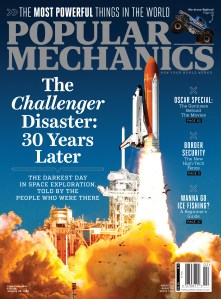
Popular Mechanics - Feb '16 - Newsstand On what motivates Ryan to get out of bed in the morning (Ryan D’Agostino): With me usually behind on everything, I can’t wait to get to the office to catch up on everything so that I don’t have people asking me for things that I should have had done three days ago. (Laughs) But seriously, we have so much going on that I do get here very early in the morning. I get up very early and I come in very early. And I always have a couple of hours when I get here to catch up on stuff when it’s kind of quiet and I can put my music on loud if I want to and it’s that time when I, before the exciting onslaught of every day begins, can look at what we’re doing for the next few months or the next year or even just the next issue, and remind myself of what we’re doing and why we’re doing it.

On what motivates Cameron to get out of bed in the morning (Cameron Connors): Truly, it’s my colleagues. I think we’ve built an incredible team here at Popular Mechanics and across the men’s group. And I honestly can’t wait to get in every day to work with Ryan and his team, our marketing team, my management, to continue to further the mission of this brand.

On what keeps Ryan up at night (Ryan D’Agostino): For me it’s that there might be something that happened on the planet that we didn’t know about. (Laughs) We try to cover everything and I guess I should include outer space too because that’s part of our purview. We want to engage the audience and make them want to sit down and spend some time with us every month and that’s going to be by giving access and insight and having something to say about everything that’s happening around us.

On what keeps Cameron up at night (Cameron Connors): The only time I find myself up at night is if I feel like a wasted a single minute of the day. Everything from professional to personal is precious and you have to maximize it.

And now the lightly edited transcript of the Mr. Magazine™ interview with Ryan D’Agostino, Editor-In-Chief and Cameron Connors, Publisher, Popular Mechanics magazine.

Samir Husni: Cameron, you’ve worked on just the digital side of the brand and now you’re back working with both print and digital. You’re in charge of all of the revenue for Popular Mechanics; how would you describe the changing role of a publisher in today’s magazine and magazine media marketplace?

Cameron Connors: That’s a great question. I think having the digital experience is definitely one thing that’s setting today’s publishers apart and understanding how to fully represent a brand, particularly in today’s market where brands are becoming more and more fragmented with various access points across the social media platforms that we all use. I think the publisher’s role has increased to the point where you have to become a master of all of those platforms too, understanding at any given time how your brand is being represented on those platforms.

And on top of that, you have to be able to translate all of that to an advertiser and help them to understand the value of those touchpoints for your brand and for them across those platforms. So, it’s become a bigger job.

Samir Husni: Is it much easier now than your previous role or is it more involved, as though you have to be on it 24/7? Hearst has the tagline: from months to moments. Do you feel your job has changed from days to moments?

Cameron Connors: Absolutely. I mean, it is an always on role. We’re always thinking of new and inventive ways to extend the brand to attract a new advertiser. The days of old where you sit down and are able to ink a full schedule with just a lunch conversation are kind of over. There is so much, in terms of media, everything has changed. You have to be always on, whether you’re talking print, digital, social content, just you name it. There is so much in the way of disruption that you have to keep tabs on it all of the time.

Samir Husni: Ryan, to borrow a title from one of your departments that you edit over at Esquire, “The Meaning of Life;” what’s the meaning of an editor today?

Ryan D’Agostino: It’s also quite different than it was in years past, generations past, and even just a few years ago. An editor today is overseeing an entire brand. It’s weird to use that term, because what we typically think of ourselves as doing is telling stories and editing great stories, and that’s still a part of it. It’s a huge part of what any good editor-in-chief is doing now. That part has not changed.

What has changed, and I’ll just speak for myself as an editor, is being attached at the hip with Cameron, speaking to him as many times during the day and going on as many trips with him during the year as I can to get the message out there and help however I can to do what we’re doing.

It’s looking at our Instagram feeds and posting to it regularly, which I do because I live a great many parts of the Popular Mechanics life myself; I’m in an old house with an old barn that I’m trying to restore. I’m about an hour north of New York City and I drive my car and I own an old pick-up truck that I try to keep running. I have little kids and I’m teaching them how to do woodworking, and so I’ve become a part of our social media strategy simply because I’m having these experiences. I work closely with our digital team every day to help think about what they’re doing, tell them about what we’re doing and try to brainstorm together about how to translate all of it where it makes sense.

So, the whole parts of being an editor, which are assembling a talented group of people to work with, to think about what stories we’re going to tell from month to month; that’s all still there. And to make the magazine entertaining and fun to read; lively and funny when it needs to be; insightful with every page and that it has beautiful photography. Writing a great headline; all of that hasn’t changed, there’s just more to it than that today.
Cameron Connors, Olivia Munn, Jason Segel, Ryan D'Agostino, photo by Eric Heimbold.

Cameron Connors, Olivia Munn, Jason Segel, Ryan D’Agostino, photo by Eric Heimbold.

Samir Husni: Both of you have worked with magazines that cover a lot of celebrities, whether it was at Esquire or at Paper. Even with a magazine like Popular Mechanics, when people hear that you just came back from the SciTech Oscars and you have pictures on the Red Carpet with Olivia Munn and Jason Segel; Ryan, what do you feel when you tell people you are the editor-in-chief of Popular Mechanics, as opposed to saying that you’re an editor at Esquire? Do you feel like people have a throwback or does the name of the magazine hinder at all in today’s marketplace in any way or people know immediately what Popular Mechanics is today?

Ryan D’Agostino: I don’t think it hinders at all. I love the name of the magazine; it feels like it could have been created in 1902, which it was, or it feels like it could have been launched in Brooklyn last week.

I love the name Popular Mechanics; in fact, my first day on the job here two years ago, I assembled the staff, they didn’t know me, I just gathered them around and my first official act here was I told them that I wanted to outlaw the phrase “Pop Mech.” (Laughs) There was this habit of calling it Pop Mech and even in the magazine regularly and abundantly, on the folio was Pop Mech and Pop Mech was everywhere and I just thought I don’t know what that means. It’s an ugly-sounding noise and it just eviscerates our name and we should be reminding people what we’re about at every turn.

What we’re about, and the way that we’ve defined Mechanics for 2016 and beyond are the Mechanics of life; the Mechanics of your every day. And how everything around you works, whether that’s the new SpaceX‎ rocket that you’re reading about in the paper or the airplane you’re flying in or the assisted-driver car that you’re driving or the cocktail you’re drinking or the movie you’re watching. So, we define Mechanics very broadly.

Sure, when I tell people I was at Esquire and now I’m at Popular Mechanics; they’ll ask Popular Mechanics? Depending on their level of magazine interest and literacy they might think it’s about fixing cars or they might have a deeper understanding of what it really is, but I explain like this: we tell the story of the world around us and how it works.

And that’s something that the magazine has done for over 100 years, but it’s something that we’re redefining today. So, when we put Olivia Munn on the cover of the magazine last year and when we entered the world of the Academy Awards as a sponsor of the Scientific & Technical Oscars; who would have thought in 1902 or anytime in our history that editor and the publisher of Popular Mechanics would be on the Red Carpet at the Academy Awards event with a couple of movie stars? But somehow it felt right. It didn’t feel out-of-place and my hope is that every month in the magazine it won’t feel strange at all to be reading about Olivia Munn, military technology, how to build a deck, how to make a drink; all of those things between the same covers every month and under the same name, Popular Mechanics, so they’ll all make sense the way we’re defining it.

Samir Husni: And Cameron, did you have a similar experience? When you accepted the job, did you ask yourself what am I doing? Why am I taking this job at Popular Mechanics?
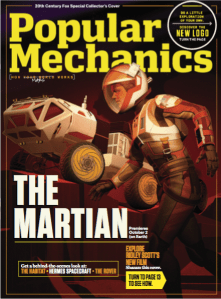
Screen Shot 2016-02-25 at 3.06.08 PM Cameron Connors: Actually, it was quite the opposite. I was thrilled when I was given this opportunity because what I saw was a brand with so much unrealized potential. You asked Ryan if the name of the brand was a hindrance at all; I think we actually use the name to our advantage and fully change the conversation around the brand based precisely on what Ryan has been able to do: refreshing the voice, refreshing the environment, bringing on vibrant, new writers that have great and amazing ideas that give everybody, the media community, the Academy of Motion Pictures Arts and Sciences, a whole new take on what Popular Mechanics means to people in this day and age. So, I found it very exciting and as I said, it’s totally changed the conversation around the brand across the board.

Ryan D’Agostino: It takes some work to tell people exactly what you’re asking about and what we’re talking about. And I think what you’re getting at is, OK, Esquire, where I came from, has a defined identity; it’s fairly rooted in popular culture and people understand that it’s a men’s magazine. Popular Mechanics over the years has been a niche publication for people with specific interests. We’re trying to bring it out of the niche market and make it a magazine for everybody, because I really think that the things that the magazine is about have become popular now. Everybody is making something and building things with their hands and are interested in heritage manufacturing in the United States and how things work. Every parent wants their kids to learn about how things work and engineering, and so it’s very much entered the mainstream.

But that’s why Cameron and I are so constantly out there talking to whoever will listen and telling them what we’re doing so they can understand and they won’t continue to hear the name Popular Mechanics and think of it as a great, classic American magazine, which it is, but they don’t really understand the excitement that we’re feeling about it right now.

Samir Husni: Cameron, do you feel making Popular Mechanics more of a men’s general interest magazine will broaden the magazine’s audience? For example, last month the cover was survival, but there are three or four special interest magazines that have nothing in them but survival. The cover before, let’s say, was about building a home and there are many DIY magazines and home building magazines out there. So, do you feel that going against the trend widens the horizon of the magazine, rather than making it even more specialized?

Cameron Connors: Yes I do. And that’s by design on the editorial side. And from an advertising standpoint, that very approach is helping us break into new categories of advertising that we, I don’t think based on my records, have ever seen before. You mentioned survival; we were at the outdoor retailer show demonstrating and we were fresh on the scene there and when people saw what we were doing they were instantly intrigued. And as a result we’ve seen great momentum in that particular category coming out of that show.

Another proud moment for us was in the entertainment space, which really hasn’t been a core, endemic category for us, was last year when we partnered with Fox on the launch of “The Martian.” We did a collector’s cover that was all Martian-branded and then Ryan had the good fortune of interviewing Ridley Scott, so it all tied together very nicely. We did a Martian week on the website during the launch and it also helped that “The Martian” was a huge hit, but it was also one of those moments for us as a brand that was so smooth, none of it was forced, it all made perfect sense.

To go back to your original question, what all of this is doing is helping us branch out into new categories of advertising, which is exciting for me and it’s exciting for the entire staff to see as we chart new territory.

Samir Husni: Cameron, before someone reading this interview thinks that both of your journeys during the last few years has all been smooth sailing; what has been the biggest challenge that you’ve had to face and how did you overcome it?

Cameron Connors: The biggest challenge that I think we’ve faced since I got here was that the brand was not necessarily known for creative thinking from an advertising standpoint. The first thing I noticed was there was some glimpses of it here and there, but we needed a consistent approach, proactively flooding the market with great ideas, great partnerships, great new thinking and great new editorial franchises. So, that presented a challenge in the beginning when we were just starting to get into this transition, the whole rebuilding the plane in the air analogy.

We were able to overcome that by simply not letting our foot off the gas and getting out there proactively with great ideas like what we did with “The Martian.” That’s been the biggest challenge, but also the biggest win for me since I’ve been here.

Samir Husni: And Ryan, from the editorial side, what has been your biggest challenge and how did you overcome it?

Ryan D’Agostino: My biggest frustration has been this line of thinking out in the world about print. People will say, print, what, you still have a magazine? We’re really interested in digital, but print? And this is where I think Hearst has been really smart in promoting the idea that, if you look at any of our print magazines as the hub or the mother ship, even if it’s less of a revenue source, without it all of these other things don’t exist. That’s something that we believe strongly in here at Hearst.

So, without those stories being written by people and being reported by people and being photographed by people and being designed by people; without Popular Mechanics magazine; what is popularmechanics.com; is there an Instagram feed or any of the other things that extend from the brand? It’s just a really smart way to look at things. We can be interested in and worried about taking advantage of all of these things and concerned that we need to be doing that; we can look at every single platform and use them all to tell stories and bring in revenue and draw in readers and participants in Popular Mechanics or whichever brand it is, but to not freak out and say that the world is over and we need to build a new one.

Hearst right now is marked by very rational thinking in this way and it makes our job much easier. When you think about it we need all of these things. When we report a story, I love trying to figure out how many different ways we can tell it. What’s the Twitter version of it and what’s the 5,000 word version of it? And everything in between. And if not every platform applies to every story, fine. Let’s think that way and communicate that, rather than freaking out and saying that we can’t do what we do anymore and we have to reinvent it. This is actually an incredibly exciting time because there’s just more Popular Mechanics out there.

I think about the editors from 1902, or the 1920s or the 1930s; they would have loved to have had a website and a Twitter feed and a Facebook page and Instagram and all of those things, because you can never fit what you want to fit in the magazine. And all of these new storytelling devices we have now; they would have been so jealous, so I just try to make sure we’re taking advantage of all of those things.

Samir Husni: Do you feel that you’re more of a curator now than a creator? Should we start calling editors curators-in-chief?

Ryan D’Agostino: No, I don’t think so. I believe curator is an overused term. I think everyone on my staff is very much a creator, every month and every day and every minute. In any medium they work, an artist has more tools than ever before that we can use. And maybe that’s a better Popular Mechanics analogy: more tools. You can create anything you want really with the stories that we tell.

I don’t think we’re just arranging information and trying to figure out how to pump it out, because don’t forget, without the reporting and the ideas; I mean, that’s what I tell my editors all of the time that I rely on them for the most. It’s not can they edit a good story or write a good headline, that’s important and goes without saying, but it’s ideas. We have nothing without ideas. And that goes for every platform, every medium, every website director, editor at this company. You have to have ideas about how to do things differently, in an original way and that’s what’s going to get people excited out there in the world. So, we are relentless creators.

Samir Husni: Cameron, as you are working with a team of creators, do you think that you could ever sell the brand of Popular Mechanics without a print component?

Cameron Connors: Do I think that I could ever sell it without a print component? Absolutely, but I don’t see that happening in any near future picture. I think the brand has such a great heritage and if anything we’ve double-downed on that heritage over the past couple of years, which is what’s giving us this resonance in the marketplace that I think will help us build and sustain momentum for the foreseeable future.

Samir Husni: And Ryan, can you envision Popular Mechanics without a print edition?

Ryan D’Agostino: I don’t. From a business standpoint I don’t see why that would be a good idea; it’s not something that we talk about here.

Samir Husni: Ryan, in today’s marketplace what’s the role of print in this digital age?

Ryan D’Agostino: The digital age? Does that imply that it’s digital at the expense of everything else? I don’t think it does. Anytime that you get some sort of technological disruption, throughout history there’s the assumption that everything before it is going to fade away, but historically that hasn’t happened.

Magazines are a pretty unique medium. I’m not saying they’re better or worse than anything else that we do or any other way that people consume stories, but reading a magazine is an experience that it’s very hard to replicate. I think we saw that when magazines started rolling out tablet editions and that the reception was different than I think the industry thought it was going to be. Now the industry has adapted and made it better and it’s working, but it’s pretty hard to replicate the experience of sitting down with a magazine.

The way I look at is the role of print hasn’t changed because the consuming public out there is showing that they don’t ‘not’ want to read magazines, there are times in their lives when they want to do it. I’m just excited that the digital age, if that’s what we’re living in because there’s digital technology now and digital ways of communicating, that the digital age is an opportunity, but I don’t think we should panic and look at it as one opportunity at the expense of another.

Samir Husni: Why did it take the industry five or six years to discover that it doesn’t have to be print or digital, it can be both? Rather than thinking digital was replacing print; why didn’t we see that they were two different experiences and that we could have both?

Ryan D’Agostino: I think it’s because we were going after the tablet market; I don’t think anyone took their foot off the gas in creating print. On the print side it’s not like our budgets were slashed and put toward the tablet edition; I think it was just an exciting thing and I think that we’re an industry of creative minds, so when something like a tablet comes along, it stoked our minds into thinking how were we going to use it. We’re nothing without experimentation.

And that’s why magazines and magazine brands remain so lively. Snapchat; how are we going to use that? Who knows how it’s going to work, but there are amazing and exciting things being done there. I don’t think there should be a lot of regret about going headfirst into tablets and trying to make that work because it seemed like a natural thing. And now we’re adapting.

Cameron Connors: I would also add that I think when digital came along and disrupted everybody’s lives, it gave a lot of different forms of media a wake-up call to sort of spawn that period of experimentation. During that process things became more fragmented, social was on the rise, mobile took affect; a lot of these things began to add up and everyone thought everything else was falling apart, which was absolutely not the case. When it came down to it this was still a brand. Whether it was a magazine or a website, we weren’t just a thing. The brand meant something to people.

And that’s our point when we’re out talking about the brand and making sure we drive home why it’s valuable to people and people buy it.

Samir Husni: To move into some questions about both of you personally; Ryan, if I showed up unexpectedly at your house one evening, what would I find you doing? Reading a magazine with a glass of wine; reading your iPad, watching TV, or playing with your children?

Ryan D’Agostino: Some mix of all of those. You’ll find me helping my kids with their homework. You’ll find me showing them on my iPad things that we’re working on in the magazine, because I have two boys, they’re 6 and 9, so much of our content is fascinating to them. Maybe a drone story that I’m working on or an F16 story for the December issue; just all kinds of cools stuff and they become my little focus group sometimes when I come home from work and show them what I’m working on. And that’s fun.

In terms of media consumption, on any given night it’s probably not wine, it’s bourbon. We subscribe to a lot of magazines at the house, and there are a couple of hours at night where I can either read a book, which takes me about four months to actually read sometimes because I’m just exhausted and I’ll read five pages and I’m falling asleep, but I try, or I can read a magazine. My wife and I have a show that we watch and streaming either Netflix or watching other movies. I’m going to the Oscars this weekend, so I’m trying to catch up on the Oscar-nominated movies. I might also be in the barn; it’s pretty typical.

Samir Husni: And Cameron, what would you be doing?

Cameron Connors: You would probably catch me cooking. That’s my own personal version of DIY in the home, and maybe a bourbon too, depending on how the day went. I have two children of my own, 6 and 4, and something we like to do that was inspired by the magazine is giving our kids an understanding for the heritage of things. Most recently we bought a throwback record player and started a record collection, so you might find me showing them a little about that, which has been a lot of fun.

Samir Husni: Is there anything else either of you would like to add?

Ryan D’Agostino: Of course, I’d want to emphasize some things on a slightly more detailed level of what we’re doing in the magazine, just some of the changes. Well, not so much changes. When I first got the job my first thought was what am I going to change? How am I going to make this my own?

And that’s all well and good, I’ve done plenty of that, but then there’s also the second reaction which is, wait a minute, this thing has been around since 1902, I better not screw it up. What should I not touch? A lot of magazines have come and gone since 1902, so what has kept Popular Mechanics around?

Then you start looking at what that thread of longevity is, if there is one over the last 114 years, and what I found in reading all of those back issues up until today, there is this sense of wonder about the world and curiosity, and those are the qualities of Popular Mechanics that have marked the reader since day one. It was the magazine that was going to help them understand stuff. The original tagline was written so that you could understand it, which I like the spirit of that and I get it, and that’s what people want. They want complex things presented in a way that they can understand and relate to and can have fun talking about.

So, we’ve done things such as instead of hiring only science writers or technological writers, working with writers like Joshua Ferris, the acclaimed novelist; Buzz Bissinger, the author of “Friday Night Lights” who is writing about motorcycles for us; Gary Dell’Abate, who you may know better as “Baba Booey” from Howard Stern. I met him at a party and it turns out that he’s a gadget freak who is really into technology and is very knowledgeable about it and will be writing about technology for us.

So, what you end up with is a magazine that’s about the same things that it’s always been about, but with a broadened definition of that, and writing that is truly engaging and fun. I’m trying to make this a magazine for writers because I think that will attract a bigger audience and continue this momentum that we have now. We’ve gotten a couple of national magazine award nominations, which is a testament to my staff and the creativity of their ideas. We’re having so much fun here right now; it feels like a startup, but with 100 years of history.

Samir Husni: And Cameron, would you like to add anything?

Cameron Connors: Armed with all of the ammunition that Ryan just described, we’ve seen the conversation around the brand just completely change, particularly over the last six months. We find ourselves in a position now where we are driving conversations that we’ve never had before with advertisers and ad categories. To see us in a spot where we can now begin driving, not only revenue for our own brand, but across the Hearst men’s group and across the Hearst portfolio, is incredibly exciting. I think the sky is truly the limit.

Samir Husni: Ryan, what motivates you to get out of bed in the morning?

Ryan D’Agostino: With me usually behind on everything, I can’t wait to get to the office to catch up on everything so that I don’t have people asking me for things that I should have had done three days ago. (Laughs)

But seriously, we have so much going on that I do get here very early in the morning. I get up very early and I come in very early. And I always have a couple of hours when I get here to catch up on stuff when it’s kind of quiet and I can put my music on loud if I want to and it’s that time when I, before the exciting onslaught of every day begins, can look at what we’re doing for the next few months or the next year or even just the next issue, and remind myself of what we’re doing and why we’re doing it. I look through back issues; I look at other magazines around us and I get ideas from my editors that they send me every two weeks. And I try to think of ways to constantly reinvent what we’re doing. I took my whole staff to see “Spotlight” the other week; it was like 12:30 in the afternoon. And only one of them had seen it. I just thought, the movie is about hardworking journalists who are trying to do something important to them and that’s something we can all relate to.

The simple answer to your question is to keep doing what I was doing yesterday.

Samir Husni: And Cameron, what motivates you to get out of bed in the morning?

Cameron Connors: Truly, it’s my colleagues. I think we’ve built an incredible team here at Popular Mechanics and across the men’s group. And I honestly can’t wait to get in every day to work with Ryan and his team, our marketing team, my management, to continue to further the mission of this brand. So, it’s all that and then checking my numbers and sales, of course. (Laughs)

Samir Husni: My typical last question; what keeps you up at night?

Ryan D’Agostino: For me it’s that there might be something that happened on the planet that we didn’t know about. (Laughs) We try to cover everything and I guess I should include outer space too because that’s part of our purview. We want to engage the audience and make them want to sit down and spend some time with us every month and that’s going to be by giving access and insight and having something to say about everything that’s happening around us.

And when we choose to define the magazine the way that we have, which is basically there is nothing that we have to cover and there’s nothing that we can’t cover. And that’s how I look at it. When you define it that way, it’s wonderful and totally daunting because we might miss something. That’s the challenge.

And what it means to be a man now is different and men are re-embracing skills that their grandfathers had that may be slipping away with each generation, knowing how to fix stuff and build stuff. I think there was a time when guys didn’t do that for a few years and I think we all look to our dads and our grandfathers. I’m 40, so I look to my dad and my grandfathers and there’s stuff that they can do with their eyes closed that I don’t know how to do. Fixing the lamp in the kitchen, changing the oil in the car; I can change the oil, but a lot of guys can’t and they might not want to admit it or it’s a little emasculating and I think that’s why we’re seeing this return to being a sort of Renaissance person, someone who knows a little about everything and a lot about some things and is highly skilled and curious and interesting to talk to. And I don’t think that person is a lot different than someone reading Popular Mechanics in 1908 or today.

Samir Husni: And Cameron, what keeps you up at night?

Cameron Connors: The only time I find myself up at night is if I feel like I wasted a single minute of the day. Everything from professional to personal is precious and you have to maximize it. If I feel like I didn’t see something coming or if someone has an issue with an ad deal, those are the things that keep me up at night.

Samir Husni: Thank you both.

h1

Gulf News Publishing: One Of The United Arab Emirate’s Largest Media Groups Brings Great Magazines To The Arab World Through Licensing & Innovation – The Mr. Magazine™ Interview With James Hewes, Publishing Director, GN Publishing, UAE

February 22, 2016

“We were very clear if we were going to go out and do a large digital business, create a large events business, which we are in the process of doing, we needed to have a very stable and secure print base. In this market, print is still very strong. You can still make good money from print magazines and in some sectors it’s also growing, like the luxury category. So it is entirely feasible to have a very successful and sustainable business here and really if you’re going to do that, it gives you as a publisher some comfort as you make those investments in other media.” James Hewes

From Dubai with love…

Reporting from the  FIPP Middle East & Africa conference in Dubai Feb. 10 and 11.

Reporting from the FIPP Middle East & Africa conference in Dubai Feb. 10 and 11.

Gulf News Publishing produces a number of multilingual tailor-made publications for a host of national and multi-national organizations in the UAE. From concept to distribution, from newsletters to coffee-table books, the company offers a full spectrum of publishing services in English, Arabic and French.

James Hewes is publishing director for GN Publishing and is responsible for the group’s portfolio of consumer magazines, newspaper supplements and contract publishing. He started with the company in 2013 after 12 years at BBC Worldwide as Head of International Development for the magazines business and latterly as Publishing Director for the brands retained by the BBC following the sale of BBC Magazines.

James’ experience in magazines is undeniable and his love for the genre unquestionable. I spoke with him recently while we both attended the FIPP Middle East and Africa conference held in Dubai. James’ take on the print magazine business is enhanced by his strong belief in partnerships and knowing your audience as personally as possible. He is a man passionate about moving his company forward and keeping that connection with consumers.

We talked about his division’s most recent acquisition of the licensing of Citizen K, the eminent French fashion magazine, and we talked about his hopes for the future, both digitally and the ink on paper horizon. It was an exhilarating and informative discussion that I know you’re going to enjoy.

So, without further ado, the Mr. Magazine™ interview with James Hewes, Publishing Director, GN Publishing, UAE.

But first, the sound-bites:

IMG_1535 On Gulf News and Gulf News Group and his beginnings with the company: Gulf News and the Gulf News group has been a leading national newspaper in the Middle East for many years now and its current form started in 1985, so it’s now 31 years old. It’s the leading English-language newspaper in the Middle East. It does 105,000 copies per day. And it now has a very successful website as well. And at some point in its development the company decided that it needed to diversify its offering, so as well as all of the natural things, such as distribution and commercial printing, it diversified into areas like radio and broadcasting and magazine publishing.

On why he thinks it’s important to have a good print product in this digital age: I think you have to be very pragmatic as a publisher and as an individual and a company. Very few companies have the appetite to make large investments into something like digital without having a solid base of profit behind them in which to fall back. So, we were very clear if we were going to go out and do a large digital business, create a large events business, which we are in the process of doing, we needed to have a very stable and secure print base. In this market, print is still very strong. You can still make good money from print magazines and in some sectors it’s also growing, like the luxury category.
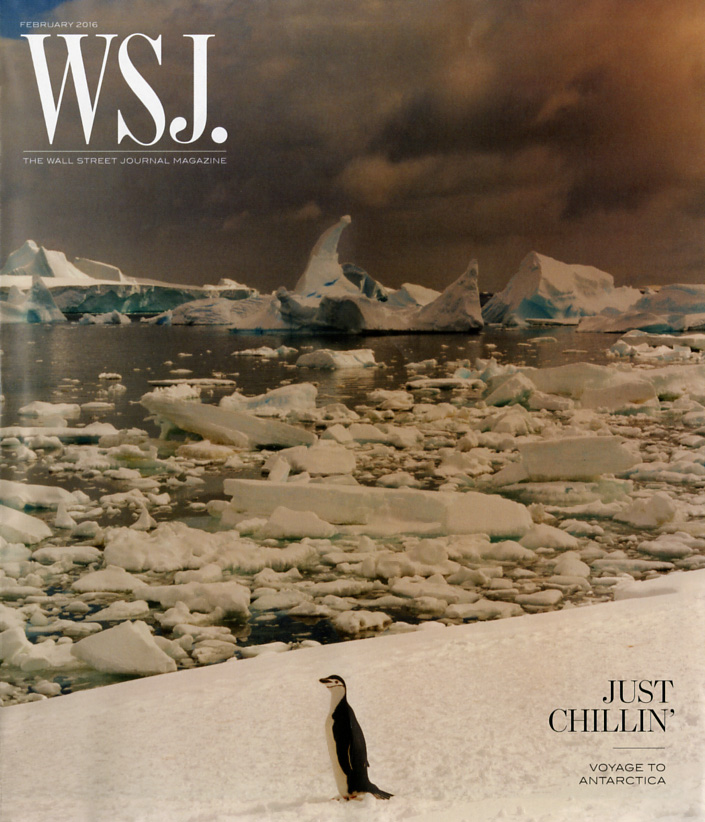
Screen Shot 2016-02-21 at 3.26.44 PM On whether he thinks the brand extensions, such as events, digital and mobile, could exist without the core print product: I think we’ll find out. I think we’re going to start doing some products now that are not based in print form, primarily starting in digital. So we’ll be able to get a sense of whether or not it’s possible to have a sustainable brand without a print anchor.
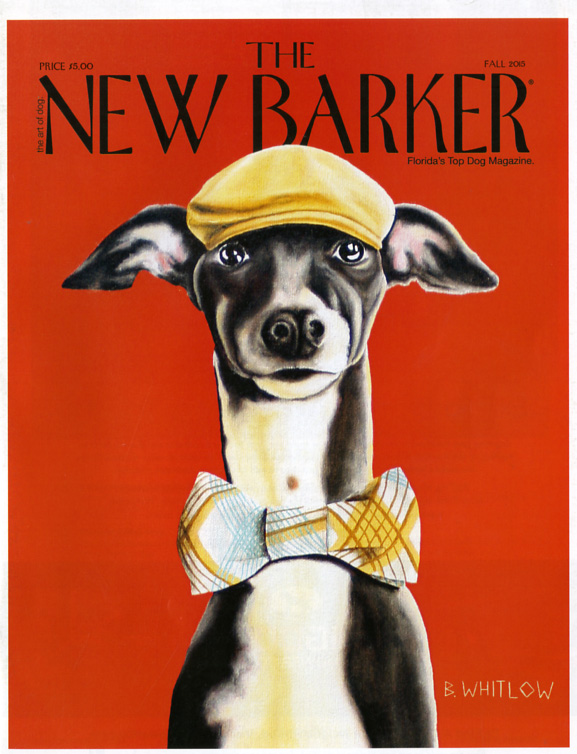
On the fact that 95% of the Middle Eastern audience is still Arabic-speaking, yet most of the magazines are published in English: I think it’s a fascinating case study. A large part of that in days gone by would have been that there was an extreme lack of transparency in the media industry here. And therefore you could publish magazines in English to relatively small audiences and make decent money, let’s be honest. I believe with the digital world that’s all going to change. Digital advertising not only needs transparency, it almost can’t operate without transparency.

On the biggest challenge he’s had to face: The biggest challenge that you have in any business now is culture; changing the company’s culture. I wouldn’t say that I’ve been 100% successful in changing Gulf News’ culture, that’s not my job and that’s not what I do. But I’d like to think that within our business unit, the publishing business unit, we’ve tried to embrace a culture that allows people to innovate and to take risks. I’m a great believer in giving people responsibility and in return they get accountability. You can take a project and run with it; you’re accountable for its results, but it’s yours. You can do what you like.

insideout-cover On whether he feels the recent new “happiness” ministry that was established in the United Arab Emirates will become a trend and spread around the globe: Hopefully. I think it’s a very bold visionary move, as you’d expect from the government of Dubai. His Highness, Sheikh Mohammed, is very good at making those bold and visionary moves and it may pay off. I’m fully expecting that that’s going to be something that is copied elsewhere in the world when people see the effects of it.

On how he thinks print can be fixed: In terms of print and luxury, I think the initial thing there is to find the right partner. We’re very lucky in that the luxury magazine that we’re launching next month is OK. We have a great partner who has really helped us to get access to the luxury market. You’ve got to recognize in business what you’re good at and what you’re not good at. If you know that there’s a strategic opportunity somewhere and you don’t have the skills or the knowledge, you have to go out and get them by whatever means you can, in some cases that means hiring new people, which we’ve done in this case.

On why he pursued the licensing of Citizen K magazine: We were impressed with the vision and we were impressed with the founder. The man who founded Citizen K, Kappauf, is a well-known figure in the fashion industry. He brings a credibility of himself to that brand and therefore to the industry, and so in extension he also brings that to us. It absolutely has to do with who you’re working with. We always used to find this on the reverse; I was very often on the other side of the coin when I was licensing around the world.

IMG_1536 On what motivates him to get out of bed in the morning: Opportunities for our brands to connect with consumers. And I love going to our events because that’s a chance to see sometimes our advertisers and sometimes our consumers in the flesh and to hear more about them and learn more about their brand experiences and to know that our brand has touched their lives in some way. So that’s a really powerful and uplifting moment. When I worked on “Good Food” in the U.K., I used to love going to the “Good Food” show in Birmingham and sell subscriptions; I’d sometimes stand at the desk and sell subscriptions for the day, and it was a great way to meet your customers.

On what someone would find him doing if they showed up unexpectedly one evening at his home: Probably a combination of all of those. I still read magazines and I’m a passionate reader. The genre of magazines really appeals to me. For example, I read “Motor Sport Magazine” from the U.K. I’m an absolute addict of that brand; it’s a fantastic brand and one that we’re hoping to bring here at some point.

On what keeps him up at night: Not moving fast enough. I guess it’s the same in any company; you always sit there and look at your competitors and think how much faster they’re moving than you are.

And now for the lightly edited transcript of the Mr. Magazine™ interview with James Hewes, Publishing Director, GN Publishing, UAE.

Samir Husni: Tell me about Gulf News and the Gulf News Group and your beginnings with the company.

James Hewes: Gulf News and the Gulf News group has been a leading national newspaper in the Middle East for many years now and its current form started in 1985, so it’s now 31 years old. It’s the leading English-language newspaper in the Middle East. It does 105,000 copies per day. And it now has a very successful website as well.

Screen Shot 2016-02-21 at 3.25.20 PM And at some point in its development the company decided that it needed to diversify its offering, so as well as all of the natural things, such as distribution and commercial printing, it diversified into areas like radio and broadcasting and magazine publishing.

So when I came into this company three years ago, I took over what was then GN Magazines, a reasonably small magazine business with five titles, quite commercially successful, good turnover, average margins, not great margins, but the company was ready to develop that business into something suitable in the multiplatform world.

One of the first things we did was look at consolidating all of our publishing activity, apart from the newspaper, into a single place and create what is now GN Publishing. And GN Publishing is the publishing unit of Gulf News and does everything from traditional consumer magazines to business magazines to content marketing and contract publishing and newspaper supplements.

Samir Husni: I think we can agree that we live in a digital age, yet you have mentioned before that part of your future plans is to fix print. Why do you think it’s important to have a good print product in this digital age?

James Hewes: I think you have to be very pragmatic as a publisher and as an individual and a company. Very few companies have the appetite to make large investments into something like digital without having a solid base of profit behind them in which to fall back.

So, we were very clear if we were going to go out and do a large digital business, create a large events business, which we are in the process of doing, we needed to have a very stable and secure print base. In this market, print is still very strong. You can still make good money from print magazines and in some sectors it’s also growing, like the luxury category. So it is entirely feasible to have a very successful and sustainable business here and really if you’re going to do that, it gives you as a publisher some comfort as you make those investments in other media.

Samir Husni: Do you think all of the other line extensions, whether it’s the events or the digital or the mobile, can exist in this market without the core print product?

James Hewes: I think we’ll find out. I think we’re going to start doing some products now that are not based in print form, primarily starting in digital. So we’ll be able to get a sense of whether or not it’s possible to have a sustainable brand without a print anchor.

There are some brands that do that already here and I can give you an example, the trade publishing space, the B to B space, The Media Network. The Media Network is based here in Dubai and it’s basically a trade website for the magazine industry; the communications industry. And they’ve existed most successfully for the last few years without ever having a print component, ironically, for a magazine industry site.

So, I think it is possible and I believe it’s going to become more possible. But rather than saying that we have print brands and line extensions, I think it’s more about saying that we have brands. And each of those brands can spread over into a certain number of platforms and one of those might be print. And I love the phrase a friend of mine from the BBC uses when he talks about publishing. He says that we do print for profit and we do digital for growth. And I think that’s exactly right.

If you’re doing an extension of your brand and it’s print, you need to subject that extension to the same commercial rigor that you would any other line extension. And if it’s not going to be profitable, why would you do it? And if it is profitable then you should embrace it.

Samir Husni: What about the audience? We’ve heard that 95% of the audience in the Middle East is still Arabic-speaking, yet most of the magazines that we see are English editions.

James Hewes: I think it’s a fascinating case study. A large part of that in days gone by would have been that there was an extreme lack of transparency in the media industry here. And therefore you could publish magazines in English to relatively small audiences and make decent money, let’s be honest. I believe with the digital world that’s all going to change. Digital advertising not only needs transparency, it almost can’t operate without transparency.

If you think about something like programmatic advertising; it can only exist when the data is there, so you have to disclose your data if you want the programmatic revenue. And that’s going to force out into the open a lot of thinking, particularly among marketers and brands that if they can get clear proof of their ROI in digital then they must be able to get it in all of their other media as well. And I think when it comes down to it, the volume is there in the Arabic market, but we don’t yet have a good enough understanding of that audience to be able to identify where the niches are and where the quality segments are, the quality audience pieces are, but they are there. They’re absolutely there.

And I think that’s going to be a really exciting development in the next few years as we big publishing companies that have done so well in the English-speaking media start to pivot toward Arabic and start to apply some of the learnings that we’ve taken in the English space and apply it to Arabic, which by the way is not to down the efforts of Arabic-language media companies. There are a great many of them that do fantastically well. And for the time that I’ve been here, it’s been a real revelation because it has exposed me to the reality that there is a huge market in publishing that the rest of the publishing world never sees, which is the Arabic-language market. There are hundreds, thousands of magazines and hundreds of newspapers and thousands of websites that are out there publishing in Arabic, thriving and doing really, really well. But because it’s Arabic, because it’s never had the focus from the western world that other magazines and cultures have, it’s been hidden away, though they’re starting to come to the surface now.

Samir Husni: When you think about your three years here, has it all been smooth sailing or have you encountered some choppy seas along the way? What has been the biggest challenge you’ve had to face and how did you overcome it?

IMG_1537 James Hewes: The biggest challenge that you have in any business now is culture; changing the company’s culture. I wouldn’t say that I’ve been 100% successful in changing Gulf News’ culture, that’s not my job and that’s not what I do. But I’d like to think that within our business unit, the publishing business unit, we’ve tried to embrace a culture that allows people to innovate and to take risks. I’m a great believer in giving people responsibility and in return they get accountability. You can take a project and run with it; you’re accountable for its results, but it’s yours. You can do what you like.

One of my absolute mantras is, and I think I heard it from some management guru; you hire good people and you give them the room to do their jobs. And that’s the biggest change and the biggest challenge that we’ve tried to bring into the business is to apply that rule.

Traditionally, a business is very used to having a very clear hierarchy structure, with a lot of power spread around senior management individuals, trying to delegate that power out to people and to get the company used to it, with functions like our finance department, our PR department and it’s great. When you sit down and explain to a finance team what you’re trying to do they nod and say yes, that sounds like a good idea. We’ve never done it before, but let’s try it.

So, it’s really gratifying to see a culture change to come along. And I think unless you do that, you can’t possibly hope to do any of the other plans that you have. I laugh sometimes when I go out into the market and see businesses, of which there are many in this region, huge businesses run by one person, and all of the decisions go through that one person. In this modern age, it’s impossible now to have the time and attention to cope with all of the different revenue streams that there are in the media business. And I think we’ve done a great job with that, thanks I large part to the leadership that our company has, to allow us to actually go out and try things.

Samir Husni: You also mentioned earlier that the values of the company today are much different than what they used to be. One example you mentioned was that it’s a given that you have to respect your audience, but in your case, you said that you want joy and happiness. And recently here in the United Arab Emirates, they established a new ministry for happiness. Do you think this is a trend born here that will spread around the globe?

James Hewes: Hopefully. I think it’s a very bold visionary move, as you’d expect from the government of Dubai. His Highness, Sheikh Mohammed, is very good at making those bold and visionary moves and it may pay off. I’m fully expecting that that’s going to be something that is copied elsewhere in the world when people see the effects of it. The happiness index and the idea that you can measure someone’s happiness and measure a country’s happiness, or a company’s happiness in our case and use that in a way to manage business is a great idea. People spend a third of their lives at work, they should enjoy it.

Samir Husni: I don’t know if you’re familiar with it, but there’s a magazine in the United States that’s around two years old called “Live Happy.” I interviewed the editor and she told me that happiness was a science and now more than ever people are studying it as a science. So, am I going to see a new happiness magazine coming out from Gulf News Publishing?

James Hewes: (Laughs) I don’t know if we’ll have a happiness magazine, but I’d like to think that happiness will be in all of our magazines.

Samir Husni: Is there anything else that you’d like to add? You mentioned the luxury category and fixing print; how do you plan on fixing it?

James Hewes: In terms of print and luxury, I think the initial thing there is to find the right partner. We’re very lucky in that the luxury magazine that we’re launching next month is OK. We have a great partner who has really helped us to get access to the luxury market. You’ve got to recognize in business what you’re good at and what you’re not good at. If you know that there’s a strategic opportunity somewhere and you don’t have the skills or the knowledge, you have to go out and get them by whatever means you can, in some cases that means hiring new people, which we’ve done in this case. But also you’ve got to rely on partners. You have to find good partners who can help you out.

I started out in this business primarily doing licensing and syndication of magazine brands overseas and it taught me that partnerships are a really strong way to do business and if you get it right, everybody benefits. And if you’re going into a new space like luxury, you have to have partners.

You’ve got to also embrace the opportunity. It’s no good just picking at the edges and doing the wrong thing. You have to have two or three or four things in that space to show that you’re really committed to it.

Samir Husni: Why did you specifically go after the licensing of Citizen K?

James Hewes: We were impressed with the vision and we were impressed with the founder. The man who founded Citizen K, Kappauf, is a well-known figure in the fashion industry. He brings a credibility of himself to that brand and therefore to the industry, and so in extension he also brings that to us. It absolutely has to do with who you’re working with. We always used to find this on the reverse; I was very often on the other side of the coin when I was licensing around the world.

And one of the crucial factors about whether or not we were going to deal with someone was our personal feelings about the partner; if you don’t like somebody; chances are you really don’t want to have to do business with them. So, that likeability factor and a willingness to cooperate and be a partner, rather than having a client/supplier relationship is something that attracted us to Citizen K. And I have to say, of all of the licensing projects that I’ve been involved with, and I’ve been involved in more than 50 in my career, I have never seen the level of work that has gone into this project. These guys are absolutely fantastic.

Samir Husni: What motivates you to get out of bed in the morning?

James Hewes: Opportunities for our brands to connect with consumers. And I love going to our events because that’s a chance to see sometimes our advertisers and sometimes our consumers in the flesh and to hear more about them and learn more about their brand experiences and to know that our brand has touched their lives in some way. So that’s a really powerful and uplifting moment.

When I worked on “Good Food” in the U.K., I used to love going to the “Good Food” show in Birmingham and sell subscriptions; I’d sometimes stand at the desk and sell subscriptions for the day, and it was a great way to meet your customers. And as you were selling them a subscription you could ask questions about their engagement with the magazine. You just got that anecdotal connection with your audience. You could put a face to your readers.

So that really gets me up in the morning, that idea that you’ve made a connection and actually made a difference in someone’s life. And you’ve entertained them with a future piece of knowledge that’s also helped them get through their day.

And that’s what I like about the digital opportunities; what excites me about the digital opportunities. I love sitting there and watching the analytics’ screen. It may sound boring, but you can see the number of people who are on your site right then and you can’t see that with a magazine. Occasionally when you worked in magazines you might see someone at a newsstand buying your magazine and you’d think, wow, that’s mine and they bought it. That’s fantastic. But now you can sit in the office 24/7 and see live the engagement consumers have with your product. It’s wonderful.

Samir Husni: If I showed up at your home one evening unexpectedly, what would I find you doing, reading a magazine; reading your iPad; watching television, or something else?

James Hewes: Probably a combination of all of those. I still read magazines and I’m a passionate reader. The genre of magazines really appeals to me. For example, I read “Motor Sport Magazine” from the U.K. I’m an absolute addict of that brand; it’s a fantastic brand and one that we’re hoping to bring here at some point.

I read magazines and books; I read books in print and I read them on my Kindle, it just depends on what kind of book it is. I watch TV; I must say the biggest change in my habits is that I watch much less linear TV than I did even a year ago. I watch almost all of my TV on demand now. But it’s a combination of all of those things, when I’m not playing with my children. Playing with my children is fun and it’s nice to see them interacting with magazines and books. My son is sitting home today reading his Diary of a Wimpy Kid book in print and loving it. And I’m egging him on and really enthusiastic about that because I know it’s his gateway to knowledge and experiences.

Samir Husni: My typical last question; what keeps you up at night?

James Hewes: Not moving fast enough. I guess it’s the same in any company; you always sit there and look at your competitors and think how much faster they’re moving than you are. And they’re probably thinking the same thing when they look at your company. It never feels like you can act quick enough and I suspect even the guys at – I don’t know – pick a fast-moving company, even those guys probably think they can’t move fast enough.

So, I would say speed-to-market and the fear that somebody is going to do something before we do and our ideas are going to be trumped by somebody is what keeps me up at night.

Samir Husni: Thank you.

h1

Middle East Business Magazine & News: The First Media Publication From Palestine To Serve The Middle East & Arab Countries – The Mr. Magazine™ Interview With Amal Daraghmeh Masri, CEO at Ougarit Group, Editor-In-Chief and CEO Middle East Business News and Magazine.

February 18, 2016

Middle East 3-3 “Before I did print I knew everybody was going to tell me that I was going against the current and that everyone else was going digital and I shouldn’t do it on paper. I didn’t believe them, though many, many people told me this, including one of our advertisers. And I see our advertisers as our partners. When I asked most of our advertisers about print they told me if I insisted, then go for it, do print and digital. So I went strongly with the website, mobile application and paper and our individual channel, which is all very expensive, but I assure you that people like to see paper because they trust in it more.” Amal Daraghmeh Masri

From Dubai with love…

Reporting from the  FIPP Middle East & Africa conference in Dubai Feb. 10 and 11.

Reporting from the FIPP Middle East & Africa conference in Dubai Feb. 10 and 11.

Bringing a magazine to fruition is hard work even in the best of circumstances, but bringing one or more to the newsstand when you’re the first in your country to do it, other than locally, is a true feat indeed. Amal Daraghmeh Masri has achieved that feat. Amal is CEO at Ougarit Group, editor-in-chief and CEO Middle East Business Magazine & News and the magazine’s founder. She is a woman who has held many positions in local business organizations that work for the advancement of women in Palestine, which is her home country, and across the Arab world, including being a member of Palestinian Working Women’s Society for Development and a founding member, former President of Business Women Forum of Palestine. Regionally and internationally, she is founder and a former board member of Middle East Business Women’s Network.

And Amal is also an avid reader and extreme lover of ink on paper. Her magazine is her passion and her work ethic and print mission is simple and direct: audience first. Give them what they want when it comes to content and presentation and the magazine will grow from that engaged connection.

I spoke with Amal recently at the FIPP Middle East and Africa conference held in Dubai. We spoke of that passion that she has for print and the mission she feels her magazine accepted from issue one. The audience is her main concern and while she believes in the many benefits of digital, she also knows that for a more lasting and trusting relationship with her customers, print is the deciding factor that brings it all together, despite many who tried to convince her otherwise. Amal is a businesswoman, an entrepreneur and more importantly to her print product, a magazine maker who knows what it’s all about: her audience.

So, I hope you enjoy this motivational and inspiring story from a woman who knows what it means to work against adversity when passion is your driving force; the Mr. Magazine™ interview with Amal Daraghmeh Masri, CEO at Ougarit Group, editor-in-chief and CEO Middle East Business Magazine & News.

But first, the sound-bites:

FullSizeRender-2 On the history of her business magazine: This is my second magazine; my first one I sold. The second one covers Arab countries and Middle Eastern countries, which is why it’s in Arabic and English, with 100 pages of different content in two different languages; this is the base. And I love paper; I wanted to produce something that has a face and that you can touch and almost speak with. That’s why we made an individual channel online and the website, but without paper it’s not the same.

On the fact that she started first with an English-only edition: Yes, we started first with only an English version that was published four times a year. And then we thought that we were missing the Arab readers, though there are many in English. Many people had asked us to do another edition in Arabic with the same quality, because it’s a nice-looking magazine with good content. So one day I said OK, I’m going to be crazy and do an Arabic part and do a different one.

On what inspired her to do a totally different issue in Arabic: Most Middle Eastern and Arab readers who are interested in business and economy articles, 98% of them read both languages, so out of respect for their intelligence I gave them different content, because they are all smart and they can choose for themselves. And amazingly, one of the presidents of the chamber of commerce told me that he loved it because when he was tired he reads the Arabic part. He added that when he woke up in the morning and went to his office; with his coffee he would read the English part. These words for me were like a big prize because this was exactly what I wanted.

On whether the magazine will ever have a flip side in French: I thought of it. But it would be too heavy to ship out of Ramallah. (Laughs) I’ve actually had a proposal from one of the Arab countries to make it monthly even. I didn’t want to make it monthly because online it’s ongoing. I think it would be too much because it’s for people who work a lot and every three months gives them enough time to read what’s inside it.

On how big the magazine business is in her country of Palestine: Actually there is none. There are no real magazines in business. There is only a small one about culture, but it’s very local. This is the first magazine that has really come out of Palestine to the Middle East and Arab countries. Usually, the magazines come from Dubai or Lebanon, sometimes from Egypt, but never from Palestine. And I think since my first name is Amal, and it starts with an “A,” I was always called to speak first at school. So, I said that I’d like to be the first to do something like this, though it’s very difficult, but you know, with challenges you create new things to help you overcome obstacles.

On where she came up with the idea to publish a business magazine from Ramallah: I established my business 18 years ago, which is an advertising agency, with marketing and PR. It was called Ougarit Company at that time. A few months earlier we established a printing company with my husband and that was around 1998 or 1999. So now we have two companies, one for printing and one for advertising. And with time you have more ideas and we started doing conferences and then we started training for media. We have a training center for media and anything related to communications and media. Then five years ago we started making magazines.

On whether her belief in print is just from passion or good business sense, or both: In general, businesses are driven by sales and profits. But it’s even better if it’s driven by passion. It’s like a bird with two fabulous wings. When it became English and Arabic, it became like a bird with two super wings. It flew much faster.

On the biggest challenge she’s had to face: I am a stubborn person by nature. So, all challenges for me are fun to deal with. For example, transporting the magazine outside Palestine, because I print and send out to almost 10 countries and it’s very expensive and challenging. And it takes a lot of time. It’s also a lot of follow-up. Sometimes it arrives on time and sometimes it doesn’t. But I spend a lot of energy every single day on the magazine. That is just one challenge.

On anything else she’d like to add: When you do a magazine, don’t make it just paper. It is a paper, but don’t make it just paper. That’s what I tell many of my clients; our magazine is not just paper. And there is a phrase that I use a lot: it’s a mission; it’s a passion; it’s a business, and it’s a partnership.

On what motivates her to get out of bed in the morning: I have a great partner who has been with me since we started our life together 21 years ago. And we establish all businesses together. So, an inspiring husband and a great helper and a cup of coffee in the morning; there’s nothing better.

On what keeps her up at night: It’s how to create great content. I want people to love what we write and I don’t want to write it in the traditional way. What we like to do is sometimes combine curation; people don’t want to read from zero, because people are busy. So we accommodate information together and decide how to present it.

And now the lightly edited transcript of the Mr. Magazine™ interview with Amal Daraghmeh Masri, CEO at Ougarit Group, Editor in Chief and CEO Middle East Business Magazine & News.

Samir Husni: Tell me a little about the history of your business magazine.

With Amal Daraghmeh Masri at the FIPP Middle East & Africa conference in Dubai, UAE.

With Amal Daraghmeh Masri at the FIPP Middle East & Africa conference in Dubai, UAE.

Amal Daraghmeh Masri: This is my second magazine; my first one I sold. The second one covers Arab countries and Middle Eastern countries, which is why it’s in Arabic and English, with 100 pages of different content in two different languages; this is the base. And I love paper; I wanted to produce something that has a face and that you can touch and almost speak with. That’s why we made an individual channel online and the website, but without paper it’s not the same.

Samir Husni: It’s my understanding that the magazine started in English and then you had the inspiration one day to add an Arabic section, but not translated from the English.

Amal Daraghmeh Masri: Yes, we started first with only an English version that was published four times a year. And then we thought that we were missing the Arab readers, though there are many in English. Many people had asked us to do another edition in Arabic with the same quality, because it’s a nice-looking magazine with good content. So one day I said OK, I’m going to be crazy and do an Arabic part and do a different one.

We designed it as a totally different brand, but the day before printing I woke up at midnight, well, it was probably after, because I don’t sleep before midnight. But I woke up and said, no, I have to put them together in one volume. It was a quite challenging experience and I didn’t think it would work at that time because it was a crazy idea, but it turned out to be very popular. People liked it.

Samir Husni: Most of the magazines that have flip covers or flip sections that I’ve seen in the Middle East are usually translated. What inspired you to do one in Arabic that was different? Did you think that most people could speak both languages, so why give them the same thing? Or were you trying to solicit a new audience?

Middle East 1-1 Amal Daraghmeh Masri: Most Middle Eastern and Arab readers who are interested in business and economy articles, 98% of them read both languages, so out of respect for their intelligence I gave them different content, because they are all smart and they can choose for themselves. And amazingly, one of the presidents of the chamber of commerce told me that he loved it because when he was tired he reads the Arabic part. He added that when he woke up in the morning and went to his office; with his coffee he would read the English part. These words for me were like a big prize because this was exactly what I wanted.

Another thing is the translation can become boring and it’s less work actually. Different content is much better; it’s like two magazines in one. The only thing they have in common is the cover, but with different aspects and different content to make it both concise and completely unique to one another.

Samir Husni: Are we ever going to see another flip side to the magazine in French?

Amal Daraghmeh Masri: I thought of it. But it would be too heavy to ship out of Ramallah. (Laughs) I’ve actually had a proposal from one of the Arab countries to make it monthly even. I didn’t want to make it monthly because online it’s ongoing. I think it would be too much because it’s for people who work a lot and every three months gives them enough time to read what’s inside it. And generally, people do not throw away nice magazines that are quarterly. They tend to throw away more monthly magazines that move fast. I think they feel the quarterly magazine is more precious and has more inside, with nicer covers. So they keep it.

Samir Husni: Please excuse me for not knowing this, but how big is the magazine business in the Palestinian territories?

Amal Daraghmeh Masri: Actually there is none. There are no real magazines in business. There is only a small one about culture, but it’s very local. This is the first magazine that has really come out of Palestine to the Middle East and Arab countries. Usually, the magazines come from Dubai or Lebanon, sometimes from Egypt, but never from Palestine. And I think since my first name is Amal, and it starts with an “A,” I was always called to speak first at school. So, I said that I’d like to be the first to do something like this, though it’s very difficult, but you know, with challenges you create new things to help you overcome obstacles.

So you become adamant to be different and that’s why we’re not local, we’re Middle Eastern and we have an office in Jordan and in Dubai. And we are registered even in Cypress. We have customers from Greece, Cypress, even some of the islands, also from Dubai, Belgium, from many countries and I have quite a lot in Jordan and Palestine. But we don’t spread our magazines according to where our advertisers come from. We make the content for everybody.

Samir Husni: How did you get the, as you called it, “crazy idea” to publish a business magazine from Ramallah?

Amal Daraghmeh Masri: I established my business 18 years ago, which is an advertising agency, with marketing and PR. It was called Ougarit Company at that time. A few months earlier we established a printing company with my husband and that was around 1998 or 1999. So now we have two companies, one for printing and one for advertising.

And with time you have more ideas and we started doing conferences and then we started training for media. We have a training center for media and anything related to communications and media. Then five years ago we started making magazines. We did the first one and we sold it. Three years ago I started this magazine and I also collect news for the website. And I’ve done a French one, because I graduated from a French school, so I speak French. And we do another one called EcoMag, but it is local. It’s only for Palestine, so it doesn’t go out.

Samir Husni: So, technically you did a reverse, in terms of first you started with the ad agency and then the printing and then the magazines. Most stories that I’ve heard, they start a magazine, then buy an ad agency and then they buy a printer.

Amal Daraghmeh Masri: It’s very difficult. It’s like trying to get an old person to make a baby.

Samir Husni: (Laughs).

Amal Daraghmeh Masri: In this case, I’m a woman and I finally had my baby. (Laughs too) Though it took me more than nine months to do it. The whole thing is about the experience. Graphic design is about thinking and creativity and it’s not about lines and colors. Marketing and communications are about spirit, love to others and love to what you do.

When you go to media, it’s another thing, but needs these bridges to reach the other part, which is the media part of the magazine. Though I don’t consider ourselves a journalistic magazine because what we write about is from people’s experiences. And to their peers actually, to other people who want to know what this particular person has to say. So we depend more on expert opinion so that we pass this passion and love to what we do to other people.

Samir Husni: I saw the article that your husband wrote about the future of print and knowing now that you own a printing plant; an ad agency and another print magazine; is it passion that makes you feel there’s a future for print or is it still a good business and you’re making money from it?

Amal Daraghmeh Masri: In general, businesses are driven by sales and profits. But it’s even better if it’s driven by passion. It’s like a bird with two fabulous wings. When it became English and Arabic, it became like a bird with two super wings. It flew much faster. And the same thing comes to the magazine and maybe because I am a good reader, ever since I was six-years-old I have been an avid reader; I have loved the smell of old papers. My grandfather used to be a teacher and he used to bring books with him when he would visit when I was a child. And I would smell them and I thought they smelled beautiful. Until today, I am addicted to the smell of old papers.

I believe that human beings need to touch and see and hear, that’s how we were created. So paper is an important element. We can use online and listen to it and see it, but we cannot say or pretend or publicize that print will disappear. It has been around forever and it will be around as long as there are trees.

Middle East 2-2 I met a lady who had one of the biggest printing companies in South France. She came to see how we print in a difficult situation like Ramallah and she told us that many of her clients used to print magazines with her company and they stopped because people were telling them digital, digital and more digital. So they freaked out and moved into digital and she told me that one year later they were losing so much money that they came back to print again. And this lady is alive and she told me this.

Before I did print I knew everybody was going to tell me that I was going against the current and that everyone else was going digital and I shouldn’t do it on paper. I didn’t believe them, though many, many people told me this, including one of our advertisers. And I see our advertisers as our partners. When I asked most of our advertisers about print they told me if I insisted, then go for it, do print and digital. So I went strongly with the website, mobile application and paper and our individual channel, which is all very expensive, but I assure you that people like to see paper because they trust in it more.

As soon as you show them the magazine, it’s different than showing them the tablet or the website or the mobile application. It’s a totally different thing. So we have to be aware of human beings’ roots, origins and feelings. It’s like fear, when you see something that scares you it’s a natural response. It’s like marrying a virtual woman; would you do that? Human beings still need real people.

Samir Husni: I totally agree with you. You said it very well, as long as we have trees; we’re going to have paper. I always say that as long as we have human beings we’re going to have paper, because of that sense of touch and all of the five senses. But specifically in your case, has it been smooth sailing for you during this journey, or have you encountered some choppy seas along the way? What was the biggest challenge that you’ve faced and how did you overcome it?

Amal Daraghmeh Masri: I am a stubborn person by nature. So, all challenges for me are fun to deal with. For example, transporting the magazine outside Palestine, because I print and send out to almost 10 countries and it’s very expensive and challenging. And it takes a lot of time. It’s also a lot of follow-up. Sometimes it arrives on time and sometimes it doesn’t. But I spend a lot of energy every single day on the magazine. That is just one challenge.

I’ve been in the Middle East for quite some time; I’m a founding member of Middle East Business Women’s Network and I’ve been in many organizations on the Arab level. I go to many conferences, so I have the network and the confidence. I know that I can create content and supervise content. But the main challenge was being in another occupation actually.

And creating great covers is very important and we always try to predict what people want. This is another challenge because people want an article so much, but before publishing it I ask myself this question a hundred times and sometimes I ask people I know: would this article be of interest? And if people tell me yes, I think more about publishing it. The human feelings are so important.

Samir Husni: Is there anything else that you’d like to add?

Amal Daraghmeh Masri: When you do a magazine, don’t make it just paper. It is a paper, but don’t make it just paper. That’s what I tell many of my clients; our magazine is not just paper; it’s much more than paper. And there is a phrase that I use a lot: it’s a mission; it’s a passion; it’s a business, and it’s a partnership.

Samir Husni: I love that; it’s more than ink on paper.

Amal Daraghmeh Masri: Absolutely.

Samir Husni: What motivates you to get out of bed in the morning; what drives you to look forward to another day at the office?

Amal Daraghmeh Masri: Actually, I usually go to sleep at 3:00 a.m. I read so much. But I wake up at 6:30 a.m. because my husband gets me up for coffee. (Laughs) I’m sure that’s not your typical answer. But I have a great partner who has been with me since we started our life together 21 years ago. And we establish all businesses together. So, an inspiring husband and a great helper and a cup of coffee in the morning; there’s nothing better.

Samir Husni: My typical last question; what keeps you up at night?

Amal Daraghmeh Masri: It’s how to create great content. I want people to love what we write and I don’t want to write it in the traditional way. What we like to do is sometimes combine curation; people don’t want to read from zero, because people are busy. So we accommodate information together and decide how to present it. When you ask an editor to write, it can get technical and we don’t want that. So, I keep changing the beginnings to make it more attractive and the rest follows.

Samir Husni: Thank you.

h1

Saudi Specialized Publishing Company: Bringing The Top 50 International Titles Plus A Host of Niche & Diverse Genres To The Arab World Since 2006 – The Mr. Magazine™ Interview With Mohammad Alomar, Managing Director, Saudi Specialized Publishing Company

February 16, 2016
Reporting from the  FIPP Middle East & Africa conference in Dubai Feb. 10 and 11.

Reporting from the FIPP Middle East & Africa conference in Dubai Feb. 10 and 11.

“Thinking, planning and mixing poetry with mathematics for new projects.”

“We do believe strongly in print. We do not think at all that print is dying or has already died, because I am doing the kind of business like Condé Nast International is doing. They are doing Madame Magazine for Air France; they are doing the same for BMW and Mercedes. We are doing this sector in print and we are making a lot of profit. And we know the market and we know that millennials are not on digital devices all the time. They know Vogue and Marie Claire. They know this magazine and that magazine and they’re bringing these beautiful things to their tables.” Mohammad Alomar

From Dubai with love…

Saudi Specialized Publishing Company has been bringing niche magazines to targeted audiences in the Arab world since 2006, along with licensing some of the most popular titles around. With support from their parent company, Saudi Research and Marketing Group, the SSPC is healthy and expanding with an optimistic eye on the future.

IMG_1527Mohammad Alomar is managing director of the company and leads his group, according to Mohammad, like a maestro guides his orchestra to the ultimate goal of bringing entertainment and joy to its audience. Mohammad has been in journalism and publishing media for more than 20 years as an editor-in-chief of many magazines, among them Robb Report Arabia, the Arabic edition for the luxury Robb Report magazine.
He has brought his many skills and abundant experience to SSPC and has led the company in developing an extensive base of investment in international licensing, commercial publishing and education. I spoke with Mohammad recently at the FIPP Middle East and Africa conference held in Dubai and we had a very interesting and exuberant talk about the status of Middle East publishing and the many accomplishments, and ones still to be made, of Saudi Specialized Publishing Company. Under Mohammad’s leadership, SSPC has forged diversified business relations with a number of international publishers like Disney, Societé du Figaro, Editoriale Domus, Meredith Corporation and Curtco Media. The future looks bright indeed for SSPC.

So, I hope you enjoy this glimpse into international publishing and licensing at its best as you read the Mr. Magazine™ interview with Mohammad Alomar, Managing Director, Saudi Specialized Publishing Company.

But first, the sound-bites:

On the genesis of the Saudi Specialized Publishing Company: The Saudi Specialized Publishing Company was established in 2006 out of the idea that we are the largest in the market, but after reviewing the kind of changes that the market would be facing in the next few years in publishing when it came to newspapers and magazines we began to think about special publishing targeting a special audience because the market was fragmented and cemented.

On already being specialized with the foundational company and what made them feel as though they needed even more specialization with the establishment of Saudi Specialized Publishing Company: For us mainly, most of our dailies were in politics. We have a daily in sports and the magazines were mainly lifestyle magazines, like Sayidaty. We moved to be a public company. Moving from a holding to a public company means you have a big responsibility to shareholders. Then we had to figure out our next move and the next move was establishing the company and new horizons that were very successful in the world. We started talking with Condé Nast, Time Inc. Meredith and others and we started with our partners in New York. And we saw that the kind of target audience we could create with the kind of advertising for those segments would make it a very seductive choice for us.

RRA Cover 34On his mission to bring the top 50 magazines in the world to the Arab region and on how he identifies the top 50: We did our exercise very well. We started in the markets in the Western world. In the lifestyle category, we asked ourselves what we wanted. We talked with Condé Nast and I’m a very big fan of Vanity Fair. And we knew we also needed something for mother and child; is there one? We wanted something with interior design and indoor lifestyle, like Better Homes and Gardens.
On the fact that he’s been described as a hands-on director: Yes, especially when it comes to Robb Report. I’m the editor-in-chief and I’m always telling my team that I’m the maestro of an orchestra, not a manager in a company. A maestro should not play every instrument. If he did he’d be a clown. If you see a maestro, sometimes he tells the orchestra how to play, but more often they are the best around and they’re closing their eyes and flying high in the sky, and even the maestro is moving his hand without opening his eyes. He is leading their souls to entertain the audience. This is my role.

On the biggest challenge he’s had to face: It hasn’t been smooth sailing always. Building something new, you always encounter challenges, and encountering sometimes, some regulations that will not allow you to fly higher. Sometimes even in big organizations you have corporate politics, but I consider myself lucky enough that I was supported big time by my CEO and we’re friends. He told me one day when we met for the first time, we spoke about the concept of specialized publishing, he told me to consider my dreams. He said that was my job description, to fulfill my dreams here. And we did that.

January Cover On his opinion of the future of print: The future we believe in. Everyone has a TV, but it did not destroy the legacy of radio. These are media and media are pipes. The biggest challenge is readers and what they want. If they want apples, then you need to invest in apples. If they would like to have apricots, invest in apricots. We believe and this is the most important thing, digital expanded our reach, it didn’t threaten our circulation at all.
On what he would hope to say he had accomplished in one year: I would tell you about the first issues of our magazines and that digital will be doing some things from sites and apps, but most importantly, we will be capitalizing on ink on paper. This is what we believe.

On anything else he’d like to add: We do believe strongly in print. We do not think at all that print is dying or has already died, because I am doing the kind of business like Condé Nast International is doing. They are doing Madame Magazine for Air France; they are doing the same for BMW and Mercedes. We are doing this sector in print and we are making a lot of profit. And we know the market and we know that millennials are not on digital devices all the time. They know Vogue and Marie Claire. They know this magazine and that magazine and they’re bringing these beautiful things to their tables.

On what motivates him to get out of bed in the morning: My work is my lifestyle. It’s not my way of living; it is my lifestyle and my passion. I have two important things in my life: my son and my work. It’s like birds, they do not wake up to eat; they wake up to sing. And they enjoy it and I do strongly enjoy my work, because it is my lifestyle. I’m there sometimes at 6:00 a.m. and leaving at 9:00 p.m.

On what keeps him up at night: Thinking, planning and mixing poetry with mathematics for new projects.

And now the lightly edited transcript of the Mr. Magazine™ interview with Mohammad Alomar, Managing Director, Saudi Specialized Publishing Company.

Samir Husni: Tell me a little bit about the beginnings of the Saudi Specialized Publishing Company.

IMG_1526 Mohammad Alomar: The Saudi Specialized Publishing Company was established in 2006 out of the idea that we are the largest in the market, but after reviewing the kind of changes that the market would be facing in the next few years in publishing when it came to newspapers and magazines we began to think about special publishing targeting a special audience because the market was fragmented and cemented.

So we established Saudi Specialized Publishing Company as the platform of special publishing, special content creation, and for international publishing and licensing.

Samir Husni: However, the mother company was a leader in the Arab world in terms of daily newspapers and specialized newspapers, like the sports newspaper. Why didn’t you think that was enough of a degree of specialization; what forced you to move into even ultra-specializations?

Mohammad Alomar: For us mainly, most of our dailies were in politics. We have a daily in sports and the magazines were mainly lifestyle magazines, like Sayidaty. We moved to be a public company. Moving from a holding to a public company means you have a big responsibility to shareholders. Then we had to figure out our next move and the next move was establishing the company and new horizons that were very successful in the world.

We started talking with Condé Nast, Time Inc. Meredith and others and we started with our partners in New York. And we saw that the kind of target audience we could create with the kind of advertising for those segments would make it a very seductive choice for us.

When the company was established, it was 500,000 riyals, half a million riyals; we didn’t want to risk that much, but the profit for the first year was 200% and the second year was 400%. In 2006/2007, the company became public and the stocks changed. In 2008, after three years of very big growth in our area, the board made the decision for us to see a holding with the capital of 100 million riyals. And this became a small growth in the womb of the mother company. And that growth became Saudi Specialized Publishing Company, which became SSPH (Saudi Specialized Publishing Holdings).

Under SSPH, we have a company in Dubai, in Amman and two companies in Riyadh. Then it came to us that the world was now a new opportunity. We were doing very well, so we invested big time. We were not to start a business from scratch, no; that wasn’t the model we were doing. We started buying the gas stations, not building the gas stations. We acquired the biggest company in education in the region, two companies in U.A.E., one company in Saudi Arabia and one in Amman.

Before this, for our business only and for the kind of magazines we were publishing, we acquired the biggest printing house in Riyadh to add it to our sister companies in printing. In 2007, to add to the business of printing we began under the name Saudi Printing and Packaging Company. Traditionally, we used to print dailies and weeklies, now we do a lot of business for others; we are publishing for a lot of other companies that must be licensed. So the kind of operation we do is good for the sister companies.

Samir Husni: You mentioned earlier that you want to get the top 50 magazines worldwide and bring them to the Arab world, to the region. How are you identifying the top 50?

PA FEB Cover Mohammad Alomar: We did our exercise very well. We started in the markets in the Western world. In the lifestyle category, we asked ourselves what we wanted. We talked with Condé Nast and I’m a very big fan of Vanity Fair. And we knew we also needed something for mother and child; is there one? We wanted something with interior design and indoor lifestyle, like Better Homes and Gardens.
Our CEO has been a big supporter of these things we’ve been doing and is an architect. He has a Ph.D. in architecture and he was for a while the minister of education in Saudi Arabia. And he is one of the biggest figures followed on Twitter. Two million follow him on Twitter.

So, at the time we spoke about the new initiatives, he supported the idea to go and grow bigger with all of these magazines. I told him that he being an architect, he knew that we needed Domes; it is the Bible of architecture, but we don’t want to compete with our sister company, so I was more inclined toward Madame Figaro. I wanted to speak to ladies who were into fashion traditionally and plus we are close politically and culturally etc. So, we targeted Madame Figaro. And we brought it as a lifestyle magazine.

And for the very young generation, for children whose moms are reading for them, to 15-16 year olds, Disney publications were the target. We publish more than 10 of their magazines. But the number one magazine published with our populace in Beirut in 2006 was Businessweek.

When we started with Businessweek, I spoke with Time Inc. about Fortune. Forbes, at that time, was with somebody else in the region. And I adored The Economist and what we could have done with The Economist, but they were not at that time into licensing. Also they were selling the syndication of The New York Times and they are my friends. We met in Paris, London one time. This way when we studied the numbers about the best magazines, we studied what were the target audiences of these magazines. This is a very beautiful addition to our very strong growth structure.

Yes, we shall not prostrate, this is a very stupid way to do licensing. We choose from the original magazines, whatever is appealing to our readership, and we do the other part, sometimes it’s 50% or 60% or 70% in-house made, but up to international standards, so this was how we did it on many sectors. One day we dreamt we might have Fortune or The Economist. At that time we were negotiating with Curtco Media about Robb Report, which is the number one digital magazine in the world. We work with The Economist of course, in syndication.

In 2008 it was a rosy year for us, though all of the problems were starting in the United States with the crash. In 2008, we achieved double the number net profit, and then in 2009 the international crash happened. We were hit badly. But we didn’t lose. We went down from 240 to about 80, while others died. After that, it was the consequences of the international crisis in Dubai and in the region. In 2010 it was very bad in the region. So we suffered in 2010.

After that, we went down. Our people thought that during that we might die, but we reached the bottom, took a breath, and then we came out higher. It was the year we went down and then came up.

Our CEO has returned to the group after being the minister of education and we’re planning again. We are publishing and reprinting daily in more capitals around the world. And they set us free to fly higher again and again in licensing international business. In our tradition falcons only go up, up and up, but they don’t eat a lot, they are very picky. They choose whatever they like to eat and this is what we’re doing now.

Samir Husni: It’s my understanding from talking to some of your editors and others that you’re a hands-on managing director; you like to read every word and see every picture before the magazine goes to print.

RRA Cover 34 Mohammad Alomar: Yes, especially when it comes to Robb Report. I’m the editor-in-chief and I’m always telling my team that I’m the maestro of an orchestra, not a manager in a company. A maestro should not play every instrument. If he did he’d be a clown. If you see a maestro, sometimes he tells the orchestra how to play, but more often they are the best around and they’re closing their eyes and flying high in the sky, and even the maestro is moving his hand without opening his eyes. He is leading their souls to entertain the audience. This is my role.

When it comes to Robb Report, it’s music for me. I adore language and my Arabic language. It’s poetry and I told them that we want, especially with this magazine, and they promised the best level of English would be involved, as if Shakespeare were writing about stocks and finances, and that he wrote the magazine from the beginning to the end. The system you use, the orchestra, should not mix beautiful music. The passion you have helps you lead sometimes modestly and set a good model, so this is what we’ve been doing. Yes, it’s the passion and by the end of the day, as you know, you’re a journalist. And being a journalist means your name. If you want to come up to the stage and say anything, people will not spare your face.

Samir Husni: Has it always been smooth sailing for you or have you had some choppy seas along the way during your journalistic journey? What has been the biggest challenge that you’ve been faced with and how did you overcome it?

IMG_1527 Mohammad Alomar: It hasn’t been smooth sailing always. Building something new, you always encounter challenges, and encountering sometimes, some regulations that will not allow you to fly higher. Sometimes even in big organizations you have corporate politics, but I consider myself lucky enough that I was supported big time by my CEO and we’re friends. He told me one day when we met for the first time, we spoke about the concept of specialized publishing, he told me to consider my dreams. He said that was my job description, to fulfill my dreams here. And we did that.

Other than the difficult financial years of 2008-2010, we suffered, but we were very persistent and believed strongly in what we were doing. And thank God, we’re flying high again and making profits again.

Samir Husni: You’ve bought a new printing plant, so that tells me that you do still believe in print, but what about the future?

Mohammad Alomar: The future we believe in. Everyone has a TV, but it did not destroy the legacy of radio. These are media and media are pipes. The biggest challenge is readers and what they want. If they want apples, then you need to invest in apples. If they would like to have apricots, invest in apricots. We believe and this is the most important thing, digital expanded our reach, it didn’t threaten our circulation at all. Being a very big conglomerate, we have our own big solution company and the media that’s working in the market, the share is 32% of the Middle East market, and it’s our company. And print is our company. Events are our company. Education is our company. We could transform the cost in a smart way to lay the groundwork for our business to be better. This way we could overcome whatever problems we faced after.

Samir Husni: If a year from now you and I are sitting and having this same discussion, what would you hope to tell me that you’ve accomplished in that year?

Mohammad Alomar: I would tell you, Mr. Magazine™ these are the first issues of our magazines and I have kept them for you.

Samir Husni: (Laughs).

Mohammad Alomar: I would tell you about the first issues of our magazines and that digital will be doing some things from sites and apps, but most importantly, we will be capitalizing on ink on paper. This is what we believe.

Samir Husni: Is there anything else you’d like to add?

Diplo37-1 Mohammad Alomar: We do believe strongly in print. We do not think at all that print is dying or has already died, because I am doing the kind of business like Condé Nast International is doing. They are doing Madame Magazine for Air France; they are doing the same for BMW and Mercedes. We are doing this sector in print and we are making a lot of profit. And we know the market and we know that millennials are not on digital devices all the time. They know Vogue and Marie Claire. They know this magazine and that magazine and they’re bringing these beautiful things to their tables.

Samir Husni: What motivates you to get out of bed in the morning?

Mohammad Alomar: My work is my lifestyle. It’s not my way of living; it is my lifestyle and my passion. I have two important things in my life: my son and my work. It’s like birds, they do not wake up to eat; they wake up to sing. And they enjoy it and I do strongly enjoy my work, because it is my lifestyle. I’m there sometimes at 6:00 a.m. and leaving at 9:00 p.m.

Samir Husni: My typical last question; what keeps you up at night?

Mohammad Alomar: Thinking, planning and mixing poetry with mathematics for new projects.

Samir Husni: Thank you.