h1

Garden & Gun Magazine’s Three Secrets Of Success: Continued Commitment To Content Excellence, Refreshing New Design, & Always Putting The Reader First – The Mr. Magazine™ Interview With David DiBenedetto, Senior Vice President/Editor In Chief, & Marshall McKinney, Design Director…

January 8, 2018

“What we do doesn’t necessarily translate into an easy search. We deliver an experience; we want every issue to be a reading experience and a surprising experience. I like to think of it as almost like an album. Every issue has to have the perfect mix and it works really well when it does; when you’ve got a surprising story up front or an amazing photo and a hard-hitting journalistic piece, and then a light story on a good dog. I just think readers aren’t going away, and even more so than ever they appreciate good work.” David DiBenedetto…

“I think there’s a litmus test for what makes the grade as Garden & Gun’s content. There’s a matrix that we run everything through and if it hits a certain standard then we key in on it. Also, like Dave was saying earlier, there’s a lot of crap out there and I think when people read content that rings with truth, that has this sort of voice that rings with truth, they recognize it as something reaching a higher standard. If it feels like there was some effort involved and some degree of discipline brought to bear on the content, I think people recognize it as something valuable.” Marshall McKinney…

When a magazine is working brilliantly and has a unique character and style that resonates with people, why would you ever consider shaking that up, even a little? Why? Well, for your readers of course. For that indelible right they have to continued growth and evolvement with even one of their very favorite titles: Garden & Gun. Because as Editor in Chief David DiBenedetto said, they don’t sit back and enjoy the success, they keep pressing forward, striving to be even better than they were yesterday, while always keeping an eye on the future. And, as Dave said throughout the interview, always putting the reader first.

Along with Dave, Marshall McKinney, design director, have both been with the magazine for almost its entire 11 years of existence. G&G is the recipient of their life’s blood and the magazine’s excellence of character and grace reflect that. It’s a magazine that southerners and Yankees alike love and cherish and bring into their homes with no intention of ever letting leave. It’s the pull-up-a-veranda-have-a-refreshing-mint-julep friend that they never show the front door to. But after 10 years at the magazine that is getting ready to increase its rate base to 400,000 as of the Feb./March issue, Dave and Marshall felt that it was time for a change with their beloved magazine, so they set about to refresh and reinvigorate it with a more modern feel while remaining true to its journalistic style and panache that readers have come to love.

I spoke with Dave and Marshall recently and we talked about the redesign and all of its many facets, both the good ones and the improvable ones. It was a true Garden & Gun conversation, easy, informative and effortless when it came to the passion and love these two have for the brand. As always, Mr. Magazine™ was enthralled and entertained. I hope you are too. And now the Mr. Magazine™ interview with David DiBenedetto and Marshall McKinney (who I am proud to say, and for truth in reporting mention, that Marshall was a student and a graduate teaching assistant of mine during his graduate studies at the University of Mississippi)… enjoy the interview and pick up a copy of the recent issue of Garden & Gun at a newsstand near you!

But first the sound-bites:

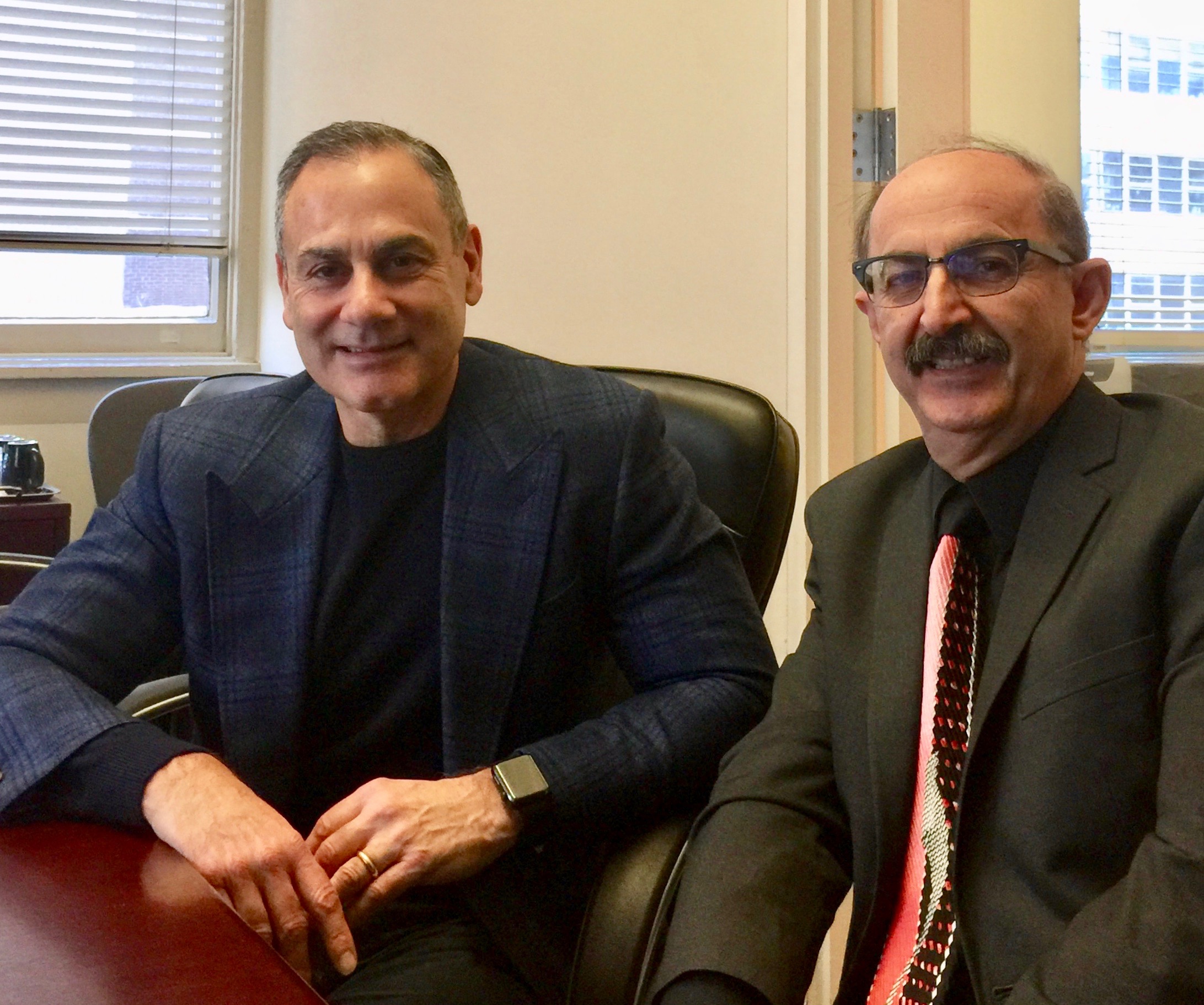
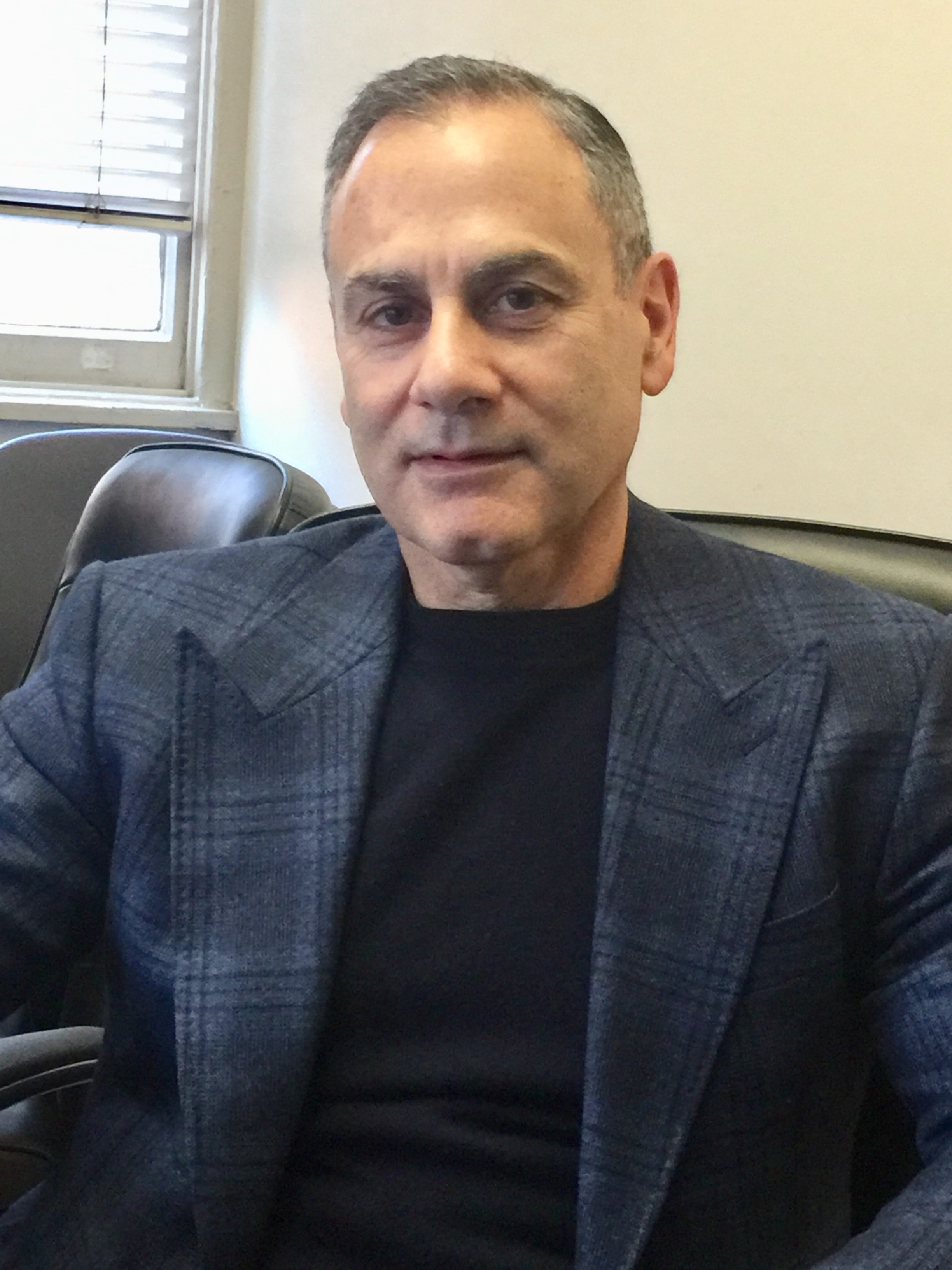
David DiBenedetto, Senior Vice President/Editor In Chief

On where they think the industry is heading in 2018 and beyond (David DiBenedetto): Well, that’s certainly the million dollar question, right? (Laughs) I for one don’t think magazines are going to disappear. I do think some magazines will be weeded out. Obviously, these days you can find a lot of information online; you can find recipes; you can find sickness tips; you can find so much, and I think the magazines that will survive are the ones that are doing real original stuff that can’t necessarily be found through a Google search.

On the secret sauce that allows Garden & Gun to increase its circulation rate base to 400,000 when many other publications are seeing decreases (David DiBenedetto): I think that’s part of it. For one, and it’s been the sort of magical thing about this magazine from the beginning, there’s nothing really like it out there. I always have a hard time finding the direct competitor. We always say they found the white space when they thought about what’s missing from the magazine rack. This was something new; there wasn’t anything there yet. And I think that’s really part of the calculus.

On how his role as editor in chief has changed over the last 10 years (David DiBenedetto): How has it changed in the last 10 years? I started as the number two here and even only eight or nine years ago, social media wasn’t something that we thought about every day. Like every editor, your job responsibilities have increased because you have more ways to reach the reader. Now it’s digital, podcasts, Twitter, Instagram, and these are great. These outlets are amazing because we used to only have one way to reach the reader and that was through our pages. And now we have so many ways, so many touchpoints that when you’re doing it right all of these outlets are tremendous for you.

On whether he thinks all of these social media outlets can be a double-edged sword when it comes to good content (David DiBenedetto): Right; absolutely. That’s the challenge, fighting through the clutter, so that your work can be seen. That’s the biggest challenge with these social media outlets, but I do think and I do believe that good content rises to the top and will rise to the top even more. I think folks are getting tired of shallow pieces, shallow journalism; lists of funny cat photos. We’re going to reach a point where it tips a little bit back toward appreciating good stories, good storytelling, and good journalism. People appreciate good work.

On how he would define content today (David DiBenedetto): It’s everything. Content is anything that we touch. And it can be in a digital form; it can be video or audio; it’s good storytelling; obviously, it’s prose in the magazine. And in my mind too, photography and design and illustration is content and that helps drive the narrative art too. It’s all content Everything that we touch; everything that comes out of the Garden & Gun voice is content.

On whether they believe there is some sort of litmus test for readers so they can differentiate between good content and crappy content (David DiBenedetto): I don’t know that there’s an answer to that. Hopefully, it’s pretty transparent real quickly when they look at it. Like I said, it’s about paying attention to that detail that we do in a way that a lot of these other outlets don’t.

Marshall McKinney, Design Director, Garden & Gun magazine

On whether they believe there is some sort of litmus test for readers so they can differentiate between good content and crappy content (Marshall McKinney): I think there’s a litmus test for what makes the grade as Garden & Gun’s content. There’s a matrix that we run everything through and if it hits a certain standard then we key in on it. Also, like Dave was saying earlier, there’s a lot of crap out there and I think when people read content that rings with truth, that has this sort of voice that rings with truth, they recognize it as something reaching a higher standard.

On the process of reenergizing the Garden & Gun design (David DiBenedetto): Marshall and I both have been here almost 10 years now and we’ve lived with the design of Garden & Gun for those 10 years, and it really hasn’t changed much. There wasn’t any reason to change it for the longest time, because it was really successful, people loved it and we enjoyed it, and readers responded to it. But I think Marshall and I both, as we approached this anniversary year, we said it’s time for a refresh. We both felt the magazine needed a little bit more of a modern feel. Nothing was wrong with it, but you just can’t stay that way forever; you have to keep evolving. We think a magazine should evolve, and it shouldn’t just evolve for evolving’s sake, but it should evolve when the time is right. And we felt that hitting that 10th year stride; now was the time to shake it up a bit.

On the process of reenergizing the Garden & Gun design (Marshall McKinney): A decade is a long run and we have a lot of paint on the walls after a decade. We’ve introduced a few fonts, so aesthetically it was just nice to kind of strip it down to the studs, and thinking about what came before can be very disciplined, but also the South is professionally reinventing itself. There are new trends and artists, things happening in literature, and things are happening all over the South that are progressive and that are pushing the envelope.

On whether having relatively no direct competition makes his job as design director easier or harder (Marshall McKinney): I can’t necessarily speak for the brand when I say this, but I think of my competition as Vanity Fair, New York Magazine, Dwell, GQ; I think of those brands as competition. I want to be taken seriously. I want to be competitive with them, and what I love about those brands and why I have so much respect for them is that they always reach a certain level of originality; they ring with originality and that’s what I want Garden & Gun to do.

On whether having relatively no direct competition makes his job as design director easier or harder (David DiBenedetto): It’s true; what Marshall is saying is that we strive to be the best in the business. We don’t think of ourselves as a Southern magazine; we are a national magazine. And while I don’t think we have a direct competitor, in terms of how we view our work, in our own minds we put it up against the best out there and hope that it holds right there with them.

On the magazine’s new food section called Jubilee (David DiBenedetto): I will say this, one thing that we do to celebrate Southern food is we’re not trying to write about food that’s necessarily highly nutritious and “good for you,” like healthy food. We’re writing about food that is just tasty, that makes you drool and is steeped in heritage and tradition. And maybe it’s being reinvented and maybe it is more healthful than when your grandmother made it, but we’re just trying to make food that’s super-tasty and that can become new classics in your life.

On the magazine’s new food section called Jubilee (Marshall McKinney): We like to joke around here sometimes that we’re a food magazine about the South. (Laughs)

On whether we may be seeing a new bookazine called “Jubilee” with all of the food content in the magazine (David DiBenedetto): Absolutely. I think that anytime you’re creating a magazine and you’re seeing a trend and you’re understanding what your readers are, no pun intended, “salivating” for; if it’s a success then you think about how you can take that farther along. There aren’t memos here about a new food magazine, but it’s certainly been in my head. If “Jubilee” is a raging success, then why not keep moving forward with it, and either have an SIP Jubilee or maybe a spinoff? I just think that we’re going to see how it evolves and grows, and get the readers reaction to it.

On what has been the biggest challenge from an editorial viewpoint with the redesign (David DiBenedetto): My biggest challenge was that people absolutely loved what we were delivering, and I’d lay awake at night wondering if I really wanted to make any changes. These readers are so passionate; they read every page, some of them know the magazine better than I do. That was a challenge to me, getting over that hump. It was time for a change; it’ll be okay. (Laughs) You have something that works and you don’t want to screw it up. That was certainly something that I thought about a lot.

On what has been the biggest challenge from a design viewpoint with the redesign (Marshall McKinney): I have to second what Dave said; I’ve never experienced this before, an audience that is as rabid for the brand as this. We get fierce letters, real emotional and passionate letters, about everything we do and every story we write, down to the Facebook page. We get unbelievable comments if we just post something small; the smallest thing, maybe about BBQ sauces.

On whether they’re now on top of the mountain or there are more cliffs to scale (David DiBenedetto): I’ll first say, I will never think of it as being on top of the mountain, you just keep raising the bar and keep striving to be better. And there’s always room to be better, in terms of print, your website; in terms of the way you use social media. We just have to continue to evolve and be smart. We’ve had great success, but none of us sit back and enjoy it, because we know as soon as you do that, there goes your success. In this environment, you have to work harder than ever to keep your readers.

On whether they’re now on top of the mountain or there are more cliffs to scale (Marshall McKinney): I worry a lot about newsstands and what’s happening in the bog box sector, they’re shrinking and getting smaller as a result. There’s not as much real estate inside the big box for the large newsstands. I worry a little bit about that. Here in Charleston I can only think of two places where you can even find magazines outside grocery stores. Those logistical things worry me a little bit.

On whether they’re having to work with less these days, as far as staff (David DiBenedetto): We haven’t faced the cuts that other companies have; we’ve been very lucky financially, that we haven’t had to do that. But we haven’t really grown that much either. Every year there are more things that we need to accomplish, like we talked about, social media, digital, books; we’re asking to up video; books are getting asked to do a lot more than they were eight years ago. So, the landscape is just different, and we’re all doing more.

On what someone would find him doing if they showed up unexpectedly one evening at his home (David DiBenedetto): For me that’s going to depend on the season, because in the winter it’s dark when I get home, so whenever I have the chance I go outside, whether I’m taking the dog to the dog park or taking the boat out for a quick fishing mission, or taking advantage of Charleston. But when winter hits I’m often having a glass of wine and lately I’ve been addicted to Godless on Netflix. I have to say that when I get home at night, personally, I don’t often pick up another magazine only because I spend my entire day thinking about them. And I know if I pick up a magazine at home, I’m going to start thinking about work immediately and I’m trying to do a better job of not doing that all of the time.

On what someone would find him doing if they showed up unexpectedly one evening at his home (Marshall McKinney): I’m ashamed to say this, but after you get home and you walk the dog, you take the trash out, just whatever, things start to settle down; I hate to say this, but I have a Netflix program going. I’m checking out Facebook, Instagram, The New York Times. I’m looking at a few blogs that I like to peruse, and I’m doing it all at the same time. And then I pick up a magazine, I have it in my lap; I’m flipping through the magazine, and then I go to bed and I read an article or two from The New Yorker or catch up on WSJ or The New York Times Magazine. That’s kind of how I put myself to bed.

On what he would have tattooed upon his brain that would be there forever and no one could ever forget about him (David DiBenedetto): From a professional point of view, I would love for someone to say he always thought about the reader first.

On what he would have tattooed upon his brain that would be there forever and no one could ever forget about him (Marshall McKinney): I would just want it to read that he cared about quality, and he cared. Maybe a little bit too much, but I always want to be associated with quality. A craftsman who cared about quality.

On what keeps them up at night (Marshall McKinney): What I worry about and what keeps me up is that we’ve created something that so many people cherish and adore, and I don’t want them to turn on us. I want to continue to meet and exceed their expectation level. And to suddenly find myself in a position where we can’t do that, that bothers me. We have a pretty smooth ride right now; we’ve crafted a very smooth ride, and when I feel drag on it I get really concerned. I don’t like that feeling of anything dragging it or holding it back.

On what keeps them up at night (David DiBenedetto): Every issue keeps me up. It does. Not to sound like a workaholic, but every time in that cycle where we get close to having it all dialed in and figured out, I will wake up at 3:00 a.m. and ask, is the mix perfect; is the cover going to resonate with readers on the newsstand; should I have done something better or should I have switched this article for that. Each one of them is like having a child.
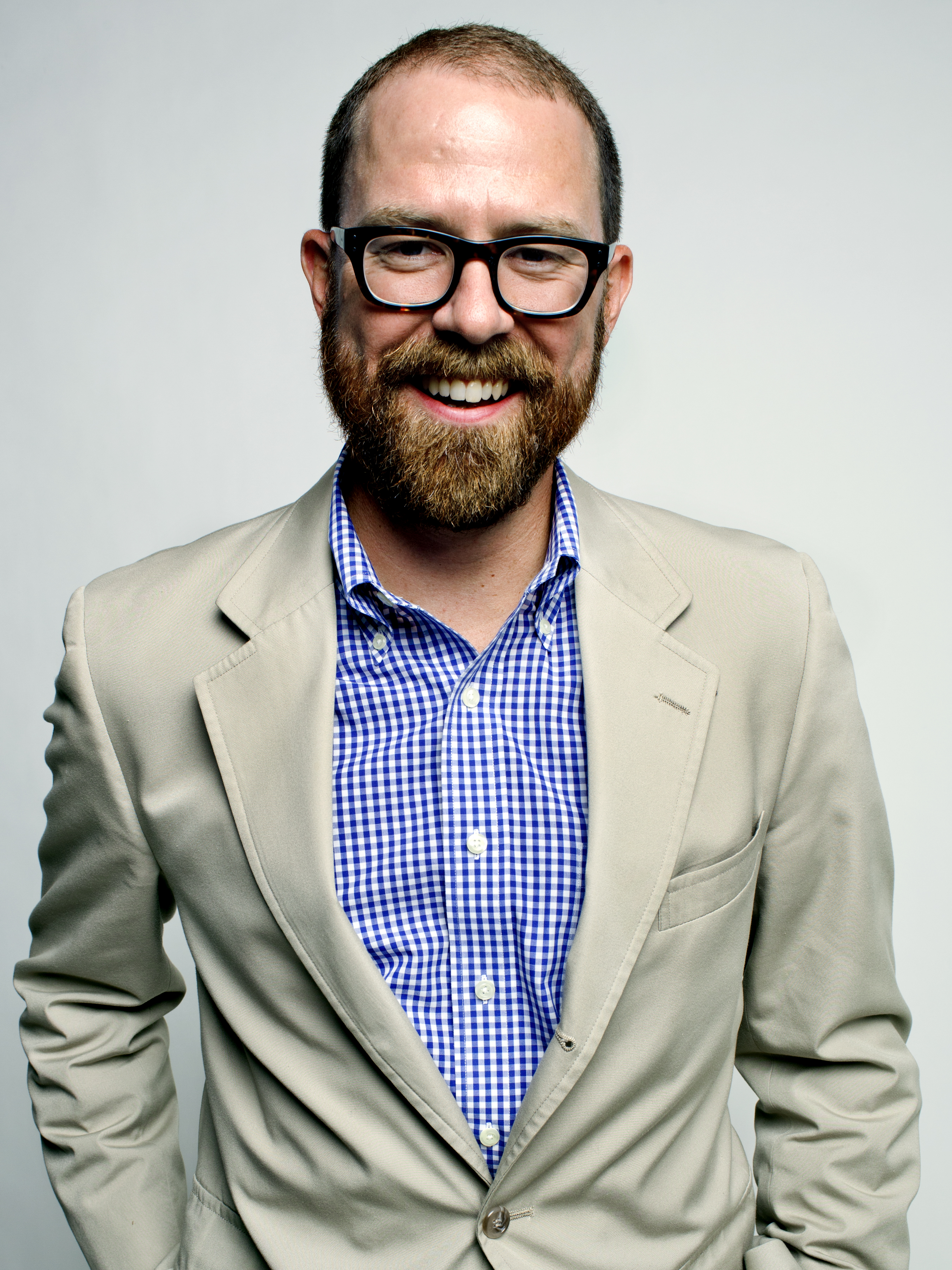
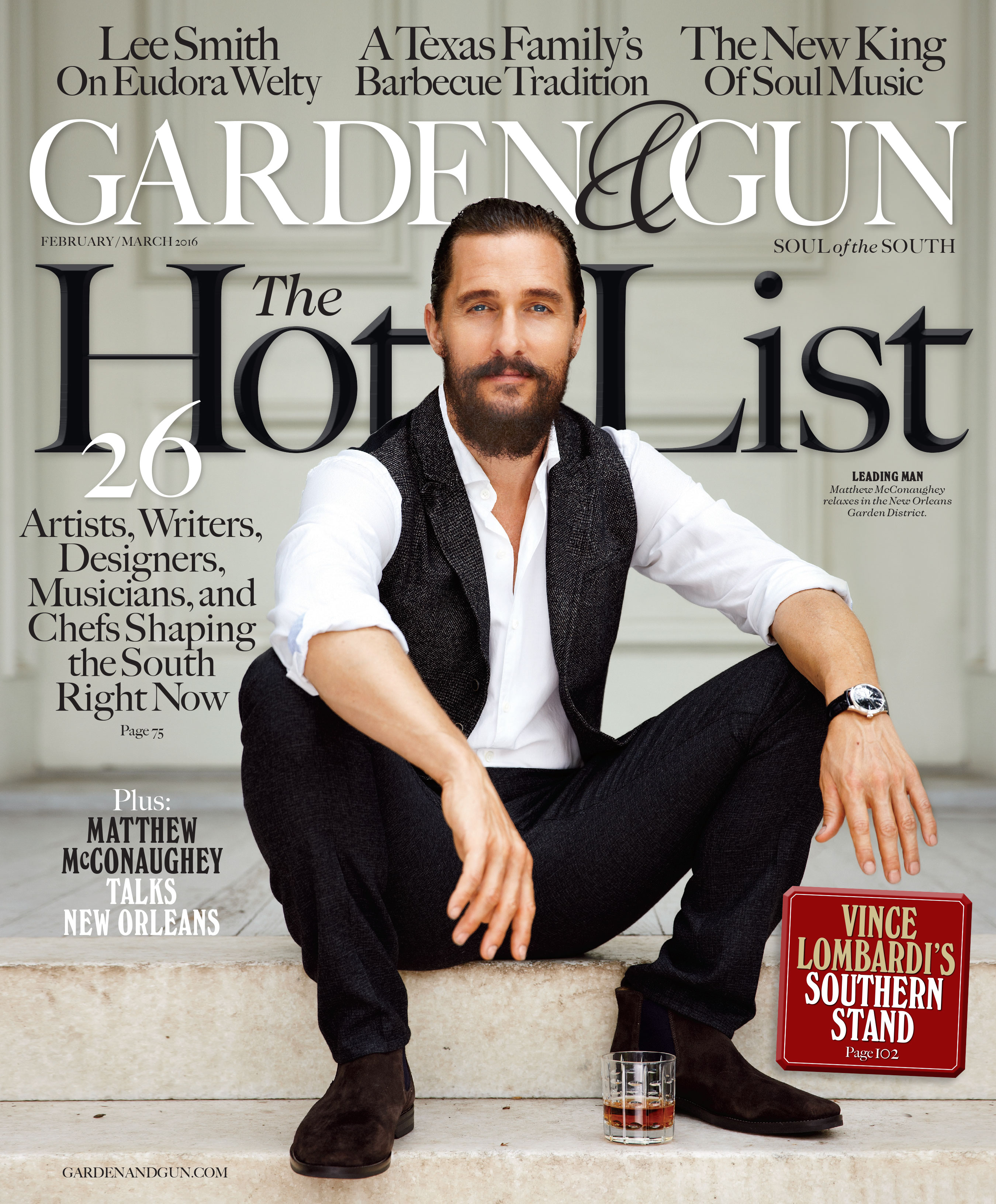
And now the lightly edited transcript of the Mr. Magazine™ interview with David DiBenedetto, SVP/editor in chief and Marshall McKinney, design director, Garden & Gun.

Samir Husni: As you look toward 2018 and beyond, you’ve been with the magazine now for 10 years and you’ve seen all of these changes taking place, not only at Garden & Gun, but throughout the entire industry. Where do you think the industry is heading in terms of journalism, print, and magazine media in general?

David DiBenedetto, Senior Vice President/Editor In Chief

David DiBenedetto: Well, that’s certainly the million dollar question, right? (Laughs) I for one don’t think magazines are going to disappear. I do think some magazines will be weeded out. Obviously, these days you can find a lot of information online; you can find recipes; you can find sickness tips; you can find so much, and I think the magazines that will survive are the ones that are doing real original stuff that can’t necessarily be found through a Google search.

And I think that’s been a part of Garden & Gun’s success. What we do doesn’t necessarily translate into an easy search. We deliver an experience; we want every issue to be a reading experience and a surprising experience. I like to think of it as almost like an album. Every issue has to have the perfect mix and it works really well when it does; when you’ve got a surprising story up front or an amazing photo and a hard-hitting journalistic piece, and then a light story on a good dog. I just think readers aren’t going away, and even more so than ever they appreciate good work.

Samir Husni: And if I look at your numbers, your subscriptions have increased more than eight percent; your newsstand sales have increased more than eight percent during a time when we’re seeing a lot of decreases. If someone were to ask you the secret recipe you’re using to technically go against the trends, where you’re increasing your circulation rate base to 400,000 starting with the February issue, what would that be? Why do you think Garden & Gun is able to do this, is it because of what you told me, that experience you provide, or there’s more to it?

David DiBenedetto: I think that’s part of it. For one, and it’s been the sort of magical thing about this magazine from the beginning, there’s nothing really like it out there. I always have a hard time finding the direct competitor. We always say they found the white space when they thought about what’s missing from the magazine rack. This was something new; there wasn’t anything there yet. And I think that’s really part of the calculus.

And then again, it does go back to that experience. I think when you pick up this magazine, you may not know what to expect, but our goal is that when you pick this magazine up, no matter what page you turn to, we want to draw you in. And that means that we’re paying attention to every detail on the page. That means we’re thinking about the head and the deck until we’re blue in the face. That means we’re thinking about the caption. Obviously, we’re thinking about the story itself; is the lead graph going to grab somebody and is it going to pay off what we promised?

And then the design and the photos; it’s really a visual experience. And I think the redesign reflects this. We’re not jamming a million things onto a page; it’s not always about more beans in the pot for us. It’s just one great piece of meat. And when you can do that, and other magazines do that, I’m not saying that we’re the only one, but when you’re doing that, when you can grab somebody, you’ve got one shot and it could be any page of this magazine, you’ve got to grab them. And you’ve got to think that way. You always have to think about the reader first. It’s all about grabbing the reader. And that’s how we’ve trained ourselves here and I believe it’s working.

Samir Husni: And through the last decade of training yourselves that way, how has your job as editor in chief, as senior vice president, changed? Or has it changed? Has it been a walk in a rose garden for you or you’ve always felt as though there was a “gun” aimed at your head, no pun intended?

David DiBenedetto: (Laughs) I think I follow that question.

Samir Husni: (Laughs too).

David DiBenedetto: How has it changed in the last 10 years? I started as the number two here and even only eight or nine years ago, social media wasn’t something that we thought about every day. Like every editor, your job responsibilities have increased because you have more ways to reach the reader. Now it’s digital, podcasts, Twitter, Instagram, and these are great. These outlets are amazing because we used to only have one way to reach the reader and that was through our pages. And now we have so many ways, so many touchpoints that when you’re doing it right all of these outlets are tremendous for you.

And we’ve seen that growth in our Instagram followers; our Facebook followers, and they help our brand tremendously. So, my job has changed in the way that it used to be a lot about words and photos on the page, and now it’s a lot more than that.

Samir Husni: But do you think this is sort of like a double-edged sword? On the one hand, it’s great for those who use it well, but it’s not so great for others? When I spoke with the editorial director at Hearst, she said content today can be great, but there’s also a lot of junk out there.

David DiBenedetto: Right; absolutely. That’s the challenge, fighting through the clutter, so that your work can be seen. That’s the biggest challenge with these social media outlets, but I do think and I do believe that good content rises to the top and will rise to the top even more. I think folks are getting tired of shallow pieces, shallow journalism; lists of funny cat photos. We’re going to reach a point where it tips a little bit back toward appreciating good stories, good storytelling, and good journalism. People appreciate good work.

Samir Husni: What is your definition of content today?

David DiBenedetto: It’s everything. Content is anything that we touch. And it can be in a digital form; it can be video or audio; it’s good storytelling; obviously, it’s prose in the magazine. And in my mind too, photography and design and illustration is content and that helps drive the narrative art too. It’s all content Everything that we touch; everything that comes out of the Garden & Gun voice is content.

Samir Husni: And is there a litmus test; is there some way that readers should and can differentiate between good content and crappy content?

David DiBenedetto: I don’t know that there’s an answer to that. Hopefully, it’s pretty transparent real quickly when they look at it. Like I said, it’s about paying attention to that detail that we do in a way that a lot of these other outlets don’t.

Marshall McKinney: I think there’s a litmus test for what makes the grade as Garden & Gun’s content. There’s a matrix that we run everything through and if it hits a certain standard then we key in on it. Also, like Dave was saying earlier, there’s a lot of crap out there and I think when people read content that rings with truth, that has this sort of voice that rings with truth, they recognize it as something reaching a higher standard. If it feels like there was some effort involved and some degree of discipline brought to bear on the content, I think people recognize it as something valuable.

Samir Husni: As I look at the December/January issue of G&G, and the efforts that have been put forth to, not necessarily reinvent the magazine, but more like to reenergize the magazine. Can you go through that process; how the two of you worked together to do this?

David DiBenedetto: Marshall and I both have been here almost 10 years now and we’ve lived with the design of Garden & Gun for those 10 years, and it really hasn’t changed much. There wasn’t any reason to change it for the longest time, because it was really successful, people loved it and we enjoyed it, and readers responded to it. But I think Marshall and I both, as we approached this anniversary year, we said it’s time for a refresh. We both felt the magazine needed a little bit more of a modern feel. Nothing was wrong with it, but you just can’t stay that way forever; you have to keep evolving. We think a magazine should evolve, and it shouldn’t just evolve for evolving’s sake, but it should evolve when the time is right. And we felt that hitting that 10th year stride; now was the time to shake it up a bit.

And we always said that we weren’t going to gut this magazine, it was working, but we wanted it to be fresh. And we wanted to do it in a way that kept the DNA of the magazine, but still gave it, like I said, a more modern feel.

Marshall McKinney: A decade is a long run and we have a lot of paint on the walls after a decade. We’ve introduced a few fonts, so aesthetically it was just nice to kind of strip it down to the studs, and thinking about what came before can be very disciplined, but also the South is professionally reinventing itself. There are new trends and artists, things happening in literature, and things are happening all over the South that are progressive and that are pushing the envelope.

We just totally redid our website and energized it, and I think we did an incredible job with it. It was just time to strip everything down to the studs and start anew with the spirit of reinvention and lay down a groundwork that we can build on for another decade. And that will cross multiple platforms and is very synergistic in a clean way.

Samir Husni: Dave was talking earlier about how he cannot find a competitor for Garden & Gun, that you’re covering that white space and covering it well. Does that make your job as design director easier or harder, having no competition?

Marshall McKinney: I can’t necessarily speak for the brand when I say this, but I think of my competition as Vanity Fair, New York Magazine, Dwell, GQ; I think of those brands as competition. I want to be taken seriously. I want to be competitive with them, and what I love about those brands and why I have so much respect for them is that they always reach a certain level of originality; they ring with originality and that’s what I want Garden & Gun to do.

I feel like everyone on the newsstands is my competition, but I’m not sure that we have a competitor right next to us, but I do see everyone as my competitor and I want to perform at a high level that I hope reaches the standards set by those magazines I mentioned.

David DiBenedetto: It’s true; what Marshall is saying is that we strive to be the best in the business. We don’t think of ourselves as a Southern magazine; we are a national magazine. And while I don’t think we have a direct competitor, in terms of how we view our work, in our own minds we put it up against the best out there and hope that it holds right there with them.

Samir Husni: Let’s talk about one new section that you’ve added to the magazine. You’ve always had food in the magazine, but now you’ve created the section that you call “Jubilee.” Food is the number one magazine category in the country now. We have more food magazines than ever before. And to quote from the magazine, how are you “Celebrating Southern food and drink” differently than other publications, in terms of content and design?

David DiBenedetto: I will say this, one thing that we do to celebrate Southern food is we’re not trying to write about food that’s necessarily highly nutritious and “good for you,” like healthy food. We’re writing about food that is just tasty, that makes you drool and is steeped in heritage and tradition. And maybe it’s being reinvented and maybe it is more healthful than when your grandmother made it, but we’re just trying to make food that’s super-tasty and that can become new classics in your life. And maybe they’re some classics that you grew up with, but have evolved and changed.

What I thought about when we introduced that section, and obviously that’s the biggest change in this redesign; when I first got here, along with Sid Evans and Marshall, we knew food was going to be important, but back then, almost 10 years ago, we had no idea how important food would be to this audience. We just didn’t know. And the more we did it, the more folks loved it.

We have an unbelievable photography director in Maggie Kennedy, and I think our food photography is as good as anybody’s out there, by far. It’s just stunning. And I thought, okay, we know the readers love this and we had food kind of scattered throughout the magazine. It was making sense, but I thought let’s just bring it all together and give them what they want. Again, this is about delivering to the reader.

We’ve got this great John T. Edge column, Fork in the Road, that’s run for a number of years, and it’s always been in the very back of the book and honestly I felt like sometimes it got lost back there. Some of the best writing in the magazine, issue to issue, and this allowed me to bring it up front and really give it a place where I think it belongs, because it’s not always about food. It’s about how food and social issues interact and it’s a very powerful column. And that’s one reason why I was delighted to introduce “Jubilee.”

Marshall McKinney: We like to joke around here sometimes that we’re a food magazine about the South. (Laughs)

Samir Husni: (Laughs too). Is that a hint of something to come? That we may soon see an SIP or a bookazine called “Jubilee” from Garden & Gun with all that food content?

David DiBenedetto: Absolutely. I think that anytime you’re creating a magazine and you’re seeing a trend and you’re understanding what your readers are, no pun intended, “salivating” for; if it’s a success then you think about how you can take that farther along. There aren’t memos here about a new food magazine, but it’s certainly been in my head. If “Jubilee” is a raging success, then why not keep moving forward with it, and either have an SIP Jubilee or maybe a spinoff? I just think that we’re going to see how it evolves and grows, and get the readers reaction to it.

Samir Husni: As you began the refreshing of Garden & Gun, what has been the biggest challenge from an editorial point of view and from a design point of view?

David DiBenedetto: My biggest challenge was that people absolutely loved what we were delivering, and I’d lay awake at night wondering if I really wanted to make any changes. These readers are so passionate; they read every page, some of them know the magazine better than I do. That was a challenge to me, getting over that hump. It was time for a change; it’ll be okay. (Laughs) You have something that works and you don’t want to screw it up. That was certainly something that I thought about a lot.

Marshall McKinney: I have to second what Dave said; I’ve never experienced this before, an audience that is as rabid for the brand as this. We get fierce letters, real emotional and passionate letters, about everything we do and every story we write, down to the Facebook page. We get unbelievable comments if we just post something small; the smallest thing, maybe about BBQ sauces.

So, it was trying to honor what we’ve done before, take the same aesthetic values, but sort of retool them for what’s to come. When you launch a magazine, you put your best foot forward, but you have all of these unforeseen situations that sort of arise over time and you have to patch it up as you go. But this was an opportunity to really address some of those things and start afresh, but hopefully honor what came before.

The magazine is dense; it’s a thick book. And just by virtue of its thickness, sometimes when you fold it open the ads can kind of come over onto your content, so we wanted to create a larger margin to create more spaciousness around the page for that reason. So there were some mutual agreement reasons to do it, but anytime you affect change it comes with a lot of good and a little bad. But so far, the good has outweighed the bad, but time will tell, we’re still pretty new into this thing.

David DiBenedetto: And I’ll add, Marshall and I both believe that a redesign is not one issue. A redesign evolves. You get that first issue back and you look at it and you’re proud and delighted, but you also see some things that you could do better. And you improve those in the next issue. In my mind a redesign isn’t really strong until it’s two, maybe three issues down the road. Again, just making those minor tweaks and evolving. And just thinking about the reader.

Marshall McKinney: I keep using this home metaphor maybe because we’ve done so much work to ours lately, but once you’ve taken down the studs, you put the drywall back up; you paint it, and now it’s a matter of getting the furniture the way you like it and everything hung the way you want it.

For example, when you take all of that good, and some of our best-looking content, out of the front of the book and you put all of that food content into Jubilee, that leaves you a little thin in the front of the book. You have to figure out, and time and the market will tell you, what it wants and how it wants to evolve that front of the book section. And so we tucked that into the back of our minds as we approach this second issue of the redesign. And I think you’ll see a huge leap in the presentation of the “Talk of the South.” So, I think it takes a minute to hit your stride and we’re getting there.

Samir Husni: Are you now on top of the mountain? Or are there more cliffs to scale? What’s next for you two?

David DiBenedetto: I’ll first say, I will never think of it as being on top of the mountain, you just keep raising the bar and keep striving to be better. And there’s always room to be better, in terms of print, your website; in terms of the way you use social media. We just have to continue to evolve and be smart. We’ve had great success, but none of us sit back and enjoy it, because we know as soon as you do that, there goes your success. In this environment, you have to work harder than ever to keep your readers.

Marshall McKinney: I worry a lot about newsstands and what’s happening in the bog box sector, they’re shrinking and getting smaller as a result. There’s not as much real estate inside the big box for the large newsstands. I worry a little bit about that. Here in Charleston I can only think of two places where you can even find magazines outside grocery stores. Those logistical things worry me a little bit. Staying fresh and artful, creating that see-me-flip-me-buy-me reaction. I love that. Making covers to have subtext and impact that sell, that’s always the day-to-day struggle.

But looking forward, I’m really excited about the creative opportunities and breadth of the brand and how we can diversify going forward. I can see us having a channel of Garden & Gun content. I can see us having radio. I’m really excited about future creative endeavors.

David DiBenedetto: Video, you know. Storytelling, the word, certainly gets a bad rap these days, but it’s about the different ways that we can unpack these stories. It’s not only print these days; video for us is going to be really strong. I just think our narratives really lend themselves to that. Like I said earlier, the potential is there in just so many different outlets.

Samir Husni: So are you doing more these days with less, as far as staff?

David DiBenedetto: We haven’t faced the cuts that other companies have; we’ve been very lucky financially, that we haven’t had to do that. But we haven’t really grown that much either. Every year there are more things that we need to accomplish, like we talked about, social media, digital, books; we’re asking to up video; books are getting asked to do a lot more than they were eight years ago. So, the landscape is just different, and we’re all doing more.

Samir Husni: If I showed up unexpectedly at your home one evening after work, what would I find you doing? Having a glass of wine; reading a magazine; cooking; watching TV; or something else?

David DiBenedetto: For me that’s going to depend on the season, because in the winter it’s dark when I get home, so whenever I have the chance I go outside, whether I’m taking the dog to the dog park or taking the boat out for a quick fishing mission, or taking advantage of Charleston. But when winter hits I’m often having a glass of wine and lately I’ve been addicted to Godless on Netflix. I have to say that when I get home at night, personally, I don’t often pick up another magazine only because I spend my entire day thinking about them. And I know if I pick up a magazine at home, I’m going to start thinking about work immediately and I’m trying to do a better job of not doing that all of the time.

Marshall McKinney: I’m ashamed to say this, but after you get home and you walk the dog, you take the trash out, just whatever, things start to settle down; I hate to say this, but I have a Netflix program going. I’m checking out Facebook, Instagram, The New York Times. I’m looking at a few blogs that I like to peruse, and I’m doing it all at the same time. And then I pick up a magazine, I have it in my lap; I’m flipping through the magazine, and then I go to bed and I read an article or two from The New Yorker or catch up on WSJ or The New York Times Magazine. That’s kind of how I put myself to bed.

David DiBenedetto: That’s like an overachiever. (Laughs)

Marshall McKinney: I am totally immersed in media; it’s like a huge wave that’s trying to gobble me up.

Samir Husni: If you could have one thing tattooed upon your brain that no one would ever forget about you, what would it be?

David DiBenedetto: From a professional point of view, I would love for someone to say he always thought about the reader first.

Marshall McKinney: I would just want it to read that he cared about quality, and he cared. Maybe a little bit too much, but I always want to be associated with quality. A craftsman who cared about quality.

Samir Husni: My typical last question; what keeps you up at night?

Marshall McKinney: Lately it’s been the house; it feels like it’s trying to eat me. But what I worry about and what keeps me up is that we’ve created something that so many people cherish and adore, and I don’t want them to turn on us. I want to continue to meet and exceed their expectation level. And to suddenly find myself in a position where we can’t do that, that bothers me. We have a pretty smooth ride right now; we’ve crafted a very smooth ride, and when I feel drag on it I get really concerned. I don’t like that feeling of anything dragging it or holding it back.

David DiBenedetto: It’s different; when you’re launching the magazine you’re this precious new thing, and you’re the new kid on the block. It’s a different experience when you’re trying to sustain the momentum; when you’re trying to keep it going. It’s definitely a different challenge.

Every issue keeps me up. It does. Not to sound like a workaholic, but every time in that cycle where we get close to having it all dialed in and figured out, I will wake up at 3:00 a.m. and ask, is the mix perfect; is the cover going to resonate with readers on the newsstand; should I have done something better or should I have switched this article for that. Each one of them is like having a child.
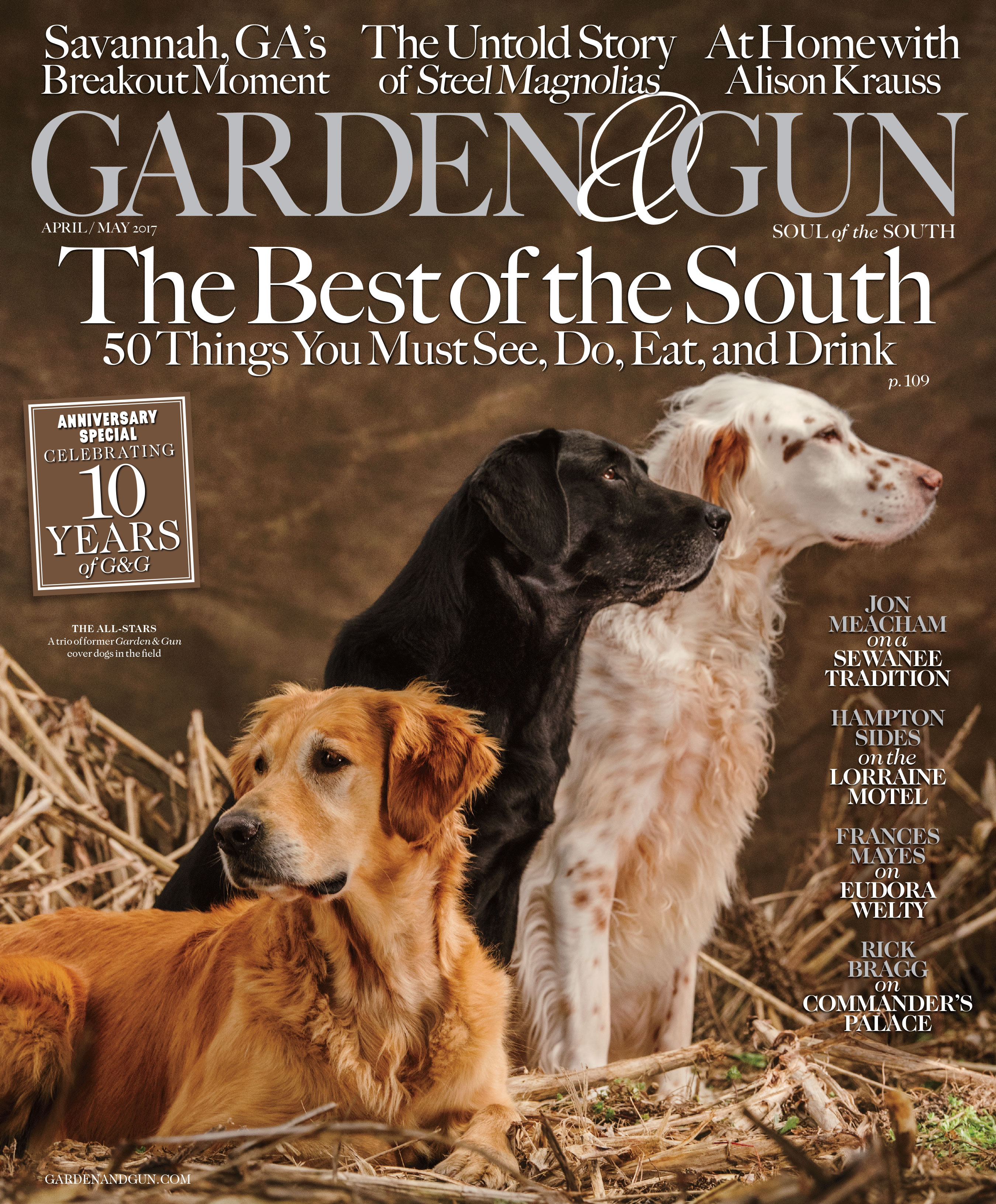
To me that’s the immediate thing that keeps me up, because as Marshall said there’s an expectation from the readers that they’re going to be blown away by every issue. That they’re going to want to collect it and put it on their coffee table. And that’s a lot of pressure; that’s a wonderful pressure and a wonderful position to be in. But you don’t want to let them down and that certainly keeps me up at night.

Samir Husni: Thank you both.

h1

FIPP’s President & CEO James Hewes To Samir “Mr. Magazine™” Husni: “I Wonder If 2018 Might Be The First Year Where Things Start To Show Signs Of Recovery.” The Mr. Magazine™ Interview…

January 4, 2018

“I think it’s going to be a pretty good year, actually. It’s funny you know, ever since I took this job I’ve been hearing more and more people telling me about the resurgence of print magazines and how print magazines are coming back as a medium, and I think 2018 might be the year when you start to see some signs of that filtering through into the numbers, because, obviously, the numbers that are released by the publishing companies have been pretty bad in 2017.” James Hewes

“FIPP, the network for global media, is dedicated to improving all aspects of the media content industry through the sharing of quality content to audiences of interest. FIPP exists to help its members develop better strategies and build better businesses by identifying and communicating emerging trends, sharing knowledge, and improving skills, worldwide.”

James Hewes is CEO of FIPP and believes that the organization’s number one mission is to its members and its prospective members by ensuring that it answers their needs and reflects their interests across all platforms, including print, where its roots lay. James is a firm believer in print, but also in the multiplatform outlets that exist in this digital age, and thinks that quite possibly 2018 may be the year where magazines and magazine media start to show signs of recovery in all aspects of the business.

I spoke with James recently via Skype and we talked about his vision for FIPP. In the short time he has been CEO (he was appointed president and CEO last summer), he said that since he took the job, he’s had more and more people tell him that the resurgence of print magazines is strong and that print, as a medium, is on the upswing. This of course is music to Mr. Magazine’s™ ears, and I hope to yours also, and is something that makes James think 2018 may be the year of the magazine. From James’ mouth to the magazine cosmoses ears.

I think you’ll find that the conversation we had was both informative and inspirational, across all platforms, not just print. But I believe it just goes to prove yet again, that in the 21st century, in 2018, there’s room for everyone’s preference, print and digital. Wouldn’t you agree?

And now the Mr. Magazine™ interview with James Hewes, president and CEO, FIPP.

But first the sound-bites:

On how he sees magazines and magazine media shaping up for 2018: I think it’s going to be a pretty good year, actually. It’s funny you know, ever since I took this job I’ve been hearing more and more people telling me about the resurgence of print magazines and how print magazines are coming back as a medium, and I think 2018 might be the year when you start to see some signs of that filtering through into the numbers, because obviously the numbers that are released by the publishing companies have been pretty bad in 2017. The readership figures are down, circulation figures are down and advertising figures are down. But I wonder if 2018 might be the first year where things start to show signs of recovery, because there are certainly some signs that for the quality magazines and for the specialist magazines in particular, that their feeling as businesses and their feeling as brands is that they’re still quite positive about the future.

On whether he thinks magazines will strive to be more of a brand than an entity in 2018: Of course, that’s going to continue and that’s going to be the center of the strategy for most magazine companies for many years to come, I believe. I think it’s just that we’re starting to see some changes in emphasis now perhaps in some businesses. And specifically on digital and the digital publishing industry; it’s going to be interesting to see how 2018 plays out with respect to digital advertising. Toward the end of this year there has been an enormous amount of press coverage of the lack of trust in digital advertising and the problems that seem to be existing in the supply chain of digital advertising.

On where he sees the bright spots and the challenges globally when it comes to magazine media: It’s been pretty clear in 2017 that the U.K., the U.S. and the Western markets have had a tough time. The numbers coming out of those markets don’t look very good. You’ve got the feeling that 2018 can’t be as bad a year as 2017 was, so perhaps that constitutes a bright spot now. In terms of where there are real opportunities for growth, I think we still have to understand the market a lot better than we do right now. I think there’s still probably a fairly vibrant industry happening in Southeast Asia for print. Traditionally, it was always a region in the world where print did very well; where advertisers responded very strongly to print products and I think that’s probably still the case.

On whether he thinks publishing companies merging, such as Meredith buying Time Inc., is a worldwide model for the future or just a United States thing: No, I think that’s very much going to continue and I think there’s probably a bit more consolidation to come in the market. But interestingly, as companies consolidate, so it seems to be that they throw off new opportunities. I mean, yes, we may have lost one company with the merger of Meredith and Time Inc., but we’ve gained one of course, which is Time Inc. in the U.K., which will become a separate company, a separate publishing company with its own stable of brands.

On Mr. Magazine™ and the MPA hosting The Launch of the Year at the American Magazine Awards this year: That’s a really good initiative and the kind of thing we should be supporting. I went to the PPA’s (Professional Publishers Association) event in Scotland recently and they had put onto the agenda slots between every major speaking slot for somebody to come and present their new magazine. And in Scotland alone, there were six, seven, eight, nine, ten fantastic new magazine ideas from incredibly passionate, usually very young people, very passionate about their subject. And totally committed to print, so it was great to see.

On the biggest challenge that he thinks FIPP will face in the future: I think the biggest challenge for FIPP is the same as the challenge for the industry. I mean, we are an organization that has its roots in print and we must never forget that print will always be 50 percent of what we do; 50 percent plus of what we do, because that’s what the industry is all about. But the challenge is how do we reflect the move toward multiplatform brand management in our memberships and in our services; how do we ensure that the other areas of publishing businesses, which are very important to them and should be very important to us, digital publishing and digital media, and events, events in particular; how do we ensure that they’re represented in what we do?

On what has been the most pleasant moment so far: I think I would say two things. The first is the incredible dedication and commitment of the staff that we have here at FIPP. When I joined we were one month away from putting on the World Congress, which you know very well is a very large event with 600-700 people from the publishing industry, including some very senior individuals. So, to have a change in CEO running up to that event could have potentially been very disruptive. It wasn’t disruptive at all, because we’ve got a fantastic team who totally know their jobs and just went off and did it, almost without my involvement. It was great, and executed a fantastic event.

On how FIPP can get publishing businesses that are competing for similar audiences to work together: Well, I think that’s a great question, because it’s something that we as an industry have not been very good at historically. Even the newspaper industry, which traditionally was very much comprised of companies fighting almost to the death with one another, have been a little bit more unified in their approach to the challenges of the digital age and the big platforms, than the magazine industry has. So, I think that’s something that would I see as a very big part of FIPP’s remix, to help magazine companies and print companies to work better together.

On whether he believes that unifying voice between companies is possible: Anything is possible. (Laughs) I hope it’s possible. I think there’s a great danger for us as an industry that we present a fragmented voice to those platforms, because we are not, individually as companies, even though we have very, very large individual members, individually as companies, compared to the scale of a Google or a Facebook, we’re still relatively insignificant. And I think it’s only by providing the combined muscle of our audience together as an industry, that we can really start to get some of the things that we want.

On the status of newsstand and single-copy sales: Single-copy sales for me remains a great missed opportunity in a lot of markets. It’s interesting, I was reading a piece recently about Bauer in the U.S., and it may have even been from yourself, talking about the success that they’ve had on the newsstand in the U.S. And that’s really because they’ve taken the lessons they learned in Germany, where newsstand is an actually predominant distribution method, and applied them to their relatively neglected U.S. market, and have had a huge amount of success.

On whether he thinks magazines and magazine media can ever go back to the powerhouse it was once: If you’re thinking about pure volume; are we ever going to sell as many copies as we once did? No, and I think that’s not necessarily a bad thing. A lot of the copy sales in the market as you know were driven by very general lifestyle magazines or entertainment magazines, both men’s and women’s, generally weeklies, of course, there are some monthlies. They have content that has migrated entirely to the Internet and that’s probably never going to come back. And those were very high margin businesses, very profitable businesses for most companies. And that’s where I think a lot of this misunderstanding about the death of magazines comes from; the idea that just because you’ve lost your largest, most profitable category your industry as a whole is destroyed, but it’s not.

On anything else he’d like to add: Only to say what I have been saying consistently throughout my first few months here, which is that I fervently believe that this is the most exciting time in history to be working in this industry. From the outside looking in, people may think it’s crazy, why would someone go and work in the publishing industry generally, and I’m not just talking about print, but publishing in media generally. And I say to them, are you crazy? This is an absolutely fantastic time to be working in it.

On what someone would find him doing if they showed up unexpectedly one evening at his home: Probably playing with my children; I have two young children, eight-years-old and 10-years-old. And I don’t get a chance to spend a lot of time with them, because I travel so much with my job. So, when I’m home I try to make sure that I spend as much time as possible with them and with my wife, Sheena, because we’re away from each other a lot and it’s nice to be reunited.

On what he would have tattooed upon his brain that would be there forever and no one could ever forget about him: I would hope that they would say that I always tried to solve problems. I’ve kind of made a career out of being a guide that people go to when they have a problem and they need to solve it. Yes, he was a problem-solver.

On what keeps him up at night: What keeps me up at night is actually probably not work. It’s just how do I make sure that my children get the best start in life; how do they get the best education; how do they get all of the opportunities that I was fortunate enough to have when I was growing up? The world today is a very different place from what it was when I was growing up and in some ways, a lot scarier place. Certainly, a lot harder place to grow up in. And so my focus is very much on making sure that they get the great start in life that they need.

And now the lightly edited transcript of the Mr. Magazine™ interview with James Hewes, CEO, FIPP.

Samir Husni: Congratulations are in order for heading the largest magazine and magazine media association in the world.

James Hewes: Thank you; I’m very privileged.

Samir Husni: It’s a big task, I’m sure. So, how do you envision 2018 shaping up for magazines and magazine media?

James Hewes: I think it’s going to be a pretty good year, actually. It’s funny you know, ever since I took this job I’ve been hearing more and more people telling me about the resurgence of print magazines and how print magazines are coming back as a medium, and I think 2018 might be the year when you start to see some signs of that filtering through into the numbers, because obviously the numbers that are released by the publishing companies have been pretty bad in 2017. The readership figures are down, circulation figures are down and advertising figures are down.

But I wonder if 2018 might be the first year where things start to show signs of recovery, because there are certainly some signs that for the quality magazines and for the specialist magazines in particular, that their feeling as businesses and their feeling as brands is that they’re still quite positive about the future. They’re still seeing reasonably good numbers, in terms of circulation and advertising, and even some areas of growth. So, I think 2018 could be a very good year, hopefully, for the print business.

Samir Husni: What about the venturing of magazines from print into digital and that mix? Do you see magazine companies doing more of that; magazines becoming more of a brand, rather than an entity?

James Hewes: Of course, that’s going to continue and that’s going to be the center of the strategy for most magazine companies for many years to come, I believe. I think it’s just that we’re starting to see some changes in emphasis now perhaps in some businesses. And specifically on digital and the digital publishing industry; it’s going to be interesting to see how 2018 plays out with respect to digital advertising.

Toward the end of this year there has been an enormous amount of press coverage of the lack of trust in digital advertising and the problems that seem to be existing in the supply chain of digital advertising. Recently, there was a piece suggesting that some big organizations were losing as much as two and a half million dollars a day or a week to fraud. With those kinds of numbers it’s easy to see why people don’t trust the digital advertising supply chain anymore.

So, 2018 might be the year when that really comes to a head; that doesn’t feel like it can continue in its current form. I don’t think that will stop magazine companies from going into the digital space though, because it’s still a really important part of that brand wheel. And if you’re putting your brand at the center of your strategy, then digital does need to play a part in that.

There will still be brands that are exceptions, where print is still going to be the primary and sometimes the only reason for their existence or the only way in which they make money. I think about a brand like Private Eye here in the U.K., which is a very big print magazine, and has very expressly and strategically stayed away from digital in any sense over its entire lifespan and hasn’t done any harm to its circulation figures at all. So, there could be a few other examples of that which crop up in the years to come.

Samir Husni: As you scan the FIPP members all over the world, where do you see the bright spots; where do you see the challenging spots? Do you feel the U.K. will be leading; the Middle East; Asia; South America?

James Hewes: It’s been pretty clear in 2017 that the U.K., the U.S. and the Western markets have had a tough time. The numbers coming out of those markets don’t look very good. You’ve got the feeling that 2018 can’t be as bad a year as 2017 was, so perhaps that constitutes a bright spot now.

In terms of where there are real opportunities for growth, I think we still have to understand the market a lot better than we do right now. I think there’s still probably a fairly vibrant industry happening in Southeast Asia for print. Traditionally, it was always a region in the world where print did very well; where advertisers responded very strongly to print products and I think that’s probably still the case.

It’s difficult to put a kind of bright spot/dark spot analysis of the market by country though, because it will vary massively depending on the category you’re in. I would rather characterize it as the difference between general interest magazines versus specialist magazines. If you’re in a general lifestyle space, then you’re probably still going to have a tough time next year. I think the more specialist you are, whether that’s a specialist news brand or specialist interest brand, you’re going to do better, because those brands seem to be the ones that are winning at the moment.

Samir Husni: Do you see anything like we’re seeing in the United States, companies merging, such as Meredith buying Time Inc.; Hearst buying Rodale? Do you see that as a model for the future worldwide, or it’s just a United States thing?

James Hewes: No, I think that’s very much going to continue and I think there’s probably a bit more consolidation to come in the market. But interestingly, as companies consolidate, so it seems to be that they throw off new opportunities. I mean, yes, we may have lost one company with the merger of Meredith and Time Inc., but we’ve gained one of course, which is Time Inc. in the U.K., which will become a separate company, a separate publishing company with its own stable of brands.

We’re also finding, and I’m certainly noticing, that there is now an emerging ecosystem of publishing businesses at the small end have very often formed either people straight out of college, who previously would have gone into work for Time Inc., but are now doing their own thing, or they’re staffed by “X” publishing industry people who are creating new magazines and creating new publishing opportunities based around the fact that the big companies just aren’t there anymore; it’s fear of them.

So, while there’s a lot of consolidation at the top end, I think one of the things that we’re interested in exploring for 2018 is the extent to which that’s being filled at the bottom end by a host of new companies and startups that are: A – a lot more positive about the future of print in particular, but B – they don’t necessarily think in terms of those silos anymore when it comes to, I’m a print business; I’m a digital business. They’re just a business, and they’re interested in promoting usually their specialist interest content and specialist interest opportunities. And they just find the best way to do that.

Samir Husni: This year I’m doing The Launch of the Year with the MPA at the American Magazine Media Conference, where we will be celebrating new magazines. And this will be the first time in the history of the American Magazine Media Conference that this has been done in conjunction with the awards.

James Hewes: That’s a really good initiative and the kind of thing we should be supporting. I went to the PPA’s (Professional Publishers Association) event in Scotland recently and they had put onto the agenda slots between every major speaking slot for somebody to come and present their new magazine. And in Scotland alone, there were six, seven, eight, nine, ten fantastic new magazine ideas from incredibly passionate, usually very young people, very passionate about their subject. And totally committed to print, so it was great to see.

Samir Husni: In the short time that you’ve been heading FIPP, what has been the biggest challenge that you’ve had to face and how did you overcome it?

James Hewes: I think the biggest challenge for FIPP is the same as the challenge for the industry. I mean, we are an organization that has its roots in print and we must never forget that print will always be 50 percent of what we do; 50 percent plus of what we do, because that’s what the industry is all about. But the challenge is how do we reflect the move toward multiplatform brand management in our memberships and in our services; how do we ensure that the other areas of publishing businesses, which are very important to them and should be very important to us, digital publishing and digital media, and events, events in particular; how do we ensure that they’re represented in what we do?

We have a lot of members now who think of themselves as genuinely platform agnostic publishing businesses, and we have to be the same. A lot of them are now getting into the venture capital space, so they’re becoming investment businesses as well. Again, we have to represent those members to the fullest extent possible by offering them services to help them do better in venture capital and making investments.

So, it’s about that continuous process of adaptation, but I’ve been very clear with the team here, and I think I’ve been very clear with the membership that we must have print in our hearts and in our minds with everything that we do, because it is still: A – where we came from, and B – a very important and a very profitable part of our industry.

Samir Husni: And what has been the most pleasant moment so far?

James Hewes: I think I would say two things. The first is the incredible dedication and commitment of the staff that we have here at FIPP. When I joined we were one month away from putting on the World Congress, which you know very well is a very large event with 600-700 people from the publishing industry, including some very senior individuals. So, to have a change in CEO running up to that event could have potentially been very disruptive. It wasn’t disruptive at all, because we’ve got a fantastic team who totally know their jobs and just went off and did it, almost without my involvement. It was great, and executed a fantastic event.

I think the other very nice thing to have affirmed was the amount of good will that exists toward FIPP as an organization. I’ve been overwhelmed by the number of publishing companies and individuals in the publishing industry who, completely unsolicited, would message me and congratulate me on my appointment, but also just affirm their commitment to FIPP as an organization that they think is important for the industry. And at the end of the day we rely on the goodwill of our members to exist. We provide them services and we provide them with products and we want to be of value to them, but we also want to have that recommendation going on, that they say to their colleagues and their fellow businesses, look, this is an organization that is valuable to us and you should be members too. So, it’s great to see that goodwill in action.

Samir Husni: One of the problems that I always hear about with the magazine industry as a whole, worldwide, is that these are competing companies; these are businesses that are competing for similar audiences in most cases; how can you get them to work together?

Jaes Hewes: Well, I think that’s a great question, because it’s something that we as an industry have not been very good at historically. Even the newspaper industry, which traditionally was very much comprised of companies fighting almost to the death with one another, have been a little bit more unified in their approach to the challenges of the digital age and the big platforms, than the magazine industry has. So, I think that’s something that would I see as a very big part of FIPP’s remix, to help magazine companies and print companies to work better together.

It seems to me that there’s a good opportunity to do that around the dialogue that we want to have with the big platforms, particularly with Facebook and Google. And if FIPP can be the unifying force that brings those companies together and provides that common voice for all of the industry, then great, that’s really what we’re here to do.

Samir Husni: Do you think that’s possible?

James Hewes: Anything is possible. (Laughs)

Samir Husni: (Laughs too).

James Hewes: I hope it’s possible. I think there’s a great danger for us as an industry that we present a fragmented voice to those platforms, because we are not, individually as companies, even though we have very, very large individual members, individually as companies, compared to the scale of a Google or a Facebook, we’re still relatively insignificant. And I think it’s only by providing the combined muscle of our audience together as an industry, that we can really start to get some of the things that we want.

On the flipside, the good news is those companies are willing to listen. We had Facebook speaking at the Congress and they were pretty clear that they’re now in listening mode; they want to hear what the industry has to say, and they’re trying their best to respond. But I think it’s hard for them to respond if we’re speaking with 100 voices. We need to speak with one or two voices.

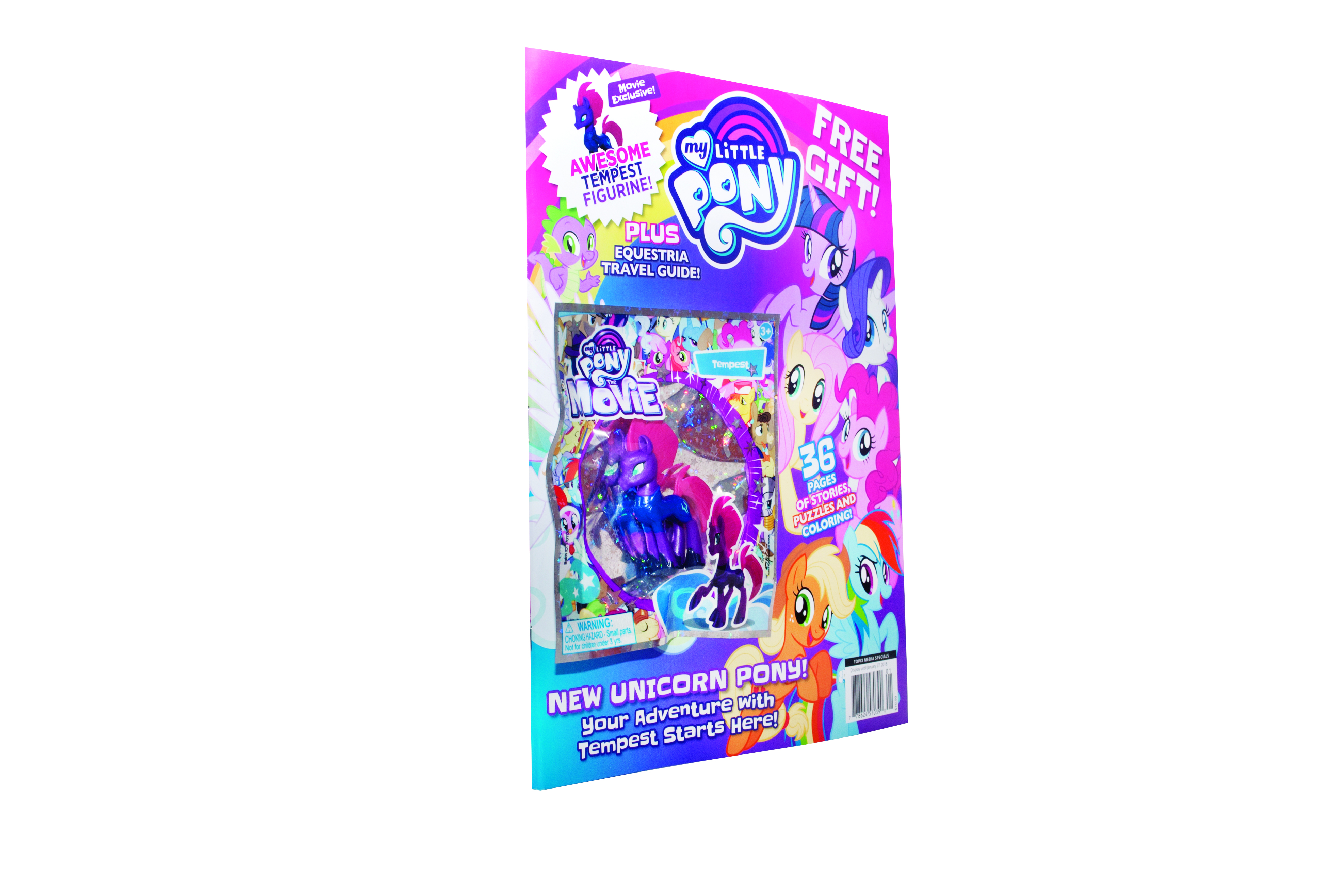
Samir Husni: One of our American publishers, Topix Media Labs, have imported the cover mounts. I interviewed CEO & co-founder, Tony Romando, recently and this is his way of reinventing the bookazine. Many European publishers tell me all of the time that they want to find a way to lose the cover mounts. What is the status at the newsstands; what do you feel, in the U.K. and globally, is the status of single-copy sales?

James Hewes: Single-copy sales for me remains a great missed opportunity in a lot of markets. It’s interesting, I was reading a piece recently about Bauer in the U.S., and it may have even been from yourself, talking about the success that they’ve had on the newsstand in the U.S. And that’s really because they’ve taken the lessons they learned in Germany, where newsstand is an actually predominant distribution method, and applied them to their relatively neglected U.S. market, and have had a huge amount of success.

I would like to think that there are still opportunities in most markets for that to happen, but of course, we’re fighting at the same time with retailers that are themselves struggling and that are themselves shrinking floor space and focusing their attention on the most profitable items or the most profitable per space, per square meter items.

So, again, it comes to this question of unity and I think it’s no coincidence that the markets that have had the most unified approach to newsstand have been the ones that have had the most success.

In the large, established markets, can you still go out there and make a big splash at newsstand? I think you can. I think it’s expensive; it’s not as much of a priority as it once was. In the emerging markets, that opportunity is probably gone. It was probably there for a brief period a number of years ago, but it’s not there anymore. It’s a pity, because I do think newsstand was a great missed opportunity.

And on that question about cover mounts; I worked a number of years at the BBC, and BBC magazines, which had a very large children’s publishing division and relied on cover mounts for a lot of its marketing activity. And one of the messages that we’re getting about the print industry in particular is that children’s publishing is actually a growth area, something that’s really thriving. And that the very clever and very targeted cover mounts strategy remains a part of that. So, if you’re creating cover mounts that are educationally-focused with that bit of fun element to them for children, you can still use those as a very effective tool for marketing for children’s magazines.

Samir Husni: At my ACT Experience that will take place in April, half of one day is going to be devoted to distribution and the folks from the Newsgroup, which is the largest wholesaler, if not the only major wholesaler left in America. They will be leading that group with some retailers. So, as the industry has changed, and as you mentioned earlier, 2018 is shaping up to be better than 2017; do you think that we can ever go back to where the magazine and magazine media industry used to be? Sort of like the powerhouse it once was in the media sphere?

James Hewes: I would answer that question in a number of different ways. If you’re thinking about pure volume; are we ever going to sell as many copies as we once did? No, and I think that’s not necessarily a bad thing. A lot of the copy sales in the market as you know were driven by very general lifestyle magazines or entertainment magazines, both men’s and women’s, generally weeklies, of course, there are some monthlies. They have content that has migrated entirely to the Internet and that’s probably never going to come back. And those were very high margin businesses, very profitable businesses for most companies.

And that’s where I think a lot of this misunderstanding about the death of magazines comes from; the idea that just because you’ve lost your largest, most profitable category your industry as a whole is destroyed, but it’s not.

I think where we will see an increase in influence and where influence will remain persistent for magazines is in those quality journalism spaces; where magazines will continue to have a presence in reader’s hands and in households; where magazines will still have a really important voice and will serve a really influential voice. I’m always reluctant to use Donald Trump as an example, but when the president of the United States Tweets about wanting to be on the cover of a magazine in 2017, that’s still quite an important factor in people’s lives. And I think that influence will persist for quite some time yet.

Samir Husni: Is there anything else that you’d like to add?

James Hewes: Only to say what I have been saying consistently throughout my first few months here, which is that I fervently believe that this is the most exciting time in history to be working in this industry. From the outside looking in, people may think it’s crazy, why would someone go and work in the publishing industry generally, and I’m not just talking about print, but publishing in media generally. And I say to them, are you crazy? This is an absolutely fantastic time to be working in it, because publishing companies are now exposed to such a broad range, a huge variety, of business areas that in the old days you would never, ever have gotten exposure to, whether that’s e-commerce or social media or social influences, whatever you want to think of, as a new business area that they’ve gone into.

And at the same time, we get to play with magazines, which are really fun and really a fantastic industry in their own right. So, all I would say is this is an incredibly great industry and I’m still really excited to be a part of it.

I started my working life at Barclays Bank, and I worked for Barclay’s Bank for four years. And I was very lucky; I met my wife there, so it wasn’t a wasted opportunity by any means. But I got to about three years working there, I was 22 or 23, and I thought if I don’t do something now, I’m going to be stuck in this institution for the rest of my life. And so I sat down and wrote on a piece of paper, asking myself what I really wanted to do with my life? And I answered work in the media and these are the companies that I want to work for.

And the first company on the list was the BBC. And I was very lucky, in the next week in the newspapers there was a job listed at the BBC, in the big national newspaper, seen by everybody in the country. I applied and I got the job out of a lot of applicants. And I punched the air when I got the job, because I knew then that I was going to be doing something that I loved, rather than just doing a job. So, when people come to me for career advice, which they’re starting to do now, I go to universities and lecture a bit, I tell them the same thing: just do what you love to do. Don’t just do something because it pays the bills. That’s worked for me so far.

Samir Husni: If I showed up unexpectedly at your home one evening after work, what would I find you doing? Having a glass of wine; reading a magazine; cooking; watching TV; or something else?

James Hewes: Probably playing with my children; I have two young children, eight-years-old and 10-years-old. And I don’t get a chance to spend a lot of time with them, because I travel so much with my job. So, when I’m home I try to make sure that I spend as much time as possible with them and with my wife, Sheena, because we’re away from each other a lot and it’s nice to be reunited.

Samir Husni: If you could have one thing tattooed upon your brain that no one would ever forget about you, what would it be?

James Hewes: (Laughs) That’s a really tough question. I should have known you were going to ask this question, because you ask it to everybody. (Laughs again) That’s a brilliant question, because the one answer you can’t say is modesty. (Laughs)

Samir Husni: (Laughs too).

James Hewes: I would hope that they would say that I always tried to solve problems. I’ve kind of made a career out of being a guide that people go to when they have a problem and they need to solve it. Yes, he was a problem-solver.

Samir Husni: My typical last question; what keeps you up at night?

James Hewes: What keeps me up at night is actually probably not work. It’s just how do I make sure that my children get the best start in life; how do they get the best education; how do they get all of the opportunities that I was fortunate enough to have when I was growing up? The world today is a very different place from what it was when I was growing up and in some ways, a lot scarier place. Certainly, a lot harder place to grow up in. And so my focus is very much on making sure that they get the great start in life that they need.

Samir Husni: Thank you.

h1

The Mr. Magazine™ Manifesto 2018: Never Stop Learning…

January 1, 2018

A Student Of Magazines For 40 Years

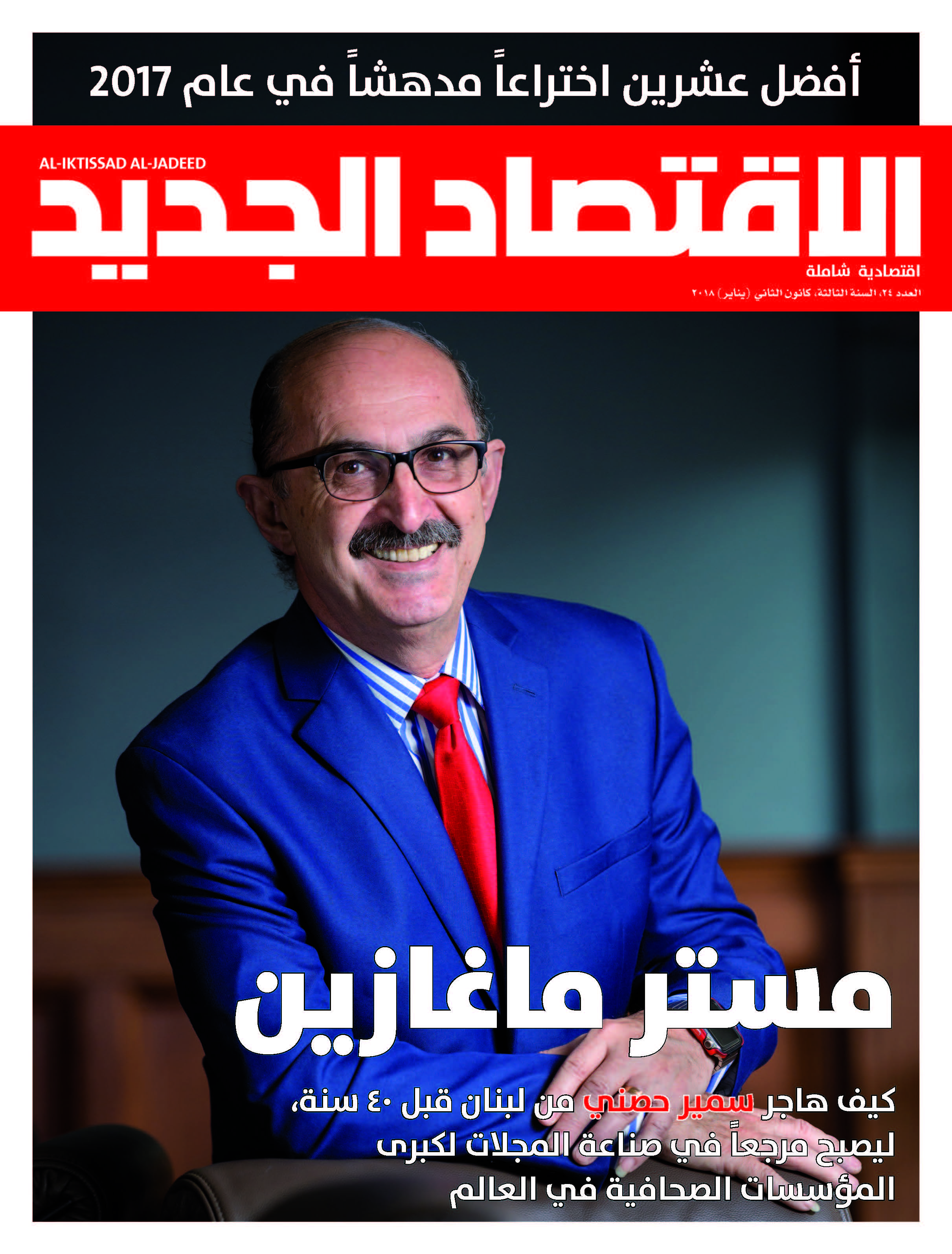
Humbled and proud to be on the Jan. 2018 cover of the Lebanese magazine Al Iktissad Al Jadeed. The cover story traces my journey and love of magazines from the streets of Tripoli, Lebanon to the United States and beyond. Thank you Bassem Bakkour.

I came to America in 1978 as a student of magazines and 40 years later I continue to be a student of magazines. That was a very profound year for me, as it laid the final foundation for something that was started much longer ago than that, when I was a mere boy growing up in Tripoli, Lebanon: my love and addiction for magazines. My hobby became my education, and my education became my profession. I have never worked a day in my life.

As a student of magazines, I have been very fortunate to have interviewed many eminent heads of magazines over the years. In fact, I interviewed 70 industry leaders in 2017 and it was the toughest job ever to highlight only 18 quotes (since it is 2018 that we are celebrating) out of those 70. Each and every interview provided me with many lessons to learn from. So, in true student form, and for the Mr. Magazine™ Manifesto, I decided to let them speak about the industry that I study so profusely. Their words are eloquent and resonate with what magazines are all about: an experience that transforms and transcends time and circumstances, while staying honest and hopeful about the digital age we’re living in.

So, Happy New Year from Mr. Magazine™. Let’s make 2018 the best year yet and I hope you glean as much wisdom and inspiration as I did from the following 18 lessons presented in no particular order:

1. Magazines Are Money Makers:

“We like to make money. We think there is money in print and more print, and we like to make money and grow profits in digital. You can’t have one be primary and one be secondary. We have to be good at both. The businesses have some things in common, but also, a lot of things that are not in common with each other. And we have to be very skilled at running good, solidly-profitable businesses in all of the areas that we operate.” David Carey, President Hearst Magazines.
2. Never Lose Sight Of The Soul And Purpose Of The Magazine:

“But here’s the thing, and this is the important thing; my job and our job in this moment in time is to get all of the technological things right, but never to lose sight of, or the feel for, what The New Yorker is or should be. That if we only concentrate on these questions of technology and business and all the rest, and lose sight of the soul of the place, of the purpose of the place, of the integrity of the place, all-knowing that we’re going to make mistakes along the way, that if we lose sight of that then it’s not worth it.” David Remnick, Editor, The New Yorker

3. Always Put Readers First:

“I tell my staff all of the time; think about your reader, and when you have a million things coming at you; when you’re wrestling with a story or when you’re confused about what to do next, just think about your reader and put yourself in their shoes and look at it from their perspective. And as long as you do that, you’re going to make the right decision.” Sid Evans, Editor In Chief, Southern Living & Coastal Living

4. Hope To Grow Again:

“I’d also like to say that it’s great to speak to someone who is passionate about print. I’m someone who grew up loving print. I love the print medium and nothing would make me happier than helping this company win in this new world and grow again. That’s what we wake up every day to do here.” Rich Battista, President and CEO, Time Inc.

5. Readers Will Pay For Quality Content:

“What’s been the most exciting thing to happen over this time is the consumer’s willingness to pay for quality content in all forms, be it print, digital, etc. And that’s a trend that’s increasing and is an exciting thing for folks that want to create great content for consumers. It’s going to allow us to think about all kinds of different ways that we can sell direct, so that’s an exciting shift over that time period.” Bob Sauerberg, President & CEO, Condé Nast

6. Magazines and Magazine Media Brands Are Credible:

“Part of what we’re doing is talking to consumers to remind them that magazine media brands have that credibility…People have figured out that not all content is created equal and consumers are using magazine brands as a shortcut to quality…All of the outside research, not MPA research, proves that magazines build brands and sell products at the same time better than any other media channel.” Linda Thomas Brooks, President & CEO, MPA: The Magazine Media Association

7. Inspiration Versus Utility:

“Consumers and women still love the printed format to turn to for inspiration and for more of that lean-back experience. And what we look for more with digital is as a utility to help them to do something in the short-term. So, inspiration versus utility, as I like to say.” Tom Harty, President & COO, Meredith

8. Print Is Restorative:

“I think you’re seeing a move-back to print; a move-back to the appreciation that print is restorative; it’s actually information that you take in. We know that there was a connection between the tactile, taking in of information… so, the touching of print and the absorption of information. And I feel very confident that print will continue to evolve and remain relevant.” Joanna Coles, Chief Content Officer, Hearst Magazines

9. Magazines Provide A Bonding Time That Makes You Feel Special:

“Right now there isn’t a digital component for Coloring with Mommy, because it’s really print and paper-driven. It’s a book that digitally, even if you printed out a comic book page, it wouldn’t be the same quality and it wouldn’t have the heart that we put into the magazine, because it’s not just coloring book pages. It’s that bonding time and the extra stuff that makes the magazine feel more special.” Brittany Galla, Editorial Director, Bauer Media Group’s Youth Division

10. Great Magazine and Magazine Media Ideas Get Funded:

“Great ideas do get funded. You know, create and sell. Great ideas get funded. Oftentimes, what I would tell our team when they would say, “Well, they don’t have a print budget.” I would say, “Let me ask you a question: do they have a budget?” Because every brand has a marketing budget, right? And, if you bring them a great idea, a great idea will get funding. And so we have many, many, many examples of business that has been created with no budget. The idea creates the budget. So, my mantra is “Great ideas do get funded” when you have the great, innovative idea.” Michael Clinton, President, Marketing and Publishing Director, Hearst Magazines

11. True Audience Based Magazines Are Here To Stay:

“I think my son at age 12 is pretty engaged across the spectrum of technology, but it was eye-opening to hear him say there might not be print when he becomes an adult. But I’m convinced there will be for my lifetime, particularly for kid’s magazines. I think we face different issues in some types of adult titles and different issues in current events and news than in true audience-based magazines. But at Highlights, we’re believers in print.” Kent Johnson, CEO, Highlights

12. Bookazines Must Reinvent Themselves:

“There was a time when people would put out any bookazine and it did well, because it was a bookazine, and it was single-topic, and it was a novelty. But these days the market is so flooded and the consumer has gotten so used to the bookazine that if you’re not changing the face of what the bookazine is; if you’re not recreating the entire bookazine itself and the bookazine category, it’s just going to start to drop and plummet and it’s going to be catastrophic for anyone in the bookazine business.” Tony Romando, Co-Founder, CEO, Topix Media Lab

13. Be In The Relationship Business:

“There’s room for it (print), of course, and if you’re in the relationship business, to some extent you’re agnostic. Your job is to really know the customer and how they want content experiences delivered to them. And if they’re raising their hands and saying they want magazines, then you provide magazines. And they still today provide fantastic and immersive lean-back experiences.” Dan Hickey, CEO, Kalmbach Publishing

14. Long-form Quality Engagement Is Where People Are Spending Their Time:

“I think this is really an exciting, rich topic right now, because what we are actually seeing is all of the platforms and all of the digital experiences that have endeavored to make the world revolve around the short-form snippet stuff, have all actually come around to the fact that long-form quality engagement is really where people are spending time.” Joe Hyrkin, CEO, issuu

15. Magazines Offer A Much Quieter Editorial Experience:

“When she’s (the consumer) reading the magazine, she needs a much quieter editorial experience. It needs to be more inspiring. And she has more time. She wants to take more of an emotional journey, rather than be hit over the head with all sorts of practical advice and alarming statistics and stories.” Liz Vaccariello, Editor In Chief, Parents Magazine

16. Magazines and Magazine Media Have A Different Business Model:

“I think fundamentally digital businesses are not the same as the magazine media business. We all have social media and you could say a magazine audience might be, from a community standpoint, like the original social media, but Facebook’s business model and Google’s business model are pretty radically different than the traditional magazine business model. So, it wasn’t a natural progression that if you’re in the magazine media business, you should have, would have figured all of that out.” Andy Clurman, President & CEO, Active Interest Media

17. A Tangible Magazine Is A Feather In The Cap For A Digital-First Brand:

“I actually think the tangible magazine you can hold in your hands is a feather in the cap for a digital-first brand. It’s what says, “We’ve made it. We’re here to stay. We’re legitimate.” And, almost counterintuitively, I suspect a lot of that is being driven by millennials. For as digitally savvy, and as digital-first a generation as millennials and Gen Z’s are, there’s also this yearning for authenticity and for something real. Again, I think it’s based on the type of content. I think with that generation in particular. It’s not fair at all to say millennials aren’t magazine readers. They’re magazine readers, but they want different types of magazines and want to consume information in different ways.” Doug Kouma, Editorial Content Director, Meredith

18. There Is No Need To Beat Up On Print:

“Why do people feel this need to beat up on print, in particular people in the industry? We closed our fiscal year June 30; we were up on advertising for both Reader’s Digest and Taste of Home year over year. Print is strong for us. We have a great respect for print and we have a great respect for the print reader. Of course, we expect greater growth to come from digital advertising, but one does not preclude the other.” Bonnie Kintzer, President & CEO, Trusted Media Brands

And there you have 18 lessons from 18 magazine industry leaders about the power of print; the expected growth of digital; and the MANY ways consumers want to consume their information. And in 2018, isn’t it time the industry let the audience decide that for themselves? Whether it’s a gloriously printed ink on paper magazine, a fantastic website that has depth and clarity, or a social media site that brings people and their comments together; the decision of where, how, and when these readers soak up and absorb content is one that in 2018 (and in the 21st century) should be made by them, magazines and magazine media are here to simply provide those outstanding experiences.

Thank you magazine industry leaders for all the lessons you taught me in 2017 and here’s to a great 2018 and more lessons to learn…

Happy New Year!
Samir “Mr. Magazine™” Husni, Ph.D.

* All quotes are taken from my interviews with the industry leaders in 2017 and all titles used are those that the industry leaders held at the time of the interview.

h1

Hungry Girl Magazine: The First New Magazine Of 2018

January 1, 2018

“Lisa Lillien here, also known as Hungry Girl. And since this is the first-ever issue of the Hungry Girl magazine, here’s a little about me!” …And so begins the story of the first magazine launch of 2018.

The new magazine is published by Meredith Corp. publishers of Better Homes & Gardens, The Magnolia Journal, Parents, allrecipes, Martha Stewart Living, Rachael Ray Every Day, and many other titles.

The Hungry Girl was launched as a daily email by Lisa Lillien who writes in the premiere issue, “and due to the popularity of that email (it now reaches over 1.1 million subscribers!), the brand grew. Next, I started writing cookbooks and appearing on TV. And now, with 12 books and tons of TV appearances under my belt, I thought a magazine would be the perfect extension of the Hungry Girl brand.”

Needless to say, Mr. Magazine™ agrees 100% with Ms. Lillien. The Hungry Girl magazine is the perfect extension of the brand. The magazine is now available on the newsstands and sells for $9.99 a copy.

Happy New Magazine Year Y’All…

h1

The 20 Hottest Magazine Launches Of 2016/2017 — Mr. Magazine™ Teams Up With The MPA: The Association of Magazine Media To Present “The Launch Of The Year” At The American Magazine Media Conference Feb. 6, 2017.

December 26, 2017

As long as we have new magazines, hope springs eternal for the magazine media industry. There is no better indicator about the industry than the continued faith in the medium through the launch of new magazines.

As 2017 winds down and a new year is upon us, it is once again time to honor and celebrate those new titles that were born this past year. This time “The Launch of the Year” is being selected from all of the new magazines that were started from October 2016 (the cutoff date for the previous magazine of the year event that was hosted by Mr. Magazine™ and min) through December 2017. Beginning in 2018, we will be following the calendar year, with magazines launched between January 2018 and December 2018.

To honor and celebrate those new magazines, Mr. Magazine™ and MPA: The Association of Magazine Media will come together to pay tribute to “The Launch of the Year” during the American Magazine Media Conference in New York City on February 6.

So far, we have 201 new magazine titles that arrived on the scene with the intent to publish on a regular frequency, and you can add to that another 600+ bookazines and specials that are not included in this selection. You can view all the new titles at the Mr. Magazine™ Launch Monitor here.

The criteria for the selection process is as follows:

• We must have actual physical copies of them.

• The number one criteria point is the audience’s reaction to that magazine. How did the overall marketplace react and how did its intended audience respond to it? And just as important; how did the industry behave toward it? These questions are the first thing I ask upon selection of “The Launch of the Year.”

• Major industry leaders’ launching new print magazines certainly is something that must be recognized because it speaks of the power of the medium. These people aren’t in the business of wasting dollars on something that has no value. In the past there have been new offerings from publishing giants such as Hearst, Condé Nast, Meredith and the southern-born Hoffman Media. For companies as distinguished and successful as these to create and bring new titles into this digital world signifies the good health and power of print.

• And then there are the entrepreneurs, with their vision and determination to launch their magazine no matter the cost to their wallets and their emotions; they are no less amazing. Some of the best titles we’ve seen in a long time have been from relatively unknown publishers who are not without experience, just without the stolid names that audiences know so well.

• The criteria for selection is based on factors that include creativity and audience reaction first and foremost, and then industry trends and as always, those rogue wildcards out there that just won’t be denied and seem to make some of the best magazines around.

• Also, something has to grab our attention to be selected as “The Launch of the Year,” based on the comparative analysis.

Based on that criteria we were able to bring the nominations down from 201 to 20 titles for “The Launch of the Year.” By the third week of January 2018, we’re going to tighten the nominations and bring the 20 down to 10. During the American Magazine Media Conference we will select “The Launch of the Year” from those remaining 10.

This is an exciting time in the world of magazines and magazine media; and with the New Year upon us, the possibilities are endless! And so, without further ado, Mr. Magazine™ gives you the 20 nominees:

Airbnb Magazine

Airbnbmag is an example of a travel-destination website taking a leap into print to further humanize their digital brand. With tantalizing art and content of exotic, domestic and international escapes to complement, this magazine makes taking a vacation more of a unique experience than your budget or schedule might allow.

Alta

This William Hearst III magazine (and not a Hearst magazine as he likes to remind everyone) details the different facets of life in California for — you guessed it — Californians. Whether it’s the current political discourse, musicians in the Valley, or a yarn spun of Californians past, this magazine will keep you up-to-date in West Coast trials and tribulations.

American Affairs

American Affairs is a quarterly journal that expresses public policy and political thought in a strained era of political tension. What started as a blog by a business analyst has grown into a much-requested magazine full of intellectual political thought from the tech, finance and investment industries.

Girls’ World Bake it Up!

What little girl doesn’t remember piping dough, mixing flour and topping freshly-baked cookies with sprinkles while listening to Brittney Spears’ “Baby One More Time” in their childhood home? Fast forward 20 years and Girls’ World Bake it Up! is a direct representation of that. This celebrity, food mashup, combines recipes, art projects and other fun activities preteen girls will drop their cell phones for.

Broccoli

What once used to be a taboo subject — marijuana — is now a mega million dollar-business endeavor with a cult-like following. It’s only natural that weed magazines should arise from this cultural and social phenomenon, but where’s the specific go-to for women who like to smoke and toke? Or wake and bake? It’s all right here in Broccoli, ladies. Always follow your mom’s advice and eat your vegetables, but treat yourself to your own particular helping of Broccoli.

Carnivore

Hunt. Kill. Clean Eat. is Carnivore’s mantra. This magazine satiates the prehistoric parts of our brain and gives field-to-table a completely different meaning with its survivalist content. From gun and knife preparation to wild game wine pairings, Carnivore has everything you need to know for your off-the-grid excursions.

Christopher Kimball’s Milk Street

You may have seen Chris Kimball on late-night TV testing recipes to perfection on America’s Test Kitchen. Since leaving America’s Test Kitchen, he started his own magazine. Milk Street is a cultural cooking oddity that presents the reader with a take on food not yet previously explored. It’s the blending of cultures, ingredients, art and content in a perfect concoction of a magazine.

Cuba Trade

This interesting concept proves magazines are direct reflectors of our societies. Without the loosening of restrictions for trade and travel between the U.S. and Cuba, this magazine would’ve never been possible. Cuba Trade explores the inner workings of Cuba, both sociocultural and political, to show what news channels have been denied access to for years.

Goop

Goop is another example of a digital entity discovering print and securing a major partnership between celebrity and publisher. Gwyneth Paltrow serves as editor (and go-to model) for Goop. This chic lifestyle magazine expresses the need for six much-needed distinctions in life: wellness, travel, food, beauty, style and work.

Nail

Nail’s sharp wit scratches the surface of a day-in-the-life of a creative in mainstream America. Nail acknowledges that in the midst of your creative juju, there are external forces at play trying to bring you down, like the current political climate. Part comic book and part magazine, Nail gives the reader a visceral experience into the lives of creatives today.

National Geographic Science

National Geographic has its geography and history covered, now it’s time for its brand new Science to blow your mind. This sub brand follows in its grand magazine’s footsteps with stunning photography and a walk on the scientific wild side. They’re also taking on a new trend in magazine media with high cover prices and limited advertising.

Okra

Okra is a southern culture magazine documenting the lives of real, backroads, backwoods, southerners through the lens of a photographer. This Mississippi-based magazine outlines the handmade goods, food and liquor that keep the South running in more ways than one. For the real, all-encompassing southern experience, take a bite of Okra.

Ranger Rick Cub

To paraphrase Benjamin Franklin, there are two loves in life: babies and animals. Ranger Rick Cub readers are subscribing to the magazine before they even learn to read, but that doesn’t stop the unique storytelling experience in the magazine. Beaming with colorful photos of real and cartoon animals and large, bold typography, Ranger Rick Cub will soon be your newborn’s favorite magazine.

ROVA

Digital nomads look no further. ROVA is your go-to magazine for tricks and travel tips while burning the blacktop in your newly-acquired RV. No matter which directional route you’re taking, ROVA is prepared to give you the best hints at an enjoyable travel experience. ROVA will help you say you’ve been everywhere, man.

The Golfer’s Journal

There’s more to golf than hitting a small, dimpled ball in, around or near a hole. Golfing is a lifestyle full of luxury and hardships that can only be experienced by those who’ve invested time and money into the sport. Detailed stories, accompanied by beautiful photos teeming with green, will satiate your golfing mind into a clear escape to the fairway.

The Magnolia Journal

Chip and Joanna Gaines have won the hearts of many television viewers with their shiplap and all-white interior lifestyles, and now they’re winning the hearts of readers, too. Magnolia Journal is yet another example of a brand taking print form and taking the newsstand by storm. You’ll find stunning centerpiece designs, interior makeovers, farm-friendly recipes and even a sighting of the four Gaines’ children in each issue.

The National

Airline magazines can be read in-flight, but can this new railroad magazine be read in-rail? Of course it can — and anywhere else for that matter. This anecdotal publication was born from the heart, mind and soul of America’s railways and features content along each and every potential stop. If you have a minute to spare, climb aboard The National for an unforgettable reading and viewing experience.

The Pioneer Woman

Ree Drummond is a mainstay on morning television screens across the nation. She’s a fan of what most country cooks are, too — real food. Her brand mantra translates into the new Pioneer Woman magazine. You’ll get more hearty recipes, more Oklahoma prairie views and more of hunky husband, Ladd, in this stunning magazine of life on the ranch.

Type

Renowned designer Roger Black is back with a vengeance in his new magazine Type. If you’re not hopping on the typography bandwagon, just know you’ll soon be left behind in a cloud of Comic Sans and Papyrus. The magazine displays stunning representations of typography and allows the reader a pairing of applicable content to complement.

Woolly

The folks at Casper Mattress know the key to a good night’s sleep is not only a premium mattress, but a premium magazine. This unconventional magazine accurately matches quirky content to their mattress-buying audience as a branded supplement. Instead of counting sheep at bedtime, count the days until the next issue of Woolly comes around.

Stay tuned for the naming of the top 10 finalist to be announced the third week of January 2018 and looking forward to seeing you at the American Magazine Media Conference in New York City on Feb. 6, 2018. Click here for more information about the AMMC.

h1

issuu’s CEO Joe Hyrkin To Samir “Mr. Magazine™” Husni: “I Think Print And The Quality Of Print And The Experience Of Print Will Always Be One That Has An Audience.” The Mr. Magazine™ Interview…

December 20, 2017

“I think this is really an exciting, rich topic right now, because what we are actually seeing is all of the platforms and all of the digital experiences that have endeavored to make the world revolve around the short-form snippet stuff, have all actually come around to the fact that long-form quality engagement is really where people are spending time.” Joe Hyrkin…

“We don’t look at ourselves as being negative on print by any means. We have a lot of publishers who start off digitally, because it’s a great way to build an audience They continue to build and grow that audience digitally across the issuu platform and then they start to build out a print business as well. They start to do events and video content.” Joe Hyrkin…

A digital entity that is proving the marriage between print and pixels can and will work, and work beautifully. For 11 years, issuu has been connecting content and people to each other, with the mission to radically transform and support the publishing business, providing a real digital opportunity for growth and distribution to enhance high-quality print content.

Starting out in Copenhagen, Denmark, the company then expanded into the United States and globally a few years later, ultimately becoming what it is today, an ever-evolving platform where more than 20,000 publications are uploaded daily to readers around the world. issuu’s site and mobile apps are used to discover and engage with what readers love, from magazines, newspapers and portfolios, to catalogs, DIY guides, community programs and more.

Joe Hyrkin joined issuu in 2013 as CEO, and believes in the digital platform, which makes content discoverable and sharable. I spoke with Joe recently and we talked about this marriage of high quality print content and a digital platform that both promotes and sells ink on paper via pixels on a screen.

Joe is a man who is both pragmatic and visionary. He believes there is a place in our busy lives for both the short-form writing that digital is usually associated with, and the longer-form, meatier pieces that allow us to go deeper into subjects that we’re passionate about. And he strongly believes that he’s not the only one seeing a return to those in depth, impactful pieces, using Instagram and Twitter for digital examples, since Twitter recently doubled its allowed content and Instagram has increased its content since its original one image only at its inception, proving that people want that print experience everywhere, not just between the ink on paper pages.

So, I hope that you enjoy this Mr. Magazine™ interview with Joe Hyrkin, CEO, issuu, and maybe after reading along with our conversation, you’ll find yourself like Mr. Magazine™, taking “issuu” with the many preconceived notions about the relationship between print and digital.

But first the sound-bites:

On the digital newsstand being compared to the Amazon Jungle: The great thing about the Amazon Jungle is there are a whole set of rich resources that are accessible and important to the planet. And so, the notion of a comparison to the Amazon Jungle in some ways is not necessarily a bad one. It means that there’s a level of richness and yet undiscovered content that is meaningful and matters to people. So, I love that analogy.

On how issuu connects the right content to the right audience with its approximately 20,000 uploads per day: issuu is a massive ecosystem of longer-form quality content that’s connecting to an audience interested in that content. And when we say 20,000 publications, it’s a combination of magazines, newspapers, marketing materials, catalogs; it’s an ecosystem of creators who are using longer-form content to connect to their audience. And that can be anybody from marketing materials and a brochure for a small to a medium-sized business, to big catalogs from Patagonia. Or it can be these media companies that are building a business around a magazine. And on the magazine front, there are a whole range of things that we’re doing. We feature content; we enable our consumers to indicate areas of interest that they have. We will show related content that should be interesting to you.

On whether he believes there is no future for print and platforms like issuu will be the way to go: No, we believe that there is a great future for quality content, and I believe that the publishing industry is striving more now than ever before. I think there is this misconception that the publishing industry is struggling. I don’t think it is. There is more content being created, consumed, shared and engaged with now than ever before.

On why he feels that “going deep” into content will have a more lasting impact than Twitter or other short-form platforms: I love that question. I think this is really an exciting, rich topic right now, because what we are actually seeing is all of the platforms and all of the digital experiences that have endeavored to make the world revolve around the short-form snippet stuff, have all actually come around to the fact that long-form quality engagement is really where people are spending time.

On what can actually be uploaded to issuu: You have to own the content and any creator of content can upload that content to issuu. Once it’s uploaded into the issuu system, they can then do anything with it that they want digitally. They can embed it into their own blog; they can share it In-Stream and Twitter, on Facebook. They can actually, if they want to sell that publication, either through subscription or individual publication, they can sell it on issuu, on their own site, In-Stream and Twitter; suddenly, quality content can be sold in social environments that wasn’t available before, through this new digital sales system that we have created.

On whether issuu might be the wholesaler of the 21st century in content distribution: We don’t limit the content by particular categories. And obviously, it has to be legal and you have to own it in order to upload that content.

On the latest offering from issuu, permitting publishers the chance to sell their magazines: The early signs are fantastic. We only launched this two months ago and we’re seeing 300 to 400 percent growth of engagement just in this first couple of months. And we’re also seeing a whole set of publishers who, in some cases, were selling and are selling their print magazine, can now start to sell a digital version and digital access. So, what we see it as is just an element of more. They’re able to connect to an audience more fully.

On the corporate link between the United States and Denmark: The company started in Copenhagen 11 years ago, with the mission to radically transform and support the publishing business so that there was a real digital opportunity for growth and distribution to enhance really high-quality print content. And it grew nicely in Copenhagen, but then decided to look at expanding globally, and expand both at a technology level and at a partnership and distribution level. And so, I think there was a natural inclination to look at Silicon Valley as the right landing spot here.

On the biggest challenge facing issuu in 2018 or it’s a walk in a Rose Garden: Yes, it’s a walk in a Rose Garden, but you want to make sure that you don’t get pricked by the thorns, right? I think the biggest challenge facing us in 2018 is actually this notion that you’ve articulated, and I think it’s a misconception; that the world is moving toward shorter-form, lesser-attention engagement. I think the truth is, the world is moving increasingly toward both experiences, short-form and snippets of engagement, and there’s this real interest in longer-form content.

On whether the new rulings on Net Neutrality will impact issuu in any way: I’m disappointed in the ruling. I am looking forward to seeing how some of these legal actions against it, the withdrawal of the Neutrality move forward. I don’t think we’re clear on exactly how it’s going to impact us. We want to have as much access that’s freely available as possible, because content should be controlled by the people who are creating it and want to consume it. Not by the people who monetize the pipes.

On what someone would find him doing if they showed up unexpectedly one evening at his home: Probably something related to baseball with one of my kids. Either watching a game, playing catch; just something baseball-related.

On what he would have tattooed upon his brain that would be there forever and no one could ever forget about him: Care. Care about what you’re doing; care about where you’re spending your time; and care about the human beings that you’re doing it with.

On what keeps him up at night: I actually sleep really well. (Laughs) Thankfully, knock on wood, I’m generally pretty good at falling asleep. I travel a lot between here and Denmark; between California and New York, so when I get to bed, I generally fall asleep. But the thing that I think about a lot during the course of the day and when I wake up early in the morning is how can we constantly evolve the issuu platform and the issuu product so that these millions of creators who have a voice and have a story to tell can do so as effectively as possible.

And now the lightly edited transcript of the Mr. Magazine™ interview with Joe Hyrkin, CEO, issuu.

Samir Husni: Some people say that the newsstand, the actual brick and mortar newsstand, is a jungle, but the digital newsstand is more like the Amazon Jungle.

Joe Hyrkin: (Laughs)

Samir Husni: How do people utilize issuu?

Joe Hyrkin: I’ll actually let others speak to that, but the great thing about the Amazon Jungle is there are a whole set of rich resources that are accessible and important to the planet. And so, the notion of a comparison to the Amazon Jungle in some ways is not necessarily a bad one. It means that there’s a level of richness and yet undiscovered content that is meaningful and matters to people. So, I love that analogy.

And I think we at issuu really lean into that. I think where the overall industry is going is really about passionate creators; people who have a real message and a real set of content and ideas that they want to connect to an audience. They’re able to do so now through the medium of a magazine in ways that are exciting and interesting to the audience, to the people they’re connecting to, and enables them to build new emerging media companies.

Samir Husni: You’re receiving approximately 20,000 new uploads every day.

Joe Hyrkin: Yes.

Samir Husni: With the audience trying to maneuver through those 20,000 uploads; how do you use your resources to connect the right content with the right audience?

Joe Hyrkin: issuu is a massive ecosystem of longer-form quality content that’s connecting to an audience interested in that content. And when we say 20,000 publications, it’s a combination of magazines, newspapers, marketing materials, catalogs; it’s an ecosystem of creators who are using longer-form content to connect to their audience. And that can be anybody from marketing materials and a brochure for a small to a medium-sized business, to big catalogs from Patagonia. Or it can be these media companies that are building a business around a magazine.

And on the magazine front, there are a whole range of things that we’re doing. We feature content; we enable our consumers to indicate areas of interest that they have. We will show related content that should be interesting to you if you’re reading particular bodies of content.

So, yes, it’s 20,000 publications coming in, but we have algorithms and technology that understand all of the words within a publication and uses that to categorize that content, so that essentially we’re filtering that content into the areas and channels that cater to people’s interests.

We talk about that have 35 million publications, with over three million publishers that have used us; the truth is those are numbers that I think of as really table-stakes. It means that we’re substantive and big enough, and that the core technology and service that we offer is valuable enough to creators to use us. But what it really means is that if you have a particular area of passion or interest, there’s a really strong amount of content that will appeal to you and you can go really deep into any particular category. If you’re into skateboarding or longboarding, you can go to issuu and get access to curated, expert-created publications that you can’t get access to anywhere else.

If you’re into up-and-coming trends, fashion, that kind of content, the way we curate that enables you to dive into the content that you love, but also discover lots of new content. So, a discovery mechanism in association with particular categories of content is one that we’ve made available. So, you can surf for content, but when you actually sign up for an account, we take note of your areas of interest. When you’re looking at a publication, we serve up related content. We have navigation within the site itself directing you to particular categories of interest, etc. So, we break it down in order for people to get access to stuff that matters most to them.

Samir Husni:, My daughter uploads her high school paper on issuu and the school uploads their online magazine on issuu; so are you in this business as a missionary, spreading the word? Besides being a content provider, why are you in this business? Do you believe there is no future for print and this is the best way to go?

Joe Hyrkin: No, we believe that there is a great future for quality content, and I believe that the publishing industry is striving more now than ever before. I think there is this misconception that the publishing industry is struggling. I don’t think it is. There is more content being created, consumed, shared and engaged with now than ever before.

I believe it’s incumbent upon the creators of that content to be able to leverage and use tools and platforms to get that content in front of people in the way that matters most to them. And so, I think print and the quality of print and the experience of print will always be one that has an audience. As a creator, you want to be able to connect to people where they are. So, someone of your daughter’s generation is reading and engaging with content increasingly on a mobile phone or on a digital device. And so while there’s an opportunity and room for print, their ability to expand and grow their audience has to dovetail and engage with digital as well.

We look at ourselves very much as a platform where we’re really all about empowering creators to be able to distribute their content; to be able to monetize that content; and to be able to get detailed data around how that content is engaged with and consumed, which then enables them to build businesses around the content itself.

When we look at the advertising world, which has always been a huge piece of more traditional printed magazines; the ability to layer in an advertising strategy that incorporates and adds in print and adds quality, digital advertising, not just banners or things that get absorbed by ad blockers, but quality, in-page experiences are valuable.

We look at some of the most successful, larger subscription-oriented magazines, and a big piece of their attraction and what draws consumers is the quality of the advertising for brands that go in there. One of the things that print and magazines have done is marry the notion of advertising and interesting-ness in ways that most advertising doesn’t manifest. If you start to look at, for instance, digital publications, and now incorporate relevant and interesting video ads that amplify the brand and amplify the kind of content that is addressed in the pages.

We don’t look at ourselves as being negative on print by any means. We have a lot of publishers who start off digitally, because it’s a great way to build an audience They continue to build and grow that audience digitally across the issuu platform and then they start to build out a print business as well. They start to do events and video content.

What I’m increasingly finding is that magazine and newspaper businesses are about creating experiences and information to connect the creator with those people who are passionate. Much of that happens to the pages digitally or in print. Increasingly, we’re also seeing interesting video content coming out of it. We’re seeing interesting events that are evolving as well.

I believe we’re starting to see the next generation of a Vice Magazine evolving and developing. And I just think that we will see it at a much greater rate than anything we’ve seen in the previous couple of generations.

Samir Husni: In most of the interviews that you’ve given and the pieces you’ve written, I often got the impression that you’re swimming against the current. You’re telling people who want to go digital, the millennials, skip the short-form and go deep. In this Twitter generation; in this Selfie generation, why do you think going deep will have a more lasting impact than say, 140 characters?

Joe Hyrkin: (Laughs) I love that question. I think this is really an exciting, rich topic right now, because what we are actually seeing is all of the platforms and all of the digital experiences that have endeavored to make the world revolve around the short-form snippet stuff, have all actually come around to the fact that long-form quality engagement is really where people are spending time.

You mentioned Twitter. Twitter actually just doubled the number of characters that you can use in a Tweet. And they’re exploring different ways to incorporate, or not count longer-form, other embeds or attachments to a Tweet, because they understand that length starts to matter. You look at Instagram and it started off with “an” image at a time, then they evolved to video, which began to create a longer expression Then they went to 10 images at a time; and increasingly what we’re now seeing is people are using Instagram, instead of just an image, they’re writing 250-500 word essays associated with their Instagram content.

We look at BuzzFeed, which in many cases was the poster child for short-form, snippet-list kinds of content; they’ve gone and hired some of the world’s leading investigative journalists to provide longer-form content.

And so, what we see is everybody who has attempted to distill our world and our experiences into things like “an” image, “a 140 characters,” have had to embrace the importance of in depth, meaningful content. I think as human beings, as people, we are constantly looking at both. There are short-form headlines, stuff that may grab our attention. And increasingly, one of the great things about the Amazon Jungle of the digital world is that when you discover the richness or the interesting things that are appealing to you; you want to go really deep.
And that depth, I believe, is going to be one of the great gifts of the digital age. I think we’ll experiment, explore and flirt with this headline-snippet stuff, but the real value will be the fact that we can go deep into the content that we really care about. And every meaningful platform that we see out there, that revolves around content, has either embraced longer elements that are radically longer – I mean, Instagram used to be a picture, now they have increased their engagement around that content 10 X by enabling you to put 10 pictures together, and now it’s even greater by enabling essays that are associated with those pictures.

So, yes, you may say that I’m swimming upstream, but I don’t think we are. I believe we’re just seeing the world embrace quality in ways that I think many had prematurely dismissed.

Samir Husni: How do you differentiate what’s uploaded? Is there some sort of filter in place, or can people upload anything to issuu?

Joe Hyrkin: You have to own the content and any creator of content can upload that content to issuu. Once it’s uploaded into the issuu system, they can then do anything with it that they want digitally. They can embed it into their own blog; they can share it In-Stream and Twitter, on Facebook. They can actually, if they want to sell that publication, either through subscription or individual publication, they can sell it on issuu, on their own site, In-Stream and Twitter; suddenly, quality content can be sold in social environments that wasn’t available before, through this new digital sales system that we have created.

It can be used for paginated content; again, whether it’s marketing materials or magazines, newspapers, or catalogs. It’s primarily used for somebody that has a story or a depth of content that they want to be communicating. Each of the pages then become engage-able, so you can embed video in those pages. You can leverage links to go buy and sell products. You could have an Adidas ad and link it directly to a commerce site; the other Amazon. (Laughs) So, you could start to use the pages of the content to create a deeper engagement, both from a commercial perspective and from a content perspective.

Samir Husni: Are you the wholesaler of the 21st century? I mean, compared to the wholesaler of the 20th century, who, whatever type of magazine that was printed, they just distributed.

Joe Hyrkin: We don’t limit the content by particular categories. And obviously, it has to be legal and you have to own it in order to upload that content.

Samir Husni: You’ve started offering publishers the opportunity to sell their magazines; how is that going? I know it’s in its infancy, but what are the early signs indicating?

Joe Hyrkin: The early signs are fantastic. We only launched this two months ago and we’re seeing 300 to 400 percent growth of engagement just in this first couple of months. And we’re also seeing a whole set of publishers who, in some cases, were selling and are selling their print magazine, can now start to sell a digital version and digital access. So, what we see it as is just an element of more. They’re able to connect to an audience more fully.

We’re seeing some folks who are just focused on print sales, but they’re using issuu to sell digital back issues of that content. It’s just an ongoing way for them to be able to monetize and build a business.

We have integrated core technology that makes it super-simple, so we’ve integrated with Stripe, so they get paid immediately. We’ve structured it so they can have that content be purchased In-Stream and Twitter, or various other social experiences. What we’re finding is folks that have an audience and were only monetizing through either limited print sales or print itself, or advertising, now have a whole new avenue to monetize.

And we’re seeing that very much in line with the industry in general. We’re seeing companies like Patreon, who just raised tens of millions of dollars around their platform to enable creators to monetize and distribute their content. We’re increasingly seeing a marketplace for creators to distribute, and that benefits; a rising tide lifts all ships. Everybody, from major publications or newspapers, to up and coming, emerging folks, can take advantage of this.

Samir Husni: Tell me about the link between here and Denmark. Not too many companies are based in California and Copenhagen.

Joe Hyrkin: (Laughs) The company started in Copenhagen 11 years ago, with the mission to radically transform and support the publishing business so that there was a real digital opportunity for growth and distribution to enhance really high-quality print content. And it grew nicely in Copenhagen, but then decided to look at expanding globally, and expand both at a technology level and at a partnership and distribution level. And so, I think there was a natural inclination to look at Silicon Valley as the right landing spot here.

I actually got recruited to run the company at that time, so I’ve been onboard a little bit shy of five years. What we find is we’re a global company; we cater to creators and readers all over the world. One hundred million uniques are consuming issuu content monthly all over the world; it’s the same with creators. It gives us a real direct engagement and a direct perspective of what that global interaction is like.

We have a really great team. We actually have folks in Berlin, as well. So, we have people in Berlin, Copenhagen, New York and Palo Alto, and we get the best of both worlds. We get the technology, tech distribution, and the cutting edge side of how distribution, monetization and growth can manifest with super quality engineers and quality design perspective. And I think we’ve married them really well.

Samir Husni: As you look toward 2018, what do you think is the biggest challenge facing issuu or it’s a walk in a Rose Garden?

Joe Hyrkin: Yes, it’s a walk in a Rose Garden, but you want to make sure that you don’t get pricked by the thorns, right?

Samir Husni: (Laughs).

Joe Hyrkin: (Laughs too). I think the biggest challenge facing us in 2018 is actually this notion that you’ve articulated, and I think it’s a misconception; that the world is moving toward shorter-form, lesser-attention engagement. I think the truth is, the world is moving increasingly toward both experiences, short-form and snippets of engagement, and there’s this real interest in longer-form content.

We’re a big platform and we have a big footprint. But what we’re constantly doing and are challenged by is how do we get more of the best stuff in front of the people who care about it most. So, looking at new ways to distribute; looking at new ways to leverage platforms that people are flocking to. How do we engage more fully with Instagram and various other social platforms in a way that enables people who care about this content to access it as effectively as possible.

Samir Husni: Do you think the new rulings on Net Neutrality will impact issuu in any way?

Joe Hyrkin: I’m disappointed in the ruling. I am looking forward to seeing how some of these legal actions against it, the withdrawal of the Neutrality move forward. I don’t think we’re clear on exactly how it’s going to impact us. We want to have as much access that’s freely available as possible, because content should be controlled by the people who are creating it and want to consume it. Not by the people who monetize the pipes.

Samir Husni: If I showed up unexpectedly at your home one evening after work, what would I find you doing? Having a glass of wine; reading a magazine; cooking; watching TV; or something else?

Joe Hyrkin: Probably something related to baseball with one of my kids. Either watching a game, playing catch; just something baseball-related.

Samir Husni: If you could have one thing tattooed upon your brain that no one would ever forget about you, what would it be?

Joe Hyrkin: Care. Care about what you’re doing; care about where you’re spending your time; and care about the human beings that you’re doing it with.

Samir Husni: My typical last question; what keeps you up at night?

Joe Hyrkin: I actually sleep really well. (Laughs) Thankfully, knock on wood, I’m generally pretty good at falling asleep. I travel a lot between here and Denmark; between California and New York, so when I get to bed, I generally fall asleep.

But the thing that I think about a lot during the course of the day and when I wake up early in the morning is how can we constantly evolve the issuu platform and the issuu product so that these millions of creators who have a voice and have a story to tell can do so as effectively as possible. And what are the things that we do, or the things that we need to do as a company and as a product to keep facilitating that.

Samir Husni: Thank you.

h1

The New Yorker’s Editor, David Remnick to Samir “Mr. Magazine™” Husni: “I Have Great Alarm About This War Against Fact; This Profusion Of Lying In High Places. But I Also Stake My Claim With A Journalism That Tries To Do The Best It Can. And Do An Honest Job. Whether It’s Traditional Media Or New Media, That Doesn’t Matter, It’s A True Media.” The Mr. Magazine™ Interview…

December 17, 2017

“I find words, and I understand why they’re used all of the time, but sometimes I bridle a little bit at words like content or products or platform, they seem a little cold. They seem a little remote and cold-blooded, because I think of The New Yorker as something much more warm-blooded or hot-blooded, which is alive. I don’t think of it as a can of soup or any of the other household products or a status symbol. I think of it as something, and I don’t care if it’s digital or on paper, I think of it as something that can reach your heart and mind in a unique way; in a surprising way. There aren’t too many household items or products that can do that.” David Remnick (on defining content in today’s digital age)…

“But here’s the thing, and this is the important thing; my job and our job in this moment in time is to get all of the technological things right, but never to lose sight of, or the feel for, what The New Yorker is or should be. That if we only concentrate on these questions of technology and business and all the rest, and lose sight of the soul of the place, of the purpose of the place, of the integrity of the place, all knowing that we’re going to make mistakes along the way, that if we lose sight of that then it’s not worth it.” David Remnick…

In this age of propaganda phrases like “fake news,” and “alternative facts,” The New Yorker brings forth a true journalism that many today are turning to for answers. In an article that Forbes.com ran this past February entitled, “10 Journalism Brands Where You Find Real Facts Rather Than Alternative Facts,” The New Yorker’s non-fiction content was deservedly touted as: long-form reports on politics, culture, business and other topics (that) often take months to report, write and fact check. The result is deep reporting and analysis each week that is hard to find elsewhere.

For over 92 years, The New Yorker has been providing its readers with excellence in journalism, whether it’s the brand’s commentary, fiction, satire, cartoons, poetry, or long-form stories that always give us food for thought and the information that we need to understand the issue at hand. For 19 years of that almost-century, David Remnick has been the editor and guiding force behind the award-winning publication. And while David himself is very quick to point out that The New Yorker is not, nor ever will be, a one-man show, he has left an indelible mark on the brand with his own strong beliefs in honesty, accuracy, fairness, and total teamwork.

I spoke with David recently and we talked about the status of true journalism in this age of Internet hoaxes, fake news, and alternative facts. It was an enlightening discussion with a man who lives in reality, recognizing that the dark powers of the Internet and the charlatans do exist, but also has the deep-seated integrity of his brand buried deep within his own chest, and believes that true reporting and accurate facts can be presented in both ink on paper and pixels on a screen.
So, I hope that you enjoy this very inspiring and delightful conversation with a man who began his reporting career at the Washington Post and has never forgotten the stalwart rules of good and true journalism, the Mr. Magazine™ interview with David Remnick, editor, The New Yorker.

But first the sound-bites:

On his feelings that today The New Yorker is the place to go for news, politics and humor, almost taking the place of newsweeklies: Well, I’m thrilled to hear it. I don’t think of The New Yorker at all as what we used to refer to as a newsweekly, like the old Time or Newsweek, or anything like that. The only parts of the print magazine that you could probably predict to some extent that we’re going to have something about that is in the cultural pages, in fact; reviews of this movie or that play. Beyond that, it’s open season. There’s a large measure of unpredictability in The New Yorker.

On where he thinks journalism is heading in 2018; is it the best of times, is it the worst of times for the profession: I think Dickens probably had it right. On the one hand, we live in an age in which the president of the United States and other leaders around the world have tried to muddy the waters about the difference between what is real and what is not real. What’s real and what’s fake. This phrase “fake news” is a weapon in the hands of, unfortunately, some very powerful people and their followers. On the other hand, I think a lot of people, many millions of people, reacted to this unfortunate turn by looking to what is best in journalism, what’s true. And that has been true at The New Yorker.

On The New Yorker’s revenues being 50/50 from print and digital: Well, obviously, print advertising everywhere is not a growth industry. And we also live in the reality that Facebook and Google own some enormous percentages of digital advertising as well. That’s just a reality. And we will go on battling for what part of the market we can get. And I think our advertisers will and should recognize that readers who seek out quality in their editorial matter are also great potential customers, but I leave those decisions to them.

On The New Yorker having a cult following and being almost a status symbol: I don’t mind the idea that readership of The New Yorker is somehow a club or an association or a marker, but I hope and pray that it’s something more serious than that. That it’s more joyful than that. That it’s not merely a status symbol, but something that people read and read deeply. And that it complicates and enlightens and brings joy to their lives. The idea that we can do that, with some very strange mixes, short fiction, journalism, humor, arts, and all the other ingredients that make up The New Yorker, that’s a very uplifting thing to know that you’re doing as a living.

On how he would define content today: I find words, and I understand why they’re used all of the time, but sometimes I bridle a little bit at words like content or products or platform, they seem a little cold. They seem a little remote and cold-blooded, because I think of The New Yorker as something much more warm-blooded or hot-blooded, which is alive. I don’t think of it as a can of soup or any of the other household products or a status symbol. I think of it as something, and I don’t care if it’s digital or on paper, I think of it as something that can reach your heart and mind in a unique way; in a surprising way. There aren’t too many household items or products that can do that.

On what The New Yorker is doing to ensure that true and factual journalism will always have a place in the industry: I can only speak with any authority about The New Yorker, I can’t speak for anybody else. And all I can tell you is that we have, at any one time, 17 or 18 fact-checkers working full-time, making sure the veracity of what we publish is as best as it can possibly be. We have all kinds of editors of enormous skill working with writers to make sure these pieces are clear, fair and rigorous. And at the same time, we don’t back away from a point of view, if that point of view can be substantiated and made clear.

On the voting down of Net Neutrality: If you ask me about Net Neutrality, I think that’s a shame. I think the Trump policy on Net Neutrality that really undermines the initial early idea of the Internet itself and gives great advantage to the biggest commercial companies, is an enormous step backward, if that’s what you’re asking.

On whether there is anything that traditional media companies can do about the recent vote: As an editor, all I can do is have The New Yorker voice its opinion and we’ve done that. And we’ve done it very clearly. Recently, on The New Yorker Radio Hour, one of my guests was Nicholas Thompson, who’s the editor of Wired, and I interviewed him and he was extremely forceful, and I agree with him. He was extremely forceful in his denunciation of the Trump policy rolling back New Neutrality.

On whether he can recall one moment in time of the 19 years he’s been the editor in chief of The New Yorker where he was thankful to be in that position or one moment where he said, oh my gosh, what am I doing here: (Laughs) That’s a good question. The feeling of “oh my gosh, what am I doing here” is what I first felt, because I’d never been the editor of anything and then suddenly, one second you aren’t and one second you are. One moment you’re not in that room, and then you’re in the room, and suddenly these decisions are yours to make. Or at least, you have to learn how to make them. So, I admit looking back in some early sense of panic that you can’t let show. But I’ve been grateful ever since.

On what’s next for The New Yorker: When you ask the question what’s next: I think in the last year especially, we’re living in this incredibly…I don’t know how to describe it. I have no clue what will happen from moment to moment. Dorothy Parker used to say, “What fresh hell is this?” And there is this feeling of what fresh hell will today bring, mainly from Washington, but not only. These are tough times.

On whether he feels that journalism as a whole is failing its audience, or that a few are managing to succeed: Well, I hope not. I’m not running around and patting myself on the back, and I don’t think that Dean Baquet is or Marty Baron, or any other editor worth his or her salt. I don’t think, at the same time, that we should hang our heads low just because the president is screaming fake news, just the opposite. You just have to redouble your efforts, because that’s the job. It’s not personal; it’s not a sense of personal defiance. It’s a sense of that’s the job.

On what someone would find him doing if they showed up unexpectedly one evening at his home: My boys are in their twenties and unfortunately they’re out of the house, happily for them, but unfortunately for nostalgic old me, but they’re well-launched. And I have an 18-year-old daughter who is at home and has autism, so it’s a personal challenge that will always be with us. So, that’s a large thing in my life and in my wife’s life. My wife is Esther Fein, who for many years was a reporter and editor at The New York Times. What do we do to relax? We try to spend some time together. And it’s not out of the question to watch the news on TV or even better, some show. But there’s a lot of reading to be done. It’s very hard to read in the office, and that means reading pieces that are actually going to go in the magazine or online, but also pieces that aren’t, that people send in and deserve an answer. Or reading galleys of books that may find their way into The New Yorker in some ways. And the reading never stops, but again I want to say that this is not by any stretch a one-person operation. It’s a very complicated, and ultimately team-oriented thing.

On what he would have tattooed upon his brain that would be there forever and no one could ever forget about him: I don’t know about me individually, but I want this place to be ruled by a sense of kindness, without swagger. I want there to be a sense of overall decency about The New Yorker. But again, that doesn’t mean we’re not going to have disagreements, arguments, or bad days, or all the rest. But I want that sense of decency between and among us to prevail.

On what keeps him up at night: There’s no end to it; there’s no end to it. (Laughs) But that’s my problem, not yours; don’t worry about it.

And now the lightly edited transcript of the Mr. Magazine™ interview with David Remnick, editor, The New Yorker.

Samir Husni: Whether intentionally or unintentionally, The New Yorker has become the place to go if you’re interested in news, politics and humor. It seems with most everyone I talk with, in and out of journalism schools, you have taken the place of a newsweekly on a daily basis.

David Remnick: Well, I’m thrilled to hear it. I don’t think of The New Yorker at all as what we used to refer to as a newsweekly, like the old Time or Newsweek, or anything like that. The only parts of the print magazine that you could probably predict to some extent that we’re going to have something about that is in the cultural pages, in fact; reviews of this movie or that play. Beyond that, it’s open season. There’s a large measure of unpredictability in The New Yorker.

Now online, there are more pieces that are reactive to the news, whether it’s political news or cultural news. But I think a lot of our readers are reading both at once. It’s not important to me particularly whether they’re reading on a screen or a phone or on paper, but I think a lot of people are reading all of what we do, which is to say, everything that’s coming out of The New Yorker.com, whether it’s the daily pieces or the long-form ones; in order for The New Yorker to be The New Yorker there has to be a huge measure of serendipity, unpredictability, surprise, delight; as well as depth, seriousness and accuracy. It’s a complicated piece of business, The New Yorker. It’s hard to define in a few words. Louis Armstrong was once asked the definition of jazz and he said: if you can’t hear it, I can’t explain it to you. (Laughs)

Samir Husni: (Laughs too).

David Remnick: And the funny thing about The New Yorker is that it’s evolving, obviously. What we used to do, not so many years ago, was publish a dozen things, once a week, with some cartoons, very little of graphic interest. No photographs, just cartoons. And now we’re something much, much more and more varied, that exists both in the longer term and in the shorter term. It’s visual and also a deep-reading experience. I hope our soul is much the same; our DNA is much the same, but we’ve evolved quite a lot.

Samir Husni: Through that evolvement, and considering the current status of journalism, where do you think journalism is heading in 2018? Is it in a better place today? Or can we paraphrase Charles Dickens and say, “These are the best of times, these are the worst of times?”

David Remnick: I think Dickens probably had it right. On the one hand, we live in an age in which the president of the United States and other leaders around the world have tried to muddy the waters about the difference between what is real and what is not real. What’s real and what’s fake. This phrase “fake news” is a weapon in the hands of, unfortunately, some very powerful people and their followers.

On the other hand, I think a lot of people, many millions of people, reacted to this unfortunate turn by looking to what is best in journalism, what’s true. And that has been true at The New Yorker. I think my brothers and sisters at The New York Times and the Washington Post and other publications have also felt this in very concrete terms. In terms of more readers wanting what we do. And it becomes not less important to them in a noisy, complicated world, but more important.

So, I have great alarm about this war against fact; this profusion of lying in high places. But I also stake my claim with a journalism that tries to do the best it can. And do an honest job. Whether it’s traditional media or new media, that doesn’t matter, it’s a true media. It’s a media that seeks to separate the wheat from the chaff; the true from the false. So, it is a very mixed picture and Dickens had it right, but where he was talking about the French Revolution, we’re talking about the 21st century.

Samir Husni: Chris Mitchell (The New Yorker’s Chief Business Officer) told me that the revenues of The New Yorker now are like 50/50 from digital and print.

David Remnick: Well, obviously, print advertising everywhere is not a growth industry. And we also live in the reality that Facebook and Google own some enormous percentages of digital advertising as well. That’s just a reality. And we will go on battling for what part of the market we can get. And I think our advertisers will and should recognize that readers who seek out quality in their editorial matter are also great potential customers, but I leave those decisions to them.

The other part of the picture is that the ever-increasing net percentage of our revenue comes from consumer revenue, as opposed to ad revenue. And that’s a reflection of readers wanting what we do, and they’re willing to pay for it. And that’s incredibly encouraging about the future.

Samir Husni: When I first came to America, I had a professor at Missouri who talked about The New Yorker, saying that it had those cult-like worshippers, readers, who just had to get the magazine every single week. It was a status symbol.

David Remnick: I don’t mind the idea that readership of The New Yorker is somehow a club or an association or a marker, but I hope and pray that it’s something more serious than that. That it’s more joyful than that. That it’s not merely a status symbol, but something that people read and read deeply. And that it complicates and enlightens and brings joy to their lives. The idea that we can do that, with some very strange mixes, short fiction, journalism, humor, arts, and all the other ingredients that make up The New Yorker, that’s a very uplifting thing to know that you’re doing as a living.

Samir Husni: And that mix; is that your definition of content today? If someone were to ask you, David, how do you define content today?

David Remnick: I find words, and I understand why they’re used all of the time, but sometimes I bridle a little bit at words like content or products or platform, they seem a little cold. They seem a little remote and cold-blooded, because I think of The New Yorker as something much more warm-blooded or hot-blooded, which is alive. I don’t think of it as a can of soup or any of the other household products or a status symbol. I think of it as something, and I don’t care if it’s digital or on paper, I think of it as something that can reach your heart and mind in a unique way; in a surprising way. There aren’t too many household items or products that can do that.

I think of it in different terms. I don’t want to get all spiritual and gooey on you, but I think of it as something on a very emotional level as well. And I think what’s important is people’s attachment to it is very heartfelt and very emotional. I get letters and emails reflecting that all of the time.

Samir Husni: There are more so-called journalism outlets today than ever before. What are you doing to ensure that the true voice of journalism, the factual rather than the fake journalism, still has a place in the industry?

David Remnick: I can only speak with any authority about The New Yorker, I can’t speak for anybody else. And all I can tell you is that we have, at any one time, 17 or 18 fact-checkers working full-time, making sure the veracity of what we publish is as best as it can possibly be. We have all kinds of editors of enormous skill working with writers to make sure these pieces are clear, fair and rigorous. And at the same time, we don’t back away from a point of view, if that point of view can be substantiated and made clear.

What we’re against is sloppiness, fakery, and inaccuracy. I totally understand that we’re going to make mistakes; I just want to keep them to an absolute minimum. And keep good faith with the reader.

Samir Husni: As those readers are searching for the truth and hungry for the truth in this sea of chaos that exists out there, what do you think The New Yorker’s role, in both print and digital, should play in this time of the darker side of the Internet? I’m sure you’ve heard that they voted down Net Neutrality; so, where do you think we’re heading?

David Remnick: If you ask me about Net Neutrality, I think that’s a shame. I think the Trump policy on Net Neutrality that really undermines the initial early idea of the Internet itself and gives great advantage to the biggest commercial companies, is an enormous step backward, if that’s what you’re asking.

Samir Husni: Now that the vote is in, is there anything that traditional media companies can do about this?

David Remnick: As an editor, all I can do is have The New Yorker voice its opinion and we’ve done that. And we’ve done it very clearly. Recently, on The New Yorker Radio Hour, one of my guests was Nicholas Thompson, who’s the editor of Wired, and I interviewed him and he was extremely forceful, and I agree with him. He was extremely forceful in his denunciation of the Trump policy rolling back New Neutrality.

We have different platforms that The New Yorker can exploit. Again, the weekly magazine, the website, which is coming at you, not just every day, but every hour of a moment, a radio program, which is on I think 230 or 240 public radio stations around the country, and obviously podcasts. We had a television show with Amazon at one point, what I would call a noble experiment (Laughs). And we have all kinds of events, the biggest of which is The New Yorker Festival. And I look for more, but always with the idea toward the highest quality. Whatever we do; whatever new initiative we have has to be, if not right away, then soon, at the level of quality that we take pride in.

Samir Husni: During the 19 years of your tenure as editor of The New Yorker, can you look back on one moment that made you so thankful that you’re the editor of The New Yorker, or one moment that made you think: oh my gosh, what am I doing here?

David Remnick: (Laughs) That’s a good question. The feeling of “oh my gosh, what am I doing here” is what I first felt, because I’d never been the editor of anything and then suddenly, one second you aren’t and one second you are. One moment you’re not in that room, and then you’re in the room, and suddenly these decisions are yours to make. Or at least, you have to learn how to make them. So, I admit looking back in some early sense of panic that you can’t let show. But I’ve been grateful ever since.

Some stories we published are extremely painful or tough, but I feel great gratitude, not only to be the editor of The New Yorker, but to live in a place where we can do that without fear of favor, whether it’s the Harvey Weinstein material or the recent piece on opioids, written by Patrick Keefe, or Jane Mayer’s extraordinary political coverage, most recently her profile of Mike Pence; Evan Osnos’s work has been remarkable, and here I’m just talking about political stories. It’s a bounty.

And I’m extremely grateful to our editors, people like Daniel Zalewski or Henry Finder, Dorothy Wickenden, Susan Morrison; and these are people who have been around for quite a while, editing these pieces and making them better and working with writers. Pam McCarthy is the deputy editor and does about a million things, and Michael Luo who is the web editor and has been so effective.

And I mention these people, not just to throw bouquets in various people’s direction, because there are many more, but also because I don’t believe in this business of the imperial editor. I don’t believe that one person has enough creativity or enough ideas or intellectual versatility to be capable of singlehandedly putting out something like The New Yorker. It requires a team. A team that argues; a team that gets along; a team that treats each other decently; a team that gets annoyed with each other once in a blue moon, like in any good team or family or whatever. It’s hard work, but it’s not the work of one person. And if you publish anything; I would appreciate you publishing that, because I think it’s true. And I’m not mentioning nearly enough people, I know that.

Samir Husni: What’s next for The New Yorker?

David Remnick: In terms of next week or in terms of six months from now or forever?

Samir Husni: (Laughs)

David Remnick: When you ask the question what’s next; I think in the last year especially, we’re living in this incredibly…I don’t know how to describe it. I have no clue what will happen from moment to moment. Dorothy Parker used to say, “What fresh hell is this?”

Samir Husni: (Laughs)

David Remnick: And there is this feeling of what fresh hell will today bring, mainly from Washington, but not only. These are tough times. We have existential crises that range from the global environment to the threat of a nuclear war with North Korea, to a renewed and very dangerous political rivalry with Russia, an ascendant China, which we seem to be mishandling spectacularly.

And it’s only incidentally that we see a story, you can barely breathe on the streets of New Delhi. There are real existential crises going on and we are, at the same time, obsessed with a million other things that are smaller and sucking the wind out of us. It’s very hard to live, it seems at times.

We just had a political race where we’re relieved and delighted that an accused sex offender and racist barely lost. This is what constitutes relief. These are tough times. And so it’s a big sense of responsibility.

I remember the morning after Trump won and talking with the staff about essential responsibility, about the need for rigor and covering the story in all its many directions with real boundless energy, and it’s tough. It takes a toll; it tires people out. But we can’t afford to be worn out by this; we have to be alert and on it.
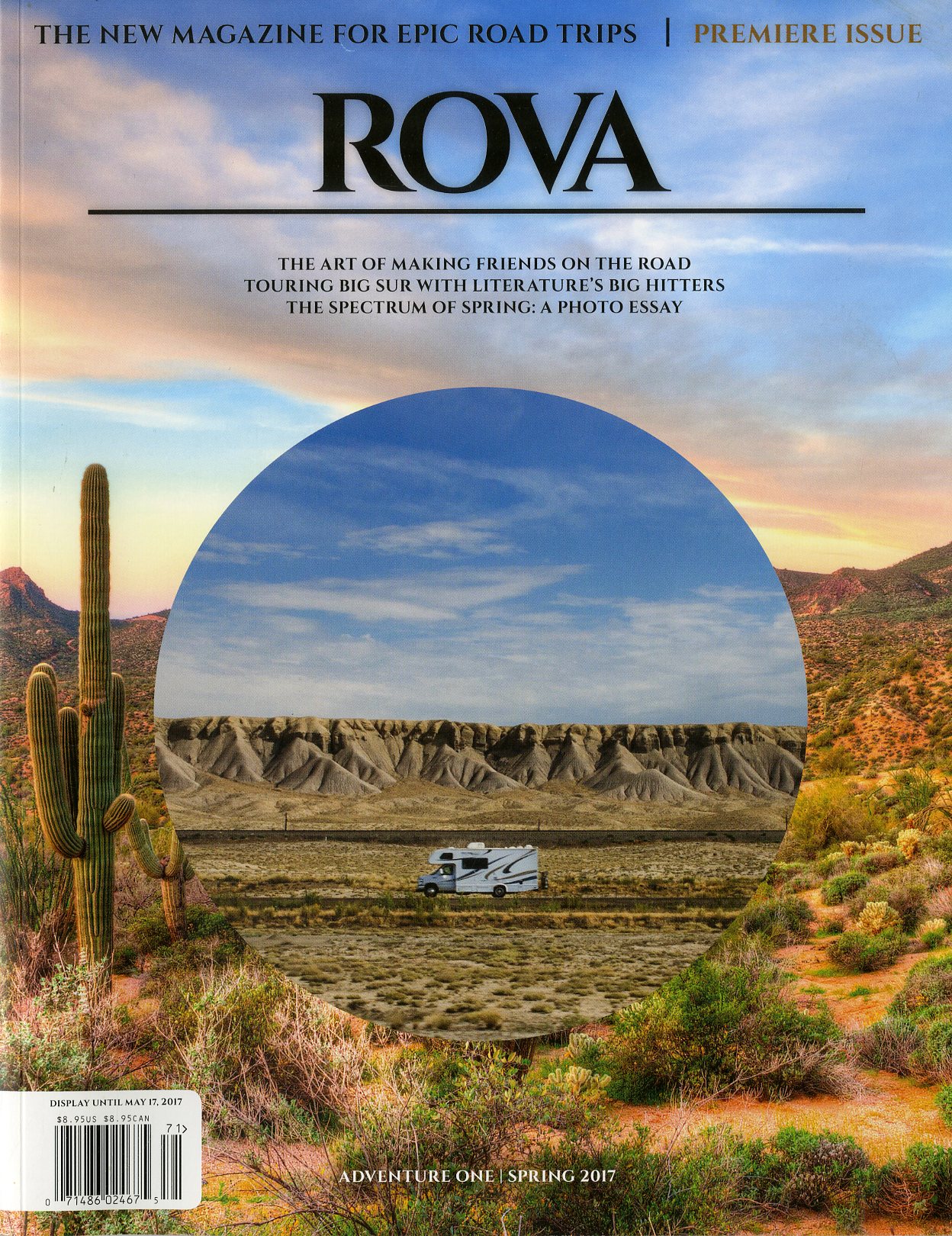
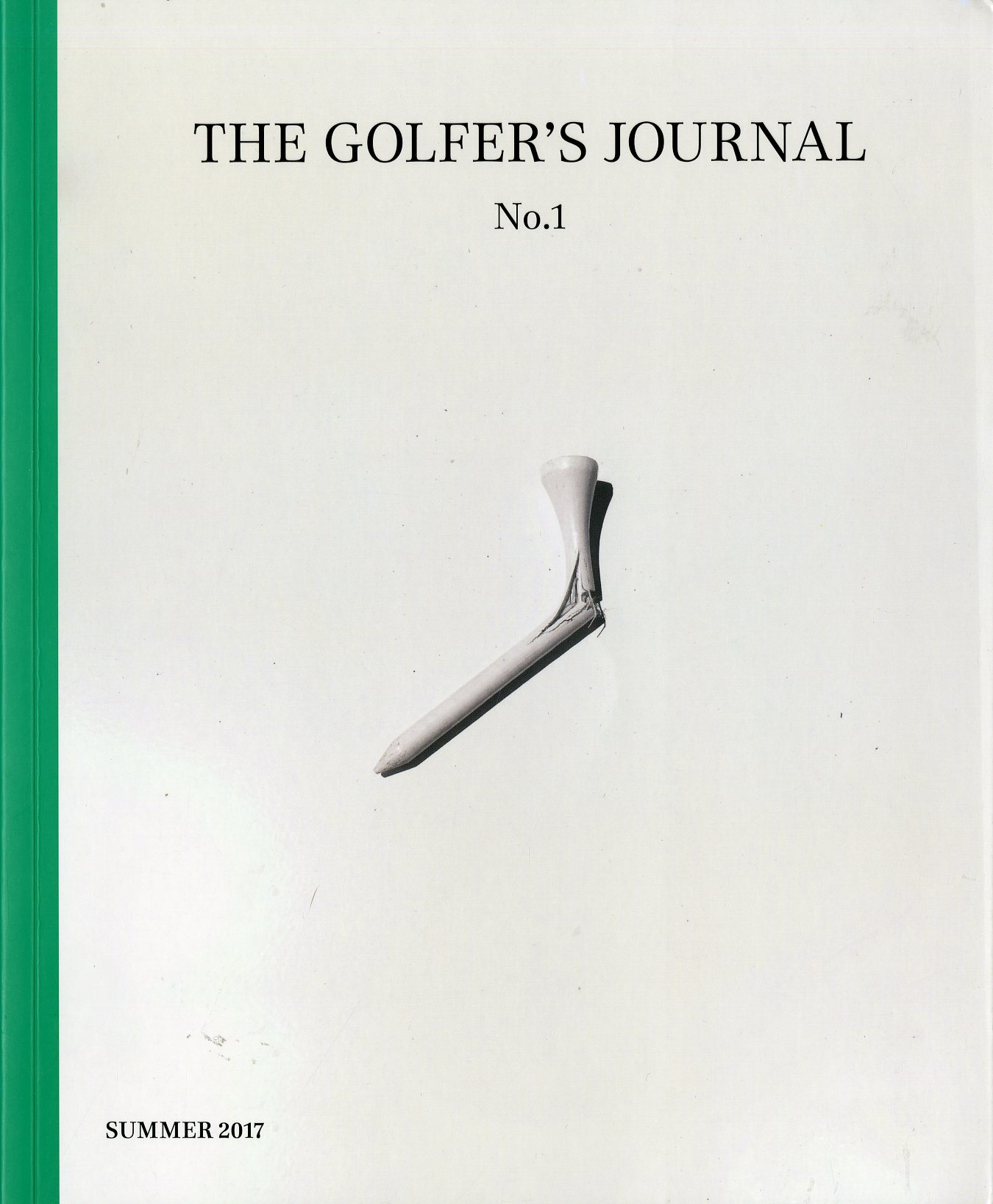
Samir Husni: Do you feel that collectively, journalism as a whole is failing its audience, or that a few are managing to succeed?

David Remnick: Well, I hope not. I’m not running around and patting myself on the back, and I don’t think that Dean Baquet is or Marty Baron, or any other editor worth his or her salt. I don’t think, at the same time, that we should hang our heads low just because the president is screaming fake news, just the opposite. You just have to redouble your efforts, because that’s the job. It’s not personal; it’s not a sense of personal defiance. It’s a sense of that’s the job.

Samir Husni: If I showed up unexpectedly at your home one evening after work, what would I find you doing? Having a glass of wine; reading a magazine; cooking; watching TV; or something else?

David Remnick: It could be any of those things. My boys are in their twenties and unfortunately they’re out of the house, happily for them, but unfortunately for nostalgic old me, but they’re well-launched. And I have an 18-year-old daughter who is at home and has autism, so it’s a personal challenge that will always be with us. So, that’s a large thing in my life and in my wife’s life. My wife is Esther Fein, who for many years was a reporter and editor at The New York Times.

What do we do to relax? We try to spend some time together. And it’s not out of the question to watch the news on TV or even better, some show. But there’s a lot of reading to be done. It’s very hard to read in the office, and that means reading pieces that are actually going to go in the magazine or online, but also pieces that aren’t, that people send in and deserve an answer. Or reading galleys of books that may find their way into The New Yorker in some ways. And the reading never stops, but again I want to say that this is not by any stretch a one-person operation. It’s a very complicated, and ultimately team-oriented thing.

And the editors that I mentioned before, whom I hope you will mention; it’s only the start of it. I didn’t even mention the fiction editor, Deborah Treisman, who is remarkable and is publishing a story a week, and just published a story that went incredibly viral.

We’re in an innovative stage at The New Yorker. For years, because of the nature of technology and for commercial reasons, 90 percent of the task or more was putting out this print magazine of enormous quality. And I’m sure nobody thought that was easy. But now we do that and we do much else, and we also have to figure out all kinds of technological questions to make sure that 19-year-old readers and 25-year-old readers will find The New Yorker something that’s not only fascinating and enriching, but also convenient, easy to access, and modern in the best sense. And we’re experimenting with different ways of telling stories on film, or presenting stories online that are different from the way we were doing it two years ago or last week.

But here’s the thing, and this is the important thing; my job and our job in this moment in time is to get all of the technological things right, but never to lose sight of, or the feel for, what The New Yorker is or should be. That if we only concentrate on these questions of technology and business and all the rest, and lose sight of the soul of the place, of the purpose of the place, of the integrity of the place, all knowing that we’re going to make mistakes along the way, that if we lose sight of that then it’s not worth it. But if I can help us, along with all of my colleagues, by all means, modernize The New Yorker, but make it The New Yorker that we want it to be, that we’re proud of, that deeply values accuracy, fairness, rigor and clarity, and originality in writing, and soul, then we will have accomplished something great.

That’s a long answer to a question that really wanted to know if I have a glass of wine; the answer is I usually have a beer.

Samir Husni: (Laughs)

Samir Husni: If you could have one thing tattooed upon your brain that no one would ever forget about you, what would it be?

David Remnick: I don’t know about me individually, but I want this place to be ruled by a sense of kindness, without swagger. I want there to be a sense of overall decency about The New Yorker. But again, that doesn’t mean we’re not going to have disagreements, arguments, or bad days, or all the rest. But I want that sense of decency between and among us to prevail.

Samir Husni: My typical last question; what keeps you up at night?

David Remnick: There’s no end to it; there’s no end to it. (Laughs) But that’s my problem, not yours; don’t worry about it.

Samir Husni: (Laughs)

Samir Husni: Thank you.

h1

Topix Media Lab’s CEO & Co-Founder, Tony Romando, On Reimagining The Bookazine: Innovation Is Key As Targeted Cover Mounts Present Positive Potential & New Hope For The Single Topic Magazine – The Mr. Magazine™ Interview

December 14, 2017

“While we’re gearing up for 2018, the truth is the glory days of just putting out a bookazine with the same old topic that everyone else has done, those days are over. There was a time when people would put out any bookazine and it did well, because it was a bookazine, and it was single-topic, and it was a novelty. But these days the market is so flooded and the consumer has gotten so used to the bookazine that if you’re not changing the face of what the bookazine is; if you’re not recreating the entire bookazine itself and the bookazine category, it’s just going to start to drop and plummet and it’s going to be catastrophic for anyone in the bookazine business.” Tony Romando…

“I can’t stress enough that if cover mounts work for kids, then it should work for adults. Whatever your single topic is, you have to find the cover mount that seems to be the right thing that appeals to the person who likes that topic.” Tony Romando…

Bookazines have been a very successful part of print publishing over the last few years, but as with anything media-related in this digital age, innovation and creative targeting are things that have to always be a part of the equation. No longer is there time to rest on the heels of success, not as rapidly as things change today.

No one knows bookazines as well as Tony Romando. No one. Single copy, no subscriptions, no ads and no digital, has been the story of his life for five years, since he began Topix Media Lab and started on this bookazine journey. And as well as he knows the bookazine business, he also knows when it’s time for change. In his words: “The truth is the glory days of just putting out a bookazine with the same old topic that everyone else has done, those days are over.” In other words, repetition is good in some instances, but not necessarily in the single topic magazine instance.

Enter cover mounts. Something that Tony has gotten heavily involved in (right down to manufacturing his own toys) to prove that sometimes you have to let that entrepreneur spirit rear its head and go a little out on that limb to find the next level of success.

I spoke with Tony recently and we talked about the “new concept” of cover mounts, something that publishing in Europe has been doing for years, and some here in the States have dabbled in. But as Tony put it, Topix is in it full-scale and nationally; a no holds-barred attempt at trying something different and making it work. And as Mr. Magazine™ believes that magazines and magazine makers provide experiences, the infinite possibilities of what lies ahead for bookazines is exciting.

So, I hope that you enjoy the Mr. Magazine™ interview with the man who is infinitely capable of providing those experiences and creating those possibilities, Tony Romando, CEO & co-founder, Topix Media Lab.

But first the sound-bites:

On the status of bookazines today: After five years of being a bookazine-only company, we also do books and other projects, but the epic rise of bookazines sales and high prices and bigger retail dollars has flattened, and there’s no way around that. The rise is not what it once was and we all know that, so between having conversations with Ingrid Jakabcsin at The News Group and Christy Jenkins at Wal-Mart, and as I talk to all of these people, we all realize that the real need here now is really innovation. What is the bookazine 2.0 or 3.0? More importantly, where are we going to be in 2019 or 2020 and beyond? And while we’re gearing up for 2018, the truth is the glory days of just putting out a bookazine with the same old topic that everyone else has done, those days are over.

On the solution to the bookazine challenge in today’s market: I think the bigger companies and the other bookazine companies are going to try and figure out how to reduce all of their costs, and that’s going to try and keep them up and running. But for us the only way you can really move the needle going forward, and I do see a long-term, substantial future in bookazines, is to change what a bookazine is. For us, we’re looking at hardcover bookazines; we’re looking at cover mounts on bookazines, things that might have been appealing decades ago that would have been put inside a magazine, such as a DVD or a CD, mounting those to the cover.

On why he thinks it took the U.S. so long to climb onboard with innovations such as cover mounts when Europe has been doing for years: There’s two parts to that. One is their sell-through’s are averaging 30 to 50 percent, there’s no way around it; they’re double what it is here. As to what took us so long to get onboard with this, after a year of putting this together; our first two cover-mount kid’s magazines come out around the last week of November. It took me a year to get there.

On whether he thinks he’s going down in history as the man who reinvented the American newsstands: I am going to go down in history as the guy who bankrupted a company on toys from China. (Laughs) I am never going down in any sort of publishing history, I hope. I’d like to continue to be a behind-the-scenes guy and sneak under the radar when at all possible. But the thing I do know is this, it’s been tried and tinkered with a little bit, people have thrown stickers and magnets and even little ski hats and stuff in their magazines, but when you’re going to do it and do it nationally at a 150 to a 180,000 print run; when you go full-scale and you’re manufacturing your own toys, there’s really no turning back for us.

On how he is going to market this “new concept” for bookazines: We are not going to market it, Samir. That goes against everything that a bookazine is, because 99 percent of the bookazines, whether they’re Hearst, Time Inc., Condé Nast, or Topix; nobody markets their bookazines. Nobody takes the mothership magazine for that. Time magazine is not marketing Time Inc. bookazines. They don’t do that; it’s a separation of church and state. No one markets them.

On anything else he’d like to add: I can’t stress enough that if cover mounts work for kids, then it should work for adults. Whatever your single topic is, you have to find the cover mount that seems to be the right thing that appeals to the person who likes that topic.

On what he would have tattooed upon his brain that would be there forever and no one could ever forget about him: My goal is to be wise, not right. That’s the philosophy that I live by.

On what someone would find him doing if they showed up unexpectedly one evening at his home: This is going to sound very cliché, but I live an hour and a half away from New York City. I leave my house at 4:12 in the morning and I get back at 8:40 at night. And at 8:40 p.m., I have one hour before I go to bed and it’s spent reading Wild Kratts animal stories to my kids. And that’s what I do when I get home.

On what keeps him up at night: Honestly, what keeps me up at night is, and this is going to sound morbid, but it’s figuring out what day of the week it is and if anyone famous has died, because tribute bookazines, specifically tombstones or death issues, can change a bookazine company’s entire year with one or even two deaths. And I know that sounds really morbid and creepy and horrible, but what keeps me up at night is what day of the week is it right now, and if someone were to die today, would we beat Time Inc. to market.

And now the lightly edited transcript of the Mr. Magazine™ interview with Tony Romando, CEO, Co-Founder, Topix Media Lab.

Samir Husni: Topix Media Lab has been in business now for a little over five years; as we move forward into 2018, what do you think the status of bookazines is today?

Tony Romando: After five years of being a bookazine-only company, we also do books and other projects, but the epic rise of bookazines sales and high prices and bigger retail dollars has flattened, and there’s no way around that. The rise is not what it once was and we all know that, so between having conversations with Ingrid Jakabcsin at The News Group and Christy Jenkins at Wal-Mart, and as I talk to all of these people, we all realize that the real need here now is really innovation. What is the bookazine 2.0 or 3.0? More importantly, where are we going to be in 2019 or 2020 and beyond?

And while we’re gearing up for 2018, the truth is the glory days of just putting out a bookazine with the same old topic that everyone else has done, those days are over. There was a time when people would put out any bookazine and it did well, because it was a bookazine, and it was single-topic, and it was a novelty. But these days the market is so flooded and the consumer has gotten so used to the bookazine that if you’re not changing the face of what the bookazine is; if you’re not recreating the entire bookazine itself and the bookazine category, it’s just going to start to drop and plummet and it’s going to be catastrophic for anyone in the bookazine business.

Samir Husni: What do you think the solution to this challenge is? What are you planning to counteract this situation and stay on top of things?

Tony Romando: I don’t know what the solution is for other publishers, but I think the immediate solution for a lot of them is how they can reduce their cost and make it more efficient; the whole process, and figure out how to create the product in a cheaper way. And at Topix, we have been very good at starting that way, and doing it the cheapest way possible, so there’s no more blood for us to squeeze out of that rock because we started off being very efficient.

I think the bigger companies and the other bookazine companies are going to try and figure out how to reduce all of their costs, and that’s going to try and keep them up and running. But for us the only way you can really move the needle going forward, and I do see a long-term, substantial future in bookazines, is to change what a bookazine is. For us, we’re looking at hardcover bookazines; we’re looking at cover mounts on bookazines, things that might have been appealing decades ago that would have been put inside a magazine, such as a DVD or a CD, mounting those to the cover.

Though we’re not trying to get out of the bookazine business; we want to sell bookazines, but what we’re really trying to do as well is hide the peas and carrots underneath the ice cream, under the dessert. If for kids you have a toy cover-mounted, the child is going to typically look at the toy as the big prize and the magazine as a ride along. Whereas the parents are going to look at the magazine as the good part, it’s not an iPad or an iPhone; it’s not a TV; I’m getting my kid to read. Yes, he or she gets a toy along with it; he or she gets a toy with the process, but at least they get a magazine with activities and content to read.

So, for the kids’ magazine group, it makes a lot of sense. Big backlash on digital; big backlash on iPads, but this is the time to strike in that department. So, that’s the big focus, cover mounts with kid’s toys. And in the U.K. it’s been happening for decades.

Samir Husni: Yes, in fact, all over Europe. Why do you think it took us so long to get onboard with this?

Tony Romando: There’s two parts to that. One is their sell-through’s are averaging 30 to 50 percent, there’s no way around it; they’re double what it is here. As to what took us so long to get onboard with this, after a year of putting this together; our first two cover-mount kid’s magazines come out around the last week of November. It took me a year to get there.

And now I understand why no one has ever done it, because it’s hard enough to figure out how to create, produce, distribute and sell a normal magazine or a bookazine, if you add a toy to it, it becomes this impenetrable web of learning an entirely new business. So, for 22 years I was working on magazines. For the last year I’ve been working on becoming a toy manufacturer.

And that means getting up at four in the morning and talking to China and talking to someone else in Germany, then getting to work at 7:00 a.m. Talking to someone at DreamWorks in the licensing department about Troll toy packaging, and then going back to the printing plant in Wisconsin to find out if they have a special kind of glue that can pass a safety test. And as we learn the manufacturing and the legal sides, and the logistical side, whether it be customs or passing tests, because we just distribute magazines in America and Canada, if it goes to certain parts of Canada you have to put a French warning label on it. There’s real minutiae like that.

But on the backend, you’re putting toys on magazine covers that typically have a 25 percent sell-through rate. That means 75 percent or 100,000 copies are going to get pulped, wasted, thrown away, which we’re all very used to when it comes to magazines. We know that they leave Wal-Mart, they go into a tote; they go to some far off shredding facility and we never see or care about them again; that’s publishing.

But now we have 100,000 toys; can I shred them? Is it going to be a problem for the shredder? Could it cause a spark in the shredder surrounded by paper? Is the metal made of iron or is it an aluminum alloy which might not spark as much? Will the plastic stuff gum up the works? Is there a way to take those toys and pull them out of the shred line so that we can resell them at a discount?

So, I honestly think the reason why no one has ever gotten this far in the process is that there are so many steps along the way that are utterly discouraging and can bring a grown man or woman to tears at four in the morning, that you realize it’s almost not worth the hassle. There were moments in the last year where I just said it’s not worth the hassle; I can’t do this, it’s impossible. You feel like everyone is working against you; the U.S. government; the manufacturing facilities; just everybody.

We have two coming out at the end of November for the holidays and then we have five more on the runway for January, February and March, and those months are typically one of the best kid’s selling seasons; well, February, March and April. So, we have a bunch lined up.

What was really amazing about this process, while some other people may have not been able to do it, but we were able to do it now, is between the biggest retailers; between The News Group; between Jimmy Cohen at Hudson, having conversations with them, everybody; we all realized there has to be a change and innovation in bookazines if we want this to succeed.

So, maybe where someone would have said in the past, no, we’re not taking it, the price is too high, or it’s too hard to deal with, or the packing and the bundling of the issues is too hard for my people to do, or even the printers saying, we’re not going to hand-glue these; we’re not going to take them out of boxes from China; there was a time where people had the cushion where they could say no, it’s not worth the investment.

But I think it’s very important that now everyone is willing to test the market, go out of their way; all of the wholesalers and retailers, everyone has gone out of their way to really try and make this work. It’s been this group initiative. Ingrid Jakabcsin, Jimmy Cohen; all of these people have stepped up and are really trying to make this work for the first time in American history. So, we’re pretty excited about it.

Samir Husni: Are you going into the history books as the guy who reinvented the American newsstands?

Tony Romando: I am going to go down in history as the guy who bankrupted a company on toys from China. (Laughs)

Samir Husni: (Laughs too)

Tony Romando: I am never going down in any sort of publishing history, I hope. I’d like to continue to be a behind-the-scenes guy and sneak under the radar when at all possible.

But the thing I do know is this, it’s been tried and tinkered with a little bit, people have thrown stickers and magnets and even little ski hats and stuff in their magazines, but when you’re going to do it and do it nationally at a 150 to a 180,000 print run; when you go full-scale and you’re manufacturing your own toys, there’s really no turning back for us.

So, when I think about this whole process, much like any bookazine, it’s a true gamble, because let’s just say the average sell-through of a kid’s bookazine is 22 percent. If you double your costs and hemorrhage money, and the sell-through comes back after the first two tests and it didn’t move the needle at all, then we have problems.

We’ve increased the value of the toy, the cost of the toy; we’ve given the consumer something that we know works in other parts of the world. If it doesn’t move the needle, we’ve got problems. If it moves it two or three points; you kind of have a head-scratcher, what we do next? If it moves it 10 points, then you know you’ve got something, how fast can you do it; how many can you do and how soon can you do them?

And just so we’re crystal-clear, there’s absolutely zero percent chance of making a single dollar on our end. Everyone; there’s nobody who’s touching this, from The News Group on down; I don’t think there’s anyone who isn’t going to lose money on these first two tests. And the truth is, everyone gets it, because everyone wants to try it. We all want to see if it works. I’m fully prepared, and I can’t speak for anyone else, to take it on the chin for the first two test issues to see the data and see how we can then back up, re-approach this in February, March and April, and really dial it in. I think there’s a misconception that with bookazines you just throw them out there, scattershot, cross your fingers and hope it works for the best. And I think people have been doing it that way for decades.

Samir Husni: How are you going to bring this “new concept” to the marketplace?

Tony Romando: We are not going to market it, Samir. That goes against everything that a bookazine is, because 99 percent of the bookazines, whether they’re Hearst, Time Inc., Condé Nast, or Topix; nobody markets their bookazines. Nobody takes the mothership magazine for that. Time magazine is not marketing Time Inc. bookazines. They don’t do that; it’s a separation of church and state. No one markets them.

My point is, we’re not going to market it because we don’t market our kid’s bookazines now. And we don’t want to skew the data with any kind of marketing that would maybe give these magazines with the cover mounts a bump. We don’t want that. We want our control group to stay exactly the way it is now, which is, we don’t get any marketing now, so we don’t want any marketing for the toy, because bookazines are rare things. No ads; no subscriptions.

You have the truest form of success or failure with a bookazine, because if it dies on the newsstand, you lose a lot of money. If it succeeds, people wanted your product. And you can’t prop up a bad issue with ad sales or subscriptions; it is what it is. And that’s the only way. The retailers don’t care about subscriptions or advertisers; I am fully aligned with every retailer. They make money on a sale; we make money on a sale. We don’t care about subs and neither do they.

Topix is the only true publisher that is fully aligned with every wholesaler and every retailer, and what we want to do is put it out; put it in our checkup pockets; see where it works, and we want the retailers to understand when the needle gets moved, and it moves up a lot of points because of the cover mount, that this is the new premium product. And this product deserves the best placement and the most love. And the only way that we can do that is if we put it out organically and people buy it. If they don’t buy it, we’ll rethink it. And if they do buy it, line the runway up with as many as you can.

Samir Husni: Is there anything you’d like to add?

Tony Romando: I can’t stress enough that if cover mounts work for kids, then it should work for adults. Whatever your single topic is, you have to find the cover mount that seems to be the right thing that appeals to the person who likes that topic.

Samir Husni: If you could have one thing tattooed upon your brain that no one would ever forget about you, what would it be?

Tony Romando: My goal is to be wise, not right. That’s the philosophy that I live by.

Samir Husni: If I showed up unexpectedly at your home one evening after work, what would I find you doing? Having a glass of wine; reading a magazine; cooking; watching TV; or something else?

Tony Romando: This is going to sound very cliché, but I live an hour and a half away from New York City. I leave my house at 4:12 in the morning and I get back at 8:40 at night. And at 8:40 p.m., I have one hour before I go to bed and it’s spent reading Wild Kratts animal stories to my kids. And that’s what I do when I get home.

Samir Husni: My typical last question; what keeps you up at night?

Tony Romando: Honestly, what keeps me up at night is, and this is going to sound morbid, but it’s figuring out what day of the week it is and if anyone famous has died, because tribute bookazines, specifically tombstones or death issues, can change a bookazine company’s entire year with one or even two deaths. And I know that sounds really morbid and creepy and horrible, but what keeps me up at night is what day of the week is it right now, and if someone were to die today, would we beat Time Inc. to market.

We have a schedule for at what hour and what day of the week someone dies and how fast we can get to print, and whether or not we can beat Time Inc. to market by 10 days or 17 days. That is the last thing I think about before I go to bed, and the one thing that keeps me up until I fall asleep.

Samir Husni: Thank you.

h1

The California Sunday And Pop Up Magazine’s Co-Founder & Editor In Chief Douglas McGray To Samir “Mr. Magazine™” Husni: “Content Is About Earning People’s Attention… And Print Is A Great Place For Stories To Live.” The Mr. Magazine™ Interview…

December 13, 2017

“Print is a wonderful medium. It’s a great canvas for design and photography; it’s a great place for stories to live. Sometimes you want to read on your phone, and sometimes you want to shut the world out a little bit, and print can be wonderful for that, where you have nothing but the story in front of you.” Douglas McGray…

“And live shows, if anything, I think they’re becoming more vibrant. We have these really full digital lives; we connect and communicate with people constantly. But going out and seeing a show in a dark room, getting together with people; it’s a great complement to our online lives. And I think we all want variety, different things. I love reading on my phone and I love reading in print. And I love staying home and watching a movie on Netflix and I love going out to a live show. All of these make for a rich, full life, and I think we can contribute to that.” Douglas McGray…

According to Douglas McGray, content is about earning people’s attention. And as co-founder and editor in chief of The California Sunday Magazine and Pop-Up Magazine, Doug knows a thing or two about grabbing his audience’s attention and earning the right to keep it. From The California Sunday Magazine, a print magazine and digital entity that he helped launch in 2014, and is dedicated to stories about the West, Latin America and Asia, to Pop-Up Magazine, a magazine performed live, which features true, never-before seen or heard multimedia stories performed on stage by writers, radio producers, photographers, filmmakers, and musicians, Doug and his team’s mission is to bring good journalism and good storytelling to the masses, across all platforms.

I spoke with Doug recently and we talked about the magazine, both the printed version and the live one, and that’s when he also shared his definition of content in this digital age with me, and Mr. Magazine™ found it as intriguing as he does the magazine and products that he helps create. It was a most enlightening conversation about the value of all platforms, from print to theatre/live shows to digital; and it solidified even more Mr. Magazine’s™ firm belief that audience first will always produce positive results, because the stories that Doug and his team are creating aren’t for their diverse platforms, they’re for their very diverse audiences. Indeed, as it should be.

And now the Mr. Magazine™ interview with Douglas McGray, co-founder and editor in chief of The California Sunday Magazine and Pop-Up Magazine.

But first the sound-bites:

On what his magazines are doing during this (according to him) odd and anxious time we live in: Both Pop-Up Magazine and The California Sunday Magazine are really dedicated to stories, in everything they feature. So, for The California Sunday Magazine that means we go out and hunt across the West, California especially, Asia, Latin America; and we look for the great stories, stories that bring readers into these worlds and hopefully make them think hard about something. And maybe think about something in a way they haven’t thought about it before, that explores and explains these issues and ideas. And we look for those intimate stories that are just great stories, that are something people might want to read for the weekend.

On the definition of content to him in today’s print and digital age: I think a lot about attention. And about really earning people’s attention. And part of this is because everything we do has its roots in the live show that we create. I was a writer for a long time; I wrote for The New Yorker, The New York Times Magazine, The Los Angeles Times, and others. And when we launched the live show, Pop-Up Magazine, we did it to bring together all these different worlds of journalistic storytelling: writing, radio, photography and film; and it really mashed them all together.

On winning the National Magazine Award for photography and whether he thinks there are more brands out there like California Sunday or Pop-Up: I do think that attention on the photography and design, and also deeply-reported features; pairing those things together is unusual. And I think it’s why, even though we’re a new magazine and a small magazine, we were recognized for our photography and received the 2017 National Magazine Award for Photography. We were enormously flattered to win, considering the other titles that were there were much bigger and have been around for a longer time.

On the cover story that took 17 months to finish and how in this age of instant communication, he can afford that: How can we afford not to, is the way that I might put it. That story by Jaeah Lee looked at what happened with Mario Woods, who was African American and shot by police. And this is a topic which has been deservedly in the news, and something that is vitally important for us to know what’s going on. And one of the things that we noticed as the writer Jaeah was spending time with his mother; she realized how important it was to understand what life was like for this woman after losing her son. And you can’t rush that.

On how he decides what goes in print, digital, and what goes live: We’re a small company; we’re mostly all in one room together. And we have a small editorial staff that works on stories for California Sunday. We have a small story producer staff to develop stories for Pop-Up Magazine, and then we have an art department that they all share. The live media, then print and the web. Our live story producers are out hunting for stories that really come to life onstage and with the screen. As far as print and digital, right now we make a deliberate choice not to try and compete with volume. If you’re going to try and compete with volume, you can never produce enough; you can publish 10,000 stories a month and there’s somebody publishing more. So, right now our stories live across platforms. Just about every story goes in print and online.

On their unique distribution model of paying West Coast newspaper’s to distribute the magazine: I think it’s hard if you’re an ambitious city newspaper, it’s hard to produce a Sunday magazine. It’s a somewhat different thing; it’s different from producing a newspaper. But that didn’t mean that they couldn’t distribute someone else’s magazine. And the Sunday magazine format is a classic format, it’s reading beautifully reported features on the weekends. It occurred to us that we could approach the editors of the Chronicle and the Los Angeles Times about distribution, which would do a couple of things. One, it would let us launch with a large print audience. Print can be interesting at scale, and this would allow us to achieve an interesting scale from the print product.

On whether advancing good journalism and good storytelling is part of their mission: We do try and produce a number of pieces that serve the public interest; that tackle issues and ideas that we think are important right now. And the offer of free subscriptions to schools and libraries; that’s not going to be a huge number. And schools and libraries get a select number of the Los Angeles Times and the Chronicle, but if they don’t get those issues, of course, they won’t be able to get the magazine. But it’s a way to reach younger readers and those that don’t know about us yet and we love going to the libraries.

On any plans to increase the print magazine’s frequency from six times per year: We’re a fairly new company; we launched at the end of 2014, and like all startups we’re trying to learn as we go. And on the Pop-Up Magazine side, we started off twice per year, but last year we increased to three times per year. On the California Sunday side, as I mentioned before, we don’t want to try and publish 10,000 stories per month. We’re not trying to compete with anybody, we just want to do great stories. We could increase our print frequency in the future; we could make a bigger print version that comes out six times per year like we do now. We could start to expand some of the digital stuff that we do around the print edition and with the stuff that’s already on the web. All of those things are possible, but we’re going to see where the opportunities lie.

Pop Up Magazine at Lincoln Center on Monday, October 30, 2017 in New York City.
Image by Erin Brethauer
@erinbrethauer

On anything he’d like to add: The show Pop-Up Magazine is a live magazine; it’s a 100-minute show we do across the country, like Lincoln Center in New York and BAM Opera House in Brooklyn, and other venues across the country. And it’s really meant to be a magazine performed live, so it’s about a 100-minute show and there are about 10 stories. It’s writers, radio producers, photographers, and they report mostly recorded, multimedia stories. So, there are stories about art, science, comedy, war, food; just all of the things that you’d find in a great magazine.

On whether he believes there will ever be a time when we won’t have print: Print is a wonderful medium. It’s a great canvas for design and photography; it’s a great place for stories to live. Sometimes you want to read on your phone, and sometimes you want to shut the world out a little bit, and print can be wonderful for that, when you have nothing but the story in front of you.

On what someone would find him doing if they showed up unexpectedly one evening at his home: It depends on how late you come by. (Laughs) If you come by late, there’s a good chance you’re going to find me reading story graphs or talking to potential writers or thinking about the day ahead. And I feel lucky to have the opportunity. I work with a great team and I think we all feel that we have a chance to make something special here, and we’re working hard at it. So, I don’t mind a late night of work now and then.

On what he would have tattooed upon his brain that would be there forever and no one could ever forget about him: One of the things that’s true about editing a magazine and creating live shows for people; you’re creating stuff that you want people to remember and care about, but you yourself are behind the scenes. And so I don’t really care so much what people think about me or how they remember me; I want them to feel like their lives were a little more interesting, a little more thought-provoking because of the work I helped create. That would be my honest answer.

On what keeps him up at night: We are very busy, but we’re busy for all of the right reasons, because we’re looking to grow and do more things, new things next year and the year after. What keeps me up is that I want to be able to take advantage of all of these ideas that we have. And we have a lot of ideas. And I want to be able to take advantage of the opportunities in front of us.

And now the lightly edited transcript of the Mr. Magazine™ interview with Douglas McGray, co-founder and editor in chief of Pop-Up Magazine, The California Sunday Magazine, and parent company, Pop-Up Magazine Productions.

Samir Husni: I have to say that you’re unique in the magazine media business, having a live pop-up magazine and a print magazine in this digital age. Let me ask you a simple question, and I’m quoting your intro in the December issue: “We’re living in an odd and anxious time here in the United States.” So, what are you doing in this “odd and anxious time” in the U.S.?

Douglas McGray: Both Pop-Up Magazine and The California Sunday Magazine are really dedicated to stories, in everything they feature. So, for The California Sunday Magazine that means we go out and hunt across the West, California especially, Asia, Latin America; and we look for the great stories, stories that bring readers into these worlds and hopefully make them think hard about something. And maybe think about something in a way they haven’t thought about it before, that explores and explains these issues and ideas. And we look for those intimate stories that are just great stories, that are something people might want to read for the weekend.

And it’s the same thing with the Pop-Up onstage; we try and bring that kind of story to people live in song and sound, radio and photography. And I think it’s especially important right now. We’re all seeing the value of thoughtful reporting and stories that are just a better way of meeting people where they’re at.

Samir Husni: With all of the storytelling that’s taking place, as an editor, how do you define content in today’s print and digital age? What is content to you today?

Douglas McGray: I think a lot about attention. And about really earning people’s attention. And part of this is because everything we do has its roots in the live show that we create. I was a writer for a long time; I wrote for The New Yorker, The New York Times Magazine, The Los Angeles Times, and others. And when we launched the live show, Pop-Up Magazine, we did it to bring together all these different worlds of journalistic storytelling: writing, radio, photography and film; and it really mashed them all together. And also bring together fan clubs.

And what we found was, we’d put on a show for a couple of hours in a dark room and we’d see everybody turn off their phones and pay attention. We saw months, years later; people talking about stories that they’d seen live and they remembered them. So, one of the things that we started to think about was when Pop-Up Magazine evolved from something of a creative side project into a media company that actually publishes the weekend magazine, California Sunday, we started thinking about the way that we all spend our time. And I think we’ve all had a similar experience: we’re standing in line for coffee and we look at our phone; we start to read something and we get distracted, maybe we finish reading it later or maybe we don’t. A day later, maybe we remember what we read, maybe we don’t.

But those opportunities to really grab and hold people’s attention are important. And that was a big part of Pop-Up Magazine, and it was deliberately produced for that time; it was an interesting time to reach people and have that kind of full attention. But to us, another really interesting time was the weekend, so we produced California Sunday, a magazine that has really compelling, moving stories, but is also a very visual magazine. We use photography thinking we might hold people’s attention for a couple of hours by giving them stories that will let them shut out the world and pay attention and get lost in the story. And that’s what we’re really trying to do across the company.

Samir Husni: That powerful, engaging photography and typography was evident when you won the National Magazine Award for photography in the printed product. So, with the emphasis on the visuals and on the storytelling; do you think there are more like you out there in the magazine media world today, or less like you?

Douglas McGray: Design and photography were a part of our mix from the very beginning. When we were making Pop-Up Magazine, the live show, it was a very visual and beautiful experience.

And when we created The California Sunday Magazine and enlarged the company, we hired the creative director, Leo Jung, and we hired photography director, Jacqueline Bates; we believed from the beginning that there was something powerful in the combination of stories with expansive photography. With the print magazine, you’d open up a page and the stories would unfold for you to enjoy. That you’d feel as though you’d been dropped into the middle of a really vivid world.

And so, I do think that attention on the photography and design, and also deeply-reported features; pairing those things together is unusual. And I think it’s why, even though we’re a new magazine and a small magazine, we were recognized for our photography and received the 2017 National Magazine Award for Photography. We were enormously flattered to win, considering the other titles that were there were much bigger and have been around for a longer time.

What we’re doing is a little unusual, but in a good way. We don’t want to be doing what everybody else is doing. We try to make this a little different from them.

Samir Husni: One of your cover stories took 17 months to finish; in this instant-communication age, who can afford to do that?

Douglas McGray: How can we afford not to, is the way that I might put it. That story by Jaeah Lee looked at what happened with Mario Woods, who was African American and shot by police. And this is a topic which has been deservedly in the news, and something that is vitally important for us to know what’s going on. And one of the things that we noticed as the writer Jaeah was spending time with his mother; she realized how important it was to understand what life was like for this woman after losing her son. And you can’t rush that.

We thought it was important too, so we told Jaeah to start reporting. And we didn’t know exactly how long the reporting would go on. It became clear overtime that it was a really powerful story and we told Jaeah to continue spending time with Gwen Woods after a year, so that we could fully understand her life after her son’s shooting.

And the response was phenomenal. People found it eye-opening and really moving, and that was a reflection, not just of Jaeah’s great reporting, but also the photography by Erica Deeman that brought it to life visually. I think the healthy media ecosystem is gone, in which there were lots of great kinds of work.

Samir Husni: How do you strike the balance between what goes in print; what goes digital; and what goes live?

Douglas McGray: We’re a small company; we’re mostly all in one room together. And we have a small editorial staff that works on stories for California Sunday. We have a small story producer staff to develop stories for Pop-Up Magazine, and then we have an art department that they all share. The live media, then print and the web. Our live story producers are out hunting for stories that really come to life onstage and with the screen.

Our live shows feature never-before seen or heard multimedia stories performed onstage by writers, radio producers, photographers, filmmakers, and musicians. So, for our live shows we are looking for stories that really come to life in that medium.

For our California Sunday editors, they’re out hunting for stories that are sort of made for a different place and time. Stories that aren’t necessarily meant to unfold in five or 10 minutes onstage, but something that you’re going to spend more time with home on the couch, reading it in print or on your laptop; however you like to read it.

As far as print and digital, right now we make a deliberate choice not to try and compete with volume. If you’re going to try and compete with volume, you can never produce enough; you can publish 10,000 stories a month and there’s somebody publishing more. So, right now our stories live across platforms. Just about every story goes in print and online.

That doesn’t mean that we’re a print magazine that offers everything online. When we designed the print magazine what we were thinking about was a design that would translate really well to the web, and especially the phone. So, when we designed The California Sunday print edition, we thought about big, expansive photography, thoughtful typography, but not an incredibly complicated design. An artful design, but we wouldn’t have lots of elaborately composed pages.

When people pick up the print edition of California Sunday, they tend to really admire the design; the visual storytelling and the photography. It really follows very simple rules of columns, text and art. The idea really is that we look for stories that feel like live stories to us, and in California Sunday, we look for stories that will live well across platforms.

And then every once and awhile, we’ll find a story that fits well everywhere: live, print and online, so we’ll do it everywhere. We’ll make a live version of it, and in print and online. Usually there are two different versions; in our live shows, of course, we’re not reading magazine stories aloud, we’re producing live stories, but there are some stories that belong everywhere.

Samir Husni: You have a unique distribution model; you pay the newspapers in California to distribute the magazine. Who came up with the idea to forget the newsstands; forget subscriptions; we’ll buy our way into people’s homes through their newspapers?

Douglas McGray: We noticed a couple of things; one was that California and the West Coast is a huge region of the country, an influential region of the country; home to tens of millions of people, from the Silicon Valley and Hollywood to the Central Valley, where so much of our food grows and they started so many social and political trends. And so much of the magazine media that we read is based on those trends. And there are some historical reasons for that, but it seems surprising and it seemed unnecessary.

And we asked ourselves what would a great magazine based on the West Coast be like? What stories would it tell? What would it look like? What would it feel like? And during that time, the San Francisco Chronicle and the Los Angeles Times weren’t really in the magazine business. The Los Angeles Times had experimented with a couple of different things, but they weren’t distributing anything at the time.

And it occurred to us that it made some sense; I think it’s hard if you’re an ambitious city newspaper, it’s hard to produce a Sunday magazine. It’s a somewhat different thing; it’s different from producing a newspaper. But that didn’t mean that they couldn’t distribute someone else’s magazine. And the Sunday magazine format is a classic format, it’s reading beautifully reported features on the weekends. It occurred to us that we could approach the editors of the Chronicle and the Los Angeles Times about distribution, which would do a couple of things. One, it would let us launch with a large print audience. Print can be interesting at scale, and this would allow us to achieve an interesting scale from the print product.

And we didn’t rule out subscriptions, where you can subscribe to the magazine in print and get it in the mail, but that footprint that we secured with the Los Angeles Times and the San Francisco Chronicle; that audience allowed us to go out to advertisers with a mature offering. And we had some track record with Pop-Up, and if people hadn’t been to shows, they’d often heard that it was good and interesting, and people came to see it.

And being able to pitch to advertisers, we could offer very traditional print advertising pages that we would put in front of a very interested print audience. I think to invite the company to work with us to reach people across platforms has been amazing. And so at the start we launched with a small, in-house brand that would create a campaign for that production. And the people that we approached about advertising in the print magazine, they also were interested in our other products.

So, this was an opportunity for us to team up with these historical newspapers and reach people, and it also gave us the opportunity to do print really well. If you’re going to do print, it should be something that is a really beautiful object that people want to spend time with and keep. So, that was our motivation.

Samir Husni: It seems that part of what you’re doing also displays a social responsibility; you’re offering free subscriptions to high schools and libraries. Is that part of your mission? Are you trying to advance good journalism and good storytelling? Or is there another reason you’re doing that?

Douglas McGray: We’re an idealistic enterprise. We believe in great journalism and great storytelling. And we believe in the power of photography and design to put that work in front of people. And I think people see that we’re a classic general interest magazine, so we do stories about art and design; about politics, food, and anything and everything that you can imagine.

We do try and produce a number of pieces that serve the public interest; that tackle issues and ideas that we think are important right now. And the offer of free subscriptions to schools and libraries; that’s not going to be a huge number. And schools and libraries get a select number of the Los Angeles Times and the Chronicle, but if they don’t get those issues, of course, they won’t be able to get the magazine. But it’s a way to reach younger readers and those that don’t know about us yet and we love going to the libraries.

Samir Husni: Is there any plans to increase the frequency from six times per year for the print edition?

Douglas McGray: We’re a fairly new company; we launched at the end of 2014, and like all startups we’re trying to learn as we go. And on the Pop-Up Magazine side, we started off twice per year, but last year we increased to three times per year. On the California Sunday side, as I mentioned before, we don’t want to try and publish 10,000 stories per month. We’re not trying to compete with anybody, we just want to do great stories. We could increase our print frequency in the future; we could make a bigger print version that comes out six times per year like we do now. We could start to expand some of the digital stuff that we do around the print edition and with the stuff that’s already on the web. All of those things are possible, but we’re going to see where the opportunities lie. Our goal is to produce great stories and put them in front of people as we can.

Samir Husni: Is there anything else you’d like to add?

Douglas McGray: The show Pop-Up Magazine is a live magazine; it’s a 100-minute show we do across the country, like Lincoln Center in New York and BAM Opera House in Brooklyn, and other venues across the country. And it’s really meant to be a magazine performed live, so it’s about a 100-minute show and there are about 10 stories. It’s writers, radio producers, photographers, and they report mostly recorded, multimedia stories. So, there are stories about art, science, comedy, war, food; just all of the things that you’d find in a great magazine.

And if you’re in the audience, you’ll see a stage with a narrator on one side, a big screen beside the stage and a band on the other side, because most of our stories take advantage of all of those, there is a lot of narration with radio-produced voices that fill the theatre. It has animation, photography or film, and the band will play a soundtrack underneath a little bit for a movie project.

And then afterward, in the theatre lobby, we have all of our performers that were onstage hang out so that people can meet them and talk and maybe grab a drink. That’s a bit of a quick overview of how Pop-Up Magazine works.

Samir Husni: When movies first came onto the scene, people said that theatre would no longer exist, no one would go to see a live show anymore. And when digital arrived on the scene, people said print magazines would no longer exist because people would stop reading them; print was dead. Do you feel there will ever be a time when we won’t have theatre or live shows? Do you think there will ever be a time when we won’t have print?

Douglas McGray: Print is a wonderful medium. It’s a great canvas for design and photography; it’s a great place for stories to live. Sometimes you want to read on your phone, and sometimes you want to shut the world out a little bit, and print can be wonderful for that, where you have nothing but the story in front of you.

And live shows, if anything, I think they’re becoming more vibrant. We have these really full digital lives; we connect and communicate with people constantly. But going out and seeing a show in a dark room, getting together with people; it’s a great complement to our online lives. And I think we all want variety, different things. I love reading on my phone and I love reading in print. And I love staying home and watching a movie on Netflix and I love going out to a live show. All of these make for a rich, full life, and I think we can contribute to that.

Samir Husni: If I showed up unexpectedly at your home one evening after work, what would I find you doing? Having a glass of wine; reading a magazine; cooking; watching TV; or something else?

Douglas McGray: It depends on how late you come by. (Laughs) If you come by late, there’s a good chance you’re going to find me reading story graphs or talking to potential writers or thinking about the day ahead. And I feel lucky to have the opportunity. I work with a great team and I think we all feel that we have a chance to make something special here, and we’re working hard at it. So, I don’t mind a late night of work now and then.

Samir Husni: If you could have one thing tattooed upon your brain that no one would ever forget about you, what would it be?

Douglas McGray: One of the things that’s true about editing a magazine and creating live shows for people; you’re creating stuff that you want people to remember and care about, but you yourself are behind the scenes. And so I don’t really care so much what people think about me or how they remember me; I want them to feel like their lives were a little more interesting, a little more thought-provoking because of the work I helped create. That would be my honest answer.

Samir Husni: My typical last question; what keeps you up at night?

Douglas McGray: We are very busy, but we’re busy for all of the right reasons, because we’re looking to grow and do more things, new things next year and the year after. What keeps me up is that I want to be able to take advantage of all of these ideas that we have. And we have a lot of ideas. And I want to be able to take advantage of the opportunities in front of us.

Samir Husni: Thank you.

h1

Connectiv’s Managing Director Michael Marchesano to Samir “Mr. Magazine™” Husni: “We Need To Make Sure We Are Ahead Of The Curve… When It’s Obvious, It Is Too Late.” – The Mr. Magazine™ Interview…

December 11, 2017

“My view as part of the Industry Association is that we need to be able to continue to push the envelope; we need to make sure that we are ahead of the curve, in the sense of what are the topics and what are the issues; what’s on the agenda and the radar, because when it’s obvious, it’s too late. We need to make sure that we’re putting forward the topics.” Mike Marchesano…

“The idea of print being gone forever will not be, certainly, in my lifetime. I have two children, 30 and 25; I don’t know, maybe in their lifetimes. But right now, no. I see print as part of the equation; it’s part of the branding; it’s part of the history.”Mike Marchesano…

The Software & Information Industry Association’s Connectiv (formerly American Business Media ABM), is the Business Information Association that strives to help members and nonmembers alike to understand the behaviors of their audiences. In the B2B space, information is critical and with the ever-changing technological landscape, staying on top of the many ways customers can and want to consume that information is just as vital.

Michael (Mike) Marchesano is managing director of Connectiv and joined SIIA in 2013, but he has been in the B2B field, in some capacity, for his entire career. Before coming onboard at SIIA, he was President and CEO of Aequor Media, a consulting firm dedicated to providing strategic, customized technology solutions for B2B and consumer magazines, newspapers, and Fortune 1000 companies. He was also Managing Director at the Jordan Edmiston Group, an investment banking firm, and before that, Executive Vice President & Chief Transformation Officer at the Nielsen Company; President and CEO at VNU Business Media; and President at BPA International (now BPA Worldwide). So, Mr. Magazine thinks it’s safe to say that Mike is a bit of a notable in the field of B2B.

I spoke with Mike on a recent trip to New York, and we talked about the B2B industry in general, and the status of the Association in 2017 and beyond. It was an enlightening conversation about an industry that is as complex as its sister counterpart, consumer magazines. Where business information is giving way to technology, Mike is convinced that just having technology isn’t enough, but having the right technology is all-important. Being where and when your audience wants you is critical. And knowing what the topics and the issues are beforehand, and what’s on the agenda and the radar, can be the difference between success and failure, because when it’s obvious, it’s too late.

So, I hope that you enjoy this very informative conversation with a man immersed in the B2B industry and who knows that in today’s media world, it doesn’t matter whether you’re print, digital, mobile, or video, as long as you’re all of the above and completely agnostic when it comes to platform, the Mr. Magazine™ interview with Mike Marchesano, managing director, Connectiv.

But first the sound-bites:

On where the B2B market is today as we approach the end of 2017: I would say that it’s very strong. The association that represents B2B media information companies, Connectiv, which was originally American Business Media (ABM), which before that was American Business Press, continues to be strong and is a reflection of the strength that B2B is presenting in probably over 100 different market sectors. And as the need for information becomes more and more critical, because technology is impacting every market, the need for independent, objective journalism and content is critical.

On whether his tenure at SIIA Association’s Connectiv has held its challenges: It’s been a challenging time for associations, because associations are going through transformations as well, as audiences rethink what’s the value of an association. The Great Recession really affected the Association and B2B, because as a result of it and the continued secular change that was happening in media investment, print was really becoming less and less the revenue-driver that it had once been. Digital was transforming the business, but digital was not closing the gap. The digital dimes weren’t replacing the print dollars.

On whether culture has been the biggest obstacle when it comes to the changes in the B2B space: Absolutely; absolutely. It really does require a mind shift in all aspects, whether it’s an editorial and content development, sales, in collaboration; you need a whole new DNA and a willingness to understand how to adapt to change. Some companies are better than others at it, but that’s a major challenge to make that pivot.

On what Connectiv is doing to make that pivot: We have really focused on two key temples for our organization; we are a learning and networking community. So, we do the learning through a variety of ways, through our events; we have a number of high-profile events that really bring together the C-Suite and their teams and then down a level to those that are really in the trenches to help affect change.

On whether he thinks Connectiv and other information companies can compete with technology companies as media companies: I think it’s not so much becoming a technology company, but it’s having the right technology that allows you to deliver your content in a way that your audiences will really want. So, yes, it’s not that we’re saying we won’t be technology companies, but there’s a big technology investment for a partnership.

On how he envisions moving business forward, in terms of the content and the information that the B2B audience is wanting: There’s more and more focus on audience, audience segmentation and understanding audience behavior. And what is the persona of your audience? And what are the different personas, because it isn’t just one. Through the different tools, you can go in and really understand how your audience is consuming information, which lets the media owner understand how they deliver value; how they use that to say to their advertisers: you’re interested in this particular segment of segments. I can show you how my audience, through these tools, is consuming this information. So, allowing that alignment of audience and marketer’s information.

On whether data and mining your audience is a trending buzzword phrase or the future: I would say it’s the future. But to really make it work, you just can’t flip a switch. There’s an investment; you have to build the platform to be able to collect the data and have it. And then you need a team to really analyze the data. It’s almost like, to use an example, you put sales force in, but if your team isn’t trained on how to use it, or any tool, you’re not going to get an ROI.

On where you find data scientists and data analysts: (Laughs) It’s a challenge; they’re not inexpensive. But they’re there, and companies are finding them. And the ones that are putting them into place and have the vision and the strategy; I think they’ll pay dividends.

On whether he can envision a day where print won’t be a part of B2B: The idea of print being gone forever will not be, certainly, in my lifetime. I have two children, 30 and 25; I don’t know, maybe in their lifetimes. But right now, no. I see print as part of the equation; it’s part of the branding; it’s part of the history.

On the biggest landmine he wants people to avoid in 2018: Not to be too risk-adverse. I think this is an exciting and interesting time. Not that you want to have a cavalier attitude, but change is happening so quickly and you really have to look at your audience and understand the audience behaviors.

On what he would have tattooed upon his brain that would be there forever and no one could ever forget about him: Committed to exceeding expectations.

On what someone would find him doing if they showed up unexpectedly one evening at his home: Reading B2B magazines. I have a long commute, so I do read a lot. Although, I’m old school; I read two newspapers in the morning, print papers. I don’t read online. And at night I read too. But at the end of the day, my eyes do get tired. (Laughs) But I do like magazines. I am a consumer of information. I like media, but I do like real estate and design, travel and food service. And those are crossover markets that go from B2B to consumer.

On what keeps him up at night: Just making sure that we can continue to deliver and have a valued proposition for our members and for our industry. I think about that all of the time. And as I said, what’s next and when it’s obvious, it’s too late. Those are the questions that I ask myself. What are we not doing? What should we be doing? And to continue to elevate and put a spotlight on what our member companies are doing.

And now the lightly edited transcript of the Mr. Magazine™ interview with Mike Marchesano, Managing Director, Connectiv.

Samir Husni: All the talk we hear in the media business is mainly about consumer magazines, yet there is a big segment of the business that consists of the B2B market. Can you give me an overview of where B2B magazine media is today, as we approach the end of 2017?

Visiting with Mike Marchesano in NYC.

Mike Marchesano: I would say that it’s very strong. The association that represents B2B media information companies, Connectiv, which was originally American Business Media, which before that was American Business Press, continues to be strong and is a reflection of the strength that B2B is presenting in probably over 100 different market sectors. And as the need for information becomes more and more critical, because technology is impacting every market, the need for independent, objective journalism and content is critical.

Audiences now have so many choices for information, more so than ever before. B2B and the strength of B2B, and it’s recognition of being an independent third party with credible journalists, continues to serve the markets. So, I would say the state of B2B content continues to be very strong for its audiences.

There are challenges, absolutely; significant challenges, because audiences want content when they want it, where they want it, almost in a 24/7 environment. So, media owners really have to think about not how they want to deliver it, but how their audiences want to consume information. And that has impacted investment, staffing, technology and platform. So, the onus is on media owners to really understand and create a strategy and a plan to deliver continued value to its audiences.

Samir Husni: During your tenure at the association, what has been some of the major stumbling blocks that you’ve faced and how did you overcome them? Or has it been a walk in a rose garden?

Mike Marchesano: (Laughs) No, it’s been a challenging time for associations, because associations are going through transformations as well, as audiences rethink what’s the value of an association. But that aside, I’ve been leading Connectiv since 2013, so coming up it will be four years. But I’ve been in B2B my entire career, I ran BPA, the circulation auditing firm for five years as CEO, but I was there for 21, so I learned about B2B in its glory days, the late ‘70s and early ‘80s. And then I ran a media company, Nielsen, VNU Media, and did some work in investment banking, so I have a long history of B2B. And I was on the board of ABM in 2001 to 2006.

The Great Recession really affected the Association and B2B, because as a result of it and the continued secular change that was happening in media investment, print was really becoming less and less the revenue-driver that it had once been. Digital was transforming the business, but digital was not closing the gap. The digital dimes weren’t replacing the print dollars. So, there was a lot of stress on B2B.

Also, a lot of the big players in B2B started to leave the market. There was McGraw-Hill, which was an institution in B2B; they really exited the market. There were big players like Reed Business Information. They started selling all of their brands and exited B2B.

VNU Business Media, which I was the CEO; when Nielsen came in as far as being part of the equation with A.C. Nielsen and Nielsen Media Research, Nielsen sold off the media assets, it kept the trade shows, but eventually sold off the media assets. So, big companies that were major players started leaving the Association and leaving the industry. That put a financial strain on the Association.

In 2013, ABM merged with the Software & Information Industry Association (SIIA) for strategic and economic reasons, economic because they could become part of the larger constellation, if you will, and a lot of the support services that were made up of the SIIA, and could be provided to ABM to reduce our head count.

But there was a strategic reason for it, and I think the strategic reason was the current challenge and opportunity for B2B. And what I mean by that is, within SIIA there are different communities: education, technology and financial services. And within SIIA there is a content information group, so companies like Thomson Reuters and LexisNexis; that’s where they played. And these were business to business companies, information providers that really focused on their audiences and created data and information products, solutions and content, but it was really subscription-based, not an advertising model.

More and more B2B media companies were looking at how they could evolve into becoming information companies. So, that merger, bringing those two communities together was strategic. Fast forward four years later, that is still part of the equation, but it’s very different changing your moniker from media company to information company; that’s easy to do. Really, actually having the DNA within your organization to create the products and services that really deliver that type of value to your audience, for a media company that’s a challenge. That’s a work in progress.

A great successful example of that in my view is Hanley Wood and Frank Anton. Probably a decade ago they started looking at how data and information assets would help enhance their leadership position in residential real estate. So they bought a company called Meyers Research, which provided product information that went into a residential project. Then they doubled-down maybe five years ago; they sold all of their trade shows, which were formidable, and took those proceeds to buy probably the leading information company in their space, Metrostudy, and pivoted, an aggressive pivot, and they became truly a media and information company.

My view is, that was a bold move; it was a risk, but Hanley Wood has always been a leader in its space and I would say it’s now paying dividends, because they really are positioned as a media and information company in that space.

Another good example is a company called Winsight and Mike Wood, Jr. is CEO, son of one of the founders of Hanley Wood. And over the last five to seven years, he acquired B2B assets in the food service group, which is a strong business, one of the big brands that he acquired. And he built a nice business, but about two years ago he acquired an information company called Technomic, which is sort of the Metrostudy for restaurants and food service, and it’s doing exactly that. It’s truly creating a media and information company.

And from that, obviously they have the print brands, a strong, digital platform; a very strong information platform, and events. To me that is the opportunity for B2B media; a strong marketing services and solutions element to that. So, it’s creating this bundle of services that, going back to the earlier point, provides the audience with just a host of information that they need to be successful in their market. And obviously, when you capture the audience, the marketers will follow.

So, those are just two examples of big change and big pivots; some risks, but knowing your market – I mean, Hanley Wood knows residential construction six ways to Sunday, and really changing what is a B2B media and information company going forward.

But that’s a bold move and not every company can get there, has the resources, has the opportunity to acquire those assets, or is even comfortable with that model, because that takes a different DNA. It’s taking a traditional print B2B media company and not just saying: well, tomorrow let’s change our whole structure, it’s hard work.

Samir Husni: One of the things that I hear a lot with the consumer magazine business is that the culture has been the biggest obstacle in all of the change. Is that true in the B2B space?

Mike Marchesano: Absolutely; absolutely. It really does require a mind shift in all aspects, whether it’s an editorial and content development, sales, in collaboration; you need a whole new DNA and a willingness to understand how to adapt to change. Some companies are better than others at it, but that’s a major challenge to make that pivot.

Samir Husni: What is Connectiv doing to help make that pivot?

Mike Marchesano: We have really focused on two key temples for our organization; we are a learning and networking community. So, we do the learning through a variety of ways, through our events; we have a number of high-profile events that really bring together the C-Suite and their teams and then down a level to those that are really in the trenches to help affect change.

And a great example of this is our Business Information Media Summit, which occurred November 13-15 in Ft. Lauderdale. We had about 300 attendees for two and a half days, looking at the entire business to business media and information landscape. And we did this through the keynotes; we had four keynotes. The lead keynote was Debra Walton, who is the chief content information officer for Thomson Reuters, talking about how they have migrated their different platforms of content and information to serve mainly the financial services industry.

And she really talked broadly about Thomson Reuters, and did a great job because she used Thomson Reuters as an example, but brought into play that if you’re not Thomson Reuters, and not many of us are; how could you apply this to your business? What are the struggles; what are the challenges; what are the opportunities that I need to be thinking through? So, that was a great keynote.

Then we had a different sort of take, a company called Brief Media; Elizabeth Green is the CEO and founder of this business. And she talked about being a small to midsized company; how she sort of broke the rules and really engaged her team and her company to take risks, which I think is important as you’re trying to transform your business. She gave her team the confidence to challenge and break through the models that maybe they had accepted and not challenged.

She gave two examples, and this was in the early 2000s. They were thinking about how to deliver their content digitally and this was when Apple and the iPad really weren’t making a big push. They asked themselves why they wanted to be limited to that device; instead they would invest in responsive design, so that they would be platform agnostic. And that was a big bet and a risk; it was a debate inside her team and they went forward and it was a great move. So, that was an example that the audience really took to heart. It doesn’t always go with what you think is expected behavior.

The other was she said they fired their best customer, because strategically and going forward, it wasn’t going to be, on the long term, the best for their business; it was a big move and a risk because they were losing a significant amount of revenue, but again, it paid off. It gave them the courage and the opportunity to push through and to find other markets.

So, those are some examples of an event where the speakers and the conversation really focuses on that. The Summit includes five tracks, dedicated tracks, on building data information products; on audience marketing and development; on strategy; on revenue-generating tactics that really give the audience the opportunity over those two and a half days to do a deep dive into those topics. It’s about 70 sessions and it really speaks to those issues. That’s our real learning community.

Our CEO Summit, which will be May 2018 in New Orleans, looks at the big issues and challenges that will be moving the business forward, so the theme for 2018 is how to truly move from an information company to a technology company. And we’ll look at the investments, challenges and opportunities to create the new technology stack. In our board meeting we talked about that; how do you look at the technology stack through business and how does it affect your entire business? Whether it’s audience, marketing; whether it’s account-based marketing or audience-segmentation. So, those are the big issues, and that’s really a CEO meeting.

Then we have 10 committees, 10 different subject matter committees, that bring the managers on the ground who have to execute the strategy of their CEOs, and those are virtual meetings. They meet periodically throughout the year and cover topics such as audience, data and information, revenue and digital So, those are roll-up-your-sleeve type meetings.

And then the last element is that in July 2017 we introduced Connectiv U, which is an online learning platform for distance learning that will allow members and nonmembers to go into different topic areas and really have a learning environment that they can go to whenever they need it. We led with digital to grid sales training, which is a curriculum of 10 courses. They are bite sized, anywhere from 10 to 14 minutes, focused on digital topics, from media to consultive selling.

And that is the first of a number of other curriculum that we’ll be adding, such as a curriculum on building data information products. And a curriculum on content development; social media strategies to video storytelling. And a track on events and conferences, because events and conferences are a big part of B2B, and a revenue driver for them.

So, those are just some of the examples of the dialogues that we’re having, and my view as part of the Industry Association is that we need to be able to continue to push the envelope; we need to make sure that we are ahead of the curve, in the sense of what are the topics and what are the issues; what’s on the agenda and the radar, because when it’s obvious, it’s too late. We need to make sure that we’re putting forward the topics.

In 2015, we had a session at our CEO Summit on artificial intelligence. We had the Director of Partnerships at the New England Journal of Medicine with IBM Watson talking about the partnership that they had entered into back in 2013 or so, where they were using IBM and the New England Journal of Medicine’s great content to further patient diagnostics for physicians.

And that was really: what are you talking about? And now, in 2017, we brought in the head of a company, NAI, who was a part of the team that founded Siri. And he spoke about artificial intelligence in applications of retail and media.

And again, fast forward from 2015 to 2017, some thought it was terrific; they really went away thinking, how do I apply this to my business? Others were not sure why that speaker was there, but you’re not going to get everyone to stand up and say this or that is great, but again, picking topics or having discussions that really move the agenda forward is what we need to be doing.

Samir Husni: Do you think the CEO Summit next May about changing from an information company to a technology company is a wise move? Can you compete with technology companies as media companies?

Mike Marchesano: I think it’s not so much becoming a technology company, but it’s having the right technology that allows you to deliver your content in a way that your audiences will really want. So, yes, it’s not that we’re saying we won’t be technology companies, but there’s a big technology investment for a partnership.

One of the things that we introduced this past year was our Innovation Awards. The Innovation Awards look at innovation in a half a dozen different categories. One of the categories that was probably the most popular was, “How do you use innovation with third-party partnerships to advance your agenda?” It used to be “Bill versus Bobby.” And now it’s “Bill, Buy or Rent,” and that partnership is the renting element. More and more B2B media companies that are not technology companies are partnering with third-party technology companies that really give them that DNA and that IQ that they need to advance that agenda.

So, it’s not really becoming a technology company, but the technology stack, whether you own it or rent it, is critical to how you’re going to move your business forward.

Samir Husni: And how do you envision moving that business forward, in terms of the content and the information that the B2B audience is wanting?

Mike Marchesano: There’s more and more focus on audience, audience segmentation and understanding audience behavior. And what is the persona of your audience? And what are the different personas, because it isn’t just one. Through the different tools, you can go in and really understand how your audience is consuming information, which lets the media owner understand how they deliver value; how they use that to say to their advertisers: you’re interested in this particular segment of segments. I can show you how my audience, through these tools, is consuming this information. So, allowing that alignment of audience and marketer’s information.

That’s one way, and the other is, when you look at audience behaviors, you find the ability to create new products. A good example is a company that was looking at particular key topics; what’s trending; what are the audience behaviors when it comes to these topics? And they saw a concentration in certain areas. From there, they said, okay, let’s build a conference. They had never done a conference on that topic, but they saw the behaviors and the trending of their audience in this type of content consumption, and they used that and it became a big draw for them and a revenue-driver.

So, the tools in the toolbox now are getting more and more sophisticated so that you can really zero in through these technology solutions and personalization to create new offerings that benefit your audience, but are also marketing opportunities for your customers. So, it’s a much more strategic, account-based marketing type of approach, as opposed to a broad base. It’s like fishing with a spear, as opposed to just fishing.

Samir Husni: We hear a lot about the importance of data and mining your audience; is it a buzzword phrase for just a year or two, or is it the future?

Mike Marchesano: I would say it’s the future. But to really make it work, you just can’t flip a switch. There’s an investment; you have to build the platform to be able to collect the data and have it. And then you need a team to really analyze the data. It’s almost like, to use an example, you put sales force in, but if your team isn’t trained on how to use it, or any tool, you’re not going to get an ROI.

If you’re going to really get into data and data mining, you have to put the platform in; you have to have a team that’s trained to do it. So, the idea of a data scientist five or seven years ago wasn’t even in the realms of possibility, but today you hear of it in more and more companies as you look at staffing. What are the functional areas that are most important: data scientists; data analysts, those are key functions that are now part of the marketing team; it’s a part of audience

The whole idea of digital, marketing content and audience, is all tied together. It’s not separate plumbing; it’s not siloed. And the data analysts and data scientists sit over and really create that.

Samir Husni: Where do you find those people?

Mike Marchesano: (Laughs) It’s a challenge; they’re not inexpensive. But they’re there, and companies are finding them. And the ones that are putting them into place and have the vision and the strategy; I think they’ll pay dividends.

Samir Husni: People used to talk about magazines as a magazine, whether it was Ad Age or Automotive News or Waste Age, but now they’ve become brands. Can you envision a day where some of the platforms that have existed will no longer be there? Can B2B survive without print publications? Can they go digital-only?

Mike Marchesano: The idea of print being gone forever will not be, certainly, in my lifetime. I have two children, 30 and 25; I don’t know, maybe in their lifetimes. But right now, no. I see print as part of the equation; it’s part of the branding; it’s part of the history.

Is it the future; no, it’s not the future, because audiences will continue to look for different ways to consume. But for now it’s part of the equation, but it’s a legacy part of the business, so media CEOs have to optimize it for profitability, making sure it’s as efficient as possible. And rethink how they’re delivering in print. A lot of companies are rethinking frequency. If they’ve always been 12 times; why are they 12 times? Is there a more efficient way to communicate in print with our audiences? So, I think that’s part of the examination.

As far as the brand, I do think that while companies have built their brands with print, that’s evolving, but still part of the equation. And now it’s how do we, through digital, through marketing services, through events and conferences, through data solutions, and print, serve our audiences. I think a good example of that transformation is in the AG market. It’s a really interesting market. It’s almost like a tale of two cities, because you have an audience where print is still part of the equation, they’re not office-based, they’re field-based, but information is still critical. So texting is very important. Data information on weather conditions; using data information for the way they feed their livestock and crops is critical. The radio is important, but so is print. So, it’s an interesting market where print is still part of the equation.

We do a research study every two years, a channel study, with the AG market. We’re getting ready to do one in 2018. We essentially look all of our titles in the group, which is significant, and we do a composite audience selection. And we ask them what channels they’re using, and print continues to be an important part of it.

As you look at the age breaks, 65 and older, they love print and they’re not going to change their behavior. They do look a little at the technology tools, but as you look at the next generation of leadership, the owner-operators that are 45-65, they’re using the tools more and more. They still use print, but are more interested in what is the technology toolbox. And then the 45 and under are shifting as well.

So, it’s a good example of print being a part of the equation, but it’s evolving, moving and changing. But that technology part, information and data, is really critical in the AG market. I think that’s a good example of maybe how other markets are going to follow as well. And that builds the brand, such as Farm Journal; great brand. Meister; they’re all really strong brands in that field.

Samir Husni: What’s the biggest landmine you want your people to avoid in 2018?

Mike Marchesano: Not to be too risk-adverse. I think this is an exciting and interesting time. Not that you want to have a cavalier attitude, but change is happening so quickly and you really have to look at your audience and understand the audience behaviors. And not where we are now, but as I said; when it’s obvious, it’s too late. So, you really have to start looking beyond the pale and start moving and pushing and thinking about what’s next.

Samir Husni: If you could have one thing tattooed upon your brain that no one would ever forget about you, what would it be?

Mike Marchesano: Committed to exceeding expectations.

Samir Husni: If I showed up unexpectedly at your home one evening after work, what would I find you doing? Having a glass of wine; reading a magazine; cooking; watching TV; or something else?

Mike Marchesano: Reading B2B magazines. I have a long commute, so I do read a lot. Although, I’m old school; I read two newspapers in the morning, print papers. I don’t read online. And at night I read too. But at the end of the day, my eyes do get tired. (Laughs) But I do like magazines. I am a consumer of information. I like media, but I do like real estate and design, travel and food service. And those are crossover markets that go from B2B to consumer.

Samir Husni: My typical last question; what keeps you up at night?

Mike Marchesano: Just making sure that we can continue to deliver and have a valued proposition for our members and for our industry. I think about that all of the time. And as I said, what’s next and when it’s obvious, it’s too late. Those are the questions that I ask myself. What are we not doing? What should we be doing? And to continue to elevate and put a spotlight on what our member companies are doing.

Samir Husni: Thank you.