h1

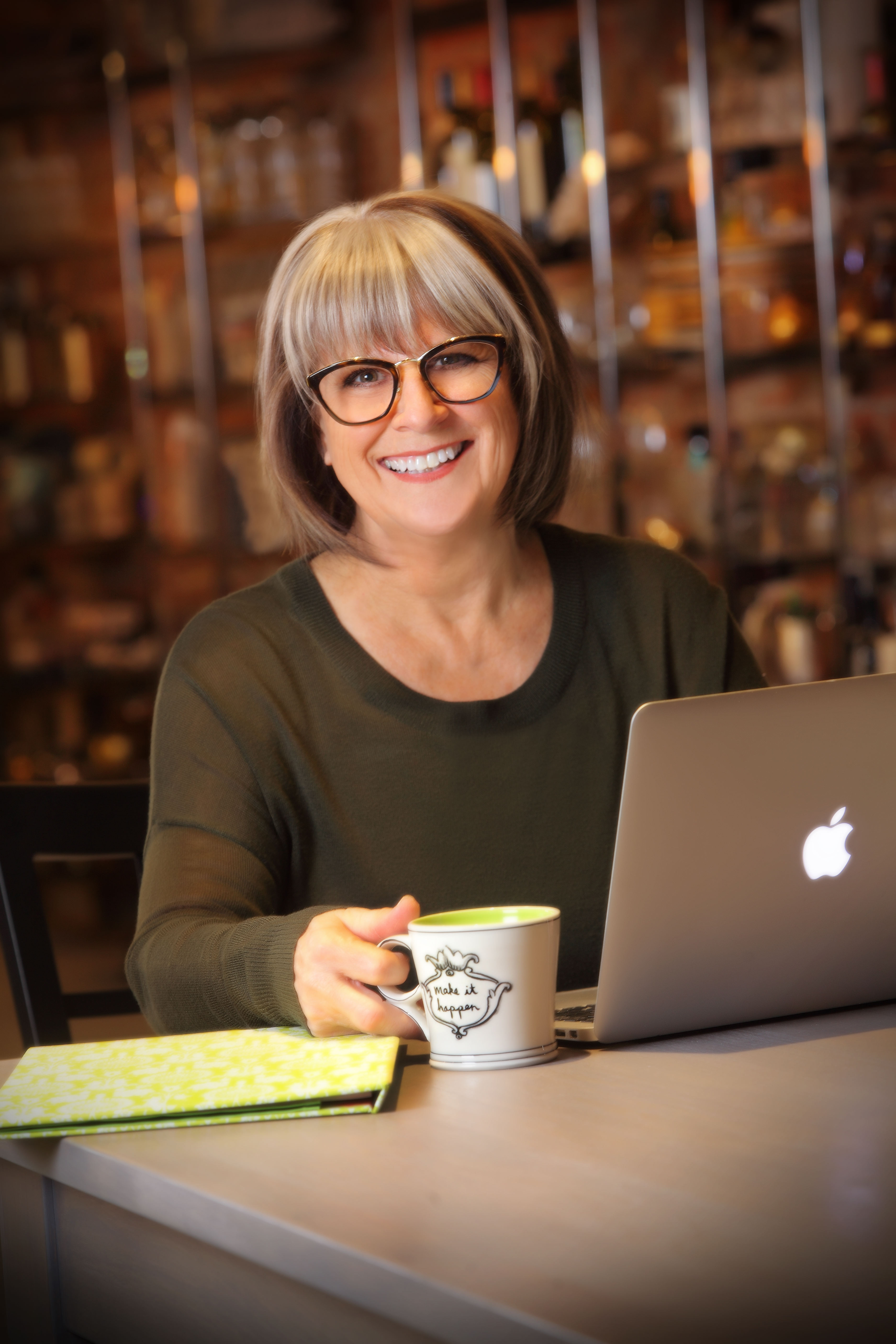
MJ Lifestyle: The Magazine Elevating The Feminine Voice… – The Mr. Magazine™ Interview With Jennifer Skøg, Founder, Editor & Chief Creative, MJ Lifestyle Magazine…

April 4, 2019

“I am a photographer by trade, so I have been a fan of print for almost my entire life. If it’s stuck in a computer it’s not going to be seen; we have so many files that are just stuck in the Worldwide Web, but not necessarily something beautiful that you can touch and feel and experience. And so because of my background with fine art and high-end photography, that gave me one option for my magazine, and that was to be finely printed on ecofriendly paper. I believe that imagery often teaches people things; people feel things from imagery sometimes more than reading. So for me, imagery was a big part of getting people to understand and educate themselves on the benefits of cannabis.” Jennifer Skøg…

A Mr. Magazine™ Launch Story…

A luxury cannabis publication that not only respects the plant and educates readers about its much-touted benefits, but also empowers women to be strong leaders in their chosen lives and careers, MJ Lifestyle strives to showcase real women from all cultures and ethnicities, believing in the diversity of the world in which we all exist. The magazine is not a “stoner” title, but instead is one that chooses its partnerships carefully in order to maintain the integrity that Founder Jennifer Skøg is determined it will display.

I spoke with Jennifer recently and we talked about the magazine and its compelling imagery and editorials. Jennifer is a photographer by trade that specializes in intimate feminine photography, so making women feel comfortable while empowered in front of the camera is something that she is passionate about. Just as she is about her own personal usage of cannabis, a plant that she respects and is an advocate for when it comes to the many health and wellness issues the plant can address. And Jennifer realized that modern day women were not being properly represented in the space, so MJ Lifestyle was born. With an all-female team that she credits as being incredible, Jennifer is determined to elevate the female voice in the world of cannabis.
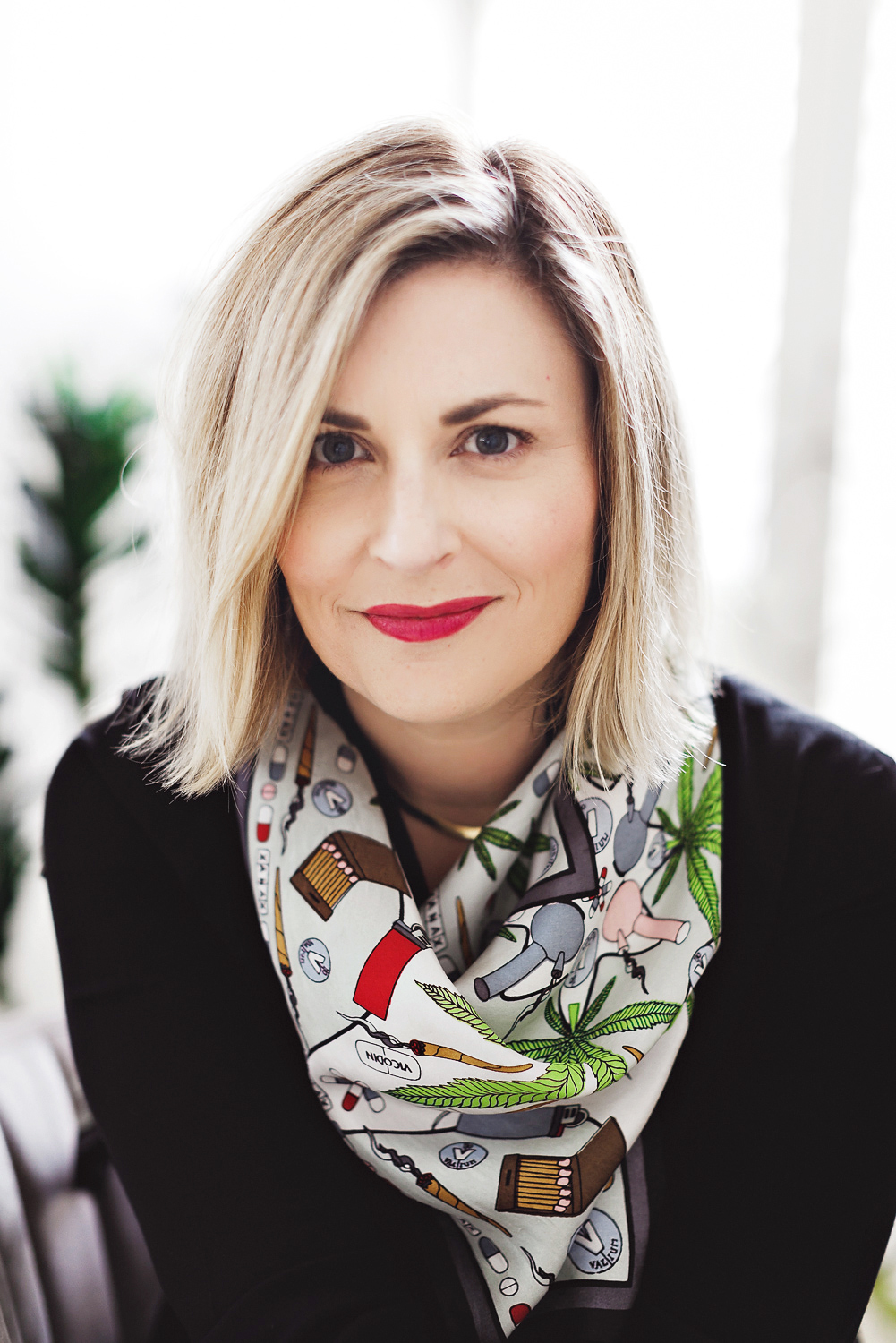
So, I hope that you enjoy this Mr. Magazine™ interview with a woman who is a magazine entrepreneur, a professional photographer, and a soccer mom, all rolled into one delightful person, Jennifer Skøg, MJ Lifestyle magazine.

But first the sound-bites:

On why she chose print for MJ Lifestyle magazine in this digital age: I am a photographer by trade, so I have been a fan of print for almost my entire life. If it’s stuck in a computer it’s not going to be seen; we have so many files that are just stuck in the Worldwide Web, but not necessarily something beautiful that you can touch and feel and experience. And so because of my background with fine art and high-end photography, that gave me one option for my magazine, and that was to be finely printed on ecofriendly paper. I believe that imagery often teaches people things; people feel things from imagery sometimes more than reading. So for me, imagery was a big part of getting people to understand and educate themselves on the benefits of cannabis.

On the concept of cannabis and feminism behind the magazine: Really, when I first got into the industry I was just starting to shoot for brands and helping to elevate imagery for those brands, and what we quickly realized was that women were not properly represented in the cannabis space, real professional women. It was typically more of a stoner culture type of thing and not a positive light for cannabis at all. I have actually been a consumer for most of my adult life and have definitely hidden my consumption from my professional world for fear of being judged or missing out on work, people not hiring me.

On how she came up with the tagline “For Women With High Taste”: That was actually our first tagline and it’s funny because we were switching back and forth between “For Women With High Taste” and “For Women Of High Taste.” There’s a big difference between “with” and “of” and some of our women of color thought Women With High Taste were born with it and Women Of High Taste was something that you accumulated overtime or something you gave yourself. We were trying to connect, obviously women, with having high-end values and aspirations and taste. But we’re actually changing that; we don’t know exactly what we want to do yet, but it’s really about elevating your feminine voice.

On the magazine selling out so quickly on its website and whether she feels she was right on target with seeing a need for the magazine in the marketplace: We weren’t expecting it to sell out so quickly; we actually got a really big order that was unexpected, which sold us out almost immediately. And that was really exciting and we’re still very excited, but also the hard part for us is marketing and advertising. And right now, because our magazine has to do with cannabis, we’re not able to advertise anywhere basically. So, we’ve had to get really creative with influential type stuff, social media, and just building an audience. So, yes we sold out online, but right now our biggest thing is we’ve got 400 stores that we still need to sell the magazine out in. We’re definitely trying to continue raising awareness.

On the concept of romancing the plant, merging photography, women, nudity, and art, all between the pages of MJ Lifestyle: As I mentioned, I’m a photographer by trade; I actually teach and one of my specialties is intimate photography of women. Over the past 20 years of doing this, that’s been singlehandedly the most rewarding thing that I’ve done. Almost every time I’m able to photograph a woman and have her feel comfortable in front of the camera and it’s like opening her world up to a type of self-love she’s never known before. So, that’s been easy to weave in because we are talking about self-love so much. We’re talking about caring for ourselves, caring for our families, and making those educated decisions. And so for us yes, we are romancing the plant, but there’s a very fine line between glamourizing it and obviously, kind of paying tribute to it.

On the wide diversity of the magazine and whether that was intentional: Oh no, it’s intentional. It’s absolutely intentional. And that’s the thing, especially with what our world is going through with racism right now, and social justice being a huge thing that we have in our cannabis space too, social equity and social justice, and so it’s a big thing for us to make sure diversity is key. I am a white woman and grew up with a somewhat privileged lifestyle, I’ve worked very hard, but I’ve also, because of the color of my skin, things have probably come easier for me than most other people of color. So, the only thing I can do is use my privilege to make sure that we’re raising awareness for everybody and including everybody.

On whether launching the magazine was a walk in a rose garden for her or has she faced any challenges along the way: It’s been very, very difficult. Not just entering into a new industry of cannabis, but also a new industry of magazine publication. Lots of things that I didn’t know before, but also things internally. Not every single woman can work with every woman and we have definitely had some trimming of the negative energies, so it’s been a bumpy ride, just trying to make sure we have the right team with us. We have recovered significantly from it, and we are very grateful.

On having to be over 21 to click into the website content and if it’s the cannabis or the nudity that required that: It’s the cannabis. I think there might be minor nudity, but no, it’s the cannabis. And that’s the reason why we can’t advertise anything. And even the young twenties are not in our demographic. We’re definitely thirty and up, so we really don’t want this getting into the hands of younger kids.

On what she hopes to accomplish with the magazine one year from now: It’s really exciting and fun; we’re meeting and participating in a lot of events, so we’re getting out there in the field and getting to know women. And not just at cannabis events, but holistic events, yoga, or business events, women being empowered. We want this to not be stoner culture, we want this to be real life. So, we’re trying to bridge that gap between the stoner culture and real women. For us, it would be that we had evolved into a greater team, putting on more events, and having another couple of issues under our belt.

On anything she’d like to add: The other really difficult part for us is that we really are trying to respect the plant and so we have to be very careful who we are partnering with, because there are companies that don’t have the best intentions, or we have cut companies that are coming in and flooding the market with misogynistic type of marketing, with half-naked women, and on their billboards you’ll see women with bongs and it’s just not appropriate. So for us, that’s one of our biggest things, making sure that the people we are partnering with have good intentions, integrity; obviously they have a safe product to consume, but also we’re about business too, we’re not here saying money is money. We’re very much pride over profit.

On the biggest misconception she thinks people have about her: Probably that we have money. (Laughs) What most people think is that we have a pretty well-oiled machine, but we’re really just taking it one day at a time. And we’re working really hard, but at the same time we’re also trying to enjoy our lives.

On what someone would find her doing if they showed up unexpectedly one evening at her home: Moms are busy. I pick up my kids; I do homework; I start dinner; I clean up after dinner, and by the time it’s 7:00 p.m., I actually go back to my computer and get to work. I take a couple of minutes to snuggle with my kids and if it’s been a really long day, I’ll fall asleep with them (Laughs) And falling asleep with them is the best ever. Sometimes I’ll consume some cannabis, but not until the kids are down or they’re away. I actually don’t drink a lot of alcohol, it upsets my stomach and that’s one of the reasons that cannabis has been my kind of “vice,” so to speak, for so long.

On what she would have tattooed upon her brain that would be there forever and no one could ever forget about her: Makes women feel amazing, feel beautiful, and powerful.

On what keeps her up at night: (Laughs) Work. I’m non-stop working; my office is in my house, so I’m literally on the desk. It’s sad because sometimes you’ll see that when all of my family wants quiet time, my husband is on his computer and I’m on mine and my kids are on their devices, it’s very techy. I am a great mom, but I’m also at my computer often.
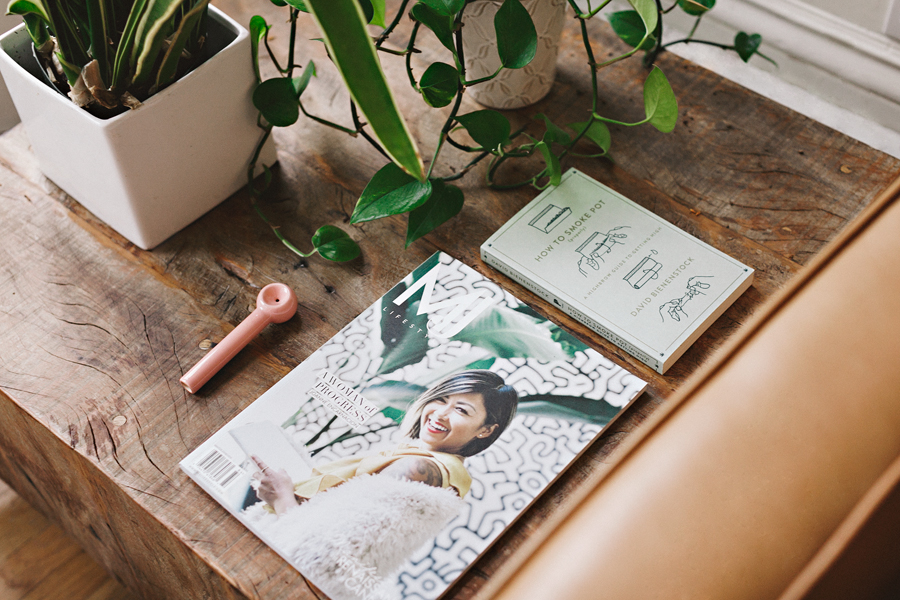
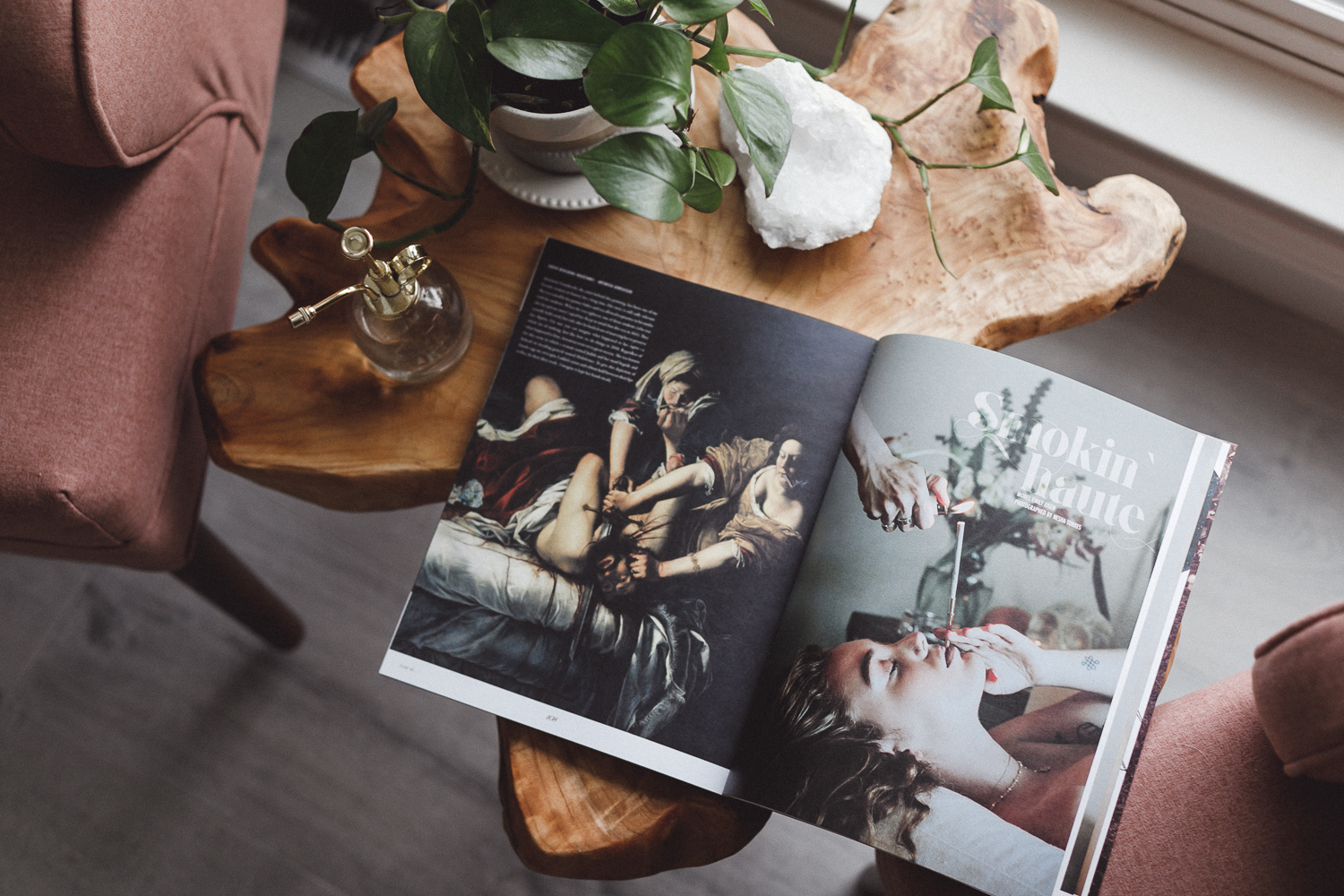
And now the lightly edited transcript of the Mr. Magazine™ interview with Jennifer Skøg, founder, editor, & chief creative, MJ Lifestyle Magazine.

Samir Husni: When I saw MJ Lifestyle, I was impressed by the size of the magazine and the fact that you call it the “fine print” magazine. Tell me, why are you doing a print magazine in this digital age?

Jennifer Skøg: I am a photographer by trade, so I have been a fan of print for almost my entire life. If it’s stuck in a computer it’s not going to be seen; we have so many files that are just stuck in the Worldwide Web, but not necessarily something beautiful that you can touch and feel and experience. And so because of my background with fine art and high-end photography, that gave me one option for my magazine, and that was to be finely printed on ecofriendly paper. I believe that imagery often teaches people things; people feel things from imagery sometimes more than reading. So for me, imagery was a big part of getting people to understand and educate themselves on the benefits of cannabis.

Samir Husni: Can you tell me the genesis of MJ Lifestyle, because you go beyond cannabis; you’re combining feminism and cannabis, can you expand a little on that concept?

Jennifer Skøg: Really, when I first got into the industry I was just starting to shoot for brands and helping to elevate imagery for those brands, and what we quickly realized was that women were not properly represented in the cannabis space, real professional women. It was typically more of a stoner culture type of thing and not a positive light for cannabis at all. I have actually been a consumer for most of my adult life and have definitely hidden my consumption from my professional world for fear of being judged or missing out on work, people not hiring me.

So, this was something for me, coming out of the shadows so to speak and opening up about this, it expanded my eyes as to how much not just the plant had been criminalized and stigmatized, but women in general all over the world have had to fight for equality, and we need to support each other. We’re in a world where women are competitive, we get catty and it would be nice if we didn’t have to compete. It would be nice if we could help each other out. All of us need help at times, it takes a tribe to do anything. Whether it’s raising kids or getting our jobs done completely or throwing out a brand new notion like cannabis is friendly. That’s why we’re mixing the two.

And we’re battling a lot of misogynistic brands who think it’s okay to completely expose women or undermine women and put us in a negative light, so to speak. So, we’re really wanting to bring that unity and sisterhood into the magazine as well.

Samir Husni: How did you decide on the magazine’s tagline, and I see it’s even on your business card: “For Women With High Taste?”

Jennifer Skøg: That was actually our first tagline and it’s funny because we were switching back and forth between “For Women With High Taste” and “For Women Of High Taste.” There’s a big difference between “with” and “of” and some of our women of color thought Women With High Taste were born with it and Women Of High Taste was something that you accumulated overtime or something you gave yourself. We were trying to connect, obviously women, with having high-end values and aspirations and taste.

But we’re actually changing that; we don’t know exactly what we want to do yet, but it’s really about elevating your feminine voice. And a lot of it is not necessarily about getting high, so we definitely want to try and get that kind of terminology out and be a little bit more professional and scientific health wise.

Samir Husni: I noticed on your magazine’s website that the second issue, which is now on newsstands, has sold out online, from the website. Do you think that your gut feeling that there was a need for this magazine in the marketplace was right on target?

Jennifer Skøg: As far as us selling out so quickly?

Samir Husni: Yes, and the need for the magazine. Evidently there is an audience for it or it wouldn’t have sold so quickly.
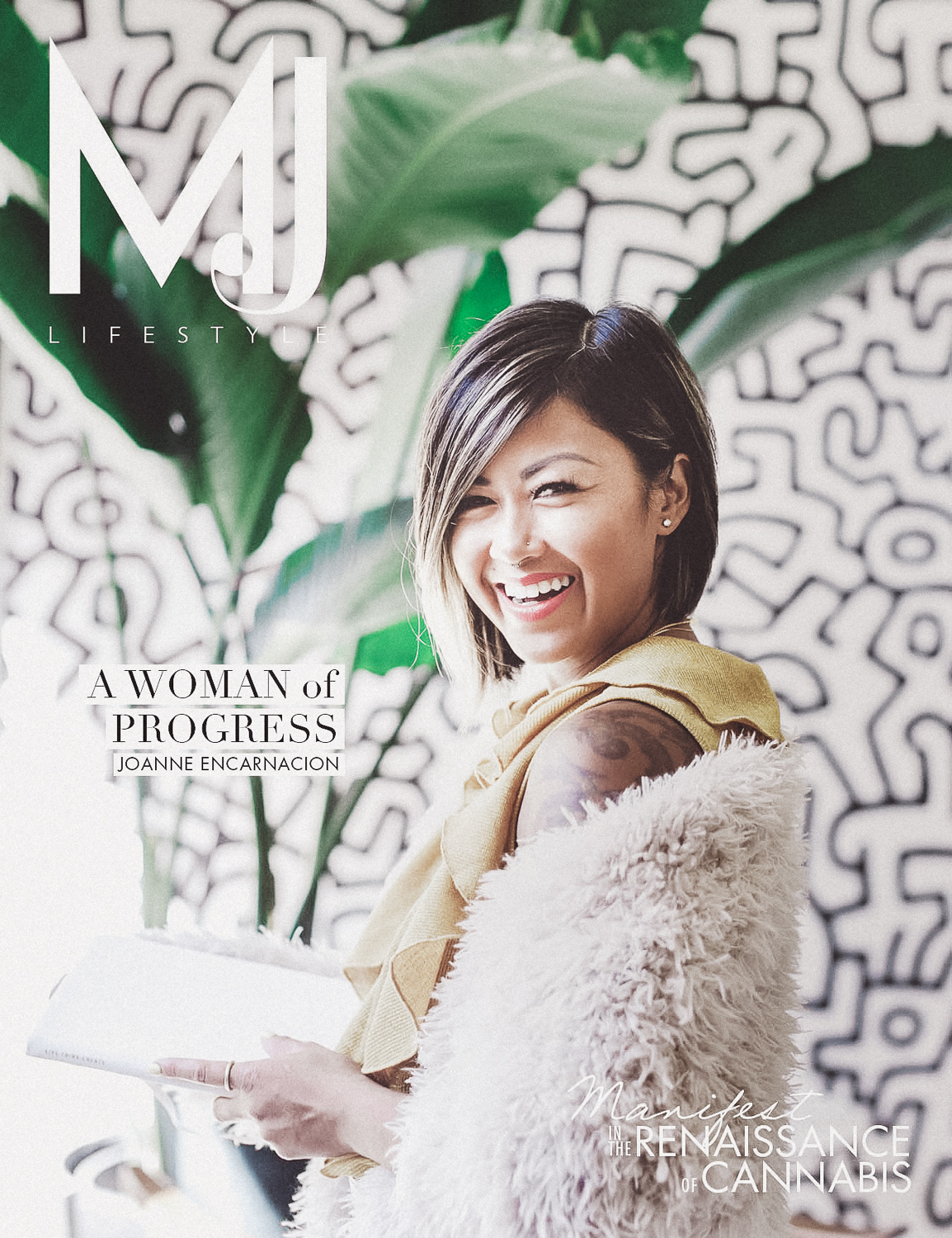
Jennifer Skøg: We weren’t expecting it to sell out so quickly; we actually got a really big order that was unexpected, which sold us out almost immediately. And that was really exciting and we’re still very excited, but also the hard part for us is marketing and advertising. And right now, because our magazine has to do with cannabis, we’re not able to advertise anywhere basically. So, we’ve had to get really creative with influential type stuff, social media, and just building an audience. So, yes we sold out online, but right now our biggest thing is we’ve got 400 stores that we still need to sell the magazine out in. We’re definitely trying to continue raising awareness.

But this hasn’t been done before. We had a thought in our minds and at first no one was able to understand what we were trying to accomplish, but now that the first two issues are out I think it’s beginning to click in people’s minds. We’ve actually had quite a few brands come to us recently, grateful that they can find us and looking for a way to have a more refined audience and a more refined way of educating potential consumers. A lot of people are trying to get away from the High Times and the adult magazines and have it be something more.

Samir Husni: As I flipped through the pages of the magazine, it’s like you’re romancing the plant with the imagery and the photography. Tell me more about that concept of merging the photography, the women, the nudity, the art, all between the pages of MJ Lifestyle.

Jennifer Skøg: As I mentioned, I’m a photographer by trade; I actually teach and one of my specialties is intimate photography of women. Over the past 20 years of doing this, that’s been singlehandedly the most rewarding thing that I’ve done. Almost every time I’m able to photograph a woman and have her feel comfortable in front of the camera and it’s like opening her world up to a type of self-love she’s never known before. So, that’s been easy to weave in because we are talking about self-love so much. We’re talking about caring for ourselves, caring for our families, and making those educated decisions. And so for us yes, we are romancing the plant, but there’s a very fine line between glamourizing it and obviously, kind of paying tribute to it.

In the beginning it was very hard for me because I don’t want to glamourize it; I have two small children, I don’t want them to think that it’s cool to be smoking anything. So, while we want it to be a very nonjudgmental space and inclusive and diverse, at the same time we’re trying to really show how we can be more safe about our consumption and not have smoking everywhere. But also loving ourselves, loving our bodies, being body-positive and just trying to create something we don’t have, empowering women to be their own leaders and founders in their space. And all of this just really fits together for us. I’m essentially my own target market. I’m a self-made soccer mom. (Laughs)

I’m literally a stay-at-home working mom, it’s a whole lot of jobs in one. And every woman is just trying to figure things out. So, this is a way that we can really give resources and support throughout our sisterhood.
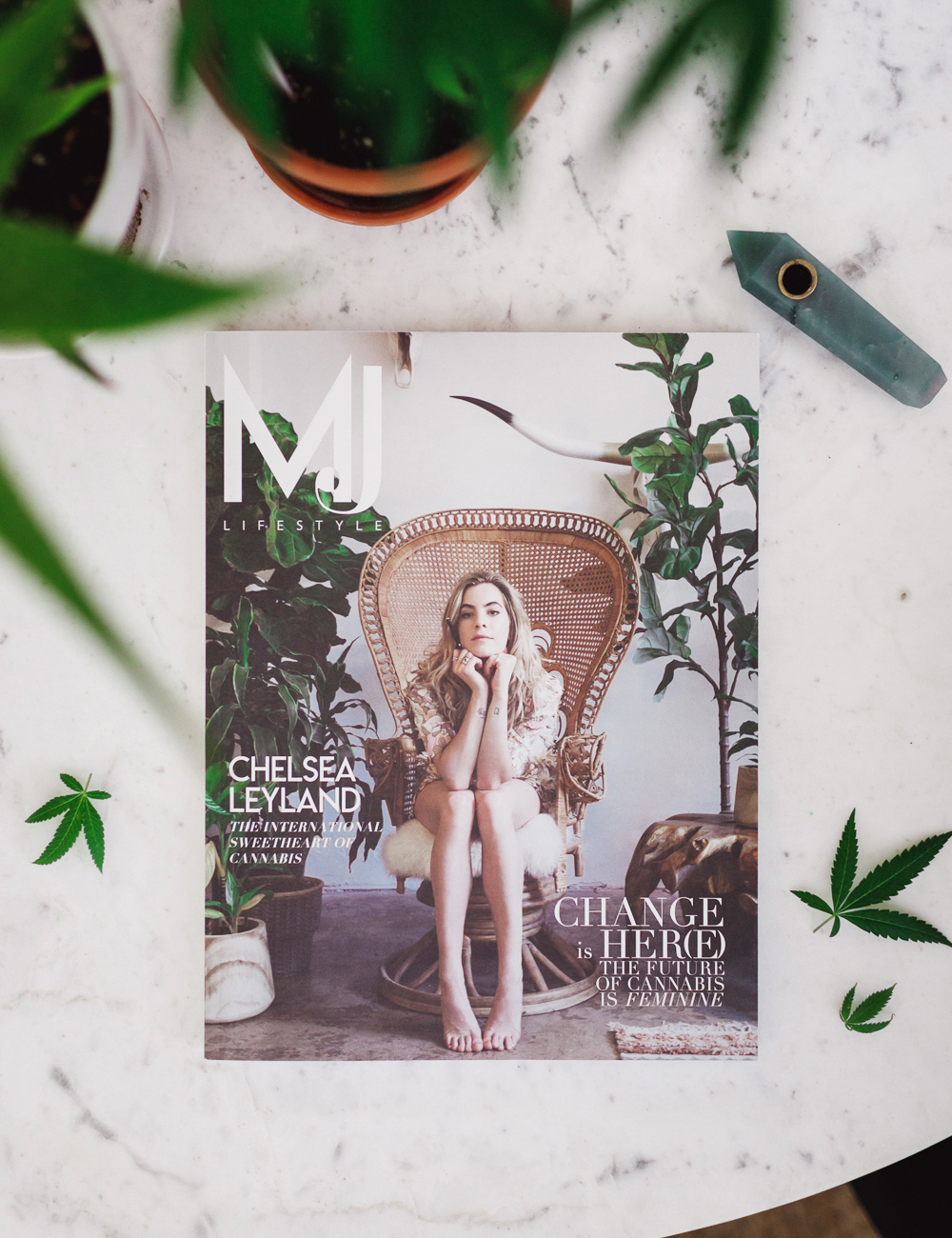
Samir Husni: Talking about every woman and sisterhood, it seems to me that you have not left a single ethnic group or race out of the magazine. Was that intentional or you’re just casting the widest net possible?

Jennifer Skøg: Oh no, it’s intentional. It’s absolutely intentional. And that’s the thing, especially with what our world is going through with racism right now, and social justice being a huge thing that we have in our cannabis space too, social equity and social justice, and so it’s a big thing for us to make sure diversity is key. I am a white woman and grew up with a somewhat privileged lifestyle, I’ve worked very hard, but I’ve also, because of the color of my skin, things have probably come easier for me than most other people of color. So, the only thing I can do is use my privilege to make sure that we’re raising awareness for everybody and including everybody.

For me it’s really important that we do that; we don’t want just a bunch of white women everywhere. That’s not what our world is and that’s not what makes our world beautiful. So yes, for us, it’s extremely intentional that we’re trying to include every single culture, background, and group so that we can have everyone represented.

Samir Husni: I can hear the passion in your voice talking about the magazine and its audience; has it been a walk in a rose garden for you, so easy to put the magazine together, or have you faced some challenges along the way?

Jennifer Skøg: It’s been very, very difficult. Not just entering into a new industry of cannabis, but also a new industry of magazine publication. Lots of things that I didn’t know before, but also things internally. Not every single woman can work with every woman and we have definitely had some trimming of the negative energies, so it’s been a bumpy ride, just trying to make sure we have the right team with us. We have recovered significantly from it, and we are very grateful.

Really, we’re a small group of women, all of us have our own side hustles and I’m the main one putting all of the pieces together, but I have an incredible community of women where we’re creating resources right now. We don’t have public or private funding or any funding right now, we’re funding this ourselves. So, a lot of it is trading resources. I have women working with the magazines and then I’m helping them by photographing their products, helping them with their websites, giving them business coaching, anyway that we can evolve and grow each other is what we’re doing until we’re able to actually be profitable.

Samir Husni: I’ve noticed on your website that you seem to be positioning yourself as an adult magazine because you have to be over 21 to click into the website content; is it the cannabis or the nudity that required that?
Jennifer Skøg: It’s the cannabis. I think there might be minor nudity, but no, it’s the cannabis. And that’s the reason why we can’t advertise anything. And even the young twenties are not in our demographic. We’re definitely thirty and up, so we really don’t want this getting into the hands of younger kids.

Samir Husni: If we’re having this conversation a year from now, what would you hope to tell me you had accomplished with MJ Lifestyle?

Jennifer Skøg: It’s really exciting and fun; we’re meeting and participating in a lot of events, so we’re getting out there in the field and getting to know women. And not just at cannabis events, but holistic events, yoga, or business events, women being empowered. We want this to not be stoner culture, we want this to be real life. So, we’re trying to bridge that gap between the stoner culture and real women. For us, it would be that we had evolved into a greater team, putting on more events, and having another couple of issues under our belt.

We have one coming out this summer and it’s on policy and social justice. This is a huge issue coming out that we’re working on right now. It involves a lot of reaching out to people, a lot of interviews, and then me flying to go and do photos. (Laughs) It’s a crazy, busy life, but really exciting.

Samir Husni: Is there anything you’d like to add?

Jennifer Skøg: The other really difficult part for us is that we really are trying to respect the plant and so we have to be very careful who we are partnering with, because there are companies that don’t have the best intentions, or we have cut companies that are coming in and flooding the market with misogynistic type of marketing, with half-naked women, and on their billboards you’ll see women with bongs and it’s just not appropriate. So for us, that’s one of our biggest things, making sure that the people we are partnering with have good intentions, integrity; obviously they have a safe product to consume, but also we’re about business too, we’re not here saying money is money. We’re very much pride over profit.

Samir Husni: What’s the biggest misconception you think people have about you?

Jennifer Skøg: Probably that we have money. (Laughs) What most people think is that we have a pretty well-oiled machine, but we’re really just taking it one day at a time. And we’re working really hard, but at the same time we’re also trying to enjoy our lives.

Samir Husni: If I showed up unexpectedly at your home one evening after work, what would I find you doing? Having a glass of wine; playing with the kids; reading a magazine; cooking; watching TV; or something else? How do you unwind?

Jennifer Skøg: Moms are busy. I pick up my kids; I do homework; I start dinner; I clean up after dinner, and by the time it’s 7:00 p.m., I actually go back to my computer and get to work. I take a couple of minutes to snuggle with my kids and if it’s been a really long day, I’ll fall asleep with them (Laughs) And falling asleep with them is the best ever. Sometimes I’ll consume some cannabis, but not until the kids are down or they’re away. I actually don’t drink a lot of alcohol, it upsets my stomach and that’s one of the reasons that cannabis has been my kind of “vice,” so to speak, for so long.

Samir Husni: If you could have one thing tattooed upon your brain that no one would ever forget about you, what would it be?

Jennifer Skøg: Makes women feel amazing, feel beautiful, and powerful.

Samir Husni: My typical last question; what keeps you up at night?

Jennifer Skøg: (Laughs) Work. I’m non-stop working; my office is in my house, so I’m literally on the desk. It’s sad because sometimes you’ll see that when all of my family wants quiet time, my husband is on his computer and I’m on mine and my kids are on their devices, it’s very techy. I am a great mom, but I’m also at my computer often.

Samir Husni: Thank you.
h1

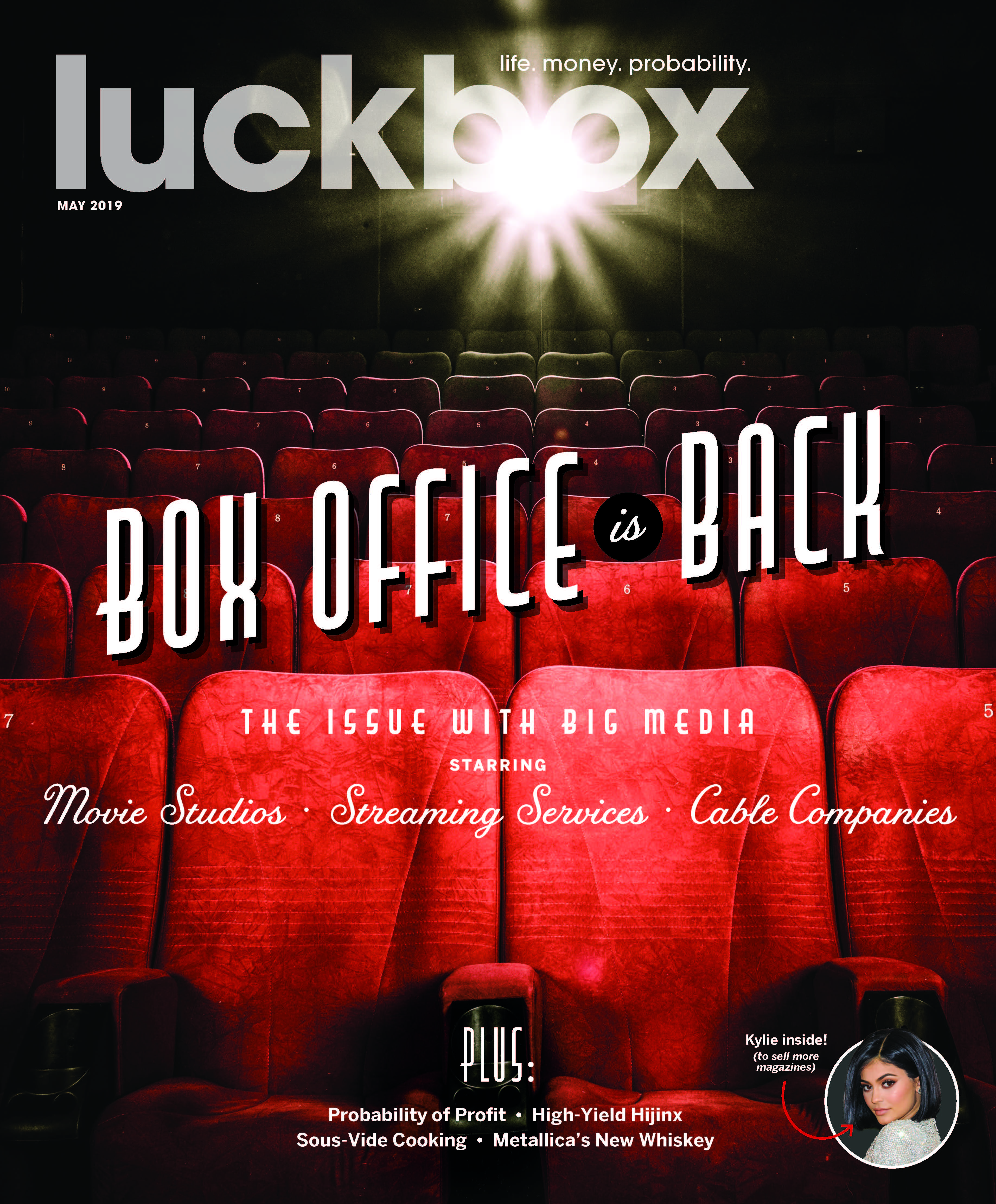
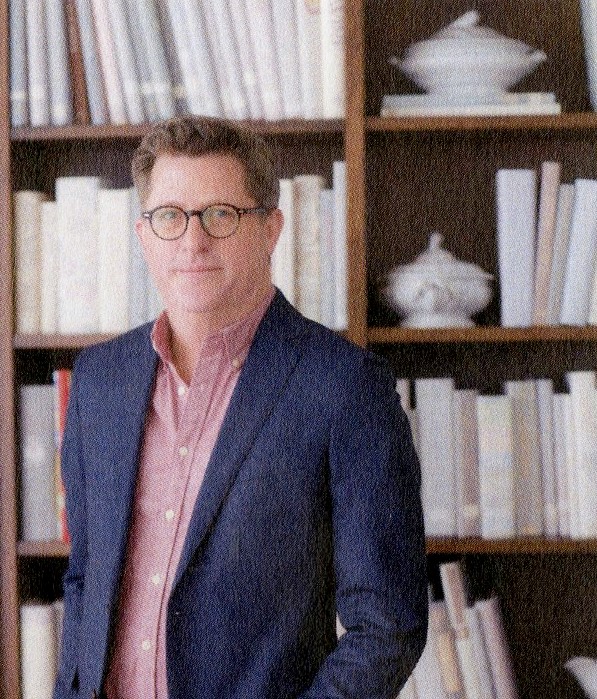
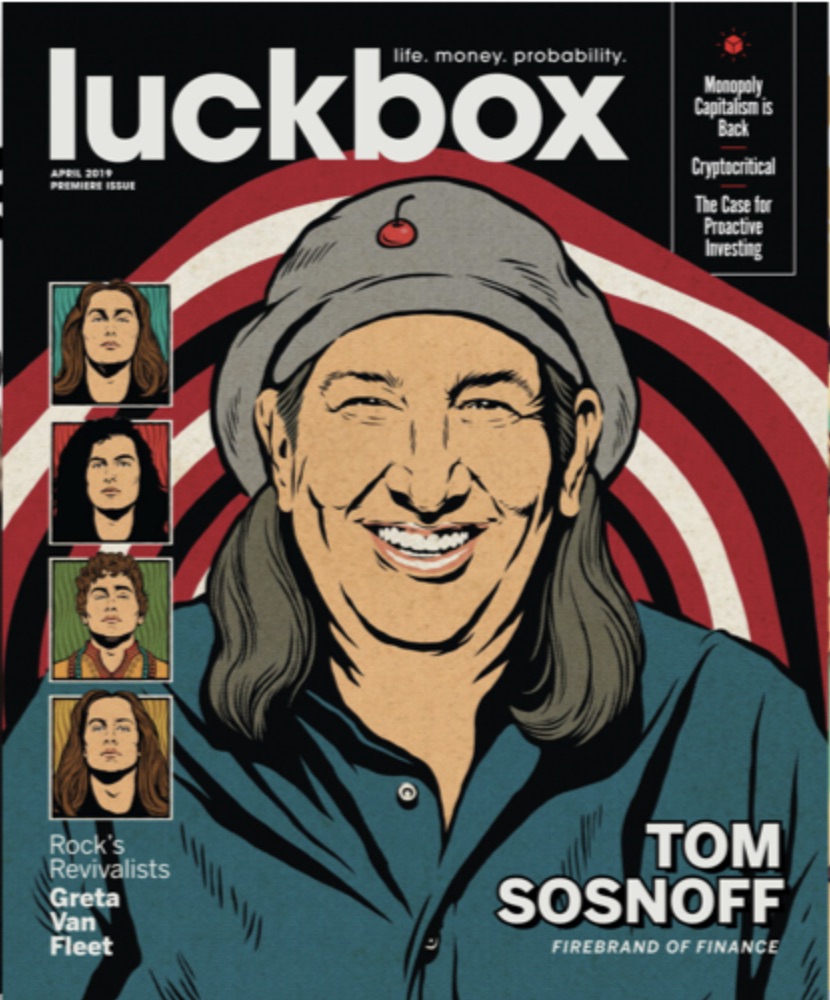
Luckbox Magazine: A Definite Alternative To Depending On Lady Luck When It Comes To Decisions Of Money & Investments – The Mr. Magazine™ Interview With Jeff Joseph, Publisher & Editorial Director, Luckbox Magazine…

April 1, 2019

“Ultimately, we have one objective; we did a lot of surveying of our audiences in the past, because that’s the only way you really measure if you’re engaging, and if your unique content proposition is resonating with your audience. So we measure that a lot, frequently, in the form of surveys with our audience. And the survey criteria that we’ve had in our prior financial publications that we aspire to achieve is that in the past, within sixty percent of our audience never threw out their print editions, ever. They kept them as a permanent library. That specific metric of engagement really drives us and motivates us. It means that we are providing a library of resource to our audience that they go back to and refer to over and over again. That means that they like the look and feel and texture, and the magazine is aspirational to them. And that it provides a value beyond the first read.” Jeff Joseph…

A Mr. Magazine™ Launch Story…

With investment experience from floor trader to institutional asset management, and venture experience as well, Jeff Joseph has the expertise needed to bring a financial magazine, such as the new title Luckbox, to great success and bring even greater informational strategies to lead readers from chancy risks to skilled decisions when it comes to their investments. And as chief content officer and publisher of Modern Trader magazine, he knows a thing or two about the publishing industry as well, although he’ll tell you he is a financial wiz much more than a publishing tycoon.

I spoke with Jeff recently and we talked about the new magazine Luckbox, which he and his team are developing and publishing for TastyTrade, one of the fastest growing online financial networks in the world. Partnering with TastyTrade on this endeavor, Jeff said that the magazine started with an already embedded audience that allows him to do what he wanted to do, allocate resources for content. In Jeff’s opinion, it’s all about the content. And with TastyTrade as owner of the magazine and Jeff as its publisher and editorial director, the magazine about probabilities and content is a sharply designed, extremely smart new publication that takes the “what ifs” and the “might happens” and quantifies those probabilities when it comes to making money on investments. It’s a magazine for investors who want to take control of their money and make their own decisions.

So, I hope that you enjoy the Mr. magazine™ interview with a man who talks magazine as fluently as he does money – Jeff Joseph, publisher and editorial director, Luckbox Magazine.

But first the sound-bites:

On starting another print magazine in this digital age: I’ve always agreed with your premise, that it’s not a magazine if it isn’t print. But at the same time there is something else that I believe is true, and that is that a magazine has many forms. And in the long run a magazine is still about content. I’m agnostic as to what platform our readers choose to access our content. I prefer it to be in print, because I agree with you, that it’s a beautiful, tactile, engaging experience, but for those who prefer to access our content through digital platforms, that’s fine.

On the idea for Luckbox and how the magazine was born: Luckbox is a partnership with a financial services firm that is a content marketing firm that understands the importance of content marketing to engage with a larger audience and is all about the idea of giving information to be able to create goodwill and customer engagement and customer loyalty. And it had the marketing means and the audience size that would immediately allow this new publication, Luckbox, to reach even larger audiences.

On the concept of Luckbox and how that applies to the audience he is attempting to reach: We’re very focused on a step-by-step process that defines our unique content position, and then ultimately measures the engagement of that content and the scalability to larger audiences. So the unique content proposition is like every publication, you have to have a very clear idea of what you are and what you stand for, and that idea should drive all of your editorial decisions. In our case, it’s about life and money broadly speaking, but narrowly speaking, our publication is really about probabilities. And the key word in unique content proposition is “unique.” What’s the differentiator?

On were there any stumbling blocks or challenges along the way: I think my distinctive advantage as a publisher and also as the editorial director is that I have subject matter expertise and domain expertise, first and foremost. I come from finance and trading and the investment industry, the decades of my professional career have been in that area. I’ve been a publisher for only five years, although those five years seem like twenty years, but it’s the content knowledge and domain expertise.

On having a partner with this venture and why he felt he needed one: To be clear, this publication is owned by the financial partner Tastytrade, this is their publication and we’re developing it for them. And the reason is, to answer your question, is scale. It’s that simple. As you know the economics of print are still predominantly focused on subscription revenue or advertising revenue. And they feed each other, the larger your subscription base, the larger your ad revenues. There is that third level of event revenue, but you first have to focus on brand development and audience building before you can go down that event path.

On the probability that he will be having this conversation one year from now: (Laughs) That’s a great question and that’s exactly the business concern that I have been most focused on. So unlike a publisher that would be launching a new magazine that has to deal with all of the business issues, when you have an embedded audience from day one, that probability rises materially, so I would tell you right now, go on the record as saying there is a 95 percent-plus probability that next year we are talking about how we’re expanding our audience and that Luckbox is looking at is next phases of evolution.

On anything he’d like to add: You know what it’s like out of the gate, there is just so much to do. You just want to focus on trying to get better and better. I’ve never been happy with any issue we’ve ever produced. I have a really smart and knowledgeable team, with great editors that are willing to shake up the conventional way of looking at things. Our parent company is very provocative in the manner in which they work, they have their own marketing voice. And that makes this all just a lot more fun.

On the biggest misconception he thinks people have about him: I guess that I’m a publisher. Again, my background is first and foremost in the financial industry investment and trading, that’s where I’ve spent my entire career. It’s the content expertise that I think gives me an edge. And with my past entrepreneurial and venture activities, I’m more of an entrepreneur than a publisher, and that to me only implies a little bit more flexibility. That’s all.

On what someone would find him doing if they showed up unexpectedly one evening at his home: Aside from family, my passions are brown whiskey, cigars, and my Samoyed, my dog. I also probably spend more time consuming media than any single person I know. Whether it’s walking, listening to podcast news or every morning listening to financial media, every night listening to political media, and then every evening on the weekend reading, I consume a lot of media. And that’s probably where most of my time is spent.

On what he would have tattooed upon his brain that would be there forever and no one could ever forget about him: I’m my father’s son and my father is approaching a milestone birthday on April 3rd, he’ll be 100 years old. And his spirit and his heart is still beating strongly and he, above everything else, is a warm, wonderful man, the nicest man I’ve ever met, but the hardest working man I’ve ever met. And with an insatiable, entrepreneurial spirit. He was at Normandy in the second wave, he did five European tours; he was an innovator as a restaurateur, he worked long hard hours. He had as many as a dozen restaurants at one time. I’ve learned my work ethic from him and an entrepreneurial spirit and an accept-no-failure attitude and that becomes my greatest challenge, to pass it on to my children as well.

On what keeps him up at night: All this media that I consume. (Laughs) I don’t sleep much. I consume a lot of media. What keeps me up in terms of the business, is the challenge. We know where the headwinds are working print to digital, and again, in the same way that I embrace what you’ve always said, which I find very motivating, it’s not print if it’s not a magazine, at the same time it’s finding the way to engage new audiences. It’s not about marketing that keeps me up, it’s about that content. I believe in the power of content, and content to mobilize and engage, to be aspirational, to be educational; and finding the way to communicate that content is to me the challenge.

And now the lightly edited transcript of the Mr. Magazine™ interview with Jeff Joseph, publisher and editorial director, Luckbox Magazine.

Samir Husni: Are you completely losing it to start another print magazine in this digital age?

Jeff Joseph: (Laughs) That’s a loaded question. I’ve always agreed with your premise, that it’s not a magazine if it isn’t print. But at the same time there is something else that I believe is true, and that is that a magazine has many forms. And in the long run a magazine is still about content. I’m agnostic as to what platform our readers choose to access our content. I prefer it to be in print, because I agree with you, that it’s a beautiful, tactile, engaging experience, but for those who prefer to access our content through digital platforms, that’s fine.

I think being platform agnostic is important. The love of print is motivating and I believe completely in the segmentation of lean-in versus lean-back media; the idea that there are people who are spending their time focusing on digital content and accessing digital content, they’re leaning into it on a daily basis. I’m a big proponent and advocate of the studies that have made it very, very clear now that when it comes to actually engaging with content and actually absorbing it, recent studies out of the University of Maryland show very compelling data that the print reader and the digital reader walk away with the same basic understanding of the content. But if your content is detailed-oriented, as ours is, there is far more engagement retention and recognition of those details for the print reader than there is for the digital reader. And that has been verified through a number of independent university studies.

And the third thing, which I have always thought was ironic that those same studies have pointed out, is that the digital reader and the print reader although they’re absorbing different levels of detail walk away with the notion that they’ve retained the content equally. So this false sense of confidence that the digital reader has, in terms of their ability to actually engage with and retain the content, is something that print seeks to address. So, I look at two worlds, one where you’re leaning into content and one where you’re leaning back with content. And I prefer the magazine, but I’m not going to let my bias get in the way of what readers choose to access.

Again, it’s balancing what you believe, which I believe that it’s not a magazine if it’s not print, but at the same time you can believe something else and that is it’s still all about content; it’s not the medium, it’s the message in the long run, and the manner in which the reader chooses to access that content. And I prefer to be agnostic about it.

Samir Husni: You’ve been involved in many other financial publications and platforms, from Tastytrade to Modern Trader, but how did you come up with the idea for Luckbox and how was the magazine born?

Jeff Joseph: The two prior print publications that I have been involved in; Futures Magazine, which was around for a long, long time, a full decade, was a B to B publication that was focused on futures and options and derivatives, and was predominantly for professional traders. When I acquired that company several years back, it was just limping along and the decision was made to reach a broader audience and make a shift to a B to C audience by adding in equities and financial markets. And that included the stock markets and being less focused on an obscure, narrowed segment of the financial market, which opened up a more B to C appeal.

And we had success with that publication. We achieved a number of editorial and design awards, including Best Business to Business Magazine during that transition. And we learned a number of things and having come to that conclusion of learning, we started seeking opportunities that would allow us to reach an even larger audience.

And that’s what Luckbox is, a partnership with a financial services firm that is a content marketing firm that understands the importance of content marketing to engage with a larger audience and is all about the idea of giving information to be able to create goodwill and customer engagement and customer loyalty. And it had the marketing means and the audience size that would immediately allow this new publication, Luckbox, to reach even larger audiences.

So, what we’ve ensured with Luckbox, which just launched last month, is that in a short period of time, within the next two or three months, we’ll achieve an audience that exceeds the largest audience that we ever had. We expect to be reaching 60,000 to 70,000 subscribers in a matter of months. And that is a result of this partnership with this multiplatform content marketing group in financial media.

Samir Husni: From the concept of the magazine, it’s a monthly magazine for anti-Wall-Streeters, proactive investors who want to make better investment decisions. Tell me a little bit more about the concept and how that applies to the audience you are attempting to reach.

Jeff Joseph: We’re very focused on a step-by-step process that defines our unique content position, and then ultimately measures the engagement of that content and the scalability to larger audiences. So the unique content proposition is like every publication, you have to have a very clear idea of what you are and what you stand for, and that idea should drive all of your editorial decisions. In our case, it’s about life and money broadly speaking, but narrowly speaking, our publication is really about probabilities. And the key word in unique content proposition is “unique.” What’s the differentiator?

And what we are aware of is that in print media there is not a single publication today, not one, that engages with the active investor. And that is someone who either trades or makes their own investment decisions and doesn’t allocate to a delegator or to a robot. They want control over their money; they want greater understanding of the decisions that they’re making and they want to learn how to make better decisions. And there isn’t a single publication in print form that addresses those issues.

So, that is our unique content proposition. We’re very focused on probabilities, and if you take a look at the “Welcome to Luckbox” page, which is a Publisher’s Note to our first readers in our debut issue, we clearly state what we’re about and that is looking at the world through the lens of probability. And that there is an irony to the name Luckbox, which is really a fun name, I love the name. It wasn’t my idea, to be clear, but it’s a wonderful name that has this curiosity gap: what is Luckbox?

And it has great irony about it, because our magazine is really about imparting knowledge, confidence and skills, and it has a lot of educational content. And the irony of the name Luckbox is that a luckbox is a slang term that traders, gamblers, and poker players know, and it refers to somebody who’s luck is significantly beyond what they deserve. Where somebody’s outcomes materially exceeds their skillsets. And that’s kind of the irony of this name. There are a couple of quotes on that very page where we define what Luckbox is. One from Seneca Roman, a philosopher who said: “Luck is what happens when preparation meets opportunity,” and that’s really what we’re focused on is that preparation of recognizing our opportunity. And then at that point, a little luck is not a bad thing. And that is our unique content proposition that we’re very focused on.

So, as we evolve, and as you know magazines evolve, we had our first issue and we’re proud of it and we’re pleased with it, but it’s like launching software, you have to have your next version; in our case it’s our next issue. And then our next issue and our next issue after that. We always look at magazines as being a lot like software launches and software releases, where every version gets better and better and more focused on delivering that unique content proposition.

So, that’s what we’re focusing on right now, being this platform that really focuses on the odds of everything. The odds of a successful investment than a particular stock or particular option. The odds of successful outcomes in life and in personal business pursuits. There is not a publication focused on that and the reason we’re focused on it is we know understanding math and probabilities empowers individuals to become more confident about the decisions they make, with respect to their own investments.

Samir Husni: Has it been a walk in a rose garden for you? You have all of this experience behind you, having done this before; were there any stumbling blocks or challenges along the way?

Jeff Joseph: I think my distinctive advantage as a publisher and also as the editorial director is that I have subject matter expertise and domain expertise, first and foremost. I come from finance and trading and the investment industry, the decades of my professional career have been in that area. I’ve been a publisher for only five years, although those five years seem like twenty years, but it’s the content knowledge and domain expertise.

And I personally believe it’s the absence of having decades of publishing experience that allows us to be more flexible, less inclined to accept the rules; this is how it needs to be done. Clearly, our least favorite words are “this is how it’s been done in the past,” we want to be provocative. We want to challenge some of the rules that have guided publishing and journalism in recent years.

And to some degree I think it’s kind of led the industry down a path and in the long run you still have to be relevant and engage with your audience. And I truly think that our team is more entrepreneurial as opposed to being beholden to journalism practices and publishing rules. And by focusing on our content and our knowledge of the content and just trying to find more engaging and compelling ways to deliver that content, I think that’s a distinct advantage for us.

My push back on your setup to that question is that I understand the publishing industry, those five years seem like twenty, but I’m learning every day. But what I do understand is our content, the investment and trading and financial industry. And that understanding of our content, when in the long run it’s the content that we are delivering as a product, not the magazine, I think that’s our advantage.

Samir Husni: You said you have a custom content publishing firm as your partner, specializing in finances; why did you feel you needed a partner with this venture?

Jeff Joseph: To be clear, this publication is owned by the financial partner Tastytrade, this is their publication and we’re developing it for them. And the reason is, to answer your question, is scale. It’s that simple. As you know the economics of print are still predominantly focused on subscription revenue or advertising revenue. And they feed each other, the larger your subscription base, the larger your ad revenues. There is that third level of event revenue, but you first have to focus on brand development and audience building before you can go down that event path.

And what we wanted and what we needed was to reach the widest possible audience. So, by working with a group that had an embedded audience from day one as opposed to spending all of our energies on audience acquisition, we have an audience. Our financial partner Tastytrade is a content marketing firm, every day at Tastytrade.com they are producing five days a week, eight hours a day, original live on-air financial programming to a large audience of hundreds of thousands that watch that programming. And that’s free programming, so they already recognized the value of providing important educational and actionable content on a daily basis to generate goodwill to monetize through their brokerage company.

And it’s that understanding, that audiences are the prerequisite to being able to scale and focus on content, and that’s what I wanted to do. I wanted to focus on content. And so much of a publisher’s responsibility is focusing on audience acquisition, and by having an audience from day one it guarantees your success in terms of potential subscriber revenue and advertising revenue. That’s very important. I think it allows us to allocate our resources more for writing and refining the content that maximizes engagement with our intended audience.

Samir Husni: What’s the probability that a year from now you and I are having this conversation?

Jeff Joseph: (Laughs) That’s a great question and that’s exactly the business concern that I have been most focused on. So unlike a publisher that would be launching a new magazine that has to deal with all of the business issues, when you have an embedded audience from day one, that probability rises materially, so I would tell you right now, go on the record as saying there is a 95 percent-plus probability that next year we are talking about how we’re expanding our audience and that Luckbox is looking at is next phases of evolution.

So, unlike the challenges that a publisher has on a daily basis, is it going to be subscription revenue or advertising revenue and they feed each other and how do I acquire more, when you start from a base it gives you a lot of advantages. And of course, we’ve just had our first issue, but our second issue will appear nationwide at Barnes & Noble and other newsstands. And we pass out complimentary issues at investment, trade, financial and entrepreneurial conferences every single month. And we’re looking at a number of different distribution platforms as opposed to both print and digital.

And of course, we’re doing the other things that integrate with technology. We have augmented reality in our very first issue, right out of the gate. And we’re integrating technology, and since we already have this lean-in media environment, by that I mean the digital programming that is online every day, that live programming, this lean-back form of media is very complimentary to that.

Ultimately, we have one objective; we did a lot of surveying of our audiences in the past, because that’s the only way you really measure if you’re engaging, and if your unique content proposition is resonating with your audience. So we measure that a lot, frequently, in the form of surveys with our audience. And the survey criteria that we’ve had in our prior financial publications that we aspire to achieve is that in the past, within sixty percent of our audience never threw out their print editions, ever. They kept them as a permanent library. That specific metric of engagement really drives us and motivates us. It means that we are providing a library of resource to our audience that they go back to and refer to over and over again. That means that they like the look and feel and texture, and the magazine is aspirational to them. And that it provides a value beyond the first read.

And everyone has their KPIs (Key Performance Indicators) that they look at; the KPI that I’m most interested in is that this is a publication that once somebody has it in their hands, they never want to throw it out. That means it has actionable, short-term information, and then it has educational, long-term information that becomes an essential, which is a key word for us, an essential resource.

And that’s what we always seek to be, essential to our readers, in the same way that if you’re a mechanic, Popular Mechanics is essential to you. If you’re a designer, Architectural Digest is essential to you. If you’re in the fashion industry, Vogue is essential to you. If you’re in the music industry, Rolling Stone is essential. If you’re a guitar player, Guitar World is essential. That’s what we’re focused on being, is essential to our readers.

Samir Husni: Is there anything you’d like to add?

Jeff Joseph: You know what it’s like out of the gate, there is just so much to do. You just want to focus on trying to get better and better. I’ve never been happy with any issue we’ve ever produced. I have a really smart and knowledgeable team, with great editors that are willing to shake up the conventional way of looking at things. Our parent company is very provocative in the manner in which they work, they have their own marketing voice. And that makes this all just a lot more fun.

We don’t feel beholden to any real rules and because we’re small we can make quick decisions and we can fail fast and adapt, and evolve and move forward immediately. There’s not a whole team of people that belabor every decision, we just decide to do something and we do it, we measure it and we move on if it doesn’t succeed.

Samir Husni: What’s the biggest misconception you think people have about you?

Jeff Joseph: I guess that I’m a publisher. Again, my background is first and foremost in the financial industry investment and trading, that’s where I’ve spent my entire career. It’s the content expertise that I think gives me an edge. And with my past entrepreneurial and venture activities, I’m more of an entrepreneur than a publisher, and that to me only implies a little bit more flexibility. That’s all, and a lot of learning as well.

Samir Husni: If I showed up unexpectedly at your home one evening after work, what would I find you doing? Having a glass of wine; reading a magazine; cooking; watching TV; or something else? How do you unwind?

Jeff Joseph: Aside from family, my passions are brown whiskey, cigars, and my Samoyed, my dog. I also probably spend more time consuming media than any single person I know. Whether it’s walking, listening to podcast news or every morning listening to financial media, every night listening to political media, and then every evening on the weekend reading, I consume a lot of media. And that’s probably where most of my time is spent.

Samir Husni: If you could have one thing tattooed upon your brain that no one would ever forget about you, what would it be?

Jeff Joseph: I’m my father’s son and my father is approaching a milestone birthday on April 3rd, he’ll be 100 years old. And his spirit and his heart is still beating strongly and he, above everything else, is a warm, wonderful man, the nicest man I’ve ever met, but the hardest working man I’ve ever met. And with an insatiable, entrepreneurial spirit. He was at Normandy in the second wave, he did five European tours; he was an innovator as a restaurateur, he worked long hard hours. He had as many as a dozen restaurants at one time. I’ve learned my work ethic from him and an entrepreneurial spirit and an accept-no-failure attitude and that becomes my greatest challenge, to pass it on to my children as well.

Samir Husni: My typical last question; what keeps you up at night?

Jeff Joseph: All this media that I consume. (Laughs) I don’t sleep much. I consume a lot of media. What keeps me up in terms of the business, is the challenge. We know where the headwinds are working print to digital, and again, in the same way that I embrace what you’ve always said, which I find very motivating, it’s not print if it’s not a magazine, at the same time it’s finding the way to engage new audiences. It’s not about marketing that keeps me up, it’s about that content. I believe in the power of content, and content to mobilize and engage, to be aspirational, to be educational; and finding the way to communicate that content is to me the challenge.

For example, it’s one of the reasons that we’re doing something in the first issue of Luckbox that we’ll continue doing going forward, we’re doing magazine reviews. In the first issue we noted Popular Mechanics and did a review, and there was a reason for that. The second issue will have a review of The Atlantic magazine, because we welcome media in all forms. And there is extraordinary journalism out there. It’s one of the reasons we want to try and bring it to the attention of younger audiences who might not be consuming print, and not aware of these different platforms and publications. So, we’ll continue to mention other magazines and promote them on a multi-basis in our own magazine going forward, because we believe in the platform.

Samir Husni: Thank you.

h1

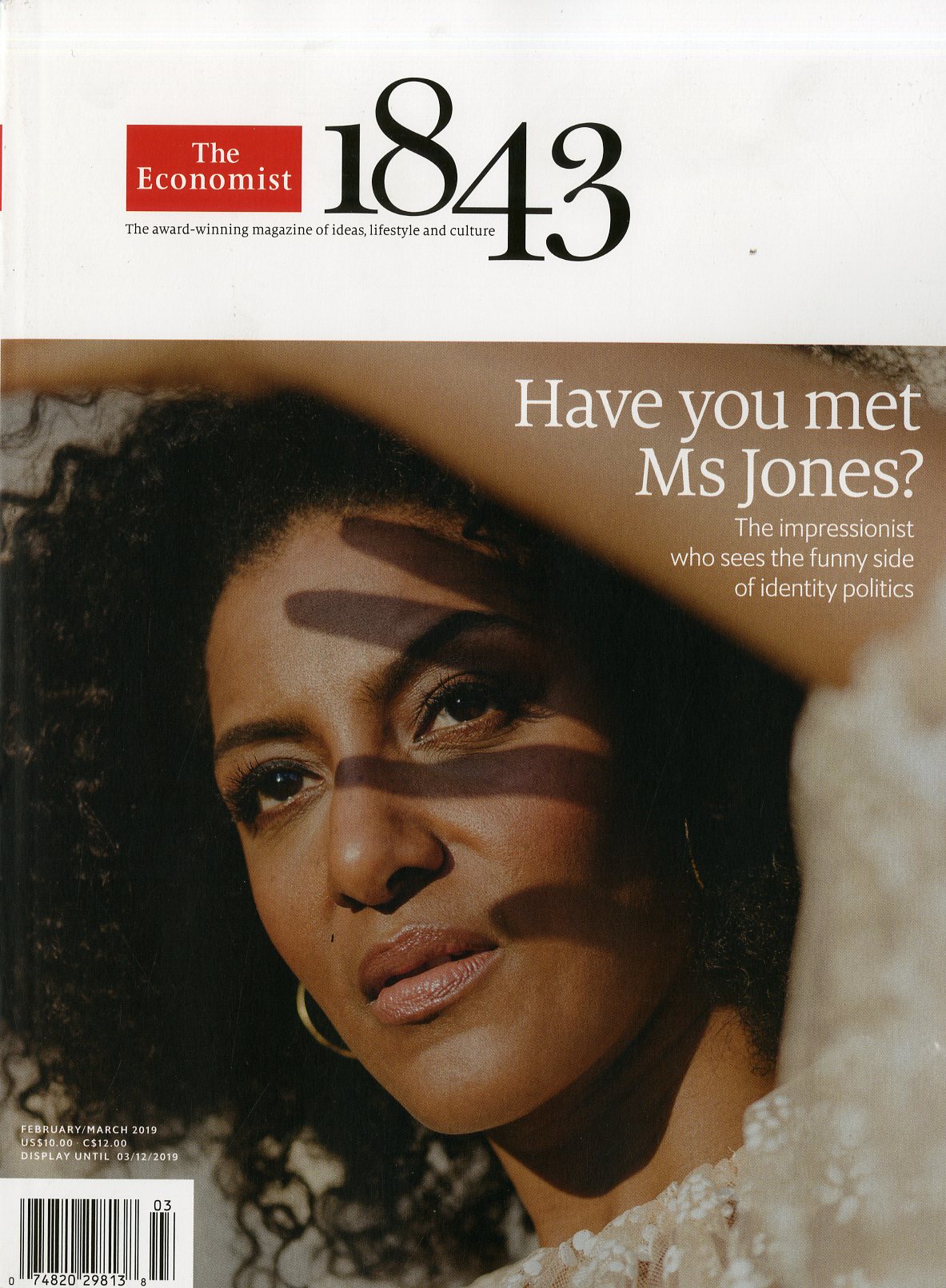
1843 Magazine: The Relaunch Of The Economist’s Bimonthly Lifestyle Magazine Reveals A Bold New Design To Tell Stories Of An Extraordinary World – The Mr. Magazine™ Interview With Rosie Blau, Editor In Chief, & Mark Beard, Publisher…

March 27, 2019

“The cover has been a big part of the discussion, obviously, about what we want to do as a magazine. For me, the goal to create the cover represented many different things that we were trying to do. My aim is that when you extend 1843 in whatever format, you find it surprising, it makes you smile and it leaves you with something that you want to share. It should be funny, but it should also be beautiful. And those are a lot of things to try and get into one place.” Rosie Blau…

“The relaunch is going to enable us to do two things and that is bolster reader revenue and advertising revenue. So, one thing that we are seeing is that both readers and advertisers are wanting to engage with audiences in a range of platforms and by relaunching 1843 on a number of platforms, we make those platforms available to advertisers and that will bolster advertising revenue. But also we make the content more engaging to readers too and they can read us where they want to read us.” Mark Beard…

The Economist announced the relaunch of its bimonthly lifestyle publication 1843, named for the year The Economist was founded. 1843 gives readers stories of an extraordinary world, with long-form narrative journalism a dominant feature, both in its print version and online. And as we all know, long-form narratives online are a no-no – or are they? Mr. Magazine™ loves a rebel, don’t you know. (Ole Miss pun intended)

I spoke with Editor in Chief, Rosie Blau and Publisher, Mark Beard recently and we talked about this taboo thing called long-form journalism online. Rosie explained that in 1843’s case, readers loved the meatier stories, the long-reads that keep them enthralled and begging for more. And with a redrawn logo and the tagline “Stories of an extraordinary world,” 1843 begins its new journey down a path that puts stories first and allows readers to be surprised and delighted by what they find along the way.

Mark explained that one of the excitements lay in the new incorporation of 1843’s app within The Economist’s app, and while the intricacies of the actual transfer of content was a bit hair-raising, it was well worth a few sleepless nights.

Rosie said the goal of the new design and compelling content was to make readers question assumptions and take a sideways look at the enduring stories of our age, with a bit of humor and irreverence. And Mark added that all of those great stories can now be enjoyed by even more readers since all editions of 1843 will be included in The Economist’s classic app.

And with a powerhouse like The Economist behind you, there is no way to go but up and all over the world. So, I hope that you enjoy this delightful interview with our friends from across the pond, Rosie Blau, editor in chief, and Mark Beard, publisher, 1843 magazine.

But first the sound-bites:

On why the relaunch of 1843 is getting so much media attention: because of the refinement of James Wilson’s vision or because it’s part of The Economist (Rosie Blau): Obviously, we like to think that it’s a brilliant magazine that deserves the media attention in its own right, but it’s always wonderful to have the backing of a well-respected and already well-established and well-known brand behind us. So, we’re very lucky.

On why the relaunch of 1843 is getting so much media attention: because of the refinement of James Wilson’s vision or because it’s part of The Economist (Mark Beard): From the commercial perspective, it’s because we’ve kind of captured the mood in the sense of many publishers and that is, there is a need to change the business model and create content that readers and advertisers can engage with in different ways. And I think one of the reasons why we are seeing so much attention from the readers is that we are doing lots of that all in one go. So, publishers around the world are looking at how they can create film content and podcast content and they can place their content in digital environments like apps and online.

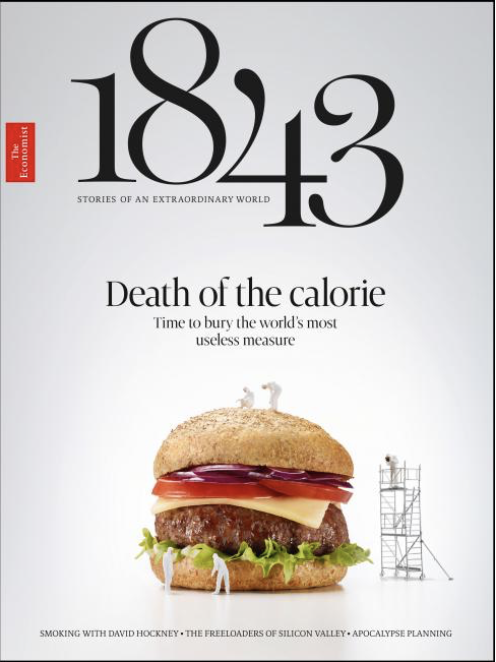
On the relaunch including the 1843 becoming bigger and more dominant on the cover and what they are trying to achieve with 1843 as a brand (Rosie Blau): The cover has been a big part of the discussion, obviously, about what we want to do as a magazine. For me, the goal to create the cover represented many different things that we were trying to do. My aim is that when you extend 1843 in whatever format, you find it surprising, it makes you smile and it leaves you with something that you want to share. It should be funny, but it should also be beautiful. And those are a lot of things to try and get into one place.

On whether she thinks the role of the magazine cover in this crowded information age has changed at all (Rosie Blau): I think it has changed because as you say it’s such a crowded market. But I think it’s also in that crowded market, as I said, there are these shorthand’s that we use to signal what we are. And so it’s difficult; interesting, but difficult, to signal that we’re something different. So, to me this is a move in that direction.

On the business model for 1843 (Mark Beard): The relaunch is going to enable us to do two things and that is bolster reader revenue and advertising revenue. So, one thing that we are seeing is that both readers and advertisers are wanting to engage with audiences in a range of platforms and by relaunching 1843 on a number of platforms, we make those platforms available to advertisers and that will bolster advertising revenue. But also we make the content more engaging to readers too and they can read us where they want to read us.

On whether her stories-first approach is similar to an audience-first approach (Rosie Blau): The thing about the stories-first approach is that the idea is there are really exciting things that we don’t tend to think about. And so for me, if I’m thinking what do the readers want or what do the audiences want, I don’t know that they know what they want. Part of the point is to challenge and surprise them, and it’s hard to think, okay, we know that this is something that they want, we know that they want more stories about hem lengths or whatever. So, I think what we’re trying to do is trust our intuition. For me, being a journalist is all about trusting your intuition, but there is something interesting here and let me find out more. And that’s really what we’re going with, kind of looking at these stories and thinking in what way can we push them and in what ways might we see them. So, that’s the stories-first approach.

On the genesis of the tagline: Stories Of An Extraordinary World (Rosie Blau): What that comes from, it was a very hard thing to come up with, and one of the other contenders was: Life, The Untold Story. What we feel we do best and what we really show in common with The Economist is this idea of challenging and posing and questioning assumptions. And our subject is “your world” and “your stories” and “the world that you experience.” And so my main aim is to be looking at the things that we take for granted, the things that we see around us, the issues of our day and the enduring issues of our time, and try and look at them in new and different ways.

On how it feels to be publisher of a global brand (Mark Beard): I’m obviously very proud to be publisher of 1843. It’s a job that I hoped I would get at some point in my career, so I’m very proud to have the role. One of my other roles at The Economist is I have past experience marketing for The Economist. And of course, The Economist is also global. So, I’m very used to operating in a global environment and the basics and challenges that come with that. And trying to benefit from being able to roll things out globally while understanding that there are local nuances to what you need to do to perform effectively around the world.

On the biggest challenge they have had to face (Mark Beard): One of the things that you’ll see if you were to open The Economist’s app today is that 1843 now sits within The Economist’s app, which enables many of our subscribers to The Economist to also benefit, read and engage with 1843 content. And that might look like a relatively simple process, a good strategy and relatively simple on the surface, but you can well imagine that working with the tech teams and the editorial teams to move content from one platform to another is not simple and that’s been challenging, but also rewarding because we’ve been told by a number of people that what we’re doing is cutting edge. And creating an app environment where our consumers can consume all of our content in one place is something that is added again, as I understand it.

On having a long read section on the web and whether she knows something others don’t when it comes to the thought that snippets of information are better-suited for the web (Rosie Blau): Do I know something that others don’t? Well, I don’t know, but what I do know is that with our content over recent years, the long reads are the things that people read most, read for longer, depending on how long they are. Our most popular stories are always our long reads. So for us, it’s a question of how we do more of it, not how we do less. And we actually find that the snippets often don’t do nearly as well, even things that we think might do well. So, our experience is that long reads do extremely well online and if we have the resources to do more of those, then we will.

On how she differentiates the long reads online from the long reads in print (Rosie Blau): Some of it is exactly the same and the features that we run in print also go online, and those are extremely popular typically and continue to be popular. But we don’t have a distinct form for long-form features online versus in print. There are a lot of things that we’re thinking about, different types of long reads that we might do for online only to help us be more timely, and things that work better for an online audience than in print, because we have quite a long delay even between going to press and coming out. But also, we only publish every two months, so there are things that we can do online, it offers us a chance to do things that we are excited about that we couldn’t do in print.

On whether he is selling the brand, the print magazine, the digital, or 1843, no matter the platform when he approaches advertisers (Mark Beard): We’re selling the content and the environment and an audience, of course. We have an extremely engaged audience. We are creating content and placing that content on the platform where we know they are grazing. We are able to offer incredible insight to advertisers as to who the audience is; we’re very clear that they are in the main existing Economist readers. We can describe exactly where they are, they are loyal subscribers.

On whether 1843 now has a different audience on digital than in print or it’s the same audience, or somewhat of a shared DNA (Mark Beard): We’ve been asked to describe a base for The Economist so let’s talk about those first, because a significant number of readers of 1843 are Economist subscribers. The subscribers who receive 1843, some of them are print subscribers and some are print plus digital subscribers, our bundle subscribers. And some of those people, of course, will be accessing 1843 content through the app, rather than from just receiving the print copy. And we do know that the make-up of our print plus digital subscribers is slightly different from our print only subscribers. You might imagine, for instance, that they’re younger and more digitally engaged. By making our content available on this range of platforms, we are able to tap into the different audience profiles of our subscribers to The Economist.

On what someone would find him doing if they showed up unexpectedly one evening at his home (Mark Beard): You would probably find me walking my dog. I live a half an hour outside of London in a leafy green village. It’s a complete antidote and opposite of London. I generally come home from work and the first thing I do to relax is take our Border Terrier, Oakley, for a walk to clear my mind.

On what someone would find her doing if they showed up unexpectedly one evening at her home (Rosie Blau): I usually hang out with my kids, they’re quite a good leveler in all things, they’re six and nine. We discuss their day and I tell them silly things about mine, but for me that’s a great way to come back to earth and think about the really important things in my life, which is my family.

On what she would have tattooed upon her brain that would be there forever and no one could ever forget about her (Rosie Blau): Maybe the word interesting.

On what he would have tattooed upon his brain that would be there forever and no one could ever forget about him (Mark Beard): Positivity.

On what keeps them up at night (Rosie Blau): It was quite stressful producing the final; getting there for this relaunch. And the weird thing for me was after it had gone to press, but before we had it, this kind of fear of what I hadn’t saw, these huge glaring errors that were so big that I hadn’t seen. That is what has most often been keeping me up at night recently. But thankfully, no glaring errors have been found yet. (Laughs)

On what keeps them up at night (Mark Beard): What has been keeping me up at night recently is the switchover of our digital platforms and namely the move from websites and apps to being incorporated into The Economist app, which as I said before, sounds like a simple job on the surface, but had lots of intricacies. Of course, we had a launch deadline to work toward and everyone was working to ensure a smooth transition of the app of 1843 appearing in The Economist app, which fortunately it did. But as you can imagine, there were a few sleepless nights before that.

And now the lightly edited transcript of the Mr. Magazine™ interview with Rosie Blau, editor in chief, and Mark Beard, publisher, 1843 magazine.

Samir Husni: It’s rare to see a magazine relaunch get as much attention as 1843. Is it because it’s The Economist or is it because you’re refining James Wilson’s vision of what a magazine was back then and what a magazine is today?

Rosie Blau: I’m not sure that we’re redesigning James Wilson’s vision, but we have continued to interpret it, of course. I think The Economist is obviously a very well-known and respected and loved brand and we’re part of that and we’re really delighted to be in the same wit and rigor and trustworthy independent journalism, but on very different subjects and in a very different mode.

Samir Husni: So, do you think that’s the reason? Let’s say you’re doing 1843 without The Economist and you decide to relaunch it, would you have received the same media attention, if nothing else?

Rosie Blau: Obviously, we like to think that it’s a brilliant magazine that deserves the media attention in its own right, but it’s always wonderful to have the backing of a well-respected and already well-established and well-known brand behind us. So, we’re very lucky.

Mark Beard: From the commercial perspective, it’s because we’ve kind of captured the mood in the sense of many publishers and that is, there is a need to change the business model and create content that readers and advertisers can engage with in different ways. And I think one of the reasons why we are seeing so much attention from the readers is that we are doing lots of that all in one go. So, publishers around the world are looking at how they can create film content and podcast content and they can place their content in digital environments like apps and online.

Of course, what you’re seeing from the reader is that we’re doing much of this at the same time, and we’re able to do that in many instances because we are part of The Economist Group and we can tap into all of the good things that our association with The Economist brings. And I think that is also a valid reason as to why there is quite a lot of attention on this event, because we’re doing this holistically in one go, when many of the publishers kind of did that tied into various different platforms one at a time.

Samir Husni: Tell me then, we moved from Intelligent Life and a tiny 1843 to a big, dominant 1843 on the cover, tell me about the progression and the thinking behind the relaunch and what you’re trying to achieve today as an 1843 brand.

Rosie Blau: The cover has been a big part of the discussion, obviously, about what we want to do as a magazine. For me, the goal to create the cover represented many different things that we were trying to do. My aim is that when you extend 1843 in whatever format, you find it surprising, it makes you smile and it leaves you with something that you want to share. It should be funny, but it should also be beautiful. And those are a lot of things to try and get into one place.

Previously, we have almost always run a person on the front of the magazine. And as you know from the magazine world, that tends to be shorthand in the magazine world for: this is a magazine for men or for women. So, I’m not ruling out the idea that we might put people on the cover in the future, we may well do that, but for me, I wanted to move away from something that instantly looked like a magazine for men or for women and instead have this message of: this is something super-interesting and funny and challenging.

Samir Husni: Do you think the role of the magazine cover in this crowded information age has changed at all?

Rosie Blau: I think it has changed because as you say it’s such a crowded market. But I think it’s also in that crowded market, as I said, there are these shorthand’s that we use to signal what we are. And so it’s difficult; interesting, but difficult, to signal that we’re something different. So, to me this is a move in that direction.

And then in terms of the size of the logo, the first thing that I wanted to do when I became editor was get rid of the white strip across the top of the previous incarnation of 1843, because I just hated it. (Laughs) And we had a lot of discussions about it and we kept coming up with different covers, though we very often would have, with the possible new covers or the new logos and all of that, the white strip every time and that was one thing that I was adamant about that I didn’t want.

Samir Husni: Mark, as you see this relaunch and as you see the changing landscape of even the magazine business model, The Economist has always been as much circulation-driven as advertising-driven. What’s your business model for 1843?

Mark Beard: The relaunch is going to enable us to do two things and that is bolster reader revenue and advertising revenue. So, one thing that we are seeing is that both readers and advertisers are wanting to engage with audiences in a range of platforms and by relaunching 1843 on a number of platforms, we make those platforms available to advertisers and that will bolster advertising revenue. But also we make the content more engaging to readers too and they can read us where they want to read us.

And that has two benefits: there will be more people reading 1843 and we expect more to subscribe to 1843, but what we also see is that in many instances 1843 is a kind of onramp and an entry point into the Group’s other products, so people may begin to subscribe to 1843, but then also move on to ultimately subscribe to The Economist. The idea behind the relaunch is to bolster both sides of the business, circulation and advertising revenue.

Samir Husni: And Rosie, you mentioned in one interview that you start with a stories-first approach. Almost all of the editors I’ve interviewed tell me they start with an audience-first approach. Is the stories-first approach similar to an audience-first approach?

Rosie Blau: I suppose so. What tends to happen if you discuss a story is sometimes, if you’re thinking about different ways to do a story, you reach the realization sometimes quickly, sometimes more slowly, that it’s not that interesting. And you don’t continue to be interested in it. So, in that sense, yes, I think we try and think about how attuned we are and how excited we are about stories, with a gauge for how we do them and what will work for our audience too.

The thing about the stories-first approach is that the idea is there are really exciting things that we don’t tend to think about. And so for me, if I’m thinking what do the readers want or what do the audiences want, I don’t know that they know what they want. Part of the point is to challenge and surprise them, and it’s hard to think, okay, we know that this is something that they want, we know that they want more stories about hem lengths or whatever. So, I think what we’re trying to do is trust our intuition. For me, being a journalist is all about trusting your intuition, but there is something interesting here and let me find out more. And that’s really what we’re going with, kind of looking at these stories and thinking in what way can we push them and in what ways might we see them. So, that’s the stories-first approach.

Samir Husni: Is that the genesis of the tagline: Stories Of An Extraordinary World?

Rosie Blau: What that comes from, it was a very hard thing to come up with, and one of the other contenders was: Life, The Untold Story. What we feel we do best and what we really show in common with The Economist is this idea of challenging and posing and questioning assumptions. And our subject is “your world” and “your stories” and “the world that you experience.” And so my main aim is to be looking at the things that we take for granted, the things that we see around us, the issues of our day and the enduring issues of our time, and try and look at them in new and different ways.

And I feel that sets incredibly well with the current news, which we are all subjected to a deluge of news and even news junkies, even those of us, and I include myself in those news junkies, we sometimes get sick of the constant breaking news, but also the fact that the world out there seems pretty scary and a worrying place, and like other Brits, I feel humiliated by my government right now. And so there’s a difference; it’s not saying go bury your head in the sand, but it’s saying there is an optimistic and incredibly positive side to the mess that lives around us. And I want us to see that extraordinariness. I want us to feel excited about understanding our own world better.

Samir Husni: Mark, how does it feel to be a publisher of a global publication? Yes, it is based in Britain; yes, it is also in the United States, but it’s available all over the world. Does that make you think twice when you wake up, thinking wow, this isn’t just a British publication, it’s a global publication?

Mark Beard: I’m obviously very proud to be publisher of 1843. It’s a job that I hoped I would get at some point in my career, so I’m very proud to have the role. One of my other roles at The Economist is I have past experience marketing for The Economist. And of course, The Economist is also global. So, I’m very used to operating in a global environment and the basics and challenges that come with that. And trying to benefit from being able to roll things out globally while understanding that there are local nuances to what you need to do to perform effectively around the world.

But yes, I’m extremely proud to be publisher of 1843. And more so at this point in time rather than any other; it’s such an exciting time for a publication and we’re transforming the business plan from top to bottom. We’ve looked at every single element of the commercial plan, from the brand positioning to the platforms that we want to be present on. And we’ve made conscious decisions for everything that we’ve done. I’m very proud, and the organization has been very supportive and patient and listened to what we believe and want to do. And they have supported Rosie’s vision, so yes, it’s a very exciting and thrilling time for us.

Samir Husni: And what has been the biggest challenge that you’ve faced and how did you overcome it?

Mark Beard: To some extent we can talk about the digital platforms and as you know, since apps and websites have come into fruition for publishers there has been a want and a willingness on the part of publishers to set up individual websites and apps for each and every publication that is within their stable. And we were one of those publishers for a period of time, we embarked upon a journey of setting up individual platforms, those apps and websites for 1843. And one of the things that Rosie and I certainly believe is that we should be taking much greater advantage of The Economist’s audience. And because of that we have commercially gone on a journey to incorporate 1843 content into more of The Economist’s ecosystem.

So, one of the things that you’ll see if you were to open The Economist’s app today is that 1843 now sits within The Economist’s app, which enables many of our subscribers to The Economist to also benefit, read and engage with 1843 content. And that might look like a relatively simple process, a good strategy and relatively simple on the surface, but you can well imagine that working with the tech teams and the editorial teams to move content from one platform to another is not simple and that’s been challenging, but also rewarding because we’ve been told by a number of people that what we’re doing is cutting edge. And creating an app environment where our consumers can consume all of our content in one place is something that is added again, as I understand it.

Samir Husni: You have a long-read section on the web, on the digital side; does this go against the norm, where people just want snippets on the digital side and long reads in print? Are you swimming against the current or do you know something that other people don’t?

Rosie Blau: Do I know something that others don’t? Well, I don’t know, but what I do know is that with our content over recent years, the long reads are the things that people read most, read for longer, depending on how long they are. Our most popular stories are always our long reads. So for us, it’s a question of how we do more of it, not how we do less. And we actually find that the snippets often don’t do nearly as well, even things that we think might do well. So, our experience is that long reads do extremely well online and if we have the resources to do more of those, then we will.

Samir Husni: How are you going to differentiate that from the long-read in print? What’s your philosophy on giving print what print deserves and giving digital what digital deserves?

Rosie Blau: Some of it is exactly the same and the features that we run in print also go online, and those are extremely popular typically and continue to be popular. But we don’t have a distinct form for long-form features online versus in print. There are a lot of things that we’re thinking about, different types of long reads that we might do for online only to help us be more timely, and things that work better for an online audience than in print, because we have quite a long delay even between going to press and coming out. But also, we only publish every two months, so there are things that we can do online, it offers us a chance to do things that we are excited about that we couldn’t do in print.

To go back to the stories-first idea, the idea of telling personal stories and trying to sort of illuminate and question our assumptions from the ground-up and through individual narratives is something that we apply across all formats, so that’s what we think about when we think about online features too.

Samir Husni: Mark, do you do the same when you are selling? Are you selling the brand; are you selling the print magazine; are you selling digital; or you are selling 1843 regardless of the platform?

Mark Beard: We’re selling the content and the environment and an audience, of course. We have an extremely engaged audience. We are creating content and placing that content on the platform where we know they are grazing. We are able to offer incredible insight to advertisers as to who the audience is; we’re very clear that they are in the main existing Economist readers. We can describe exactly where they are, they are loyal subscribers.

So, on the whole we have a very compelling proposition I think, not only to readers but to advertisers in that if they want to reach a certain audience on a range of platforms, we are perfectly positioned now to do that. And I think that’s a compelling proposition to advertisers who are, in increasing numbers, when they’re talking to publishers like us, asking for responses to their advertising briefs. And they want us to go back with a multiplatform response. And in the past, a few years back, we could have gone back with a print-only response, but in many instances advertisers are now saying we want you to tell us how you can help us reach these audiences in a range of platforms. And I’m proud that we can now to do that.

Samir Husni: Are you finding out that you have a different audience on digital than in print or it’s the same audience, or there’s some kind of shared DNA between the print and digital audiences?

Mark Beard: We’ve been asked to describe a base for The Economist so let’s talk about those first, because a significant number of readers of 1843 are Economist subscribers. The subscribers who receive 1843, some of them are print subscribers and some are print plus digital subscribers, our bundle subscribers. And some of those people, of course, will be accessing 1843 content through the app, rather than from just receiving the print copy. And we do know that the make-up of our print plus digital subscribers is slightly different from our print only subscribers. You might imagine, for instance, that they’re younger and more digitally engaged. By making our content available on this range of platforms, we are able to tap into the different audience profiles of our subscribers to The Economist.

I should also say that 1843 is helpful for us when we are attracting more women and females to the Group, and we know they’re a greater number of readers for 1843. So, 1843 is also useful in that regard.

Samir Husni: If I showed up unexpectedly at your home one evening after work, what would I find you doing? Having a glass of wine; reading a magazine; cooking; watching TV; or something else? How do you unwind?

Mark Beard: You would probably find me walking my dog. I live a half an hour outside of London in a leafy green village. It’s a complete antidote and opposite of London. I generally come home from work and the first thing I do to relax is take our Border Terrier, Oakley, for a walk to clear my mind.

Rosie Blau: I usually hang out with my kids, they’re quite a good leveler in all things, they’re six and nine. We discuss their day and I tell them silly things about mine, but for me that’s a great way to come back to earth and think about the really important things in my life, which is my family.

Samir Husni: If you could have one thing tattooed upon your brain that no one would ever forget about you, what would it be?

Rosie Blau: Maybe the word interesting.

Mark Beard: Positivity.

Samir Husni: My typical last question; what keeps you up at night?

Rosie Blau: It was quite stressful producing the final; getting there for this relaunch. And the weird thing for me was after it had gone to press, but before we had it, this kind of fear of what I hadn’t saw, these huge glaring errors that were so big that I hadn’t seen. That is what has most often been keeping me up at night recently. But thankfully, no glaring errors have been found yet. (Laughs)

Mark Beard: What has been keeping me up at night recently is the switchover of our digital platforms and namely the move from websites and apps to being incorporated into The Economist app, which as I said before, sounds like a simple job on the surface, but had lots of intricacies. Of course, we had a launch deadline to work toward and everyone was working to ensure a smooth transition of the app of 1843 appearing in The Economist app, which fortunately it did. But as you can imagine, there were a few sleepless nights before that.

Samir Husni: Thank you both.

h1

GQ: Participation & Amplification – The New Era For All Things GQ – The Mr. Magazine™ Interview With Will Welch, Editor In Chief, GQ Magazine…

March 22, 2019

“I really believe that we have come out of the era of broad general interest being a place of power for magazines. So, instead of trying to be everything to everyone, I want to be really clear about what GQ does better than anyone else on earth and I want to focus on those things.” Will Welch…

“It’s really a balance, and the words that I would use are participation and amplification. One of the first things that I wanted to establish in a really strong way when I started this role was rebuilding a core community for GQ. And that means identifying all of these people in our world. And they’re writers, photographers, stylists, and actors; some of them are super-famous, some are not famous at all and may have more of a creative director role or a guy-behind-the-guy role. This is the community of core people, and not only should they be in the core pages of GQ, but they need to be our first readers and they need to be our community that we’re talking to every day.” Will Welch…

“I think that one thing that I’ve always loved, whether it’s an early interview with Kanye where he was talking about a particular uncle who had a stack of GQs in the living room that was his height, or some friends that have texted me pictures of each issue of GQ Style saved in chronological order on their shelf; I think with print we are leaving a different kind of record behind in that it is a documentation of a moment.” Will Welch…

There’s a new era at GQ and the man running the epoch is Will Welch. The dynamic, newly refreshed generation of the magazine has been honed and infused with a stylish new “anything goes” mentality. No more “wear this, but don’t wear that” prescriptions for a man’s closet, but more along the lines of fashion is an individual decision, so be yourself.

Will also believes the power of the general interest type magazine is gone and being more niche-driven is the answer to the profitability question. I spoke with Will recently and we talked about all of these new directions and the clear vision he has for GQ. From the creative community from which the magazine lives and breathes to the reader realizing that they are as much a part of the GQ world as the people between the pages, GQ has come alive with new ideas, new passions and a new perspective of individualism and creativity.

The multiplatform brand has distinctive content and powerful images across the spectrum and Will has innovated the thinking behind the engine of the magazine, while maintaining the authenticity it has earned over its many decades. To say GQ has come of age in this new era of magazine making would be an understatement, it has come of age within its own individual era of men’s fashion and style.

So, please enjoy the Mr. Magazine™ interview with an editor in chief who is just as comfortable in jeans and a T-shirt as he is in an Italian suit, and makes them both look “GQ” fashionable, Will Welch, editor in chief, GQ magazine.

But first the sound-bites:

On his vision for GQ under his leadership: I really believe that we have come out of the era of broad general interest being a place of power for magazines. So, instead of trying to be everything to everyone, I want to be really clear about what GQ does better than anyone else on earth and I want to focus on those things.

On whether with all of the changes he is implementing at GQ, the brand will be more of a reflector of what’s going on or an initiator of things moving forward: It’s really a balance, and the words that I would use are participation and amplification. One of the first things that I wanted to establish in a really strong way when I started this role was rebuilding a core community for GQ. And that means identifying all of these people in our world. And they’re writers, photographers, stylists, and actors; some of them are super-famous, some are not famous at all and may have more of a creative director role or a guy-behind-the-guy role. This is the community of core people, and not only should they be in the core pages of GQ, but they need to be our first readers and they need to be our community that we’re talking to every day.

On whether the changes he’s implementing are trying to bring back the “good-old days” where GQ was definitely different than Esquire: I am an almost completely forward-looking person, I would say. So, the moves that we’ve been making in this new era are not specifically inspired by the relationship between GQ and Esquire from the past. I have been at GQ since 2007, so I’ve been here a long time and have fully metabolized the history of the brand and what it stands for. But I also think that a brand as strong as GQ is incredibly flexible. And I feel completely empowered to really push it to a new place.

On the reinvention he did with GQ Style and whether he feels that magazine is a little bit different than GQ, and each one should have its own revolution: I think each will have its own revolution. I’ve definitely learned an incredible amount by the experience of launching GQ Style and the radical moves that I made and thinking about what the architecture of that magazine should be and what was possible in terms of the storytelling.

On whether he would rather have that one-on-one conversation with his readers, as though friends: The experience of being the editor in chief of the smaller spinoff title, GQ Style, it was an incredible experience, not just on a professional level, but also on a personal level, because I found that the more that I just allowed myself to be who I am, rather than trying to adopt any expectation or image of what an editor in chief or a Condé Nast editor in chief is supposed to look like, the more successful that we were.

On the biggest challenge or obstacle he’s had to overcome to get to the point he is today: In the early stages of GQ Style, with the first issue, I wanted to prove that it was its own magazine and could stand alone and that it had its own voice. And I was a little bit more calculating with the balance of stories in the first issue and was very methodical about what message that we would be sending to the industry and to our community and our readership, and to our potential readership. I was diagnosed with testicular cancer last year in late 2018, and that was an incredible witness test. It’s one thing to hold all of these beliefs and to hope that you’re living your life in a certain way, and then when you’re faced with a doctor telling you that you have cancer at age 37, although 37 is actually on the older side for that particular type of cancer, but I feel like a young vivacious man, and to be told that you have cancer, you definitely examine your life and ask yourself if you’re really practicing what you preach.

On anything he’d like to add: One thing that’s important is that we’re now in this time, especially with social media, which is just incredible, like Instagram is an incredibly intimate format. Podcasting is an incredibly intimate format. Instagram stories are amazingly intimate, you can watch people broadcast themselves waking up in the morning with their partner or with their pet; it’s just deeply intimate. And a title like GQ has to ask itself in this environment, the idea of GQ is this kind of vaunted, haloed thing, but what people want now is a little bit more down-to-earth, but at the same time with GQ, I don’t want to give up this authority that we’ve earned over the decades and the hard-earned gloss that we’ve also earned. So, how do you do both of those things and I think one way, there are many ways, but one way that I really believe in is, as you have identified, I’ve done it through personalizing some of the writing that I’ve been doing, as have many of the other writers and editors on the staff.

On whether he thinks the printed page leaves a different kind of impact: I think that one thing that I’ve always loved, whether it’s an early interview with Kanye where he was talking about a particular uncle who had a stack of GQs in the living room that was his height, or some friends that have texted me pictures of each issue of GQ Style saved in chronological order on their shelf; I think with print we are leaving a different kind of record behind in that it is a documentation of a moment.

On the biggest misconception he thinks people have about him: There is a funny one, very low-key, it’s not a big one, but we’ve really been evolving the look and feel of the fashion in the pages and because with my first editor’s letter I was wearing jeans and untied shoes, and then I did this other interview about the future of the suit, and so people have been asking if GQ was turning away from the suit, (Laughs) because for years we’ve been the champions of the suit and I would just like to say that I’m wearing a suit right now; I was wearing a suit yesterday. Tomorrow, I don’t know, it may be a suit and it may not. We haven’t turned our back on the suit.

On what keeps him up at night: What keeps me up at night and the sort of next phase in this new era of GQ is really getting all of the things that we’re doing moving in the same direction. We’ve been working really hard together as a team to articulate exactly what this new vision is for GQ. And I think it’s already pretty dialed in print, because with print you have the opportunity to…each month it’s just blank pages, there is a stop and a start to building each issue.

And now the lightly edited transcript of the Mr. Magazine™ interview with Will Welch, editor in chief, GQ magazine.

Samir Husni: You write in your latest editorial that this is a new era for fashion; it’s like a freestyle. Tell me your vision for GQ under your leadership.

Will Welch: I really believe that we have come out of the era of broad general interest being a place of power for magazines. So, instead of trying to be everything to everyone, I want to be really clear about what GQ does better than anyone else on earth and I want to focus on those things.

And first among those is fashion with a focus on men. GQ has long been perceived as and really is the flagship of men’s fashion in America. And if you stop somebody on the street and ask them what GQ means to them, they’ll say men’s style. I think in a way we’re returning to that core and really imbuing the entire brand, everything we do and we do so many things now across all of our platforms, with this sense of taste and stylishness. That is really the foundation of everything we do.

And making sure that when people think about GQ it’s not just how to get dressed, but it’s how to be stylish in a way that is forward-thinking and progressive. So, I think that’s a part of it. And then one really important way that the landscape of how men dress has shifted is we’re in this “anything goes” era. We’re seeing dress codes go away; there was a lot of news made recently when Goldman Sachs announced that it was softening its dress code, going more business-casual.

And also, with the Internet, basically in the past when designers were creating clothes they would find an inspiration and they would go digging in libraries and watching old movies and going deep into archives to explore one throughline for their collections, and now it’s all at your fingertips online. So, we’re seeing where you could make a great case for the 1950s being back in style or the 1960s, ‘70s or ‘80s or even the ‘90s, so all of this is happening at once.

And I think when we see a seismic shift in the way people are dressing, it’s really important that GQ be configured in a way that has the right combination in responding to that and then leading the way forward. So, we’ve been making all sorts of changes to reflect the way that I see what’s going on in the style space. And that means we’re taking a little bit less of a “do this” or “don’t do that” approach, like buy these pants, not those pants; you want your suit to fit this way, not that way. So, in this environment where anything goes, we want to be this aspirational board of ideas almost, rather than this super-prescriptive do this, don’t do that finger-wagging. I just don’t think the modern audience responds to that.

To give you a more technical example of the way that’s working, we’ve really taken a lot of the traditional-style service journalism that has been a part of the pages of GQ and moved it to GQ dotcom, where we find our audience comes looking for it, because it’s the audience that wakes up every morning and checks GQ dotcom style section first who is looking for it there, but so are readers who are just searching and coming to GQ dotcom through Google.

So, in a way what we have is this magazine that is incredibly elevated and aspirational on this really beautiful, luxurious environment, and then you have some of that simple service that our readers have always wanted, which we’re still doing, but we’re bringing it to them on GQ dotcom.

Samir Husni: I have been looking at some copies of the original GQ, from the late 1950s and early 1960s, and one copy I have has President Kennedy on the cover. And the editor was just singing praises about what an honor it was to have the president of the United States, donning his suit with two buttons instead of three. There has always been a dual role with the magazine, on one hand it initiates things and on the other hand it reflects. As you approach the new GQ with all of the changes, and with having the multiplatform where you’ve moved service to dotcom; how do you see your role as editor, and the magazine as a brand? Will you be more of a reflector of what’s going on or an initiator of things moving forward?

Will Welch: It’s really a balance, and the words that I would use are participation and amplification. One of the first things that I wanted to establish in a really strong way when I started this role was rebuilding a core community for GQ. And that means identifying all of these people in our world. And they’re writers, photographers, stylists, and actors; some of them are super-famous, some are not famous at all and may have more of a creative director role or a guy-behind-the-guy role. This is the community of core people, and not only should they be in the core pages of GQ, but they need to be our first readers and they need to be our community that we’re talking to every day.

And we need them to feel like GQ is the magazine that truly gets it, like that’s “my” voice, that’s “my” magazine, that’s “my” outlet. We need to interact with them every day on Instagram; they’re texting me when a new issue comes out and telling me what they think about the cover. It was hugely important to me and one of the first things that we had to do, was to reestablish that connection to our creative community, who of course are very broadly influential in our world. In other words, the power of GQ radiates through them.

But they’re also doing all of this really interesting stuff themselves. And so rather than GQ’s pages reacting to what they’re doing or leaving them and saying that they’re following us; I see it as we’re participating in this community of creative, plugged in people who are doing interesting stuff in the style space and in the culture space. They’re political reporters and the best photographers in the world. So, we’re participating in a dialogue with them and creating content sometimes with them, but often about them as well.

And then we’re able, because GQ is this massive platform, as you said, it has this incredible history and we’ve really built authority and audience over the years, so then we’re able to take the best of what’s happening in this community that we’re a part of, and really amplify it. I think that’s a slightly different way of thinking about the role of GQ. But for me it was really the starting place; how do we rebuild this brand in this new era?

I have to say that so far it feels like it’s really been working. These very influential creative people who, like us, are just pouring themselves into this work every day, they’ve really been responding to what they’ve been doing. They’ve been writing for the magazine, shooting for the magazine, while other people have been featured in the magazine.

And when I’m onset with some of the people who we have put on the cover in these first few issues, who are these types of people, I find a moment when onset for the shoot to tell them that I’m interested in this not being a onetime transactional relationship, where we put them on the cover and they further their career or promote a new project they have going on, and we all just brush off our hands and move on when it’s done. Instead, how can this be an ongoing conversation and how can GQ be part of their world? When they have their next project, they call me again and we create something cool together.

So again, it’s about participation and amplification, instead of us just being this completely secondary source that is reacting or determining what is good and bad.

Samir Husni: The amazing thing to me, and I don’t know if it came to you subliminally or intentionally, but when Esquire launched GQ back in the fifties, they did their best to differentiate between the two magazines. And GQ was more of the fashion-driven title. Are you right now trying to bring back the “good-old days,” where GQ was definitely different than Esquire?

Will Welch: I am an almost completely forward-looking person, I would say. So, the moves that we’ve been making in this new era are not specifically inspired by the relationship between GQ and Esquire from the past. I have been at GQ since 2007, so I’ve been here a long time and have fully metabolized the history of the brand and what it stands for. But I also think that a brand as strong as GQ is incredibly flexible. And I feel completely empowered to really push it to a new place.

It’s kind of a both ends situation where, I’ve been here for quite a long time, obviously not since 1959 (Laughs), but I’ve been here for a long time and really do think that I know where we come from, and rather than feeling like I have to serve that or pay homage to it in some dutiful way, I really feel like that gives me the flexibility to push it someplace new. And to trust that I will be honoring the history of the brand by going with my gut instincts.

Samir Husni: And those gut instincts served you really well when you took over the helm of GQ Style and reinvented that magazine. Last time we spoke, it was more like a revolution, where you just destructed the whole magazine and got rid of some of the traditional things in the front and back of the book. Are we going to see something as revolutionary as that? Or is this Will-Style and you’re looking at it like GQ Style is a little bit different than GQ, and each one will have its own revolution?

Will Welch: I think each will have its own revolution. I’ve definitely learned an incredible amount by the experience of launching GQ Style and the radical moves that I made and thinking about what the architecture of that magazine should be and what was possible in terms of the storytelling.

But GQ Style also has a really unique format in that the advertisements, in addition to being oversized and printed on beautiful, thick paper, the advertisements are banked as spreads in the beginning of the magazine, and then you have some singles with the table of contents and the editor’s letter and that sort of thing. But then once the editorial pages proper begin, it’s just all double-paged spreads all the way to the end. And that was sort of a radical format that I received almost as a gift and then I really wanted to see where we could push it.

So, there were elements of experimentation, a lot of which I think were really exciting and successful in GQ Style that don’t apply in a one to one way to GQ, which has a little bit more of a traditional structure. There’s a front and middle of the book which has single-page ad adjacencies and then there’s a traditional feature well too.

But those structural differences aside, I have been challenging myself and the whole team here to really think about what is possible. These are blank pages that we’re given every month and we really get to do whatever we want with them.

I’ve been talking a lot about just trying to free ourselves of too much institutional memory, in terms of what print magazines are supposed to do, so that we can really look at each page and each story in a fresh way. And we’ve already been making a lot of the moves; my third issue as editor in chief, the April issue, came out recently and we put the cover online; it has J. Cole on the cover.

There have been quite a few moves that we’ve made to make it different and I think what I intended and what we’re finding so far in the reaction is that people are really noticing a difference, but I don’t think it’s in any way like unrecognizably GQ. We haven’t transformed it so much that large portions of our audience are confused or wondering what happened to it. (Laughs) But at the same time it seems like everybody notices the difference. So far I’ve just been thrilled that the reaction has been incredibly positive.

Samir Husni: We seem to be seeing a shift from the celebrity editors to more of the down-to-earth person editors. In your case, I’ve read some of your editorials in GQ Style, you get very personal, even discussing your battle with cancer. Are we seeing a transformation in the magazine business, would you rather have that one-on-one conversation with your readers, as though friends?

Will Welch: The experience of being the editor in chief of the smaller spinoff title, GQ Style, it was an incredible experience, not just on a professional level, but also on a personal level, because I found that the more that I just allowed myself to be who I am, rather than trying to adopt any expectation or image of what an editor in chief or a Condé Nast editor in chief is supposed to look like, the more successful that we were.

So, that applied to the stories that I would find, the covers that we went after, the way that I approached writing my editor’s letter, and the way that I interacted with my team. And then also with the way that I presented myself in a more public way to the world at large. And I just found that the more I trusted myself to be who I am in my gut, it was right. And I’ve done a lot of personal work over the years to try to align the person who I am in my head and my heart, in my family with my wife, to who I am when I show up at work and who I am if I do an interview or have my photo taken or hold a meeting; all of those things, I just really try to have all of those things be aligned. And I’ve found that as I’ve done that, not only do I just feel good about myself, but we also have been having success in the work.

So, it’s really just been a matter of gaining confidence and trust in myself that I don’t need to be anybody else’s idea of what the editor in chief of GQ should be. I just need to be myself. In a way, sure we’re a men’s fashion and style magazine and we’re a lifestyle magazine and we do these incredible reported features, and there are all of these proud histories and different throughlines for what GQ is about or what it is meant to accomplish, but to me it’s really about helping our readers to be their best selves. And I’ve been trying to do the same.

Samir Husni: Being yourself today, what do you think has been the biggest challenge or obstacle that you’ve had to overcome to reach this stage?

Will Welch: In the early stages of GQ Style, with the first issue, I wanted to prove that it was its own magazine and could stand alone and that it had its own voice. And I was a little bit more calculating with the balance of stories in the first issue and was very methodical about what message that we would be sending to the industry and to our community and our readership, and to our potential readership.

But over the course of making the first handful of issues, I just found that I didn’t need to be so calculating, I could just be more instinctive. There’s an editor that I hired, now he works on GQ and GQ Style and GQ dotcom, but I initially hired him to work on GQ Style and his name is Noah Johnson and he was the GQ Style senior editor throughout the course of the last few years of making that magazine. And he grew up in Troy, New York as a skateboarder, and he was bringing all of these amazing skate ideas, because the way I see style through the lens of music, he sees style through the lens of skateboarding in a lot of ways.

As I was finding that the more I let my best ideas just be what they were, as Noah started getting all of these skateboarding-related content into GQ Style, that stuff really took on a life of its own. So again, it’s not just about me, it’s about the staff as well. Just getting to be their best selves through the pages.

So, just that process was one thing, and then the other would be what you mentioned; I was diagnosed with testicular cancer last year in late 2018, and that was an incredible witness test. It’s one thing to hold all of these beliefs and to hope that you’re living your life in a certain way, and then when you’re faced with a doctor telling you that you have cancer at age 37, although 37 is actually on the older side for that particular type of cancer, but I feel like a young vivacious man, and to be told that you have cancer, you definitely examine your life and ask yourself if you’re really practicing what you preach. How square is the life I’m living with the life that I would like to think that I’m living? And when I asked those questions when faced with that experience, I was just filled with so much gratitude for what I felt like were the answers that came back.

So with those two experiences, one was like more of a slow building of self-confidence over a couple of years, the process of leading this little team and this little magazine called GQ Style, and the other one was being faced with what could have been a frightening moment and found that I was just so full of gratitude. I went into surgery and had a healthful prognosis and I’m very grateful for that as well. Those two experiences were nice benchmarks for me and have given me a lot of confidence going into this new role.

And the experience of sharing about it was really powerful. The decision to write my editor’s letter about the testicular cancer diagnosis; I was really unsure if I was going to regret that decision. But instead, it was quite the opposite. There was an incredible outpouring of love and support and some readers saying that they had gone through the same thing, or their moms had breast cancer; just every imaginable response. It all came flooding back when I put that out there and it was an incredibly rewarding experience and also just a testament to the power of the platform. You’ve been on this editor’s letter page at the front of an issue of GQ Style, if you say something meaningful to people this amazing dialogue will come out of it. It was remarkable.

Samir Husni: Is there anything you’d like to add?

Will Welch: One thing that’s important is that we’re now in this time, especially with social media, which is just incredible, like Instagram is an incredibly intimate format. Podcasting is an incredibly intimate format. Instagram stories are amazingly intimate, you can watch people broadcast themselves waking up in the morning with their partner or with their pet; it’s just deeply intimate.

And a title like GQ has to ask itself in this environment, the idea of GQ is this kind of vaunted, haloed thing, but what people want now is a little bit more down-to-earth, but at the same time with GQ, I don’t want to give up this authority that we’ve earned over the decades and the hard-earned gloss that we’ve also earned. So, how do you do both of those things and I think one way, there are many ways, but one way that I really believe in is, as you have identified, I’ve done it through personalizing some of the writing that I’ve been doing, as have many of the other writers and editors on the staff.

But we are also increasingly looking at GQ dotcom and our incredibly powerful social media platforms, and our absolutely, enormously thriving video platform, as opportunities to turn the staff and the way the brand is structured inside out a little bit and show some of the mechanisms and say this is a bunch of cool and talented, diverse men and women who are making an impact. GQ is not this glowing brand on a mountaintop; it’s made by cool people like you who really love this stuff and live and breathe it, whether that’s pop culture or politics, style or long-form journalism, eating, drinking, or travel. It’s really just put together by the hard work of some really interesting people.

And so we want to put those people forward and now we have all of these incredible pools to do that, specifically social media and video and occasionally the pages of the magazine. That’s something that we’ve been mindful of and I do think it’s a little bit different. It’s been evolving over the years. I remember first noticing Jane Magazine doing this. You really got the sense of this cool community of stylish girls who were making this magazine and the pages were really imbued with their voices, so that was kind of a predecessor of the way that we’re thinking now and we also have all of these cool pools to bring it to life.

Samir Husni: What you are introducing in print also is amazing. When I look at the couples that you publish, or the family, such as Simon Rasmussen, Marz Lovejoy, and their daughter, Nomi; do you feel that the impact a print page can have is different? I mean, this would be a fleeting moment on Instagram, but when you can hold it in the magazine, you’re still looking at it, but it’s tangible. How do you decide what goes into print and what goes on Instagram?

Will Welch: I think that one thing that I’ve always loved, whether it’s an early interview with Kanye where he was talking about a particular uncle who had a stack of GQs in the living room that was his height, or some friends that have texted me pictures of each issue of GQ Style saved in chronological order on their shelf; I think with print we are leaving a different kind of record behind in that it is a documentation of a moment.

One thing that I think is really fun about magazines in general is they’re not gone in a flash, but they don’t have the permanence of books either. In a way, you want to pick up a book and feel like it should be as relevant today as it was the day it was printed. A magazine is intended, I’ve called it in the past, it’s semi-permanent. It’s like the semi-permanent documentation. You want a magazine to feel urgent and timely and of the moment, but the stories should also be worth printing in a way that can stay on somebody’s shelf or in an archive.

So, it’s really a balance. I love the immediacy of social media; I love that my Instagram stories go away after 24 hours. They just evaporate. That is really exciting to me. If you’re interested in image making and editorial and all the things that I’m interested, that presents its own unique opportunity. What do I want to say with this image or this short video that’s broadcast out to my followers and then just goes away? That’s an awesome editorial opportunity. With a magazine, it’s only on sale for a month, but then it hangs around longer, that is its own incredible opportunity. And digital in one sense feels more fleeting, but you can Google any story that GQ has published in the last 12 to 15 years and find it on GQ dotcom right now and read it for free. So, there is also digital archiving going on. All of these dials are really fun to play with.

It’s exciting to me that you called out the fact that we’ve shot couples because I just love shooting couples. Basically what I’m looking for in our photographs is for them to strike you visually but also emotionally. And I feel like taking an intimate portrait or going to do a travel story with a couple and they’re not a couple that we have cast and put together for the trip, but they’re actually partners in life, you just get something interesting and dynamic and electric and intimate.

We published a photo of Simon Rasmussen, who is editor in chief of Office magazine and he does some styling for us, he is a really interesting stylist. He and his wife Marz Lovejoy, and their baby Nomi are in a picture together and Marz is breastfeeding Nomi. And it was a cool, young, stylish influential, exciting family in our New York fashion community, let’s put them in the pages of the magazine.

And again, I’ve really been thinking of these early issues as an active community building and that’s just one example. They’re an influential couple in the New York fashion community; Simon works with us, I got to know Marz just a little bit through seeing her and Simon out and about. I’m still getting to know them. I know Simon much better because we’ve done a bunch of shoots together, but they’re interesting people and I want them to think of GQ as an outlet for them and also hopefully it’s a magazine that they can’t wait to grab every month. And that they are super-engaged with what we’re doing online. I grew up in Atlanta, Georgia, so if a reader in Atlanta sees that cool community being established between GQ and Simon and other people like that, they can be a part of that too from Atlanta. That’s what we’re building.

Samir Husni: What’s the biggest misconception you think people have about you?

Will Welch: There is a funny one, very low-key, it’s not a big one, but we’ve really been evolving the look and feel of the fashion in the pages and because with my first editor’s letter I was wearing jeans and untied shoes, and then I did this other interview about the future of the suit, and so people have been asking if GQ was turning away from the suit, (Laughs) because for years we’ve been the champions of the suit and I would just like to say that I’m wearing a suit right now; I was wearing a suit yesterday. Tomorrow, I don’t know, it may be a suit and it may not. We haven’t turned our back on the suit.

I’m just really interested in exploring all modes of men’s styles, some of them are super-conservative and some of them are super-progressive. So, that’s just one little thing that’s popped up in the last few weeks. Otherwise, I don’t know. I don’t feel misunderstood, I feel like the GQ community and the magazine industry and the fashion industry and the culture industries, music and Hollywood; I feel like people are still getting to know me. As I said, I started working at GQ in 2007 and really it’s been a slow evolution with me having a more public-facing role. I feel like me and the world are just getting to know each other; I don’t feel particularly misunderstood.

Samir Husni: My typical last question; what keeps you up at night?

Will Welch: What keeps me up at night and the sort of next phase in this new era of GQ is really getting all of the things that we’re doing moving in the same direction. We’ve been working really hard together as a team to articulate exactly what this new vision is for GQ. And I think it’s already pretty dialed in print, because with print you have the opportunity to…each month it’s just blank pages, there is a stop and a start to building each issue.

But with GQ dotcom and our social feeds and our video channels, especially on YouTube, those are always on and they’re just churning and churning. And so to redirect any one of them, you can’t just do it overnight, it has to be a steady evolution. That is really what this next phase is. It’s making sure that all of those pieces, because we are a multi-tentacle brand. We push out so much really cool content everyday across all of these different platforms that we have at our disposal. And I just want to keep refining the vision and keep evolving what that vision means to each of those platforms, because I think you have to be really platform specific, even just within Instagram itself. Instagram stories are best at something that is incredibly different when you really get into it than what works on the Instagram main feed. But you have to think about each of those things as their own editorial idea.

To give you an example, what we do in the magazine is quite polished, but what thrives on Instagram’s stories, what’s exciting and gives you a thrill is something that’s really raw. So, how can this legacy Condé Nast fashion/style magazine that has always prided itself on incredible polish find a raw expression that is going to be in keeping with the environment of Instagram stories?

So, that is what the team and I talk about every day and we’ve already made huge strides, but I do think we have a ways to go still across GQ dotcom, video, social; each minute piece of each of those platforms, such as how can we be using Twitter in a more compelling way instead of just pushing out links. And we’re doing it; we’re doing it every day. I just want to keep refining.

That is the next phase in terms of the internal priorities. In the meantime, I feel like we’re off to the races with the broader vision and this idea of focusing on elevated stylishness. We’ll just keep going with that.

The other thing I would say is just keep having fun. I love this work; I love this role; I love this job; I love this title; I love my team. And I truly believe, and if it sounds a little bit like a Hallmark card, so be it, I don’t care, I truly believe that if we’re having fun making this stuff that our audience will have fun reading it, watching it, and engaging with it. That to me is the key. I am excited to come to work every morning and if the other people on the team feel that way too, I think people are going to be excited to wake up every morning and check out what we’ve been doing.

Samir Husni: Thank you.

h1

Active Interest Media’s Chief Innovation Officer, Jonathan (Jon) Dorn to Samir “Mr. Magazine™” Husni: “The Challenges In The Industry Demand A Higher Degree Of Decision-Making And Being In Focus. I Want To Move Faster… I Want To Make Change Happen Faster.” The Mr. Magazine™ Interview…

March 15, 2019

“In the case of Yoga Journal, what we’ve really been trying to do there in print for the last year and a half or so is lead conversations that are complex and meaty enough that they can’t play out in an effective way in social or in digital. Two issues ago we had a big cover story on new diversifications in the yoga teaching community. We talked about the ways in which diversity is enhancing leadership in the yoga community. That was a story that we devoted about 15 pages to and it had huge resonance from the social following and the social reaction to it. That’s a conversation that can only happen in print, I think. It’s one that makes print relevant in a very unique way.” Jon Dorn (On the role of print in a digital age)…

As one of the world’s largest enthusiast media companies, Active Interest Media (AIM) produces leading consumer and trade events, websites, magazines, and films and TV shows that reach 40 million readers, fans, and attendees in 85 countries. From its Active Living Group, Home Group, Marine Group, Outdoor Group, and Equine Group, AIM reaches a diverse group of readers, viewers and users with its various brands, whether through print, digital, social, mobile, or events.

Chief Innovation Officer Jonathan (Jon) Dorn recently announced the addition and promotion of individuals to the Active Living Group, which Jon was named president of recently. While other magazine and magazine media companies are cutting back on staff, AIM is pushing forth with new visions and innovations for its business and adding talent to its already vibrant pool of people.

I spoke with Jon recently and we talked about the profitability that allows AIM to continue growing and diversifying its interests, even to the point of selectively hiring and promoting staff. From collecting data to targeting Alexa as a potential platform to reach its readers where they are, Jon says AIM is not afraid to forge ahead and if he has his way, the company will do it adeptly and swiftly, not holding back as technology moves so rapidly, media companies must do the same to keep up. It was a lively and energetic conversation with a man who participates in Iron Man Triathlons to stay in touch with his own potential, and sips Scotch in a nice hot tub afterward to unwind.

Not a bad way to relax, if Mr. Magazine™ might say so himself.

So, please enjoy the Mr. Magazine™ interview with Jon Dorn, chief innovation office, Active Interest Media.

But first the sound-bites:

On why Active Interest Media is hiring new people while many other magazine and magazine media companies are firing or laying people off: As a company we continue to be profitable to a degree that allows us to invest in adventures and innovations that we see giving us opportunity to continue growing and diversifying our interests. We’re not hiring in every department, but we are being selective and bringing in strong talents in areas where we do see those growth opportunities.

On moving from an editor of a single title to what he is doing today as Chief Innovation Officer: It’s interesting, from the moment I came to AIM from Rodale in 2007, Andy (Clurman) started challenging me to do a lot of different things outside the editorial realm. They had a very clear vision of what the modern editor in chief role would be. And so from day one they included me in M&A discussions and they asked me to help and advise sales organizations. And then in 2010, they put me in a general manger role overseeing all aspects of our Outdoor Group, which at the time was Backpacker and two or three other titles. So, I was exposed and challenged to expand my skillset right out of the gate and given the opportunity to do that.

On the transformation from pure editor in chief to chief innovation office and whether he ever feels as though he has moved away from journalism and more toward the “other” side: There have certainly been times where I have stopped and questioned myself on that. And as a member of the ASME board I am very cognizant of, in some fashion, protecting the church and state line, even as where that line is drawn has shifted an awful lot overtime. What I’ve always tried to operate by is a bit of a Golden Rule around, ultimately at the end of the day, what’s good for our readers and customers? In making the decision to go and help sell a program that includes custom content, am I doing something that is going to trick or deceive or in some way ruin the good that we’re doing for the readers of our titles?

On whether he attempts to define the role of each of the platforms and how they relate to the audience: We do attempt to define all the channels. For instance one of my priorities right now, we’re working on Alexa, and the ways that we bring content to smart speakers and smart viewers. It’s recognizing and embracing the changing ways that people are consuming content in their homes and the ways in which they’re using technology. And to me that is fundamentally still a content experience, but it’s one that is delivered in a very different way and that has a very different interaction model, but is a direct descendant of a service department in a magazine, but delivered through a different medium.

On what role he believes print plays in this digital age: The more immersive, in depth reading experience. In the case of Backpacker, it’s going to be big adventure narratives, interviews with folks who are doing the most extreme trips, conservation issues. In the case of the Yoga Journal, what we’ve really been trying to do there in print for the last year and a half or so is lead conversations that are complex and meaty enough that they can’t play out in an effective way in social or in digital.

On how he is utilizing data in the creation of the brands: I wouldn’t say that we’re experts or have mastered the use of data, but it’s something that we started looking really hard at three or four years ago. And frankly, it was kind of a response to market demand, where we had in categories like the marine industry and the luxury home industry, both of which we have significant business in, partners coming to us and saying that people weren’t buying yachts the way they used to; people weren’t buying vacation homes the way they used to. And the partners were saying to us that what they needed our help with as their media partner was in understanding and seeing them through data and through data capture so that we have some sense of what they’re reacting to and what they’re leaning toward in terms of purchase. So, we made an investment in that case in a better data base and in regeneration expertise by bringing in two people from the B2B world, where there is, I think, a lot more expertise and regeneration.

On whether he sometimes feels he is getting too much information about his audience and invading their privacy or that he needs this personalized information to serve them better: I’m definitely in the latter camp and that’s probably because I see the data that we have, maybe not by an individual basis, but overall. And I don’t see information in our data base that I would, as a customer of a company like ours, not want us to have. We have been approached by some data capture firms that say they can do X Y or Z with Facebook information for instance, that we’ve backed off from. So, we have made some choices not to do some things that felt uncomfortable. But I think what we’re capturing now; I don’t think we’re overstepping privacy or anything close to that.

On anything he’d like to add: Actually, I’m going to follow up on that data question. I was having a very interesting conversation recently with a gentleman who runs a large and growing digital company. And we were talking about data and the reality that because of the way people protect themselves nowadays from exposing too much data, there are really only about 20 million online users in this country at any given time who are really known. And that’s known, in the sense of anybody being able to connect their online or email behavior back to a known name or a known email address or physical address or a known mobile number.

On what he would have tattooed upon his brain that would be there forever and no one could ever forget about him:
(Laughs) I suppose it would be disingenuous of me to say handsome, friendly and funny. But as that relates to media, I’ll tell you what I love most and if people think this about me that’s great. I love most the challenge that requires asymmetrical thinking.

On the biggest misconception he thinks people have about him: That’s a good question. I do find that a lot of people still picture me as the Backpacker editor, and maybe he’s still that guy who’s primarily an editor. And the reality is that for the last 10 years I’ve been doing so many other things beyond that print starting point that I had.

On what someone would find him doing if they showed up unexpectedly one evening at his home: Typically, you would probably find me on my bike, training for an Iron Man Triathlon. And I do an awful lot of my workout late in the evening after work, so I might get home at seven and go for a two-hour bike ride. Once that’s done, if you stuck around, I would invite you to join me in the hot tub, where I end most days with a glass of Scotch.

On what keeps him up at night: It’s pace, whether we’re moving fast enough. I have reached a point in my career where I think that the challenges in the industry that we’re seeing demand a higher degree of decision-making and being in focus. I want to move faster. I want to get the decisions faster. I want to make change happen faster. I’m a fifty-two-year-old, I suppose that’s some form of middle age and the clock ticking. But also when you look at the evolution of technology, I don’t think we have as media companies the luxury of taking two years to decide whether to move on product development. I want to get it done now or maybe in the next three to six months.

And now the lightly edited transcript of the Mr. Magazine™ interview with Jon Dorn, chief innovation officer, Active Interest Media (AIM).

Samir Husni: Other magazine media companies are firing people and letting people go and you recently sent out a press release saying that you had hired new people. So, what’s going on over at Active Interest Media (AIM)?

Jon Dorn: As a company we continue to be profitable to a degree that allows us to invest in adventures and innovations that we see giving us opportunity to continue growing and diversifying our interests. We’re not hiring in every department, but we are being selective and bringing in strong talents in areas where we do see those growth opportunities.

Over the last couple of years we have expanded our in-studio video team, which includes, going back three or four years now, starting from zero and moving up to about eight people on our online education team. And of course, I think you’re familiar with the story of Catapult, our marketing agency, that was also something that didn’t exist three and a half years ago and now the team is about seven.

So, I think because the company has had continued success to the bottom line because of the diversity that we have through events and other channels, that’s why we selectively continue recruiting pretty strongly.

Samir Husni: How was it for you specifically, moving from an editor of a single title, from the days of Backpacker magazine, to what you’re doing today as Chief Innovation Officer? With today’s ever-changing role of editor, was it like a walk in a rose garden for you?

Jon Dorn: (Laughs) It’s interesting, from the moment I came to AIM from Rodale in 2007, Andy (Clurman) started challenging me to do a lot of different things outside the editorial realm. They had a very clear vision of what the modern editor in chief role would be. And so from day one they included me in M&A discussions and they asked me to help and advise sales organizations. And then in 2010, they put me in a general manger role overseeing all aspects of our Outdoor Group, which at the time was Backpacker and two or three other titles. So, I was exposed and challenged to expand my skillset right out of the gate and given the opportunity to do that.

So, I wouldn’t say it’s been a walk in a rose garden, it’s been more of maybe a trial by fire. I’ve had the opportunity to take on one challenge or task after another, and sort of incrementally absorb my own portfolio. I have found, and I think Andy has found along the way, that some of the things that make me a half decent editor also make me capable at other types of product development throughout the company. And that has in some ways become a specialty for me with launching Online Education, with creating our film studio, and launching Catapult Creative Labs. Just starting with an idea, putting together a great plan and then executing it, that sort of project management, product development lifecycle.

downmagaz.com

Samir Husni: During that transformation from a pure editor in chief to the general manager to the chief innovation officer to the president of this group, have you at any given moment ever felt as though you were leaving your journalistic background and crossing over to the “other” side?

Jon Dorn: To the dark side? (Laughs)

Samir Husni: (Laughs too) Yes.

Jon Dorn: There have certainly been times where I have stopped and questioned myself on that. And as a member of the ASME board I am very cognizant of, in some fashion, protecting the church and state line, even as where that line is drawn has shifted an awful lot overtime. What I’ve always tried to operate by is a bit of a Golden Rule around, ultimately at the end of the day, what’s good for our readers and customers? In making the decision to go and help sell a program that includes custom content, am I doing something that is going to trick or deceive or in some way ruin the good that we’re doing for the readers of our titles?

There have certainly been times where we have had opportunities that I have pulled back from, but I think as many editors have and frankly many general managers have over the last five or ten years, we’ve been trying to evolve the way that media companies act and understand around issues of editorial independence and integrity, in such a way that they reflect the way the business has fundamentally changed. Twenty years ago when I started in editorial, I think it was much easier to draw a black and white line around what was okay and what wasn’t. But as we have gotten into things like native content, not that it’s fuzzy, but I think there isn’t as much black and white clarity as there used to be.

Samir Husni: As the Chief Innovation Officer, do you have a clear vision of what print can do today; what digital can do today; what the events and the Online Education platform can do? Do you attempt to define the role of each of the platforms and how they relate to the audience?

Jon Dorn: We do attempt to define all the channels. For instance one of my priorities right now, we’re working on Alexa, and the ways that we bring content to smart speakers and smart viewers. It’s recognizing and embracing the changing ways that people are consuming content in their homes and the ways in which they’re using technology. And to me that is fundamentally still a content experience, but it’s one that is delivered in a very different way and that has a very different interaction model, but is a direct descendant of a service department in a magazine, but delivered through a different medium.

Let me give you an example, in Yoga Journal, 60 percent of all yoga practice happens in the home. And if people maybe don’t live close to a yoga studio or just want to do a quick 10 or 15 minute practice when they wake up in the morning, or have children and they can’t make it out to a studio, we look at all of the poses and sequences and yoga instruction that we do in print and in digital and in video, and recognize that there are an awful lot of yoga enthusiasts now who absolutely use and consume that type of content through a home speaker. They might get up in the morning and say – hey Alexa, I’d like to do a 20 minute meditation. I’ve got my yoga mat and I’m ready to go. So, that’s something that we’re starting to look at – programming that as an additional channel where we meet our readers and enthusiasts where they are.

Samir Husni: So, you’re hoping when they ask Alexa, the answer will be that the experts at Yoga Journal say do this or do that?

Jon Dorn: Right. We would hope to get in the same fashion that the Yoga Journal has about 4.5 or 5 million social followers, we would hope to have a very strong number of followers for Alexa as that ecosystem continues to attract more and more customers. When somebody goes to Alexa thinking of meditation or a yoga sequence, our brand is top of mind and widely followed.

Samir Husni: Talking about the print channel, what role does the printed version of your magazines, such as the Yoga Journal of Backpacker, what role do they play in this digital age?

Jon Dorn: The more immersive, in depth reading experience. In the case of Backpacker, it’s going to be big adventure narratives, interviews with folks who are doing the most extreme trips, conservation issues. In the case of the Yoga Journal, what we’ve really been trying to do there in print for the last year and a half or so is lead conversations that are complex and meaty enough that they can’t play out in an effective way in social or in digital.

Two issues ago we had a big cover story on new diversifications in the yoga teaching community. We talked about the ways in which diversity is enhancing leadership in the yoga community. That was a story that we devoted about 15 pages to and it had huge resonance from the social following and the social reaction to it. That’s a conversation that can only happen in print, I think. It’s one that makes print relevant in a very unique way.

Samir Husni: If you look at all of the channels that are out there now, and if I look at some of the resumes of the people you just hired, how important to you is mining or knowing more about your audience and about your audience’s needs, wants and desires? How are you utilizing that data in the creation of the brands?

Jon Dorn: On a scale of one to ten, when it comes to the importance of knowing our audience, I’d say 10. And I wouldn’t say that we’re experts or have mastered the use of data, but it’s something that we started looking really hard at three or four years ago. And frankly, it was kind of a response to market demand, where we had in categories like the marine industry and the luxury home industry, both of which we have significant business in, partners coming to us and saying that people weren’t buying yachts the way they used to; people weren’t buying vacation homes the way they used to. We used to be able to see them a long way off, as they were going through the sale cycle and considering a purchase of a $2 million yacht or a $5 million home or a $20 million yacht.

And the partners were saying to us that what they needed our help with as their media partner was in understanding and seeing them through data and through data capture so that we have some sense of what they’re reacting to and what they’re leaning toward in terms of purchase. So, we made an investment in that case in a better data base and in regeneration expertise by bringing in two people from the B2B world, where there is, I think, a lot more expertise and regeneration. And we really tried to put more effort into capturing, through a variety of content marketing tactics, capturing more data on those types of consumers that are in our audience.

downmagaz.com

So, where we’re starting really is, of course, with the high net worth individuals who follow Yachts International or Power & Motoryacht or Log Home Living or Timber Home Living, four of our highest possible income titles. From there we started moving toward a more general population audience who reads our other titles and to generalize very broadly through smarter use of continuity, marketing, and cookies, understand not only what people are looking at on our sites, but when they’re looking at it and the right content.

Samir Husni: Do you feel that there is some divide in you, that journalist who thinks you’re getting too much information about those people and invading their privacy or on the other hand you need this personalization so that you can provide them with better information?

Jon Dorn: I’m definitely in the latter camp and that’s probably because I see the data that we have, maybe not by an individual basis, but overall. And I don’t see information in our data base that I would, as a customer of a company like ours, not want us to have. We have been approached by some data capture firms that say they can do X Y or Z with Facebook information for instance, that we’ve backed off from. So, we have made some choices not to do some things that felt uncomfortable. But I think what we’re capturing now; I don’t think we’re overstepping privacy or anything close to that.

We’re not the world’s best at data mining at this point (Laughs), but I would characterize us as a media company still trying to understand data, rather than a data company doing media.

Samir Husni: Is there anything you’d like to add?

Jon Dorn: Actually, I’m going to follow up on that data question. I was having a very interesting conversation recently with a gentleman who runs a large and growing digital company. And we were talking about data and the reality that because of the way people protect themselves nowadays from exposing too much data, there are really only about 20 million online users in this country at any given time who are really known. And that’s known, in the sense of anybody being able to connect their online or email behavior back to a known name or a known email address or physical address or a known mobile number.

And much of what the advertising industry is aiming at or fighting over is this fraction of people who exist, the 20 to 30 million people who are not including their cookies, not using ad blockers, not using browsers that allow them to remain hidden. I thought that was a really interesting insight about what the actual data could be for some people.

Of course, the other 290 million people out there, their data is being viewed and analyzed in aggregate to suggest behavioral and purchasing trends. But as the gentleman was telling me, it’s really not possible for anybody, for that 80 percent that are not known, to be able to go back and identify those individuals personally and market them correctly.

I could talk to you for an hour about data. In some respects, data appeals to me for the efficiency of it. I don’t mind giving up some degree of my privacy if it means that I’m getting a better service of some sort. And frankly, I wonder if 10 or 20 years from now we’re going to be talking about a post-privacy world. I don’t favor that idea, but to some degree it almost feels like an inevitable march toward sort of redefining what it means to have privacy as individuals.

And I also want to add a plug for IMAG. I hope that anyone who reads this knows that IMAG is an incredible hub for innovative thinking in the media space, and it’s a conference, so I wouldn’t miss it with the role that I have.

Samir Husni: If you could have one thing tattooed upon your brain that no one would ever forget about you, what would it be?

Jon Dorn: (Laughs) I suppose it would be disingenuous of me to say handsome, friendly and funny. But as that relates to media, I’ll tell you what I love most and if people think this about me that’s great. I love most the challenge that requires asymmetrical thinking.

Samir Husni: What’s the biggest misconception you think people have about you?

Jon Dorn: That’s a good question. I do find that a lot of people still picture me as the Backpacker editor, and maybe he’s still that guy who’s primarily an editor. And the reality is that for the last 10 years I’ve been doing so many other things beyond that print starting point that I had.

Samir Husni: If I showed up unexpectedly at your home one evening after work, what would I find you doing? Having a glass of wine; reading a magazine; cooking; watching TV; backpacking on a walk in the woods; or something else? How do you unwind?

Jon Dorn: Typically, you would probably find me on my bike, training for an Iron Man Triathlon. And I do an awful lot of my workout late in the evening after work, so I might get home at seven and go for a two-hour bike ride. Once that’s done, if you stuck around, I would invite you to join me in the hot tub, where I end most days with a glass of Scotch.

Samir Husni: My typical last question; what keeps you up at night?

Jon Dorn: It’s pace, whether we’re moving fast enough. I have reached a point in my career where I think that the challenges in the industry that we’re seeing demand a higher degree of decision-making and being in focus. I want to move faster. I want to get the decisions faster. I want to make change happen faster. I’m a fifty-two-year-old, I suppose that’s some form of middle age and the clock ticking. But also when you look at the evolution of technology, I don’t think we have as media companies the luxury of taking two years to decide whether to move on product development. I want to get it done now or maybe in the next three to six months.

Samir Husni: Thank you.

h1

The Magazine Innovation Center Presents: The ACT 9 Experience — Print Smart Digital Proud! April 23, 24, & 25, 2019

March 14, 2019

Don’t miss the magazine experience of a lifetime taking place this Spring, April 23-25, on the beautiful University of Mississippi campus in Oxford, Miss. The Magazine Innovation Center and Mr. Magazine™ present the ACT 9 Experience, where industry leaders and future industry leaders will meet once again to Amplify (A), Clarify (C), and Testify (T) about the power of print in a digital age.

Daniel Dejan
Print Creative Manager, North America, Sappi Paper

Linda Thomas Brooks
President & CEO
MPA: The Association of Magazine Media


For nine years, the Magazine Innovation Center has brought industry leaders together for a two and a half day think-and-do experience. However, there is one major difference between the ACT Experience and other magazine and magazine media conferences: student involvement. For those two and a half days students from across campus can connect and engage with magazine media CEO’s, publishers, editors and many other media professionals. There are one-on-one connections, group sessions and just overall camaraderie between these future industry leaders and the people who rock the magazine and magazine media world today. It’s a once-in-a-lifetime chance to have all of these professionals under one roof together, connecting with students and connecting with each other to share inspiration and ideas about the future of magazines and magazine media.

The South in the springtime is magical in and of itself, but when you get all of these creative minds together, the mental chemistry dial is set to enchantment! Along with three days of magazine informational bliss, there is a trip to the Mississippi Delta, for Blues & Barbeque such as you have never experienced, a Fish Fry Extraordinaire, set up right onsite for a traditional Southern take on catfish, hush puppies & all the fixins’.

And on top of the great food and great ambience, the ACT 9 Experience has some of the most prestigious people in the industry sharing their time and wisdom with everyone and is shaping up to be the most exciting magazine event of the year!

Jo Packham
Creator/Editor In Chief
Where Women Create Series

Stephen Orr
Vice President/Group Editorial Director, Meredith Corporation, Editor In Chief, Better Homes & Gardens


The confirmed speakers so far are (in alphabetical order):

David Adler: CEO & Founder, BizBash Media

Donnyale (Doni) Ambrosine: Founder & Publisher, Culturs Magazine & Faculty Staff Member At Colorado State University

Jay Annis: Vice President, Business Manager, Hello & Hola Media, Inc.

Marta Ariño Barrera: CEO, Zinet Media, Spain

Nicole Bowman: Founder and principal of Bowman Circulation Marketing

Linda Thomas Brooks: President & CEO, MPA: The Association of Magazine Media

Andréa Butler: Founder & Editor In Chief, Sesi Magazine

Daniel Dejan: Print Creative Manager for North America, Sappi Paper

Jimmy Dean: Southeast U.S. Sales Representative, Trend

Jim Elliott: President, James G. Elliott Co.

Alan English: Vice President, Communications, Military Officers Association of America

Will Estell: Chief Creative Officer, Travel South Media LLC, Editor In Chief, Beaches Resorts, & Parks Magazine

Dennis Hecht: Vice President for Business Intelligence, Farm Journal magazine

Dan Heffernan: Vice President, Sales, Marketing & Product Planning, Advantage CS

James Hewes: President & CEO, FIPP

Rob Hewitt: Founder, Oh-So Magazine

Mona Hidayet: Executive Director, Clients & Products, Advantage CS

Samir Husni: Founder and Director, Magazine Innovation Center

Joe Hyrkin: CEO, Issuu

Michael Kusek: Publisher, Different Leaf Magazine

Jeremy Leslie: Founder & Curator, MagCulture, The United Kingdom

Jerry Lynch: President, Magazine & Books Retail Association

Michael Marchesano: Managing Director, Connectiv/SIIA/AM&P

John Mennell: Founder, Magazine Literacy

William Michalopoulos: Vice President, Retail, Sales & Marketing, PubWorX

Mindy Abovitz-Monk: Founder & Publisher, Tom Tom Magazine

Lori Oglesbee: Former Journalism Instructor, Prosper High School

Will Norton: Dean, School of Journalism and New Media

Stephen Orr: Vice President/Group Editorial Director, Meredith Corporation, Editor In Chief, Better Homes & Gardens

Jo Packham: Creator/Editor In Chief, Where Women Create, Where Women Cook, Where Women Create Work, & What Women Create Magazines

Monique Reidy: Publisher & Editor In Chief, Southern California Life Magazine & Weekend Escapes Magazine

Bo Sacks: President, Precision Media

Darren Sanefski: Associate Director, Magazine Innovation Center

Kevin Shirin: Media Publishing, Focus on the Family

Tony Silber: President, Long Hill Media

John Walters: Editor, Eye Magazine, The United Kingdom

Noel Wilkin: Provost, University of Mississippi

Pam Woody: Editor In Chief, Brio Magazine

A must attend event for those in the magazine and magazine media industry and for those who plan to be in the magazine and magazine media industry!

Register today. Click here to register. Registration is limited to 100 guests only! Do it today!

h1

Oh-So Magazine: From The Dreams Of A Daughter To The Pages Of A Magazine, One Father Creates The “Oh-So” Perfect Skateboarding Magazine Dedicated To The Females Of The Sport – The Mr. Magazine™ Interview With Rob Hewitt, Founder, Oh-So Magazine…

March 12, 2019

A Mr. Magazine™ Launch Story

“I feel like on Instagram and on the web, and I’m sure a lot of people will shake their heads and that’s fine, you kind of move so quickly and you forget so quickly about what it is exactly you’re documenting in the back of your brain, where a true visual and visceral experience, especially with skateboarding where there is so much movement that you hardly get to reflect on the person’s face and personality because it’s all about the trick and what’s being done on the board, I really wanted to slow that down and pull back a little bit. And it’s intentional that you don’t see so many tricks in this magazine; it’s more about the females who are in the sport and their experiences and their journeys. And hopefully, whoever sees it; it gets them to slow down and reflect on the fact that they may have seen so much stuff on Instagram, but barely remember any of it.” Rob Hewitt (On why he chose print instead of digital-only for Oh-So magazine)…

When Rob Hewitt discovered that his daughter Amelia had an affinity for skateboarding, he and the animated seven-year-old went on the hunt for a publication that was made for her and her age group. Her tastes ran toward the sparkly, emoji-filled dreams of a little girl who loved to have fun, but who also wanted to learn more about other girls who loved her newfound sport. Disappointed with what they found on the newsstands about females and the sport of skateboarding, Rob decided to create a magazine just for Amelia. And Oh-So was born.

From the fun and energetic design to the fantastic illustrations and stories that fill its pages, Oh-So definitely lives up to its name: it’s oh-so engaging and informative. And with the tagline “Celebrating The Female Skateboarding Community,” the magazine shows the renegade spirit and talents of the female skateboarder, but also tells the story of their individual journeys. And it shows the passion of a true graphic artist, Rob Hewitt.

Aside from being an entrepreneurial magazine maker, Rob is also creative director for Dwell magazine, among other creative endeavors, and his passion for design is only overshadowed by his love for his daughter, which he has poured into this publishing project. And if Mr. Magazine™ may be so bold as to say – it is “Oh-So” delightful. So, please enjoy the Mr. Magazine™ interview with Rob Hewitt, founder, Oh-So magazine.

But first the sound-bites:

On creating a magazine about skateboarding for his daughter when he could find nothing already in the marketplace that spoke to her: Through the years, as a designer I’ve always had my eye on typography and graphic design in general. And a few years ago, I actually purchased a skateboard deck without the wheels or the trucks that was in celebration of a typeface and they just put the typeface on the skateboard deck. I have that still. And my wife and I got a couple of boards because we’re in Manhattan and we would sort of cruise up the West Side Highway, and this was again maybe five or six years ago. There were literally a couple of skateboards sitting around and my daughter found one and brought it into the house and was cruising up and down the hallway. And I found it really interesting, because this was not on my radar; I hadn’t thought about skateboarding at all.

On how typography and Instagram brought him to skateboarding and how that turned into Oh-So magazine: The visual part of it came a little bit later. This was purely an intuitive process, because it was just me reflecting on needs and figuring out I how I could use what I do and what I know, which is visual thinking and visual problem-solving, how could I use that in a way that would be interesting to, first and foremost, females. And my daughter may be secondary a little, because she can read, but she’s not as fluent at seven as most of the girls out there skateboarding. And from that, what sort of ingredients do I need to do that?

On why he chose print in this digital age: My background was a huge part of it. I am so passionate about graphic design in general. And I absolutely love print. It’s probably the wrong thing to say, but I refuse to give up on the power of print. One thing that I really found in this journey of creating this publication, it occurred to me that everything is documented on Instagram or in video and there is a publication for men called Thrasher, which has been around for a long time, but they don’t really call too much attention to the female skate world. I think they’re trying to now, but in recent years they haven’t.

On bringing in Robert Priest and Grace Lee (8×8 magazine) to help with the magazine: I’m grateful to Robert, he actually gave me my first job in New York and I’m thankful that we’ve remained friends after all this time. When I had the idea for this magazine and I had maybe 15 pages of bad layouts and three or four covers, I went and visited their studio to really just get raw feedback from them because I really respect Robert and Grace for what they’ve done in the industry and what they’re currently doing with their magazine. And I straight-up said to them, you guys have inspired this because you’ve created a product that has turned soccer/football magazines on their heads.

On having the first issue done and what’s next: What’s next is working on the second issue. I’m very excited, there is some really good stuff. I don’t want to jinx it but Issue One has been received really well, and I honestly don’t know what to think because I entered into this thinking that I had nothing to lose, it could just disappear and that’s fine, I need to stay true to my journey and my focus. And I’ve done that. And people have reached out and said great things.

On his daughter’s reaction when she first saw the magazine: Actually, the printouts were on the floor and on the table and I would invite her over to look at them, because she’s seven and her world consists literally of emoji’s and bright colors and fun things. And I asked her what she thought about the magazine and she would just point at things and say that’s fun or I like that or I don’t know what that is. And I thought they were some good reactions from her.

On anything he’d like to add: If people pick it up, there are a few articles in there, especially one about Atita Verghese, who is the first pro female out of India, and she is an incredible spokesperson for equality in India, especially for girls. I think it’s a really important thing. And she’s kind of doing it by herself. I try to get people to that article more than some of the others because it really is so raw and her message is so powerful. If I had to highlight only one person it would be her; she is a force. I have so much respect for her.

On what someone would find him doing if they showed up unexpectedly one evening at his home: Probably watching something on Netflix. I tend to binge watch and I tend to get stuck on certain theories. And believe it or not, I will watch them multiple times.

On the biggest misconception he thinks people have about him: I’m a very shy person and I consider myself an introvert. And knowing that I’m not very outspoken in public or in groups, I think sometimes that comes off as aloof. But I think I’m actually the complete opposite of that. Unfortunately, the nature of being quiet and being more of an observer sometimes comes across as aloof.

On what he would have tattooed upon his brain that would be there forever and no one could ever forget about him: Hopefully that I tried my best and tried to do the right thing. In my career in general, I’ve always loved the idea of the design problem and what is the right solution for that problem. And when I say that I tried my best, I like to think that in my work, and Oh-So in general, I really try to solve the problem in a way that is an emotional reaction visually. And I try to get it right.

On what keeps him up at night: Right now, Oh-So keeps me up at night, my kids keep me up at night; I think I’m a worrier, I worry about a lot of things. I worry about things in the world that I have no control over. I worry about messaging that I have no control over. And I worry about a lot of stuff for my kids. There are things that you see and hear, a lot of disturbing stuff, and unfortunately because I’m a dad, I worry about that stuff.


And now the lightly edited transcript of the Mr. Magazine™ interview with Rob Hewitt, Founder, Oh-So magazine.

Samir Husni: In the introduction of Oh-So magazine, you write that you saw your daughter’s interest in skateboarding escalating, but could find nothing in the marketplace that spoke to her, so you created a magazine for her.

Rob Hewitt: It literally started with me being a graphic designer. I skateboarded a little bit when I was a kid, using the Bones Brigade boards and the Tony Hawk boards, but by no means did I pursue it professionally or anything like that. It was more like there’s a board, I’m going to jump on it and skate.

So, through the years, as a designer I’ve always had my eye on typography and graphic design in general. And a few years ago, I actually purchased a skateboard deck without the wheels or the trucks that was in celebration of a typeface and they just put the typeface on the skateboard deck. I have that still. And my wife and I got a couple of boards because we’re in Manhattan and we would sort of cruise up the West Side Highway, and this was again maybe five or six years ago.

There were literally a couple of skateboards sitting around and my daughter found one and brought it into the house and was cruising up and down the hallway. And I found it really interesting, because this was not on my radar; I hadn’t thought about skateboarding at all. (Laughs) I just kind of looked at her and asked was she having fun? And she said yes, that she could go fast and get from here to there really quickly. We decided to go and see if there was something that appealed to her, because my board was clearly more masculine and frankly quite blind to what her needs were.

We went to a skate shop and looked around. I didn’t initiate or push anything and she just said there was no pink, no emoji’s, no unicorns; there was nothing sparkly there for her. And this was this past summer, mid to late summer. And it really sparked the question: my daughter has taken an interest in something and there wasn’t anything out there that she felt comfortable with.

So, it was as though the muse appeared and we grabbed on and went on this journey. It was crazy because in a matter of a few weeks, that movie by the Skate Kitchen crew was literally just coming out and I hadn’t heard anything about them, they’re this crew in New York, they’re amateur skateboarders and they skate for fun. And I was like wait a minute, there are other people out there doing this, let’s look further.

I was searching online and on Instagram and just reached out to some people and this conversation started. And it went from there. And there were some stops and starts because I didn’t know if I should really try and make a publication out of this. I have a good friend who is an illustrator and he had done an illustration and that was one thing. And then on Instagram I found a photographer in New York who had taken these beautiful photos, which were in the issue of Chelsea Piers Skatepark and it was like okay, there is something. And then the Skate Kitchen segment, there was something else.

And on Instagram, the doors just began to open up quickly and I certainly began to see that there were a lot of females doing this professionally, as well as amateurs and just for fun. So, it just started to happen. I just followed it. And while it was happening I really just wanted to stay true to, and maybe this sounds cliché or a bit of a stereotype, but stay true to what my daughter would experience if she did this. And how could I provide her with a little bit of knowledge and education so that she felt like she knew what she was getting into, because there didn’t really feel like there was a lot of it.

Samir Husni: How old is your daughter?

Rob Hewitt: She’s seven.

Samir Husni: Typography brought you to skateboarding and Instagram brought you to global skateboarding. How did those two combinations create Oh-So magazine?

Rob Hewitt: The visual part of it came a little bit later. This was purely an intuitive process, because it was just me reflecting on needs and figuring out I how I could use what I do and what I know, which is visual thinking and visual problem-solving, how could I use that in a way that would be interesting to, first and foremost, females. And my daughter may be secondary a little, because she can read, but she’s not as fluent at seven as most of the girls out there skateboarding. And from that, what sort of ingredients do I need to do that?

Again, through Instagram, the cover appeared really quickly. I found it and thought, this is a great image. And I took stock of that. Around the same time, I hadn’t found the primary typeface that’s in the magazine, I was actually using a completely different typeface, but then by late summer I stumbled upon work by Corita Kent, and I knew her work, she was an activist in the ‘60s who did those very powerful feminine-driven posters, and I had always loved her work. And she had done a lot of this work typography in the ‘60s. So, I thought here was another ingredient that felt like what this vernacular was, because it’s all about movement. They do not stop, it’s continuous motion. Corita Kent’s posters had that energy.

I was reading an interview with Corita Kent, and I kid you not, in the interview she said she was doing some work and it felt “oh-so” cool. I was like, wait a minute, oh-so and the way that she used it with an action word behind it, made this seem like – I don’t really know, but it just felt right. I literally looked at my wife and said what about “Oh-So” and she said it was interesting, but what does it mean? I said it’s just a nice way to segue into it, being that skateboarding is “oh-so” cool or “oh-so” equal or “oh-so” raw. All of these things just started to churn.

But we sat on it for a little while, asked a couple of people what they would think of that for a name for a female skateboarding magazine. And the reception was pretty good. And that was one thing that was banked.

Then starting to do layouts, I stumbled across the primary typeface that you see, and again, it just seemed to fit because it’s like three typefaces in one, as though each character can go three different ways. And it was interesting because I could use this typeface in a way that wasn’t just set. Yes, there is the true Sans Serif that’s used, which is the one used for the actual articles, but then the display stuff and some of the big letters and numbers has an energy that just felt right, because there was a lot of curves and free form, in a way. It reminded me of Corita Kent and her work. So, the bubble was being created and all of these things were in there.

There were so many times when I just second-guessed if it was right. (Laughs) And asked myself should I even keep going with this? It was just me and I kept wondering was I doing the right thing for a publication. And I just really had to trust that I was going to do it right. For me it felt good and at the end of the day it was a great feeling to see my daughter involved and excited. And I believe there is a philosophy to what I did here and what I tried to accomplish. It was education and filling a need that females didn’t have when it came to knowledge in the sport. Or even just knowing what other girls are going through at the skate parks. And the editorial felt as though it was serving a true purpose.

Samir Husni: Why did you feel in this digital age that Oh-So magazine would be better-served as a print publication?

Rob Hewitt: My background was a huge part of it. I am so passionate about graphic design in general. And I absolutely love print. It’s probably the wrong thing to say, but I refuse to give up on the power of print. One thing that I really found in this journey of creating this publication, it occurred to me that everything is documented on Instagram or in video and there is a publication for men called Thrasher, which has been around for a long time, but they don’t really call too much attention to the female skate world. I think they’re trying to now, but in recent years they haven’t.

So, why couldn’t there be a magazine for girls, and there are a couple of others out there, but they have a different sort of message, why couldn’t there be a magazine for girls where everyone can join in and learn about this sport and what the girls go through? And in a weird way, why couldn’t it be a documentation of what is happening now, a lot like Corita Kent was documenting and making poetry on movement in the sixties for feminists, and she was reacting to those movements. So, why couldn’t it exist?

I feel like on Instagram and on the web, and I’m sure a lot of people will shake their heads and that’s fine, you kind of move so quickly and you forget so quickly about what it is exactly you’re documenting in the back of your brain, where a true visual and visceral experience, especially with skateboarding where there is so much movement that you hardly get to reflect on the person’s face and personality because it’s all about the trick and what’s being done on the board, I really wanted to slow that down and pull back a little bit. And it’s intentional that you don’t see so many tricks in this magazine; it’s more about the females who are in the sport and their experiences and their journeys. And hopefully, whoever sees it; it gets them to slow down and reflect on the fact that they may have seen so much stuff on Instagram, but barely remember any of it.

Samir Husni: I interviewed the editor of Mindful magazine recently and she referred to the print magazine as slow-food in an age of fast-food, there’s a big difference in sitting at a restaurant and having a three-course meal versus grabbing a burger through a drive-thru.

Rob Hewitt: I agree. There are so many amazing independent print magazines out there and there is such a great attention to detail, and I just wanted to try and do that too. And I wanted to try and do it for the small market that doesn’t have that. And be loud for them as well and get them excited about what they’re doing in skateboarding.

Samir Husni: I see you brought in some big guns to help with this magazine, Robert Priest and Grace Lee, who have their own magazine, 8×8, among other things that they have done.

Rob Hewitt: I’m grateful to Robert, he actually gave me my first job in New York and I’m thankful that we’ve remained friends after all this time. When I had the idea for this magazine and I had maybe 15 pages of bad layouts and three or four covers, I went and visited their studio to really just get raw feedback from them because I really respect Robert and Grace for what they’ve done in the industry and what they’re currently doing with their magazine. And I straight-up said to them, you guys have inspired this because you’ve created a product that has turned soccer/football magazines on their heads.

Getting their response and feedback was great, because they didn’t hold back and they were honest and that’s what it needed. It’s just great to be able to talk to people like them and to have them as a sounding board. I’ve talked to Grace so many times about mailings and the size of the magazine and where there might be some speed bumps. And they’ve been immensely helpful, so much gratitude to them as well, for sure.

Samir Husni: The first issue is now in the history books, what next?

Rob Hewitt: What’s next is working on the second issue. I’m very excited, there is some really good stuff. I don’t want to jinx it but Issue One has been received really well, and I honestly don’t know what to think because I entered into this thinking that I had nothing to lose, it could just disappear and that’s fine, I need to stay true to my journey and my focus. And I’ve done that. And people have reached out and said great things.

You mentioned Jeremy Leslie when we were speaking right before the interview, he has been incredibly supportive and he was the first person to carry it in a store. Since then, there have been small victories almost every week that make me feel like I need to keep going. So, we’re going to do a second issue. And it’s just trying to keep it true to its focus and keep it light. I actually feel more stress with the second issue, (Laughs) because I’m really trying so hard to keep it focused. The reception has been incredibly positive and it’s overwhelming to know that you can touch people in this way. And with print, you send it to people and people pick it up and there is a true reaction. It’s really amazing. (Laughs)

Samir Husni: What was your daughter’s reaction when you showed her the first copy of the magazine? Did she say it was “oh-so” cool?

Rob Hewitt: (Laughs) She did. Actually, the printouts were on the floor and on the table and I would invite her over to look at them, because she’s seven and her world consists literally of emoji’s and bright colors and fun things. And I asked her what she thought about the magazine and she would just point at things and say that’s fun or I like that or I don’t know what that is. And I thought they were some good reactions from her.

And back to the cover, I don’t mean to stress this point but there were three covers, and for me intuitively this felt like the right thing, because it kind of put skateboarding on a different level, not necessarily about what the trick was and how great it was, which that in and of itself deserves its own respect and appreciation, but one cover has this girl Lizzie, who is incredibly talented and has exposed herself in a way that is pure emotion.

And my daughter, Amelia, went to this particular cover without hesitation, she pointed to it and said that one. I asked her why that one and she said, “Because that girl looks pretty and she looks fun.” And that was a huge thing. This cover makes me really uncomfortable because it is a girl who has her eyes crossed and her tongue out and holding a skateboard. (Laughs) Was that the right thing? I don’t know. (Laughs again) But going with the message of equality in skateboarding, which is another underlying philosophy and theme to the issue, it just sort of helped.

And believe it or not, if you read the articles, out of everyone who has spoken, nine times out of ten they’re in skateboarding to have fun. And I thought that was really important. It’s still the underlying thing, especially with the girls in general. Yes, they’re competitive, but they’re not as competitive as the guys. They want to bring groups of girls together to the skate park, they want the energy to be in the moment, and they want to have fun with it.

Samir Husni: Is there anything you’d like to add?

Rob Hewitt: If people pick it up, there are a few articles in there, especially one about Atita Verghese, who is the first pro female out of India, and she is an incredible spokesperson for equality in India, especially for girls. I think it’s a really important thing. And she’s kind of doing it by herself. I try to get people to that article more than some of the others because it really is so raw and her message is so powerful. If I had to highlight only one person it would be her; she is a force. I have so much respect for her.

Samir Husni: If I showed up unexpectedly at your home one evening after work, what would I find you doing? Having a glass of wine; reading a magazine; cooking; watching TV; or something else? How do you unwind?

Rob Hewitt: (Laughs) Probably watching something on Netflix. I tend to binge watch and I tend to get stuck on certain theories. And believe it or not, I will watch them multiple times.

Samir Husni: What’s the biggest misconception you think people have about you?

Rob Hewitt: I’m a very shy person and I consider myself an introvert. And knowing that I’m not very outspoken in public or in groups, I think sometimes that comes off as aloof. But I think I’m actually the complete opposite of that. Unfortunately, the nature of being quiet and being more of an observer sometimes comes across as aloof.

And one of the things with Oh-So is that it has taken me so far out of my comfort zone and it’s actually allowed, even with my being an introvert and sort of a deep diver, it’s allowed that wanting to get to know people, to come to the forefront. Like most people who are quiet, I think if you can talk to people one on one, you feel like you’re really engaged and getting a lot out of the conversation. And I’ve actually found with some of these girls that has happened. It’s almost like I’ve tapped into something and allowed some freedom and some escape from it. At events and things, I’m more of the fly on the wall, I have a hard time going up to people and talking to them in groups and things like that.

Samir Husni: If you could have one thing tattooed upon your brain that no one would ever forget about you, what would it be?

Rob Hewitt: Hopefully that I tried my best and tried to do the right thing. In my career in general, I’ve always loved the idea of the design problem and what is the right solution for that problem. And when I say that I tried my best, I like to think that in my work, and Oh-So in general, I really try to solve the problem in a way that is an emotional reaction visually. And I try to get it right.

Samir Husni: My typical last question; what keeps you up at night?

Rob Hewitt: Right now, Oh-So keeps me up at night, my kids keep me up at night; I think I’m a worrier, I worry about a lot of things. I worry about things in the world that I have no control over. I worry about messaging that I have no control over. And I worry about a lot of stuff for my kids. There are things that you see and hear, a lot of disturbing stuff, and unfortunately because I’m a dad, I worry about that stuff.

Samir Husni: Thank you.

h1

Happy Birthday Mr. Magazine™…

March 7, 2019

Once a year March 8 arrives, and once a year Mr. Magazine™ celebrate his birthday. This year, Mr. Magazine™ decided to celebrate in a different way. Click the video below to join Mr. Magazine™ in celebrating his birthday.

h1

Print Can Do This; Digital Can Do That. The Eternal Relationship Between Print And Digital: A Manifesto From A 1964 TV Guide Magazine… From The Mr. Magazine™ Vault.

March 5, 2019

A Mr. Magazine™ Musing…

As I was doing some research for my upcoming presentation at The Sixth Floor (JFK) Museum in Dallas, Texas on the power of the magazine cover, I stumbled upon an article in a January 25-31, 1964 edition of TV Guide where they devoted a major section of the magazine, including an introduction by President Lyndon B. Johnson, to the four days following the assassination of President John F. Kennedy.

Leading into that special section, the magazine editors created a wonderful one-page comparison between television and print back then and the power of each medium, noting the speed in which television could present something as tragic and moving as JFK’s funeral.

It’s amazing to me that what was true in 1964 is still true today, only using a different medium rather than television. Television in the 1960s was a powerful unification tool for the United States and the world, when 180 million people watched the funeral of President Kennedy on the then three TV networks, before the fragmentation of cable television wreaked havoc on the communal spirit of television and the United States of America. And after Cable came Satellite Television and then ultimately, the Internet, eliminating the community of television altogether.

The country moved from a melting pot, with those three television networks and the host of magazines that were out there, to what’s now more like a cafeteria style information buffet, where you can find any number of networks that will provide you information that’s not related to the country as a whole, but rather to one’s tiny areas of interest and in most cases areas that support one’s own beliefs and theories. That unifying aspect of television is no longer there.

Some may say the same thing is happening with magazines, with the degree of specializations in many current titles, but yet we continue to see the growth of magazine audiences through all of the many platforms that the brands utilize. Whether it’s the printed magazine or the continuous outreach from the brands through other social media and digital extensions, audience growth for magazines is flourishing. And as I wrote in an article a few years ago and recently republished on my blog: magazines were the original social media and they continue to be the original social media, one that creates community and permanency such as the 1964 TV Guide article referred to when talking about television.

Here are a few points from that editorial that would still hold up today, only with the Internet replacing Television’s role. You be the judge:

• Television’s greatest advantage as a news medium is responsible for its greatest disadvantage. (Substitute Television with the Internet)

• The medium’s (imagine Internet as the medium) speed cannot be beaten, for it can often tell and show its audience what is happening as it happens. There is no need to delay so that reporters can write their stories and photographers can develop their pictures. There is no need to wait so that the many editorial and mechanical tasks can be completed before presses can turn and trucks and trains and men can complete distribution – as they must for newspapers and magazines.

• Thus television (Internet) can report a story just about instantaneously. But the reporting is gone just as fast. It can be repeated by the broadcasters, but the consumer, the viewer, has nothing he can hold in his hand to reread or examine closely at his leisure. This is television’s disadvantage.

• All of us who stayed close to our sets during the tragic weekend last November became part of the drama that unfolded before our eyes. But once the weekend was over, the experience was gone. Newspapers and magazines that related the events in Dallas and Washington in special editions were, quite understandably, interested in reporting the chronology of events, and their meanings. ( Emphasis mine. Proving once again that permanence of print and its collectability aspect).

As I’ve said before, there is nothing new under the sun. What goes around comes around, just usually in a different guise. So, where the television of the “50s, ‘60s, and ‘70s unified us as a society, the television of the ‘80s, ‘90s and beyond, divided us, along with that ever-reaching, never-ending, all-consuming thing we all call the Internet. Today we are such a fragmented information society that we do not know where or what to turn to, where to actually get, as the late, great Paul Harvey would say, “The Rest of the Story.”

But it’s out there…somewhere…among the fragments.

Until the next time…

See you at the newsstands…

h1

The Power Of The Magazine Cover… An “Animated Conversation” At The Sixth Floor (JFK) Museum.

March 4, 2019

Humbled and honored to be presenting and engaged in an “animated conversation” about the Power of the Magazine Cover at the Sixth Floor Museum (The John F. Kennedy museum in Dallas, Texas) in conjunction with the museum’s temporary exhibit “55 Years.” My presentation takes place on Monday March 25, at 7 pm.

Here is the invitation mailed by the museum to its members and friends:

Join us for an animated conversation with Dr. Samir Husni at this special program associated with the Museum’s temporary exhibit 55 years. Known as Mr. Magazine ™ and regarded as one of the nation’s foremost experts on print journalism, Dr. Husni will take us on a fascinating journey through the history of American magazines, including the role magazine covers played in cementing the enduring mystique and legacy of President Kennedy.

To register and attend the event March 25 at 7 pm, please click here.