h1

World War 3 Illustrated: A Comics & Graphics Publication Celebrating 41 Years In Print – The Mr. Magazine™ Interview With Peter Kuper And Seth Tobocman, Co-Founders & Editors, And Ethan Heitner, Editor…

February 24, 2021

“The other answer is we’re dinosaurs to some extent and we love print and we’re drawn to that form ourselves. It’s one that we’ve been familiar with. We used to go to the printers and stand by the presses while it came off the web press. And it was really exciting. I still have that coursing through my veins and the idea of having something arrive that’s not digital.” Peter Kuper…

“From what I can see from the sales of my books and the sales from World War 3, a lot more people want to buy a print book than an e-book.” Seth Tobocman…

“I was discovered via ink on paper. And I value that enormously. As a millennial, I absolutely appreciate and value and love print. I worked on the college newspaper when I was in college and I remember picking up from the print shop, the smell of the fresh ink, and seeing my own work in print; I don’t think of my work as real until I see it in print.” Ethan Heitner…
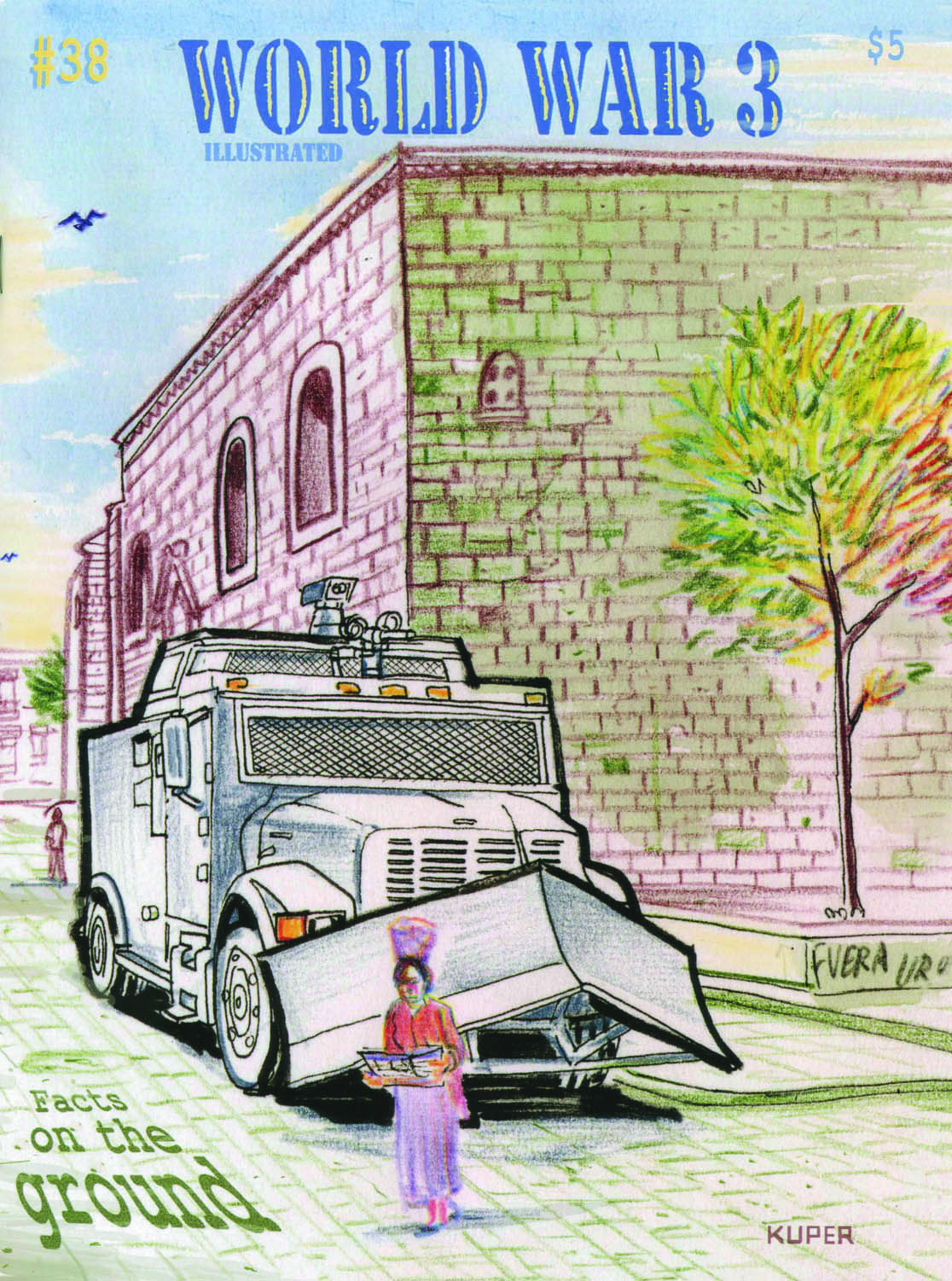
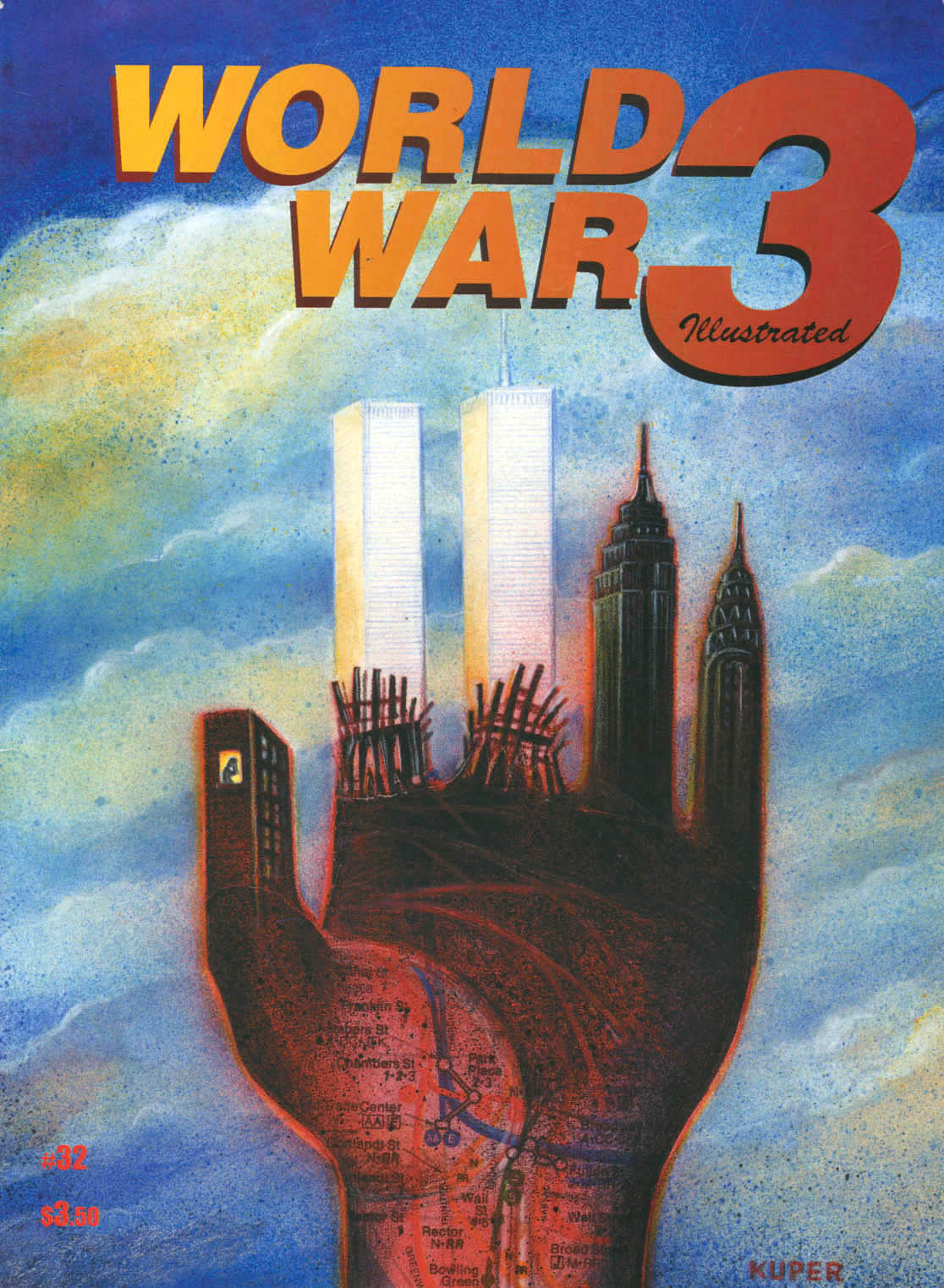
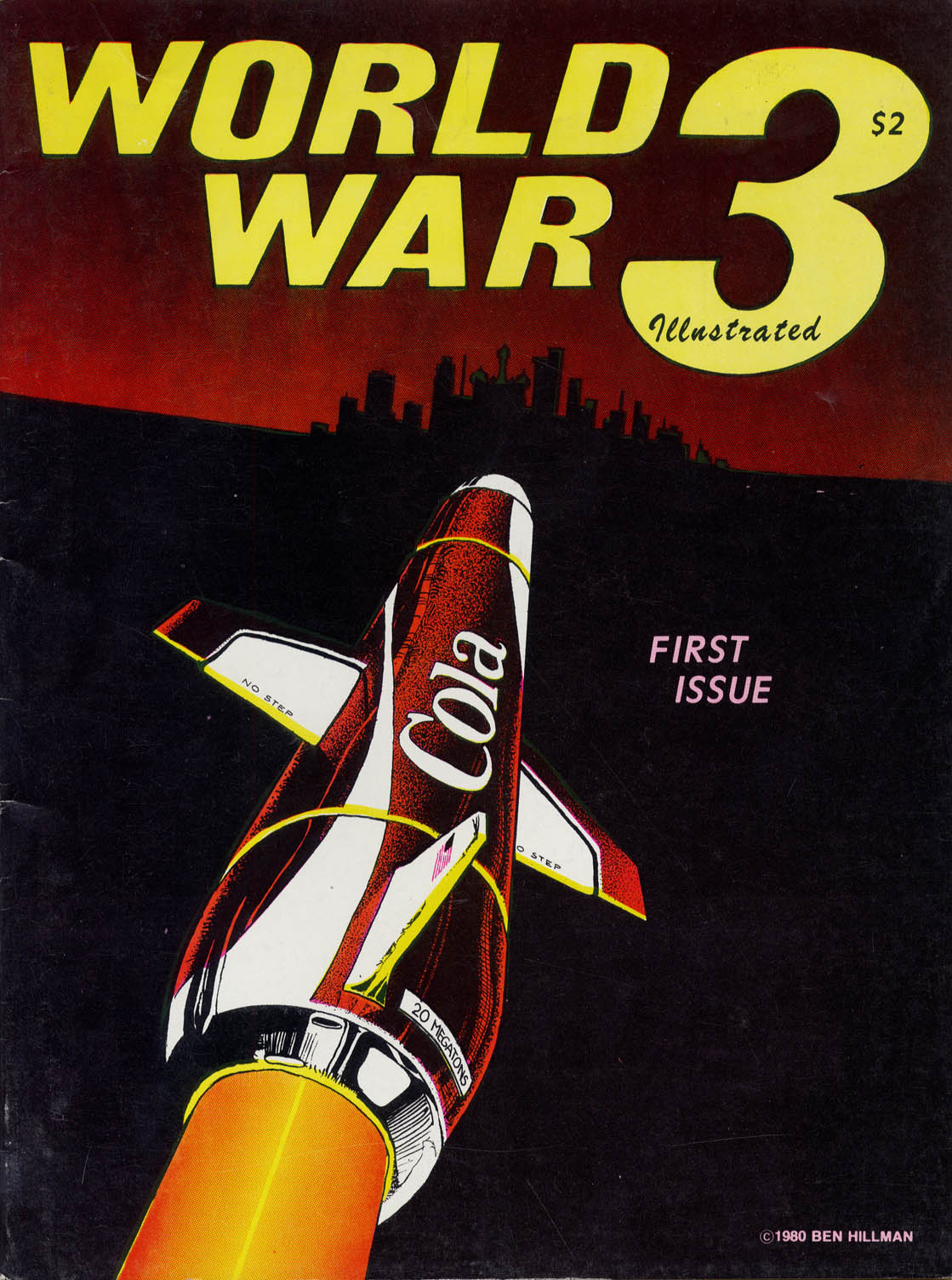
World War 3 Illustrated is North America’s longest-running anthology of political comics. Peter Kuper and Seth Tobocman are the founders of the magazine, which they started in 1979. It was among the first American magazines to treat comics as a medium for serious social commentary and journalism. WW3 isn’t about a war that might happen. It’s about wars ongoing – wars across the globe and in our own neighborhood, the wars we wage against each other and with ourselves.

The magazine was started and driven by passion, a labor of love for cartoonists and artists who were committed, and still are, to the political angst that seethes and thrives in our society. I spoke to Peter and Seth recently, along with Editor Ethan Heitner, about this 41-year-old go-to for lovers of all things cartoon-ly political. It was a fascinating discussion with all three. 

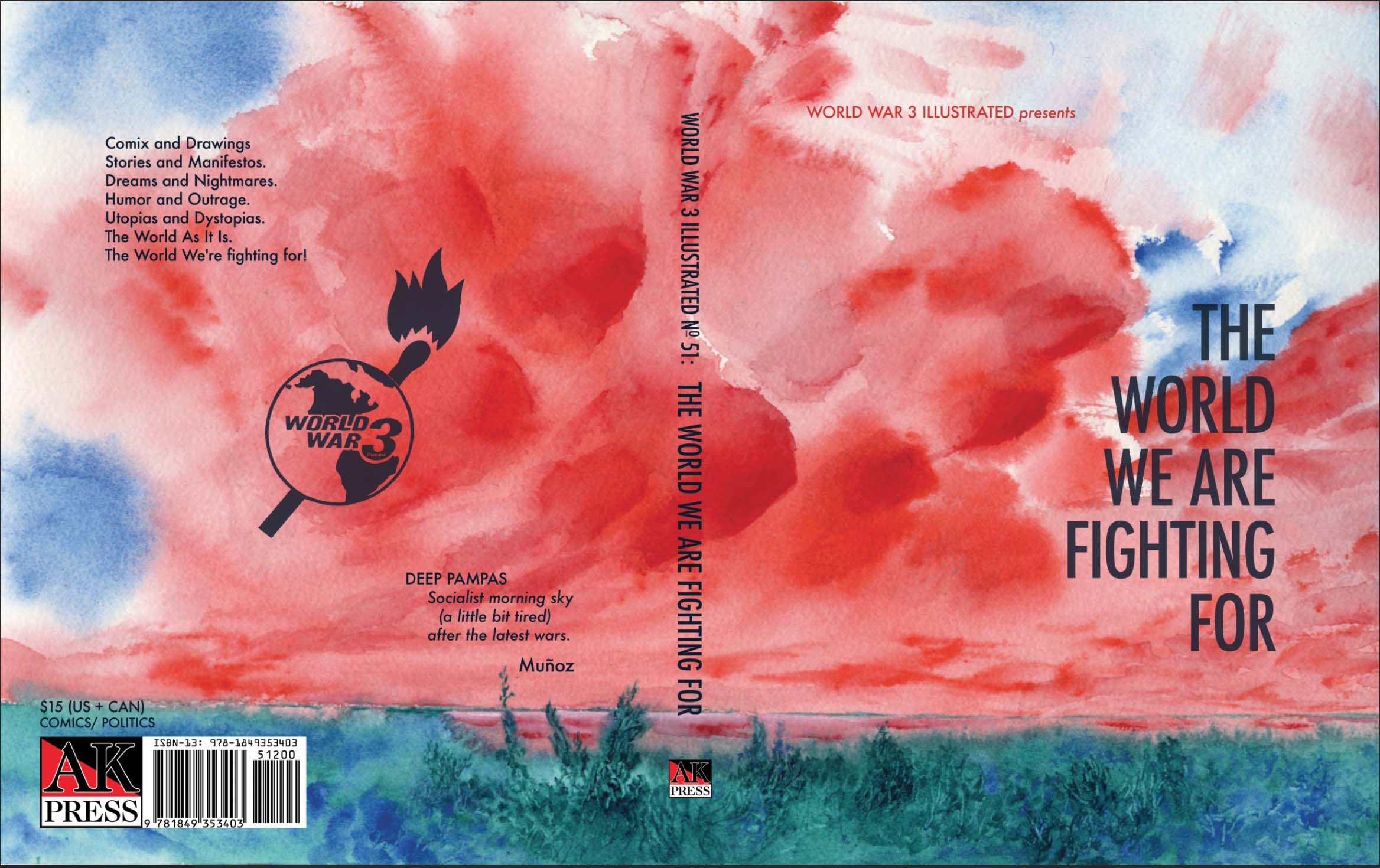
Seth told me that today World War 3 Illustrated is an imprint of AK Press, where they’re now selling it as an annual book. He remarked that it’s thicker and also comes out once a year and it has a square binding. Issue #51 is titled “The World We Are Fighting For” and is a beautifully-done book that is both captivating and relevant. 
So, please enjoy the Mr. Magazine™ interview with Peter Kuper and Seth Tobocman, founders and editors, and Ethan Heitner, editor, World War 3 Illustrated. 

But first the sound-bites:

On the genesis of the magazine (Peter Kuper): I’d say two words: Ronald Reagan. He was heading toward the presidency. He hadn’t been elected yet, but we were seeing the writing on the wall with great terror. And what was also on the wall was a lot of our work that was responding to what was going on in the United States at that time. A general warlike direction, with the Cold War going on, the hostage crisis in Iran; there was just this general vibe of Ronald Reagan is going to be our president with his bad acting, itchy finger on the button, and so the title World War 3 Illustrated seemed appropriate.  

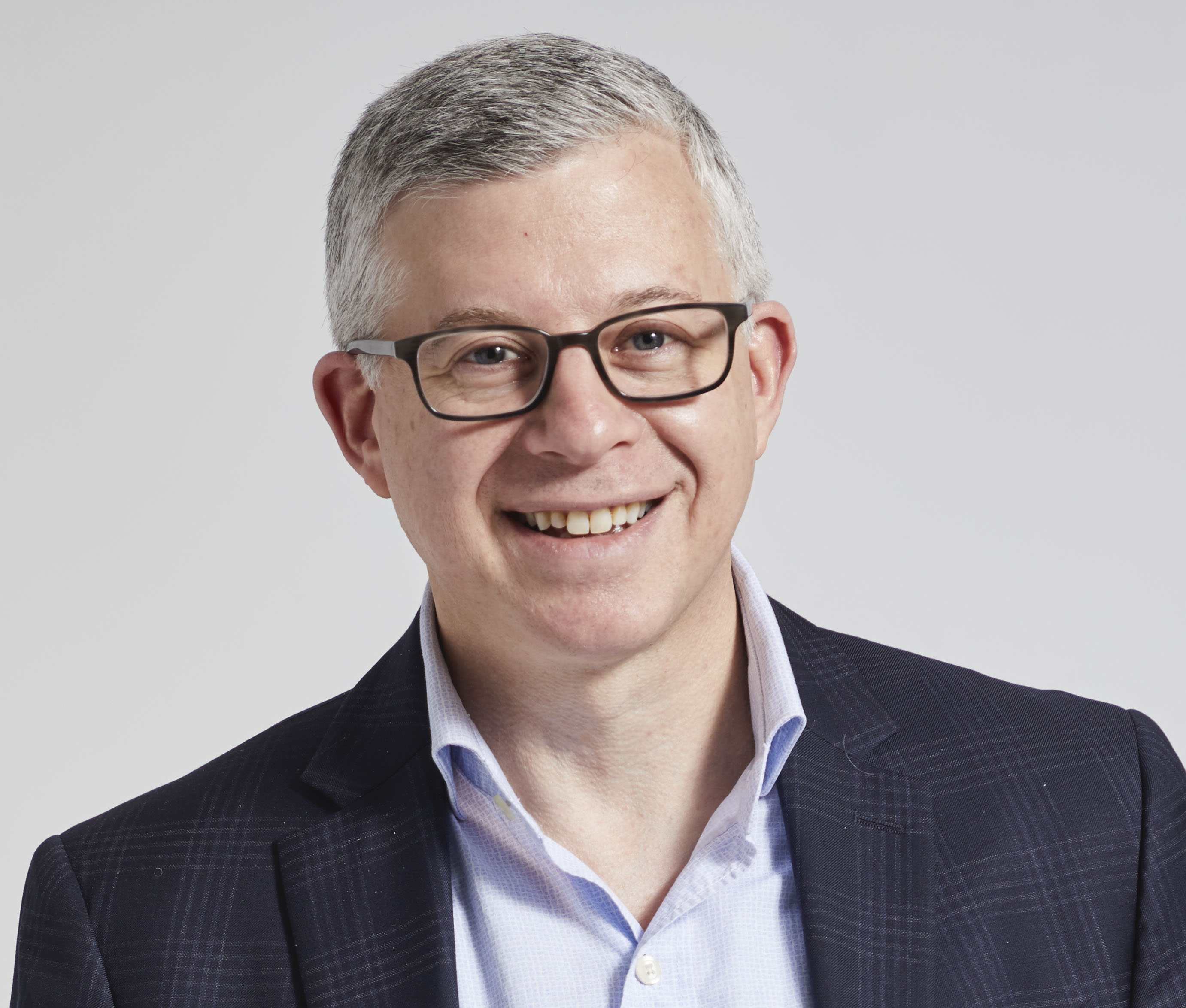
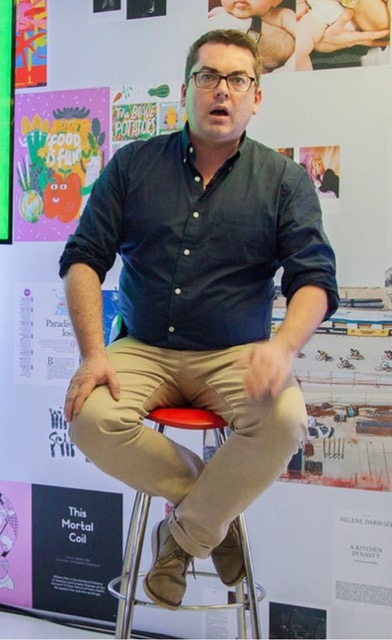
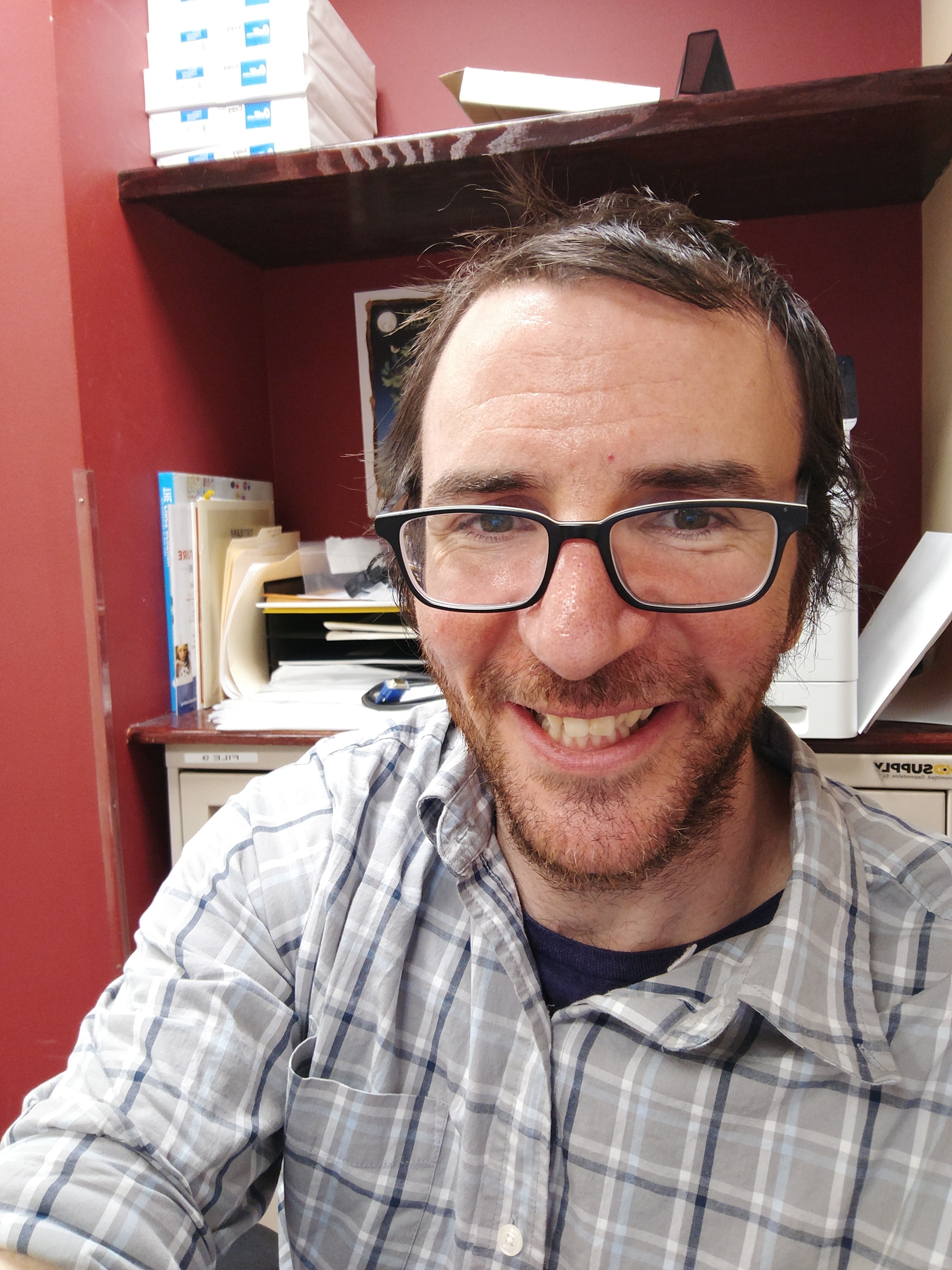
Peter Kuper (Photo by Holly Kuper)

On the motivational thinking behind the magazine (Seth Tobocman): I remember Peter saying to me , I think there’s going to be a war; we should do an anti-war magazine. That was what I remember him saying.

On the business plan for World War 3 Illustrated (Peter Kuper): We have a very firm business model, which has kept us around for the last 41 years, which is nobody gets paid and there’s no money really generated besides enough to produce the magazine. I joke about this point, but there’s a real strong truth to it, because if you’re an editor on the magazine that just means you get to work more and maybe hated a bit more by the people who don’t get published, but it creates an equality in the process. It’s understood that we’re doing this for the passion and the love of the form. And the desire to communicate these ideas. 

On the role print plays for them in today’s digital age (Seth Tobocman): From what I can see from the sales of my books and the sales from World War 3, a lot more people want to buy a print book than an e-book. I don’t know if it’s true for the mainstream comics, I know they make some pretty fancy e-books for Marvel and DC Comics, it’s almost like you’re watching a movie, so it might very well be that their e-books sell better, but it seems to us that there is a market for print books. 
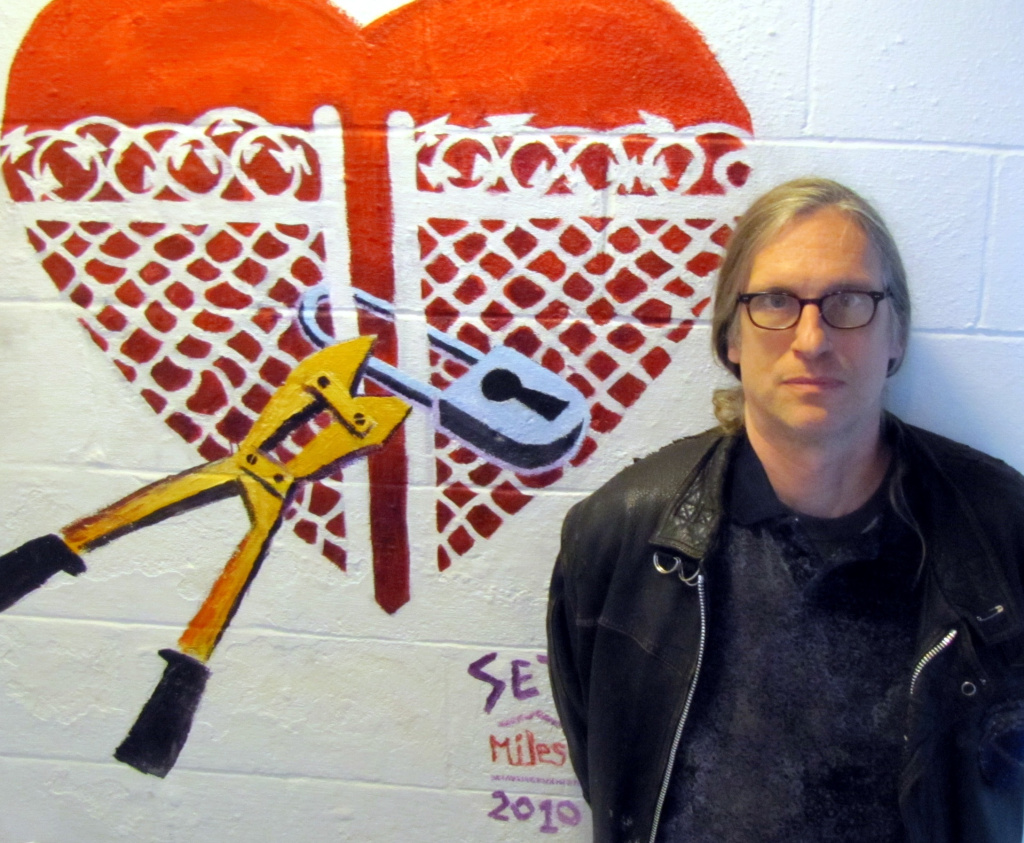
Seth Tobocman

On Editor Ethan Heitner, who is a millennial, being discovered via ink on paper (Ethan Heitner): I was discovered via ink on paper. And I value that enormously. As a millennial, I absolutely appreciate and value and love print.

On what role Ethan plays at the magazine (Ethan Heitner): There’s not really clearly defined roles beyond editing individually. The structure is very loose. Part of the way Seth and Peter set it up and the way it has continued, things are dealt with on an issue by issue basis. There isn’t really a lot of stepping back and trying to tackle more long-term structural issues for the magazine. There’s this loose collective that theoretically we all need to contribute, but as far as who actually makes what decision and what people’s roles are is fluid.

On Ethan’s opinion of what the role of print is in a digital age (Ethan Heitner): I think what Seth was saying earlier, people have a hunger for print. People my age and younger are exhausted by digital, especially during this age of the pandemic. There’s a desire to have something physical to hold in your hands. It’s really coming back and it’s something that people are missing. I think they’re realizing they maybe went too far in the other direction. 

Ethan Heitner

On the future of World War 3 Illustrated (Peter Kuper): We’re already plotting for another issue and the fact is, what we have been doing the whole time is not World War 3 in the traditional apocalyptic sense, it’s more like our daily lives, the things that we’re encountering all the time. And there are a lot of first-person accounts. With what’s going on right now, all of us have direct contact with the pandemic. The graphic novel revolution has exploded and people have stopped having that question about it. As a form, it’s only gotten stronger and that’s one more good reason we’ll keep going on. 

On what makes him tick and click (Peter Kuper): Doing something that you love, drawing cartoons, definitely gets me out of bed in the mornings. And it tends to relate very often to the news. I’m looking to see what’s going on and it’s a form of therapy in addressing it. But I’m still so utterly excited about doing the drawing on a piece of paper that it gets me out of bed every morning.

On what keeps them up at night (Seth Tobocman): Arguments that I get into with people keep me up at night. The fact that all my friends who used to be radicals in the ‘80s are kind of Trump supporters which totally freaks me out. I’m like, what do I say to them? That’s what keeps me up at night, how do I convince people that they’re being completely ridiculous. Usually there’s not a way.

And now the lightly edited Mr. Magazine™ interview with Peter Kuper and Seth Tobocman, founders and editors, and Ethan Heitner, editor, World War 3 Illustrated.

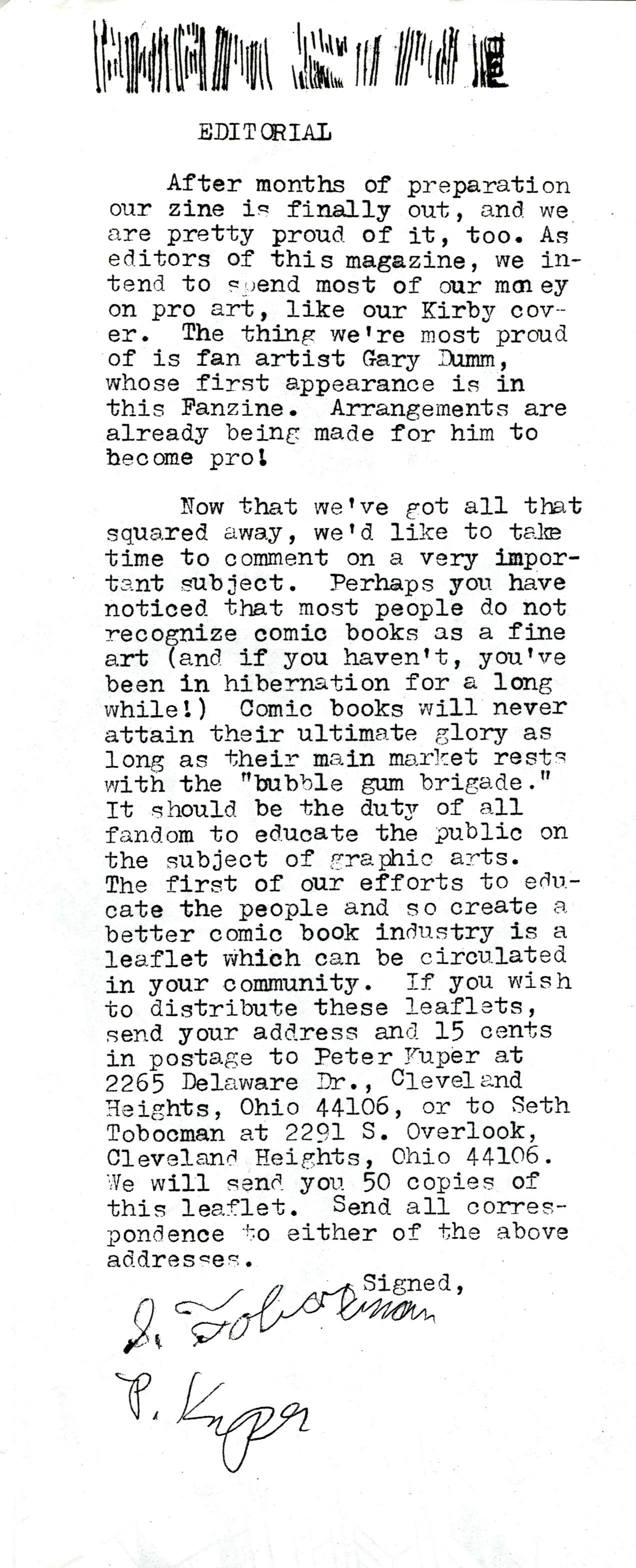
A blast from the past, the very first editorial written at age 11 by Seth and Peter for their first “Phanzine”

Samir Husni: World War 3 Illustrated is a comics and graphics publication that was founded over 40 years ago, in 1979. That’s quite a milestone. What was the genesis of the magazine?

Peter Kuper: I’d say two words: Ronald Reagan. He was heading toward the presidency. He hadn’t been elected yet, but we were seeing the writing on the wall with great terror. And what was also on the wall was a lot of our work that was responding to what was going on in the United States at that time. A general warlike direction, with the Cold War going on, the hostage crisis in Iran; there was just this general vibe of Ronald Reagan is going to be our president with his bad acting, itchy finger on the button, and so the title World War 3 Illustrated seemed appropriate.  

Seth and I were both in art school at the time in Brooklyn at Pratt Institute. We were doing political comics, but there was really no outlets for the kind of things we were doing. And we were interested in getting published, but not like vanity publishing alone because there was other work that we saw on the streets, things that would be on a wall and then with the first rain would disappear, things that were really striking graphics and great commentary, but it wasn’t showing up in the mainstream and we wanted to make sure we could codify that. 

Seth Tobocman: For me, there were a couple of things. One of the things was definitely the Iran hostage crisis. I kind of bumped in and out of college and never finished. I had been at school at NYU for a few years for film and dropped out, then went to Pratt part-time to get my drawing skills together because I figured that was what I was going to do in life. 

When I was in school at NYU, there were a lot of students from Iraq there. I met a lot of foreign students. There were Socialists and Monarchists, and one guy who supported the Ayatollah Khomeini, all in my dorm. They would sit in the lounge at the dorm and no one would sit next to the Monarchists. So I was very aware that there was a real issue in Iran. And my Socialist Iranian friends were worried about the Savaq tracking them down in the United States. I was aware that these people had an issue.

Then suddenly around 1979, everybody in the U.S. could say Iran. In the grocery store where I’d gone every week with my mother they were selling these big buttons that read “Fuck Iran.” And it was interesting because they were selling them to all the people who would have slapped you in the face as a kid for saying the word fuck. And suddenly, they were wearing that word in big letters on their chests. And they were selling dart board of the Ayatollah Khomeini, and it was very clear to me that these people didn’t know anything about this country. They had been told this country had attacked Americans for no reason and that they hated Americans.

Looking at the papers at the time, including the New York Post and the Daily News, I just kind of looked at them and said, if these people are allowed to comment, then I think I have a right to comment because I’m not the most educated or sophisticated person in the world on this subject, but these people clearly aren’t either and they’re allowed to have a voice. 

So, I thought putting out a comic book about that would make some kind of sense. And another thing was we had this Three Mile Island meltdown, which made everybody in New York very aware of nuclear energy. And a couple of years before that there had also been the White Nights in San Francisco, which were the riots that followed the assassination of Harvey Milk. And a lot of my friends in high school were gay kids, and they were the most political kids in my high school. A lot more sophisticated than the hippies in my school actually. 

So, I was very aware of the issues around Harvey Milk. And the fact that there had been this riot. So, all of those things were kind of in the air at the time we decided to do World War 3 Illustrated. 

That said, I don’t think we were very sophisticated about politics. I had read “One-Dimensional Man” by Herbert Marcuse and there’s a quote from that book on the back cover, but I’m not sure I really knew what it meant. (Laughs) 

Peter Kuper: Just in the brass tacks of doing it; Seth and I grew up in Cleveland, Ohio and had both moved to New York. Our interest in comics also extended to doing a fanzines, so we had actually had experience starting our first fanzine when we were 11. And we did subsequent issues. So when it rolled around, we said we’re interested in comics, but there’s not really an outlet for it. The leap to doing a magazine wasn’t completely out of the blue; we actually had a pretty fair amount of experience with printing. Even dealing with the distribution in small aspects. 

Seth Tobocman: We had one issue of our fanzine that sold 1,000 copies through the mail, because it had a lot of interviews with professional cartoonists. We dealt with printers and the mysteries of finding out what actually appears in print and what doesn’t appear in print. And those questions were answered in middle school actually. I lost interest in comics in high school, but gained interest in comics at the point when I was dropping out of college. 

But we were very active comics fans in middle school. And we put out four magazines, and actually Pete put out a fifth, Between the two of us we put out five different issues at that time. 

Peter Kuper: We love the smell of printer’s ink and going to the printer, and learned something about the process too. So it was in our DNA already. 

Seth Tobocman: We arrived at 1979 with a knowledge of how to do that. We applied that to our own work and we were in a publishing environment that was still pretty hostile to everything we wanted to do, that is, I would say that there were four comic books published in the U.S. aimed at adults at that time, including ours. There really was no adult comics market in 1979 in the U.S. There were things we saw from Europe; there were the old underground comics, but the old underground comics had really become a genre fiction by 1979. They only had certain types of stories; they knew what they could sell and what they couldn’t sell, so they weren’t really this freeform thing that maybe they had seemed to be earlier. So, there was no place to print this type of work. 

Also, the left in the U.S. in the beginning of the 1980s was almost non-existent. I was in a peace organization in college consisting of five people. It was seen as very uncool to be involved in politics or socially critical at that time. There was a big reaction against the movements of the sixties. It was very hard to find someone our age who was politically active. I found more older people who were politically active. 

So we really felt that we had to create this thing ourselves, so that we could put out what we thought. And even though we were somewhat naïve and simplistic in our approach to a lot of things and a lot of our early comics looked like science fiction comics than they do political cartooning, the fact that we had done this attracted all kinds of people. That a couple of young people were putting out a political comic book. And those people came to the magazine and we learned from each person who came in and we developed our thinking through them. 

Samir Husni: Most magazines are published as a reflection of society, yours was more of an initiator. You took a tiny seed and watched it grow. Did you see that with nourishment this would happen or were you two just young and threw caution to the wind and said what the heck, let’s do it?

Seth Tobocman: I remember Peter saying to me , I think there’s going to be a war; we should do an anti-war magazine. That was what I remember him saying. We’d grown up through a period of the 1960s and we lived in Cleveland Heights, which was the neighborhood my father decided to live in because it was close to his job at the university. 

And we knew when we were kids that all kinds of crazy things were going on. And then we knew when we were teenagers that all kinds of crazy things were no longer going on, which was an odd perspective that we had. We saw these things come in and then we saw them go out as sort of passive observers from the security of Cleveland Heights, which wasn’t always secure. I remember one time my father brought all his research home because he was afraid his offices would be burned down. 

Peter Kuper: There was a time period during the sixties where there was a lot of marching and people’s lives were on the line going to Vietnam and so it made people very proactive. And then post-Vietnam and post-Nixon, there was a cooling off period and a lot of the steam went out of the engine in that respect. 

We grew up reading underground comics and I thought I was going to be an underground comic artist. I remember being frustrated by the fact that every time our generation arrived somewhere, things were just closing. There was a beat generation and a Summer of Love and then the underground comic scene. And we arrived just in time for them to tell us sorry, that door is now shut. 

To zoom forward, I think what we’ve found with World War 3 is that those groups weren’t there for those people either, they had to form them. So, creating World War 3 was kind of like producing an environment where we would have an interaction with other artists; where we would create a community and we’d be able to have that thing that we felt was missing. But it was not going to spontaneously appear. 

Samir Husni: It seems to me that World War 3 Illustrated was driven by passion. What about the business plan? Did you ever think we have to make money to continue doing this?

Peter Kuper: We have a very firm business model, which has kept us around for the last 41 years, which is nobody gets paid and there’s no money really generated besides enough to produce the magazine. I joke about this point, but there’s a real strong truth to it, because if you’re an editor on the magazine that just means you get to work more and are maybe hated a bit more by the people who don’t get published, but it creates an equality in the process. It’s understood that we’re doing this for the passion and the love of the form. And the desire to communicate these ideas. 

It’s not like there’s a golden ticket involved in it. The only frustration is the extent to which that holds us back from doing more, because finances have to be dealt with. We’re not business people. Having said that, we’ve managed to pull off a number of things, surviving for all of these years being number one, without having money involved. What we do make gets turned back into producing the next issue. 

Seth Tobocman: When we started out, maybe there were times we thought that someday we’d get paid and be able to pay everyone involved in this, but we really didn’t know. We had to feel our way around it. Very early on we got some distribution from some local distributors. There was a company called Trojan that mostly distributing porn, but they distributed us and they distributed Raw in the New York area. There was a guy named Joe Massey who was our distributor for many years, but those were very small quantities. 

What was really the breakthrough for us was around the 4th issue we connected with Mordam Records, which was a distribution company set up to distribute the records of the Dead Kennedys and set up to distribute the magazine Maximum Rocknroll, which was a punk rock fanzine, with a somewhat left orientation coming out of the West Coast. West Coast punk was really political; East Coast punk was not. 

Peter Kuper: What’s really important here is that was at a time when there were comic shops, but we very strongly believed that there was an audience like ourselves who were really interested in adult material in the comic form. But a lot of those people didn’t want to walk into a shop that had a giant Superman cutout when they walked through the door. And they were really put off by that. 

By getting a record distributor, we reached into this area that was a very solid base and we ended up in Tower Records back when they had record stores. People would stumble upon us, and then you didn’t find comics on the shelves in record stores for the most part. They started to carry alternative comics that were developed from publishers like Fantagraphics, but that was a huge breakthrough because we were constantly saying there was an audience for this, but we’re not reaching them in the comic shops. When we got through that door to this alternative area, it made a lot of things possible.

Seth Tobocman: We would get letters from all kinds of small towns where somebody would say they just discovered our magazine at the place where they bought punk records. And they would say they had never seen anything like it and it had changed their life to find it. We got a lot of those types of letters in the ‘80s. 

One of the good things that the punk rock people did, the West Coast people did, was they developed a lot of small business reps in various towns who only sold alternative records. They might be making money or they might not, but they were passionate about it. My general sense is, the Dead Kennedys records sold well enough to underwrite all the other things distributed by Mordam Records.  

Samir Husni: Why do you think you’re still doing print and publishing a printed magazine in this digital age? What role does print play today?

Seth Tobocman: From what I can see from the sales of my books and the sales from World War 3, a lot more people want to buy a print book than an e-book. I don’t know if it’s true for the mainstream comics, I know they make some pretty fancy e-books for Marvel and DC Comics, it’s almost like you’re watching a movie, so it might very well be that their e-books sell better, but it seems to us that there is a market for print books. 

What we’ve had to do in recent years is, first of all, Mordam Records, the whole record industry disappeared. Just vanished. When Tower Records closed we lost about 500 copy sales per issue. And the magazine distributors that we dealt with became smaller and smaller, asked for fewer and fewer copies. And I don’t think that had any relation to us, it had relation to the amount of business they were doing. 

Most recently, we have become an imprint of AK Press where we’re now selling it as an annual book. So, we’re calling it a book. It’s thicker and it’s once a year; it has a square binding; it’s 7×9, and it’s a book. Our distribution has gone back up a little since we became a book and an imprint of AK Press. So it seems like the bookstores have recovered somewhat from the loss they suffered because people still prefer a print book to an e-book, unless it’s a classic and they can download it for free. 

Peter Kuper: The other answer is we’re dinosaurs to some extent and we love print and we’re drawn to that form ourselves. It’s one that we’ve been familiar with. We used to go to the printers and stand by the presses while it came off the web press. And it was really exciting. I still have that coursing through my veins and the idea of having something arrive that’s not digital. 

Ethan Heitner: When people ask us why we haven’t moved to digital, I just want to crack up, because we wouldn’t know how. (Laughs) That’s why we’re still in print, because that’s what we know how to do. In 1979, I hadn’t been born yet. In 1980, I wasn’t born yet. In 1983, when I showed up on the scene, World War 3 was already an established fact of life, but I joined the audience of the magazine in the Tower Records days of the ‘90s. That’s how I got World War 3. 

When I first wanted to join World War 3 as a cartoonist in 2007/2008, the Internet started in 1994, the digital revolution began in 2007/2008; in 2007/2008 I moved to New York with the desire to become a cartoonist and join World War 3. And I found out that the issues that were being printed then did not have an email address, they did not have a website; they listed a P.O. Box on the inside cover for a contact. I was like, this is ridiculous. No way was I writing to a P.O. Box. (Laughs)

I’m making jokes, but actually I’m much less insistent on these things now because I don’t want to spend any more time in front of a computer than I have to either. And the way I did finally meet Seth was in a great, non-digital way. I was making comics that were being distributed at protests in New York City; printed flyers that were being passed out on the street and Seth found one of my flyers and wrote his phone number on the back of it and said give my phone number to whomever drew this comment and that’s how I finally got involved. 

One of the first things I did do when I became involved with the magazine was set up a Gmail account for the magazine, so people did not have to write to a P.O. Box to contact us. I eventually set up a Twitter account and a Facebook account and other social media. 

Samir Husni: So, Ethan you were discovered via ink on paper?

Ethan Heitner: Exactly. I was discovered via ink on paper. And I value that enormously. As a millennial, I absolutely appreciate and value and love print. I worked on the college newspaper when I was in college and I remember picking it up from the print shop, the smell of the fresh ink, and seeing my own work in print; I don’t think of my work as real until I see it in print. 

Samir Husni: Besides being a co-editor, what role do you play today with World War 3 Illustrated?

Ethan Heitner: There’s not really clearly defined roles beyond editing individually. The structure is very loose. Part of the way Seth and Peter set it up and the way it has continued, things are dealt with on an issue by issue basis. There isn’t really a lot of stepping back and trying to tackle more long-term structural issues for the magazine. There’s this loose collective that theoretically we all need to contribute, but as far as who actually makes what decision and what people’s roles are is fluid. 

In 2011-2013, I sort of tried to get us a little bit more coherent internally, just to get us a more consistent web presence, to think about questions of distribution, to think about questions of digital distribution, and I didn’t make a lot of progress, that’s when I set up our Tumblr account and our Gmail account, and I set up other social media accounts. 

In 2013, I got a little burned out, so I took a break. It was difficult. There’s this generational divide, in terms of technology. And it’s such a loose structure, that’s it’s hard to make change happen. Recently, Seth asked me to get more involved again and that’s why I helped with #51. That’s the first issue I’ve been directly involved with for a while. We started that process in 2016/2017. After Trump got elected, I got a little bit more involved again. In 2017, I actually rejoined the editorial board.

Samir Husni: As a millennial, what do you think the role of print is in this digital age?

Ethan Heitner: I think what Seth was saying earlier, people have a hunger for print. People my age and younger are exhausted by digital, especially during this age of the pandemic. There’s a desire to have something physical to hold in your hands. It’s really coming back and it’s something that people are missing. I think they’re realizing they maybe went too far in the other direction.
Peter Kuper: It’s like vinyl as well. There’s a younger generation that doesn’t want everything to be in zeros and ones. 

Ethan Heitner: It’s shifted from a more mass production model to more of a curated production model. But World War 3 was always sort of a curated audience anyway. World War 3’s audience is also not necessarily a mass audience. It would be great if it were, but we’re not kidding ourselves. We know that it’s not. It’s always going to be something that reaches that subsect of the population and that population is also maybe more appreciative of print. If the goal was to reach as many people as possible, then it would absolutely make sense to push more of a digital platform. 

Seth Tobocman: One of the things, and Ethan is aware of this, the advent of digital media changes the purpose of a magazine like World War 3. During the first 20 or 30 years of production of the magazine, if I saw a point of view that was interesting, but wasn’t getting out there; even if I disagreed with it, I would feel I had some obligation to help this poor soul reach an audience because no one would ever listen to them. 

Whereas with the advent of the Internet, everybody can get into the public in some form, no matter how weird they are or how unqualified. The first time a computer geek friend of mine showed me the Internet, one of the first sites he showed me was a site that told you Hitler was still alive and lived on the dark side of the moon and visited the Earth in a flying saucer. And that guy had one of the first websites. 

And the idea of getting something out right away is much better served by the Internet than served by print. And I think that really hurt the newspapers. Facebook is all about speed, not about quality. People put things out on social media before they even think about what they’re writing. That’s one of the problems with it.

So what we’re doing now has a different role, it’s like is this good enough to spend some money on printing so that somebody can spend some money on buying it? And will it have value in a year? Will it still mean something in a year? I think one of the really nice things about drawing comics is it takes so much time. If I’m writing something on Facebook, I might write something really stupid because it only takes me a minute, I don’t have time to think about it. If I write a stupid comic strip it’s going to take a lot longer to draw than to write it and if it’s a dumb idea, I’m going to change it before it comes out. 

Samir Husni: What do you think is the future of World War 3 Illustrated? Are we still at war after those 41 years?

Peter Kuper: Hopefully, because we’ve been publishing, we’ve kept the war from happening. That’s one of the great things that we’ve done. I have to say that I’m very happy about that success. As long as we’re publishing, there won’t be a World War 4. But we’re already plotting for another issue and the fact is, what we have been doing the whole time is not World War 3 in the traditional apocalyptic sense, it’s more like our daily lives, the things that we’re encountering all the time. And there are a lot of first-person accounts. With what’s going on right now, all of us have direct contact with the pandemic. 

So, the stories we have to tell are pretty bottomless. I don’t see any end to it. Only when we have passed as humans will there be a necessary end to producing this kind of material, whether it will be in the form of the magazine or not is impossible to say, but we certainly didn’t look in 1979 ahead and say yep, in 2021 we’re going to be doing a new issue. That did come as a surprise. 

So now, having witnessed our longevity I feel like yes, this could go on for years and years more because there’s a lot of people that really want to express themselves and need a form for it. And in mainstream publishing it’s very limited to do an 11-page comic strip about something personal, say? There are more outlets with graphic novels, for example, in the process of doing the magazine, we’ve witnessed a change from comics as a low art form, or not even an art form, to being one of the most powerful sections of a bookstore and online. The graphic novel revolution has exploded and people have stopped having that question about it. As a form, it’s only gotten stronger and that’s one more good reason we’ll keep going on.

Seth Tobocman: I think the definition of comics and who makes comics has really expanded. Pete and I both teach and our classes are mostly young women, which when we started the magazine there was a real push to say there should be more women working on the magazine. We generally had to find people who had never drawn a comic strip before and teach them to draw comics, so that we would have women working on the magazine. Comics in the U.S. was a very male genre. 

Ethan has done a lot of work with us to bring in cartoonists from Palestine, Egypt and Lebanon that we hadn’t known about. And I’ve become aware that there are a lot of comics being done around the world that are in a lot of ways very much influenced by the ‘80s alternative comics from the U.S. and Europe, but have a subject material on a notion of who the protagonist is; it’s much broader. I think there are a lot of new voices starting to use this medium. 

One of the good things about World War 3 and a good reason to keep it going is we have dinosaurs like me and Peter Kuper and Sue Coe on this magazine, and then we have someone like Colleen Tighe who is completely new and represents a different generation of people. So there’s a way of creating a continuity, saying this idea has been around, this idea has developed, and this idea has retained its integrity for this amount of time. And I think there’s a reason to go forward and continue it. 

Ethan Heitner: I actually do try to push Seth and Peter to say why are we doing this? What is the reason? It’s not the situation when they started, just getting a form or getting a point of view out there, because now anybody can get their point of view out there. And there’s also a lot more forms for graphic journalism comics that deal with politics. There are all sorts of websites and magazines that actually will publish a 16-page story. And they might actually pay you for it. 

So one question I always try to bring is what is the unique thing that WW3 does; it’s not a question that has an answer, but I think we keep trying to look for it. One of the many great advantages of the digital age is we now can get comics directly from Palestine, Egypt, and Lebanon; from anywhere in the world. And finding that work is very valuable. So as long as we keep finding that work that is valuable, that’s the fun part of putting together the magazine. It’s very exciting.

Samir Husni: What makes you tick and click and motivates you to get out of bed in the morning?

Peter Kuper: Doing something that you love, drawing cartoons, definitely gets me out of bed in the mornings. And it tends to relate very often to the news. I’m looking to see what’s going on and it’s a form of therapy in addressing it. But I’m still so utterly excited about doing the drawing on a piece of paper that it gets me out of bed every morning. 

Seth Tobocman: This is absolutely the right question because drawing comics get me out of bed in the mornings. I’m an old guy and I’ll wake up in the morning and I’ll think about everything that went wrong in my life and then I have a comic strip to draw. So I get up and start drawing it. And comic strips take a long time to draw, you have page after page and then a deadline. So you always have some work to do, which is really helpful. 

Samir Husni: My typical last question; what keeps you up at night?

Peter Kuper: Doom scrolling, especially in the last four years, though it’s run longer than that. Seeing what madness has occurred, even in some final hour of the day. And on the pleasure side, there are so many things that I want to read and it’s just impossible to keep up with all of that.

Seth Tobocman: Arguments that I get into with people keep me up at night. The fact that all my friends who used to be radicals in the ‘80s are kind of Trump supporters which totally freaks me out. I’m like, what do I say to them? That’s what keeps me up at night, how do I convince people that they’re being completely ridiculous. Usually there’s not a way. 

Ethan Heitner: My three-year-old gets me up in the morning and he’s the one who usually wakes me up at night.

Samir Husni: Thank you all. 
h1

Dan Fuchs, VP/Chief Revenue Officer, Delish Quarterly Magazine, To Samir “Mr. Magazine™” Husni: “What The Magazine Allows Us To Do Is Capture The Collectability Of Something.” The Mr. Magazine™ Interview…

February 21, 2021

“This is where the partnership between myself and Joanna Saltz (editorial director) really comes into play because we worked on this together. Delish.com started 10 years ago, but it really was part of a joint venture that we had with MSN. The Delish as we know it now, under Joanna, really didn’t start until around six or seven years ago. And one of the first things she said we had to do as the brand started to grow was that we had to have a cookbook. We had to have a printed, physical, tangible manifestation of the brand. And that was the launch of the cookbook and it sold well, so we saw that our audience would respond to that.” Dan Fuchs…

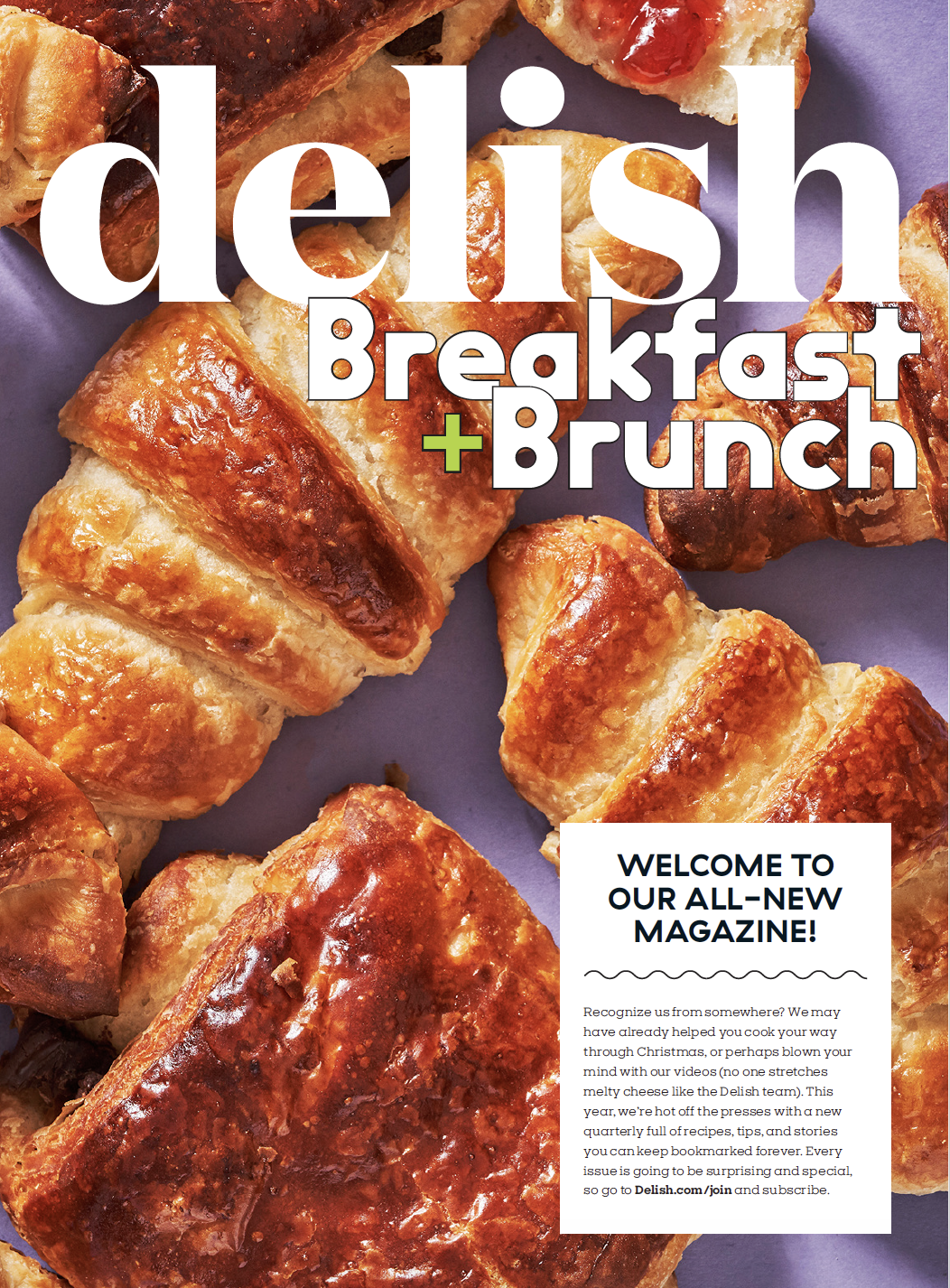
A successful digital-first brand from Hearst that has seen immeasurable growth with not only its website, but its printed bookazines and cookbooks, Delish.com is launching a quarterly print magazine. Delish in print will be sold at the newsstands, but will also be an integral part of the subscription model the brand has in place for its online footprint. An all-access subscription of $20 annually will not only get you everything online, but also the 96 page (plus covers) printed magazine as part of the memebership.

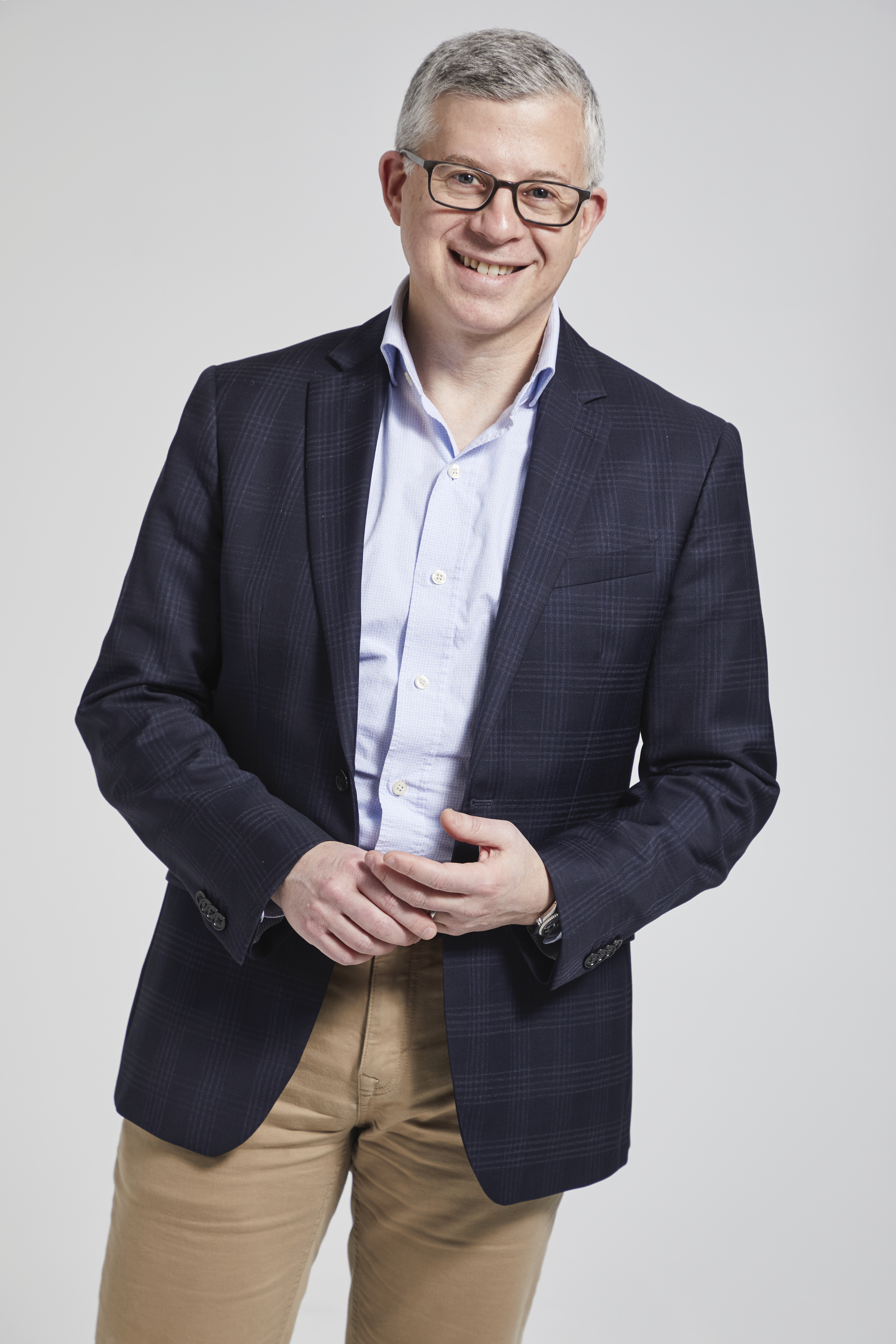
Dan Fuchs, formerly of HGTV magazine and O, The Oprah Magazine, is the VP/Chief Revenue Officer of the new quarterly print publication. I spoke with Dan recently and we talked about this exciting new venture into the world of print for a digital-only entity. Dan said it’s an exhilarating time for a brand that has been successful online and in the world of print, with its special bookazines and cookbooks,  to have a quarterly magazine coming out in print. Opportunities and more growth will surely follow. And with Editorial Director, Joanna Saltz, as his partner, Dan is looking forward to the future of Delish in all its exciting extensions.

And now please enjoy the Mr. Magazine™ interview with Dan Fuchs, VP/Chief Revenue Officer, Delish quarterly magazine. 

But first the sound-bites:

On having no ads in the first edition of Delish quarterly: I’m very excited as a chief revenue officer to find ways that we can work with advertising partners on this brand, but the design behind it is not an advertising-driven model. It is a way for us to generate, from a purely financial standpoint more revenue from the consumer, but really to expand the brand into all places that we think the brand will be well-received. 

On getting much more value for your money with the $20 annually all-access model of Delish: It’s a better deal and it’s our way of really trying to encourage our readers to get the all-access. We’ve seen such loyalty from our fan base; we can see that on social media. So, it’s no surprise that here we are now two months in and we’re nearing 30,000 memberships sold and more than two-thirds of them are for the all-access model. And I think you’ll start to see, once the magazine is out, more people going that way. 

On the balance of the advertisers or the sponsors to the content of the magazine or to the revenue: We already have a few page commitments from some advertisers out there, but we’re interested in talking about some deeper integrations, maybe into native content. I think because the structure of the magazine is really bookazine quality, in terms of the paper stock and the photography; in terms of the oversize. We’re committed to a print run size and book size of 96 pages plus covers. So for this year at least, we’re capping the number of advertisers to eight per issue. And we start with advertising in the second issue.

On what role he feels print plays in today’s digital world: What the magazine allows us to do is capture the collectability of something. Delish started 10 years ago, but it really was part of a joint venture that we had with MSN. The Delish as we know it now, under Joanna, really didn’t start until around six or seven years ago. And one of the first things she said we had to do as the brand started to grow was that we had to have a cookbook. We had to have a printed, physical, tangible manifestation of the brand.

On why now seemed to be the perfect time to launch the print edition of Delish: We feel that our audience is telling us now is the right time. I think what we have seen in the data drives, a lot of that is the type of recipes that we’re seeing people really leaning into, the sourdough breads, the baked lasagnas; more of the comfort foods. And a real interest in videos on technique. And an interest in trying something new.

On his elevator pitch for advertisers: I have met with a bunch of prospective advertisers and some of our existing clients and I think the elevator pitch is that this is a natural extension of a brand that already has proven success. And this is a way for you as the marketer; you’ve been working with us on Delish.com and you’ve been working with us with branded content that’s digital; you’ve been working with us on customized social posts; we did a lot of live programming, so here’s a way to work with us on something that we know will resonate with our audience, your customer, but to do it in a different way.

On some  of the challenges he thinks he might face in launching the quarterly magazine and the membership model: You do get into the “why now” and “why print” and as we look at trends on newsstand, I think there is that unfortunate mythology about the print model that we have to address. A hurdle that we have to overcome is to prove to people that this digital-first brand might have a digital-first audience, but that audience is interested in print as well. How do we demonstrate that? Fortunately we have four or five years’ worth of data on our print products and granted it’s been a different model.

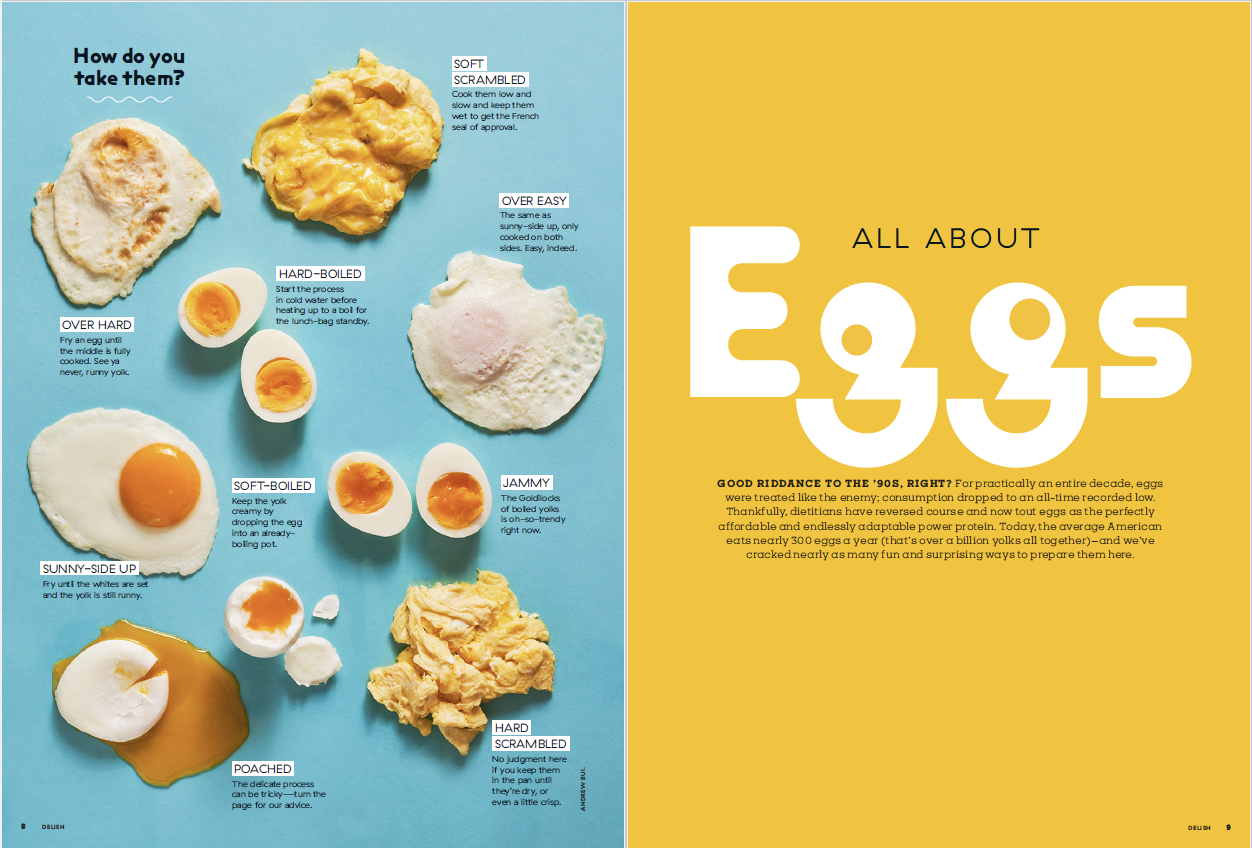
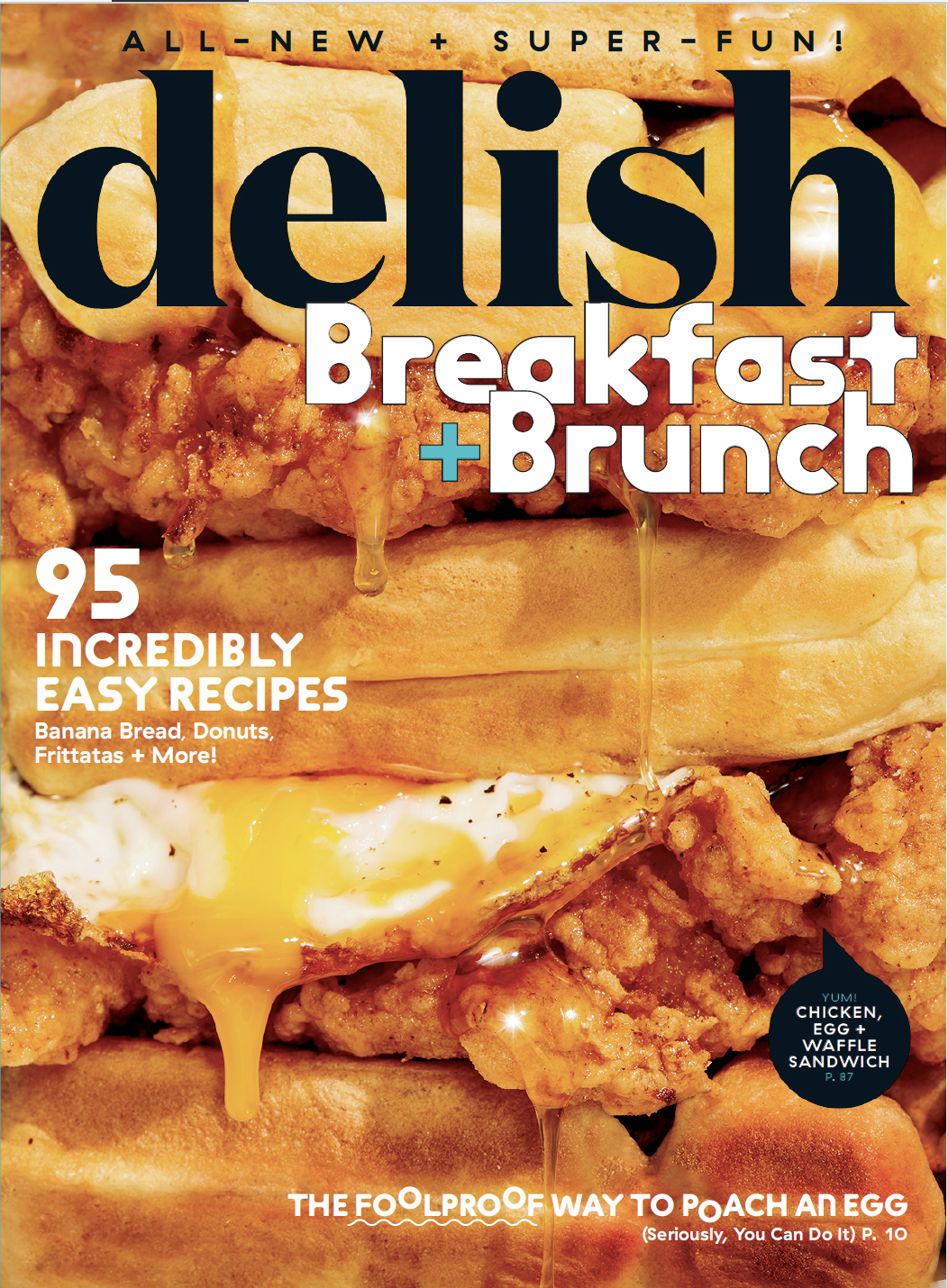
On diversity and inclusion in the magazine: I’m excited about this first issue because we feel that Delish has been a very inclusive brand all along, but particularly as we go through the magazine what has always been important to us is that our readers understand the story behind the food or the origins behind the food. And we know our audience is excited to try new and different things. I’ll give you an example. The first chapter is all about eggs, who doesn’t like a good egg to start off with breakfast. But it’s the variety of ways that we’re going to show you to make those eggs. Of course, there’s a frittata, and we have a recipe for Migas, also a Sabich sandwich, which is an Israeli sandwich, and we give you some background on that and the ingredients you need.

On what he hopes to achieve in the first year of the magazine: So the fast forward would be that we prove the naysayers wrong, that we expanded a brand, that while rooted in digital, could deliver on our promise to reach our audience in many different ways. But from an overall editorial perspective, I’d feel like we reached success if we could find our consumers saying this is such a great addition to their Delish experience; it doesn’t replace anything, it’s not redundant in any way.

On anything he’d like to add: We are really proud of this brand and I have to give a lot of kudos to Joanna Saltz and her editorial team who adapted so quickly to an extremely challenging situation. We have a test kitchen in the Hearst Tower that we could not get access to, so her editorial team was doing recipe videos out of their homes and what was really exciting and heartwarming was our audience loved it.

On what makes him tick and click: I have always felt so lucky to be a part of this business, this industry. It is the people that I get to work with. I’m coming up on my 18th year at Hearst and we have exciting things going on. It’s the colleagues that I work with, Joanna as my partner on the editorial side; it’s some of the team members who came with me from HGTV magazine and from Oprah. But it’s also our clients; it’s our advertisers, who are also open and excited about what’s going on.

On how he unwinds at the end of the day: If you dropped by, you might see the bar and the wine fridge, so there’s definitely enjoyment in that. And even though it’s been a full year of cooking for my family, we’ve been able to spend more time together, at the end of the day it’s hitting up Delish, listening to some good music and sitting down with a nice cocktail from one of my favorite new books.

On what keeps him up at night: Not necessarily things about work; I think our country has been through quite a lot, but I’m always a very hopeful and optimistic person. There’s a lot of indecision out there: when are we going back to the office, all the things that we talked about that I love about the business, when are we going back into ad agencies to talk to customers; when are we going to have another ACT Experience, so I think it’s just the waiting. And still accepting the realities.

And now the lightly edited Mr. Magazine™ interview with Dan Fuchs, VP/Chief Operating Officer, Delish quarterly magazine. 

Samir Husni: Previously you were the publisher of HGTV and today you’re the VP/Chief Revenue Officer of a new quarterly magazine, Delish. Typically, when I talk with publishers or CRO’s, they tell me how many ads they had in the first issue of the new magazine, but in Delish’s first edition there isn’t a single ad. Is this a new business model that you’re having to adjust to?

Dan Fuchs: Yes, there is definitely a need to adjust. And it’s a great question because it sort of leads into what this new job is for me. As you indicated, I’ve been at Hearst for a while and I’ve had the privilege of working on some of our bigger print brands, HGTV magazine; I worked at the Oprah magazine, and the origin of my new position at Delish is that Delish has been an important part of the overall Hearst digital portfolio. 

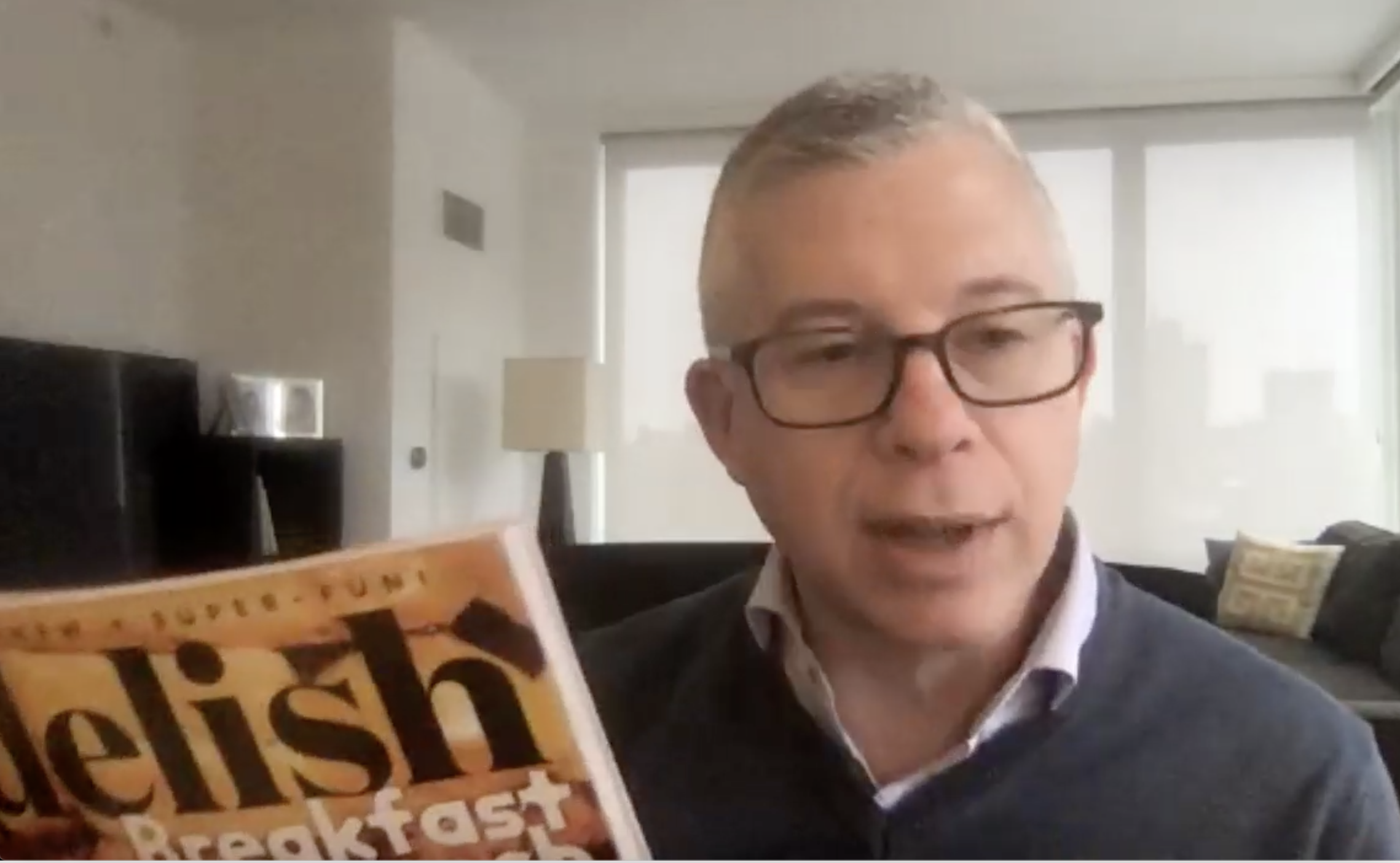
But we’ve seen such incredible growth from the brand through all of its digital extensions, obviously the site itself and huge growth across social media, and as we started doing more print products, and this is the beauty of Zoom, it’s the show and tell, whether it be a hardcover cookbook that we produced or a variety of our bookazines, Holiday Cookies from last year, we’ve seen the brand resonate at all touchpoints. 

We’re a digital-first brand; we’re a digital video-first brand, but as we adapt to our audience, and our audience has really shown us, particularly during the last 12 to 14 months, the passion that they have for cooking and the fun and enjoyment that goes around food. 

The new magazine that we’ll talk about today, Delish quarterly, really comes into play as a real enhancement for a new membership model that we’ve come up with. Starting about two months ago, we introduced Delish Unlimited. A lot of Hearst sites now are behind a pay meter. I think we’ve seen as an industry, whether it’s print or digital, people will pay for really good content. And they’ll pay for really good brands and they’ll pay for the authenticity and the integrity that goes behind those brands. 

So, the pay meter was launched in December. Our readers can get up to four free articles and then they’re told now for unlimited access we have two separate models. One is a digital-only, which is $3 per month or there is the all-access model. The all-access model for a $20 annual gets you unlimited content on Delish.com; it gets you access to some new editorial interactive technology that we’re introducing; it gets you a newsletter; and it gets you an annual subscription to the launch of the new Delish quarterly. 

I’m very excited as a chief revenue officer to find ways that we can work with advertising partners on this brand, but the design behind it is not an advertising-driven model. It is a way for us to generate, from a purely financial standpoint more revenue from the consumer, but really to expand the brand into all places that we think the brand will be well-received. 

Samir Husni: When I went to the site to check out this new membership model, one of the things I discovered is if I subscribe to the Delish $3 per month plan, I’ll be paying $36 per year and I won’t get the print product. But if I choose the all-access model for $20 annually, I’ll get much more for my money. 

Dan Fuchs: It’s a better deal and it’s our way of really trying to encourage our readers to get the all-access. We’ve seen such loyalty from our fan base; we can see that on social media. So, it’s no surprise that here we are now two months in and we’re nearing 30,000 memberships sold and more than two-thirds of them are for the all-access model. And I think you’ll start to see, once the magazine is out, more people going that way. 

The financials behind it are we’ve been doing some really great newsstand-only, one-off projects like the Holiday Cookies and we’ve done Soups and Stews; we’ve done a lot of work in the keto space, so the Delish quarterly magazine will be part of this new subscriber model, but of course, it will also be on newsstand as well. And we’ll be promoting in the issue itself; it’s the fourth cover ad, which I will likely sell to a partner for the next three issues, but here, we really want to encourage our audience to go ahead and sign up for a subscription. Potentially, by the end of 2021, it’ll be really interesting to see the balance of subscriber versus newsstand for the magazine. The magazine hits newsstands March 2, 2021, but subscribers might get it a week or so earlier. 

Samir Husni: What about the balance of the advertisers or the sponsors to the content of the magazine or to the revenue?

Dan Fuchs: We already have a few page commitments from some advertisers out there, but we’re interested in talking about some deeper integrations, maybe into native content. I think because the structure of the magazine is really bookazine quality, in terms of the paper stock and the photography; in terms of the oversize. We’re committed to a print run size and book size of 96 pages plus covers. So for this year at least, we’re capping the number of advertisers to eight per issue. And we start with advertising in the second issue. 

What you’ll see is a smaller ad presence than you’ll see in most consumer magazines, but in addition to some run-of-book-ads, you might see some new and exciting and interesting expressions of brands, whether that may be through native content, advertorial content; we’re open to doing a lot of cool things.

Samir Husni: Delish is a very well-known brand. As you said, it’s a digital-first brand and has been in existence for more than 10 years. What role do you think the print quarterly is going to play in this digital age? Your editor wrote in the first issue that here was something you could book-keep forever. Besides being able to keep it forever, what role do you feel print plays today?

Dan Fuchs: This is where the partnership between myself and Joanna Saltz really comes into play because we worked on this together. We both have extensive print backgrounds at Hearst. In addition to being the editorial director of Delish, Joanna is also the editor in chief of House Beautiful, so she knows a lot about brands and how to express them in print as well as in digital. 

I think for us, when we look at the way our audience interacts with food content, recipe content digitally, it’s certainly very active. We can look at Google Analytics and see transit traffic that happens around 3:00 or 4:00 p.m., people are in that what’s-for-dinner type mode. 

What the magazine allows us to do is capture the collectability of something. Delish.com started 10 years ago, but it really was part of a joint venture that we had with MSN. The Delish as we know it now, under Joanna, really didn’t start until around six or seven years ago. And one of the first things she said we had to do as the brand started to grow was that we had to have a cookbook. We had to have a printed, physical, tangible manifestation of the brand. And that was the launch of the cookbook and it sold well, so we saw that our audience would respond to that.

But I always look at this as an extension of that idea. It’s a quarterly publication; it’s designed to be a collectible, and when you see it and go through some of the content, the focus that we’re doing is really big, lush, beautiful photography.

Delish is also very video-focused, so the hyper lapse, the hands and pans; it’s kind of interesting for us to take digital content and translate it into print. You could love pancakes and there’s an IHOP copycat recipe on Delish.com, but here we shoot it for print. And it has a different look and a different feel, that you could eat the food right off the pages, but the service is still there. 

What’s key is that they have to be complementary. And we want our audience to be interacting with the same sort of theme and the same fun that Delish provides, but that the content is not in any way redundant and that it is a different experience. 

Samir Husni: What about the timing for launching this quarterly print magazine? We are approaching one year living in this pandemic; why do you think now is the perfect time for Delish in print?

Dan Fuchs: We feel that our audience is telling us now is the right time. I think what we have seen in the data drives, a lot of that is the type of recipes that we’re seeing people really leaning into, the sourdough breads, the baked lasagnas; more of the comfort foods. And a real interest in videos on technique. And an interest in trying something new. We’re also watching social media and if you’re into TikTok, I’m sure you’ve seen the baked feta pasta craze that’s been going on. And that’s something pre-pandemic that people may have not been as excited and focused about doing. 

Print allows you to really take a recipe and make it more than just functional, really blow it out in terms of the photography and give an overall sense of the food that’s there. So, the audience has led us to that, the data of the type of content that we see doing well has also led us to that. And also, still the success in our print vehicles. We have another print business where we do spiral-bound books that are Amazon print-on-demand. So we take no inventory; we print a new copy every time someone wants one, and particularly during a pandemic those are doing really well. So, we will see.

Again, the success is not heavily reliant on newsstands, although I think we’ll do well there. But our fans who have really grown with us over this pandemic time, they’re the ones who have signed up for the Delish Unlimited membership and they will continue to do so and they’ll be really excited about the new magazine.

Samir Husni: What’s your elevator pitch for advertisers? There are a gazillion of food magazines out there, including your own Food Network among others, what’s your unique selling point for advertisers? 

Dan Fuchs: I have met with a bunch of prospective advertisers and some of our existing clients and I think the elevator pitch is that this is a natural extension of a brand that already has proven success. And this is a way for you as the marketer; you’ve been working with us on Delish.com and you’ve been working with us with branded content that’s digital; you’ve been working with us on customized social posts; we did a lot of live programming, so here’s a way to work with us on something that we know will resonate with our audience, your customer, but to do it in a different way. 

We have some advertisers who think only about print, that’s what they feel resonates with their audience, and we talk to them about how we can work together in the print environment. But if I’m limited in the amount of time I can talk to people, I’d tell them that it’s one of the larger food brands in America with probably the largest growth curve there, proven content that’s data driven, based on what we’ve seen this past year and based on newsstand sales from our other print products, and it’s something that we feel very confident will be successful. 

Samir Husni: What are some of the challenges that you feel you’re going to face in launching the quarterly magazine and this whole membership model and what’s your plans to overcome them?

Dan Fuchs: You do get into the “why now” and “why print” and as we look at trends on newsstand, I think there is that unfortunate mythology about the print model that we have to address. A hurdle that we have to overcome is to prove to people that this digital-first brand might have a digital-first audience, but that audience is interested in print as well. How do we demonstrate that? Fortunately we have four or five years’ worth of data on our print products and granted it’s been a different model. 

Also there was some skepticism from the start just about most of our competitors in the digital food space are free sites, the pay meter is new, but here we are two months in significantly exceeding all benchmarks at Hearst and not seeing any drop-off in traffic overall. 

There hasn’t been that much pushback; I think there has been a “why now,” but the launch of the membership program really seemed to be a perfect time for us to introduce this idea that Joanna and her team have had for a while.  

Samir Husni: Will there be any changes as far as diversity and inclusion in the magazine? 

Dan Fuchs: Absolutely and I’m glad you asked that. I’m excited about this first issue because we feel that Delish has been a very inclusive brand all along, but particularly as we go through the magazine what has always been important to us is that our readers understand the story behind the food or the origins behind the food. And we know our audience is excited to try new and different things. I’ll give you an example. The first chapter is all about eggs, who doesn’t like a good egg to start off with breakfast. But it’s the variety of ways that we’re going to show you to make those eggs. Of course, there’s a frittata, and we have a recipe for Migas, also a Sabich sandwich, which is an Israeli sandwich, and we give you some background on that and the ingredients you need.

I think this is a perfect example of what you’re talking about, this recipe for congee, which is written by June Xie, who runs our test kitchen at Delish. In addition to a really great recipe that our readers may not be familiar with and would want to try, we tell the story behind it. It’s a first-person account that June talks about, such as growing up in Beijing.

Food, as we’ve seen over the last year, food is closely linked with people’s identities and their cultural identities. So we’ve tried very hard in the magazine for people to really see the true story behind the food. And the true story behind the people who are writing about it. 

Samir Husni: What do you hope to achieve in the first year of Delish quarterly?

Dan Fuchs: I would say, and it feels a little déjà vu, with all the things we used to say when we launched HGTV magazine, is there ever a good time to launch a magazine? But the time is when your audience tells you they want it. 

So the fast forward would be that we prove the naysayers wrong, that we expanded a brand, that while rooted in digital, could deliver on our promise to reach our audience in many different ways. But from an overall editorial perspective, I’d feel like we reached success if we could find our consumers saying this is such a great addition to their Delish experience; it doesn’t replace anything, it’s not redundant in any way. 

From a sales perspective, it would be very exciting to see this drive even more memberships, that people are excited about a subscription model. And from an advertising perspective, it would be great to show some examples of really exciting native integrations that we’ve done, that go beyond just the printed ad page. I’ve set the bar pretty high for myself in the past and I’m excited to work together to deliver that this year.

Samir Husni: Is there anything you’d like to add?

Dan Fuchs: We are really proud of this brand and I have to give a lot of kudos to Joanna Saltz and her editorial team who adapted so quickly to an extremely challenging situation. We have a test kitchen in the Hearst Tower that we could not get access to, so her editorial team was doing recipe videos out of their homes and what was really exciting and heartwarming was our audience loved it. They loved seeing the imperfections along the way. They liked seeing what it was like inside someone’s apartment, with their kids running around. It made it more real to them.

So the editorial team, instead of being overwhelmed or intimidated by that, really rose to the challenge and at a time where people were holding back on certain things, they really pushed forward and we tried new things. That’s what Delish quarterly is about; it summarizes the spirit of Hearst and of this brand and our team. We’re always going to be innovative and we’re always going to put the brand and the audience first.

Samir Husni: What makes you tick and click and motivates you to get out of bed in the morning?

Dan Fuchs: I have always felt so lucky to be a part of this business, this industry. It is the people that I get to work with. I’m coming up on my 18th year at Hearst and we have exciting things going on. It’s the colleagues that I work with, Joanna as my partner on the editorial side; it’s some of the team members who came with me from HGTV magazine and from Oprah. But it’s also our clients; it’s our advertisers, who are also open and excited about what’s going on. 

I love that every day looks different. And granted, it might be in the kitchen versus the living room and that might be the biggest difference in change of location. I do miss getting on airplanes and seeing people in person, but the day is always different and I get to talk to a lot of fun and exciting people. So I consider myself very fortunate. 

Samir Husni: How do you unwind after a hard day’s work?

Dan Fuchs: If you dropped by, you might see the bar and the wine fridge, so there’s definitely enjoyment in that. And even though it’s been a full year of cooking for my family, we’ve been able to spend more time together, at the end of the day it’s hitting up Delish, listening to some good music and sitting down with a nice cocktail from one of my favorite new books.

Samir Husni: My typical last question; what keeps you up at night?

Dan Fuchs: Not necessarily things about work; I think our country has been through quite a lot, but I’m always a very hopeful and optimistic person. There’s a lot of indecision out there: when are we going back to the office, all the things that we talked about that I love about the business, when are we going back into ad agencies to talk to customers; when are we going to have another ACT Experience, so I think it’s just the waiting. And still accepting the realities. 

I’m looking forward to going back to the way things were in some ways, but also being excited about the stuff we’ve learned doing things differently. I’m excited about how we’ll conduct business in the future. It’s different every year. 

Samir Husni: Thank you. 

h1

Joe Mastrogiacomo, Chief Operating Officer, Popular Book Company, To Samir “Mr. Magazine™” Husni: “We Find That With Supplemental Products, And This Is A Phenomenon Worldwide, Paper And Print Is Still Strong.” The Mr. Magazine™ Interview…

February 17, 2021

We’ve found that the demand for educational publishing for children’s paperback workbooks, is still increasing every year because parents literally want to have something physical… Joe Mastrogiacomo…

Popular Book Company (Canada) Ltd. was incorporated on July 19, 1994 to publish quality workbooks and other learning materials for preschool, elementary, and high school children. The history of Popular Canada is marked with a line-up of successful publications, beginning with MathSmart published in May 1999. The brand became an instant success in Canada.

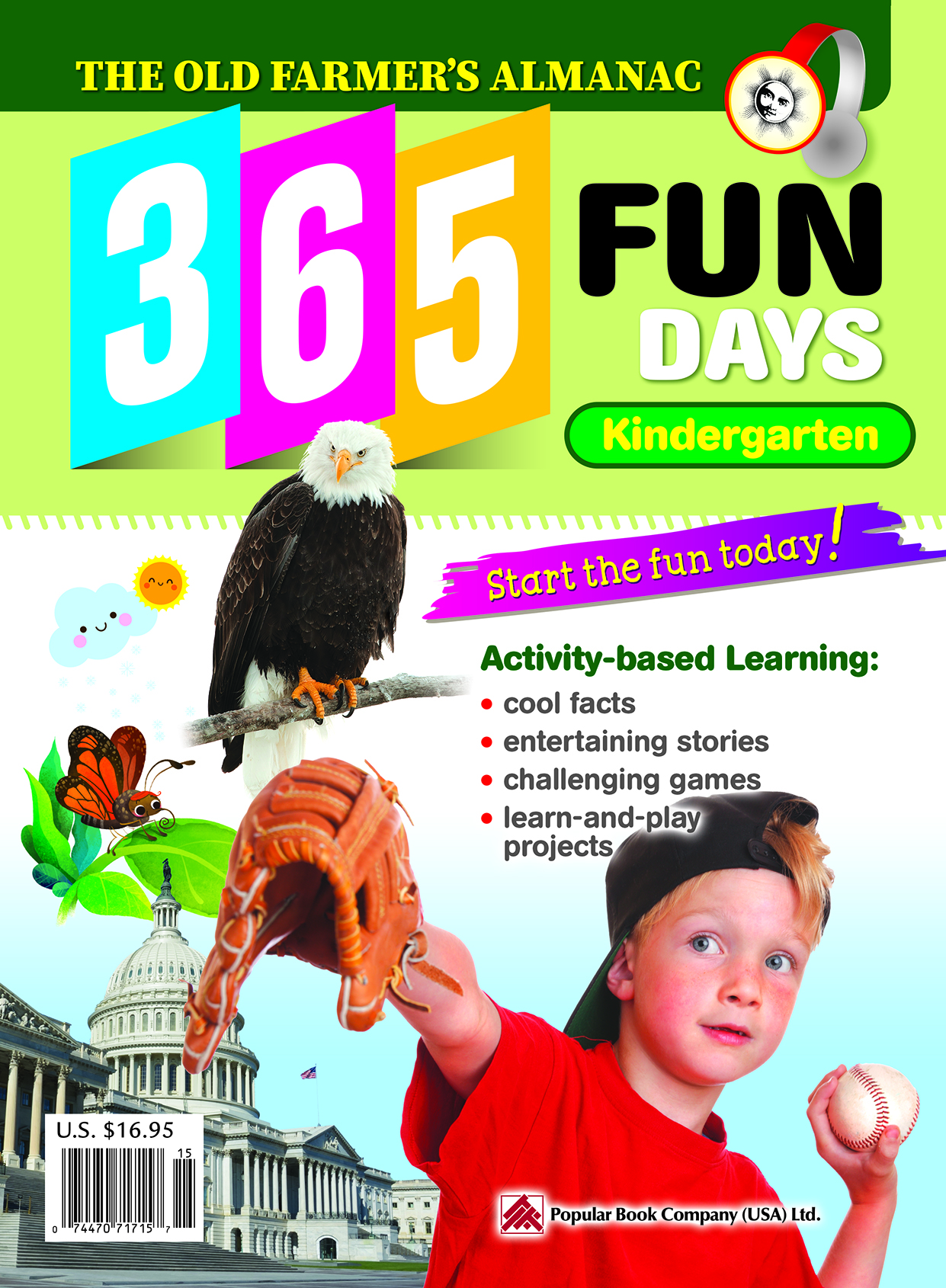
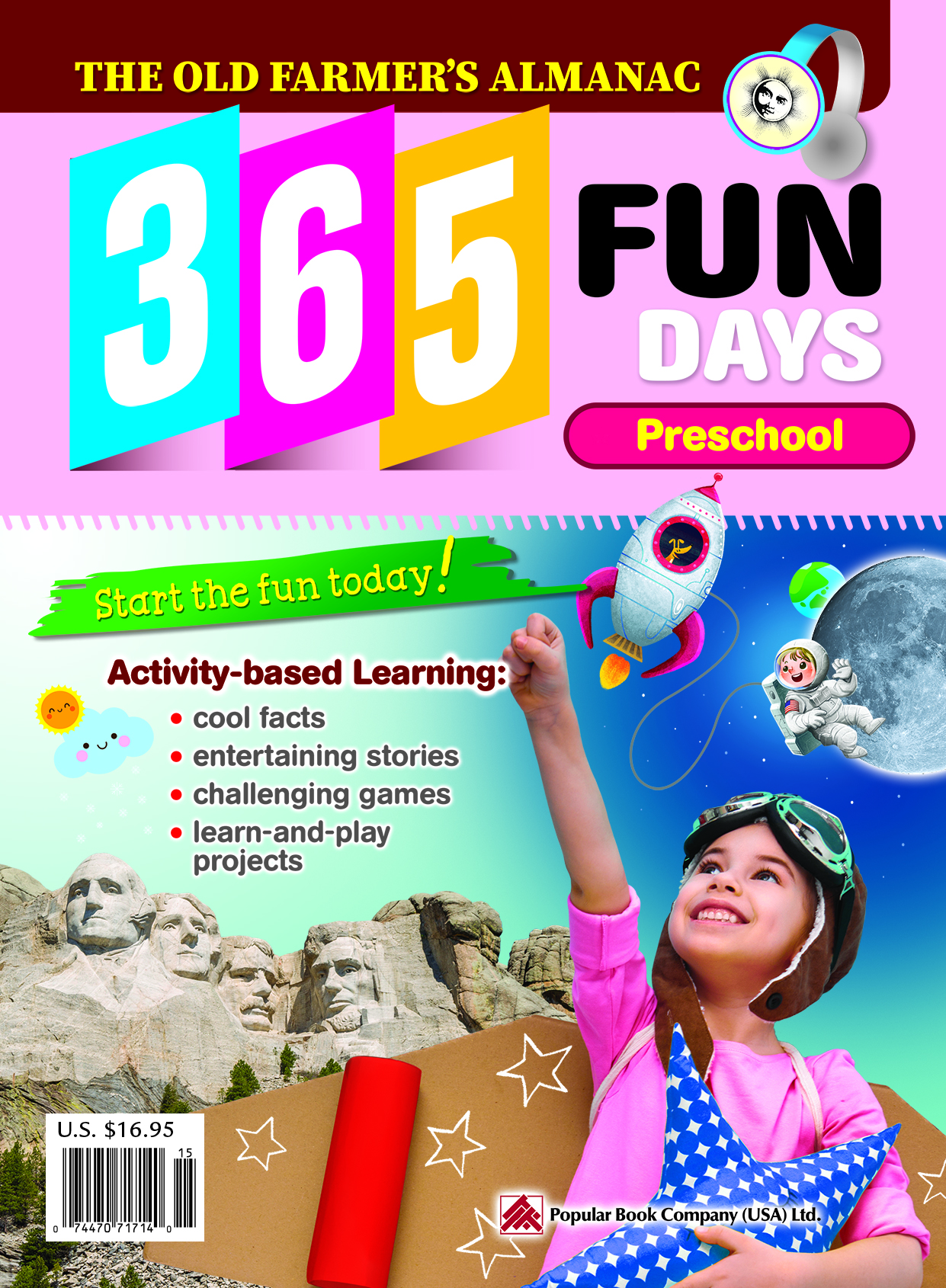
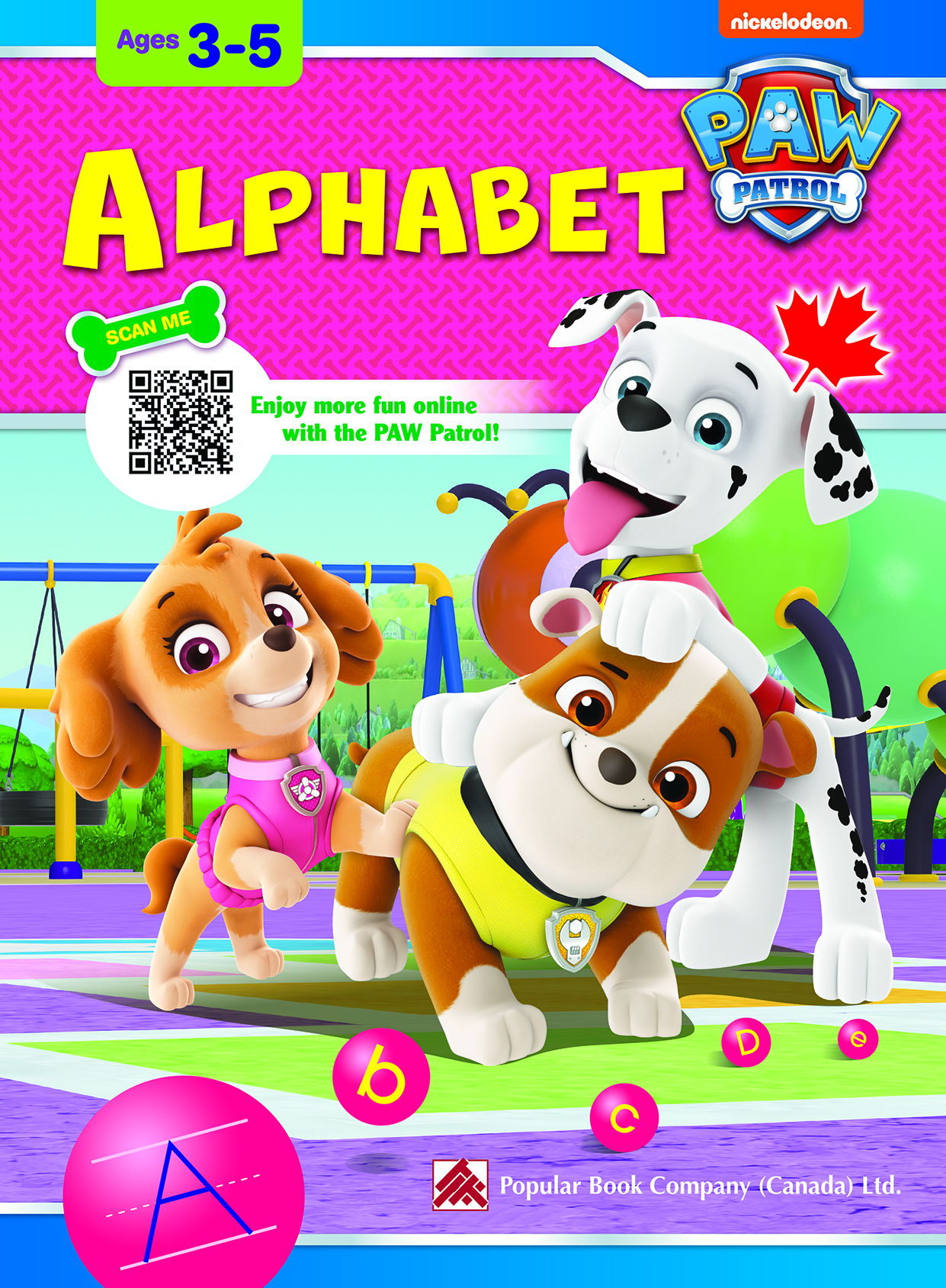
Today, along with their workbook series, Popular Book Company also has four licensed publications with the Old Farmer’s Almanac—365 Days of Fun and they have more titles coming out under the licensed Paw Patrol name. And they’re expanding into the U.S. market. 

Joe Mastrogiacomo is the chief operating officer of Popular Book and is extremely excited about the growth opportunity the U.S. market offers. I spoke with Joe recently and we talked about the print phenomenon of children’s educational workbooks. According to Joe, print has never been stronger in this area as parents struggle to be both teacher and homeworker during the pandemic. And how even before the pandemic print workbooks for children were very successful for this Canadian company. 

So, please enjoy the Mr. Magazine™ interview with Joe Mastrogiacomo, chief operating officer, Popular Book Company. 

But first the sound-bites:

On placing children’s workbooks with magazines in the marketplace: In fact, it was the pandemic and Linda Ruth, (CEO, PSCS, Publishing Management and Consulting) who actually came up with the idea, because the demand during the pandemic for workbooks since kids were not in school, the demand was super-hot. Linda Ruth came up with the idea saying, because there was such a high demand let’s convert the books into bookazines. And she’s done a wonderful job and so has Comag; they’ve done a great job putting our books in these six pocket displays near the checkout at some of the grocery stores. 

On what he feels the role of print is in educational materials in this digital age: Because we take our content very seriously, we’re worried about the copyright obviously, but more importantly, we’ve found that educational publishing for children’s paperback workbooks, the demand is still increasing every year because parents literally want to have something physical.

On any challenges he thinks he may face moving forward: Eventually we have to migrate into more e-book educational learning, absolutely. And more teaching resources available on our website. But it’s a delicate fine line, the challenges, we don’t want to cut out the distributor. We don’t want to cut out the Costco’s and the Walmart’s of the world. We’re loyal to them. They have the footprint in their stores, so we’re a little bit hesitant to start advertising too much to bring people to our website because we don’t want to disrupt that distribution relationship. That’s the challenge in our world.

On whether he believes the revenue will be the same with e-books as it is with print: Great question. In the short-term, no, I don’t believe so. I really don’t. But in the long-term, I do believe we can. That’s going to be the wave of the future for all workbooks. Children’s books it still is. In my view, in the book market, children’s books are year after year still holding their percentage increases. But it’s going to be the challenge in the future of the revenue, absolutely.

On his roadmap for the future: I think if we concentrate on our mission goal, which is to absolutely take education seriously. Children have to learn and supplemental products is a competitive world. We have to compete around the world and unfortunately, we seem to be falling behind compared to other children in other places around the globe. And in order to keep our competitive advantage, we have to educate our children.

On his definition of success: I guess the definition of success is selling units. We’re going to expand in different subject areas: English, Spanish to English. One of the Paw Patrol’s we’re doing is going to be called Basic English-Spanish Words in January. So, we’re going to expand more in those subject areas. We also have eight books under Complete English Success coming out in January 2022 as well. That’s from Pre-K to Grade Six. 

On whether he’s had any feedback from his audience about the change to bookazines: Because this year has been an abnormal year with the pandemic, the demand was there. Just give me stuff because my kids are at home. I’m going crazy being a teacher and working from home; just give me the content. But in the future, that’s probably a good point. We probably will look at separating, at having content specifically for the magazine industry with a different cover and another book for the book industry with a different cover. Right now they’re both the same, just the SKU number is different.

On anything he’d like to add: We’re very excited about the U.S. market. It’s obviously 10 times the size of the Canadian market. We have a small office in Chicago that does a little bit of our administrative tax work. But we will be expanding and hiring more individuals in the U.S. Right now we deal with U.S. teachers but the majority of the staff is in Canada, but we will be expanding and opening up an office in the U.S. And that’s exciting.

On what makes him tick and click: What I love about this industry, as I said, I was involved with the creation of the “Dummies” company; it’s very entrepreneurial for me. When I came to this company not that long ago, about four years now, there was things to change here in Canada. But I’m the one who pushed to enter the U.S. market. And I think the U.S. market is a tremendous opportunity for  educational workbooks.

On how he unwinds in the evening: I watch CNN. I’m a U.S. political buff. (Laughs) That’s really what my passion is about. I remember as a child getting so excited about watching the Watergate trials. I’ve always been a U.S. political buff. And right now there is a lot of material out there. (Laughs again) I watch way more American news than Canadian. That’s my passion, and traveling. Unfortunately, the travel part has been on hold now for a year. Let’s just hope we can get through this tough time in history.

On what keeps him up at night: The business does. I have to worry about payroll; all our staff has been working from home here in Canada. I let them work from home starting in early March 2020, way before the lockdown here in Canada. The staff was a little apprehensive, production editorial is the only staff I have. The salespeople still come in once and a while. They wear masks in the office and they are socially distanced.

And now the lightly edited Mr. Magazine™ interview with Joe Mastrogiacomo, Chief Operating Officer, Popular Book Company.

Samir Husni: With the pandemic, 2020 was definitely a year unlike any of us had ever seen, and for the world of publishing as well. Your latest entry into the marketplace, the 3 to 1 fun books that you’ve done through a license from the Old Farmer’s Almanac are sold on the magazine racks. Can you tell me more about this phenomenon of books looking like magazines or magazines looking like books?

Joe Mastrogiacomo: Absolutely. In fact, it was the pandemic and Linda Ruth, (CEO, PSCS, Publishing Management and Consulting) who actually came up with the idea, because the demand during the pandemic for workbooks since kids were not in school, the demand was super-hot. We’ve been in publishing in Canada for 27 years doing workbooks. We are the leaders in the market; we have 55 to 60 percent of market share in Canada. We take our contents for workbook education very seriously. And we’ve done well. We have all the major retailers in Canada. 

Two or three years ago we started to publish for the U.S. market. What happened was that the pandemic hit, obviously, in North America. And although in Canada our sales, Costco, the grocery stores, people were still buying our products because Costco sells groceries up here and Walmart as well, so those two accounts and our online did really well. But in the U.S. market we were in trouble, because the Barnes & Noble’s and the independent bookstores were closed. 

Linda Ruth came up with the idea saying, because there was such a high demand let’s convert the books into bookazines. And she’s done a wonderful job and so has Comag; they’ve done a great job putting our books in these six pocket displays near the checkout at some of the grocery stores. We started mostly in the Midwest and then in the Northeast. The demand has been great and the fulfillment has been pretty good. 

We’ve managed to get to the magazines because those types of grocery stores don’t carry books. I don’t think they have a book section at all. In order to meet that demand, the parent is going through the checkout and they have a child, so they feel a need to buy our books. So, I have to thank Linda Ruth and Comag and ANC; they’ve done a great job in expanding our titles. As I said, we’ve been in business many years and never thought about entering the magazine market. And up here in Canada we’re not in the magazine market because everybody knows our brand up here. But in the states this is going well. 
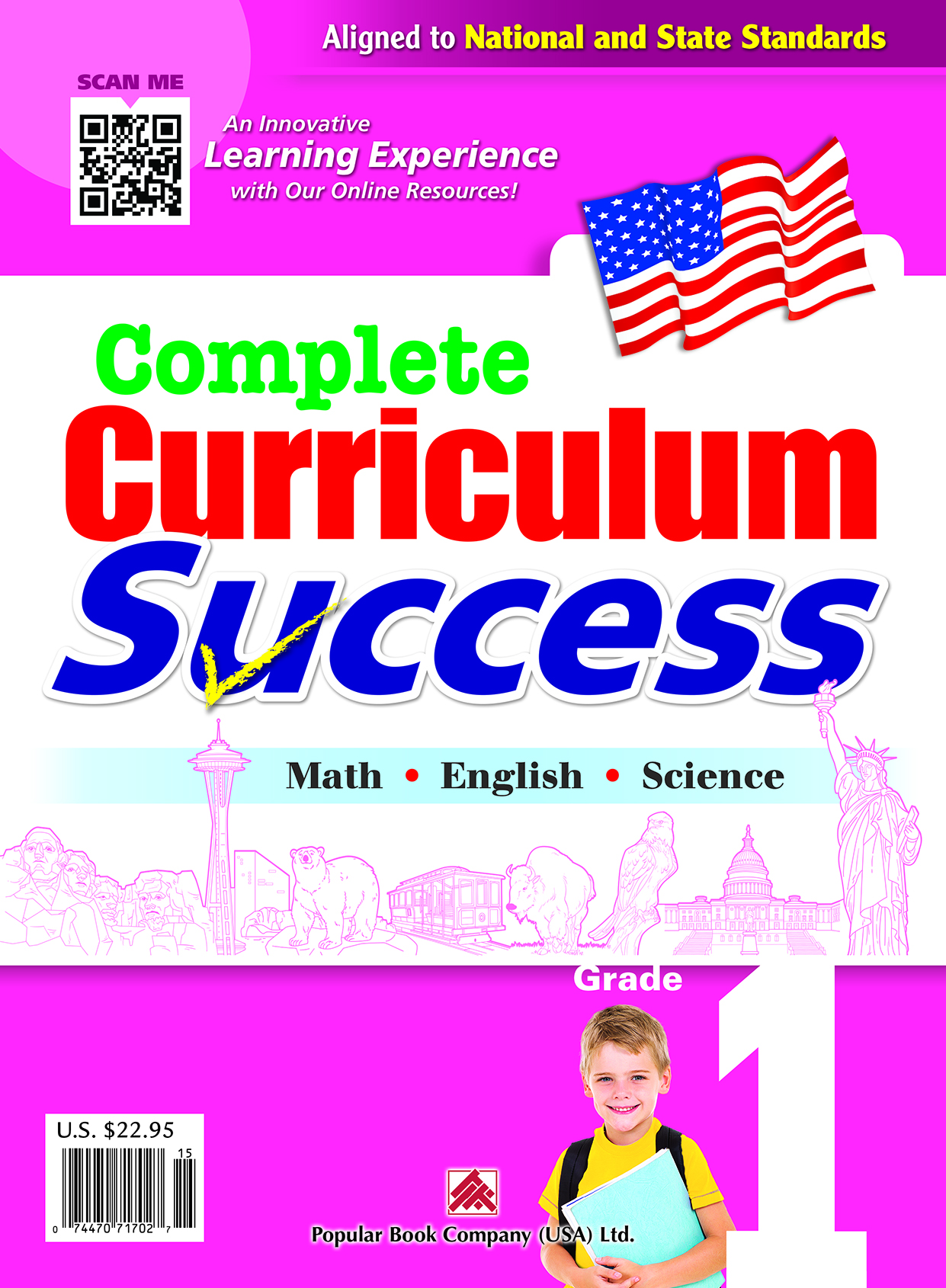
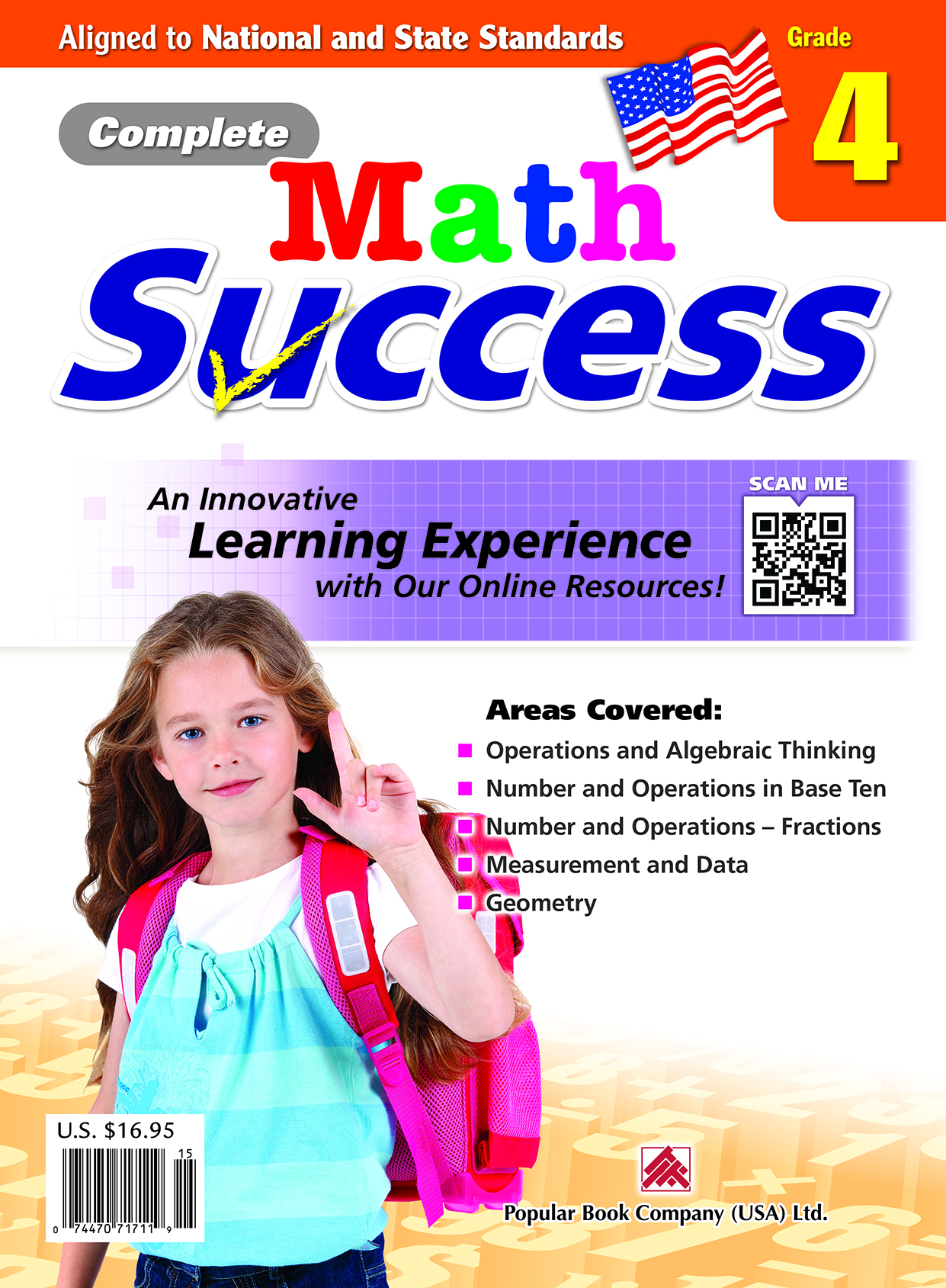
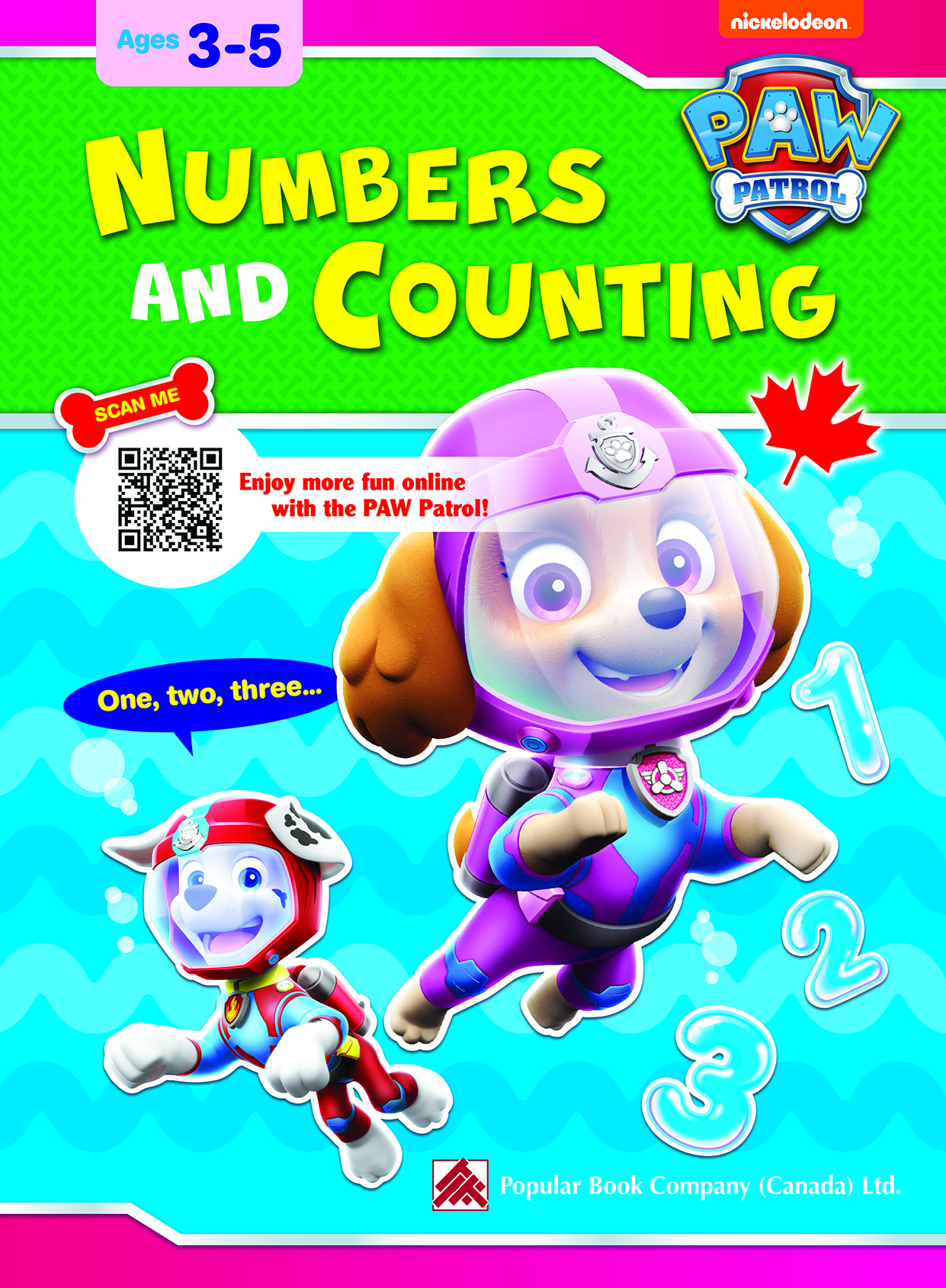
In fact, we’re expanding our publishing program tremendously. We’re coming out with more licensed product under Paw Patrol; we’ll have three titles, math-based, between the ages of three and five, coming out in June, and then another three under English activity in January. So we have those titles under the Paw Patrol coming out in the future. Then in September, we have four more books being published. We’re going to Pre-K and K for both our Complete Math Success series. Right now we have from Grades One through Six. And our Complete Curriculum Success, we’ve already published Grades One through Six and now we’re going Pre-K and K, and they’re coming out in September. 

Overall the experiments have been great in the magazine market. Higher returns, obviously, in magazines than in books, but what Linda Ruth and Comag decided to do was, because our content is not time sensitive, they kind of turned it into an annual, and that was the most we could do. It worked out well. 

Samir Husni: In this digital age, you’re still in the business of creating ink on paper. What do you think the role of print is in education, entertainment and communication with the younger generation today?

Joe Mastrogiacomo: Because we take our content very seriously, we’re worried about the copyright obviously, but more importantly, we’ve found that educational publishing for children’s paperback workbooks, the demand is still increasing every year because parents literally want to have something physical. It’s hard for a parent to monitor what a child is doing on an iPad, whether the child goes into a room and starts to play video games or whatever. When you have a book and the parent tells the child to do pages 15 through 20 and they know the parent will review it, you can leave the child alone because the book is there.

We find that with supplemental products, and this is a phenomenon worldwide, paper and print is still strong. And we are continuing that phenomenon. What we’ve done with a lot of our product and we’re going to continue this in the U.S. market as well, we have QR codes throughout our books, every book now, if it’s a complete math book, grade six let’s say, we have many QR codes. Automatically, a child can scan a QR code with their phone and it’ll have a teacher within that lesson, additional materials. So we’re expanding in those resources.

And for the smaller children we have a lot of printable materials that they can download as well to help them, especially with Paw Patrol, ages about three to five, some coloring and stuff. Everything we do is educational-based; it’s very serious. All of our product is done and reviewed by teachers in the U.S., they all agreed to the National State Standards, everything is properly reviewed. Everything is tied to curriculum. 

Samir Husni: As you move forward, what do you see as some major challenges you may face and how will you overcome them?

Joe Mastrogiacomo: How long is print going to last? I’ve been in printing for 30 years; I started my career in the late ‘80s. I was with Pearson and educational textbooks at that time, and then a friend of mine, we opened up the “Dummies” company, Excel for Dummies, etc. I started the Canadian sub and he started the U.S. parent. We were always worried about what was going to happen to print. 

For now, it’s working well, as I said. But eventually we have to migrate into more e-book educational learning, absolutely. And more teaching resources available on our website. But it’s a delicate fine line, the challenges, we don’t want to cut out the distributor. We don’t want to cut out the Costco’s and the Walmart’s of the world. We’re loyal to them. They have the footprint in their stores, so we’re a little bit hesitant to start advertising too much to bring people to our website because we don’t want to disrupt that distribution relationship. That’s the challenge in our world. 

Samir Husni: Do you think you can make the same revenue from e-books as you do in print?

Joe Mastrogiacomo: Great question. In the short-term, no, I don’t believe so. I really don’t. But in the long-term, I do believe we can. That’s going to be the wave of the future for all workbooks. Children’s books it still is. In my view, in the book market, children’s books are year after year still holding their percentage increases. But it’s going to be the challenge in the future of the revenue, absolutely. And even the magazine industry, I don’t know it that well, but I’m sure over the last 15 years it has declined as well. I know in Canada, some of the bigger content providers are starting to get out of the magazine business. It’s been tough. 

Like anybody, we’re in that family of books and magazines, so we’re going to be faced with that digital problem as well, the e-commerce.

Samir Husni: What’s your roadmap for the future? 

Joe Mastrogiacomo: I think if we concentrate on our mission goal, which is to absolutely take education seriously. Children have to learn and supplemental products is a competitive world. We have to compete around the world and unfortunately, we seem to be falling behind compared to other children in other places around the globe. And in order to keep our competitive advantage, we have to educate our children. 

Our parent company actually started in Asia, in Singapore. An individual started the company back in 1923. In Asia, especially for math, it’s drilling. That’s how they do it, they drill the math into children. And it’s just practice after practice. And that’s why in the field of math they’ve excelled. Canadian children, American children, we are falling behind. So, what we have to do is keep serious to our content, make sure that it’s always in agreement with the curriculum; we have to provide more and more resources to our consumers, to the parents, making it easier for the children to learn. We need more videos, more online content, and we’ll see what lies ahead for the industry.

Samir Husni: You said your expansion into the U.S. market had been successful. What’s your definition of success?

Joe Mastrogiacomo: I guess the definition of success is selling units. We’re going to expand in different subject areas: English, Spanish to English. One of the Paw Patrol’s we’re doing is going to be called Basic English-Spanish Words in January. So, we’re going to expand more in those subject areas. We also have eight books under Complete English Success coming out in January 2022 as well. That’s from Pre-K to Grade Six. 

So far we’re stopping at grade six in the U.S. In Canada we go to grade 12. We have supplemental math books for grades 9-12. So we can expand in different subject areas in the U.S. We can expand into higher grades. We’re the only workbook publishers in all of North America who’s invested in video technology with teachers. Other publishers haven’t done that. We believe we are giving the parents and the children value added material. And in return, our consumers look for our brand. And that’s our goal. To make the brand more recognizable, to always give value added content and always have serious content. There are other publishers out there, but they don’t revise their books. We have a serious editorial team here; we’re about a 30 headcount. So we’re serious. 

Samir Husni: Have you heard any feedback from your audience about changing to the bookazine look?

Joe Mastrogiacomo: Because this year has been an abnormal year with the pandemic, the demand was there. Just give me stuff because my kids are at home. I’m going crazy being a teacher and working from home; just give me the content. But in the future, that’s probably a good point. We probably will look at separating, at having content specifically for the magazine industry with a different cover and another book for the book industry with a different cover. Right now they’re both the same, just the SKU number is different. 

Samir Husni: Is there anything you’d like to add?

Joe Mastrogiacomo: We’re very excited about the U.S. market. It’s obviously 10 times the size of the Canadian market. We have a small office in Chicago that does a little bit of our administrative tax work. But we will be expanding and hiring more individuals in the U.S. Right now we deal with U.S. teachers but the majority of the staff is in Canada, but we will be expanding and opening up an office in the U.S. And that’s exciting. 

The growth is the U.S. market. We’ve tapped ourselves out in the Canadian market. There are no new accounts that we can go after. We have almost 60 percent market share. Then perhaps expand into different markets as well, perhaps the Spanish market, Mexico and some of the other Latin countries around the world. We will start doing workbooks in Spanish, I believe. 

We have the talent and we have the resources. And we have the will to grow. That’s all we specialize in, workbooks. Like I said, our parent company started in 1923 with one store in Singapore. And now we have offices all over the world. Our headquarters is in Singapore. I report in to the greater Hong Kong area and we have offices in Taiwan, the U.K., so we’re expanding. 

Samir Husni: What makes you tick and click, motivates you to get out of bed in the morning?

Joe Mastrogiacomo: What I love about this industry, as I said, I was involved with the creation of the “Dummies” company; it’s very entrepreneurial for me. When I came to this company not that long ago, about four years now, there was things to change here in Canada. But I’m the one who pushed to enter the U.S. market. And I think the U.S. market is a tremendous opportunity for  educational workbooks. 

And if we in North America want to remain competitive with the rest of the world, we have to give more material for our children to expand their minds and learn more. We have to provide them with content so that parents can encourage their children to do more and get ahead. 

Samir Husni: How do you unwind after a hard day’s work?

Joe Mastrogiacomo: I watch CNN. I’m a U.S. political buff. (Laughs) That’s really what my passion is about. I remember as a child getting so excited about watching the Watergate trials. I’ve always been a U.S. political buff. And right now there is a lot of material out there. (Laughs again) I watch way more American news than Canadian. That’s my passion, and traveling. Unfortunately, the travel part has been on hold now for a year. Let’s just hope we can get through this tough time in history. 

Samir Husni: My typical last question; what keeps you up at night?

Joe Mastrogiacomo: The business does. I have to worry about payroll; all our staff has been working from home here in Canada. I let them work from home starting in early March 2020, way before the lockdown here in Canada. The staff was a little apprehensive, production editorial is the only staff I have. The salespeople still come in once and a while. They wear masks in the office and they are socially distanced. 

In September, they came back for a period of 10 days when the COVID numbers went down and then they started going higher again, so now they’re back working from home. I haven’t seen my staff in a year, except for that 10 days in September. I’m looking forward to having them back. So I worry. What keeps me up is that I have a business to run, bills to pay. But it’s a lot of fun. I like being involved in education definitely. It’s rewarding. 

Samir Husni: Thank you. 

h1

Jeff Taylor, Founder & Publisher, Courier Magazine To Samir “Mr. Magazine™” Husni: “I Feel Like Our Job Is To Know Our Audience Inside And Out And Then To Figure Out Where We Can Take Them.” The Mr. Magazine™ Interview…

February 13, 2021

“There’s a whole conversation in media that I’ve just chosen not to get into, which is print versus digital. And the print fetishes who allow that print is wonderful and we need to protect print. And then the digital people who are like print is dead, there’s no role for it. And maybe it’s because I wasn’t from that sector, but I just looked at it and thought there’s all different media and they’re kind of like a toolkit and you use a hammer for some jobs and a saw for others. What’s the job that I’m trying to do?” Jeff Taylor…

Courier is a London-based company that produces a bimonthly magazine and newspaper full of educational and inspirational content for modern entrepreneurs and small businesses, as well as a newsletter, podcast, and events. Since 2013, Courier has empowered the next generation of entrepreneurs with practical and authentic stories that inspire people who want to live and work on their own terms. 

Jeff Taylor is the founder and publisher of Courier and believes his brand can help people be better and do better when it comes to business. In fact, so much so that Courier caught the eye of Mailchimp, an all-in-one marketing platform for small businesses, that acquired Jeff’s company in 2020.

I spoke with Jeff recently and we talked about the acquisition and how the move with Mailchimp has allowed him to bring his brand to a level he has wanted since the beginning, only faster and with an expertise that can’t be denied. Jeff is a believer in print, but also stresses his belief in being platform agnostic in this day and age. Whether it’s a hammer or a saw, as he puts it, print and digital have to work together to meet the customer where they are. They’re both in his toolkit and he utilizes them accordingly.

So, please enjoy the Mr. Magazine™ interview with Jeff Taylor, founder and publisher, Courier magazine.

But first the sound-bites:

On how Courier Media adapted to the pandemic crisis: It was a year when our audience needed us more than ever before. We’re in the business of helping people work sustainably and stand on their own two feet and that’s a really delicate place for a person who’s starting out. Last year was a year when the audience needed the insight and the skills and even just the stories of other people and how they were figuring out a path through this.

On what he hopes to accomplish with the brand in the future: In a couple years’ time, I’d like to think we’re getting excited about the same thing, which is we’re helping more people get started in a better way and we’re cutting the risk of failure for those people. The media glamorizes starting something with this “screw-it, let’s do it” attitude, but it misses that fact that this is people’s mortgages they’re risking, it’s their kids’ school endowments, their careers; it’s a really risky step and they shouldn’t just “screw-it, let’s do it.” If they’re going to do it, we want to make sure they do it in a way that minimizes their risk of failure and leads to maximum satisfaction. 

On how he balances the social responsibility of the magazine with the moneymaking side: I’ve never thought of the two of them separately. I don’t think of us as a social good or bad or anything like that. I just came at it from a problem point of view, which was I had this problem in my life and a lot of my friends had the same problem, there was nothing for people like us in this sort of territory. And I just tried to come up with a product solution to that. 

On the role of print in his business mix: There’s a whole conversation in media that I’ve just chosen not to get into, which is print versus digital. And the print fetishists who opine that print is wonderful and we need to protect print. And then the digital people who are like ‘print is dead, there’s no role for it’. And maybe it’s because I wasn’t from that sector, but I just looked at it and thought there’s all different media and they’re kind of like a toolkit and you use a hammer for some jobs and a saw for others. What’s the job that I’m trying to do? 

On how he decides when to use print and when to use digital: That’s a great question. I was just having a conversation with our editorial director, Danny, on exactly this. We’re re-looking at the role of podcasts at the moment. And the conversation for us begins with how we can earn a place in our audience’s media diet.  I think this is rare for media, I feel like media begins at ‘We’re this title and we cover this territory and we strategically need to be in these mediums because that’s where advertiser dollars are. And I think a product company works completely the other way around, which is where is the audience and what are their problems? And are we in a unique position to be able to add something in that medium to help them solve their problems or supply something they previously didn’t have?

On whether now that he is a part of a bigger company that has influenced any of his editorial or publishing decisions: This is going to sound sycophantic, and I don’t mean it to be, but it comes from a place where I wasn’t looking to sell my company. In fact, I was out raising a little bit of investment to help us grow and when Mailchimp approached us and suggested doing something bigger and more permanent. We knew the team well as they’d been great brand partners of ours, but when they first suggested an acquisition, I was like ‘no, don’t be messing with my investment round, I’m not interested in selling my business. 

On anything he’d like to add: The one caveat I’d put on the whole print thing is sometimes when I talk about not having  a print fetish, people think that I’m somehow not supportive of print or that we might not do print in the future. And it’s possible, just like any media, we may not do it in the future, but I do think print is a really special medium. We’ve invested a lot in it and I think there’s a great place for it, but I think the majority of print people need to evolve their business models a lot. 

On what makes him tick and click: I love making things and I love being able to show people something new or help them do something better. I’ve always liked being the one in my circle that would field questions from friends like ‘hey, what’s the best juicer I should buy’ or ‘do you know how to manage your heart rate so you can get the most efficiency from a run’. I’ve just wanted to know stuff in a polymathic sort of way and show people ‘here’s how you can do things better. 

On how he unwinds in the evenings: It’s strange actually, COVID inspired my partner and I to move out of a Central London apartment to the country so we now live in the beautiful Chilterns in Buckinghamshire about an hour out of London. So, not only have we had the adjustment from COVID and social distancing, we’ve also been experiencing the difference between city and rural living. Increasingly, I’m enjoying just getting outside in the environment, fresh air, walking our new puppy Brody, exercising so much more, things like that. I love to get in the kitchen and cook. I love good film; I watch a lot of film. Just trying to live better and be happier as a consequence. 

On what keeps him up at night: (Laughs) I’m a really good sleeper; it’s my only God-given talent. I can sleep anywhere and anytime. So, I have to say that very little keeps me awake at night. But what do I worry about? What I worry about more than anything else is climate change and how we’re probably a part of the damage that’s been going on. I mean, we are most definitely.

And now for the lightly edited Mr. Magazine™ interview with Jeff Taylor, founder and publisher, Courier magazine. 

Samir Husni: With the pandemic, 2020 was a completely different year than any of us had ever seen or experienced. Can you tell us about how Courier adapted to the crisis?

Jeff Taylor: I think it was mixed, and for a lot of people I think it was mixed as well. We were certainly not immune to the print channel being effectively shut down at a time when we felt we were really hitting our stride with print. So many of our team have been touched by various elements of COVID; we have a really international team who traveled, so we had all of those things.

But on the flip side, it was a year when our audience needed us more than ever before. We’re in the business of helping people work sustainably and stand on their own two feet and that’s a really delicate place for a person who’s starting out. Last year was a year when the audience needed the insight and the skills and even just the stories of other people and how they were figuring out a path through this. 

It meant a really quick move from us; we didn’t move away from print, although we did put our newspaper on ice, but we kept our magazine growing. We retooled our podcasts and our emails to move toward COVID coverage very quickly and just tried to understand what the audience needed and meet those needs as much as we could. It was certainly an invigorating year; it kept us on our toes.

Samir Husni: Two years from now you’ll be celebrating the 10th anniversary of the magazine that you founded, but now it’s much more than a magazine, now it’s Courier Media. If you and I are having this conversation then, in 2023, what would you hope to tell me you had accomplished with the brand?

Jeff Taylor: It’s funny, it’s like this business was born for me personally for the same mission that the company has itself. I had a pretty senior job; I used to fly around the world doing exciting things, but actually I wasn’t very happy necessarily with the way my life was structured and how I was living my life. The very kernel of Courier is to be a beacon for people who want to work and live on their own terms. Everything that we do comes from that place. We think everyone has a right to structure their life in a way that they can earn a living, but can enjoy their life as well and get satisfaction from it.

And I kind of apply that to what are our ambitions. It’s lovely to sell more copies or get complimentary notes, but what really makes the difference for me personally and I think the team is, when we get an email from someone who says I come from a background that I never would have thought I could go off and do that, whether that’s gender, race, sexuality, socioeconomic status, just whatever, but I don’t look like the sort of person you see in business media or on Shark Tank. But you guys made me feel like I could do it and you showed me the way. And because of that, I’ve done it.

In a couple years’ time, I’d like to think we’re getting excited about the same thing, which is we’re helping more people get started in a better way and we’re cutting the risk of failure for those people. The media glamorizes starting something with this “screw-it, let’s do it” attitude, but it misses that fact that this is people’s mortgages they’re risking, it’s their kids’ school endowments, their careers; it’s a really risky step and they shouldn’t just “screw-it, let’s do it.” If they’re going to do it, we want to make sure they do it in a way that minimizes their risk of failure and leads to maximum satisfaction.

So, I’d like to think that in a couple of years we’re just feeling like we’ve impacted so many more people’s journeys in this way. And that’s what the Mailchimp opportunity gives us and the growth that we’re getting just means that we can impact so many more people in a positive way. 

Samir Husni: How do you balance the social responsibility of the magazine with the moneymaking aspect of the business?

Courier magazine’s special issue: THE BEST publication I have seen in my entire career on How To Start A Business. Worth every penny and every dollar. A solid investment and a must read.

Jeff Taylor: I’ve never thought of the two of them separately. I don’t think of us as a social good or bad or anything like that. I just came at it from a problem point of view, which was I had this problem in my life and a lot of my friends had the same problem, there was nothing for people like us in this sort of territory. And I just tried to come up with a product solution to that. 

But I do think that whenever we’re looking at a business with any type of social good or mission attached to it, my first instinct is you’ve got to be twice as hard on that business doing the due diligence of asking is it a real business? We didn’t bring investors on, so I had to build a business that made money from the beginning. We were nearly always profitable before we were acquired. The only time we weren’t was when we were investing for growth. And I think it’s that same thing. In order to do good, you have to be a good business first and foremost. So, they go hand in hand for me. And if they don’t you’ve got the wrong business or the wrong social purpose and you won’t be in business in or year or two, because if you can’t pay wages or keep the lights on, it doesn’t matter how good-hearted you are, you aren’t going to survive.

I’ve never conceived of us as a media company and I still don’t think of us that way. It might sound like just jargon, but I think of us as a product company. I didn’t come from media; my early career was in advertising, but actually I come from products and marketing. Even our editorial process is very different. Our editorial team work to ‘use cases’, they work to missions for everything we put out that’s bigger, solving problems for our audience. We work to be an essential partner for our customers. The fact that a lot of our output is media is because that’s just the product that we make. 

Samir Husni: Among the many products that you make, one is the print magazine. Can you tell me a little about the role of print in this digital age and the role of print in the mix of your products?

Jeff Taylor: There’s a whole conversation in media that I’ve just chosen not to get into, which is print versus digital. And the print fetishists who opine that print is wonderful and we need to protect print. And then the digital people who are like ‘print is dead, there’s no role for it’. And maybe it’s because I wasn’t from that sector, but I just looked at it and thought there’s all different media and they’re kind of like a toolkit and you use a hammer for some jobs and a saw for others. What’s the job that I’m trying to do? 

When we started, I was trying to find something that had a clear economic return on it. And even though digital, especially at that stage, was very in fashion, it was much harder to identify where the revenues were going to come from. Whereas there were big brands advertising in print and there continues to be so it seemed like a more secure choice. 

But also, I wanted to create a really evocative world for Courier that I think is very hard to do in digital. Or certainly hard to do at that time with the budgets we had. And print seemed to me to be this amazing place where we could take often quite dry concepts and bring them to life in an evocative way and then bring to life the world of brands and people doing things beautifully. My dirty secret in starting a magazine is I’m not a very big reader; I struggle to sit and read for a long period of time. My inspiration in those days was Tumblr. In those days, before it got overrun with adult content it was this wonderful environment where you would go through photo after photo in your feed. And I tried to conceive what that might be like in print for our audience. And that’s why we ended up in print.

Samir Husni: You’re definitely platform agnostic, but for those in your audience who are still platform specific, how do you decide when to use the saw and when to use the hammer? 

Jeff Taylor: That’s a great question. I was just having a conversation with our editorial director, Danny, on exactly this. We’re re-looking at the role of podcasts at the moment. And the conversation for us begins with how we can earn a place in our audience’s media diet.  I think this is rare for media, I feel like media begins at ‘We’re this title and we cover this territory and we strategically need to be in these mediums because that’s where advertiser dollars are. And I think a product company works completely the other way around, which is where is the audience and what are their problems? And are we in a unique position to be able to add something in that medium to help them solve their problems or supply something they previously didn’t have? 

I’ll give you a good example with Instagram. We have an Instagram presence, but we’ve really struggled to grow our Instagram channel. And for ages we’d bring in people who knew about it and have long sessions. And then it suddenly hit me, we just don’t have that much to contribute to our audience on Instagram. We can put up photos of businesses or whatever, but although our audience is on Instagram, there isn’t a natural intersection between what people need from us and what we can do on that platform. 

Whereas we’ve been talking about Clubhouse and instantly you go ‘I can completely see the role for Courier on Clubhouse.’ We can talk to our audience, they can ask us questions live and we can solve them. We can bring people front and center, help them with one of their core issues, how do I do this, where do I find that? Who’s someone I can get inspiration from? And so I think that’s a long way of saying we kind of let the audience guide us there.

I feel like our job is to know our audience inside and out and then to figure out where we can take them. And in a lot of cases they don’t even realize it yet and that’s how I try to approach what medium we should be in.

Samir Husni: Do you feel there’s a difference now between Jeff Taylor, the owner and founder, and the Jeff Taylor who is now part of a big company? Did that influence any of the editorial, publishing, broadcasting decisions that you’ve made?

Jeff Taylor: This is going to sound sycophantic, and I don’t mean it to be, but it comes from a place where I wasn’t looking to sell my company. In fact, I was out raising a little bit of investment to help us grow and when Mailchimp approached us and suggested doing something bigger and more permanent. We knew the team well as they’d been great brand partners of ours, but when they first suggested an acquisition, I was like ‘no, don’t be messing with my investment round, I’m not interested in selling my business. ‘

But the more time we spent talking about what we could achieve together, and I think really understanding what they saw in the business, the more it convinced me that actually I could realize everything I was trying to achieve with Courier, but do it faster and on a bigger platform with better expertise behind us by doing it with them. And that’s where the acquisition really came from. 

So, a year on, my brief from Mailchimp is to be more Courier and to get our resources and our stories in more people’s hands, in more places, in more ways to support the growth and boost the success of as many small businesses as we can. And the funny thing is although Mailchimp is in a completely different industry to what we’re in, our values and our missions are identical. And so it has been an incredibly seamless experience. They just want us to be more Courier. And they’re an enormous support in helping us do that.

Samir Husni:  Is there anything you’d like to add?

Jeff Taylor: The one caveat I’d put on the whole print thing is sometimes when I talk about not having  a print fetish, people think that I’m somehow not supportive of print or that we might not do print in the future. And it’s possible, just like any media, we may not do it in the future, but I do think print is a really special medium. We’ve invested a lot in it and I think there’s a great place for it, but I think the majority of print people need to evolve their business models a lot. 

And I think the biggest threat to print is actually the crumbling of the distribution infrastructure and network that print gets sold through. It was an old clunky industry that COVID has hit incredibly hard. I don’t know to what extent it’s ever going to recover and come back. 

We see the devastation in small business and a lot of print gets sold through small business. So, we’re always watching it to see, but we’re growing our print numbers in terms of subscriptions. We think we’ll be able to come back quite strongly as the distribution opens up. I hope print has a strong future, but we just keep an eye on these things. 

Samir Husni: What makes you tick and click and motivates you to get out of bed in the mornings?

Jeff Taylor: I love making things and I love being able to show people something new or help them do something better. I’ve always liked being the one in my circle that would field questions from friends like ‘hey, what’s the best juicer I should buy’ or ‘do you know how to manage your heart rate so you can get the most efficiency from a run’. I’ve just wanted to know stuff in a polymathic sort of way and show people ‘here’s how you can do things better. 

And I think that’s what I love about Courier. It’s not for a social reason, but as much as anything it’s just because I love being the epicenter of ‘you can be better, you can be happier, you can be richer, you can be more stable, you can be whatever it is you want to be. That’s our mission is to help people achieve what they define as ‘success’. It’s not our job to tell you what your ambitions should be, which is a mistake I think a lot of media make. We just like to put out a whole great kind of smorgasbord of things and point you in the right direction and show you stuff. 

You’ll notice Courier very rarely says we think you should do this or we think this is in or out, we never really talk like that. We just try to find a whole lot of stuff that we think is reallyuseful or interesting or whatever, and put it in front of you and assume you’re intelligent enough to make your own decisions about it.

Samir Husni: How do you unwind in the evenings?

Jeff Taylor: It’s strange actually, COVID inspired my partner and I to move out of a Central London apartment to the country so we now live in the beautiful Chilterns in Buckinghamshire about an hour out of London. So, not only have we had the adjustment from COVID and social distancing, we’ve also been experiencing the difference between city and rural living. Increasingly, I’m enjoying just getting outside in the environment, fresh air, walking our new puppy Brody, exercising so much more, things like that. I love to get in the kitchen and cook. I love good film; I watch a lot of film. Just trying to live better and be happier as a consequence.

Samir Husni: My typical last question; what keeps you up at night?

Jeff Taylor: (Laughs) I’m a really good sleeper; it’s my only God-given talent. I can sleep anywhere and anytime. So, I have to say that very little keeps me awake at night. But what do I worry about? What I worry about more than anything else is climate change and how we’re probably a part of the damage that’s been going on. I mean, we are most definitely. 

And I do think a lot about the social gap that’s just increasingly emerging in our society and the concentration of wealth among the richest .1 percent and what that’s doing to fracture our economy, from a social point of view, but also from an economic point of view. It just doesn’t make sense. I’m Australian and the Australian system is very different from the British or the American system. It’s much closer to a social democracy . I do think a lot about that and how we not just protect our democracy, but actually return to perhaps a more socially democratic way. 

Samir Husni: Thank you. 

h1

It’s A Birthday, It’s An Anniversary, Magazine Celebrations Are Aplenty… A Mr. Magazine™ Musing.

February 10, 2021

Celebrating an anniversary or birthday in print is far different than celebrating one on television or online. How do you celebrate the 50th anniversary of a TV show? You may do a special TV program, one of those “now you see it, now you don’t” reflections on past episodes. How do you celebrate the 10th anniversary of a website or an E-newsletter? Good question. Maybe with a podcast or special advertisements or even some birthday swag for loyal customers. 

But when it comes to a magazine’s anniversary or birthday (keeping in mind my definition of a magazine, “if it is not ink on paper, it is not a magazine,” that celebration is reflected in the pages of the magazine. It’s a physical celebration that you can feel and touch. It’s an edition you can collect and show off; one that reverberates long after the actual date of the anniversary issue.

Since my last post about the life’s blood of the magazine industry, the new launches, I thought it would be fun to celebrate some milestones within the world of print magazines. Have you ever asked yourself why we celebrate our birthdays every year? I believe it’s reaffirmation that we are still above ground; still among the living. 

And it’s the same for magazines that are celebrating these days. Some of them are still living 200 years later like The Saturday Evening Post, some are celebrating a 175-year anniversary, such as Town & Country and Scientific American (which celebrated its 175th last year), and then a few just celebrated one year like Different Leaf, so regardless of the celebration, whether one year or 200 years, it’s a frozen moment in time that only print can capture and that stays with you as a reminder no matter the circumstances. It’s there to nudge you in the ribs with laughter or to simply say life is good and magazines are going strong. Either way, ink on paper is still a viable and relevant way to communicate with an audience. 

And as you open the pages of those celebratory magazines, it’s as though you are opening a birthday card or an anniversary wish. And during this pandemic that we all find ourselves  coping with, celebrating a healthy and happy birthday or anniversary is much-needed. 

So take a look at some of the magazines I picked up this week that are celebrating milestones in their printed lives. I guarantee you’ll smile and recall a few memories you’ve shared with some of these titles. Along with the beautiful covers you see, there is also a quote or two from some of the editors and publishers as they offer up these anniversary issues. And as is the habit with magazines, there is a special connection with the reader in the editors’ words, that engagement that beckons you to sit a while and relax. Get away from the screen and all the notifications that live in the digital world and just enjoy a respite in time and all the extra things these commemorative issues offer. And remember, whether it’s 200 years or 63 years, every year counts when a magazine celebrates a happy and healthy anniversary. So enjoy and…

Welcome to the party!!

Archie – Celebrating 80 years

“For Archie’s 80th anniversary, we welcome back an Archie tradition in 2021… The Editor’s Notebook! This special feature is your monthly go-to spot to learn about cool behind-the-scenes info, enjoy great art, get sneak peeks at upcoming projects, read special interviews with the talent that make the stories you love, and even have a chance to meet super fans showcasing their Archie collections!” Mike Pellerito, Editor…

Sporting Classics – Celebrating 40 years

“It is hard to believe, but 2020 represented the end of our third decade of publishing Sporting Classics. It was a decade of challenge that became even more challenging as it sputtered into history. But Sporting Classics has done better than survive, done better than most small publishers. And as the giant hands of the universe’s timepiece TikTok us into 2021, it it with great pride that we celebrate our 40th anniversary and look forward to the next 40.” Duncan Grant, Publisher…

Tea Time – Celebrating its 100th issue

“As you picked up this issue, I hope you noticed something a little different about it. I hinted in our previous issue that there would be a “huge surprise” coming in this one. Not only is this our 100th regular issue, but it also has 100 pages. That isn’t just to celebrate our centennial issue, though it certainly is serendipitous.” Lorna Reeves, Editor…

Town & Country – Celebrating 175 years 

“There are many things I miss about our offices on the 27th floor of Hearst Tower, and the T&C archive closet is high on the list. There, in bound volumes of varying condition, is the history of Town & Country, almost all of the 175 years of it. This issue is the first in a big anniversary year for us, and if we were back at the tower we would all be combing through those black-and-white photographs, studying how we wrote about the Spanish flu pandemic a century ago, marveling at those outrageously wonderful cover lines from the 1960s, looking for people we know in the wedding announcements.” Stellene Volandes, Editor in Chief…

The Saturday Evening Post – Celebrating 200 years

“The Long and Winding Road. The Post celebrates its 200th birthday this year. When I mentioned that fact to a young person I know, he gasped, “That’s like, really old, man!” As the most recent editor in this long history, I often feel equally amazed and honored to be part of this legacy. Over two centuries, the Post morphed from a four-page weekly newspaper into a full-color magazine, ultimately gaining a readership of six million at its peak, and becoming one of America’s most popular and successful magazines ever published.” Steven Slon, Editorial Director and Associate Publisher…  

And now in alphabetical order – the complete list:

Archie – Celebrating 80 years

Atlanta – Celebrating 60 years

Different Leaf – Celebrating 1 year

Dogster – Celebrating 50 years

Kingdom – Celebrating its 50th issue

Marvel – Celebrating 80 years

Maui – Celebrating 25 years

Owl – Celebrating 45 years

Rock & Gem – Celebrating 50 years

Simply Pets – Celebrating 4 years

SkyNews – Celebrating 25 years

Sport Rocketry – Celebrating 63 years

Sporting Classics – Celebrating 40 years

Star Wars Insider – Celebrating its 200th issue

Tea Time – Celebrating its 100th issue

The Humanist – Celebrating 80 years

The Saturday Evening Post – Celebrating 200 years

Town & Country – Celebrating 175 years 

Vintage Guitar – Celebrating 35 years

Watch – Celebrating 15 years

These magnificent magazines with their longevity and relevance really drive home the point of how powerful print is when it comes to stamina and engagement with the reader. Celebrating these milestones is no small feat in this age of digital and instantaneous information. These are milestone commemorations, with many of the titles having been handed down through the generations. 

And in this time of quarantines and social distancing and mask-wearing, the comfort these printed magazines can bring can’t be lost on any of us. 

Until the next time…

See you at the newsstands…

h1

Scott Santos, CEO & Publisher, StripLV Magazine To Samir “Mr. Magazine™” Husni: “I Want Our Magazine To Be More Like An Art Book, That’s How I Want It To Come Across. The Mr. Magazine™ Interview…

February 8, 2021

“…There’s something about touching a magazine. I’m an older guy, but I believe there’s a lot of people out there, we have a nice subscriber base that still wants to get that magazine in the mail every month and touch it and feel it in the form of a nicely printed magazine, where it’s heavy print and done beautifully.” Scott Santos…

If you were to combine Hugh Hefner of Playboy fame and Bob Guccione of Penthouse fame, you would end up with Scott Santos, the founder, CEO and publisher of StripLV magazine.  But that’s where the similarities end. The married man of Italian descent has “four beautiful children” and lives a few miles outside of Las Vegas in the mountains. Scott cherishes his photography and creative work seen on the pages of the magazine and the pixels on the screen, but not as much as he cherishes his family life that gives him the reason to get up and face the day. The magazine is filled with erotic and beautiful pictures of women who Santos says he wants to feel empowered in the pages of his magazine. Published like a coffee table book with the focus on art and beauty, StripLV is celebrating its 15th anniversary in print. And while Scott is an integrated publisher, with much accolades for the digital side of his business, he believes that there is something about print that speaks to people.

I spoke with Scott recently and we talked about his magazine and his brand. Being a photographer, one who does the images for his product, he has an eye for angles and beauty and tries to show a diverse quality in his work that projects the softer, more artsy images that he loves. Based in Las Vegas, the magazine showcases many different models in many modes of disarray, but with a haunting quality that blends very nicely with the eroticism the magazine touts, thus filling a major void left in this sector with the demise of Playboy magazine and the decline in sales of Penthouse magazine.  

So I hope that you enjoy the Mr. Magazine™ interview with Scott Santos, CEO and publisher, StripLV magazine.

But first the sound-bites:

On launching a print magazine in 2006 when everything was moving toward digital: Growing up, I was always a big fan of Playboy and Penthouse and those types of magazines. And when I moved out here to Las Vegas I was in the real estate business at the time; I was buying and selling homes. There was no magazine in town here that spoke to the adult side of Las Vegas, but there was a lot of adult things going on.

On any challenges he faced during 2020: To tell you the truth, we’ve seen a surge in business from 2020. People want to get something every month in their mailboxes, so our subscription business and our distribution has actually increased dramatically since 2020. I think things are going to be good and people are going to go back to wanting something printed; I’m seeing that. It’s like vinyl; vinyl has had a surge in records. Our digital distribution as well, through Zinio.com, has been very strong. So, honestly, it’s been good for us.

On when he decided to make the magazine more of a national publication rather than just in Las Vegas: At the end of 2007 we struck a deal with a major distributor. And in 2008 we launched nationally with that distributor. It was Curtis Distribution at the time, they’re no longer in business. We spent a lot of money and we bought into all the airport Hudson News locations. My attitude back then was “go big or go home.” Then at the end of 2008 when the recession hit we had to rethink the whole business, because we were staffed up. I had offices with a big staff. I had to rethink how we did everything.

On how he achieves that differentiation in the magazine between erotic and pornographic photography and if that’s his goal: It’s completely my goal and purpose. I love women and I think women are beautiful creatures. And I want the women to feel empowered in the pages of our magazine. So I approach it like I really want it to be artful and beautiful, but I don’t want to be doing stuff that you might see in Hustler magazine. I mean, there’s a place for that, but not in our magazine. I want our magazine to be more like an art book, that’s how I want it to come across.

On the role he thinks print plays in the presentation of the erotic photography in his magazine: Well, even online I want it to be beautiful and I think you can present it that way. But there’s something about touching a magazine. I’m an older guy, but I believe there’s a lot of people out there, we have a nice subscriber base that still wants to get that magazine in the mail every month and touch it and feel it in the form of a nicely printed magazine, where it’s heavy print and done beautifully. But I want the digital to be beautiful too, so I work hard to make sure our digital presentation is beautiful as well. Our website and our digital magazine. But to me there’s something about print that still speaks. 

On whether he finds that the models photographed in his magazine are more interested in being on the cover of the printed edition rather than on the website: Of course. All my models want to be on the cover, that’s the most important thing. Obviously, we only have 12 covers a year, so not everybody can be there, but  it’s a big thing that the models really want. And you have to have a good one, that is very important. Once I get the cover, everything else seems to come together.

On whether he has received any pushback from newsstands, distributors or bookstores about any of his uncensored covers: It’s a fine line. We have had pushback from an issue maybe five years ago where we had to actually put a sticker on it. It was her butt. And the distributors made us put a sticker on it and that cost money, so you don’t really want that situation. Honestly, I try to push it as far as I can push it, but not too far where I’m going to have problems with it being on the newsstand. I want it to be erotic and if we do push it, we will sell more magazines sometimes.

On doing split covers: I’ve done a couple of issues before throughout the years where we’ve had multiple covers, but it’s a cost issue and being a publisher and a businessman and staying in business for 15 years, I have to think about those things. You don’t want to spend money where you don’t need to spend money.

On his biggest business challenge: The biggest challenge is securing advertisers. That’s the tough thing because a lot of the agencies and companies nowadays have younger people doing marketing for them, millennials, and a lot of millennials don’t believe in print. They just say no, we can do that on social media.

On cover prices and the business model: Our cover price is $9.99 and you can subscribe for $40 per year. But we have lots of people reselling copies on Amazon and stuff for much more than that. Back issue sales is one of our business models that we make quite a bit of money on, because we have 177 issues now. And we have some that sell for a lot of money. So we warehouse them and they ship them out when people order them because we have a lot of people who collect every issue. That’s one of our business models and where we make money, back issue sales.

On what he hopes to achieve with the magazine in another three years: What I want to do by then is be at a place where I don’t need any advertising dollars. Where I have such a strong subscription base and such solid distribution and sell-thru at the newsstands that any advertising that I need is just gravy. That’s where I want to be in three to five years.

On which hat that he wears: publisher, editor, photographer, he enjoys the most: That’s a tough question. I like publishing and editing the magazine, that’s probably my favorite thing to do. Selling ads is probably my least favorite thing to do, but I wear that hat because I have to. I don’t have a problem doing it, but I really like just sitting at my computer and bringing the whole thing together.

On how he has operated during the pandemic: It really didn’t affect us that much. The models, I still kept shooting, I didn’t really change that. I shot all year. We’re quarantined as it is. Basically, my wife and myself do most of the work on the magazine. Everything else we pretty much outsource. We have a staff but they work from home anyhow. So it didn’t affect us so much that way. There were some models that were uncomfortable shooting, so I didn’t shoot as much. But I have such a backlog of photography from years ago, that it didn’t really affect me. I probably shot once or twice a month during the pandemic.

On how he decided on the pictures for his limited edition print book of photography: I started with the models that I had a relationship with as far as liking them as people. I’ve been shooting for the magazine for about 17 years, because I started shooting before we started printing, so I just wanted to show the diversity in my work. My work has a look, but I also wanted it to show that I do have quite a diverse style.

On what motivates him to get out of bed in the morning: I love getting out of bed and doing the magazine. I’m so lucky to be a photographer and to do what I’m doing. I can work for myself and it’s wonderful. I get out of bed every day, go for  a nice four or five mile walk. My wife and I have four beautiful children and so it’s easy to get out of bed. I’m very blessed to be doing what I’m doing.

On how he unwinds in the evening: My wife and I will maybe put on a TV show or a movie and have a drink. And then just wind down, because it’s easy. This is not stressful; what we do is not stressful. I’m blessed.

On what keeps him up at night: Nothing much, I sleep pretty good. (Laughs)

And now for the lightly edited Mr. Magazine™ interview with Scott Santos, CEO & publisher, StripLV Magazine.

Samir Husni: First, let me congratulate you on celebrating 15 years of publishing StripLV in print.  

Scott Santos: Thank you.

Samir Husni: Let’s go back to 2006 when you decided to launch the magazine. It was before the dawn of the digital age as we know it; the iPhone came one year later, then the iPad two years later. What was your thinking behind creating a magazine with erotic photography and famous people and their lifestyles? It was an era where everything was moving toward digital, yet you launched a print magazine.

Scott Santos: Growing up, I was always a big fan of Playboy and Penthouse and those types of magazines. And when I moved out here to Las Vegas I was in the real estate business at the time; I was buying and selling homes. There was no magazine in town here that spoke to the adult side of Las Vegas, but there was a lot of adult things going on. 

There was a magazine over in Phoenix, Arizona that was distributed free in the gentleman’s clubs. And I thought we should do something similar to that here. We really didn’t think of doing it on a national scale. Basically, I was doing a free distribution magazine for adult businesses that would have a men’s interest and we would distribute it free at the locations here in Las Vegas. So, it started like that. I thought let’s speak to the adult side of Las Vegas, nobody was doing it and I thought I could carve a niche out doing that.

What it became was something quite different. From the beginning, I embraced the digital side of it; we always had a digital version on the Internet from day one. So we had free print distribution and we had free digital distribution as well.

The truth of the matter is, at the time I didn’t know much about publishing at all; really nothing. I was a photographer, but I came from the music business. And I used to photograph my bands on my label. So I really didn’t know much about it, other than I was a creative guy. And honestly, knowing what I know now, I maybe wouldn’t have done that back then, but I was that kind of person, someone who would just jump into things.

Samir Husni: As you look back at 2020, which was a very unusual year in terms of the pandemic and the social unrest. What were some of the challenges that you faced and how did you overcome them? 

Scott Santos: To tell you the truth, we’ve seen a surge in business from 2020. People want to get something every month in their mailboxes, so our subscription business and our distribution has actually increased dramatically since 2020. I think things are going to be good and people are going to go back to wanting something printed; I’m seeing that. It’s like vinyl; vinyl has had a surge in records. Our digital distribution as well, through Zinio.com, has been very strong. So, honestly, it’s been good for us. 

Samir Husni: You’re published now on a monthly basis. I discovered the magazines on the newsstand in Mississippi, so you’re no longer limited to Las Vegas. When did you make the decision to move from just Las Vegas to a more national magazine?

Scott Santos: At the end of 2007 we struck a deal with a major distributor. And in 2008 we launched nationally with that distributor. It was Curtis Distribution at the time, they’re no longer in business. We spent a lot of money and we bought into all the airport Hudson News locations. My attitude back then was “go big or go home.” Then at the end of 2008 when the recession hit we had to rethink the whole business, because we were staffed up. I had offices with a big staff. I had to rethink how we did everything. 

We learned how to do things smaller. We pulled back on our national distribution a little bit because it was costing us a lot of money. But originally, even way back then, I figured, I’m not going to give this magazine away anymore, we’re more of a national magazine; we’re called StripLV, or Strip Las Vegas, but I saw what was happening with Penthouse and Playboy. I saw they were going to fail and not do good, and I thought there could be a niche for us, but I needed to learn how to do it smaller and more economically. 

So we pulled back and kind of reined everything in and we survived the recession. We kept growing stronger by a little bit at a time, but only slow. And now we’re in all the Barnes & Nobles and Books-A-Million; we’re a pretty strong national presence as far as distribution because Playboy isn’t printing, so there was room on the newsstand for us suddenly. And Penthouse isn’t printing that much. So, we’ve actually opened up our print distribution quite a bit. 

Samir Husni: I’ve seen several copies of the magazine and there seems to be a sharp line drawn in the sand when it comes to the magazine’s differentiation between erotic and pornographic photography. How do you achieve that, if that’s your goal or purpose? 

Scott Santos: It’s completely my goal and purpose. I love women and I think women are beautiful creatures. And I want the women to feel empowered in the pages of our magazine. So I approach it like I really want it to be artful and beautiful, but I don’t want to be doing stuff that you might see in Hustler magazine. I mean, there’s a place for that, but not in our magazine. I want our magazine to be more like an art book, that’s how I want it to come across. 

Though it is erotic and there is vagina in our magazine. Some people, like Playboy, they shied away from that and I think the vagina is beautiful. I don’t want to shy away from it, I think you can show it in a beautiful manner. I want it to be like a beautiful picture that I would buy and put in my house. 

Samir Husni: Do you think that you can achieve that concept, that goal, only in print, that there is a big difference between seeing an erotic picture in a digital edition versus print? What role does print play in the eroticism and in how you present your pictures?

Scott Santos: Well, even online I want it to be beautiful and I think you can present it that way. But there’s something about touching a magazine. I’m an older guy, but I believe there’s a lot of people out there, we have a nice subscriber base that still wants to get that magazine in the mail every month and touch it and feel it in the form of a nicely printed magazine, where it’s heavy print and done beautifully. But I want the digital to be beautiful too, so I work hard to make sure our digital presentation is beautiful as well. Our website and our digital magazine. But to me there’s something about print that still speaks. 

Samir Husni: Many of the magazine publishers and editors that I interview tell me that the celebrities or people they feature are more concerned with being on the cover of the printed magazine instead of on their websites. Do you find that to be true as well, that the models that you photograph are more interested in being on the cover of the magazine rather than on the website?  

Scott Santos: Of course. All my models want to be on the cover, that’s the most important thing. Obviously, we only have 12 covers a year, so not everybody can be there, but  it’s a big thing that the models really want. And you have to have a good one, that is very important. Once I get the cover, everything else seems to come together. 

Samir Husni: With a magazine like StripLV, how far can you push the cover to the limit? I saw some of the covers where they weren’t really censored. Have you received any pushback from the newsstand or the distributors or any of the bookstores about any of your covers?

Scott Santos: It’s a fine line. We have had pushback from an issue maybe five years ago where we had to actually put a sticker on it. It was her butt. And the distributors made us put a sticker on it and that cost money, so you don’t really want that situation. Honestly, I try to push it as far as I can push it, but not too far where I’m going to have problems with it being on the newsstand. I want it to be erotic and if we do push it, we will sell more magazines sometimes. 

Samir Husni: Have you done any split covers? I have a magazine from 1978 called At Home, which was also a magazine of sexual fulfillment, but their subscriber’s cover was much more explicit than the newsstand cover. Have you considered having split covers, one for subscribers and one for newsstands?

Scott Santos: No, because it’s a cost issue. I’ve done a couple of issues before throughout the years where we’ve had multiple covers, but it’s a cost issue and being a publisher and a businessman and staying in business for 15 years, I have to think about those things. You don’t want to spend money where you don’t need to spend money. 

Samir Husni: What has been the biggest business challenge you’ve had to face?

Scott Santos: The biggest challenge is securing advertisers. That’s the tough thing because a lot of the agencies and companies nowadays have younger people doing marketing for them, millennials, and a lot of millennials don’t believe in print. They just say no, we can do that on social media. 

We’ve spoken to that and I sell video ads and we do social media marketing and content sales, things like that. But getting people to just take a print ad nowadays has become more and more challenging, even though I wholly believe that print ads work as I believe outdoor media works. But that’s me. A lot of the people that I’m dealing with, who sell these ads are much younger than me and they just don’t see it or believe in it. So that’s probably the biggest challenge. 

Samir Husni: It seems like with all  magazines, there isn’t a problem with ink on paper, it’s more about the business model, that dependence for years on advertising to make money. Now it seems the industry is more in the business of customers who count, that if you want to get StripLV, you have to pay $12 for a cover price or $20, which in the old days you could get a year’s subscription for that. 

Scott Santos: Our cover price is $9.99 and you can subscribe for $40 per year. But we have lots of people reselling copies on Amazon and stuff for much more than that. Back issue sales is one of our business models that we make quite a bit of money on, because we have 177 issues now. And we have some that sell for a lot of money. So we warehouse them and they ship them out when people order them because we have a lot of people who collect every issue. That’s one of our business models and where we make money, back issue sales. 

That being said, we still want to have advertising revenue, and that’s why I said that’s probably our biggest challenge, converting the younger people to understanding that print with a digital ad with some social media, we throw it in with the package. It’s a whole package when we sell an advertising client.

Samir Husni: You and I are having this discussion three years from now, what would you hope to tell me that you had achieved with StripLV and you are approaching your 20th anniversary?

Scott Santos: What I want to do by then is be at a place where I don’t need any advertising dollars. Where I have such a strong subscription base and such solid distribution and sell-thru at the newsstands that any advertising that I need is just gravy. That’s where I want to be in three to five years. 

Samir Husni: You wear so many different hats in your company. You’re the businessman, the publisher, the editor and you’re the photographer. Which one of these hats do you enjoy the most and why?

Scott Santos: That’s a tough question. I like publishing and editing the magazine, that’s probably my favorite thing to do. Selling ads is probably my least favorite thing to do, but I wear that hat because I have to. I don’t have a problem doing it, but I really like just sitting at my computer and bringing the whole thing together. We print everything out and make a book here every month, so I can look at it before I go to print. And that’s probably the thing I have the most fun doing. 

Samir Husni: How have you operated during the pandemic?

Scott Santos: It really didn’t affect us that much. The models, I still kept shooting, I didn’t really change that. I shot all year. We’re quarantined as it is. Basically, my wife and myself do most of the work on the magazine. Everything else we pretty much outsource. We have a staff but they work from home anyhow. So it didn’t affect us so much that way. There were some models that were uncomfortable shooting, so I didn’t shoot as much. But I have such a backlog of photography from years ago, that it didn’t really affect me. I probably shot once or twice a month during the pandemic. 

Samir Husni: You’ve also created a limited edition print book of your photography. How did you decide on the pictures for the book?

Scott Santos: I started with the models that I had a relationship with as far as liking them as people. I’ve been shooting for the magazine for about 17 years, because I started shooting before we started printing, so I just wanted to show the diversity in my work. My work has a look, but I also wanted it to show that I do have quite a diverse style. I have studio stuff with flash and then I’ve got outdoor stuff that’s really softer and more artsy. So I wanted it to be diverse. 

Then just thinking about the ladies who had touched me in some way. They moved me in my heart and soul.

Samir Husni:  What makes you tick and click and motivates you to get out of bed in the morning?

Scott Santos: I love getting out of bed and doing the magazine. I’m so lucky to be a photographer and to do what I’m doing. I can work for myself and it’s wonderful. I get out of bed every day, go for  a nice four or five mile walk. My wife and I have four beautiful children and so it’s easy to get out of bed. I’m very blessed to be doing what I’m doing. 

Samir Husni: How do you unwind in the evening after a long day at work?

Scott Santos: My wife and I will maybe put on a TV show or a movie and have a drink. And then just wind down, because it’s easy. This is not stressful; what we do is not stressful. I’m blessed. 

Samir Husni: My typical last question; what keeps you up at night?

Scott Santos: Nothing much, I sleep pretty good. (Laughs) 

Samir Husni: Thank you. 

h1

In A Digital World, Magazine Covers Still Carry Tremendous Weight. My Column From Poynter.

February 7, 2021

From Vice President Kamala Harris’ Vogue photos to former first lady Melania Trump’s invisibility, the impact of magazine covers remains significant. 

The following column appeared on The Poynter Institute website on Feb 1, 2021. Click here to see the original column.

Magazine covers from Vogue, Time and Der Spiegel that have captured the public’s attention, despite the shift to a digital-first media world.

Magazine covers are in the news again. Vogue’s cover of Vice President Kamala Harris is just the latest to capture widespread audience attention. It won’t be the last. The power of the magazine cover in print has always been significant.

The editors I speak with regularly say that when politicians or celebrities are interviewed, they never fail to ask if they’re cover material. They don’t care about being featured on the web, on social media, on an app, on in any kind of digital space. All they care about is whether they will be on the cover of the printed magazine.

High-profile people, it’s clear, know the power of the magazine cover.

The publisher of People en Español, Monique Manso, recently told me that the promise of a print cover was key to getting access to important people. “It’s the print piece that makes them want to give that exclusive,” she said.

The magazine’s editor-in-chief, Armando Correa, described a celebrity exclusive where the person’s child would be photographed publicly for the first time, but being on the printed cover of the magazine was a precondition.

But as I told Scarlet Fu on Bloomberg’s Quicktake, the decision of what goes on the cover is still the editor’s prerogative, though the audience may not like it.

Vogue’s choice of cover photos for its February 2021 edition, with Harris wearing jeans and sneakers, was met by a tsunami of comments on social media accusing the magazine of “whitewashing” the vice president and showing disrespect for her by publishing such a casual, informal image.

In my interview with Fu, she asked why Vogue didn’t do a split cover — publishing different covers for the same issue — with the vice president. (Her question came before Vogue announced it would print a limited edition split cover featuring another photo that they had previously slated only for digital.)

Split covers are not a novel idea. I have a collection of magazines dating back to 1963 with split covers. They were used to test different names, images, cover lines — you name it. In other cases, magazines produced multiple covers as collectible items. For example, TV Guide issued collectors’ covers celebrating Star Trek’s 35th anniversary.

In its heyday, Redbook would have different covers — one for subscribers and one for the newsstands. For the newsstand edition, people would get a cover line with the word “sex” in it. For subscribers, that word would be changed to “love.” Same cover line, but different wording.

A newsstand edition of Redbook, left, and a subscriber edition, right.

Men’s Health often did the same, highlighting sex and secrets for building abs on the single-copy sales covers.

A newsstand edition of Men’s Health, left, and a subscriber edition, right.

The thinking in both cases was that the word “sex” would grab the attention of the newsstand buyers and lead them to pick up the magazine. That extra emphasis is not needed for subscribers, who already have a relationship with the magazines.

And the trend continues today. InStyle magazine is a perfect example. Look at its February issue — subscribers get one cover with minimal cover line treatment, a title that you can barely see, and a full-body shot of actress and director Regina King. Newsstands get another cover with a very large and bold cover line and a large, close-up shot of King.

A newsstand edition of InStyle, left, and a subscriber edition, right.

In January, InStyle featured former President Barack Obama on the subscriber cover, while the newsstand featured actress Jodie Comer.

A newsstand edition of InStyle, left, and a subscriber edition, right.

But a new question may be emerging. Does there have to be another cover to tame the social media beast?

Look at former first lady Melania Trump, who certainly knows the power of the magazine cover as she was a professional model for many years. From Vogue to British GQ, Trump graced the covers of many top fashion magazines. But as first lady, she had no such exposure. In her four years in the White House not once did she pose for a cover. Many other first ladies were offered that cover privilege: Michelle Obama and Laura Bush, to name two, but not Trump.

Were editors making a political statement by ignoring her? Or were they afraid of the social media pushback the audience isn’t shy to dole out?

The magazine cover is still a powerful tool. Just look at the Jan. 25 cover of The New Yorker, or the January cover of New York magazine.

Recent covers from The New Yorker, left, and New York Magazine, right.

Or compare the cover of Time magazine and its editorial statements. When they chose former President Donald Trump as Person of the Year in 2016, the cover line read “President of the Divided States of America.” Yet when they chose President Joe Biden and Vice President Harris as the Person of the Year 2020, the cover line read “Changing America’s Story.”

Time Person of the Year covers featuring President Joe Biden and Vice President Kamala Harris, left, the 2020 selection, and former President Donald Trump, right, the 2016 selection.

One wonders, is the country less divided today than it was four years ago?

Social media is now a battering ram that can force editors to change their minds and produce covers to placate those on social platforms. My question is, are those people commenting on social media actually customers of the magazine?

There is a danger that the power of editing may be surrendered to masses that are not reflective of the magazine audience at all. When everybody is an editor, nobody is an editor.
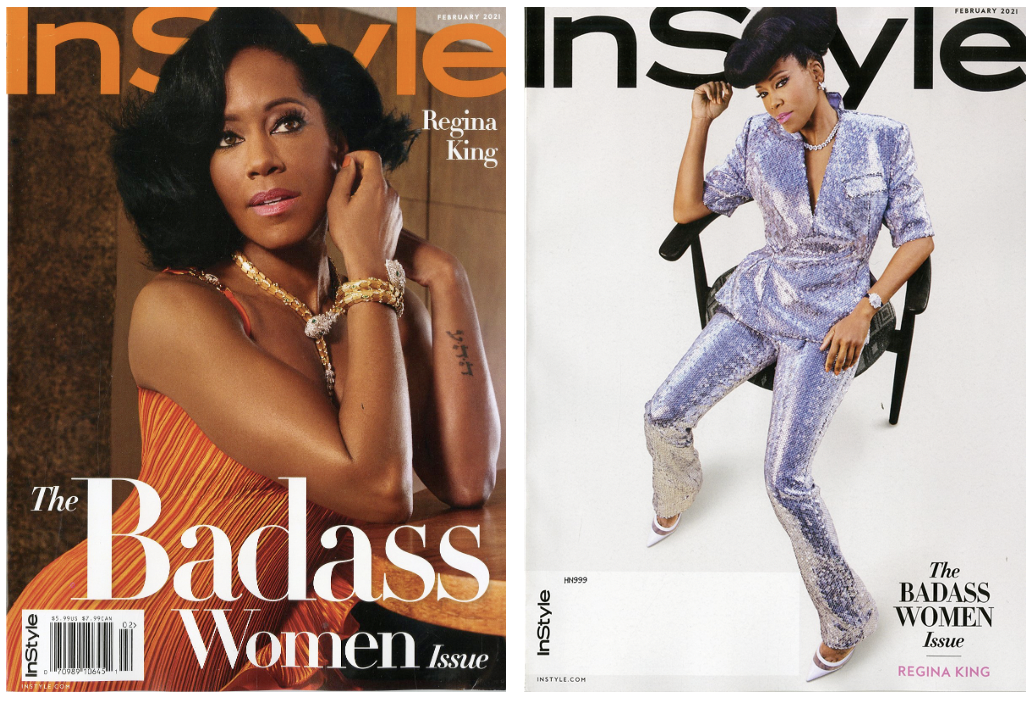
h1

Publishing Is Believing And I Do Believe… A Mr. Magazine™ Musing

February 4, 2021

New Magazines:  The Life Blood Of The Magazine Industry

At Least 4,730 New Magazines Launched In The Last 20 Years…

In any industry or profession, without new birth, products, ideas, or people, there is no growth. If you’re not growing, if you’re not introducing new blood to the mix of what you have, you’re dying incrementally. And the lifecycle and growth of magazines aren’t any different than any other lifecycle. Yes, magazines come and magazines go, but just because one magazine folds it doesn’t mean the entire print medium is dying. 

And while in the last 20 years the number of consumer magazines in this country aimed at the general public has remained steady, averaging at around 7,000 titles, it should be noted that in those same 20 years we had at least 4,730 new magazines coming into the marketplace. And the reason I say at least, is because those were the ones that I was actually able to buy and collect ink on papers copies from.  My definition was and is still is, “if it is not ink on paper, it is not a magazine.” And if I don’t have a physical copy of the magazine, it does not get added to the data on new magazines.  There has always been an influx of new print hitting mailboxes and newsstands nationwide, ranging from a yearly high of 450+ to a low of 60 due to the onset of the pandemic in 2020. 

Those new titles are the life’s blood of the magazine industry. And even if 70 percent of those magazines have died, which is the survival average of new magazines after four years of publishing, the remaining provide a good chuck of the magazines in the marketplace. 

Why am I talking about new magazines and the need to launch new titles aimed at different audiences? Mainly because people have been asking me about it, many have called and interviewed me about whether there is still room today for new magazines? My answer is there’s always room. To me, magazine publishing is like the digital sphere. There is no end for digital and there is no end for ideas and launching new magazines.

What does it take to launch a new magazine and what are some of the steps to make sure it’s successful? 

The most important aspect, based on my research, is that you have to find an audience. That’s number one. An audience who is willing and capable to pay the price of the magazine and the advertised goods in the magazine. The average cover price of a new magazine is inching toward the $10.00 figure. You have to be in the business of selling relevant, engaging content to an audience who one, can afford the price of your magazine and two, can benefit from what’s inside that magazine.  The old business model of selling the audience to an advertiser to make money is slowly but surely heading to the history books.  You must be in the business of selling content and creating experiences with the audience.

Nobody needs a magazine. Magazines are like chocolate. Nobody needs chocolate but once you start eating it you get addicted to it and you want more. Same thing with magazines. You have to create this relationship. And number two, you have to provide me with something different. Something unique. If I can Google a question and find its answer, it doesn’t belong in your magazine.

So the process of starting a new magazine begins with an idea. The very first thing you need to do if an idea comes to your mind is put it in writing. Ideas come by the dozen and are worth a dime. It’s the execution of the idea that sets it apart. So once you get the idea, once you boil it down to a very specific one sentence “this is what the magazine is going to be all about,” find the means and ways to reach that audience. Because the best ideas in the world, if they don’t have an audience, they are never going to go anywhere.

And believe in yourself. The sky is not the limit. No, you are the limit! Believe in yourself because everyone is going to tell you “this will never work.”  And all the successful magazines in history were published based on ideas that folks were told their ideas would never work or no one would ever buy them.

For the last 20 years, new magazines have continued coming into the world just like their predecessors before them. For a glimpse at how the numbers fell in any given year, here is a chart that myself and my team put together of new launches that have frequency from 2001 until 2020.

As you can see, the numbers have been strong (stronger in some years), but even in 2020 with a pandemic raging, we had 60 new magazines to hit newsstands. Nothing short of amazing.

And many of these from the last twenty years are still going strong as you can see from the different titles scattered in this blog. 

And these are just some of the titles still engaging the audiences with excellent experience making and good content providing. The longevity of these magazines prove they still have viable, relevant, necessary and sufficient content that audiences want.

So what are you waiting for?  Start putting your ideas on paper and let the fun begin.  Magazine publishing, as one friend from The Netherlands once told me, “is believing.”  And I do believe.  

Do I hear an amen or two…

© 2021 Samir “Mr. Magazine™” Husni, Ph.D.
h1

Why Magazines Are New Media And Other Tales From The Man Who Loves Magazines: The Media Voices PODCAST With Samir “Mr. Magazine™” Husni

February 3, 2021

On Feb. 1, 2021, Peter Houston from Media Voices in the United Kingdom interviewed me.  Humbled and honored to share my views about magazines and the magazine industry both via the Media Voices PODCAST and the transcript of that interview that appeared later on the Media Voices website, I have asked Peter for permission to repost the interview on my blog and he graciously accepted. The link to the podcast and interview is at the end of the blog.

“Magazines are not going anywhere. The magazines of today are not like the magazines of two years ago. That’s the beauty of magazines, they are a changing platform. I always laugh when people tell me “New Media,” I tell them that every time I get a new copy of a magazine it’s new media.” Samir Husni…

Peter Houston: That quote is from my interview with Dr. Samir Husni, founder and director of the Magazine Innovation Center at the University of Mississippi’s School of Journalism and New Media. You probably know him better as “Mr. Magazine™.”  We talked about his 37-year career in teaching, teaching magazines specifically, the wild ride that was magazine publishing in 2020, his print evangelism, the benefits that digital brings and his favorite magazine. 

Chris Sutcliffe: That is an exclusive. It has to be like winning the Oscar. 

The Sound Bites:

On becoming Mr. Magazine™: Simply put, I’m the man who loves magazines. I fell in love with magazines when I was 11 years old, when I bought my first copy of Superman when it came to my original home country, Lebanon, when I walked from our apartment to the shop and picked up a copy.

On being a print evangelist for many years: Indeed. And actually the vindication came back in 2016. I believe that the Columbia Journalism Review wrote an article about how print is the new new media. They mentioned that this guy, Samir Husni, at the University of Mississippi started this Magazine Innovation Center in ’09, and he believed that print is always going to be there.

On things changing, yet remaining the same in magazines: The more things change, the more things remain the same. The beauty of all of this is that the art of storytelling, the art of magazineship, putting a magazine together, is still an experience. That’s what I tell people, when people say, ‘you’re not a big believer of magazines online’. I say ‘no, because a magazine is an experience. A magazine is much more than content.’ 

On last year being a big year for subscriptions and whether the lack of outside experiences may have caused it:One, there were very few experiences, and two, most of the experiences that people were subjected to were negative experiences. We were bombarded by bad news on our television screens or our mobile phones. We had the pandemic, then we had the social unrest, then we had the killing of George Floyd. Everything that was coming our way was a bombardment of negative, depressing information.

On whether there has been real social change in magazines concerning inclusion and diversity: It was a major, major change. After the killing of George Floyd and after I read a piece in one of the UK magazines, Love Magazine, that, because we were staying at home, because we were fixated with the television screens, fixated on that video of the killing of George Florida, eight minutes and 52 seconds, there was an awakening in the magazine field.

On whether he thinks this change will last: Magazines, all of a sudden, are listening to their audiences and to their readers more, because they are going to be the major source of revenue. Look at what happened with Vogue, with the Kamala Harris on the cover of Vogue, when the social media erupted, saying that it’s not a good cover. Vogue was forced to go back to print, and put the digital cover on a print edition.

On digital media changing print media: The best thing that digital media has done is that it helps the audience directly tell the editors what they’re feeling, even before the magazine hits the stands. Once they see that cover on the website, or they see that cover on social media, people are voicing their opinions.

On whether editors and publishers having a hard line to draw between the audience and being influencers: The era of those celebrity editors is reaching an end. I think we have very few celebrity editors left. We are seeing a major return to the brand as the influencer, rather than the person behind the brand.

On still being optimistic about print: I am more optimistic, because when I hear that the established magazines, almost with no exceptions, have witnessed an increase of 25, 30% in subscriptions, and people using digital and direct marketing to order more magazines, that gives me hope for the multitude of newcomers to the field as well.
On his favorite magazine: As I started, I told you that I’m the man who loves magazines. Magazines to me are like my children. I will never tell you which child I love more than the other, because I love all my kids the same. However, anytime I get my hands on a Volume One Number One, that’s my favorite magazine for that moment. I have a lot of one-night stands with Volume One Number Ones that I enjoy and cherish – until the second one comes along.

And now the Mr. Magazine™ interview with Peter Houston, Media Voices.

Peter Houston asks about becoming Mr. Magazine™.

Dr Samir Husni: Simply put, I am the man who loves magazines. I fell in love with magazines when I was 11 years old, when I bought my first copy of Superman, when it first came to my home country, Lebanon. I walked from our apartment to the shop and picked up a copy of the first issue of Superman.

As I was crossing the street, flipping the pages, something happened to me. I just fell in love with the art of storytelling, flipping the pages, having a hero, having a villain, all-in-one. For the first time in my life, I felt like I was in control of the pace of the story, in control of the movement of the story. I wasn’t depending on my father or grandfather, to read me a story from the Bible, which was the only book we had at home.

From that moment, I’ve never looked back. I’ve now been teaching for 37 years at the University of Mississippi. In 2009, I created the Magazine Innovation Center to help amplify the future of print in a digital age. Because as you recall, in 2009, everybody was saying, print is dead. We had the iPhone in ’07, then we had the iPad in ’09, and everybody was saying this is the future.

Most people looked at me like, ‘this guy is so in love with magazines, he can’t see straight. He’s starting a center to amplify the future of print, in a digital age? He must have lost his mind’. What nobody knew back then is that I was still continuing my hobby.

It became my education, then became my profession. I tell my students every single day, I have never worked a day in my life. I’m doing the exact same thing I did: collecting magazines, designing magazines, reading magazines, researching magazines, ever since that first day, when I bought that copy of Superman.

I started the Center here and continued the research. The main goal for the Magazine Innovation Center is to help amplify the future of print in the digital age. Anybody that comes and visits me and sees the amount of magazines and boxes of magazines in my office would become a faithful follower of the premise that print is not going anywhere and magazines are not going anywhere.

Peter Houston: For a very long time, you’ve been one of the leading evangelists for print. Do you feel a little bit vindicated that print clearly hasn’t gone away, but actually, we’ve just had probably one of the best years for print subscriptions in a very long time?

Indeed. And actually the vindication came back in 2016. I believe that the Columbia Journalism Review wrote an article about how print is the new new media. They mentioned that this guy, Samir Husni, at the University of Mississippi started this Magazine Innovation Center in ’09, and he believed that print is always going to be there.

With all the interviews I did last year, even during a pandemic, it was amazing to see how people returned to print, because of all the screen fatigue that they had. Almost every publisher I spoke with has seen an increase in his or her print orders and in their subscriptions to their magazines. Like you mentioned, magazines are not going anywhere. They are changing.

Definitely, the magazines of today are not like the magazines of two years ago, or not even like the magazines of 100 years ago. That’s the beauty of magazines, that they are a changing platform. That’s when I laugh when people tell me about new media. I say, every time I get a new copy of a magazine, it’s new media.

It’s funny that you mentioned magazines 100 years ago, because I know on your blog, you wrote about a magazine article around Christmas 100 years ago. I think one of the things that was so interesting about that is that so much has changed – and yet nothing has changed. You talk about innovation but you’re also a magazine historian. Do you find that those things that you can trace all the way back?

The more things change, the more things remain the same. I’m working on a new book now, on all the magazines that were published in the United States in March 1953, the month I was born. I said, “Look, Mr Magazine was born in March 1953, let me take a look.”

I was able to collect and find more than 600 magazines from that month. When I look at them, and when I see some of the stuff that they covered, there was a cover story on a magazine from 1952 called Focus, about why the Russians are interfering with our presidential election. This is 1952!

And then, of course, you saw the ones that I posted on the blog about ‘let’s tell the truth’ from 1918. Or ‘let’s move from me to us’ from 1916. All these topics, you use today. Folks, have we learned anything, or is history just repeating itself and repeating itself?

The beauty of all of this is that the art of storytelling, the art of magazineship, putting a magazine together, is still an experience. That’s what I tell people, when people say, ‘you’re not a big believer of magazines online’. I say ‘no, because a magazine is an experience. A magazine is much more than content.’

If we are only in the content-providing business, we would have been dead a long time ago. But magazines as a whole, the art of putting the magazine altogether, is the art of experience-making. If you cannot create an experience with your magazine, you are not going to be in this business for long.

Do you think that’s why last year was such a big year for magazine subscriptions, and ultimately magazine sales, that there were so few experiences otherwise?

One, there were very few experiences, and two, most of the experiences that people were subjected to were negative experiences. We were bombarded by bad news on our television screens or our mobile phones. We had the pandemic, then we had the social unrest, then we had the killing of George Floyd. Everything that was coming our way was a bombardment of negative, depressing information.

And there comes the magazine in your mailbox, there comes the magazine on the newsstand, saying, ‘cheer up, life can still be good. Make this recipe, relax a little bit, read this piece of fiction. Have fun.’ It’s all positive. That’s the thing that was so important for the great editors and successful magazine folks, is that they did not deviate from the mission of their magazine.

I spoke with one publisher, for the Farmer’s Almanac, a magazine that has been published for more than 200 years. She told me that the magazine had lived through the pandemic of 1980, lived through the civil war in this country, but they never deviated from the focus of the magazine. You were not going to find articles about the Civil War. They leave that to the newspapers.

It’s the same thing with the pandemic now, we leave it to to the digital media. You are going to find what the magazine promised you when you subscribed to that magazine. This is the experience you are going to find: forecasting about the weather, you are going to find good farming things, you are going to find good stories, uplifting things.

Good editors, even during a pandemic and during social unrest, want to stay the course. That’s what I’ve learned from all the interviews I did last year. The one common theme among all of them was ‘stay the course’. Stay true to your audience.

Stay true to that agreement that you had with the audience, what we promised you when you subscribed, when you invited us to your home. We promise you we are going to deliver A, B, and C, and we are delivering A, B, and C. We are not deviating from that.

I know you did quite a lot of work last year around Black Lives Matter and the diversity that was being brought into magazines. Looking back and looking forward, do you think there was a real change?

It was a major, major change. After the killing of George Floyd and after I read a piece in one of the UK magazines, Love Magazine, that, because we were staying at home, because we were fixated with the television screens, fixated on that video of the killing of George Florida, eight minutes and 52 seconds, there was an awakening in the magazine field.

All of a sudden, they discovered that they’ve really not been mainstream. They were magazines that did not cover all races everywhere, whether they are Black or Hispanic, you name it. But mainly, it was the celebration of Blackness, that appeared like never before in the history of magazines.

I have found so far, just from the last six months of 2020, 336 magazines that have Black subjects on their covers. This is almost five times more than we had in the last century combined. It’s amazing. These magazines have never had a Black subject on the cover. This is an amazing, amazing change, where we see that we’re truly going mainstream.

Some may say, we are probably overcompensating, but to me, there is no such thing as overcompensating, because people who buy magazines, they buy them for the experience. Editors used to tell me, if we put a Black subject on the cover of the magazine, our sales will go down. Those were the days where magazines were cheap, those were the days when magazines were more like an impulse buy, because there were only like $1 or 95 cents.

Now, buying a magazine is intentional, because the average cover price of a magazine is almost $8. With some magazines reaching as high as $30, you are not going on an impulse to buy a magazine and pay $30 for the cover price. So the cover is not as essential, it’s still a conversation starter, but it’s not going to make or break your magazine, because you are buying it for the content.

That’s the major shift that we are starting to see, that now we are in the business of selling our content to our audience, not selling our audience to our advertisers, because the business model is changing. Advertisers now have so many platforms to reach us, including direct reach.

I get direct messages from people who want to reach me. They don’t need a magazine to reach me. But when I go and buy the magazine, I’m buying it for its content, the content that is vetted, curated, fact-checked. When I have the magazines in my hand, I’m saying, ‘wow, look at those people, they’ve done so much work for me, to save me time, to save me energy. To give me this Me Time, so I can sit down and relax and forget about everything else that’s taking place.’

Do you think that the editors and the publishers of these magazines looking back are thinking, ‘well, there was no commercial imperative?’ Now, what they’re looking at is a social imperative. Do you think it’ll last because of that lack of commercial imperative?

Even when I did my dissertation at the University of Missouri back in 1983, I talked about the role magazines play in any country. There’s the commercial role. They are a money-making business. If you are not making money, you are going to go out of business.

They are also a marketing tool, marketing for advertisers, for goods, for products, you name it, But there’s also an important social role that the magazines play, which is either an educational role, informational role, reflector of society, and initiators to society.

Magazines used to initiate a lot of stuff. They were always also literature purveyors. Who would have known about Ernest Hemingway, if it was not for the Old Man in DC and Life Magazine? Even this month, Wired Magazine, their February issue just came out with an entire novel, about the next war of 2034. The entire issue of the magazine is one story, one novel, which is, again, reminding us of the role magazines play.

Back in the 60s, after the assassination of Robert Kennedy and Martin Luther King Junior, Esquire Magazine led the campaign to ban gun advertising, because of the violence that was taking place. But we’ve never seen as big a massive change in the social responsibility for all magazines as the one that we’ve seen starting in June of 2020. And it’s still continuing.

Magazines, all of a sudden, are listening to their audiences and to their readers more, because they are going to be the major source of revenue. Look at what happened with Vogue, with the Kamala Harris on the cover of Vogue, when the social media erupted, saying that it’s not a good cover. Vogue was forced to go back to print, and put the digital cover on a print edition.

Of course, they are going to make a lot of money from selling both covers. But again, we are witnessing this massive change where magazine editors and publishers have their ears to the masses now, rather than ‘I am the editor and I can do anything I want to do, and if you don’t like it, tough.’

Do you think in that sense, that’s where digital media is changing print media?

The best thing that digital media has done is that it helps the audience directly tell the editors what they’re feeling, even before the magazine hits the stands. Once they see that cover on the website, or they see that cover on social media, people are voicing their opinions.

People love to give immediate, instant feedback. We live in an age of instant feedback. That’s the danger and the beauty. It’s like a double-edged sword. On one hand, yes, I am listening to you, and on the other hand, you can have a very vocal minority, that will also derail your job and derail what you are doing as an editor.

One time, I was in Bratislava and the editor of the paper there told me that he came up with what I thought was a genius idea, that you can access all our content for free on the web. But if you want to comment, you have to pay €1. You have to pay for every comment. Knowing how much people love to run their mouths and say stuff, they were making more money from the comments than from actually selling the content.

Do you think that editors, and also publishers, have a difficult line to draw, on one hand listening to the audience, but on the other hand, leading the audience and being tastemakers?

The era of those celebrity editors is reaching an end. I think we have very few celebrity editors left. We are seeing a major return to the brand as the influencer, rather than the person behind the brand.

Take an example: if you read anything in the Economist, can you ever tell me who wrote that thing? Or are you going to tell me I read this in the Economist? There are no bylines in the Economist, and the same thing at Home and Gardens. There were a lot of magazines that were based on selling their brand and presenting their brand as the human side, as if that ink on paper is the human coming to visit you and engage with you and your conversation.

You are not going to say, so and so wrote this article in The Economist, or so and so wrote this article in Bon Appetit. You are going to say that, I read this in Food and Wine. We are going to start seeing the celebrity editors taking a step back. This is the major difference between now and what we’ve seen in the 90s, where editors became bigger names than the magazines themselves.

The folks that were writing for Time Magazine, Newsweek, like Fareed Zakaria or Jon Meacham, all these people becoming bigger than the brand, did not help the case for magazines as experience-makers. We are going to see this return to the magazine as the experience-maker and to the brand as your influencer friend, that’s not only reflecting what you are doing, listening to what you are doing, but also helping you, guiding you, setting the roadmap for you as you move forward.

Looking at last year and looking forward, are you still as optimistic as you were about print?

I am more optimistic, because when I hear that the established magazines, almost with no exceptions, have witnessed an increase of 25, 30% in subscriptions, and people using digital and direct marketing to order more magazines, that gives me hope for the multitude of newcomers to the field as well.
Technology has made it so easy to launch a new magazine. It used to be, if you are going to do a magazine was less than 10,000 copies, the printer will throw you out. They said, we can’t do anything less than 10,000 copies. Now I’m getting first editions with 500 copies, limited editions of 500 copies.
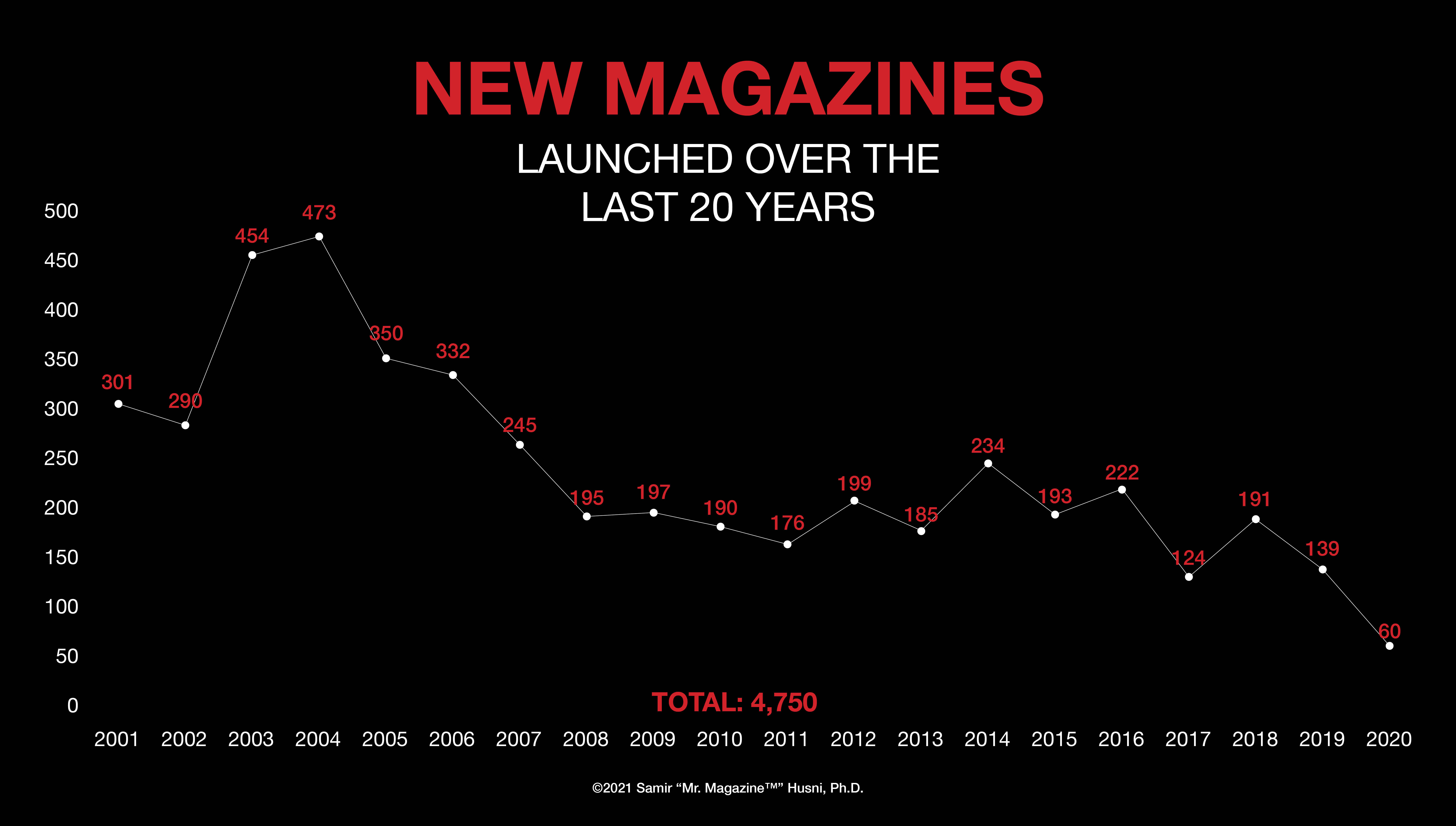
Technology has made it possible for anyone who can afford some money to publish a magazine can actually publish the magazine. That’s why we’re seeing a lot of new magazines coming from folks who’ve never published a magazine before.

Still, you have companies like Meredith, who launched a lot of magazines last year during the pandemic, and continue to do so. But also we’ve seen a lot of magazines coming from individual entrepreneurs, who feel like they have an idea to share, they have an experience they want to share, and they’re going to do it.

When it comes to what we’re going to see in 2021, I’ll say my traditional talk about the future, that only two people can tell you the future: God and a fool. I know I am neither God and hopefully I’m not a fool. But we are going to see more magazines, more specialized magazines, more niche titles, that are aimed at a very, very specific aspect of every part of our daily living.

The other reason, I believe, that we are going to see a good return to print is because the freedom of the press, the freedom of speech, belongs to those who own the press, as AJ Liebling once said. When you put all your eggs in one basket, and you don’t own the basket, i.e. social media, Twitter, Facebook, you name it. If they decide to pull the plug, then you have no protection, you’re gone.

But if you own a magazine and publish a magazine, that sense of ownership, which to me is one of the three ships that cruise through all human beings, is one major aspect. You have the sense of membership, like a membership card that you are going to get every month or every week. It’s a reminder that you belong to this community.

You have showmanship: we love to show things. Nobody is going to come to my house and ask what I’m reading on my iPad. But they are going to look at my magazines on my coffee table and pick them up, whereas nobody’s going to touch my iPhone or my iPad and say, ‘hey, let me see what you’re reading’.

Those three ships, ownership, membership, and showmanship, are what gives me hope that we will always have print, we will always have that physical attraction. I joke with my students the whole time: you can have as many virtual girlfriends and boyfriends as you want. But until you try the real thing, trust me, it’s not the same.

I’m going to ask you the impossible question. What is your favorite magazine?

As I started, I told you that I’m the man who loves magazines. Magazines to me are like my children. I will never tell you which child I love more than the other, because I love all my kids the same. However, anytime I get my hands on a Volume One Number One, that’s my favorite magazine for that moment. I have a lot of one-night stands with Volume One Number Ones that I enjoy and cherish – until the second one comes along.

To see the original post and listen to the Media Voices PODCAST click here.

h1

Automotive Industries Magazine Celebrating Its 125th Anniversary: Publisher John Larkin To Samir “Mr. Magazine™” Husni: “I Use The Print Side As The Key To Everything Else.” The Mr. Magazine™ Interview…

February 2, 2021

“That’s why I feel there is a life for print, but it’s just a question of what is so valuable that we have to print it? And that’s where we search for stories. Automotive Industries clients do not invest good money after a bad story. So we find if they’re willing to invest in the story, the technology is valuable…it’s worth it.” John Larkin…

Automotive Industries (AI) is the world’s oldest continually published trade publication covering the auto making business. It was founded in November 1895 as “The Horseless Age,” the first magazine created to cover the world’s transition from horse-drawn conveyances to those powered by the new internal combustion engine. The magazine’s present name was established in November 1917.

Automotive Industries is devoted to providing a global coverage on all aspects of the automobile marketplace, with an emphasis on the people, products and processes that shape the industry. Automotive Industries provides manufacturers and suppliers with in-depth news, information, insight and analysis on the global events that affect the auto industry.

John Larkin is the brand’s publisher and enjoys a 16-year connection with the magazine. His passion and excitement for the brand and all that entails is prominent throughout our conversation. This interview is with a man who firmly believes his product’s firm foundation in print, the magazine is 125-years-old, integrates quite nicely with its digital extensions.

I spoke with John recently and we talked about the past, present and future of Automotive Industries. It was a delightful conversation from his home base in Jerusalem. John says he is just passing the torch for the next generation to carry on the traditions of AI and to bring on even more innovations in print partnerships and growth.

Indeed. Mr. Magazine™ would have to agree with John’s optimism and vision. The longevity of the brand stands strong.

So please enjoy the Mr. Magazine™ interview with John Larkin, publisher, Automotive Industries magazine.

But first the sound-bites:

On the direction he sees the 125-year-old magazine heading: The way I see her future, including her print future, is that everything we do in print, of course we do in all formats. So today I feel that the print side is only one percent of the distribution, even less than one percent. However, I use the print side as the key to everything else.

On where the most revenue comes from, print or digital or both: We use the advertising revenue, one purchase, one advertisement, which is in print, we use that to trigger pretty much all of our revenue. We have subscription revenue from collectors, from universities, from libraries, this may transition as we get more knowledge, at the moment we allow one advertisement purchase. this gives our customers print exposure, it gives them web banners, and it gives them an opportunity for an editorial partnership. So we just ask for one purchase, one ticket to the party and we give them full exposure.

On where he would like the magazine to be on its 128th anniversary: The dream is a 24-hour operation. Of course it has to be in English, but then bringing in second languages for the auto industry, whether the principle second language is German, then Spanish, then Chinese. But let’s just think about the English language as a trading language first. So a 24-hour operation publishing news around the clock. A 24-hour channel, whether it’s a Zoom channel or just “a” channel, a digital channel, 24 hours, serving designers and engineers around the globe. That would be the right future and present for Automotive Industries.

On whether he envisions only a green light up ahead, no red or yellow: Our responsibility is to share. To receive information and then to share it. Mobility is a beautiful thing. It’s a dream. From the time the caveman and cavewoman were sitting under the stars around their campfire, we’ve always dreamt about mobility, getting from A to B, whether it’s going to Mars with the Tesla and Elon Musk, mobility is a dream. I love it when a carmaker brings out the most amazing vehicle and he displays it at one of the trade shows. Yet seconds later, the designers and engineers are already working on the next idea. It’s without end.

On why people comes before product and process in the magazine’s tagline: I can’t take credit for that, I wish I could. When I took over Automotive Industries I did not try to change the model because it was already very successful with some of the biggest publishing houses in the world, Cahners & Reed Publishing, for example, and when we acquired Automotive Industries that was already their tagline: People, Product, Process. I didn’t want to change anything. I knew these guys had got it right. She’s such a premier brand in the industry; she’s an iconic brand in automotive design, and I felt if I touched it, I didn’t want to break it. (Laughs)

On why there is a bicycle on the current cover of Automotive Industries: (Laughs) And why did we do that? That interview is an interesting personality Ernst Prost, CEO of Liqui Moly, who took an opposite approach during the pandemic. He hired extra staff, he published more news; I’m not sure about his investments, but he probably invested more in opportunities and their turnover went up 38 percent year over year, when everybody else was going down. And we wrote about that.

On what makes him get out of bed in the morning: I wake up optimistic. I like to wake up with the sun. I love growth. I love ideas that have been born, that are coming to fruition. Maybe the seed of the idea was a while ago, but I love it when it comes together. The greatest satisfaction is when a customer sends me a testimonial or sends me a note saying that they love what we did for them. Getting that feedback gives me joy.

On how he unwinds in the evenings: I like to meditate. And then I like to do a little bit of non-automotive news in the evening. And music; I like some gentle classical music just to soothe the day. I like to work to the point of being tired and then make a nice meal and then fall asleep. (Laughs)

On what keeps him up at night: Not a lot. As long as my family are healthy, I’m comfortable. I just want them to be healthy and then I can sleep well. I can deal with challenges in the morning. I get up very early. I kind of like to be half exhausted, especially after my evening meal and then go to bed relatively early. As long as my family are healthy, then I can sleep.

And now for the lightly edited Mr. Magazine™ interview with John Larkin, publisher, Automotive Industries magazine. 

Samir Husni: As publisher of a magazine that’s almost 125 years old, in what direction do you see the future of Automotive Industries heading?

Larkin: The transition for Automotive Industries and yes, she’s 125-years-young; I like to say that she is the grandmother dancing at the wedding. She’s full of energy. She a 125-year-old startup. In a way, I feel that we’ve been preparing for the digital age from probably 2000 onward.

I wasn’t with Automotive Industries in 2000, but I did take over as publisher 16 years ago. I constantly have the mentality that we should be virtual as an organization, that our costs should be principally toward the magazine, so if a client spends X to advertise with us, then as much of their cost is toward the magazine and toward the cost of sale. Very little cost needs to be indirect cost, so therefore the advertiser is getting a bigger bang for his buck.

How we achieve that, my office is my home. So any fixed costs are at a minimum. That has made us light as an organization. The pandemic only accelerated our journey to digital, but not full digital because I feel that Automotive Industries has been 125 years in print, so my goal is to pass the torch to the next publisher. I feel I’m only holding the torch. And I’ve always had that mentality since my beginning with AI (Automotive Industries).

The way I see her future, including her print future, is that everything we do in print, we publish in all formats. So today I feel that the print side is only one percent of the distribution, even less than one percent. However, We use the print side as the key to everything else. So when we do a story with a client or any contact within industry, we create a front cover for them and we broadcast that front cover. We print that edition with their front cover; we’ll give them as many print editions as they need, but we will then broadcast that front cover edition to tens of thousands, even hundreds of thousands of automotive industry professionals through various social media platforms.

It’s an interesting question, the life of print, for me, the answer is very simple. If something is important enough, it will have life in print. Everybody will print their marriage certificate; everyone will print their birth certificate; photographs of special memories of their family, and so on. Into the future my feeling is if something is important enough, it will have a print life.

So my goal with Automotive Industries is that we go in the direction of collectible print; go in the direction of a souvenir editions, even a hardback edition, where people will own that particular edition without end, for an eternity. So I feel there is the collectible element and the social media element, which is also unlimited in numbers.

I want Automotive Industries to be in print for many, many years into the future, but also of course, relevant in print, which I feel is in the direction of collectible, souvenir, celebrating anniversaries, such as a 100 year anniversary of a car-making company, a 100 year anniversary of a supply company, an amazing new model or innovation that people are so excited about that they want a print collectible version. We use that print cover to broadcast to potentially millions of people.

Samir Husni: Is most of the revenue coming from print or digital or both?

Larkin: We use the advertising revenue, one purchase, one advertisement, which is in print, we use that to trigger pretty much all of our revenue. We have subscription revenue from collectors, from universities, from libraries, but at the moment and this may transition as we get more knowledge, at the moment, we allow one advertisement purchase, that gives our customers print exposure, it gives them web banners and it gives them an opportunity for an editorial partnership. So we just ask for one purchase, one ticket to the party and we give them full exposure in all formats.

Our goal is to reintroduce Automotive Industries to a bigger publishing organization, that can obviously go in the direction post-pandemic of conferences and events because of her brand equity. She has readers in various supply companies around the world and in the United States who have been reading trusted editorial content from AI generation to generation.

So the easy answer is all of our revenue is from print advertising, because we just bundle it into the same package.

Samir Husni: Where do you want to see the magazine for its 128th anniversary?

Larkin: The dream is a 24-hour operation. Of course it has to be in English, but then bringing in second languages for the auto industry, whether the principle second language is German, then Spanish, then Chinese. But let’s just think about the English language as a trading language. So a 24-hour operation publishing news around the clock. A 24-hour channel, whether it’s a Zoom channel or just “a” channel, a digital channel, serving designers and engineers around the globe. That would be the right future and present for Automotive Industries.

Why? Because that reflects the automotive industry. General Motors is not a North American operation. General Motors is a 24-hour operation. So is Ford Motor Company, all the German makers, the Chinese makers, all the Asian makers, it’s a 24-hour conversation between professionals in the industry. I can see AI being a 24-hour news operation. And then giving designers and engineers the opportunity to plug into Automotive Industries anytime of the day or night with some type of live activity. That live activity could be a news channel around the clock, of course it already exists as a 24-hour print operation.

One of the blessings in disguise during these last 12 months was that we re-broadcast the website a hundred percent, so we moved from our old platform, which was dated from 16 years ago, and then we went with WordPress, an application programming interface which we find very efficient. It’s a bit like driving one of the luxury makers’ vehicles. We used the quiet time during the pandemic to race ahead with our digital platform. As a 24-hour operation, Automotive Industries would reflect the news requirements of the automotive industry today.

Samir Husni: You envision only a green light? There is no red or yellow light ahead?

Larkin: Our responsibility is to share. To receive information and then to share it. Mobility is a beautiful thing. It’s a dream. From the time of the caveman and cavewoman sitting and wondering under the stars around their campfire, we’ve always dreamt about mobility and getting from A to B. Whether it’s going to Mars with Tesla’s creator Elon Musk, it’s mobility, it is a dream. I love it when a carmaker brings out the most amazing vehicle and displays it at one of the trade shows. Yet seconds later, the designers and engineers are already working on the next idea. It’s creativity without end.

So the dream for Automotive Industries is just to reflect that news. It’s not us, it’s the engineers and designers. All we’re doing is being a stage or a platform to let them share their amazing developments. Whether it’s a technology that saves a life or whether it’s a technology that gives  greater fuel efficiency so that we’re saving the planet, it just doesn’t stop. It’s beautiful.

We could have 100 times more people than we have and we still couldn’t share all the news. (Laughs) I love the energy of the industry and the innovations in the industry. I’m very lucky that I work with AI which has been sharing those innovations since the birth of the industry and I am looking forward to passing it on to the next person.

Samir Husni: The tagline for Automotive Industries is people, product, process. Usually in most of the trade magazines, the focus is on the trade itself, you put people first. Why is it people before product and process?

Larkin: I can’t take credit for that, I wish I could. When I took over Automotive Industries I did not try to change the model because it was already very successful with some of the biggest publishing houses in the world, Cahners & Reed Publishing, for example, and when we acquired Automotive Industries that was already their tagline: People, Product, Process. I didn’t want to change anything. I knew these guys had got it right. She’s such a premier brand in the industry; she’s an iconic brand in automotive design, and I felt if I touched it, I didn’t want to break it. (Laughs)

But it rings true. And the bottom line is, yes, it is the people who design the cars. It’s the people who come up with a new method for factory automation. The original editors of Automotive Industries called for a society of engineers to make the parts for the cars more common, otherwise inventors from different parts of the world would be coming up with different sized engines and wheels and it would be a big mess.

So, our founding editors helped create the Society of Automotive Engineers. The “Horseless Age,” was founded in 1895, 10 years before Ford Motor Company was started. However, for 10 years before starting Ford Motor Company, Henry Ford was in racing circles whose members would meet every month in a different city to have a racing event. They started publishing a newsletter for their members distributed at these events and by mail. So, I’m confident that Henry Ford was among those professors, inventors, doctors and racing enthusiasts who were among our first readers in 1895.

Samir Husni: I have to ask, the current issue of Automotive Industries, a car magazine, has a bicycle on its cover? 

Larkin: (Laughs) And why did we do that? That interview is an interesting personality, Ernst Prost, CEO of Liqui Moly, who took an opposite approach during the pandemic. He hired extra staff, he published more news; I’m not sure about his investments, but he probably invested more in opportunities and their turnover went up 38 percent year over year, when everybody else was going down. And we wrote about that.

We did a cover to celebrate his 30 year relationship with one of the executives in his corporation. And one of the things that he talked about in that conversation was how longevity, loyalty of staff; how many of his workers have been with him 30 years or longer in the company. He was dedicated to relationships, dedicated to investing in his customers. So I loved the bicycle because it was like, “Wait a minute, what’s going on here?” We’re talking about cars and there’s a bicycle on the cover. So it was just to get people to think twice.

That’s a good example where Sebastian Zelger, Ernst’s CEO of Liqui Moly’s operation in the United States shared this edition with a thousand of his contacts, so that’s how we help to get their print story go viral in the social media world. That’s why I feel there is a life for print, but it’s just a question of what is so valuable that we have to print it? And that’s where we search for stories. Automotive Industries clients do not invest good money after a bad story. So we find if they’re willing to invest in the story, the technology is valuable…it’s worth it.

Samir Husni: What makes you tick? What motivates you to get out of bed in the morning?

Larkin: I wake up optimistic. I like to wake up with the sun. I love growth. I love ideas that have been born, that are coming to fruition. Maybe the seed of the idea was a while ago, but I love it when it comes together. The greatest satisfaction is when a customer sends me a testimonial or sends me a note saying that they love what we did for them. Getting that feedback gives me joy.

What wakes me up in the morning? I just feel having all areas of my life fairly balanced, like the spurs of a wheel. Of course, my family and of course, health and Automotive Industries’ growth. I want AI to be in good hands. So I guess it’s a combination of things.

Samir Husni: How do you unwind in the evenings after a long day of work?

Larkin:  like to meditate. And then I like to do a little bit of non-automotive news in the evening. And music; I like some gentle classical music just to soothe the day. I like to work to the point of being tired and then make a nice meal and then fall asleep. (Laughs)

Samir Husni: My typical last question; what keeps you up at night?

Larkin: Not a lot. As long as my family are healthy, I’m comfortable. I just want them to be healthy and then I can sleep well. I can deal with challenges in the morning. I get up very early. I kind of like to be half exhausted, especially after my evening meal and then go to bed relatively early. As long as my family are healthy, then I can sleep.

Samir Husni: Thank you.