Simply because the technology makes it possible, it does mean that it has to be used. Technological advances in printing have made it possible to stop the presses, change the plates, and have several different covers of the same issue of a magazine, all at a fraction of the cost. Magazines now-a-days are using technology and all the new technological advances as if there is no tomorrow. It is reaching the stage where every magazine, or so it seems, is using different cover images and cover lines between those on the newsstands and those mailed to the subscribers. Magazines are producing more than one cover of the same issue hoping that folks will buy all three, four, or even eight collectors’ covers. They are testing different logos, cover lines and designs in different markets.
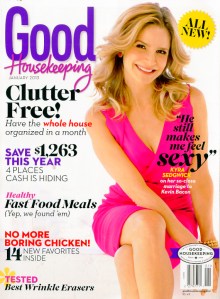
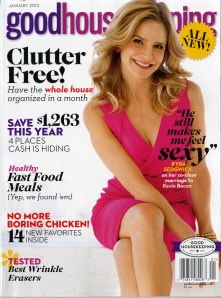
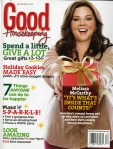
Case in point the January 2013 issue of Good Housekeeping. The magazine, with a lot of fanfare, announced its newly designed and revamped magazine focusing more on GOOD and less on Housekeeping. After few months of testing the magazine settled on a logo that was adopted for use starting with the January 2013 issue. However, to my surprise, I was able to find yet another logo being used on the January issue that was not tested before. So I asked Rosemary Ellis, Good Housekeeping’s editor in chief, “why are you testing more logos after settling on the new one?” Her answer, “We are always testing cover elements, no matter when. We love the new logo and have a lot of confidence in it.” Take a look at the new logo, the new tested logo and the previous logos from December.
The newly adopted and promoted logo:
The “yet-one-more” tested logo
And the December three used logos: the traditional one, the tested one and the newly adopted logo:
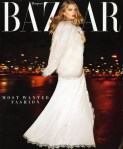
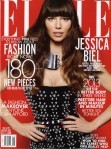
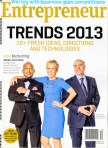
While magazines are always testing different elements on their cover, as Ms. Ellis told me, others have adopted a style that they’ve used for some time now. Harper’s Bazaar, ELLE, and Entrepreneur are three examples of magazines that always offer their subscribers a different cover than that on the newsstands. Take a look:
Harper’s Bazaar (Single copy sales cover followed by subscribers cover):
Elle (Single copy sales cover followed by subscribers cover):
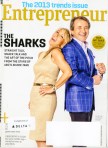
And Entrepreneur (Single copy sales cover followed by subscribers cover):
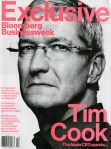
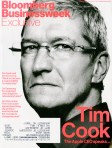
And Bloomberg Businessweek does the same as above, but every now and then (Single copy sales cover followed by subscribers cover):
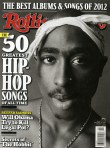
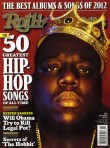
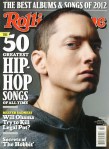
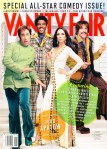
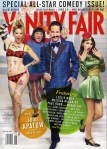
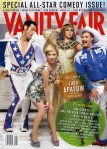
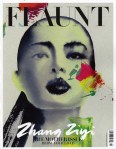
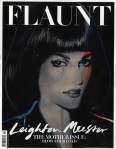
Other magazines are using the technology to offer as many different cover images or cover lines as possible. The purpose, of course, is someone besides me, is going to collect every cover and pay three, four, five and in some cases 20 and 25 times the price of the magazine, so he or she, will be the proud owner of all the “collector’s covers” of the same issue. Take a look:
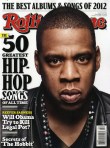
Rolling Stone’s The 50 Greatest Hip Hop Songs of All Times:
Vanity Fair’s All-Star Comedy Issue:
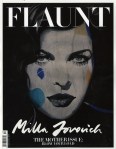
Flaunt’s The Mother Issue:
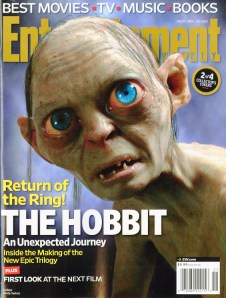
Entertainment Weekly’s The Hobbit Issue:
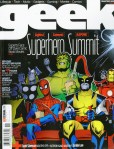
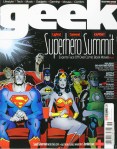
Geek’s Superhero Summit issue:
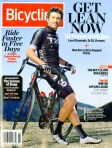
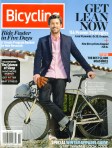
Bicycling’s Get Lean Now issue:
And W has four covers in January, Hunger two covers, Thrasher four covers… the list goes on and on… So, my question, do we really need all these covers? Are the customers (readers) really falling for this “collector’s” trick? Or, it is just a “treat” for the editors and art directors to have more than one cover because it was “so hard to choose, so we opted to use all options.”
Either way, it is always fun to see this wonderful world of magazines with all the tricks and treats that it provides day in and day out.
By the way, during this holiday season, why don’t you give the gift that lasts all year long. Buy a magazine subscription to a friend or two. They will be reminded of your gift every time an issue arrives. It is the only gift that keeps on giving! Happy holidays and all the best for the New Year.
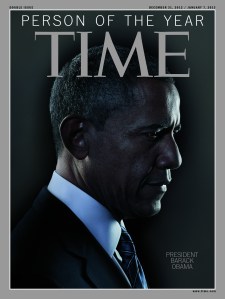
President Barack Obama is TIME’s Person of the Year 2012. That is no longer a secret anymore. However, one may ask, with the current status of print and digital, “would TIME magazine have as much an impact if it was published in a digital form only? Luckily, we’ll never have to find out. According to managing editor – Rick Stengel – print isn’t going anywhere.
In an audio interview with Samir “Mr. Magazine™” Husni, Rick Stengel, TIME’s managing editor reveals the reasons behind picking President Obama as the Person of the Year and how this choice today is different than that of 2008. Stengel also shares his views on the future of paper, the reasons behind changing the color of the trademarked red border of TIME and the importance of the brand as the center of everything they do and produce at TIME.
In typical Mr. Magazine™ Interview’s style, first the sound bites, followed by the audio interview, and then the very lightly edited transcript with Rick Stengel.
The Sound-bites:
On how easy it was to choose President Obama as Person of the Year: Well, it’s never an easy decision and in some ways the thing that makes it a hard decision is you can always choose the president of the United States.
On why Obama was chosen: We chose him because, if you look back at 2008 when he was Person of the Year, a lot of people thought, ‘Boy, this is a once-in-a-lifetime change, it’s an anomaly, it’s lightening in a bottle,’ as he called it, and what I think we saw this year was readifying the changes in America.
On the cover photo: We wanted to show him in a way that he hasn’t been shown before.
On whether or not a “digital-only” Person of the Year would generate as much of an impact as print does: Well, I think you know, Samir, that I think the paper product will never go away.
On changing the color of TIME’s border for this issue: The issue is special and it makes it feel even more commemorative than it is, and I just thought it was a great and interesting way to go and I hope it’s successful.
And now for the audio interview:
And now for the lightly edited transcript from the interview with Rick Stengel, managing editor, TIME.
Samir Husni: My first question to you is how easy was it to choose the president as the “Person of the Year,” on a scale of 1 to 10?
Rick Stengel: Are you comparing it to other choices for “Person of the Year,” or just a relative scale of easy versus a hard decision?
Samir Husni: As easy versus a hard decision.
Rick Stengel: Well, it’s never an easy decision and in some ways the thing that makes it a hard decision is you can always choose the president of the United States; you can almost always choose the president of the United States during an election year, but I thought that he was really on to something that was new and different and we can talk about that in a second, and it was a relatively hard decision. I’d say it was an 8. How about that?
Samir Husni: Okay. So, why did you choose him?
Rick Stengel: We chose him because, if you look back at 2008 when he was “Person of the Year,” a lot of people thought, ‘Boy, this is a once-in-a-lifetime change, it’s an anomaly, it’s lightening in a bottle,’ as he called it, and what I think we saw this year was readifying the changes in America. Because what he really is, is this architect of a New America, and what I mean by that is if you look the so-called coalition of the ascended: the people who voted for Obama, minorities, Hispanics, millennial, college-educated women, these groups are the groups that are making America now and making the next America. He is their symbol and their champion, and in some ways, the creator of these groups as political coalitions in America. And so, in many ways I kept wanting to call it Barack Obama is the “Person of the Year” and Barack Obama and the making of the New America. That to me is why he was “Person of the Year,” and I think everything we have seen since the election and with Hurricane Sandy and the dreadful, dreadful events in Newtown, Connecticut, we see him stepping up in a way didn’t always see in the first term. He’s more confident, he’s speaking with more clarity, speaking more from the heart about the things he really believes in, and I think that’s what people were waiting for, and in so far as “Person of the Year” it looks both backward and forward. He’s going to be around for a long time. He’s creating this New America and this new coalition and this new realignment in our political sector and that will have repercussions for decades to come.
Samir Husni: Why the picture? One of my colleagues commented that the president looks like a Roman senator on an old coin?
Rick Stengel: That’s not a bad analogy. We wanted to show him in a way that he hasn’t been shown before. Look, he’s probably the most photographed man in the universe. And we got Nadav Kander, who is a U.K. based photographer, who actually did our Mohamed Morsi cover from a few weeks ago, because A – you don’t have much time with the president and B – I wanted an image that didn’t look like anything else, and that looked special. And I think the tone of it reflects the tone of the country now, particularly the tone post-Sandy and post-Newtown. He looks determined and deliberate. It’s a quiet image. And I think that it will become one of the iconic images of President Obama for all time.
Samir Husni: Since you mentioned the word iconic, do you think the print component of TIME’s Person of the Year, or any other iconic issue that you produce; would it generate the same buzz and have the same impact if it was only digital?
Rick Stengel: Well, I think you know, Samir, that I think the paper product will never go away. I think it simply becomes a more premium, more lux, even more desirable, more expensive product that is part of this total brand of Time, so that for a digital subscription, you might also get a paper subscription, for a higher price, that is. Again, I just don’t think that print is going away, particularly for upscale publications that people like to have on their coffee tables, like to have in their homes and like to be able to carry with them. As you know, a magazine is more portable than an iPad. So, I think everything we do revolves around the brand at the center, and one of the spokes of the wheel is the print product, like the iPad product, like Time.com, like what we do for mobile, what we do for phones and you can have just one, or you can have them all and there is a subscription price that would include everything, and there’s a subscription price that would include one thing. So, that’s a very long answer to your question, because I think it’s a kind of false choice in a way, because I don’t think the physical magazine itself will ever go away.
Samir Husni: Having said that, I’ve noticed that this is the fourth time in the history of TIME magazine that they’ve changed the color of the border from red to silver?
Rick Stengel: We’ve changed it a few times and part of it had to do with when we looked at Nadav’s picture, it looked even more beautiful and special in a silver border with a silver logo. And also this is the first time in an issue that we have four subsequent internal covers that have the traditional red border and red logo, that it just made the whole thing feel special and “Person of the Year” is special. The issue is special and it makes it feel even more commemorative than it is, and I just thought it was a great and interesting way to go and I hope it’s successful.
Samir Husni: One final question, on the lighter aspect, what did you think of Mad Magazine choosing Tina Brown as the Person of the Year in their parody issue?
Rick Stengel: Well, that’s the first I’ve heard of it, Samir, to tell you the truth. I don’t know anything about that.
Samir Husni: Thank you.
Say Hello to DuJour, but don’t wear a Blindfold while you Sew-It and are Cookin’ and eating Cake & Whiskey, while tending to your Babiekins!
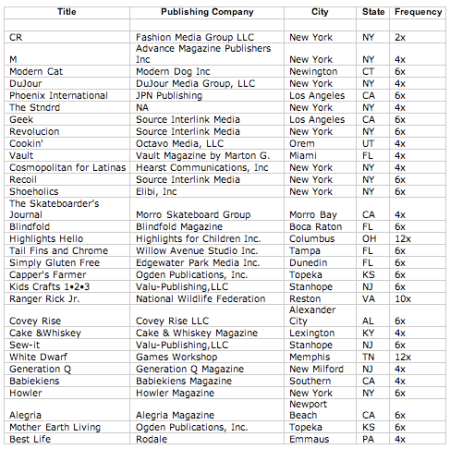
As we approach the end of 2012, with 15 days to go, the number of new magazines appearing on the nation’s newsstands for the first time this year stands at 830, of which 235 of those magazines published with a regular frequency ( the highest number since 2007 when 245 titles appeared with a regular frequency) have also appeared for the first time.
As I mentioned in min: media industry newsletter in this week’s edition, two noteworthy points of interest:
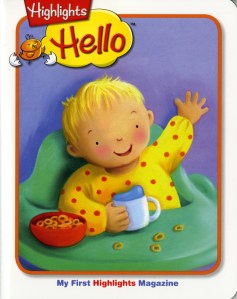
The increase of the number of print magazines aimed at young children, including Highlights Hello – which is geared toward babies 0 – 3, and which I awarded this year’s inaugural Magazine Innovation Center’s “Innovation in Print” award for its creative use of ink and paper to reach the youngest magazine audience out there, and Ranger Rick Jr. magazine that arrived to the marketplace last month.
The degree of specialization has been on the increase and the use of digital technology to help create the printed product, such as: Howler, DuJour, Modern Cat, and Shoeholic. For more updates and information check minonline.com
What follows is a list of the 31 most notable launches of the past year in random order… and you can click here to see each and every one of the new magazines from Jan. 1 until Nov. 30, 2012. (Dec. launches will be posted Jan. 2, 2013).
Before digital ever took its first breath, in 1937, J.R.R. Tolkien published The Hobbit to critical acclaim. And with the new release today of Director Peter Jackson’s movie version, it’s proof again that print is, even 75-year-old print, the springboard for today’s media. From apps to the web, from television to radio; print has embedded its image into many different forms of media, like fossils into stone. No other medium has had such an impact on communication.
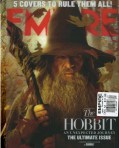
The buzz The Hobbit is generating is palpable. The British magazine, Empire, has 5 different 3-D collectible covers, all $11.99 each. Rolling Stone dedicated an entire collector’s issue to the movie, also priced at $11.99 and so did Topix Media Lab, priced at $7.99. Entertainment Weekly has 4 different collector’s covers at $4.99 each. And Harpercollins has “The Hobbit: An Unexpected Journey,” which showcases art concepts designed by the film’s art directors, priced at $39.99.
While this is not a new phenomenon, it is a simple reminder that print was, is, and will continue to be the trampoline that other media uses to attain their heights of grandeur. Notice I did not say, “delusions of grandeur,” because most certainly there are no delusions that digital and its counterparts are successful in today’s world.
However, print integrated within that success is an important variable.
So as you watch the movie, take a look at what you can bring home, display on your coffee table and relive the adventure time and time again…
A Fickle Mistress
The best way to legitimize digital is to recognize the primacy of print.
Rebecca Darwin, president and CEO of Garden & Gun Magazine, was a speaker at this year’s ACT III Experience at the University of Mississippi and is adamant in her belief in print. She agreed with Mary Berner, the new president and CEO of MPA The Association of Magazine Media, in saying it is “absolutely the case” that we need to stop apologizing for magazines.
Print is the cornerstone of publishing, and while it uses and complements additional bricks in the pavement, it is the piece that holds the publishing family together. It is the mortar that binds. It is proven and sustainable, the beginning and end when it comes to publishing. All things in between— digital, iPads, mobile, etc.—are mere daughters, sons and cousins of print. In the boudoir of many publishing houses, you will find the temptress Digital roaming the halls.
Many successful publications develop the itch to stray from their magnanimous partner, Print, and fall into the beguiling arms of Digital by herself, without that root of print, just because everyone else is doing it. My thoughts on this: Never be a follower, always be a leader. Newsweek will prove me right about that. It’s only a matter of time. And speaking of Time, try telling that highly successful publication it doesn’t need print in its family portrait.
What I am getting at here is this: Digital is not for every magazine or publication on the newsstands. Does In Style really need an app to showcase those long-legged, beautiful models with their designer clothes draped across their bodies? I think not. Print knows how to treat a lady. And then there are the technical issues: Downloads that are huge and take forever to load. Resolution problems. Controls that are very slow to respond. Pagination issues; the list goes on.
With print, you have no such problems. But what you do have is a high-quality publication that feels fantastic in your hands. It’s all about the experience. If magazines were only an exercise in reading, then digital would be fine and dandy. However, true magazines are experience-makers and not just content providers.
Digital will never give you the same involvement and individual ecstasies that Print will. She can’t, because while she’s seducing you, she’s enticing others simultaneously. But that single copy magazine or publication that you’re holding in your hands at that moment belongs only to you. You are the only one touching, feeling and holding it. A very, very different experience, indeed.
Why do we continuously underestimate the power of print in this digital age? If we can imagine a day when print may no longer exist, why do we not imagine the reverse; a day when digital may disappear? It’s a valid question. It stands to reason that if one entity can become extinct, so could another. We must realize that possibility.
“A magazine is a print or digital publication trusted by its readers or users to provide credible, timely information, relevant to their personal interests,” Sid Holt, the executive director of the American Society of Magazine Editors, said at the Act III Experience. “Magazines are characterized by the use of print or digital technologies to create a visually rich, immersive experience and are published or updated frequently in a consistent format.” Holt himself admitted that that was quite a mouthful, and ended by saying there really was no way to define exactly what a magazine was.
What we can say, though, is all shades of user desire must be considered. Why do media insist on having a digital love affair, when what needs to happen is to legitimize Digital and bring her into the fold? The publishing family is stalwart and capable of supporting Digital in all her adventurous endeavors. It doesn’t have to be an either/or situation. Print would just as soon have Digital as its daughter, instead of its illicit companion. We must remember that old adage: The grass is not always greener on the other side. Bringing Digital into the family fold is the only possible answer that makes sense. She doesn’t have to be on the outside looking in, and print doesn’t have to hide her away from the ink and paper it’s married to, banishing her in shame forever.
At age 23 he launched his first magazine and at age 23 he knew that upscale is the only way to go. He never changed. Every magazine he published targeted an upscale audience via an upscale over-sized publication. From Ocean Drive to Aspen Peak, from Hamptons and Gotham to Los Angeles Confidential, from Michigan Avenue to Capitol File, all of Jason Binn’s magazines were glossy, super glossy ink on paper magazines. Until this year when Mr. Binn ventured into the new world of DuJour magazine, “a new national luxury magazine with targeted local content – seamlessly connecting digital and print media.” A first for Mr. Binn.
DuJour was recently named as one of the hottest launches of the year by yours truly and min: media industry newsletter. After the award presentation, I had the opportunity to visit with Mr. Binn at the Gilt Groupe’s headquarters on the 5th Floor of the 2 Park Ave. building in New York City. Gilt and Hudson News are Mr. Binn’s partners in this venture.
So, how do you successfully operate a magazine that targets an audience who maintains a net worth of $5 million? Well, with very affluent aim, of course. I asked Jason Binn, CEO and Founder of DuJour, about the size of his market, the fact that 97% of his readers don’t practice digital and print simultaneously, and his concept for DuJour’s digital edition. It’s sure to be a bull’s-eye read. So sit back, count your millions later, and enjoy Mr. Magazine’s™ interview with “Mr. Elite,” Jason Binn.
And in typical Mr. Magazine™ Interview’s style, first the sound bites, followed by the video interview and then the very lightly edited transcript with Jason Binn.
The Sound bites:
On the description of DuJour as a “glocal” magazine: It focuses on national content and keys into the top cities around the country that really moves the luxury goods, luxury products, and luxury services.
On the size of DuJour’s upscale market: We mail 250,000 magazines to cities like Miami, New York, L.A., and Chicago. We call those tier one markets. In those markets, we find upwards of around 37,000 people that we obtain accessible data for, people who maintain a $5 million net worth.
On the fact that DuJour’s readers are either print readers or digital readers, but not both: Yes, our data has shown us that a digital reader for a specific magazine either reads that magazine online, or offline. For that individual to integrate and read both, it has to be a very high, enthusiastic reader.
On DuJour’s digital edition: Basically it’s set in a way that the magazine reads like a web magazine. So you can see the style, the life, and the body. Then when you’re in the different sections, it moves. And you have Twitter feeds at the bottom that are anecdotes that hold like footers.
On what makes Jason click and tick: It’s about being challenged for me. It’s about being around people who are actually motivating me to put out a better product. The media world today is changing constantly.
And now for the video interview:
And last but not least, a lightly edited transcript for both the video and audio interview:
Samir Husni:What is DuJour?
Jason Binn: DuJour Magazine is what we call a “glocal” magazine. It focuses on national content and keys into the top cities around the country that really moves the luxury goods, luxury products, luxury services and integrates print and digital so that they work together as one.
Samir Husni: You’re known as the “Mr. Elite” of elite magazines. How big is the upscale market?
Jason Binn: We mail 250,000 magazines to cities like Miami, New York, L.A., and Chicago. We call those tier one markets. In those markets, we find upwards of around 37,000 people that we obtain accessible data for, people who maintain a $5 million net worth. Then we have tier two markets which we send around 20,000 copies to, and those range from San Francisco to Dallas, to Houston, to New York City’s metro markets, and Orange County. And then we have our sizzle markets, those markets that consist of people in the tier one and tier two categories who have second or third homes in, say, Aspen, the Hamptons, Palm Beach, Telluride, Martha’s Vineyard, or Sun Valley.
Samir Husni: You mentioned that 97% of your print readers don’t go online.
Jason Binn: Yes, our data has shown us that a digital reader for a specific magazine either reads that magazine online, or offline. For that individual to integrate and read both, it has to be a very high, enthusiastic reader. So if there’s somebody who is really passionate, let’s say, about a magazine or a newspaper, roughly only 3% of the time will they have the app or subscribe to the digital version, as well as the print. There are also some magazines out there that if you are a subscriber to the print, they’ll give you the digital for free. And there’s other companies out there that if you buy the print, you have to buy the digital.
Samir Husni: Tell me about the digital edition of DuJour Magazine.
Jason Binn: Basically it’s set in a way that the magazine reads like a web magazine. So you can see the style, the life, and the body. Then when you’re in the different sections, it moves. And you have Twitter feeds at the bottom that are anecdotes that hold like footers. I think that’s a very important feature. And we have a great use of white space. Also mostly 90% of our content is original and our stories exclusive. I believe that content is king, so that’s very important. And also, magazines aren’t as thick as they used to be. So what I did was to create a quarterly magazine in order to have a really great shelf life. I created a book that people would want to hold onto and read; one that could take two to three hours to enjoy, that has investigative reporting and great culture and arts too. But I also created a magazine that, on the digital front, is going out to an amazing audience that’s spends $24 billion a year on offline. And that goes out monthly. And people think it takes less money, but believe it or not, it costs as much editorially to put out a digital product as a print one. People now understand that digital audiences are the same, and therefore as valuable as print audiences. So writers aren’t just going to write for them like they may have four or five years ago. So it costs just as much, but of course, you are saving, obviously, in the paper, in the printing and production, which is probably to most magazines 40 to 50 % of their overhead.
Samir Husni: One final question Jason: what makes you click and tick?
Jason Binn: It’s about being challenged for me. It’s about being around people who are actually motivating me to put out a better product. The media world today is changing constantly. When people say to me, ‘Oh, this is a great model,’ there’s sometimes that I might say, ‘I’m building a model to break a model,’ because in the next 12 to 16 months what I feel I’m doing today might not be what I’m doing tomorrow. The objective today is to be fluid, it’s to be nimble. You couldn’t expect or assume that what we were doing five years ago was going to stay that way. What you can do is stay true to your mission and your message with your business model, and still move into modern times. And as much as we want to control our businesses and control our destinies, which we were able to do at one point, today that is being challenged. And today we typically are affected by what’s taking place around us. As much as we don’t like that, that is just how it is and that’s what makes this exciting to me.
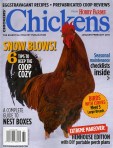
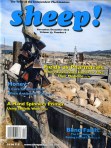
Forget Dogs and Cats: Sheep, Goats, Bees and Chicken…
Just to name a few… pets were and continue to be a good source for magazine content and magazine titles. However most of the magazines used to be aimed at dogs or cats. Well, it seems that a new breed (pun intended) of animal magazines is making its way to the nation’s stands. Now, mind you, that some of those magazines have been published for years, but not until recently they started arriving on the nation’s stands. I guess the success of the “chicken” magazines led the way to the rest of Noah’s Ark animals to enter the single copy market place.
So without any further due, please welcome with me to the nation’s stands the sheep, goat, bees and of course chicken magazines… Who says the magazine business is not a fun one? Enjoy
Too Close for Comfort…
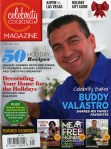
They say imitation is the best form of flattery, but can imitation be too close for comfort when the logos are so close? Celebrity Cooking magazine just redesigned their logo and it looks amazingly similar to another celebrity cooking magazine that happens to be called Food Network Magazine and happens to be one of the most successful magazine launches in the last few years. Judge for yourself: Food Network Magazine and the newly redesigned Celebrity Cooking!
Women’s Health Takes a Page from Men’s Health…
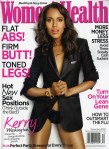
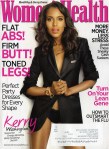
Men’s Health single copy covers always had a “sex” cover line that rarely made it to the subscribers’ copies. Now, its younger sister, Women’s Health, is starting to do the same. Newsstand buyers can enjoy “Hot New Sex Positions…” while subscribers have to forget about the new sex positions and just enjoy the “Perfect Party Dresses for Every Shape.”
And here’s for a happy wonderful world of magazines… one blog at a time! Enjoy.
The Mr. Magazine™ Launch Monitor was able to locate and purchase a total of 78 new titles arriving at the nation’s stands for the first time in the month of November. From the 78 titles, 21 were published with an intended frequency and 57 were annuals, specials or book-a-zine.
The new titles covered every topic under God’s green earth, targeted every age group and every lifestyle. Take a look at six new magazines below and check the entire gallery here.
And the next time someone tells you print is dead, take them to visit a newsstand or check the racks at a grocery store and see if they can stick to their words that print is dead. New magazines are the best indicator that print is and will continue to be well and alive and the nation’s stands are the ONLY place where the “proof is in the pudding…”
Diversity and innovation, the twins that should anchor and drive the changes in today’s magazine business, are always on the mind of Kenny Irby, Poynter Institute’s senior faculty for visual journalism, and newly appointed director of community relations & diversity programs. I met Mr. Irby during a visit to the campus of the University of Mississippi and I asked him three short questions about the magazine and print world today. His sharp and well-thought answers bring a needed prespective on the future of the industry and its surroundings.
In this brief interview Irby talks about magazines and their legacy of connectedness and value in reading societies, and how diversity drives innovation toward a more successful tomorrow.
So in typical Mr. Magazine™ Interview’s style, first the sound bites, followed by the video interview and then the succinct, but very informative, interview transcript with Kenny Irby.
The Sound Bites:
On magazines and diversity: First of all, I think it’s important to acknowledge that magazine publications’ staffs really do get the idea that diversity drives innovation.
On the future of magazines as we know them: I think as long as magazines continue to innovate and create attraction and connection to their audiences, they’ll continue to evolve and be very successful.
On the differences in magazines and newspapers when it comes to print: I think because the magazines are a definitive choice that the citizens make and that audiences will invest in them because they appreciate the value and the surprise that comes with a magazine. Newspapers have not learned enough from that constant kind of innovation and creativity.
On words of wisdom for publishers and editors: I think that magazine publications need to continue to innovate and develop, and to look at technologies that will continue to enhance the possibilities of the magazine in a digital space.
And now for the lightly edited transcript of the “Mr. Magazine™ Interview” with Kenny Irby of The Poynter Institute.
Kenny Irby: We’re talking about magazines and diversity. First of all, I think it’s important to acknowledge that magazine publications’ staffs really do get the idea that diversity drives innovation. We’ve seen great exploration and innovation in magazines, not only because of the technology, but because of the niche marketing, the special interests, and the possibilities that citizens and audiences are really excited by being able to have magazines and publications that they can keep that tactile feel and connectedness to. Now the key is to continue to diversify, not only in terms of topic, but also in staffs and story ideas. That is a human process. So, I think that’s why magazines once were the new media, and now are a legacy media that still has a connectedness value and penetration in reading societies.
Samir Husni: What do you think is the future of magazines as we know them?
Kenny Irby: I think as long as magazines continue to innovate and create attraction and connection to their audiences, they’ll continue to evolve and be very successful, not only because of the tablet technology that creates new opportunities, but because of the connectedness and the kind of topics and subject matter that magazines have historically covered and will continue to.
Samir Husni: Do you see any differences between magazines and newspapers when it comes to print?
Kenny Irby: Absolutely. I think because the magazines are a definitive choice that the citizens make and that audiences will invest in them because they appreciate the value and the surprise that comes with a magazine. Newspapers have not learned enough from that constant kind of innovation and creativity that magazines have exhibited for years in the past and we expect it to continue in the years to come.
Samir Husni: Any final words of wisdom to magazine publishers and editors?
Kenny Irby: I think that magazine publications need to continue to innovate and develop, and to look at technologies that will continue to enhance the possibilities of the magazine in a digital space and not just try to replicate what they’ve done in the print edition in an online edition. I think that’s what’s really important.
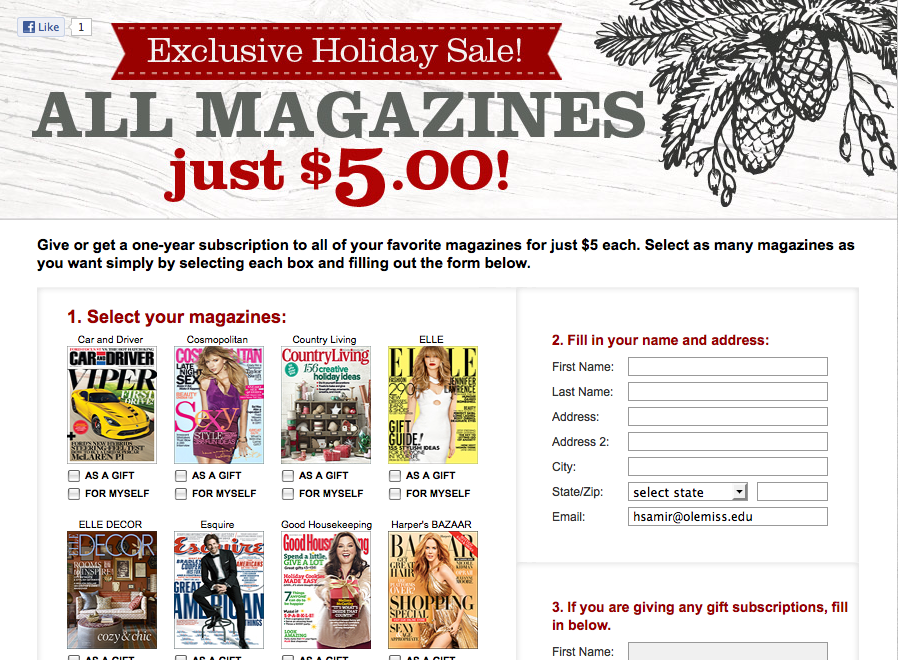
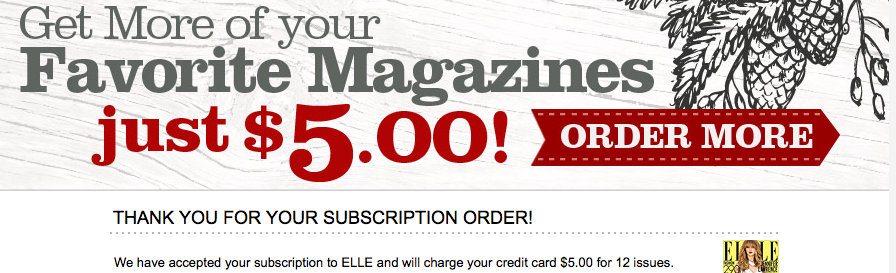
I know it is Thanksgiving Day, but the offer that I just received from the folks at Hearst magazines (which by the way I’ve accepted and responded to) was too good to be true. I know this is not the first year that I receive such an offer and I know that I am not the only one to receive it. The “Exclusive Holiday Sale” offers most of Hearst magazines (Think O, The Oprah Magazine, Good Housekeeping, Esquire, House Beautiful, Cosmopolitan, etc.) in the United States for a mere five dollars a year! That is less than the price of one copy of some of their magazines. Missing from the offer are Hearst’s newest entries Food Network magazine and HGTV magazine. Of course there is a catch, when you sign for the magazines you are signing for automatic renewal for upcoming years at the most current prices at that time. Needless to say that you can cancel at any time and enjoy the five-dollar subscriptions for the whole year until you receive another “exclusive holiday offer” next year.
Doing the math will result in getting 18 titles for $91.99 (I have no idea why I was charged $6.99 for Car and Driver), that is a total of 165 magazines at the average price of less than 18 cents a copy… Wow! I can’t but wonder whether the magazine industry will ever change to an industry that is more of an industry in search of customers who count rather than just counting customers? I am starting to have my doubts about such a change in the magazine world, so maybe the “good ol’ days” are coming back and the industry as a whole, with its old business model, and those ridiculous prices are a sign of an industry on its way to heal and not a desperate sign of an industry that continues to hurt but refuses to change its way. You know how our friends the Chinese define insanity: Doing the same thing over and over again and expecting different results every time.
Interested in getting your own magazine subscriptions for 18 cents a copy click here.






















 Mr. Magazine