h1

The Entire History of the Super Bowl in One TD…

February 2, 2013

TD34TD12

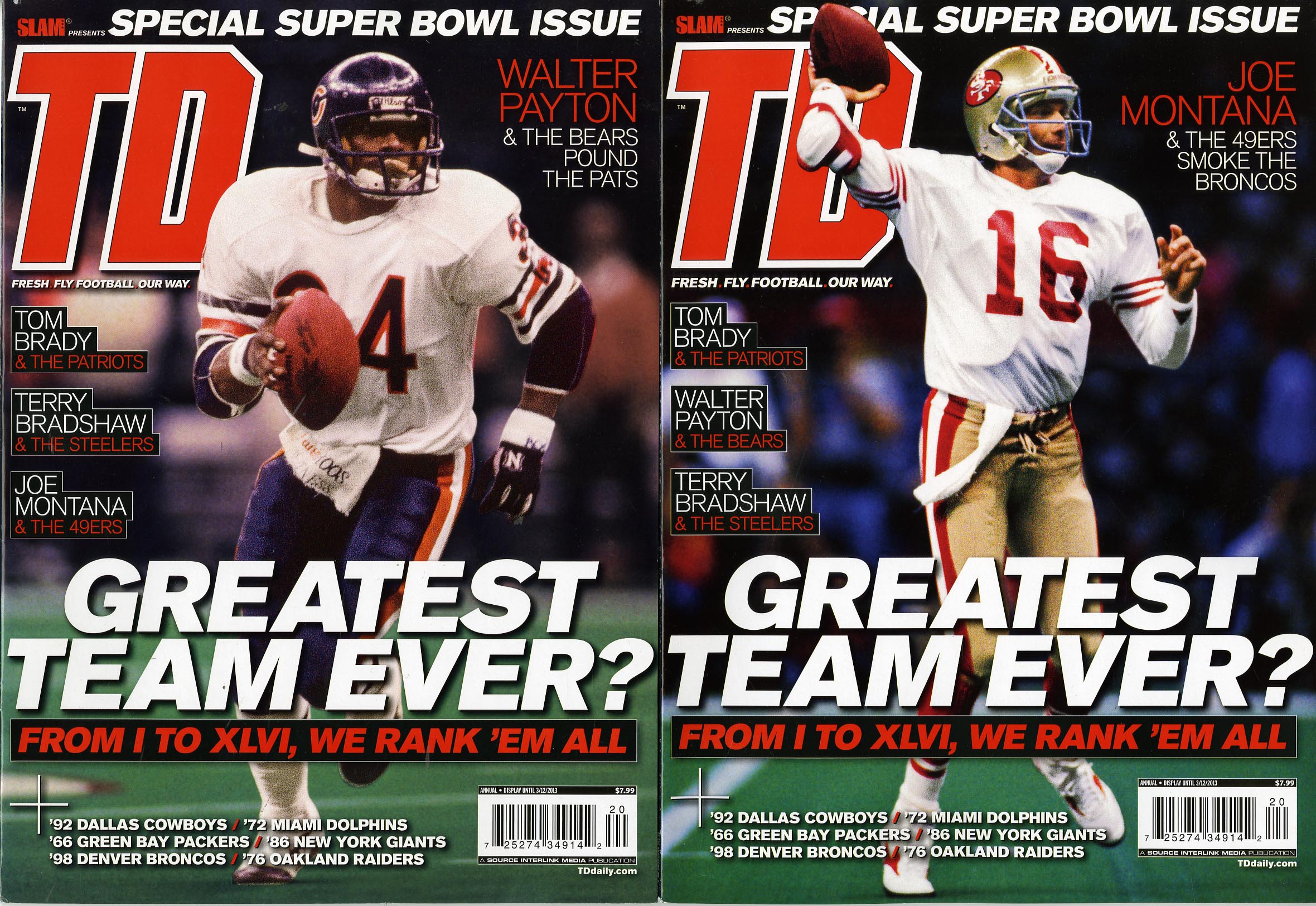
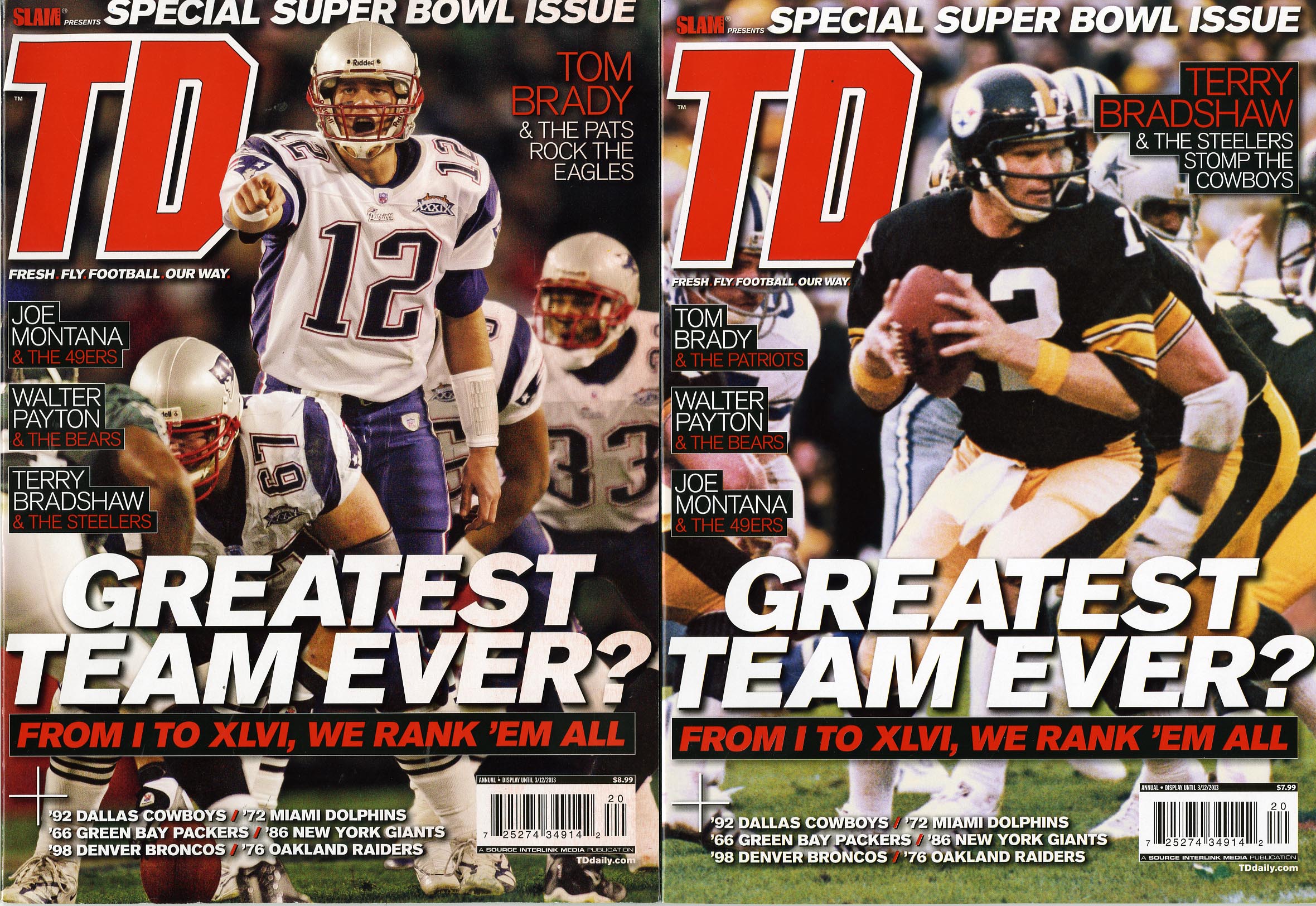
As the eyes of the nation are transfixed on every available screen to watch the Super Bowl, one magazine summed the entire history of the Super Bowl in one collector’s issue. Print scores a touchdown on the pages of TD, the “Fresh Fly Football” magazine. The magazine released an entire issue that ranks the teams of the Super Bowl from Super Bowl I to XLVI.

“I am proud of this issue for the historic knowledge it provides to anyone who cares about the game of football,” writes editor-in-chief Ben Osborne. He offers the following advice to the readers of the magazine, “Leave this thing on your coffee table and invoke debate and learning for all your guests.”

The magazine published four covers featuring some of the greatest Super Bowl players: Terry Bradshaw, Tom Brady, Joe Montana and Walter Payton.

Solid advice, solid knowledge and no hours of research required. TD did the homework for you. Pick up a copy today and relive each and every Super Bowl ever played.

h1

Got Hacked? Time to Rethink The Uninterrupted, Incognito Power of Print

February 1, 2013

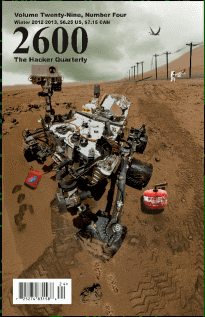
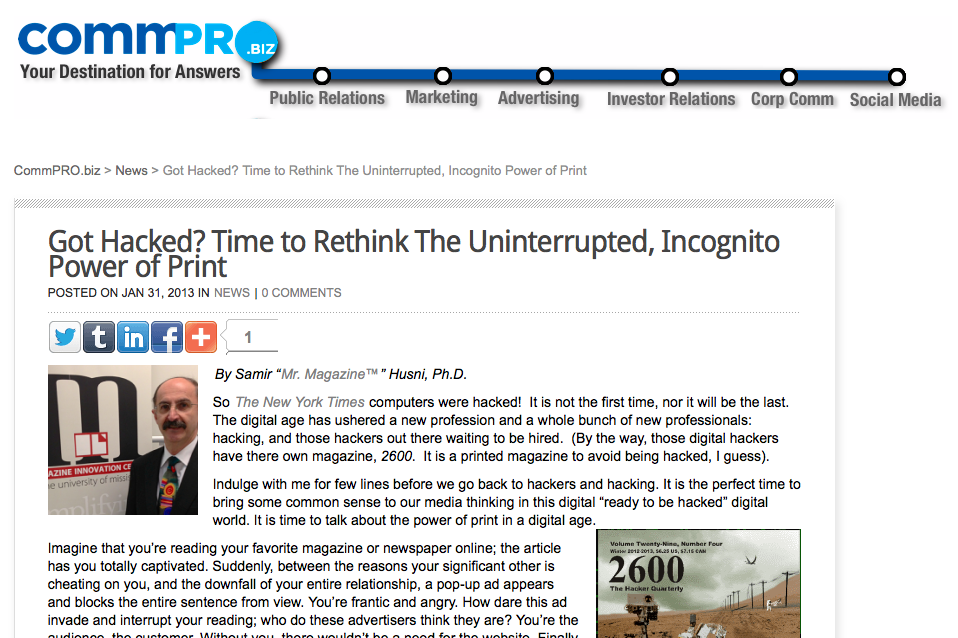
300x250promo So The New York Times computers were hacked! It is not the first time, nor will it be the last. The digital age has ushered in a new profession and a whole bunch of new professionals: hacking, and those hackers out there waiting to be hired. (By the way, those digital hackers have their own magazine, 2600, The Hacker Quarterly. It is a printed magazine to avoid being hacked, I guess).

Indulge with me for few lines before we go back to hackers and hacking. It is the perfect time to bring some common sense to our media thinking in this digital “ready to be hacked” digital world. It is time to talk about the power of print in a digital age. Picture 13

Picture 13Imagine that you’re reading your favorite magazine or newspaper online; the article has you totally captivated. Suddenly, between the reasons your significant other is cheating on you, and the downfall of your entire relationship, a pop-up ad appears and blocks the entire sentence from view. You’re frantic and angry. How dare this ad invade and interrupt your reading; who do these advertisers think they are? You’re the audience, the customer. Without you, there wouldn’t be a need for the website. Finally, trying valiantly to close the dratted blurb, you accidentally click on it and find yourself reading about antacid relief instead of how to save your love life.

Now while this may sound a bit dramatic and farcical, that isn’t the point. Reading magazines and newspapers online, or anything for that matter, is a far different experience than reading the printed counterpart. For one thing, the distractions, and for another, this one probably the biggest and most important reason; the explanation for that antacid ad popping up on your page in the first place: no privacy in the Big Brother world of the Internet.

Your choice of reading material is your own personal and private business, correct? Wrong, if you’re reading online. So, if you don’t want someone to know you perused the latest issue of Hustler, or hit Google for an article on “how to build a bomb” just because your curiosity got the better of you, you better pick those selections up in print. No eyes on that page but your own.

Without a doubt, anonymity does not walk hand in hand with you in the digital sector, because whether you realize it or not, those URL’s do have eyes.

How many times have you opened up your e-mail and saw that your inbox had 15 new arrivals, but your Spam had over 100? There’s a reason for that, of course. Those eyes that are constantly watching have been sending Morse code blinks back to the powers-that-be at headquarters, coordinating and compiling a list of simply irresistible items for you to spend your money on, custom-tailored to fit your needs. And while this, in and of itself, isn’t entirely a bad thing, it’s a total diversion that you simply do not need or want at all times.

Picture 6 And yes, I started this article with a reference to The New York Times’ computers being hacked. Well they are not alone. Ask yourself, have you ever been hacked? If so, then you know that feeling you get in the pit of your stomach when you realize the security of your e-mails or social media sites have been compromised. It’s not a pleasant experience.

Another problem you don’t have to worry about with print. I promise you, the odds of your printed magazine or newspaper being hacked are slim to none.

And those public Wi-Fi connections that lure you with a latté and a delicious scone are another very dangerous environment if you don’t want miscreants and strangers getting access to your private information. The digital age can be both wonderful and costly, in more ways than one.

The beauty of the print experience, however, is personal and private. I guarantee, if you are following a recipe, step-by-step, on how to make that perfect soufflé, there will not be some advertisement for stomach acid covering up any of your steps. That ad will be artfully and quietly placed beyond the ingredients page. There will be no heated battle between your attention and the advertiser. It goes against the laws of magazine nature, where even the ads add significance to the experience.

Take Vogue, for example, the mere fact that you bought the title shows that you have no intention of skipping any ads. Simply put, with a publication like Vogue, chances are that part of the reason you’re buying it in the first place is the ads. It’s all about that print experience.

And advertisers are realizing this, as ad revenues for print are showing a healthy comeback.

Magazines can have a multitude of experiences between their covers, from the content adventures, to the visual encounters, to even the actual product itself. Print has always had that 3D effect – height, width and size. Sometimes the uniqueness of a magazine’s shape can be enough to classify it as its own special phenomenon.

But with digital, the product is whatever your screen size is, without exception. No matter how many layers you apply in digital, at the end of the day it’s still a flat shape.

And in no other medium besides print, will your customer actually admire and read the ads. Not even television. Other than the Super Bowl, where the ads have become a competitive event unto themselves; can you think of any other case where viewers actually want ads? The phrase channel-surfing came into existence with the invention of the TV remote and was probably coined while some poor, impatient viewer flipped past a dozen commercials.

And the power of print is there, in your face. You don’t have to shake your mouse, locate your website and then start closing pop-ups to scan the page for a story you want to read. The magazine’s cover has mouse-less access. Amazing, isn’t it? From beginning to end – the entire contents are encapsulated within its pages. The stories unfold at your pace and without anyone else seeing what you’re reading.

My grandson loves his iPad and all his digital paraphernalia. And well he should. It is a digital age and we all benefit from that fact. However, his mom and dad do regulate his time spent with all the gadgets. But when it’s bedtime and he wants a story to read, he doesn’t reach for his iPad and begin scrolling, he walks over to his bookshelves, into the real world of print, and selects a favorite title. It’s a timeless ritual for a child. A book, a real print book, means adventure into new worlds, color pages he can turn himself, characters that seem to leap off the pages, enabling him to trace their raised outlines.

There is no other experience like it, certainly not a digital screen.

And not once have I heard my grandson’s parents tell him to put down the book and stop reading, stop using his imagination.

That’s the power of print.

Picture 14
PS: This column was published on CommPRO.biz on January 31.

h1

Print Magazines Are NOT Going the Way Vinyl Went… and That’s Why.

January 28, 2013

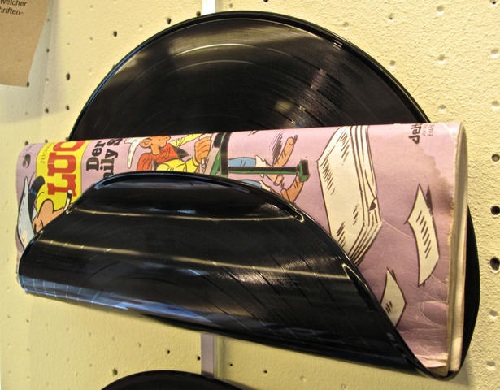
300x250promo Comparing magazines with music is like comparing a kite to the wind that carries it across the sky. The kite is tangible, and watching it brings its own kind of joy to the experience; the wind is gossamer with no visual substance, yet as real an experience as your hair lifted off your neck on a hot day.

It doesn’t matter to you how you receive that breeze when your skin is hot and sticky. It can be from an opened window in your kitchen, to the sun roof in your car; the end result you anticipate is the same…to cool off from that sweet breeze.

The kite floats back down to you when you’re finished running across the field with it, the diamond shape bright with spring colors and virtually alive from its race across the blue sky, plastic still popping and breathing from the exertion. It’s substantial and real…you can touch and feel its presence.

It’s the same thing with magazines and music. When people compare the two by saying something like, “Magazines are going the way of vinyl,” the observation is moot. First of all, vintage is back and trending like crazy in today’s world. And second, magazines haven’t gone anywhere, unlike vinyl records; check out your newsstands, they’re robust and healthy.

But the mootness of the observation is this: music has always been like the wind, ethereal and invisible to the eye. Your favorite song flowing out of your car radio or your iPod is an active participant in the joyful experience you are receiving, but it’s not a tactile presence that you can hold in your hand. It’s the sound of the melody romancing your ears that gives you that bliss. And to you, at that moment in time, you could care less whether you hear it from a radio, an iPod, a CD, or a twelve piece orchestra for that matter. You just want to hear your song.

But the experience of holding a printed magazine and reading from it is a very real occurrence. The pages are slick and smooth to your touch. The contents are what you selected, your choice of material. It’s an intimate and personal experience, devoid of any of the interruptions of pop-up ads or infinite internet eyes taking note of every click of your mouse. The advertising and editorial content live in harmony next to each other, complementing rather than annoying and fighting over your attention. Ads flow naturally and in a very logical and systematic way, so that skipping them seems almost sacrilegious to the experience. Music, on the other hand, is all about the tunes, the musicians, the band and not the vinyl, the tape recorder or even the iPod.

samir.mag_.music_And while many people fall in love with the artist or group of their favorite song, and revel in a fantasy world created by some mystical connection with the singer, the odds of anyone falling in love with the editor or publisher of a magazine are pretty much slim to none; at least, not without a little one-on-one wining and dining first.

So to shackle magazines and music together in some comparison of antiquity is not only unfounded, but also ridiculous.

Vinyl records did take a backseat to other platforms, such as 8-tracks, cassette tapes, CDs and ultimately, digital apparatus, but magazines haven’t been replaced by anything. They have grown new branches, with their digital counterparts, but no one has replaced the tangible experience of holding a magazine. Not even the iPad. These accoutrements only enhance the print experience, they don’t replace them.

Digital is a new media; it’s here, it’s not going anywhere and we all enjoy its amenities. But it doesn’t replace the print experience. And it isn’t trying to. Digital isn’t killing print, publishers are. Instead of forcing the death of print down our customers’ throats, why don’t we give them what they really want and encourage both?

There was some controversy recently with Beyonce when it was reported that she may have been lip-syncing when she sang the Star Spangled Banner at the inauguration of President Obama, the real-live experience versus the virtual one, minus any imperfections.

This matters to the topic only as a reference as to how real and virtual can go hand-in-hand; how one can use the digital to enhance the physical. It’s a perfect union, really. Union being the operative word. There are times the physical, the tangible is what you want and need. Other moments, the virtual realms answer the call. But isn’t it nice to have both?

So when I hear someone say, “Magazines are going the way of vinyl,” and that they have so much in common, I have only this to say:

“I will surrender one thing to those out there who insist upon the similarities of magazines and music: they both start with the letter ‘M’.”

P.S.: The above column first appeared on CommPRO.biz website Jan. 27, 2013.

h1

Glenn Hansen, President & CEO at BPA Worldwide Reacts to My “All Good Print Magazines Go to Digital Heaven… or Do They?”

January 26, 2013

My friend Bob Sacks (www.bosacks.com) republished my blog entry All Good Print Magazines Go to Digital Heaven… Or Do They? on his electronic e-letter. Glenn Hansen, President and CEO at BPA Worldwide, responded to my blog entry to Bob. Bob, in turn, published the response on his e-letter. I have asked Mr. Hansen permission to post his response on my blog so my readers will have the opportunity to read it. Permission was granted and here is Glenn Hansen’s response:

Bob, Samir, as he often does to me, strikes a chord.

Can’t he come up with some successful converts to only digital to shine a light on the way forward?

Too easy to find the failures. He writes as if to say if you convert to digital only you are doomed. I realize that he is not saying that, but that is an impression I am left with. It’s as if he is saying, “if you are not a success in print, you cannot be a success in only digital”. Of course that is ludicrous seeing how many web sans print media outlets there are.

I agree that a print product may not sell as many subs or single copies as a tablet version as they did in print, but that may not be the goal of the media company. Further, undeniably it took the print version a number of years to get to it’s current rate base and not immediately out of the gate. I agree that from the conversion of print to an only digital product, if management loses its sense of purpose, the digital product will fail, but it’s not because it’s an “only digital” product, it’s because management did not make a compelling product taking full advantage of the technology available and were not good marketers getting the PR out.

SH wrote, “If your print product isn’t connecting with an audience, is it really going to flourish among a billion more nondescript URLs or a million other apps?”

Hell YES. But Samir seems to think it must flourish at the same rate base as its predecessor. That is not a requirement for financial success.

The smart entrepreneurial great communicator technologist can convert most any print brand into a going business as a only digital product. But I predict the pendulum will swing back on even the best of these folk and they will find print to be an avenue for communicating the digital brand.

Just me in the peanut gallery.
( Submitted BY Glenn Hansen, President & CEO at BPA Worldwide, name used upon request)

So, what do you think and do you have any success stories of print magazines that left print behind and are now thriving in the digital heaven? Please do not hesitate to comment, be specific and give me examples. Thank you.

h1

Mr. Magazine™ Musings: All Good Print Magazines Go to Digital Heaven… Or Do They?

January 24, 2013

300x250promo When a publication decides its earthly existence as a print life form is no longer a viable option and instead takes on a digital-only presence, is it really a heaven-sent opportunity or is it actually a gentle nudge by the minions of magazine hell to push it into its final resting place? If your print product isn’t connecting with an audience, is it really going to flourish among a billion more nondescript URLs or a million other apps?

Think about it, please. And take a look at a few lost souls while you’re at it.

Flashback 2006

When Teen People closed its print magazine in 2006, it decided to make digital confetti out of the pages and toss the remnants on the print product’s grave in celebration. With a still healthy circulation of 1.5 million in the second half of 2005, Teen People displaced about 50 employees—with the promise of finding them spots within the company—and, according to Ann Moore and John Huey, set about to “invest in the brand through Teenpeople.com, which shows promise and growth.”

Flash Forward 2013

The only presence that remains of Teenpeople.com today is at the home of the magazine’s parents: PeopleMagazine.com. Apparently, when living on its own didn’t quite pan out, mommy and daddy allowed their child to come home.

Too bad some of the other print magazines that went digital-only didn’t have parents quite so affluent.

Going digital-only screams salvation to some print products that are battling low ad pages and declining circulation, but the question remains: If you’re not selling ads in your ink-on-paper magazine, what in the world makes you think you’re going to make gazillions of dollars on the web?

Even with automated ad sales systems, consumer magazine sites aren’t garnering all that much from their digital counterparts.

Flashback 2009

Gourmet in print became another headstone in the “Ink-on-Paper Cemetery,” when Condè Nast killed it in 2009. Just the previous year, Gourmet had had a circulation of around one million, but its ad pages had dropped. And the magazine wasn’t doing as well as its sister magazine, Bon Appétit, which was also owned by Condè Nast. But it would soon be reborn as an app for iPad called Gourmet Live.

Flash Forward 2013

Gourmet Live is officially done, as far as any new content is concerned. According to a spokesperson for Condè Nast, the app itself will remain intact, but it won’t be updated. However, Gourmet.com will continue to be updated as the main platform of the brand.

Where have we heard that before?

Flashback 2011

American Media, Inc. (AMI), a leading publisher of celebrity magazines, announced the launch of Reality Weekly, the first magazine devoted only to Reality TV shows and its new mega-stars. Included in the hype around this blockbuster idea was the companion website for folks who just couldn’t get enough of the inside info that must surely abound on television shows such as these.

The launch was fan-fared with the fact that the magazine would sell at all the mass merchant locations: Wal-Mart, Kroger, Dollar General, Kmart, A&P and Rite-Aid and would be priced a mere $1.79 (“Less Money, More Fun”). Really.

“I’m proud to introduce a magazine that gives readers the news they want about television’s most popular genre. Print remains one of our most effective mediums, which is why Reality Weekly will be a showcase launch of 2012,” said David J. Pecker, AMI’s Chairman, President and CEO, at the time.

Flash Forward 2013

Before 2012 was over, the magazine folded. The website hasn’t been updated since July 2012. However, that same month AMI folded the magazine, it announced that it was naming Joe Bilman as its first chief digital officer and set the lofty goal (at the time Mr. Bilman was hired) of building its digital revenue to $50 million. Accordingly, AMI resolved to try Reality Weekly as a free tablet app that summer.

They followed that with a big splashy ad that screamed at the consumer: “Reality Weekly…We’re Going Digital.”

But where are they now?

The magazines mentioned here are not the only ones. What about Elle Girl, Cosmo Girl? Digital brands such as PC Mag and Sporting News, while still breathing that oh-so thin digital air, are mere shadows of their former print selves.

When you lose contact with the people who matter, your customers, and treat them as numbers instead of members of this community of experiences you have created for them, you’re going to lose them, whether the neighborhood is print or digital.

And what about Newsweek?

As the New York Times put it so eloquently: From the start, it was an unwieldy melding of two newsrooms: a legacy print magazine, Newsweek, combined with an irreverent digital news site, The Daily Beast.

Now the 79-year-old, once highly-respected news magazine must co-exist next to an entity called “The Daily Beast,” its new significant other.

The sacred vow that some publications make with their new life partner, digital, is usually a last-ditch effort to save a customer and product bond that was broken many times earlier. When you have a brand so highly known in print and you suddenly jerk that trusted and cherished product out from under your customers’ feet, why do you bemoan your fate when, one day, you have to take that digital shingle down for good?

Right now, Newsweek is looking for digital heaven, as others are. Let’s just hope the abyss that lies before them doesn’t lead to purgatory instead.

The Moral of the Story?

At the end of the day if we don’t create a community where we make our customers feel like members instead of just numbers after a dollar sign, we won’t have anything to publish in print or digital—no long-lasting relationship, anyway, merely a one-night stand.

The minute you lose your connectivity with your customers (readers, users, viewers, listeners, whatever you call them), you’re in trouble. And if you fail to connect with them time and time again, even going to that digital heaven online can’t save you. Cut your losses, let your magazine die in peace and don’t torture it anymore.

Stop being in the game of numbers and change to a game of members instead.

Author’s Note: This column appeared on the Folio magazine blog on Jan. 22, 2013.

h1

There is Nothing Bobo about “Anikibo.” Using Digital to Bring a “Print Revival.” The Mr. Magazine™ Interview with Anikibo Founder Deborah Causton

January 22, 2013

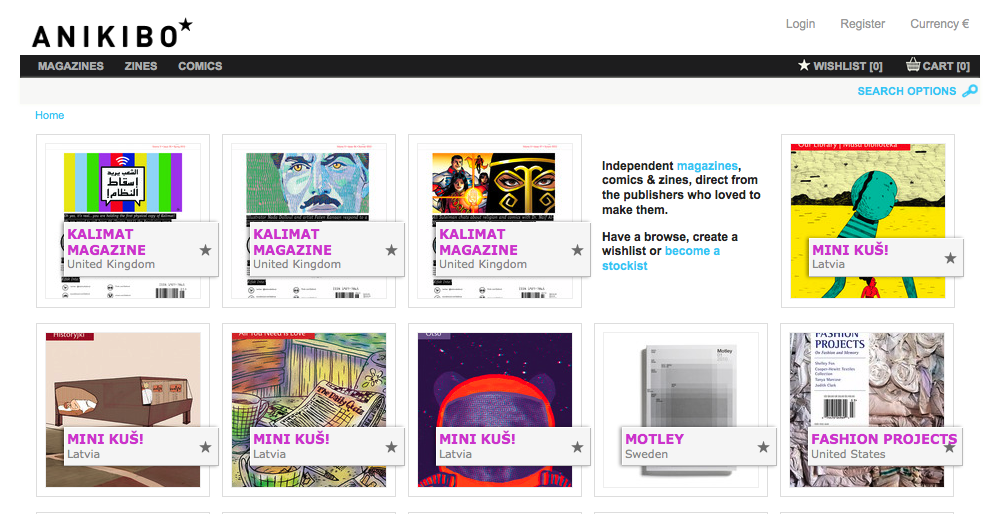
Picture 1“Anikibo is the first peer-to-peer online marketplace specifically for independent publishers making, creating and
publishing beautiful physical magazines, zines & comics. As a curated e-commerce platform it enables publishers
to sell direct to customers via a one check-out process…” so starts the press release announcing this new e-commerce venture using digital to sell print.

The brainchild of Deborah Causton, Anikibo was born of her passion for the printed word “and the frustration of not being able to bring home everything of newly discovered materials from trips abroad. Spending the last 10 years building websites it was time to merge the two avenues of her creative and digital life.”

Intrigued by the concept of both using digital to sell print and the idea of a “print revival” led to this Mr. Magazine™ Interview with Deborah Causton, the founder and creator of Anikibo. Anikibo’s Facebook page, all magazines sold on Anikibo are selected for producing products which are deemed to be unique, clever, beautiful, and creative and have an absolute passion for paper!

Have you ever heard anything more beautiful? Anikibo’s creator, Deborah Causton, believes there is a resurgence emerging with the printed product (of which, I agree…if I ever thought there was an extinction on the horizon for print at all), but the fact remains, the naysayers out there certainly did. Maybe the birth of Anikibo will once and for all show the killjoys of print what most of us have known all along: While you’re scrolling and squinting, the rest of the world is enjoying turning pages…ink on paper pages!

So, sit back and enjoy my recent interview with a delightful lady who is using digital to support print in a unique and innovative way!

The Sound-bites:

On the definition of the phrase “print revival”: Ultimately, I guess it would just be nice to see the print industry bathed in positive headlines again. It’s a digital age for sure, but like you said “…it took 500 years to build up this tradition. You don’t just throw up the white flag and say, ‘OK, everything is digital now.’ ”

On plans to promote Anikibo and the story behind the name: Someone told me once when launching a website that a 20/80 rule applied: 20% website / 80% marketing. As for the name, it came from a nightclub in Luxembourg, where I used to live.

On whether or not there is going to be a print product, or just a digital platform to sell print: There are so many technological avenues to be explored – this will be my primary focus. As to whether I’ll actually print something from it, maybe eventually, but probably a magazine!

DeborahCaustonAnd now here is the Mr. Magazine™ Interview; in typical Mr. Magazine™ Interview lightly edited style, with Deborah Causton of Anikibo.

Samir Husni: You used the phrase “print revival” in your press release, how would you define the meaning of this phrase?

Deborah Causton: Ultimately, I guess it would just be nice to see the print industry bathed in positive headlines again.

It’s a digital age for sure, but like you said “…it took 500 years to build up this tradition. You don’t just throw up the white flag and say, ‘OK, everything is digital now.’ ” I own the digital suite: smart phone, tablet, laptop, smart TV – but they’re all just practical objects that basically facilitate the delivery of digital content. I don’t really treasure them or the content on them; I replace them with the next model, watch the next episode, read the next item.

We all got excited by the new stuff, but we don’t love it in the same way. That’s why we’re seeing resurgence in the popularity of vinyl. There’s a strong sense of nostalgia from the emotional connection we got from physical objects like magazines, records, books and zines, especially those that represent a passion – we won’t let that go so easily. In my opinion, this is the driving force behind the coming print revival.

Unfortunately, I don’t think vinyl will manage to avoid becoming obsolete, mostly because of the cumbersome technology required to play vinyl records. Magazines don’t face this limitation. They can and have embraced the technologies available to them. We still have plenty of time before somebody pulls the plug on the production of paper.

Samir Husni: What are your plans to promote Anikibo (and what is the story behind the name)?

Deborah Causton: Someone told me once when launching a website that a 20/80 rule applied: 20% website / 80% marketing. Working almost completely independently, I’m sure I will face some challenges in the promotion – a lot of trial and error no doubt.

The formulation of this project began as far back as 2007, but the timing feels right now somehow. I just have to protect my investment and announce to as many people as I can reach, leveraging myself from the positive reactions I receive. I’m of course greatly thankful to the magazines and zines that have decided to stock thus far. It’s very encouraging to get this support having come somewhat out of nowhere.

As for the name, it came from a nightclub in Luxembourg, where I used to live. It was called Anikibobo, but I learned that “bobo” means silly or stupid in Portuguese so I opted to drop the second “bo”.

Samir Husni: You are based in Berlin, Anikibo is a British company, and you are dealing with publications from 7 countries… tell me your story…

Deborah Causton: I’ve been somewhat of a transient person. I’m British, but only by birth. I’ve found many other places that have become home. Currently Berlin is that place. My ambition for Anikibo was that it would always be an international platform. It is in some ways a selfish development since I wanted easier access to magazines and zines I’d find when travelling, but never had the space in my suitcase to bring back with me.

The only reason for incorporating the business in the UK is the ease with which it can be done.

Samir Husni: Is it passion that drives you or a business plan?

Deborah Causton: I’m not sure if I should admit publicly that I don’t actually have a business plan per se, but then it looks like I just did! Ideas on the other hand – ten to the dozen! My initial plan for an online marketplace goes back as far as 2001. I’d traipse up to Portobello Market in London with a friend who was selling handmade bags and scarfs. We’d be standing there at 3am on a Sunday morning queuing for a good stall, freezing cold, with a questionable cup of coffee in hand. It occurred to me then that the internet would be the perfect place for all these independent designers to get together and sell their stuff. I should have got my act together then: 4 years later Etsy was launched. Luckily, there are plenty of independent niches that haven’t been organized yet. I’ve been toying with this current incarnation of Anikibo since Colophon (Luxembourg’s Magazine Symposium).

Samir Husni: Are you planning to produce a print product to help sell the publications? Or it is going to be only a digital platform to sell print?

Deborah Causton: I studied graphic design, but have been very involved in tech for the last 12 years. One of the things that excite me most about this project is that I can combine my two passions. There are so many technological avenues to be explored – this will be my primary focus. As to whether I’ll actually print something from it, maybe eventually, but probably a magazine!

Samir Husni: Any other thing you would like to add…. such as will you be mailing publications overseas, adding countries, etc…

Deborah Causton: The platform has already been set up to enable worldwide distribution. Any publisher from around the world is invited to stock at Anikibo, providing they meet the minimum criteria: they love to make!

Samir Husni: Thank you. Check Anikibo for yourself at www.anikibo.com
300x250promo

h1

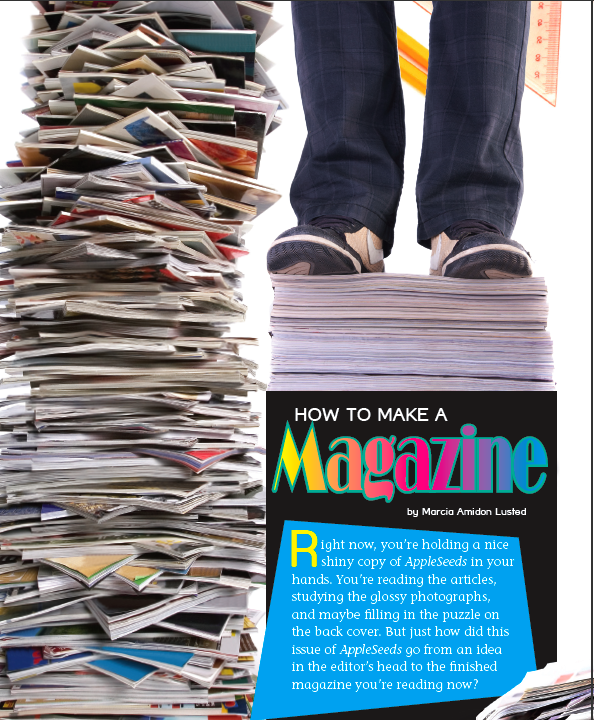
“How to Make a MAGAZINE”: A Kid’s Guide and a Mr. Magazine™ Interview with Its Creators’ AppleSeeds™ Magazine Editors

January 16, 2013

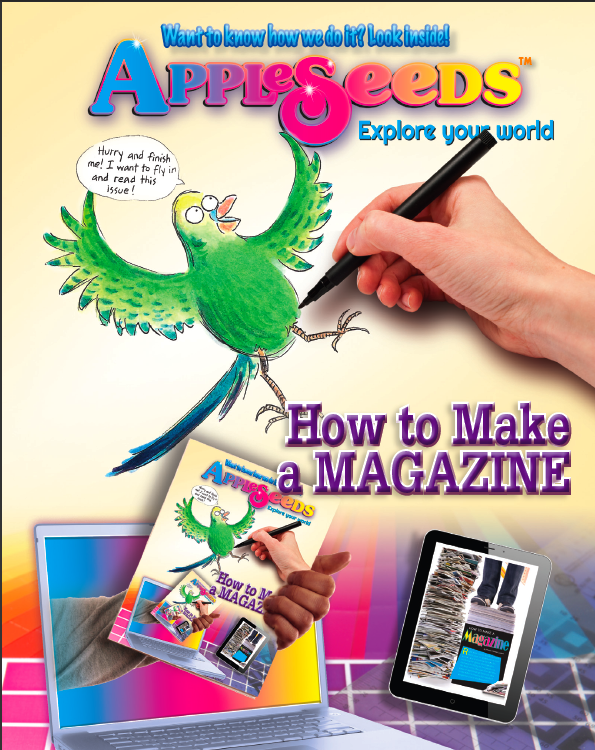
Picture 76So you want to start a magazine? Believe it or not, even in a digital age, starting a magazine was, is and will continue to be a dream come true to many people of all ages. It is the first of three Fs that I believe every magazine person enjoys: Fun. A lot of fun. And, by the way if you want to know the other two Fs, here we go: Fame and Fortune.

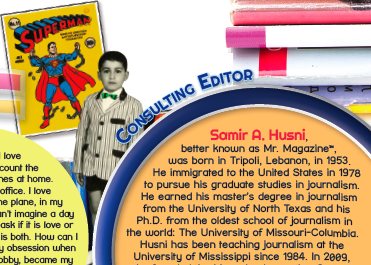
I fell in love with magazines at age 9 and I started my first magazine at age 11 or so. When the folks at AppleSeeds magazine asked me if I would be interested in being the consulting editor for their upcoming special issue on How to Make a Magazine, needless to say I jumped at the opportunity. The magazine, now in its 15th year of publishing, is getting ready to release its special issue on magazine making, answering the many requests of its readers who “Want to know how we do it?” The February issue of the magazine will start mailing this week.

Once the magazine was put to bed, I reached out to Lou Waryncia, Editorial Director and Susan Buckley, Editor and asked them a few questions about the thinking behind doing a special issue of a children’s magazine on launching a magazine and about the future of printed magazines for kids in this digital age.

Picture 78Here is the Mr. Magazine™ Interview, in typical Mr. Magazine™ Interview lightly edited style, with Mr. Waryncia and Ms. Buckley:

Samir Husni: Myth has it that kids don’t read anymore and yet you publish several kids magazines. What gives? Do you know something folks don’t know?

Lou Waryncia: Kids do read….you just have to give them something that inspires them. And that’s what we try to do with all our various magazines. Our speciality is quality children’s content. We have a magazine for almost every interest. And we try to make it all fun, accessible, yet educational.

Susan Buckley: We think kids especially like a magazine format with high interest articles about subjects that THEY like. Short articles are fun for kids–just enough information to tickle them into finding out more!

Samir Husni: Not only do you publish kids’ magazines, but you are publishing a special issue of Appleseeds on starting magazines, why?

Lou Waryncia: Our readers gave us the idea. One question we get over and over from kids is “How do you put a magazine together?” We answered that question by creating a whole magazine issue about magazines. We wanted to show kids all the many components of putting together a magazine—-the research, writing, editing, art, photography—the whole creative process. AppleSeeds’ tag line is “Explore Your World,” and we think the magazine topic will let kids explore all the most fascinating aspects of creating a publication and the communication process.

Susan Buckley: We also knew this would be an opportunity to highlight the real people who make AppleSeeds happen every month, hoping that our readers will identify all of us as real people who have interesting jobs! We are especially delighted with the AppleSeeds Kids every month and wanted to highlight them and their talented creator, Annette Cate.


Samir Husni: What is the future of the printed word in this digital age?

Lou Waryncia: We believe in print. We believe in digital. AppleSeeds is available in both formats. We’re leaving it up to the reader to determine his or her format choice. Ultimately, we hope both formats will co-exist and provide us with a broader readership.

Susan Buckley: Lou says it all.


Samir Husni: What are YOUR plans for the future? Do you see a day where all the kids magazines will be digital only?

Lou Waryncia: AppleSeeds just launched a PDF digital edition. A more interactive digital edition will launch later this year. It’s too early to tell how the digital versions will be received. There is interest in both formats. Right now, I don’t see a digital-only publication such as AppleSeeds.

Susan Buckley: I love reading on my tablet, but I’m a real print person, so I hope we always have AppleSeeds in both digital and print.

Samir Husni: Any additional comments you would like to add….

Picture 80Susan Buckley: We hope this edition of AppleSeeds will be incredibly popular so that it will inspire our readers to create their own magazines–hoping they have as much fun doing it as we do! Thanks for your invaluable help, Mr. Magazine!

Samir Husni: Thank you.

To get your own copy of AppleSeeds, click here.

h1

The “Mr. Magazine™ Manifesto 2013”: PUBLISHING IS BELIEVING AND 12 OTHER MANTRAS OF WISDOM

January 8, 2013

photo Timeless Collectability will be the mantra for 2013. In the magazine world, 2012 brought about the death of two print weeklies (one originating in 2012 and the other from 1933), along with their less-than-promising resurrection online. It also redirected our insights to the value of diversity and print’s need to be a collectible force.

To engage the magazine audience, one must be willing to go beyond the informative and straight to the incomparable. One must become the king’s ransom for readers and never relinquish that role. One must provide the timeliness and timelessness that only print, in its inexplicable way, can. And one must divert from, and direct to, the continuum that is digital. If this seems contradictory and impossible … read on and I’ll lead you into 2013’s glowing light surrounding the future of print.

1. The future of print is becoming more a collector’s item than a disposable item. A magazine should possess some collectible value that offers something timely and timeless.

2. Think integrated print and digital. Your printed magazine has to keep the audience engaged, keep the advertiser engaged, perhaps through mobile linkage.

3. Killing a magazine in print, hoping it will survive on the web never worked, is not working and never will work. Once you are out of sight, you are out of mind. Even the “successes” in this case are a fraction of their print predecessors.

4. When someone tells you that print is dead or there’s no more room for magazines, give them $10 and send them to the nearest newsstand and ask them to buy a copy. Then let them judge for themselves whether there is room for more magazines or not.

5. Fear of failure and statistical analysis are the biggest reasons for doing nothing, in terms of launches, finding a new market, or creating a new brand.

6. As ever, remember that we are in the business of audience first, customers first. Not pixels on a screen … not ink on paper. Once you lose sight of the audience, you are headed for disaster. It’s simple: You need to offer the relevant message, via the relevant medium, to the relevant audience.

7. Invest in print, ink and paper. Feeling and touching are the first step to engaging with the experience. Cheap products mean cheap experience.

8. There is hope. More than 200 new titles were launched with a regular frequency in 2012 and more than 600 new titles as specials and annuals.

9. Like all creations, magazines have a time to be born and a time to die. No, not the demise of a genre of magazine; rather the loss of some titles and birth of others.

10. Unless your magazine content provides the readers with a “losing themselves and their sense of time” experience, you are better off killing the magazine.

11. It is time for someone to find a new name for all the digital stuff out there. As long as we refer to it as “replicas”, I know we are not there yet. When was the last time you called television, radio with pictures?

12. And Keep in mind, as a Dutch publisher often reminds me: “publishing is believing.”

So, keep the faith and go on publishing…and remember these words of wisdom: When times are tough and dark, start dreaming; when things are easy and light, keep on walking. Also don’t ever forget: print is the mirror and digital is merely its reflection. Let the believing begin…

300x250promoSamir Husni, Ph.D., is founder (2009) and director of the Magazine Innovation Center at the University of Mississippi’s Meek School of Journalism and New Media. The former Ole Miss journalism department chairman’s Mr. Magazine™ monicker comes from his tracking more than 20,000 launches since 1986, when his Guide to New Magazines debuted. The 28th edition of the Guide (Nautilus Publishing/Oxford, Miss.) will be released in April 2013.

The Mr. Magazine™ Manifesto 2013 was published first in min Media Industry Newsletter on Jan. 7, 2013.
Picture 68

h1

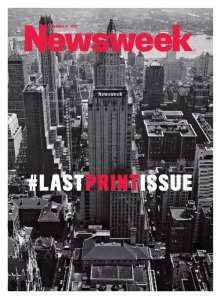
Killing Me Softly With Her “Talk”: Why Tina Brown’s 10 Excuses for Killing Newsweek Are ALL DEAD WRONG…

December 31, 2012

1356279090281.cached When I was interviewed last October by the Associated Press about Tina Brown’s decision to kill the print edition of Newsweek, I put the failure of Newsweek, to the surprise of very few, right on the shoulders of Ms. Brown. Only a former managing editor of TIME (who by the way was pushed up and out of the magazine that at least five years ago stopped counting Newsweek as a competitor) said about my remarks: “No one said anything stupider than Samir Husni.” That same editor, turned media columnist, amazingly appears in the last issue of Newsweek talking about a competition that ceased to exit years ago).

Heaven forbid that one ever criticize an editor for a magazine failure. It is always someone else’s fault… advertisers, circulation, the weather, anything or anyone but the editor. An editor’s choice of content, covers, or even writers, let alone, an editor’s knowledge of the audience of a magazine, never makes up a recipe for failure. Right? Well, that’s what you are lead to believe reading Tina Brown’s final editorial in the “#LastPrintIssue” of Newsweek.

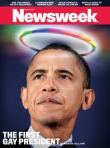
The content of Newsweek for the last two years, from Princess Di at 50, to the First Gay President, to the famous sexy food cover, are three examples of how content (i.e. bad content, irrelevant content to a magazine’s audience, etc.) can and will lead to your demise. Remember Talk?

images-2imagesimages-1

Well, here are ten excuses I was able to discern from Ms. Brown’s own editorial about the demise of the print edition of Newsweek and my comments on each excuse:

10: To “see the full evolution of the spanking-new, all-digital Newsweek Global…” if it is going to be anything like the evolution of the spanking-new print edition of Newsweek two years ago, don’t brace yourself for any positive surprises. If you could not make it “national” are you kidding me about making it “global?”

9: “It’s been a turbulent two-year journey (since the marriage to the Daily Beast), culminating in our decision to leave print…” I guess the marriage was a blast that created a schizophrenic double personality entity that was neither Newsweek nor the Daily Beast. The decision not to merge the Daily Beast into Newsweek.com actually spelled this inevitable doom. In fact this greatly undermined the Newsweek brand because in effect it had no digital outlet — both editorially and in terms of advertising. This decision was totally as a result of Ms. Brown’s vanity about the Daily Beast.

8: “Most of the boldface bylines and star writers who defined the brand had flown the Newsweek coop…” I wonder why some of them went to TIME?

7: “There was no executive editor… no news editor, no managing editor, no features editor, no ….” And I thought that was the reason they brought on Tina Brown.

6: “Advertisers had peeled off…” and now they are going to come back with full force into the all-digital edition? By the way, is the Daily Beast making any money online?

5: The magazine was located in an office “reminiscent of the Stasi headquarters in East Berlin.” When everything else fails, blame it on the brick and mortar building. Newsweek logo on its own building is no longer “in the eye-line of its swaggering competitor in the Time-Life Building.”

4: Newsweek is “embracing a digital medium that all our competitors will one day need to embrace… we are ahead of the curve.” Have you heard of TIME, The Economist, The Week, Bloomberg Businessweek? And by the way how is it that Bloomberg Businessweek has survived, and is thriving–after it was sold for one dollar? By the way, just for the historical record: Newsweek came into being 10 years after TIME was born, and Newsweek’s circulation was always behind TIME in its entire 79 years of publishing. Talk about being ahead of the curve.

3: The re-born, all-digital Newsweek will take “its readers to territory that is new and uncharted.” Wow… I wonder if the majority of the Newsweek readers are avid digital readers who are leaving print by the droves and are willing or wanting to take the “uncharted” road? If the “chartered” road did not work, do you truly believe that the “uncharted” road will? And if it is such a “new-spanking” entity based on 80 years of history, why abandon Newsweek’s main audience in the heartland of America? Under Ms. Brown, Newsweek has become a magazine created for and about the coasts, and a “newsmagazine” like Newsweek is, and should be, about all of America.

2: “We say sayonara to print, we thank our 1.5 million loyal readers…” I guess Ms. Brown does not believe in readership studies that estimate how many readers a magazine has per issue, while the 1.5 million circulation is the rate base number given to advertisers. There is a big difference between readers and subscribers in the magazine business. well, of course, unless the magazine had only one reader per copy, since the readership numbers are absent from Newsweek’s media kit. And, by the way, Ms. Brown said “sayonara” for the loyal magazine readers when she brought in her 80s and 90s sensibility of what would shock and/or titillate. Those were the days my friends, and contrary to believe, they did end.

1: “…Wish us luck and join us… in our all-digital future.” Well, to paraphrase the other Tina, “What’s luck got to do with it?” Oops, sorry, that was “What’s love got to do with it.” But you get my point. As one of my friends once told me, “Ms. Brown doesn’t and never has understood America.” It is all about understanding and knowing your audience; not luck or love has anything to do with it.

Well, my prediction, out of sight is indeed out of mind. Thanks, Newsweek, for the memories, may you rest in peace or pieces as you, that is, Ms. Brown, wishes. And if you ever think that the Daily Beast has a higher value as a brand than Newsweek, think not once, but twice and thrice for that matter.

For the rest of the printed magazines out there (all 10,000 print consumer magazines distributed on the nation’s newsstands), fear not, print is here to stay, alongside with digital and whatever new platforms that are yet to be invented. Bad content and irrelevant content on any platform will continue to die regardless of the device. Enough said.

h1

“Recoil” and “Highlights Hello” Top My List of Most Notable Launches of 2012: New Magazines Wrap-Up; Mr. Magazine™ Style

December 29, 2012

photoFrom American Frontiersman to the Zombie Nation (a magazine that was first published in May 2012 and re-issued its premier issue again in Dec. with a different on sale date), 2012 was the year for running the gamut on niche magazines. You could be a Modern Woman while admiring the Beautiful You, all with the flick of a page.

For those naysayers who are crying from the rooftops that print is dead, check out these facts:

There were a total of 870 new titles on the newsstands in 2012, with 242 of them publishing with a regular frequency. Not since 2007 have we seen numbers that impressive. In that illustrious year (2007) there were 715 total new magazines, with 248 publishing regularly.

The categories reflect the specificity that publishing today demands; from art to women’s interests, being a niche market was the bulls-eye to aim for. Success fairly oozed from the pointed hit almost each and every time. While the epicurean delights still ruled book-a-zine-land and special interests overall, lifestyles came in at a close second. To see new print titles exceed the numbers from 5 years ago only reinforces my mantra: You can’t keep good ink on paper down; at least, not for long.

My top 5 Most Notable Launches for 2012 could be described as eclectic and controversial as the year itself. But the criteria for a notable launch is based on so many different factors that have absolutely nothing to do with tragedy and horrific events from our world today, yet magazines can’t help being the mirror from which society’s reflections are made visual.

Take the year’s Most Notable Launch overall, there was a tie for 2012:
1. Recoil
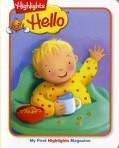
2. Highlights Hello

These two magazines go from one end of the spectrum to the other. With Recoil, you have an artfully-done, gun-lifestyle magazine that is selling for as much as $125 an issue on e-bay. Unbelievable, you might say, nevertheless, very true. For the gun enthusiast, this magazine is the answer to a prayer and proudly promotes the Second Amendment without apology.

RecoilBlogControversy surrounds this publication today, in more ways than one, as Recoil’s editor, Jerry Tsai, resigned in Sept. 2012 after basically calling Recoil’s support for the Second Amendment rights into question. It was too late after Tsai said that MP7A1’s were unavailable to citizens and for good reason. No amount of retraction, or good intentions could fix it, so Tsai resigned.

Highlights Hello-Then you have the other end of the rainbow where bright colors and children’s laughter live: Highlights Hello magazine.
Highlights Hello received the Magazine Innovation Center’s inaugural award for Excellence at the 2012 ACT 3 Experience. Aimed at children aged 0-2, the magazine is filled with things very young children can grasp and grow with. It displays the hope we have for the future through our children.

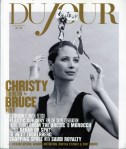
3. Dujour
4. Howler
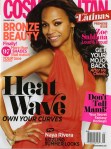
5. Cosmopolitan for Latinas

The last three are unique and engaging in their own right.

Dujour-716Dujour is a magazine that takes no prisoners and asks for no forgiveness. The upscale magazine targets an audience with a net worth of $5 million or more. That in and of itself, speaks volumes (no pun intended) and shows why it made the top five; for bravery alone, yes, but also because it’s a well put-together magazine that is a joy to read and to simply hold in your hand.

HOWLER-17Howler Magazine is a new magazine about soccer, but it’s so much more than that. It’s a completely independent project that promoted itself through social media and word-of-mouth and was publicly and crowd-funded. It’s an amazing endeavor that shows initiative and courage and is a pleasure to read. It’s built on the same principals as this country: if you can dream it and you work hard; you can do it.

COSMOPOLITAN FOR LATINAS-29Cosmopolitan for Latinas is a magazine which shows how important diversity and fragmentation are in our country today. We are a melting pot of ethnicities and this magazine takes one section of that pot and works it to good advantage. It is enlightening and ingenious and a welcomed addition to our industry.

So, as we reflect upon the year 2012, and on all its joys and excitements, let’s remember that magazines exist to provide our readers with an experience they’ll never forget. And I believe we can all agree 2012 has provided that and so much more.

To see every new magazine launched in 2012 please click here.

A copy of this post was published on CommPro.Biz on Dec. 28, 2012

Watch for the Mr. Magazine™ Manifesto 2013 in min: media industry newsletter Jan. 7, 2013 issue and later on this site.