Archive for the ‘The Magazines And I Book’ Category

h1

Children and Teen Magazines Of 1953. The Magazines And I: Chapter 7 Part 1.

May 24, 2021

Children and Teen Magazines … is the 7th chapter from the serialized book I am writing on the magazines of 1953, specifically March 1953, the month I was born.  This is chapter seven, part one.  Feel free to back track for chapters one, two, three, four, five and six in previous blogs.  Enjoy.

Life was very different for children and teens in 1953 than it is for today’s youth. Of course, there was no Internet, no cell phones, no digital devices at all, and television was in its infancy. The effects of World War II could still be felt throughout the nation in some ways. For instance, many goods were still being rationed in the early 1950s. Sugar was rationed until 1953 and meat only came off ration a year later. So the life of a child or teen in 1953 could be viewed as rather difficult by the youth of today; if not difficult, definitely different. But for kids in 1953, it was their golden age. Rock and roll was just around the corner; crusin’ with your best girl/guy, headed for the drive-in in your parents Cadillac was on its way; and most little ones had their favorite toy, and magazines were everywhere. 

With nothing else really to entertain the youth of that era, magazines were certainly a part of their lives. Children had magazines like Highlights for ChildrenJack and Jill,  Child Life and Wee Wisdom, among others, and teens had SeventeenThe Girl Friend and the Boy Friend and Movie Teen, with many more to select from. Magazines were an integral part of young people’s lives, with education and fun activities a major part of each title’s contents. It was a time of fun, yet practicality; education, but also whimsy and interesting stories. 

In March 1953, children and teens had a rich array of magazines to choose from. Let’s take a look, shall we.

AMERICAN GIRL

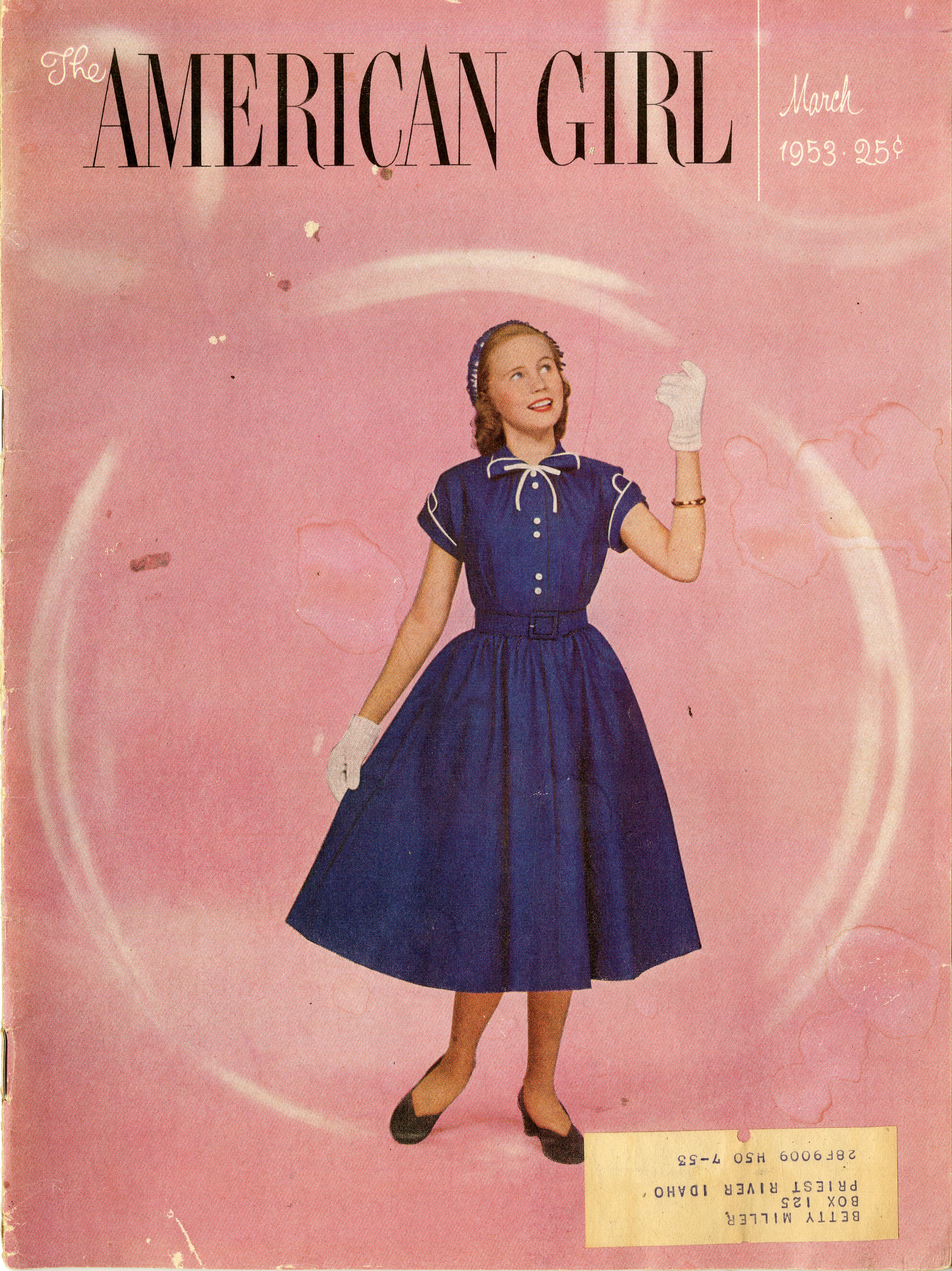
From 1917 until 1979 Girl Scouts published a monthly magazine, originally called The Rally (1917–1920) and then The American Girl, with “The” later dropped  (not to be confused with the American Girl Dolls magazine which began publishing in 1992). During one point of its long history, this magazine had the largest circulation of any magazine aimed at teen-aged girls. 

The March 1953 issue of the magazine had a very impeccably dressed young teen, complete with hat and gloves, on its cover, displaying what every American teen girl wanted to look like and wear for Easter 1953. The tagline was “For All Girls” and the content ranged from fiction, nonfiction to fashion and good looks. It was a mixture of recipes, patterns and sharp-dressed young ladies promoting and selling many designer’s clothes. 

BOYS’ LIFE

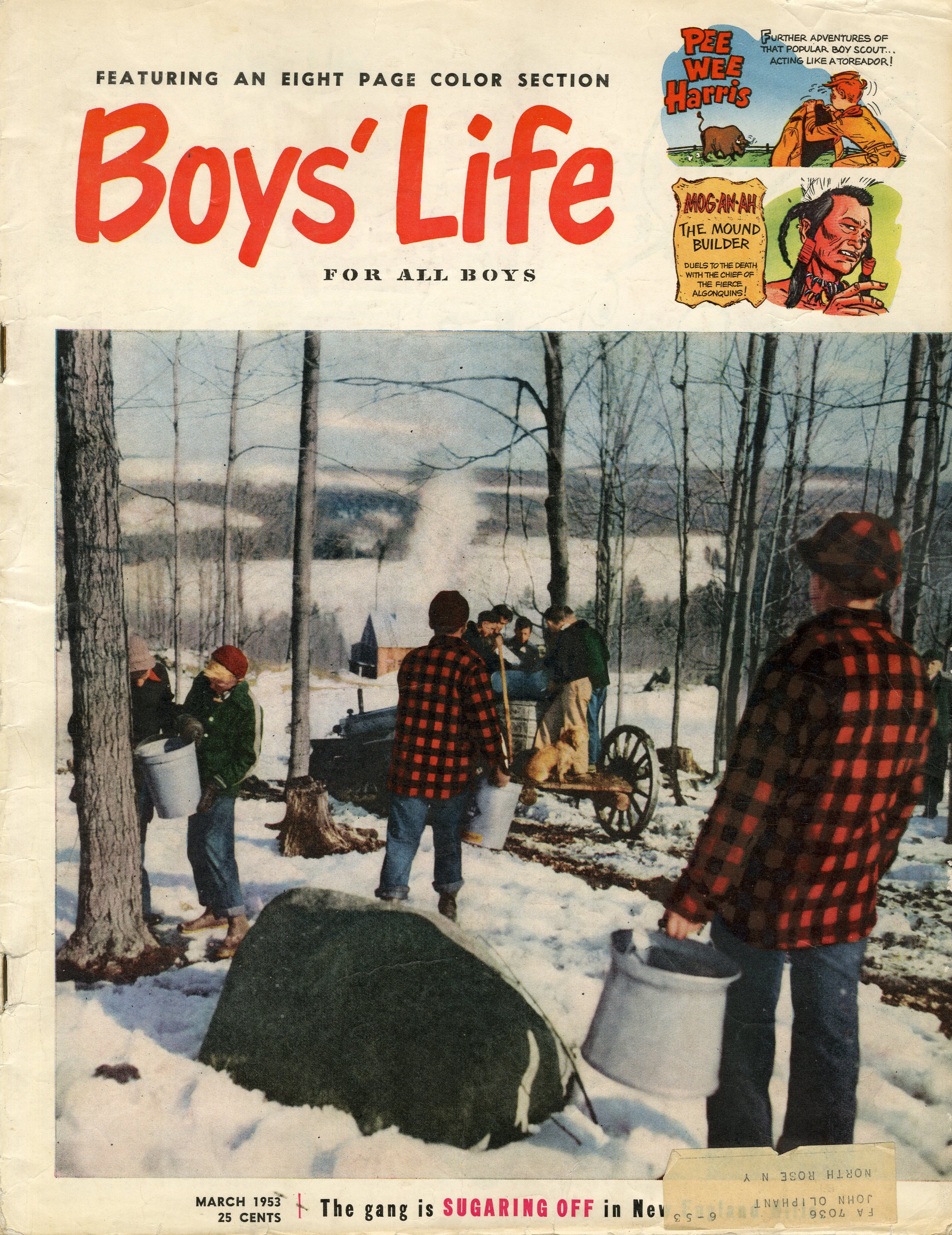
Boys’ Life is the monthly magazine of the Boy Scouts of America (BSA), with its target readers boys between the ages of 6 and 18. The magazine was founded and first-published in 1911 and at that time there were three major competing Scouting organizations: the American Boy Scouts, New England Boy Scouts, and Boy Scouts of America (BSA). 

The content could be geared toward older boys, but not always (hence the tagline: For All Boys) and included special features, adventure stories, Bank Street Classics, entertainment, environmental issues, history, sports, and Codemaster. Pedro was a fictional burro that was created as a mascot for the magazine.

The March 1953 issue’s cover was one of New Englanders, Ohioans and other maple sugar producers, doing what they do best: making maple sugar. The contents of this issue were many special features on scouting, gifts and gimmicks, and discus throwing, so it was a varied and diversely topical magazine. There were articles and photo features, plus many fun stories. And the magazine is still around today for boys of all ages to enjoy. 

CHILD LIFE

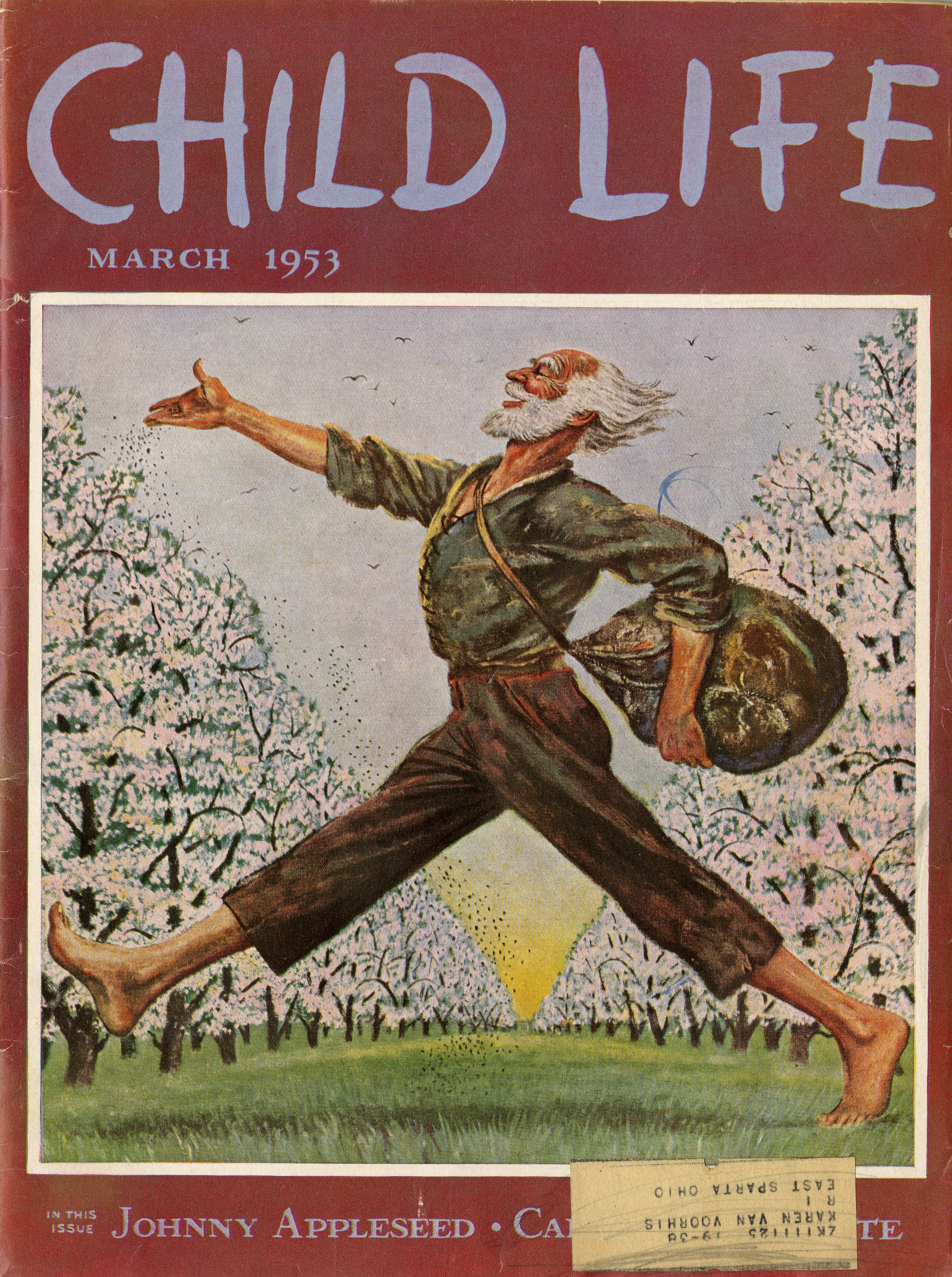
Child Life is a children’s magazine begun in 1922. A little something for everyone in this magazine…stories, projects , crafts, puzzles, history , advertisements, the magazine was published monthly (except in July and August) and is notable due to its very vivid stories and poetry. 

The March 1953 cover featured good-old Johnny Appleseed himself  and his colorful story. It’s fun and whimsical, two things children would notice right away. Poetry such as “The Wind is a Witch,” and stories like “Aunt Dorothy’s Mailbox” and “Guessing Games” surely provided endless reading fun and excitement. 

CHILDREN’S ACTIVITIES

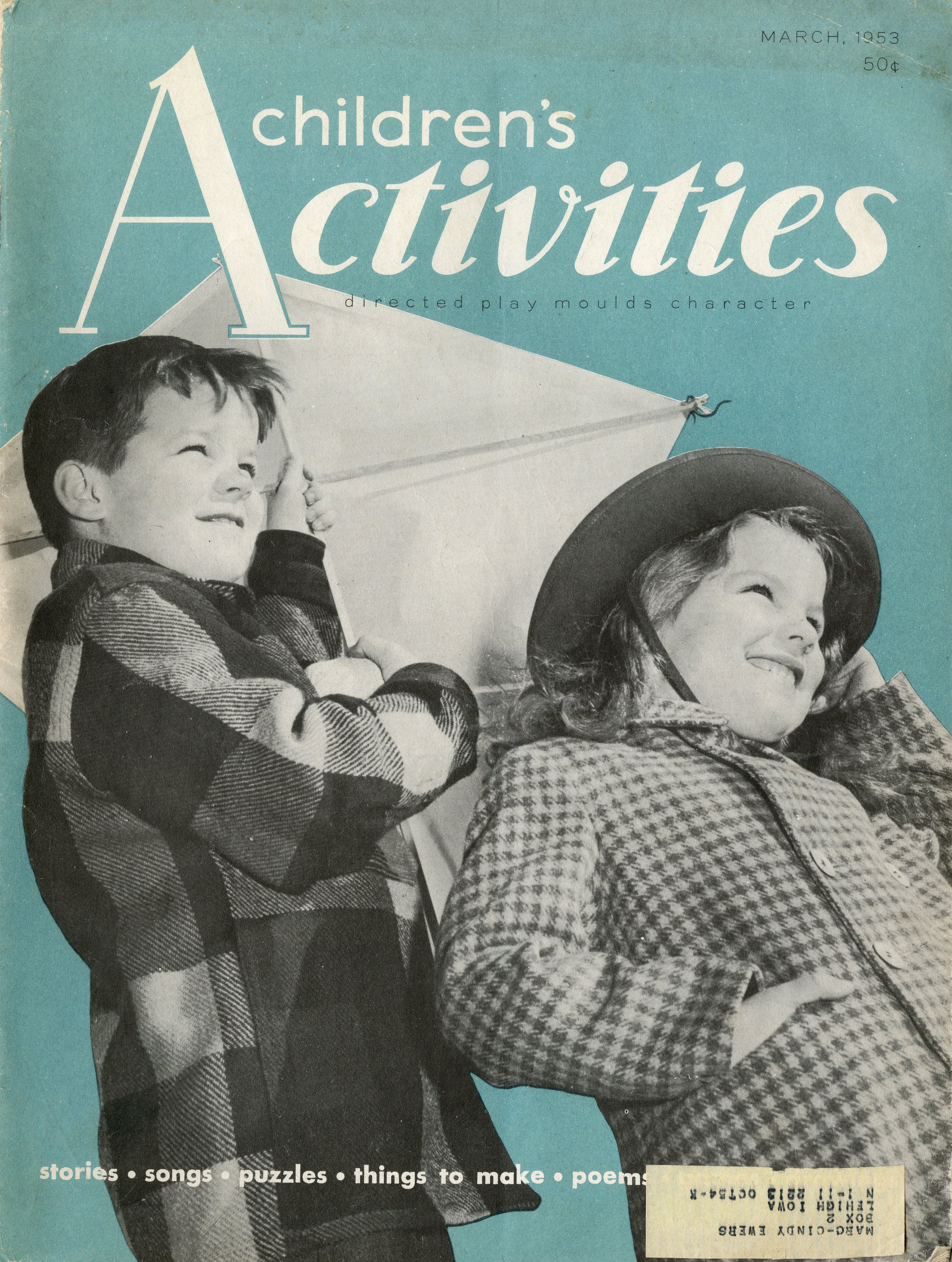
Then president, Harry L. Wells writes in the March 1953 issue of the magazine: Children…our greatest asset, our greatest opportunity. Since the conception of Children’s Activities some 20 years before 1953, the Child Training Association, publishers of the magazine, believed that children were our greatest asset, our country’s greatest opportunity. And who could argue with that, even today. 

The magazine featured vivid illustrations, stories, and activities parents could enjoy together with their children. The March 1953 issue had cover work by an eminent photographer, Rie Gaddis, who held a degree in Journalism from the University of Iowa. According to the “About the Cover” segment, the image was a completely new look for the magazine, featuring a brother and sister who were on their way to a vacant lot with their homemade kite ready for flight. 

The magazine was filled with all kinds of activities and stories and poetry that would keep children entertained for hours. It was an educational title, but created in a way that no child would ever suspect that not only were they being mesmerized by tales and fun activities, they were also learning something at the same time. 

CHILDREN’S DIGEST

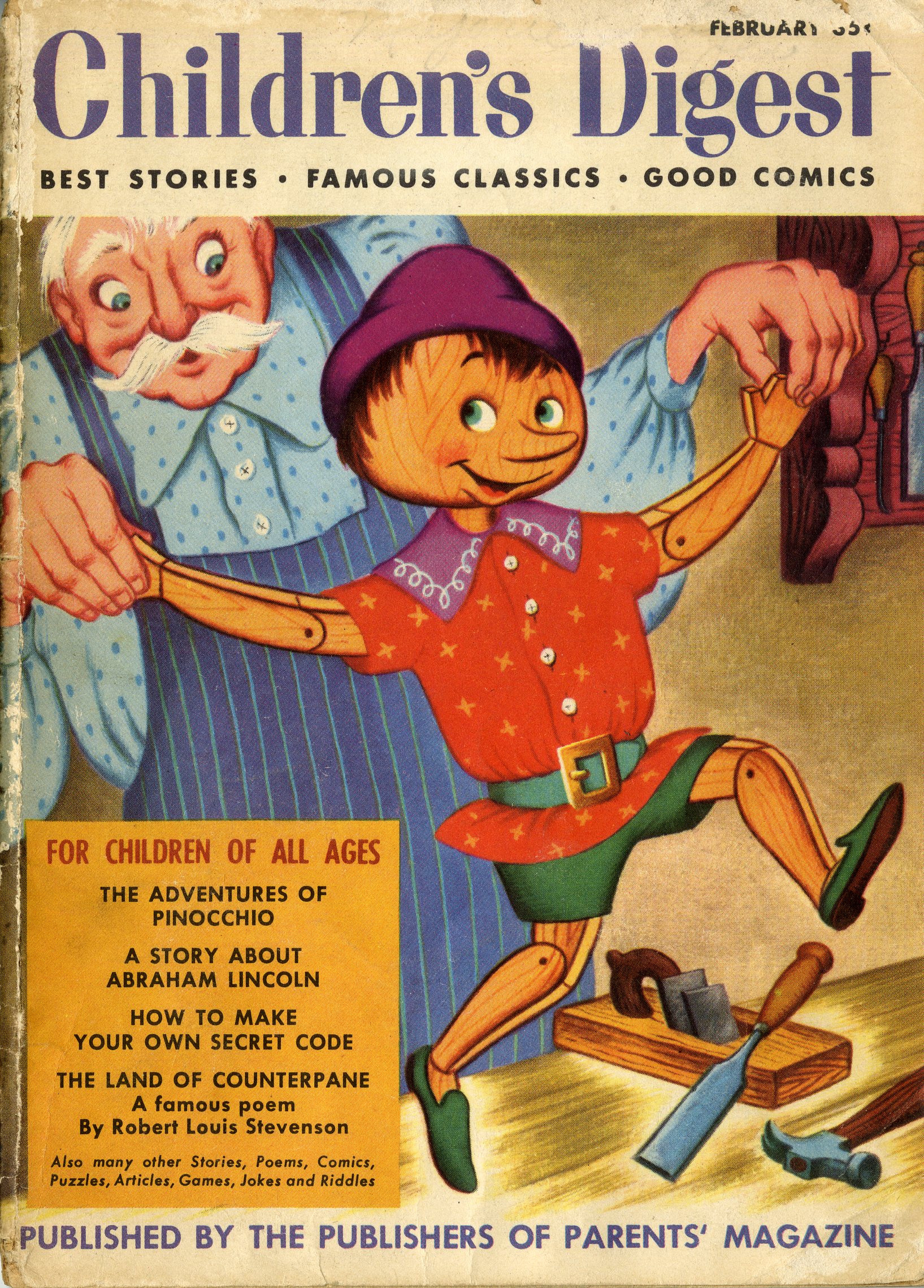
From Parents’ MagazineChildren’s Digest was a children’s magazine published in the United States from October 1950 to May/June 2009, after which it was merged with Jack and Jill from the same publisher. Parents Magazine Press began publishing the magazine in digest format in its early years (hence the name) until 1980 when it was sold to The Saturday Evening Post Society. 

The original idea was that it would be the Reader’s Digest for children, so it republished stories, comics and other features from magazines across the globe. The 1953 issue had an illustration of Pinocchio and his creator on the cover to accompany the story inside the magazine’s pages. There was also a story about Abraham Lincoln, a how-to on devising one’s own secret code, and a poem by Robert Louis Stevenson. The magazine was filled with amazing stories, colorful comics and everything a child might dream about in the throes of kid-dom. 

Stay tuned for part 2 of the Children and Teen magazines of March 1953 up next….

h1

Black Magazines Of 1953: The Magazines And I. Chapter Six, Part Two.

May 16, 2021

Black Magazines … is the sixth chapter from the serialized book I am writing on the magazines of 1953, specifically March 1953, the month I was born.  This is chapter six, part two.  Feel free to back track for chapters one, two, three, four and five in previous blogs.  Enjoy.

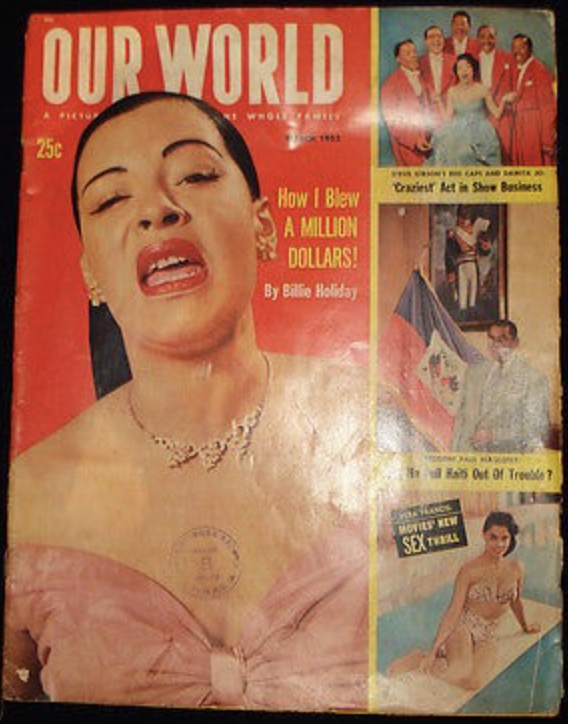
OUR WORLD

Our World magazine was a publication founded by John P. Davis for African Americans and was published from 1946 to 1957. Davis co-founded the National Negro Congress, an organization dedicated to the advancement of African Americans during the Great Depression. Along with Our World magazine, he also published the American Negro Reference Book, covering many aspects of African American life, present and past.

Our World was another title that promoted the excellence of African Americans, their achievements and the successful lives that many led. It covered contemporary topics from Black history to sports and entertainment, with regular articles on health, fashion, politics and social awareness. Its covers featured entertainers such as Lena Horne, Marian Anderson, and Harry Belafonte.

The February 1953 issue featured Isabelle Cooley, the beautiful actress, known for Cleopatra (1963), Real Genius (1985) and Parenthood (1989). Along with Ms. Cooley, there was an article on Joey Adams, L.A.’s top platter-spinner, and Solly Walker, St. John University’s first black basketball player. The magazine was large in size and the cover was splashed with bright colors and vivid images. It was another title that proved how important and notable people of color were and the deeply woven threads of pride and promise they made in the nation’s overall tapestry.

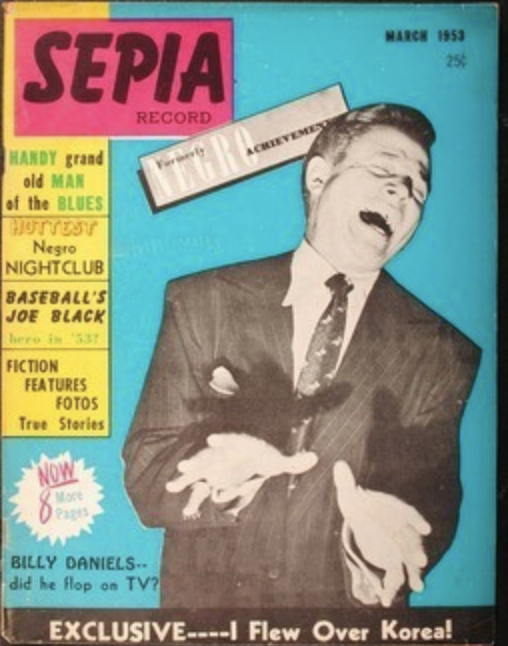
SEPIA

Sepia was a magazine that featured fantastic photojournalism. It was styled a lot like Look, but often compared to Ebony. It focused primarily on achievements of African Americans and was founded in 1946 as Negro Achievements by Horace J. Blackwell, an African American clothing merchant from Fort Worth. Blackwell had already founded The World’s Messenger in 1942, which featured romance-true confession type stories of working-class Blacks.

In 1950, George Levitan, a Jewish-American man born in Michigan, bought the magazines and Good Publishing Company (aka Sepia Publishing). Levitan is the one who changed the name of the magazine to Sepia from Negro Achievements, and The World’s Messenger became Bronze Thrills. He also published Heb and Jive for Black audiences as well. 

According to the magazine’s history, after Levitan’s death in October 1976, Beatrice Pringle, one of the original publisher/editor team with Blackwell, bought Sepia and continued operations through 1982. The magazine still had a strong circulation of around 160,000 in 1983 when Ms. Pringle closed up shop. Many scholars have supposedly had a difficult time researching the magazine, as its records and building were mostly destroyed after it closed.

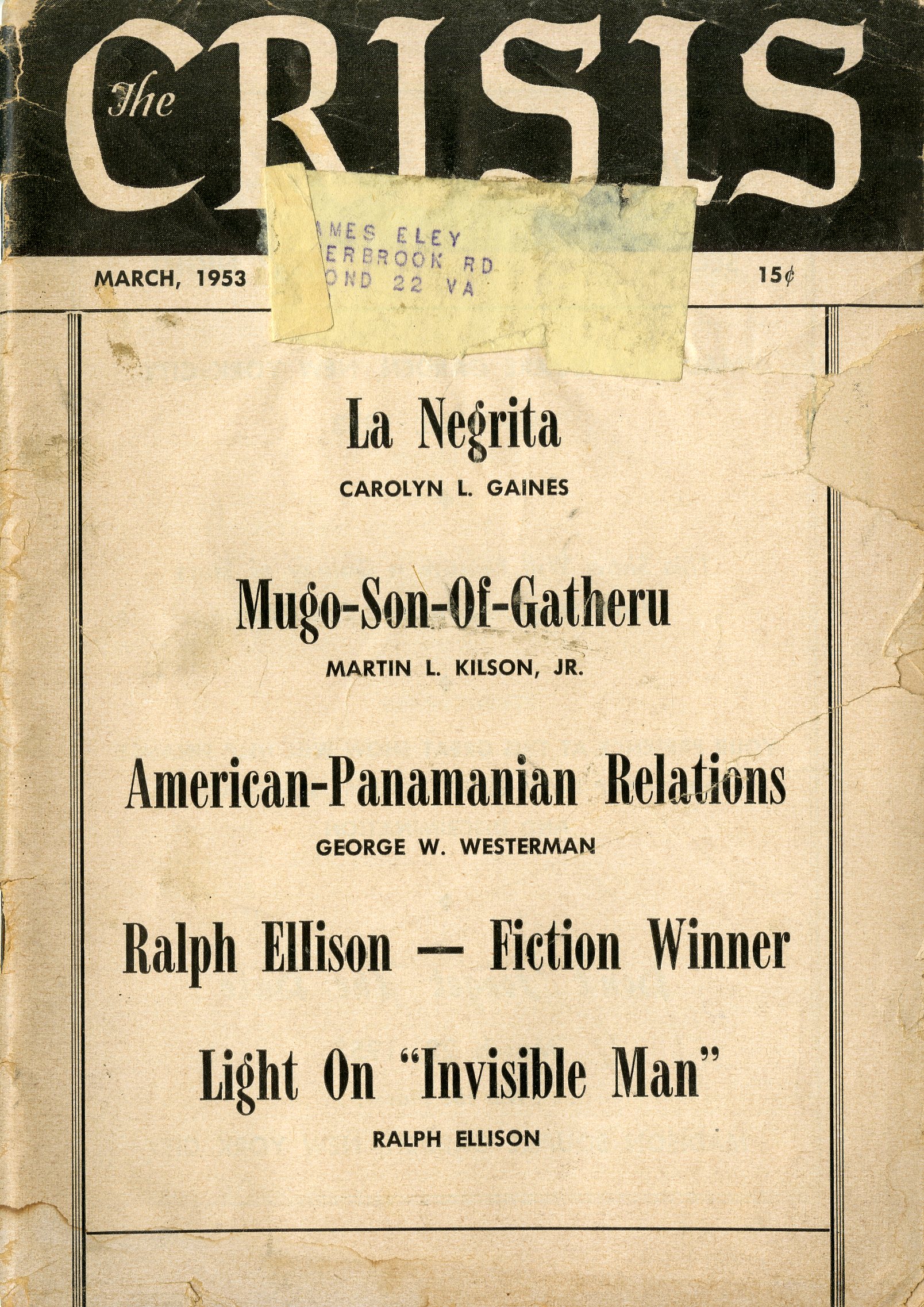
THE CRISIS

As mentioned earlier, The Crisis was and still is the official magazine of the National Association for the Advancement of Colored People. Founded in 1910 by W. E. B. Du Bois, who was also a founding member of the NAACP, along with Oswald Garrison Villard, J. Max Barber, Charles Edward Russell, Kelly Miller, William Stanley Braithwaite, and Mary Dunlop Maclean created the magazine to show the injustices and danger that racial prejudice generated. The Crisis has been in continuous print since 1910, and is the oldest Black-oriented magazine in the world. But today, The Crisis mostly operates online via social media outlets such as Facebook, Instagram, and through their website.

With a smaller format, The Crisis relied more on content than aesthetics. The March 1953 issue, while not distinctly eye-catching, definitely makes up for its lack of outer resplendence with the articles within its covers. From “Mugo-Son-Of-Gatheru,” a story about the Kenyan writer who left  his home on the Kikuyu Reserve when he was a teenager, to “American-Panamanian Relations,” the articles are on point for the times and substantive. It’s a magazine that shed much light on the plight of people everywhere.

Looking at these great ethnic magazines of March 1953, we see a definite foundation for all of the mainstream titles we have today in the genre. And while many have gone and some have been reborn in different formats, the fact remains that ethnic magazines played a major role in the early history of magazines, especially in March 1953.

Up next, we take a look at the Children magazines of that era. Stay tuned.

h1

Black Magazines Of 1953. The Magazines And I: Chapter Six, Part One

May 13, 2021

Black Magazines … is the sixth chapter from the serialized book I am writing on the magazines of 1953, specifically March 1953, the month I was born.  This is chapter six, part one.  Feel free to back track for chapters one, two, three, four and five in previous blogs.  Enjoy.

Changing the narrative. That’s what Black magazines did in March 1953. From Ebony to Jet, the African American community began to see themselves in the pages of magazines devoted to their culture and their lifestyle. It was an eye-opening time for Black publishing. And the major leader of the movement was the man who started Ebony and Jet, John H. Johnson. Johnson was a man born to a suppressive demographic, but rose above it to become a force to be reckoned with in the world of publishing. 

Along with Johnson, a Jewish-American man born in Michigan, who was a plumbing merchant in Fort Worth, came onto the scene in 1950, George Levitan. Levitan bought the magazines Sepia and The World’s Messenger from an African-American clothing merchant from Fort Worth, Horace J. Blackwell. The difference between Levitan and Blackwell? Levitan was white. But could a white man tell the black man’s story during a time of segregation in America? And truth be told, while Blackwell’s mother had been Black, his father was white. So two men on the same journey, but with very different perspectives on the subject matter.

The National Association for the Advancement of Colored People (NAACP) was founded long before March 1953; February 12, 1909 to be exact, but the organization contributed greatly to the world of magazines. W. E. B. Du Bois’s The Crisis was the official magazine of the NAACP, still is as a matter of fact. The magazine has been in continuous print since its inception in 1910.

The publications highlighted display the importance and solidarity of Black magazines in the 1950s, March 1953 specifically. The magazines’ common interest was apparent, no matter what conversation they chose to engage in. From the positivity of a magazine like Ebony, to the call for action, social justice and an end to violence against Blacks as The Crisis often presented, Black magazines brought attention to the lives of African Americans.

Let’s delve into a few of the Black magazines that were in existence in 1953:

EBONY

John H. Johnson’s premier magazine that focused on news, culture, and entertainment for African Americans, Ebony was founded in 1945 in Chicago. The magazine showcased positive stories in a life-affirming manner. From celebrities to politicians to sports figures, the magazine’s format was patterned after Life and sought to show the accomplishments of African Americans more than anything negative going on in their lives at the time. 

The magazine flourished for many years, changing its direction during the 1960s to cover more and more of the Civil Rights Movement, even garnering Ebony photographer Moneta Sleet Jr. a Pulitzer with his photograph of Coretta Scott King and their daughter Bernice attending Martin Luther King Jr.’s funeral.

The magazine reached unprecedented levels of popularity, reaching over 40% of the African American adults in the United States during the 1980s. Unfortunately, the publication went bankrupt in July 2020, but was purchased for $14 million by Junior Bridgeman in December 2020. It was reborn digitally on March 1, 2021 with no plans to return in print. 

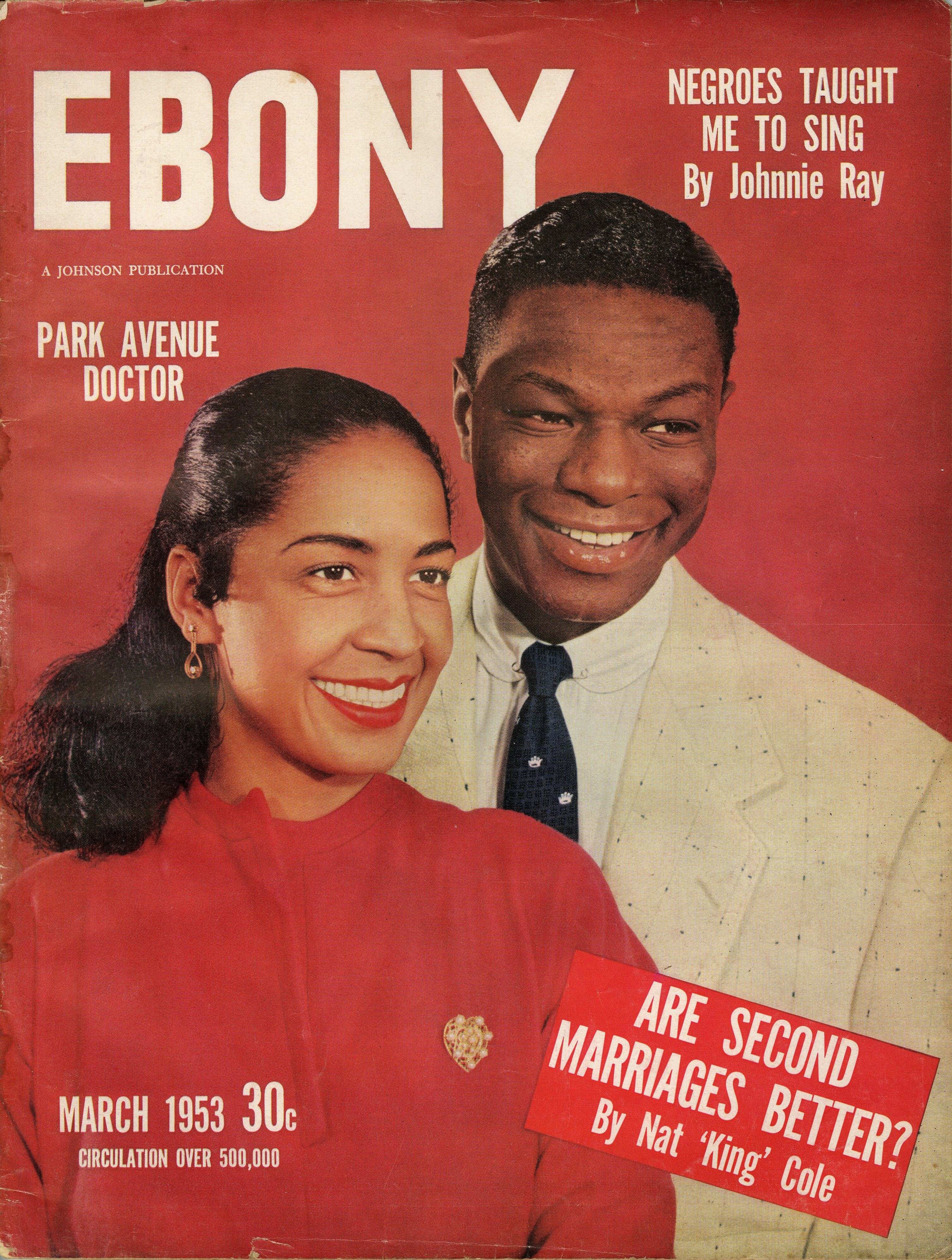
The March 1953 issue featured Nat King Cole and his second wife Maria on the cover asking the question: “Are Second Marriages Better?” The piece was written by Cole himself and had many personal at-home photographs that the singer provided for the story, enriching the piece tremendously for fans. 

Along with Cole on the cover, the stories ranged from “Negroes Taught Me To Sing” by Caucasian singer Johnnie Ray to an article about a Park Avenue doctor who was an African American psychoanalyst with some very swanky New York clientele. 

The March 1953 issue was epic in size and content and is definitely a collector’s dream. Showcasing these amazing Black achievers was something that Ebony reveled in and did extremely well throughout its long lifespan. It was a magazine that paved the way for many ethnic publications after it, including its sister publication Jet.

JET

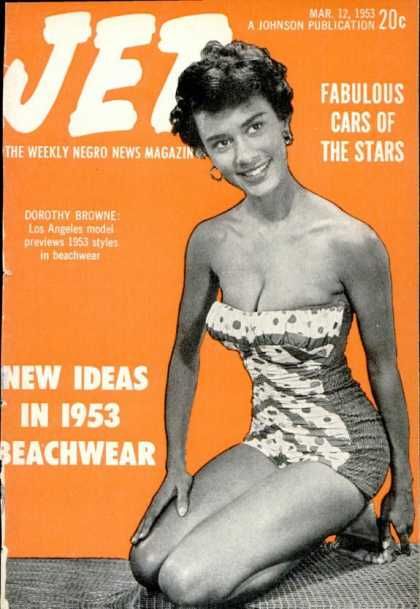
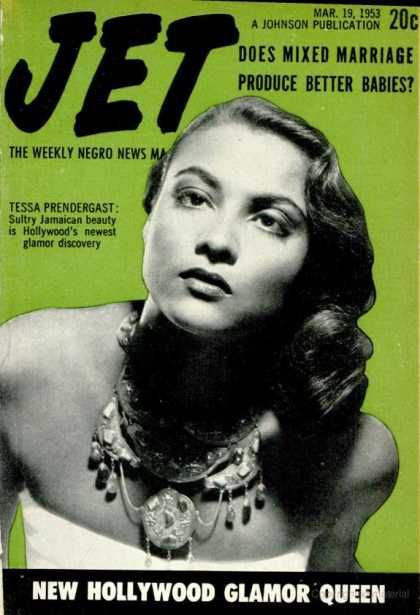
Jet was a weekly magazine that was another John H. Johnson publication. It too focused on news, culture, and entertainment related to the African American community, just as Ebony did. The magazine was founded in November 1951 and was originally titled “The Weekly Negro News Magazine.”

The differences between Jet and Ebony, other than the frequency, was their size. While Ebony was a large, coffee table-sized magazine, Jet’s format was smaller and digest-sized and it was printed almost entirely in black and white except for its cover’s background. According to the magazine’s early history, John. H. Johnson called his magazine “Jet” because he wanted the name to symbolize “Black and speed.” Jet covered the Civil Rights movement extensively and gained national attention when it published photographs of Emmett Till’s body after his death in 1955.

Two March 1953 issues, March 5 and March 26 respectively, had singer Jean Parks and singer Dinah Washington on each of its covers. With cover lines such as “Does Liquor Stimulate Sex” and “Has Sugar Hill Gone To The Dogs?” the magazine showed a diversity in subject matter that always intrigued. 

In May 2014, the publication announced the print edition would be discontinued and transitioned into a digital format. But Jet and Ebony were sold in 2016, only to be bought again in the $14 million Junior Bridgeman deal with Ebony, with a promise to return digitally in June 2021.

OUR SPORTS

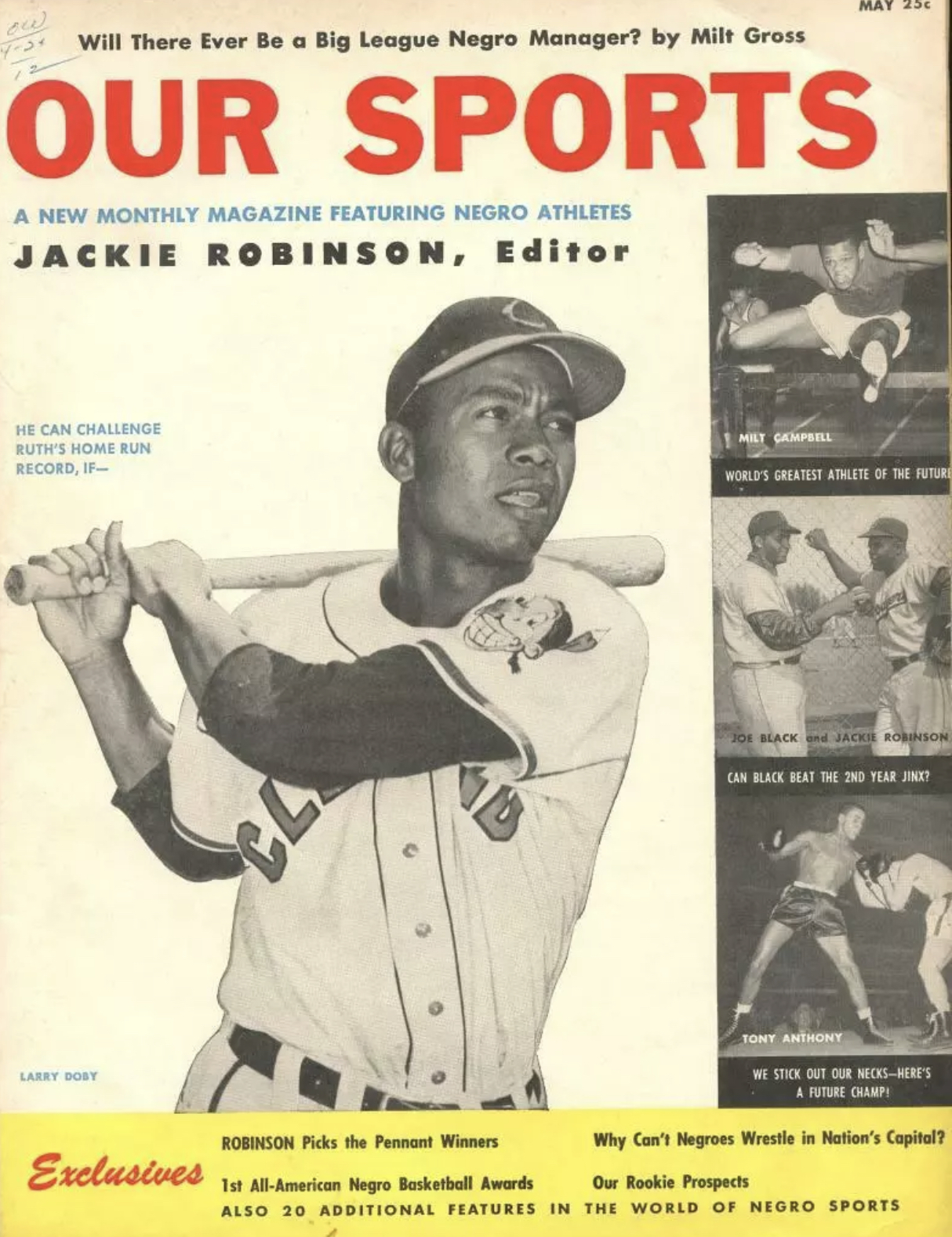
Edited by the great Jackie Robinson, Our Sports magazine was touted as “The Great New Negro Sports Magazine,” and was published in 1953. It ran for a total of five issues. It featured top African American sports stars on the cover, such as Larry Doby, Monte Irvin, Minnie Minoso, Satchel Paige, and George Taliaferro, who was the first black football player drafted into the NFL. Jackie Robinson was proudly credited in large letters on the cover as the editor of the magazine. It was a publication totally devoted to the Black athletes of the time, who were becoming more crucially involved in all major sports. 

With stories such as “Will The Yankees Hire A Negro Player?” and “Why Are Negro Stars Still Buried in The Minors?” the magazine offered a different take on sports and athletes and just who made up these important teams.

To be continued…

*Please note that some of the background historical data about the magazines were taken from Wikipedia…

h1

Men’s Lifestyle Magazines 1953. The Magazines And I. Chapter Five. Part Two

September 25, 2020

Chapter Five, Part Two

Men’s Lifestyle Magazines … is the fifth chapter from the serialized book I am writing on the magazines of 1953, specifically March 1953, the month I was born.  This is chapter five, part two.  Feel free to back track for chapters one, two, and three in previous blogs.  Enjoy.


ESQUIRE

Esquire was founded in 1933 by David A. Smart, Henry L. Jackson and Arnold Gingrich. The magazine was supposed to have a quarterly press run of a hundred thousand copies, but the demand was so high that by its second issue (January 1934) it revamped itself into a more sophisticated periodical and focused on men’s fashion and written contributions by people like Ernest Hemingway and F. Scott Fitzgerald.

If you ever read the editorial statement for the first issue of Esquire you could immediately tell that it was a rebel magazine. It was a magazine that was founded in rebellion of what was going on in the marketing and advertising world as it relates to the magazine publishing field. Here are a few comments from the editorial in the first issue of the magazine (keep in mind, the year is 1933):

It is our belief, in offering Esquire to the American male, that we are only getting around at last to a job that should have been done a long time ago – that of giving the masculine reader a break. The general magazines, in the mad scramble to increase the woman readership that seems to be so highly prized by national advertisers, have bent over backward in catering to the special interests and tastes of the feminine audience. This has reached a point, in some of the more extreme instances, where the male reader, in looking through what purports to be a general magazine, is made to feel like an intruder upon gynaecic mysteries. Occasionally, features are included for his special attention, but somewhat after the manner in which scraps are tossed to the patient dog beneath the table.

Controversy had a way of touching the early magazine as in the 1940s charges were brought against the magazine on behalf of the administration of Franklin Delano Roosevelt, alleging that Esquire had used the U.S. Postal Service to promote “lewd images.” In the end, Esquire was redeemed and the magazine continued to use the post office.

As a men’s magazine, Esquire was and still is an upscale brand that personifies distinctiveness and good taste. Since 1986, the magazine has been published by the Hearst Corporation and also has over 20 international editions. It’s published eight times per year and remains a vibrant part of the world of men’s magazines.

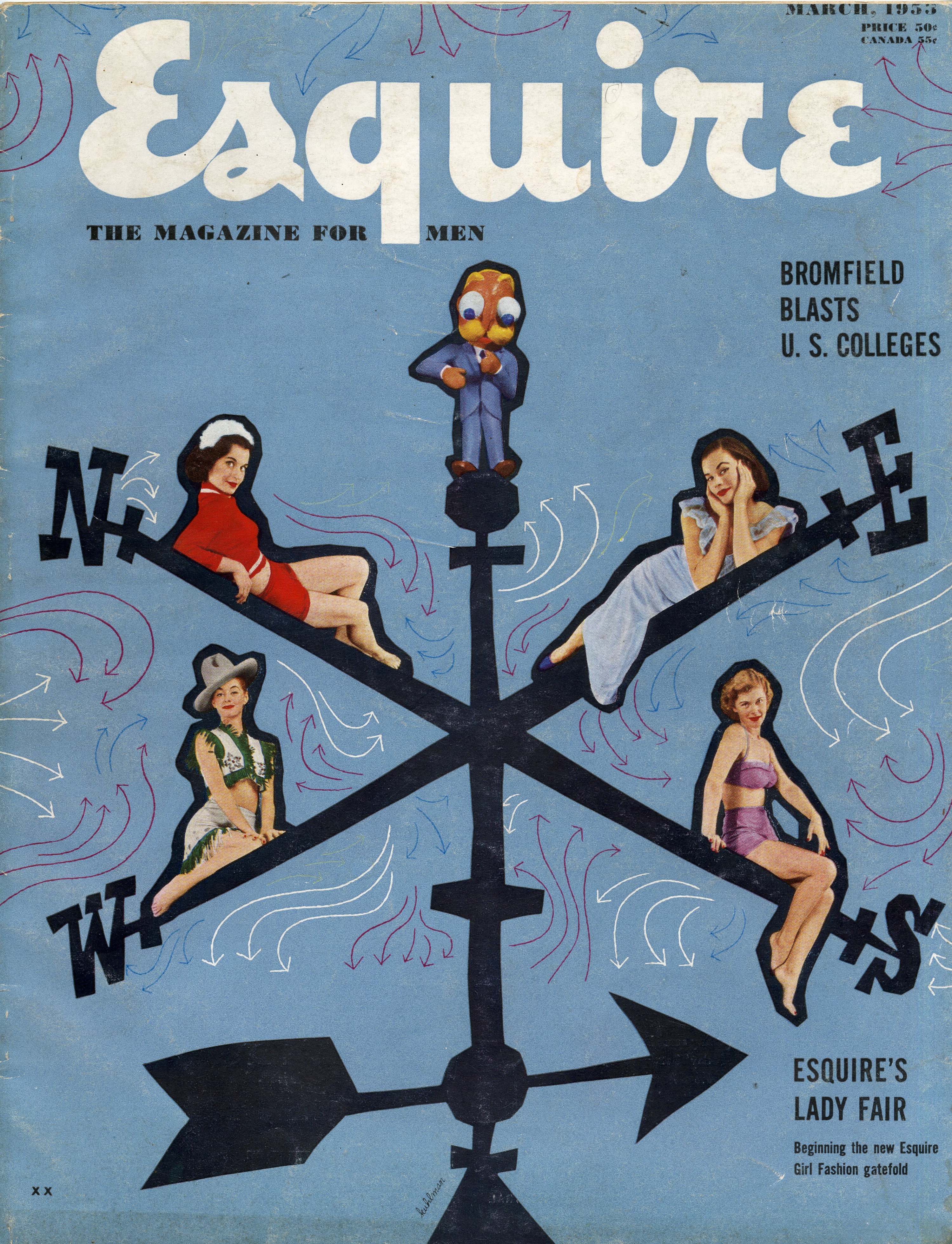
The March 1953 issue is oversized and coffee table perfect. The cover is a weather vane with beautiful models resting seductively on each arrow of the directions, with the blond, pop-eyed, mustachioed character named “Esky” (created by cartoonists E. Simms Campbell and Sam Berman), sitting on the very top. The character appeared on almost every Esquire front page for over a quarter of a century, depicting the refined character of the magazine and its readership. From the articles to the fiction; the pictorials to the travel and personalities, the March 1953 issue was synonymous with the title’s then-tagline: The Magazine for Men.

GENTRY

As we talked about in the introduction to this chapter, Gentry was a brilliant 1950s men’s magazine, founded by William C. Sega. It reflected the wide interests of the contemporary gentleman of that time. It was beautifully illustrated and lasted seven years during the 1950s.

William C. Segal was not just a magazine art director and designer, he was also the founder and managing director of Reporter Publications in New York City. Gentry ran from 1951 to 1957 and was an image of its founder whose goal was “to allow people to see the esthetic element that was a factor in choosing clothing.” He believed that the importance of Gentry was to make the clothing part of the fine art of living. It was upscale and incorporated surprises in each issue: booklets, limited prints, die-cuts, half-sheets, fabrics–even a flattened bag of oats to accompany a story about horses. Innovation at a time when it wasn’t necessarily vital to a magazine’s existence.

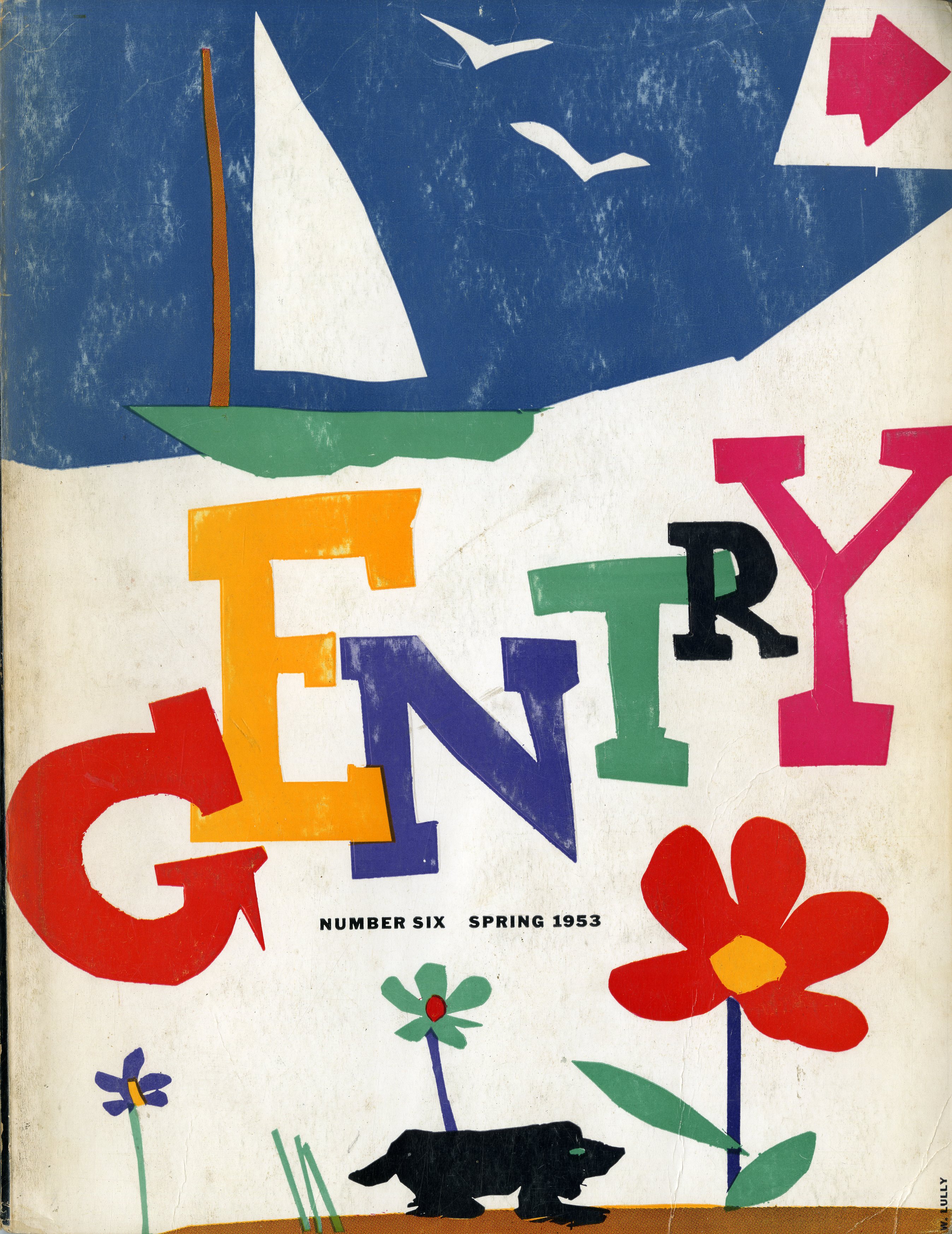
The March 1953 issue was no exception. It was beautiful, unique and a visual masterpiece. Of all the men’s magazines of March 1953, Gentry was definitely a standout. The cover was colorful and represented springtime, with flowers and a single sailboat on the cover. It was an issue that had content such as articles about spring gardening, a fashion portfolio and an interesting piece by Burl Ives on folksongs.

To say Gentry was special would be an understatement. To think it only lasted seven years is unbelievable.

TRUE

True was known as “The Man’s Magazine” and was touted as the “Largest Selling Man’s Magazine” of its time. The magazine was published by Fawcett Publications from 1937 until 1974. It featured high adventure, sports profiles and articles that depicted many dramatic conflicts, in addition to pictorials and humorous pieces.

In the early 1950s, Ken Purdy was True’s editor. At that time Newsweek described it as “a man’s magazine with a class all its own, and the largest circulation of the bunch.” The magazine inspired many books, such as “True, A Treasury of True: The Best from 20 Years of the Man’s Magazine.”  The magazine was a real stepping stone for authors like Donald E. Keyhoe, who wrote an article in the January 1950 issue that sold-out, suggesting that extraterrestrials could be piloting flying saucers. The story was redone by Keyhoe into a best-selling paperback book, “The Flying Saucers Are Real.”

The March 1953 issue cover was a colorful painting of a trio of very knowledgeable and wise looking giraffes that beckoned the reader to open the magazine’s pages and discover that manly wisdom for themselves. Inside were stories on science, sports, an “in the news” section, and true adventure stories. The magazine described itself as “The Fact Story Magazine for Men.” It was definitely a compelling read for its audience.

PLETHORA OF MEN’S MAGAZINES

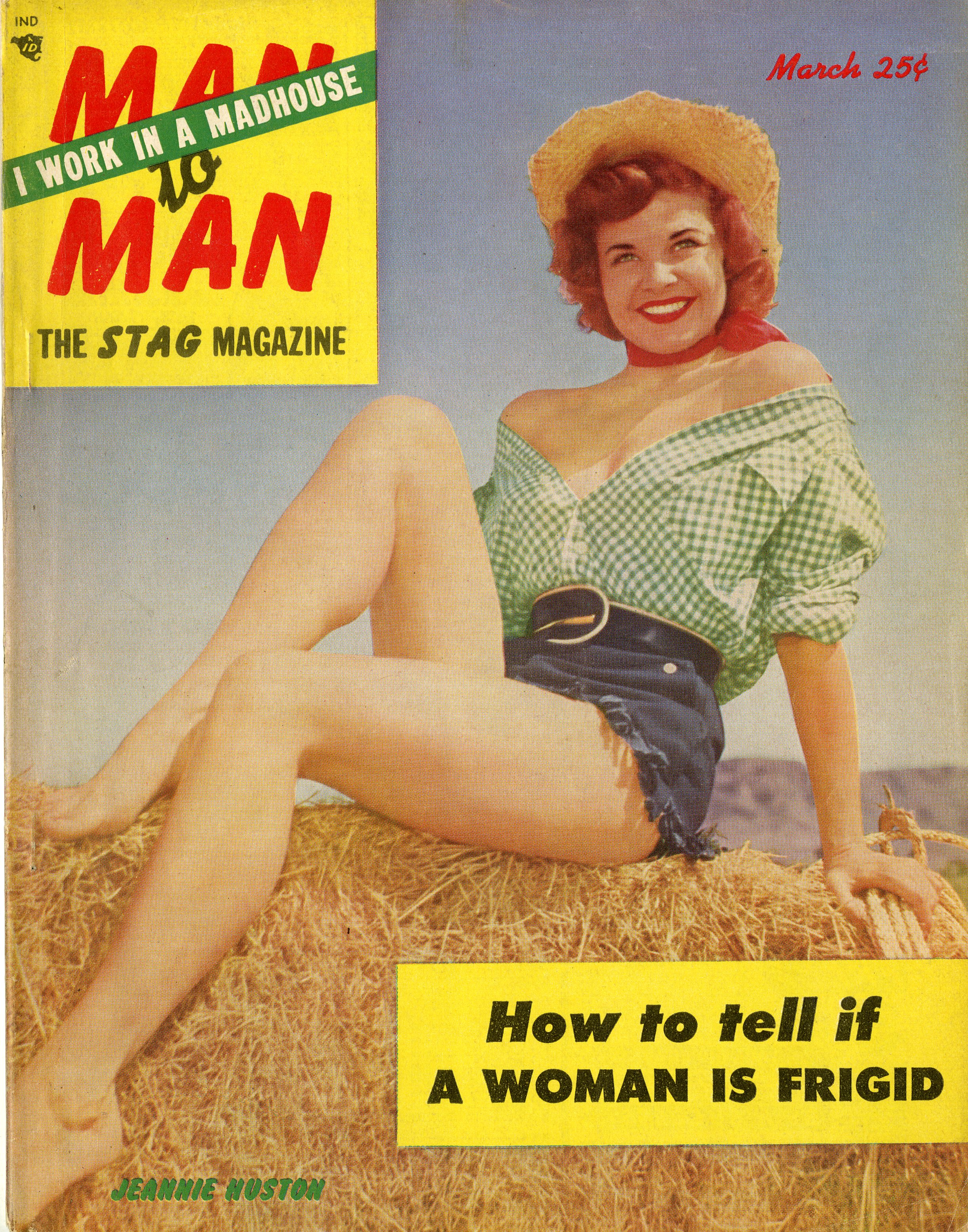
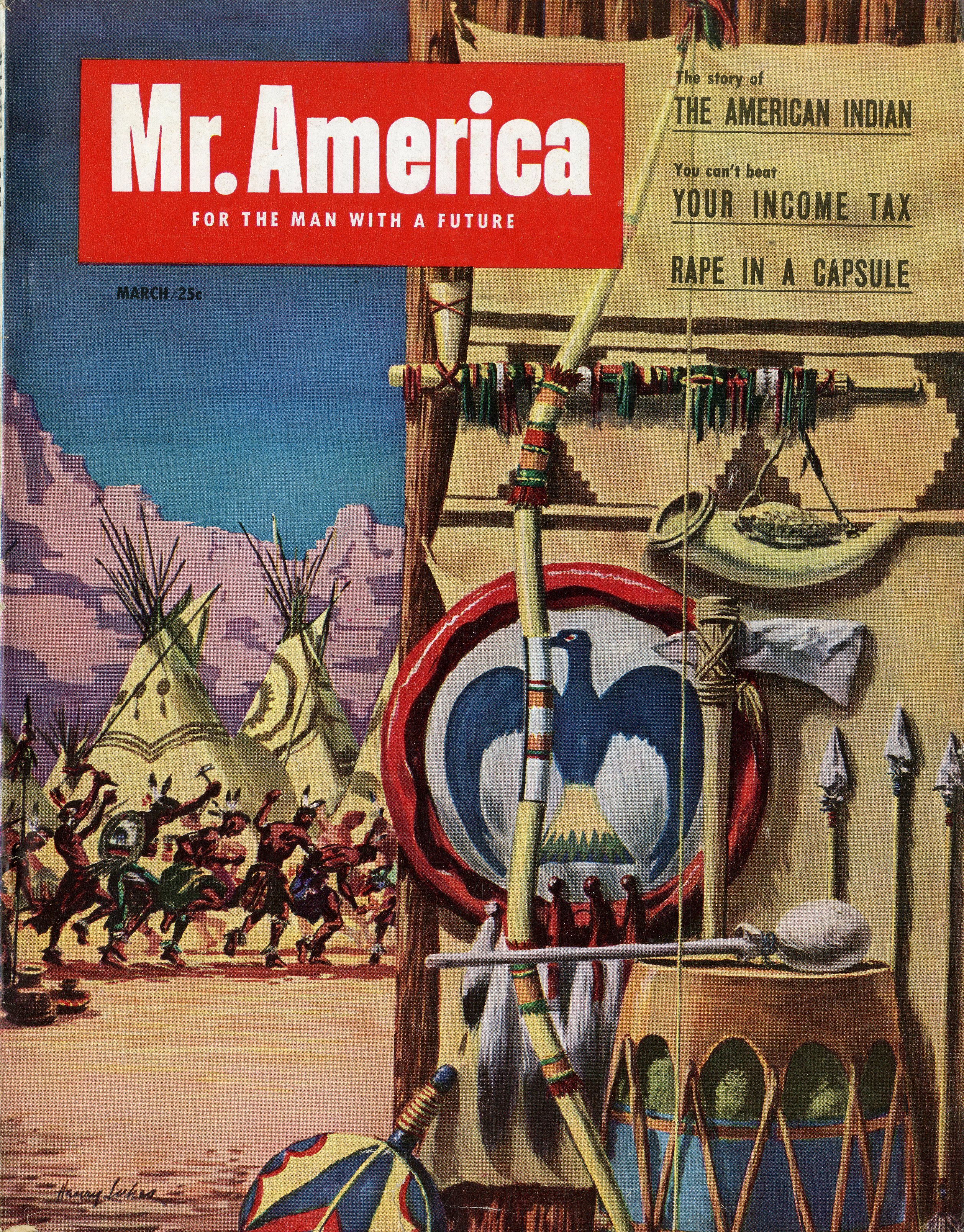
From Men to Man to Man; Mr. to Modern Man; March 1953 presented a host of men’s magazines designed to show the male of that generation adventure and excitement. After World War II, magazines for men took on a new direction, one of rugged heroes and bold adventures with males who could take out a Nazi in one swipe of their bowie knife or handle a vicious animal encounter with one hand tied behind their back. Men’s true adventure magazines became all the rage.

The cover art on these titles were oftentimes lurid and could be gratuitously violent or harrowing. For example on the cover of the March 1953 issue of Men, published by Zenith Publishing, the cover depicts a sinking military ship that apparently hit an iceberg, with men jumping overboard and some drowning. The cover lines were: “I Escaped from Little Alcatraz” and “Wichita – Wide-Open and Wicked.”

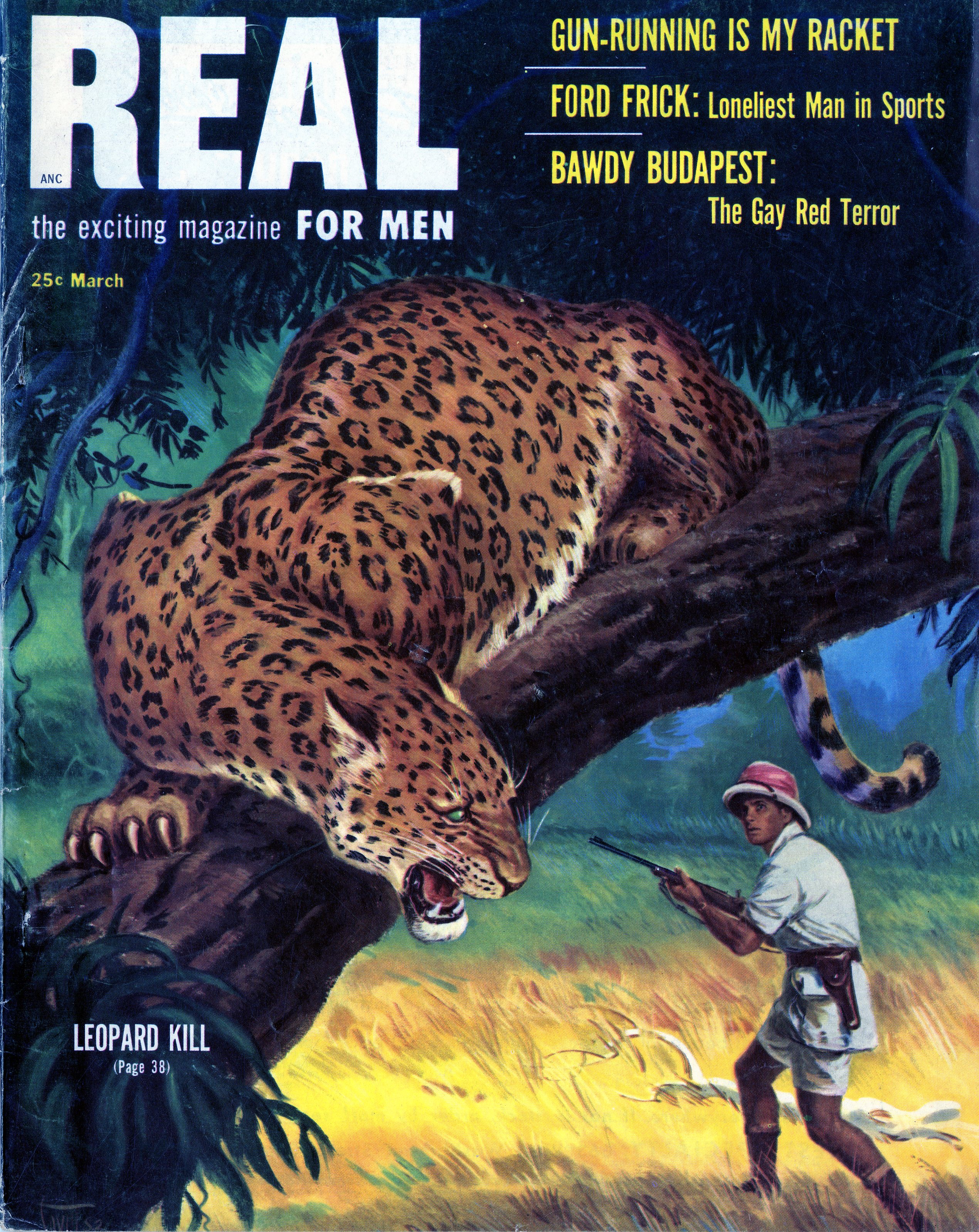
Real – the exciting magazine for men – the March 1953 cover art featured a big game hunter, rifle pointed, treeing a huge leopard, obviously going in for the kill. In today’s world, that kind of implication would do many things, but selling a magazine would not be one of them. The times were different, the magazines designed for men and their “true” adventures were many times based on what readers feared, but always conquered in the pages of these magazines.

Then there were magazines like Mr.  – Mister…To You, published by Mr. Magazines Inc. The cover of the March 1953 issue was a cartoon caricature of a soldier and a ticket girl, who was wearing a very revealing swimsuit that promoted her ample bosom, with the soldier’s hand placed carefully on her tiny waist. This ran column-like on one side of the cover, while the other side featured a smaller image of Rocky Marciano  and writer Charley Goldman, and an image of fashion model, Barbara Barkin, exotically decked out.

Between the humorous caricatures and the wildly perilous covers and content of the adventure titles, many of the March 1953 men’s magazines consisted of busty females, dangerous adventure, heroic feats and downright over-the-top stories. But one thing they all had in common was they were never boring.

BODYBUILDING

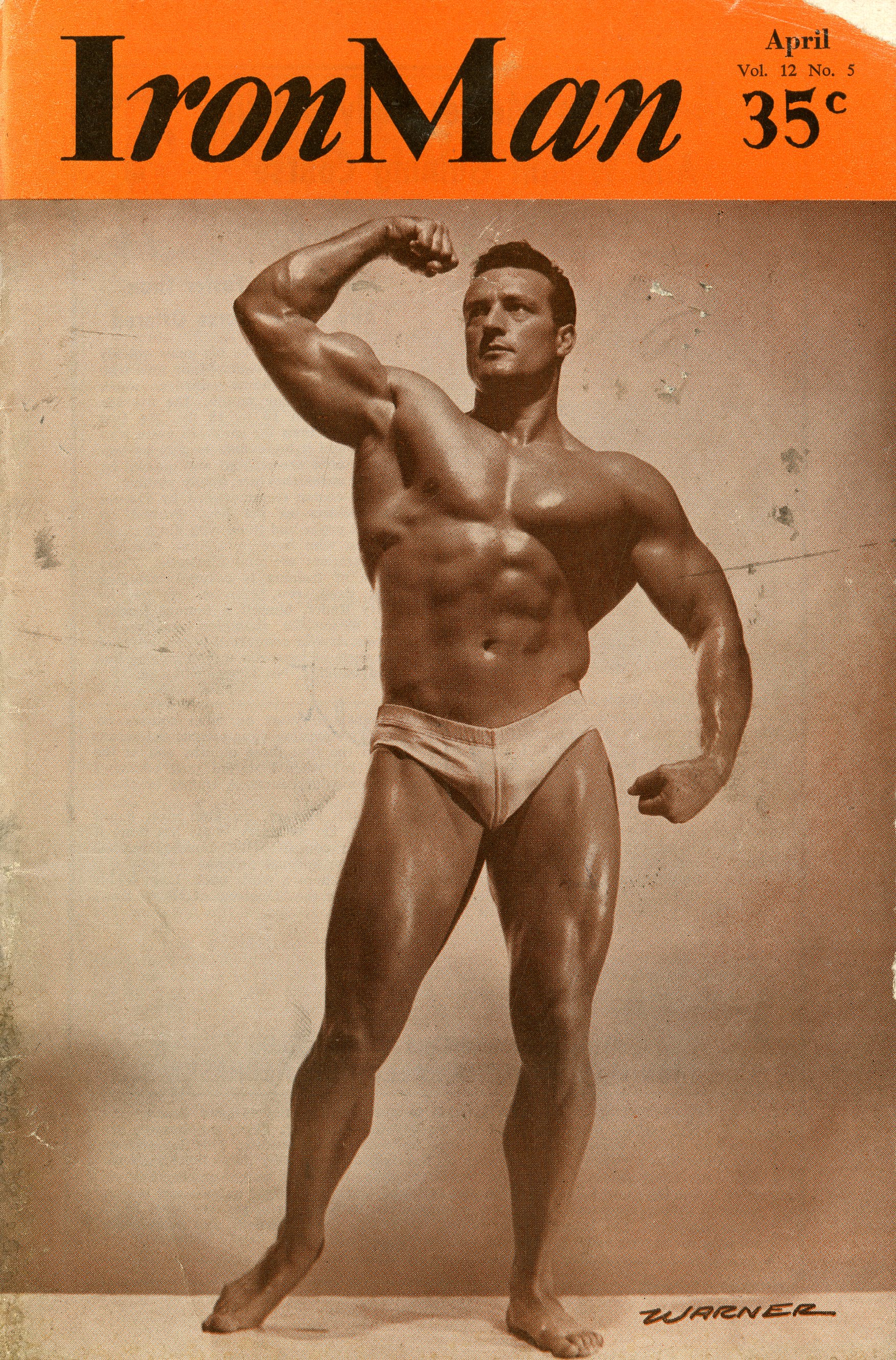
The pioneers of bodybuilding were featured in magazines like Iron Man, Tomorrow’s Man, and Muscle Power. Iron Manwas founded in 1936 by two Nebraska natives, Peary Rader and his wife, Mabel Rader. In the early 1950s, Iron Man was the first weight-training publication to show women working out with weights as part of their overall fitness regimen. The magazine  even presented a pregnant woman training with weights, thus educating readers on the benefits of exercise during pregnancy; thoroughly modern concepts certainly decades ahead of their time.

Many of the bodybuilding titles also served another audience that they may or may not have been aware of. At a time when being gay was not something talked about openly, magazines were still exploring their parameters. Some men’s health or fitness magazines, titles such as Muscle Power and Muscle Man were magnets for a gay audience . Many of the readers were primarily gay men who enjoyed looking at the physiques of other men, but because of the times, publishers offered these consumers what they wanted in the form of bodybuilding.

The covers of these magazines were of very handsome men, physiques perfectly attuned with the tights they wore. Often, the men on the cover were champions, such as the April 1953 cover of Iron Man which featured Clarence Ross, Mr. America, Mr. U.S.A. and holder of several other titles. They were eye candy for some and goals for others.

As usual magazines were reflectors of society, even in March 1953. Whether many of them knew it or not. The wisdom we can learn from these earlier titles is crucial when looking to the future of the magazine industry. As they say: you can’t know where you’re going until you know where you’ve been.

Speaking of wisdom, in the next chapter we’ll get a little “Wee Wisdom” from some magazines that educated and enlightened the children and teens of March 1953. Let’s read on and see…

To be continued…

h1

Men’s Lifestyle Magazines 1953… The Magazines And I, A Serialized Book. Chapter Five, Part One

September 18, 2020

Chapter Five, Part One

Men’s Lifestyle Magazines … is the fifth chapter from the serialized book I am writing on the magazines of 1953, specifically March 1953, the month I was born.  This is chapter five, part one.  Feel free to back track for chapters one, two, and three in previous blogs.  Enjoy.

In 1951, Hugh Hefner landed a job as a copywriter at Esquire; this was two years before he launched Playboy. The first issue of Playboy was launched in December 1953. It was 44 pages and had a 50 cent cover price. Esquire was being published at that time for the same cover price, but was over large-size 280 pages. When Hef started Playboy,  many believe he used Esquire as a planogram of what a men’s magazine should be, because in 1953 Esquire also had nudity, including a centerfold that they called “Esquire’s Lady Fair,” and was first launched in the March 1953 issue. So, in actuality, there wasn’t anything too original in Playboy when it first hit newsstands.

Now, while this chapter is certainly not just about Hef and two of the most influential men’s magazines around in 1950s, namely Esquire and Playboy, it is about the development of American men’s magazines during that timeframe. It’s about true adventure, grit, masculinity, bodybuilding, virility and ultimately, the journalistic foundation for today’s sophisticated men’s titles. It’s all about what made a man a man in 1953 (according to the content gurus of that era), and it’s about the challenges many titles faced when trying to change some of those cultural constrictions of masculinity of that decade.

The men’s magazines of 1953 were both cutting edge and deliberately predictable. There were the familiar culprits, such as the Great Outdoors, the beautiful women, and the adventure stories, but there were also magazines like Gentry,founded by William C. Segal; it was a forward-thinking, eclectic style bible, where readers would be as likely to read an article on the manufacturing of Scottish tweed as one on the architecture of the American ranch house.

So without further ado, let’s take a look…

ARGOSY

Argosy magazine began as a pulp title way back in 1882. In fact, it is credited with being the first American pulp magazine. It actually began as a children’s weekly story–paper entitled The Golden Argosy. Right before the Second World War, the magazine was considered one of the Big Four pulp magazines, along with Blue Book, Adventure and Short Stories. In December 1888 the title was changed to The Argosy.

In 1920, the magazine merged with publisher Frank Munsey’s The All-Story Magazine, resulting in a new title, Argosy All-Story Weekly. By November 1941 the magazine had switched to a biweekly publication, then became monthly in 1942.

In 1943, the magazine switched from pulp to slick paper and took a step back from its all-fiction content, expanding the idea that Argosy was becoming more and more a “men’s magazine.” Soon it became associated with the men’s adventure genre of that time. While not particularly successful, Argosy began running a new true crime column, “Court of Last Resort” in the late 1940s and 1950s and saw a substantial boost in sales.  The final issue of the original magazine was published in November 1978.

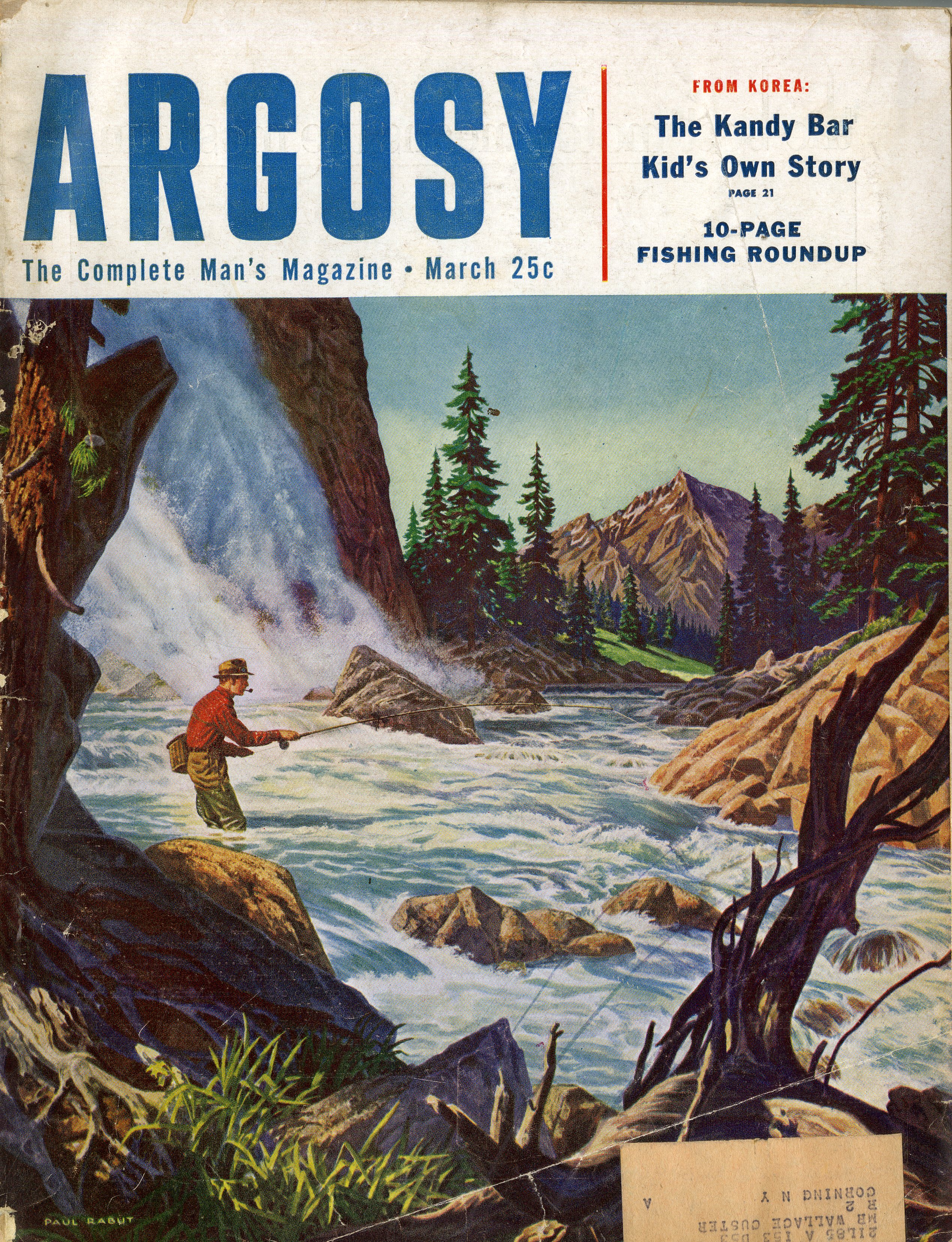
The March 1953 issue of Argosy with the tagline “The Complete Man’s Magazine” has a cover image that would have been many men’s dream getaway: pipe in-mouth, fishing pole in hand, a lone gentleman standing knee-deep in the crystal clear waters of some mountain lake, complete with waterfall behind him. This issue featured four fiction pieces, several articles, and the all-important “Court of Last Resort” offering. The departments were all about the male psyche: “Men’s Books,” “Hunting and Fishing,” “Records for Men,” and many others.

Harry Steeger was the publisher and his commentary in the beginning of the issue was entitled: “Great Hunting – Rocky Mountain Style.” The advertisements in the magazine matched the overall outdoorsy feel: ammunition, fishing lures, and the smooth taste of a good whiskey. It was definitely a magazine that exuded a certain kind of testosterone.

BLUEBOOK

Women’s service journalism  had Redbook, the men of March 1953 had Bluebook. Bluebook ran 70 years under many different titles and in fact was a brother to The Red Book Magazine and The Green Book Magazine. It was published from 1905 to 1975. At first, the magazine was aimed at both male and female readers, but eventually the title became a men’s adventure magazine, publishing purportedly true stories. The magazine was named “King of the Pulps” in the 1930s and some notables in the industry have said that between the 1910s and the 1950s Blue Book achieved and sustained a level of excellence reached by few other magazines.

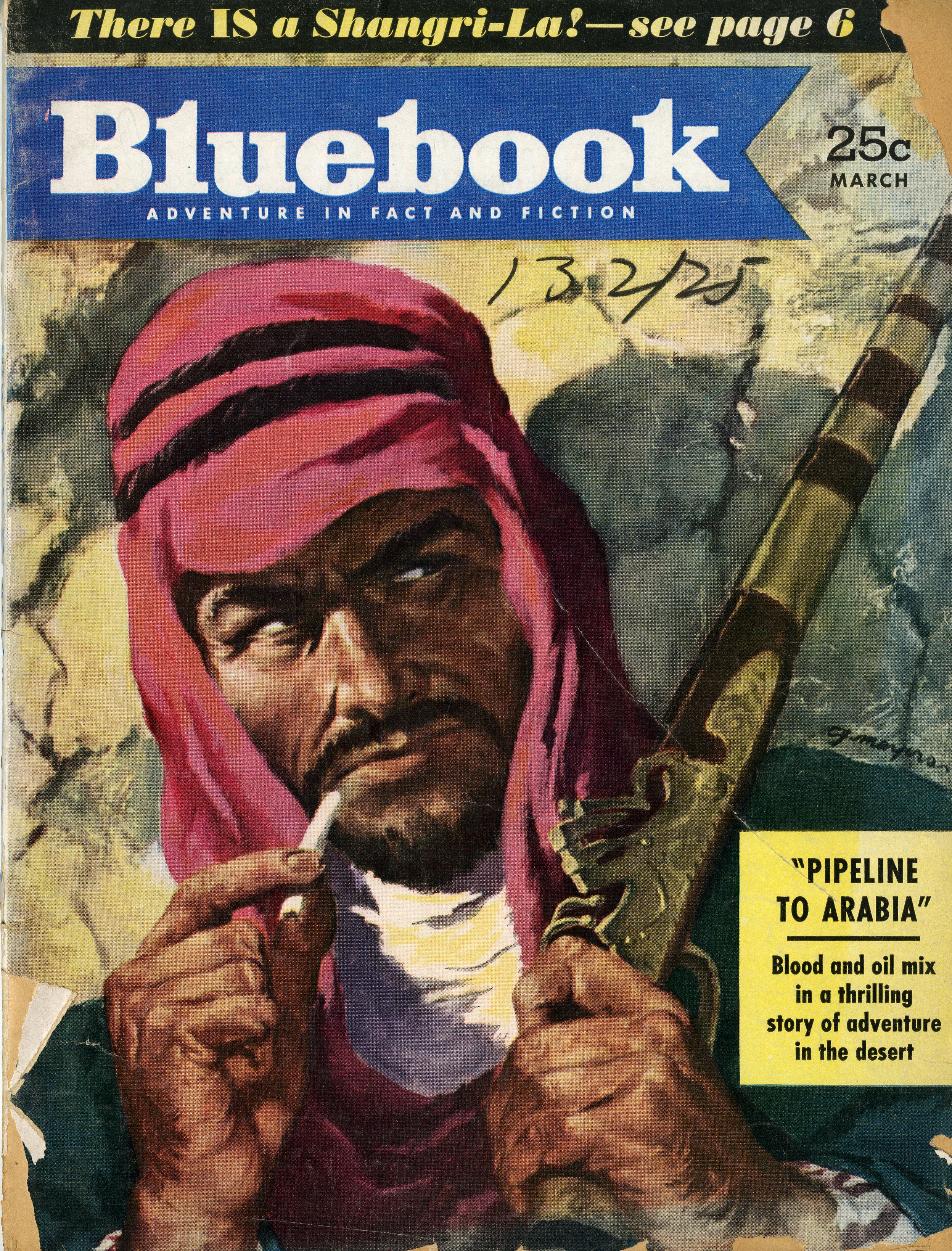
The March 1953 issue had a gentleman who appeared to be dressed for the desert on the cover with a very ominous look alive in his eyes. He had a cigarette poised to hit his lips and held a shiny-barreled gun of some kind in his hand and was staring menacingly off to the side. Be he a good guy or a bad guy, he was certainly an illustration that grabbed attention.

The content was filled with short stories, articles such as “How To Make a Million Dollars” and even excerpts from adventure novels. Bluebook’s tagline in March 1953 was “Adventure In Fact And Fiction.” Maybe it was up to the reader to decide one from the other.

CLIMAX

Climax was a men’s high adventure magazine that was published by Macfadden Publications, which was owned by Pulp and physical fitness pioneer Bernarr Macfadden. The magazine also featured some of the best cover illustration art ever made. War stories – both fiction and non-fiction – were a common feature in men’s adventure magazines, as were advice and expose stories and news features specifically geared for veterans and active duty serviceman.

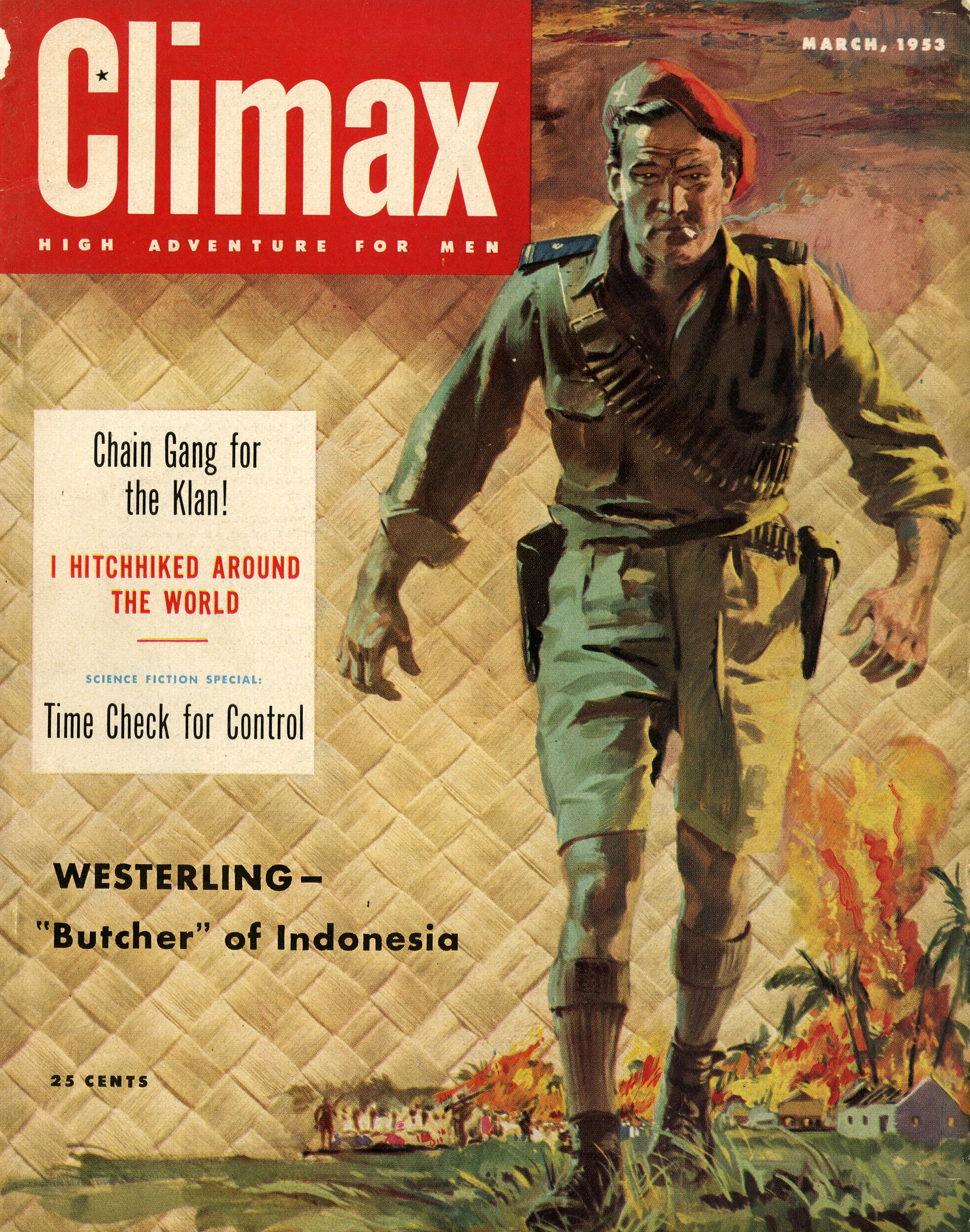
The March 1953 issue of Climax was its premier issue, Vol. 1, No. 1. The cover was an illustration of a mercenary type, complete with drapes of bullets banded across his chest and a cigarette hanging out of his mouth. The cover lines were stories such as “Chain Gang for the Klan!,” “I Hitchhiked Around the World,” and “Time Check for Control.” The magazine’s content had fiction, crime, war, a department called “For the G.I.,” and other articles and shorter fiction following the same wildly machismo-type stories.

Climax added another facet of “True Adventure” and hardcore action to the men’s magazines of March 1953. And the genre welcomed it.

COUNTRY GENTLEMAN

The Country Gentleman was an American agricultural magazine founded in 1852 in Albany, New York, by Luther Tucker. Tucker also started Genesee Farmer in 1831, which merged with The Cultivator, and was then merged into The Country Gentleman. When the magazine was sold in 1911 to Curtis Publishing, the title began to focus on the business side of farming, which was mostly ignored by the agricultural magazines of the time.

By 1955, The Country Gentleman was the second most popular agricultural magazine in the U.S., with a circulation of 2,870,380. The same year it was purchased by, and merged into, Farm Journal, an agricultural magazine with a slightly larger circulation.

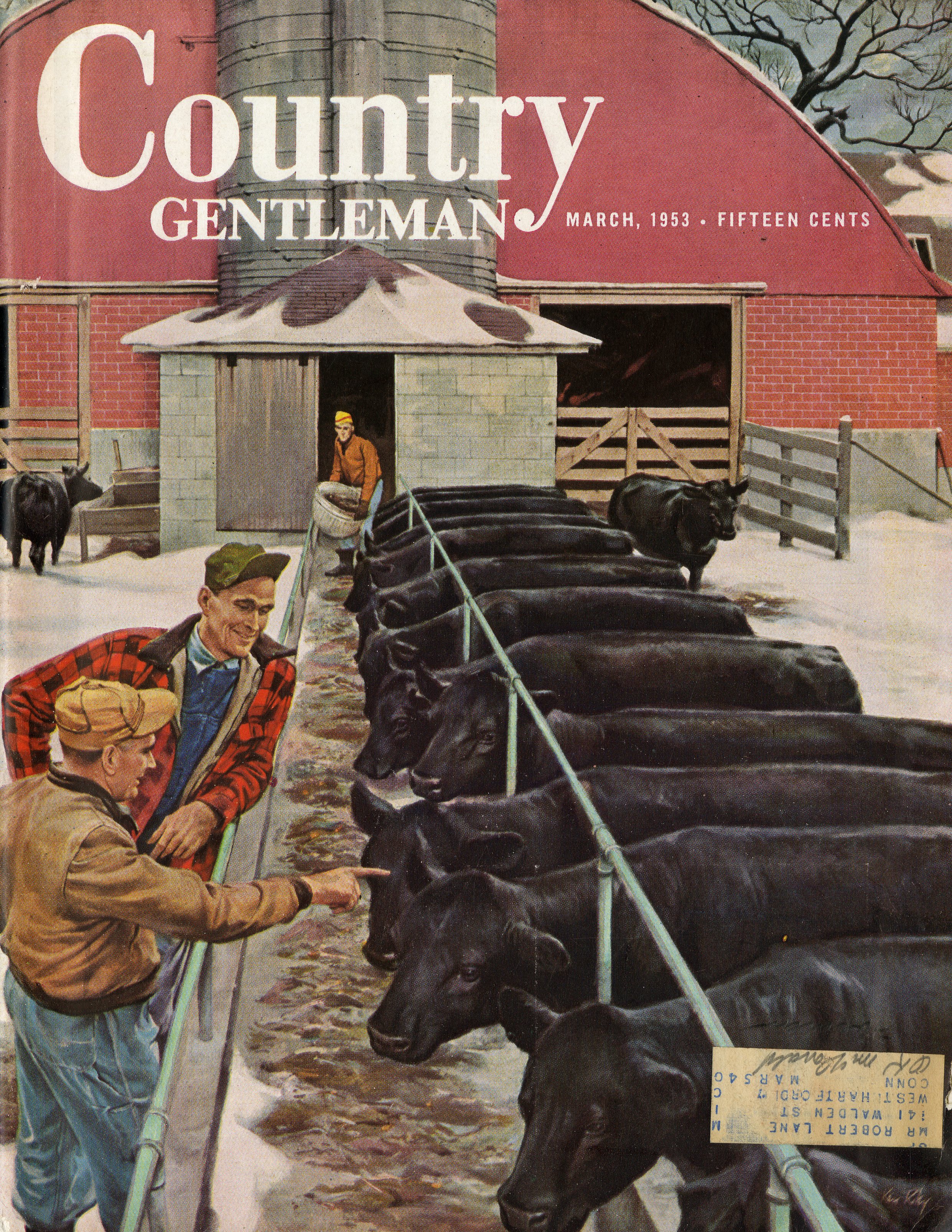
The March 1953 issue was filled with everything a farmer of that era needed to know. The cover was alive with black cows all-in-a-row, farmers considering those bovine, and a red brick barn in the background. Inside were the magazine’s regular features, such as “Country Gentleman Salutes,” “Letters,” “Today,” and other topics of interest.

There were general articles: “Better Stick With Those Beef Cows,” “Triple Your Pasture Yields,” and “Cheap Way To Banish Mud Roads,” among others, one story of fiction and many other items of interest.  Weed control was broached and the advertisements were endemic to the content: tractors, lawn mowers, and cigarettes. We all know it was healthier to smoke in the ‘50s, at least according to the ads.

The Country Gentleman was a magazine that did its job. It handled the everyday life of the agricultural farmer and offered him advice, solutions, and education about new farm implements or anything that was innovative at that time for the land.

To be continued…


h1

The Magazines And I. Women’s Service Journalism Magazines. Chapter Four, Part Three.

September 11, 2020

Chapter Four, Part Three

Women’s Service Journalism Magazines … is the fourth chapter from the book I am writing on the magazines of 1953, specifically March 1953, the month I was born.  This is chapter four, part three.  Feel free to back track for chapters one, two, and three in previous blogs.  Enjoy.

OTHER WOMEN’S SERVICE MAGAZINES OF MARCH 1953

The Seven Sisters weren’t the only women’s magazines out there in March 1953 serving the women of the nation. There were titles such as Everywoman’s and Today’s Woman; The American Magazine and Better Living; Cosmopolitan and Mademoiselle; and Woman’s Home Companion. Let’s look at these great titles individually.

BETTER LIVING

In 1951, McCall Corporation began publishing Better Living magazine. The 100-page monthly magazine sold for five cents, and was distributed through stores that were members of the Super Market Institute. It ceased publication in 1956. The magazine was filled with recipes, tips on child care, fashion and beauty and many other topics of interest for women.

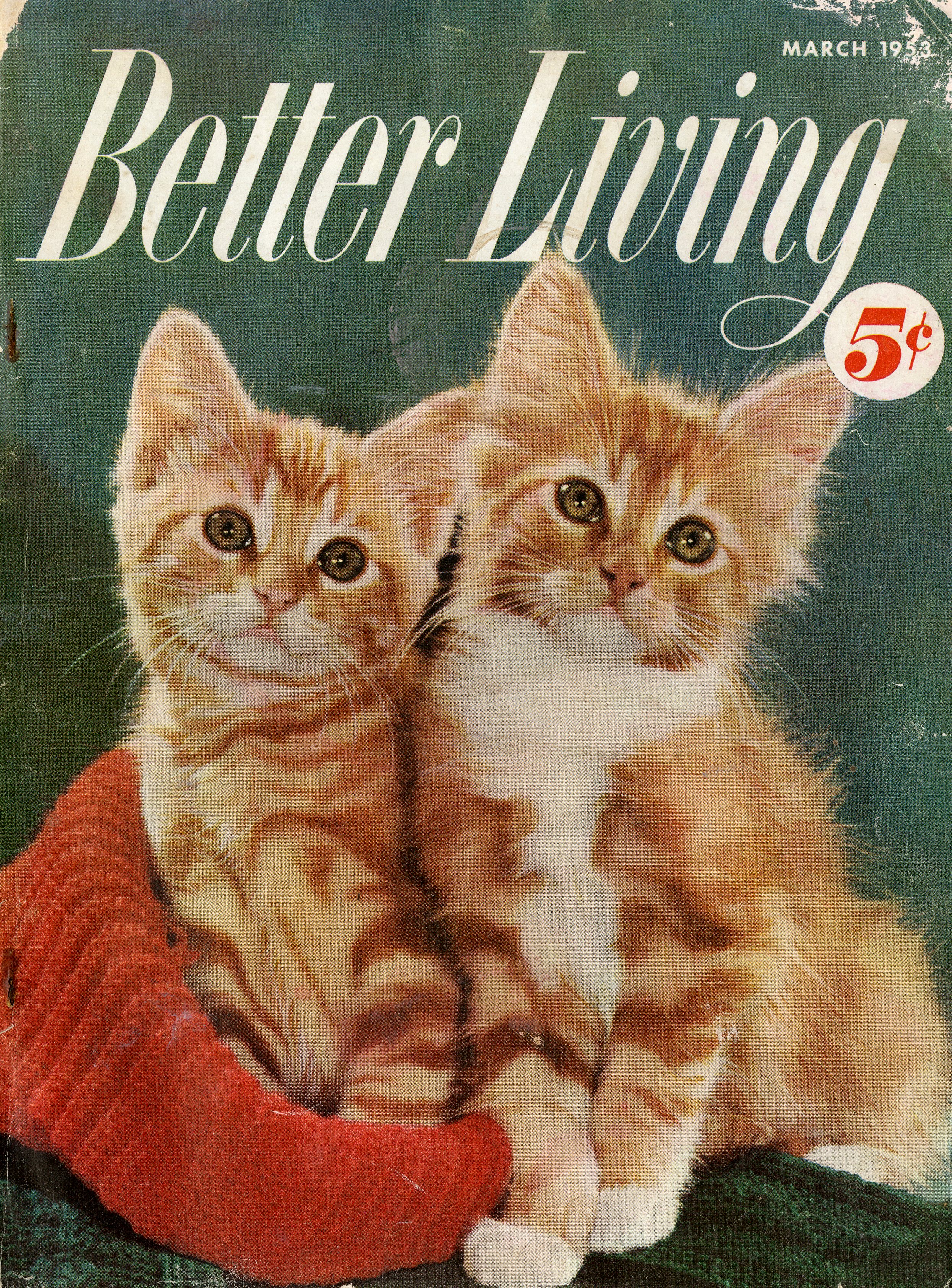
The March 1953 cover was of two adorable kittens staring into the camera lovingly. The magazine served its audience that month with articles such as breakfast pep-ups, better homework from your child and short stories that offered engaging fiction, as well as tips on what to do before you buy a house.

COSMOPOLITAN

Cosmopolitan is of course still being published today. The magazine began as The Cosmopolitan and was first published in March 1886. It began as a family magazine and was later transitioned into a literary title, only to become a women’s magazine in 1965 when the infamous Helen Gurley Brown became its editor in chief. Today, the magazine is known for its sexually explicit cover lines and bikini-clad cover models.

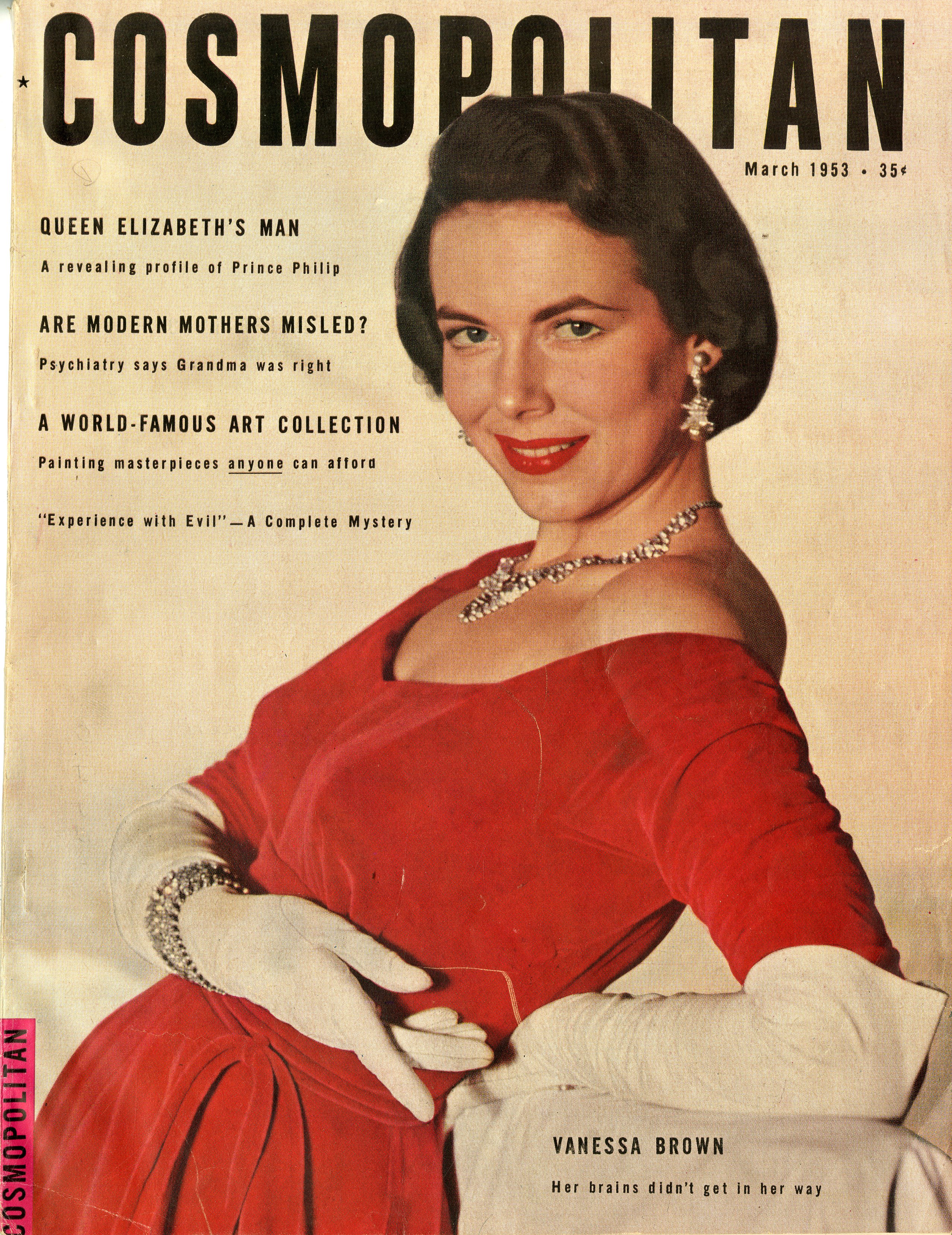
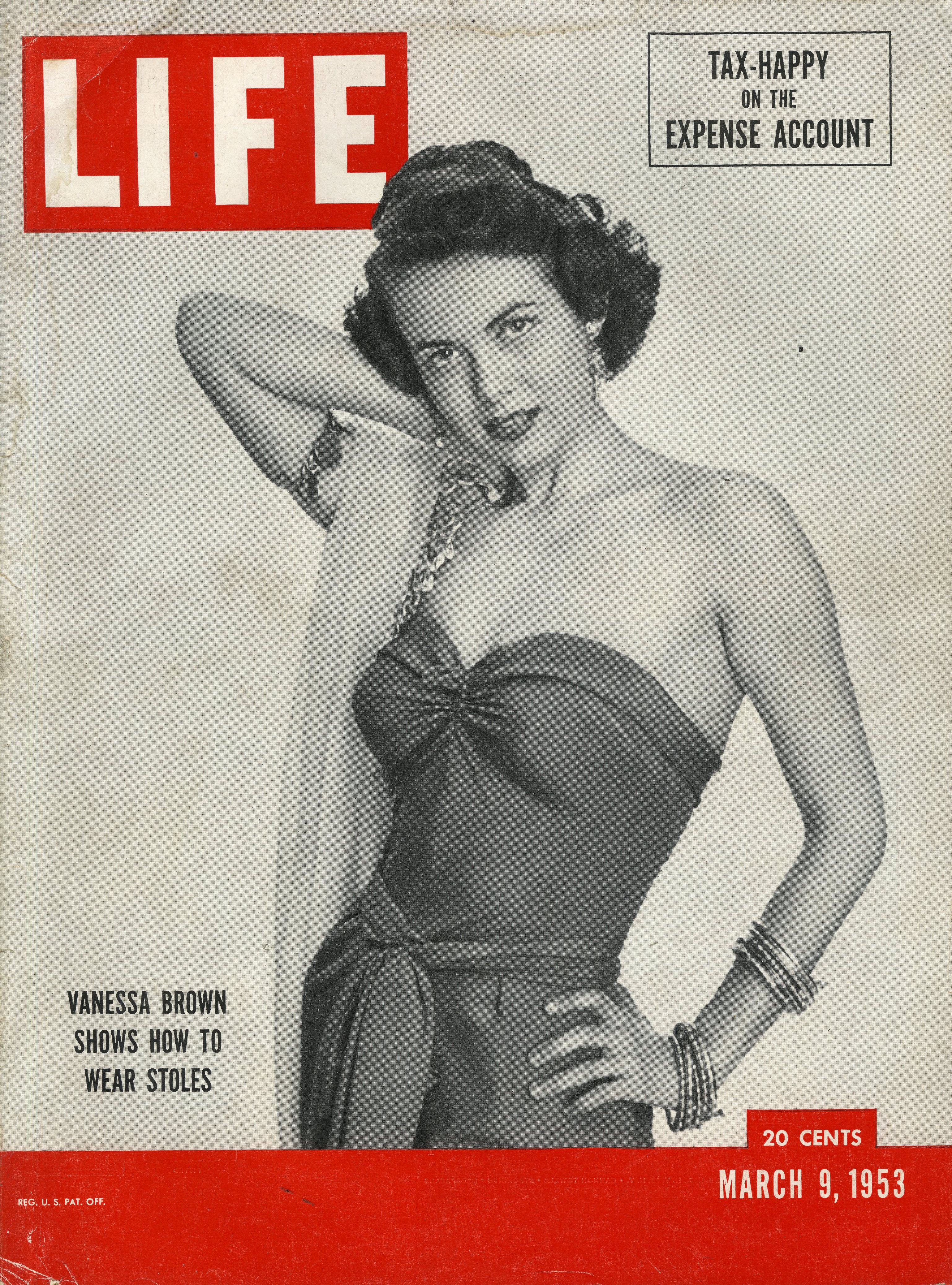
The March 1953 issue’s cover was a bit more sedate in style. Then Broadway actress Vanessa Brown graced the cover in a red velvet dress and very extravagant jewels, complete with formal elbow-length white gloves. The cover lines then were also more placid, such as “Queen Elizabeth’s Man,” “Are Modern Mothers Misled,” and “A World-Famous Art Collection.”

The masthead of the March 1953 issue had John J. O’Connell as editor and service articles like “What’s New In Medicine” and “The Cosmopolitan Look.” The magazine has certainly evolved with the times, but the vintage issue from March 1953 shows a definite class and style that stands out greatly.

EVERYWOMAN’S

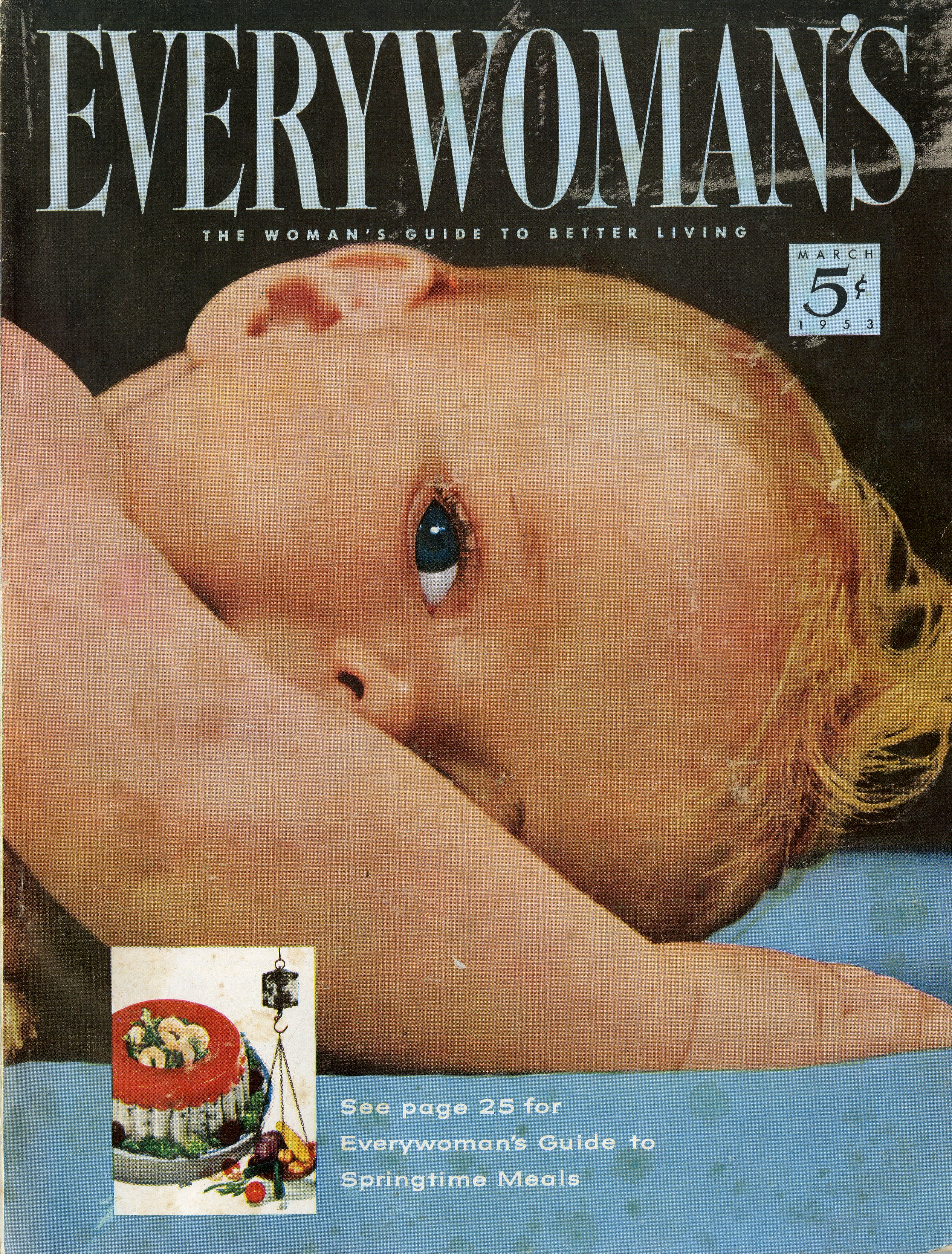
With the tagline: The Woman’s Guide to Better Living, Everywoman’s was a monthly magazine published by Everywoman’s Magazine, Inc. starting in the 1940s. The magazine was eventually absorbed by Family Circle in 1958, which then published it as Everywoman’s Family Circle through 1962 before reverting to its original name.

The March 1953 issue had an endearing cover of a baby glancing out at you with one blue eye, the other being covered up by his arm. Inside the covers was articles on food, fashion, homemaking and of course, the wonderful fiction the era was known for. Regular features were also prevalent, from “Everywoman’s Woman” to “Where’s That Pot of Gold.”

MADEMOISELLE

Mademoiselle was first published in 1935 by the New York publisher Street & Smith. It was eventually acquired by Condé Nast Publications. Mademoiselle was known as a fashion magazine and for publishing short stories by famous authors like Truman Capote and William Faulkner, among many others. The August 1961 “college issue” of Mademoiselle included a photo of UCLA senior class president Willette Murphy, who did not realize she was making history as the first African American model to appear in a mainstream fashion magazine.

In the 1960s, the magazine focused on making itself more aimed at the “smart young woman.” The magazine ceased publication in November 2001.

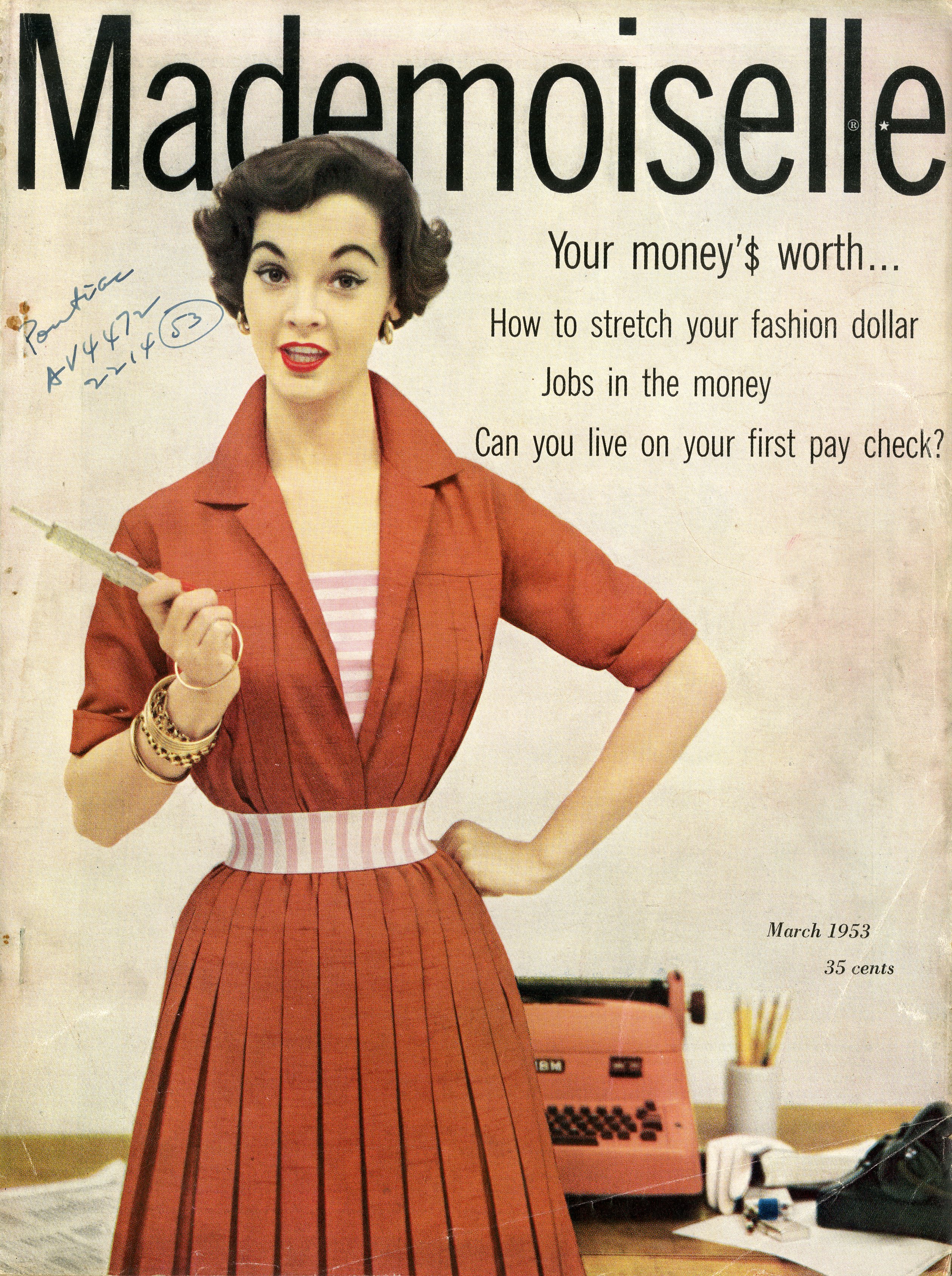
The March 1953 issue had a very smartly-dressed model for her era on the cover standing in front of a typewriter. The dress she is wearing is a box-pleated shirtdress, tailored and simply cut. It’s a very arresting cover. The articles inside are quite hefty on fashion and health and beauty. But there is fiction, jobs and futures, and a section known as the “College Board.”

THE AMERICAN MAGAZINE

The American Magazine was a periodical that was founded in June 1906. The magazine’s original title was Frank Leslie’s Popular Monthly and actually began publication in 1876. It was renamed Leslie’s Monthly Magazine in 1904, and then was renamed again as Leslie’s Magazine in 1905. It became The American Magazine in June 1906 when journalists Ray Stannard Baker, Lincoln Steffens and Ida M. Tarbell left McClure’s to help create it. The magazine focused on human interest stories, social issues and fiction. It folded in 1956.

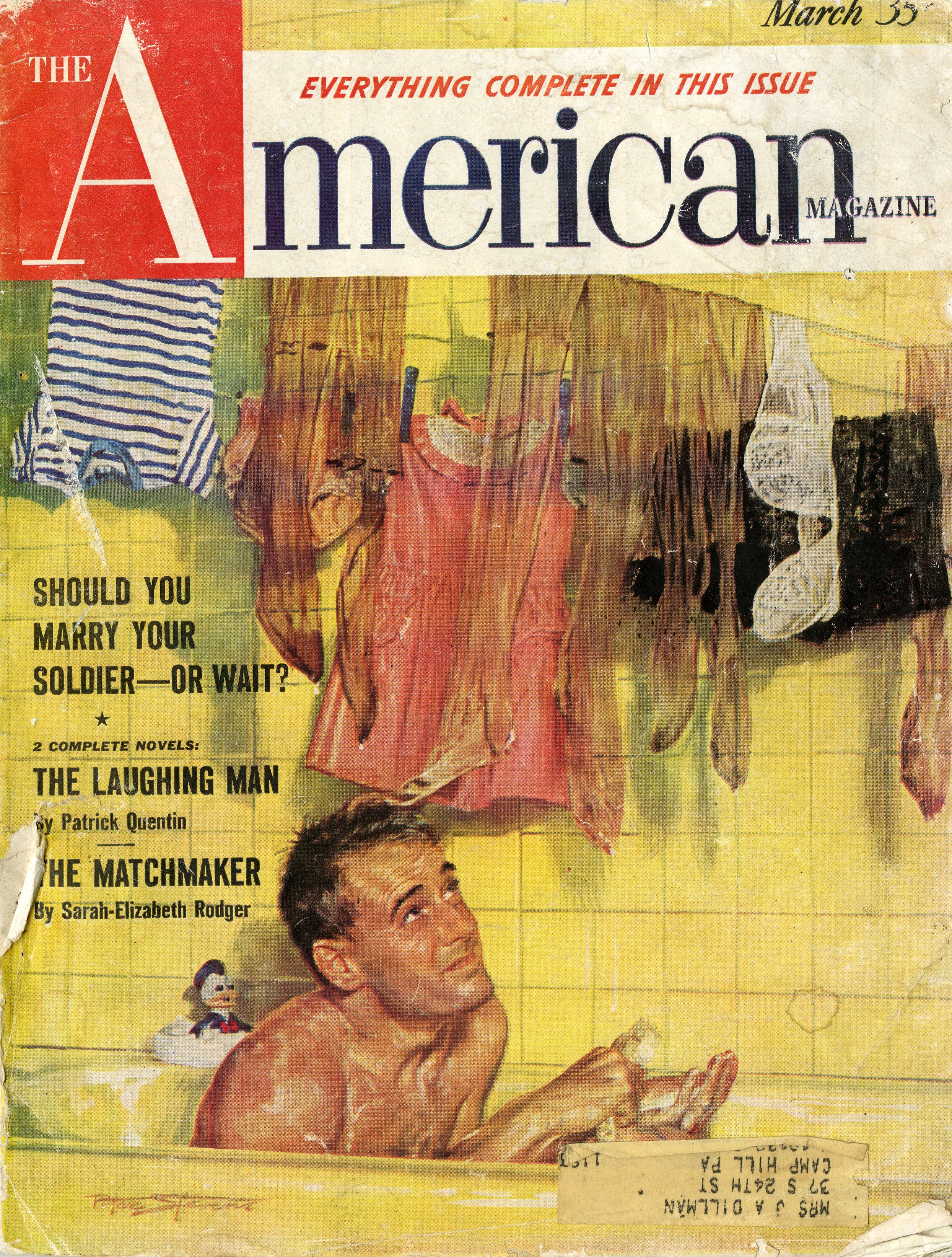
The March 1953 issue was chocked full of women’s interest stories, such as “Should You Marry Your Soldier – Or Wait?” and “The Matchmaker.” The cover is hilarious as a seemingly naked man sits in the tub beneath dripping nylons and other female unmentionables, all entirely drawn in cartoon fashion, of course. There’s romance stories, novels, and articles that inspire and inform. A great magazine, gone but not forgotten.

TODAY’S WOMAN

Today’s Woman, with the tagline “For Young Wives,” was published by Fawcett Publications and became only one of many in the company’s hoard of successful titles. Fawcett published magazines such as Family Circle, Hollywood, Motion Picture, Movie Story, and many, many others.

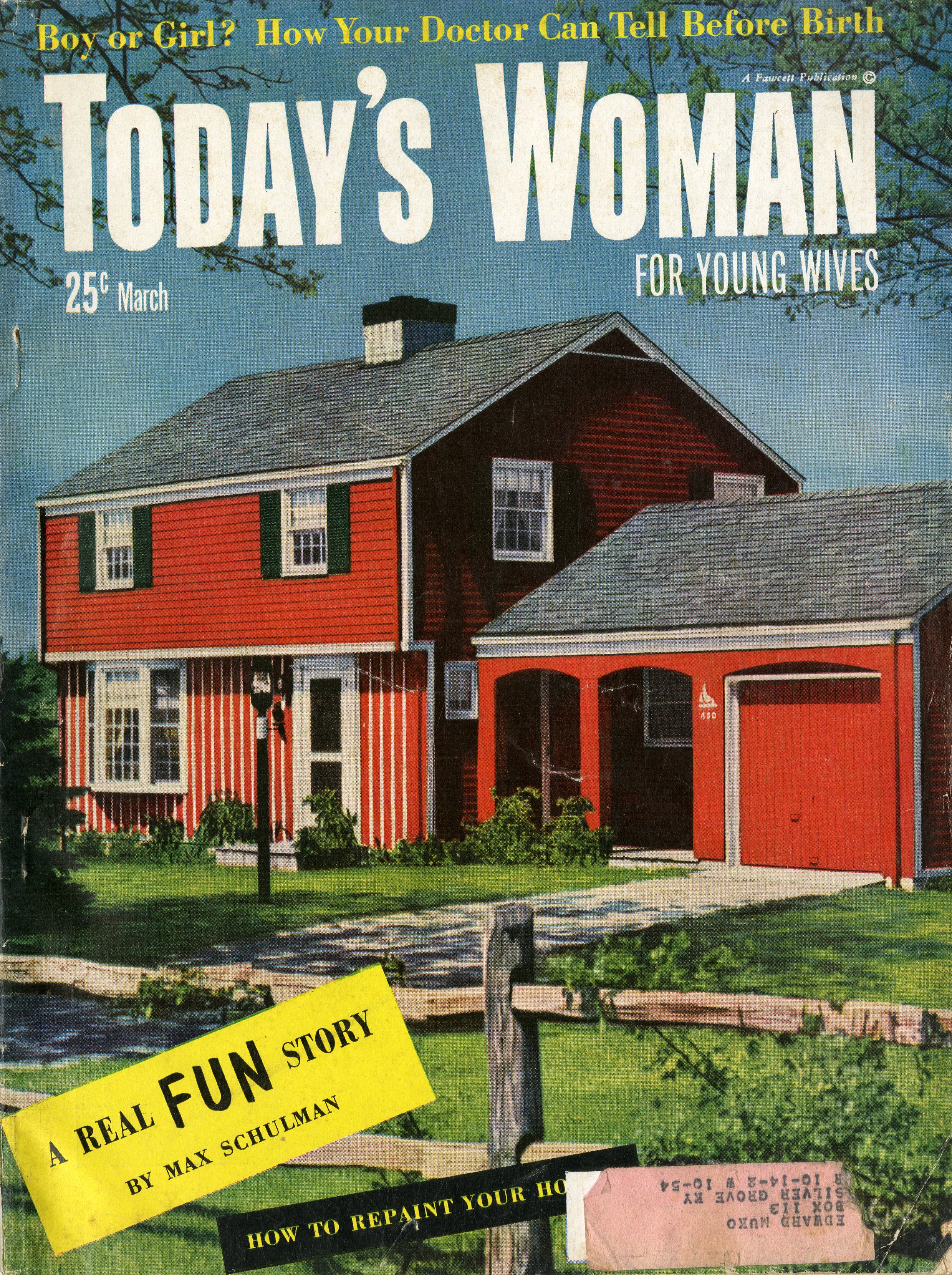
The magazine provided helpful information for young wives when it came to their children, their homes and according to one article in the March 1953 issue, their very own worth: “Your Cash Value As A Wife.” That month’s cover was of a lovely two-story red painted home with a manicured lawn and the cover line “A Real Fun Story,” with a top cover line that read “Boy or Girl? How Your Doctor Can Tell Before Birth.” No sonograms in those days.

WOMAN’S HOME COMPANION

Woman’s Home Companion was published from 1873 to 1957. The magazine became highly successful and had a circulation of more than four million during the 1930s and 1940s. The magazine went through editor and editorial changes over the years, giving into some influence of the muckraking journalism of the times, but pushing toward becoming more of a general interest magazine. Eventually, there was coverage of art and music, architecture, books in addition to the regular departments dealing with fashion and the home. The Woman’s Home Companion came to an end January 1957, shortly after the first 1957 issues were distributed, owned then by Crowell-Collier Publishing, the same people who published Collier’s.

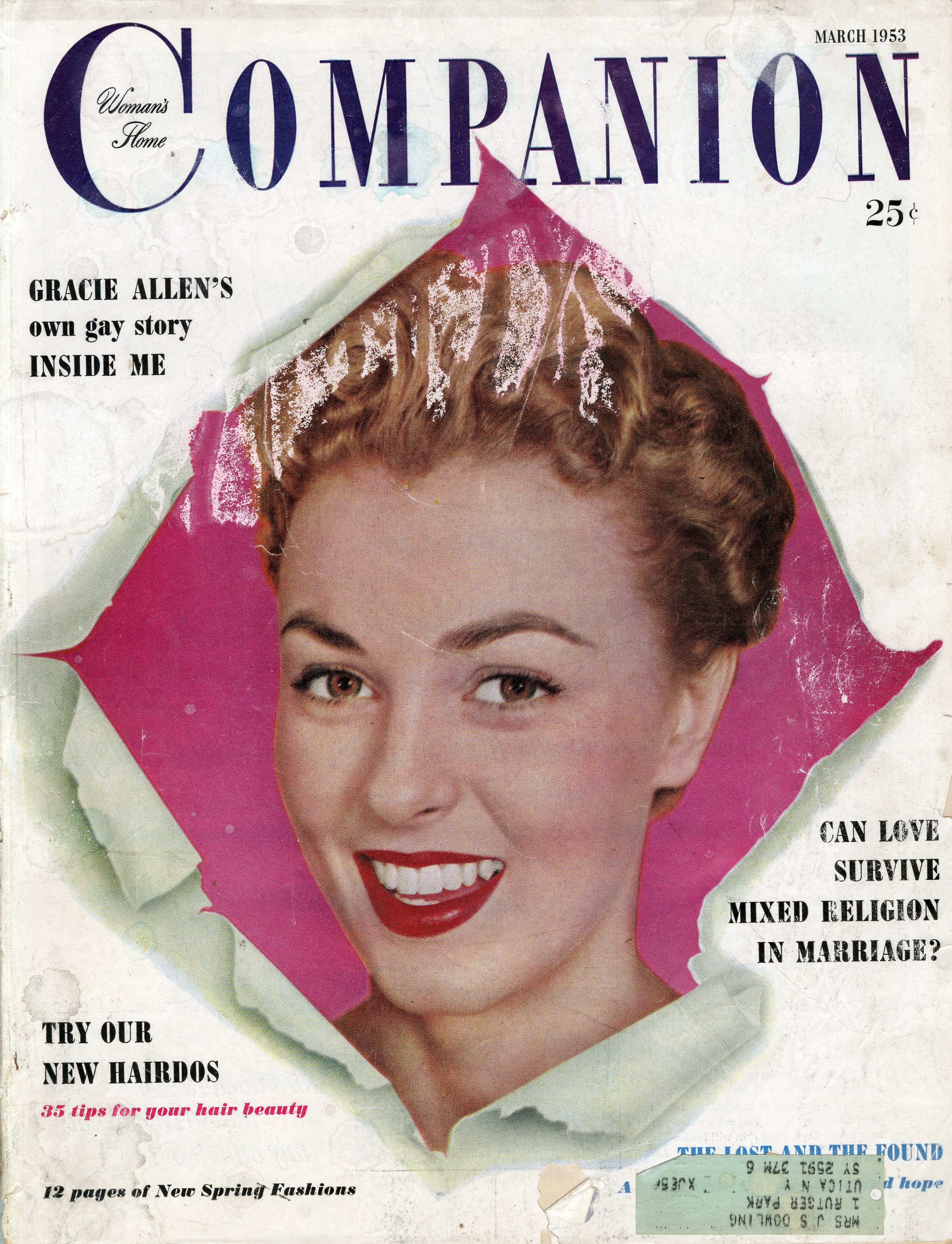
The March 1953 issue had a very bright-eyed model with a stylish-for-the-times hairdo above the cover line: “Try Our New Hairdos.” The other cover lines were a mixture of celebrity: “Gracie Allen’s Own Gay Story, Inside Me” and “Can Love Survive Mixed Religion in Marriage?”

The content went from fashion to home service. And the fiction was aimed at women and romance. The  magazine was oversized and definitely made its presence known.

***

Women’s service magazines were and still are an important part of magazine publishing and always will be. They provide relevant and useful information that never goes out of style.

Next up, in Chapter Five, we’ll be looking at the men’s magazines of March 1953. Some may surprise you!


h1

The Magazines And I: Women’s Service Journalism Magazines. Chapter Four, Part Two.

September 4, 2020

Chapter fFour, Part Two

Women’s Service Journalism Magazines … is the fourth chapter from the book I am writing on the magazines of 1953, specifically March 1953, the month I was born.  This is chapter four, part two.  Feel free to back track for chapters one, two, and three in previous blogs.  Enjoy.

LADIES’ HOME JOURNAL

Ladies’ Home Journal was first published on February 16, 1883 as The Ladies’ Home Journal. The magazine’s publisher, Cyrus H.K. Curtis, developed the magazine from a popular supplement that was originally started in the magazine Tribune and Farmer. The supplement was at that time called Women at Home and Curtis’s wife, Louisa Knapp Curtis wrote it. Once it became an independent magazine itself, Louisa became editor for the first six years of its existence. The title was The Ladies Home Journal and Practical Housekeeper, but the last three words were eliminated in 1886. It reached a circulation of more than one million copies by 1903, and became the first magazine to do so.

Curtis publishing sold the magazine to Downe Communications in 1968 and eventually Meredith Corporation bought it from its “then” owner Family Media, as it was sold two more times after the Curtis family sold it. When it began to lose circulation in the late 20th century, Meredith announced it would no longer be a monthly, so it became a quarterly “special interest” title available only on newsstands. Its last issue was published in 2016.

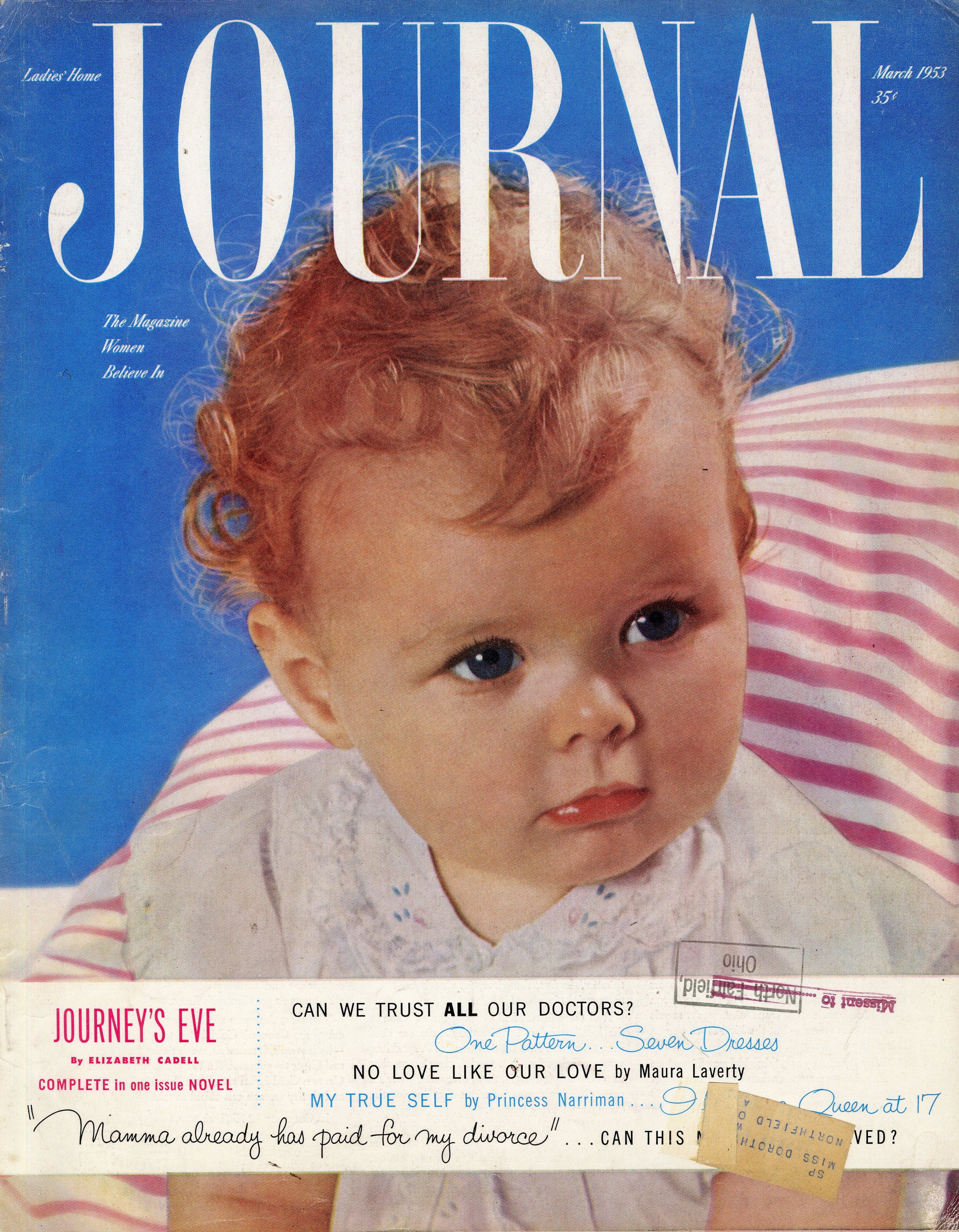
The March 1953 title, with the tagline “The Magazine Women Believe In,” was an oversized morsel of entertaining fiction stories and special features that consisted of: “Before One God; The Old Bible and the New; Youth Accepts Responsibility; along with many more. The cover was of a beautiful baby that wore pastels in contrast to the striped blanket in leaned against.

MCCALL’S

McCall’s Magazine was first created as a small format title that was originally called The Queen in 1873. By 1897, the magazine was retitled McCall’s Magazine – The Queen of Fashion, and then eventually shortened to McCall’s. As one of the Seven Sisters, McCall’s grew into a large format glossy title that boasted a column by Eleanor Roosevelt from June 1949 until her death in November 1962, among many other notable authors.

For years, the Betsy McCall paper doll was printed in most issues of the magazine and became so popular that the regular feature was eventually made into a vinyl, 14” doll that children could hold and play with. Magazines are good at creating iconic figures.

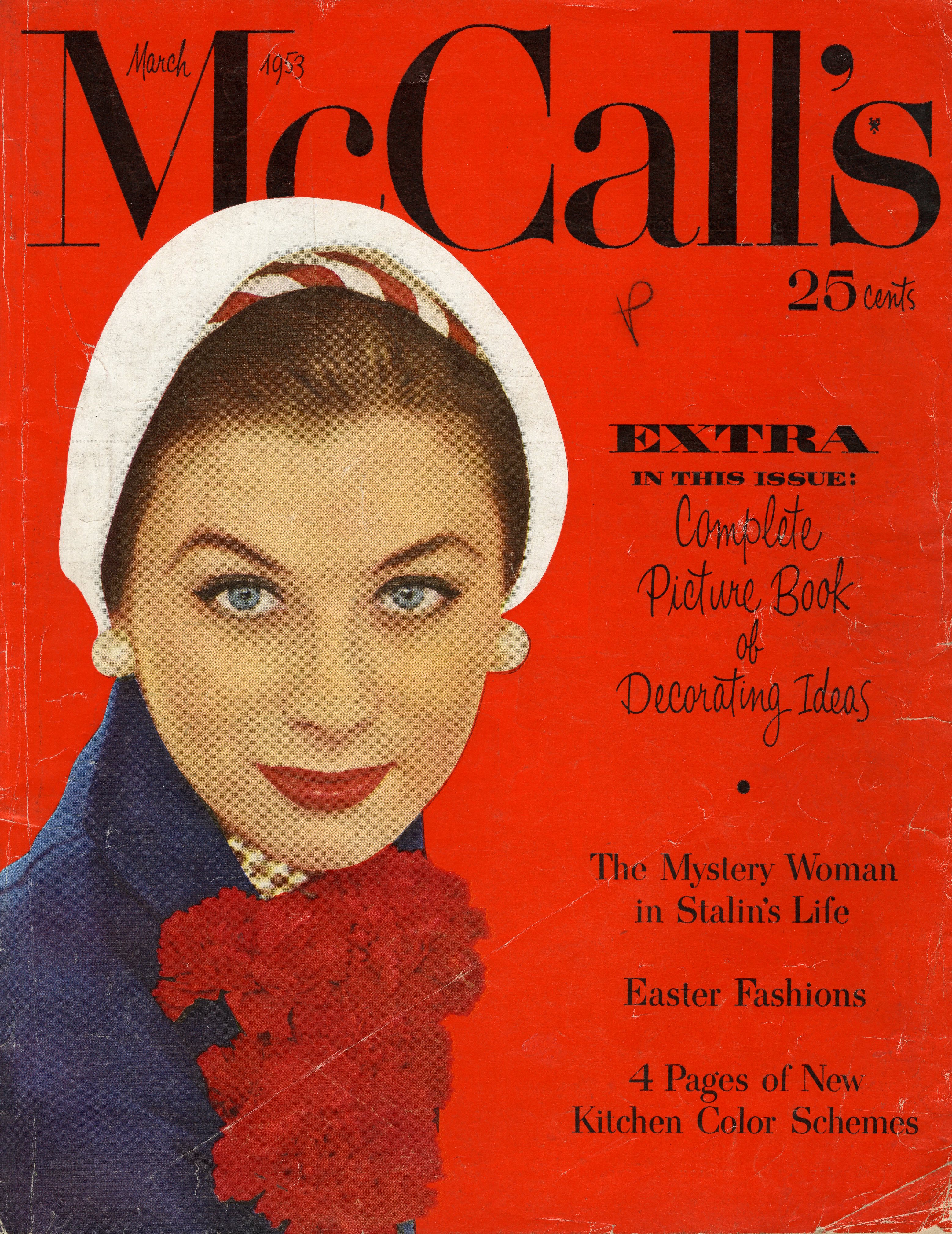
The March 1953 cover featured a beautiful model wearing the latest in Easter hats, with an entire article about Easter frocks and their accessories. McCall’s brought women a view of what the women of the day were wearing when it came to holiday attire. The meat of the content inside the magazine was filled with short stories and serious articles, along with whimsical, fun things like “How Much Does Your Husband Annoy you?”  McCall’s was a member of the Seven Sisters proudly, also serving women with household tips and recipes.

REDBOOK

In May 1903, The Red Book Illustrated was first published by a firm of Chicago retail merchants. The name was quickly changed to The Red Book Magazine. The McCall Corporation bought the title in the summer of 1929 and it became known as simply Redbook. In 1937, circulation hit one million and the magazine had amazing success until the late 1940s when television began to rise and the magazine began to lose touch with its demographic.

Longtime editor, Edwin Balmer, was replaced during that time and Wade Hampton Nichols, who had edited various movie magazines, took over and decided to focus on young adults between the ages of 18 and 34. By 1950, circulation reached two million and the cover price was upped to 35 cents.

Despite the early success of Redbook, as the years went by the audience changed and so did the magazine’s editors. By the 1980s,  the covers became more celebrity-oriented and the content based on more fitness, exercise and nutrition. Its last owner, Hearst Corporation, ceased publication of Redbook in 2018.

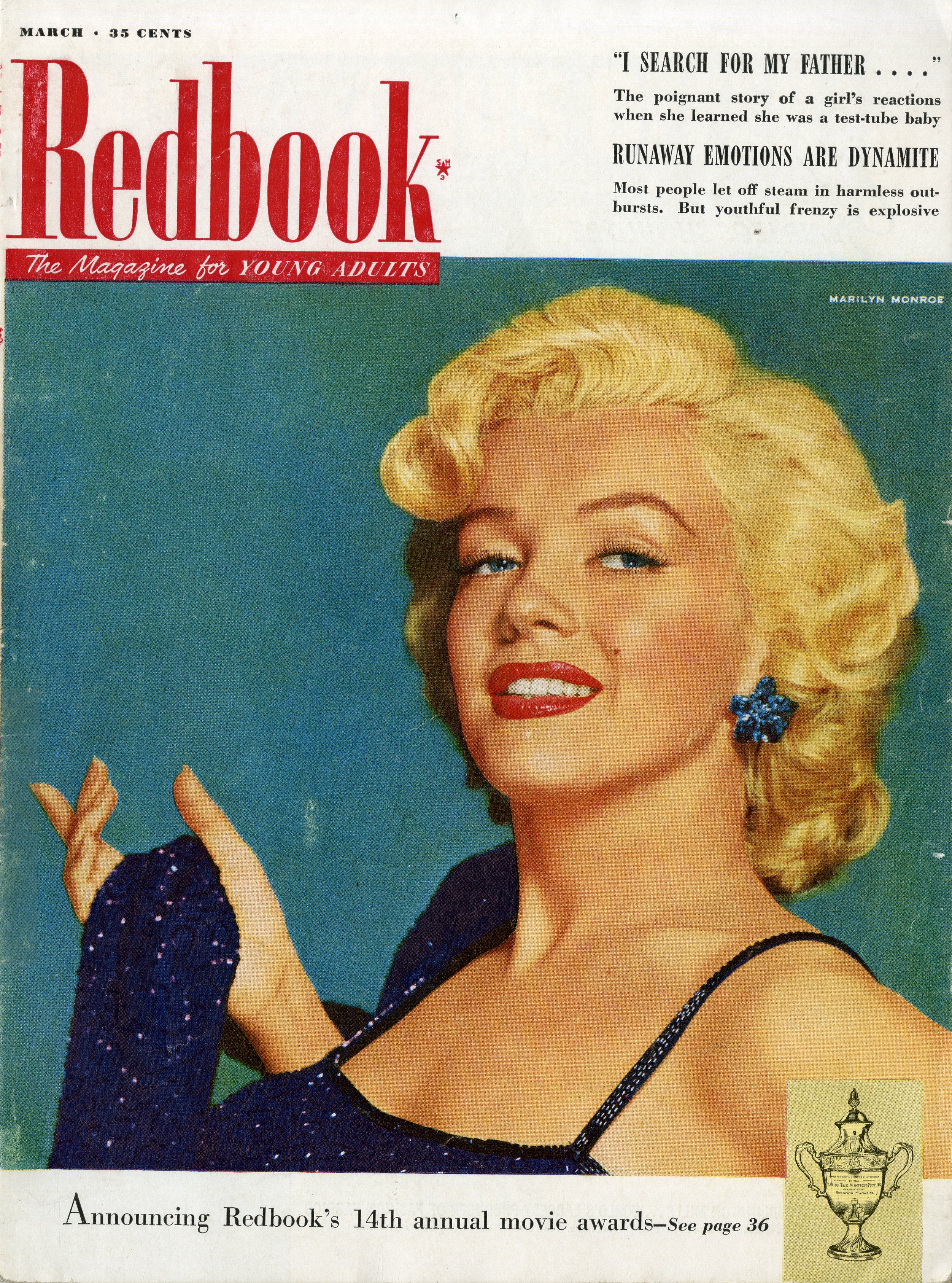
The March 1953 cover was also celebrity-oriented, however, with the inimitable Marilyn Monroe on its cover. The issue celebrated Redbook’s 14th Annual Movie Award and displayed Monroe on March’s cover as the best young box-office personality.

Other content included a book-length novel called “Triangle of Chance” by Joseph Laurence Marx, short stories and many articles and features, such as “How To Bring Up Parents,” “Are Mother’s Necessary,” and many others. The departments in Redbook were fan favorites; from “Picture of the Month” to “Fashions” and “Television,” Redbook served its audience from every angle.

WOMAN’S DAY

Woman’s Day is one of the Seven Sisters that’s still being published today. The magazine was started in 1931 by The Great Atlantic & Pacific Tea Company (better known as A&P – the grocery chain); the current publisher is Hearst Corporation. The U.S. edition was originally a free in-store menu/recipe planner which gave customers incentive to buy more by giving them meal ideas within its pages. A&P expanded Woman’s Day in 1937, featuring articles on childcare, crafts, food preparation and cooking, home decoration, needlework and health.

Sold exclusively in A&P stores, Woman’s Day had a circulation of 3,000,000 by 1944. The magazine had reached 4,000,000 by the time A&P sold the magazine to Fawcett Publications in 1958. By 1965, Woman’s Day had climbed to a circulation of 6,500,000. In 1988, Woman’s Day was acquired by Hachette Filipacchi Media. Hearst Magazines bought the Hachette magazines in the US in 2011.

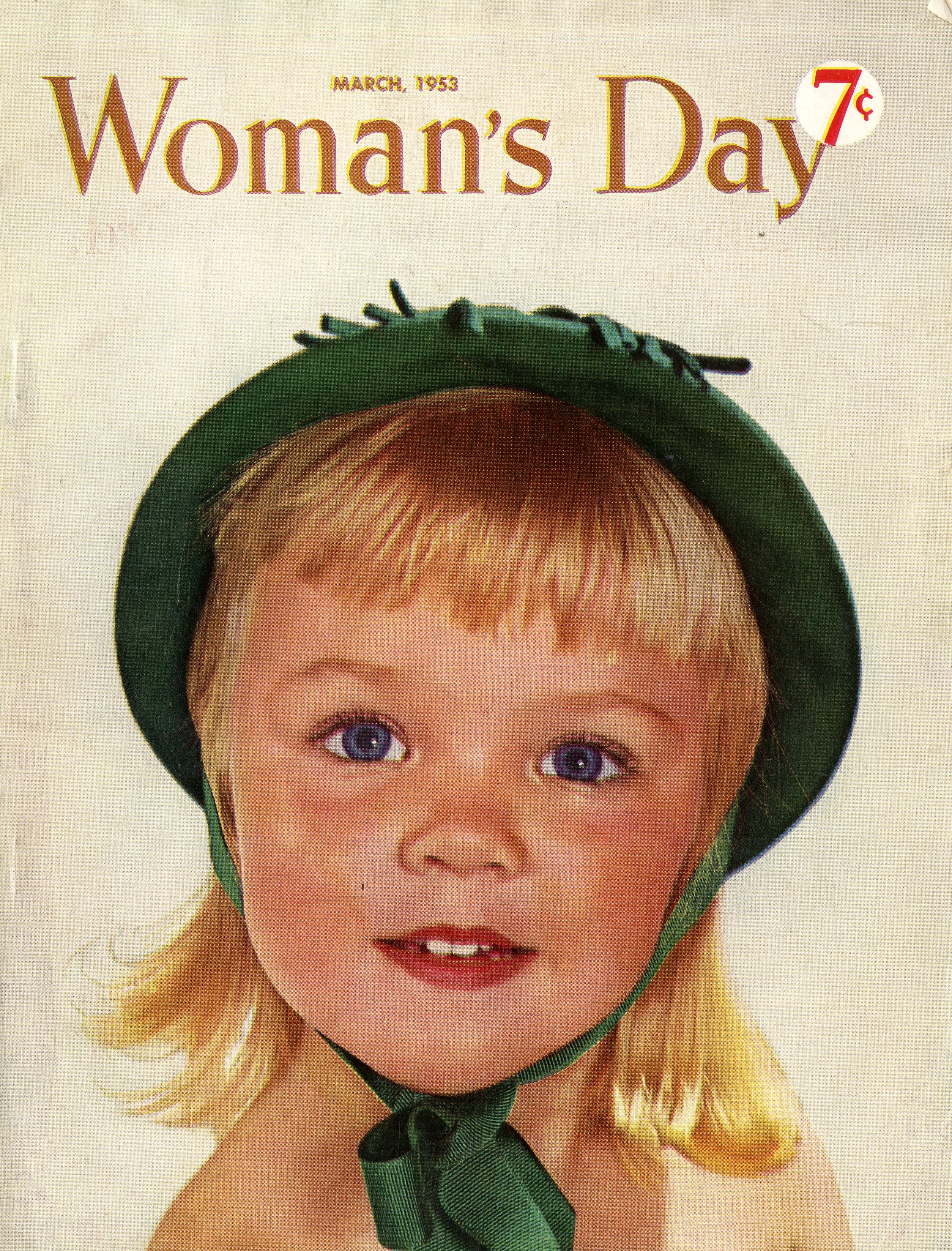
The March 1953 cover had a very photogenic child, complete with Easter bonnet on its cover, smiling naturally into the photographer’s lens.  And for a magazine that is strictly sold on the newsstands, it is good to note that the cover of  Woman’s Day had no cover lines (a must these days for newsstand titles) what so ever. Stories inside included fiction and articles on needlework, home workshop projects, fashion, food and regular monthly features, such as “News and Gossip,” and “The How To Section.”

While the Woman’s Day of today and yesterday have a few things in common, such as a Bible verse, great recipes and home projects, the 21st century is very present with stories on virtual games you can play and TikTok dances used to spread joy. But as it did in yesteryears, Woman’s Day is still serving its readers with relevant information and inspiring stories.

To be continued…


h1

The Magazines And I: Women’s Service Journalism Magazines. Chapter Four, Part One.

August 28, 2020

Chapter fFour, Part One

Women’s Service Journalism Magazines … is the fourth chapter from the book I am writing on the magazines of 1953, specifically March 1953, the month I was born.  This is chapter four, part one.  Feel free to back track for chapters one, two, and three in previous blogs.  Enjoy.

Service journalism is just that. It “serves” consumers with many things, such as advice, how-to projects, tips on home, fashion, food and travel, gardening, and all sorts of other necessary items.

Women’s service journalism is what one might think: services directed at women. In 1953 that focused mainly on married women who were maintaining home and hearth, dealing with children, decorating and gardening. We begin this chapter with the group of magazines that were dedicated to all of the women out there who either belonged to that category or wanted to: The Seven Sisters.

THE SEVEN SISTERS

The Seven Sisters were a group of titles that were traditionally aimed at married women who were homemakers with husbands and children, rather than single and workingwomen. The name is derived from the Greek myth of the “seven sisters,” also known as the Pleiades. These magazines were a major force in 20th century American magazine publishing, but today only three of the titles are still published as physical magazines:

Another sister, McCall’s, ceased publication in 2002 after an ill-fated attempt to rebrand itself under the name Rosie by teaming up with talk-show host Rosie O’Donnell.  Ladies’ Home Journal ceased monthly publication in April 2014. Publisher Meredith Corporation stated it would be “transitioning Ladies’ Home Journal to a special interest publication.” The last issue was in 2016.

Hearst transitioned Redbook to a digital-only property in 2017. Meredith announced Family Circle would publish its last issue in December 2019.

After a wave of consolidation and mergers, two companies now own the three remaining sisters: Meredith Corporation publishes Better Homes and Gardens and Hearst Corporation publishes Good Housekeeping and Woman’s Day. While their circulation has slipped a little from their figures in the 1960s and 1970s, they are among the highest circulation magazines in the United States.

The Seven Sisters were much more than a “group” of women’s service magazines, however. They were the connection that women needed throughout the decades for fashion, home décor, cooking, gardening, great stories, and just that feeling of camaraderie that the titles provided. They were a membership into a circle of friends nationwide that brought women together and gave them inspiration and hope.

THE SEVEN SISTERS

BETTER HOMES and GARDENS

Better Homes and Gardens is one of the Seven Sisters that is still being published today. It has a circulation of 7.6 million and is the largest non-membership paid magazine circulation in the United States. Better Homes and Gardens focuses on interests regarding homes, cooking, gardening, crafts, healthy living, decorating, and entertaining. The Meredith Corporation publishes the magazine 12 times per year. Edwin Meredith, who had previously been the United States Secretary of Agriculture under Woodrow Wilson, founded it in 1922. The original name was Fruit, Garden and Home from 1922 to 1924. The name was changed in 1925 to Better Homes and Gardens.

The March 1953 issue of Better Homes and Gardens is chocked full of the latest garden news, how-to projects for the handyman, articles about well-groomed windows and pulling a room together and many other home projects. BH&G was and still is a service journalism title that provides today’s woman (married or otherwise) a variety of hints and tips about their home atmosphere.

FAMILY CIRCLE

Family Circle was published monthly first, then 17 times a year, every three weeks, then back to 10 times a year until it folded.  It was the magazine that focused on home and women’s topics, published from 1932 through the end of 2019. Originally distributed only at supermarkets with no subscriptions, it was included as one of the “Seven Sisters,” a group of seven traditional “women’s service” magazines centered on household issues.

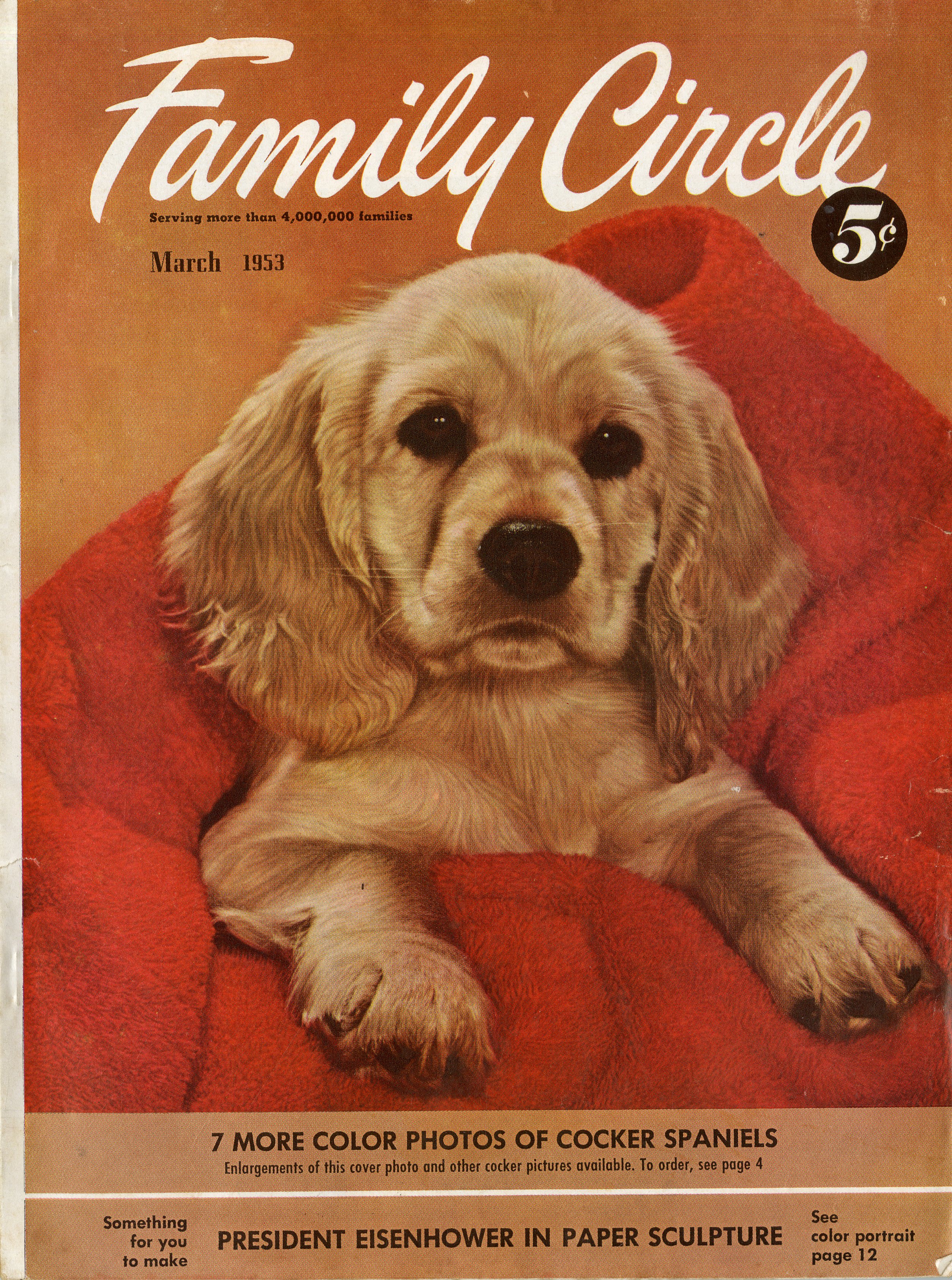
The March 1953 issue had a blend of great fiction for women when they needed a break from their everyday lives, to awesome articles on fashion and needlework, your children and you, and all around the home. The cover was an adorable picture of a cocker spaniel with an inside feature of more color photos of the breed with an option to order the photos. It was a magazine in March 1953 that proclaimed on its cover: Serving more than 4,000,000 families.

GOOD HOUSEKEEPING

Good Housekeeping is another one of the Seven Sisters that is still alive and going strong today. Hearst Corporation owns the title and the circulation reaches around four million readers, which includes the unique Walmart edition the company launched in 2018.

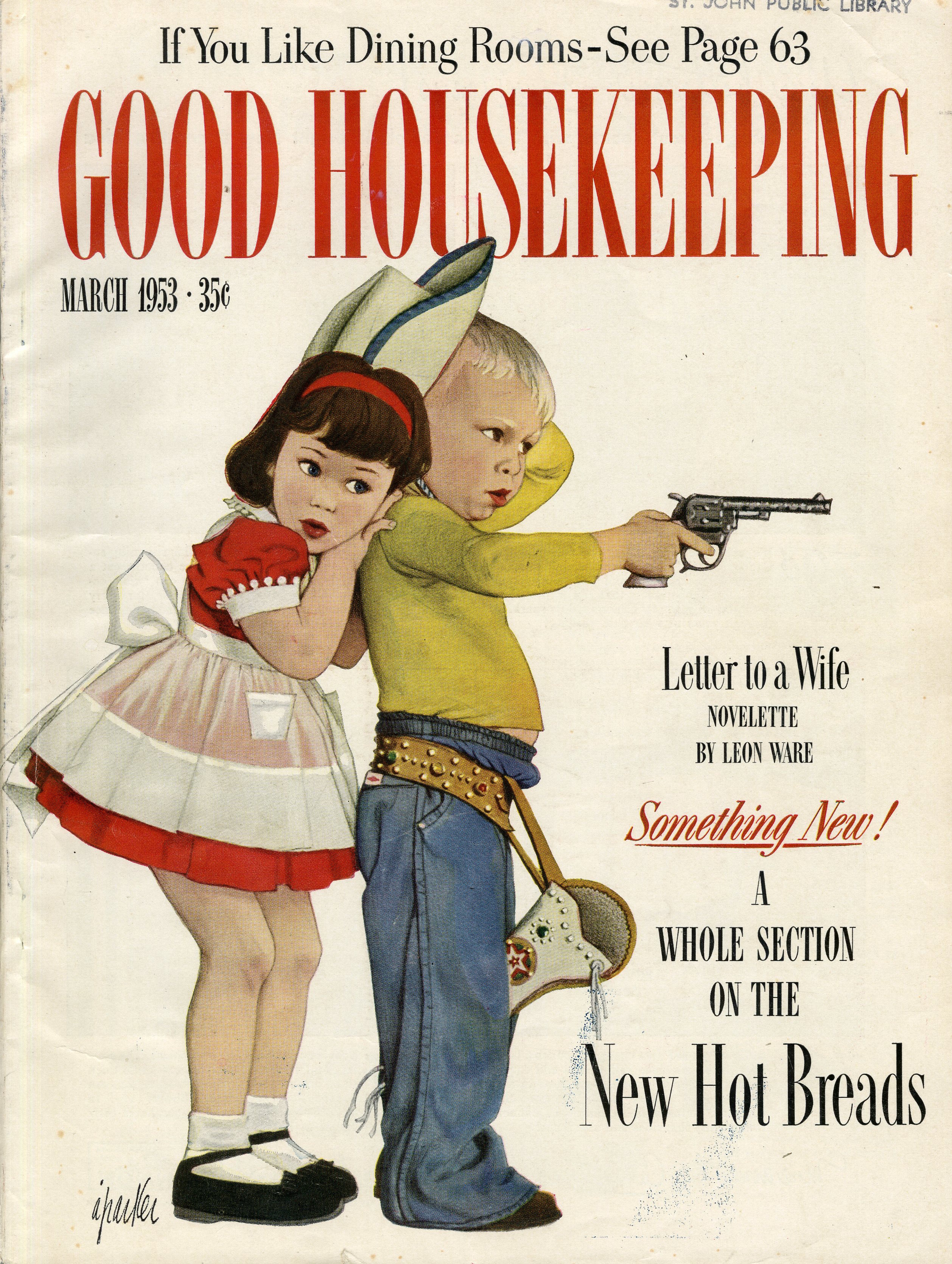
The March 1953 issue had fiction, stories that lifted and inspired; articles and features that served the interests of women for that era, such as “Will it Make Your Hair Curl?” and “The Point Count Wins at Bridge” and many other topics that captured the hearts of women across the country.

There were sections on needlework and sewing; beauty; fashion; medicine and health; food; appliances and home care. There was even a children’s center and automobile article. The magazine of March 1953 was a mix of the times and topics of interest for then, and a really good balance of helpful tips and ideas.

To be continued…


h1

The Roaring Weeklies. The Magazines And I. Chapter Three, Part Two

August 9, 2020

Chapter Three, Part Two

The Roaring Weeklies… is the third chapter from the book I am writing on the magazines of 1953, specifically March 1953, the month I was born.  This is chapter three, part two.  Feel free to back track for chapters one and two in previous blogs.  Enjoy.

The Heavy-Duty Political Weeklies

The biggies when it came to news and political coverage in 1953 were: Time, Life, Newsweek, and U.S. News & World Report. Time and Life were published by the same company, Time Inc, and were the two dominant titles in that era. The focus of those weeklies was a mix of politics, society, religion and news, with many similarities between the two.

The particular conversations in news and politics that could be overheard on the world’s stage in March 1953 centered around the death of Joseph Stalin and the changes that were taking place in the Soviet Union and what was happening with the Red Army and the Cold War. The evil that even Stalin’s name conjured up and what his death meant to the Soviet people came alive on the pages of weeklies such as Life.

The importance of these weeklies was known from Buckingham Palace to the White House. The editorial pages of these magazines held more than the words of the editors, often publishing or republishing announcements from presidents, such as in the March 2, 1953 issue of Life when former President Harry S. Truman’s memoirs were about to be written. Life believed in the makers of history, as they called the former president. And as a believer and publisher of history in the making, the magazine reprinted the Associated Press bulletin where Truman had written that he had selected Life to “handle all rights in the memoirs.” The magazine’s importance was established.

And Truman wasn’t the only notable leader that Life had published. There was Winston Churchill, Omar Bradley, the Duke of Windsor, and the list goes on. Between the excellent writing and the inimitable photography, Life magazine was one of the most esteemed publications in the country at that time.

In fact, Life was known for its excellent, and often poignant photography. For example, if you look at the March 16, 1953 issue of the magazine, right after Stalin died, the coverage of this world event was incredible. Joseph Stalin and Georgy Malenkov graced the cover of that issue and the entire story was put together from 50,000 photos that the staff had collected. The result was a picture-rich article that amazed.

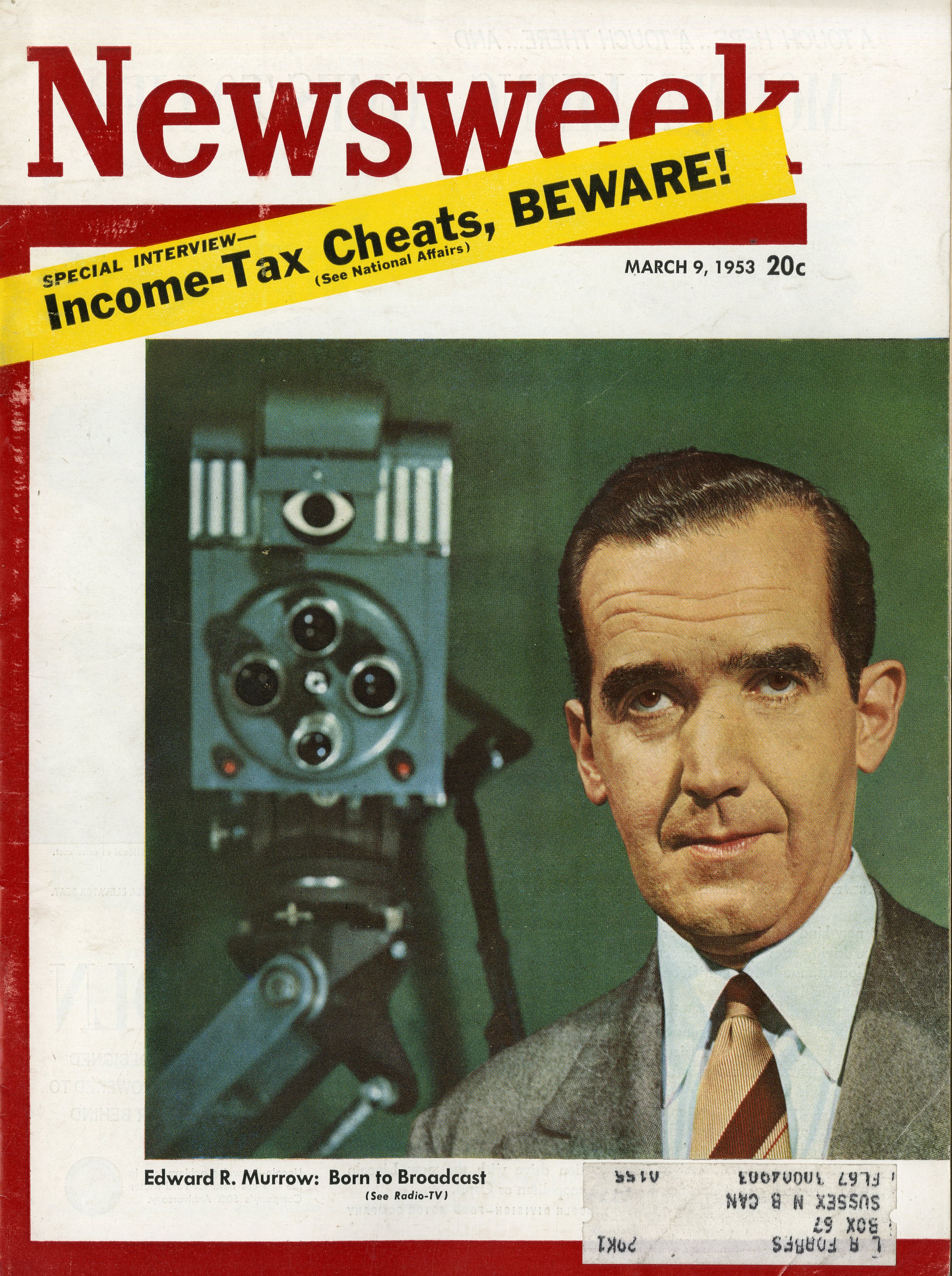
Time, Newsweek, and U.S. News & World Report also had coverage of world events, such as Stalin’s death, but it was a softer, less epic visual experience. While in March 1953, Time focused on Korea, Stalin and Russia throughout that month, Newsweek focused on classical musicians, Edward R. Murrow and Speaker of the House Joe Martin, so it had more of a lighter approach when it came to coverage of the information. In fact, Newsweek featured Edward R. Murrow on one of its covers, talking about how presenting the news on television is very different from radio. Television was becoming big news in 1953.

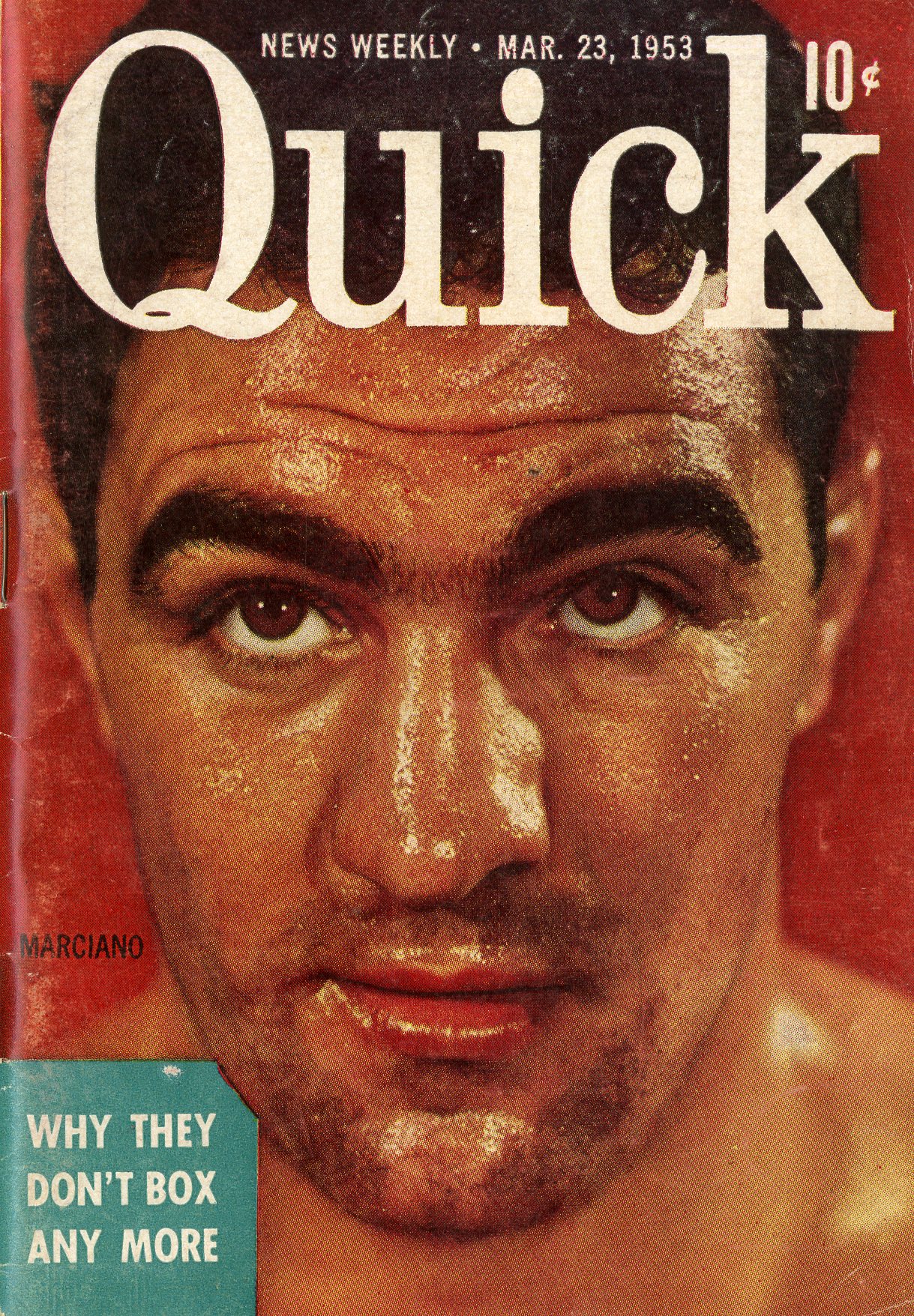
Also in that era, Look magazine and Cowles Media decided to publish a newsweekly too, a pocket-sized magazine that covered everything. If newsweeklies were the Internet of 1953, Quick magazine, was the iPhone of 1953. From 1949 to 1953, the pocket-sized publication was jam-packed with information from one end of the spectrum to another. There was art, sex, business, crime, education and entertainment. People were encouraged to carry it in their pockets or their purses so they could access the information on-the-go. The magazine provided what would be called today the “Tweets” of the news, tidbits of information about everything. The name itself reflected the tone of the magazine: Quick.

Quick enabled pop culture to fit easily into purses and pockets. The covers were spot-on for the times. From the real-life Rocky Marciano and a story on why some boxers don’t box anymore, to actress Piper Laurie and a collection of Easter Bonnet portraits, Quick magazine was the social media of 1953. The  posts – snippets of information, comments and pictures were all there on their own little platform. Just whip the magazine out of your pocket and you had Facebook, Twitter and Instagram in one convenient package.

 The High-Brow Literary Weeklies

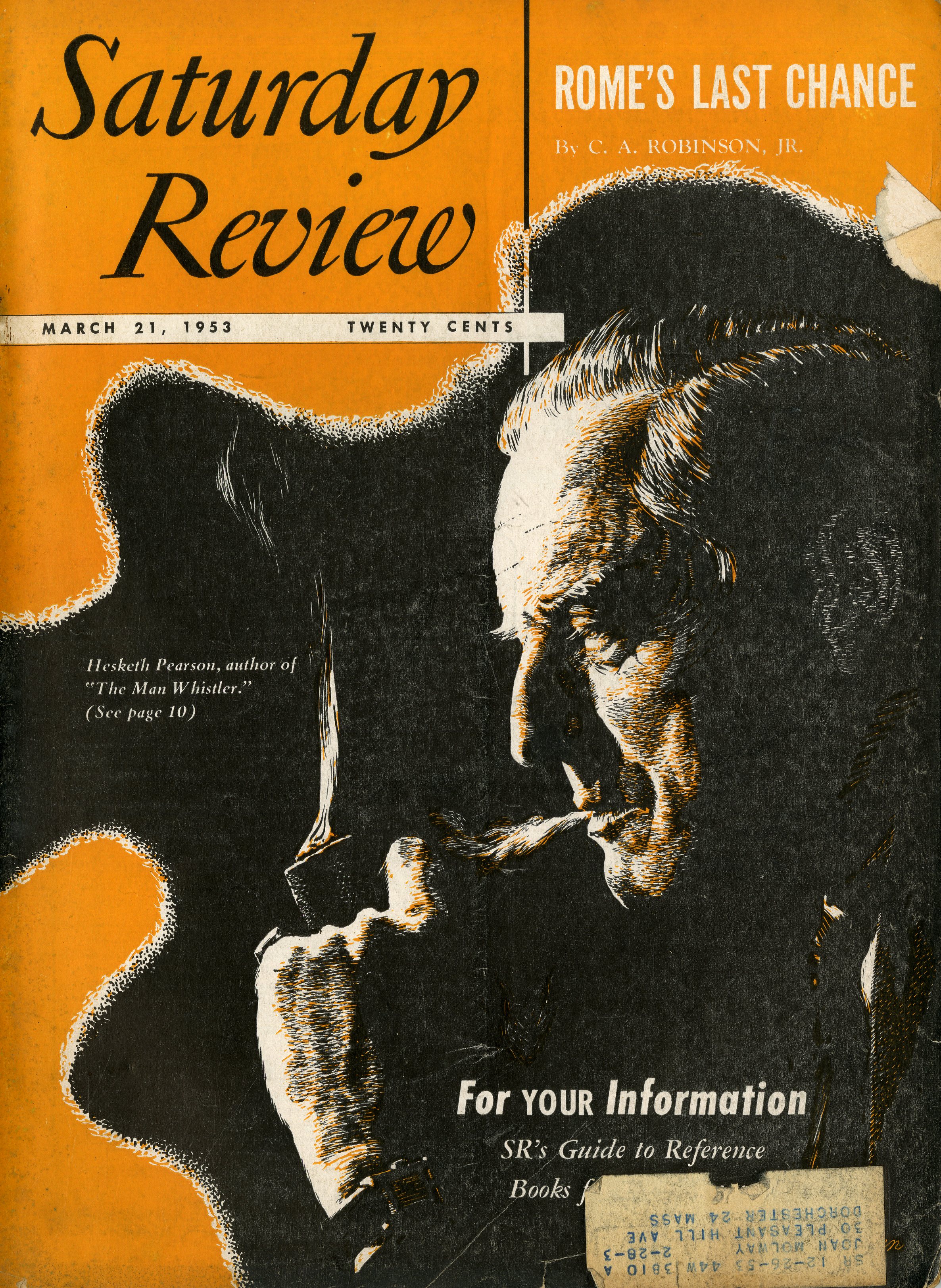
Saturday Review and The New Yorker fit into this category, with The New Yorker magazine’s founding editor Harold Ross once famously describing his publication (founded in 1925) as being, “not for the little old lady in Dubuque.” Distinguished by their obvious literary prominence, both magazines were reviews of many things. From movies to books, the theatre to museums, these two magazines had their fingers on the pulse of American culture in 1953 from a literary point of view.

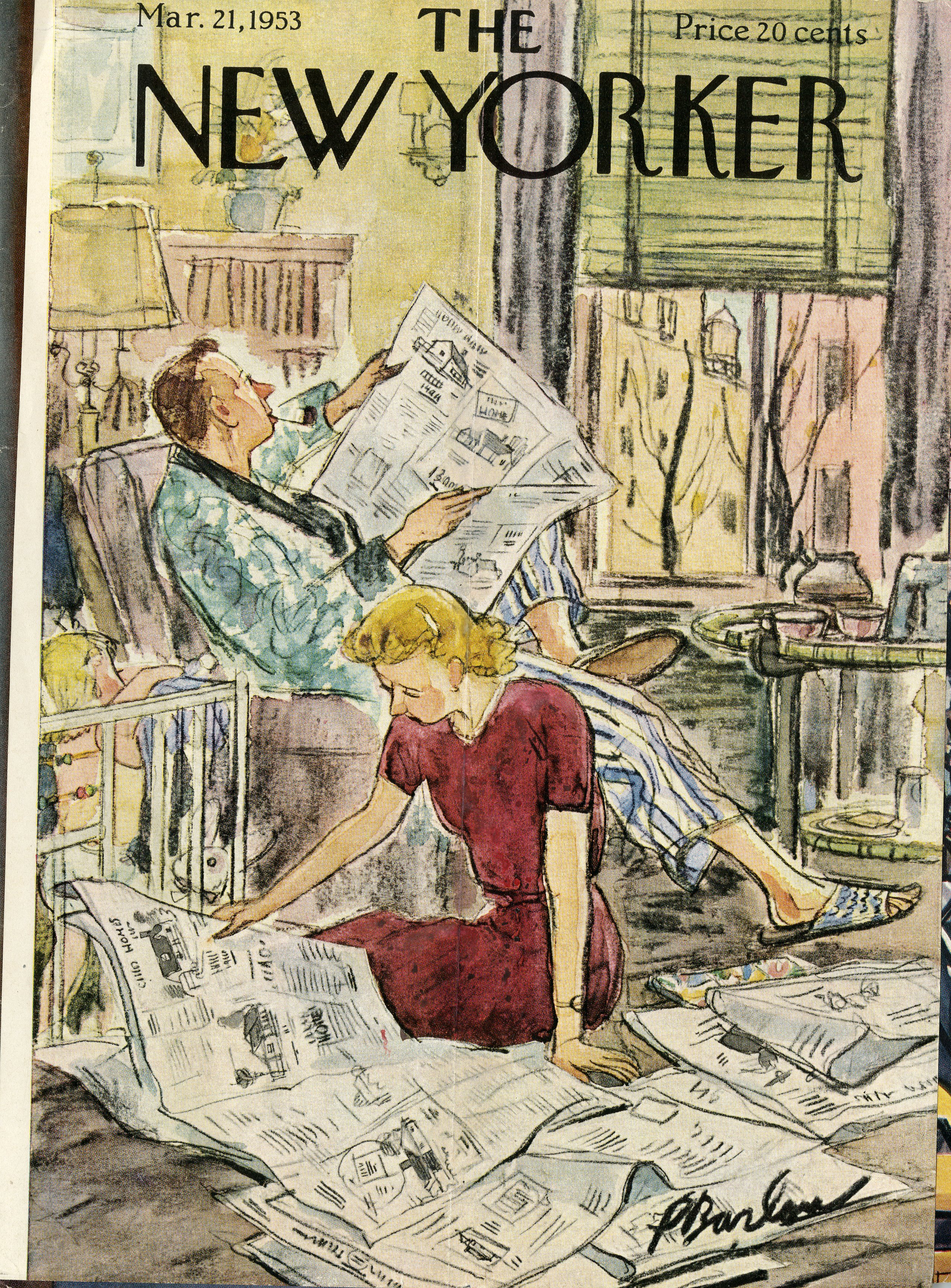
The New Yorker had its own iconic covers, becoming an entity unto themselves, with their smart and timely illustrations depicting political satire, the images of the city itself, and many other environmental and social issues of the times.
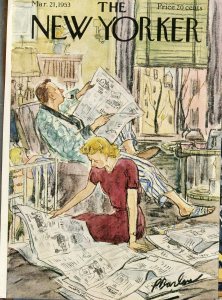
At that time in the magazine’s history, the front of the magazine was devoted to “The Goings On About Town,” which as you can imagine, was filled with all the fun and exciting things New York City had to offer, from Broadway to art sales offering everything from lithographs and etchings by Pissarro to the showing of paintings and drawings at the Whitney Museum.

As you moved farther inward through the magazine, The New Yorker presented “The Talk Of The Town,” of course, not without first passing some of the most savvy and smart advertisements ever created. “Talk Of The Town” was a place where announcements of varying topics could be discussed, often ones that were on the edge of being dubious, such as the March 21, 1953 issue where a bus company in Yonkers was making plans to install radios in its buses. The problem with that was many thought it was a way for the bus company to raise revenue by selling the attention of all the passengers with only the consent of some, according to The New Yorker’s “The Talk Of The Town.”  Of course, The New Yorker couldn’t stand behind that and let it be known, yet again proving the importance and influence of these weekly magazines.
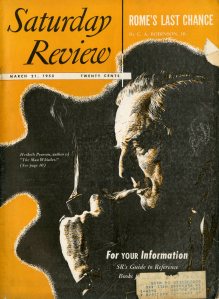
Saturday Review was very widely read by music and theatre critics and others who thrived on literary journals. The magazine shared the “Good News” in the front of the book, by utilizing that space to talk about many things such as in the March 7, 1953 issue where they wrote about “proof that Americans spend their time in places other than sport stadiums,” as apparently the Metropolitan Museum of Art in New York City had exceeded the two million mark in visitors for the previous year.

The literary weeklies were more than hoity-toity titles that carried themselves around town with an upturned nose. They were important magazines that people in 1953 relied on to give them honest and factual information about the topics they covered.

News, Television & Weekly Magazines

Not only was 1953 a time when audiences could not get enough information about what was going on in the world they lived in, but it was also a time when weekly magazines actually provided the best coverage of those stories.

While television networks such as CBS and NBC were airing 15 minute newscasts and many stations only did five minutes total of local news right before 5:00 p.m. (TV Guide, Washington-Baltimore area, March 27-April 2), the weekly magazines were filling their pages with informative and relevant information.
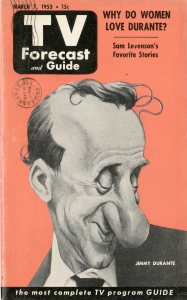
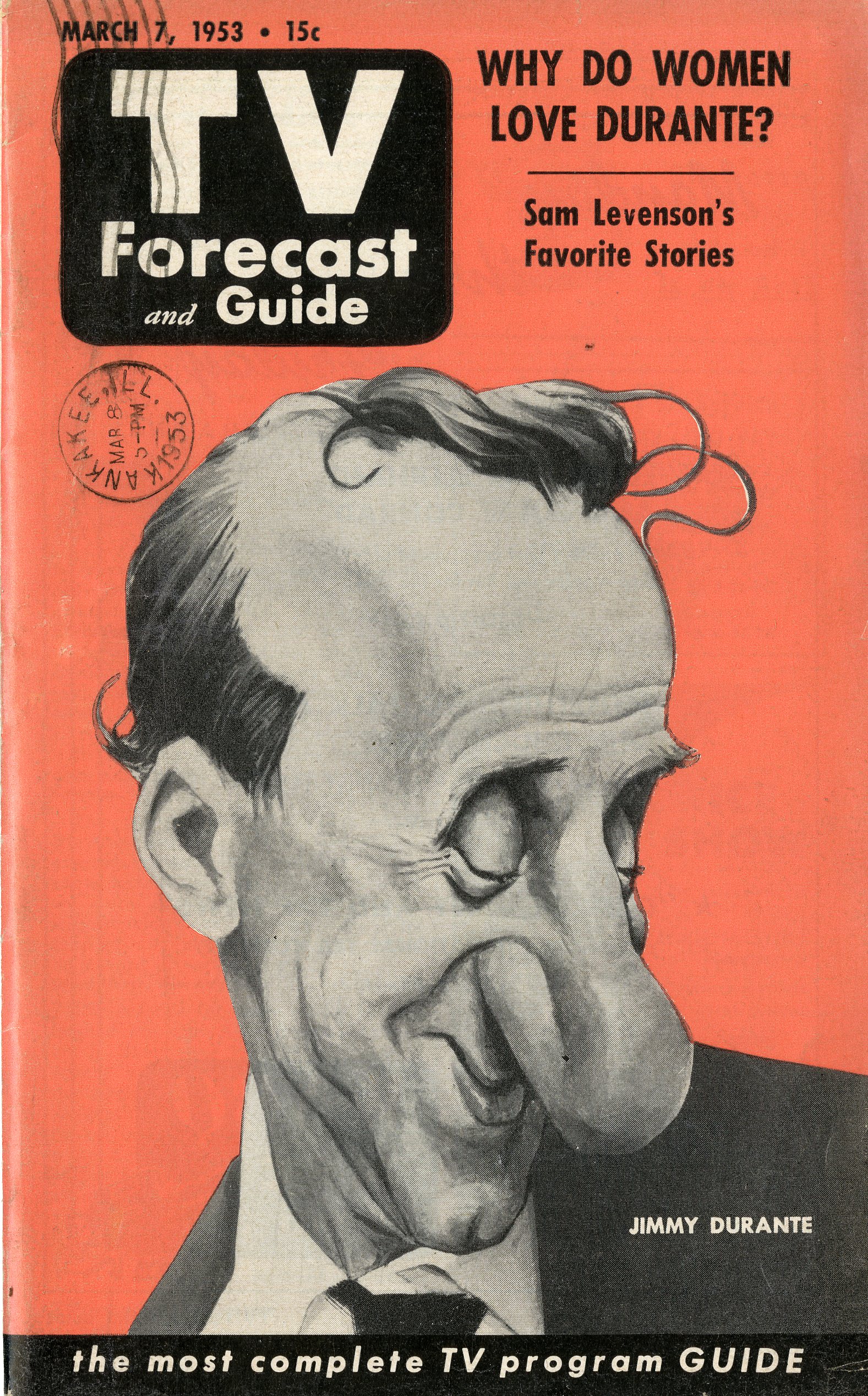
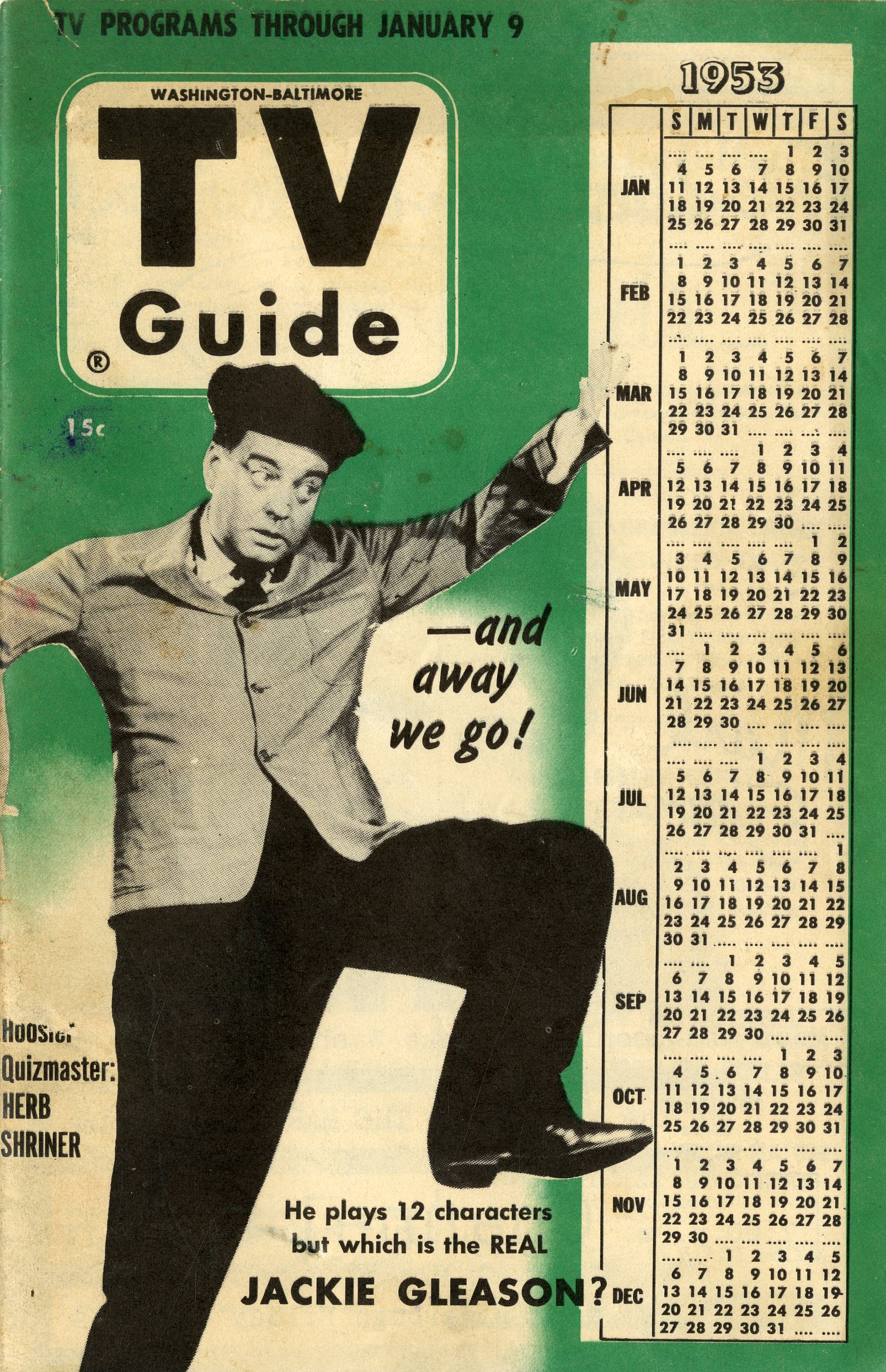
But the television magazines were gaining steam, there were TV Guides, TV Forecasts, TV Digests and TV Guides & Forecasts for every part of the country, showcasing this new medium. And the television magazines began predicting things that interested readers, such as who would win that year’s Academy Award.

While Time, Newsweek, U.S. News & World Report, and Life dealt with foreign affairs and political topics, TV Guide became the escape vehicle for readers who wanted to travel away from facts and the actual news of the day, to the fun and frolic the celebrities were having. And the TV weeklies began reflecting that.

 TV Guide and other television titles of March 1953 took note of people’s fascination with the prominent actors and other celebrities on the screen of the new medium known as television. In fact, so much so, that the magazines’ covers were suddenly flooded with their images.

From the March 13-19, 1953 issue of TV Guide, which featured Janette Davis from Arthur Godfrey and His Friends, a highly popular variety show from that era, to “TV’s Lady-Killers” TV Guide cover from March 27-April 2, 1953, featuring Charlton Heston, John Newland, John Forsythe and John Baragrey, celebrities were the content of choice when it came to the covers of these magazines. Jackie Gleason, Lucille Ball, Desi Arnaz, George Burns and his wife Gracie, were just a few of the other famous folk who appeared on covers of the TV weeklies.

Needless to say, when the Academy Awards were first televised on March 19, 1953, the television magazines were thrilled to feature all the stars and their stories.

Your Weekly Magazine Inside A Newspaper

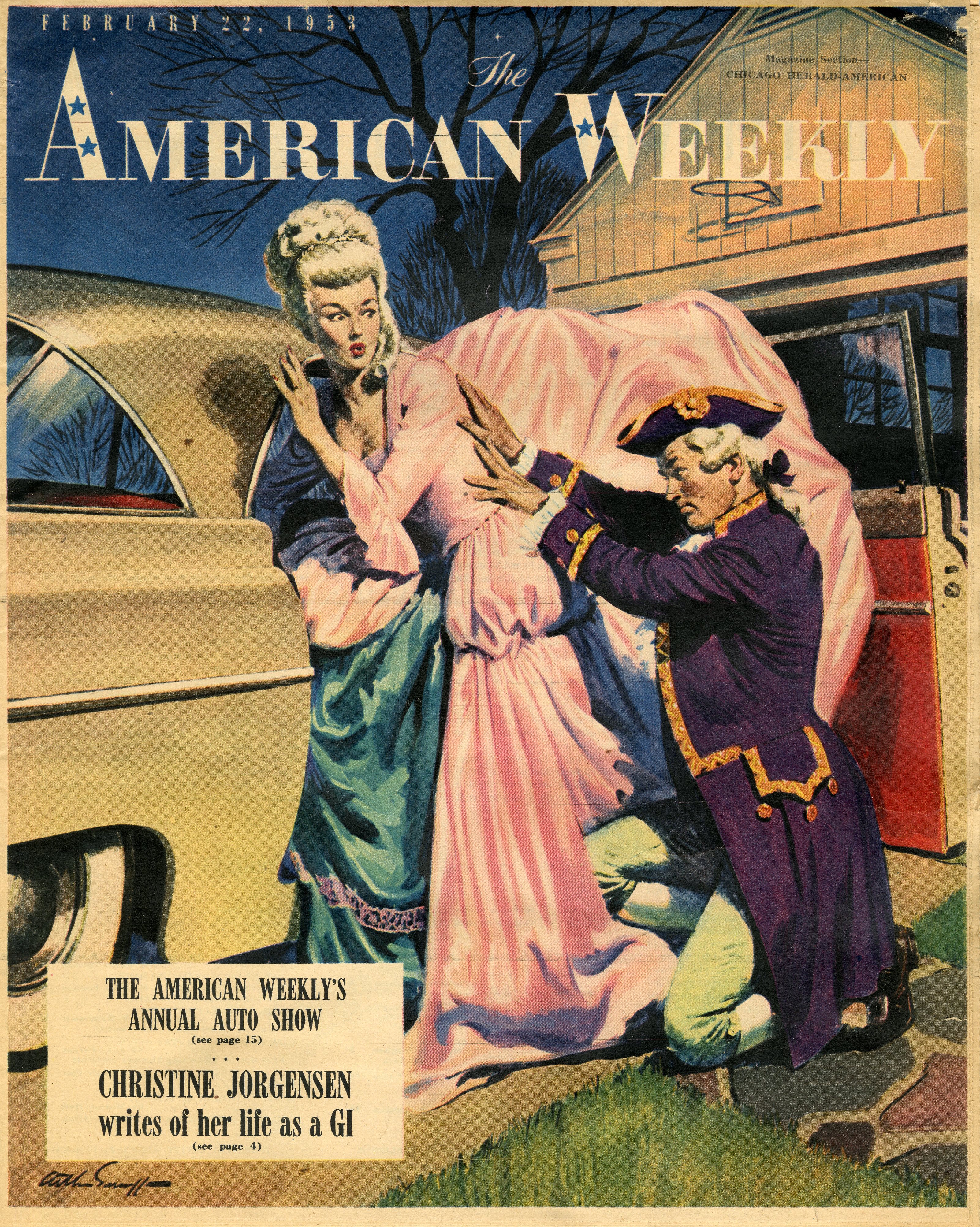
Supplements in newspapers had a rich history by the time 1953 came along. From inserts inside Joseph Pulitzer’s New York World in the late 1800s, to Women’s Home Journal and Sunday American Magazine, which later became The American Weekly, inside William Randolph Hearst’s New York Journal,  these magazine-formatted publications became another resource for information.

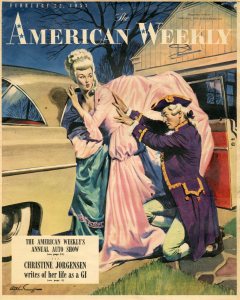
The American Weekly was a successor to the Sunday magazine and the artwork was created by some of the best artists of that time, such as Lee Conrey and Howard Chandler Christy. There were great stories and, as in the February 22, 1953 issue of the magazine, which had the magazine’s first annual Auto Section, some of the most colorful and inviting illustrations and ads that you could find anywhere.
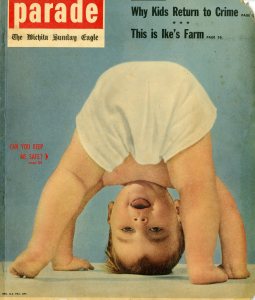
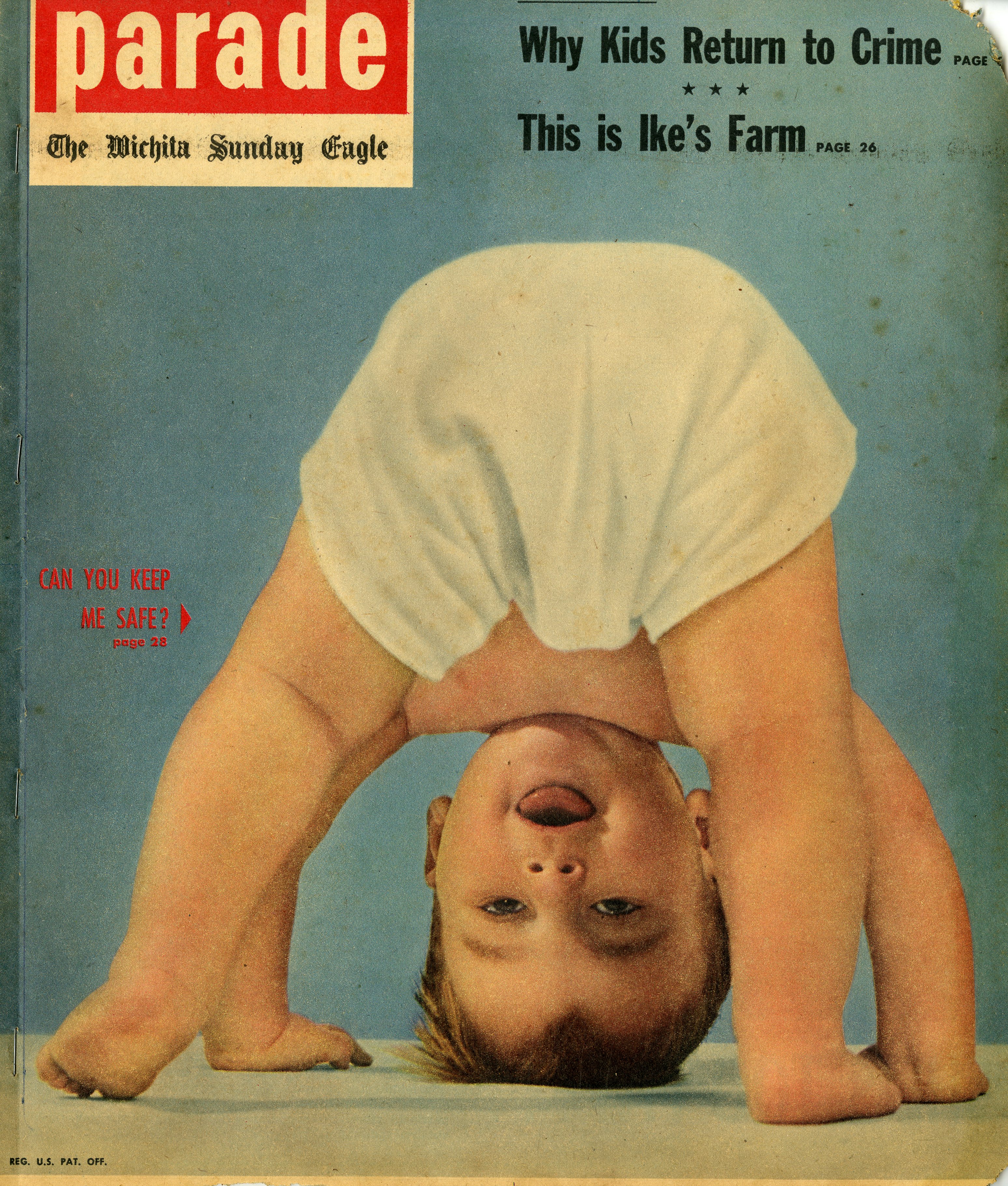
Parade was another insert that really became an entity all on its own. The Sunday newspaper magazine was founded in 1941 and was originally a supplement for its creator’s own newspaper, the Chicago Sun. But over the years the insert with the humble beginnings is now nationwide and still retains a circulation of 18 million. Renowned authors such as Ernest Hemingway (who sent in reports from the Far East), Ben Hecht (author of “the Front Page”), Dr. Carl Sagan (who provided his first report on Nuclear Winter), James Thurber, Herman Wouk, Norman Mailer, John Cheever and Alex Haley, among many others, have been published between its covers.

In the March 15, 1953 issue, Parade (this particular copy from The Wichita Sunday Eagle) the Norman Rockwell ads, combined with helpful tips and delicious-looking recipes, show just why this entertaining, yet informative magazine is still around.

Grafic Magazine, an insert in the Chicago Sunday Tribune, was much like its Parade counterpart, published on Sunday and highlighting home tips and entertainment features.These great additions to Sunday newspapers is a tradition that carries on even in the 21st century.

Getting News & Entertainment In “Weekly Time”

Today we experience real time. A family faces down a giant black bear and we watch the fingernail-biting moments while they unfold. But in 1953 that wasn’t an option. Instead, the people got their news a little less instantaneously. With TV newscasts so brief, they may as well not have happened, the American public relied strictly on print. Ink on paper was the internet of the 1950s and a technology that couldn’t be beaten.

So when those daily newspapers and weekly magazines came calling, people couldn’t wait to answer their front doors. Craving information and missing the bells and whistles and notifications of today, they relished these weekly visits from the magazine friends that they loved and trusted.

The Roaring Weeklies

When we look at the roaring weeklies of 1953, we see why they could be called the Internet of 1953, because each magazine gave you a little bit of everything. If you subscribed to Life, not only did someone get 144 pages of great photography, great writing, great stories, but also great advertising with very skillful marketing. People discovered the latest automobile, the latest fashion, the latest everything. It was all there between the pages. People could read about religion, sports, modern living, fashion, science… just a composite of topics. So, the magazines were the Google of the 1953 Internet, with any topic one could imagine available.

Weeklies To The Right, Please…And The Left

Mr. Magazine™  explored his vault extensively to bring you this chapter on the great weeklies of 1953. Looking to the right and to the left, he walked the halls and rooms and searched out the precise magazines talked about here. The experience was most satisfying. While there were lesser-known weeklies alive in 1953, the ones elaborated about in Chapter Three were the major players of that year.

And Next…

The Vault is endless and the doors many. Let us check out the next room… look, it’s the Women’s Magazine sanctuary. Come in and Mr. Magazine™ will introduce you to the Seven Sisters and many of their friends, cousins, and relatives…

To be continued…


h1

The Roaring Weeklies. The Magazines And I. Chapter Three. Part One.

August 6, 2020

Chapter Three, Part One

The Roaring Weeklies… is the third chapter from the book I am writing on the magazines of 1953, specifically March 1953, the month I was born.  This is chapter three, part one.  Feel free to back track for chapters one and two in previous blogs.  Enjoy.
The Ink On Paper Internet

In 1953, magazines played two essential roles in  the world of media: the distribution of information and the marketing of products and goods. In fact, they were the leading national media that collected information for people in the east, west, north and south and distributed it accordingly. They were basically the Internet of the era. And weekly magazines brought that aggregated content to readers on a more regular basis than the monthlies, be it politics, entertainment or any number of other topics of interest, weekly magazines were the go-to source for current information quick.

And just as we want instantaneous information today, the people of 1953 wanted it as well. Their instantaneous sources were the weekly magazines. While the need and desire of weekly titles has dissipated today, due entirely to the Internet, in 1953 the urgency for current content was palpable. And while television was on the rise and promised to give the weekly magazines a run for their money, the time wasn’t ripe yet for screens; the time still belonged to ink on paper.

Television’s Infancy

The year 1953 had some significant television moments, but as far as news broadcasts and news programs, that really wasn’t the case. On March 19, 1953, the 25th Academy Awards were broadcast by NBC, becoming the first Academy Awards ceremony to be televised. However, many people awaited their favorite weekly magazine to get all the juicy details about the stars’ fashion choices and the behind-the-scenes gossip.

Then on April 3 of that year, TV Guide was published for the first time in the United States, with 10 editions and a circulation of 1,562,000. But as television was just finding its footing, weekly magazines still delivered more information about niche subjects than the infant TV Guide did.

In 1953, television stations only provided local news programs one to two times each evening for 15 minutes and usually these programs aired as supplements to network-supplied evening news, before their primetime programming. So, where today we can get the story of a family facing down an angry bear in real time, in 1953 news was not so plentiful. The weekly magazine could put that story vividly in your hand to read, complete with powerful images.

Weekly magazines were without a doubt the ink on paper internet of the 1953. And by covering such diverse topics, they connected people in a way that newspapers and TV couldn’t: they put the stories of the week in the same hands of the farmer in Iowa and the celebrity in Hollywood.  They delivered captivating storytelling and hardcore news to one and all on a weekly basis.

The Time of the Season

The 1950s were a time of affluence in America as the United States became an economic leader on the global stage and the morality of the country became one that everyone admired. But underneath that shiny facade, things were changing as shifting gender roles challenged that picturesque image of dad smoking his pipe in his easy chair while mom brought him his slippers. The Feminist Movement was just around the corner. As was the Civil Rights Movement and the Vietnam War.

And weekly magazines were coming into their own, educating and liberating people with new ideas and information that opened their minds to unique and larger possibilities.

Taking a Peek at the Internet of 1953

What information did people seek after in 1953? What stories held them captivated and what weekly magazines had them addicted? The weeklies of that era can be divided into three categories:

The Feel-Good weeklies led by The Saturday Evening Post and Collier’s.

The Heavy-Duty political weeklies led by Time, Life and Newsweek.

The High-Brow literary weeklies led by The New Yorker and Saturday Review.

These magazines were the heavy hitters of their time. And they proved it every week. As a sidebar, four of these seven titles are still being published today.

If you entered an American home in March 1953, chances are you would have probably found people who subscribed to some or all of these magazines. But what were these people getting? What was the conversations centered around?

The Feel-Good Weeklies

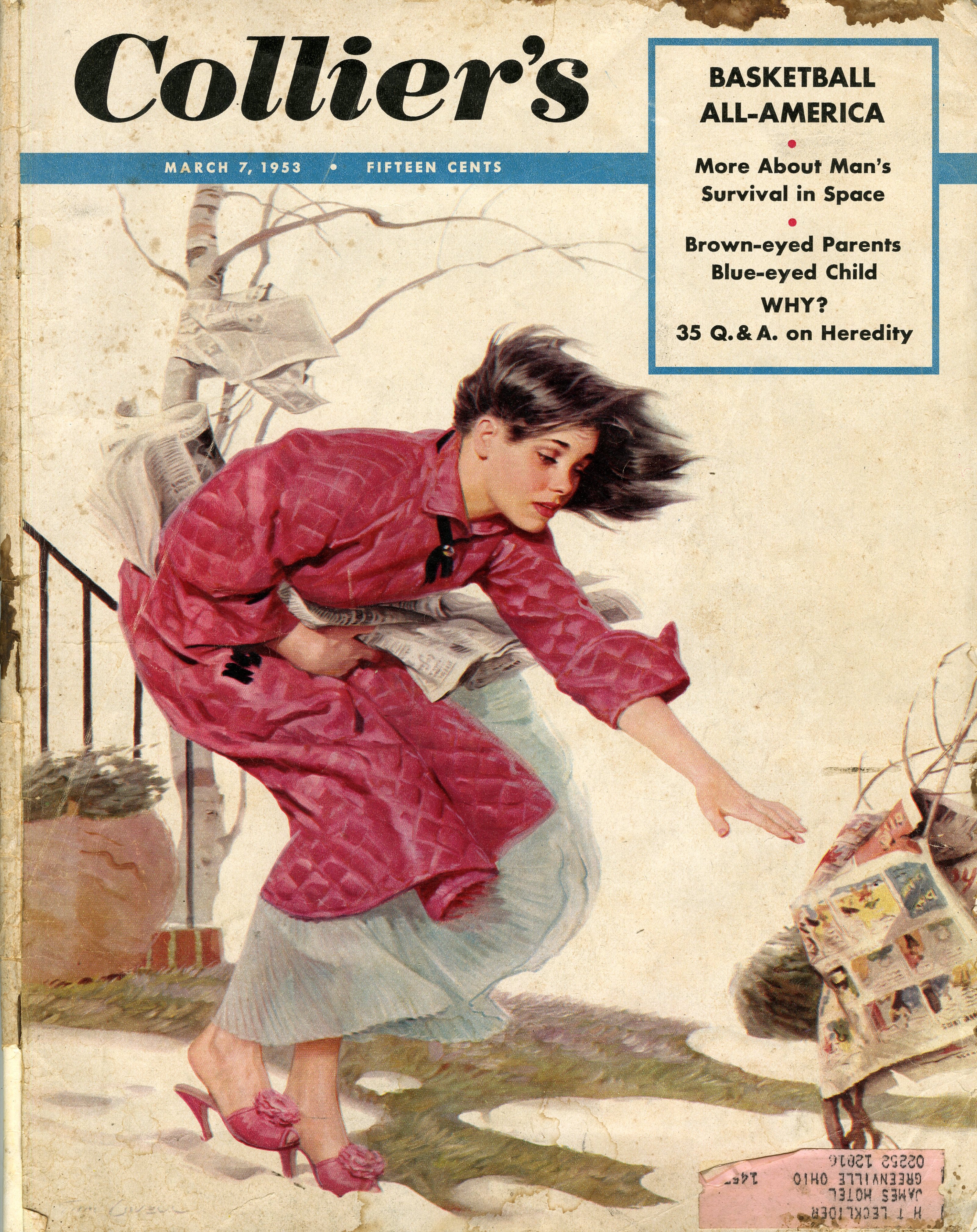
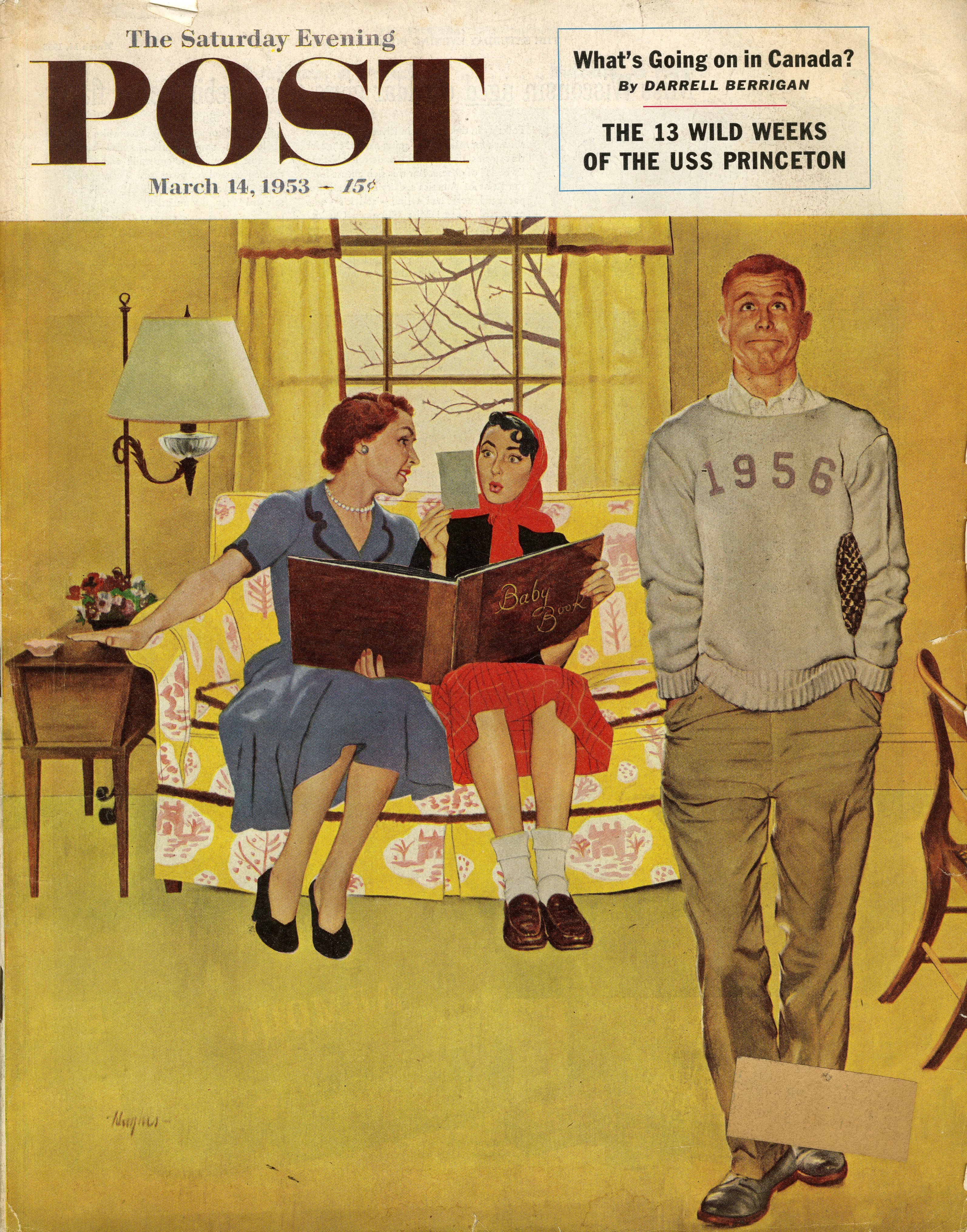
The Saturday Evening Post and Collier’s were two heavy hitters in 1953 that made the audience feel good. They showcased life in Postwar America with a positive and upbeat tenor, providing  stories of hope and goodwill. People who subscribed to these magazines were interested in being uplifted and refreshed.

The Saturday Evening Post’s covers mirrored those simpler times: sandlot baseball, kids watching black and white westerns, jungle gyms and little girls playing mommy. Some of the illustrators for The Post, people such as Norman Rockwell and George Hughes, were sticklers for details and accuracy when it came to their renditions of the covers, setting a precedent for collecting among fans of the magazine.

Collier’s also had illustrated covers and was known for the prolific talent that contributed to the entire magazine. Short fiction was one of Collier’s most prominent features and the illustrations that accompanied the stories were phenomenal. In both Collier’s and The Saturday Evening Post, the cover lines were kept away from the drawings so that cover collectors weren’t disappointed.

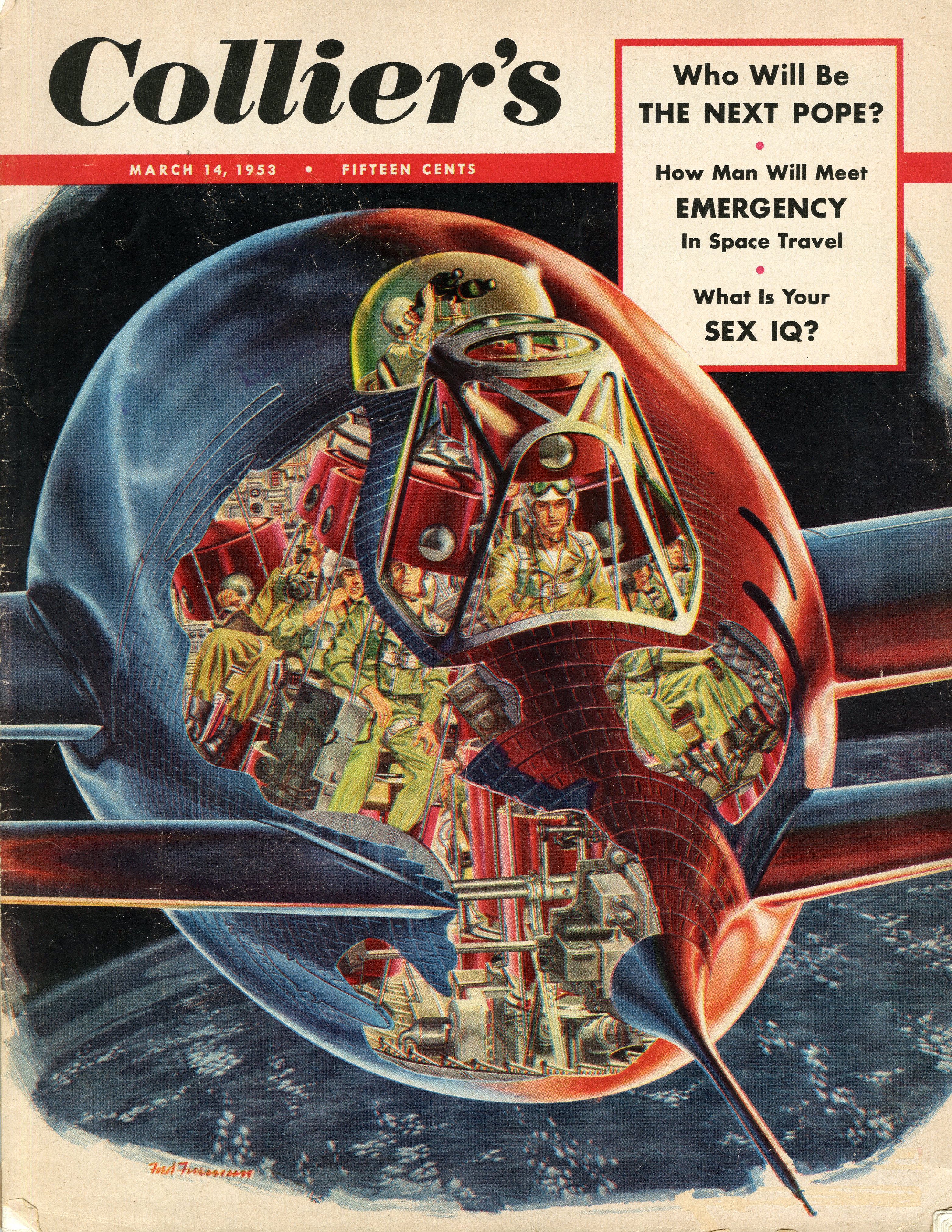
In Collier’s March 14, 1953 issue, space exploration was prominent in the magazine. The cover depicts how the crew of a fast-moving rocket ship might handle an alert situation in space, such as being prepared for any emergency that might crop up. Of course, this was before the first manned aircraft rocketed toward the great unknown, but people were already getting ready for that exciting day. And Collier’s content was anticipating it. While people were still talking about how to avoid nuclear war with Russia, space was the fascinating topic no one could ignore. And the race between countries, like America and Russia, to get there first was a watercooler moment waiting to happen.

The Saturday Evening Post and Collier’s depicted the American Dream with content and illustrations that were total Americana in print. Even when the magazines were covering something much darker, they did it with a positive spin. If it was war, the magazines brought in experts on how good could come out of bad; there was always light in the dark.

To be continued…