 “There are obviously a lot of opinions out there as to why you’re seeing several examples of digital brands or brands that aren’t in the magazine space going into the print space. It’s just a different experience, as you well know. It’s a lean-back experience and it’s immersive. You just can’t get that in the digital space. The more our lives get connected and the more digitally-focused and digitally-centered that we become, I think there’s always going to be that opportunity for that relaxed experience where you get away and just sit in your favorite chair and immerse with a topic or a brand that you feel really passionate about. And magazines do that better than any other medium that we have.” Scott Mortimer…
“And I love paper quality. I love the finish of the cover. I love the quality of the photography and the quality of the paper inside the magazine. People have no idea how hard it is to write a book and I never had any idea of all of the steps that went into writing a magazine, I have to be honest. It’s a lot more complicated than I thought. Talking about dotting the I’s and crossing the T’s.” Dr. Marty Becker…
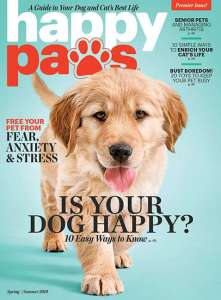
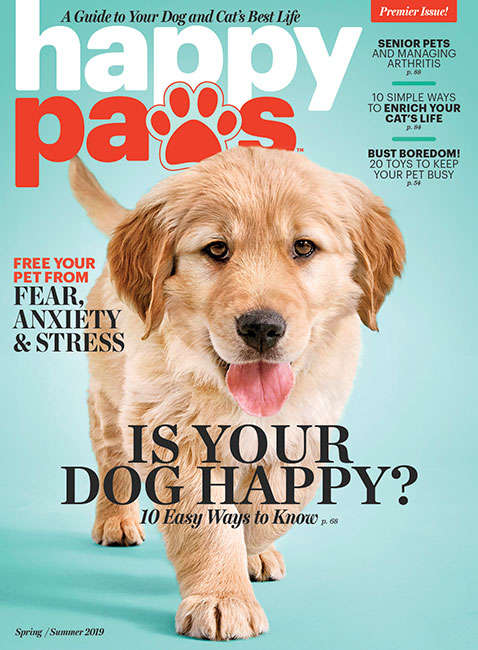
Happy Paws marks the latest magazine to debut from Meredith and as Vice President and Group Publisher, Scott Mortimer said, “There’s a real appetite for a print product out there, you just have to get the right product at the right time and then put it in the right place and your chances of success go way up.” And Meredith would definitely know about success after the phenomenal reaction readers have had to The Magnolia Journal and their successful partnership with the Hungry Girl, Lisa Lillien.
This time around Meredith has teamed up with America’s Veterinarian, Dr. Marty Becker, to bring a new and important twist to the pet space, a magazine devoted to not only the physical wellbeing of your pet, but also the emotional wellbeing. I spoke with Scott and Dr. Becker recently and we talked about this great new concept and about the relevance and extreme success that print products can have in today’s digital age. As Scott said, when the content is engaging, important and solid, consumers will pay for what they appreciate. And enjoy that lean-back experience while they’re doing it.
So, I hope that you enjoy this conversation with two people who each know their authentic area of expertise: pets and magazines, the Mr. Magazine™ interview with Scott Mortimer, Vice President and Group Publisher, Meredith, and Dr. Marty Becker, Founder, Fear Free Organization.
But first the sound-bites:
 On why Meredith launching a print product still surprises the media industry (Scott Mortimer): I think when you dig a little deeper into what we’re doing and the success we’ve had in the past, it makes perfect sense. I oversee the newsstand operation for our special interest media group and the fiscal year we’re in, we’ll sell over 21 million magazine copies at retail, and 17 million of those will be priced at $10 and higher, so there’s a real appetite for a print product out there, you just have to get the right product at the right time and then put it in the right place and your chances of success go way up.
On how the partnership between Meredith and the Fear Free organization came about (Scott Mortimer): We had a relationship with their agent from some prior business dealings and the opportunity came through him, so that’s how the inbound came to us. We’ve had great success with pet themed titles in the Special Interest Media Group and when this one came along it seemed like a match made in heaven. So, we’re excited about it.
On the appetite for pet magazines today as opposed to the less than popular appeal of 40 years ago (Scott Mortimer): I don’t know that I can speak to 40 years ago, I really can’t. I can tell you that the pet space is a $90 billion market and it’s growing six, seven, eight percent per year, depending on who you talk to. And there’s 75 to 80 million homes that have pets, so pets are just a really big part of people’s lives today. And I think we’ve caught onto that trend and they’re much more a part of the family than they ever have been. They’ve always been a part of the family if you have a pet, but today there’s just this connection to our pets that we really haven’t seen in any other point in time.
On whether the definition of a magazine has changed over the years with newsstands carrying more bookazines and high-priced titles (Scott Mortimer): I don’t know if it has changed the definition of what a magazine title is, but there has certainly been a shift and a change at newsstand with what is selling. Obviously, we have great success with the People brand and it sells a great number of copies at newsstands, but the only growing part of the newsstand business is the bookazine category. And it grew about 10 percent in 2018, but it’s really growing by the number of titles that are being offered. So I think that if you look at the data there’s probably going to be 1,100 more titles in 2018 than the year prior.
On the amount of titles Meredith has and where many of the ideas come from (Scott Mortimer): Yes, the numbers are a bit staggering, aren’t they? We have a real process in place to vet ideas, and we’ve opened it up to our employees, so we get a lot of inbound ideas that come from our rank and file employees who may not be involved with the Special Interest Media Group, but they can have an idea or see something out there and they’ll shoot it to us and we’ll take a look at it. And that’s on top of all of the other things that the Special Interest Media Group does.
On his biggest challenge since taking over the Special Interest group at Meredith (Scott Mortimer): I think it’s ongoing and it’s the retail space that’s the biggest challenge. The space is shrinking that’s dedicated to magazines at checkout at all of the big retailers. You have people with what we call mobile blinders on when they’re in the checkout lane, so they’re looking at their phones and maybe not looking around at what magazines are in the racks next to them.
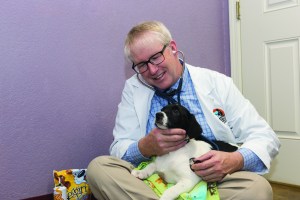 On the idea behind the Fear Free organization’s partnering with Meredith (Dr. Marty Becker): As far as the magazine, we wanted something to focus not just on emotional wellbeing, and that means freedom from noise phobias, such as thunderstorms, fireworks, and other noise phobias, separation anxiety, leash aggression, excessive barking, going to the vet, the groomer or the trainer, where those became pleasant experiences. And also focusing on enrichment. And again, if we think of children, there is so much work done on early childhood learning and enrichment activities, whether they’re doing dance, in arts and crafts, in childhood theatre or Baby Einstein. And pets aren’t born to be retired; dogs and cats have a genetic exuberance to hunt, to test things by sight or smell, and so we want to activate their brains and really let them express their genetic exuberance.
On the idea for the magazine (Dr. Marty Becker): I have an agent, Bill Stankey, who also has Chip and Joanna Gaines from Magnolia and Lisa Lillien from Hungry Girl, and so I have the same agent. He and I talked, even before Chip and Joanna Gaines, I’ve been with Bill for well over a decade and we talked about a magazine someday. I’m a voracious magazine consumer myself, so I’ll probably have subscriptions to 12 magazines at one time. And this is what’s interesting, my son is 29-years-old and he has subscriptions to six or seven magazines himself, so I think that the people who believe magazines are lost on millennials ought to rethink that.
On whether they will alternate between dogs and cats (Dr. Marty Becker): I don’t know. I think that’s a Meredith question, because they will know what people will pick up and buy. I will tell you that I’ve written “Chicken Soup for the Pet Lovers’ Soul,” “Chicken Soup for the Dog Lovers’ Soul,” “Chicken Soup for the Cat Lovers’ Soul,” and “Why Do Cats Always Land On Their Feet,” Why Do Dogs Drink Out Of The Toilet,” I have done quite a few dog and cat books, but we are going to make sure in the second issue that we do a little more cat coverage.
On the future plans for Happy Paws (Scott Mortimer): We have announced a second issue in October. And you’re right, that’s a little bit ahead of the normal cadence that we would announce a second issue that’s based off when we get sale data off of the first issue, but we’ve seen enough acceptance from advertisers; we had two really strong launch partner advertisers in this first issue with Purina and Elanco. And we’ve had tremendous interest from other advertisers going forward, and we know enough about the pet space and we’ve seen enough sales data from our existing titles to convince us that a second issue is certainly worth doing and by then we’ll have a better read on consumer acceptance for this.
On the cover price of $10 for Happy Paws, while someone can get an entire year of Better Homes & Gardens for that price (Scott Mortimer): All of those other businesses, and we have many of those here at Meredith, they have their own business model. And I think that what we’ve found to be successful in the Special Interest Media Group is that if consumers find something that they like and a topic that they’re passionate about, they will spend money. And I would say that it’s the Magnolia effect. It’s well-chronicled how well The Magnolia Journal has done and I think it’s opened a lot of our eyes inside of this building and across the company, enough to say that people will pay for great content and engaging content.
On why he thinks digital-only entities are moving into the print space (Scott Mortimer): There are obviously a lot of opinions out there as to why you’re seeing several examples of digital brands or brands that aren’t in the magazine space going into the print space. It’s just a different experience, as you well know. It’s a lean-back experience and it’s immersive. You just can’t get that in the digital space. The more our lives get connected and the more digitally-focused and digitally-centered that we become, I think there’s always going to be that opportunity for that relaxed experience where you get away and just sit in your favorite chair and immerse with a topic or a brand that you feel really passionate about. And magazines do that better than any other medium that we have.
On anything they’d like to add (Dr. Marty Becker): What Meredith overall has done is reached out to feature animal experts, such as a Boarded Veterinary Dermatologist on a skin issue, or if it’s an eye problem, there’s a Boarded Veterinary Ophthalmologist. All of the content in this magazine was created by experts that, if you went to the world’s largest Veterinarian convention or you went to the library and picked out a textbook, that’s the contributors for this magazine in large part. And every single part of the magazine was reviewed by Boarded Veterinary Behaviorists, all of the content. So, it’s authentic. It’s in entertainment style, but it’s authentic and the best information out there.
On what they would hope to accomplish one year from now with Happy Paws (Dr. Marty Becker): What it will do is people will have a lot more awareness about the importance of the emotional wellbeing of animals. It’ll start with their own pets, their dogs and cats, but it will showcase, whether it’s therapy animals or animals used for food production or animals in zoos or aquariums; we have to start looking at the emotional wellbeing of all animals. They’re sensitive beings and we have to look at both physical and emotional wellbeing.
On what they would hope to accomplish one year from now with Happy Paws (Scott Mortimer): I hope we sell lots and lots of magazines and we’re sitting down with Dr. Becker and his team and trying to figure out what type of frequency and is it a rate-based title, a newsstand title; we have a couple of steps to get through here, but we think we have enough data that the evidence points to this doing really well. We hope that it turns into a regular frequency title. We’ll see where it goes.
On what keeps them up at night (Dr. Marty Becker): For me, it’s pets that are euthanized for behavior problems. What happens with pets is people will take them back to shelters and surrender them for all the things the pet supposedly did wrong, but they never say they were bad owners. It’s always a bad pet. And just to understand how important the emotional wellbeing of animals is in basic training.
On what keeps them up at night (Scott Mortimer): I’m lucky, I sleep really well. (Laughs) It’s a really exciting time to be at Meredith and we have a lot of really fun things going on and Happy Paws is one of those.
And now the lightly edited transcript of the Mr. Magazine™ interview with Scott Mortimer, VP and Group Publisher, Meredith, and Dr. Marty Becker, Founder, Fear Free Organization.
Samir Husni: I was really surprised by the reaction of the media when the announcement for Happy Paws magazine came out and everybody was talking about Meredith launching a “print” magazine as if it were something new for Meredith. Why do you think people are still so surprised when a new print magazine is launched?
Scott Mortimer: I think when you dig a little deeper into what we’re doing and the success we’ve had in the past, it makes perfect sense. I oversee the newsstand operation for our Special Interest Media Group and the fiscal year we’re in, we’ll sell over 21 million magazine copies at retail, and 17 million of those will be priced at $10 and higher, so there’s a real appetite for a print product out there, you just have to get the right product at the right time and then put it in the right place and your chances of success go way up.
We really think that this product is a little different than anything that’s out there and it’s the right time. And if you look at how much money has been spent in the pet space, it’s a great product and we anticipate great success with it.
Samir Husni: How did the idea for Happy Paws come about? Who met with whom? Did Fear Free approach Meredith; how did this partnership come into being?
Scott Mortimer: We had a relationship with their agent from some prior business dealings and the opportunity came through him, so that’s how the inbound came to us. We’ve had great success with pet themed titles in the Special Interest Media Group and when this one came along it seemed like a match made in heaven. So, we’re excited about it.
Samir Husni: Back in the day when Meredith was doing SIPs (Special Interest Publications) before anyone actually in the market was doing them, if my memory serves me correctly, in the 1980s the only SIP magazine that really bombed on the newsstand was the pet magazine, Family Pet. What do you think has changed in the marketplace today that there is such an appetite for all kinds of pet magazines? Why is the market different than it was 40 years ago?
Scott Mortimer: I don’t know that I can speak to 40 years ago, I really can’t. I can tell you that the pet space is a $90 billion market and it’s growing six, seven, eight percent per year, depending on who you talk to. And there’s 75 to 80 million homes that have pets, so pets are just a really big part of people’s lives today. And I think we’ve caught onto that trend and they’re much more a part of the family than they ever have been. They’ve always been a part of the family if you have a pet, but today there’s just this connection to our pets that we really haven’t seen in any other point in time.
People are really hungry for this type of content and if you look at the big tagline on the cover “Is Your Dog Happy?” it shows this connection to your pet and the connection to their emotional wellbeing and happiness. And that’s what we’re seeing some success with.
Samir Husni: As you mentioned, you’re projected to sell 21 million copies of different SIPs this physical year. Are you seeing the change on the newsstands from what used to be defined as magazines to all of these bookazines and high cover priced titles? Is it time to change the definition of what a magazine is today with the amount of titles being put on the marketplace?
Scott Mortimer: I don’t know if it has changed the definition of what a magazine title is, but there has certainly been a shift and a change at newsstand with what is selling. Obviously, we have great success with the People brand and it sells a great number of copies at newsstands, but the only growing part of the newsstand business is the bookazine category. And it grew about 10 percent in 2018, but it’s really growing by the number of titles that are being offered. So I think that if you look at the data there’s probably going to be 1,100 more titles in 2018 than the year prior.
We’ve long known that this is a space that there’s opportunity in and I think that we have a lot of competitors that are also seeing that opportunity as well and are coming into the market with bookazine products. Our real point of difference in the category is that we have the analytic capabilities; we have close to a million pockets at checkout, and if you look at the category, we’re seven times the size of our nearest competitor. And we have over 40 percent market share in the category, and we use all of these things that I just mentioned to our advantage. And as I said in the beginning, when we get the right product in the right place and put it out at the right time, our chances of success go way up. And that’s the success we’ve seen and one that we want to continue to capitalize on.
Samir Husni: If we go inside Meredith to see where these ideas come from, what will we find? Is it that someone is daydreaming and says that you need to do a magazine on this or that, or is it a team effort? You just mentioned that there are 1,100 titles and Meredith has 40 percent of those, so you’re almost putting three titles per week out there?
Scott Mortimer: Yes, the numbers are a bit staggering, aren’t they? We have a real process in place to vet ideas, and we’ve opened it up to our employees, so we get a lot of inbound ideas that come from our rank and file employees who may not be involved with the Special Interest Media Group, but they can have an idea or see something out there and they’ll shoot it to us and we’ll take a look at it. And that’s on top of all of the other things that the Special Interest Media Group does.
Our edit team is terrific in kind of knowing topics that are on trend and would have an opportunity to sell. And when we layer in our analytic capabilities and our research capabilities on top of that, we’re not short on ideas, we have a lot of those that come in. It’s just like I said, finding the right idea that we think has the best opportunity to sell. It’s a trick and you never quite know. It’s a lot of outside factors that come into play in judging the success of one of these, but we think our process has worked pretty well and served us well, so we’re going to continue to lean into that.
Samir Husni: Since you took over the Special Interest Group, what has been the biggest challenge that you’ve had to face and how did you overcome it?
Scott Mortimer: I think it’s ongoing and it’s the retail space that’s the biggest challenge. The space is shrinking that’s dedicated to magazines at checkout at all of the big retailers. You have people with what we call mobile blinders on when they’re in the checkout lane, so they’re looking at their phones and maybe not looking around at what magazines are in the racks next to them.
And there’s just a tremendous amount of competition at checkout and I think that’s the one thing that we’re constantly monitoring and that we’re constantly having to innovate around. Bookazines tend to be an impulse purchase at checkout, so that’s why we spend so much of our time on cover blurbs and cover images and names, because we literally have five to six seconds to grab somebody’s attention when they’re in the checkout lane and want to make a purchase.
Samir Husni: Dr. Becker, if you could give us some background about, not only Happy Paws, but the whole idea of the Fear Free organization and how you’re trying to showcase Fear Free through the pages of Happy Paws? And why you decided to go with a print publication with Meredith for this project?
Dr. Marty Becker: I’ve written 25 books; I’ve done network TV in New York for 26 years; I still have a syndicated column, but there was nothing looking at the emotional wellbeing of animals. And that’s really what Fear Free does. If your dog has diarrhea or your cat has a hair ball, or you have a new puppy or kitten, there are so many resources online for that and there are so many books, but there is nothing really that looks at the emotional wellbeing of animals.
I’m 65-years-old and I come from the age when we were manhandled and manipulated, threatened and abused at the doctor’s office; I remember crying one time when I got a shot in the rear-end and I started wailing and my mom raised her hand above her head and yelled, “Shut up, Marty!” And then she said, “Don’t embarrass the doctor.” My older sister, who is 12 years older, I remember her getting her ponytail pulled at the dentist’s office to keep her mouth open.
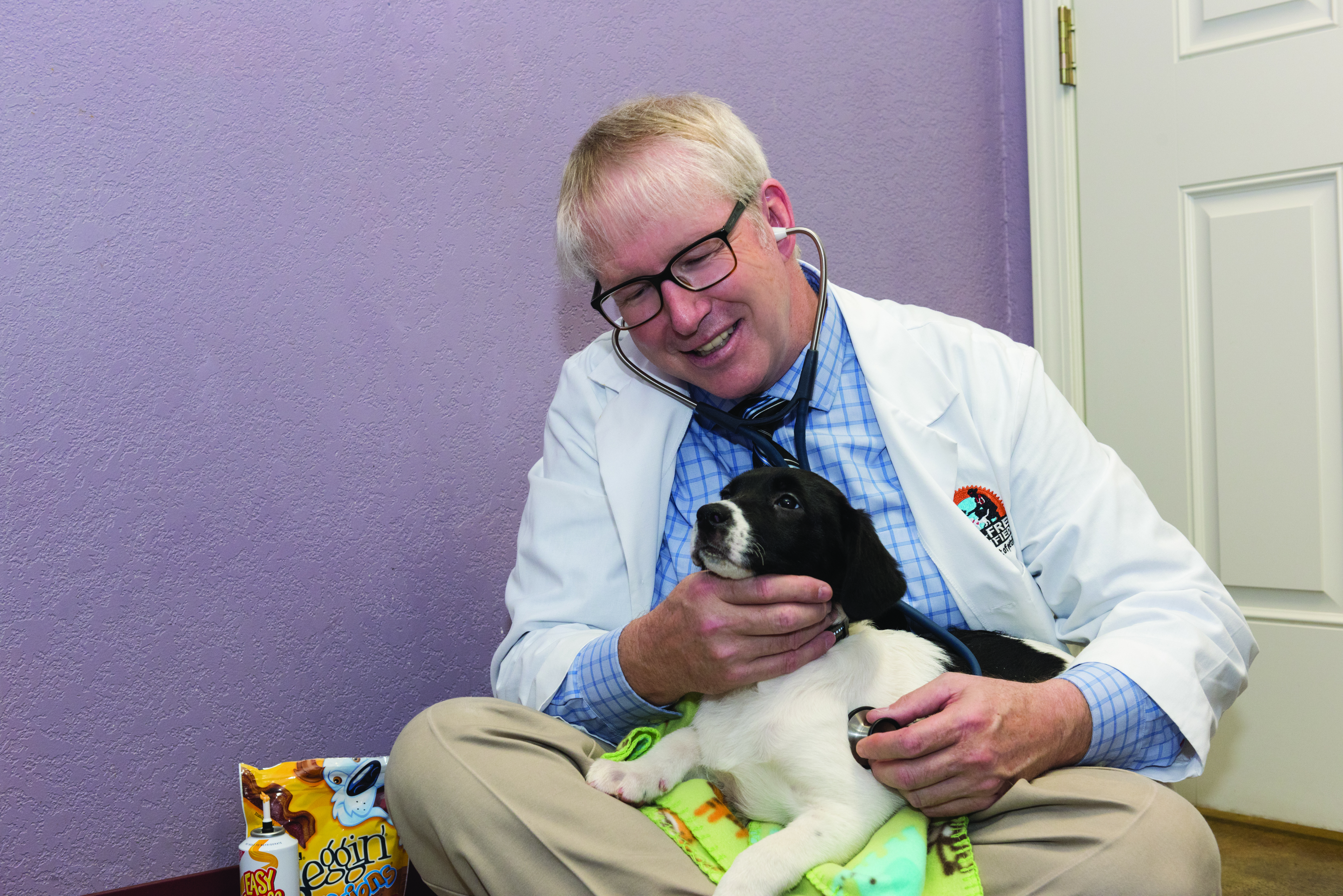
But pediatricians had to change and pediatricians started looking at both the physical and the emotional wellbeing of children, pediatric dentistry changed, pediatric oncology changed in children’s hospitals. And in veterinary medicine, we were still just focused on the medicines. If a pet came in you treated a wound, you vaccinated or you cleaned their teeth, or you treated a sore ear or a torn paw or an abscess. And most of the time the pet was terrified. It had fear, anxiety and stress, so that’s what started the Fear Free movement, when myself and about 60 Boarded veterinary behavior professionals started looking at the emotional wellbeing of dogs and cats.
As far as the magazine, we wanted something to focus not just on emotional wellbeing, and that means freedom from noise phobias, such as thunderstorms, fireworks, and other noise phobias, separation anxiety, leash aggression, excessive barking, going to the vet, the groomer or the trainer, where those became pleasant experiences. And also focusing on enrichment. And again, if we think of children, there is so much work done on early childhood learning and enrichment activities, whether they’re doing dance, in arts and crafts, in childhood theatre or Baby Einstein.
And pets aren’t born to be retired; dogs and cats have a genetic exuberance to hunt, to test things by sight or smell, and so we want to activate their brains and really let them express their genetic exuberance.
Samir Husni: How did you come up with the actual idea for Happy Paws magazine?
Dr. Marty Becker: I have an agent, Bill Stankey, who also has Chip and Joanna Gaines from Magnolia and Lisa Lillien from Hungry Girl, and so I have the same agent. He and I talked, even before Chip and Joanna Gaines, I’ve been with Bill for well over a decade and we talked about a magazine someday. I’m a voracious magazine consumer myself, so I’ll probably have subscriptions to 12 magazines at one time. And this is what’s interesting, my son is 29-years-old and he has subscriptions to six or seven magazines himself, so I think that the people who believe magazines are lost on millennials ought to rethink that.
And what I love about the editorial team at Meredith, talk about pro; I’ve written 25 books and have sold about 9 million copies, but had never done a magazine, and to watch both the science and the process that went into creating that magazine was something to behold. The original photography; the format of kind of bite-sized chunks of information, just the muck of it and the way that you can easily digest it; it’s almost like going to Golden Corral. (Laughs) And there are a lot of cat lovers there as well, so it’s great.
And I love paper quality. I love the finish of the cover. I love the quality of the photography and the quality of the paper inside the magazine. People have no idea how hard it is to write a book and I never had any idea of all of the steps that went into writing a magazine, I have to be honest. It’s a lot more complicated than I thought. Talking about dotting the I’s and crossing the T’s.
Samir Husni: Are you going to alternate between cats and dogs? On the first issue cover “Is your dog happy” is the question asked, will it be a cat on the second issue?
Dr. Marty Becker: I don’t know. I think that’s a Meredith question, because they will know what people will pick up and buy. I will tell you that I’ve written “Chicken Soup for the Pet Lovers’ Soul,” “Chicken Soup for the Dog Lovers’ Soul,” “Chicken Soup for the Cat Lovers’ Soul,” and “Why Do Cats Always Land On Their Feet,” Why Do Dogs Drink Out Of The Toilet,” I have done quite a few dog and cat books, but we are going to make sure in the second issue that we do a little more cat coverage.
Samir Husni: Scott, what are Meredith’s plans for Happy Paws? With The Magnolia Journal and Hungry Girl, there was a space between the first and second issue, and then wait-and-see on the third issue, then going full-steam-ahead. What are the plans for Happy Paws?
Scott Mortimer: We have announced a second issue in October. And you’re right, that’s a little bit ahead of the normal cadence that we would announce a second issue that’s based off when we get sale data off of the first issue, but we’ve seen enough acceptance from advertisers; we had two really strong launch partner advertisers in this first issue with Purina and Elanco. And we’ve had tremendous interest from other advertisers going forward, and we know enough about the pet space and we’ve seen enough sales data from our existing titles to convince us that a second issue is certainly worth doing and by then we’ll have a better read on consumer acceptance for this.
Samir Husni: As the industry moves forward and continues to evolve, and as the studies continue to indicate that print does still work, do you feel that the business model is changing as a whole? For example, for $10 I can get an entire year of Better Homes & Gardens, yet here with Happy Paws, I only get one issue.
Scott Mortimer: All of those other businesses, and we have many of those here at Meredith, they have their own business model. And I think that what we’ve found to be successful in the Special Interest Media Group is that if consumers find something that they like and a topic that they’re passionate about, they will spend money. And I would say that it’s the Magnolia effect. It’s well-chronicled how well The Magnolia Journal has done and I think it’s opened a lot of our eyes inside of this building and across the company, enough to say that people will pay for great content and engaging content.
This is a good example, people shelling out $10 for a single copy, and we’ve had great success with that, and again, it all comes back to the topic and the time and the place. When you get those things right, people will pay for print.
Samir Husni: We’ve heard from Dr. Becker about his love for print and that feel and touch that comes with a print magazine, why do you think we’re seeing digital entities adding print? Hearst, for example, just launched Bumble, which is a dating website. Before that, there was The Magnolia Journal and The Pioneer Woman; why do you think all of these digital-first entities are coming to print?
Scott Mortimer: There are obviously a lot of opinions out there as to why you’re seeing several examples of digital brands or brands that aren’t in the magazine space going into the print space. It’s just a different experience, as you well know. It’s a lean-back experience and it’s immersive. You just can’t get that in the digital space. The more our lives get connected and the more digitally-focused and digitally-centered that we become, I think there’s always going to be that opportunity for that relaxed experience where you get away and just sit in your favorite chair and immerse with a topic or a brand that you feel really passionate about. And magazines do that better than any other medium that we have.
Dr. Marty Becker: Only three out of 10 Americans have children, but seven out of 10 Americans have pets. There is an incredible audience and I think in 2015, if you look at all movies, in theater, Netflix and Redbox, and all music, in concerts, CDs, Spotify, iTunes, all video games, and that’s Xbox 360, PS3; all of those together were about $33 million in 2015, and pet spending was over $50 billion. And in 2017, if you look at Amazon’s total revenue on one side, and on the other side you look at how much was spent on pets, it was equivalent of 40 percent of Amazon’s total revenue. Not that 40 percent of Amazon’s revenues were pet or vet, but that’s just how big the category is.
So, people will go to a pet store, Pet Smart or Petco and will spend $10 on a tiny bag of treats. And what this magazine allows them to do and is something that is a great resource, it helps them put the treat into treatment. How do you get a pet to take its medication when it doesn’t want to? And I’ve already heard from people buying the magazine about our strong admonition to not use food bowls; to throw your food bowls away and feed with food dispensing devices. And if you do that, you’re feeding not only the body, but you’re feeding the mind.
Samir Husni: Is there anything either of you would like to add?
Dr. Marty Becker: One of the things that I was really tickled with Meredith about is we launched a book last year, my 25th book called “From Fearful to Fear Free” and we did long-lead media, which is magazines. So, it went out in October 2017 for an April 2018 book launch and when I was talking to the different editors at Meredith, we were talking about the fact that often in magazines when it’s for the human side they quote doctors and registered nurses, or the head of the dermatology department at Yale University, for example.
But with the pet side, sometimes a story about itchy skin on a dog would quote a dog groomer, or a behavior issue would be a trainer but not a Boarded Veterinary Behaviorist. But what Meredith overall has done is reached out to feature animal experts, such as a Boarded Veterinary Dermatologist on a skin issue, or if it’s an eye problem, there’s a Boarded Veterinary Ophthalmologist. All of the content in this magazine was created by experts that, if you went to the world’s largest Veterinarian convention or you went to the library and picked out a textbook, that’s the contributors for this magazine in large part. And every single part of the magazine was reviewed by Boarded Veterinary Behaviorists, all of the content. So, it’s authentic. It’s in entertainment style, but it’s authentic and the best information out there.
Samir Husni: If we’re having this conversation a year from now, what would you hope to tell me you had accomplished with Happy Paws?
Dr. Marty Becker: What it will do is people will have a lot more awareness about the importance of the emotional wellbeing of animals. It’ll start with their own pets, their dogs and cats, but it will showcase, whether it’s therapy animals or animals used for food production or animals in zoos or aquariums; we have to start looking at the emotional wellbeing of all animals. They’re sensitive beings and we have to look at both physical and emotional wellbeing.
And the other part is enrichment, and that’s where Fear Free Happy Homes, our tagline is “Helping Pets Live Happy, Healthy Full Lives.” Happy is fear free, healthy is high-tech veterinary medicine, and full is enrichment. Put another way, it’s where state-of-the-art meets state-of-the-heart. Or high-tech meets high-touch.
Scott Mortimer: I hope we sell lots and lots of magazines and we’re sitting down with Dr. Becker and his team and trying to figure out what type of frequency and is it a rate-based title, a newsstand title; we have a couple of steps to get through here, but we think we have enough data that the evidence points to this doing really well. We hope that it turns into a regular frequency title. We’ll see where it goes.
Samir Husni: My typical last question; what keeps you up at night?
Dr. Marty Becker: For me, it’s pets that are euthanized for behavior problems. What happens with pets is people will take them back to shelters and surrender them for all the things the pet supposedly did wrong, but they never say they were bad owners. It’s always a bad pet. And just to understand how important the emotional wellbeing of animals is in basic training.
Scott Mortimer: I’m lucky, I sleep really well. (Laughs) It’s a really exciting time to be at Meredith and we have a lot of really fun things going on and Happy Paws is one of those.
Samir Husni: Thank you.

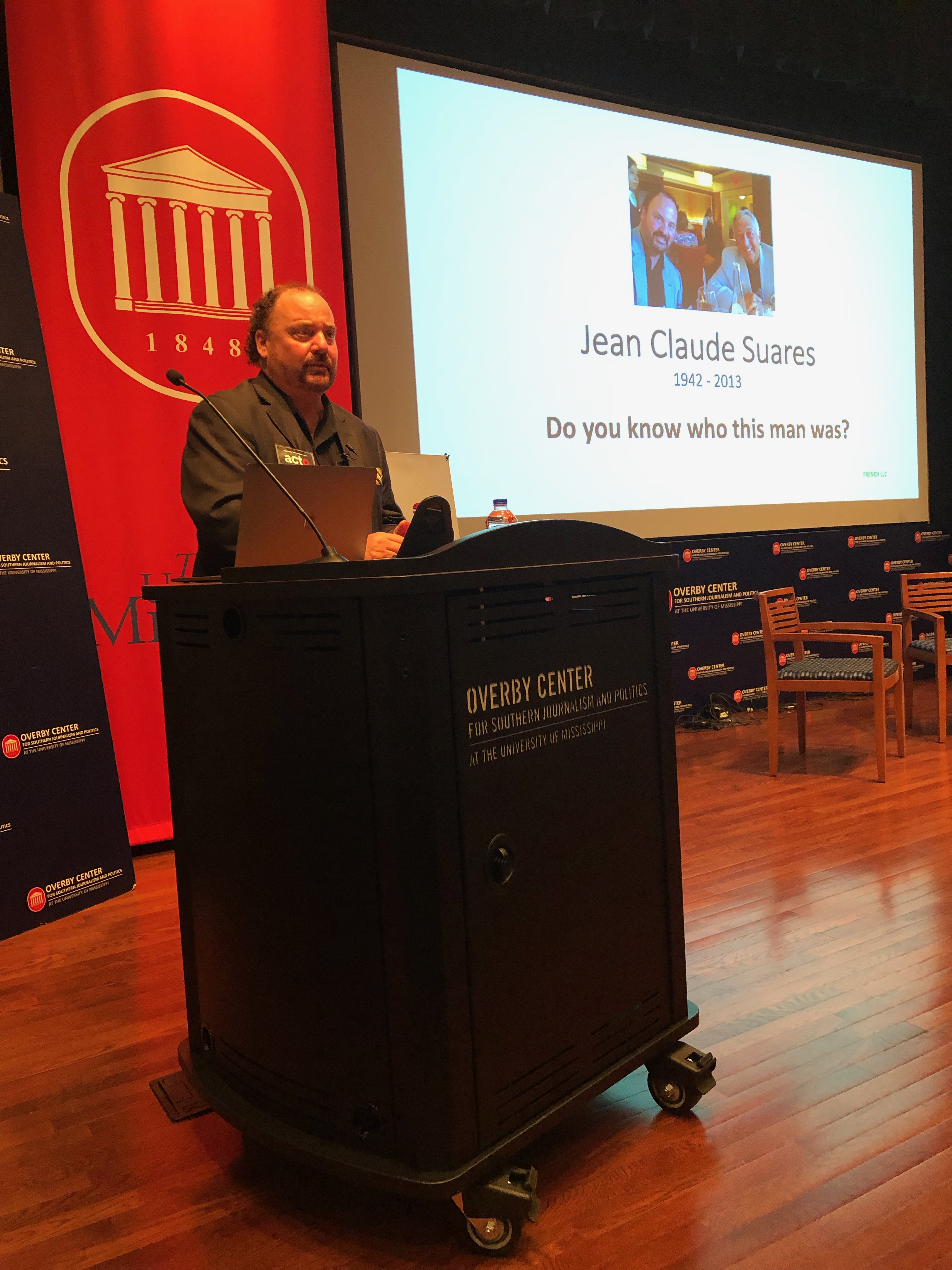 When did “legacy” become a bad word? James French, President of French LLC asks. We used to want to leave a legacy. And what is the difference between journalism and “new media”? We shouldn’t even need the name.




 Mr. Magazine