Archive for the ‘News and Views’ Category

h1

Newsstands should not be used as a “promotional tool…”

October 7, 2008

I could lie and say that I was surprised by a comment from John Loughlin, executive vp, general manager, Hearst Magazines at the current American Magazine Conference in San Francisco. Media week reported that Loughlin “said that if the current trends continue, magazines could be facing a time when instead of 1,000 titles, 200 or fewer are on display in stores, depriving the industry of critical promotional opportunities. The situation, he said, speaking on a panel, “is unfortunately incredibly fragile.”‘

To me, that is the heart of the single copy distribution problem in this country. The majority of magazine companies in recent years started to treat the newsstands as anything but a source of revenue. Even when Bauer Publishing reinvented the use of the single copy sales by introducing the right-priced publications, Bauer was faced by “the forces of the industry” to back off their right-priced magazines.

I just wished that our magazine industry leaders will wake up one day and start talking solutions rather than doom and gloom and predictions that will continue to add to the ills of the industry. Yes, the situation maybe dire out there, but if the leaders are going to join the “slugfest” who is going to offer the solutions?

I invite our industry leaders to go and visit some of the newsstands in Germany, Holland, Finland, Estonia, Japan, the United Kingdom just to name a few and try to count the number of magazines being distributed there on the newsstands. Count the numbers, check the prices and the use of the newsstands to promote the sale of the copies on the stands. Our efforts should focus on ways, prices, etc. to move magazines on the newsstands and not the opposite. I am sure that many of our industry leaders still recall the days when magazines such as Family Circle, Woman’s Day and Cosmopolitan were sold only at the newsstands. Subscriptions to the aforementioned magazines cost more than buying them on the newsstands. Those were the days when the newsstands were a good source of revenue, and not just a “promotional” tool to show off your magazine to the 50+ customers who reside on Madison Ave. rather than the 1,000,000 customers who reside across this great country of ours.
To sample some of the industry bailout programs click here and here.

h1

The Mr. Magazine™ Interview: Mitchell Fox, President and CEO of 8020 Media…

October 5, 2008

Cats Must Fail… and Other Words of Wisdom from Mitch Fox


Mitch Fox, President and CEO of 8020 Media

“There is a philosophical disconnect between most bloggers and a print vehicle”

From retail to Details, from Details to Vanity Fair up the ladder of Condé Nast publishing and then out, Mitch Fox continues to do his dream job of “building businesses and making them grow.” The former Condé Nast executive is now the President and CEO of an entrepreneurial company based in San Francisco called 8020 Media publisher of JPG magazine. He moved to San Francisco earlier this year to join the company that his old friend C/Net founder Halsey Minor has invested in.

The move from the east coast to the west coast was the subject of my first question:

How is life in San Francisco, I asked.

It is quite good. The media community up here in general is such a departure from the New York culture. The media community in New York is best typified by a cartoon that ran in the New Yorker of two dogs sitting in a bar in suits drinking martinis and one dog says to the other, “it is not enough that dogs succeed, but cats must fail.” That is exactly how the media business, particularly the magazine business in New York, is. Out here, it is not quite like that. Maybe, it is because it is an expanding pie. Here partnerships between what most would consider competitors are common place. Advice and recommendations are shared pretty openly, although no one is about to reveal their secrets, but, at least, they communicate in a civil way. If one person goes from one company to another, typically, the executive will call me and say you have got a great person. It is just a whole different culture.

How is it different to go from being part of a media giant to creating what may possibly be the genes of a media giant from scratch?

The difference is that in a big company you have more resources just by virtue of having more people to consult with. I like consulting with people. But, in a smaller company, you can be much more nimble. You can be much more creative, and there is no politics. When we make a decision to do something as the small management team here, we don’t have to worry about anybody else approving, agreeing or doing anything to undermine our success internally. We can focus 100 percent of our efforts on simply making sure that our decisions are successful ones.

Are magazine companies oversized? Did we super-sized our staff to the point of no return? Can we still hire editors and publishers in the same way that we used to hire them in the good old days?

I think that, because business was so good for so long, magazine companies’ overhead became inflated past a point that is reasonable. The expenses associated with those enormous staffs, just the shear operational expenses, have become so inflated that it is extremely difficult to be profitable.

However, I don’t think we have gotten ourselves to the point where it is too expensive to hire editors and publishers. I think what we do is expect too little of them relative to their contributions to producing the magazines.

What are the strategies and plans that you have for 8020 Media? Where do you see them going?

When I first learned about this company, I guess it was in October of 2006 right after they started, and it was from my old friend who had invested in the company. My plan for the company is relatively self-evident, especially after ceasing publication of Everywhere magazine although we keep the website going. It is to build a platform that will permit us to create communities around vertical interests and have those communities contribute content that other members can vote on, determine what the best of it is and, when we pull off that best content that the community determines, create stunningly beautiful magazines from that content. With the platform being finally developed at JPG where we can now replicate it, we are about to announce our next properties, which we can now turn out fairly quickly one after the other, because really our greatest skill, in addition to creating beautiful magazines, is community management. Growing, developing and nurturing communities are what we spend an immense amount of our time on.

So, will there be more print products, or will there be just communities online like Everywhere?

Everywhere is an anomaly because we have a pretty small online community and it never made itself into a really good magazine. We will never again have a community that does not launch or spawn a magazine. The wonderful part about the magazines is that it is a terrific reward for those people who contribute online, because it is still a rare opportunity to have your contribution and your work published in any nationally or internationally published magazine. That is a very exciting prospect for most people. Consequently, the magazine has such great tactile value. There is something about magazines and the ability they have in peoples’ lives. It is very exciting for people to be able to say they have been published. We will always have a magazine that is the result of a community’s efforts, and the next business unit, which we are planning to announce probably in two weeks, will similarly have a big magazine component to it.

The community seems to be your magnet, but what about this business philosophy? What is your plan of linking the pixels on the screen with the ink on paper? Can you expand a little on that relationship?

It is easy, because our community members interact with each other relative to the content that they have contributed and the content that their peers have contributed. We have this notion of self interest that all of the members have in playing this “game” to get themselves voted highly enough to become part of this fantastic end product, which is the magazine. The magazine is sold at Barnes & Noble, Borders, Whole Foods and Urban Outfitters, and really becomes a touchstone that all the members want to be a part of. Like I said, it is a very exciting notion for advanced amateurs of any kind to be able to be published in this beautiful magazine.

You make it seem so easy. Why don’t other people turn their blogs and communities into print publications?

I think there is a philosophical disconnect between most bloggers and a print vehicle. There is a very high cost associated with producing a magazine. There is also a very high barrier of professional expertise needed to produce a magazine. Consequently, it is a lot more complicated to produce a magazine than it is to produce a blog. It is infinitely more complicated to produce a good magazine, distribute it, and sell it, than it is to just get a blog up and running.

Would you please explain the name of the company 8020.

Truth be told, it changes periodically, depending on what we are discussing, because some might say that 80 percent of the content comes from the community, and 20 percent of the content is created by the editors. That is probably the best explanation, because editors play a significant role in the magazines in that they do have about 20 percent control relative to community involvement. They create the narrative for the magazines. If a photo or a story comes in too close to the deadline, and, as a result, could not garner enough votes to really earn its way in, but we love it and want to publish it, then we will pull it and publish it.

Since you joined 8020, what would you consider the biggest hurdle that you had to overcome?

I would say the biggest hurdle was sharing the understanding that we have to create a single platform from which we can launch other titles. When I joined, Everywhere was on a completely separate platform. That is it was like starting a completely separate business that ran parallel to JPG. The first thing that was important was to share the broader vision of having a platform that is replicable across other business units, so that we could create other communities and ultimately publish other magazines.

What was the most pleasurable surprise that faced you?

I am in San Francisco, so I am just delighted that the media community out here, especially within my own company, are so ambitious, driven and success oriented, but not focused in any way on politics and failure of competitors.

What makes you tick? What makes you get out of bed in the morning and say like wow?

My background is not really from the magazine business per se. I worked in retail marketing for many years, and I was a client for those years, so I like to build business and watch them grow and succeed. Growing and developing a business is really what I love the most.
This is to me the most fantastic job I could have ever dreamed of, because I get so much pleasure out of developing and growing a business. In this case, I am able to apply so much of the thinking and ambition that I held out for larger magazine companies. Larger magazine companies could benefit by what we are doing, but it would be very difficult for them to change their own self-perception to be able to take that action.

Do you think the magazine business in general is in trouble? Do you think we need to bailout?

I think that the magazine business will always exist. However, it will very shortly exist in a much smaller version. The magazine industry has to be prepared for that. I think that what we do here relative to magazines is something that big magazine companies could learn a lot from. They could build more sustainability into their businesses if they could integrate some of the community actions that we have done here. I don’t think any big magazine company is ready to do that, because it would mean that editors have to yield space in the magazine to readers and the voice of readers would become more prominent. I don’t think traditional editors are prepared for that.

What is your view or vision of future magazine publishing in the United States?

I think that it will be a somewhat smaller business than what it is now, and there will be some of those magazines that have made a terrific link between the digital platforms and the print platforms. If they make that link effectively, they can have a very exciting business. They can’t have one succeed and the other fail. They both have to be successful. While we have some magazines today that have terrific digital platforms, their magazine side is in a decline. That is not good. Also, there are so many magazines that have no digital presence of any form or of any consequence, but their print business, all be it down, still throws off a profit that is enough for the magazine company to retain the legacy that those titles hold. They are ultimately going to have to let go of that legacy if they want to reinvent themselves.


h1

The Insane Bailout Plan of the Failing Magazine Circulation Crisis…

October 2, 2008

Followers of my blog will recall my stand on the crazy subscription prices for magazines. For years I have been advocating charging the right price for the right magazine both on the newsstands and by subscription. Our industry is going insane and the offers magazines are making to prospective subscribers show once again that the big magazines, and some smaller magazines, are more than willing and ready to give their magazines away for free.
I read with interest today the report from Europe on the fate of the free-distributed newspapers. I hope they are wrong, but every time you are willing to give your content for free, my experience and my gut-feeling tell me that you will succeed in the beginning than you will hit ground zero. I wrote a book called Selling Content that focused mainly on the art of packaging your magazine so it will sell. Yes SELL and not give away.
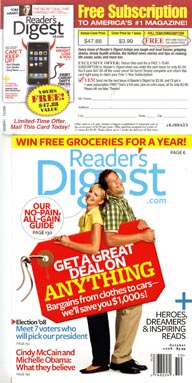
So, why do magazines continue taking this suicide route of giving their publications away for free. This week I picked up two magazines and was surprised by their bail out packages to salvage their subscription numbers and get more of what I call “counting customers instead of finding customers who count.” Inside the October issue of Reader’s Digest a subscription card inviting you to fill in the information to receive 12 more issues of the magazine for free just because you paid $3.99 to buy the magazine on the newsstand. So for a mere $3.99 you now receive 13 issues of the mass circulating Reader’s Digest.
The same is true with the ultra specialized Sporting Classics magazine that has a skyline cover line screaming the fact that “Buy this magazine and get 2 issues free!!!” That is half-a-year subscription for the price of one issue you pay at the newsstand.
If that is not an insane bailout plan, I do not know what is the definition of insane! I doubt that any of the aforementioned issues will be discussed at the Magazine Publishers of America’s American Magazine Conference in San Fransisco next week, but I am sure that the organizers and attendees are going to have a great time. I doubt that there will be a vote on a bailout plan for the magazine circulation crisis. Stay tuned, they may surprise us!

h1

Bob Sacks vs. the Magazine Publishers of America

September 30, 2008


My friend Bob Sacks, the publisher of America’s oldest e-newsletter (since 1993), has taken the Magazine Publishers of America (MPA) to task regarding the recent layoffs at the MPA and the compensations the MPA’s leadership are paid. Bob and I agree to disagree on a lot of things, but as for the article that follows, Bob and I are in total agreement. I would love to hear your opinion on the matter and your opinion on the role of the MPA and its American Magazine Conference that takes place next week in California. I hate to think that my friend Bob is the only sane voice left in our industry.

BoSacks Speaks Out: MPA Layoffs Vs. Executive Compensation
By BoSacks
www.bosacks.com

Last week I sent out what I thought was a calm and sensible article about the management salaries of publishing associations titled BoSacks Asks: What’s a Pound of Flesh Worth These Days, Anyway? I was attempting to provide our industry a thoughtful dialog in these stressful and unprecedented economic times. There was nothing intentionally personal, nothing specifically actionable for or against a single person or association. I just wanted to present some overall logical questions and start a reasonable and thoughtful review of financial executive deployment of executive salaries in associations for the publishing business. Somehow it seems especially relevant with the ascendency of digital publishing in the 21st century.

Today, I feel I must alter that neutrality and zero in on a single association. The MPA, the Magazine Publishers Association has initiated an action that for me requires closer examination and strikes me on the surface as insensitive in its execution. Of course, I do not know all the details. So I only have conjecture to work with.

Media Week reported the following
: “The pains affecting consumer magazines are trickling down to its lobbying association. Magazine Publishers of America layed off seven staffers, according to sources. A spokesman said that because of declines in its members’ core print publishing operations, ‘it was necessary to streamline operations.’ After the cuts, MPA will have 36 employees. Rate-card reported ad pages for consumer magazines are down 3.1 percent in the first half of ’08 and 8.2 percent in the second quarter, with particularly steep declines in the auto, technology and pharma categories, according to Publishers Information Bureau, a service of MPA. The cuts come during the run-up to MPA’s annual American Magazine Conference, which takes place Oct. 5-7 in San Francisco.”

With the country’s $700,000,000,000 dollar bail out and a necessary focus on golden parachutes and executive compensation plans it seems to me to be somewhat disingenuous for 7 people to be laid off due to the financial conditions of the publishing industry while the MPA management sits unscathed in an untouched ivory tower, with compensations reaching as much as $740,000. (See full compensation chart here)

Were these workers not doing their job well enough? If that’s the case then the layoffs should have been swiftly completed. If they had been doing their job well, then perhaps the association and the industry still needs them.

Is the industry no longer in need of the MPA’s work as the largest publishing association? Are they lowering their goals and standards for the industry? I think we need competent magazine associations now more than ever, to do more than ever before. There is too much competition and too many advertising alternatives for us not to be at our peak performance.

What happened? Lop off the heads of the worker bees that actually help make the honey flow and let the royalty continue on with their compensation to the possible destruction of the entire hive?

Is there such a thing as a reasonable limit for executive pay? I suppose the best answer would have to be based on actual and identifiable results. What have been the actual results of the current administration of the MPA? Where are we as an industry and where do we need to be under the current conditions? Are we as an industry forward thinking enough and keeping up with the advent of multiple and ever changing competitive platforms? Has the MPA kept up with the needs of the industry? If it has, then the compensation may be warranted.

If the MPA’s management indeed shared in the pain of these layoffs in some way, that is not apparent to this reporter. But if that is so, then I apologize for this errant conversation. Either way, as always, I leave my newsletter completely open for a public response from all.

h1

Ole Miss Students Ask, and Fareed Zakaria, Newsweek International Editor, Answers Their Questions About the Presidential Debate

September 26, 2008

As some of you know, the other hat that I wear is that of the chair of the Department of Journalism at The University of Mississippi. Today Ole Miss is hosting the first presidential debate. Barack Obama and John McCain will be on campus engaged in the first of three presidential debates before the November elections. I am teaching an internship class preparing our students to work with the media during the debate week. Those students had the opportunity to ask Fareed Zakaria, Newsweek International Editor, some questions regarding the presidential debate and the role of the media in covering the debate. The students submitted the questions to me, and I, in turn, sat down with Dr. Zakaria and asked him the students’ questions.

Do you feel that the media has actually been biased in its coverage favoring one candidate over the other?

I think there is no such as thing as the media anymore. I never quite understand what people mean with the disaggregated nature of the media right now. Has Fox News been biased in covering the candidates? I leave it to you to answer that question. I think if you take the media as a totality, no, I don’t think it has been biased, but any individual player in the media that you happen to have a particular gripe with, you will probably always find that true. I will say with some sincerity and honesty that the two organizations that I represent, CNN and Newsweek, I don’t think we are particularly bias. I think there are some ways in which coverage takes place which reflect certain institutional biases of neutral media when you spring a completely new candidate on the scene like Sarah Palin. There is going to be a feeding frenzy to try to figure out who she is. That would have happened whether she were left wing or right wing. Other than that, no, I think in general that CNN and Newsweek, at least, have been pretty balanced.

To read the entire interview click here.

h1

And then came September… A Flurry of New Launches

September 17, 2008


Back when I was a student at The University of Missouri-Columbia in the early 80s, I had my first chance to meet the legendary magazine editor John Mack Carter. Mr. Carter has launched more new magazines than anyone I have met. So, needless to say meeting him was like meeting the candy man in the candy store. I was introduced to Mr. Carter and was amazed by the vast knowledge and wisdom he possessed when it came to magazine editing and new magazine launches. Later in life, I was fortunate enough to work with Mr. Carter and learn a lot from his style of publishing and editing.

The reason for this lengthy introduction is of course a sentence that I still remember he told me back then. He answered my question regarding “when is the best time to launch a magazine?” Mr. Carter looked at me and without hesitation he said “September, and if you miss September then October.”

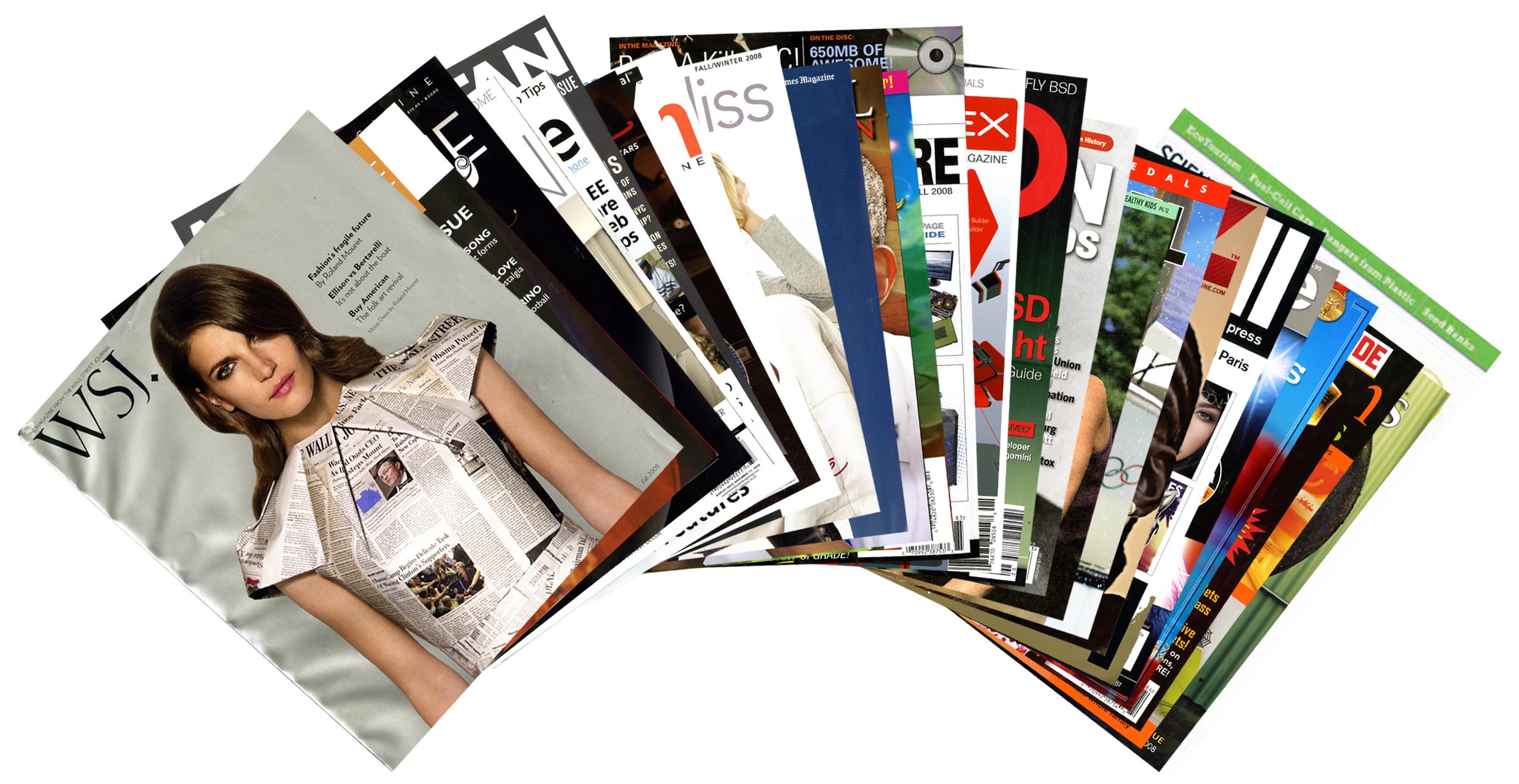
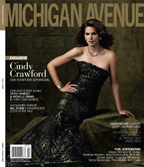
His prophetic words are as true today as they were in the early 80s. September is proving to be a great month for new magazine launches. From the mass 9 million giants like Spry, to the mass luxury 800,000 circulation WSJ., to the monster 360-page Michigan Avenue in addition to the tens of other titles that have appeared, so far, on the nation’s stands for the first time this month.
September, so far, has been a breath of fresh air when it comes to new magazines. All of sudden we are witnessing the media (yes the media, and the print one in particular) increase their doses of publishing the prophecies of those “end of print” doomsayers and the future is for every thing pixels.

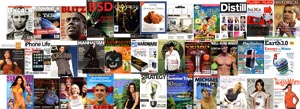
Try telling that to the publishers of the aforementioned magazines or to those select few mentioned hereafter that have seen their birth in “the best month to launch a new magazine: September.” Magazines like Wing., BBC Knowledge, Flash & Flex, debbie bliss knitting magazine, Tinker Bell, LA, the Los Angeles Times Magazine, Distill, Manhattan, Arkansas Life, Home Theater Design, Yoga Mom, iPhone Life, Strategy, Signatune, Scientific American Earth3.0 and Fine Champagne.

Yes, I know the newsstands are facing a lot of problems, and some say that one of those problems is the overcrowded magazine field and the host of new titles that keep arriving on the nation’s stands. To those I say, new magazines are the life line of our industry, they are the ones that add new and fresh blood to our body and keep us ticking. Without new magazines our industry will be as stagnant as it can be. We need the new magazines for two main reasons: one to keep our industry fresh and lively, and two to show those prophets of doom and gloom that the magazine industry is still, and will continue, to be well, alive and kicking… and not only in the special interest, limited circulation arena, but in all aspects of publishing form the mass to the class, there will continue to be new magazines published.

Thank you John Mack Carter for your 80s advice, and thank you to all of the aforementioned magazine publishers who indeed are willing to take up yet another gamble on a new magazine. Sorry, my friend Bob Sacks, the new magazines, in all shapes and forms will continue to appear on our market place; and guess what, they will continue to be in ink on paper. Cheers.

h1

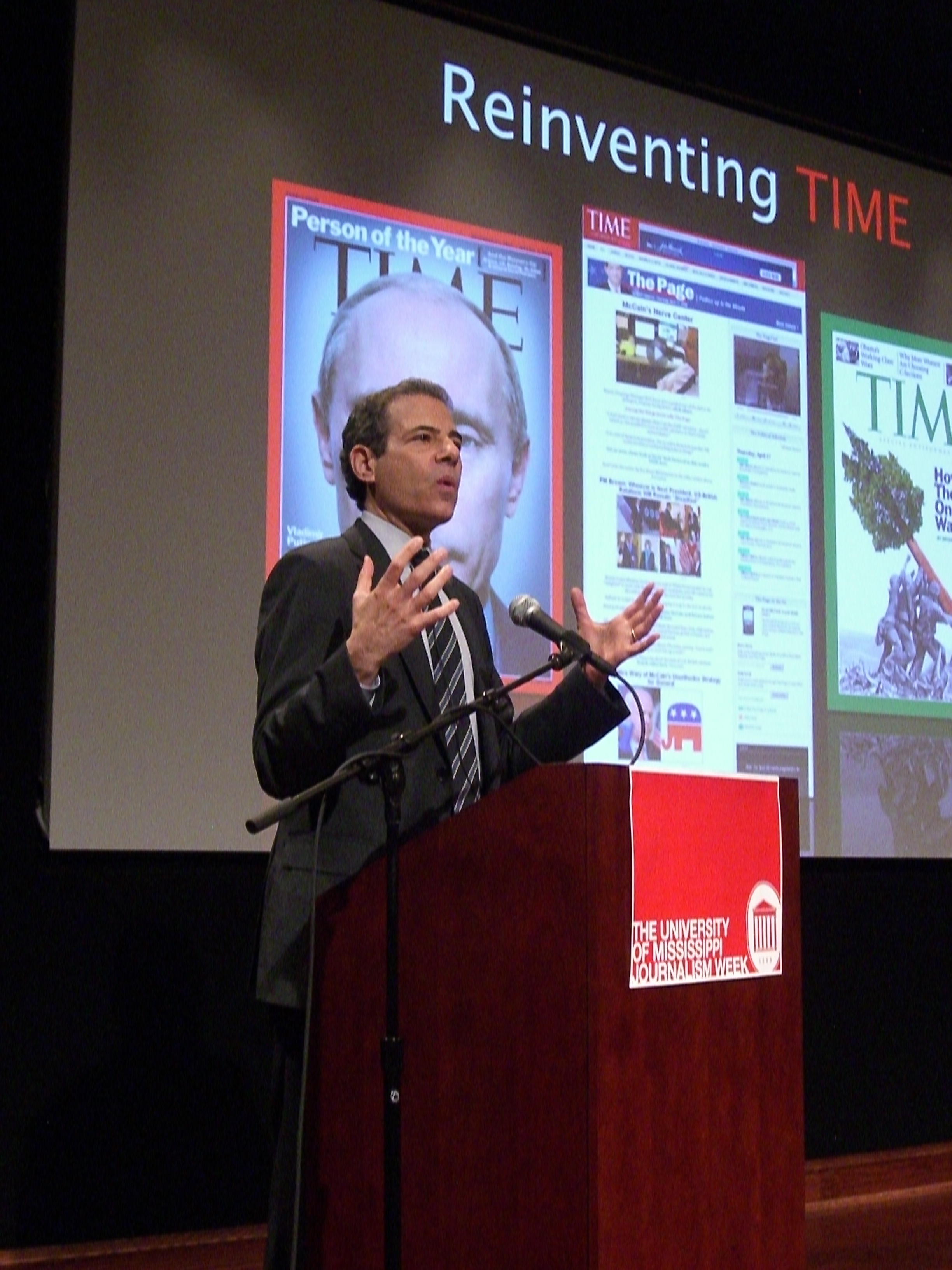
Ole Miss Students Ask and Richard Stengel, TIME Managing Editor Answers Their Questions About the Presidential Debate

September 16, 2008

As some of you know, the other hat that I wear is that of the chair of the Department of Journalism at The University of Mississippi. This semester, Ole Miss is hosting the first presidential debate on Sept. 26. Barack Obama and John McCain will be on campus engaged in the first of three presidential debates before the November elections. I am teaching an internship class preparing our students to work with the media during the debate week. Those students had the opportunity to ask Richard Stengel, TIME managing editor some questions regarding the presidential debate and the role of the media in covering the debate. Our local newspaper The Oxford Eagle published the interview yesterday afternoon. Here is the intro and click here to read the entire interview.

UM Students Interview TIME Editor About Debate
By Samir A. Husni
Special to The Eagle

On Thursday Richard Stengel, TIME managing editor, was one of two moderators at the Forum on Service and Civic Engagement at Columbia University in New York that featured Barack Obama and John McCain.
On Friday students from Ole Miss turned the tables on Stengel by asking him some questions about the media’s coverage of the presidential campaigns and his thoughts on next week’s debate at The University of Mississippi.
The UM students are enrolled in the Journalism 495 Internship class that is preparing the students to work with the media expected to be in Oxford next week for the Sept. 26 debate. The students submitted the questions to their professor, Samir Husni, chairman of the journalism department, and he, in turn, asked Stegnel for his answers.

h1

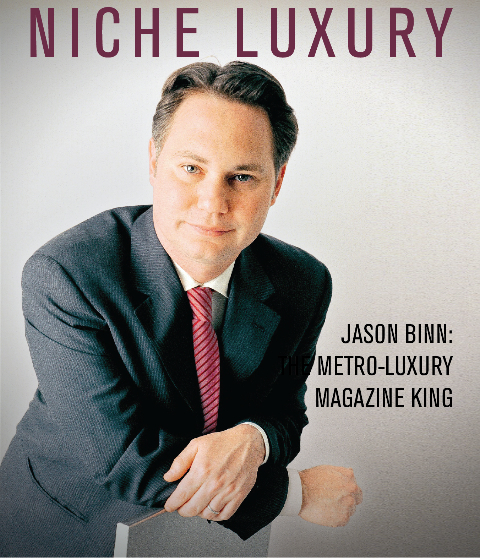
The Mr. Magazine Interview: Jason Binn, King of Niche-Luxury Magazines

September 14, 2008

This week a new feature debuts on the MrMagazine website. The Mr. Magazine™ interview. The inaugural interview is with Jason Binn, CEO and Founder of Niche Media. On Sept.15 his latest magazine launch, Michigan Avenue arrives at the stands and the doorsteps of the rich and famous of Chicago. The launch of MA is the most successful launch in Niche Media History. The magazine plans to publish two issues in 2008 and 10 in 2009.

While others are folding magazines, Jason Binn is creating them.

While others are trimming the sizes of their publications, he is introducing more oversized magazines. While other magazines are suffering from the economic crisis, his are flourishing. While others are happy with their launch issue being 100 pages, his latest premiere issue is 360 pages. While others are looking for a niche to cover, his magazines are very well grounded in a very lucrative niche: luxury.

Call him the king of niche-luxury publishing, or even the Emperor of Metro Luxury Publishing; Jason Binn has been at it for more than 16 years. From the premiere issue of Ocean Drive to the premiere issue of Michigan Avenue, Binn is not leaving a single upscale town (or street) uncovered. As long as he can find people “who make money, have money and spend money,” Binn will create a magazine that is aimed to the needs, wants and desires of that specific audience in that specific city or street.

Click here to read the entire interview. Niche Luxury Cover Photo illustration by Noah Bunn.

h1

A Testament to the Power of Print: Esquire’s E-Ink Cover

September 10, 2008

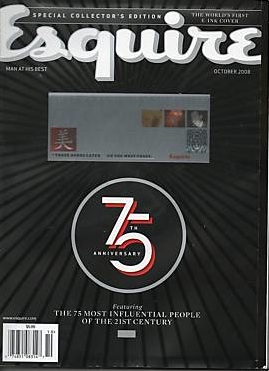
The 75th Anniversary issue of Esquire has arrived and 100,000 copies of the newsstand covers carry the world’s first E-ink cover. As you may recall last month Wallpaper magazine used, in their limited edition subscription cover, what they called Clever-Ink that only appears when it is placed under direct sunlight (See it here). Well, there has been a lot written about Esquire’s cover and the creativity of the E-Ink that makes the cover looks like a mini electronic billboard announcing “The 21st Century Begins Now (three hours later on the West Coast)”… and another mini electronic billboard inside the front cover introducing Ford’s Flex car.
Is this issue a collector’s item? You bet, just look at all the listings on Ebay and the price that people are trying to sell this $5.99 issue for. I had my daughter take time off her job in New York City and head to Borders the minute the magazine was released on the newsstands to get me my copy and FedEx it to me in Mississippi. My first reaction was wow and so was the reaction of every one who saw the magazine in my office. Then I opened the cover and read Esquire editor David Granger’s letter from the editor. My wow doubled and my belief in the future of print doubled too.
Granger points out to the readers that as they “read this issue — and this issue will call out to you to read it, invest time with it, and grapple with the personalities and ideas on display here — the overwhelming theme is one of optimism, the sense that things are getting better rather than worse, that challenges are surmountable.”
Indeed they are, and this world’s first E-Ink cover is nothing but an invite to dive into the pages of Esquire and enjoy the power of print and its content. A technological gimmick (two pages) that is very well done, but with content (320 pages of normal ink on paper) that is second to none. Congratulations David Granger and congratulations Esquire…Looking forward to the 100th anniversary edition and its great content, gimmick or no gimmick.

h1

TIME vs. Newsweek on Fox Business “Money for Breakfast”

September 8, 2008

Vodpod videos no longer available.

more about "Video – FOXBusiness.com", posted with vodpod


The term newsweekly may be an oxymoron today, but the need for magazines like Time and Newsweek is more evident today than ever. When I saw the covers of some of the gossip (so called celebrity) magazines this weekend, they scared the fool out of me. Putting our politicians and presidential candidates on the same magazines that specialize in Brad Pitt and Brittney Spears and the likes is scary to say the least. Our politicians and future leaders should not be used or viewed or even treated as celebrities. We are a nation at war, a nation with a major economic crisis, a nation with much more important and serious issues to be dealt with. I do not believe that the pages of gossip magazines are the place for such issues. Just the mere fact that we call them gossip magazines should be a good enough reason to stay away from such topics. Treating politicians in the same way we treat Hollywood actors and actresses, folks who have no impact on our lives whatsoever, is exactly like fish outside the water. After three days they stink.
Alexis Glick hosted a segment on the Fox Business “Money for Breakfast” show on Time vs. Newsweek this morning in which I voiced some of the aforementioned opinions and a little bit more. Let me know what you think?