Archive for the ‘News and Views’ Category

h1

Innovate. Don’t Stay the Course. Don’t Ride it Out. Words of Wisdom from Greg Schumann, Group Publisher, The Parenting Group

January 14, 2009

parenting1parenting2

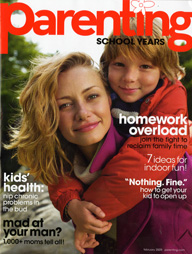
“Innovation is the key and not staying the course,” says Greg Schumann, vice president and group publisher of Bonnier Corp.’s Parenting Group (TPG). That, in fact, sums Schumann’s take on the current status of magazine publishing in general and on Parenting magazine in particular. Parenting magazine is now two magazines serving the needs of two separate groups of moms, where the mantra of “one size fits all” no longer exists.

Schumann’s strategy is not only limited to innovation.

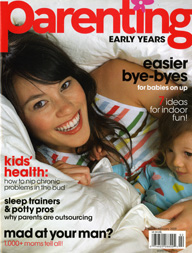
The new strategy isn’t just an innovative way to launch a new publication. By separating the current Parenting (for moms of kids 0-12, 2.15 million circ) into two separate monthly editions – Parenting School Years (for moms of kids in kindergarten through 5th grade, 500,000 circ) and Parenting Early Years (for moms of infants, toddlers and preschoolers, 1.65 million circ), Parenting is offering readers the ability to choose the content that’s most relevant to them, and offering advertisers a new way to customize their marketing messages to target moms with children in different age groups.
This strategy brings to life what TPG has learned from studying the effects of Gen Y moms on the parenting media landscape: Today’s generation of web-savvy moms expect customization – so it’s time to rethink the concept of the “one-size-fits-all” mass parenting magazine in a media universe populated with niche web sites and mommy blogs targeted to every possible subset of moms. The more targeted the content, the better. And the more relevant the magazine is to its readers, the more advertisers’ messages will resonate with their intended audience.

To follow up on this strategy, I asked Mr. Schumann few questions regarding Parenting magazine, The Bonnier Corp. and the magazine industry in general.

What is the secret of your success with Parenting and what is the secret of Bonnier Corp.’s success in the midst of all this doom and gloom?

Well, I think I’ll answer in two-fold. I’ll answer it first on what we’re doing and why we’re doing it. I had lunch with a business consultant in the industry, and we were talking about (the fact that) there’s so much defensiveness going on right now in light of the turbulence that’s being felt economically and certainly in our industry. But I am a believer that difficult or challenging circumstances demand innovation. And that’s the time you should be looking to do things differently and to improve on things versus, let’s ride it out or stay the course.

The rationale behind one magazine with two editions is based in that I am a believer in the research that we did leading up to deciding definitively on our strategy that this approach of one size fits all for moms is no longer working. I would even argue that one size fits all is becoming a challenge to strategy. The needs of moms are so different relative to the stages that they’re in motherhood, relative to the age of their child or children. You just couldn’t think that you are going to be able to properly address their informational needs in one entity.

We’re taking the approach with the business model from a consumer standpoint. We’re serving her more targeted, more relevant information that feels more personalized, more customized, relative to the place she’s in. And also for advertisers, to a point, we are providing the most efficient means to invest their dollars relative to their target, the sub-segment targets of mom. The response we’ve gotten and the feedback have been incredibly positive. It’s been incredibly positive from moms. It’s been incredibly positive from the advertising community.

But in the midst of the doom and gloom, and I know it sounds really cliché and maybe a little holier than thou, but there should be no conditions on doing the right thing for the business. There should be no circumstances that dictate whether you do the right thing or not as far as figuring out constantly how you best serve your consumer and in our case, obviously, moms. So, to me the economy, and the advertising climate shouldn’t weigh into that debate. We have a mission: How do we best serve moms? We think we’ve found the best way to do it with this versioning, targeting strategy. We’re going to do it, whether the economy’s healthy or not healthy. Whether the advertising business is up or down…because it’s the right business decision.

As far as how is Bonnier is doing it, I think this is one of the advantages of being operated by a philosophy that’s looking long term. When Jonas Bonnier acquired our division along with the rest of the other titles that we were sold from Time, Inc., he made it very clear: I am doing it to expand our business, to expand our footprint in the United States, and I’m doing it to have a long term viable, sustainable, growing business. And so, he always talks about the notion of evaluating 20 years from now. The fact that we’re privately held allows, obviously, and helps facilitate being able to take a longer term approach to things. Unlike the industry that seems to live quarter by quarter, as far as how Wall Street goes, earnings and so forth… I do think that in too many instances, in our industry and in American business, we foster just short term thinking. The industry is always trying to get immediate gratification or instant gratification for the business needs, perhaps at the expense of really thinking long term and figuring out what’s the best model looking outward.

I think we’re fortunate to be in a corporation, part of an entity that does look at things long term.

Are we really in such a gloom and doom marketplace today? Is the cup half full or half empty?

The current industry environment too often is viewed as problematic. And I believe it is opportunistic. If you adhere or believe in the notion that within any problem lies an opportunity, I think that without question, that the economic landscape’s changing, our industry landscape’s changing, but anytime there’s change, there’s opportunity. It’s just that too often people tend to look at it as the change is problematic. I think that there is a little too much negativity. Because the country as a whole, and even our industry has been a little bit traumatized by the events in the last twelve month and in particular the last six months.

So do you see light at the end of the tunnel or is it the train coming?
Well, I had an interesting explanation from someone in the financial industry. He said you should look at this situation as though the economy is a giant pan and we’re at the bottom of the pan. But the pan is elongated, meaning it’s not going to get much worse, but it’s not going to be remedied quickly. And so I’m of the school of thought that I think you’re going to be hard pressed to see the economy really turn around, this year.
But, I do adhere to the thinking that the mood, this fear that you talk about, the doom and gloom, that’s the first thing that will go. People are going to start to see the sun again. And then I think that’s going to be the precursor to seeing re-investments and the general dynamic of the economy starting to turn and then people starting to invest more aggressively, but I think that’s probably not going to happen until 2010. So what do you do? I think that everybody has to re-examine their business model. This is the time that everyone should be thinking about innovation. If you look at this situation as an opportunity instead of a problem I think that’s what should be our approach.
h1

Tyler Brûlé (of Monocle fame) on Print, Journalism, Readers and Advertisers

January 8, 2009

bluewings72dpi1
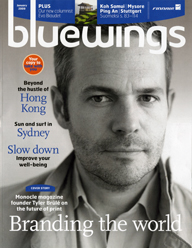
“Jet-setter, international style maker and Monocle magazine founder Tyler Brûlé is confident about the future of print as he launches a series of branded shops and newsstands internationally.” So, says the introduction to Brûlé’s interview with Katja Pantzar, English Editor of Bluewings magazine, the Finnair Magazine published by Sanoma Magazines Finland. Tyler Brûlé is the cover subject of the Jan. 09 issue of the magazine and he shares with Katja his views on print, journalism, and the readers of today among many other design and travel related issues. Here are some of the highlights of his answers:

On Print:

“The printed word and image on glossy or matte paper is a very effective way of getting a high-impact message across. Our view is that the web is not a great place to read anything, which is why most of our web content is video or audio-based.”

On Journalism:

“With Monocle, we’re going to completely different parts of the world and investing in a level of journalism which I think is rapidly evaporating – that’s a view that’s shared by both advertisers and consumers…”

On Readers and advertisers:

“We are a premium product… There’s an audience out there looking for quality. We are lucky because we can spread our risk around globally: for example, we have a lot of Japanese advertisers who simply don’t advertise anywhere else internationally. This shows that our advertisers strongly believe that our readers will read their content.”

All I can add to that is Amen! If you want to see more of Tyler Brûlé’s views on print and journalism click here.

If you would like to read the entire interview with him in Bluewings magazine click here (Thanks Calhan)

h1

Same Magazine, Different Name: Take 2

January 6, 2009

countrypeople2 countrypeople1
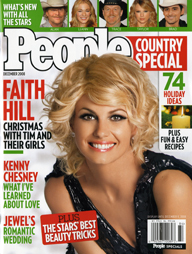
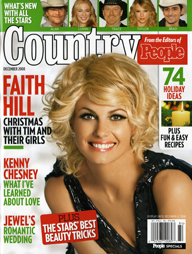
So you’d not think Meredith is the only company publishing the same magazine with two different names, here is an example from Time Inc.’s newest spin-off from People. In most parts of the country the magazine is selling as People: Country Special . However, in some places the magazine is selling as Country: From the Editors of People. That is not the first time Time Inc. experiments with the name presentation of People’s spin-offs. People’s Style Watch was tested in many different variations of the name in its early stages of testing. I wonder if we are going to see Country as the latest regular launch from the folks at People!

h1

Goodbye to 8020 Media: Take 3 A Call to Change the Publishing Model

January 6, 2009

Media reporters and bloggers alike have been swarming like bees over the news of the demise of 8020 Media and JPG magazine. I have said it once, and I will say it again now, we’ve become an industry (media reporters, bloggers) that thrive on the bad news of the demise of our own media. We are quick to report the news of the death, slow to report the news of the success or birth of new publications. And even when we report the bad news we do not offer any solutions. The news surrounding 8020 Media and JPG magazine is yet another example of what I have been trying to promote regarding the need for a new publishing model. That’s why I referred to 8020 Media and JPG as the “candle in the wind.”

The publishing model pre WWII was based on circulation driven revenues, after WWII we shifted to an advertising driven revenue model. Now we are stuck. Very few magazines remained sincere to their original mission and revenue stream, i.e. circulation driven (Highlights, Consumer Reports, and the entire herd of Reiman publications during the Roy Reiman ownership era). The current magazine model that depends on advertising as a major source of revenue hit a major set back with the horrific economic meltdown. Major magazine publishers continue to chase numbers rather than customers hoping that by giving their magazines away they can be ready for the advertising come back. So, today you can get 24 issues of Cosmopolitan for $10, O, The Oprah Magazine, 24 issues for a mere $10 and of course my favorite example 52 issues of Newsweek for $10.

Well, today Mitch Fox, President and CEO of 8020 Media, e-mailed me what I felt is a true call for action regarding the magazine industry. With his permission, here is the entire e-mail:

I’m still disappointed that not one magazine company can see this as a game changer for them….At the least the beginning of what can be a game changer for them.
They already have a pre — existing community of people (readers/subscribers) who they need to connect with in a NEW way…as well as recruit NEW members to this community….and ultimately retain them as readers/subscribers or; just web visitors (uniques) or; just buyers of their branded products, or just attendees at their (paid) events….in sum, they have to open up every revenue source possible…it’s just naive to think that any ONE revenue source will be so substantial that it can sustain a business any longer.

At one time that revenue source was subscription / newsstand revenue. Later, the paradigm shifted to advertising revenue. And for some time we have been aware that advertising will no longer sustain us…yet we’ve not changed our business models significantly enough.

Now…there is no one revenue source substantial enough to sustain our businesses.

So I’d suggest magazines develop the web to reach out and expand their universe of customers (readers) and monetize them (online advertising) and recruit them to subscribe to the magazine, and to participate in it ( the key to growing the online community) and continue to market to them in all the ways I described above, and all the ways we have yet to imagine. And that my friends is a way to begin to “re — build” the NEW magazine model…

Some of this will work, some won’t, but innovation is imperative, and damn it…this is a great (and cheap) place to start. (Build an online community around the title web visitors and readers.) See the response to a well-organized community by reading savejpg.com.
The power behind these magazines titles (brands?) has to be unleashed to remain competitive in this shifting media landscape. Otherwise, the next generation of readers, who are upon us NOW by the way, will simply not look to the magazines as sources for entertainment, inspiration or information…they will look elsewhere…they already do…and only a few rare titles, filing niche market needs will survive. Maybe we wouldn’t feel so anxious if the economy had not crashed around us so suddenly, thereby making this need for a new model such an imperative…but no matter, we deal with the circumstances we face, not the ones we wish for….and our reality is such that we have to innovate, and even improvise, but not ignore. Some magazines have already moved through this transition, most have not…I hope to see more push themselves to change their own self perception enough to push themselves to this new place, and enjoy the success that will come with such experimentation.
It’s late…but not too late.

h1

One Magazine, One Diet (or Weight Loss), Two Names…

January 6, 2009

diet2009-1myweightloss-1diet2009-2
Do you rather go on a diet or would you rather have a plan just for you to lose weight? That is the question that the folks at Meredith seem not to find an answer to. Thus they gave their newest Better Homes and Gardens Special Interest Publication magazine two different names with the exact same content (and what seems to be the IN cover-line these days Yes, You Can!). One edition of the magazine is called Diet 2009 and the other edition is called My Weight Loss. However, neither name of the magazine is to be found anywhere inside the magazine. Even on the table of contents the editors managed to introduce a design element that covered the name of the magazine on the inside cover replica. Clever, very clever indeed!

h1

“A Candle in the Wind”: Goodbye to 8020 Media and JPG… Take Two

January 4, 2009

Earlier this morning I received the following e-mail from Mitch Fox, President and CEO of 8020 Media with the heading “Goodbye to 8020 Media…Not so fast!”… Here is his e mail

Good Morning,

Well, this has been quite a crazy couple of days since I last wrote to you. As you may have seen reported, after we announced we were forced to close 8020 Media we were approached by over twenty people/companies who want to make an offer to acquire the company. What happened?

Well, first of all, many thanks to all our friends in the press who wrote about our demise…it was great of you to jump on the story, and we appreciate and respect the effort you put forth to get the story just right…after all, JPG is a great property, with a large number of loyal members, a growing advertiser base, and a real prospect for profit….not to mention the foundation of what publishing can look like in the very near future. It surely has value.

However, all of this activity really shows the massive shift in news media consumption,,,,because it shows the power of the press…especially the online press who got the story out wide and fast….And to the right people.

Maybe it’s generational, geographical, or industry related…but there is definitely “something” going on here….And for “it” we’re grateful.
.
Web based companies have come forward with offers to acquire JPG…and we’re once again excited about its future.

So we’ve set a date of Wednesday, January 7th to get in the bids…and we’ll vet them at that time and make a decision.

I’ll keep you posted….

All my best,

Mitch

Oh yeah…and this site : SaveJPG.com didn’t hurt either…Check it out, especially the comments:

http://www.savejpg.com/

To read the earlier news regarding 8020 Media and JPG click here.

h1

“A Candle in the Wind”: Goodbye to 8020 Media and JPG…

January 2, 2009

tn-jpg
Last October I interviewed Mitchell Fox, President and CEO of 8020 Media the publishers of 8020 Media. He shared with me his plans for the future of the company and promised to keep me posted on the latest community additions to the company that they were ready to make in the near future. However, in what seemed to be prophetic now, he told me “It is infinitely more complicated to produce a good magazine, distribute it, and sell it, than it is to just get a blog up and running.” Well, early this morning I received a note from Mitch addressed to Friends of 8020 Media that shows how difficult it is to produce and publish a good magazine. Under the subject-heading “Goodbye to 8020 Media,” here is the entire letter from Mitch:

January 2, 2009

To all of our friends,

In the face of these extraordinary economic times, in a devastated advertising climate, we can no longer continue to operate the business due to lack of funds, and hence we have to close 8020 Media effective immediately.

There is no doubt that our company has done what no others have yet to do…that is, prove that the web and print can work effectively together, one supporting the other.

We’ve also proven that community generated media CAN be a powerful thing…and it can create spectacular media.

The riddle of having a sound web platform support that drives interactivity with a print product has been solved, however, none of us could have predicted the global economic collapse we’ve witnessed in the past few months. So our timing to grow the business and bring it to profitability through even the smallest amount of additional funding could not have been worse.

So, while we sit here at the precipice of profitability, the negative marketplace forces are too strong to overcome, and we must take this regrettable action.

It remains undeniable that the publishing industry MUST find a new model, and mass collaboration and participation in the media property is certainly now proven it can be the foundation of this new model (NOTE: This is NOT citizen journalism).

We’ve cracked the code on marshaling a community around a media property online and in print….and helping them become active , loyal, and engaged participants in both.

We do owe a debt of thanks to Minor Ventures for believing in us, and funding us to this point and to have even given us a chance to make this business successful, and for that confidence we’ll always be grateful.

There is a lot to be learned from the 8020 Media experiment and the two magazines it published JPG and Everywhere. However, it is important to study the early stages of 8020 or what I call the “love affair” era and compare it with the “institutionalization” of the company in the last year and a half. I am a firm believer that JPG was the “candle in the wind” that will be remembered as the first magazine to utilize the web to innovate in print, and innovate well indeed.


h1

You, I and the Magazine Business: Promises for 2009

January 1, 2009

You continue to predict the death of print; I will continue to promote the endless innovations possible in print.

You continue to count the number of magazine dying; I will continue to count the number of magazines being born (for the record, magazines with 4 times frequency or more were born to a ratio of 20 to one… for every magazine pronounced dead in 2008, the same year saw 20 new launches).

You continue to mourn the dead advertising model that served the industry well since World War II; I will continue to celebrate those who are trying to reinvent the publishing model and those who will continue to depend on circulation to foot their bills and sustain their success.

You continue to be in the business of counting numbers; I will continue to be in the business of customers who count.

You continue to be in the business of catering to Madison Ave. and the advertising community; I will continue to be in the business of serving the reader, turned customer (Yes I know they don’t pay as much per issue, but there is a much more of them than the advertisers, and once you have the right customers, the advertisers will follow).

You continue to write about the layoffs and firings in the magazine business; I will continue to write about all the new hires and new companies flourishing.

You continue to report the failures in the magazine business and magazines trimming and slimming their pages; I will continue to write about magazine successes and magazines increasing their pages.

You continue to be in the business of giving away your content; I will continue to be in the business of monetizing content and finding ways to pay for it.

You continue to be in the business of serving audiences everywhere in all media; I will be in the business of identifying the best content, through the best medium to serve the best customer.

You continue to be in the business of giving content; I will be in the business of selling content.

You continue to use the shotgun approach in your marketing strategy; I will continue to use my laser-targeted approach.

You continue to see the cup half empty; I will continue to see the cup half full.

You continue to pretend to lead and direct the magazine industry; I will continue to serve an industry I live, love and cherish.

You continue to be an insider trenched in your ways; I will continue to be an outsider looking at all the ways.

You continue to see the light at the end of the tunnel as the train coming; I will continue to see the light.

Happy New Year and All The Best,

Samir “Mr. Magazine™” Husni

h1

Richard Stengel on: TIME’s Person of the Year; the newsweeklies; and the future of print

December 18, 2008

time-cover-poy2richard-stengel-headshot1
It is no secret that Barack Obama is TIME’s Person of the Year. However, revealing the name of the POY has been one of the most guarded secrets in our industry. The man in charge of the selection is Richard Stengel, TIME’s managing editor. I had the opportunity to ask Mr. Stengel few questions regarding his choice of Obama as the Person of the year, the icon issues of TIME and the future of the newsweeklies and print in general.

Could you have chosen anyone but Obama?

We started thinking about it, (we asked ourselves) can you not choose him? And what would the consequences be? You could make the case that it was the American voter, or the economy, or the subprime mortgage, or some kind of a financial services product that tipped the scales in such a way to make an Obama victory possible. It all kept coming back to Obama himself… So, sometimes the answer is looking you right in the eye and is right in front of you and that’s certainly how we felt this year.

What makes this issue special?

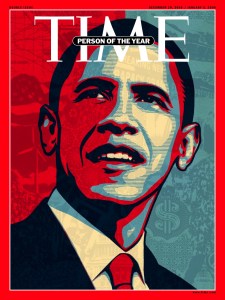
I think it’s about the most beautiful Person of the Year issue that I can recall. It’s very, very visual. The person of the year package opens with 18 pages of images that we collaborated with Flickr, the image sharing site, images done by regular people, not people of Obama. It’s a dazzling array because he is, in many ways, the people’s president. He inspired people in a way that we haven’t seen in a very, very long time. And the art created by regular folks, regular voters around the world, is beautiful and inspiring. And (at the same time) it beautifully compliments the cover itself. I think it’s just a gorgeous memorable iconic image done by Shepherd Ferry, who did the first original Obama poster with “Hope” on it. That (poster) became a symbol of the campaign. We went back to him and said hey what would you do now for President Elect Obama? And it’s really an outstanding memorable iconic image. I think that people will be looking at for decades to come.


I noticed that this year’s Person of the Year cover has no cover lines. Why?

Right, in fact we don’t even have (Obama’s) name on the cover. It just says Person of the Year and because of that very reason, we were thinking, it’s so beautiful, it’s so much a kind of iconic poster, (so) why you even put the name on it. In fact Arthur Hochstein, our great art director went and did a little research and the only other time we didn’t put a name on a Person of the Year was when we did an Aaron Stickler portrait of Ronald Regan in 1980. It was just a portrait of Regan in Person of the Year.


How important for the survival of magazines like TIME all those iconic issues like Person of the Year, The TIME 100, The List issue, etc…?

I think the annuities, as we call them, are incredibly important. The most important one for us specifically is the Person of the Year issue. That’s the greatest annuity in all of journalism and it’s something that people know all around the world. It’s a sub-brand of the TIME brand, but it’s (also) intrinsically part of it. And I think it works so well because people associate us with history. They associate us with giving a perspective on history. They associate us with talking about people who make news, people who make a difference, people who shape history. That all works beautifully with the TIME brand and the Person of the Year issue embodies that. I think going forward as to your larger question about As to the future of magazines (in general), and the news magazines in particular, I think what has happened in our popular culture as a whole has affected magazines. Look at what’s happened with the movie business. You have to have block busters, and that’s what they look for. Annuities are our blockbusters. It’s the thing that grabs people’s attention and grabs them by the collar and says, look we have something that’s special, that’s different, that’s not the same as what you get everyday or every week. So, I really place a high value in annuities and I would love to have even more. So if you have any suggestions, let me know.

What about the future? Are we in trouble or there is still a future for print?

I sometimes think is that even though we cover the whole world, we cover the economy, and we cover media, we’re often myopic about ourselves. We fail to remember that we are part of the same sea; we’re swimming with everyone else. We think that somehow we’re immune to other trends in the economy. TIME Magazine is very healthy and very robust and profitable. We’ve had to go through some slimming downs, but that’s like also what happens in the economy. I mean, we’re not General Motors, Lehman Brothers, or any of the investment bank… Those places have failed; we’re actually are doing well. I mean, I don’t want to compare ourselves to other titles but I think they’re in different situations than we are. There is a kind of survival of the fittest in all businesses that exist.
Well, if you look at an analogy with Detroit, to use General Motors again (as an example). They had too many products on the market. They had too many different types of cars they were making for their share of the market. I think (that is) one of the things that is happening in the media, apart from the rise of online and the digital space and all of that. I actually think is a great thing for the media. Maybe there are too many products out there. Certainly too many products for the share of the market and there will be some slimming down. I think that’s inevitable. That’s inevitable in every business. You know, they tell you in business school, there were 80 different car companies in America in 1920. That slimmed down before the golden age of the automobile industry…I think some of this is just necessary economies.

So, will print survive?

Our election commemorative issue was the largest newsstand seller since 9/11 and, you know, people want some historical object. I think that is one of the signs of health for print because people like things. And that will never go away.

h1

Obama is TIME’s Person of the Year

December 17, 2008

time-cover-poy
History was made on Nov. 5, 2008. So, how can a magazine choose anybody else but the history-maker President elect Obama for its branded and coveted Person of the Year issue? Well they did not and TIME choose the President-elect Obama as its POY. “In the most anticipated issue of the year, out Friday, TIME names President-elect Barack Obama 2008 Person of the Year,” the magazine’s press release said. Of note is the picture chosen for the cover. TIME’s managing editor Richard Stengel writes, “Our cover portrait is by the street artist Shepard Fairey whose roots are in the skateboarding world and whose early poster of then Senator Obama became the great populist image of the campaign.”

More on the POY later…